
Buns and braids get admired from behind, but the front is what your family sees across the mandap and what the camera catches in nearly every frame. A soft puff, a side sweep or a jeweled parting changes how the whole face reads, and it has to sit right with your lehenga or saree, your earrings and the jewelry on your forehead. I’ve put together twenty front and side styles I use for brides, bridesmaids and guests, and with each one I’ve written what I actually do in the chair and where it tends to go wrong.
Which Side Gets the Sweep?
Half the looks in this list depend on a side part, and brides rarely think about which side until I ask. It’s worth deciding before the trial, because the wrong side can fight you all day.
Start with how your hair grows
Brush your wet hair straight back and let it fall. The side it splits toward is your natural part, and a sweep that goes with it stays put. Most people also have a cowlick at the front hairline; I part on the side it pushes toward rather than fighting it with heat, which wears off by lunch.
Then check your photos
Look through recent pictures of yourself and notice which side you naturally turn toward the camera. Many people have a side they prefer. I put the open, unswept side on that one so your face isn’t partly hidden in close-ups.
Think about who sits next to you
During the ceremony you’ll sit beside your partner for a long time, often in profile. Find out which side of you he’ll be on. I usually sweep the heavier hair away from him, so the shared photos show both your faces instead of a curtain of curls between you. Heavy earrings and a passa then go on the side with less hair.
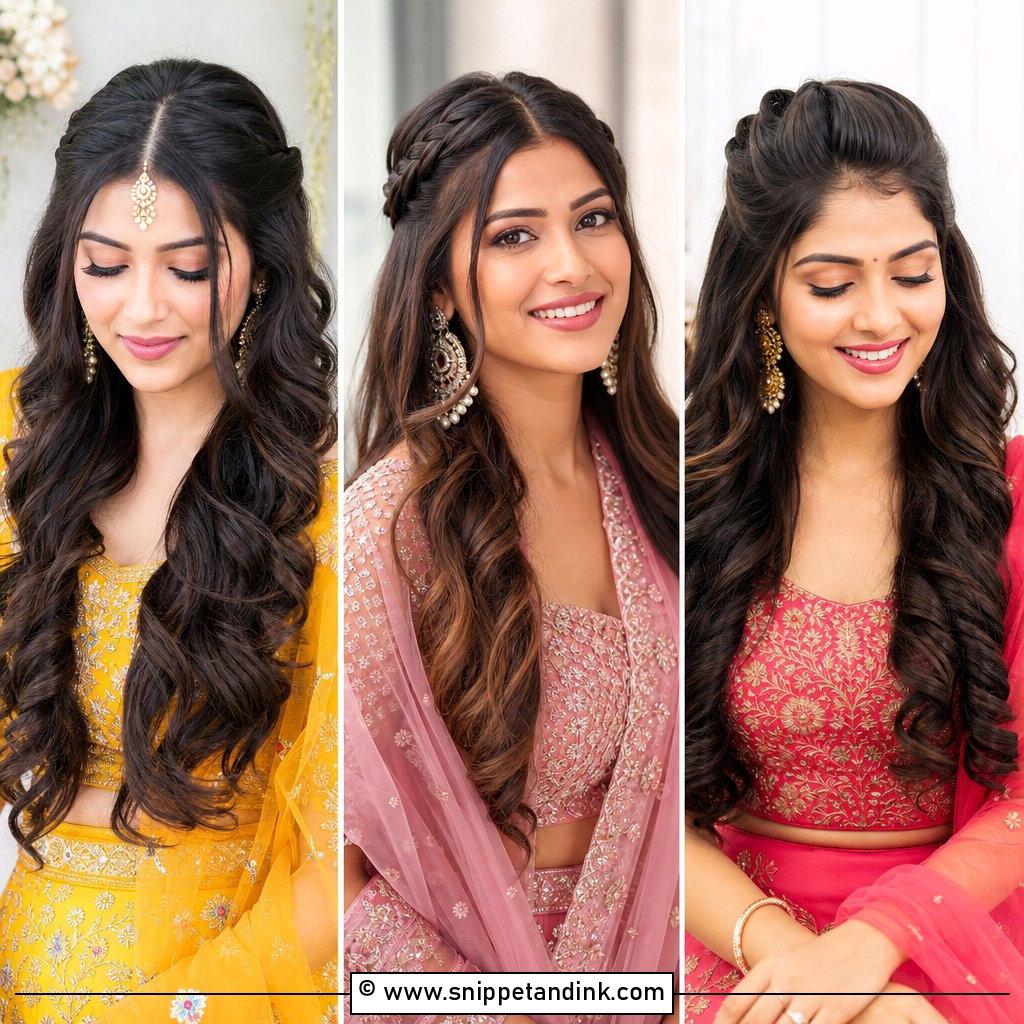
1. Front Puff With Loose Curls
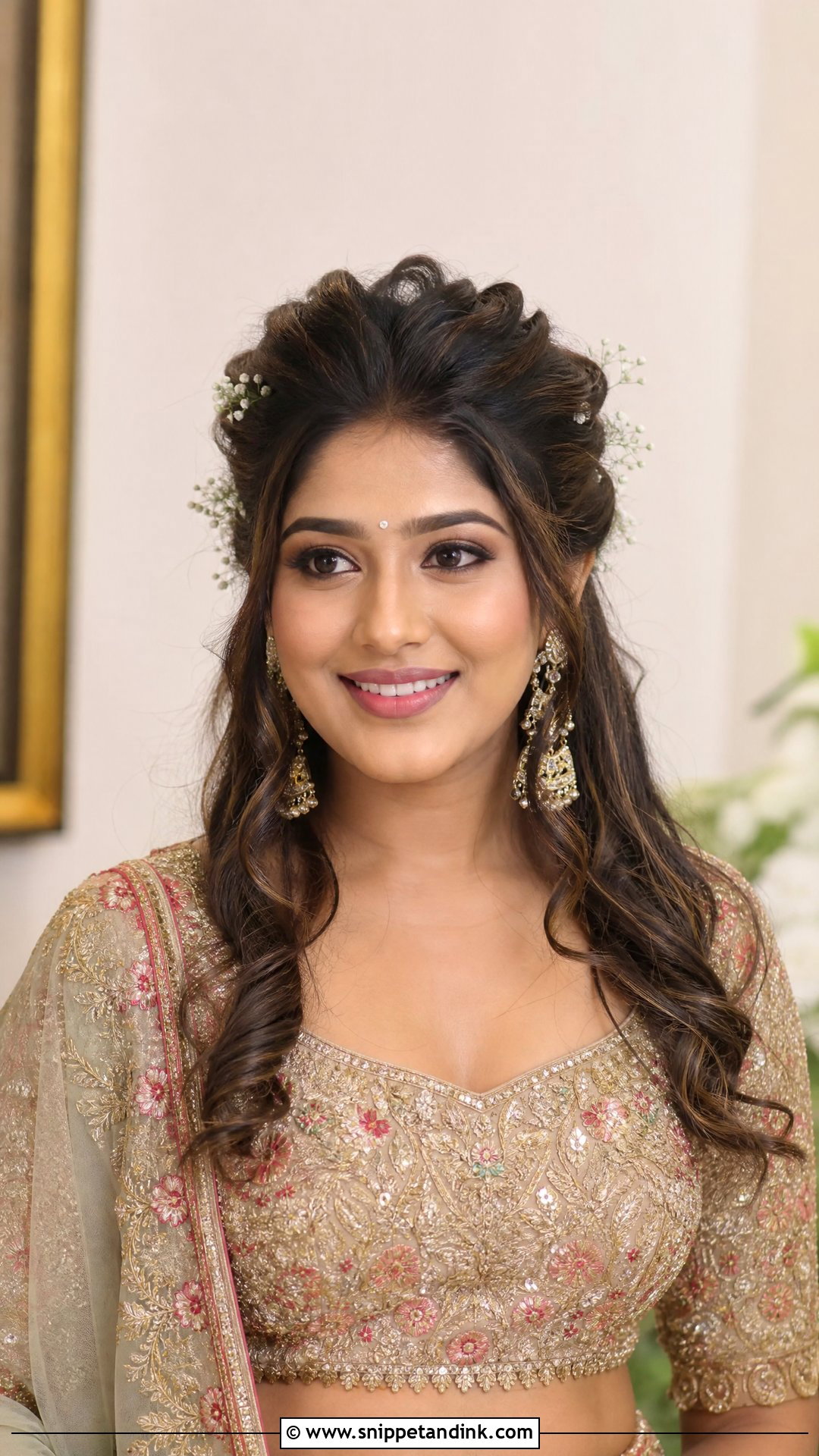
A front puff over loose curls is popular because it gives you both structure and movement. I tease the crown section at the root, smooth the top layer over it and pin it from underneath, then curl the length with a large barrel. Heavy lehengas and statement jewelry need that lift at the top to stay in proportion. Baby’s breath or a delicate Matha Patti finishes it. Oval and round faces suit it best. Loose curls drop faster than you’d think under hot function lights, so I pin each curl to cool before brushing it out, and it holds far better at any wedding function.
2. Side-Swept Waves With Side Parting
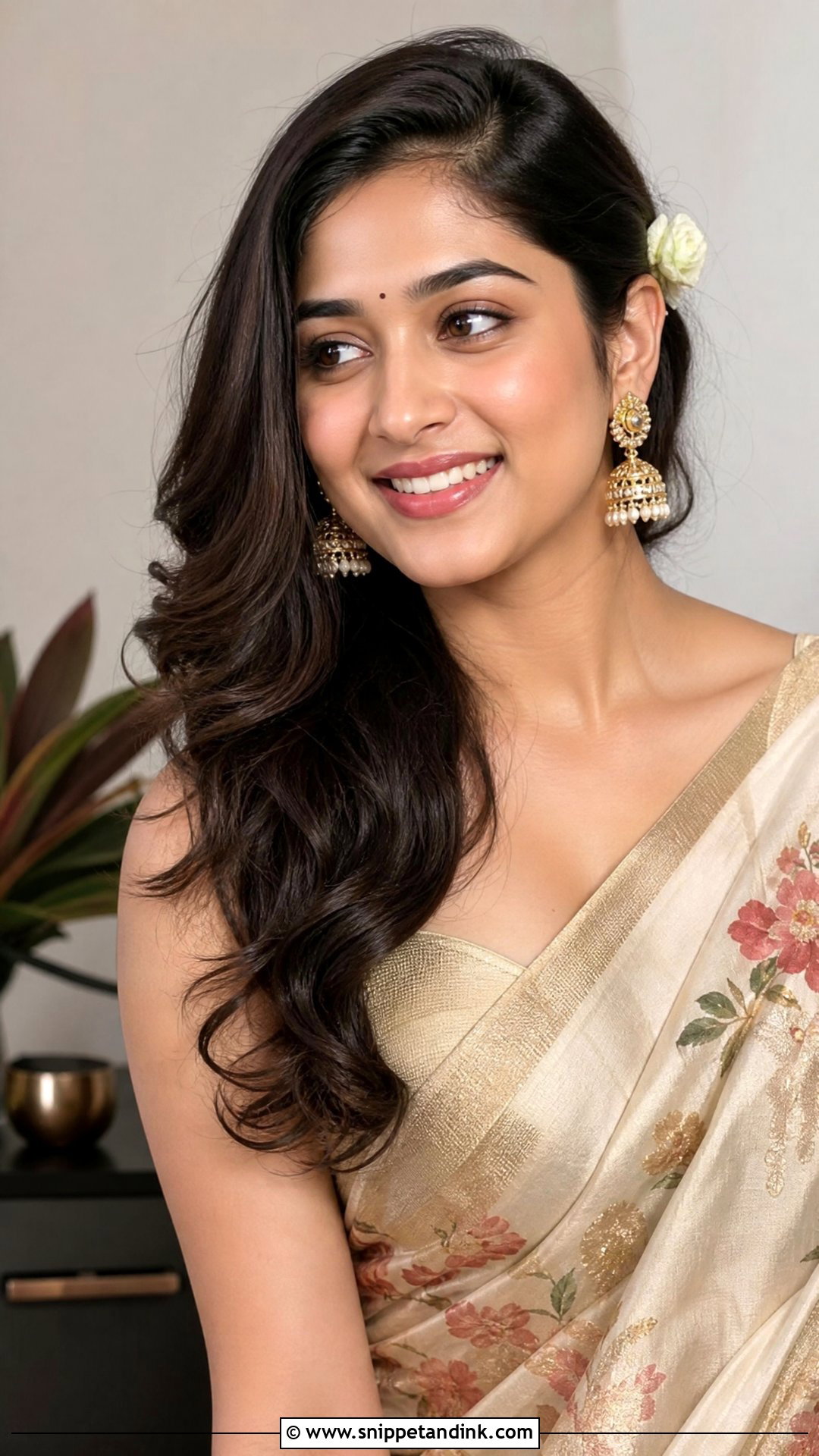
Waves pushed over one shoulder from a deep side part bring softness and a bit of drama. I wave the hair with a wand, set it with a light spray, and run a hidden row of pins down the back of the head so the sweep stays over the shoulder. A sparkly clip or a small flower behind the ear on the open side gives a finishing point. Sarees and gowns both work with it. It belongs at the sangeet, cocktail or reception, when your hair is down but still needs to look finished. The catch: a heavy dupatta on that shoulder flattens the waves, so drape it on the other side.
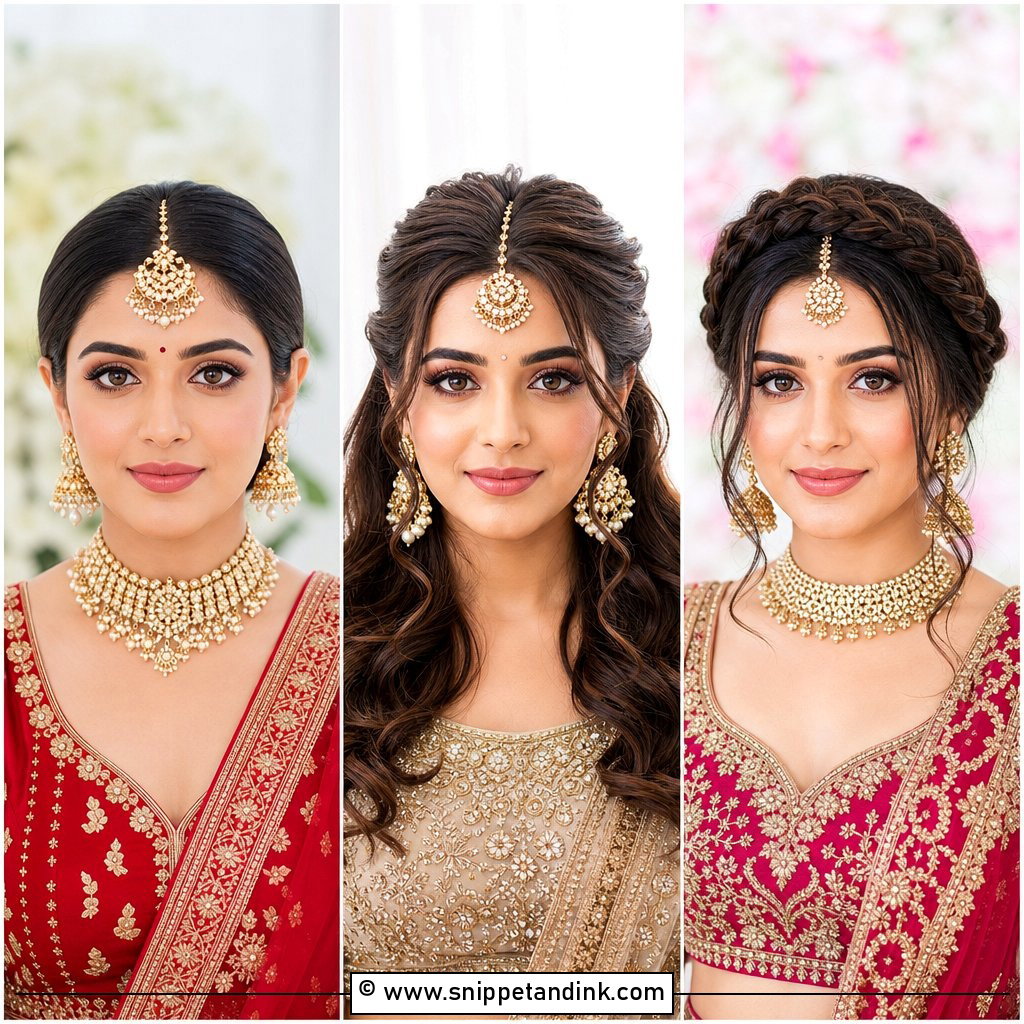
3. Front Bouffant With Matha Patti
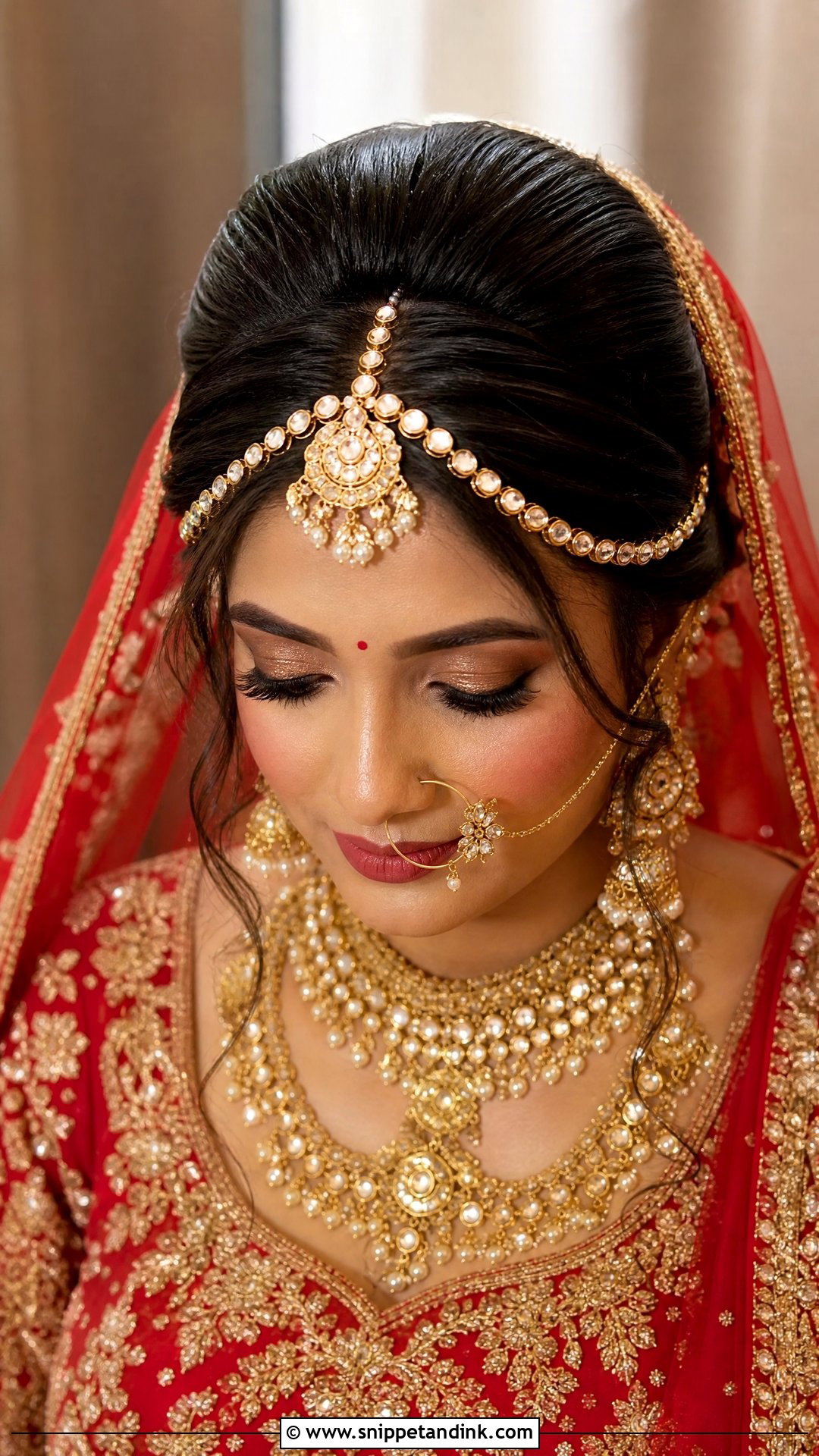
The front bouffant is a firm, smooth base at the forehead, built by backcombing the front section and lifting it away from the face. Its real job is supporting jewelry. A Matha Patti or maang tikka sits on that raised base without sliding into the brows. I keep it compact, no more than a couple of inches high, because a tall bouffant pushes the headpiece too far back and the chains stop hanging evenly. Pair it with a low bun or open curls behind. It handles heavy bridal jewelry better than almost any other front.
4. Twisted Front Section Behind the Ear
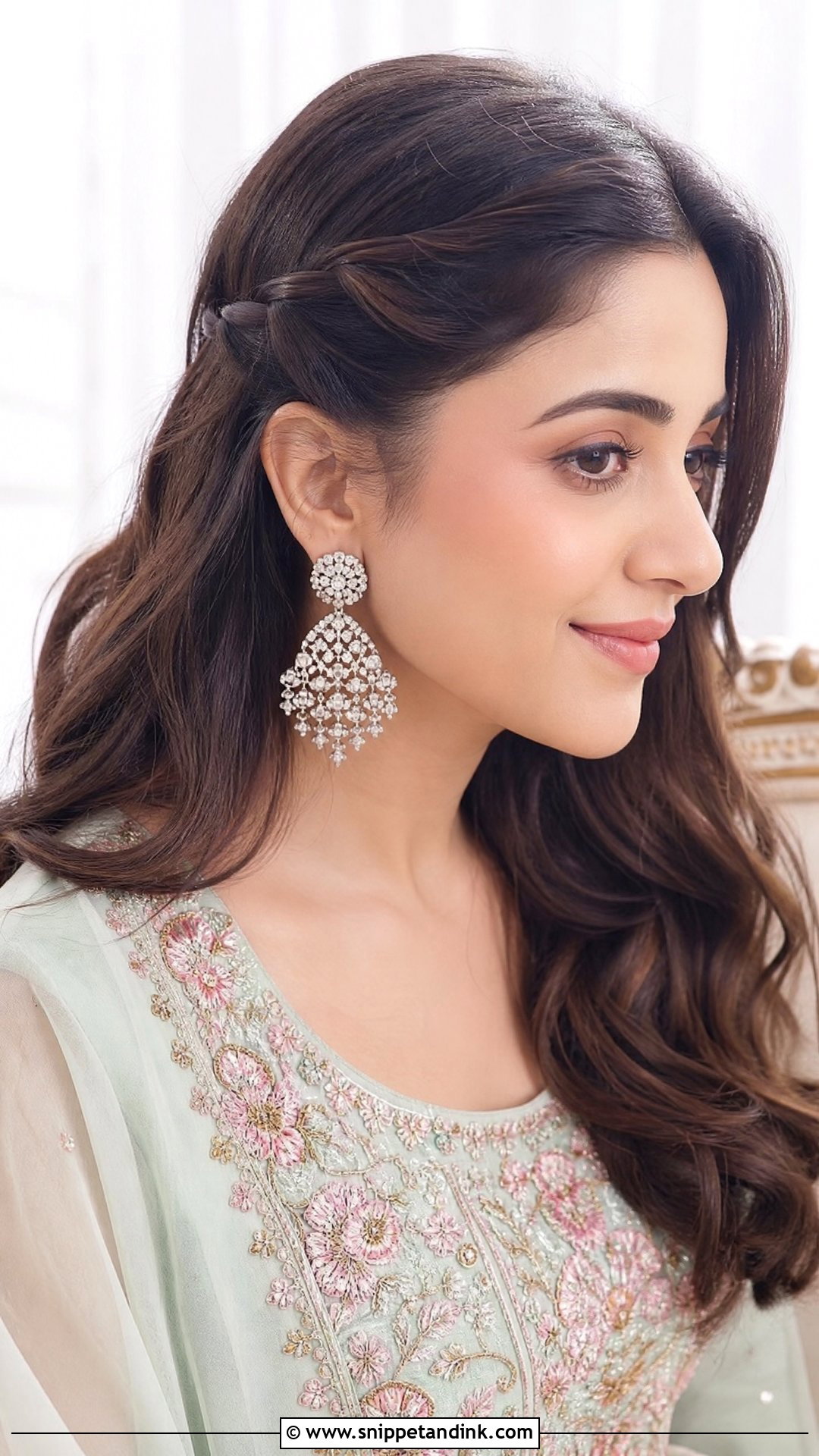
Twist the front section, tuck it behind the ear, pin it. That’s the whole technique, and it’s one of my favorite quick fixes for guests and bridesmaids. It clears the face, shows off earrings and works over open hair, half updos or a sleek ponytail. Twist one side or both, depending on your part. A small pin or a few tiny flowers over the anchor dresses it up. On slippery or freshly washed hair, I mist texture spray first; otherwise the twist unwinds within the hour and the pin slides out.
5. High Puff With Sleek Front
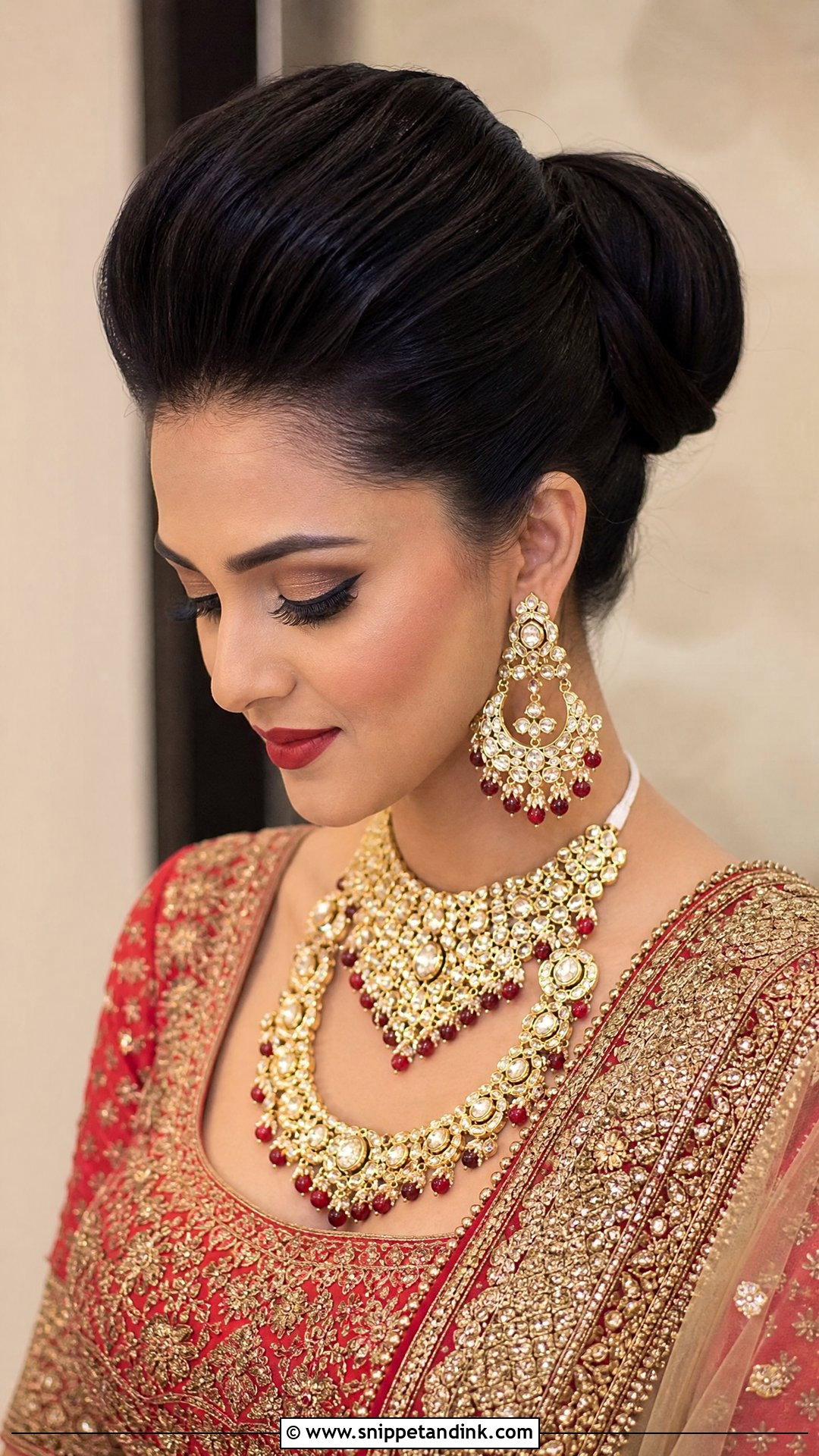
The high puff is the drama option. The front is teased high, then smoothed back into a sleek surface that lengthens the face and draws attention upward. It holds its own next to heavy lehengas and chunky earrings. I secure it with several pins crossed under the puff and a firm-hold spray, then put the rest of the hair in a high bun or curls. Honest caution: this one doesn’t suit a long face, which it stretches further, and it doesn’t fit comfortably under a dupatta pinned over the head. Wear it where your head will be uncovered.
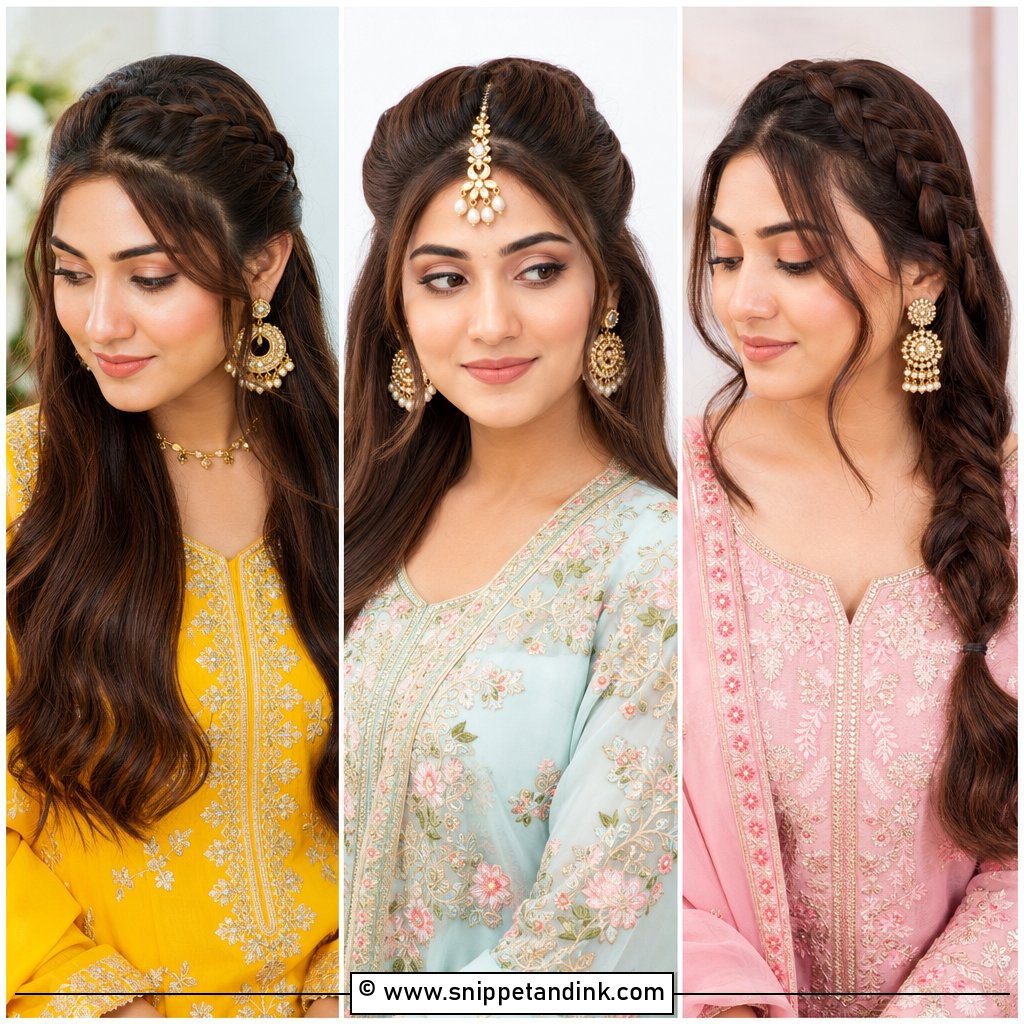
6. Front Braid Crown
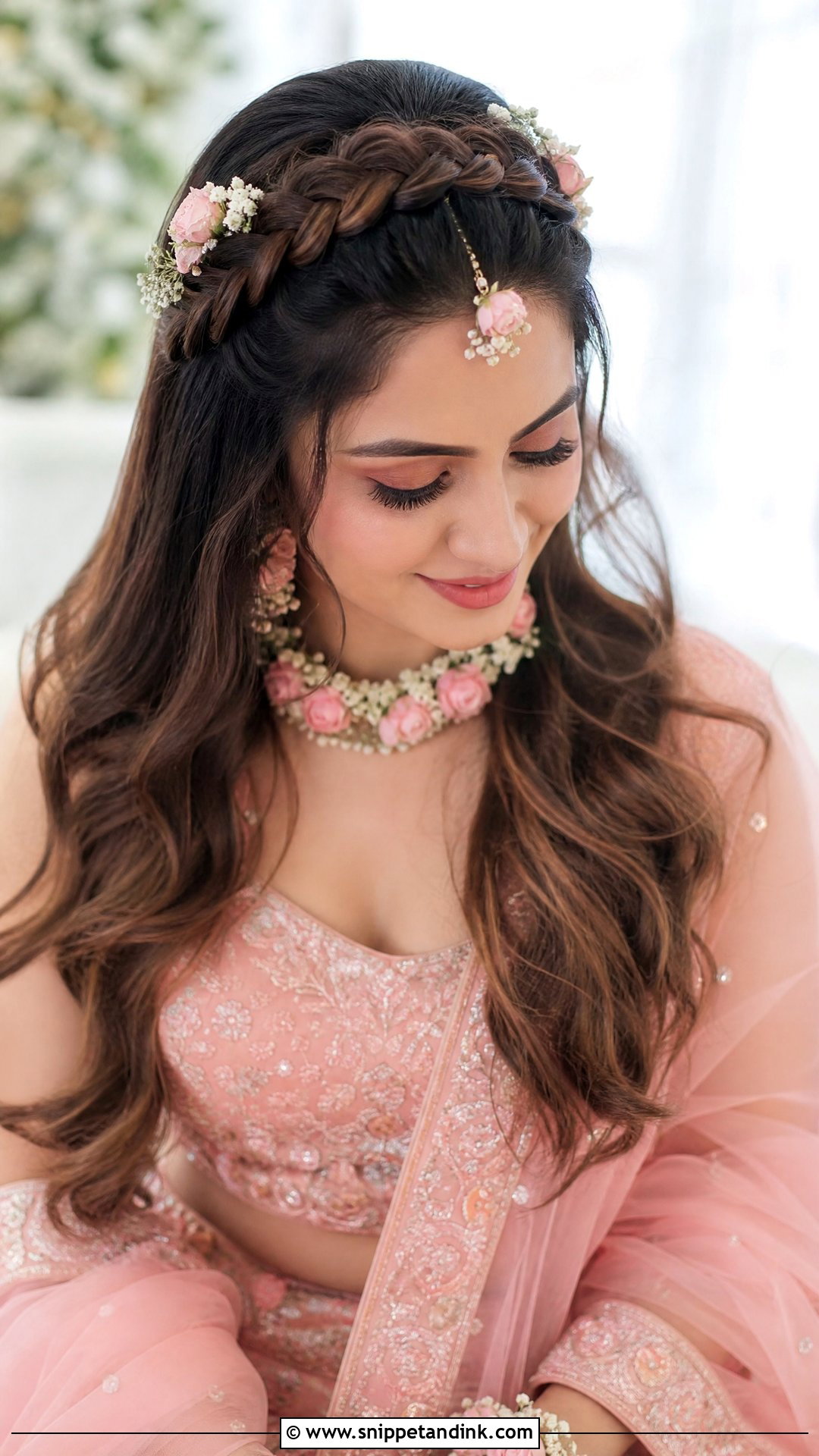
A front braid crown runs across the top of the head and frames the face like a halo. I braid from one side of the front and pin it across, or make two braids that meet in the middle, which is easier on shorter layers. Behind it, open curls or a low bun both work. Small flowers or pearls slip into the plaits easily. It suits brides and bridesmaids looking for something whimsical yet elegant. Round and heart-shaped faces carry it well. I braid loosely and pull out the edges afterward, as a tight braid crown looks thin from a distance.
7. Deep Side Part With Sleek Straight Hair
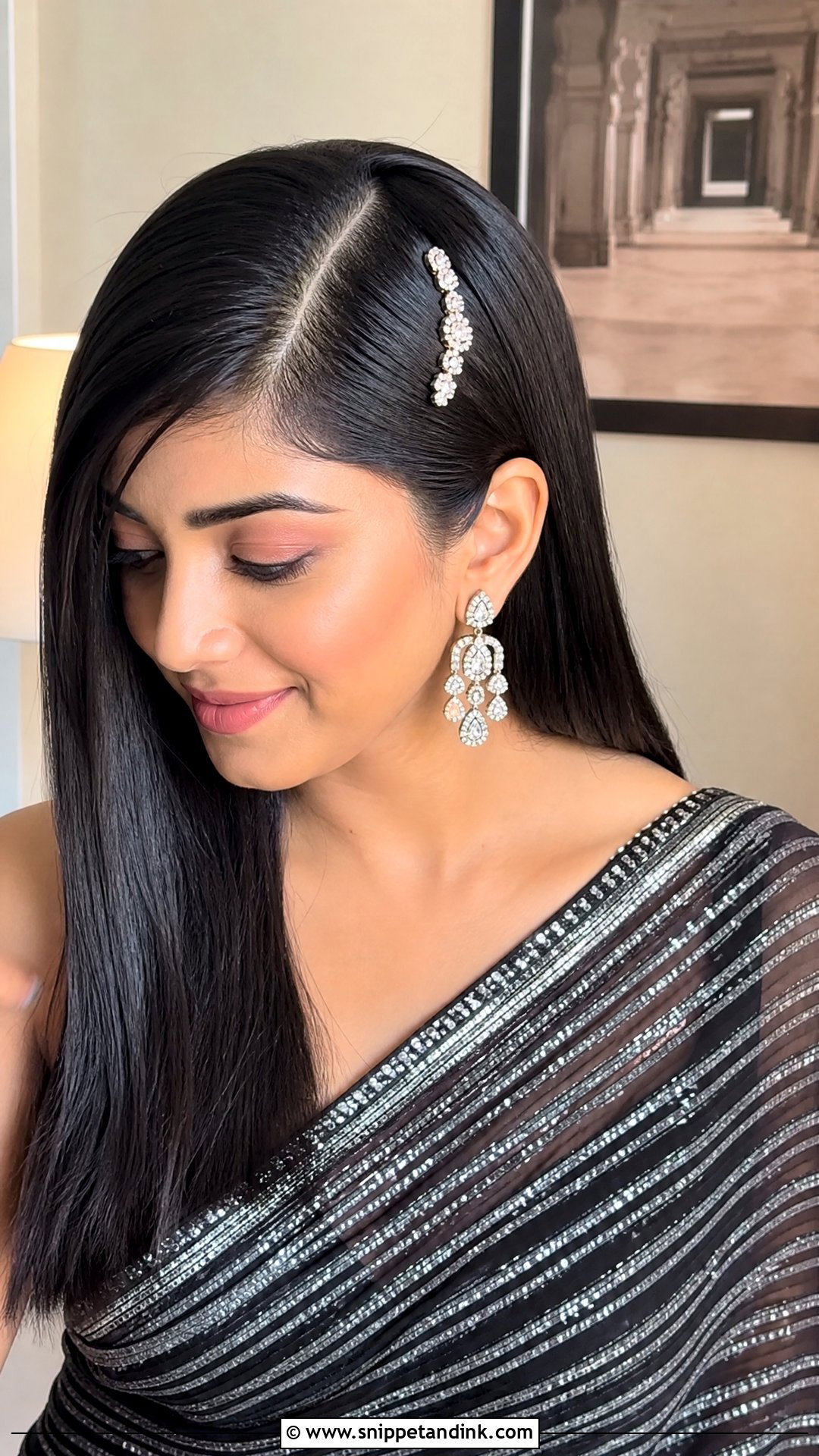
A deep side part with smooth, straight hair is the minimal front, and it suits cocktail parties and receptions. I flat iron in small sections, finish with a shine serum and a soft brush, and avoid heavy oils that look greasy by the evening. An embellished hairband or jeweled clip near the part adds sparkle. Longer hair works best, and it flatters oval and square faces. Very straight hair shows every kink, so if your hair has natural wave, give yourself extra time; a rushed straightening job is obvious in photos.
8. Front Fishtail Side Braid
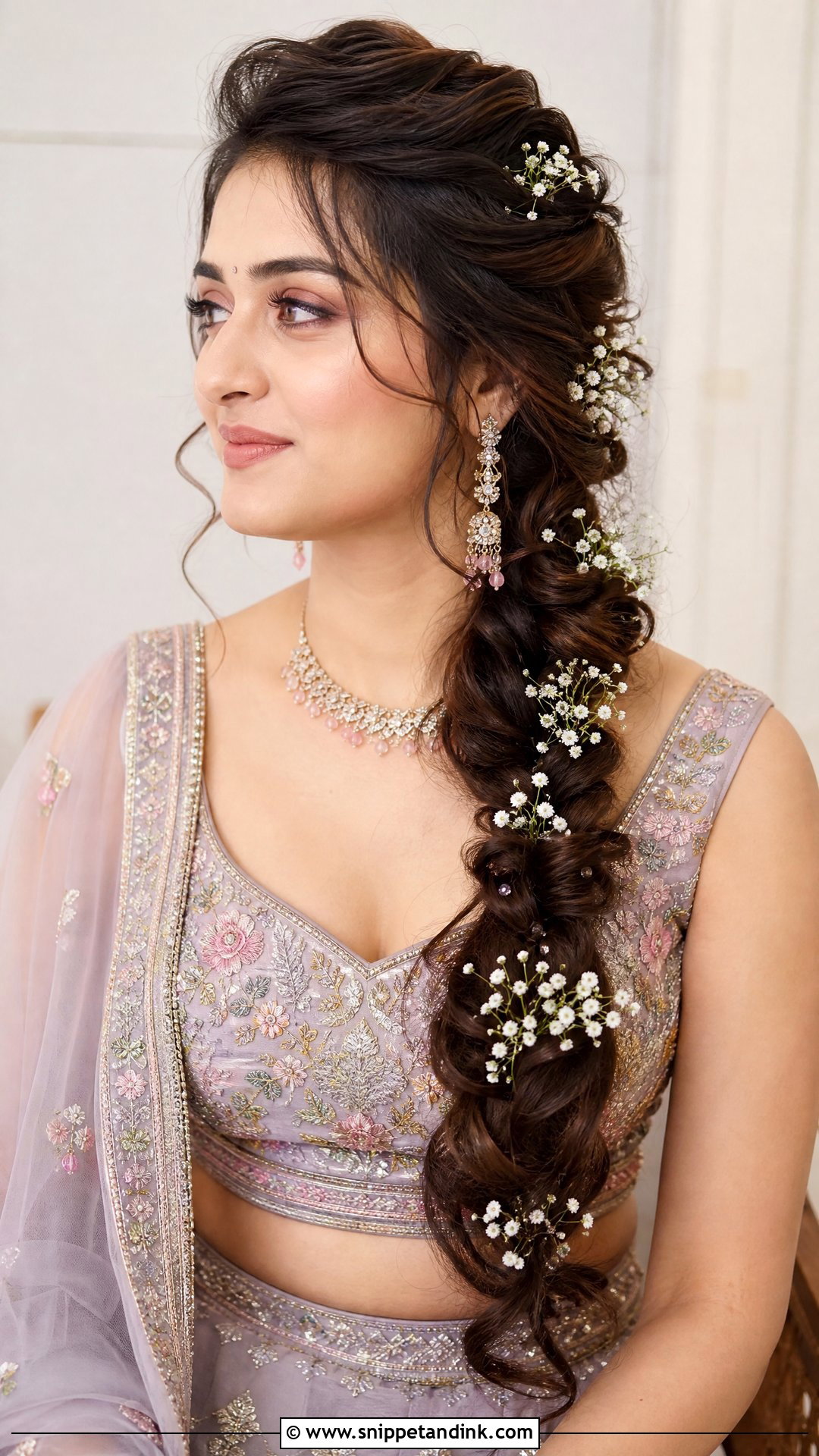
A fishtail braid starting at one side of the head and sweeping down over the shoulder adds texture right next to the face. I keep the sections small for a fine weave, then loosen the braid by pulling the outer edges for a fuller shape. Baby’s breath or tiny pearls woven through it add detail. Sarees and lehengas both work. It’s one of the few braids that looks good with medium-length hair. The thing to watch is the start point: begin it too high and it pulls at the temple; I start just behind the ear.
9. Half-Up Half-Down With Front Twists
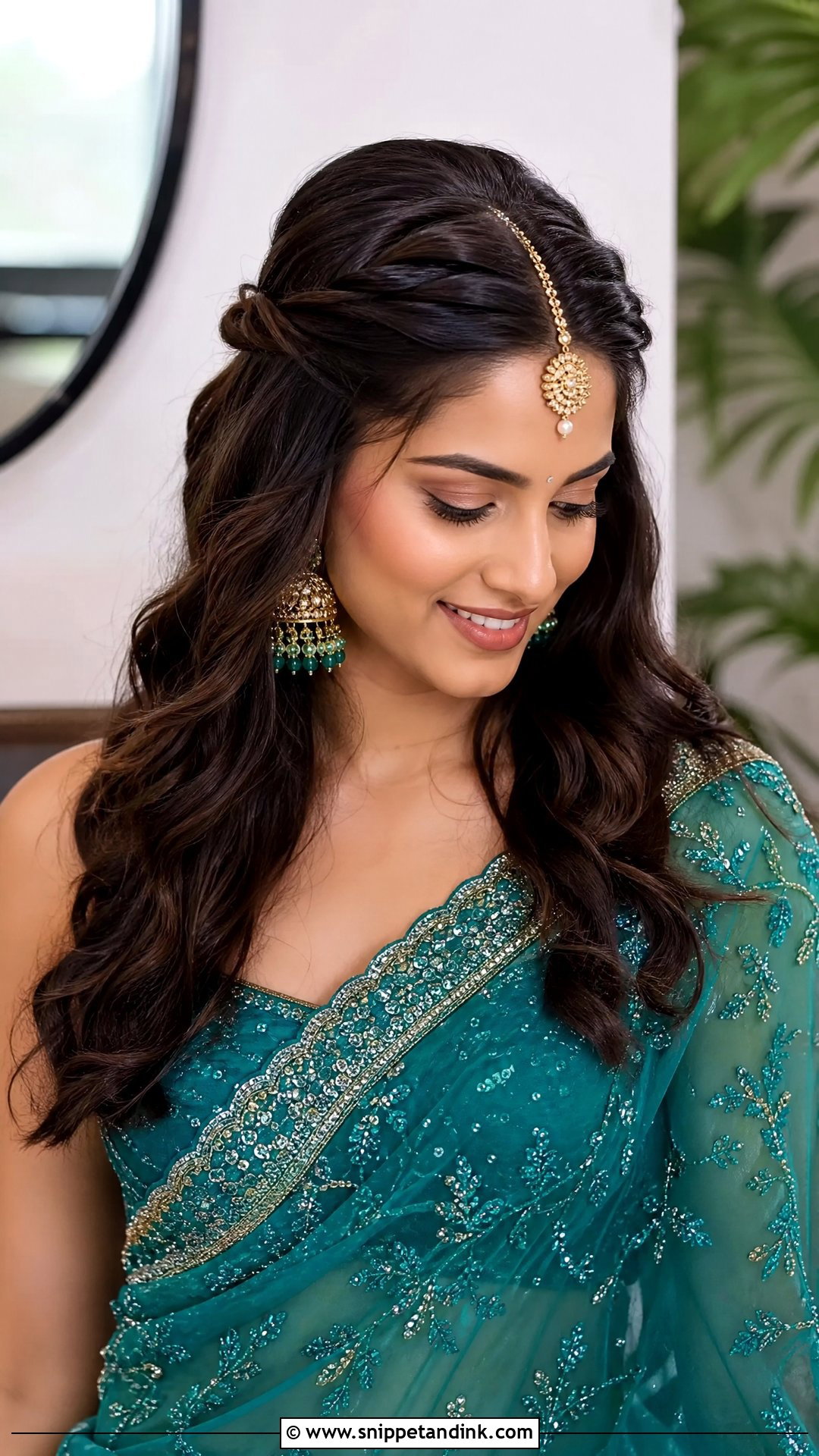
Half up with front twists keeps the face framed while the length shows. The top section is twisted back and secured, and the rest falls in soft waves. Those twists pair naturally with a maang tikka or statement earrings. Flowers or a sparkly clip at the join cover the pins. It suits nearly every face shape and works for brides, bridesmaids and guests at daytime ceremonies and evening functions. If you have thick, heavy hair, I’d add a second set of pins at the join, since the weight of the waves below drags the twists down over a long evening.
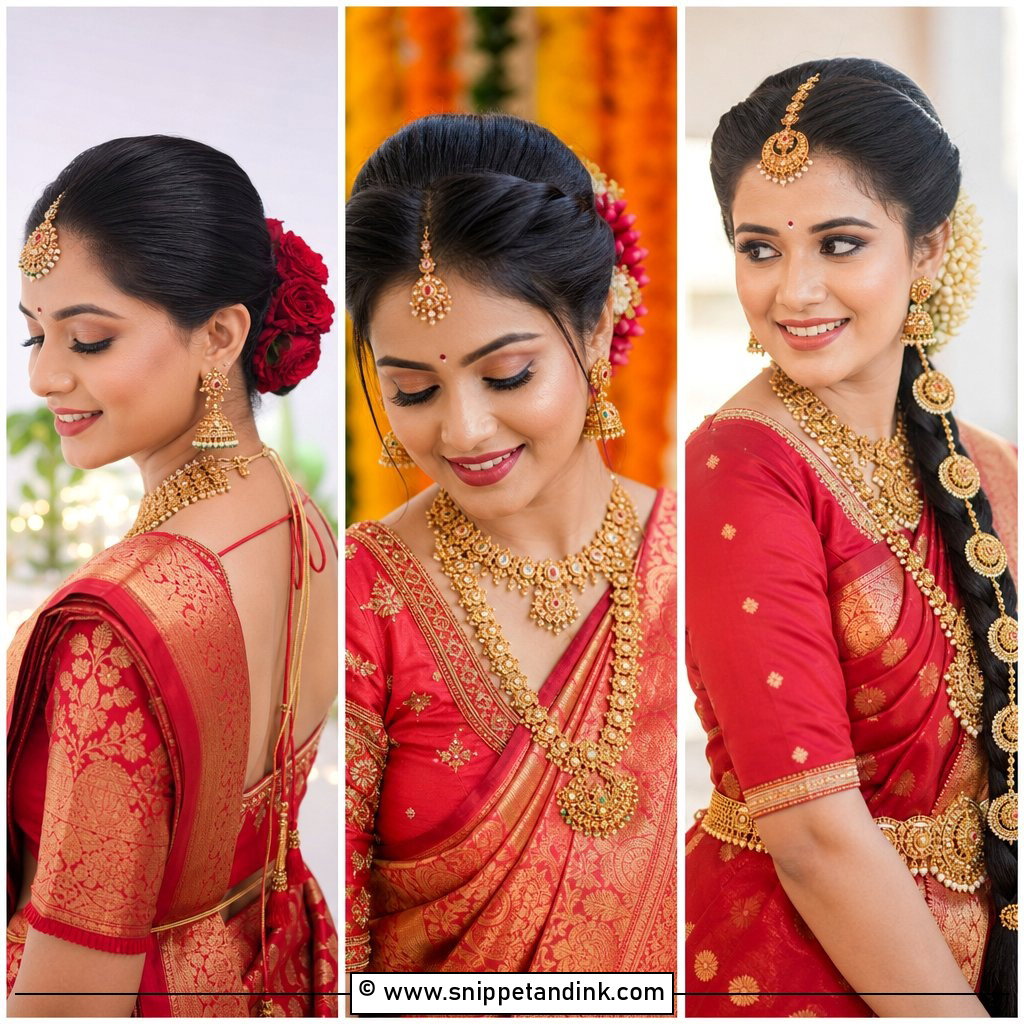
10. Front Pouf With Floral Accent
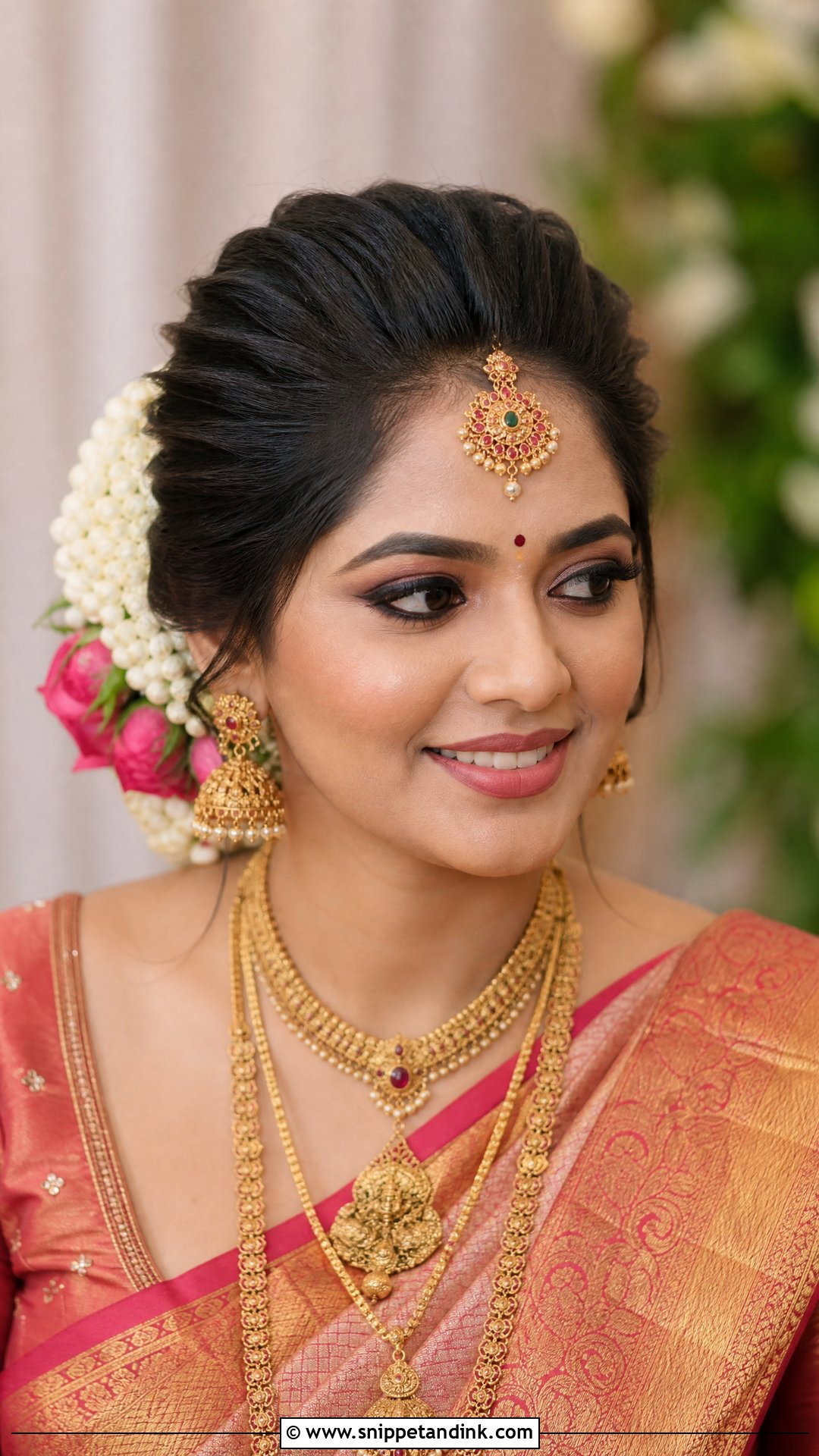
A front pouf with flowers tucked at its base is soft and traditional, and I often recommend it for the muhurtham. The pouf gives gentle volume at the crown; the flowers sit right where the pouf meets the rest of the hair and hide the pins there. It pairs with low buns and braids. Jasmine, roses and baby’s breath all work. Fresh flowers wilt against warm hair over a few hours, so I add them at the very last step. Round and oval faces get a little height from it, and it suits both South and North Indian bridal styles.
11. Side-Swept Curls With Statement Clip
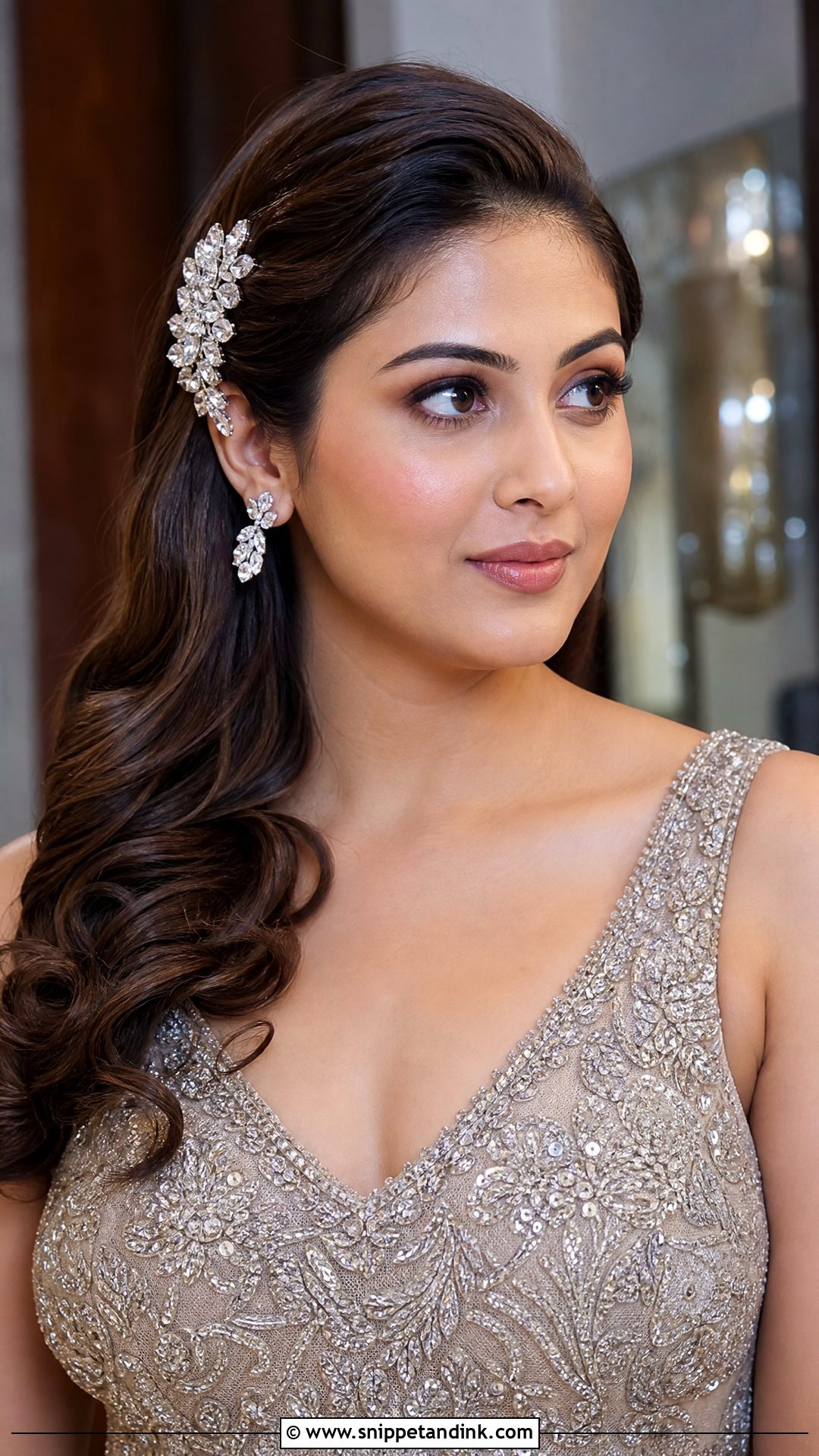
Curls swept to one side, with the opposite section held back by a jeweled clip, give an asymmetric frame that looks glamorous without much fuss. The clip does real work here. I place a pair of crossed bobby pins first and slide the clip over them, so the heavy clip isn’t the only thing holding the hair. It suits cocktail nights, sangeets and receptions, and medium to long hair. It’s an easy way to dress up curls with one piece, and a good choice if you’re doing your own hair as a guest.
12. Maang Tikka With Center Part
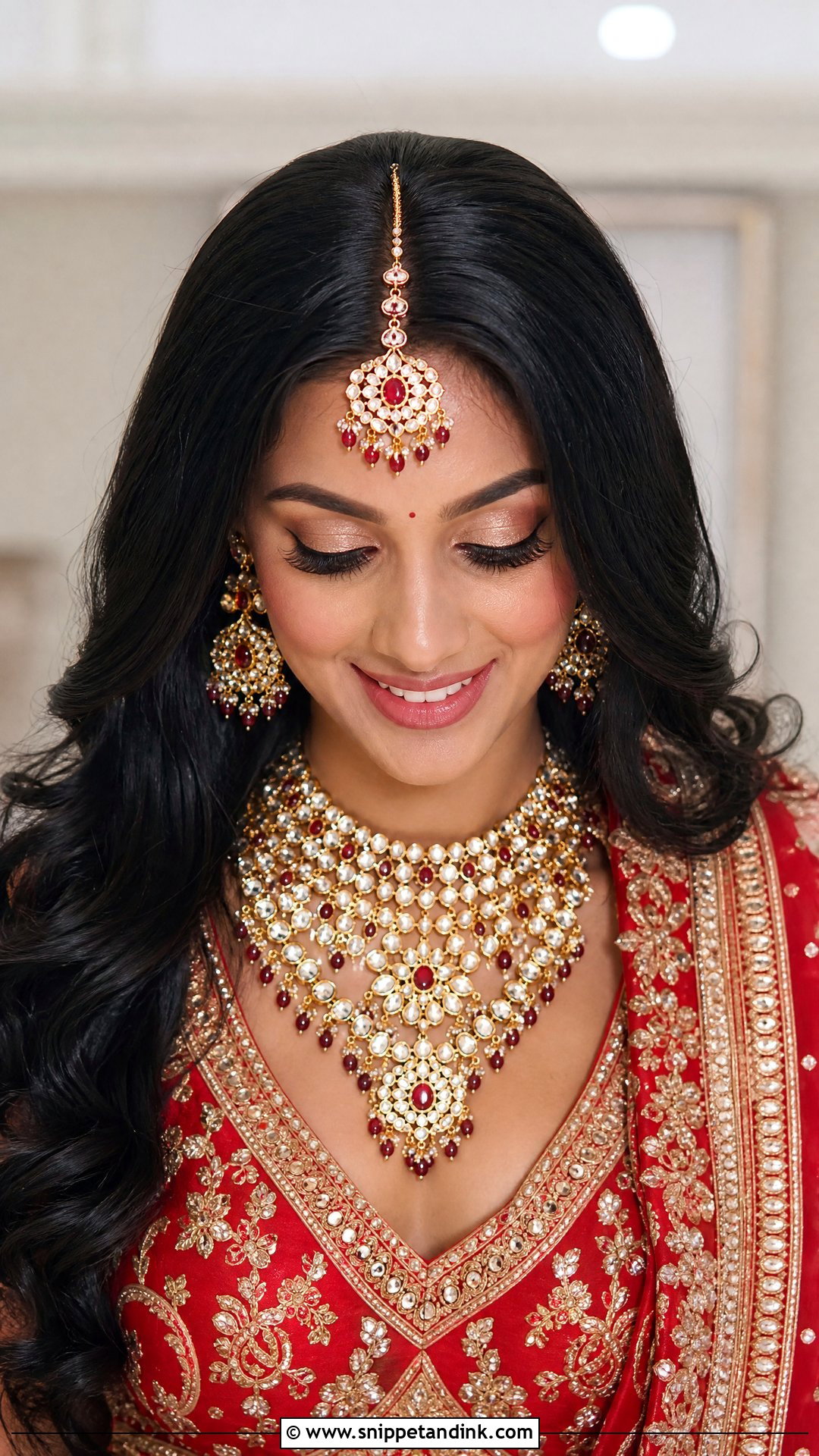
A center part with a maang tikka is the classic bridal front, and its symmetry is the whole point. I draw the part with a tail comb from the forehead to the crown in one line and check it in a mirror from straight on; a part that’s even slightly off shows immediately once the tikka is in. Wear the hair sleek or with soft waves. Lehengas and sarees both suit it. Oval and heart-shaped faces wear it best. It’s my usual recommendation for the muhurtham and the main ceremony, because nothing reads as more traditional.
13. Front Twisted Bangs
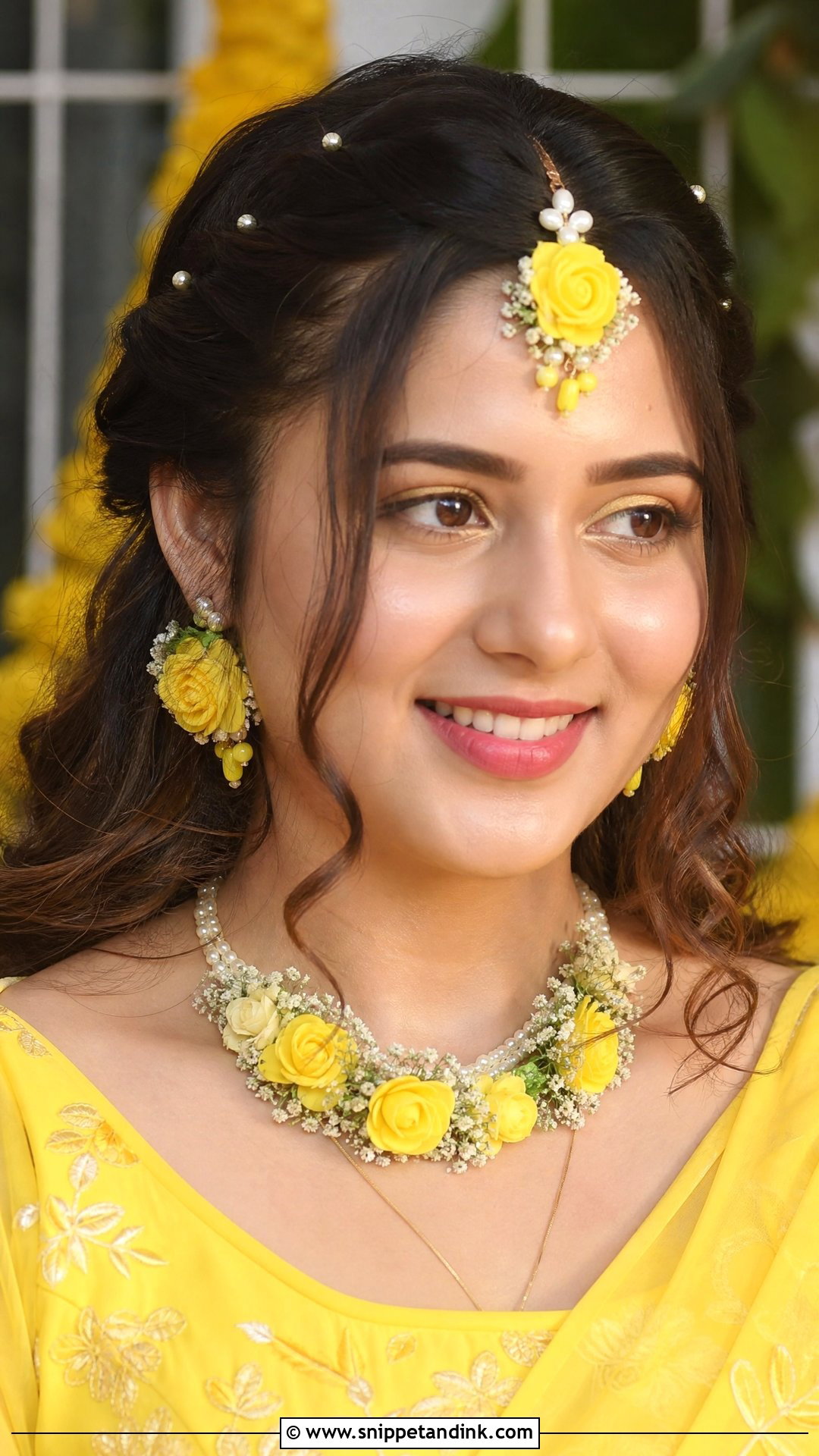
Twisted bangs are a way to have face-framing pieces without cutting a fringe. I take small sections near the hairline, twist them gently and pin them back loosely, leaving soft wisps in front. They work with open hair, buns or braids. Tiny flowers or pearl pins add an accent. Round and long faces both benefit from the extra dimension near the forehead. They’re light and youthful, and suit mehndi, haldi and engagement daytime functions, but they slip on oily hairlines, so a little dry shampoo at the roots first helps them stay put.
14. Sleek Low Bun With Side-Swept Front
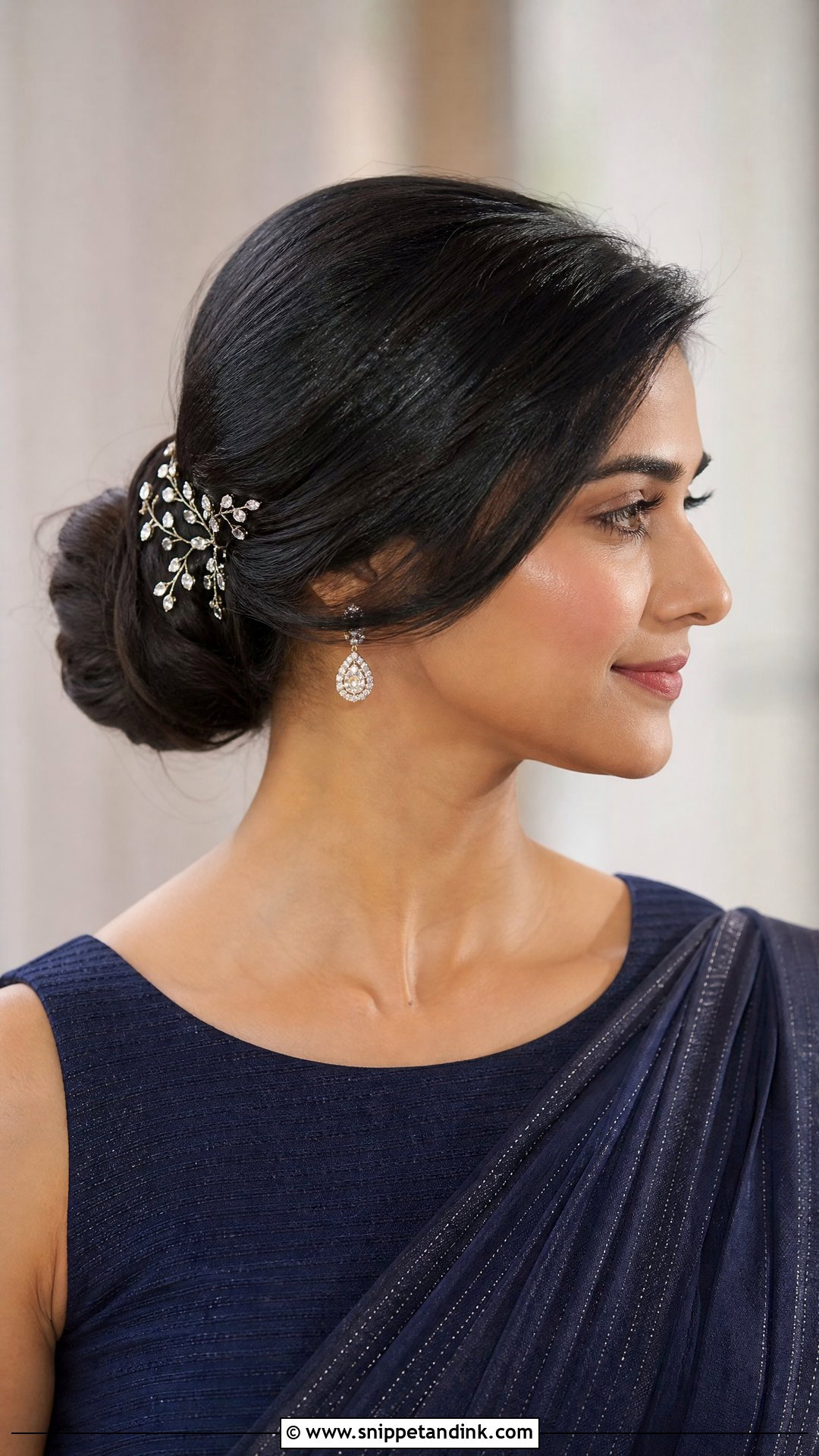
A sleek low bun with the front swept to one side keeps the face open and puts the attention on statement earrings. The front sweeps across before joining a polished bun at the nape. It’s a structured look that suits draped sarees and gowns. A delicate hair vine or small flowers near the bun soften it. I like it for brides and bridesmaids who don’t want much volume. It flatters all face shapes and works for day and evening. Under a dupatta, a low bun gives the pins a solid anchor, which makes this one very practical.

15. Voluminous Front With Open Curls
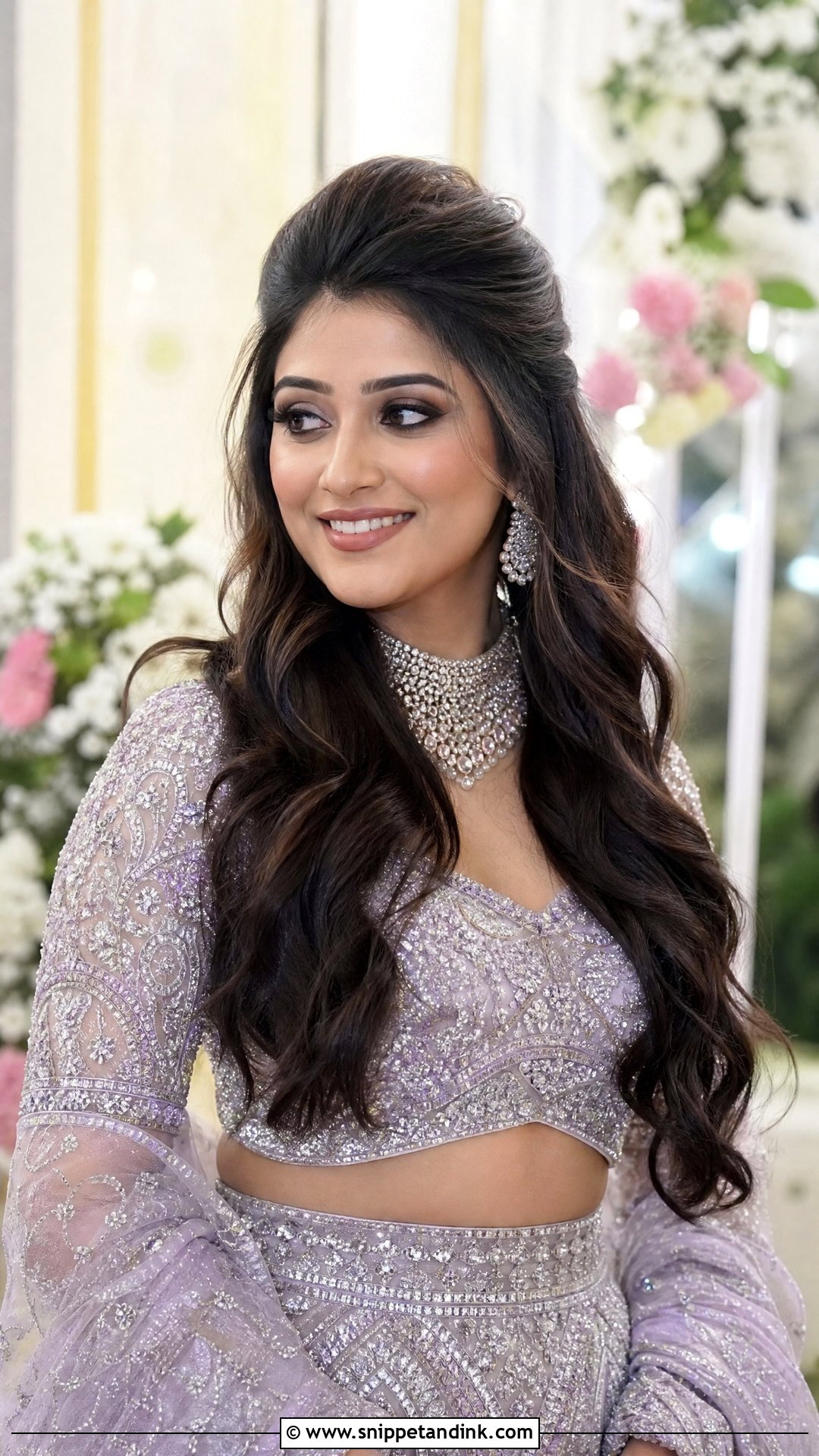
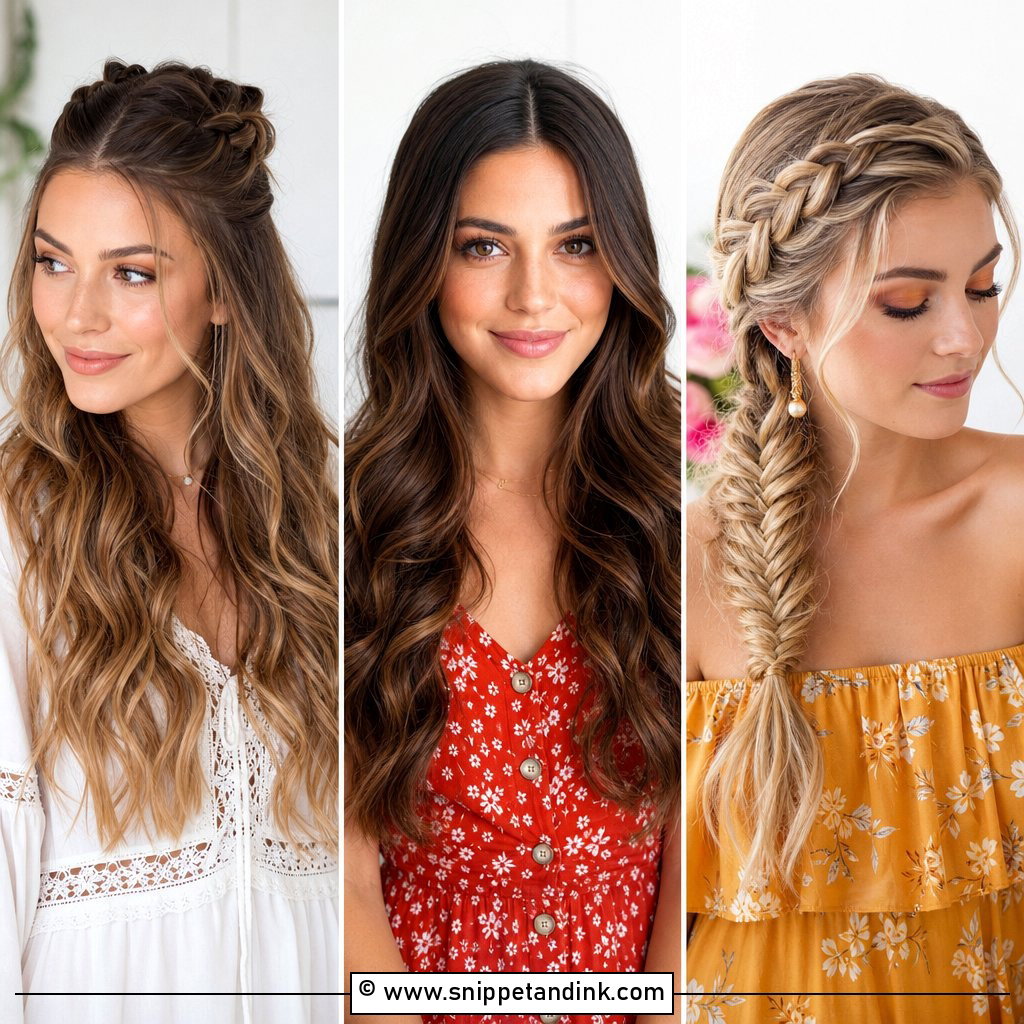
Big front volume with open curls is a reception look with maximum impact. The crown is teased for height and curls fall down the back and shoulders. It holds its own against heavy lehengas and bold jewelry. I finish with a shine spray rather than more lacquer, which keeps the curls bouncy instead of crunchy. Most face shapes can wear it. My caution is time: this style takes a while to build, and teased volume needs careful brushing out afterward, starting from the ends, to avoid breakage.
16. Front Braided Headband
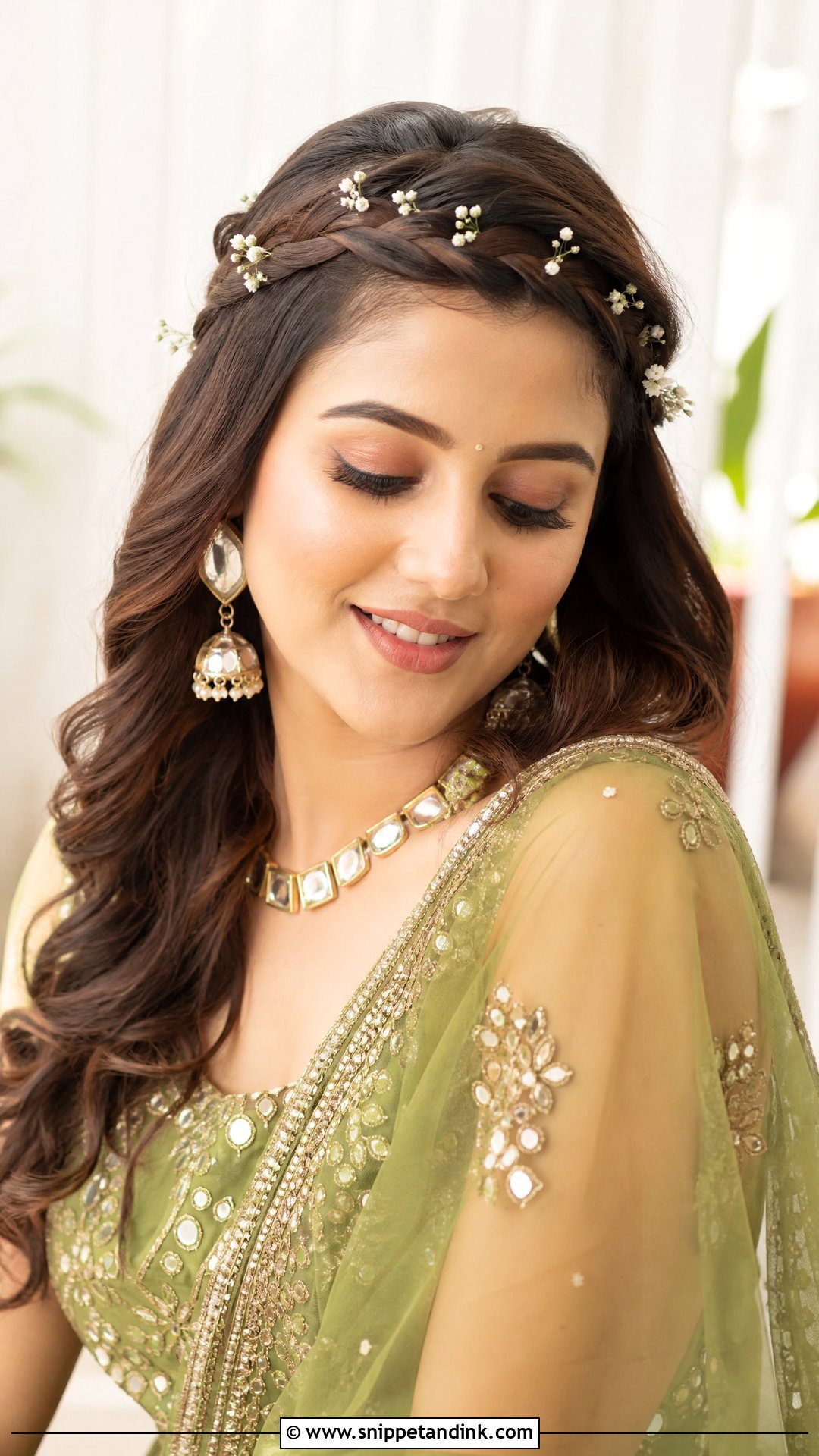
A slim braid across the hairline acts like a natural headband and keeps the front neat. Behind it, leave the hair open in waves or pull it into a low bun. It’s suited to relaxed functions like mehndi, haldi and daytime ceremonies. Tiny flowers or pearls add charm. Round and heart-shaped faces wear it well. I start the braid behind one ear and work across to the other, then pin the tail under the hair, so there’s no visible start or end. It’s practical for brides, bridesmaids and guests alike.
17. Side Parting With Embellished Hairband
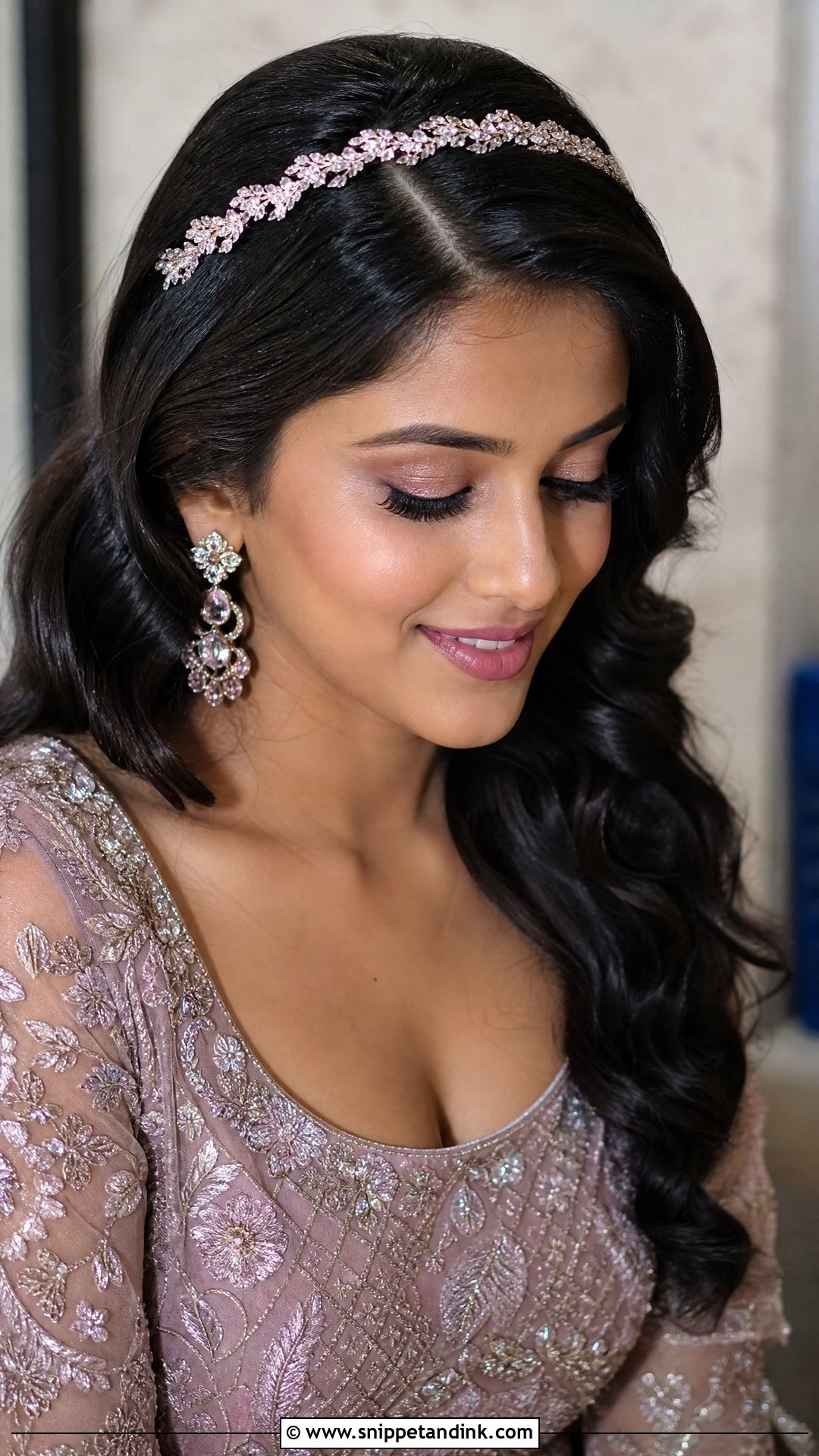
An embellished hairband over a side part adds sparkle to a simple front. I straighten or wave the hair, set the part, and place a jeweled hairband across the crown. The band holds the hair back and acts as the accessory at once, which makes it an easy, celebration-ready choice for sangeet and cocktail functions. It works across hair lengths and most face shapes. The common complaint is pressure behind the ears after a few hours. I bend the band slightly wider before placing it and pin each end, so it holds by grip rather than squeeze.
18. Front Roll With Pinned Sides
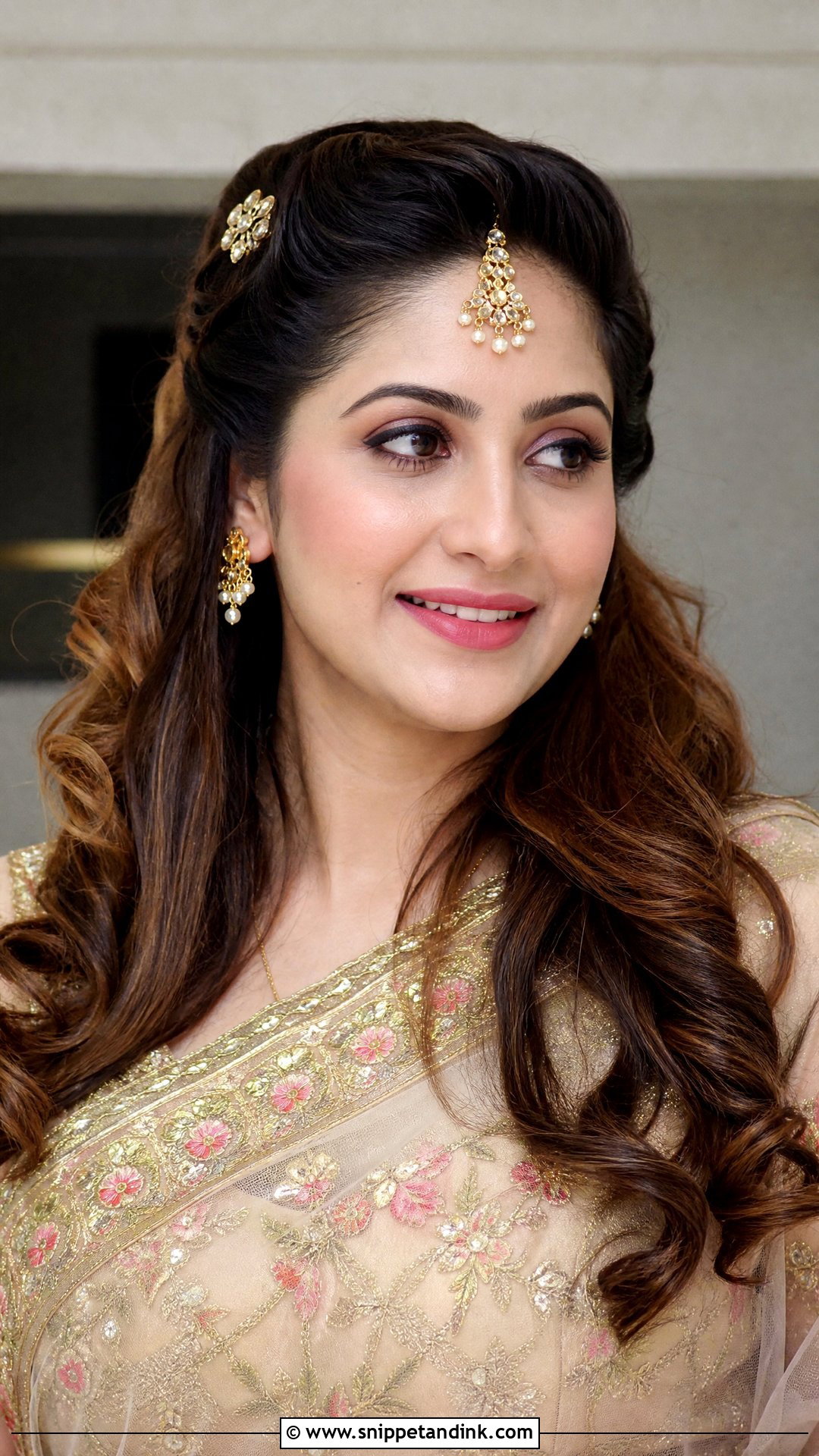
A front roll is a vintage-leaning look: the front section is rolled back away from the face and pinned smooth, with the sides tucked neatly. It sits well over buns or open curls and suits a maang tikka or earrings. I roll the hair around two fingers and pin through the inside of the roll, so the pins don’t show on the surface. Round and square faces gain a little height from it. A small flower or jeweled pin adds an accent. It’s a structured, formal choice for traditional ceremonies.
19. South Indian Front Parting With Twisted Sides
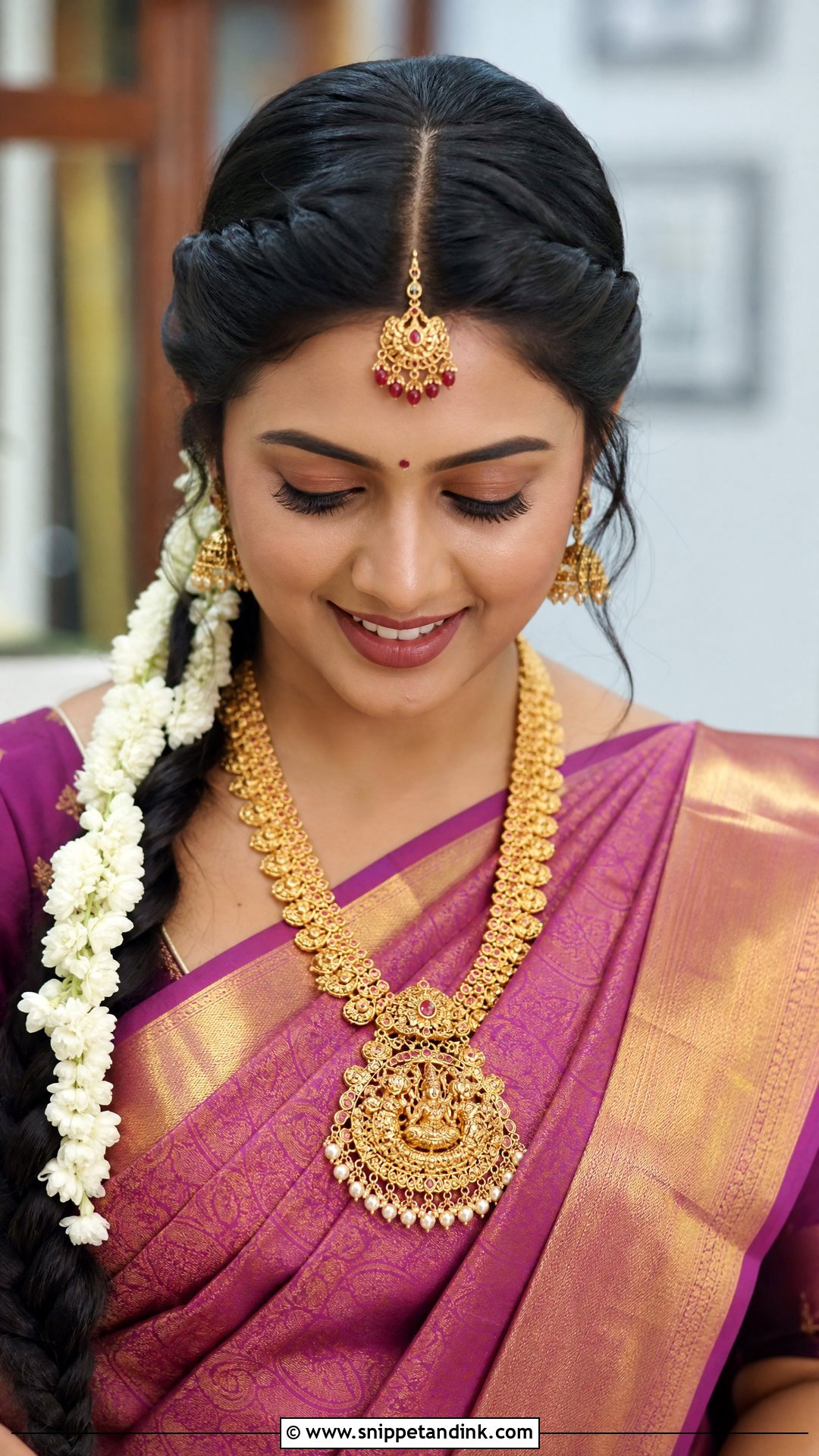
The South Indian front parting with twisted sides is traditional and very neat. I make a mid-front parting, twist the hair on both sides, pull it back gently and pin it, then finish with a long braid decorated with flowers. The twists add texture near the forehead and keep everything polished for the length of a temple ceremony. It pairs with temple jewelry and silk sarees, and suits oval and heart-shaped faces. If your braid is short, I add a matched extension so the flowers can run its full length; that’s standard for this look.
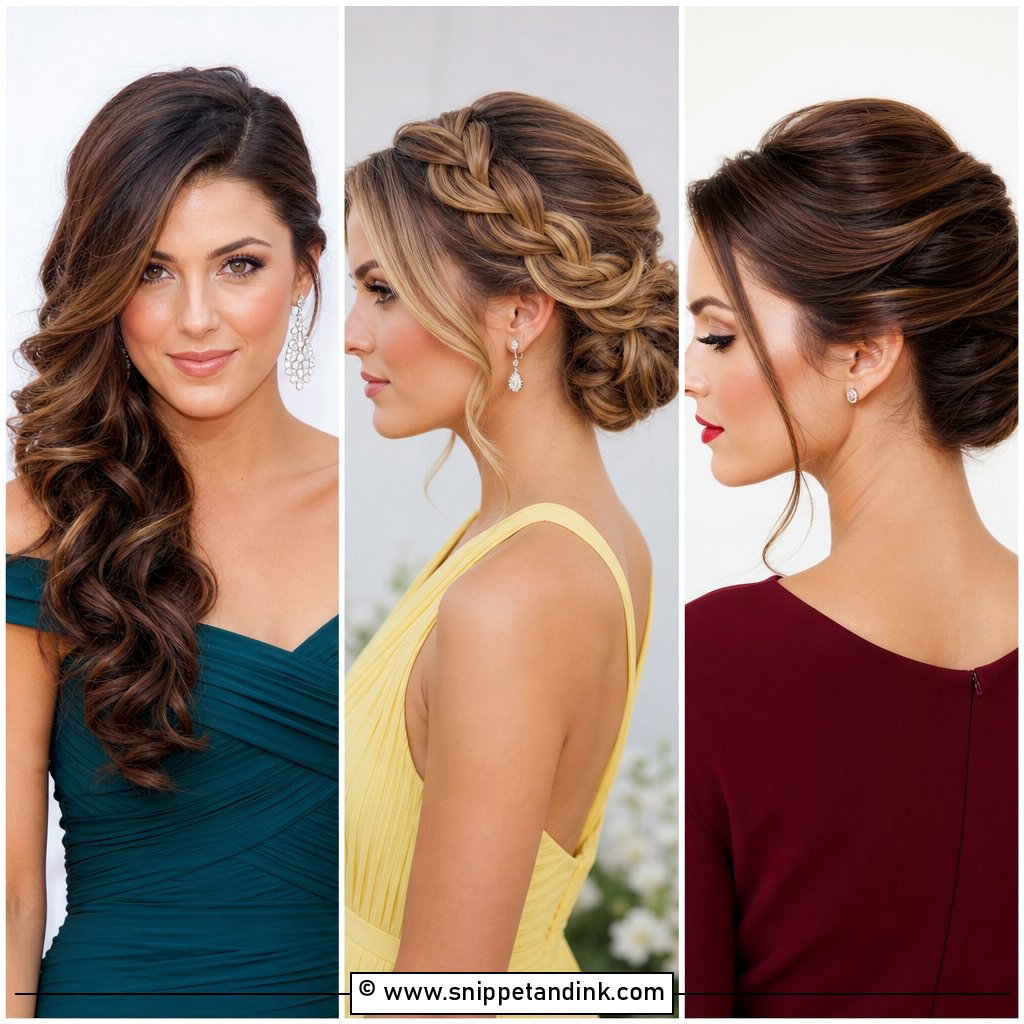
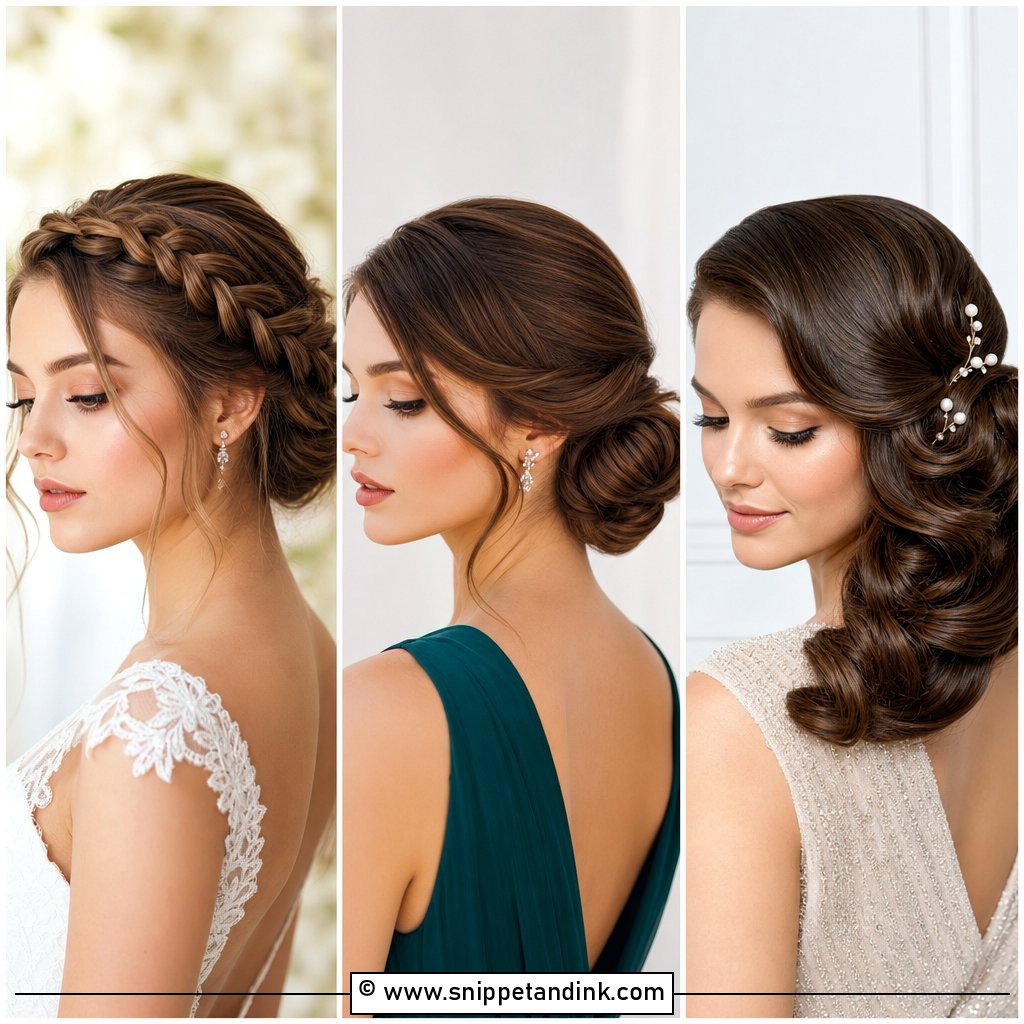
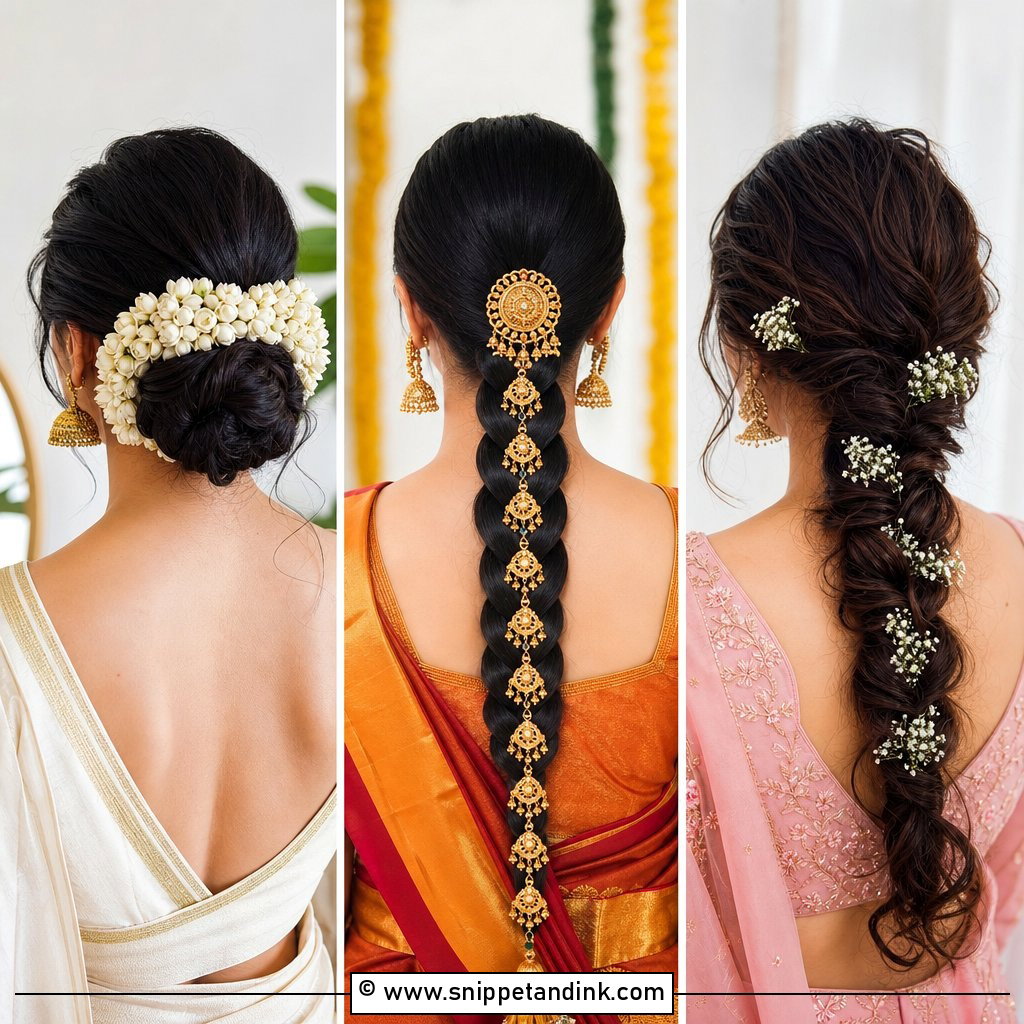
20. Loose Front Tendrils With Updo
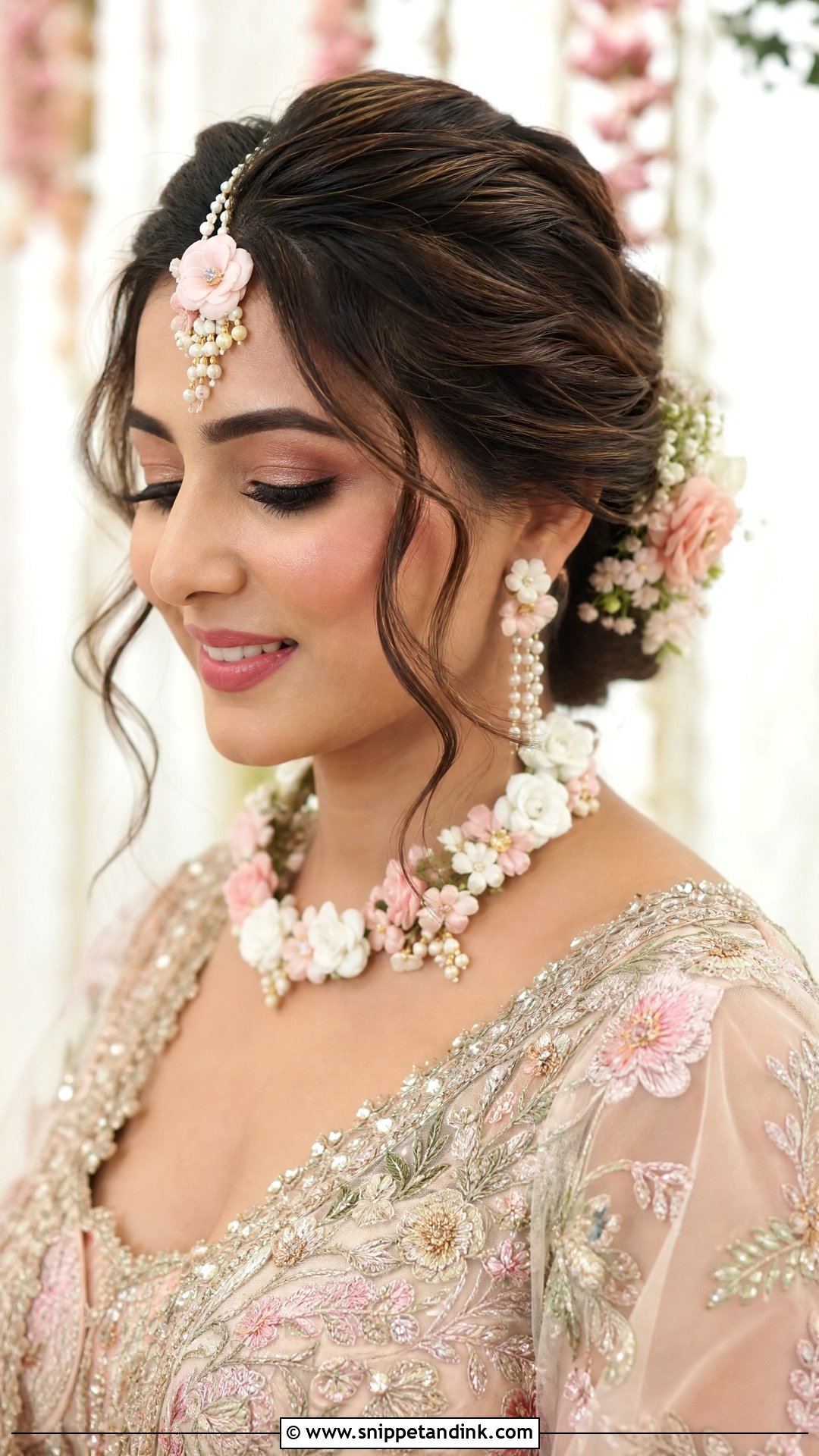
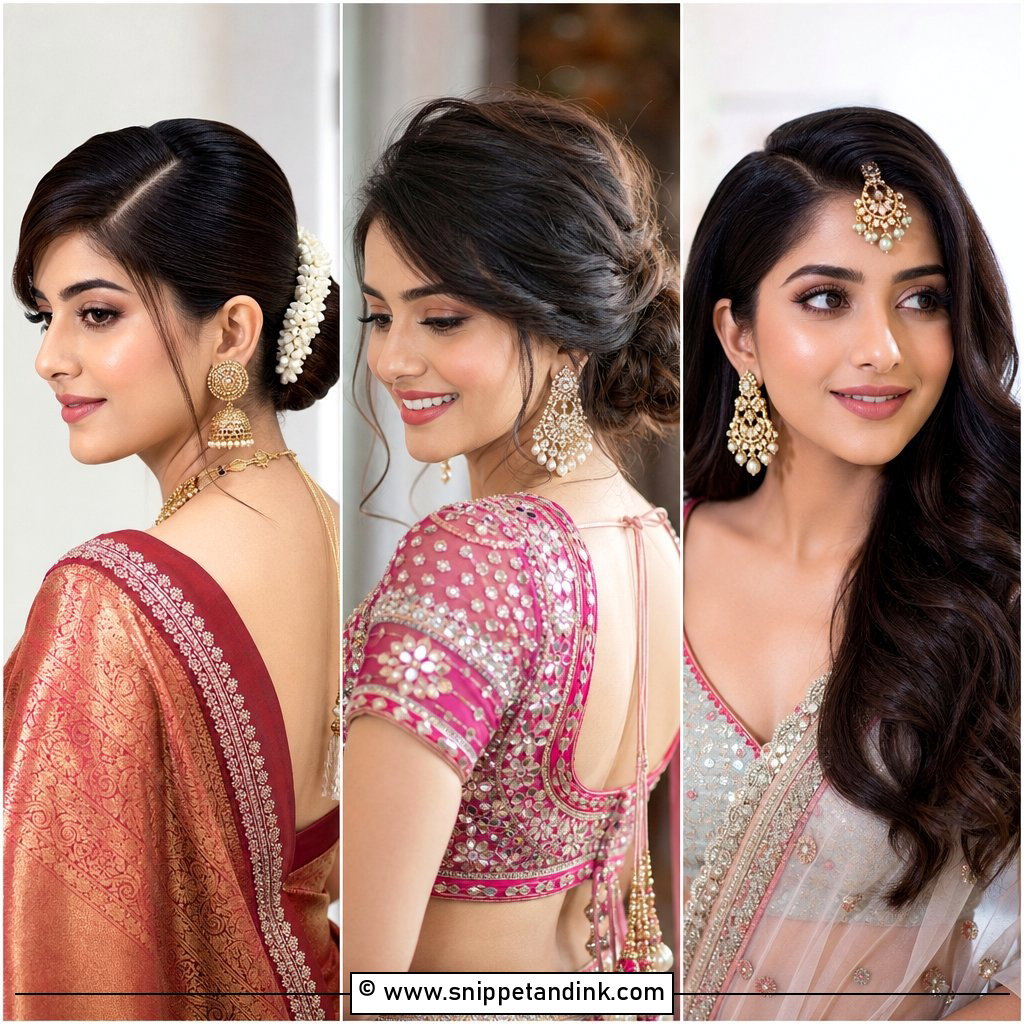
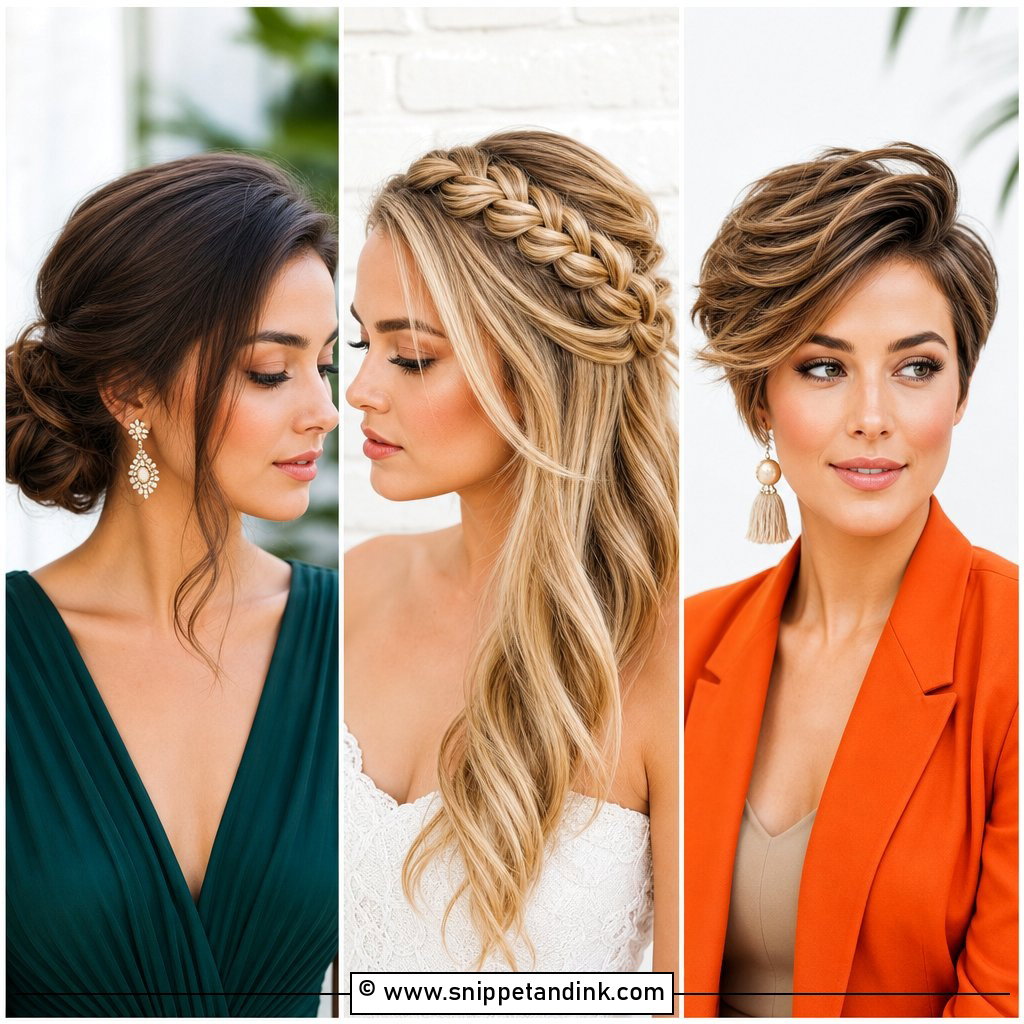
An updo with a few loose tendrils near the face is the softest option on the list. Most of the hair goes into a bun or twisted updo, and I pull out a few delicate strands only after everything is pinned, so I can see exactly where they fall against the jaw. Curl them lightly. It suits lehengas and sarees and works at every function. I keep the tendrils fewer than brides first ask for; three or four look intentional, while eight start to look like the updo is coming apart.
Heat, Sweat and a Heavy Dupatta in an Indian Summer
Many Indian weddings happen in warm, humid months, often outdoors or in crowded halls. The front is where heat shows first: sweat at the hairline, frizz around the part and puffs that sink under a dupatta. Here’s how I adjust.
- Go smaller on volume. A compact puff holds; a tall one collapses into a dent as soon as the dupatta goes on in a hot room.
- Favor sleek over soft. Center part buns and twisted partings survive humidity better than loose waves, which drop within an hour of stepping outside.
- Seal the hairline. I smooth baby hairs and the part with a little gel and finish with an anti-humidity spray, held well back from the face so it doesn’t touch makeup.
- Pin the dupatta into the bun, not the hair. When the drape’s weight hangs from loose strands, it drags the front back and the part shifts.
Put a small kit in a sister’s bag: blotting papers for the forehead, a few pins in your hair color, a fine comb and a travel-size flexible spray. Blot the hairline before you touch the hair, never the other way around, or oily fingers will undo the smooth finish faster than the heat does.
Plan the Front Around the Function, Then Add the Sparkle
The right front depends more on the event than on the trend. From voluminous puffs and side-swept curls to traditional twisted partings and embellished hairbands, each style here has an event it suits best. Ceremony looks need to hold jewelry and a dupatta; sangeet and reception looks can move more. Decide the shape first, by your face, hair length and function, then add flowers, jeweled clips or a maang tikka. Wear it for a few hours at your trial, and you’ll know exactly what to expect on the day.
You'll Like These Ideas:



Leave a Reply