
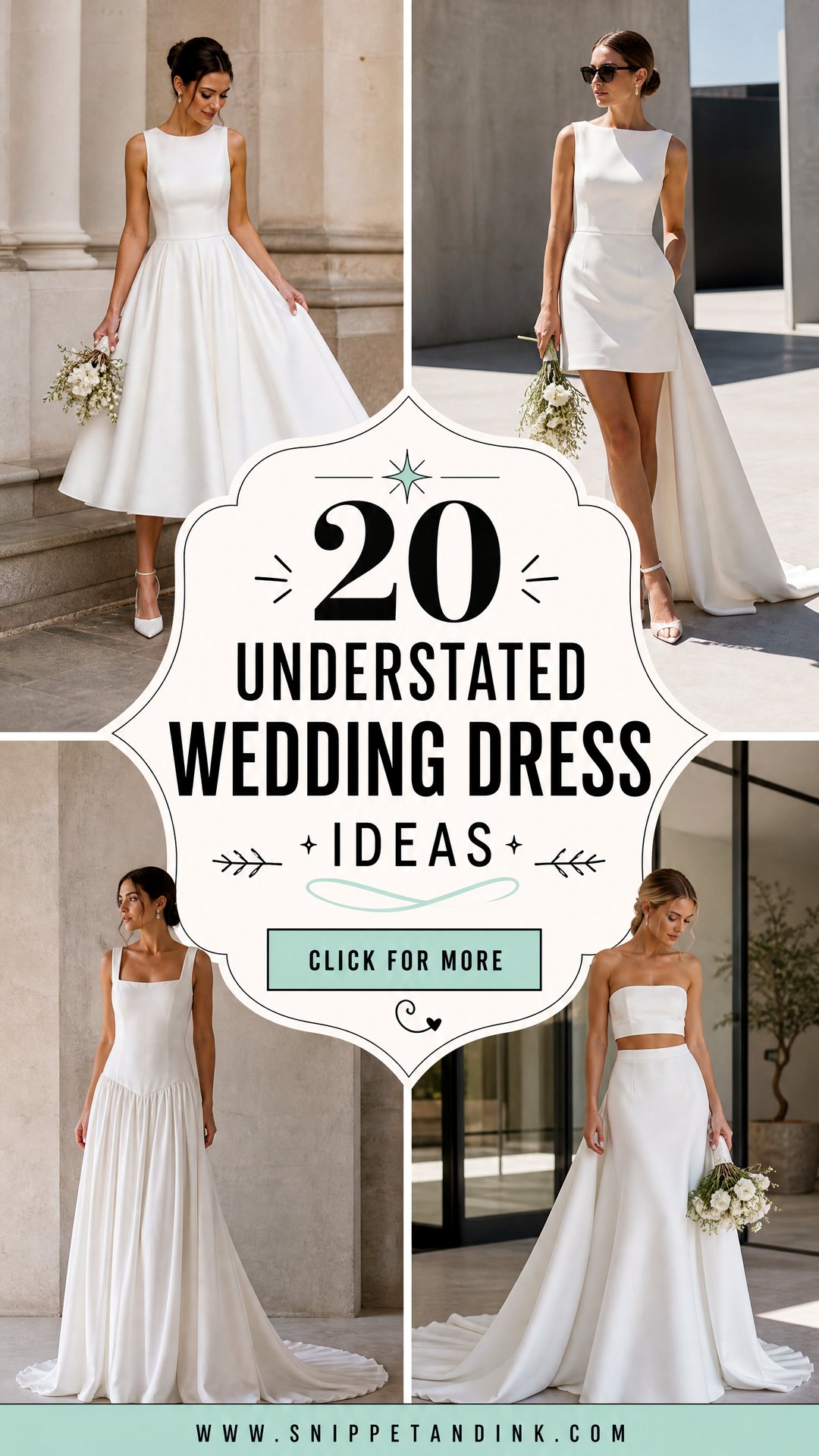
A plain wedding dress has nowhere to hide. Without beading or ruffles, the fabric, the cut and the fit carry everything, which is exactly why I love styling them. Clean satin, fluid silk, structured crepe and fine lace all work for almost any venue or season, and minimalist bridal collections right now lean on slip dresses, column gowns, square necklines and small architectural details. The accessories have to be just as deliberate: a pair of pearl earrings, a plain veil, a sleek pump. Here are twenty quiet dresses, each styled head to toe, with the fitting notes I’d give a bride before she orders.
Satin, Crepe, Mikado or Silk? Feel the Fabric First
With a plain dress, the fabric decides almost everything: how it moves, how it creases, how it looks in photos. I ask brides to handle swatches before they look at styles.
Crepe
Matte, slightly textured and heavy enough to hold a clean line. It creases less than satin but shows underwear lines and every fitting flaw.
Mikado
A stiff, structured silk-blend weave. It keeps sharp shapes like ball gowns and square necklines, but it’s heavy and warm in summer.
Silk Satin and Charmeuse
Fluid and glossy, ideal for slips and bias cuts. They mark easily with water or sweat and wrinkle when you sit, so they suit short ceremonies and gentle days.
Duchess Satin
Thick with a soft sheen. It’s forgiving, photographs well and holds structure, though it can feel formal for a beach.
1. Silk Slip Wedding Dress
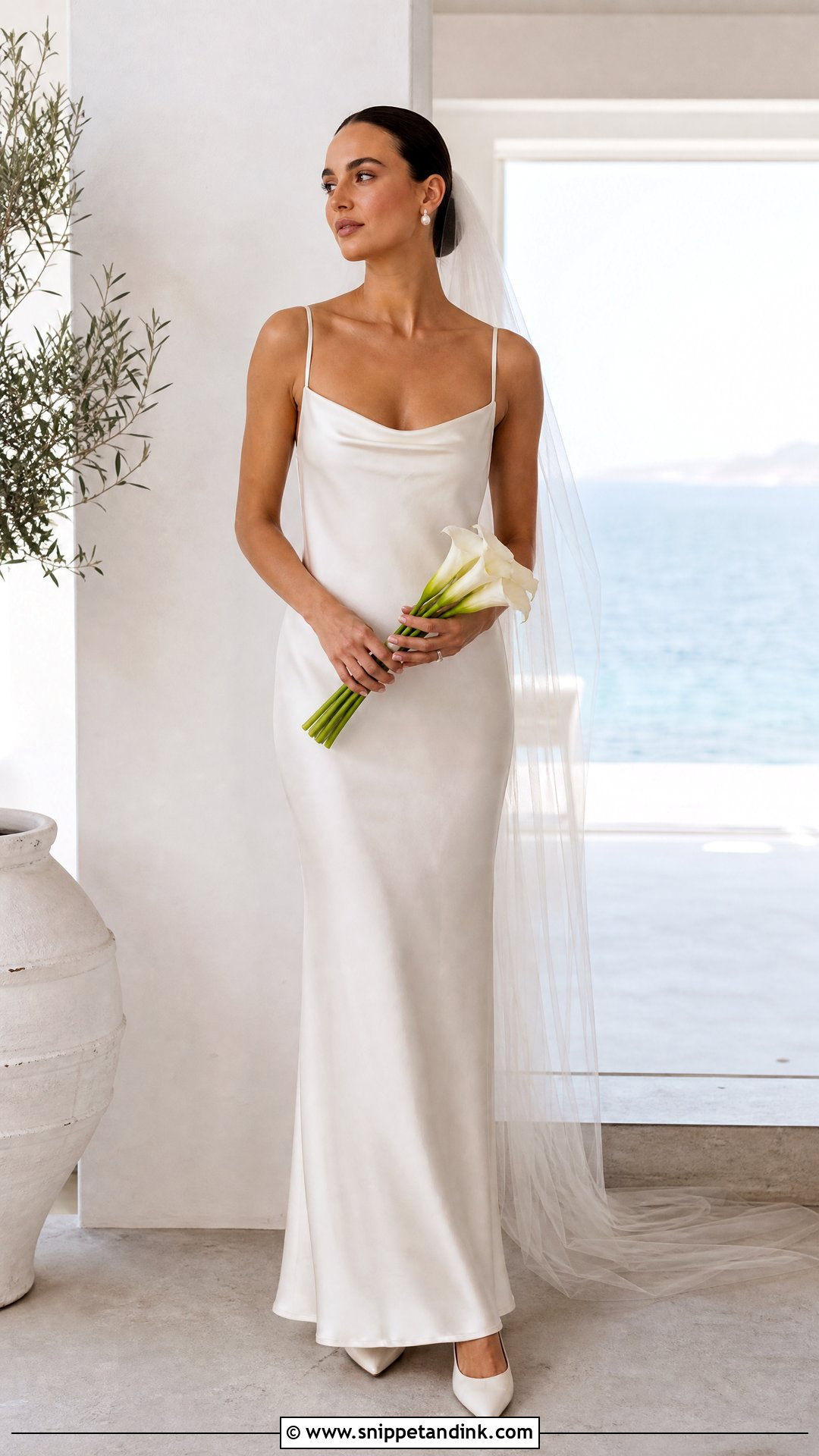
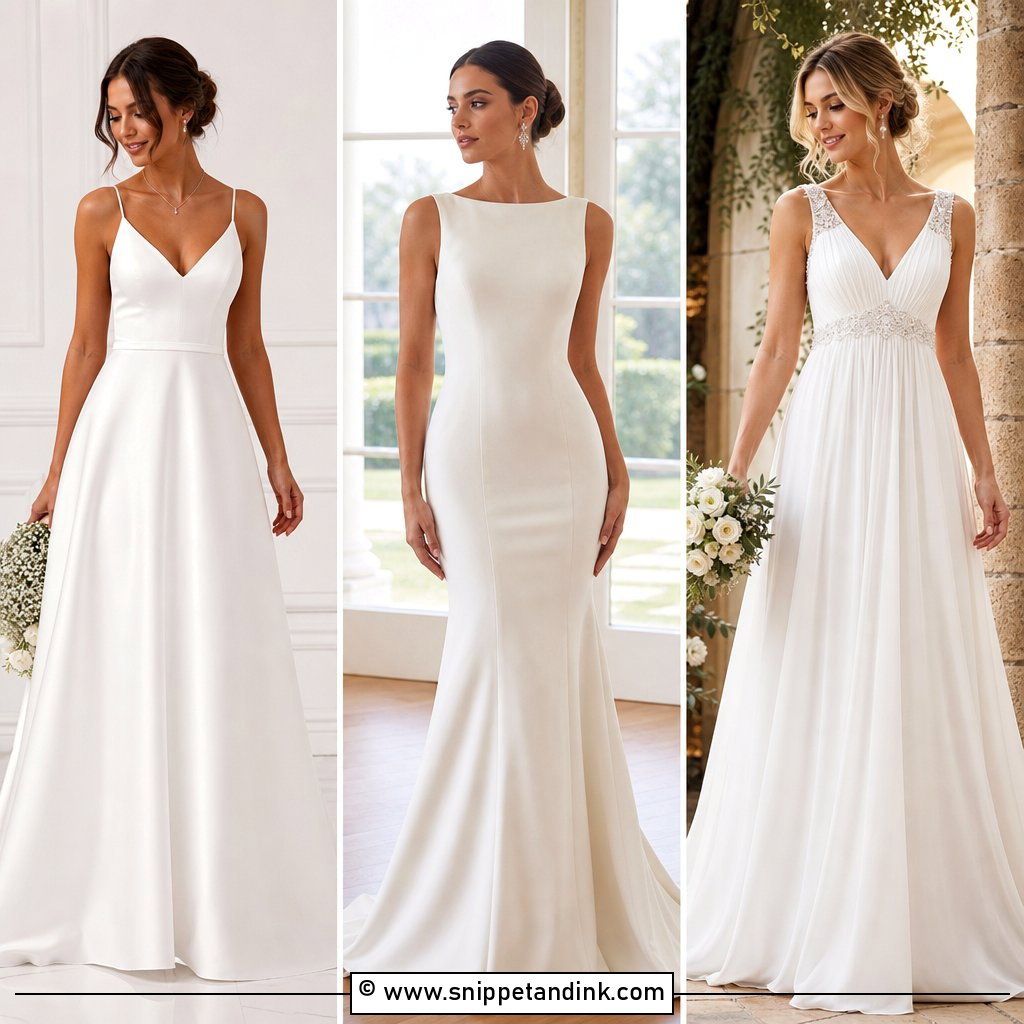
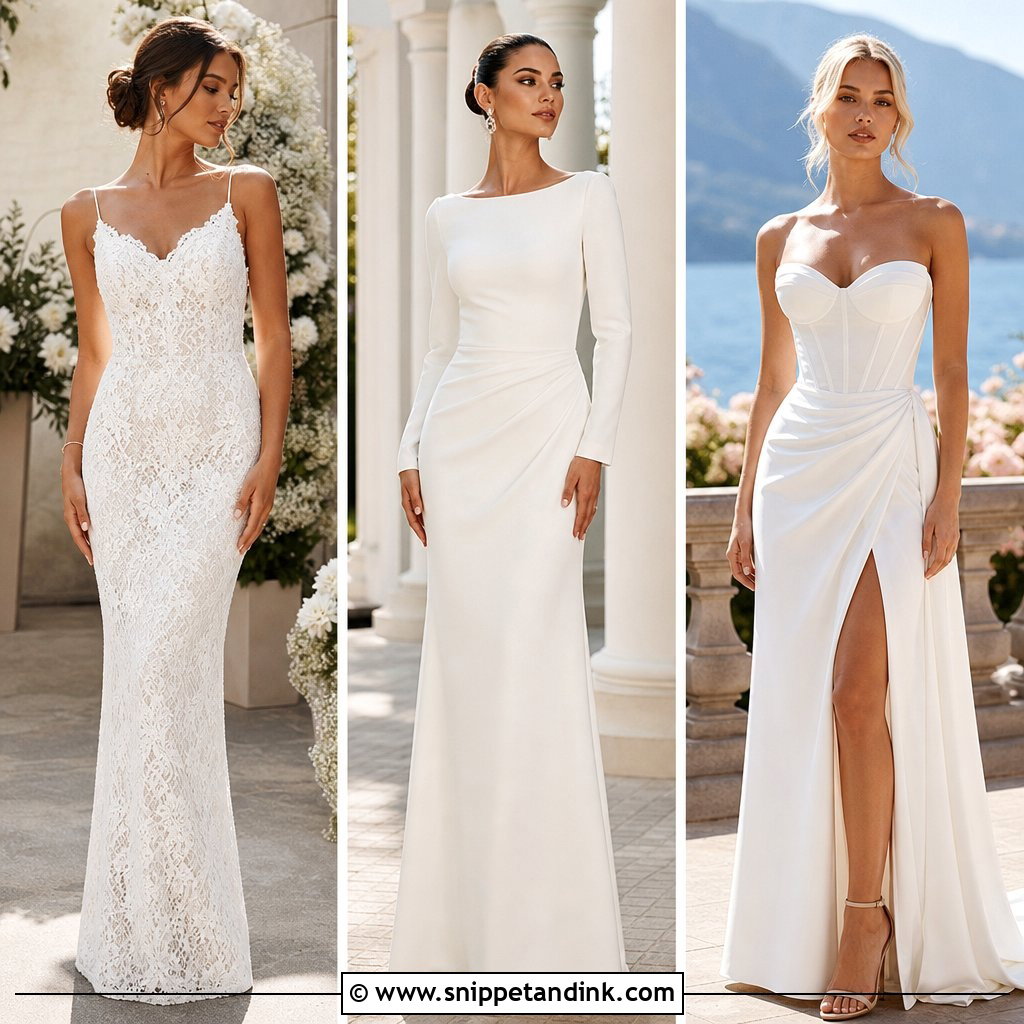
Silk slips move like water, which is the whole point and also the risk. A bias-cut dress with narrow straps and a soft draped neck should skim the body, not cling, so size up if you’re between sizes and let the seamstress take it in. Lightweight silk marks with a single drop of water or a sweaty palm, so I prefer a heavier weight. Ivory kitten heels, small pearls, a plain fingertip veil, a low bun and calla lilies keep it clean, with a matching silk shawl for cool evenings. It’s a direct line back to 1990s bridal fashion.
2. Square Neck A-Line Wedding Dress
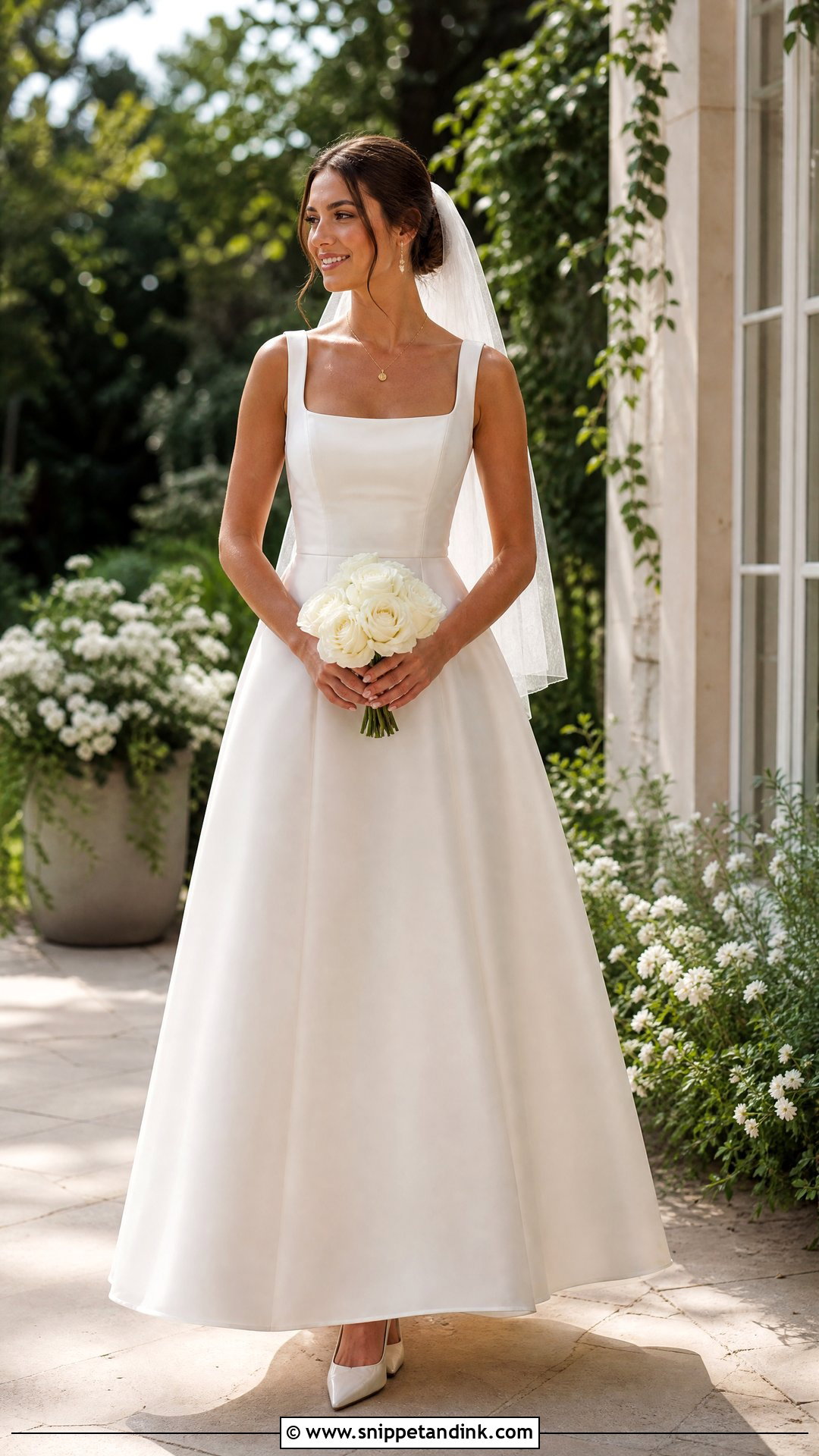
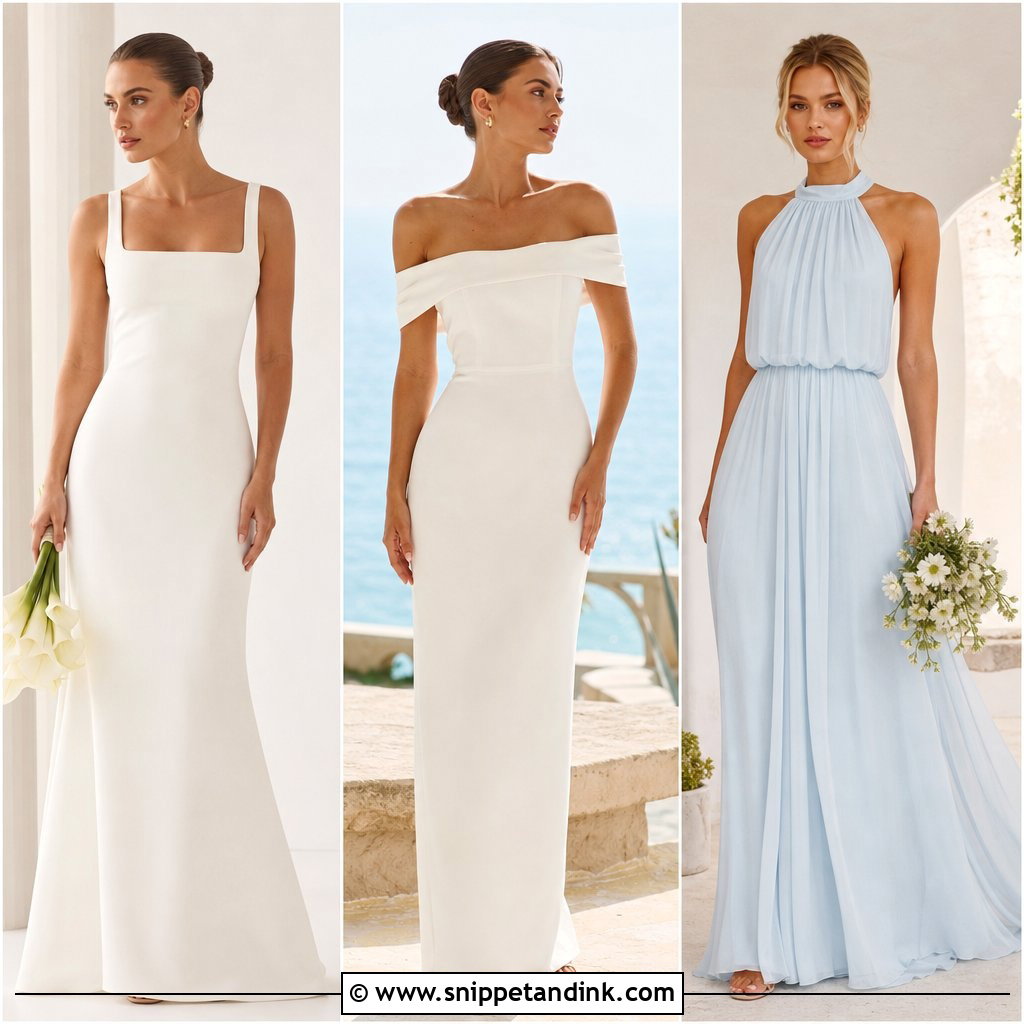
Square neck A-lines suit nearly every figure I dress, since the skirt falls away from the waist and doesn’t need a tight fit at the hip. I’d look for a smooth satin or mikado design with wide straps and a fitted bodice. Check the neckline corners while seated: if the bodice is loose, they buckle forward. Pointed pumps, a fine gold bracelet, small drop earrings and a waist-length veil keep it light, with hair swept back and a small rose bouquet. Pockets, if it has them, make for relaxed photos.
3. Crepe Column Wedding Dress
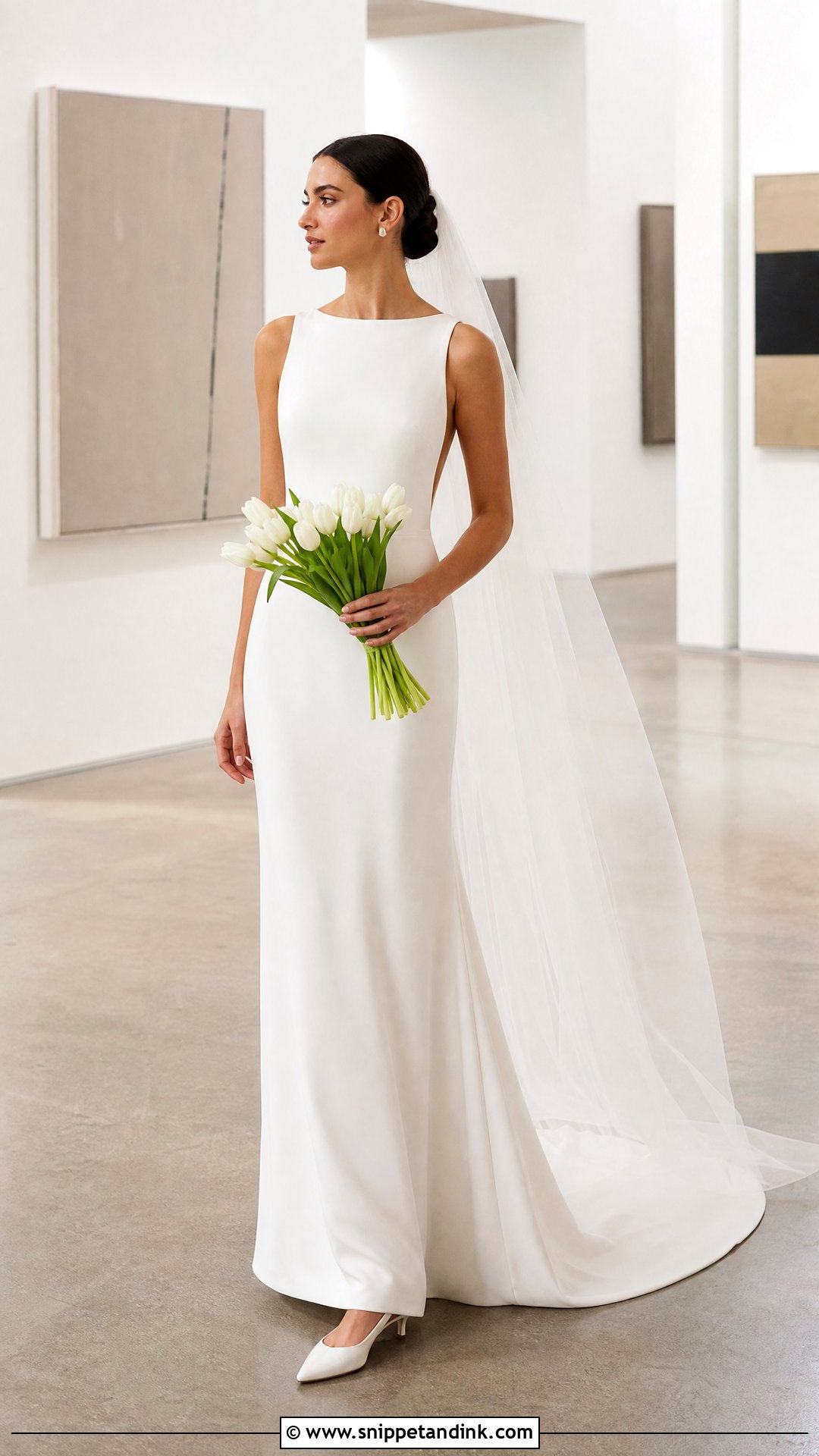
Crepe gives a column enough body to look sharp without adding volume. A jewel neckline, a lightly defined waist and a straight skirt with a short train is the version I recommend. Walk in it before buying, because a straight column limits your stride, and ask about a hidden back slit if steps are involved. Low slingbacks, a slim tennis bracelet and tiny studs suit it, with a sleek chignon or a straight shoulder-length cut. A plain cathedral veil adds ceremony drama, then comes off to show the clean line. Narrow tulips finish it, and city or gallery venues suit it best.
4. Off Shoulder Sheath Wedding Dress
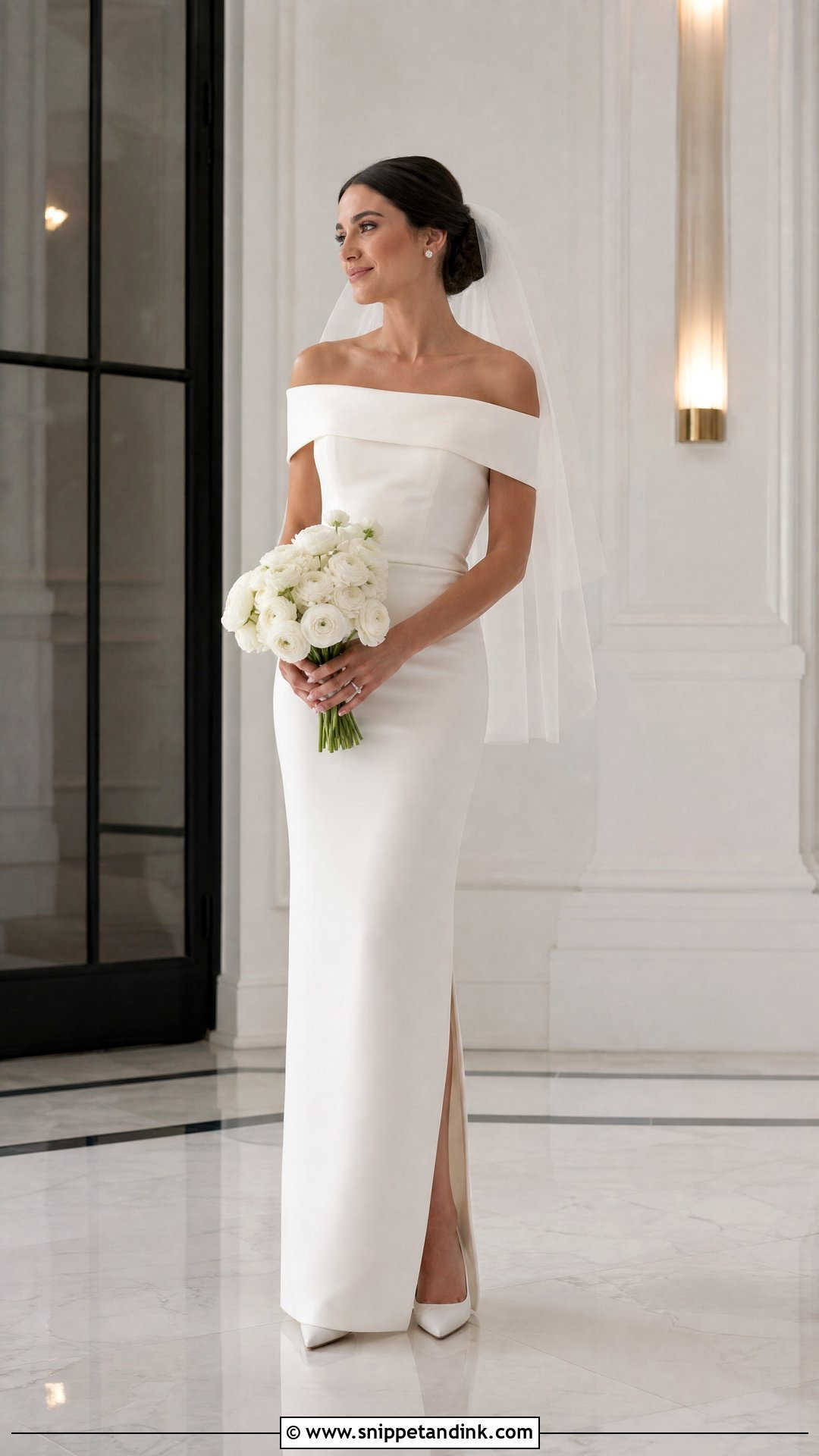
In an off-shoulder sheath, the softness comes from the folded neckline, not from decoration. That fold needs a substantial crepe or satin to sit properly; thin fabric collapses. My usual test is to ask the bride to reach forward as if hugging someone, since off-shoulder bands can limit arm movement more than people expect. A modest back slit helps walking and a small sweep train adds a bridal finish. Matching ivory pumps, small studs, no necklace, a polished low ponytail and a sheer elbow-length veil keep the shoulders as the focus. Ranunculus or roses suit it.
5. Long Sleeve Boat Neck Wedding Dress
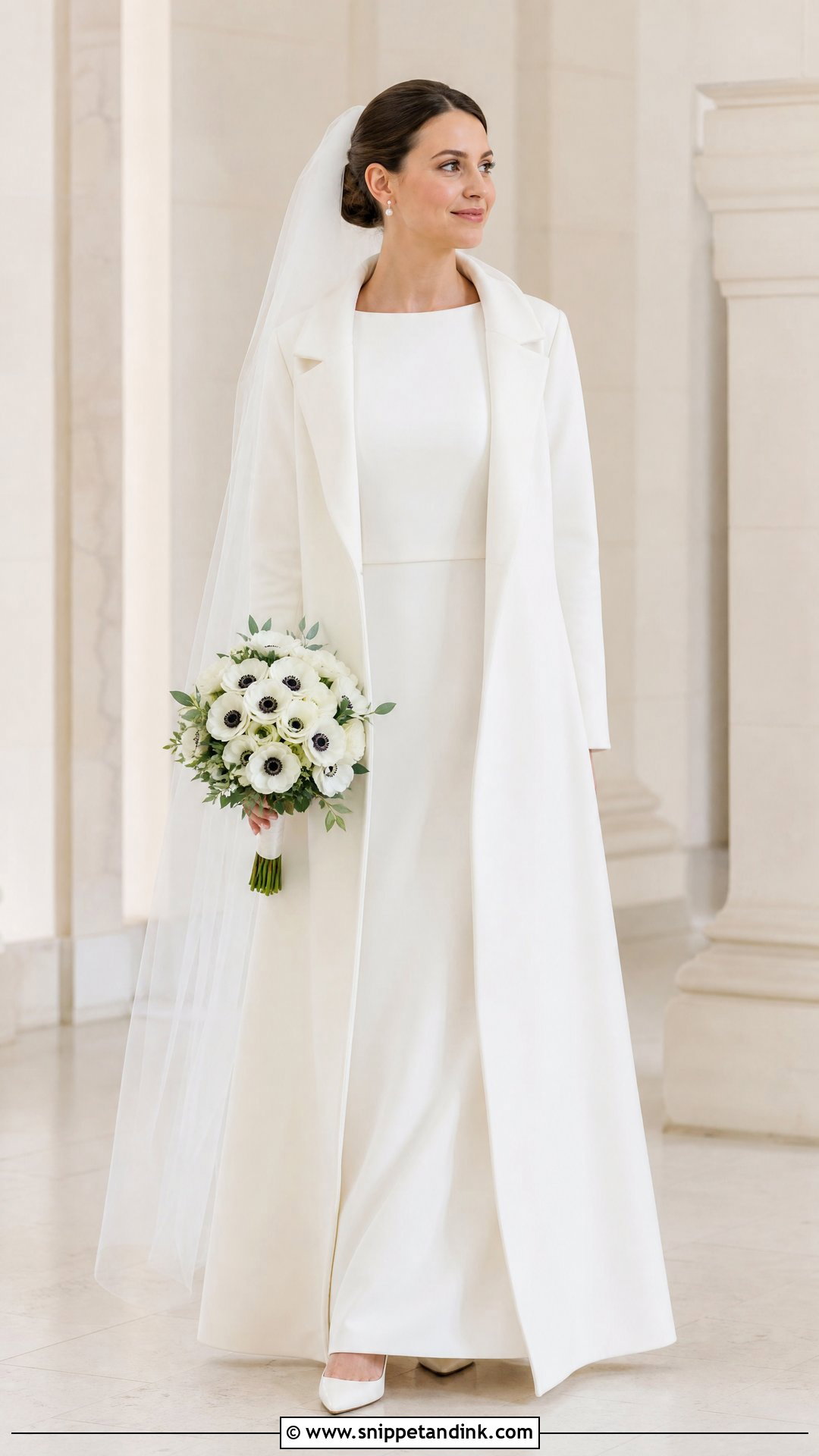
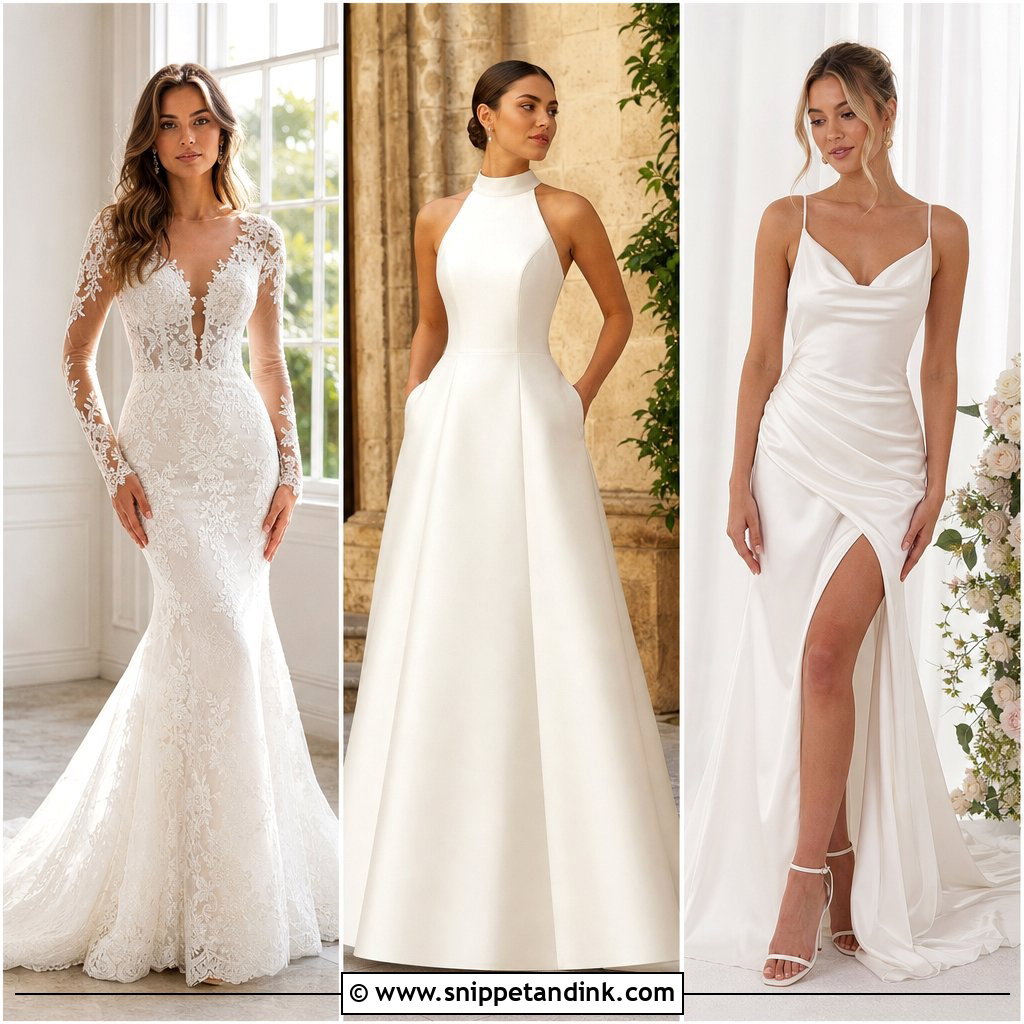
For a winter wedding, a long-sleeved boat neck in matte crepe is one of my favourite recommendations. Fitted sleeves, light waist shaping and a straight or softly flared skirt make it covered but graceful, and the wide neckline shows the collarbone. Fitted crepe sleeves can feel tight when you raise your arms, so do the hug test. Closed ivory pumps, pearl studs and a chapel veil with no lace edge suit it, and a smooth bun or waved bob keeps the neckline clear. A structured ivory coat for travel and anemones or winter greenery complete it.
6. High Neck Satin Wedding Dress
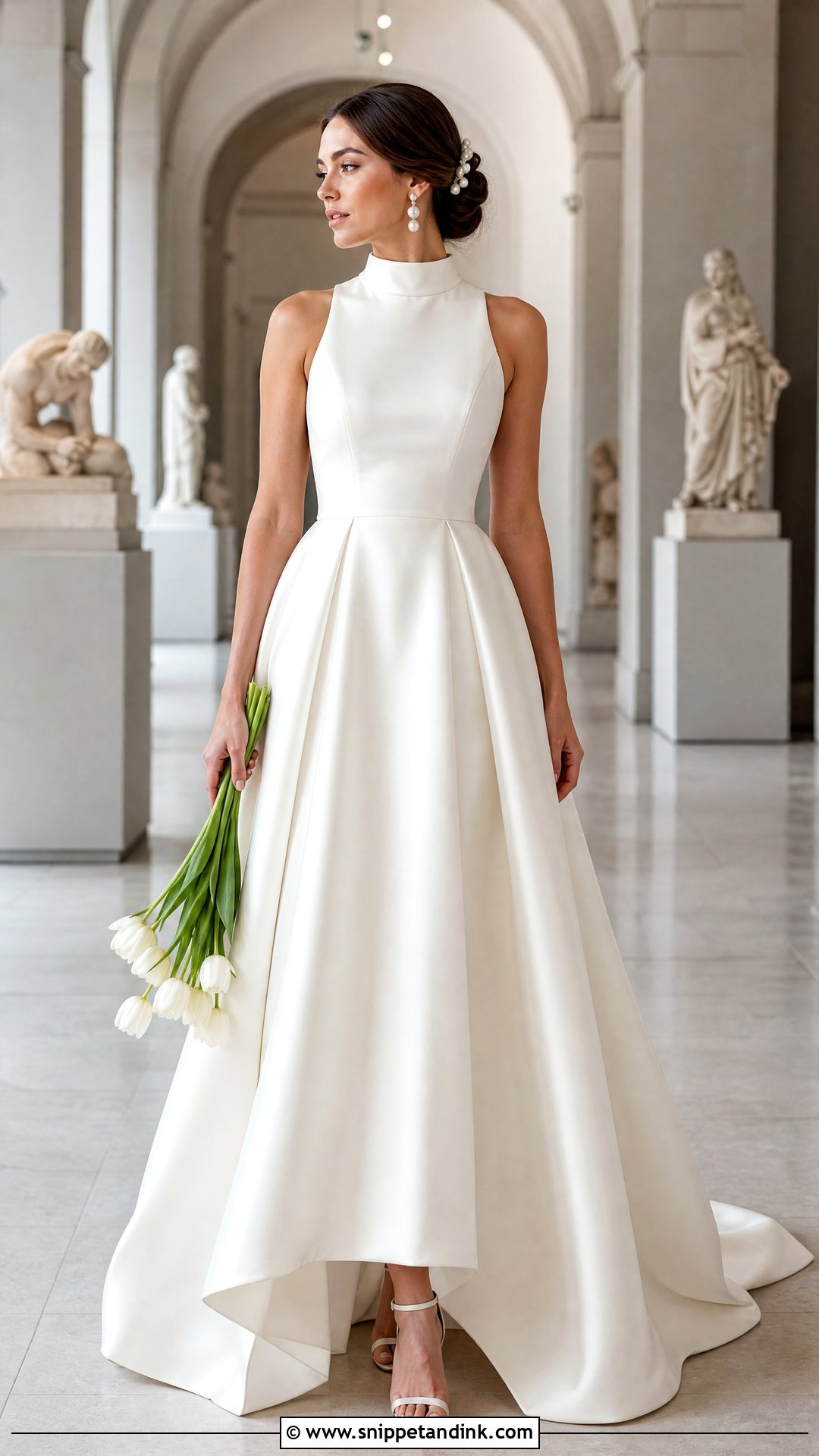
A sleeveless high-neck satin dress relies on silhouette alone: a softly fitted bodice, defined waist and a full but controlled skirt. The satin’s sheen catches light, so extra sparkle is rarely needed. Skip the necklace and keep the earrings small and sculptural. High necks sit close to the throat, so make sure the collar isn’t so tight you notice it when you swallow or turn your head; it’s a common last-fitting fix. Ankle-strap heels, a single pearl hairpin, an elegant updo, a light veil beneath the bun and orchids or long tulips all follow the vertical line.
7. Strapless Straight Neck Wedding Dress
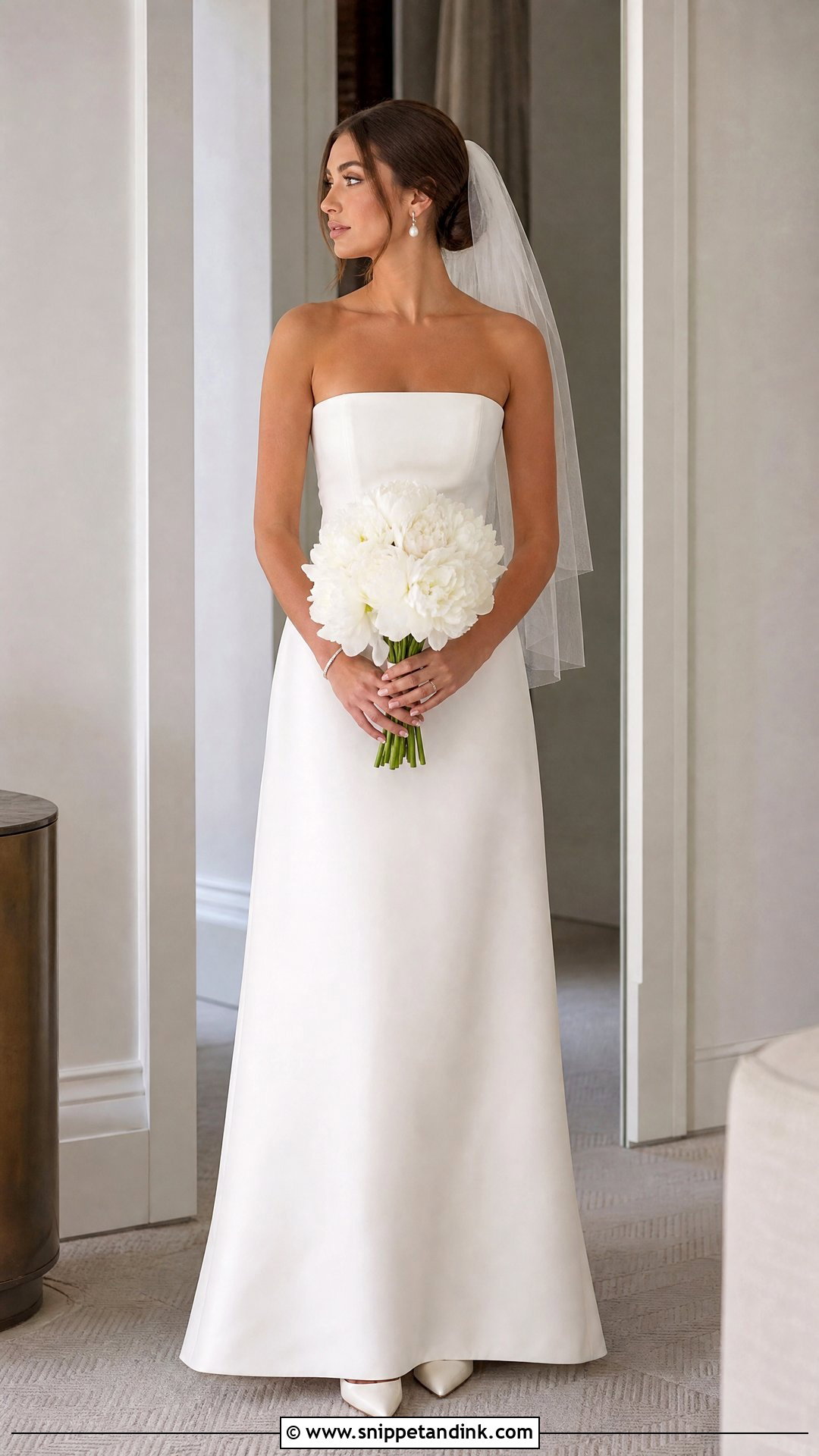
A strapless straight-neck dress is a blank canvas, so precision is everything. I want internal boning, minimal seams and a slim A-line or softly fitted skirt, in matte satin, mikado or crepe, which hold the top edge firmly. The bodice should stay up when you lift your arms without you tugging at it; if it slides, the fit at the ribcage needs tightening, not the bust. Pointed pumps, pearl drops, a slim metallic bracelet and a shoulder-length veil keep it calm, with brushed waves or a low bun and white peonies.
8. Halter Neck Wedding Dress
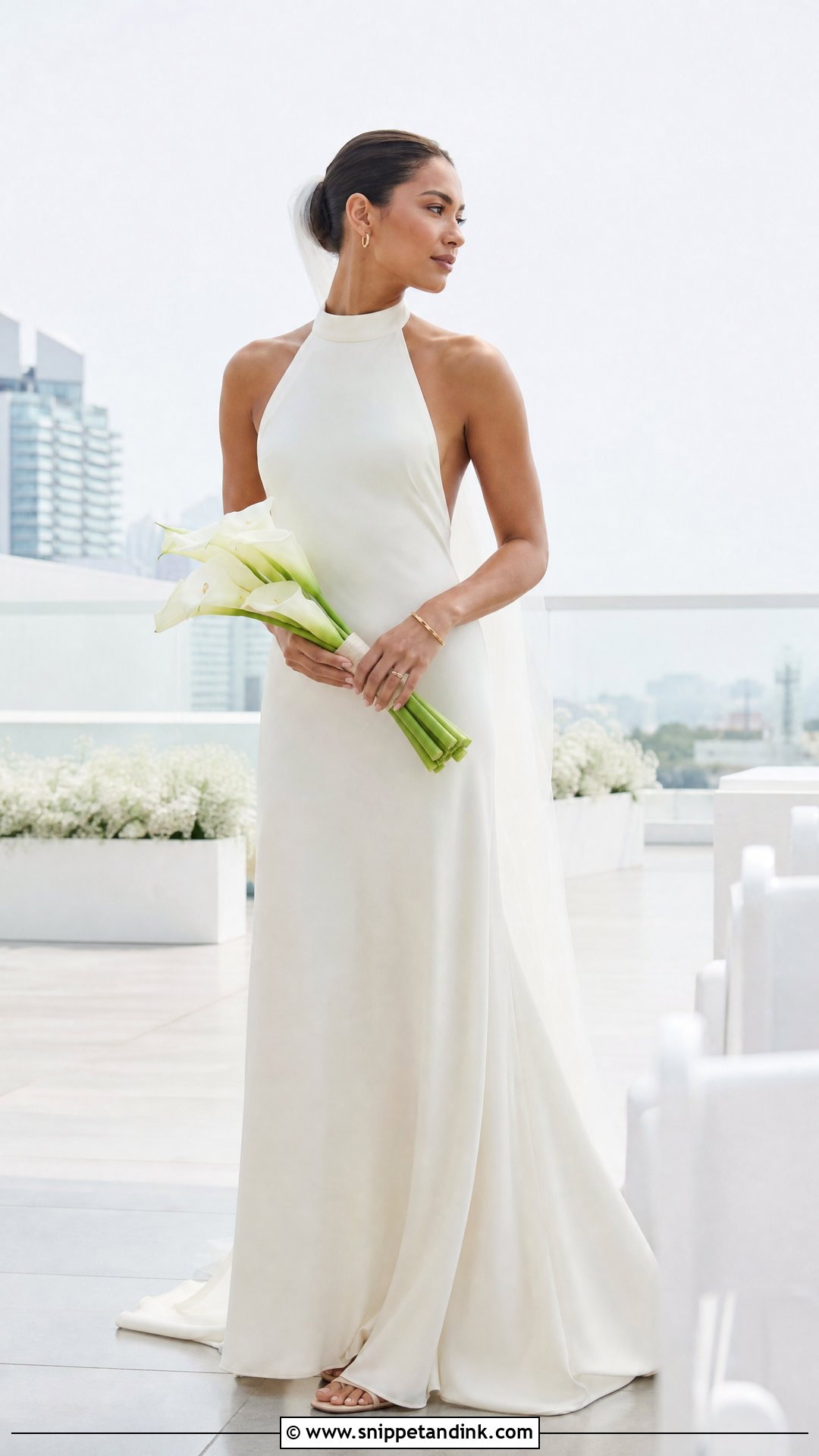
Halter necks draw the eye up to the face and shoulders, which is why I suggest them to brides with strong shoulders or toned arms. A fluid crepe or silk gown with a narrow halter and a straight or gently flared skirt keeps it light. The halter strap carries weight at the back of the neck, so a heavy skirt can make it ache after a few hours; choose lighter fabric for a long day. Minimal sandals, tiny hoops, a slim cuff and hair worn up suit it. A long plain veil under the bun or a short one for a relaxed feel, and calla lilies, complete it.
9. Cowl Neck Wedding Dress
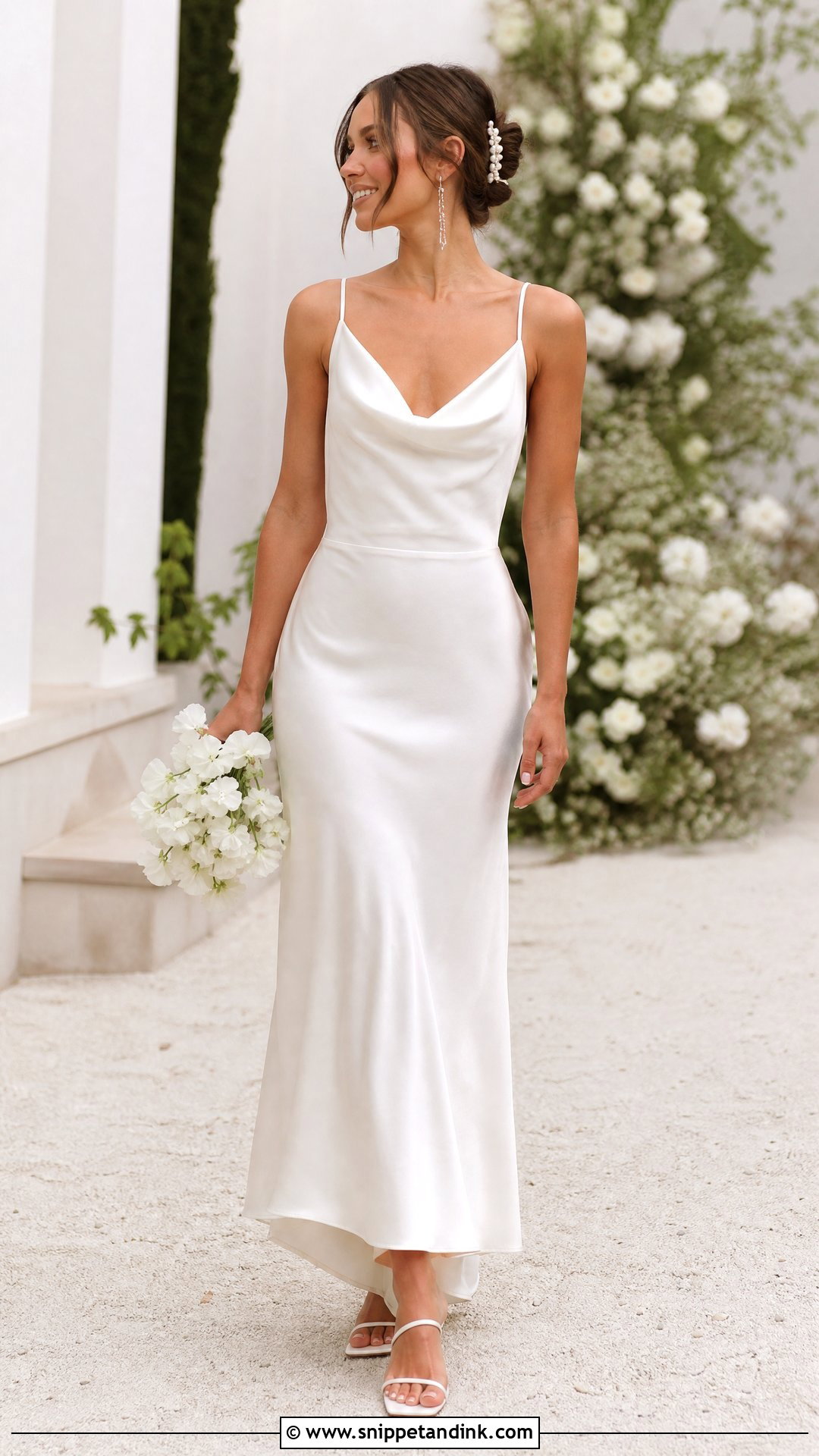
Soft draping makes a cowl neck wedding dress romantic while staying simple. Silk satin or satin-backed crepe falls in fluid folds; stiffer fabric makes bulky ones. The cowl moves when you lean forward, so check it in a mirror while bending, and ask for a discreet weight or a stitch inside the drape if it opens too far. Thin straps, a bias-cut skirt and a low draped back balance it. Barely-there heels, fine chain earrings, loose waves swept over one shoulder and a plain fingertip veil or a pearl comb keep it relaxed.
10. Scoop Back Wedding Dress
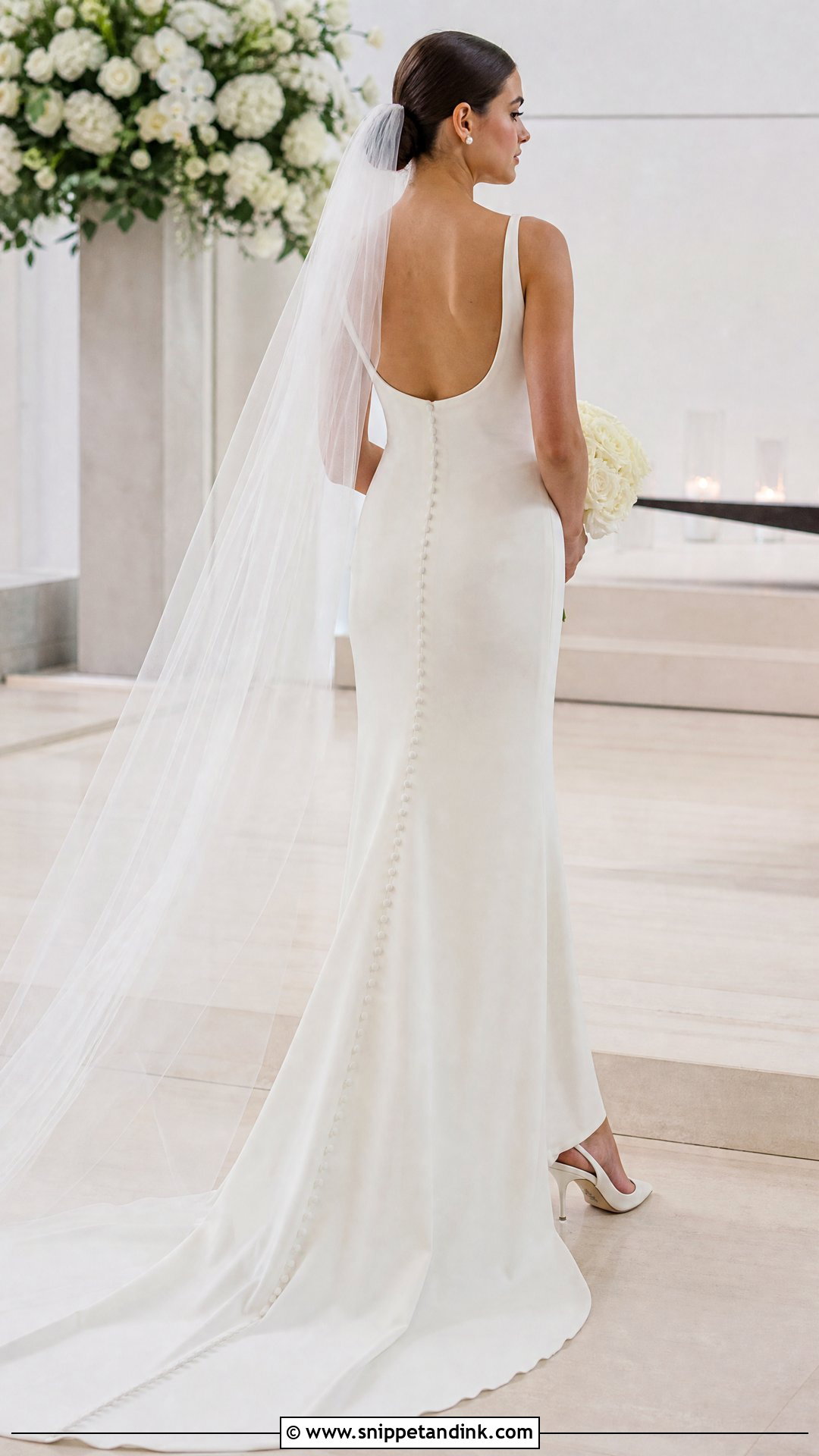
The scoop back reveals itself as you walk away down the aisle, so the front stays simple with a bateau, scoop, or modest V-neckline. Fitted crepe or satin with covered buttons adds texture without sparkle. Bra choice is the practical question: a deep scoop rules out most bras, so ask your seamstress to sew cups into the bodice. Ivory slingbacks, pearl studs and a low bun keep the back clear, with a sheer veil fixed beneath it. A back necklace is optional but should be very fine. White roses finish it.
11. Minimalist Ball Gown Wedding Dress
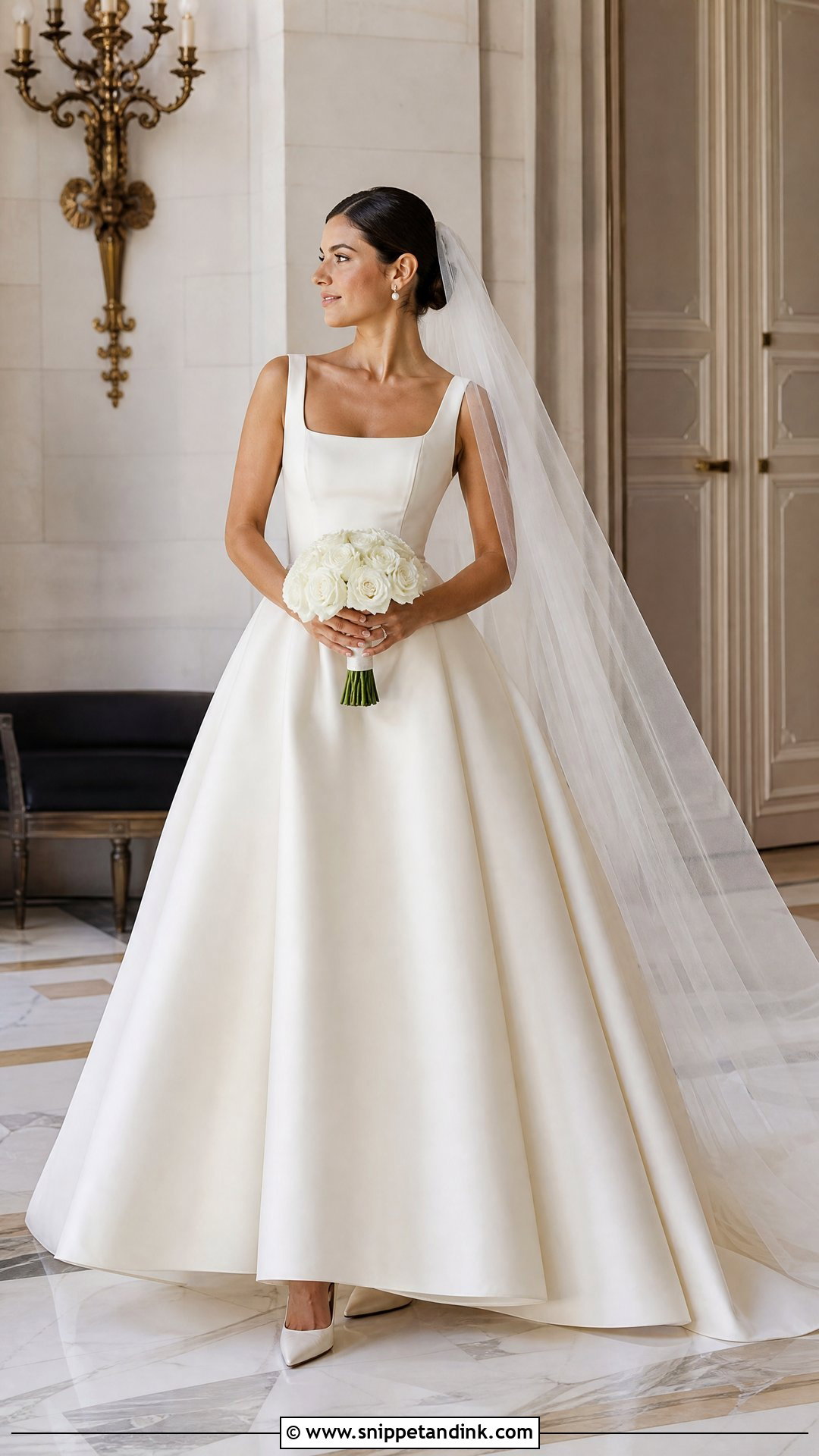
A ball gown can still be understated when the beauty comes from shape. Plain mikado or satin with a structured bodice, a natural waist and a full skirt without lace or beads keeps it fresh, especially with a square, scoop or straight neckline. Mikado holds volume well but is heavy, so pick the skirt up in the shop before you commit. Simple pumps, pearl earrings, a slim bracelet, a clean bun and a long untrimmed veil keep it balanced, with a modest bouquet. If there’s a train, insist on a strong bustle; weak loops snap on the dance floor.
12. Tea Length Wedding Dress
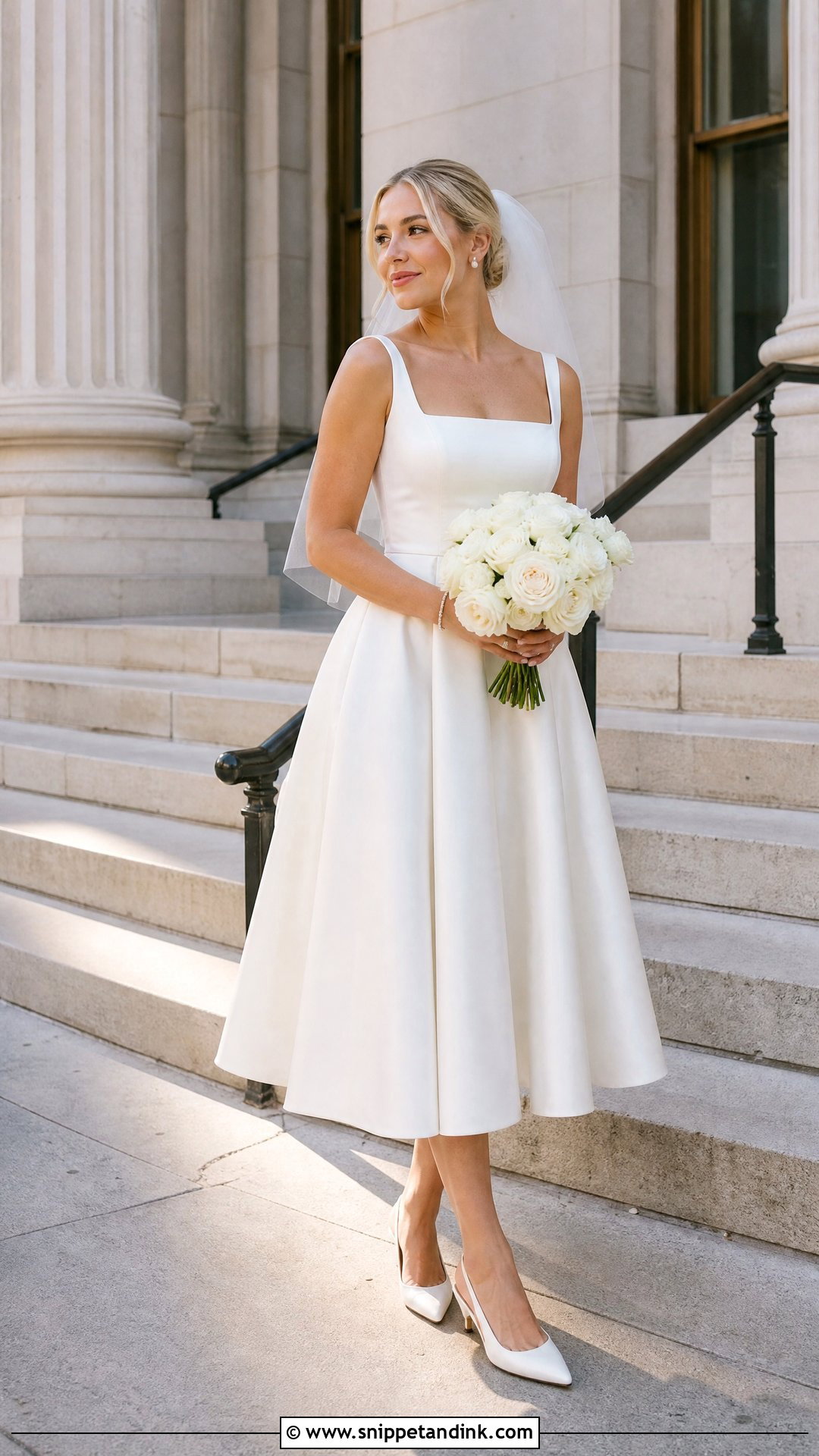
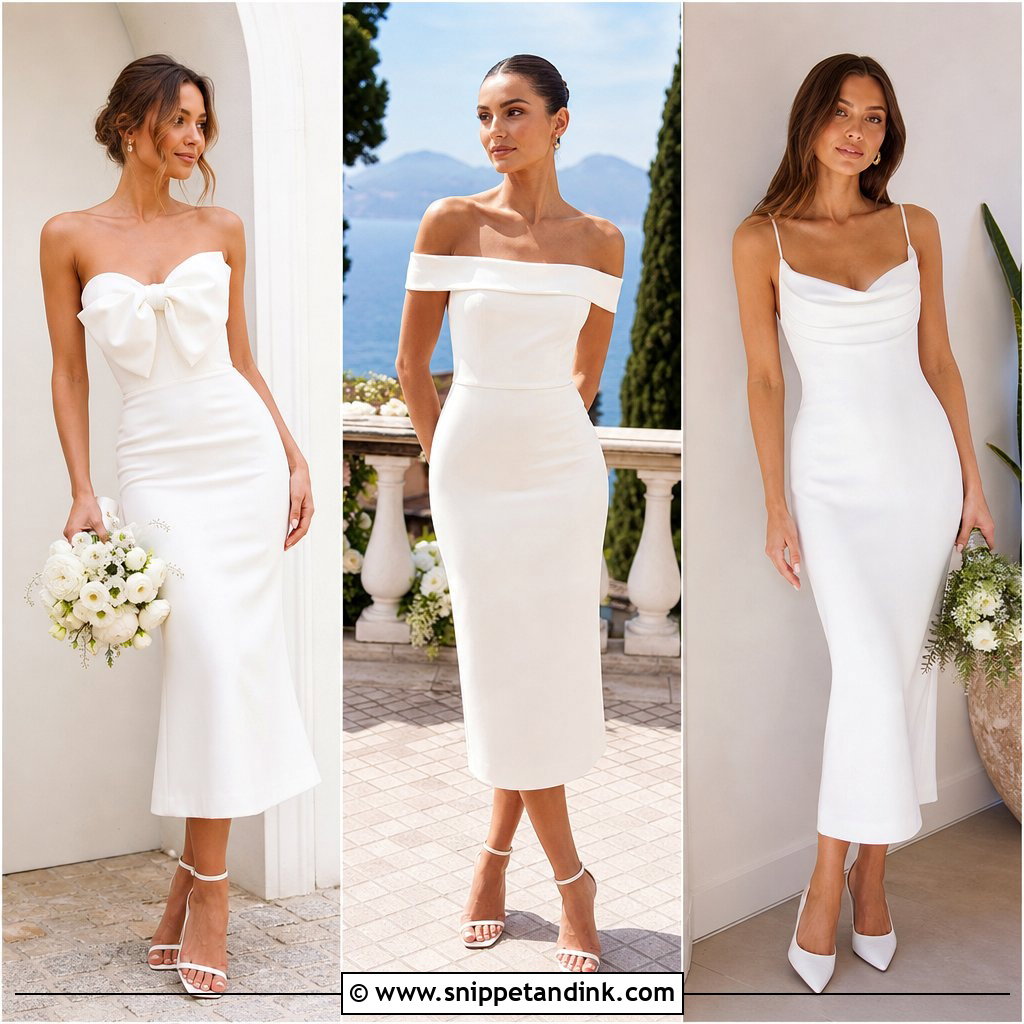
Tea length is playful and practical. Structured satin or mikado, a fitted bodice, a defined waist and a skirt ending between knee and ankle give it shape, and a bateau or square neck adds balance. Because your shoes show, choose clean ivory pumps, slingbacks or low block heels you can stand in all day. Pearl studs, optional short gloves and a birdcage or shoulder-length veil suit it, with a smooth ponytail or curled bob. I watch the petticoat volume; too much makes sitting awkward. It suits courthouse weddings, brunch receptions and garden parties.
13. Minimalist Mini Wedding Dress
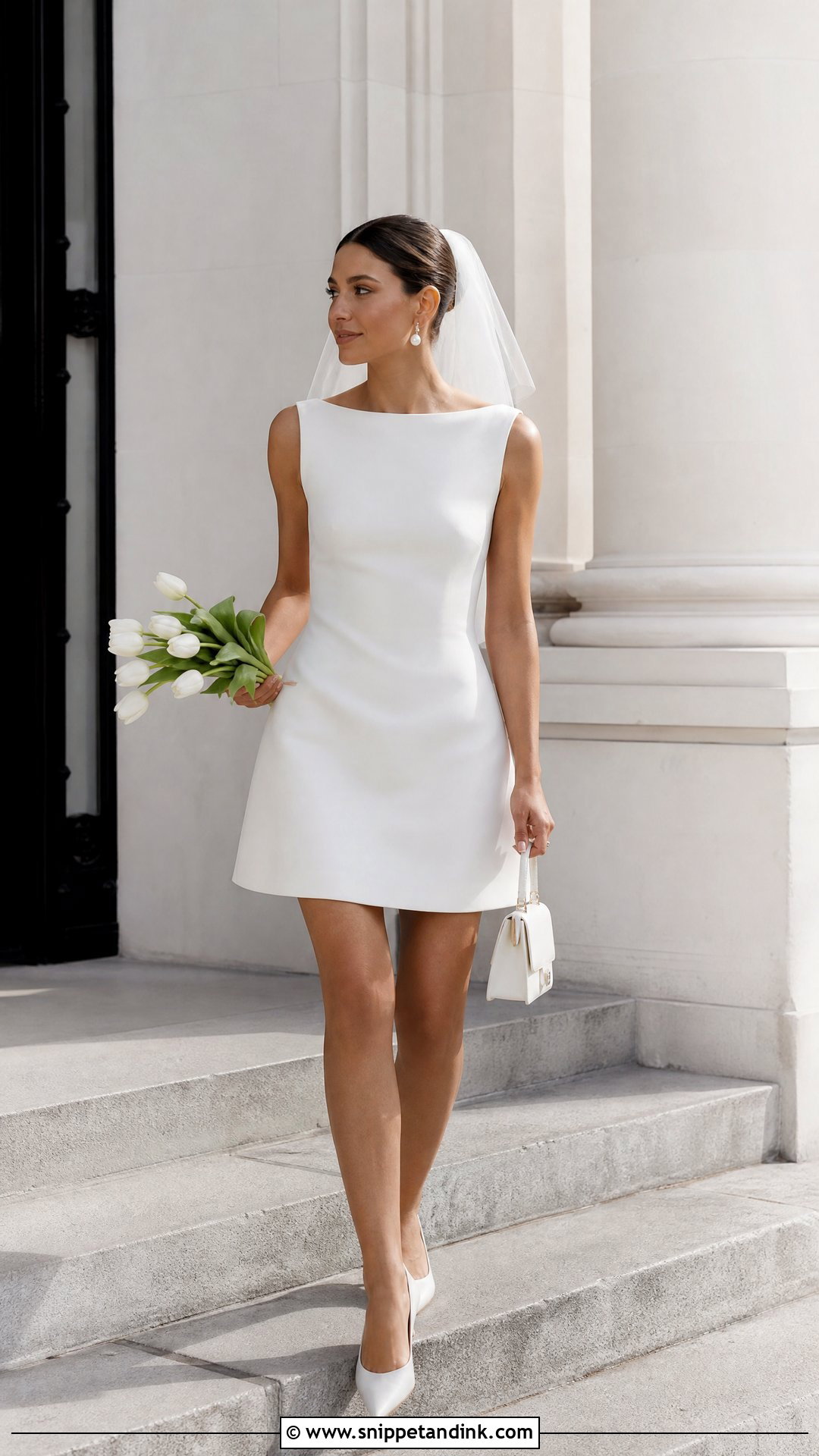
A minimalist mini wedding dress takes confidence and precise tailoring. A structured shift or tailored A-line that ends a few inches above the knee works best; skin-tight minis look like party dresses. A high bateau, square or soft scoop neckline balances the short hem. Before buying, sit down and cross your legs in front of a mirror to see where the hem really lands. Pointed kitten heels, a top-handle bag, pearl or sculptural studs and a short veil or big hair bow make it bridal. Sheer tights in cooler weather, and white tulips.
14. Bias Cut Wedding Dress
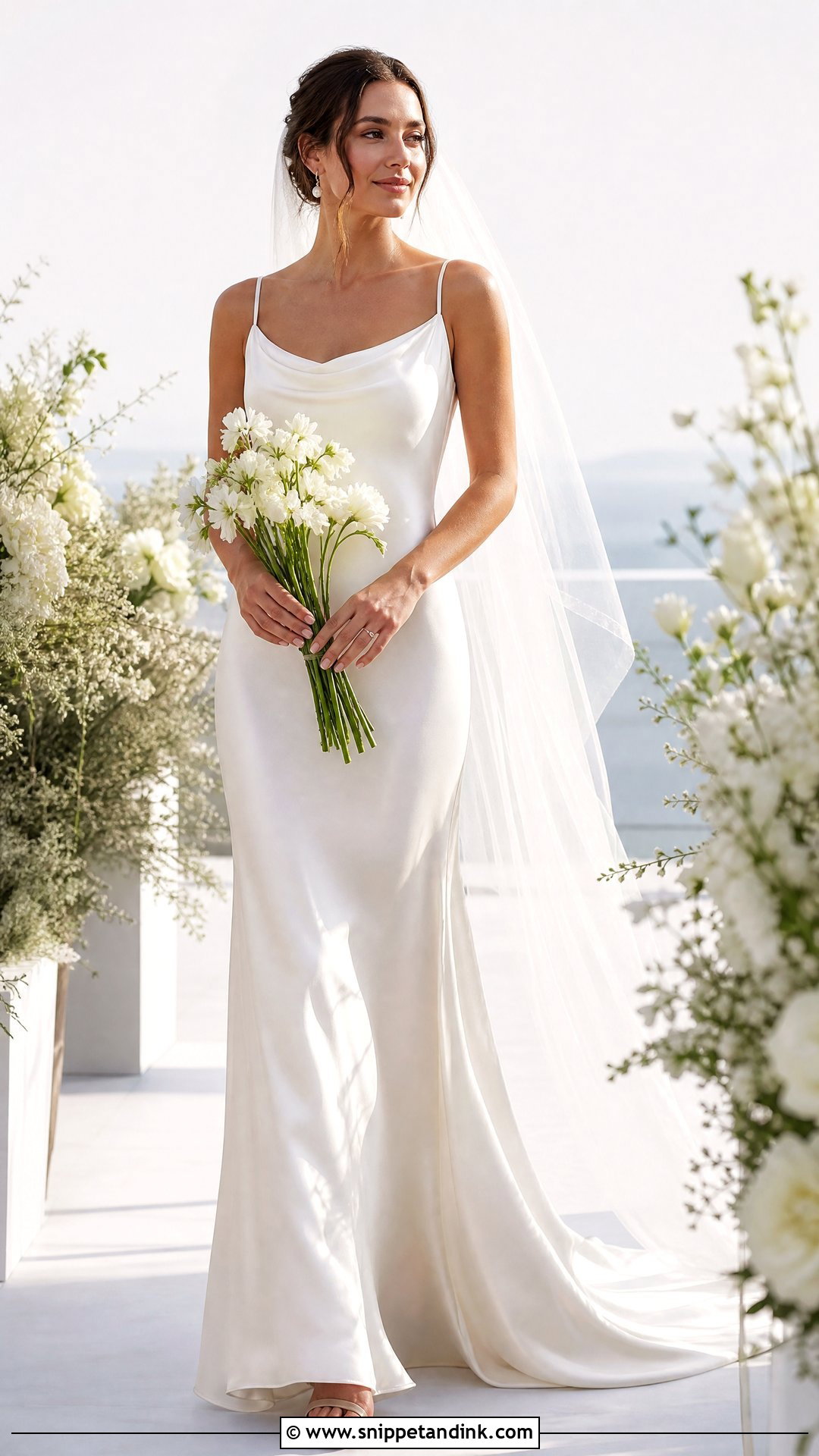
Bias cut means the fabric is cut diagonally across the grain, so it stretches slightly and follows the body without corsetry. Silk satin is classic; matte crepe is quieter and a little more forgiving. That stretch is why bias gowns show every line underneath, and why they can grow slightly in length if they hang for weeks, so hang it folded over a padded bar near the wedding, not from its straps. Low sandals, a fine pendant, tiny earrings, a low knot or side-parted waves and a single-layer fingertip veil suit it, with freesias or tulips.
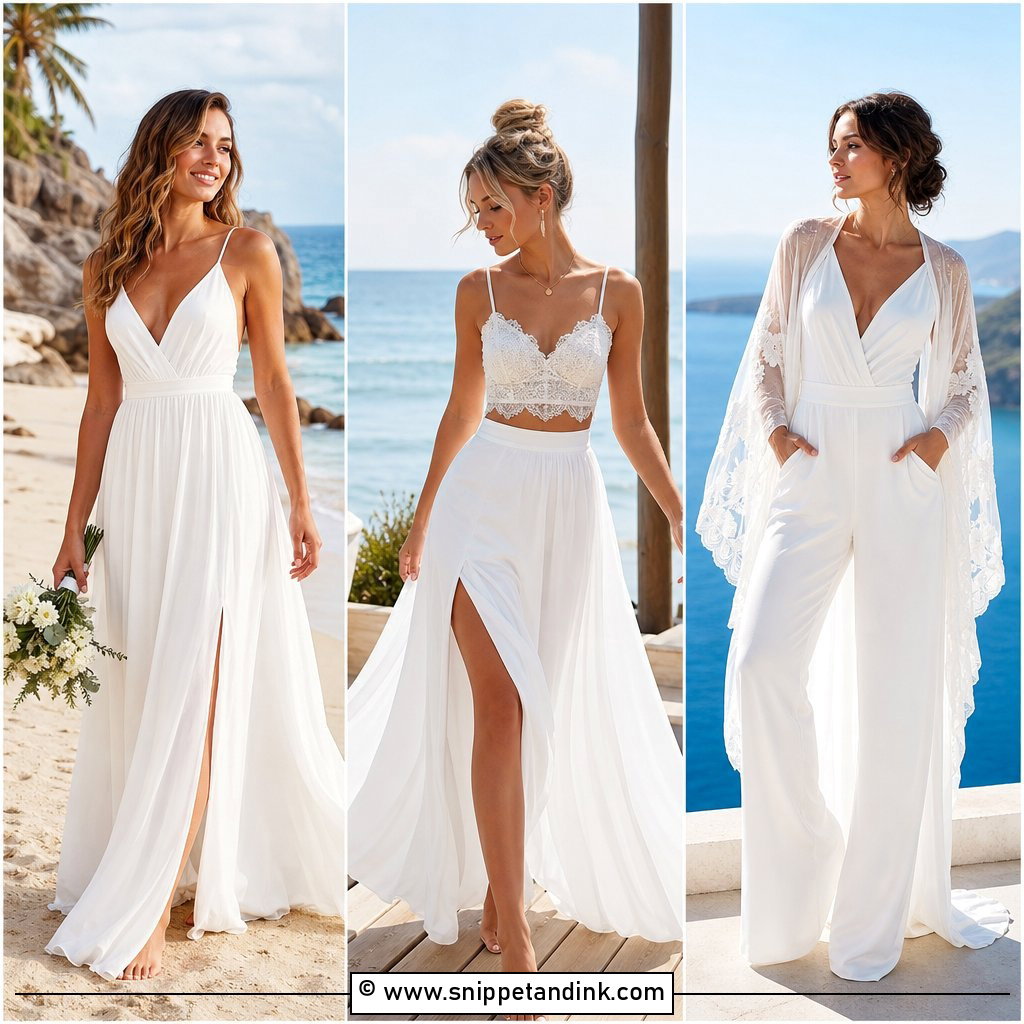
15. Cape Sleeve Wedding Dress
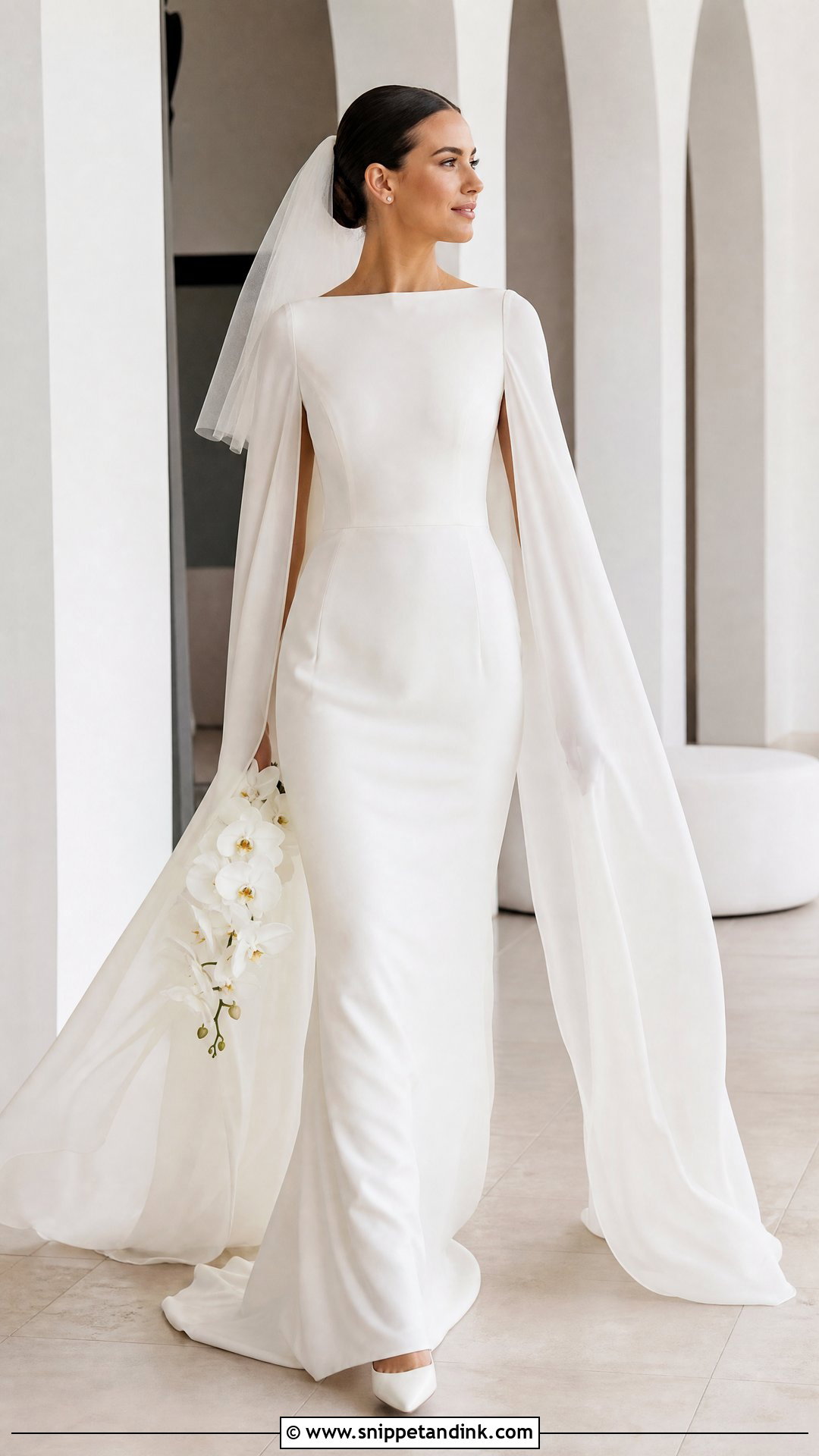
Cape sleeves give coverage without the tightness of fitted sleeves. Panels fall from the shoulder to the elbow, wrist or floor over a simple column or A-line. Chiffon floats; crepe makes a sharper, more architectural shape. Long capes can catch under your arms when you sit, so ask for a small wrist loop if they reach the floor. Pointed pumps, small studs, no necklace and a sleek bun separate the cape from the hair. I usually skip a long veil here or choose a short plain one, since the sleeves already give movement. Orchids or roses suit it.
16. Drop Waist Wedding Dress
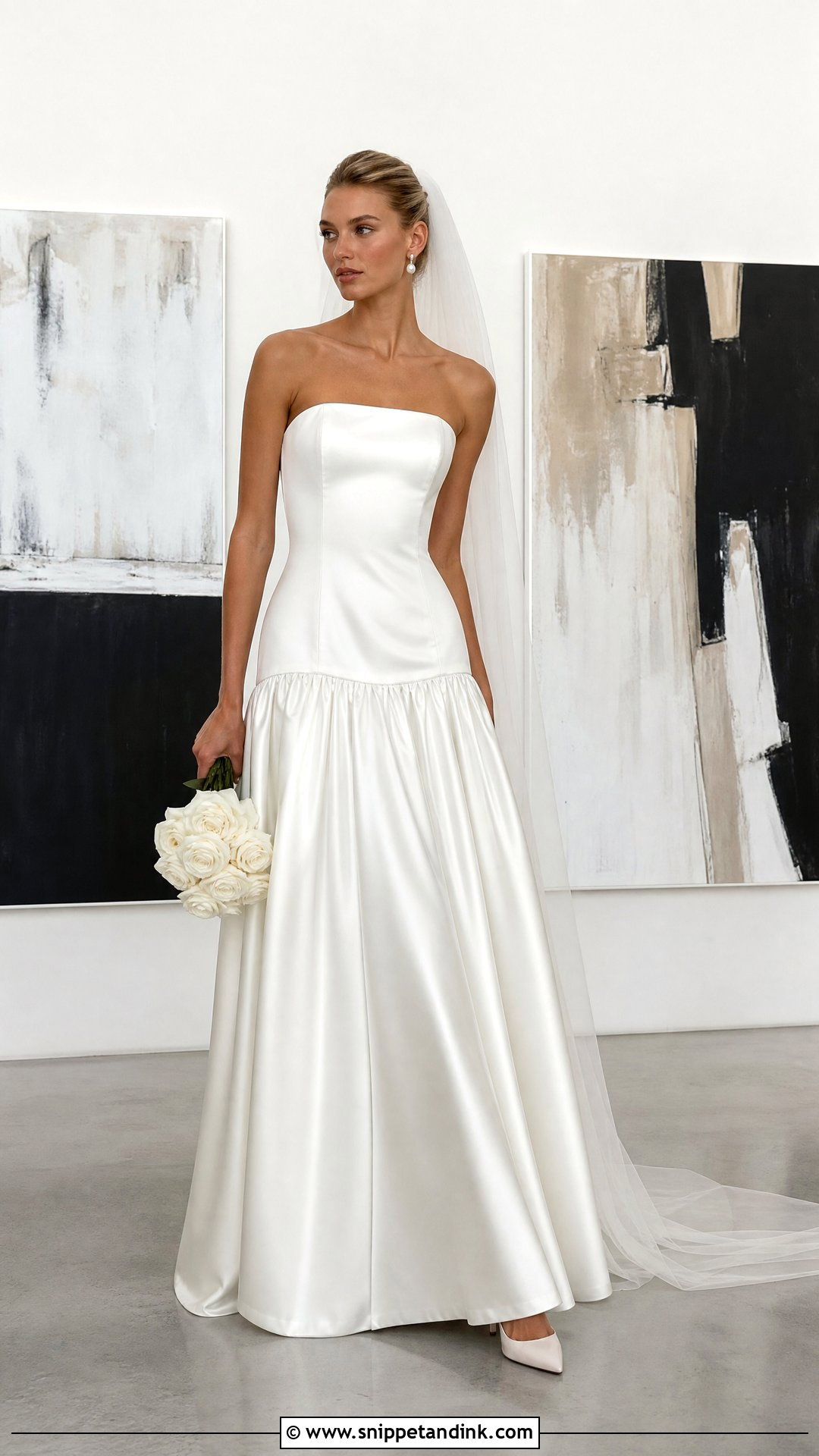
A drop waist runs the bodice past your natural waist to the upper hip before the skirt opens. For an understated version, choose smooth satin or mikado with few seams and no embellishment, and a scoop or straight neckline. The seam moves where your body looks divided, so it can shorten the legs on petite brides; try it in person. It needs careful fitting so the waist and hips lie smooth. Pointed pumps, pearl earrings, a narrow bracelet, a soft updo or polished waves and a long plain veil keep it calm. White roses with little greenery finish it.
17. Empire Waist Wedding Dress
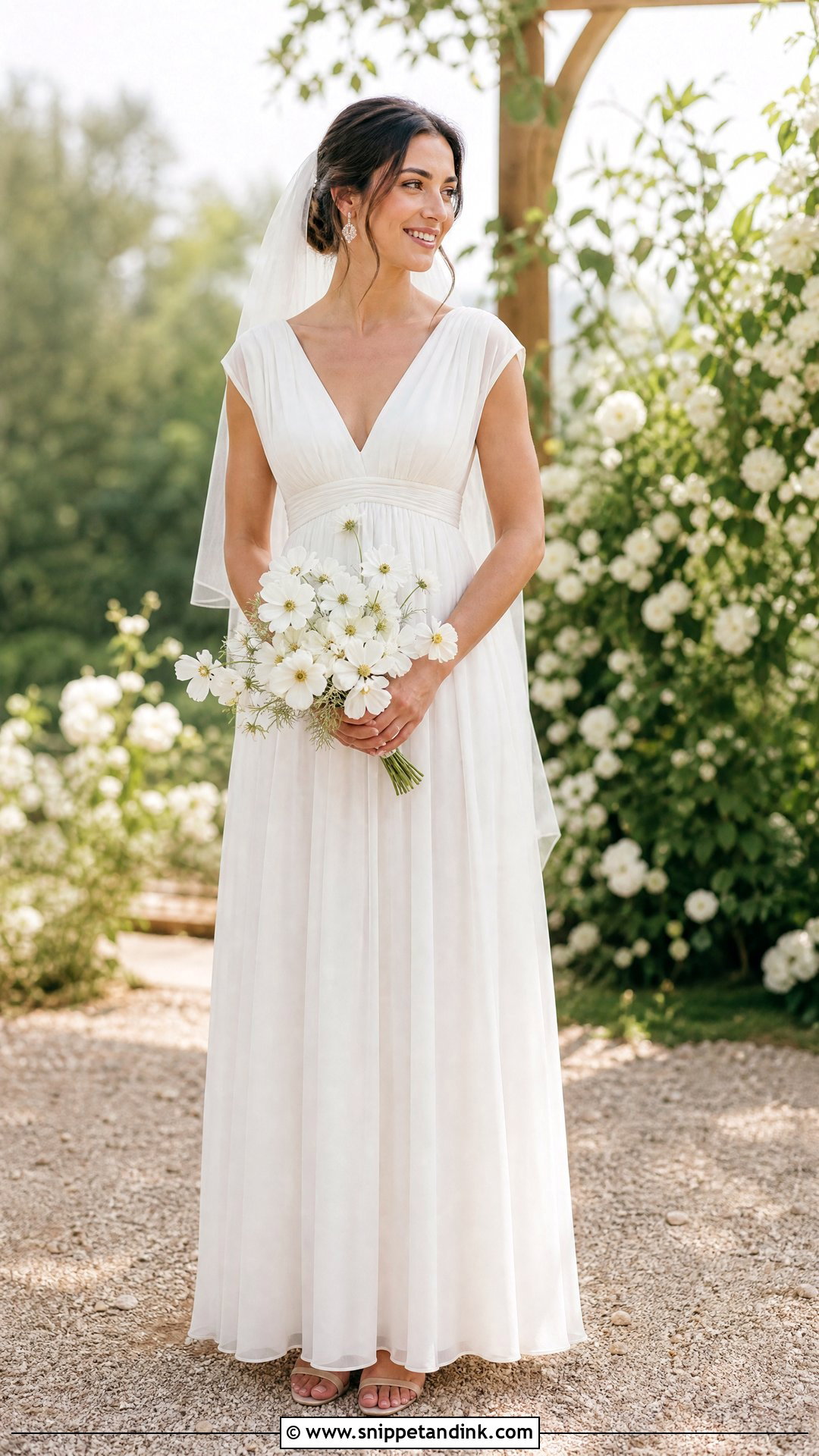
An empire waist puts the seam just under the bust, and the skirt falls free over the waist and hips. Silk crepe, chiffon or matte satin drape without adding volume, and a modest V or softly gathered square neck suits the raised line. Comfort is the real advantage here; it’s the dress I suggest for hot weather or a twelve-hour day. Low block heels, small drops, a fine bracelet and a loose bun with a few face-framing pieces fit it, with an elbow veil or a pearl comb. Cosmos or daisies suit an outdoor ceremony, and the shape adapts well to many figures and stages of pregnancy.
18. Subtle Lace Wedding Dress
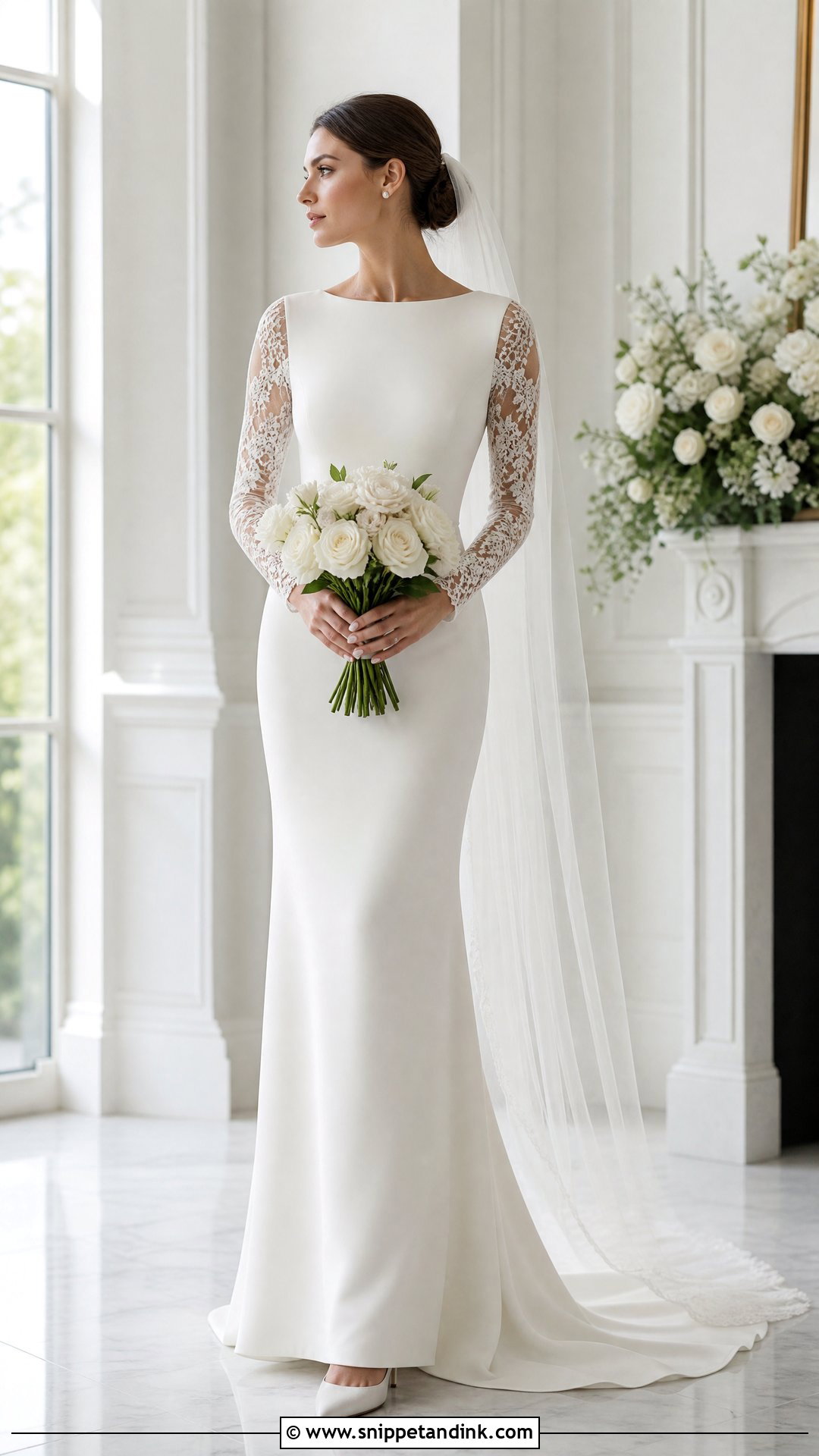
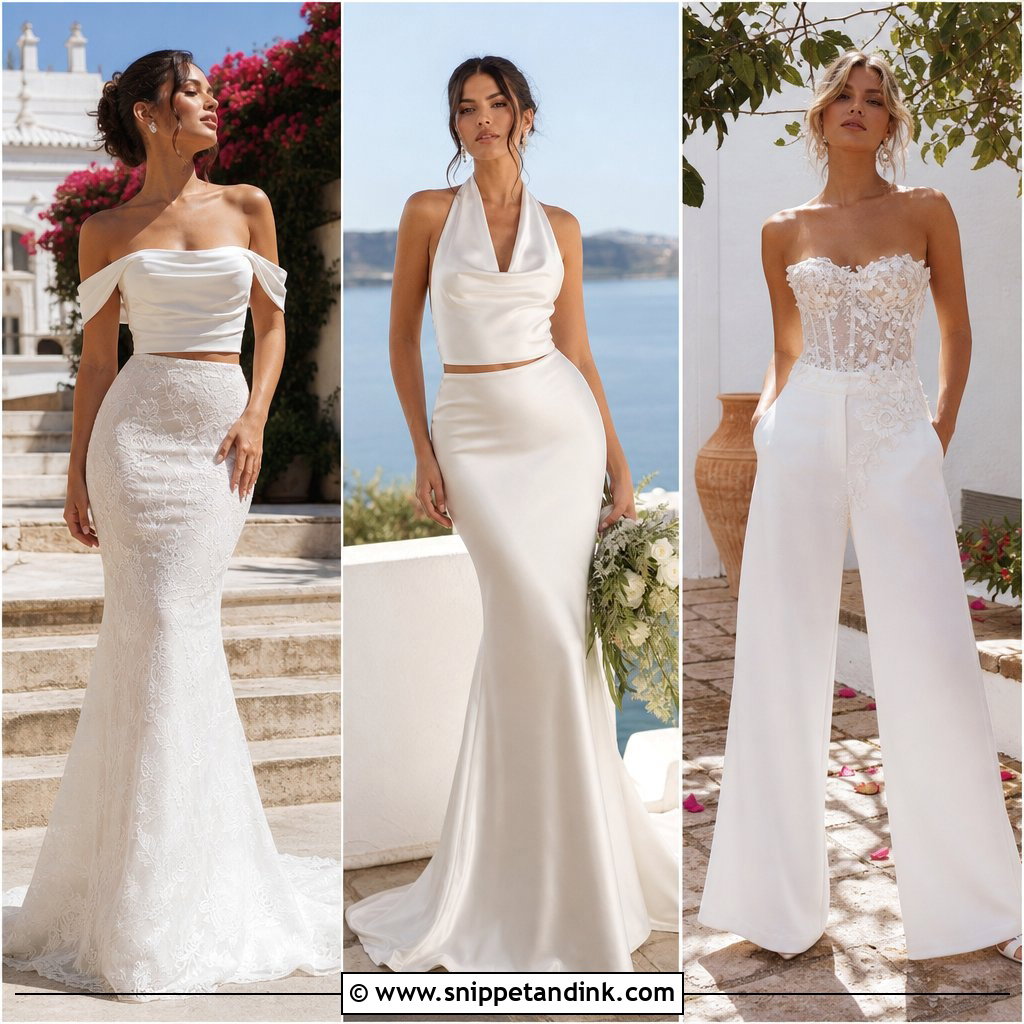
Lace can still be understated when it’s fine and used in one place. A smooth crepe sheath with lace sleeves, a lace-edged neckline or a lightly textured bodice over a plain skirt is enough. The lining matters more than people think: choose one close to your skin tone or the dress colour, since a contrasting lining makes the lace look busy. Plain satin pumps, pearl studs, a tulle veil with no lace edge and a low bun or pinned waves suit it. Don’t combine lace with crystals, statement jewellery and ornate shoes; one texture is enough.
19. Two Piece Wedding Dress
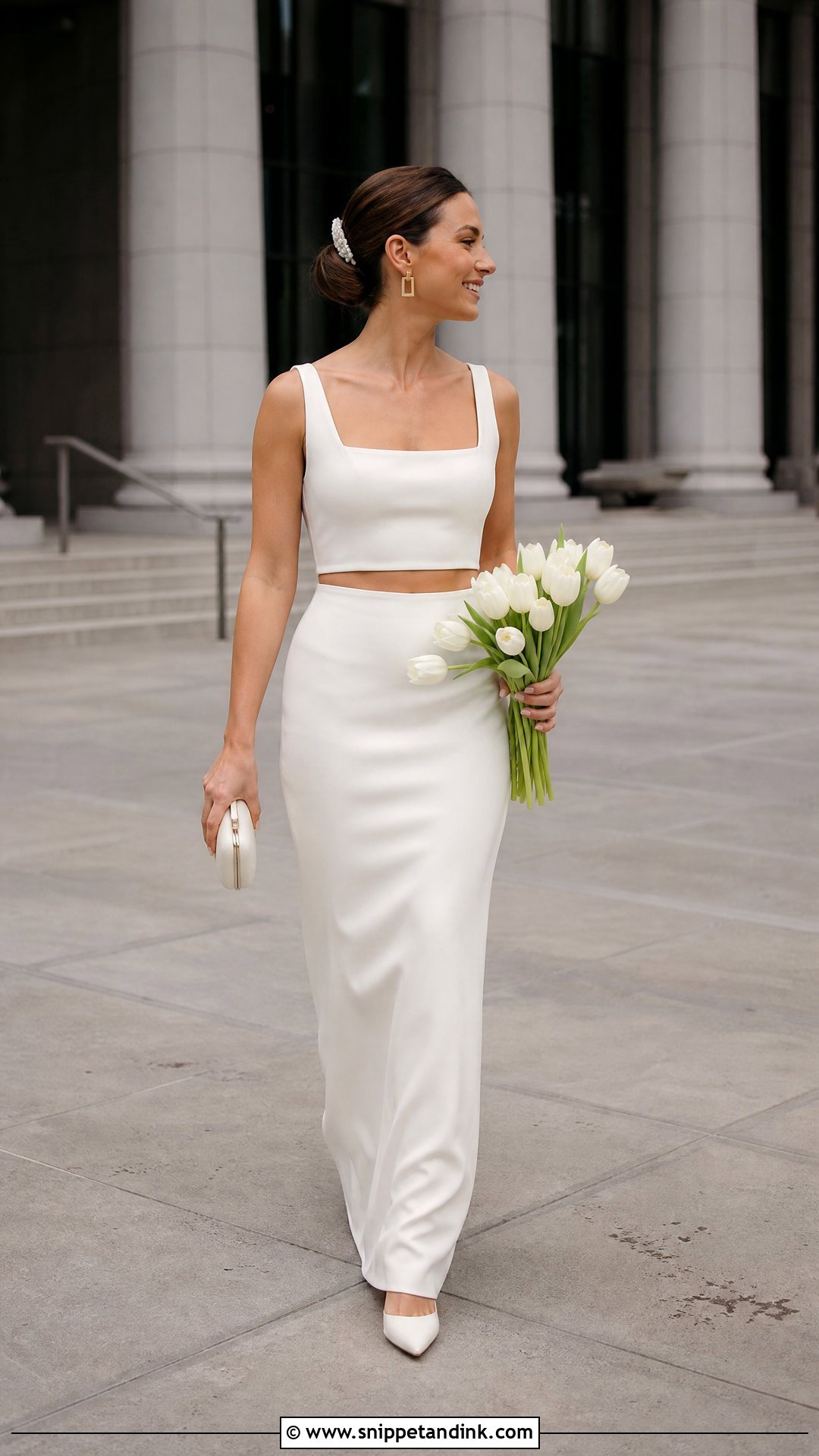
Two pieces in matching fabric look like one considered outfit. A tailored satin top with a high-waisted column or A-line skirt is the combination I fit most, with a square neckline, short sleeves or a slightly cropped hem showing only a sliver of skin. Insist both pieces come from the same fabric roll, because ivory satin from different batches can differ slightly in daylight. Ivory slingbacks, geometric earrings, a compact clutch and a low ponytail or smooth bun suit it, with a short veil or a clean comb and tulips or calla lilies.



20. Champagne Satin Wedding Dress
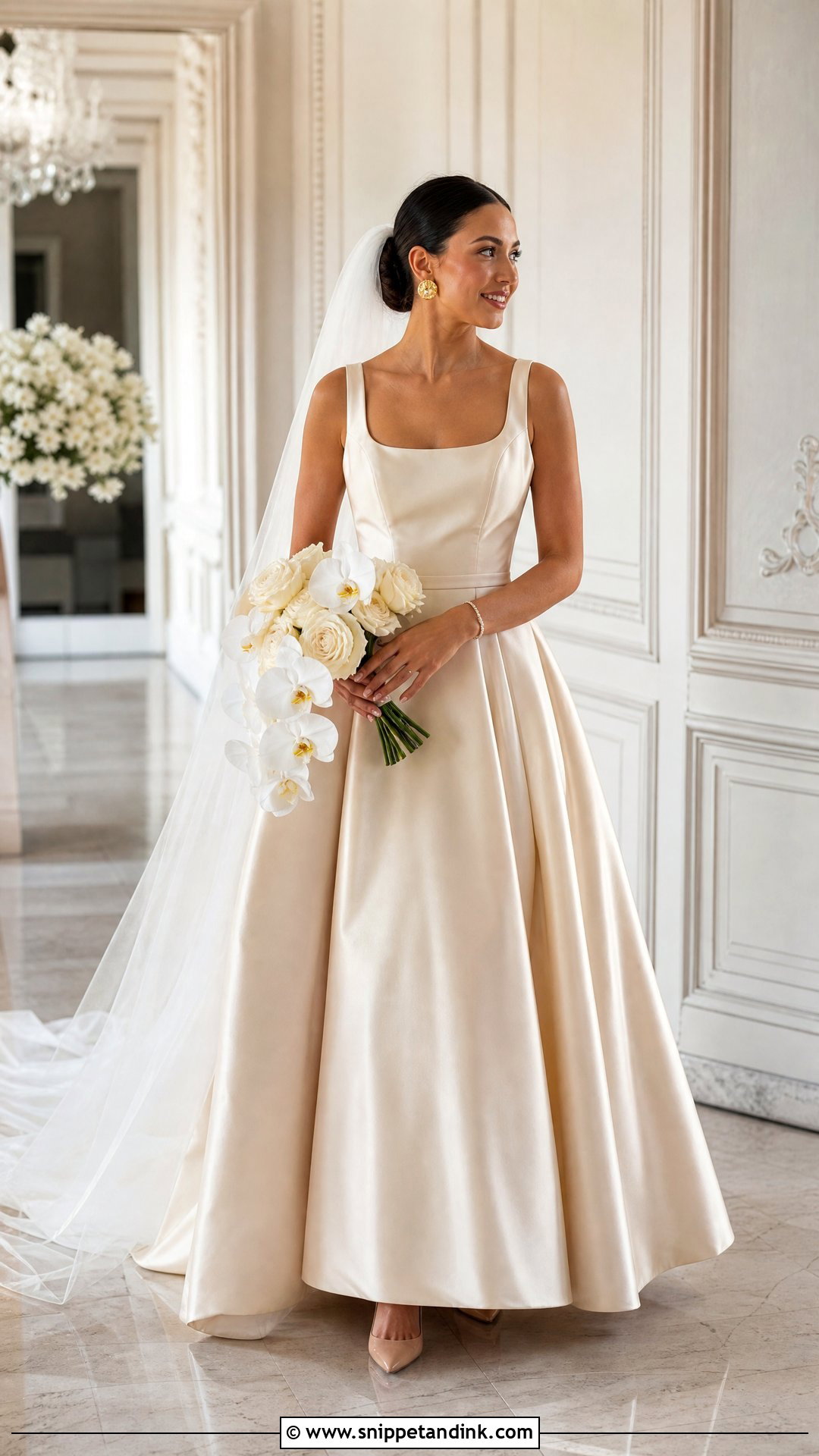
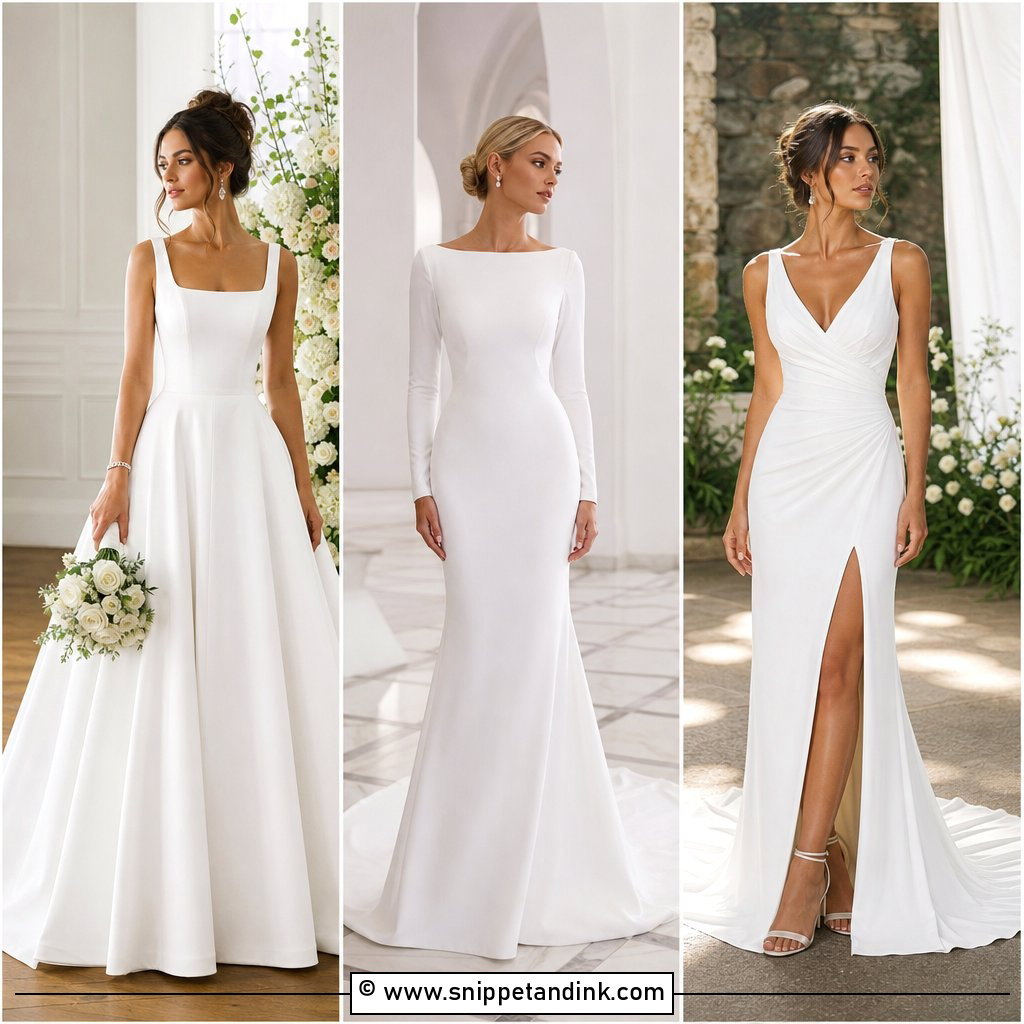
Champagne satin adds warmth for brides who find bright white harsh against their skin, especially in soft daylight. A simple slip, A-line or column keeps the shade as the main feature. Pair it with nude or champagne heels rather than white ones, which look grey beside it. Brushed gold earrings, a fine bracelet and a plain ivory veil blend softly, with polished waves or a low textured bun and cream roses or pale greenery. Always view the fabric indoors, outdoors and on a phone camera, since champagne can look pink, gold or beige depending on the light.
Creases, Makeup Marks and Other Things a Plain Dress Shows
Embellishment hides small accidents. A plain gown doesn’t, so I plan the morning differently for these brides.
- Steam the dress on a hanger the morning of the wedding, from the inside, and never press satin directly with an iron.
- Put the dress on before the final lipstick, and cover your face with a scarf or clean pillowcase as it goes over your head.
- Let deodorant dry fully, or use a clear formula, because white marks show on crepe and satin.
- In the car, sit on the lining and lay the skirt flat over a clean sheet, rather than bunching it under you.
- Carry a small kit: white chalk for light marks, a stain pen tested on a hidden seam first, and safety pins.
If something does spill, blot rather than rub, and avoid soaking silk, which leaves a water ring bigger than the original mark. Most guests never notice a small spot, and a photographer can soften it later.
Spending Less on Beading Means More for Alterations
A dress without embellishment often costs less to buy, and I tell brides to move some of that saving into tailoring. On a clean gown, a bodice taken in by a centimetre or a hem set to the exact heel makes a visible difference that beading never would.
Plan for two or three fittings, starting about two months before the wedding. Ask your seamstress whether she can add a bustle, sew in bra cups, or shorten straps, since these small changes are what make a simple dress feel made for you. Costs vary a lot by region and by how much work the dress needs, so get a quote at the first fitting.
A Plain Dress Is Only as Good as Its Fit
Simple dresses can feel romantic and fully bridal. A slip gown feels relaxed; a structured ball gown has ceremony presence with no decoration at all. Small details like a square neck, an open back, a cape sleeve or a warmer champagne shade make a restrained dress personal. Put your budget into fabric quality, solid construction and careful alterations, since a clean silhouette shows every flaw. Add comfortable shoes, well-scaled jewellery, a suitable veil and a modest bouquet, and pick the dress that suits how you naturally like to look and move.
You'll Like These Ideas:







Leave a Reply