
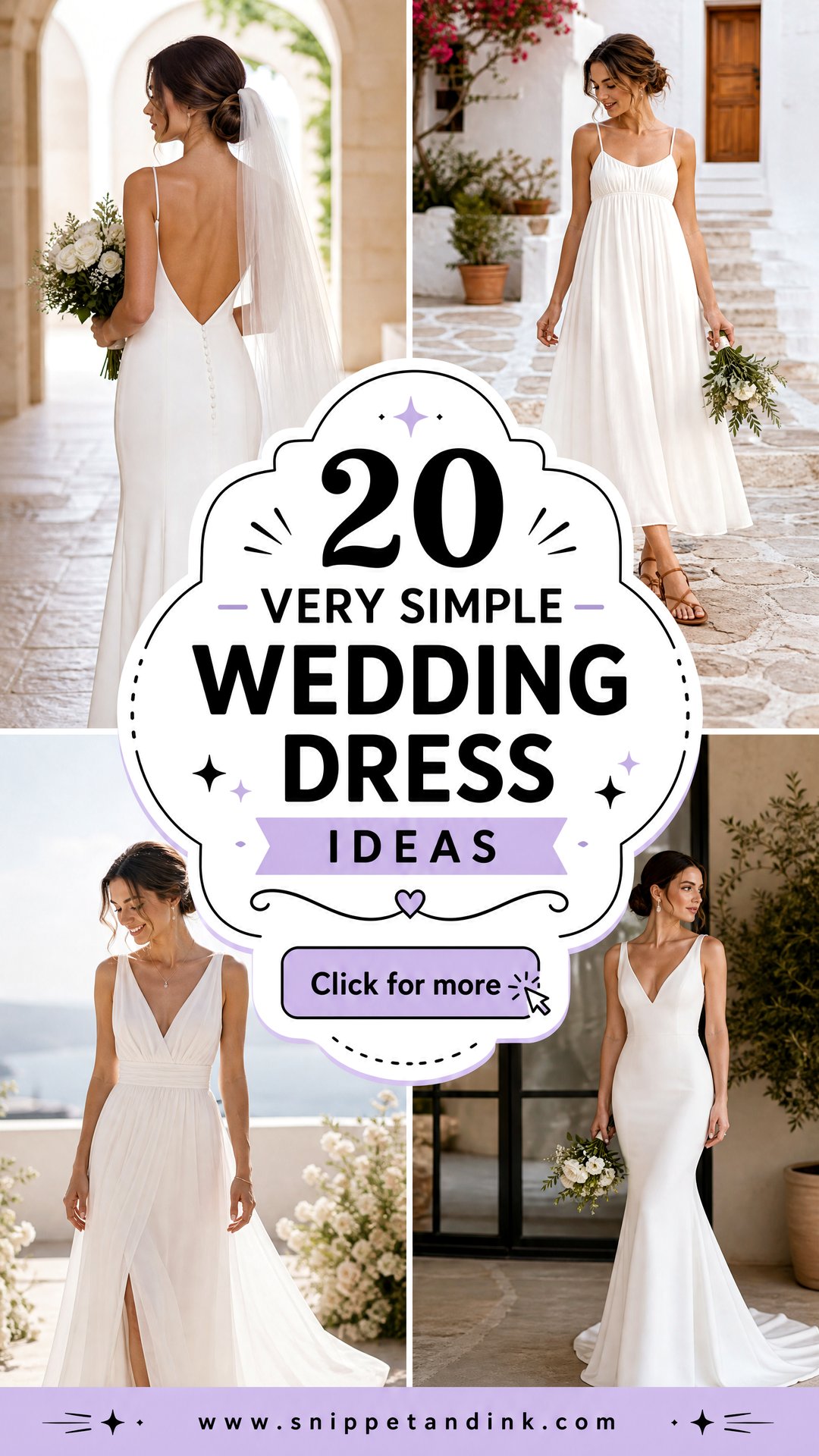
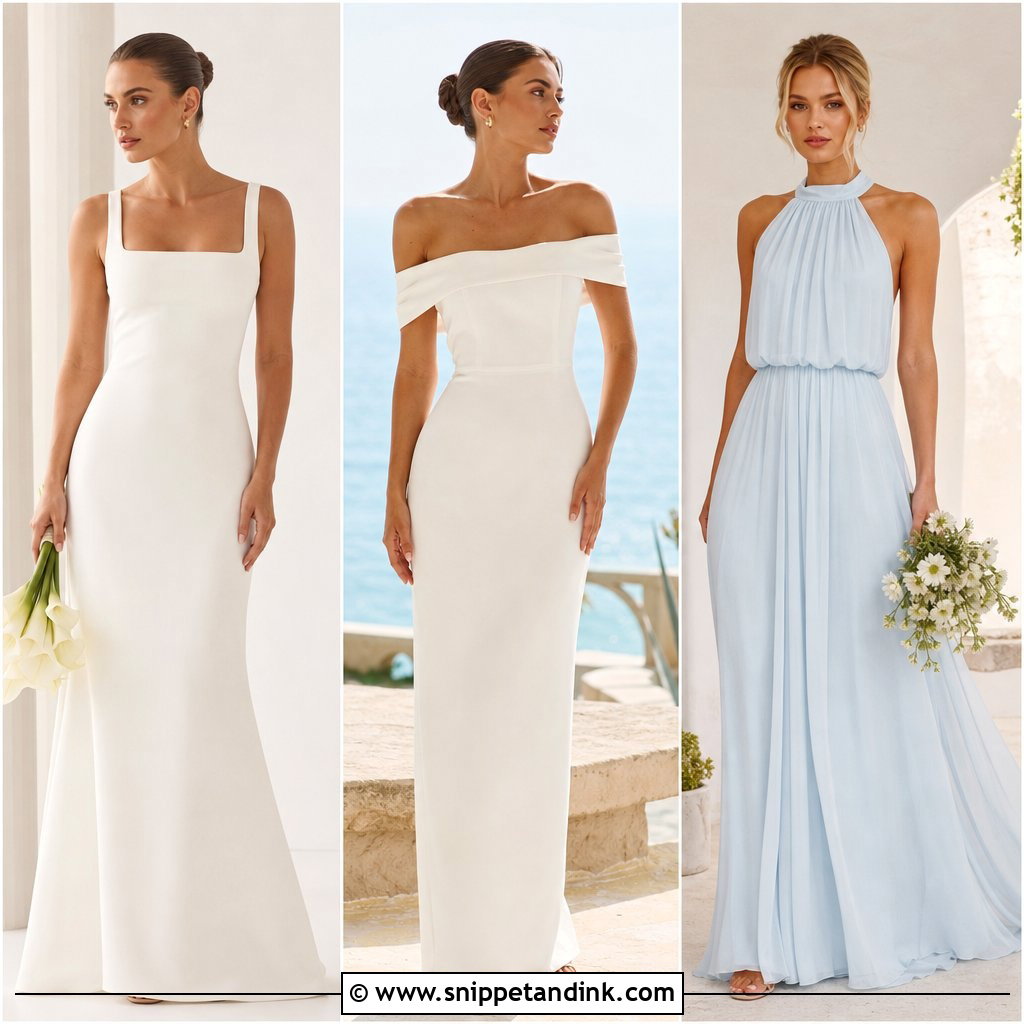
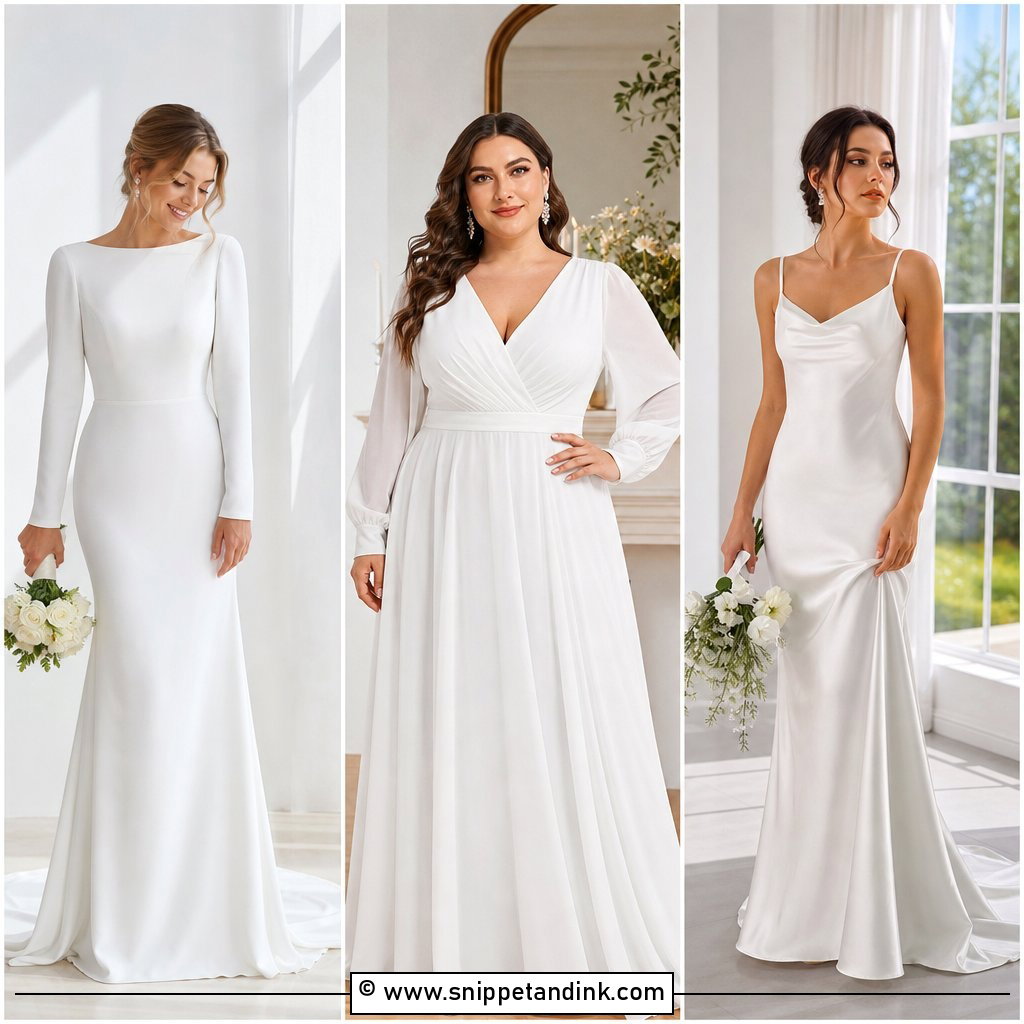
A plain wedding dress is harder to get right than a lace one. With nothing on the surface to distract, the cut, the fabric and the fit carry the whole outfit, and a cheap crepe or a bodice that’s a size off shows immediately. The twenty dresses below are all deliberately simple: satin slips, structured A-lines, midis, a mini with a blazer and a couple of quiet ball gowns. For each one I’ve noted the shoes, jewelry, veil and flowers I’d put with it, and where the style tends to cause trouble. Add accessories because you like them, not because a bride is supposed to wear them.
Judging Fabric When There’s Nothing Else to Look At
On a beaded gown, a mediocre base fabric hides under the decoration. On a plain dress it is the decoration. I teach brides to check the fabric before the fit, because a perfect fit in thin crepe still looks cheap, while a heavier crepe that needs taking in will look expensive once it’s altered.
- Pinch a fold of the skirt and let go. Good crepe and satin fall back smoothly; thin fabric holds the crease.
- Hold the skirt to a window. If you can see your hand clearly through a single layer, it needs a lining.
- Look along the seams. Puckering along the side seams now will show in every photo later.
- Turn the hem over. A neat, even hem inside usually means the rest of the dress was sewn with the same care.
- Feel the lining. A slippery polyester lining against bare skin gets clammy at a summer wedding.
Satin deserves one extra test: tilt it under the shop lights. Heavy satin shows a soft, even sheen. Thin satin flashes bright in some places and dull in others, and the camera flash exaggerates that difference.
1. Satin Slip Wedding Dress With Veil And Sandals
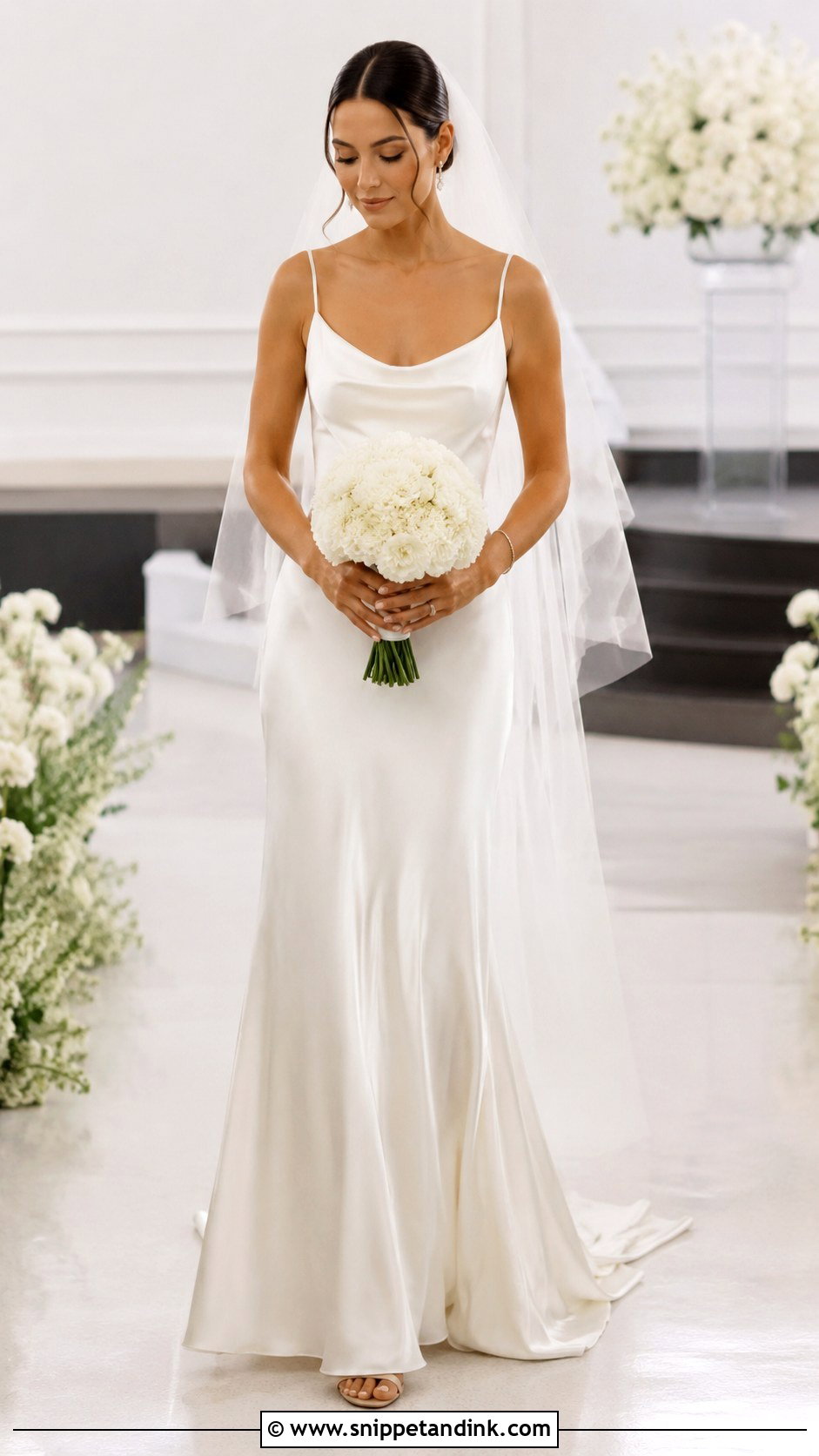
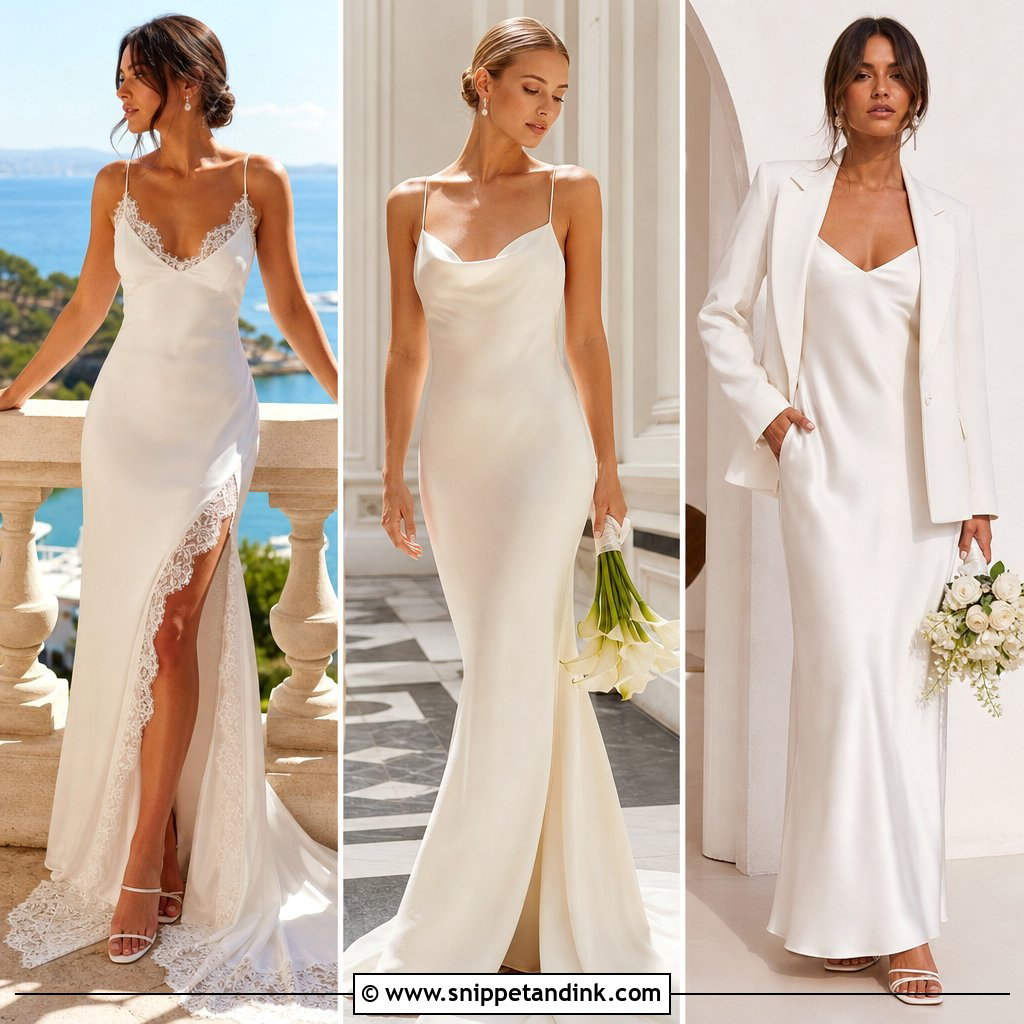
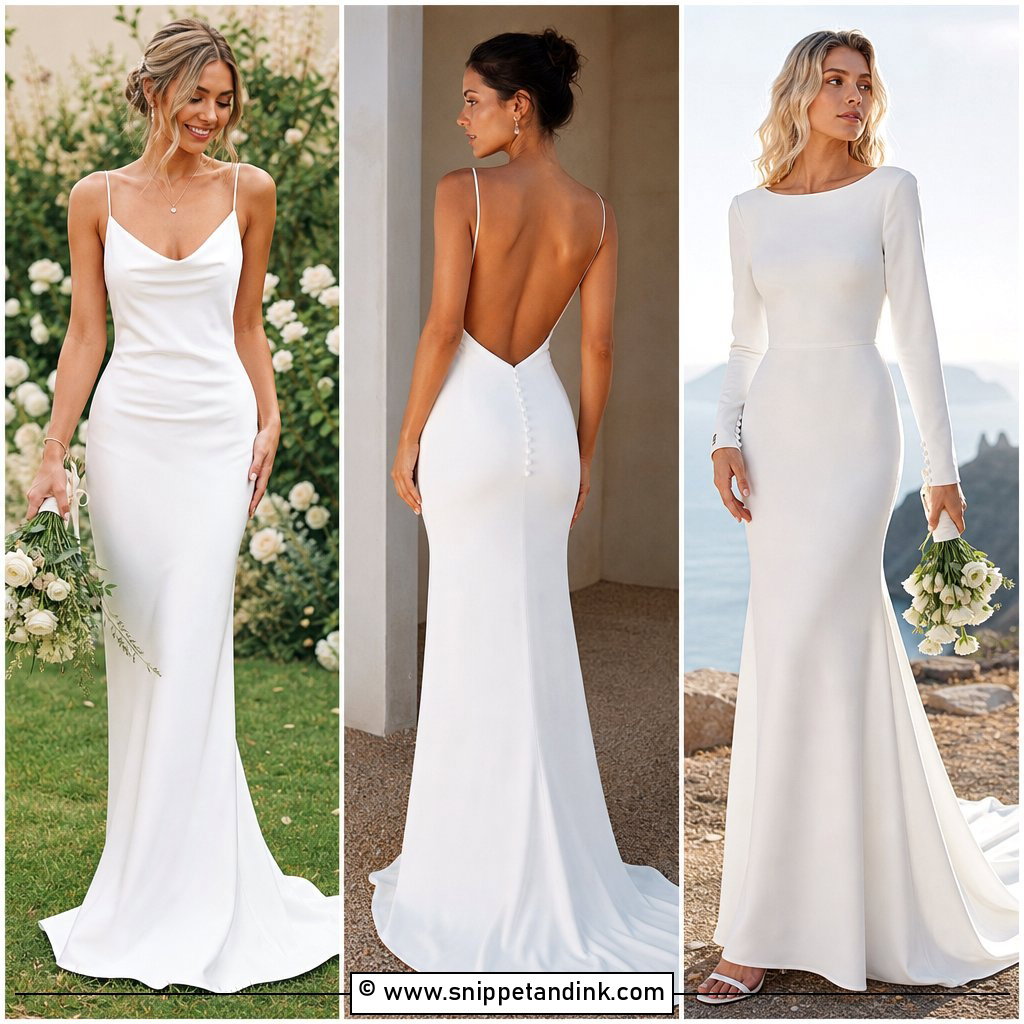
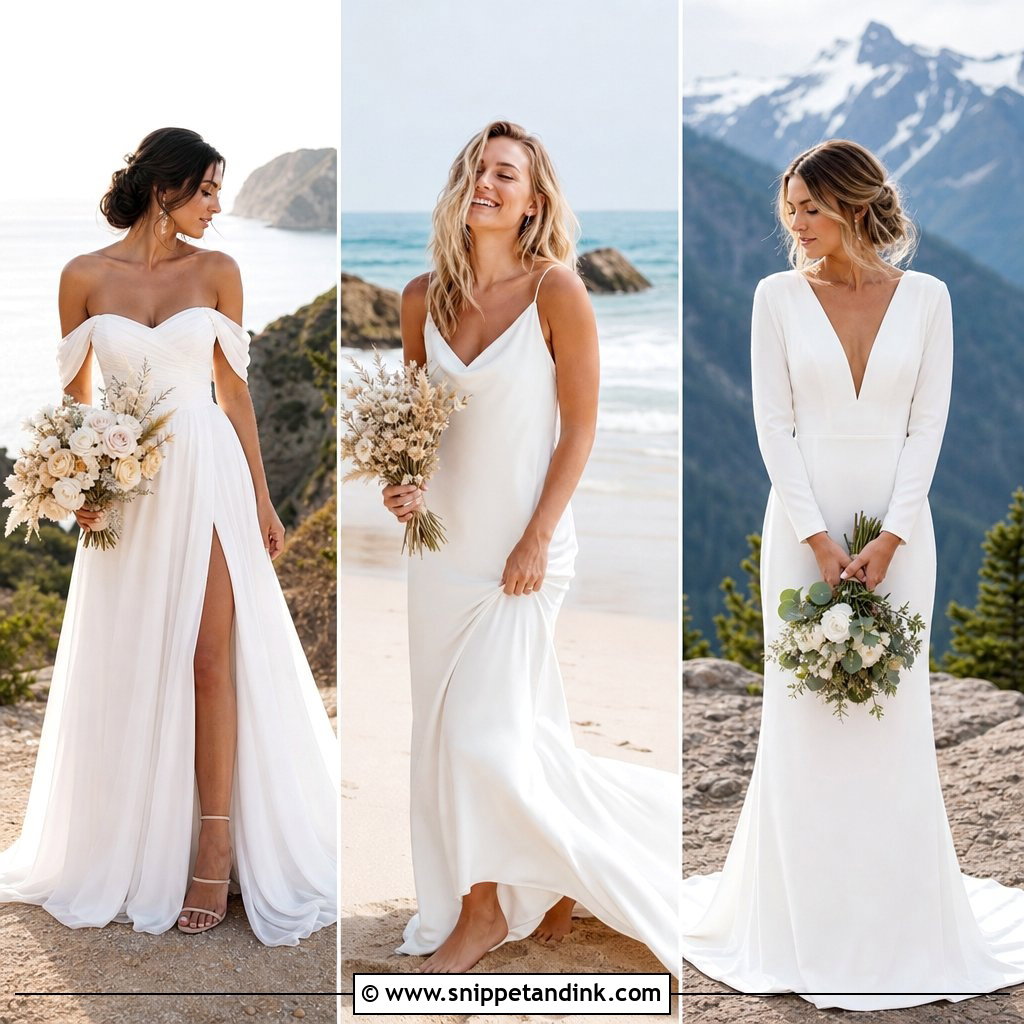
A bias-cut slip follows the body without gripping it, which is exactly why it’s so unforgiving. The bias stretch shows every line underneath, so I fit these over the actual underwear first, then talk neckline: a cowl, scoop, or softly draped neckline all sit well on a slip. Thin straps keep it light for warm ceremonies. A plain fingertip veil, delicate drops and slim ivory sandals are enough, with a low bun or loose waves and a compact white bouquet. For a cooler evening, a cropped satin jacket over the top changes the outfit without hiding the dress.
2. Square Neck A-Line Wedding Dress With Pumps
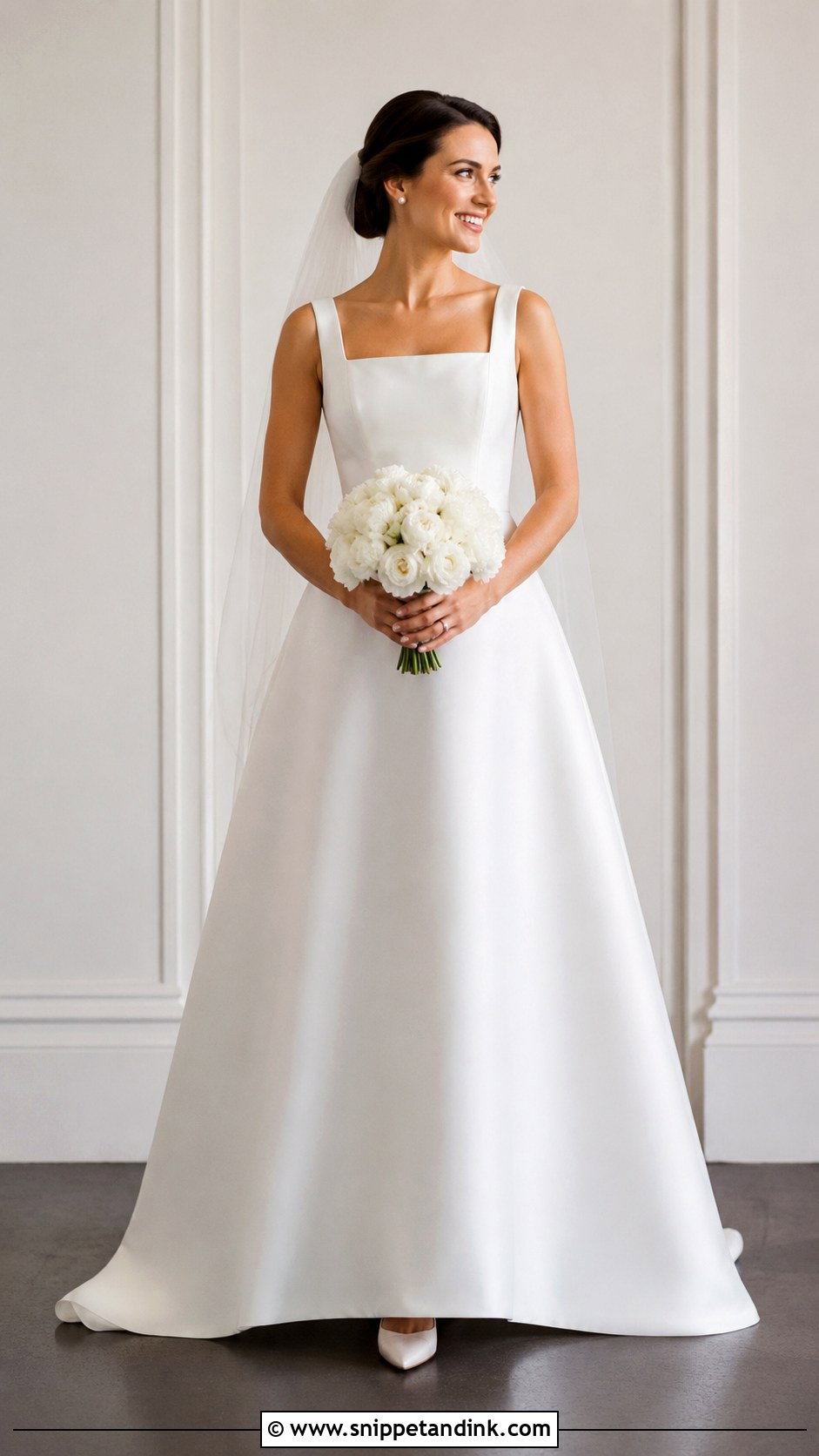
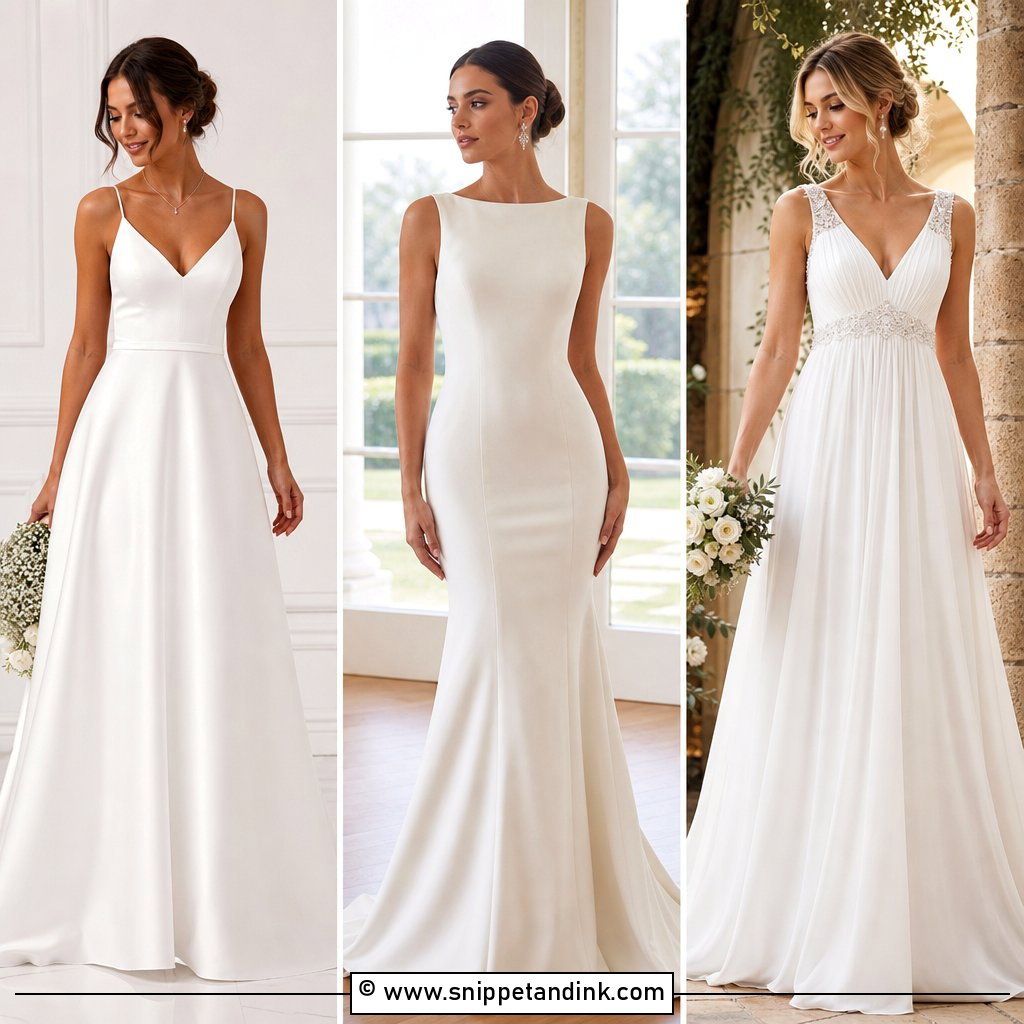
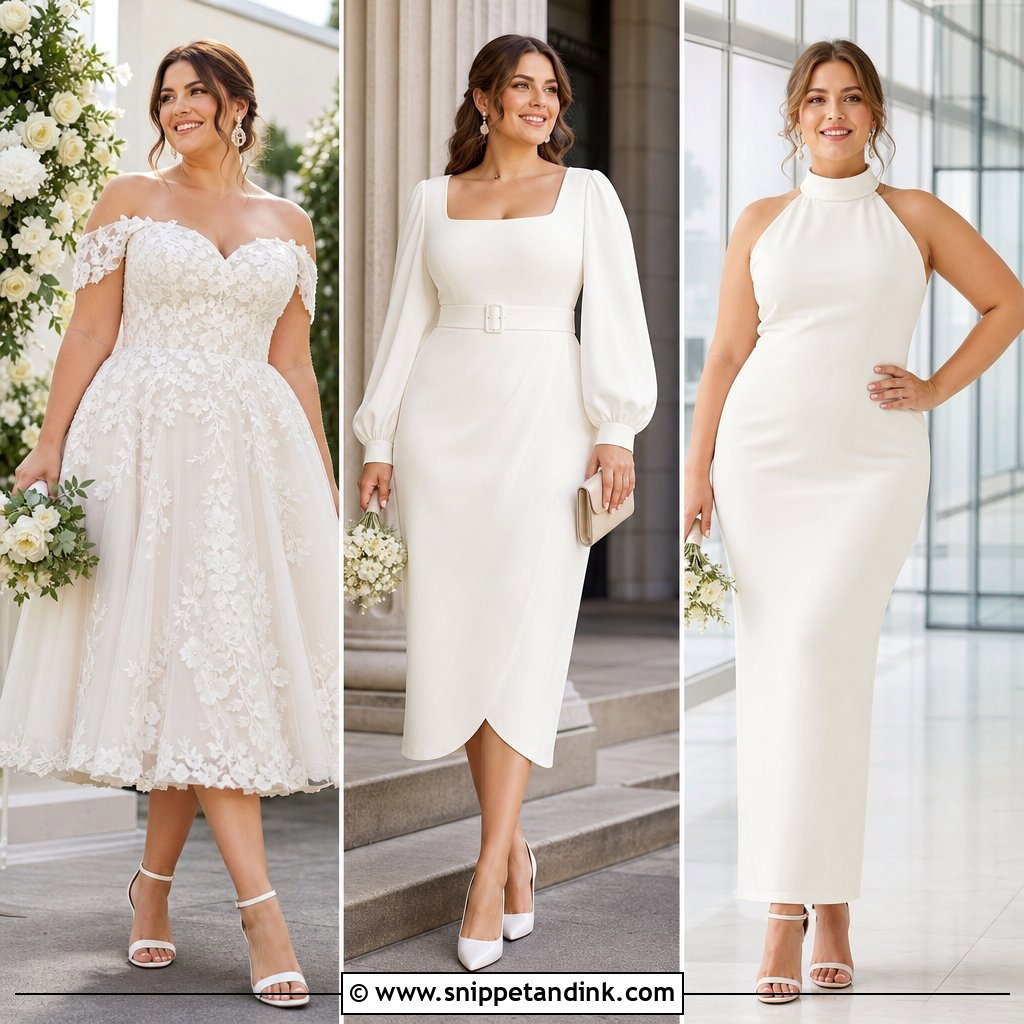
Want a traditional shape with no lace and no sparkle? A square-neck A-line is my usual answer. The straight neckline frames the collarbones and the face, and the flared skirt gives you room to walk and sit. Smooth crepe, satin or mikado keep it clean. I like it with pointed ivory pumps, pearl studs and a medium veil with a raw edge, plus a structured low bun that echoes the straight lines of the neck. One fit note: a square neck must sit flat at both corners. If the corners lift when you breathe in, the bodice needs taking in at the side seams, not the neckline. Carry a rounded bouquet in white, cream or soft green.
3. Crepe Sheath Wedding Dress With Block Heels
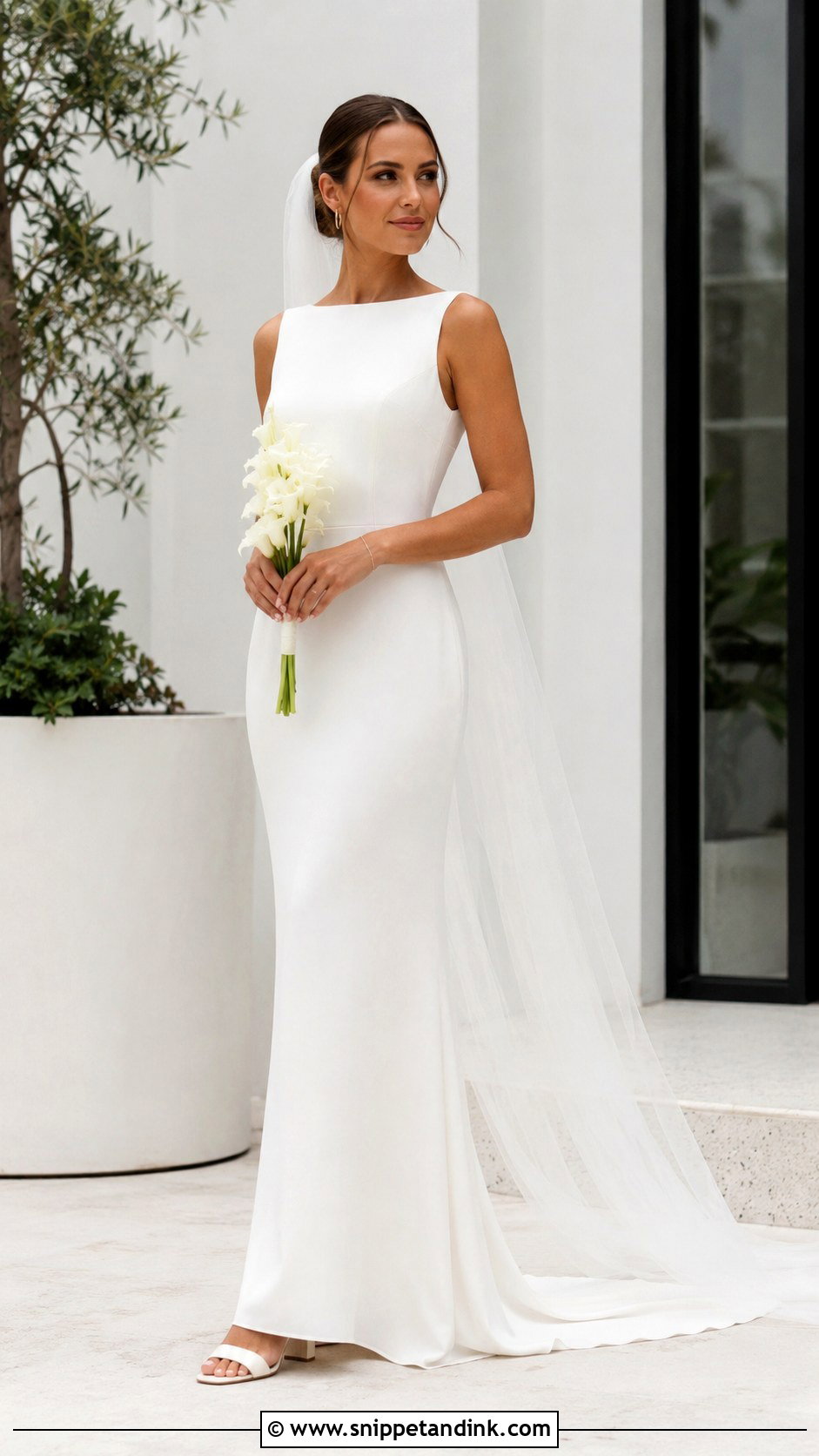
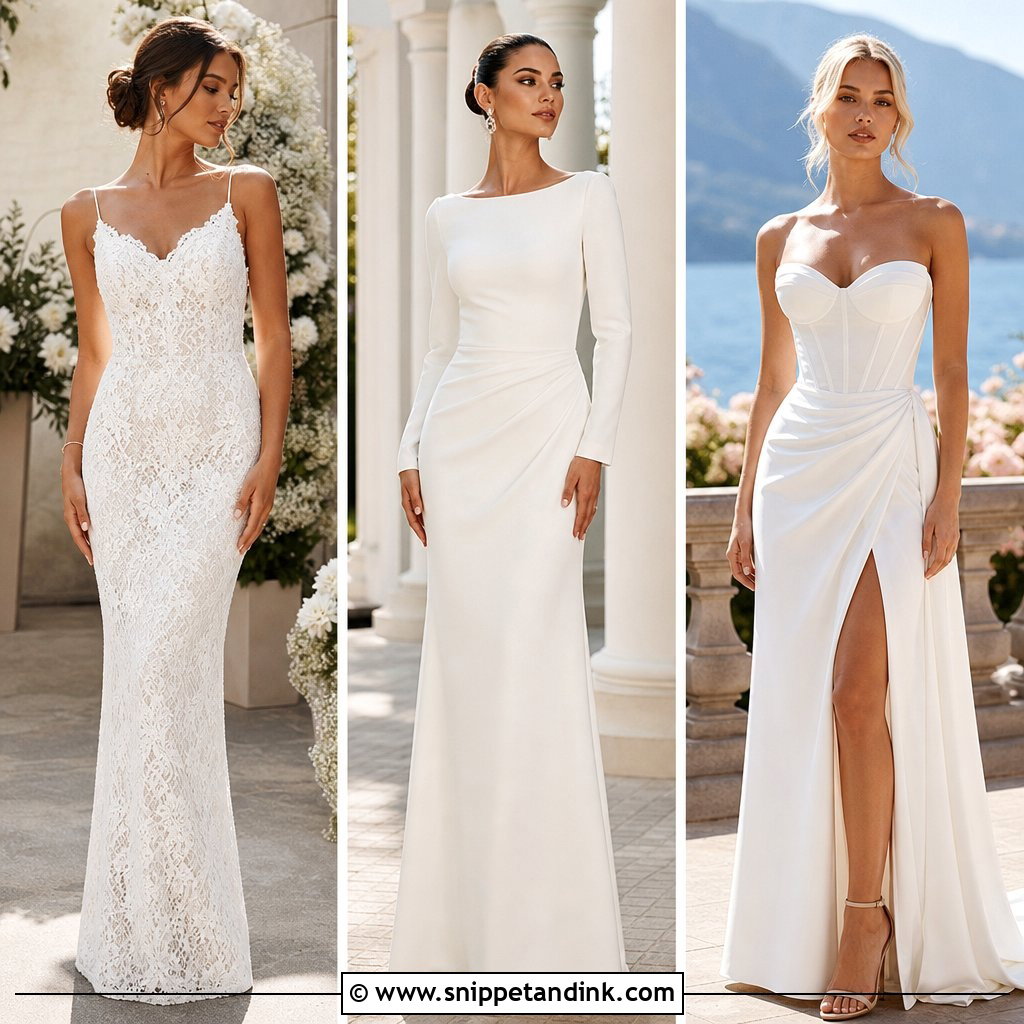
Crepe gives a sheath wedding dress a matte finish that never looks shiny in flash photos. Pick a gown that skims the torso and drops straight to the floor, with wide straps or short sleeves for support and a subtle V to open up the front. Ivory block heels are the sensible pick if you’ll be on grass or stone or standing for hours. Add a fine bracelet, small hoops and a simple comb veil, and keep the bouquet narrow and loose so it doesn’t widen the outline. Smooth, edge-free underwear is not optional with a sheath; crepe settles into every ridge underneath it.
4. Long Sleeve Column Wedding Dress With Pearl Earrings
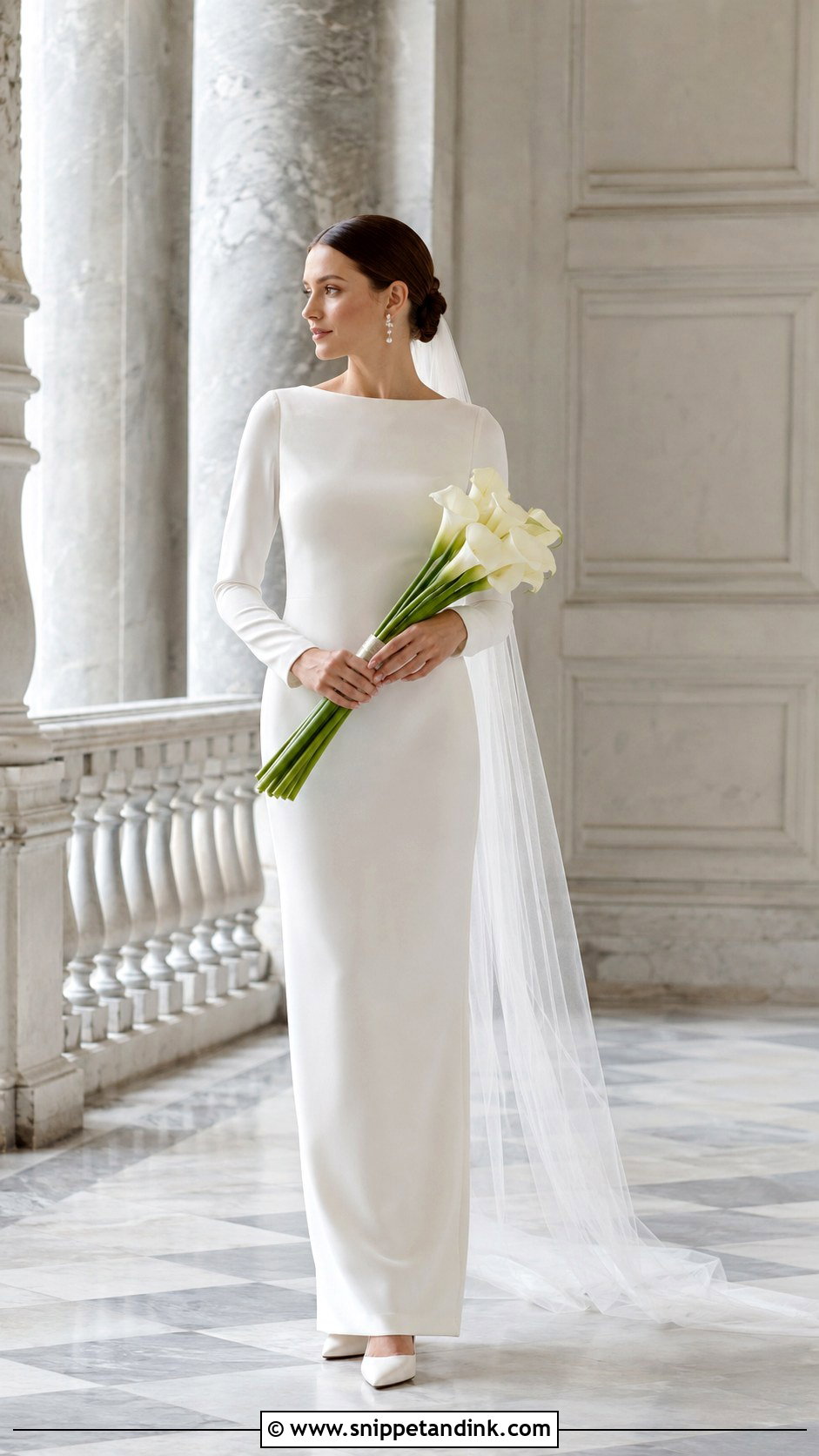
I suggest this dress when a bride tells me she wants to look composed rather than decorated. An unembellished column in matte crepe or smooth stretch fabric, sleeves that fit neatly at shoulder and wrist, and a bateau, scoop or modest V. Pearl drops, pointed closed-toe heels and a sleek low chignon are all it needs. A sheer cathedral veil gives the ceremony its moment without breaking the minimal mood. White tulips or calla lilies in a simple shape suit it. Column skirts are narrow, so take a full stride and climb a step at your fitting; a small walking slit at the back is a common, nearly invisible fix. It’s warmest in cool weather, though lighter fabric makes it work year-round.
5. Off Shoulder Wedding Dress With Low Heels
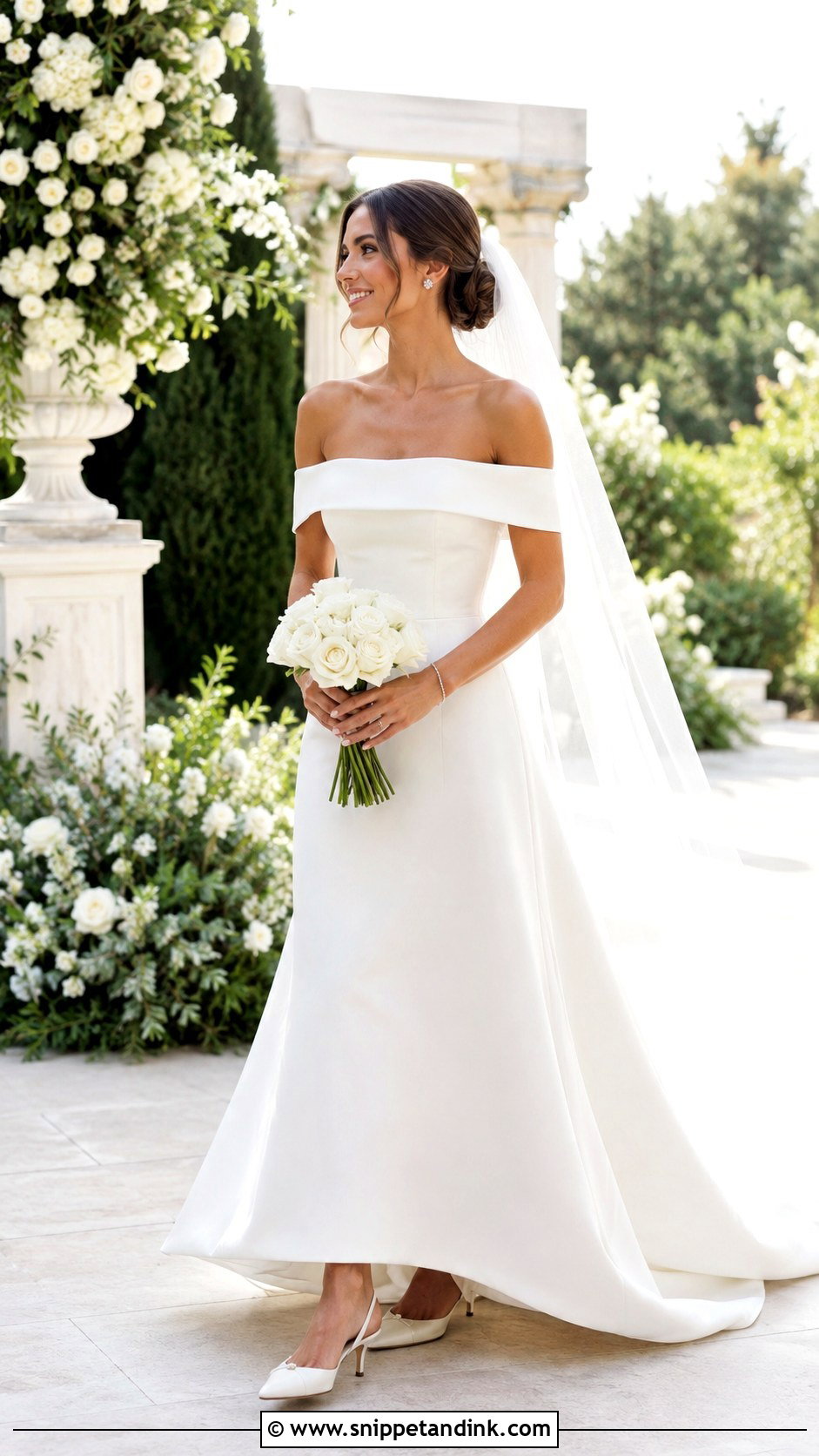
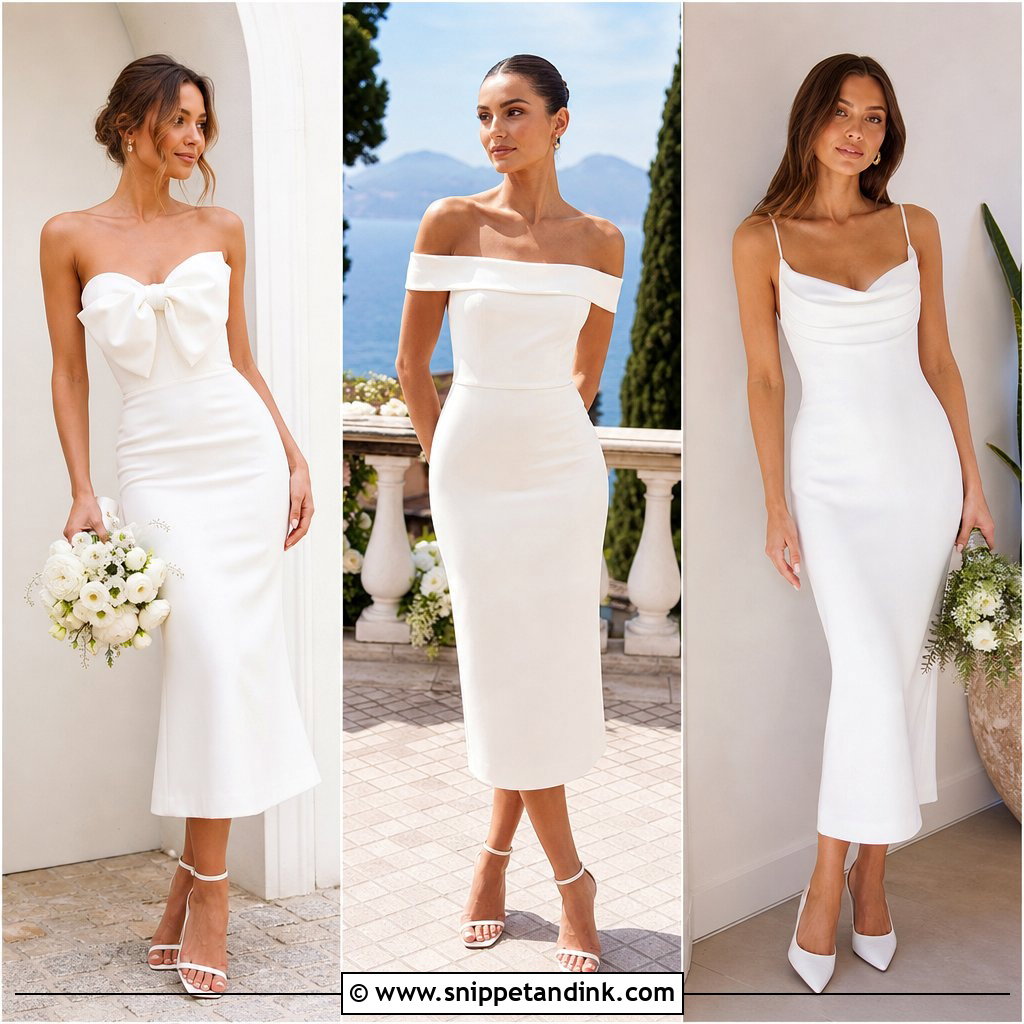
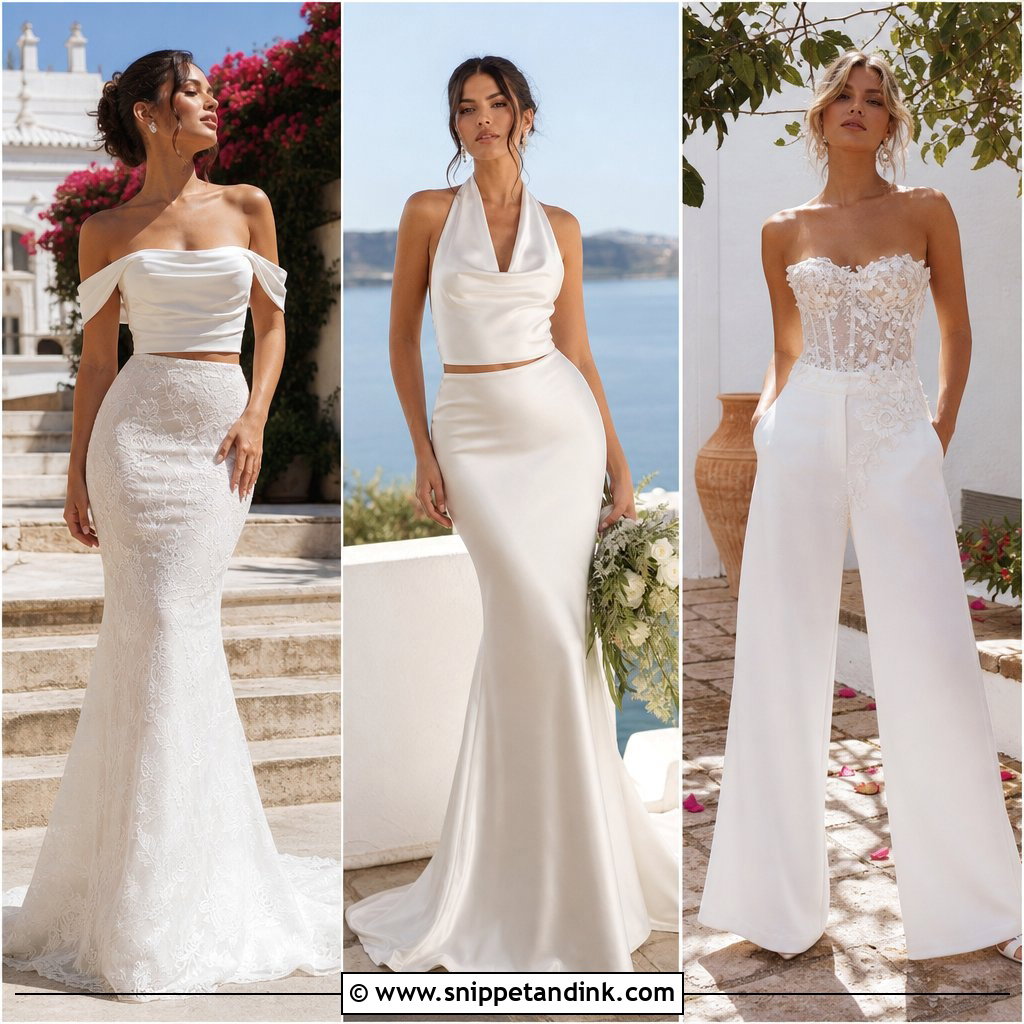
An off-shoulder neckline reads romantic even on a completely plain dress. The part I check is the fold-over band across the upper arms: it needs a fitted bodice under it with enough structure that the band doesn’t slip down as you move. A straight or gently flared skirt keeps the shape clean. Pair it with low slingback heels, tiny crystal studs and a sheer veil set under a smooth bun. Leave the necklace off, since the open shoulders already hold the eye, and wear a fine bracelet instead. White garden roses suit it. Raise both arms in the fitting room. Off-shoulder bands restrict how high you can lift them, and you want to know that before the first dance.
6. Halter Neck Wedding Dress With Sleek Accessories
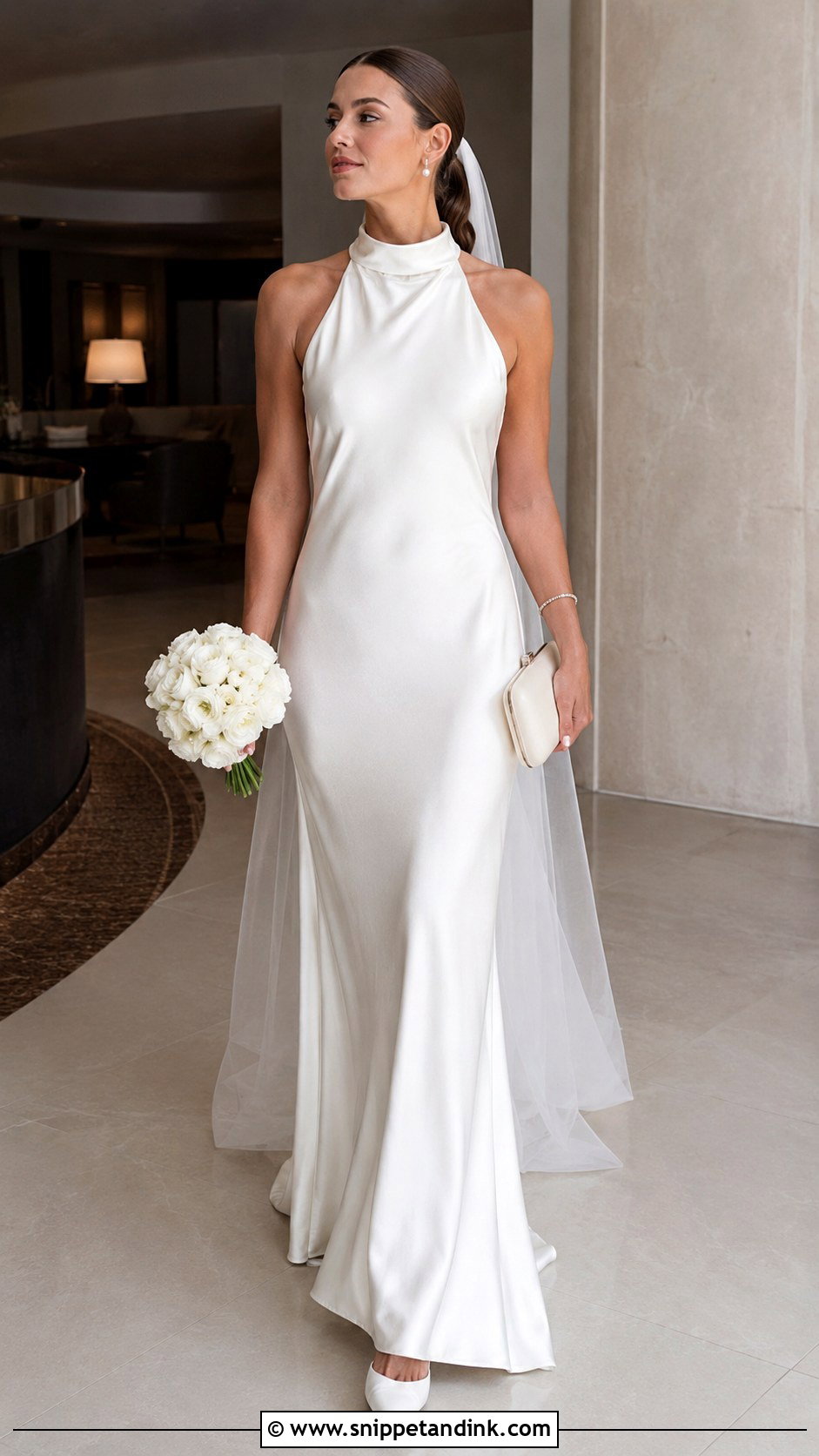
A halter pulls the eye up to the face and shoulders and makes the whole body look longer. Choose smooth satin or crepe with a fitted upper body and a skirt that flows. The neck strap can be high and narrow or softly curved; narrow halters suit sloping shoulders best, while a wider band flatters broad ones. Skip the necklace and wear small metallic or pearl earrings with pointed pumps and a neat topknot or low ponytail. Set the veil under the hairstyle so the bare back stays visible. Halters hang their weight from the neck, so I always ask for built-in cups and a firm back band to share the load; otherwise the strap starts to ache by the reception.
7. Cowl Neck Wedding Dress With Barely There Heels
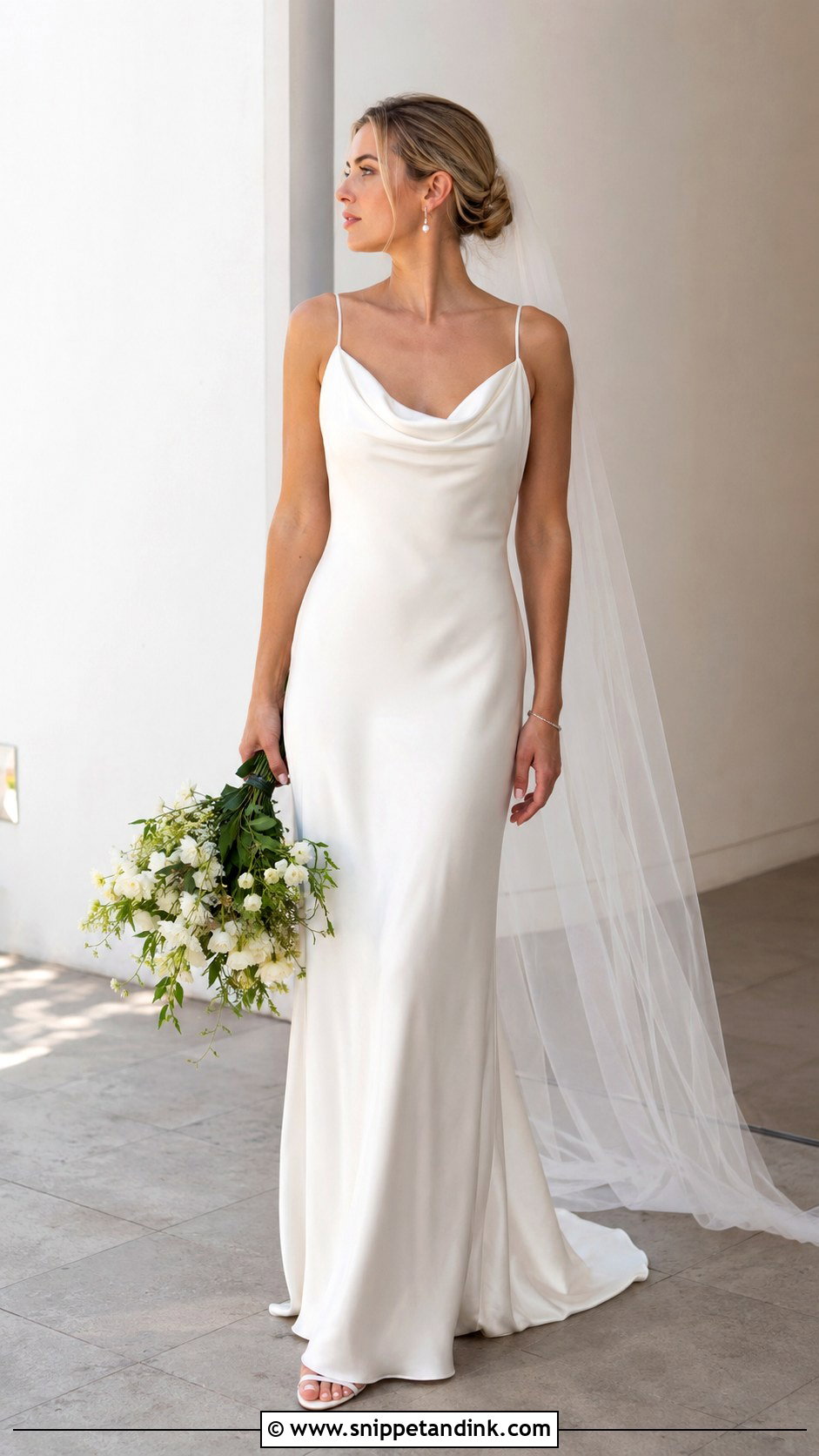
Draped fabric at the neck gives a plain dress shape without a single bead. A fluid satin gown with a straight or bias-cut skirt and slim straps is the usual base. The cowl should fall softly, not collapse; when I fit one, I look at it from the side and from above, because that’s the angle a taller guest or a photographer on a balcony sees. Barely there ivory heels, small drops and a thin bracelet are enough, with a low twisted bun and a plain chapel veil. Carry a loosely tied white bouquet. If the back is low as well, ask for sewn-in cups rather than relying on tape.
8. One Shoulder Wedding Dress With Statement Earrings
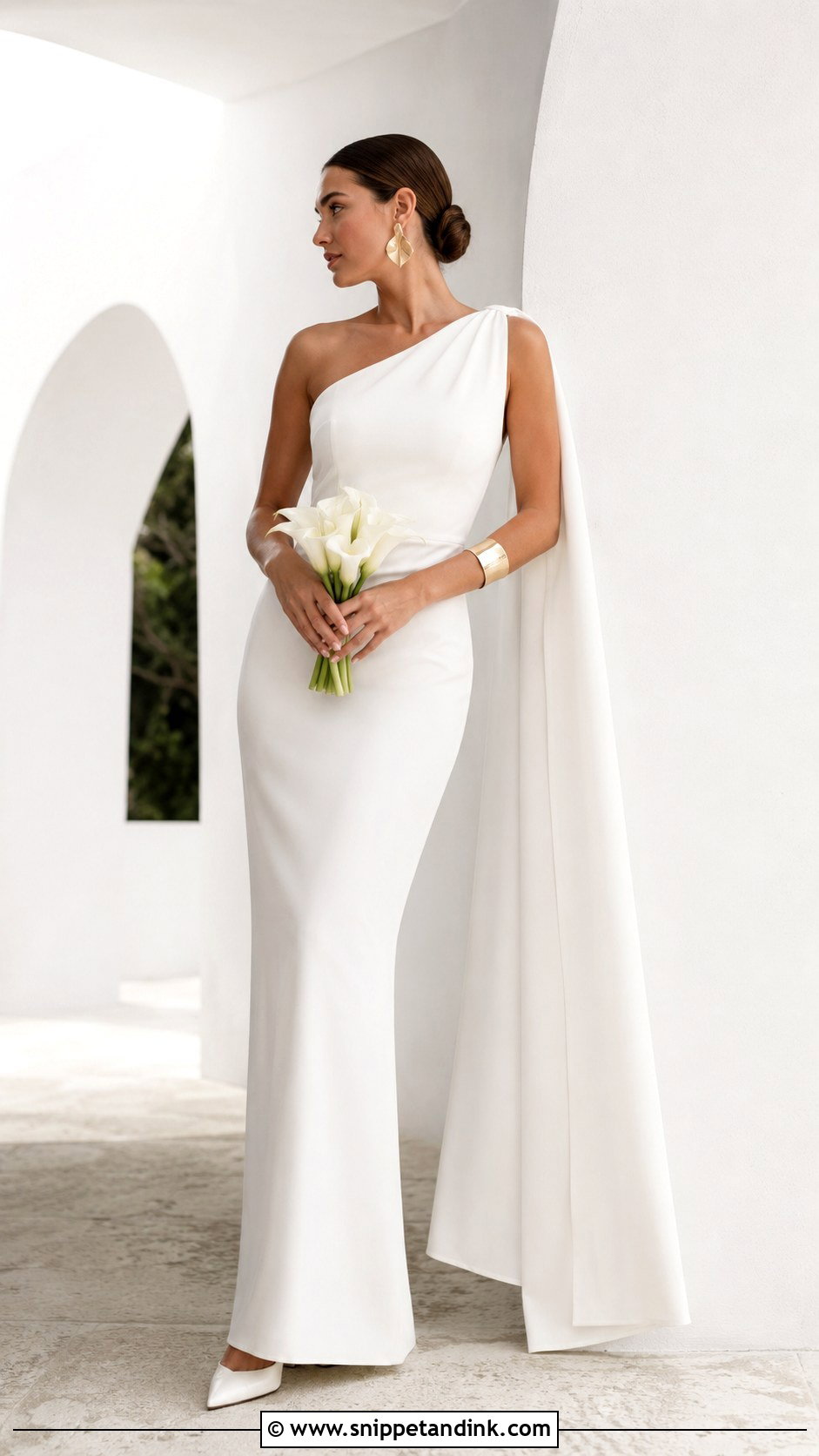
One bare shoulder is enough detail for a whole outfit. It shows best on smooth crepe, satin or a structured fabric, where nothing on the surface competes with the diagonal line. A straight skirt keeps it minimal; a soft A-line gives more movement. I’d pair it with sculptural earrings, pointed ivory heels and a simple metal cuff, and skip the necklace so the asymmetry stays balanced. A low bun or side-parted ponytail swept away from the bare shoulder shows the neckline properly. Calla lilies repeat the sleek shape. If you want a veil, go plain with no lace edge. Ask the seamstress to add silicone gripper inside the strap, since one-shoulder styles tend to slide toward the bare side.
9. Strapless Midi Wedding Dress With Slingback Heels
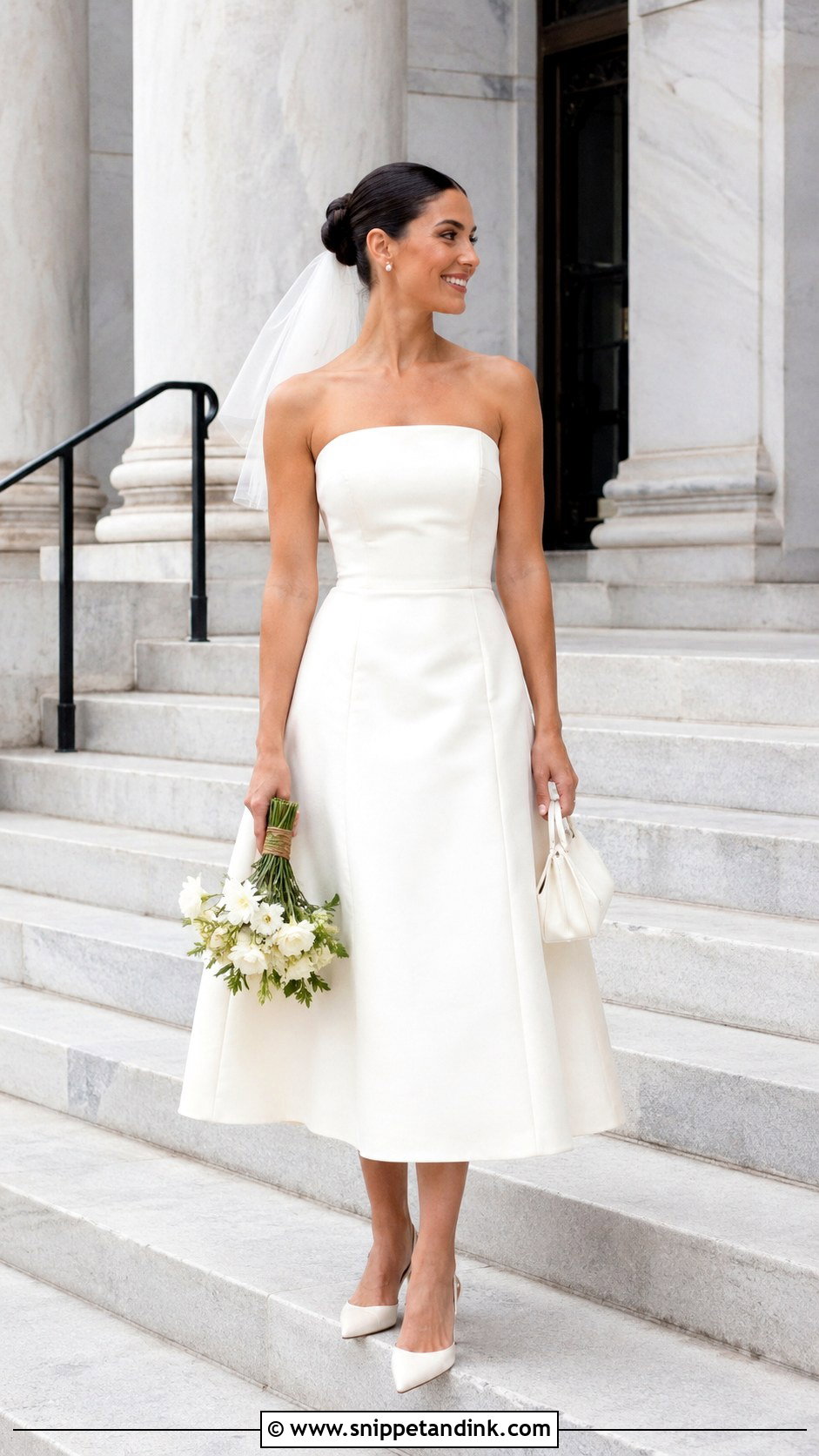
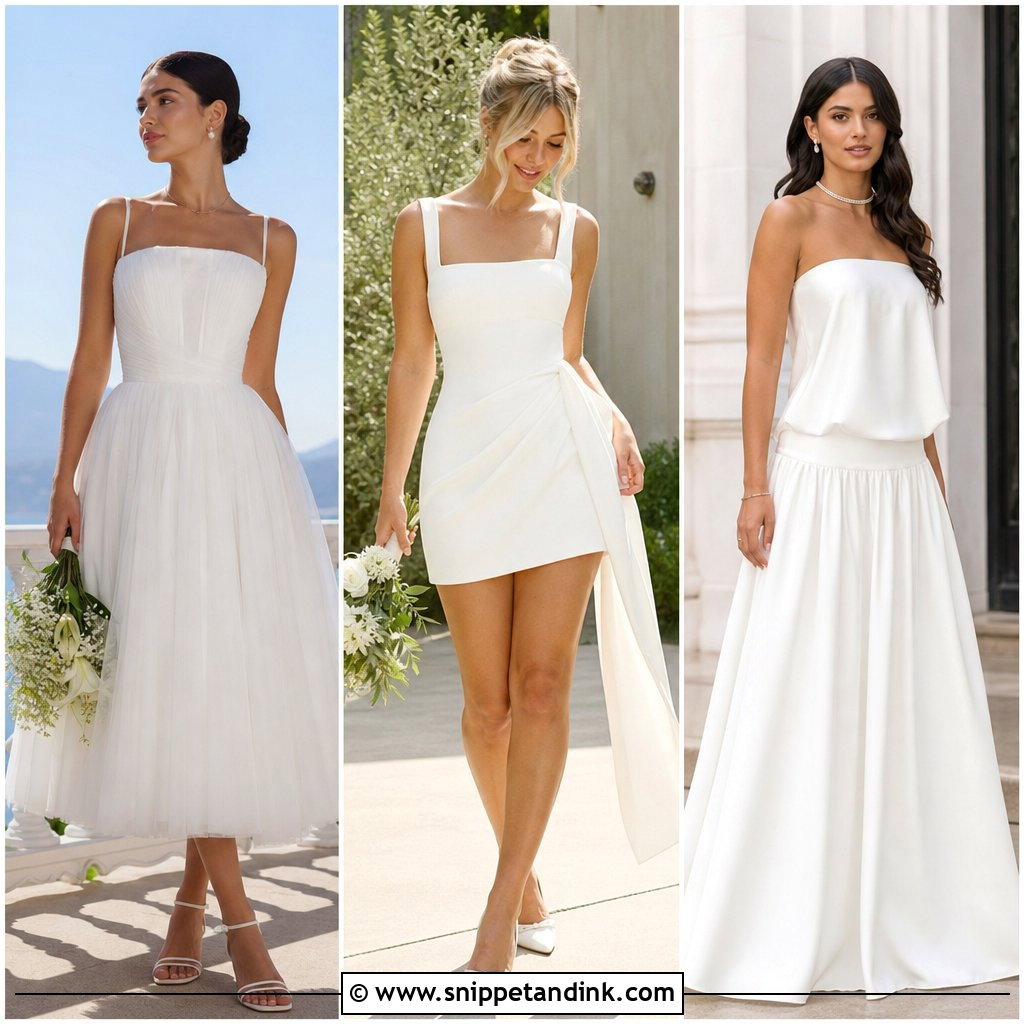
A strapless midi is the easy choice for a courthouse ceremony or a brunch reception. The bodice is what matters: it needs internal boning and a snug fit at the top edge, because strapless dresses are held up by the waist and ribcage, not the bust. The skirt can be straight or full, landing between knee and ankle. Pointed slingbacks lengthen the leg, and a small top-handle bag is genuinely handy at a city ceremony. Pearl studs, a short veil and a neat bun keep it bridal, or swap the veil for a padded headband or bow. Your shoes will be in every photo, so pick a pair you like looking at.
10. Simple Wedding Dress With Cape And Pumps
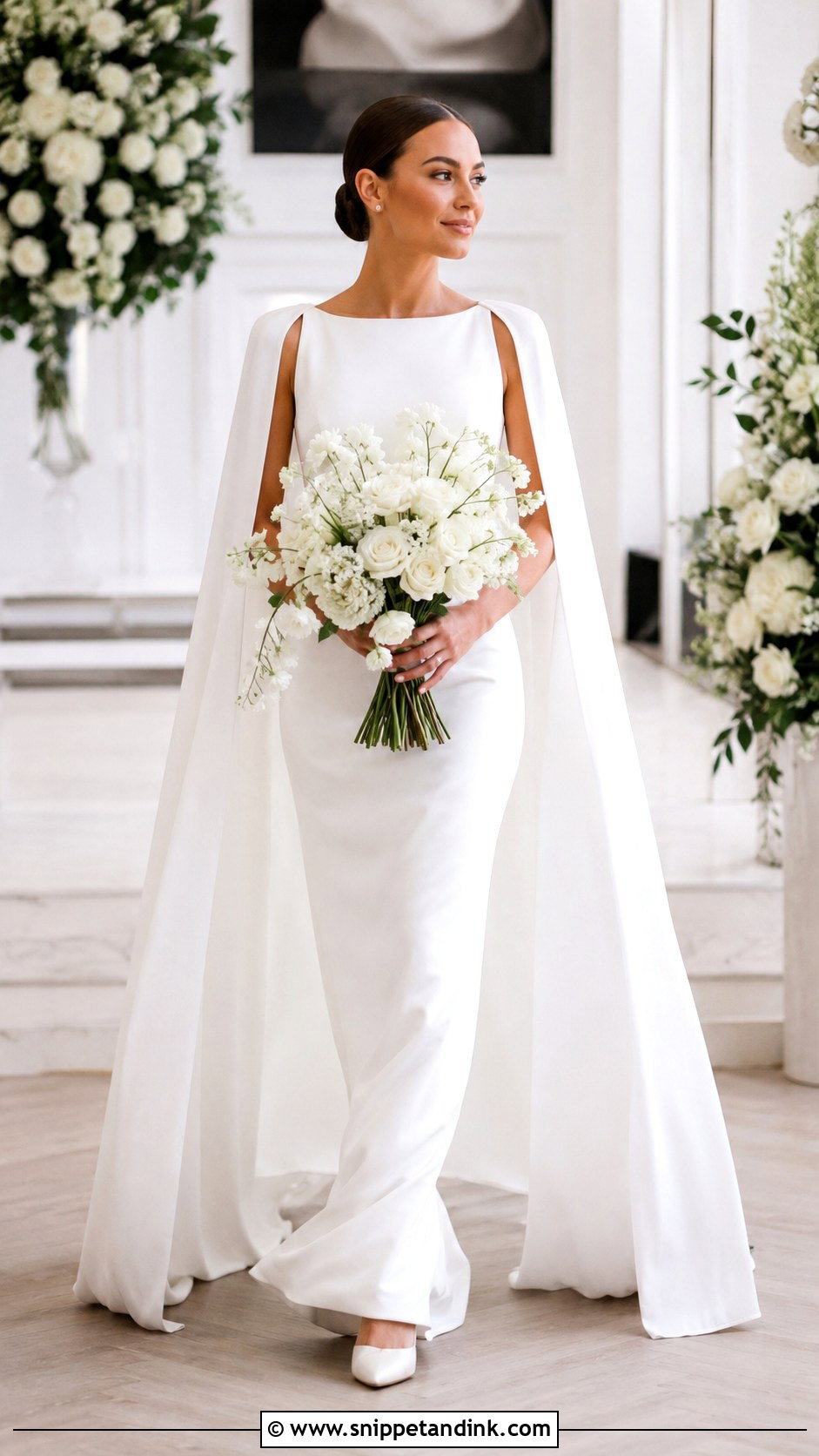
A cape adds coverage and movement to a dress that’s otherwise very quiet. Start with a sleeveless sheath or column in plain crepe, then layer a light cape from the shoulders. Sheer chiffon floats; matching crepe looks more tailored and holds its line in photos. Pointed pumps, small studs and a smooth low bun suit it, and with a cape this visual you won’t want a detailed veil or a big necklace as well. Long-stemmed white flowers repeat the vertical lines. Check how the cape attaches. Snaps or hidden hooks at the shoulder let someone remove it in seconds for dancing, while a stitched-in cape stays on all night.
11. Tea Length Wedding Dress With Mary Jane Shoes
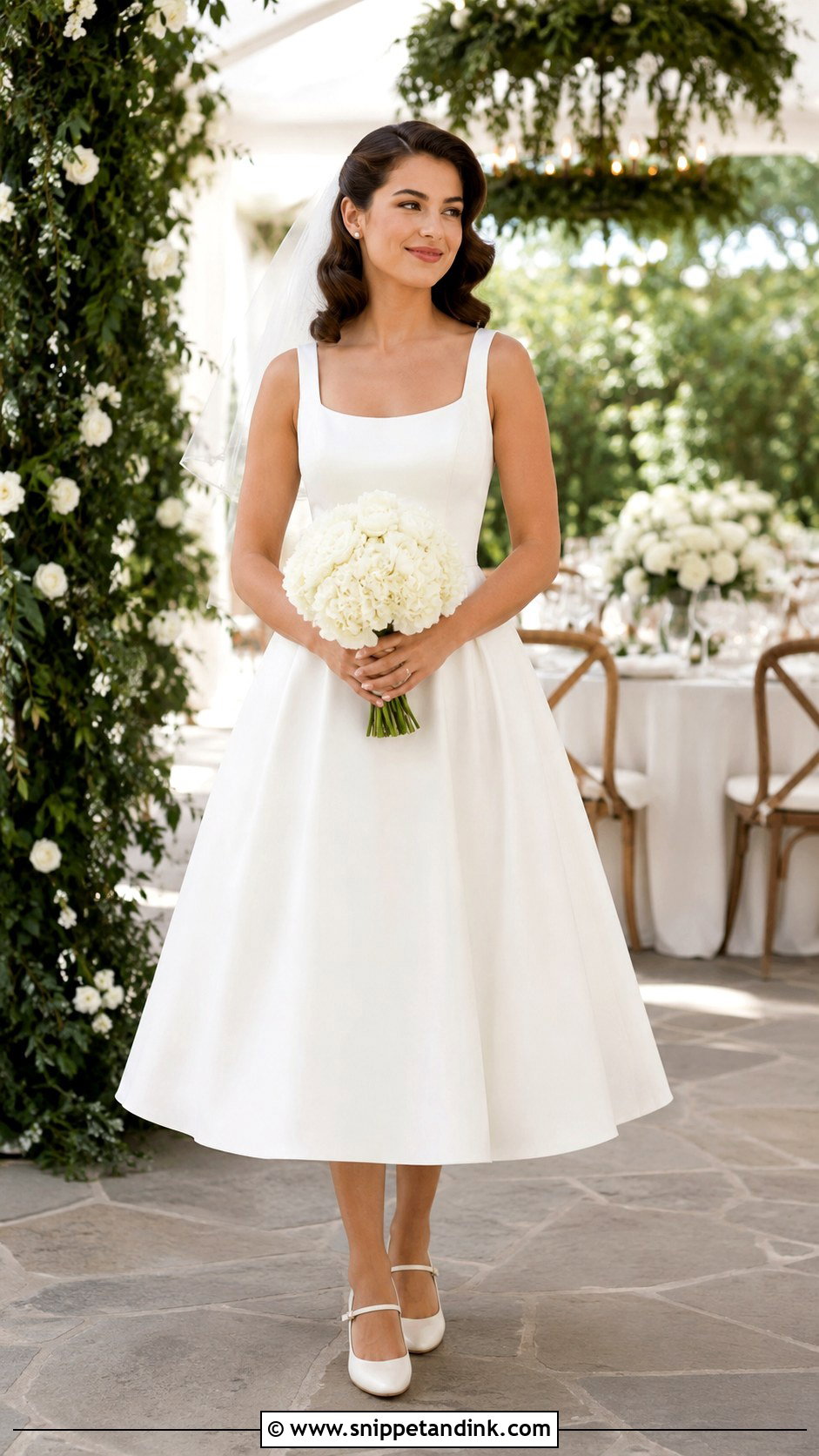
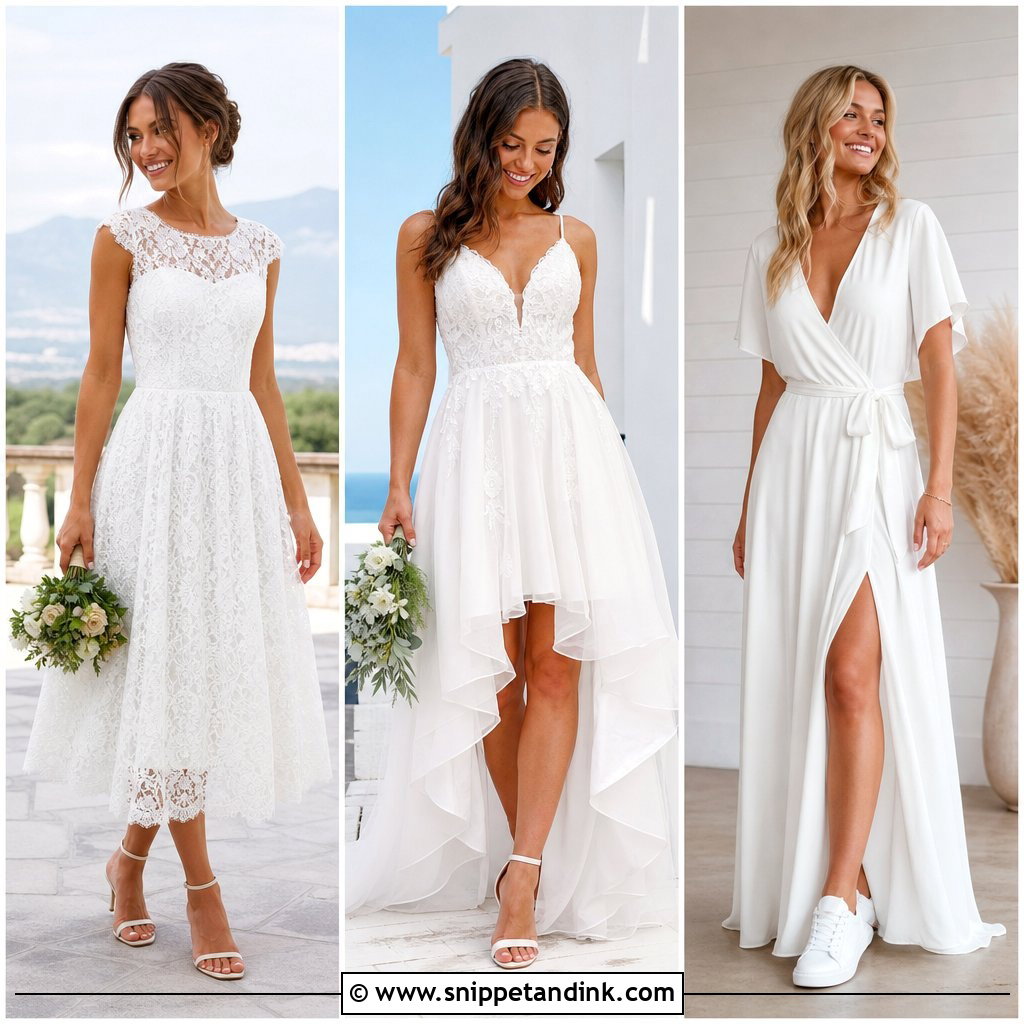
Tea length has a vintage feel and is far easier to move in than a floor-length gown. Pick a plain dress with a fitted bodice and a skirt ending around the lower calf, with a bateau, scoop or square neck. Wear ivory Mary Jane shoes or rounded pumps, pearl studs and a short birdcage or shoulder-length veil. A softly curled bob, a low bun or a half-up style all fit. Because the shoes are on show, the strap needs to hold your foot properly; a loose strap shows as heel slip in every walking photo. Keep the bouquet in proportion to the shorter skirt. It suits courthouse, garden and restaurant weddings especially well.
12. Courthouse Mini Wedding Dress With Blazer
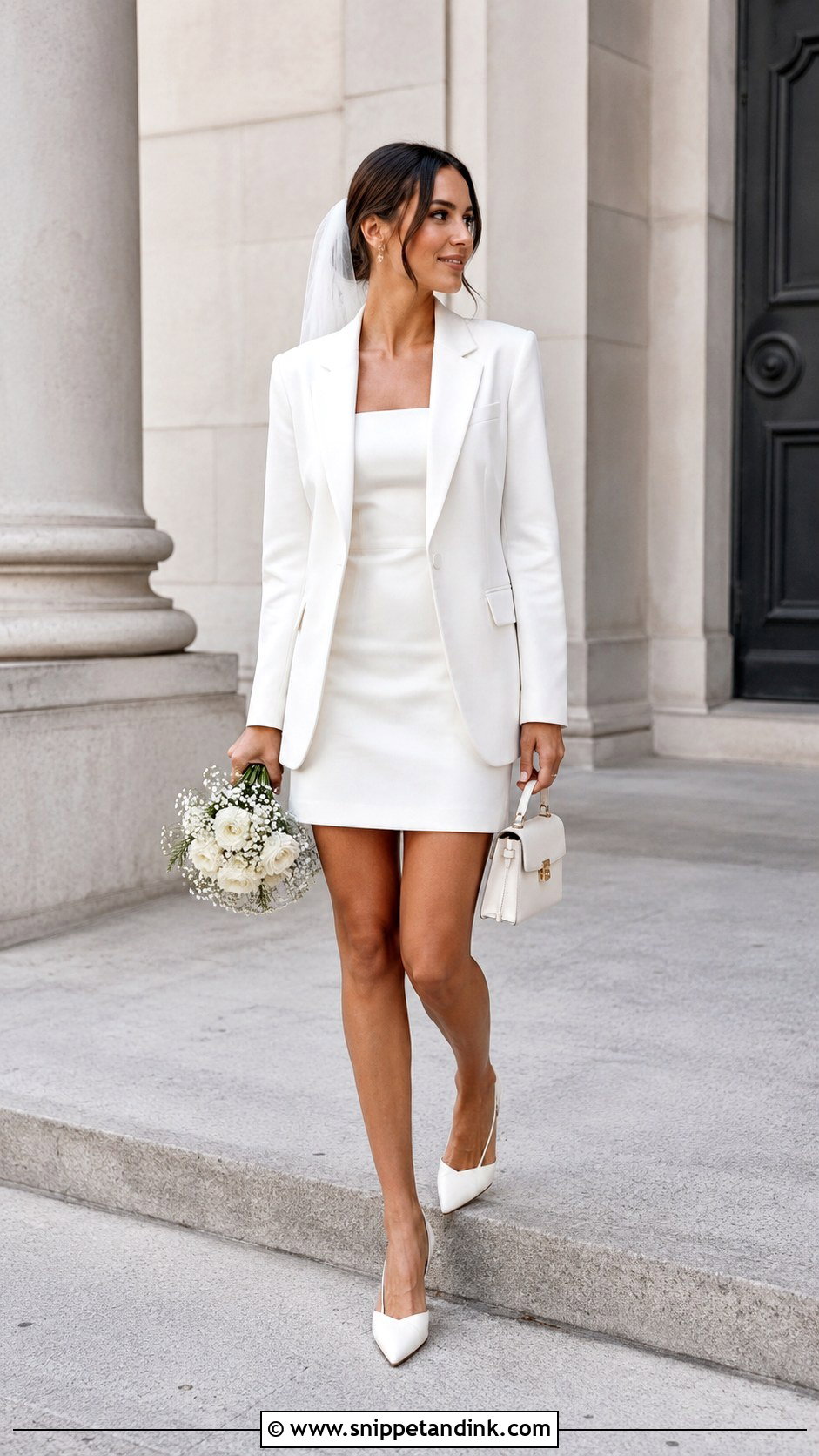
For a quick civil ceremony, a mini dress with a tailored blazer is practical and still unmistakably bridal. Choose a shift, fitted sheath or slightly flared mini with a hem long enough to sit down in without tugging. The blazer is the tricky part: ivories differ wildly, so hold the two fabrics together in daylight before you buy. Slingback heels, a structured mini bag and small metal earrings work, plus a short veil or an oversized hair bow. Keep the bouquet small so it doesn’t cover the dress in photos. Take the blazer off after the vows for a second look. On a windy courthouse step, a loose skirt benefits from fitted shorts underneath.
13. Backless Wedding Dress With Low Bun And Veil
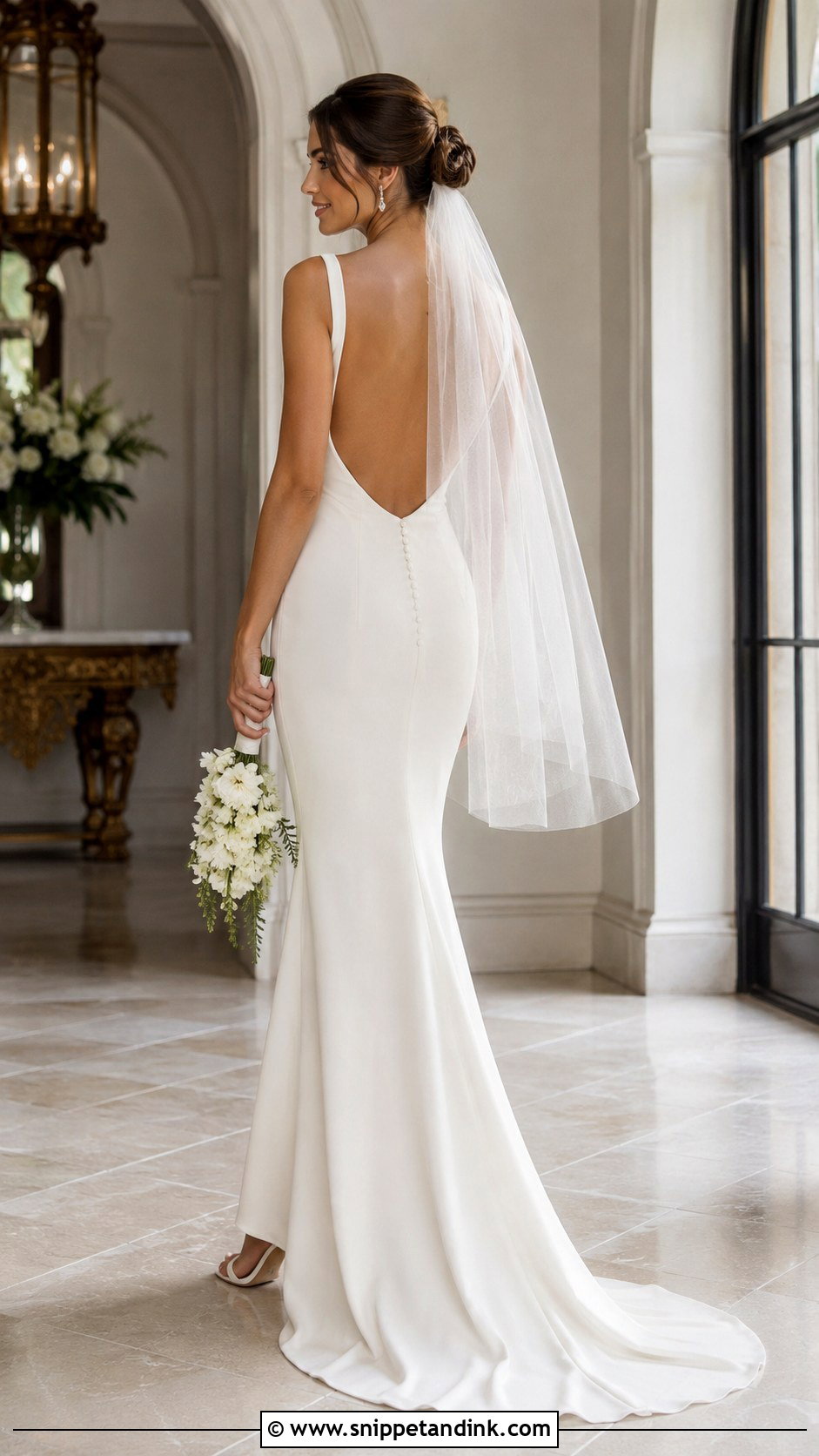
An open back gives a plain front its surprise. The front can be completely simple; the back has to sit flat against the body, which takes careful fitting at the shoulder blades, where low backs most often gape. A column or gentle A-line skirt balances the bare skin. Wear a low bun or braided updo so the back stays on view, with delicate earrings, low heels and a sheer veil anchored below the hairstyle. Visible bra straps are the one thing that ruins this dress, so have a tailor sew cups into the lining. A narrow bouquet keeps everything clean.
14. High Neck Wedding Dress With Pointed Flats
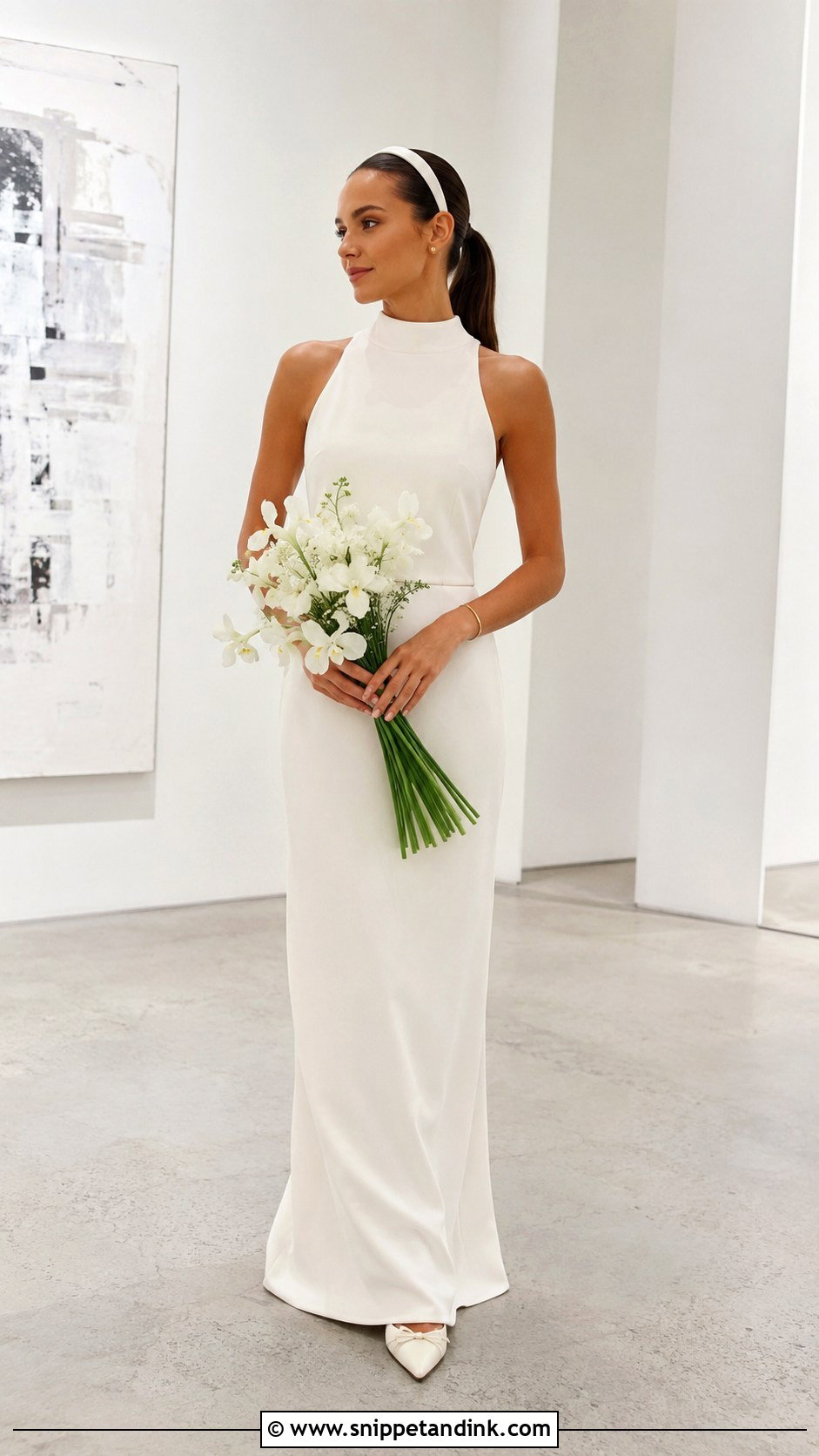
A high neck gives full coverage and a strong, upright line. Look for a sleeveless column, short-sleeve sheath or soft A-line in plain crepe or matte satin. The collar must not rub. I check by having the bride turn her head fully left and right, since a high neck that’s fine facing forward can dig in when she looks over at her partner. Pointed ivory flats, pearl or gold studs and a narrow bracelet keep it understated, and a bun or ponytail stops the top half feeling crowded. A small comb or smooth headband can replace the veil. Long-stemmed flowers echo the vertical shape. It’s a good pick if you want flats or expect hours on your feet.



15. Simple Ball Gown Wedding Dress With Classic Veil
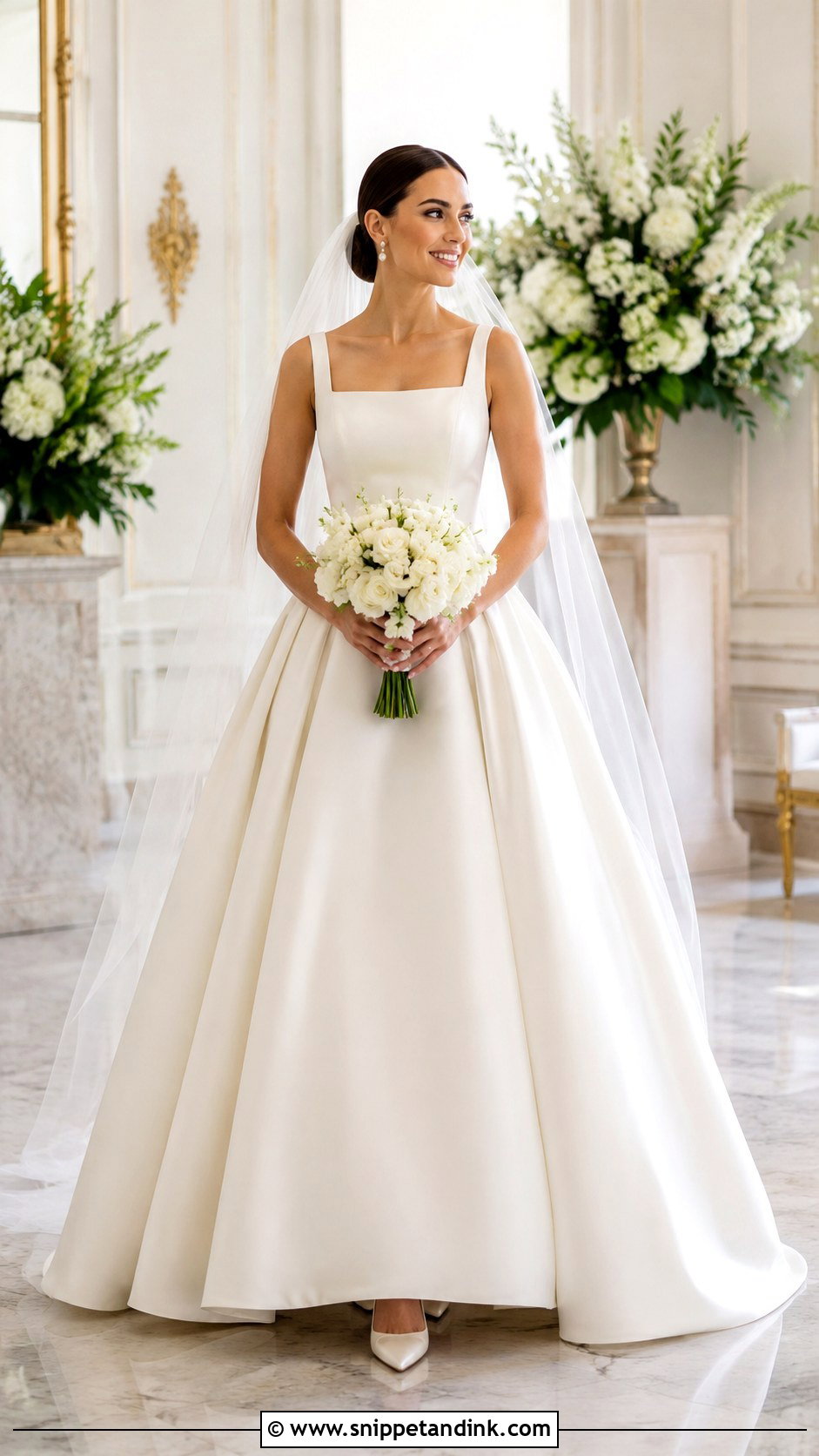
A ball gown can still be simple when the fabric is plain and the shape provides the drama. Pick a fitted bodice with a clean scoop, square, or strapless neckline and a full skirt with no lace, beads or appliqués. Structured satin or mikado holds the volume; softer fabric gives more swing. Classic pumps, pearl studs and a long sheer veil with no border are enough, with smooth hair and a medium bouquet. Pockets are worth asking about. A big skirt hides them completely, and a place for lip balm is useful. Get the hem exact in your wedding shoes, because a full skirt that’s even slightly long catches under your toes on every step forward.
16. Empire Waist Wedding Dress With Flat Sandals
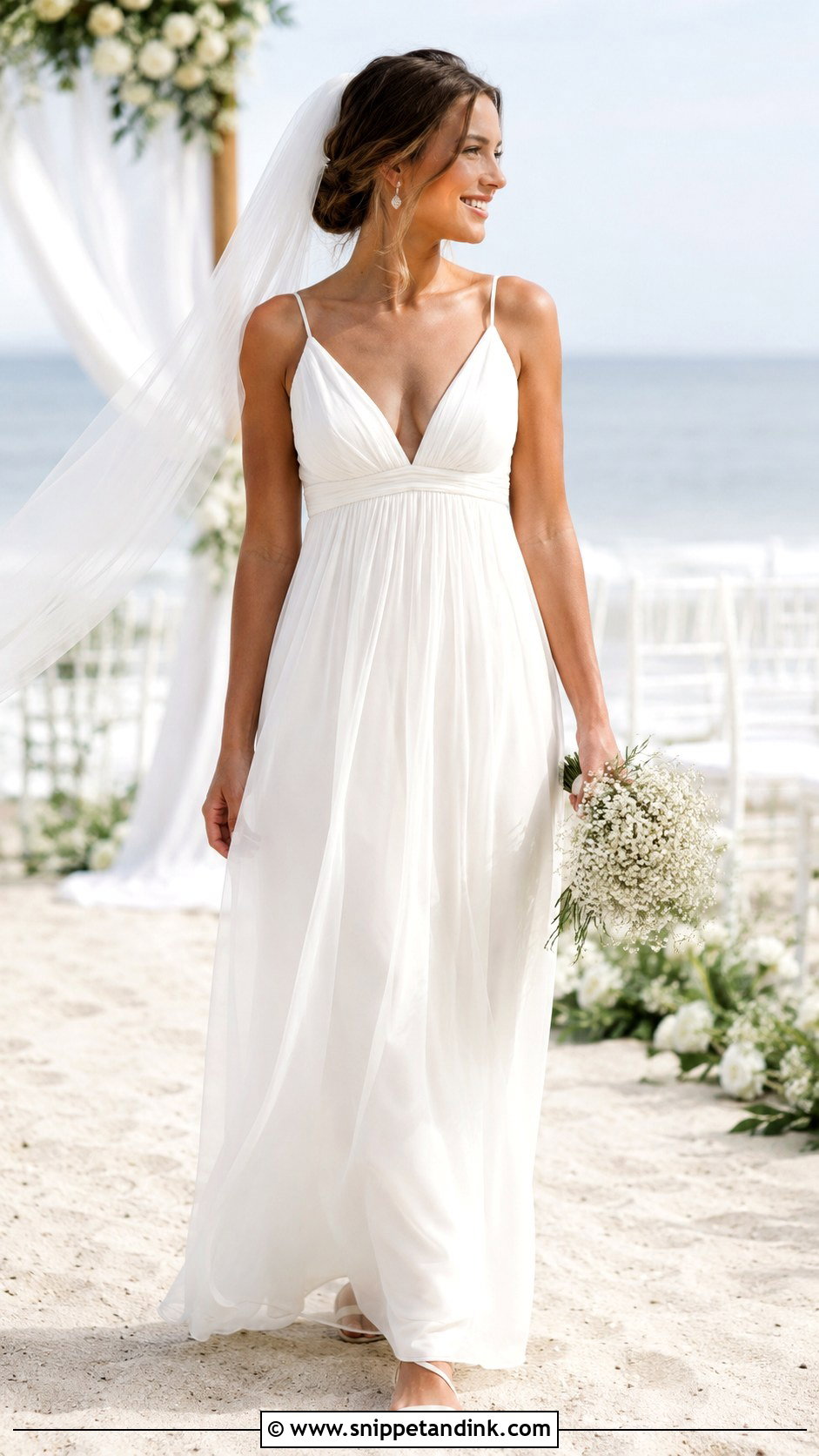
A raised waist sitting just under the bust lets the fabric fall loose over everything below, which makes this one of the most comfortable dresses here. Chiffon, georgette or lightweight crepe give movement without bulk. Pair it with flat ivory sandals, delicate earrings and a simple fingertip veil, plus loose waves or a relaxed low bun and a small, airy bouquet. Sheer outer layers need an opaque lining, so check it in daylight and indoors; a lining that looks fine in the shop can show your legs against a bright beach sky. It suits beach, garden and destination ceremonies, and with polished jewelry and a crisper veil it works indoors too.
17. Wrap Wedding Dress With Ankle Strap Heels
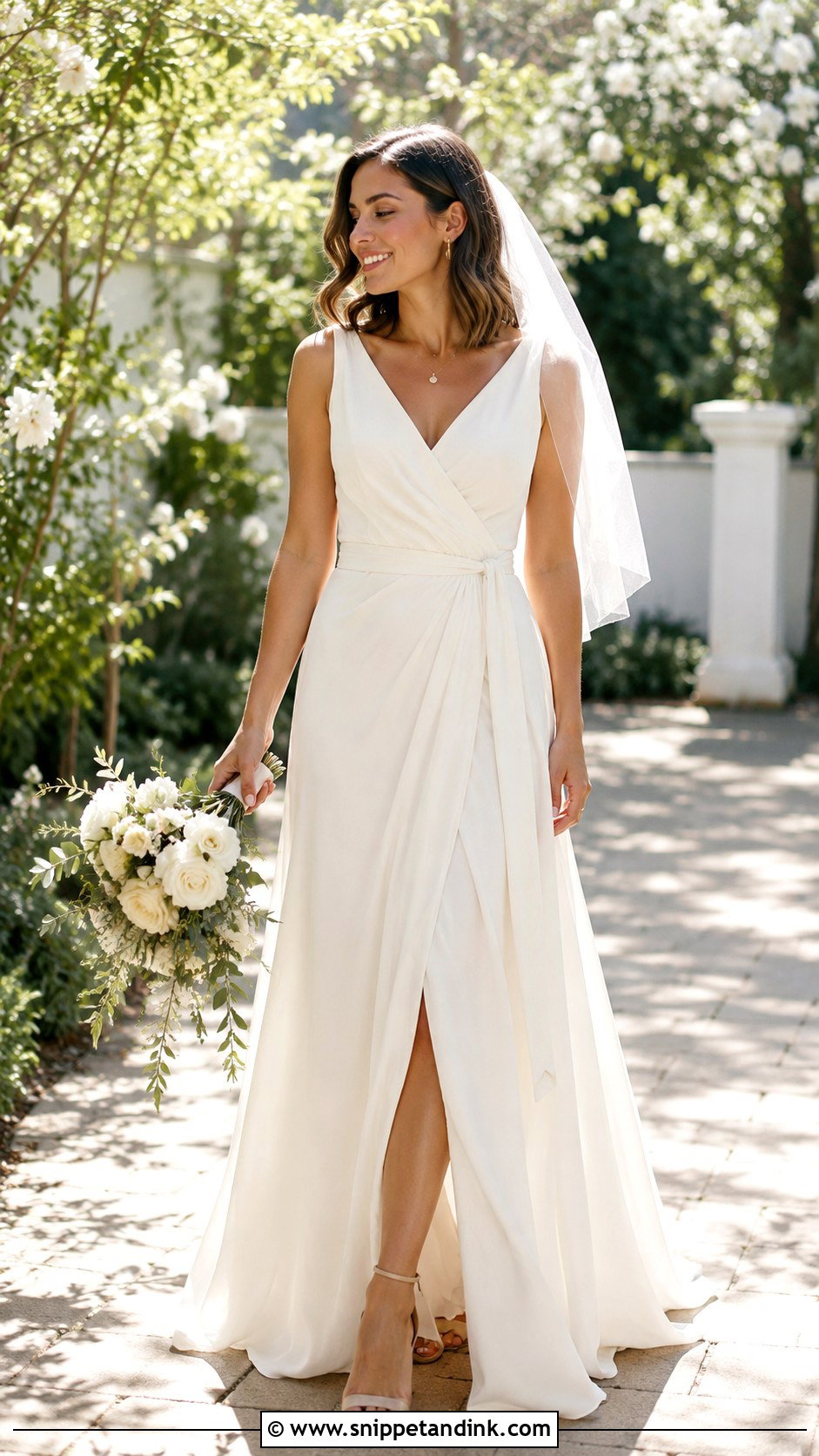
A wrap shape defines the waist on almost every figure, and that’s why I like it on brides who find fitted bodices uncomfortable. Choose either a true wrap or a fixed crossover bodice with secure inner fastenings. A true wrap can loosen during the day, so I always add a hidden snap at the point where the V crosses. A soft skirt and V-neck suit many ceremony settings. Ankle-strap heels, fine hoops and a small pendant if the neckline feels bare are enough, along with a plain shoulder-length veil or a floral comb and a loosely gathered bouquet. Sit and walk in it before deciding; the skirt overlap shouldn’t part much when you cross your legs.
18. V Neck Chiffon Wedding Dress With Simple Jewelry
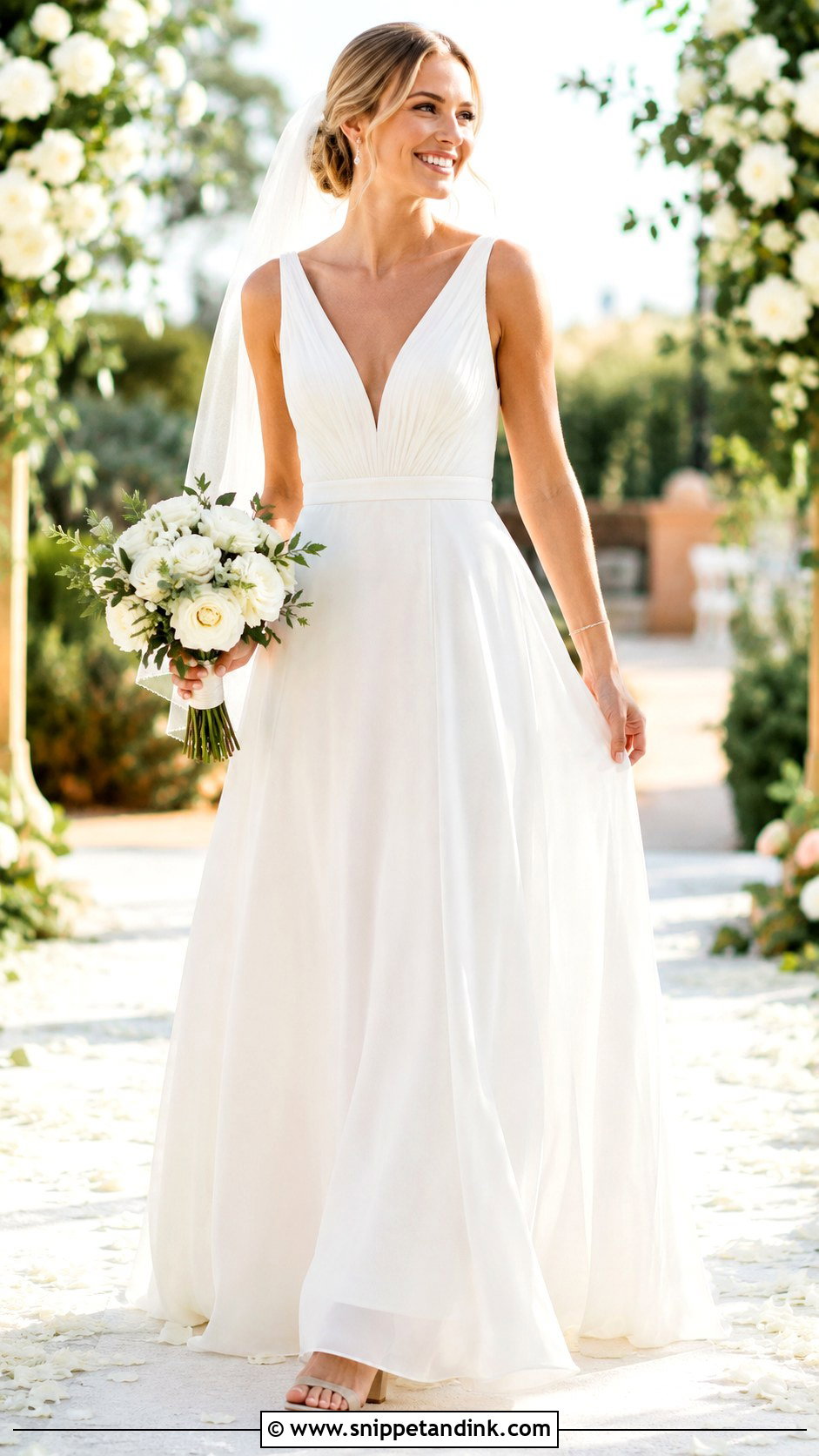
Chiffon moves with you, which makes a V-neck chiffon dress a good fit for outdoor and warm-weather ceremonies. Choose a lined design with a fitted waist and a soft A-line skirt, with wider straps to balance the open neckline. Low block heels, small drops and a fine bracelet keep it light, and a lightweight veil moves along with the skirt. Outdoors, keep the hair soft but secured, because chiffon and loose hair both catch the wind. Bring your exact wedding shoes to the hem fitting. Chiffon hems are cut to the millimeter, and a change of shoe height afterward means tripping or a hem that hovers. Sentimental jewelry suits it better than anything new and showy.
19. Minimalist Mermaid Wedding Dress With Drop Earrings
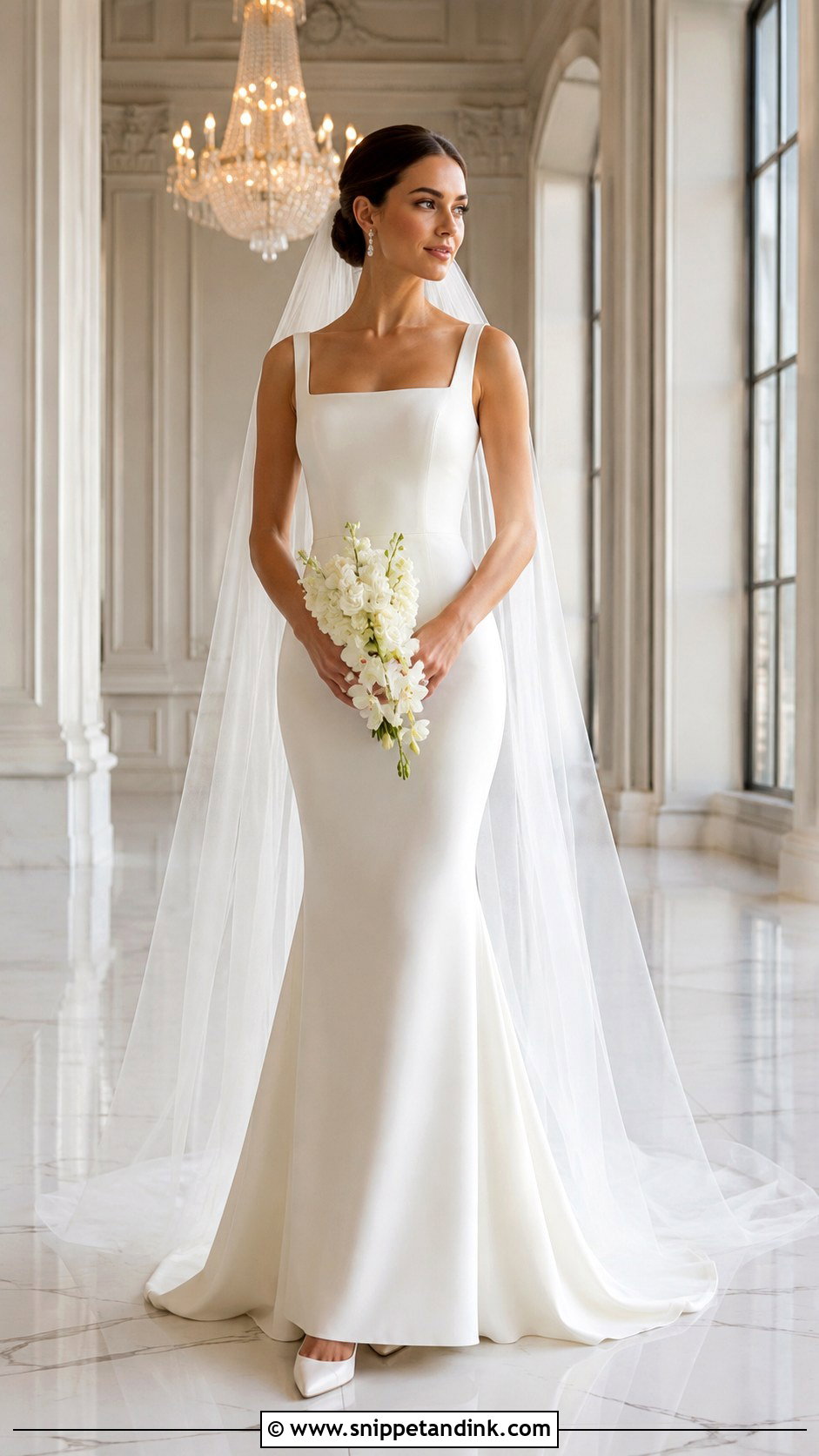
No lace and no crystals, yet a mermaid still looks dramatic. Choose a plain crepe gown that fits through the bodice and hips and widens gently near the knee; a flare that starts higher is far easier to walk in. A square, scoop or off-shoulder neckline balances the close fit. Drop earrings, pointed pumps and a smooth updo suit it, and a plain cathedral veil adds length for the ceremony. Ask for a bustle so the train lifts for the reception. Practice sitting, climbing steps and dancing at every fitting. With this cut, every seam has to lie flat, so allow extra appointments for tailoring.


20. Simple Wedding Dress With Bow And Kitten Heels
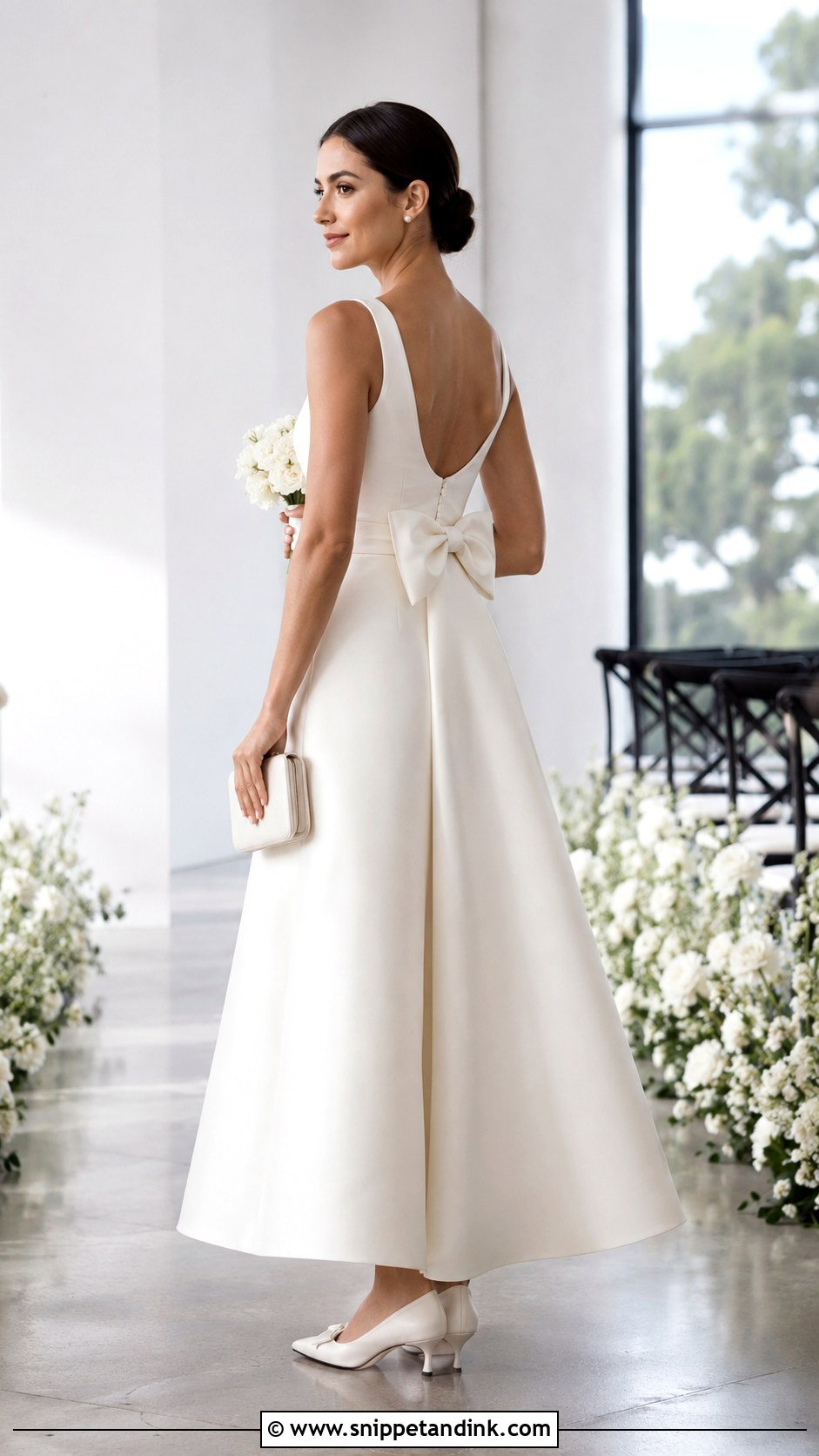
One bow placed well gives a plain dress personality without breaking its minimal character. It can sit at the shoulder, waist or back of a column, A-line or midi. Don’t add other embellishment, or the bow stops being the point. Kitten heels, pearl studs and a compact clutch fit the mood. A short veil works with a shoulder or waist bow, but a big back bow usually looks better without one, since the veil lies on top and flattens it. Keep the hair neat, a smooth bun or a waved bob, and carry a small white bouquet. Ask for the bow in the same fabric as the dress; a contrasting bow tends to look added on.
Why Plain Dresses Show Every Crease
Lace and beading hide wrinkles. Plain satin and crepe show every one, and the worst creases come from the hours just before the ceremony, not from storage. A dress folded into a suitcase or sat on in a car arrives looking slept in.
Getting it to the venue
Hang the dress at full length if you can, in a breathable garment bag rather than plastic, which can trap moisture. For travel, ask your shop to fold it with tissue paper in the folds; tissue stops sharp lines forming. Unpack it the moment you arrive and hang it in the bathroom while someone takes a hot shower, which relaxes light creases.
Steaming without damage
Steam from the inside of the dress and keep the head of the steamer moving. Water can spot satin, so test a hidden seam first, and never put an iron directly on it. Crepe steams easily; heavy satin takes patience. Then, between the ceremony and the photos, try to stand rather than sit. The seated crease across your lap is the one that turns up in every portrait.
Plain Doesn’t Mean Unfinished
A simple dress should feel like you on a good day, just more polished. None of these need lace or heavy embellishment to look special. They need a shape that suits you, fabric with some weight, careful alterations and a few accessories you actually chose. Think about venue, season, how long you’ll be standing and how much coverage you want before deciding. At fittings, walk, sit and raise your arms so you’re judging the dress in motion. Then trust that the plainness is the point; it leaves room for your face, your flowers and the people around you.
You'll Like These Ideas:





Leave a Reply