
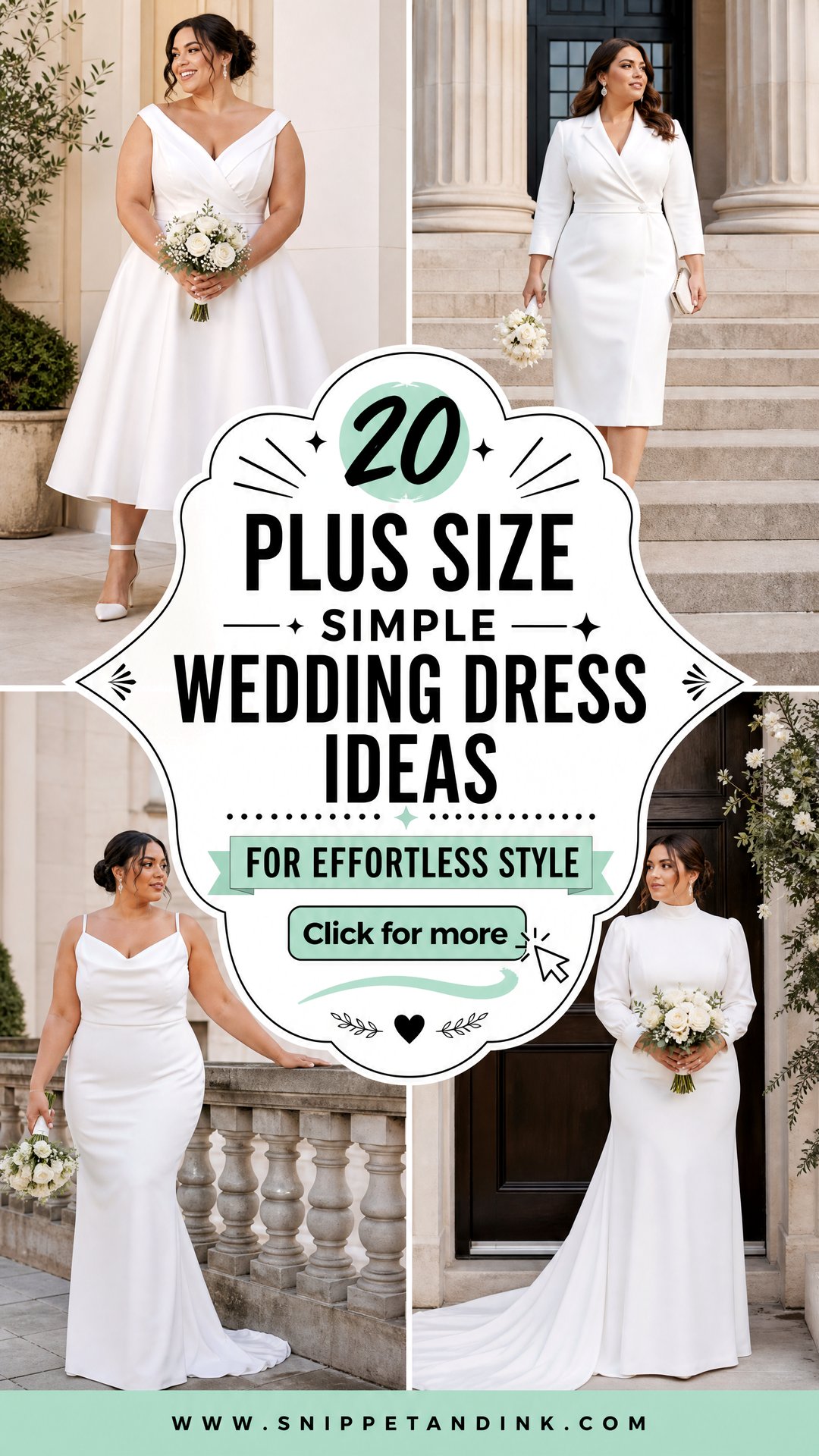
A plain gown is the hardest dress in the shop to get right, and I mean that as a compliment to the brides who want one. With no beading or lace to distract the eye, every seam, strap and hem is on show, so the work moves from decoration into fit and fabric. The good news is that size-inclusive bridal lines now cut sculpted bodices, stretch crepes and real sleeves in the same styles they offer in sample sizes. Below are twenty clean silhouettes I’d happily dress a curvy bride in, each with the accessories I’d pull and the fitting check I’d never skip, from a city hall midi to a full strapless ball gown.
Where a Plain Gown Needs the Most Fitting Work
When a dress has no lace or beading, the fit has nowhere to hide. Most of my fitting time on a simple plus size gown goes into three places, and I’d tell any bride to watch them closely.
The bodice and what sits under it
Decide on your bra or shapewear before the first fitting and wear it to every appointment. Plain crepe and satin show the edge of a bra band or a seam line across the back, and a dress fitted over the wrong layer will never sit right on the day. If the gown has built-in cups, ask whether they can be moved or swapped for a better fit; most good seamstresses can do it.
Sizing charts and order dates
Bridal sizes run smaller than high street sizes, often by one or two sizes, so ignore the number on the label and go by your measurements against that designer’s chart. When you sit between two sizes, order the larger, because taking in is far easier than letting out. Made-to-order gowns commonly need several months to arrive, and alterations usually start around two months before the date, though both vary by shop.
Fabric weight
Ask the consultant to let you hold the fabric. Heavier crepe, mikado and satin-backed fabrics smooth over the body, while thin satin and unlined chiffon cling. If a simple design looks perfect on the hanger but the fabric feels like a nightdress in your hand, it will show more than you expect in daylight photos.
1. Plus Size Satin A-Line Wedding Dress
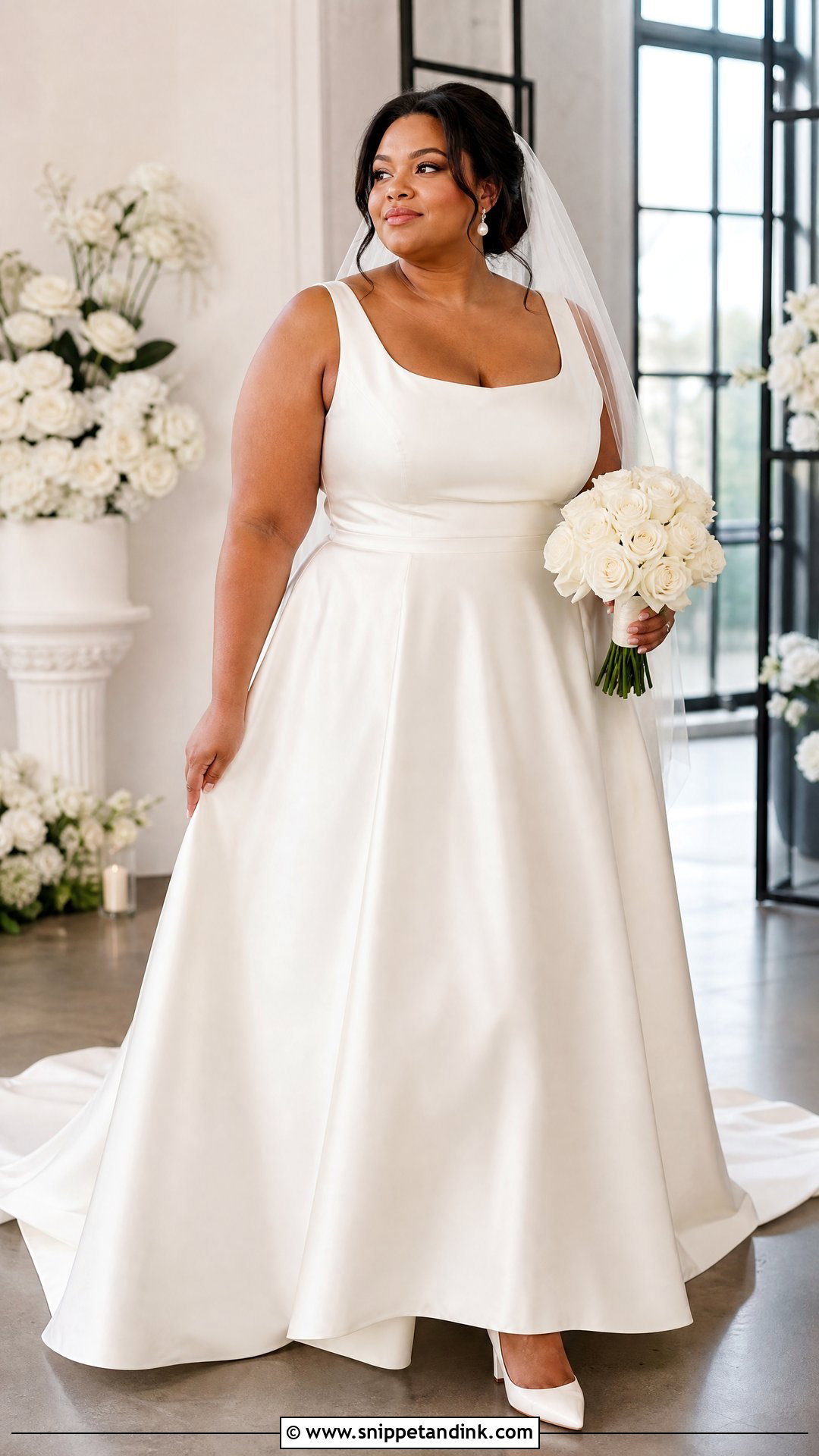
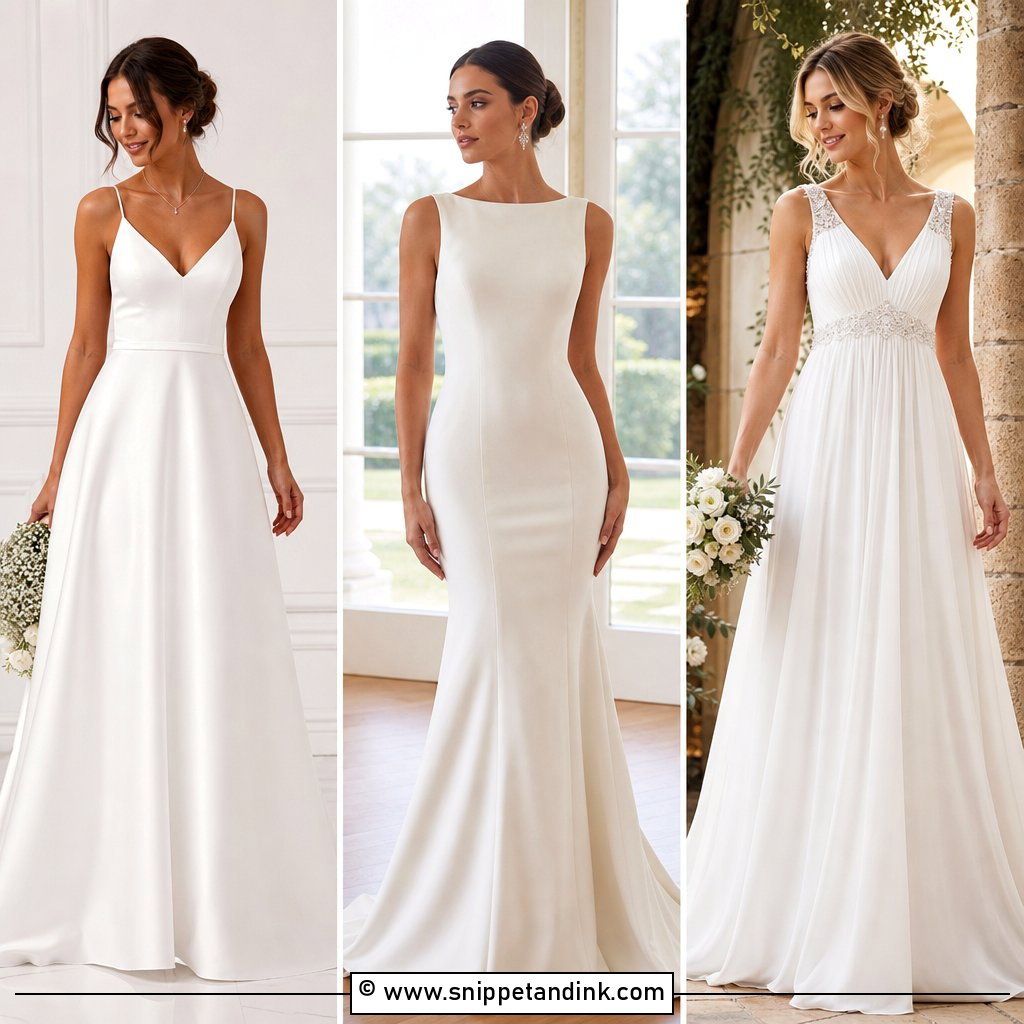
Satin is the fabric I reach for when a bride wants polish without sparkle, because the sheen does the work sequins would. On a curvy figure, the A-line only behaves if the waistband is defined and the straps are wide enough to carry the bodice, so check both before you look at anything else. The skirt should clear the hips and drop straight into a modest sweep train. Pearl drops, a fingertip veil and pointed block heels finish it, with white roses or plain greenery in hand. If the back is cut low, put the hair up so nobody misses it. One honest warning: satin records every fold and every uneven hem, so I always book the hem fitting with the actual wedding shoes on.
2. Plus Size Crepe V-Neck Wedding Dress
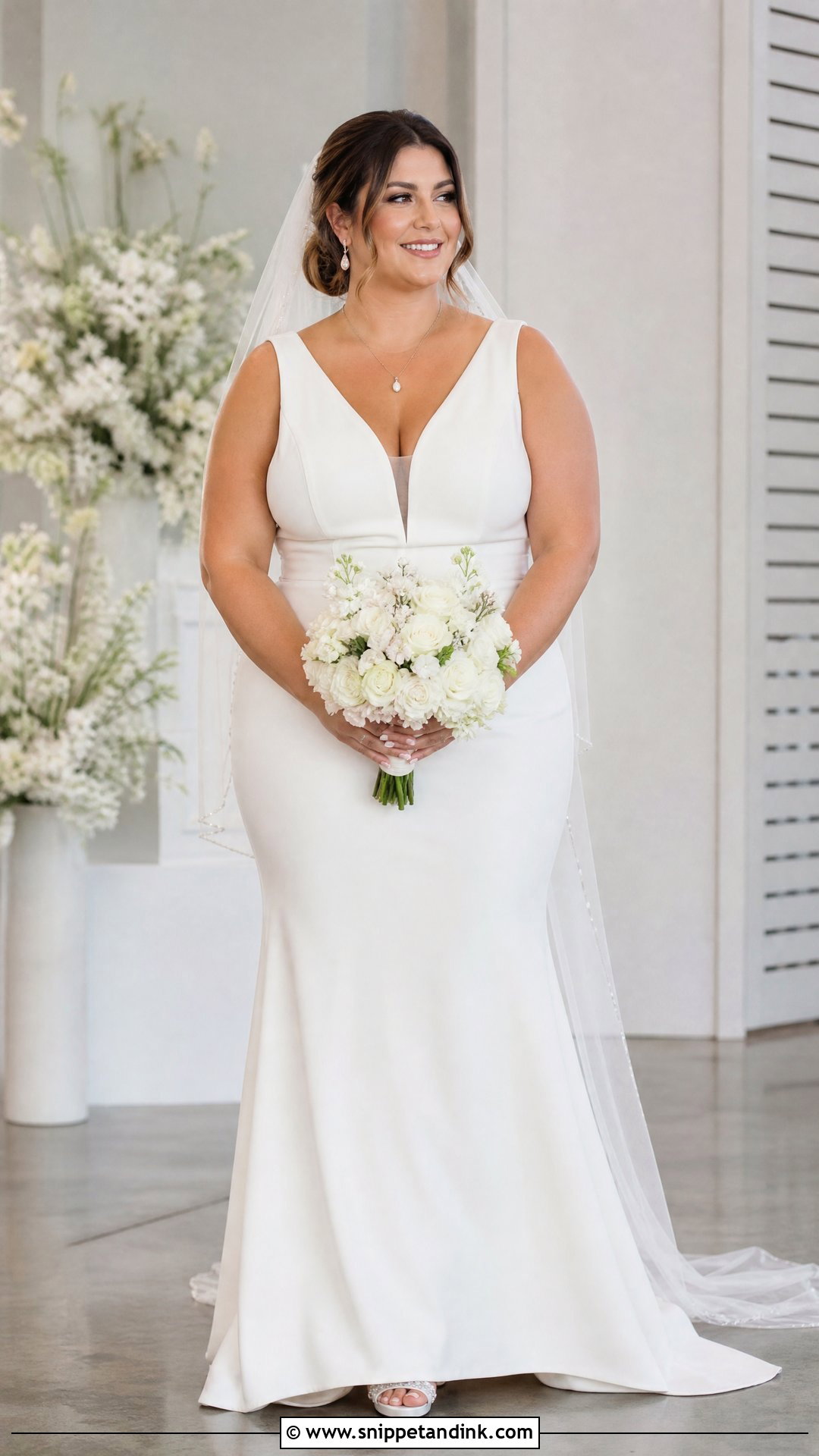
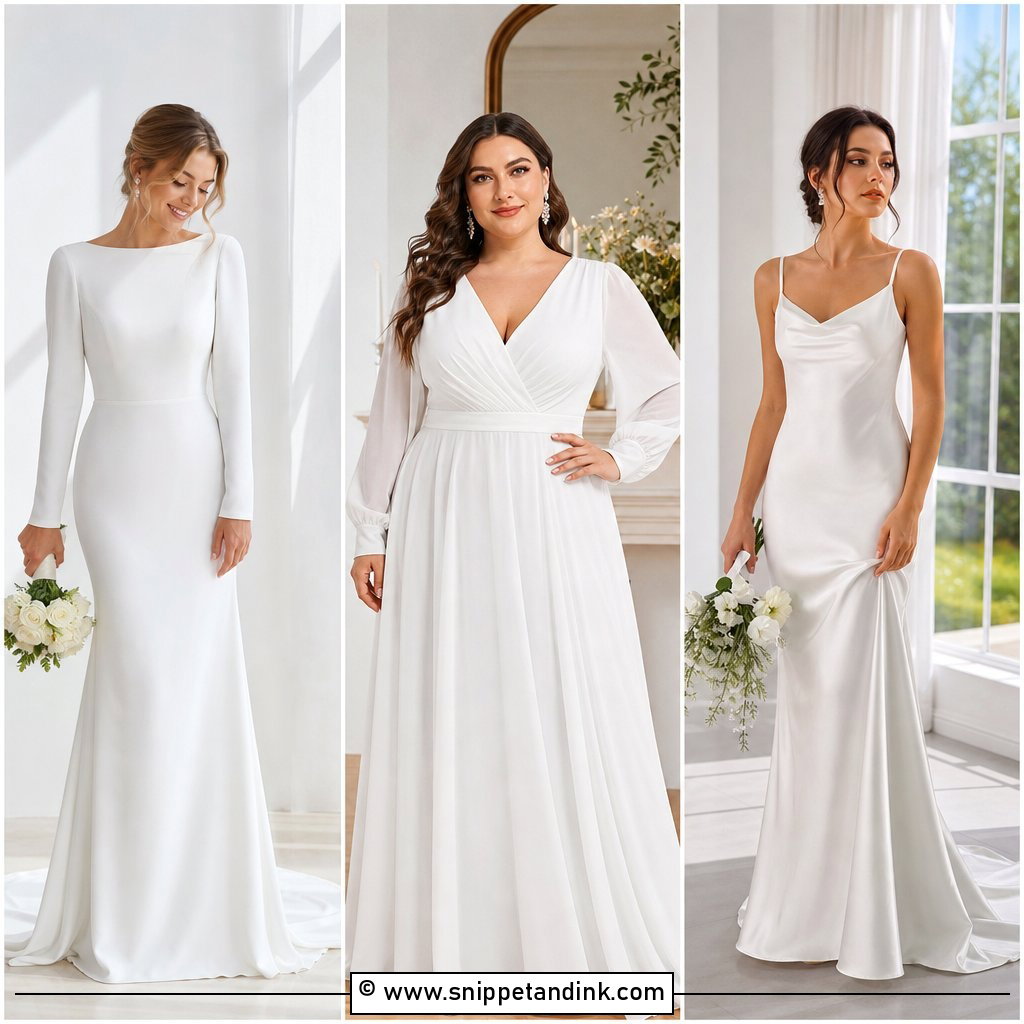
Crepe has a slight stretch and a matte face, which is why it reads clean in photos and forgives a long day of sitting. I keep the V at medium depth on fuller busts and insist on a lined bodice with straps wide enough to hide a supportive bra. Fit-and-flare or a soft A-line both work here. Accessories stay small: a fine pendant, crystal studs, a chapel veil, ivory pumps or low block sandals. Crepe is unforgiving of a loose fit, so the bust, waist and hem alterations matter more than usual. A tight bouquet of white blooms keeps the city or hotel feel.
3. Plus Size Square-Neck A-Line Wedding Dress
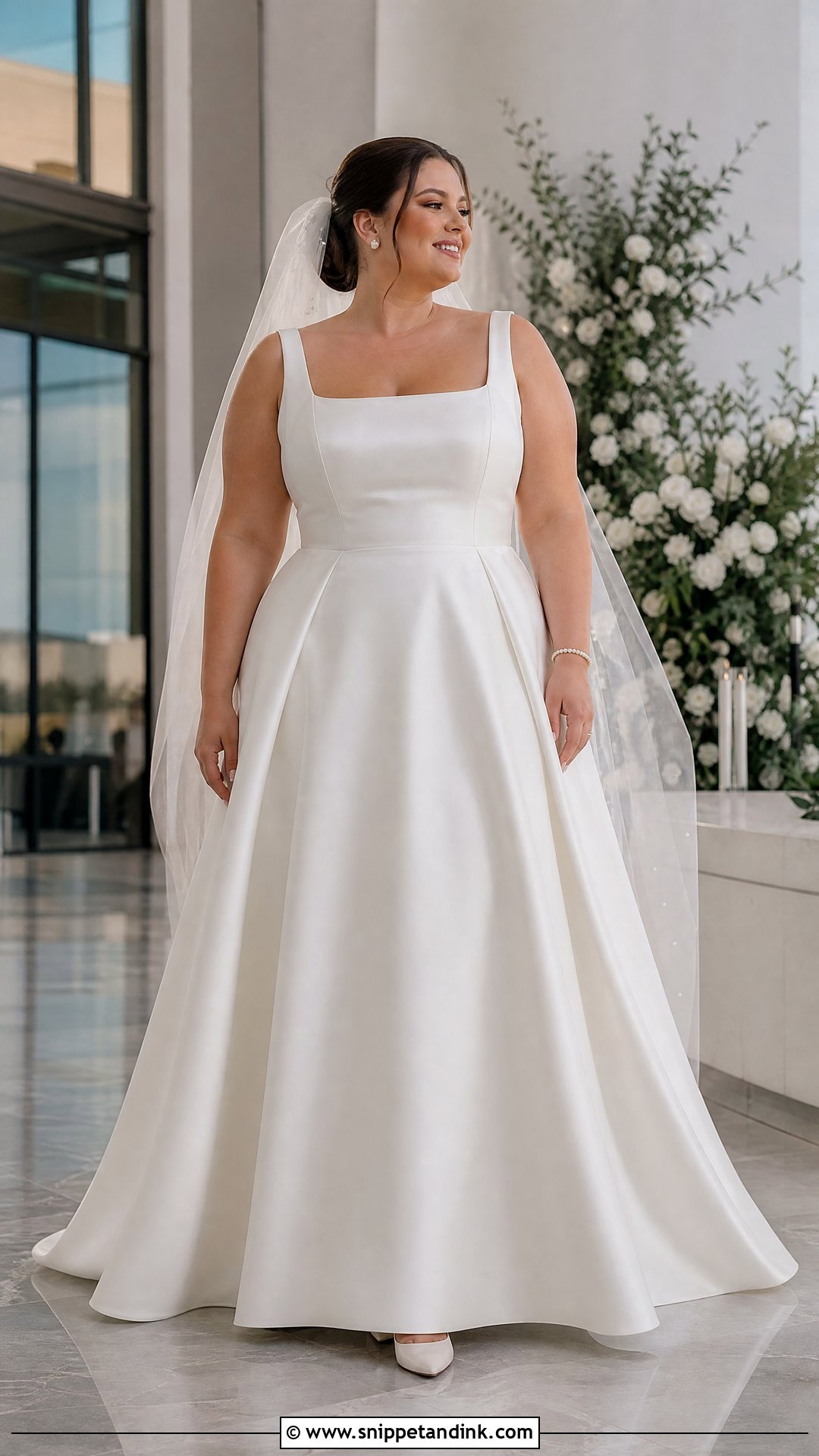
A square neckline does something rounder necklines can’t: its straight edge sets a horizontal line across the collarbone that balances a full skirt below. I like it in matte satin, mikado or a structured crepe, because softer fabric lets the corners droop by the end of the night. Ask for a seam at the natural waist rather than boning everywhere. Pearl studs, a slim bracelet, a low gathered bun and a sheer fingertip veil are enough. Many of my brides skip the necklace entirely here, and I agree with them. It sits well in modern hotels and bright, minimal rooms where the architecture echoes the neckline.
4. Plus Size Off-the-Shoulder Satin Wedding Dress
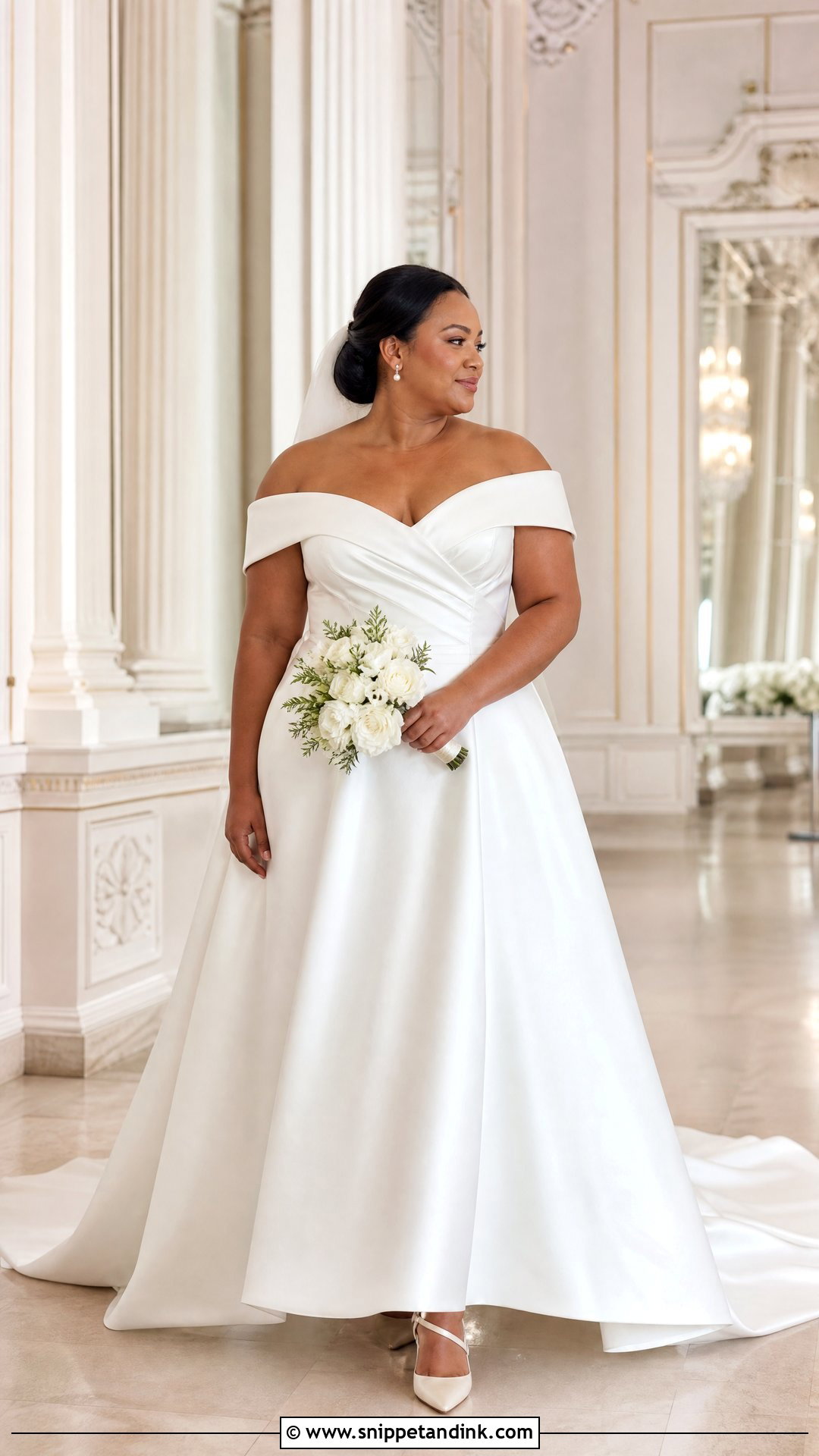
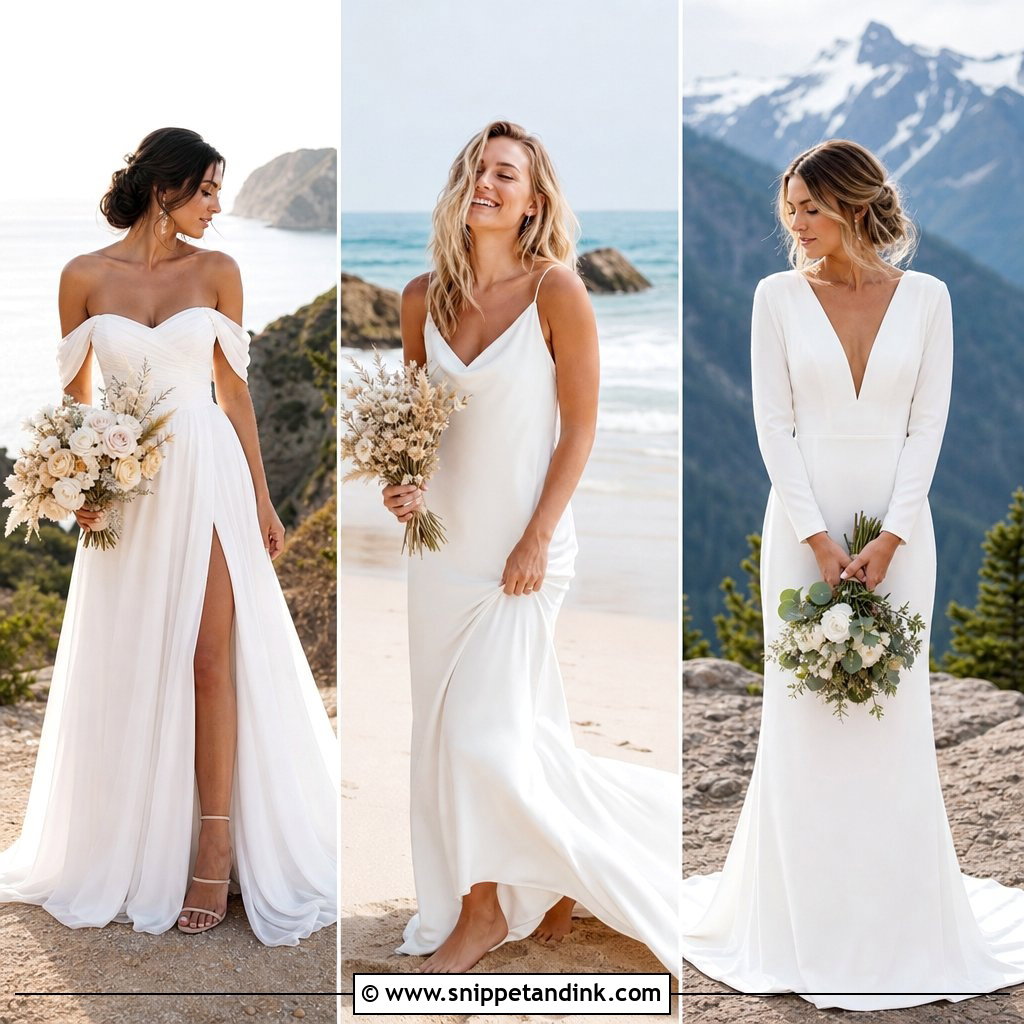
The fold-over band on an off-the-shoulder gown is where these dresses succeed or fail. It has to rest on the upper arm without biting, and it has to be anchored to a structured bodice so it isn’t held up by the band alone. In fittings I make the bride raise her arms, hug someone and reach for a glass, because if the band rides up once it will keep doing it all evening. A gently flared skirt keeps the proportions even. With the shoulders already bare, small earrings beat a necklace every time; add a soft veil tucked under a low chignon, ivory slingbacks and a compact bouquet. Ballrooms and evening receptions suit it best.
5. Plus Size Long-Sleeve Crepe Wedding Dress
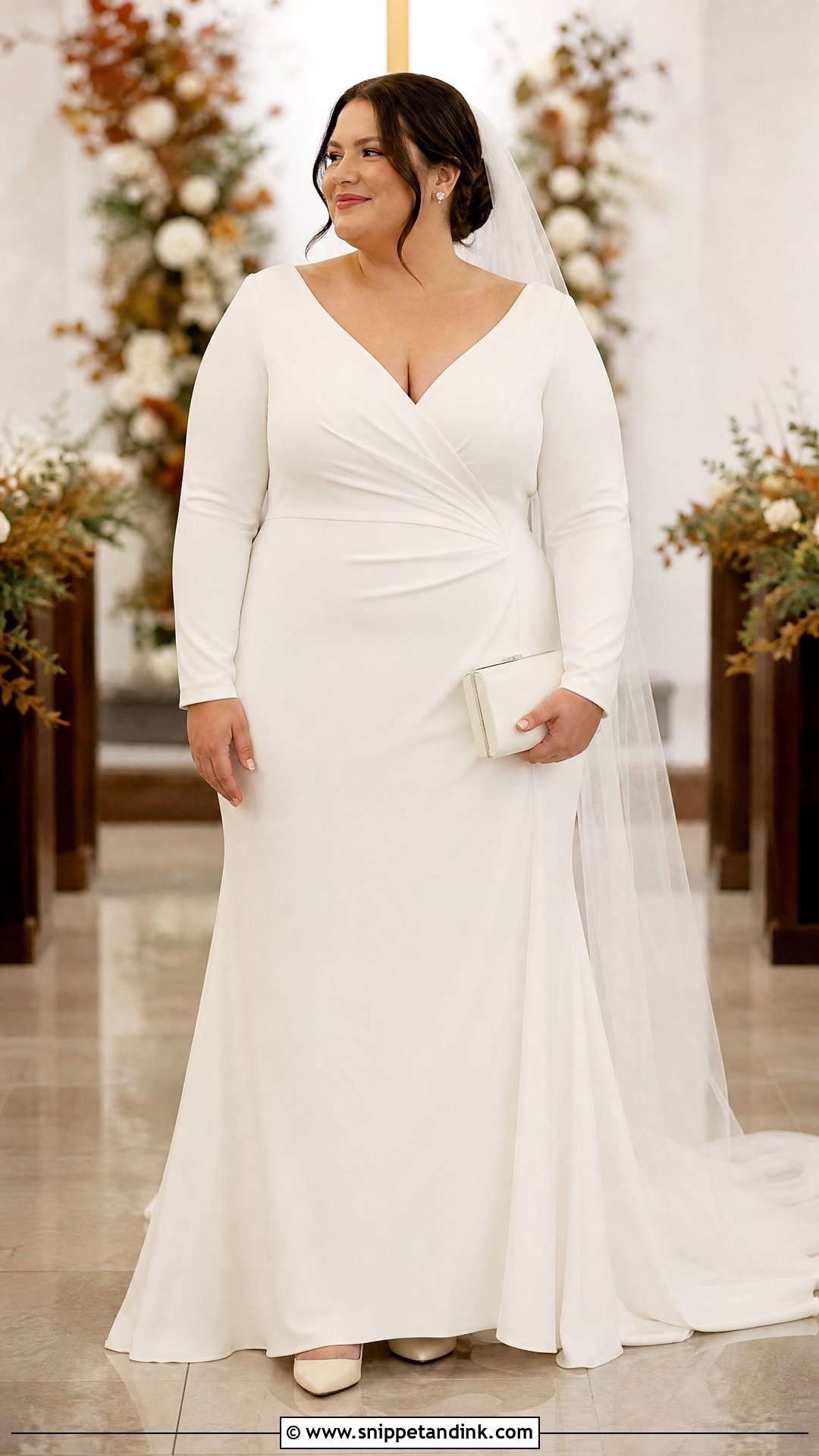
Long sleeves are where I see the most comfort complaints, usually because the sleeve was cut slim and the armhole sits too low, which locks the arm when you lift it. Ask for stretch crepe and a higher armhole with some ease at the elbow. A V or bateau neckline keeps the long line from feeling closed in. Crystal studs, a structured ivory clutch and closed-toe heels suit the sleekness, with a chapel veil for a big ceremony or a short tulle one for a small room. Waves or a low bun both work, depending on how high the neckline sits. I’d pick this for autumn, winter or any hall where the air conditioning runs cold.
6. Plus Size Chiffon A-Line Wedding Dress
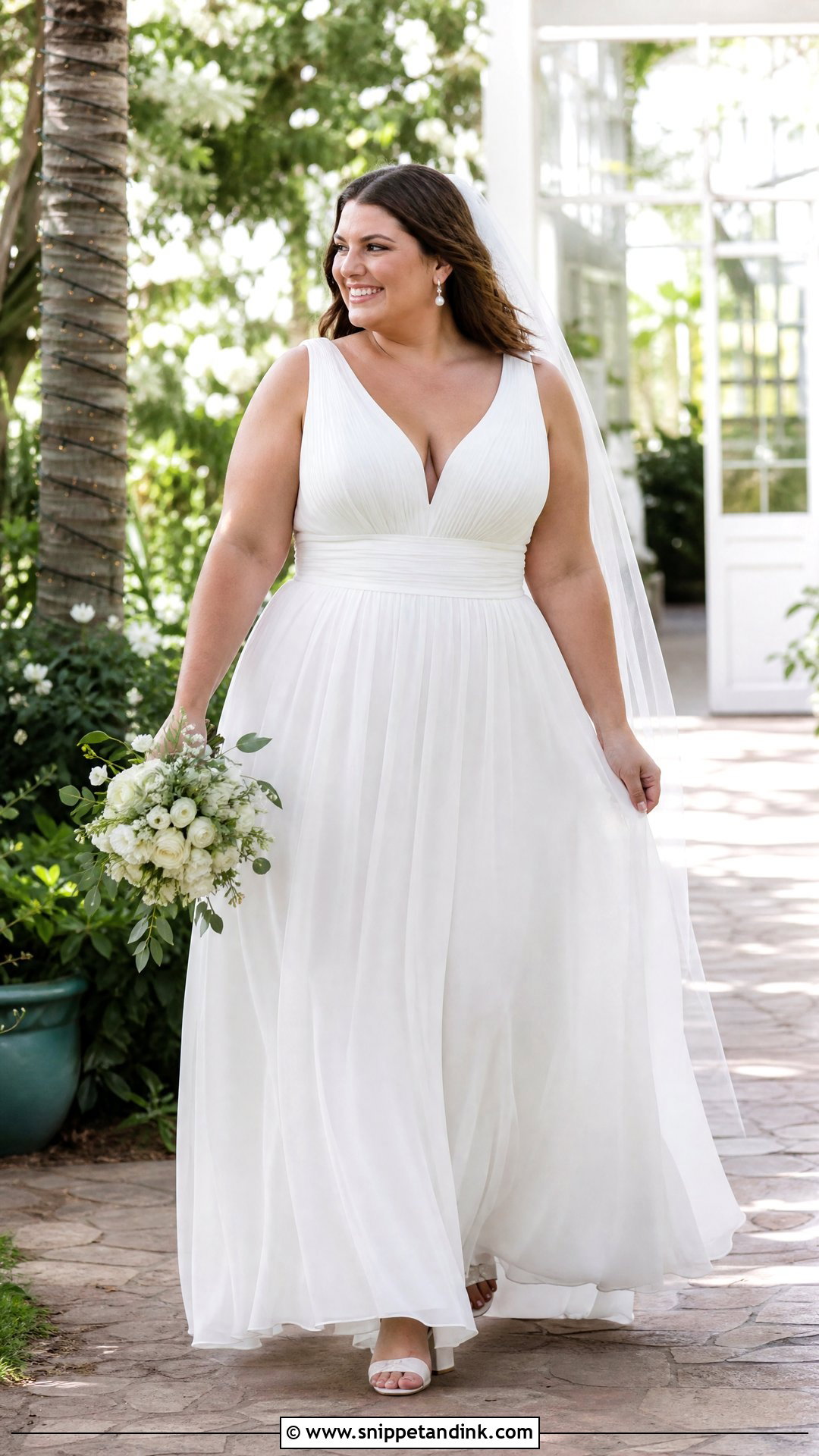
Chiffon is weightless, which is exactly why it needs a proper lining underneath on a curvy figure. Without one, the outer layer catches on the hips and clings instead of floating. Look for wide straps, a secure V-neck bodice and soft gathering at the waist. Comfortable block-heel sandals, small pearls and a light fingertip veil keep it relaxed, and a loose bun suits the movement of the fabric. For a lawn ceremony, a wide heel matters more than the style of the shoe, since stilettos sink. It breathes better than satin or crepe, so it’s the one I suggest first for heat and beach venues.
7. Plus Size Empire-Waist Wedding Dress
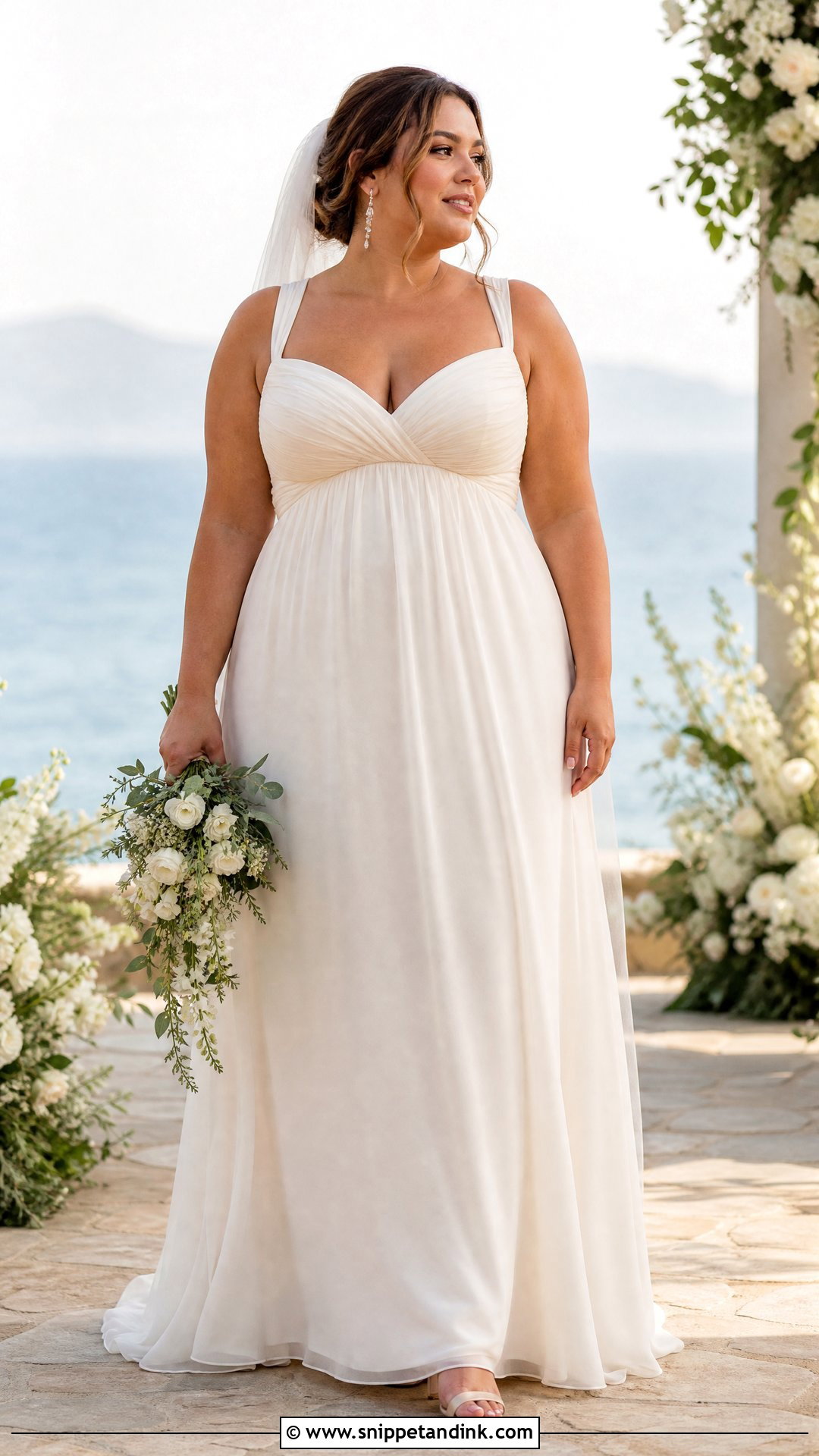
An empire-waist gown puts the seam right under the bust and lets everything below fall loose, so there’s no waistband pressing on you through dinner. That seam has to sit exactly under the bust, though; even a small drop and it starts to look like a maternity cut you didn’t ask for. I prefer plain chiffon or soft crepe with supportive straps, and I usually ask the seamstress to reduce any heavy gathering under the seam. Delicate earrings, low block heels and a plain or ribbon-edged veil keep it simple, and a small cascade bouquet repeats the vertical drape. Check that the skirt gives you room to stride without extra volume. It’s genuinely kind to pregnant brides and long outdoor days.
8. Plus Size Tea-Length Wedding Dress
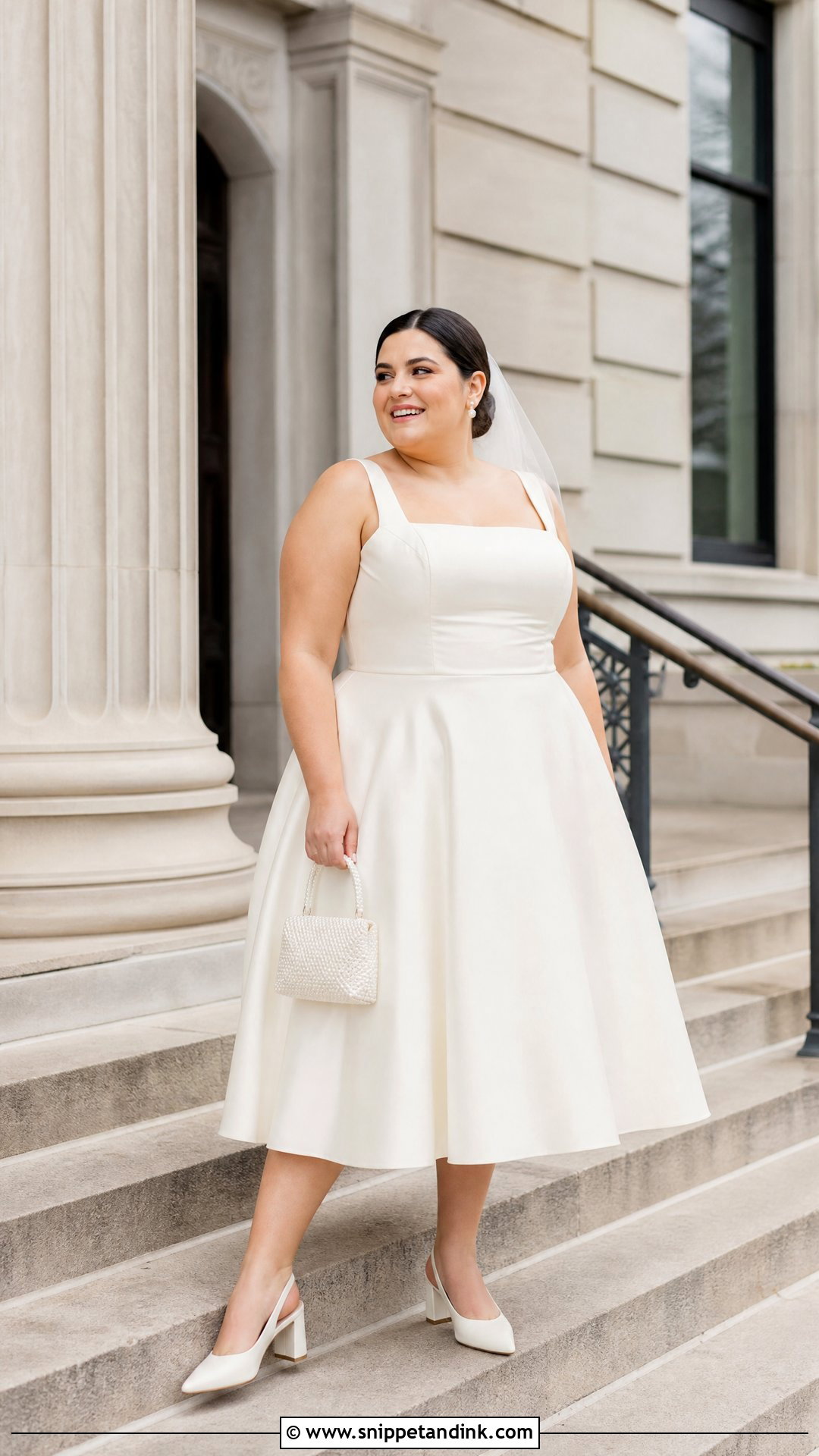
Tea length falls somewhere between the knee and the ankle, which means your shoes are suddenly part of the dress. I always ask brides to bring two pairs to the hem fitting, since a block heel and a flat change where the hem should land. A structured A-line with a square, scoop or V neckline and a clear waist gives the short skirt shape. Pearl earrings, a short veil and a small top-handle bag lean vintage without tipping into costume. Keep the skirt light; crinoline under a tea-length plus size dress adds width fast. It’s the one I’d suggest for courthouse weddings, daytime ceremonies and lunch receptions where a floor-length gown would feel overdressed.
9. Plus Size Midi Courthouse Wedding Dress
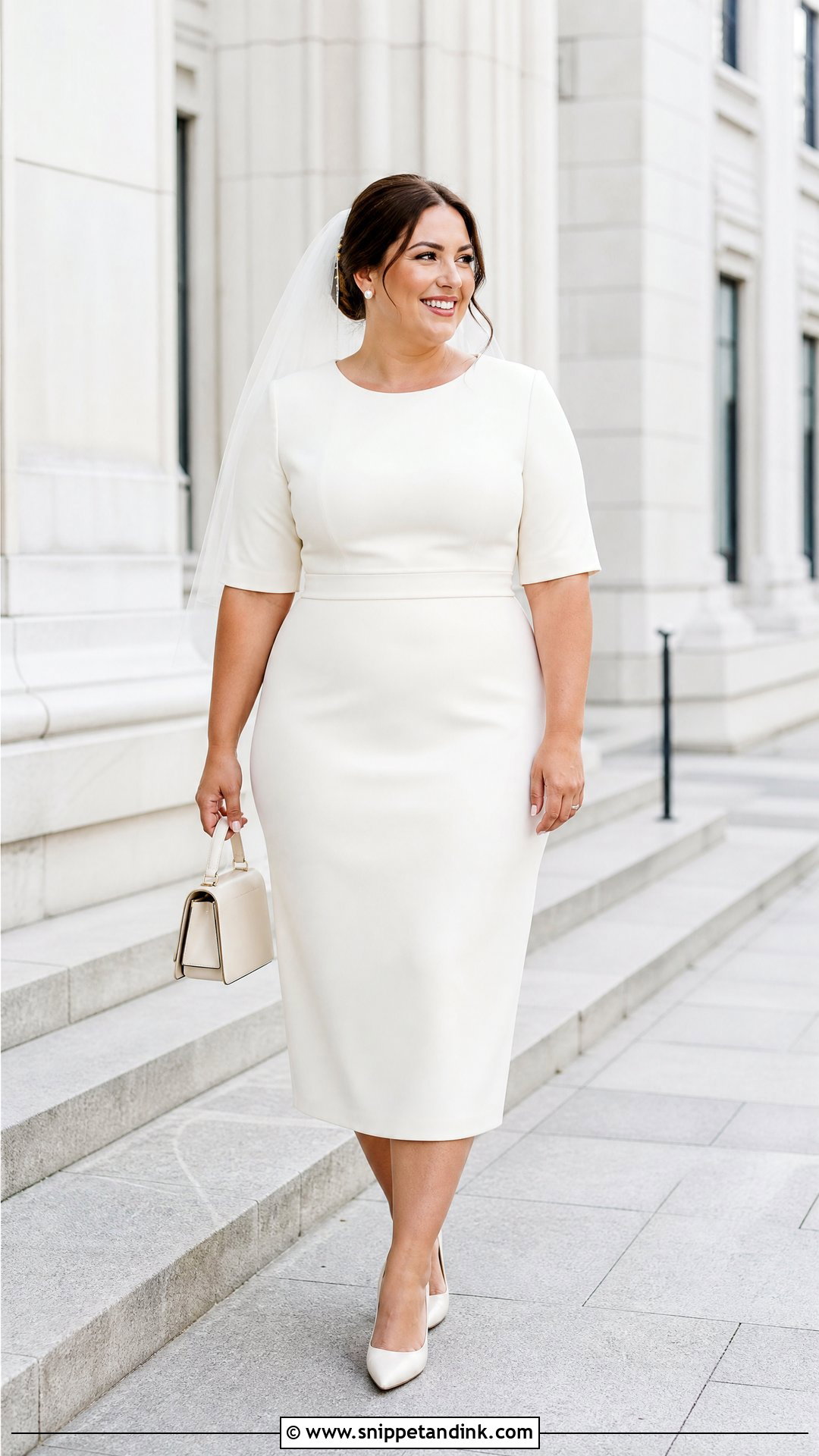
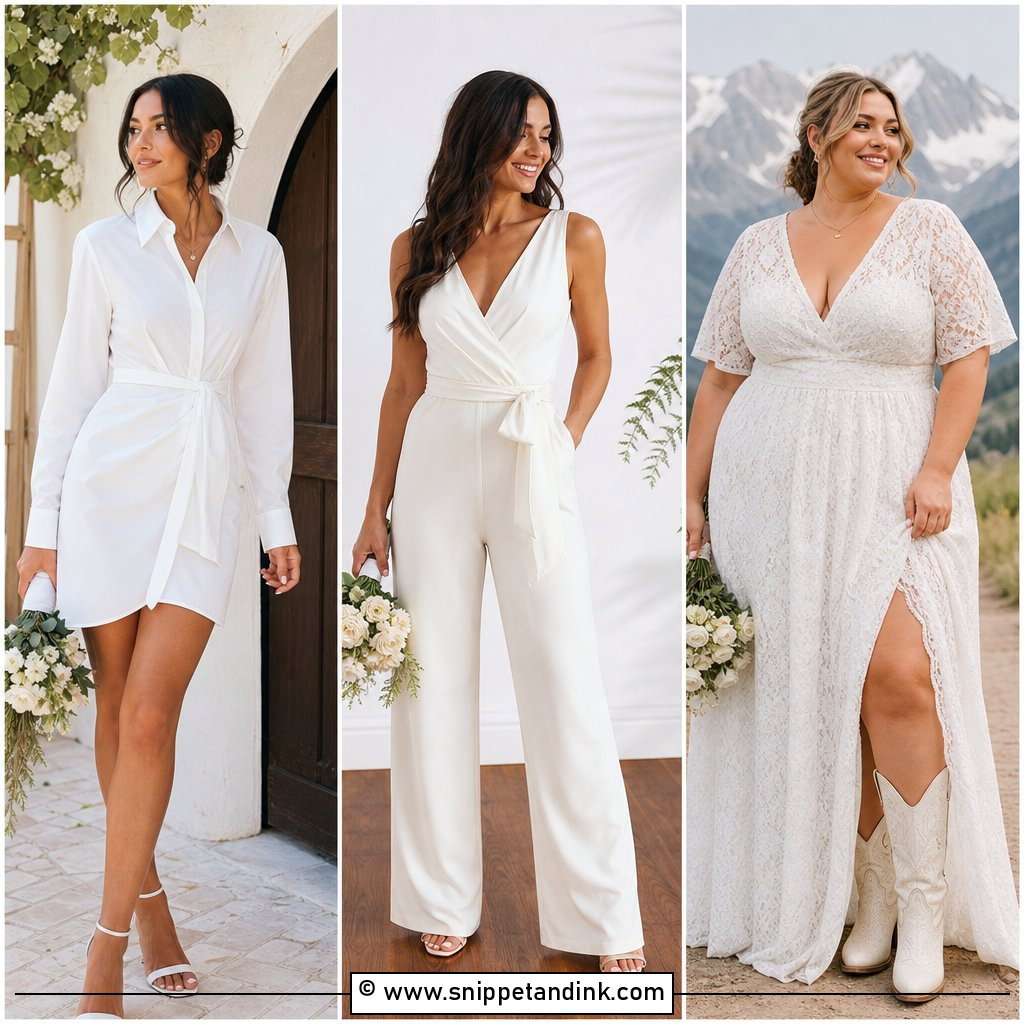
City hall days involve more walking and waiting than brides expect, so for a courthouse ceremony I want a clean midi dress that looks bridal at the desk and still sits well in a taxi. A defined waist, elbow sleeves or wide straps, and a straight or slightly flared skirt are enough. Crepe and matte satin hold their shape through travel and photos. Pointed pumps, pearl studs and a small structured bag read polished, and a short veil or a bow at the back of the head tells everyone you’re the bride. If you’re walking between locations, wear block heels or smart flats, and bring a tailored ivory coat for cold months.
10. Plus Size Column Wedding Dress
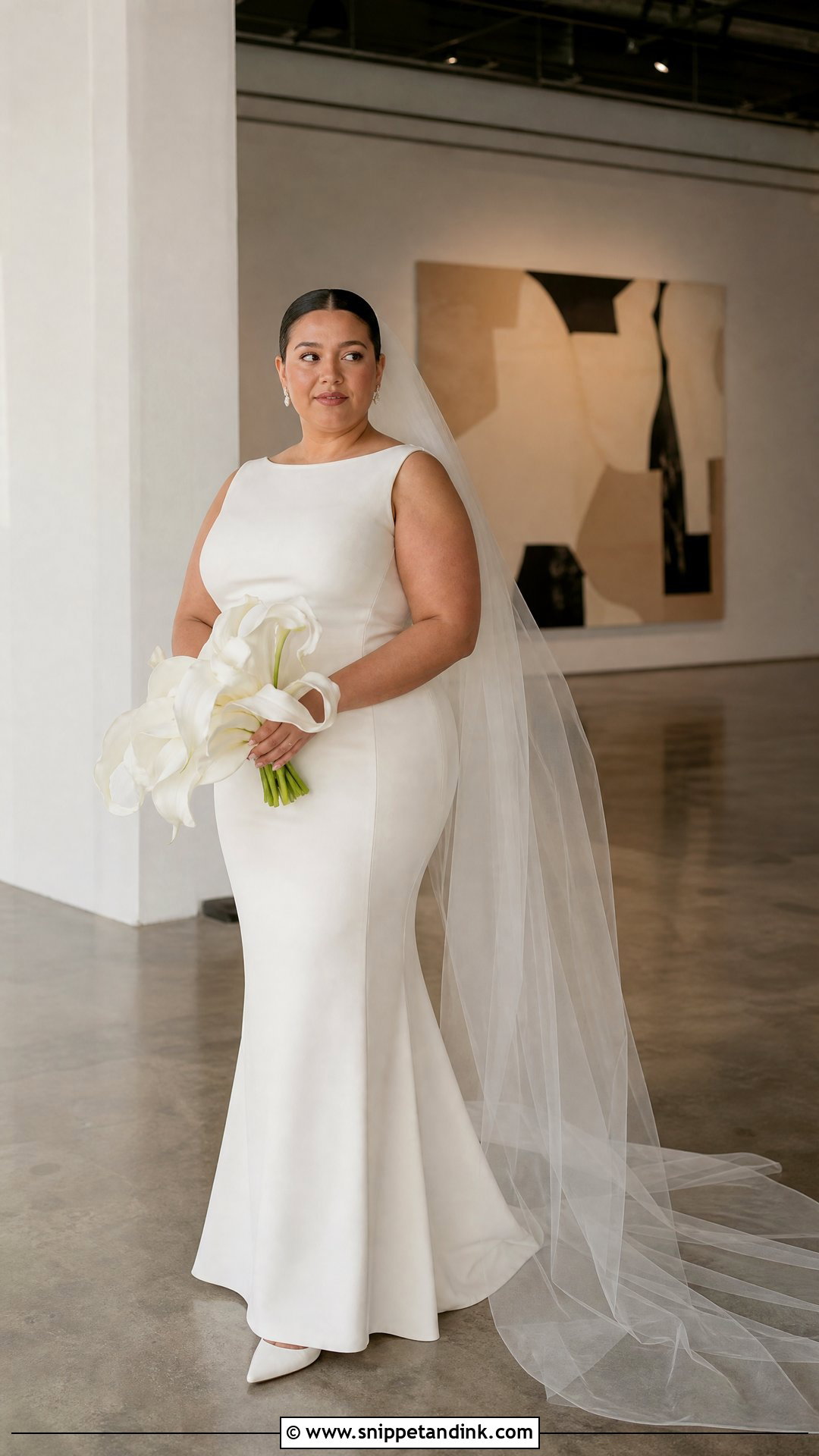
A column is the least forgiving shape on this list, and I say that so you shop with the right fabric in mind. It needs weight: substantial crepe or satin-backed fabric skims, while thin fabric shows every line underneath. Good seaming and a small back slit make the difference between gliding and shuffling. Keep the styling sharp with minimal earrings, a sleek low bun and pointed heels, then decide between a narrow cathedral veil for contrast or a fingertip veil for restraint. At the final fitting, walk, sit and climb a few steps; if the slit can’t handle stairs, it won’t handle the dance floor. Galleries and rooftops suit it.
11. Plus Size Sheath Wedding Dress
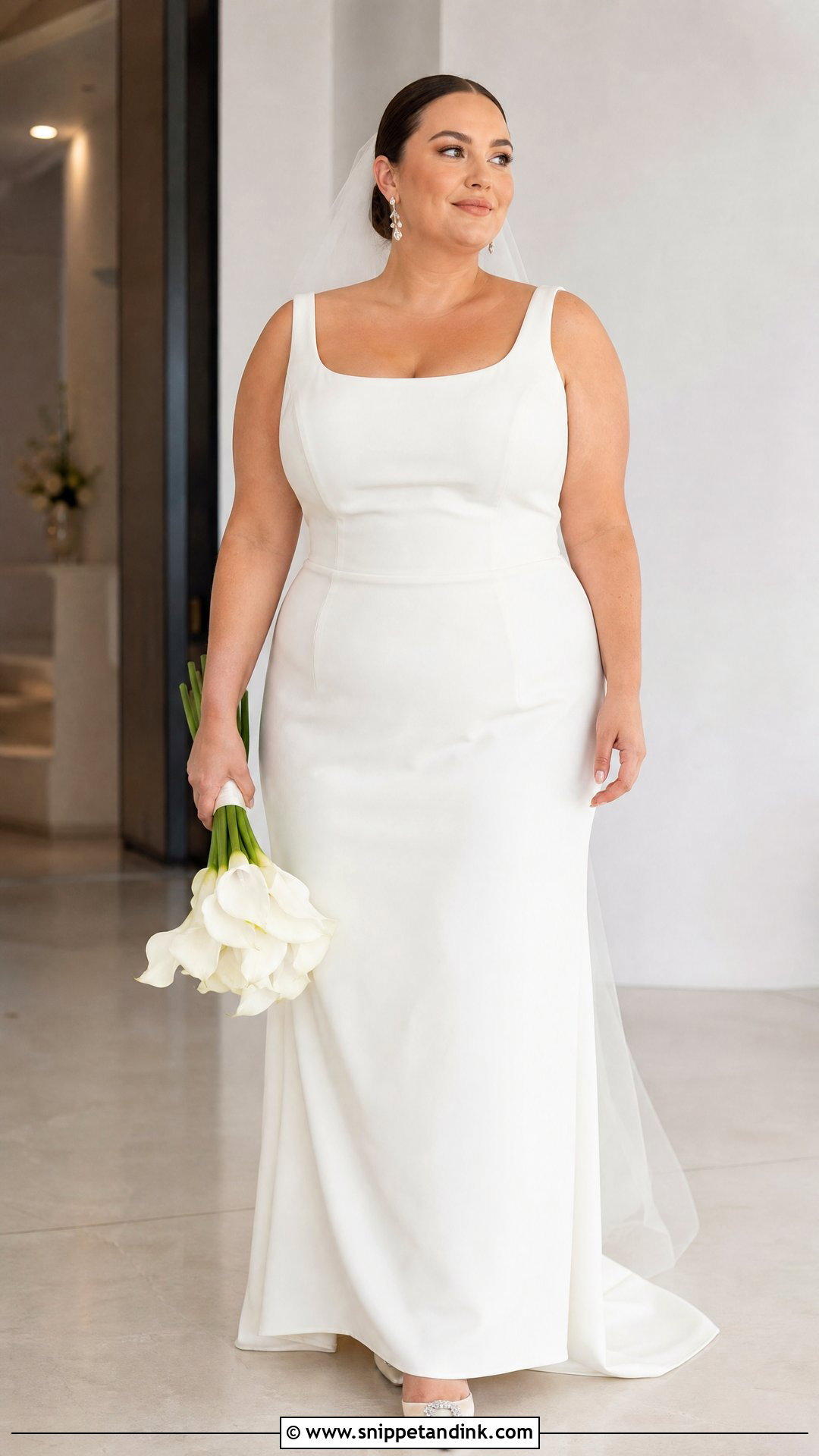
Sheaths follow the body from bust to hem, which is why stretch crepe is my first choice for them: it moves with you but springs back instead of bagging at the seat after a few hours. The seam placement is everything here, especially the princess seams that shape the bust and hip. I always fit these with the exact shapewear and shoes for the day, because a different slip changes the line. A sheer veil, drop earrings and low pointed heels finish it, and calla lilies or other sculptural stems echo the narrow shape. Brides who want cover for the ceremony can add a removable cape and take it off for the party.
12. Plus Size Wrap Wedding Dress
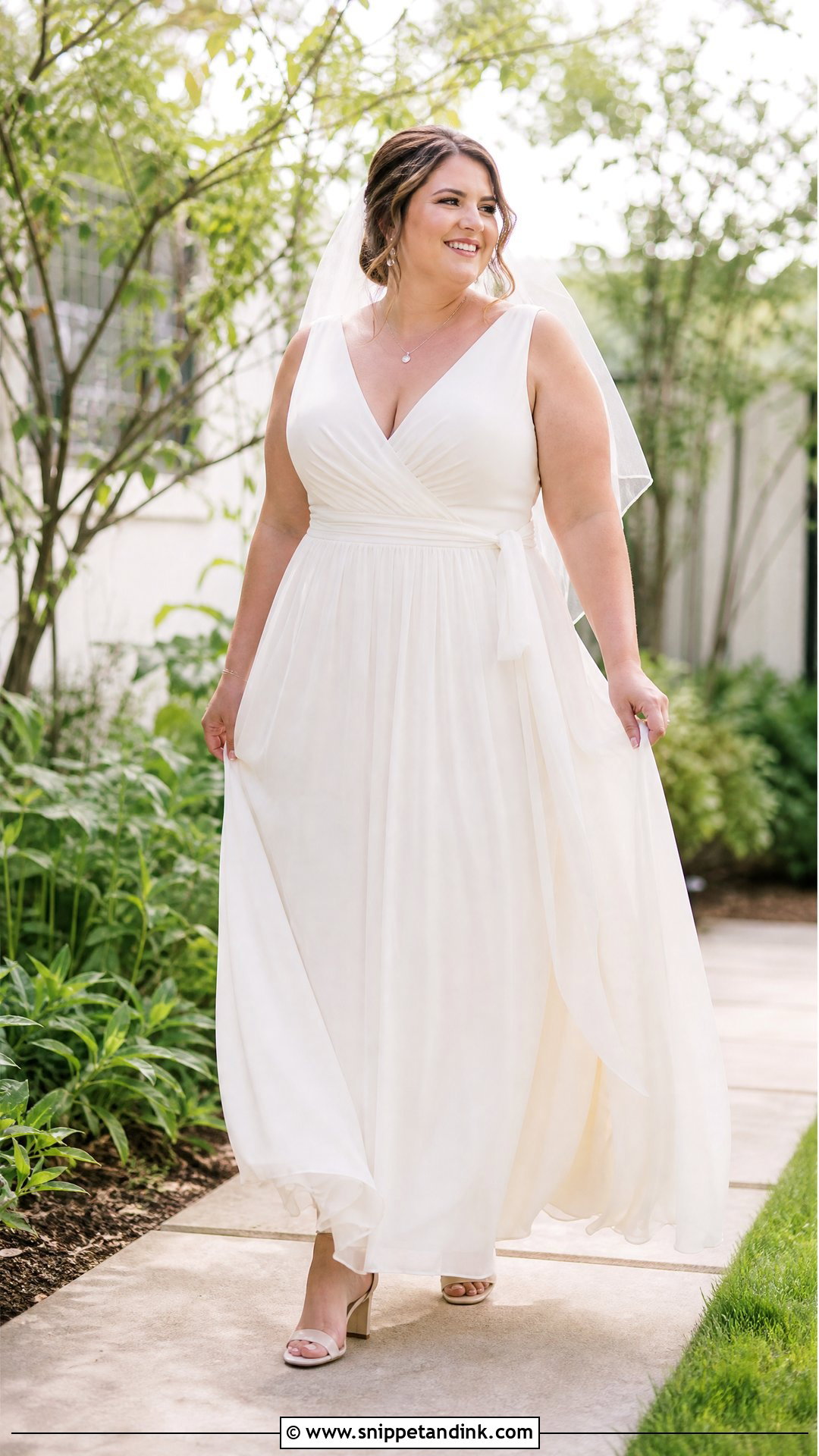
A true tie-front wrap looks relaxed in the shop and starts gaping by the speeches, so for a wedding I only recommend a faux wrap that’s stitched closed. The crossover should be fixed at the waist with an inner closure that holds it flat when you sit and lean forward. Soft crepe, jersey or chiffon all drape well here. A fine necklace, small earrings and supportive block-heel sandals keep it easy, with a light veil and loose hair. If the V is lower than you’d like, a seamstress can add a hidden snap or a matching modesty panel in under an hour. I like it for gardens and beaches where corsetry would feel like overkill.
13. Plus Size Cowl-Neck Satin Wedding Dress
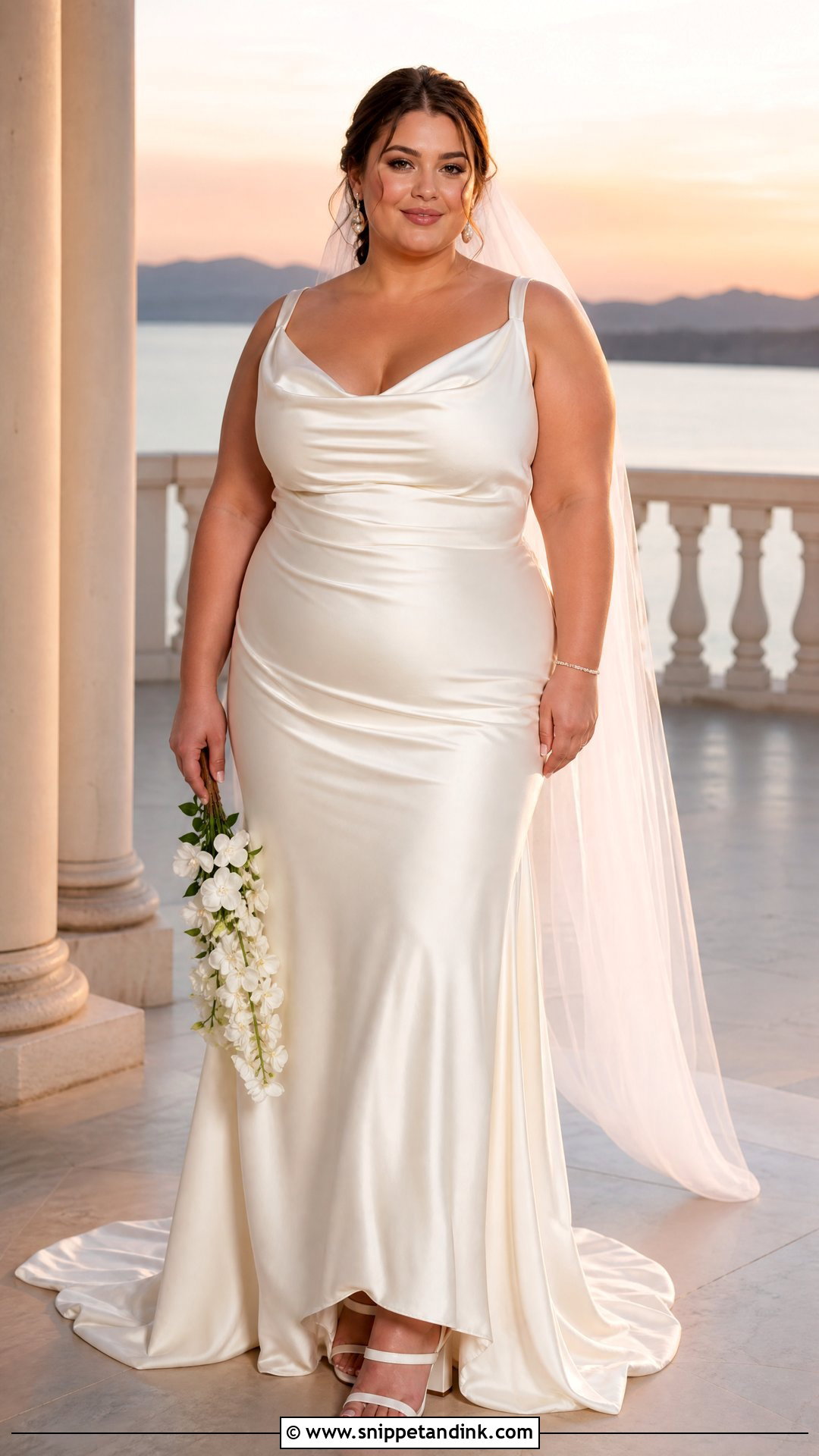
A softly draped cowl neckline gives a plain satin gown its one point of interest, but cowls open up when you bend, so test that in the mirror before you buy. Bias-cut or A-line both work if the straps are wide enough to hide a supportive bra. A tailor can shorten the straps to lift the cowl and stop it gaping. Small pearl earrings, slim sandals and a thin bracelet are plenty. Wear a smooth low bun to show the drape, with a sheer veil behind. Keep the bouquet narrow so the satin carries the look. Sunset and evening ceremonies suit the sheen best.
14. Plus Size Strapless Ball Gown Wedding Dress
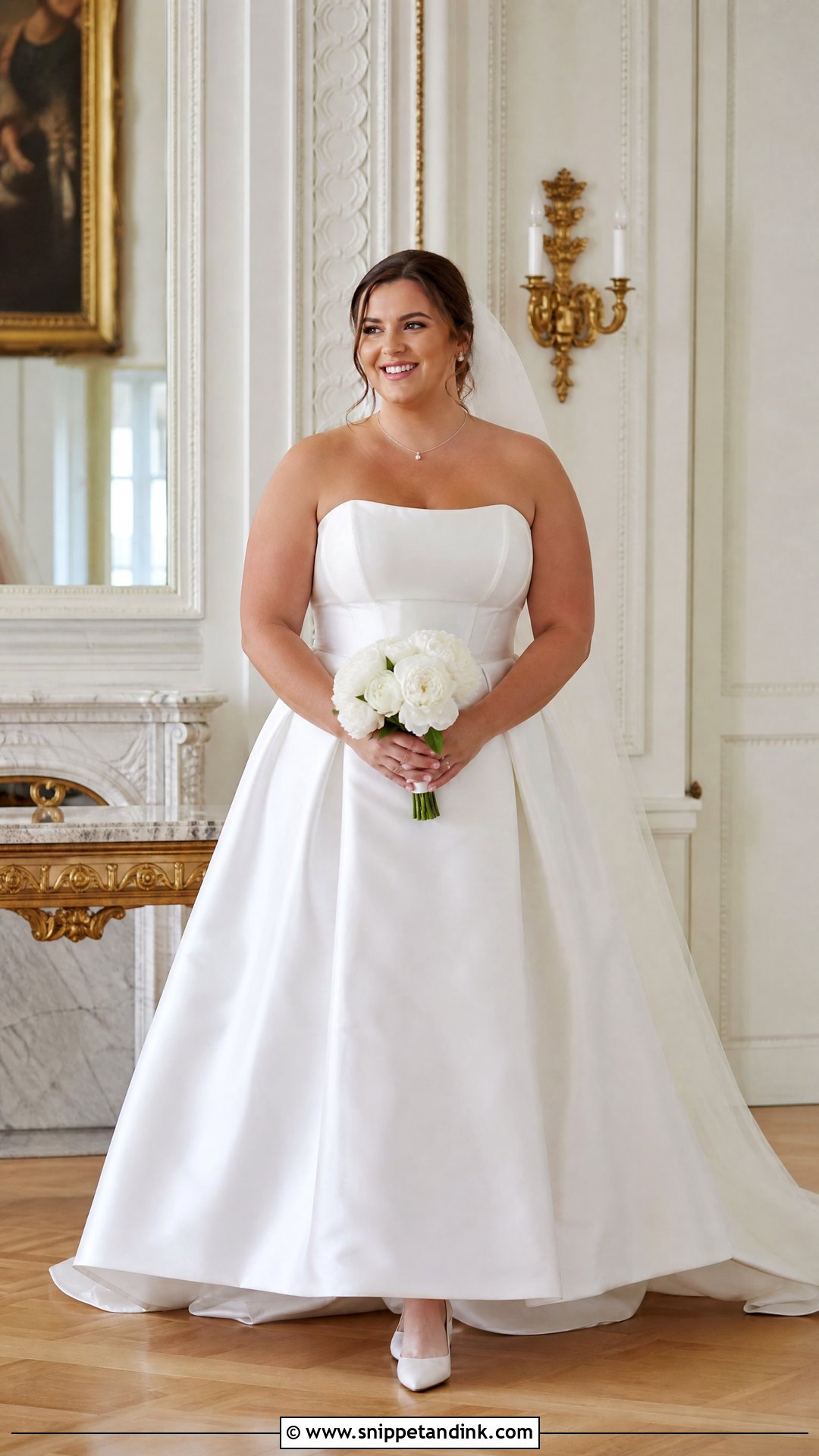
Strapless on a fuller bust is absolutely possible, but only with internal boning, a firm waist stay and a neckline that grips without cutting in. If you find yourself tugging the bodice up in the fitting room, the structure isn’t doing its job and alterations alone may not fix it. Keep the skirt clean in satin or mikado with minimal gathering at the waist. A fine necklace, pearl earrings and a fingertip or chapel veil suit the formality. Closed pumps are hidden under the volume anyway, so choose comfortable block heels if you’d rather. At the fitting, sit, raise your arms and dance before you sign off. Ballrooms and grand estates are its natural home.
15. Plus Size High-Neck Wedding Dress
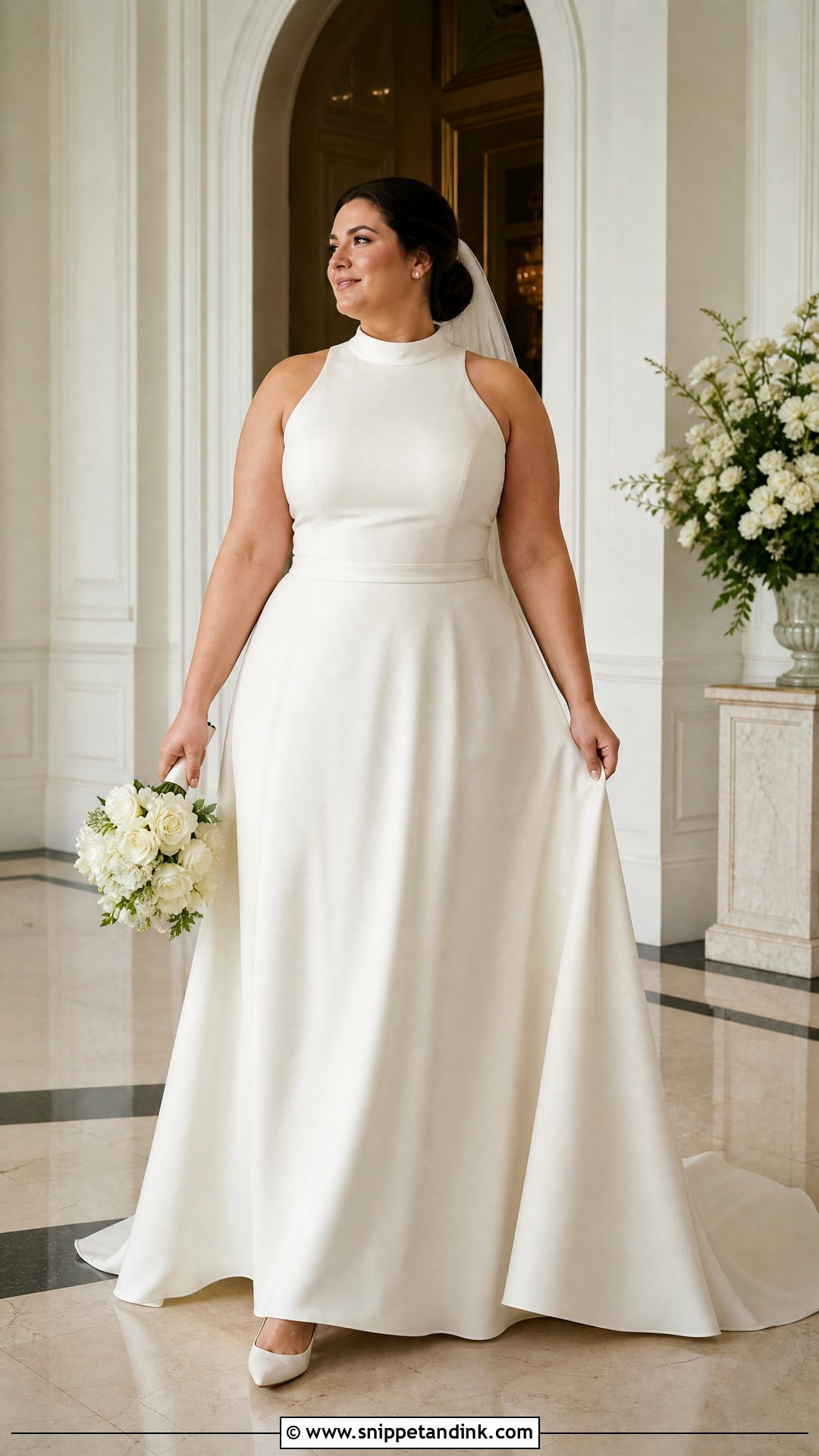
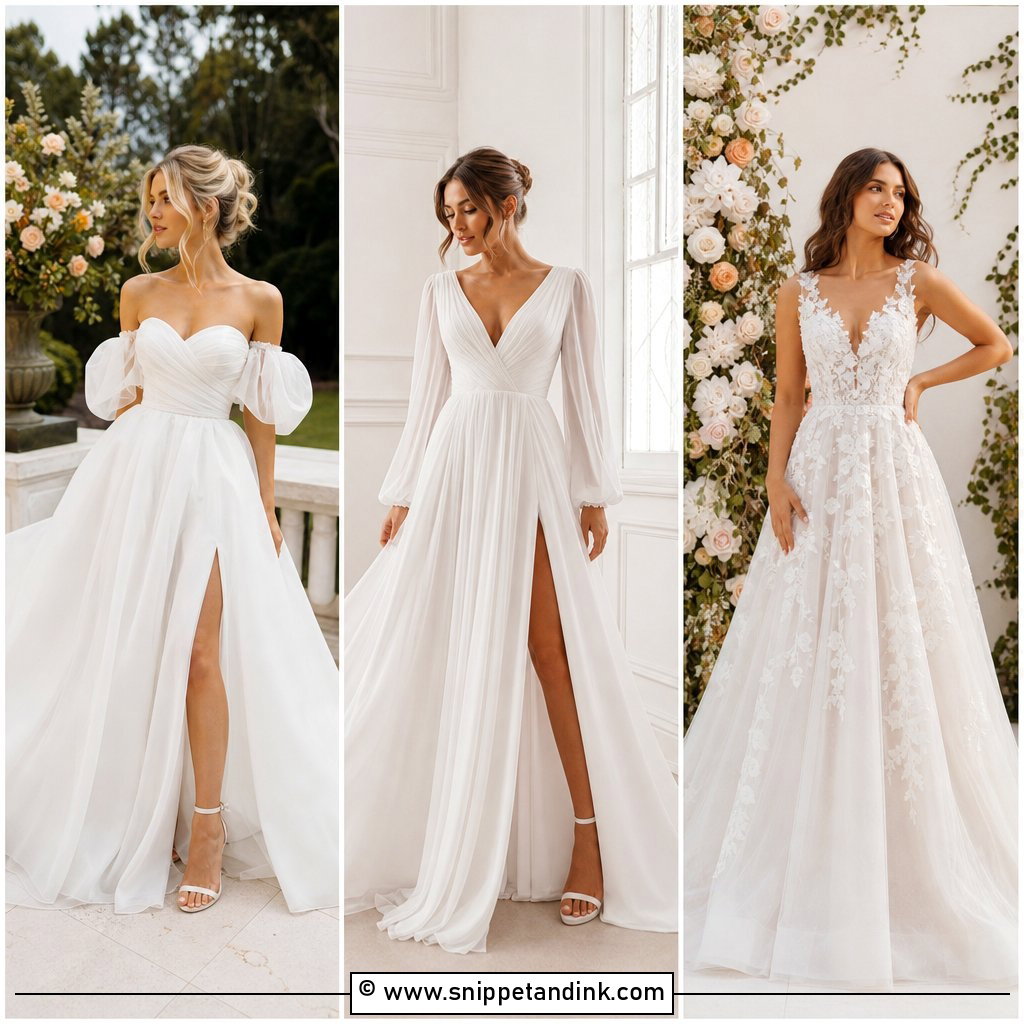
With a high neck, the dress has done the jewellery for you, so I skip the necklace and keep earrings to studs or slim drops. Clean crepe works, as does a gown with a little sheer fabric at the neckline to keep it from feeling heavy on a full bust. A fitted bodice into an A-line skirt keeps the proportions even. Hair should go up or back; loose hair hides the whole neckline. Pointed heels, a plain veil and a compact bouquet finish it. During fittings, turn your head fully and roll your shoulders. A collar that’s tight at the throat gets uncomfortable within an hour. It’s a strong fit for cooler seasons and modest dressing.
16. Plus Size Scoop-Neck Wedding Dress With Sleeves
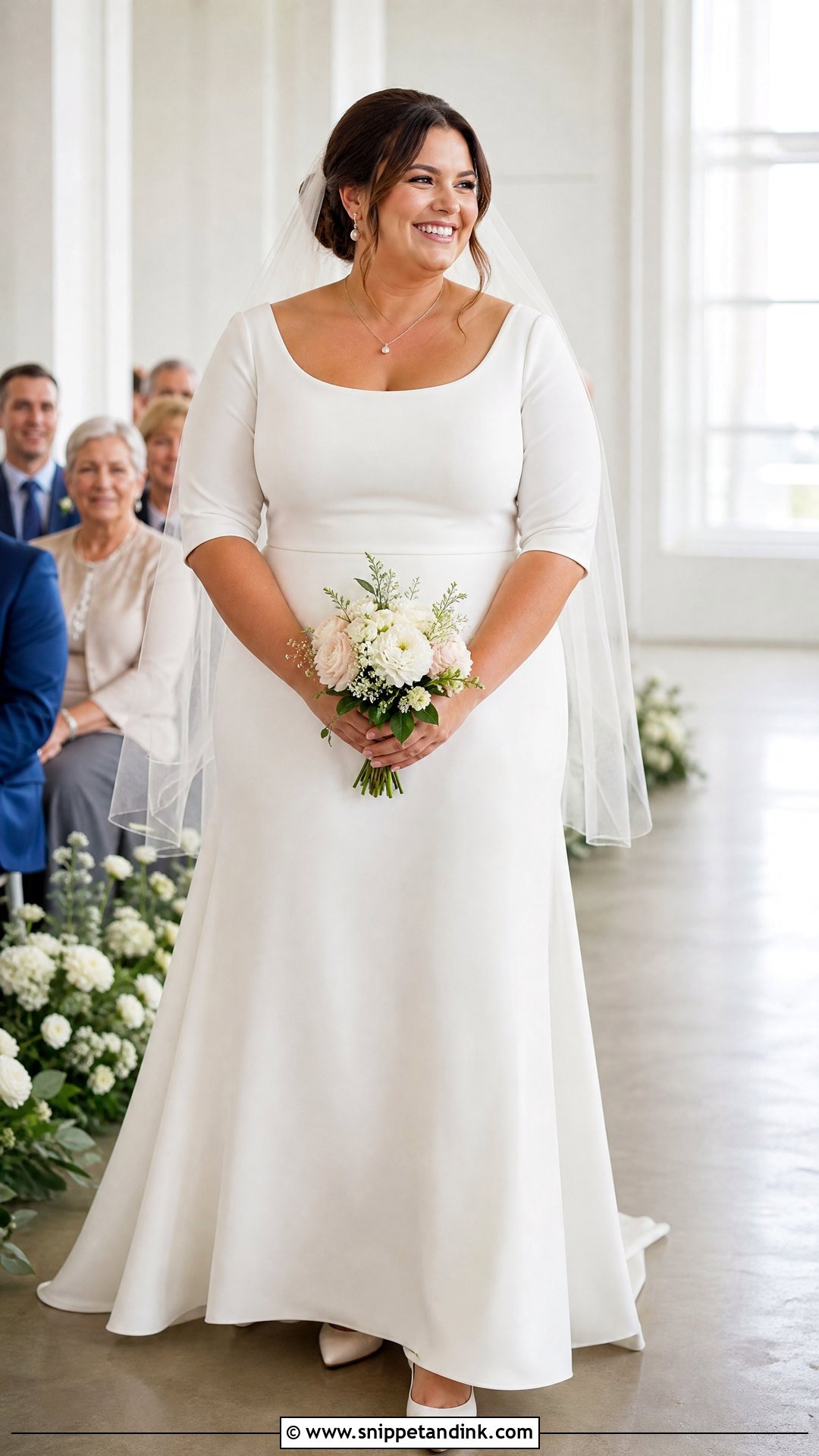
A scoop neckline is the most comfortable neckline I fit, and it pairs naturally with short, elbow or full sleeves. Smooth crepe or matte jersey with some body holds the shape, with a defined waist and a softly flared skirt. A short pendant, pearl earrings and low ivory heels suit it, with a fingertip veil for a traditional ceremony or a floral comb for a casual one. Sleeves are the risk area: too tight at the bicep and you can’t hug anyone. I make brides wrap their arms around me in the fitting room for exactly that reason. Family-centred days and restaurant weddings suit it.
17. Plus Size Flutter-Sleeve Wedding Dress
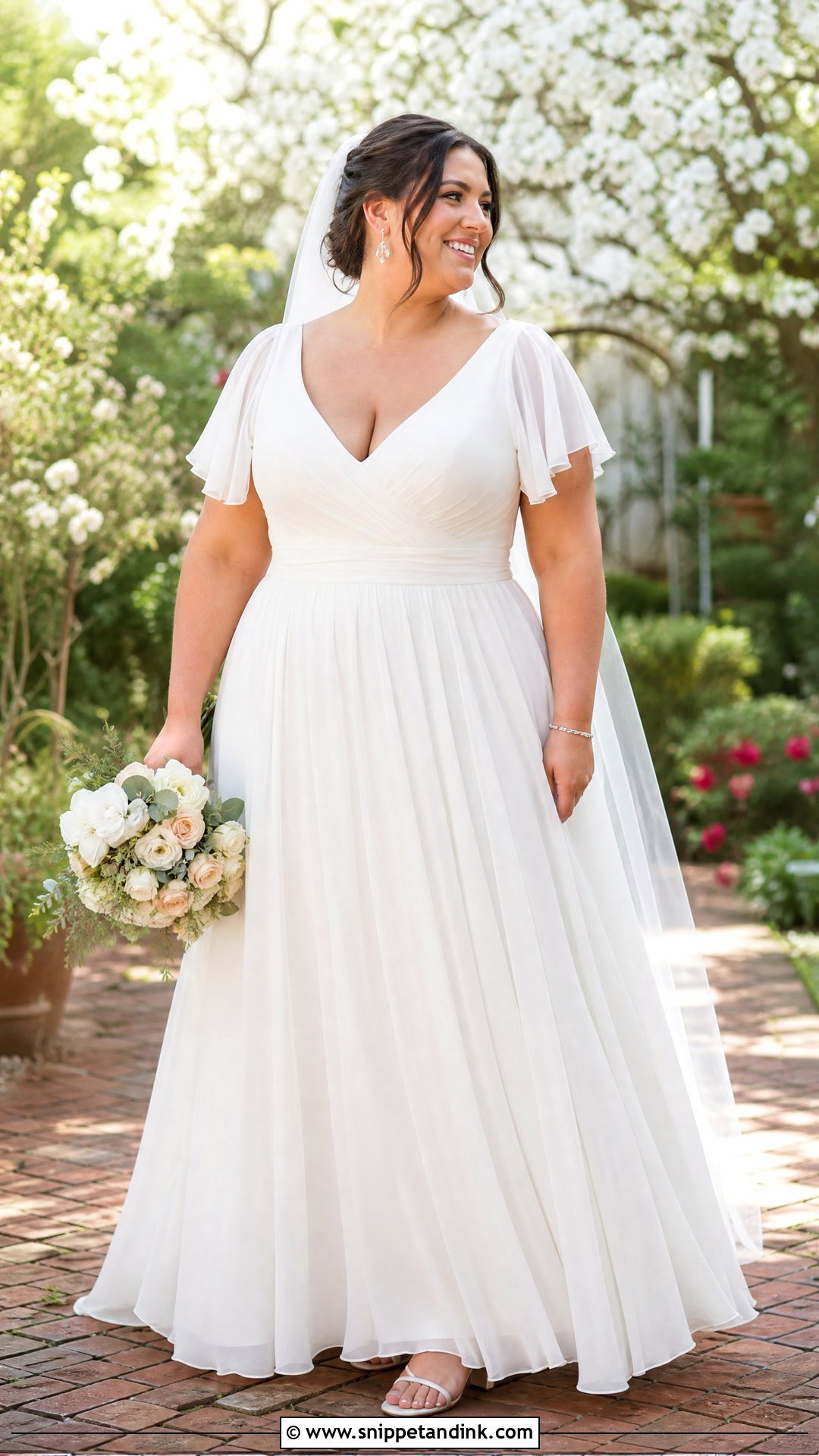
Flutter sleeves give soft cover over the upper arm without the grip of a fitted sleeve, which is why so many curvy brides relax the moment they try them. They should be chiffon, cut generously and stitched to a lined crepe or satin bodice with a V or scoop neck. A soft A-line skirt keeps the volume in proportion. Drop earrings, a slim bracelet and low block sandals are enough, plus a loose updo and a light veil. Leave the necklace off. My check: reach forward and lift both arms, and the sleeve openings shouldn’t pull. I’d suggest them for spring gardens, summer venues and destination weddings.
18. Plus Size One-Shoulder Wedding Dress
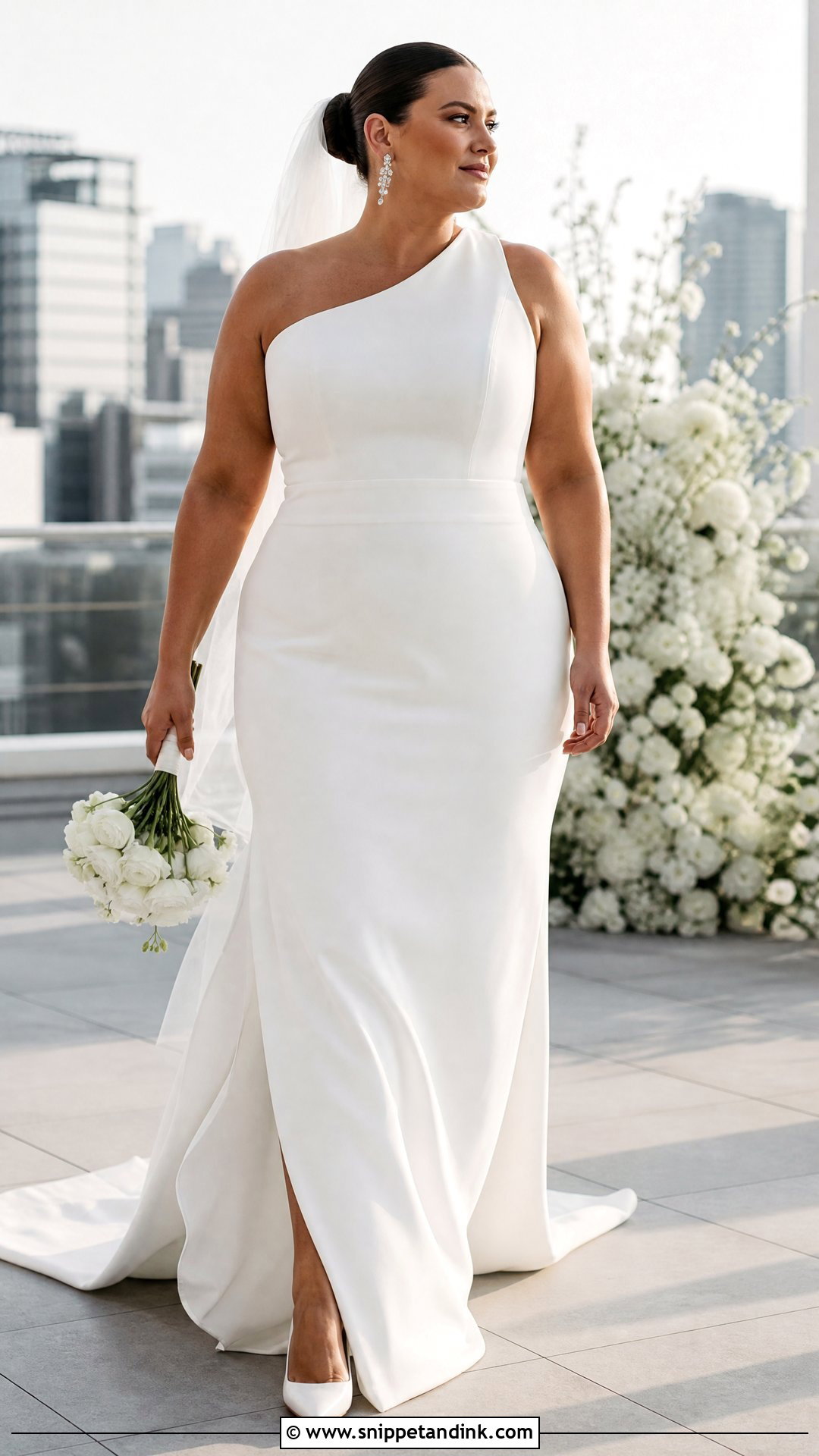
The single strap on a one-shoulder gown is doing the work two would, so it has to be wide and anchored to a structured bodice with real internal support. If the bodice twists toward the bare side when you lift your arm, send it back to the tailor; that only gets worse as the day goes on. Crepe, matte satin or soft mikado keeps the asymmetry crisp. I like a single statement earring on the open side and no necklace. A sleek low bun, pointed heels and a plain veil set under the bun finish it, with a small bouquet and little greenery. It reads modern, so galleries, rooftops and evening hotels suit it.
19. Plus Size Simple Lace A-Line Wedding Dress
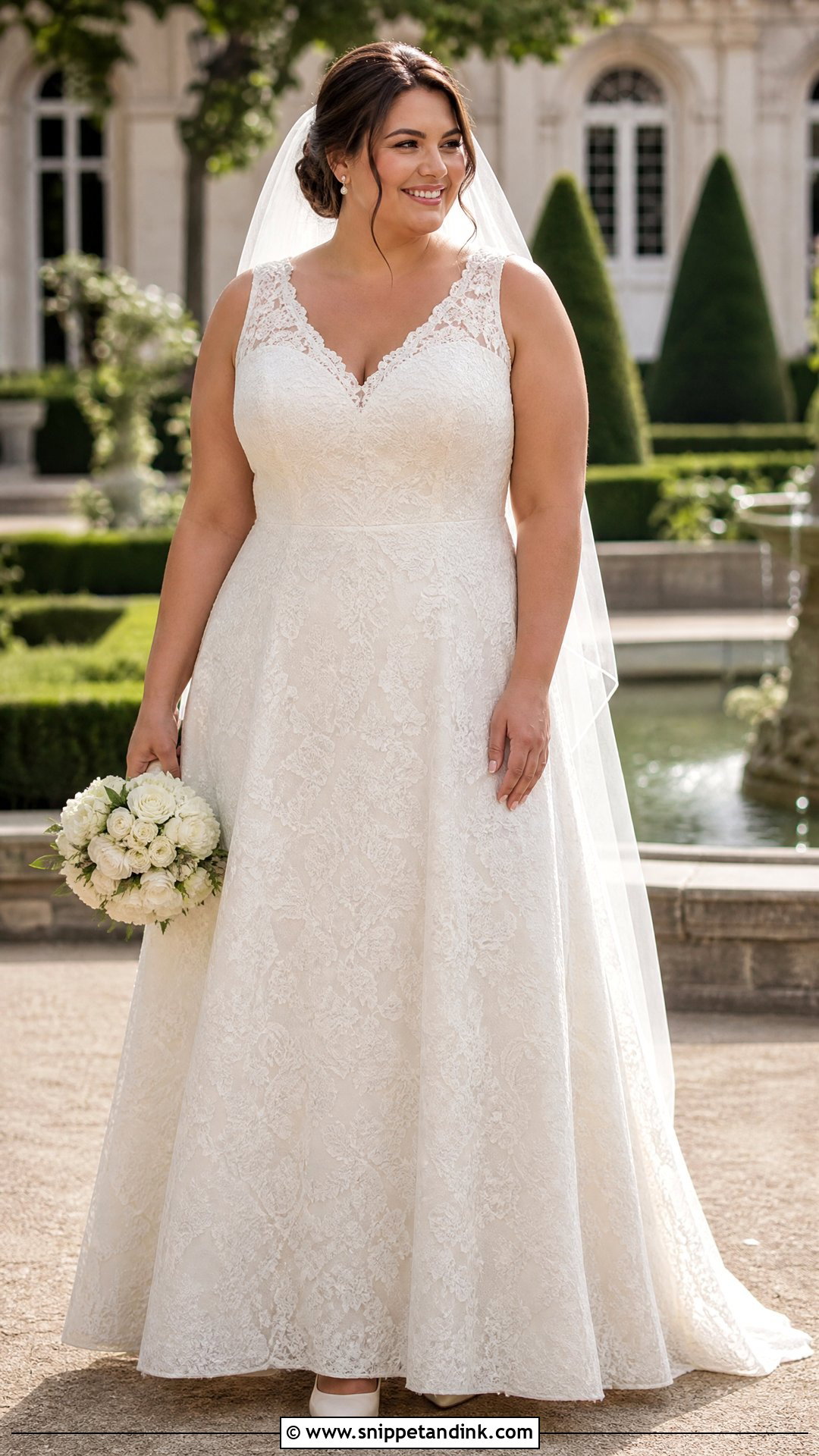
Lace can still read simple if you limit it to one pattern. My rule is no mixing appliqués, sequins and contrast layers on a dress you want to stay understated. An A-line with a lined V or scoop bodice and wide straps gives coverage and support. Keep accessories plain: pearl studs, a tulle veil without edging, ivory pumps. A smooth bun or soft waves won’t fight the texture. Carry a bouquet of just one or two varieties. When you shop, look closely where the lace meets at the side seams and the waist, because badly matched lace is the giveaway of a cheaper make. Gardens, estates and traditional ceremonies are where it shines.
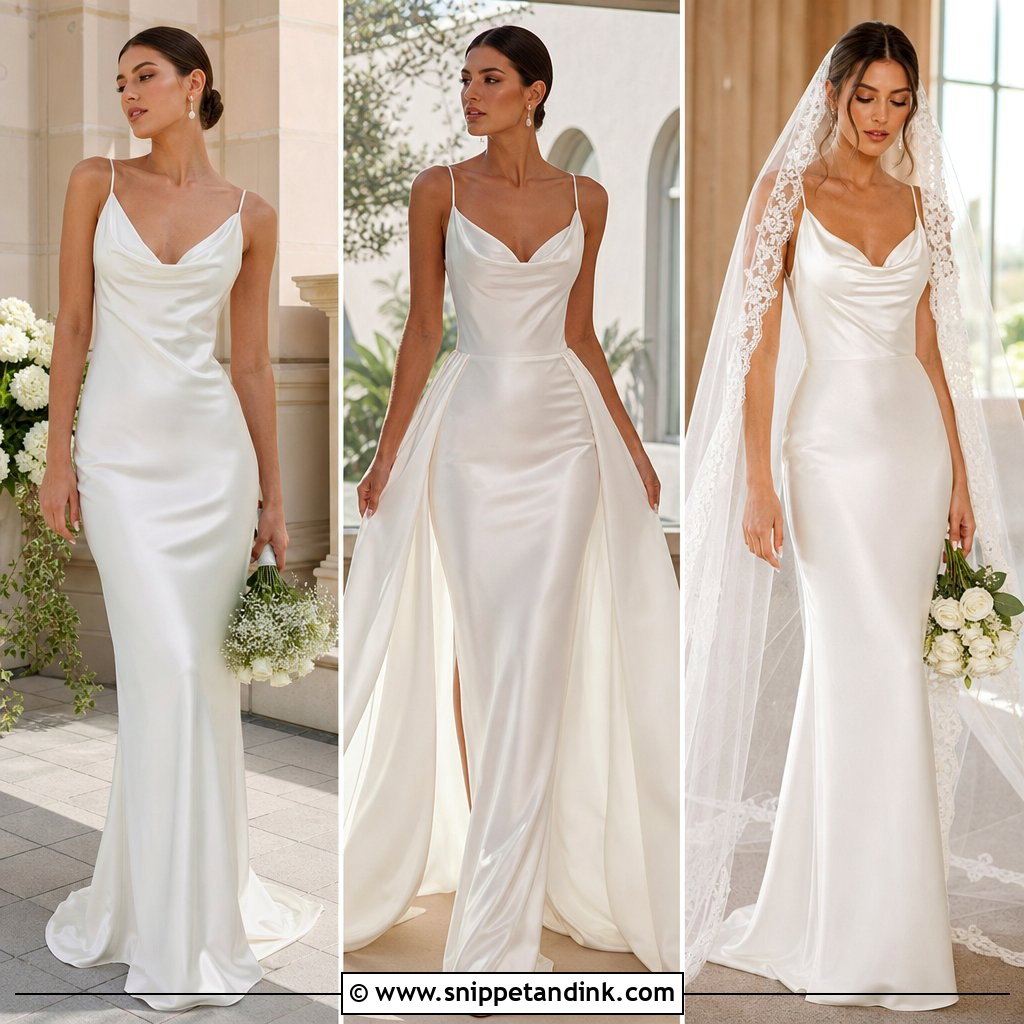
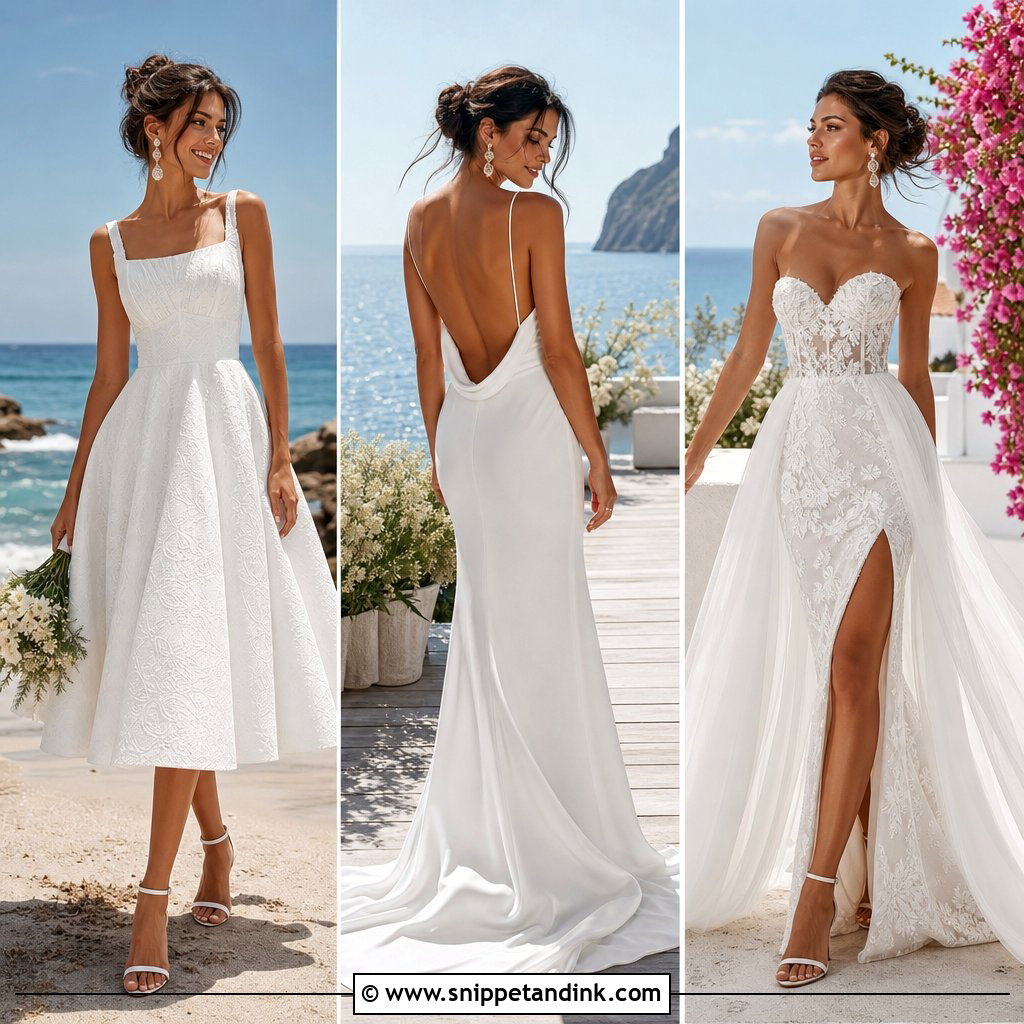

20. Plus Size Satin Slip Wedding Dress
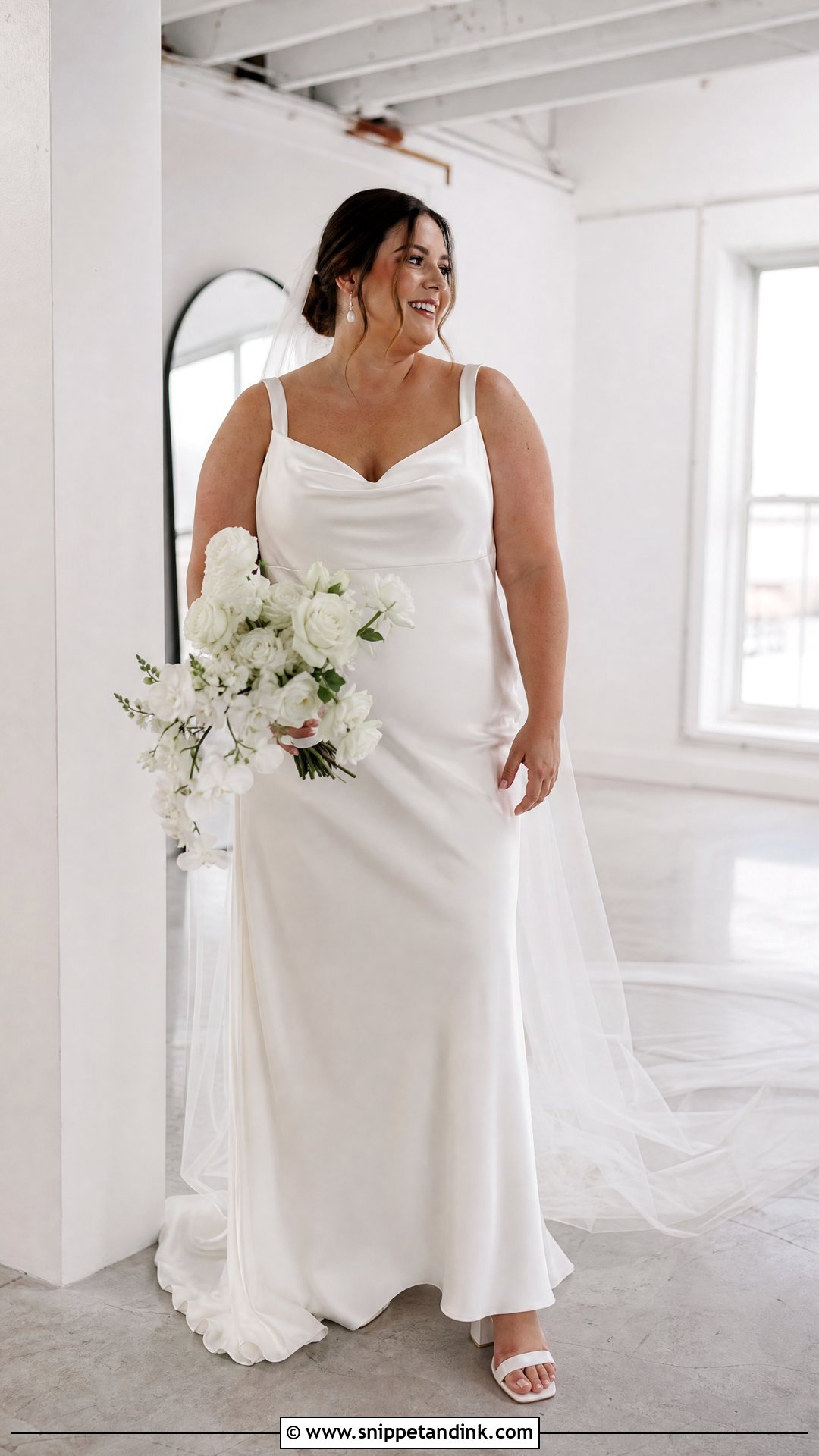
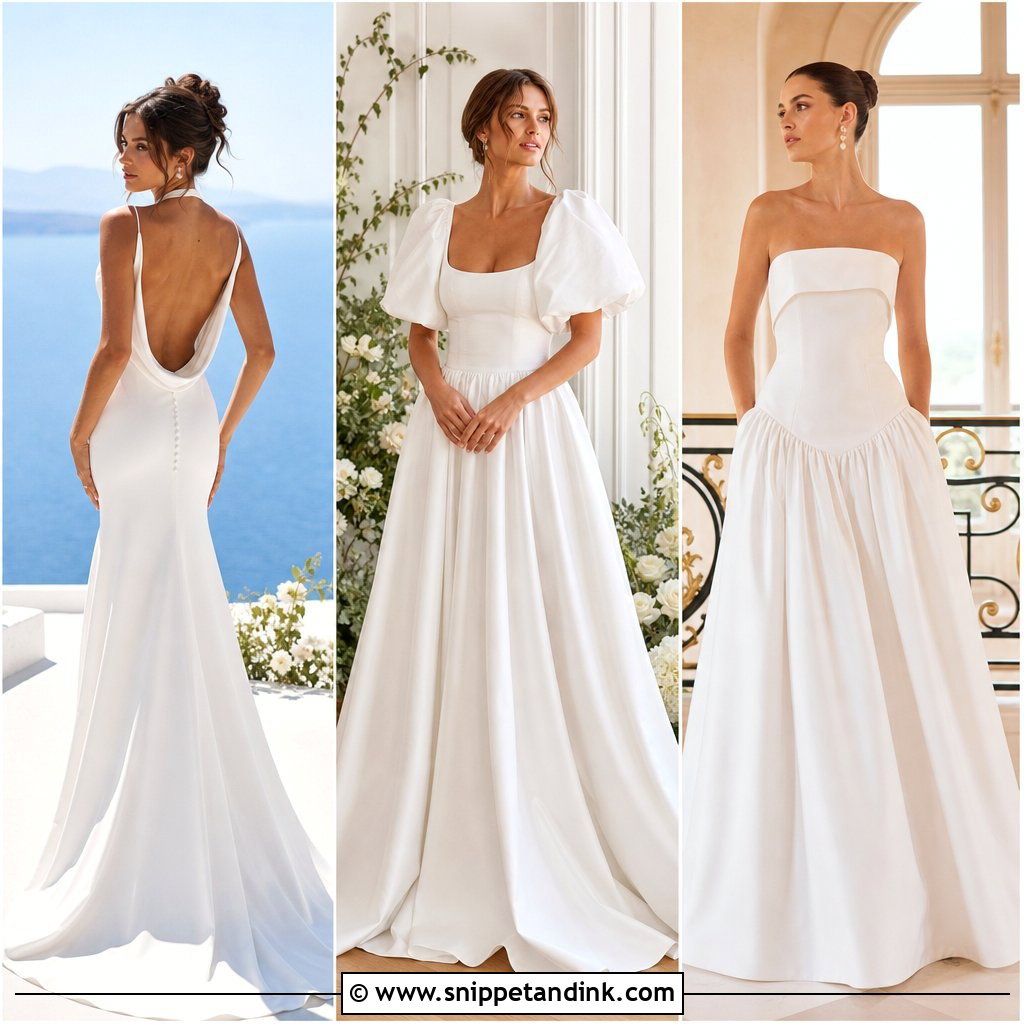
Slip dresses are the ones I’m most careful about for curvy brides, because thin satin cut on the bias shows everything underneath. Look for wider straps, a softly draped neckline, a proper lining and a skirt that skims rather than clings. Bias cut moves well but also stretches as it hangs, so alterations need to happen close to the date and the dress should hang for a day before the hem is marked. Slim-strap block heels, delicate drops and a sheer chapel veil keep it modern, with a blazer or wrap for cool evenings. A low bun or polished waves suits it, plus a long, simple bouquet. Destination ceremonies and loft venues fit it well.
How Satin, Crepe and Chiffon Hold Up After Ten Hours of Wear
I always tell brides to think about the gown at nine o’clock at night, not at the ceremony. A plain dress shows wear that a beaded one would disguise.
- Satin creases across the lap the first time you sit for dinner. Matte or heavier duchess satin recovers faster than a thin, shiny one. Stand up during toasts when you can, and ask your planner or a friend to carry a small travel steamer for the portraits after the meal.
- Crepe barely creases, but it can stretch at the seat and knees over a long day if the fabric is thin. Stretch crepe with good recovery bounces back; cheaper crepe can bag.
- Chiffon snags on brick, rough flooring and bouquet wire. Have the florist tape stem ends well, and keep the hem a touch shorter for outdoor venues.
- Sweat marks show on light crepe and satin under the arms. Dress shields stitched into the lining are invisible and save a lot of worry in summer.
The bustle and the dance floor
Any gown with a train needs a bustle, and on a simple dress the bustle points show. Ask for a French or ballroom bustle where the hooks sit under the fold, and have your seamstress teach a bridesmaid how to do it at the last fitting. Practise once, at home, before the day. A bustle that one person can close in two minutes is worth more than a complicated one that looks prettier in theory.
What a Plain Dress Asks of You
A simple gown only looks simple when the fit, fabric and support underneath are right, so put your money there before any embellishment. Bring your planned undergarments and shoes to every fitting, keep accessories quiet, and move around in the dress as you would at the reception. If the satin, crepe or chiffon you love still feels good after you’ve sat, danced and hugged in it at the final fitting, you’ve found the one.
You'll Like These Ideas:









Leave a Reply