
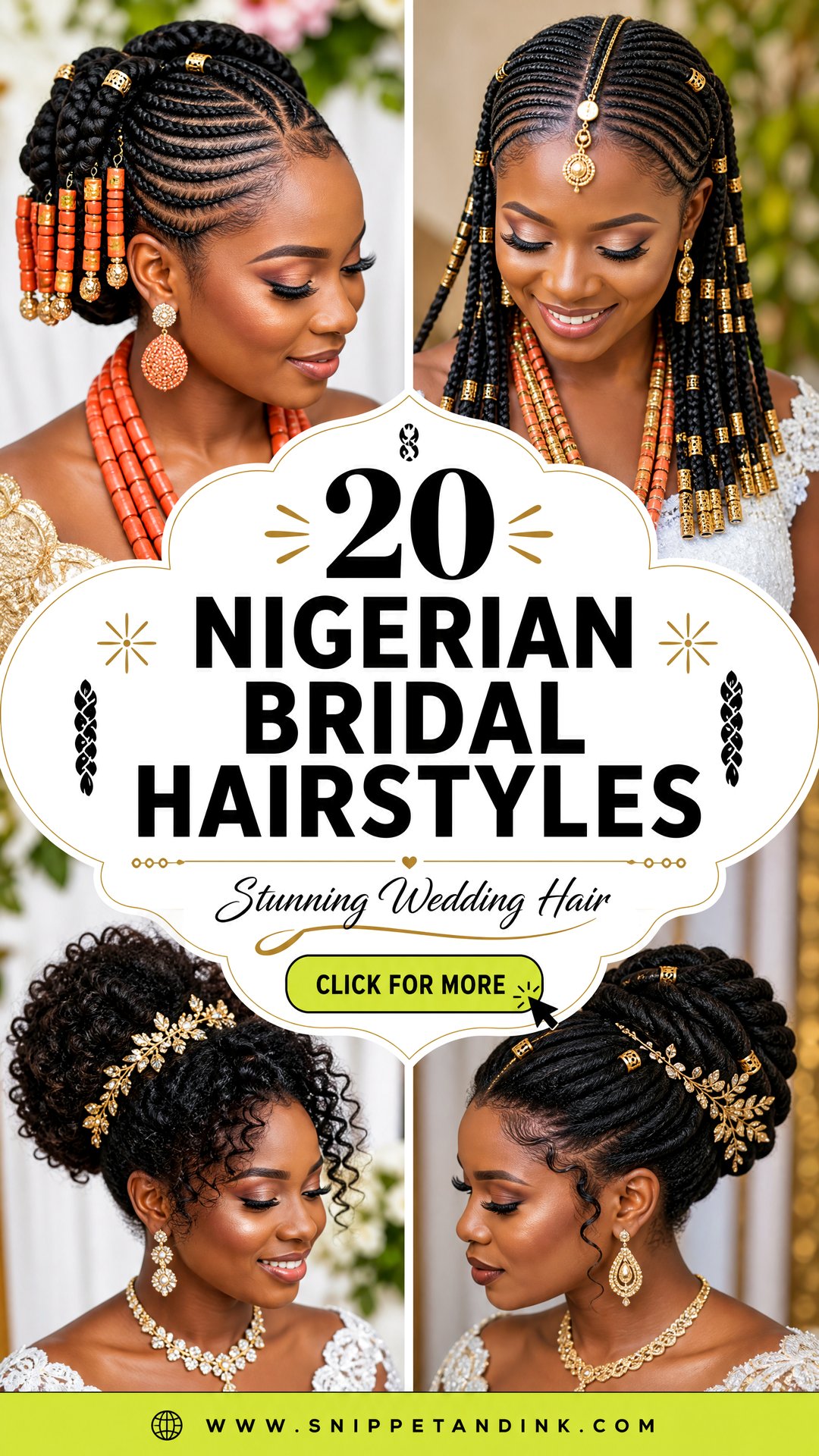
A Nigerian bride’s hair usually carries more meaning than any other part of her look. An Edo bride may wear a crown of coral beads, a Yoruba bride a tall gele, an Igbo bride bantu knots threaded with beads, and many brides wear two or three of these across one wedding weekend. The styles below run from sculpted packing gel and braided crowns to frontal wigs for the white wedding. For each one, I’ve noted how it’s built, how long it holds, and what I’d check before your ceremony, because a traditional style that looks regal in a photo also has to stay comfortable under heavy beads for hours.
Trad Day, White Wedding Day, and the Hair Change Between Them
Many Nigerian couples hold the traditional wedding and the white wedding on separate days, or even on the same day with an outfit change in between. That changes how I plan hair.
If the events are days apart
You can install braids or a protective style for the traditional ceremony and switch to a frontal or a curly updo for the white wedding. I’d book both appointments together so the stylist can plan the change, and so your natural hair gets a short rest between installs.
If they’re on the same day
Choose a base that works for both looks. A low packed bun sits flat under a gele, then a pinned-on hairpiece or a fresh set of curls can transform it for the second outfit. Braids gathered into an updo also switch well; I can swap the coral for gold pins in minutes. What doesn’t change quickly is threading, gel sculpting or a full wig install, so leave those for days on their own.
Tell your stylist the timings of each event, the outfit change and who’ll be helping you between ceremonies.
1. Edo Okuku Bun With Coral Beads
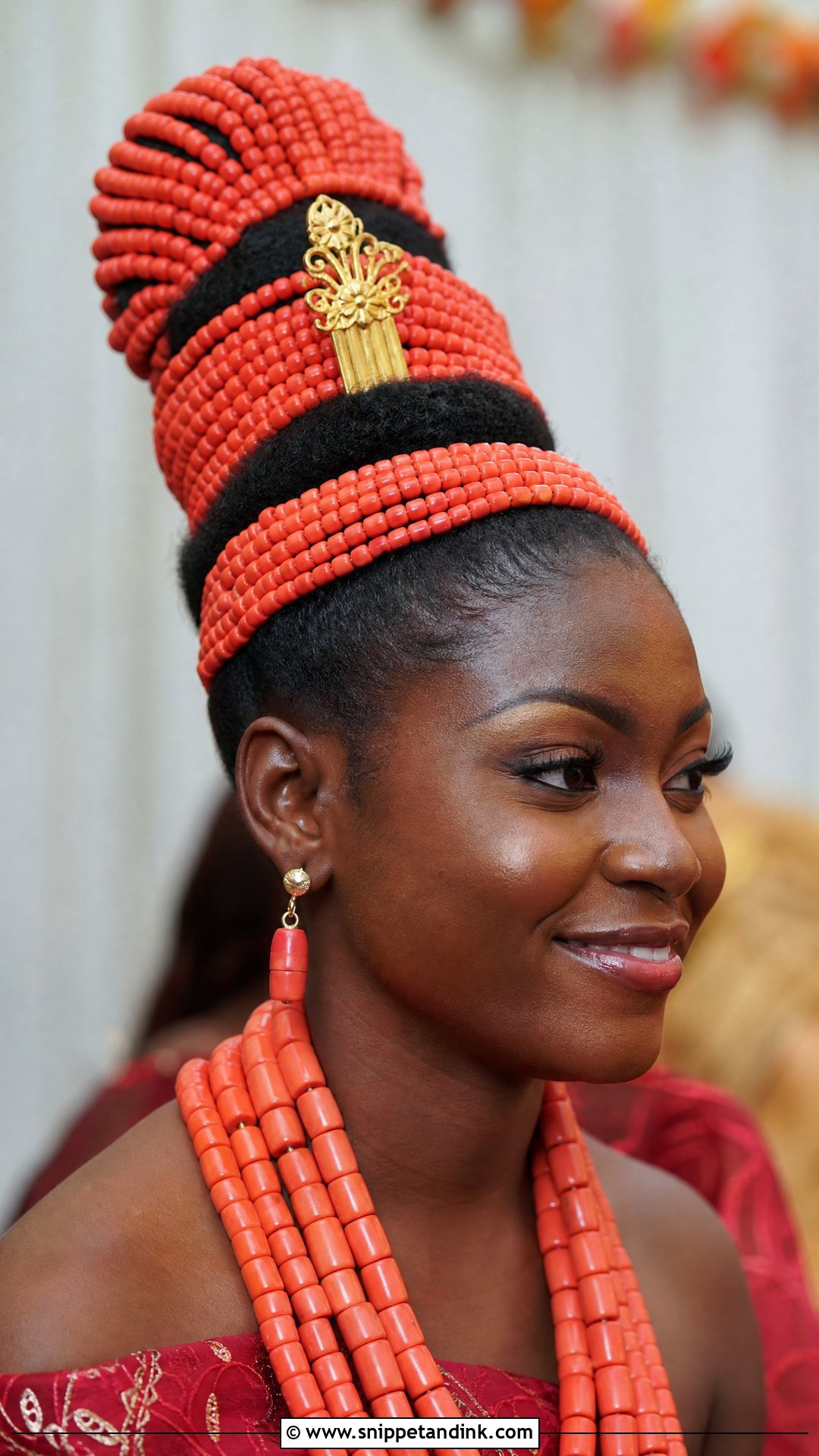
The okuku is the signature Edo bridal hairstyle: a tall sculpted bun covered completely in red coral beads, worn at traditional Benin weddings as a sign of wealth and royal heritage. Many brides build the height with their own hair, though extensions or a frontal unit help when the hair is short. Coral is heavy, so the base underneath has to be firm and well anchored, or the whole crown starts to tilt by evening. A gold comb at the side and matching coral necklaces and earrings finish it. Allow plenty of time for this one on the morning; beading is slow, careful work.
2. Yoruba Gele With Packed Updo
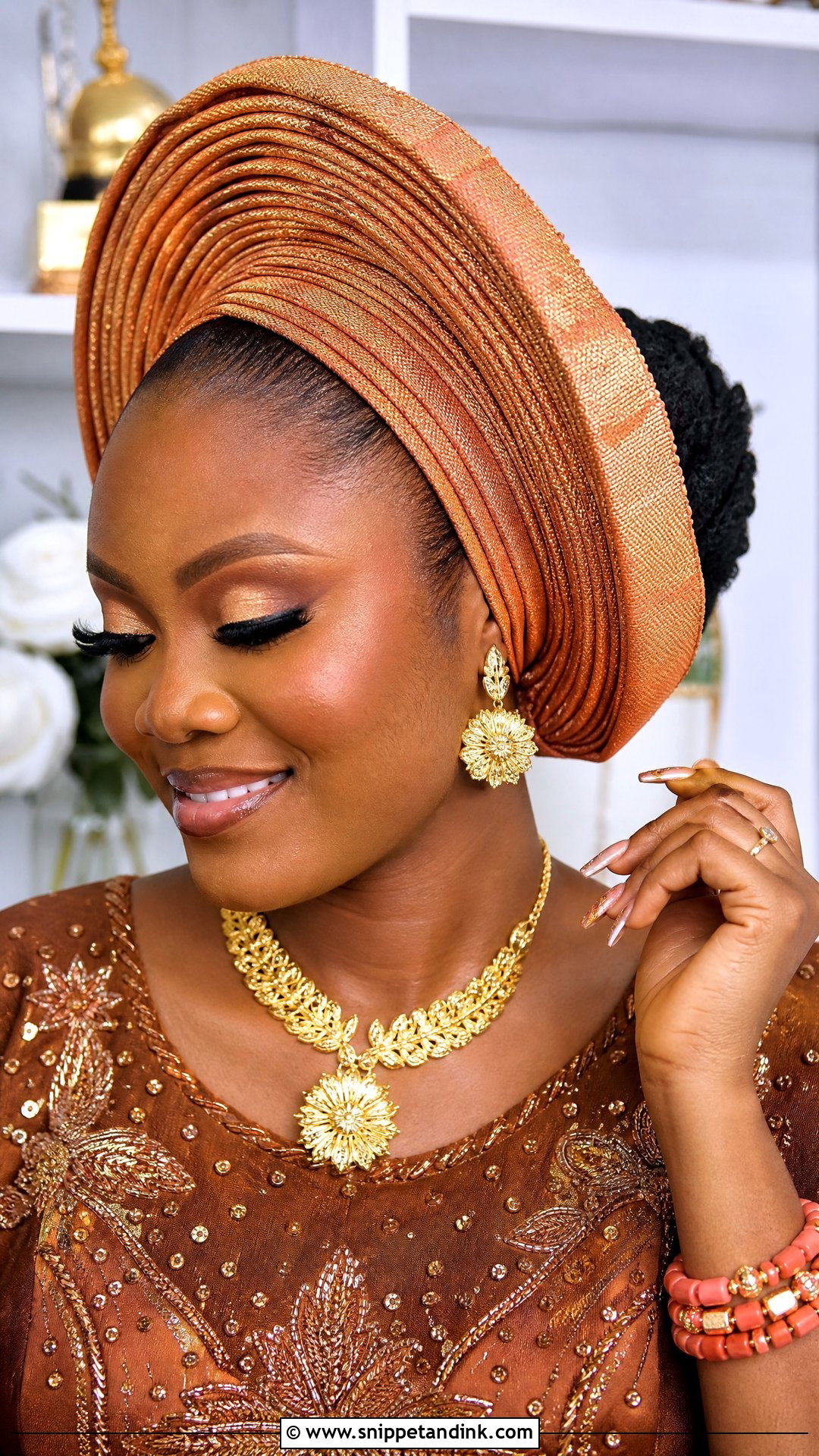
A gele is as much engineering as fashion. The fabric is folded into fans, pleats, swirls or rosettes, and it holds only if the hair underneath gives it a flat, firm base. I pack the hair into a low flat bun or tuck it under a net, because a lumpy base pushes the gele off-centre. Aso oke fabric is the traditional choice and its stiffness helps the shape stay crisp. Tying a bridal gele is a separate skill, so hire someone who does it often, and ask them to secure it with pins rather than relying on tension alone, which can give you a headache by the second hour.
3. Igbo Bantu Knots With Coral Beads
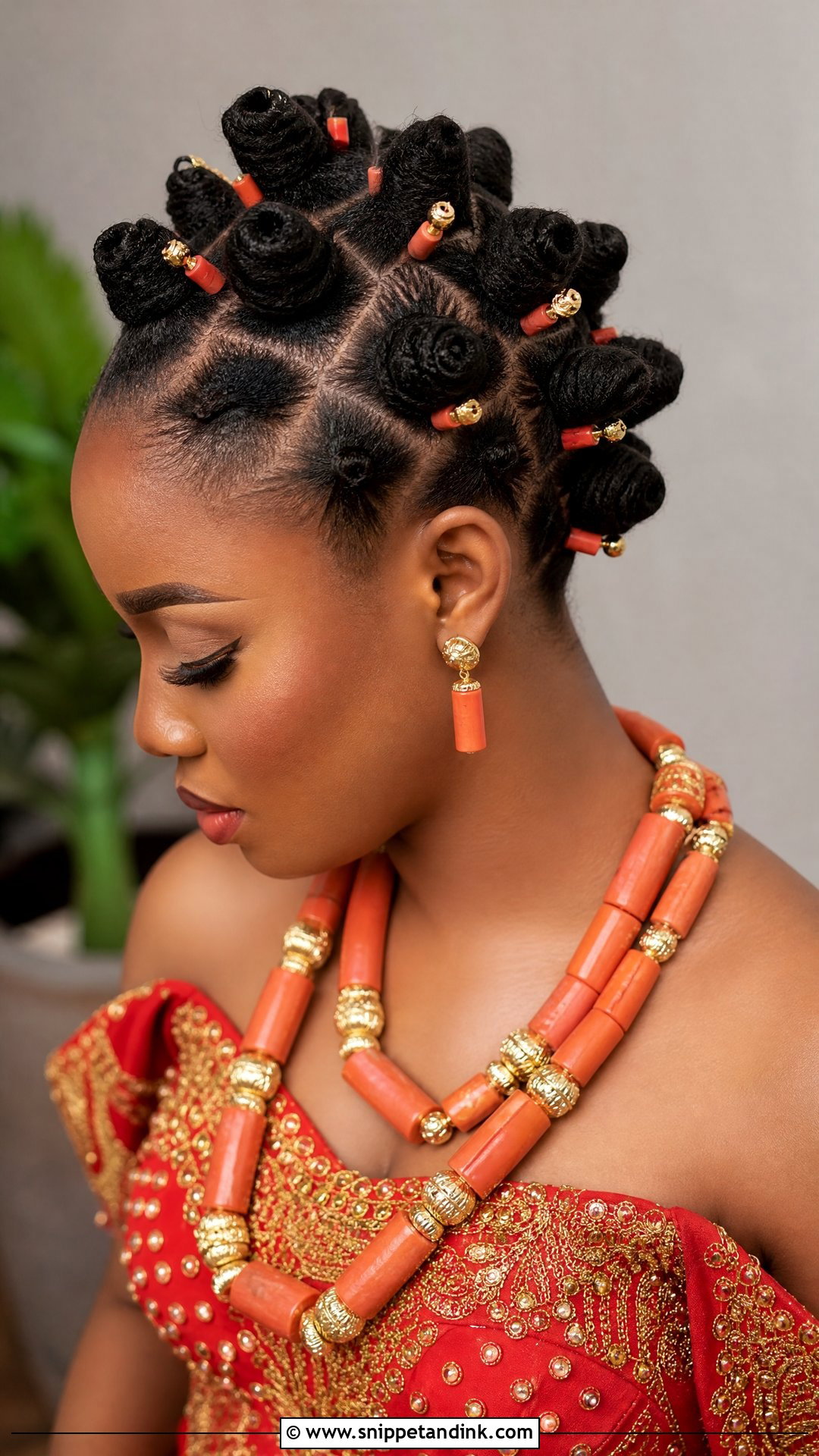
Bantu knots, called isi ntukwu in Igbo, are a favourite for the Igbankwu ceremony. I section the hair into neat parts, twist each section and coil it into a firm knot, then decorate the knots with small coral beads or gold accents to suit the ada Igbo outfit. Clean, even partings are what make the style look finished, so I map them before twisting anything. Coiling too tightly strains the scalp at the root; snug is enough. Keep the knots plain for a softer look, or load them with accessories for more drama.
4. Shuku Cornrow Updo With Beads
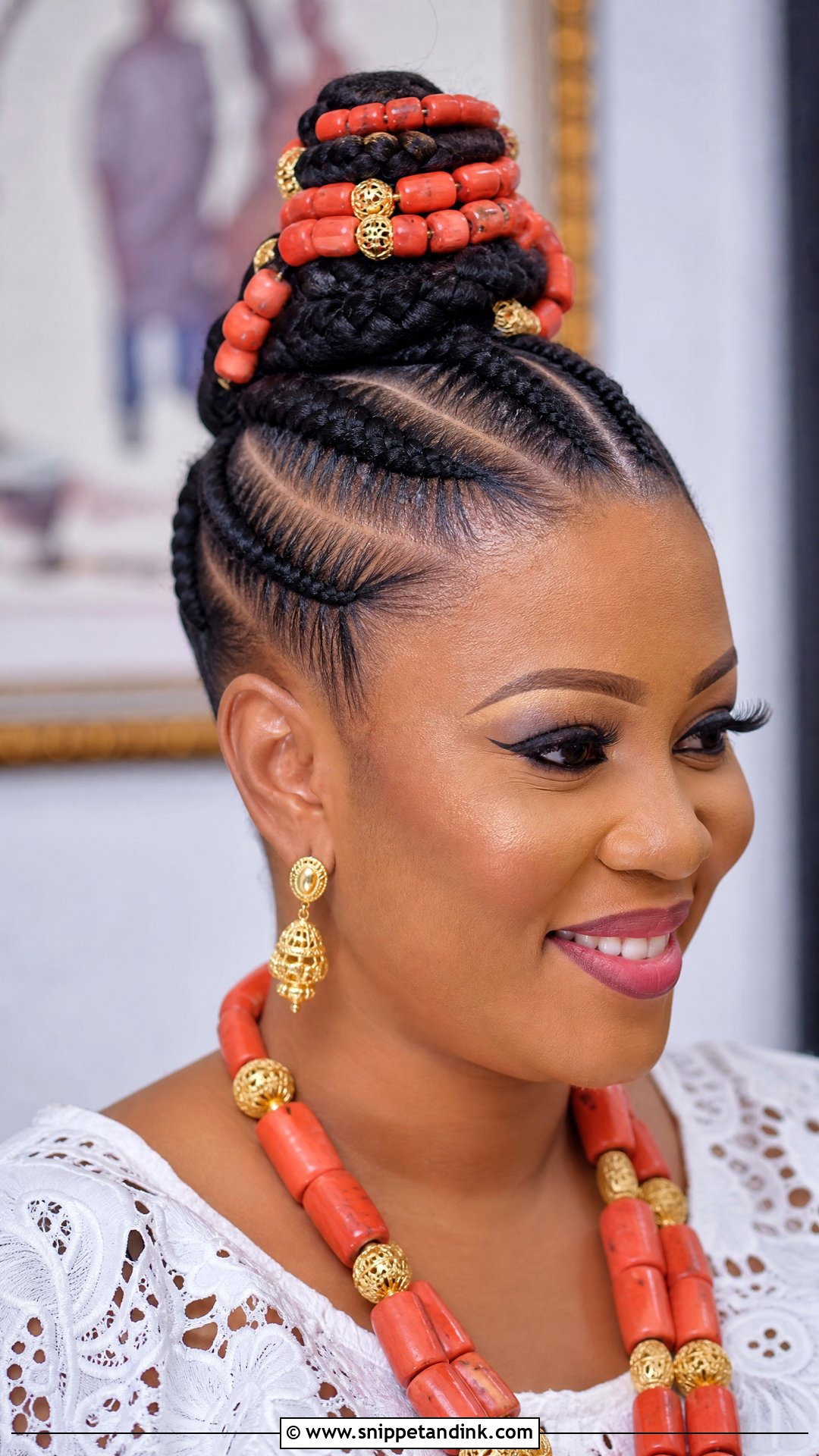
Shuku, worn by brides in places like Owo in Ondo State, is cornrowed from the hairline up toward the crown and gathered into a raised central bun. The pattern on the scalp is the design, so straight parts and even tension matter more than length. It works well on natural hair without extensions, which keeps it light and comfortable. Coral beads at the top give it the bridal finish. Because it’s braided, it holds through a long day and still looks crisp from the side and back in photos.
5. High Bun Updo With Coral Crown
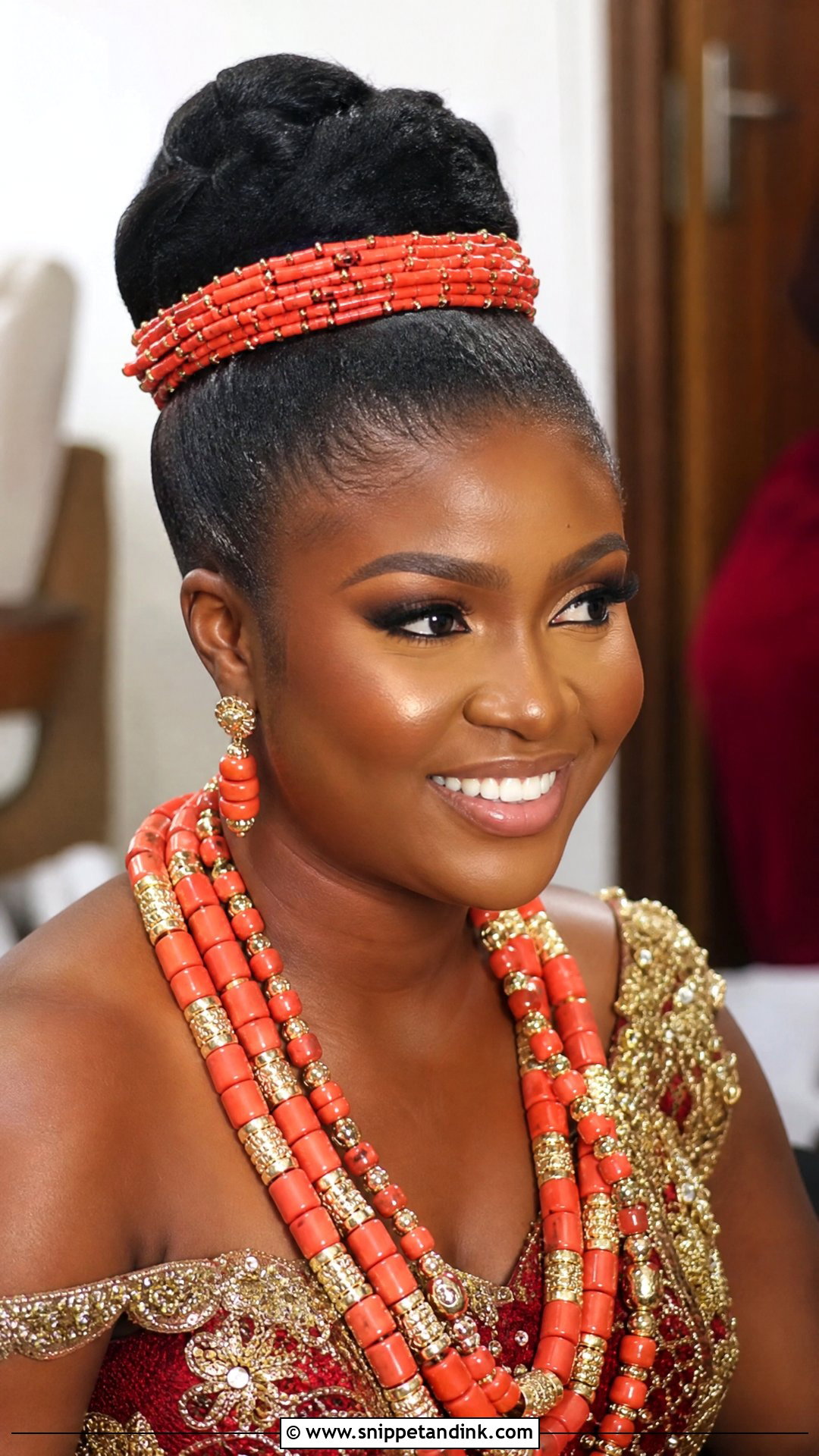
A high bun with a coral crown is one of the most adaptable traditional looks I do. The hair is gathered high and smoothed, then the coral crown wraps around the base. Extra height usually comes from extensions or a bun former, and the more height, the more pins I use to keep the weight centred. It suits Igbo and Edo brides at traditional ceremonies, and it frames statement earrings and an embellished outfit well. If your hairline is fragile, ask for a looser pull at the edges; a tight high bun stresses the hairline more than any other style here.
6. Packing Gel Updo for Brides
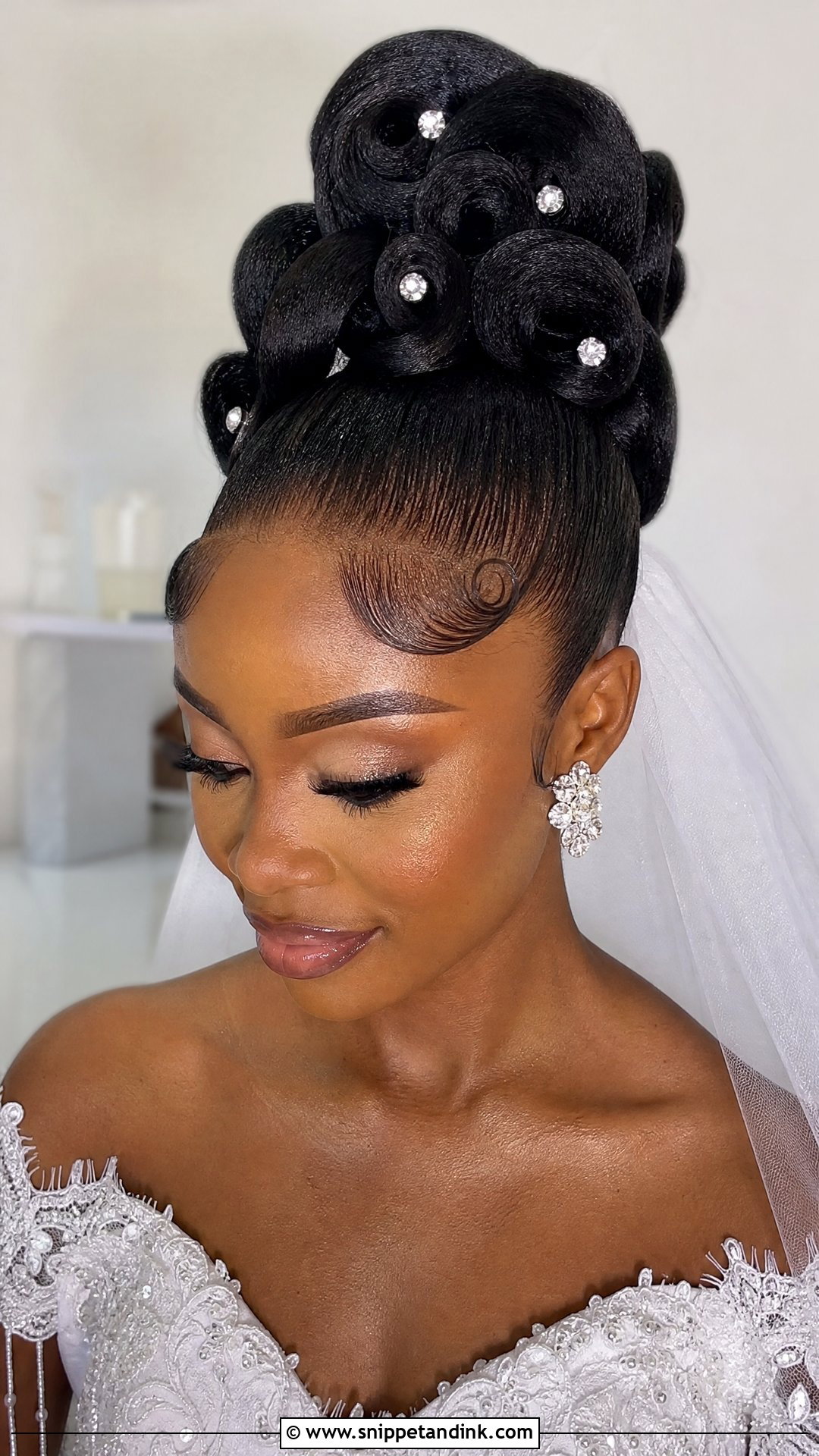
The afro packing gel updo is a sculpted, glossy finish made with your own hair. I brush the gel through in small sections and smooth upward with a soft brush, then shape the top into buns, swirls or curled accents. The gel sets firm, which is why it holds so well, but it can flake if too much is applied at once, so thin layers work better. It suits a civil wedding or a modern reception, and it’s budget-friendly. A few rhinestone pins or fresh flowers finish it.
7. Fulani Braids Bridal Style
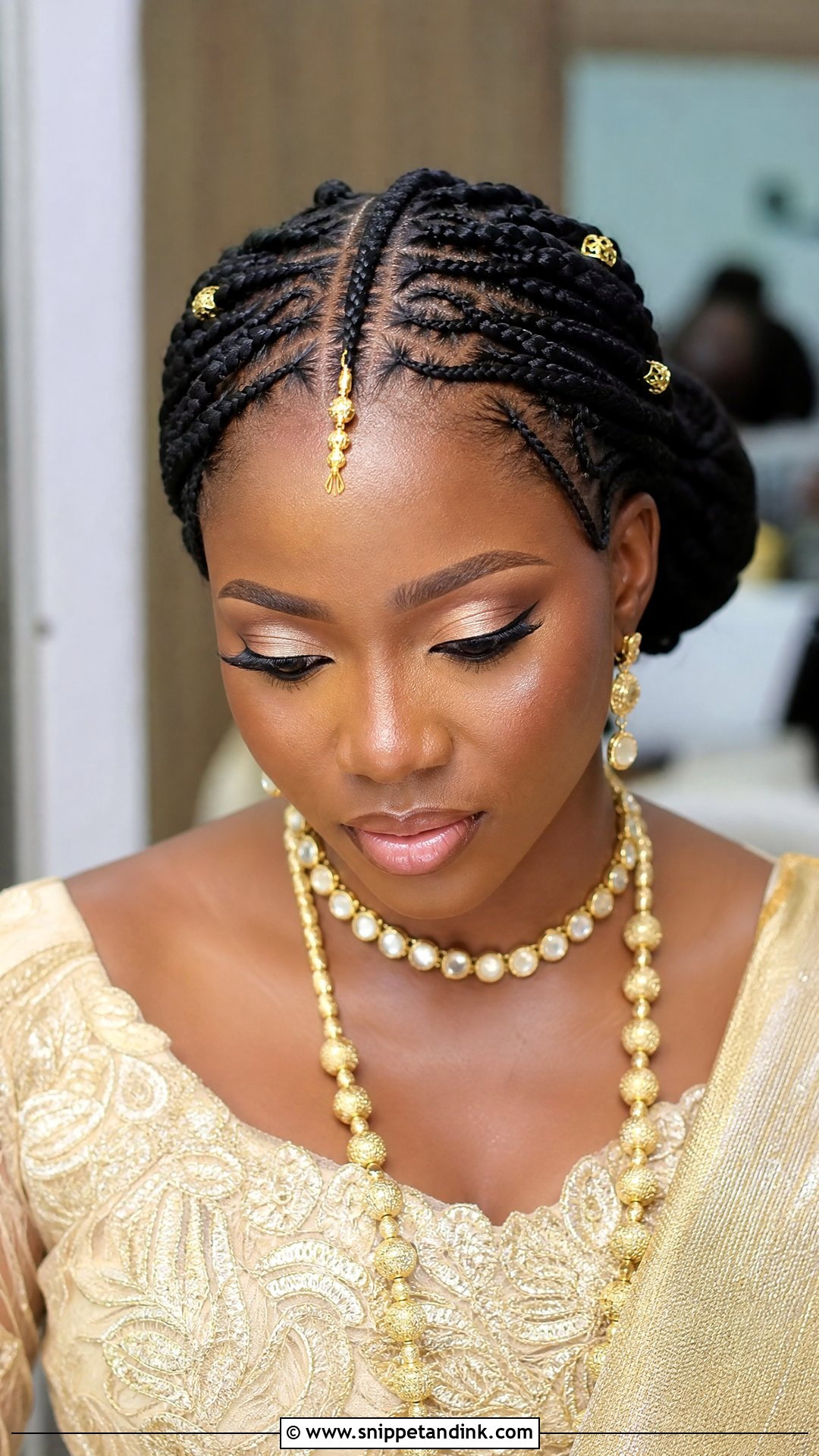
Fulani braids combine cornrows running back from the face, often a centre braid, and side braids finished with gold cuffs and beads. The mix of thin and thick braids gives the style its shape. For a wedding, I gather them into an updo or a low bun so they don’t swing into your face during photos. Install them a few days before the wedding rather than the day before; fresh braids are tight and can feel tender for the first day or two. They’re protective and last well beyond the wedding.
8. Goddess Braids Updo
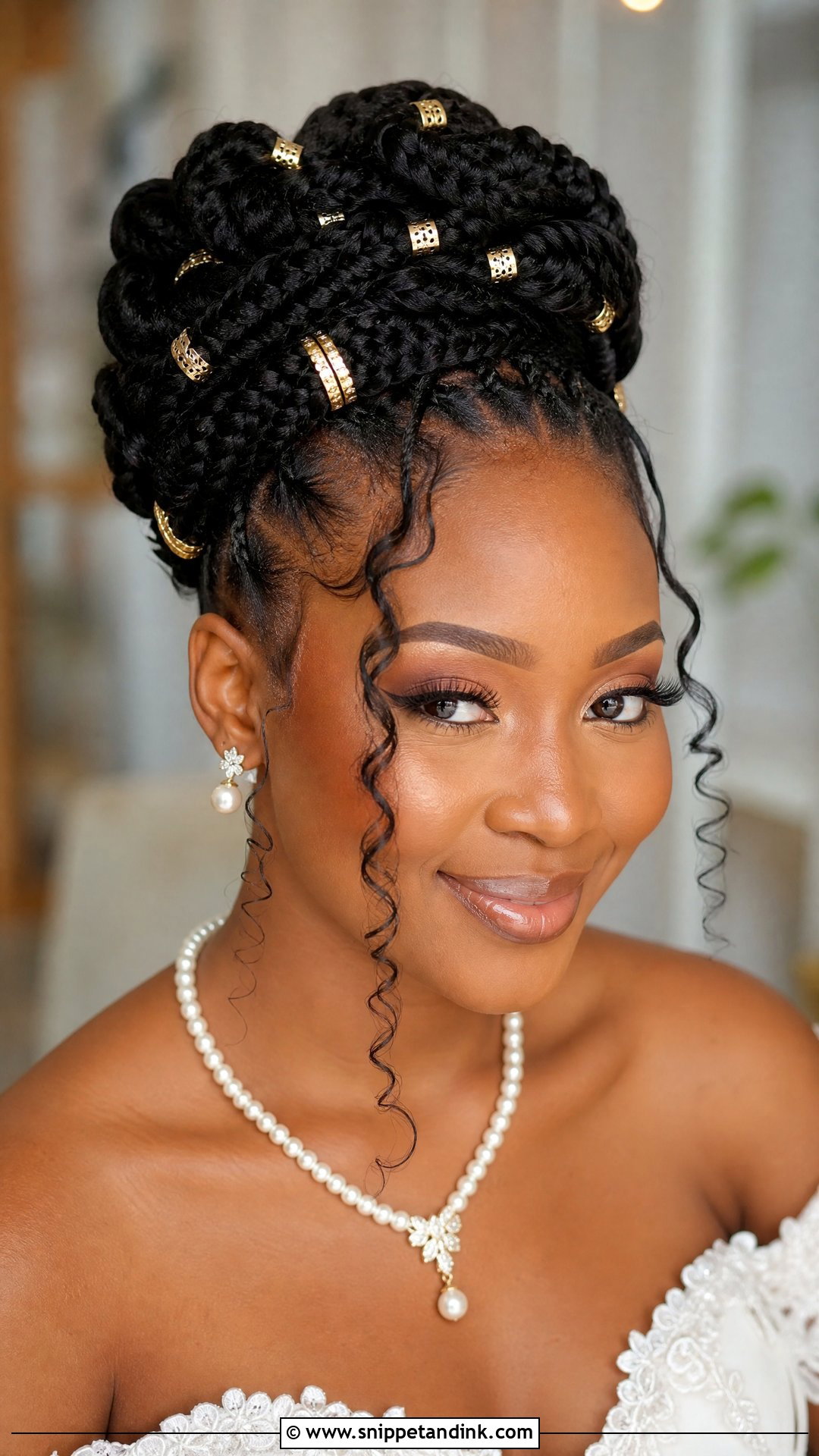
Goddess braids are thick cornrows woven close to the scalp, then wrapped and pinned into an updo with a crown-like shape. The chunky braids give strong texture. I often leave a few face-framing tendrils or lay the baby hairs for softness, and decorate with gold cuffs, pearls or coral beads to match the outfit. Thick braids with added hair can get heavy once they’re piled up, so I check the weight at the trial before committing to a high arrangement. Low versions are easier to wear all day.
9. Natural Hair Curly Updo
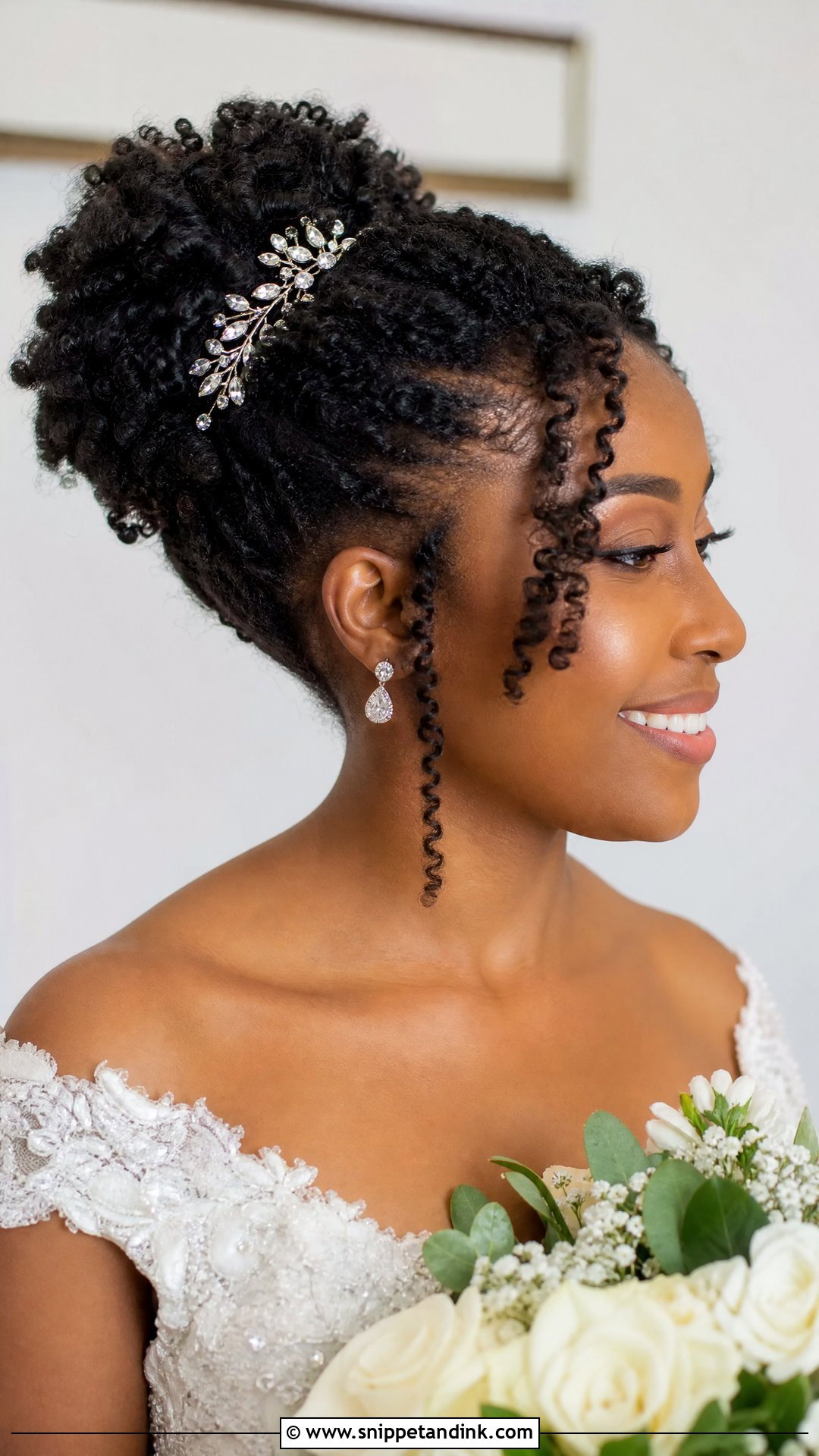
A curly updo shows off natural kinks and coils, gathered into a soft, full bun with curls left visible. I prep with a moisturising cream and a light hold product so the curls clump and define rather than frizz, and I stretch the hair slightly first so the shape is easier to pin. It’s comfortable, it suits a civil ceremony, a church wedding or a modern reception, and it needs no wigs or extensions. A sparkling pin, fresh flowers or a delicate headpiece adds the bridal note.
10. Bridal Bun With Fresh Flowers
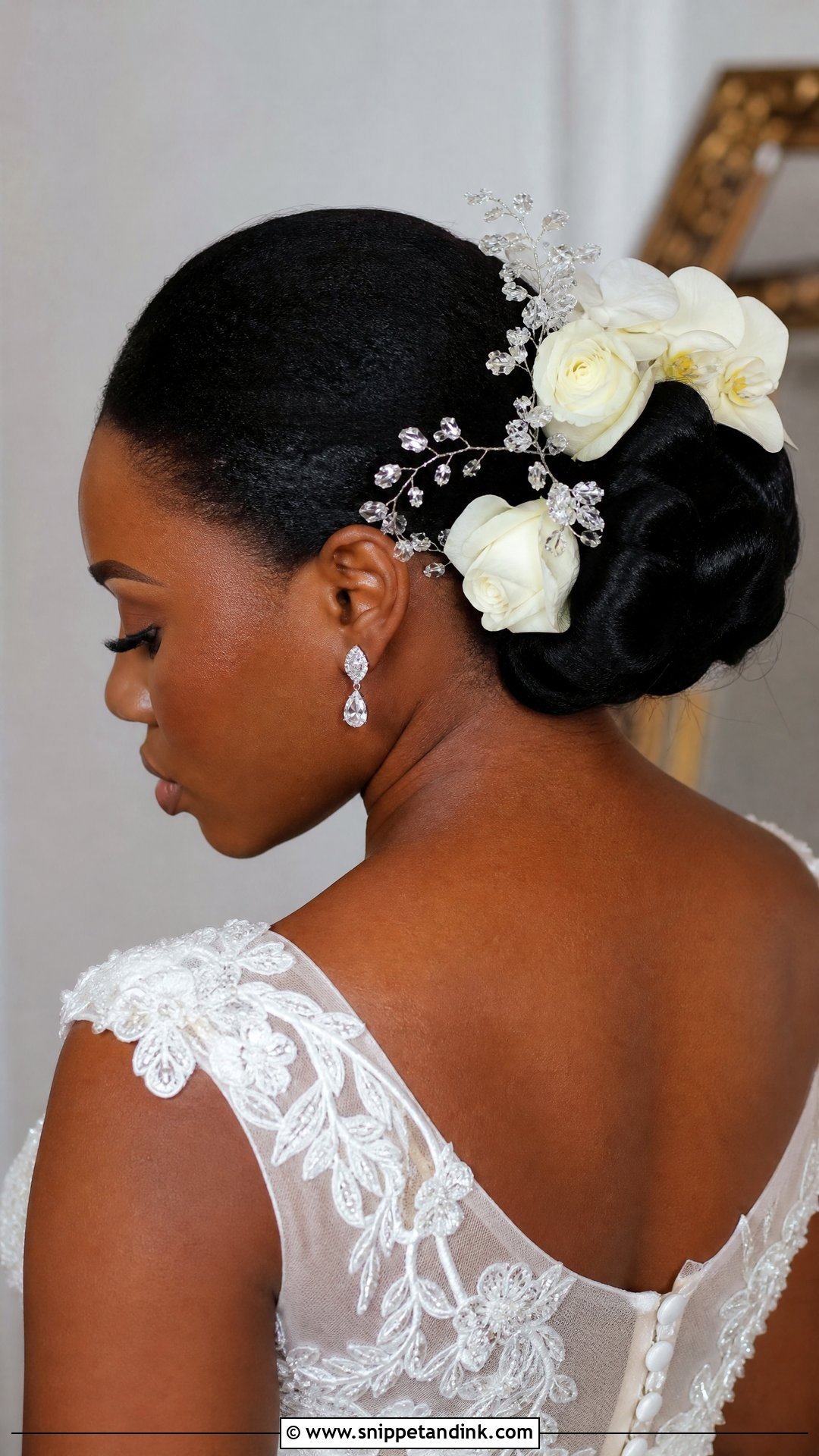
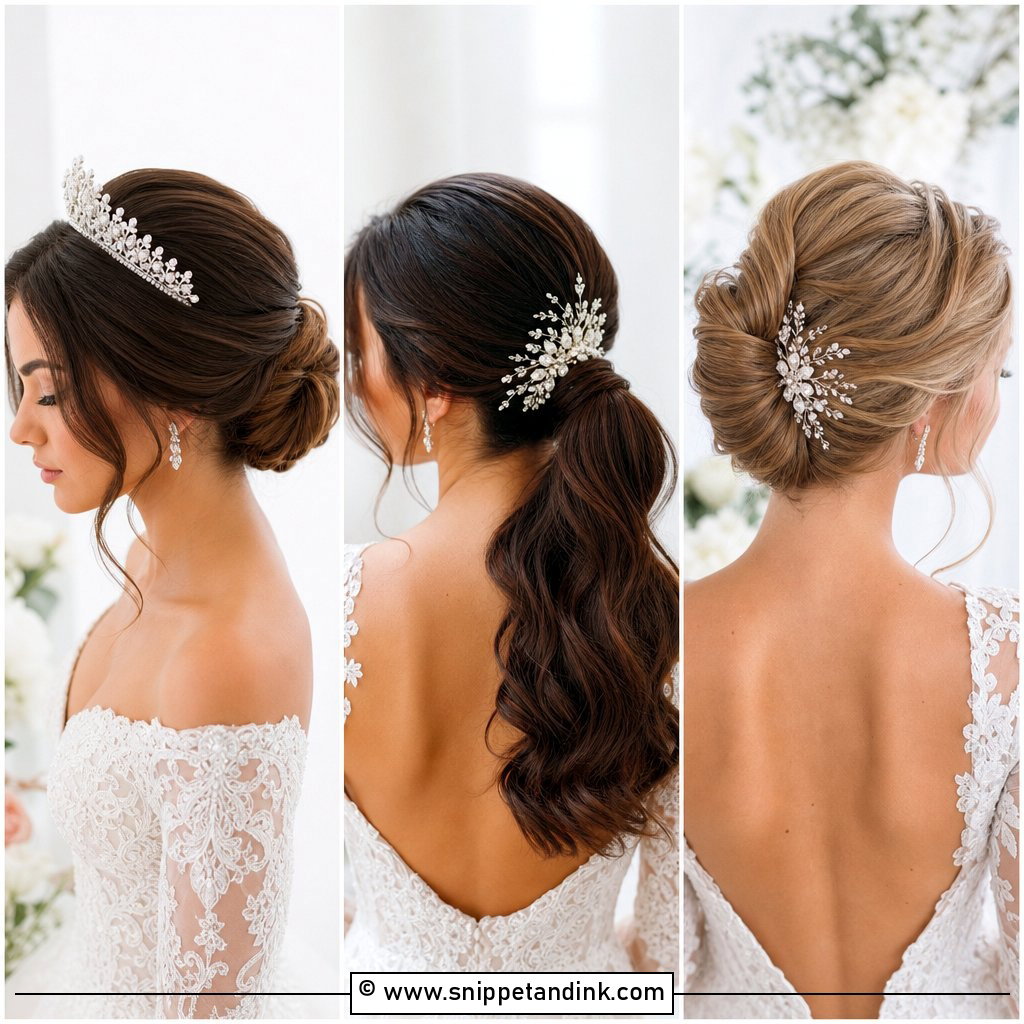
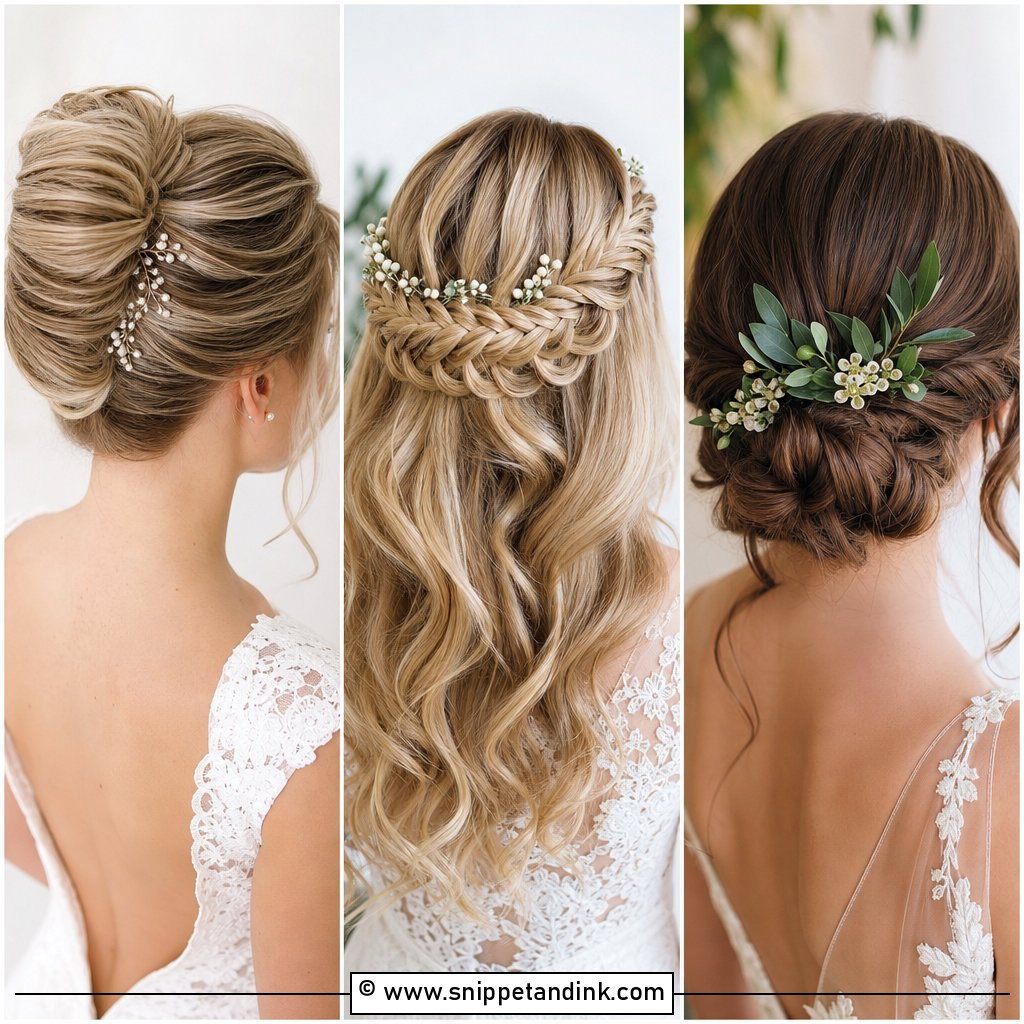
A smooth bun with fresh flowers is a softer option for a church ceremony, a garden wedding or an outdoor reception. I place the flowers along the side or crown, choosing sturdy blooms like orchids or spray roses, which last longer against warm skin than delicate petals. Ask your florist to wire the stems short so they slide into the bun without loosening it. White blooms are classic, coloured ones can match your theme, and a few crystal pins add sparkle between them.
11. Twisted Updo With Gold Accessories
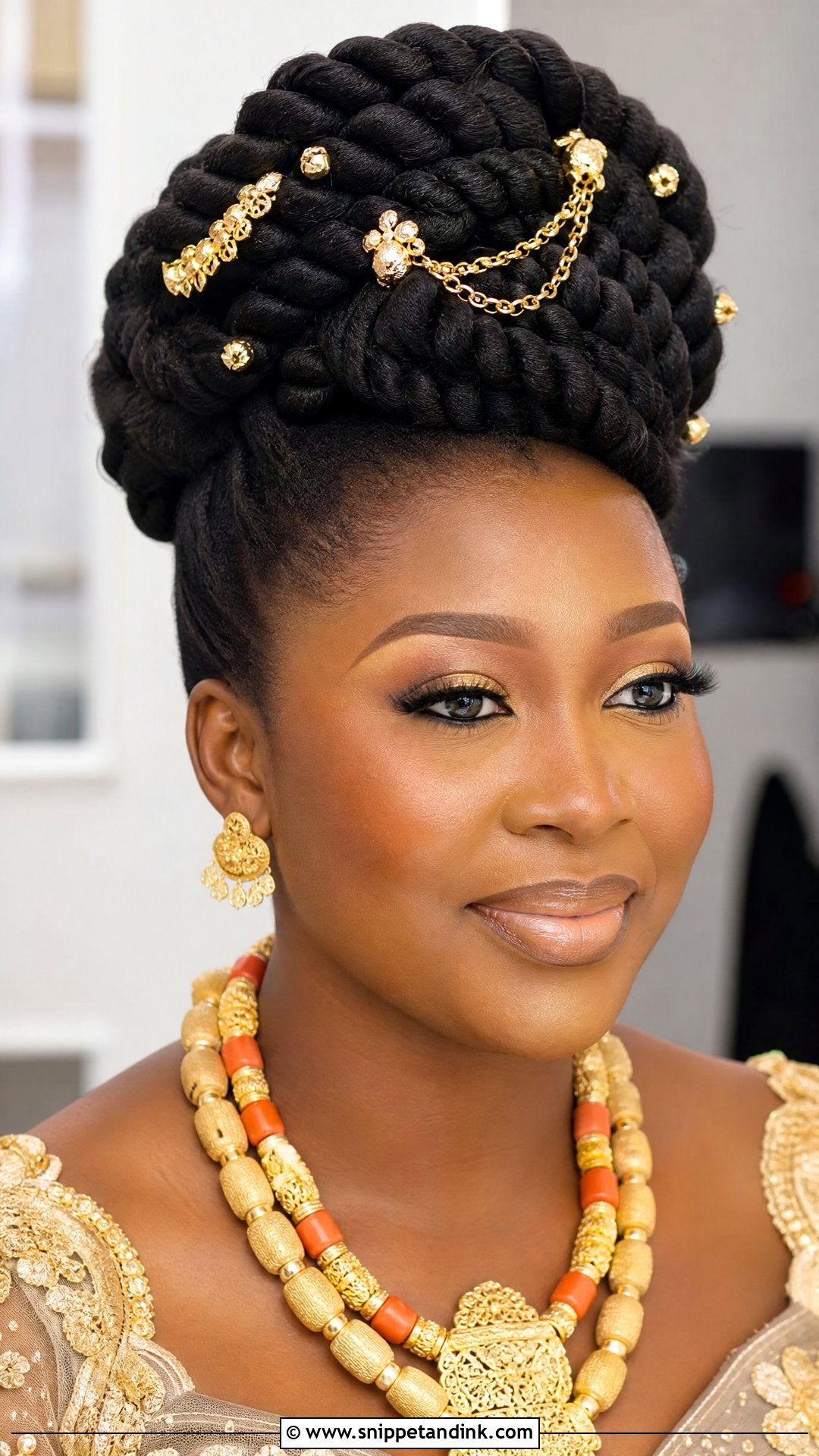
Twists are a softer alternative to braids, and they’re quicker to install. For a bridal updo, I gather chunky two-strand twists into a sculpted shape at the crown or nape, then decorate them with gold beads, cuffs or fine chains. Twists can unravel at the ends if the hair is very silky, so I seal the ends or tuck them into the shape. The rope texture looks rich with bold traditional outfits, and it protects your natural hair while you wear it.
12. Ghana Weaving Updo
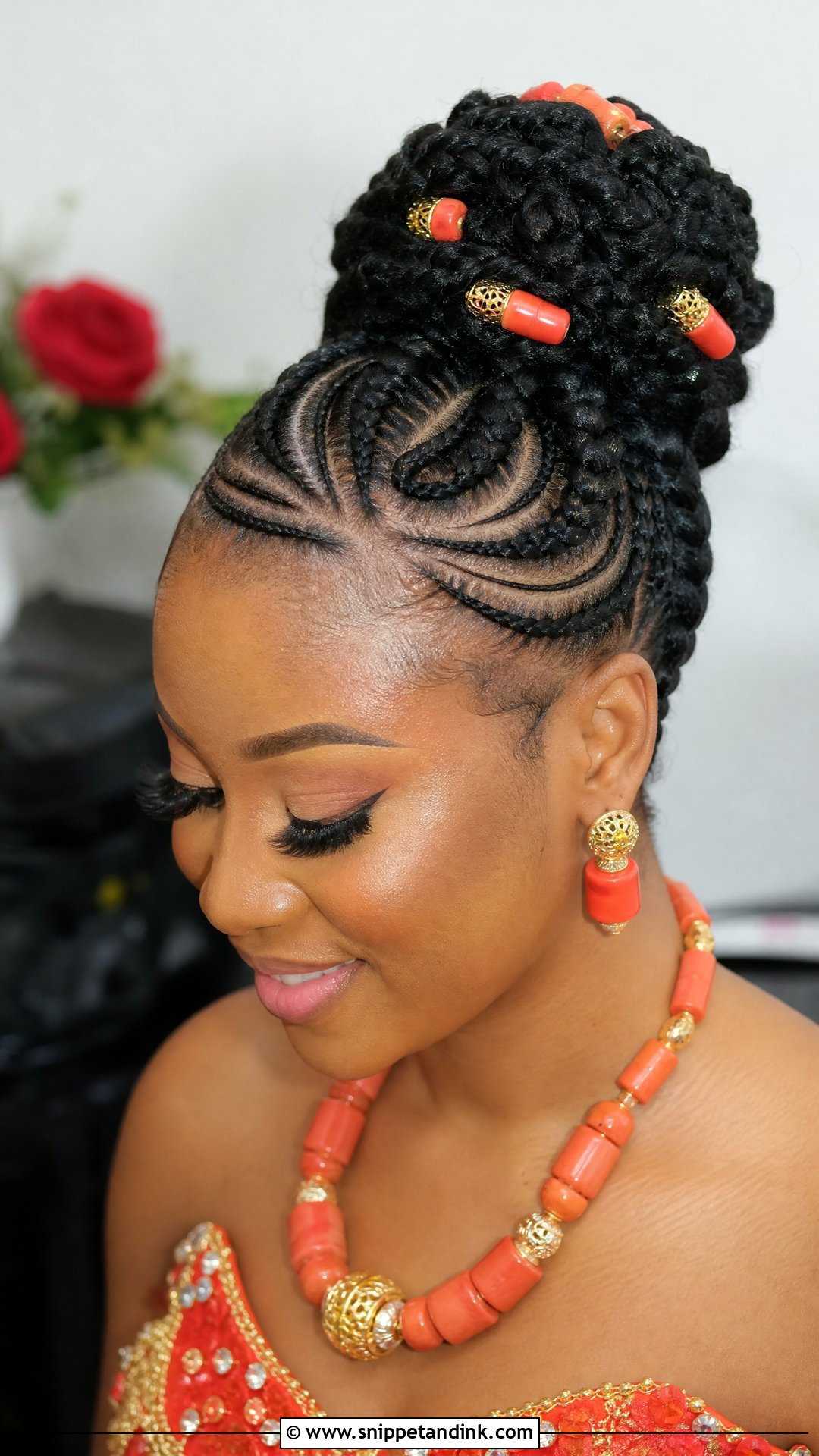
Ghana weaving uses feed-in cornrows that start thin and grow thicker as extra hair is added, which gives smooth, flowing lines across the scalp. For weddings I either sweep the braids into an updo or curve them into swirl patterns. Because the hair is fed in gradually, the tension at the hairline stays lower than with traditional extensions, which is gentler on the edges. Coral beads, gold cuffs or rhinestone clips dress it up. It holds neatly through hours of celebration.
13. Cornrow Bun With Coral Beads
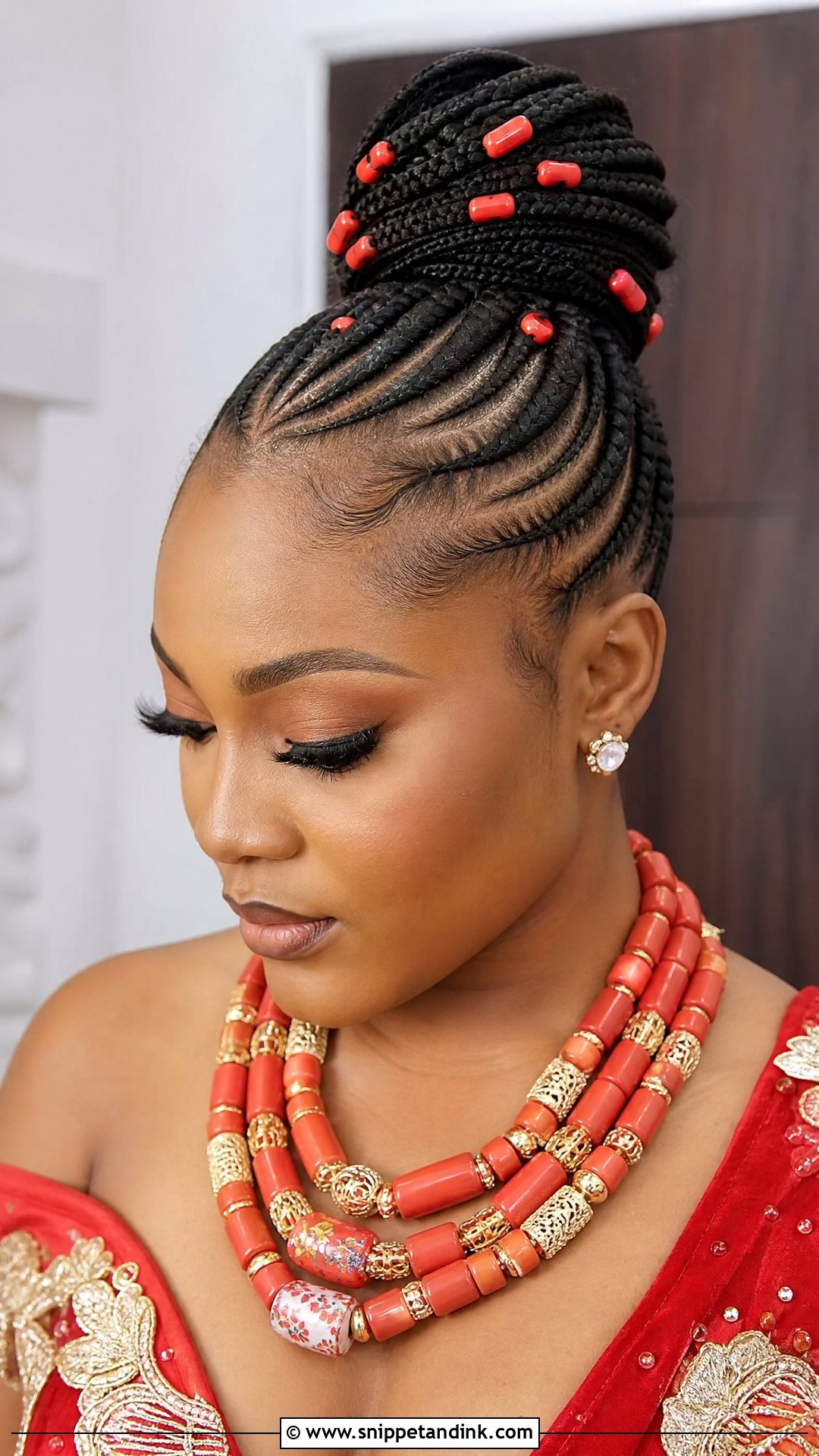
A cornrow bun with coral beads pairs neat cornrows with a high bun wrapped or dotted with red beads. It’s a regal choice for Igbo and Edo traditional weddings, where coral stands for royalty and wealth. The cornrows give a stable base, which helps carry the weight of the beads better than a smooth bun does. Your own hair or extensions can build the bun. Against a traditional outfit, the red stands out clearly, and the braids keep everything secure through dancing.
14. Sleek Low Bun for Brides
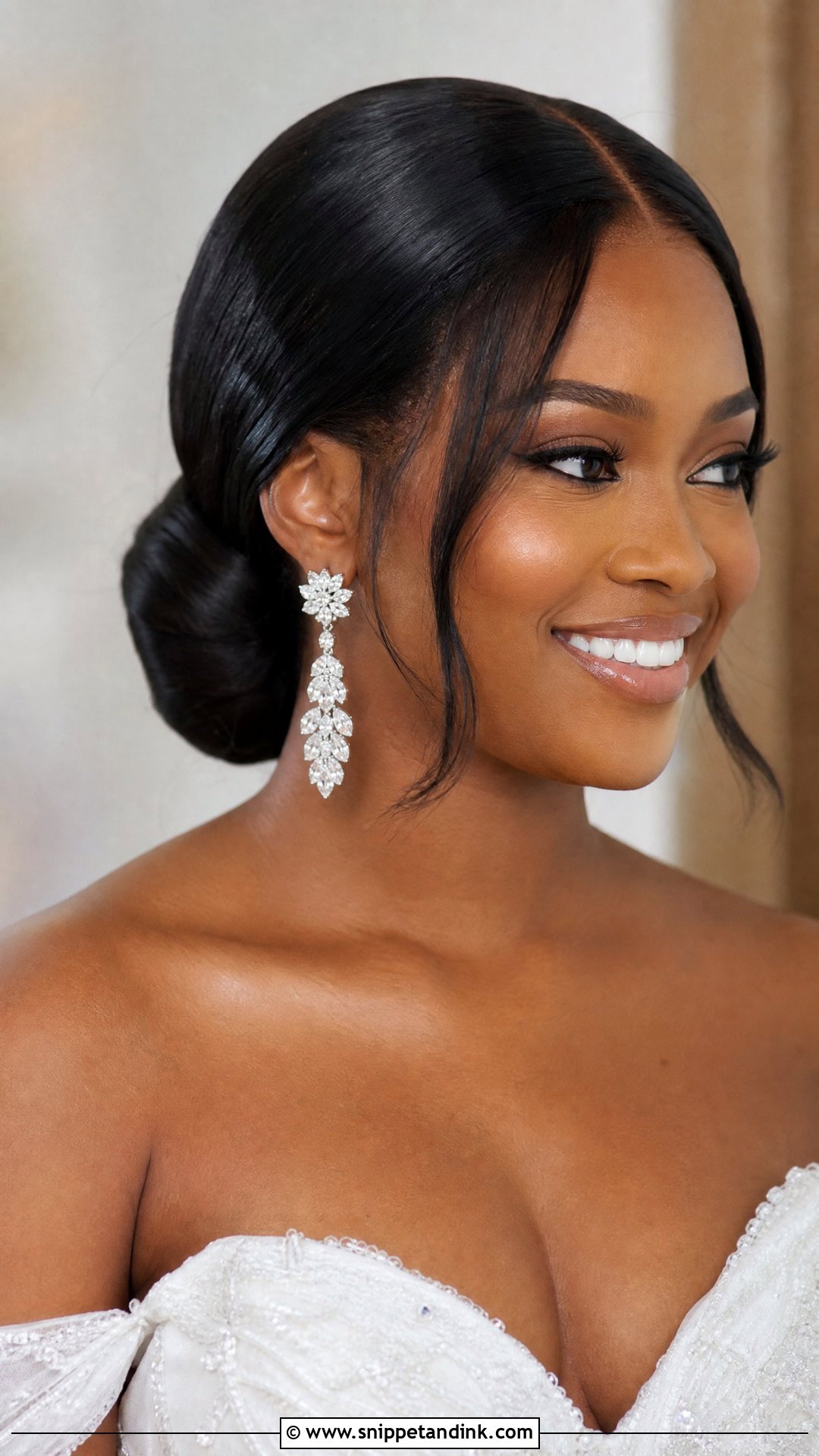
A sleek low bun is the quiet option, and it’s useful as the base under a gele. I smooth the hair back into a polished bun at the nape, using an edge control or gel for clean lines. A centre or side part and a few face-framing pieces soften it. Its simplicity lets your makeup, earrings and necklace take the lead. It suits a church wedding, a civil ceremony or a reception, and it’s the style I suggest when a bride wants a calm look between two heavier traditional ones.
15. Frontal Wig Curly Bridal Style
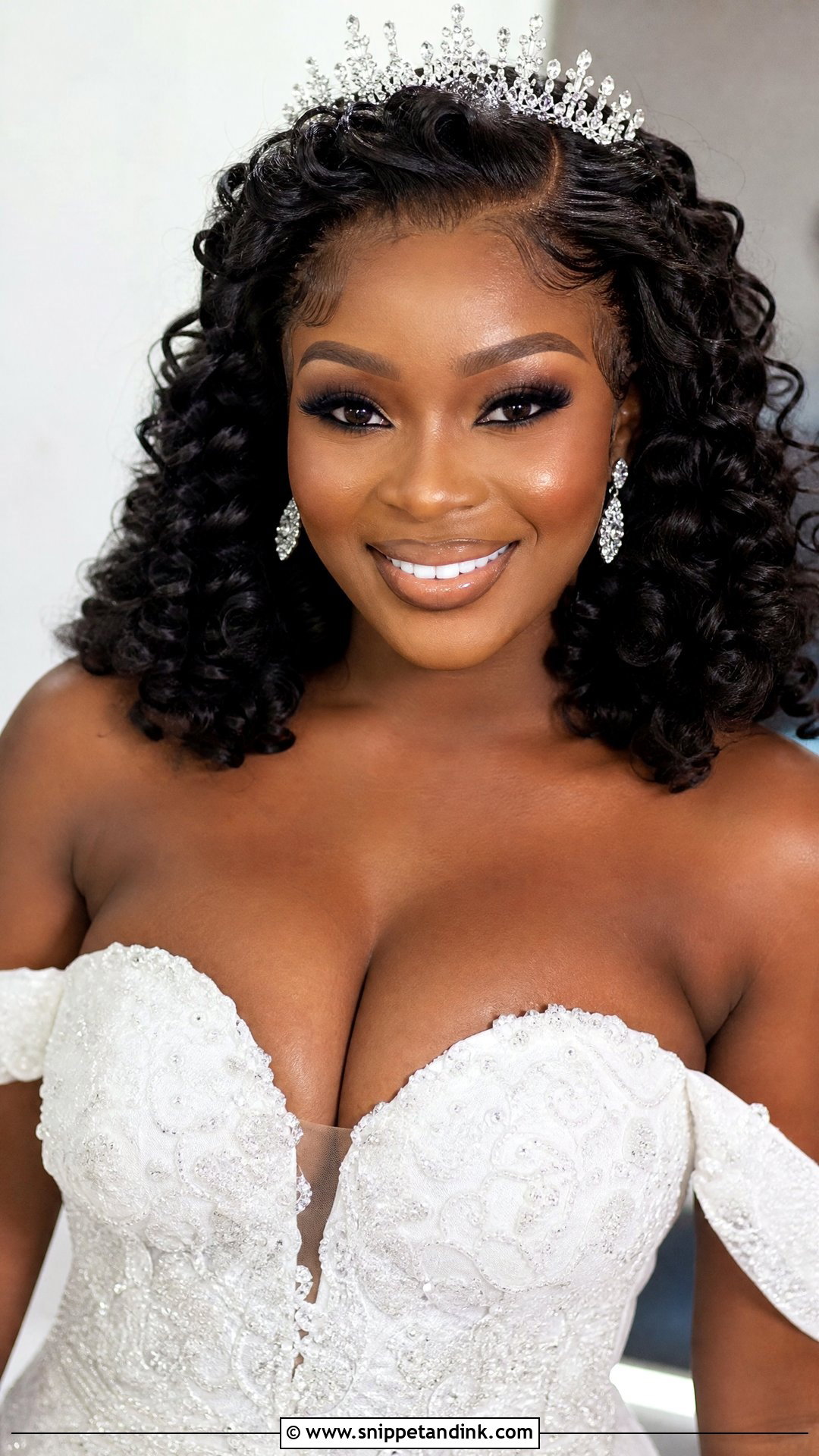
Frontal wigs give you volume and length without manipulating your natural hair, which is why so many brides choose them for the white wedding. The frontal lace is cut and blended along the hairline, and the quality of that blending is what makes it look natural up close. I always ask brides to do a patch test with any lace adhesive a few days ahead. The curls can be worn down, half up or in a full updo, finished with a tiara, flowers or pins.
16. Threaded Hair Bridal Style
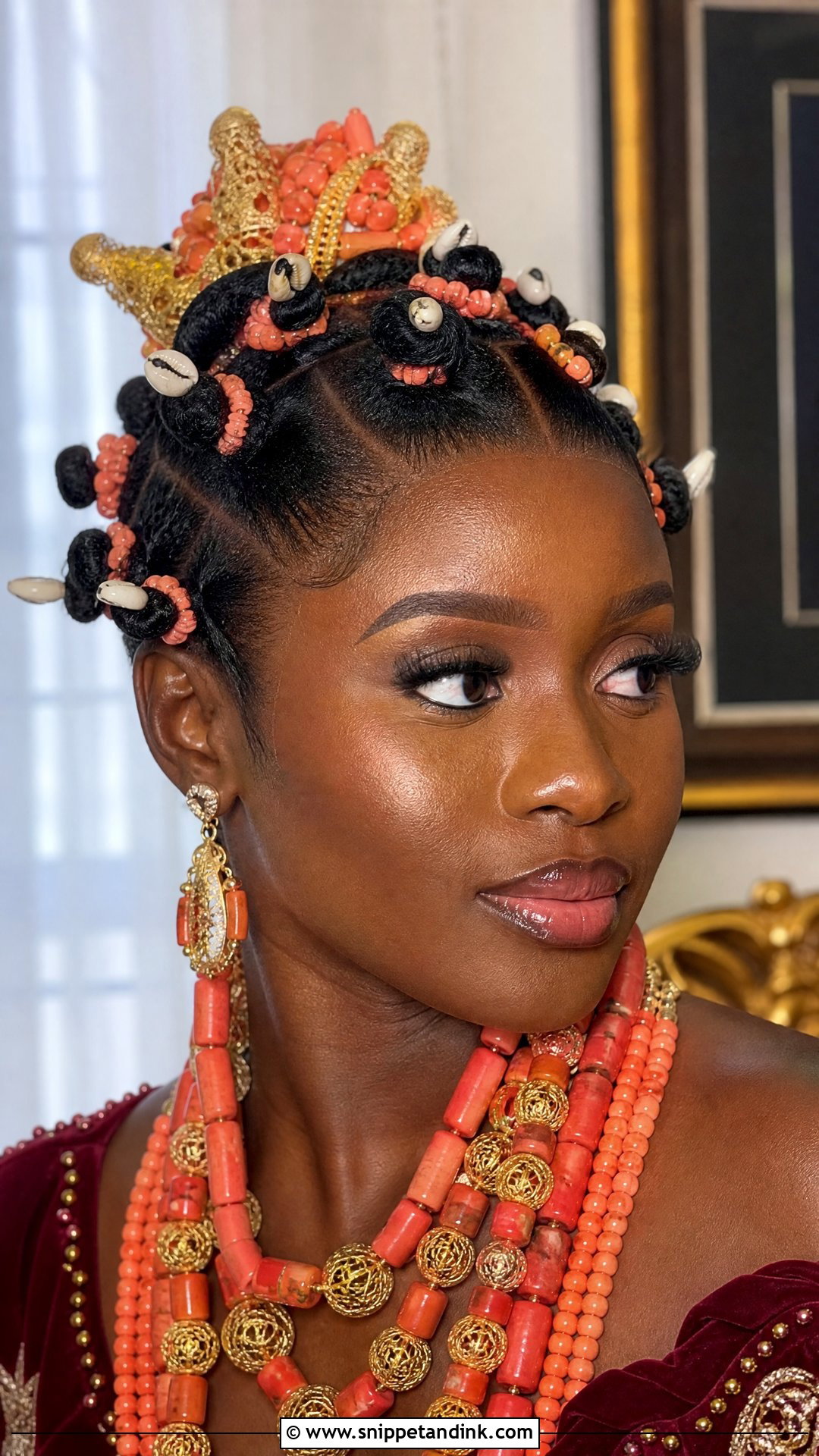
Irun kiko, or threaded hair, wraps sections of hair tightly with thread to build sculptural shapes that stand upright. It’s a traditional craft, and fewer stylists practise it today, so book someone experienced early. The threaded sections can be arranged in patterns or gathered into a crown-like design, then decorated with coral beads or cowrie shells. It works on natural hair and protects it well. Threading takes patience, and the result looks deeply rooted in heritage.
17. Halo Braid Crown
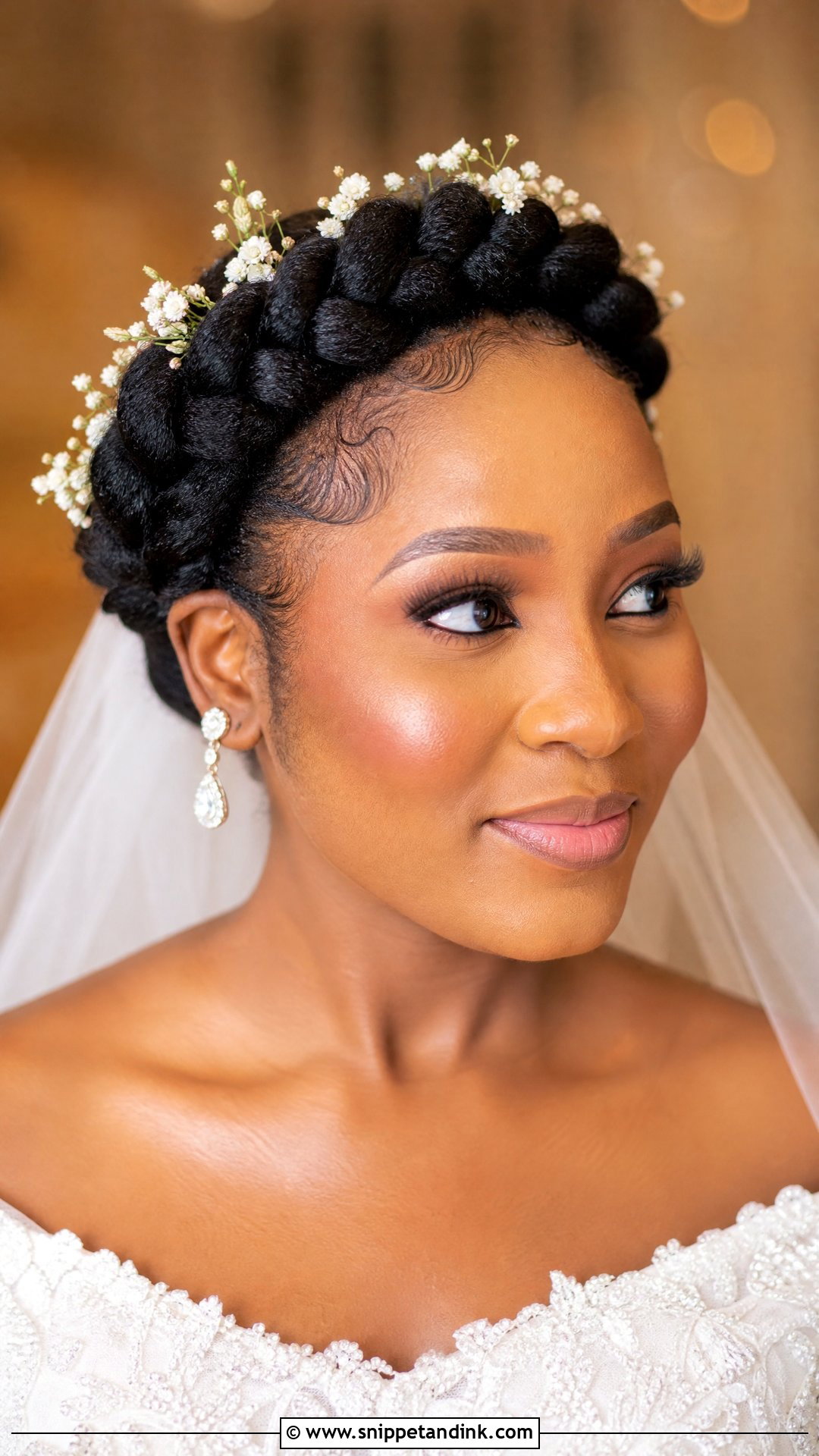
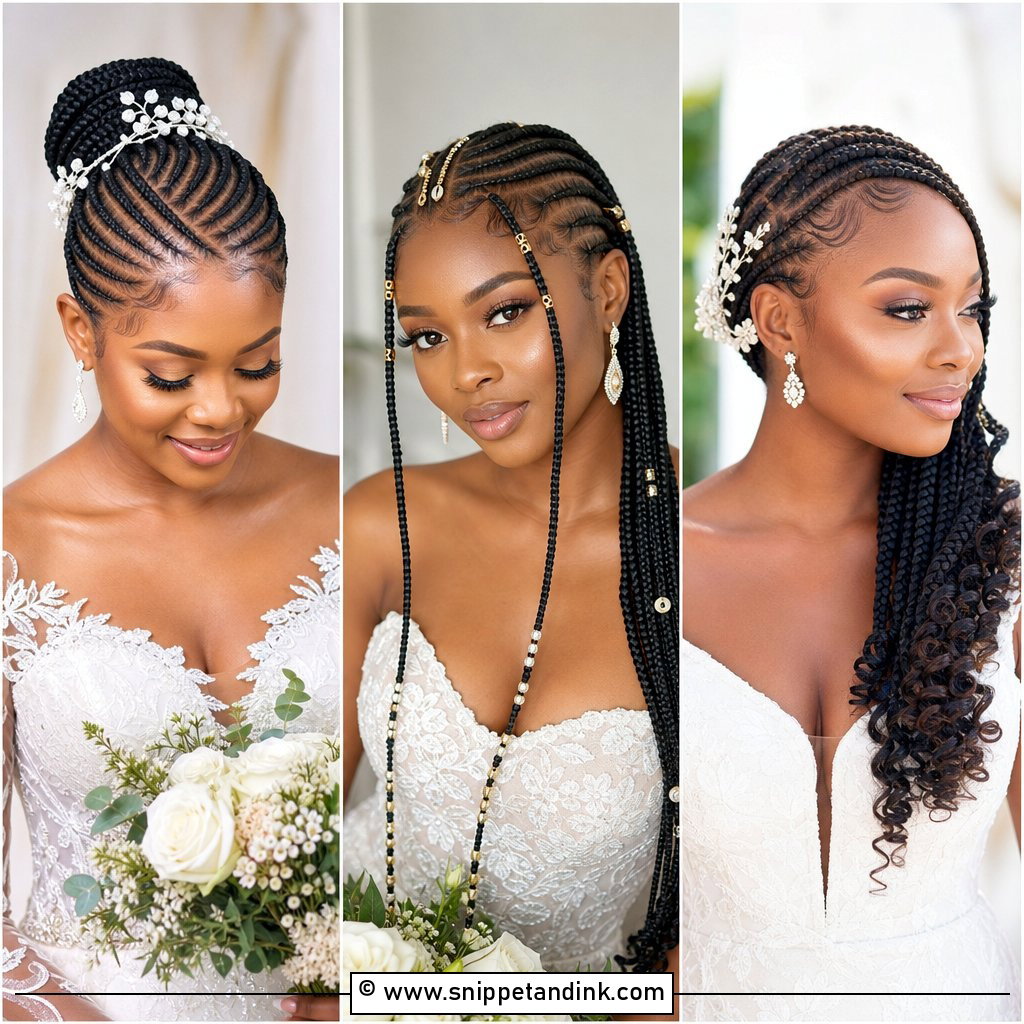
A halo braid is a single thick plait curved around the head like a crown. It frames the face and feels light compared with a heavy bun. On natural hair I usually braid with added hair for a fuller, even thickness all the way around. Pin the braid every few centimetres to keep it from sliding back. Gold pins, tiny flowers or laid baby hairs finish it. It suits church weddings and outdoor ceremonies, and it holds well from every angle.
18. Bridal Ponytail With Beads
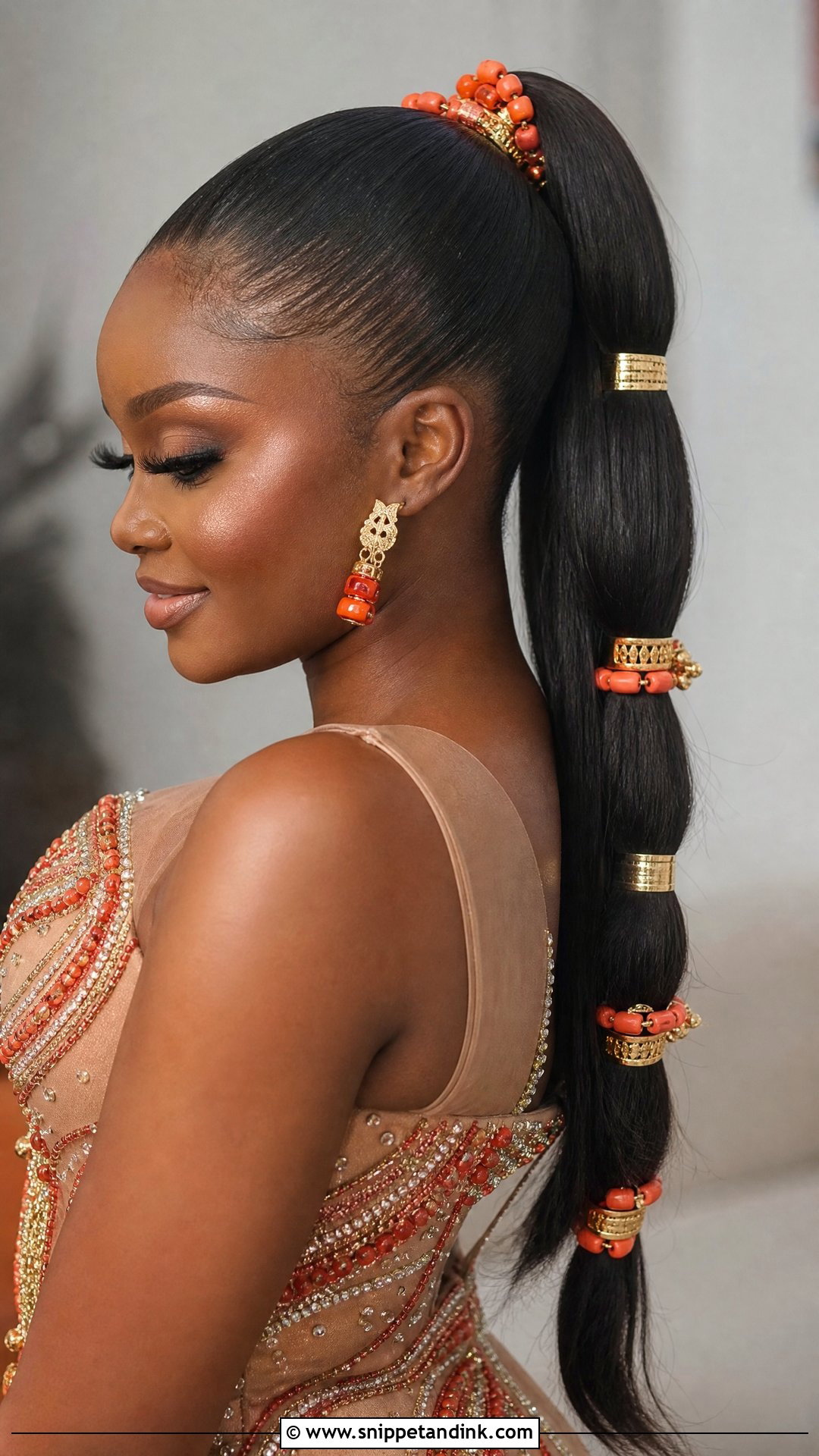
A bridal ponytail pulls the hair up into a high, polished shape that moves when you dance. Extensions add length and volume. I decorate the base or length with coral beads, gold cuffs or rhinestone wraps for a Nigerian touch. High ponytails pull at the hairline, so I keep the base slightly lower than a fashion ponytail if a bride will wear it for many hours. It suits receptions, civil weddings and modern celebrations, and pairs well with statement earrings.
19. Sleek Bob With Gele
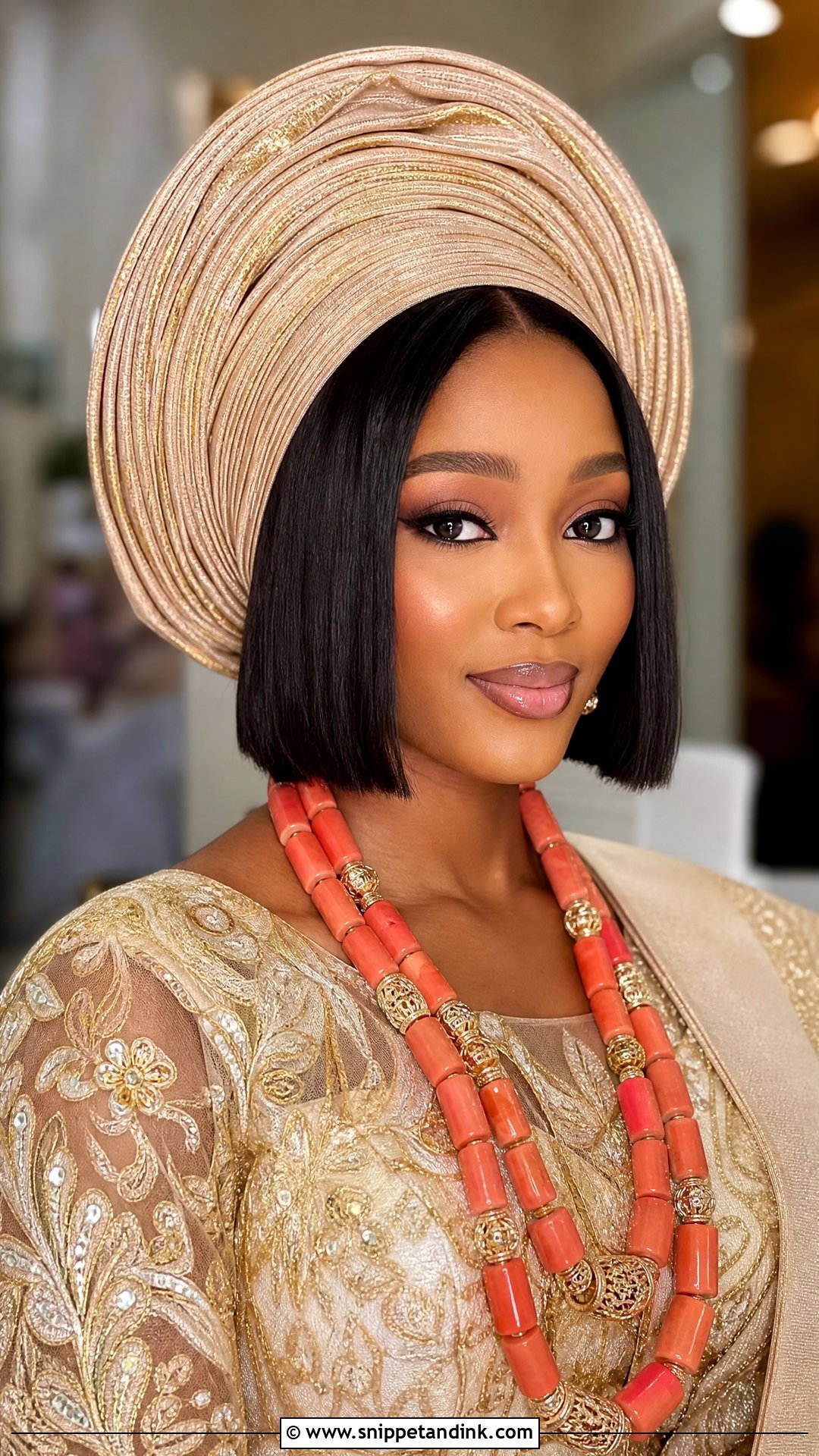
Short hair works well with a gele, because there’s less to tuck under it. I style the bob smooth and glossy with sharp lines, so the shape looks intentional when the gele comes off for the reception. Paired with an artfully tied gele, it feels modern and rooted in tradition at once. Bold earrings and a coral necklace complete it. Keep the bob slightly behind the ears where the gele sits, so the fabric lies flat.

20. Mermaid Waves Frontal Bridal Style
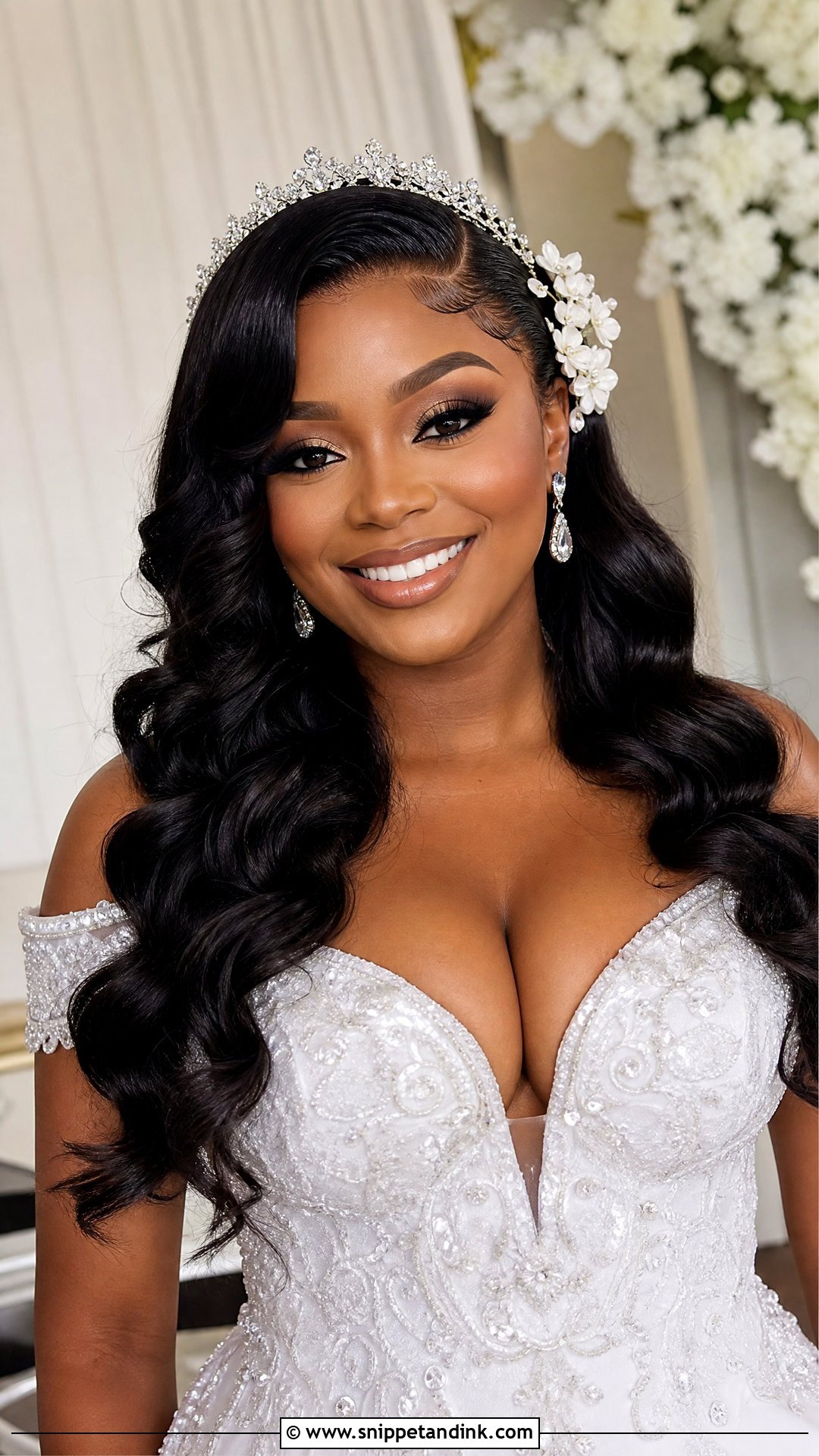
Mermaid waves are long, glossy curls that fall down the back and shoulders, usually achieved with a frontal wig for fullness. I set the waves with a large curling iron and brush them out gently, so they stay defined rather than frizzy. Long hair down can get hot during a reception, so I’d have a clip or a few pins ready to sweep it to one side later. A tiara, a delicate veil or fresh flowers along the side finish it, and the waves catch the light well at the reception or white wedding.
Protecting Your Edges Under Beads, Braids and Lace
Bridal hair in Nigerian weddings is often tight, heavy and worn for long hours across several days. The hairline is the first place it shows. These are the habits I ask brides to follow.
- Say something if a braid or a gele feels painful while it’s being done. Pain means too much tension, and it won’t ease on its own.
- Install braids or twists a few days before the event, so any tenderness settles before photos.
- Patch test lace glue and gel on a small area of skin about a week ahead. Reactions along the hairline are hard to hide.
- Sleep on a satin pillowcase or wrap your hair in a satin scarf between events.
- Take heavy beadwork and coral crowns off as soon as the ceremony is over if you’re not wearing them to the reception.
- After the wedding, give your edges a break before the next tight style.
A style that protects your hair will look just as regal as one that strains it, and you’ll still have healthy edges for your first anniversary.
Coral, Gele or Curls for Each Part of Your Wedding Weekend
A Nigerian wedding often gives you more than one hairstyle moment, and that’s a good thing. The okuku, the gele, intricate braids and soft waves each belong to a different part of the celebration. Think about each ceremony on its own: what you’ll wear, how long you’ll be on your feet, and whether the style has to sit under a gele or carry beads. Coral, gold and fresh flowers are easy ways to tie the looks together. Share your references with your stylist early, and ask her honestly which combinations can be changed quickly between events.
You'll Like These Ideas:


Leave a Reply