
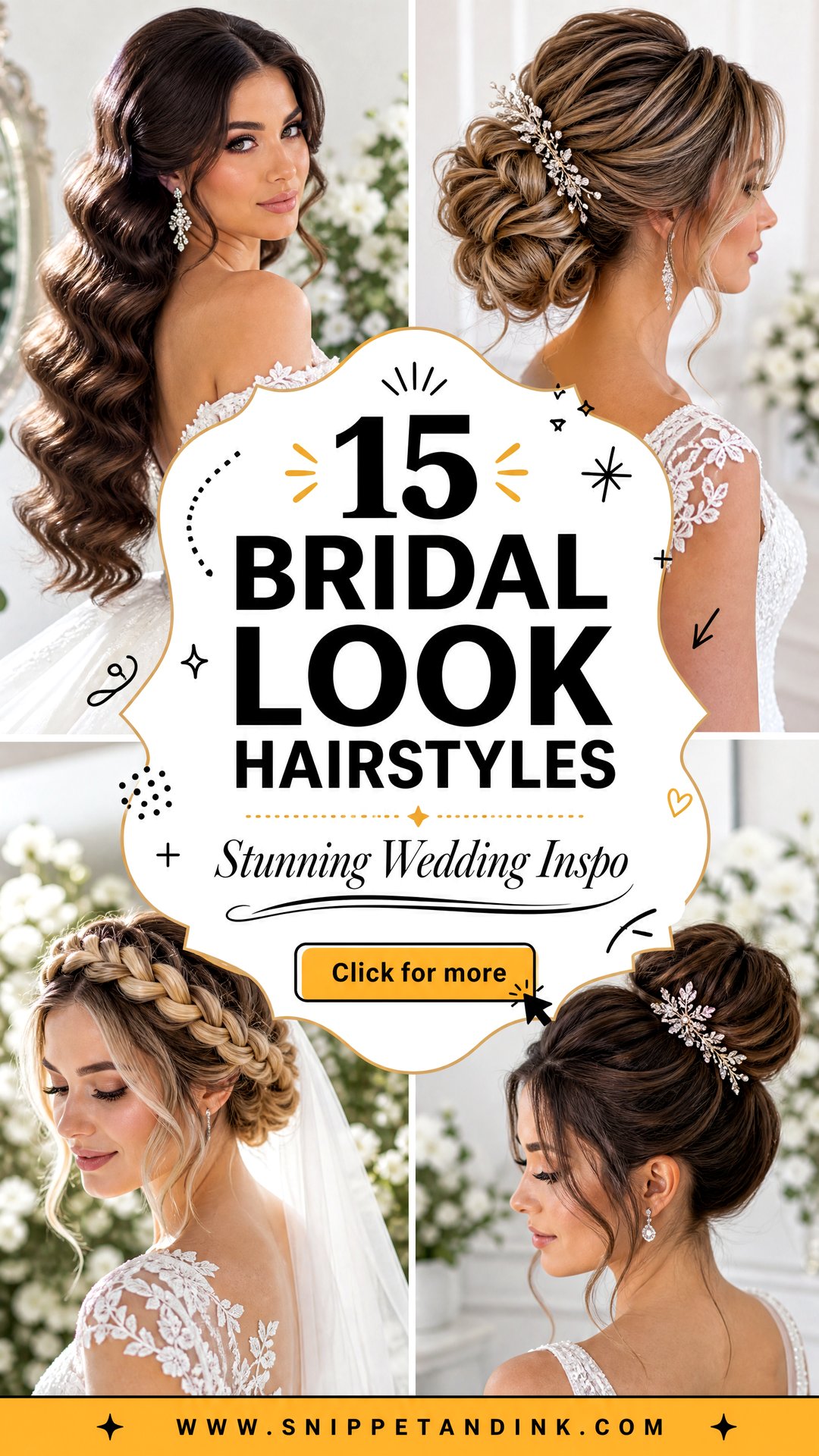
The bridal hair I’m asked for most these days has structure that still moves: low buns with a little give, glossy waves, half-up shapes, sleek ponies, braided crowns and natural curls that still feel elevated. Stiff, lacquered hair has mostly gone. Which of these suits you depends less on the photo than on your neckline, your veil, your hair’s own behaviour and how much you want around your face. I’ve grouped fifteen shapes below with notes on what each one needs from your hair, so you can walk into a trial knowing what to ask for.
Your Neckline Decides Where the Hair Goes
Before I look at anyone’s inspiration photos, I ask to see the dress, or at least a photo of the neckline and back. Hair either fills space the dress leaves open or gets out of the way of detail. Most mismatches I see come from choosing hair before the gown.
- Strapless and sweetheart: leaves the shoulders bare, so waves, half up or a soft low bun all balance it.
- High neck or halter: hair up, or at least off the neck, otherwise the collar and hair compete.
- Low or open back: a chignon or high bun keeps the back detail visible in the processional.
- One shoulder: side-swept hair on the bare side, so you aren’t covering the strap.
- V-neck: long waves frame the neckline nicely, and a sleek pony or bun lengthens it further.
The veil comes next. A heavy cathedral veil needs a solid bun or a firm half-up anchor, while a light fingertip veil can sit almost anywhere.
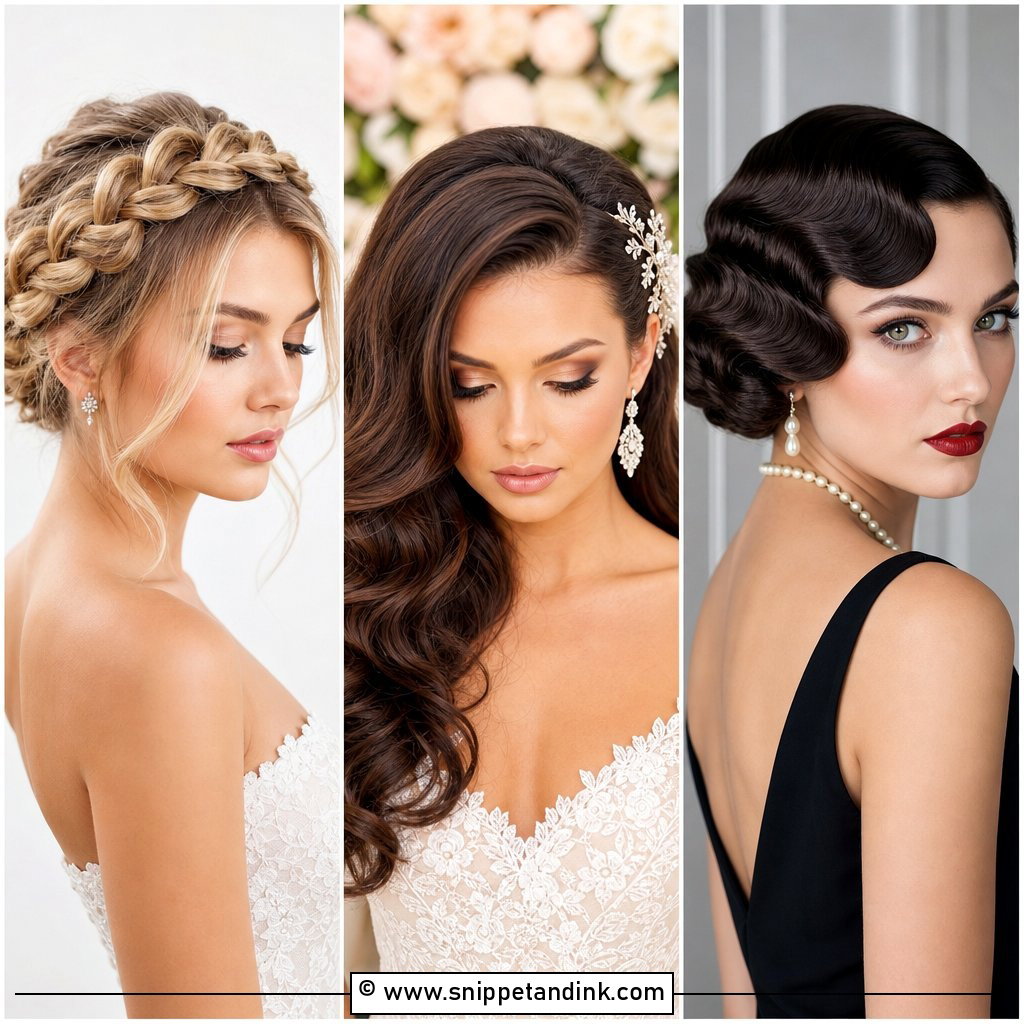
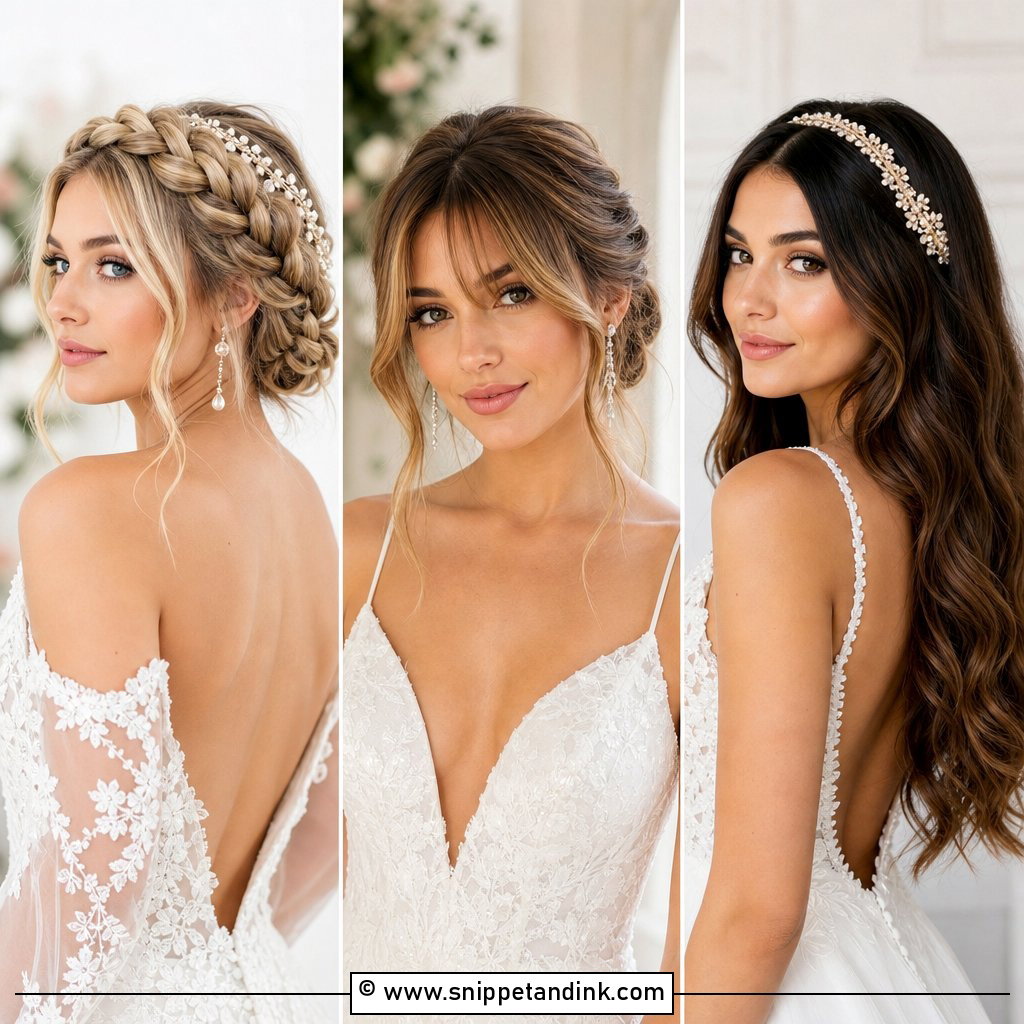
1. Bridal Low Bun
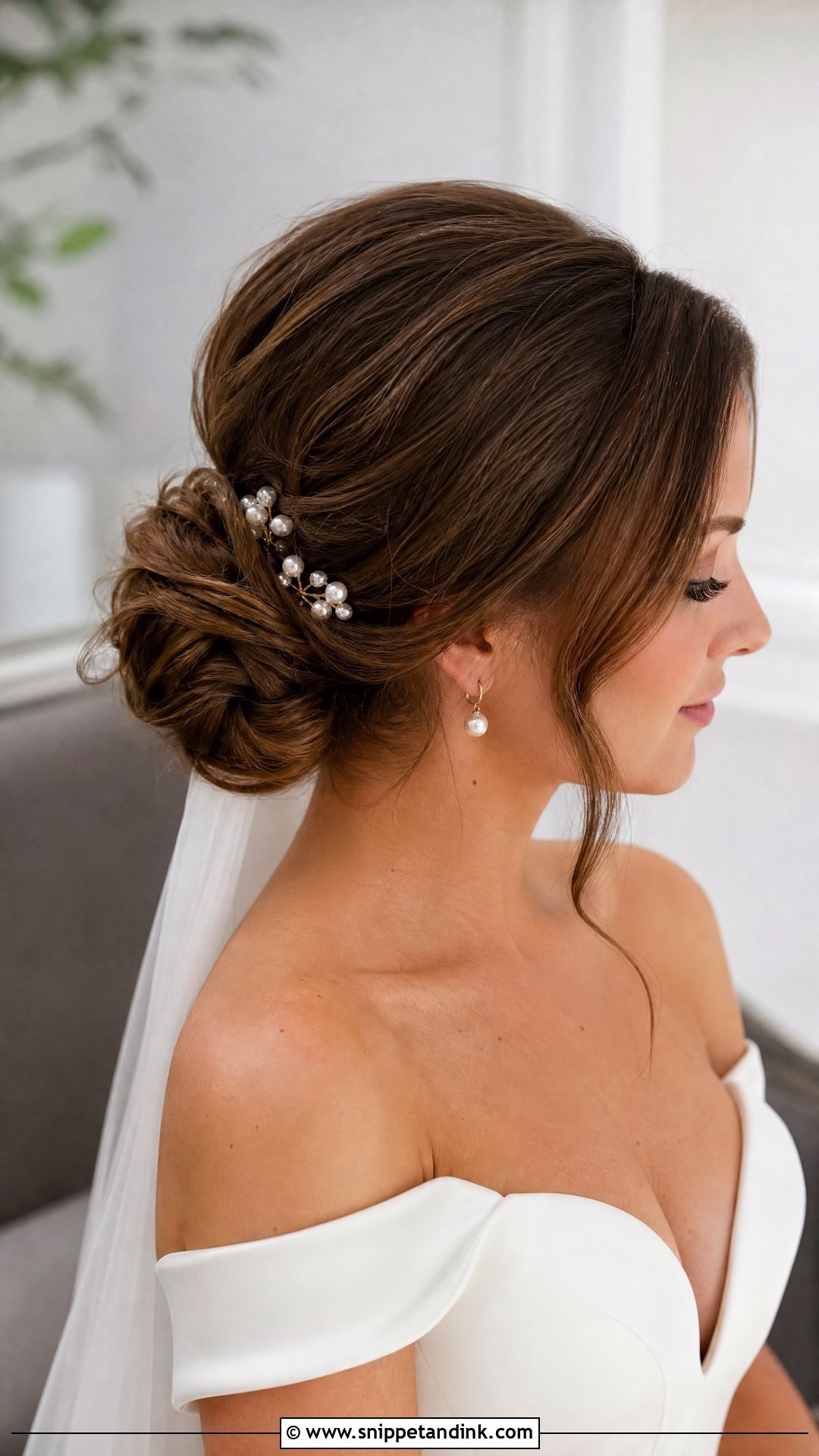
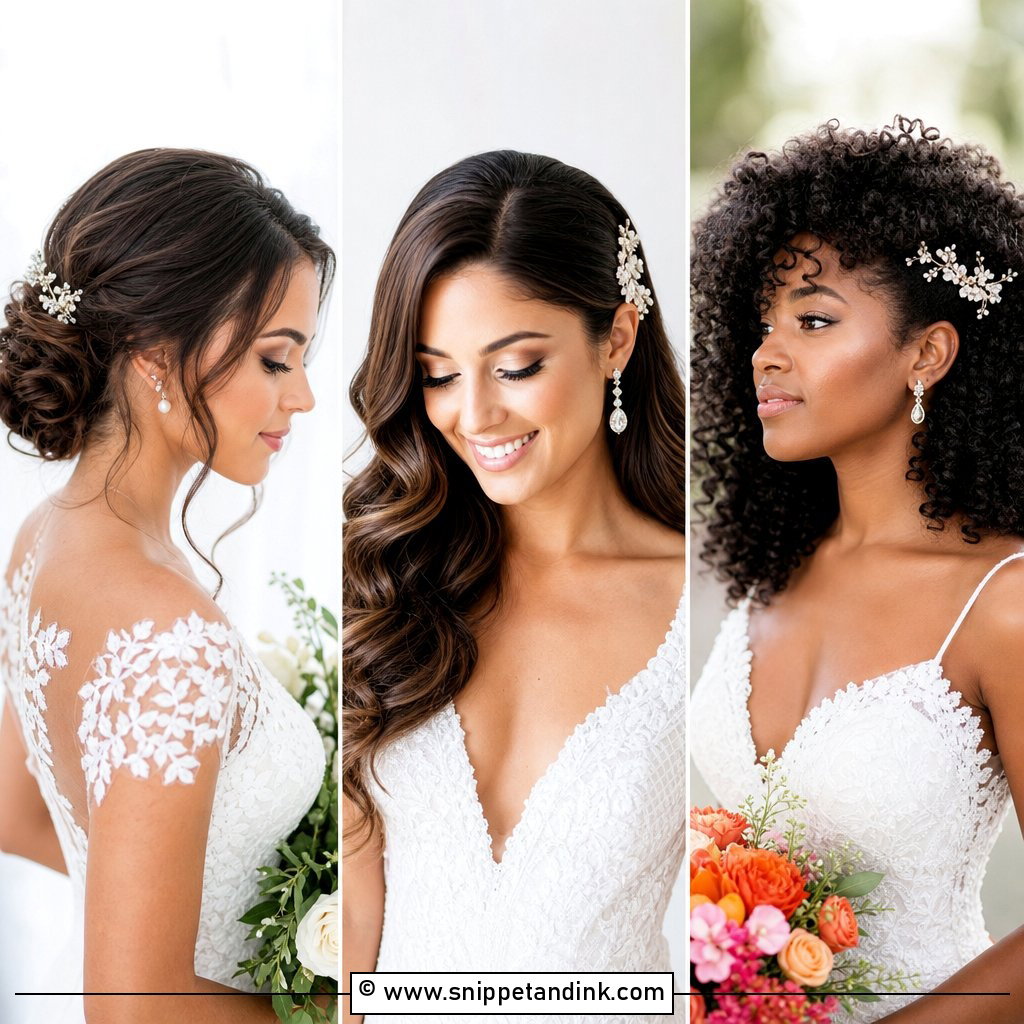
The nape is the most forgiving spot for a bun. It anchors a veil comb solidly, leaves the shoulders bare for strapless or square necklines, and it’s equally at home with high necks and satin. I build in a little lift at the crown for a softer look, or keep the top flat if the dress is very modern. If you want face-framing pieces, ask for them thin and pinned back slightly at the ear, so they move without sticking to your lip gloss.
2. Bridal Hollywood Waves
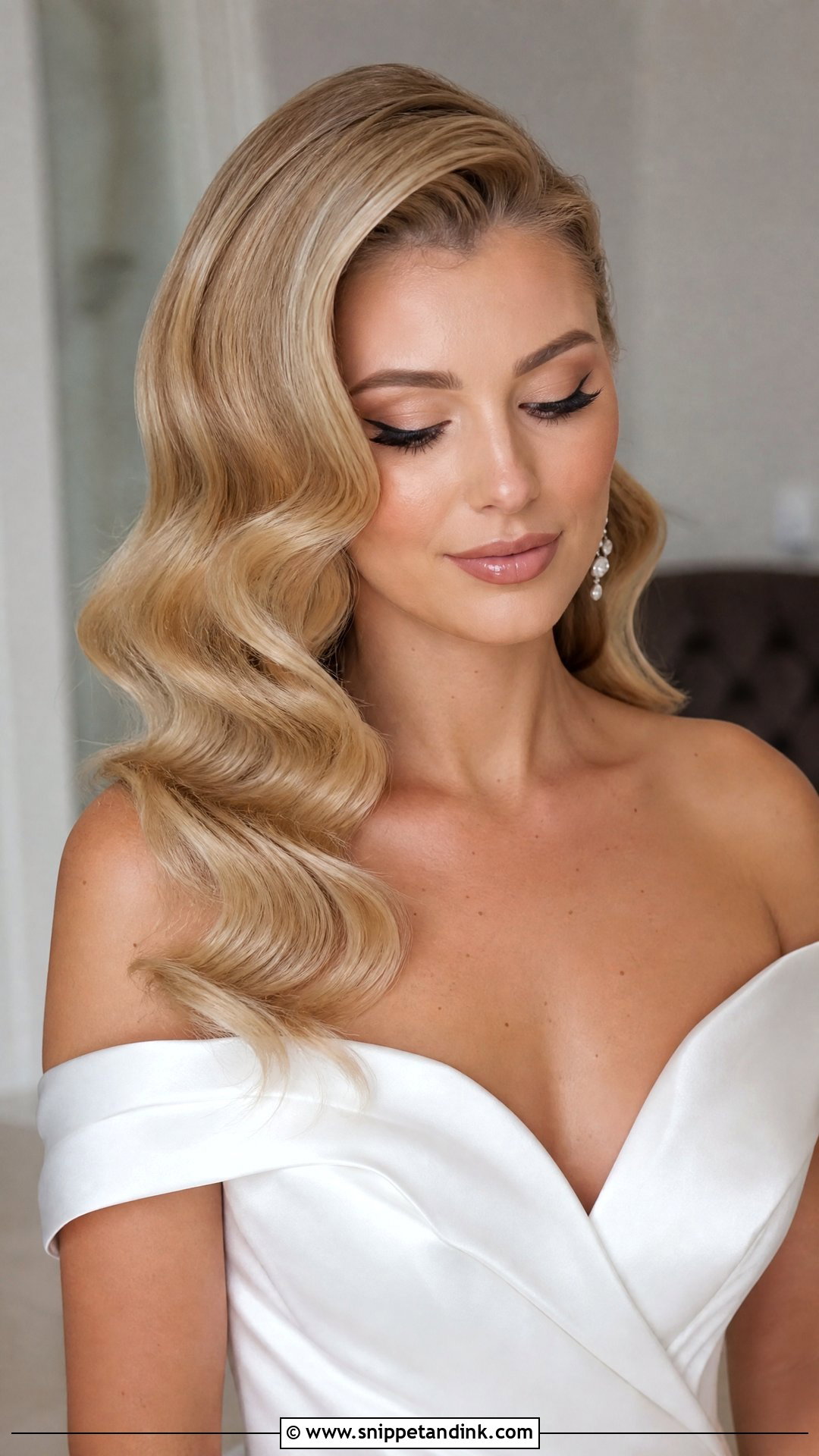
Hollywood waves are the formal way to wear hair down. Every wave is set in the same direction from a deep side part, then brushed into one continuous ripple. The brushing is the skill: curl too small and the waves turn into ringlets, too large and they fall flat by dinner. I set each curl pinned in place to cool before brushing, which is what lets it hold. Long and medium lengths take it best, with wefts for density, and it sits right with an off-the-shoulder neckline or a vintage-cut gown.
3. Bridal Half Up Half Down Hair
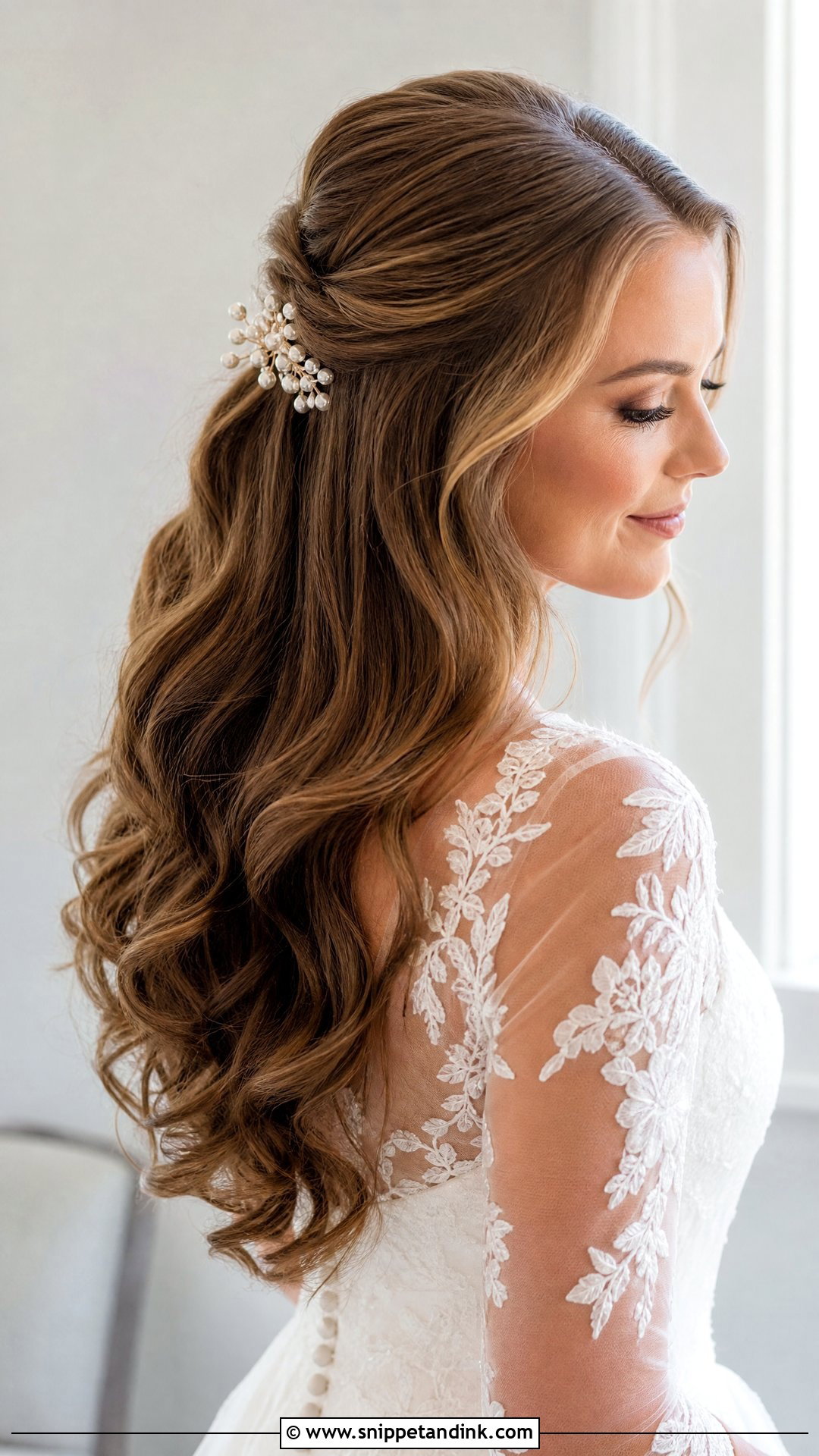
Half up gives you loose length plus a secured crown, so the top stays put and the ends move. Pulling back the front sections also gives the camera a clear view of your face during vows. My one warning: the half-up section carries all the hold, so on silky or fine hair I hide a small braid or a pair of crossed pins under it. Thick hair can be thinned out at the back so the down part doesn’t look heavier than the top. Veils, floral pins and pearl clips all sit well at that join.
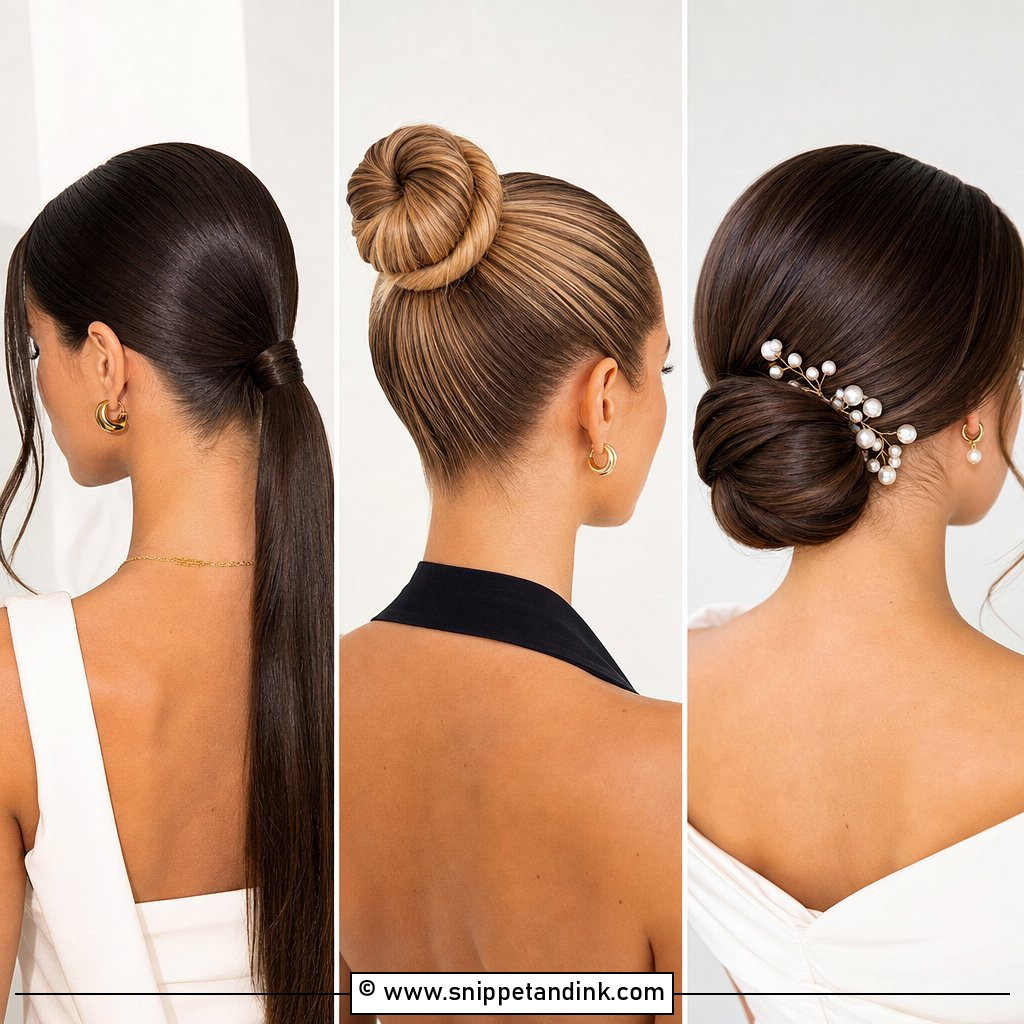
4. Bridal Sleek Bun
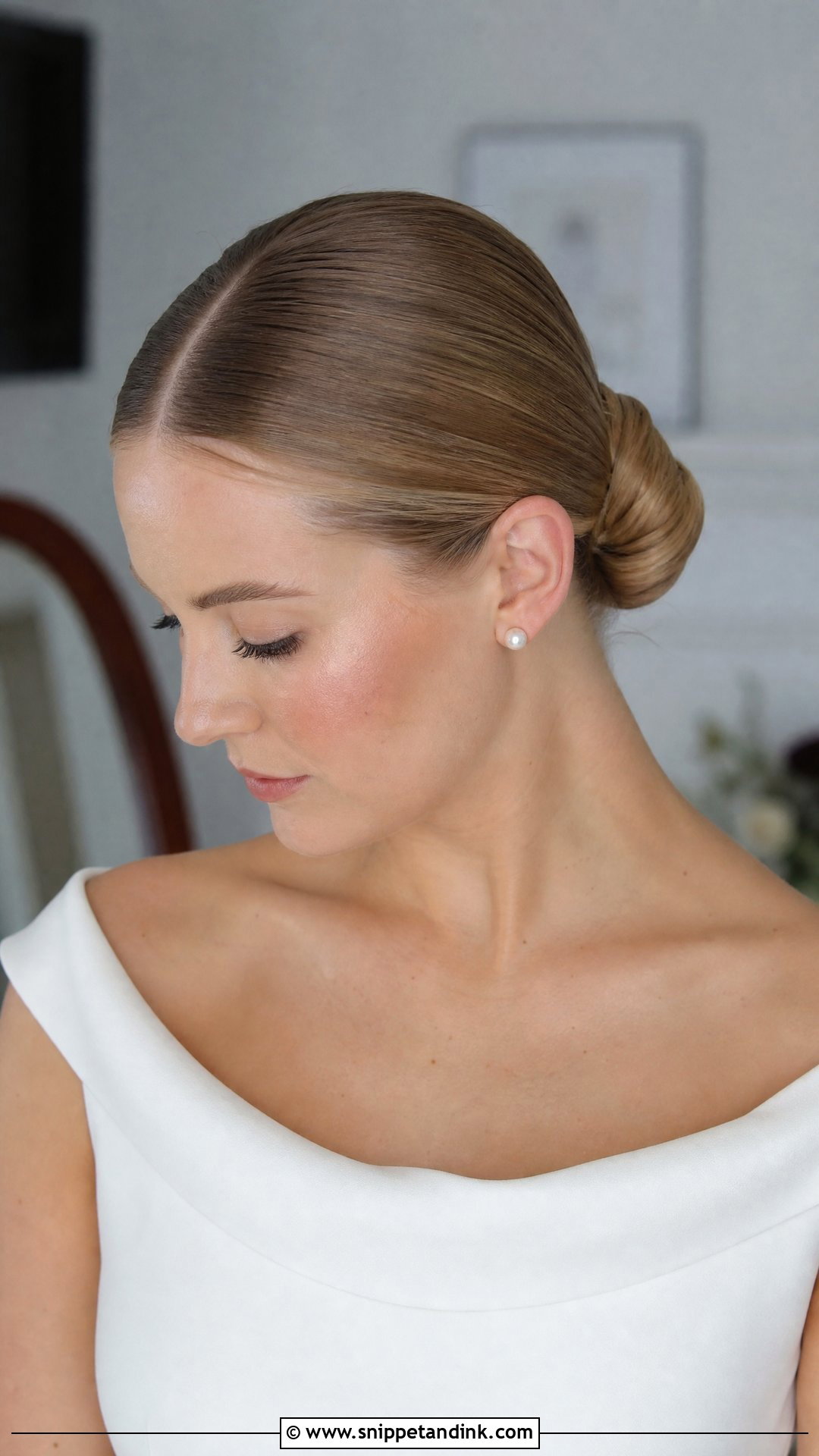
Hot weather and long ceremonies are where a sleek bun earns its place, because there’s nothing loose to wilt or frizz. It can sit low, mid-height or a little higher depending on face shape. A centre part reads minimal; a side part softens it. The trade-off is that it hides nothing: every bump at the crown shows, so I smooth with a fine-tooth comb and a firm gel, then set it with spray while it’s still tacky. Crepe gowns and structured dresses suit it best.
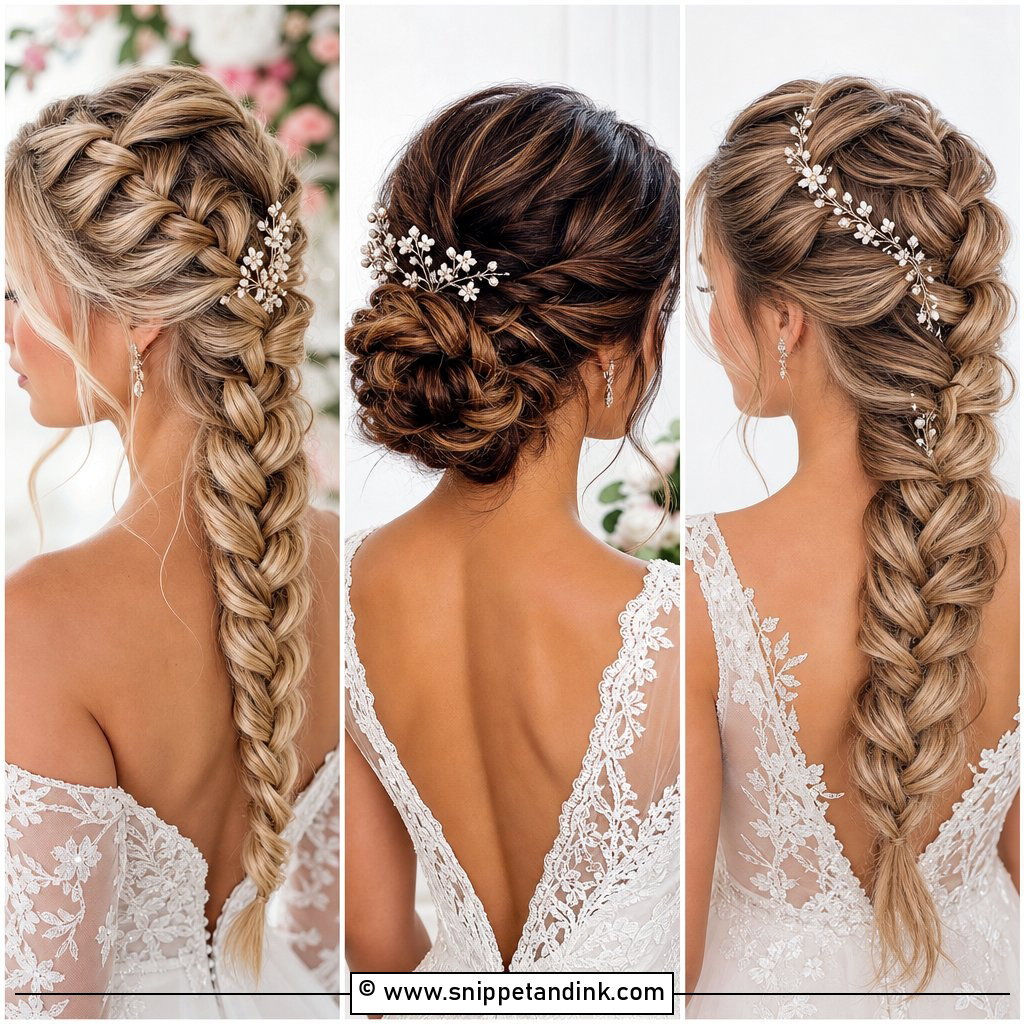
5. Bridal Textured Updo
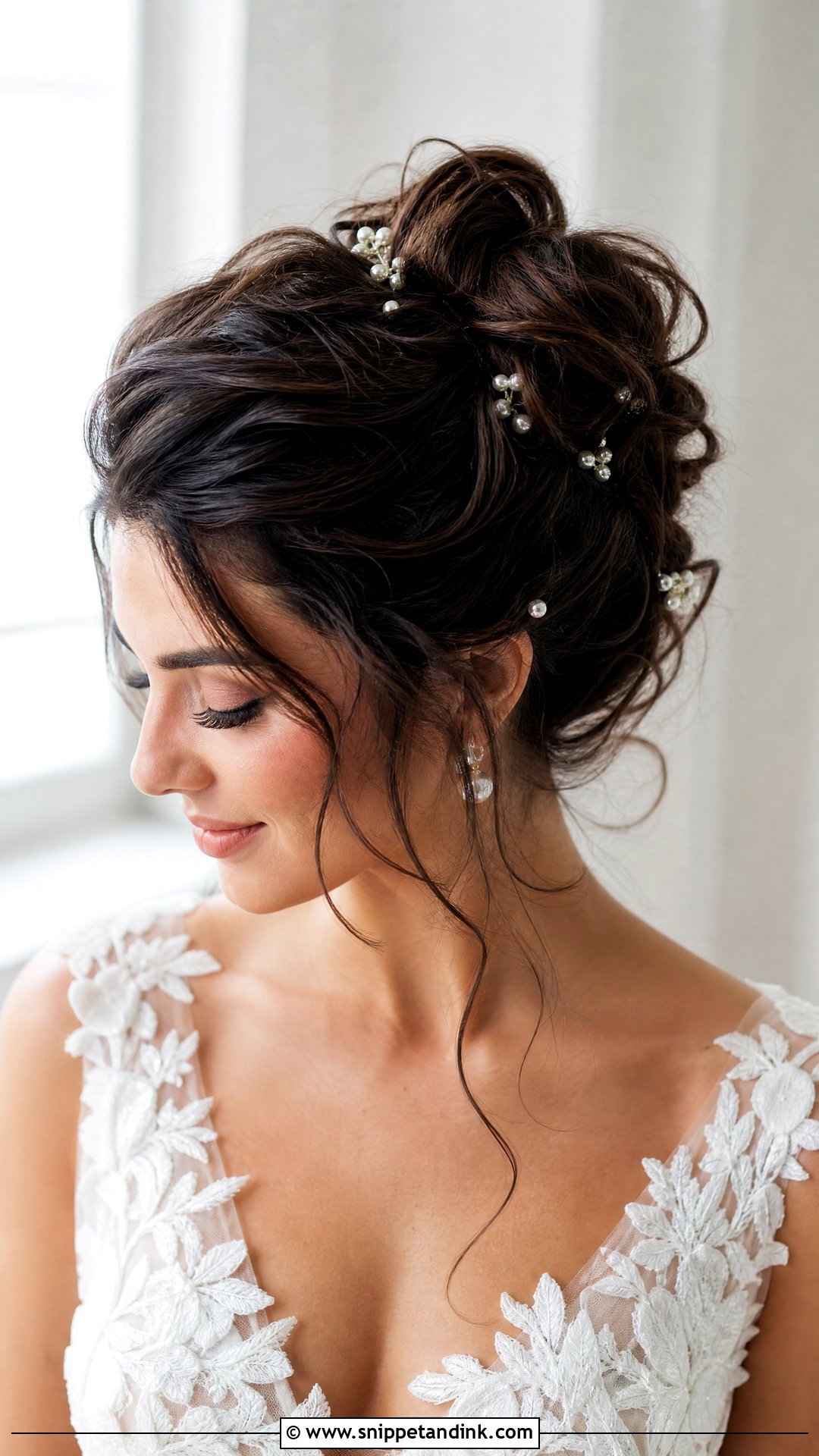
Twisted, pinned sections with movement left through the crown and sides make the hair look relaxed, though building it takes more pins than a sleek bun. It works best on medium to long hair that holds a curl, since I curl everything first to give the twists grip. Very silky, straight hair can slip out of it, and in that case dry shampoo or texture spray before styling makes all the difference. Lace and tulle suit it, as do small pearl pins or a delicate vine.
6. Bridal Loose Waves
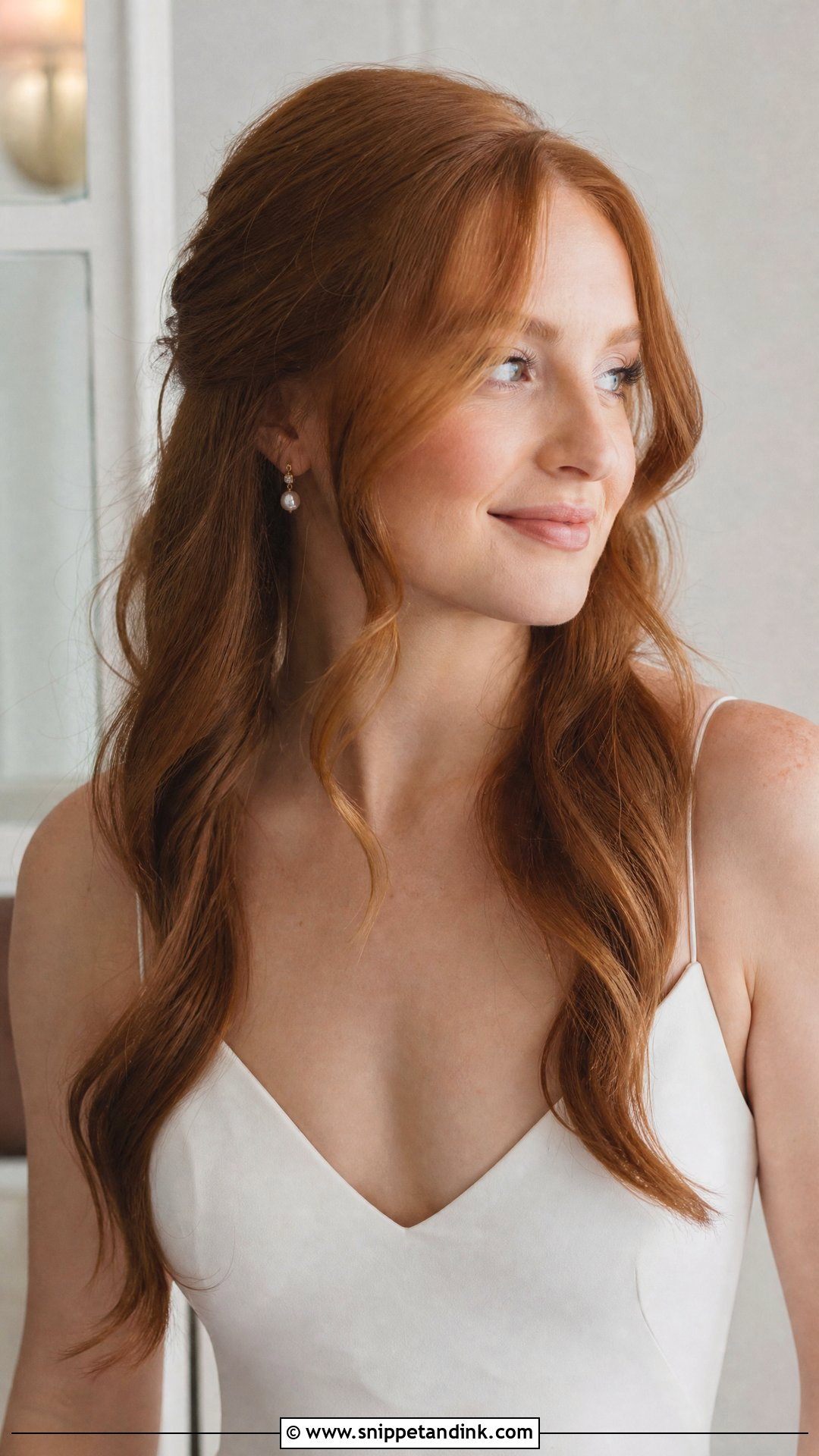
Looser and less uniform than Hollywood waves, these still need more hold than your everyday curls. Hair that’s been curled with no setting product often hangs straight by the reception, so I prep with mousse or a setting lotion at the roots and let each curl cool fully. The look pairs naturally with long layers, curtain bangs and a few face-framing pieces. Beach, vineyard and backyard weddings suit it. If your hair refuses to hold a curl at all, tell your stylist at the trial rather than hoping for the best.
7. Bridal Chignon
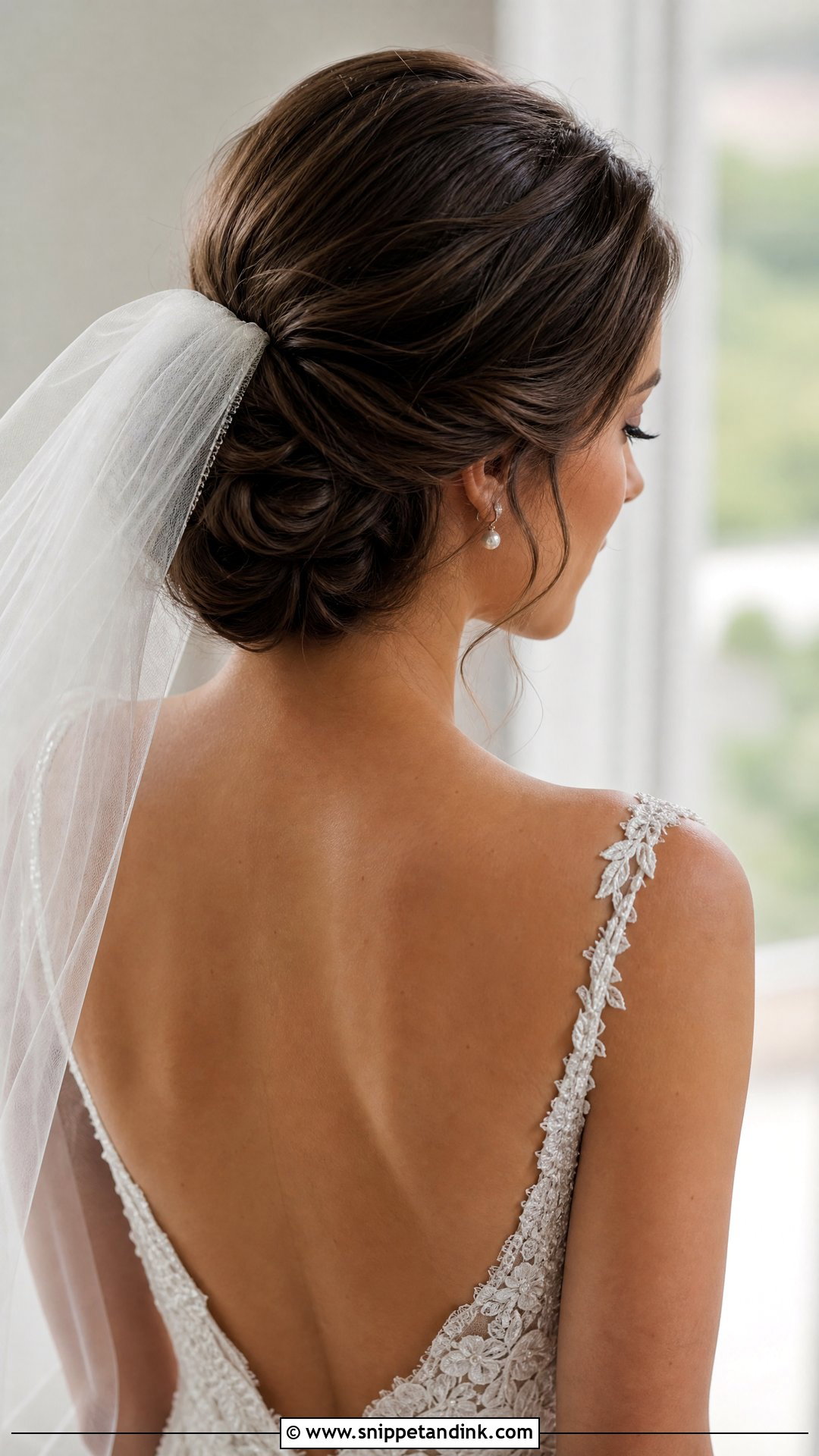
A chignon sits low at the back of the head, and it can be smooth, twisted, braided or just tucked. It’s the shape I suggest for backless gowns because it keeps hair clear of the back detail. Combs and veils sit securely just above it. I keep some width at the ears and a little volume at the crown, otherwise it can look severe from the front, especially on a narrow face.
8. Bridal Ponytail
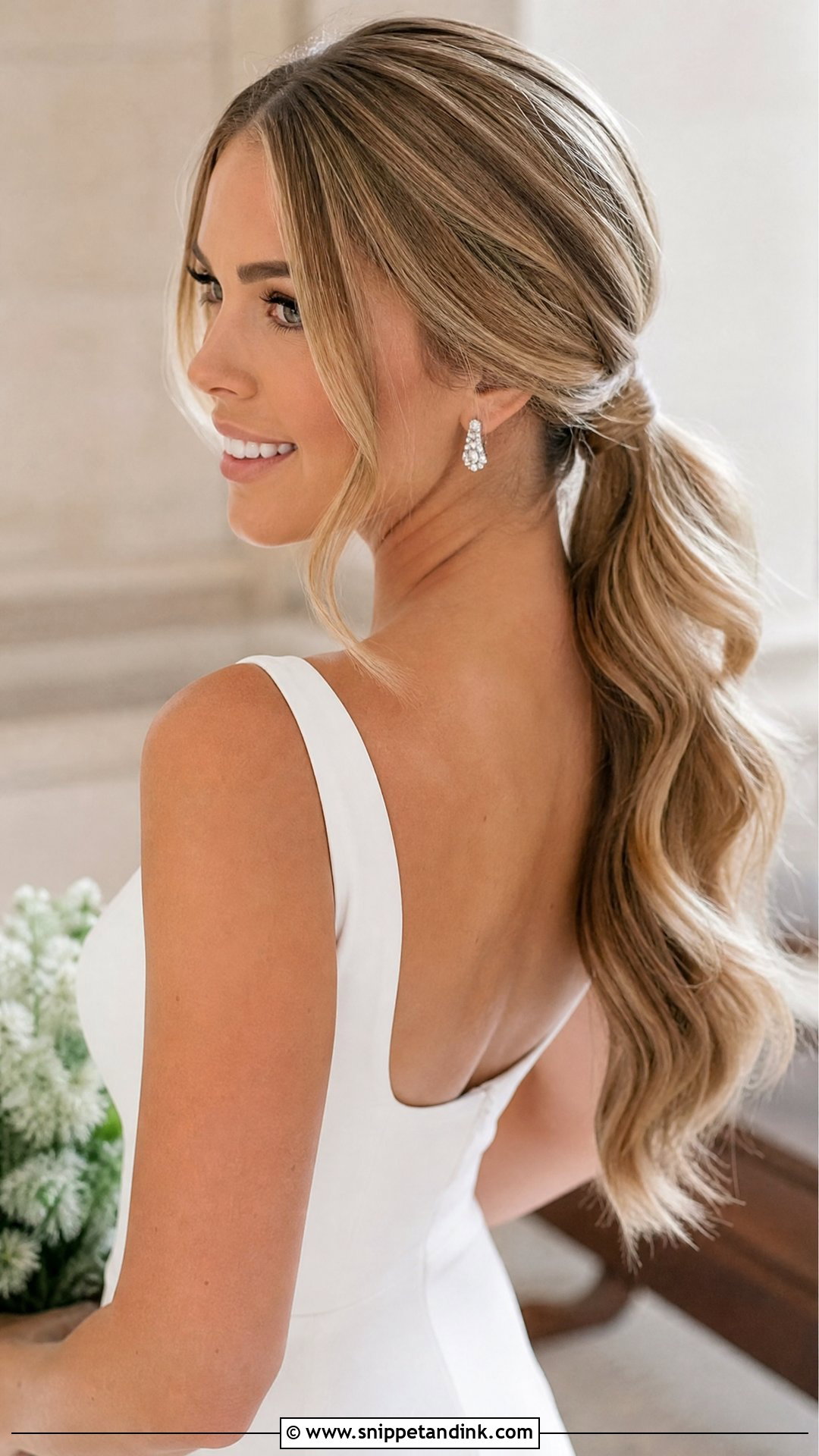
Height, length and how full it is are up to you: sleek and high, low and soft, or waved through the tail. Ponytails move freely on the dance floor while the hair stays controlled. A strand wrapped around the base hides the elastic and makes it look finished. My usual veil placement is just below the base rather than above it, which keeps the height visible and stops the comb sliding down a smooth crown.
9. Bridal Braided Crown
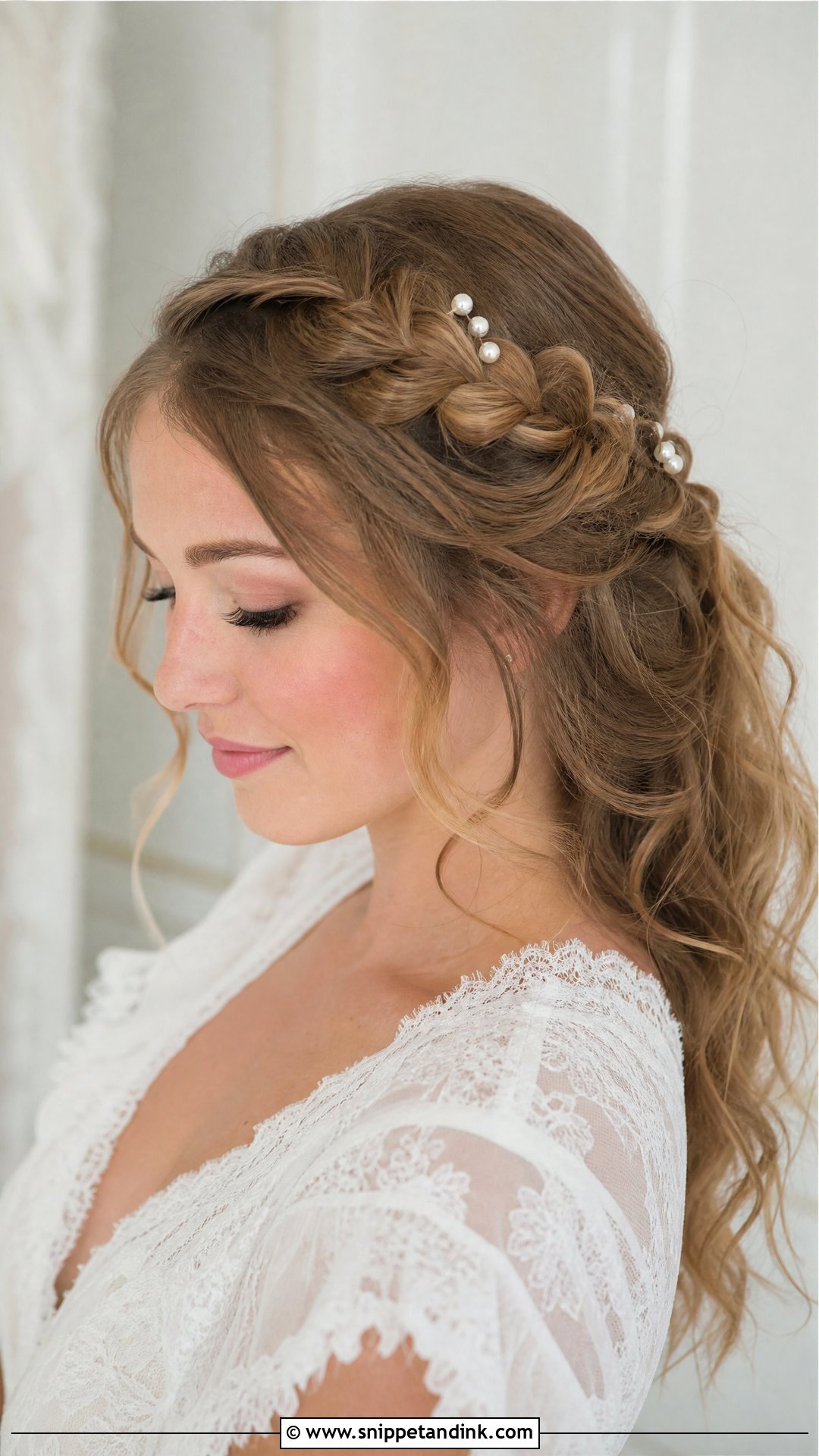
A braid circling the head, or blending into a low bun or waves, frames the face and holds through wind well. Highlighted and dimensional colour shows up especially nicely, because braiding brings different tones to the surface. I loosen each loop slightly after it’s pinned so it looks plump rather than tight. Shoulder length is about the minimum for a full crown; shorter hair can do a half crown that finishes at the back.
10. Bridal Side Swept Curls
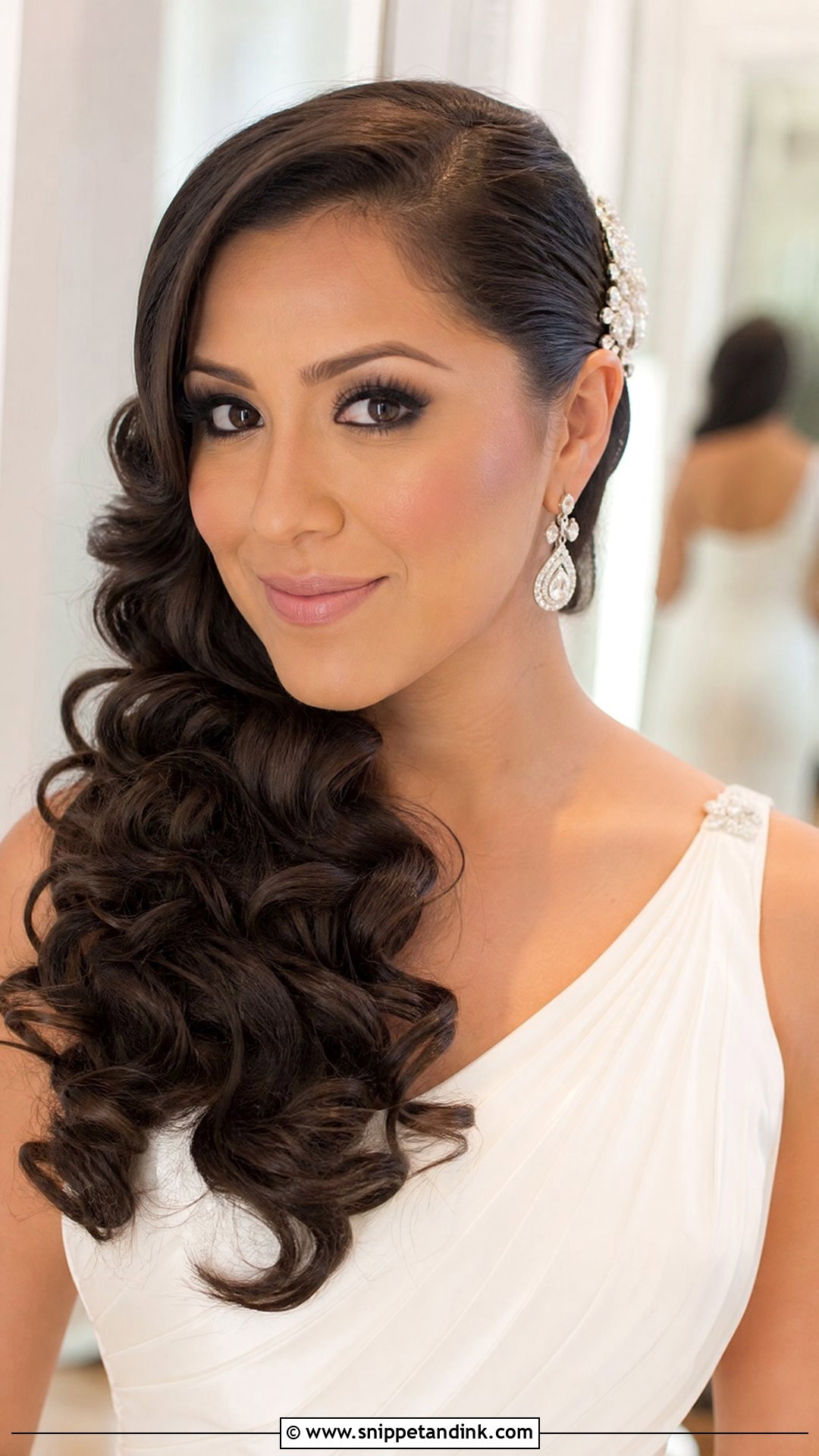
Curls brushed into soft volume and gathered over one shoulder leave the other side open, which makes sense for a one-shoulder neckline or an open back. The hold is all underneath: I make a small pinned anchor behind the ear and build the curls onto it. Without that anchor, the gathered side slowly slides back as you move. Medium to long hair works; extensions fill out the side that’s on show. A crystal clip at the anchor adds a bit of shine.
11. Bridal Natural Curls
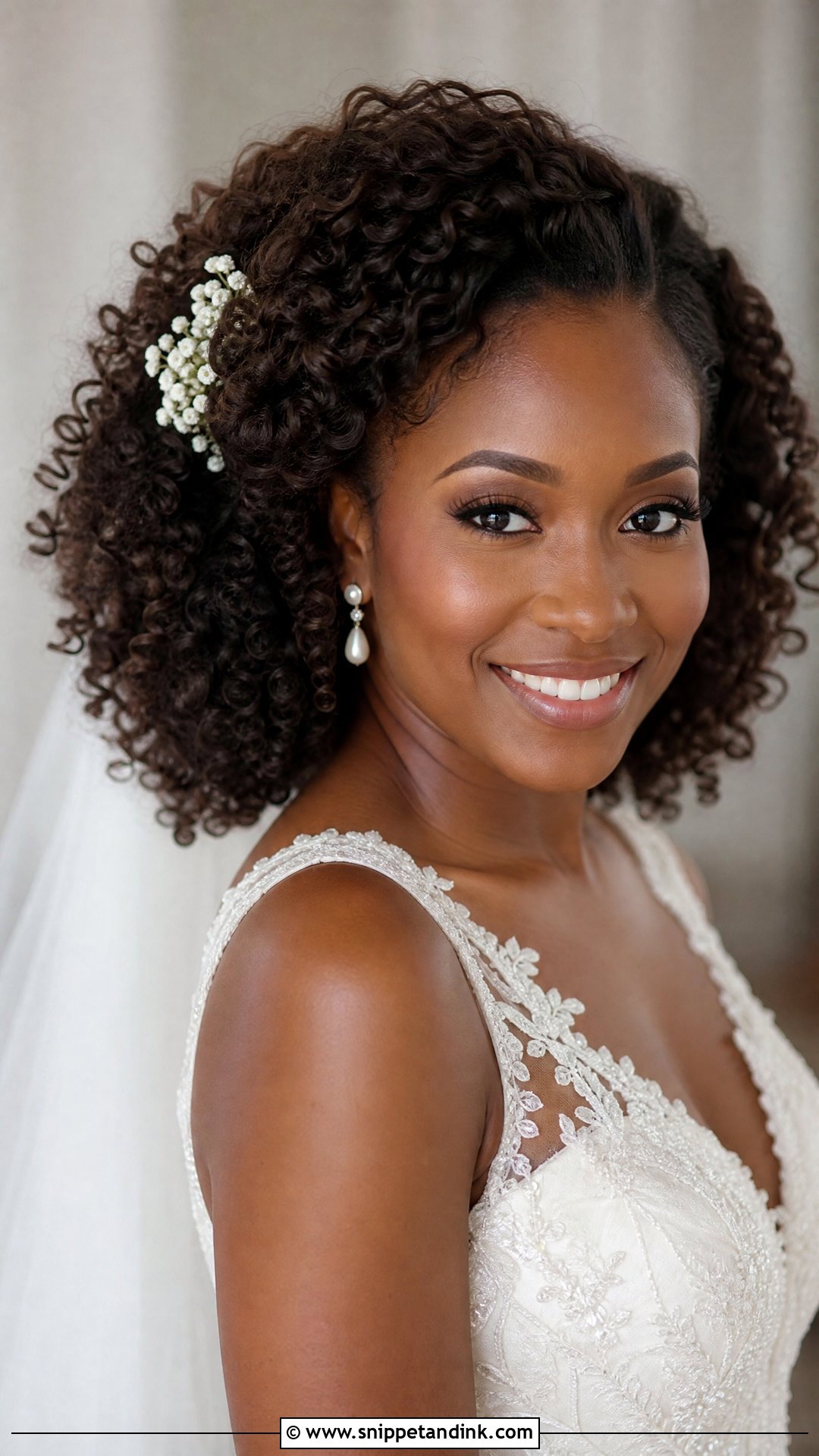
Natural curls need preparation more than styling. The work happens the day before and the morning of: moisture, a defining cream or gel applied to wet hair, and a slow diffuse or air dry so the pattern sets without frizz. I only pin to shape, maybe one side tucked or a soft part, and leave the curls alone otherwise. Veils, headbands, flowers and statement earrings all work. It’s a comfortable choice, and it looks like you on your own wedding day.
12. Bridal Vintage Updo
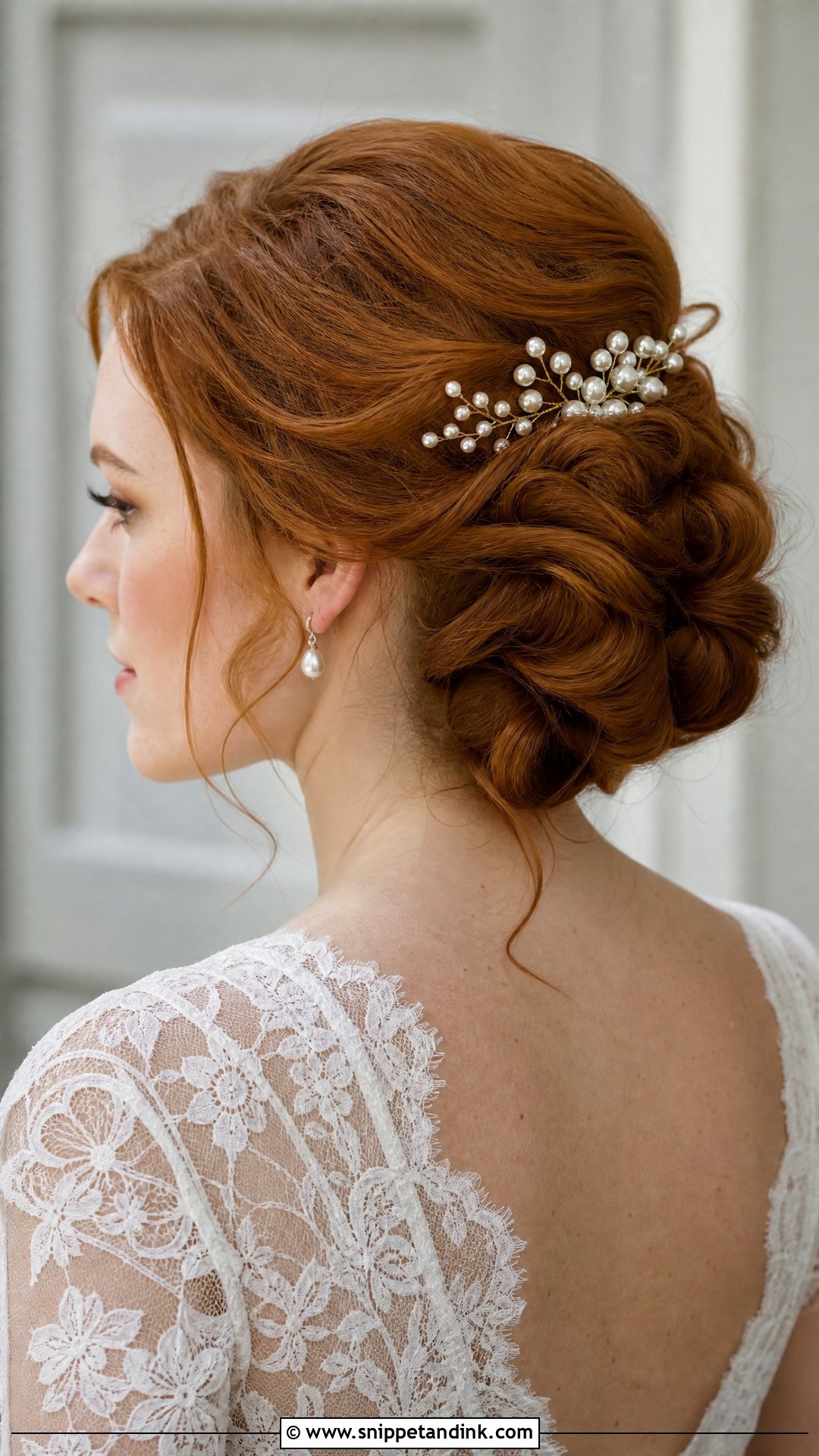
Vintage done well is a nod, not a costume. This one may include soft rolls, brushed curls, a low tucked shape or gentle crown volume. I match how much vintage detail goes in to the dress: a 1940s-style satin gown can take full rolls, while a simple modern dress needs just one roll at the side. Lace, birdcage veils and pearl earrings suit it, and it keeps hair off the neck for summer.
13. Bridal Long Braid
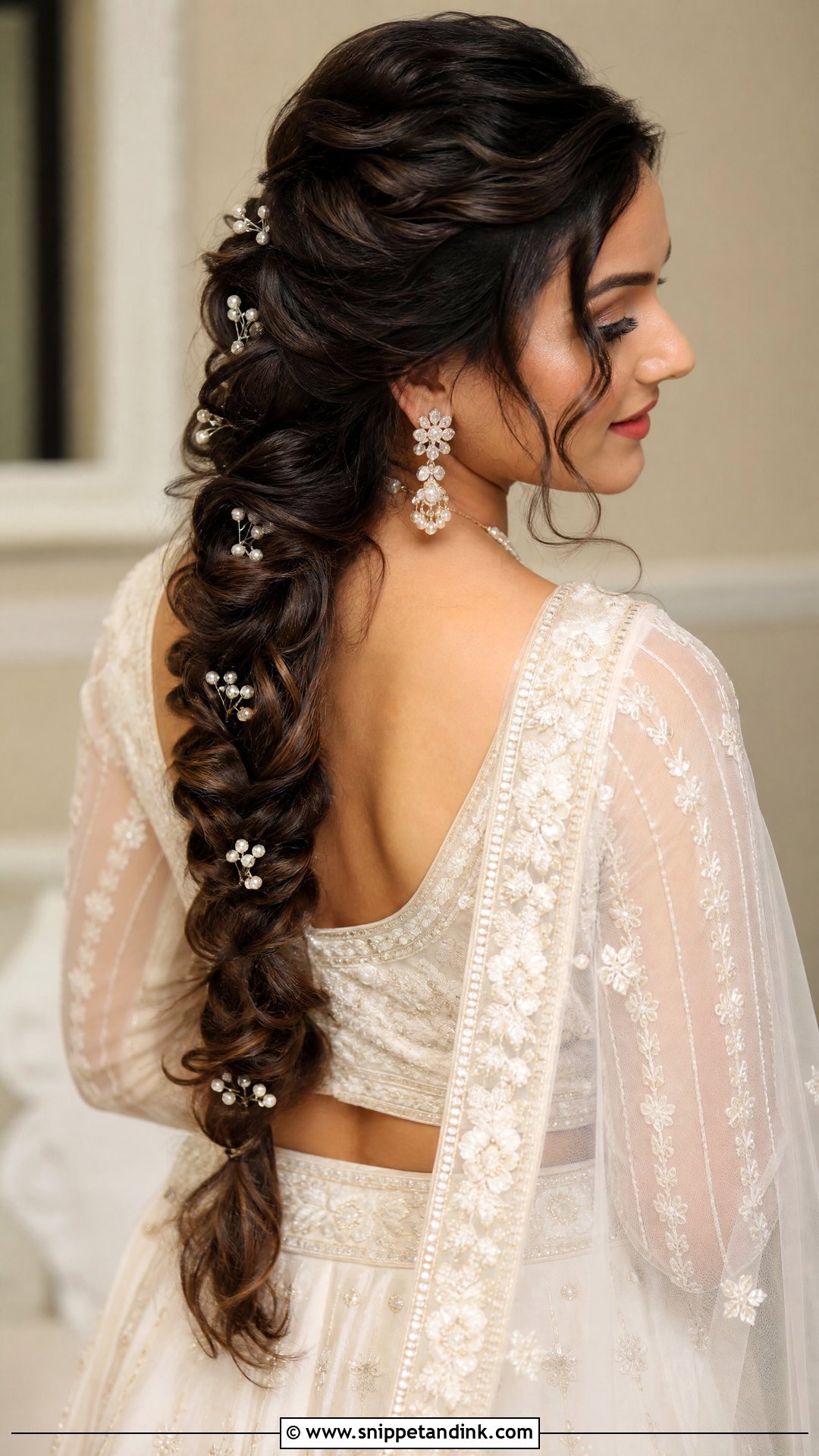
Fishtails, pull-through braids, side braids and three-strand plaits with waves woven in all count here. Each needs long hair, or extensions, to reach past the shoulder blades and look intentional. I pancake the braid slightly once it’s secured, which adds width and hides any thin patches. Keep the front smooth, since a loose braid plus loose front pieces can read as unfinished. Tiny flowers, pearls or ribbon can be threaded through after.
14. Bridal Short Hair Waves
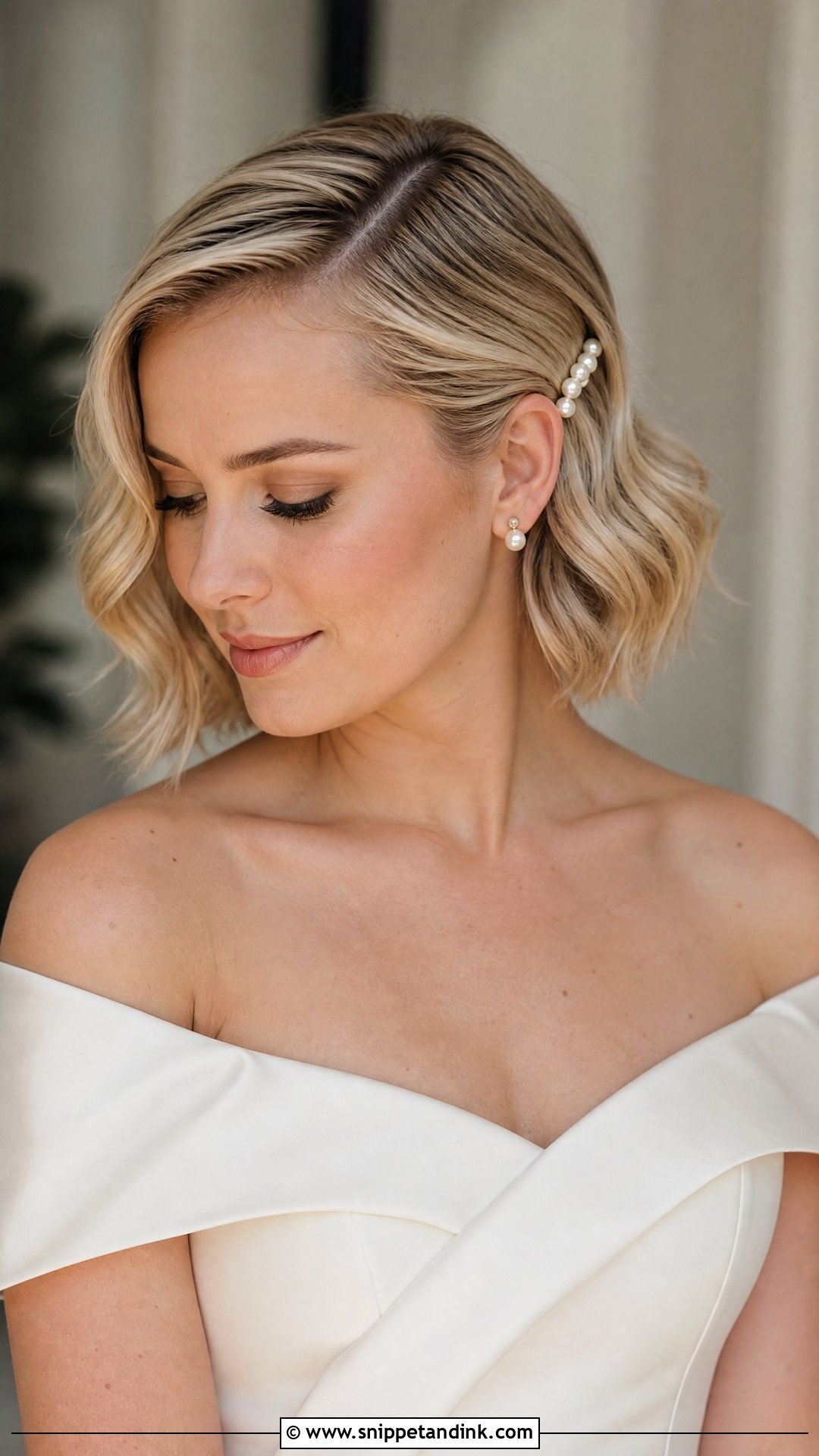
Short hair can be every bit as dressed up as long hair. A bob, lob, or cropped cut gets soft bends, shine and a clear shape around the face. On short cuts I use a smaller curling iron and brush the waves out gently, because a short length shows a tight curl as a frizzy one. Tucking one side behind the ear with a pearl clip or mini comb makes it look deliberate. Get a trim two to three weeks ahead, not the week of.
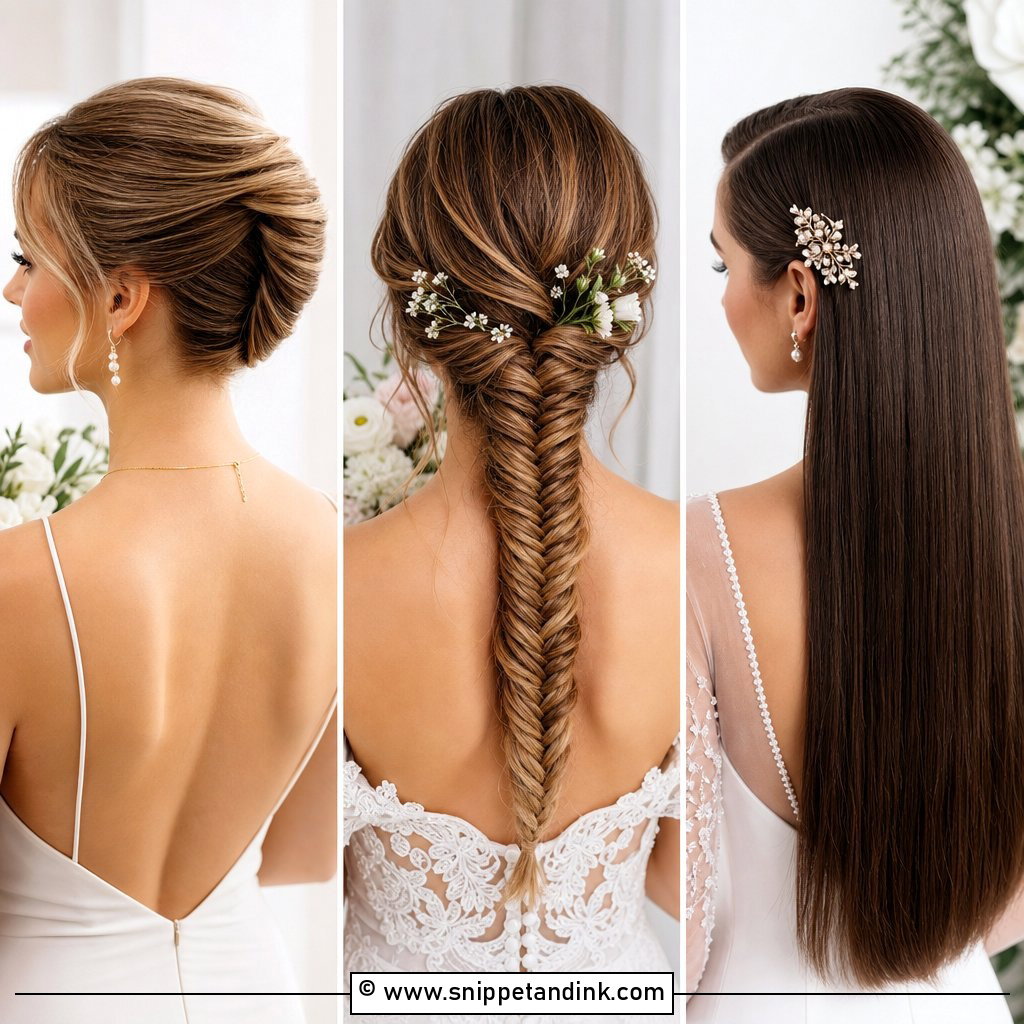
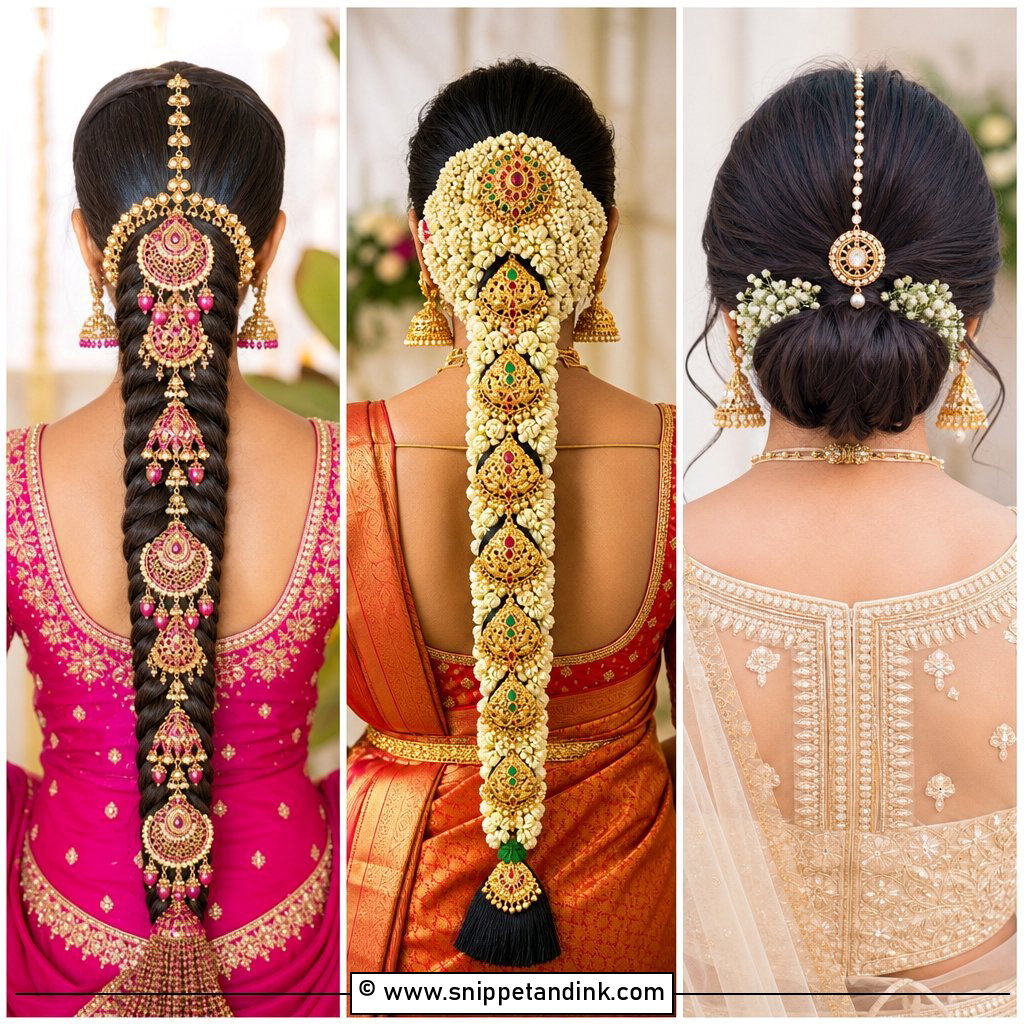
15. Bridal High Bun
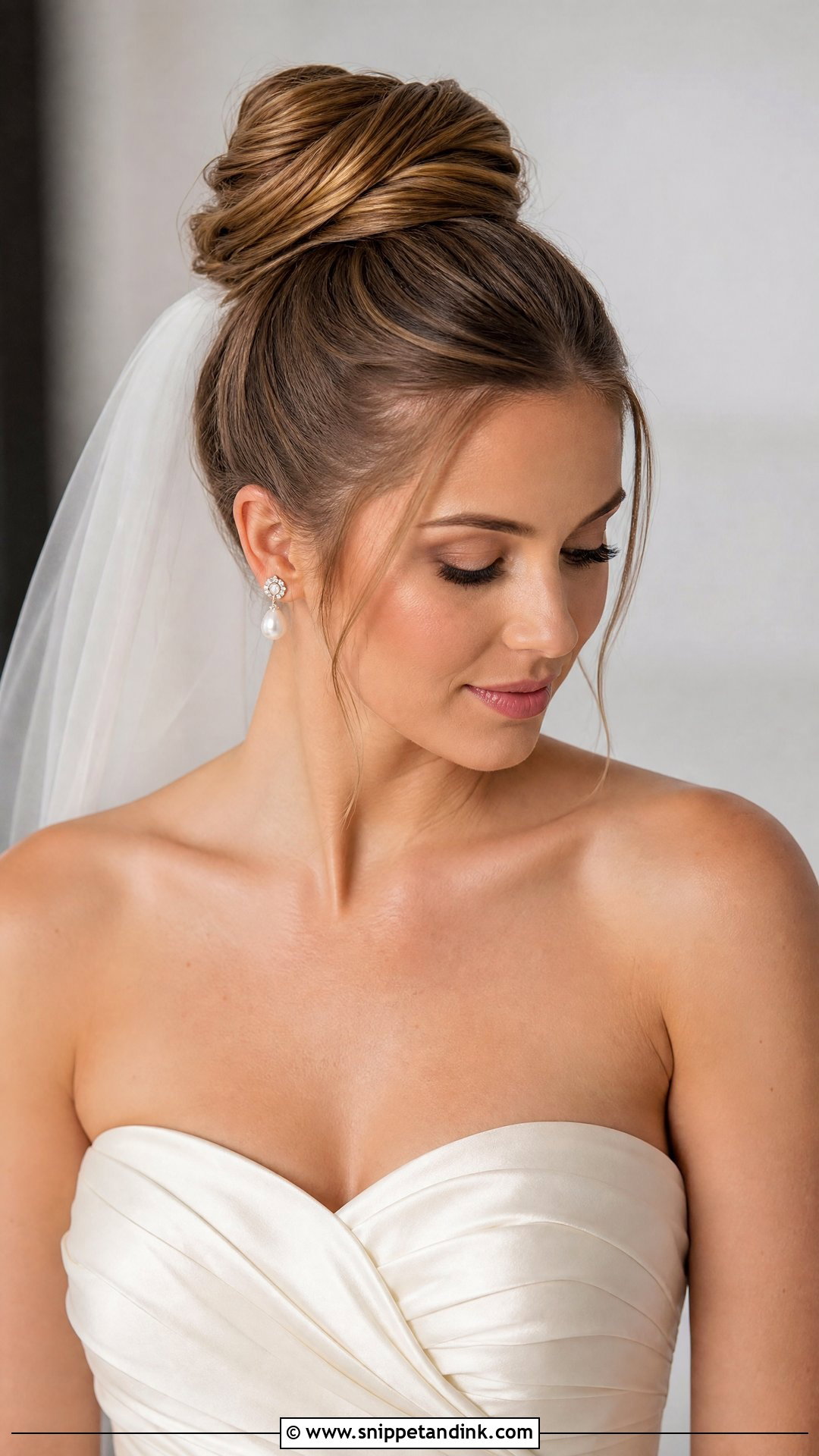
Hair lifted completely off the face and shoulders lengthens the neck and gives the face a clean line. The bun can be sleek like a ballet bun, textured or slightly oversized. It suits high necks, strapless bodices and long veils, and it frames bold earrings. I check this one from the side as much as the front: a high bun that’s off-centre or tilted shows in every profile shot. A doughnut or padding inside gives it size if your hair is fine.
How Long These Styles Take in the Chair
Brides usually underestimate hair time, and that’s how mornings run late. These are typical times for a bride’s own hair once prep is done, though they vary with length, density and how many accessories go in.
- Sleek bun, sleek ponytail, short-hair waves: roughly 30 to 60 minutes.
- Loose waves, half up, low bun, chignon: around 45 to 75 minutes.
- Hollywood waves, textured updo, braided crown, vintage rolls: often 60 to 90 minutes or a bit more.
- Natural curls: shorter on the day, because most of the work happens with the wash and set the day before.
Add time for extensions, a veil fitting and any flowers being pinned in. I schedule the bride’s hair to finish an hour before she needs to dress, so there’s slack if something needs redoing.
The night before
For most styles, I want hair washed the evening before or that morning, fully dried, with no heavy oils or deep conditioner left at the roots. Squeaky-clean hair can be too slippery for pins, so on very fine hair washing the day before often gives better grip. Ask your stylist which they prefer for the style you’ve chosen, as the answer changes from one look to the next.
A Shortlist of Three Is Plenty for the Trial
A sleek bun is right for one bride, while loose waves, natural curls or a braid suit another. What matters is that the style fits the dress, the venue, your hair and how long you’ll be wearing it. Pick the looks that match, bring them to your stylist with a note on what you like in each, and use the trial to test hold, veil placement and face-framing pieces. Hair that feels secure lets you stop thinking about it, which is the point.
You'll Like These Ideas:



Leave a Reply