
When an Edo bride walks in, the first thing every guest reads is the crown. It’s called okuku or eto-okuku: a sculpted hairstyle covered in coral beads and worn with traditional Edo bridal attire, coral at the neck and coral at the wrists. I can build it on natural hair, on extensions, over a frontal, or set a ready-made beaded piece on a prepared base, and that choice decides how your head feels at hour four far more than how the photos look. The fifteen versions below run from the tall classic to lower, lighter shapes, so you can see how height, bead placement and the hairline change the whole picture before your consultation.
Sewn Onto Your Hair or Set Into a Ready-Made Cap?
Every okuku here starts with one decision: does the coral go directly onto your styled hair, or onto a prepared base that sits over it? Sewn beading gives the closest, most natural crown, but it takes hours in the chair and the coral is locked to your head until someone unpicks it. A ready-made cap goes on in minutes, comes off for an outfit change, and can be checked for fit weeks ahead.
The trade-off is snugness against freedom. A sewn crown rarely shifts, while a cap that’s even slightly too big slides back when you kneel or dance. If you go with a cap, I want to see it early and try it over the exact base I plan to use on the day.
Getting the hair underneath ready
- Wash, deep condition and stretch natural hair a few days before, so I can mould the base smoothly without heavy heat that morning.
- Braids or cornrows should be firm but not tight at the edges. Hours of crown weight on top of tension at the hairline is how edges thin.
- If a frontal or extensions are involved, have them installed and blended before the trial, not on the day.
- Do one full trial with the beads on and keep it on for at least an hour. That hour tells me more than any photo.
1. Classic Edo Okuku Hairstyle
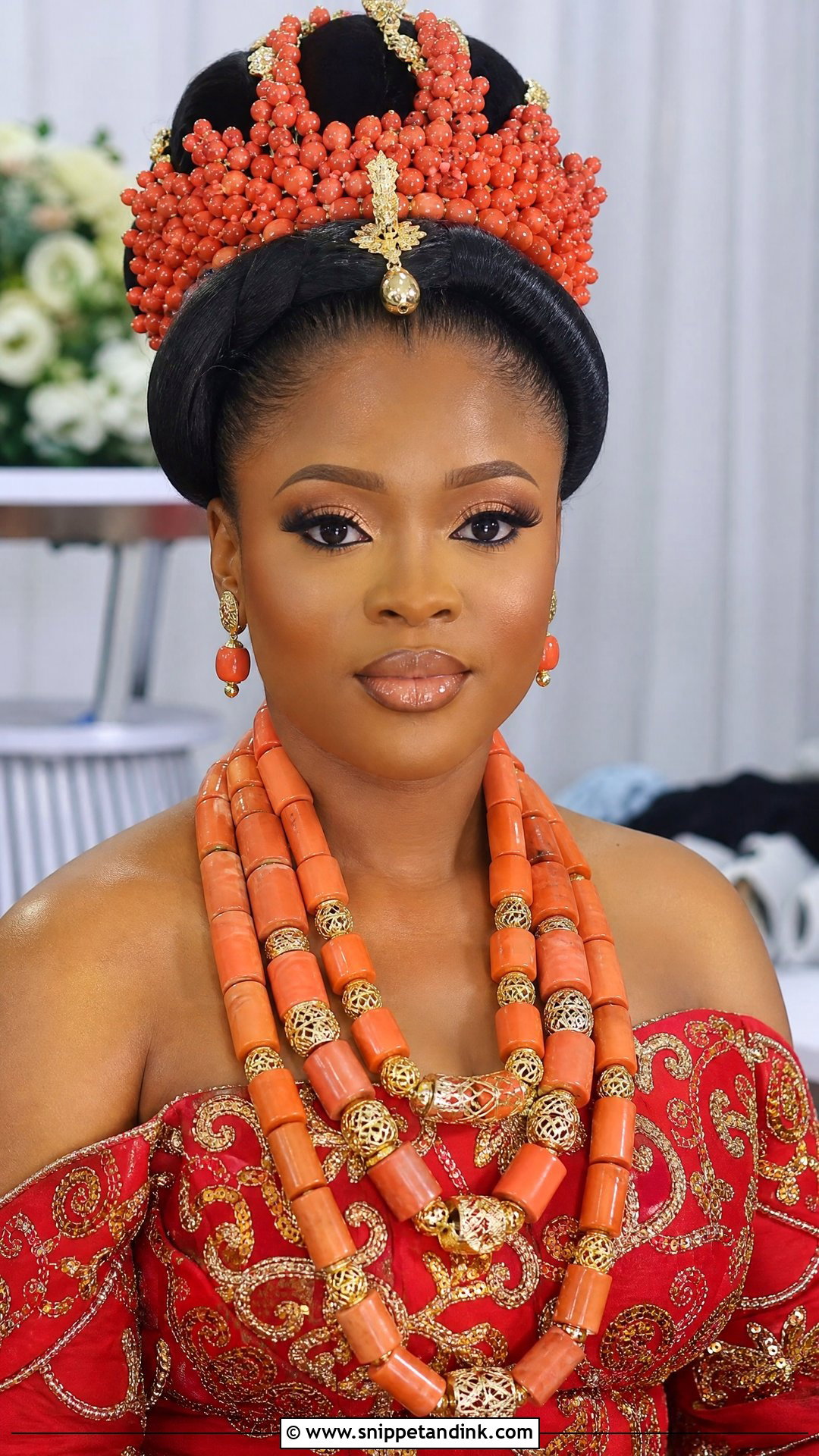
This is the shape most people picture: a high, rounded mound of hair with coral sitting over it like a cap. It needs very little else because the silhouette does the work. I pair it with the classic red Edo wrapper, neck and wrist coral and a strong makeup look. The part people underestimate is the back. I always turn the bride around in the mirror at the trial, because a crown that looks even from the front can be lopsided behind, and the ceremony photographer will catch it when you kneel.
2. High Edo Okuku Hairstyle
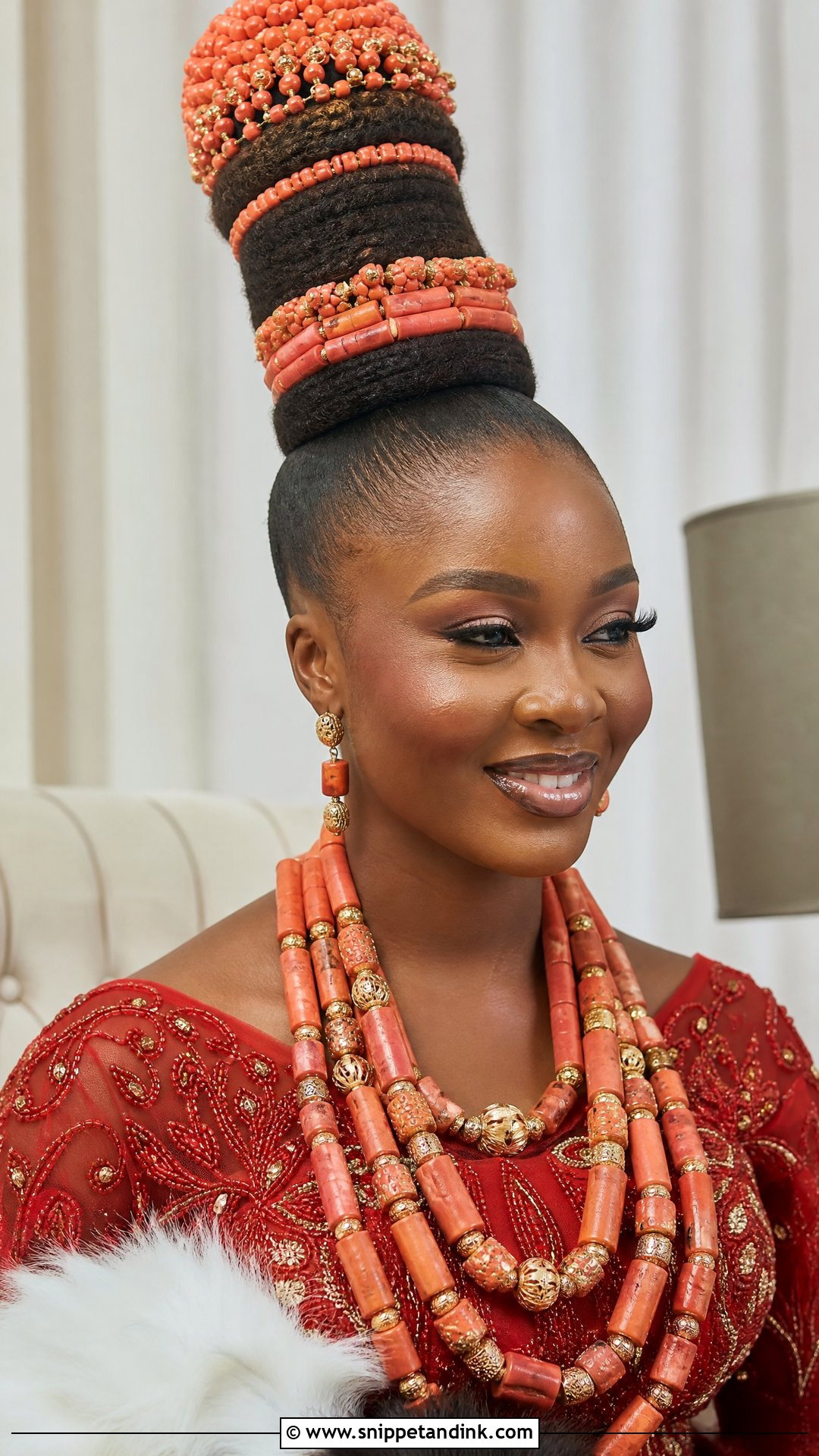
Adding height gives you presence in the entrance and in every wide shot, and it lengthens the neck so a heavy coral collar has room to sit. The trouble is that a tall okuku is a lever. The higher the mass, the more any loose anchor shows up as a wobble when you dance. I build the height with padding or extensions over a firm braided base rather than stacking loose hair, and I keep the bead layers flat and tight. If your outfit has strong shoulders or a structured top, the height balances it; on a petite frame with a soft wrapper, I usually take it down a few centimetres.
3. Edo Okuku With Coral Beads
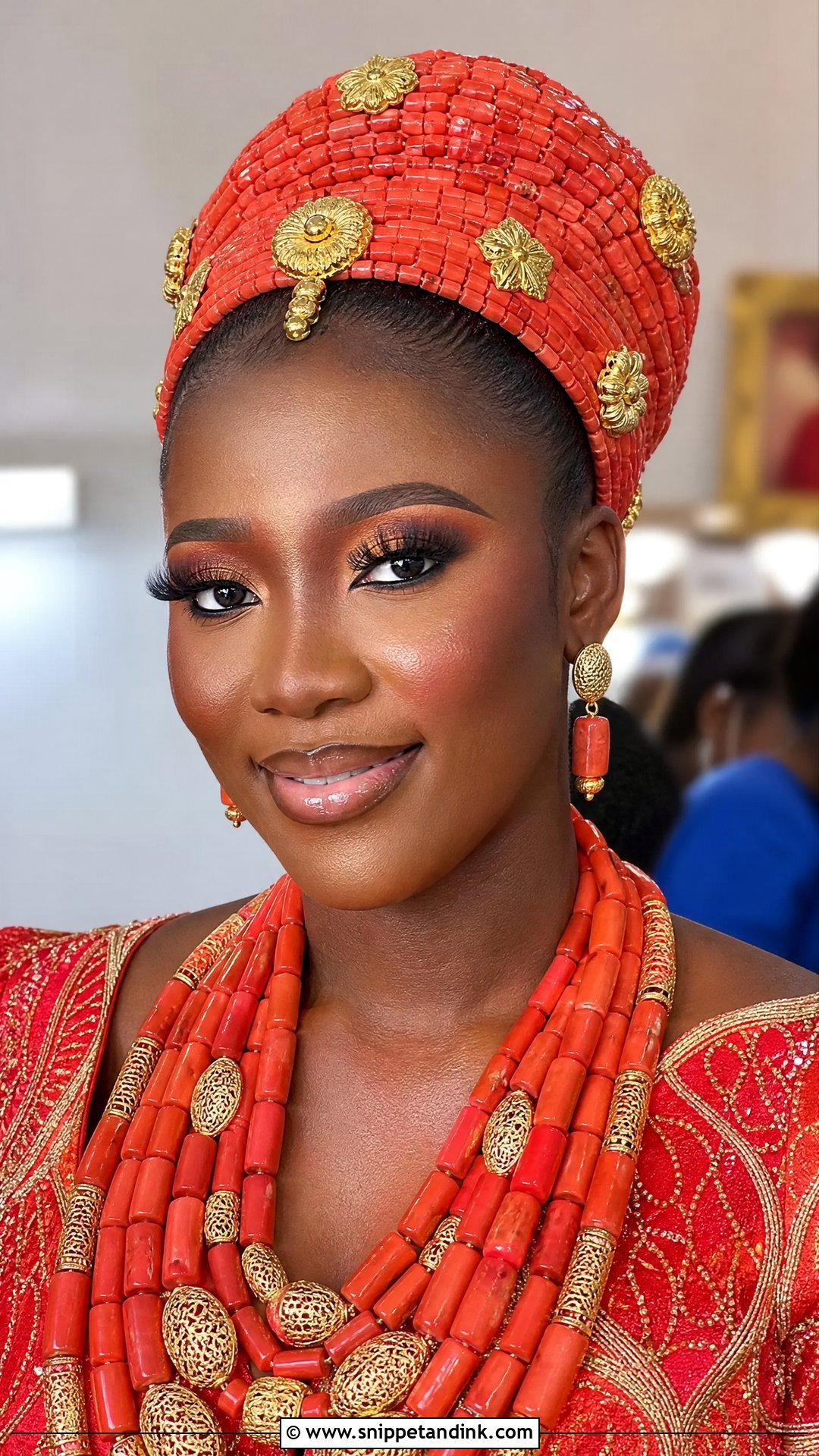
Here the coral is the point and the hair is really just the form underneath it. I shape the base so the beads can lie in clean, unbroken lines, because coral is uneven by nature and any lumps in the hair underneath get exaggerated. The dome can be full, slightly tall or soft, and I choose by face shape: rounder faces usually look better with a bit of lift, longer faces with width. Real coral has a warm, slightly matte surface, so I tell the makeup artist to keep the skin glowing and warm rather than frosted, which stops the face looking grey next to the beads.
4. Edo Bridal Bun With Okuku Beads
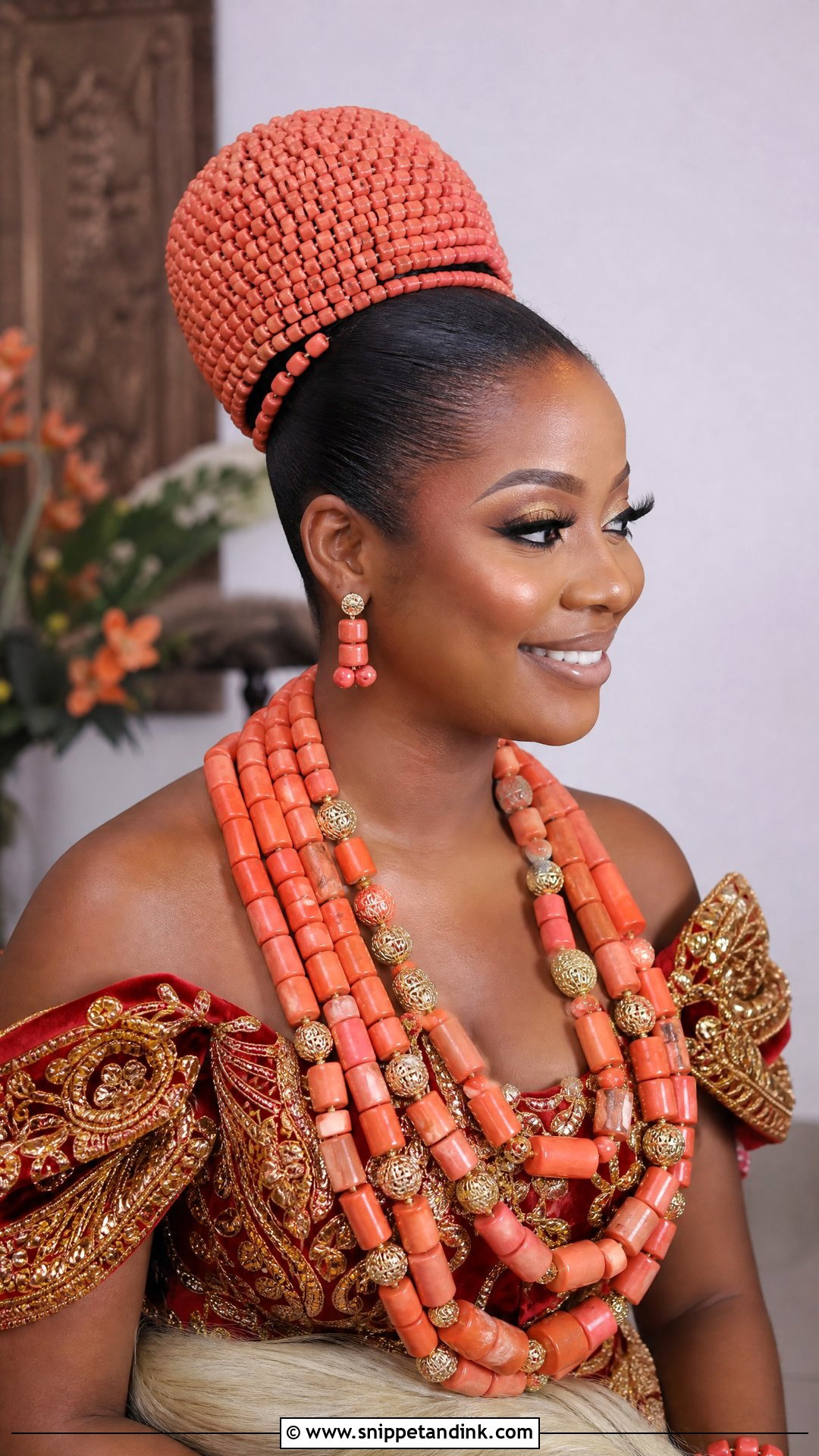
A bun with an okuku bead covering is my usual answer when a bride tells me she’s nervous about weight. The bun gives structure, the beading gives the cultural finish, and the whole thing sits closer to the head. I’ll place it at the crown or slightly lower depending on where it feels steady when she nods. It still reads clearly as an Edo bride, but there’s less height to manage through greetings and kneeling, and the front stays smooth and quiet.
5. Ready Made Okuku Hairstyle
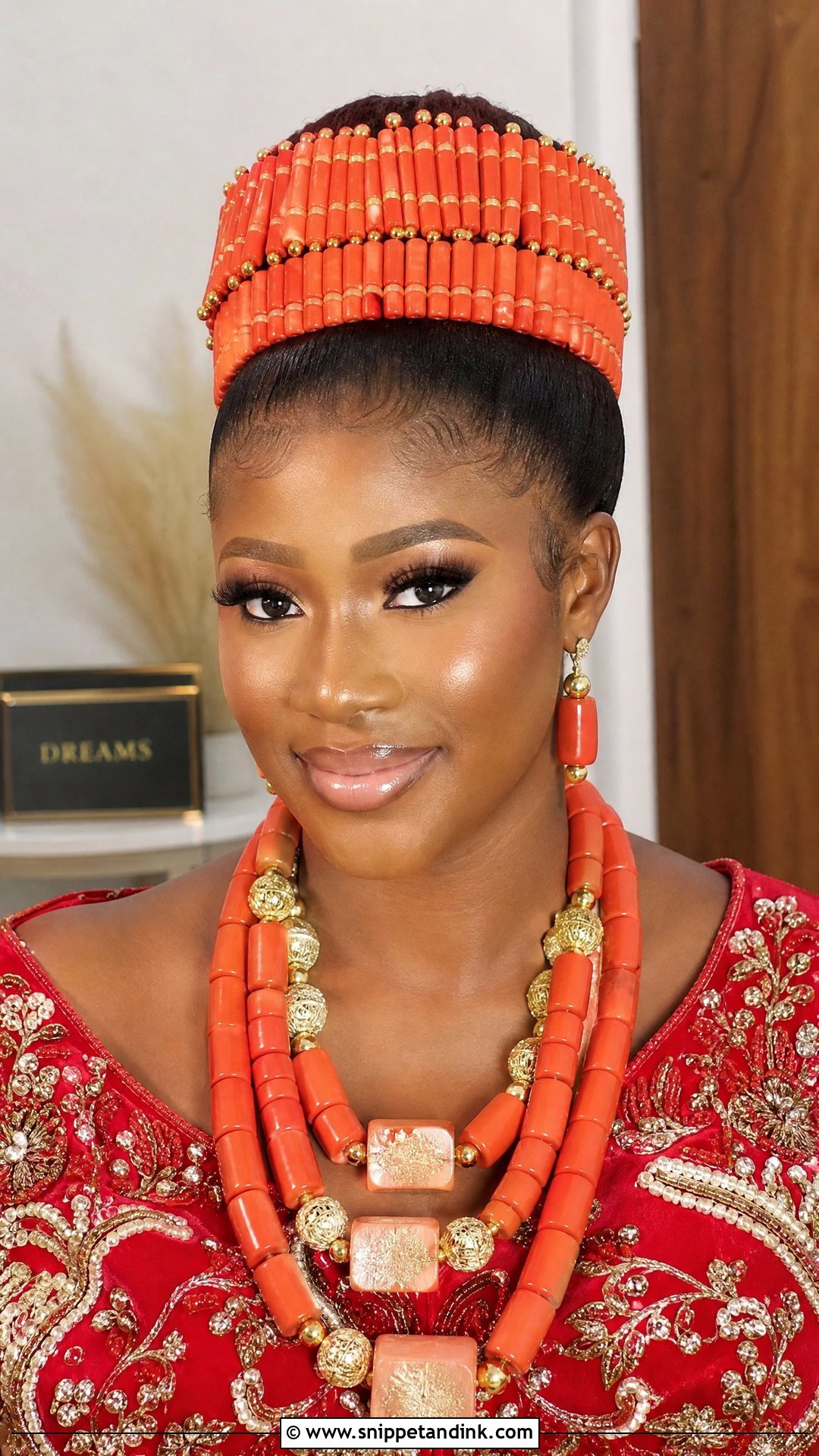
A ready made okuku hairstyle means the beading is done before the wedding morning. Instead of sewing every strand onto your hair in the chair, the crown is built ahead and fixed over a styled base. I like it for long ceremonies, outfit changes and travel, and because you see the finished shape weeks early. Fit is the whole game. A piece that’s a fraction too large slides back the first time you bow, so I check it against the exact base I’ll be using on the day, not your everyday hair. Matched properly to your head size and bead color, nobody can tell where your hair stops and the crown starts.
6. Natural Hair Edo Okuku Hairstyle
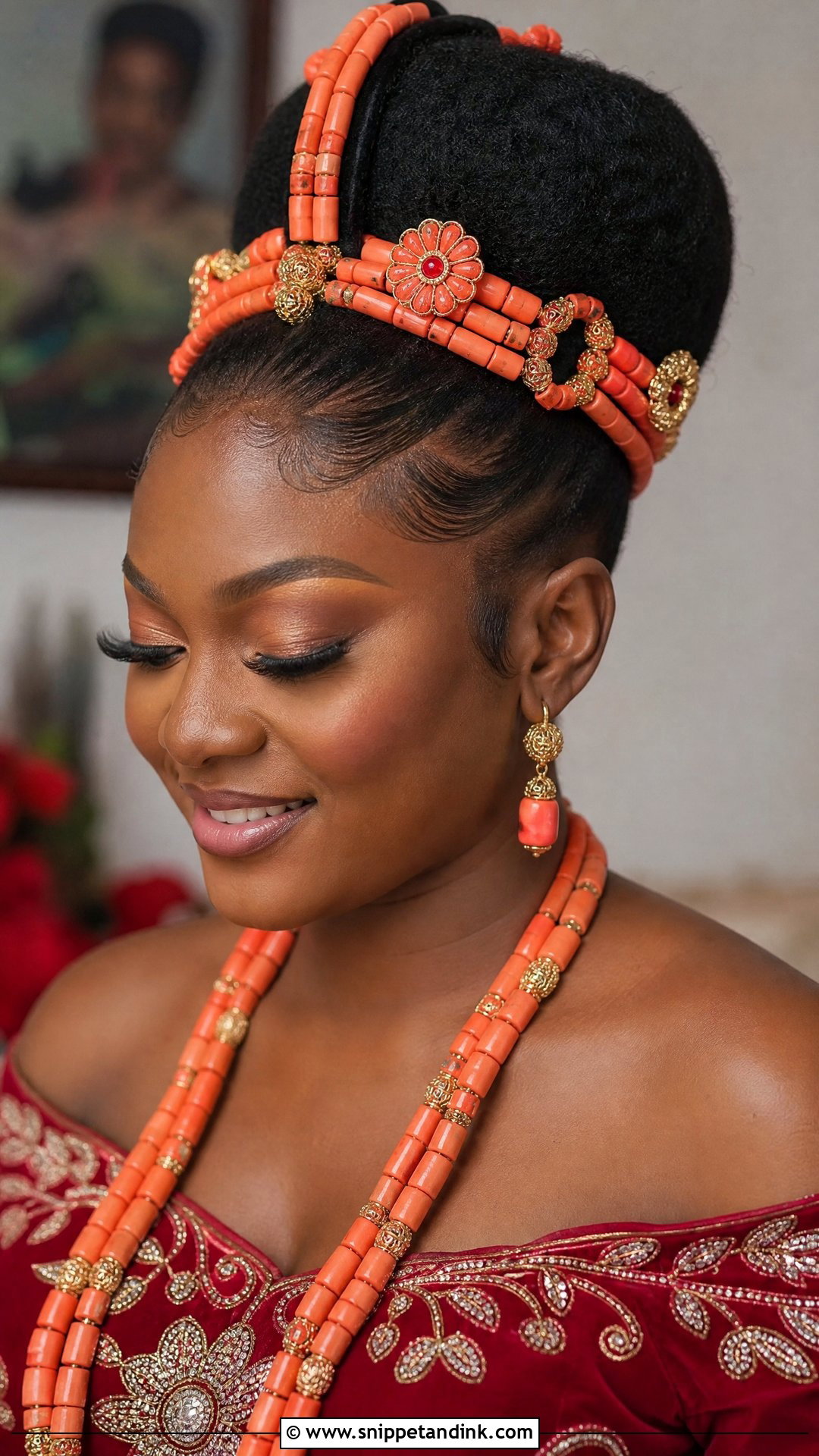
Building the okuku on your own hair is the most personal version, and it takes the most planning. I stretch the hair a few days ahead, then braid or mould it into a smooth foundation before the coral goes on. What I watch closely is tension at the edges. Coral weight on top of tight braiding at the hairline is exactly how brides end up with sore temples the next morning, so I keep the perimeter firm but never pulled. Moisturise well during the week, and expect the base to need slightly more time than a wig would.
7. Frontal Wig Edo Okuku Hairstyle
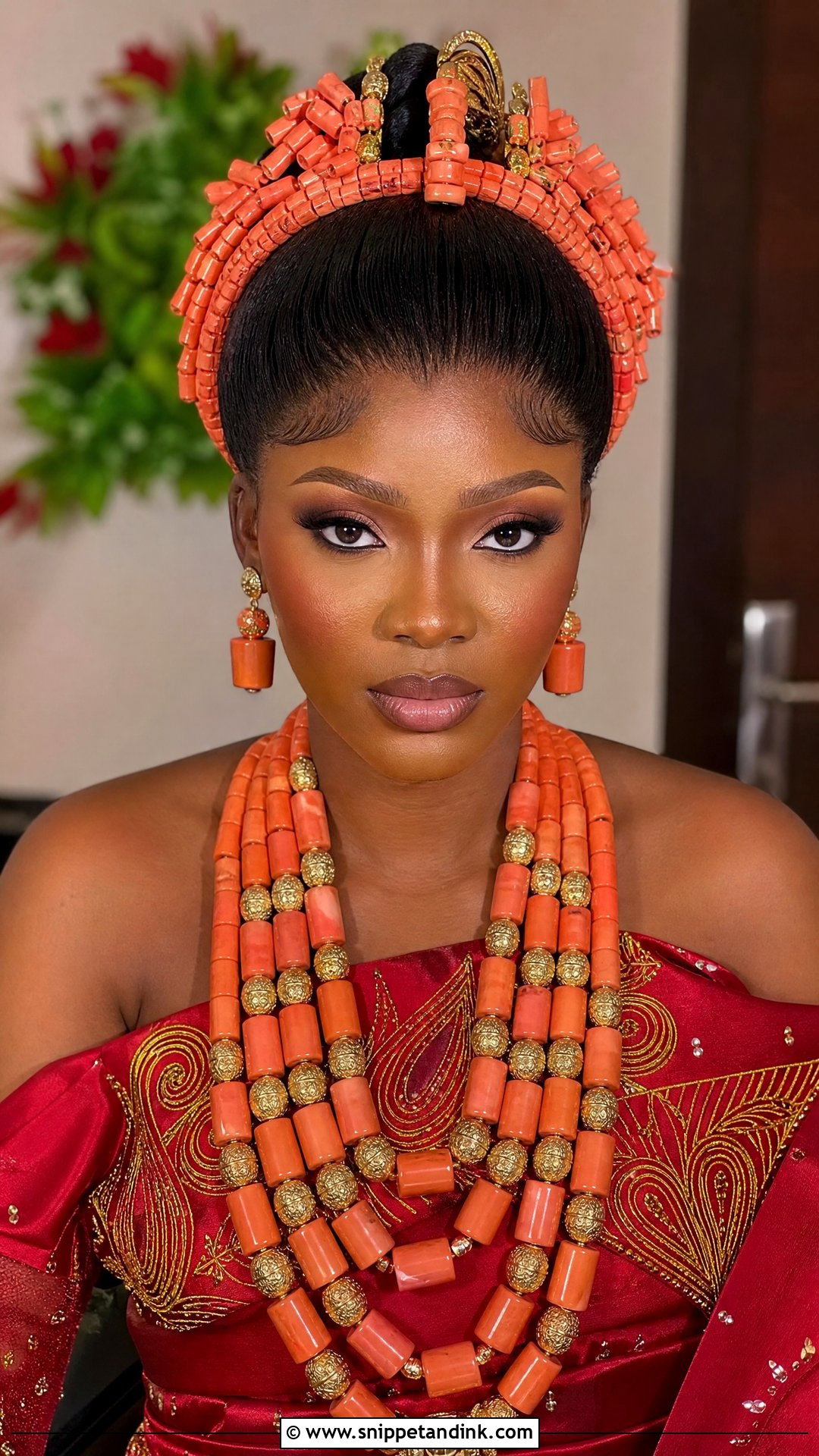
A frontal wig Edo okuku hairstyle gives you a flawless hairline for close-ups and lets me add fullness and height without touching your own edges. I usually lay and style the frontal sleek before the crown is attached or built over it. Two things decide whether it works: the lace has to be melted properly at the temples, because coral pulls the eye straight up to the hairline, and the bead structure must be anchored into the wig cap and braids, not just the lace. Have it installed and blended before your trial, never for the first time on the day.
8. Edo Okuku With Golden Comb
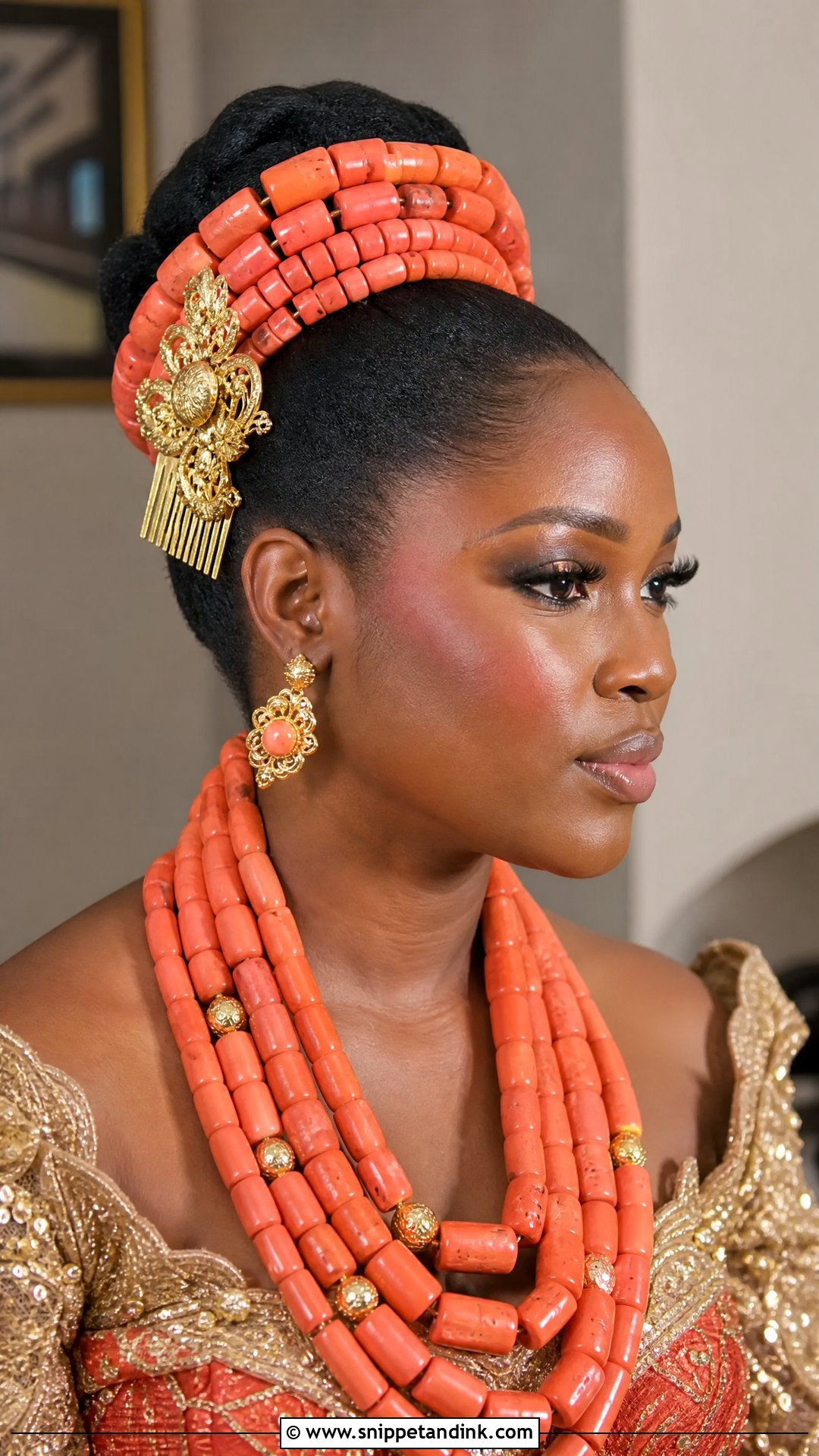
A gold comb is a small addition, and that’s exactly why it works. The coral stays in charge and the comb just adds a point of light. I set it slightly off centre at the side or just in front of the dome, and I’m strict about weight; a heavy metal comb on top of a beaded crown will drag. It ties in nicely if your wrapper has gold thread or you’re wearing gold jewelry. If your coral is already very dense, I’d skip it, because the two start fighting for attention.
9. White Bead Edo Okuku Hairstyle
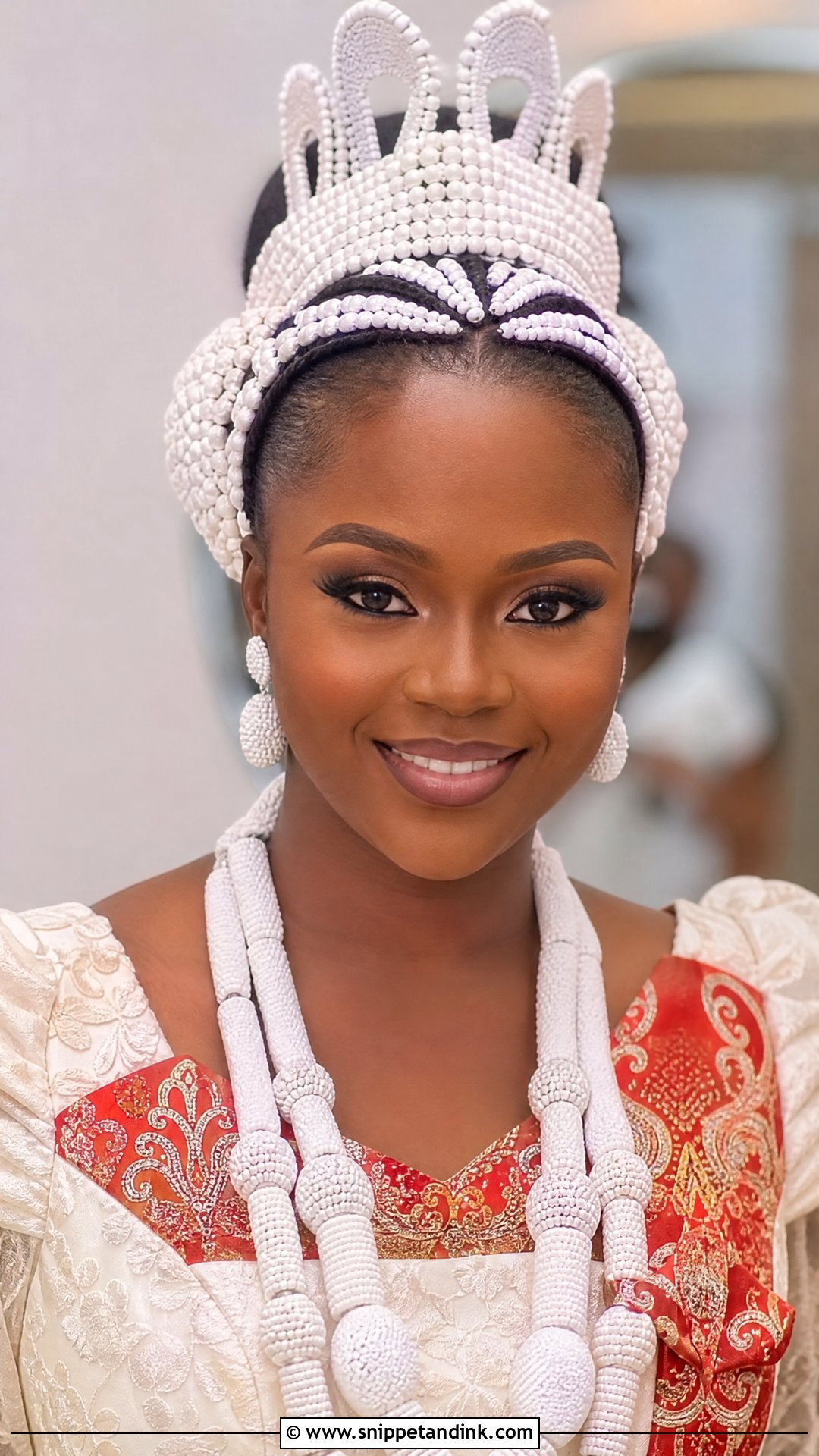
White beads are a fresh departure from coral, and they suit ivory, gold or red outfits because they throw light back onto the face. In bright natural light they can glare, so I ask the photographer to watch exposure on them. I keep the shape either high and rounded or compact, and I keep the edges very smooth, since white shows every flyaway against dark hair. If family tradition matters a lot to you, talk to your elders before choosing white; for some families coral is not optional, and it’s kinder to know that early.
10. Layered Edo Okuku Hairstyle
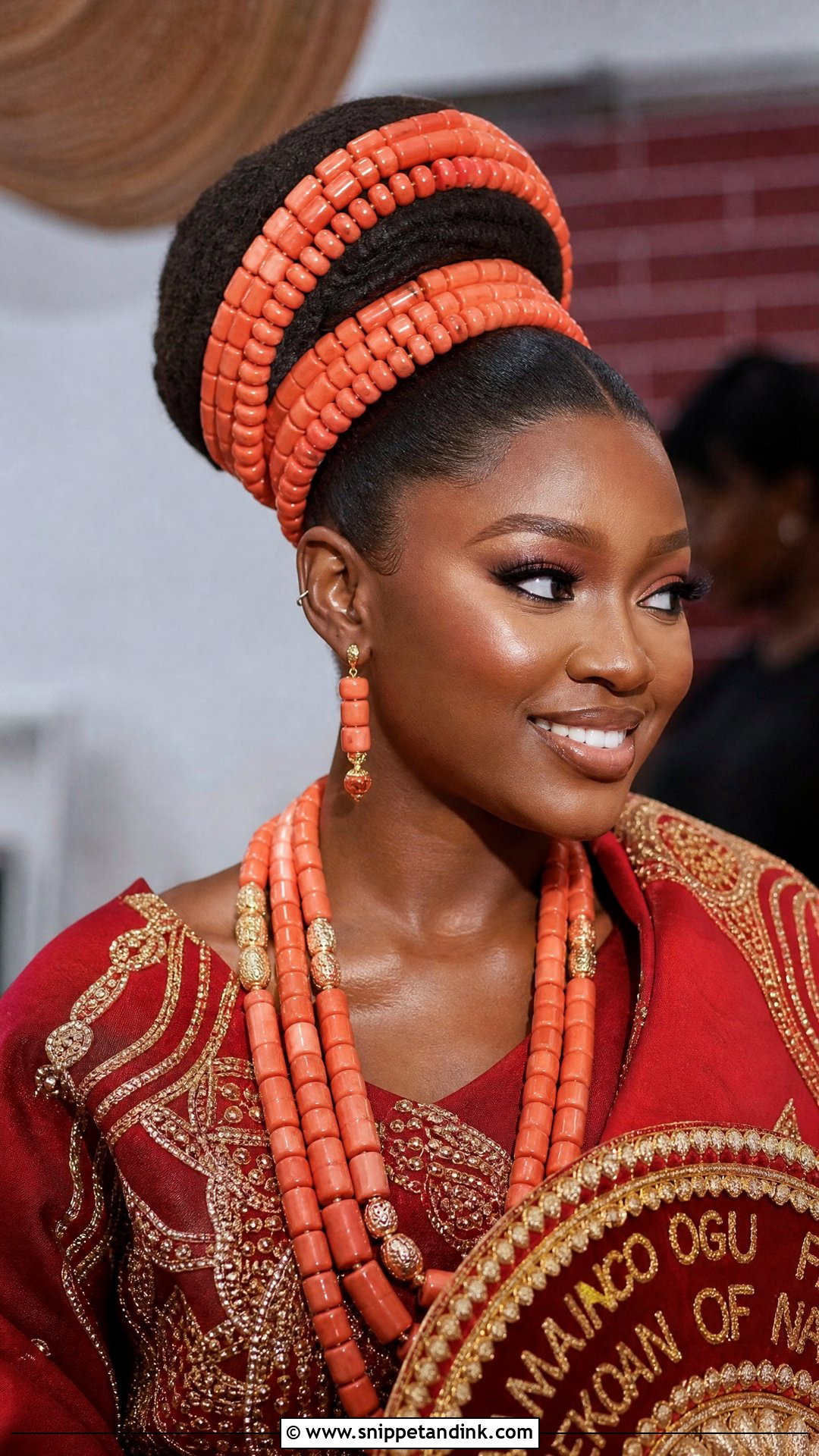
Layered beading means visible rows rather than one flat surface, and the rows give the okuku depth and a more sculpted outline. Laying them is slow, careful work. Each row needs to follow the curve of the base at the same spacing, or the eye immediately catches the one that dips. From the side the rows catch light at different angles, which is lovely in profile shots. I’d allow extra time in the schedule for this one and avoid it if the base is soft or uneven.
11. Edo Okuku With Side Part
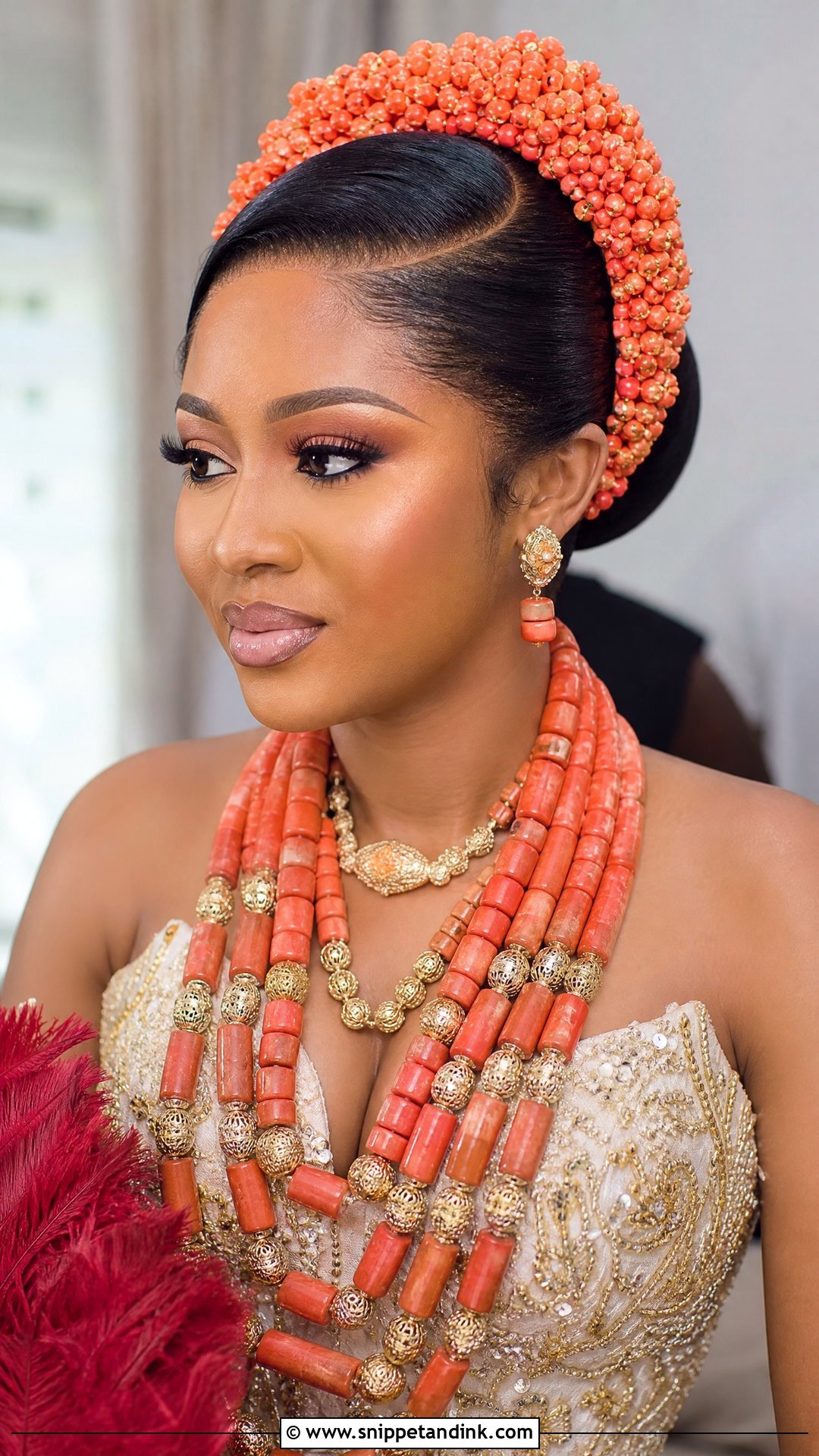
A side part changes the front of the look without touching the crown, and it softens a high forehead. I create it with a frontal wig, leave-out or moulded natural hair before the okuku goes on behind it. The part has to be decided before the base is built, since moving it later means redoing the anchoring. I check that the part line and the centre of the crown still look intentional together, because an off-centre part under a centred dome can read as a mistake rather than a choice.
12. Edo Okuku With Sleek Front
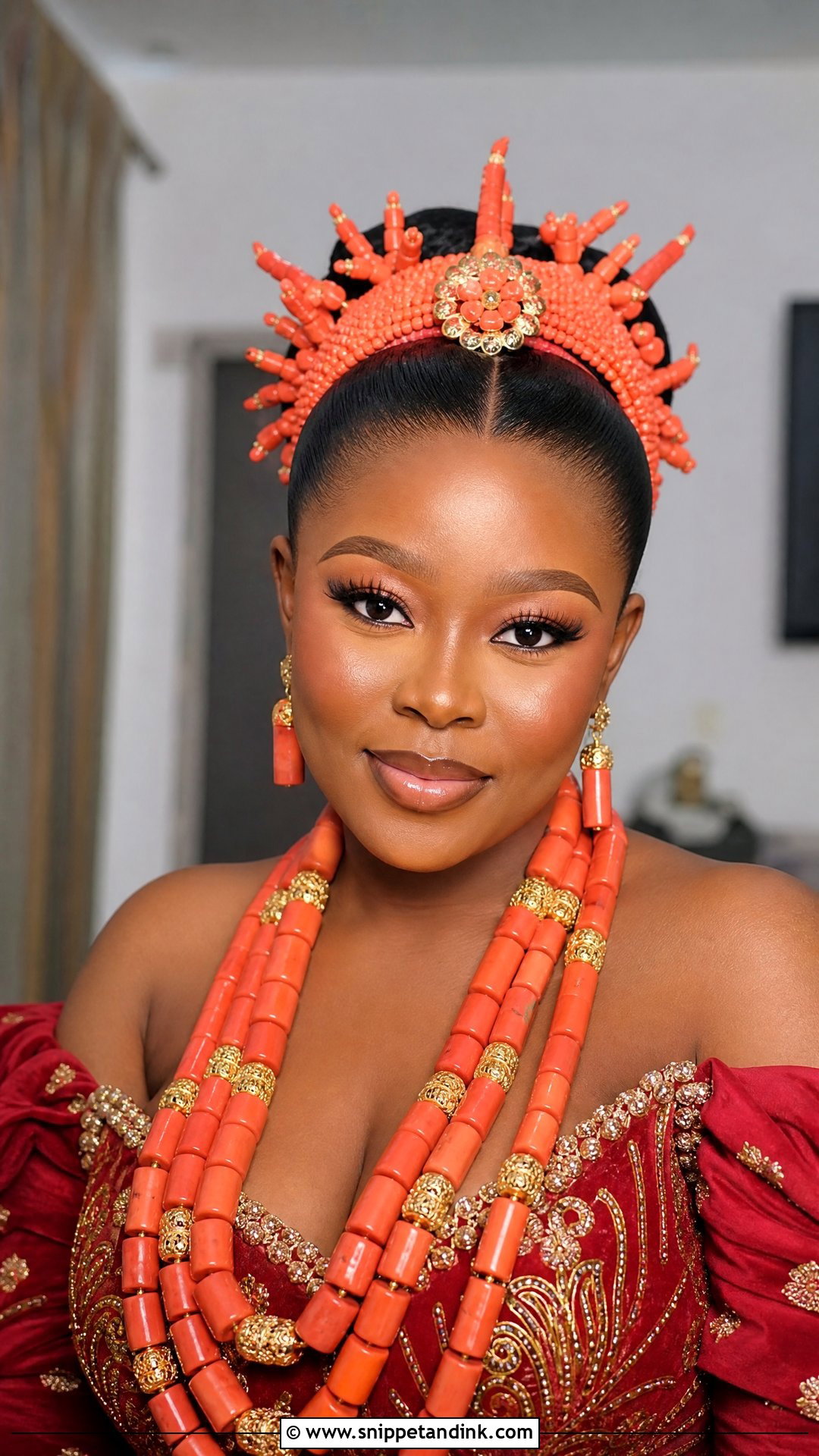
With the front smoothed straight back, nothing competes with the coral or your face. I lean on this for brides wearing heavy coral necklaces or detailed traditional attire, because an open face keeps the whole outfit readable. Sleek is harder than it looks: I use a holding product with a soft shine rather than a wet finish, since high gloss reflects flash and looks greasy in photographs. Edges should be laid lightly, not glued into rigid shapes, so they still look like hair by evening.
13. Edo Okuku With Low Bridal Bun
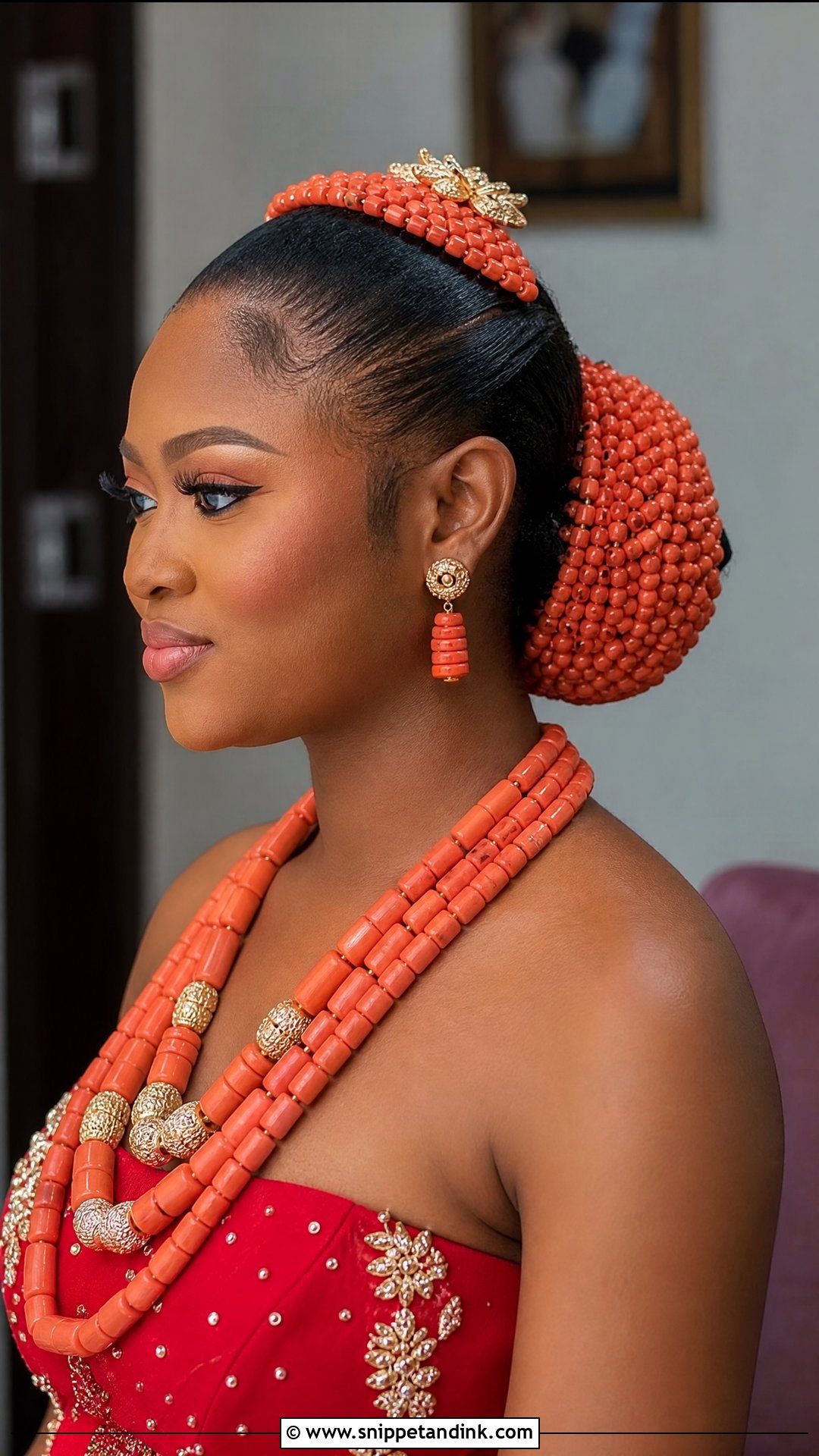
Dropping the bun lower takes away most of the height while the coral still gives you a clear crown. It’s lighter on the neck and steadier when you’re moving between guests or changing outfits, and it suits a calm, composed look at any age. My only caution: a low okuku can clash with a high collar or a stiff gele-style piece for a later outfit, so I check the neckline before we commit. When it sits right, your face, neckline and coral jewelry all stay in view.
14. Edo Okuku With Full Coral Crown
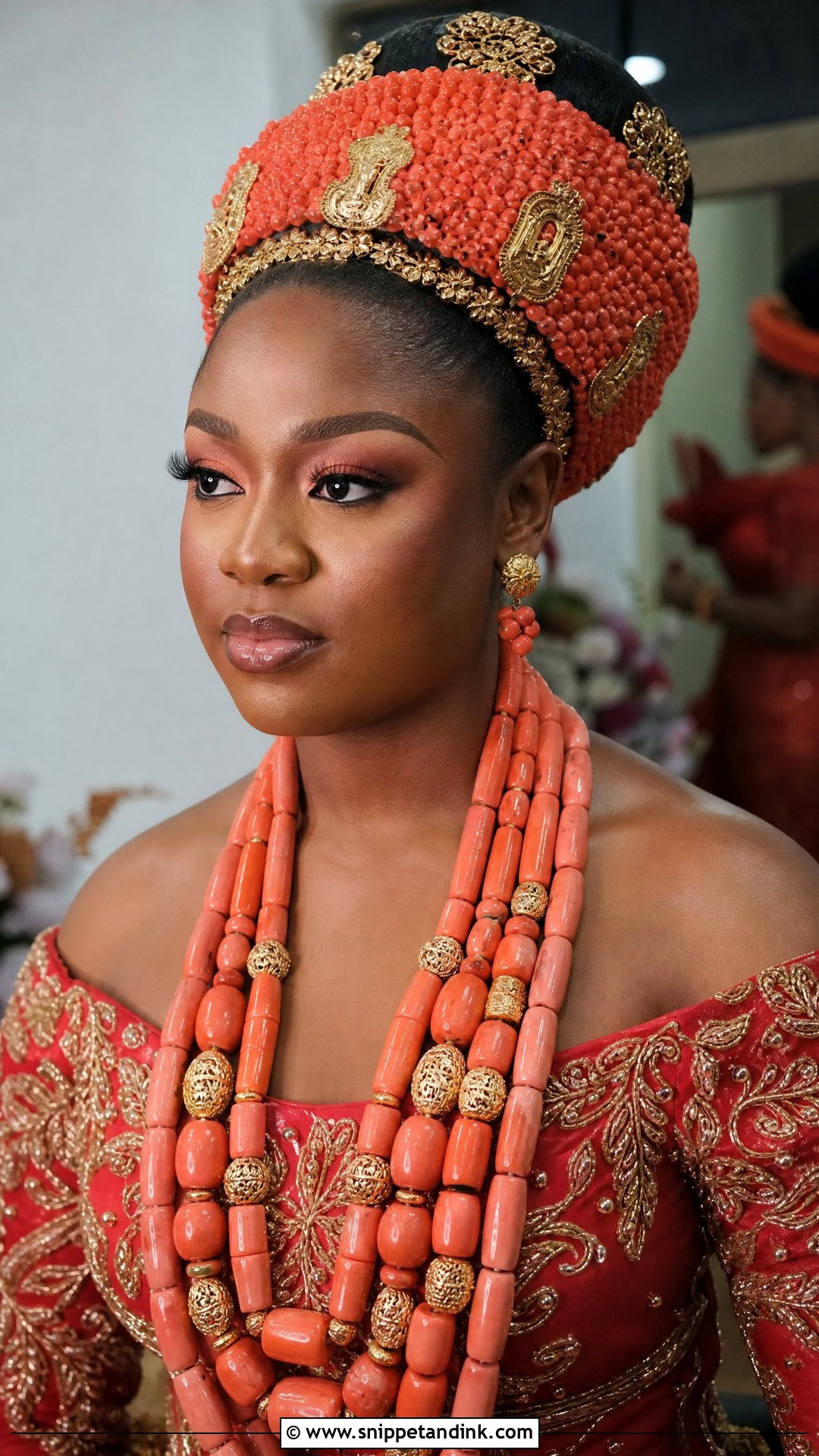
Covering the entire crown in coral gives the most impact of any version here, and also the most weight. I treat this one as a construction job. The base must be firm all the way round, the coral spread evenly front to back, and the crown anchored at several points so it never hangs from one spot. Pair it with strong ceremonial attire and layered necklaces. If you’re prone to tension headaches, try it on for a full hour at the trial before you decide, and be honest with me about how it feels.
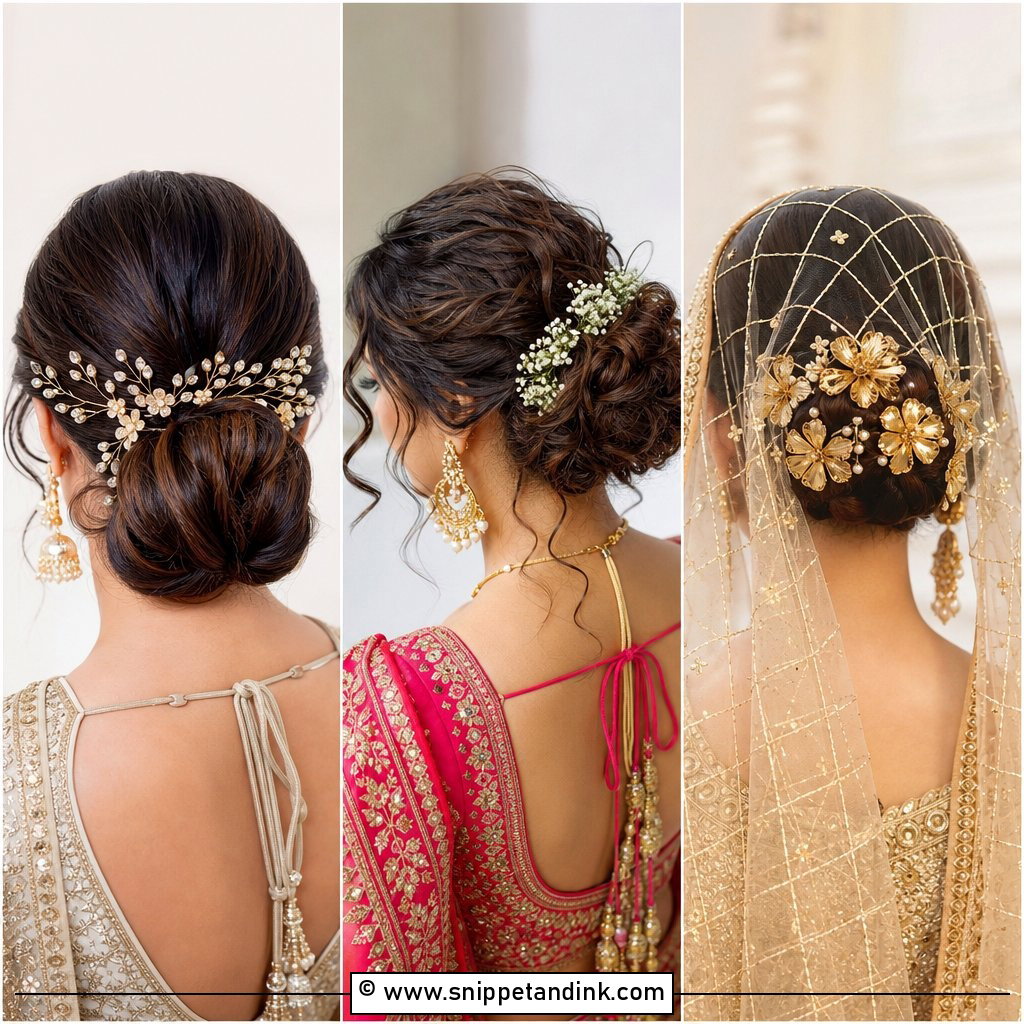

15. Modern Edo Okuku Hairstyle
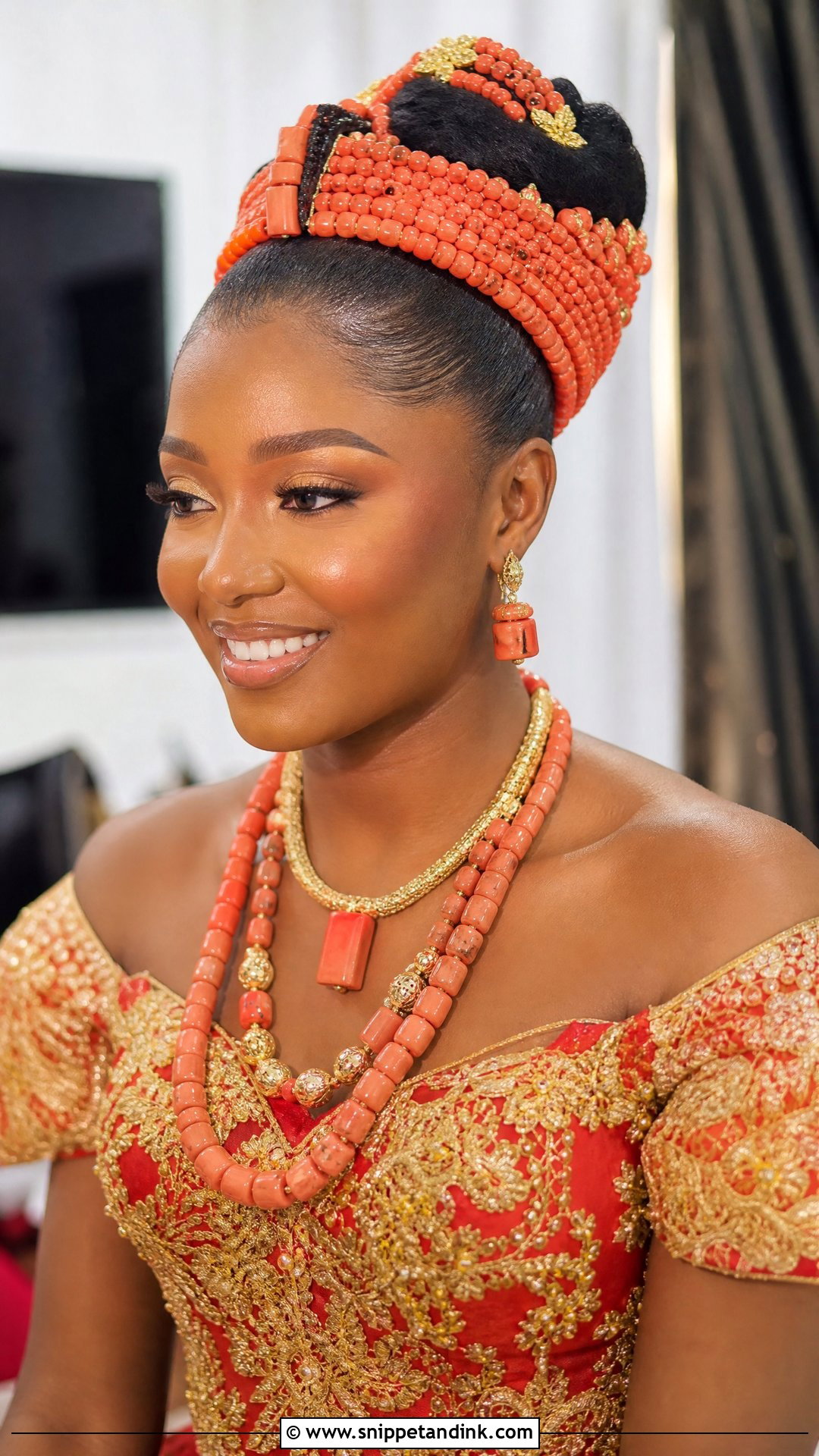
The modern version keeps the cultural shape but cleans up the finish: a smoother frontal base, a lighter ready-made crown, tidier bead rows or a profile adjusted to your face. I like it for long days with outfit changes because it’s easier to manage. My rule is that it must still be instantly recognisable as an okuku. Change the weight, the base and the finish all you like, but keep the coral and the crown shape, or it stops being an Edo bridal look and becomes just a beaded updo.
Carrying a Coral Crown Through a Long Traditional Ceremony
An Edo traditional wedding is not a quick walk down an aisle. There’s kneeling before your father and elders, dancing with your groom, greeting guests, spraying, and often a change of outfit, all with real weight sitting on your head. The okuku that looked best in the mirror can start to pull by the second hour if the base is loose or the beads are bunched at the front.
- I spread the weight evenly front to back and anchor the crown at several points, never just one or two.
- Practise kneeling and bowing at the trial. If anything tips forward then, it will tip further on the day.
- Give whoever is helping you a small kit: black thread and a needle, bobby pins, a soft edge brush and a few spare beads.
- With two outfits, decide in advance whether the crown stays or changes. Lifting a sewn okuku off for a second look is rarely realistic.
- Eat and drink properly before things start. A tension headache arrives much faster on an empty stomach.
Real Coral, Family Strands and Borrowed Beads
Many brides wear coral that has been in the family for years, or hire beads for the day, and both deserve careful handling. Genuine coral is a natural material that dulls and can be damaged by perfume, alcohol-based hairspray and acidic products, so I finish spraying before the beads go on, never over them.
At the end of the night, have someone help you take the crown down slowly over a towel so stray beads don’t roll away. Wipe strands with a soft dry cloth, lay them flat or wrap them separately so they don’t scratch each other, and keep them away from heat and damp. If the beads are borrowed or rented, count them before and after and return them in the order you received them; it saves a very awkward conversation later.
An Okuku Should Sit Like It Belongs to You
An okuku is never just a hairstyle. It carries Benin history and family pride, and guests recognise it the moment you enter. Tall or low, ready-made or built on your own hair, white or coral, layered or sleek at the front, the right one sits firmly, balances your outfit and still lets you turn your head to greet people. Bring your wrapper color, your jewelry and your ceremony schedule to the consultation, and tell your stylist honestly how much weight you can carry. Those answers decide the design far better than any photo does.
You'll Like These Ideas:




Leave a Reply