
The bride’s sister is in more mehndi photos than almost anyone except the bride, and she’s usually the busiest person in the room. I do her makeup right after the bride’s, so I see what her outfit has to survive: dancing, hosting, getting her own henna and crying through the speeches. The looks below cover lehengas, shararas, sarees, anarkalis and Indo-Western sets with mirror work, gota patti and organza dupattas. For each one I’ve added the hair and makeup that suits it and a note on how it holds up across a long evening, at home, in a hall or at a resort.
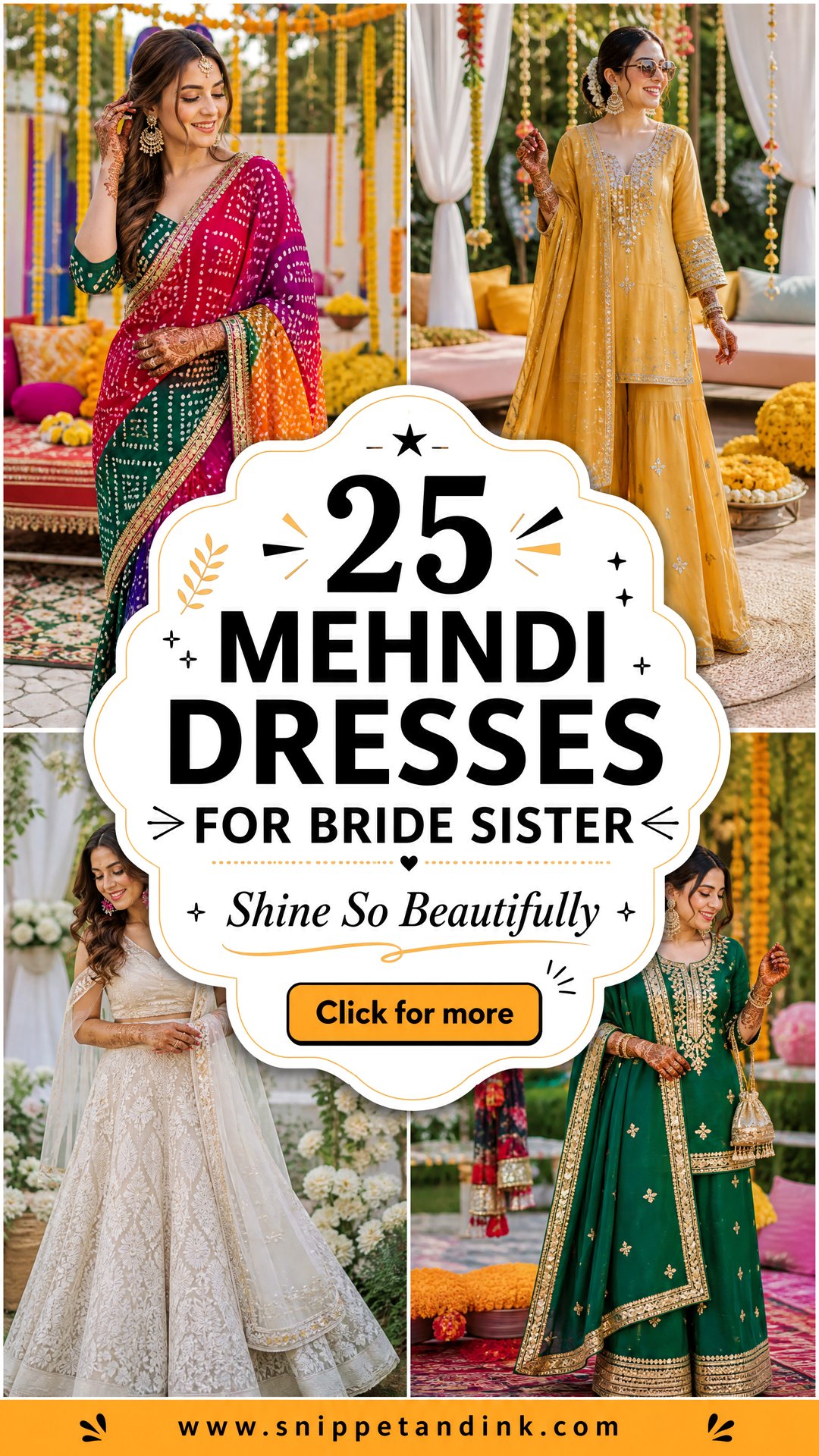
Read the Bride’s Outfit Before You Shop
Most sisters I work with want to look special without competing, and the only way to do that well is to know exactly what the bride is wearing. Ask her for a daylight photo of the outfit and, if possible, a fabric swatch.
- Avoid her exact shade. Go a step lighter, deeper or warmer, so you look related but not matched.
- If she’s in a print, wear a solid that picks out one colour from it. Two prints side by side fight in close-up photos.
- Keep your embellishment a level below hers. If she’s in heavy mirror work, choose gota or threadwork.
- Match the metal of your jewellery to hers. Gold beside silver in a close two-shot looks accidental.
- Ask whether the family has a colour theme for the bride’s side, then work inside it.
I also ask sisters to send me a photo of the outfit before the day. Strong colours change what foundation and blush look like on camera, and knowing in advance means I don’t have to guess at six in the morning.
1. Yellow Lehenga For Bride Sister
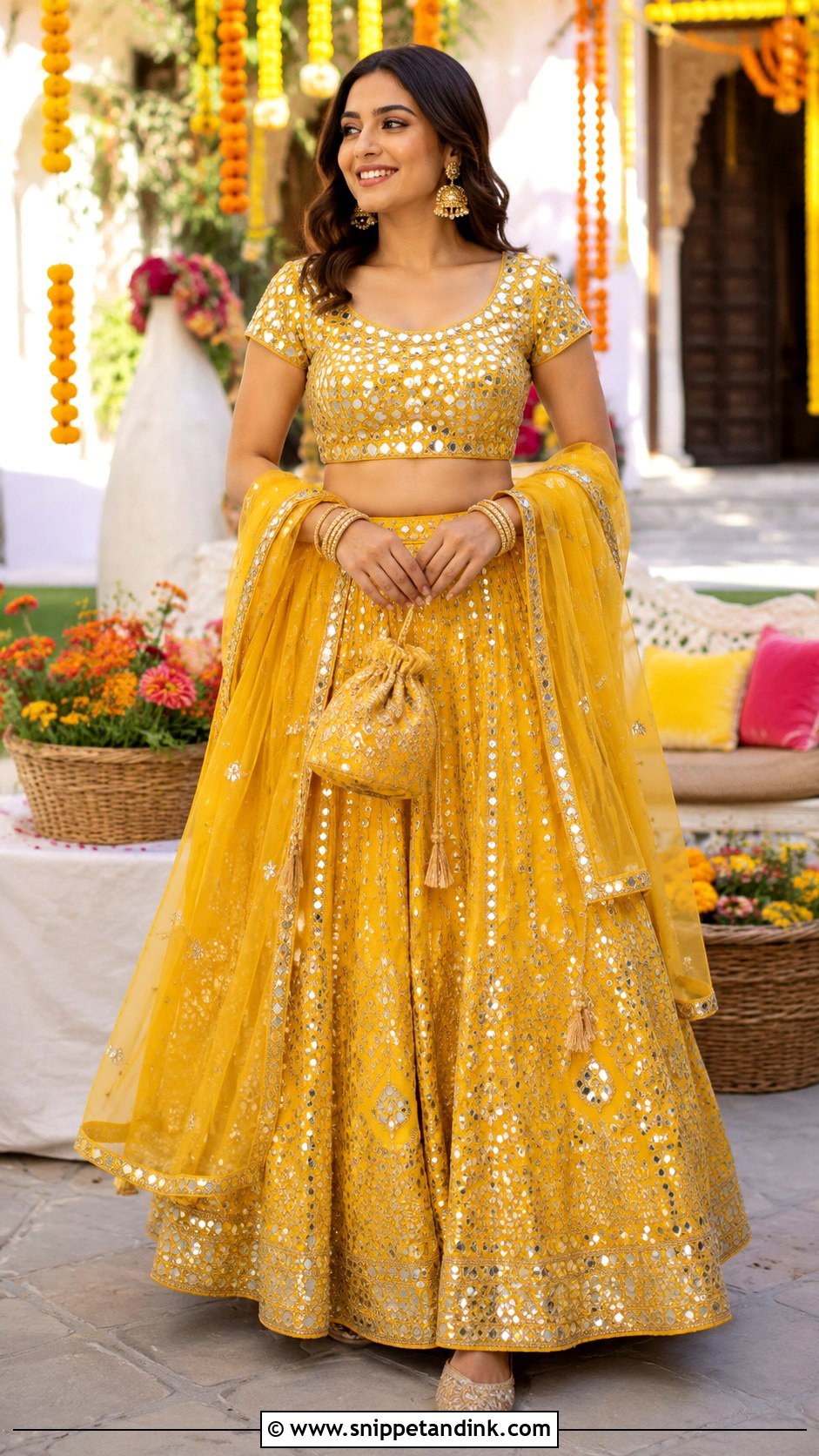
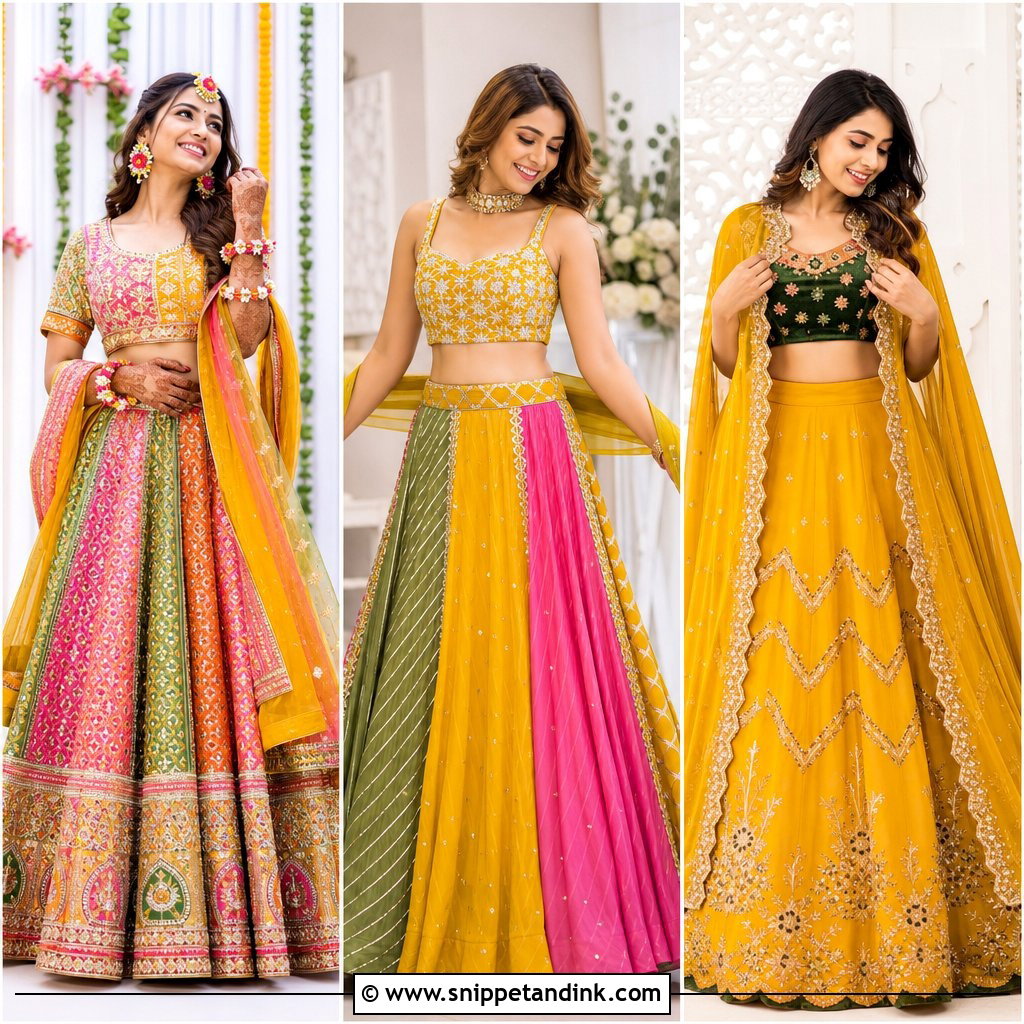
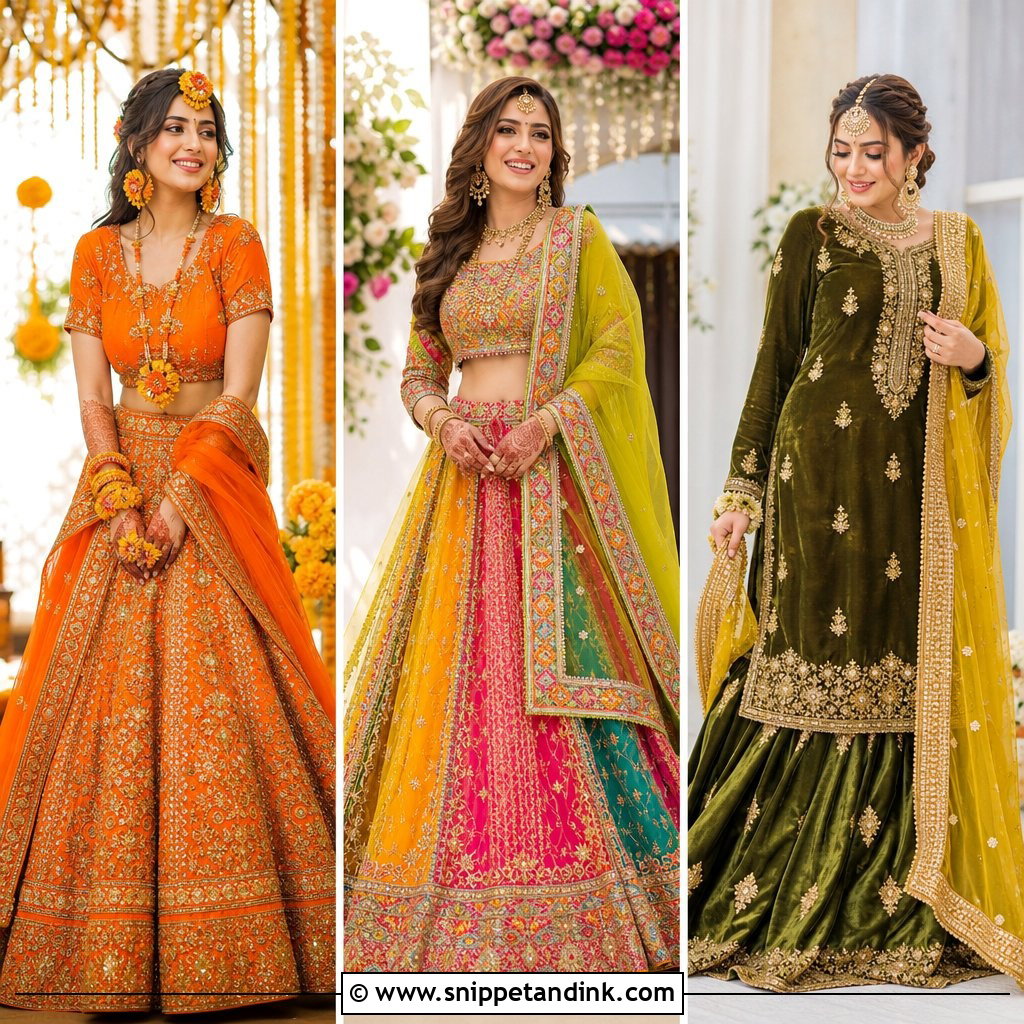
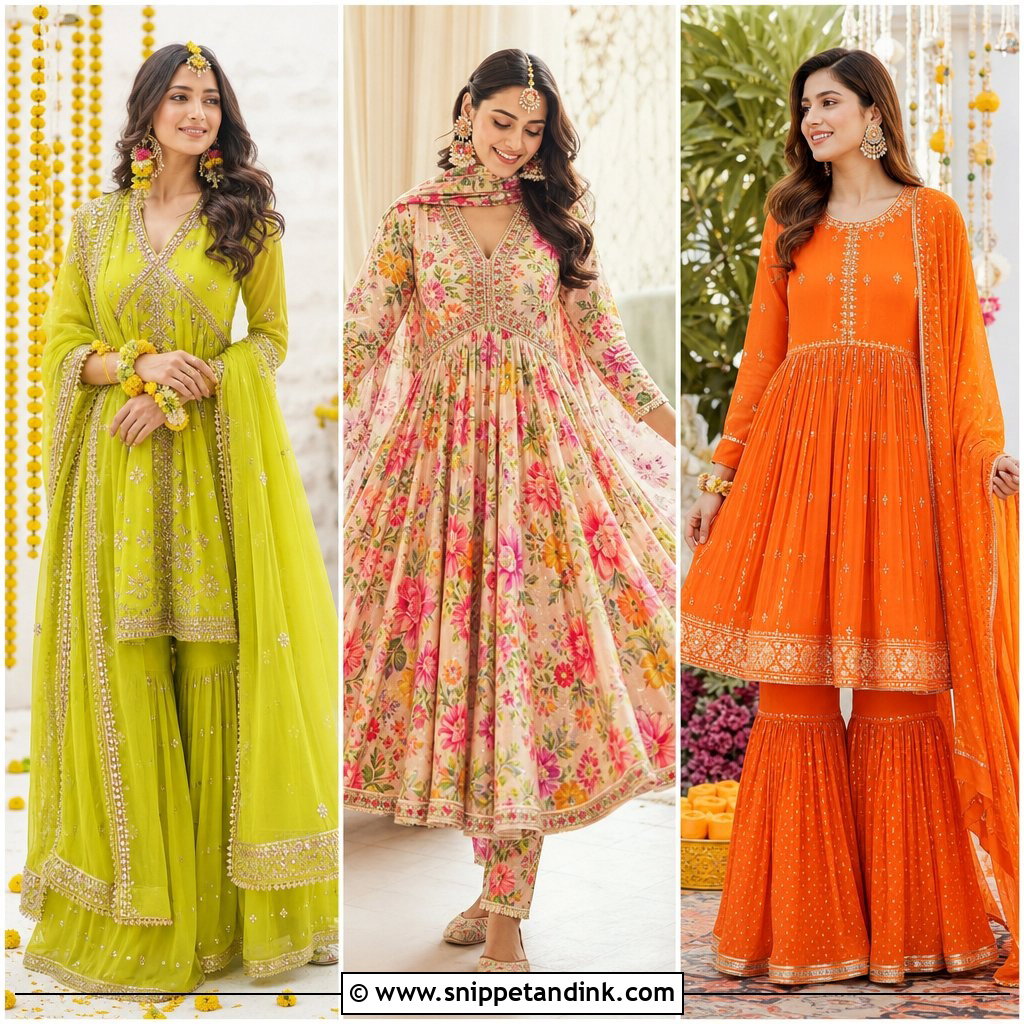
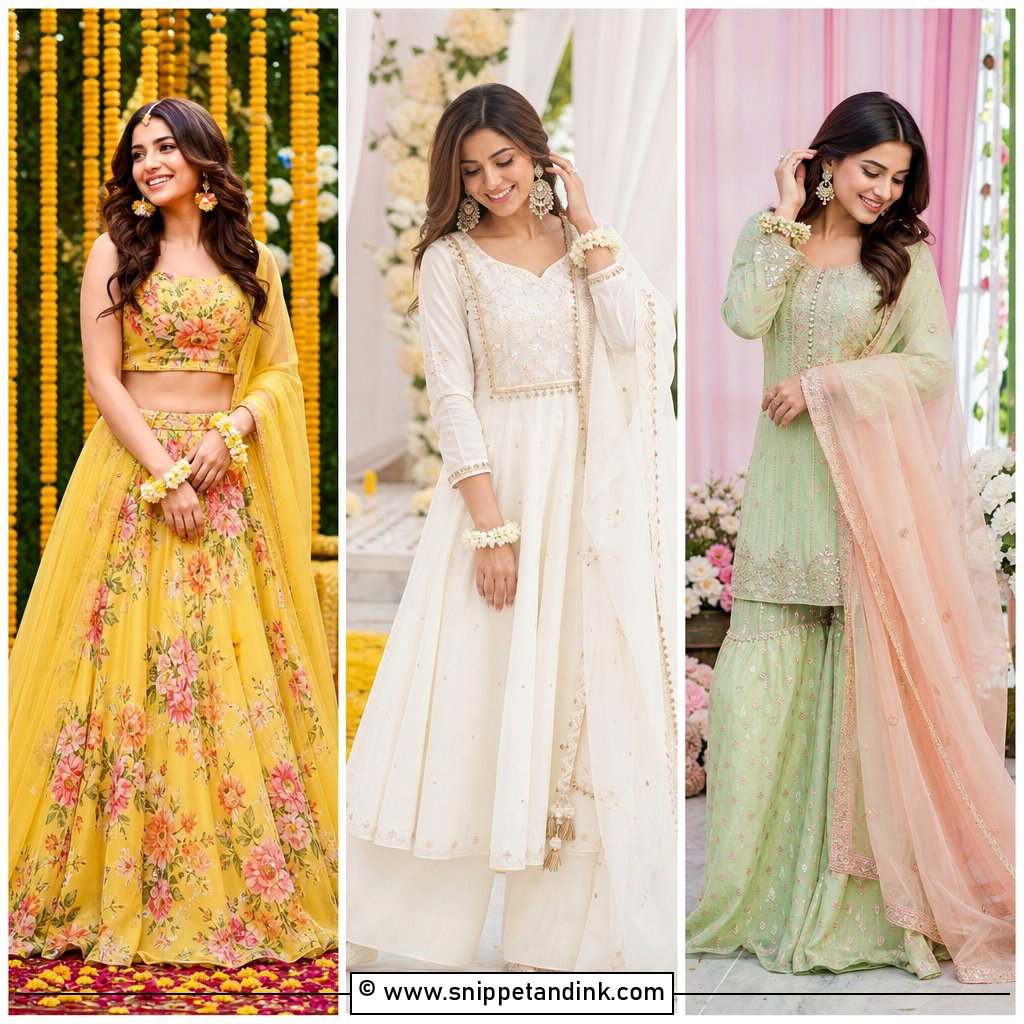
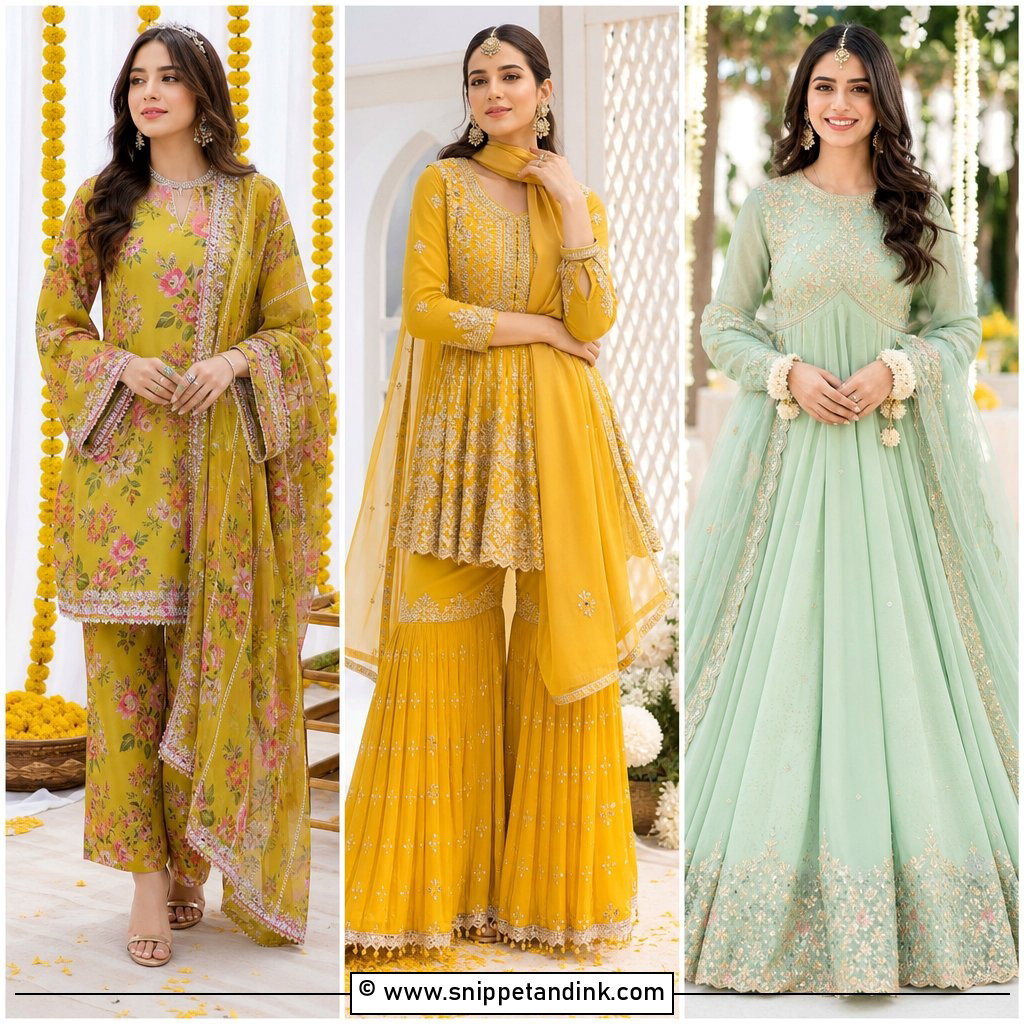
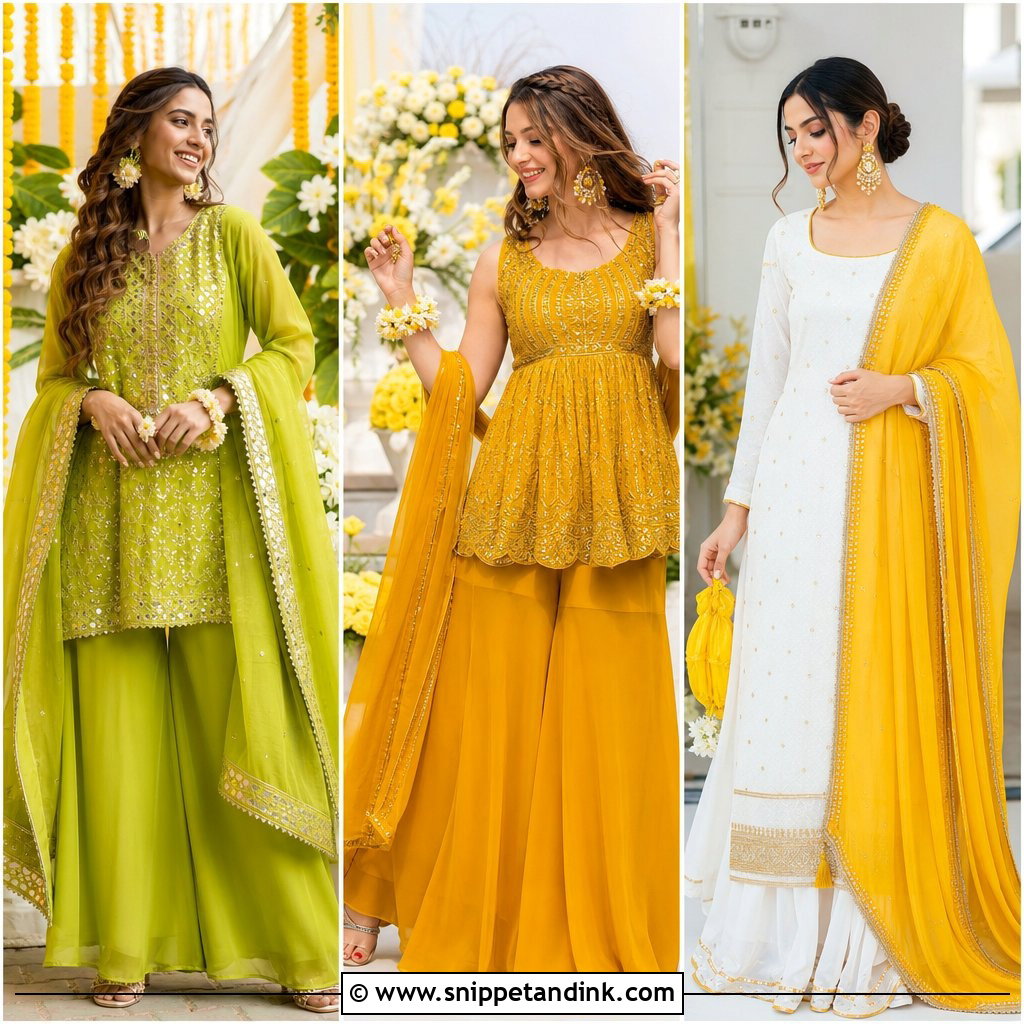
Yellow is the classic sister’s colour at a mehndi, but check what the bride is wearing first. If she’s in yellow too, I’d move you to mustard, lemon or marigold so you don’t read as a twin in photos. A flowy skirt with mirror work, thread embroidery or gota borders stays festive without looking bridal. A short blouse, light dupatta, jhumkas, glass bangles and embellished juttis finish it. Yellow throws warm light onto the face, so I keep blush peachy and lips glossy rather than adding more warmth with bronzer.
2. Green Sharara For Bride Sister
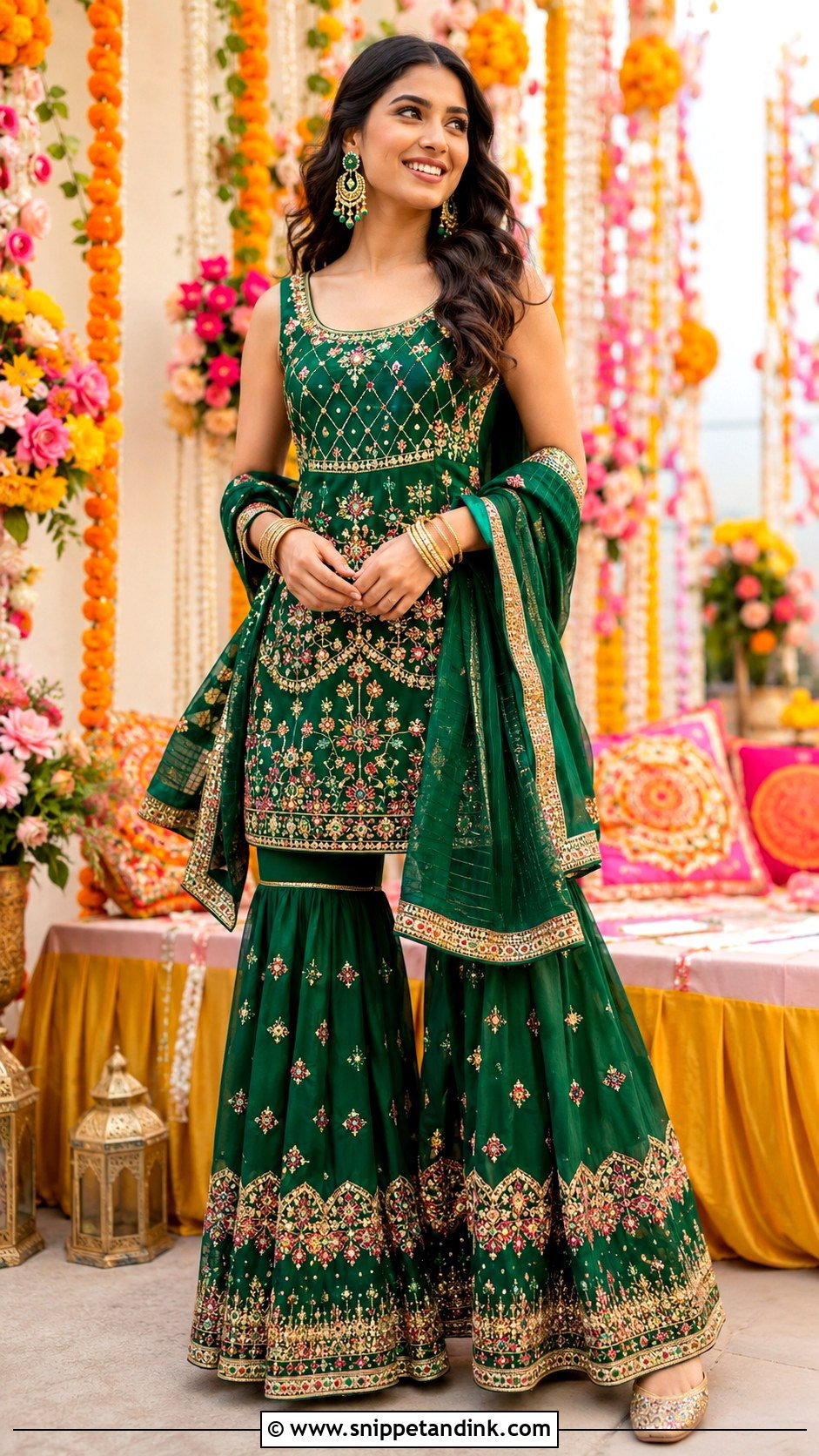
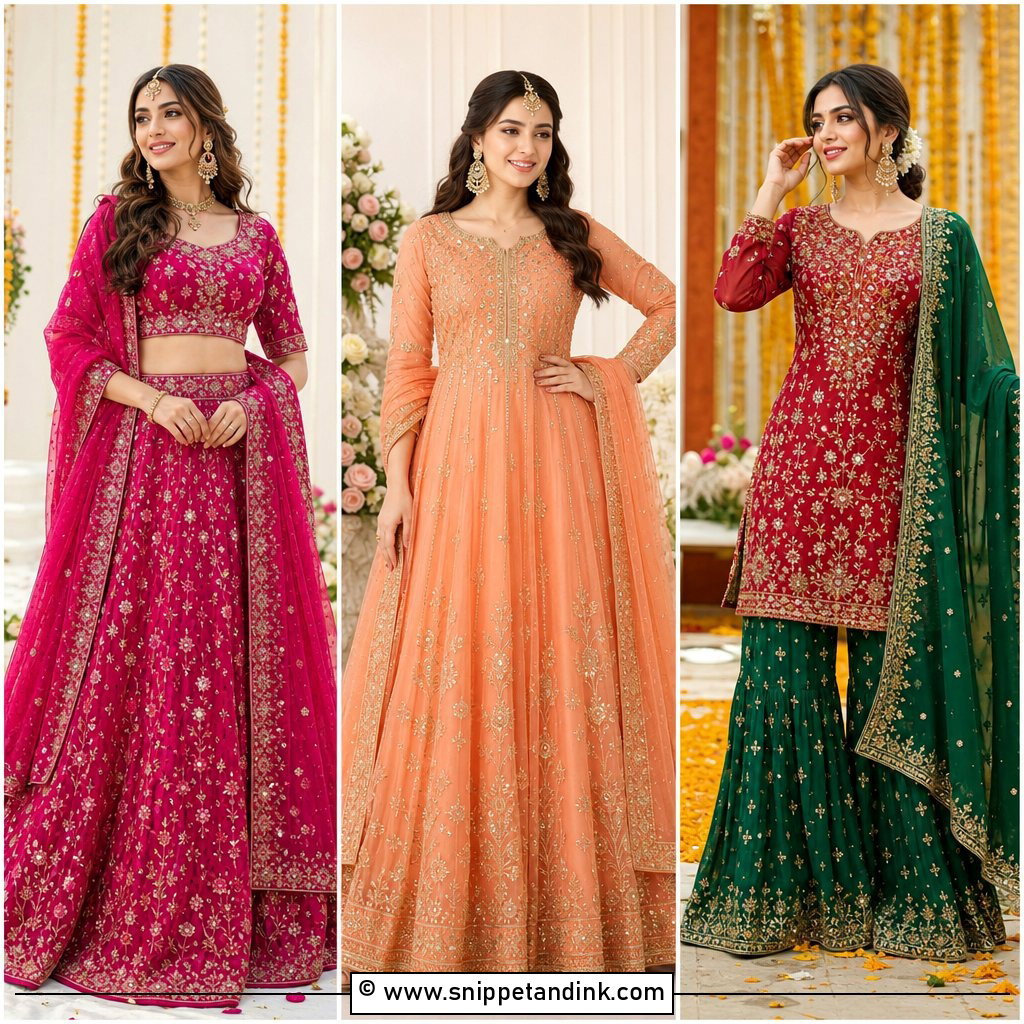
Green sharara sets are what I see most often on sisters who are actually running the event. The wide legs let you sit, walk, dance and kneel beside the bride without a heavy skirt in the way. Emerald, parrot or mehndi green with mirror work, sequins or colourful threadwork all suit it. A short kurti looks youthful; a longer one is more graceful. Pin the dupatta on one shoulder. Gold kolhapuris or juttis are practical, and a half-up style with soft curls keeps hair off your face while you work.
3. Pink Gharara For Bride Sister
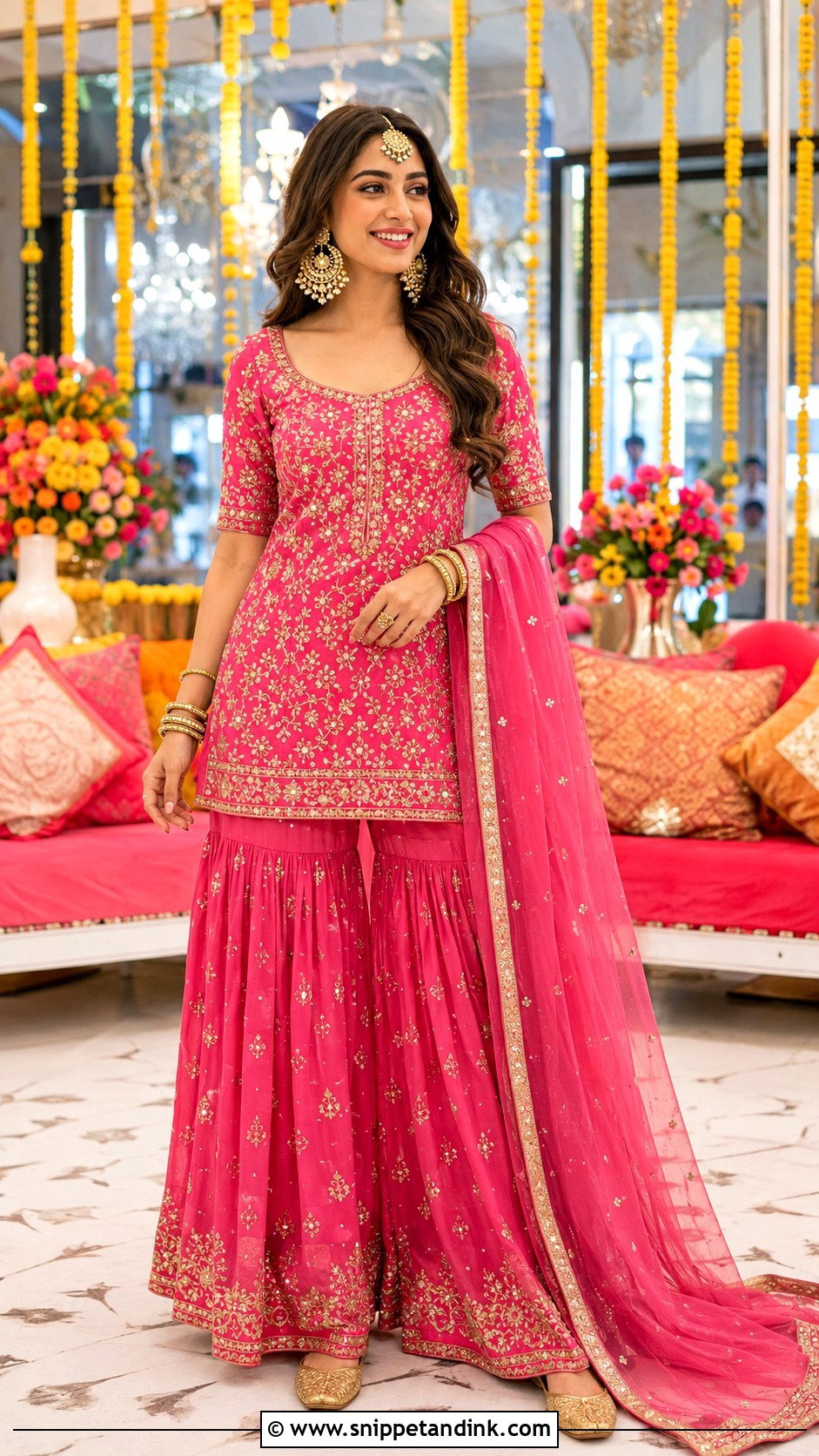
A pink gharara looks a little regal, and the flare at the knee moves well in dance photos. Rani, rose and hot pink all suit a mehndi, especially with gold or green detail. A fitted short kurti and a soft dupatta keep it light. Pink outfits bounce colour onto the skin, so I check the lip shade next to the fabric before committing; a blue-toned lipstick against a warm rani pink can look slightly off. Chandbalis, a maang tikka, kohl-lined eyes and gold juttis complete it without tipping into bridal.
4. Orange Anarkali For Bride Sister
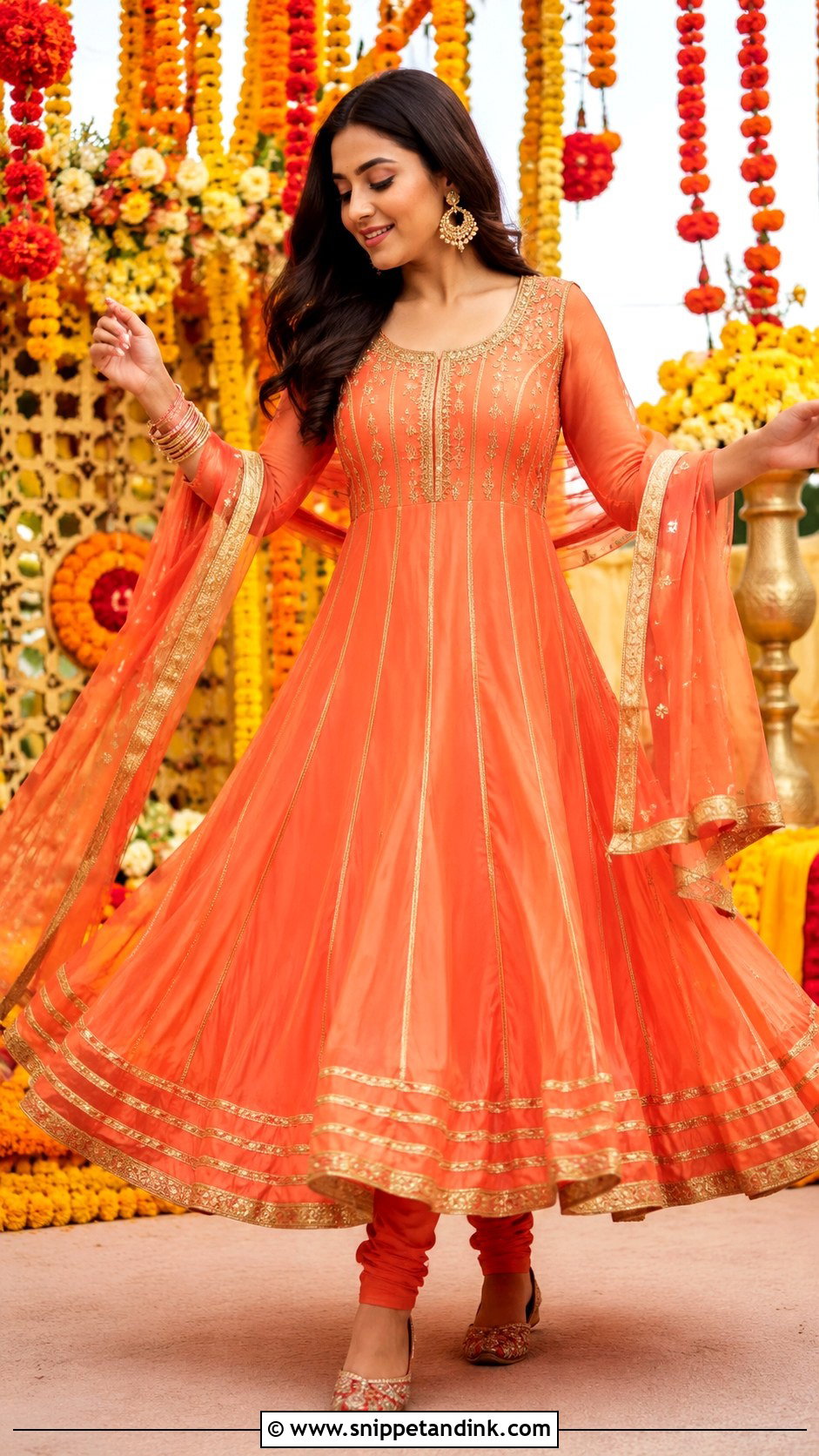
An orange anarkali is a one-piece outfit that looks dressed from head to toe. A flared anarkali with gota patti, mirror work or light zari is the version I’d pick. Tangerine, burnt orange and coral orange stand out against green decor and suit a wide range of skin tones. Churidar pants, gold earrings and embroidered flats finish it. The flare looks wonderful during family performances, but practise your steps in it once; a full anarkali spins wider than you expect and can catch on a neighbour’s heel.
5. Floral Lehenga For Bride Sister
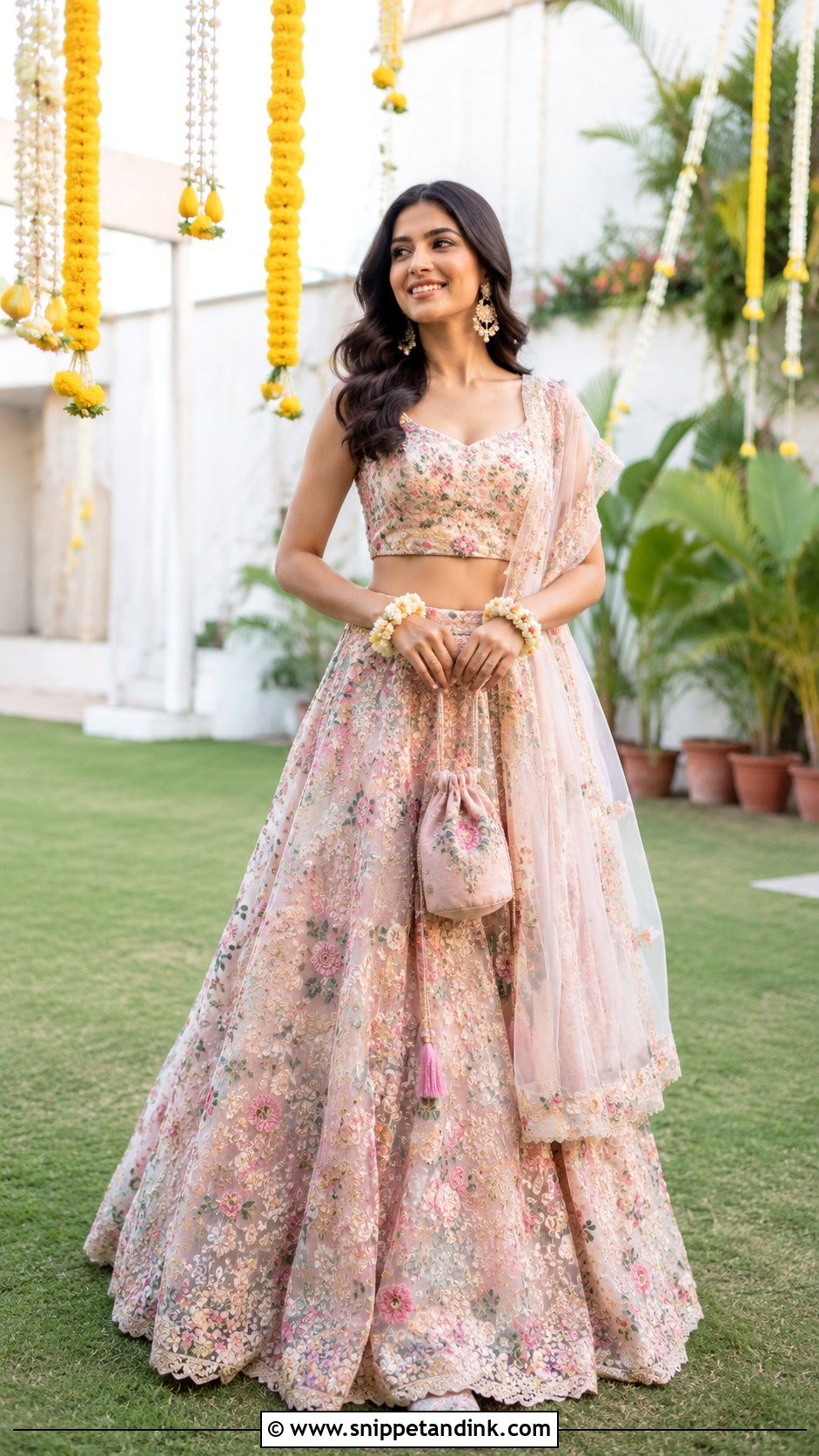
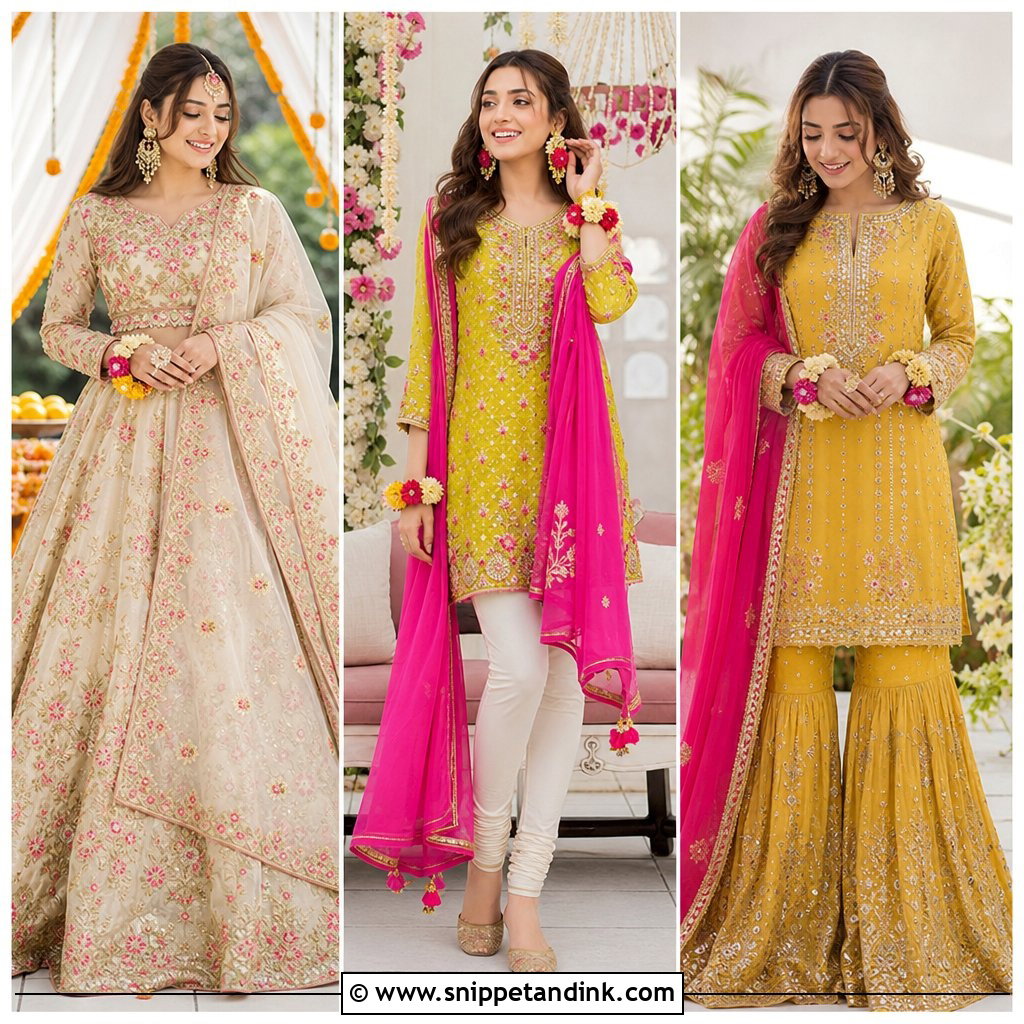
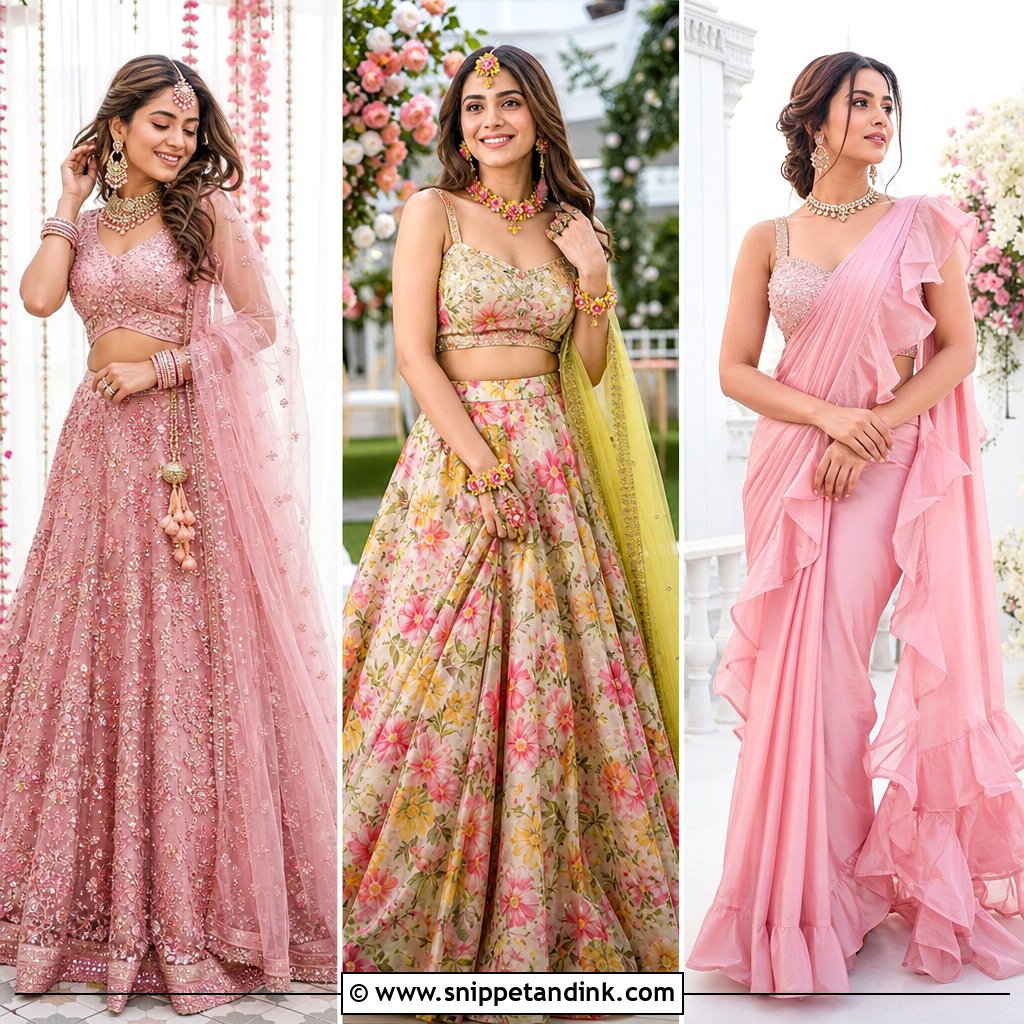
Floral lehengas feel younger and lighter than heavily embroidered ones. A printed or embroidered skirt in yellow, pink, green, peach or ivory with a matching or contrasting blouse is easy to wear, and a sheer organza dupatta adds softness. Pearl earrings, floral bangles and pastel juttis suit it. Outdoors in daylight, prints look their best. The pieces also mix back into other outfits later, which makes the cost easier to justify for one of several functions.
6. Mirror Work Kurta Set For Bride Sister
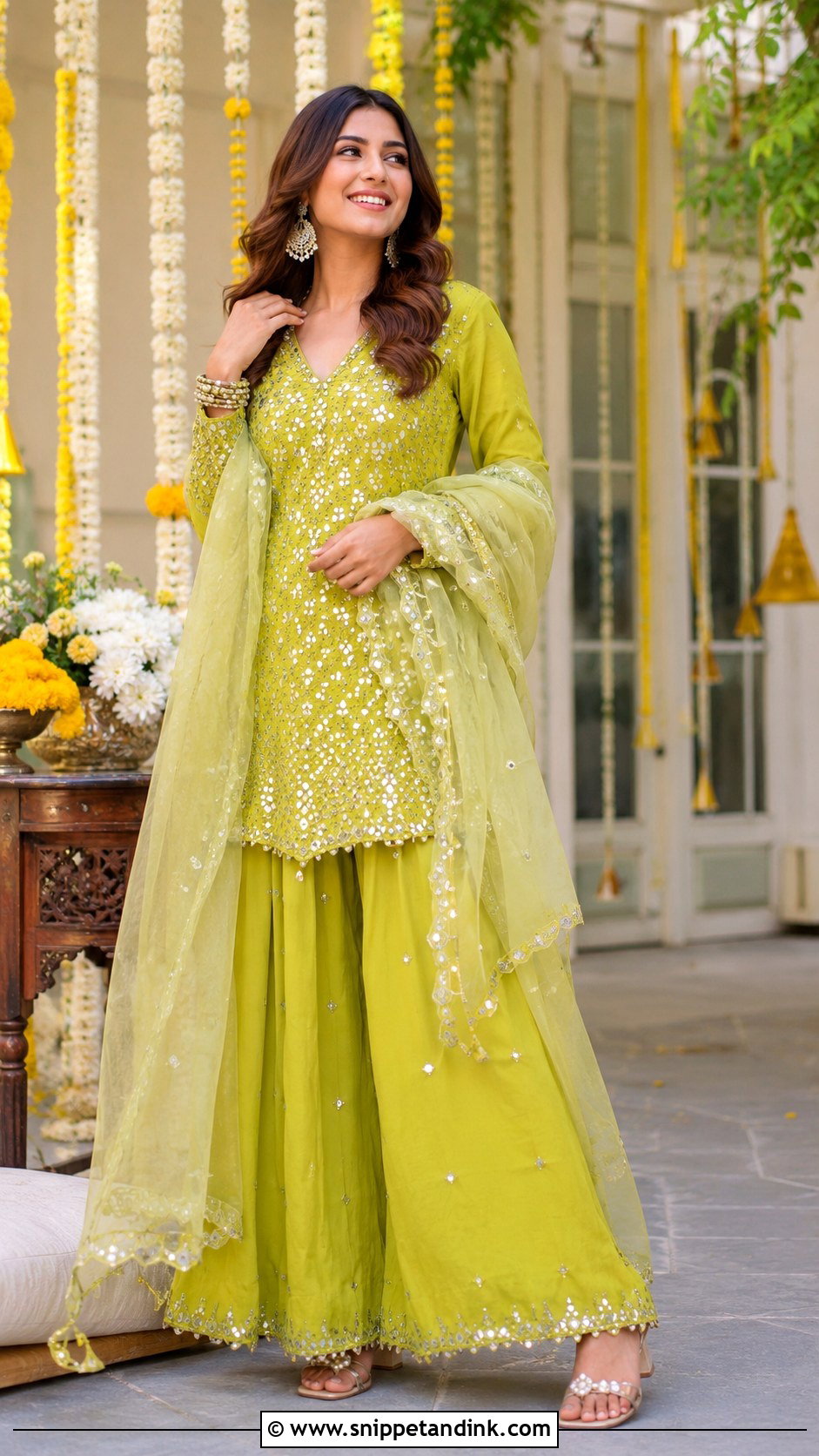
If you’ll be coordinating vendors and greeting guests, a mirror work kurta set gives sparkle without a heavy lehenga. A straight or flared kurta with palazzos, cigarette pants or a flared skirt in lime, yellow, fuchsia, turquoise or orange works well. The mirrors catch light, so you can skip the necklace. A sleek ponytail shows off the neckline and survives running around better than loose curls, which drop in the heat after an hour or two.
7. Pastel Lehenga For Bride Sister
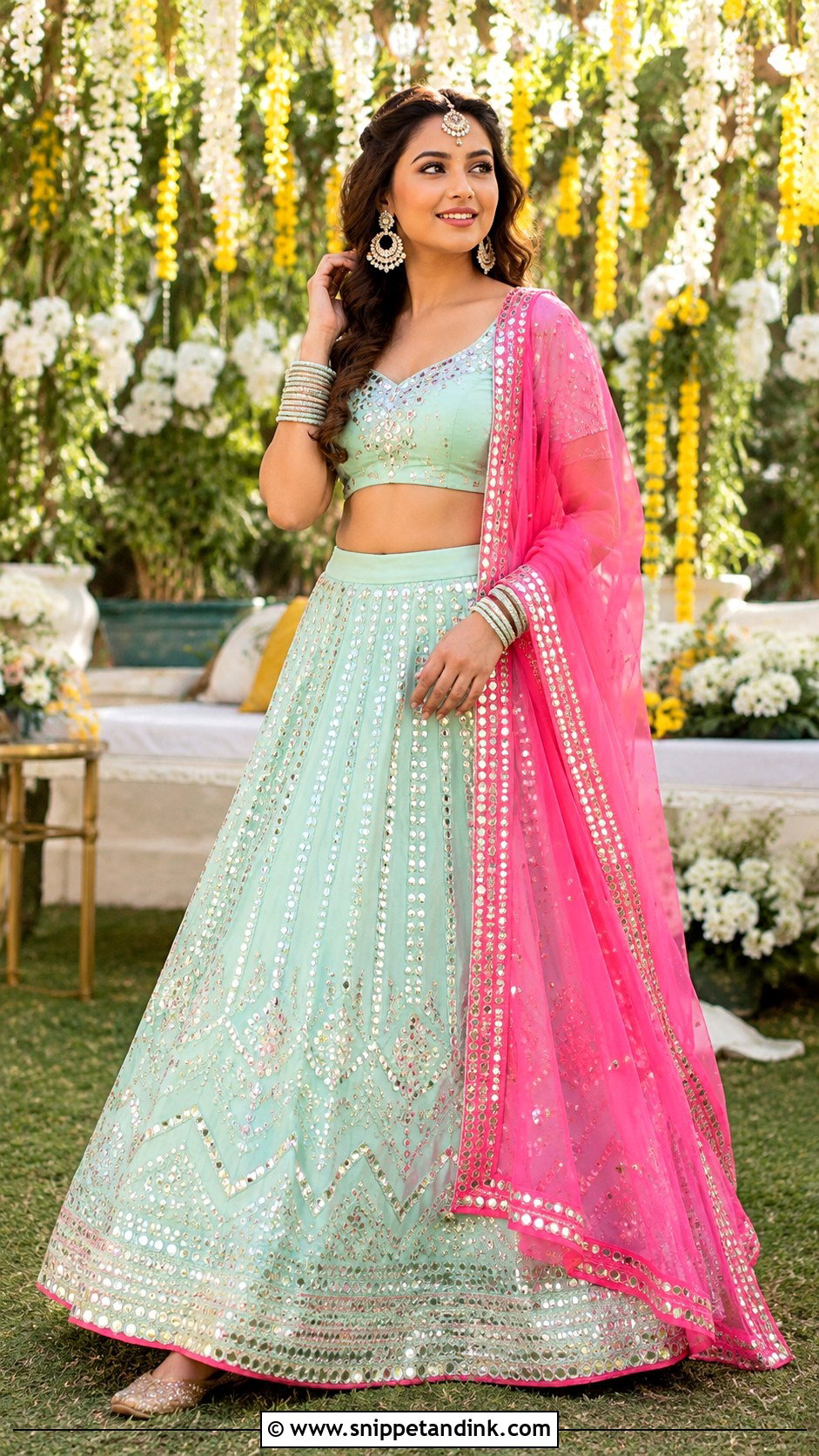
Pastels need a little help to look festive at a mehndi. Mint, peach, blush, powder blue or lavender look modern, and mirror work, gota, sequins or a bright contrast dupatta stop them from fading out. A mint lehenga with a hot pink dupatta or a peach lehenga with green jewellery works nicely. Pastels wash out on camera next to bright decor, so I give sisters in pastels more definition in the eyes and a rosier lip than they’d normally wear. Pearl or kundan earrings and metallic juttis complete it.
8. White Lehenga With Color Dupatta For Bride Sister
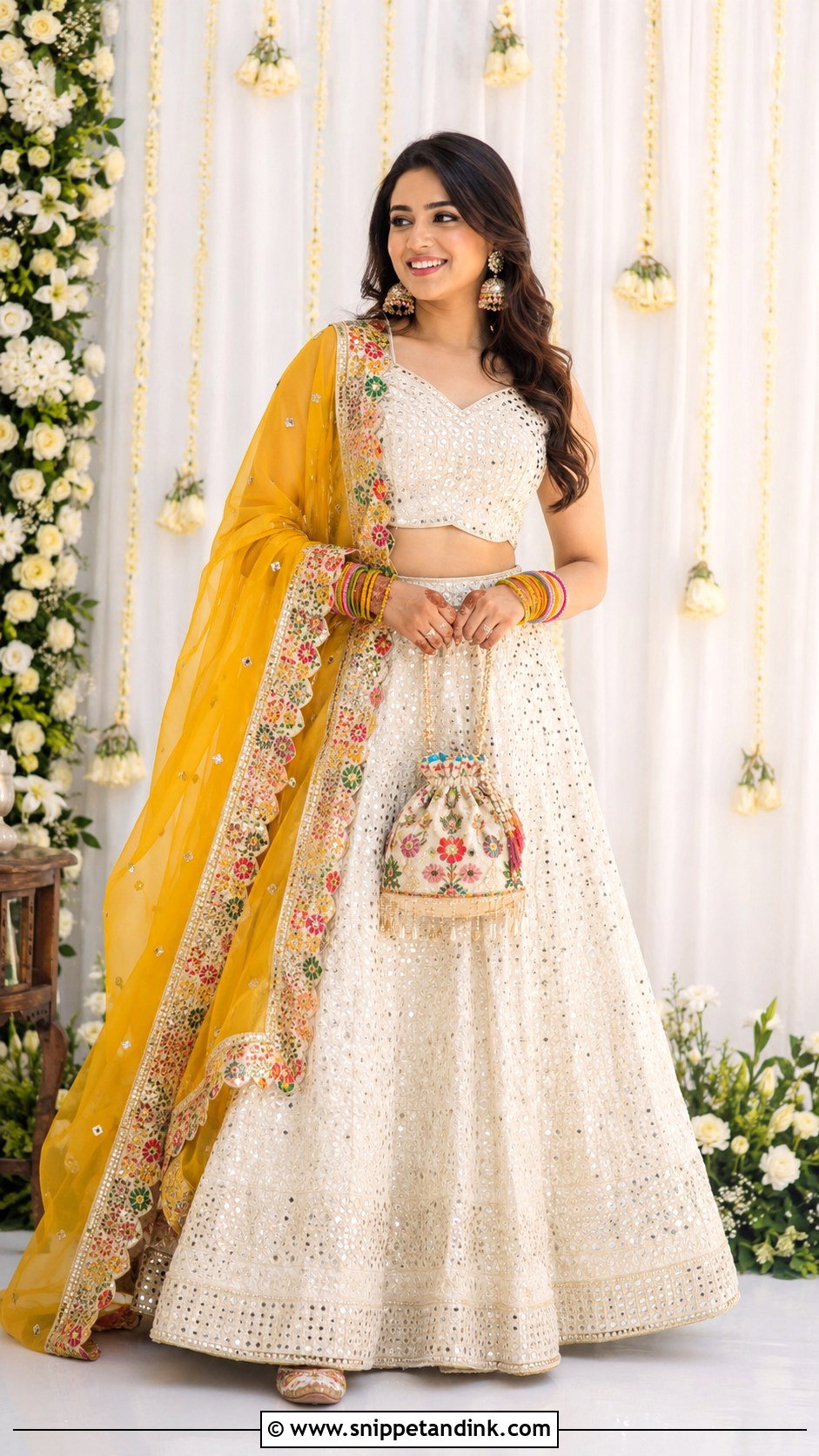
A white lehenga with a colorful dupatta looks clean and modern. Choose white or ivory with mirror work, chikankari, threadwork or gota borders, then let a bright dupatta in yellow, green, pink, orange or multicolour bandhani bring the festive colour. I’d pick ivory over bright white for photos; pure white blows out under flash and takes the face’s colour with it. Pick up one colour from the dupatta in your eye makeup or lip to tie the look together.
9. Bandhani Saree For Bride Sister
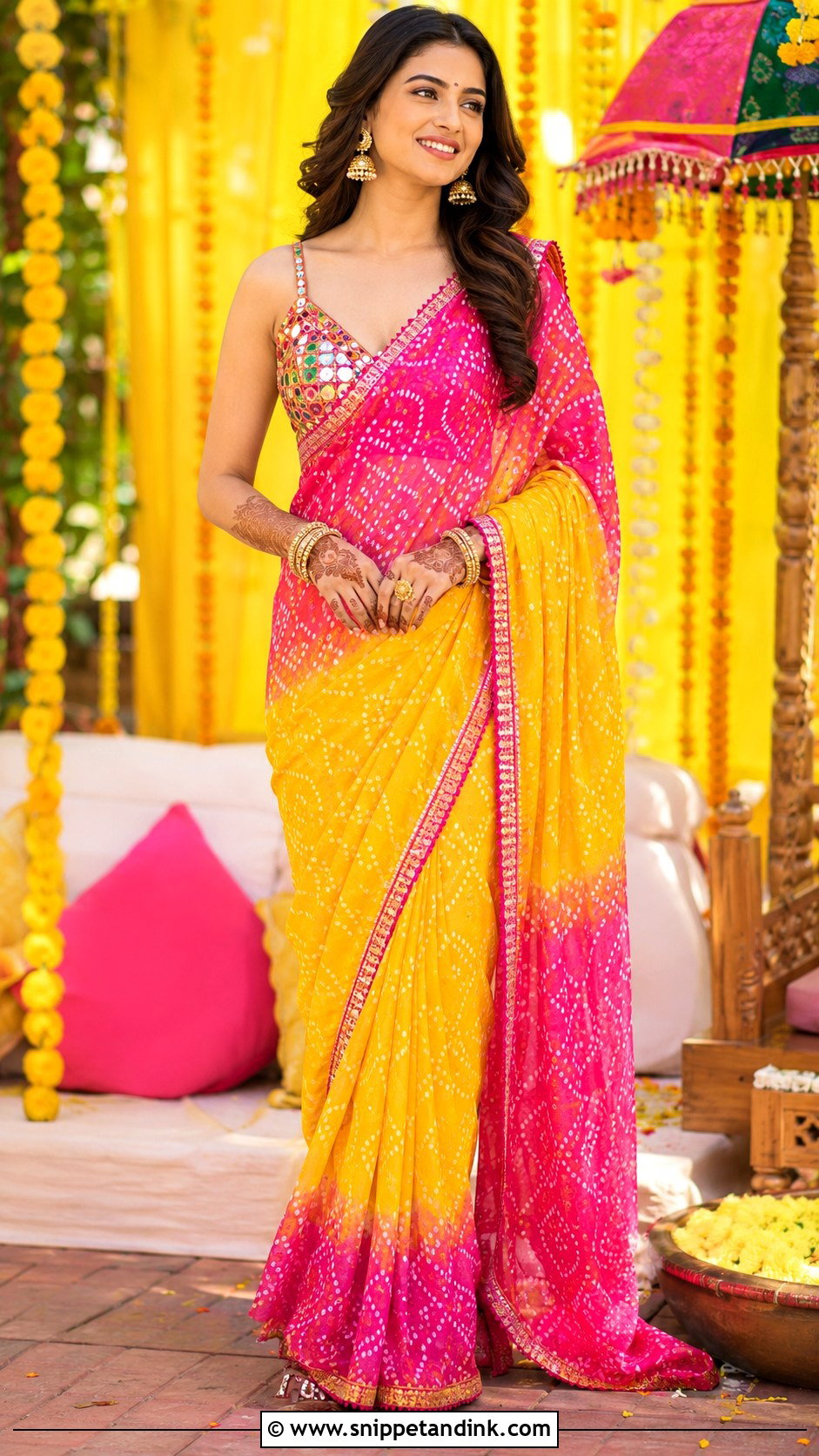
A bandhani saree is colourful, light and traditional. Yellow, green, red, pink or orange bandhani with a contrast blouse in a sleeveless, elbow-sleeve or mirror work cut looks young and festive. A belt at the waist keeps the drape secure while you move around. Jhumkas, a small bindi and embellished flats suit it, with a low bun and flowers or soft curls. Saree pallus brush the face a lot, so I set the makeup well; foundation on the pallu is the most common transfer mark I see at mehndis.
10. Printed Saree With Crop Blouse For Bride Sister
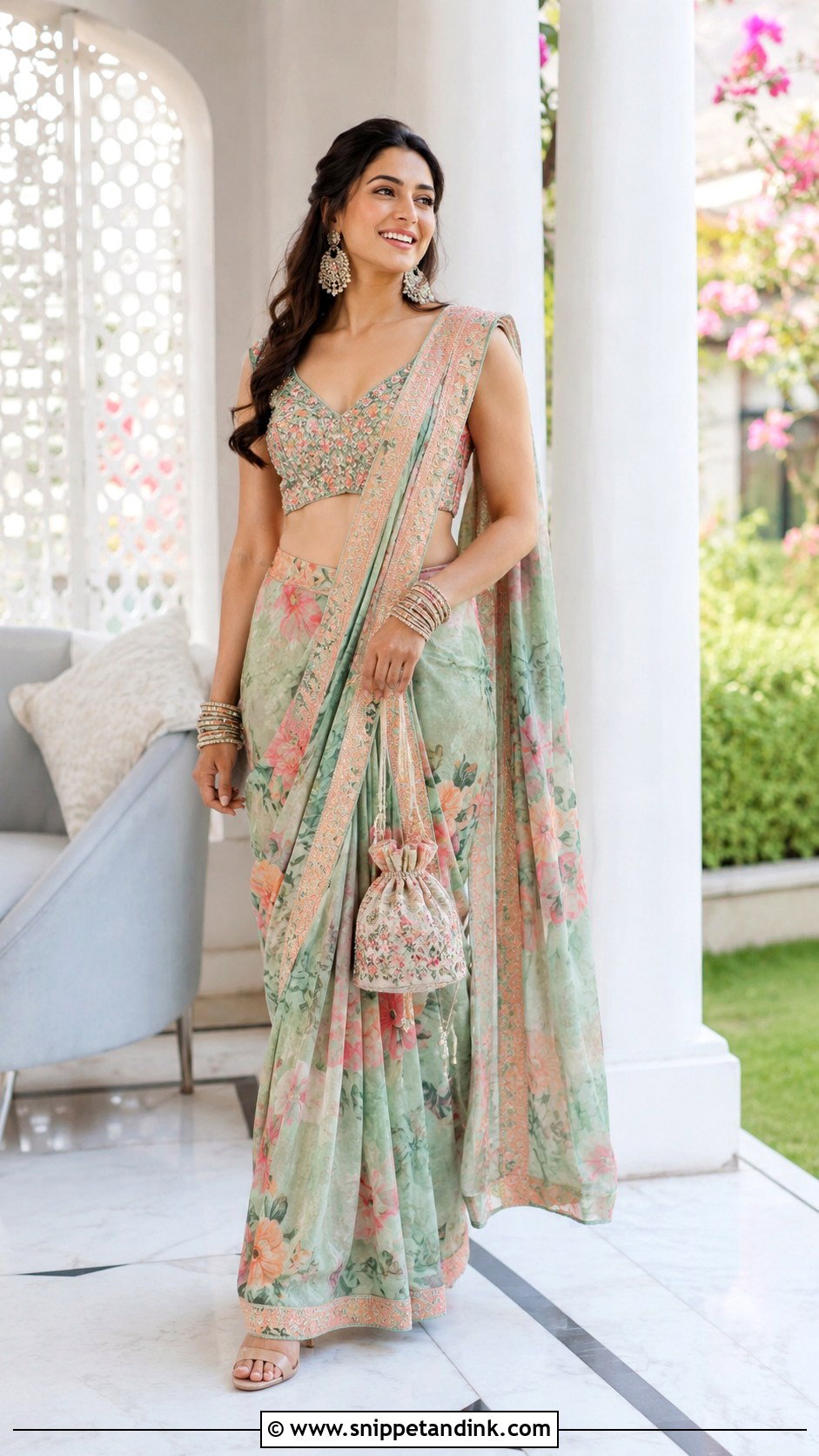
A printed saree with a crop blouse is lighter than most outfits here. Floral, leheriya, block print or abstract prints in festive colours suit it, with a fitted crop blouse, mirror work blouse or embroidered blouse. A pre-stitched version helps if you don’t want to keep fixing pleats. Chandbalis, bangles and a small potli finish it. Open hair looks relaxed, but in humidity I’d add a light texture spray so it doesn’t flatten by the time the dancing starts. It suits sisters who prefer simple over heavy embellishment.
11. Palazzo Suit For Bride Sister
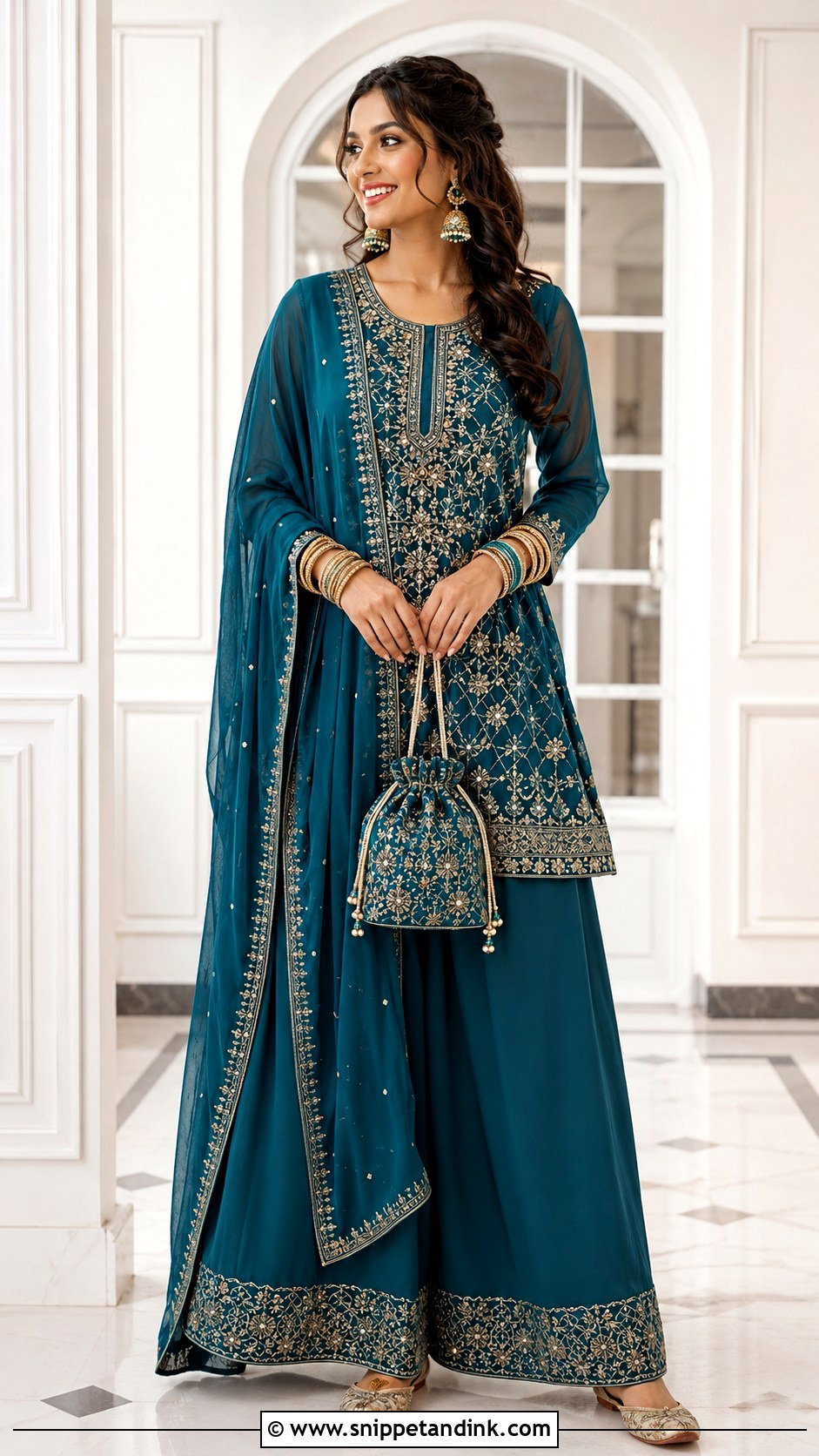
A palazzo suit is the most comfortable option for a long function. The wide legs mean you can sit on the floor for your own henna, dance and move without a heavy skirt. A short or long kurta with embroidered palazzos and a light dupatta in yellow, green, teal, peach or pink works well. Mirror work, gota trim or tassels make it festive. A side braid or half-up style keeps it easy. Wear the palazzos at the length of your juttis, not your heels, if you’ll switch shoes later.
12. Cape Lehenga For Bride Sister
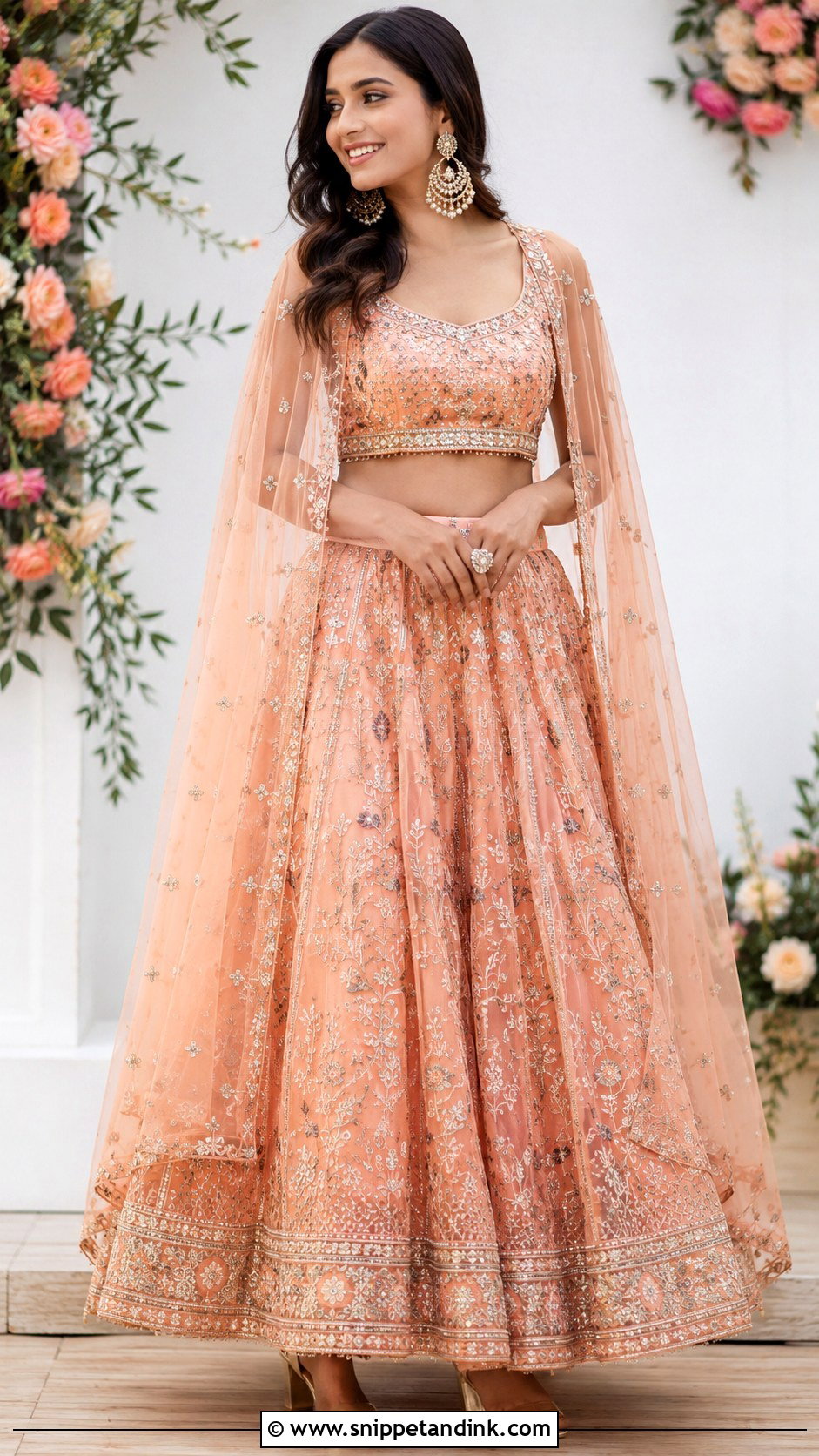
A cape lehenga is for the sister who wants drama but doesn’t want to manage a dupatta. The cape adds movement and coverage while keeping your hands free. A crop top and sheer embroidered cape in yellow, green, peach or pink, with mirror work or sequins, suits the setting. Jewellery focuses on earrings and rings. A sleek hairstyle keeps the cape neckline visible. Capes made of net can rub against the cheek during dancing, so I’d set the makeup along the jawline with a little extra powder.
13. Jacket Lehenga For Bride Sister
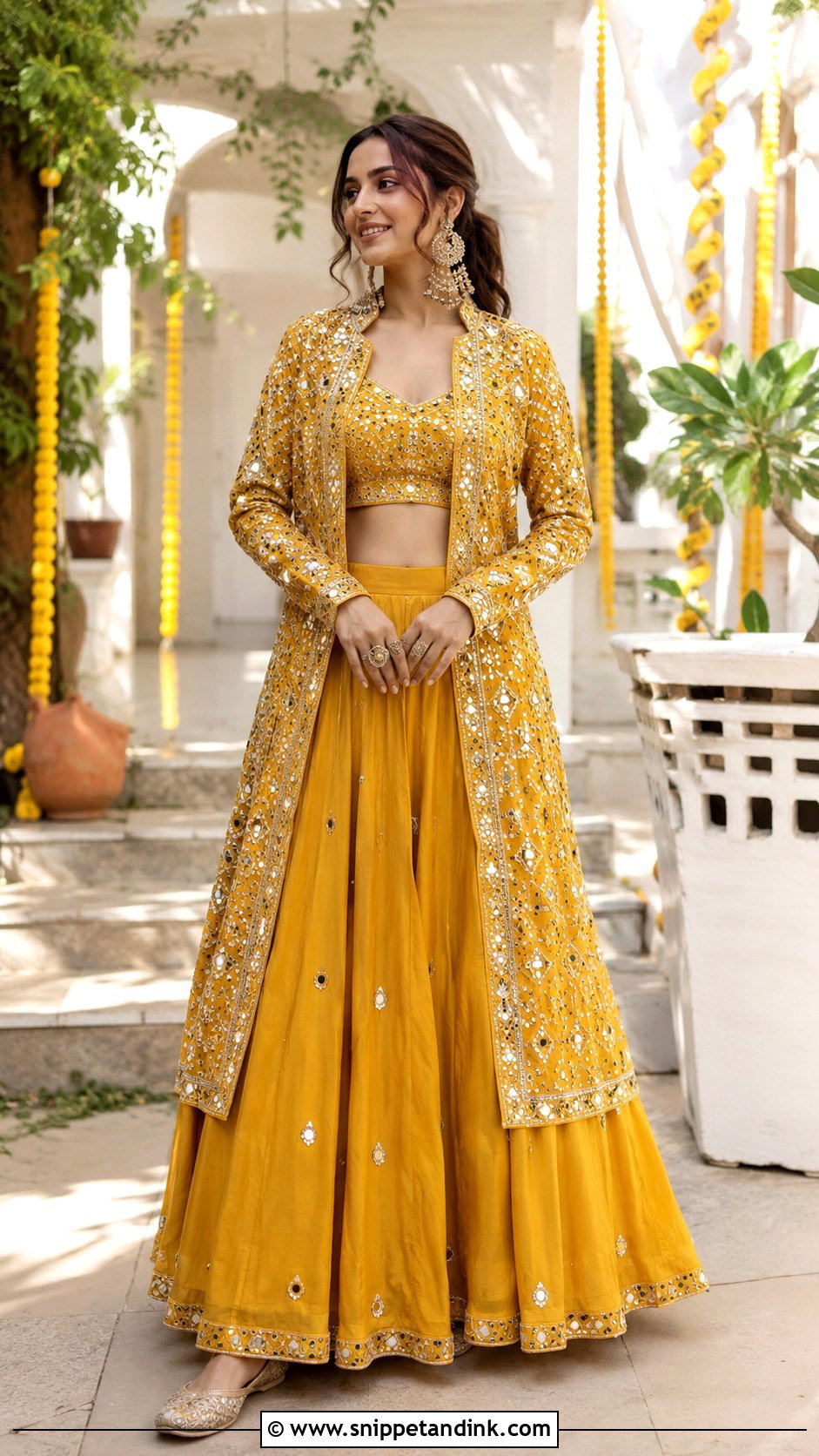
A jacket lehenga gives an Indo-Western touch while still feeling traditional. The jacket can be short, long, sheer, embroidered or printed, and it replaces the dupatta. A simple skirt and blouse under a mirror work, gota or threadwork jacket in mustard, lime, coral, fuchsia or teal looks polished. Statement earrings and stacked rings suit it. A long jacket keeps you warm in an air-conditioned hall but gets hot outdoors; take it off for dancing and put it back on for portraits.
14. Chikankari Lehenga For Bride Sister
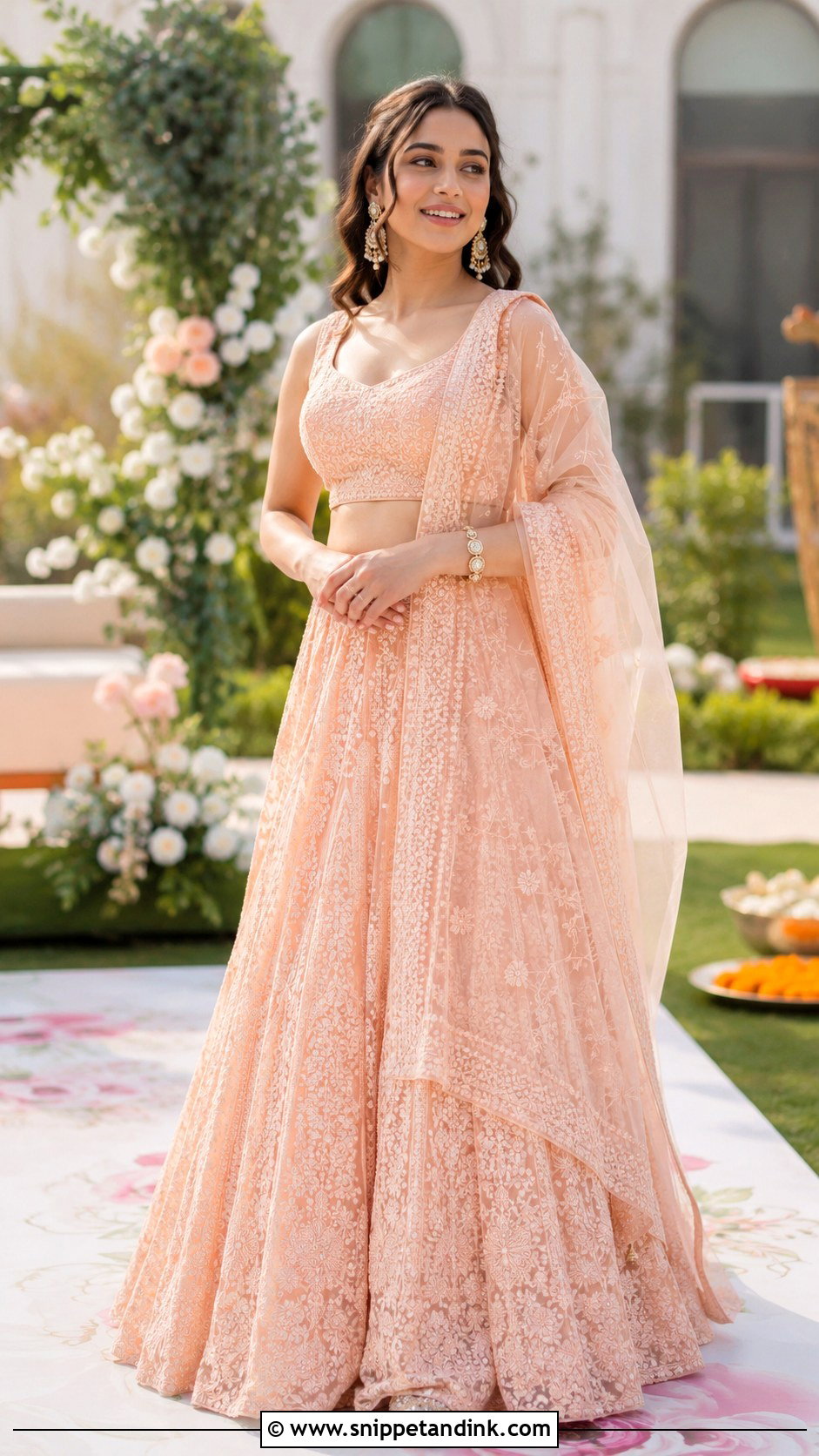
Chikankari is fine hand embroidery, usually on light cotton, georgette or mul, and it looks graceful in soft colours. Pastel, ivory, yellow, mint or peach chikankari with light sequins or mirror accents is festive enough for mehndi. A matching blouse and sheer dupatta, or a bright contrast dupatta, both work. Pearls, kundan earrings and metallic juttis suit it. I keep makeup dewy with soft eyes and a nude-pink lip to match its calm look. Thin chikankari fabric shows foundation marks easily, so let your makeup set before you dress.
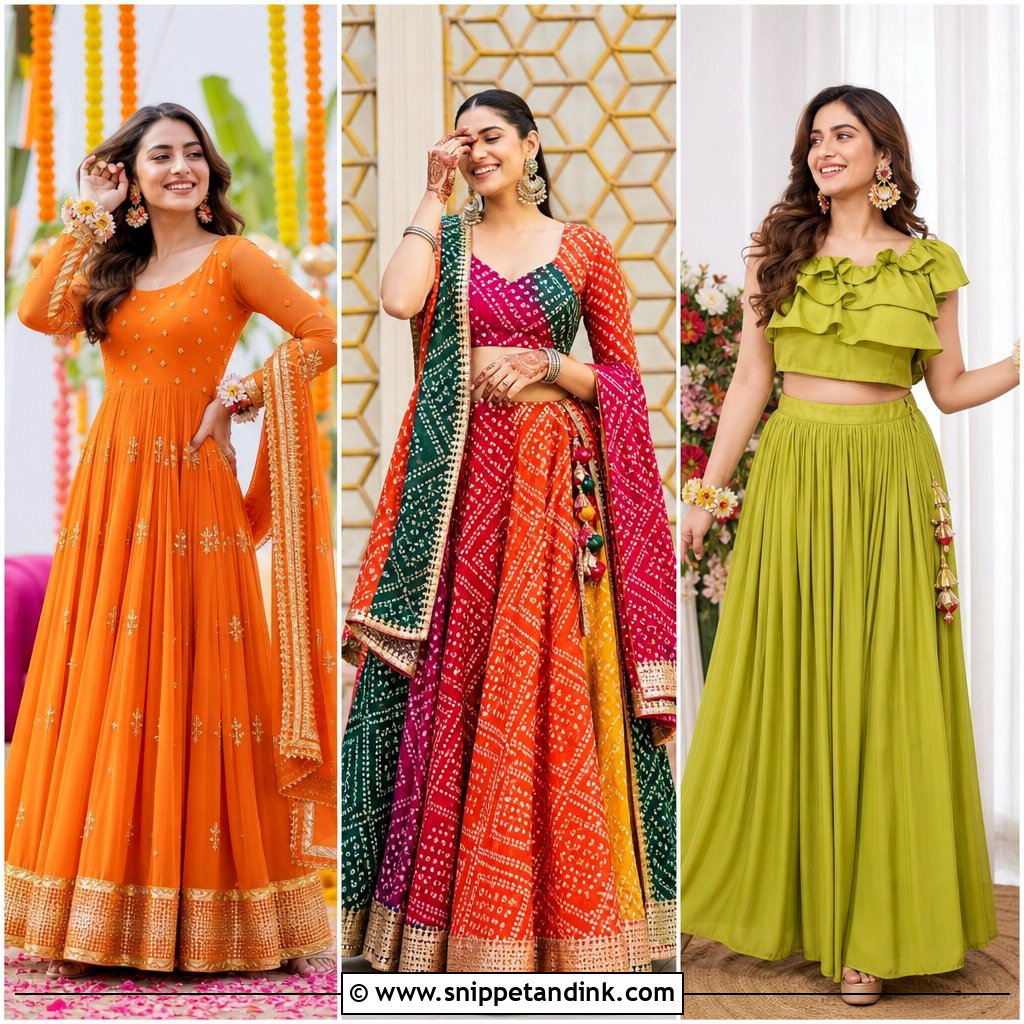
15. Peplum Sharara For Bride Sister
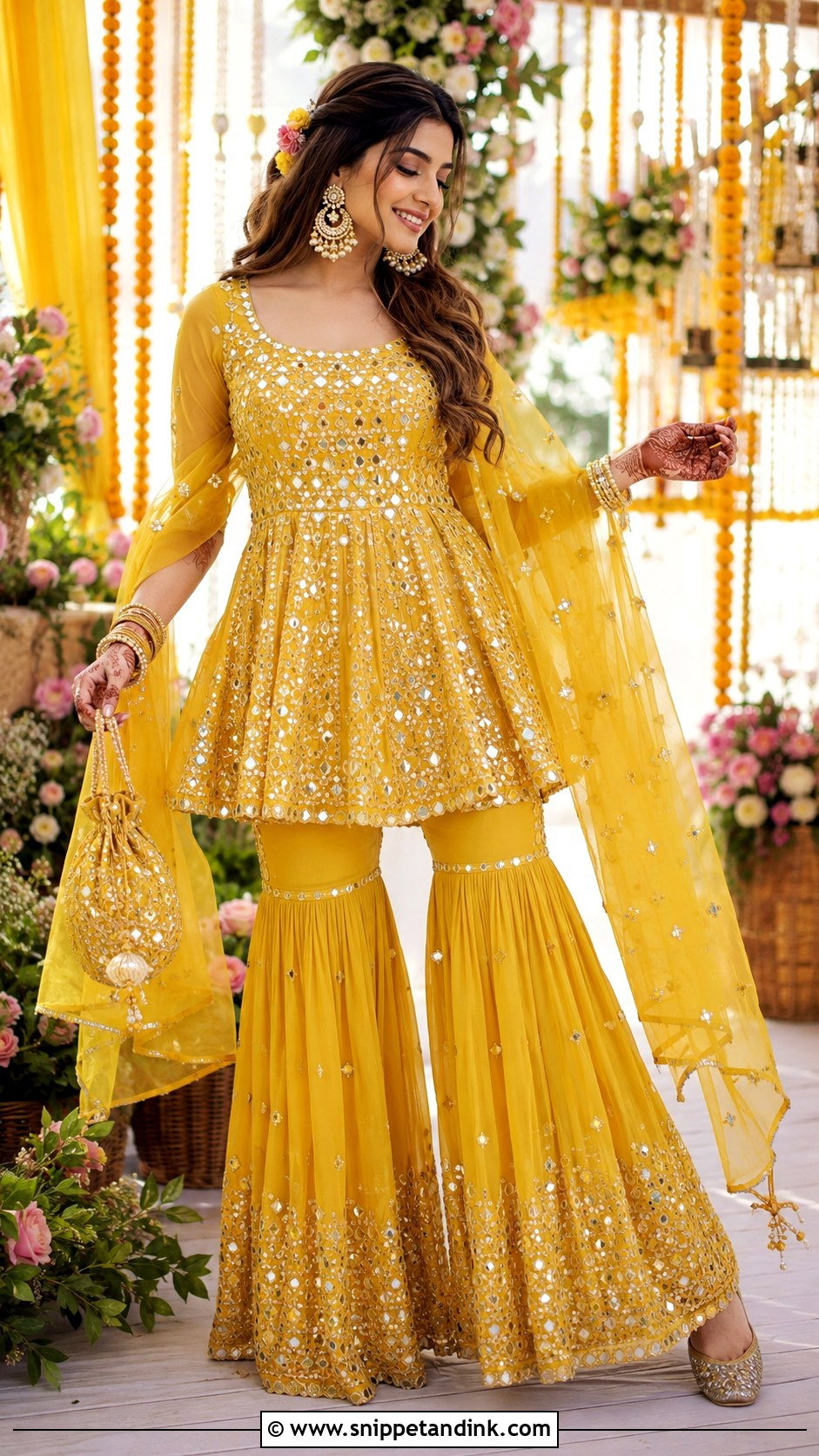
The peplum shapes the waist and the sharara gives flow, so this one is easy to dance in. Yellow, green, coral, pink or turquoise with mirror work, tassels or threadwork keeps it bright. A net or organza dupatta softens it without hiding the shape. Juttis, chandbalis and a small potli finish it. Peplums work on many body types because they give structure at the top and comfort at the bottom. A braided crown is my pick for a sister who dances a lot; braids hold far better than loose curls.
16. Leheriya Lehenga For Bride Sister
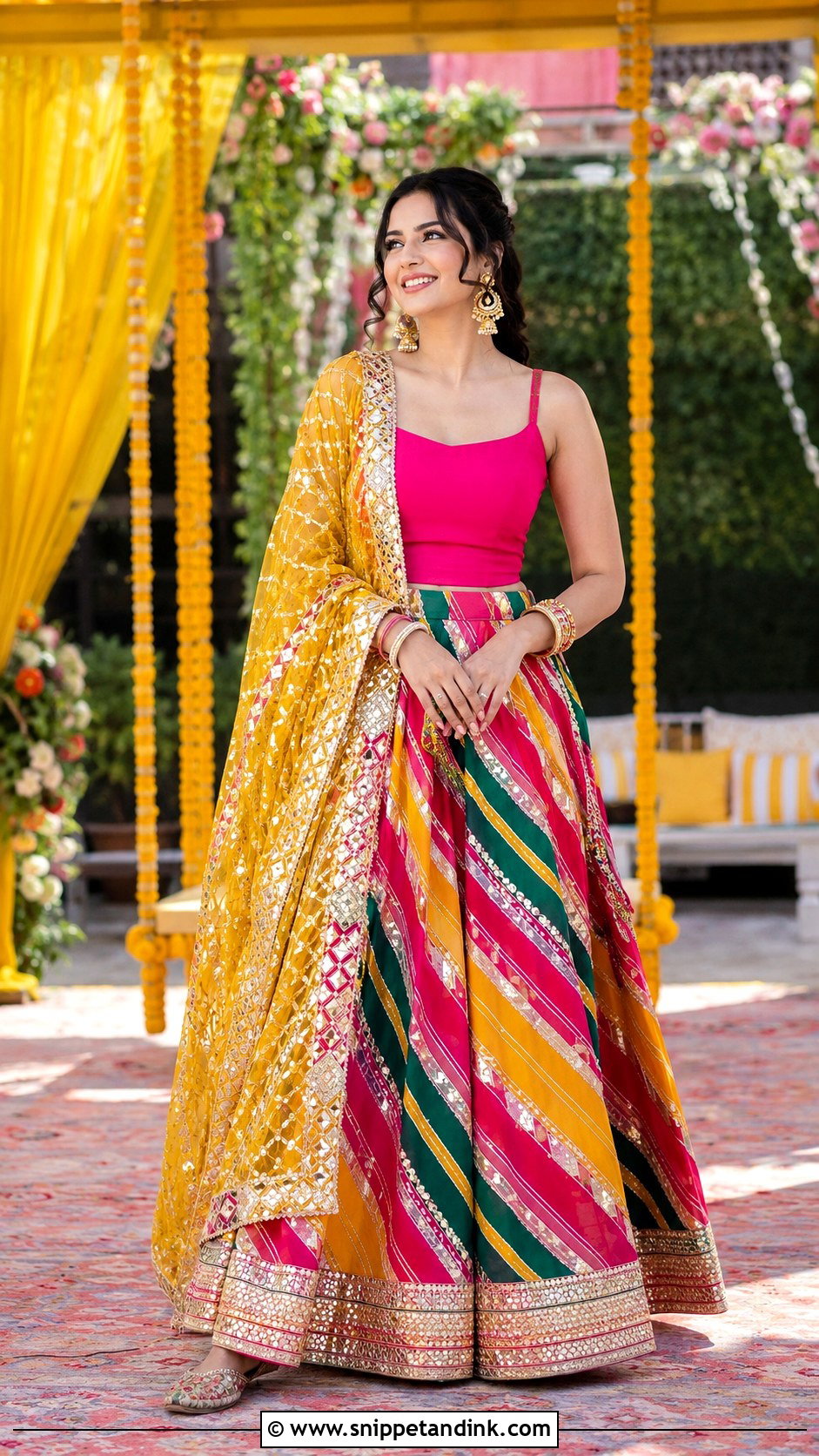
Leheriya is a tie-dye technique that makes diagonal wave stripes, and it looks lively in yellow, green, pink, orange and blue. A leheriya skirt with a solid blouse is easiest; a printed blouse with a plain skirt is the reverse. A gota patti dupatta adds festive detail. Leheriya is usually lighter than an embroidered lehenga, which matters over a long day. Gold jhumkas, colourful bangles and juttis suit it, with a messy braid and hair accessories for folk dances.
17. Indo Western Jumpsuit For Bride Sister
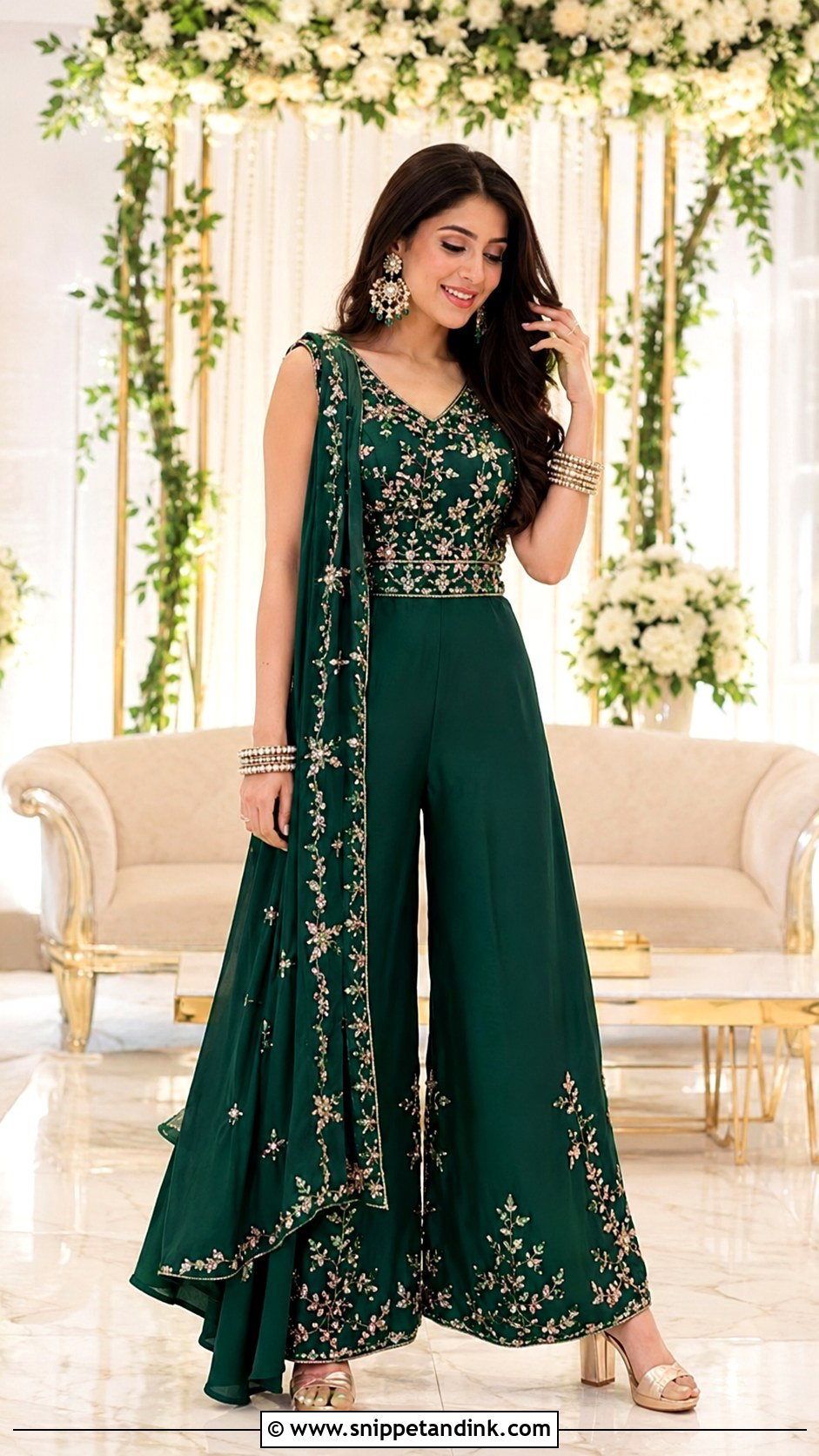
An Indo-Western jumpsuit is for the sister who wants something sharp and different. A wide-leg jumpsuit with embroidery, mirror work, a draped panel or an attached dupatta in emerald, mustard, fuchsia, teal or rust keeps it festive. Statement earrings and metallic block heels finish it, with a sleek ponytail or polished waves. Jumpsuits are awkward if you’re getting henna yourself, since you can’t easily get out of one with wet hands. It suits cocktail-style mehndis and destination weddings best.
18. Ruffle Saree For Bride Sister
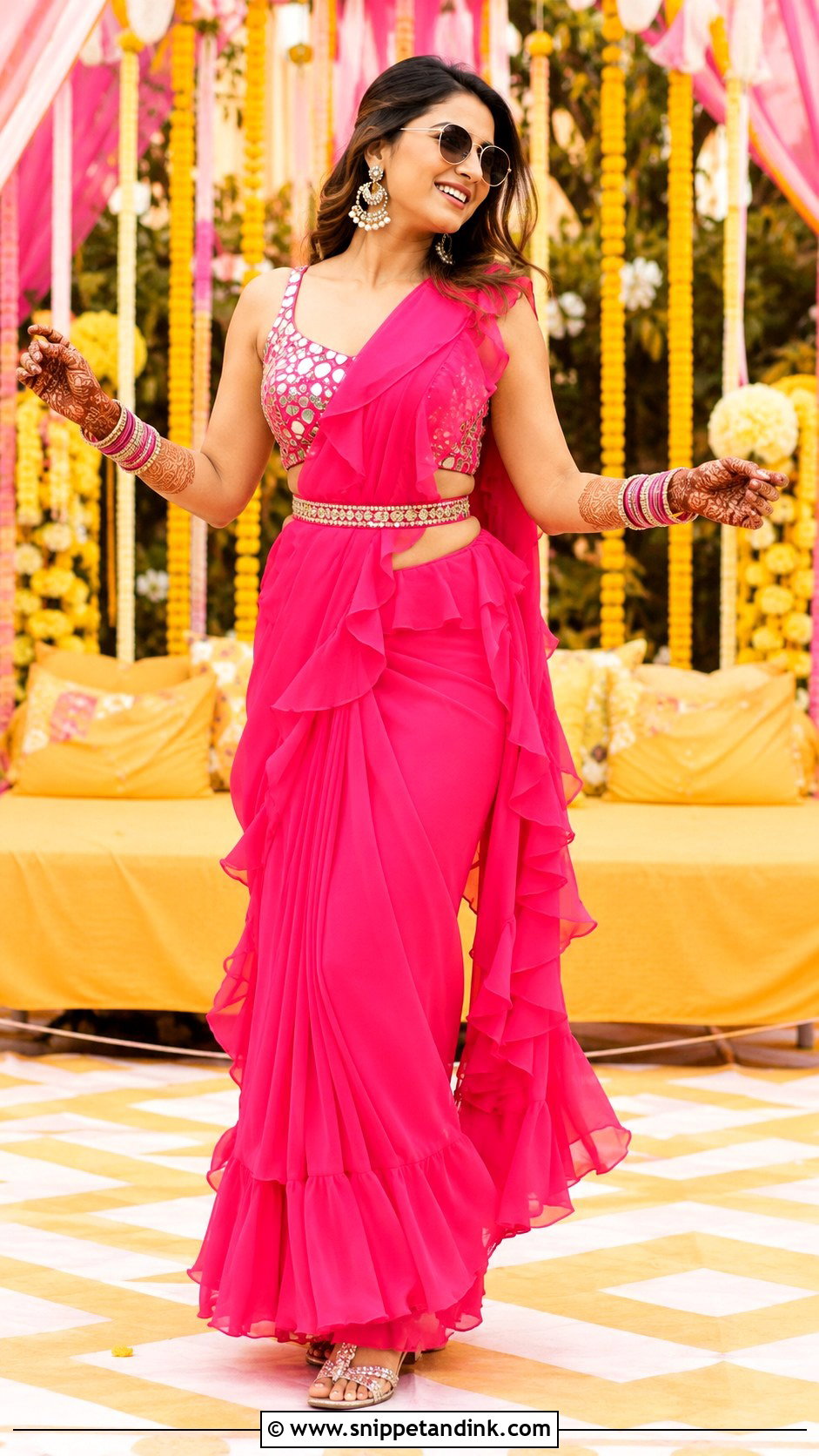
A ruffle saree gives drama without heavy embroidery. Yellow, lime green, hot pink, coral or turquoise with an embellished, mirror work or embroidered crop blouse looks festive. The saree has texture already, so I keep jewellery to statement earrings and a few bangles. A waist belt secures the drape. Loose waves or a sleek ponytail finish it. Ruffles near the face catch on earrings, so choose studs or short drops if the pallu ruffle sits high on the shoulder.
19. Angrakha Kurta Set For Bride Sister
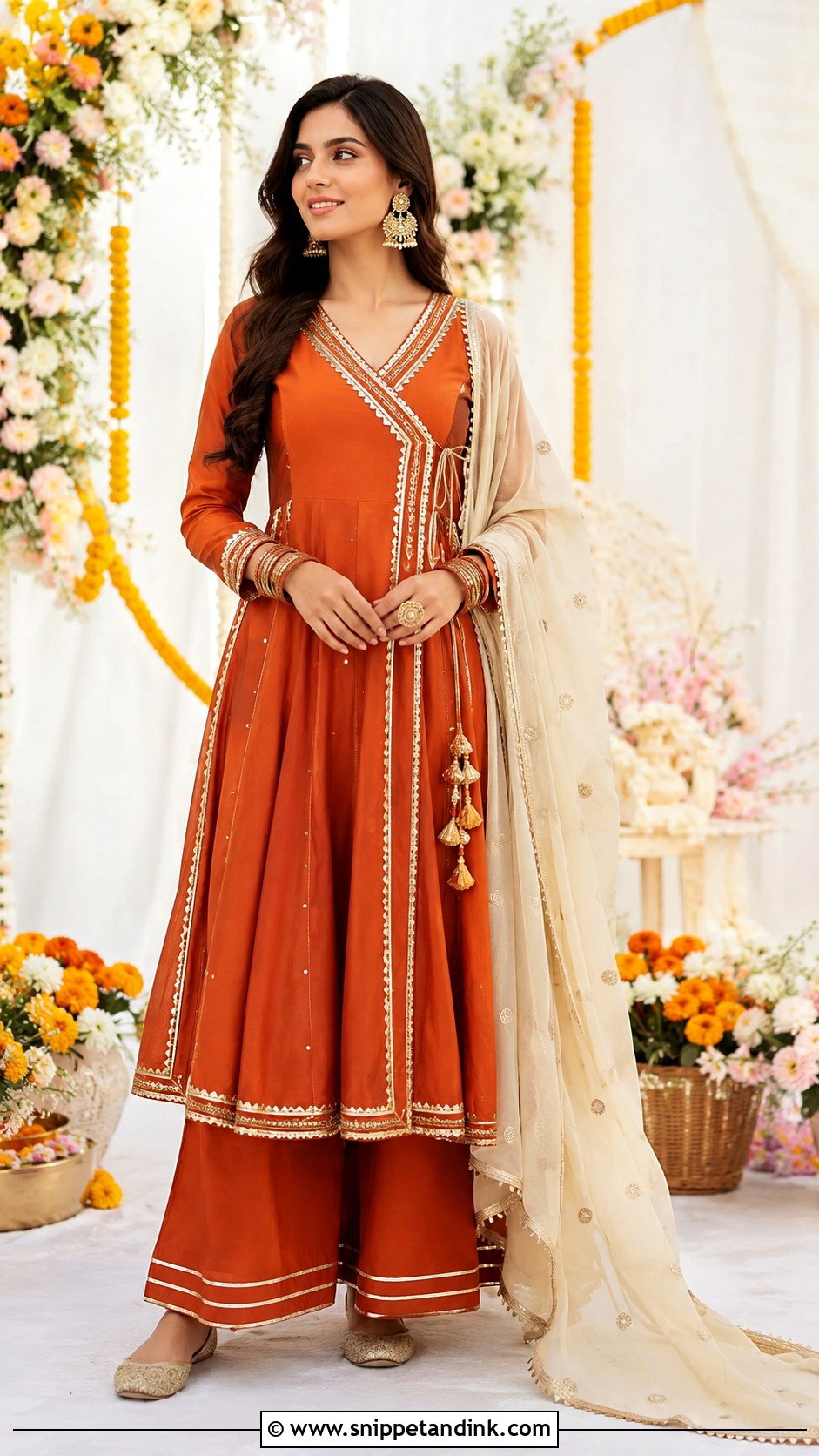
An angrakha has a wrap-style front that ties at the side, which looks traditional and flatters most figures. Yellow, green, pink or rust with gota patti, mirror work or printed borders suits it. Pair it with palazzos, churidar or a flowy skirt, a light dupatta, jhumkas and embroidered flats. Let the side tie or tassels show. Angrakha wraps can loosen during hosting, so I’d add a hidden hook at the tie point. A braid, bun or soft curls all work for family rituals.
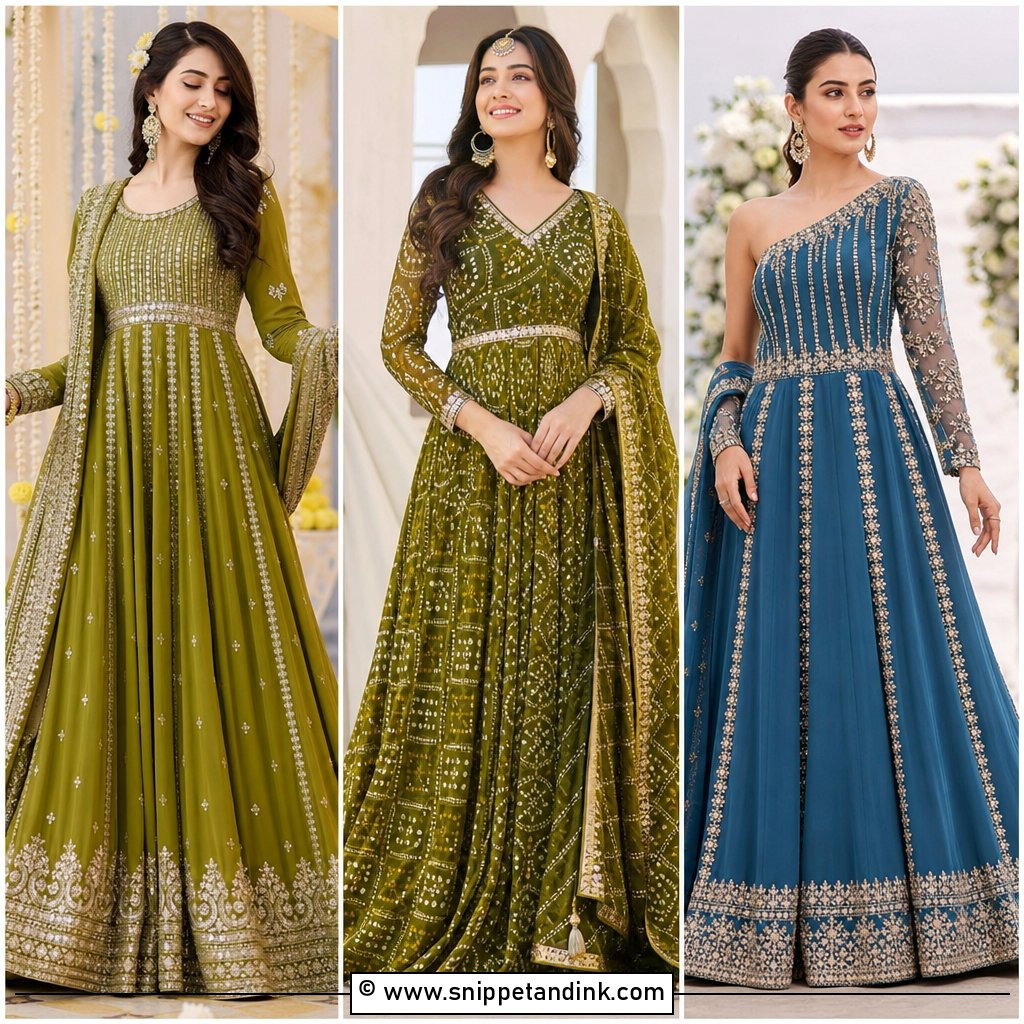
20. Dhoti Set For Bride Sister
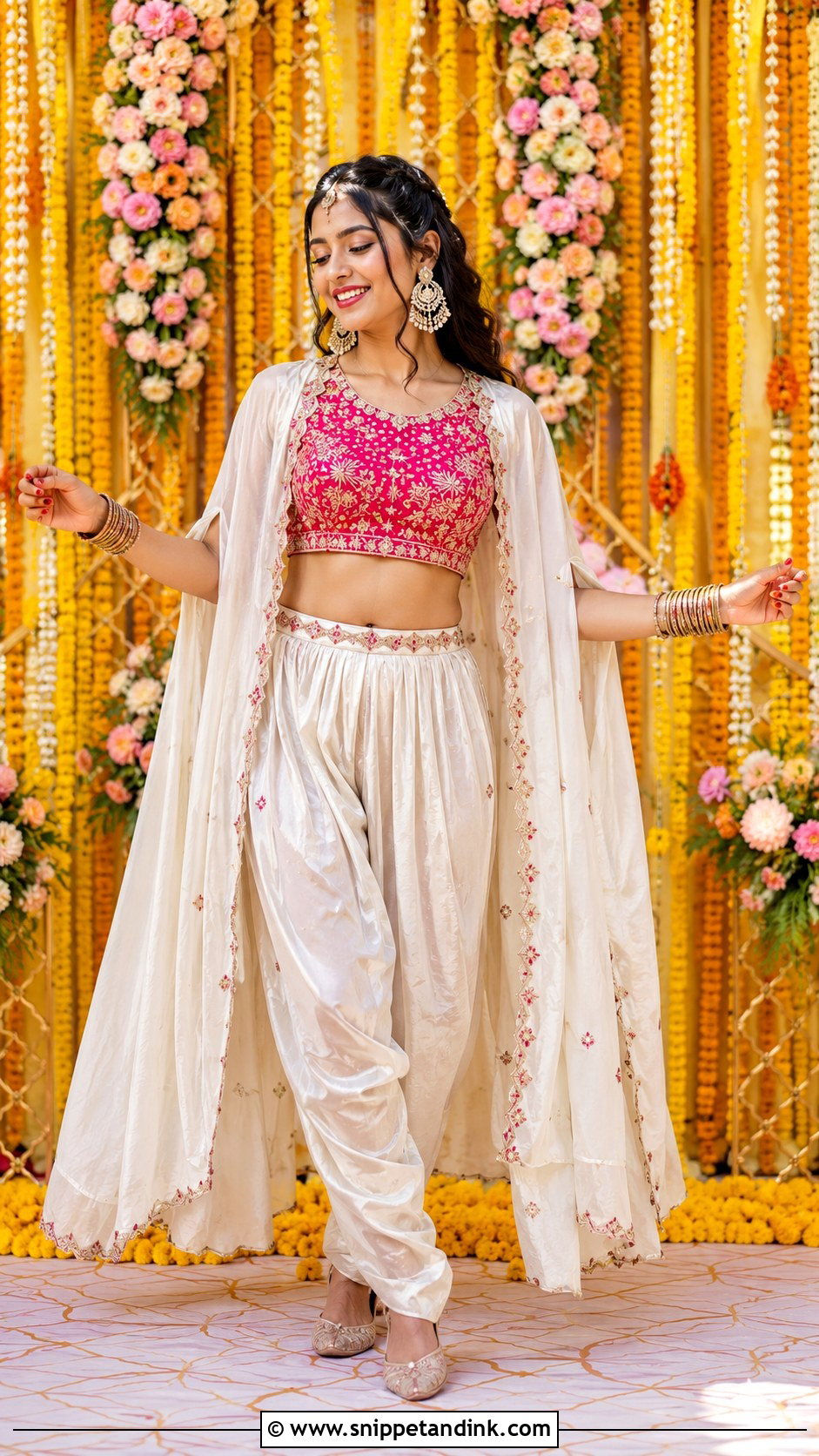
A dhoti set is my top pick for sisters doing choreographed performances. Draped bottoms with an embroidered crop top, short kurti or peplum in yellow, green, orange, pink or ivory move freely and stay secure. A cape, jacket or light dupatta adds style without limiting movement. Statement earrings, bangles and juttis finish it. For performers I use long-wear lip colour and set the base twice, because a full dance under hot lights will move anything that isn’t locked down.
21. Multicolor Lehenga For Bride Sister
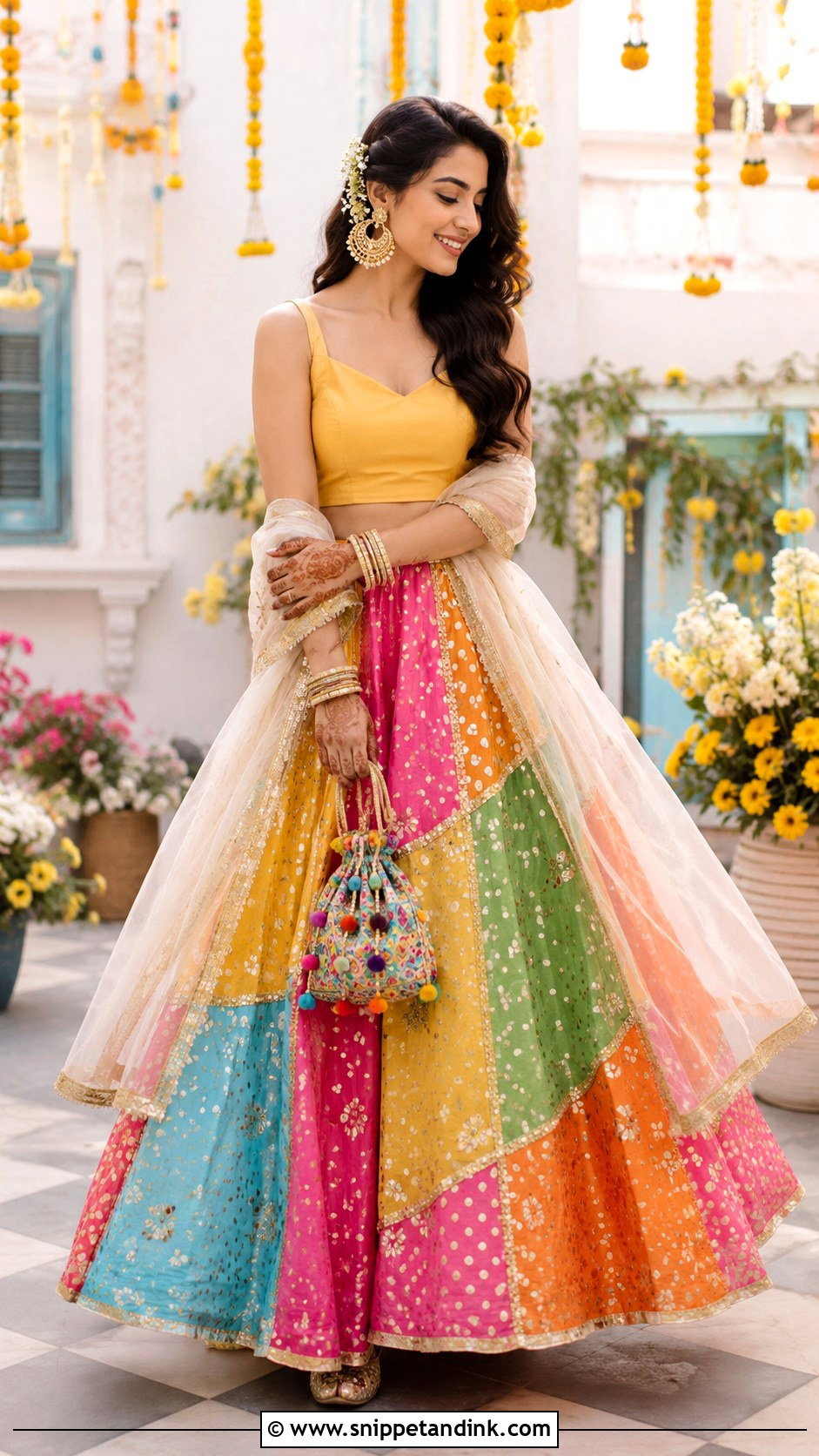
A multicolor lehenga captures the mehndi mood in one outfit. Patchwork, printed panels, mirror work or threadwork in yellow, pink, green, orange, blue and purple look bright against decor. Balance a busy skirt with a solid blouse, or let one main colour tie a coordinated set together. Simple gold jewellery and juttis stop it looking overloaded. In makeup, choose bold eyes or a bright lip, not both; with this much colour in the outfit, the face needs one focal point.
22. Gota Patti Suit For Bride Sister
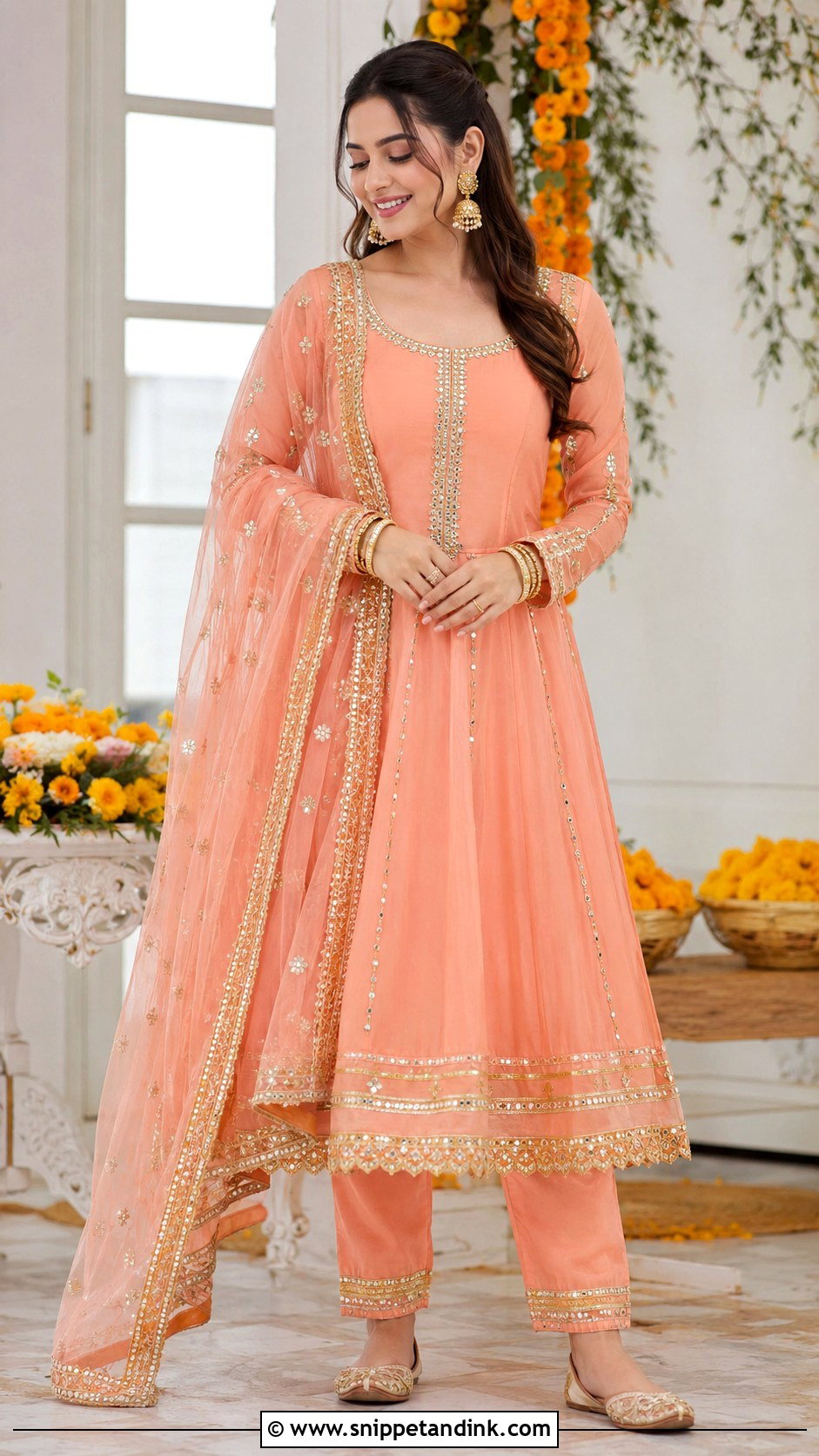
Gota patti is metallic ribbon appliqué, and it gives a festive shine without the weight of full embroidery. A straight kurta, anarkali kurta or short kurti with matching pants and dupatta in yellow, green, peach, pink or orange shows the gold trim well. If the neckline is detailed, skip the necklace and wear earrings. A low bun, soft waves or braid all work. It’s a classic, comfortable outfit that you’ll wear again at other family events.
23. Silk Lehenga For Bride Sister
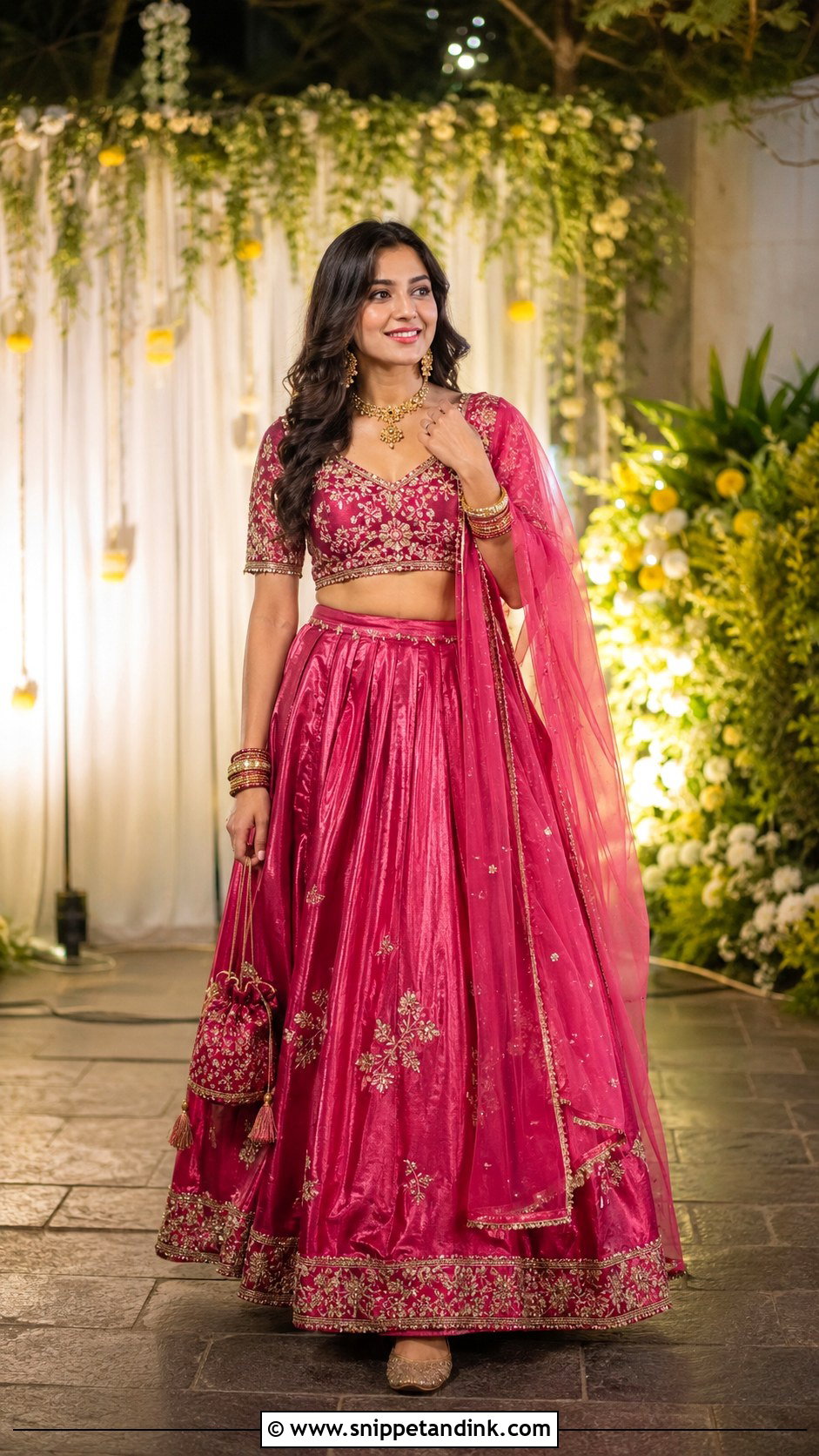
A silk lehenga looks rich without much embroidery. Raw silk, banarasi or art silk in mustard, green, magenta, orange or teal reads dressy on its own, so keep embellishment moderate. An embroidered blouse, lightweight dupatta and gold jewellery complement it. Silk is warm and doesn’t breathe like cotton, so I’d save it for an evening function or an air-conditioned hall. A sleek bun with flowers suits it and stays put in the heat better than open hair.
24. Organza Saree For Bride Sister
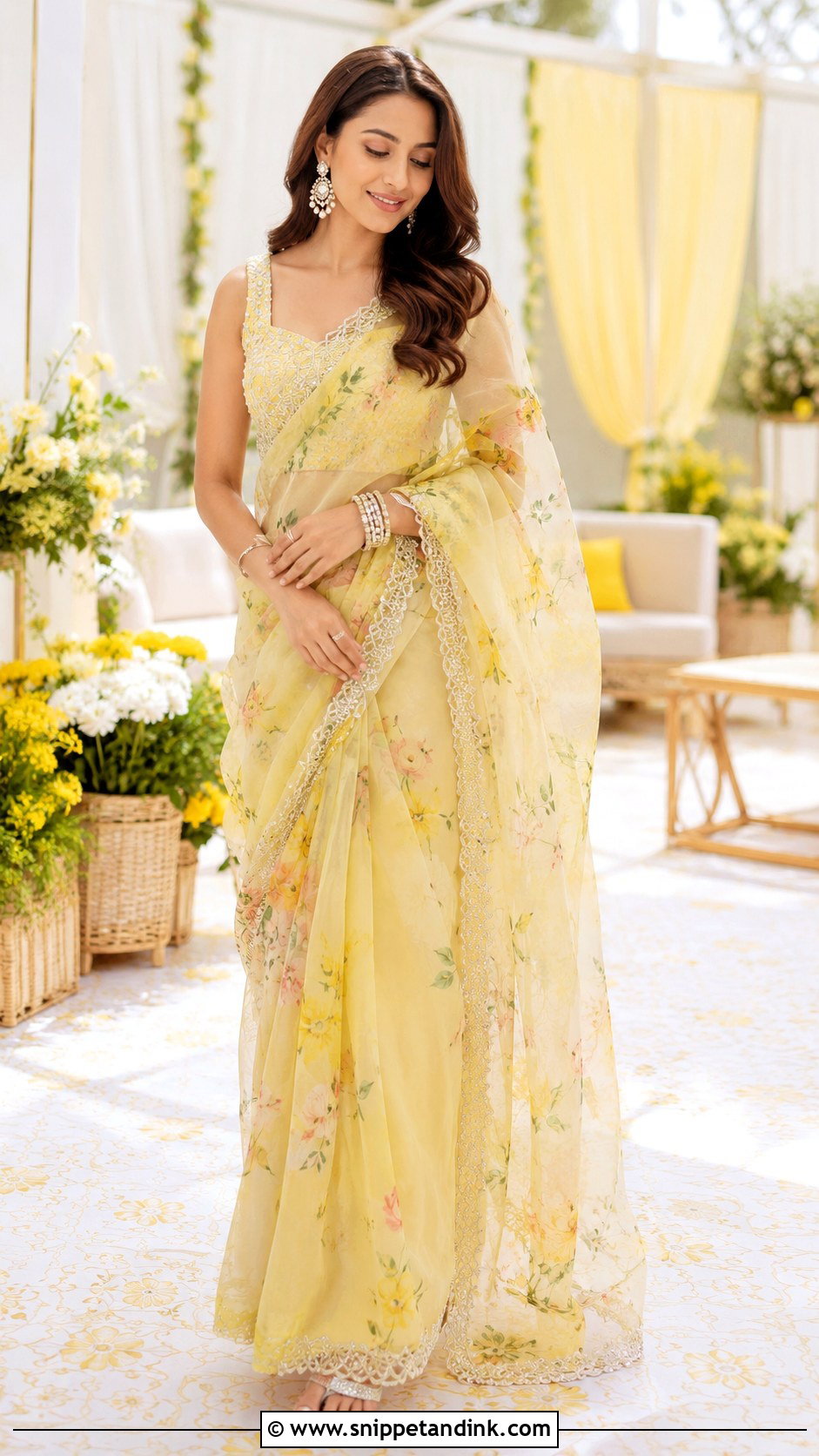
Organza gives volume without weight, so the saree stays comfortable through a long event. Floral, embroidered or solid organza with a detailed blouse works; pastels look soft, yellow, green and pink more festive. Pearl earrings, kundan jewellery or delicate bangles suit it. A sleeveless or short-sleeve blouse looks modern; elbow sleeves feel classic. Organza holds a pleat sharply but also shows creases, so have it draped neatly and avoid sitting on the pallu. A low bun or half-up style suits the airy fabric.
25. Co Ord Set For Bride Sister
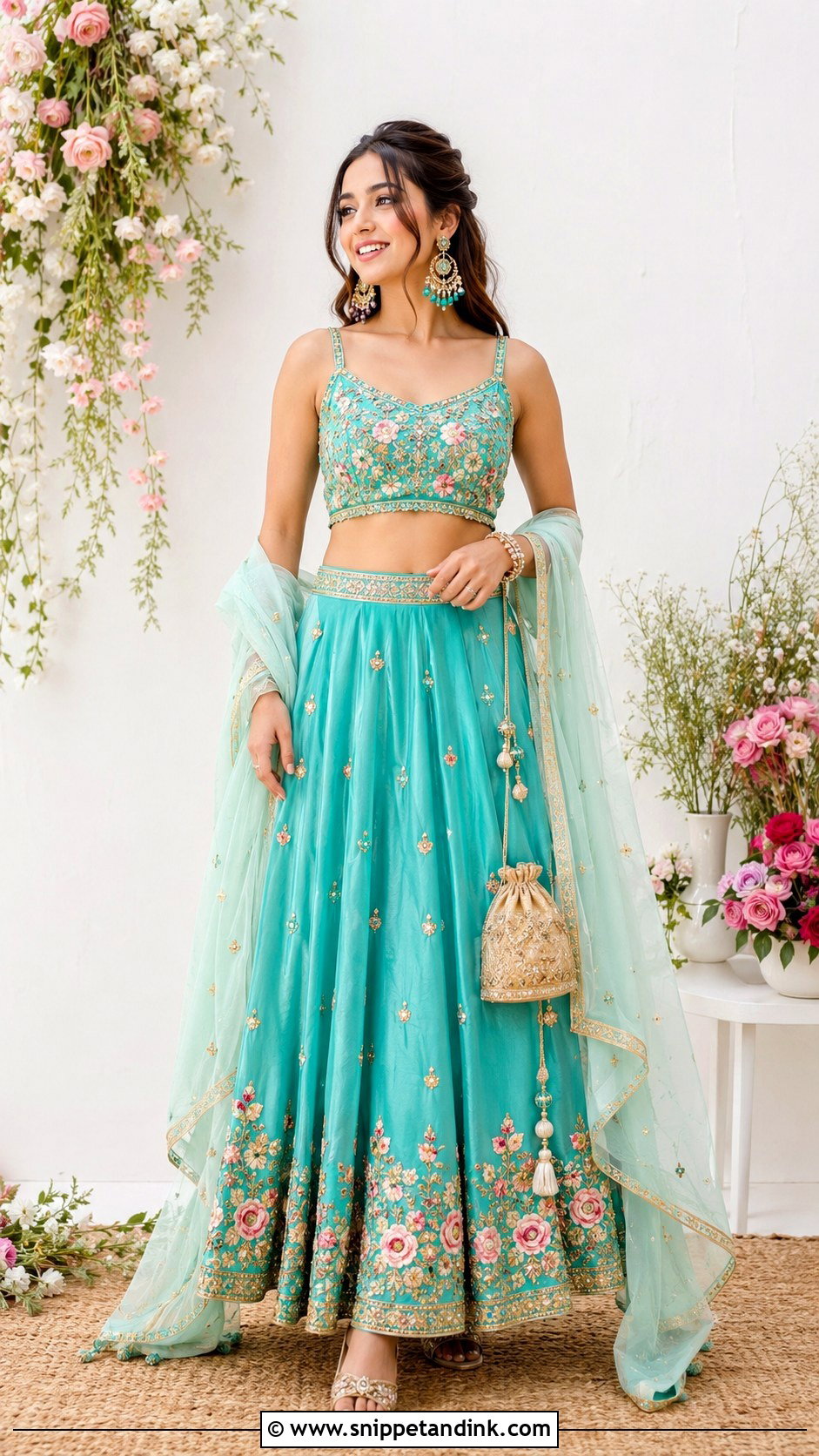
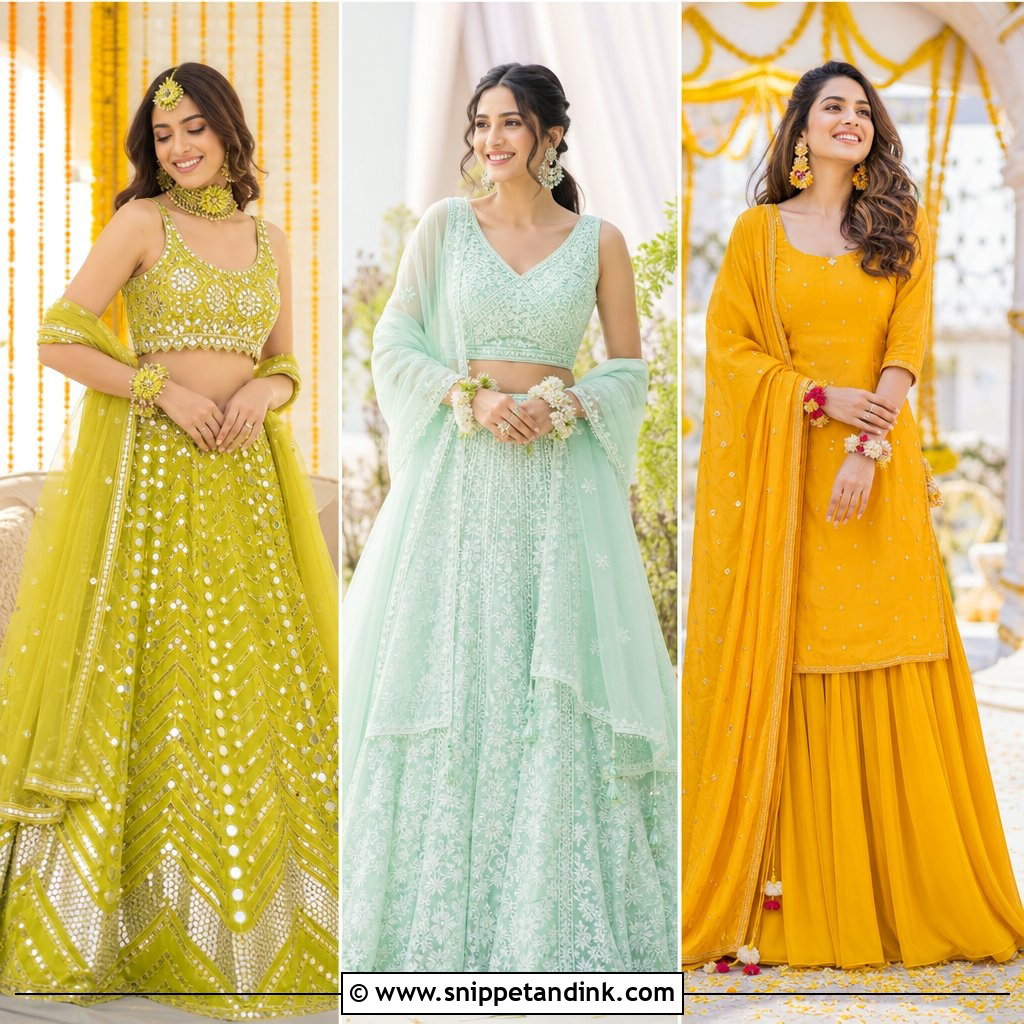
A festive co-ord set is a modern pick for a relaxed mehndi. Matching crop top and skirt, kurta and pants, or embroidered tunic and palazzos with mirror work, gota borders, tassels or bright prints all work. Yellow, lime, coral, fuchsia and turquoise are strong mehndi colours, and ivory with a colourful dupatta is a stylish alternative. Statement earrings, bangles and comfortable juttis finish it. The separates restyle easily for later events, which matters when a sister needs several outfits for one wedding.
Makeup That Lasts Through the Dhol, the Heat and the Happy Tears
The sister’s face takes more of a beating than the bride’s. You’ll dance harder, hug more people and cry at least once. This is how I build makeup for that kind of evening.
- Prep with a light moisturiser and a grip primer, not a heavy cream that slides in heat.
- Use cream blush and set it with a touch of powder blush on top. The two layers hold far longer than either alone.
- Waterproof kohl and mascara, always. Tears and a dhol-induced sweat will take regular formulas straight down your cheeks.
- Powder only where you shine, usually the T-zone, and finish with setting spray.
- If you’re getting henna yourself, do all your makeup and hair first. Touching up with wet paste on both hands isn’t possible.
What goes in the potli
Blotting papers, your lip colour, a small powder compact, a few bobby pins and safety pins for the dupatta. That kit fixes nearly everything that goes wrong between the first dance and the last photo, for you and probably for the bride.
She Leads the Dance, So Dress for It
Start with the bride’s outfit, then think about comfort, colour and movement. You should feel festive and confident while she stays the centre of the photos. Lehengas, shararas, ghararas, sarees, anarkalis, jumpsuits and co-ords can all work with the right jewellery, shoes and dupatta. Bright colours are a safe bet, but pastels, ivory and prints work with festive details. Pick something you can sit, dance, host and pose in, because the bride’s sister ends up in every important moment of the night.
You'll Like These Ideas:


Leave a Reply