
A Nikkah outfit has a harder job than a reception look. It has to stay modest while you sit, lean in to sign and raise your hands in dua, and it has to look right beside family who may have strong views on coverage. When I dress a bride for her Nikkah, I start with the setting (masjid, home or hall) and the family’s expectations before we talk about colour at all. The ideas below run from white dresses and pastel abayas to South Asian shararas and plain satin maxis, and the last few are for sisters, mothers and guests.
Testing a Nikkah Outfit for Floor Seating, Dua and Signing
A Nikkah has three movements that a fitting room never tests: sitting, often on the floor or a low cushion; raising both hands in dua; and leaning forward over a table to sign. I put every bride through all three before I sign off on an outfit, because each one exposes a different problem.
- Sit cross-legged on the floor for five minutes. If the skirt pulls tight across the knees or the hem rises above the ankle, the cut is too narrow.
- Raise both hands to shoulder height, palms up. Sleeves that are fine at rest often slide back past the wrist; a cuff with a hook or a sleeve two centimetres longer fixes it.
- Lean forward as if signing. Watch the neckline and the hijab at the front of the neck. This is where a wide neckline or a loosely pinned scarf gives way.
- Stand in front of a bright window, then have someone photograph you with flash. Thin ivory and pastel chiffon can turn see-through on camera even when it looks opaque in the mirror.
Do this test in the shoes you’ll wear and with the hijab pinned the way you’ll pin it on the day. The hijab changes how the neckline sits more than most brides expect.
1. White Nikkah Dress With Hijab
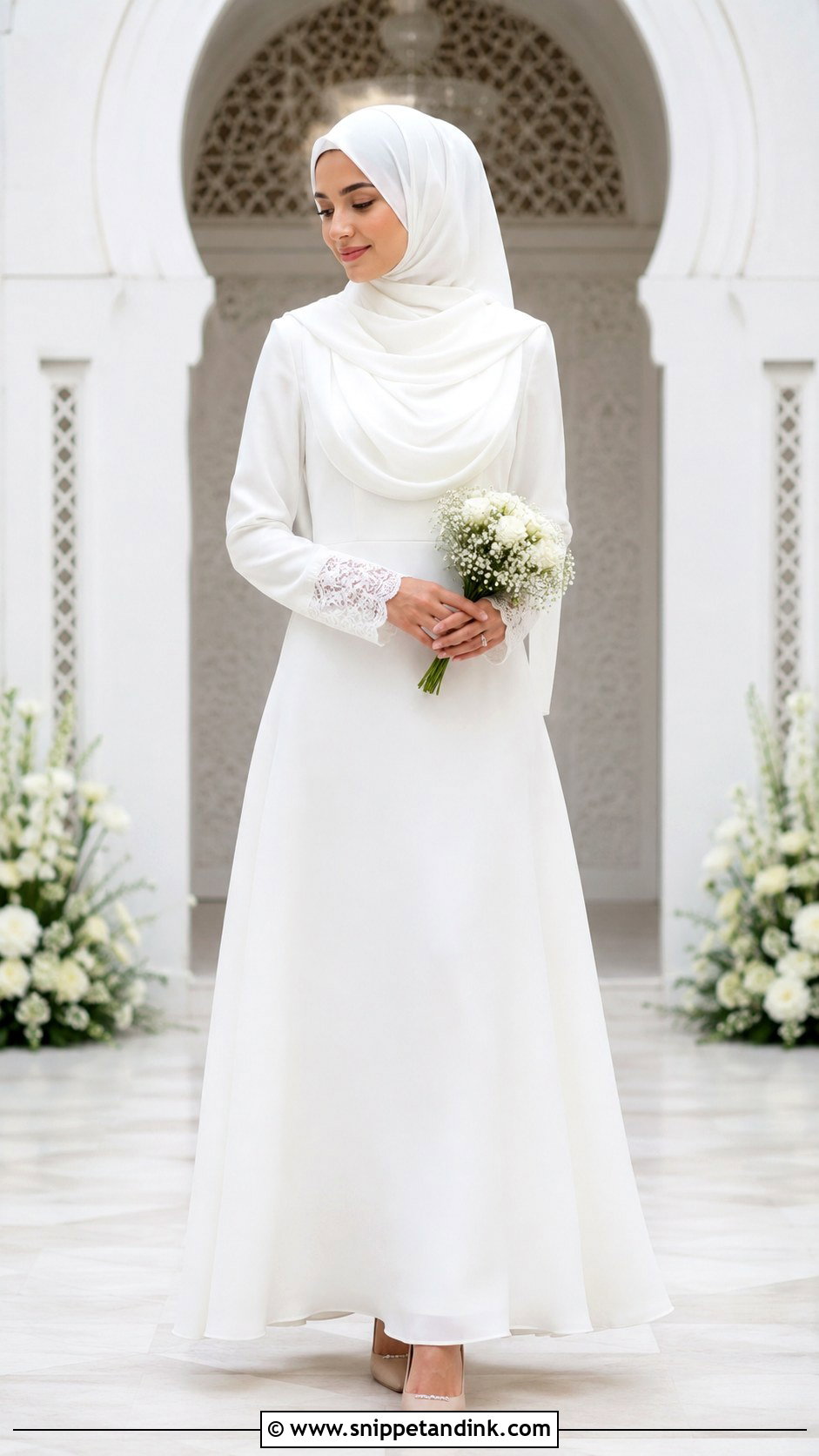
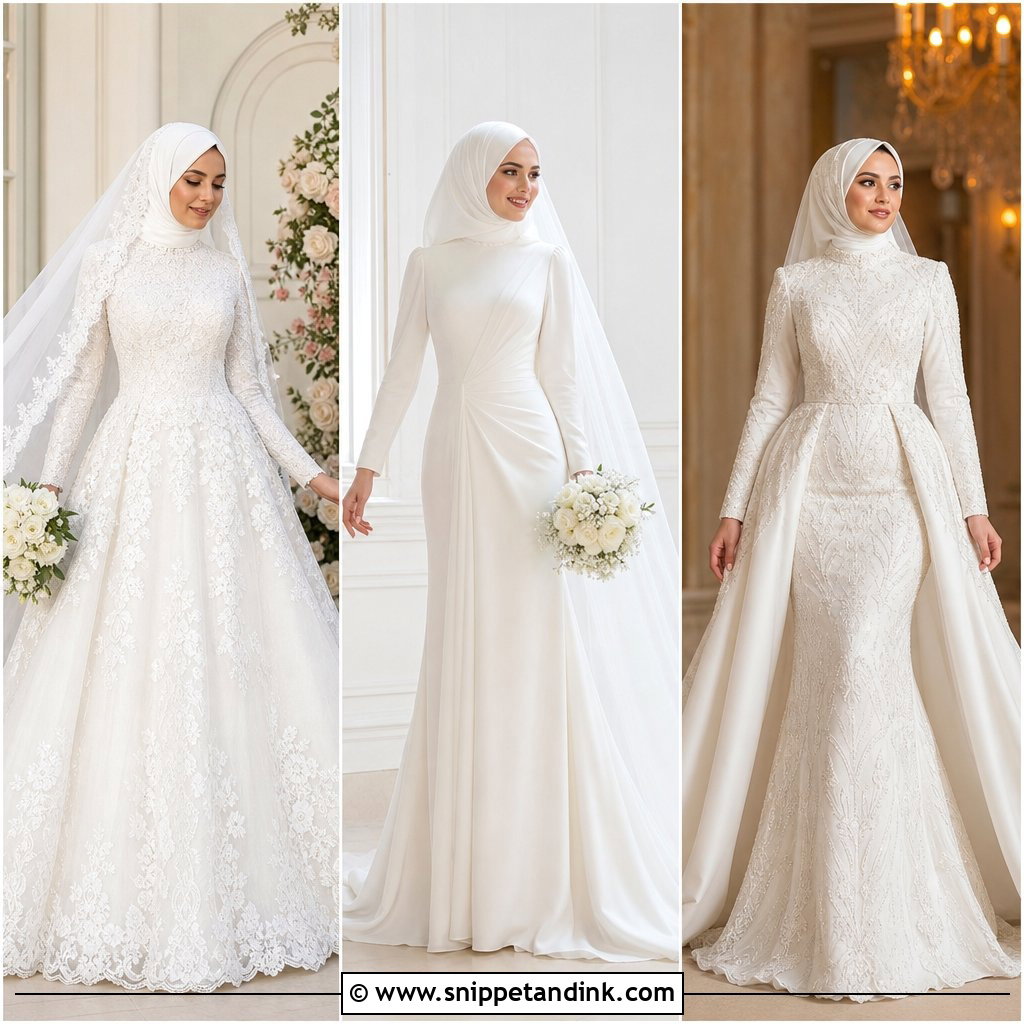
White with a matching hijab is the look most families picture, and it rarely needs much help. I steer brides toward a long-sleeve maxi with a soft A-line rather than a fitted bodice, because the A-line hangs straight when you kneel or sit cross-legged on a masjid carpet. Lace sleeves or pearl buttons give enough bridal detail. My one warning: unlined white chiffon goes transparent under a camera flash, so hold the dress up to a window before you buy. A chiffon or silk hijab, nude heels and pearl studs are all it needs for a masjid or home ceremony.
2. Ivory Nikkah Gown With Veil
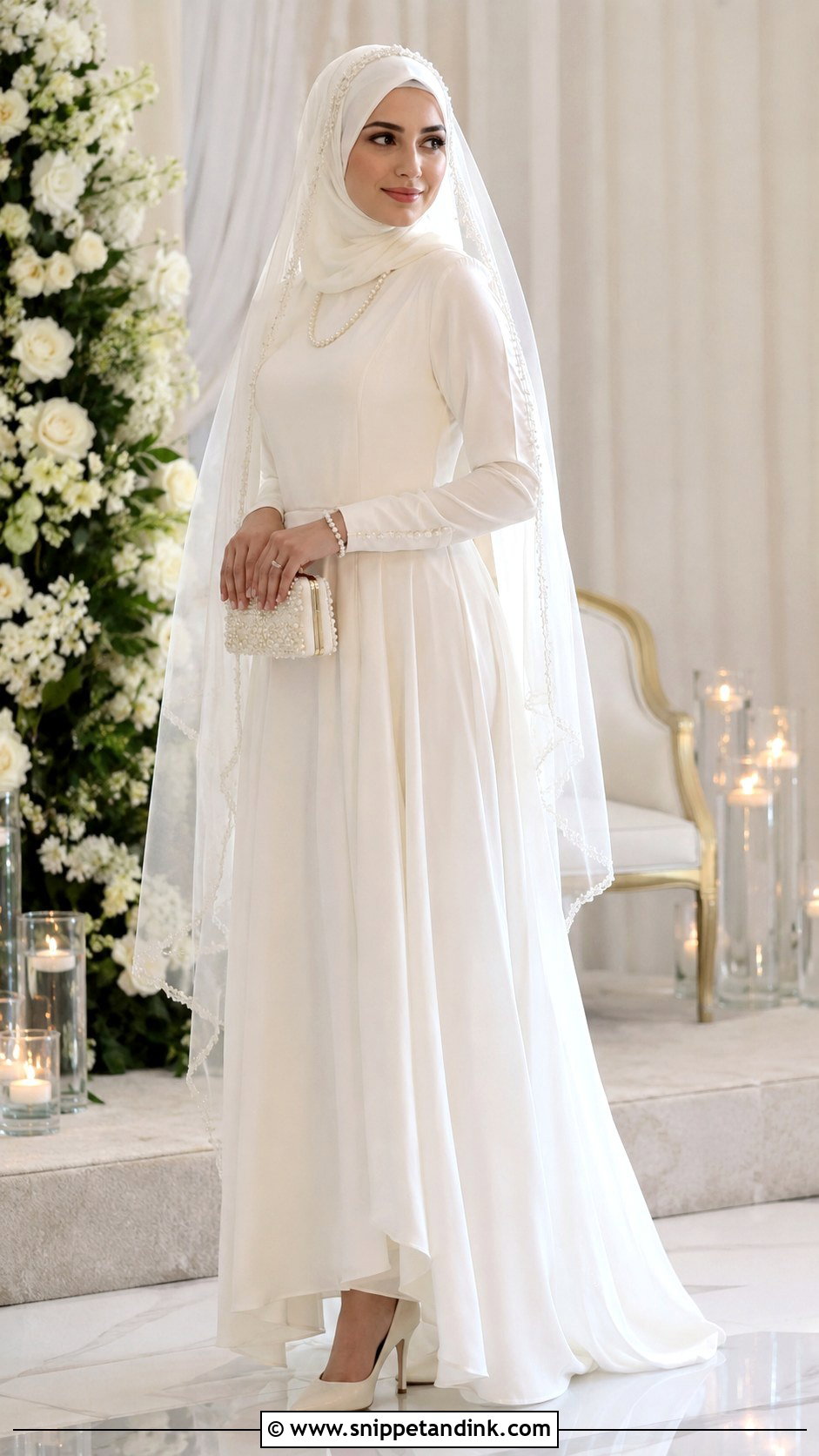
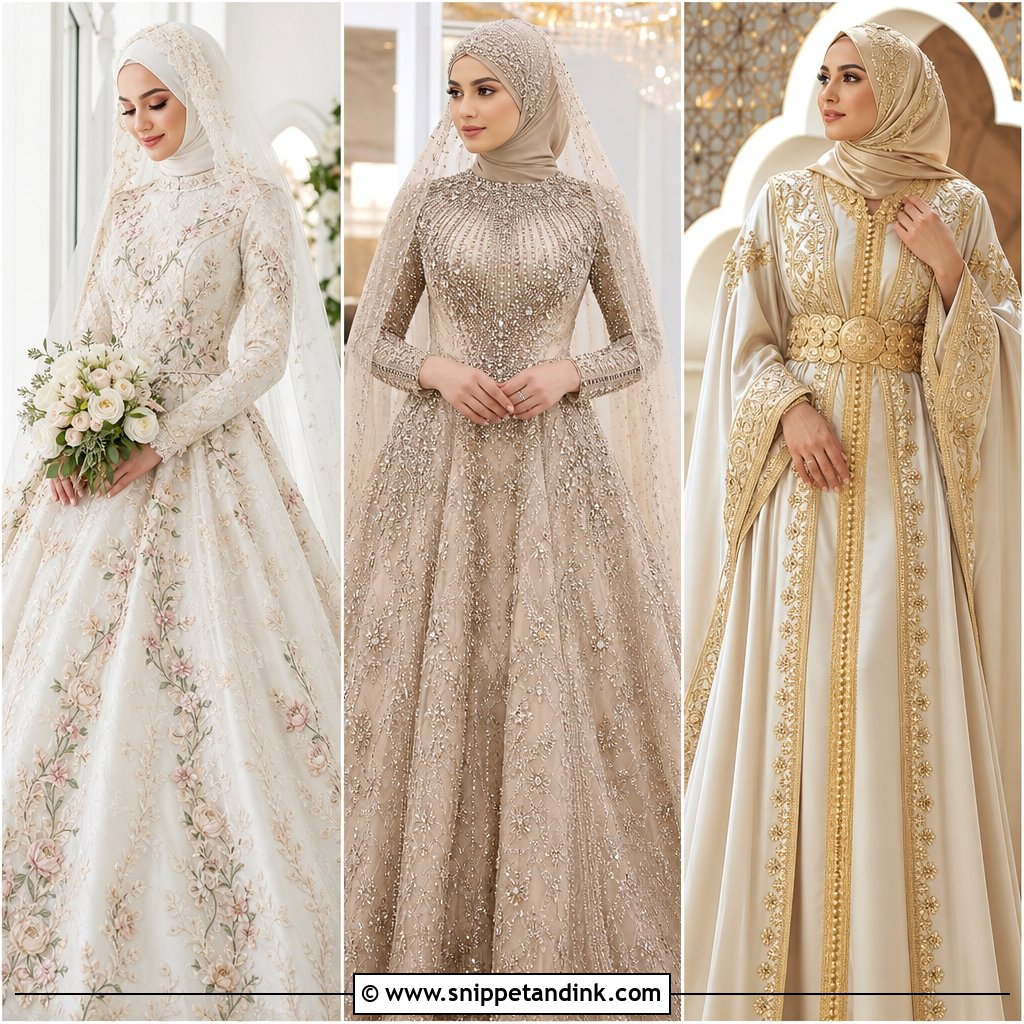
Ivory sits warmer against the face than bright white, which is why I suggest it to brides with olive or deeper skin who find pure white makes them look grey in photos. A long-sleeve gown with a covered neckline and light embroidery at the cuffs works well. The layering is where the work is: a matching ivory hijab underneath, then a sheer veil pinned at the crown, so the veil can slide without exposing hair. I pin the veil with two crossed pins behind the crown rather than one, because a single pin lets it rotate every time you turn your head. Keep the rest to cream heels and gold or pearl jewellery.
3. Green Nikkah Lehenga With Dupatta
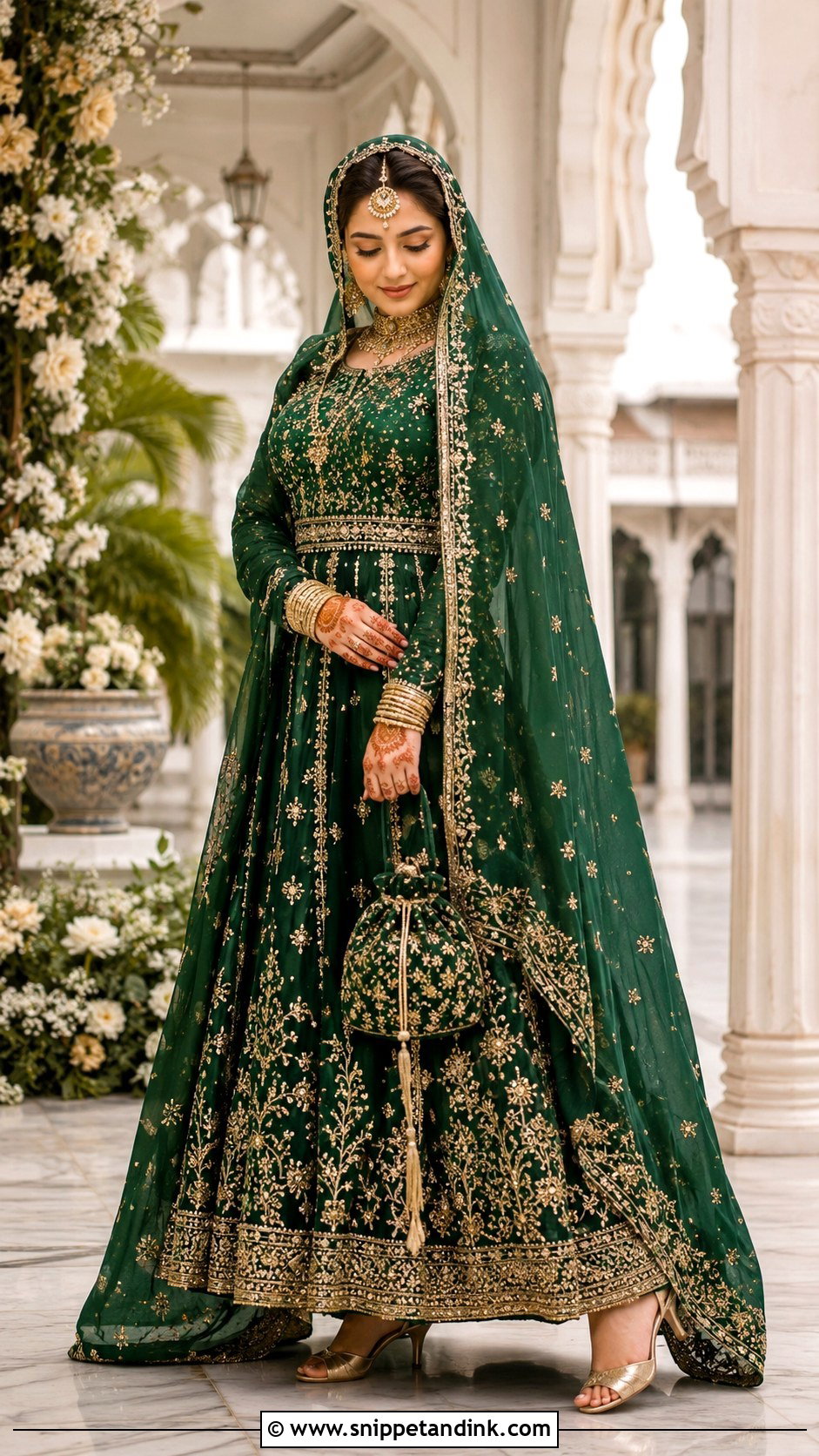
A green Nikkah lehenga with dupatta is common at South Asian Muslim weddings, and the shade matters more than brides expect. Emerald holds its colour under warm indoor light; mint and pistachio can wash out next to yellow bulbs, so I ask where the ceremony is before recommending one. Choose a blouse with full sleeves and a higher neckline, and a skirt with enough flare to kneel in. The dupatta goes over the head and across one shoulder. I’d keep the lehenga lighter than your reception outfit, since a heavy can-can skirt is miserable on a floor seating arrangement.
4. Blush Pink Nikkah Maxi Dress
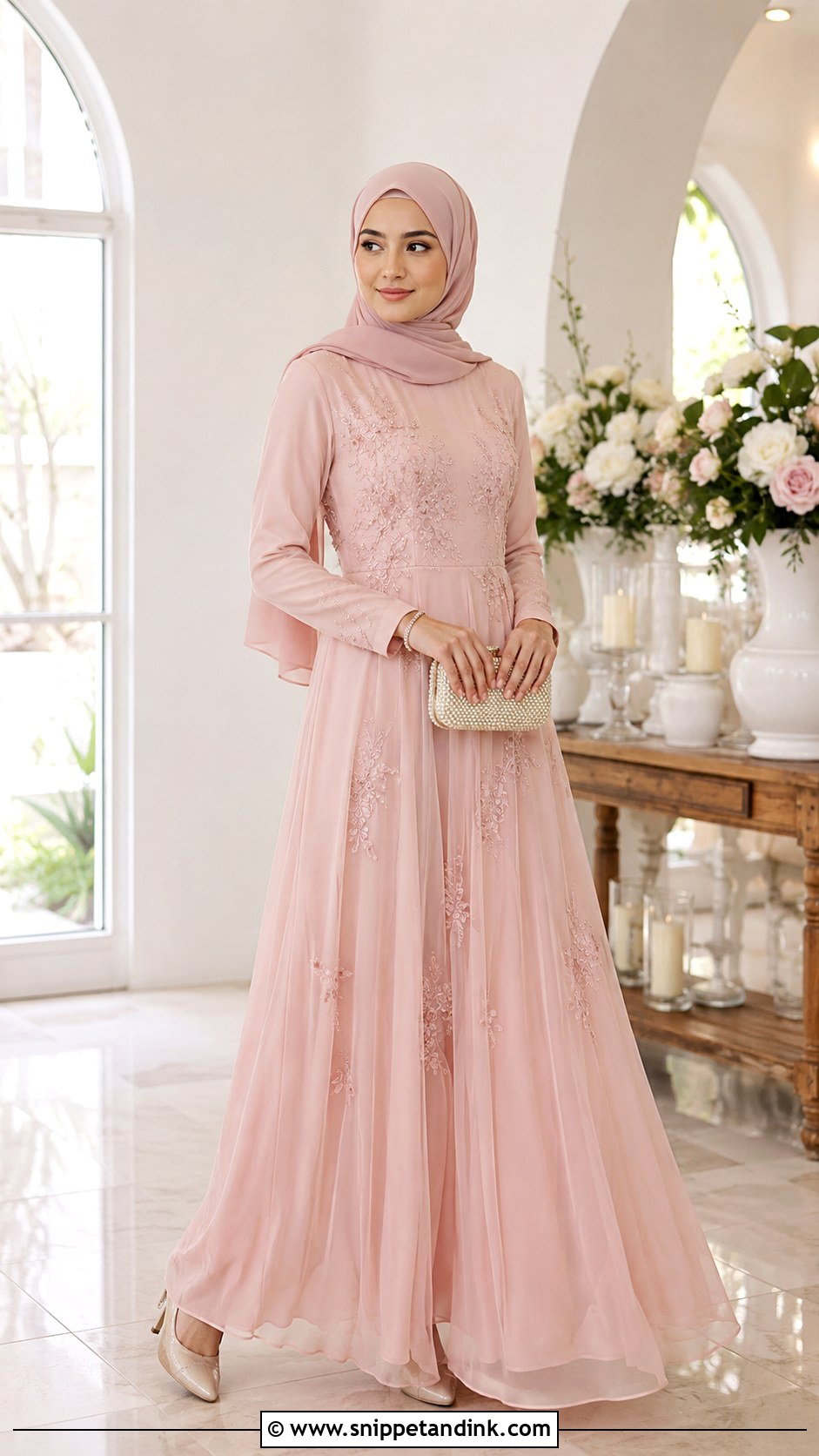
Blush pink reads bridal without being white, which suits a bride whose family is relaxed about the colour. Look for full sleeves, a flowing skirt and fine embellishment near the neckline. A matching blush hijab keeps the line clean from head to hem, and an organza cape adds coverage if the dress sits closer to the body than you’d like. The thing I check with blush is the undertone: a pink with too much peach in it can clash with a cooler-toned hijab, so buy the scarf after the dress, not before. Sisters can wear the same shade with simpler jewellery.
5. Champagne Nikkah Abaya Dress
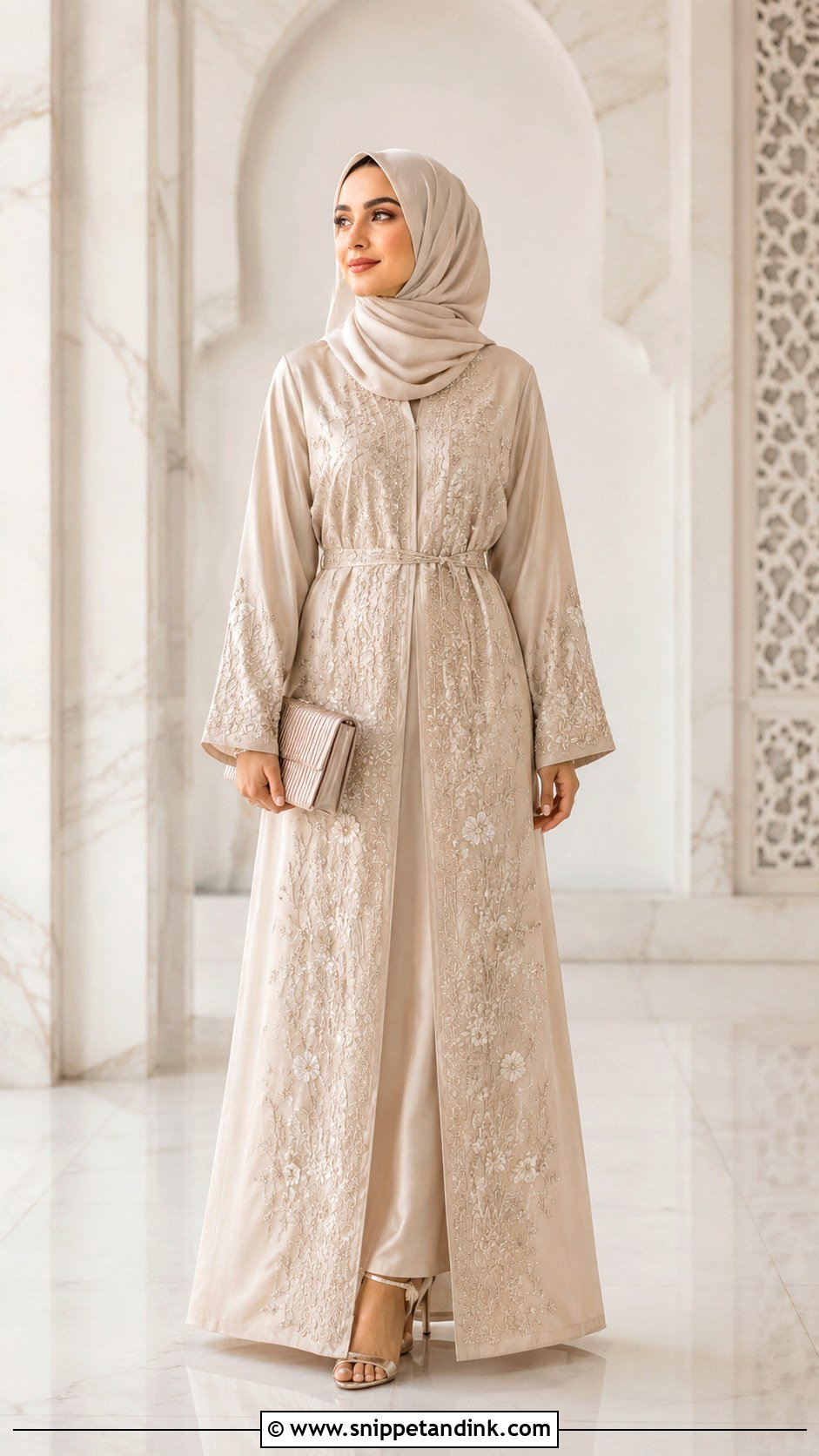
Champagne gives an abaya a dressed-up finish that black or navy can’t, and it suits brides, mothers and guests alike. I like one with crystal or satin trim at the cuffs and front placket, and a cut loose enough to sit in without the fabric pulling across the back. For a masjid Nikkah it is one of the easiest choices because it covers fully without extra layers. A matching hijab, metallic heels and a structured clutch finish it. Keep makeup fresh and jewellery minimal; a busy necklace fights with trim that’s already doing the work.
6. Gold Nikkah Sharara Outfit
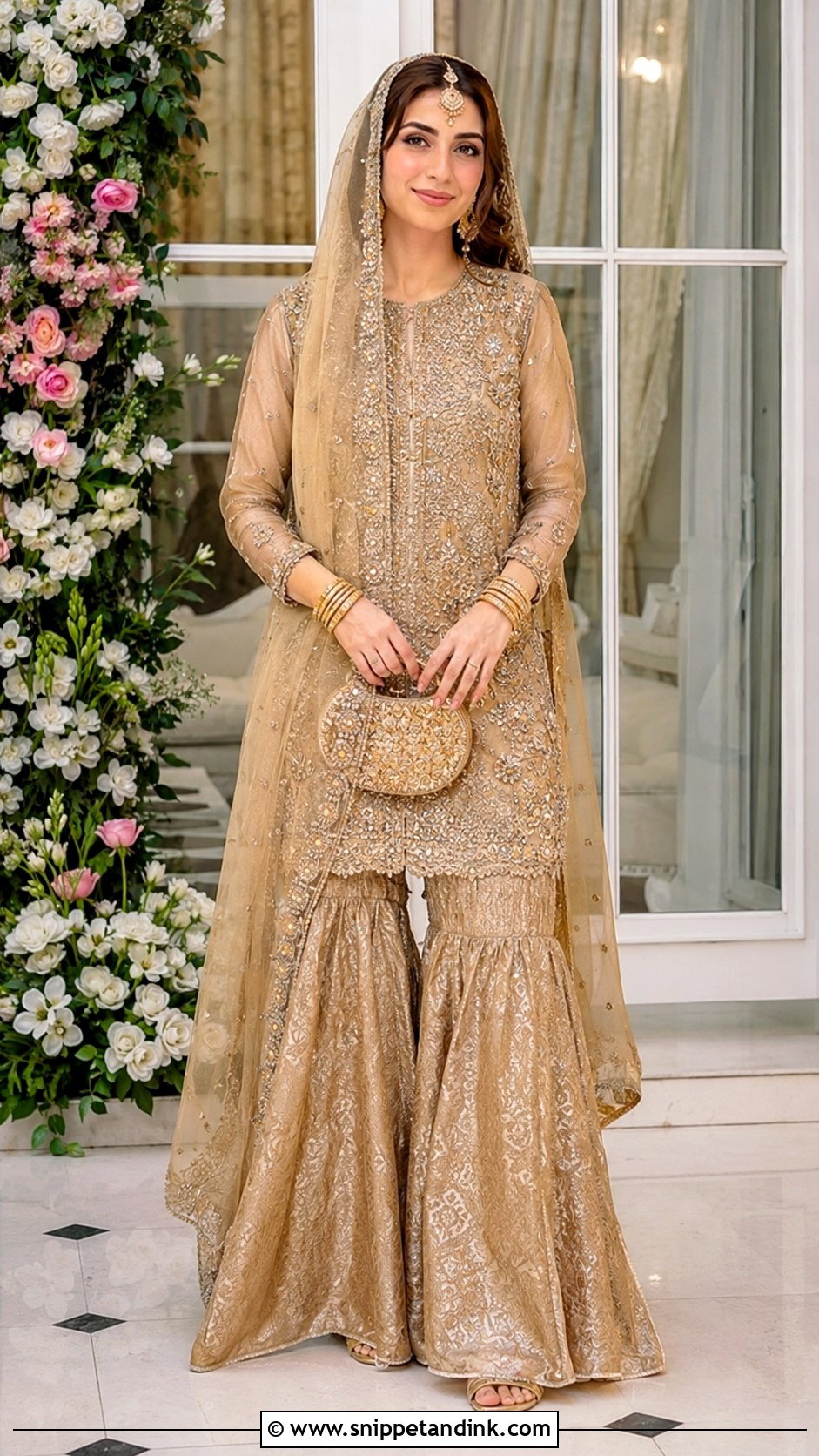
Gold sharara sets are festive, but styled with a long kameez, full sleeves and a high neckline they stay ceremony-appropriate. The wide legs move well and hide the fact that you’re sitting on a floor cushion. I look at the embroidery weight first: antique gold zari or small mirror work is fine for daytime, while dense metallic work belongs at an evening Nikkah. A matching dupatta goes over the head or across both shoulders. Gold sandals and bangles complete it. Brides who find the full set too heavy can keep the sharara and swap in a plainer kameez.
7. Cream Nikkah Anarkali Suit
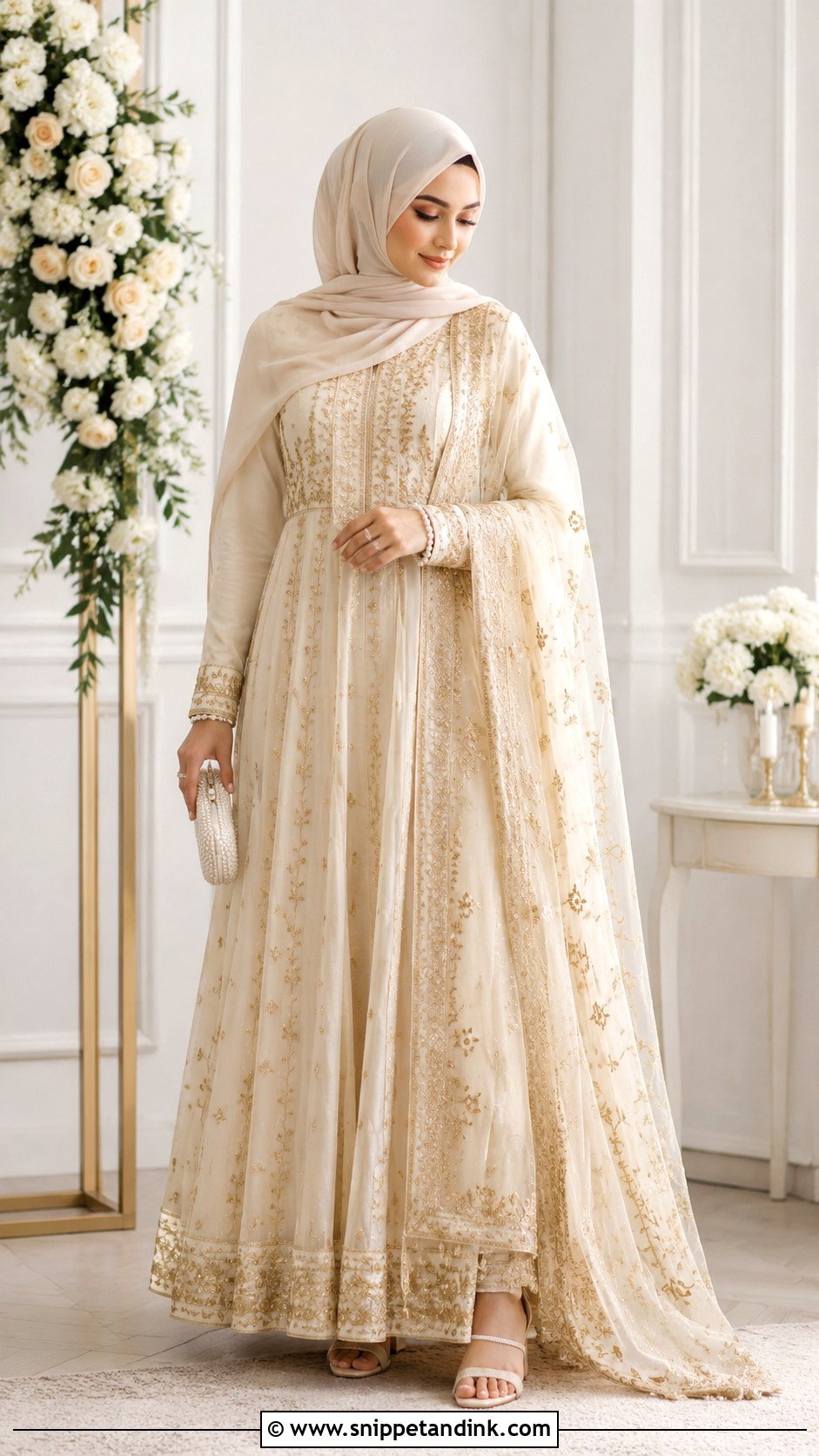
A cream Anarkali is one of the most forgiving shapes I fit. The flare starts high, so it skims the hips and doesn’t need precise tailoring, and it covers fully when you sit. Choose floor length, full sleeves and a lined bodice; unlined Anarkali panels show the light through them at the hem. Light gold embroidery or a lace border is enough. Pair it with a cream or gold hijab and block heels, which I prefer for a carpeted masjid because stilettos sink. It suits a bride who wants to greet guests and move around without managing a train.
8. Sage Green Nikkah Abaya
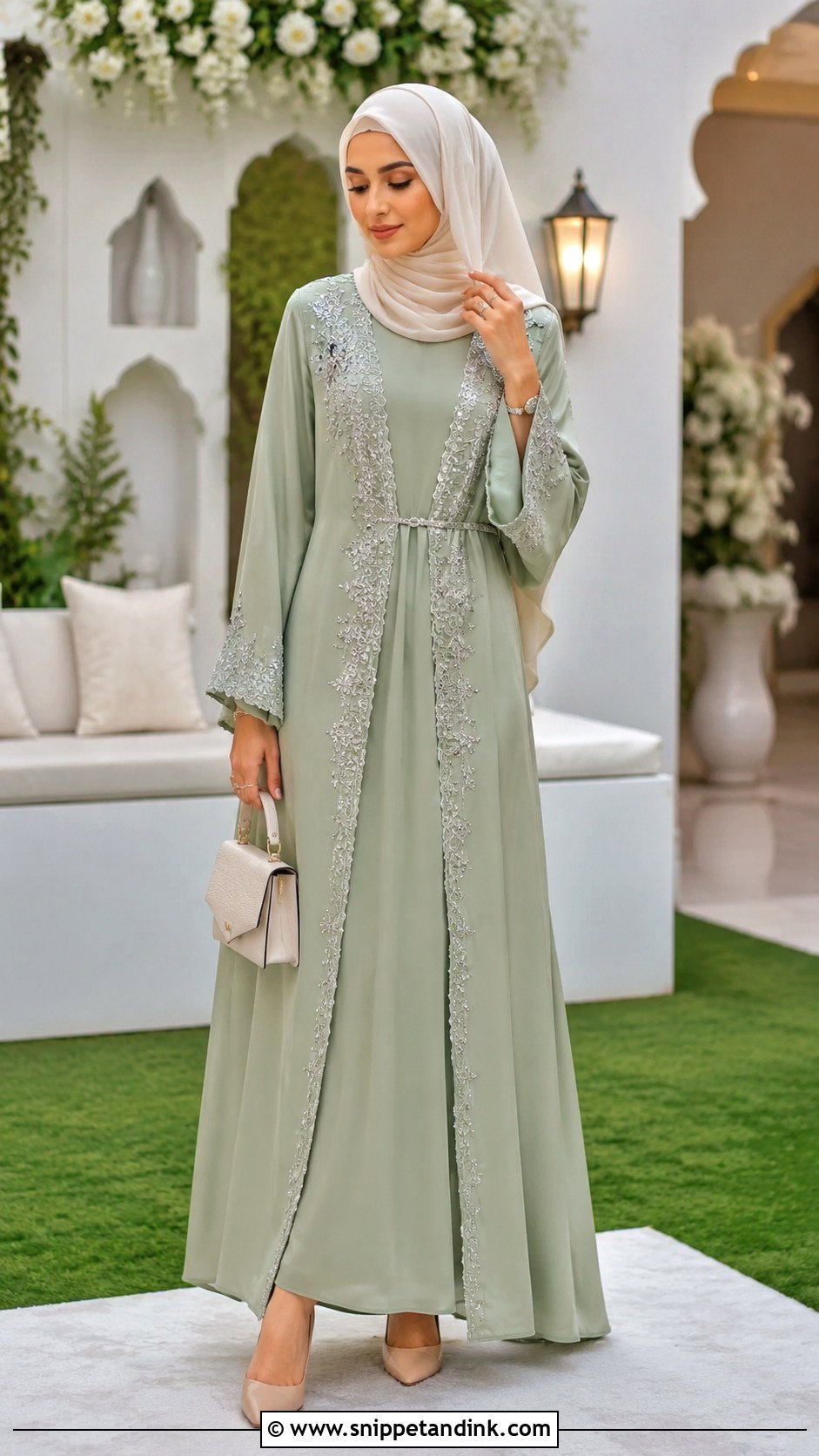
Sage green photographs calm and current, and it’s a good answer for a bride who doesn’t want white or for a guest who wants something elegant. Choose a structured abaya with wide sleeves, a clean front closure and embroidery in silver or soft gold. Sage changes a lot between daylight and indoor light; it can drift towards grey under fluorescent tubes, so I’d save it for a garden or daytime ceremony. Pair it with a matching or ivory hijab and simple jewellery. Breathable crepe keeps it comfortable through a long service.
9. Pastel Blue Nikkah Dress With Hijab
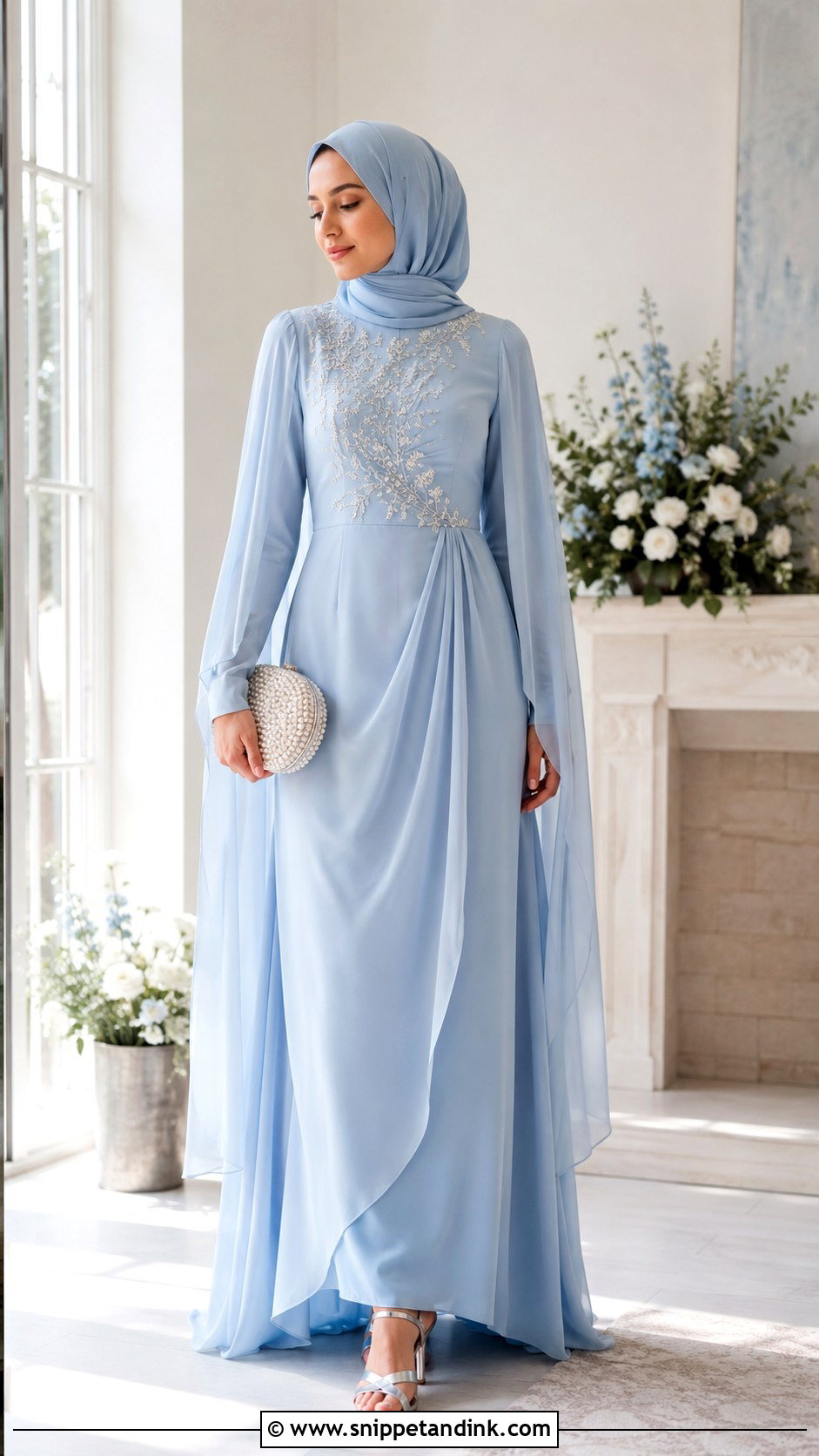
Pastel blue is a quieter break from white and pink. A full-length dress with long sleeves and a loose skirt, with soft embroidery or lace panels, looks fresh at a spring or summer Nikkah. Match the hijab to the dress and add silver heels. If you want it to read more bridal, a sheer cape or light veil over the hijab does that in one step. I often suggest this shade to bridesmaids or sisters when the bride is in white, because it sits next to white without competing.
10. Lilac Nikkah Maxi Outfit
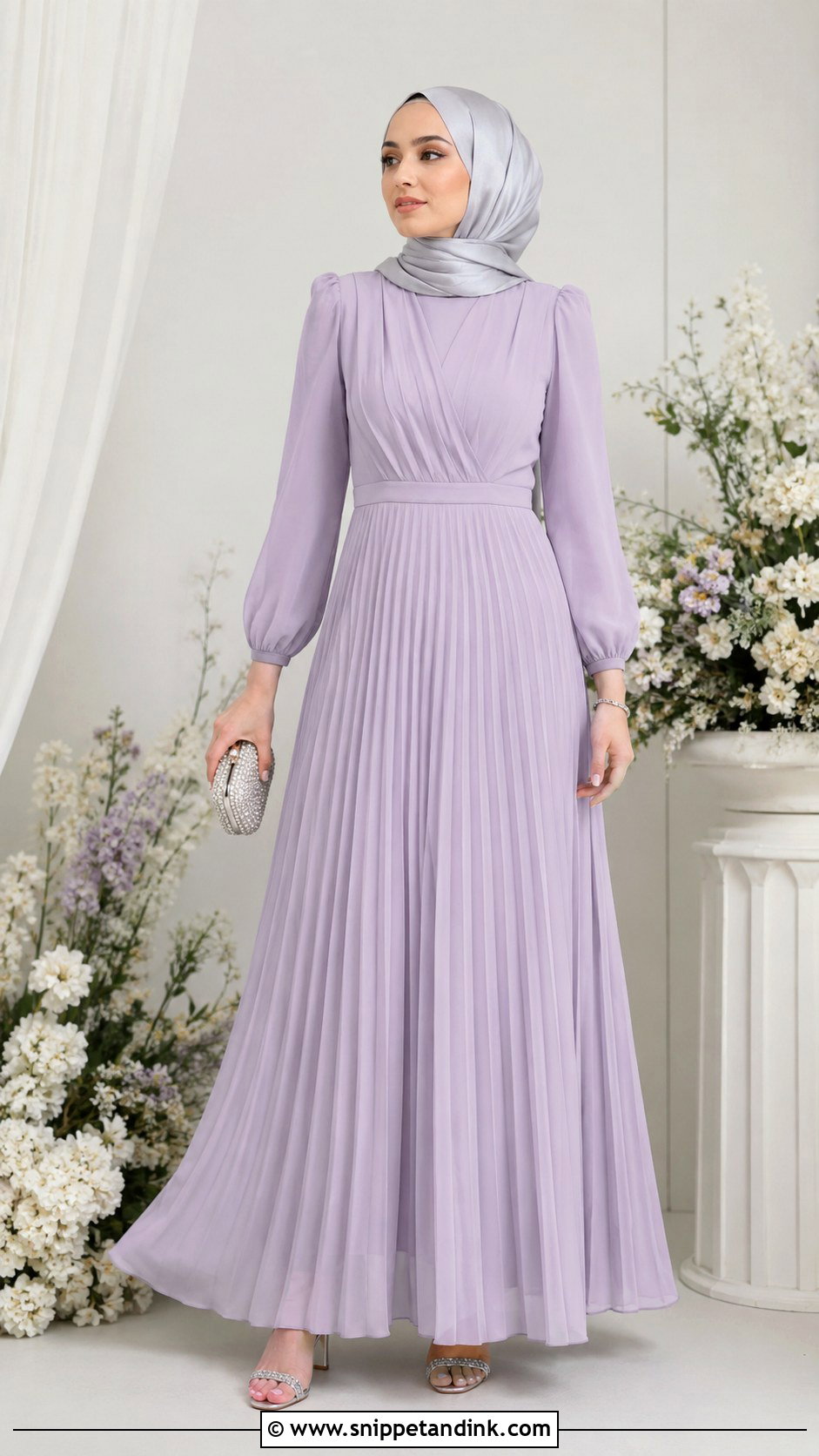
Lilac is soft without being sugary, and it works for a bride who wants a modern pastel or a guest who wants to look respectful. Choose a long-sleeve maxi with a modest neckline and a flowing skirt; embroidered cuffs or a pleated skirt add detail. I pair lilac with a silver-grey hijab rather than a matching lilac one more often than not, because exact lilac matches are hard to find and a near miss looks like a mistake. Silver heels and delicate jewellery finish it for an afternoon or indoor ceremony.
11. White Nikkah Suit With Dupatta
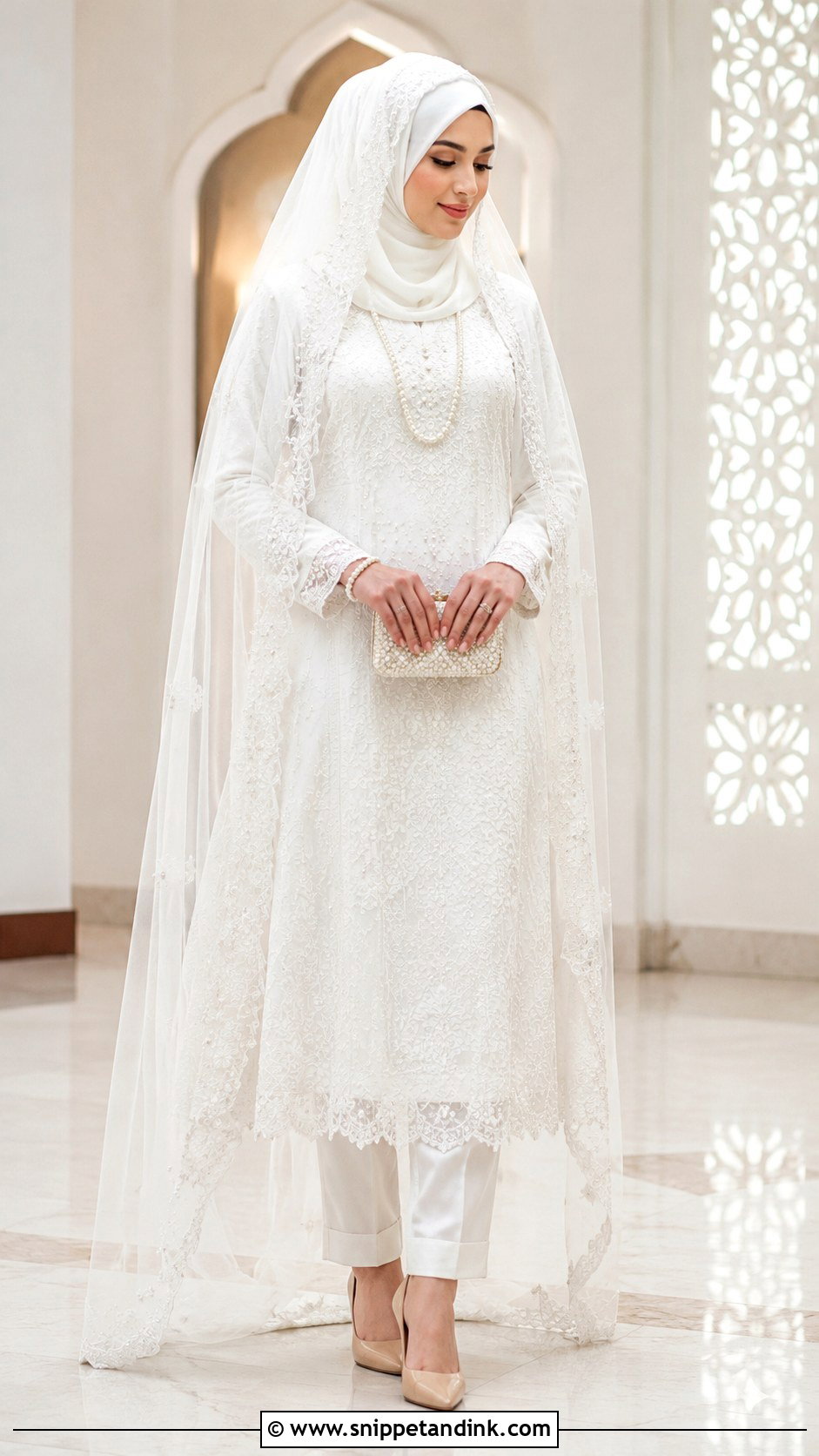
A white Nikkah suit with dupatta suits a bride who prefers traditional clothing to a gown. A long kameez with straight trousers looks clean, and embroidery along the neckline, sleeves and hem gives enough detail. I always put a matching hijab under the dupatta and pin the dupatta to the hijab at both temples; a dupatta on bare hair slides off the moment you look down to sign. Nude or silver heels and pearl jewellery are enough. It is comfortable and respectful in a masjid.
12. Embroidered Nikkah Kaftan Dress
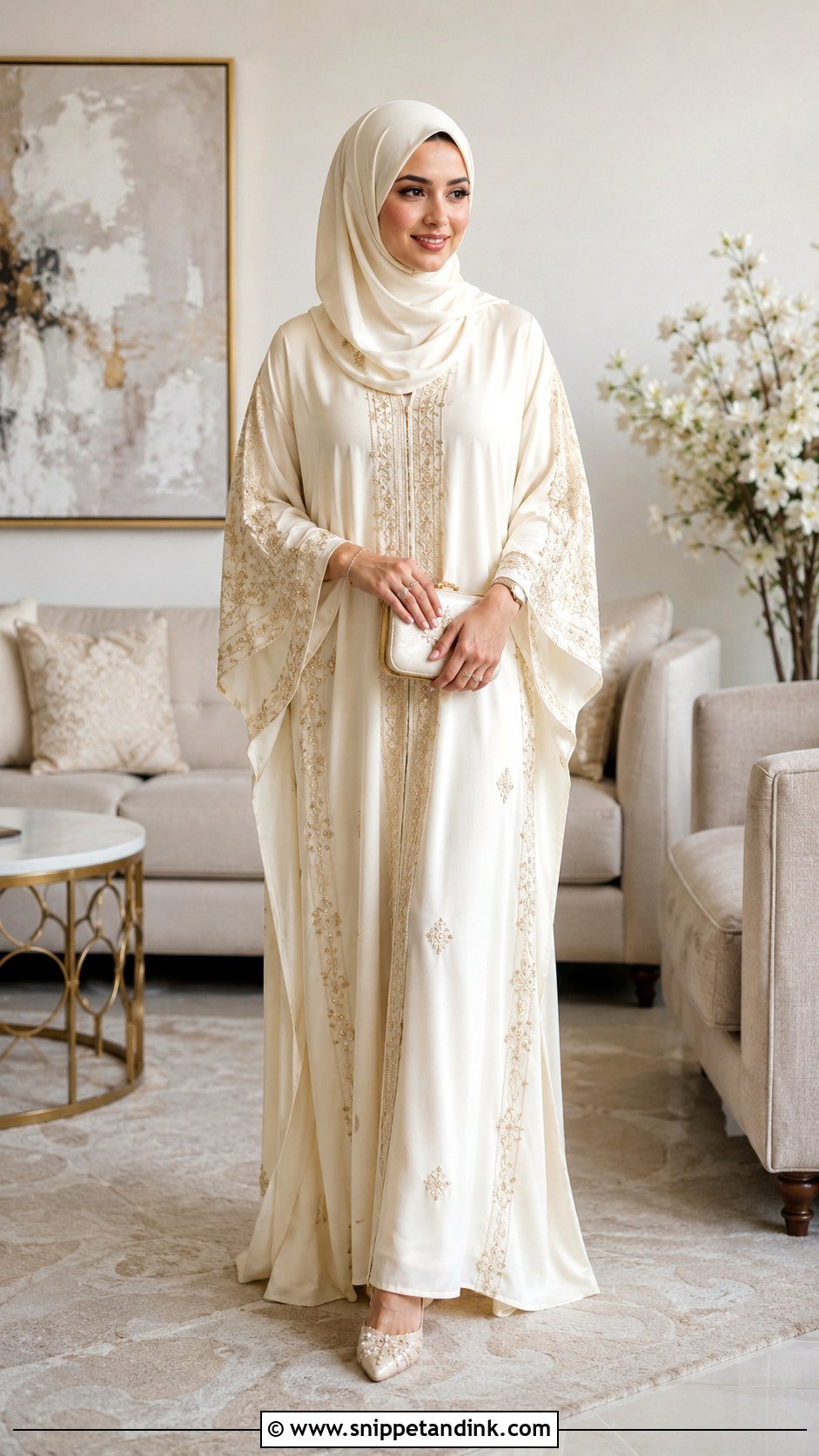
When a bride tells me comfort matters more than anything, I show her kaftans. The loose cut gives full coverage, and detailed work around the neckline, sleeves and front panel carries the occasion on its own. Ivory, champagne or pastel all work. The catch is that a kaftan has no waist, so on petite brides it can swallow the frame; I’d look for one with a tie or a slightly shaped side seam. Pair it with a smooth hijab in the same colour family and embellished flats for a home Nikkah where you’ll be up and down all day.
13. Modest Satin Nikkah Dress
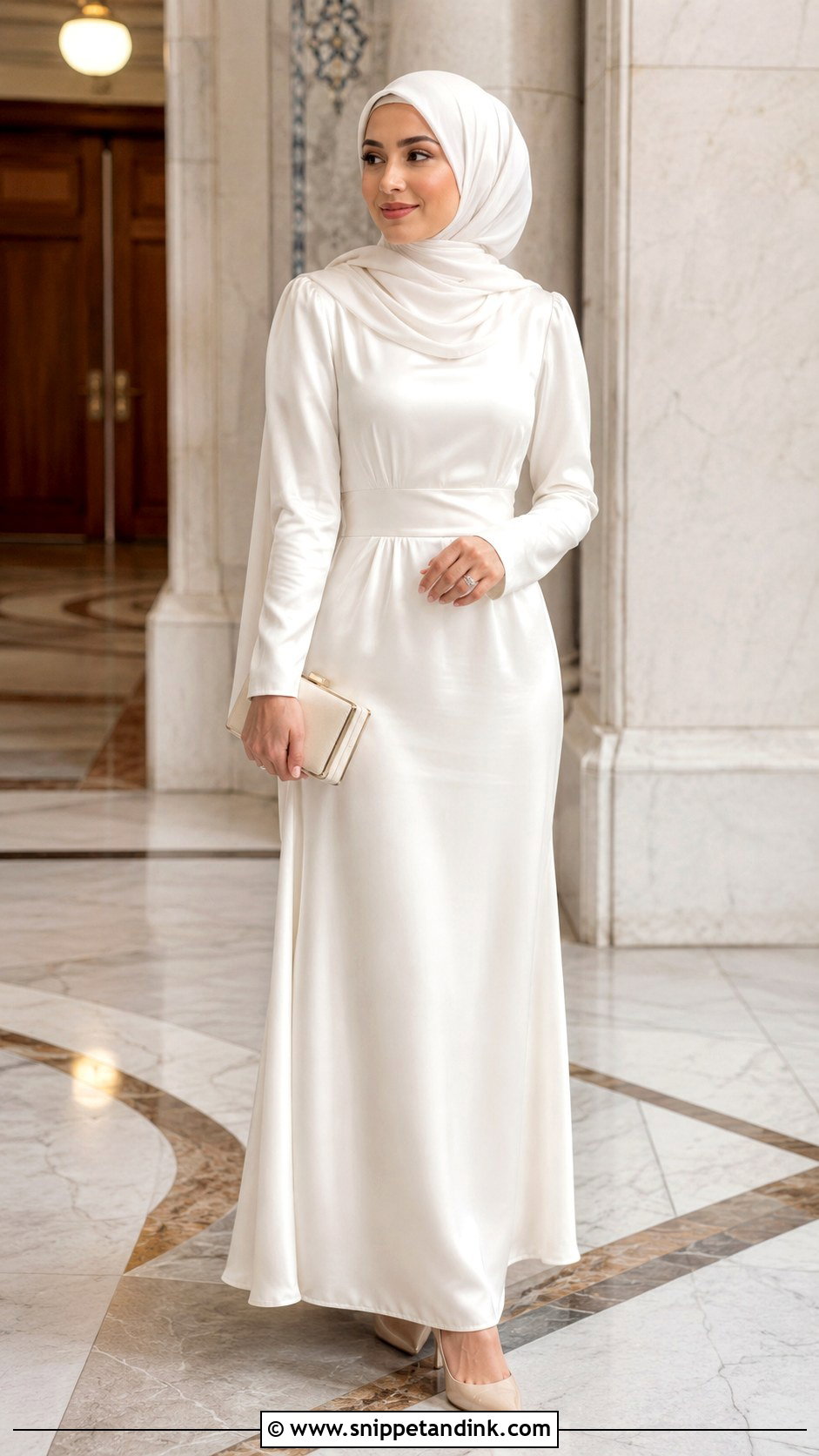
Satin does a lot with very little. It catches light, so a plain long-sleeve maxi with a relaxed fit and a high neckline looks bridal without embroidery. Ivory, champagne and dusty rose are the shades I reach for. The downside is creasing: satin shows every crease from sitting, and a ceremony involves a lot of sitting, so I’d choose a heavier duchess or crepe-backed satin over thin polyester. A matching chiffon hijab softens the shine, and accessories should stay quiet. It suits a civil Nikkah, a small venue or a bride who likes clean lines.
14. Lace Nikkah Gown With Hijab
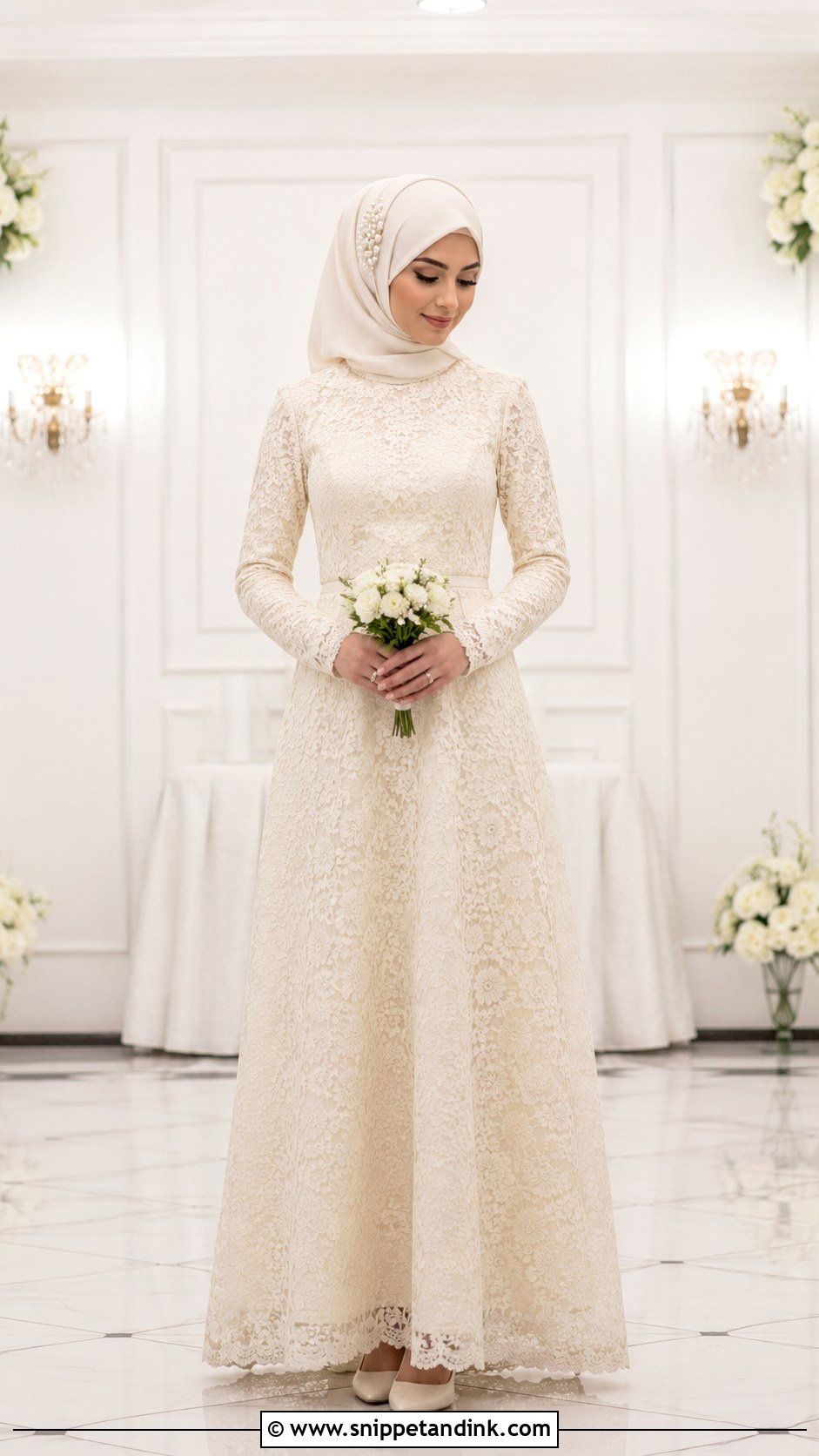
Lace brings bridal texture without a lot of bulk, provided the gown is fully lined. Look for long lace sleeves, a high neckline and a flowing skirt, and check the lining runs right to the cuffs if your family expects covered arms. Lace sleeves are often left sheer by default. A plain hijab balances busy lace; a patterned one makes the whole outfit look crowded. I’d pin the hijab with pearl pins and keep jewellery minimal. It sits well in a hotel or family hall.

15. Pearl Nikkah Dress With Matching Hijab
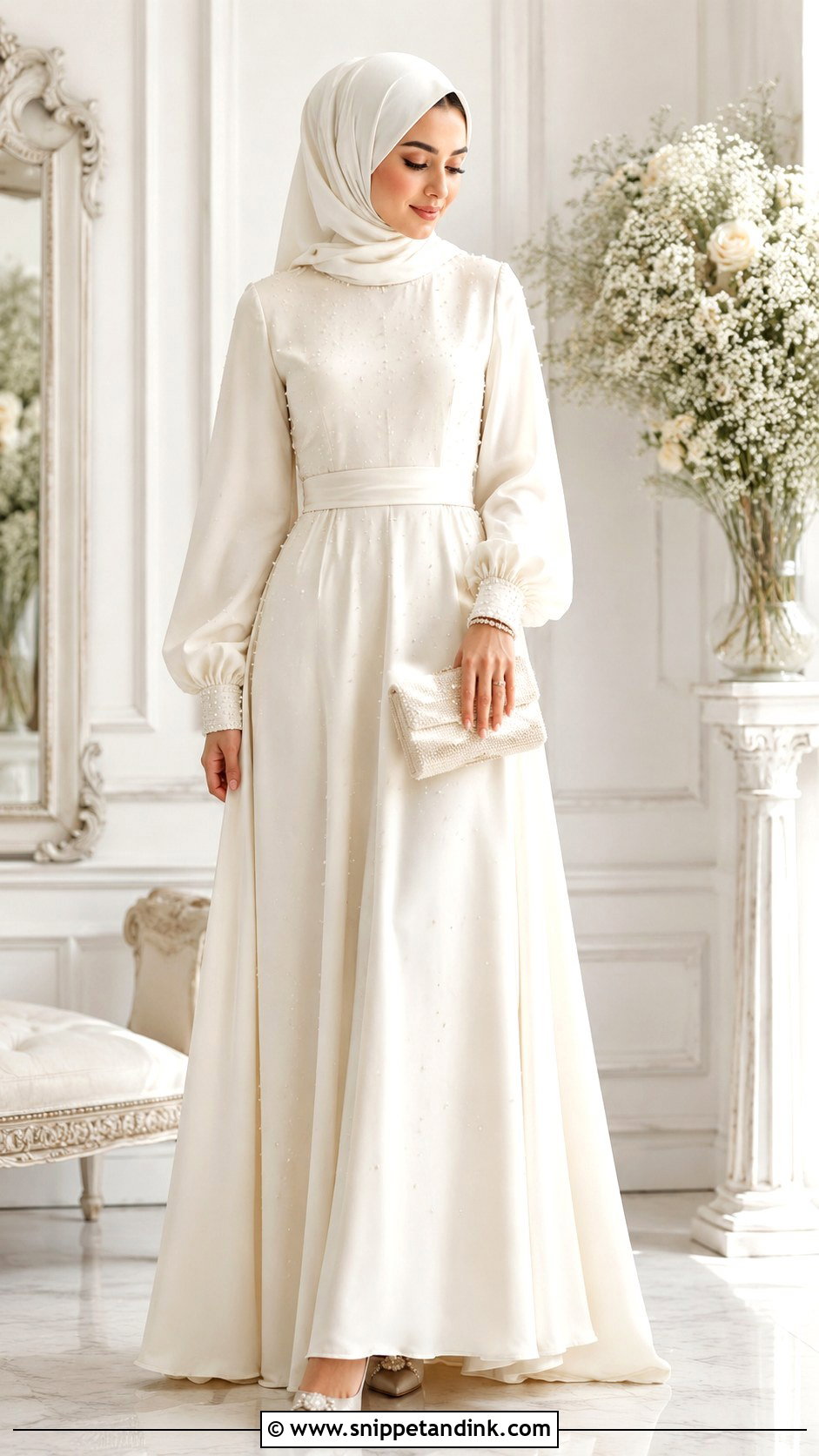
Pearl detail gives shine more gently than crystals, and it doesn’t throw hot spots of light in photos the way rhinestones can. Choose a white, ivory or blush dress with small pearls on the sleeves, bodice or hem, and a plain matching hijab so the pearls stay the focus. Before buying, I tug a couple of the pearls; machine-glued ones fall off during the day, while hand-stitched ones hold. Add pearl earrings if they’ll show and a cream clutch. Daytime and bright indoor light suit it best.
16. Nikkah Jumpsuit With Long Cape
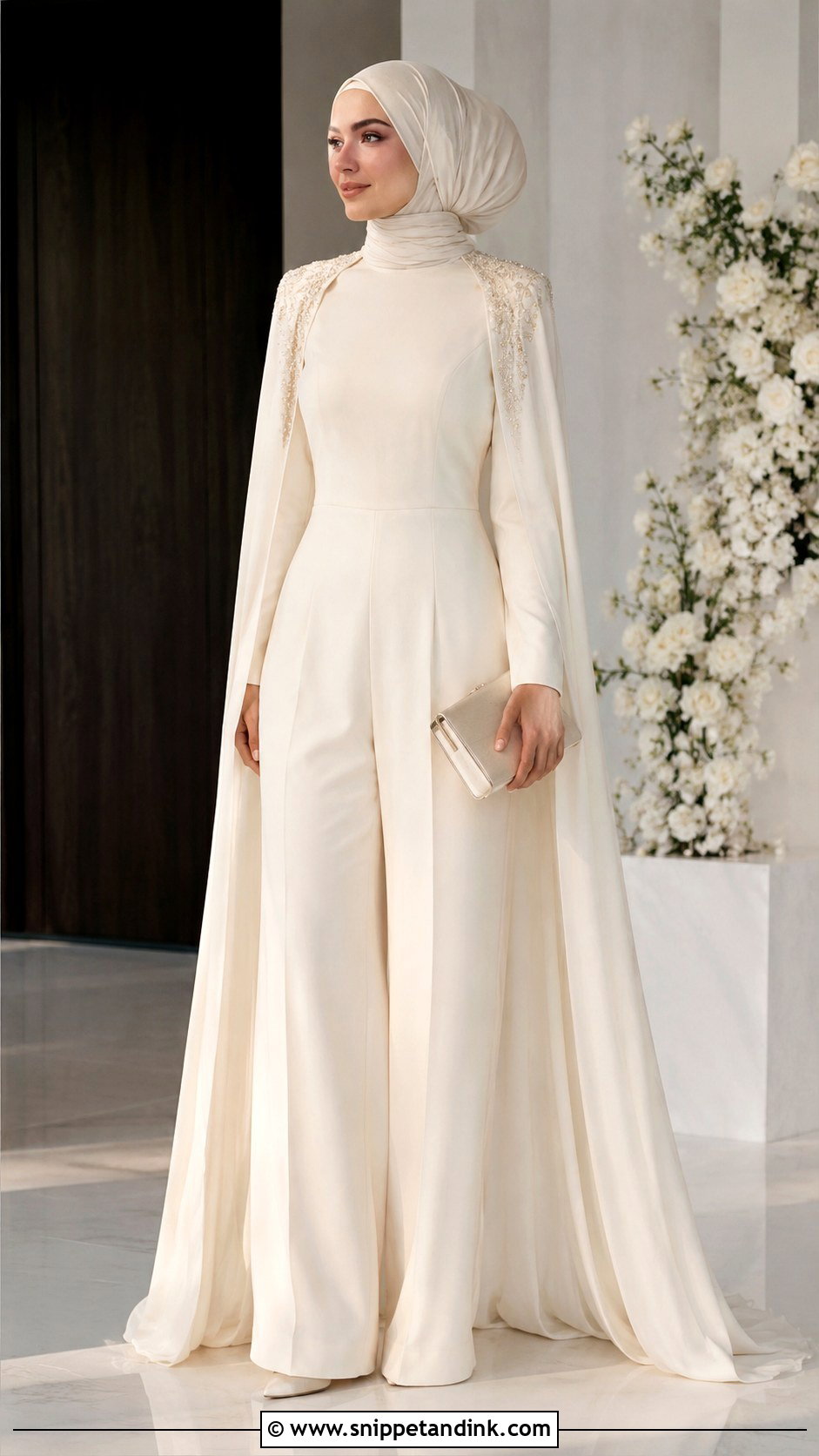
A wide-leg jumpsuit with a long cape is a modern option for a woman who wants coverage with a tailored line. Choose long sleeves, a high neckline and a relaxed fit, then add a floor-length cape in chiffon or crepe to soften it. I’d only suggest this for a contemporary venue or a home ceremony where the family is comfortable with trousers on a bride. One practical point: jumpsuits mean full undressing for the bathroom, so plan for help or a cape that detaches. White, ivory, blush or sage all work.
17. Nikkah Skirt And Blouse Outfit
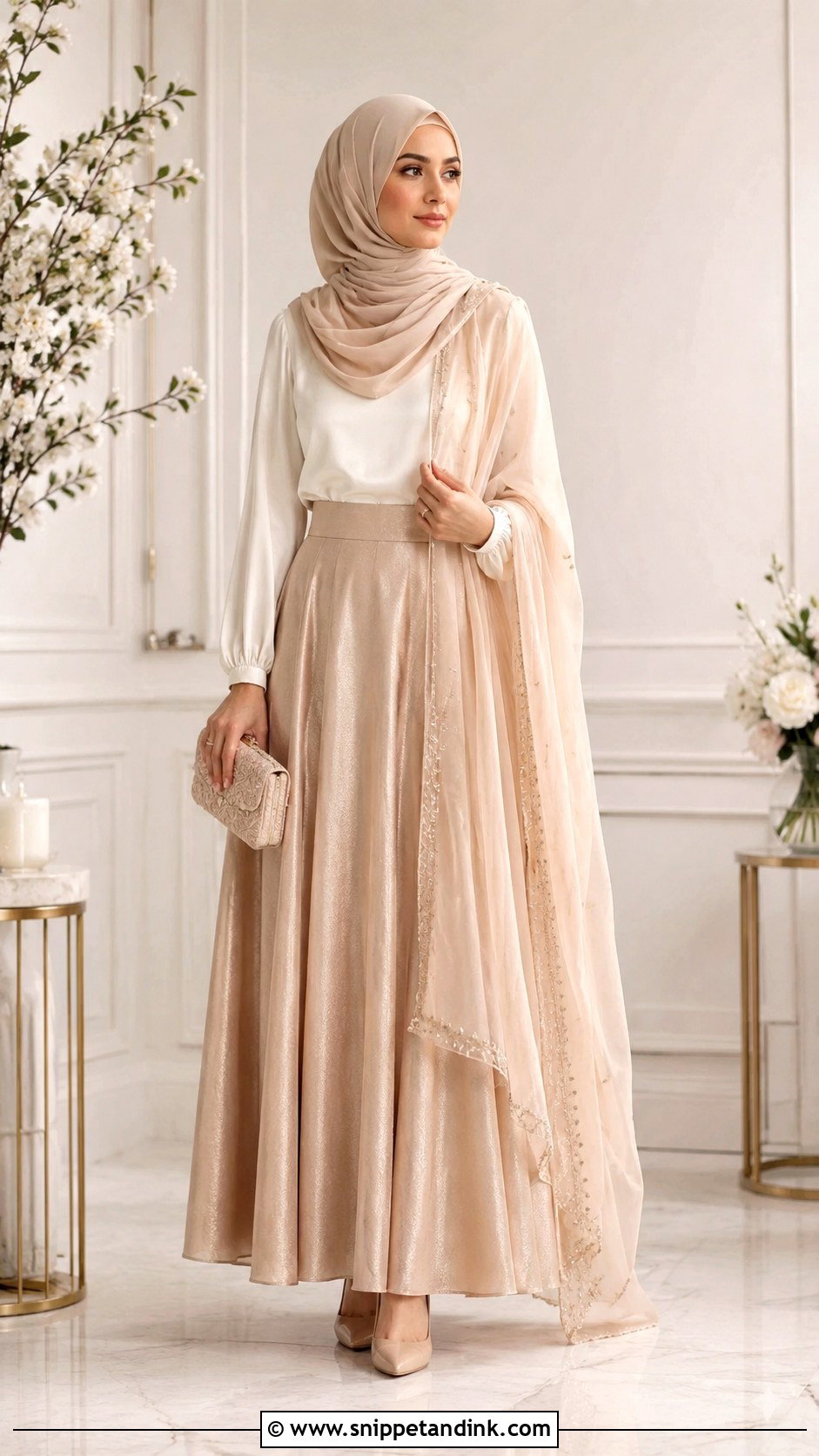
Separates are underrated for a Nikkah. A full maxi skirt in satin or organza with a modest long-sleeve blouse lets you size the top and bottom independently, which helps if you’re a different size above and below the waist. The blouse needs to be long enough not to ride up when you sit. A matching hijab and soft dupatta pulls the pieces together. Ivory, champagne and sage work well. I’d tuck the blouse into a high waistband and pin it at the side seams so it stays put through the day.
18. Nikkah Palazzo Suit With Hijab
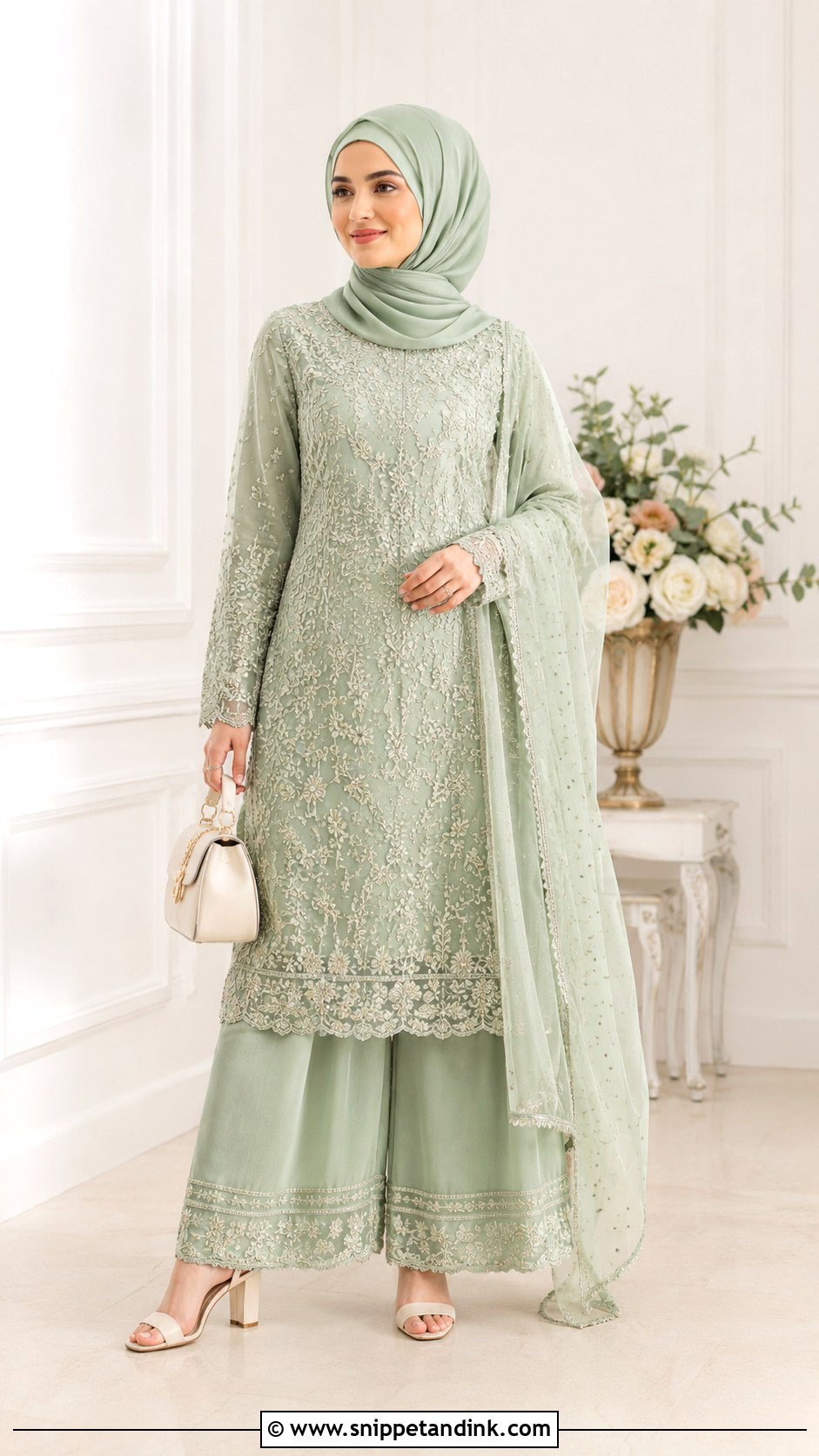
A palazzo suit is the outfit I suggest to brides who are anxious about sitting on the floor. The wide legs move freely, the long kameez covers, and nothing needs arranging when you stand up. Soft embroidery, lace trim or beadwork makes it ceremony-ready. White, cream, mint and dusty pink are good shades. Block heels keep you steady while greeting family. Choose a kameez with side slits that start below the hip, not at the waist, or the trousers will show more than you planned when you walk.
19. Nikkah Gharara Outfit
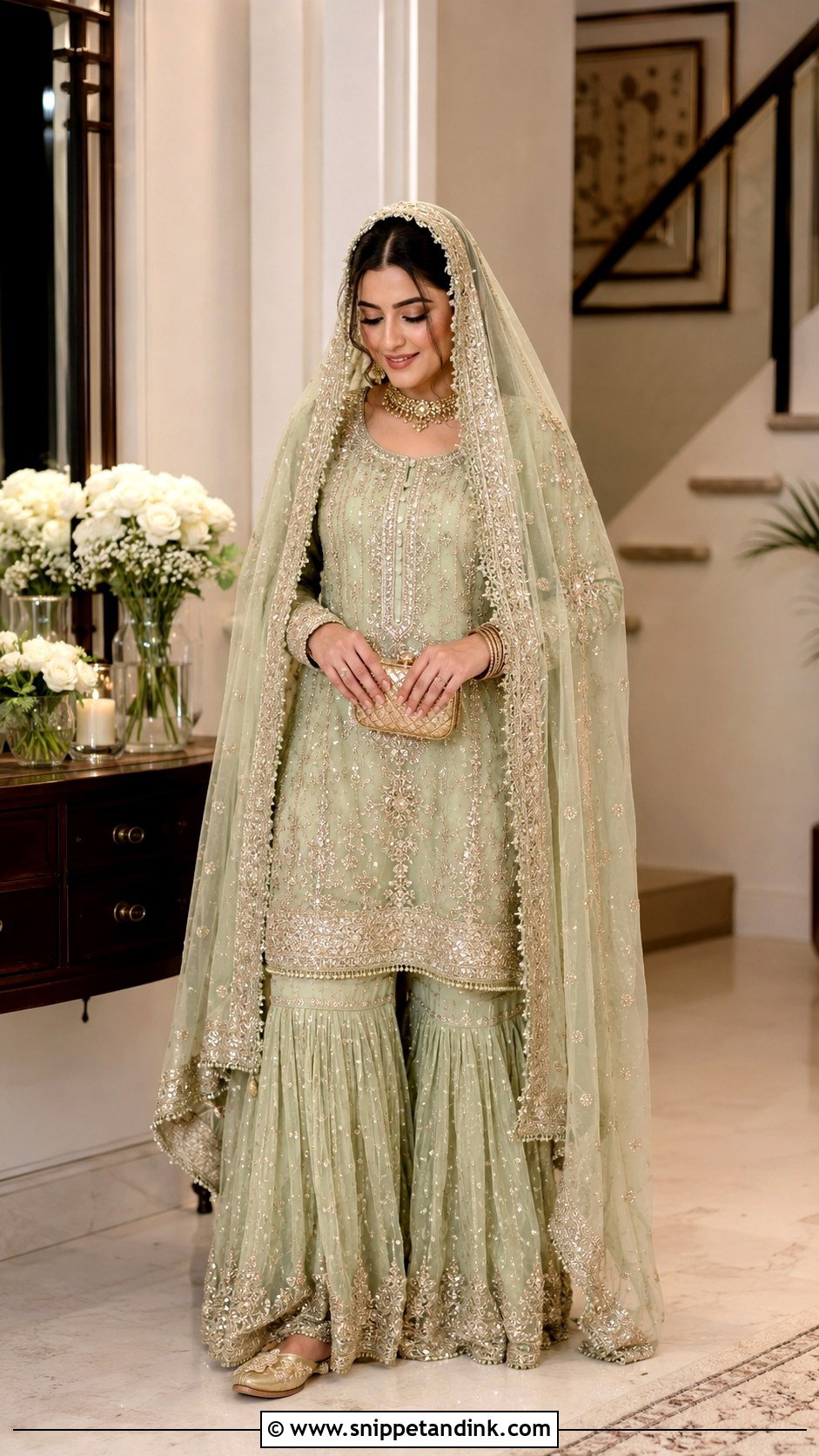
The gharara’s flare starts at the knee, which gives a ceremonial shape while the long kameez keeps everything modest. It is a South Asian classic. For daytime I’d pick ivory, pistachio, blush or powder blue. A dupatta over the head completes it. Ghararas are heavy at the knee where the panels join, so I have brides practise walking and sitting in theirs at least once before the day; the first time, most of them step on the hem. Traditional khussas and an embroidered clutch suit it.

20. Nikkah Saree With Modest Blouse
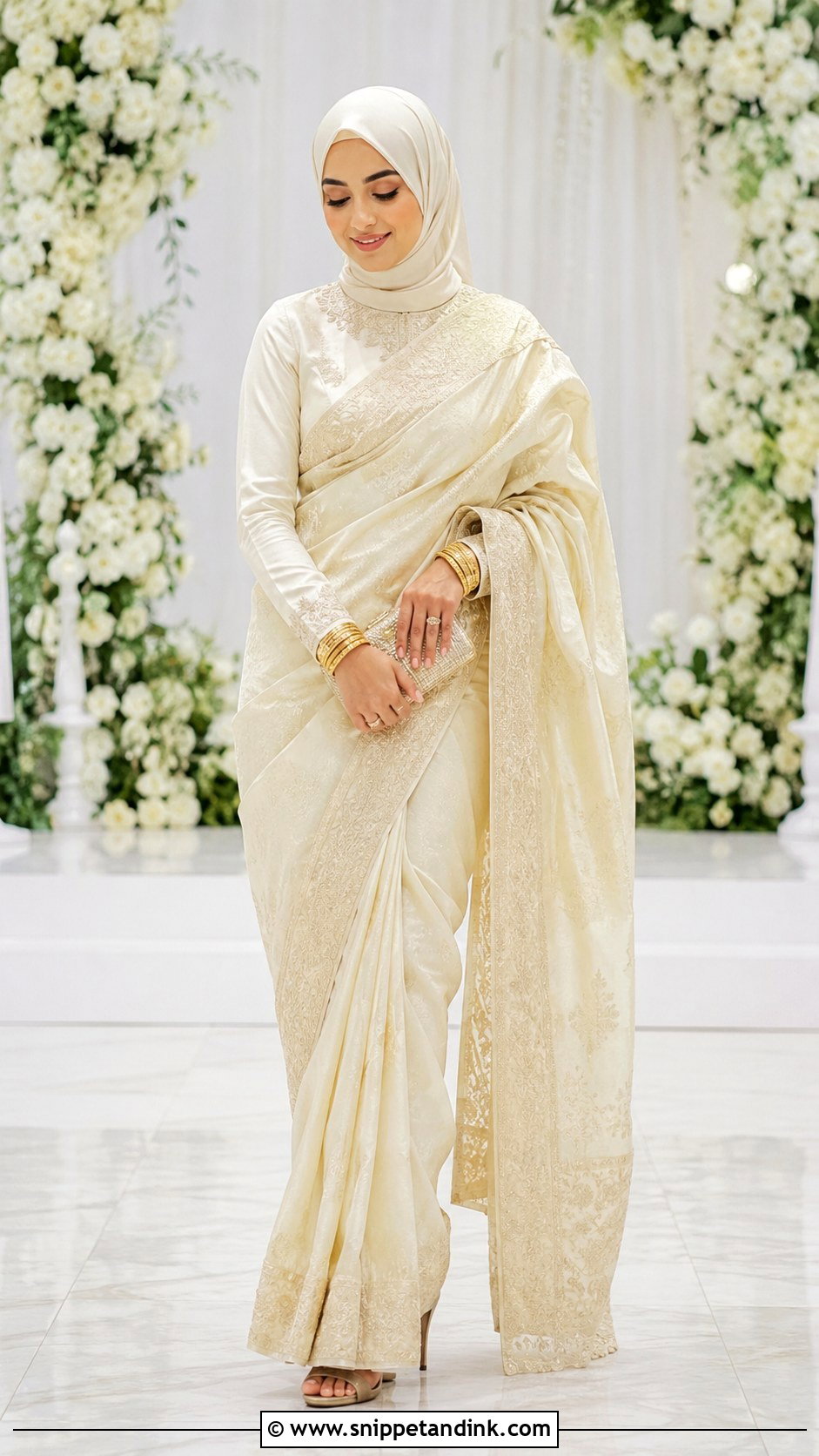
A saree can work for a Nikkah with careful coverage. Choose soft silk, chiffon or georgette in ivory, gold, blush or champagne, and pair it with a long-sleeve, high-neck blouse that’s fully lined. The midriff is the issue: I either pleat the pallu across the front so it covers, or add a fitted inner layer. A matching under-scarf with the pallu draped over the head keeps the hair covered. Pin the pleats at the waist in three places, not one, because a saree loosens when you sit and stand repeatedly.
21. Nikkah Dress With Organza Dupatta
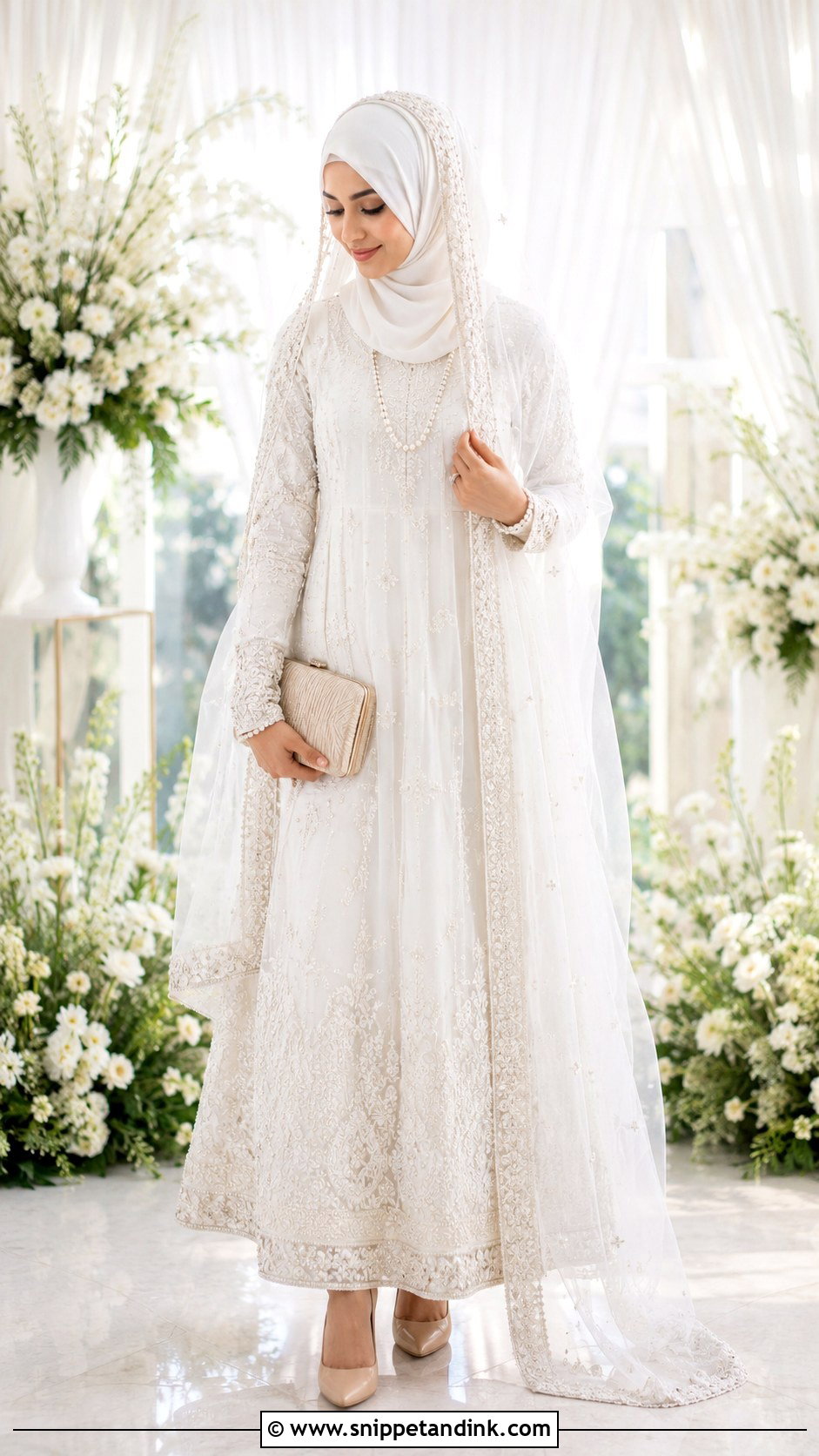
Organza gives a dupatta body, so it holds its shape over the head instead of collapsing flat like chiffon. Pair a long dress, Anarkali or kameez in white, ivory or pastel with an organza dupatta that has an embroidered border. It can be pinned over the hijab or draped across the front for extra coverage. Organza is also slightly stiff and can scratch the neck, so I put a soft hijab underneath rather than letting it sit on skin. Nude heels and pearl jewellery finish it. Daylight shows off the sheen best.
22. Nikkah Dress With Double Dupatta
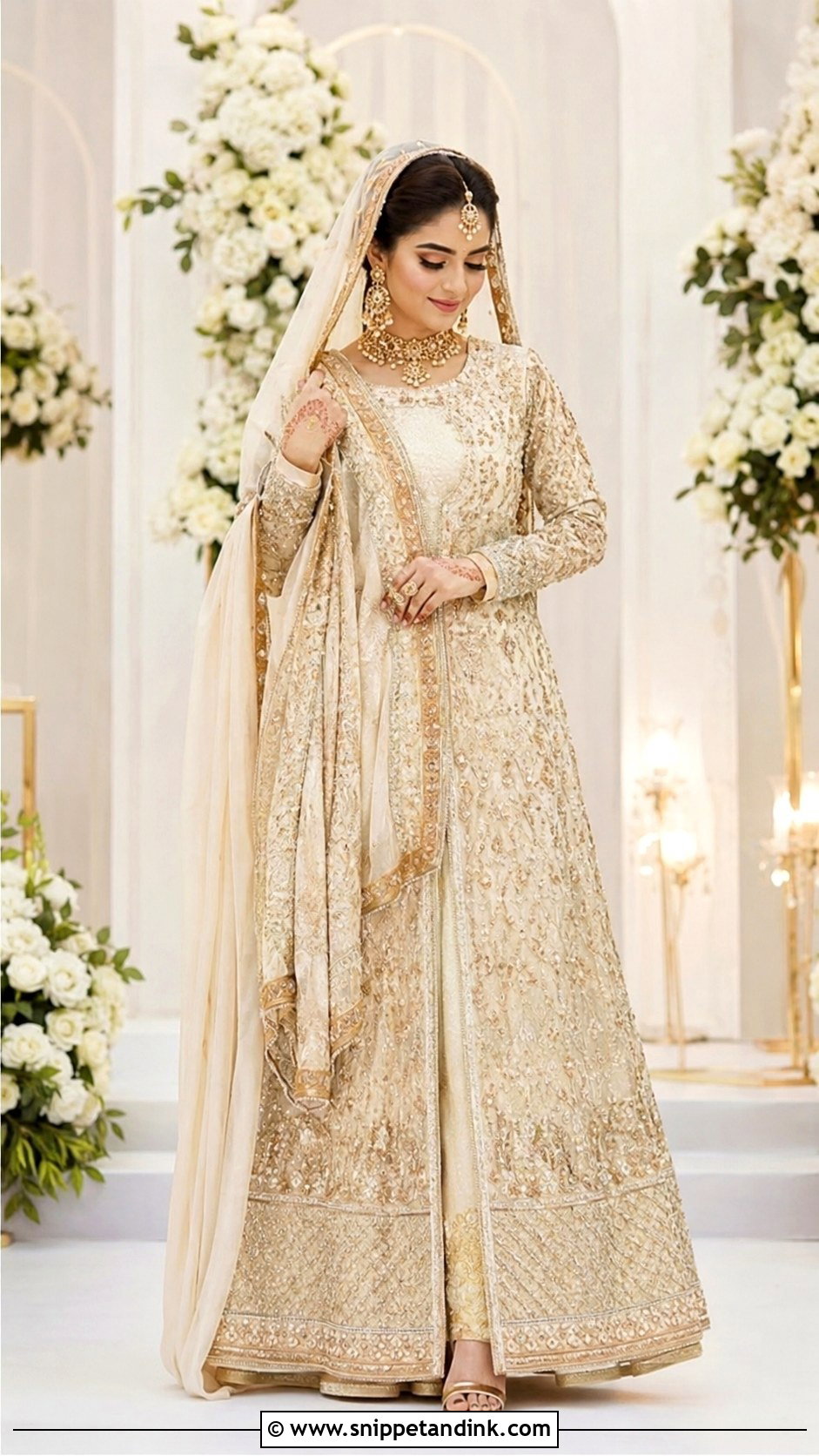
Two dupattas give a layered bridal look while staying modest: one over the head, a second across the body or over the arms. It works with lehengas, shararas, ghararas and Anarkalis. The rule I follow is one plain and one embroidered, and both in light fabrics; two heavy dupattas will drag the head dupatta backwards all day. Ivory with gold or sage with cream are easy combinations. I pin the head dupatta at the crown and both temples, and the body one at the shoulder only, so you can still lift your arms.
23. Minimal Nikkah Dress With Clean Hijab
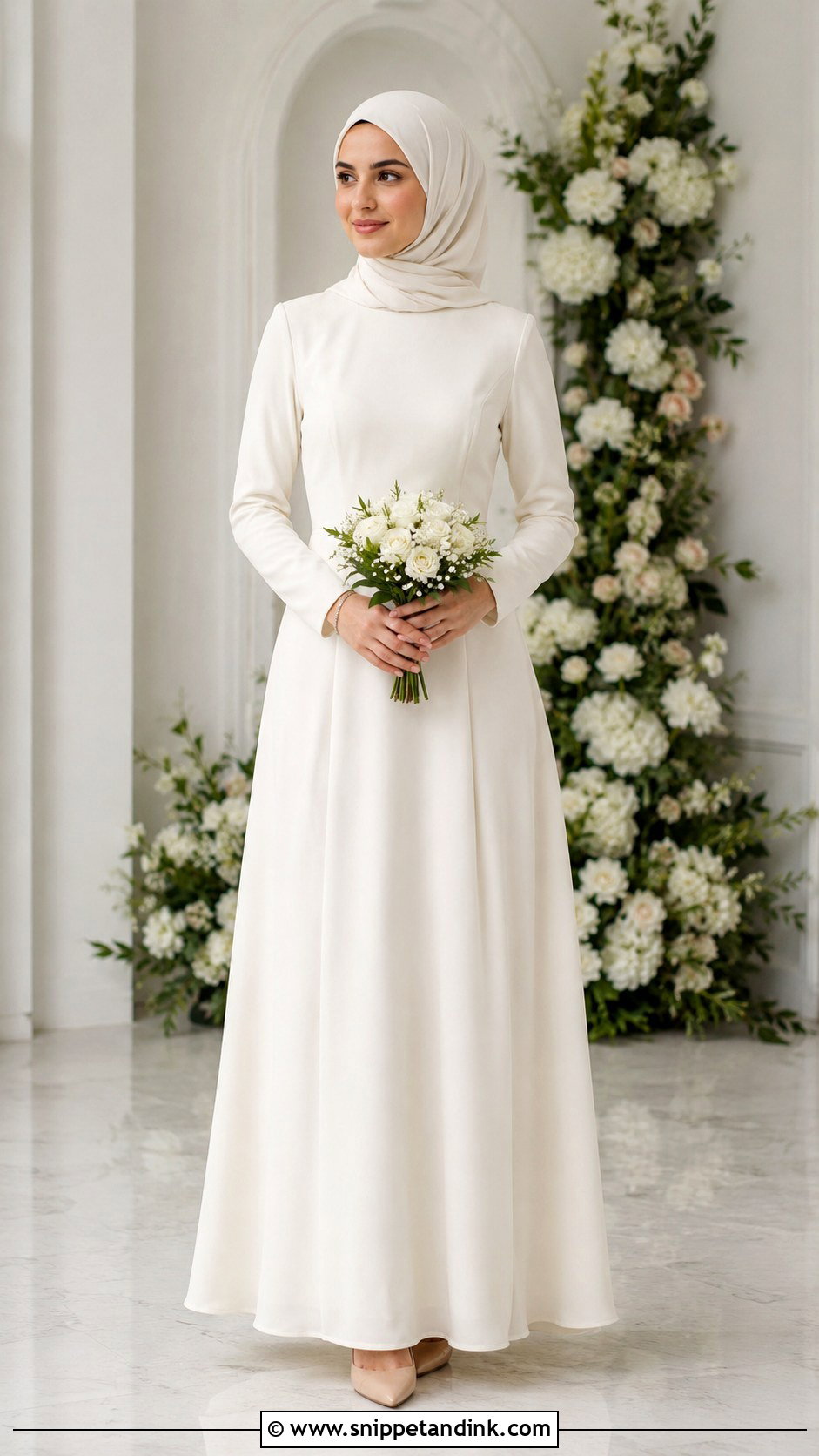
Some of my favourite Nikkah looks are almost plain: a long white or ivory dress with full sleeves, good fabric and no embellishment. The fit and the drape carry it, so spend your budget there. Add a neatly wrapped hijab, small earrings if they show, nude heels and a tiny bouquet. A thin belt or delicate cuffs give a little structure. It suits masjid ceremonies and small family gatherings, and it’s kind to a tight budget: a well-cut modest maxi with careful pressing and good accessories can look far more expensive than it was.
24. Luxury Nikkah Abaya With Embroidery
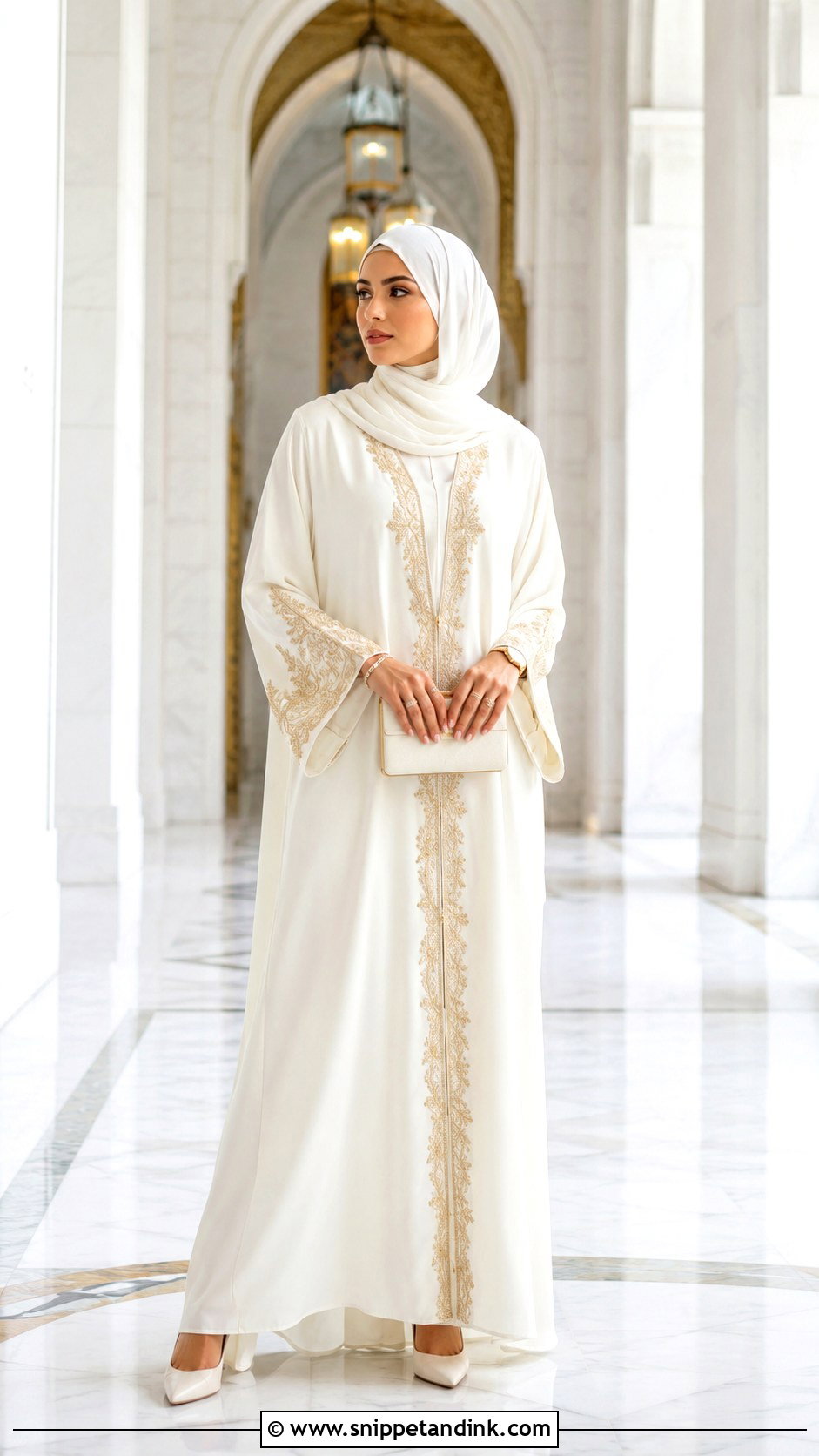
A luxury Nikkah abaya with embroidery gives full coverage with a formal finish. The fabric is what separates luxury from ordinary: nida, crepe or heavy satin drapes and doesn’t cling. Embroidery on the sleeves, front or hem is enough. If the thread is metallic, I match the jewellery to that tone so gold and silver aren’t fighting. In a mosque it’s one easy piece with no layering to fuss over. I’d choose white, champagne, dusty rose or soft gold for a bride.
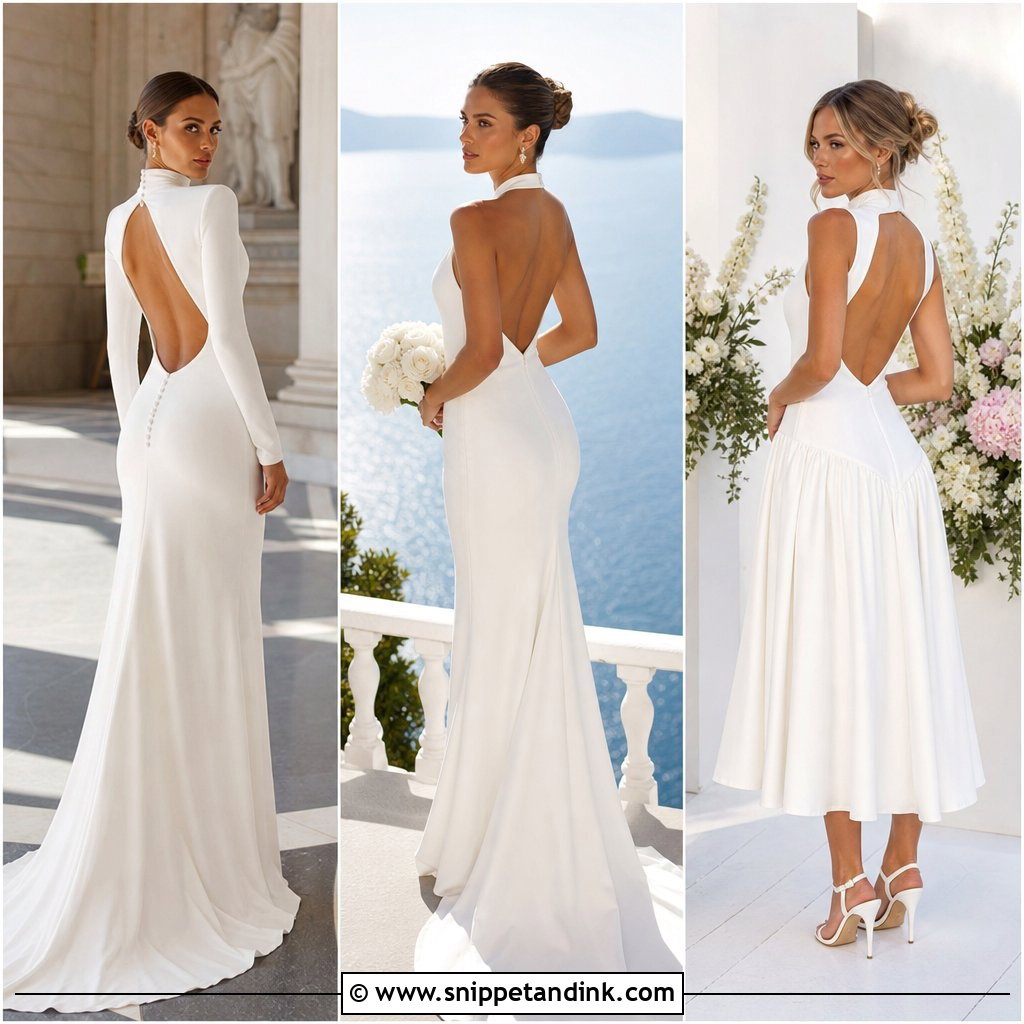
25. Floral Nikkah Maxi Dress
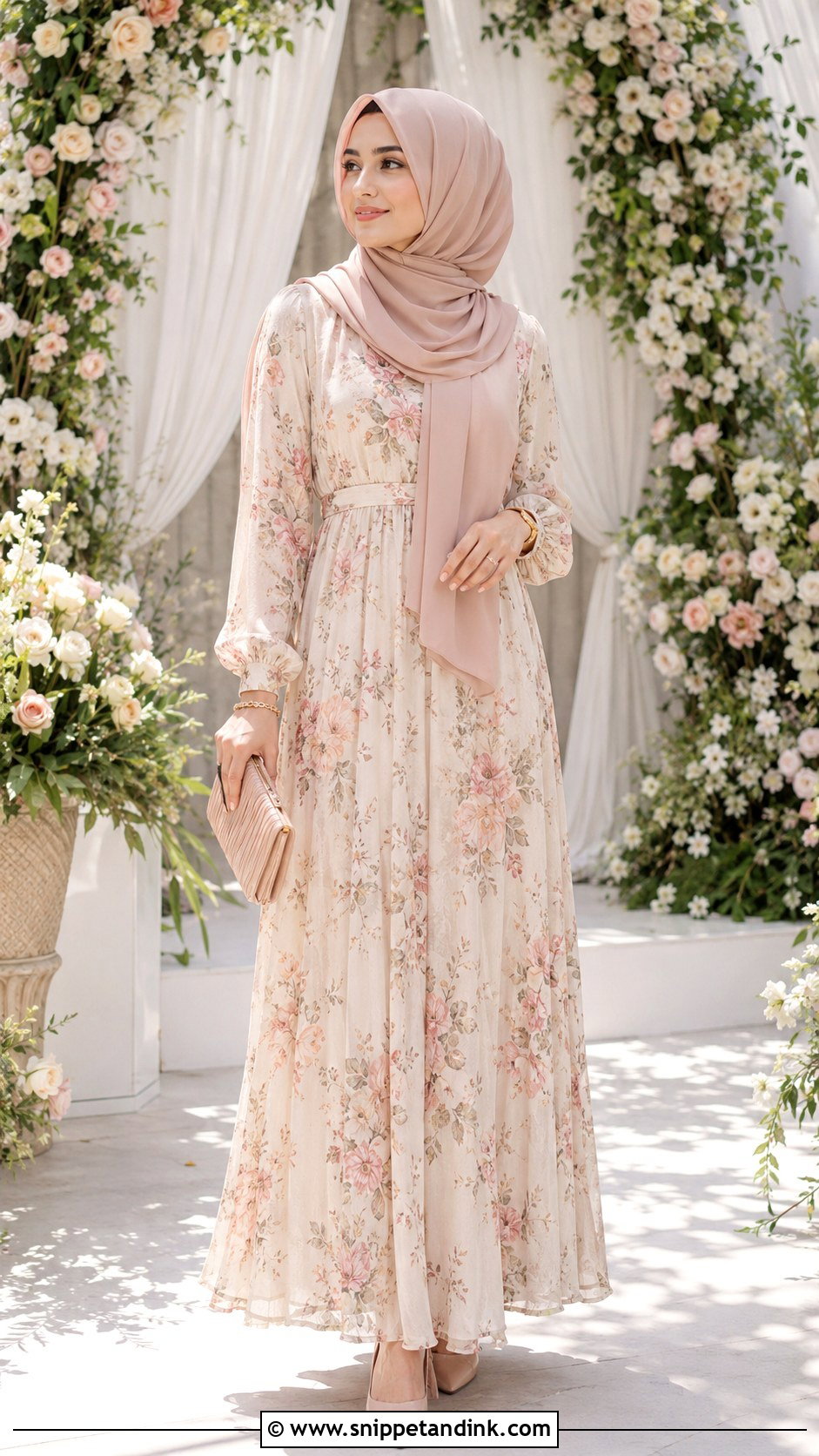
A floral maxi suits a spring, summer or garden ceremony, and it’s a good fit for guests or sisters. Choose soft, small-scale prints rather than loud ones. A long-sleeve dress with a high neckline and a flowing skirt covers comfortably. I pull the hijab colour from the second colour in the print, not the main one, because that ties the outfit together without looking matched by a computer. For a bride, pick ivory or blush florals and add a sheer dupatta or cape.
26. Nikkah Two Piece Set With Hijab
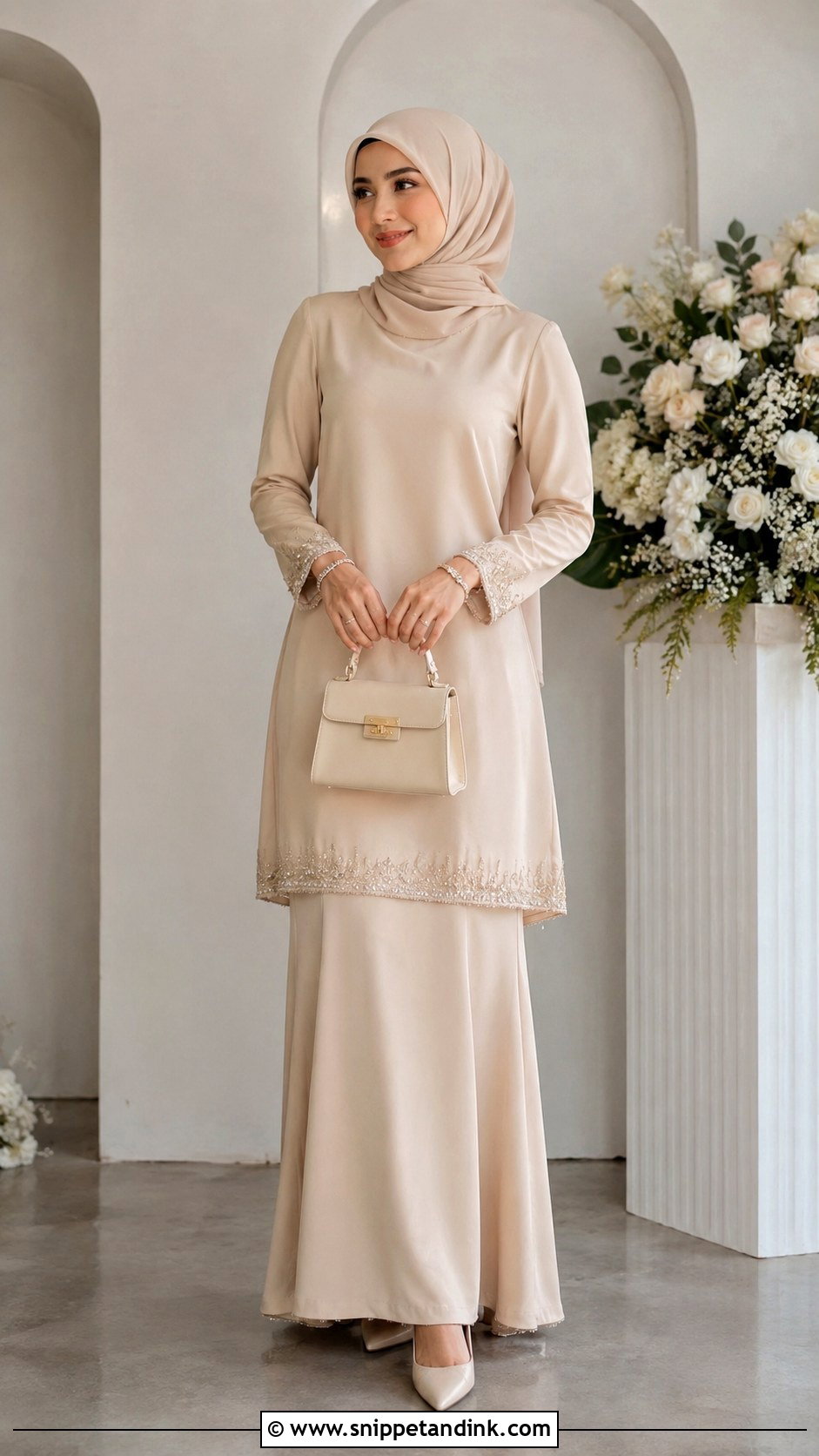
A coordinated tunic and maxi skirt (or wide-leg trousers) is practical and modern. Make sure it has full sleeves and a covered neckline, and pick a fabric for the venue: crepe for a hall, embroidered cotton silk for a warm daytime ceremony. A matching hijab and a structured bag keep it polished. Guests get the bonus of rewearing the pieces separately. I’d check the tunic length while sitting; a tunic that covers the hips standing can stop at the waist once you’re seated.
27. Velvet Nikkah Outfit For Winter
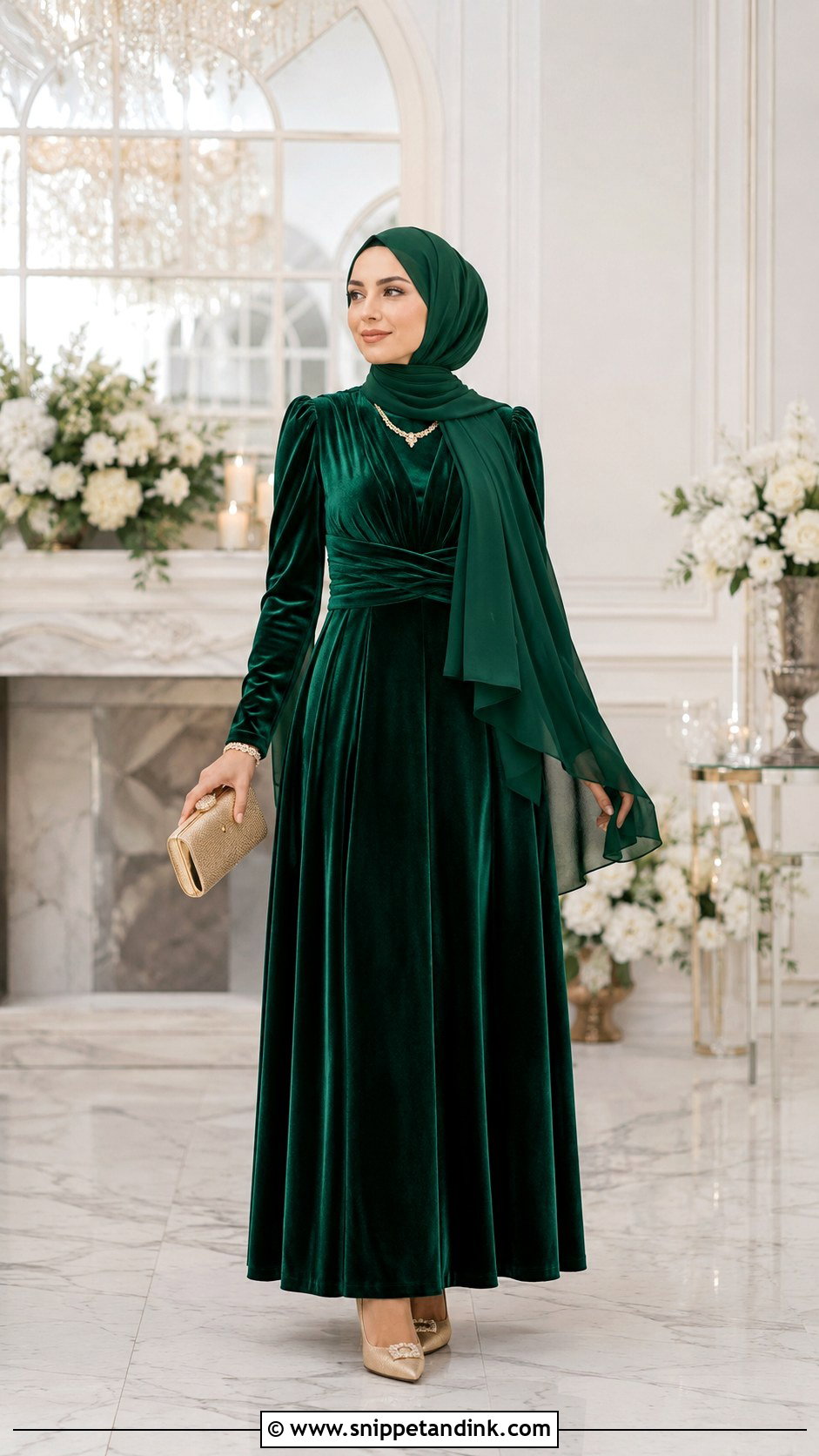
Velvet is the fabric I reach for at a winter Nikkah: it’s warm, it drapes heavily and it looks rich without any embellishment. A long velvet dress, abaya or kameez in emerald, navy, burgundy or ivory works well. Pair it with a chiffon or silk hijab so the look isn’t too heavy around the face. Velvet crushes where you sit and holds the mark, so I steam it the morning of and avoid it for a long floor-seated ceremony. Brides suit ivory velvet with pearl or gold details; guests look polished in deep jewel tones.
28. Simple Nikkah Guest Outfit
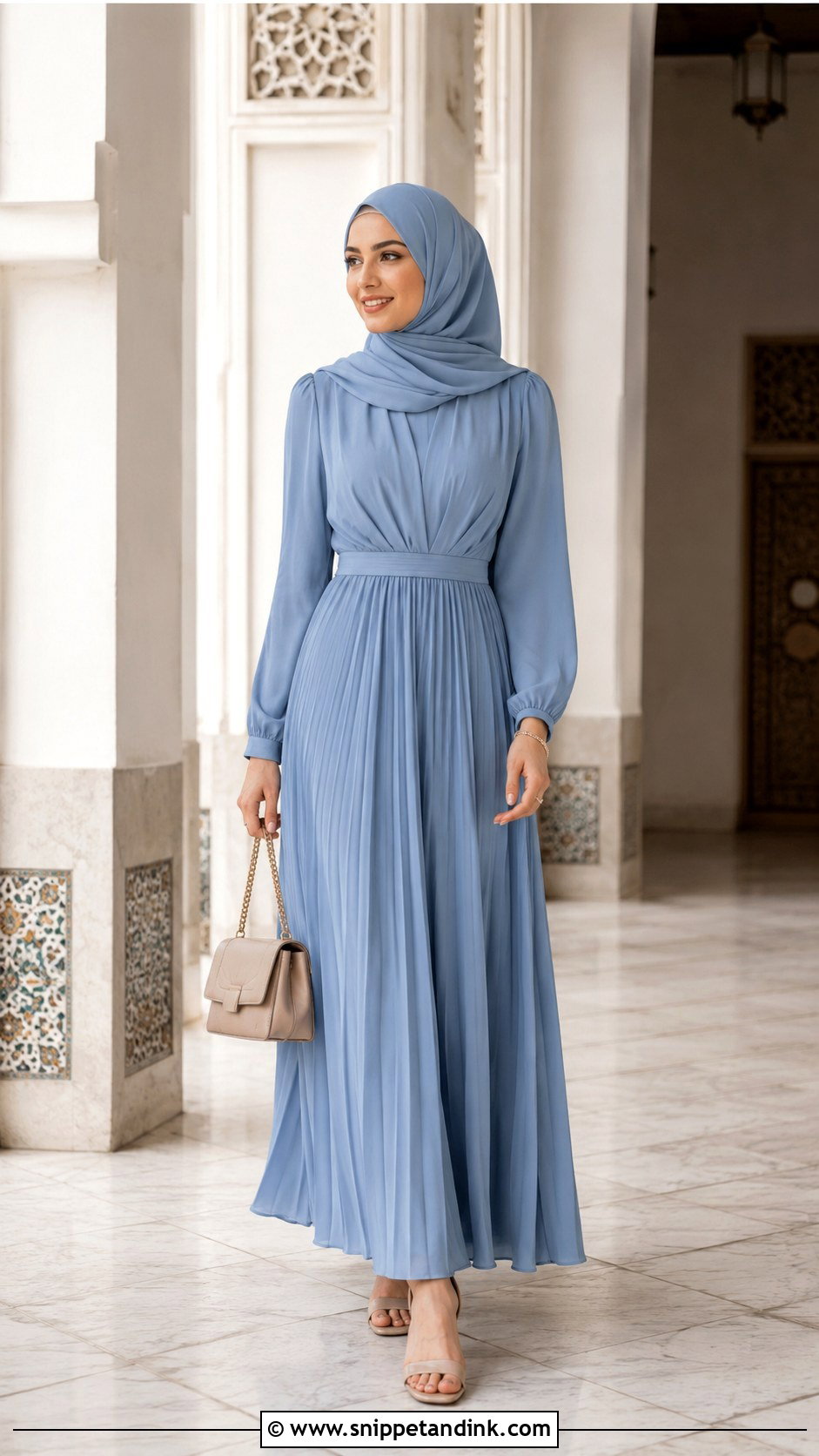
A guest should look neat and covered without looking bridal. A long-sleeve maxi, an abaya or a tunic with wide-leg trousers is a safe choice. I’d keep to softer shades like dusty blue, mauve, olive or beige unless the family has set a dress code, and I’d ask before wearing white or red, which some families reserve for the bride. Avoid anything sheer, tight or heavily embellished at a masjid Nikkah. Comfortable flats help if you’ll be standing at the back for a while.
29. Nikkah Outfit For Sister Of Bride
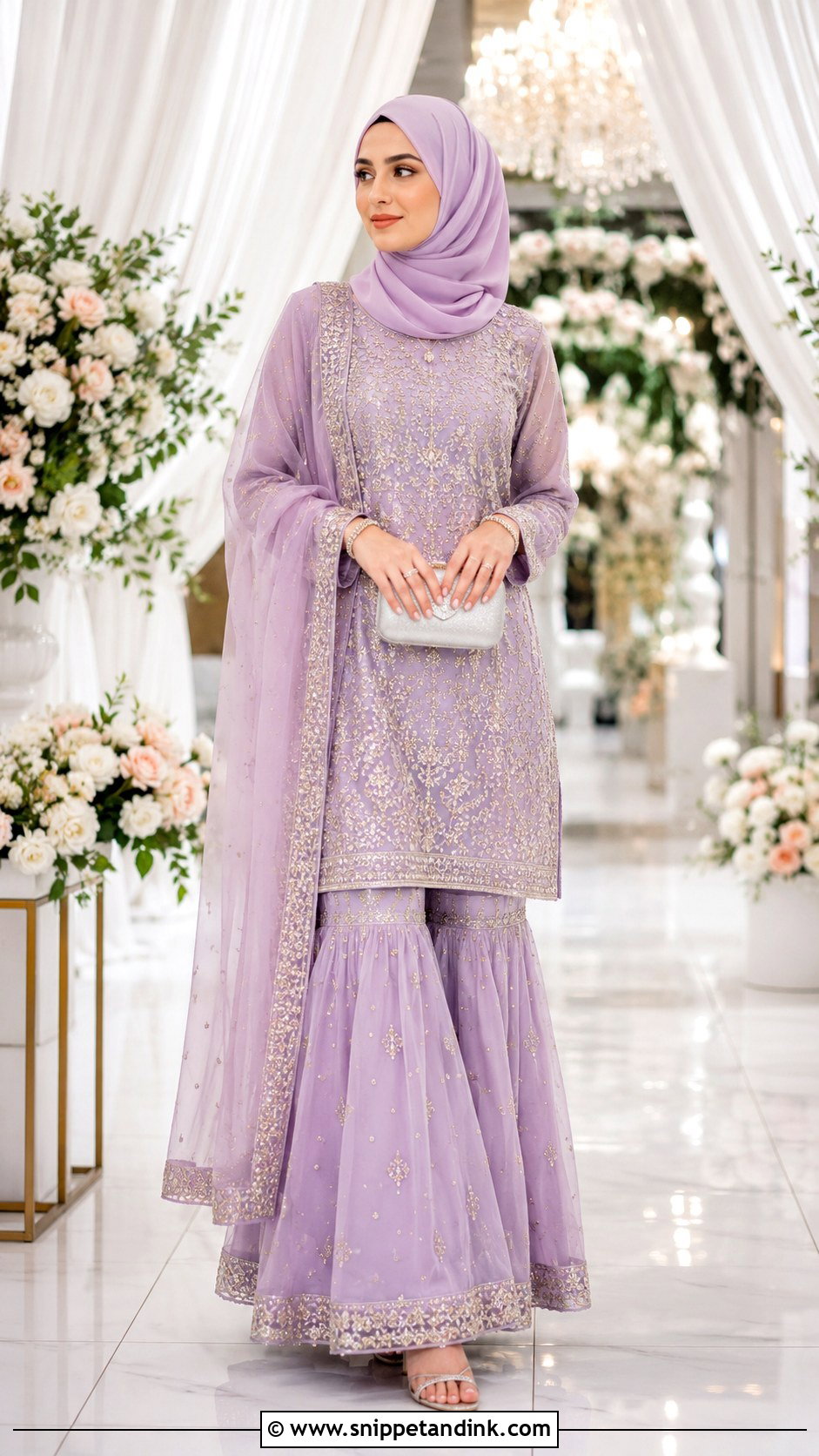
The bride’s sister has a real job on the day: fixing the dupatta, holding the bouquet, getting the bride to the signing table. So I dress sisters for movement first. A pastel sharara, embroidered Anarkali, modest gown or elegant abaya all work; pick a colour that sits beside the bride’s, like sage, dusty rose or powder blue. Jewellery can be festive but lighter than hers. A pocket or a small clutch for spare pins and a safety pin or two is worth more than another bangle.
30. Nikkah Outfit For Mother Of Bride
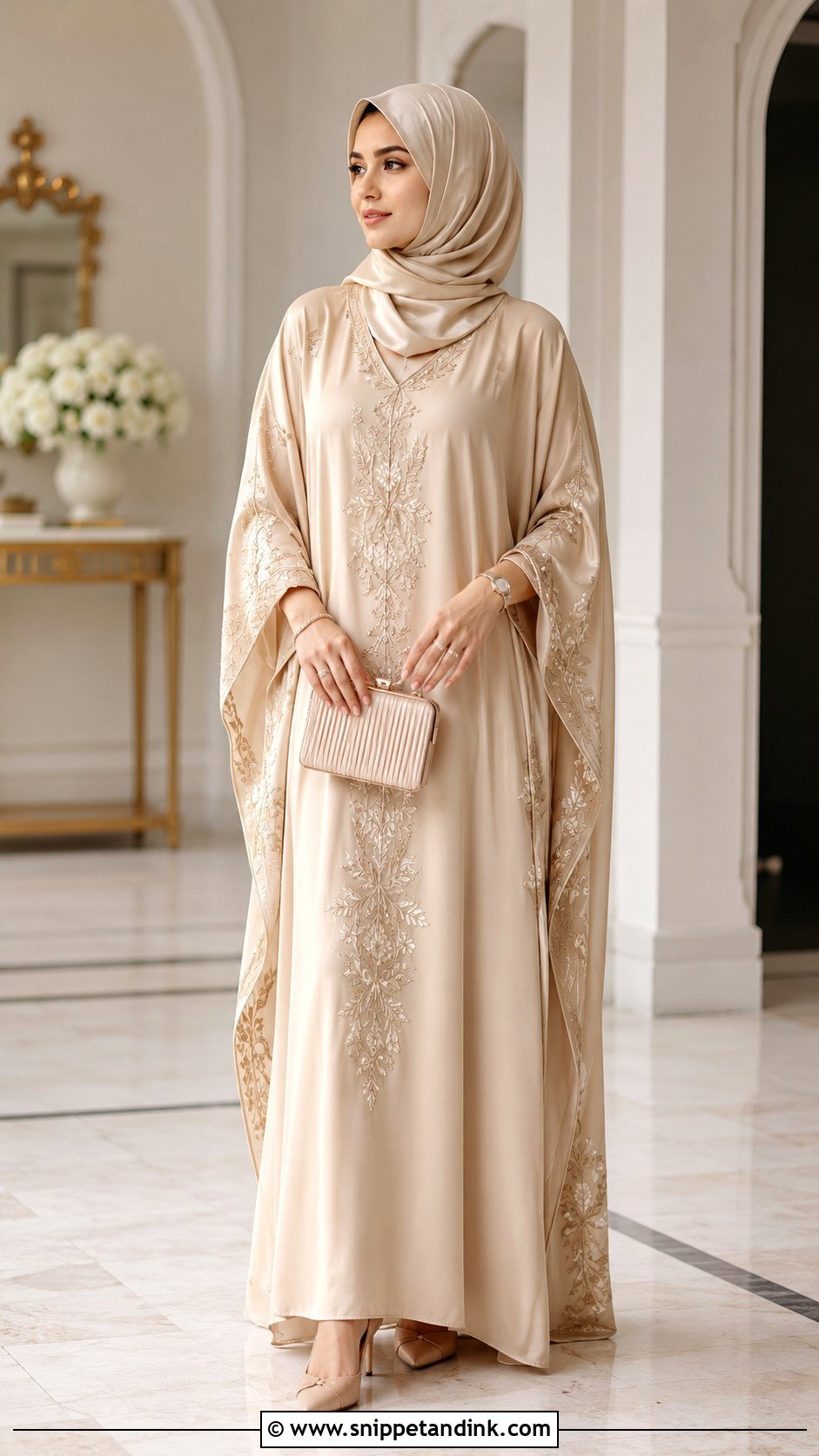
The mother of the bride spends the day greeting people, so comfort has to sit alongside dignity. A long embroidered abaya, silk kaftan, modest Anarkali or palazzo suit all work. I suggest rich, soft colours like champagne, mauve, navy or taupe, which hold up in family photos next to a white or pastel bride. Choose quality fabric over heavy embellishment, and shoes she can stand in for hours. A matching hijab or scarf and classic jewellery finish it.
Pins, Underscarves and a Small Repair Pouch for the Day
Most of the problems I fix at a Nikkah are not about the outfit at all. They’re about the hijab and dupatta moving. Silk and satin scarves are the worst offenders because they slide on themselves. A cotton or jersey underscarf with a grip band stops that, and I use one under almost every bridal hijab, even when the bride usually goes without.
How I pin for a long ceremony
I use straight pins with ball heads for the hijab itself and save decorative pearl pins for where they’ll show. A dupatta pinned to bare fabric slips; pinned into the underscarf at both temples and the crown, it stays. Magnetic pins are fine for a light chiffon but won’t hold an embroidered organza border for hours.
What goes in the pouch
Give a sister or friend a small pouch with spare straight pins, two safety pins, a travel steamer or a crease-release spray for satin, a white cloth for makeup marks on the hijab, and a needle already threaded in the dress colour. Embroidered pieces lose the odd bead and hems catch on heels. Ten minutes of preparation saves you from walking into your family photos holding a dupatta on with one hand.
The Outfit You Forget You’re Wearing by the Signing
The Nikkah outfit that works is the one you stop thinking about once you sit down. Settle the venue, the family’s expectations, the season and the coverage first; colour and detail come after. A well-pinned hijab, shoes you can stand in and fabric that doesn’t crease or turn sheer will do more for you than any embellishment. Take the shapes here as a starting point and adjust the colour and layers until they suit you and the formality of the day.
You'll Like These Ideas:






Leave a Reply