
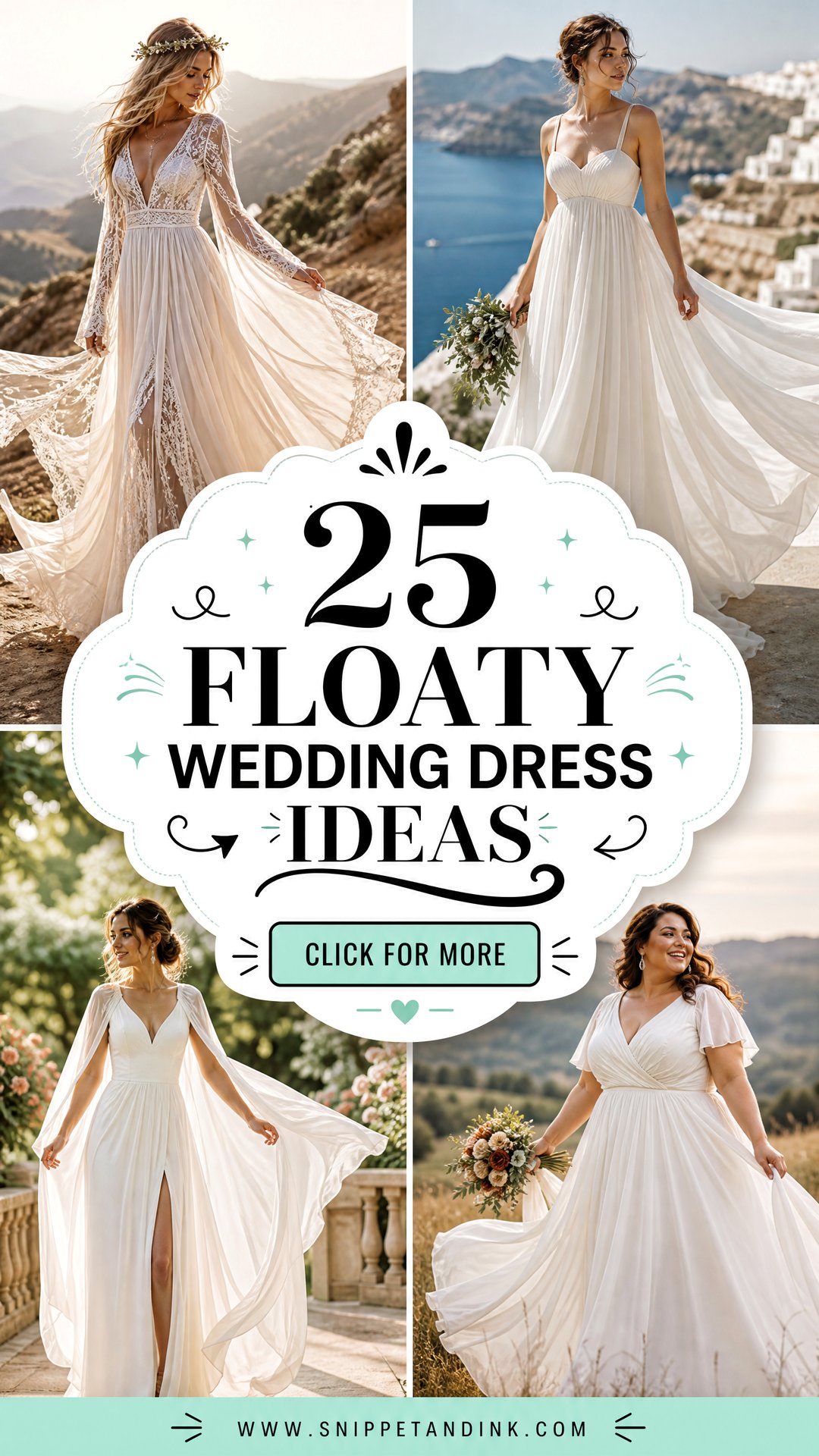
A floaty gown is the one dress I can tell is right the moment a bride walks across the fitting room, because the skirt keeps moving after she stops. That movement comes from the fabric far more than the design. Chiffon falls close and fluid, tulle gives you air and lift, organza holds a crisper outline, and georgette provides graceful movement with a little more weight to it. Below are the twenty-five shapes I reach for most, with notes on who each one suits and where it tends to cause trouble.
Chiffon, Tulle, Organza or Georgette: What Each Does Once You Move
Most brides choose a floaty fabric by touching it on the hanger. I’d rather you see how it behaves when you walk, sit and turn, because that’s when the differences show.
- Chiffon is the lightest and the most fluid. It follows the body, so it shows lining seams and underwear lines, and it can pick up static on a dry day. A little anti-static spray on the lining, never the outer layer, helps.
- Georgette is chiffon’s heavier cousin, with a slightly crinkled surface. It creases less, packs better and hangs straighter, which is why I suggest it for brides who travel to their wedding.
- Tulle is a net, so it holds air rather than draping. It gives volume for very little weight, but it catches on rough jewelry, stiletto tips and the wire of a poorly wrapped bouquet.
- Organza is crisp and slightly shiny. It holds a skirt out from the body and creases sharply when you sit, so steam it on the morning and expect a few soft lines by evening.
If you’re between two fabrics, ask the consultant whether a similar gown comes in both and walk the full room in each. The one that keeps swinging a beat after you stop is your floaty dress.
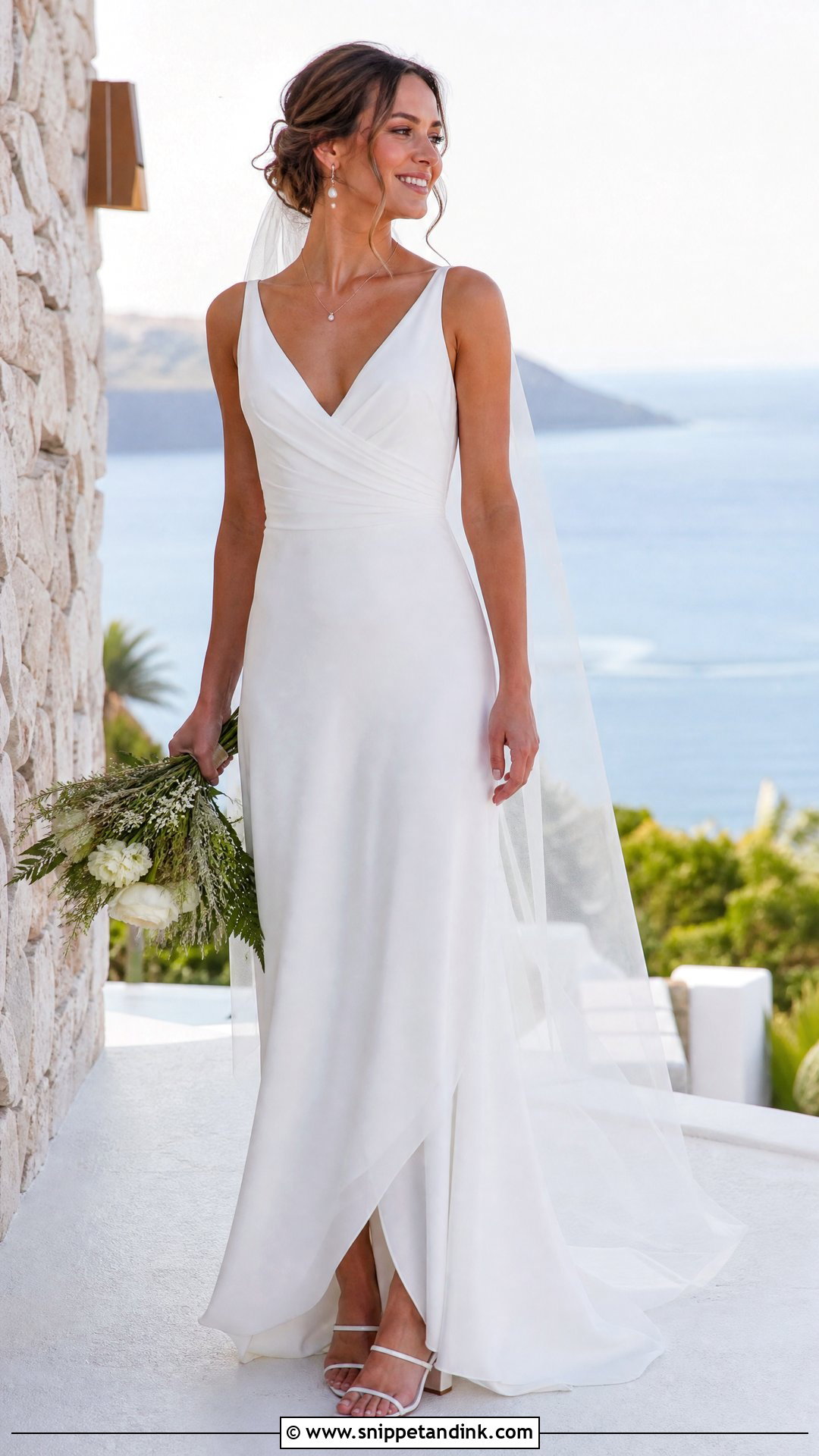
1. Chiffon A-Line Wedding Dress
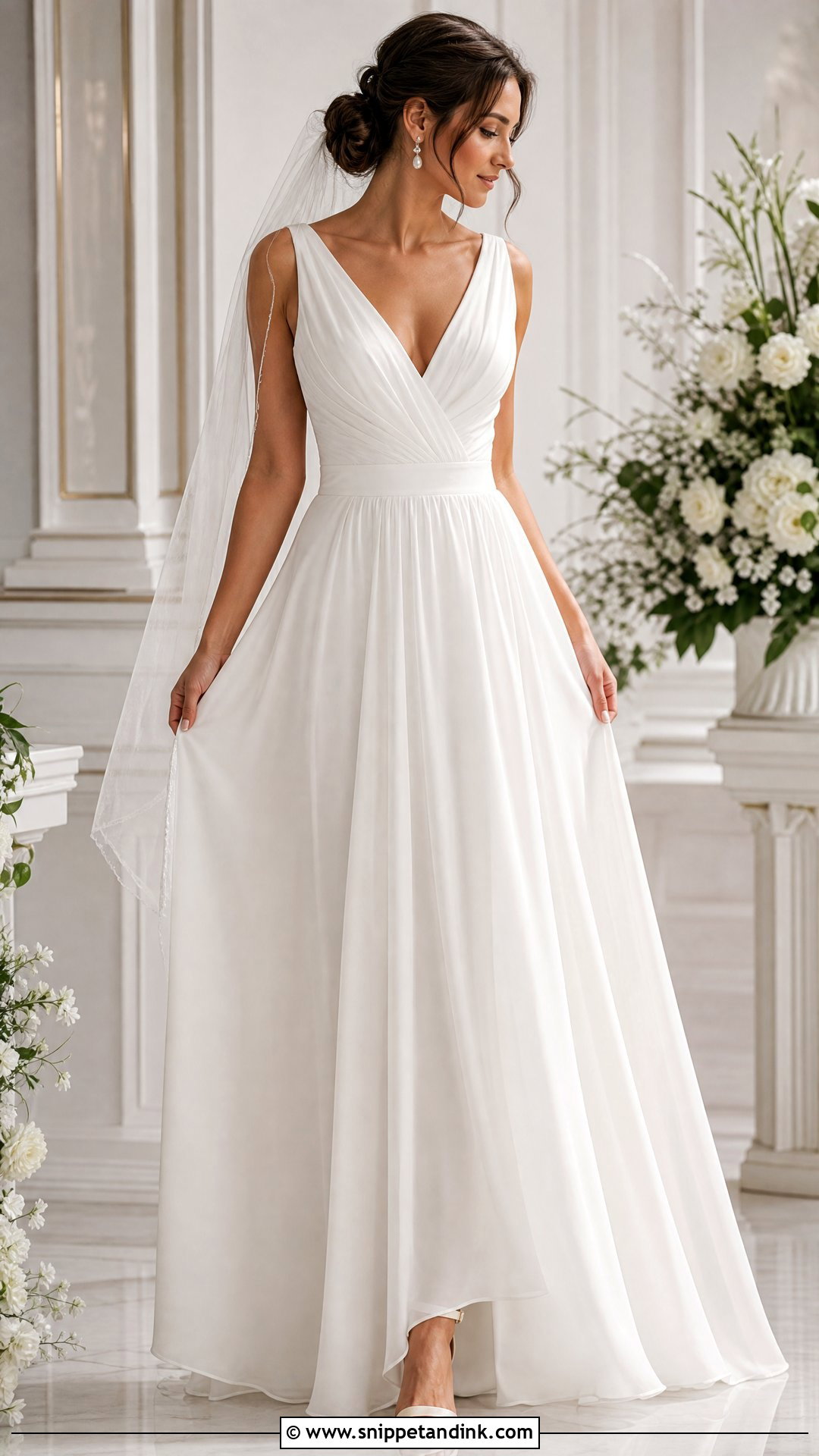
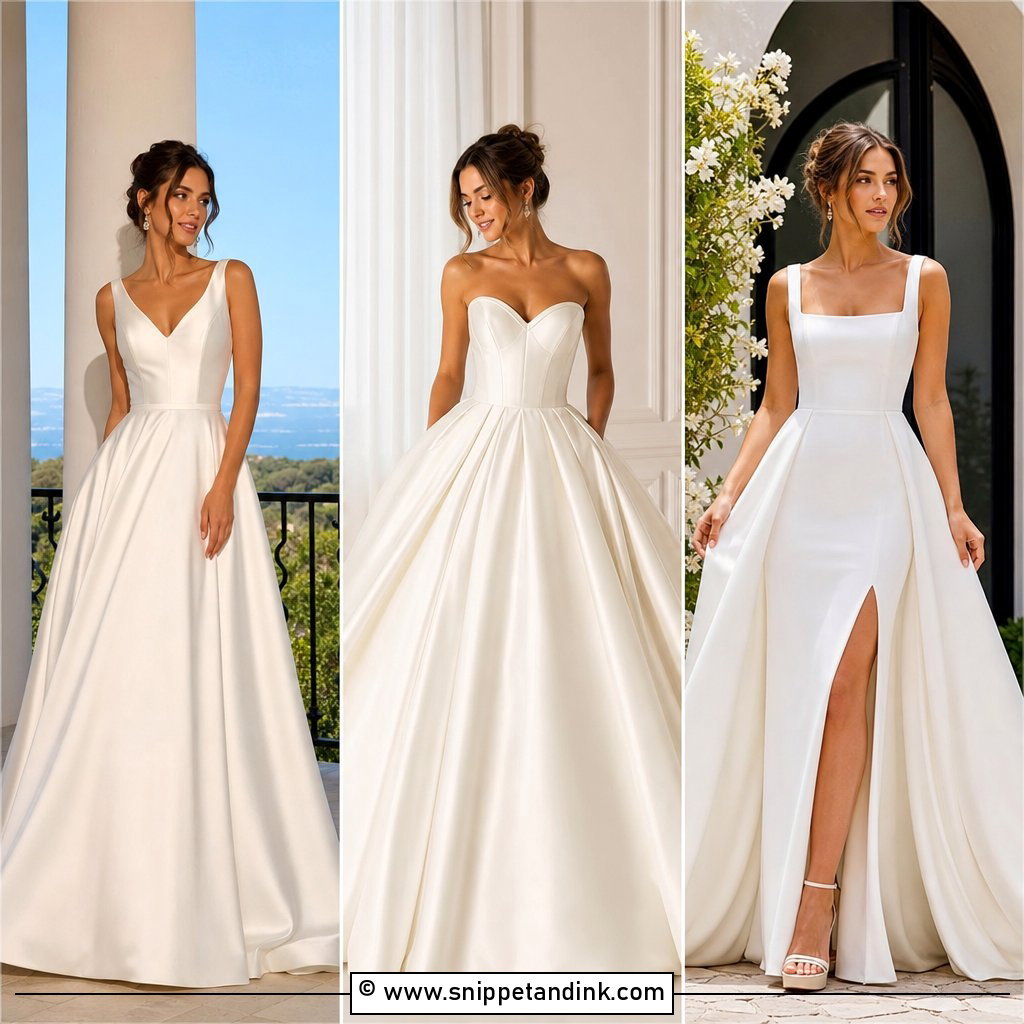
This is the gown I pull first for a bride who isn’t sure what she wants, because a chiffon A-line flatters almost everyone and never feels like a costume. A fitted V-neck or softly pleated bodice marks the waist, then the skirt drops straight to the floor and swings as you walk. One thing to watch: single-layer chiffon shows every line beneath it, so I always check the lining and your underwear in daylight. Pearl drops, a fingertip veil and ivory block-heel sandals finish it, with a low textured bun that sits under the veil comb. On a cool evening, a sheer wrap is easier to manage than a cardigan over that drape.
2. Layered Tulle Wedding Dress
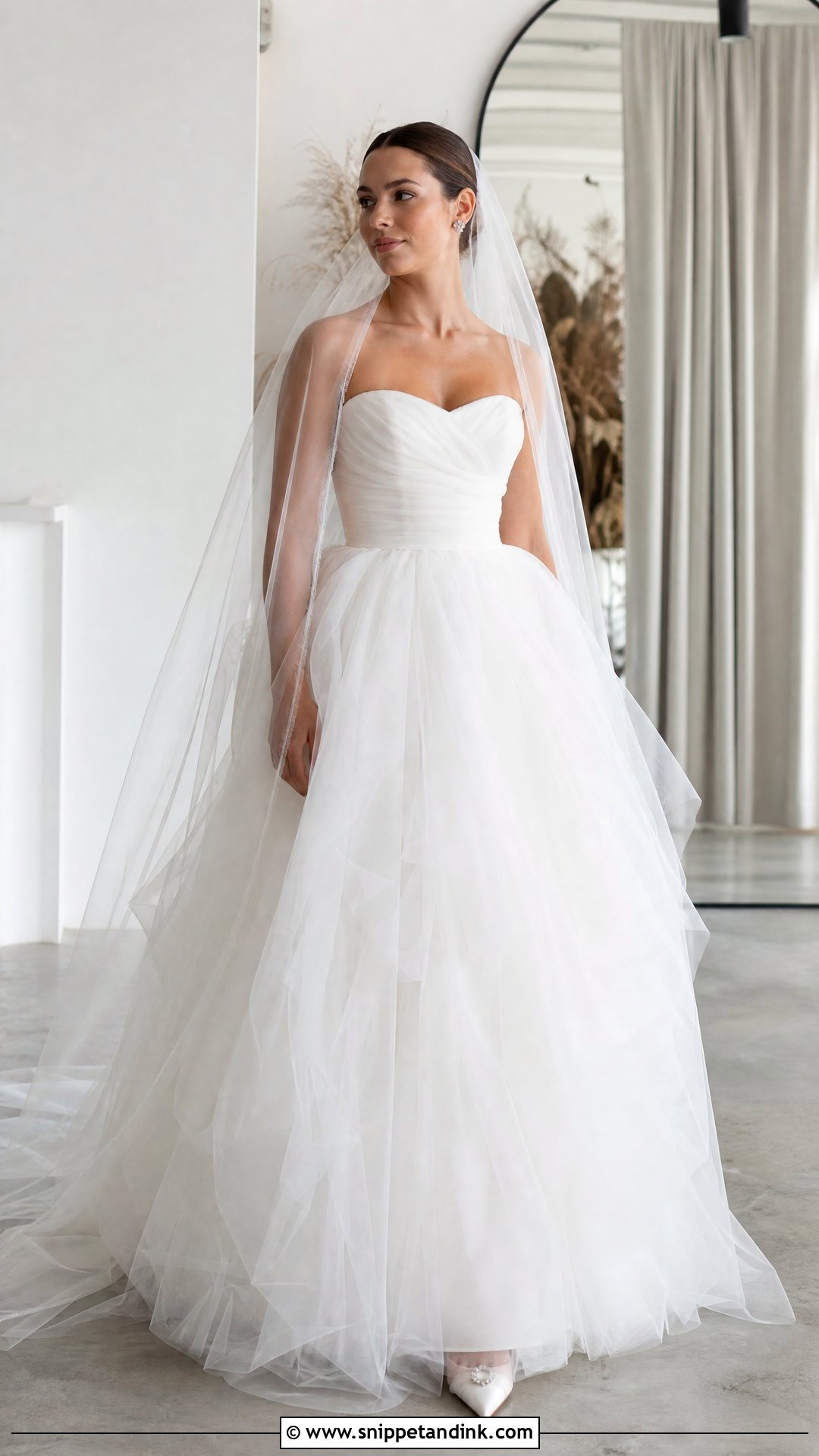
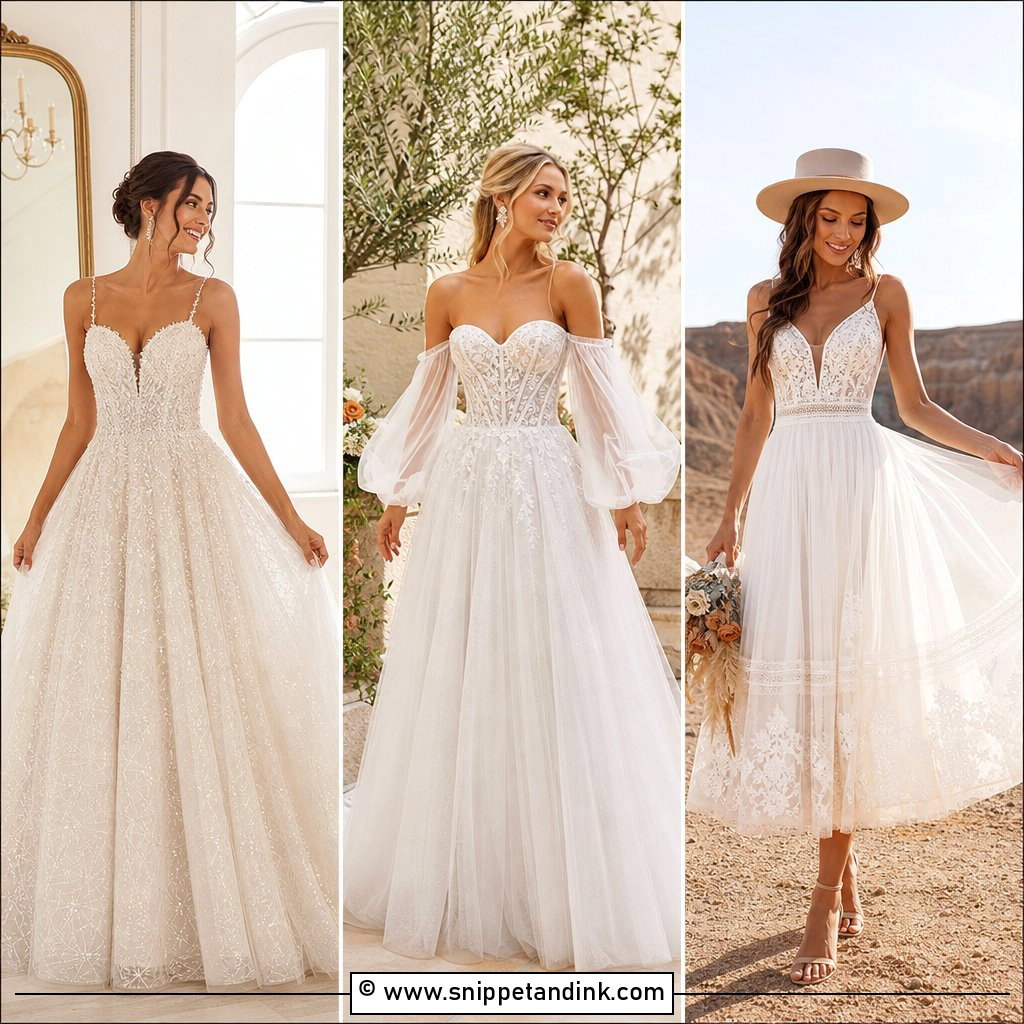
Several fine, gathered layers of tulle on an A-line base give you a cloudlike skirt that still weighs very little. I steer brides away from rigid ball-gown underskirts here; once a petticoat is hooped, the float is gone. Wear pointed satin flats or low heels, because tulle catches on stiletto tips when you turn. A cathedral veil reads ceremonial, a raw-edge veil reads modern, and a sleek chignon with small crystal studs balances the width. If you want less fullness, ask the seamstress to remove an underlayer or two rather than shortening the whole skirt.
3. Off-Shoulder Organza Wedding Dress
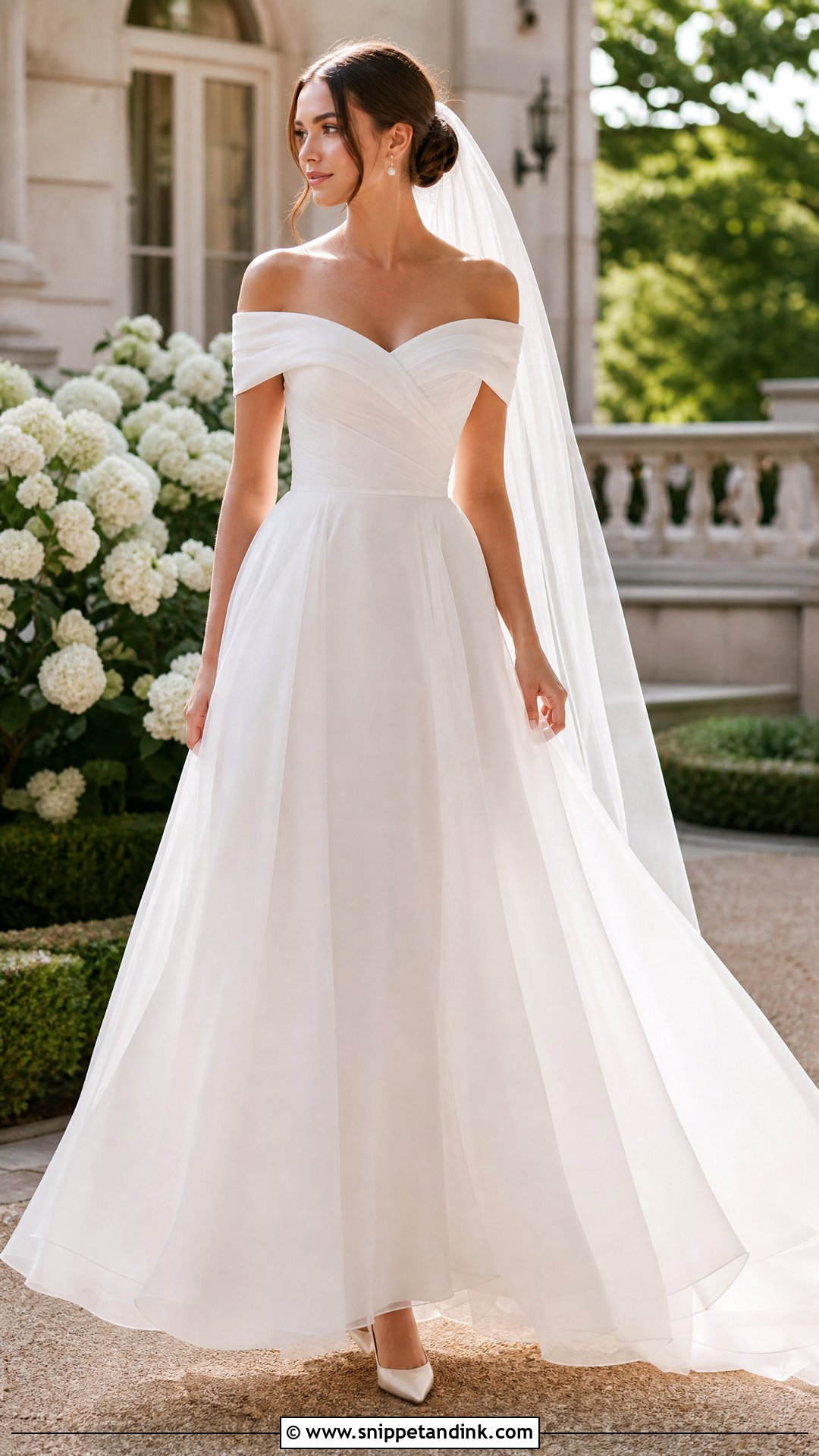
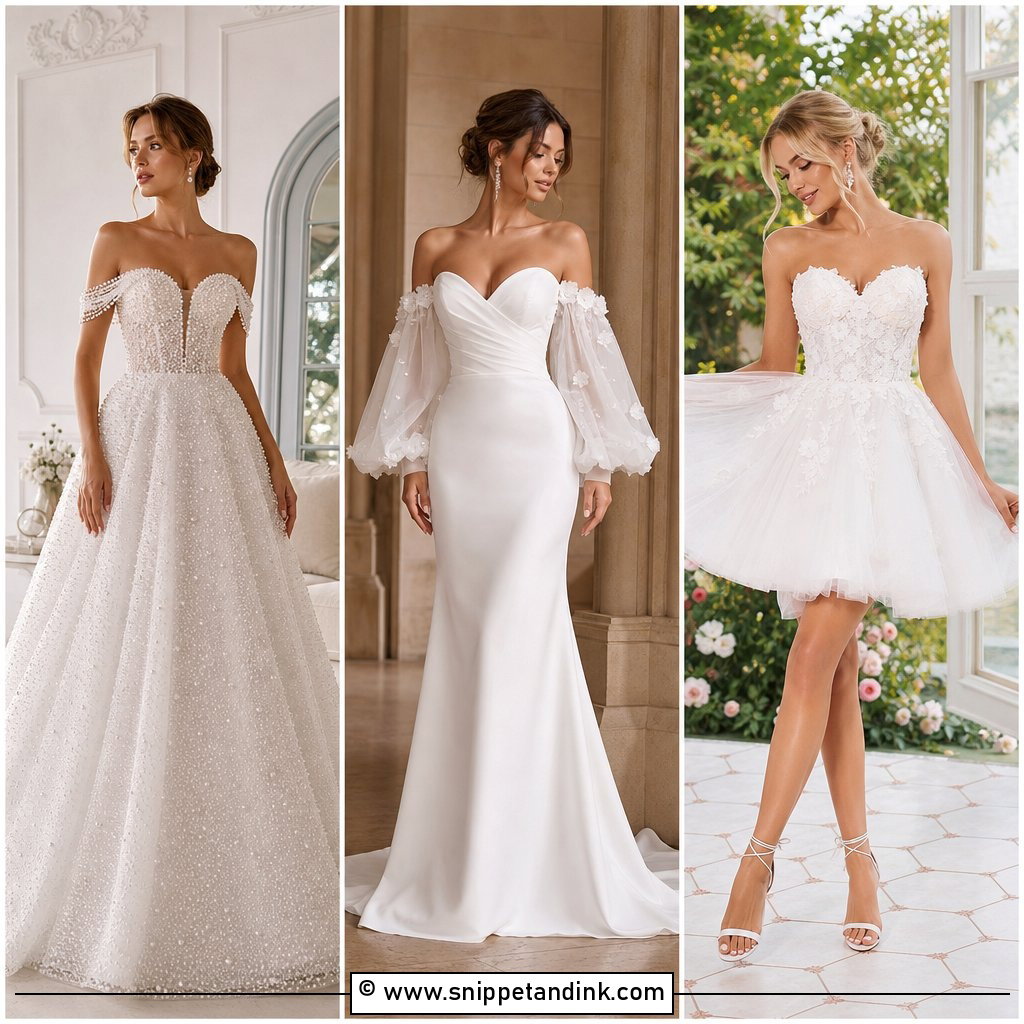
Organza sits between chiffon and satin: it holds a sweeping skirt but still looks light against the skin. The off-shoulder band is where I spend fitting time, because if it isn’t anchored to the bodice with elastic or boning it slides up every time you raise your arms to hug someone. A folded neckline, fitted waist and A-line skirt leave your collarbones bare for pearl earrings or a fine pendant. Ivory slingbacks, a sheer chapel veil and soft waves or a low bun complete it, and detachable organza sleeves give you cover for a church ceremony. Its slight sheen picks up light in gardens and bright rooms, so expect it to glow a little in daytime photos.
4. Boho Lace Chiffon Wedding Dress
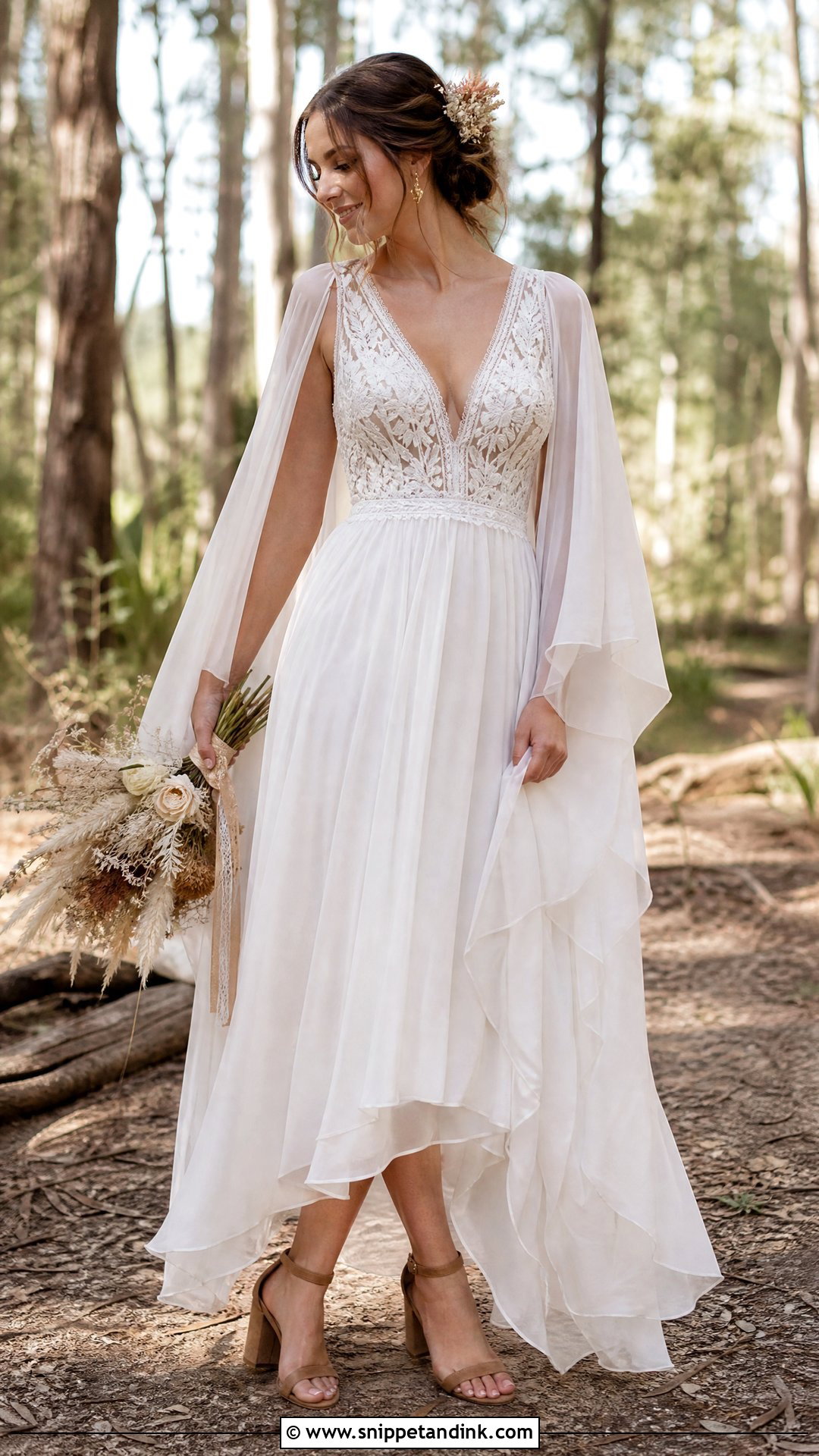
A lace bodice over a loose chiffon skirt gives texture up top and keeps everything below the waist light. I’d pick botanical lace and a modest V rather than a heavily boned corset, since the relaxed skirt looks odd beneath a very rigid top. Suede block-heel sandals, a dried-flower comb and small gold earrings suit barns, woods and desert venues. A loose braided updo holds better outdoors than hair worn down. If a full veil feels too formal, a sheer chiffon cape moves with the skirt instead of fighting it.
5. Long-Sleeve Tulle Wedding Dress
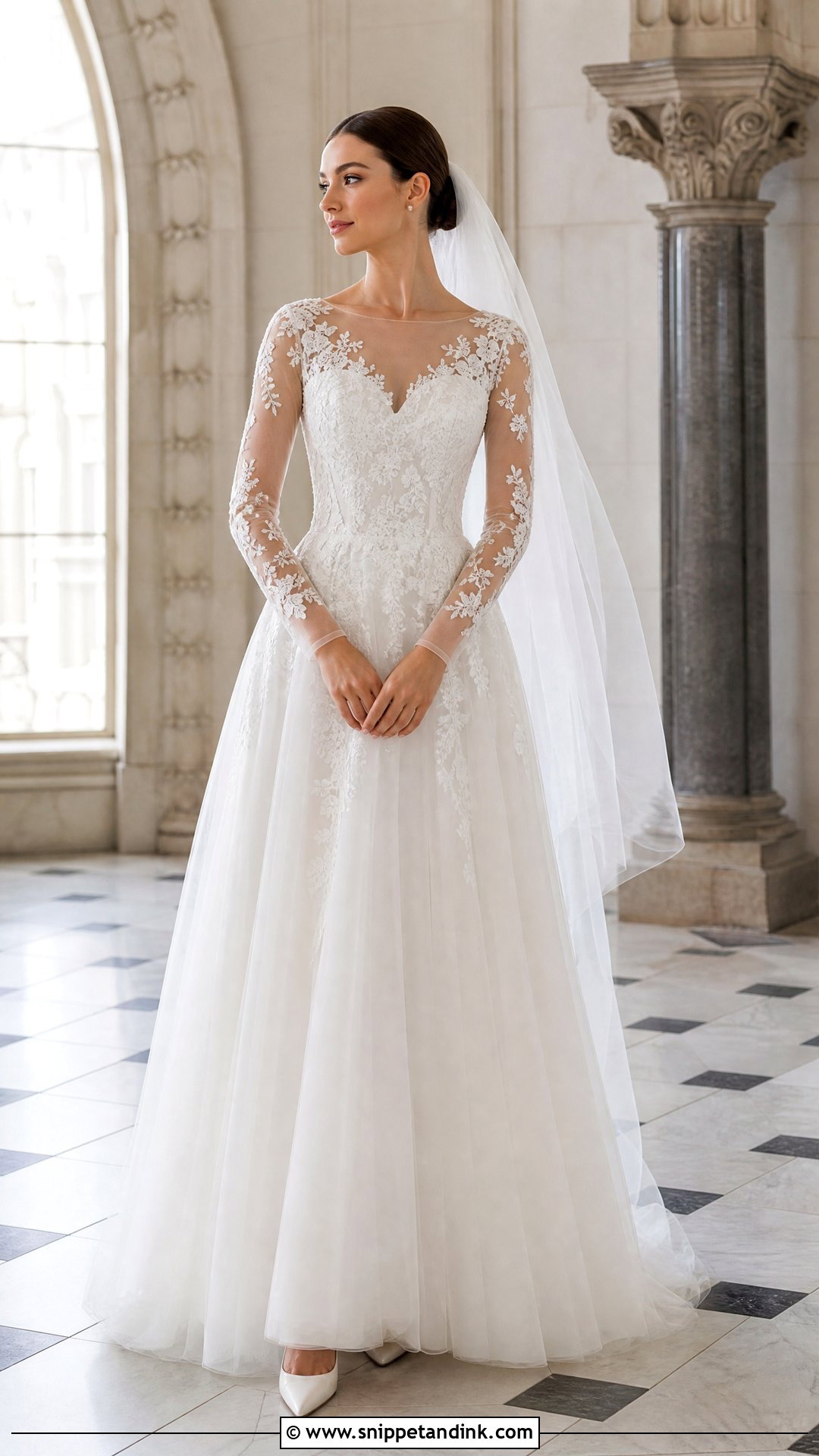
Sleeves are the reason many brides think they have to give up a light dress, and fine tulle solves that. Look for illusion sleeves with scattered lace appliqués or small covered buttons at the cuff. When I fit these, I have the bride lift her arms over her head: if the sleeve is cut too narrow at the armhole, the whole bodice rides up. Pointed ivory pumps, pearl studs, a medium veil and a smooth low bun keep attention on the arms. Because the sleeves cover without adding bulk, this one works from early spring through late autumn.
6. Strapless Corset Tulle Wedding Dress
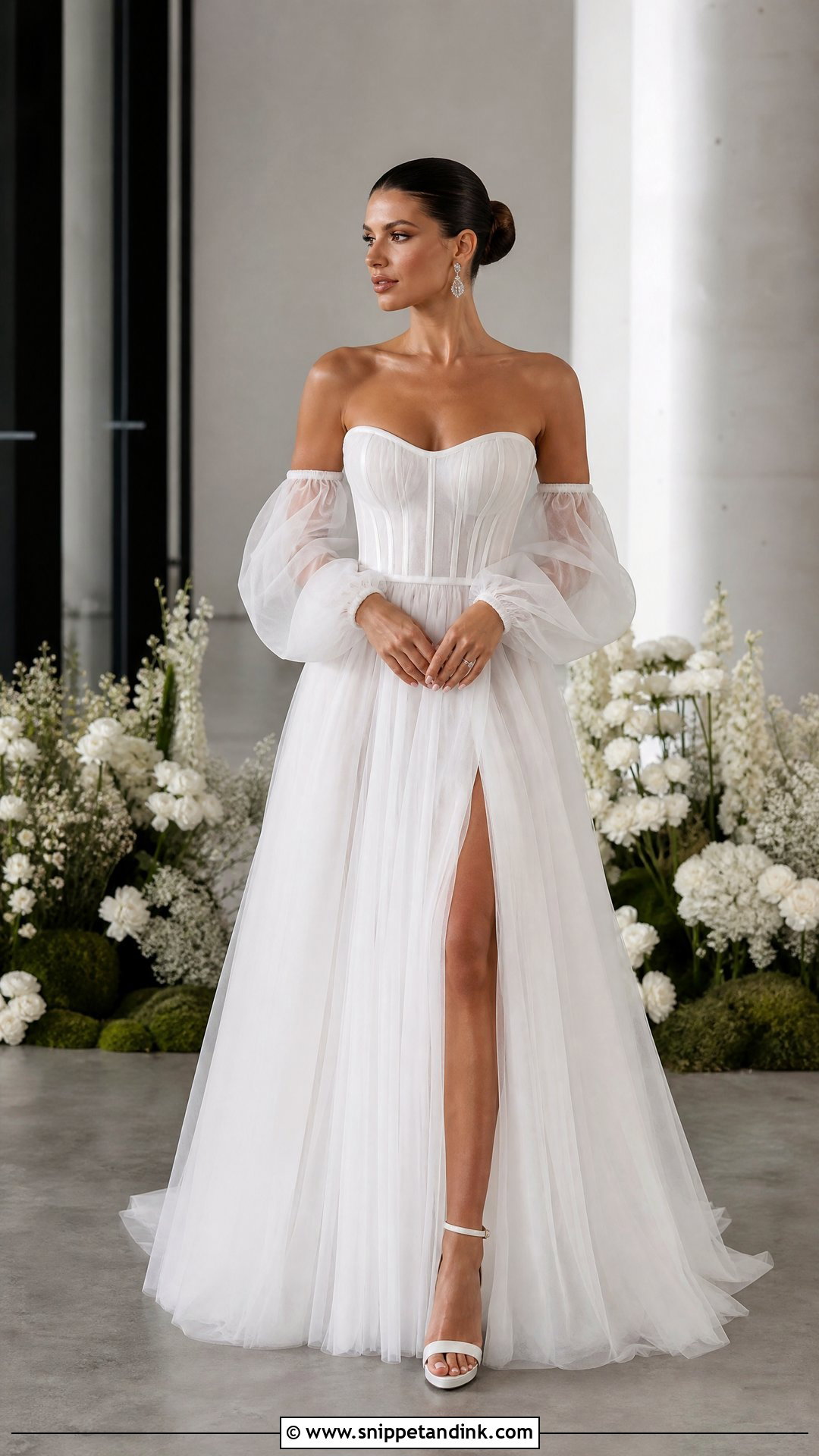
A boned strapless bodice paired with a soft tulle skirt is the combination I fit most often, and the skirt should leave the natural waist smoothly, in layers rather than stiff gathers. Corseted bodices like this rely on the alterations more than the label. A strapless top stays put because it is taken in snugly at the ribcage, not the bust, so don’t let anyone pin it loose for comfort. Pair it with an elbow-length veil, crystal drops and closed-toe satin heels, and keep hair up so the neckline reads clearly. Detachable tulle sleeves for the ceremony can come off before dinner.
7. Empire-Waist Chiffon Wedding Dress
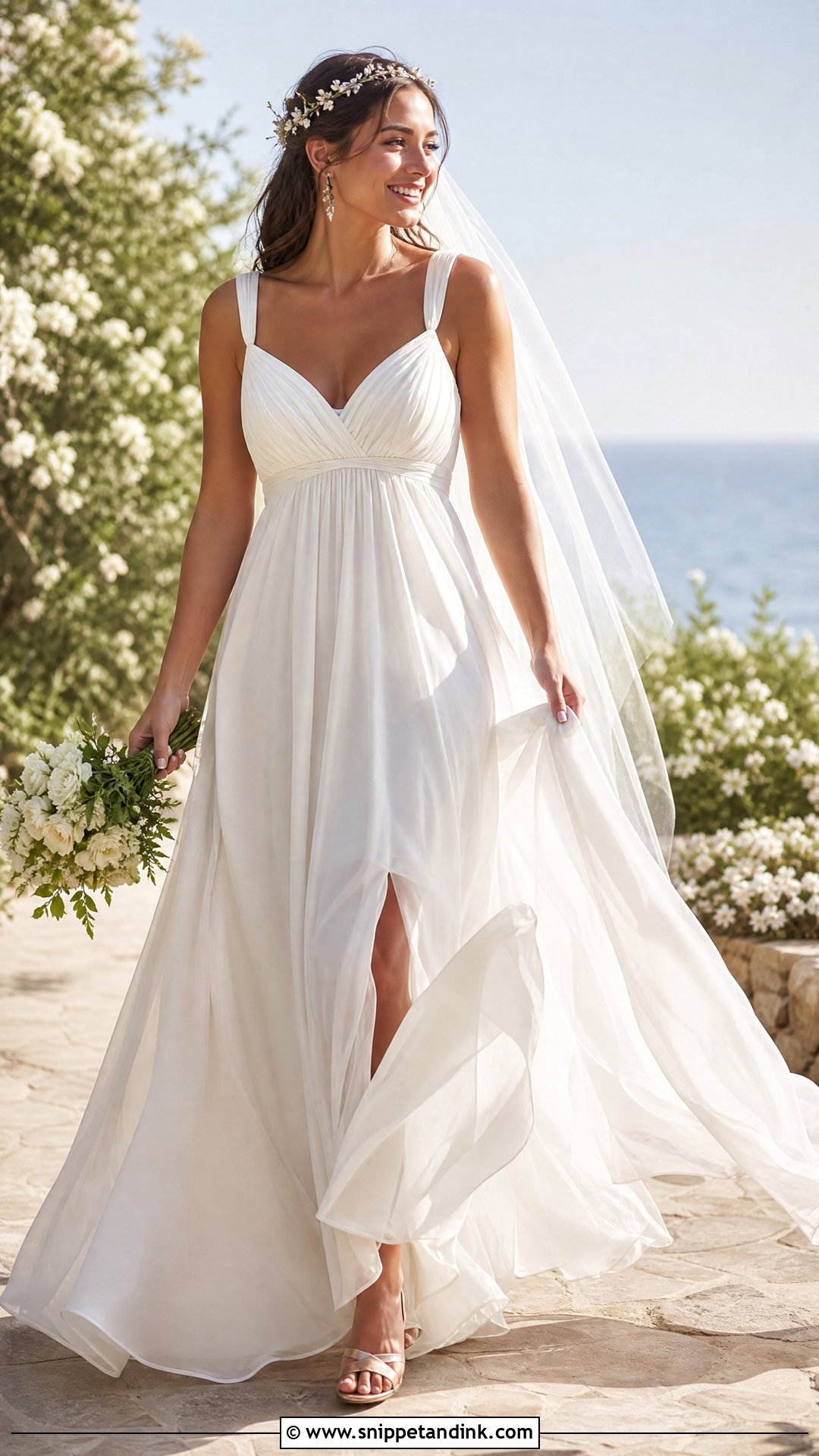
When a bride tells me she wants to eat and breathe at her own reception, I show her an empire waist. The seam sits just under the bust and the chiffon runs uninterrupted to the floor, so nothing presses on the stomach. Supportive straps and a smooth lining matter here, as gathered chiffon over a thin lining can look sheer at the hip. On a petite frame I keep the gathering light; a tall bride can carry a fuller skirt. Hem it with the exact shoes you’ll wear, because a quarter inch too long and lightweight chiffon drags and greys at the edge within an hour.
8. Beach Chiffon Wedding Dress
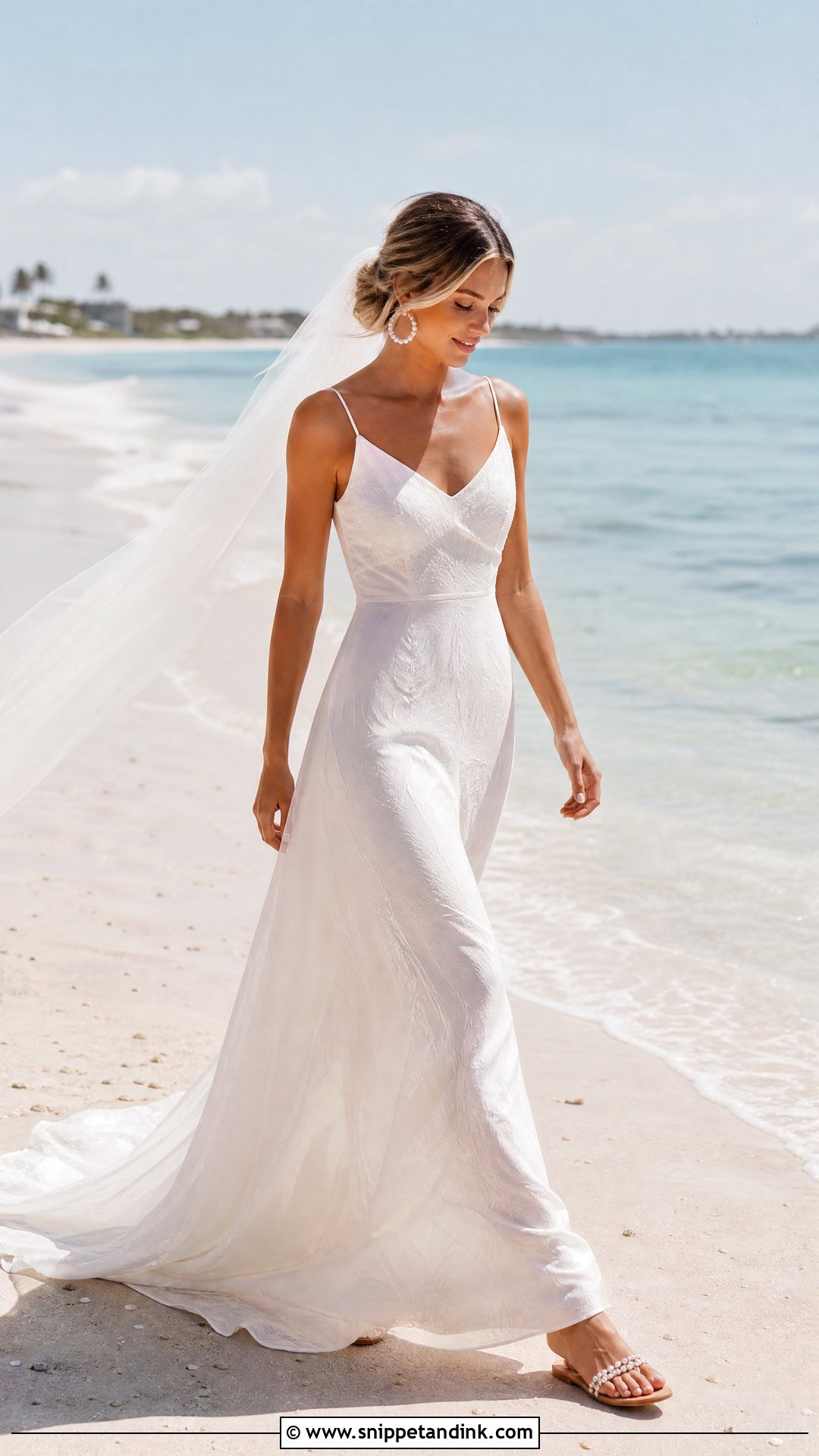
On sand, I want as little fabric as possible near the ground. A sleeveless column or narrow A-line with slim straps and a short sweep train moves well in sea air, while a long train fills with sand and gets heavy once it is damp. Flat sandals or foot jewelry are the honest choice for a ceremony on the beach itself. Wind is the bigger problem: a low bun stays tidy far longer than loose hair, and a veil should be removable once the breeze picks up. Pearl hoops and a shell pin keep this complete beach wedding outfit simple enough for an uneven shoreline.
9. Garden Floral Tulle Wedding Dress
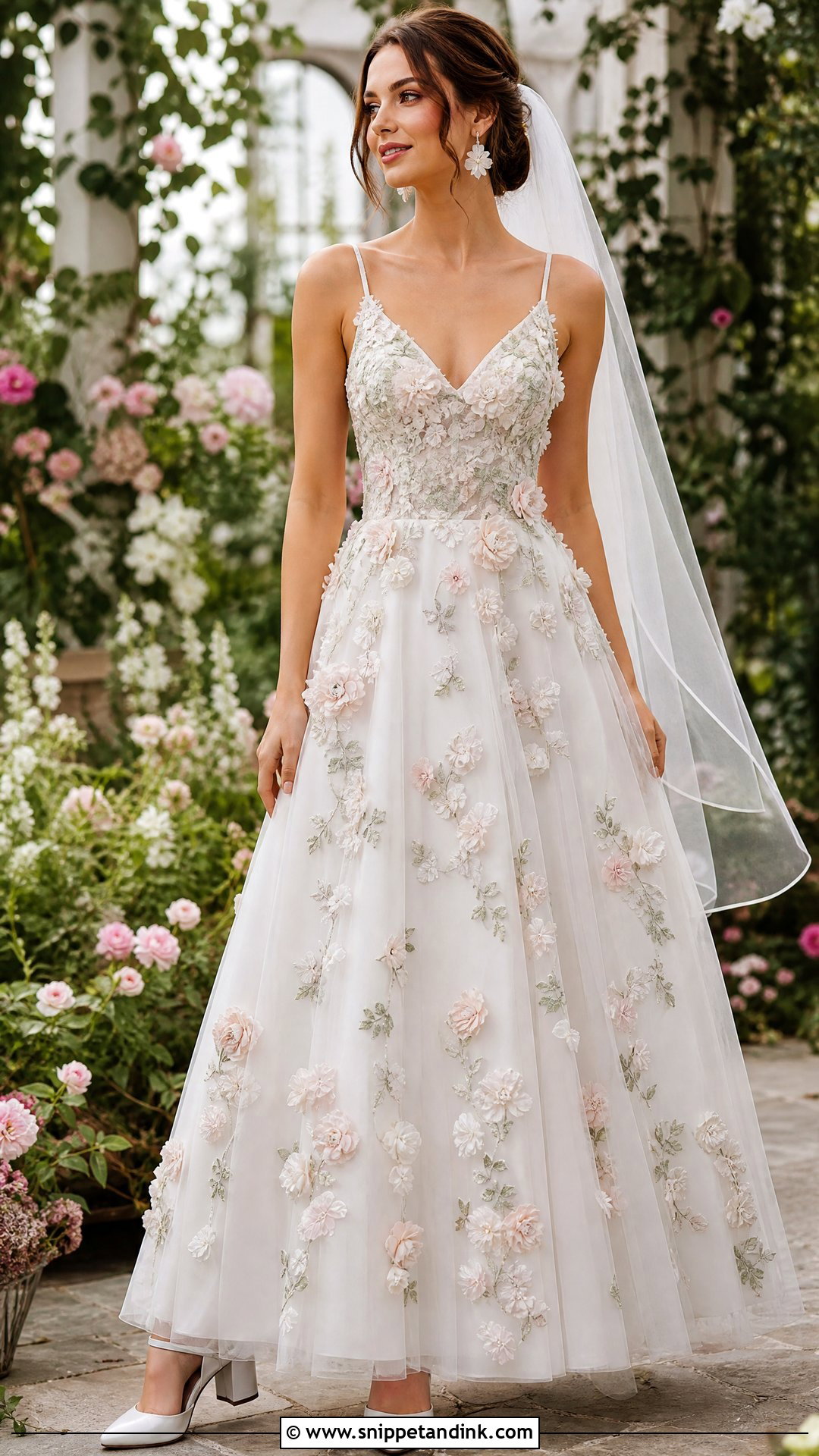
Embroidered vines or raised floral appliqués on tulle suit a garden almost too well. My preference is appliqués concentrated at the bodice that thin out down the skirt, which defines the waist and keeps the hem light. Raised flowers do snag, though, so I tell brides to skip textured bracelets and to check whether the bouquet wire is wrapped. Block heels won’t sink into lawn the way stilettos do. Keep the veil plain and add one small botanical comb to a soft updo.
10. Minimalist Silk Chiffon Wedding Dress
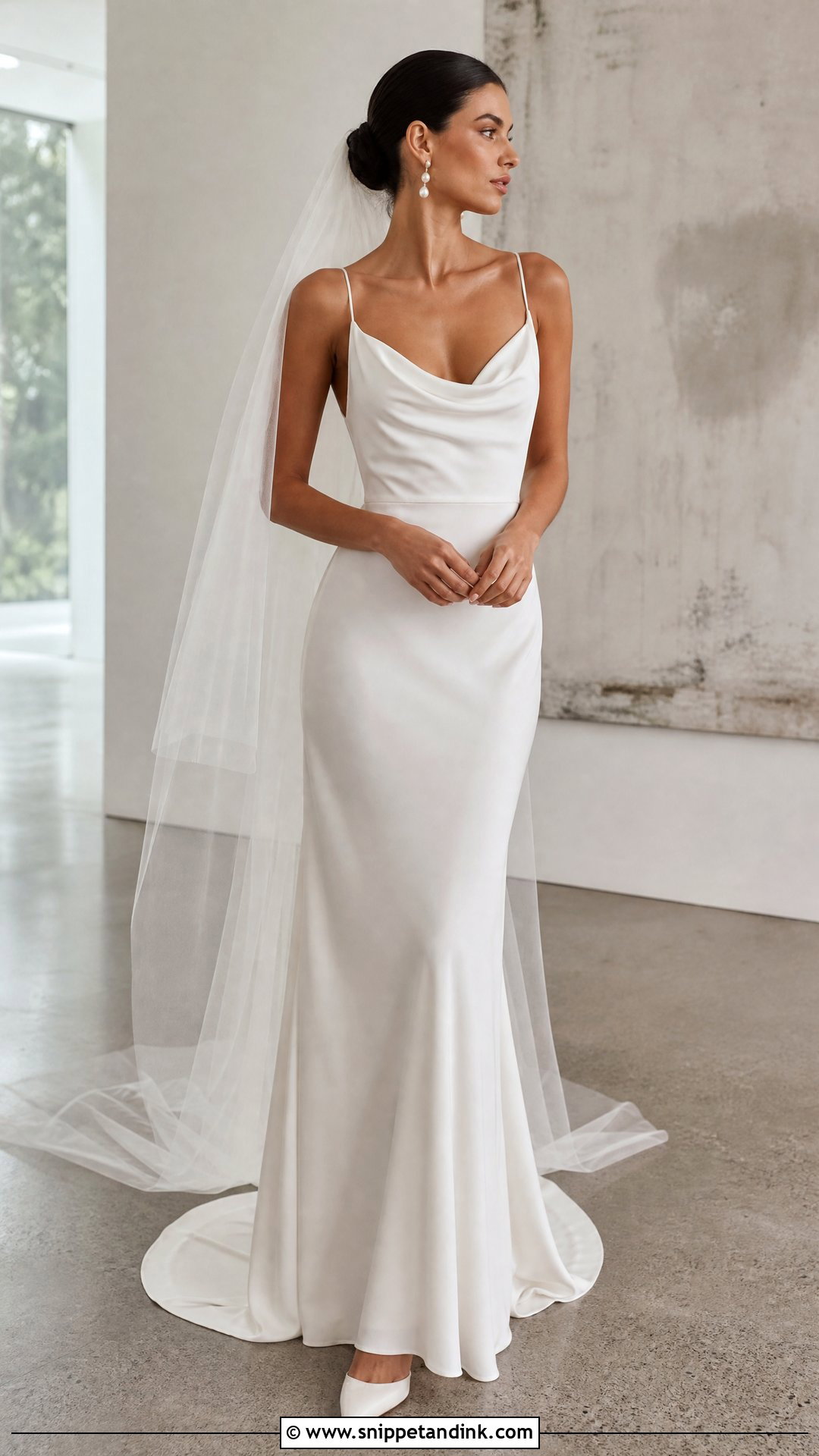
With no lace or beading to hide behind, silk chiffon depends entirely on its cut. Look for a draped neckline, slim straps and a bias-cut or narrow A-line skirt. Bias cut clings where the body curves, so I always fit it over the exact shapewear the bride will wear, and I check seams in natural light, since a puckered side seam is obvious on a plain dress. Sculptural pearl earrings, a smooth cathedral veil, pointed heels and a satin clutch finish it. It belongs in galleries, rooftops and small city weddings.
11. Cape-Sleeve Wedding Dress
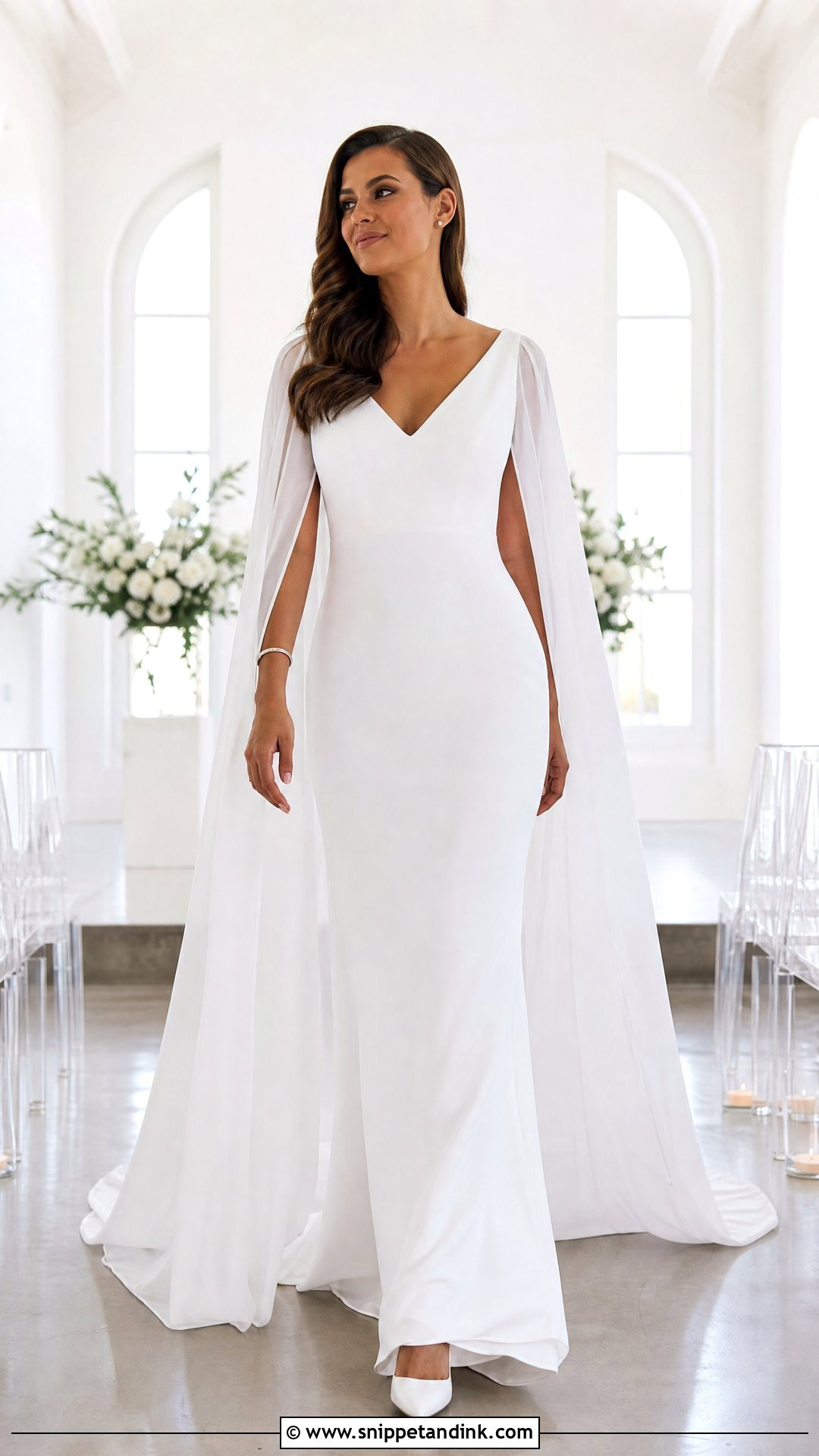
Sheer cape sleeves give movement at the shoulders without a separate wrap. They can stop at the elbow or the wrist or fall all the way to the floor over a fitted crepe or lined chiffon gown. A V or bateau neckline lets the cape lead. If the cape is floor length, I usually advise dropping the veil; two long sheer layers tangle at the back and argue in photos. Studs, a slim bracelet and low pointed heels are enough. Keep hair in a neat bun or side-parted waves so the shoulder line stays visible.
12. Bishop-Sleeve Chiffon Wedding Dress
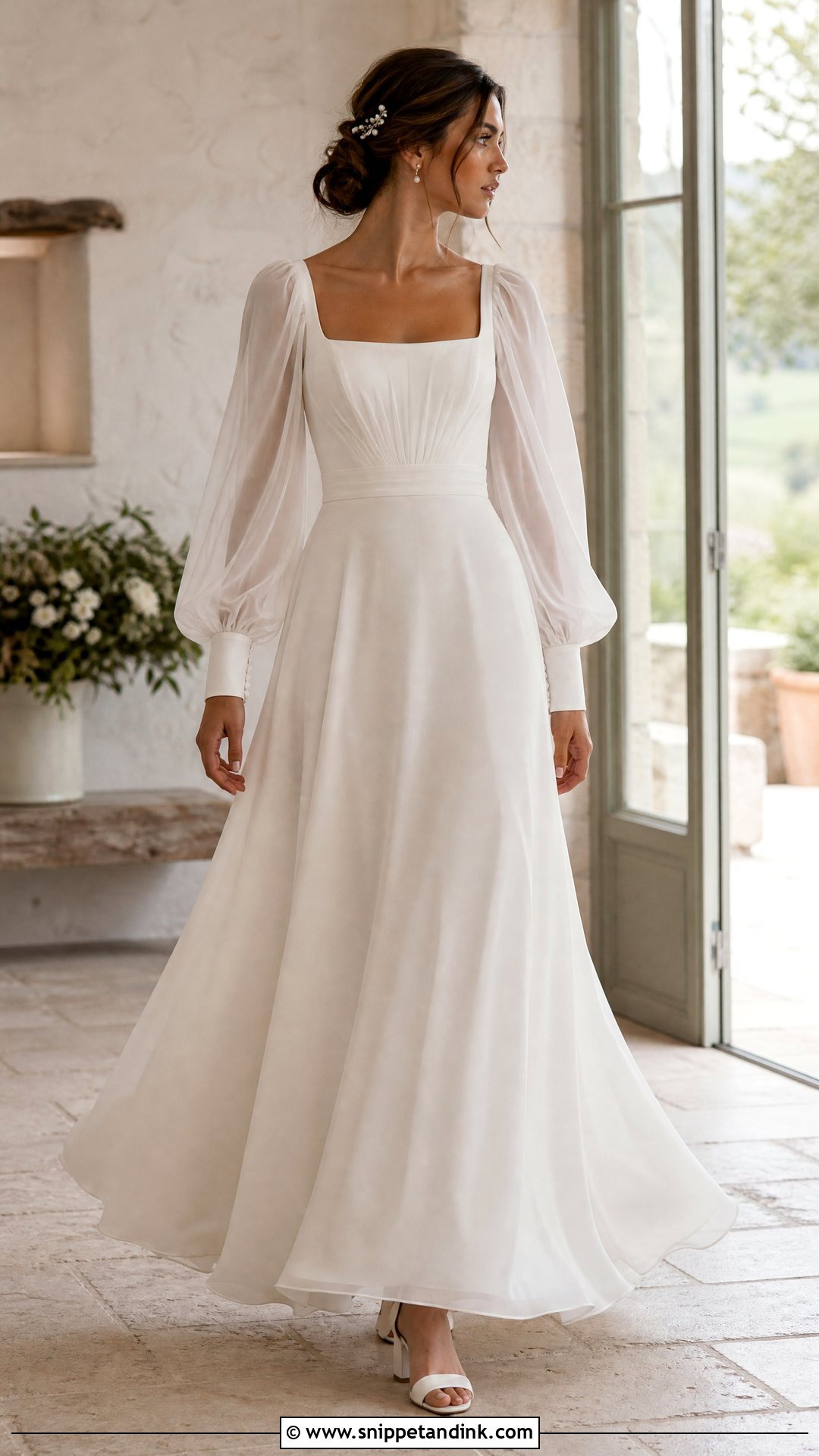
Bishop sleeves gather full chiffon into a fitted cuff, so the arm is covered but the shape billows. The bodice beneath has to stay streamlined, and a square, V or modest scoop neckline stops all that volume from swamping the upper body. Very sheer sleeves need a reinforced cuff and shoulder seam; I check both at the first fitting because that is where they tear when a bride hugs her guests. Pearl hairpins, small drops and ivory block heels match the softness, as does a low ponytail or relaxed chignon. I like this for autumn, early spring and countryside weddings.
13. High-Neck Tulle Wedding Dress
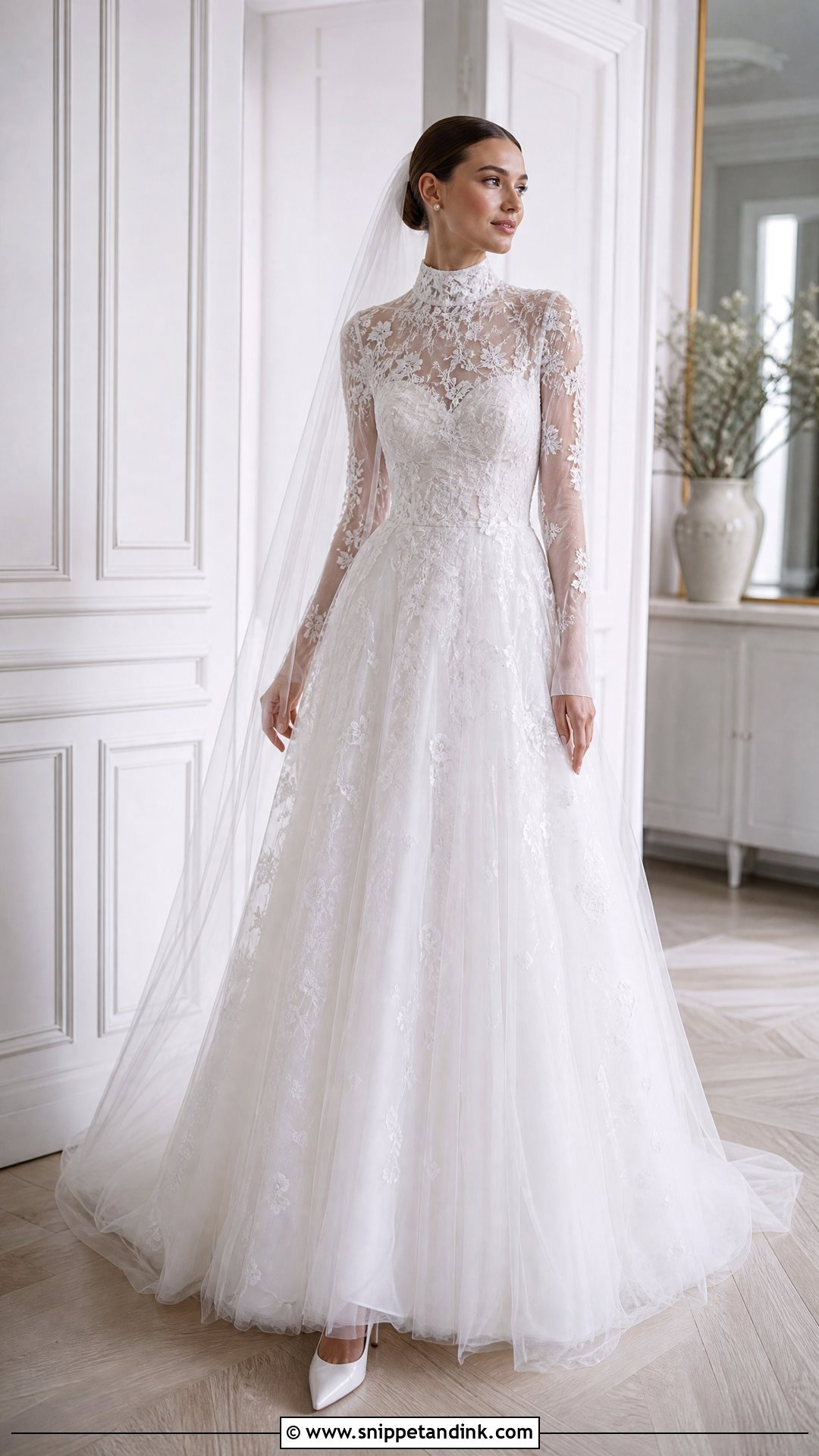
An illusion high neck with embroidery or narrow lace edging covers the chest while still looking airy. Leave the necklace off; anything at the throat crowds that detail. A sleek low bun with the front combed back lengthens the neck, and a plain chapel veil attached underneath the bun keeps the line clean. The thing I watch most is how the illusion mesh is finished at the back. A good one closes with tiny buttons or a hook, while a cheap one gapes when you sit.
14. Square-Neck Organza Wedding Dress
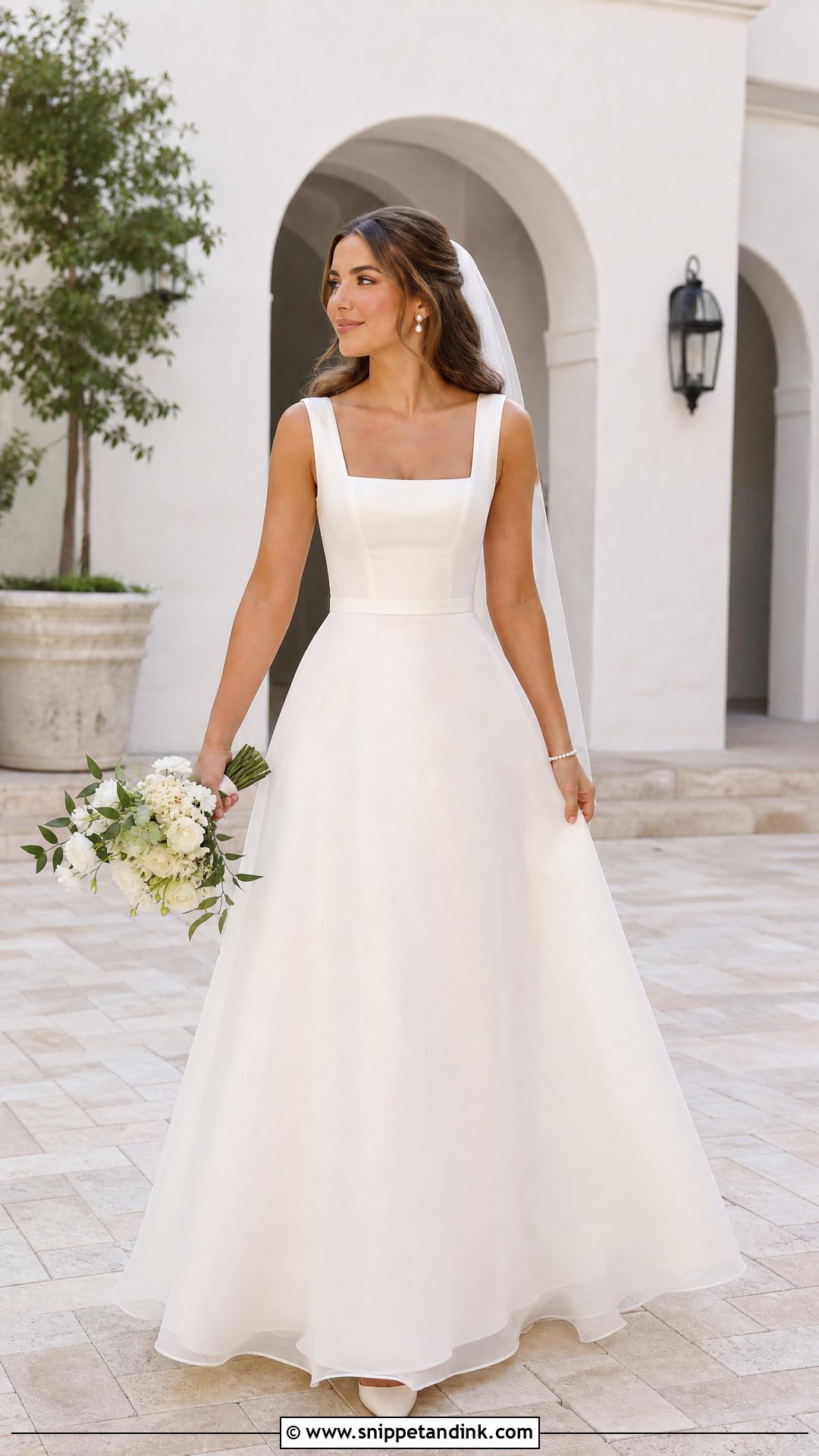
A square neckline frames the collarbone, and the wide straps that come with it give much more support than spaghetti straps. That is why I often suggest this shape to brides with a fuller bust. Organza holds the A-line skirt in shape without looking stiff, and the bodice should meet a defined natural waist. Short pearl earrings, a fine tennis bracelet and ivory pumps suit it, with a shoulder or chapel veil. Hair can go half-up, waved or low; the neckline is strong enough to carry any of them.
15. V-Neck Georgette Wedding Dress
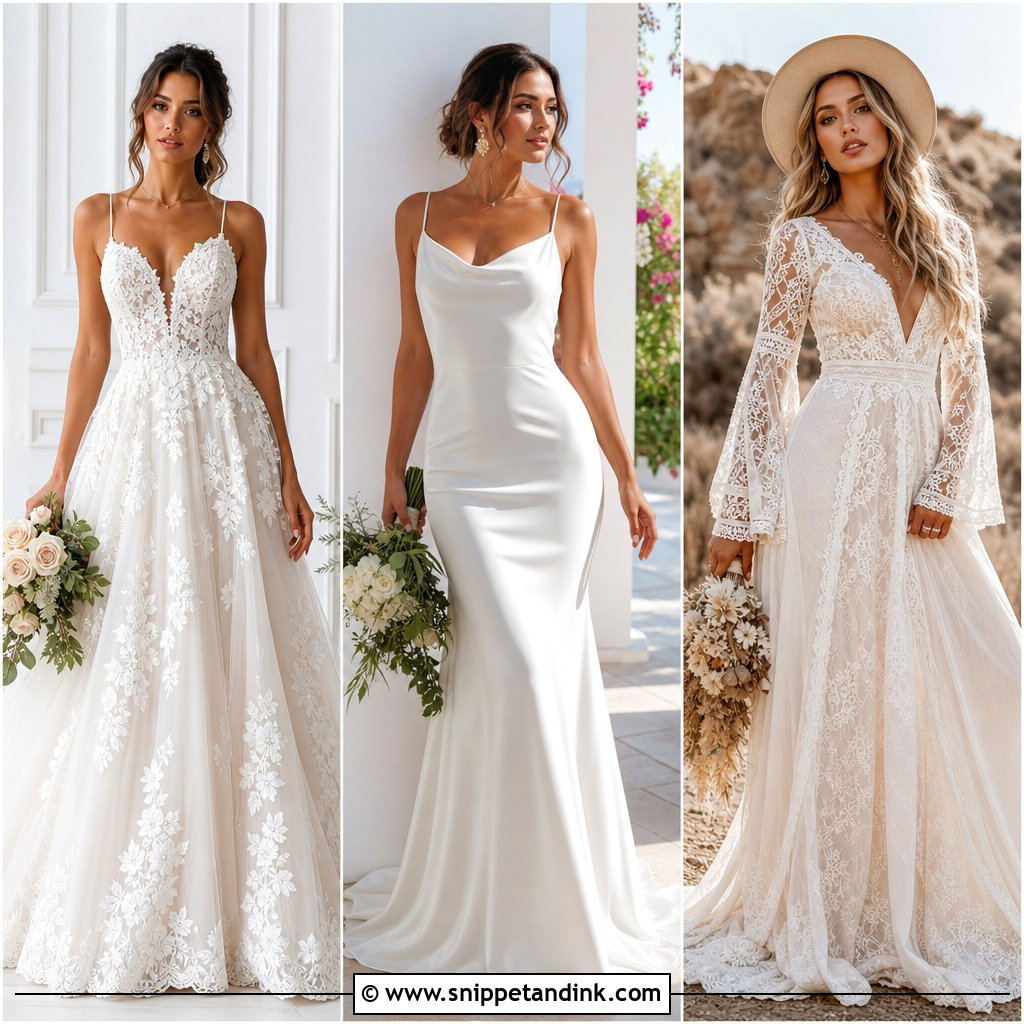
Georgette has a slightly grainy, matte surface and more weight than chiffon, so it drapes rather than floats and creases less in a car. I like it for destination weddings for exactly that reason. Choose a softly fitted bodice with supportive straps and a skirt that skims the hips before opening at the hem. If you add a V-back, try your bra solution in the gown before ordering, since a deep back leaves almost nothing to hide straps under. A delicate pendant, a fingertip veil and a loose chignon keep it relaxed, and the plain fabric sets off a colorful bouquet.
16. Drop-Waist Tulle Wedding Dress
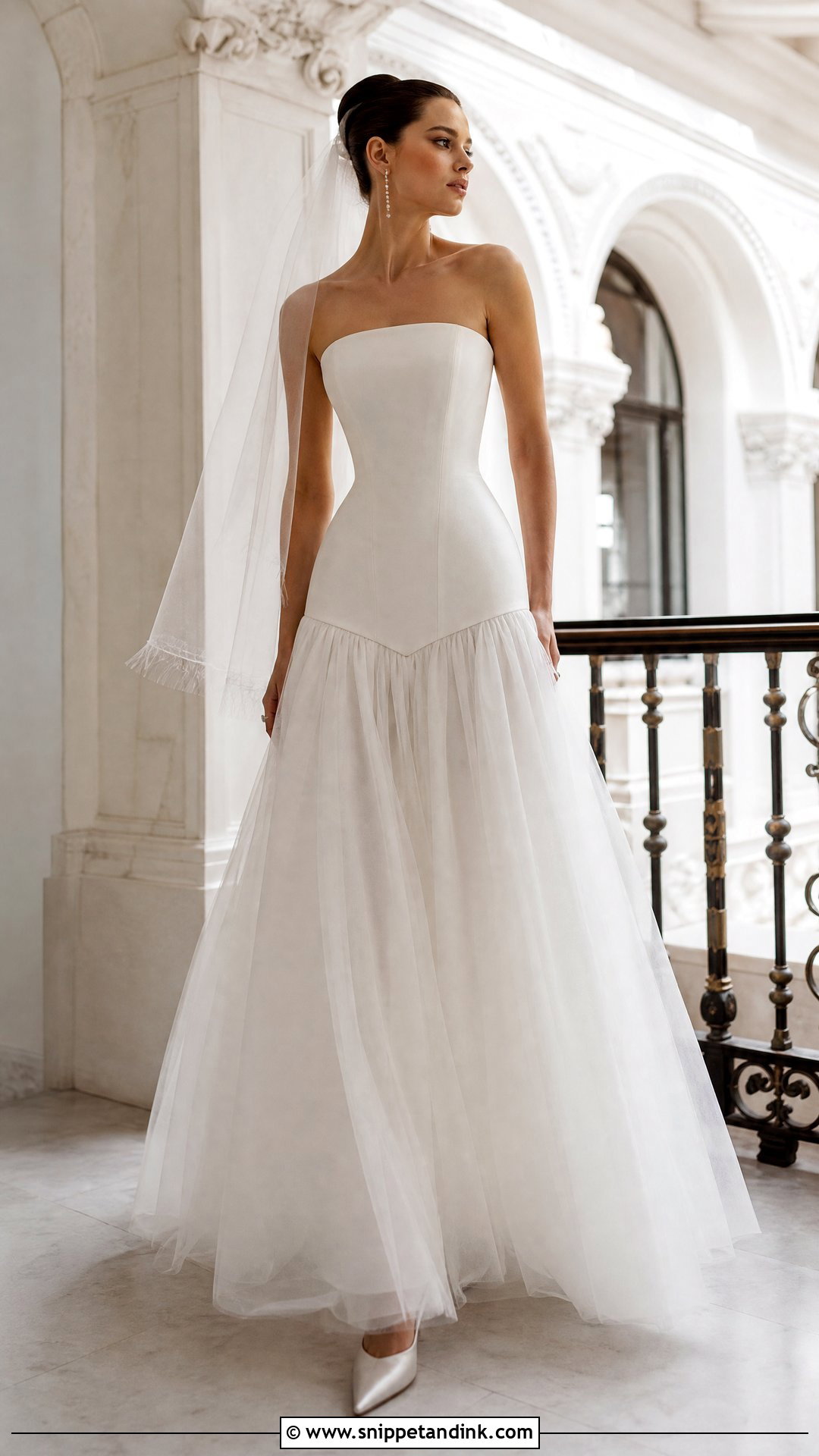
The drop waist lengthens the torso and lets the tulle begin lower, around the hip. A curved or basque seam softens the transition. This shape is unforgiving if the bodice is too long for you, so I always ask brides to sit down at fittings; if the seam digs into the thigh when seated, the bodice needs shortening. Keep the skirt airy rather than heavily layered, wear a raw-edge veil and slim drops, and pull hair off the shoulders to show the structured top.
17. Tiered Chiffon Wedding Dress
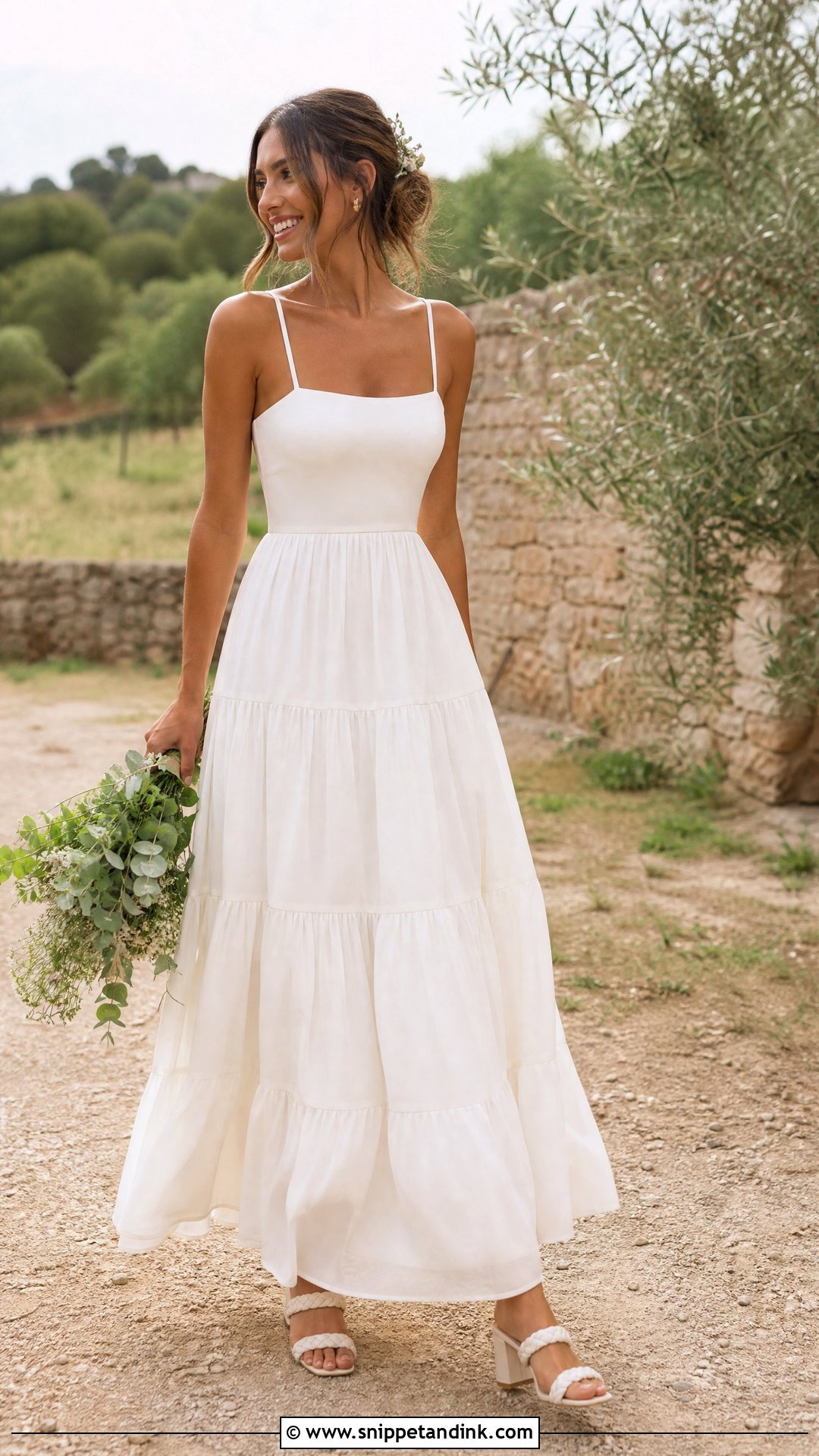
Tiers give a chiffon skirt movement and depth without a petticoat. Wide, softly gathered tiers starting below the waist look relaxed; lots of narrow ruffles add bulk and can tip into prairie costume. Balance it with a clean fitted bodice and slender straps or short flutter sleeves, woven block heels and a simple comb. A short veil works, though for a bohemian ceremony I’m happy to leave it off. When hemming, insist the tailor takes length from the top tier seam so every tier keeps its proportion.
18. High-Low Organza Wedding Dress
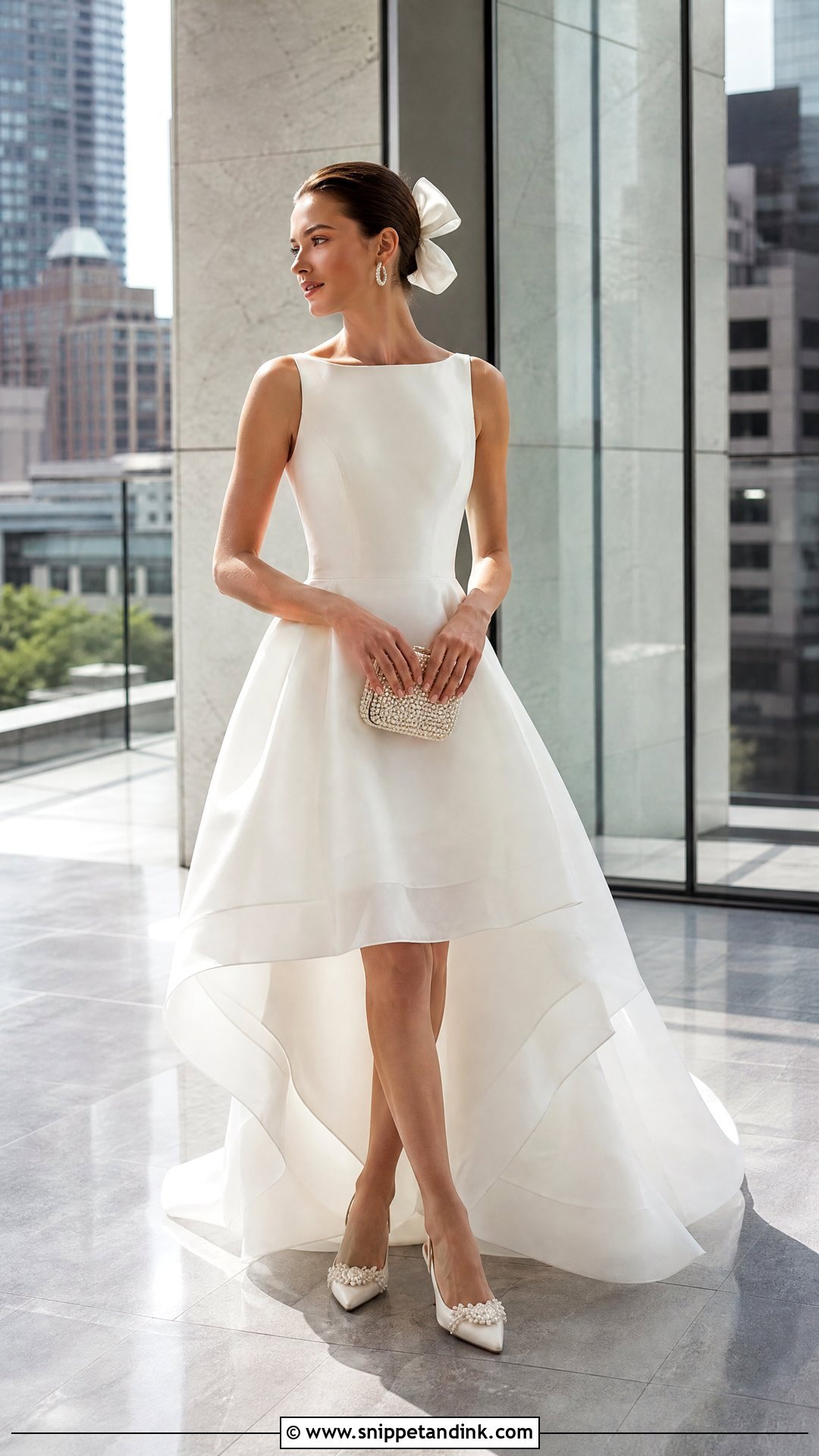
A high-low organza skirt sits at the lower calf in front and drops to ankle or floor at the back, so your shoes become part of the outfit. Choose them first, not last: slingbacks, embellished sandals or satin block heels. A sleeveless, off-shoulder or square-neck bodice suits it, plus pearl hoops and a short veil or sculptural bow. Keep the rest pared back, because the hem is already doing the work. If the back runs into a train, have a bustle sewn in; a high-low hem trodden on during the first dance tears at the seam.
19. Tea-Length Tulle Wedding Dress
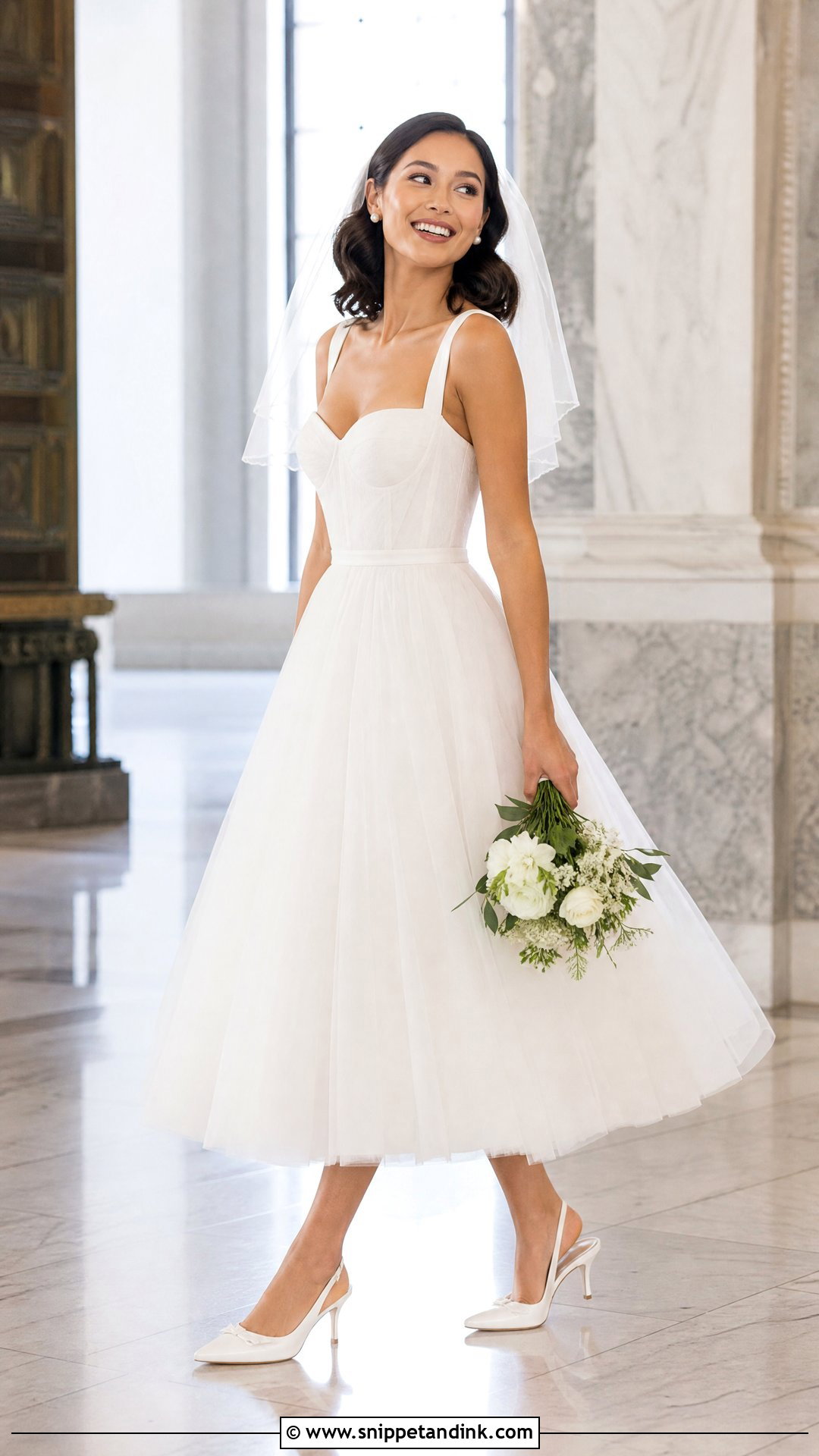
Tea length ends between knee and ankle, so you get the volume of tulle without a train to manage. It’s the dress I suggest for courthouse ceremonies, daytime weddings and small venues where most of the night is dancing. Fine tulle keeps the short skirt from looking like a costume petticoat. Shoes are on full display, so pointed pumps or ankle-strap heels are worth the spend, and a birdcage or shoulder veil suits the proportion. Short gloves work only if you love them.
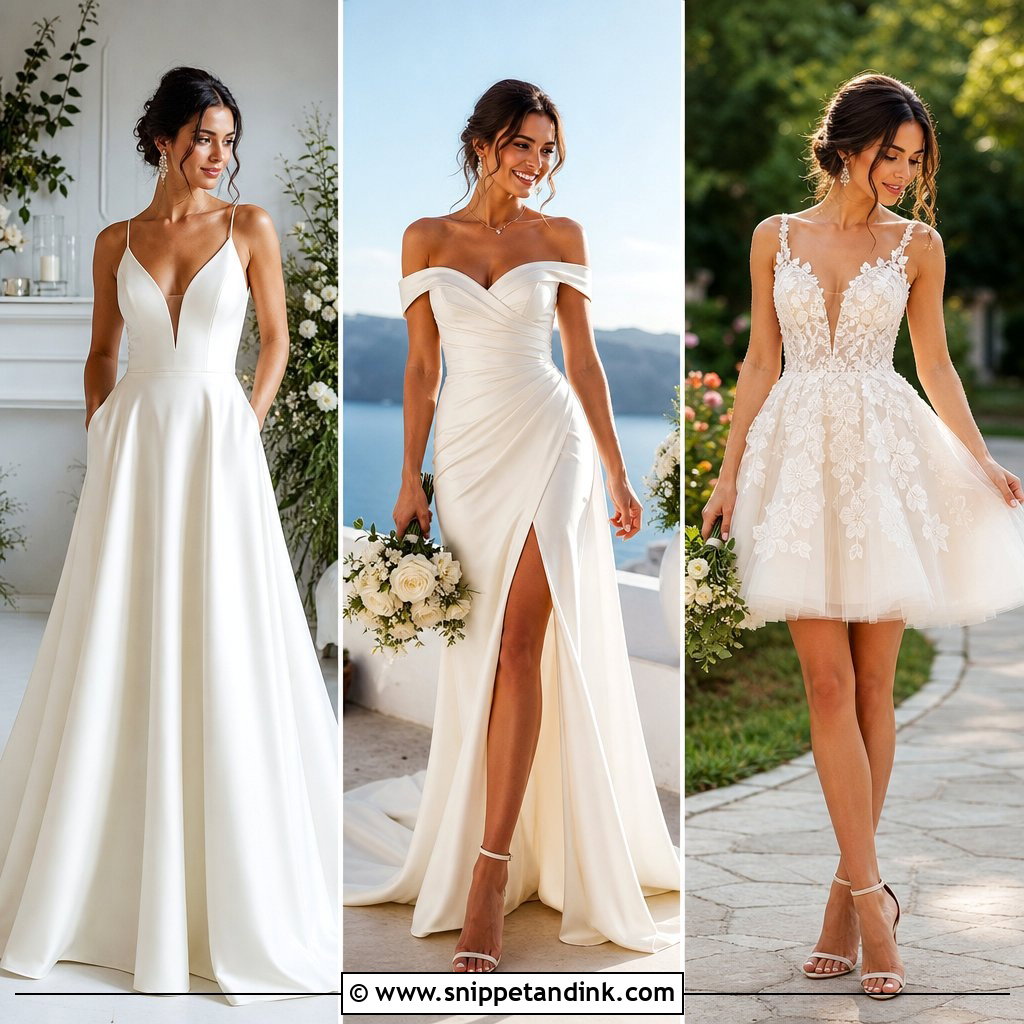
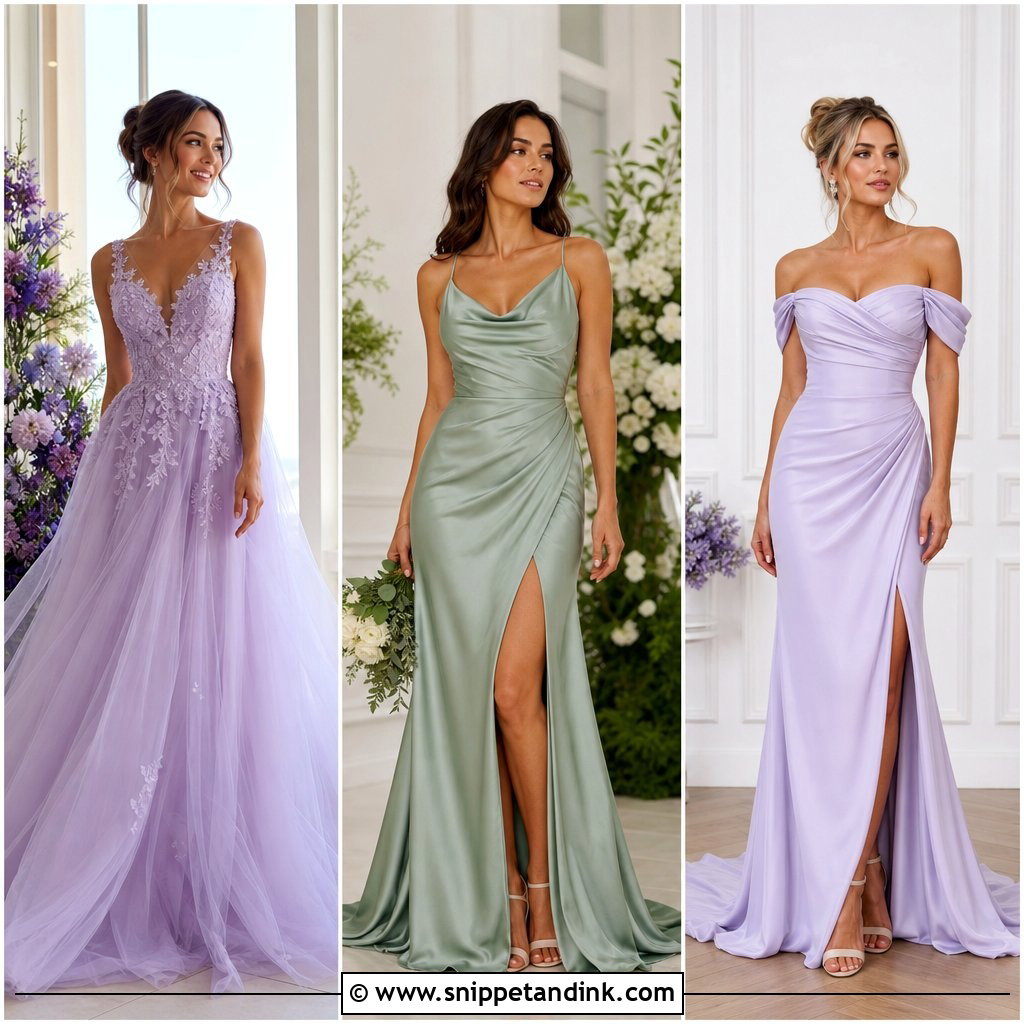
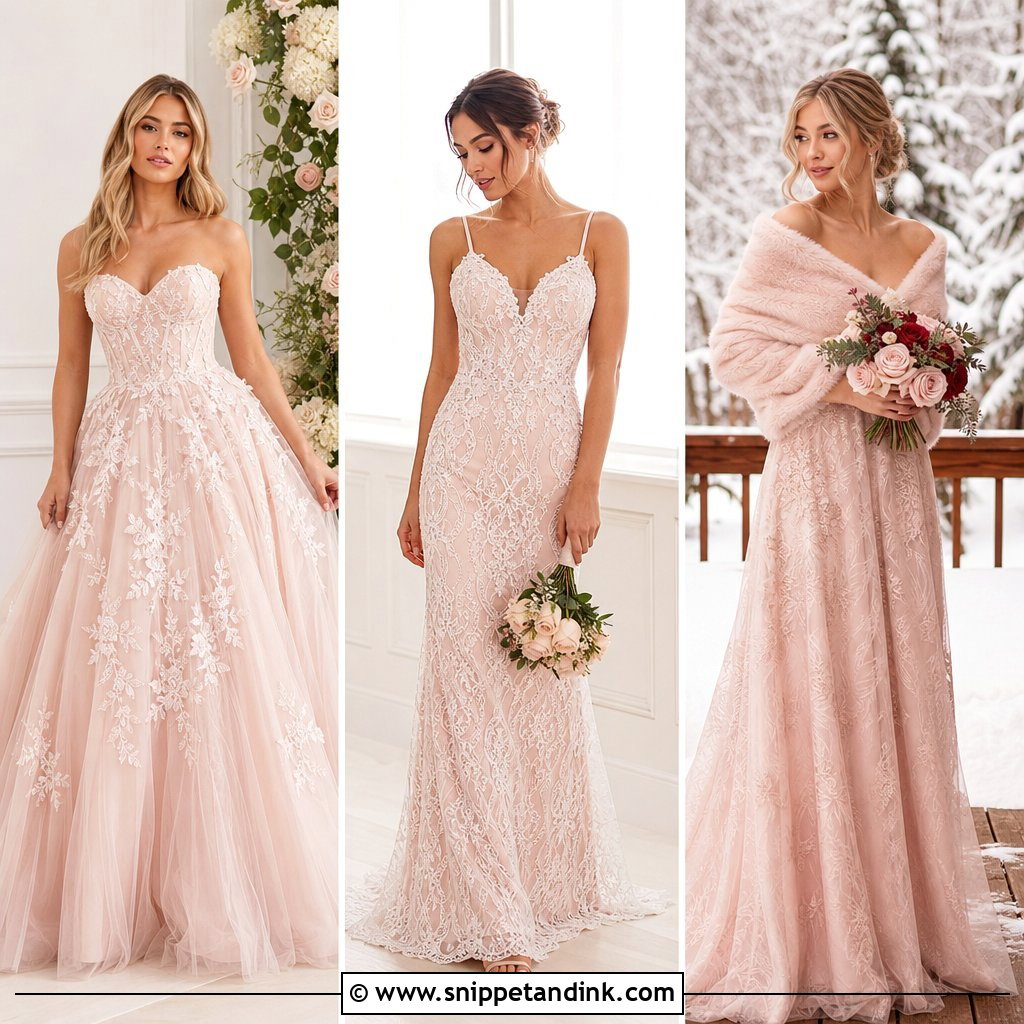

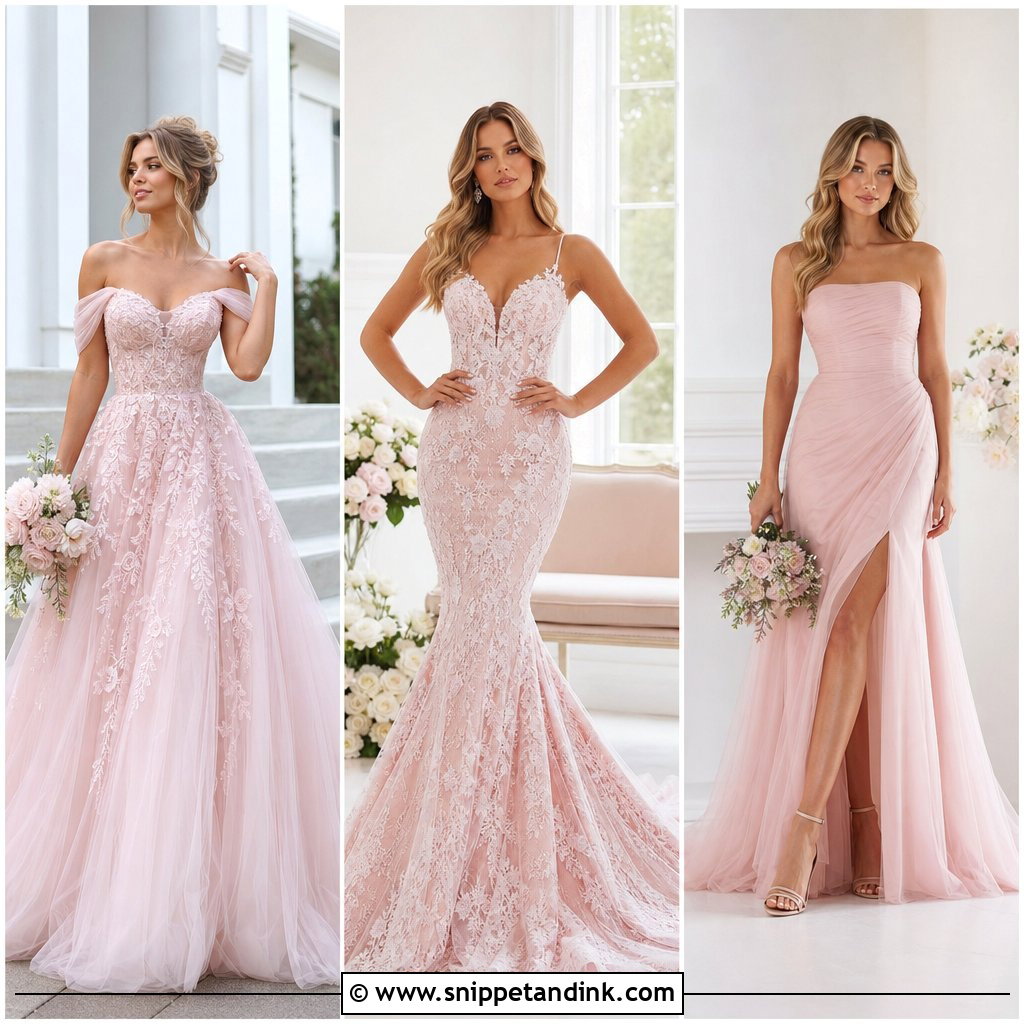
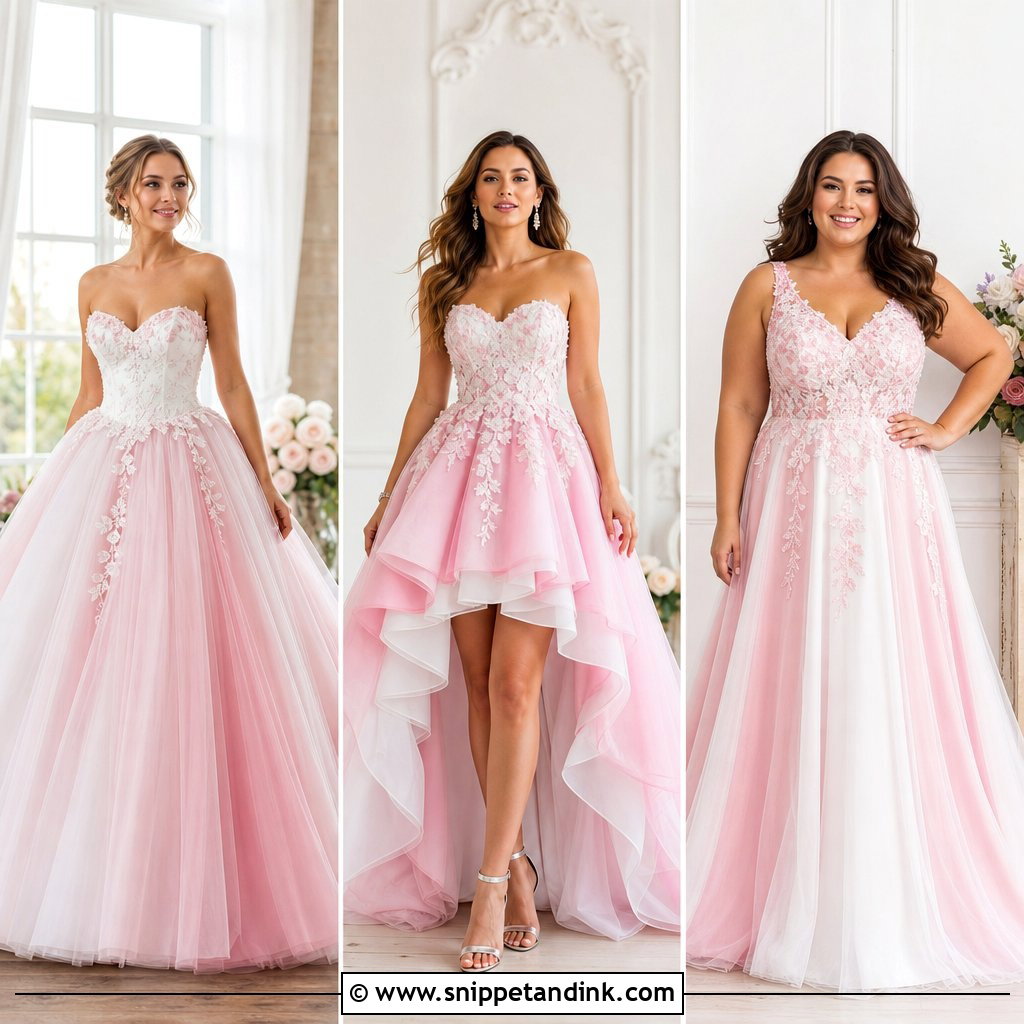
20. Blush Tulle Wedding Dress
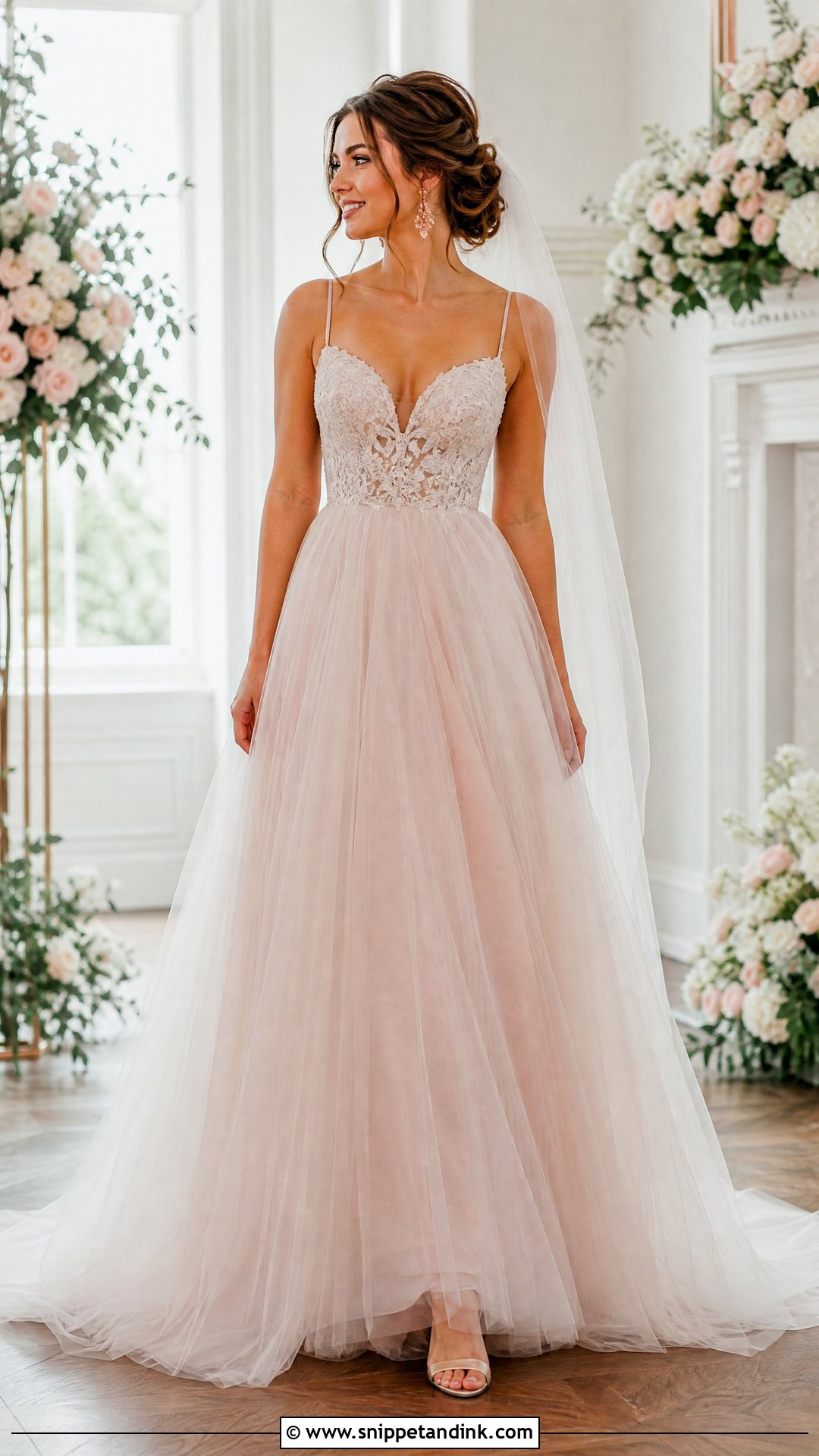
Blush is softer than it looks on a hanger. I usually build it as ivory tulle over a rosy lining, which reads pink in some light and almost nude in others. That shift is the risk: view the fabric in daylight and at the venue, because warm tungsten light can turn it beige and a cool overcast day can make it look grey. Champagne heels, rose-gold earrings and a plain ivory or blush veil work, but don’t match every piece exactly; small variations in tone look more natural. A soft updo and neutral makeup stop it from tipping into sugary.
21. Blue Floral Tulle Wedding Dress
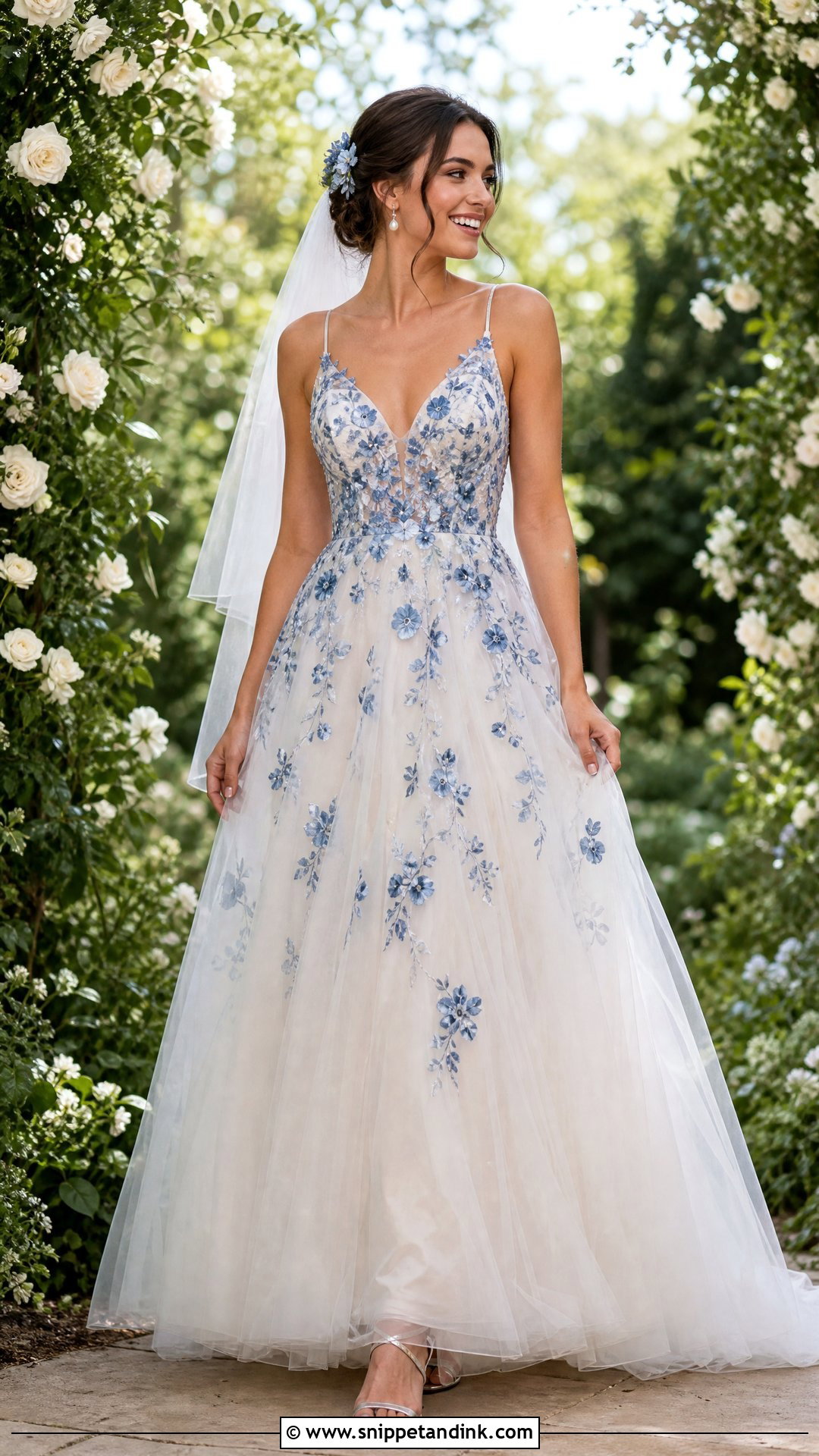
Blue embroidered flowers on ivory or palest-blue tulle feel unusual but still bridal. Scattered motifs across the bodice and upper skirt keep the color light; dense coverage looks heavy very quickly. A pale-blue shoe or a small blue comb ties things together, but I’d stop there. The bouquet should be simple, mostly white and green, so it doesn’t compete with the print. For a quieter version, embroider blue only along the neckline, waist or train.
22. Plus-Size Chiffon Wedding Dress
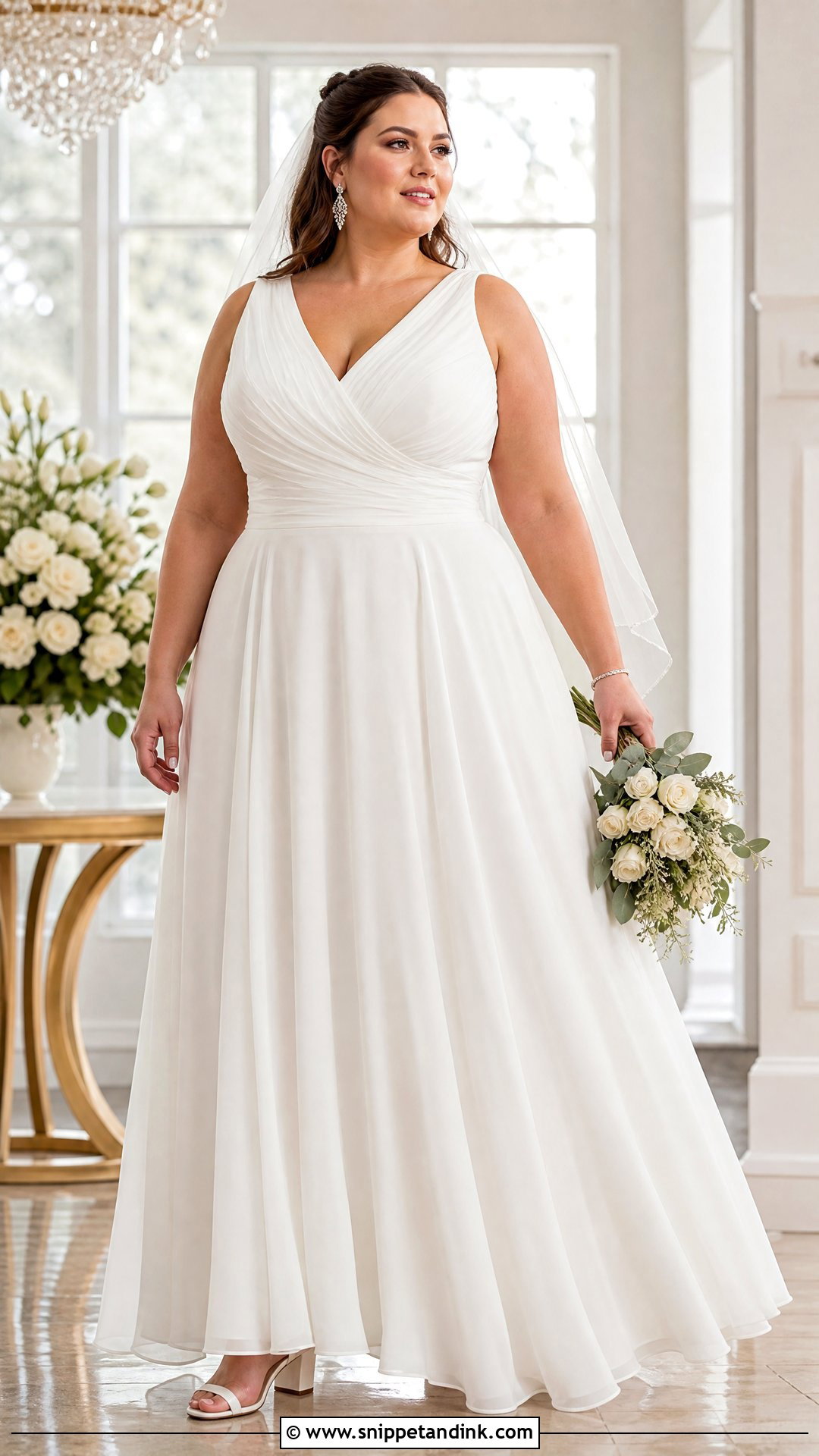
A plus-size chiffon wedding dress needs the support built inside it: wide straps, cups, internal boning, then a flowing A-line or empire skirt over the top. Soft ruching marks the waist without stiffness. The most common mistake I see is buying two sizes up for comfort; a correctly sized gown taken in by a skilled seamstress fits far better than a large one taken in everywhere. At every fitting, sit, walk and raise both arms. A half-up style or low bun keeps the neckline open for statement earrings.
23. Petite A-Line Wedding Dress
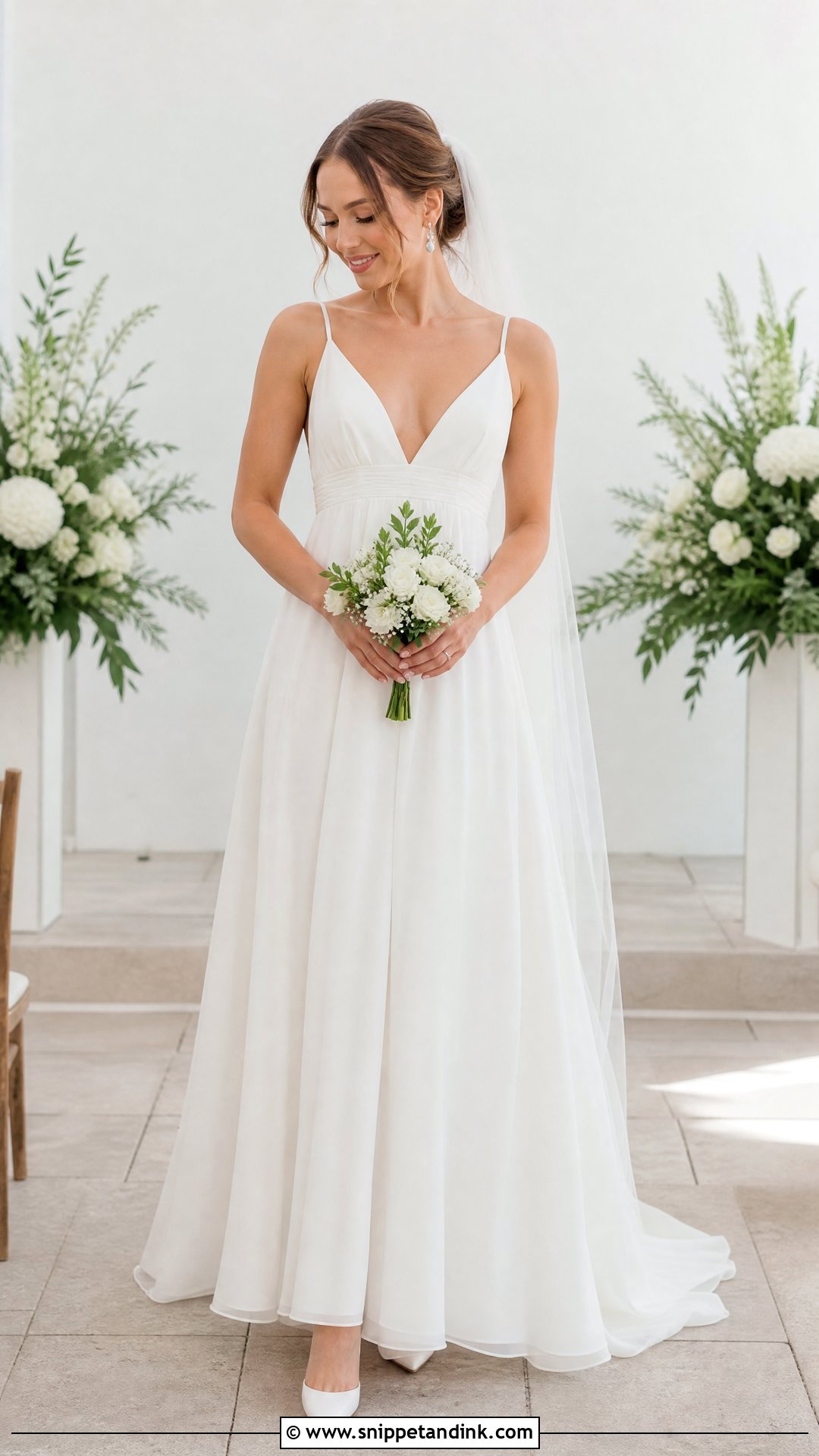
On a petite frame, scale is everything. A slightly higher waist, narrow straps or a clean sleeveless bodice and a skirt with controlled volume all keep the proportions right. Vertical seams, a V-neck and appliqués that trail downward draw the eye up and down. I’d avoid a very wide skirt or long train unless you want real drama. Petite alterations often touch the bodice, waist, straps and appliqué placement, not just the hem, so book them early enough that the seamstress isn’t forced to cut through the design.
24. Maternity Empire Wedding Dress
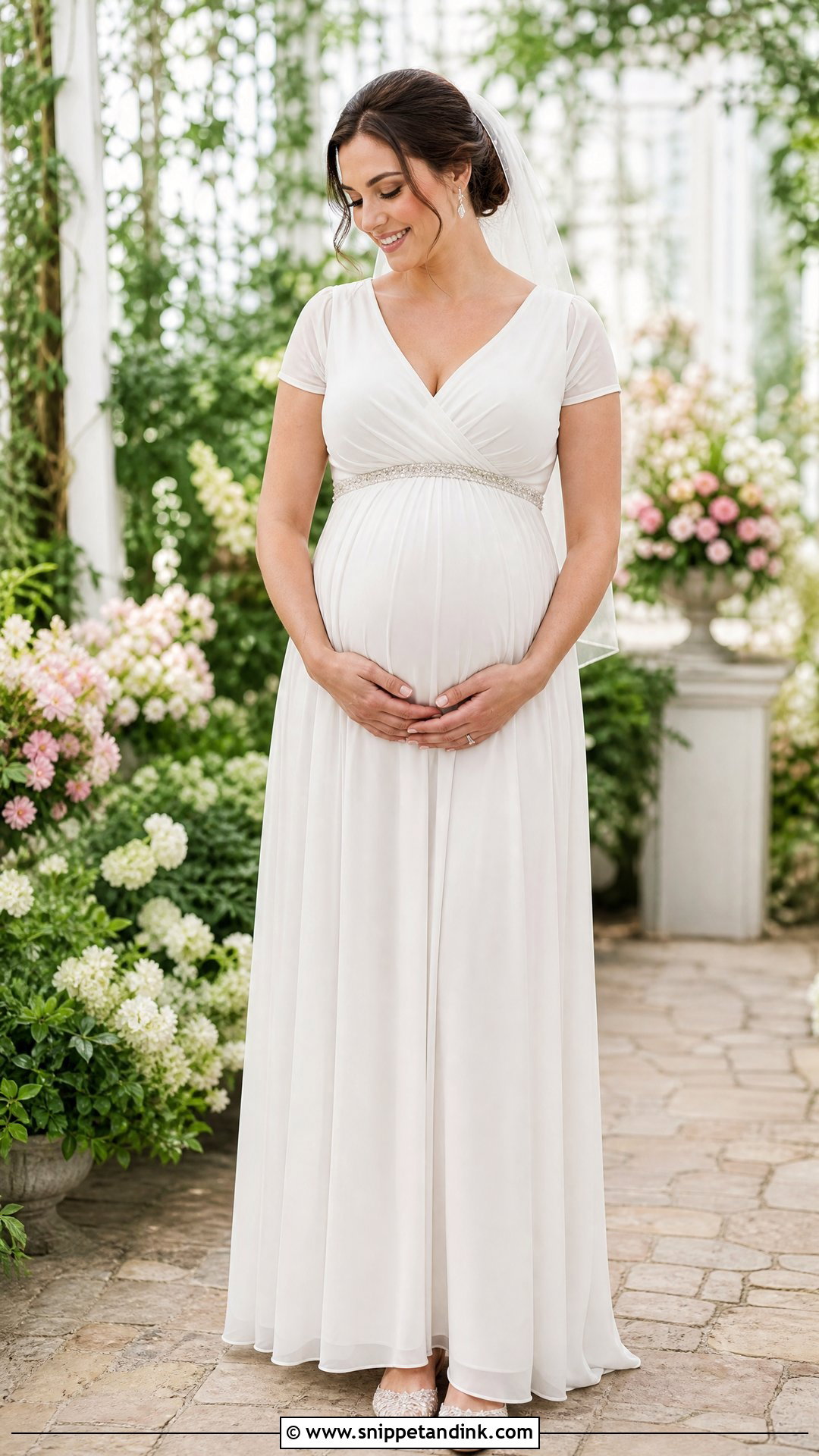
For a pregnant bride, an empire seam just below the bust leaves room through the middle while keeping a clean bridal line. Chiffon or soft tulle, a supportive bodice and adjustable straps or comfortable sleeves allow for change, and a wrap-style neckline gives more flexibility still. Schedule the last fitting as close to the date as the seamstress will allow, and ask her to leave extra seam allowance in case your shape changes again. The skirt should skim rather than cling. Stable low heels or embellished flats and light earrings will keep you comfortable.
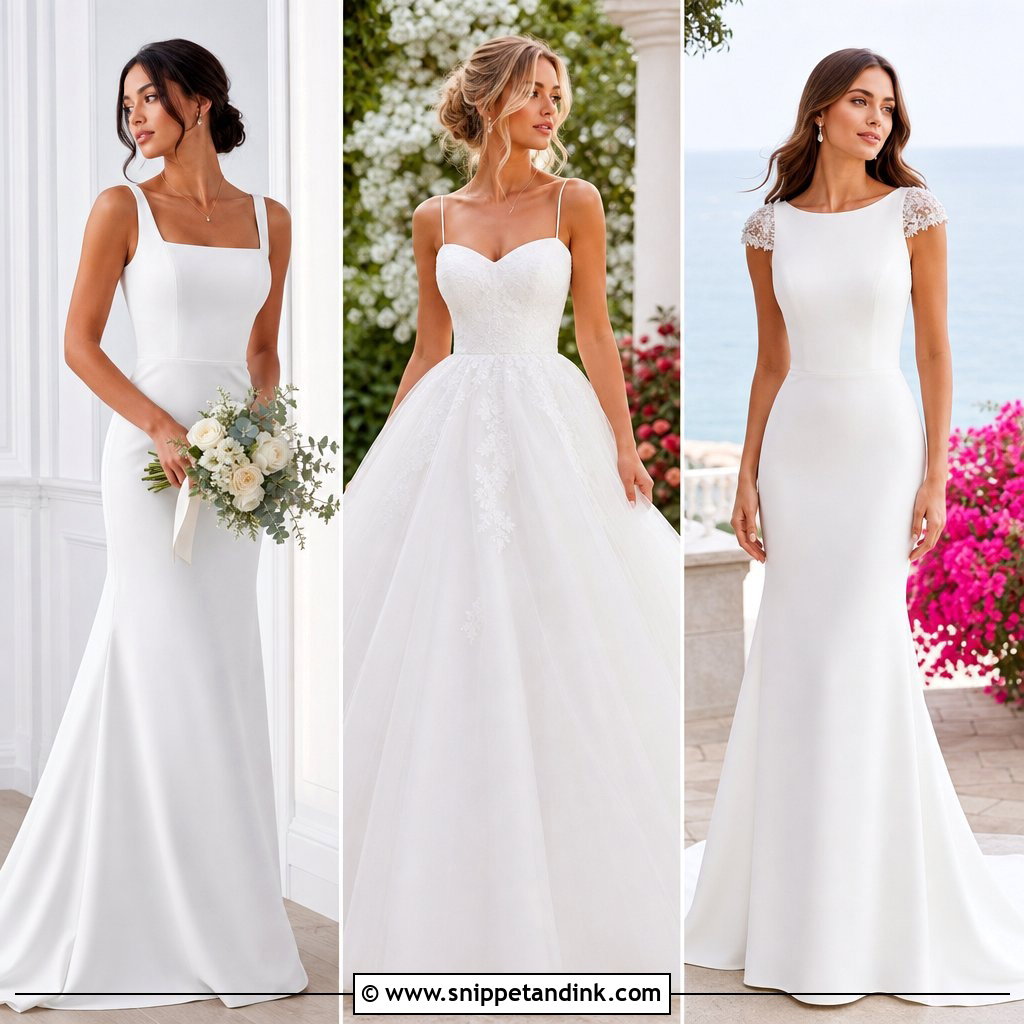
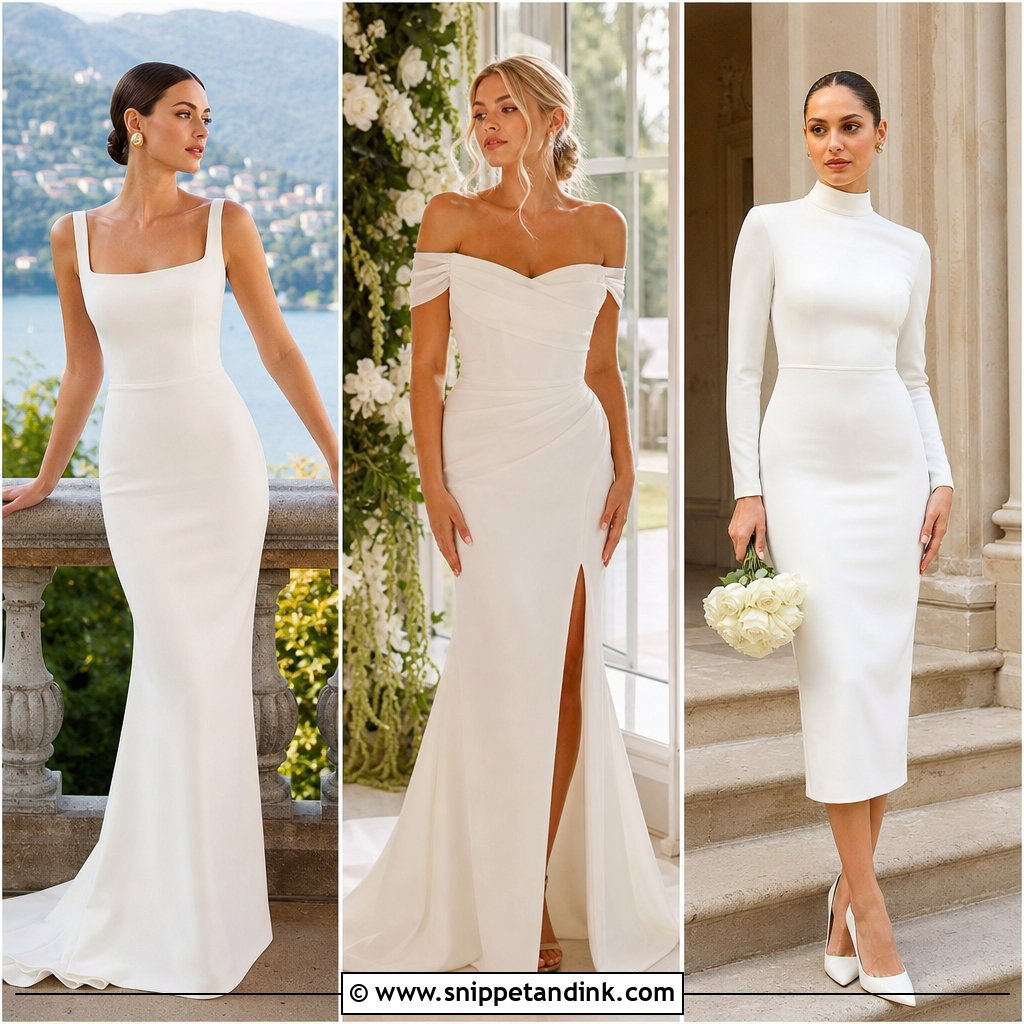

25. Detachable Overskirt Wedding Dress
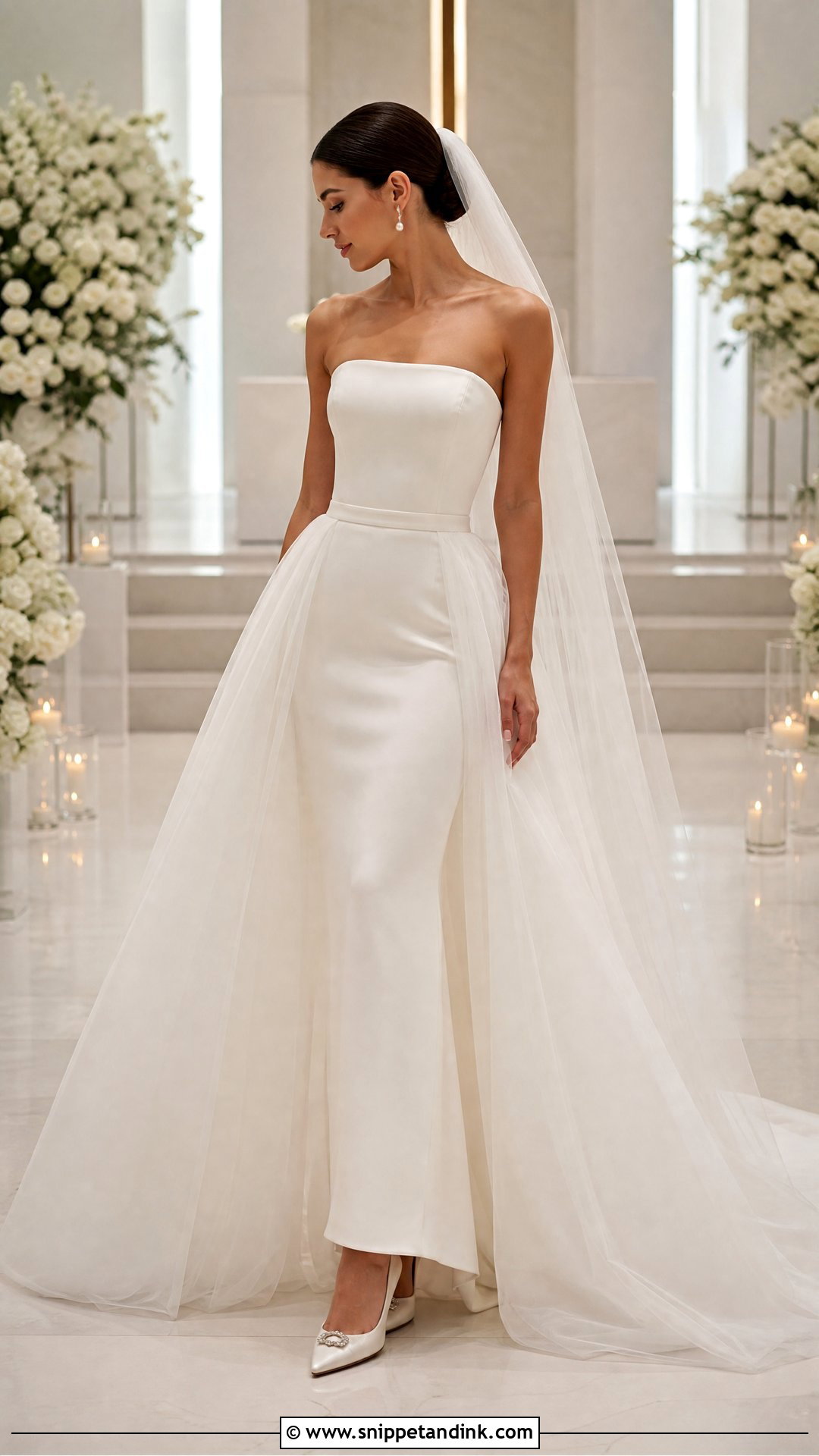
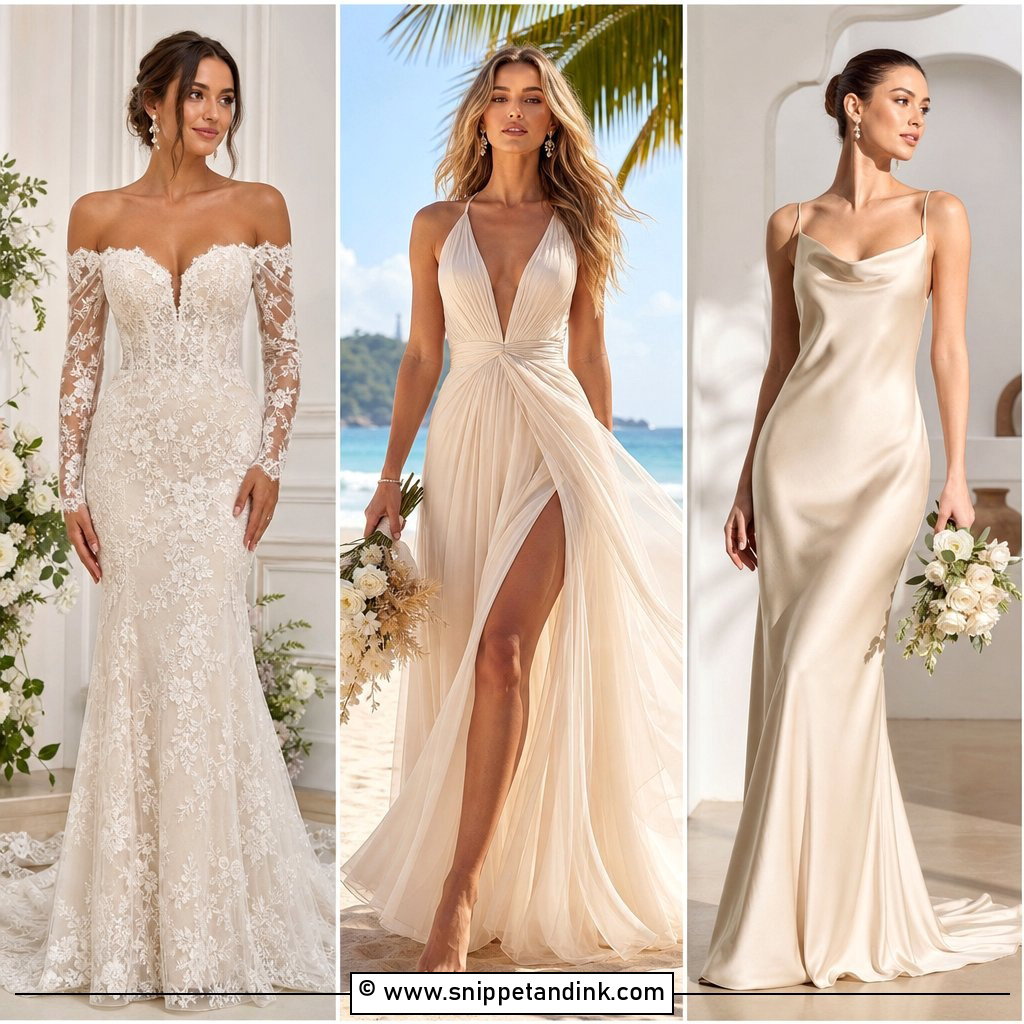
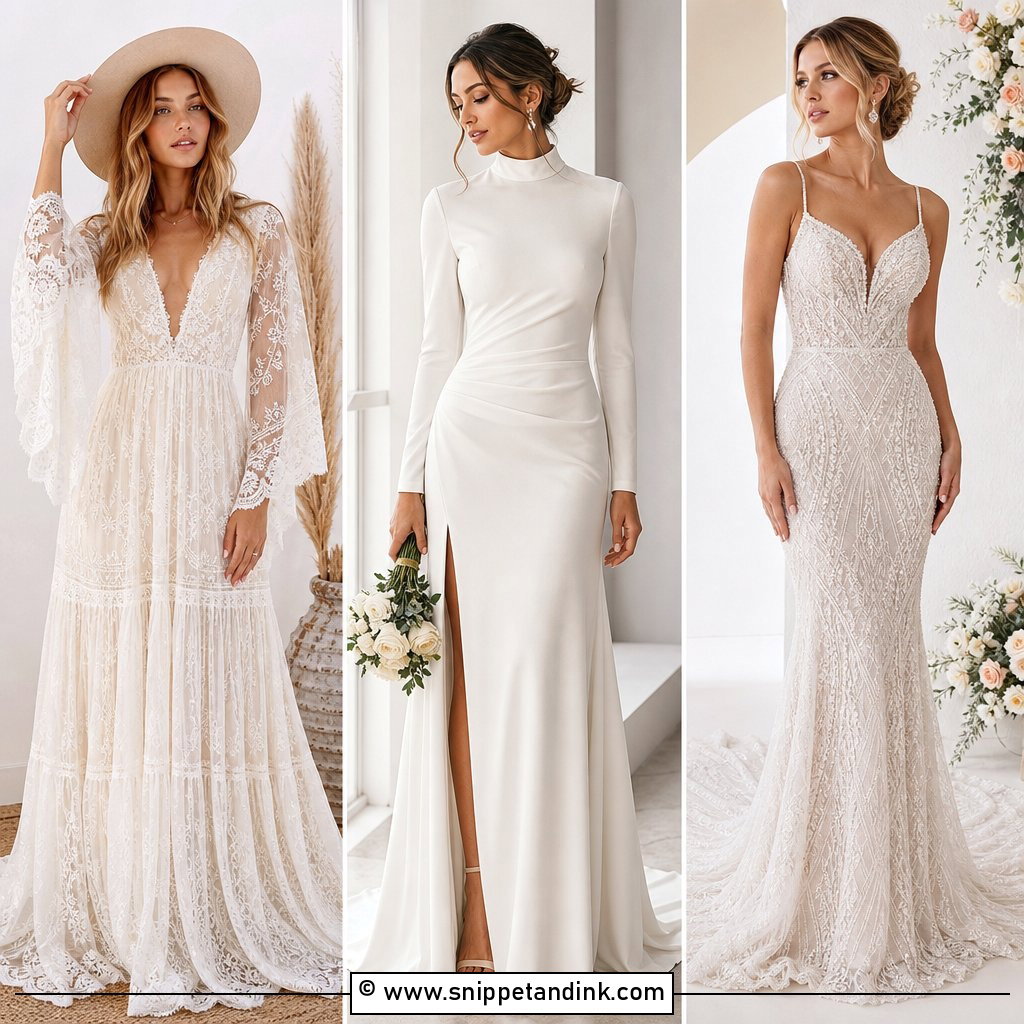
Two outfits from one dress: a fitted crepe, lace or satin column underneath, with a light tulle or organza overskirt on top for the ceremony. The overskirt gives you an aisle silhouette, then comes off along with the cathedral veil for the reception, when a statement comb or bold earrings take over. The fastening is where these fail. I want hooks or a hidden button band, never just snaps, and someone in the bridal party should practise removing it with you the week before.
Wind, Lawns and Ten Hours in a Very Light Dress
Lightweight fabric is lovely until the weather or the venue starts working against it. These are the problems I prepare brides for at the final fitting.
Hem length and shoes
Bring the actual wedding shoes to every fitting from the second one on. A floaty hem should brush the top of the shoe in front; any longer and you’ll step on it on stairs and grass. If you plan to change into flats for dancing, have a bustle or hem loop added, as chiffon trodden on for two hours looks grey and frayed.
Wind on an outdoor ceremony
Sheer skirts lift and flatten against the legs in a breeze. A slightly heavier lining, or a few small weights stitched into the lining hem, keeps the outline steady. I also tell brides to hold the bouquet a little lower than usual; it anchors the front of the skirt in photographs.
A small repair kit
Pack white thread, a needle already threaded, clear nail varnish for a run in tulle, safety pins, double-sided fashion tape and a lint roller. Fine fabrics pull rather than tear, and most snags can be eased back with a pin and a steady hand rather than cut.
After the wedding
Hang it from the inner hanging loops, not the shoulders, and keep it out of plastic. Take it to a cleaner who handles bridal fabrics within a few weeks; sugar from champagne or cake dries invisible on chiffon and turns brown later.
Does It Still Swing After You Stop Walking?
A floaty dress earns its place when it looks right in motion and you feel supported and comfortable inside it. Chiffon, tulle, organza and georgette each move in their own way, so ask to walk the length of the salon in each fabric, not just stand on the pedestal. Think about the venue, the weather, your shoes and the alterations before you decide, then pick accessories that suit the neckline instead of competing with it. From beach columns to detachable overskirts, the right one is the gown you can sit, walk and dance in without thinking about it.
You'll Like These Ideas:


Leave a Reply