
Why cream instead of white? For most brides I dress, it’s simply kinder to the skin. Bright white can drain warm and olive complexions, while cream, with its ivory, champagne and vanilla undertones, picks up the warmth of candlelight, late sun and wood-paneled rooms. It also works in almost any fabric, from fluid silk and satin to lace and chiffon. The color looks intentional when the shape, neckline and accessories are chosen for it, rather than treated as a slightly off-white version of a white gown. Below are twenty silhouettes, each with the shoes, jewelry, veil and flowers I’d put with it and the fitting point that matters most.
Which Cream Fabrics Suit a July or a January Wedding
Season should narrow your fabric before it narrows your silhouette. I start every consultation by asking for the date, because a satin ball gown in August heat and a chiffon slip on a frosty December day are both hard work for the bride wearing them.
Warm Months
Chiffon, organza, silk crepe and light lace breathe and move. Keep layers to a minimum. For an outdoor midday ceremony, ask whether the lining can be silk or cotton rather than polyester, which traps heat against the skin.
Cold Months
Mikado, heavy satin, crepe and long-sleeved lace hold warmth and shape. A cream faux-fur wrap, a tailored cream coat or a matching bolero covers the walk between car and venue. Pick a cover-up that matches the gown’s undertone; a bright white wrap over cream looks odd in photos.
Why Your Underwear Should Match Your Skin, Not the Dress
Brides often buy white or ivory bridal lingerie to match the gown, and under cream it’s the first thing to show. A white bra under thin satin or chiffon outlines itself as a brighter patch, especially in flash photos. Underwear close to your own skin tone disappears far better under any pale fabric.
I ask brides to bring the exact pieces to the second fitting, then I look at them from a few steps back near a window. If I can see an edge from there, a camera will too.
1. Satin A-Line Cream Wedding Dress
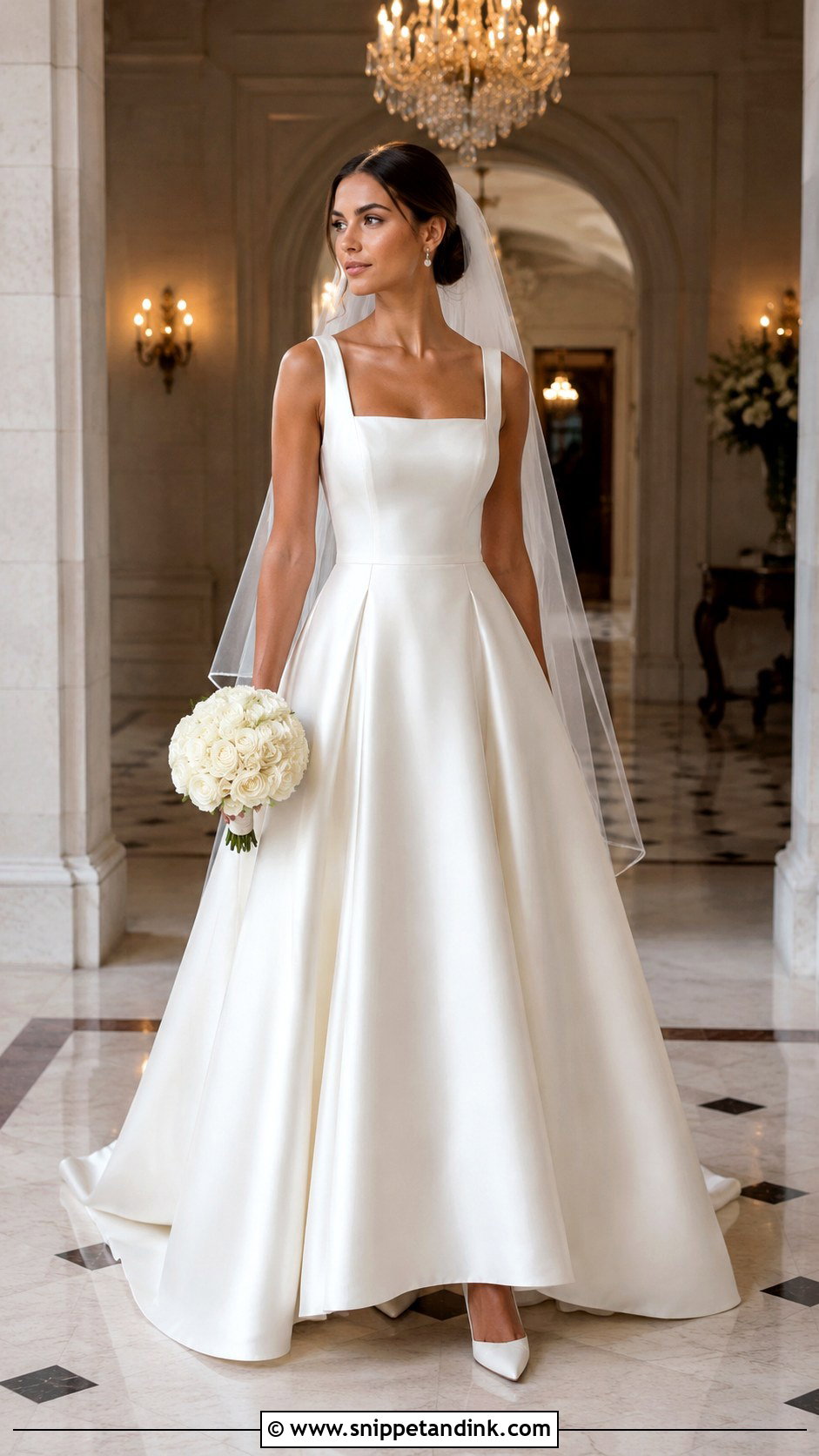
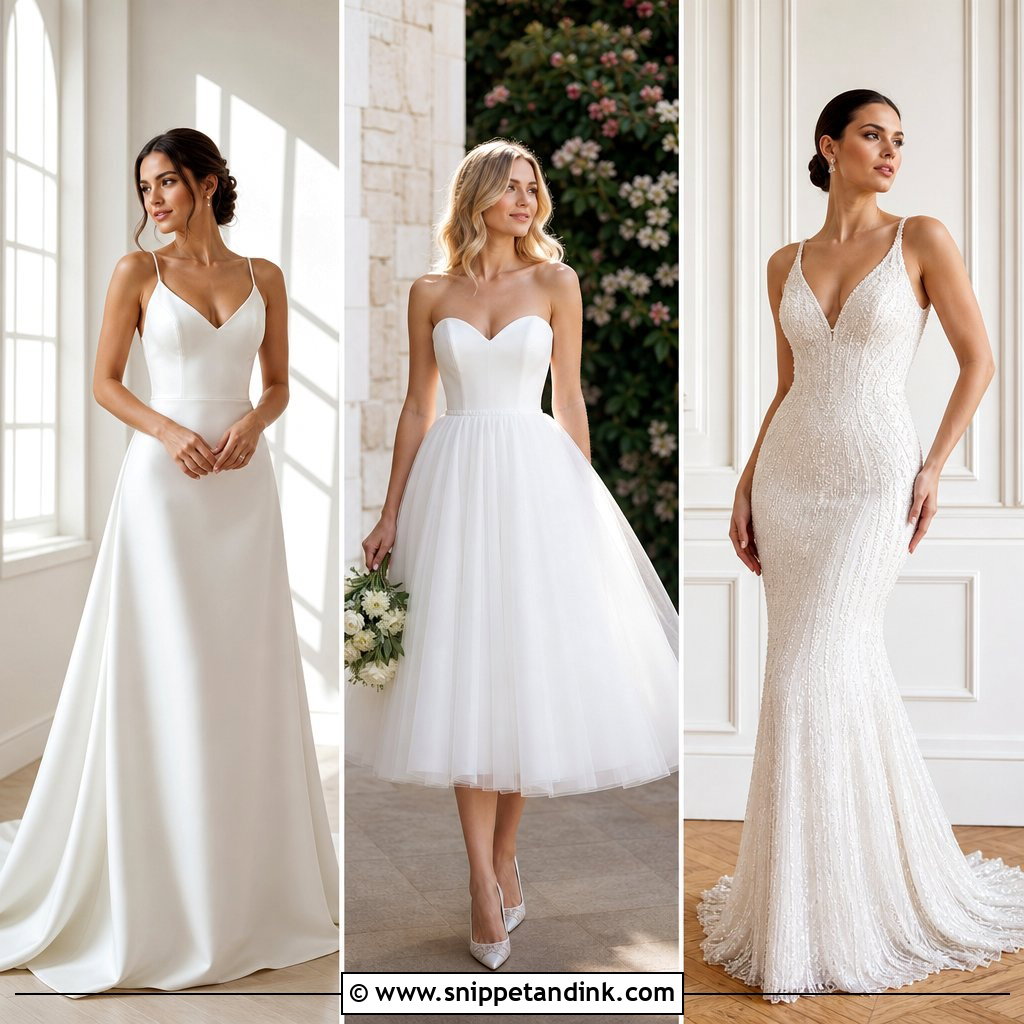
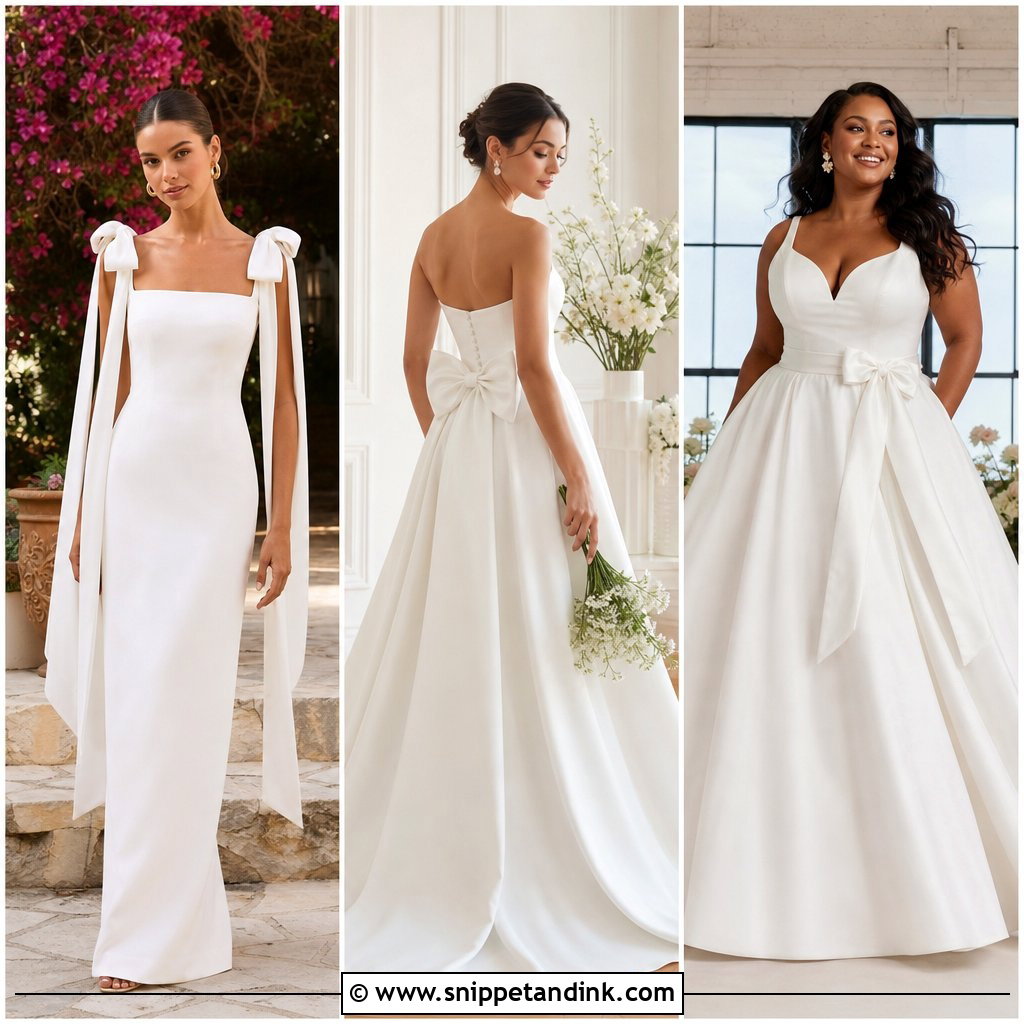
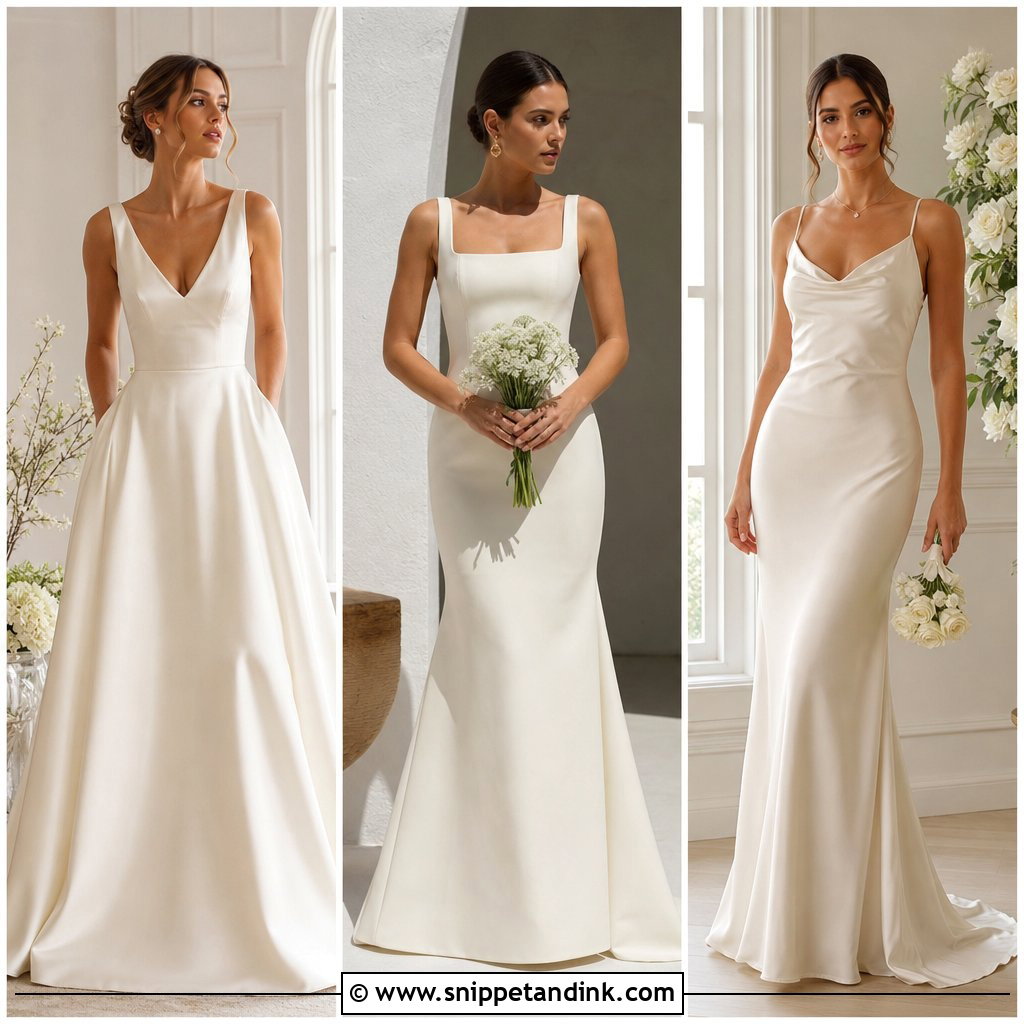
Satin A-lines are the dependable starting point. A softly structured bodice with wide straps or a clean V lets the skirt fall from the waist, and cream satin catches light with a warmth white satin never quite has. The fitting point is the waist seam: on an A-line it should sit at your natural waist, not a size-chart guess, or the skirt flares from the wrong spot. Pointed ivory pumps, pearl drops and a fingertip veil edged in narrow ribbon suit it, with a low chignon. Carry white roses, cream ranunculus and greenery. It’s at home in hotels and estates.
2. Lace Long-Sleeve Cream Wedding Dress
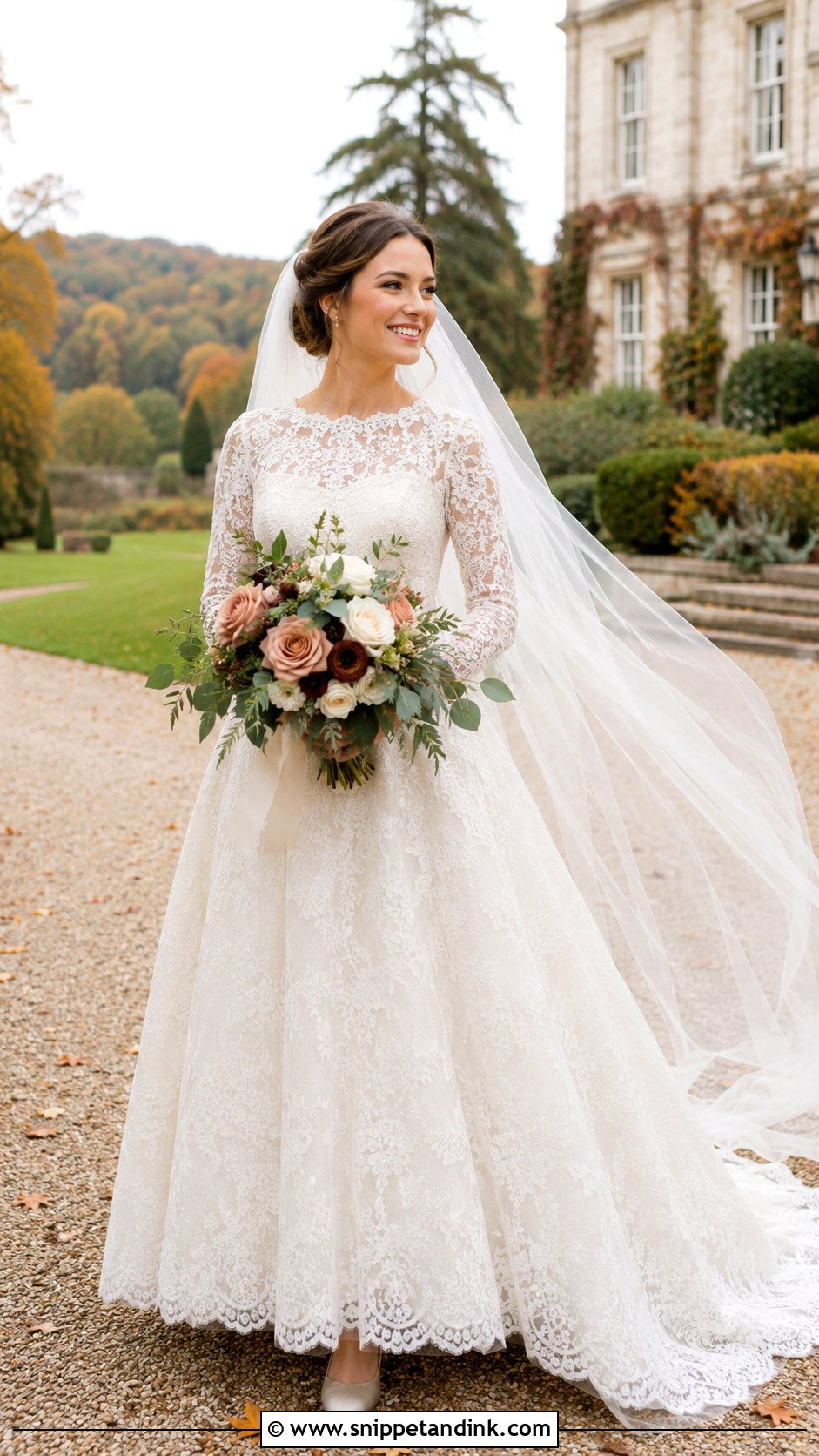
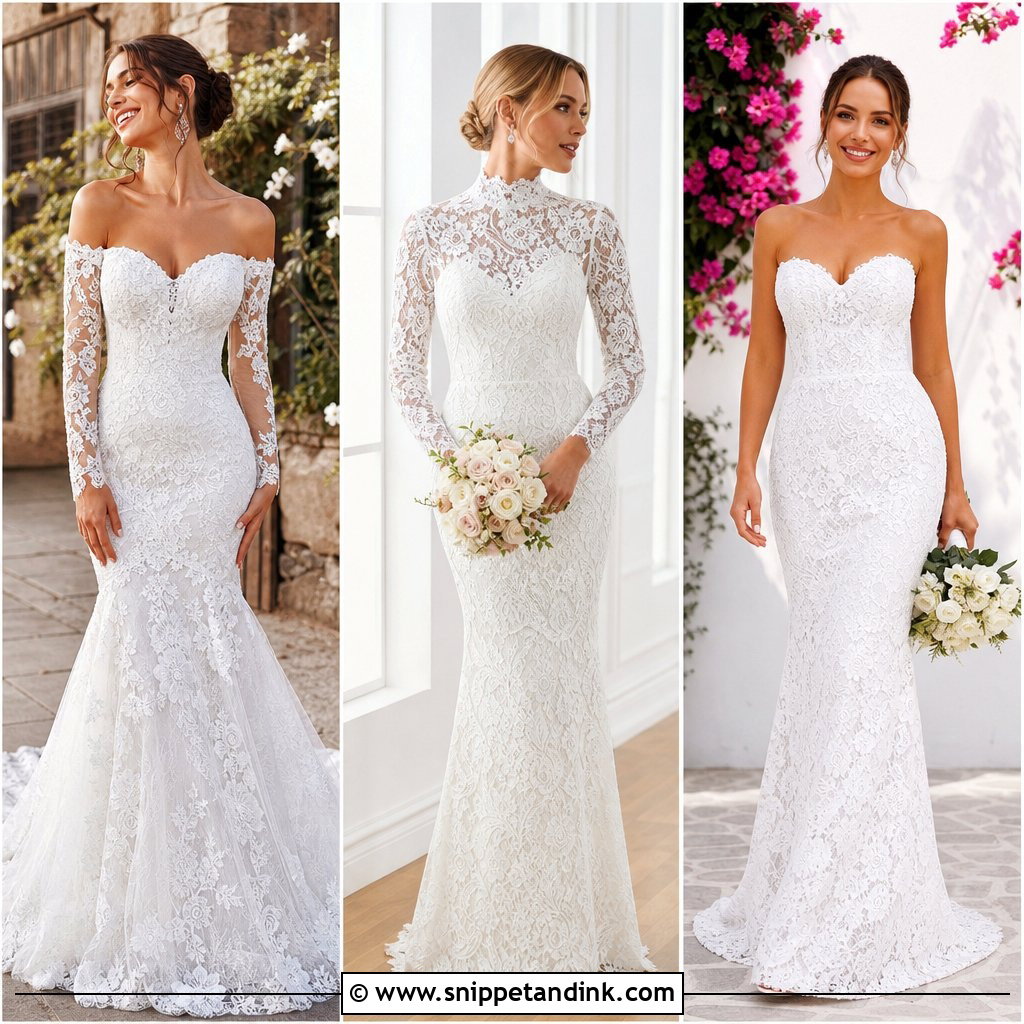
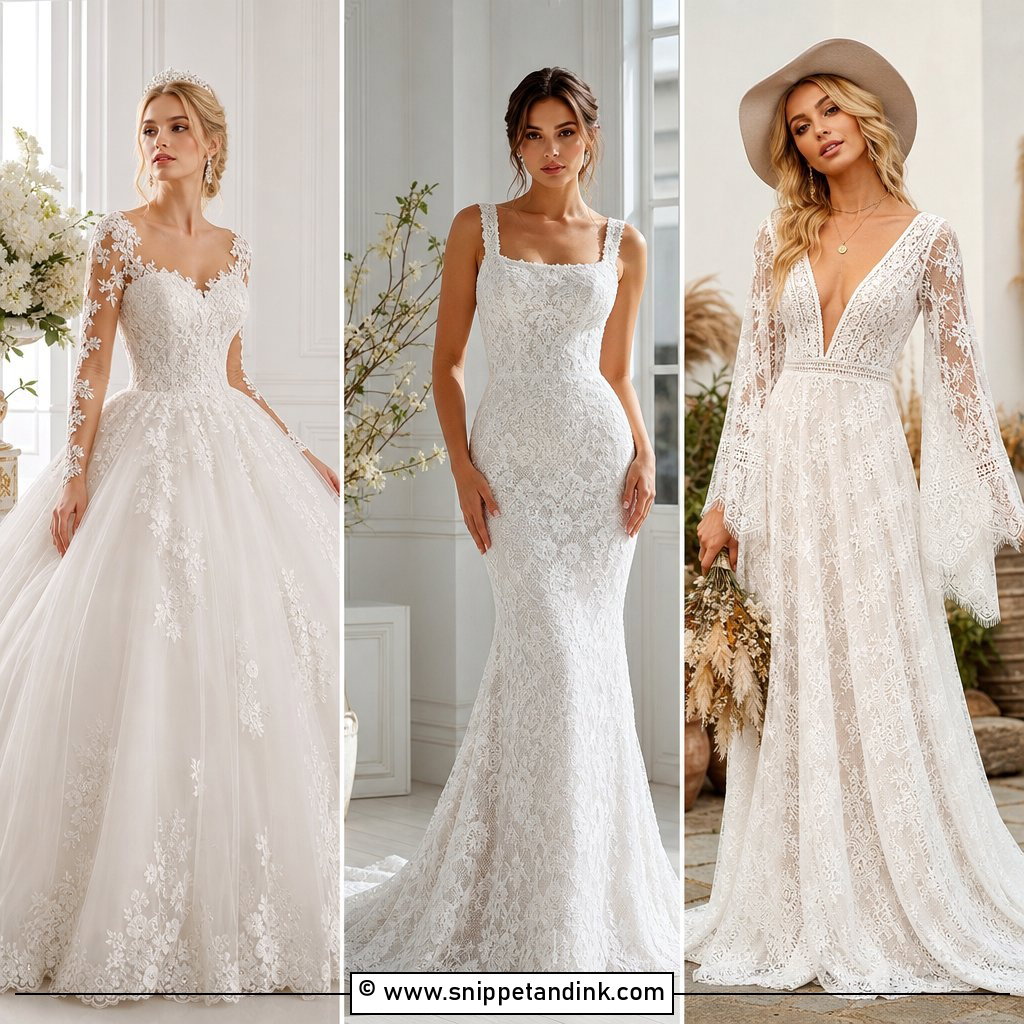
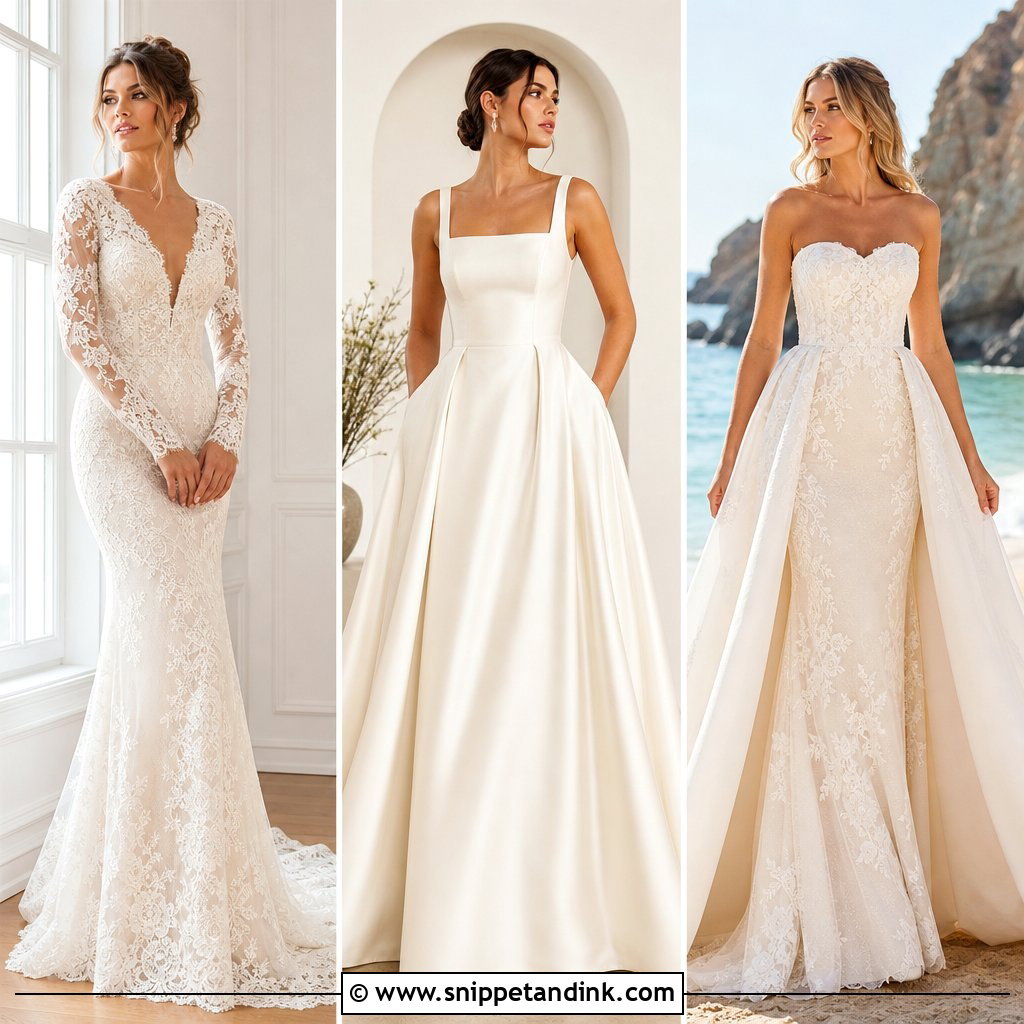
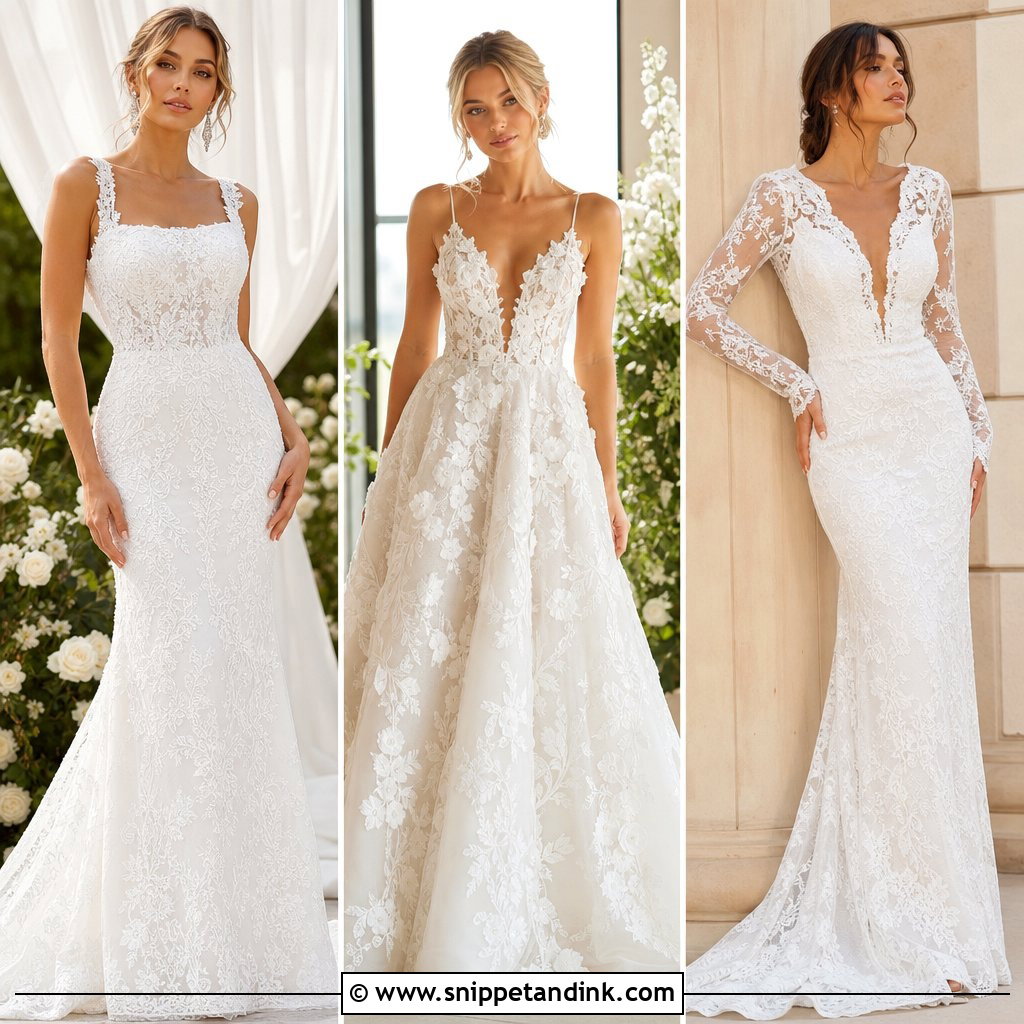
Lace over a matching cream lining reads rich; lace over a lining that’s too pale or too dark looks flat, and that’s the first thing I compare in the fitting room. A fitted bodice, sheer long sleeves and an A-line or gently flared skirt keep the motifs visible. If the lace is ornate, skip the necklace. Closed-toe satin heels, small pearl studs and a soft tulle veil under a textured updo finish it, and garden roses with trailing greenery suit the detail. Cooler seasons and historic venues give it the right backdrop.
3. Strapless Ball Gown Cream Wedding Dress
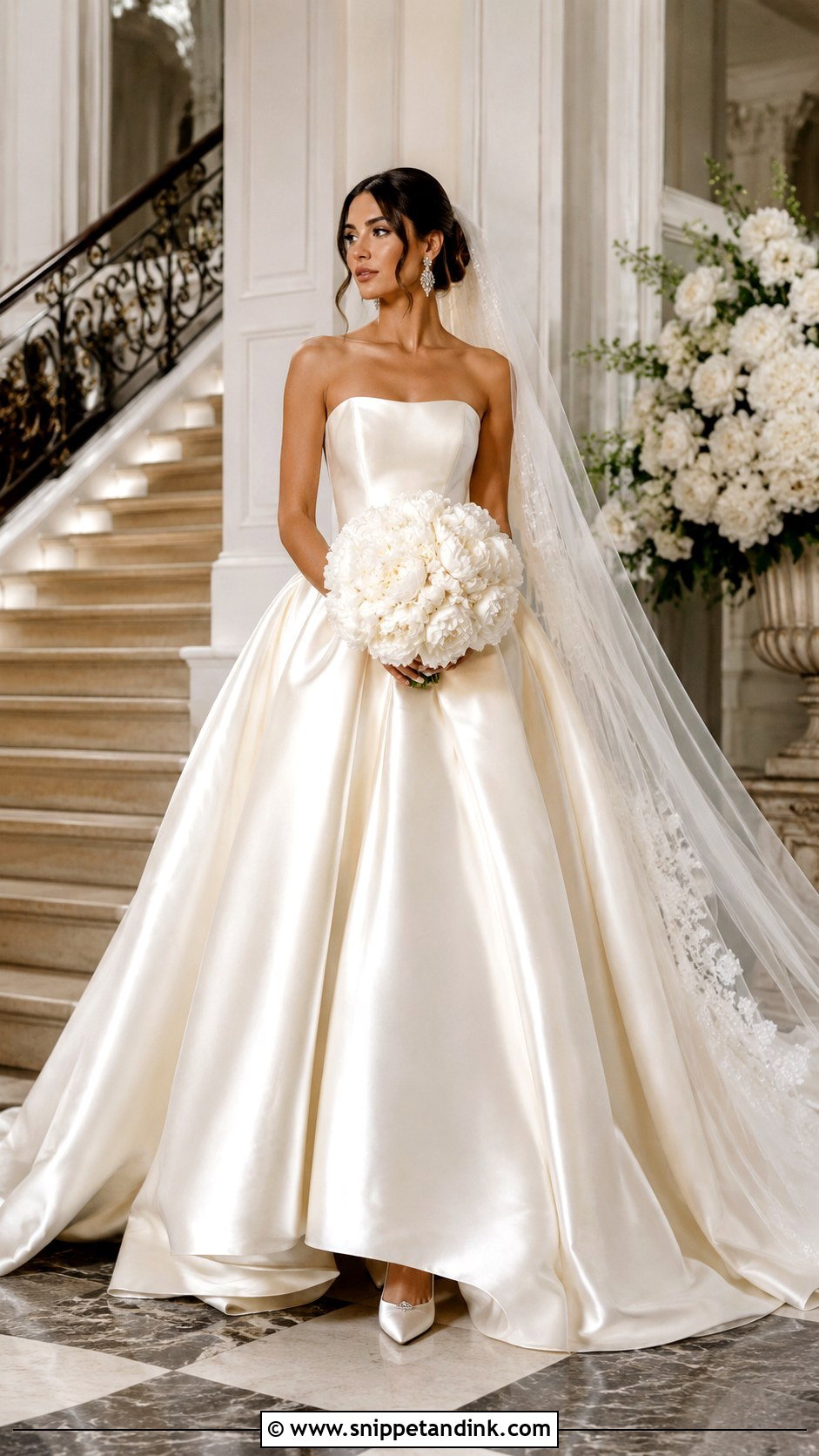
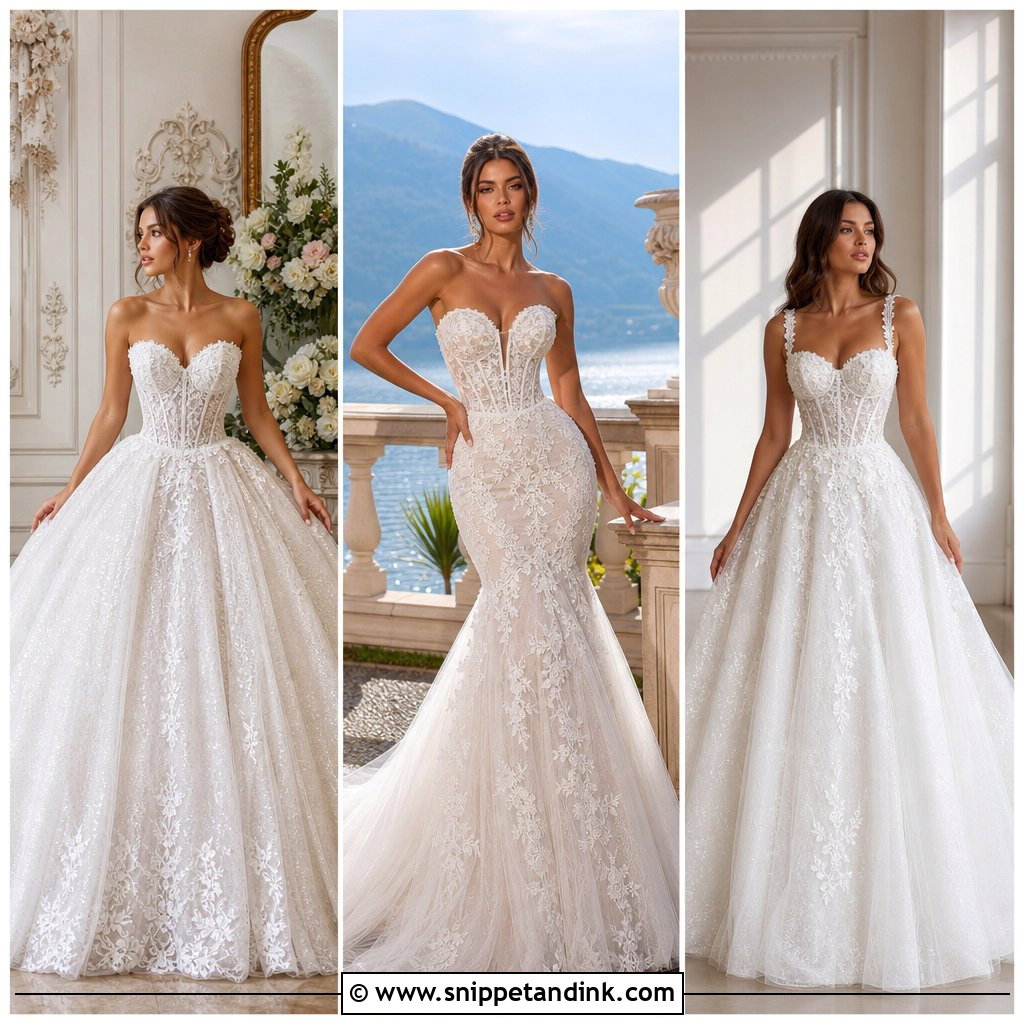
Volume asks for a clean top half. A strapless cream ball gown with a structured bodice, straight or softly curved, sits over a full satin or mikado skirt, and mikado holds its shape in a way that suits grand staircases. Crystal earrings and a cathedral veil carry the ceremony; leave the necklace off or keep it tiny. Pointed pumps under the skirt add height. A sleek bun balances the width of the skirt. A rounded all-cream bouquet of roses, peonies or hydrangeas suits formal ballrooms and evening receptions. Plan where the skirt goes in the car, too.
4. Square-Neck Crepe Cream Wedding Dress
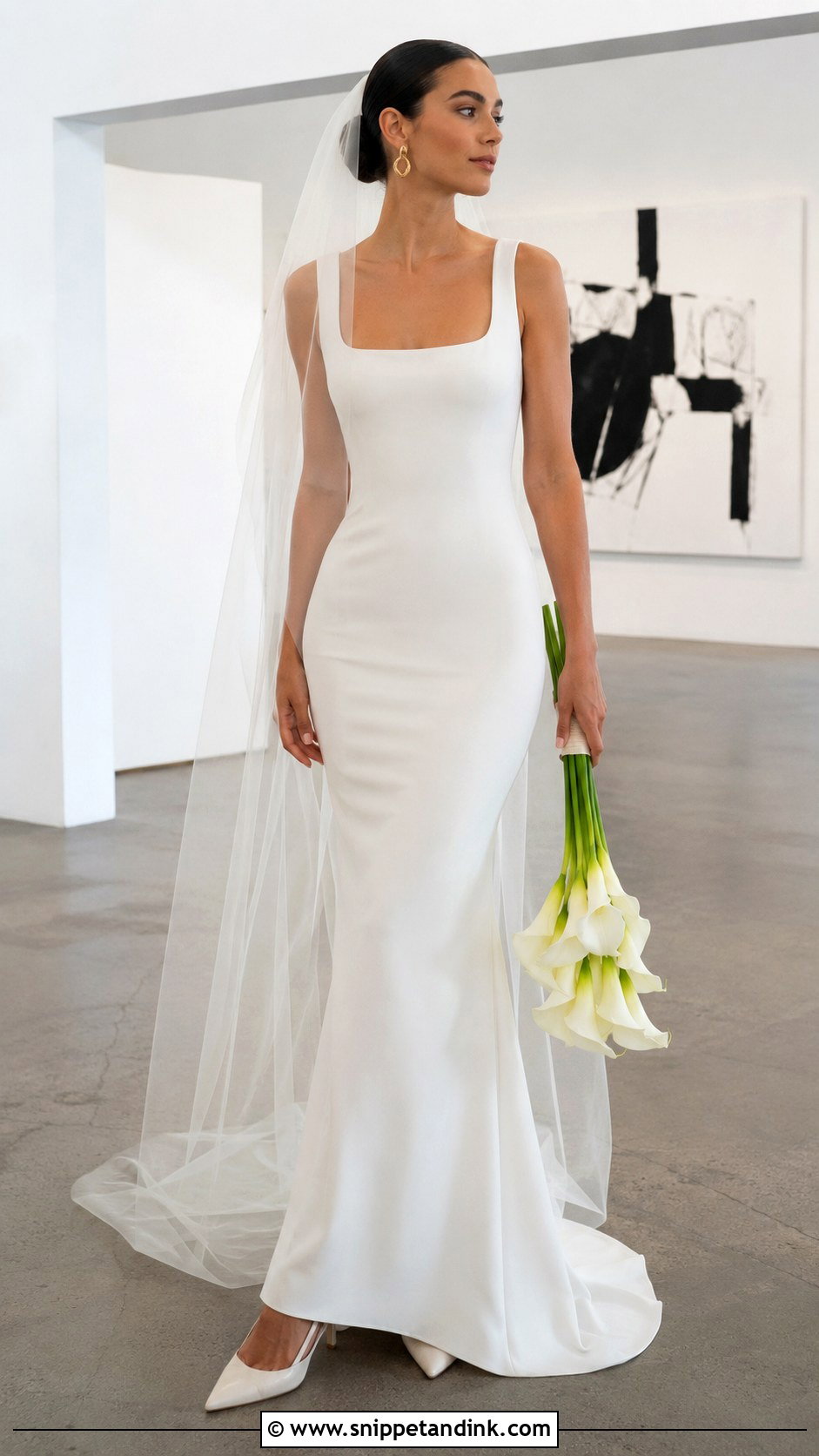
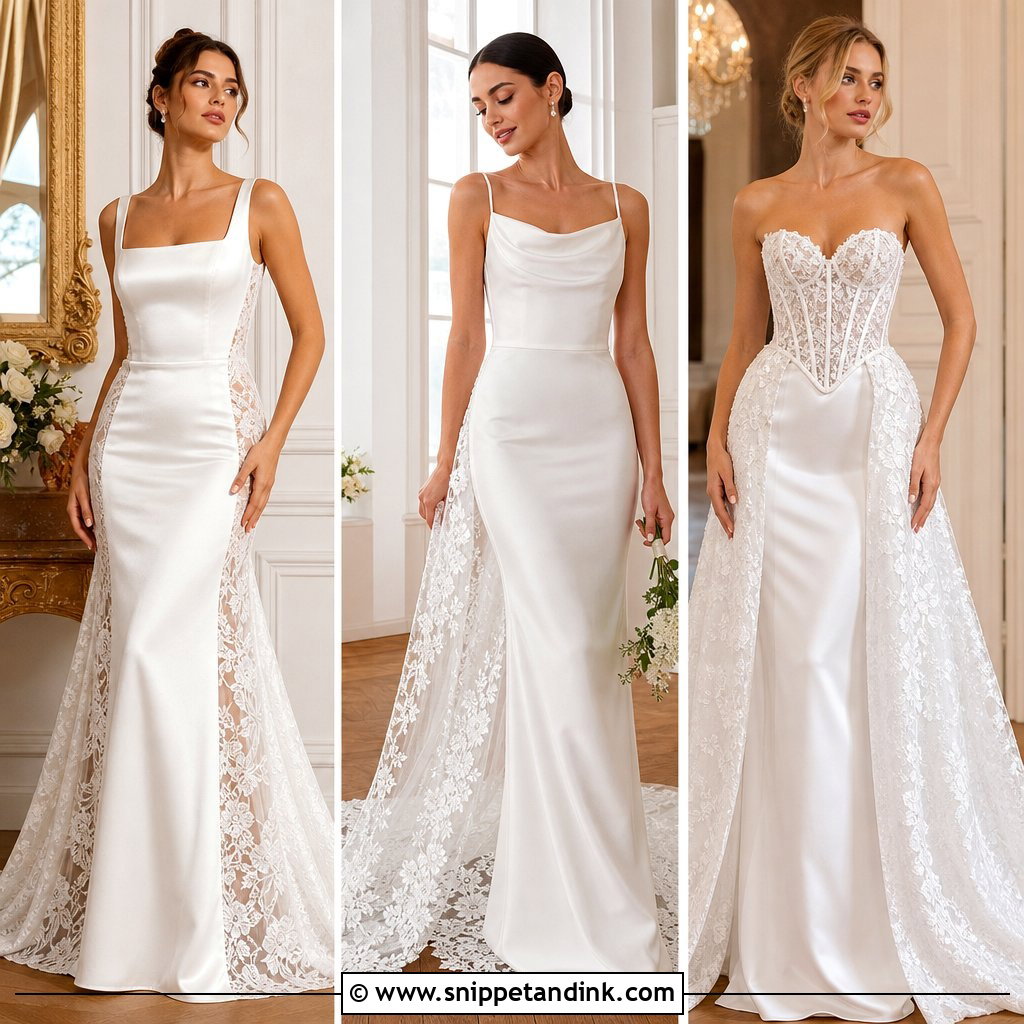
Crepe is my pick when a bride asks for cream with no fuss at all. The square neck frames the collarbone, and a fitted waist with a straight or slightly flared skirt gives a long, uninterrupted line. Weight matters: thin crepe clings and shows every seam, so feel the fabric before anything else. Pearl or sculptural gold earrings, pointed slingbacks and a sheer chapel veil complement it, with a low ponytail or neat bun. Calla lilies or long-stemmed white roses add an architectural touch. City halls, rooftops and galleries suit its precise shape.
5. Off-the-Shoulder Cream Wedding Dress
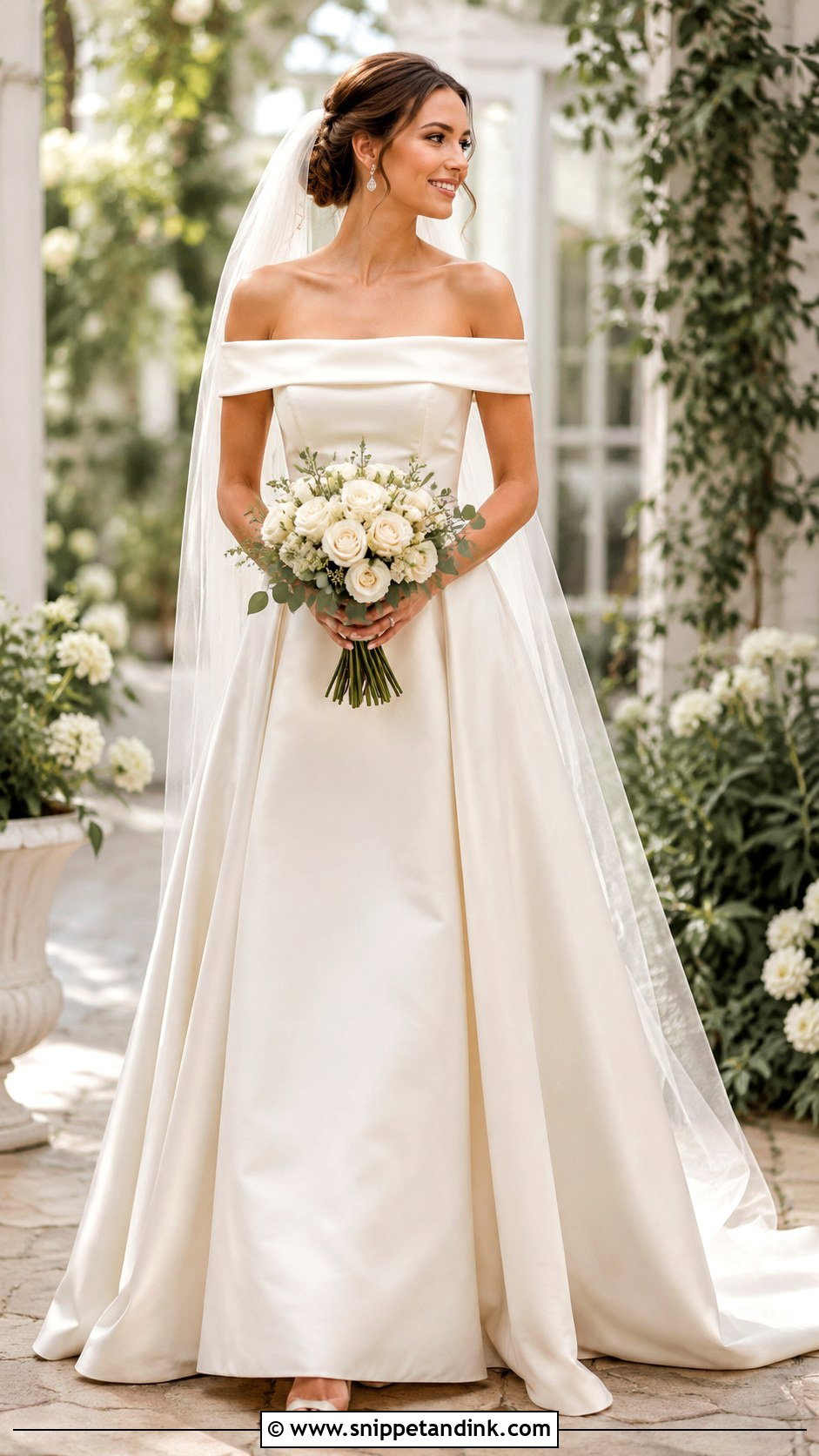
Folded satin or lace sleeves? Satin gives a clean, modern line across the collarbone; lace is softer and more traditional. Either way, an off-the-shoulder neckline needs a fitted bodice that holds the sleeves up on its own, and an A-line skirt balances it while letting you move. Teardrop earrings, a fine bracelet and neutral satin heels finish it, with a low, loose bun. Choose plain tulle for the veil, cut to the length of the train. Cream roses, sweet peas and eucalyptus suit both a garden and a ballroom.
6. Halter-Neck Cream Wedding Dress
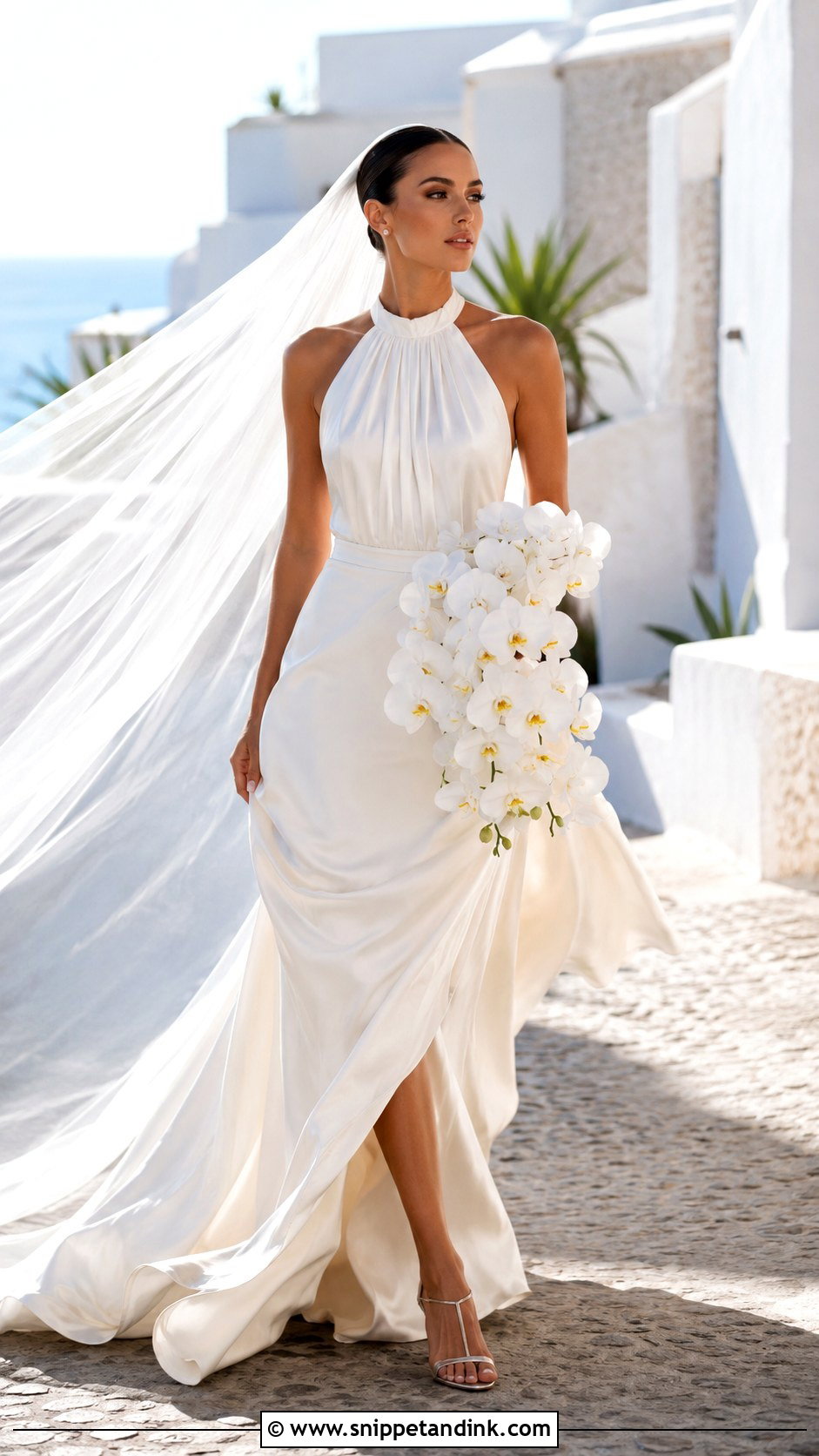
Halters are for strong shoulders and confident posture, and they show off cream skin tones well because so much of the upper body is bare. A fitted column or flowing A-line balances the high neck. Fluid satin, silk crepe and draped jersey all suit the cut. The halter strap carries the bodice, so I check it doesn’t pull on the back of the neck after an hour of wear. Wear an updo, small studs and no necklace. Slim metallic sandals or pointed ivory heels and a structured mini bouquet work, with a long veil set beneath the hair for the ceremony. Destination and warm-weather weddings suit it.
7. Silk Slip Cream Wedding Dress
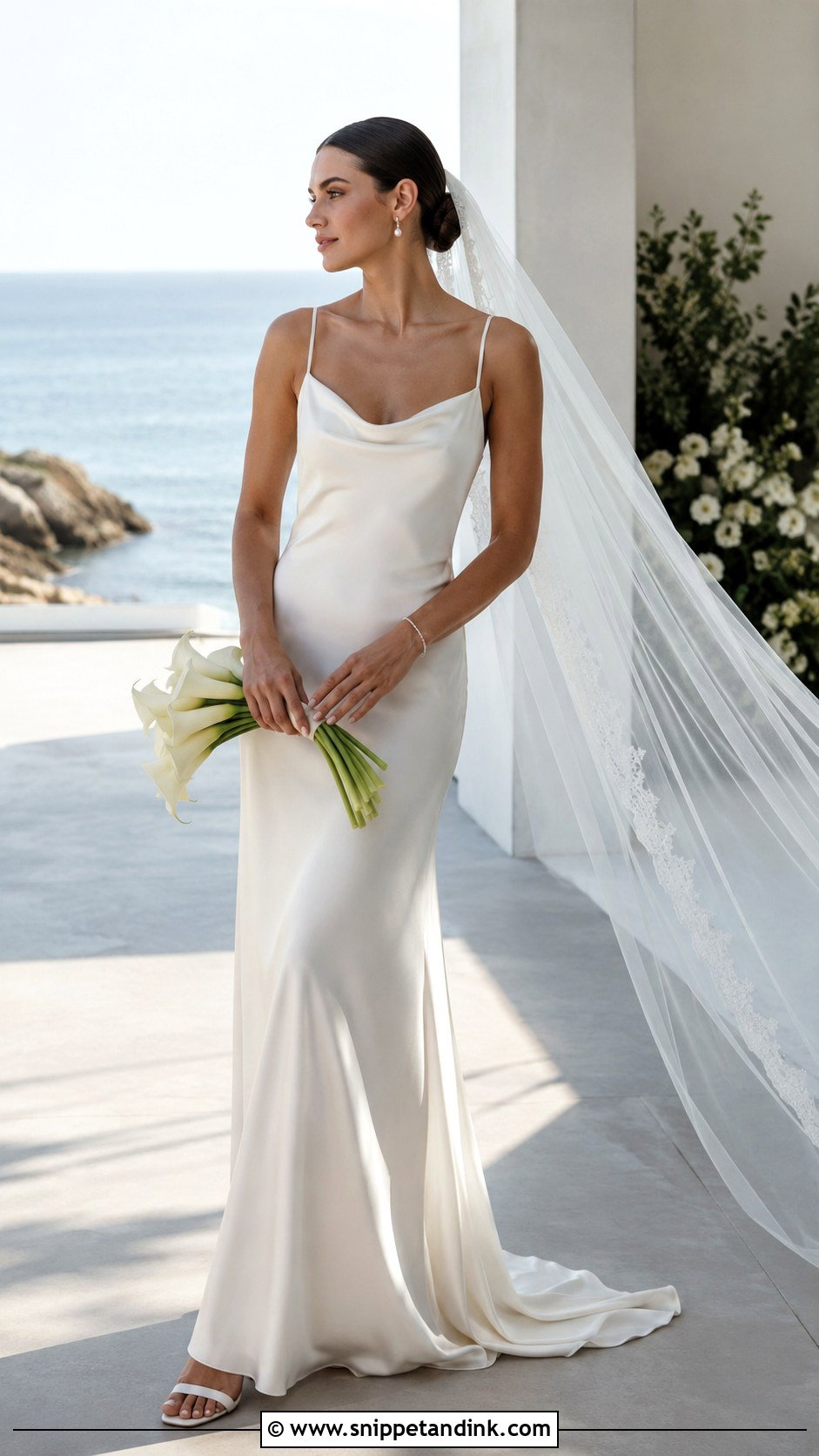
A cream silk slip looks simple and is anything but. Bias-cut silk moves with you and shows what’s underneath, so supportive straps, a gentle cowl or straight neckline and good lining are the whole construction. Every alteration shows on a dress this plain. Strappy sandals, pearl drops and a fine tennis bracelet keep it light. A cathedral veil adds drama; a short sheer one keeps it quiet. Glossy waves or a compact bun, and long-stemmed callas or a loose rose bouquet. Coastal and intimate venues suit it.
8. Basque-Waist Cream Wedding Dress
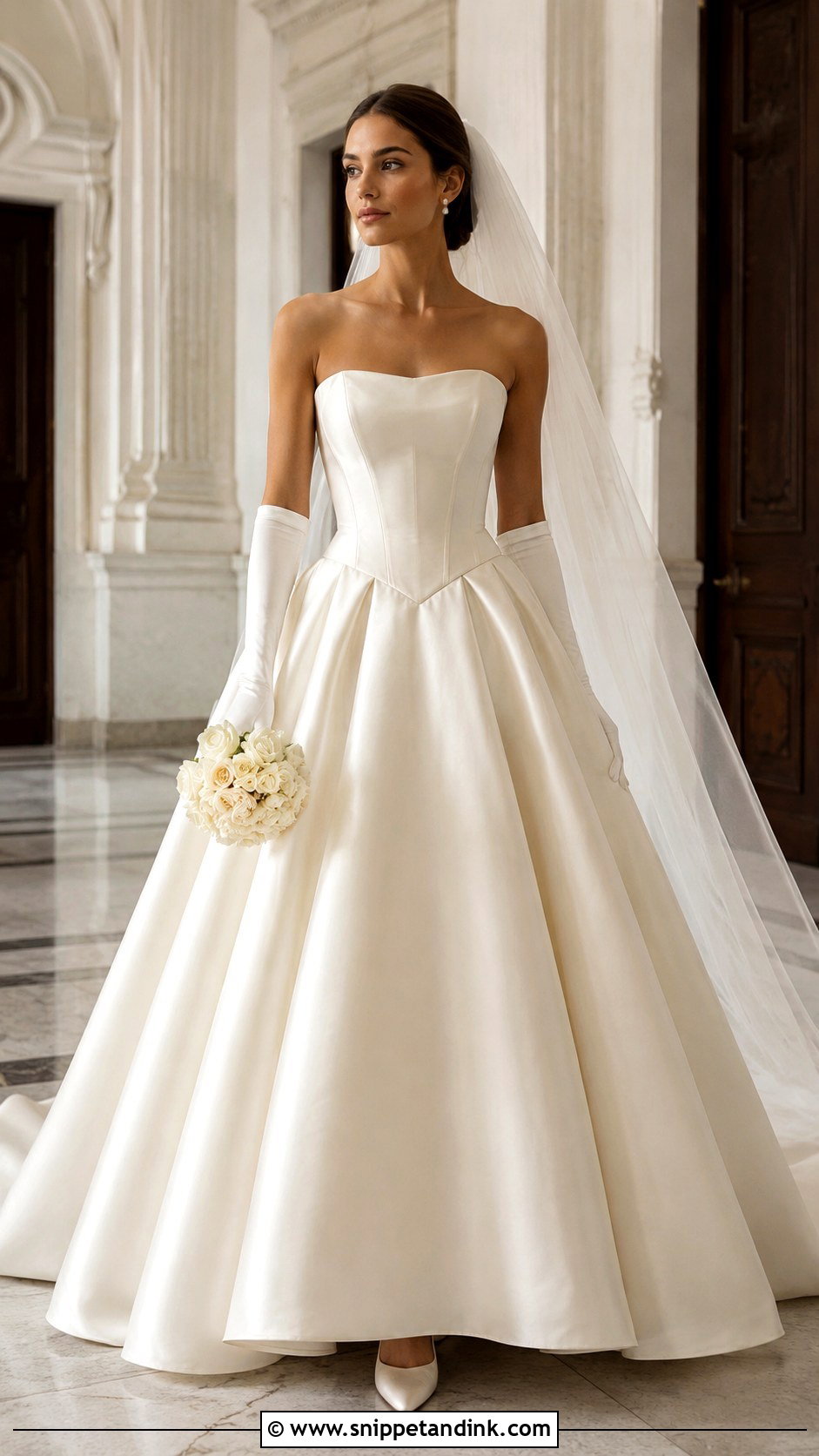
The pointed waist is the whole story here. A basque-waist gown sculpts the bodice down to a V below the natural waist before the skirt fills out, and in cream satin or mikado that line looks especially crisp. The point has to sit centered and lie flat when you sit, or it pokes up. Choose strapless, scoop or wide straps for the support you need. Pearl earrings, elbow-length gloves and matching cream pumps suit its vintage structure. A long plain veil, a smooth bun and a small bouquet of roses or orchids finish it. Skip the wide belt; the waist already has its focal point.
9. Chiffon Empire-Waist Cream Wedding Dress
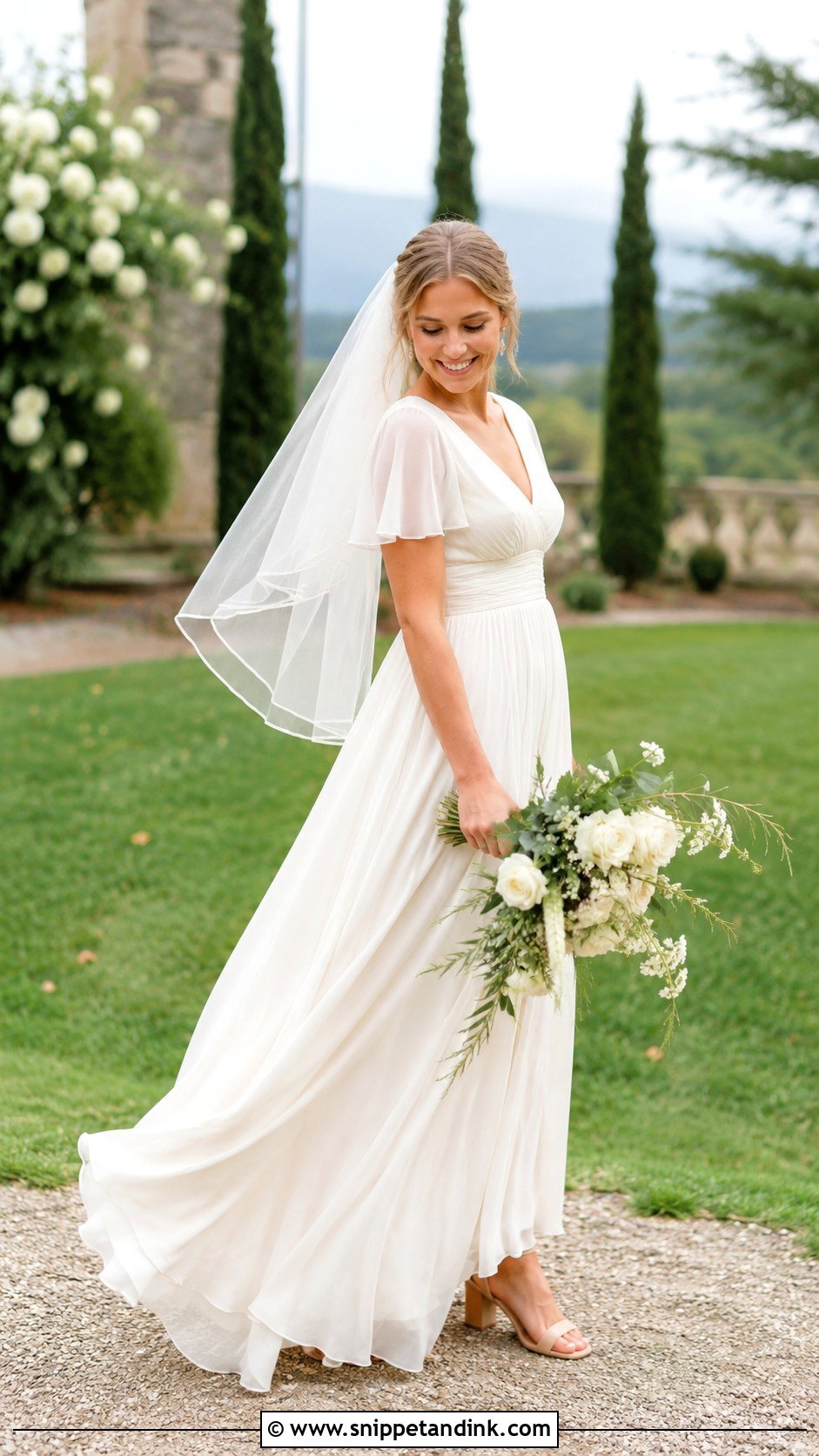
Empire chiffon is the comfortable choice for heat. The seam under the bust lets the skirt fall loose, and chiffon breathes in a way satin doesn’t. Keep the skirt lined but not over-layered, or the lightness disappears. Flutter sleeves, narrow straps or a modest V suit the relaxed shape. Low block-heel sandals, fine earrings and a fingertip veil that doesn’t swamp the fabric go with loose waves or a soft half-up style. A natural bouquet of cream flowers and seasonal blooms suits gardens and beaches.
10. Tea-Length Cream Wedding Dress
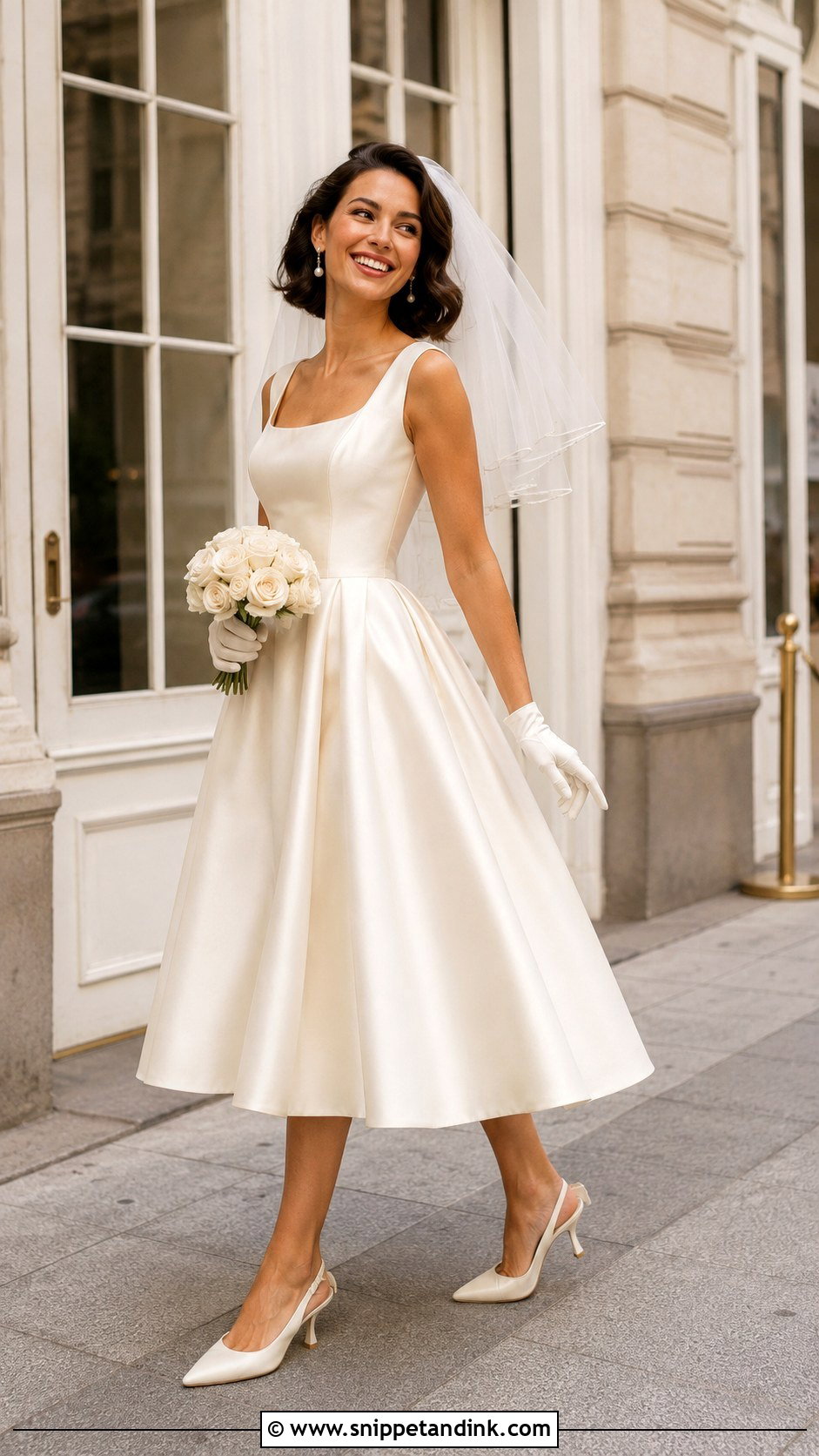
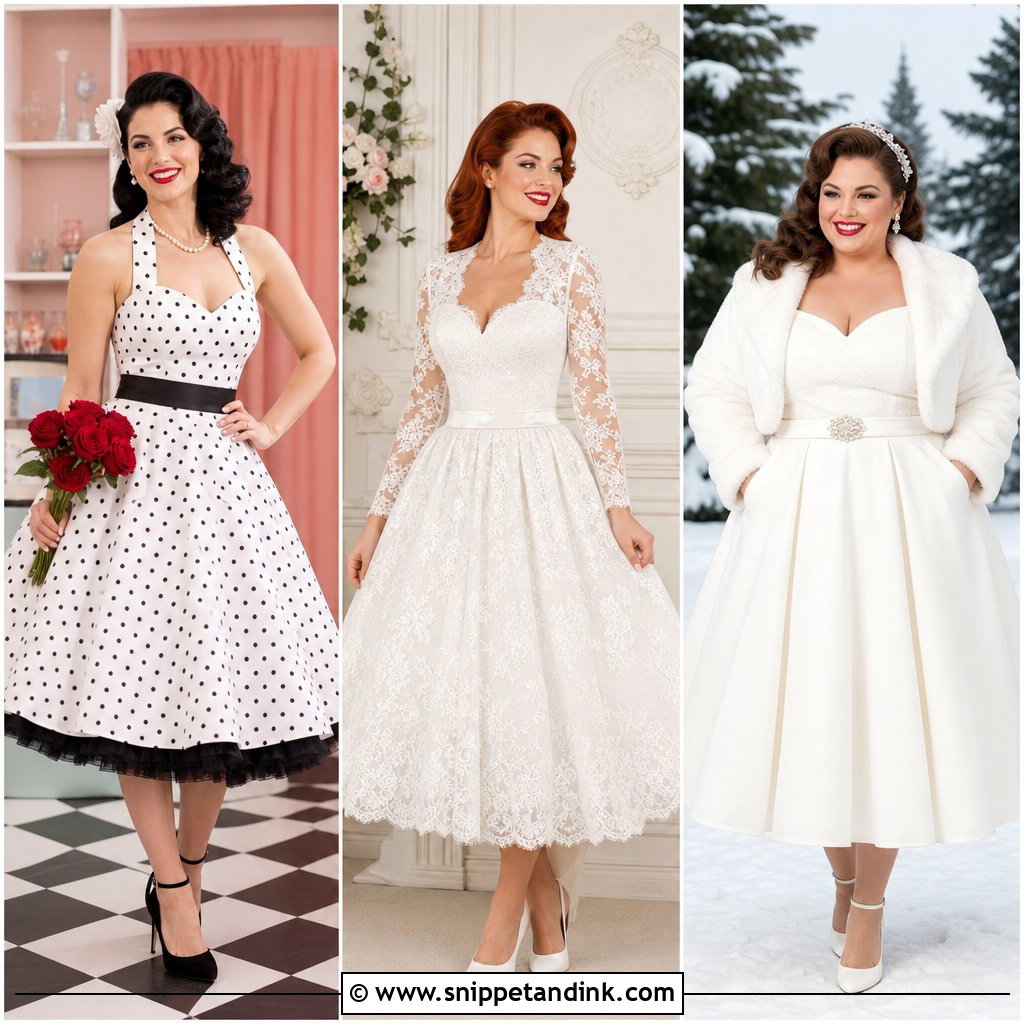
Choose your shoes before your hem. A tea-length cream gown ends between knee and ankle, so pointed pumps, slingbacks or ankle straps in cream, champagne or gold become part of the outfit. Satin gives a structured skirt; tulle or organza adds movement. Pearl earrings, short gloves and a birdcage or shoulder-length veil lean vintage, with a neat bun or curled bob. A compact bouquet keeps the proportions right. It’s an easy dress to walk and dance in at daytime and smaller weddings.
11. High-Neck Vintage Cream Wedding Dress
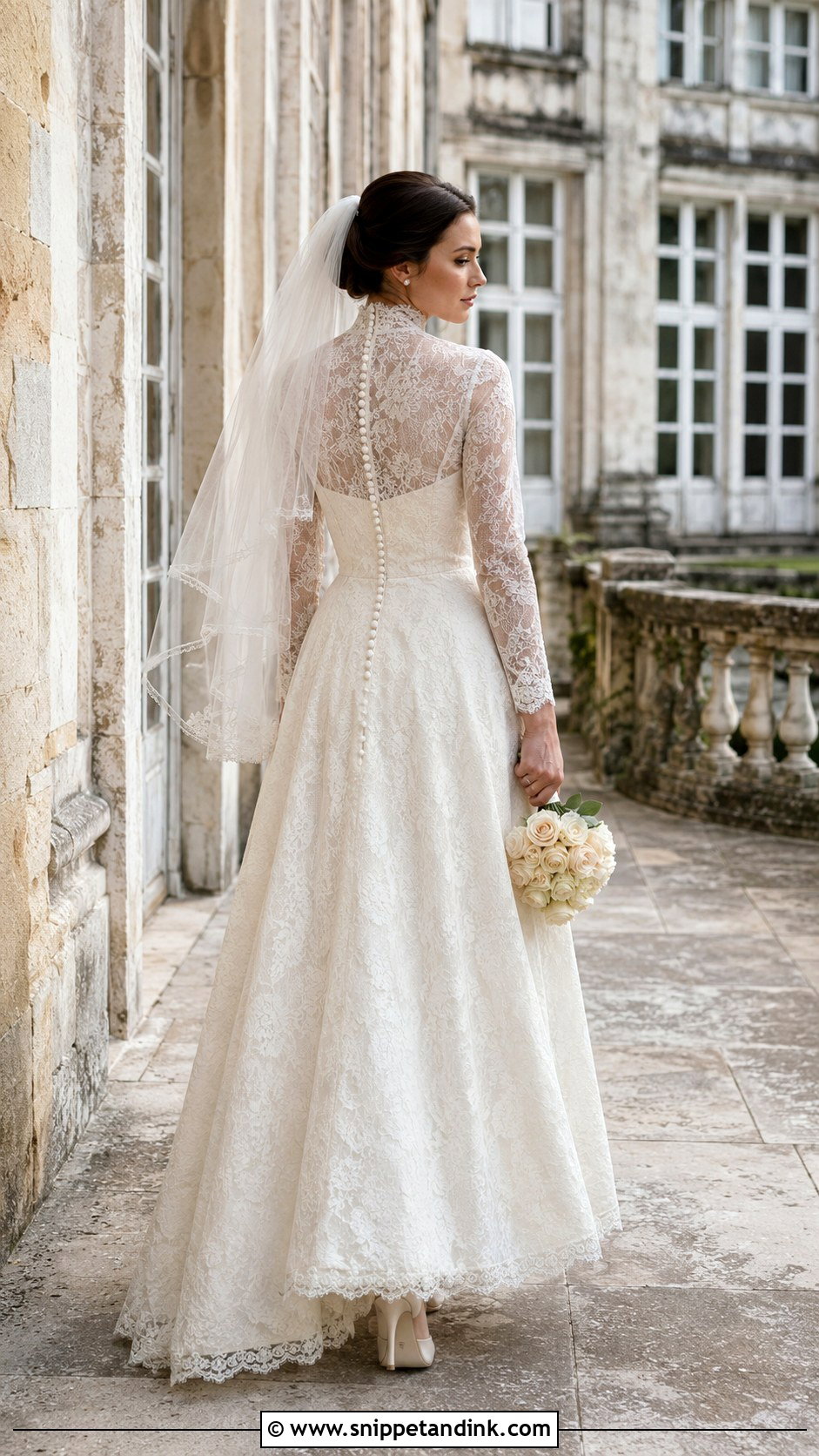
High necks and cream have a long history together, and the look stays composed without much embellishment. Floral lace, dotted tulle or silk with covered buttons down the back carries it. Long fitted sleeves, a softly defined waist and an A-line skirt stop the neckline feeling tight. I’d skip anything at the throat and wear pearl studs with a vintage comb, closed-toe heels and a Juliet or plain chapel veil. A low textured bun and cream roses suit historic estates and autumn celebrations. Covered buttons take time to fasten, so ask for a hidden zip underneath if your timeline is tight.
12. Boho Bell-Sleeve Cream Wedding Dress
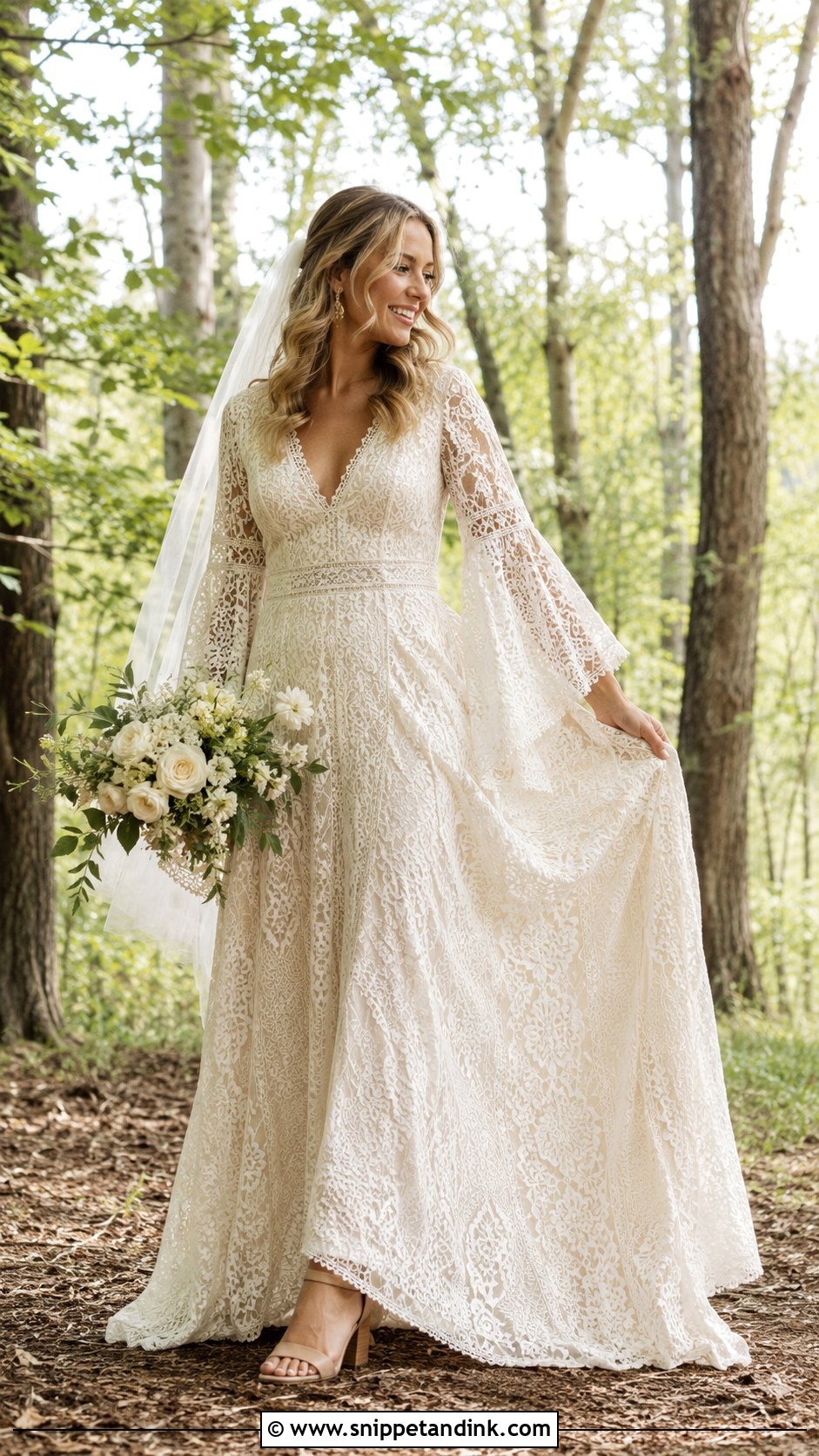
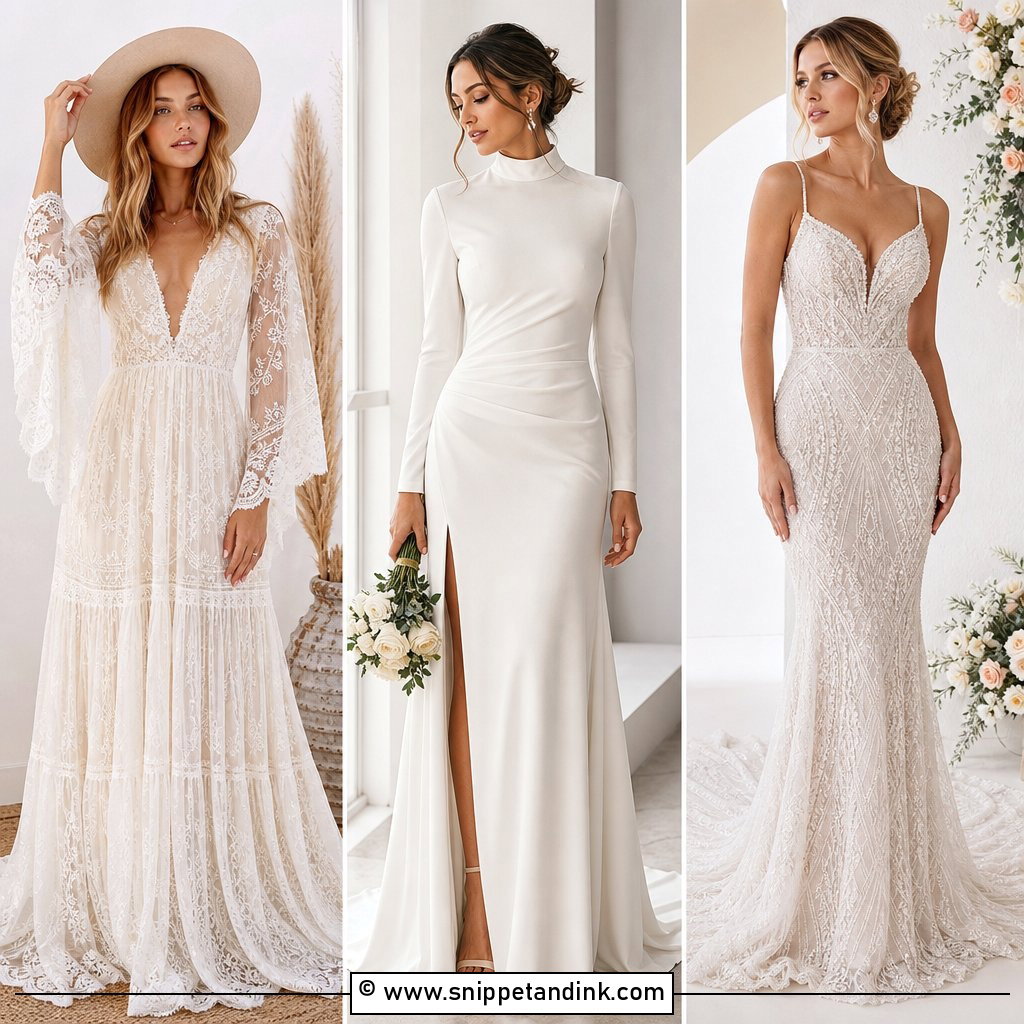
Boho dresses are mostly about texture. Soft bell sleeves and textured lace on a lightly shaped bodice with an open V and a flowing skirt give it that easy character, and matte or crochet-style lace keeps it from looking too formal. Full lining stops it looking unfinished. Bell sleeves drag through food at dinner, which is worth knowing before you fall for a very wide pair. Low suede or satin block heels, small gold earrings and a braided updo or loose waves suit it, with a tulle veil or a light lace cape. Carry cream blooms with grasses for woodland and desert venues.
13. Mermaid Cream Wedding Dress
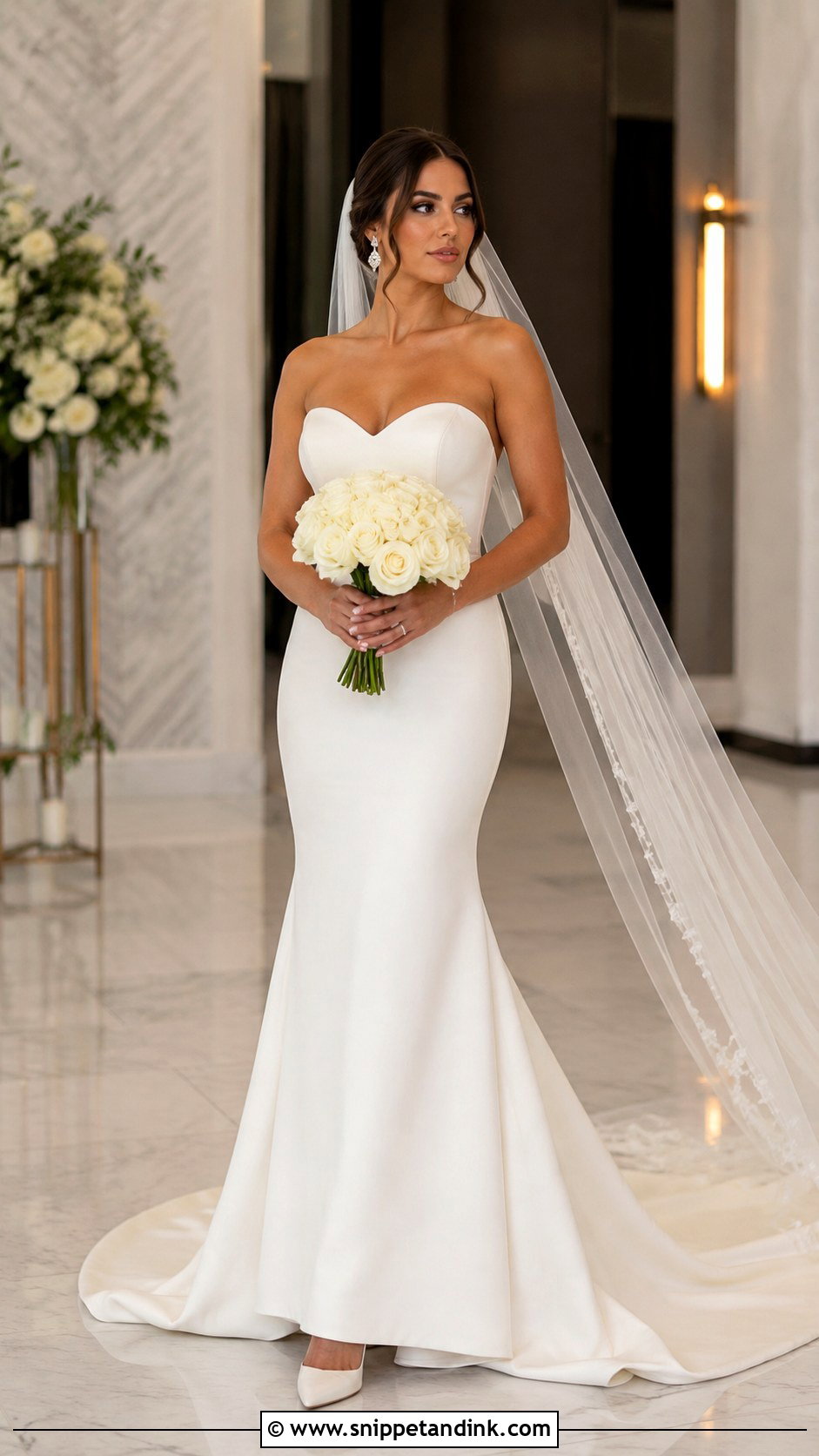
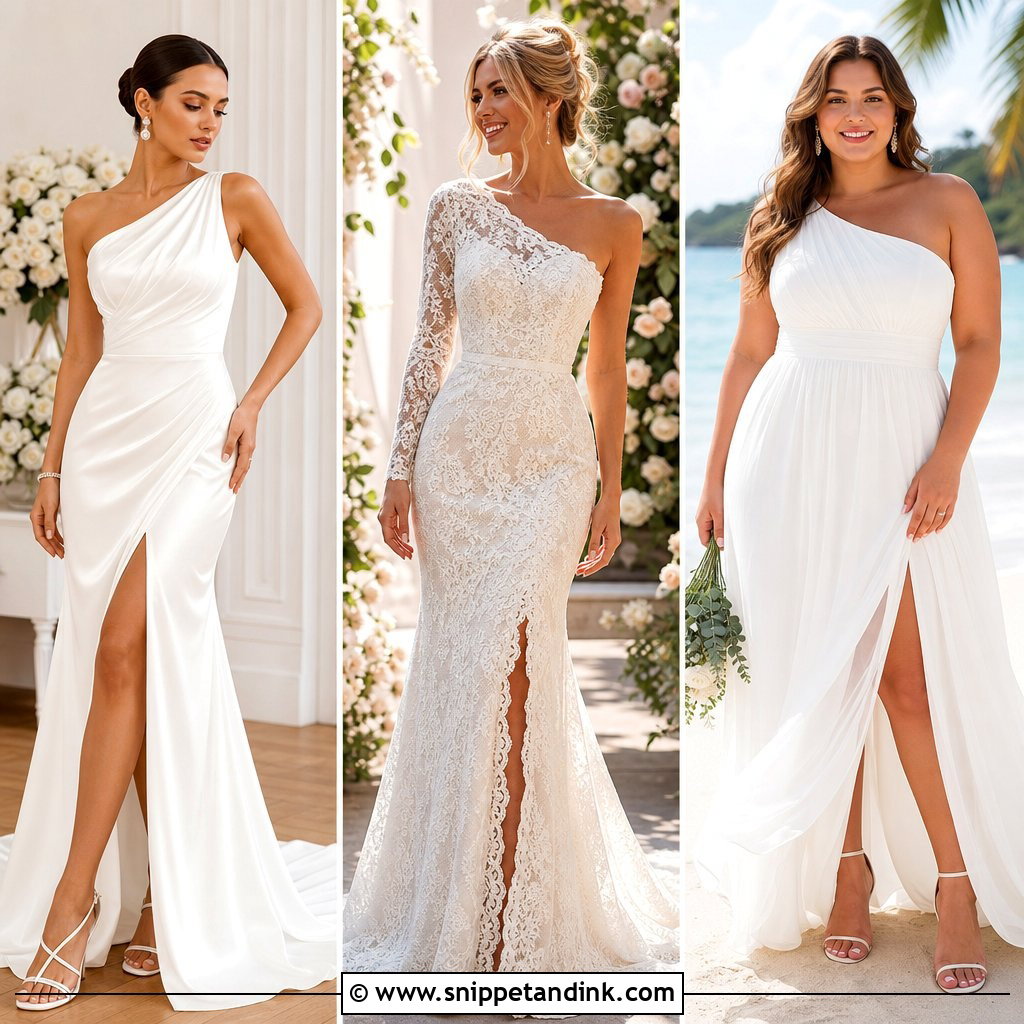
Where the flare starts decides everything on a mermaid. Too low and you shuffle; at the knee or a touch above, you can walk and sit. Smooth crepe looks modern, while lace or embroidered tulle feels more romantic. A sweetheart, off-the-shoulder or clean scoop neckline balances the fitted body. Drop earrings, a narrow bracelet and pointed pumps finish it. A long veil extending past the train looks right in photos, with polished waves or a low bun and a simple bouquet. Formal indoor venues suit this tailored shape.
14. One-Shoulder Draped Cream Wedding Dress
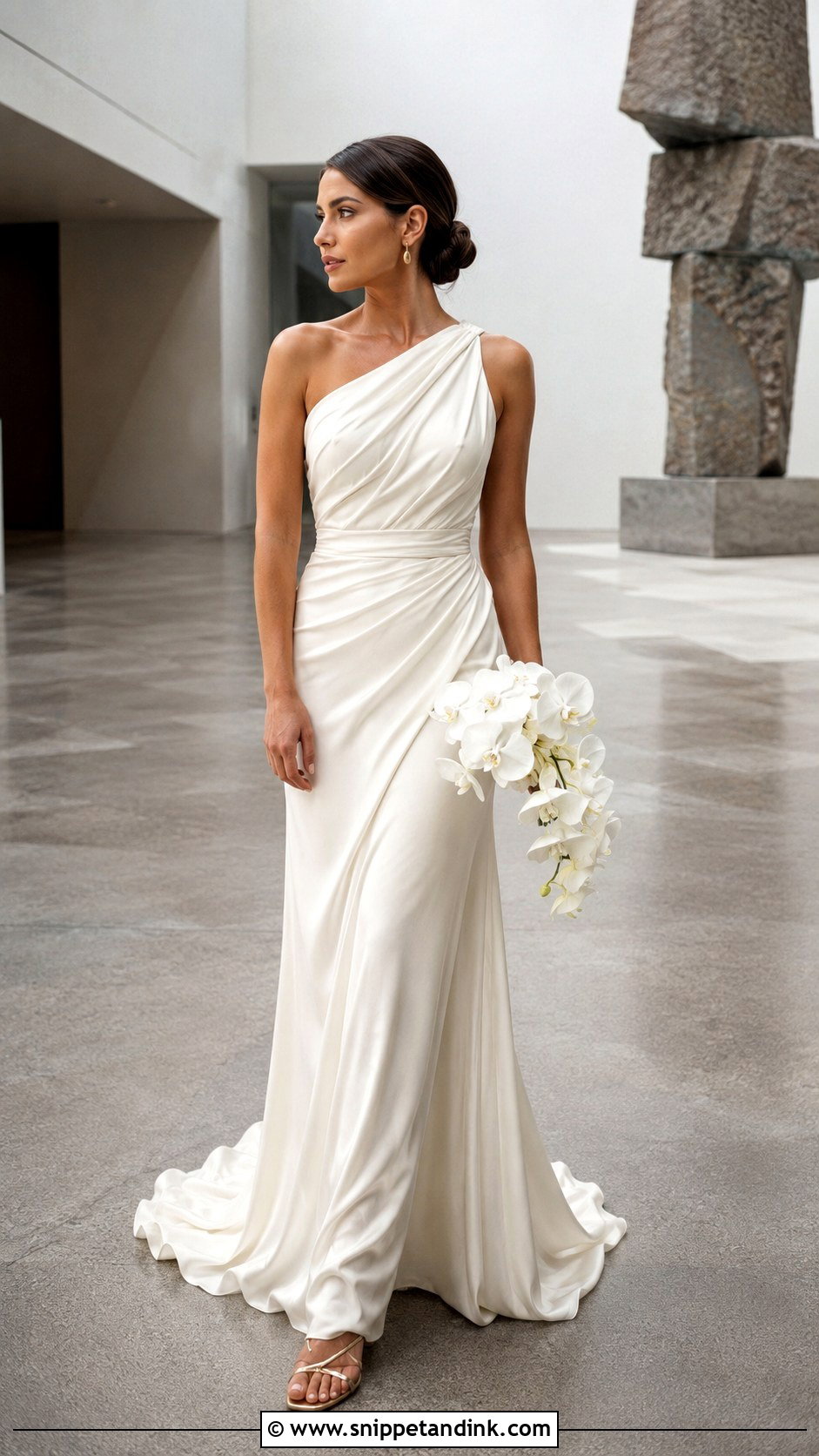
Asymmetry does the decorating on a one-shoulder gown. Soft draping across the bodice, a defined waist and a column or gently flared skirt need a fabric that holds folds, so silk crepe and satin work best. A low side-parted bun keeps the bare shoulder clear. One statement earring on the open side looks deliberate; a matching pair of small ones is quieter. Strappy metallic sandals, a slim clutch and orchids or callas complete it. In place of a veil, a detachable shoulder train adds movement without covering the neckline.
15. Pearl-Embellished Cream Wedding Dress
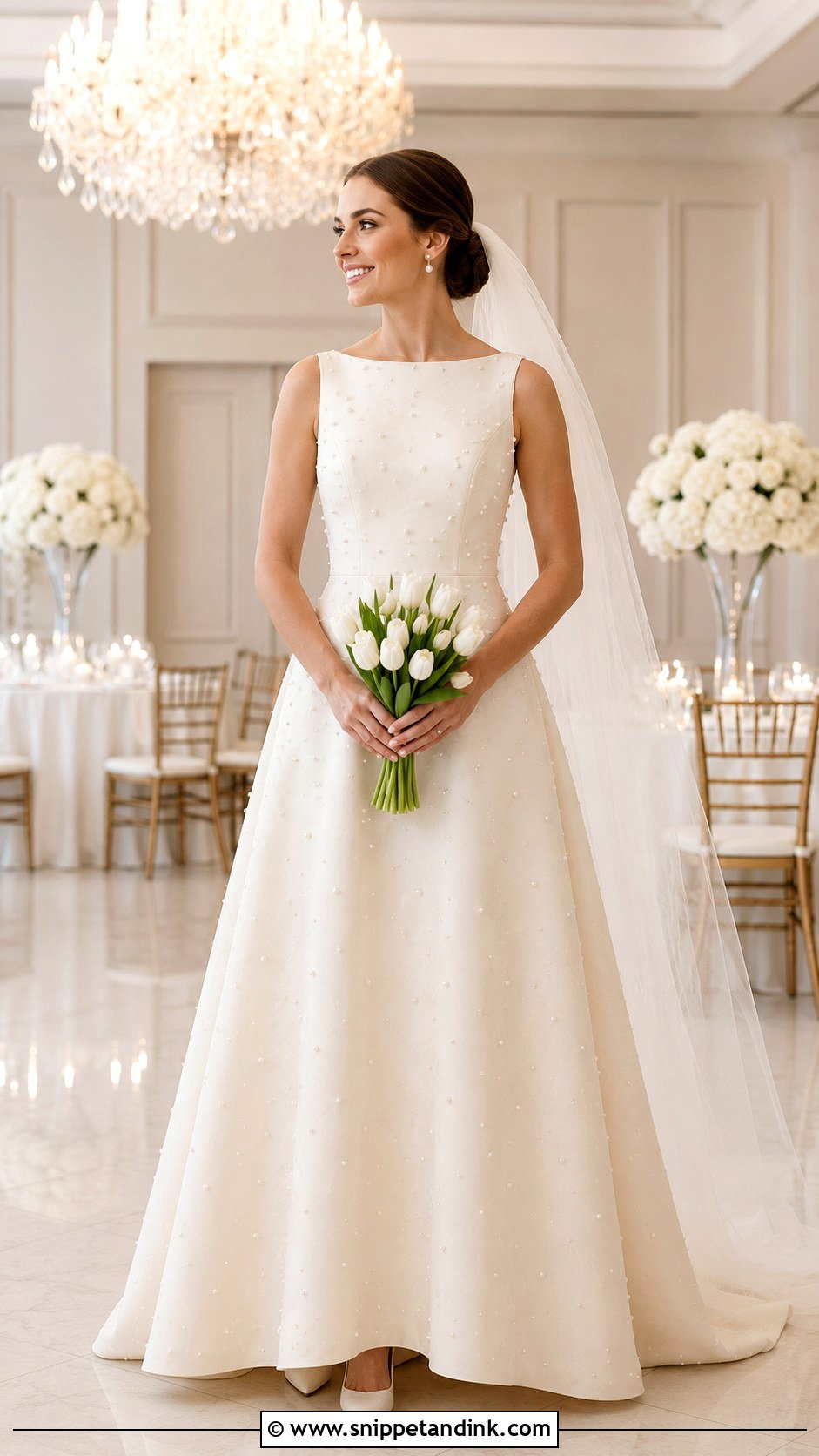
Small pearls give cream a soft glow rather than sparkle, which is why I like them on warm-toned gowns. A sheer pearl-covered overlay over a lined bodice, or pearls scattered across the neckline and skirt, look best on an A-line or straight shape. Check the attachments and run your arms against your sides, because pearls under the arm rub after a few hours. Pearl studs, satin pumps and a plain tulle veil are enough, with a smooth bun so loose strands don’t catch. Tie white tulips, roses or peonies with cream ribbon.
16. Floral Appliqué Cream Wedding Dress
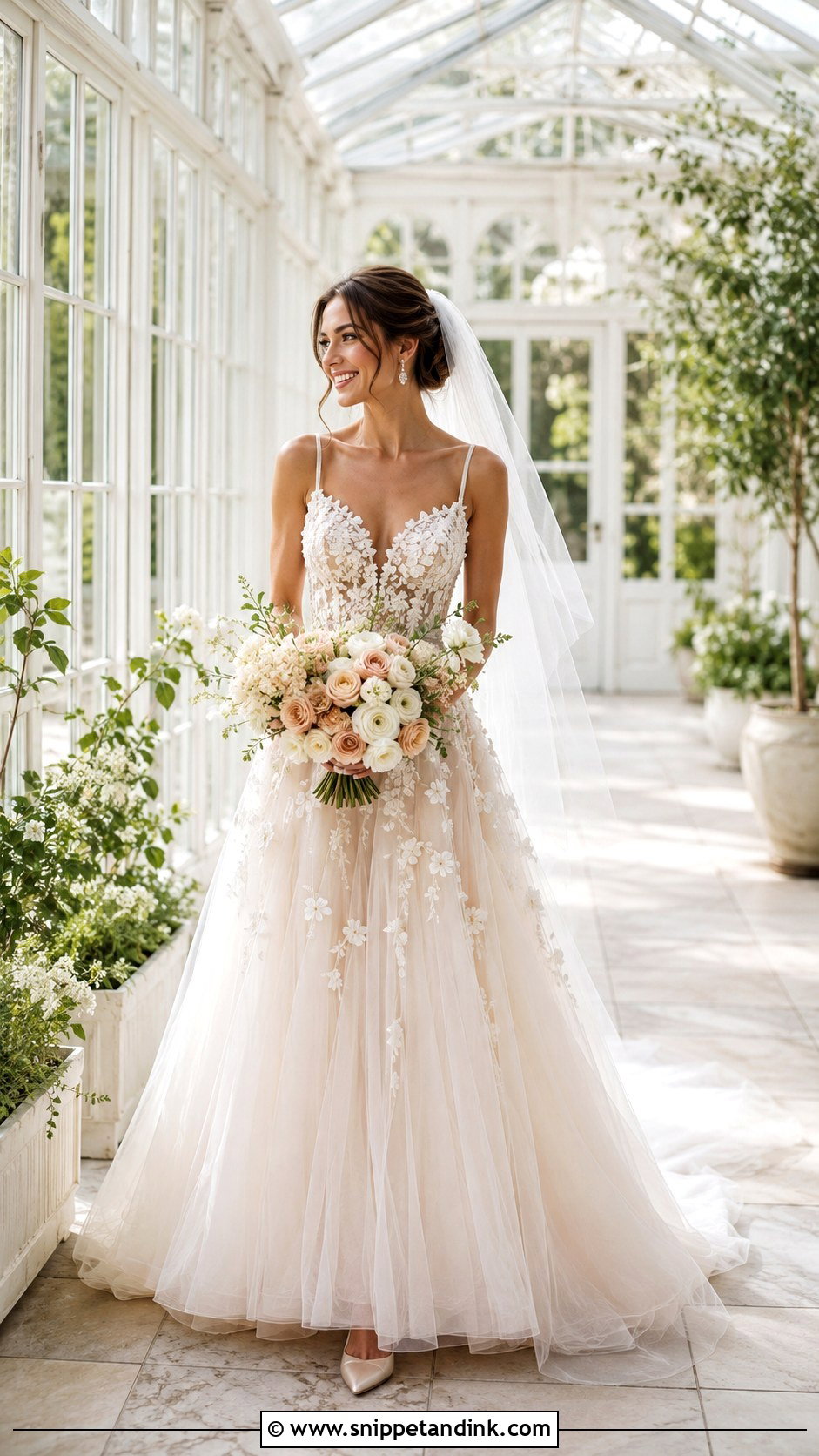
Appliqués on cream look warmer and more dimensional than on white, because the slight shading between flower and base shows up. Flowers across the bodice that scatter down an A-line or ball gown skirt, over a lightly lined tulle base, keep it airy. A plain veil is essential; lace on top of appliqués turns into clutter. Understated earrings and neutral satin heels with a low bun or soft waves suit it. For the bouquet, echo the flower shapes without matching every detail, with cream roses and ranunculus. Spring weddings and conservatories suit it.
17. Detachable Overskirt Cream Wedding Dress
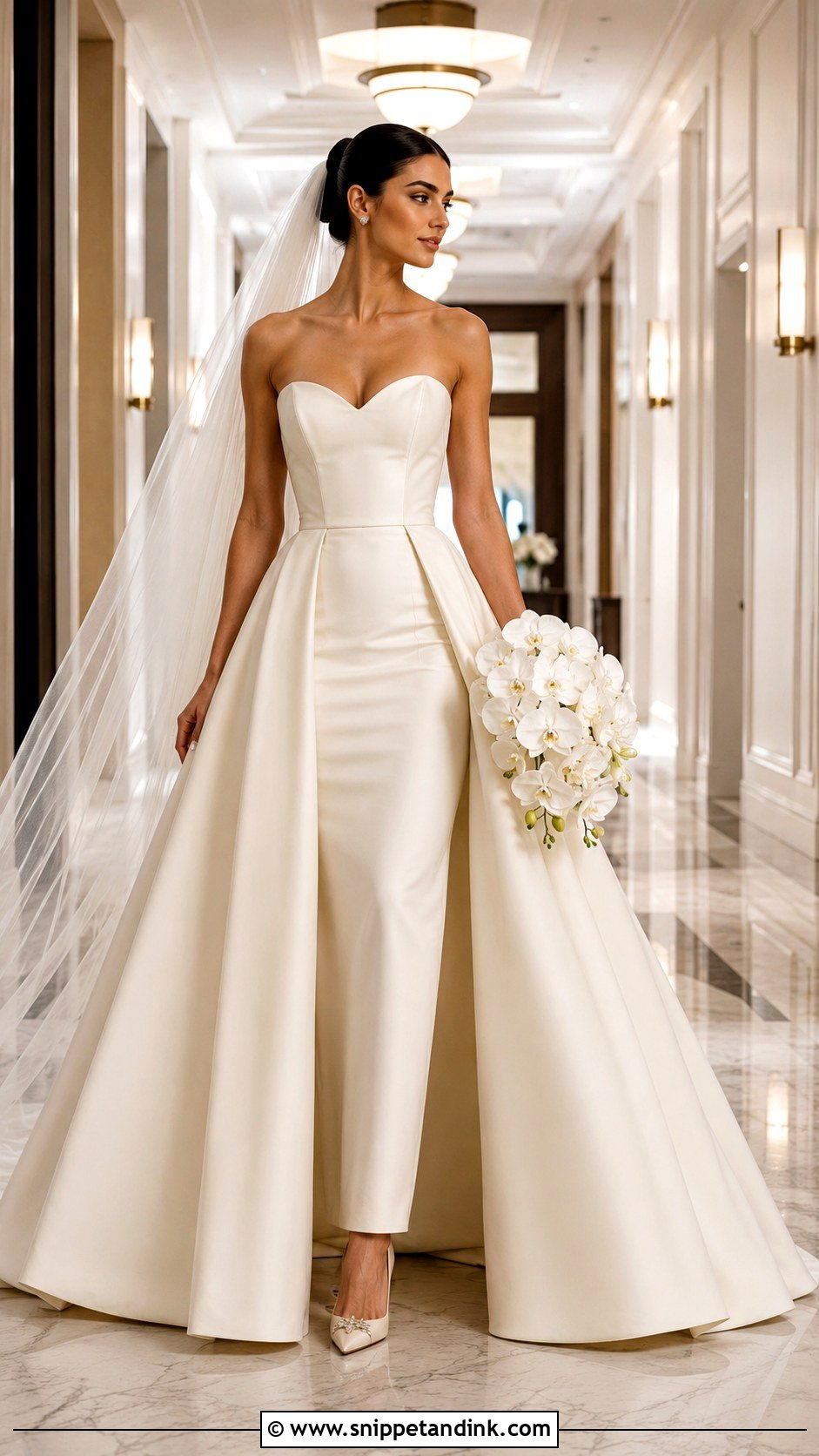
Two dresses in one, and the attachment is what makes or breaks it. A fitted column, sheath or mermaid in crepe or satin becomes a ball gown once a coordinated full overskirt is added for the ceremony. Off it comes for dancing. The waistband must lie smooth, release easily and not shift the base dress’s fit, so practice removing it with your helper before the day. Pointed heels, crystal studs and a clean low bun suit both versions. Keep the long veil for the overskirt look and switch to a decorative comb later. Carry structured cream roses or orchids.
18. Cape-Sleeve Cream Wedding Dress
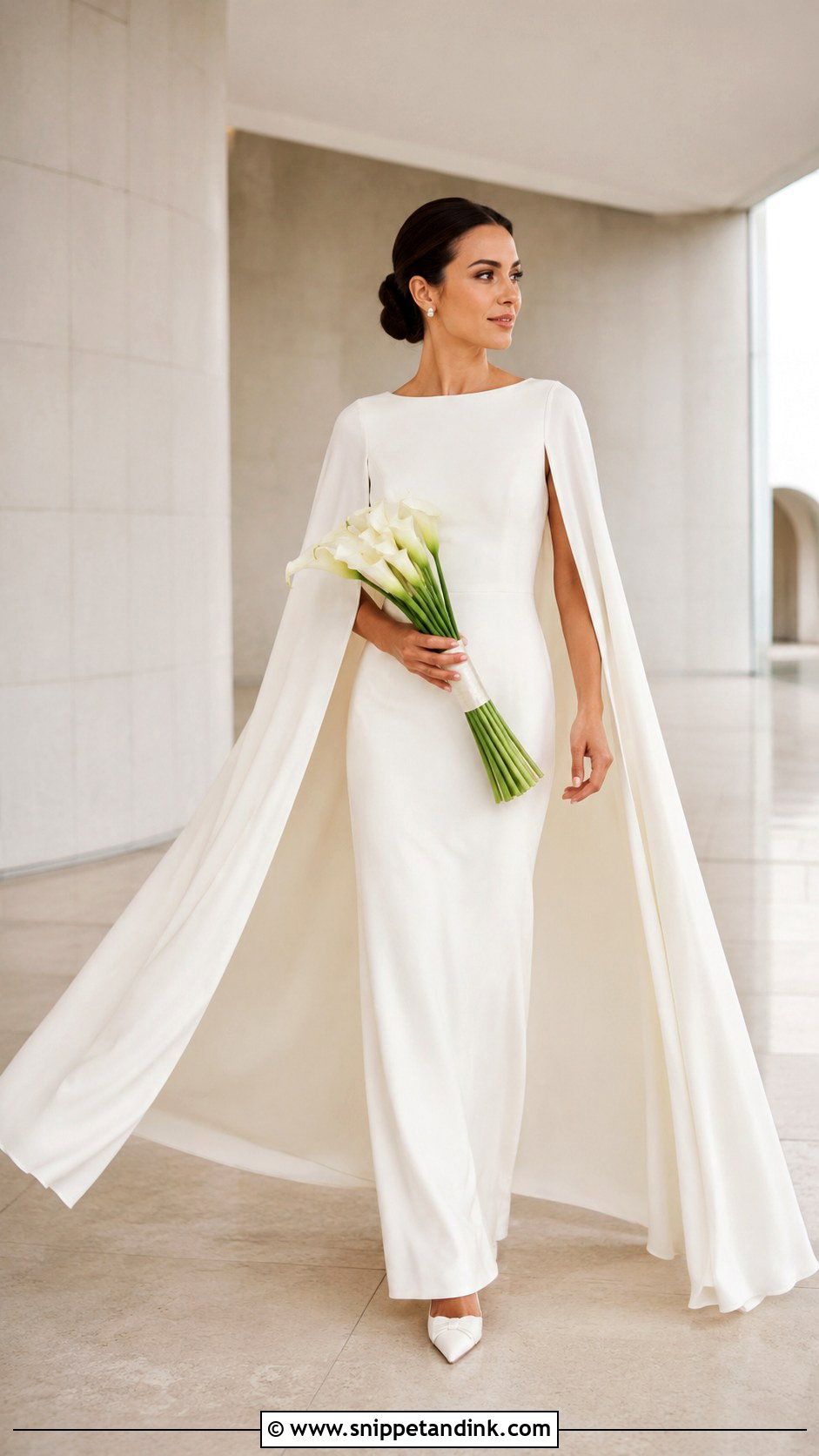
Capes give coverage without the closeness of fitted sleeves, which makes them comfortable in warm rooms. The cape can fall from the shoulders, neckline or back of the bodice. Keep the dress underneath slim, a crepe column or satin A-line, so the extra fabric doesn’t overwhelm you. Wear an updo; loose hair tangles in a cape within minutes. Stud earrings, a fine bracelet and pointed cream pumps are plenty, and the cape usually replaces the veil. Calla lilies or long-stemmed roses suit the clean lines.
19. Minimalist Column Cream Wedding Dress
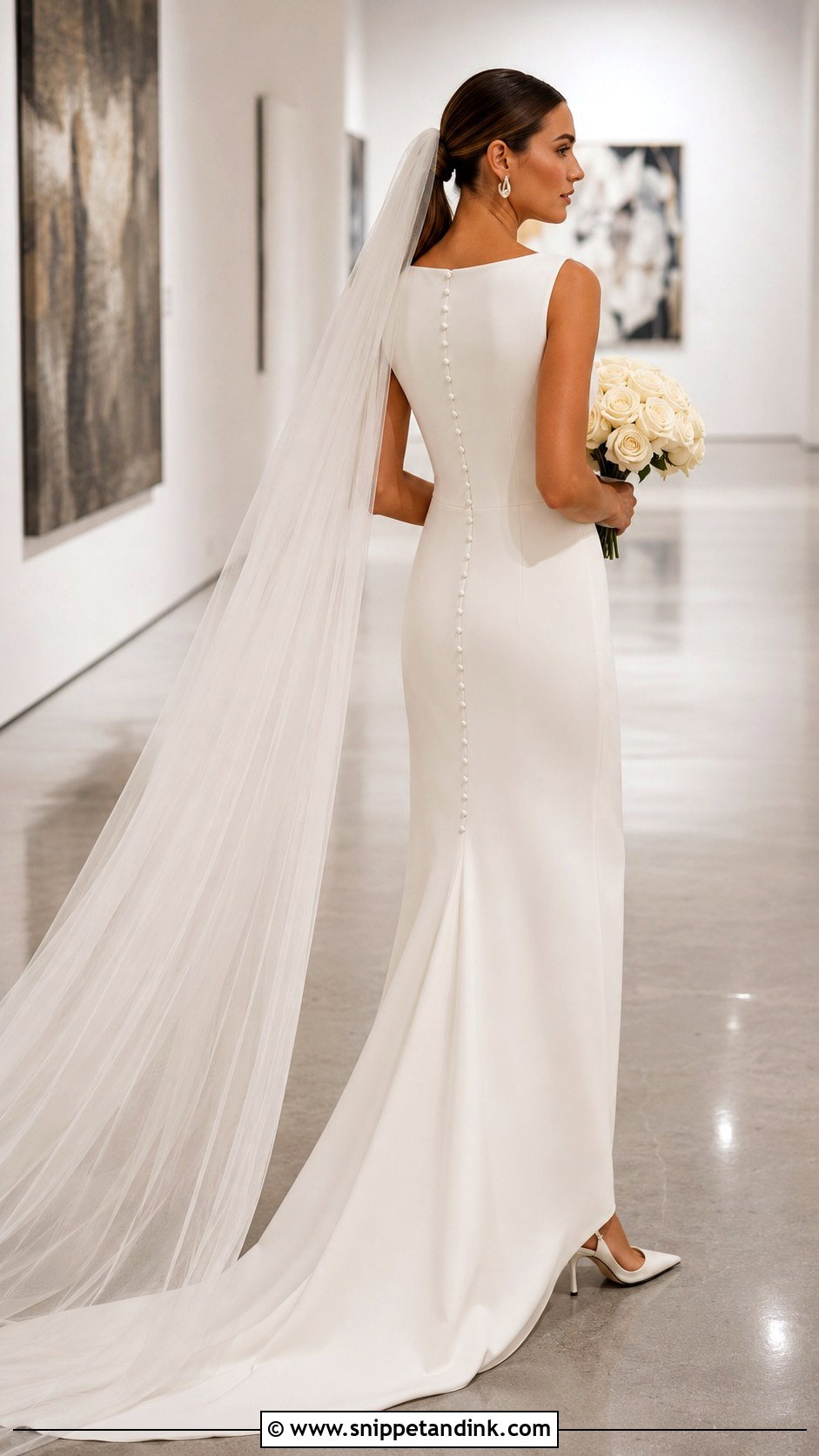
Plain gowns depend on fabric and tailoring more than any other style. A minimalist column gown in cream needs one detail to carry it, such as a low back, a bateau neckline or a row of covered buttons, and a straight line that skims the body while still letting you take a full step. Sculptural earrings, pointed slingbacks and a long sheer veil add contrast, with a sleek ponytail or center-parted bun. Carry a single-flower bouquet. A tailored cream blazer works for arrival photos or cooler days. It suits courthouses and galleries.


20. Short Reception Cream Wedding Dress
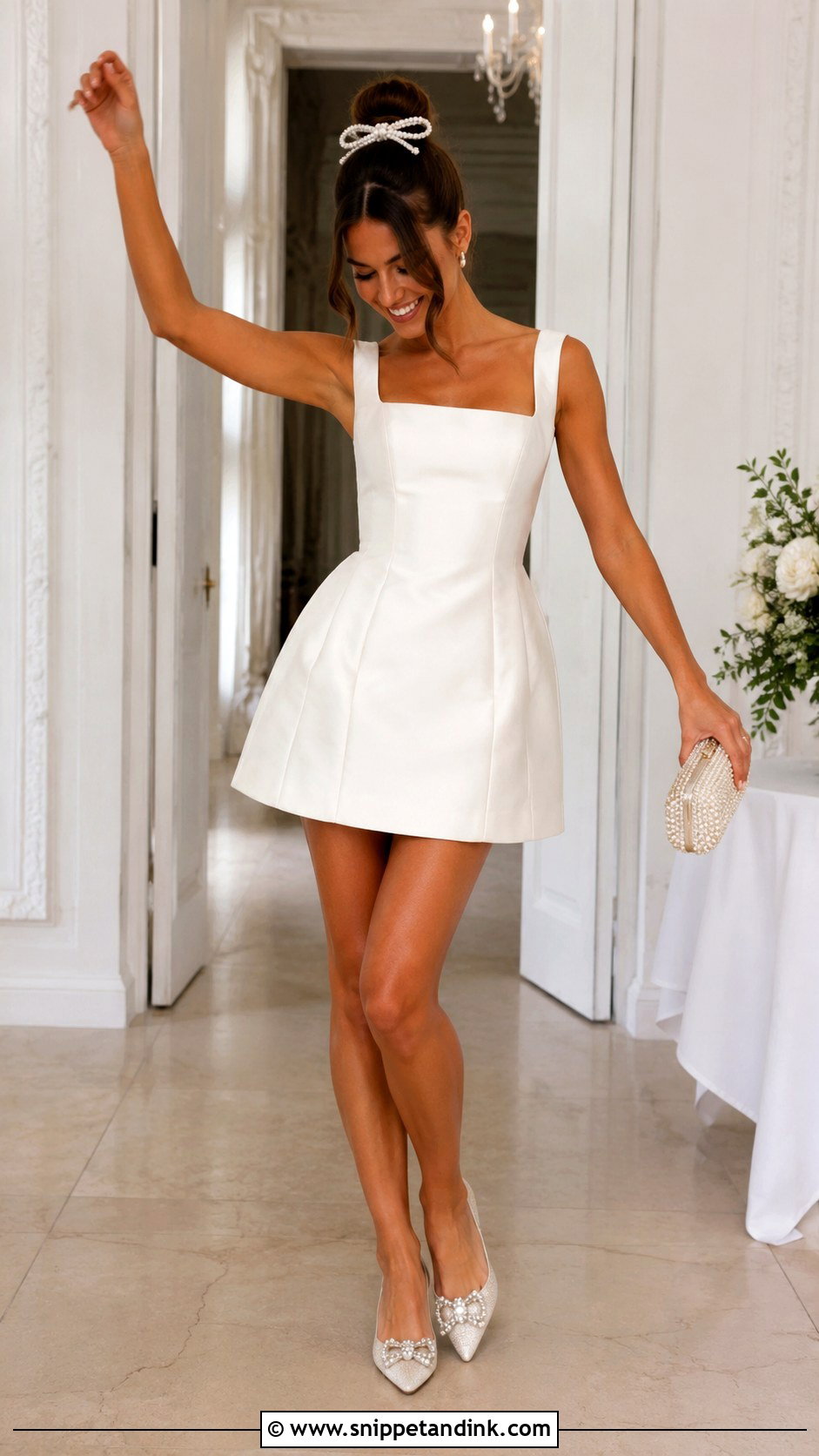
A short cream dress is the easiest second look you can plan. Choose a structured mini or knee-length style with a square neckline, a satin bow or a little pearl embellishment. The shoes now show, so pointed pumps, embellished flats or block heels you can dance in all work. Swap the veil for a bow, a pearl headband or a polished ponytail, with small hoops and a compact clutch. Supportive construction still matters, since you’ll be moving more in this dress than in the gown. It also works on its own for civil ceremonies and small gatherings.
What Grass, Red Wine and Makeup Do to a Cream Hem
A pale hem will pick up something during the day, and cream is a little more forgiving than bright white. What matters is how you react. Rubbing a mark with a wet napkin can leave a water ring on silk that looks worse than the original spot.
- Blot spills straight away with a clean, dry white cloth. Don’t rub.
- Dab foundation marks with a dry cloth and a little white chalk or cornstarch to lift the oil.
- Leave grass and mud stains alone until a specialist cleaner can treat them after the wedding.
- Bustle the train before the reception, so it isn’t dragged across the dance floor.
Have the gown professionally cleaned within a few weeks. Sugar from drinks and champagne often dries invisible on cream fabric and then turns brown over time, so tell the cleaner about every spill you remember, even ones you can’t see.
A Warm Shade Needs a Plan From Fitting Room to Dance Floor
A cream gown should suit your coloring, your venue, your taste and how you want to move. Satin and crepe give clean structure; lace, chiffon, pearls and appliqués bring softness. There’s a silhouette here for almost every bride, from relaxed empire lines to sculpted mermaids. Before you decide, look at the color in daylight and indoors, sit and walk in it, and hold your accessories against the real fabric. Get those details right, and the shoes, hair, flowers and veil will make the whole outfit feel like one thought.
You'll Like These Ideas:




Leave a Reply