
A fairytale gown has one job that’s harder than it sounds: feel magical without tipping into costume. The difference is nearly always in the proportions and the restraint around the dress, not the dress itself. Below are twenty storybook directions, from full tulle ball gowns and floral lace to sculpted satin and capes, each with the veil, shoes, jewelry and hair I’d style it with. I’ve also noted what I check at fittings for each one, since big skirts, corsets and trains all come with their own small problems that are easy to fix early and miserable to discover on the day.
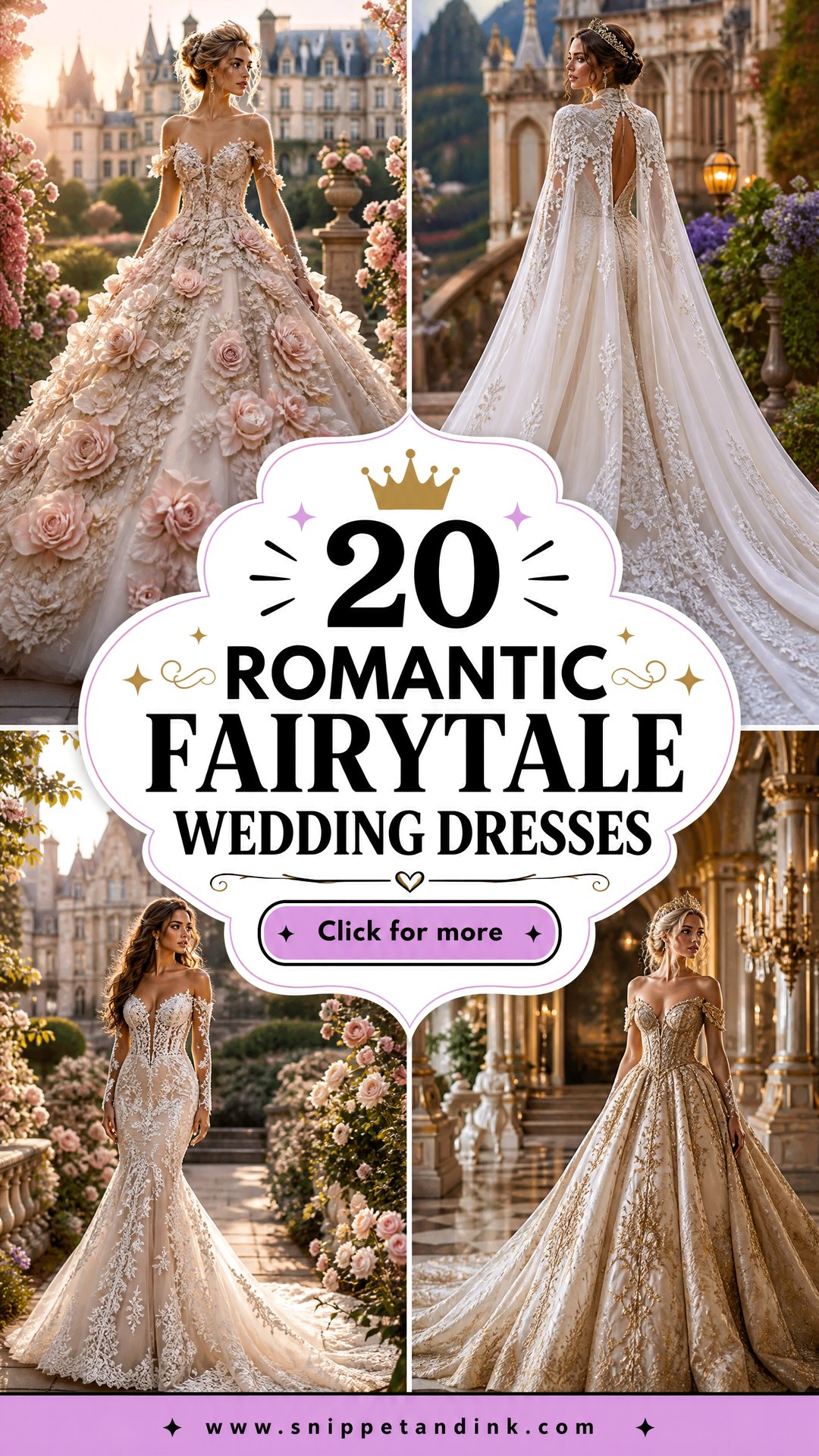
Does Your Venue Have Room for a Ball Gown?
Before falling for a huge skirt, I ask brides to picture the actual rooms. A full ball gown can be several feet wide at the hem, and a cathedral train stretches well behind you. That’s glorious in a ballroom and awkward in a narrow church aisle, a cottage staircase or a restaurant with tightly packed tables.
Three questions for the venue
- How wide is the aisle and is it carpeted, stone or grass? Grass and gravel grab a train; stone floors can dirty a pale hem.
- Will you be on stairs for the entrance or photos? Wide, shallow steps suit big skirts; spiral steps do not.
- Where will you sit at dinner? A chair at a crowded round table leaves your skirt under everyone’s feet.
If the answers aren’t great, a lighter A-line with a detachable overskirt or a cape gives you the fairytale moment without fighting the room all day.
1. Tulle Ball Gown Wedding Dress
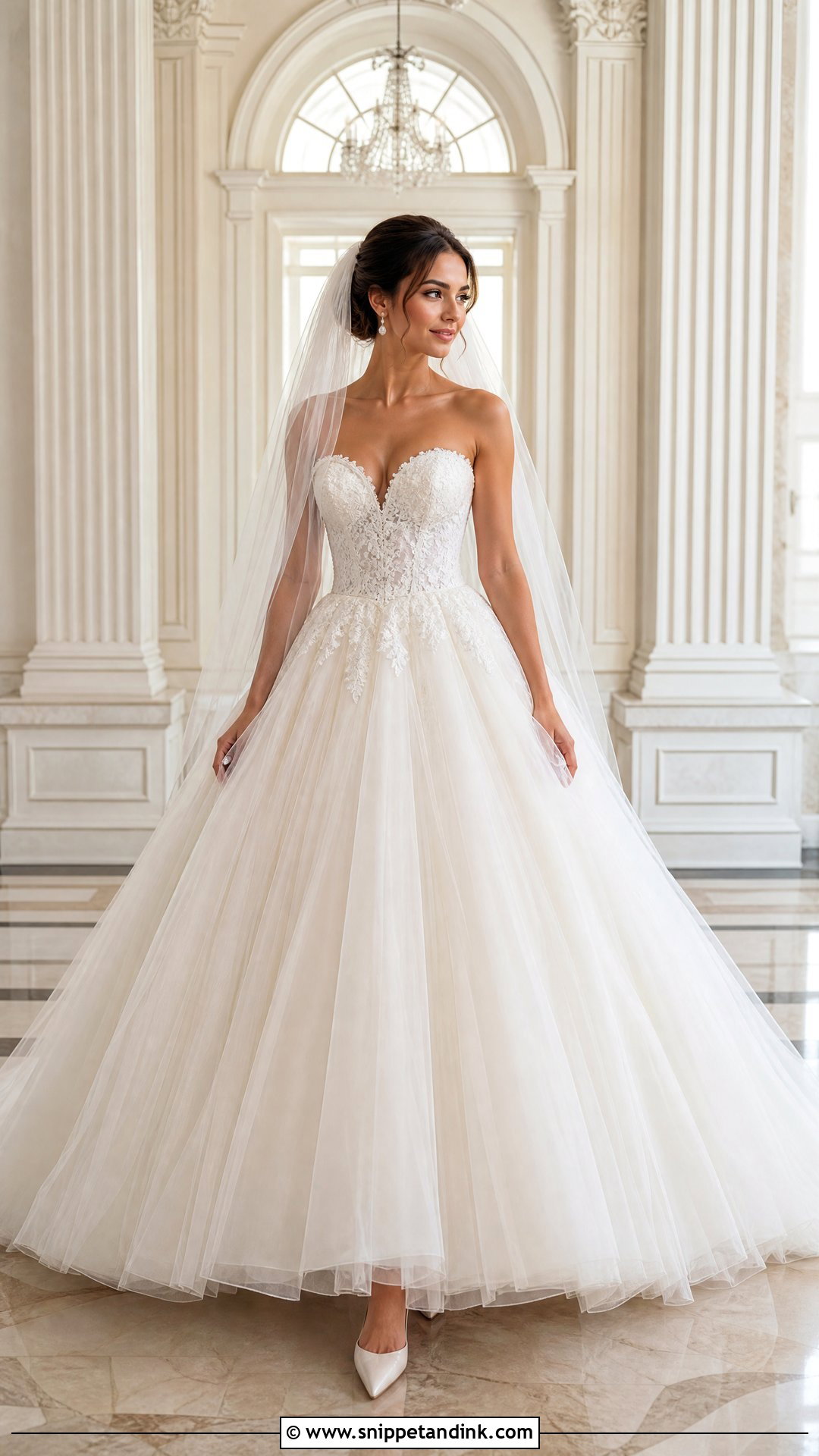
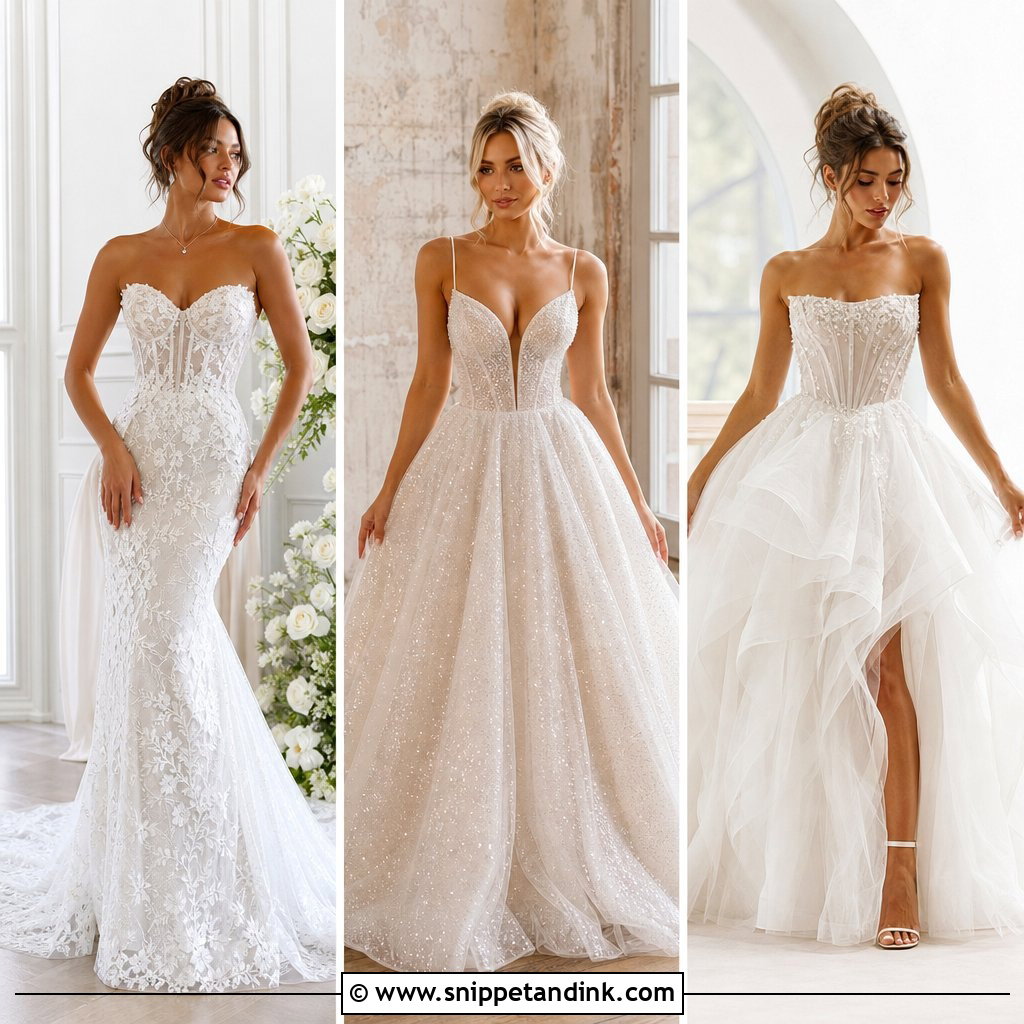
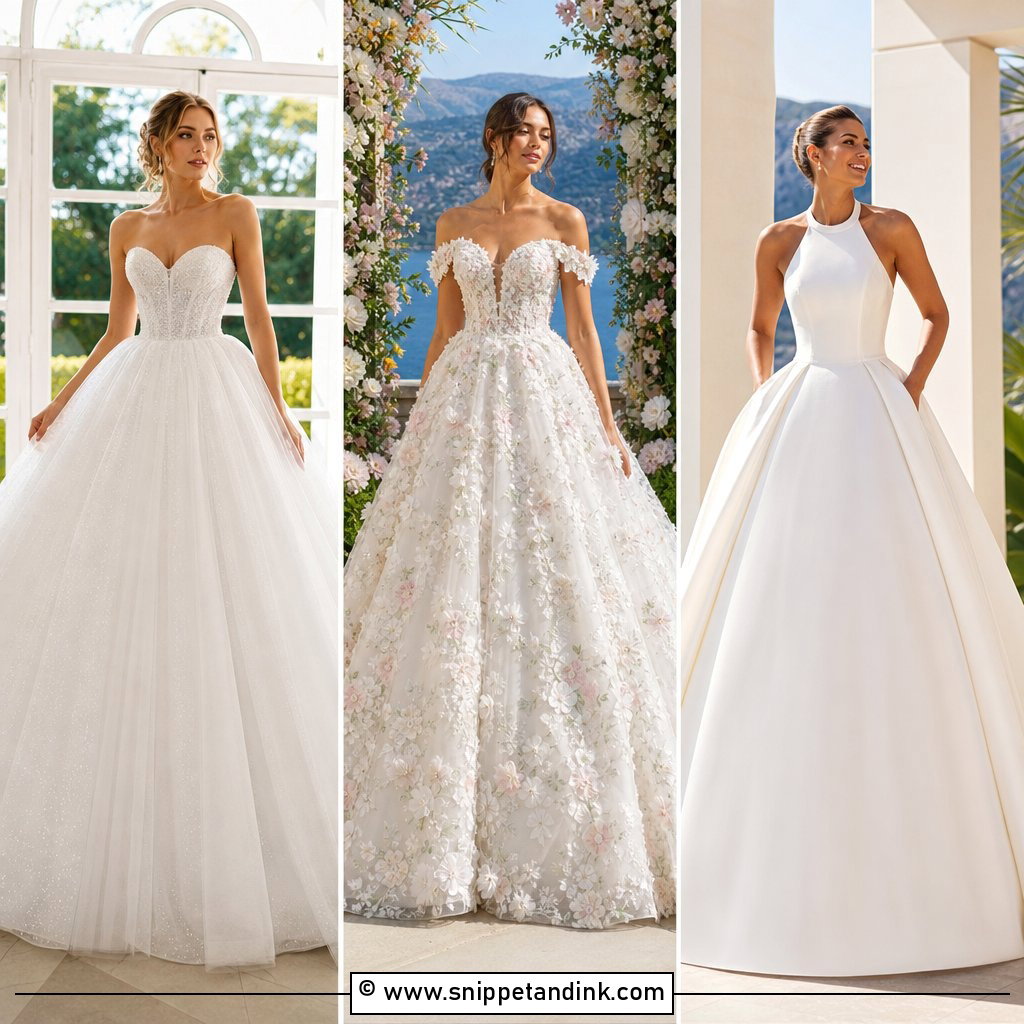
Layered tulle is what most brides picture when they say fairytale, and it floats because each layer is so fine. Balance the skirt with a fitted bodice and a softly curved sweetheart neckline. Scattered lace or a few crystals add depth; much more and it starts to look busy. A fingertip veil, pearl drops and pointed ivory pumps under the hem finish it, with a low bun and a small crystal comb. Ask how many tulle layers there are and how much the skirt weighs. Lighter modern tulles give the same volume with far less drag on the waist by evening.
2. Off-Shoulder Princess Wedding Dress
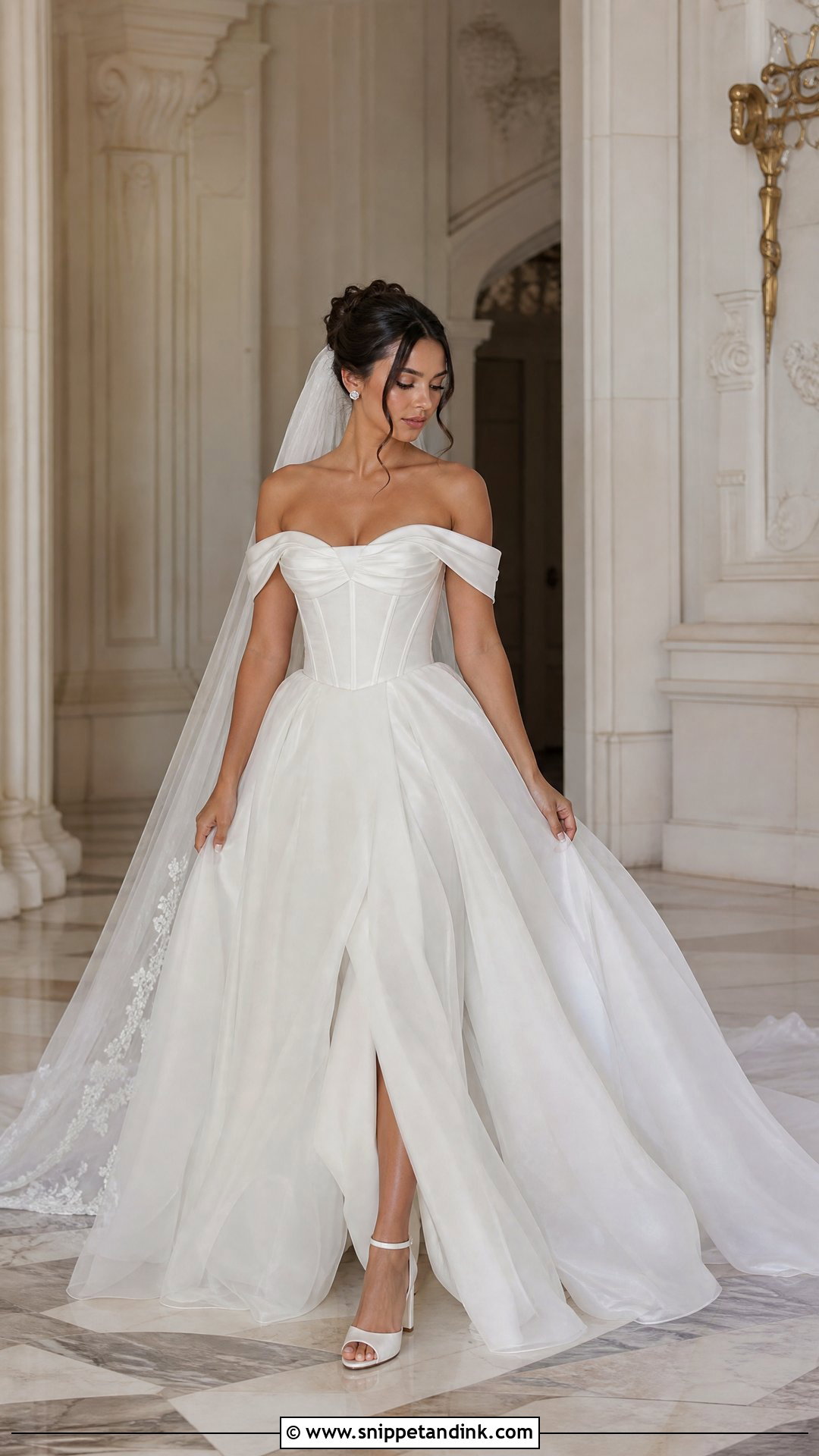
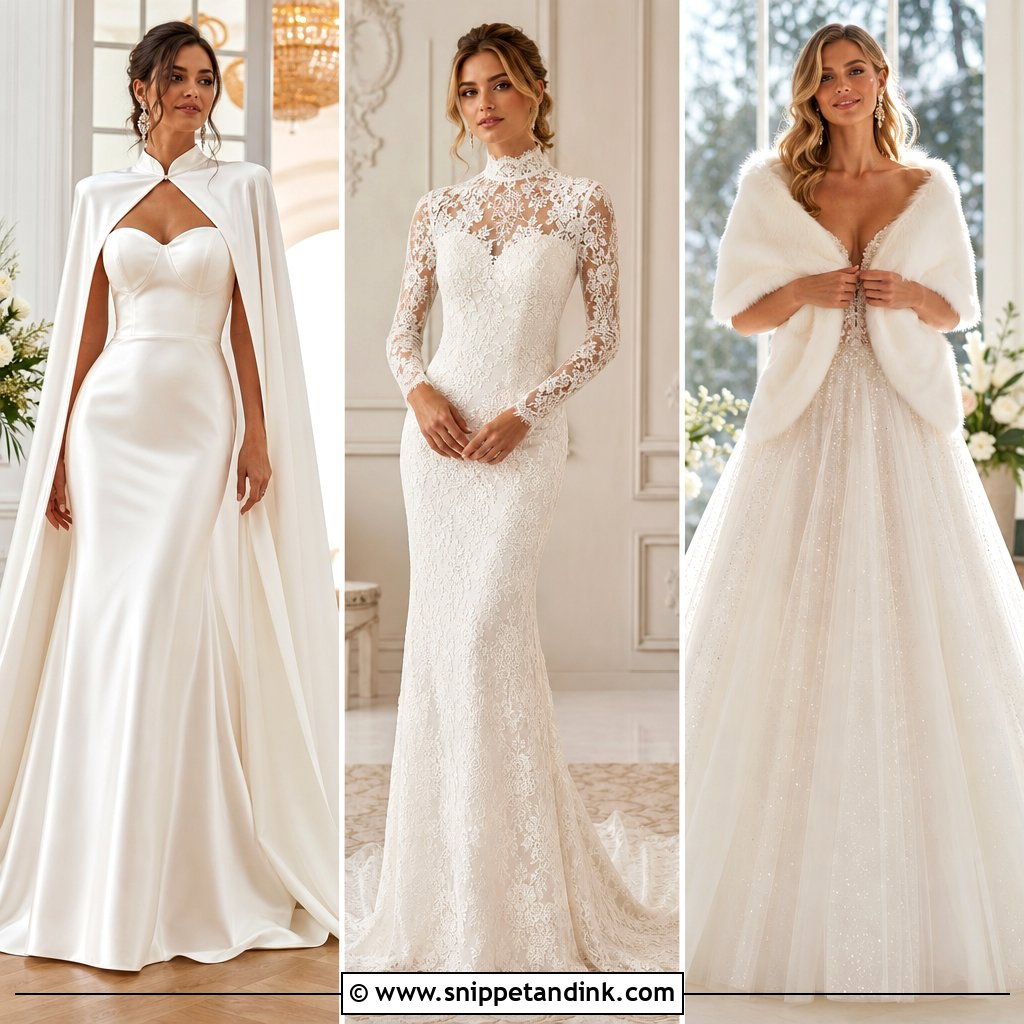
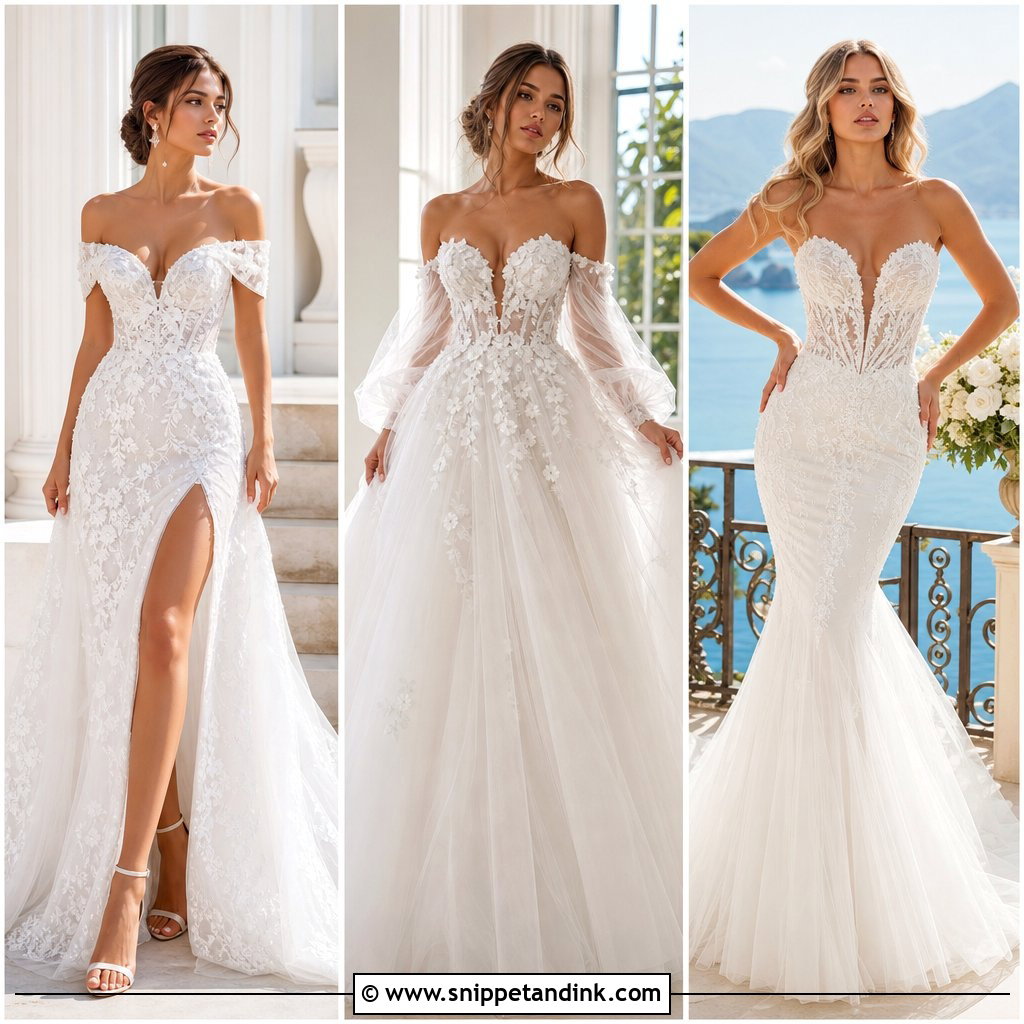
Off-shoulder sleeves on a princess wedding dress frame the collarbone, while a corset bodice takes the weight of the organza or tulle skirt. I prefer sleeves that snap on or off, so the reception can be strapless. The sleeve band is the thing to watch. Set too tight, it stops you lifting your arms; set too loose, it slides and drags the bodice with it. Raise your arms and sit at every fitting. A cathedral veil, crystal studs, satin block heels and a half-up style suit it.
3. Floral Lace A-Line Wedding Dress
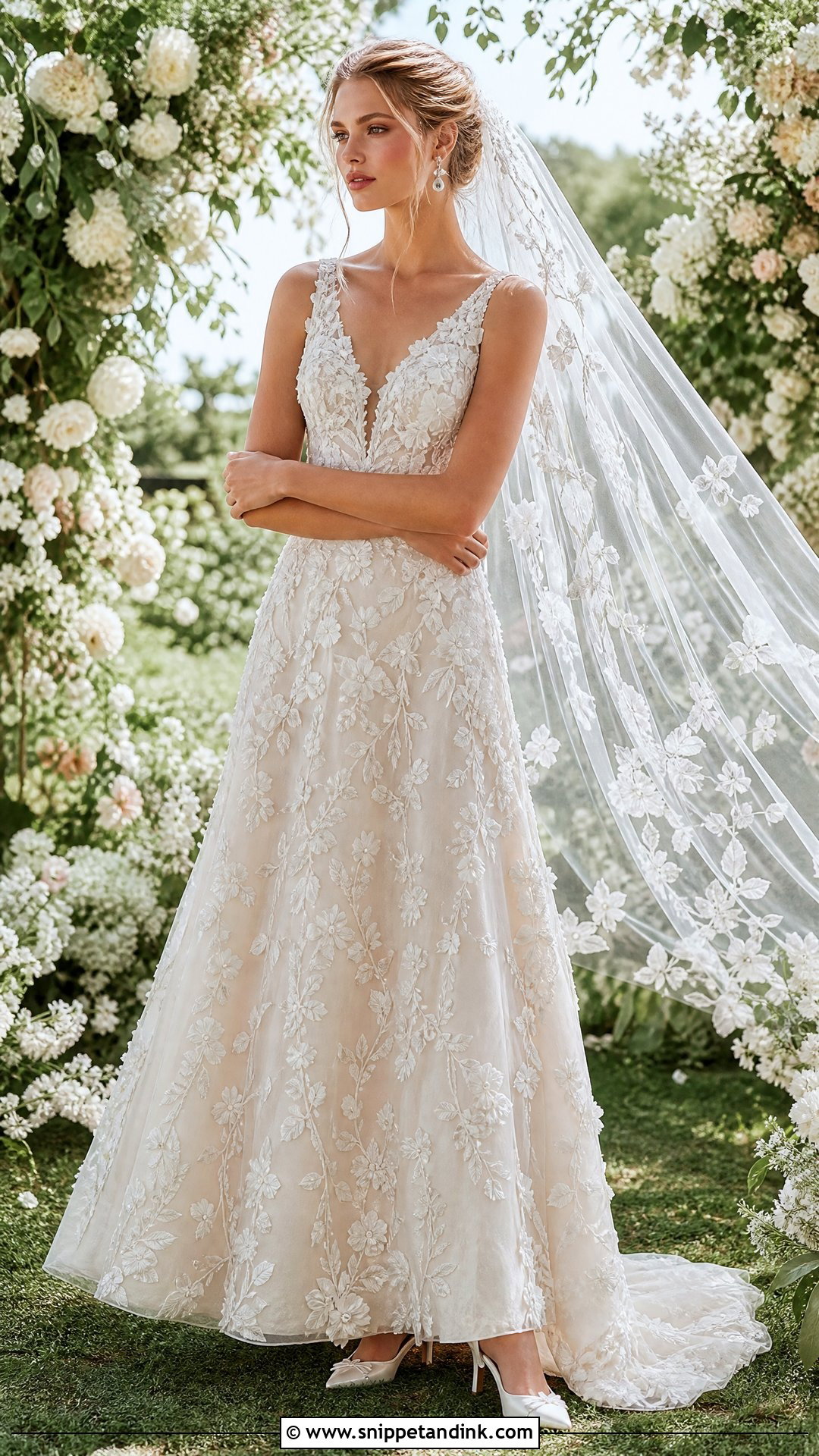
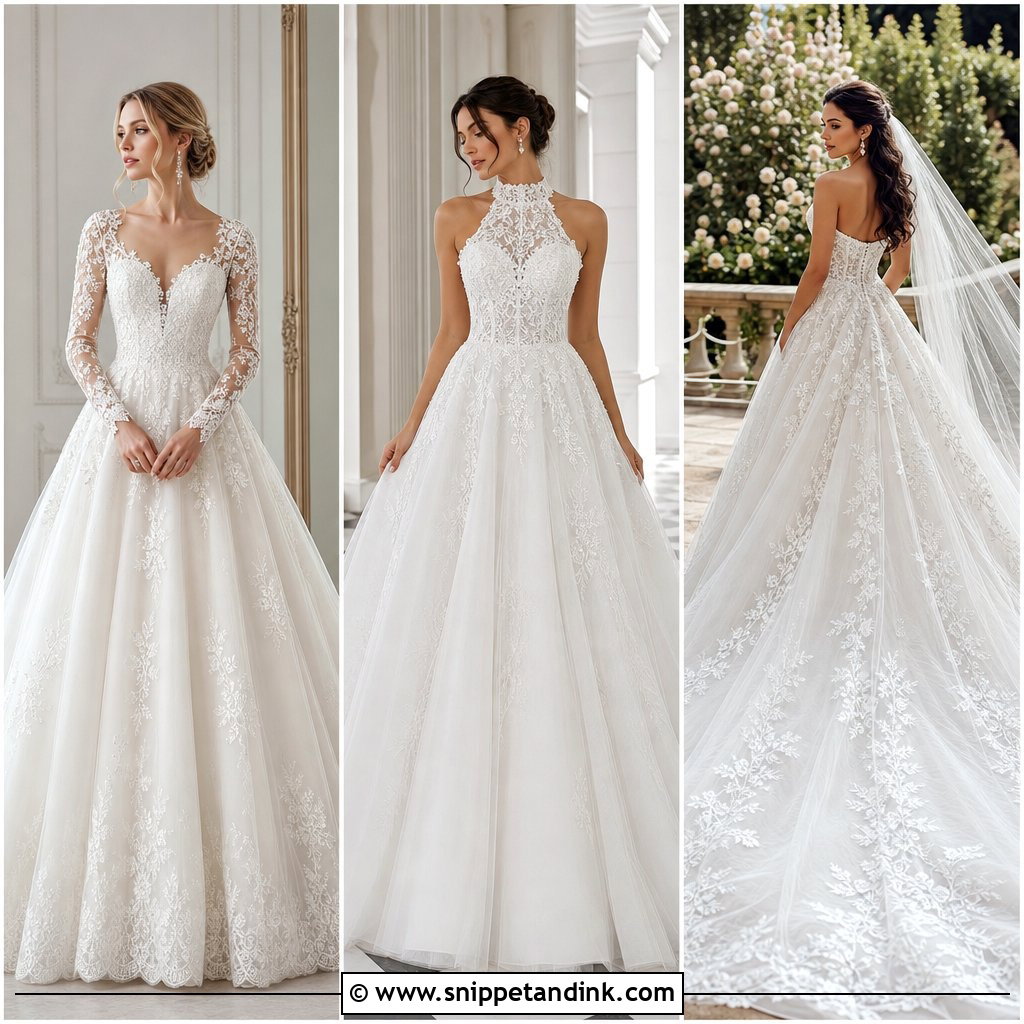
Botanical lace on an A-line is the gentler version of fairytale, with shape at the waist but no dramatic volume. Raised flowers, embroidered vines and tiny leaves look especially good outdoors, where daylight catches the texture. A sheer floral veil, ivory slingbacks and small pearl earrings suit it, with loose waves or a textured chignon. Because lining and sleeves are easy to adjust, it works across seasons. Keep the bouquet tonal; a multicolored bouquet against busy floral lace turns into a blur in photos.
4. Long-Sleeve Lace Wedding Dress
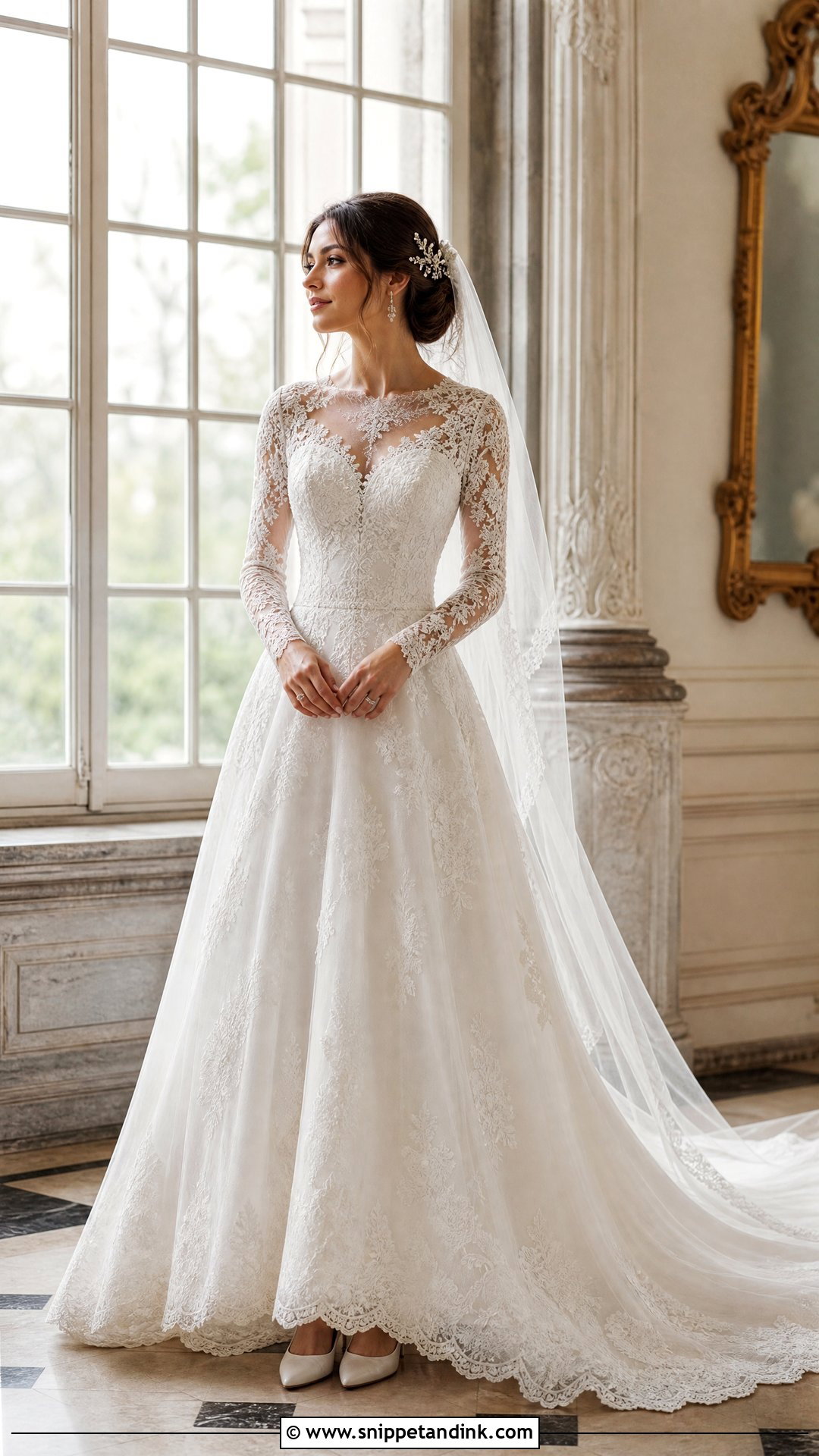
Illusion lace sleeves let lace motifs appear to rest on bare skin, and they pair well with an A-line or ball gown skirt. Pearl hairpins, a sheer chapel veil, closed-toe heels and a small structured bouquet complete it, with a center-parted low bun. The lining is where comfort lives. Rough mesh inside a lace sleeve itches over a long day, so run the inside of the sleeve along your wrist in the shop. Leave some ease across the shoulder blades too, or every hug pulls the sleeves tight. It’s my first suggestion for winter.
5. Basque Waist Ball Gown Wedding Dress
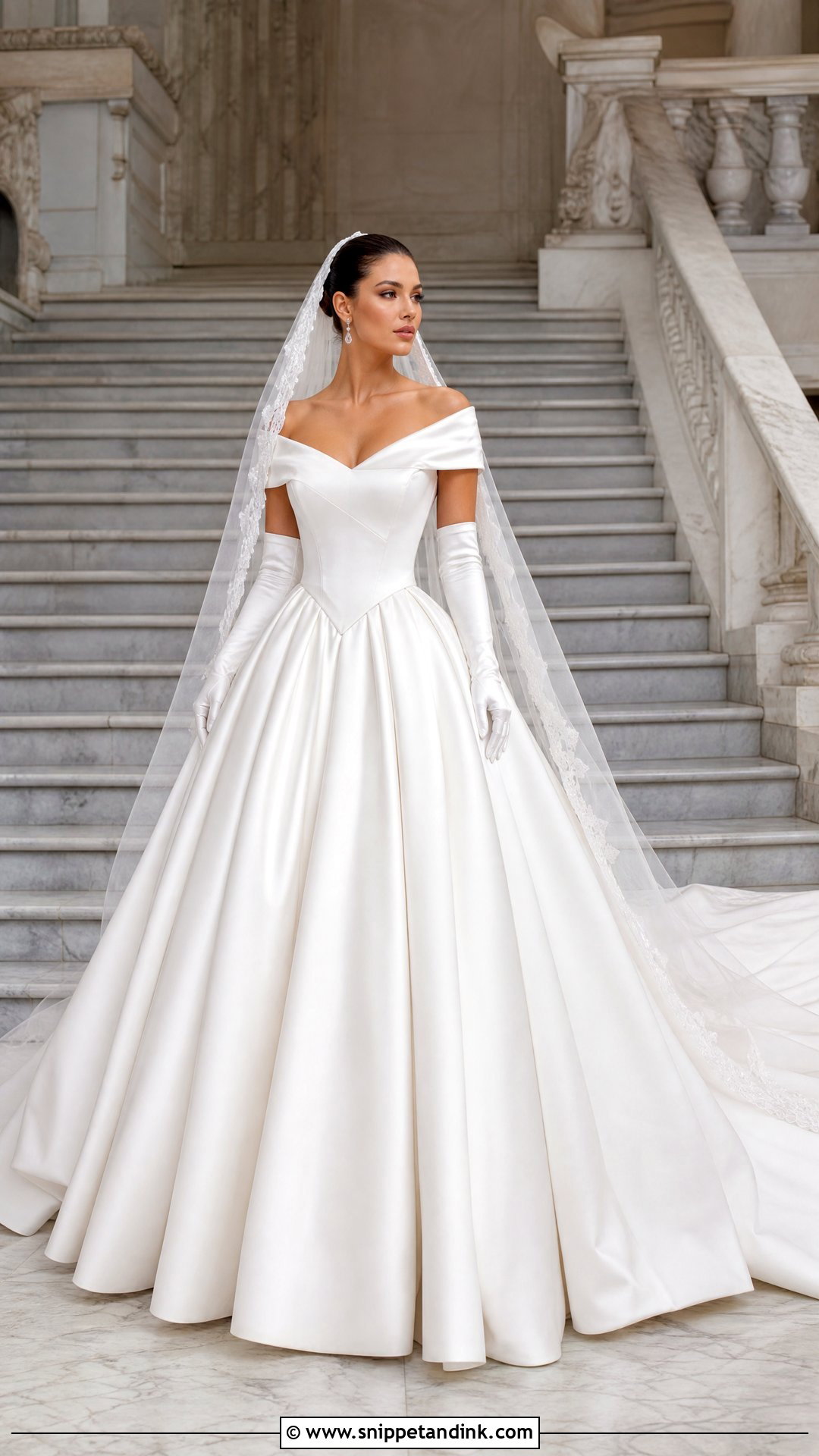
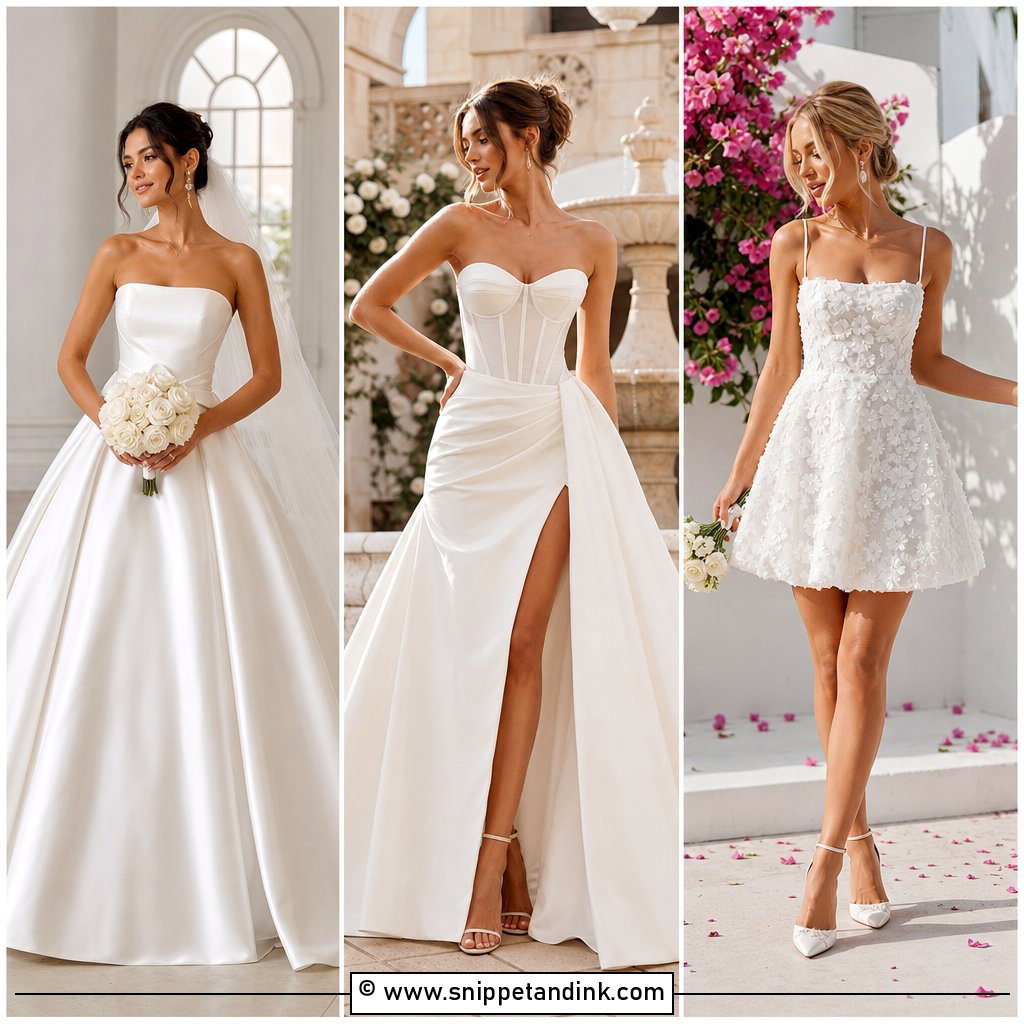
A Basque waist carries the bodice down to a soft point below the natural waist, lengthening the torso before the skirt flares out. Satin gives a clean regal effect; floral tulle is more whimsical. Elbow-length gloves, small drops and a plain cathedral veil keep the look balanced, with sleek hair. This bodice is closely fitted, so take a deep breath and sit down in it at each fitting. If the point digs into your stomach when you sit, the seamstress can soften the boning at the tip.
6. Sweetheart Corset Wedding Dress
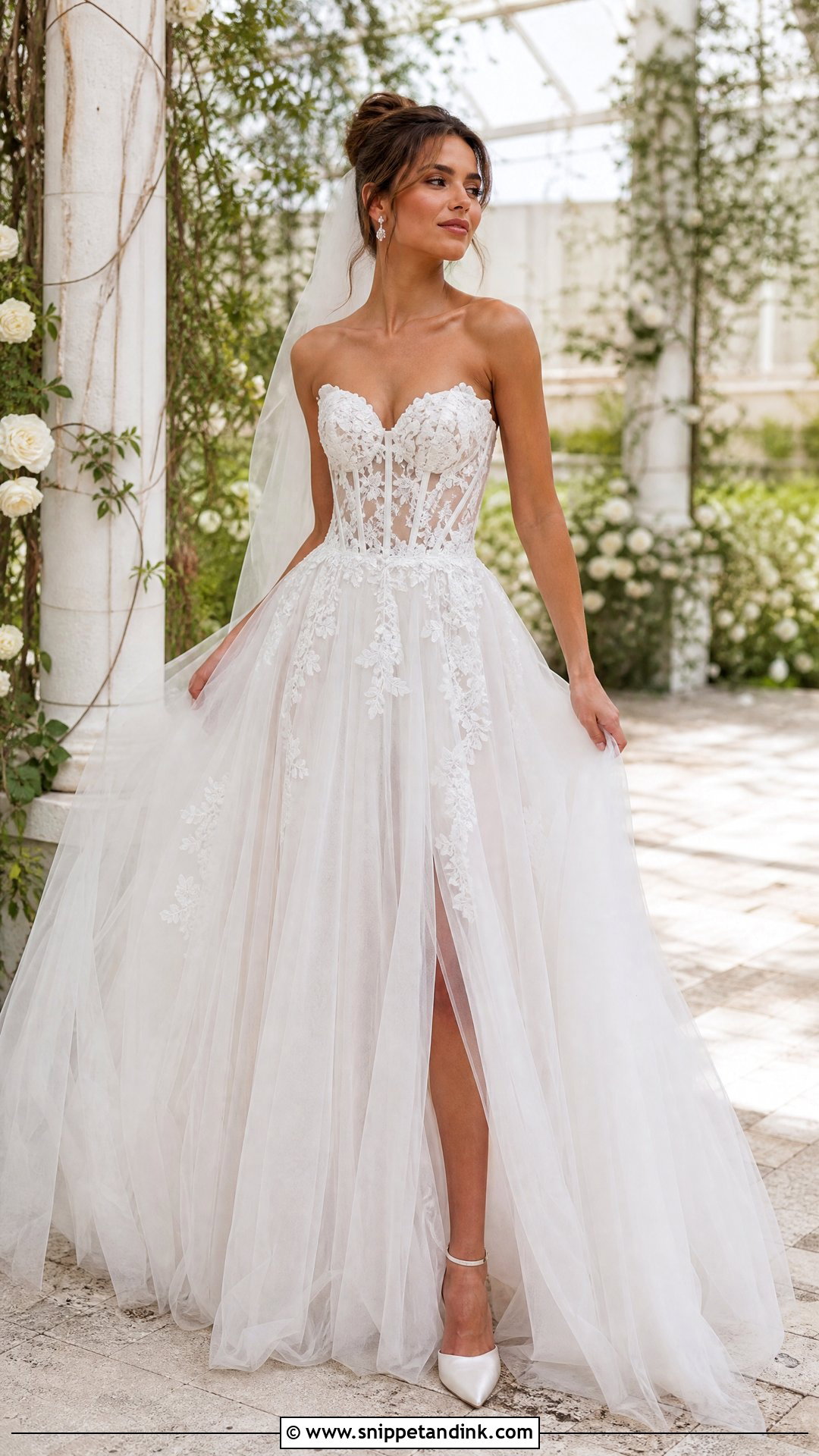
Under a big skirt, a sweetheart corset is doing structural work, not just shaping the neckline. Boning covered with lace, fine draping or a little beadwork keeps it romantic. A lace-up back lets the fit be adjusted, but no corset should hurt; if it pinches in the fitting room, it will be agony by the speeches. A soft tulle veil, crystal earrings, ivory pumps and a trailing bouquet suit it, with a loose updo. If the bodice has a sheer panel, ask for a lining matched to your skin tone.
7. Sparkling Tulle Wedding Dress
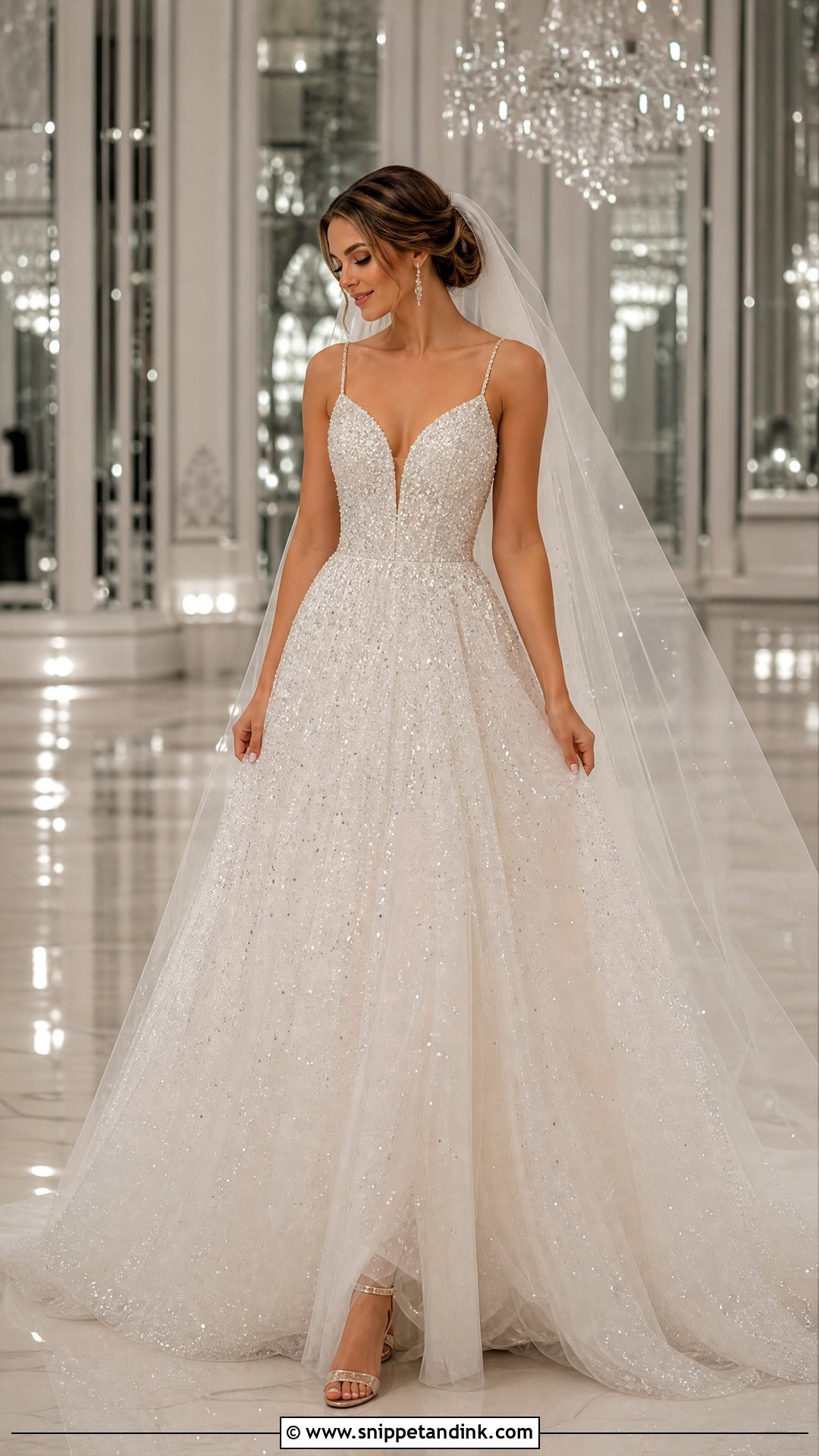
Crystals scattered over tulle catch light every time you move, which is why a sparkling wedding dress comes alive in an evening room. I’d choose embellishment that clusters at the bodice and thins out down the skirt. Simple earrings, metallic ivory heels and a plain sheer veil keep it from tipping into too much. Check the stones closely: rough settings snag veils and scratch the inner arms, and a veil caught on a crystal during the processional is a very common little disaster.
8. Three-Dimensional Floral Wedding Dress
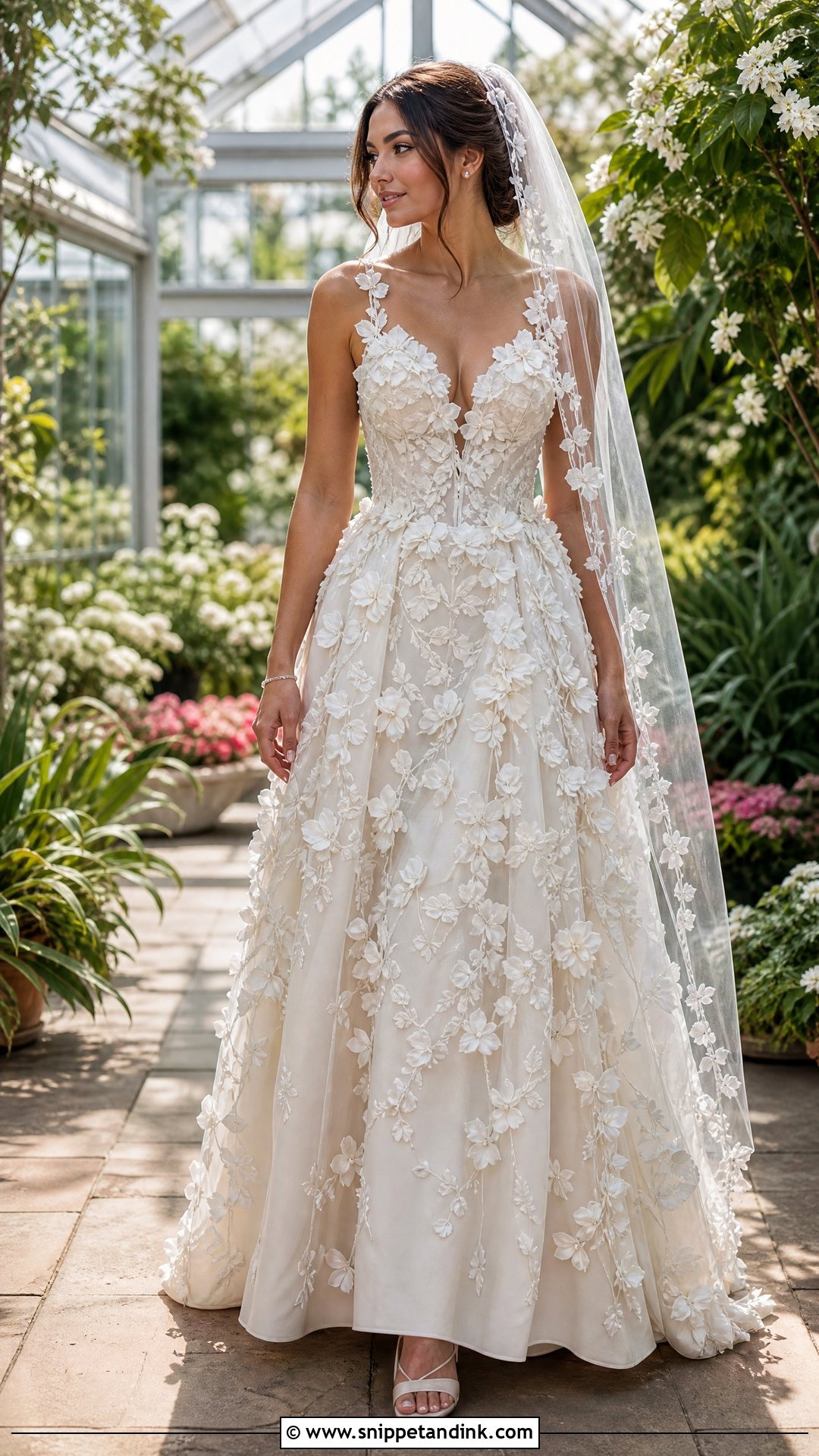
Raised flowers in mixed sizes look more natural than rows of identical ones, and they give the camera real depth. Look for petals following the bodice and drifting lightly onto an A-line skirt. Pearl studs, satin sandals and a barely there veil edged with a few matching appliqués suit it. A braided updo echoes the texture. Fabric flowers add weight, sometimes more than you expect, so wear the gown for twenty minutes in the shop if they’ll let you. Greenhouses and courtyard gardens suit it best.
9. Square-Neck Satin Wedding Dress
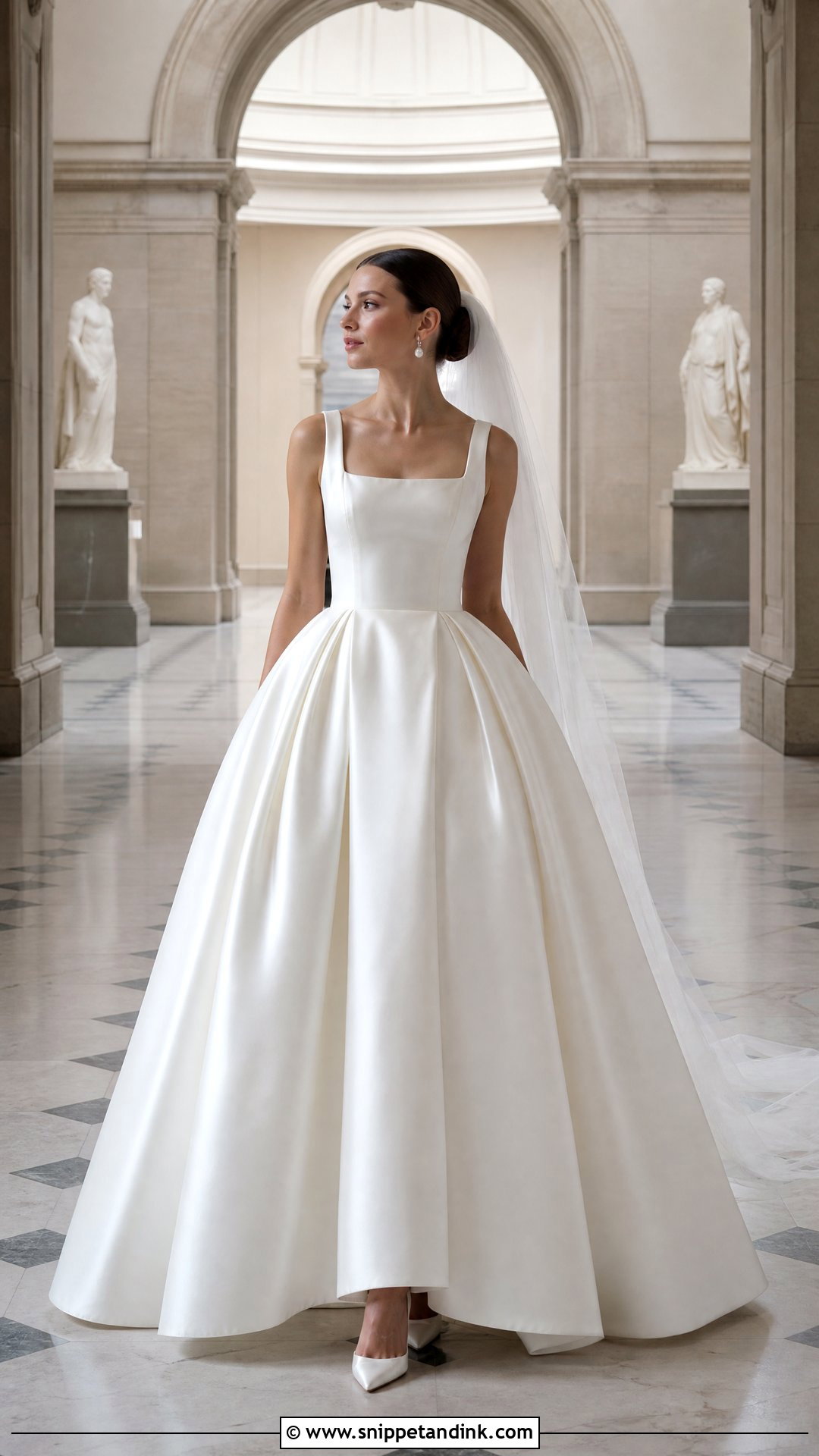
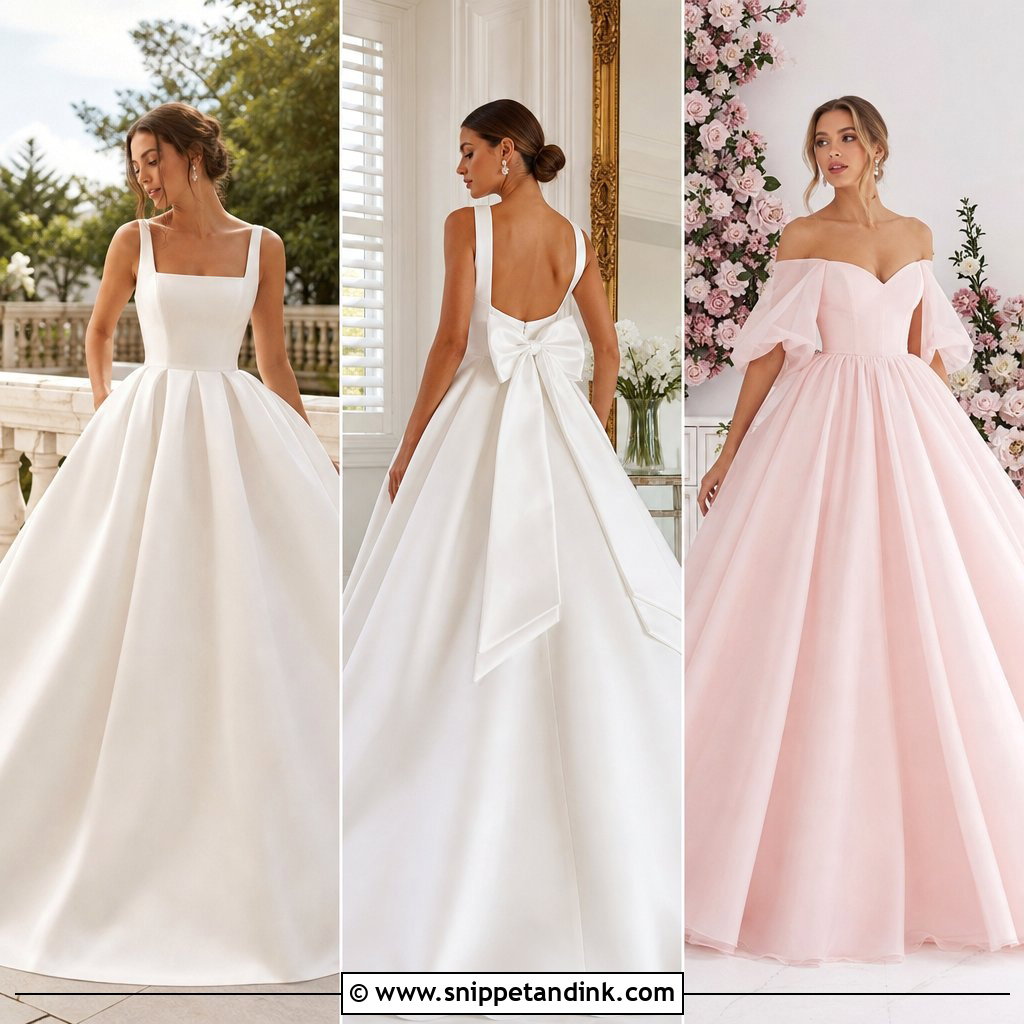
A square neck on a full satin skirt reads slightly historical, which suits the fairytale brief well. Deep pleats in the skirt control the volume and keep it from ballooning. A long plain veil, pearl drops, pointed satin heels and a chignon finish it; long gloves push it more formal. Satin is unforgiving, showing wrinkles, pulled seams and underwear lines. Plan for careful alterations, a professional steam the day before, and smooth, line-free shapewear underneath. Grand hotels and museums are its natural setting.
10. Blush Fairytale Wedding Dress
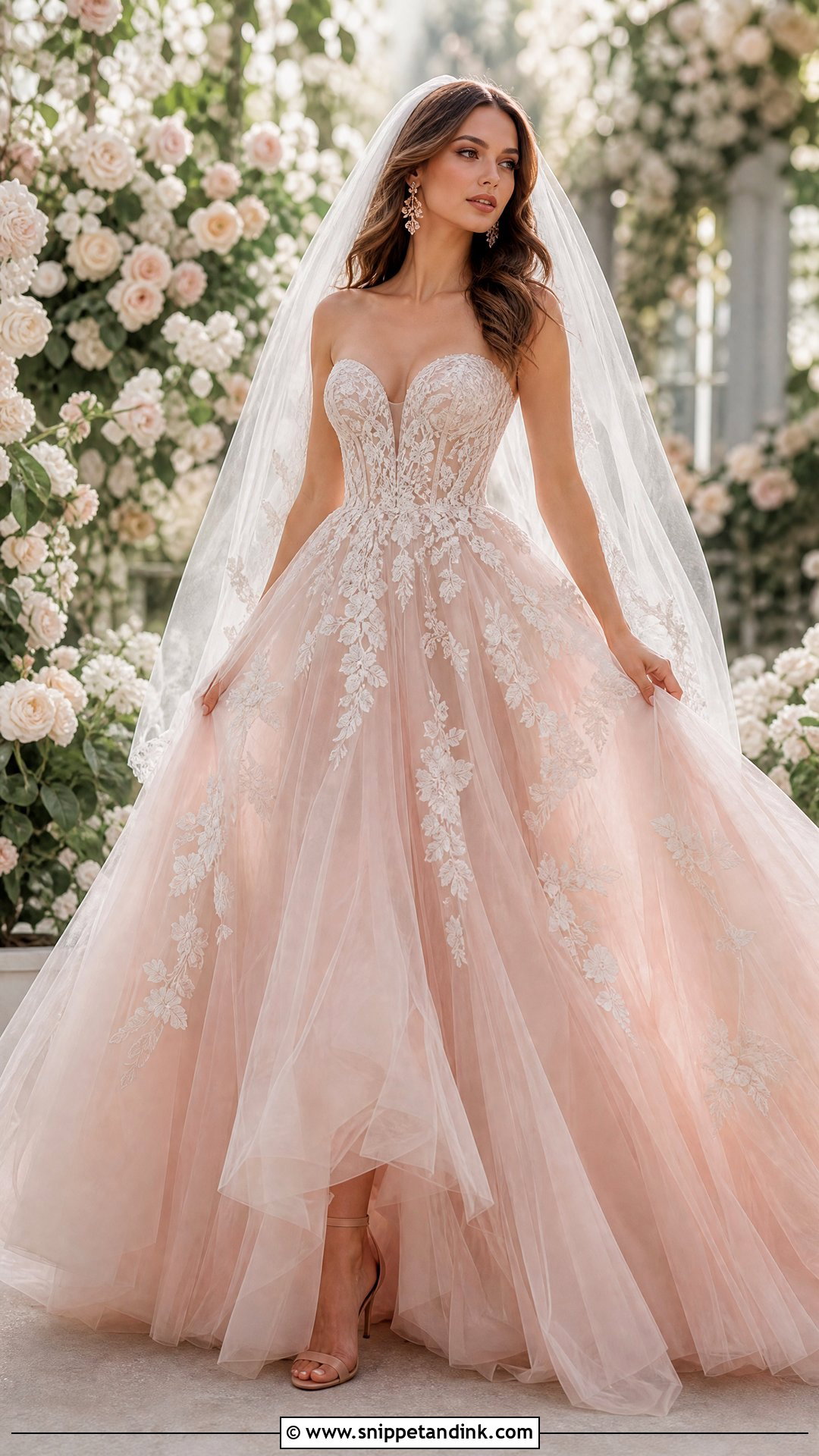
Pink-toned tulle beneath ivory lace gives blush depth and makes floral appliqués stand out. A soft ball gown or A-line with a fitted bodice keeps it bridal. Rose-gold earrings, neutral heels and an ivory veil suit it, with romantic waves. Blush shifts color between daylight and warm indoor light, so look at it in both. Bring your veil and jewelry to a fitting as well, because an ivory veil can look grey next to some blush tulles, and you’ll want to catch that before the day.
11. Cape Wedding Dress
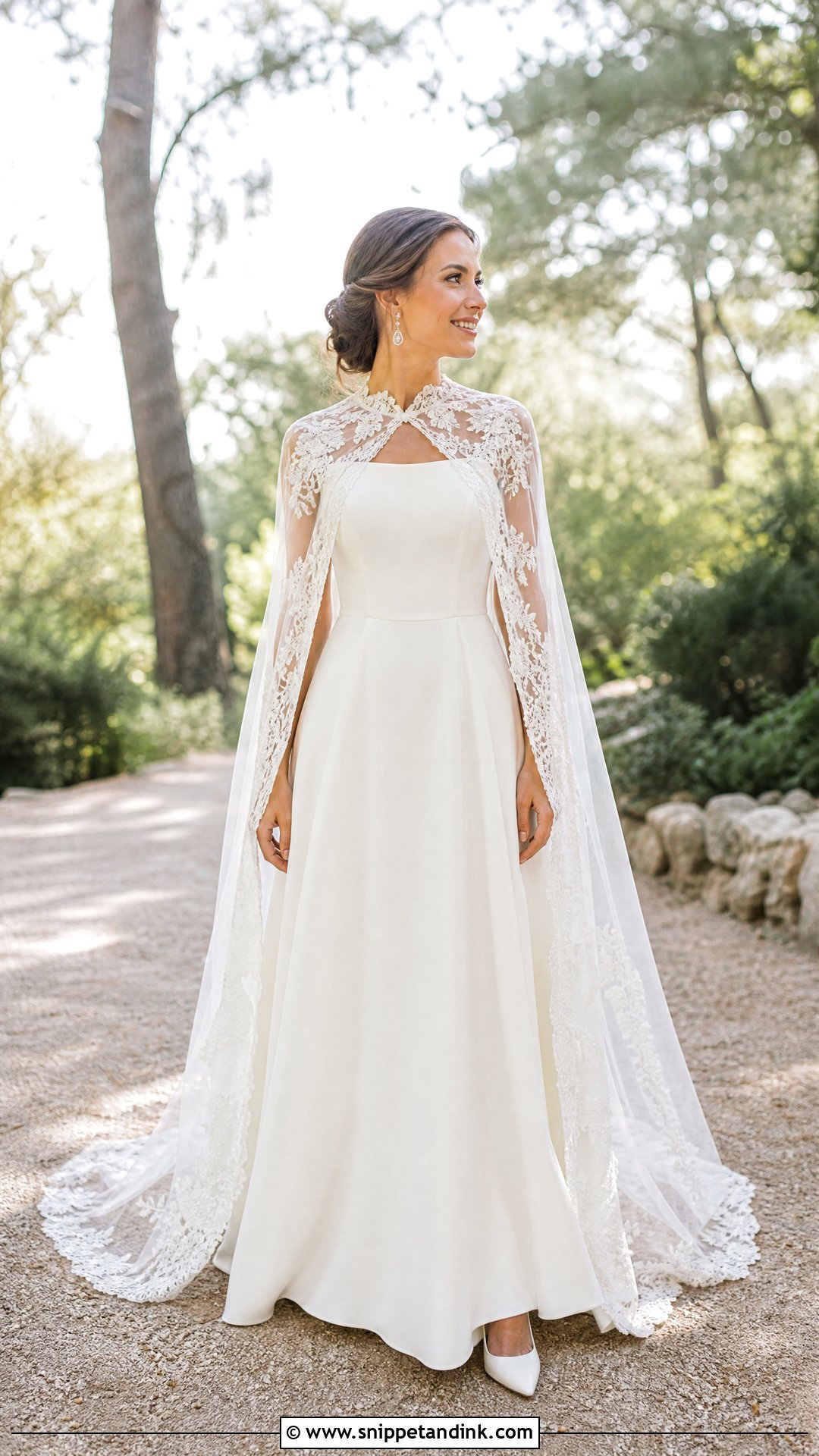
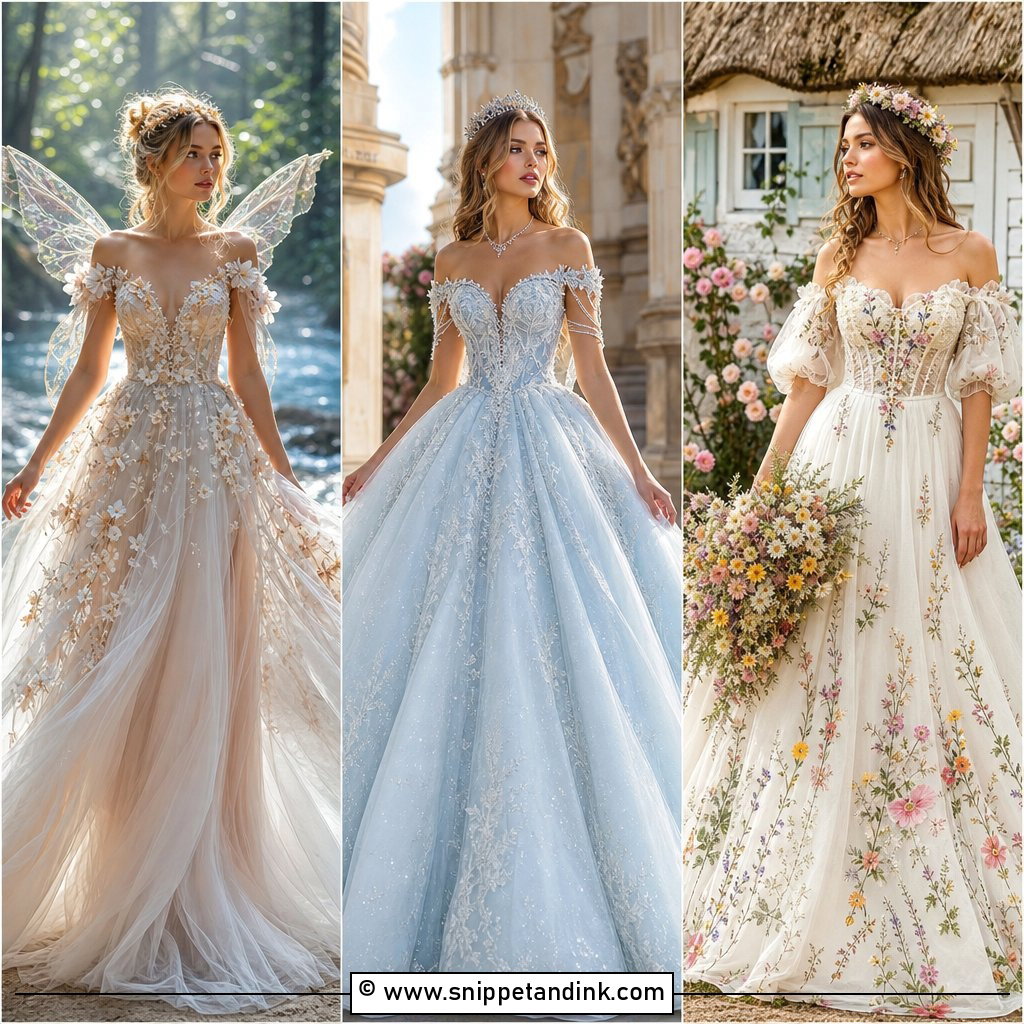
A sheer cape makes an entrance without anything on the head, so the hair stays fully visible. Pair a lace-trimmed or lightly beaded cape with a simple A-line so neither competes. Crystal studs, pointed pumps and a low hairstyle that won’t tangle with the fastening suit it. Capes outdoors catch wind and can pull backward at the neckline, so ask for snaps sewn to the bodice rather than a ribbon tie. A detachable cape comes off for the reception. Forest and castle venues show it off.
12. Puff-Sleeve Wedding Dress
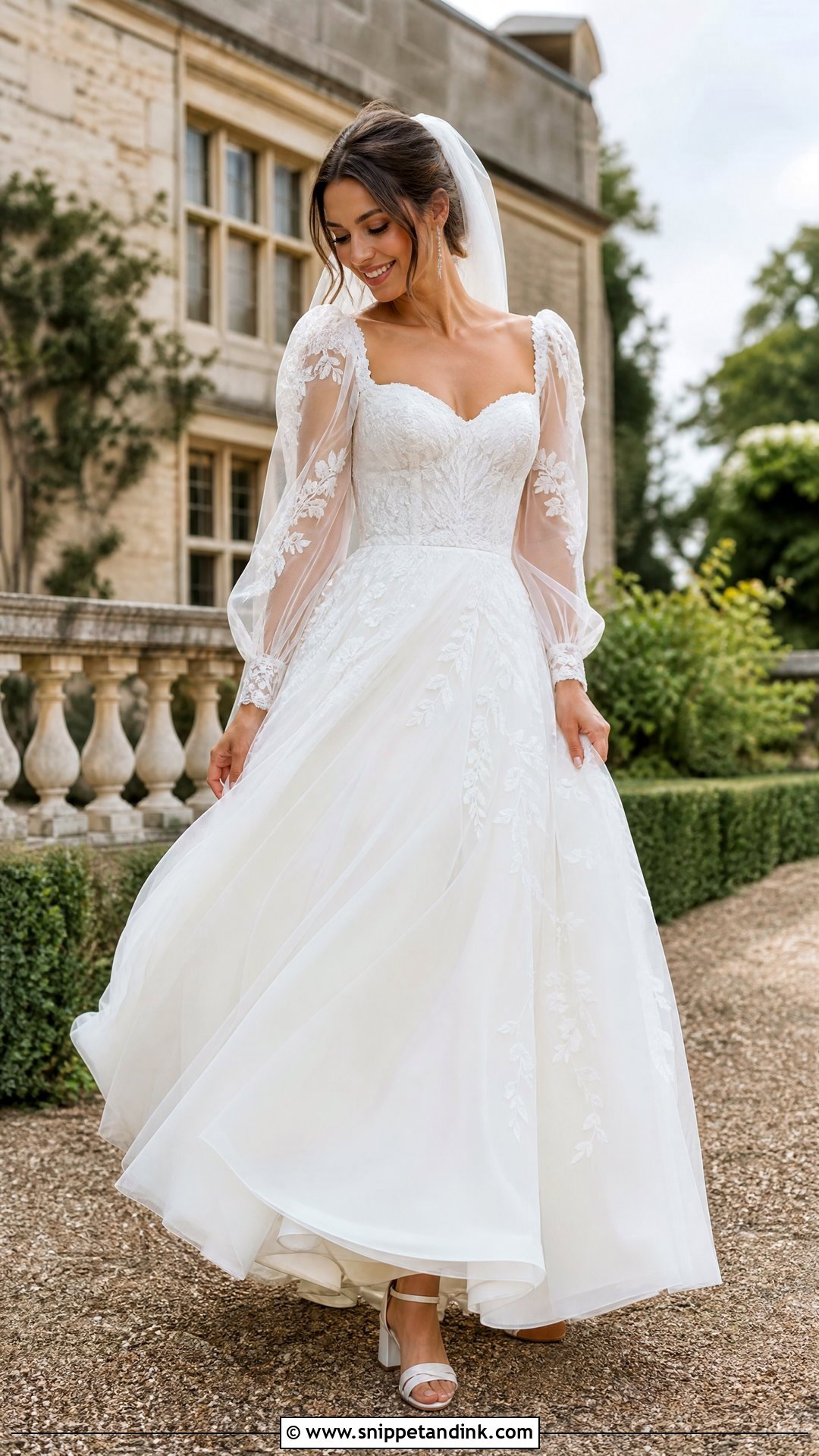
Puff sleeves give an old-world feel and soften the shoulders. Sheer organza is airy; embroidered tulle is richer. A flowing A-line skirt keeps them from swamping your frame. Volume is personal, so try three or four sleeve sizes; on a petite bride a big sleeve can take over. Check the cuff or elastic for pinching, too. A simple veil, delicate earrings, comfortable block heels and a relaxed updo complete it. It suits countryside venues and old houses.
13. Lace Mermaid Wedding Dress
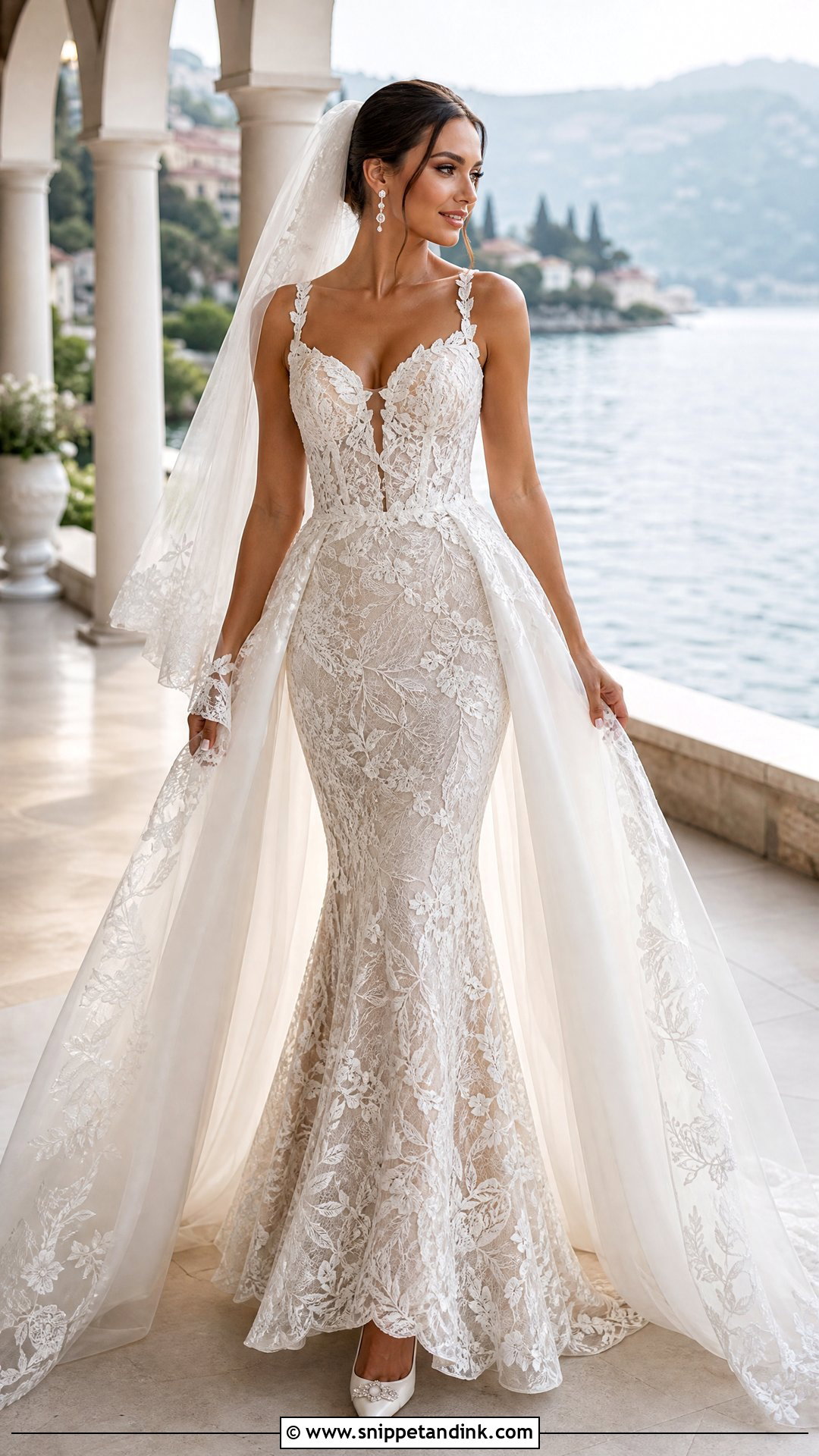
A lace mermaid can still feel like a fairytale if the flare starts at or just above the knee, which lets you walk normally. Look for a supportive bodice and botanical lace. A detachable overskirt gives ceremony volume and comes off to reveal the fitted shape later. Climb a few stairs and sit at the fitting, as a flare set too low makes both difficult. Fitting through the hips and thighs needs a skilled seamstress. A chapel veil, drop earrings, pointed heels and side-swept waves complete it.
14. Tiered Tulle Wedding Dress
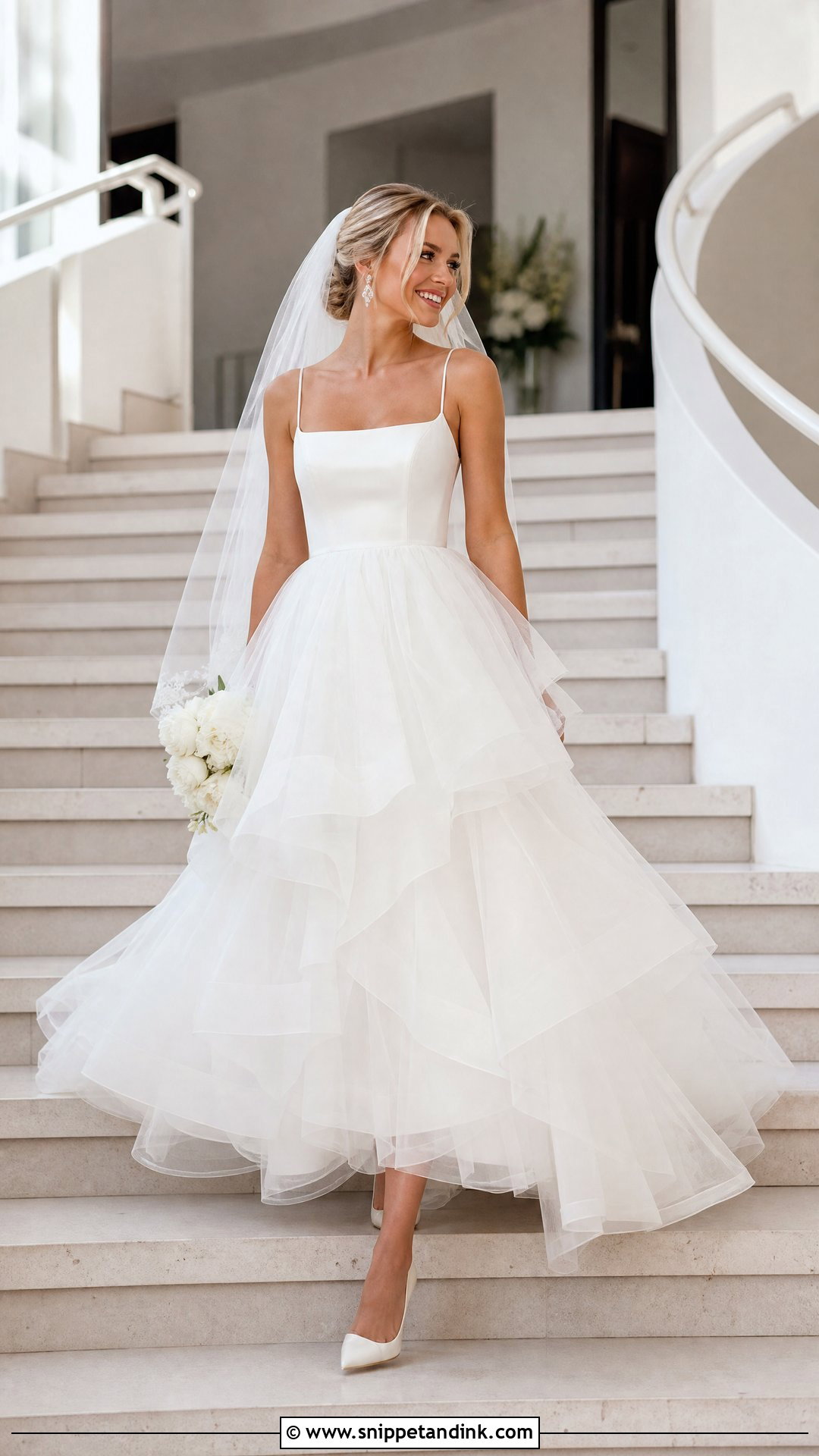
Tiered tulle gives a playful kind of volume. Soft, flowing tiers float; stiff horizontal bands can look like a cake. A plain fitted bodice balances the texture. Small crystal earrings, a fingertip veil and plain heels suit it, and a high bun or smooth ponytail gives a modern contrast. Shorter brides usually look better in fewer, wider tiers. Each tier needs hemming evenly, since an uneven bottom layer catches under the toe when you turn quickly on the dance floor.
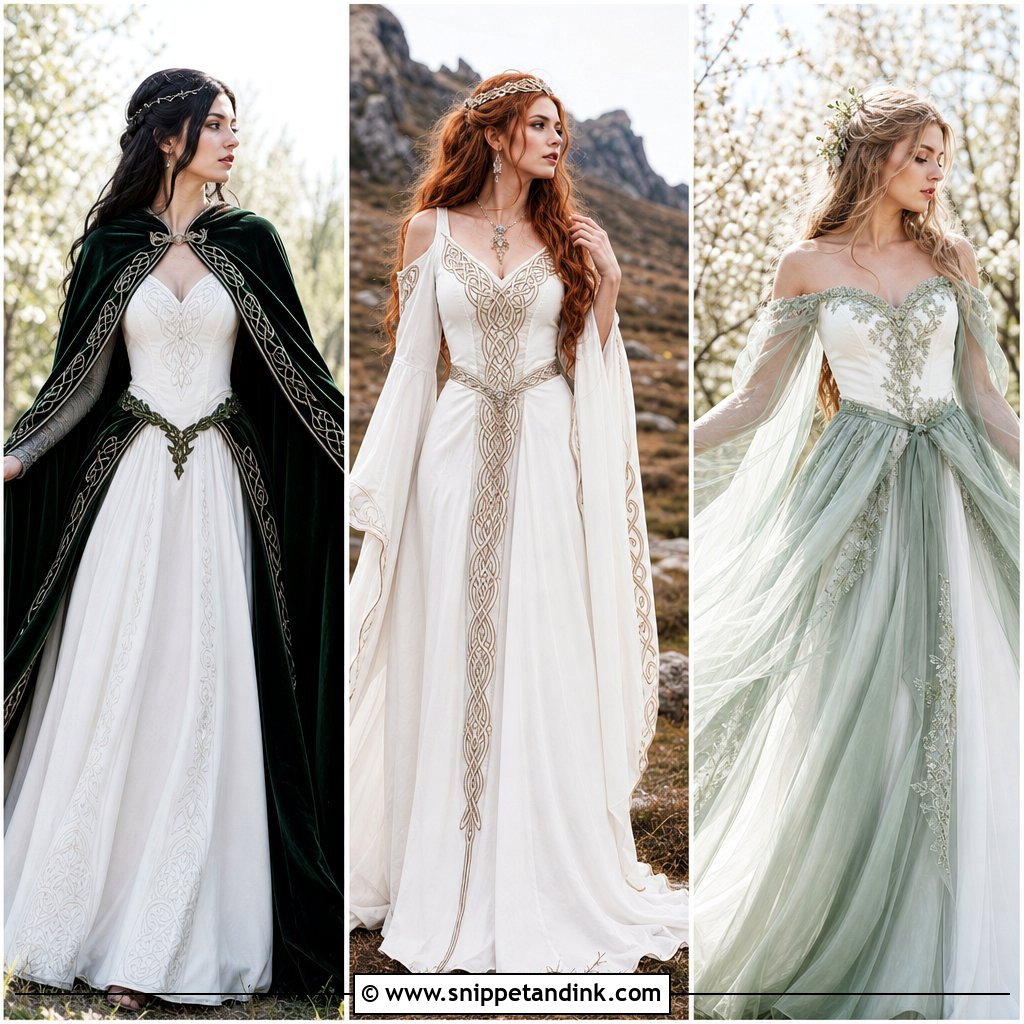
15. High-Neck Lace Wedding Dress
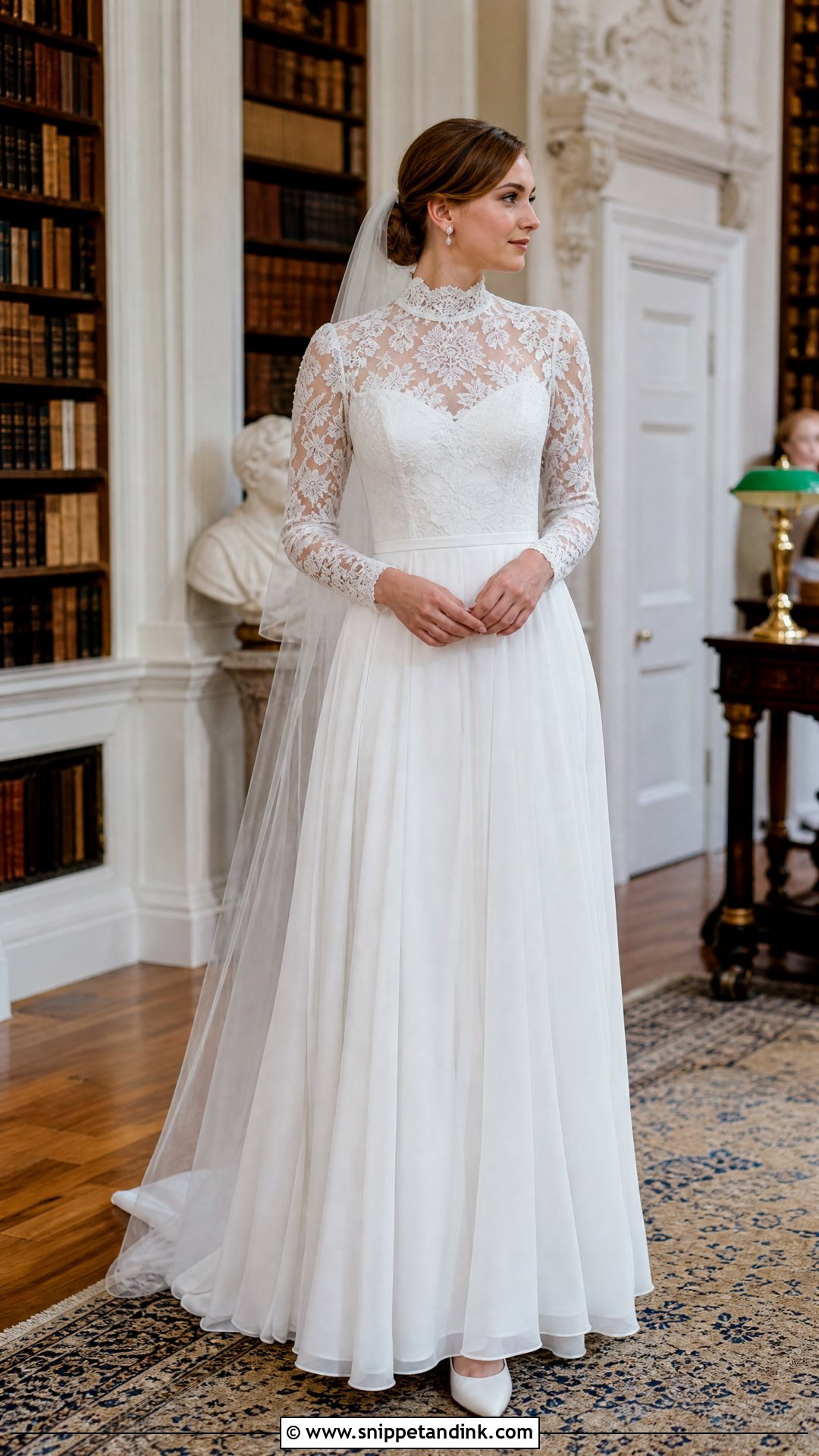
High-neck lace gives a vintage-inspired fairytale mood with modest coverage. Illusion net keeps the neckline light while lace runs across the collar, shoulders and sleeves. A flowing chiffon skirt keeps it soft; a fuller tulle skirt adds drama. Pearl studs, a low bun, closed-toe pumps and a veil set below the hair suit it. Skip the necklace. The collar needs a soft edge and enough room to turn your head, so check it during every fitting. Libraries and old halls suit it.
16. Chiffon A-Line Wedding Dress
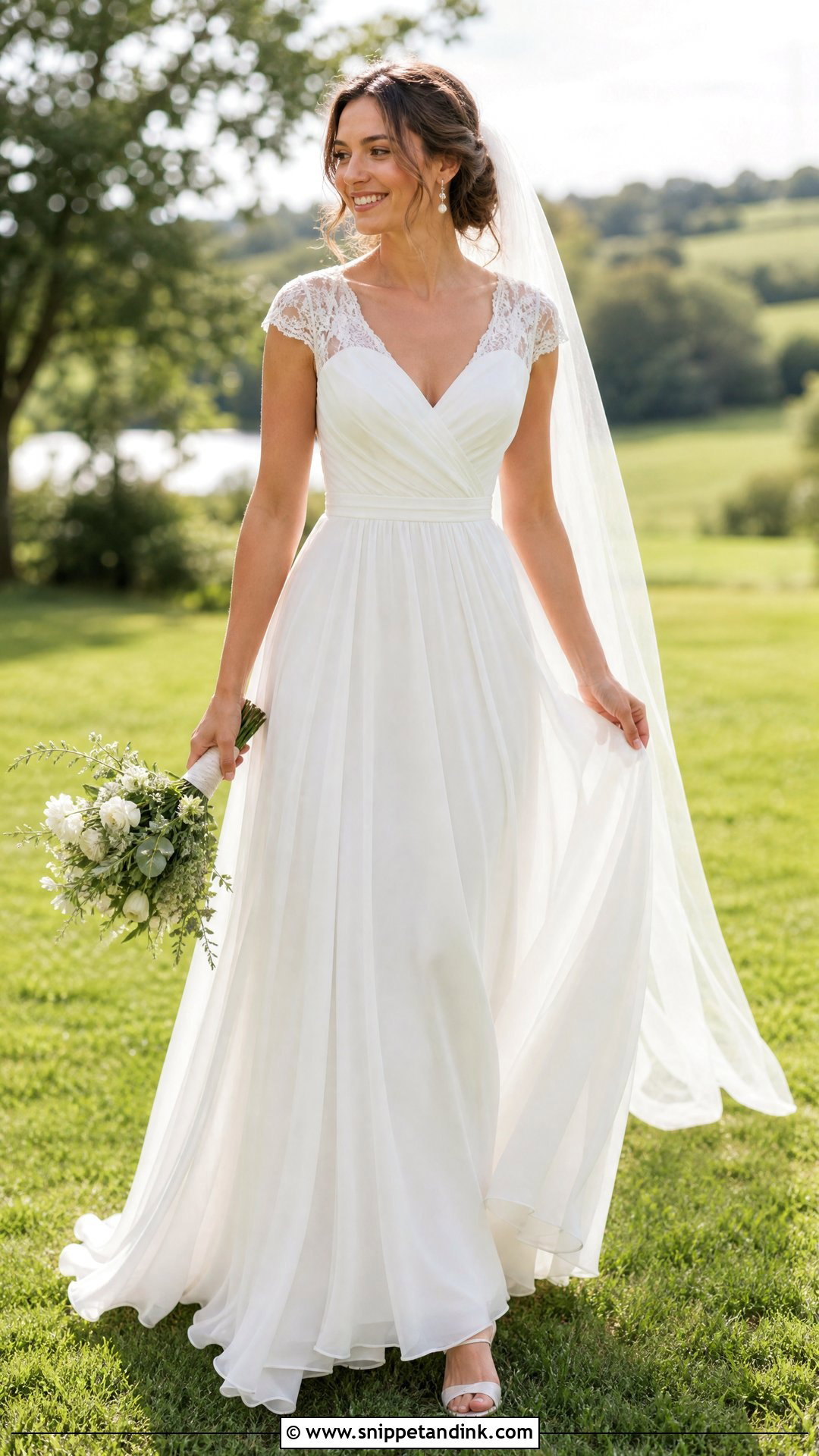
Chiffon drifts with each step, which suits a relaxed outdoor fairytale. An A-line with a draped bodice, a defined waist and a long skirt is the shape, with lace cap sleeves or a few appliqués. Delicate sandals, pearl earrings and a light veil complete it, with loose waves or a low ponytail. Chiffon can be sheer in daylight, so check the lining outside. Ask for a wrist loop on the train, too; it keeps the fabric off the ground and out of the wind during portraits on a lawn or beach.
17. Detachable-Sleeve Wedding Dress
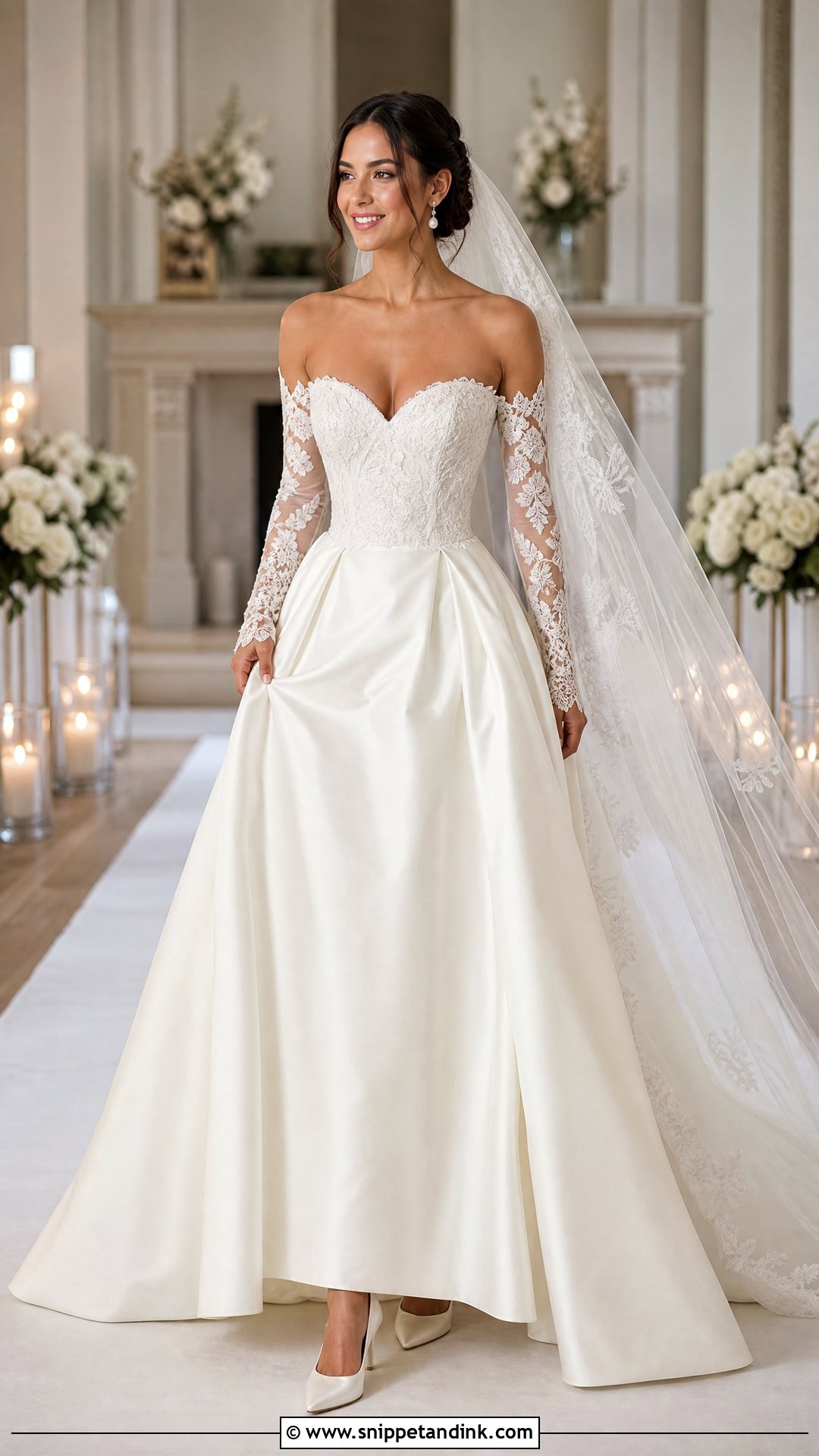
Detachable sleeves give two looks from one gown: lace or tulle sleeves for the ceremony, strapless for the party. A structured ball gown or A-line base looks complete either way. A cathedral veil, pearl earrings and satin pumps for the ceremony; a sparkly comb or statement earrings after the sleeves come off. Ask for hidden snaps or concealed hooks, and have your maid of honor practise removing them at the final fitting, because a ten-minute struggle in a corridor eats into your reception time.
18. Gold Embroidered Wedding Dress
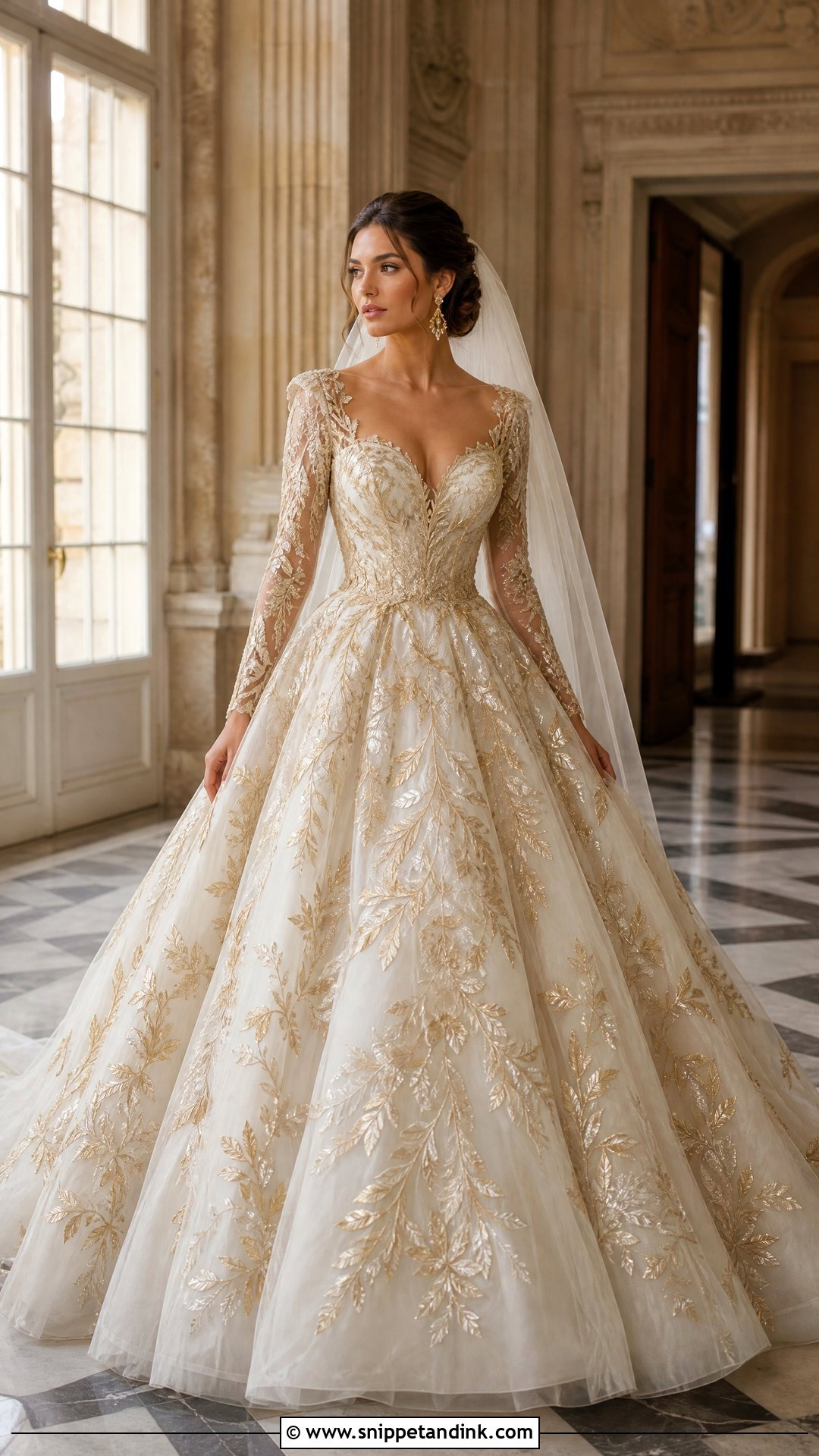
Gold embroidery gives a regal glow while the gown stays ivory. Delicate metallic vines, leaves or flowers over tulle need room to be seen, so an A-line or ball gown works best. Subtle gold earrings, neutral heels, a plain ivory veil and a smooth low bun complete it. Metallic thread is scratchier than silk, so feel the inside near the underarms and neckline; a soft lining can be added during alterations. Candlelit rooms flatter it, but make sure there’s enough light for photos to pick up the thread.
19. Bow-Back Satin Wedding Dress
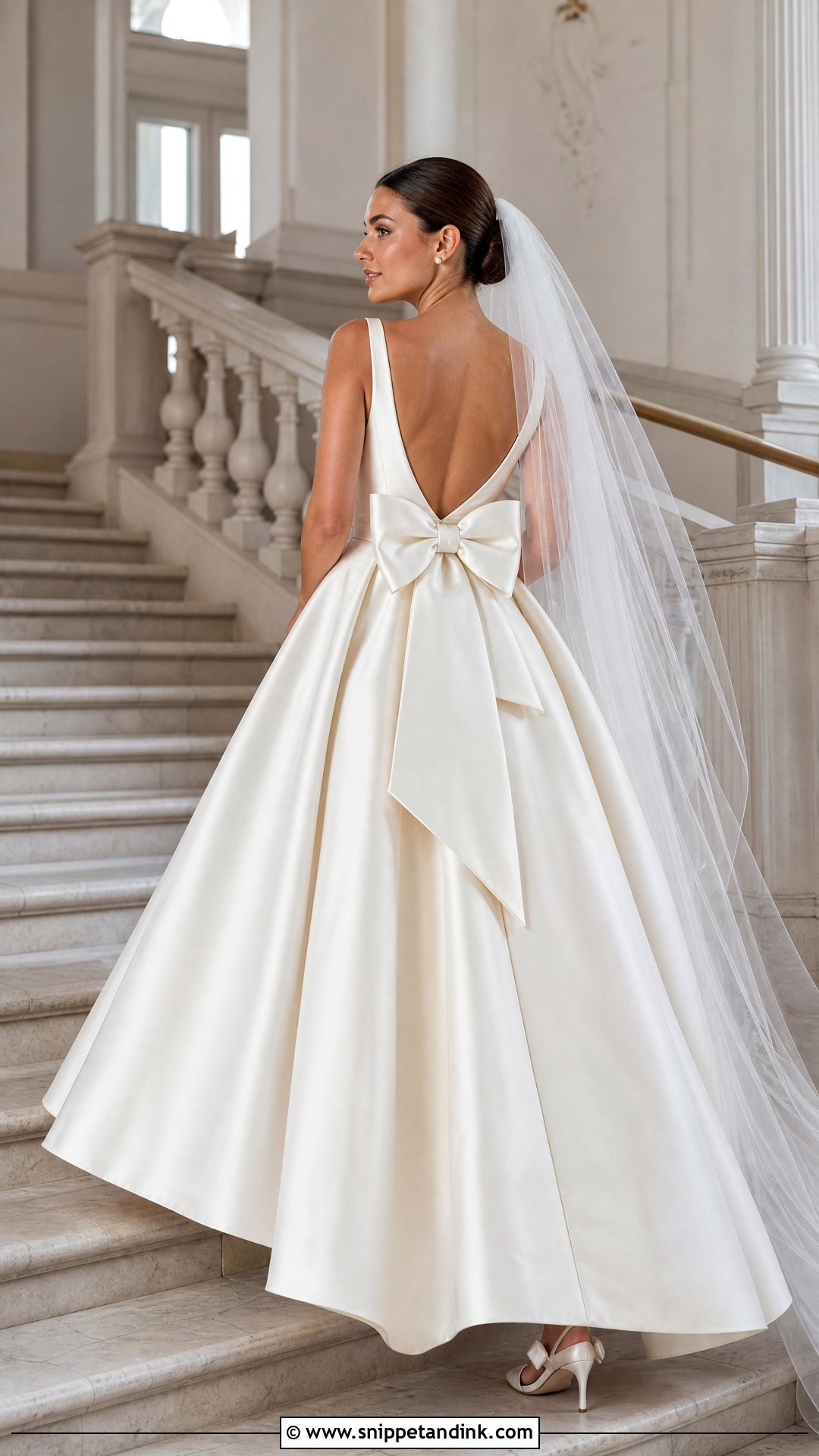
A large bow at the back turns plain satin into a statement, and it’s what guests see most during the ceremony. Choose a structured A-line or ball gown with a fitted bodice and a bow at the waist or top of the train. Pearl studs, satin pumps, a simple veil and a sleek bun keep attention on the bow. Sit down in it at the fitting. A bow at the waist can push you forward on a chair. If it’s removable, give one person the job of storing it safely before the dancing.


20. Cathedral Train Wedding Dress
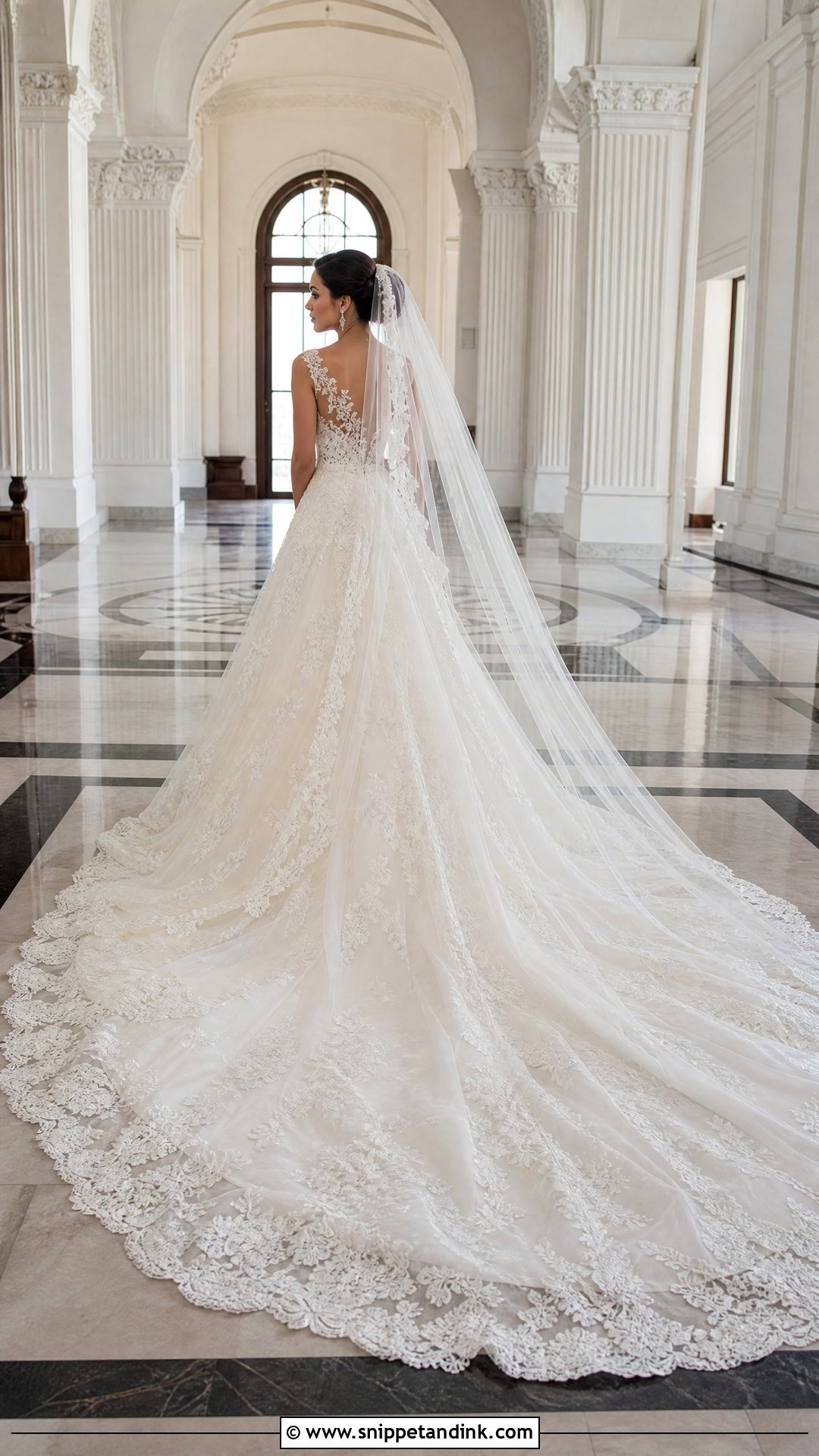
A cathedral train makes the entrance, and it can extend from satin, lace or floral tulle. Add a cathedral veil for the ceremony, then remove it for the reception. Comfortable heels, delicate earrings and a secure updo complete it. This train needs space: a wide aisle, a smooth floor and room to turn at the altar. A strong bustle is non-negotiable, because a long train carries real weight. Practise bustling it with a family member or attendant so they can do it quickly and confidently on the day.
Stairs, Car Doors and the Bathroom in a Full Skirt
Nobody talks about the logistics of wearing a fairytale gown until the bride is stuck in a car door. A few habits make the day much easier.
On stairs, lift the front of the skirt with both hands so you can see your feet, and let the back trail. Going down is harder than going up, so take it slowly and have someone behind you holding the train clear. For the car, sit down backwards onto the seat first, then swing your legs in, and let an attendant gather the skirt in after you. A larger car or a vintage hire with a wide door is worth it for very full gowns.
The bathroom is easiest facing the toilet, with a bridesmaid gathering the skirt from behind. Some brides wear a slip or bloomers under a big skirt for this reason. Practise once at home with the petticoat on, so the first try isn’t in a venue toilet in front of a queue.
When the skirt feels heavy by evening
Weight settles on the hips and waistband, not the shoulders, so a gown that feels fine for ten minutes can ache after six hours. Ask the seamstress to add a waist stay, an inner grosgrain band that fastens snugly and carries the skirt’s weight off the bodice. Hoop petticoats help too, since they hold the tulle away from your legs and make walking far easier than layers of net alone.
A Storybook Gown You Can Forget You’re Wearing
Fairytale romance comes in many forms: volume, lace, sparkle, embroidery, a sculpted waist, a flowing cape or a long train. Start with your venue, the season, how much you need to move and how formal the day is, then let the veil, shoes, jewelry and hair support the gown rather than fight it. Test the complete look at your fittings and move naturally in every piece. The magic shows best when you can forget you’re wearing something structured and simply enjoy the day.
You'll Like These Ideas:





Leave a Reply