
Pellikuthuru is the morning a Telugu bride is blessed, anointed with turmeric and readied for her wedding, and I love dressing it because it asks for two things at once: tradition and washability. Elders apply turmeric and oil, flowers are everywhere, and the photographer stands close the whole time. The twenty looks below cover rich silk sarees, light lehengas, classic half sarees and a few modern drapes, each with the blouse, jewelry, hair, footwear and makeup worked out. My first question to any bride is whether turmeric will touch the outfit she’s wearing, because that one answer decides the fabric. If you’re changing after the ritual bath, the second outfit is where heavier silk, layered necklaces and fuller hair ornaments belong.

Two Outfits or One? Planning Around the Nalugu
Most Pellikuthuru mornings follow the same arc in some form: elders apply turmeric paste and oil, the bride has the auspicious bath, and then she is dressed again for the blessings and the rest of the function. Customs vary by family and region, so confirm the order with whoever is running the ceremony. That answer shapes your wardrobe more than any color decision.
When I plan two outfits
- Turmeric and oil will touch the fabric, and the main saree is silk, tissue or an heirloom.
- The photographs after the bath matter most to the family, so the second look can carry the heavier jewelry.
- The function runs into the evening and you want to feel fresh for the later guests.
For the first outfit I choose cotton or a light cotton-silk in yellow or another warm shade that forgives stains, simple gold or floral jewelry that can be wiped, and a loose braid that washes out easily. One saree for the whole morning only works when the turmeric is symbolic, a few touches rather than a full application, and that is worth asking about early.
1. Yellow Kanjivaram Saree Pellikuthuru Look
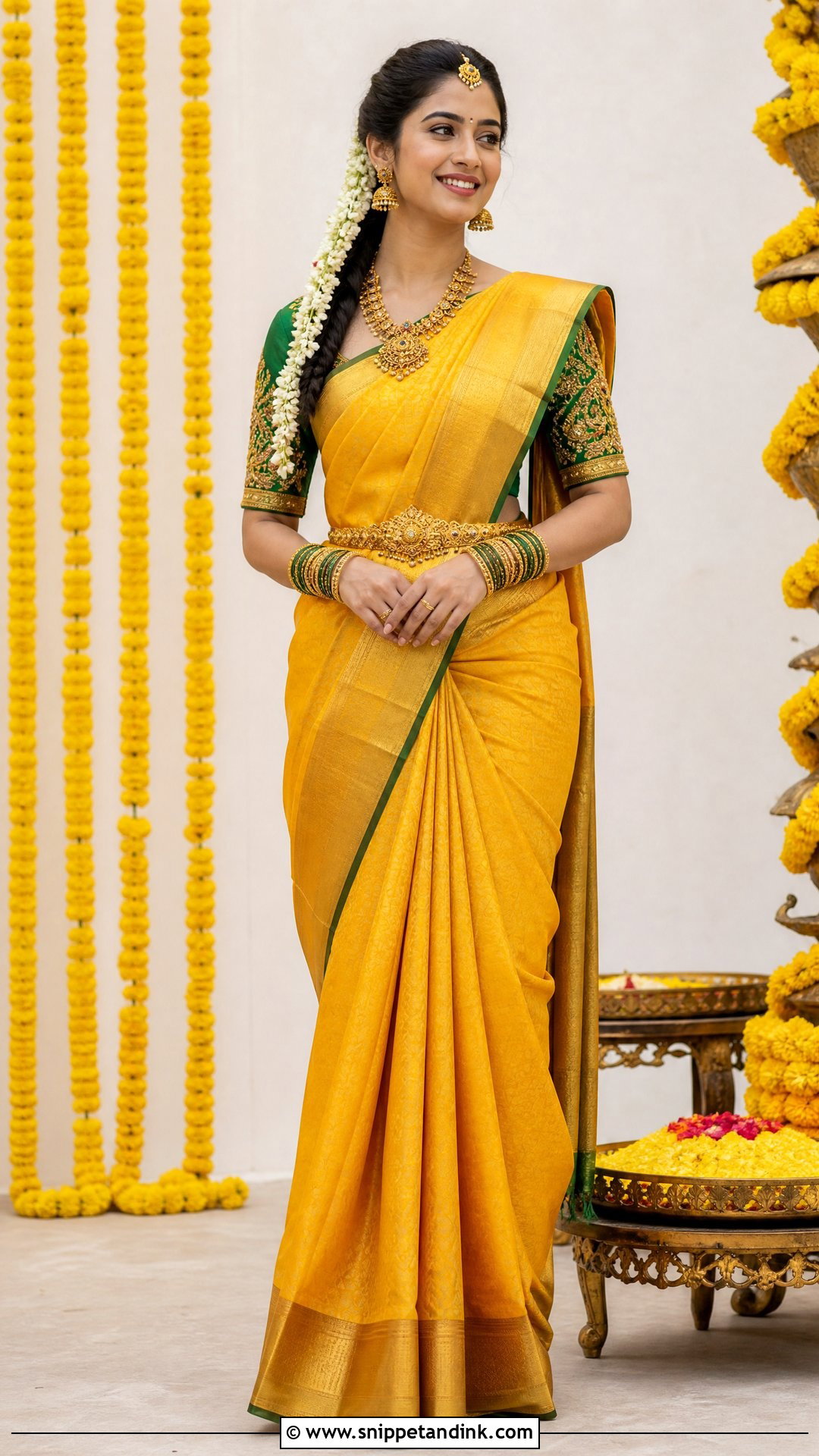
Yellow Kanjivaram is the classic morning choice, and the restraint is in the border. Turmeric yellow or mango yellow with a narrow gold zari border feels festive without the weight of a wedding silk, and a green, pink or red elbow-sleeve blouse gives contrast. Real Kanjivaram is heavy, and pure zari doesn’t take kindly to wet paste, so I either keep it for the part of the morning after the turmeric or lay a cotton towel over the pallu while the elders work. A waist-length jasmine braid, a short gold necklace, jhumkas, glass bangles and an optional vaddanam finish it, with low gold sandals for long standing. Makeup stays light: waterproof liner, a small red bindi and a soft pink lip.
2. White And Red Saree Pellikuthuru Look
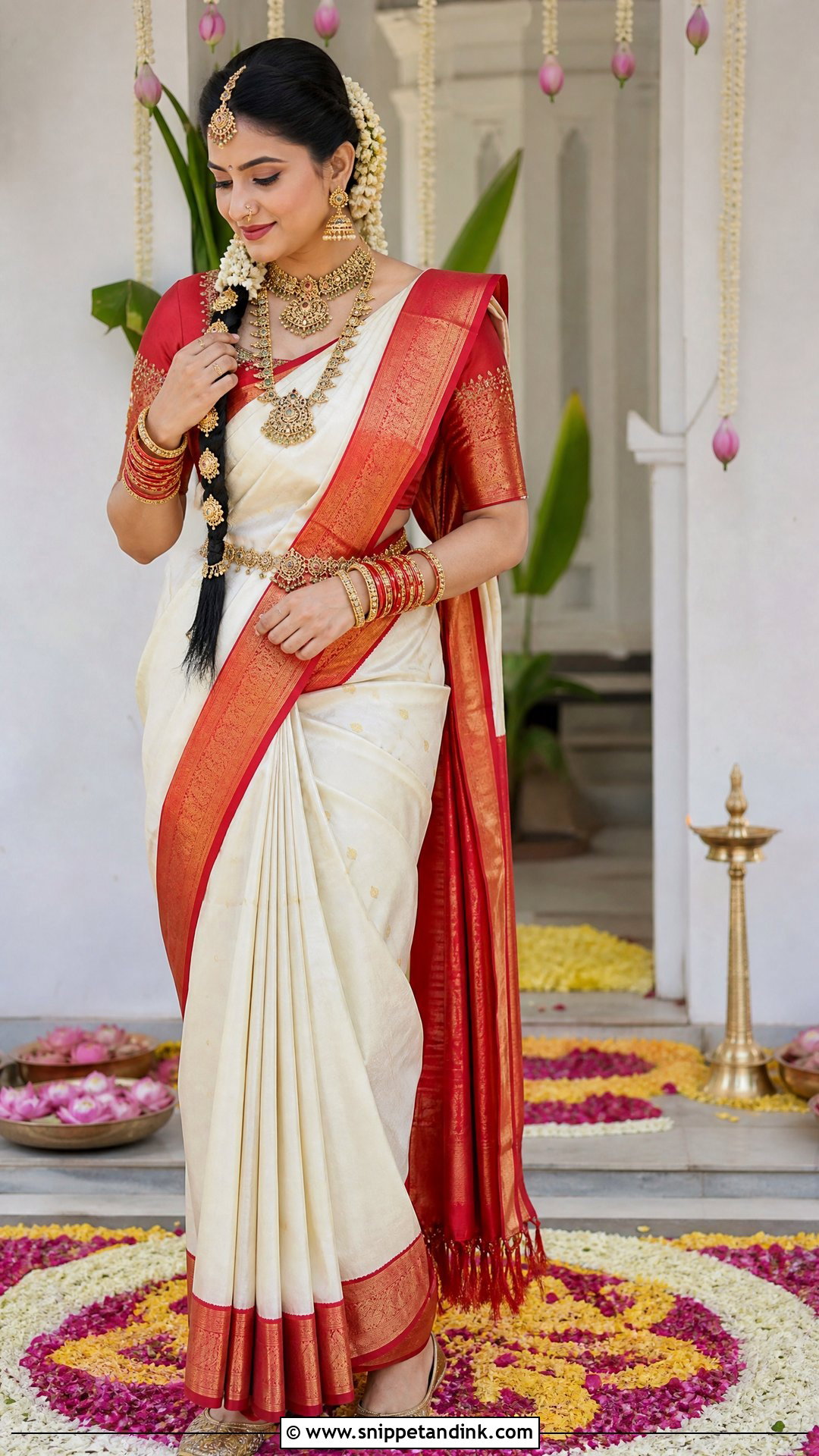
Off-white with a red border is the saree I suggest when a bride wants the outfit to feel ceremonial rather than bridal-heavy. Choose silk or handloom with a red border and a little gold, and pair it with a fitted red elbow-sleeve blouse that stands out against the flowers. On white, turmeric shows instantly and stubbornly, so in my book this is a post-bath saree, never a turmeric one. Pin the pleats neatly in a traditional drape, then add temple jewelry, red and gold bangles, gold flats and a center-parted jasmine braid. Makeup stays crisp: a small bindi, kohl-lined eyes, softly flushed cheeks, and a muted red lip pulled from the border.
3. Green Silk Saree Pellikuthuru Look
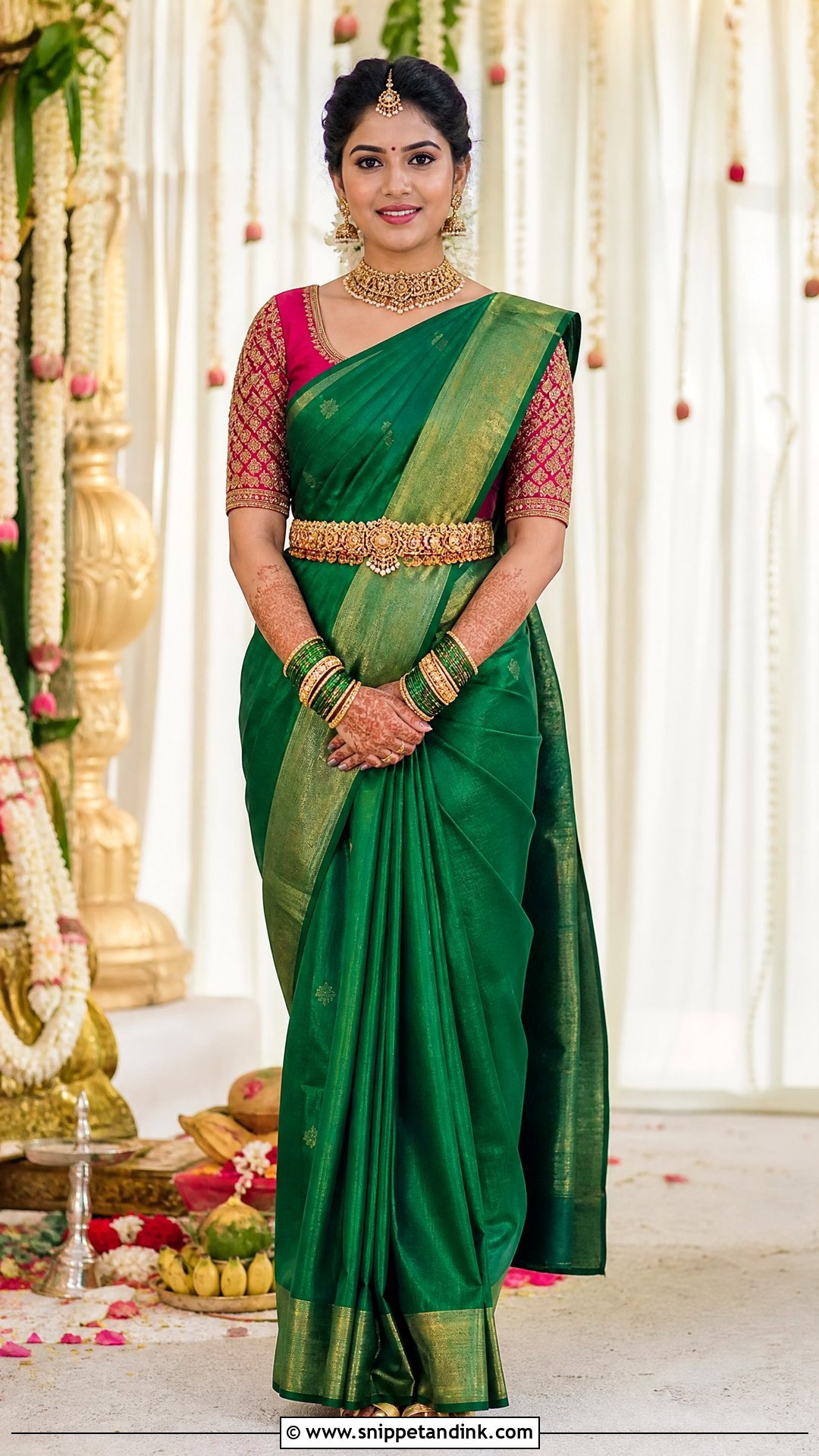
Green against marigolds and turmeric is a pairing Telugu families have trusted for generations, and I understand why every time I look through the photographer’s frame. Leaf, parrot or emerald green with a gold border, worn with a magenta blouse, gives the classic contrast. On a hot morning I cut the temple jewelry back to a choker, medium jhumkas, bangles and a small waist belt, because a stack of necklaces traps heat and leaves marks on the neck. Hair goes into a long braid finished with jasmine strings or a compact floral bun, with low gold sandals hidden under the hem. Defined eyes, a round bindi and a berry-pink lip keep it clearly lighter than the wedding look.
4. Maroon Silk Saree Pellikuthuru Look
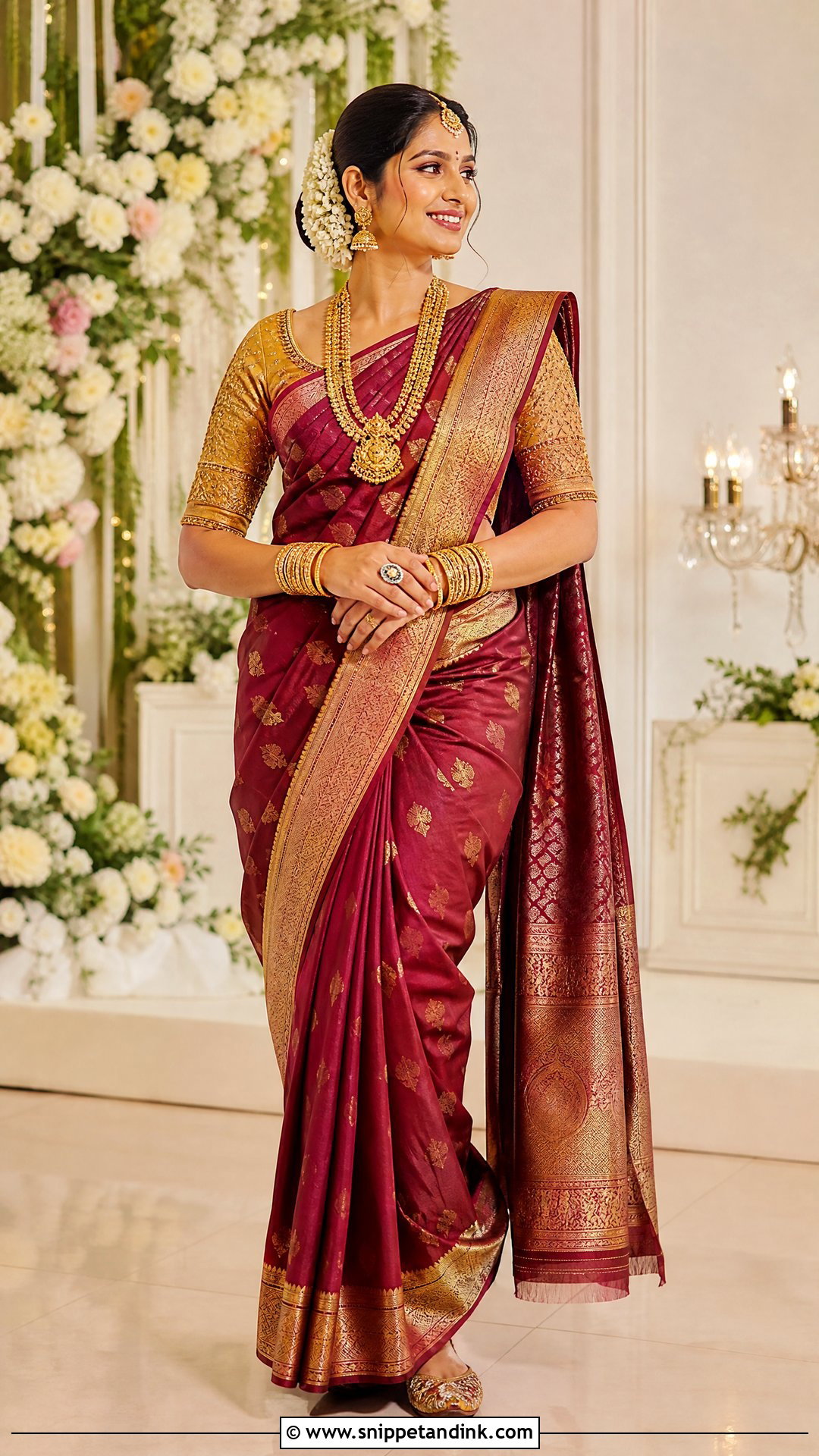
Maroon is my pick for an evening function or the gathering after the turmeric, when the light drops and the color can carry some weight. I choose antique-gold zari over bright, reflective work; it reads richer under warm bulbs and suits a family-scale ceremony. A matching blouse is the safe route, and a mustard-gold blouse with traditional sleeves adds contrast. Wear a layered gold necklace, statement earrings, coordinated bangles and a small nose pin if you already wear one, then a sleek jasmine-covered bun so the neckline shows. Gold embroidered flats, softly contoured makeup, brown kajal and a brick-red lip complete it. Pin the drape firmly, since seated blessings shift a loose pallu.
5. Pink Organza Saree Pellikuthuru Look
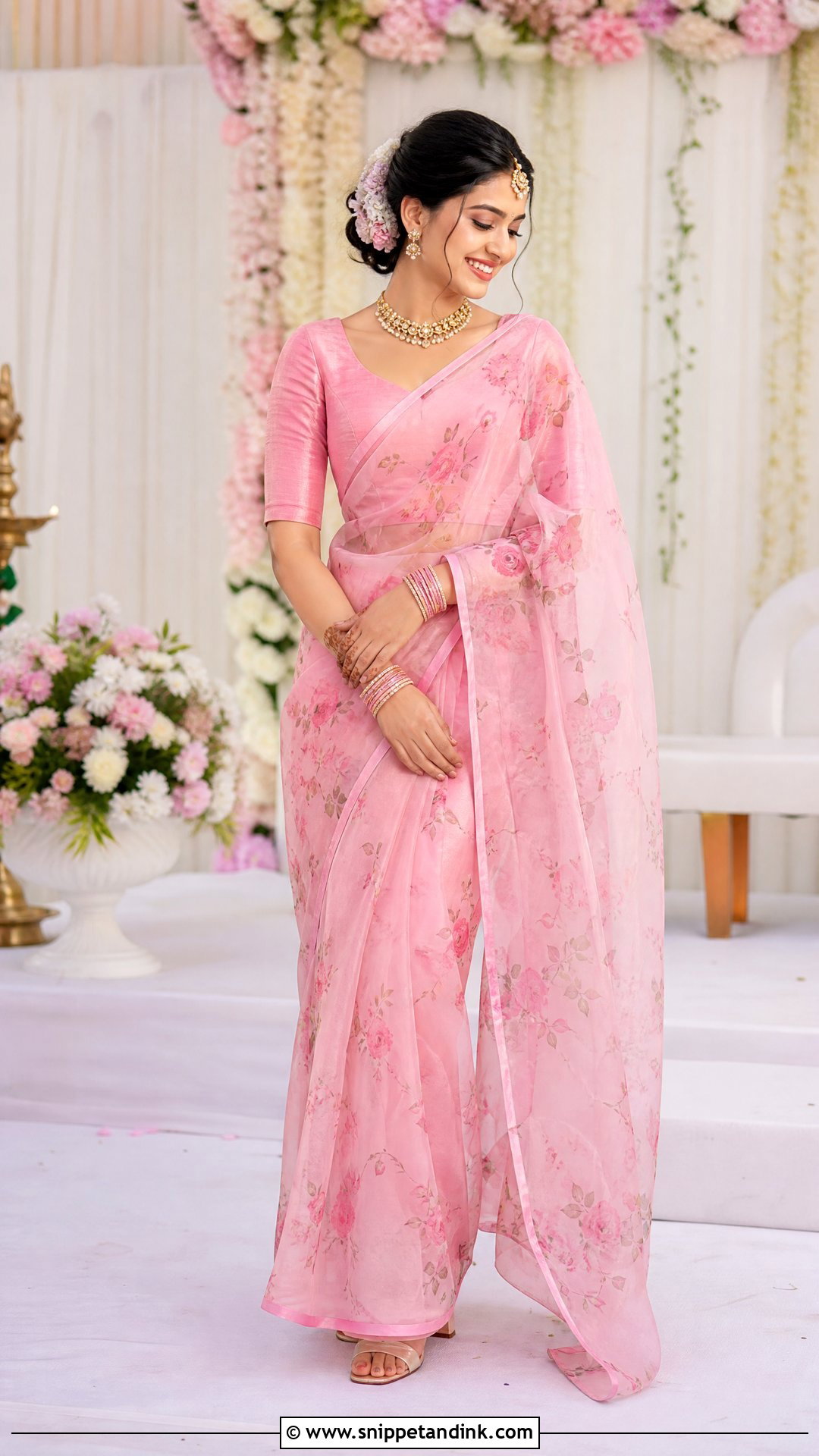
Organza is the lightest way to look dressed up, though it won’t drape itself. Rose, blush or lotus pink with fine floral embroidery and a narrow gold border is the look here, and a structured raw-silk blouse gives the silhouette the edges the airy fabric lacks. Organza is crisp and springs outward rather than hanging, so I use more pins than usual at the shoulder and waist and press the pleats with a cool iron through a cloth before draping. Pearl and gold jewelry, a floral bun, slim bangles and low block heels finish it, with fresh skin, rosy cheeks and a pink-nude lip. Indoors against pastel flowers it shines; outdoors in a breeze it fights you all morning.
6. Floral Printed Saree Pellikuthuru Look
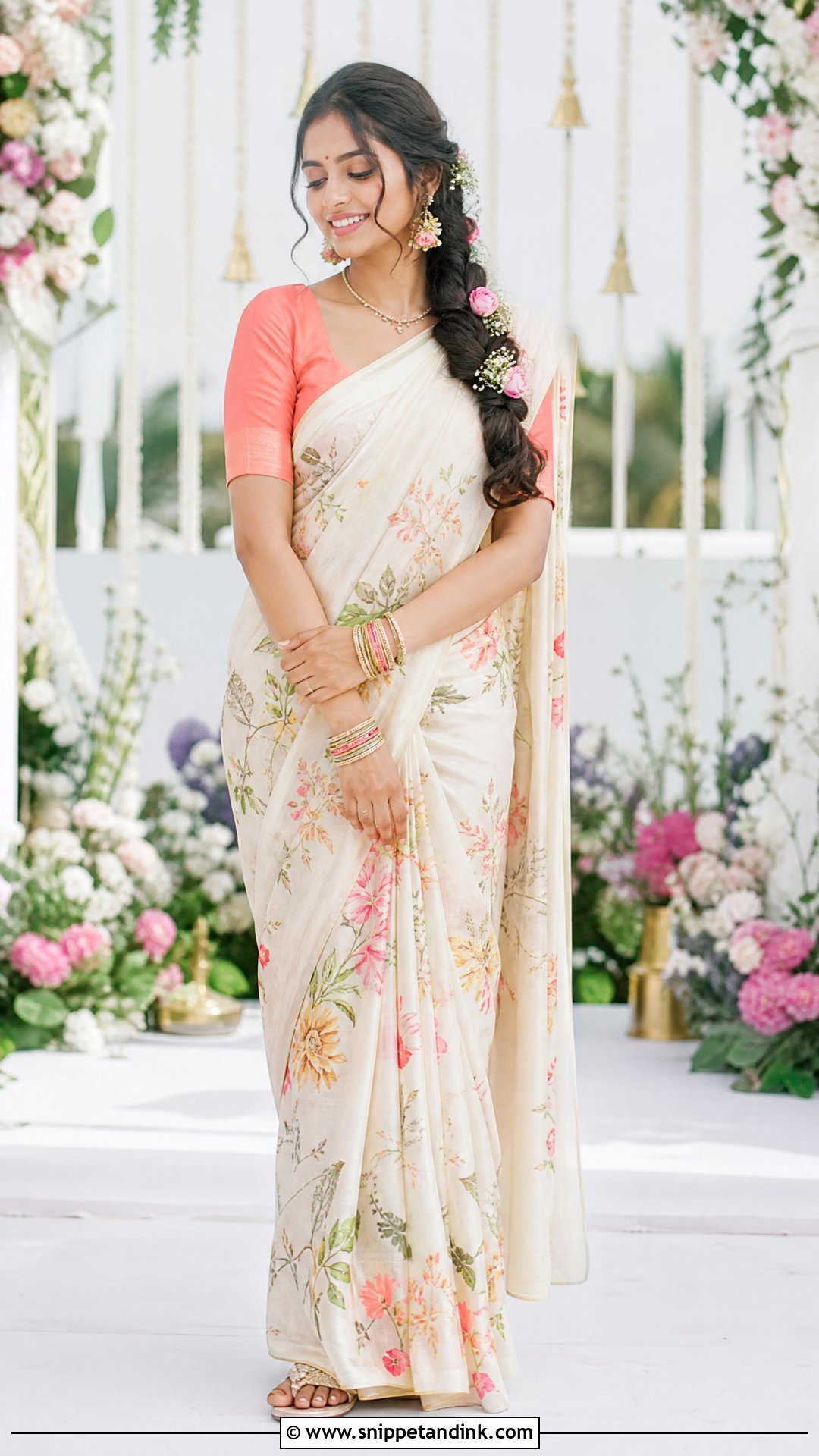
A printed saree relaxes the whole mood, which suits a small home ceremony or a garden setup. I look for medium-scale flowers on light silk, chiffon or organza, since tiny prints blur into texture in full-length photographs and huge ones swallow a petite bride. Yellow with pink blooms or ivory with green leaves both read festive. The blouse should be plain, in one of the print’s secondary colors. Floral earrings, a simple necklace, mixed bangles, embroidered flats and a loose braid with scattered flowers are plenty; add more and the print stops being the point. Waterproof kajal and a lip stain will hold through the morning.
7. Traditional Half Saree Pellikuthuru Look
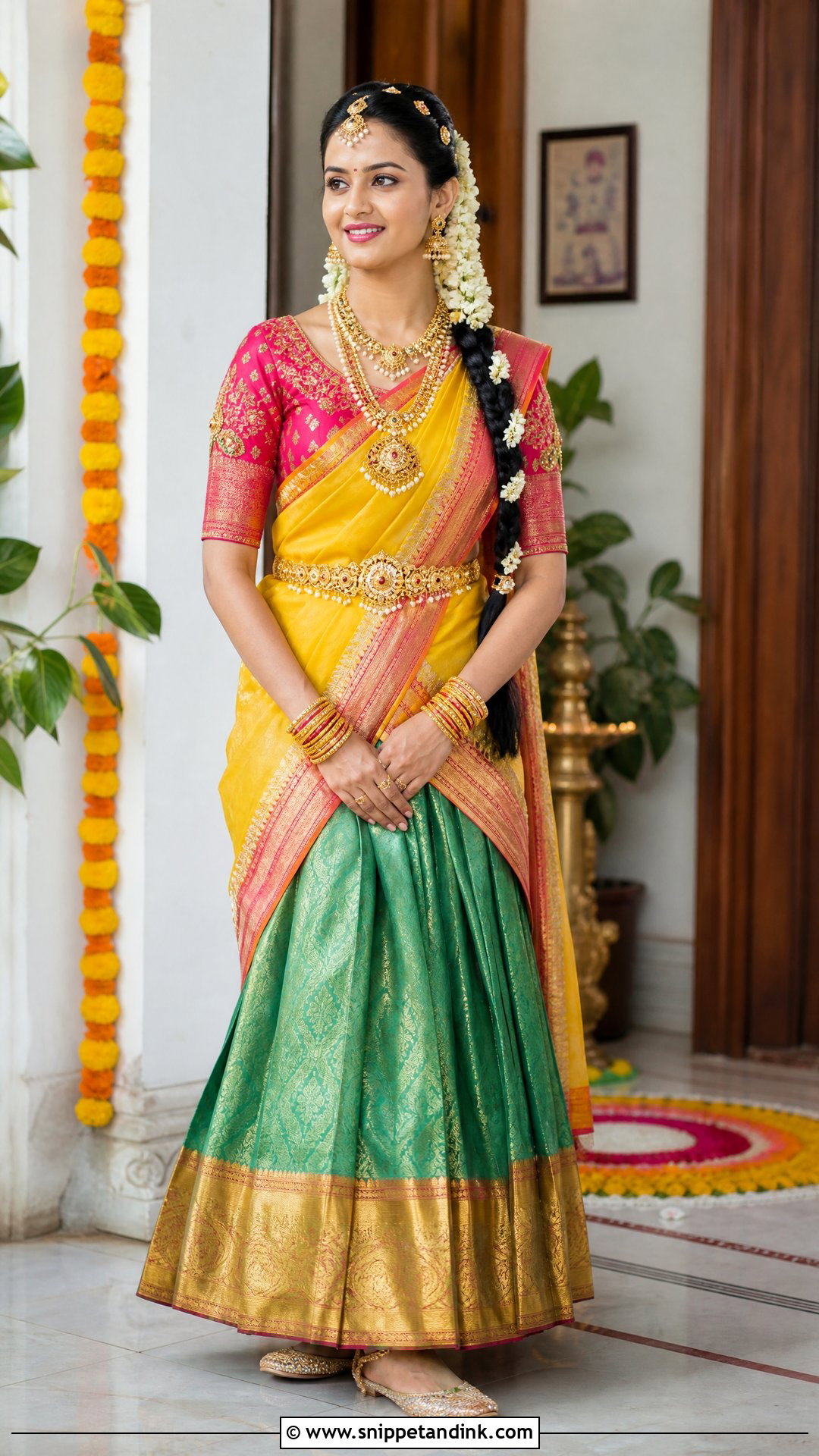
A traditional half saree is what many Telugu girls grew up wearing, and that familiarity shows in how easily a bride moves in it. It’s three pieces: a silk langa, a fitted blouse and a contrasting voni draped like a pallu. A green langa with a pink blouse and yellow voni is the vibrant classic; red and gold is the formal version. The vaddanam earns its place here because it anchors the voni at the waist, so I fasten it last, once the drape is set. Temple jhumkas, a short necklace, stacked glass bangles, anklets, embellished flats and a long braid with flowers and gold braid ornaments complete it, with defined eyes, a red bindi and a rose lip.
8. Pastel Lehenga Pellikuthuru Look
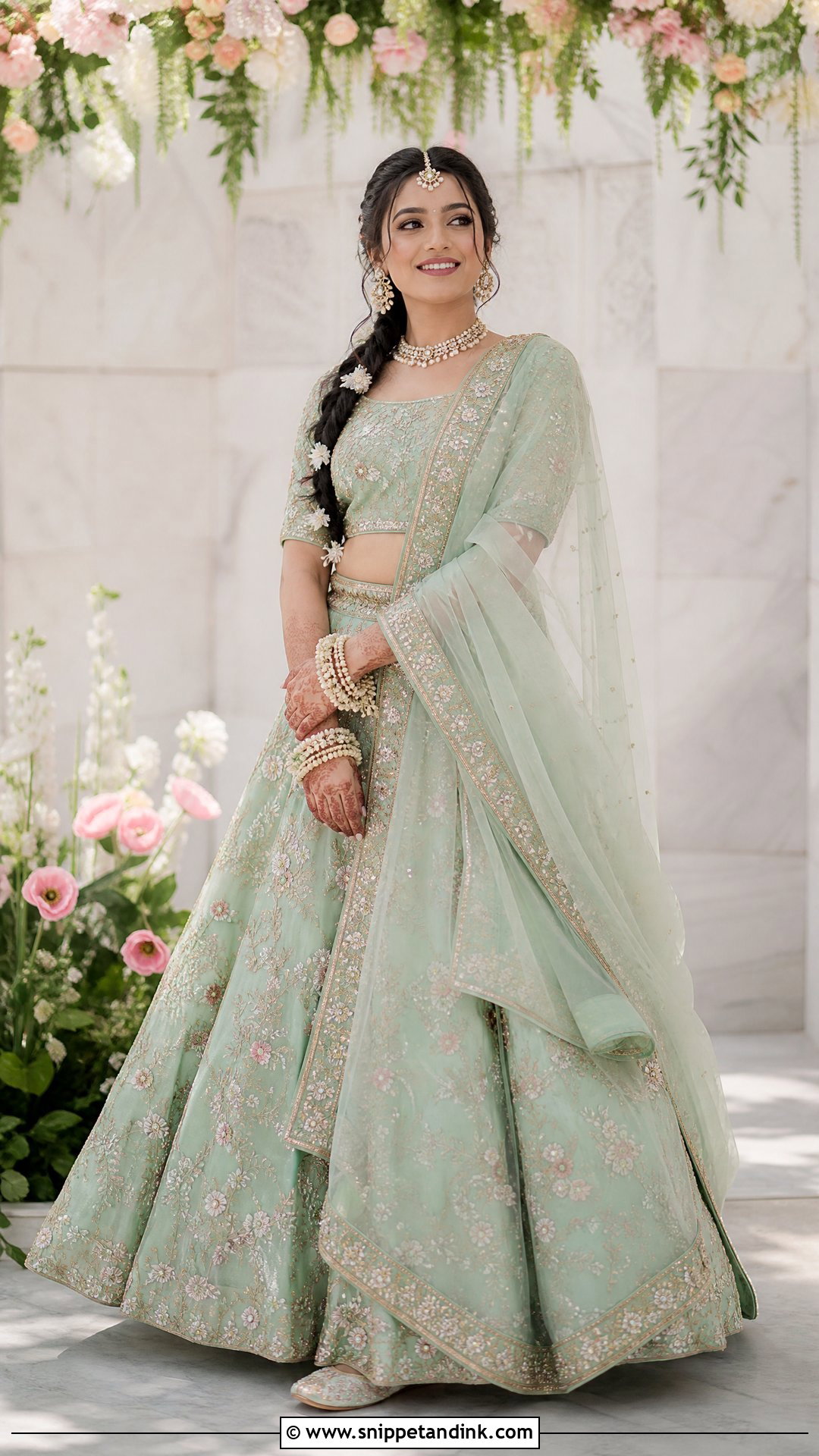
A lehenga suits the bride who has never draped a saree and doesn’t want her first attempt to happen in front of every relative. Mint, peach, powder blue or blush in a light embroidered skirt, with a modest short-sleeve blouse and a breathable dupatta pinned over one shoulder, keeps the morning simple. The skirt needs enough width for sitting cross-legged. I have brides sit on the floor at the fitting, because a narrow lehenga that’s fine standing can strain at the seams once the legs fold. Floral jewelry, pearl bangles, small earrings and juttis go with a soft braid or low floral bun, peach blush, waterproof mascara and a natural pink lip.
9. Yellow Lehenga With Floral Jewelry Pellikuthuru Look
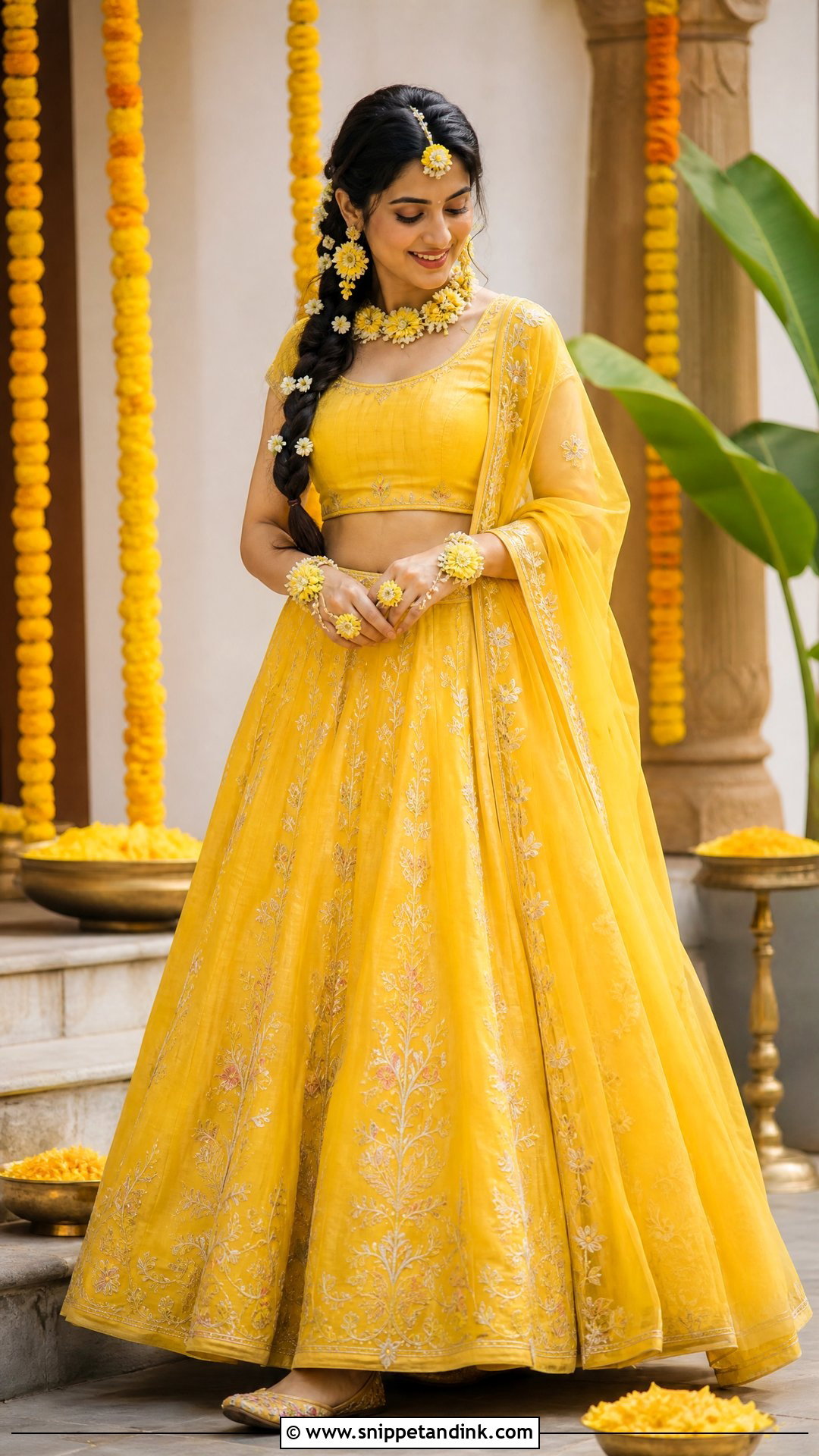
Yellow on turmeric day is as practical as it is symbolic: stray paste simply disappears into it. A flared cotton-silk or light raw-silk skirt with a matching blouse and a sheer dupatta lets her move freely, and small mirror work, gota or floral embroidery survives a gentle wash far better than heavy zardozi. Fresh or handcrafted floral jewelry, bangles and hair flowers suit the mood. I put brides in flat juttis they can step out of in a second, since many rituals are done barefoot. A side braid or half-up style keeps hair off the face. Makeup stays minimal and water-resistant because oil and turmeric are coming, finished with a small bindi and a pink lip stain.
10. Ivory Tissue Saree Pellikuthuru Look
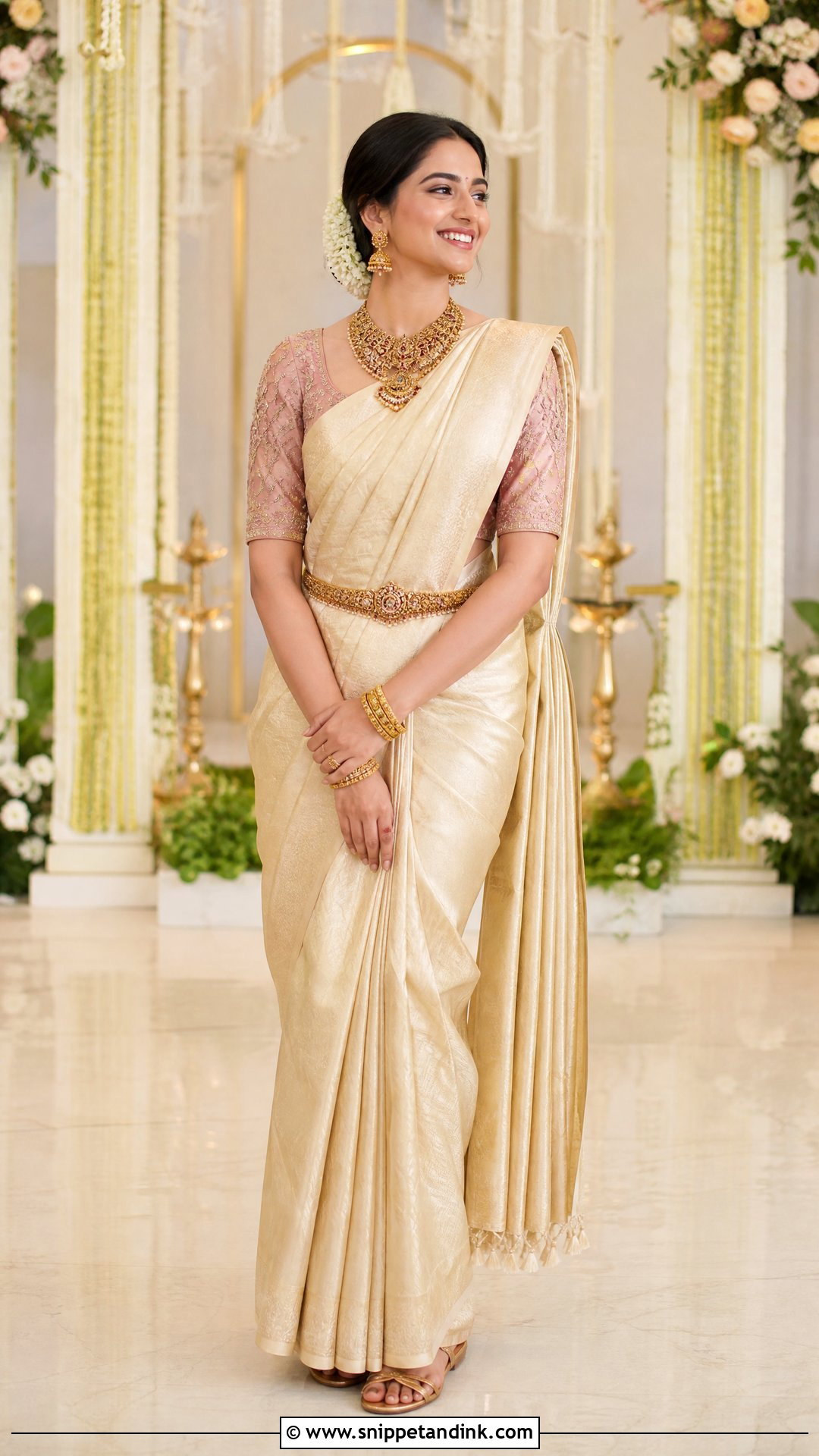
Tissue silk glows under indoor lights, which is why I keep ivory tissue for a formal function held inside. Choose a soft, manageable tissue with a gold border; the very stiff ones crease sharply at the knee after one seated ritual and refuse to fall back. A gold blouse keeps it monochrome, while muted pink, green or maroon gives gentle contrast. Antique-gold jewelry, a slim waist belt, gold flats and a center-parted bun ringed with jasmine complete it. Pale fabric can drain color from the face. Bronze eye makeup, softly highlighted skin, a red bindi and a rose-brown lip bring the warmth back. Pin the pleats carefully, because tissue slips.
11. Orange Silk Saree Pellikuthuru Look
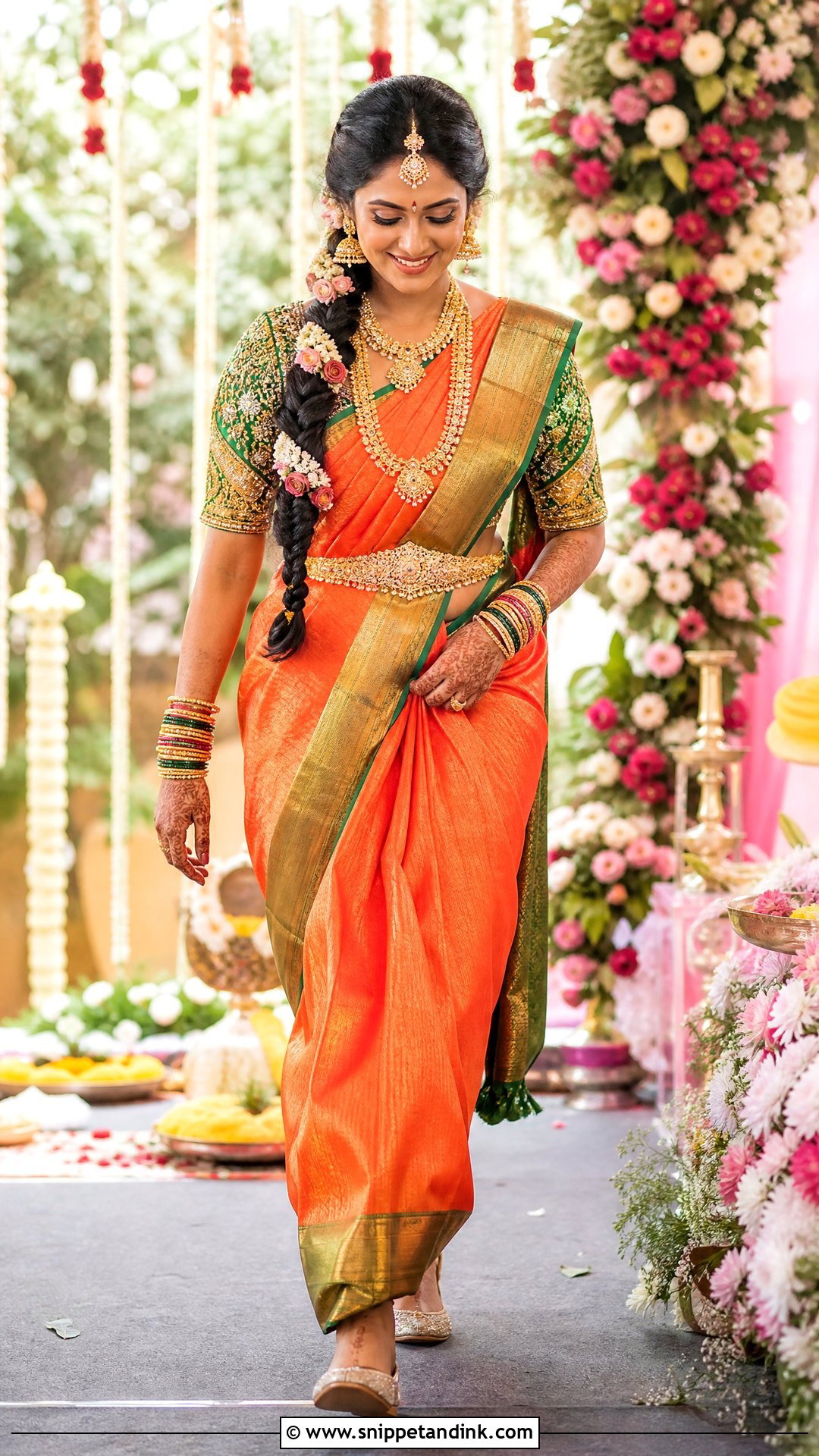
Orange is the color I suggest to brides who find yellow too expected. Burnt orange, tangerine or coral-orange silk with a pink or green border reads energetic in daylight, and a contrasting blouse makes bangles and flowers easier to match. I build everything else by repeating what’s already in the border: if the border is pink, the roses in the braid are pink and so is the blouse. A medium gold necklace, jhumkas, stacked bangles, a slim vaddanam and cushioned gold flats carry her through a long morning. Keep the skin lightly matte, since orange bounces warmth onto the face, then add kajal, a neat bindi and a coral lip.
12. Red And Gold Saree Pellikuthuru Look
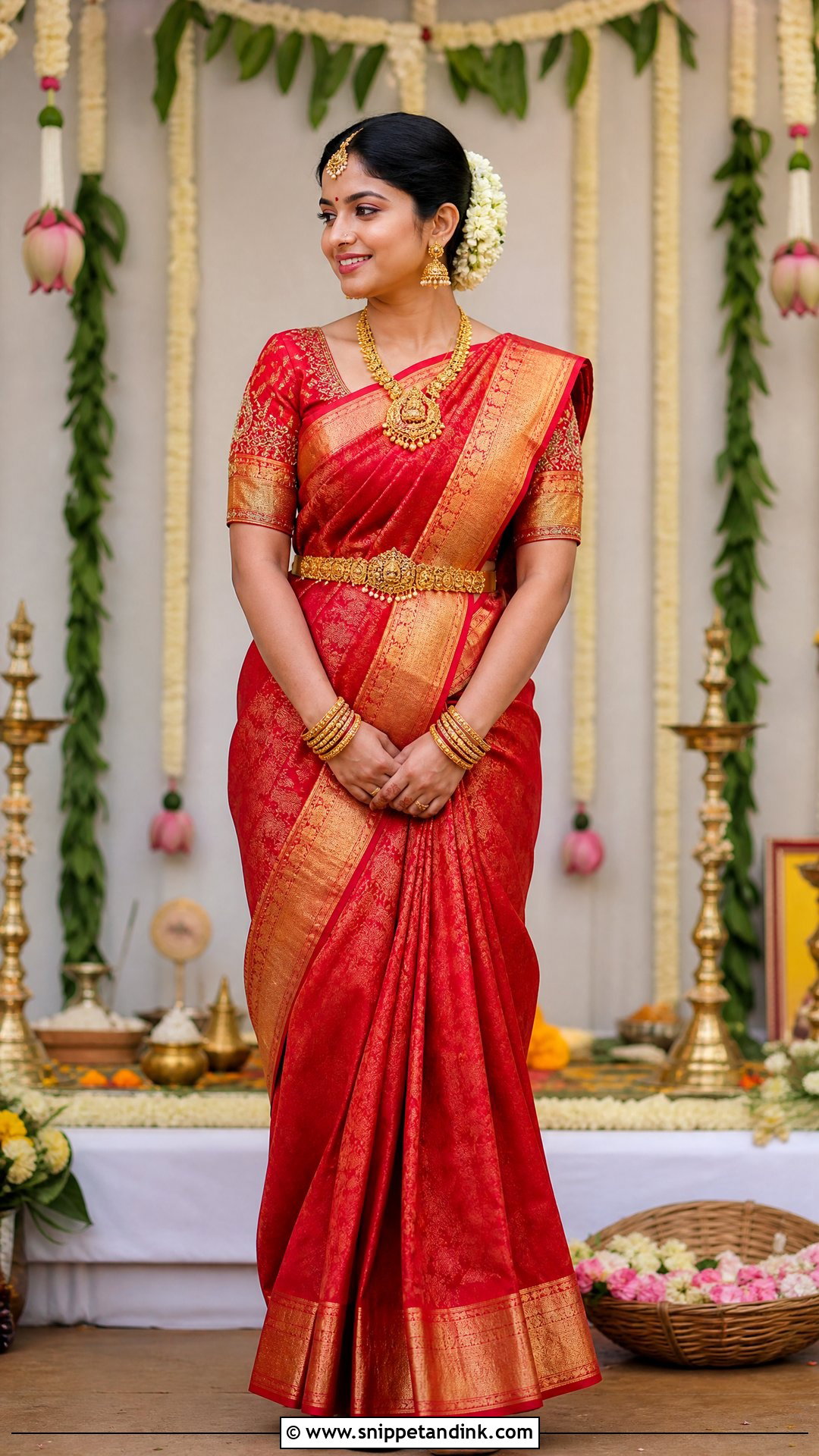
Red and gold is the most ceremonial option here, and my job is to stop it looking like a rehearsal for the wedding. Choose red silk with medium gold borders and woven motifs, then step everything else down: a simpler blouse and fewer jewelry layers, such as a short temple necklace, coordinated earrings, gold bangles and a small nose pin. I set the pleats slightly wider than for a standing event, because she’ll be seated for much of it. Gold flats and a jasmine-covered low bun complete it, with defined brows, kohl, a red bindi and deep rose lipstick. If the wedding saree is also red, move this one toward vermilion or coral-red so the albums show two different days.
13. Pastel Blue Saree Pellikuthuru Look
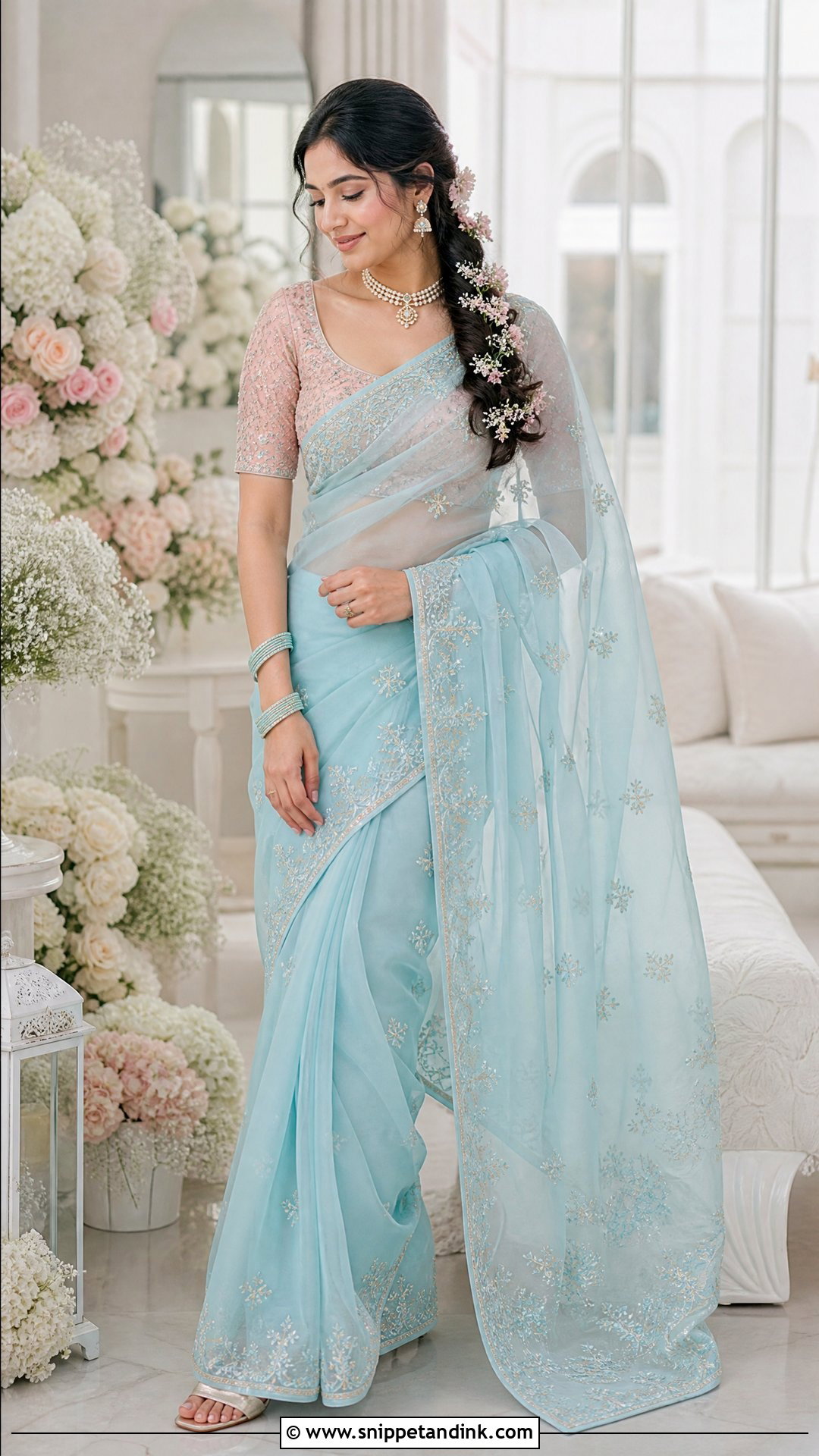
Pastel blue is the quiet rebel in this list, a calm break from yellow, red and green. Powder-blue silk, organza or linen-silk with a silver-gold border suits a bright indoor function, and a blush, ivory or deeper blue blouse gives definition. I mix pearls with gold so the cool color doesn’t drift too modern. Matching bangles, silver-gold sandals and small flowers in a loose braid finish it, with brown liner, pink blush and a rose-nude lip. A tiny red or maroon bindi is the one traditional accent I insist on. Skip anything too sheer, because pale organza can show the petticoat line in daylight.
14. Purple Silk Saree Pellikuthuru Look
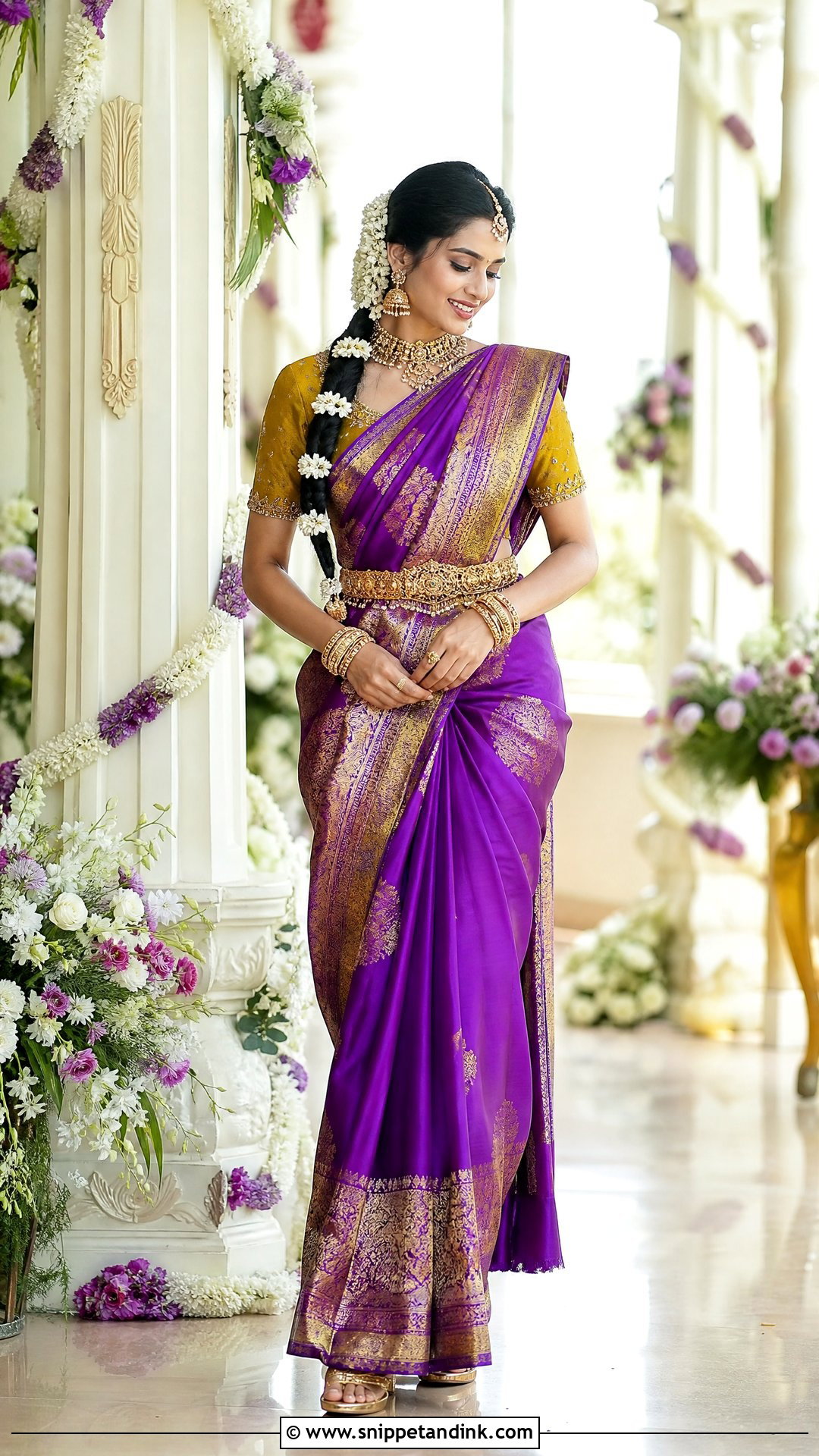
Purple is saturated enough to swallow a bride’s face if the makeup tries to match it, so I deliberately don’t. Plum, grape or royal purple with a gold zari border pairs with a mustard, pink or green blouse, and antique temple jewelry stands up to the depth of color: a choker, jhumkas and coordinated bangles. A slim waist belt adds structure around the pleats, and gold block heels give a little height while staying stable. Wear a long braid with jasmine and gold ornaments, or a clean floral bun if the function is formal. For the face, softly defined eyes, a small bindi, warm blush and a muted berry lip, all a shade warmer than the fabric.
15. Handloom Cotton Saree Pellikuthuru Look
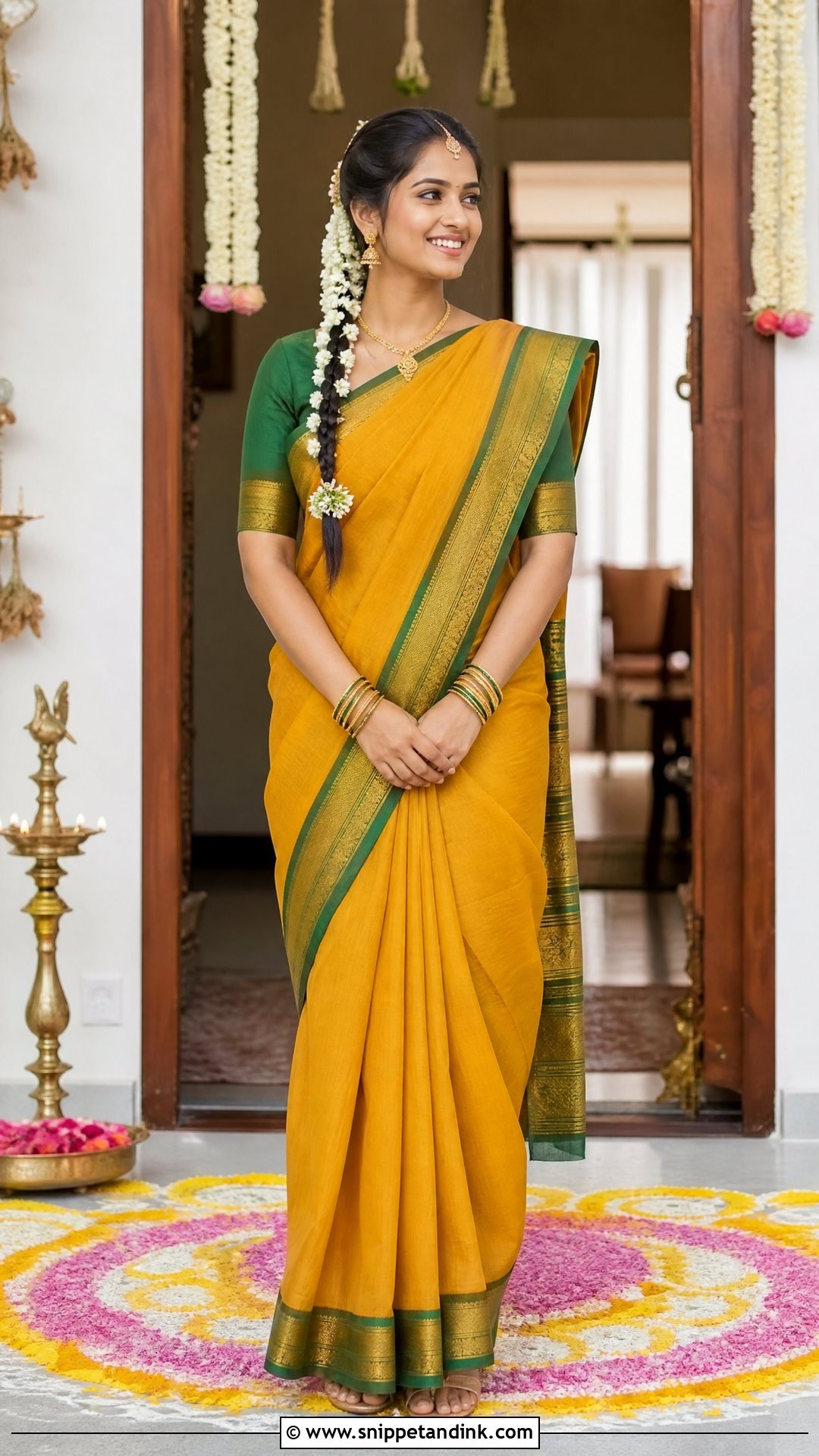
Handloom cotton is my honest favorite for the turmeric itself. It breathes in the heat, it washes at home, and a little yellow left behind becomes a keepsake instead of a ruined silk. Mustard, green, rust or ivory with a contrasting woven border all work, paired with a blouse cut loose enough under the arm for blessings. Light gold jewelry, glass bangles, small jhumkas, flat sandals and a braid with a short jasmine garland suit the fabric. A lightly starched cotton holds its pleats far better than a soft one, so I steam it before draping and pin discreetly at the shoulder and waist. Natural makeup with lined eyes and a soft red lip is enough.
16. Bandhani Saree Pellikuthuru Look
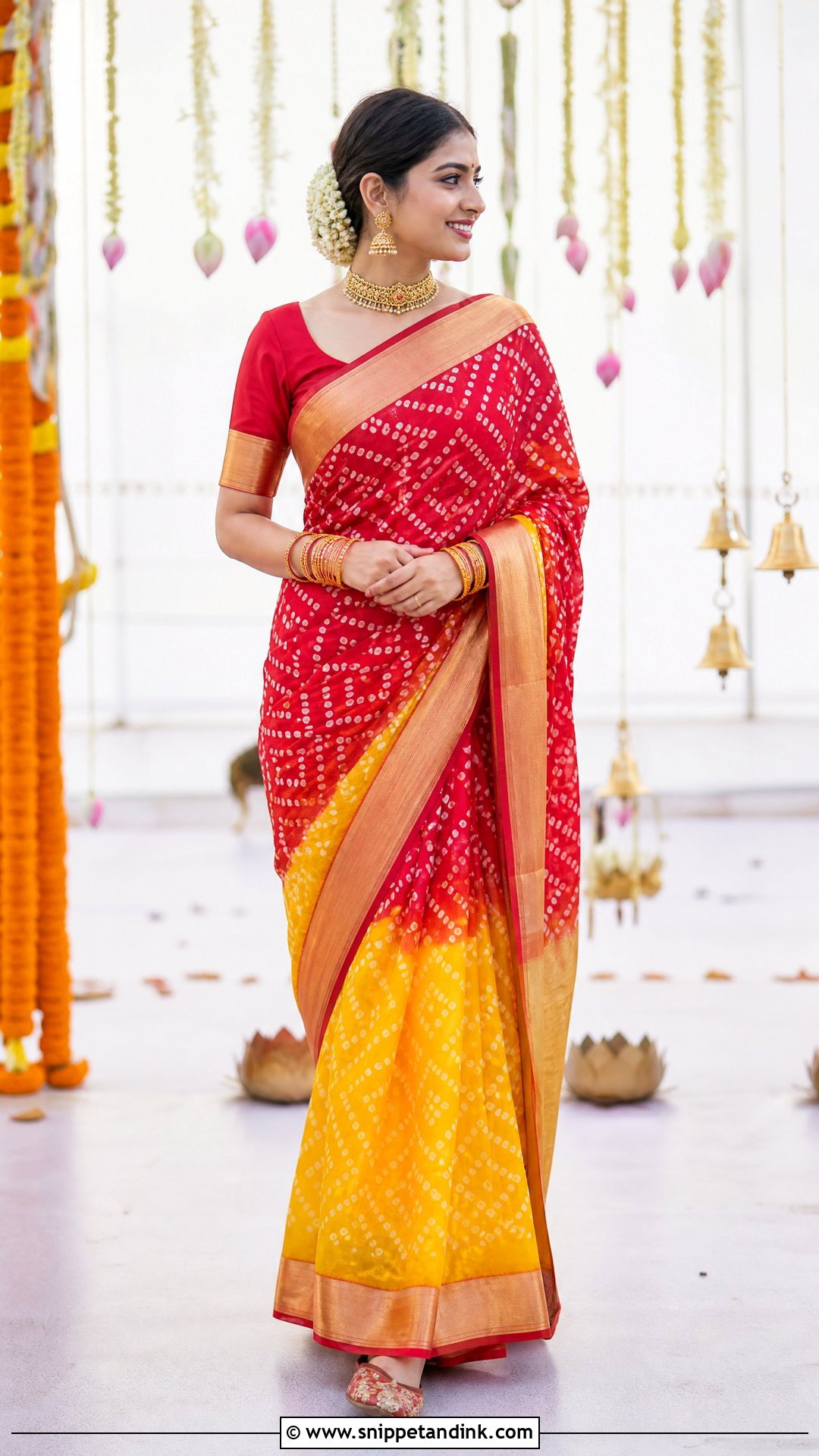
Bandhani is tie-dyed in Gujarat and Rajasthan, so it carries another region’s craft into a Telugu ceremony, a thoughtful nod when two families’ traditions meet. Red, yellow, green or pink with a simple gold border keeps it celebratory, and a plain silk blouse matched to the border or to one of the dots settles the pattern. The fabric keeps a slight crinkle from the tying, so it drapes softer and bulkier than silk; I fold the pleats a touch narrower so the waist doesn’t thicken. With an active pattern, jewelry stays clean: a choker, jhumkas, bangles and one statement ring. Embroidered flats, a neat braid or low bun with jasmine, a defined bindi, kajal, peach blush and a berry lip complete it.
17. Pre-Draped Saree Pellikuthuru Look
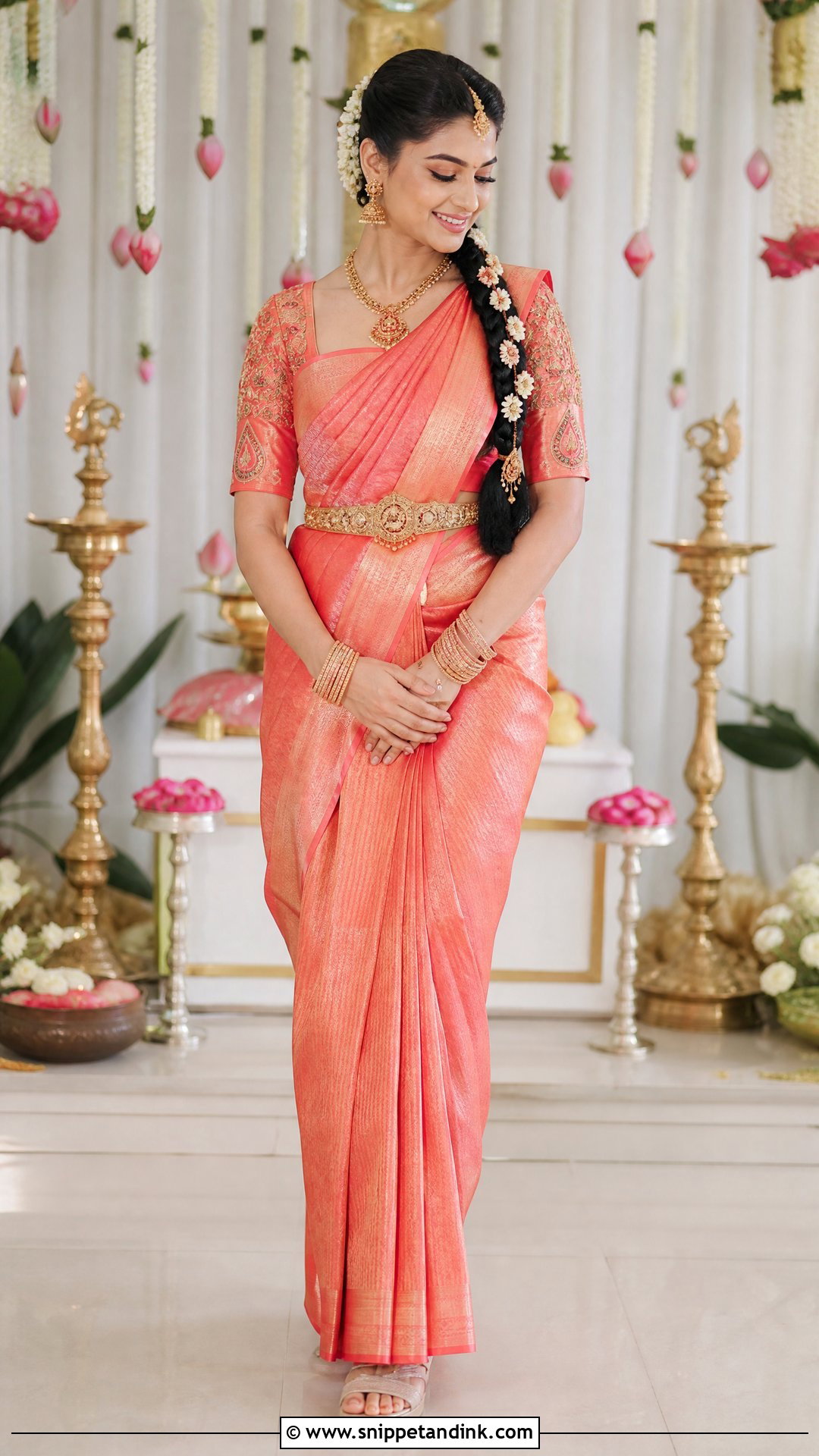
A pre-draped saree is what I recommend when the schedule holds several rituals and outfit changes with no time for a re-drape. It gives the look of a classic drape with stitched pleats and a fastened waist. Choose silk or georgette in yellow, green, pink or coral with clean pleats and a pallu you can manage. The two checks I never skip: hem length measured with the actual sandals on, and the waist closure tested sitting, standing and bending forward, because that’s where poorly made pre-stitched sarees gape. A waist belt, medium gold necklace, jhumkas, bangles, cushioned sandals, a sleek flower braid and transfer-resistant makeup finish it.
18. Floral Embroidered Lehenga Pellikuthuru Look
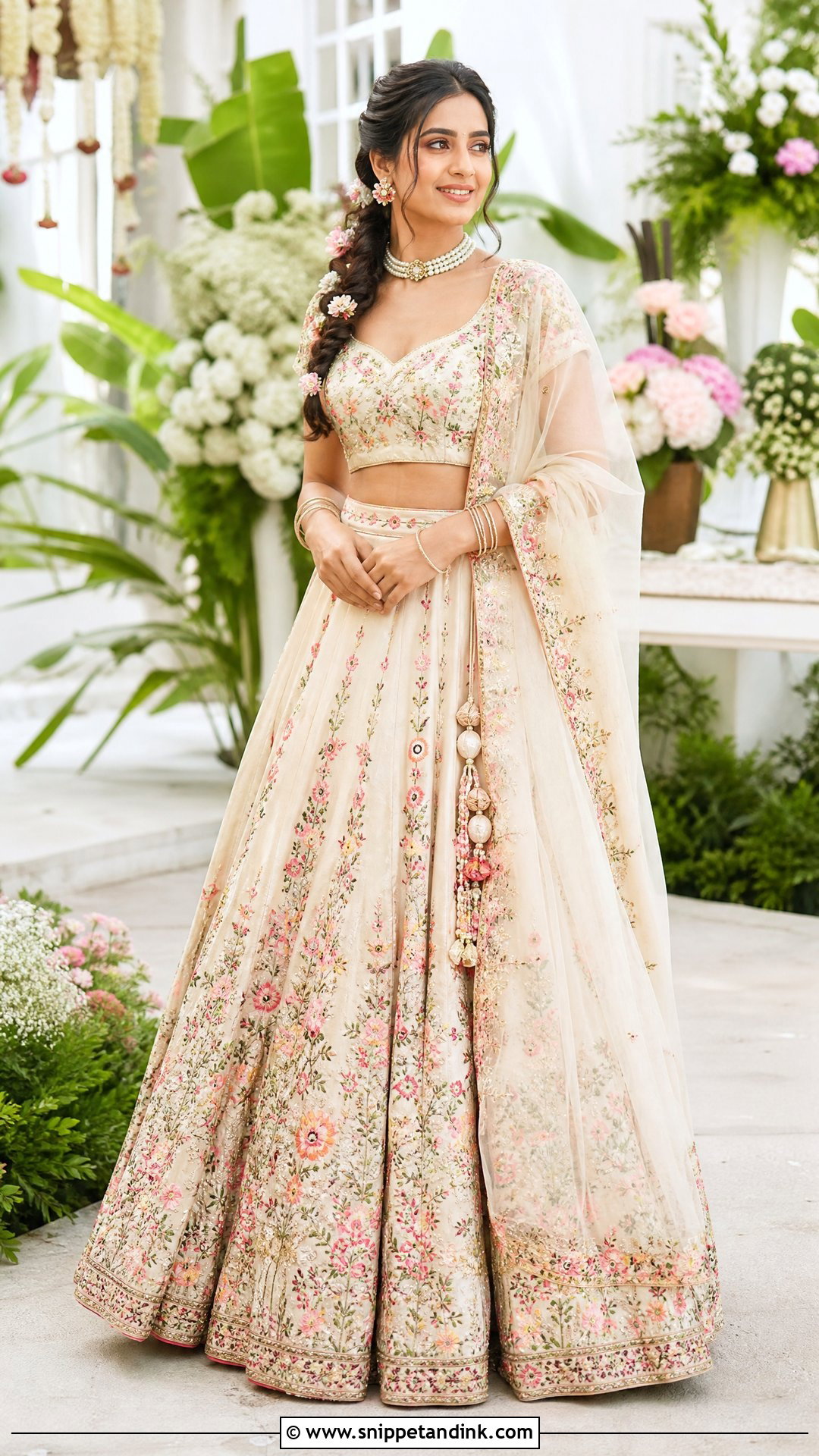
A floral embroidered lehenga gives color without metal, which is welcome on a hot morning. Cream, yellow, pink or mint with carefully spaced motifs, a matching blouse and a light dupatta with a narrow border keep it airy. If turmeric is planned, pin the dupatta well back from the hands and wrists, where the paste lands first. Floral earrings, a pearl choker, slim bangles and embroidered juttis go with a loose braid and fresh flowers. The mistake I see most is stacking big flowers, dense embroidery and heavy jewelry together; pick two of the three and the full-length photos look composed. Glowing skin, waterproof liner and a coral-pink lip finish it.
19. Green And Pink Half Saree Pellikuthuru Look
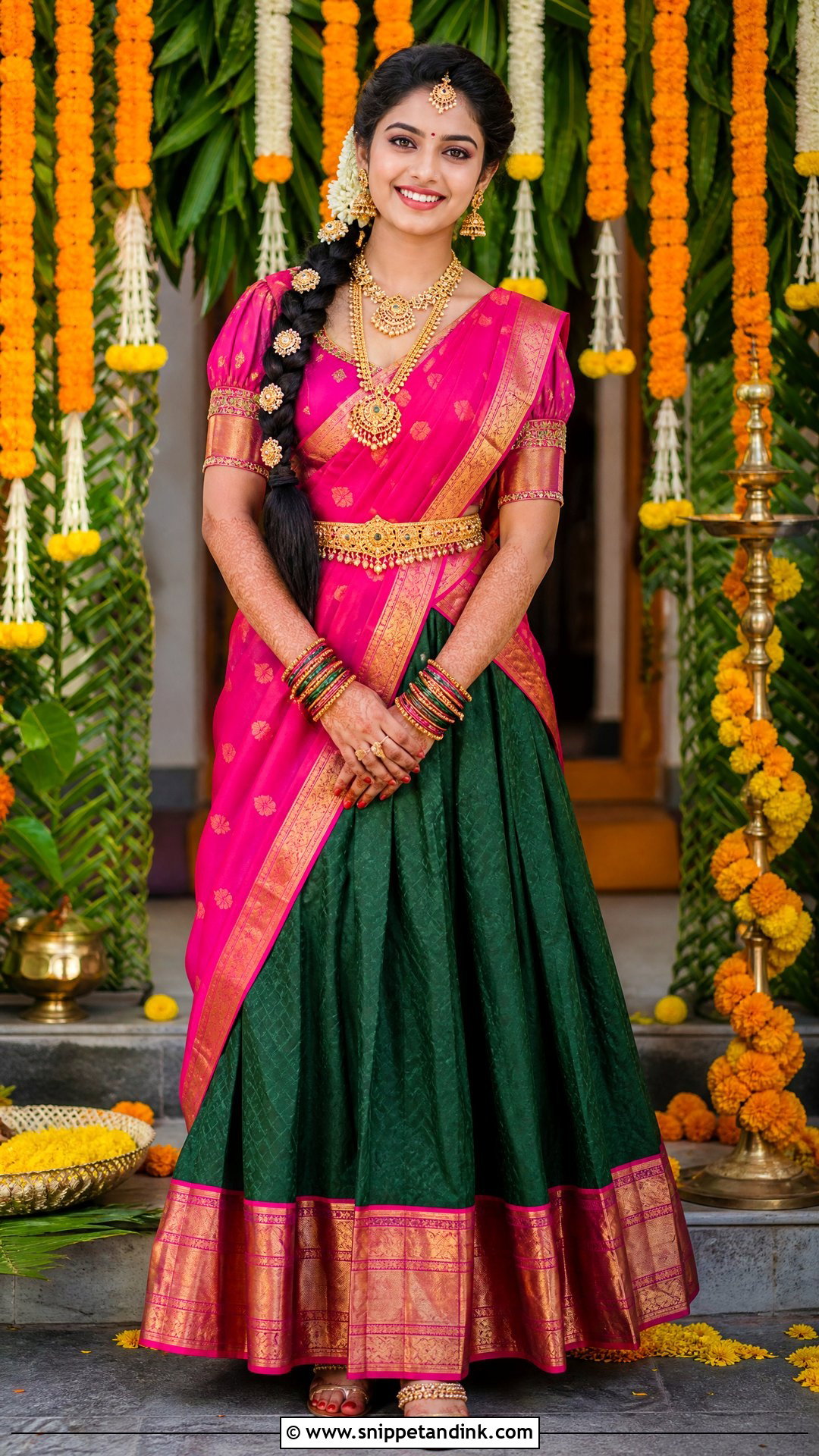
Green and pink is the combination most relatives will recognize from their own youth, which makes it a natural for a South Indian half saree on this morning. A deep green silk langa, a bright pink blouse and a gold-trimmed yellow or pink voni, fastened with a gold vaddanam, give a neat line. A temple choker, long necklace, jhumkas, glass bangles and anklets coordinate fully. During most rituals the camera sees her from behind, so I spend as long on the jasmine braid and its decorative pieces as on the front. Hem the langa beforehand so she never has to hold it, and finish with defined eyes, a round bindi and a pink-red lip.
20. Heirloom Silk Saree Pellikuthuru Look
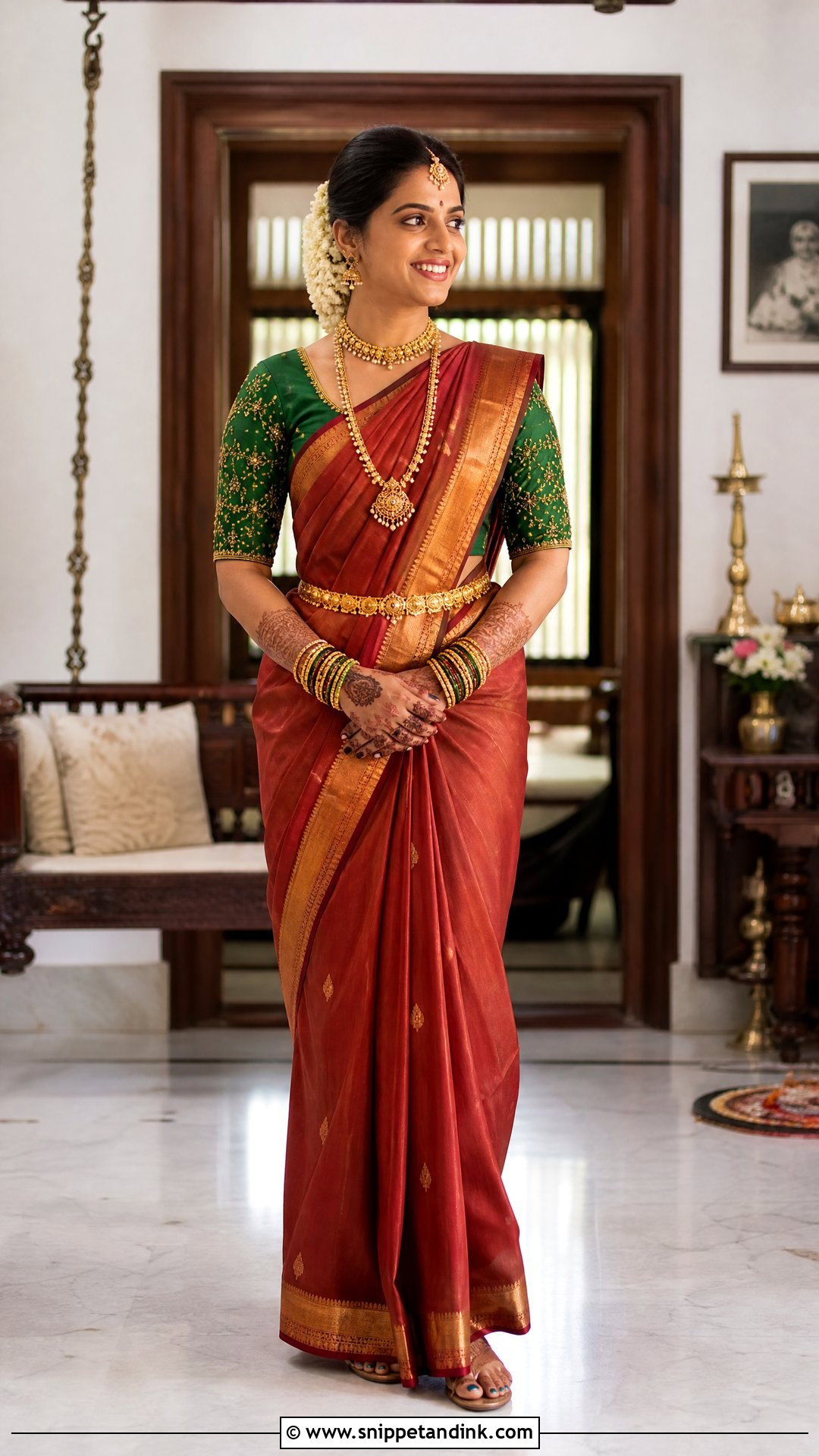
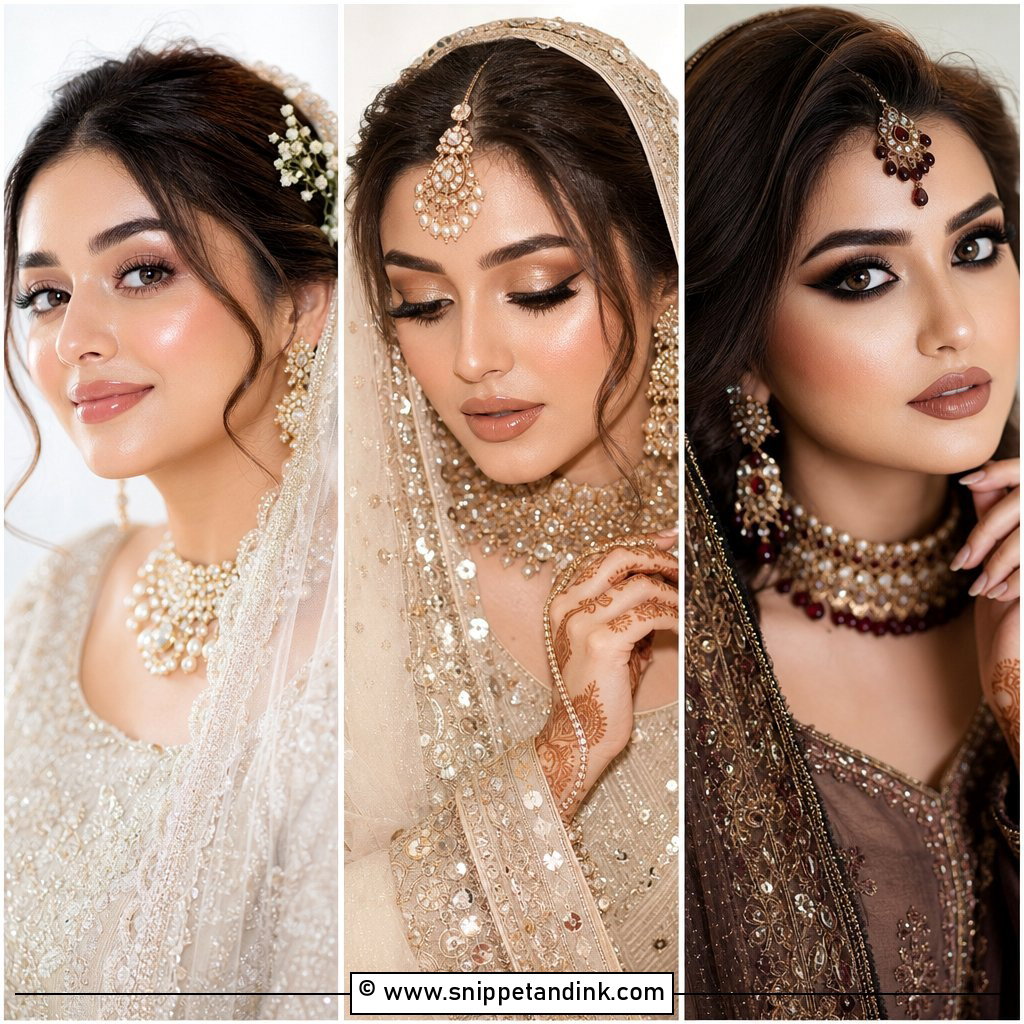
An heirloom silk brings the woman who first wore it into the room, and it needs more preparation than a new saree. Older silks can weaken along their fold lines and their zari can tarnish, so I have them checked, cleaned and, where needed, reinforced by a specialist weeks ahead. I’d never put one on for the turmeric itself. Pair it with a newly tailored blouse that suits the original border, family jewelry, classic bangles, gold sandals and a jasmine braid or bun, and drape it traditionally so the weave stays the focus. Soft kohl, a red bindi and a muted lip are enough. Write down the saree’s story while the people who know it are there to tell it.
Getting Turmeric Out Before It Sets
Turmeric grabs fibre quickly, and every hour it sits makes it harder to move. This is what I tell brides the moment the ritual ends:
- Lift fresh paste off with a blunt edge instead of rubbing, which only pushes the color deeper.
- On cotton, rinse from the back with cold water, wash gently with a mild detergent, and dry in direct sun. Sunlight fades turmeric noticeably over a day or two.
- If the stain turns reddish when soap touches it, that is the turmeric reacting to the alkali. Keep rinsing and let the sun finish the job.
- Send silk, tissue and anything with zari to a dry cleaner who handles silk sarees, the same week, with the stains pointed out. Never wash zari borders at home.
- Blouses collect the most turmeric at the neckline and sleeves, so a cotton lining makes them far easier to clean.
Plain gold jewelry wipes clean with warm water and a soft cloth, but pearls and stone-set pieces shouldn’t be soaked, which is one more reason I save them for the second outfit.
The Floor Test I Run at Every Saree Trial
Pellikuthuru rituals happen low down: on a low seat, on the floor, bending to touch elders’ feet. A drape that looks right standing can fail at all three, so a week before the function I put the bride in the same blouse, petticoat and jewelry and run through this.
- Sit cross-legged for five minutes, then stand without using your hands. Pleats that pop out need another pin at the waist.
- Raise both arms as if receiving blessings over your head. If the blouse cuts under the arm or drags the pallu, it goes back to the tailor.
- Bend down to touch the floor. A hem that is too short or a pallu that slides off the shoulder shows up here first.
- Walk a few steps barefoot and again in your sandals; the pleats should clear the floor in both.
Dressed for the Turmeric, Then for the Blessings
A good Pellikuthuru outfit holds tradition, comfort and a little personality in the same drape. Silk sarees and half sarees carry the classic look, while organza, pre-stitched sarees and light lehengas make the morning easier. Plan around the schedule before committing to delicate fabric, heavy jewelry or heels. After three hours of rituals, secure pleats, a blouse you can raise your arms in, waterproof makeup and soft footwear matter more than any embellishment. Let your colors talk to the flowers and backdrop without matching them exactly, and whichever saree you choose, from turmeric yellow to your grandmother’s silk, wear it at home for an hour before the day.
You'll Like These Ideas:



Leave a Reply