
Styling a Telugu bride means planning for more than one outfit and more than one sitting. There’s the pellikuthuru, the muhurtham itself, often a change afterward, and usually a reception, and each asks something different of the silk, the gold and the hair. Kanjeevaram and pattu sarees, langa voni, temple jewelry, the vaddanam, jasmine and the long poola jada all belong here, but they also add weight and heat over many hours. Some brides want classic red and gold; others come to me with an heirloom set and build the color around it. Below are twenty-five looks I’d style, with what I watch for in each one.

Planning Saree Changes Around a Late-Night Muhurtham
Telugu wedding times are set by the family priest, and the muhurtham can fall at any hour. I’ve learned to plan the outfits around that time rather than around the photographer’s schedule. A bride may wear one saree for the pellikuthuru, a madhuparkam or silk for the muhurtham, a silk gifted by the groom’s family afterward, and something else again for the reception. Each change costs time, and a full Kanjeevaram drape with pinned pleats, jewelry and a jada is not a ten-minute job.
How I map the changes
- Write the ritual timings down with the priest’s help, then mark which outfit is worn for each.
- Allow around an hour for the main drape, jewelry and hair, and more if the jada is fresh flowers attached on site.
- Pre-pleat and iron the heaviest silk the day before. A box-pleated saree goes on far faster and stays crisper.
- Keep a separate bag for each outfit with its blouse, petticoat, safety pins and jewelry pouch, labelled.
- Give one relative the job of guarding jewelry between changes, so pieces don’t get left on a chair.
If the muhurtham is very late, I suggest keeping the earlier outfits lighter. A bride who has spent six hours in heavy gold before midnight feels it in her neck when the important rituals finally begin.
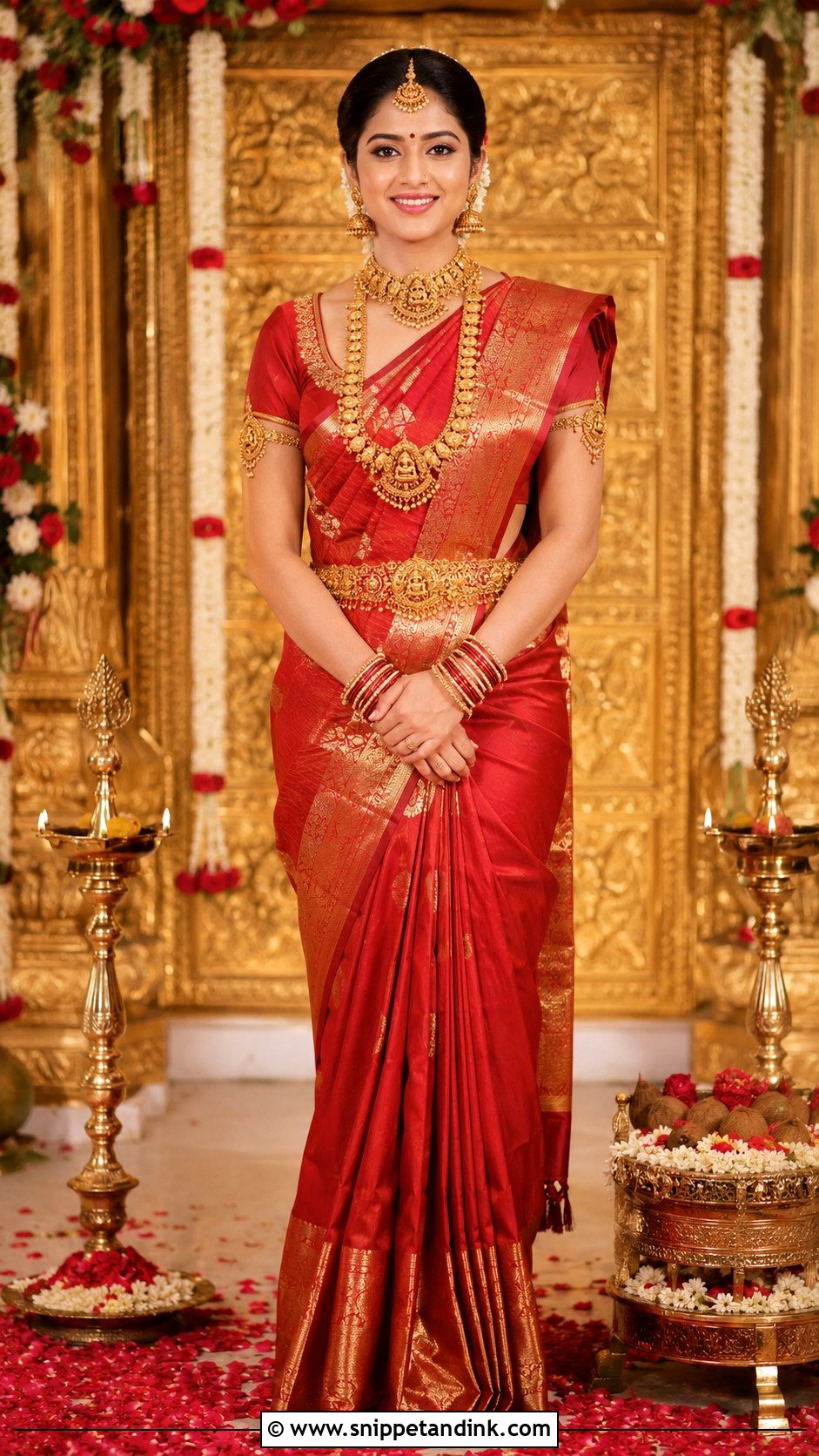
1. Red Kanjeevaram Telugu Bride
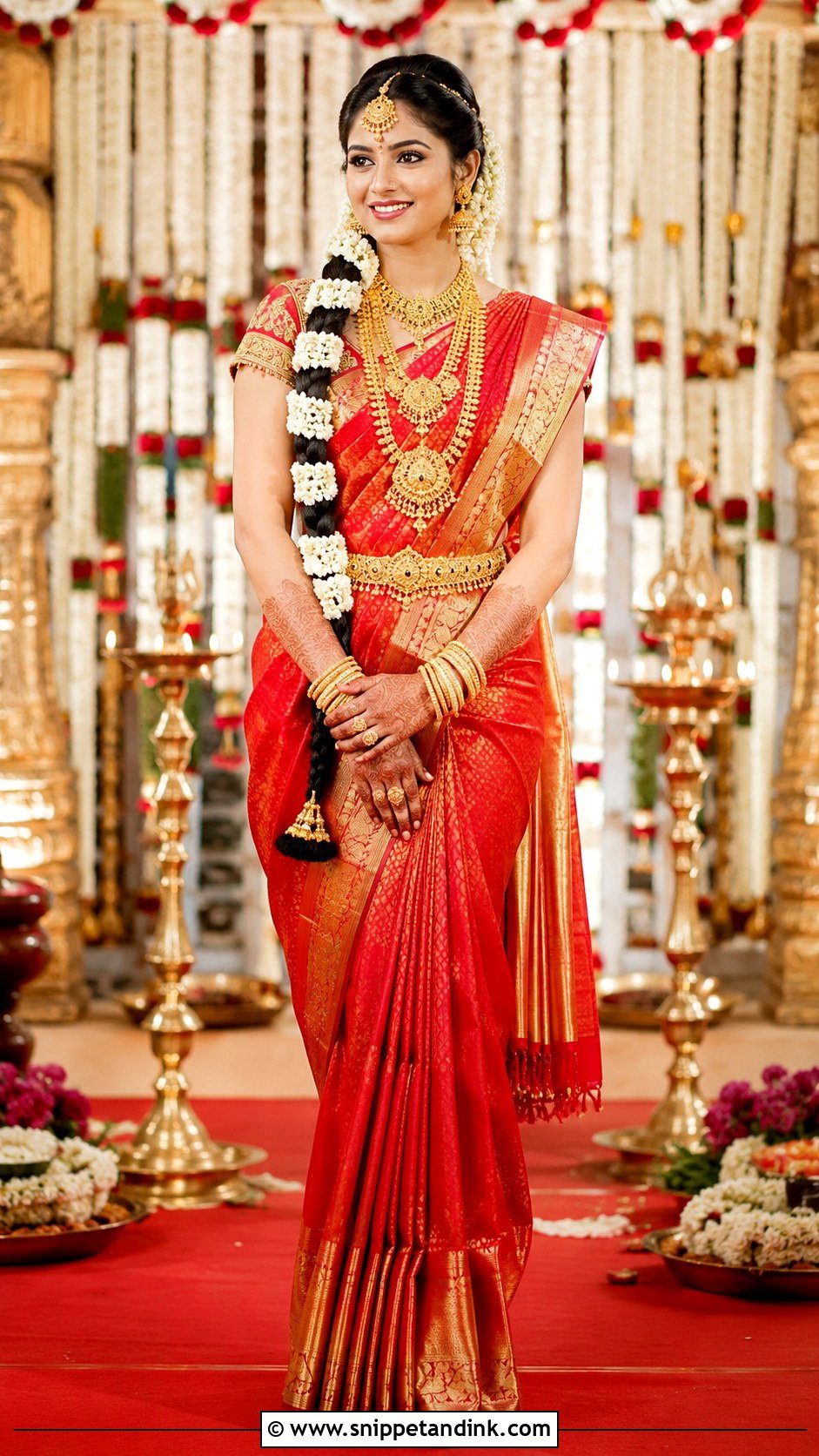
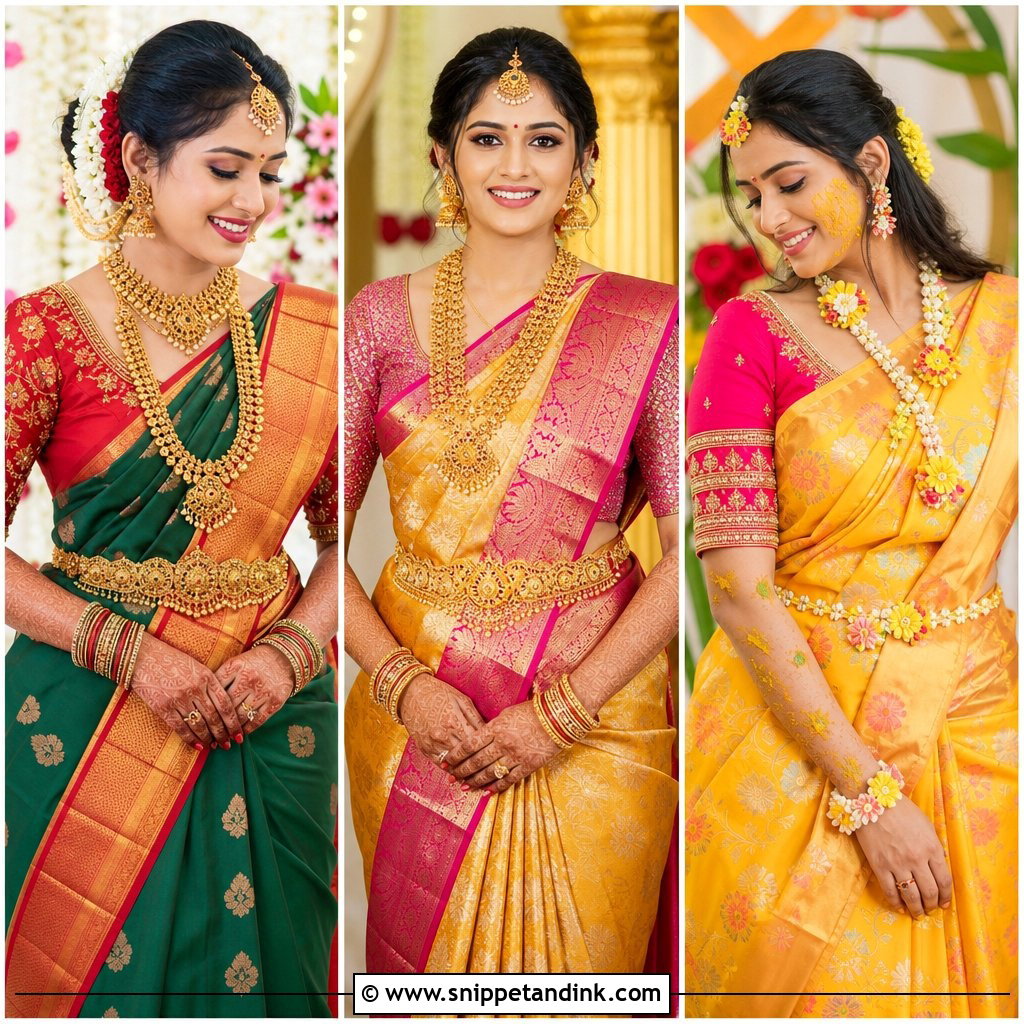
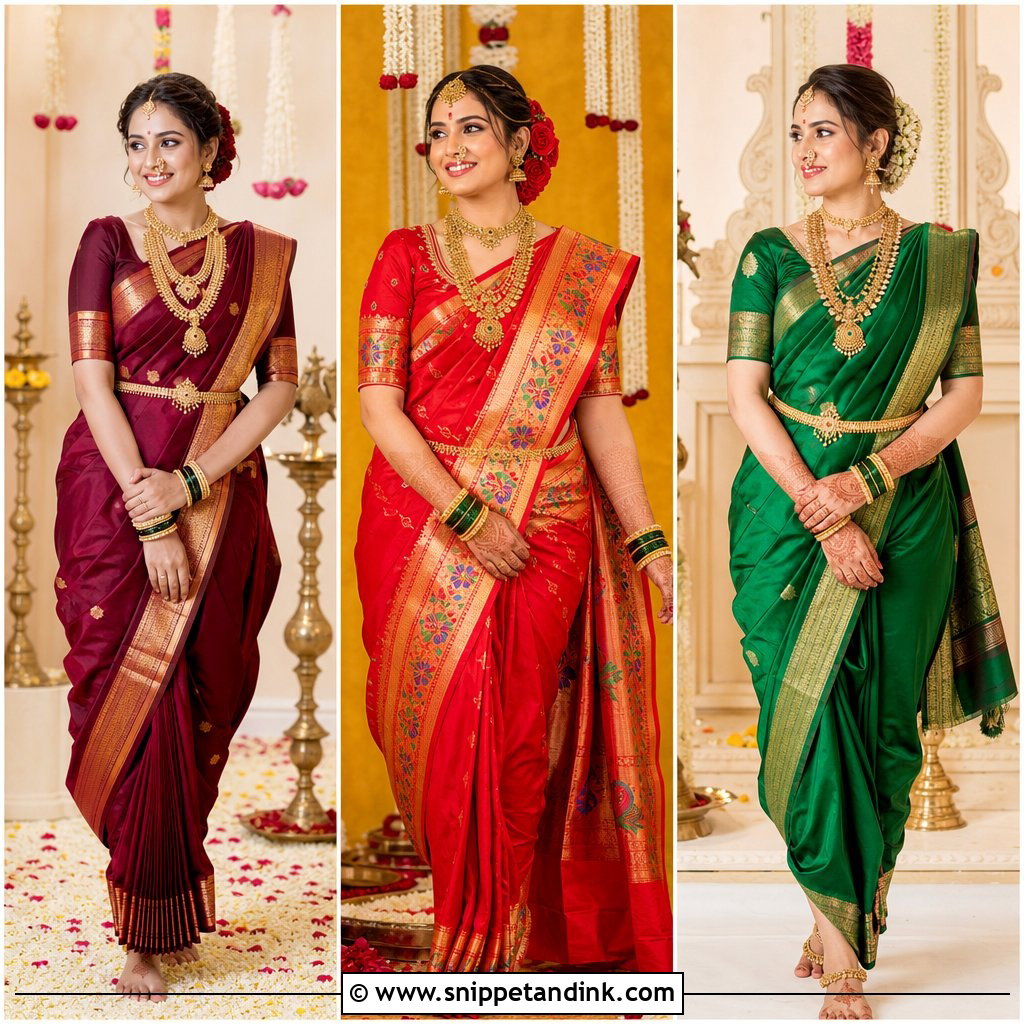
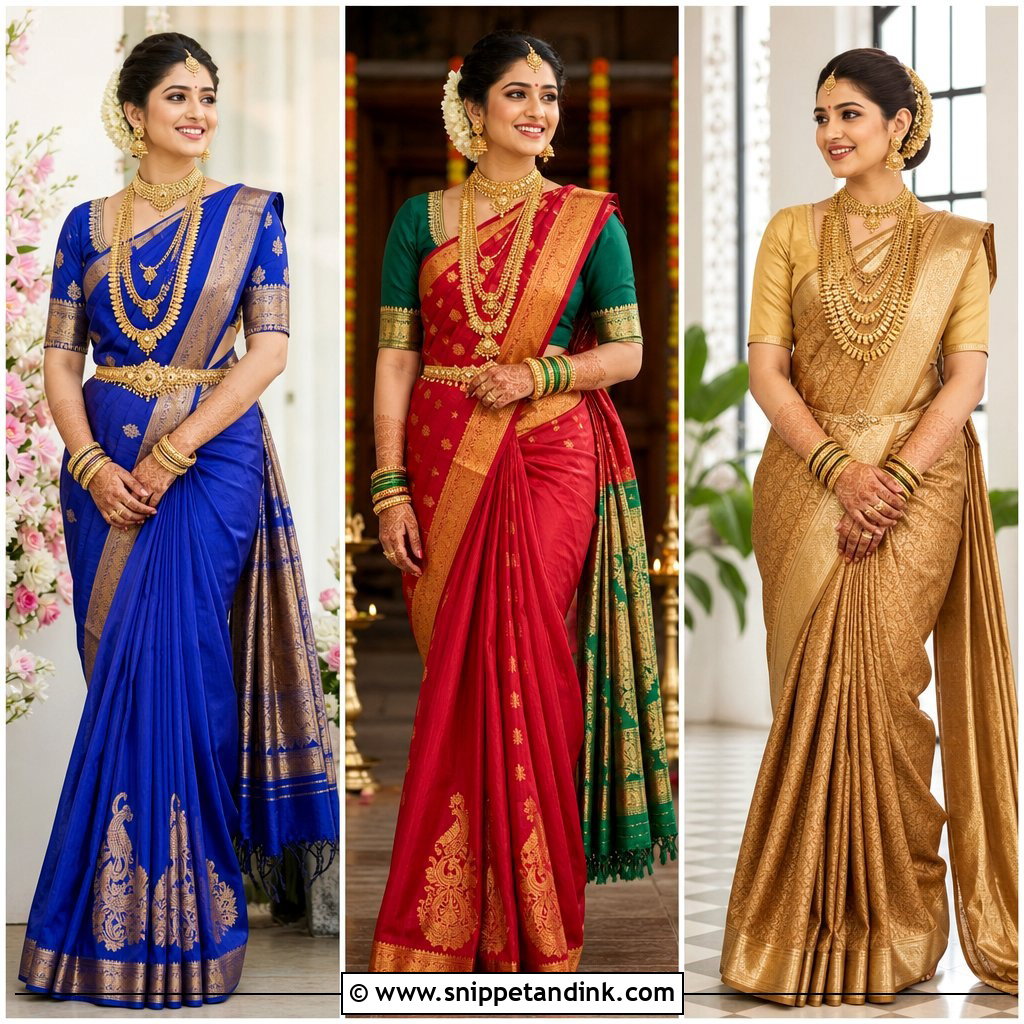
Red Kanjeevaram is the look most families picture first, and it earns that place. A heavy gold zari border and temple motifs need a contrast blouse to stop the saree swallowing the neckline, so I lean toward gold, green or maroon there. Layer gold harams over a Lakshmi choker, then add antique bangles, the vaddanam, jhumkas and a maang tikka. A long braid with jasmine, roses and gold jada billalu finishes the traditional line. Keep makeup classic, with kohl-lined eyes and a red or rose lip. One thing I check: a stiff new Kanjeevaram holds its pleats beautifully but the pallu can stand away from the shoulder, so I pin it at two points, not one.
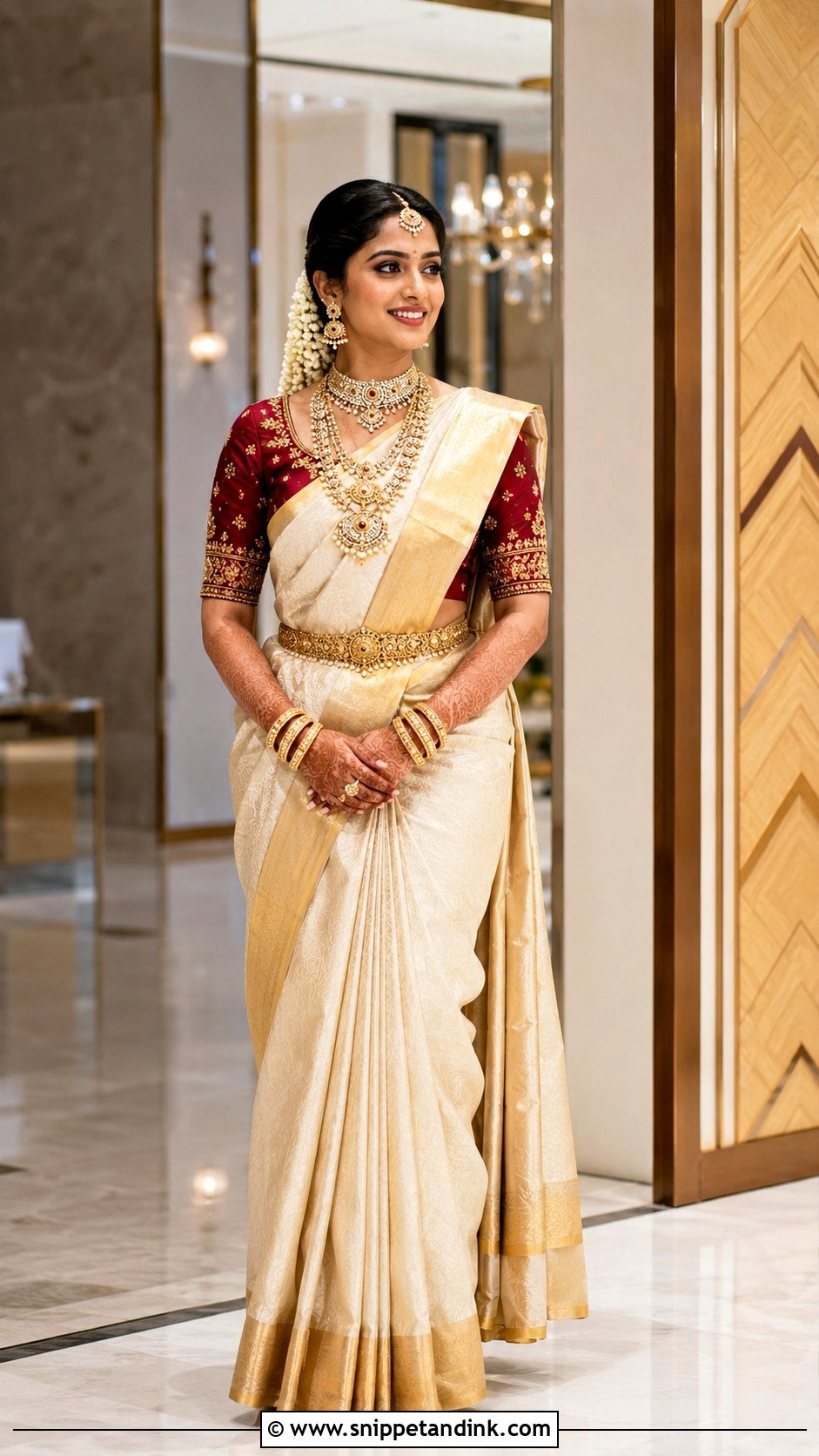
2. Ivory And Red Telugu Bride
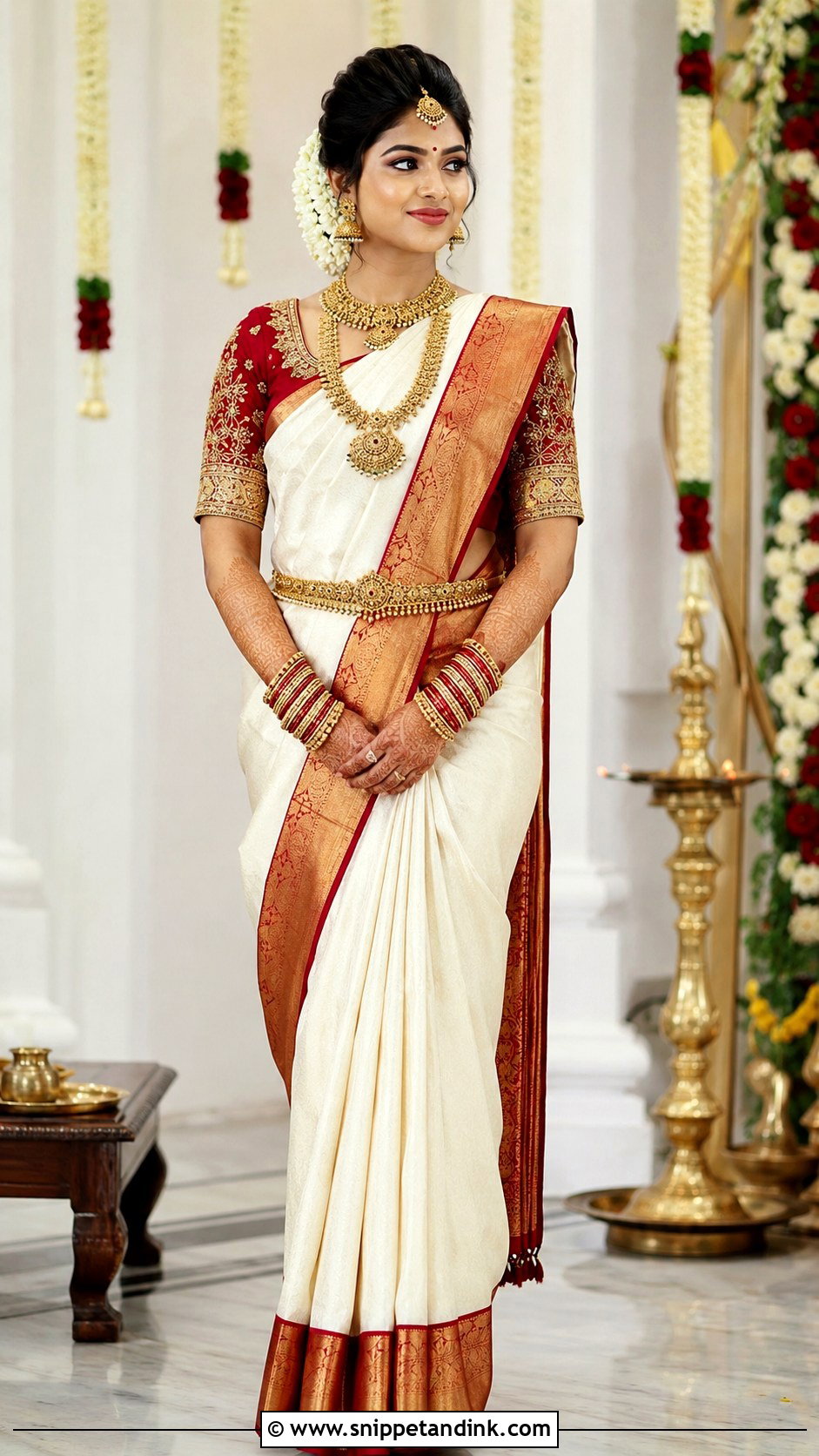
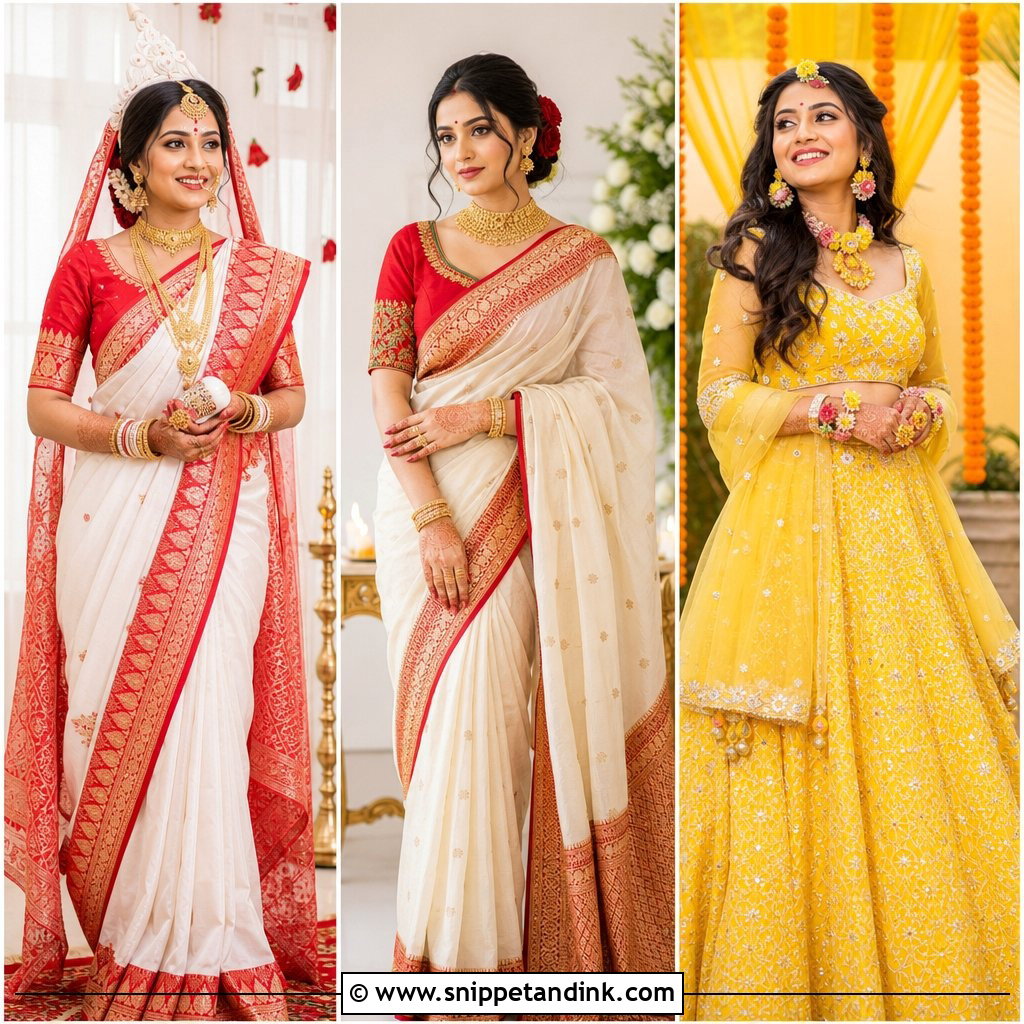
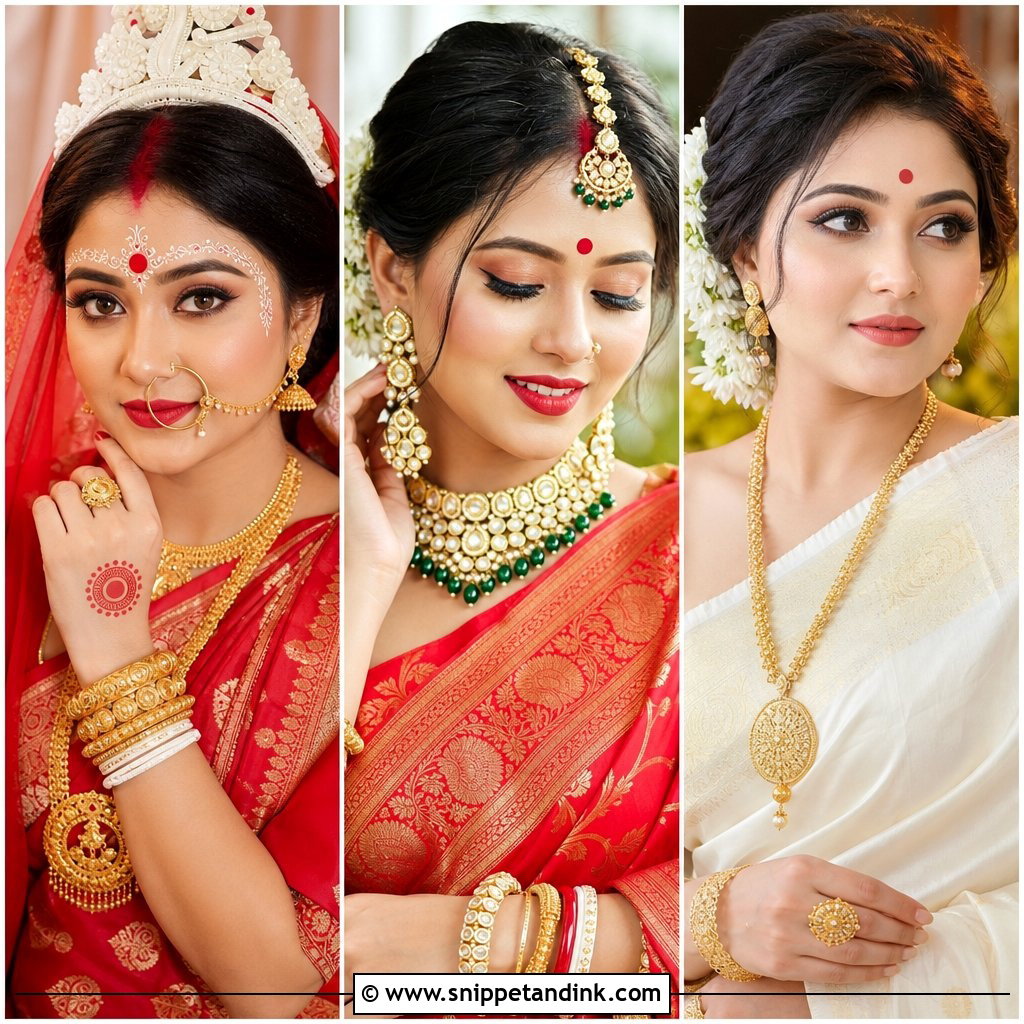
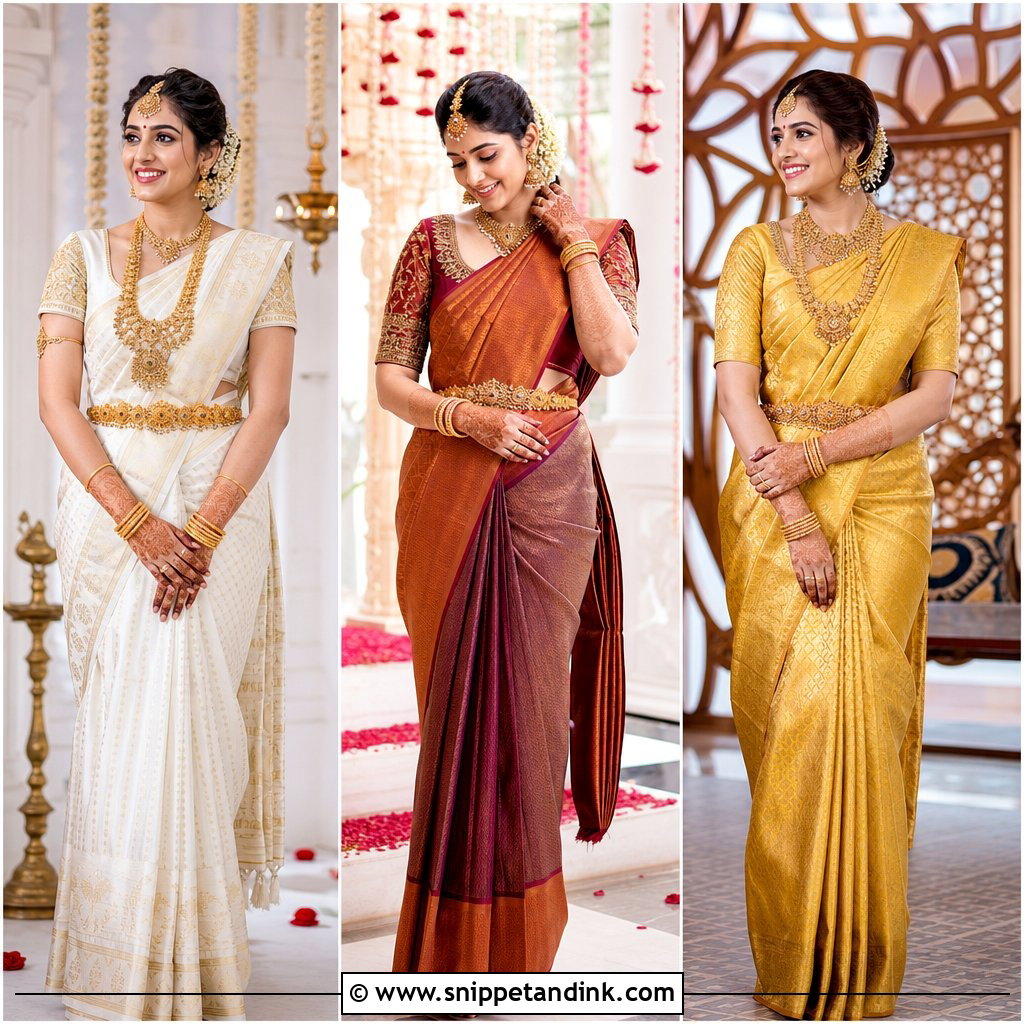
Ivory with a red border sits close to the madhuparkam saree that many Telugu families still use for the muhurtham, which is why it feels sacred rather than plain. Choose off-white or cream silk with deep red and gold zari, and a red blouse to bring warmth near the face. Temple gold reads clearly against the pale ground, so the vaddanam, kasu mala, a short choker and layered bangles all show. I’d style hair in a center-parted bun with jasmine or a long flower braid. Watch for turmeric: if the saree will be touched with haldi during rituals, choose one you’re happy to see marked.
3. Maroon Silk Telugu Bride
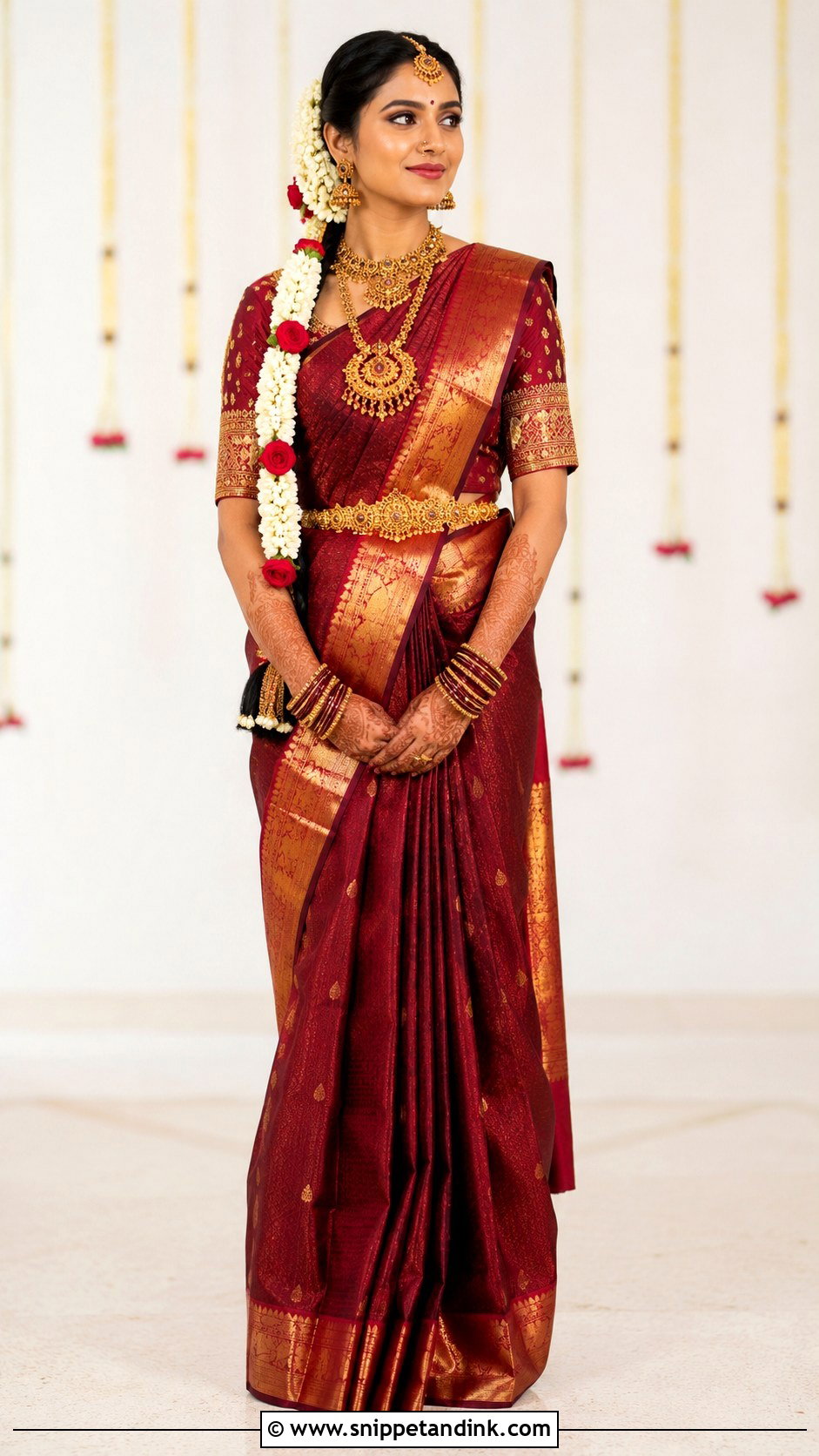
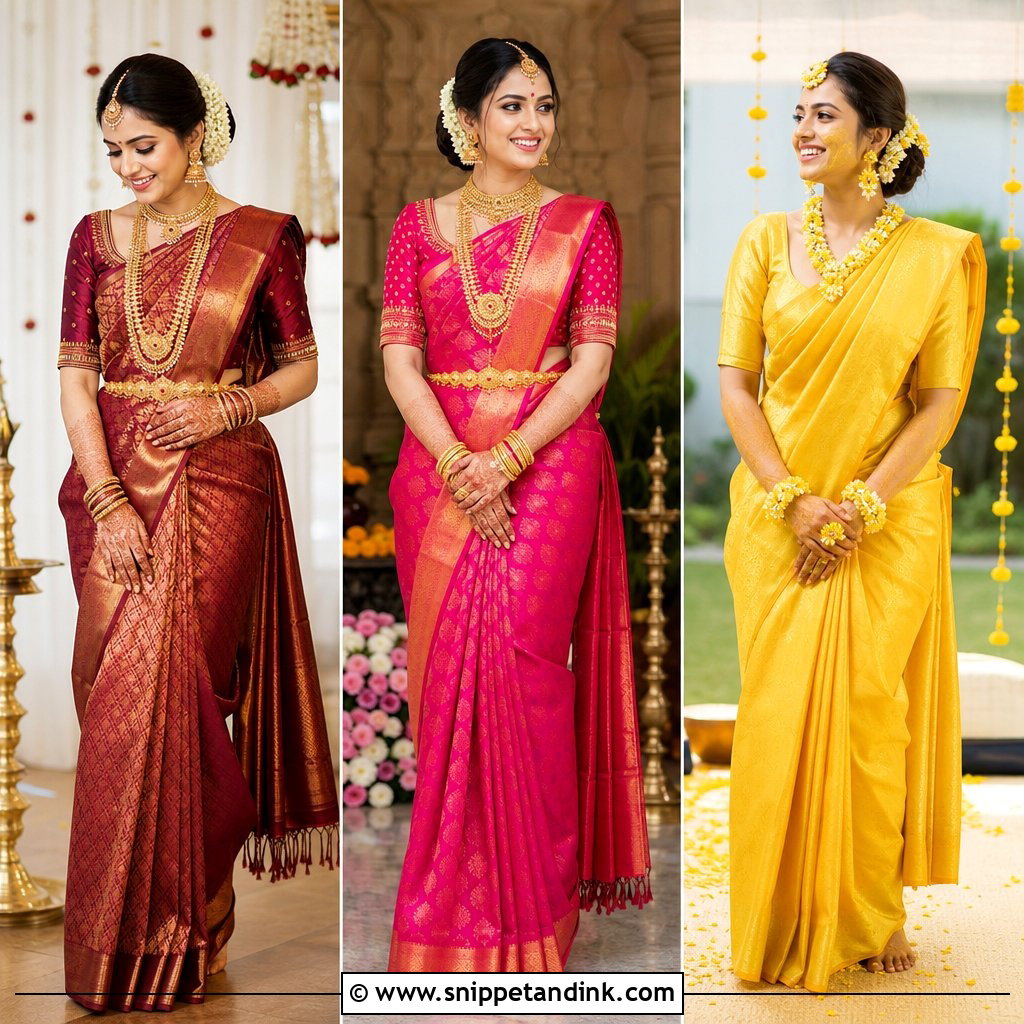
Maroon gives depth without the brightness of red, and it’s forgiving under the warm, uneven lighting of a mandapam at night. A maroon Kanjeevaram or pure pattu with gold borders, peacock motifs or small buttas pairs with an antique gold blouse or a matching one. Heavy temple jewelry and ruby-set pieces sit naturally on this color. Add a broad vaddanam, stacked bangles, anklets and a floral braid with red roses and jasmine. I keep the drape structured here because the pleats on dark silk show every uneven fold. Bronze eyes and a berry lip suit it better than bright pink.
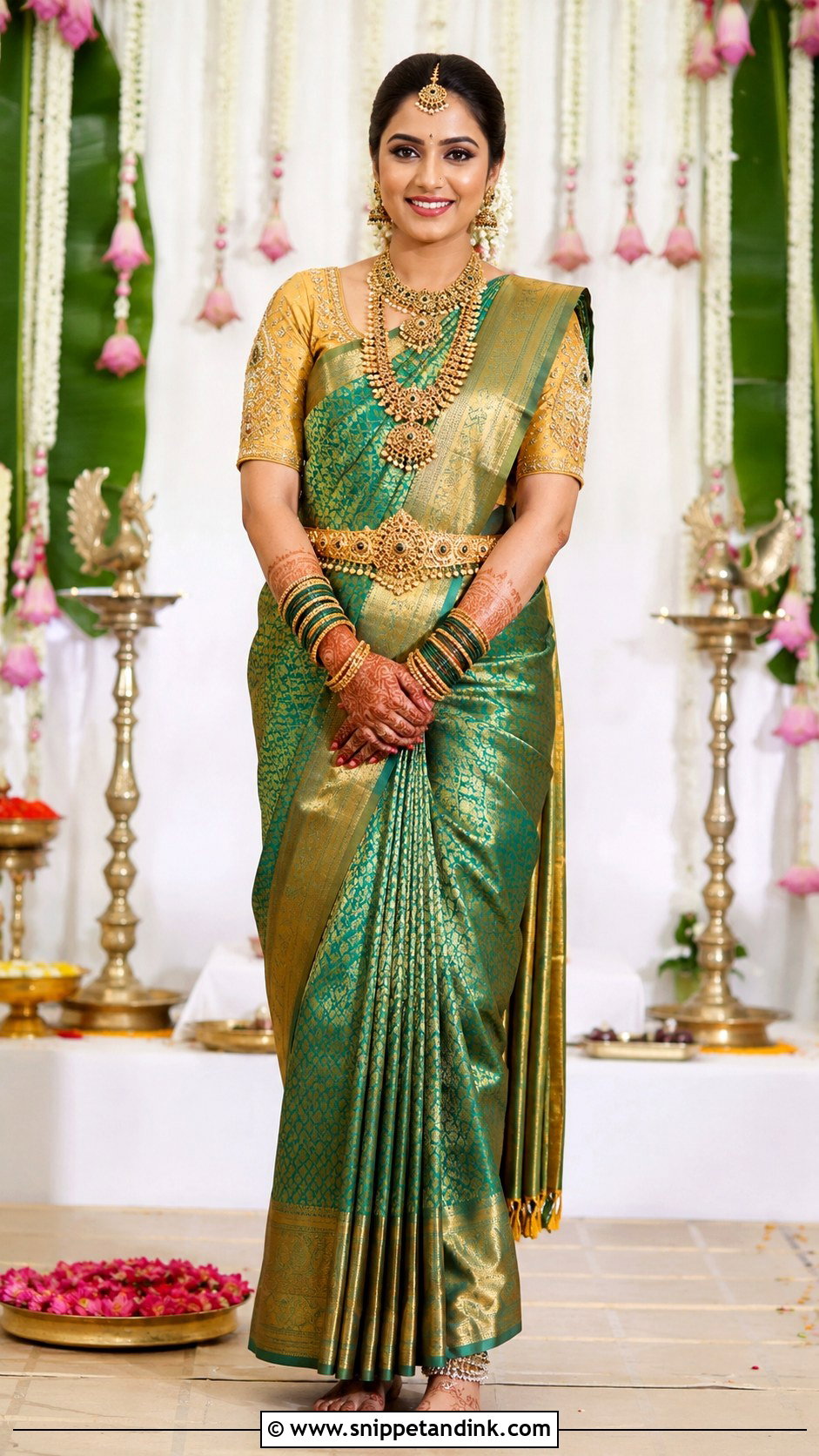
4. Green Pattu Saree Telugu Bride
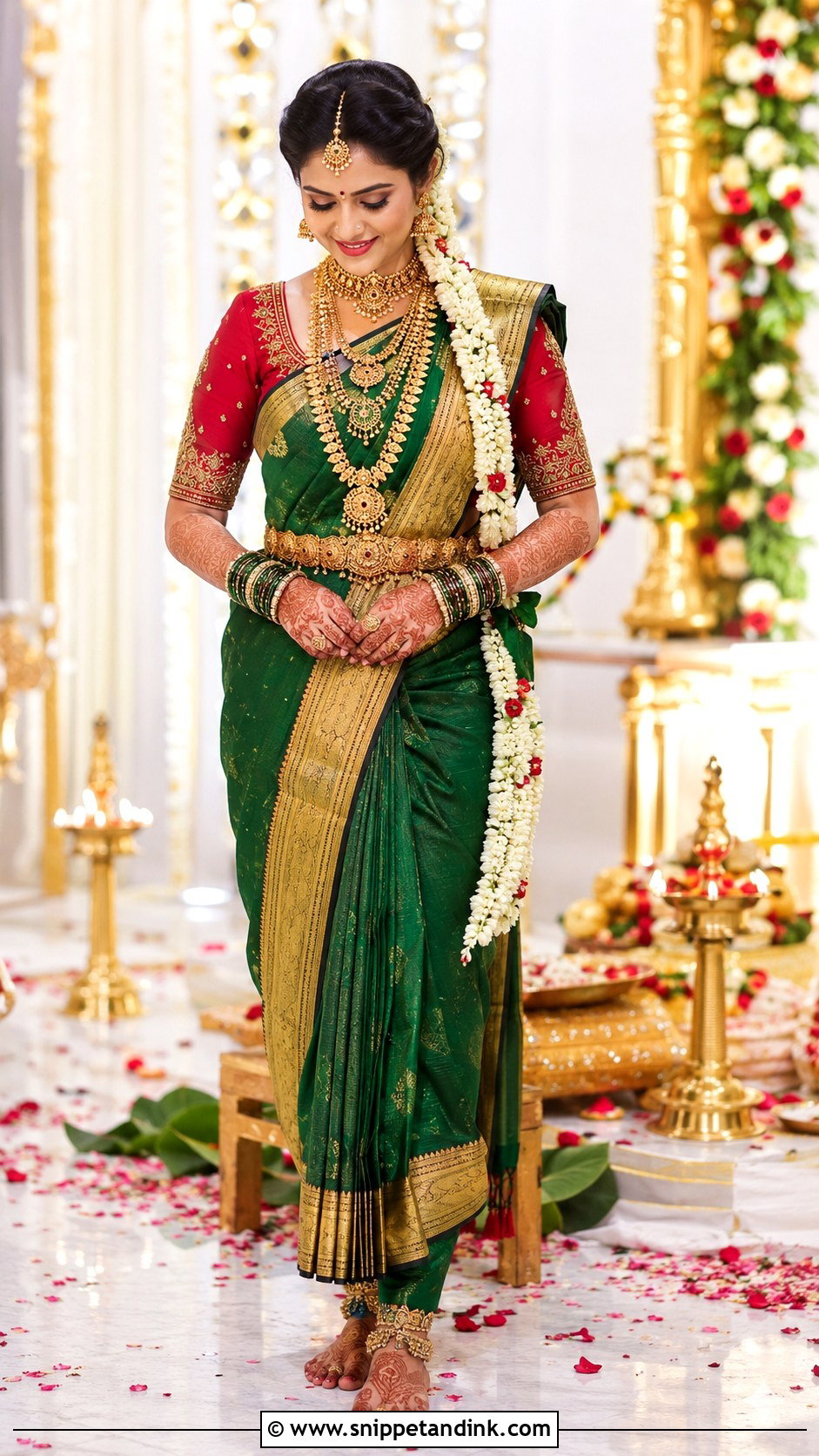
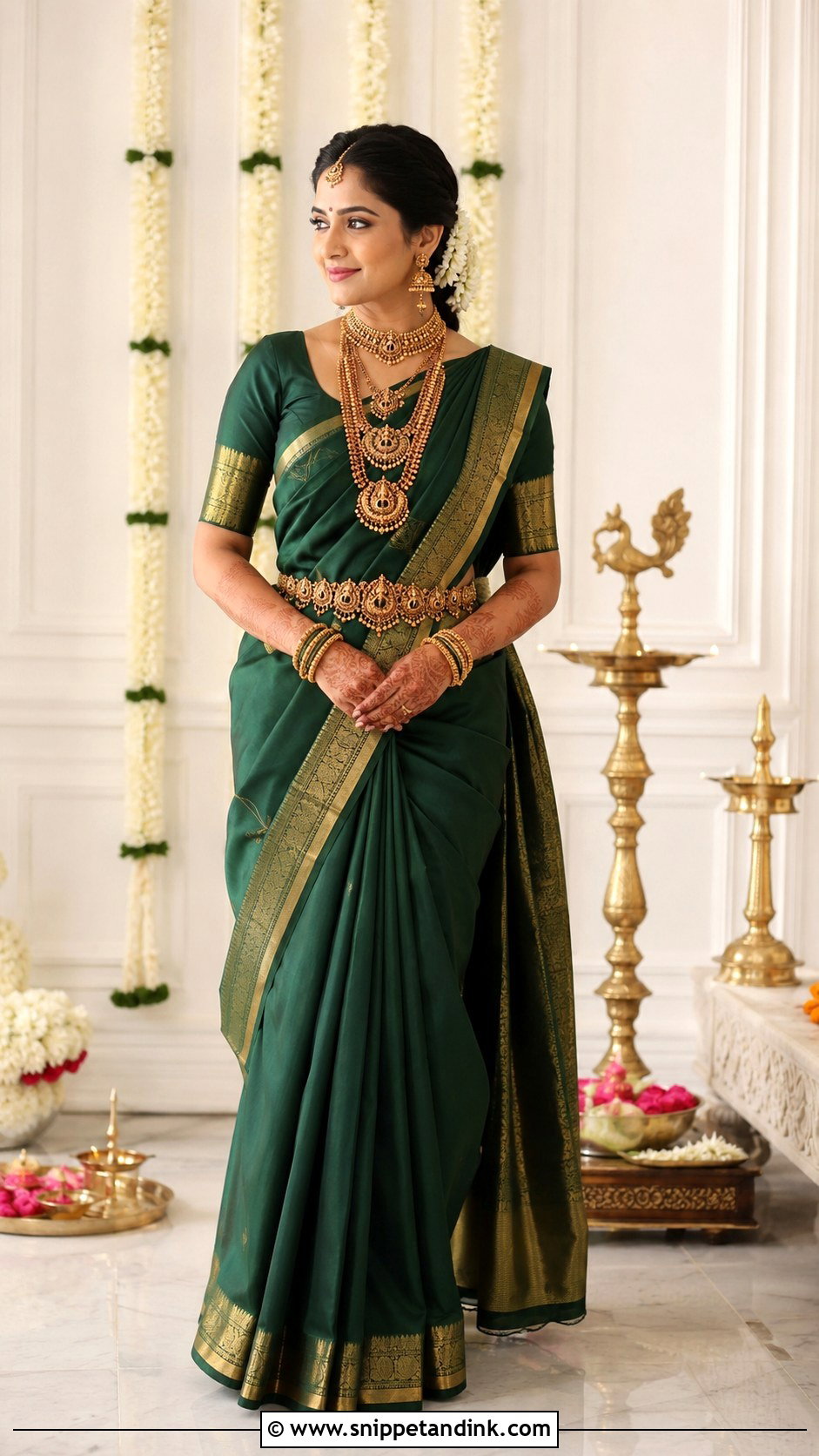
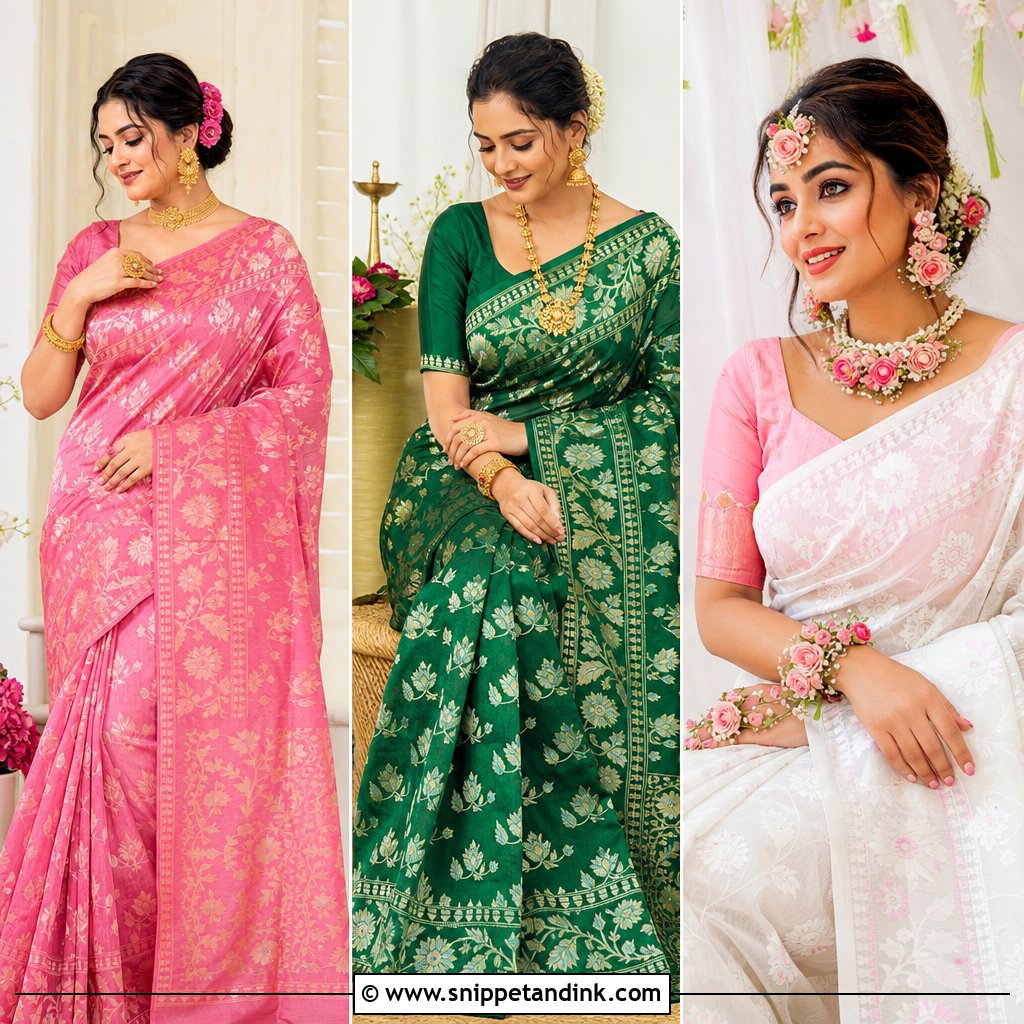
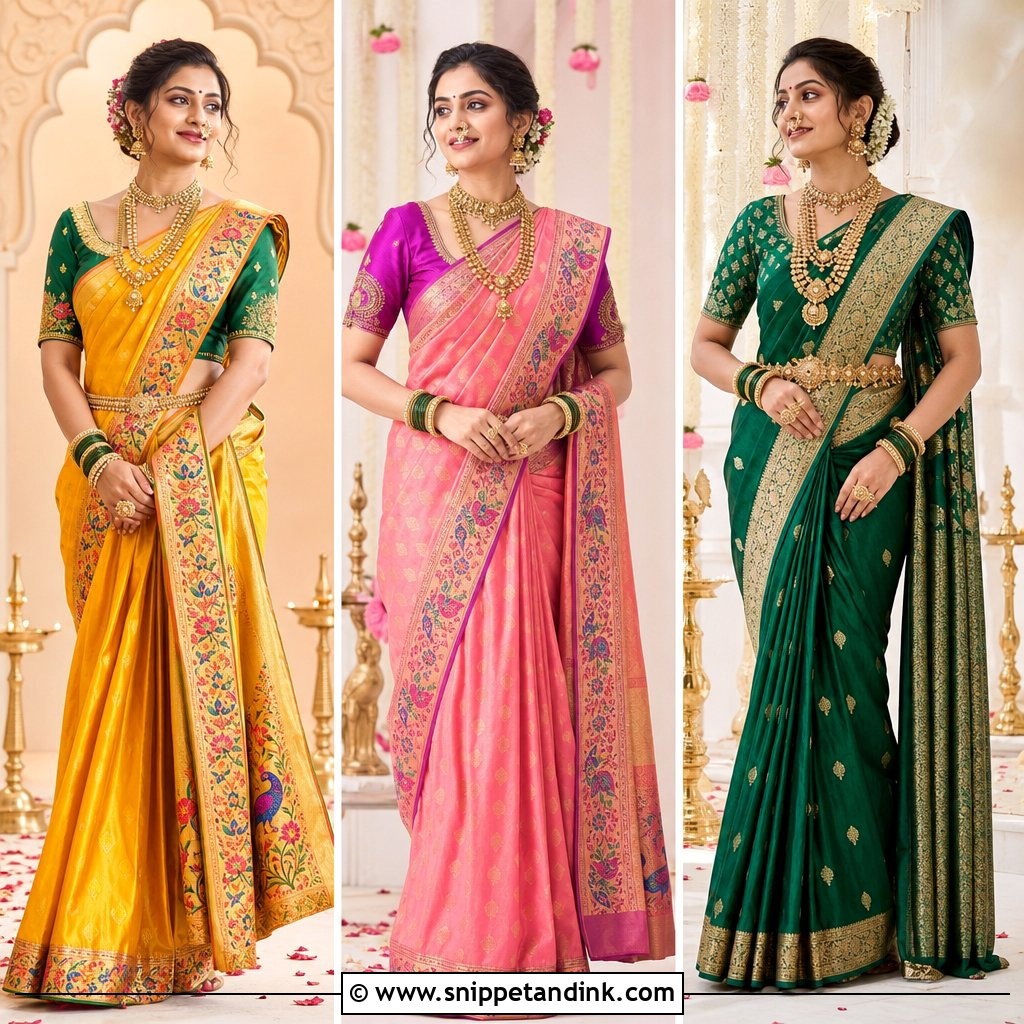
Green is auspicious in many Telugu homes and very kind to warm skin. Emerald, bottle green, parrot green or deep leaf green with a wide gold border all work, and a red, pink or gold blouse adds the contrast that makes it festive. Temple jewelry with Lakshmi motifs and kasu necklaces sits naturally on green silk. I always add the vaddanam with this one; without it, a green drape can look like a festival saree rather than a bridal one. A long braid with jasmine garlands and gold hair accessories, glowing skin and a soft rose lip complete it.
5. Yellow Pellikuthuru Telugu Bride
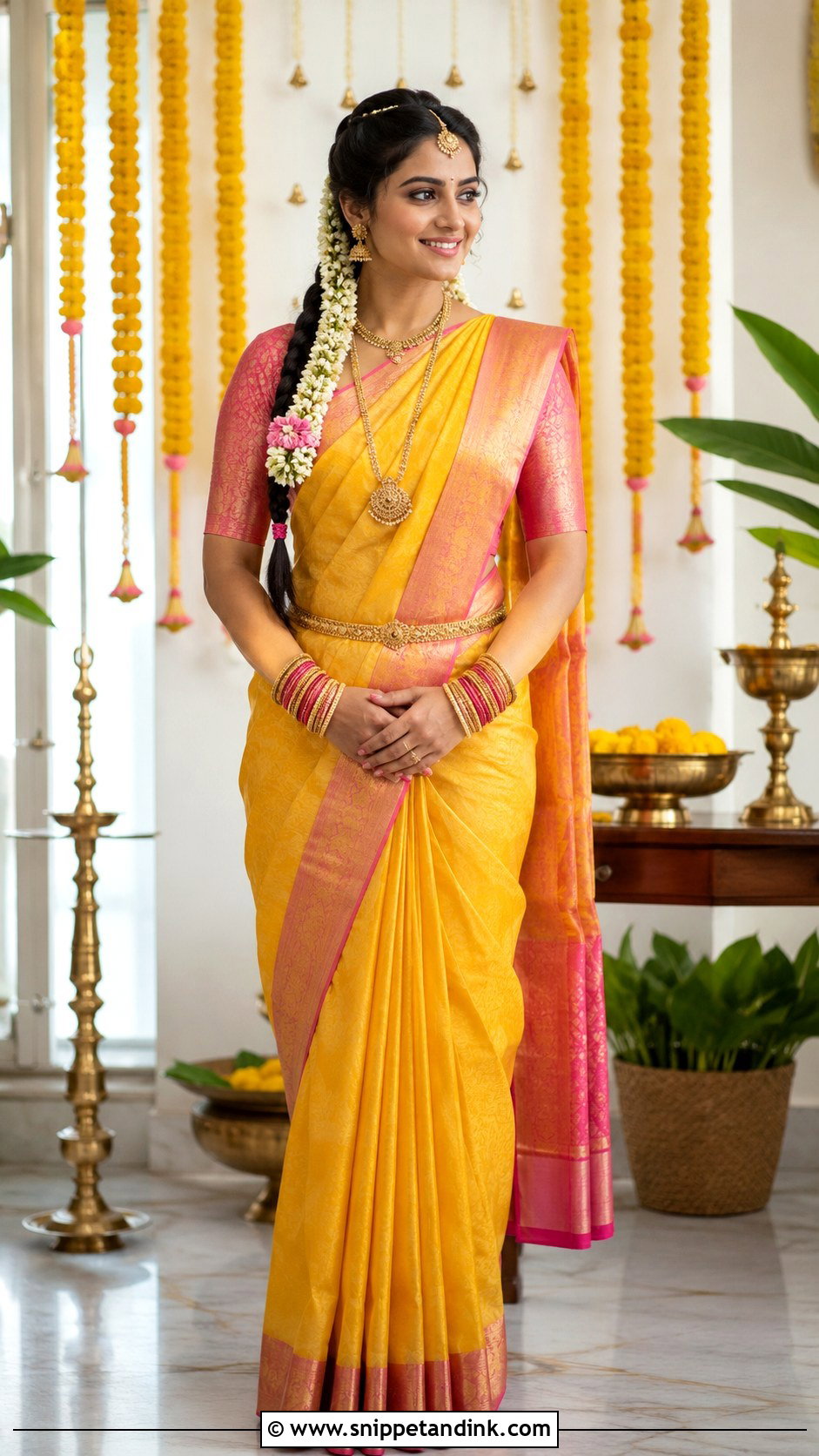
The pellikuthuru is a haldi-and-blessing ceremony, so I plan this yellow pellikuthuru Telugu bride look knowing turmeric paste will land on the fabric. A turmeric-yellow silk saree or pattu half saree with gold, pink or green borders hides marks well. Keep the jewelry lighter than on the wedding day: a short choker, small haram, bangles, jhumkas and perhaps fresh flower jewelry. Braid or bun the hair with jasmine, marigold or roses. Don’t wear a borrowed heirloom silk to this one; turmeric stains on silk are difficult to lift completely.
6. Pink Kanjeevaram Telugu Bride
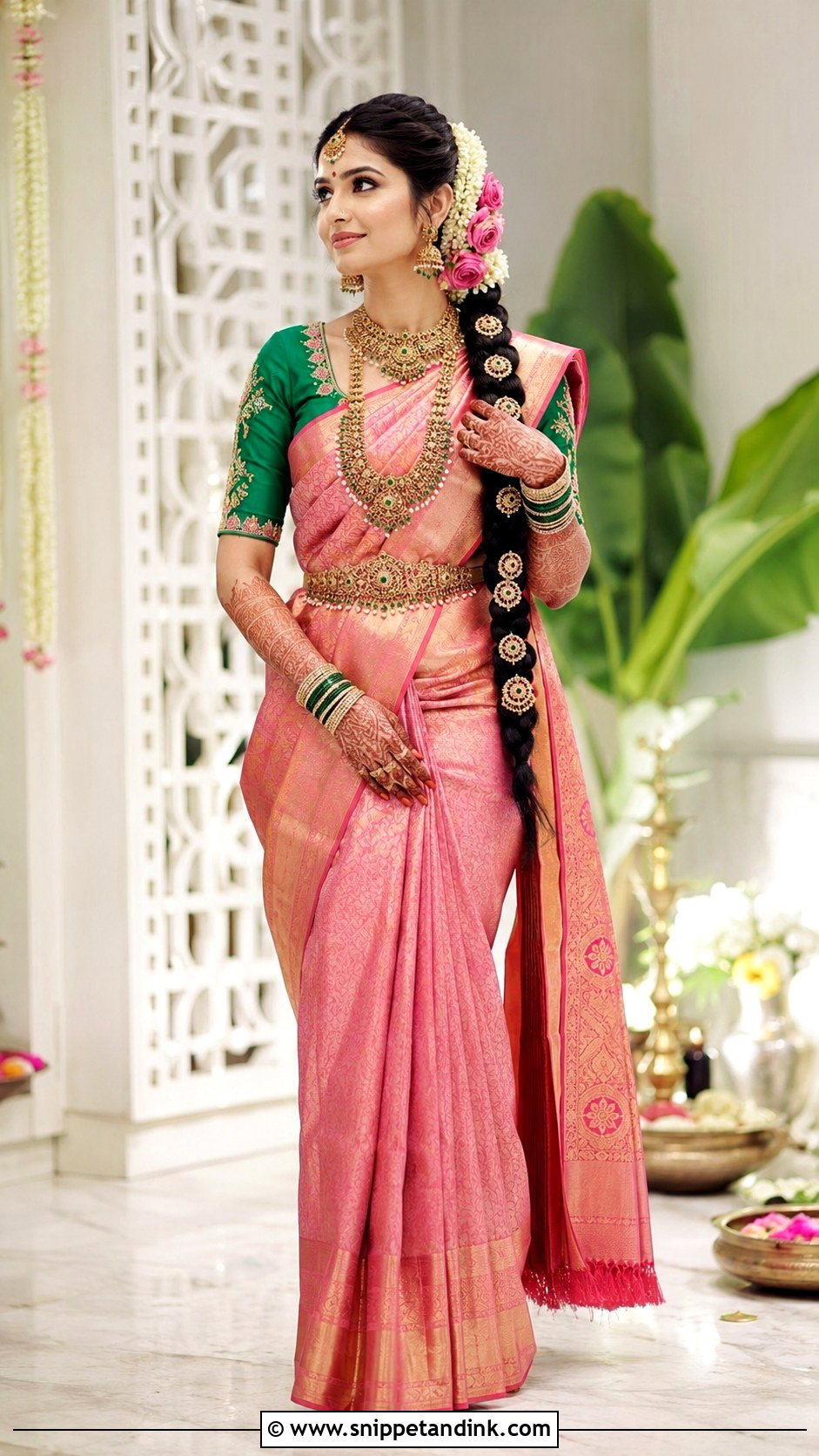
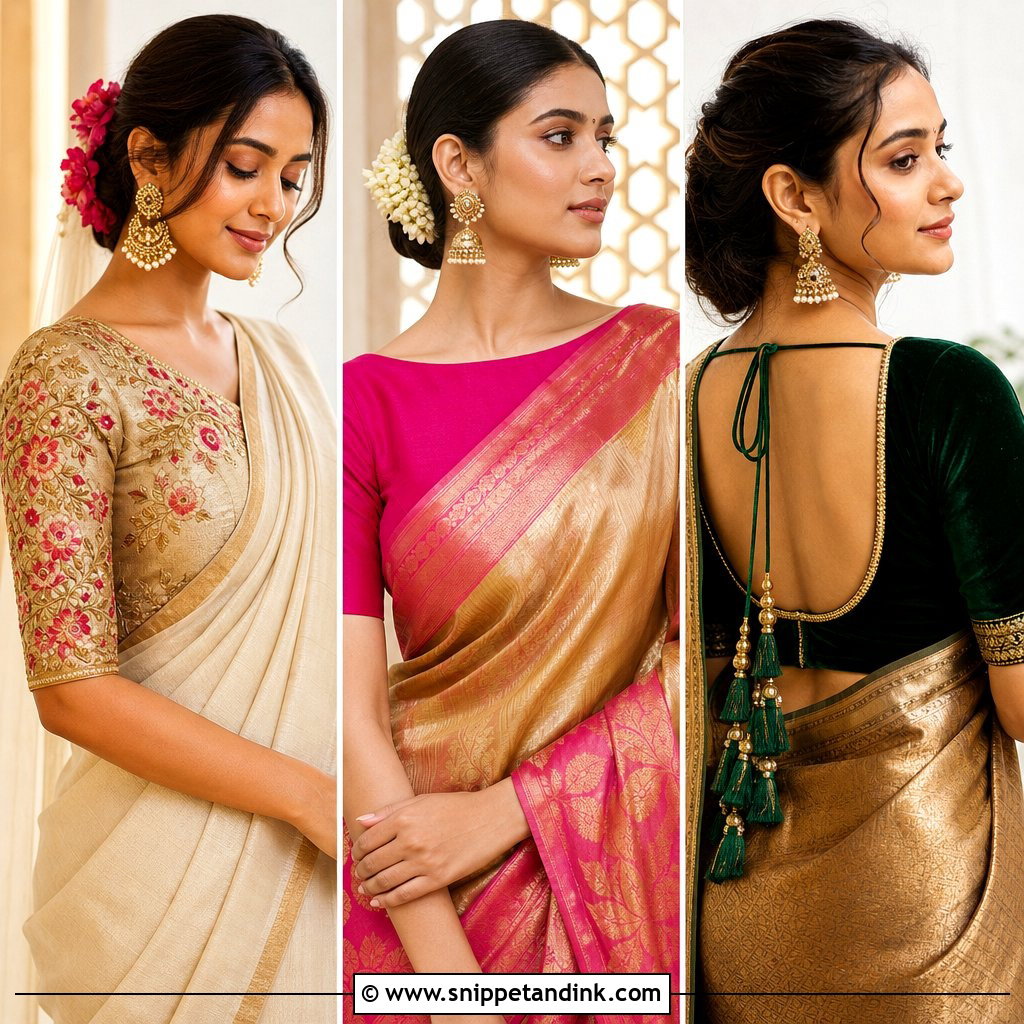
For color without red, pink Kanjeevaram is my first suggestion. Lotus pink, rani pink, rose and magenta all hold gold zari well. A contrast green blouse is the more traditional Telugu pairing; a matching one looks more modern. Gold, pearl accents and ruby pieces all suit it, and a long braid with white jasmine and pink roses ties the palette together. I keep the drape clean so the pallu border shows clearly in the front-facing photos. Paler pinks can look washed out under fluorescent hall lights, so I’d pick the deeper end of the range for an indoor muhurtham.
7. Gold Kanjeevaram Telugu Bride
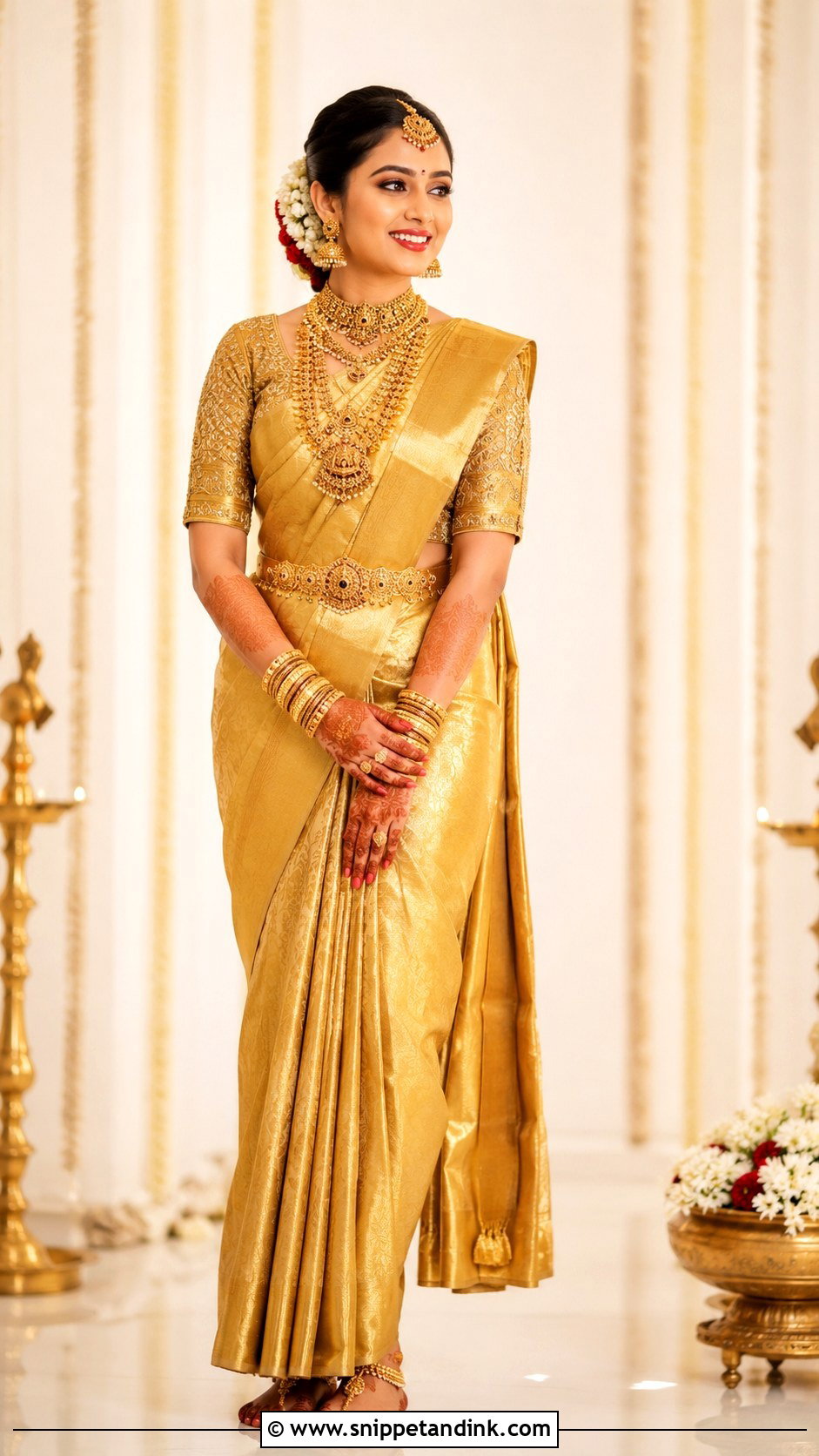
An all-gold Kanjeevaram shines on its own, so the jewelry has to step back. I use antique gold rather than bright yellow gold, which would merge into the saree. A temple choker, long haram, vaddanam, jhumkas, bangles and anklets carry the bridal weight. Red flowers or a red blouse bring contrast if you want it, and a neat bun with jasmine gives a classic finish. Without defined eyes and a deep red bindi, the face gets lost in all that gold, which is the most common problem I fix with this look.
8. White And Gold Telugu Bride
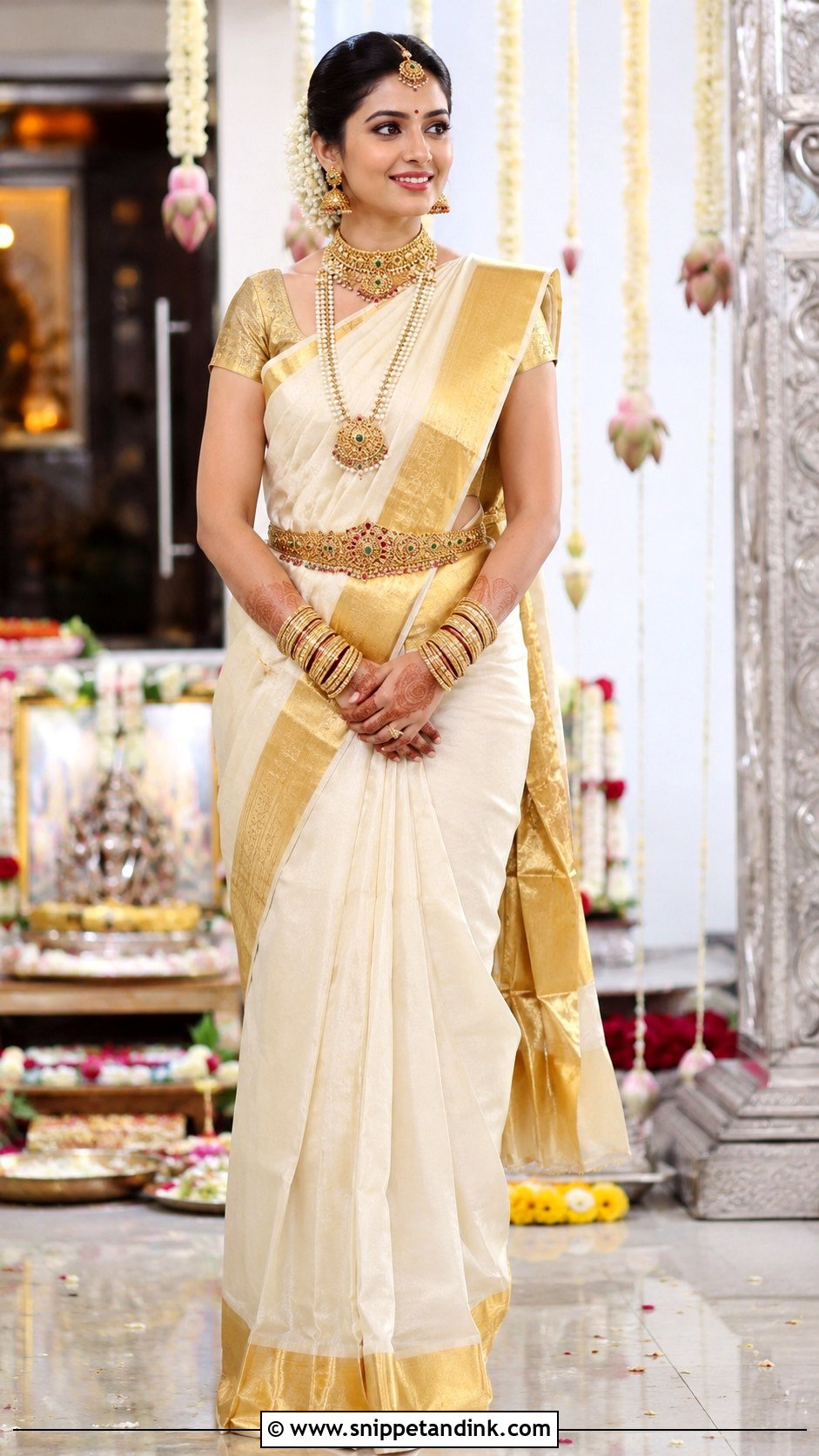
White and gold is quiet, but it needs structure or it reads unfinished. Choose white, cream or ivory silk with a rich gold border. A gold blouse keeps the palette unbroken; a red or green one adds festive contrast. Temple jewelry, pearl strands and antique gold give the outfit shape, and the vaddanam matters more here than anywhere else in this list, because it gives the pale drape a defined waist. A sleek bun or long braid with jasmine suits it. Test the fabric against sweat marks; light silk shows damp patches under the arms during a long sitting, so ask for dress shields in the blouse.
9. Blue Silk Telugu Bride
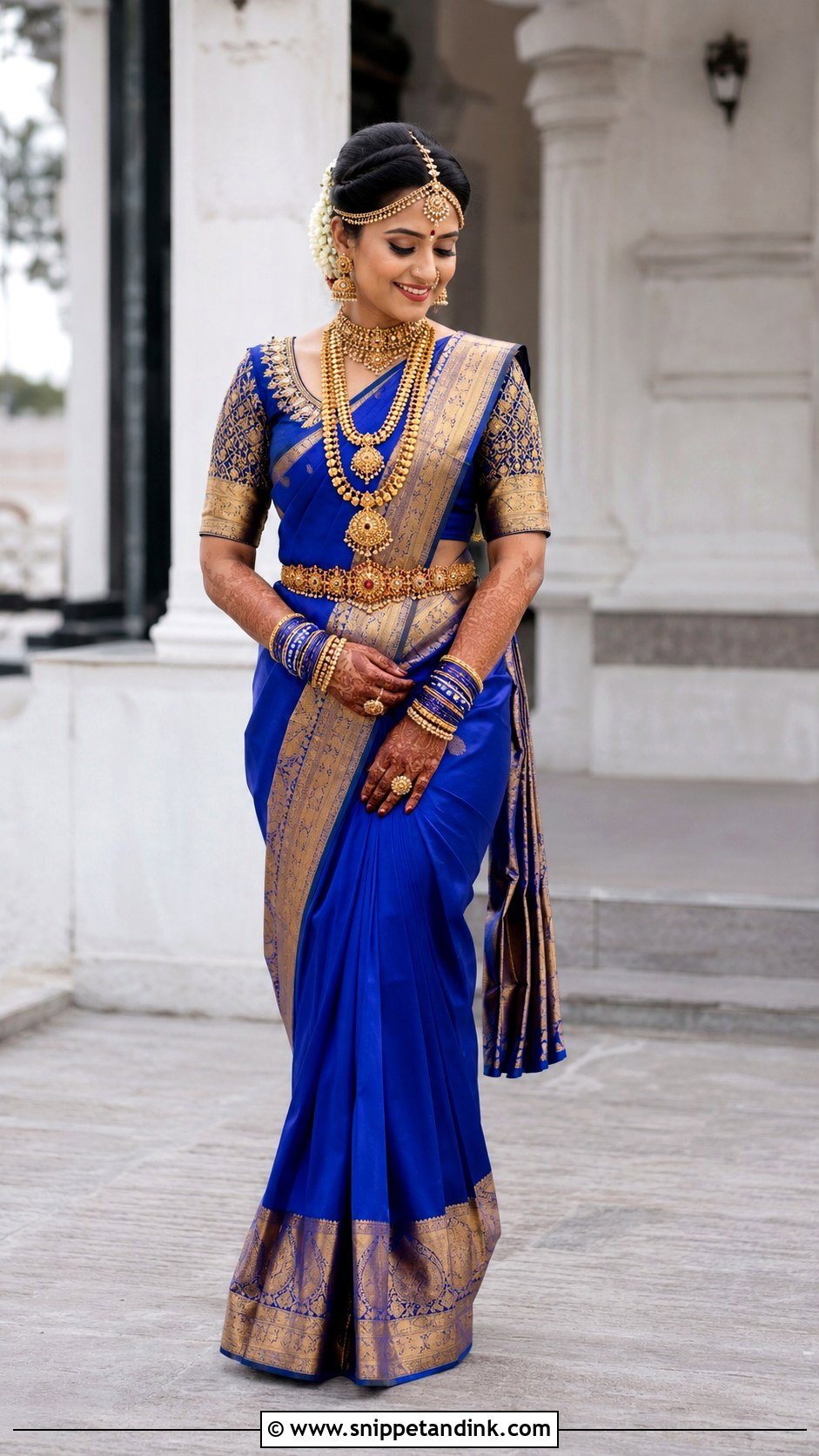
Blue is bold, and it’s for the bride who doesn’t mind being the only one in it. Royal blue, peacock blue and navy silk all carry gold zari, and a gold, pink or green blouse decides how festive it feels. Antique temple jewelry warms blue up and keeps it traditional. Add a broad vaddanam, layered necklaces, bangles and a flower braid with jasmine. Peacock blue shifts between green and blue depending on light, so look at the saree in daylight and under warm bulbs before you buy. Bronze eyes and a muted red lip balance it.
10. Purple Kanjeevaram Telugu Bride
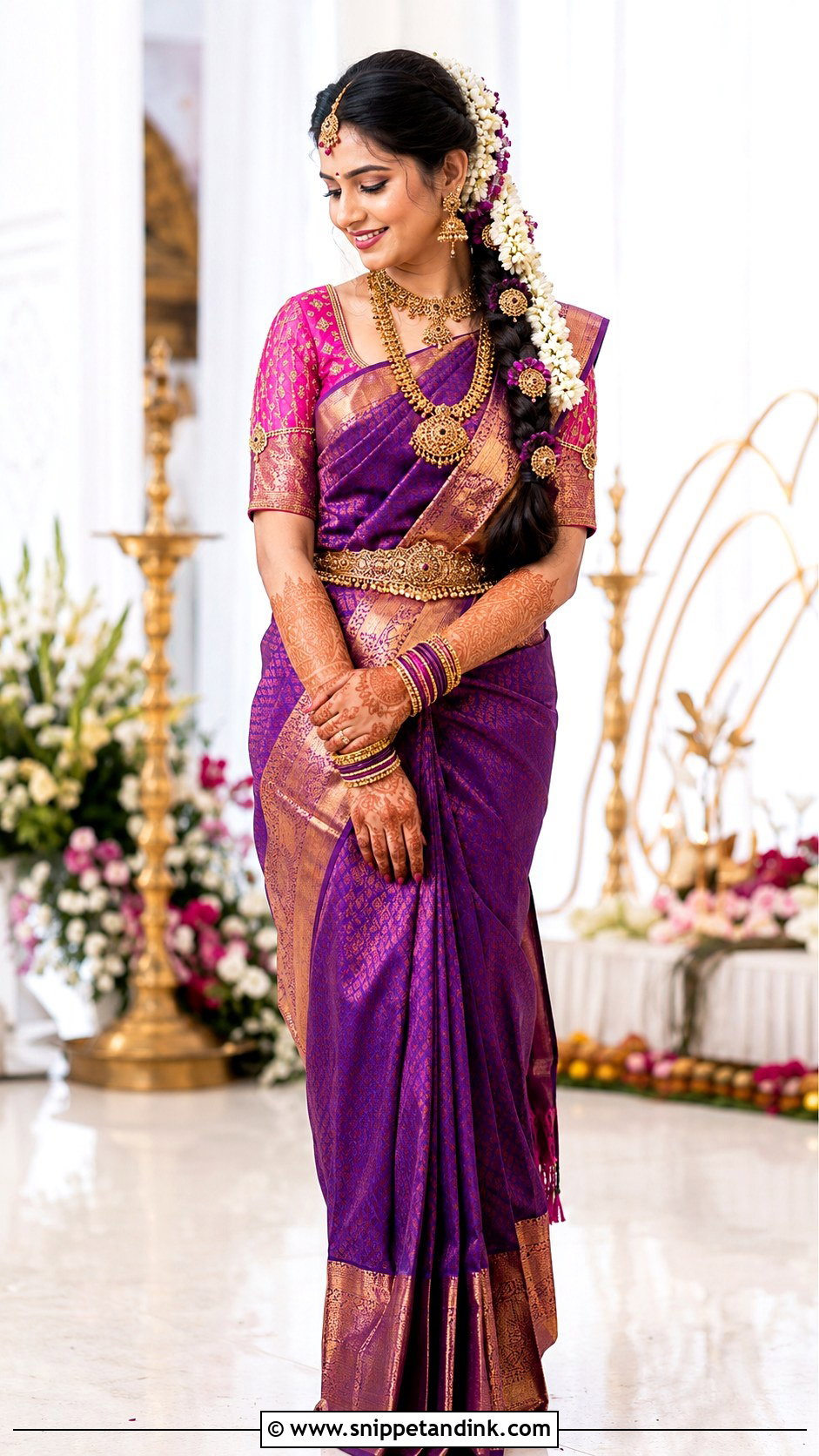
Purple feels traditional but less expected. Deep purple, aubergine, violet or wine silk with gold zari borders works, and a gold, pink or green contrast blouse lifts it. Antique gold with ruby or emerald accents and a classic vaddanam suit it. I sometimes add a few small purple flowers into the jasmine braid so the hair connects to the saree. Sharp pleats and a neatly pinned pallu keep the dark silk looking polished. A berry lip and a red bindi stop the face from looking cool against the purple.
11. Orange Pattu Saree Telugu Bride
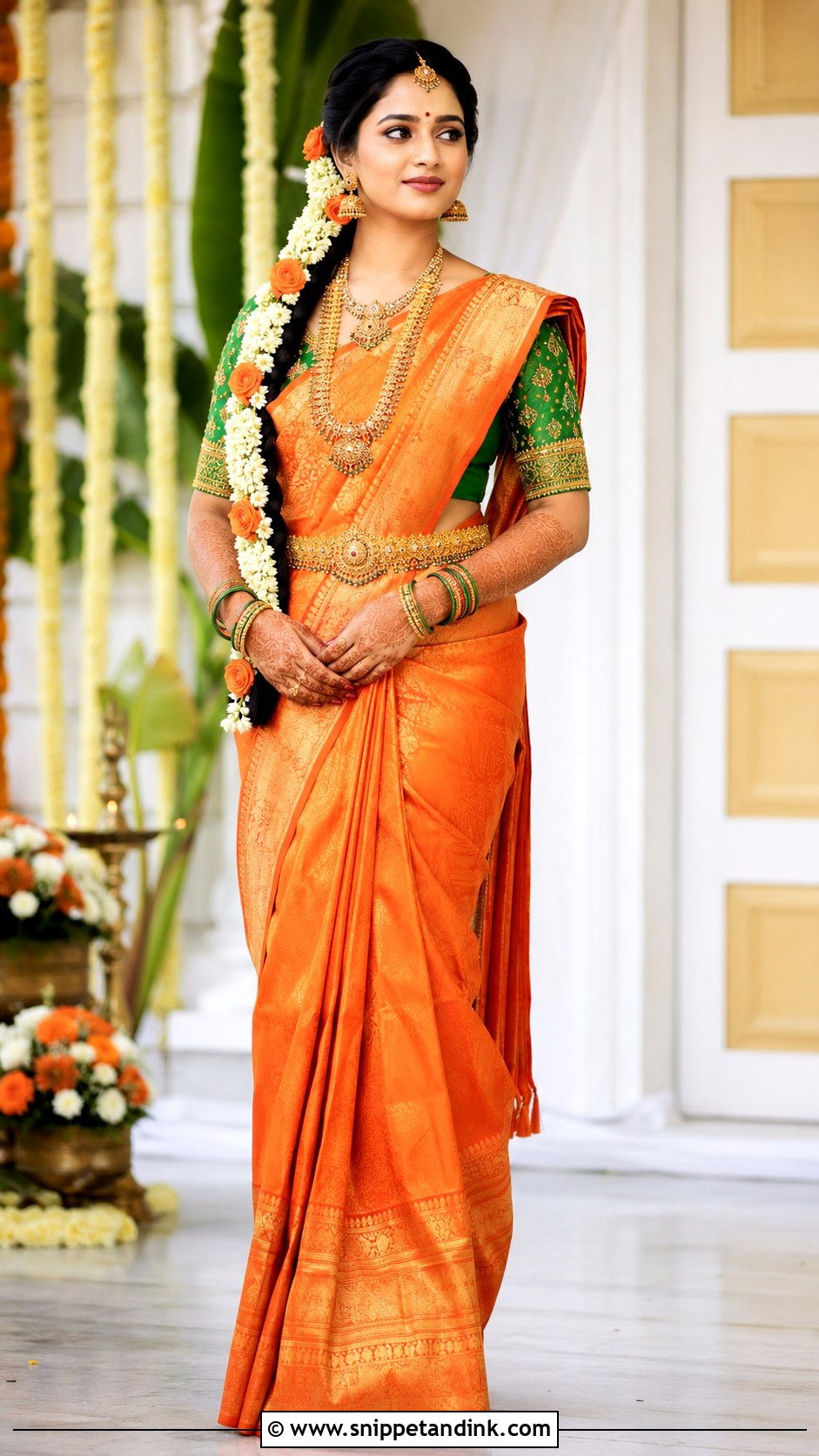
Orange is warm and celebratory, best suited to daytime ceremonies and family rituals. Burnt orange, mango or deep saffron silk with gold zari and a contrast border reads very Telugu, especially with a green, pink or maroon blouse. Gold temple jewelry deepens the warmth. Add layered necklaces, the vaddanam, bangles, jhumkas and a floral braid with jasmine and orange roses. I’d keep makeup fresh with a coral-red lip. Orange silk shows dye bleeding if it gets wet, so ask the shop whether the saree has been color-fast tested before the haldi crowd gets near it.
12. Pattu Langa Voni Telugu Bride
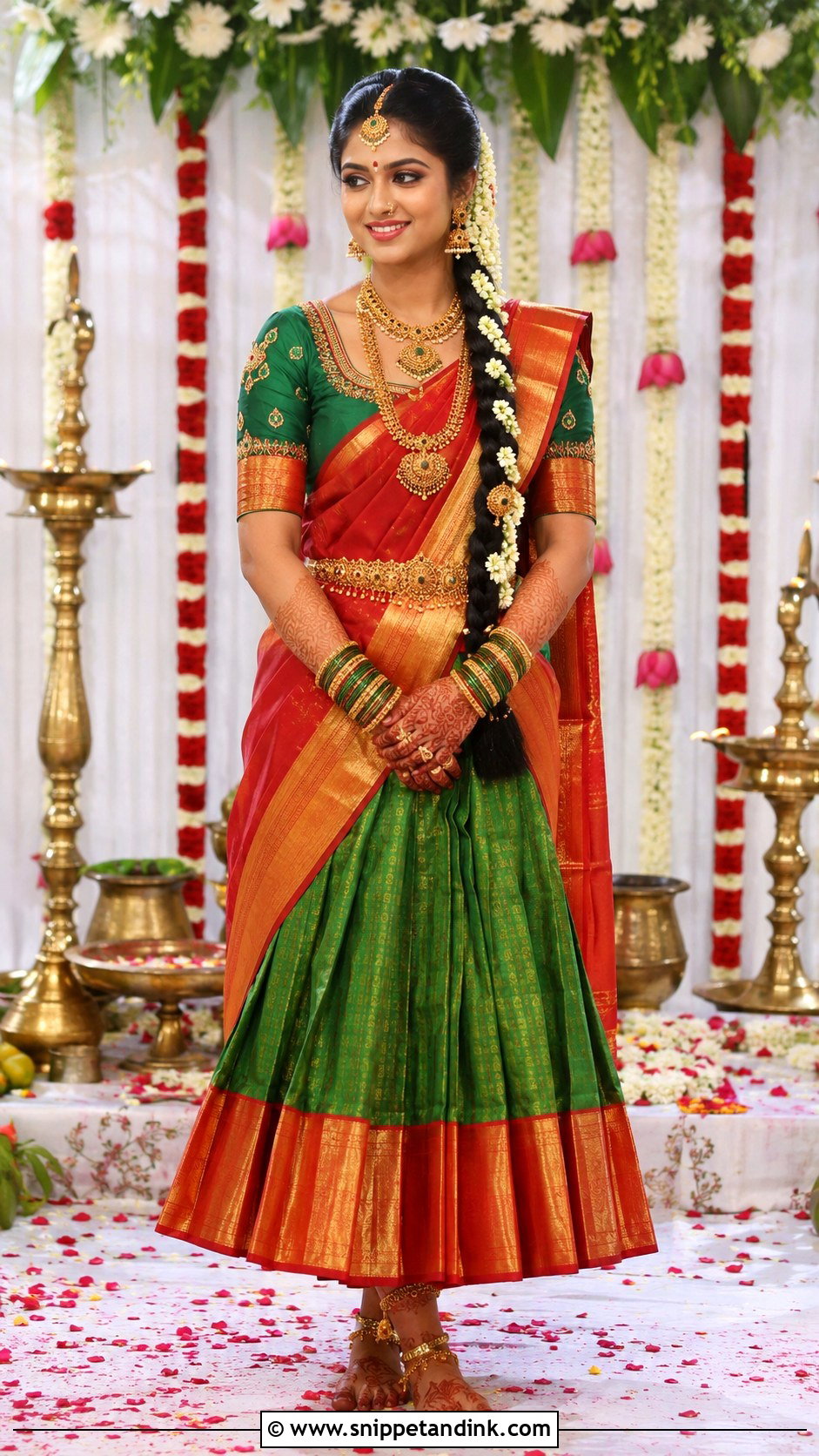
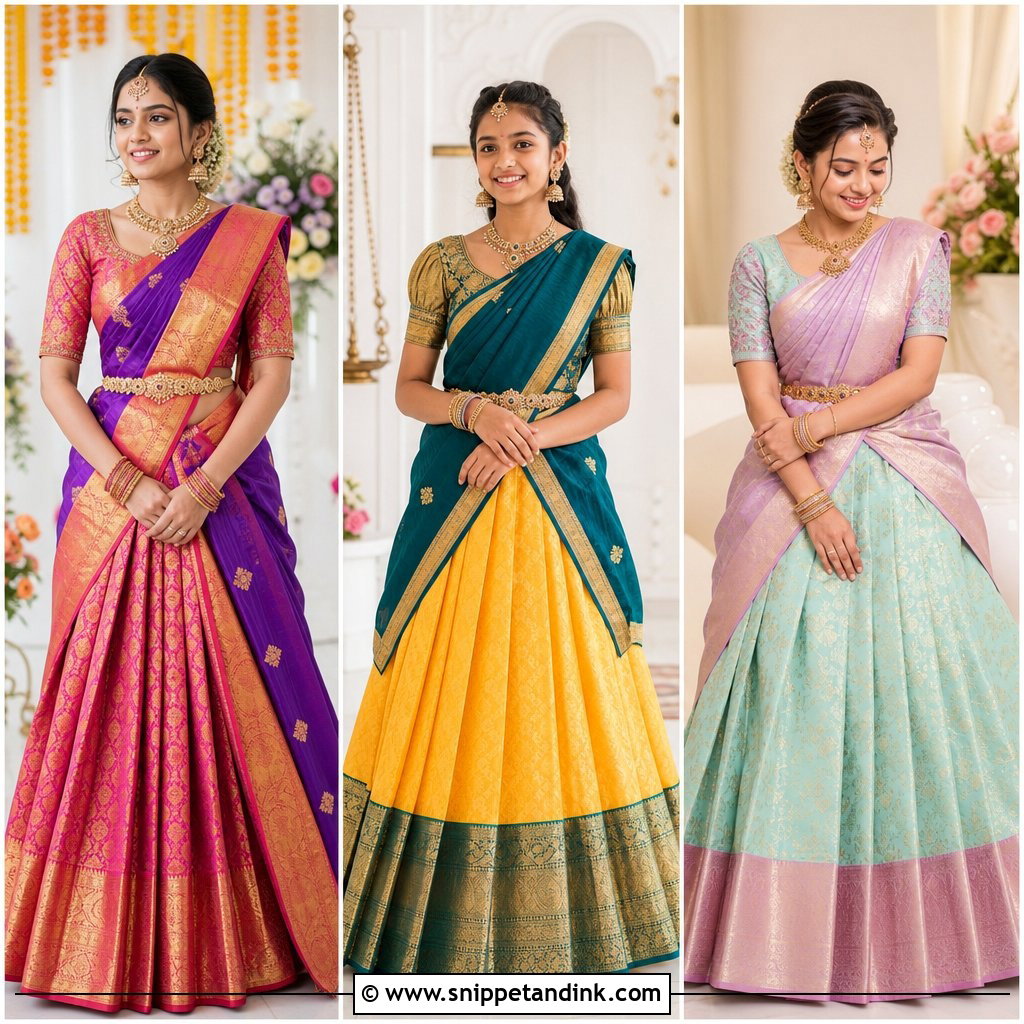
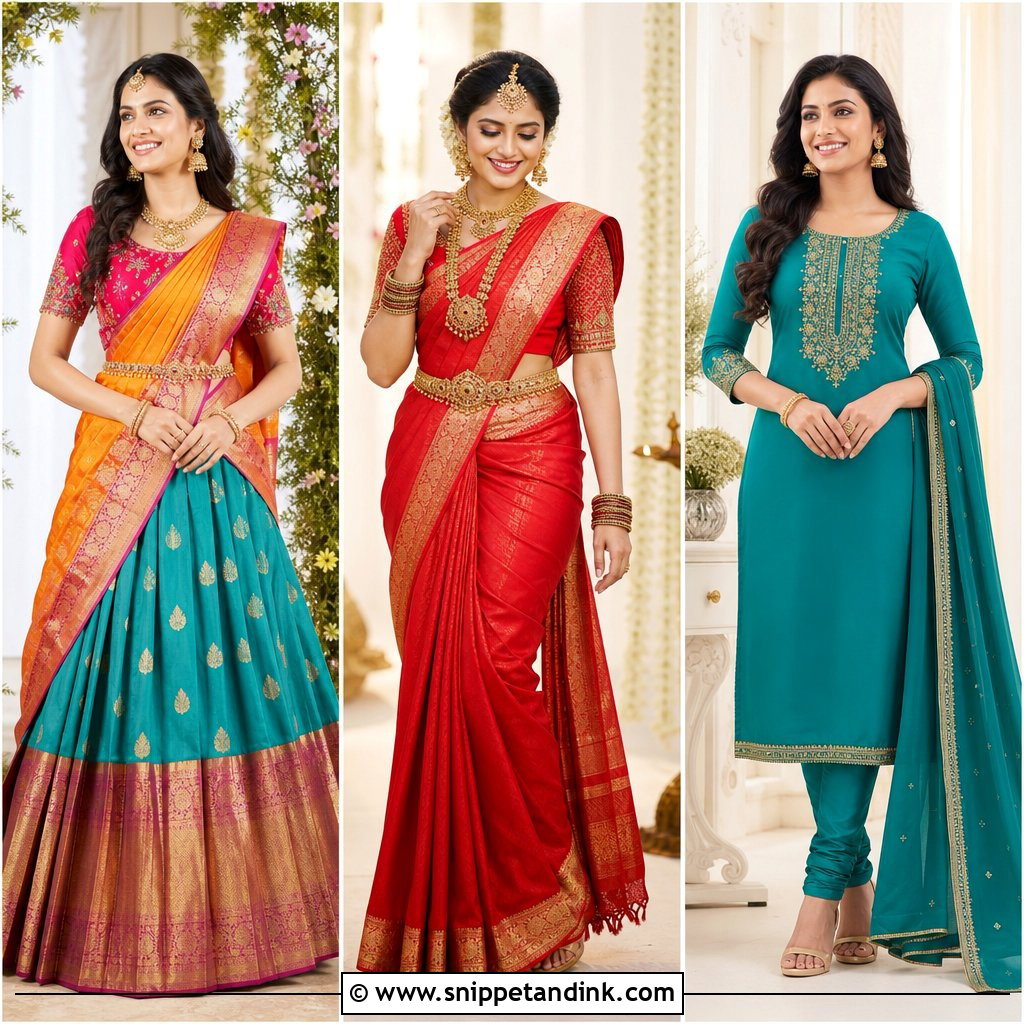
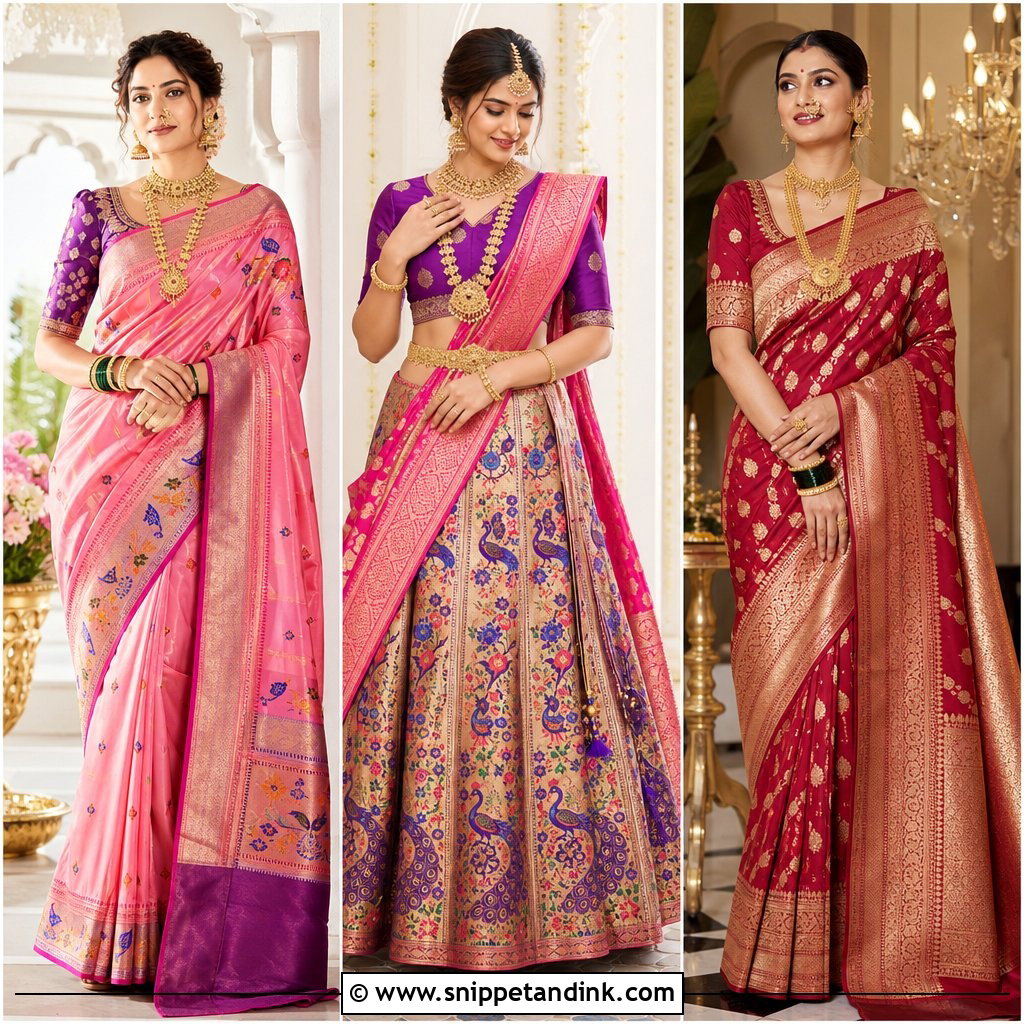
A pattu langa voni Telugu bride look is the outfit many Telugu girls grow up wearing for festivals, so for a bride it needs a heavier border to read bridal rather than festive. It’s three pieces: silk skirt, blouse and the draped voni. Red with green, pink with gold, maroon with mustard and blue with gold are the classic pairings. Pleat the voni neatly across the shoulder and pin it at the waist under the vaddanam so it doesn’t drift. Temple jewelry, bangles, anklets and a long flower braid complete it. It suits the pellikuthuru, engagement rituals or a change after the muhurtham.
13. Half Saree Telugu Bride
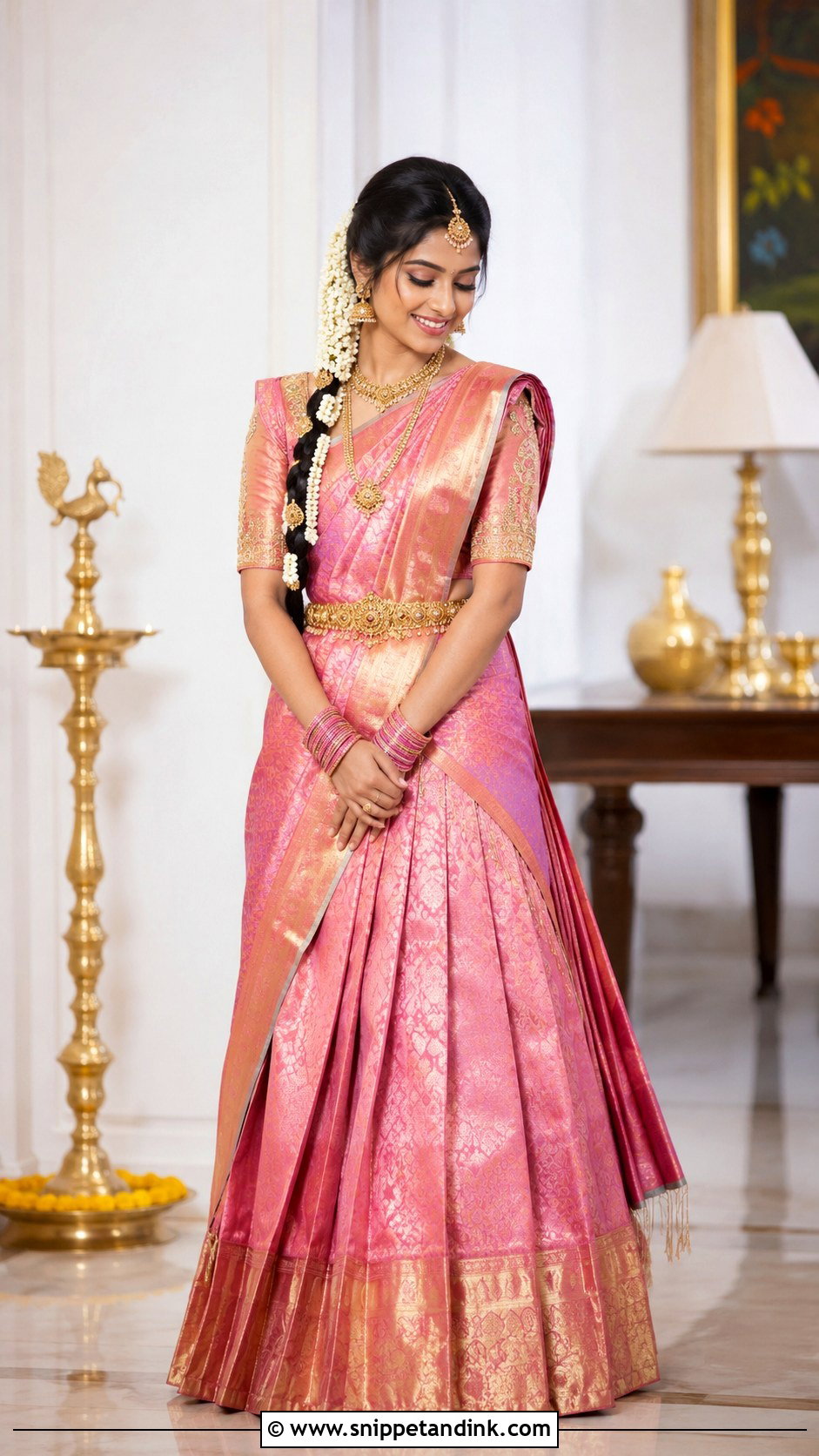
Movement is the main reason I suggest a half saree. The skirt gives volume, the blouse gives structure and the draped dupatta creates a saree-like line without six meters to manage. Bridal silk with zari borders, embroidery or woven motifs keeps it formal. Green and pink, red and gold or yellow and maroon all work. The waist belt does real work here, holding the drape in place, so fit it over the outfit at your trial, not over a T-shirt. Temple jewelry, bangles, jhumkas and a flower braid finish it, with bright eyes and a classic bindi.
14. Banarasi Saree Telugu Bride
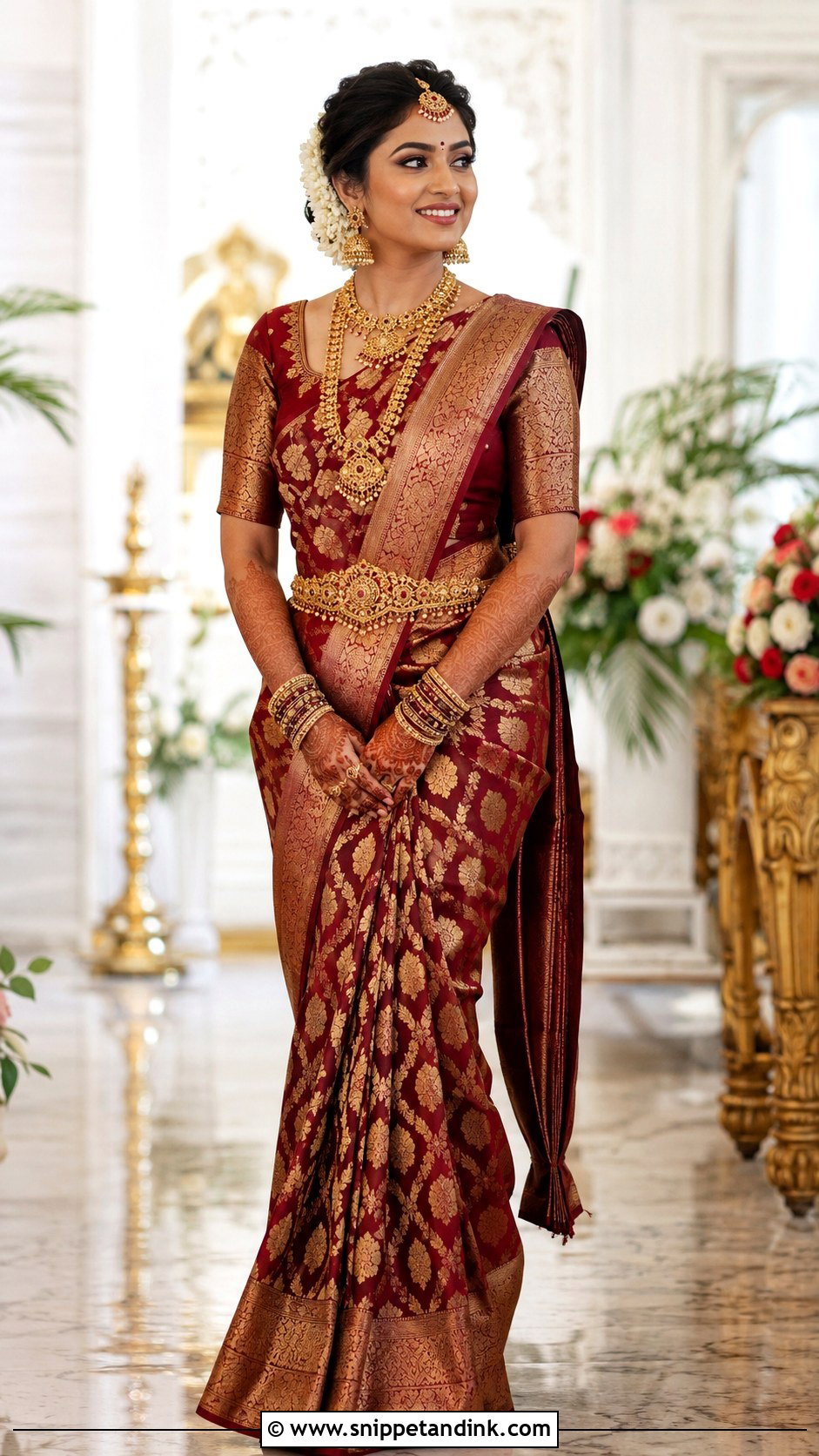
Banarasi brings a North-meets-South feel, and I keep the jewelry and hair firmly Telugu so the look stays grounded. A red, maroon, pink or gold Banarasi silk with rich woven motifs pairs with temple necklaces, the vaddanam, bangles and jada accessories. Banarasi is softer and drapes more fluidly than Kanjeevaram, so pleats need more pins to stay crisp through a long ceremony. Style hair in a long braid with jasmine or a traditional bun with flowers, and keep makeup classic with a warm lip.
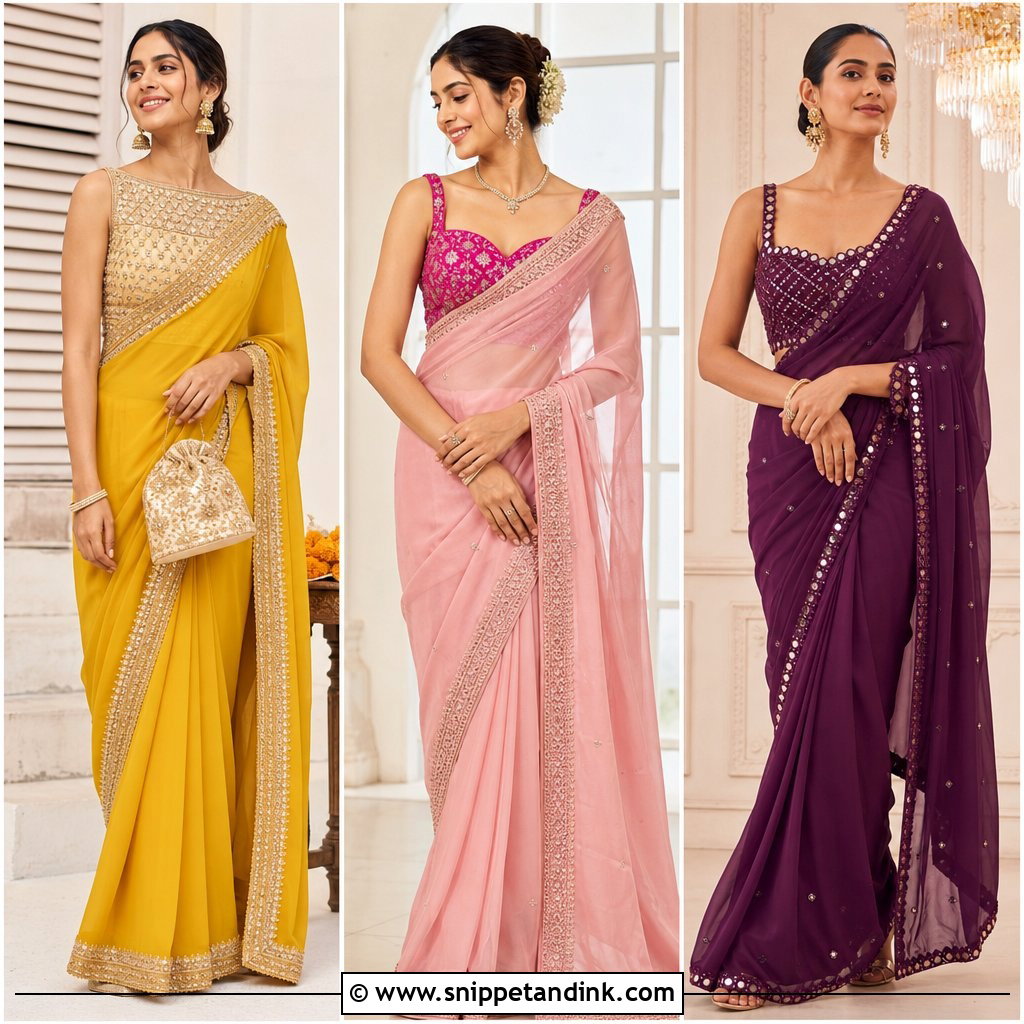
15. Temple Jewelry Telugu Bride
Here the gold leads. Start with silk in red, green, maroon, ivory or gold, then layer a short Lakshmi choker, long haram, kasu mala, jhumkas, bangles, vaddanam and armlets if you want a fuller look. I lay the necklaces out on the bed first and try them in order of length, because a long haram worn over a short choker can flip the choker’s pendant sideways. Keep the blouse neckline clean when the jewelry is heavy. A long braid with gold jada billalu and jasmine connects the gold from head to toe, and a strong bindi keeps the face expressive.
16. Polki Jewelry Telugu Bride
Polki gives a softer, more royal sparkle than temple gold, and I usually save it for the reception or a second look. Uncut diamond pieces sit well on deep maroon, emerald, ivory, pink or gold silk. Polki chokers, layered necklaces, earrings and a maang tikka bring the sparkle; a vaddanam, bangles and a floral braid keep it Telugu. Choose a simple blouse neckline so the pieces have room. Polki is usually set with a foil backing and dislikes water, so put it on after perfume and hairspray, never before.
17. Vaddanam Telugu Bride
The waist belt is the detail that turns a draped saree into a bridal one. A Kanjeevaram or pattu saree with clean pleats shows it off best, since any bunching under the belt is obvious. Choose plain gold, antique gold, Lakshmi motif or stone-set to match the rest of your set. The vaddanam also holds the saree in place through a long ceremony. I fit it with the bride seated as well as standing; a belt that sits perfectly upright can dig into the ribs once you sit for hours. Pair it with layered necklaces, bangles, earrings and a decorated braid.
18. Poola Jada Telugu Bride
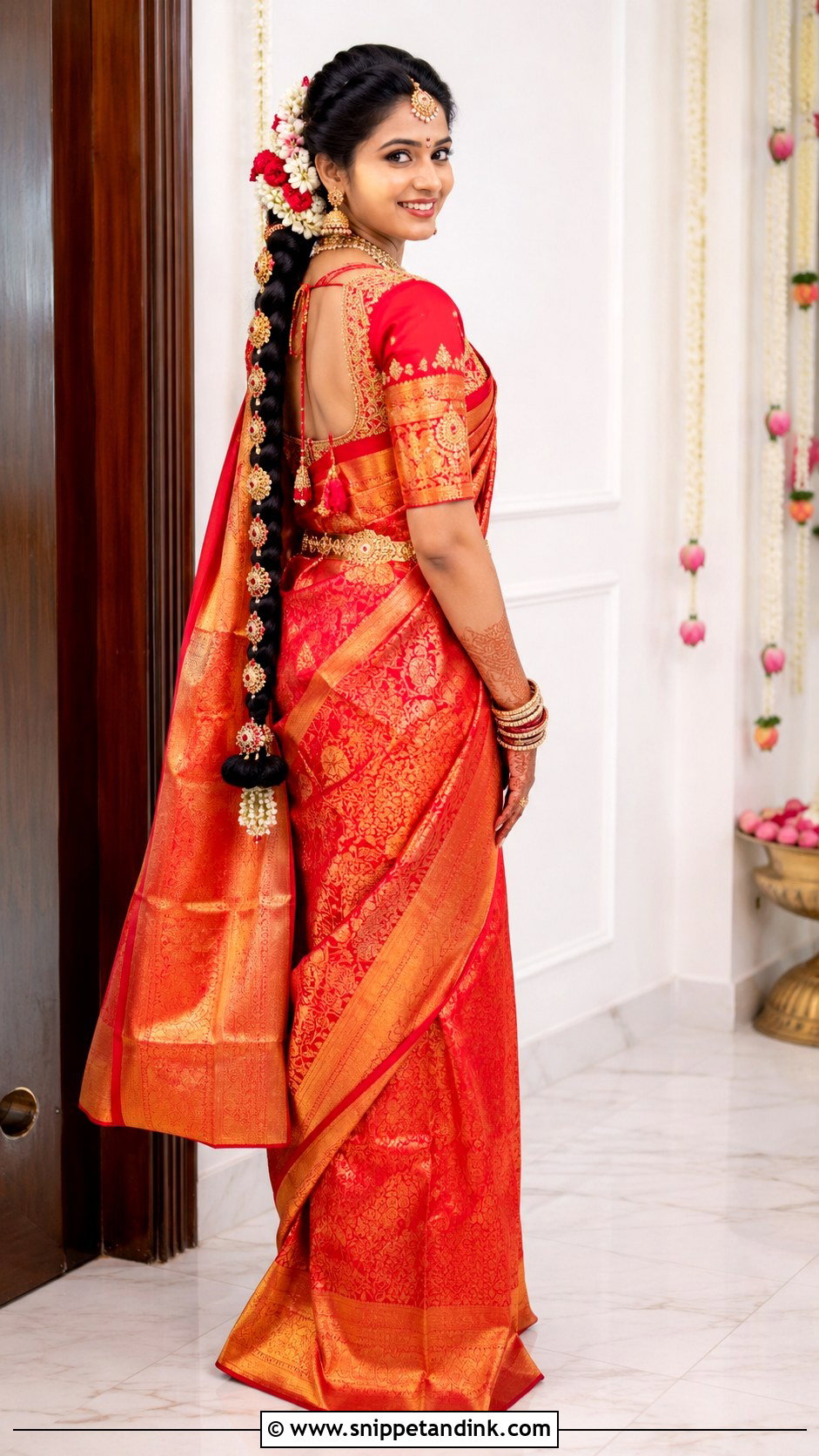
A poola jada Telugu bride look is built around the long flower braid, so I match the saree or langa voni to the flowers rather than the other way around. Jasmine, roses, kanakambaram and seasonal flowers are layered along the braid with gold jada billalu or pearl ornaments. A full jada is heavy, and it pulls at the crown, so the base braid has to be tight and anchored with pins before anything is attached. Keep the blouse back neat, since the braid will be visible in many photos. Temple jewelry, the vaddanam and stacked bangles complete it.
19. Jasmine Bun Telugu Bride
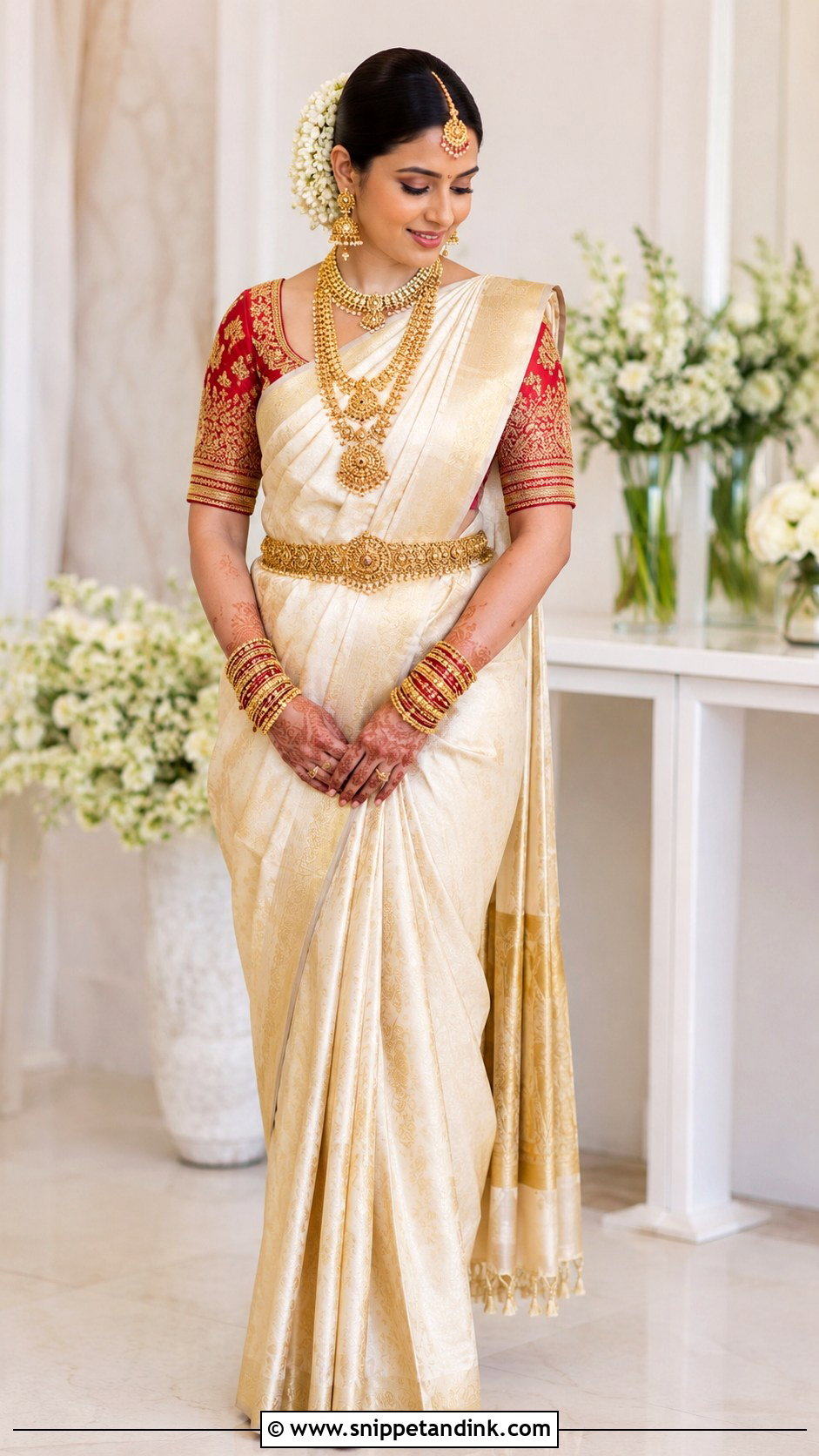
Brides who find a long braid too heavy often feel better in a jasmine bun. A center-parted low bun wrapped in thick jasmine garlands sits with a silk saree in ivory, red, green, pink or gold. Add a maang tikka, earrings, layered necklaces, bangles and the vaddanam. The bun clears the neckline, so chokers and harams show, and it suits a blouse with detailed sleeves or back. Jasmine bought as tight buds opens through the evening, so I’d have it delivered as buds on the day.

20. Heirloom Jewelry Telugu Bride
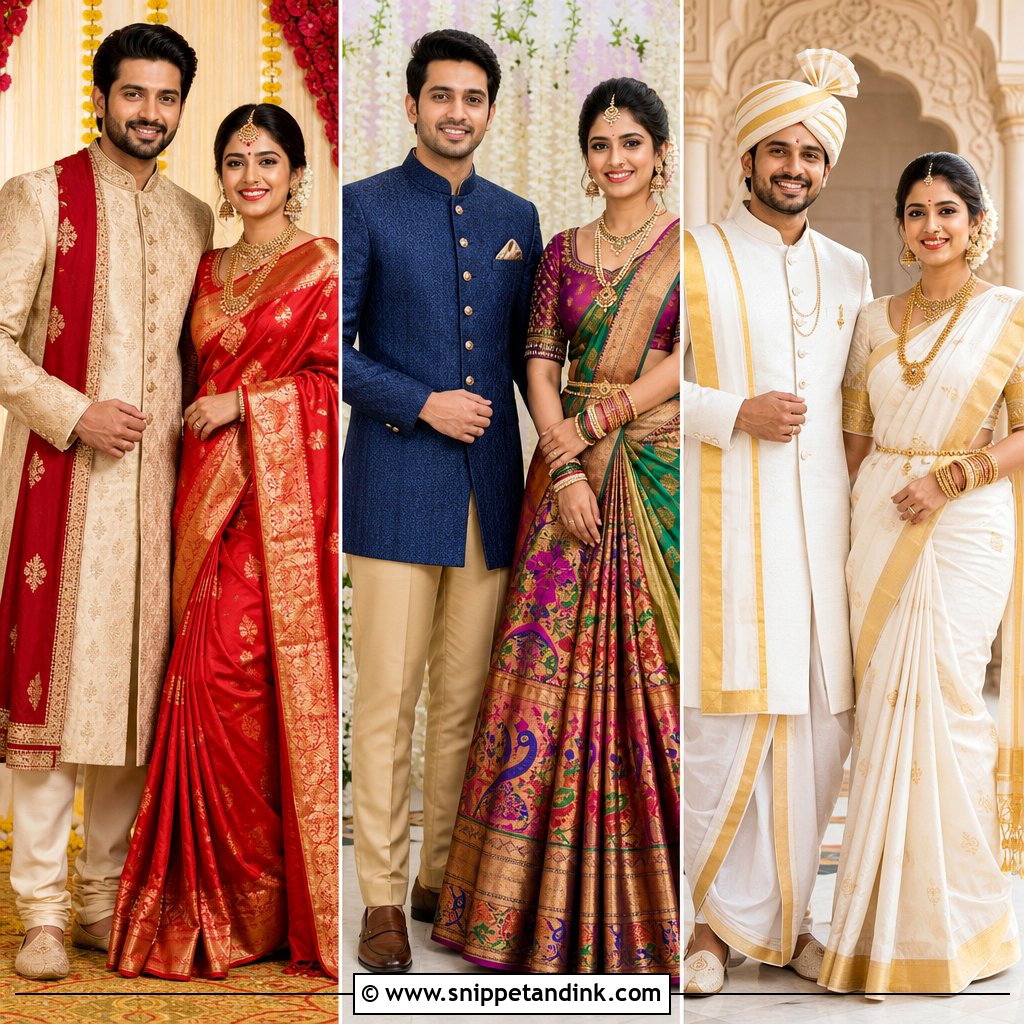
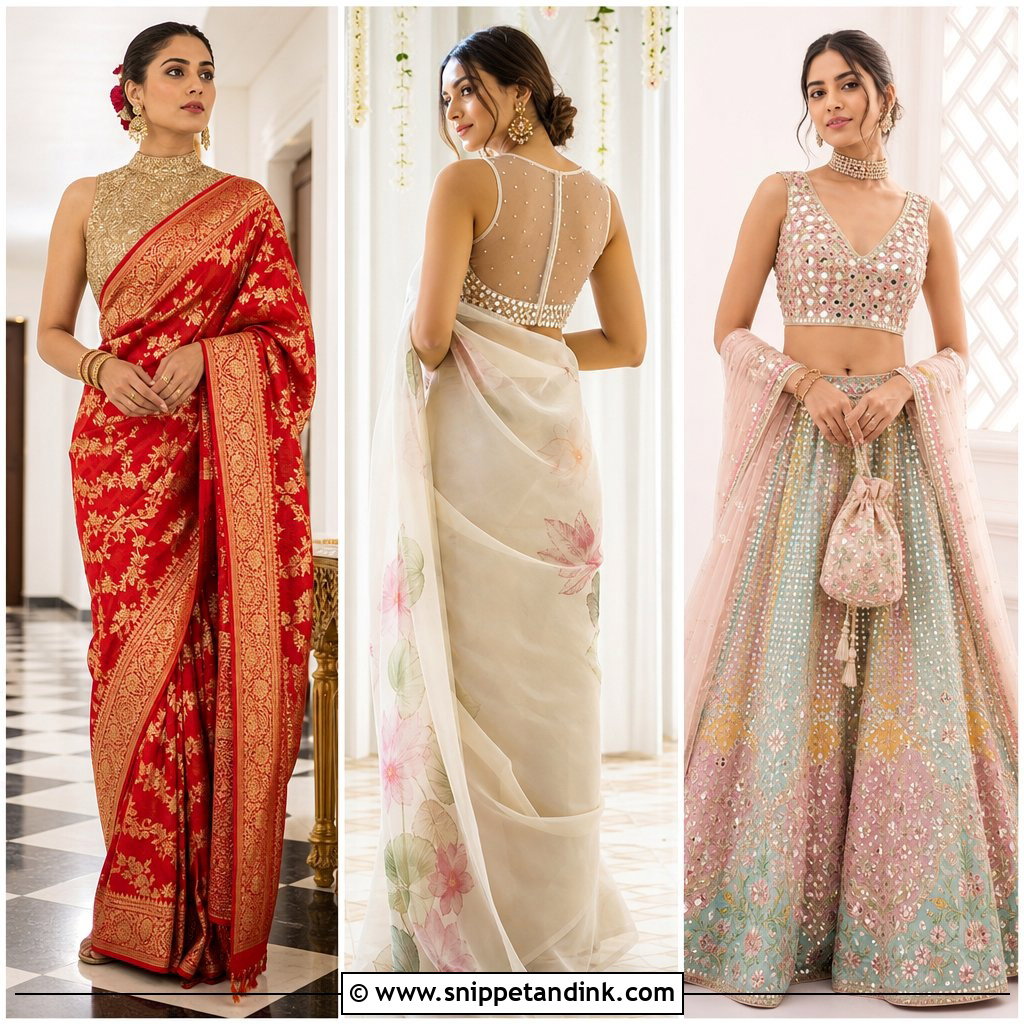
Heirloom jewelry carries family meaning, and it’s the one look where I build the outfit backward from the gold. Lay the pieces out first and note the metal tone and stone colors, then choose a silk that complements them. Antique gold suits maroon, green, red and ivory; pearl or polki pieces suit lighter sarees. Keep the blouse simple so the jewelry stays the focus, then add the vaddanam, bangles and hair flowers. Old clasps are often worn, so have a jeweler check every hook a few weeks before; it’s a small job that saves a necklace from slipping off mid-ritual.
21. Minimal Telugu Bride
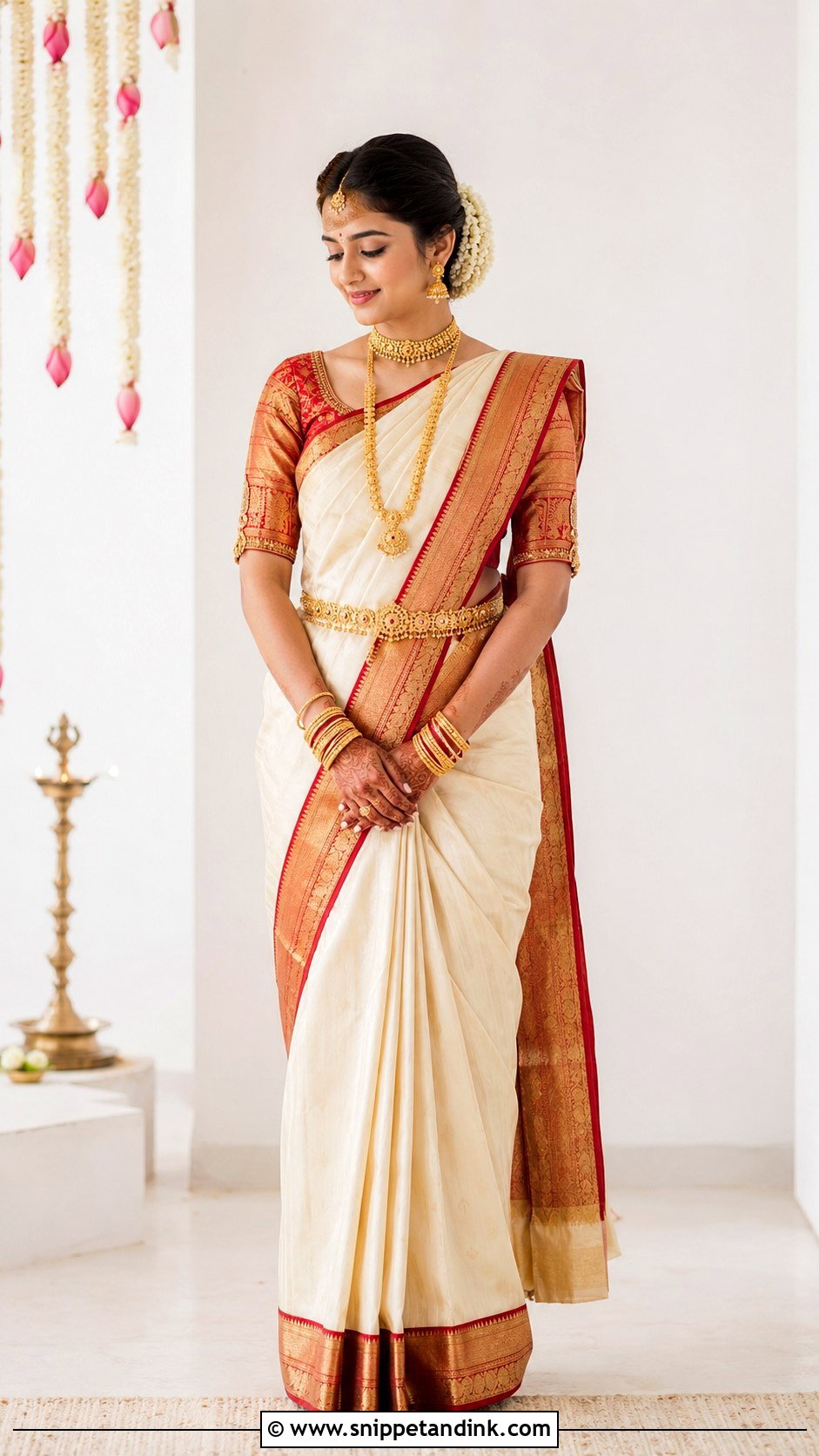
Not every bride wants six layers of gold. Choose a clean silk saree with a rich border rather than heavy all-over work; ivory with red, gold with green or soft pink with gold all work. I’d stop at a choker, one long necklace, jhumkas, bangles and a slim vaddanam. A neat bun with jasmine or a soft braid suits it. The fabric, drape and flowers carry the tradition, so it still reads bridal. Brides who sit for long muhurtham timings tend to feel the difference in their neck and shoulders.
22. Regal Telugu Bride
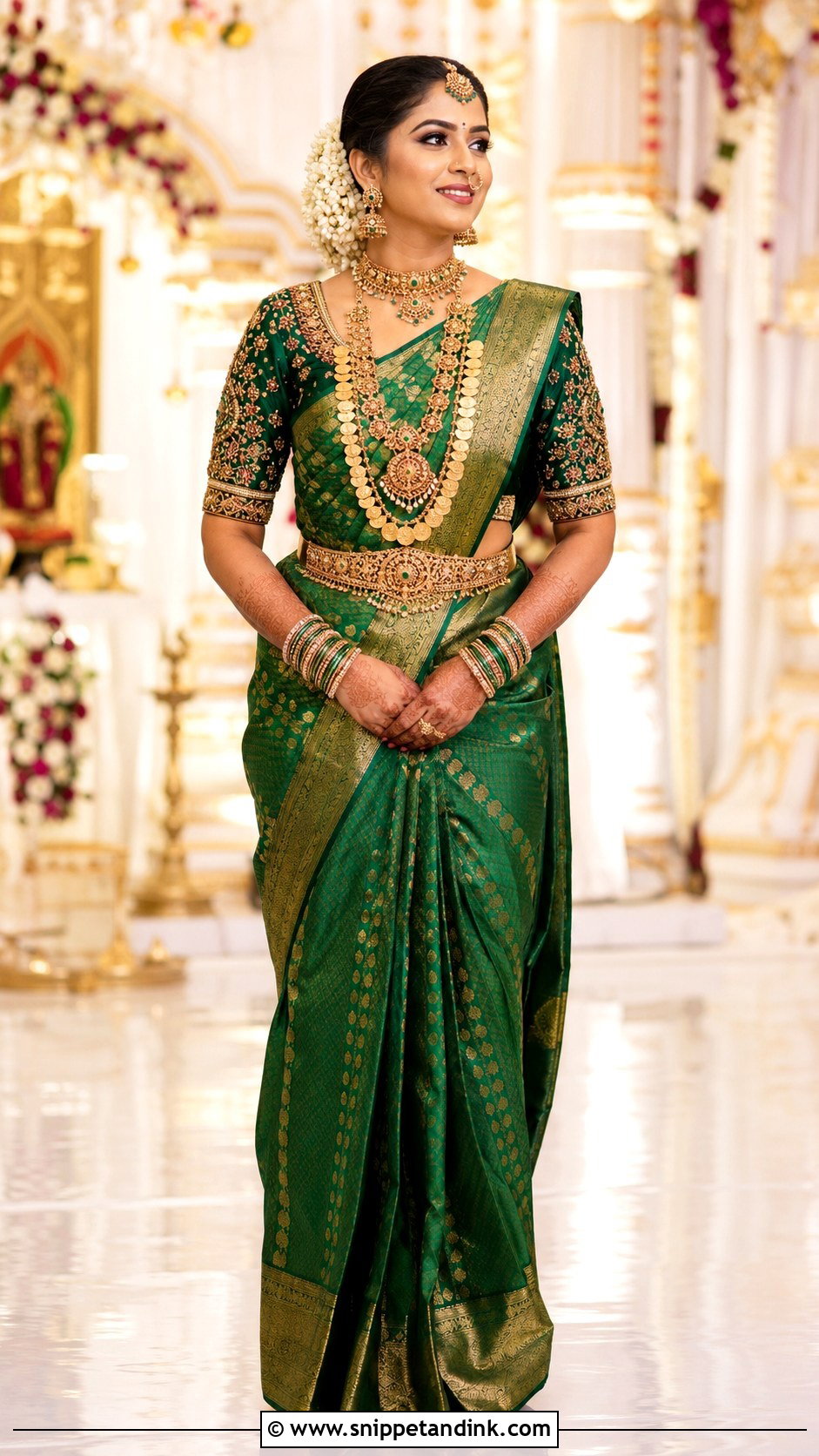
For grandeur, start with a heavy Kanjeevaram in red, maroon, emerald, royal blue or gold and a blouse with woven sleeves or a rich border. Layer temple jewelry: a choker, long haram, kasu mala, vaddanam, bangles, jhumkas and hair ornaments, with a long flower braid for drama. All of that weight needs a secure drape, so I pin pleats at the waistband and under the vaddanam. Makeup can go bolder here, with sculpted eyes and a rich lip. I’d only suggest this look to a bride who has tried the full weight on at least once before the day.
23. Simple Telugu Bride
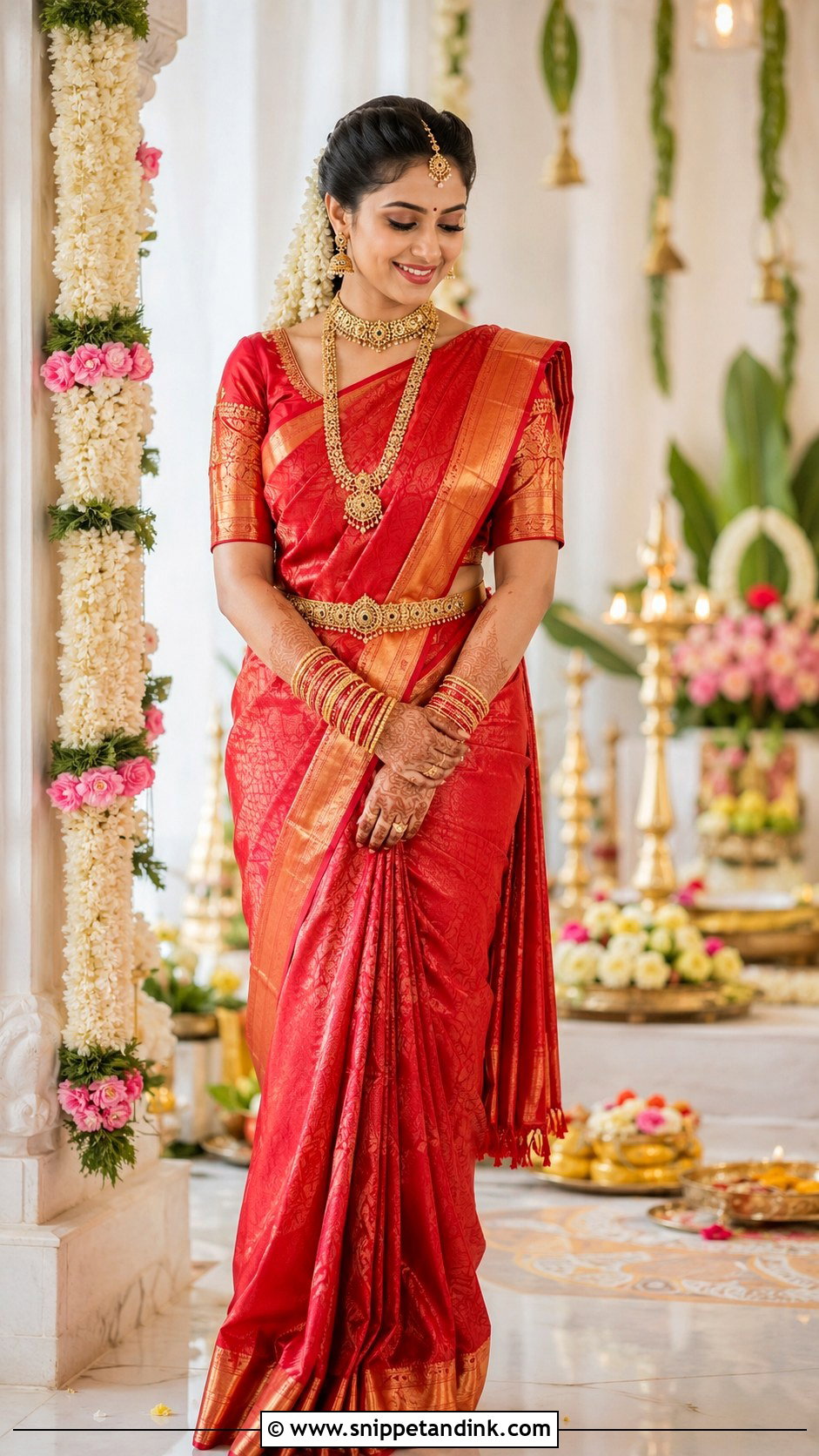
Simple works when every detail is deliberate. A classic silk in red, green, ivory or mustard, one choker, one long necklace, jhumkas, bangles and a slim vaddanam is enough. Clean pleats and a properly placed pallu do more for this look than extra jewelry would. A jasmine bun or simple flower braid adds bridal charm without fuss, with kohl, fresh blush, a red bindi and a natural lip. It’s the look I recommend to brides who want to move easily through a long day.
24. Reception Telugu Bride
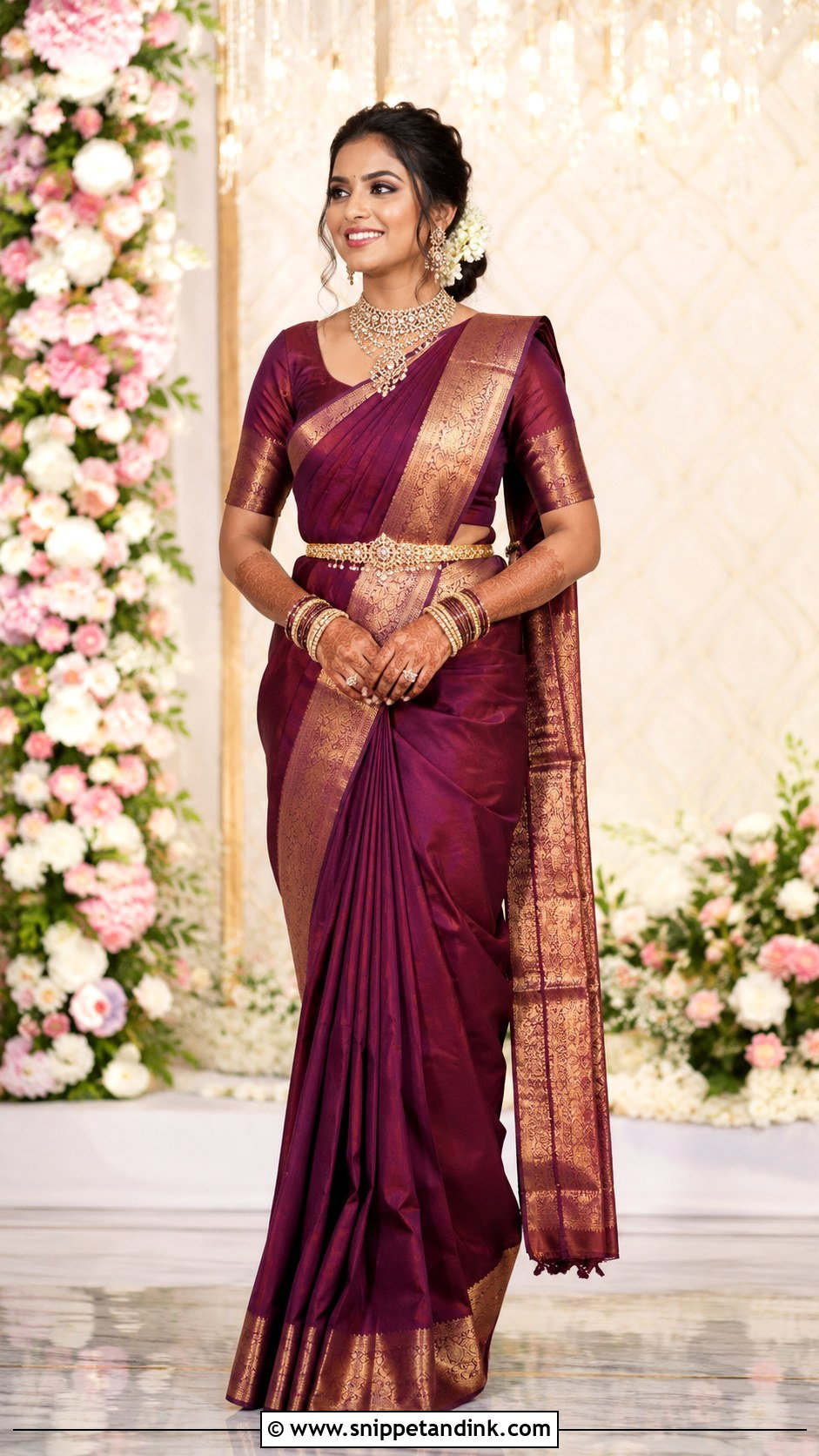
The reception can be more polished and modern while still honoring tradition. A silk, Banarasi or woven designer saree in wine, emerald, navy, blush or gold pairs with polki, antique gold, pearls or a layered diamond-look set. The hair can switch to a jasmine bun, soft braid or sleek open bun with flowers. The vaddanam is optional here. Since you’ll be standing to greet guests for a long stretch, I loosen the pallu pin slightly and choose lighter earrings than at the muhurtham. A little shimmer on the eyes catches stage lights well.
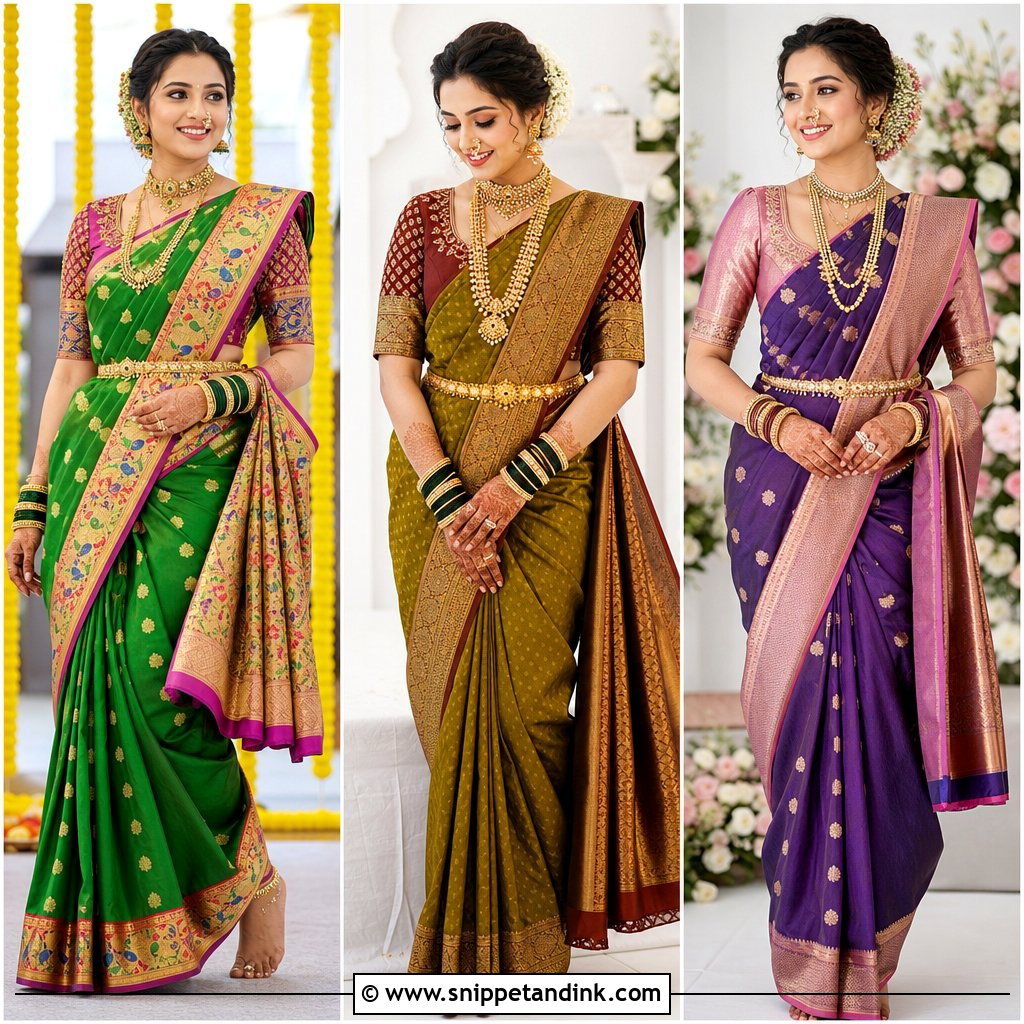
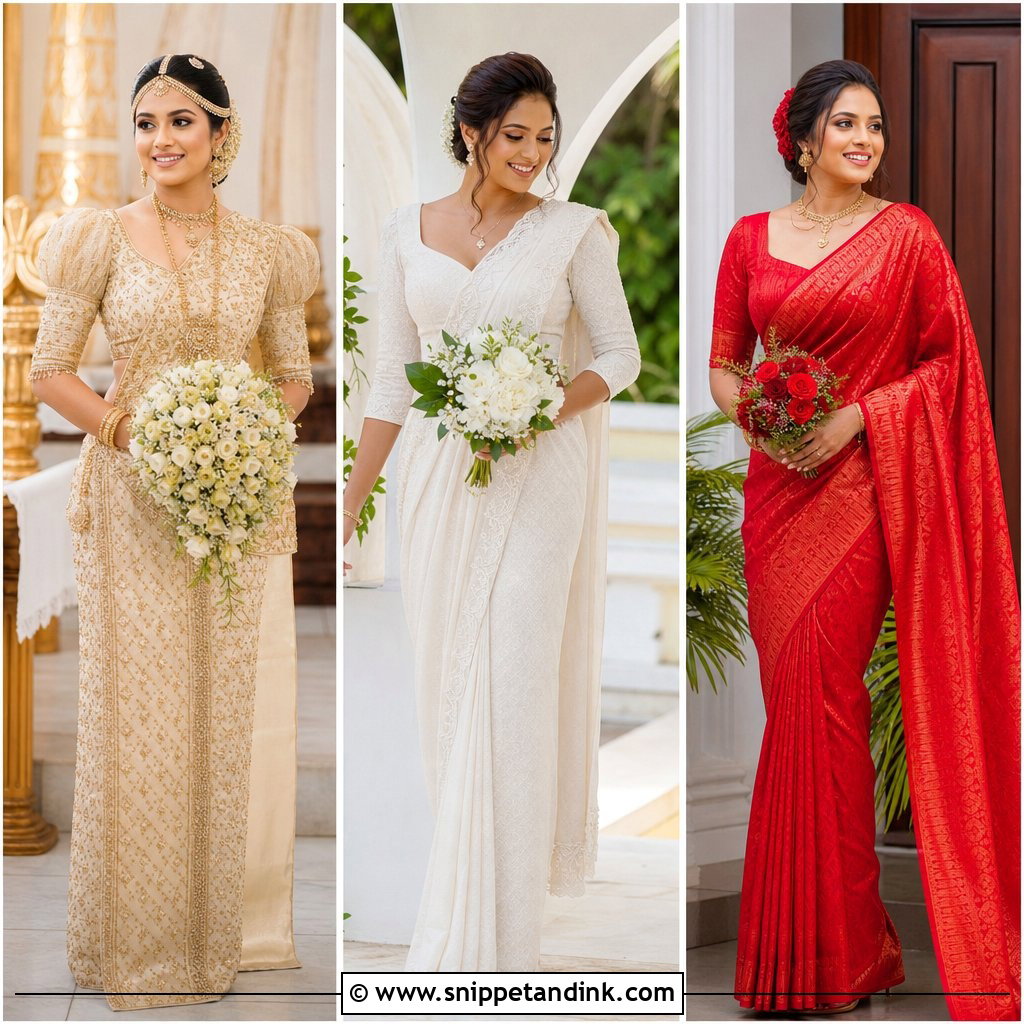
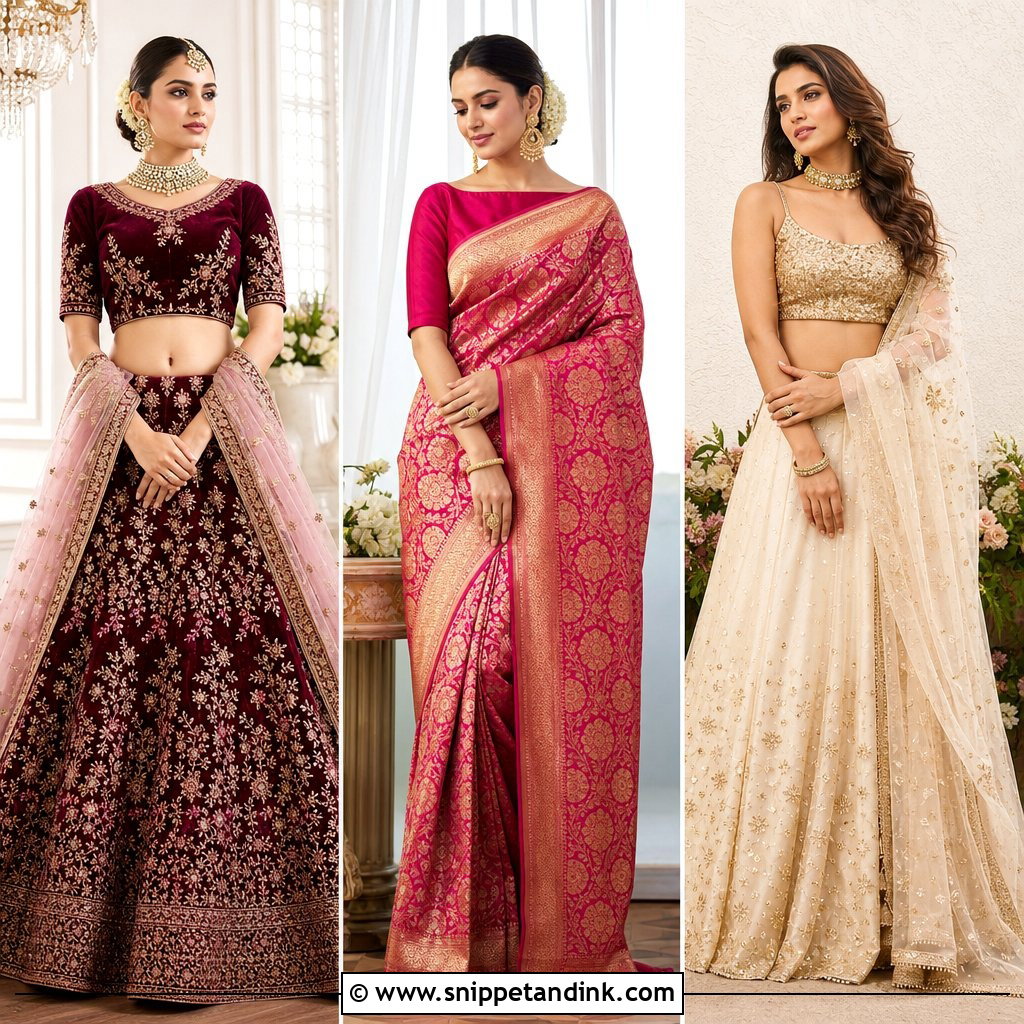
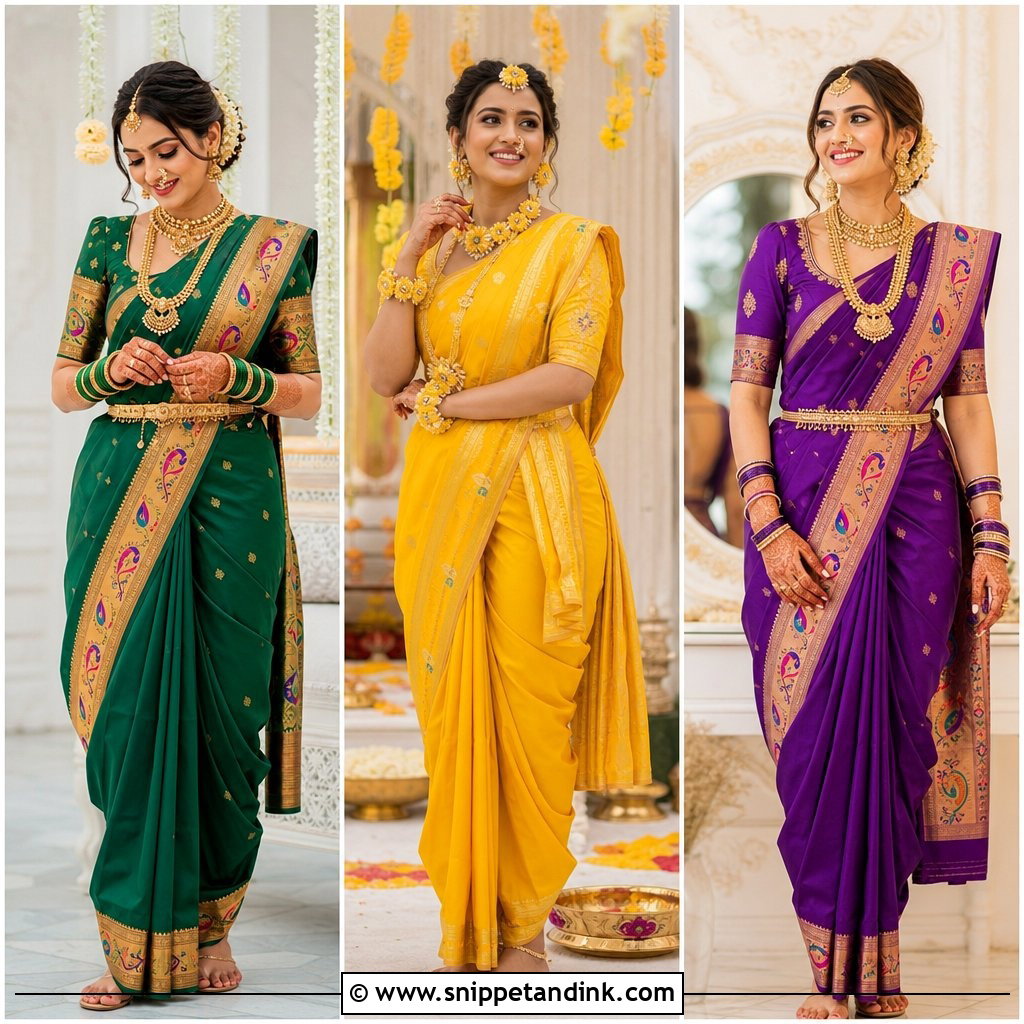
25. Muhurtham Telugu Bride
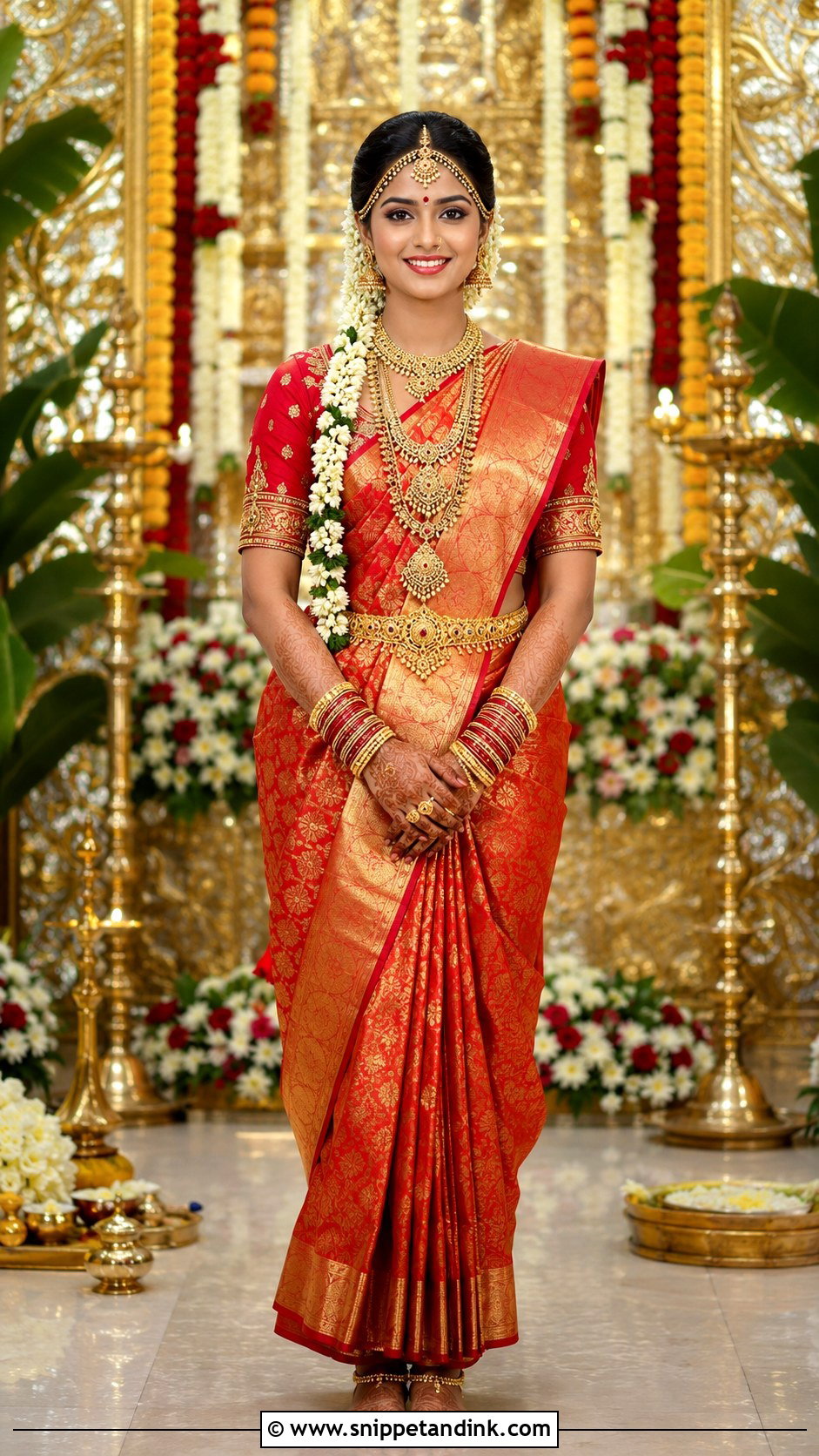
The muhurtham is fixed to an auspicious time, sometimes late at night or before dawn, and the outfit has to stay neat through the jeelakarra bellam, the mangalsutra and the talambralu. Choose a rich pattu saree or Kanjeevaram saree in red, ivory, green, yellow or gold with a strong border and enough body to hold its shape. Pair with temple jewelry, the vaddanam, bangles, anklets and a floral braid or jasmine bun. Pin the pleats and pallu securely, because talambralu rice catches in loose folds. Makeup should be built to last under bright lights, with a bold bindi.
Can Jasmine and Temple Gold Last Until the Talambralu?
Fresh jasmine opens fast in a warm hall and browns within hours of opening. I order it in tight buds, keep the strings wrapped in a damp cotton cloth until they go into the hair, and ask for a spare string to replace the front of the bun before the main rituals. Kanakambaram holds its color longer, which is why it’s often mixed into a poola jada. If you’re sensitive to strong scent, say so early; a hall full of jasmine bothers some brides by evening.
Spreading the weight
Temple jewelry, a vaddanam, armlets and a jada can add up to more weight than brides expect. I spread it out: the heaviest necklace sits lowest on the chest, where the shoulders carry it, while the jada billalu are pinned into a tight base braid instead of hanging from loose hair. A choker should sit flat without pressing on the throat when you bow your head. Anything that pinches at a trial will hurt badly by the end of the ceremony, so swap it then, not on the day.
Talambralu, the shower of rice over the couple, is joyful and messy. Grains catch in the jada, the pleats and the blouse back, so have someone shake out the saree and check the hair before the next round of photographs.
Silk, Gold and Jasmine That Suit Your Muhurtham Hour
Every Telugu bridal look here comes back to rich silk, meaningful gold, fresh flowers and a drape that holds. A red Kanjeevaram, an ivory madhuparkam-style saree, a langa voni or a pared-back temple set can all work, as long as they suit the hour of your muhurtham, the rituals you’ll sit through and the family pieces you want to wear. Try the heaviest outfit on, seated, before the day. When the silk and gold feel manageable, you’ll carry them with ease from the pellikuthuru to the reception.
You'll Like These Ideas:



Leave a Reply