
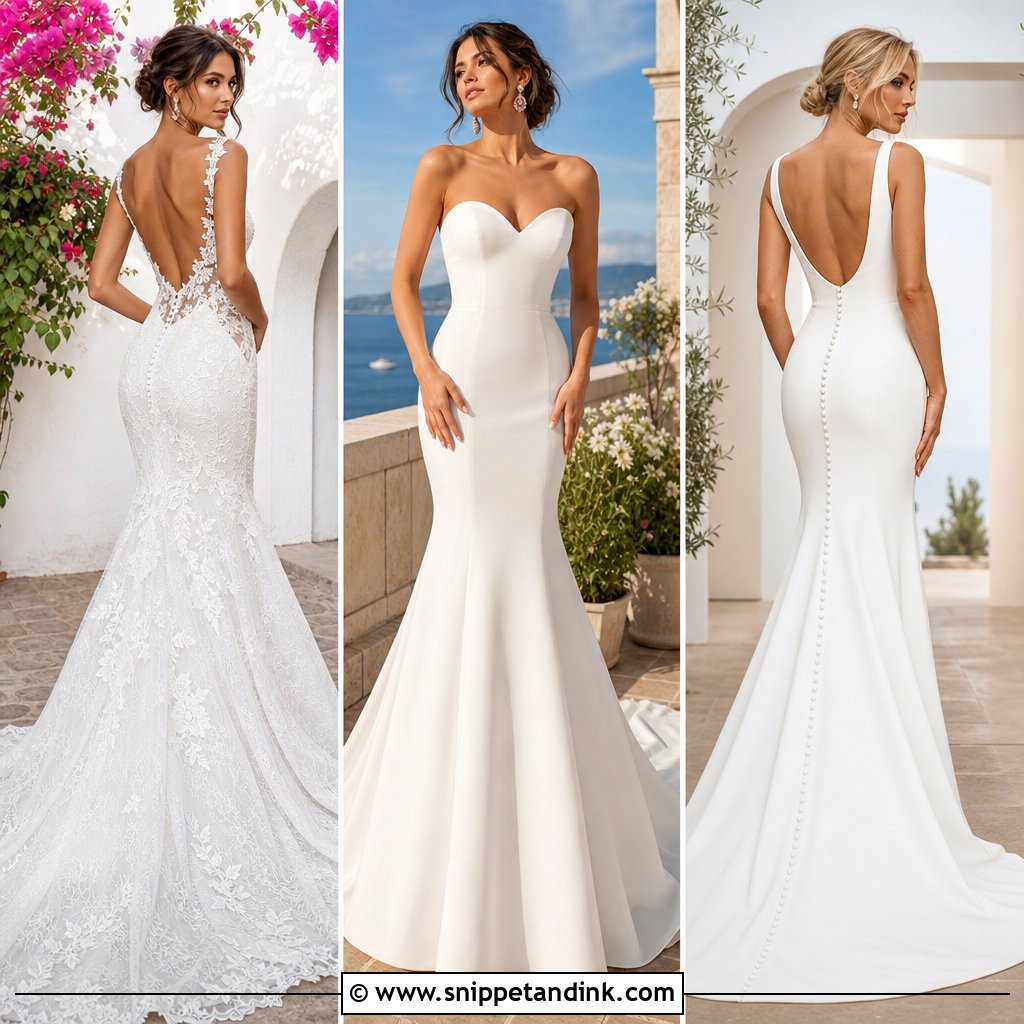
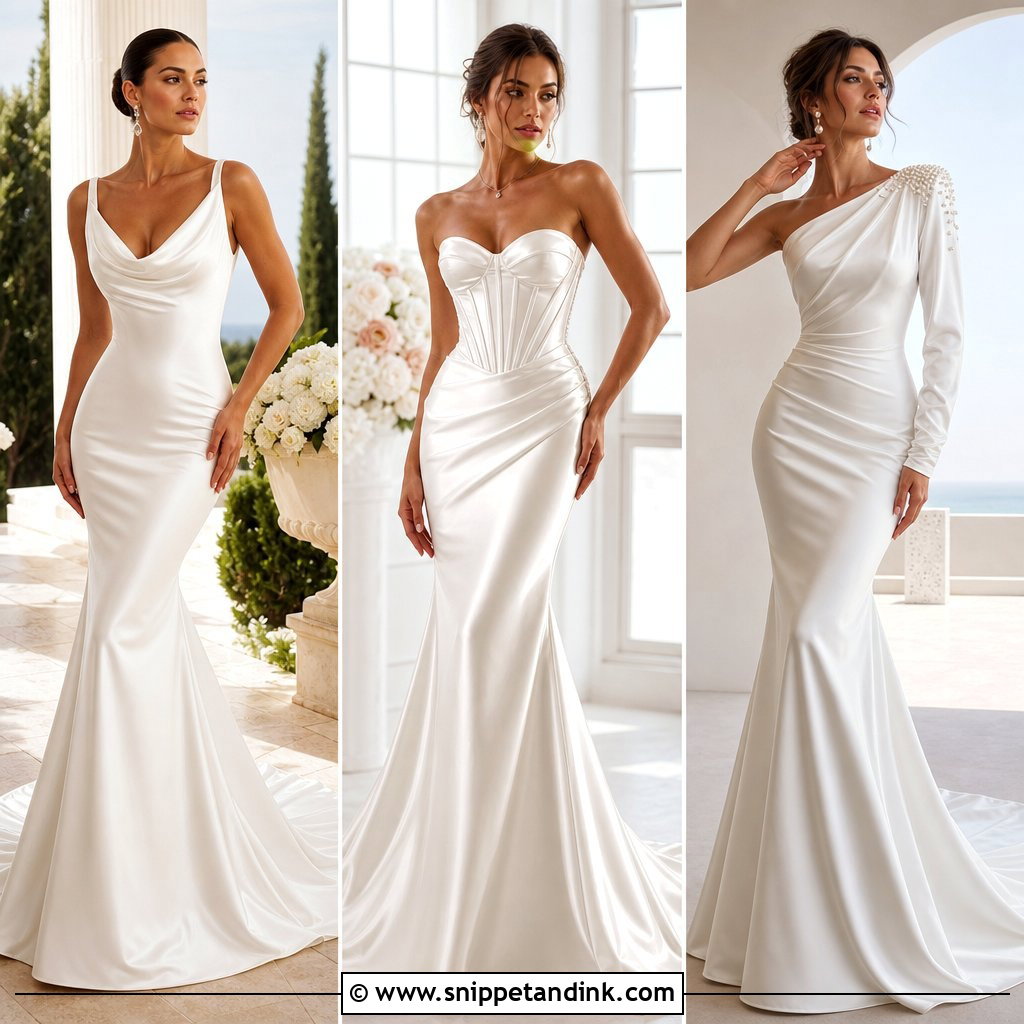
A siren dress follows the body closely from bust to knee or below, then flares. It’s the most demanding silhouette I fit, and when it’s right, nothing else on a bride looks quite as deliberate. The appeal is the sculpted line: luxe fabric, a strong neckline and a detail that holds the room as you walk in. Below are thirty versions, from plain crepe and satin to lace, pearls, sequins, corsets, long trains and low backs, for black-tie receptions, beaches and fashion-led portraits. I’ve added notes on how each one wears, because a siren that photographs well and one you can actually live in for a day are not always the same dress.

Siren, Mermaid or Trumpet? Where the Flare Starts Changes Everything
Shops use these names loosely, so I go by where the skirt starts to open. That single point decides how you walk, how you sit and how the dress photographs.
- Trumpet: the flare starts mid-thigh. The easiest to move in, and the gentlest curve.
- Siren or fit-and-flare: the flare starts around the knee. A strong shape with reasonable walking room.
- Mermaid: the flare starts at or below the knee, sometimes at mid-calf. The most dramatic line and the shortest stride.
At a fitting, I ask the bride to walk the length of the shop, then sit on a chair. If she has to shuffle, the flare can usually be raised a few centimetres by the seamstress. It’s one of the most useful alterations you can make to a fitted gown, and almost nobody asks for it.
Underwear matters more here than with any other shape. Wear the exact shapewear you’ll wear on the day to every fitting. A siren fitted over one pair and worn over another will crease across the hips.
1. Satin Siren Wedding Dress
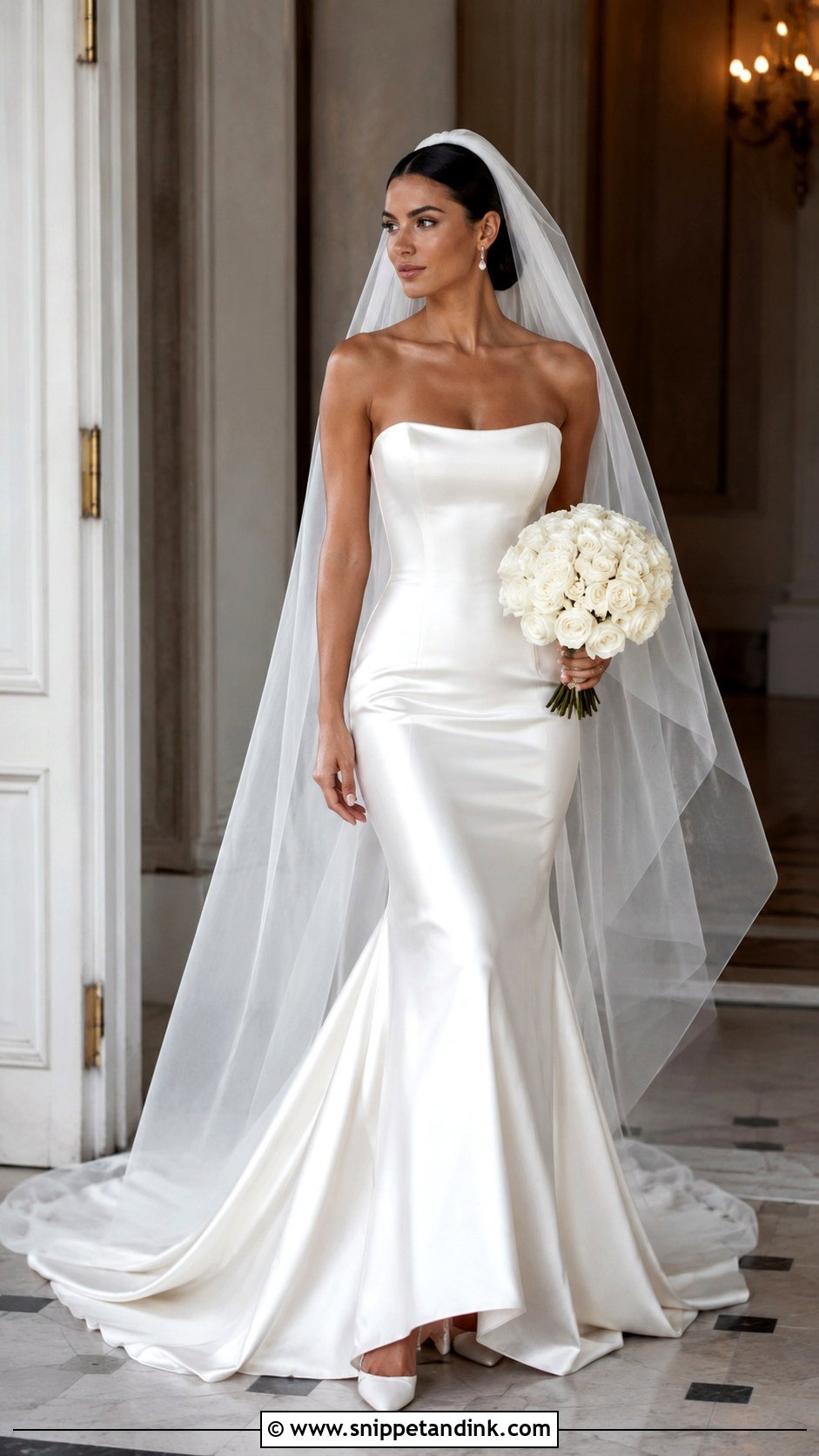
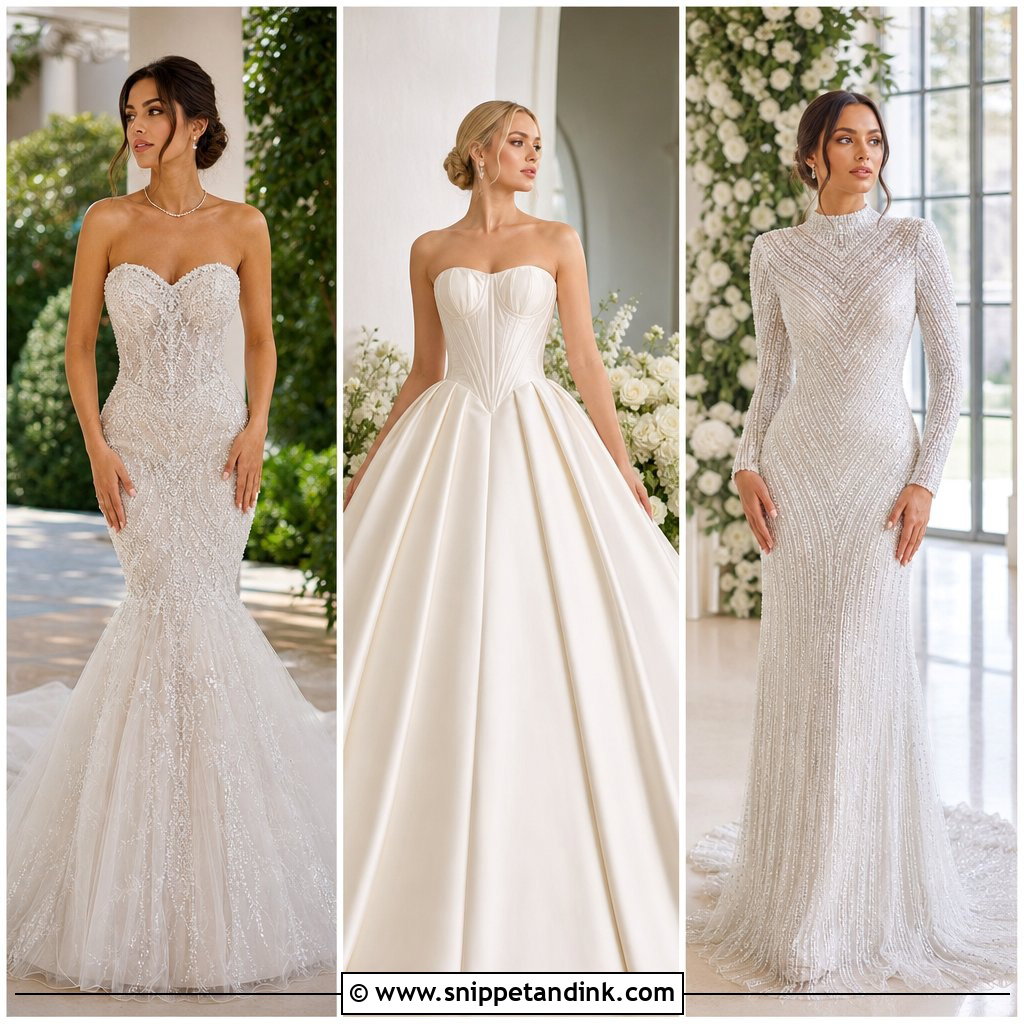
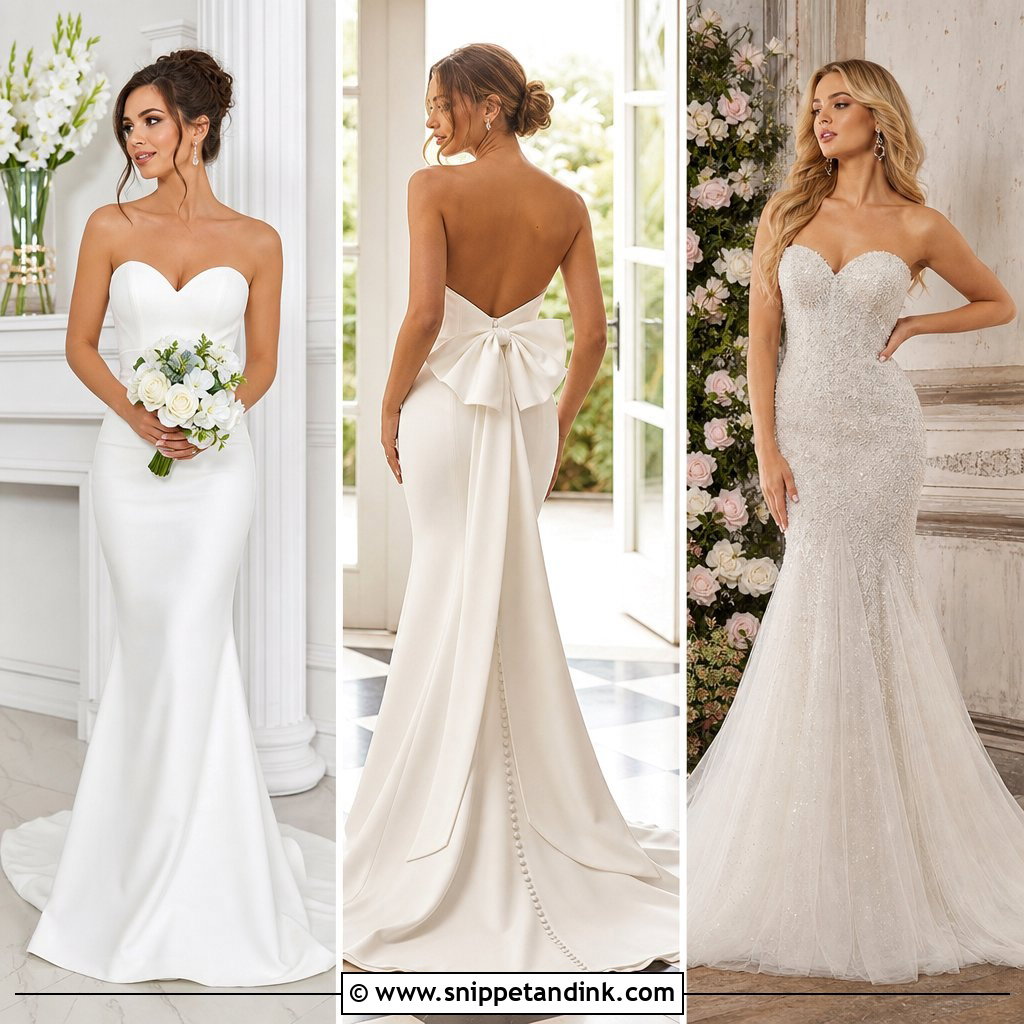
Satin shows the line of a siren better than any other fabric, which also means it shows every fitting error. Look for a structured bodice, seams that skim the hip rather than grip it, and a flare with enough fabric to move. A strapless neckline feels classic; a square one, modern. I’d style it with pointed ivory heels, pearl drops and a smooth low bun. A chapel veil softens the sheen from behind, and white roses, orchids or callas keep the bouquet calm.
2. Lace Siren Wedding Dress
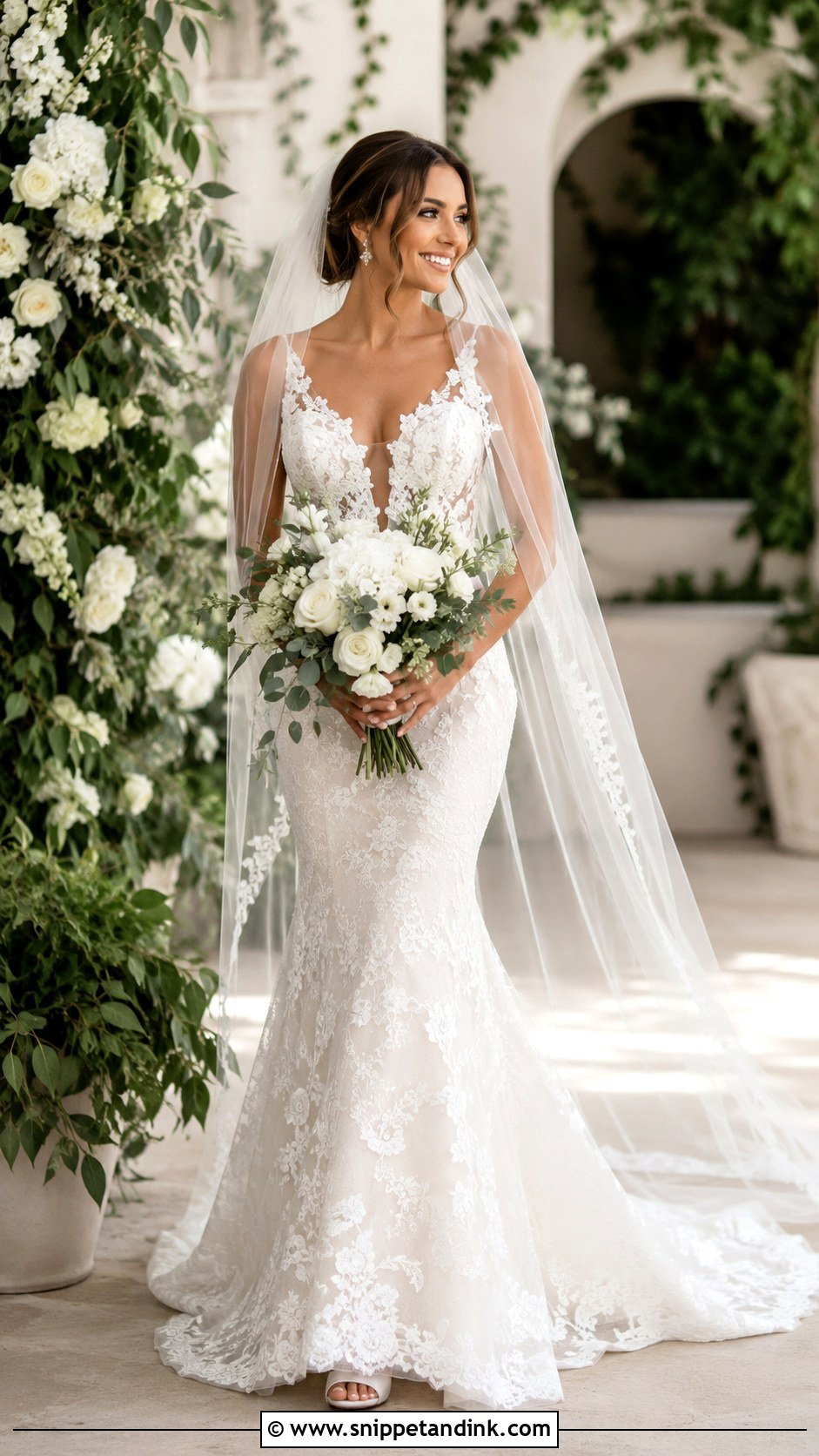
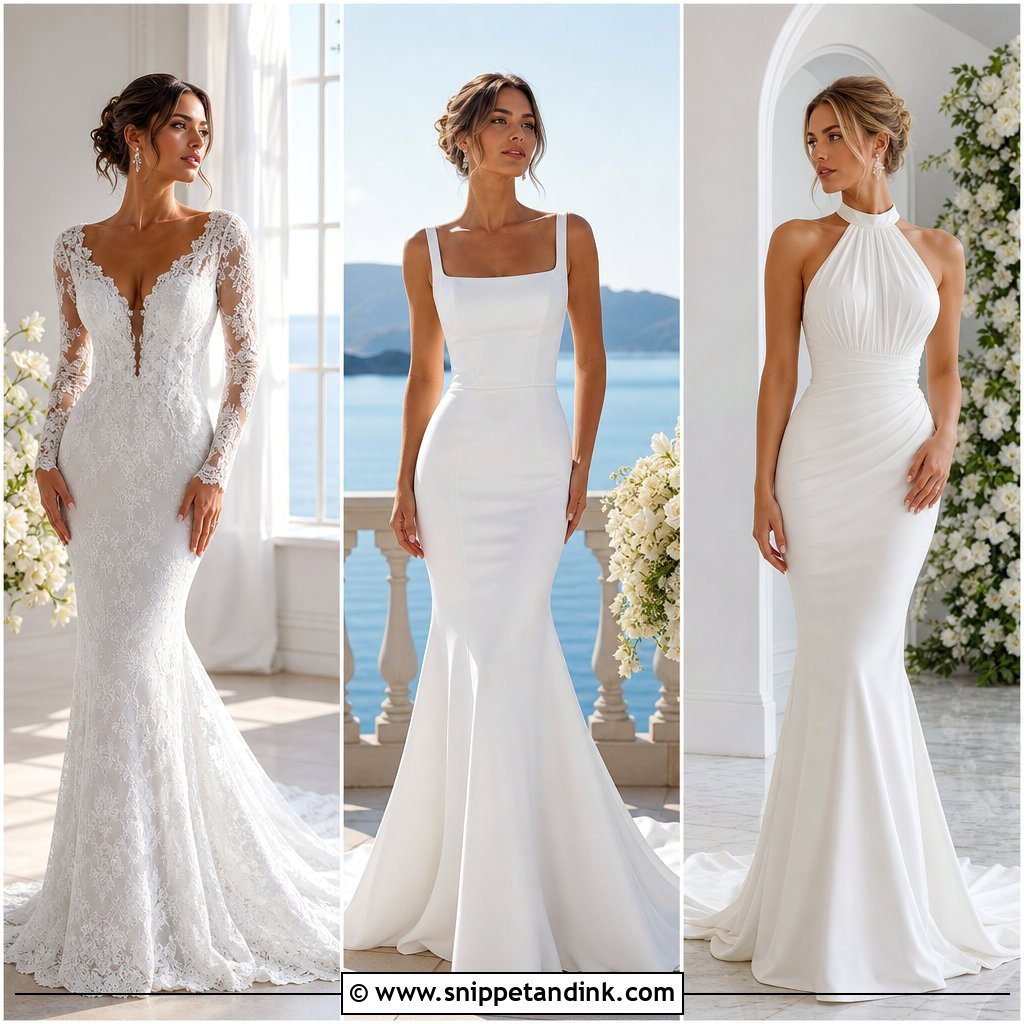
Lace softens a fitted shape without losing it, provided the lace is stitched to a firm base. Unbacked lace over the hips can bag after a few hours of sitting. Floral lace reads traditional; geometric lace, modern. Long lace sleeves suit cooler weather, strapless suits spring and summer. Ivory heels, a fingertip veil, delicate studs and a soft updo, with white blooms and greenery in a loose bouquet.
3. Corset Siren Wedding Dress
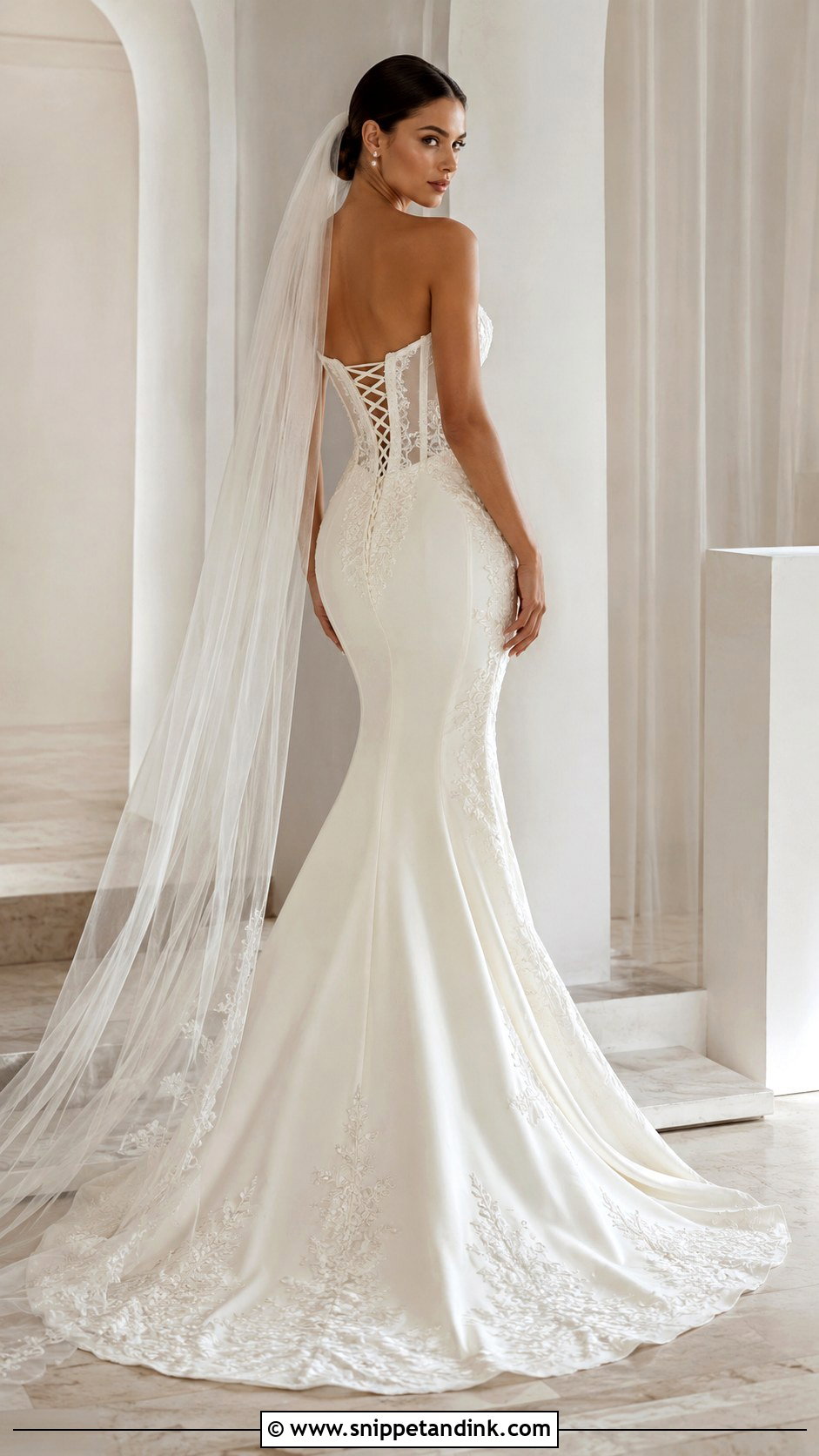
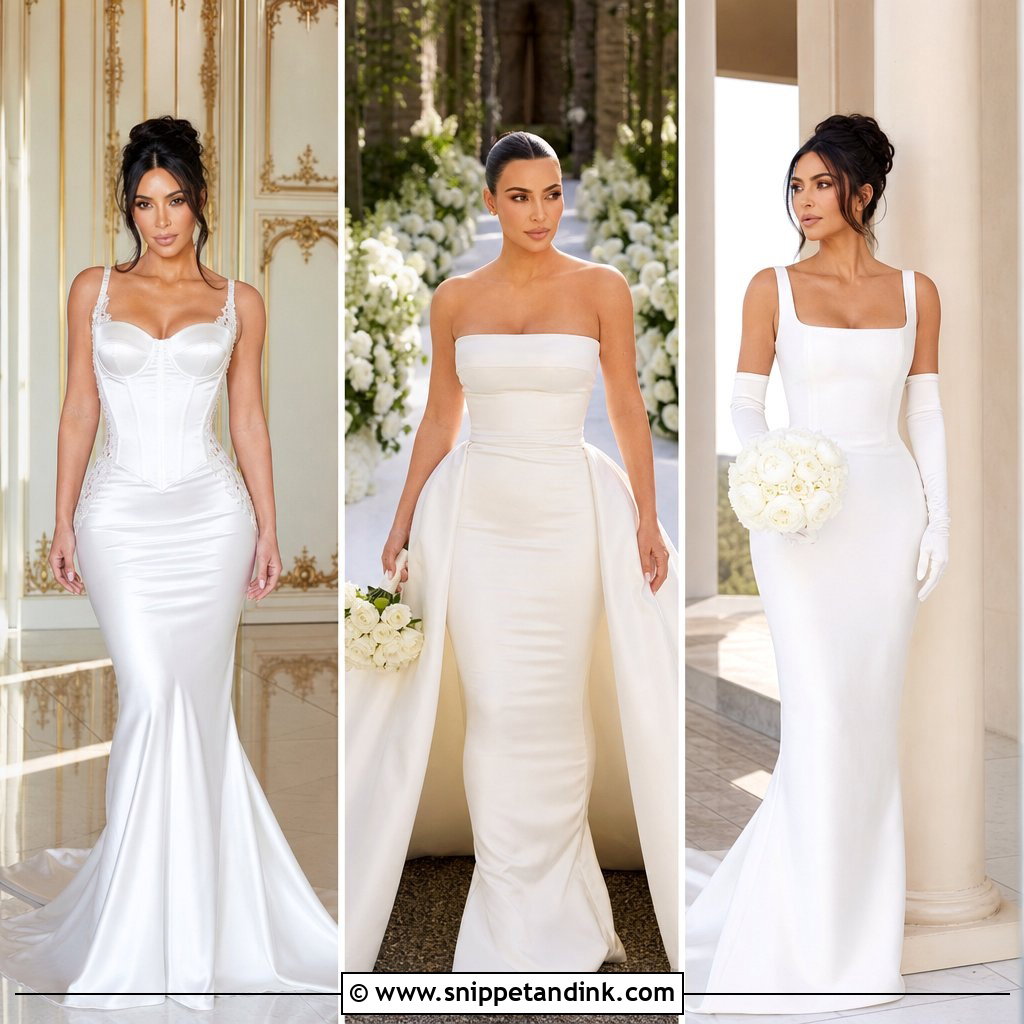
With a corset bodice, the boning does the shaping and the skirt can follow the body without any strain. It should feel supportive, never stiff: you need to be able to take a full breath and sit down to eat. Satin, crepe or lace all work. A lace-up back adds detail and lets the fit be adjusted on the day, which is useful if you’ll be nervous and not eating breakfast. Sleek heels, a sheer veil, small pearls and soft waves. Keep the bouquet compact so the waist shows.
4. Off Shoulder Siren Wedding Dress
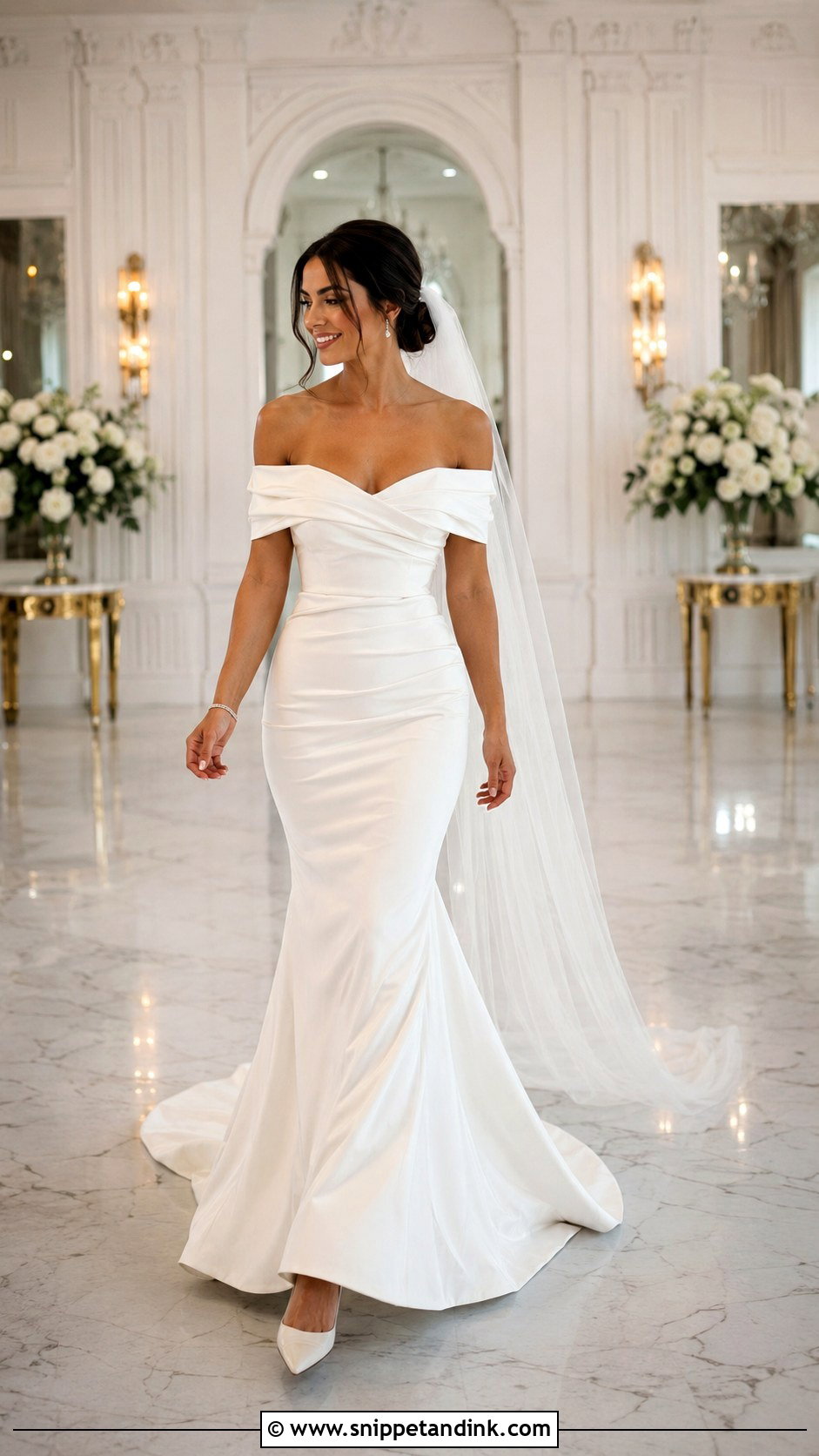
Off-shoulder necklines soften the strong lower half of a siren. Folded satin sleeves, lace straps or draped fabric all work. Pair with a smooth skirt and a moderate train so the dress isn’t top-heavy or bottom-heavy. The band sits on the upper arm, so test how high you can lift your arms. Ivory pumps, a simple bracelet and earrings close to the face, with a low bun or half-up hair. Wear a long veil for the ceremony and take it off for the reception.
5. Long Sleeve Siren Wedding Dress
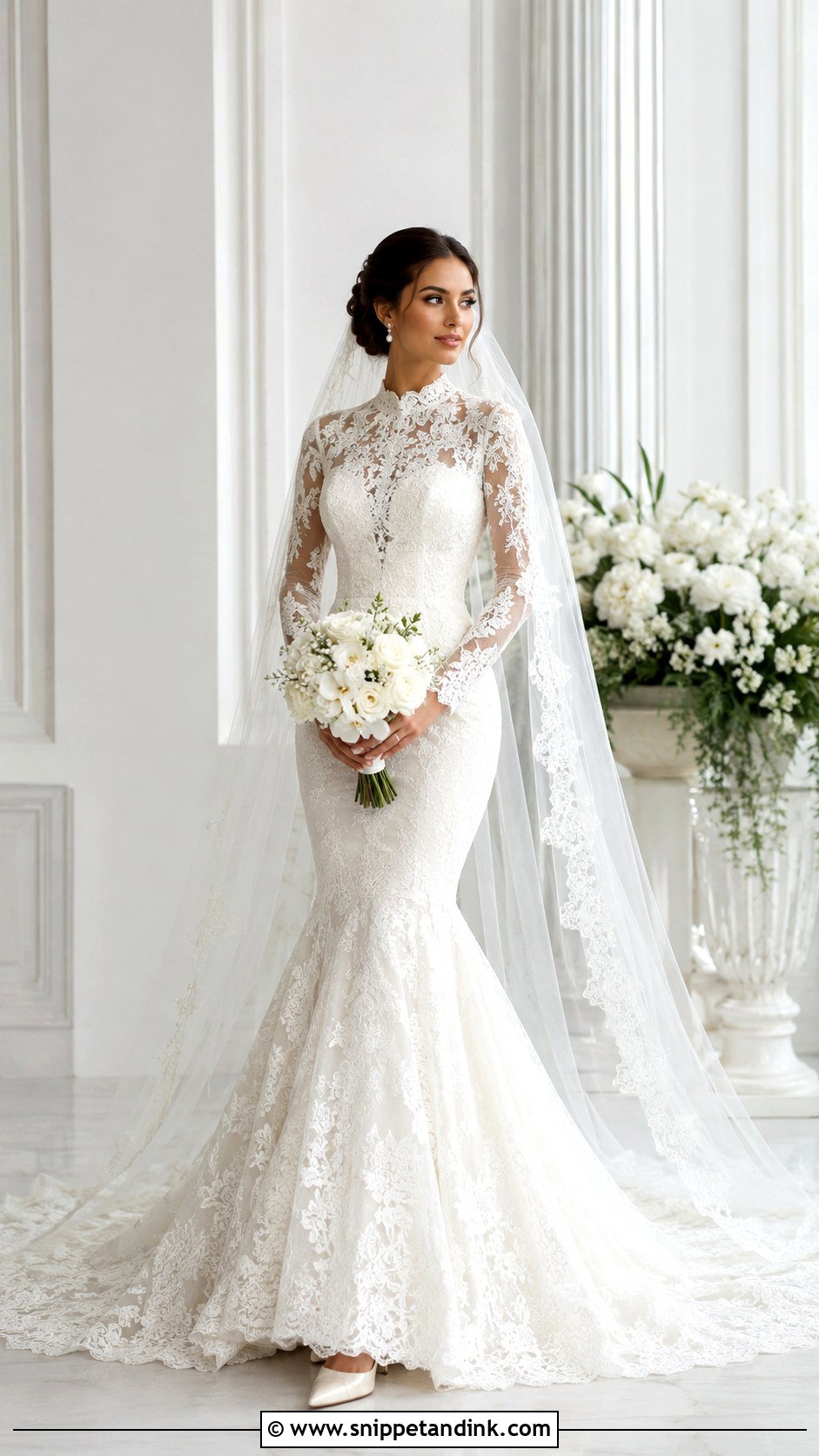
Long sleeves on a siren cover the arms and make the whole dress look taller. Sheer lace sleeves feel romantic, while crepe or satin sleeves are sharp and tailored. Because the skirt is already restrictive, I check sleeve movement even more carefully than usual; you can’t compensate with your legs if your arms are tight too. Closed-toe heels, a low chignon and pearl or crystal earrings. A cathedral veil suits a winter or formal ceremony.
6. Strapless Siren Wedding Dress
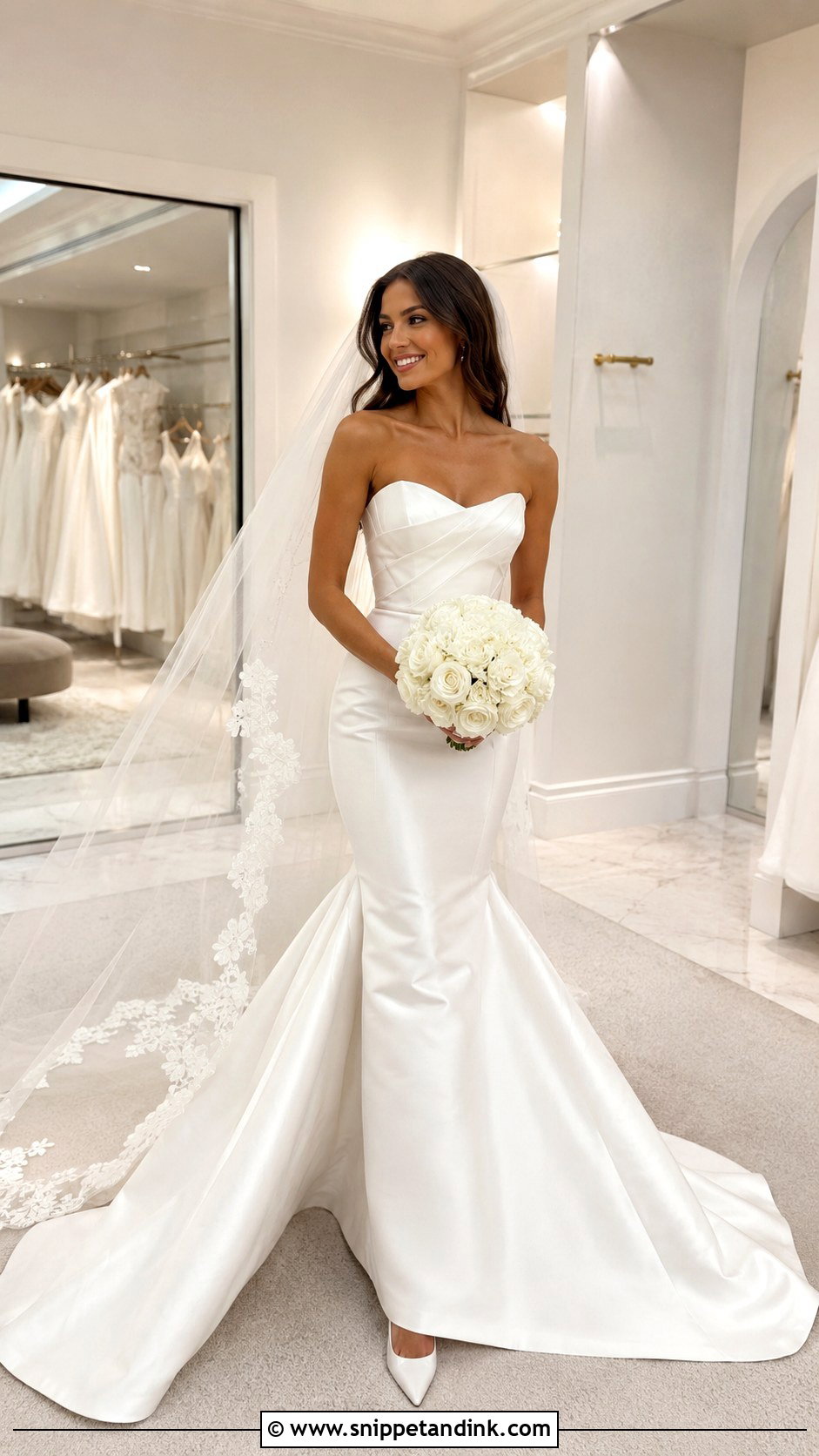
A strapless siren keeps the line clean from shoulder to hem. Everything depends on the inner structure, because there’s nothing to hold it up but the bodice. Ask whether it has a waist stay, an inner grosgrain band that anchors the dress at your natural waist; it’s the difference between hitching all night and forgetting about it. Satin, lace or crepe all work. Earrings are usually enough. A neat bun or side-parted waves, and a narrow or rounded bouquet.
7. Square Neck Siren Wedding Dress
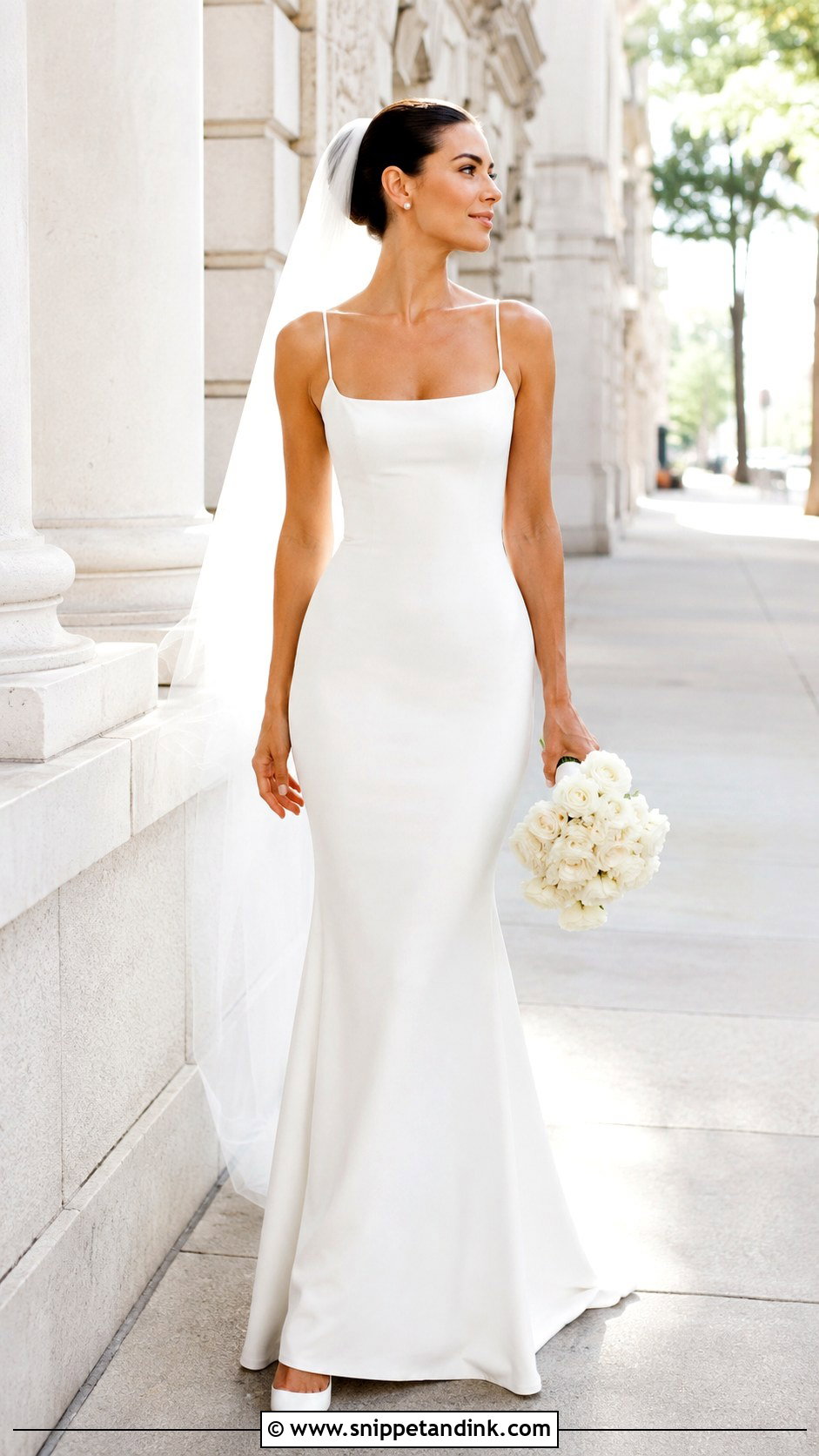
The straight neckline frames the collarbone without showing much, and it suits a fitted bodice well. Plain crepe looks minimal; satin brings shine. Thin straps feel delicate, wider straps support more. Square necks gape on a loose bodice, so this is a style where the fitting at the top matters as much as at the hips. Block heels or pointed pumps, pearl studs, a smooth veil and a low bun or sleek ponytail for city venues.
8. Pearl Siren Wedding Dress
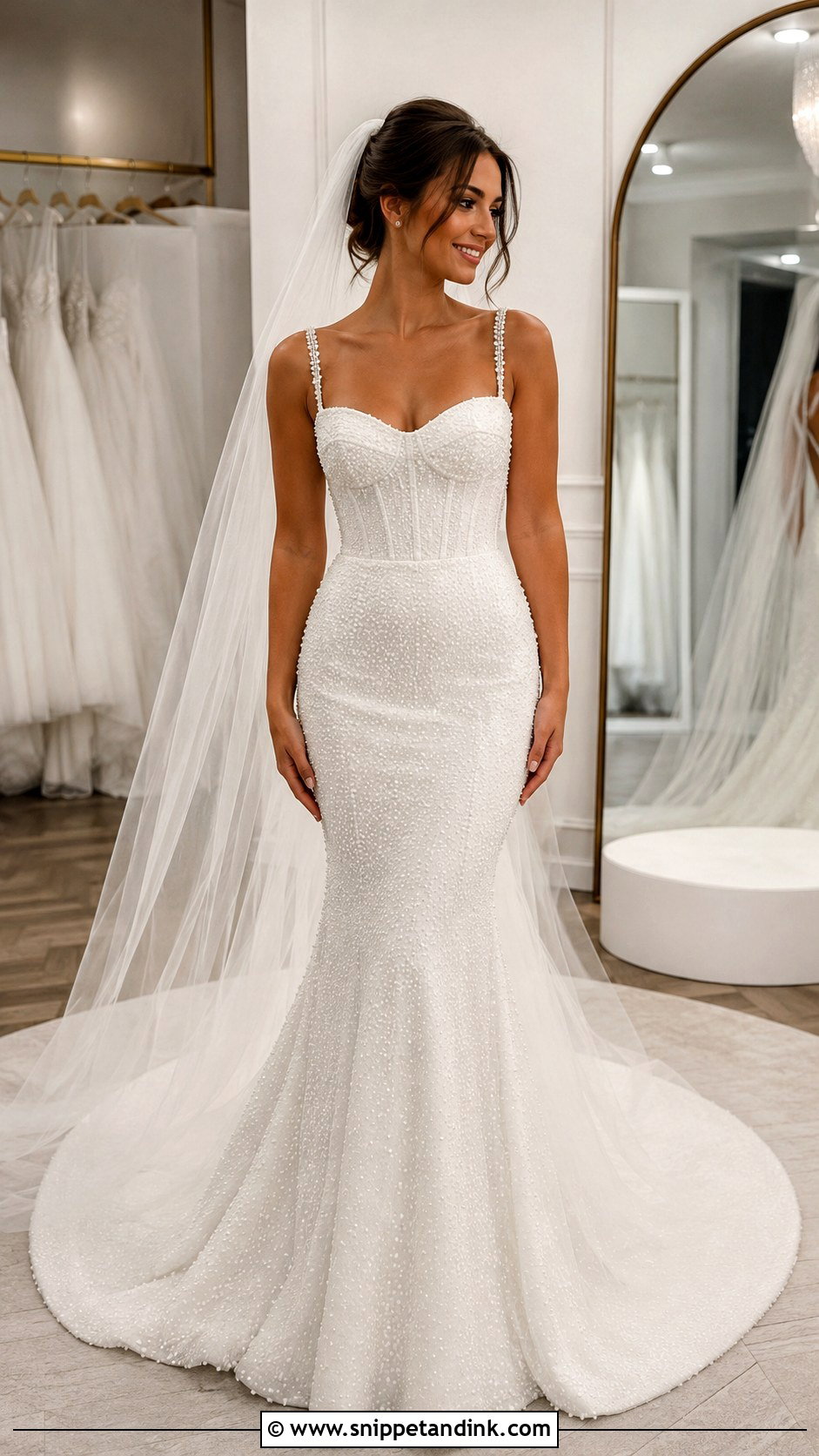
Pearls add a soft, rounded shine rather than sparkle. They can sit across the bodice, along straps, on sheer sleeves or scattered through the skirt. Choose one area and keep the rest of your outfit pearl-free, or it starts to look themed. Scattered pearls on a skirt can catch on each other and on lace, so check they’re individually stitched. Satin heels, pearl studs, a clean-edged veil and a soft updo. White orchids, roses or ranunculus.
9. Beaded Siren Wedding Dress
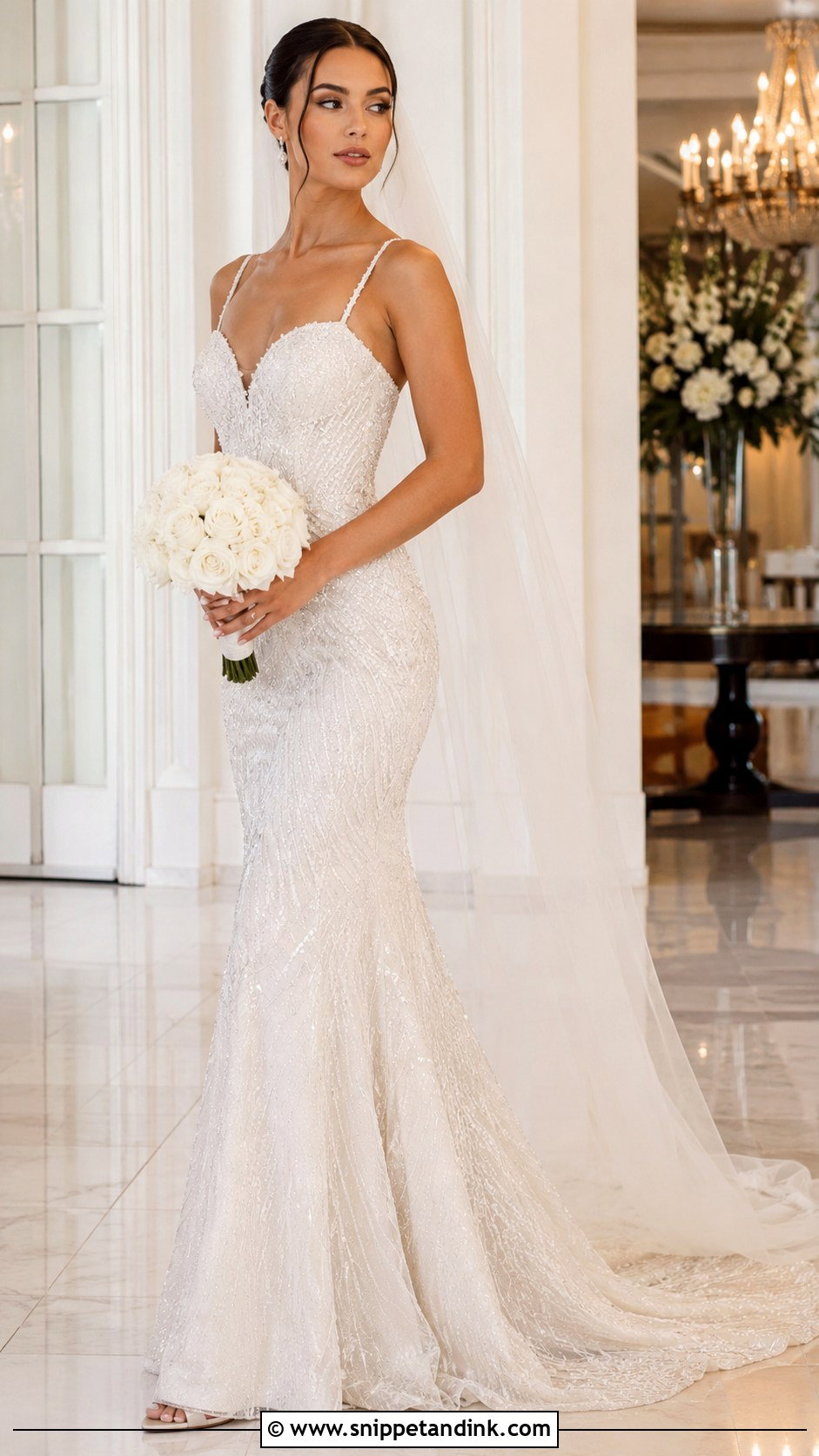
Beading on a siren follows the body’s lines, which makes it look like light moving across the shape. Subtle beading on the bodice is easy to wear; a fully beaded dress is heavy, often surprisingly so, and that weight pulls on the shoulders and hips over a long day. Keep jewellery minimal. Clear or ivory heels, small earrings, a plain veil and sleek hair. Evening and ballroom weddings suit it best, where the light picks up every bead.
10. Crepe Siren Wedding Dress
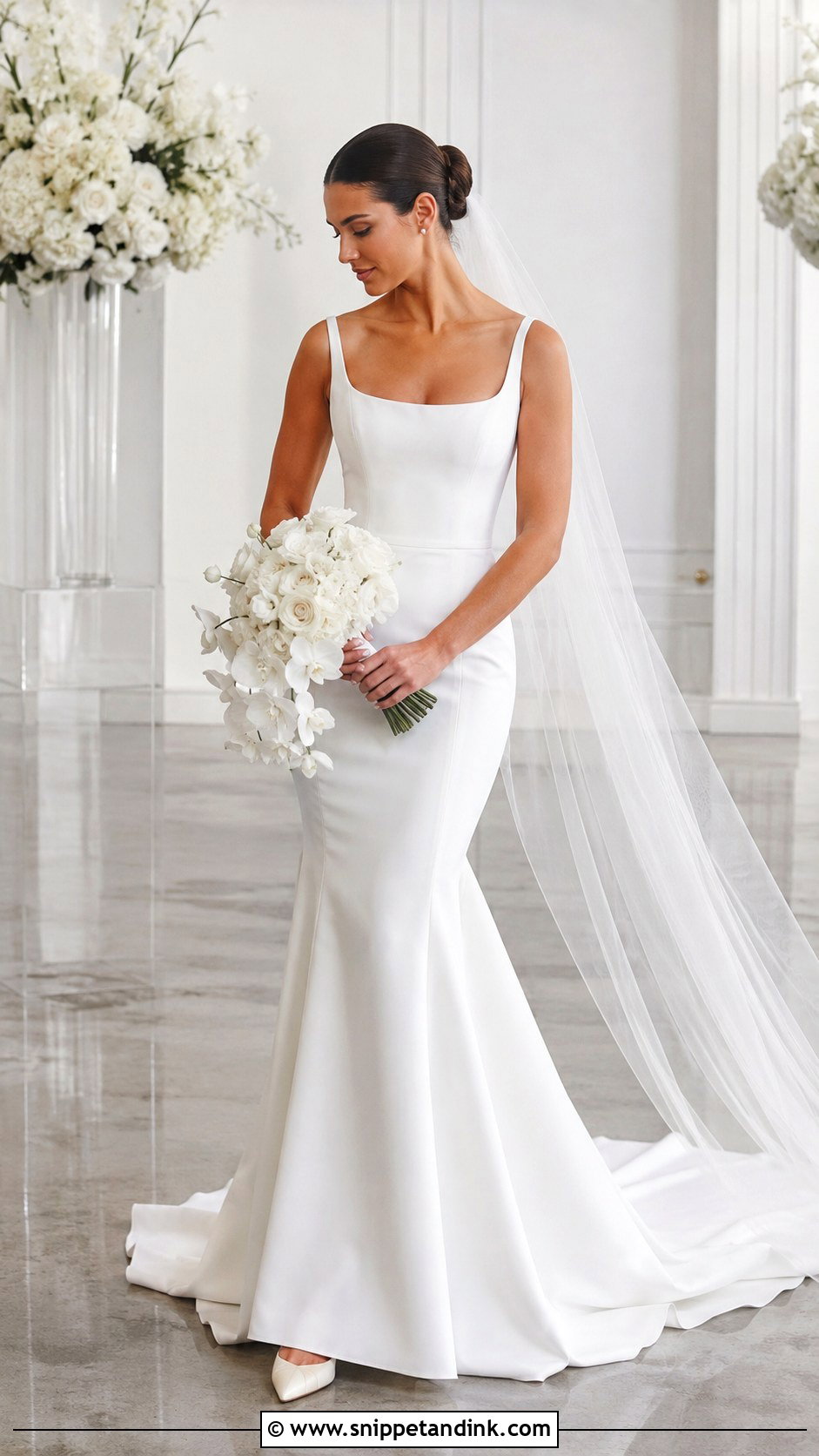
Crepe has enough weight to shape the body without any shine, which makes it the quietest siren on this list. A square neck, bateau or strapless bodice all suit it. Add interest with a low back, buttons or a sculpted train. Crepe shows creases from the car journey, so plan a steamer at the venue. Pointed ivory heels, pearl studs, a long plain veil and a smooth bun or soft waves, with a structured bouquet.
11. Floral Siren Wedding Dress
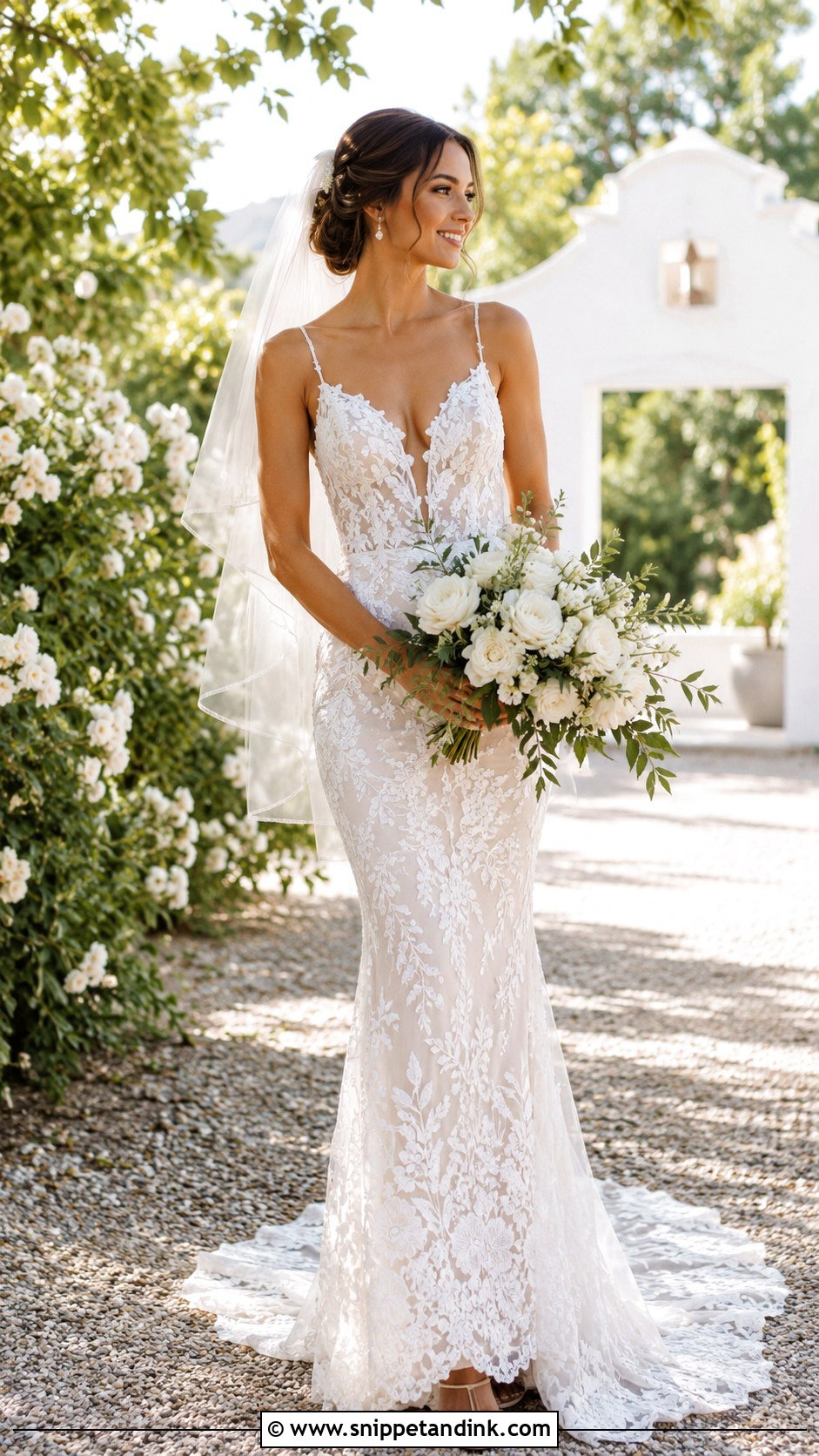
Floral lace, embroidered blooms or 3D appliqués placed along the bodice and skirt soften a fitted shape and add movement. I’d keep the flowers concentrated at the hip and flare, where they draw the eye along the curve, rather than sprinkled evenly. Garden and spring weddings suit it. Delicate heels, soft earrings and a veil that doesn’t hide the detail, with gentle waves or a loose updo. Keep the bouquet smaller than you’d think.
12. Minimal Siren Wedding Dress
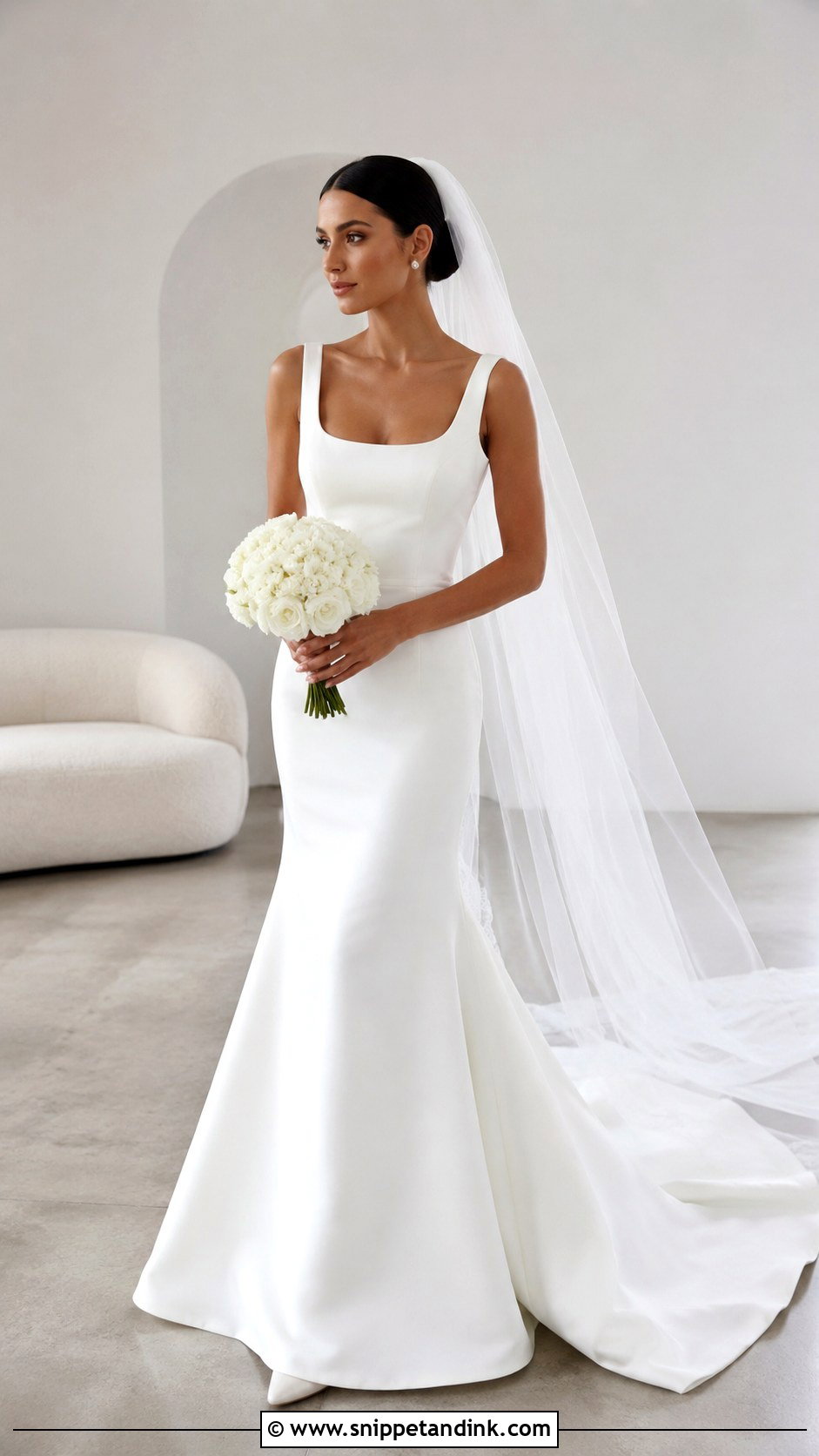
Here, the whole dress is the fit. A clean crepe or satin gown with strong seams, a smooth bodice and a soft flare. The seams matter more than anything: they should run straight and symmetrical, because there’s no decoration to distract from a crooked one. One accessory only, such as pearl studs or a slim bracelet. A sleek bun or tucked hair, and a small monochrome bouquet.
13. Dramatic Train Siren Wedding Dress
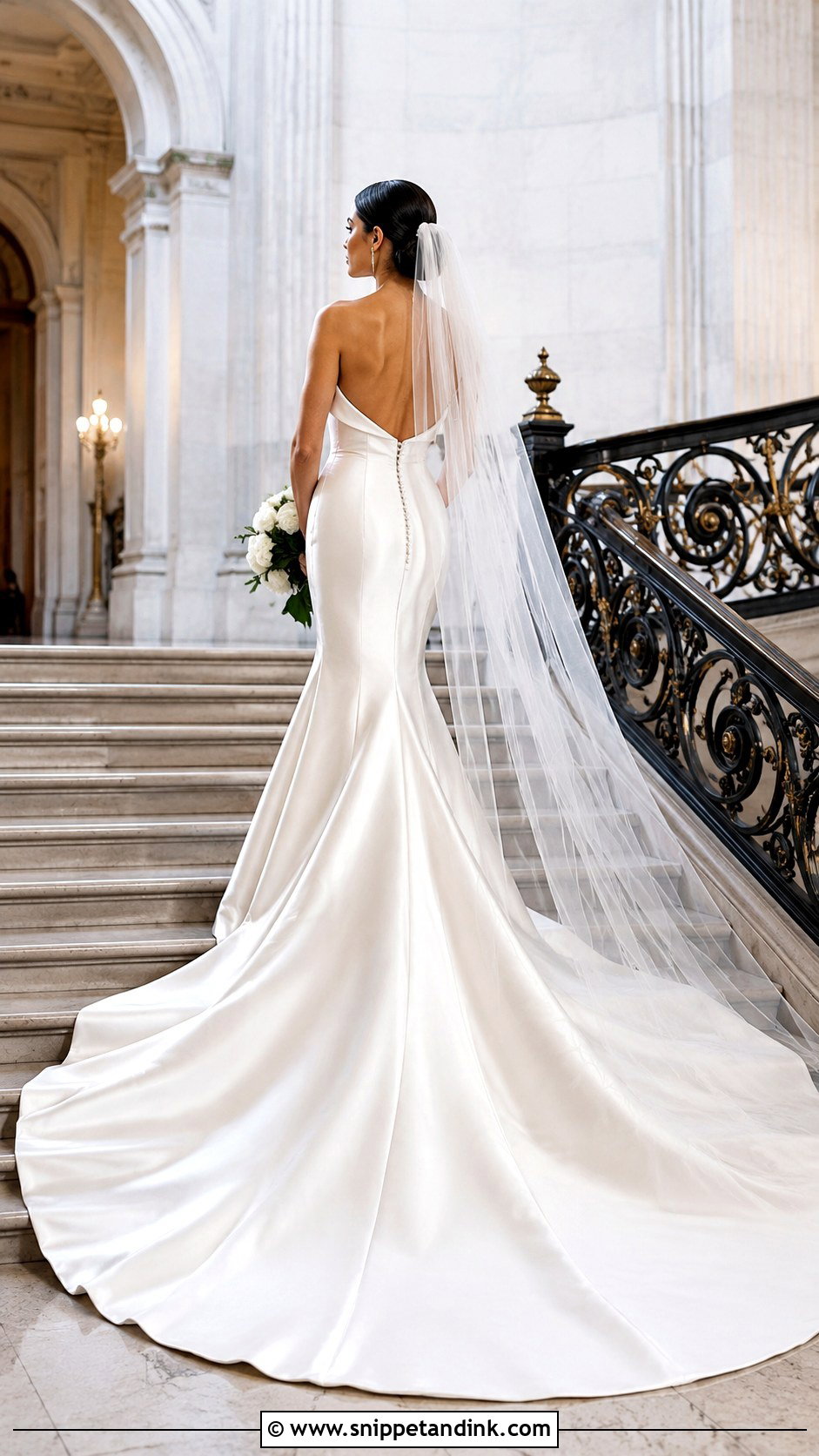
A long train turns a siren into a formal ceremony dress. Satin looks regal, lace romantic, crepe modern. The train is where most of the drama lives, and it’s also where most of the trouble starts once the dancing does. Plan the bustle at the final fitting and have someone practise it. Secure heels, a long veil, simple jewellery and lifted hair balance the long lines. Formal venues with long aisles suit it.
14. Low Back Siren Wedding Dress
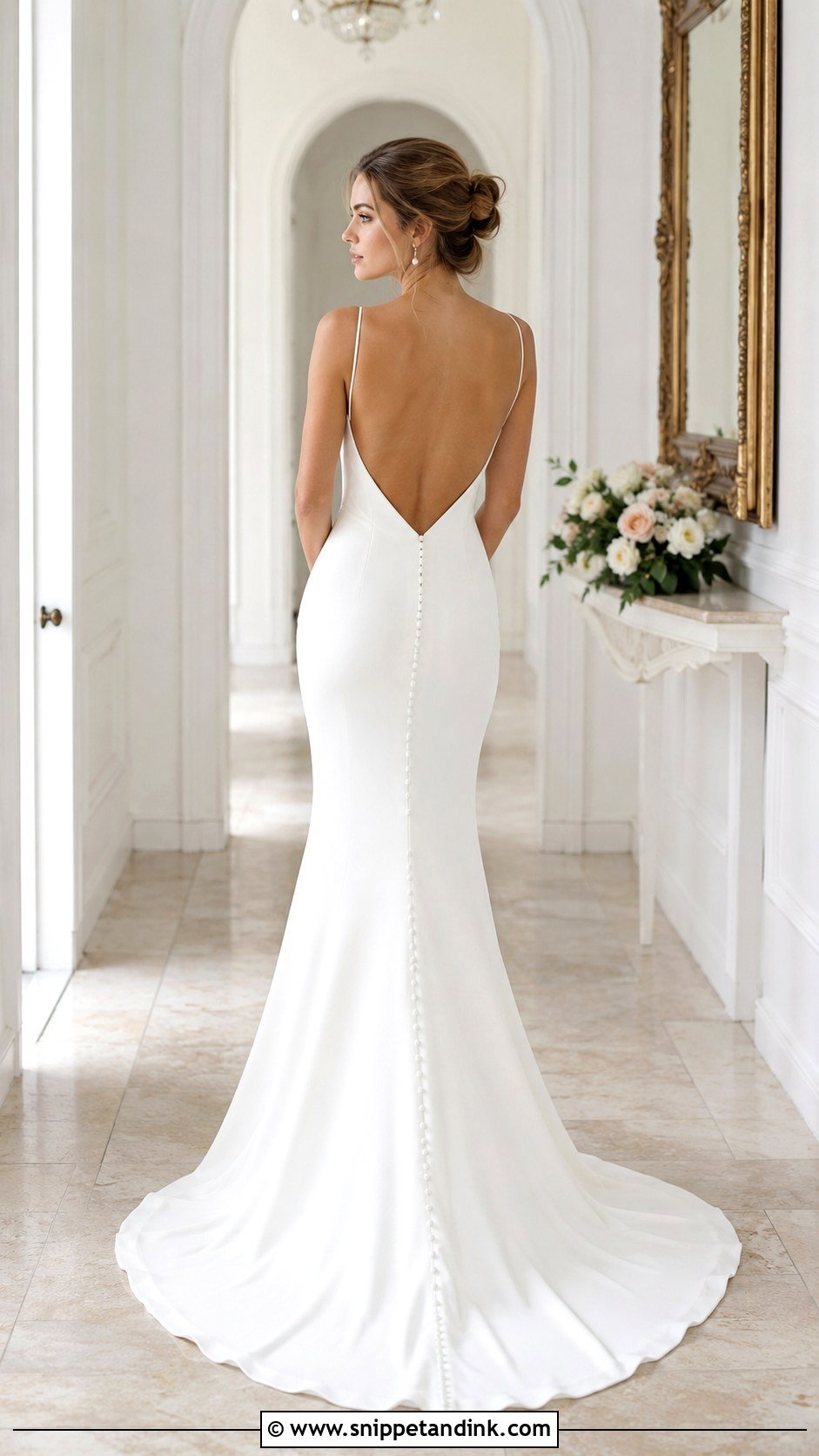
A plain front and a low back with buttons, lace trim or a cowl drape is a smart way to save the detail for the ceremony, when guests are looking at your back. The bodice must fit very closely at the sides to stay put. A low bun can sit right on top of the detail, so consider a higher bun, side waves or a polished ponytail. Simple heels, delicate earrings and a veil that can be lifted or moved aside for photos.
15. High Neck Siren Wedding Dress
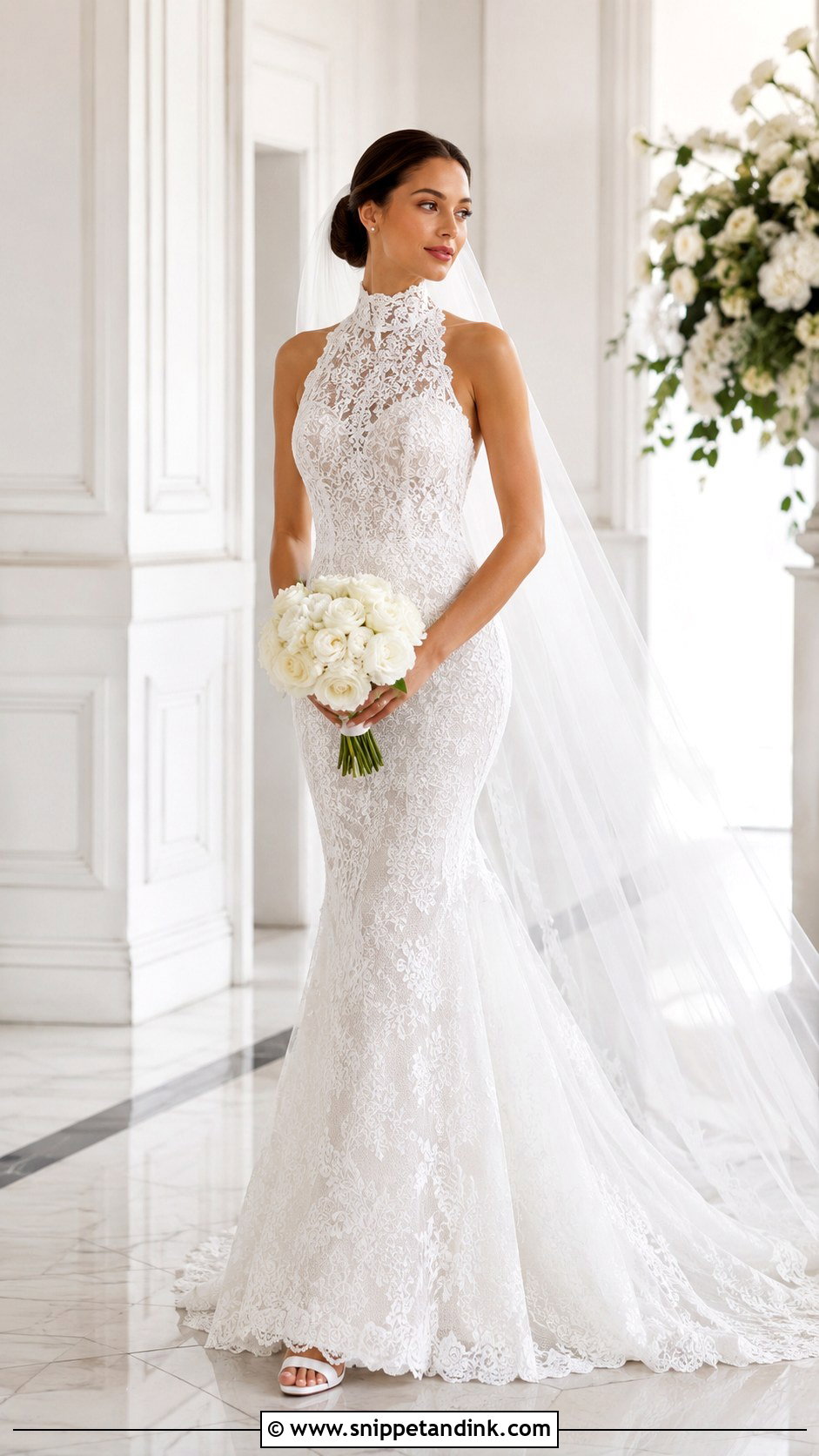
Covered necklines balance the fitted lower half. A sheer lace high neck looks soft; a plain crepe one looks modern. Skip the necklace and wear simple studs with sleek heels. Hair pulled back keeps the upper body clean. High necks feel warm, so I’d suggest a sheer or lightly lined version for anything but a cool-weather wedding. A long veil adds movement behind the neckline.
16. Halter Siren Wedding Dress
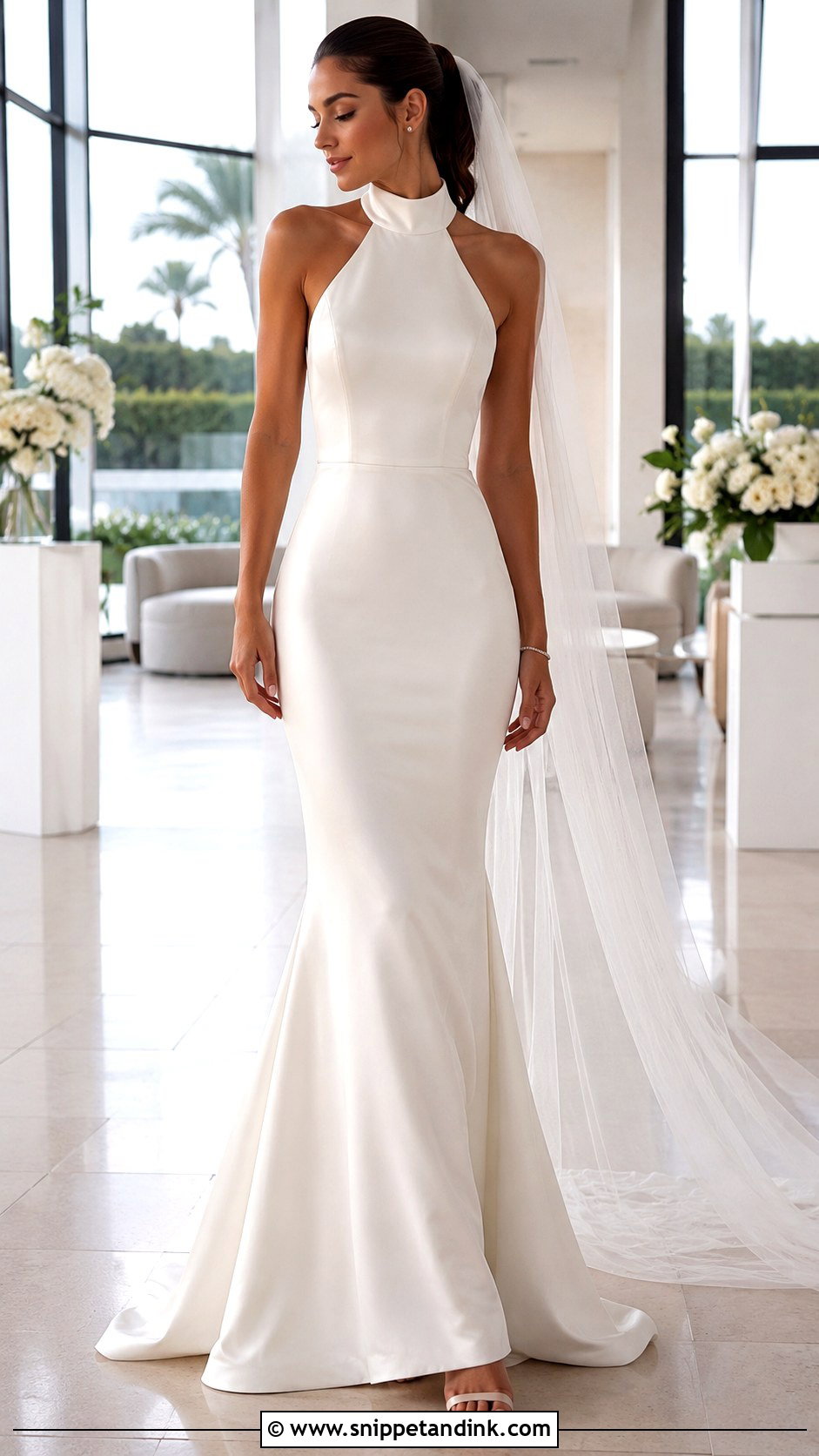
Halters draw the eye up and frame the shoulders, which suits athletic builds and broader shoulders very well. Satin is sleek, lace soft, crepe clean. The halter strap carries weight, so a heavy beaded bodice can make your neck ache; ask whether the back has a hook or zip that takes some of the load. A bracelet and small earrings, no necklace, and a high bun or ponytail. Attach the veil low at the back of the head.
17. Tulle Siren Wedding Dress
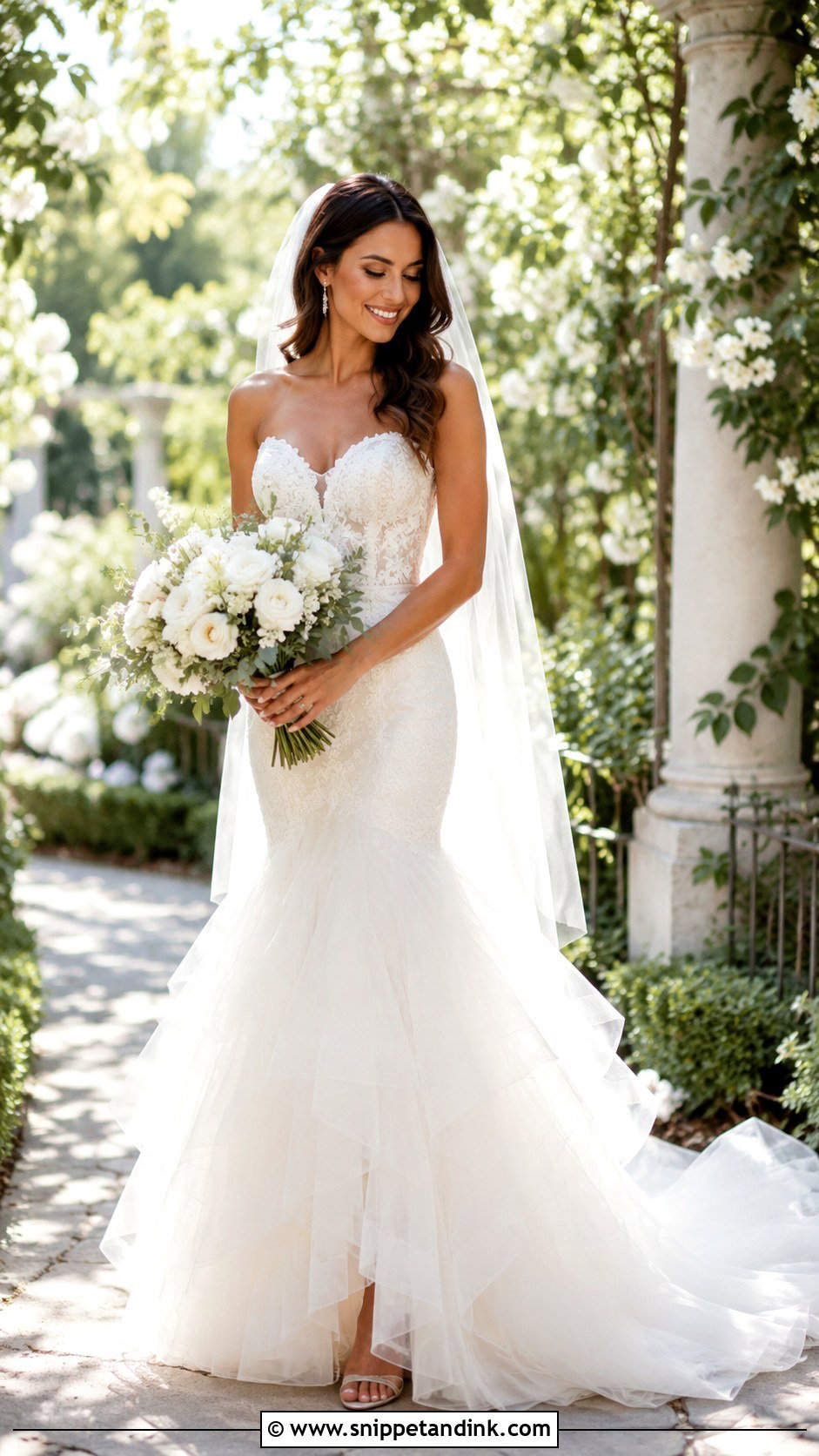
Tulle gives a siren a lighter flare. Instead of a full skirt, the bodice and hips stay sculpted, and layered tulle opens near the bottom. Lace appliqués or a little shimmer make the tulle feel more bridal. Tulle flares are softer and less structured than satin ones, which makes them easier to walk in. Delicate heels, soft earrings and a light veil, with a loose bun or waves. Good for outdoor and garden venues.
18. Ruffle Siren Wedding Dress
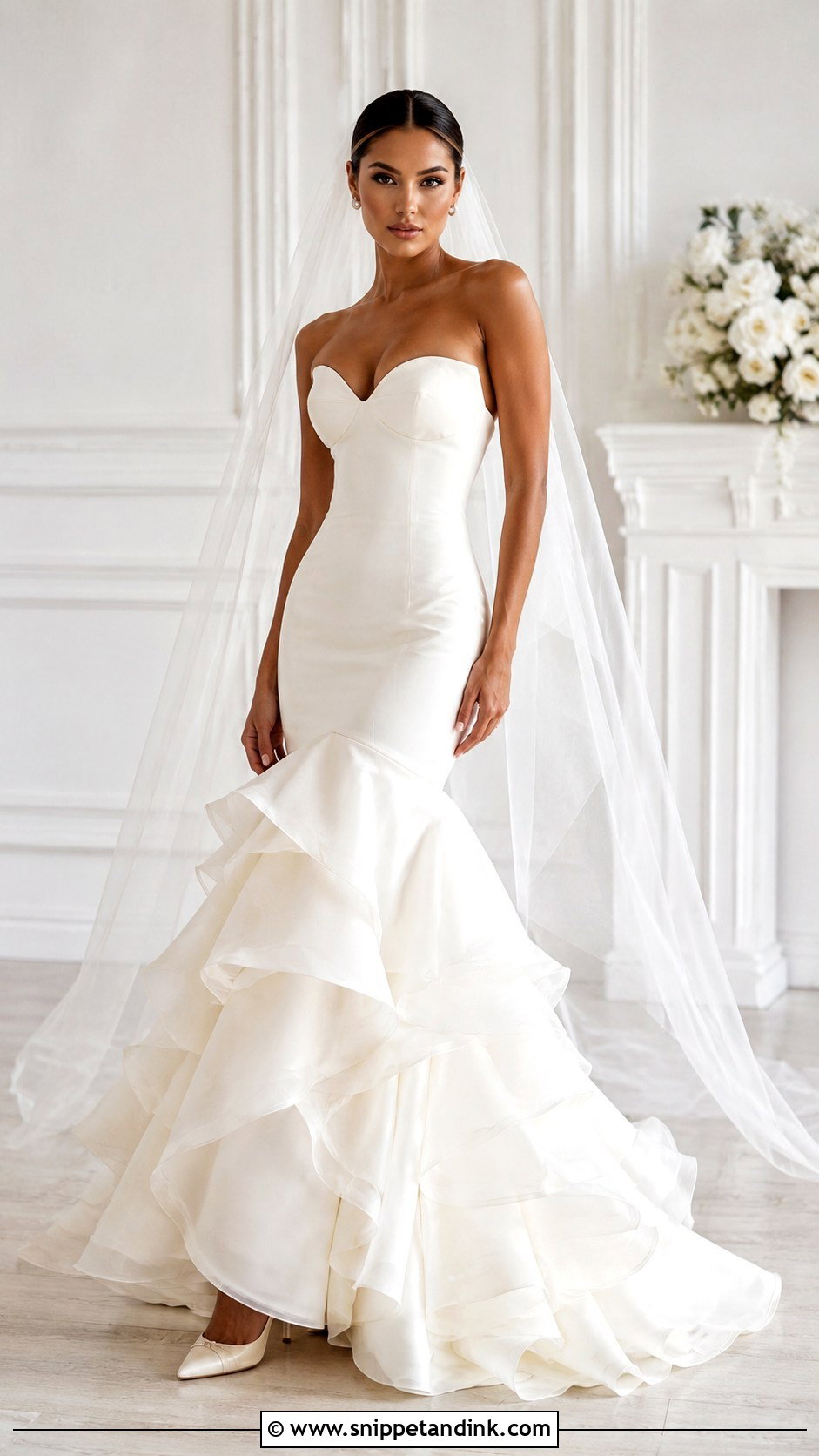
A ruffle siren wedding dress keeps the bodice shaped and puts layered ruffles at the skirt or train. Soft organza ruffles feel romantic; crisp tulle ruffles are more fashion-led. Ruffles add width at the knee, so they make the flare look bigger than it is. Keep accessories simple and hair sleek. Ivory heels, small earrings and a plain veil. It’s a memorable dress that needs nothing added.
19. Basque Waist Siren Wedding Dress
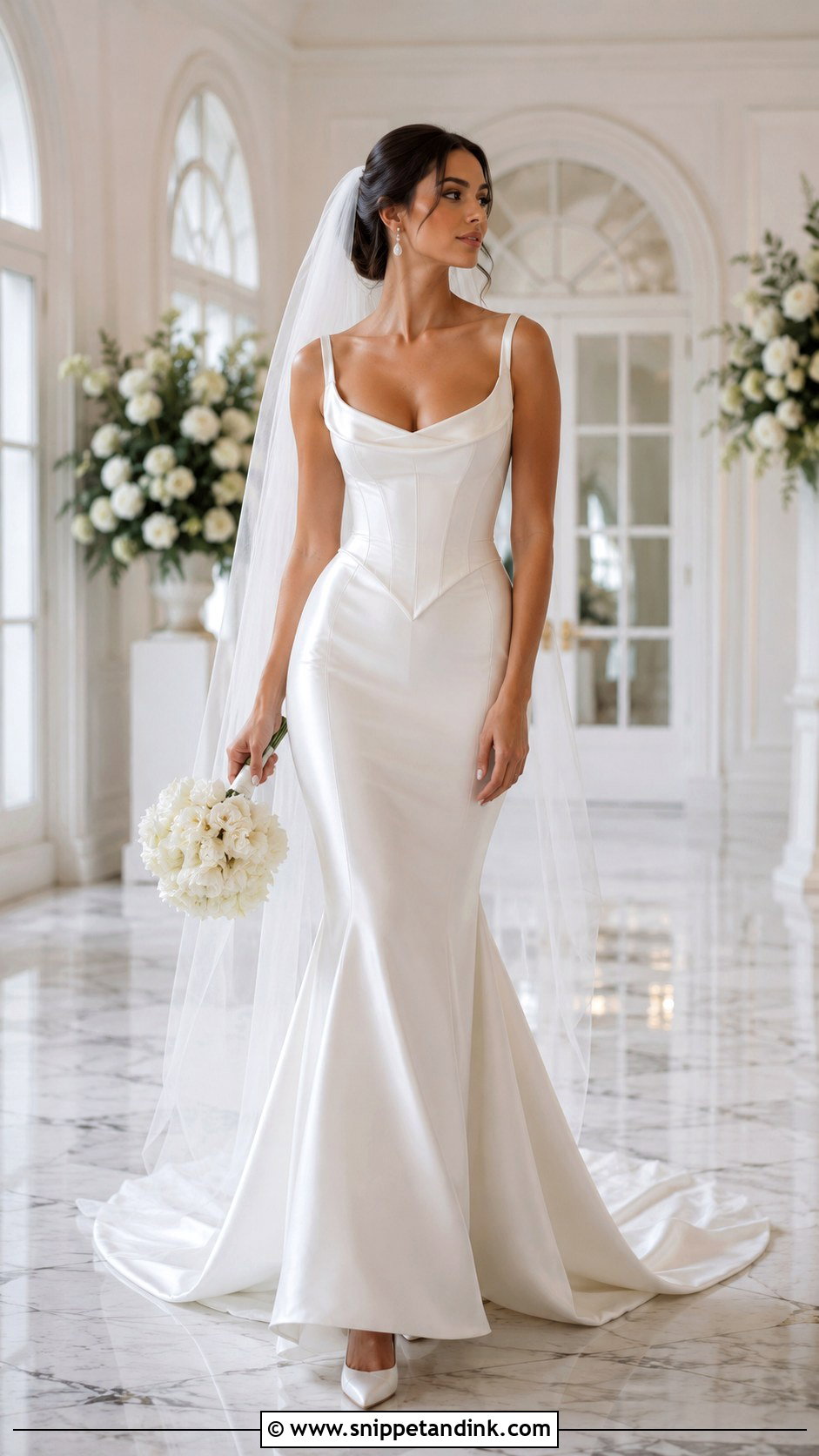
A basque waist dips into a V or U below the natural waist, which lengthens the torso and gives the bodice a structured, slightly historical feel. Pair it with a skirt that flares gently below the hips or knees. Satin looks regal; lace softer. The point of the basque should land in the centre of your body, so check it standing straight in front of a mirror. Pointed heels, pearl earrings, a simple veil and a smooth updo. Hold the bouquet a little lower in photos.
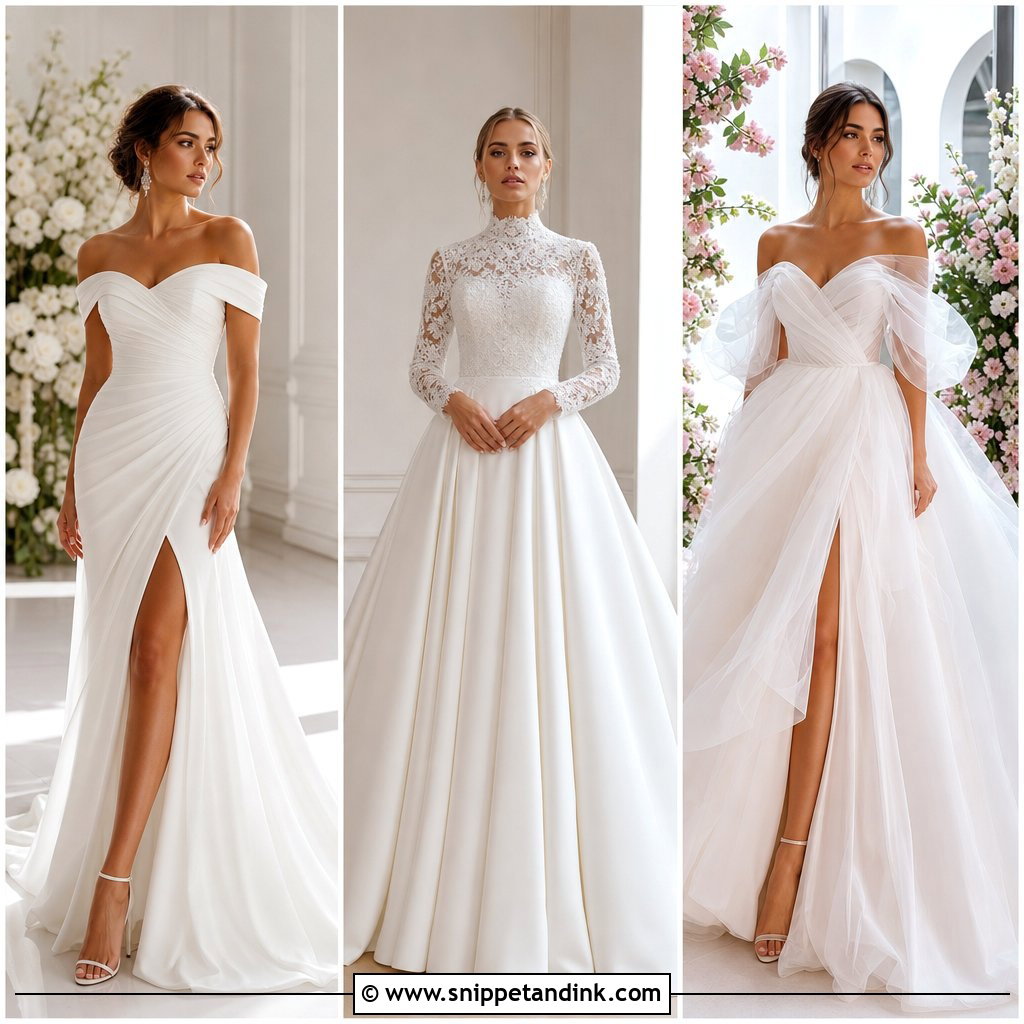
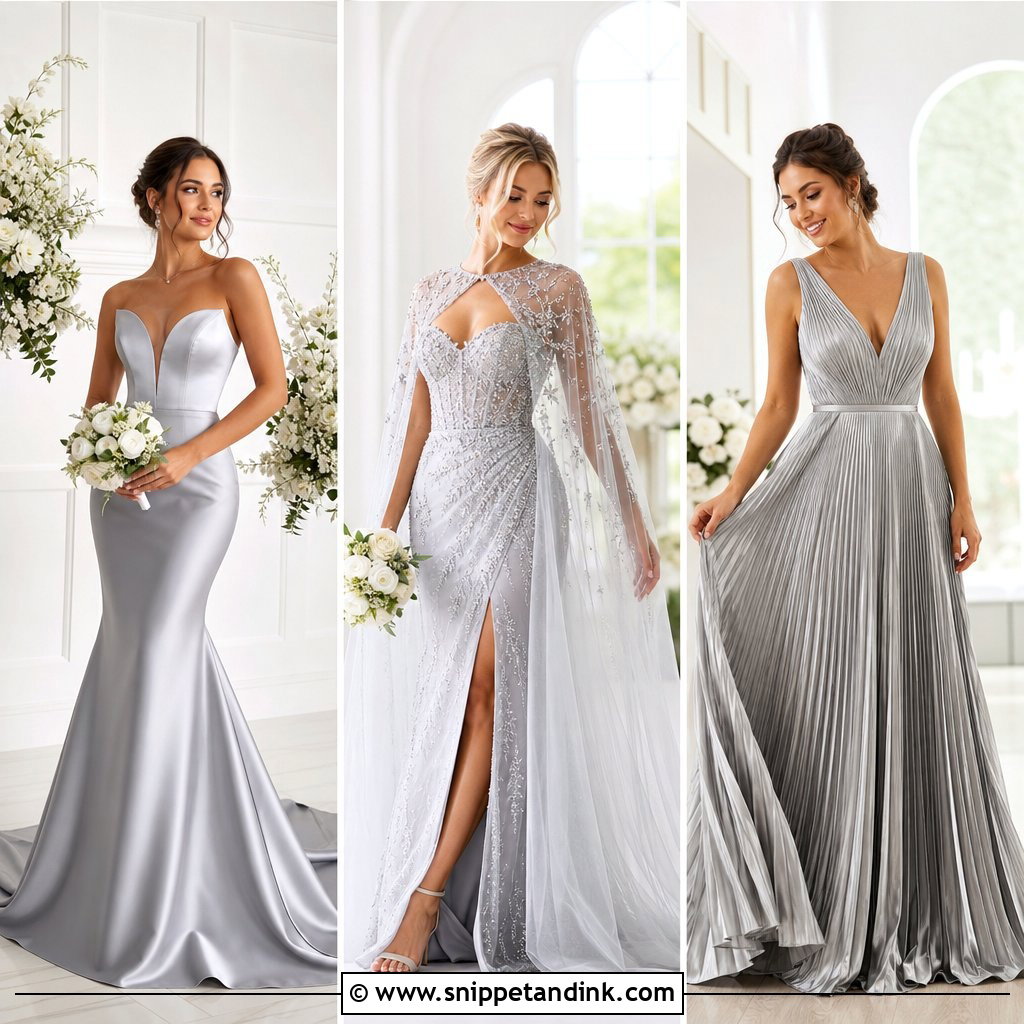
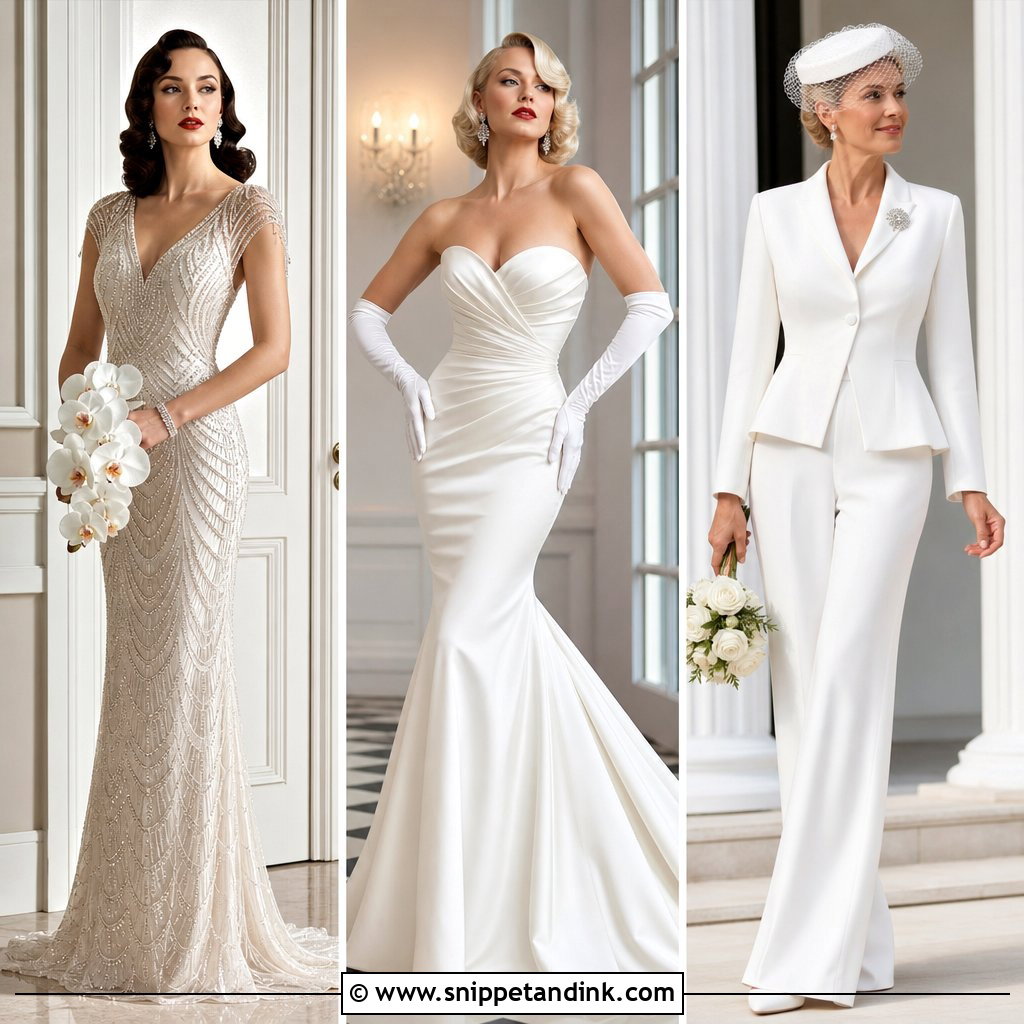
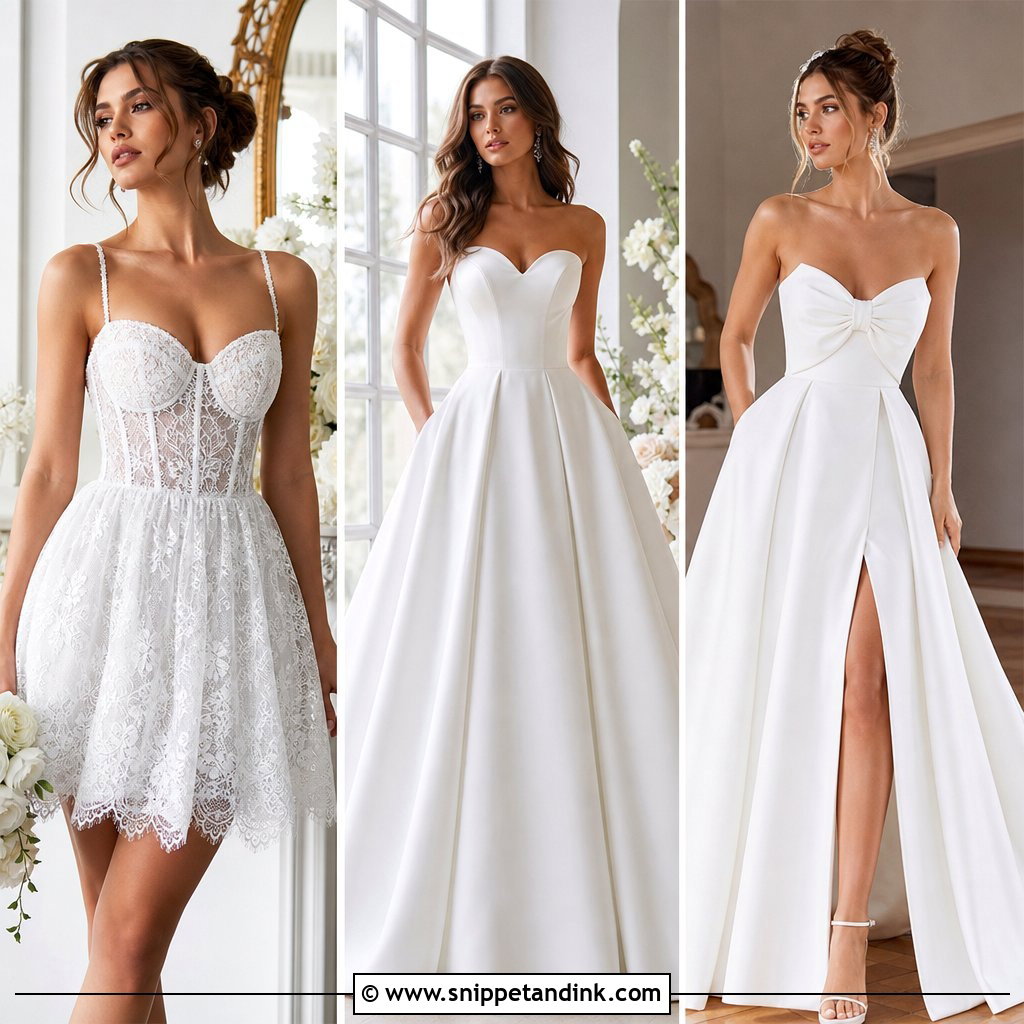
20. Drop Waist Siren Wedding Dress
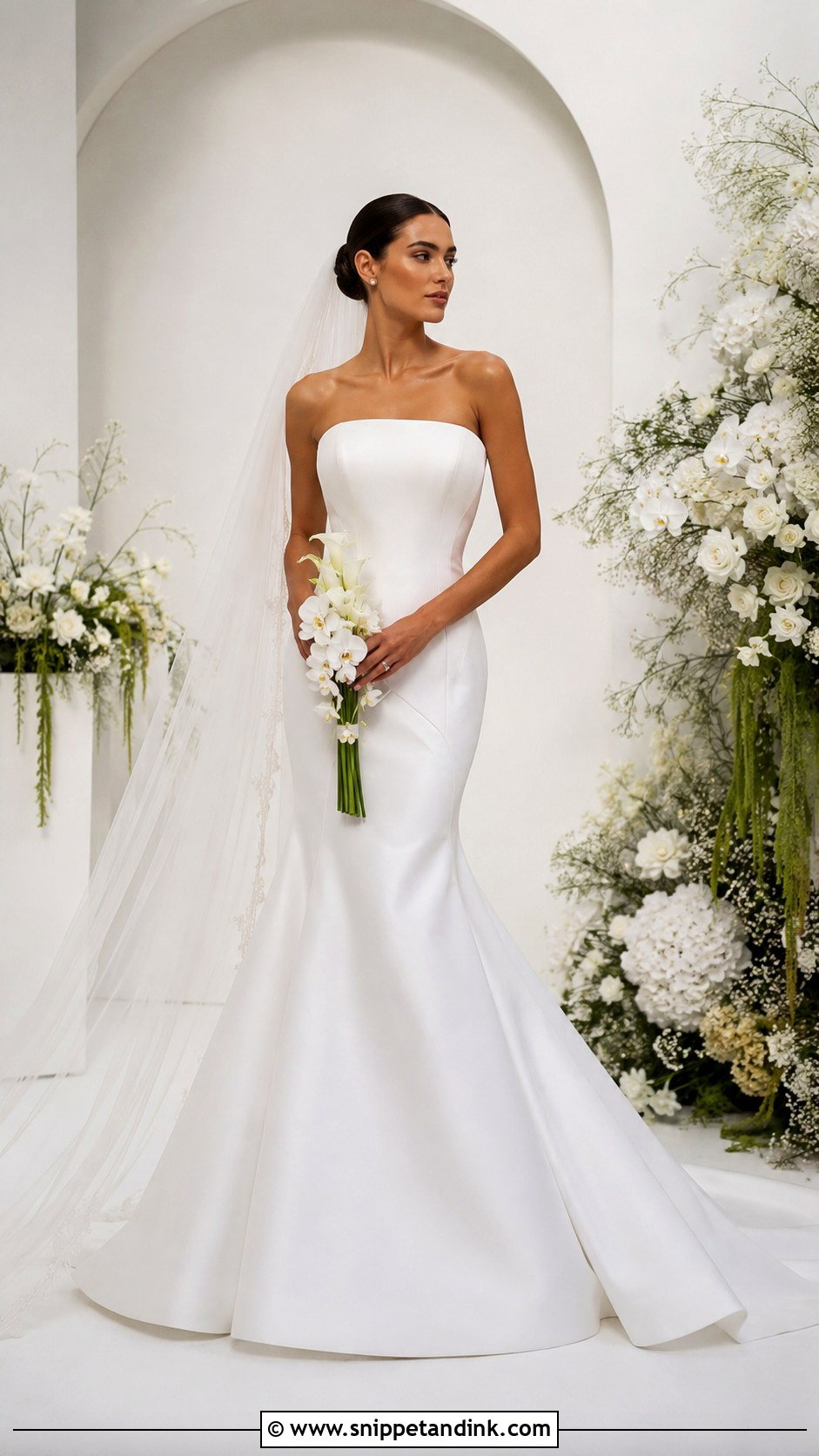
A drop waist siren wedding dress moves the waistline lower, so the body reads as one long smooth line before the flare. Satin, crepe and mikado all hold the shape. The bodice needs real structure, or the drop waist wrinkles when you sit. I’d suggest it for long-torsoed brides; on a short torso it can shorten the legs. Clean heels, minimal jewellery, a long veil and a narrow bouquet keep the vertical line strong.
21. Sheer Sleeve Siren Wedding Dress
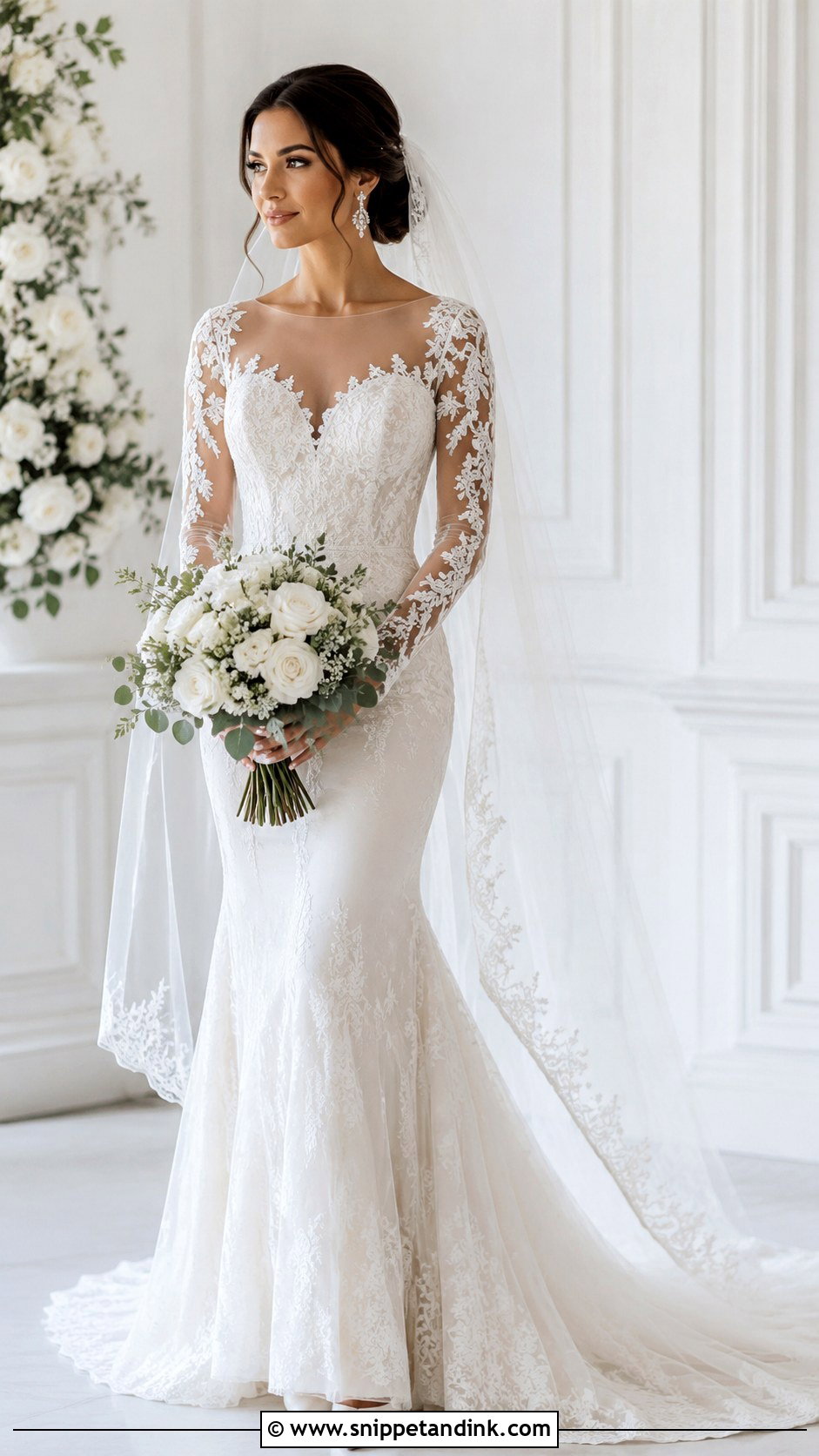
Sheer sleeves give coverage without weight, in lace, pearls, embroidery or fine mesh that blends into the bodice. The body lining should be secure and opaque, while the delicate sheer sleeves stay light. Match the mesh to your skin tone, or it shows as a tinted film in photos. Closed-toe heels, subtle earrings and a fingertip or chapel veil, with a low bun or soft waves.
22. Plunging Neck Siren Wedding Dress
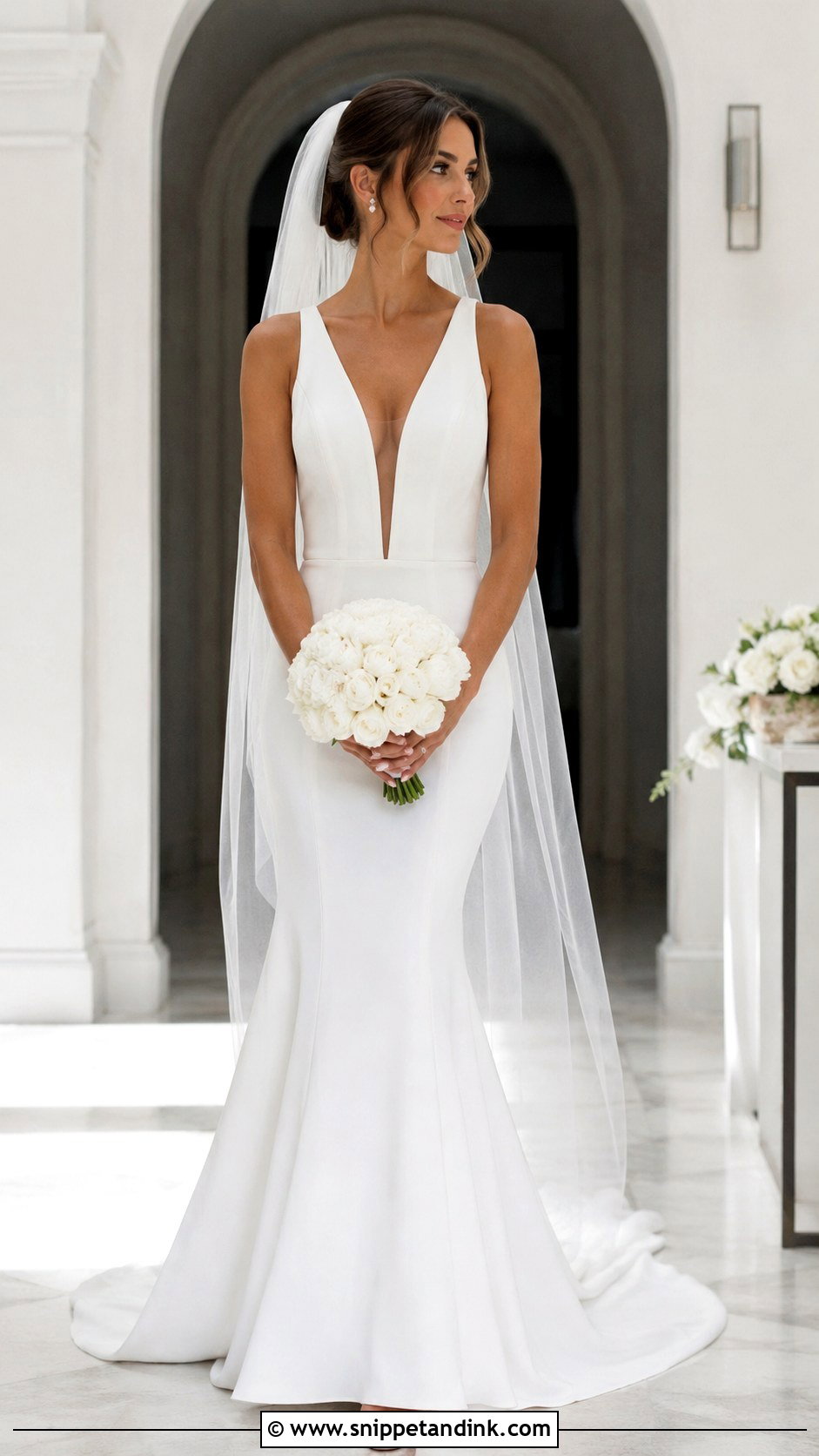
A plunge can look elegant, but only when it’s properly engineered. Look for a structured bodice with supportive mesh across the plunge, or a narrow plunge that sits securely against the body. Fashion tape at the edges is a must, and I’d test it by bending forward at the fitting. Small earrings, slim heels and a plain veil; no necklace. A soft updo or brushed waves, and a compact white bouquet.
23. Cape Veil Siren Wedding Dress
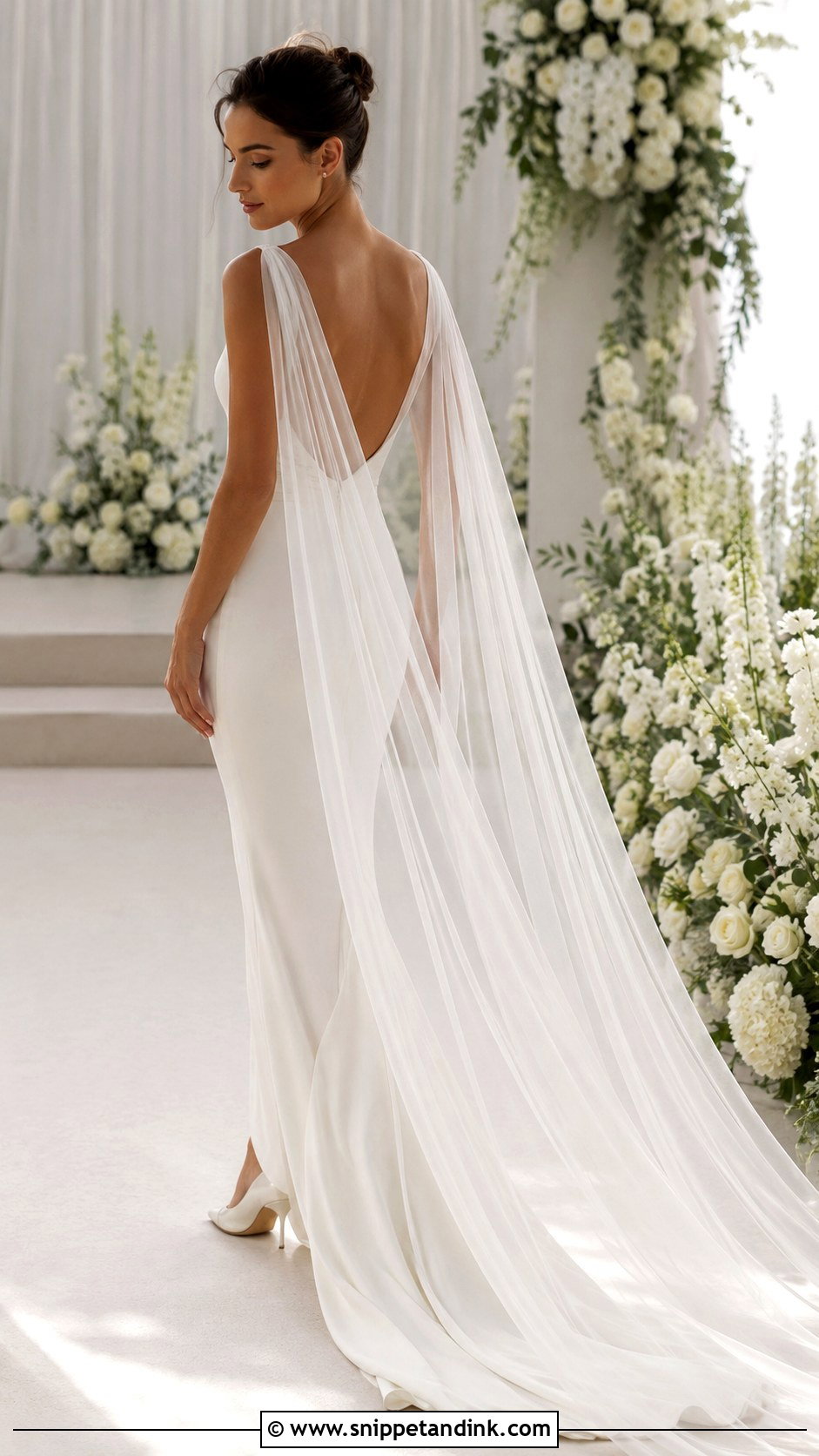
A cape veil replaces the traditional veil and flows behind the dress like a soft train. It can attach at the shoulders, neckline or back. Choose a plain crepe or satin siren so the cape stands out. Tulle, pearl-dotted fabric or lace-trimmed capes all work. Shoulder-attached capes pull backward, so they need firm anchoring with hooks or snaps rather than pins. Pointed heels, minimal jewellery and lifted hair so the attachment shows.
24. Detachable Skirt Siren Wedding Dress
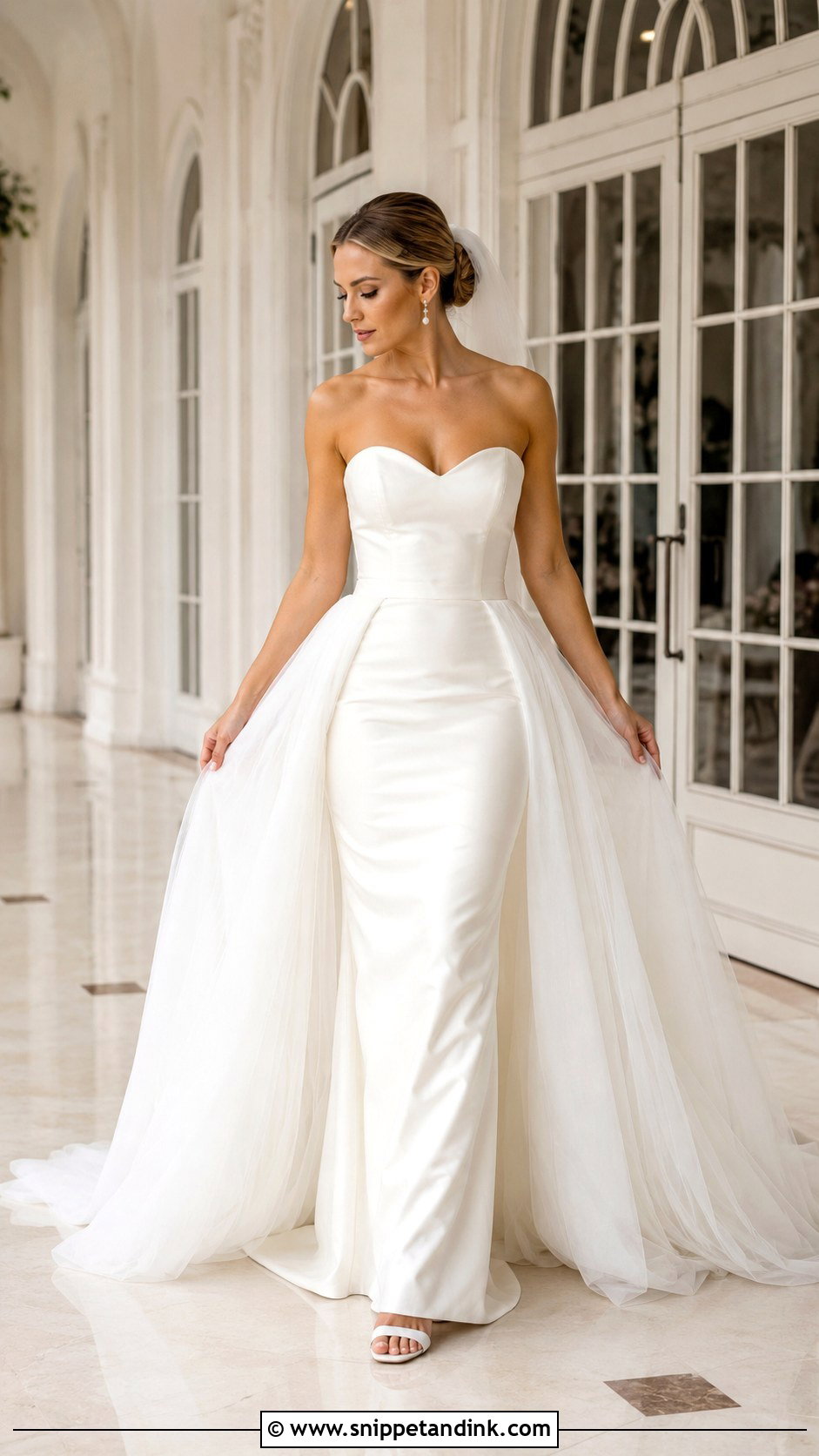
A detachable overskirt gives you a full ceremony dress and a sleek siren for the reception. The overskirt should attach cleanly at the waist, usually with hooks or buttons, without leaving a bulky band behind when removed. Satin or tulle overskirts are the most common. Choose a veil that works with both looks. A polished bun keeps the change neat, and someone should practise taking the skirt off before the day.
25. Bow Siren Wedding Dress
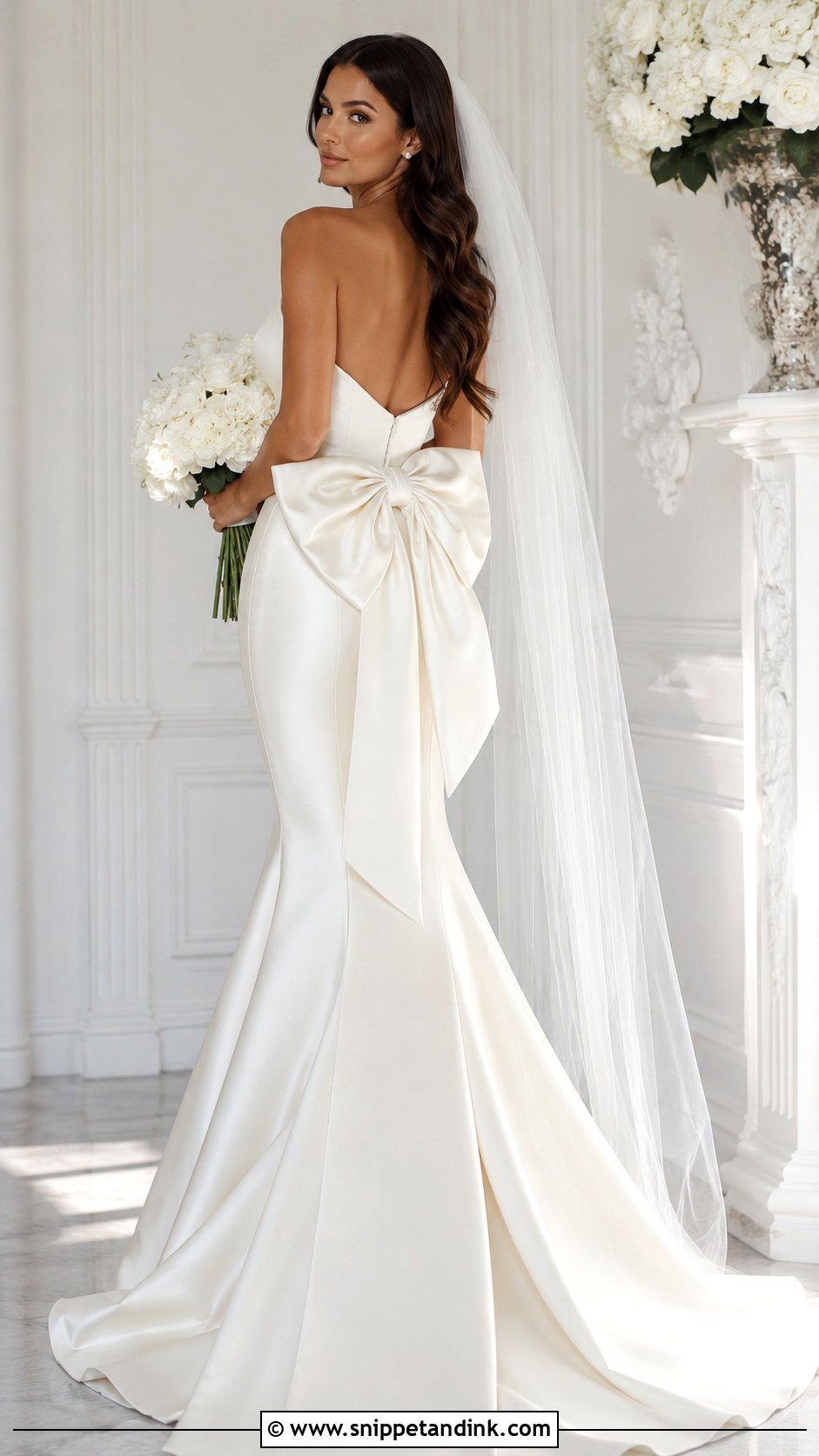
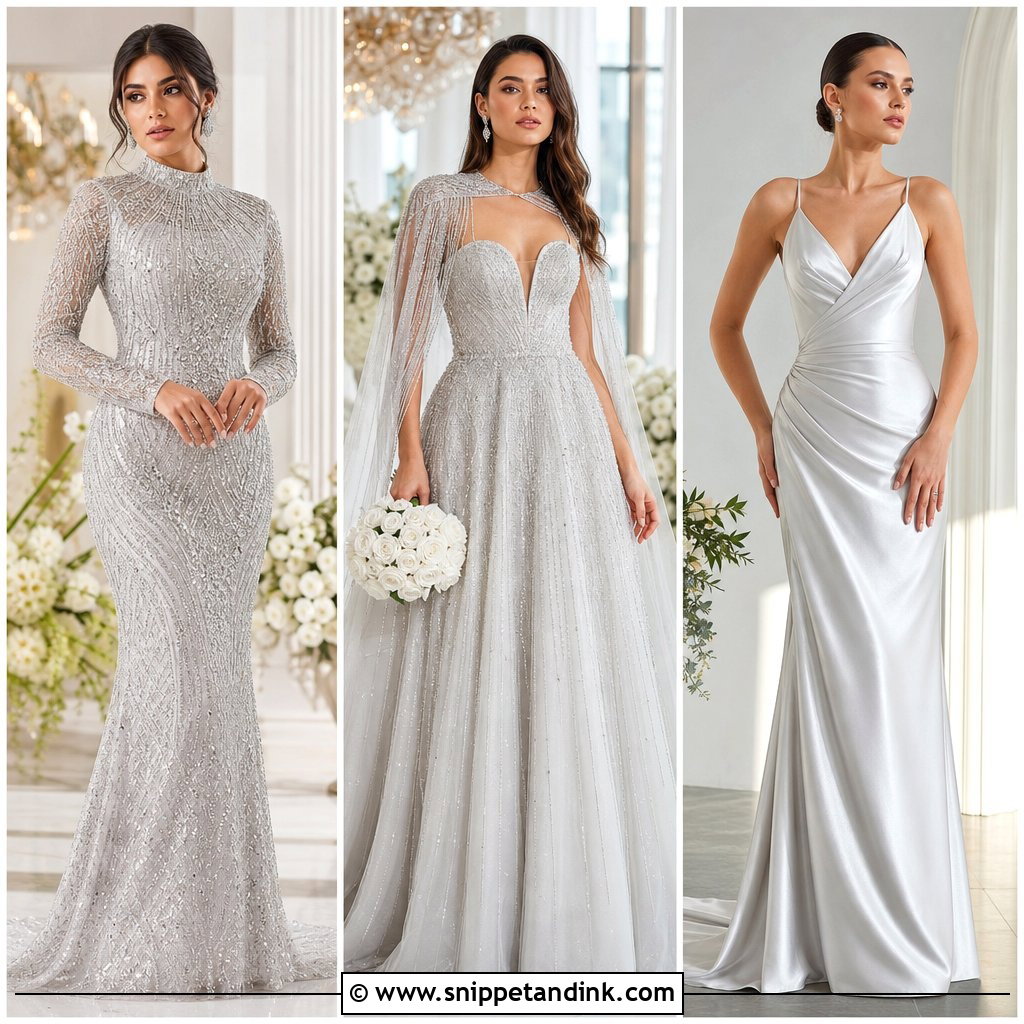
A bow can sit at the back waist, on one shoulder or at the top of the train. Keep the rest of the gown plain. A satin siren with a back bow feels classic; a crepe dress with a shoulder bow looks modern. Big satin bows can droop by the evening, so ask whether there’s interfacing inside to hold the shape. Ivory heels, pearl studs, a clean veil, and hair chosen around where the bow sits.
26. Slit Siren Wedding Dress
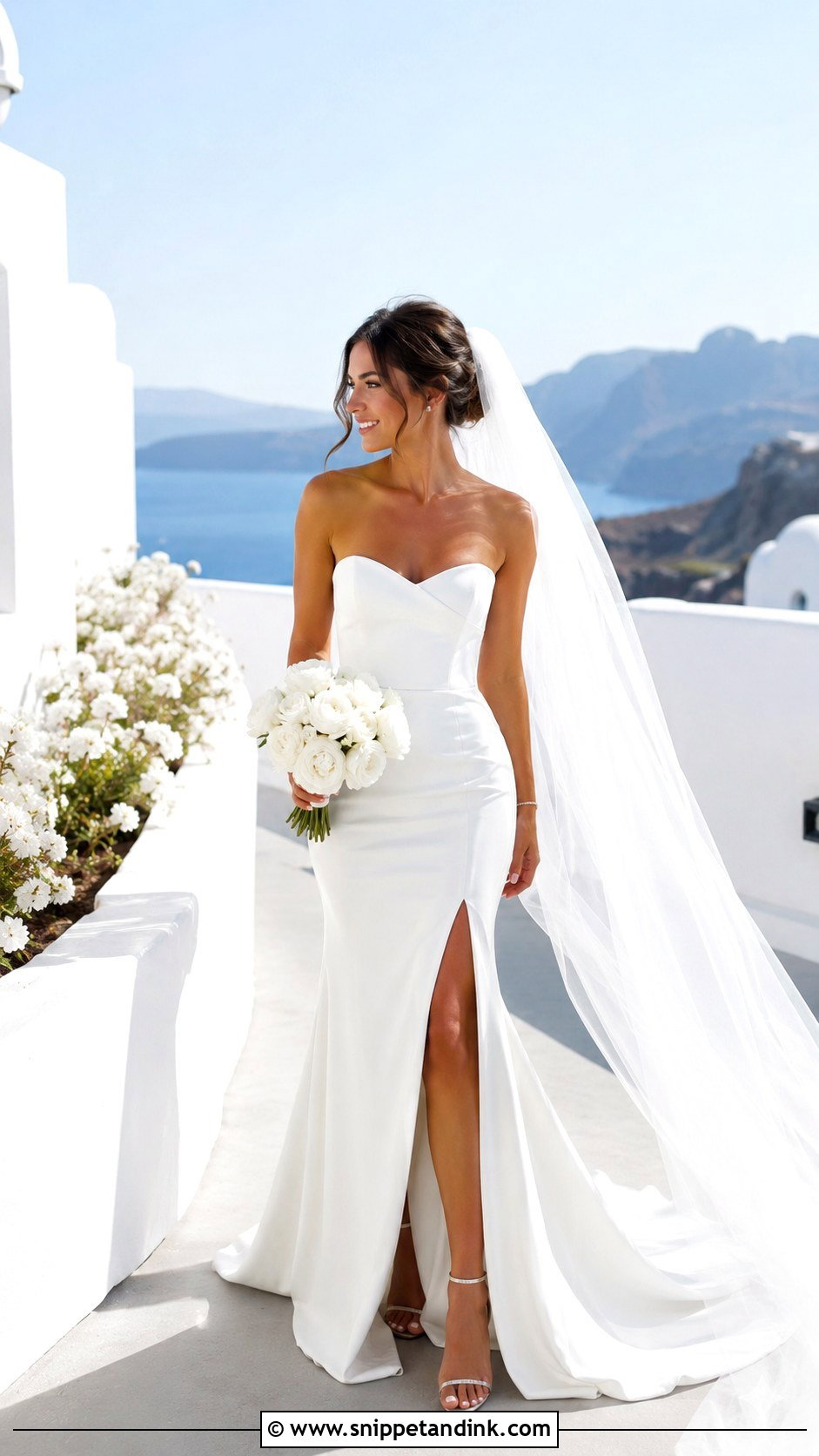
A slit solves the biggest practical problem with a siren: walking. A front or side slit lets your legs move without changing the silhouette when you stand still. Satin, crepe and light mikado hold the shape well. Your shoes will be seen, so choose a pair you love. Small earrings and a slim bracelet. A long veil softens the slit for the ceremony. Warm-weather and destination weddings suit it.
27. Sequin Siren Wedding Dress
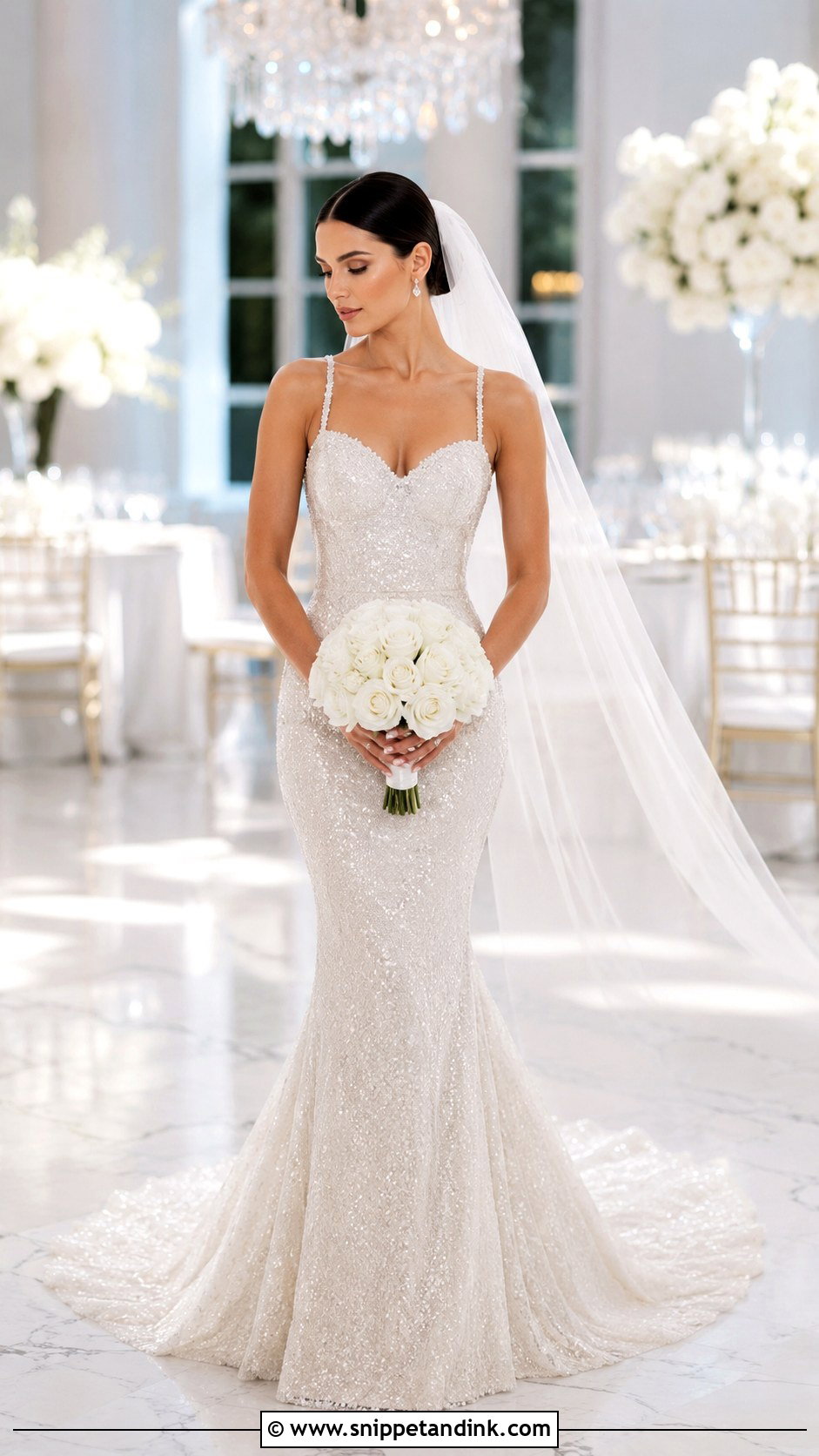
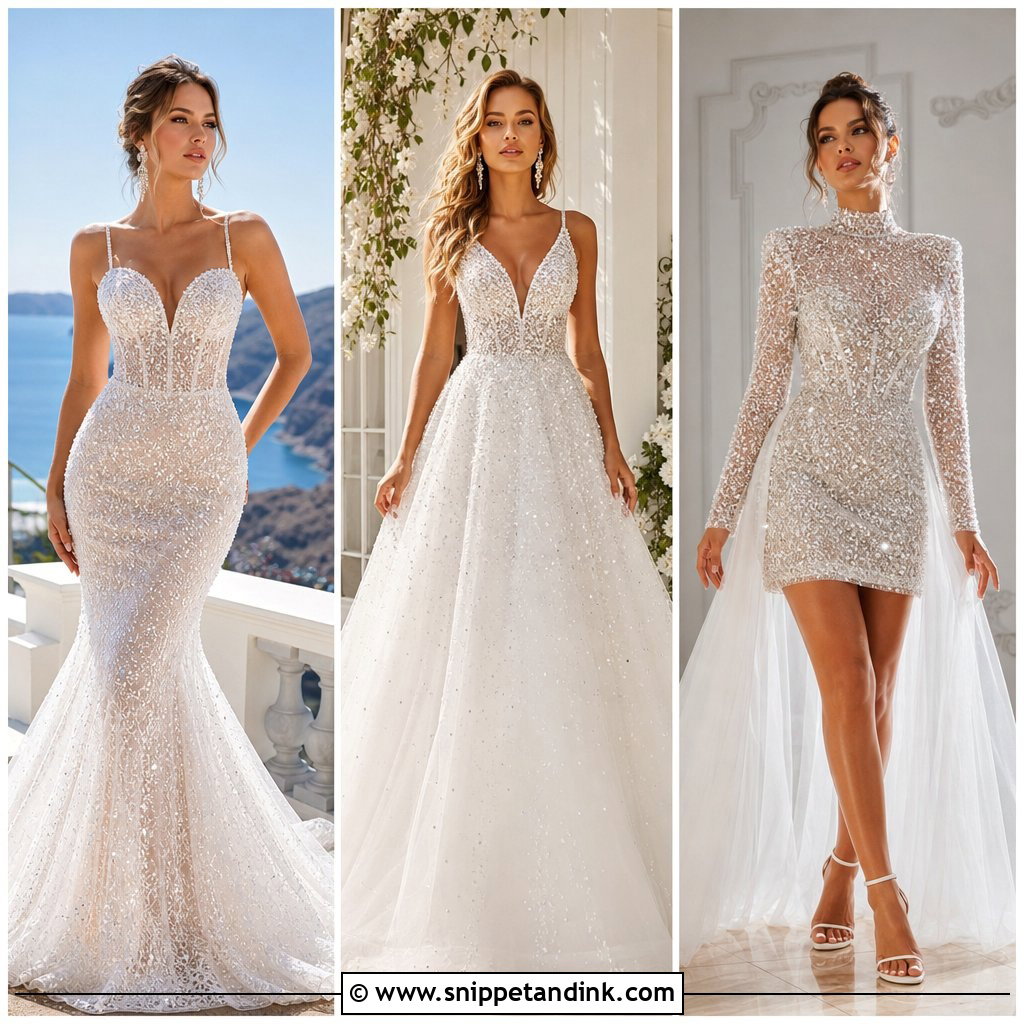
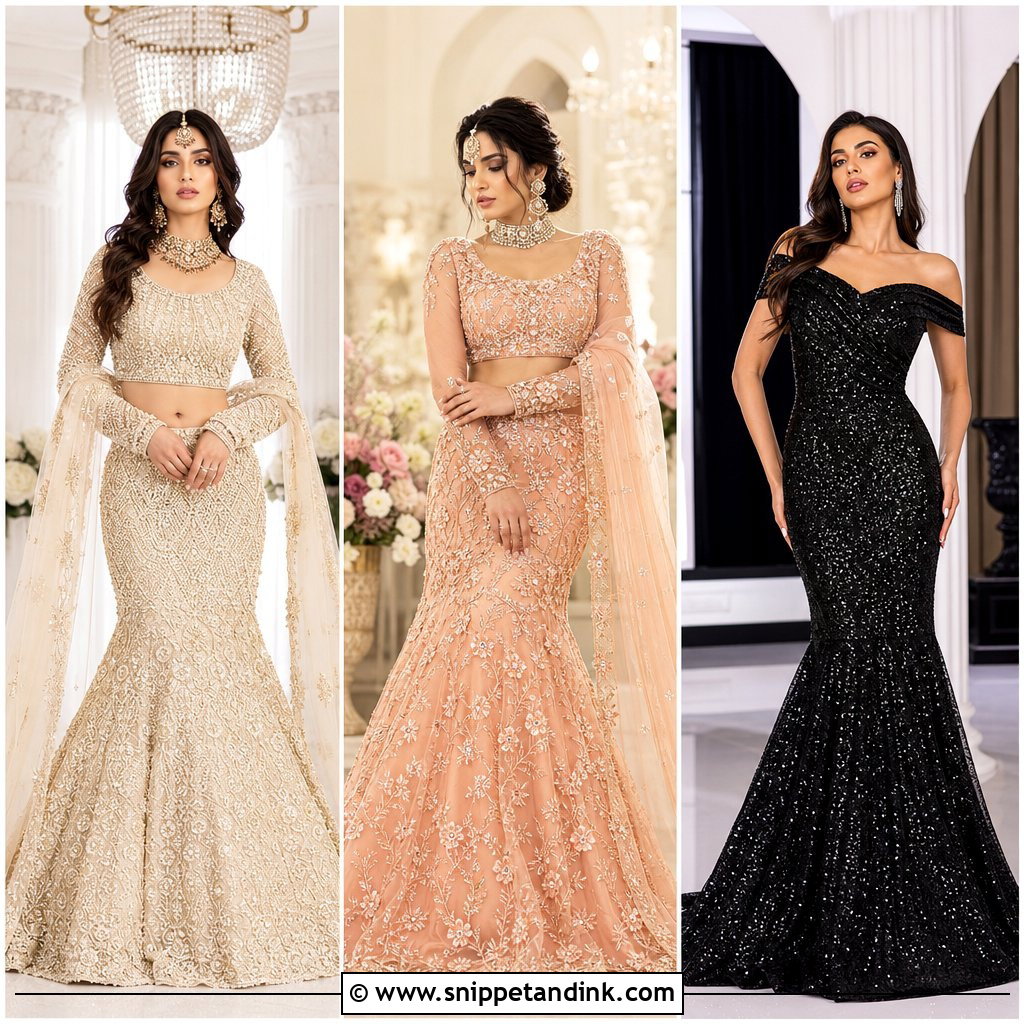
Head-to-toe sequins are the most glamorous option here. White, ivory or champagne sequins shine without looking like a costume. A fitted bodice and mermaid skirt keep the shape clean. Sequins scratch the inside of the arms and catch on lace sleeves of other guests, so I’d suggest a smooth lining at the arms. Plain heels, small earrings, a clean veil and sleek hair. Evening weddings and glamorous receptions.
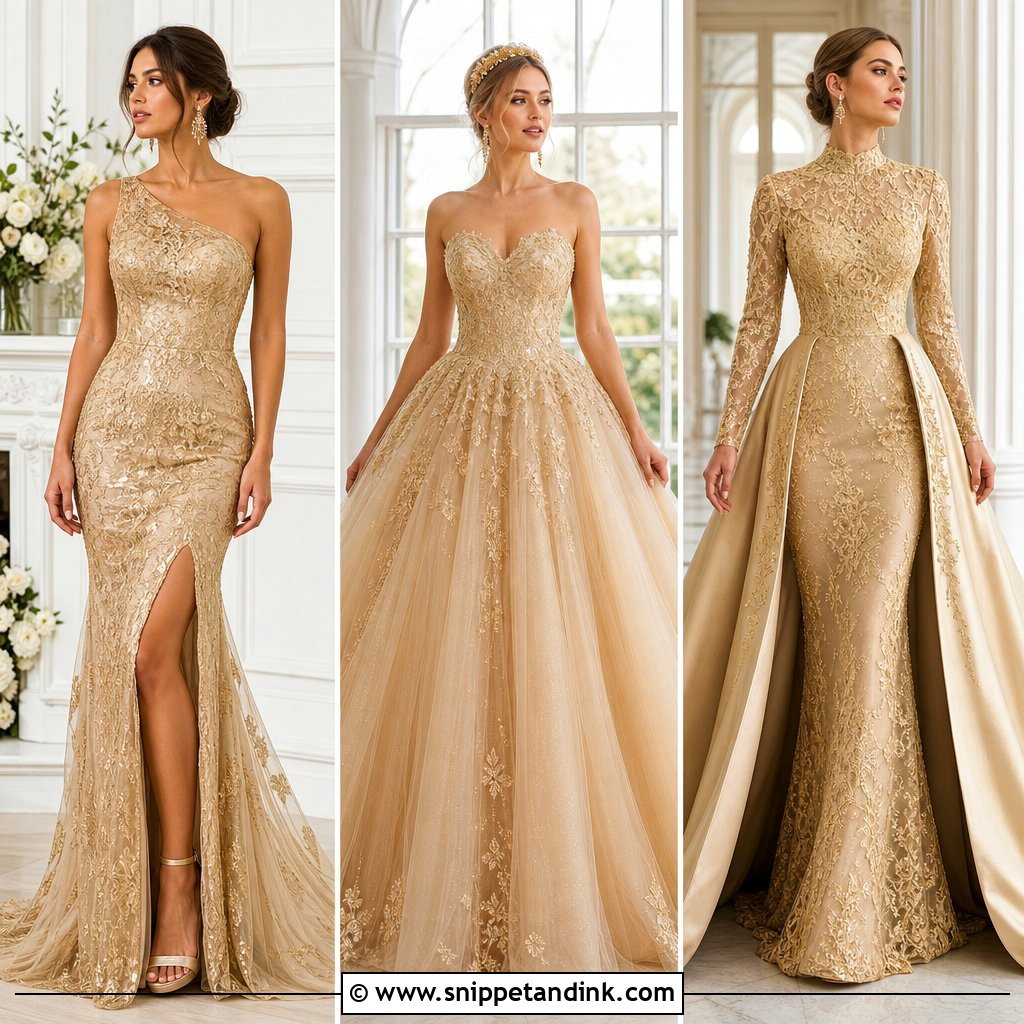
28. Champagne Siren Wedding Dress
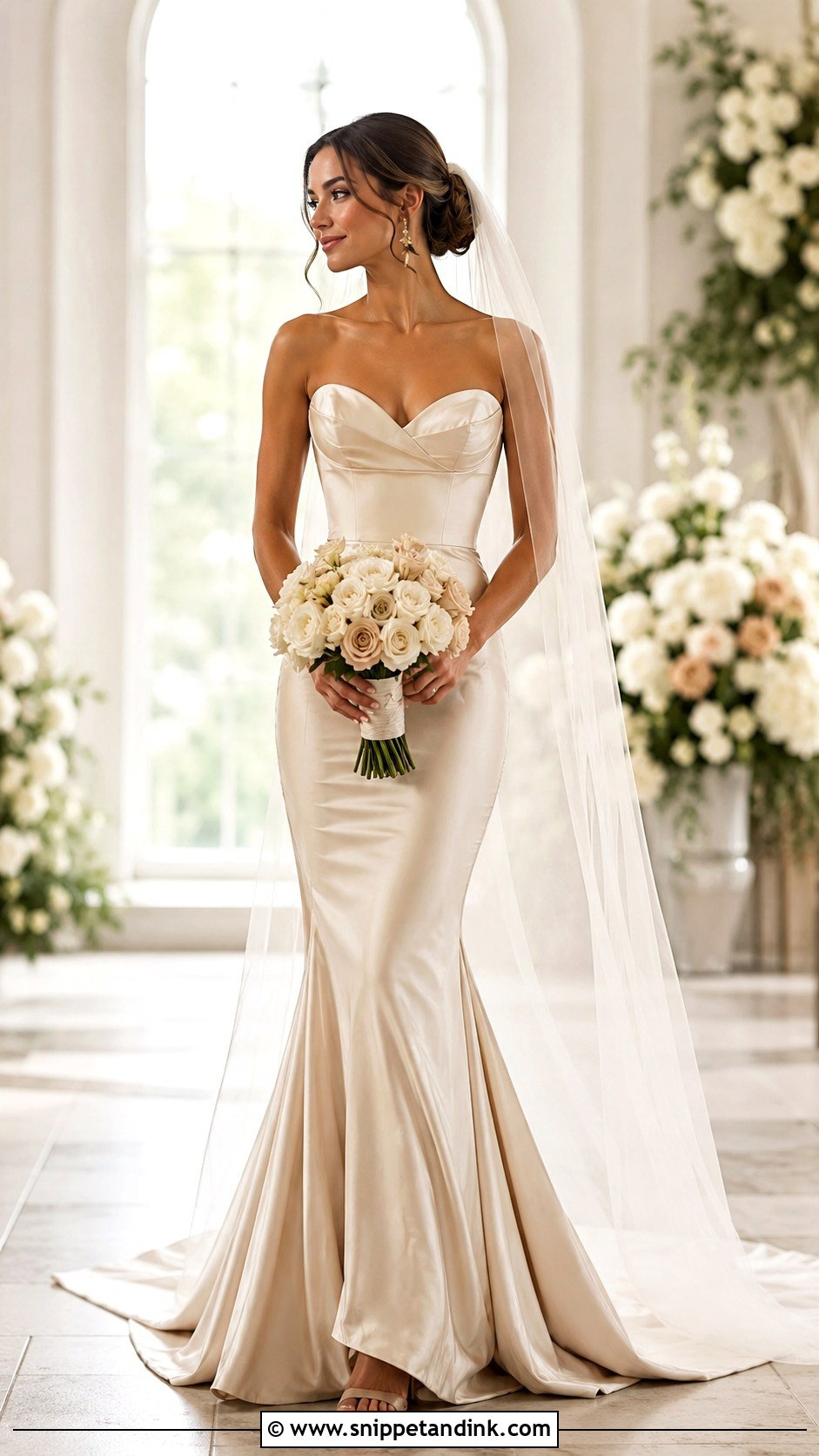
Champagne is a warm alternative to white or ivory, with a soft golden undertone that suits satin, beading, lace or tulle. It flatters warm and olive skin tones particularly well. Choose a fitted gown with a structured bodice and gentle flare so the colour feels refined. Nude or champagne heels, gold earrings, and a sheer ivory veil for contrast. Soft bun or polished waves, with ivory and cream flowers. It’s different, but still clearly bridal.
29. Beach Siren Wedding Dress
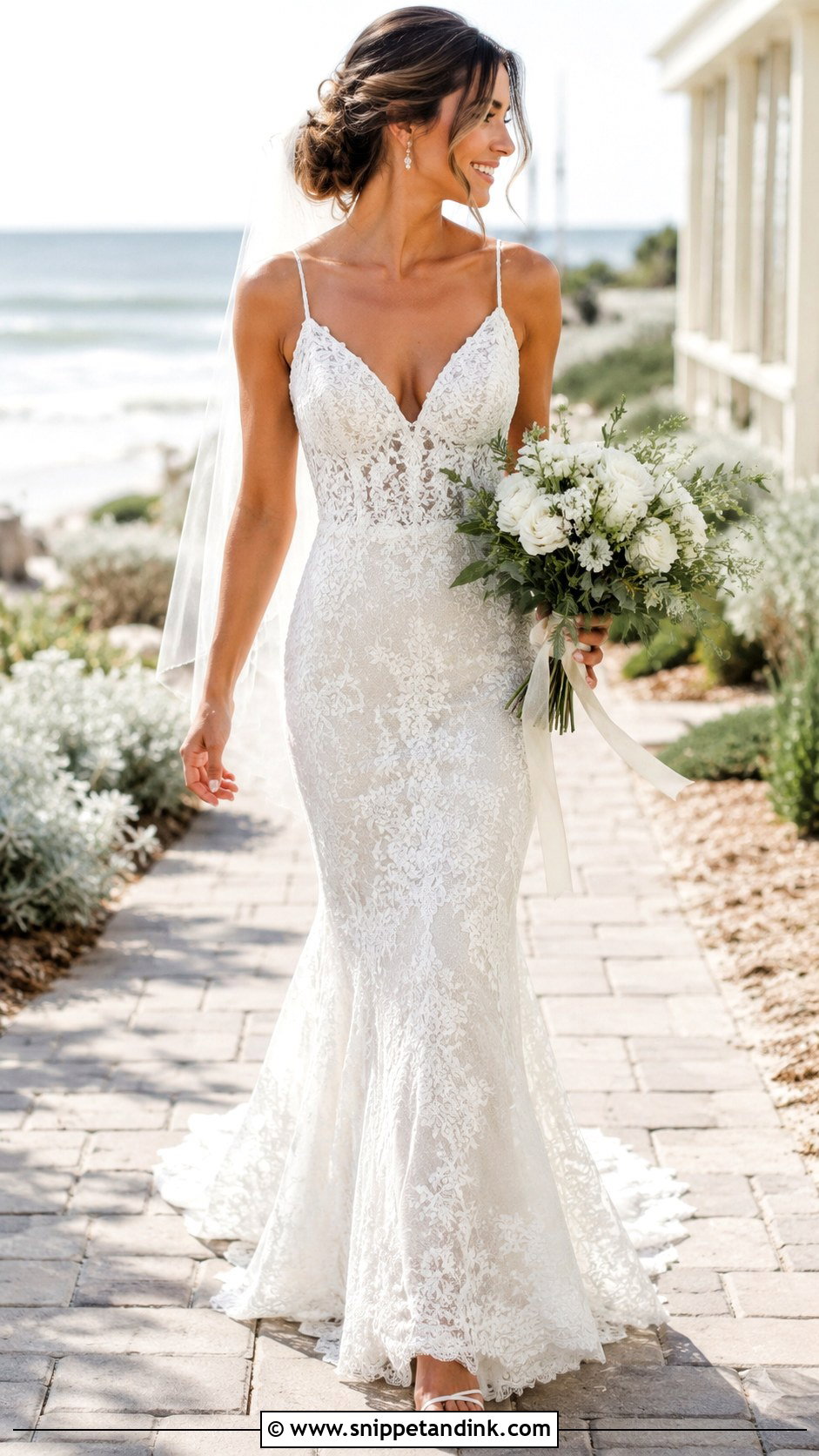
On sand, a heavy siren is miserable, so the beach version should be lighter: lightweight crepe, soft lace or fluid satin with a gentle trumpet flare instead of a train. Thin straps, off-shoulder sleeves or a low back suit the setting. Block heels, flat sandals or barefoot sandals, depending on the location. A light veil and a loose updo cope better with wind. White flowers and soft greenery complete the coastal bridal look.
30. Reception Siren Wedding Dress
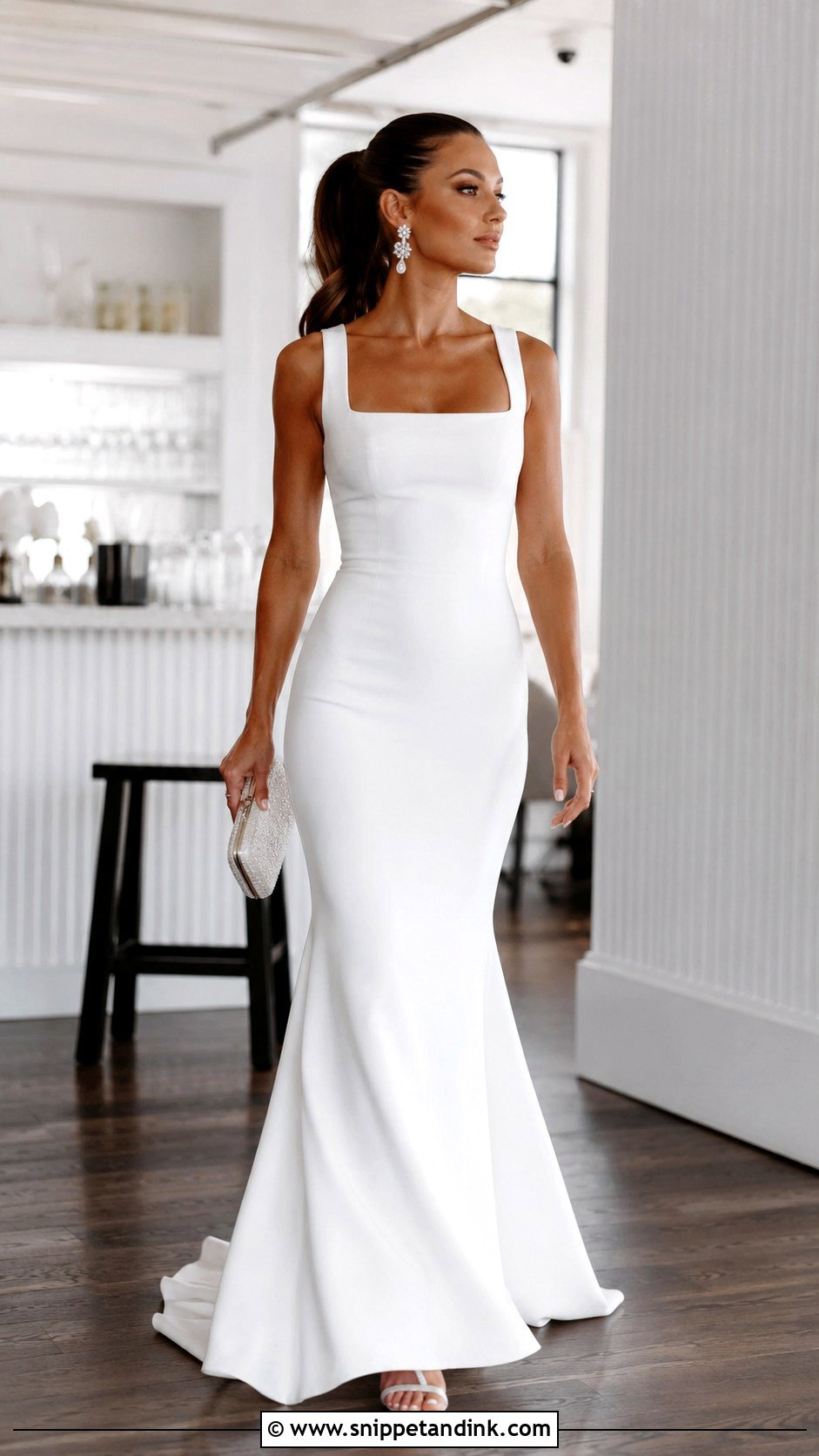
A reception siren is lighter and easier to dance in than the ceremony gown. A fitted midi, floor-length crepe gown or soft satin mermaid with a short train all work. If your ceremony dress was heavily detailed, choose something cleaner for contrast. Statement earrings, comfortable heels and a small clutch. A polished ponytail or soft waves makes it feel fresh. This is the dress you’ll be in for most of the photos at the party, so it should fit as well as the first.
Stairs, Car Seats and the Bathroom in a Fitted Gown
Brides worry about this privately and rarely ask. A siren is very wearable, but it rewards a little practice.
- Stairs: lift the front of the skirt a few centimetres and lead with your toe. Going down, take them slowly and sideways if you need to.
- The car: sit down backwards first, then swing both legs in together. Gather the train onto your lap rather than leaving it on the floor.
- Sitting at dinner: perch towards the front of the chair. Sitting far back strains the seams at the hips.
- The bathroom: face the cistern, with a bridesmaid holding the skirt and train up from behind. It sounds odd, and it’s what works.
Bustling a Siren Train for the Dance Floor
An unbustled train will be stepped on within minutes of the first dance. Because a siren skirt is fitted, the bustle choice matters. An over bustle hooks the train up onto the back of the skirt with buttons or loops, which is quick and shows off the fabric. An under bustle, sometimes called a French bustle, tucks the train underneath with numbered ribbon ties, so the back looks like soft folds.
On heavy satin, I usually prefer the over bustle, since a fitted skirt doesn’t have room to hide much fabric underneath. On lace and tulle, the under bustle looks lighter. Either way, ask the seamstress to number or colour-code the points, and have whoever is doing it practise twice.
Shape First, Sparkle Second
A siren dress can go sleek in satin, romantic in lace, dramatic with a train, modern in crepe or soft in tulle and appliqué. What makes it work, in every version, is the fit. Get the flare, the bodice and the structure right, then add the veil, shoes, jewellery, bouquet and hair. Plan for how you’ll move through the day and the dress will look as good at the last dance as it did at the first look.
You'll Like These Ideas:



Leave a Reply