
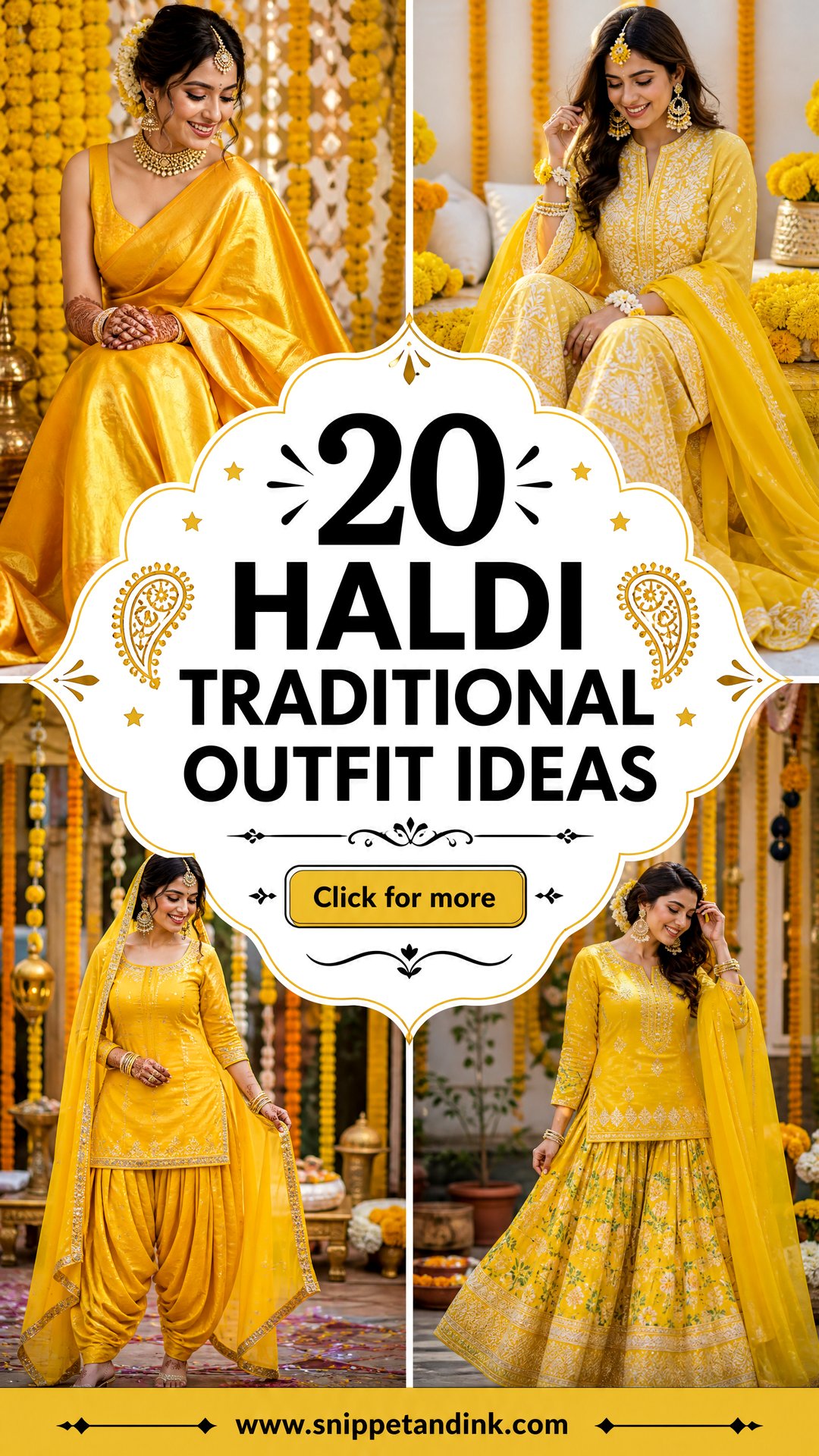
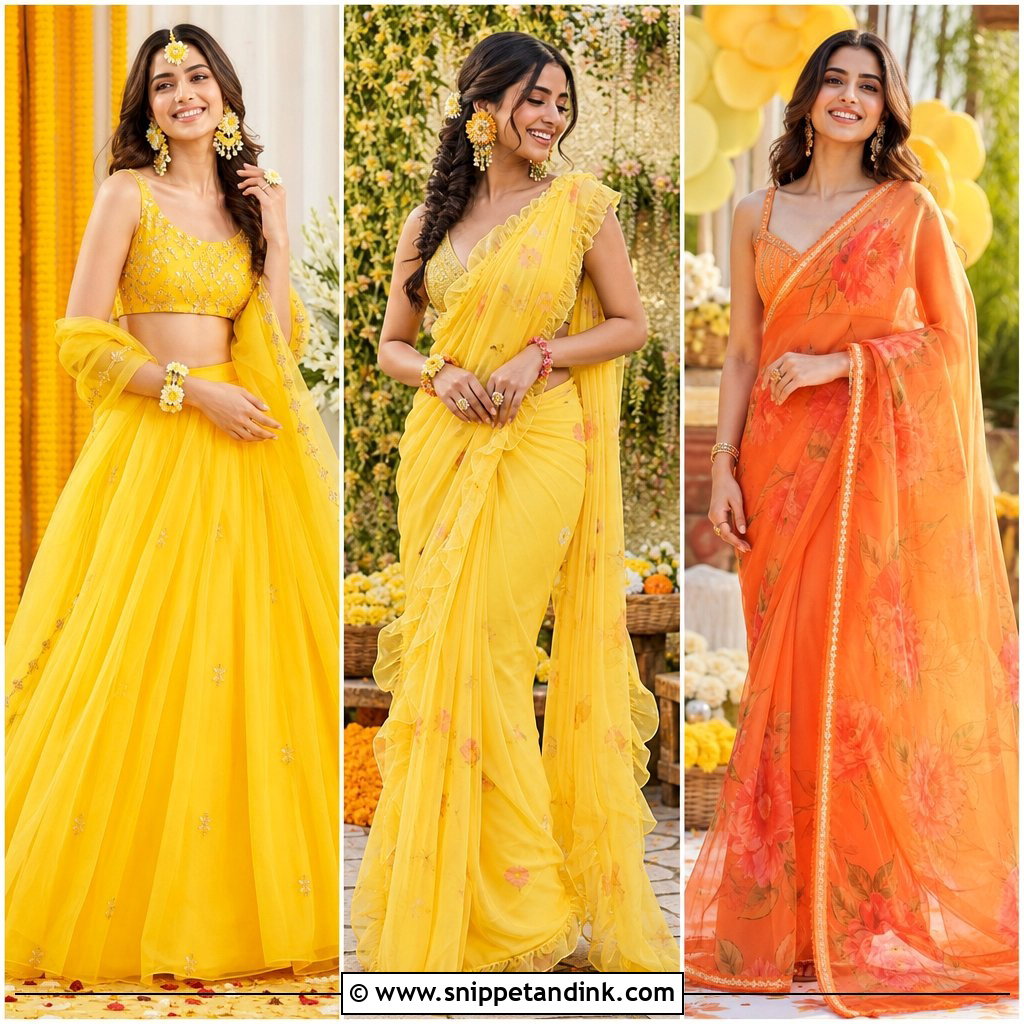
Traditional haldi dressing means more than wearing yellow. It’s about the drape, the weave and often the region your family comes from, and it has to hold up through hours of sitting, paste and dancing. This list covers classic silk and cotton sarees, lehengas, shararas, regional drapes like the Nauvari and the half saree, and simple kurta sets for brides, sisters and guests. Lighter fabrics almost always serve you better, and floral jewelry, juttis, bangles and a well-pinned dupatta do the rest. I’d only add one rule up front: don’t wear anything you’d mourn if turmeric reached the sleeve or hem, because it usually does.
Regional Drapes Carry Meaning for the Elders
In my experience, “traditional” means something different in every family. A Maharashtrian grandmother may expect a Nauvari, a Telugu or Tamil family may light up at a half saree, a Punjabi family will be pleased by a Phulkari, and a Rajasthani or Gujarati family may lean toward Leheriya or Bandhani. In Bengali families, the bride often wears a simple yellow or red-bordered saree for the gaye holud. Before suggesting anything, I ask the bride what the women in her family wore for their own haldi.
That conversation saves a lot of awkward moments. Choosing the family’s own drape is often what pleases the elders most, even if it’s made in a lighter fabric than theirs was. In a mixed-culture wedding, I sometimes suggest the bride wear one side’s drape and the groom’s family the other’s, so both traditions appear in the photos.
- Ask who drapes it. Nauvari and half sarees take practice, and an aunt who knows how is worth more than any tutorial.
- Check for customs about color. Some families expect a specific shade or border for the bride.
- Ask about jewelry rules. In certain communities, glass bangles or a nath are expected, not optional.
1. Yellow Silk Saree Haldi Outfit
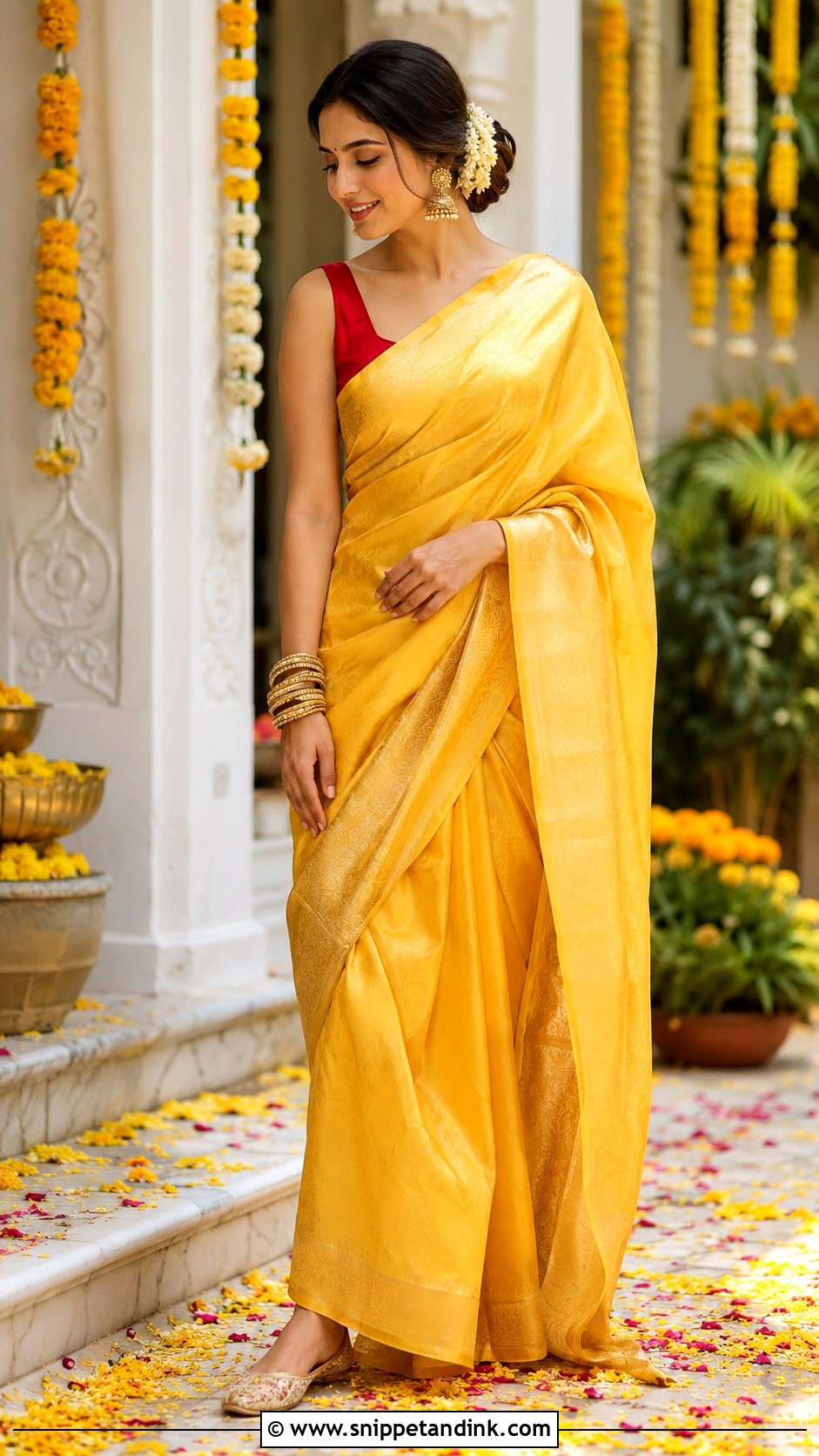
A yellow silk saree doesn’t need heavy embellishment to look right at a haldi. Soft silk, Chanderi or a light silk blend drapes comfortably; a stiff silk holds sharp creases when you sit and stand repeatedly. A red, green or hot pink blouse gives classic contrast, while a matching yellow blouse reads quieter and more modern. Gold jhumkas, stacked bangles and embroidered juttis finish it, with a low bun and jasmine or yellow flowers. I pin the pallu at the shoulder from underneath so the pin never shows. Brides can add a floral choker and maang tikka; guests keep jewelry smaller.
2. Mustard Lehenga Haldi Outfit
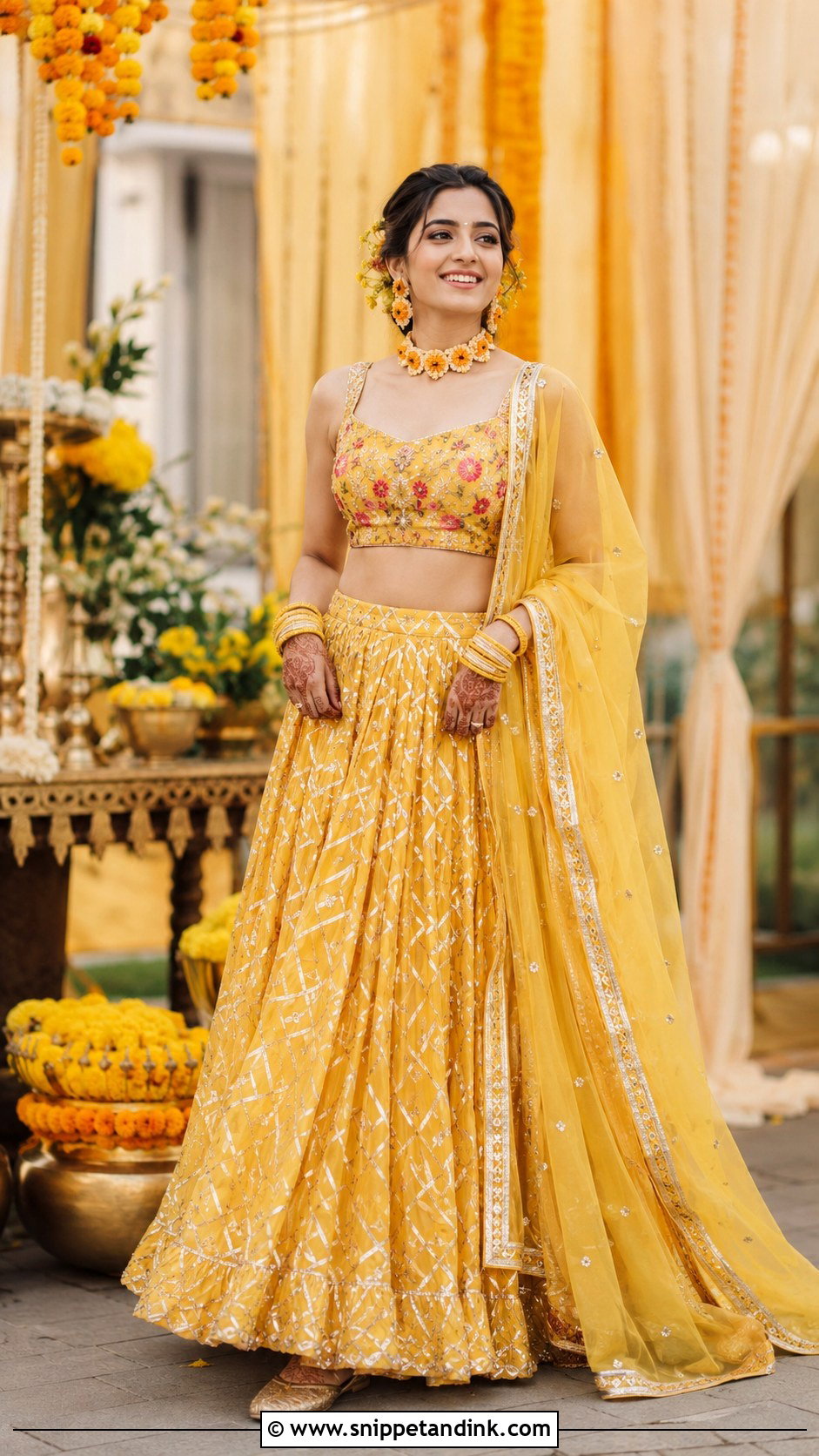
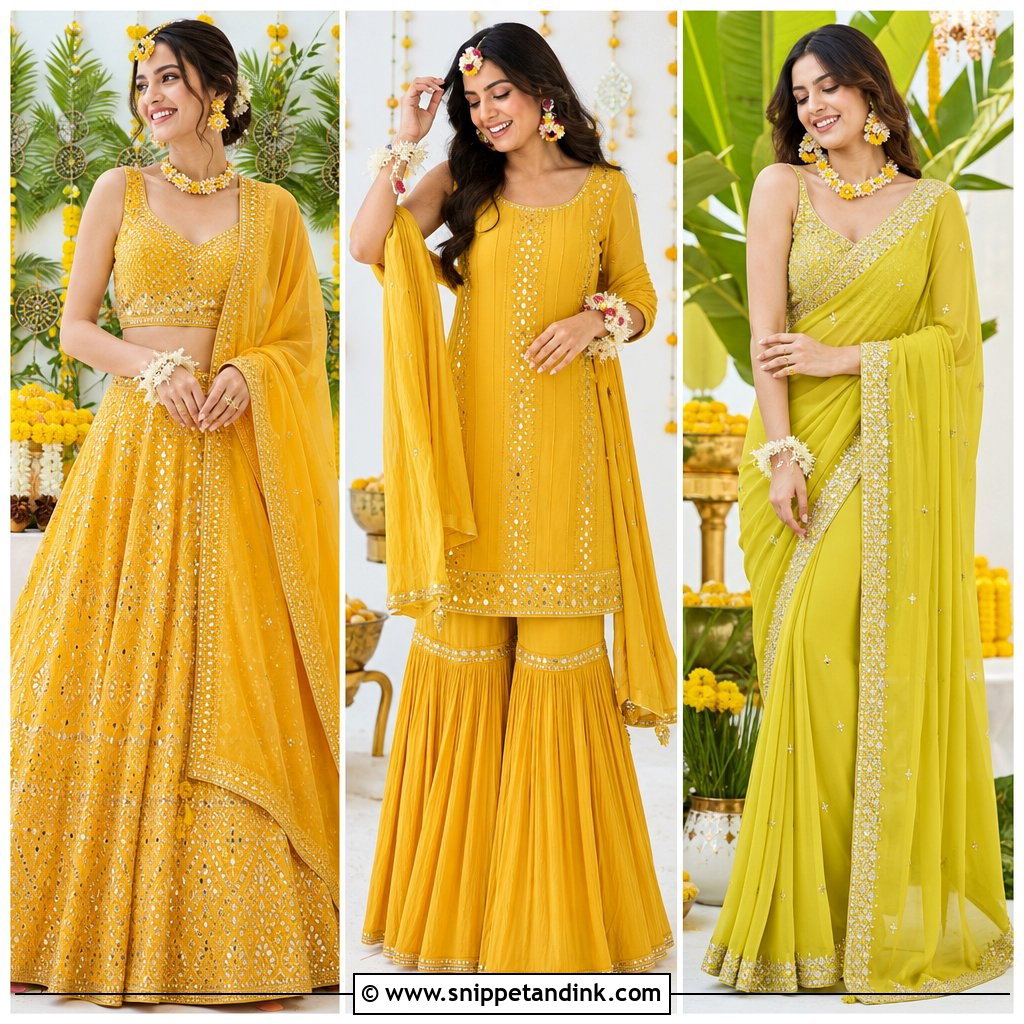
Mustard reads richer than lemon in daylight and gives a traditional lehenga outfit more depth. Pick gota patti, thread embroidery or a narrow zari border over stonework, which is heavy and scratches when you sit cross-legged. A fitted floral blouse and a net, chiffon or organza dupatta across one shoulder leave your hands free. Floral earrings, a delicate choker, bangles and cushioned juttis complete it. Brides can go fuller in the skirt with a statement blouse; guests do better with a lighter flare. I braid or bun the hair so loose strands don’t dip into the paste.
3. Bandhani Lehenga Choli Haldi Outfit
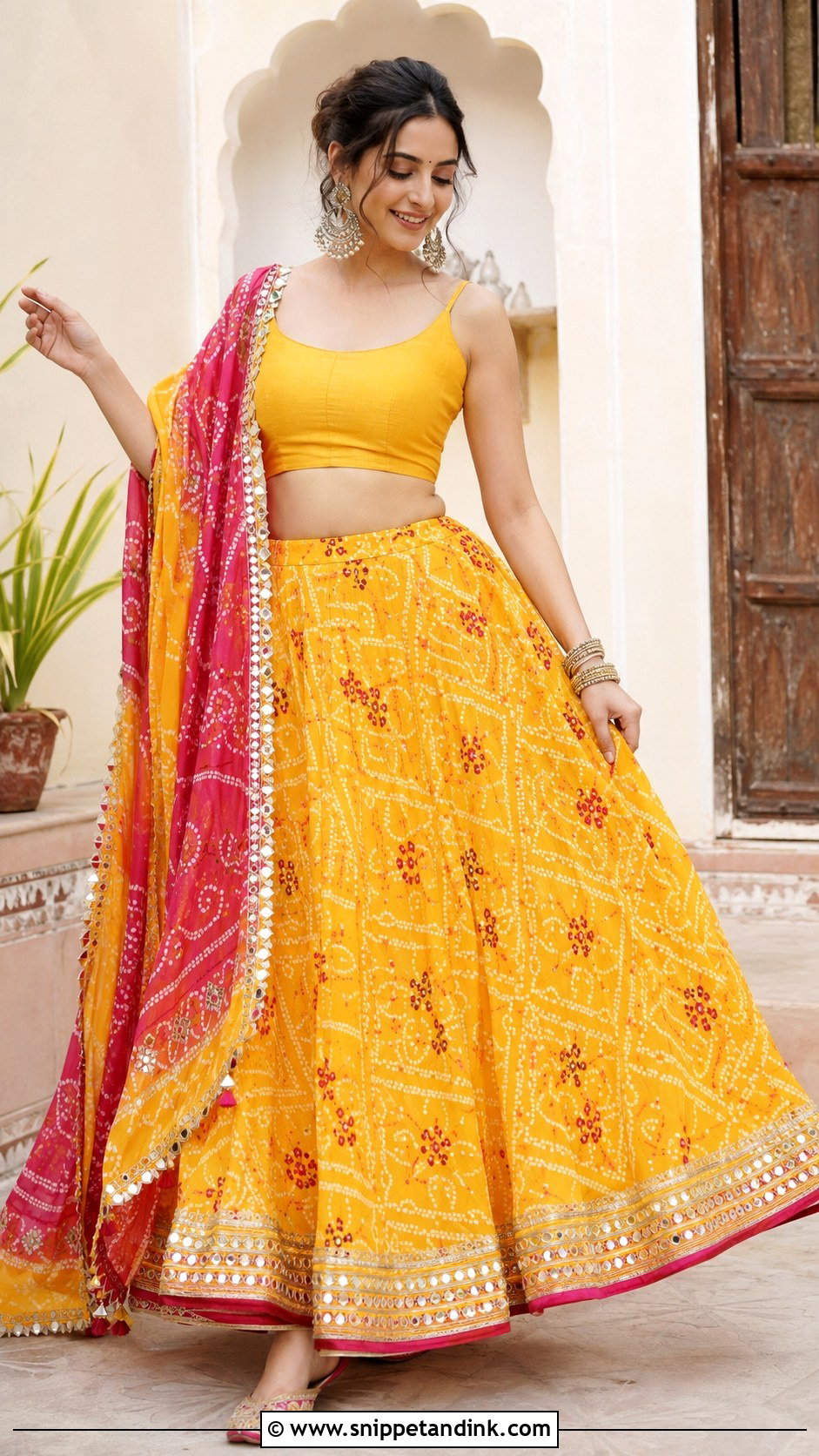
Bandhani is resist-dyed by tying tiny points of cloth before dyeing, which is why each dot looks slightly irregular, and that handmade quality is what gives it character. A yellow Bandhani lehenga with a matching choli works on its own, or bring in orange, pink and red through the dupatta and borders. A cotton-silk or georgette skirt sits and dances better than a layered bridal lehenga. Small mirrors or gota trim add festivity without weight. Oxidized silver, gold-toned pieces or fresh flowers all suit it, with mojaris. If the print already has several colors, I keep the blouse solid and the makeup light.
4. White Floral Saree Haldi Outfit
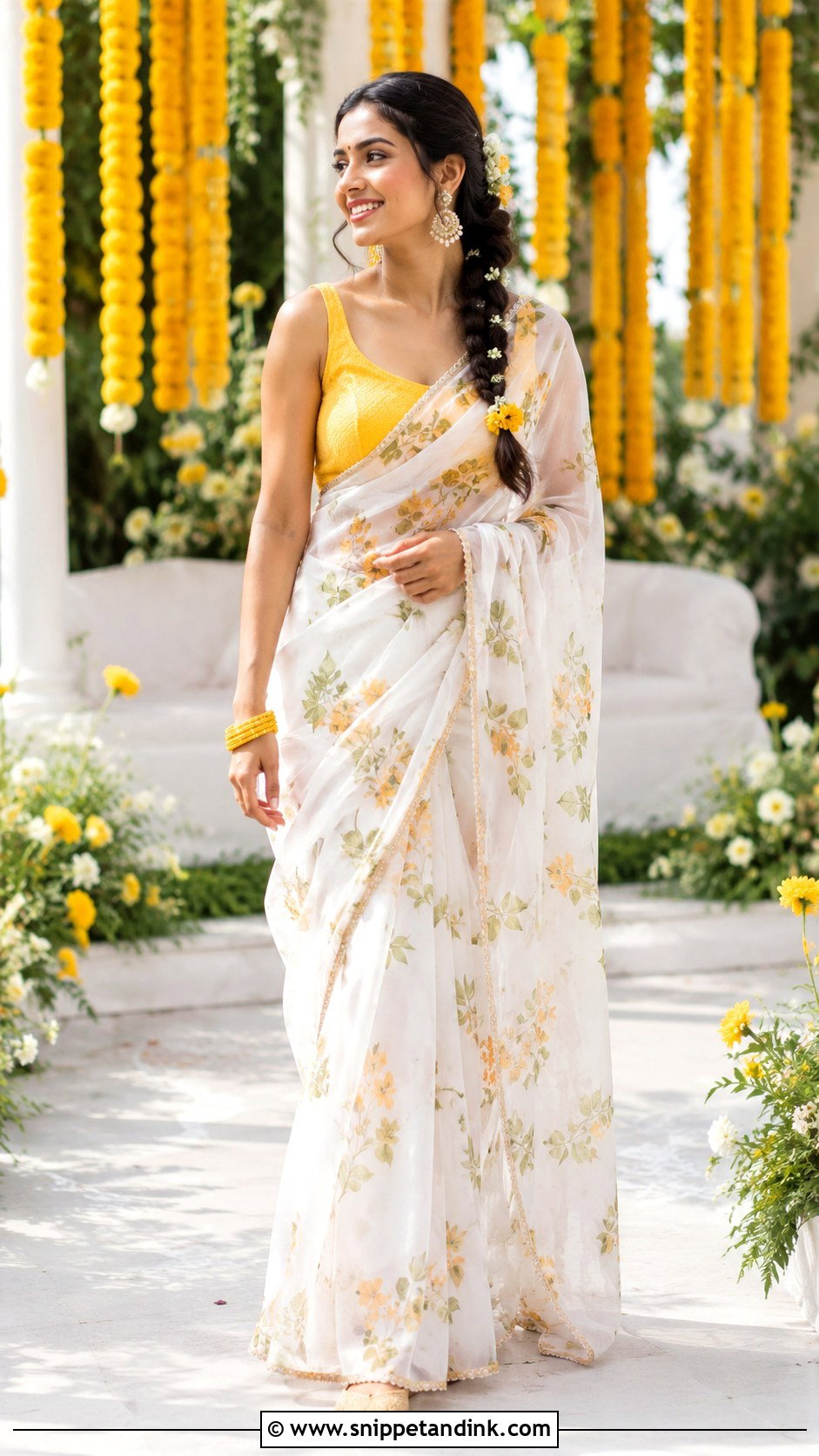
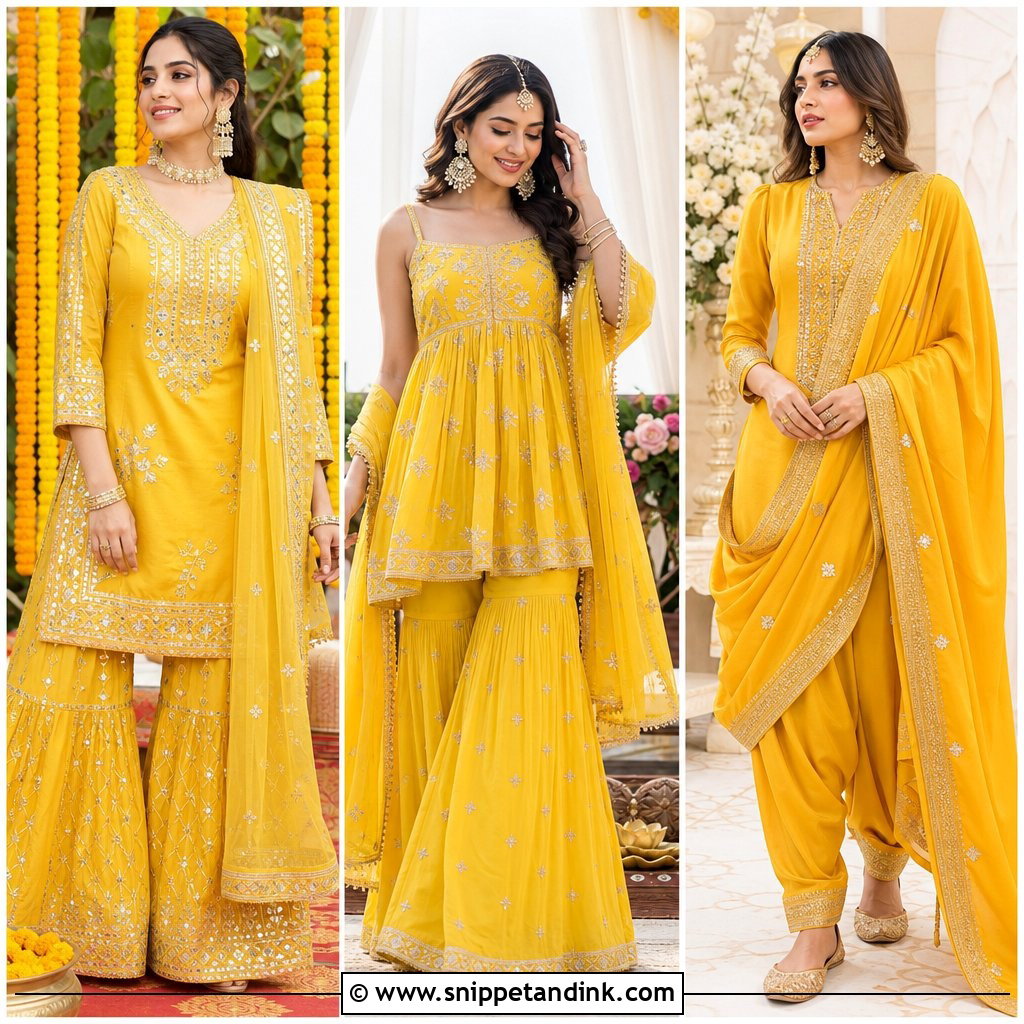
White with yellow florals is a fresh break from all-yellow, and it’s honest to say upfront that it will stain. An organza, cotton or chiffon saree keeps it light, and a sunny yellow blouse ties it to the occasion. Brides can go for big botanical prints and floral jewelry; guests look better in small motifs with a short-sleeved plain blouse. Pearl earrings, yellow bangles and neutral juttis or low block heels finish it. I drape the front slightly shorter so the hem clears the floor. Flowers woven into a braid echo the print. Wear it if you’re happy to keep the turmeric marks as a souvenir.
5. Yellow Sharara Haldi Outfit
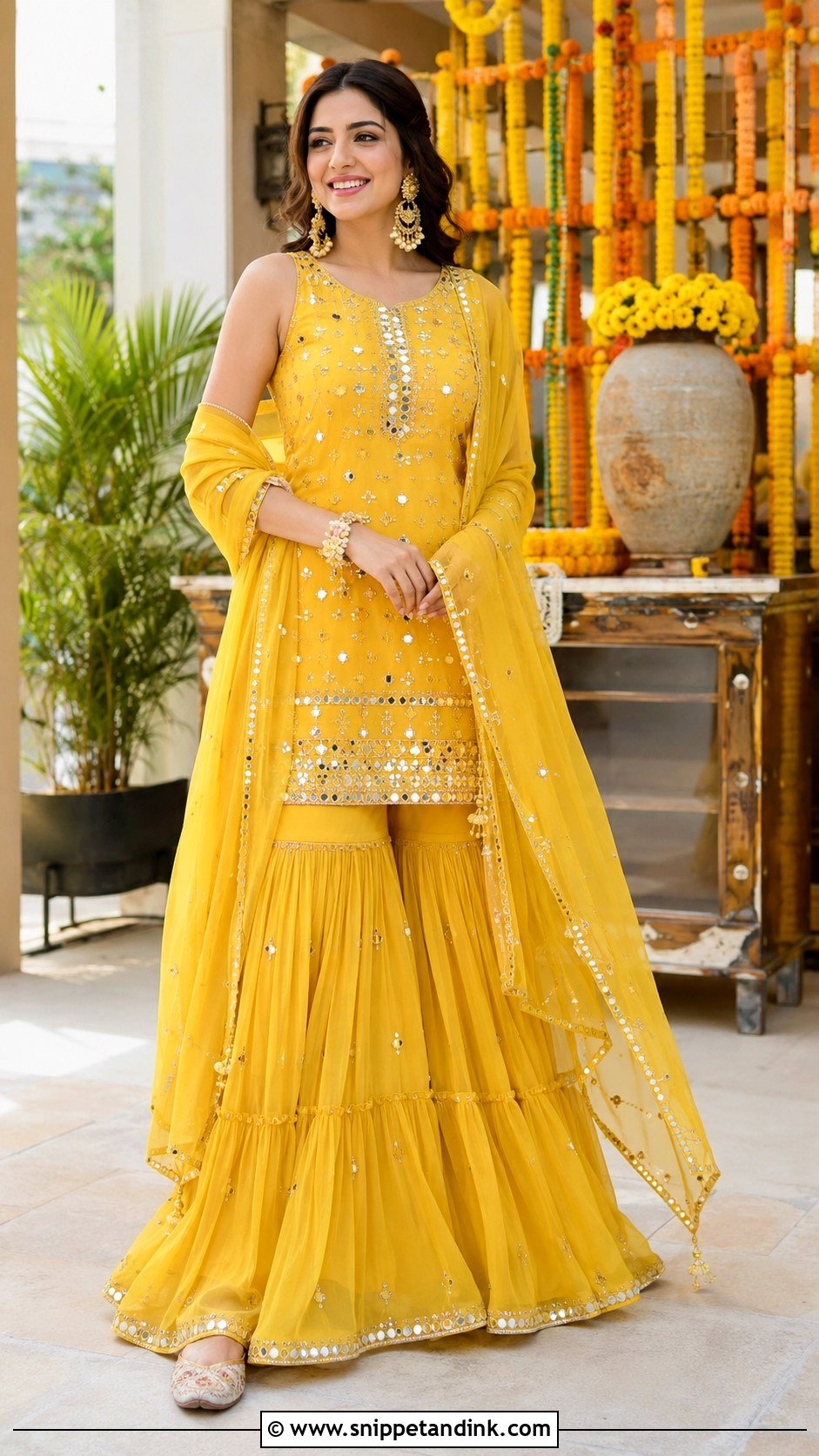
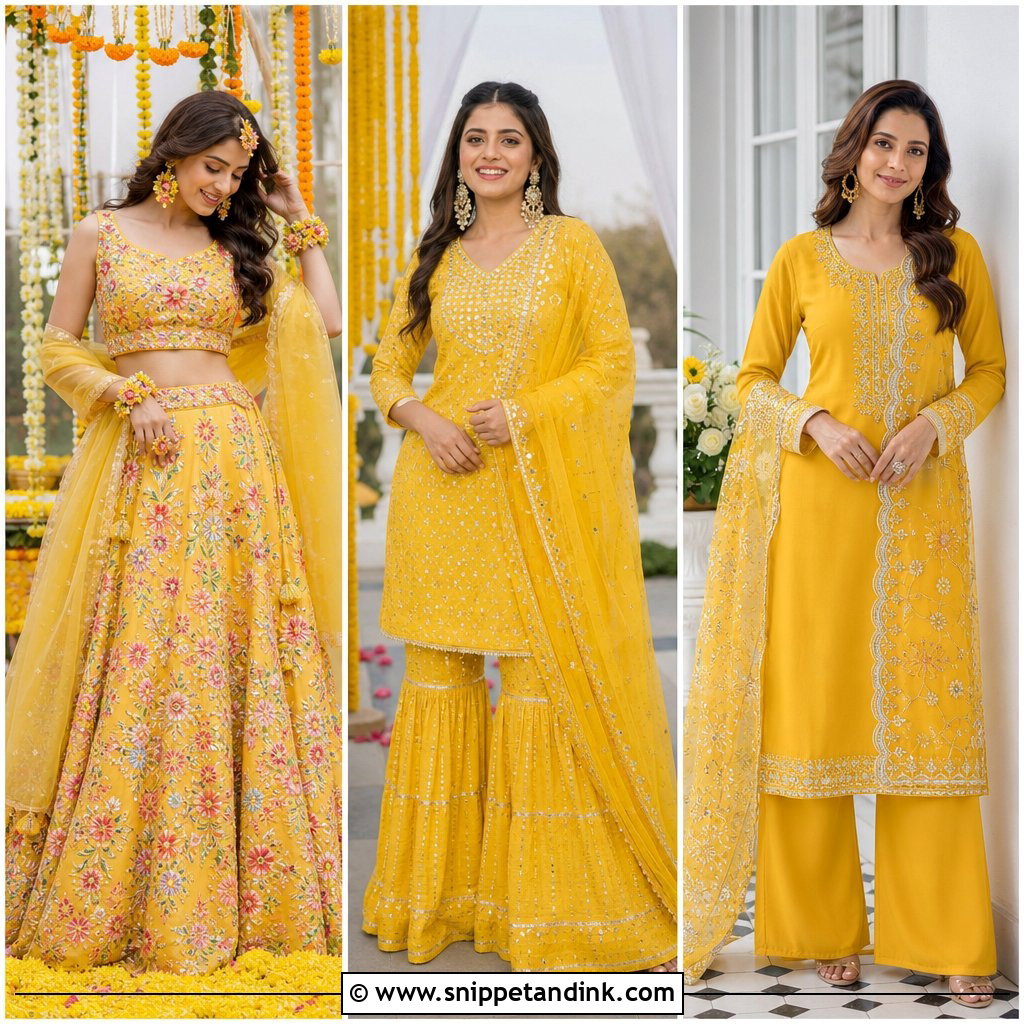
Shararas are the outfit I reach for when a sister tells me she’ll be dancing all day. A short kurti, wide flared sharara pants and a light dupatta give real freedom; sitting cross-legged is easy because the pants are so wide. Mirror work, gota borders or small embroidered flowers keep it festive without looking formal. Pin the dupatta at one shoulder or wear it across both arms. Floral chandbalis, a matching bracelet and flat juttis finish it. Brides can choose a brighter shade and heavier neckline, while sisters and friends can go lemon, marigold or pastel with fewer accessories.
6. Yellow And Orange Gharara Haldi Outfit
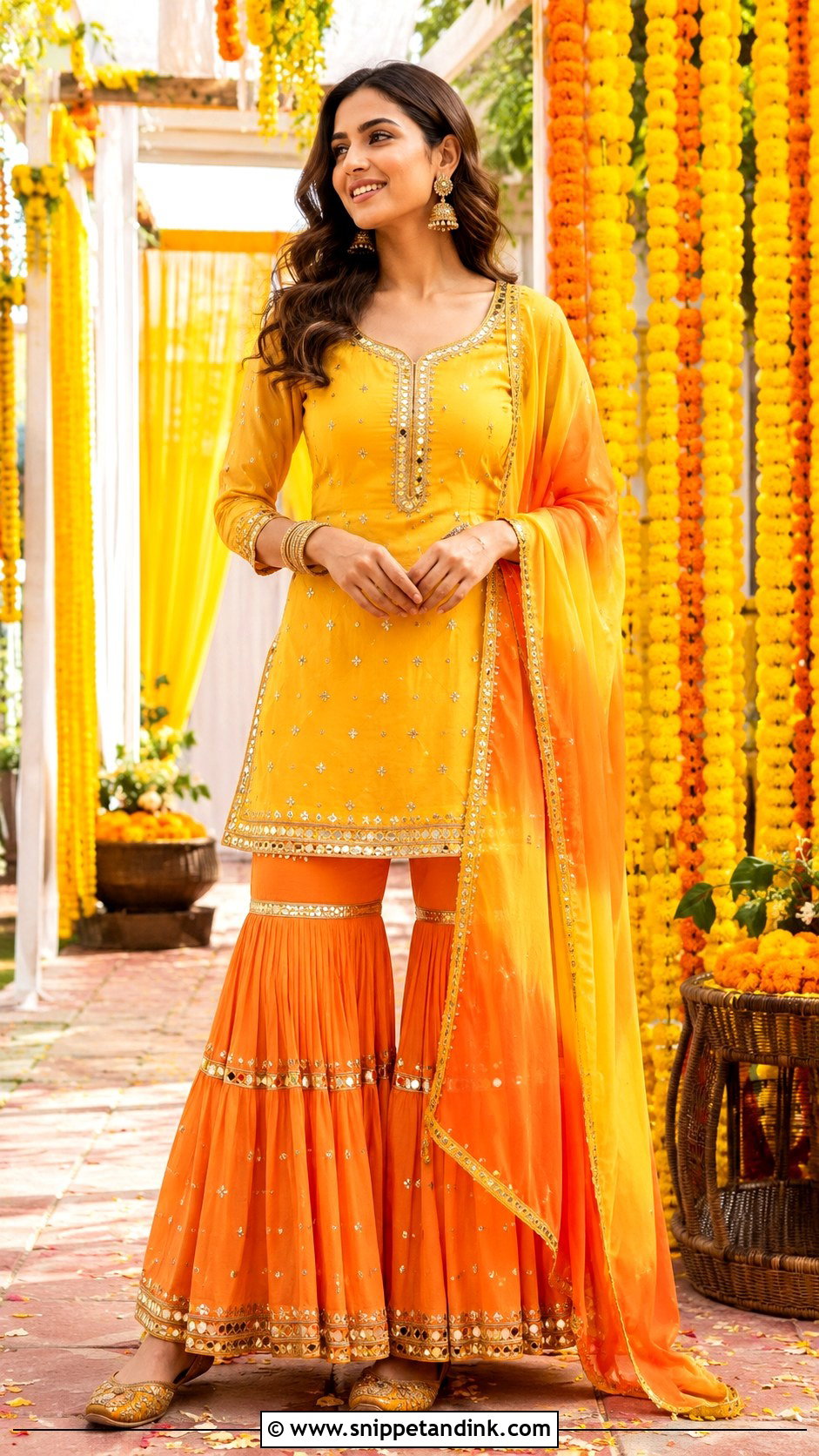
Yellow and orange together match the energy of a haldi better than any other pairing I know. A short yellow kurti with a gota neckline over orange gharara pants with structured knee panels, plus an ombre yellow-orange dupatta, looks rooted and bright against floral decor. Keep the kurti fitted, since the gharara already supplies the volume. Gold jhumkas, slim bangles and embroidered mojaris finish it. A sleek braid, low ponytail or pinned-back waves stay tidy. Guests should keep embroidery minimal so the bride’s outfit stays the focus.
7. Yellow Chikankari Kurta Palazzo Haldi Outfit
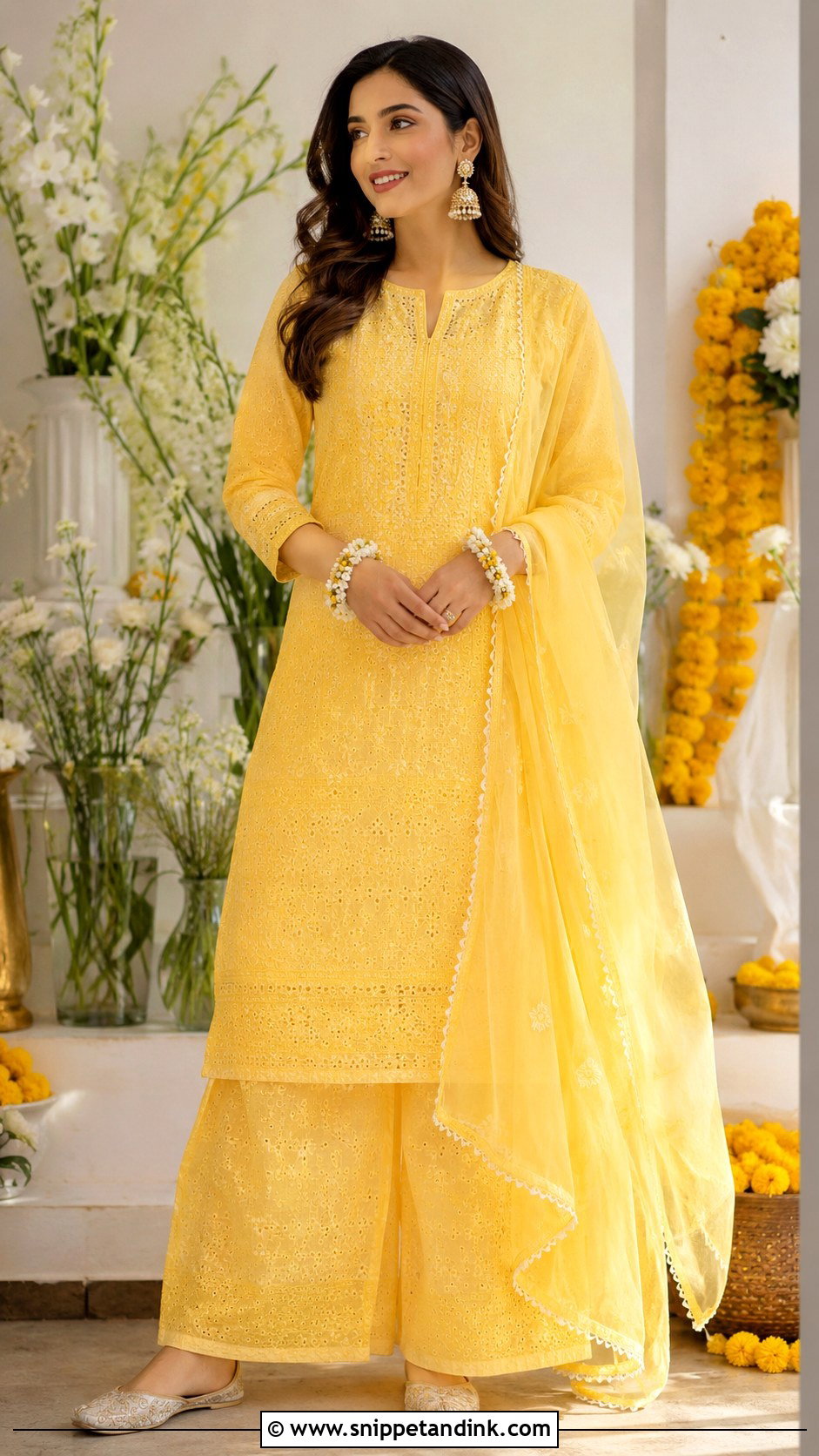
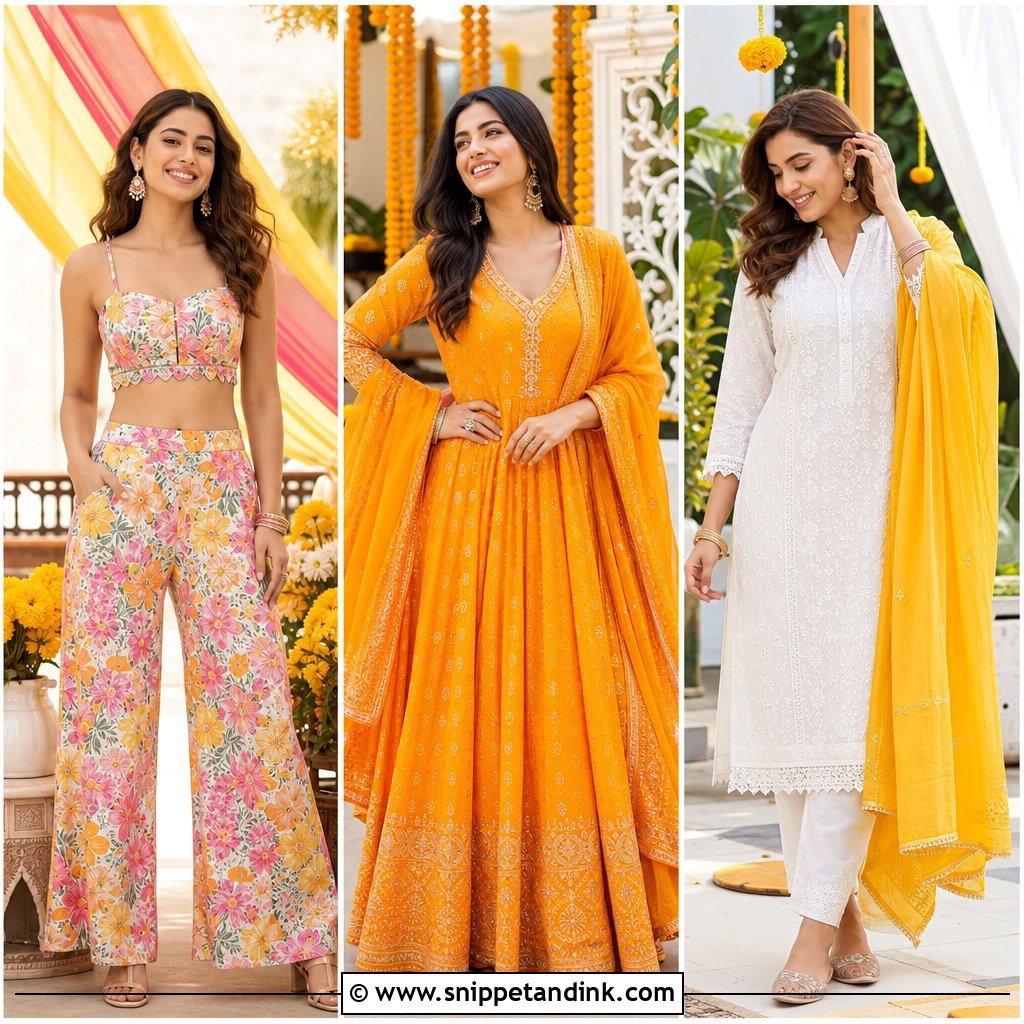
Chikankari is fine hand embroidery from Lucknow, traditionally done on cotton or georgette, and on a yellow kurta and palazzo set it looks airy rather than flashy. For an outdoor daytime haldi, cotton or a breathable blend is the cooler choice. A straight or softly flared kurta with wide palazzos and a light chiffon dupatta with a lace or gota edge complete it. Pearl jhumkas, floral bangles and ivory juttis suit the embroidery. Before buying, I hold the kurta up to the light: unlined chikankari can be sheer. Brides can layer a floral choker; guests let earrings do the work.
8. Yellow Anarkali Suit Haldi Outfit
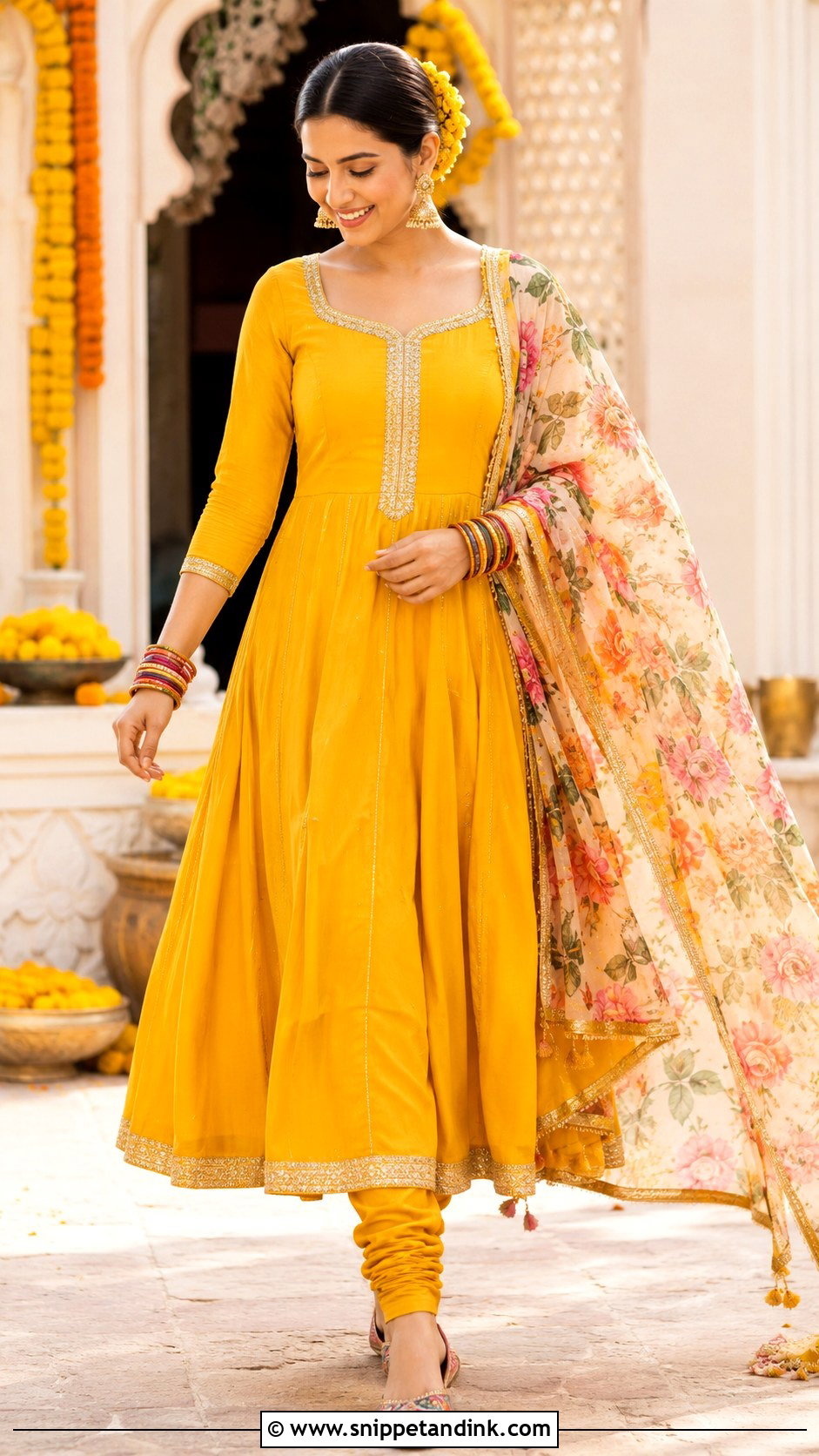
The swing of a flowing Anarkali is lovely in motion and easy to wear for hours. Choose calf or ankle length in sunshine yellow, marigold or mustard, with a fitted bodice and a gently flared skirt. Churidar pants and a contrast Bandhani or floral dupatta suit it, along with gold jhumkas, colorful bangles and pointed juttis. Brides can choose gota patti at the neckline; guests may prefer subtle threadwork. I’d skip any design with a trailing hem, which gets stepped on by relatives crowding around the bride. A center-parted bun with small flowers shows off the neckline.
9. Yellow Phulkari Salwar Suit Haldi Outfit
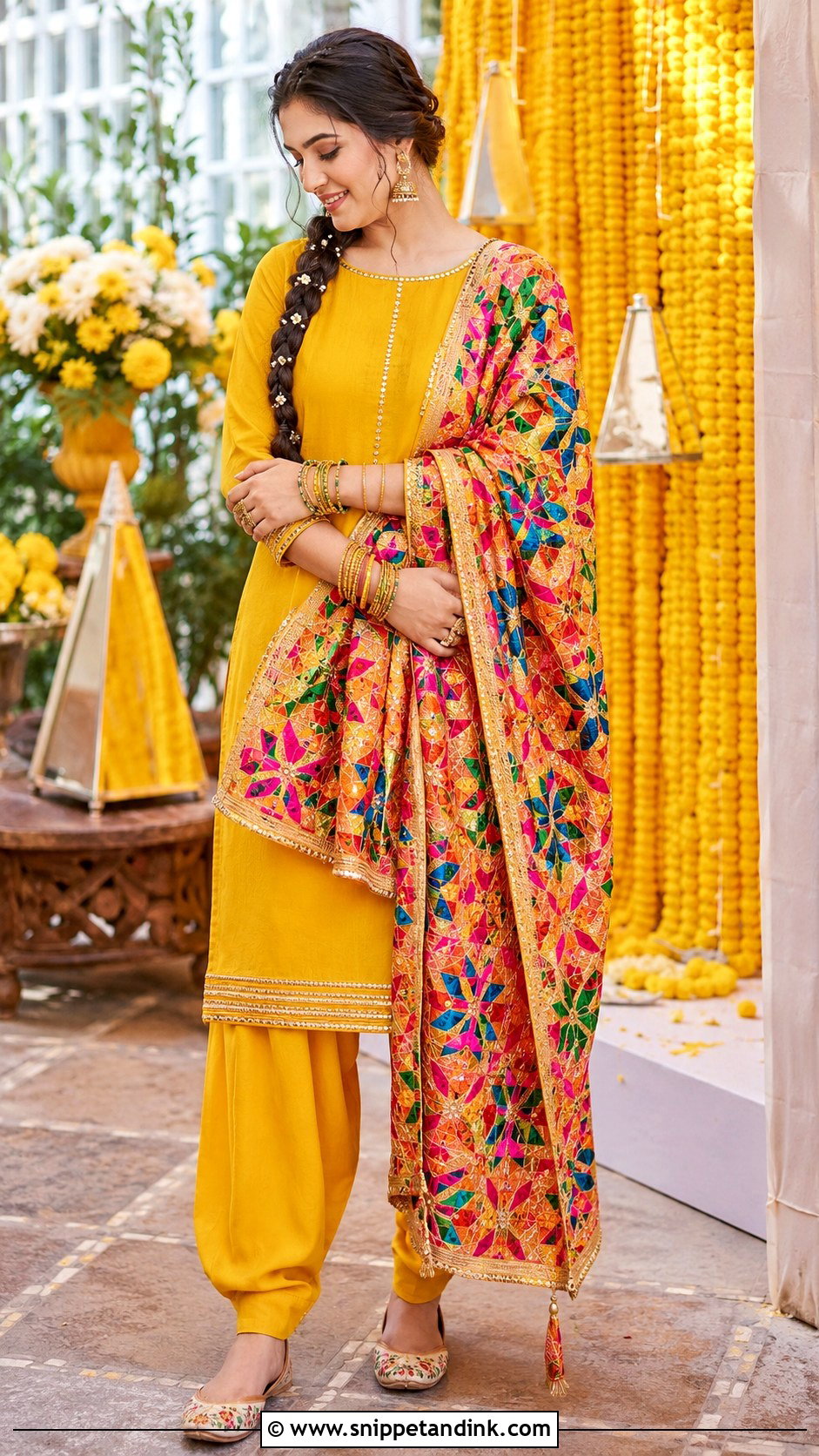
Phulkari means “flower work”, and the dense darning stitch on a yellow kameez with coordinating salwar pants and Phulkari dupatta gives a haldi outfit unmistakable Punjabi character. Pink, orange, green and red thread stands out against yellow. Because the dupatta carries all the decoration, keep the kurta light and comfortable. Jhumkas, glass bangles and Punjabi juttis suit it, with a paranda braid for a celebratory touch or a simple low braid. A real Phulkari dupatta is heavier than it looks, so I secure it firmly at the shoulder before any dancing starts, otherwise it slips.
10. Yellow Cotton Saree Haldi Outfit
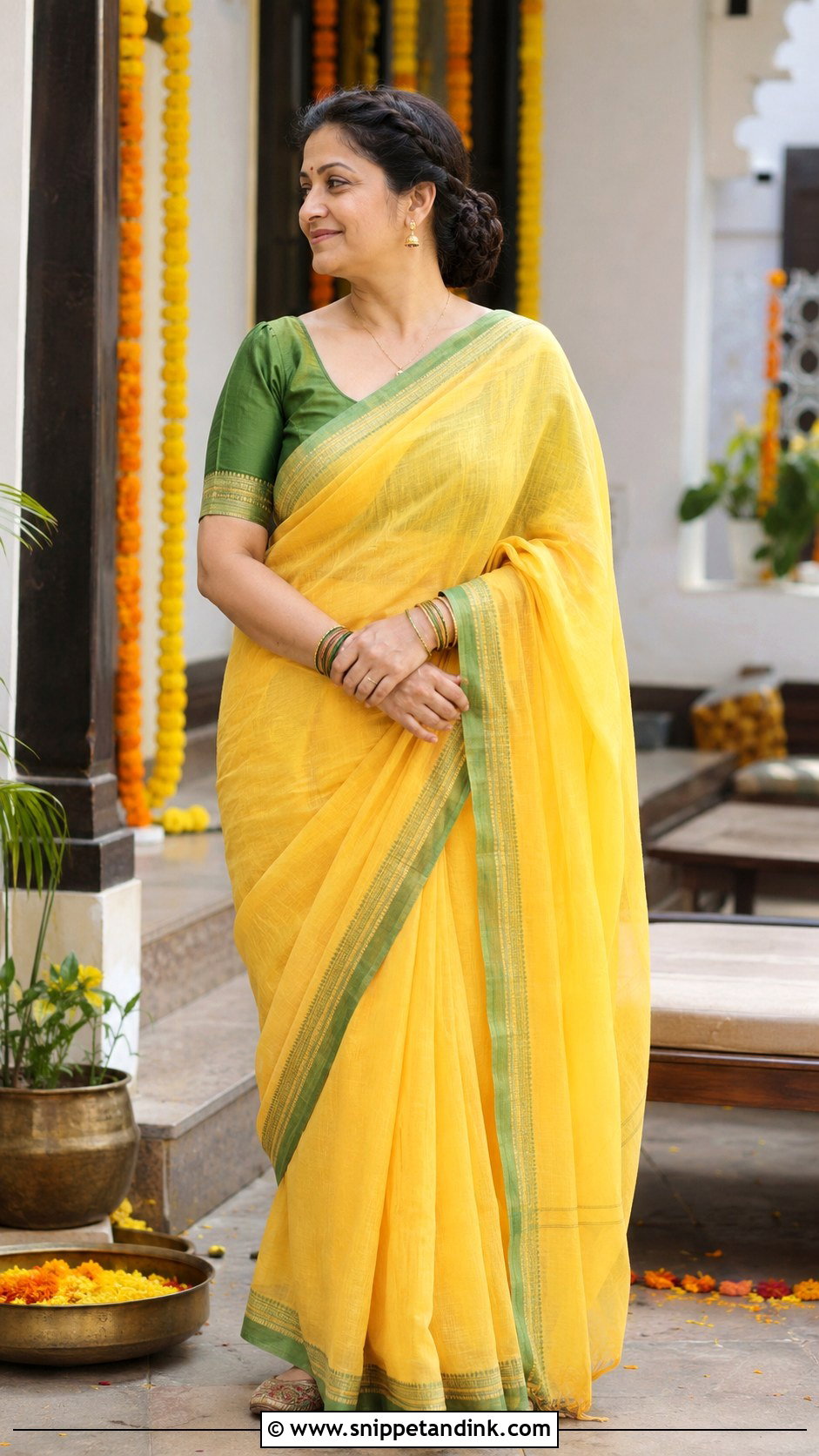
Cotton sarees are the most underrated haldi choice. Handloom cotton or Kota Doria, a fine open weave from Rajasthan, stays cool through a long outdoor morning and washes far more easily than silk. A simple woven border with a green, red or pink blouse looks traditional. Small gold earrings, glass bangles and flats finish it. The catch with cotton is that it creases and slips, so I starch it lightly and pin both the waist and the pallu if the celebration is lively. A braided bun or low knot handles the weather. It suits intimate ceremonies, older relatives and guests who like minimal decoration.
11. Yellow Leheriya Saree Haldi Outfit
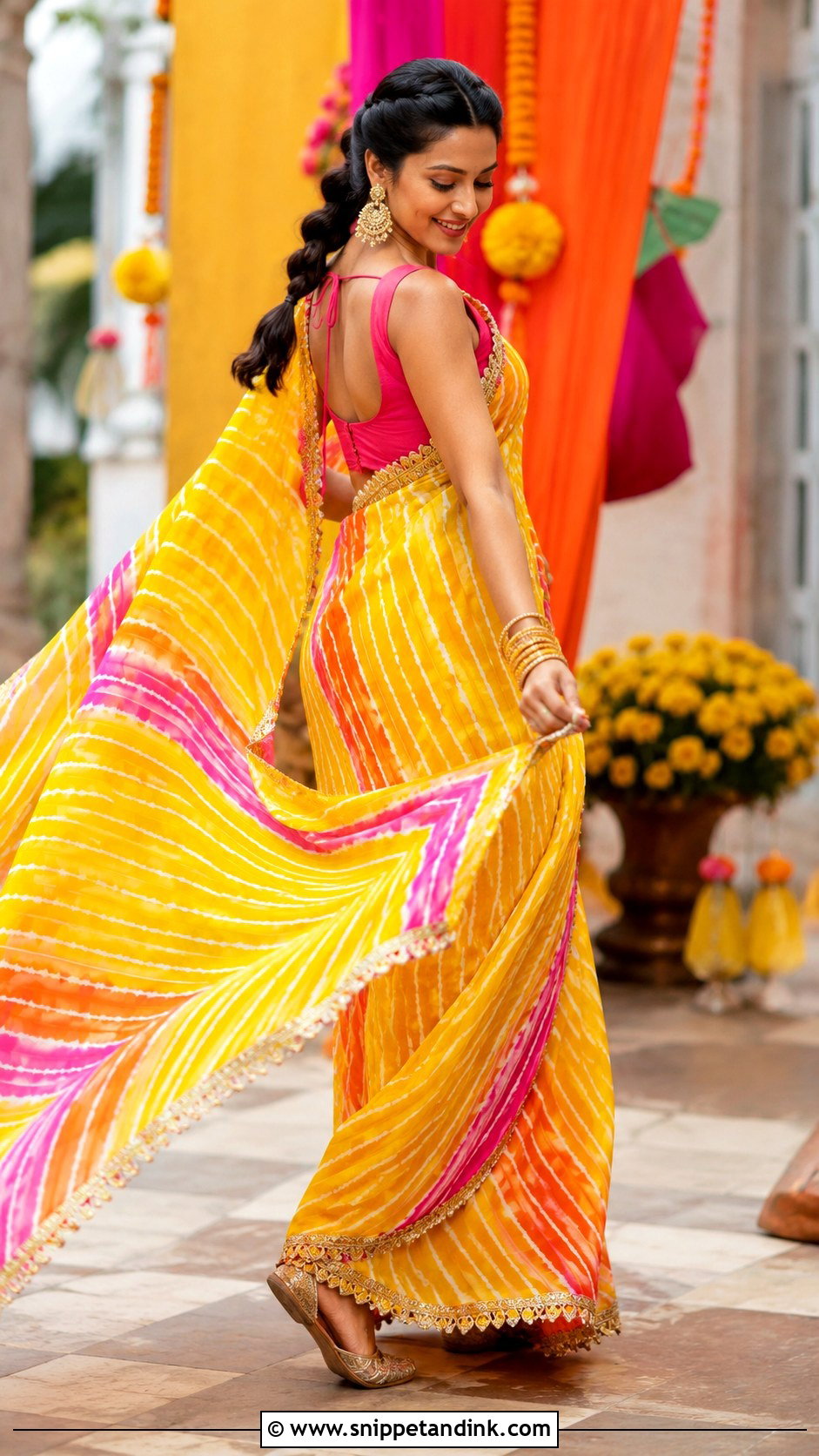
Leheriya, the Rajasthani tie-dye that forms diagonal waves, gives a saree a sense of movement even when you’re standing still. Choose yellow with orange, pink, green or white stripes, and a solid blouse in one of the accent colors. A gota border makes it festive without weight. Gold chandbalis, stacked bangles and mojaris complete it. Brides can add a floral choker and maang tikka; guests can leave the neckline bare. Leheriya is usually on fluid chiffon or georgette, so I use more pins than usual on the pallu. A sleek ponytail or braid keeps the focus on the pattern.
12. Yellow Patiala Suit Haldi Outfit
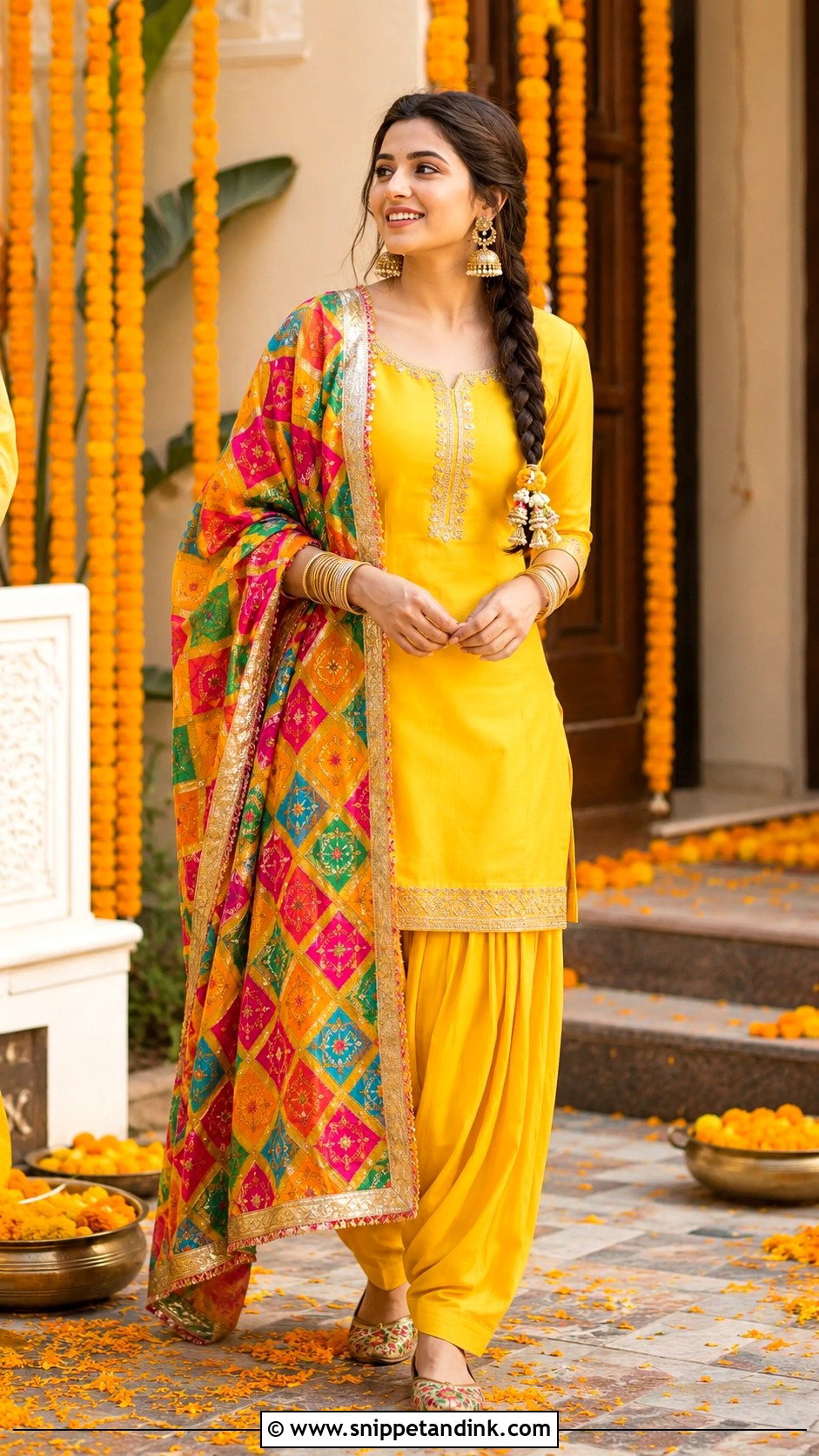
A yellow Patiala suit is built for a lively ceremony. The deep pleats of the Patiala salwar give huge freedom of movement, and a knee-length kameez with side slits lets those pleats fall properly. Add a contrast Phulkari, Bandhani or gota-trimmed dupatta, with orange, rani pink or green accents to sharpen the yellow. Punjabi juttis, jhumkas and colorful bangles finish it, with a long braid and a simple paranda. Pin the dupatta at the shoulder and the wrist. It suits bridesmaids, sisters, cousins and anyone planning to join every dance.
13. Yellow Kurta And Skirt Haldi Outfit
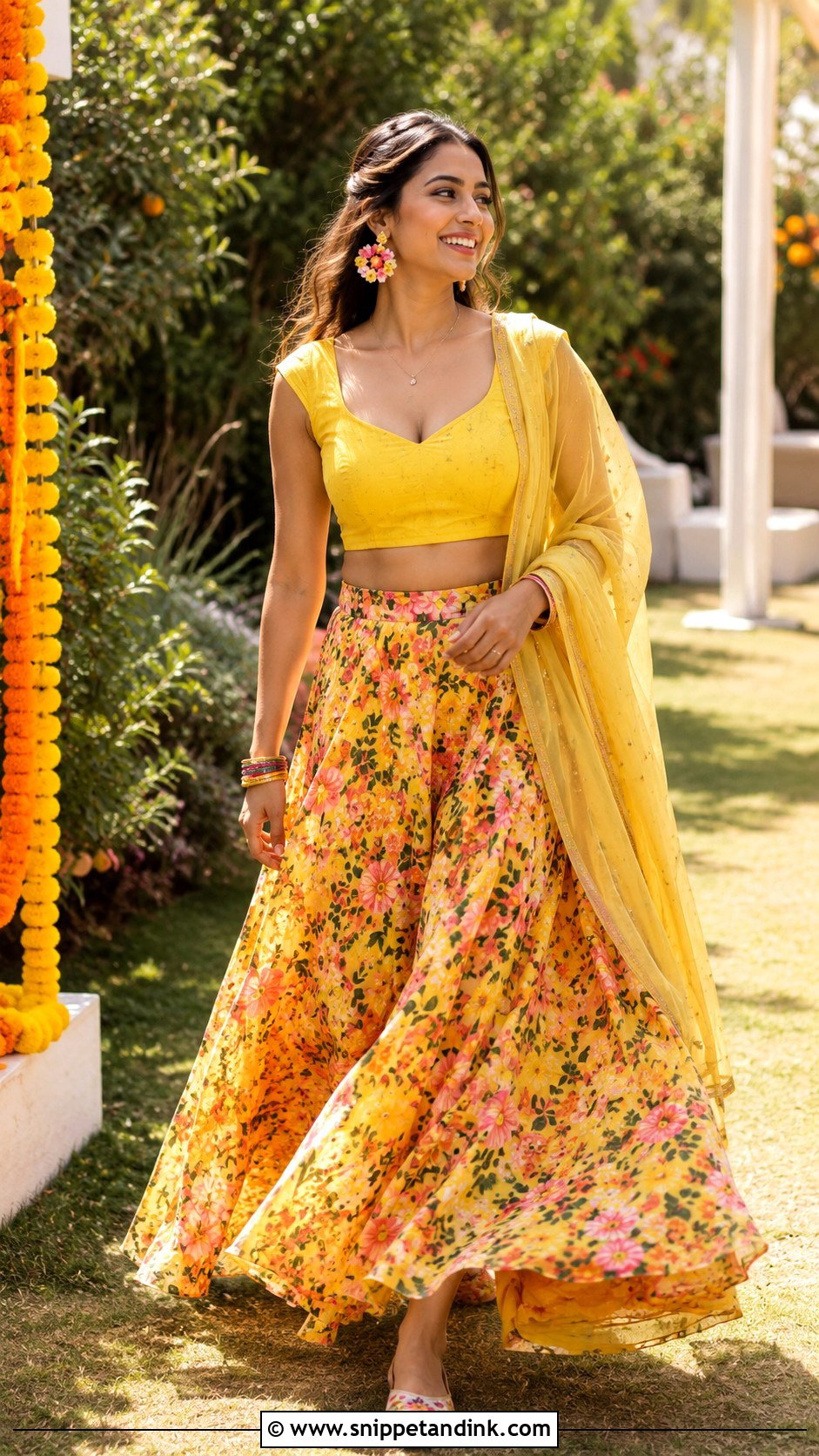
A kurta over a long flared skirt sits between a lehenga and a suit, and it’s one of the most forgiving shapes on this list. A short fitted kurta gives a younger line; a longer straight kurta gives more coverage. A floral skirt brings in pink, orange and green, while a solid yellow skirt reads more coordinated. Add a sheer dupatta with a narrow gota border, pinned over one shoulder. Floral earrings, gold bangles and flat juttis finish it. Brides can pick a fuller skirt and a statement necklace; guests can wear a lighter cotton version. A low bun or half-up style keeps it polished.
14. Yellow Peplum Dhoti Haldi Outfit
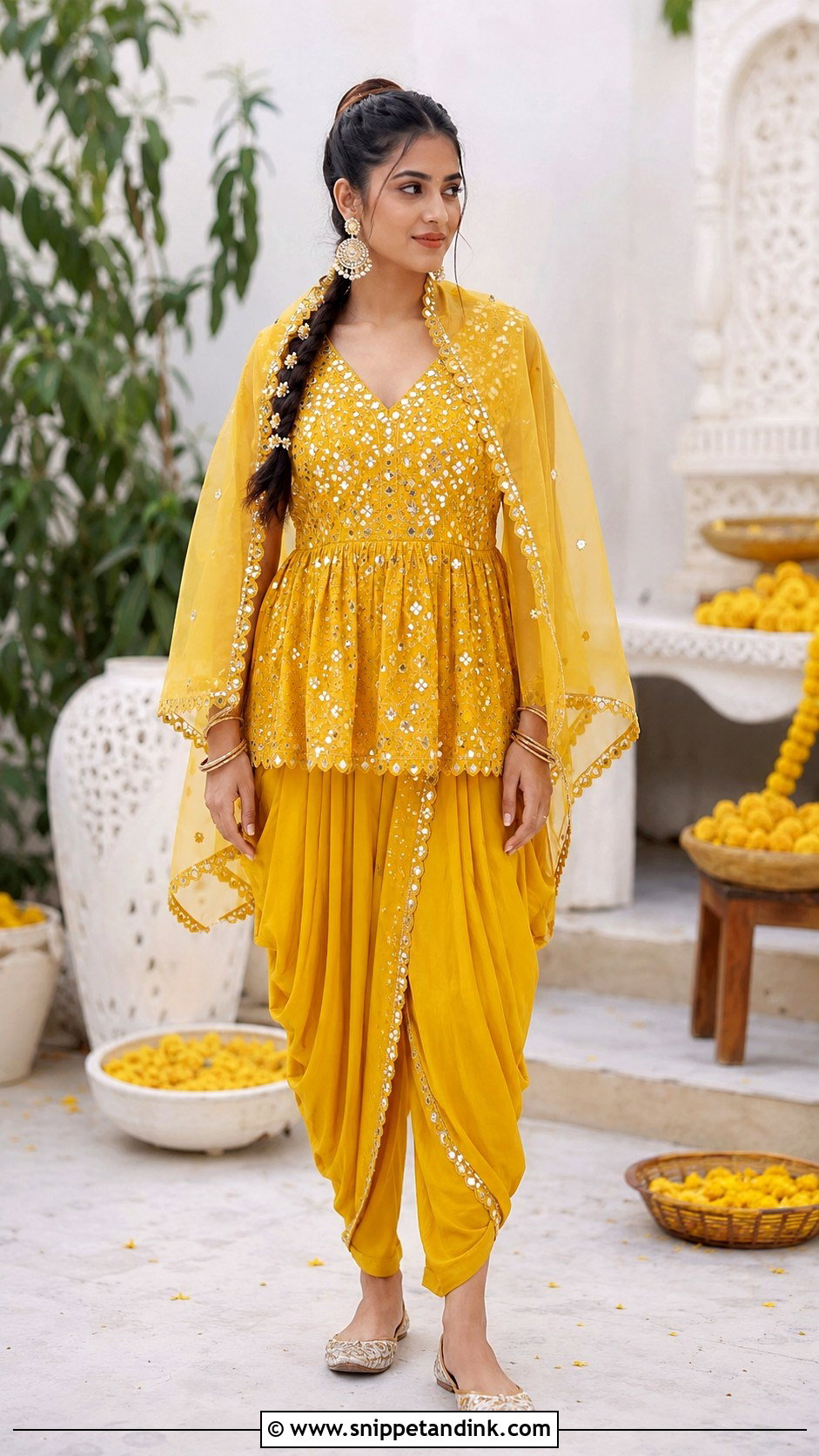
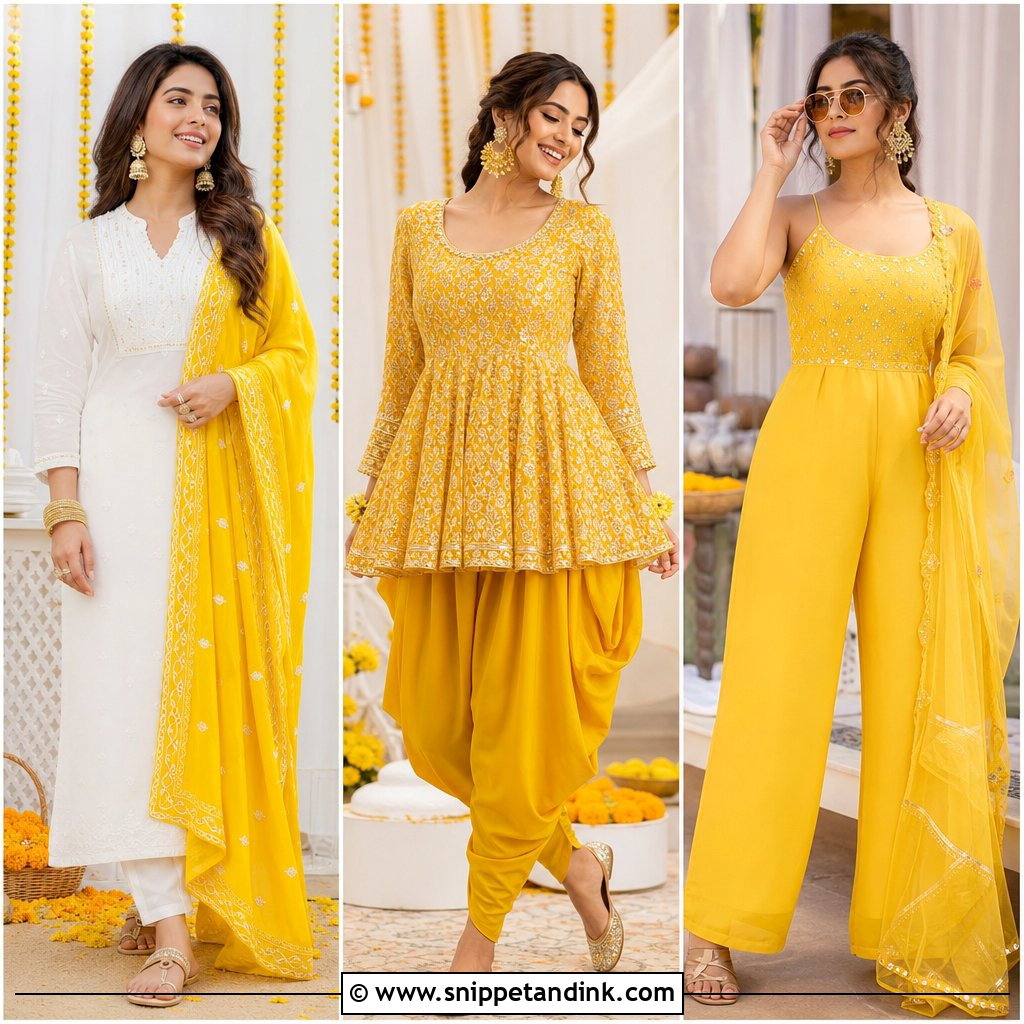
Peplum and dhoti pants give a traditional silhouette with a more modern cut. A yellow peplum top with mirror work, gota edging or small floral embroidery over coordinating dhoti pants leaves lots of room to sit and dance. A short organza dupatta over one shoulder keeps it festive without hiding the waist. Statement earrings, slim bangles and embroidered juttis or Kolhapuris suit it. Brides can add a floral belt or choker; guests keep it simpler. I check dhoti hems at fittings, because a long, droopy drape catches on outdoor steps and flower stands. A high braid or sleek ponytail shows the neckline.
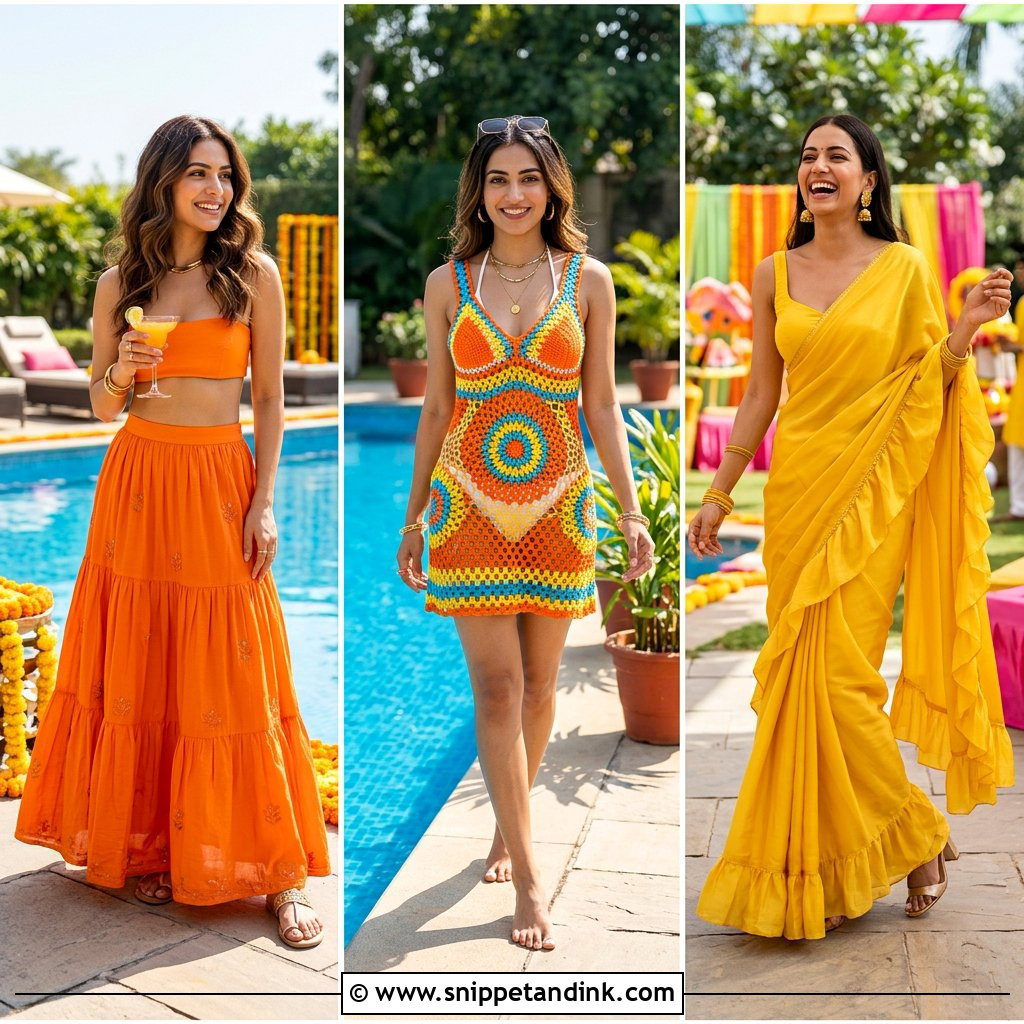
15. Yellow Half Saree Haldi Outfit
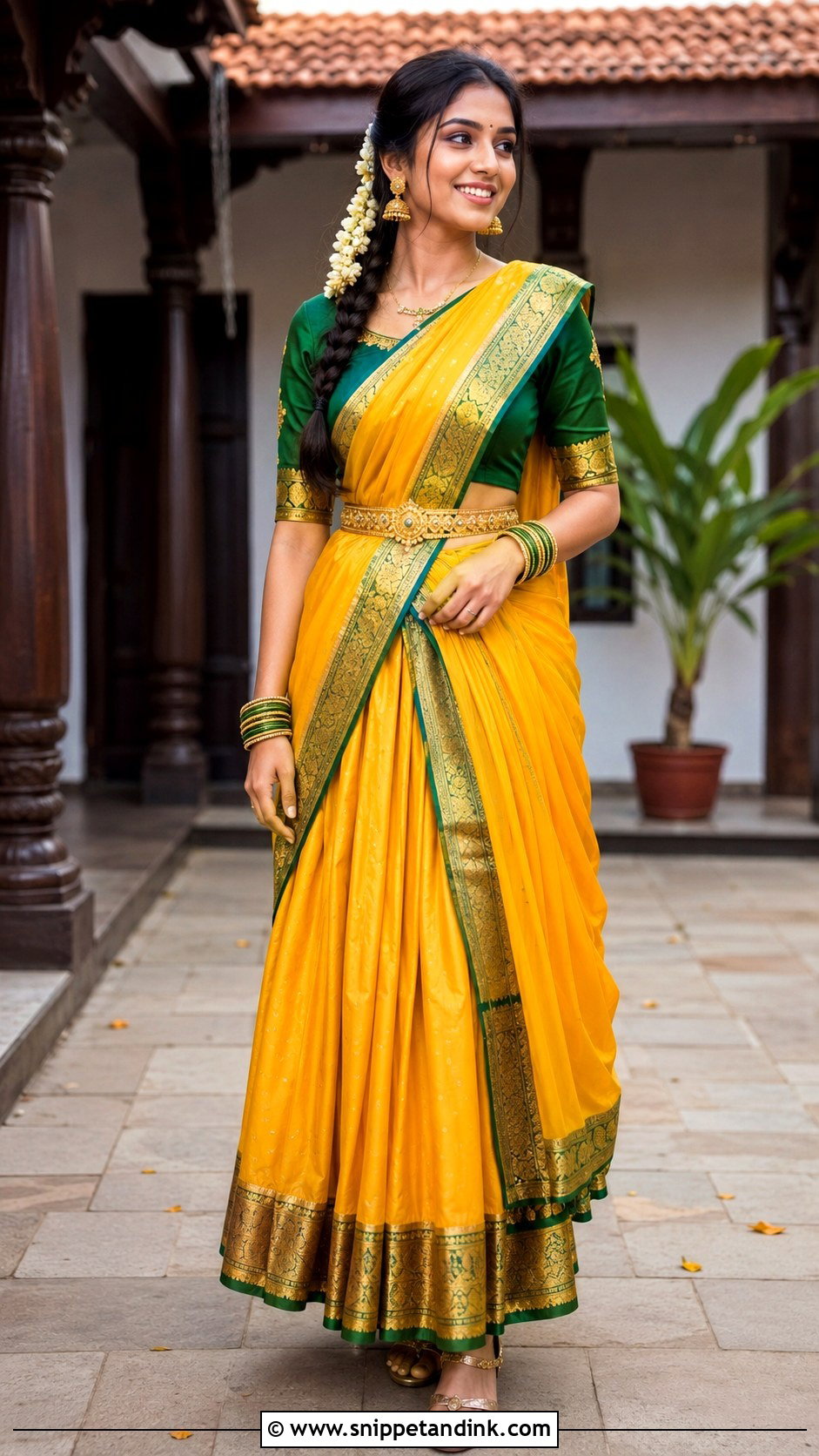
The half saree, worn across South India as a coming-of-age garment, gives the look of a drape with the security of a separate skirt. A flared yellow skirt, a fitted blouse in green, pink, orange or yellow, and a light dupatta draped across the front and over one shoulder form the classic shape. A woven border or modest zari trim adds festivity. Temple-inspired earrings, bangles, anklets and flat sandals suit it, with a long braid and jasmine or yellow flowers. Brides can choose richer silk; bridesmaids are cooler in cotton-silk blends, which are also easier to clean after the paste.
16. Yellow Nauvari Saree Haldi Outfit
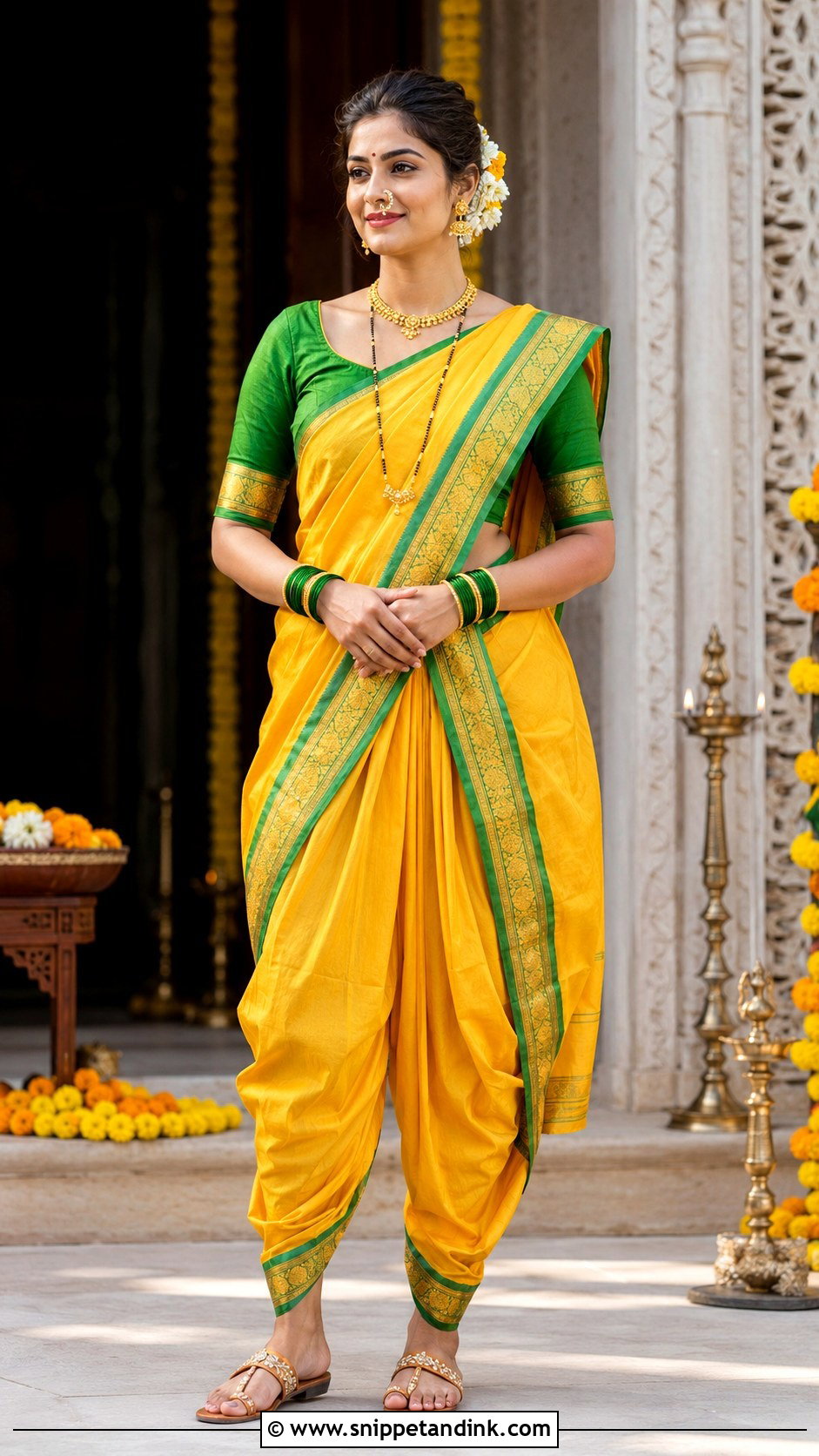
A yellow Nauvari saree is the Maharashtrian nine-yard drape, tucked between the legs like a dhoti, and it’s one of the most mobile traditional garments there is. Choose light cotton silk with a green, red or purple woven border and a fitted contrast blouse. A nath, gold earrings, green bangles and a small necklace are the traditional pairing, with flat sandals and a center-parted bun with flowers. If you’ve never worn a Nauvari, book someone experienced to drape it or practice twice beforehand. Ready-stitched Nauvaris exist too, and I’d honestly suggest one for a guest wearing it for the first time.
17. Yellow Organza Saree Haldi Outfit
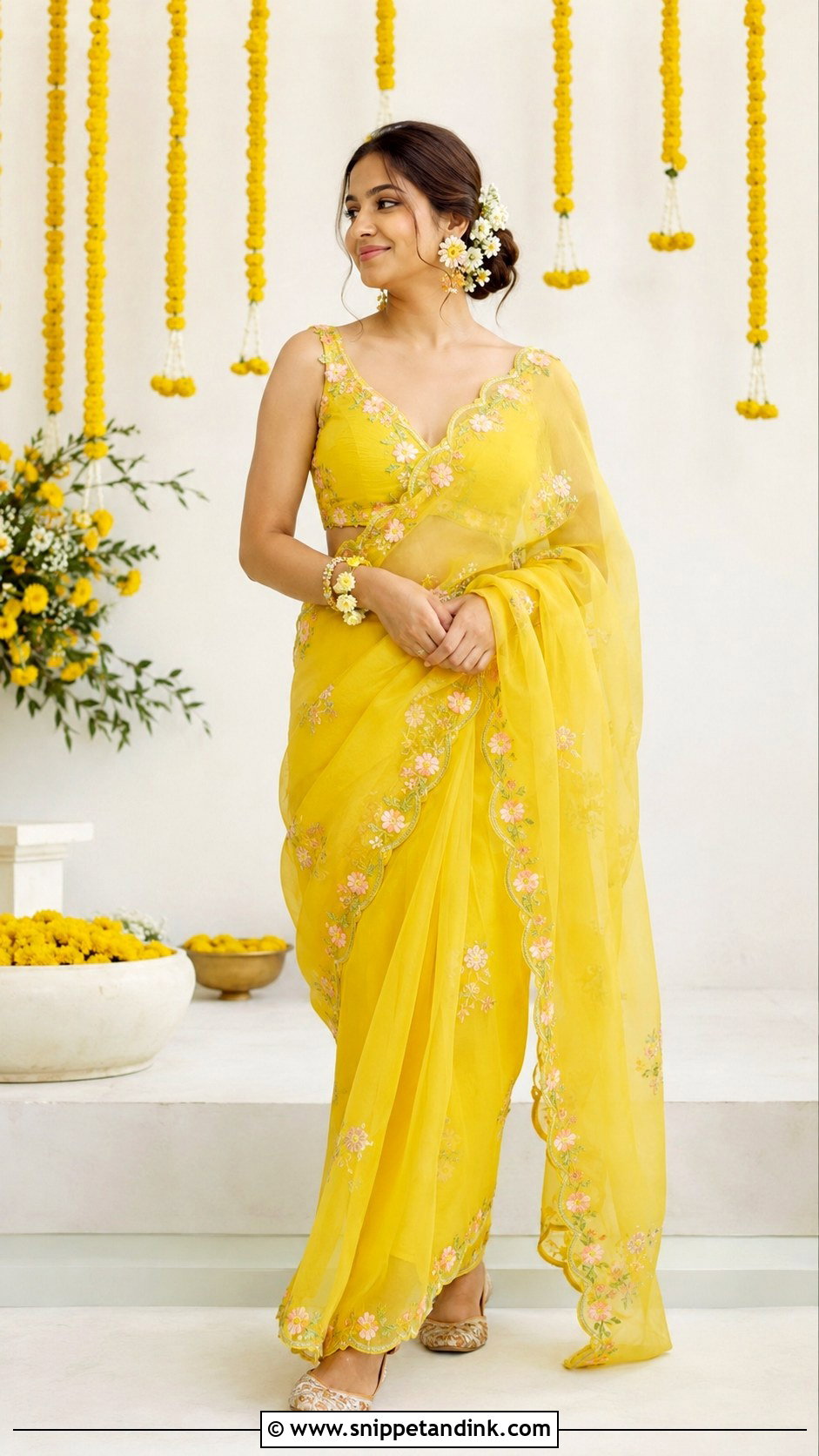
Organza is crisp and sheer, so a yellow organza saree looks light in photos but behaves stiffly. Look for embroidered flowers, scalloped edging or a narrow gota border. A fitted yellow blouse gives a monochrome look; pink or green brings contrast. Because organza holds its shape, I keep the pleats narrow and structured and secure the pallu at the shoulder, otherwise the fabric fans out and adds width. Avoid layering extra underskirts. Floral earrings, delicate bangles and low heels or juttis finish it. Brides can add a floral choker while guests stick to pearl studs or small jhumkas.
18. Ivory Lehenga With Yellow Dupatta Haldi Outfit
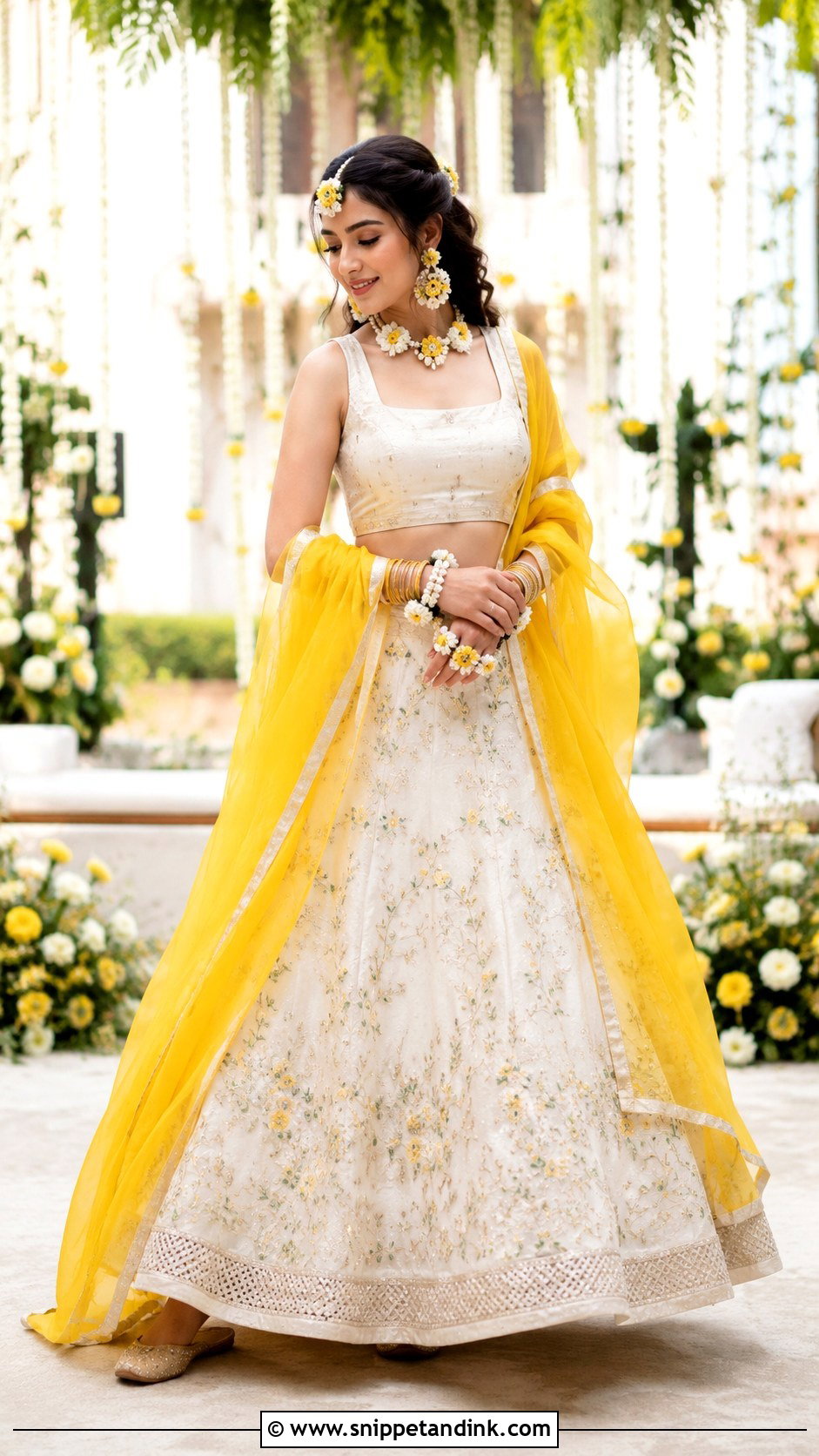
Ivory with a yellow dupatta suits anyone who wants to step away from head-to-toe yellow. An ivory lehenga with small yellow flowers, subtle threadwork or a slim gold border, an ivory blouse and a bright yellow dupatta keep the occasion clear. Floral jewelry, pearl details and gold bangles suit the soft palette, with neutral juttis that blend into the skirt. Brides can drape the dupatta over both shoulders for a more ceremonial look; guests carry it on one side. A floral bun or loose braid completes it. Ivory will show turmeric, especially on the skirt, so go in expecting marks.
19. Yellow Floral Lehenga Haldi Outfit
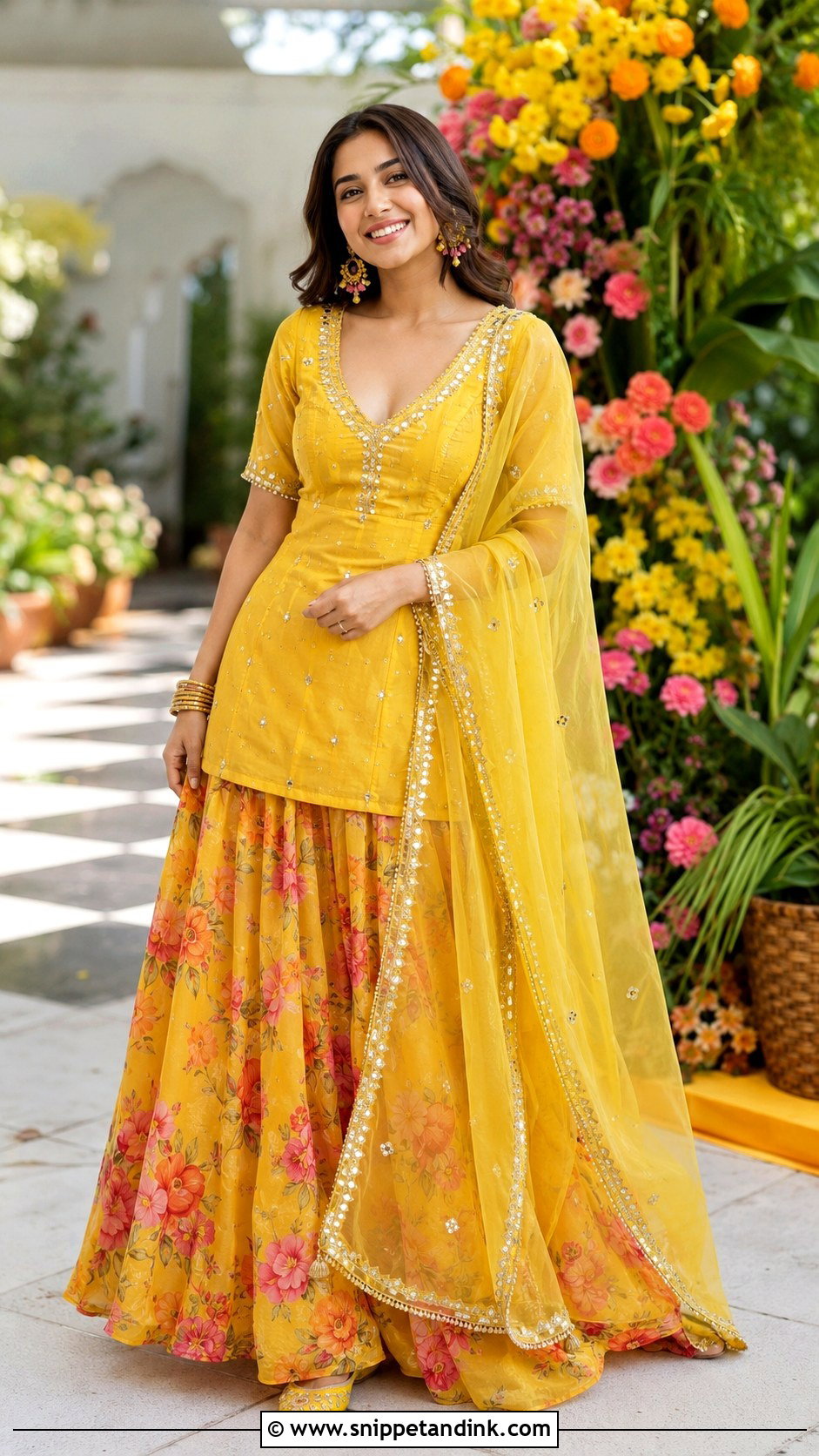
Prints carry a floral lehenga, so you can skip heavy embroidery entirely. Choose a light skirt printed with pink, orange, white or green flowers and a solid yellow blouse to calm it, or a matching floral blouse for a bolder look. A plain chiffon dupatta keeps it from getting busy. Floral earrings, a slim necklace, colorful bangles and comfortable juttis finish it. Brides can go wider in the skirt with a structured blouse; guests should pick a simpler cut. Soft waves, a braid or a flower-decorated bun all work. I keep makeup fresh so the print stays the focus.

20. Yellow Handloom Kurta Set Haldi Outfit
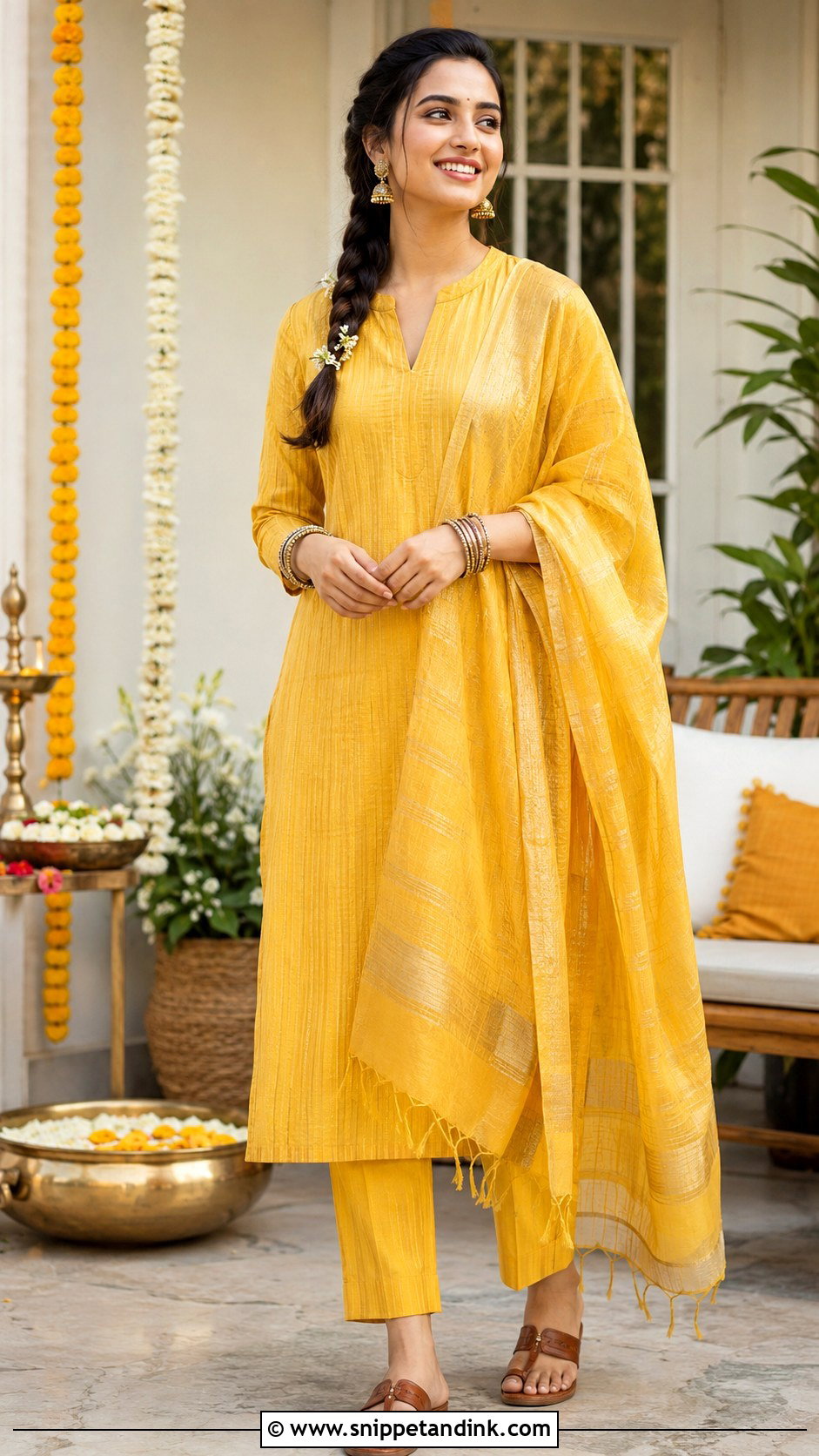
A handloom kurta set proves that simple can still look festive, provided the fabric is good. A yellow handloom kurta, straight pants and a woven cotton or Chanderi dupatta make the base. Look for fabric-covered buttons, a contrast border or fine thread embroidery. Brown Kolhapuris, small jhumkas and mixed-metal bangles give an understated traditional finish. It suits guests of every age at home ceremonies and relaxed outdoor gatherings. A bride who prefers minimal clothing can dress it up with floral jewelry and a more decorative dupatta. Handloom softens with every wash, so it often feels better on the second wearing than the first.
Should You Wear Your Mother’s Saree to the Haldi?
Many brides want an heirloom saree at the haldi, and I love the idea, with some caution. Silk that has been folded the same way for decades weakens along those creases. Zari can tarnish, and old dye may run when wet. I inspect any heirloom saree against a window before a client commits to it.
- Look for thinning or tiny splits along the old fold lines. Those are the places that tear when you sit and stand.
- Rub a damp white cloth on a hidden corner. If color comes off, the saree may bleed when splashed.
- Have the fall and pico redone by a tailor, since old stitching breaks easily.
- Air it out in shade for a day before wearing to clear any storage smell.
If the saree is fragile, wear it for the welcome, the elders’ blessings and the posed portraits, then change before the paste is applied. Afterward, store it wrapped in soft muslin rather than plastic and refold it along different lines every few months so the same creases don’t keep wearing.
Tradition You Can Sit, Dance and Get Messy In
Whatever you choose, it should let you sit on the floor, walk across a courtyard and dance without a second thought. Silk sarees, regional drapes, light lehengas and simple kurta sets all have a place, for brides, relatives and guests alike. Yellow is the natural anchor, and orange, pink, green, ivory and florals add personality. I’d prioritize breathable fabric, sensible embellishment, secure draping and comfortable shoes over anything else. Add floral jewelry, bangles or fresh flowers without crowding the outfit. Above all, wear something you won’t worry about staining, because the haldi is meant to be enjoyed up close.
You'll Like These Ideas:








Leave a Reply