
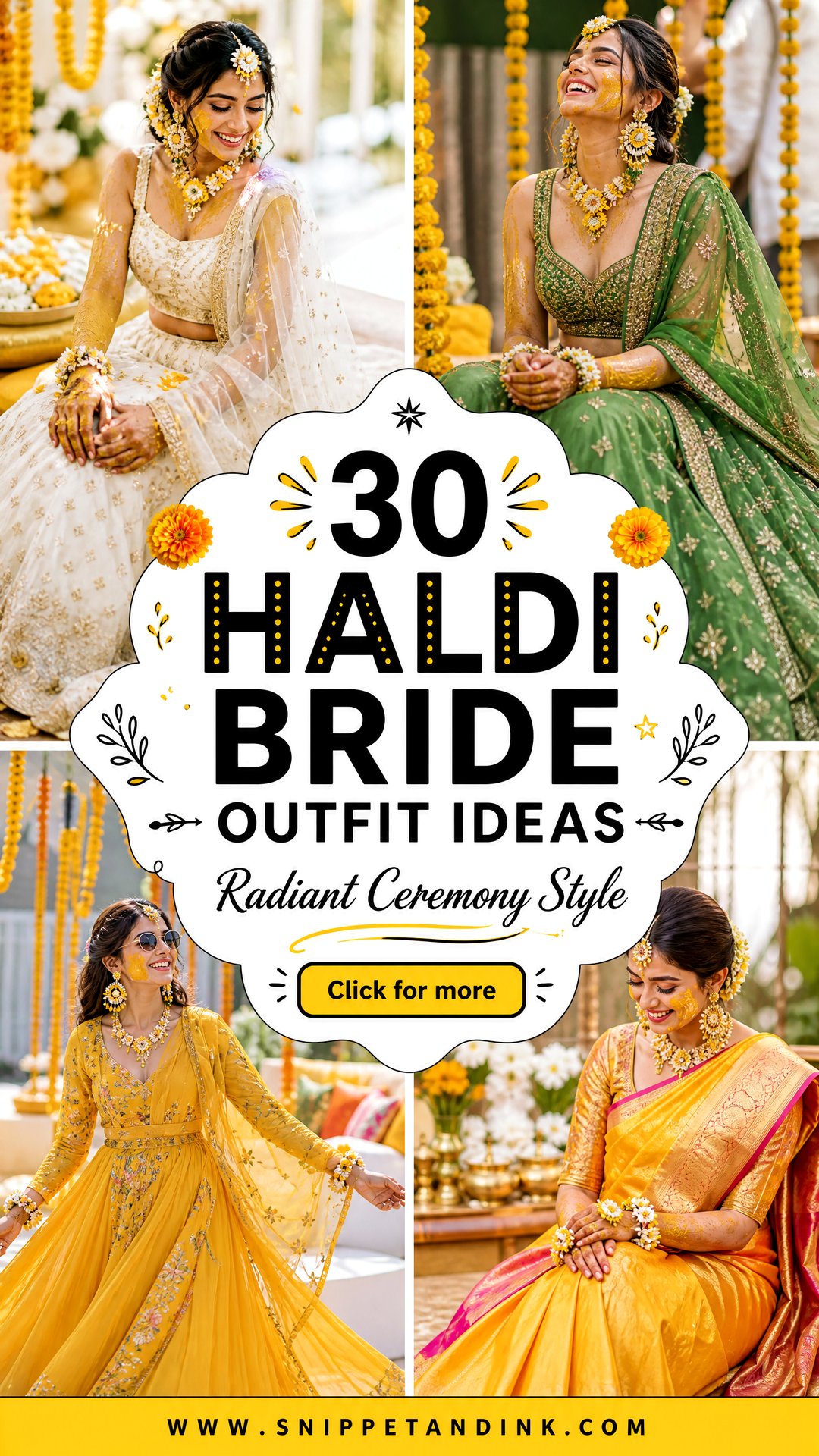
A haldi outfit has a job most bridal wear doesn’t: it has to survive turmeric paste, a lot of hugging, sitting on a low stool and dancing, then still look bright in daylight photos. So when I style a bride for haldi, I start with fabric and fit and only then talk color. Lighter lehengas, sharara sets, printed sarees, mirror work, organza dupattas and fresh flower jewelry all suit the ceremony, in marigold, ivory, lime, peach and rani pink. Here are thirty looks, from very traditional to quite modern, with what I’d watch for in each.
Will the Turmeric Come Out? Fabrics That Forgive Haldi Paste
Every bride asks me this, and the honest answer depends on the fabric. Haldi paste is usually turmeric mixed with gram flour, milk, rosewater or oil, so it can leave both a yellow dye mark and an oily one.
- Cotton, cotton silk and linen blends are the most forgiving and can usually be washed at home.
- Synthetic georgette and chiffon hold the yellow more stubbornly but often fade with repeated washing.
- Pure silk and heavy zari or gota work are the riskiest. Dense metallic thread can’t be scrubbed, and silk may stain permanently.
- White and pale pastels show everything. Yellow, orange, mustard and busy prints hide the most.
If paste lands on something you care about, scrape off the excess, rinse from the back with cold water and use a mild detergent. Hot water and hard rubbing push the color deeper. Drying the washed piece in sunlight helps too, because the yellow pigment in turmeric fades with light.
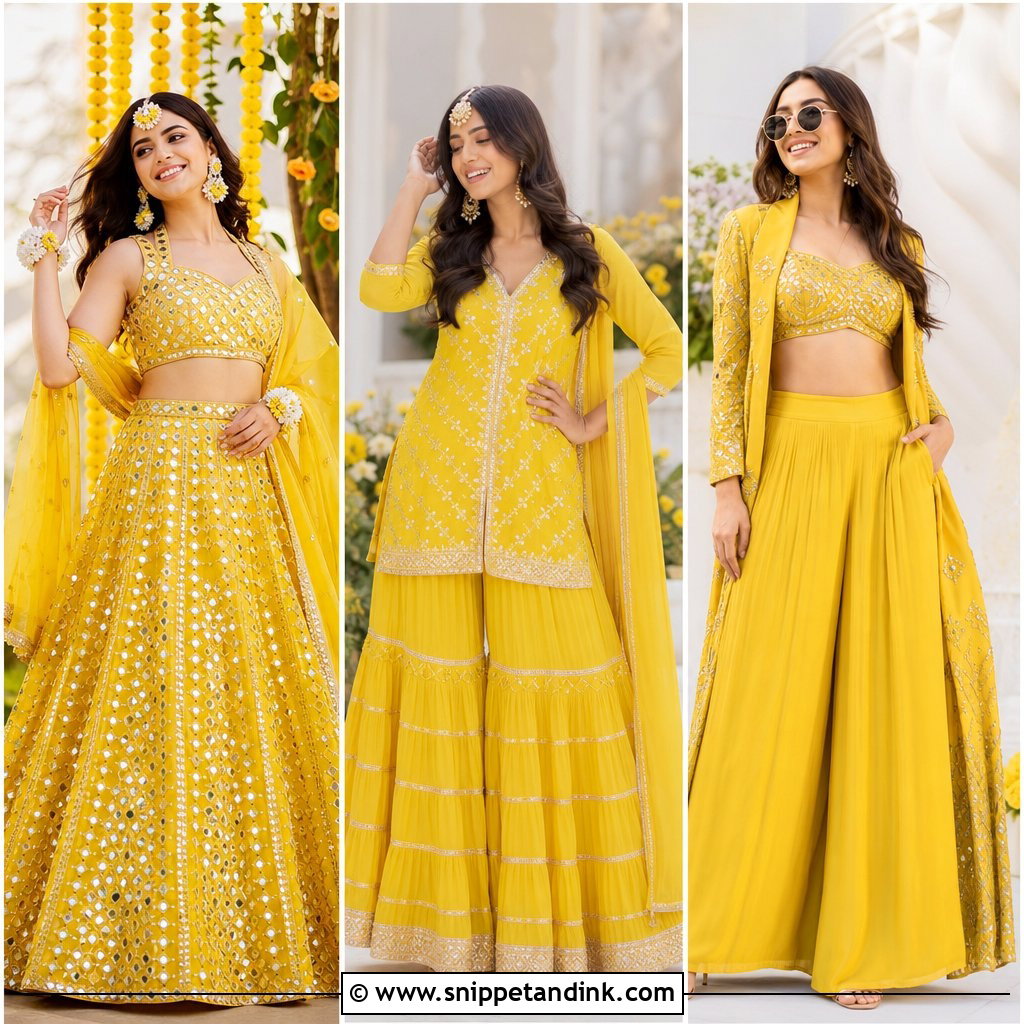
1. Yellow Haldi Bride Lehenga
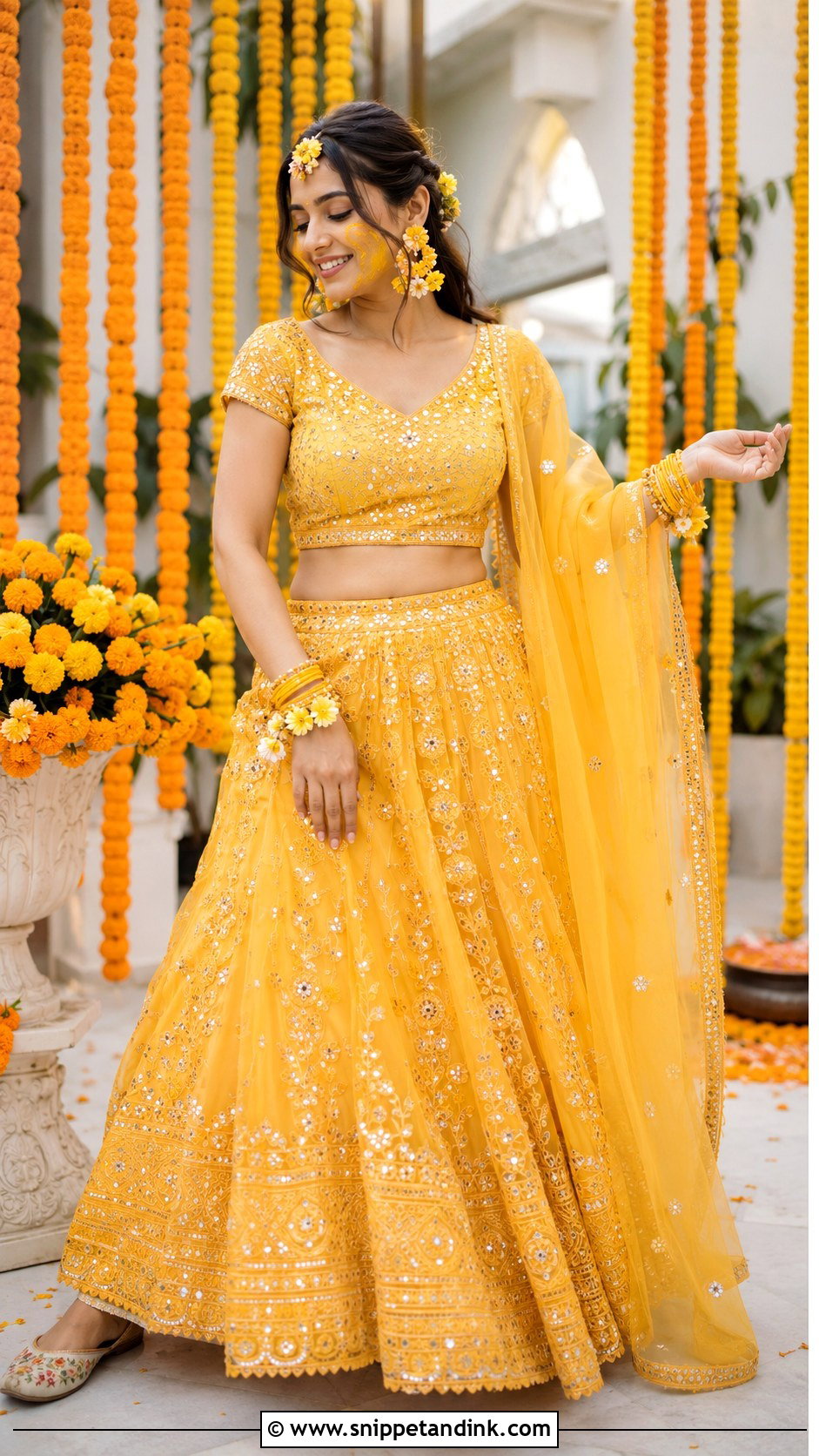
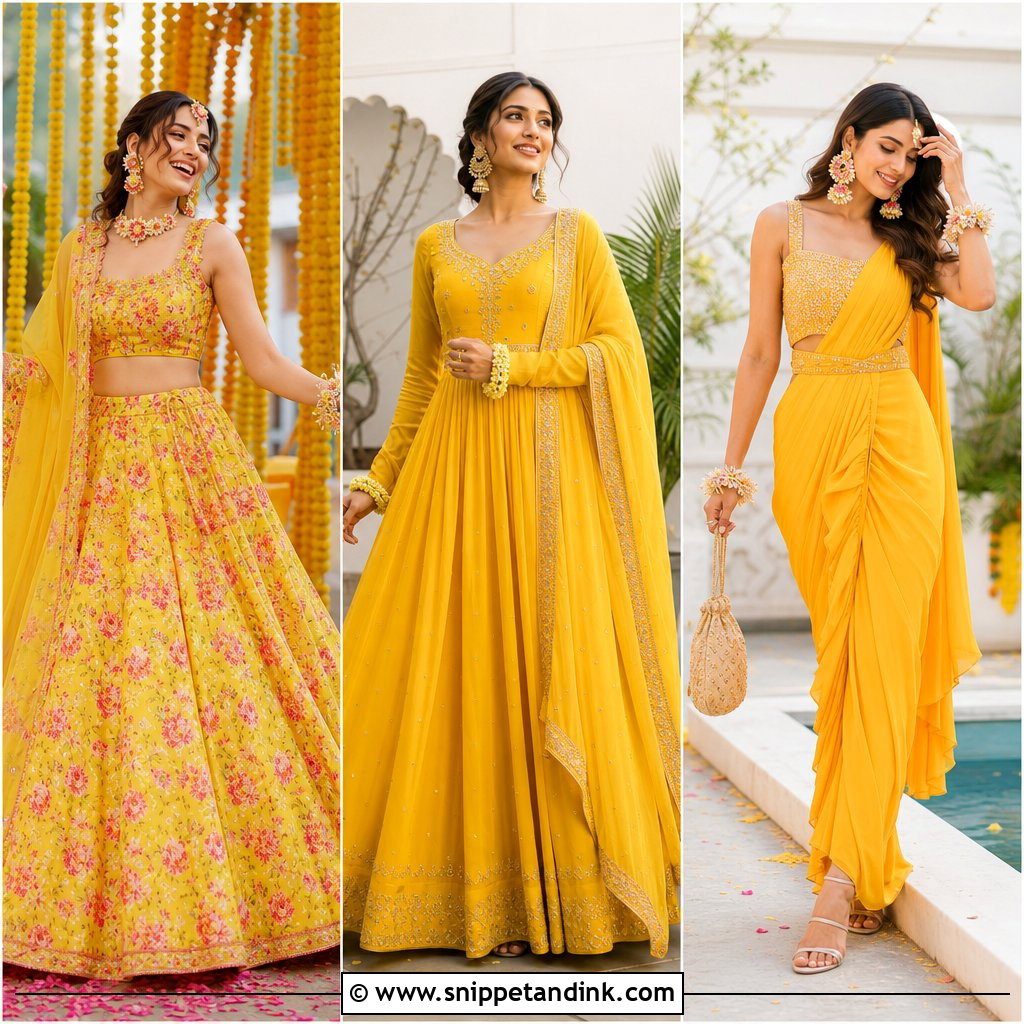
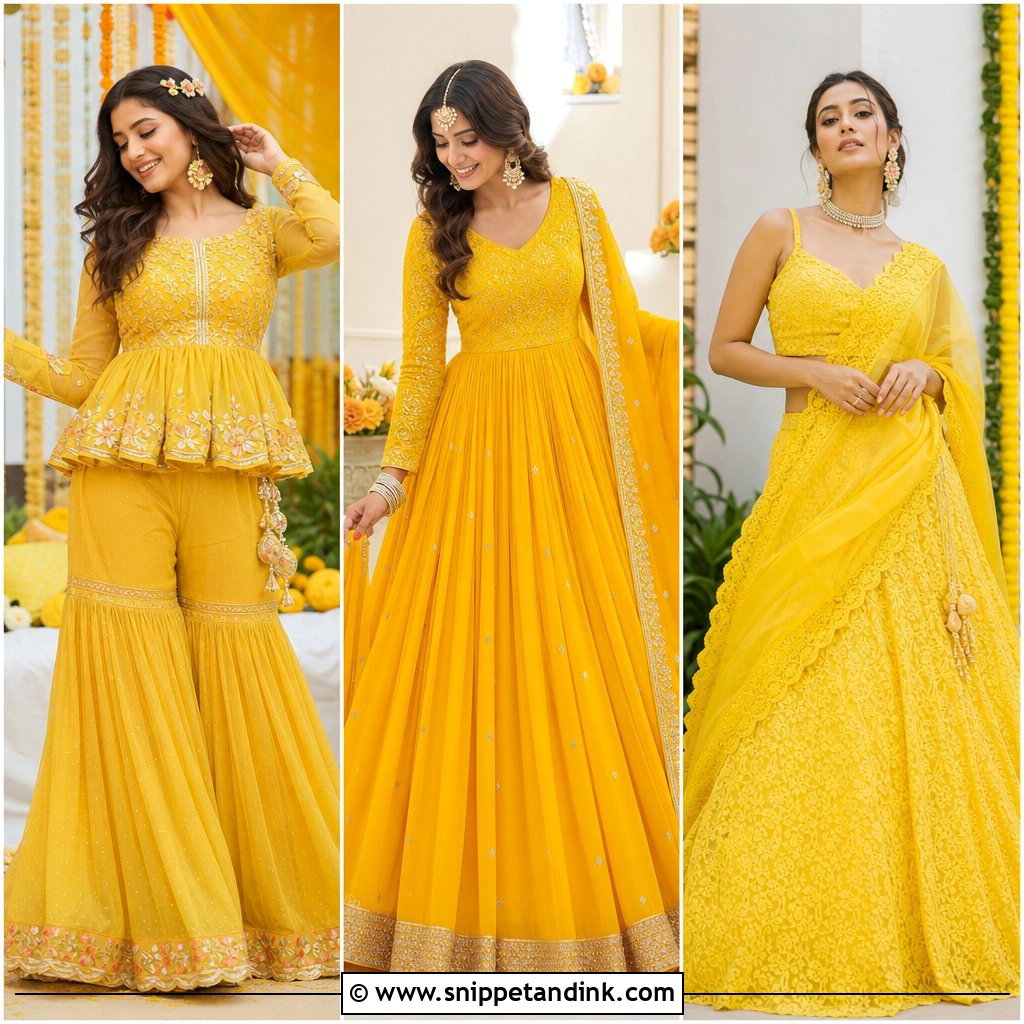
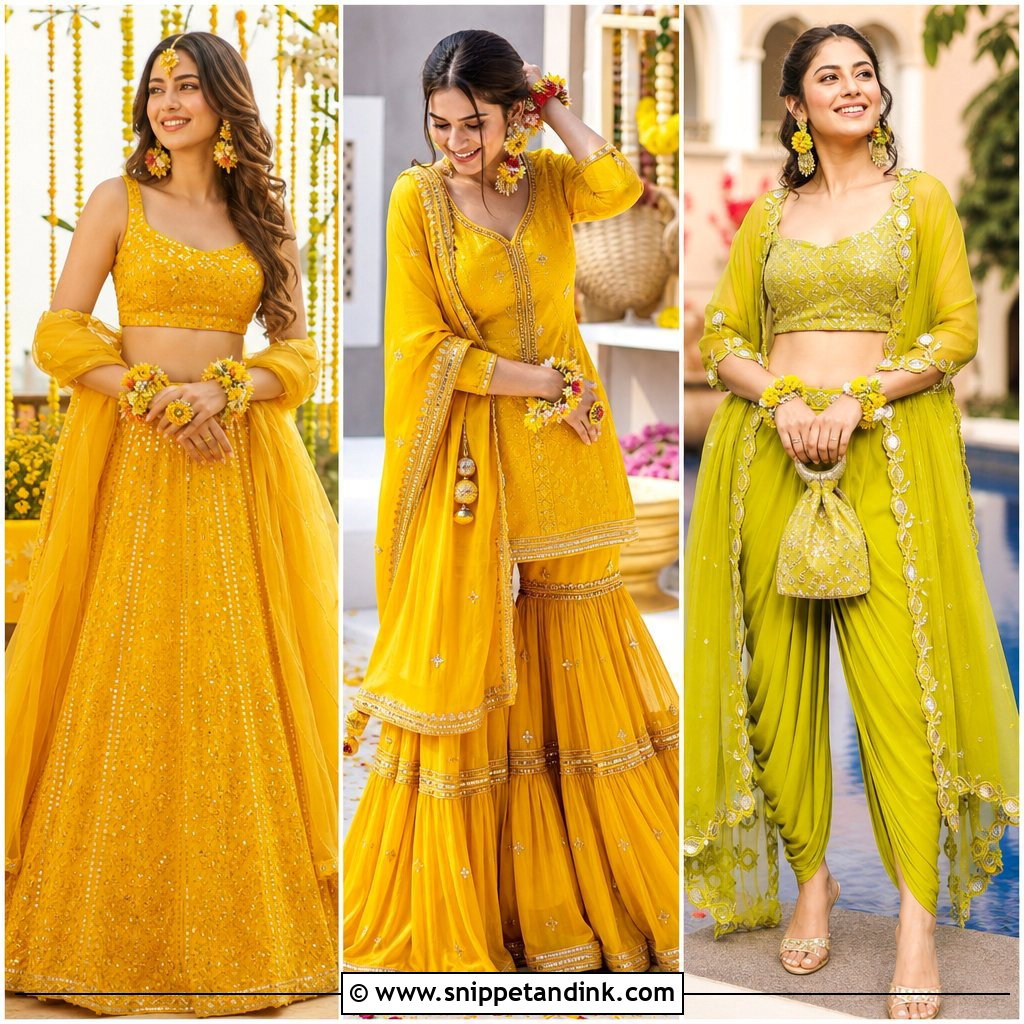
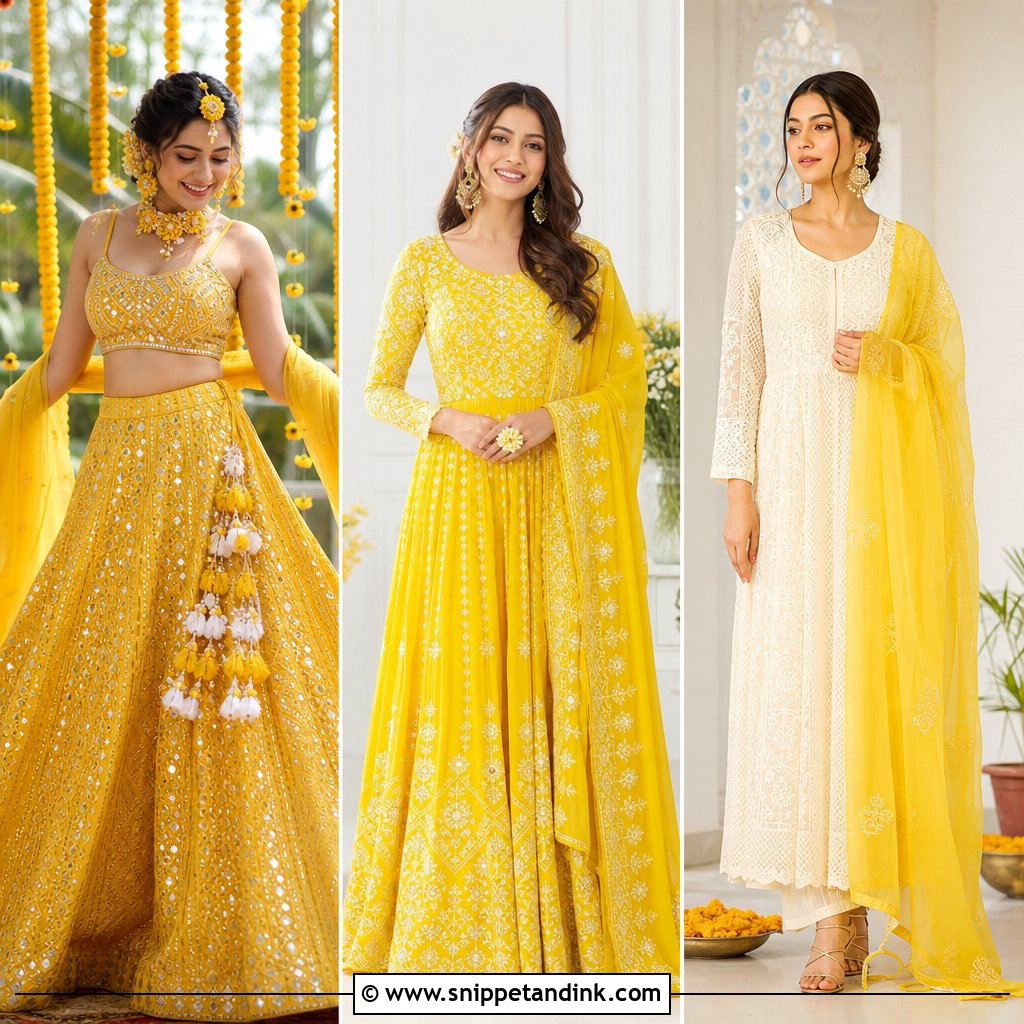
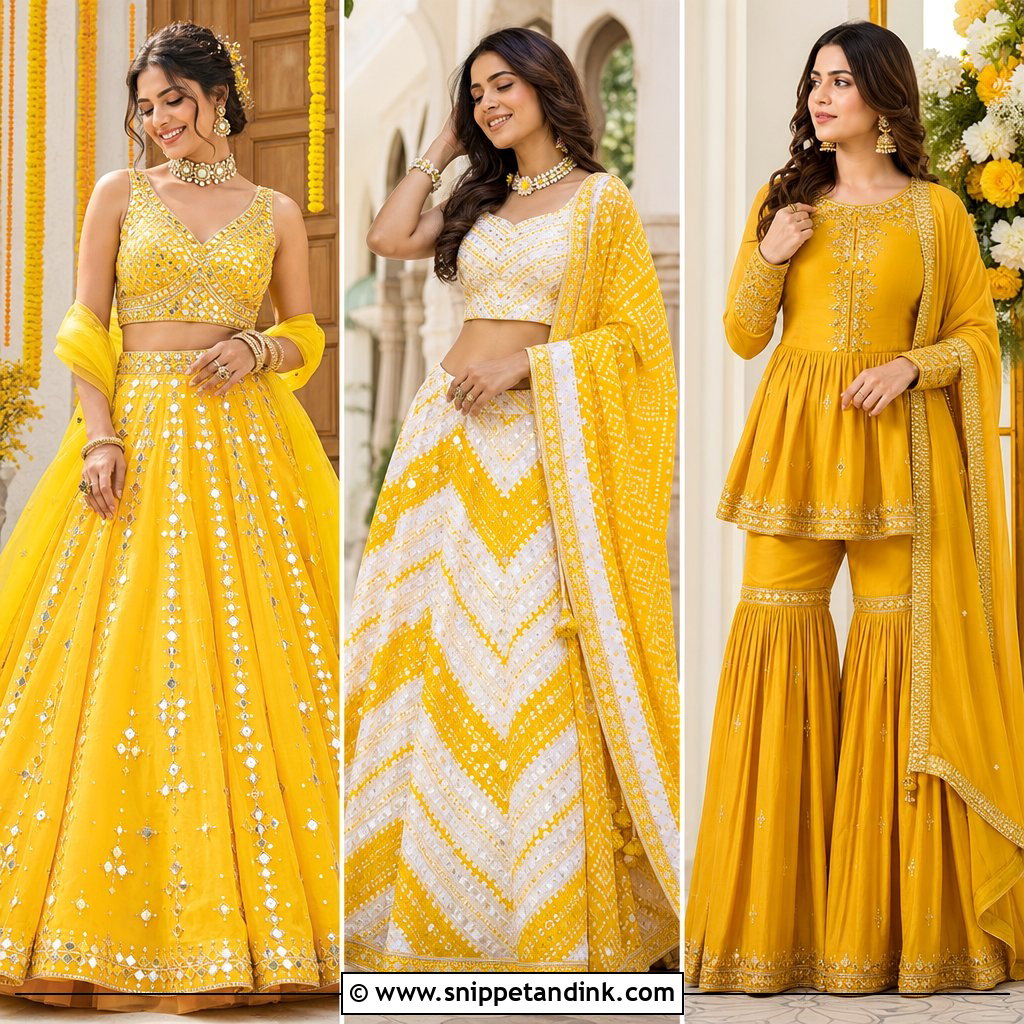
Yellow is the classic haldi bride outfit for a practical reason as well as a symbolic one: turmeric on yellow barely shows. Choose cotton silk, georgette, organza or chanderi so you can sit and stand easily. A simple blouse with a flowing skirt looks fresh, and a little mirror work or gota patti adds sparkle. Soft dupatta, floral earrings, stacked bangles and embroidered juttis complete it, with a maang tikka or flower braid if you want it more bridal. Keep makeup dewy and light, since the paste will cover some of it anyway.
2. White Haldi Bride Lehenga
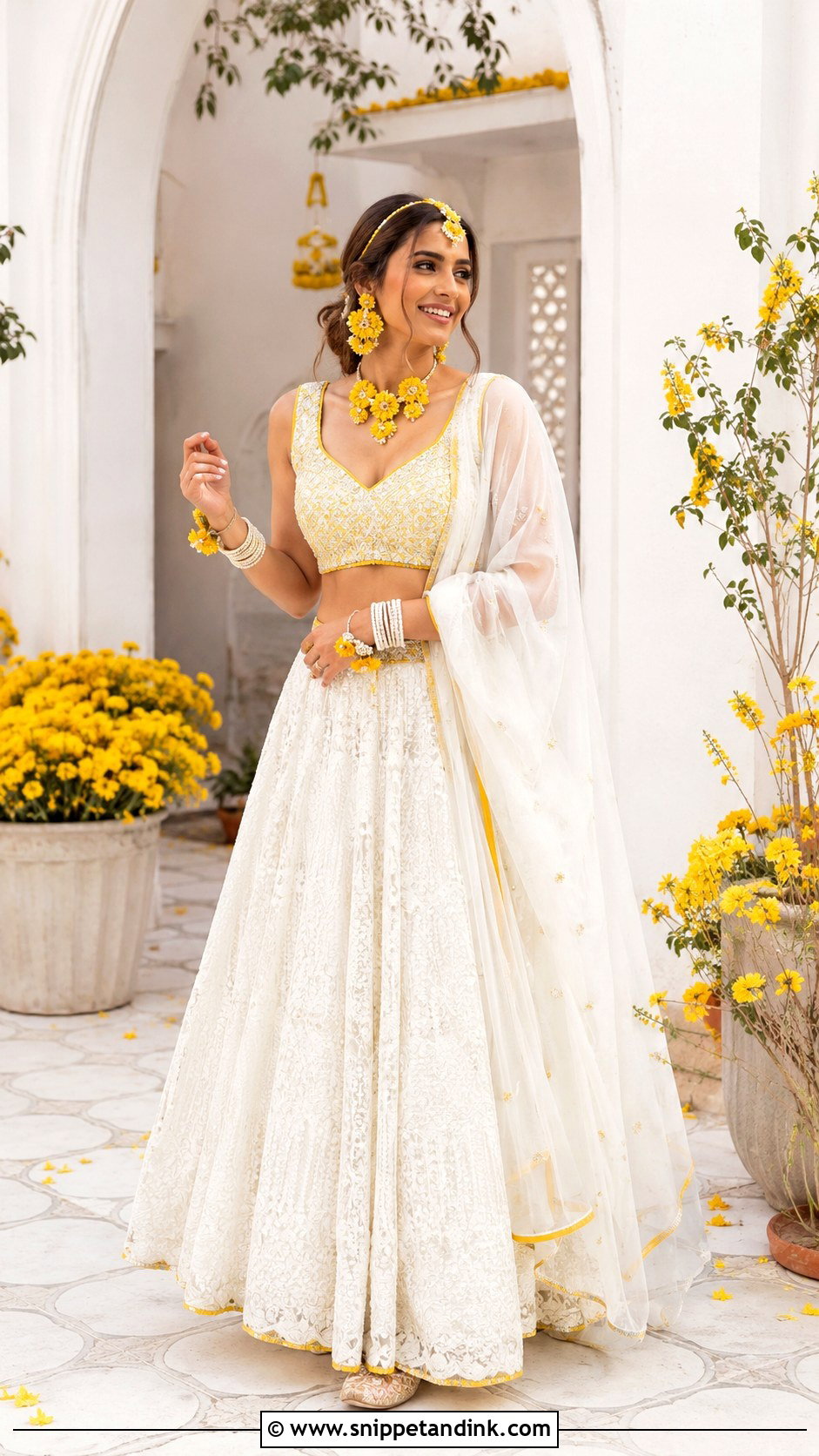
White against marigold and turmeric is a strong contrast, and the bride is easy to find in every photo when the guests wear yellow. I’ll be honest about the trade-off: white will stain. Wear it if you’re happy to treat it as a one-day outfit or to have the stains as a keepsake. Yellow threadwork, mirror detail or small floral embroidery keeps white from looking plain. A sleeveless blouse, flared skirt and sheer dupatta look lovely in daylight, with marigold jewelry, pearl bangles and neutral juttis.
3. Floral Haldi Bride Lehenga
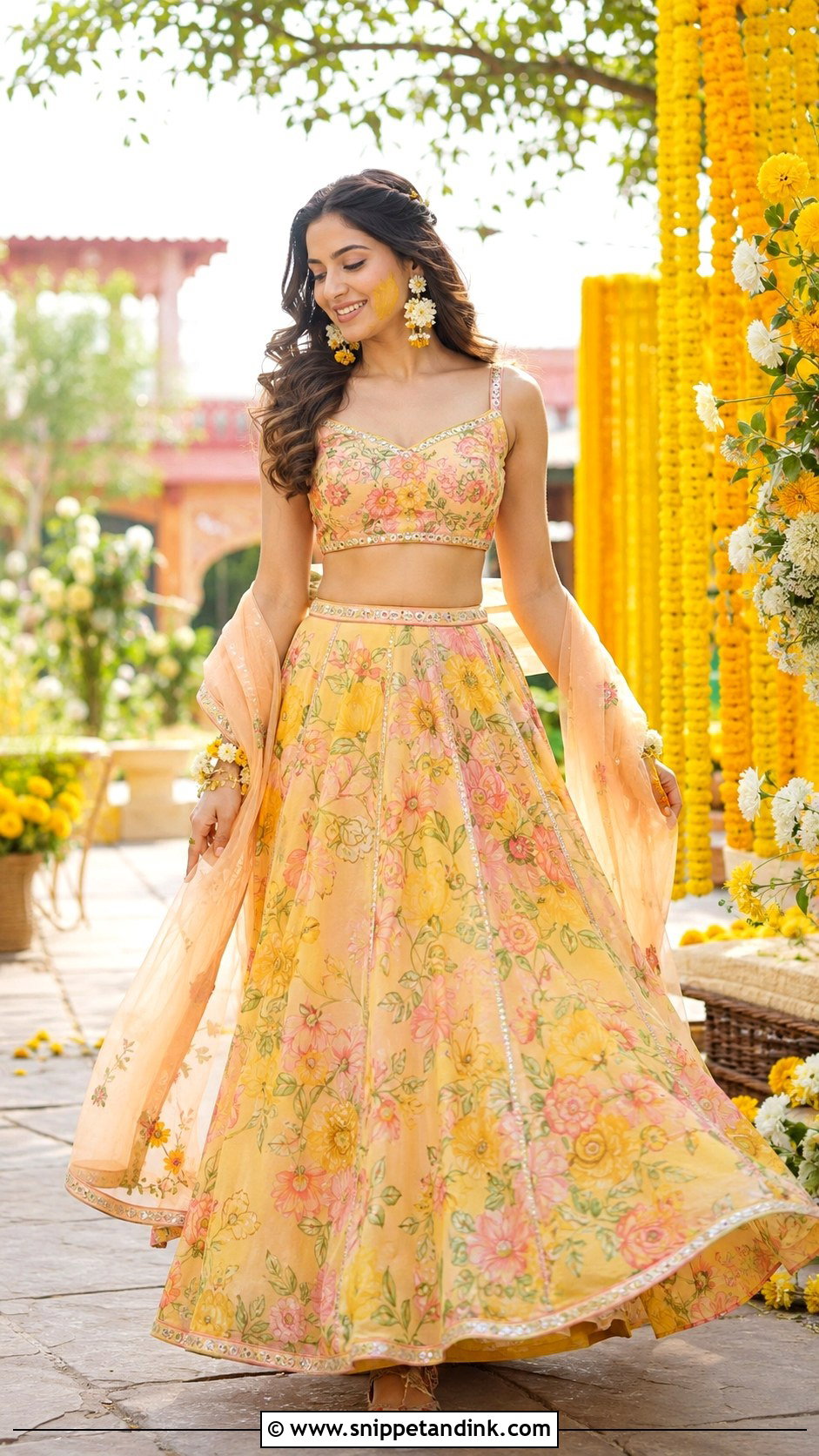
Printed florals feel lighter than embroidered lehengas, and they hide turmeric splashes far better than solid pastels do. Look for yellow, peach, ivory or lime grounds with delicate prints. A plain blouse lets the skirt lead; a matching floral blouse looks more coordinated. Fresh flower jewelry suits it, with a loose braid, soft curls or half-up hair. I’d choose juttis or block heels over stilettos, since you’ll be standing on grass, tiles or a damp floor through the rituals.
4. Haldi Bride Sharara Set
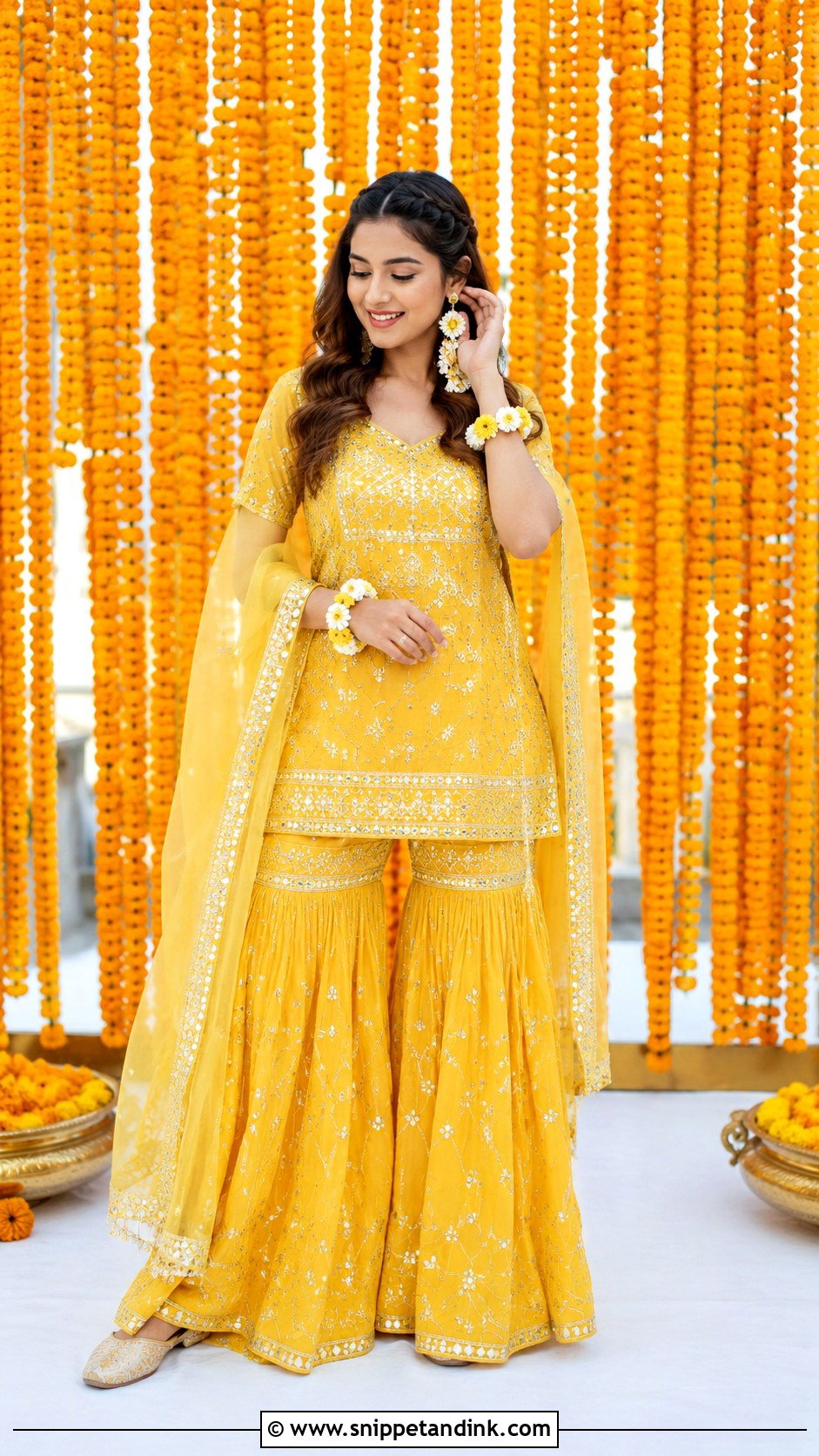
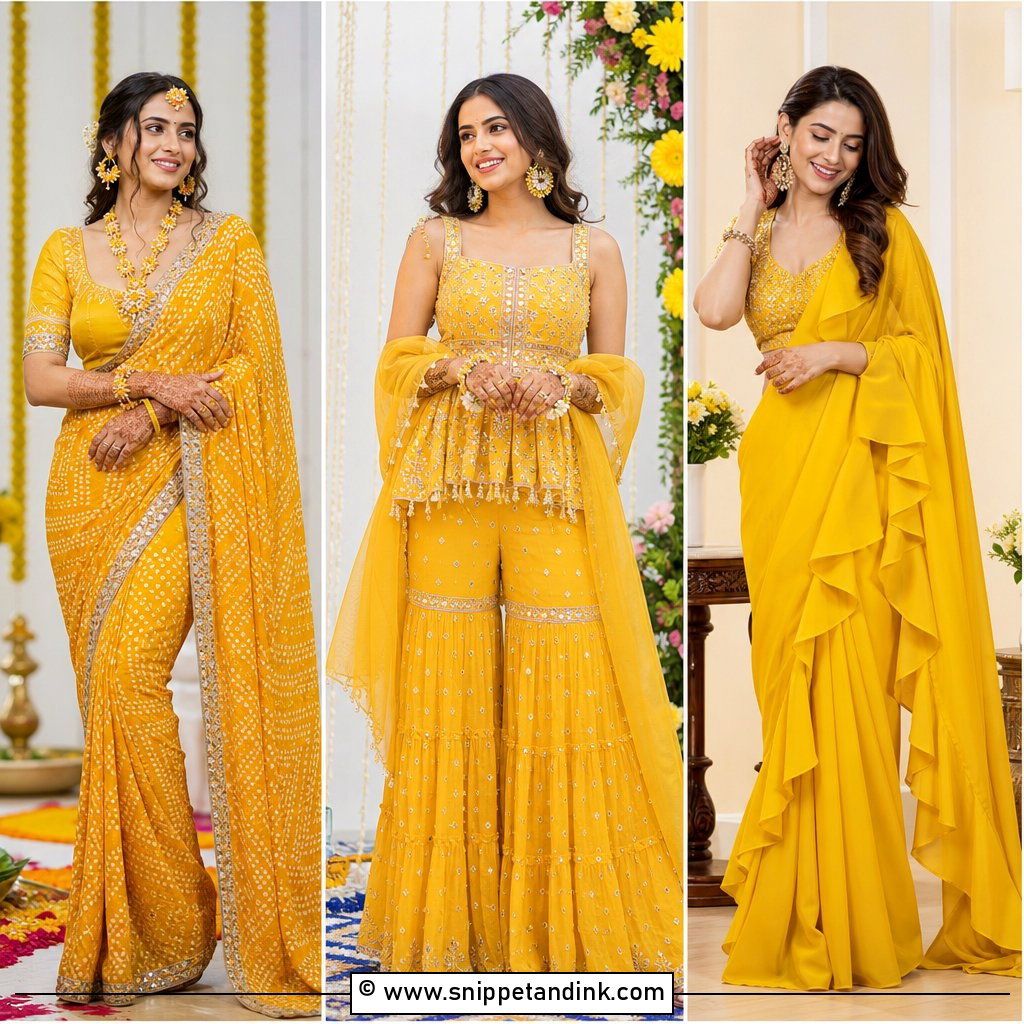
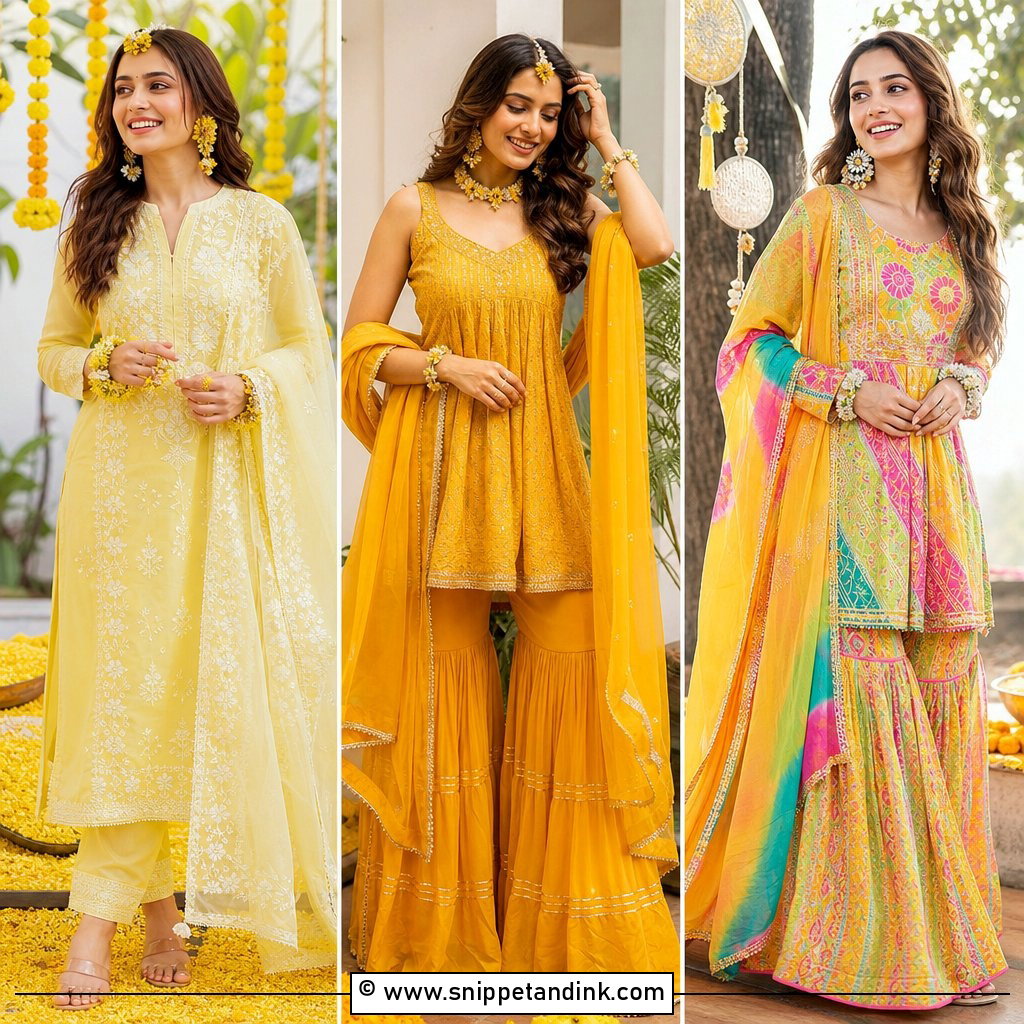
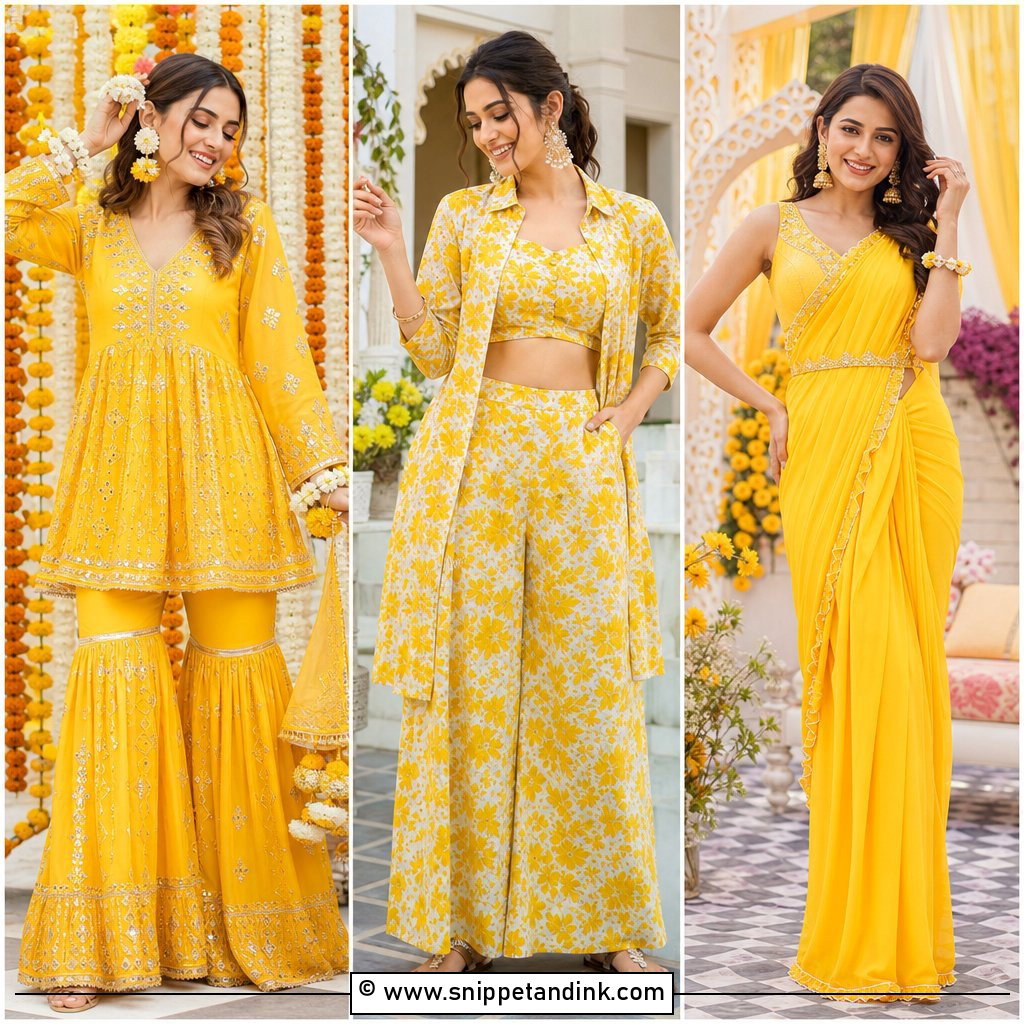
For dancing, nothing beats a sharara set. The wide legs move like a skirt but never tangle around your ankles, and the short kurti keeps the top easy. Yellow, mango, ivory and lime shararas suit outdoor setups. Mirror work, gota borders or floral embroidery add the bridal touch. Choose a light dupatta, statement earrings, floral bangles and juttis. If you want more volume, a flared sharara with a fitted kurti gives it. Check the waistband: shararas carry a lot of fabric, and a drawstring holds better than a single hook.
5. Haldi Bride Gharara Set
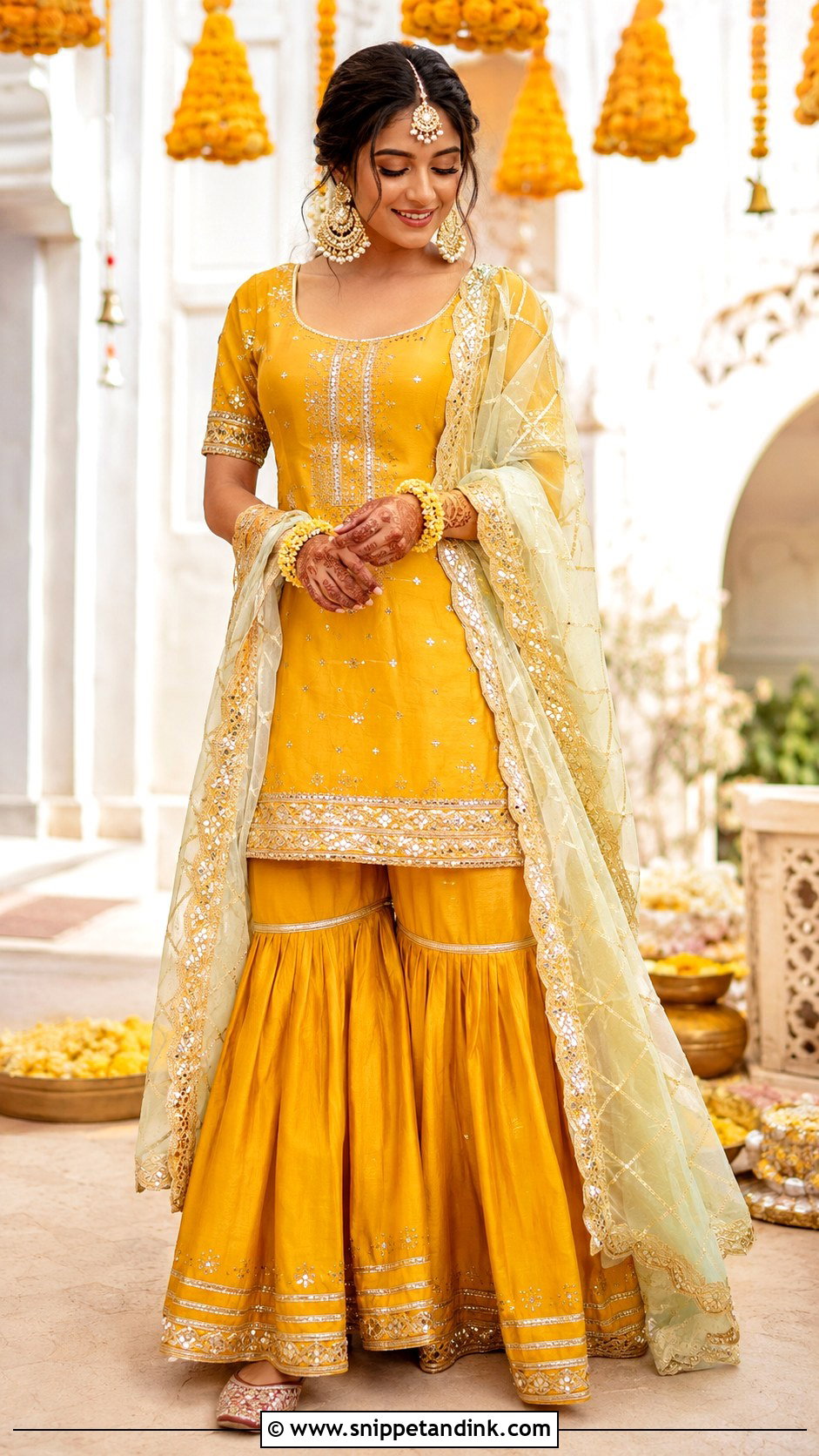
A gharara set looks more regal than a sharara because of the gathered joint at the knee, usually trimmed with gota or zari. That joint is also where it’s least forgiving: sitting cross-legged pulls on it, so try the outfit seated before you buy. Mustard, marigold or soft yellow with a short kurti suits haldi. Drape the dupatta over one shoulder so it stays clear of the paste bowl. Chandbalis, a small maang tikka and embroidered flats finish it.
6. Haldi Bride Saree
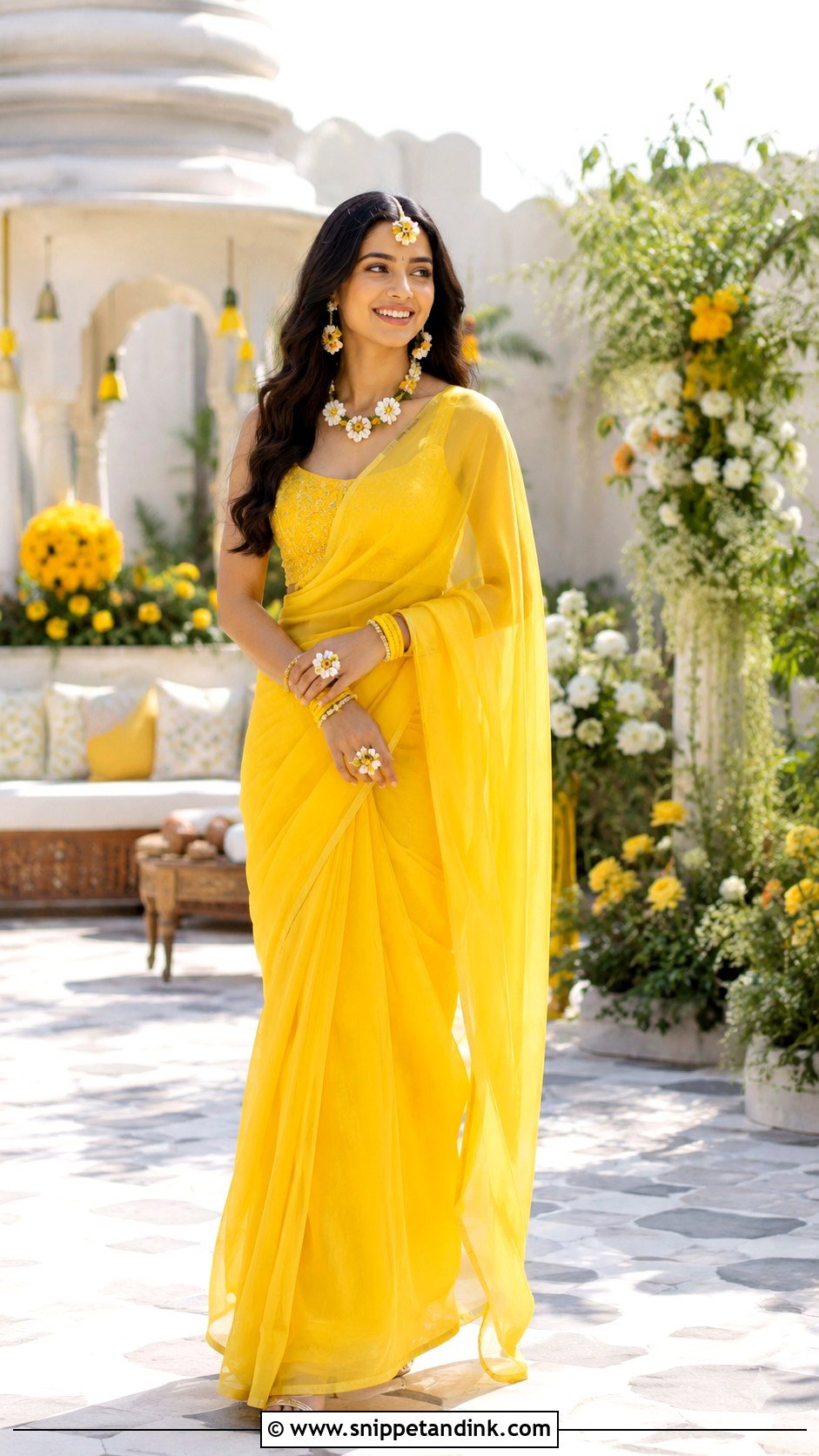
A saree is the most traditional choice, and the fabric decides how easy your day will be. Organza, chiffon, linen silk and cotton silk all drape lightly. Yellow is classic, though ivory, orange, green and floral prints suit haldi too. A sleeveless or short-sleeved blouse helps, because relatives need to reach your arms with the paste. I’d pin the pleats and pallu more firmly than usual, since you’ll be getting up and down from a low seat. Flower jewelry, soft bangles and simple sandals complete it.
7. Yellow Organza Saree For Haldi Bride
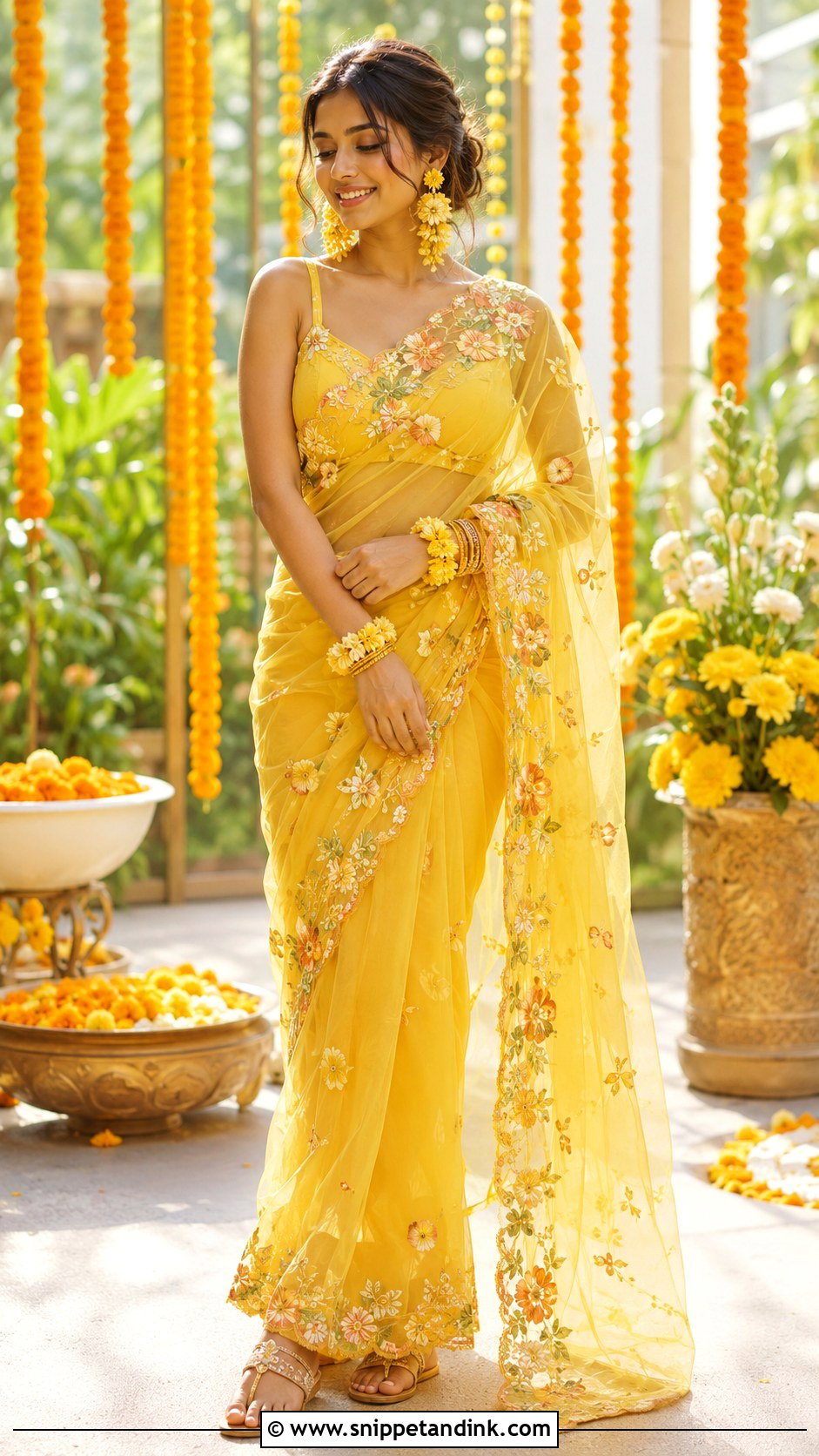
Organza looks airy and catches daylight well, but it’s crisp, so it creases and holds its shape rather than draping close. That works in its favor for haldi: it doesn’t cling when wet. A yellow organza saree with floral embroidery, scalloped edges or light mirror work looks festive without feeling formal. Pair it with a matching blouse or a contrast ivory one. Because organza adds volume, balance it with floral earrings, a bracelet stack and a simple maang tikka, plus soft waves or a low bun with flowers.
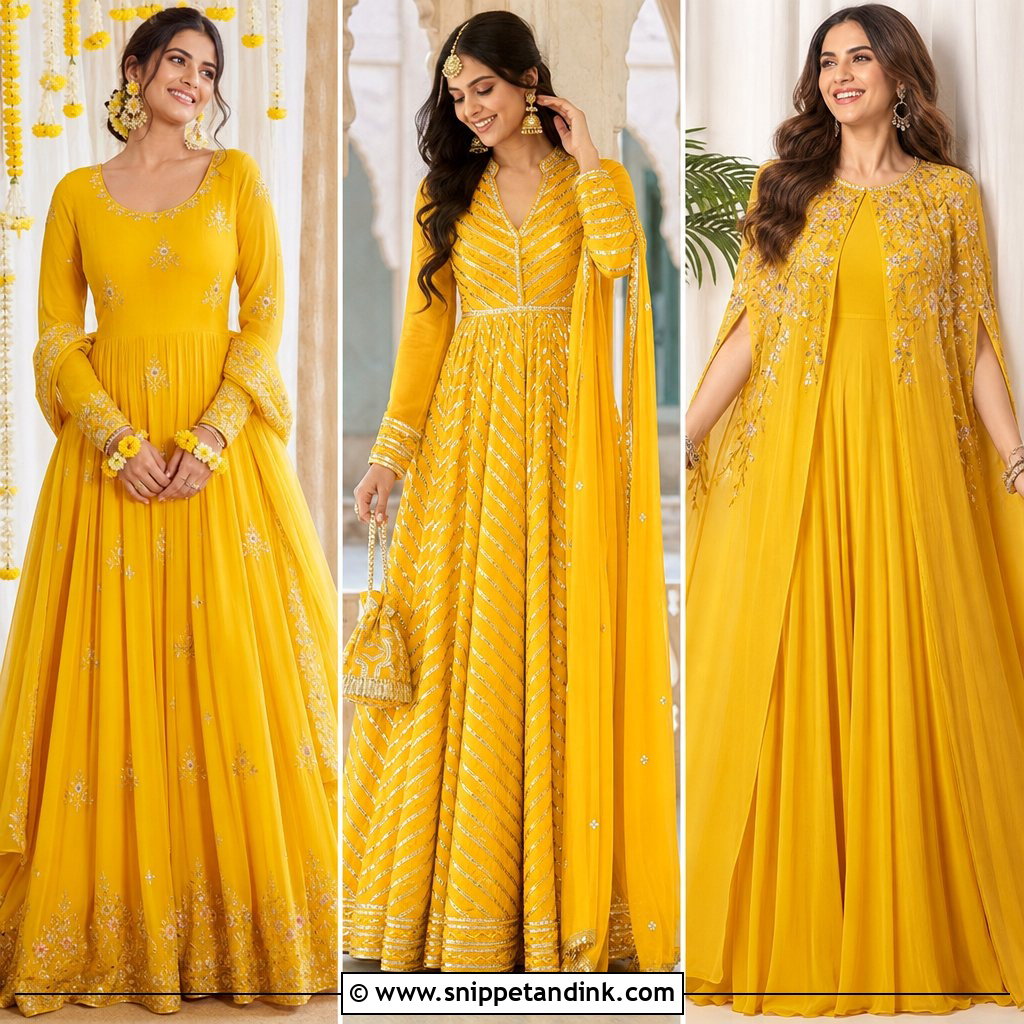
8. Haldi Bride Anarkali Suit
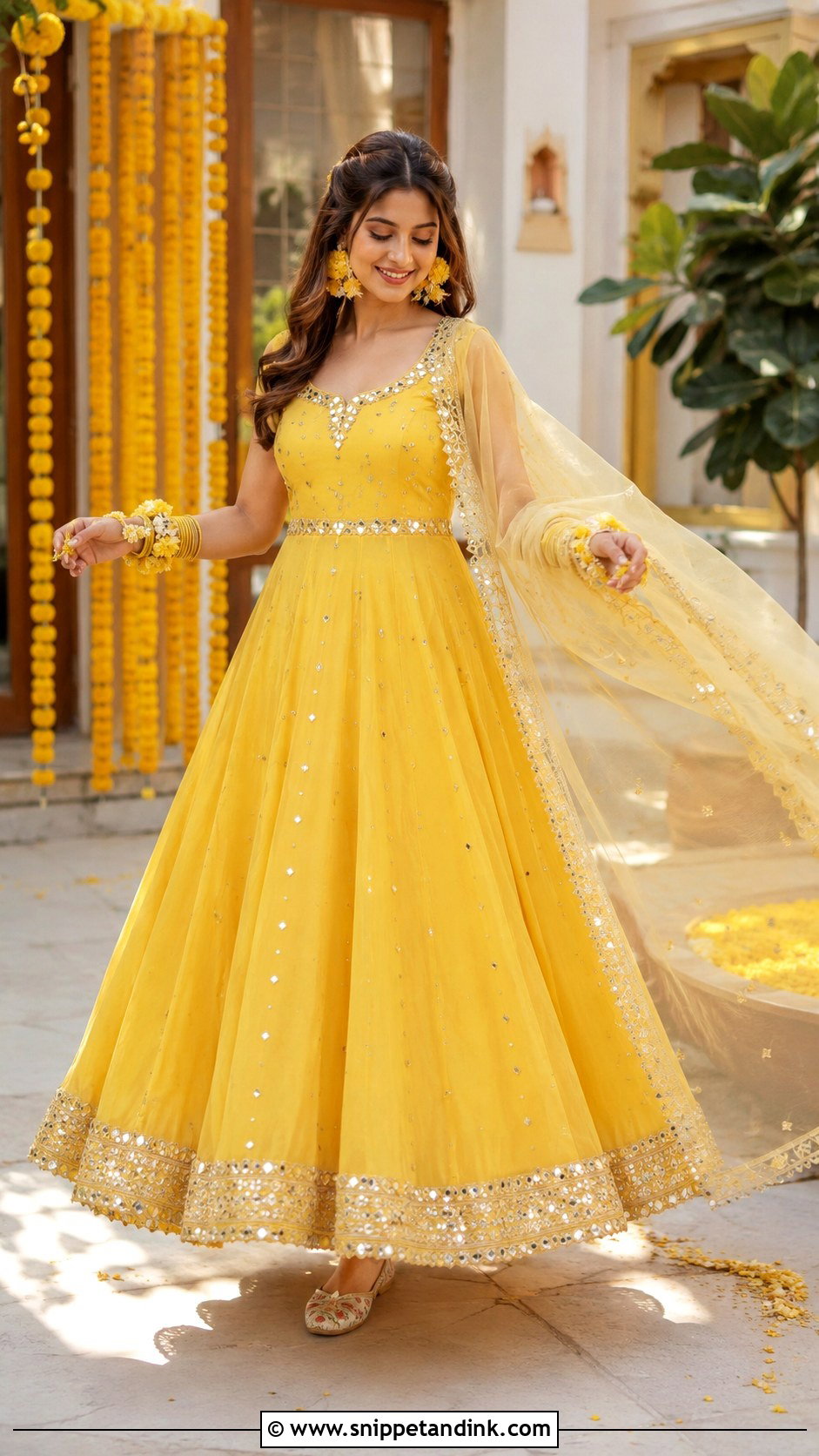
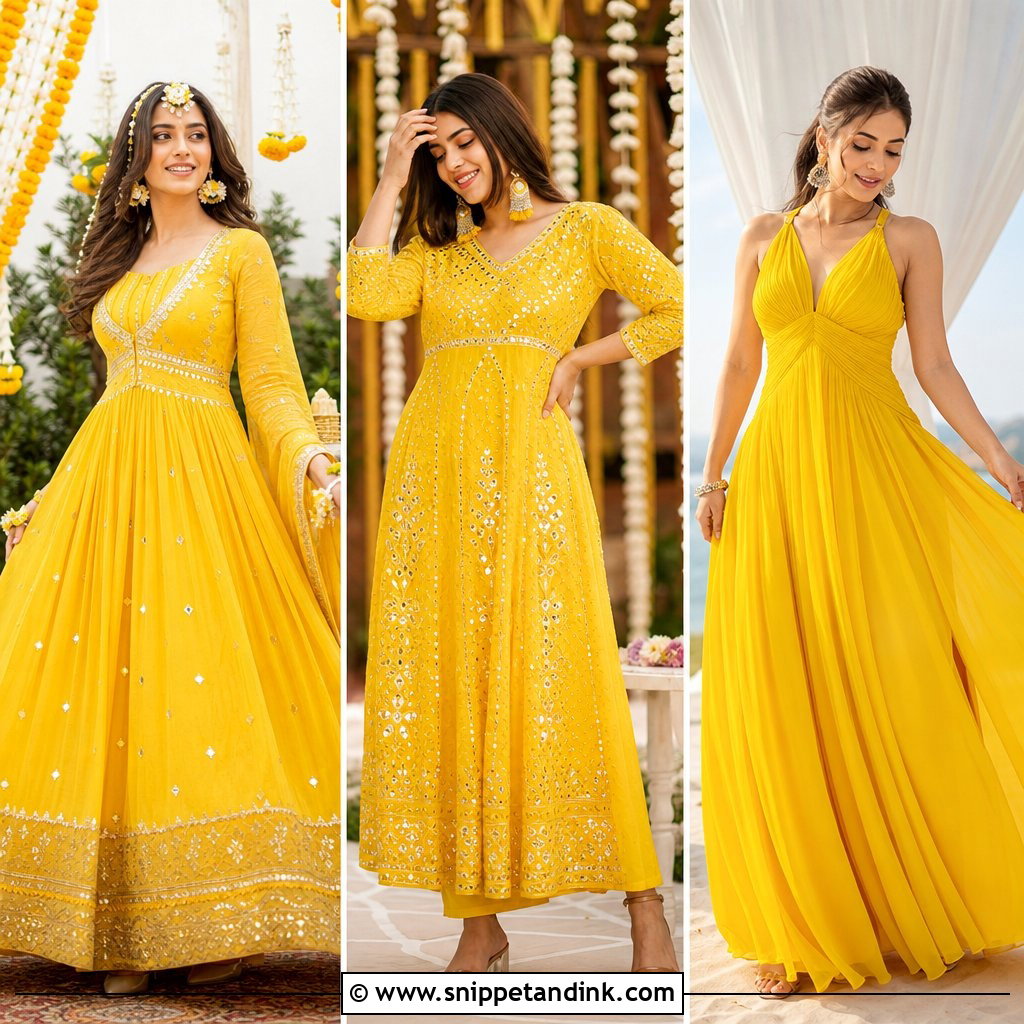
An Anarkali gives full coverage with a lot of movement, which suits brides who’d rather not show the midriff at a family ritual. Yellow, ivory, peach or lime with mirror work, thread embroidery or gota borders all work. Cotton, georgette and chanderi are right for a morning or afternoon ceremony; heavy layered Anarkalis get hot fast. Add juttis, floral jewelry and soft hair, plus a statement dupatta or belt for more bridal presence. You’ll wear it again at festivals, which I count as a real plus.
9. Haldi Bride Kurta And Skirt
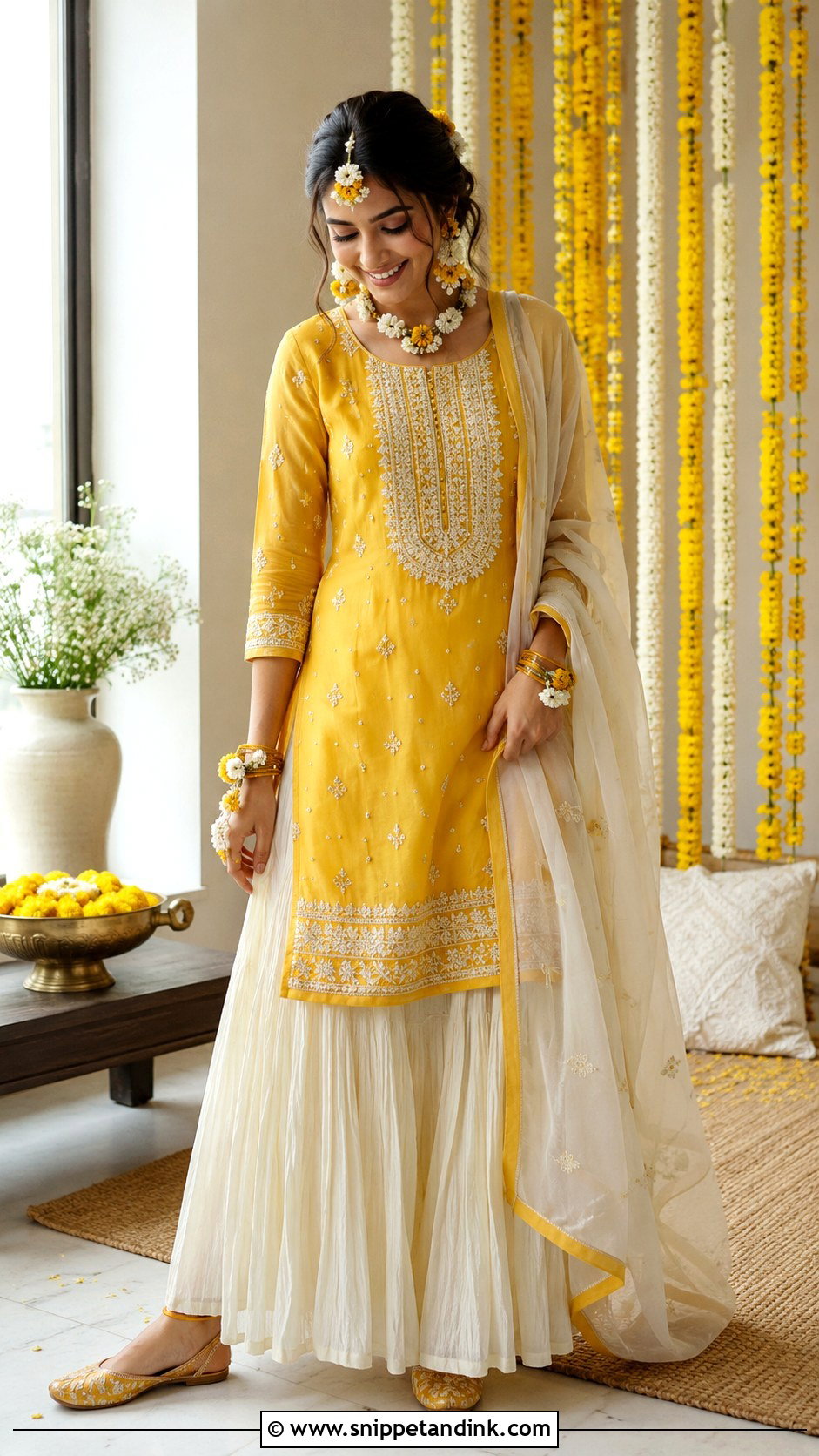
A kurta with a skirt sits halfway between a suit and a lehenga, and it’s one of the easiest outfits to sit on the floor in. Try a yellow kurta with an ivory skirt, a floral kurta with a plain skirt, or a mirror-work set for shine. A light dupatta completes it without weight. Flower earrings, bangles and flats suit home haldis and small gatherings. Choose a kurta length that ends above the knee if you’ll be seated low, so it doesn’t bunch in your lap.
10. Haldi Bride Crop Top And Skirt
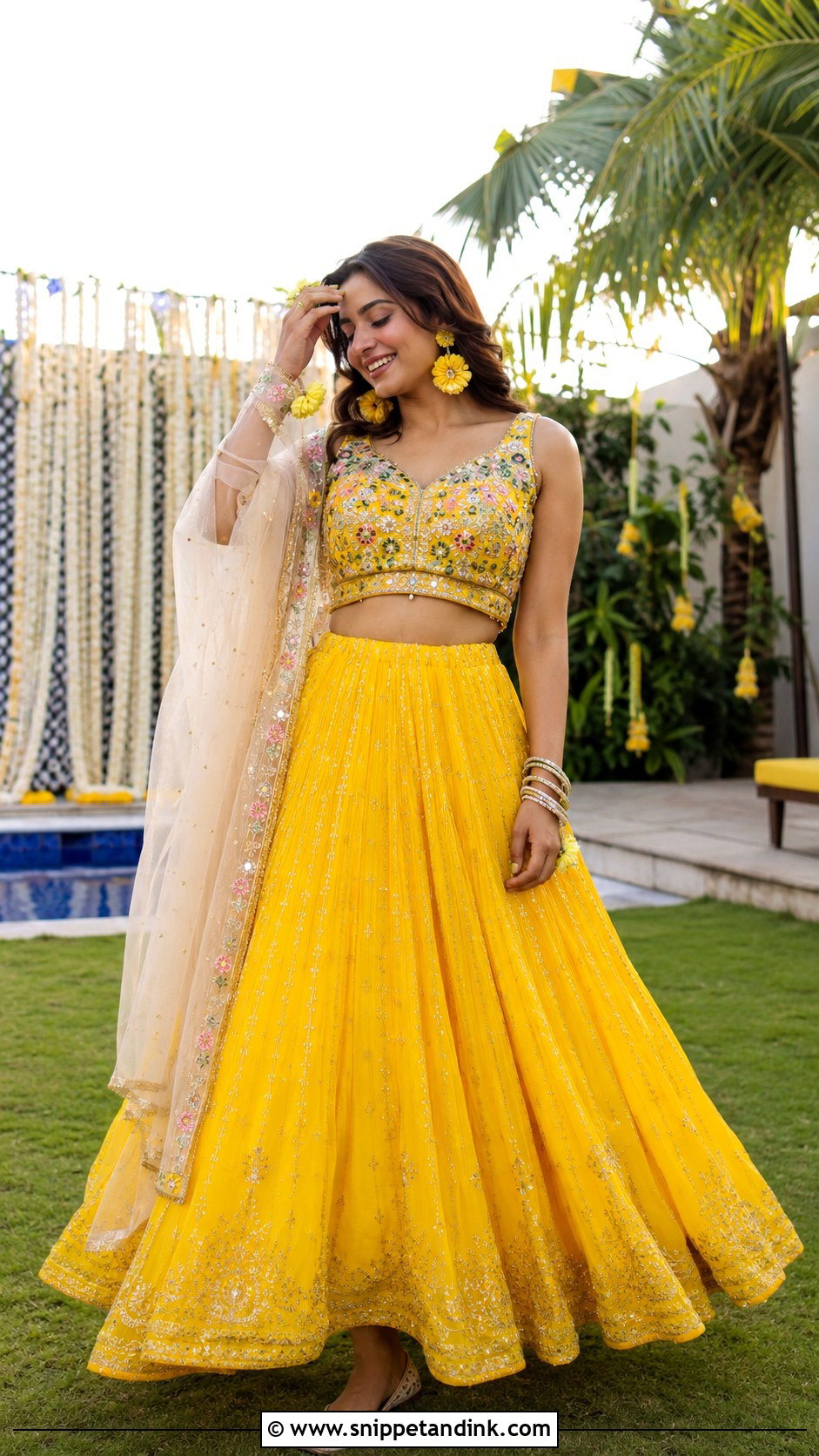
A crop top and skirt reads like a lehenga but wears lighter, and the separates mean you can rewear either half later. A bright yellow skirt with a printed crop top looks playful; a matching embroidered set looks coordinated. Add a dupatta if the family prefers traditional styling. The exposed midriff gets paste too, so plan for it. Floral jewelry, juttis and glowing makeup finish the look, and the skirt swings well in candid outdoor shots.
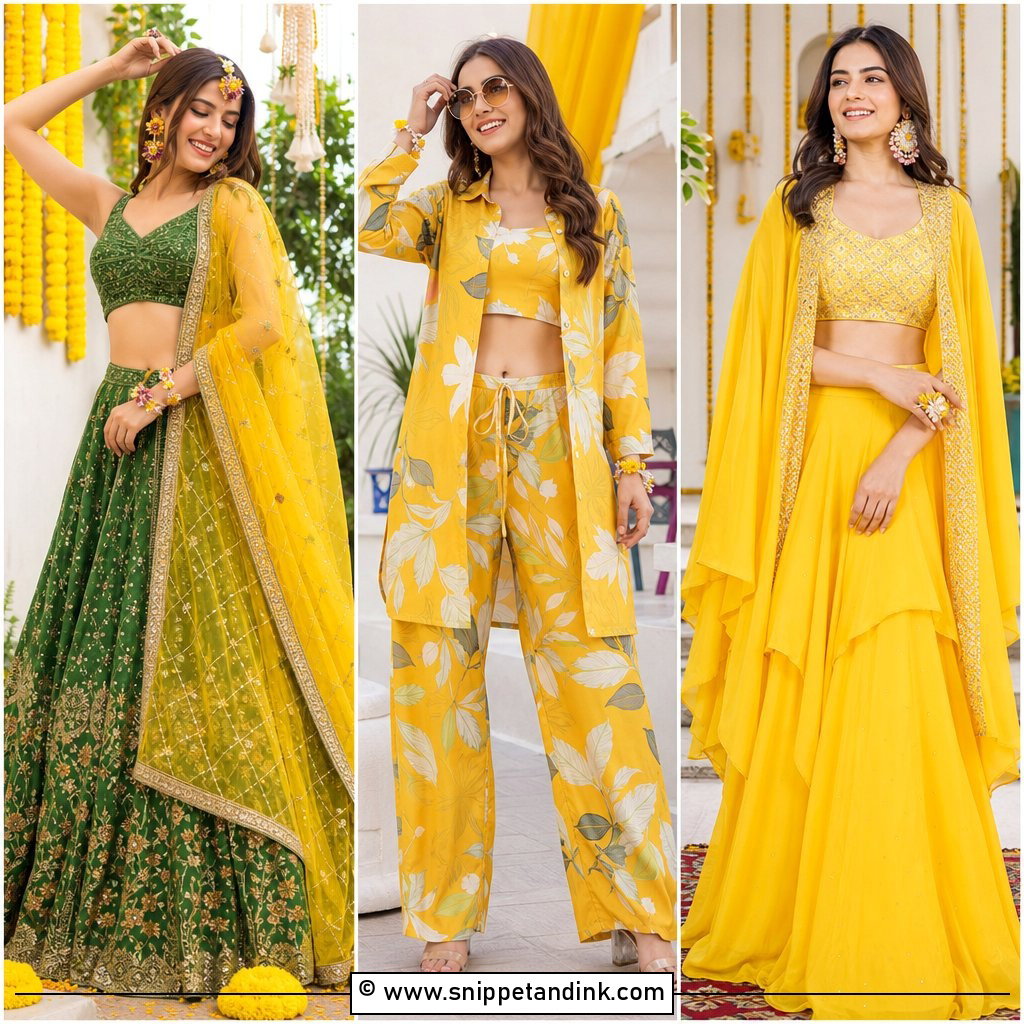
11. Haldi Bride Cape Lehenga
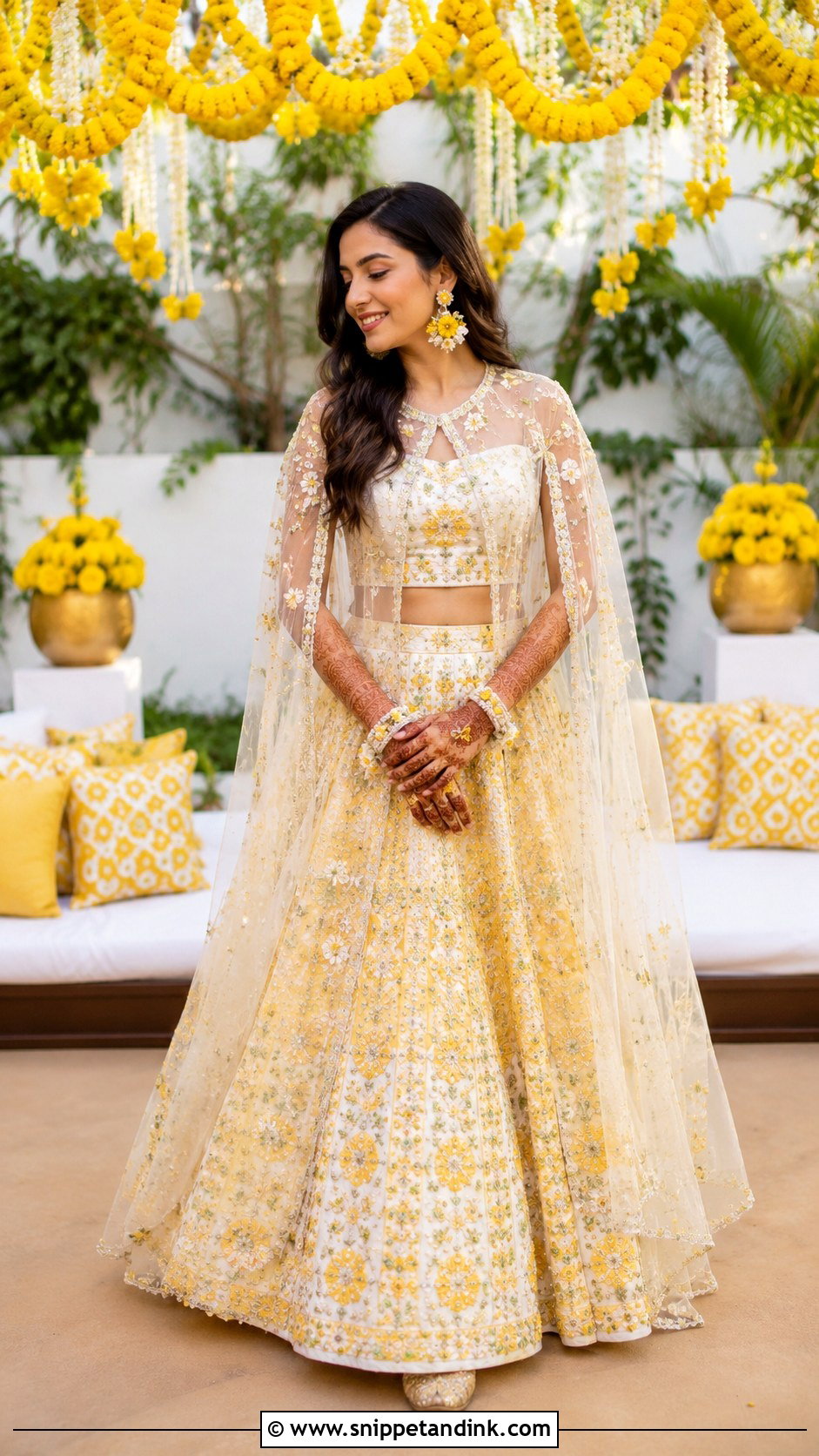
A cape solves the dupatta problem. It stays on your shoulders and keeps your hands free for the rituals, instead of slipping into the turmeric bowl. Choose a yellow or ivory lehenga with a sheer, embroidered or mirror-trimmed cape. A short cape looks playful; a long one is more graceful but trails when you sit. Keep the blouse fitted so the proportions hold. Statement earrings, soft curls and a few bangles are enough.
12. Haldi Bride Jacket Lehenga
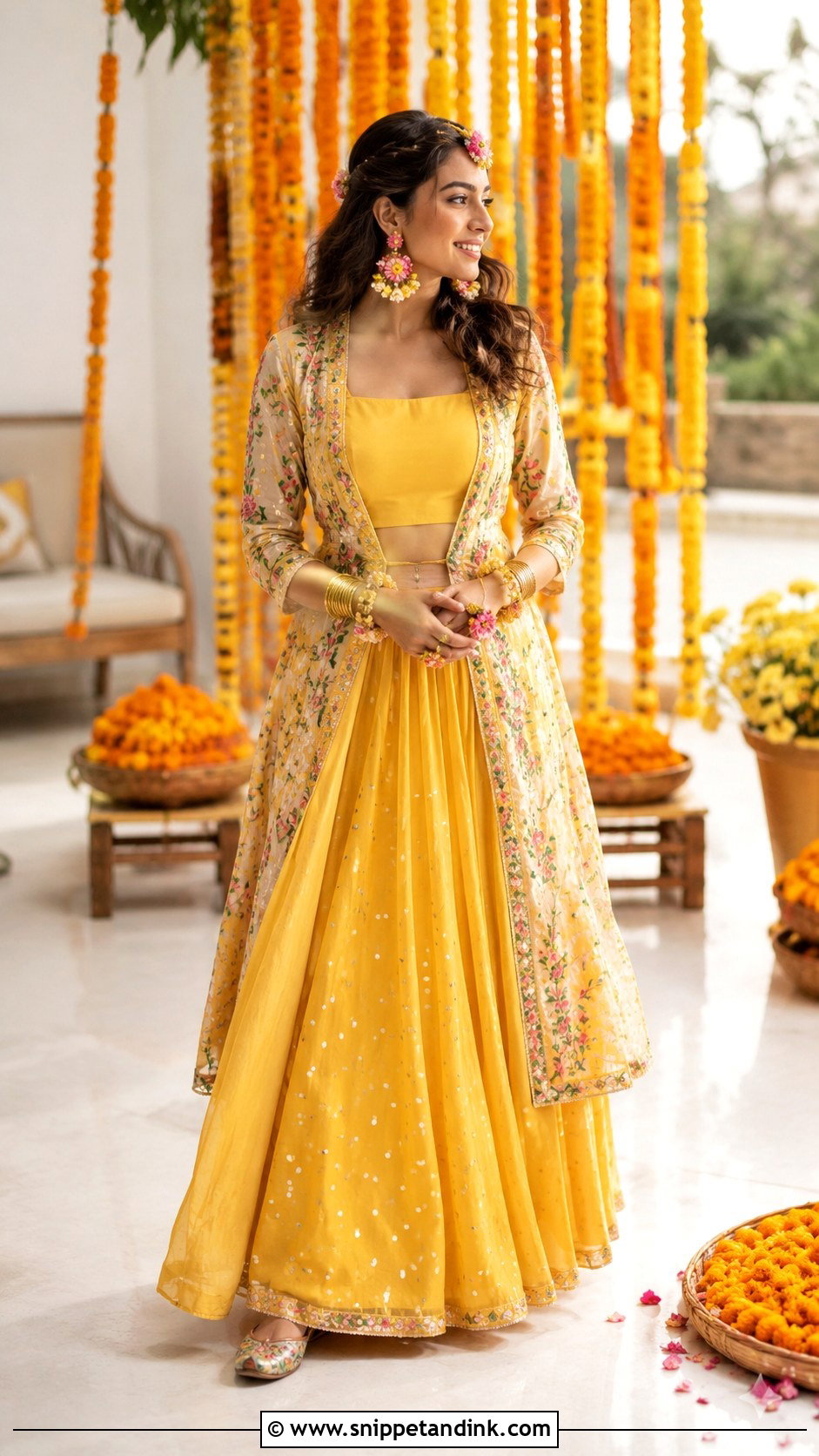
A jacket lehenga gives structure and coverage, which some families prefer for a ceremony with elders present. Wear a light embroidered jacket over a simple blouse and skirt, or a printed jacket over a solid lehenga, in yellow, ivory, orange or pastel green. Keep it open so you can move. I’d avoid a heavily embroidered jacket here, since paste on the sleeves is hard to clean from dense thread. Juttis, floral jewelry and sleek hair let the layers show.
13. Haldi Bride Mirror Work Lehenga
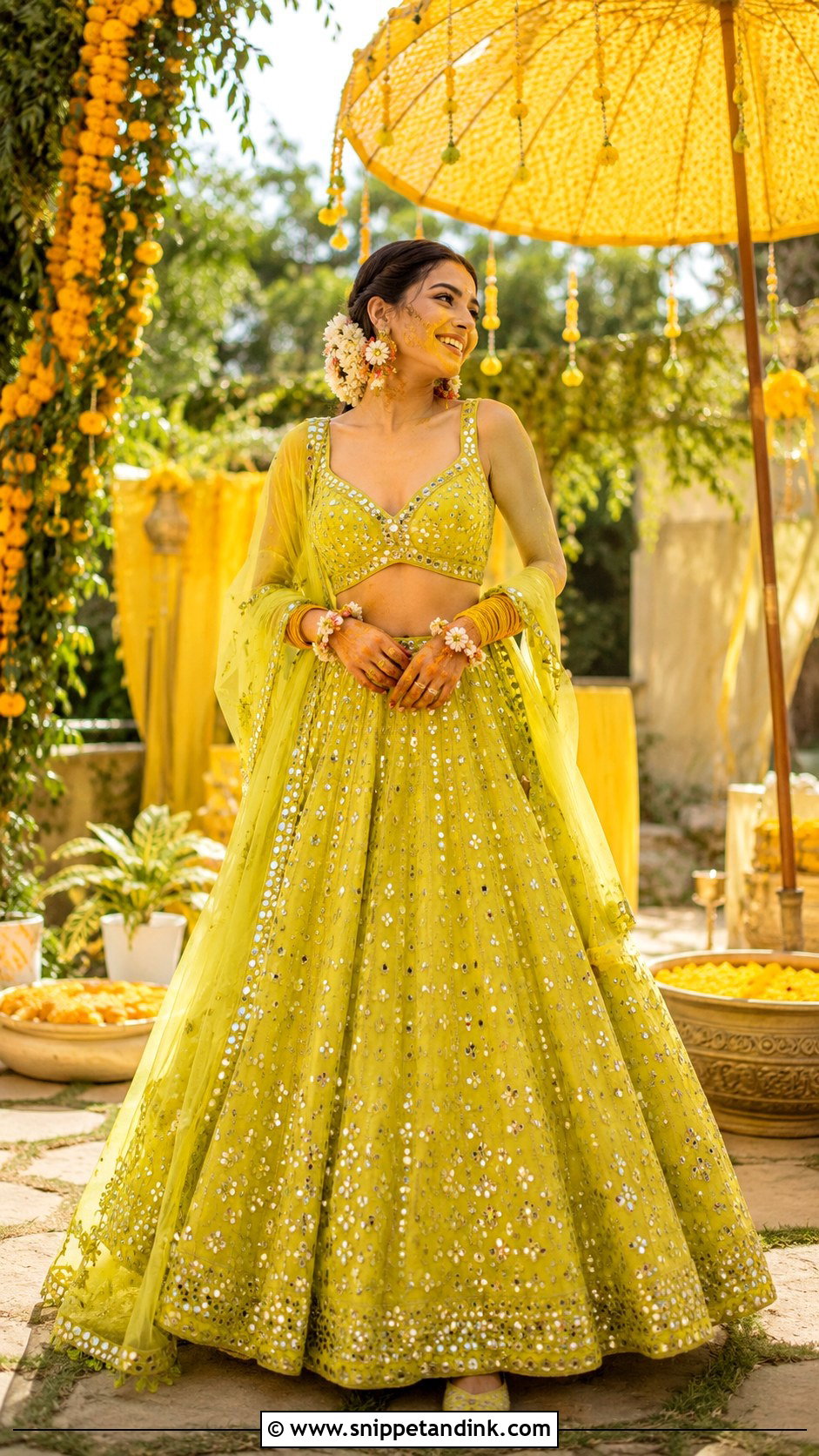
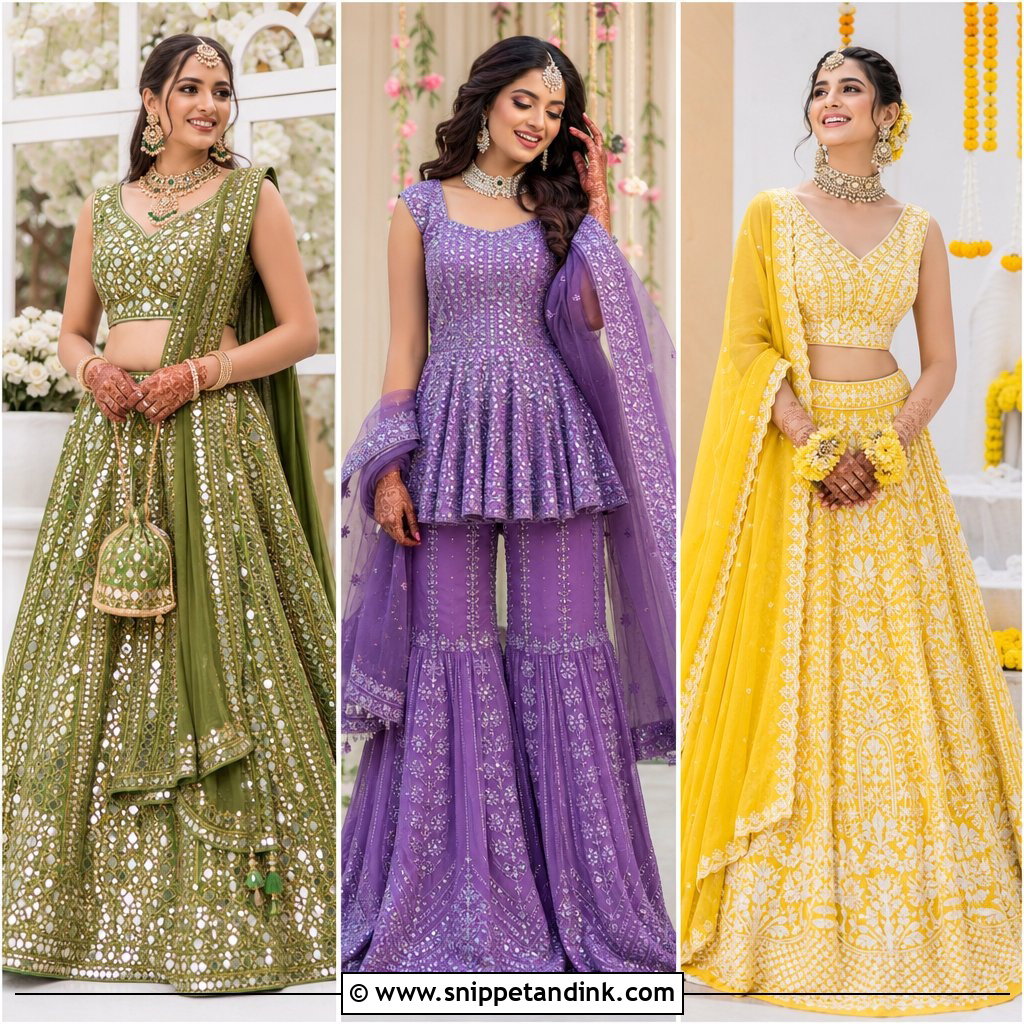
Mirror work catches daylight in small flashes, so it adds sparkle without the weight of zardozi. On yellow or lime, keep the mirrors to the blouse, border or dupatta. With a lot of mirror work, I keep jewelry light: floral earrings or simple jhumkas. The practical bonus is that turmeric wipes off glass far more easily than off thread. A soft dupatta and juttis complete it, and it glows in outdoor light.
14. Haldi Bride Gota Patti Lehenga
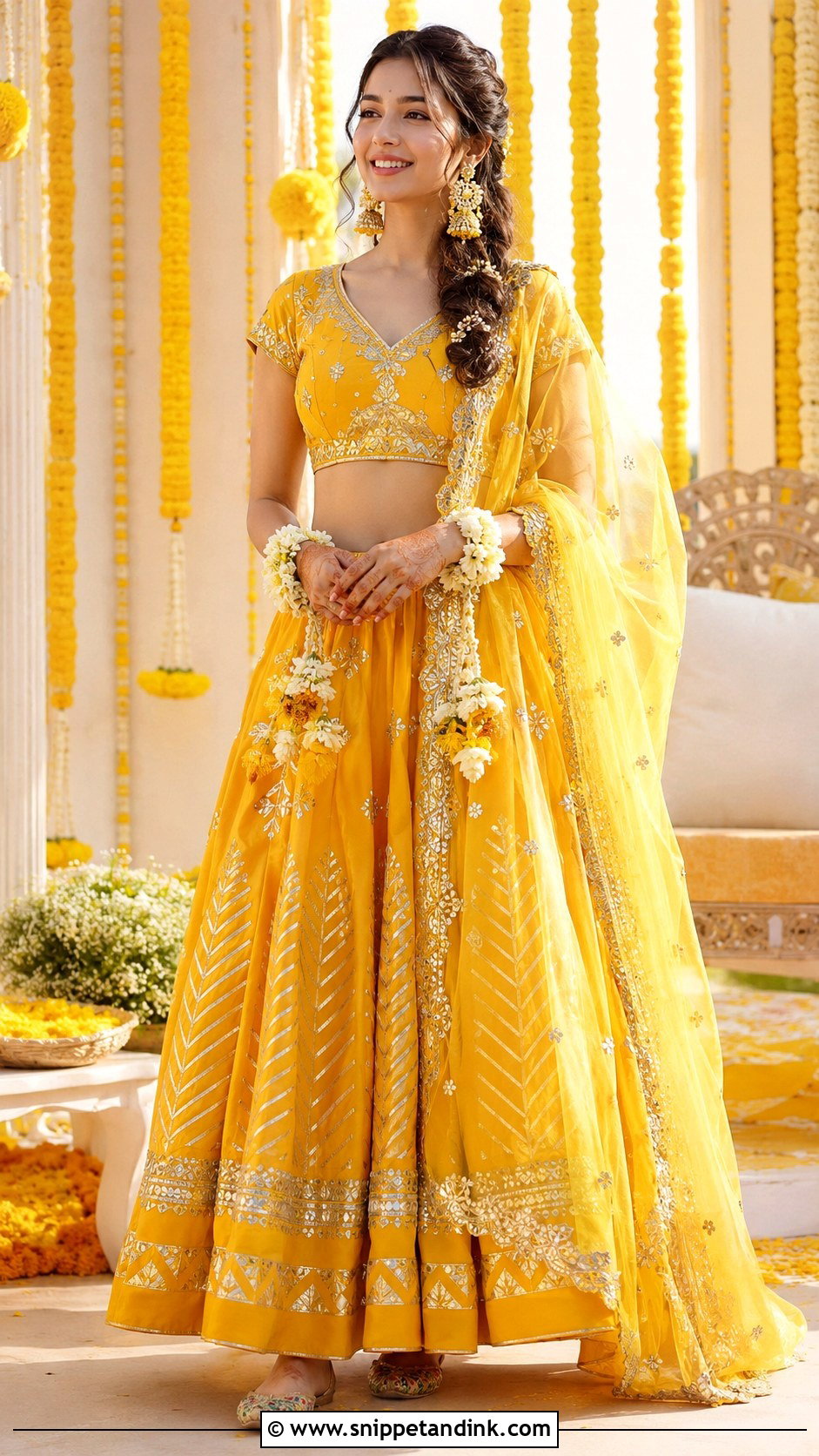
Gota patti is metallic ribbon appliquéd onto the fabric, a Rajasthani technique that gives shine without heavy embroidery. A marigold lehenga with gota borders, a matching blouse and a soft dupatta looks cheerful and classic; ivory with yellow gota is softer. Kundan earrings, flower bangles and embroidered flats suit it, with peach lips and defined eyes. Don’t scrub gota if paste lands on it; dab it gently, since the ribbon can lift at the edges.


15. Haldi Bride Chikankari Lehenga
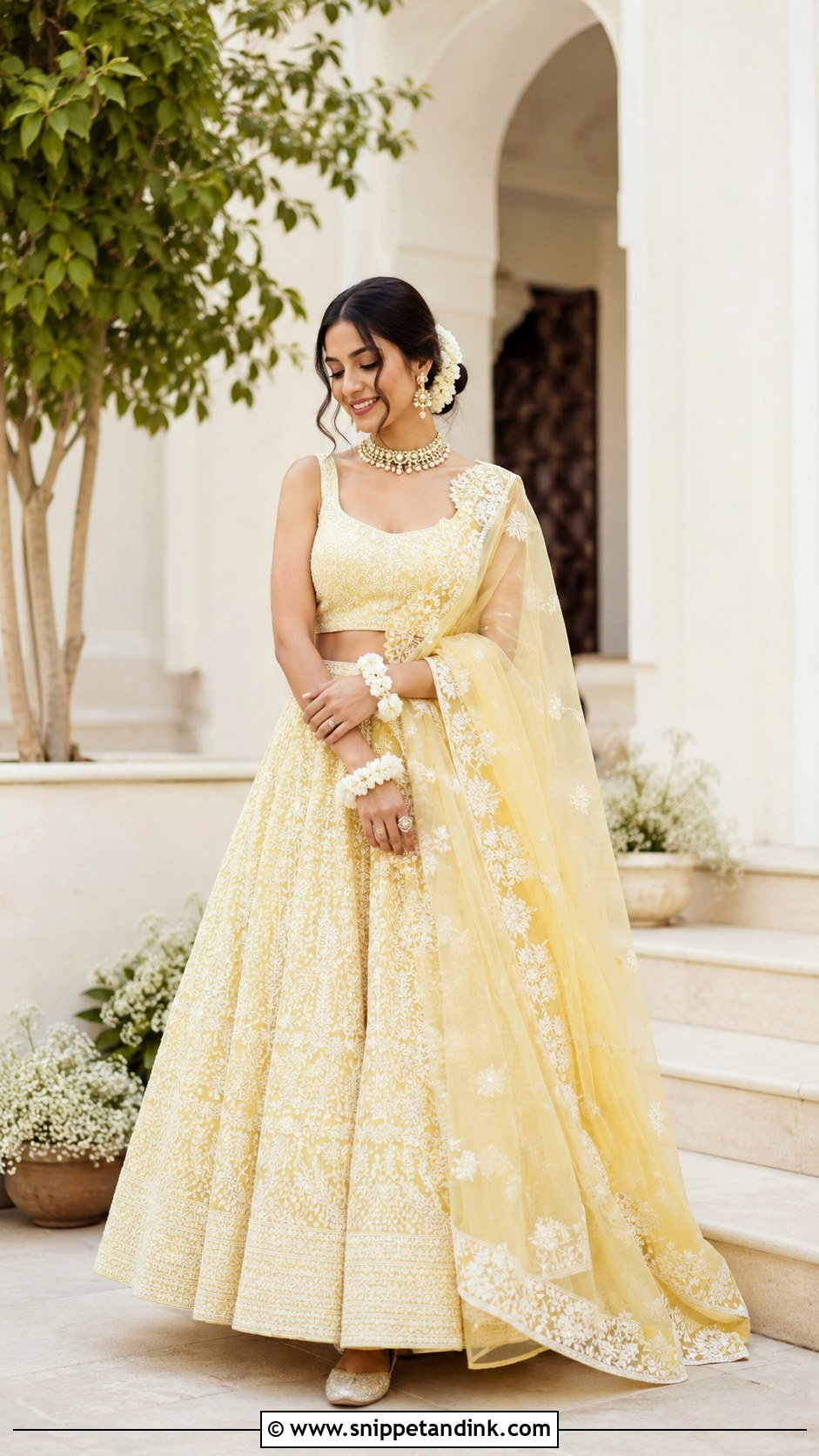
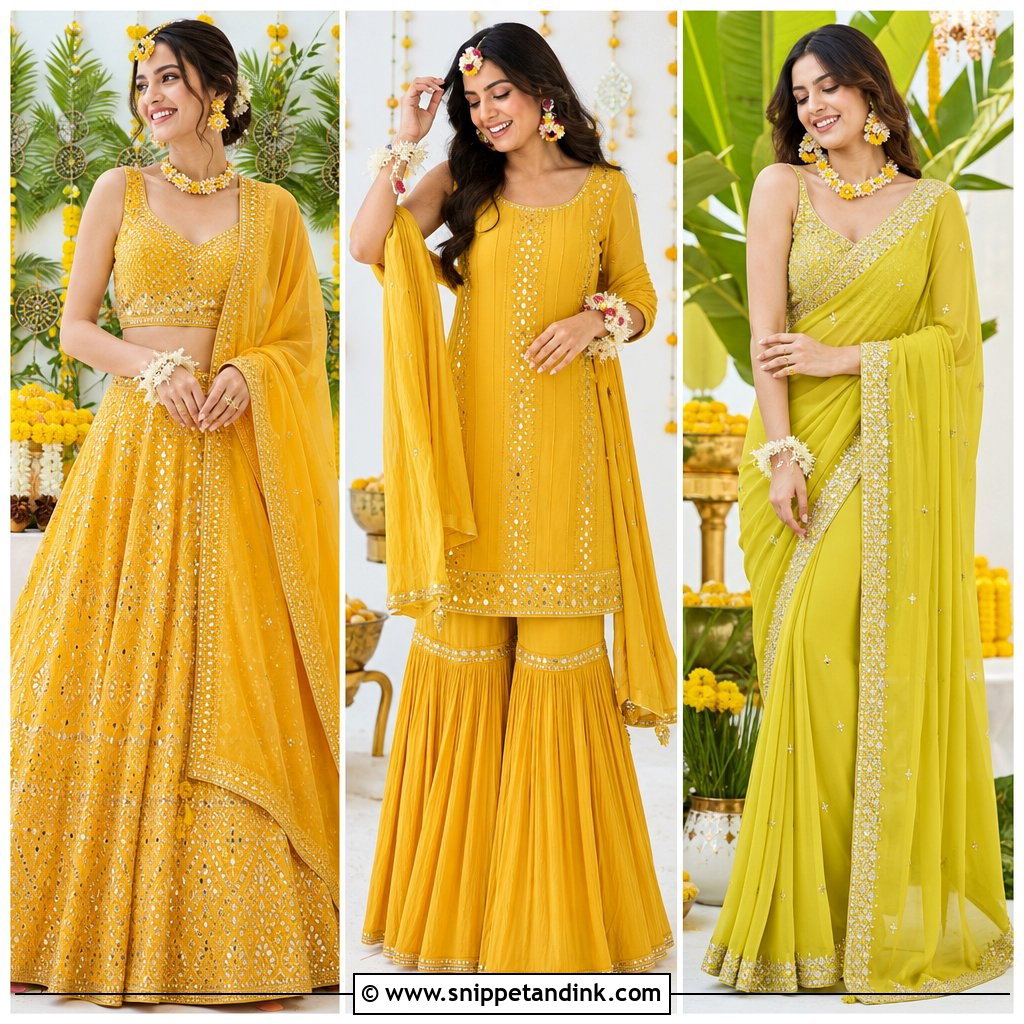
Chikankari is hand embroidery from Lucknow, traditionally white thread on fine fabric, and it gives texture rather than shine. Ivory, pastel yellow or lemon with tonal embroidery looks refined, especially at a morning ceremony. A matching blouse and sheer dupatta keep it balanced. Pearls, fresh flowers and simple juttis suit it. Most chikankari is on cotton or georgette and washes reasonably well, but turmeric settles into the fine threads, so treat any stain the same day.
16. Haldi Bride Bandhani Lehenga
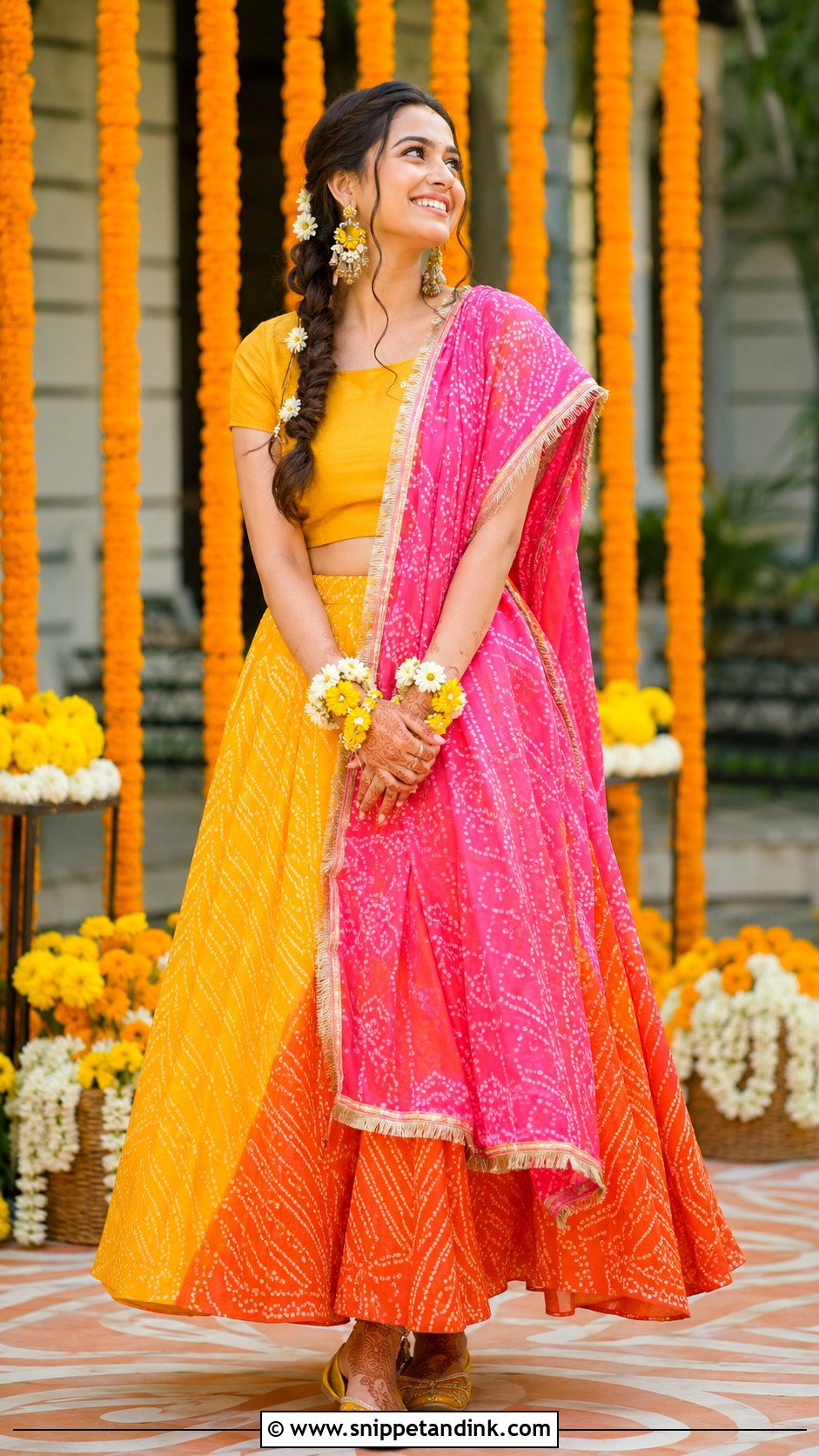
Bandhani is tie-dye, made by knotting tiny points of cloth before dyeing, and its dotted pattern feels made for haldi. A yellow, orange or pink bandhani lehenga needs no heavy embroidery. Pair the skirt with a solid blouse, or wear a matching set for impact, and try a contrast dupatta in rani pink, green or orange. Oxidized jewelry, floral bangles and juttis finish it. Real bandhani can bleed color the first time it gets wet, so expect that if paste is rinsed off while you’re still wearing it.
17. Haldi Bride Leheriya Saree
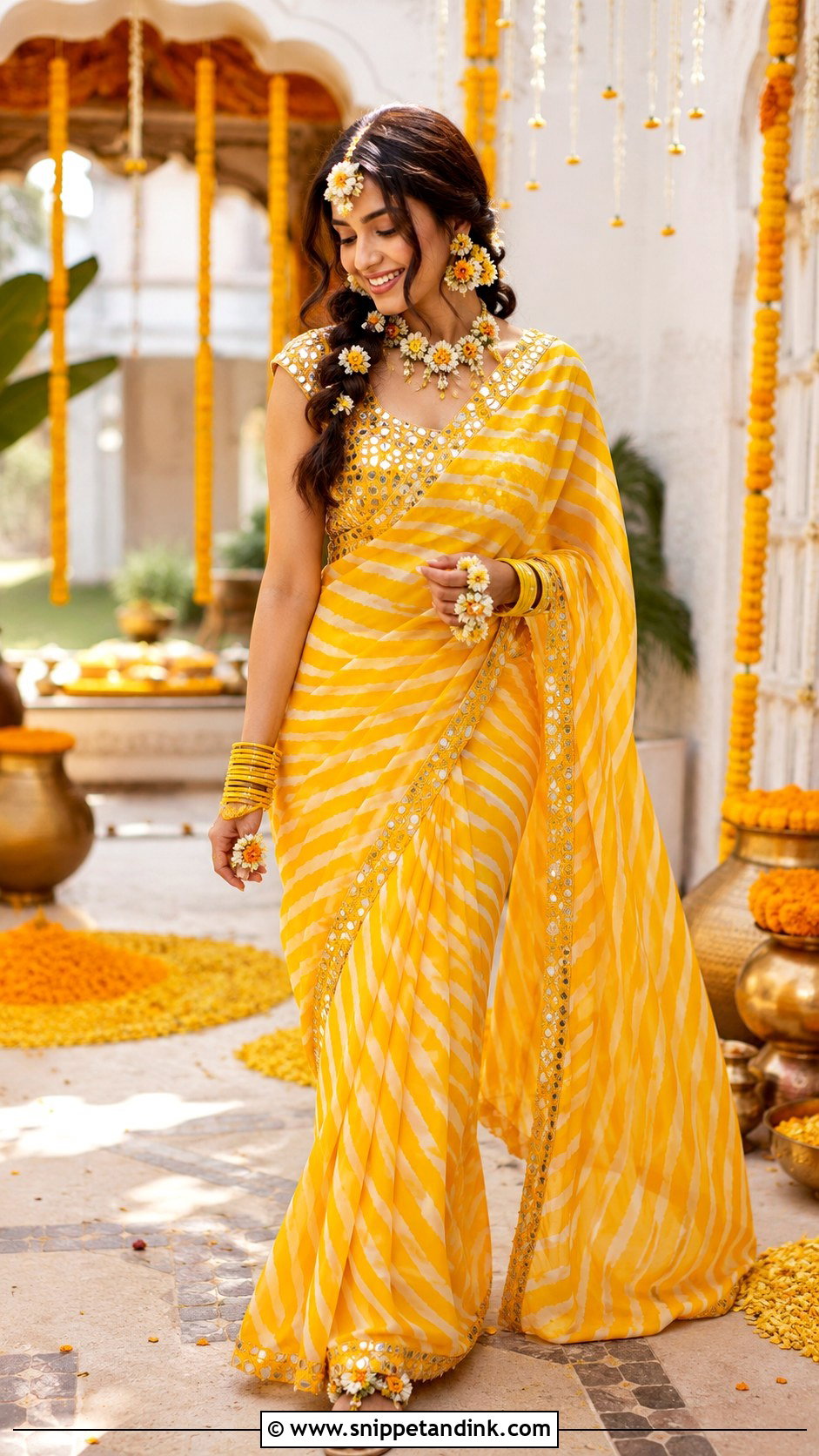
Leheriya is another Rajasthani resist dye, rolled and tied so the color runs in diagonal waves. Yellow and white, orange and pink, or lime and yellow all feel festive. A plain blouse keeps the saree light and a mirror-work blouse makes it more bridal. Add floral jewelry, jhumkas and bangles. Pin the pleats well, because leheriya is usually soft chiffon or georgette that slips loose when you sit and rise repeatedly.
18. Haldi Bride Printed Saree
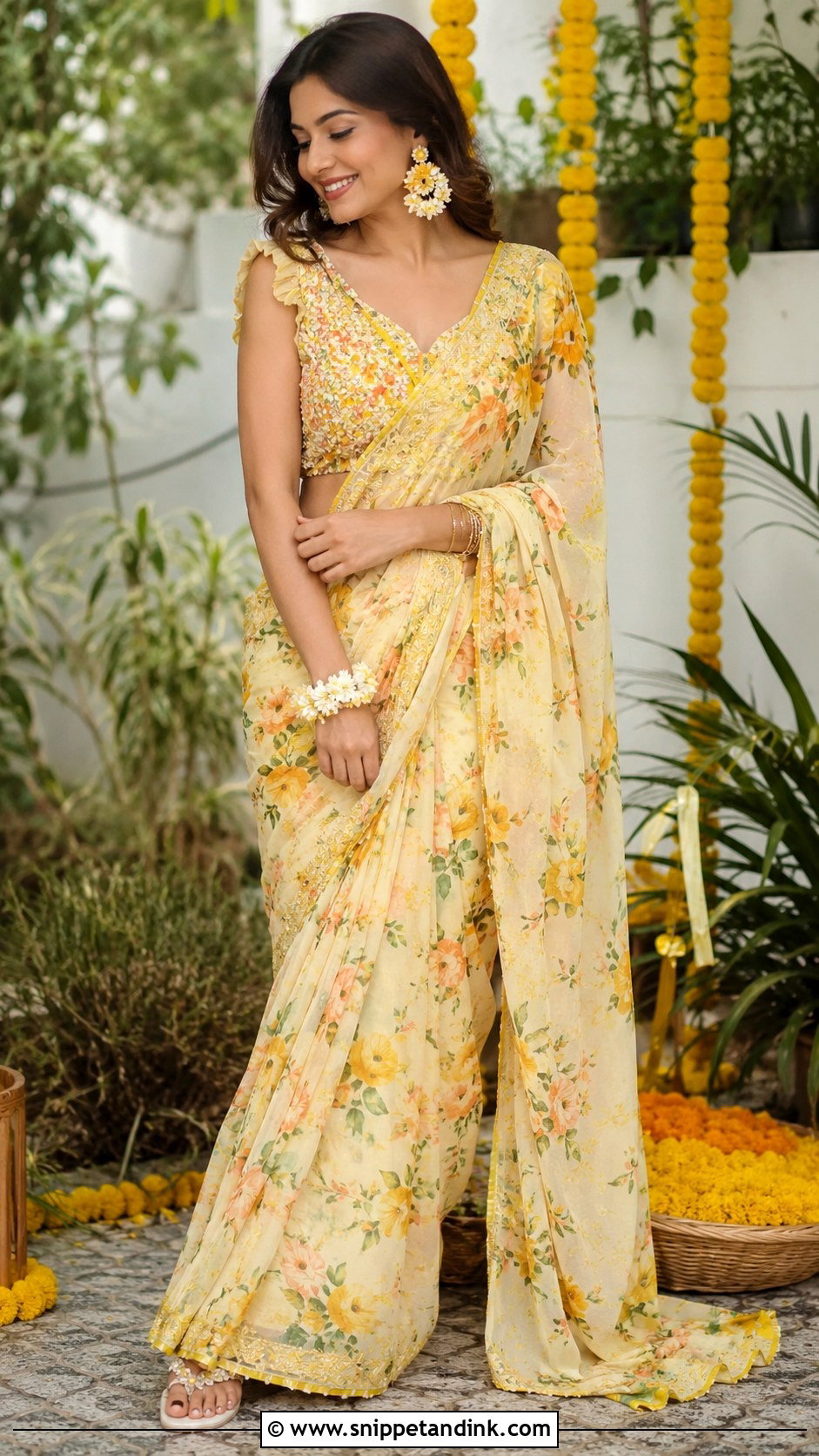
A printed saree is the relaxed option, and it’s the one I suggest for intimate home haldis and destination weddings. Floral, paisley, tropical or block prints all suit daytime, in yellow, ivory, peach, lime or orange. A statement blouse makes it modern and a matching one keeps it classic. Busy prints also hide turmeric well. Flower jewelry, delicate bangles and low sandals finish it, and the saree will see plenty of wear afterwards.
19. Haldi Bride Pastel Lehenga
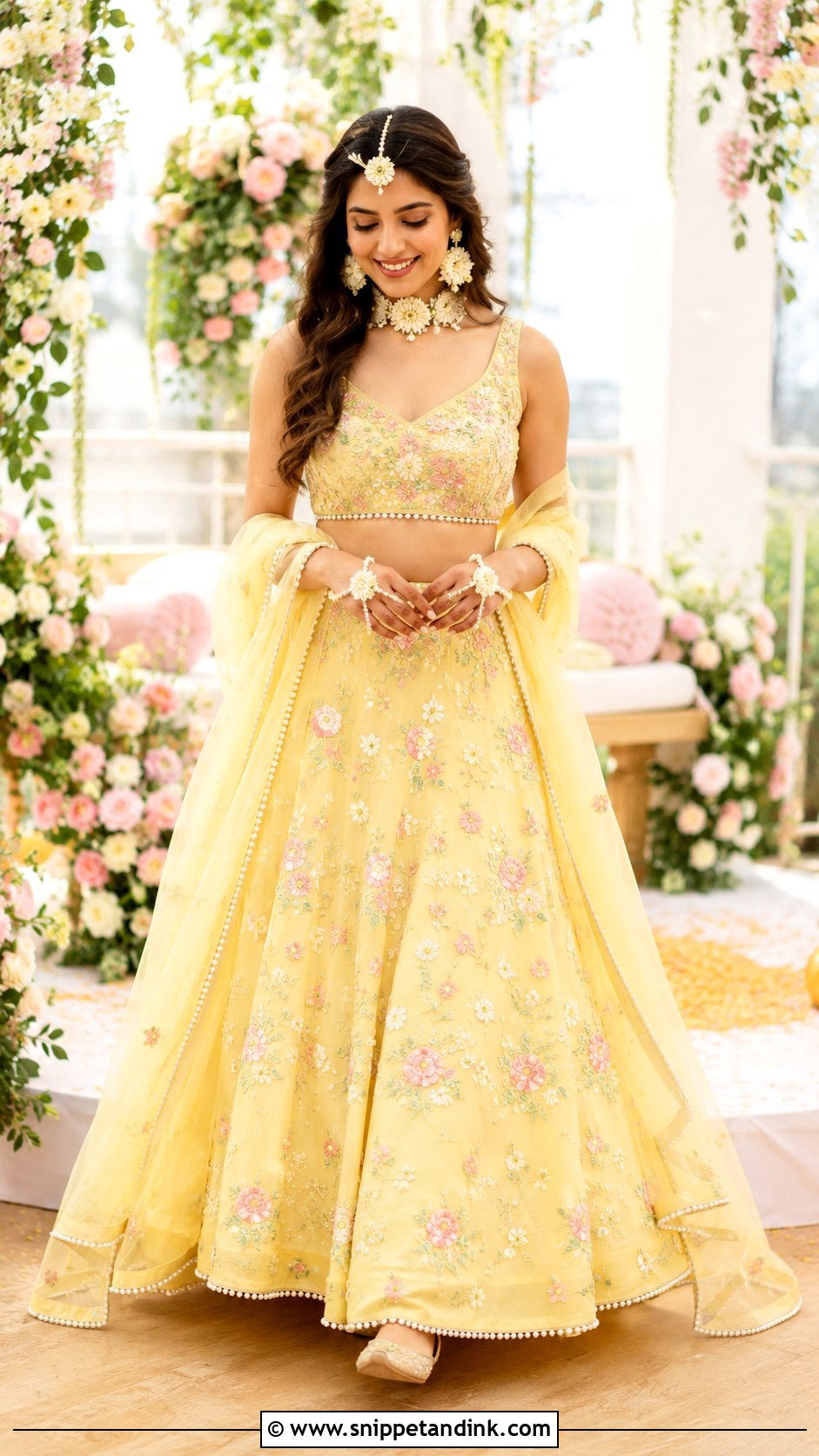
Pastels give a softer, modern take: butter yellow, mint, peach, blush or powder blue with floral accents. Against marigold decor, a pastel lehenga stands out. I’d warn that pale shades show turmeric most, so choose a print or embroidery that breaks up the surface. Light threadwork or sequins keep it bridal. Fresh flower jewelry, pearls, soft makeup and a loosely draped dupatta suit garden and resort haldis.


20. Haldi Bride Orange Lehenga
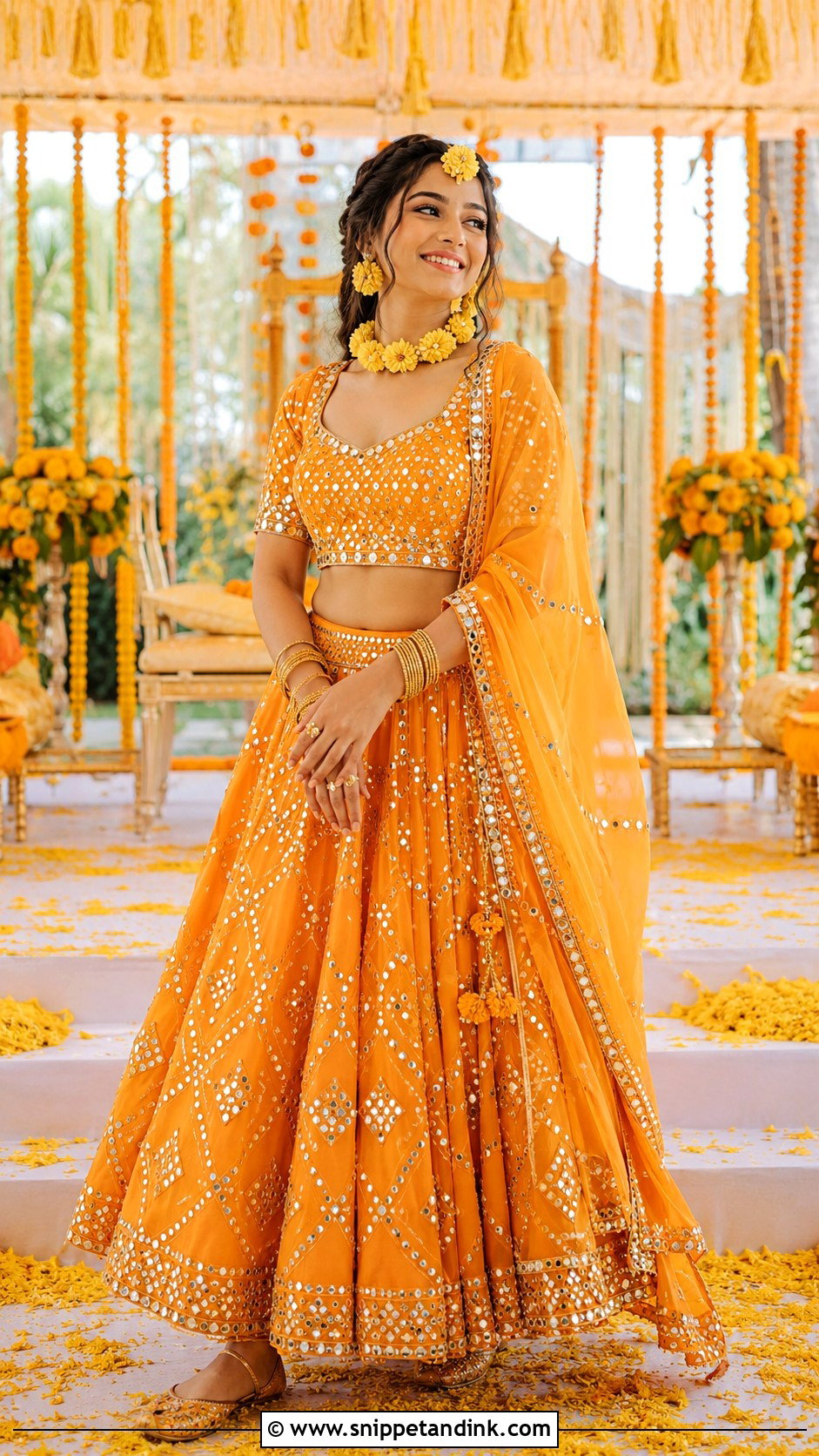
An orange lehenga brings warmth to the face and sits naturally beside yellow decor. Tangerine, marigold, saffron and burnt orange all work, and turmeric hardly shows on any of them. Choose a lightweight skirt with mirror work, gota patti or floral embroidery, then a matching blouse or a yellow one for a two-tone look. Floral jewelry, gold bangles and flats complete it. Orange needs very little styling to look festive in photos.
21. Haldi Bride Green Lehenga
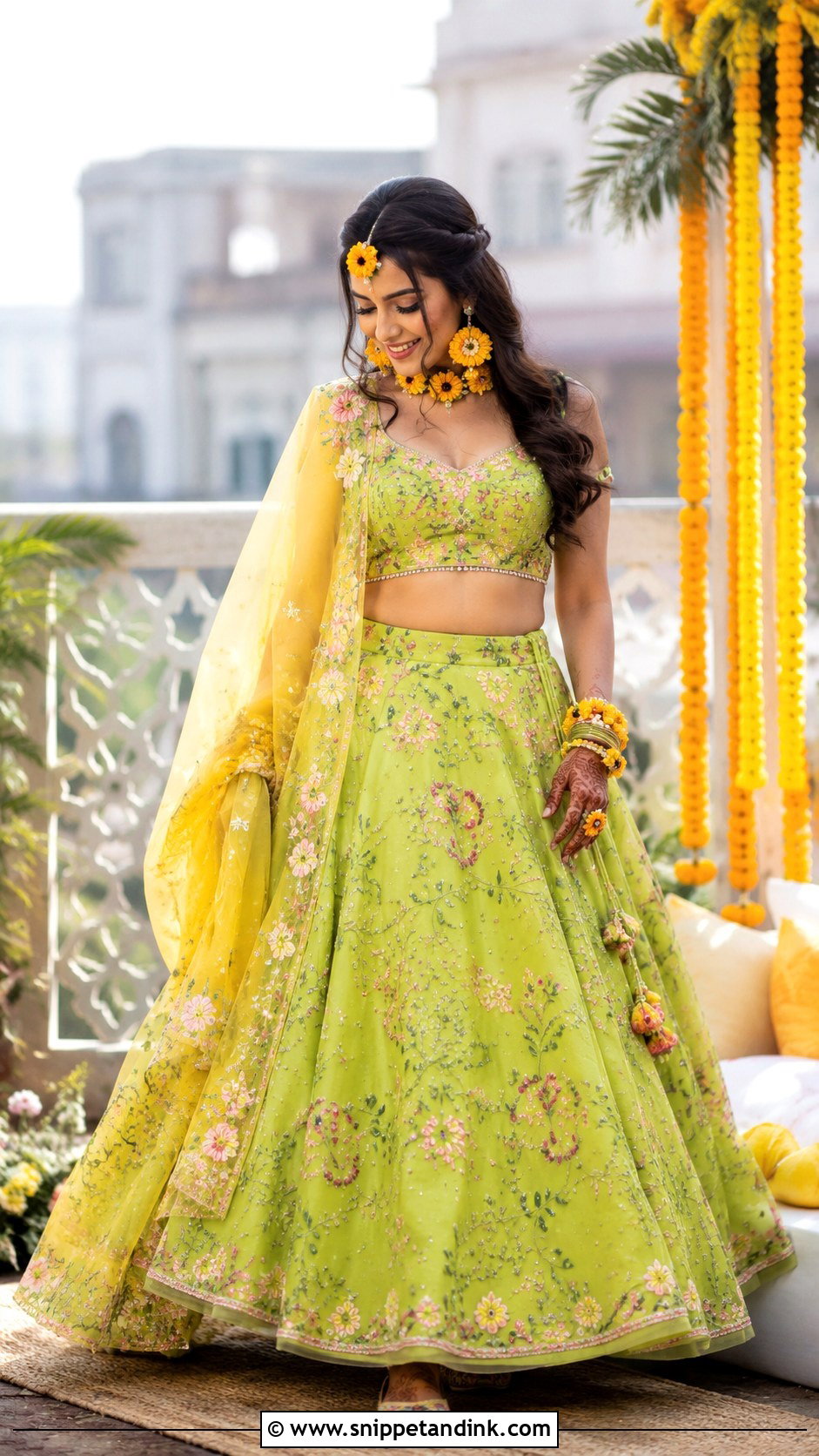
Green is the fresh alternative to yellow. Lime, mehendi green, pistachio and parrot green all look bright next to turmeric and marigolds, which makes the photos more colorful. Mirror work, floral embroidery or gota accents keep it bridal. Yellow flower jewelry, gold earrings and juttis tie it back to haldi, and an orange or yellow dupatta adds contrast. Check the green against your skin in daylight first; yellow-greens suit warm undertones better than cool ones.
22. Haldi Bride Pink Lehenga
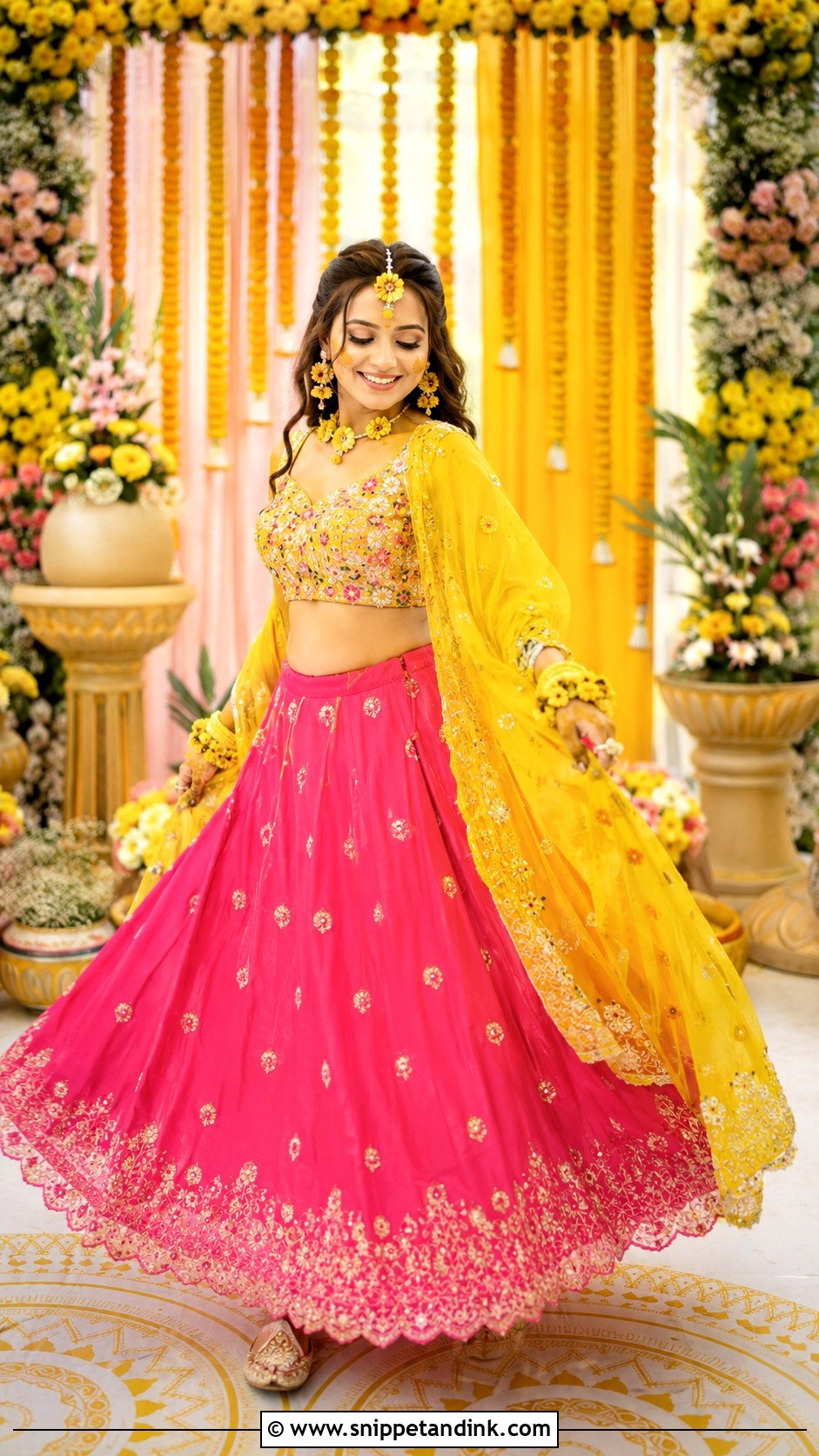
Pink sets the bride apart when every guest is in yellow. Rani pink, fuchsia, coral and rose all feel joyful. Yellow flower jewelry links the outfit back to the ceremony, and a pink skirt with a yellow dupatta makes a bold color block. Keep embroidery light so the outfit stays comfortable to sit in. Juttis, bangles and soft glam makeup complete it. Turmeric on pink can turn orange-ish, so a quick blot with a dry cloth helps between rounds of paste.
23. Haldi Bride Yellow Jumpsuit
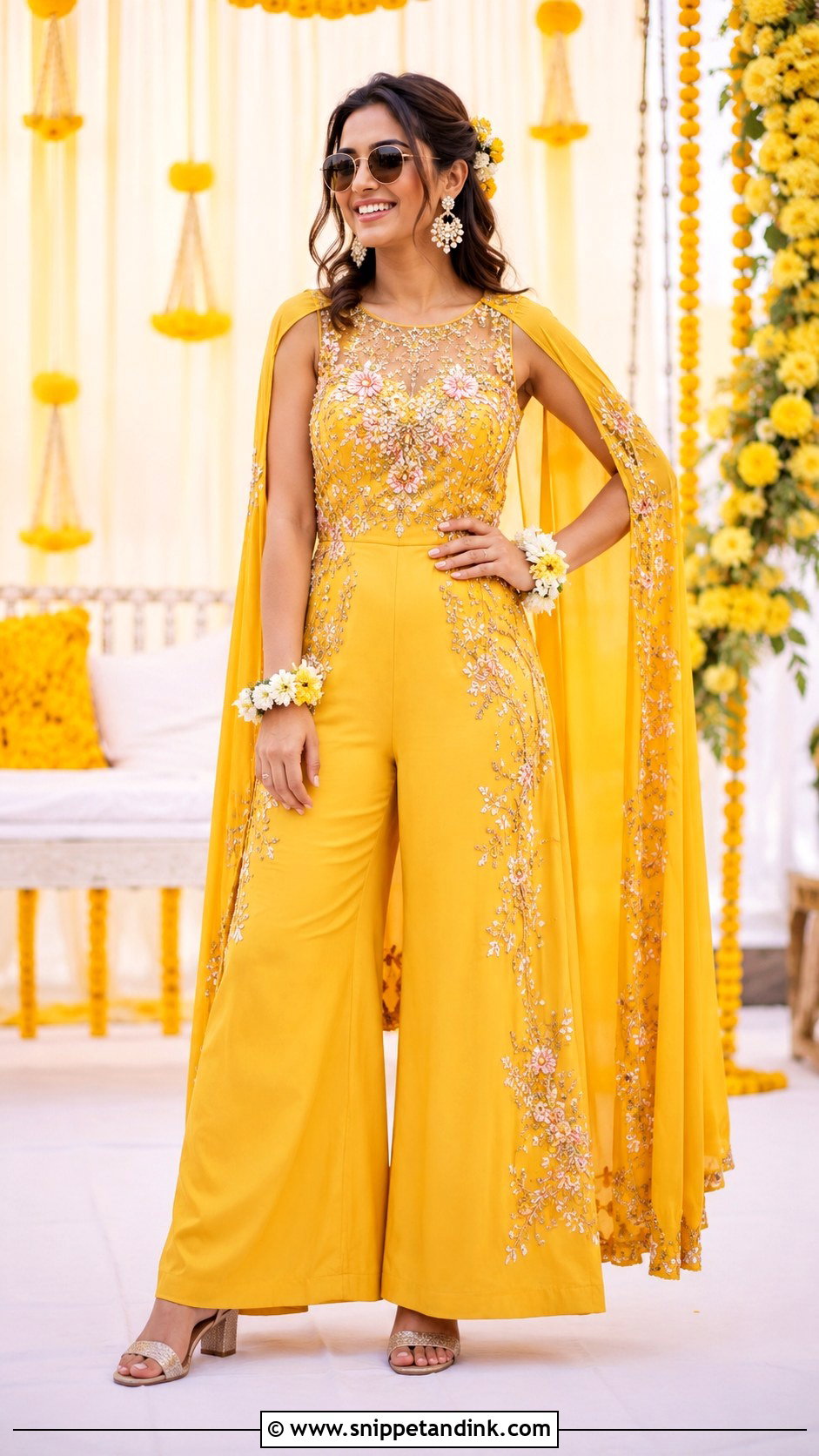
A jumpsuit suits a haldi with dancing, games or a pool. Choose one with wide legs and real festive detail, such as embroidery, mirror work or a draped overlay, so it reads as celebration wear rather than daywear. A cape, dupatta or embroidered belt adds bridal presence. Statement earrings, floral bangles and block heels or juttis finish it. Before buying, think about the bathroom break: a jumpsuit with a side zip is far easier than one that has to come fully off.
24. Haldi Bride Dhoti Set
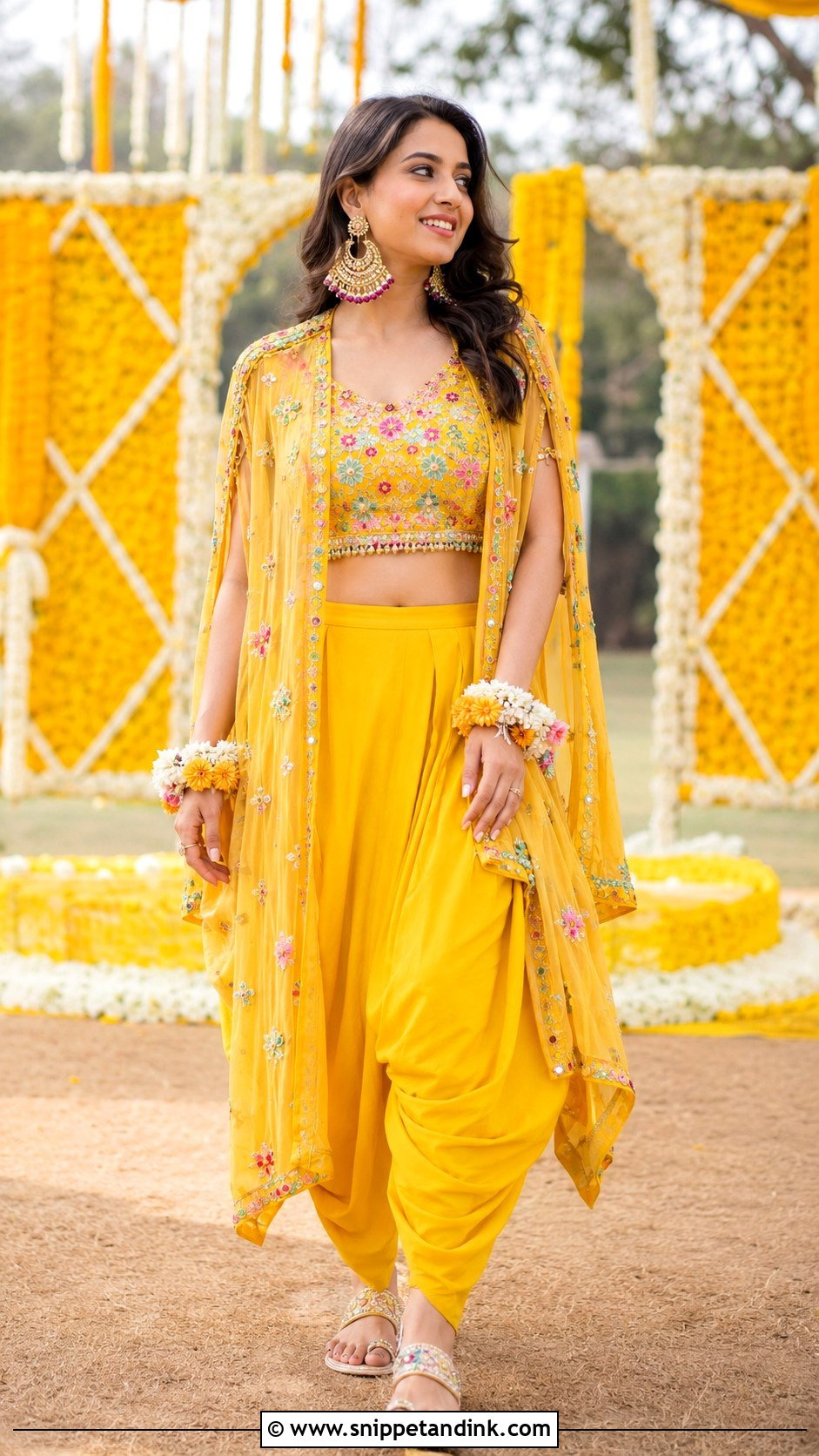
Dhoti pants are draped and pleated, so they give room to sit cross-legged and dance without the volume of a skirt. Pair them with a crop top, short kurti or jacket in yellow, ivory, orange or lime, with light embroidery or mirror detail. A cape or dupatta adds volume without weight. Bold earrings, flower bangles and flat sandals suit it. I’d check the drape is stitched in place rather than tied, so it doesn’t loosen through the day.

25. Haldi Bride Palazzo Set
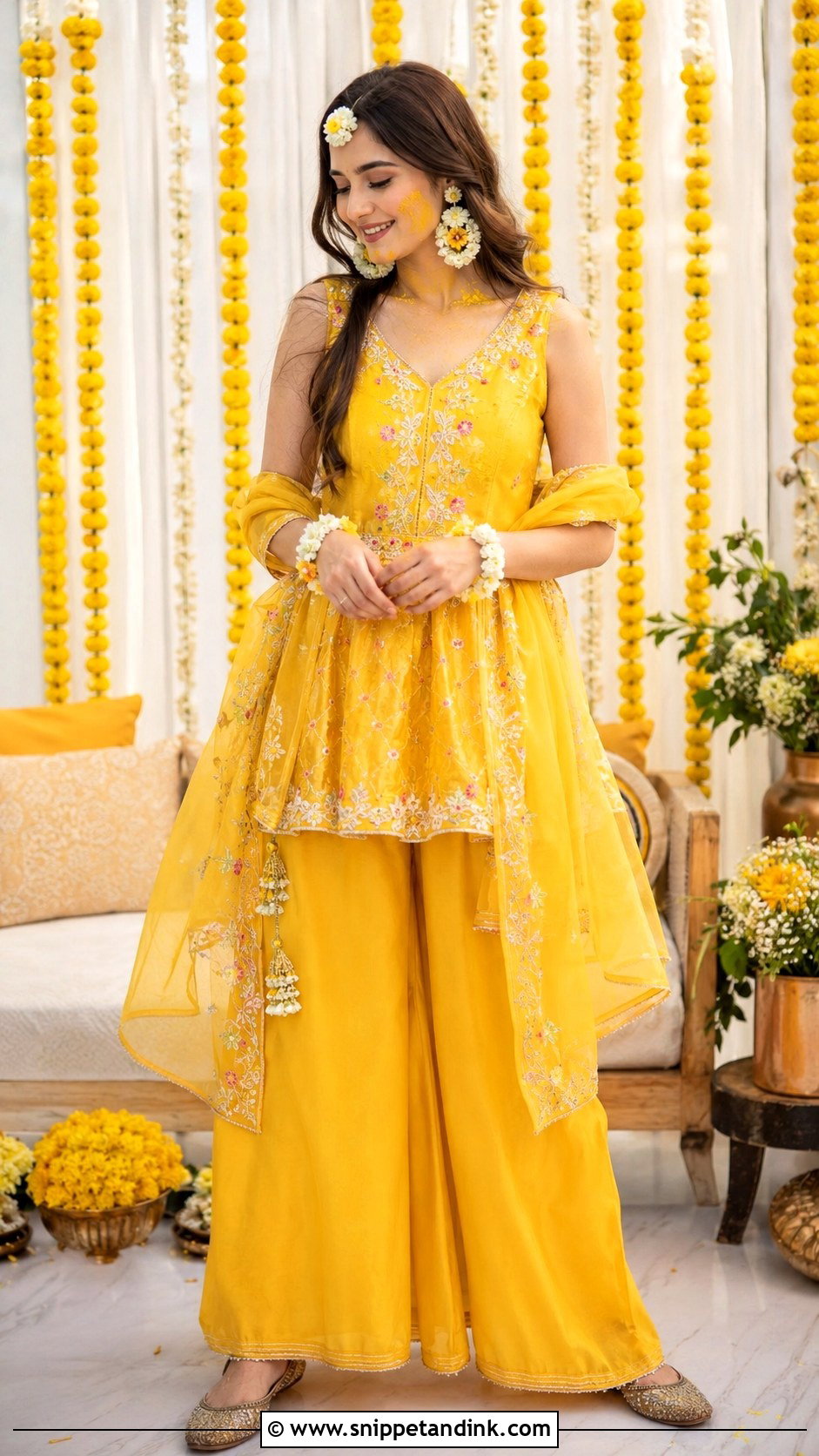
Palazzos are the low-fuss option. They’re straight and wide rather than flared, and they’re the easiest bottoms here for sitting on the floor through a long ceremony. Pair them with a short kurti, peplum top or embroidered blouse. Yellow and ivory are classic; peach, green and orange feel fresh. A light dupatta or cape completes it, with jhumkas, floral jewelry and juttis. It’s a good pick for haldis at home or in a casual outdoor venue.
26. Haldi Bride Peplum Sharara
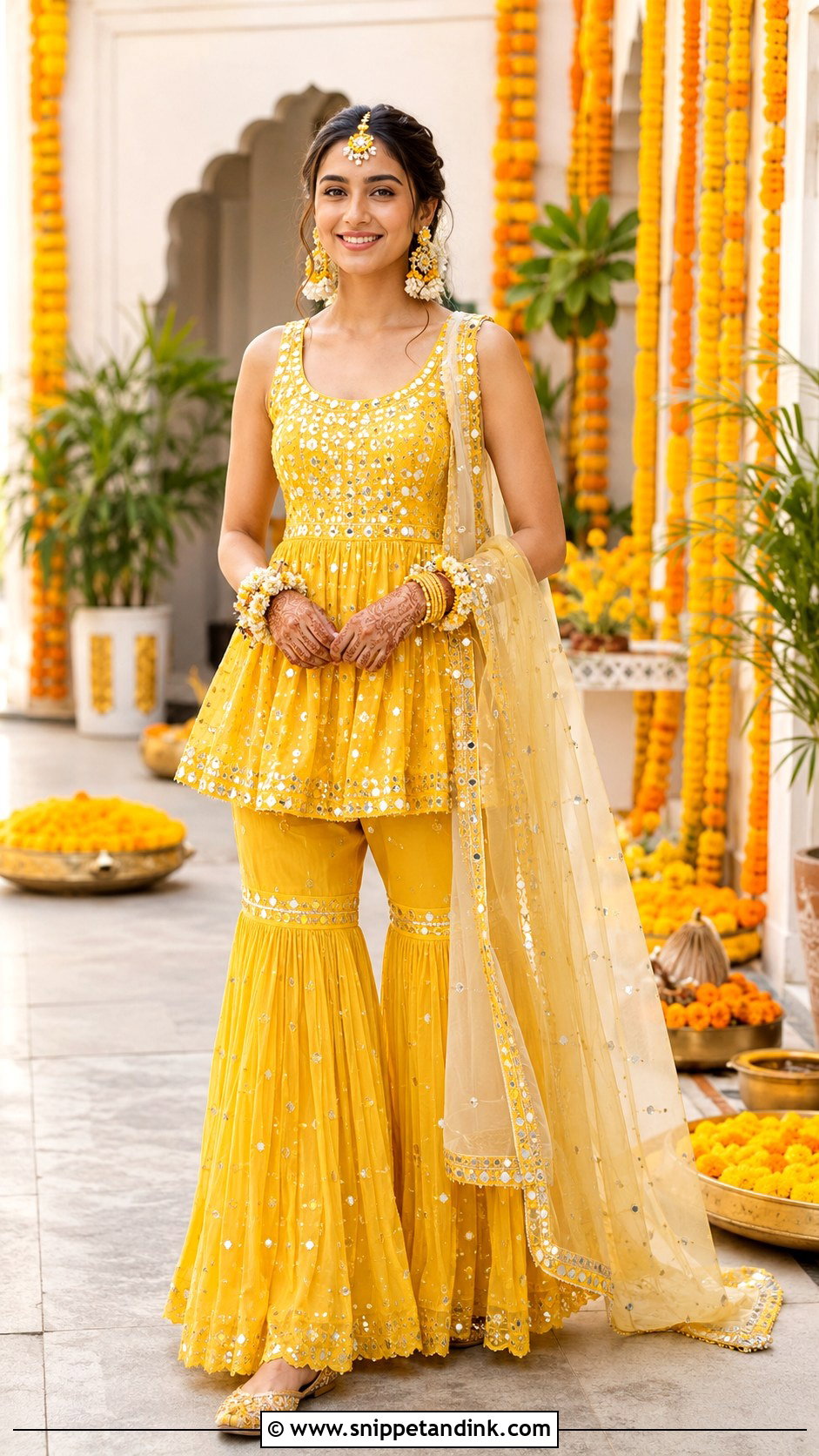
A peplum top gives shape at the waist, and with sharara bottoms the outfit moves well while staying fitted where it matters. Choose yellow with mirror work, floral embroidery or gota. Drape a light dupatta over one shoulder or skip it if the top is detailed. Floral earrings, a maang tikka and juttis finish it. The peplum flare covers the waistband, which helps if you prefer a little more coverage at the midriff. It photographs well in daylight from any angle.
27. Haldi Bride Yellow Co Ord Set
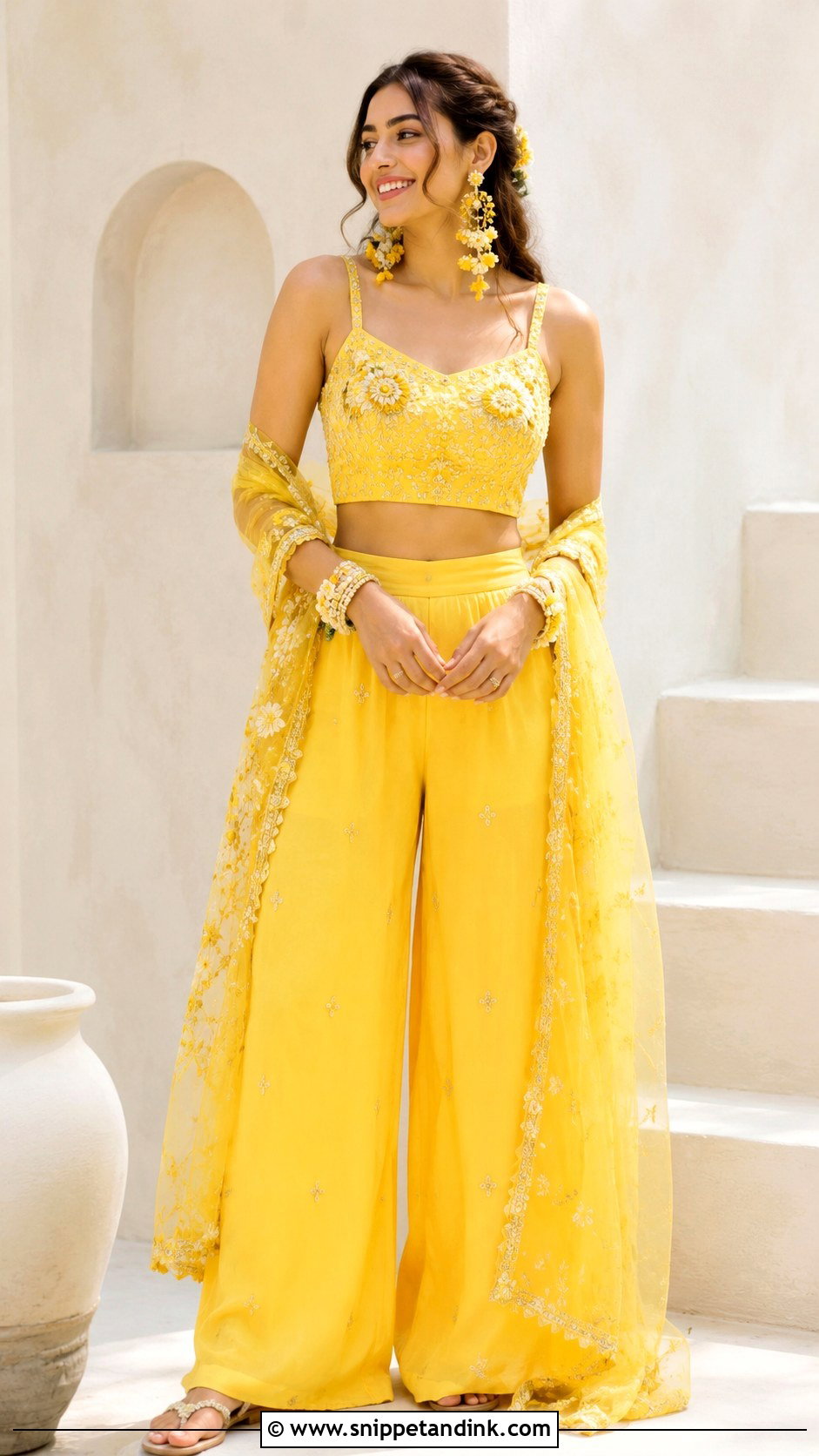
A yellow co ord set is the most rewearable outfit here. Matching separates, such as a crop top and wide pants, a kurta and trousers, or a blouse and skirt, can be split up and worn again for years. Embroidery, mirror borders or floral prints make it festive, and a statement dupatta adds bridal drama. Flower jewelry, bangles and comfortable sandals complete it. I’d still choose cotton or a washable blend if you plan to rewear, since that’s what cleans up best after turmeric.
28. Haldi Bride Maxi Dress
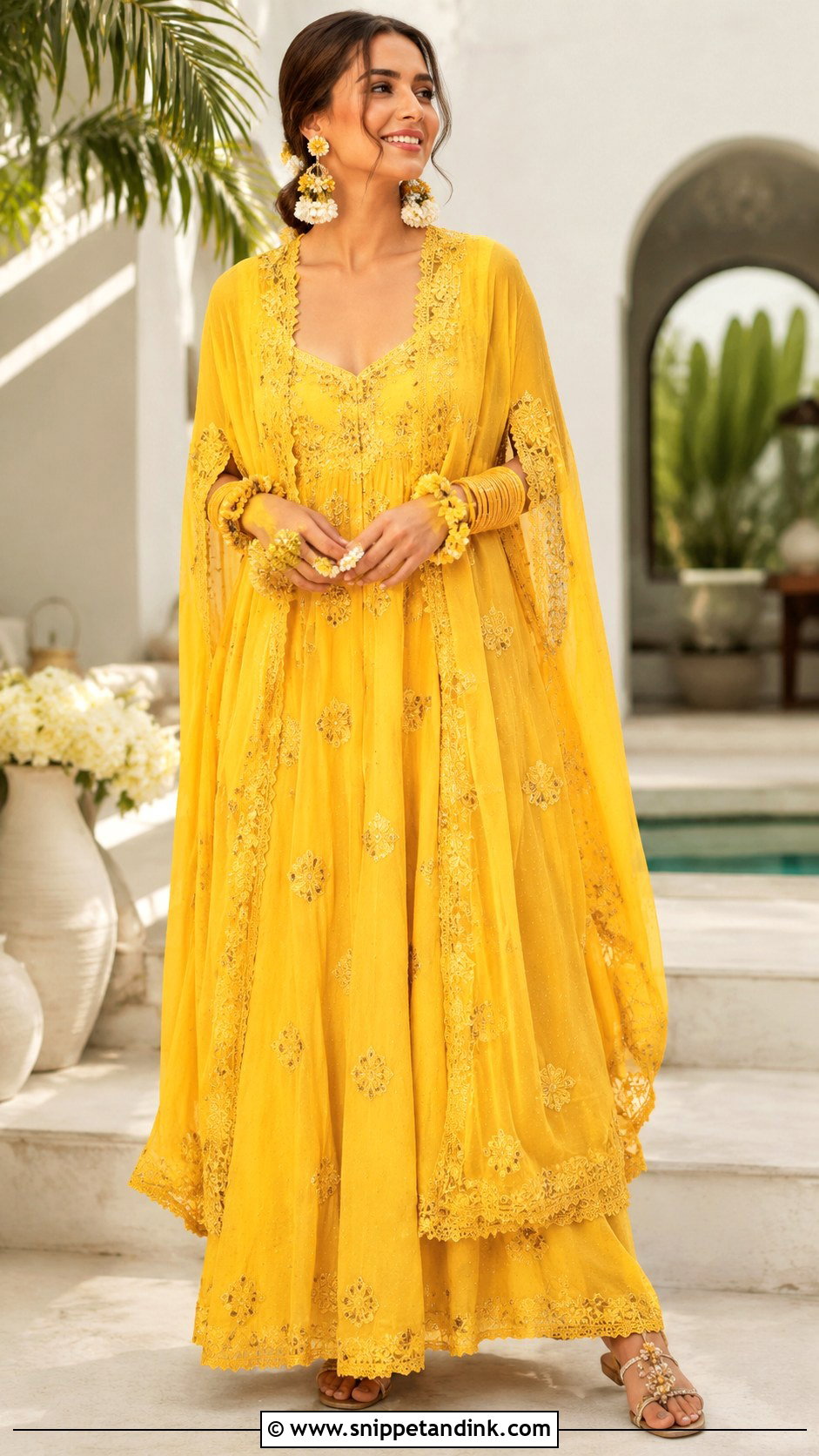
A maxi dress works for a fusion haldi, especially at a beach or destination wedding. Choose yellow, ivory or floral with Indian embroidery, mirror work or a dupatta-style overlay. A halter neck, puff sleeves or tie-back detail makes it feel special. Floral earrings, bangles and flat sandals suit it, and a light dupatta or embroidered cape adds tradition. Watch the hem length if you’ll sit on the floor; a maxi that pools gets the most paste.
29. Haldi Bride Silk Saree
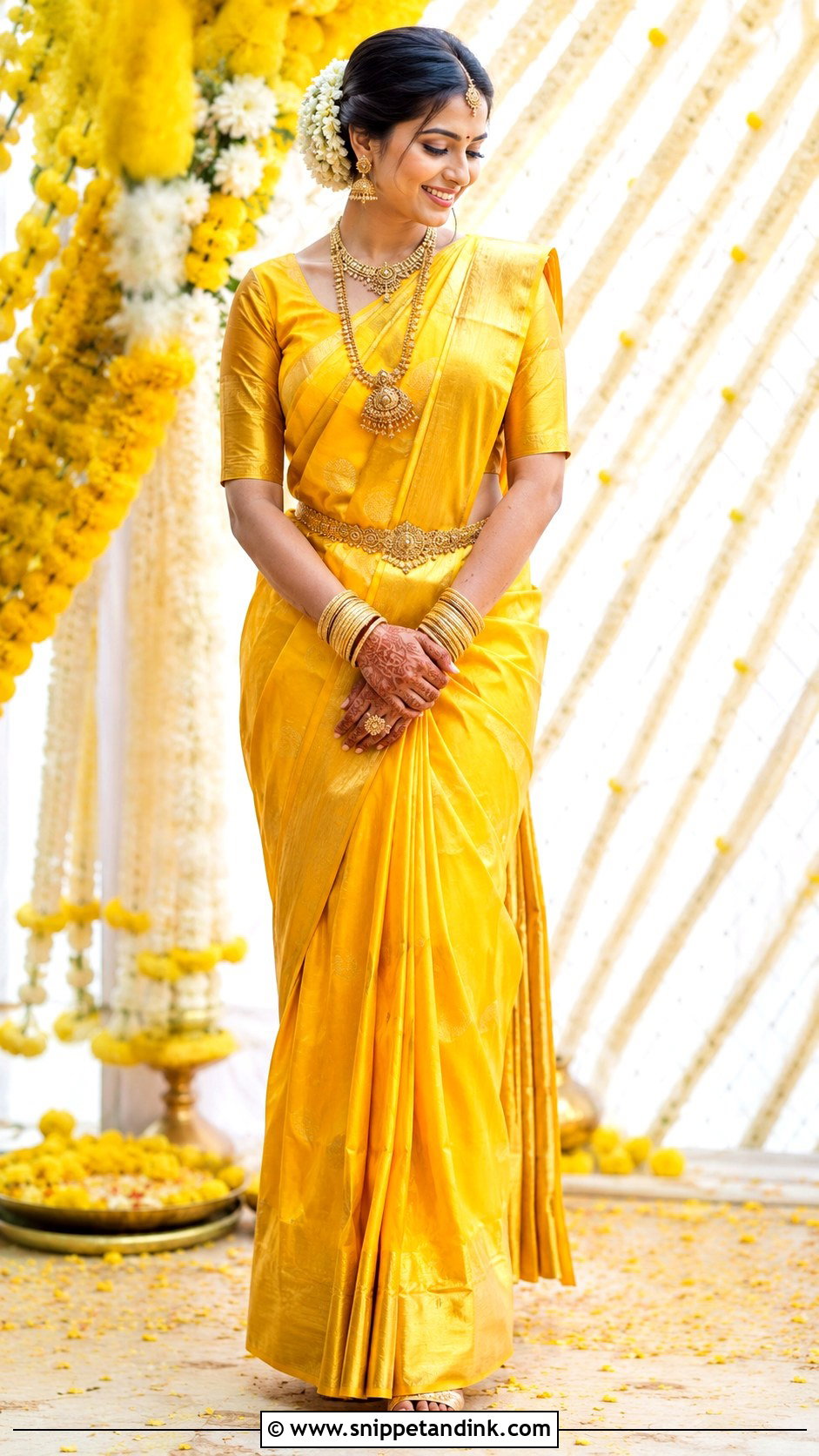
A silk saree is the traditional choice in many South Indian and Maharashtrian families, where haldi is a more formal ritual. Turmeric yellow, mango, orange or green silk with a gold border looks rich. Pair it with a fitted blouse, temple jewelry, fresh flowers and bangles, and a low bun with gajra to keep hair tidy. Silk is heavier, so choose a lighter weave outdoors. Treat turmeric on silk as permanent; if this saree is an heirloom, I’d wear something else for the paste and change for the photos.
30. Haldi Bride Floral Jewelry Outfit
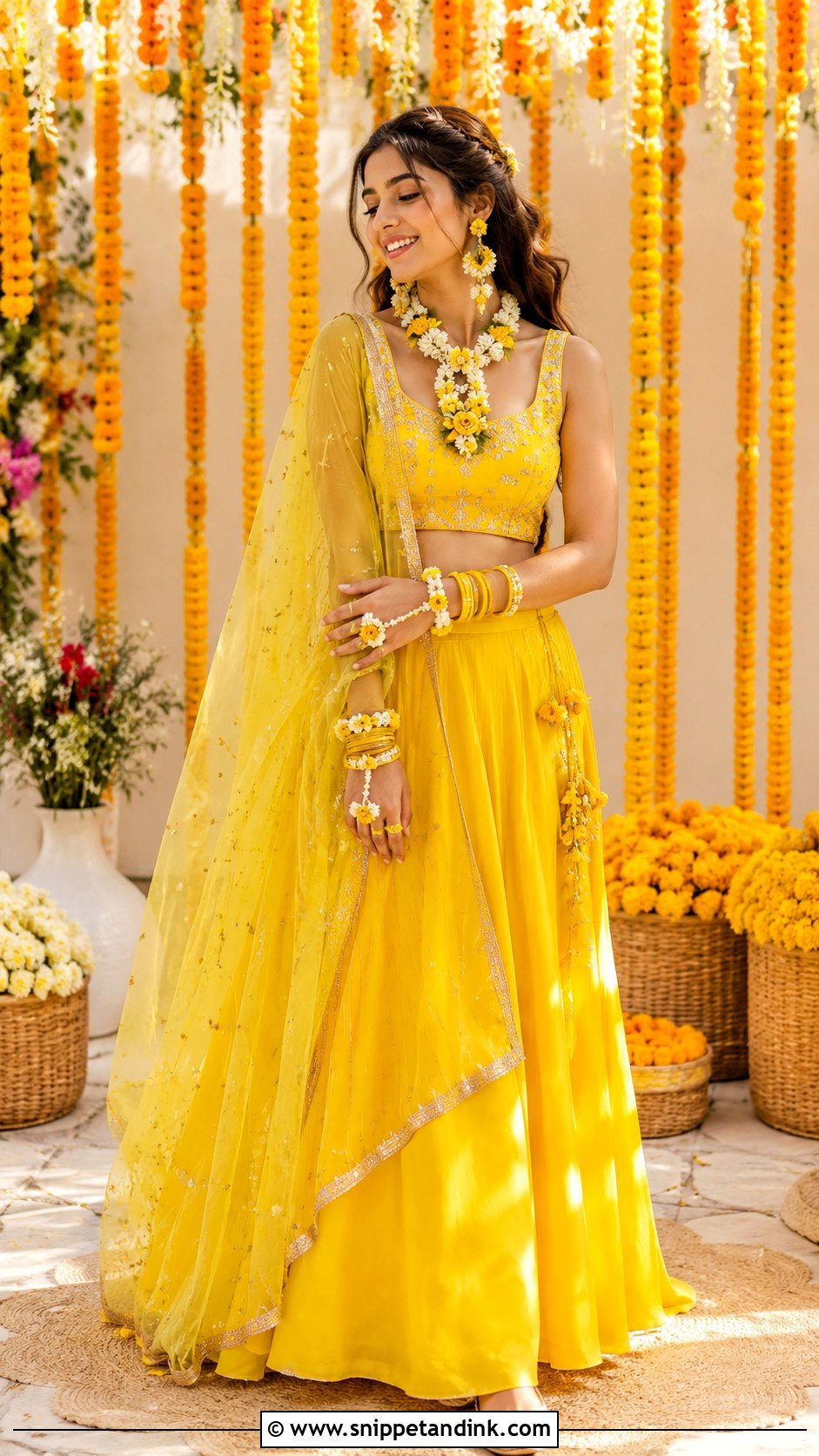
Floral jewelry is made for haldi: it’s light, it doesn’t mind the paste, and it costs nothing to ruin. Start with a simple yellow lehenga, sharara, saree or Anarkali and build the look around fresh or artificial flowers. Marigold, jasmine, roses, baby’s breath and orchids can become earrings, necklaces, bangles, haath phool and hair accessories. Keep the outfit slightly simpler so the flowers lead. Order fresh pieces for the morning itself and keep them cool until you dress.
Dressing for the Low Stool and the Bucket of Water
The ritual shapes the outfit more than the decor does. In most haldis the bride sits on a low stool or patla while relatives apply paste to her face, arms, hands and feet, and many families end it with a pour of water or a bath. I plan the clothes around that.
Sleeves, hems and blouse fit
Sleeveless or elbow-length blouses let relatives reach your arms without pushing fabric up. Ankle-grazing hems are easier than floor-length ones, since your feet get paste too. A blouse that’s slightly too tight becomes uncomfortable once you’ve been seated low for an hour.
What to pack
- A full change of clothes, plus fresh underwear, for after the rinse.
- Old towels and a pair of rubber slippers you don’t mind ruining.
- Safety pins and a few spare bobby pins for drapes and flowers.
- Wet wipes and a dry cotton cloth to blot paste off jewelry quickly.
Keep gold and heirloom pieces off until after the paste. Turmeric oil dulls metal and settles into kundan settings, and flowers are a much safer choice for this hour.
Wear Something You Won’t Mind Getting Yellow
The right haldi outfit lets you relax into the ritual. A yellow lehenga stays classic, a saree feels graceful, a sharara lets you dance, and green, pink, white or orange stand out. Whatever you pick, put breathable fabric, secure draping and easy footwear first, then add flowers and soft makeup. If you know it will get stained and you don’t mind, you’ll enjoy the ceremony far more than if you spend it protecting your clothes.
You'll Like These Ideas:



Leave a Reply