
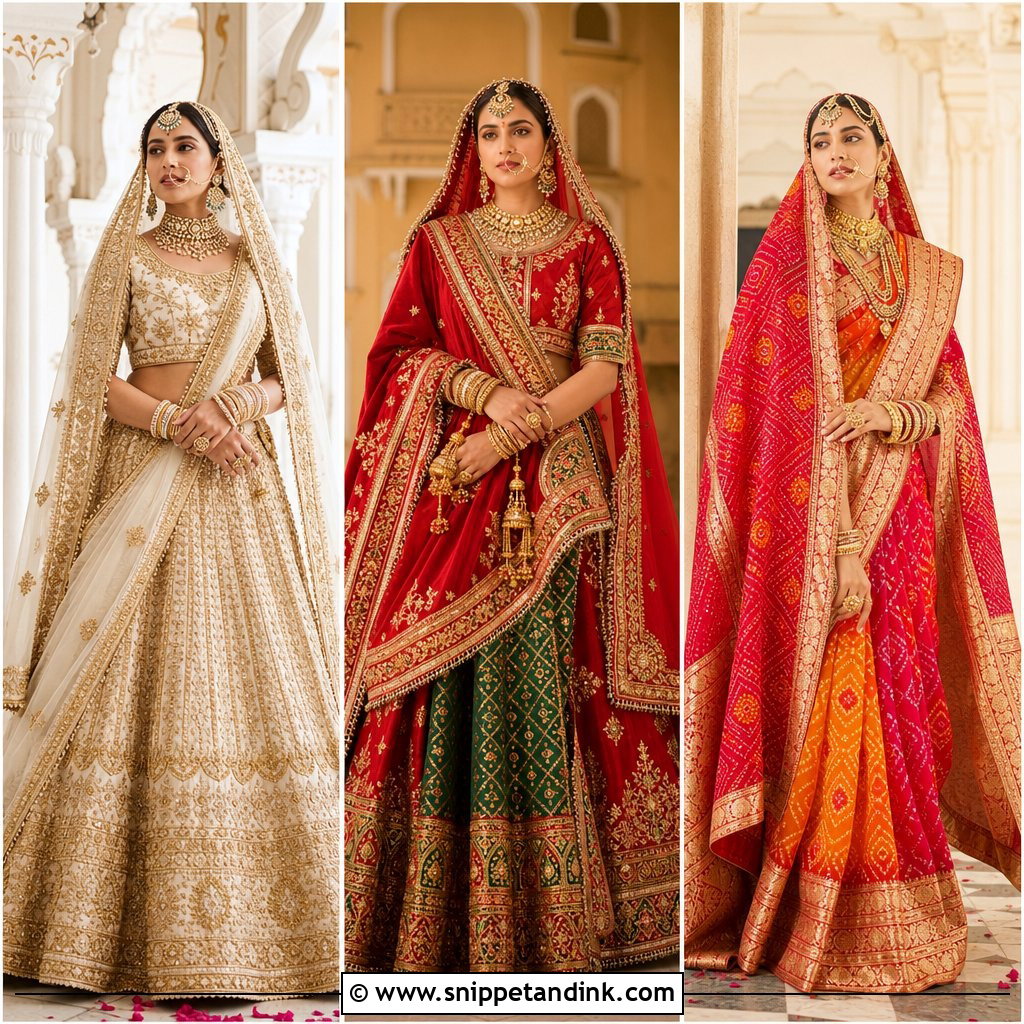
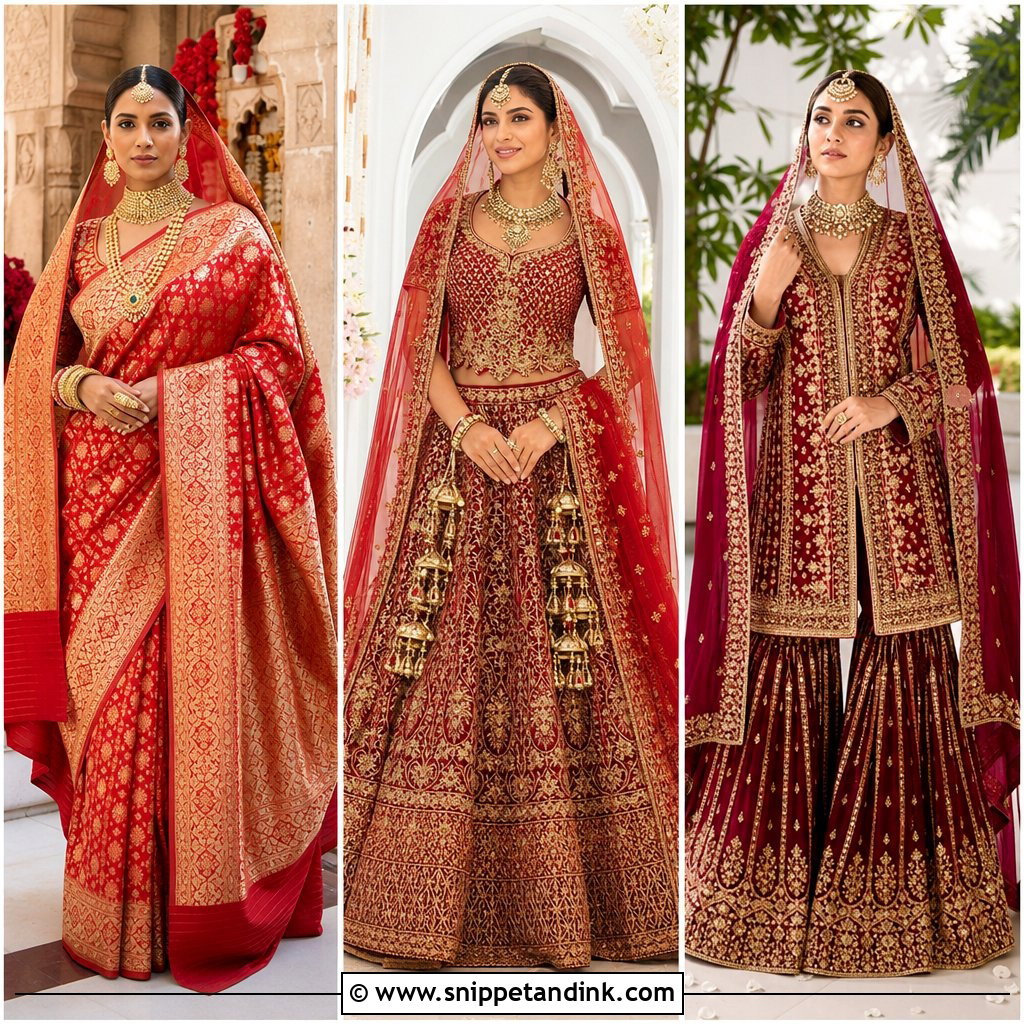
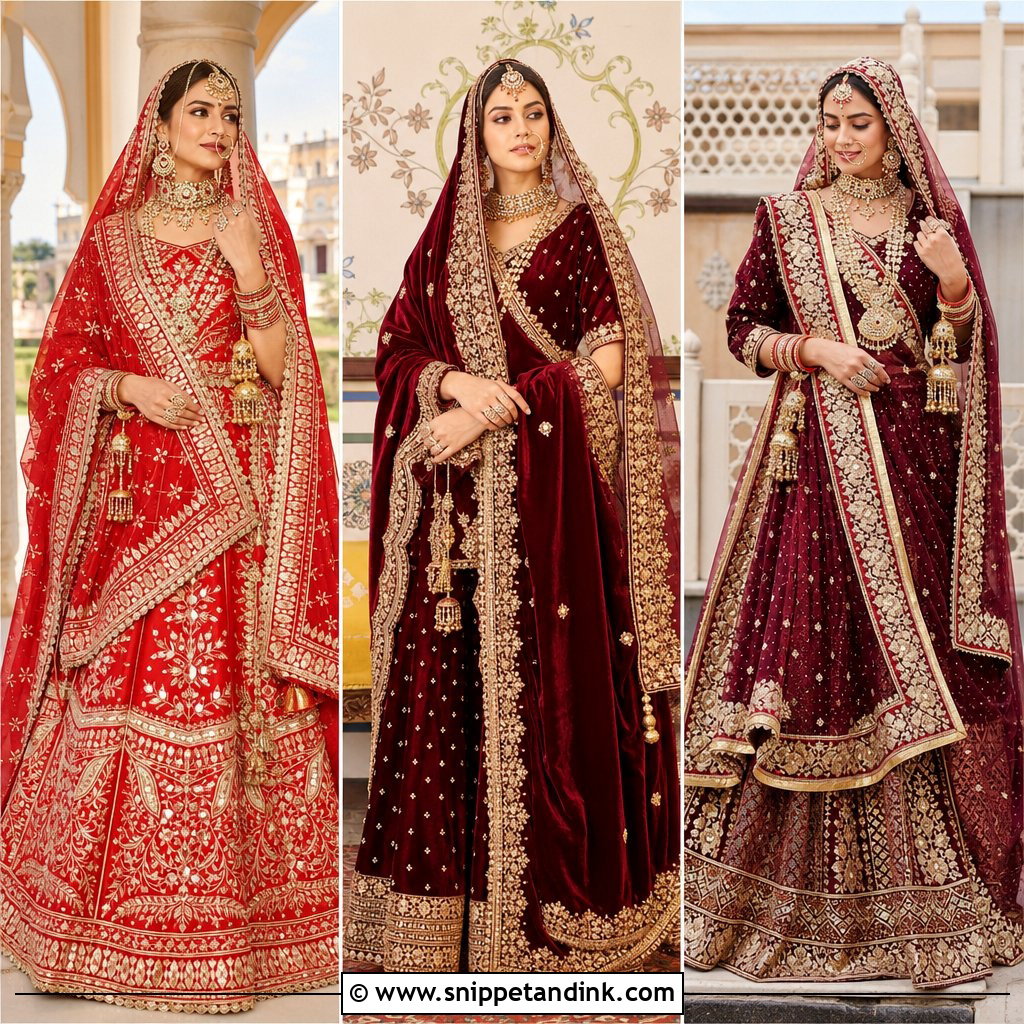
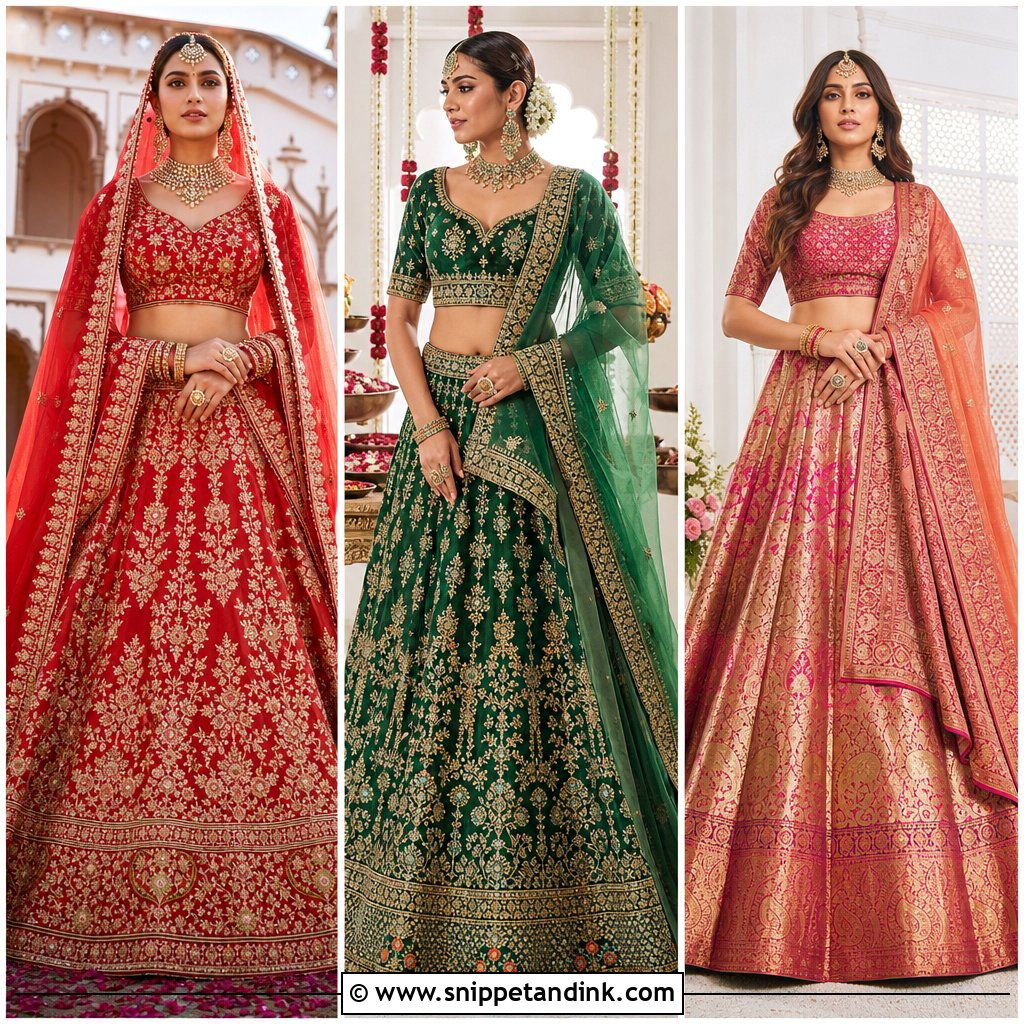
A Rajputi bridal poshak is built from four garments, a kurti, a kanchli, a ghaghra and a long odhna, and that layering gives a silhouette quite unlike a standard bridal lehenga. The kurti sits over the kanchli, and the odhna is long enough to tuck at the waist and still cover the head. Red and maroon remain the most common choices, though rani pink, emerald, saffron, peach and ivory are all worn. Gota patti, zardozi, bandhani, leheriya and metallic embroidery add depth, and not every piece needs to be equally heavy; in fact I’d rather they weren’t. What suits you depends on the ceremony, the venue, how much weight you’re comfortable carrying, your family’s customs and your own taste. The ideas below run loosely from classic reds to less expected colors.

Sitting, Stepping and Turning in a Pleated Ghaghra
A Rajputi wedding asks a lot of the outfit physically. You’ll sit low or cross-legged for rituals, walk the pheras, climb mandap steps and bend to touch elders’ feet, usually with the odhna over your head the whole time. I fit a ghaghra for all of that, not just for standing still in front of a mirror.
- Hem: with your juttis on, the ghaghra should just clear the floor. Any longer and you’ll tread on it the moment you climb a step.
- Waist: tie it firmly but not so tight it marks the skin, since a heavy skirt sinks a little as the day goes on. A hook plus a tie holds better than a drawstring alone.
- Sitting: gather the back of the ghaghra and sweep it forward as you sit, so you’re not landing on the embroidery.
- Walking the pheras: lift the front of the skirt slightly with one hand, and anchor the odhna’s tucked end with a safety pin inside the waistband.
- Bending: practise touching feet once in the full outfit. If the kanchli rides up or the aad digs in, that’s a fitting note, not something to put up with.
1. Red Gota Patti Rajputi Bridal Poshak
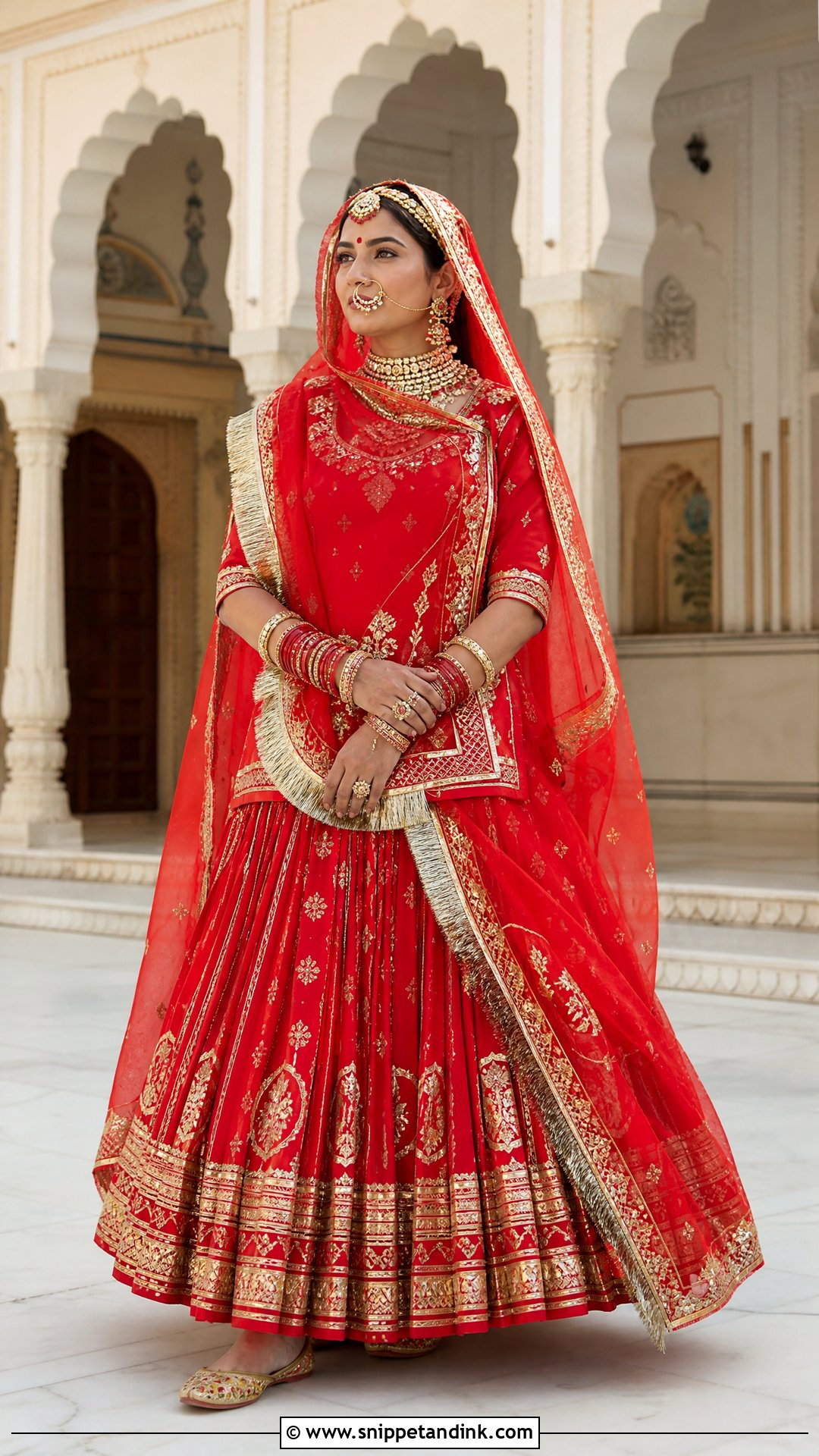
Red is instantly bridal, and gota patti is the most traditional way to dress it up. I’d ask for a generously pleated ghaghra with dense gold gota at the hem and smaller motifs scattered above. More kalis give more swing when you walk, but they also add weight at the waist, so ask the tailor how many panels they’re planning. A fitted kanchli and structured kurti keep the top polished, and a matching sheer odhna frames the face without hiding the work. Gold-toned borla, aad, a longer rani haar, a statement nath and stacked lakh bangles, with embroidered juttis underneath. Balanced work beats covering every inch, because it leaves room for the red, the jewelry and the makeup to show.
2. Maroon Velvet Rajputi Bridal Poshak
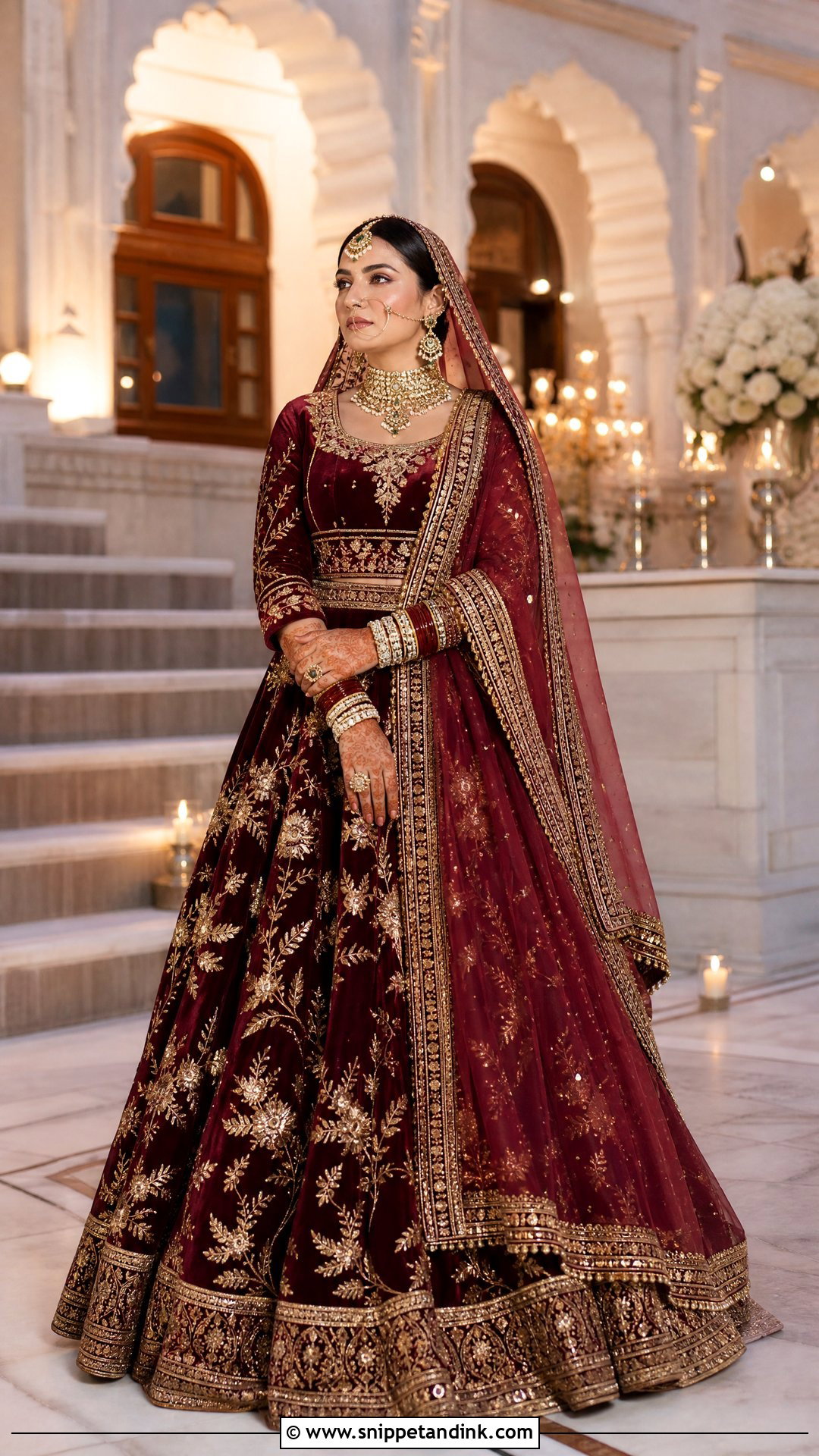
Deep maroon velvet belongs to evenings and cold weather. A full velvet ghaghra with antique-gold zardozi on the border, a matching kurti and a fitted kanchli make the base. Velvet is heavy and warm, so the odhna has to compensate: maroon net or tissue with a detailed border drapes over the head without adding bulk. Kundan jewelry, a traditional borla, an ornate nath, armlets and deep red bangles separated by gold kadas. Cushioned maroon or gold juttis for long rituals. Velvet also holds every pressure mark, so I have it steamed on the morning, never ironed, and keep it on a hanger until the last minute. Soft matte makeup and a neat center-parted bun complete it.
3. Rani Pink Kundan Rajputi Bridal Poshak
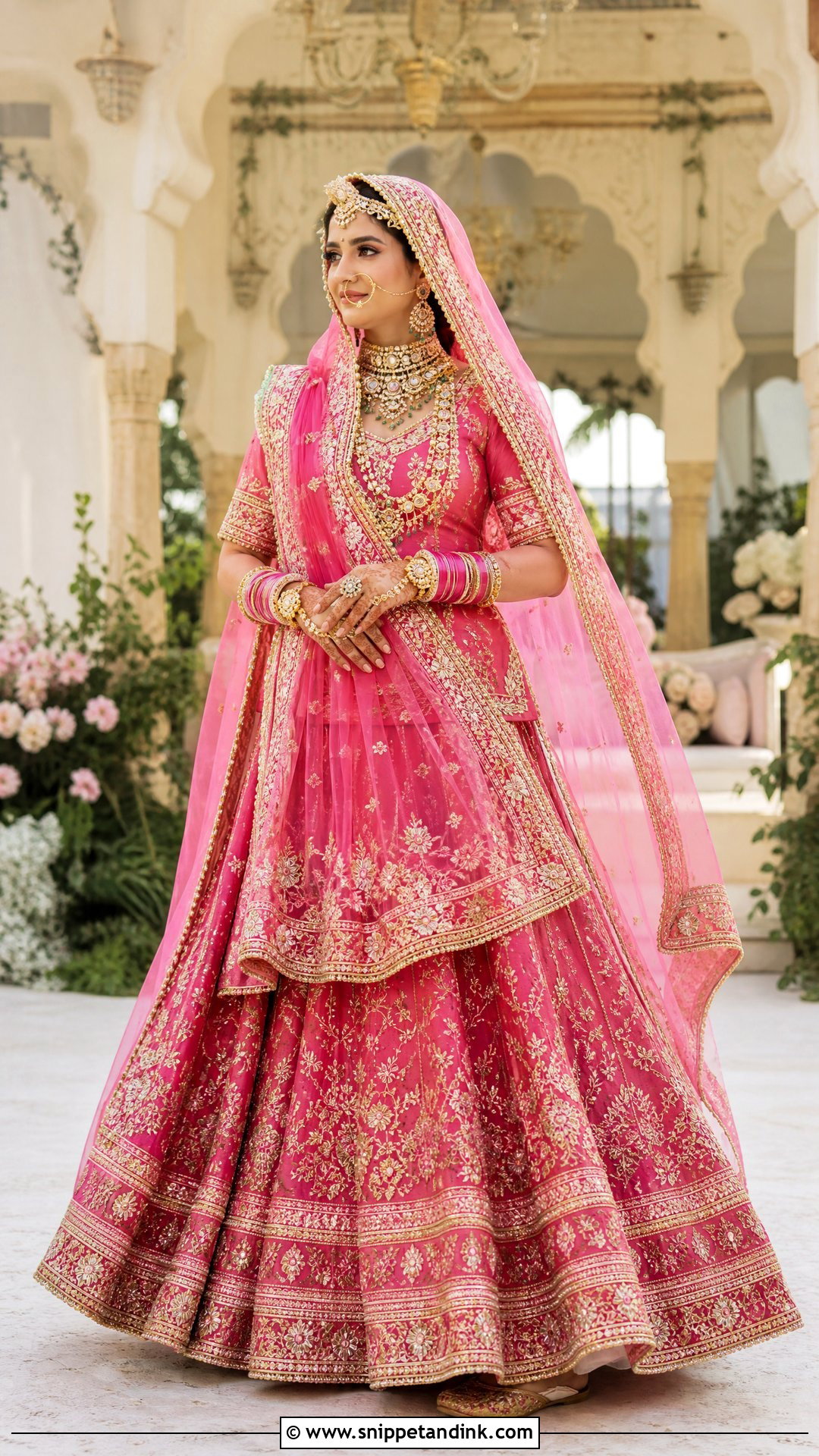
Rani pink keeps the ceremonial weight of red but feels younger. Kundan-inspired embroidery, with stones or raised settings stitched into the work, gives it sparkle with a more structured look than sequins. Choose a silk or satin ghaghra with that work, fine zari lines and a broad hem, and a matching kurti and kanchli with the detail concentrated at the neckline and sleeves. A sheer rani pink odhna with small gold motifs makes a light veil. Kundan borla, aad, a long layered necklace, nath, haath phool and pink-and-gold bangles, with gold embroidered juttis. For extra definition, add a touch of emerald in the jewelry rather than another embellished fabric; small stones do that job without crowding anything.
4. Crimson Zardozi Rajputi Bridal Poshak
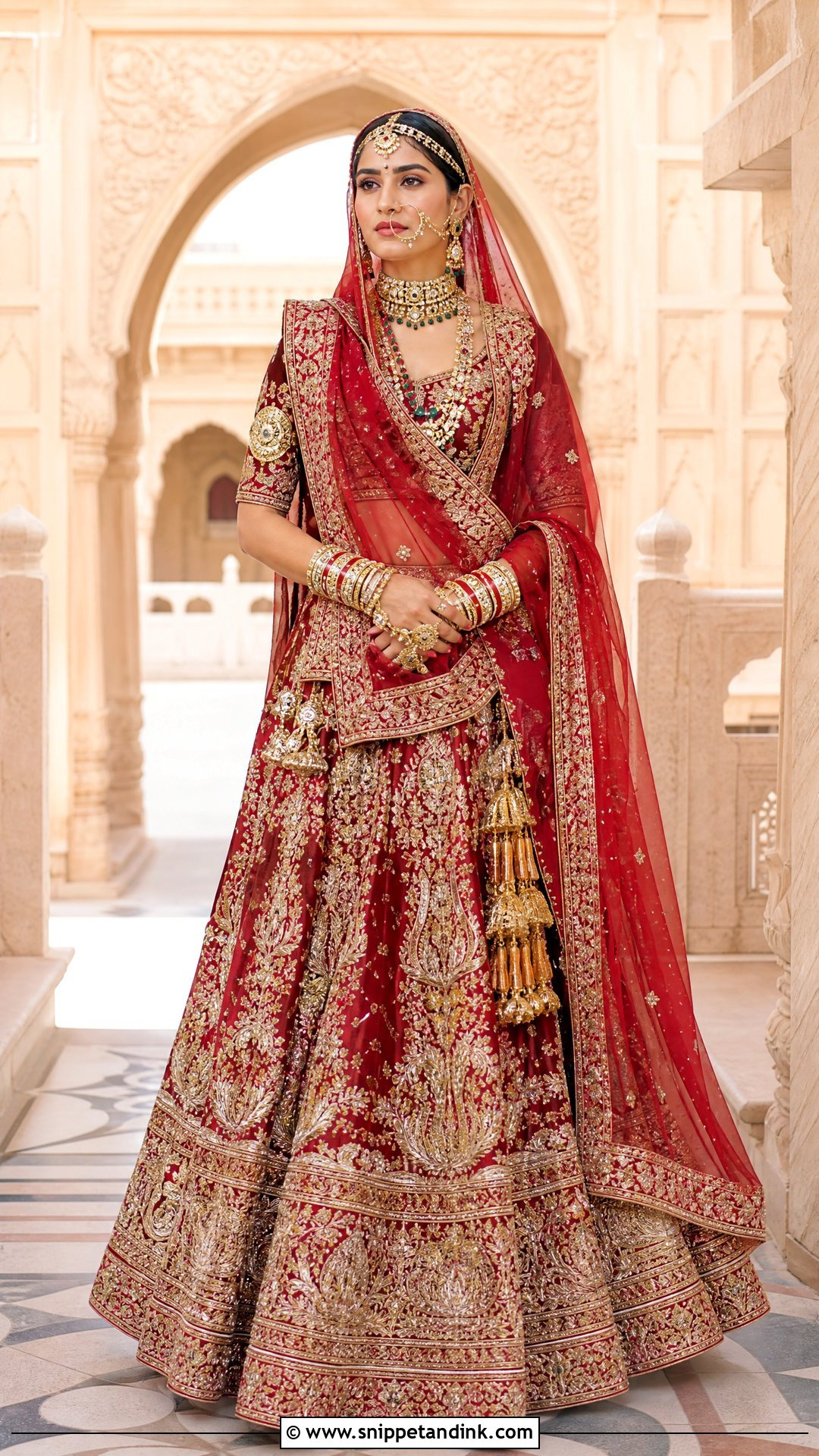
Crimson is red with a little blue in it, deeper and more dramatic than a warm bridal red. Picture a ghaghra with spaced zardozi motifs and an architectural border, and heavier work on the kurti and kanchli at the neckline, cuffs and waist. Zardozi at the cuffs looks wonderful but scratches, so I ask for a soft lining or binding inside every embroidered edge that touches skin. The odhna should be a light crimson with gold edging and small corner motifs so it sits neatly over the hair. Kundan, a large nath, aad, borla, armlets and red bangles, with gold juttis that are soft inside. A smooth, secure bun supports the veil and keeps a heavily worked neckline from looking crowded.
5. Emerald Green Rajputi Bridal Poshak
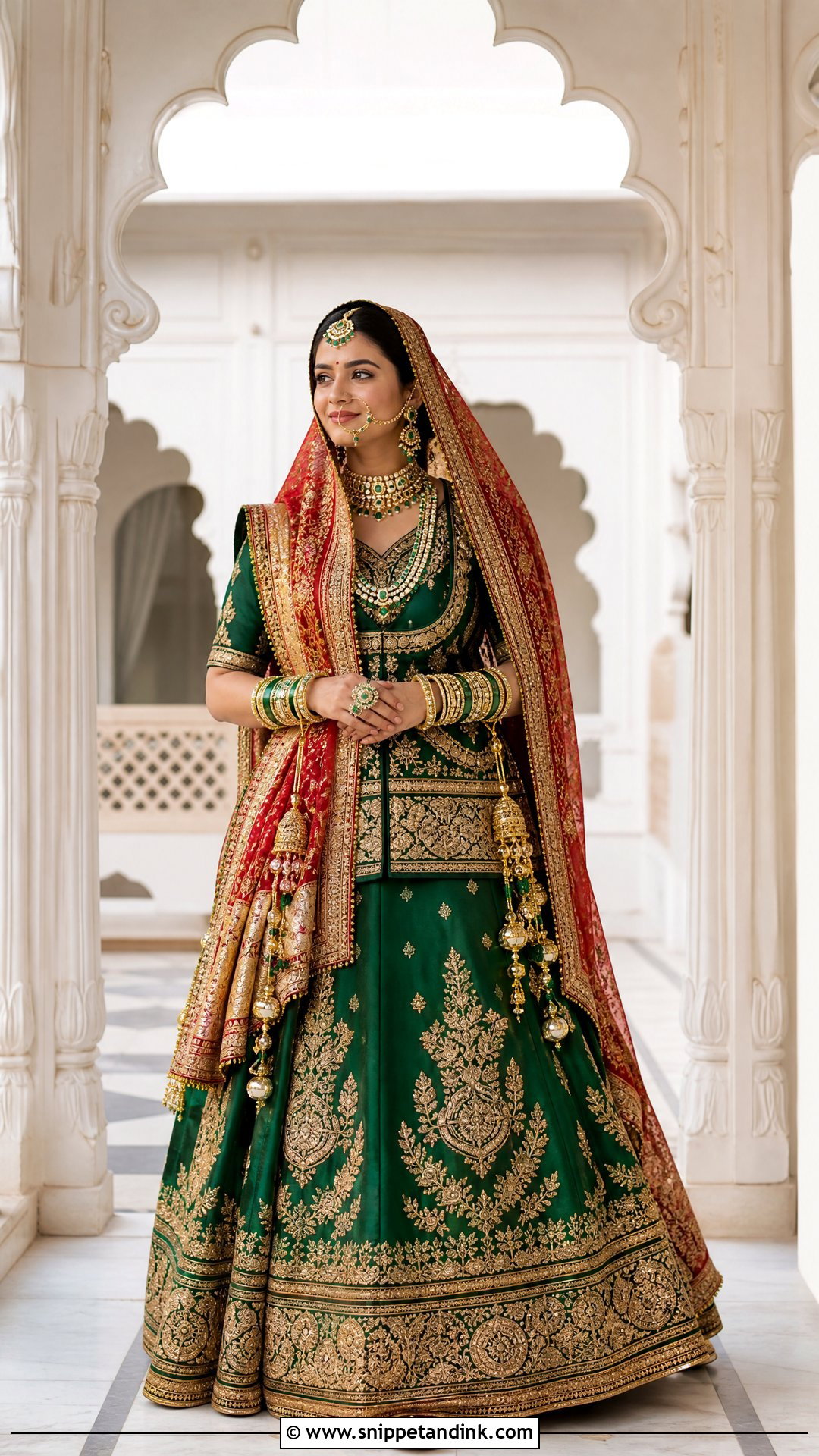
Emerald suits a bride who wants richness without an all-red outfit. A deep green silk ghaghra with antique-gold gota, florals or restrained zardozi, a structured kurti and kanchli in the same green, and then the bridal note: a red odhna bordered in green and gold. That red veil is what makes the outfit read as a wedding, especially in portraits where the face and veil fill the frame. Kundan with green stones, a gold borla, layered necklaces, a traditional nath and red-and-green bangles. Green velvet or gold juttis. Keep the makeup luminous, with defined eyes and a red lip, so the face holds its own against saturated green.
6. Red And Green Rajputi Bridal Poshak
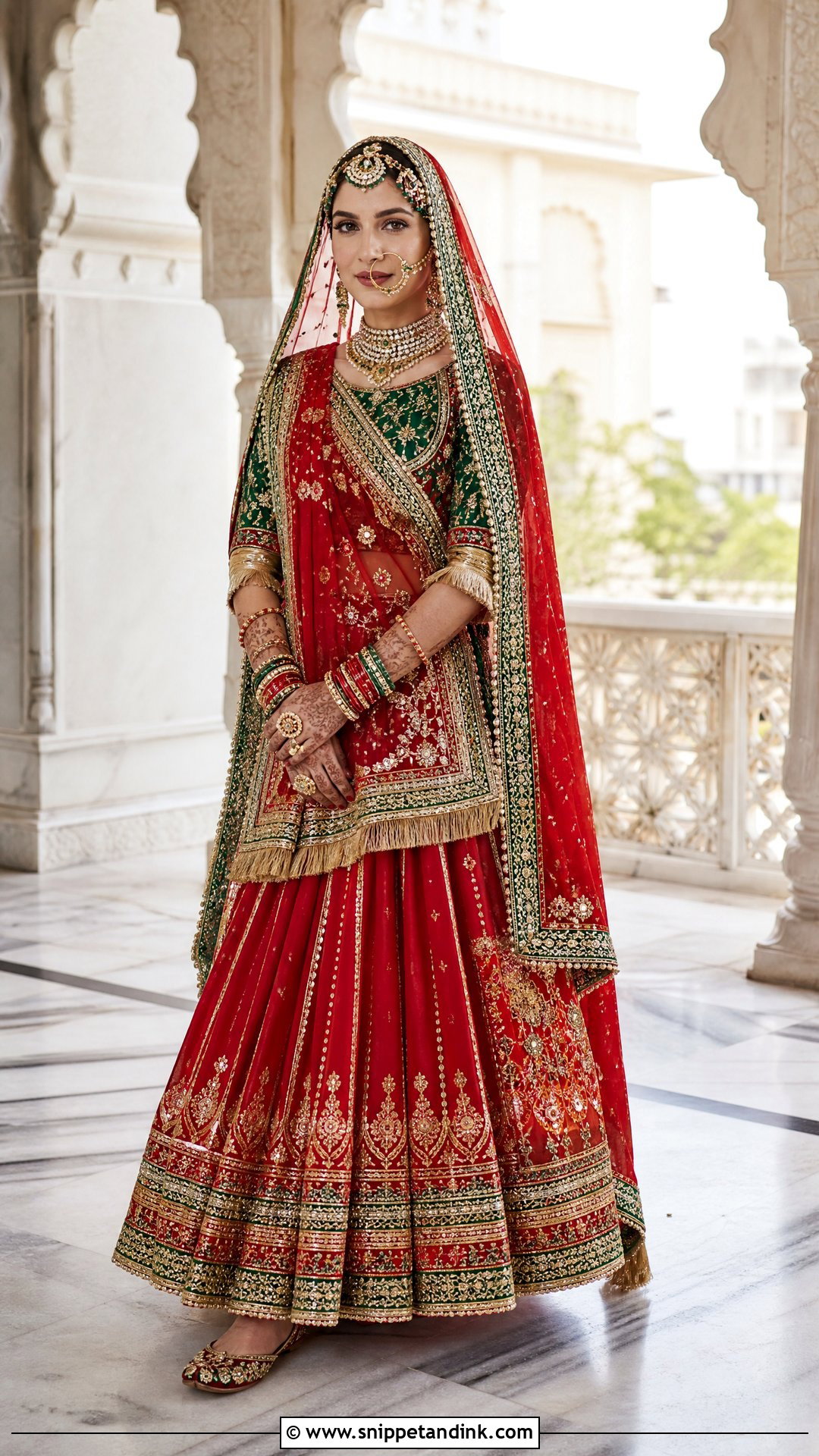
This pairing only works when each color has a job. Red takes the pleated ghaghra and fitted kanchli; an emerald kurti with gold embroidery sits over them, and a red odhna edged in green ties it together. Carry the same two colors through the bangles, juttis and small stones, and leave every other shade out. Kundan borla, broad aad, long rani haar, nath, bajuband and haath phool. The mistake I see most often is three or four embroidery techniques fighting across two colors. Pick one and let it run through everything. Fine gold gota patti sits well on both red and green and keeps the outfit consistent.
7. Saffron Gold Rajputi Bridal Poshak
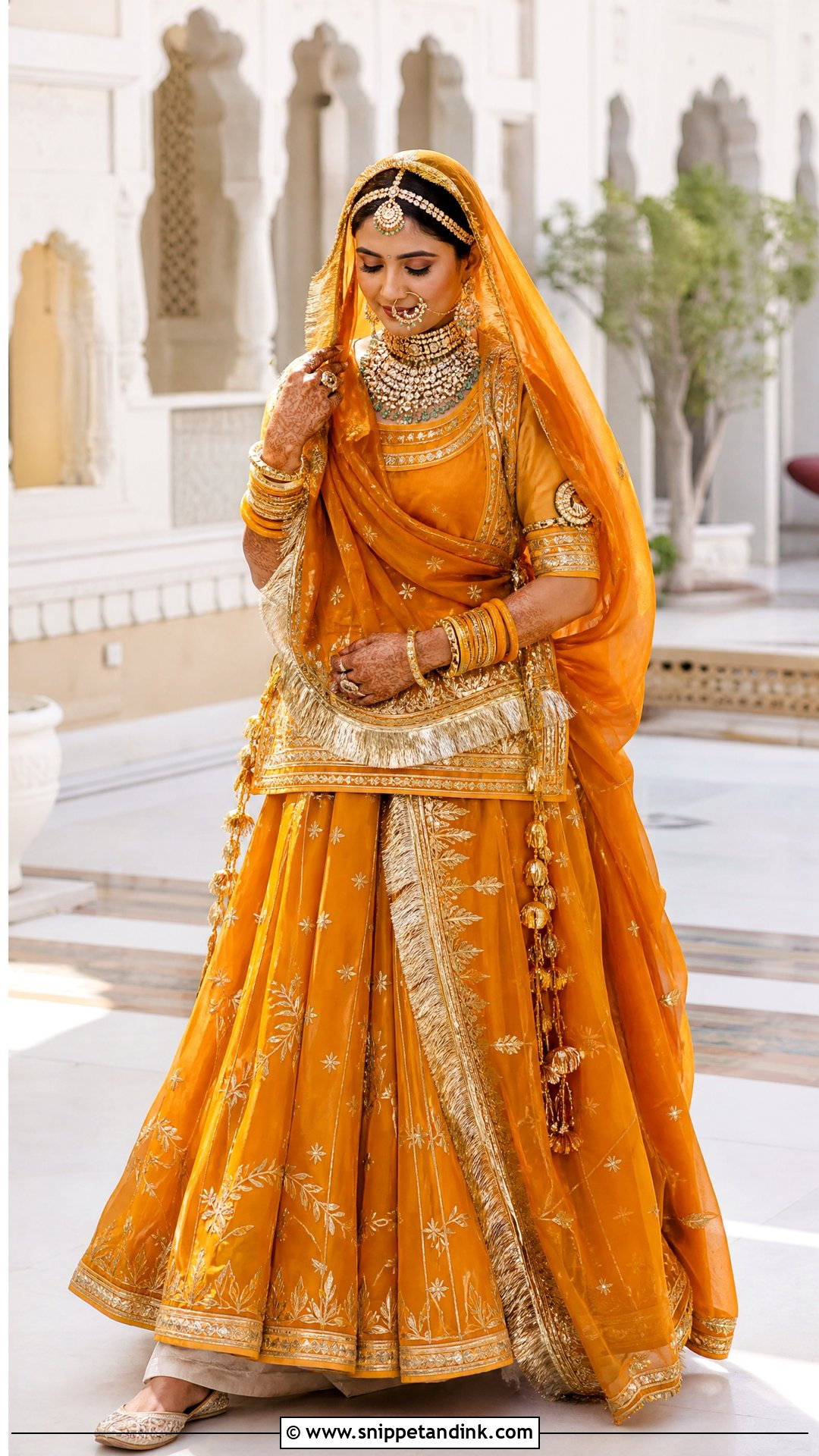
Saffron glows in daylight. Choose a flowing saffron ghaghra in silk, satin or tissue with fine gold gota lines and placed motifs, plus a matching kanchli and kurti with slightly denser work at the neckline and sleeves. Tissue is the lightest of the three but crushes quickly, so I keep it for brides who won’t be seated for hours. A light saffron odhna with a metallic border, then a gold borla, kundan aad, layered necklace, nath, armlets and saffron-and-red bangles. Gold juttis with delicate embroidery. Warm peach makeup with a defined red lip gives contrast, and a smooth bun keeps attention on the veil and jewelry.
8. Mustard Yellow Rajputi Bridal Poshak
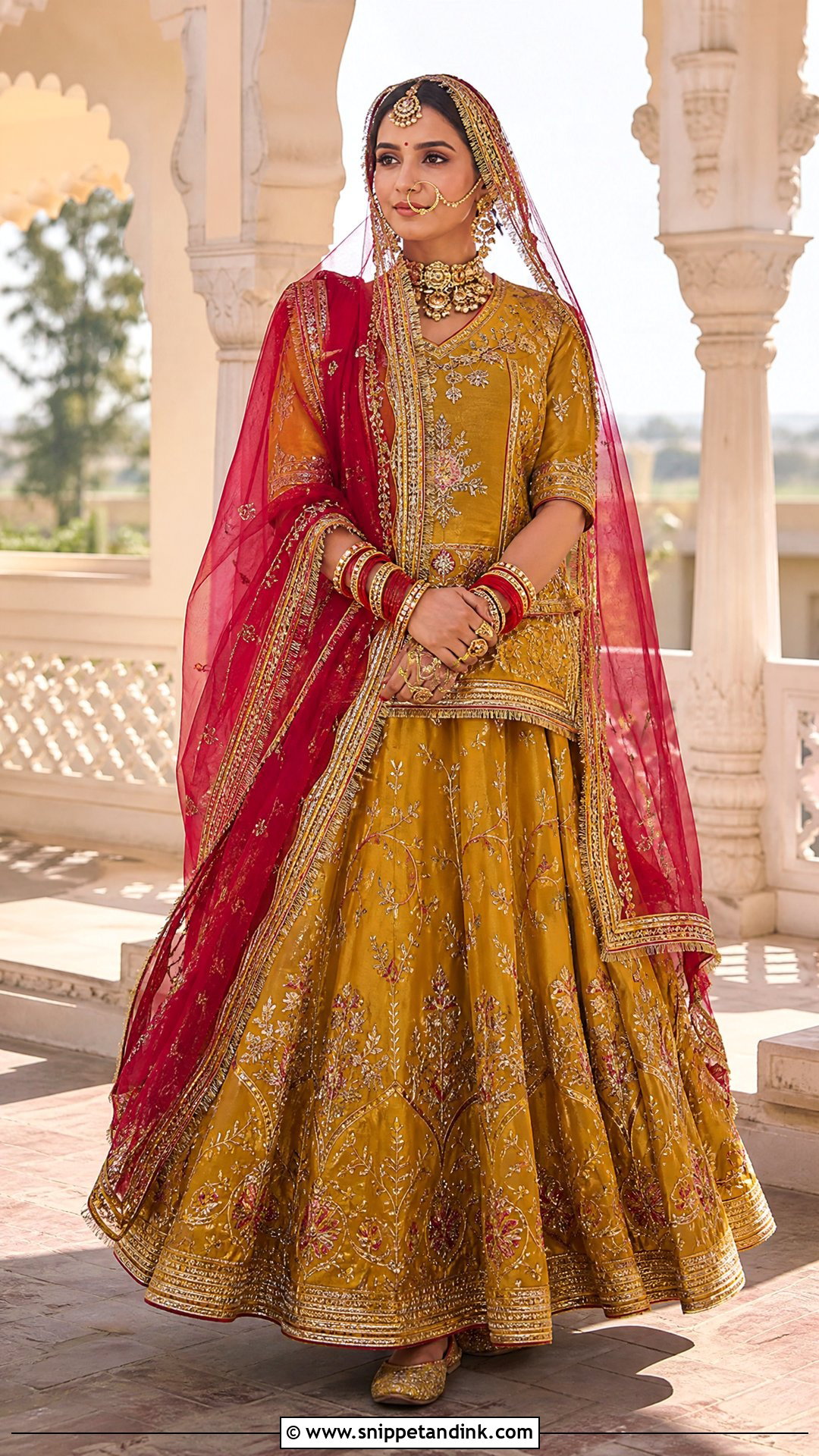
Imagine mustard against a sunlit courtyard. Picture a mustard silk ghaghra with antique-gold embroidery, a fitted kanchli and a matching kurti finished with red piping. Mustard on its own can look more festive than bridal, so a red or rust-red odhna gives stronger definition around the face. Kundan, pearls and subtle red stones connect the two colors: borla, aad, a longer haar, nath, haath phool, stacked lakh bangles and gold juttis. Keep the skirt border substantial but not stiff. A rigid border bends into sharp creases when you sit cross-legged for long rituals and never quite relaxes again. Neat pleats and a well-pinned odhna help the outfit hold its shape into the family photographs.
9. Ivory Gold Rajputi Bridal Poshak
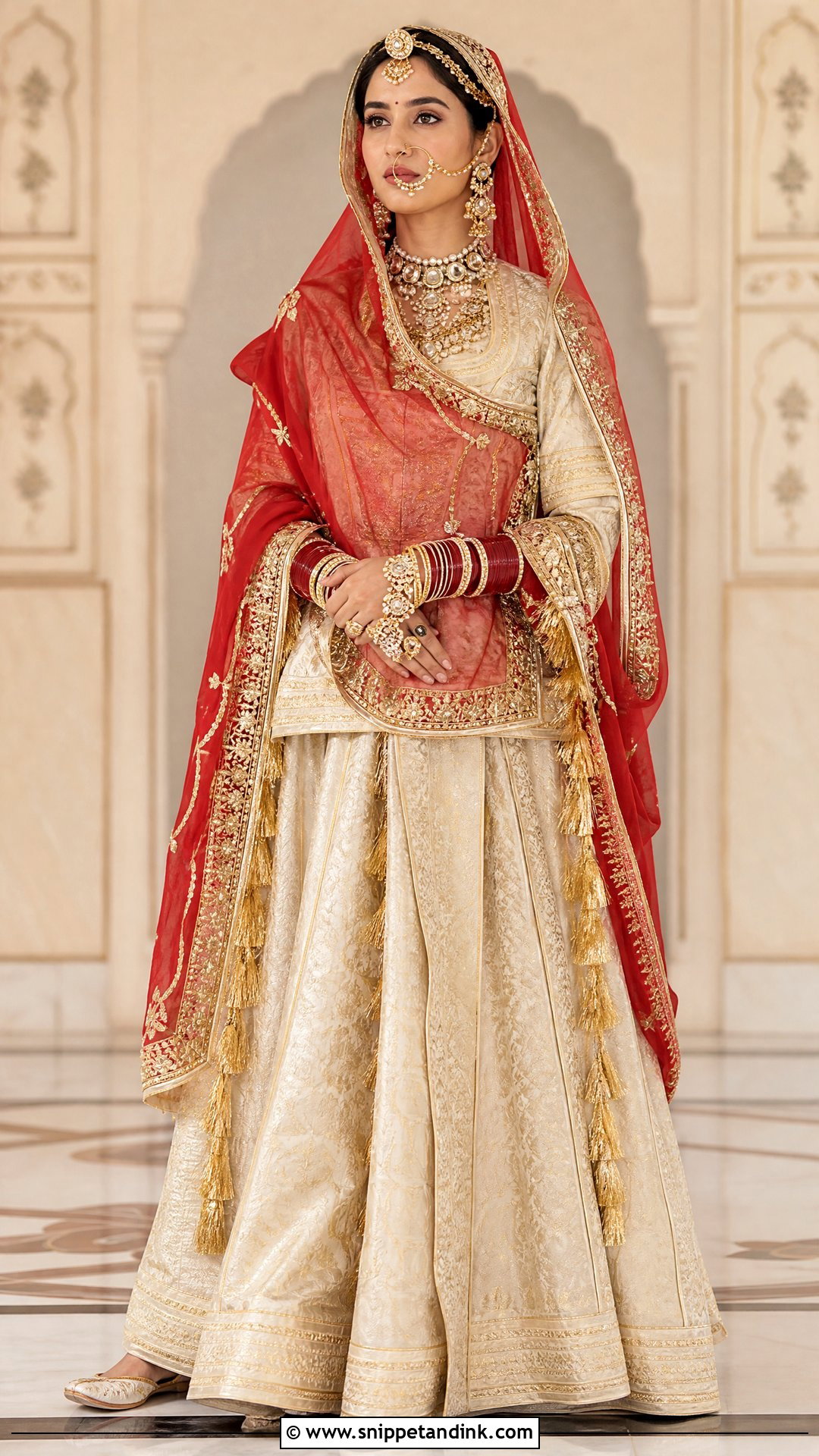
Ivory is unforgiving to construction. Every uneven pleat, puckered seam and slightly loose kanchli shows on pale fabric, so I check the stitching on an ivory poshak far more closely than on a red one. Delicate gold gota or zari over an ivory silk ghaghra looks regal without visual weight. Add a matching kurti and kanchli, then a deep red odhna to frame the face and bring in ceremonial color. Kundan with pearl drops, a borla, aad, nath and red bangles give depth against the neutral base. Ivory juttis with gold embroidery. Defined eyes, a red lip and a polished bun keep the bride from looking washed out.
10. Peach Gota Patti Rajputi Bridal Poshak
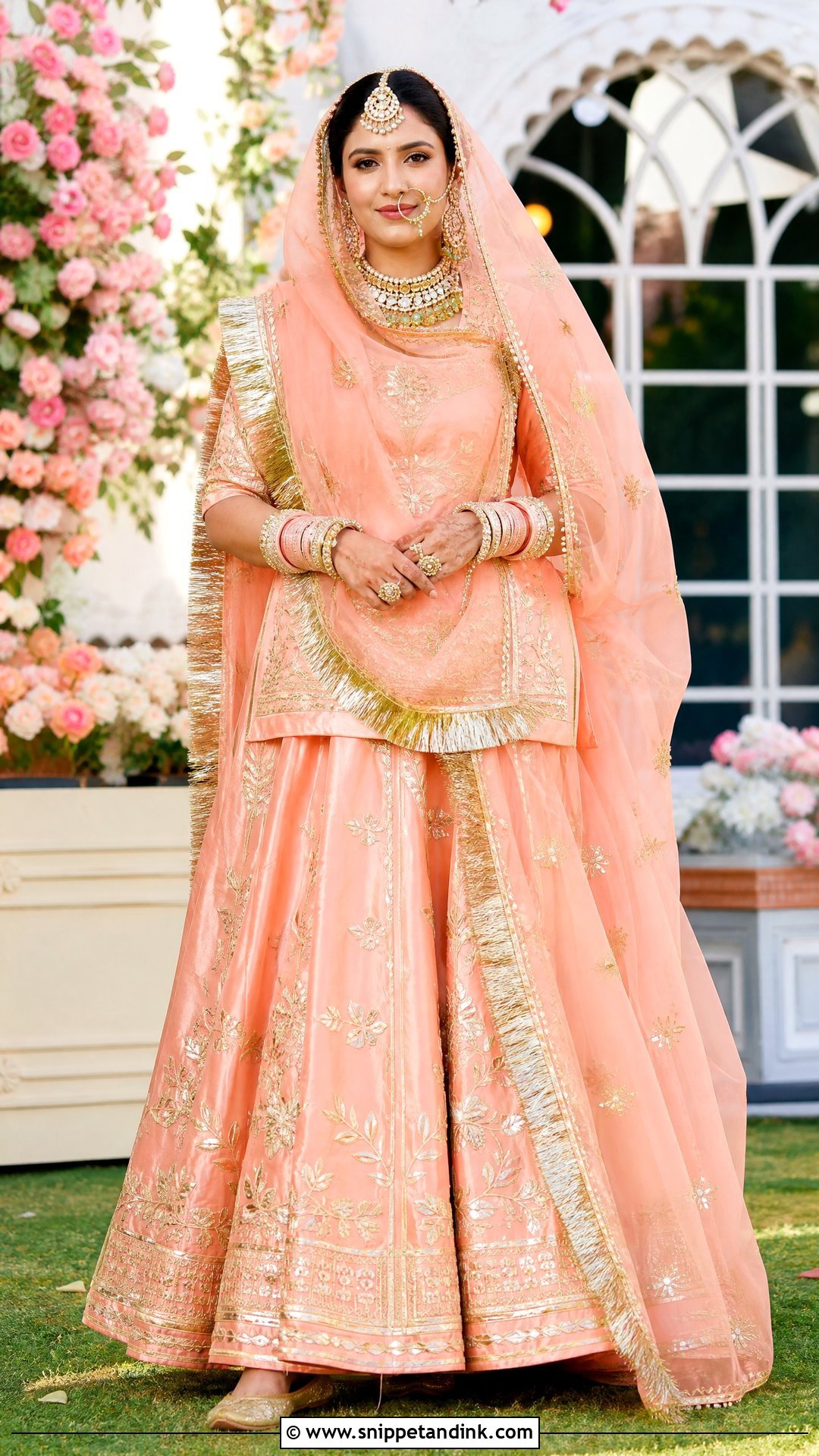
Peach belongs at a daytime wedding or in a bright, palace-style setting. A peach ghaghra with fine gold gota patti, florals and a neat border, plus a matching kanchli and kurti with slightly heavier work for structure near the face. A sheer peach odhna with gold edging is the soft option. A rani pink veil gives more definition, and I lean toward it for brides with deeper skin tones, beside which a very pale peach can look chalky. Pearl-and-kundan jewelry, a delicate borla, aad, nath, haath phool, peach bangles and gold kadas, with embroidered peach juttis. Rosy makeup, soft eyes and a hairstyle firm enough to carry the veil and the borla.
11. Blush Pink Rajputi Bridal Poshak
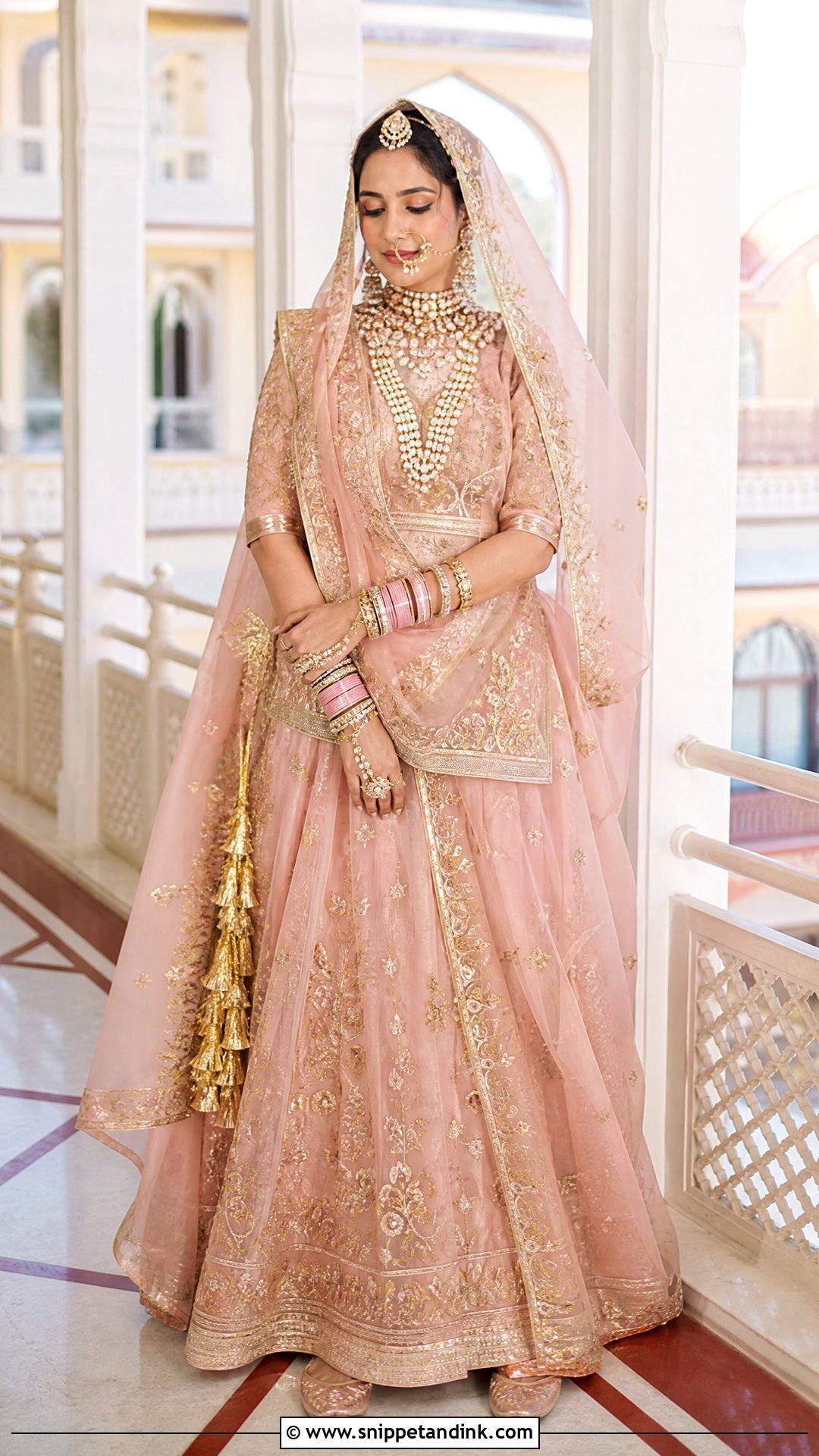
Blush is delicate, and without enough detail it can look underdressed for a bridal ceremony. Gold zardozi near the hem of a full silk or tissue ghaghra, with smaller motifs higher up, gives it weight. Pair it with a fitted kanchli and kurti with a defined neckline, and a blush odhna with a substantial border. Kundan with pearls or pale green accents adds contrast without upsetting the soft palette: borla, aad, long necklace, nath, armlets, haath phool and pink-and-gold bangles. Cushioned gold juttis. A berry lip and defined liner keep the bride’s features clear in bright photographs, which matters when the background is also pale stone or white flowers.
12. Coral Rajputi Bridal Poshak
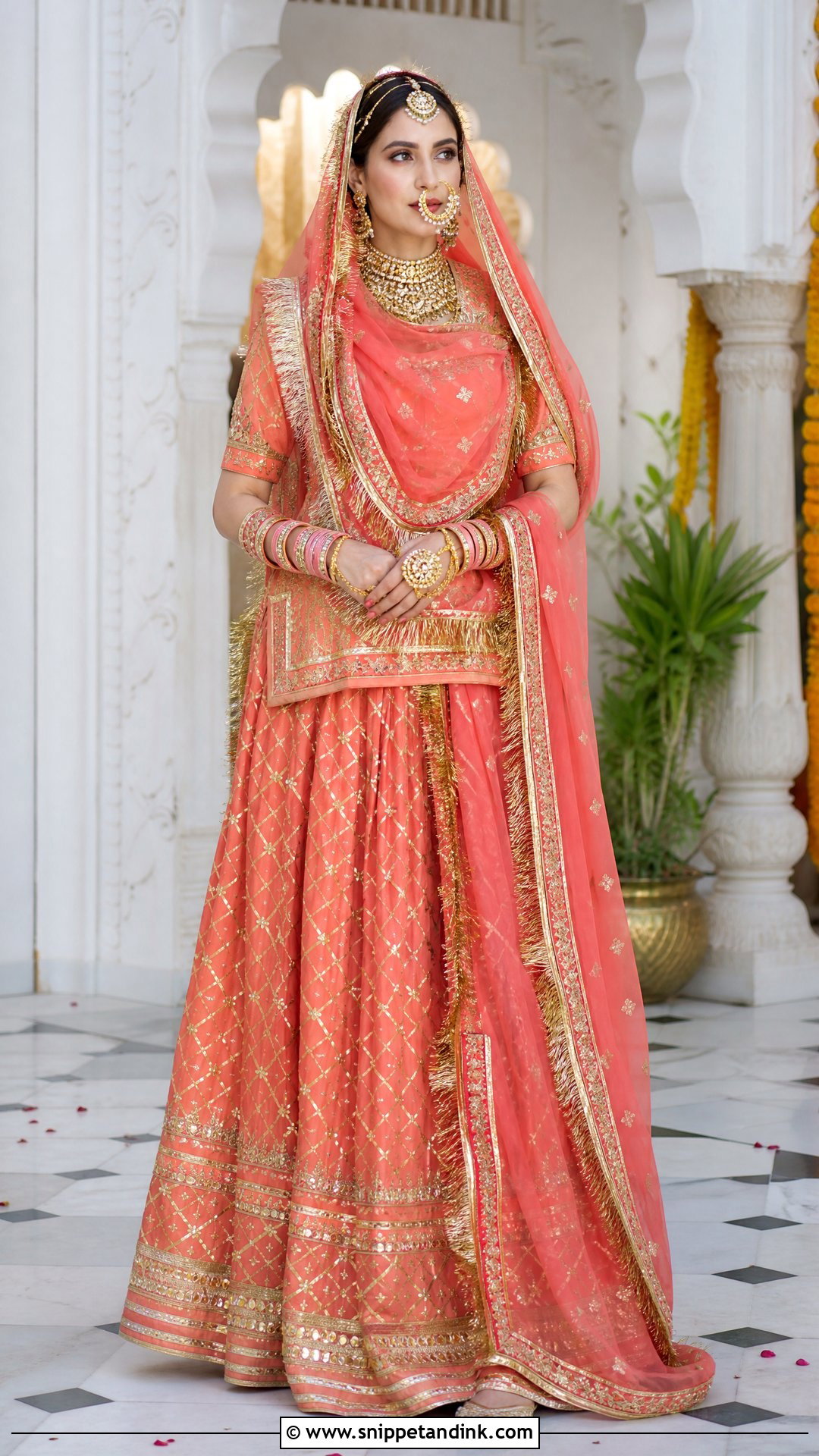
Coral sits between pink and orange, festive without feeling expected. Start with a coral silk ghaghra with gold gota patti and small florals, a coordinating kanchli and kurti with denser embroidery at the neckline and cuffs, and a coral odhna with a red border for gentle contrast. Gold kundan, a traditional borla, aad necklace, long haar, nath and stacked coral bangles separated by ornate kadas, with gold or coral juttis. Coral dye lots vary a lot, so when the kurti and ghaghra come from different bolts, I compare them side by side in daylight. Peach blush, defined eyes and a deeper coral-red lip that stays visible under the veil.
13. Magenta Rajputi Bridal Poshak
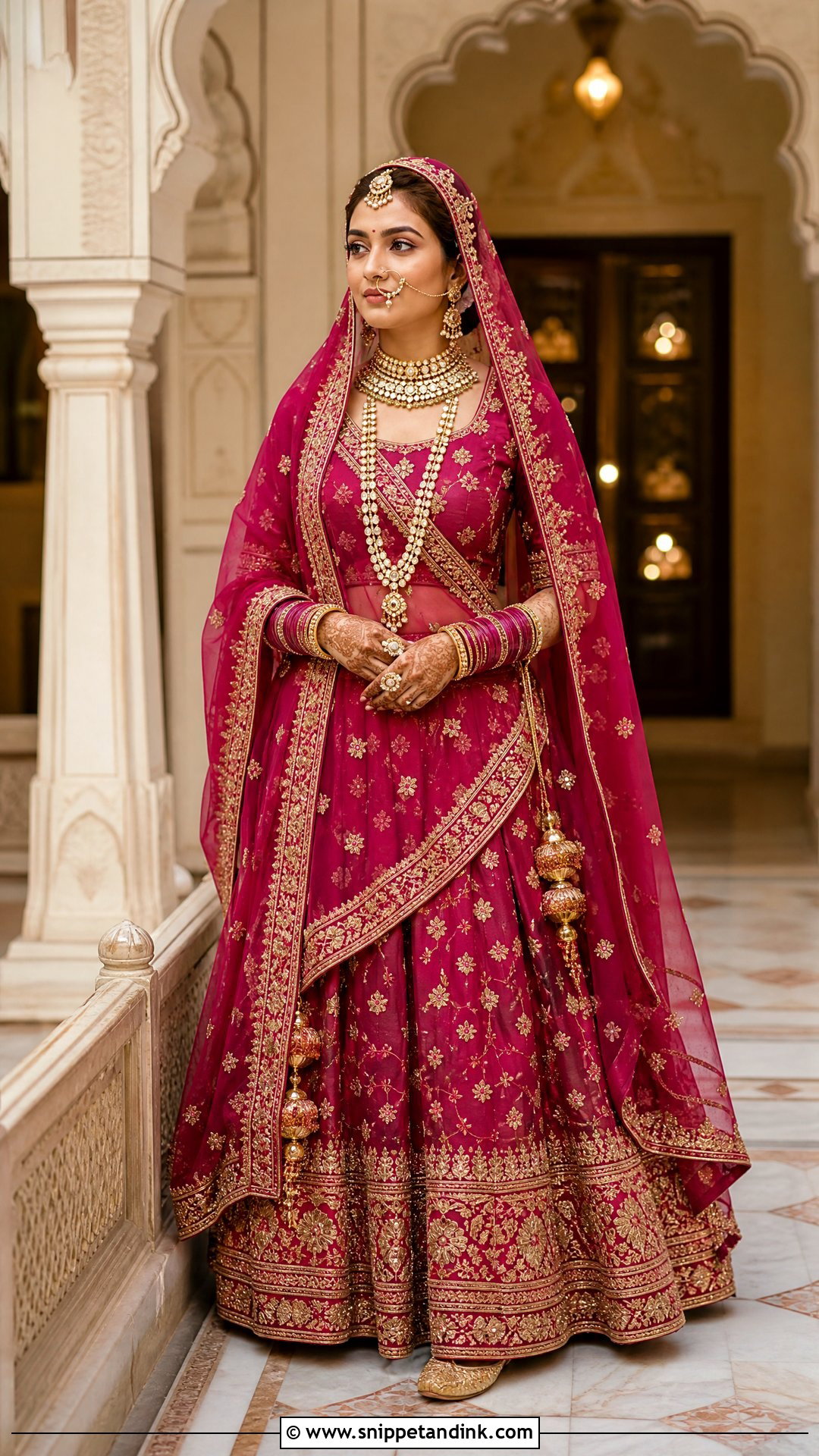
Magenta keeps its punch under both daylight and indoor lighting, which makes it one of the more forgiving colors for a long wedding day. Choose a magenta ghaghra with antique-gold zardozi, geometric gota borders or fine floral jaal, with a matching kurti and kanchli whose neckline stays visible beneath the jewelry. A sheer magenta odhna gives a monochrome look, and a deep red border adds bridal contrast. Kundan with pearls, including a borla, aad, layered haar, nath, bajuband and haath phool, plus magenta-and-gold bangles and embroidered juttis. Because the color is already strong, I keep the embroidery evenly spread rather than clustered. A sleek bun and classic makeup.
14. Plum Rajputi Bridal Poshak
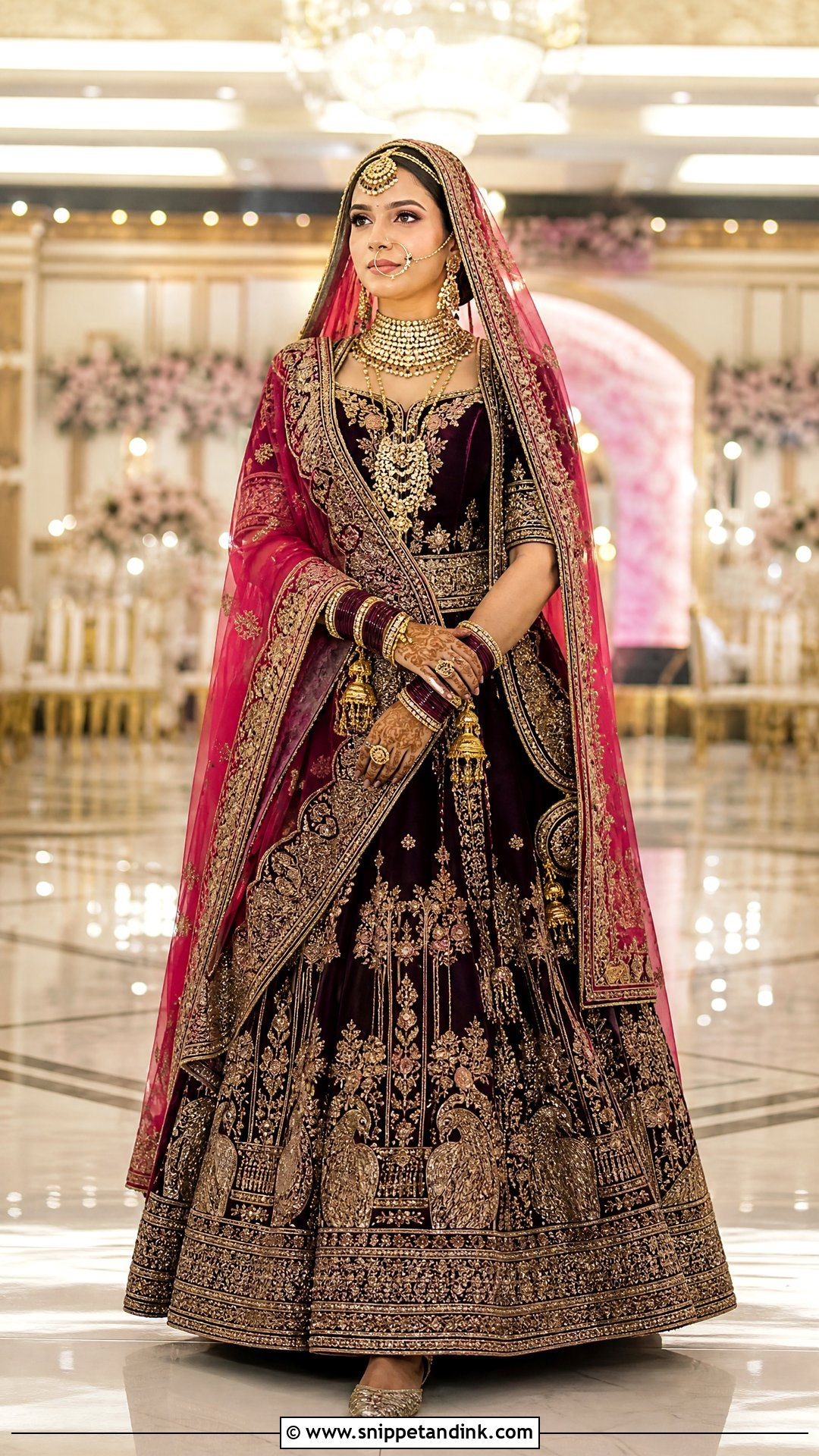
Plum is dramatic and wants an evening setting. A plum velvet or silk ghaghra with antique-gold work concentrated at the hem, a fitted kanchli and a structured kurti with coordinated work at the neckline and sleeves. Dark colors can swallow the face in photographs, so I brighten this one with a rani pink or red odhna edged in gold, which frames the face and lifts the whole outfit. Kundan with pearl details, a gold borla, broad aad, long necklace, nath and plum bangles mixed with gold kadas. Gold juttis. Luminous skin, highlighted cheeks and a rich berry lip balance the saturated fabric.
15. Teal Rajputi Bridal Poshak
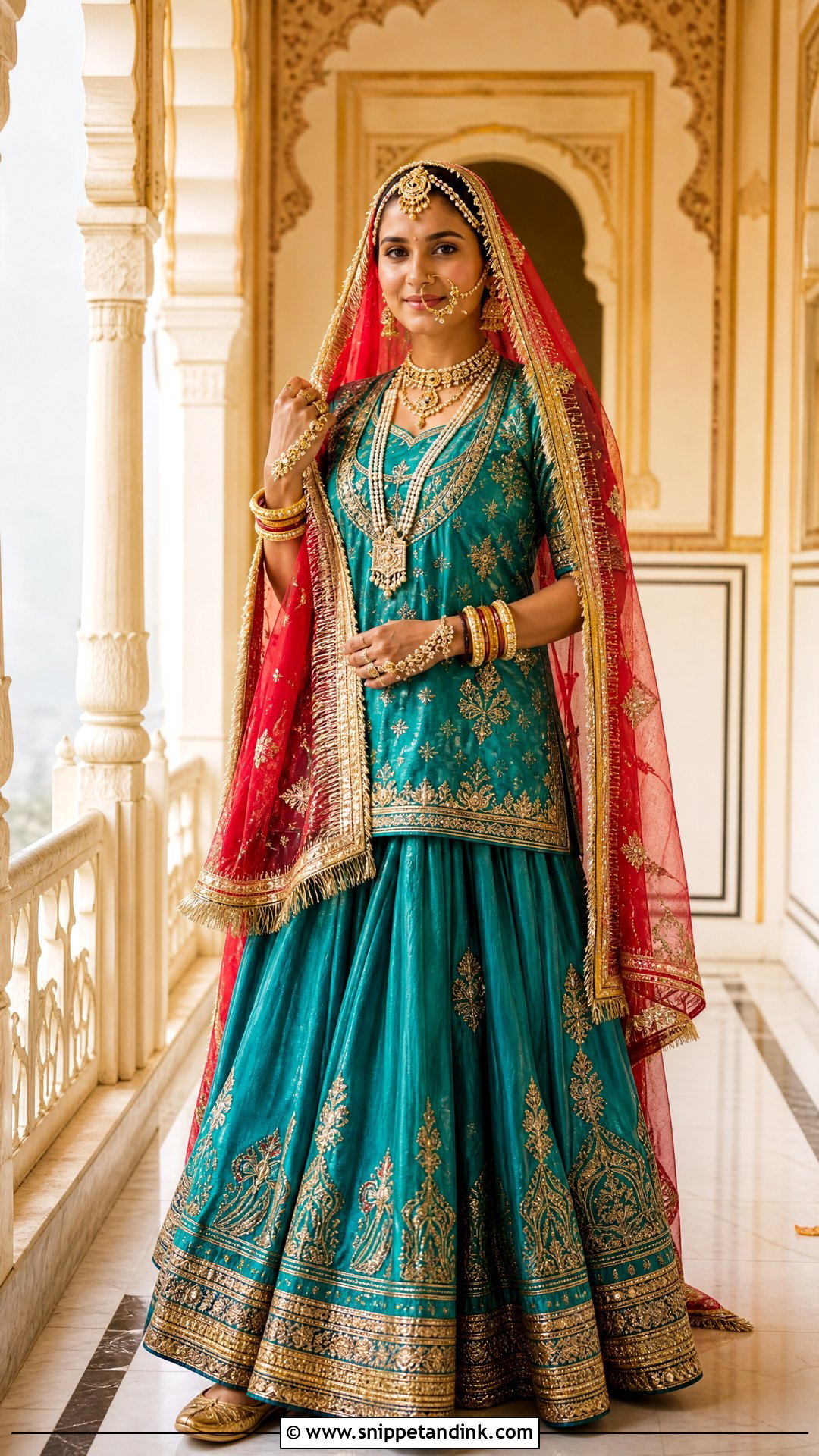
Teal is the color I’d never confirm from a phone screen or a shop lit by tube lights. It shifts noticeably, reading greener in one light and bluer in another, so look at the fabric in daylight and, if you can, under the venue’s lighting. The set itself is teal silk for the ghaghra, kurti and kanchli with antique-gold gota or zardozi, and a red odhna that makes the veil a strong focal point. Repeat red sparingly, through bangles, lipstick or tiny stones. Kundan borla, aad, long haar, nath, armlets, haath phool and gold juttis. A well-structured pleated skirt and a light, secure veil keep the shape while you move.
16. Turquoise Rajputi Bridal Poshak
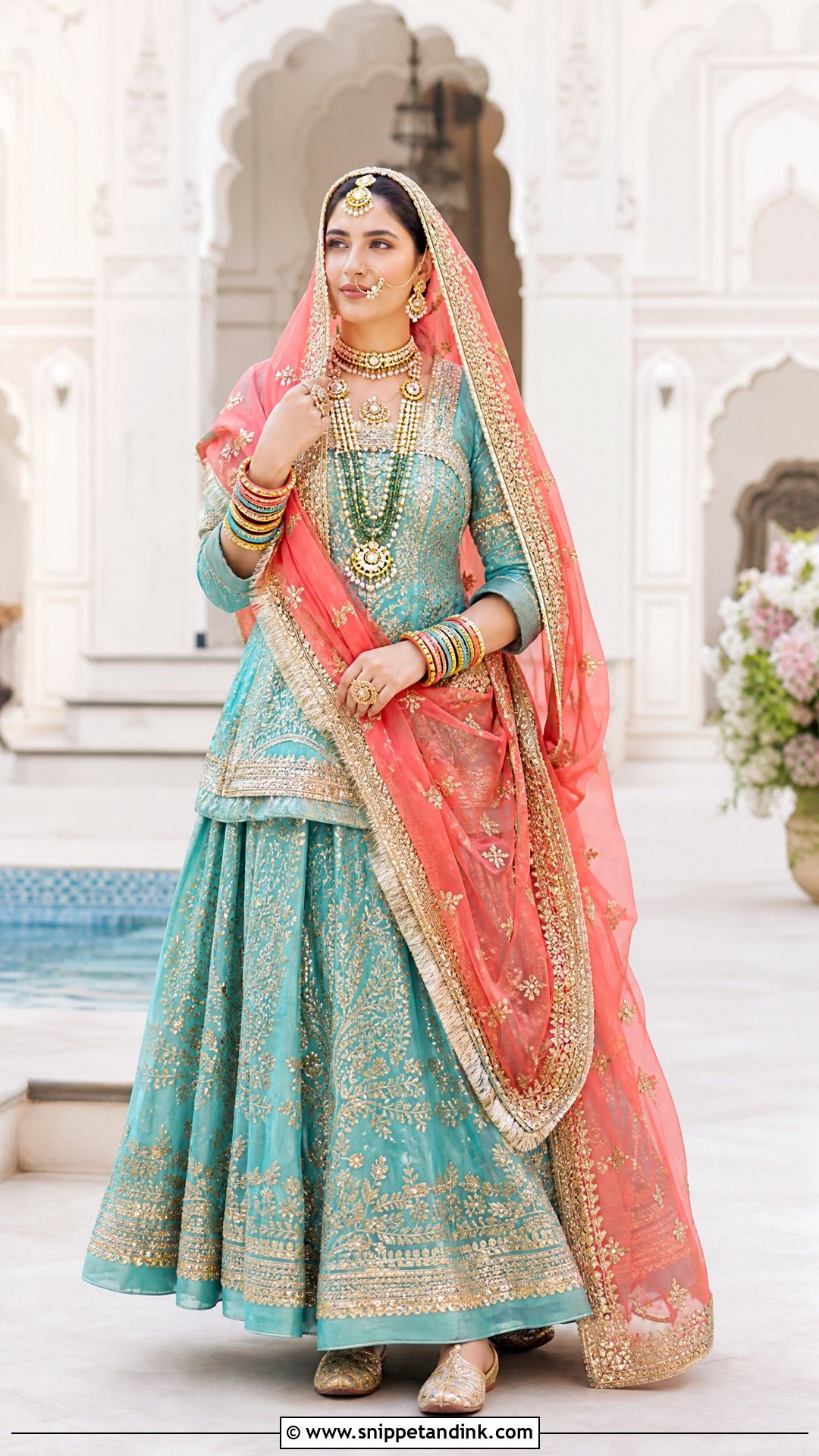
Turquoise is bright and cool, a natural fit for a destination or daytime wedding. A turquoise ghaghra needs a wide gold border to give the light jewel tone enough weight. Pair it with a matching kanchli and kurti, then bring in contrast with a coral, rani pink or red odhna, linking the veil to the skirt with matching gold motifs. Kundan-and-pearl jewelry, a borla, aad, layered haar, nath, haath phool, colorful bangles and gold juttis. Soft rosy makeup and a deeper lip. One contrasting veil color is plenty; put three accent shades on a turquoise poshak and the bride gets lost inside it.
17. Peacock Green Rajputi Bridal Poshak
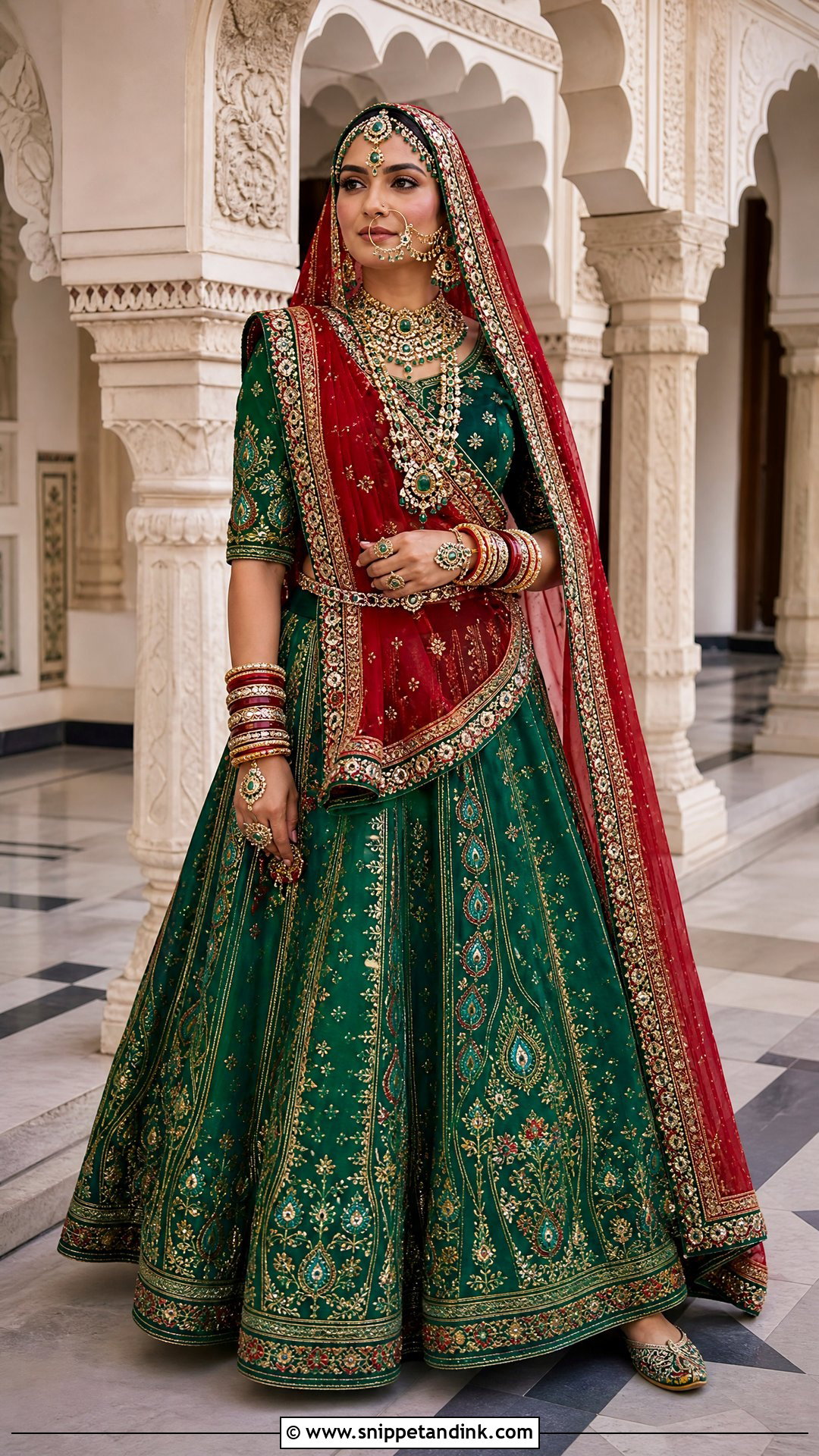
Peacock green has blue running through it, so it shifts slightly as the fabric moves, and that play of color is the whole appeal. Choose a silk ghaghra with gold zari, gota patti and subtle blue-green motifs, and a matching kurti and kanchli with a structured neckline that can carry layered jewelry. A deep red odhna edged in peacock green gives traditional bridal contrast. Gold kundan with emerald accents: borla, aad, long rani haar, nath, bajuband, haath phool and red-and-green bangles, with gold juttis in green threadwork. Keep the veil sheer enough for the jewelry and upper embroidery to show through. A center-parted bun, defined eyes and a red lip draw the eye to the face.
18. Leheriya Rajputi Bridal Poshak
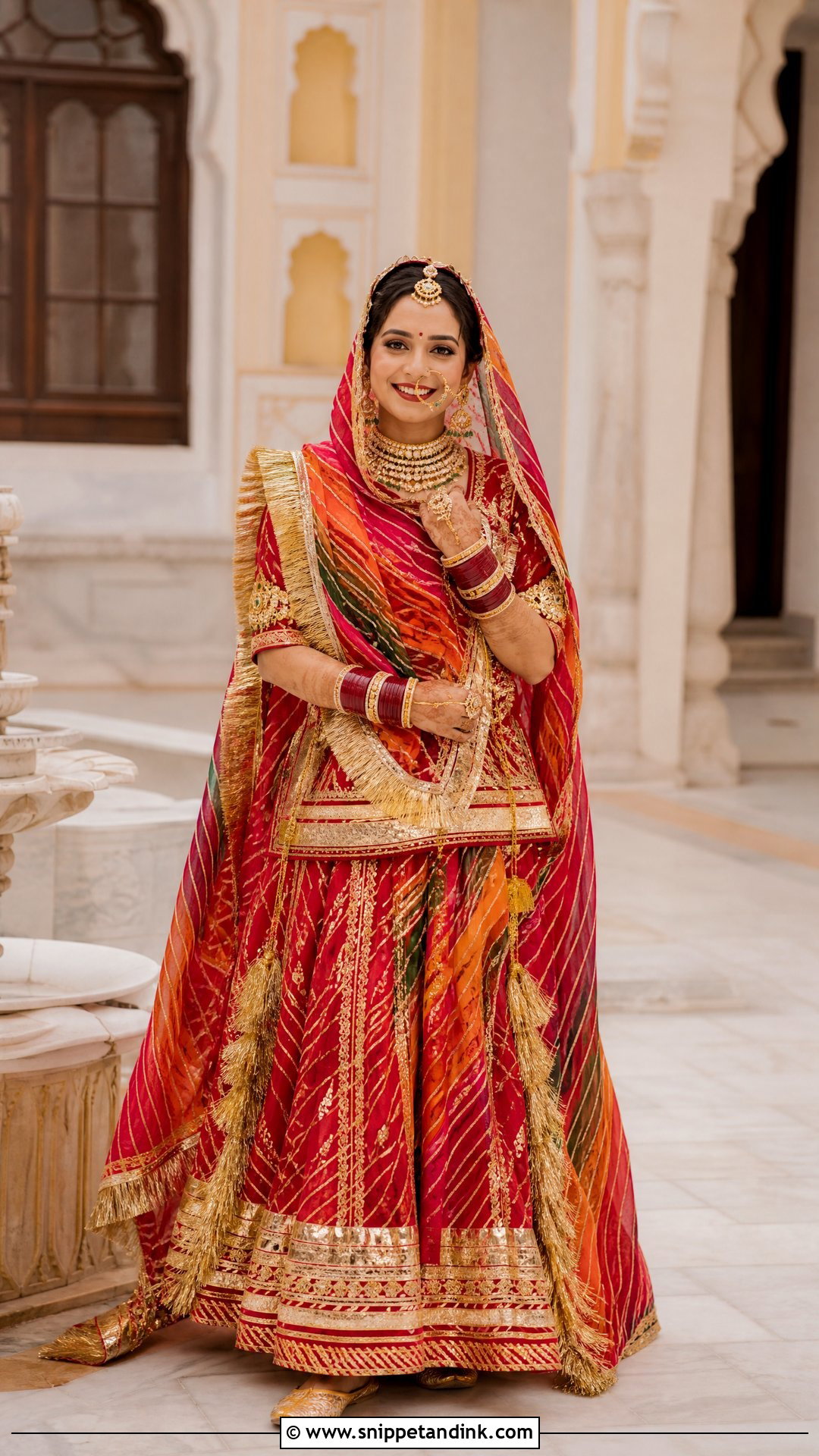
Here the odhna is the star. Start with a rich red, saffron or rani pink ghaghra with gold gota work and a coordinating kurti and kanchli, then make a striped leheriya odhna the central piece. Its colors should come straight from the skirt; a leheriya in unrelated colors turns the outfit into a rainbow. Kundan, a traditional borla, aad, long haar, nath, armlets, lakh bangles and embroidered juttis. With so much pattern up top, keep the kurti and kanchli calm. When I pin a leheriya veil, I line the stripes up so they run cleanly across the head and down the shoulder, because crooked stripes are the first thing anyone notices in a photograph.
19. Bandhani Rajputi Bridal Poshak
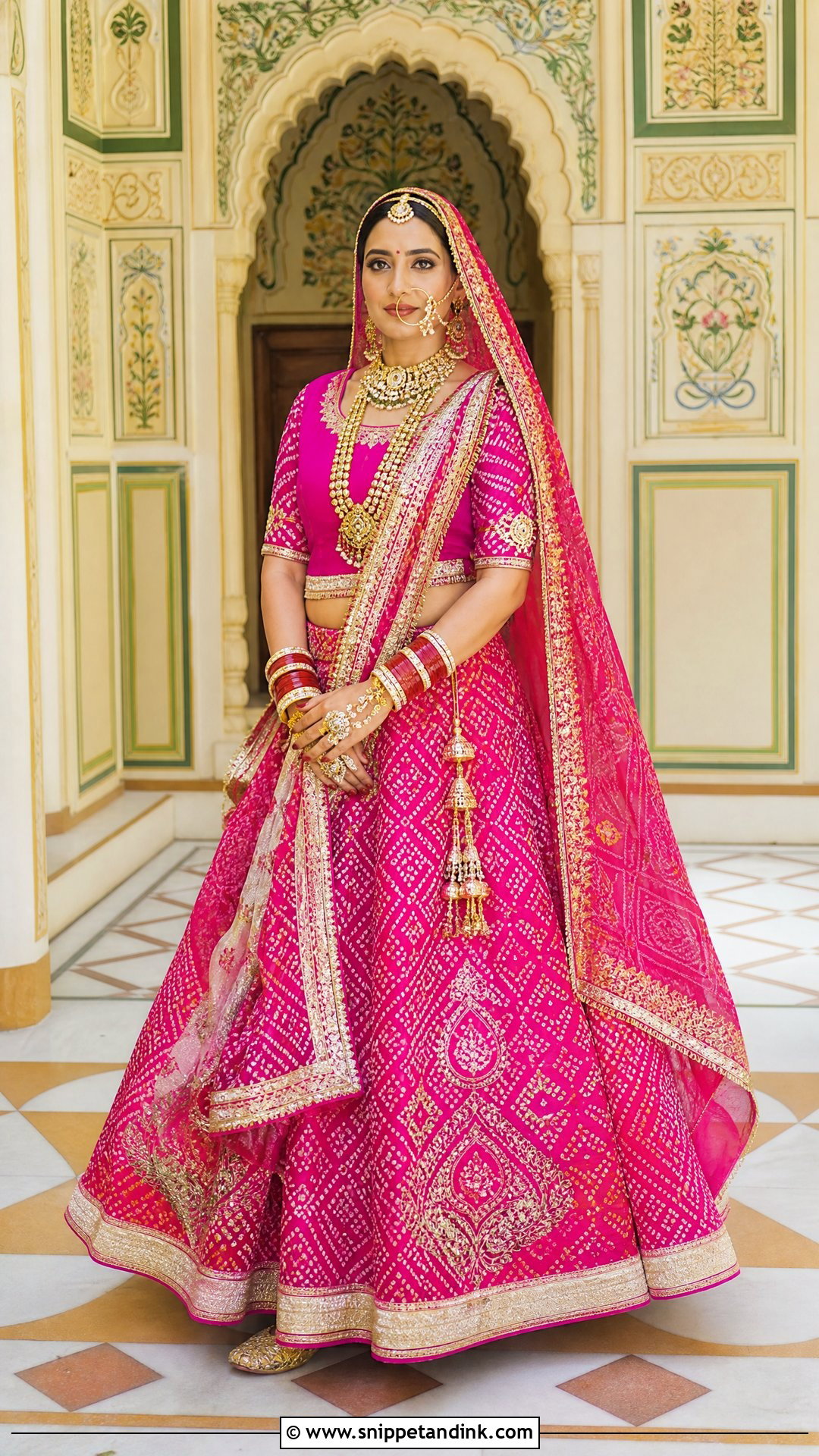
Bandhani gives texture without leaning on metal. Choose a red or rani pink bandhani ghaghra with a broad gold gota border and pair it with a solid kanchli and kurti so the skirt has room. A coordinated bandhani odhna with fine gold edging and well-finished corners completes the clothing. Kundan borla, aad, layered necklace, nath, bajuband, haath phool, lakh bangles and gold juttis. The jewelry should be substantial enough to match the festive pattern but stop short of covering the whole neckline. Pick bandhani with strong contrast between the dots and the ground; very fine, low-contrast dots blur into flat color in full-length photographs.
20. Double Odhni Rajputi Bridal Poshak
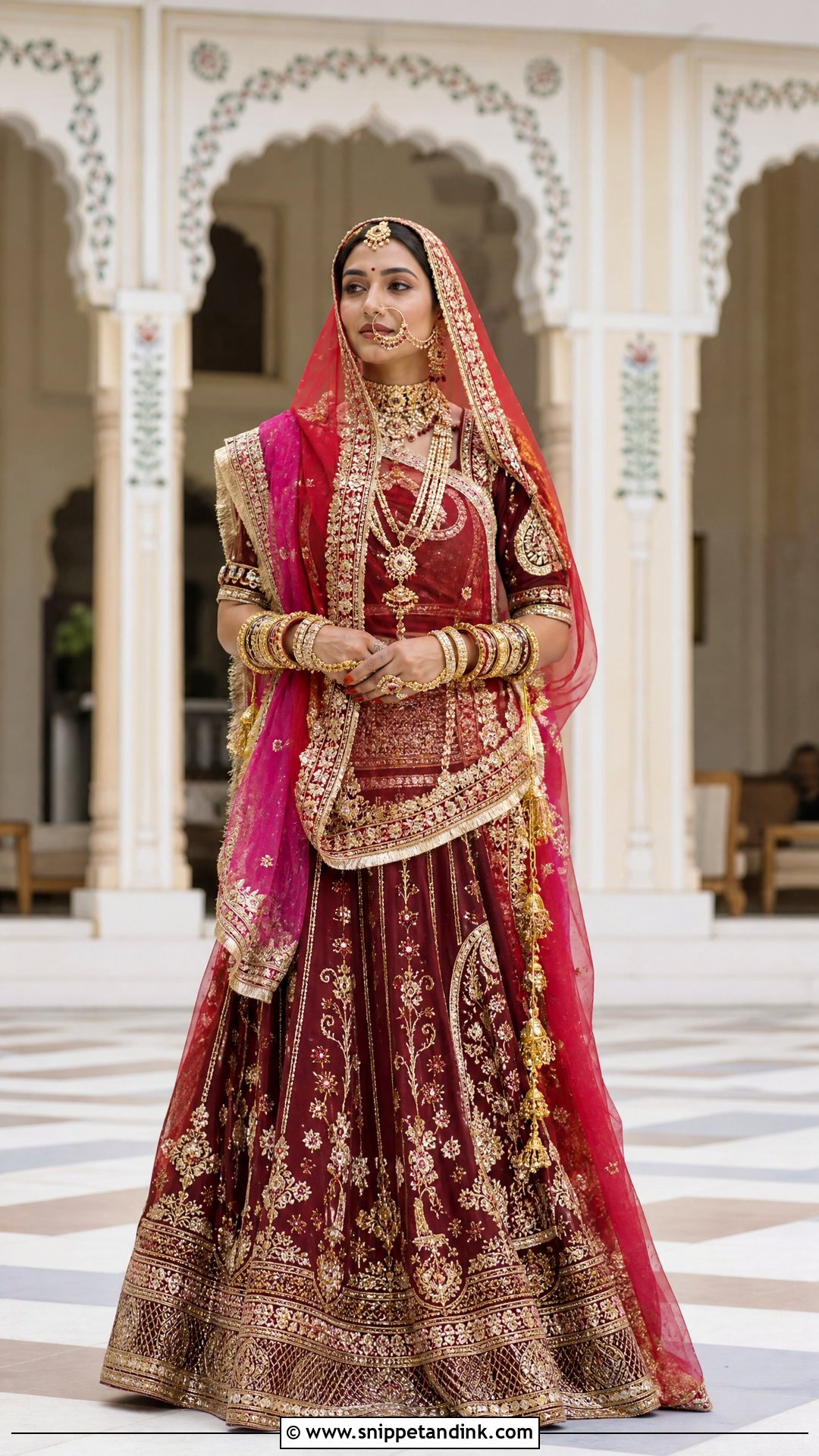
A double-odhni outfit adds drama, but it stays practical only if the two veils do different jobs. Start with a red or maroon silk ghaghra, a matching kanchli and an embroidered kurti. The lighter, sheer odhna goes over the head, and the more decorative one crosses a shoulder or wraps the arms. Both should speak the same embroidery language even when their colors differ, say a red head veil with a rani pink shoulder odhna, both edged in gold gota. Borla, aad, long haar, nath, armlets, haath phool, bridal bangles and cushioned gold juttis. Put the full drape on before the wedding and wear it for a while; two layers of odhna slip in ways a single one never does.
Testing Fabric Under the Lights It Will Actually Meet
A swatch can look like one color in a boutique and another at the wedding. Shops tend to use bright, cool lighting, evening venues lean warm, and camera flash flattens everything again. In-between shades such as teal, coral, plum and peacock green move the most.
- Take the swatch outside into daylight, then into a room lit by warm yellow bulbs, and look at it in both.
- Photograph it on your phone with and without flash. It’s a rough test, but an obvious shift will show up.
- Hold the odhna swatch against your face rather than your hand, since the veil sits beside your skin all day.
- Check the gota and zari under the same lights. Some metallic trims look warm gold in daylight and almost silver under cool LEDs.
If the venue is already booked, ask what lighting the evening events will use. Decorators usually know, and the answer can settle a choice between two shades you love equally.
Who Should See the Poshak Before It’s Final?
A bridal poshak should respect its culture, look balanced and stay comfortable through every ritual. The range above runs from red gota patti and maroon velvet to peach, ivory, turquoise and blush. When you decide, weigh the venue, the time of the ceremony, the climate, the fabric weight, the density of the embroidery and where the odhna will sit. Jewelry should complement the neckline rather than bury it, and comfortable juttis and secure draping make every step easier. Above all, talk through colors, odhna placement and ceremonial requirements with your family and your designer, or with a local artisan who knows the customs. That conversation lets your own taste come through while the traditions stay intact.
You'll Like These Ideas:


Leave a Reply