
Nothing fills a doorway like a grand ball gown. A fitted bodice, a defined waist and a skirt that takes up half the aisle is still the shape many brides picture first. Designers keep reworking it with basque waists, visible corsetry, sculpted flowers, oversized bows, detachable sleeves and long trains. The part nobody shows you in the photos is the work behind it: support, weight, hemming and how you’ll get through a car door. I’ve written each look below with the fitting checks I would run on a bride wearing it, from plain satin to sparkle tulle, colour and plus-size corsetry.
Hoop, Crinoline or Layered Petticoat Under a Big Skirt?
Most ball gowns get their shape from what sits underneath, and that layer changes how the dress feels more than brides expect. Some gowns have net built into the skirt. Others need a separate slip, and the salon will usually suggest one.
- Hoop skirt: rings of plastic boning give the widest, most even bell. It is light, but it swings when you walk and can tip up at the back if you sit carelessly.
- Crinoline or stiff net petticoat: softer volume with no rings. It is warmer to wear and rustles, but it sits and moves more naturally.
- Built-in tulle layers: the most comfortable choice, though the skirt may lose some shape by late evening.
I always ask the bride to bring her chosen underskirt to every fitting, because the hem is measured over it. Change the petticoat after the hem is set and the length will be wrong. For a summer wedding, I lean toward net over a hoop that adds extra layers of fabric against the legs.
1. Strapless Satin Ball Gown Wedding Dress
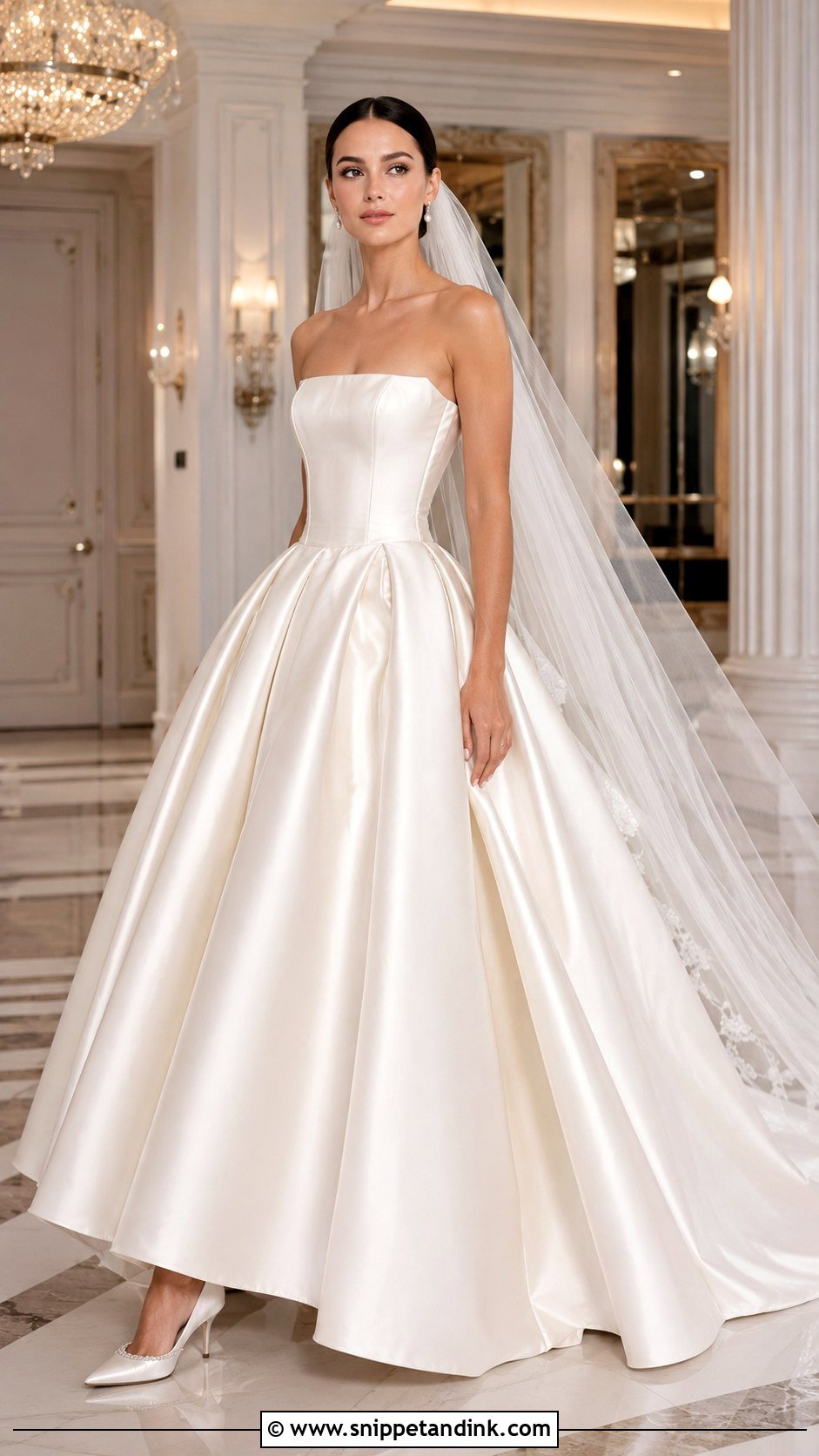
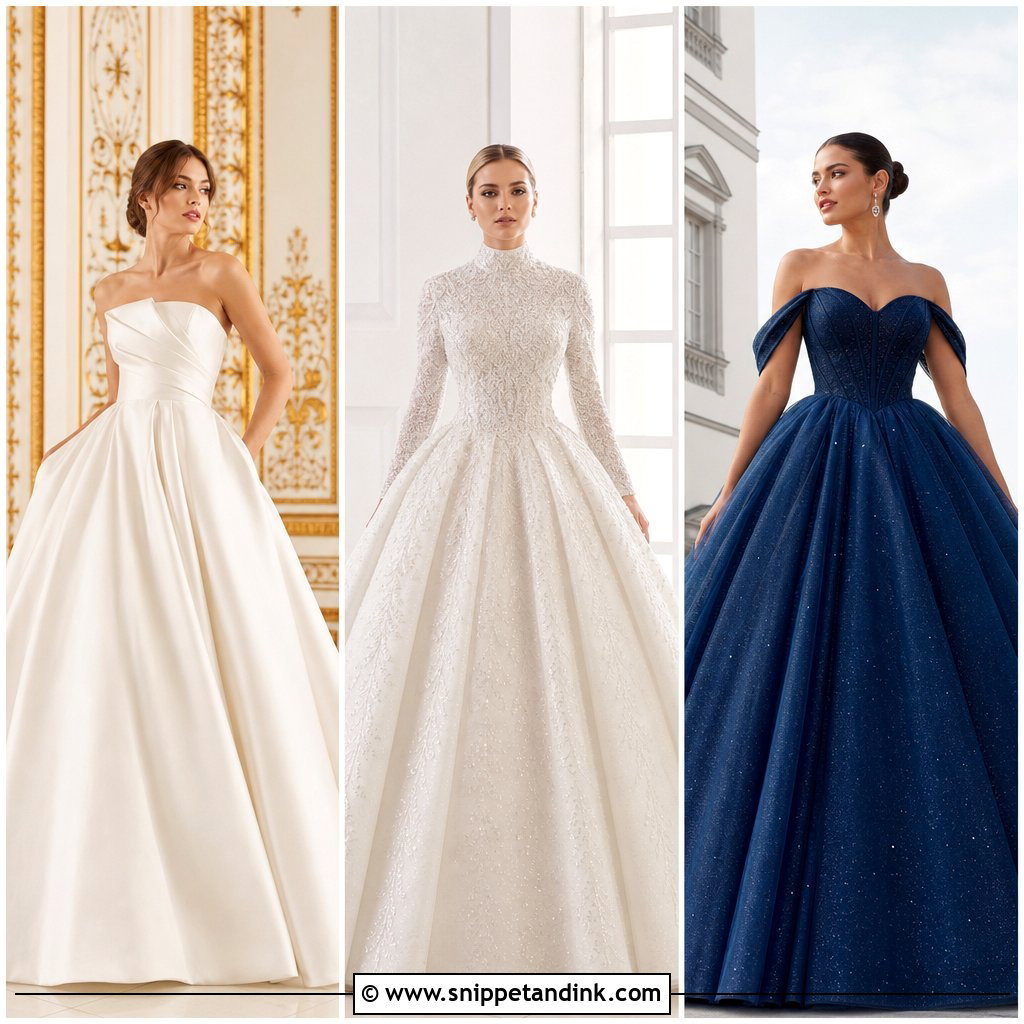
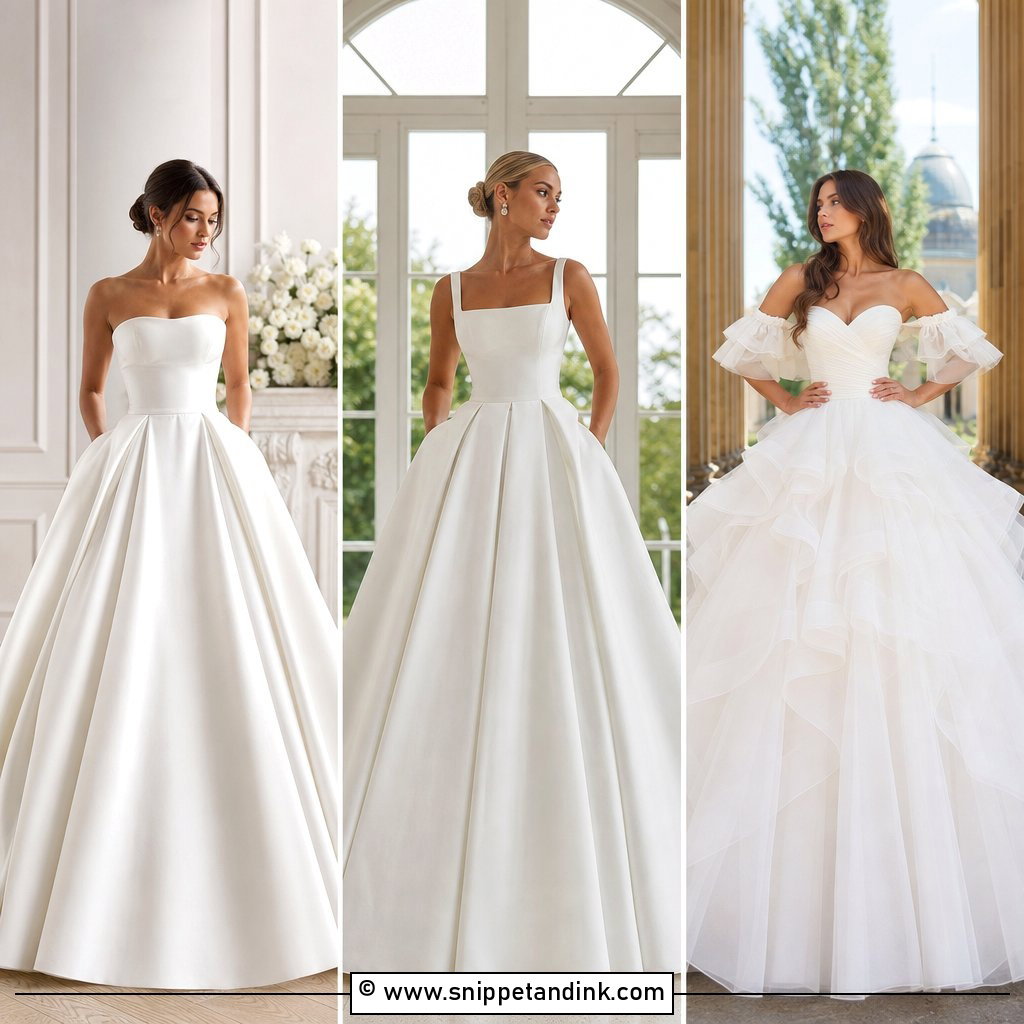
Plain strapless satin is the ball gown at its most confident. With no lace or beading, the boned bodice and clean box pleats carry the whole look, so the internal structure has to be excellent. I style it with a cathedral veil, pearl drops, pointed ivory pumps and a low chignon that leaves the shoulders bare. Ballrooms and formal estates suit it. The fitting step brides skip: hem the skirt while wearing your actual wedding shoes. Satin is stiff, and a front hem even slightly too long folds under your toes on stairs.
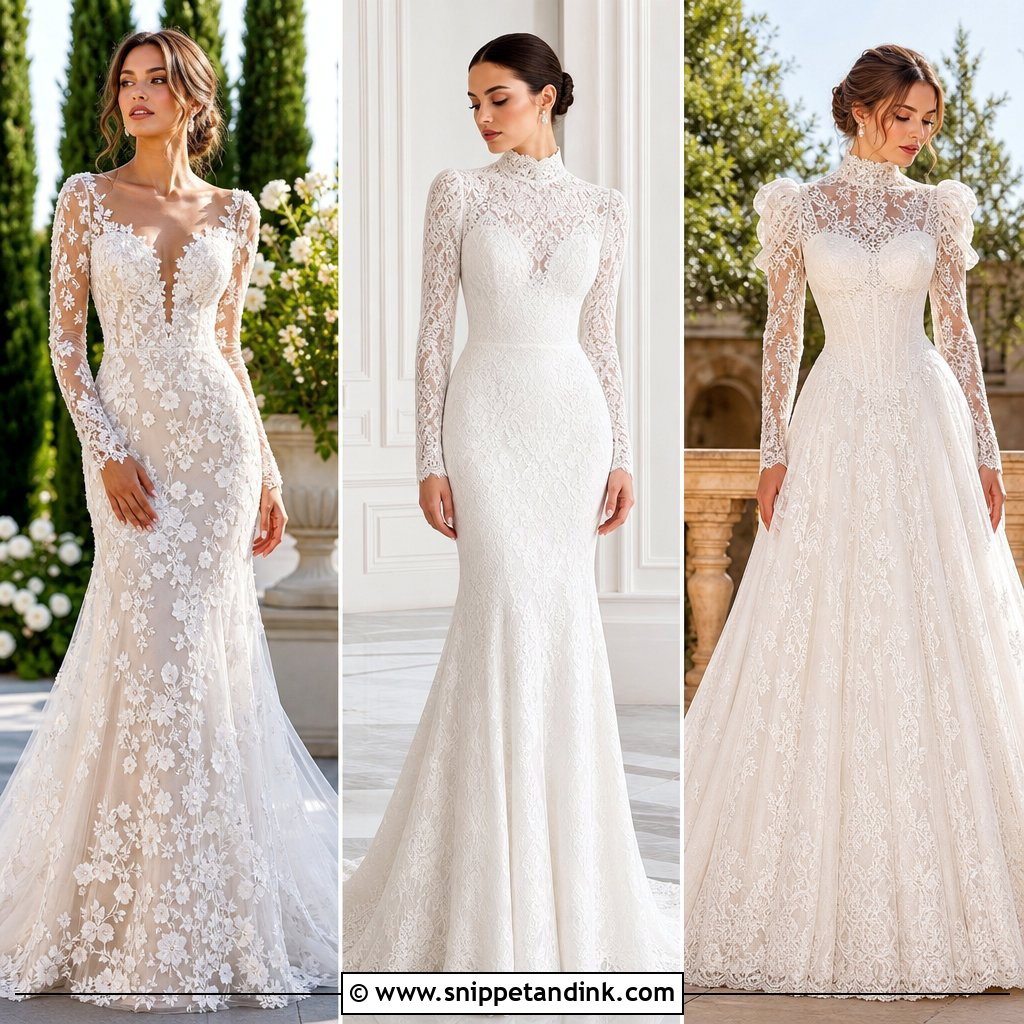
2. Long Sleeve Lace Ball Gown Wedding Dress
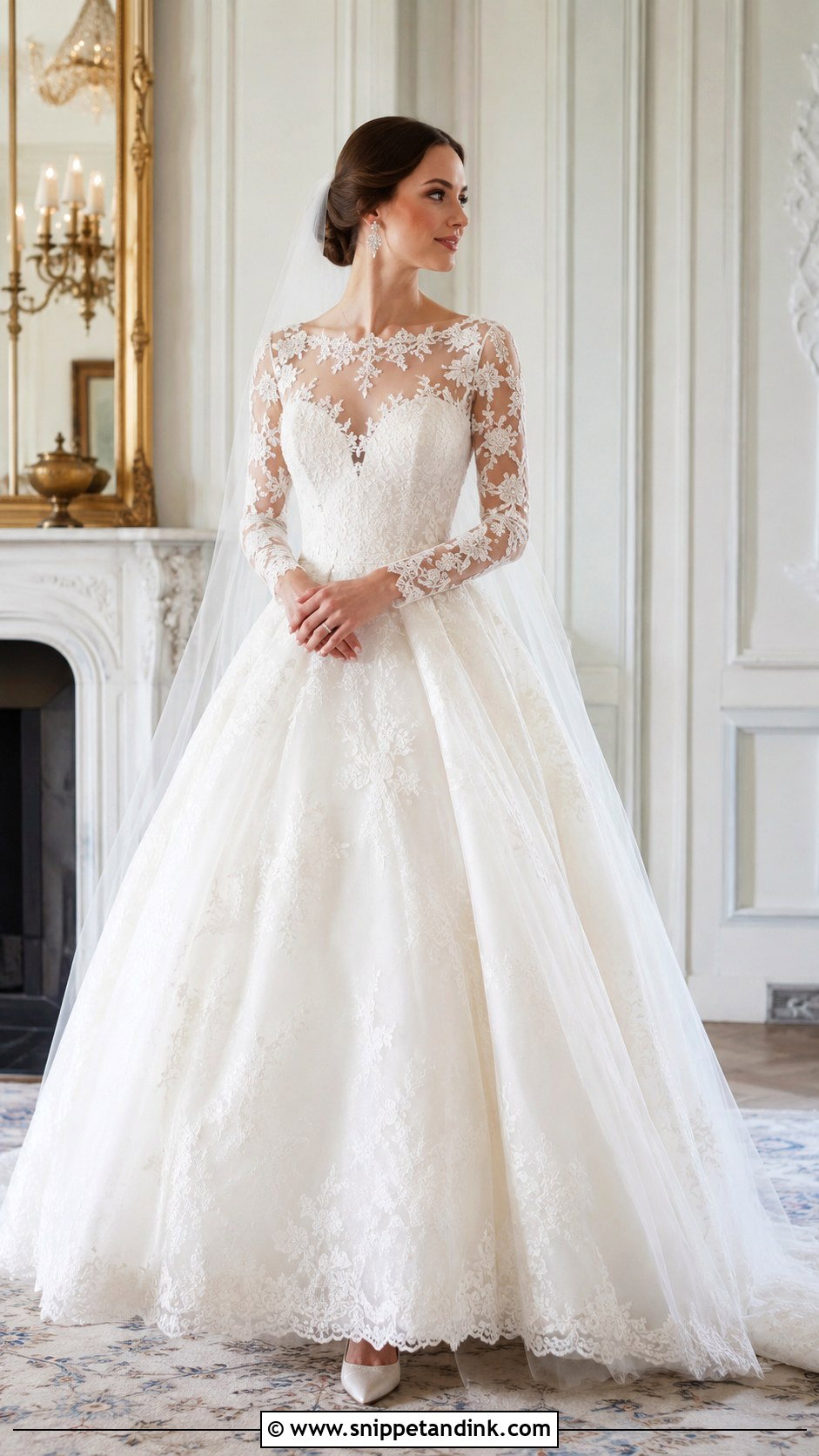
Lace sleeves soften a big skirt and give real coverage for a church or a winter date. I look for an illusion-lined bodice with floral lace and a natural or slightly lowered waist. Carrying the lace onto the skirt feels romantic; if that’s too much detail, a smooth satin or mikado skirt under lace sleeves reads cleaner. Keep the rest simple with a tulle veil, small crystal earrings, closed-toe heels and a compact bouquet, plus a bun or half-up style. Ask your seamstress to leave a little ease in the upper arm. Tight lace sleeves stop you lifting the bouquet properly and strain when you hug.
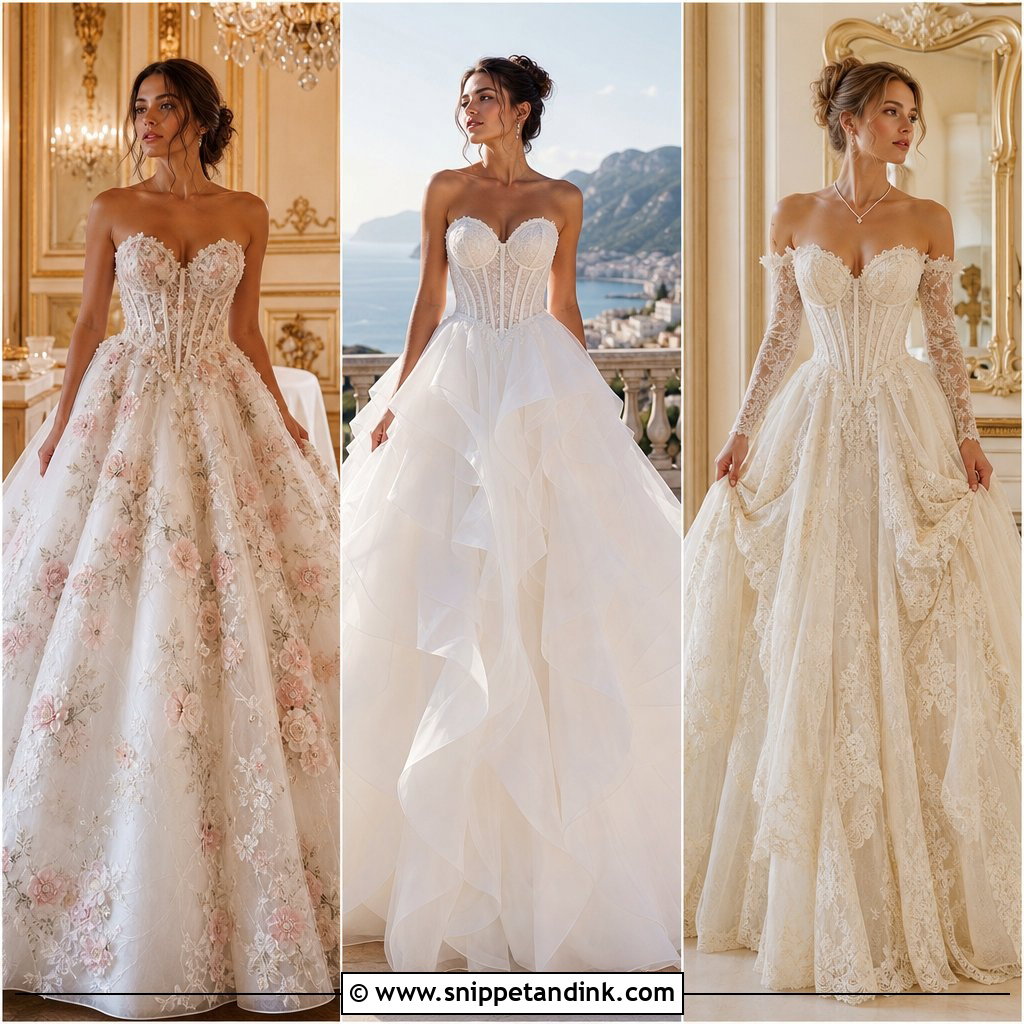
3. Corset Tulle Ball Gown Wedding Dress
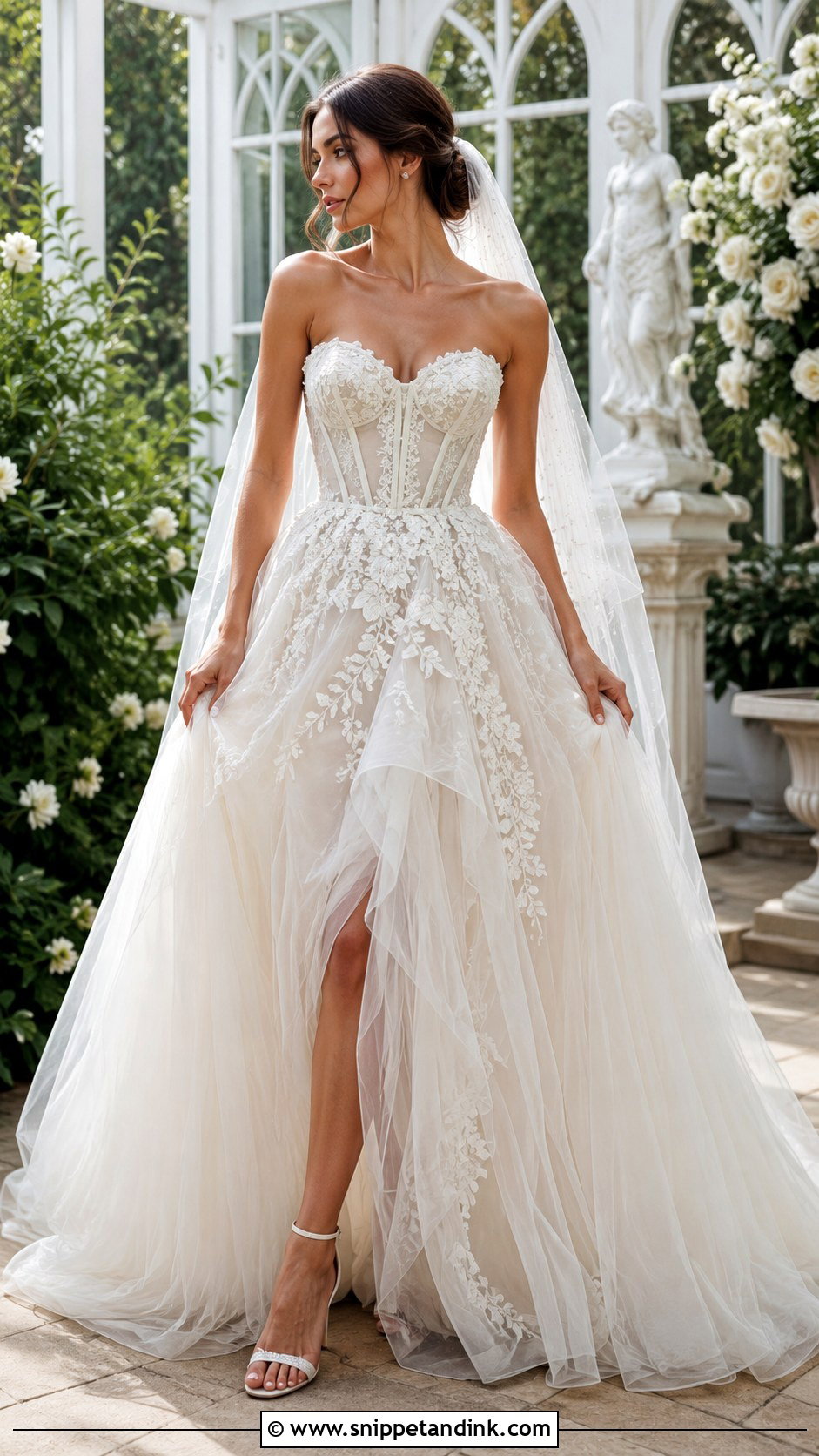
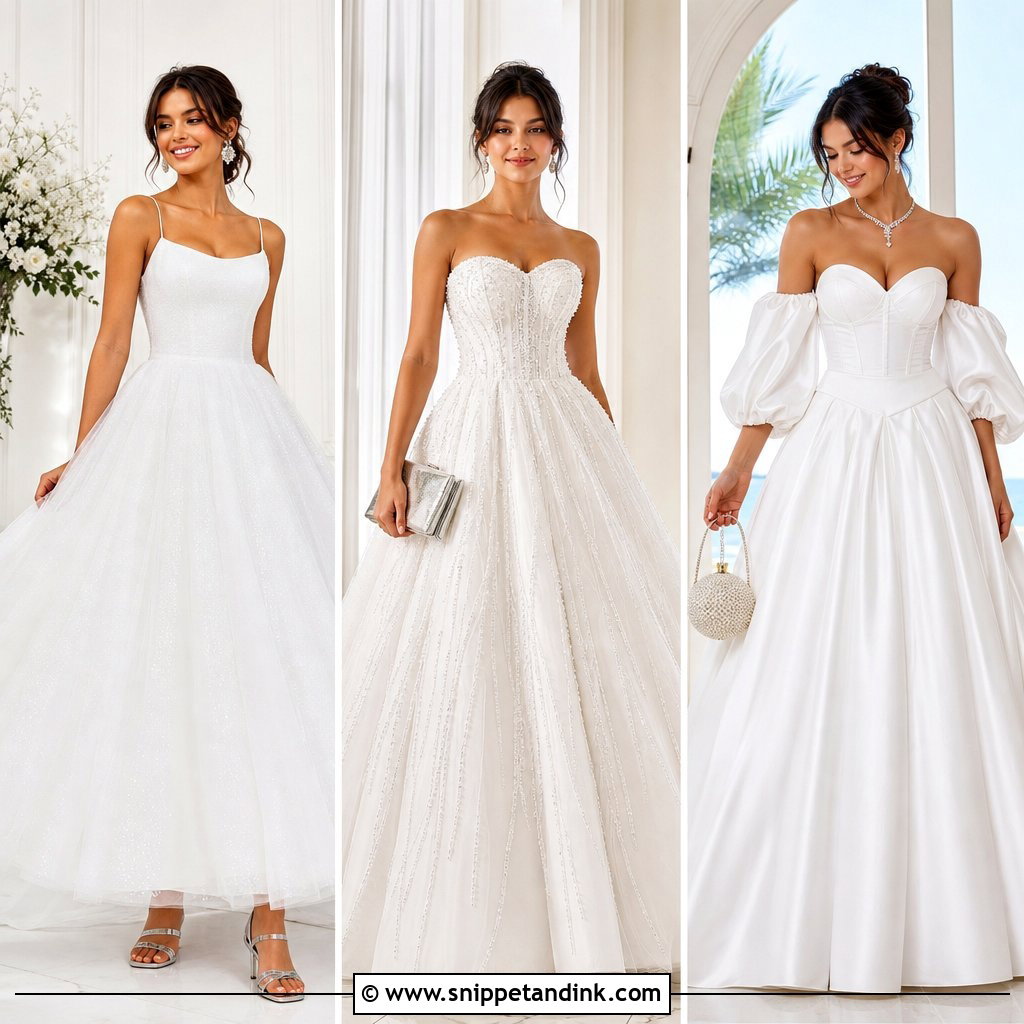
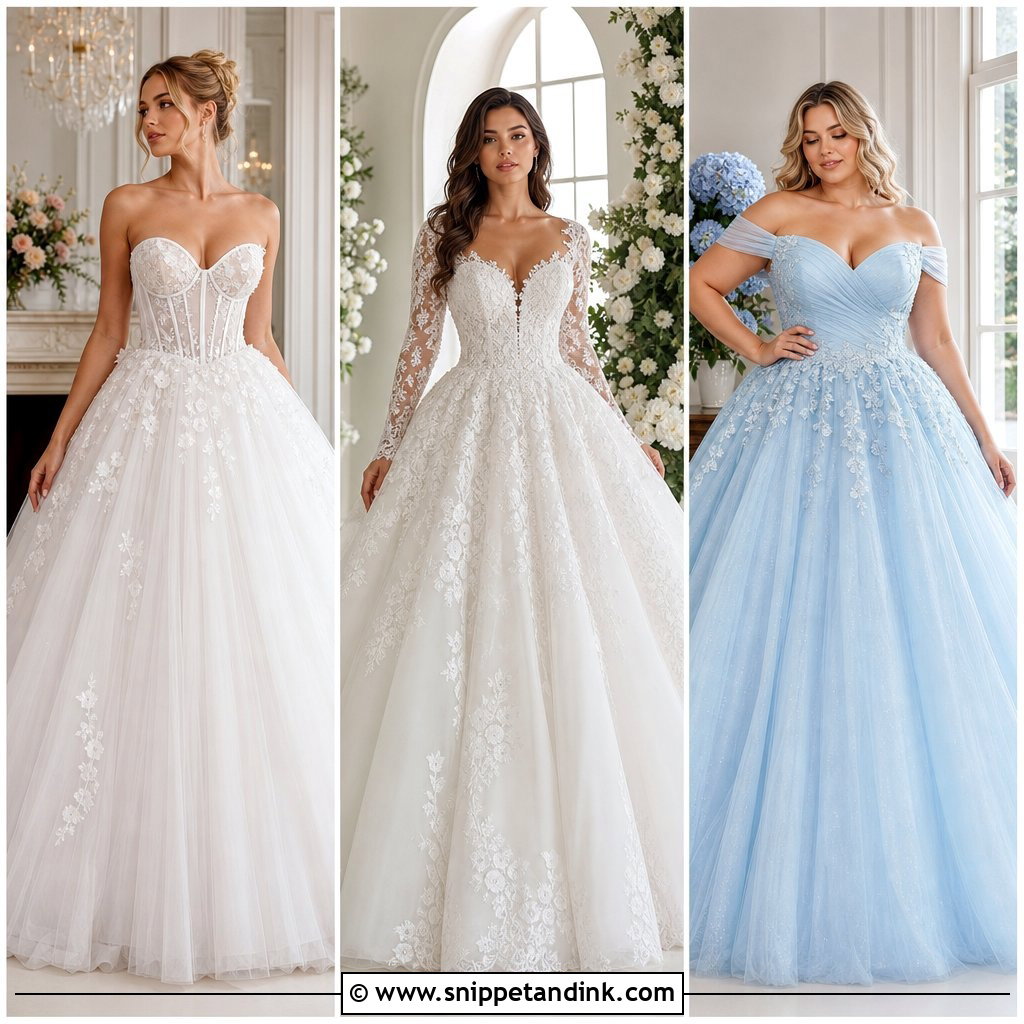
Tulle is the reason big skirts can feel light. Many layers trap air rather than weight, so a tulle ball gown is often easier to wear than its size suggests. I pair it with a boned corset bodice and lace appliqué placed neatly over the bust; partial lining looks more current, full lining covers more. A soft fingertip veil, crystal studs, ivory ankle-strap heels and a loose low bun suit it, with a medium bouquet that doesn’t fight the skirt. Gardens and bright ballrooms suit it well. In the corset, sit and breathe deeply at every fitting. If the neckline gaps when you sit, it needs taking in at the side seams.
4. Basque Waist Mikado Ball Gown Wedding Dress
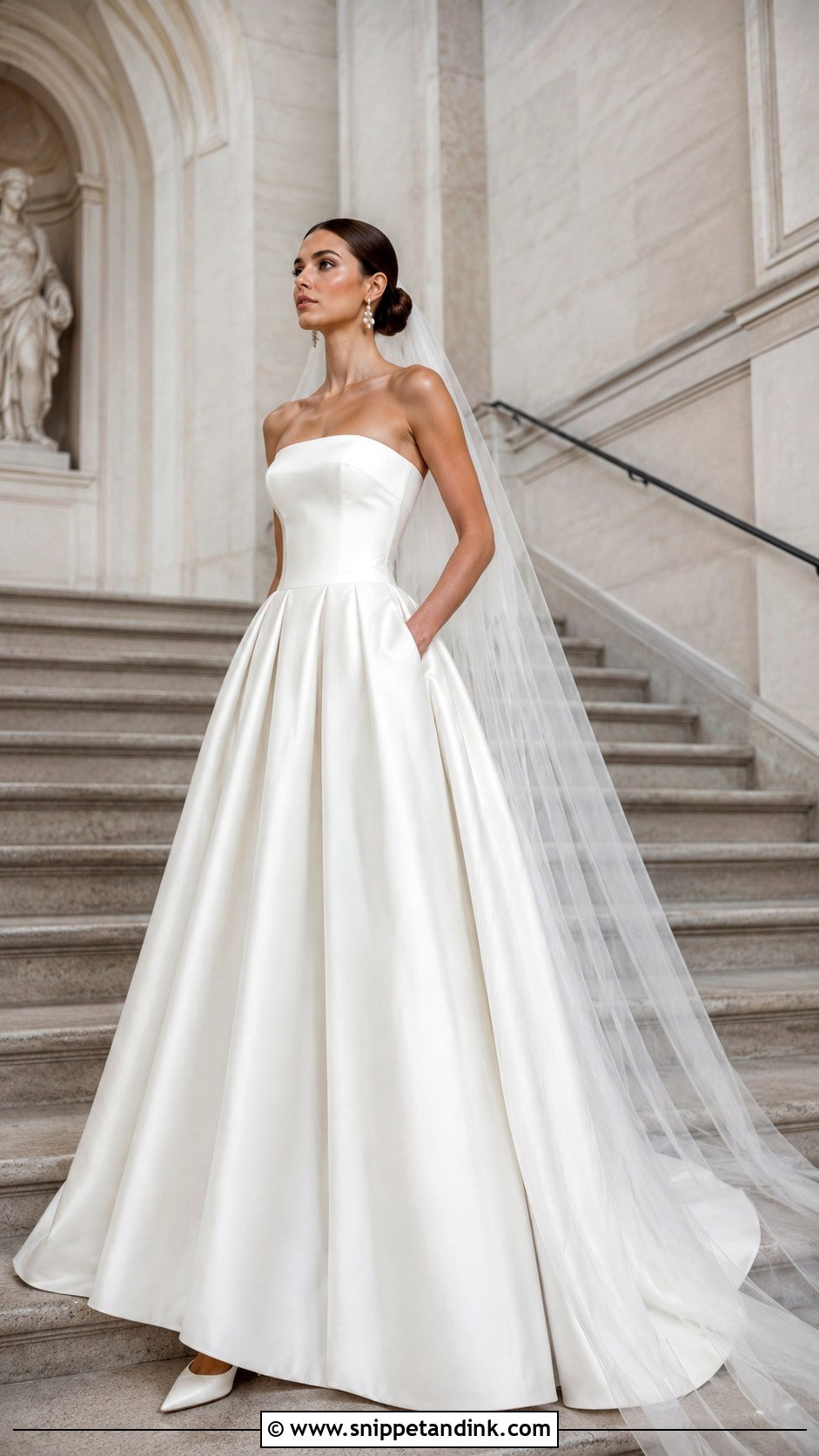
A basque waist drops into a V or curve below the natural waist, lengthening the bodice before the skirt opens out. Mikado is the right partner because it is crisp enough to hold deep pleats without collapsing. I keep the bodice strapless or sleeveless with minimal seams, and style it with a long plain veil, sculptural pearl earrings, pointed pumps and a centre-parted bun. A white bouquet keeps the colour story tight. Hotels, museums and historic venues suit the architecture of it. Try more than one dip depth in fittings. A deep point can dig into your stomach when you sit, while a shallow curve gives the same long line comfortably.
5. Off Shoulder Ball Gown Wedding Dress
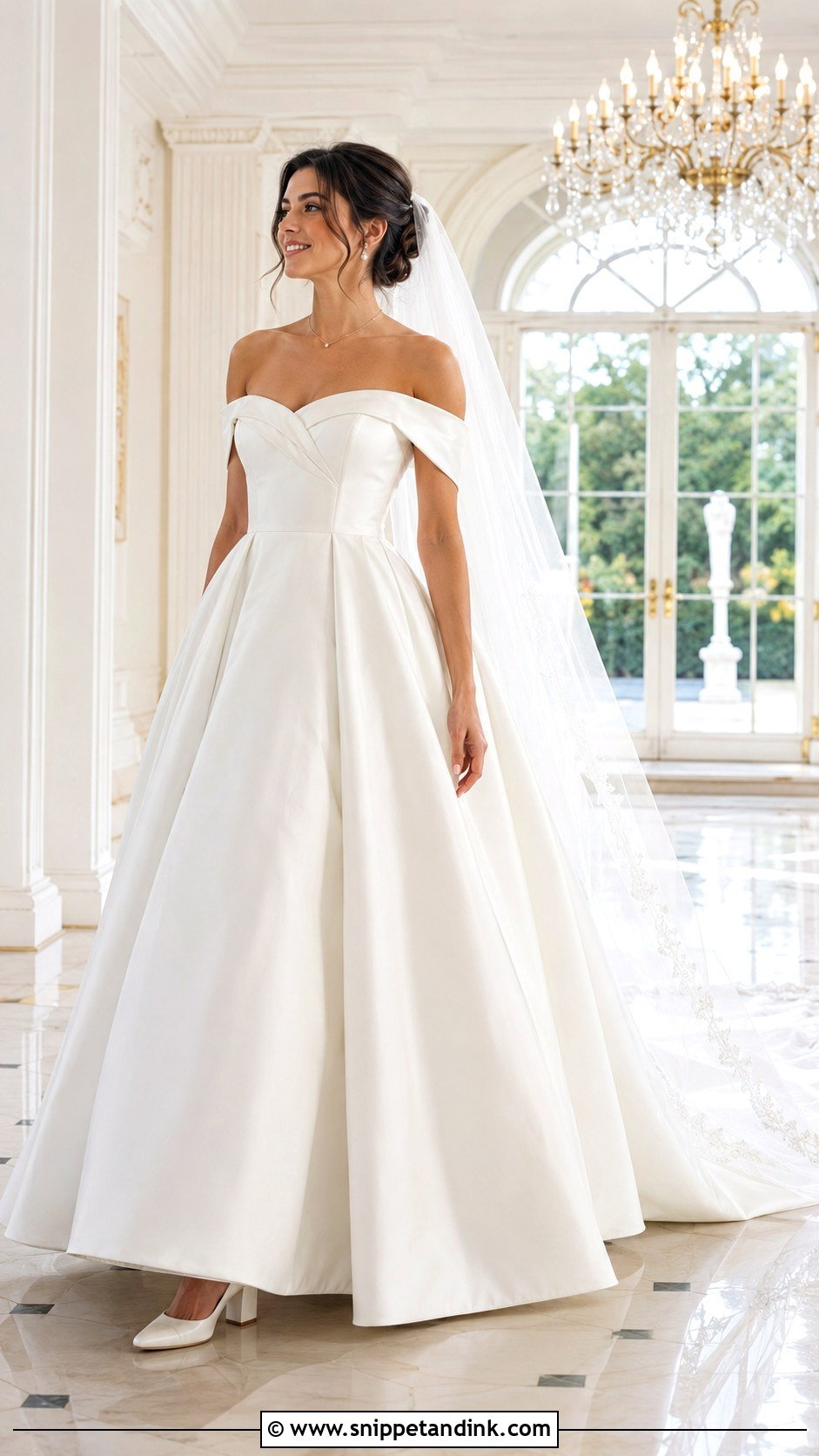
Off-the-shoulder bands balance a wide skirt well, because they widen the shoulder line to match. The thing I tell every bride: those bands are decoration. The bodice underneath must hold the dress up on its own, or you’ll be hitching it all night. Draped satin bands look formal; lace or tulle feels softer. A cathedral veil, a fine necklace, pearl earrings and block heels hidden under the skirt finish it, with waves or an updo. Raise your arms and hug someone at the fitting. If that pulls the bands up your arms, detachable straps may suit you better.
6. Square Neck Ball Gown Wedding Dress
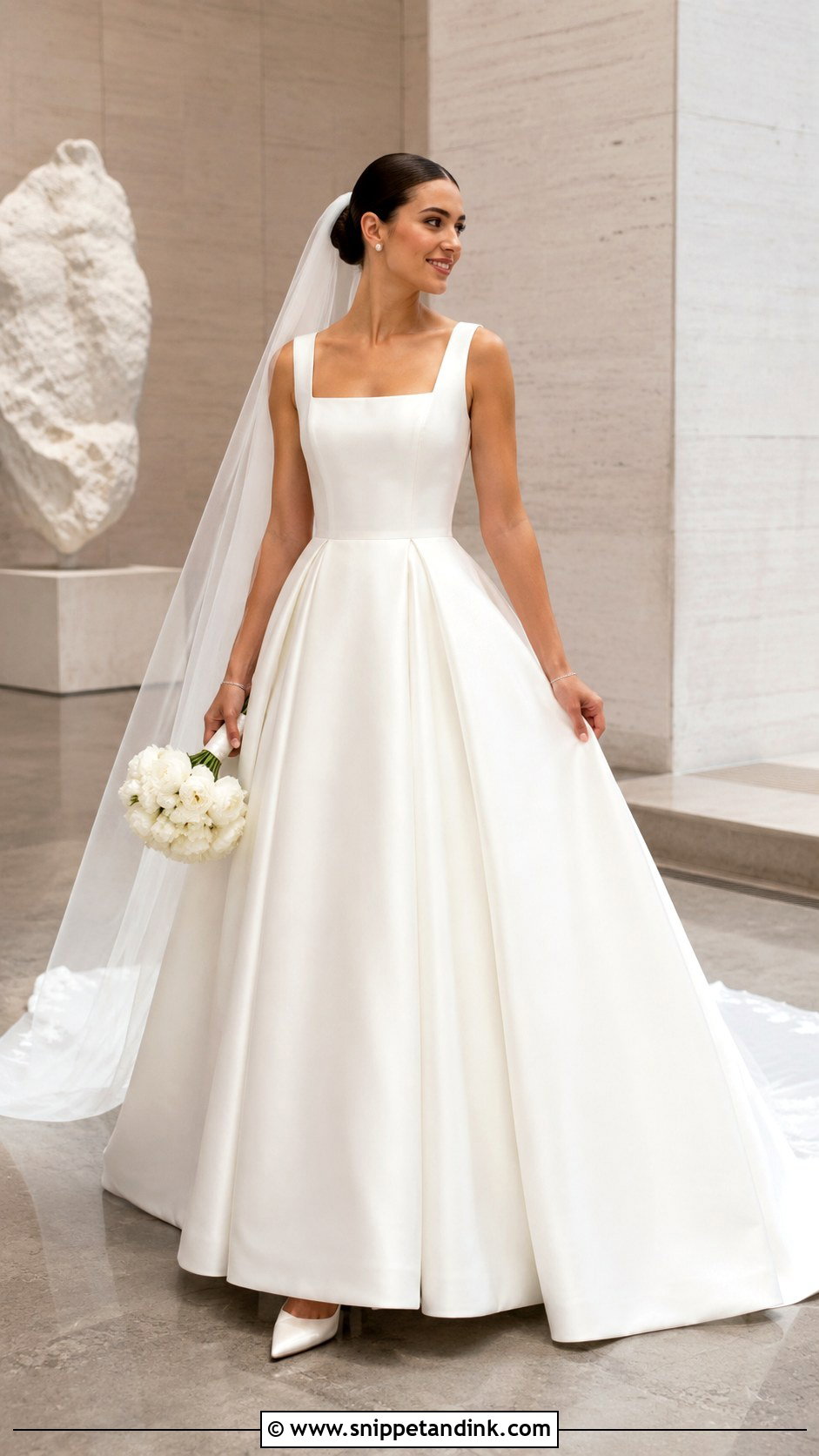
A square neckline makes a traditional ball gown feel tailored rather than princess-like. It sits best on wide straps and a structured bodice over a smooth satin or mikado skirt. Because the neckline frames the collarbones so cleanly, I keep jewellery to pearl studs and a fine bracelet, with pointed ivory heels and a chapel veil. A neat bun or waved ponytail keeps it modern for galleries and minimal venues. Watch the corners. If they lift or curl outward when you move, the neckline needs reshaping, and straps that dig in usually mean the bodice is not carrying its share of the weight.
7. Sweetheart Ball Gown Wedding Dress
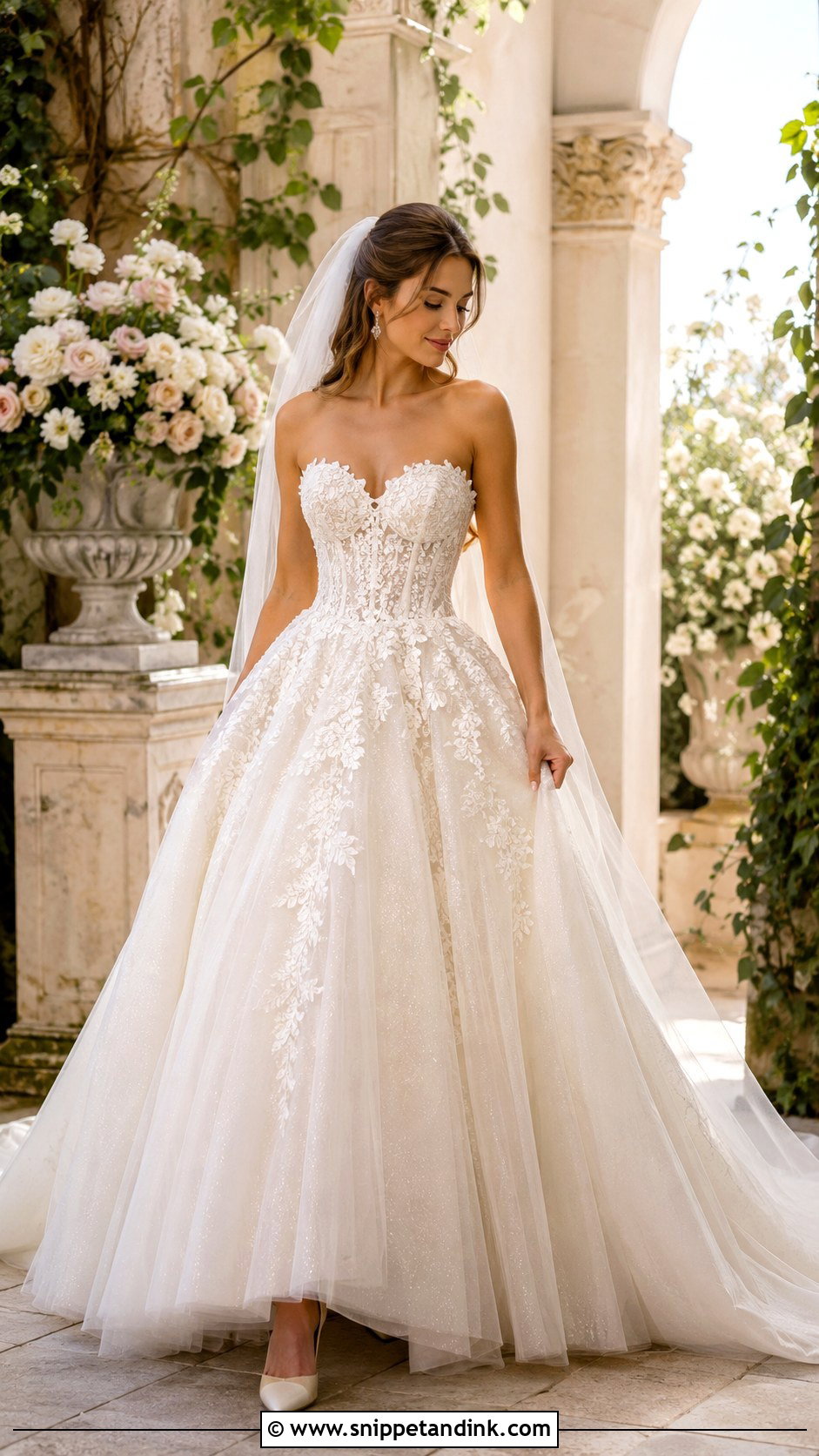
The curve of a sweetheart neckline gives a fitted bodice shape without needing straps. A gentle curve looks understated; a deep sculpted one is more dramatic. With a full tulle skirt, floral appliqué and a little shimmer you get the classic fairytale version. I add a sheer veil, small drops, ivory pumps and a bouquet with trailing greenery, and a half-up style so the neckline stays open. Skip the necklace if the bodice is heavily decorated. At fittings I check the neckline from the side as well as the front, since that is where gaps above the cups show up.
8. High Neck Ball Gown Wedding Dress
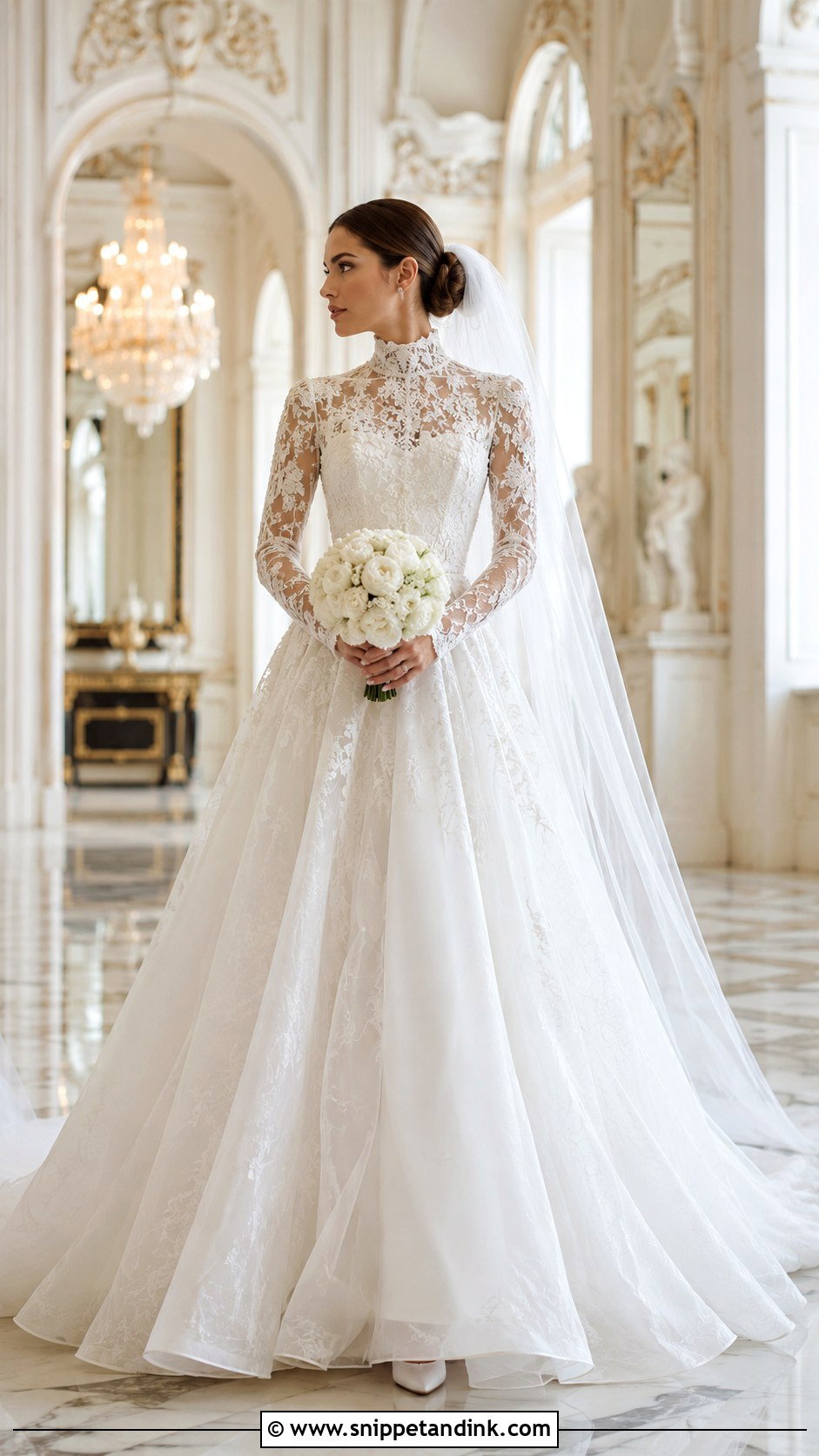
High necks and full skirts make a strong pairing for cooler weather and formal indoor ceremonies. Sheer lace at the collar keeps it light; a lined bateau or mock neckline is more structured. Fitted sleeves or a sleeveless lace bodice both work over a defined waist and tulle or organza skirt. I style it with crystal studs, closed-toe pumps and a low bun, setting the veil under the bun to keep the neck clear. No necklace. Turn your head at the fitting. If lace edges or beads scratch, a soft lining inside the collar fixes it.
9. Pearl Embellished Ball Gown Wedding Dress
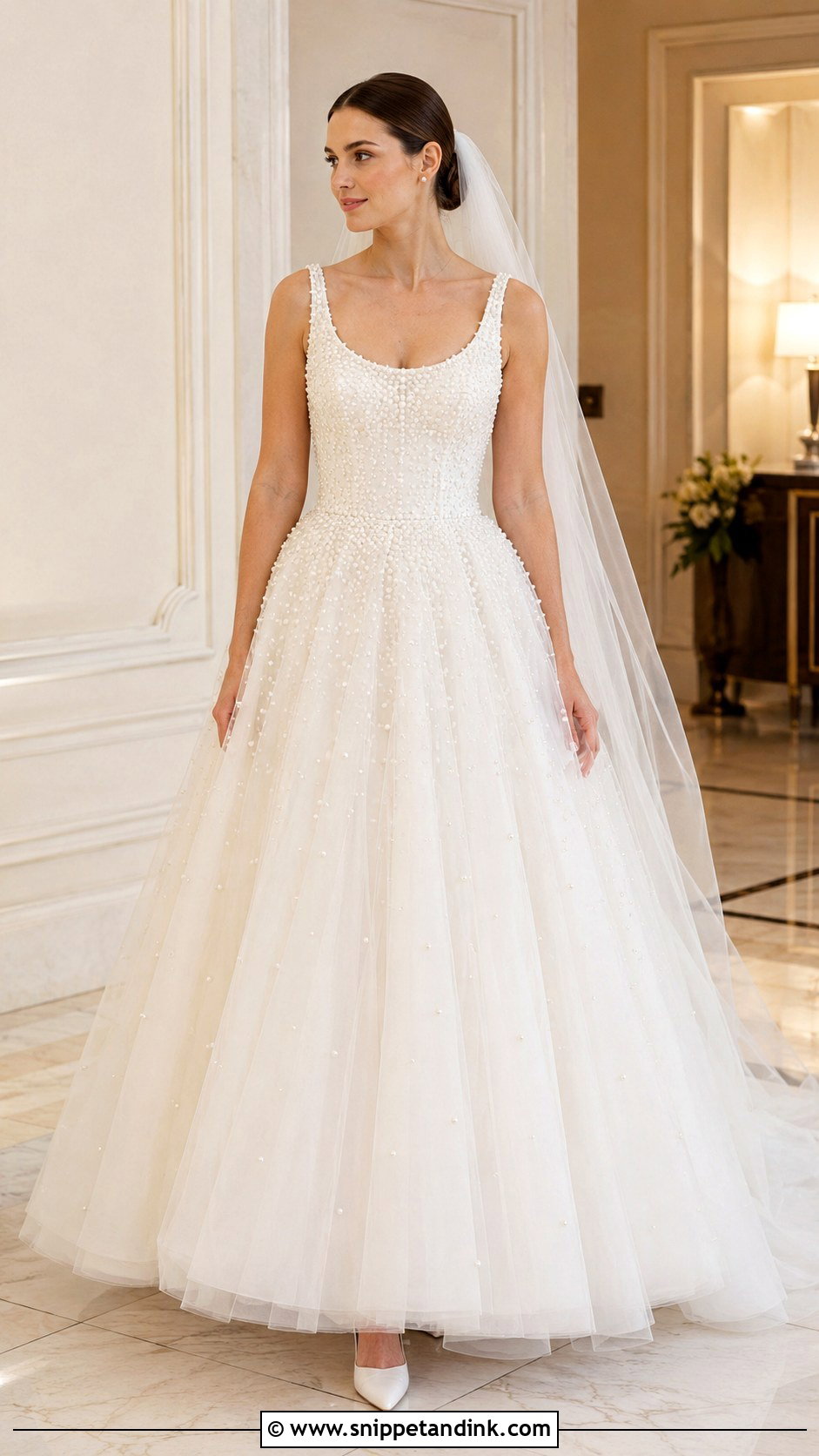
Pearls give a soft glow rather than glitter, which suits brides who find sequins too loud. The best placement starts dense on the bodice and fades into the tulle skirt. Keep the neckline simple, such as a scoop or sweetheart, so the surface doesn’t get busy. I style it with pearl studs, satin pumps, a plain veil and a smooth low chignon, and a white bouquet with little greenery. Two practical checks: raised pearls under the arms rub over a long day, and a fine tulle veil can catch on them. Ask the salon for spare matching pearls before you leave.
10. Floral Appliqué Ball Gown Wedding Dress
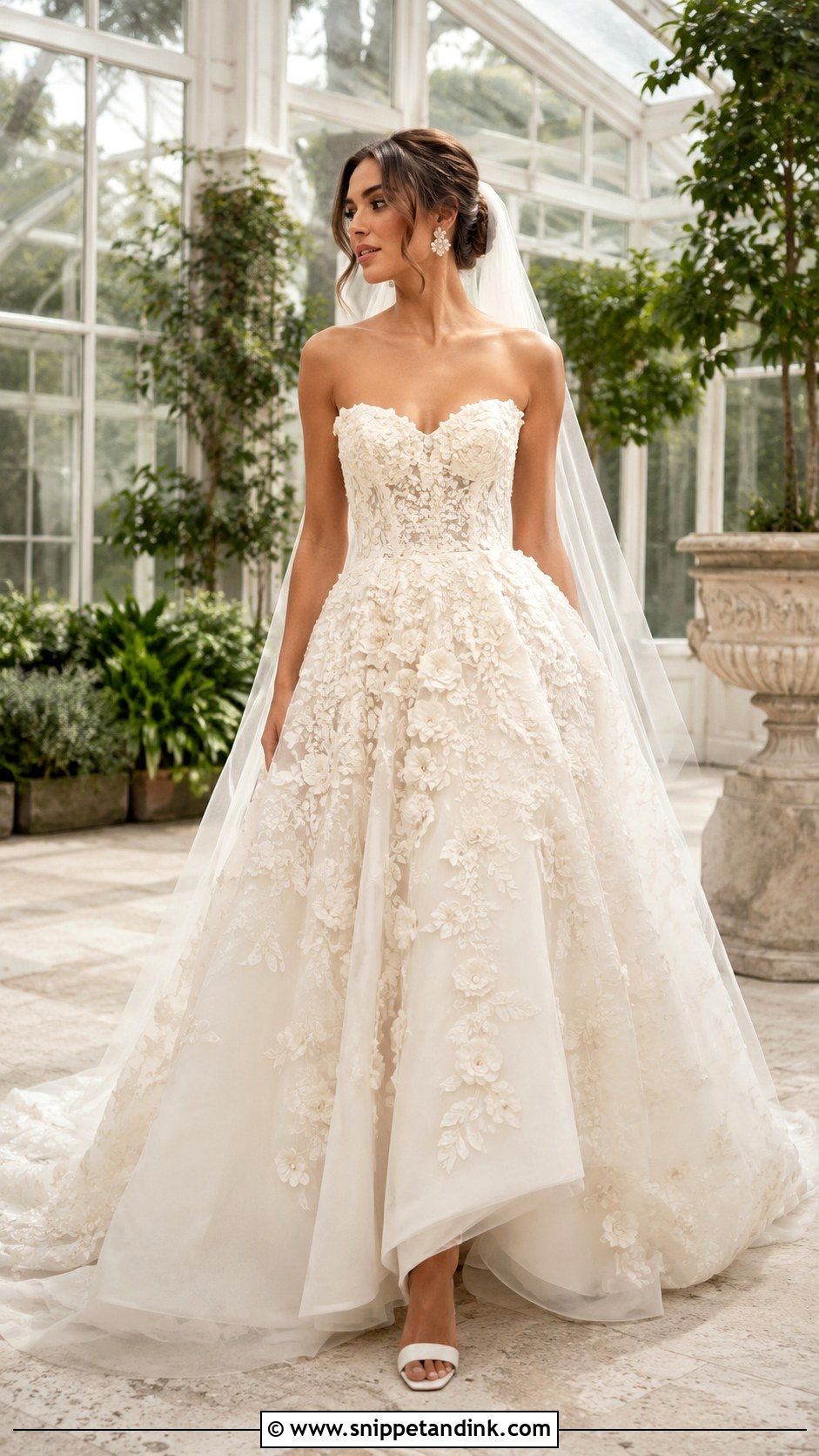
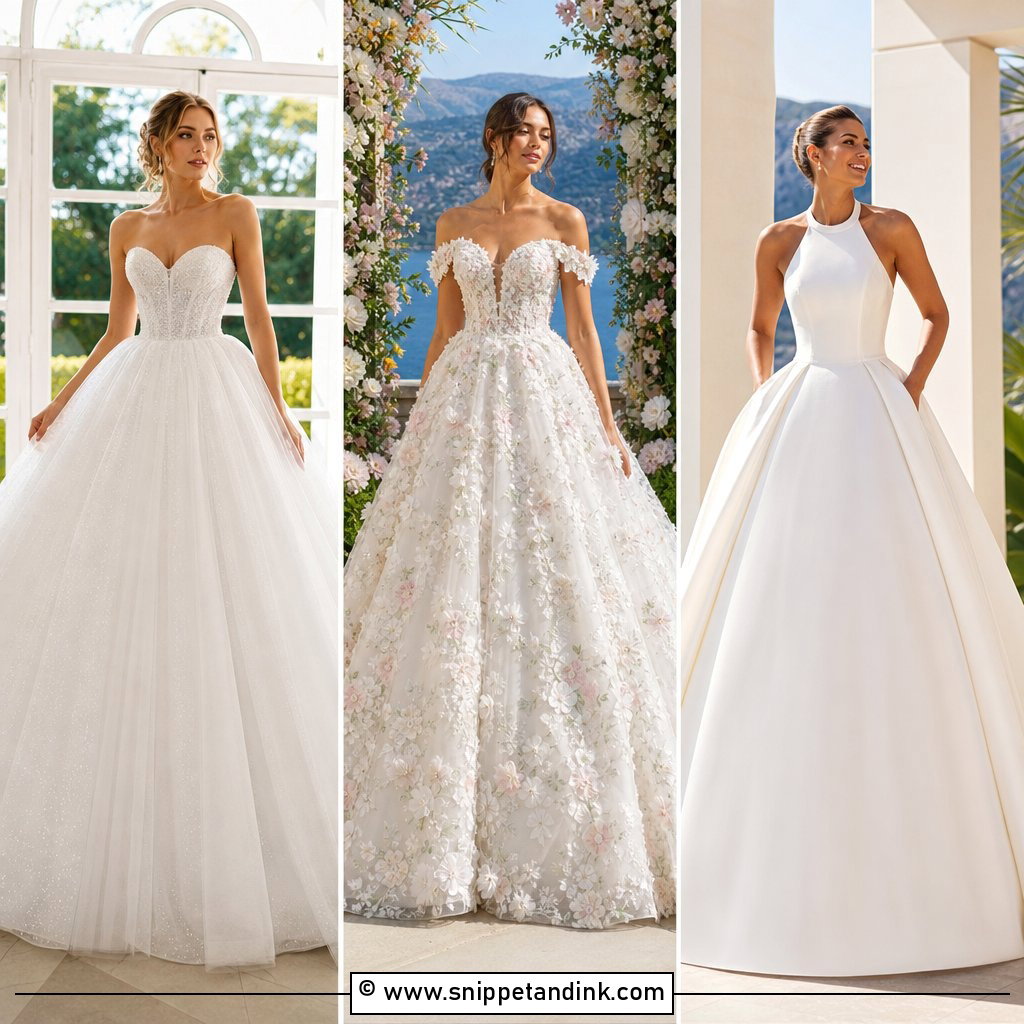
Dimensional flowers look most natural when they cluster at the bodice and drift down the skirt rather than being spaced evenly like a pattern. That uneven placement also keeps the waist defined. I pair it with a plain tulle veil, small floral earrings, neutral ivory heels and a loosely gathered updo, plus a slim bouquet so the dress leads. Blush, ivory and champagne appliqués add depth without leaving a bridal palette. Look at the back too. Raised flowers near the hips catch on veils and chair fabric, so I ask the seamstress to tack down any loose petals.
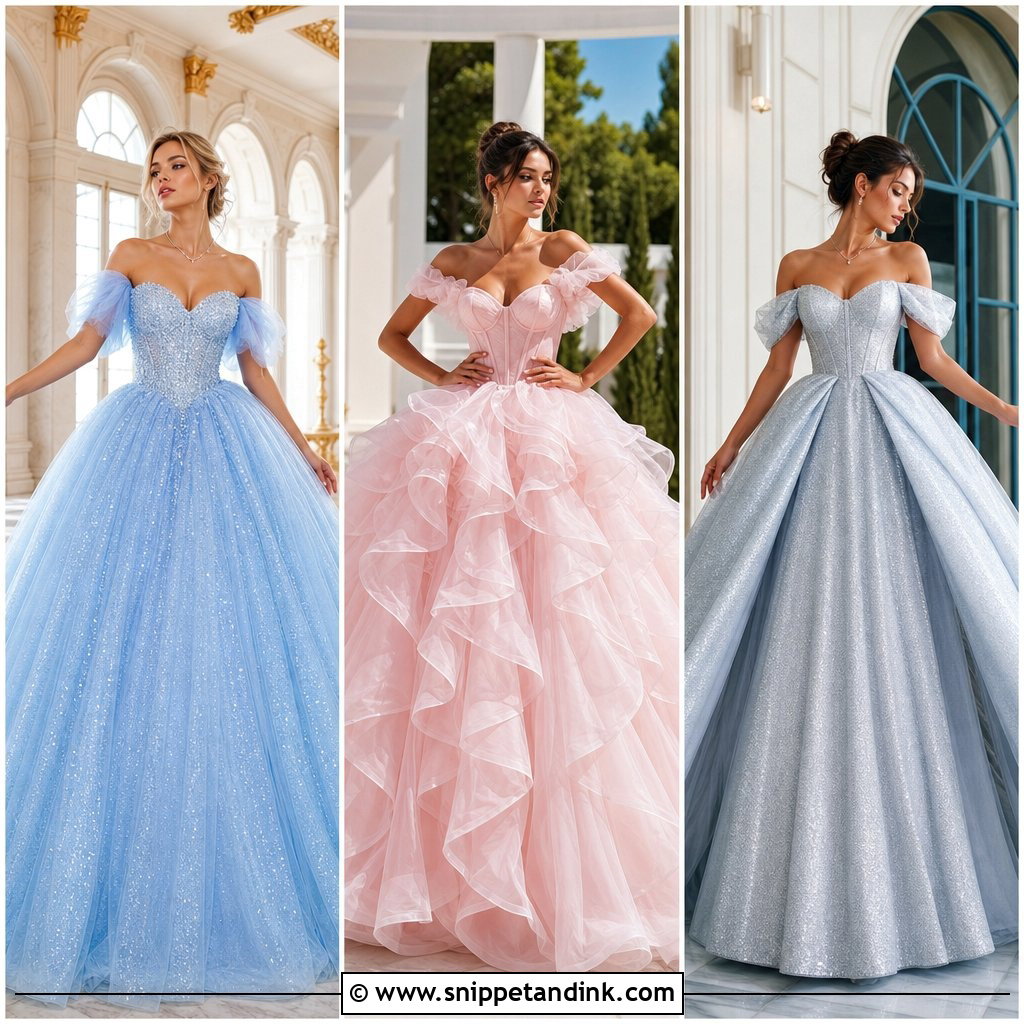
11. Sparkle Tulle Ball Gown Wedding Dress
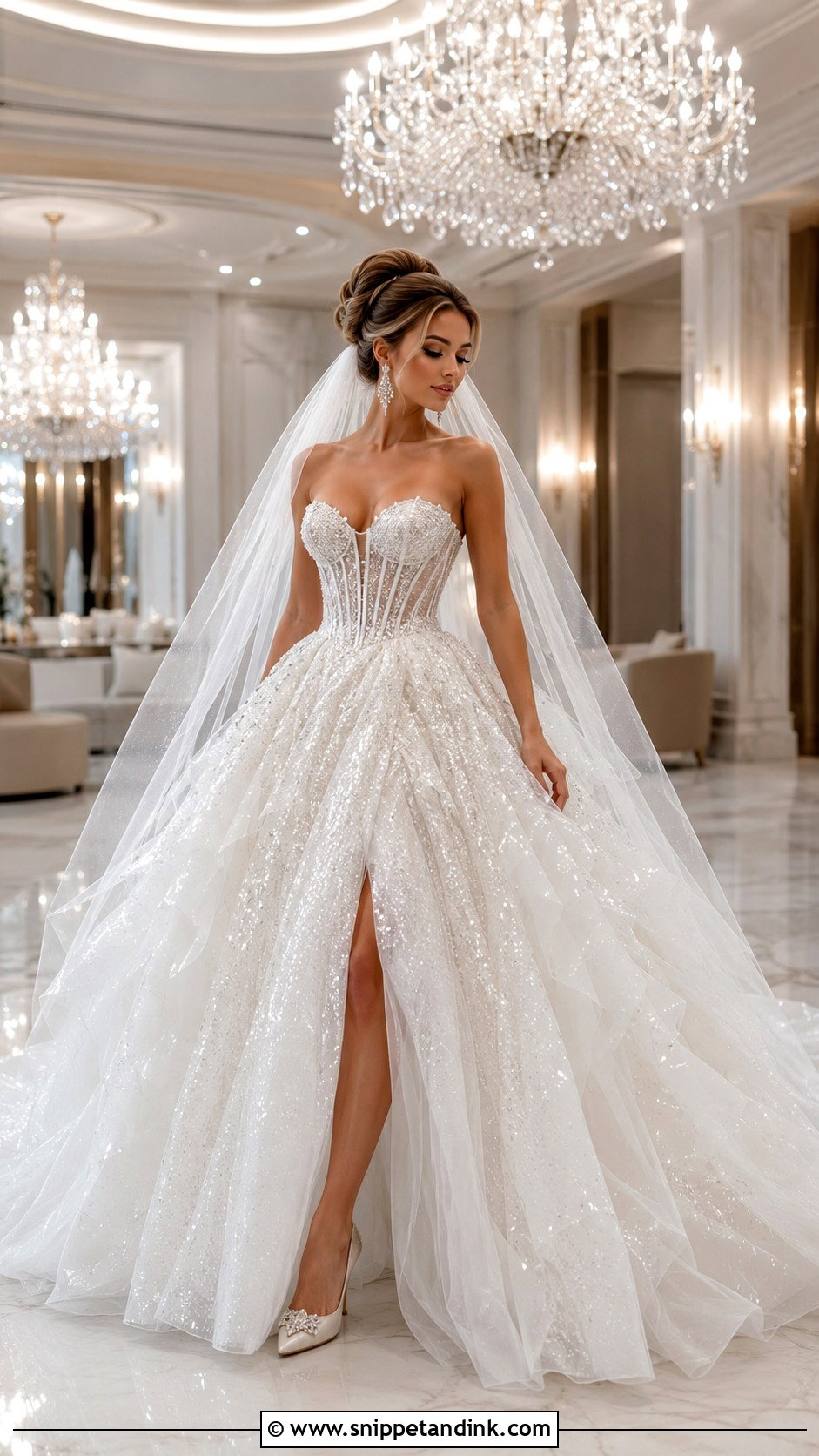
Sparkle tulle catches the light as you move without the heaviness of a sequinned skirt, because the shine is spread through several thin layers. I pair it with a structured corset bodice and a clean neckline, then add crystal earrings, a sheer cathedral veil, silver-toned ivory pumps and a polished updo. Very little extra jewellery. It shines in bright ballrooms and evening receptions. My warning: always see this fabric in daylight before you buy. Glitter that looks soft under salon lighting can read far brighter under a camera flash or full sun.
12. Ruffled Organza Ball Gown Wedding Dress
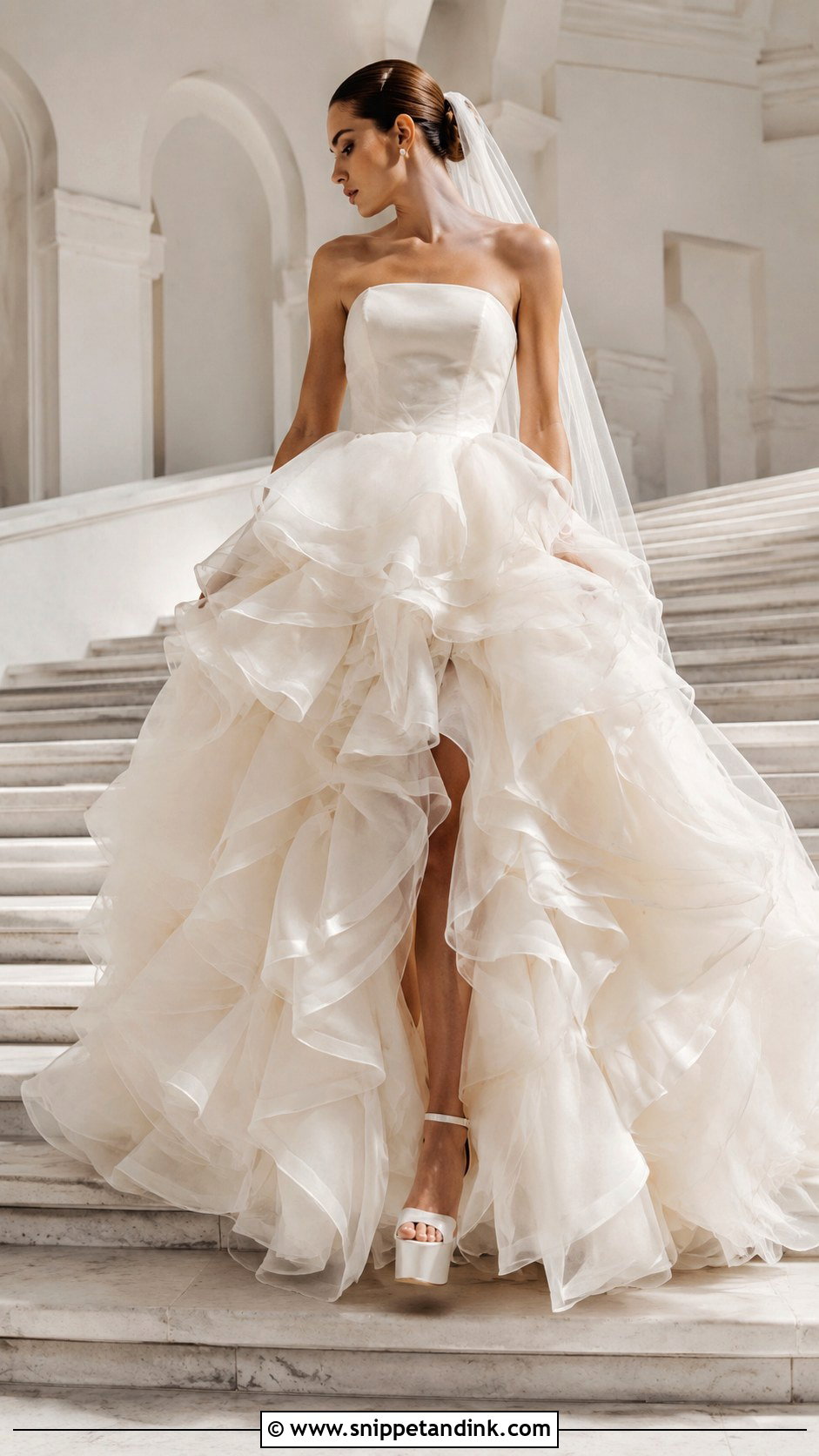
Organza ruffles give the most volume of any skirt here, and they hold that shape in full-length photos because the fabric is crisp. I prefer a few larger tiers to many small ruffles, which can look fussy. A clean strapless bodice balances the skirt, with stud earrings, satin platform heels, a narrow-edged veil and a sleek bun. Test the space it takes up. Walk through a doorway in the sample, sit in an ordinary chair and turn around, then ask whether the train can be bustled without crushing the ruffles.
13. Bow Back Ball Gown Wedding Dress
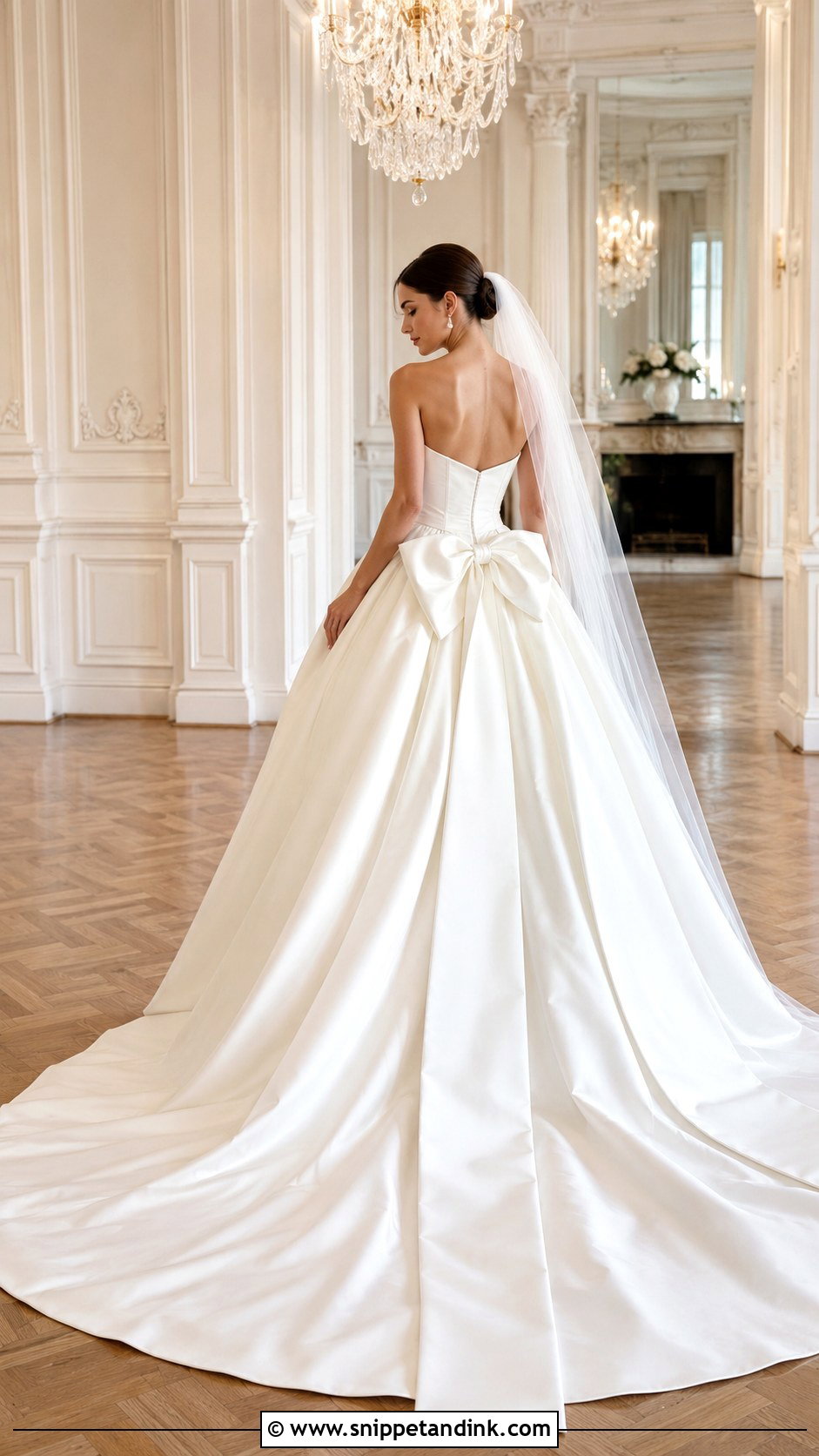
A bow at the back keeps the front of the gown completely clean, so the surprise happens when you walk away. Structured satin or mikado holds a wide bow best, set at the waist or upper back. Long tails blend into the train; a compact bow looks sharper. I keep the veil removable after the ceremony so the bow isn’t hidden all night, and add pearl earrings, pointed pumps and a smooth updo. Have someone photograph your back at the fitting. Bows often sit slightly crooked and you’ll never see it in a mirror. A detachable bow also makes bustling easier.
14. Detachable Sleeve Ball Gown Wedding Dress
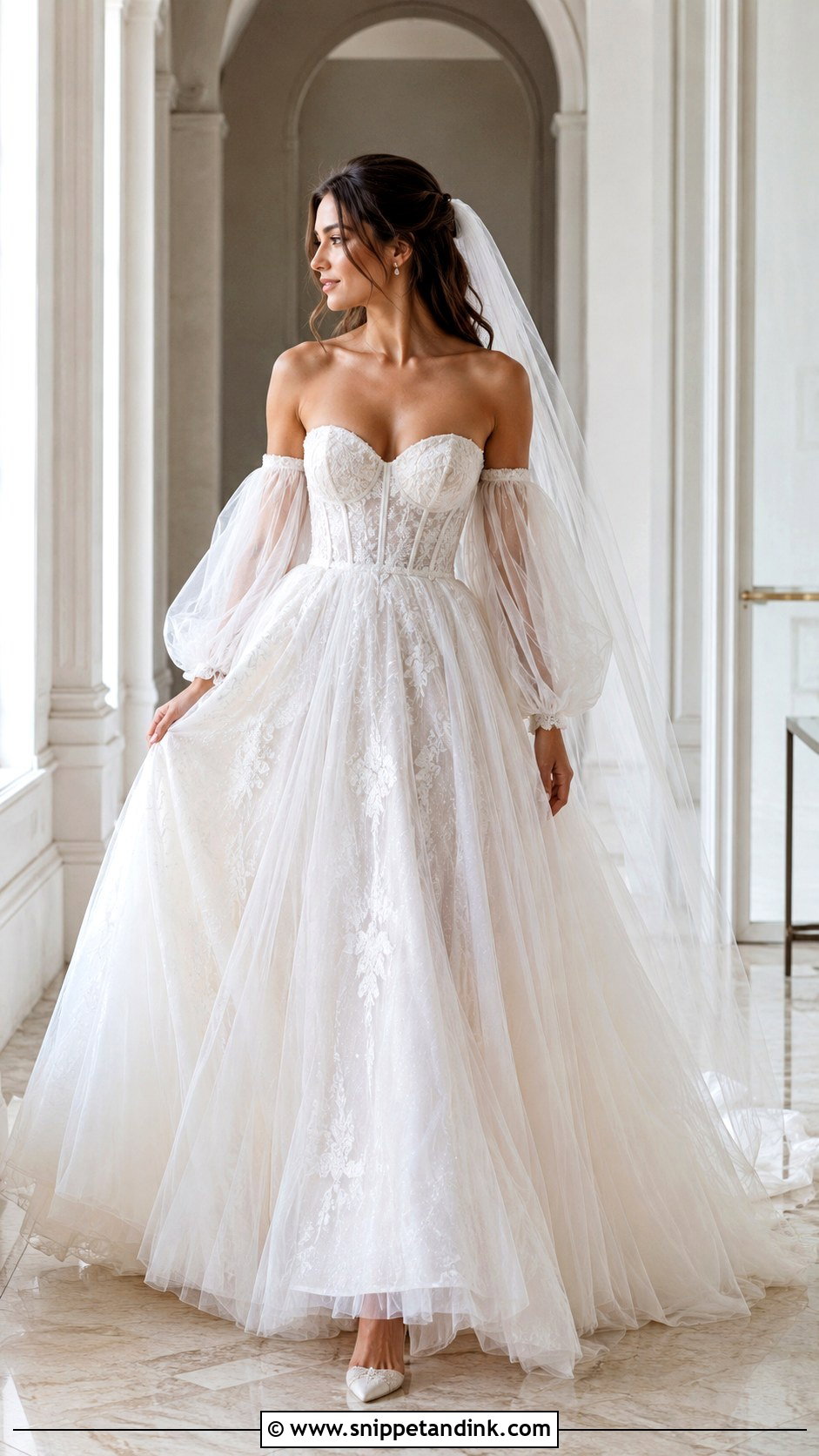
Detachable sleeves give you two dresses in one. Start with a strapless bodice that supports itself and a full satin, lace or tulle skirt, then add draped bands, fitted lace sleeves or puff sleeves for the ceremony. Remove them for dancing. I choose a fingertip veil, small earrings, comfortable heels and a hairstyle that suits both versions. Check where the sleeves attach. Hooks, snaps or hidden elastic should leave no bumps on the bodice once removed. Bring the sleeves to every fitting so the tailor can check symmetry and arm movement with them on.
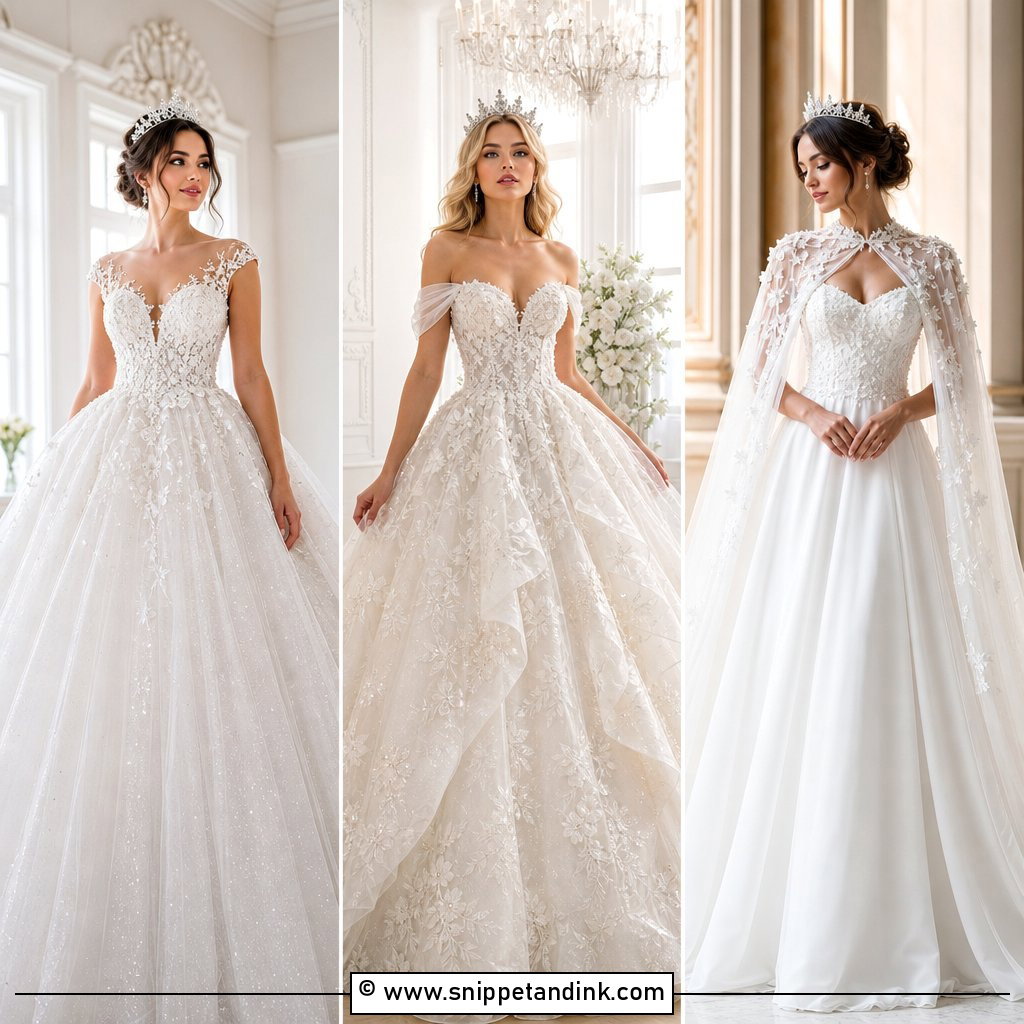
15. Minimalist Mikado Ball Gown Wedding Dress
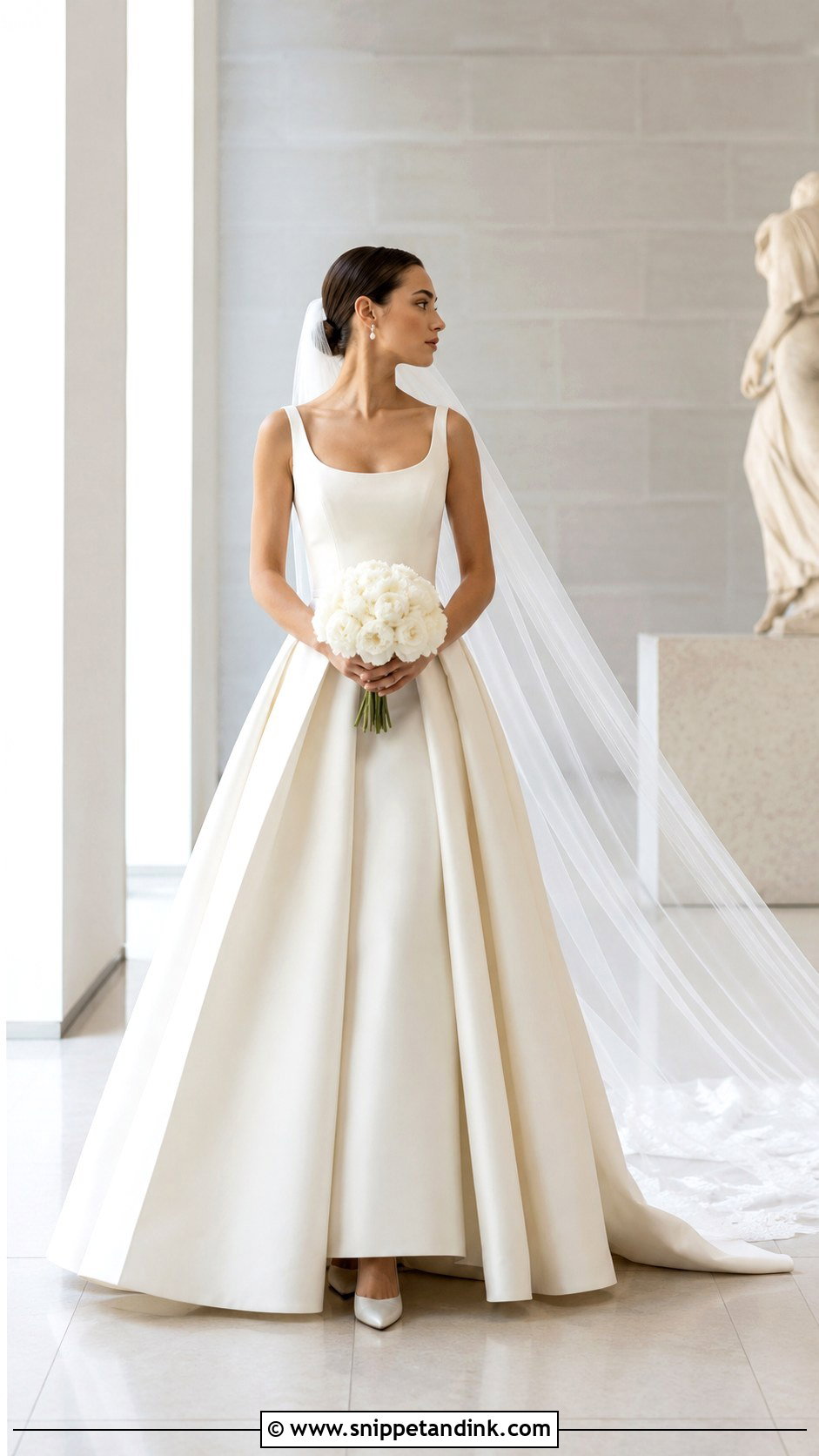
Minimal mikado looks dramatic precisely because it hides nothing. Every seam and pleat shows, so the construction has to be precise. A straight, curved or softly scooped neckline sets the coverage level. I style it with pearl earrings, a cathedral veil, pointed heels, a sleek bun and a one-colour bouquet. At fittings I watch the waist and hips most closely: the pleats should add volume below the waist without adding bulk at it. Steam before the ceremony, as creases and puckered seams show clearly on plain fabric.
16. Cathedral Train Ball Gown Wedding Dress
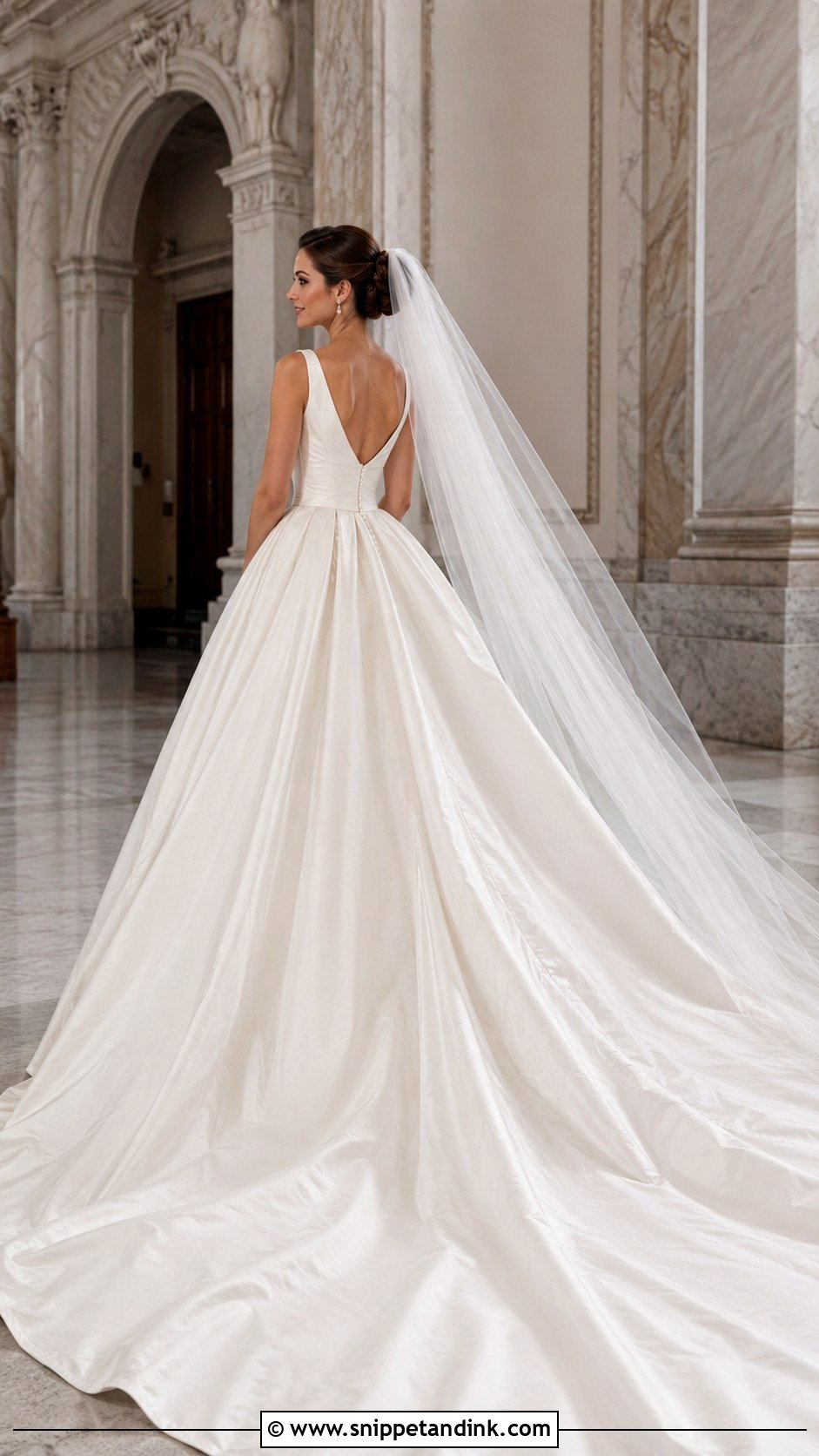
A cathedral train makes for a grand entrance look, and it also makes logistics. Satin gives a smooth, sculptural train; lace adds detail; tulle moves lightly. I pair it with a supportive bodice, a skirt that feels manageable from the front, a long veil, small earrings, closed-toe heels and a secure updo. The veil and train should frame each other, not pile up. Ask for a sturdy bustle and practise it with the person who will do it on the day. Then think about every space the gown passes through: the aisle, the car, the portrait spot and your reception chair.
17. Blush Pink Ball Gown Wedding Dress
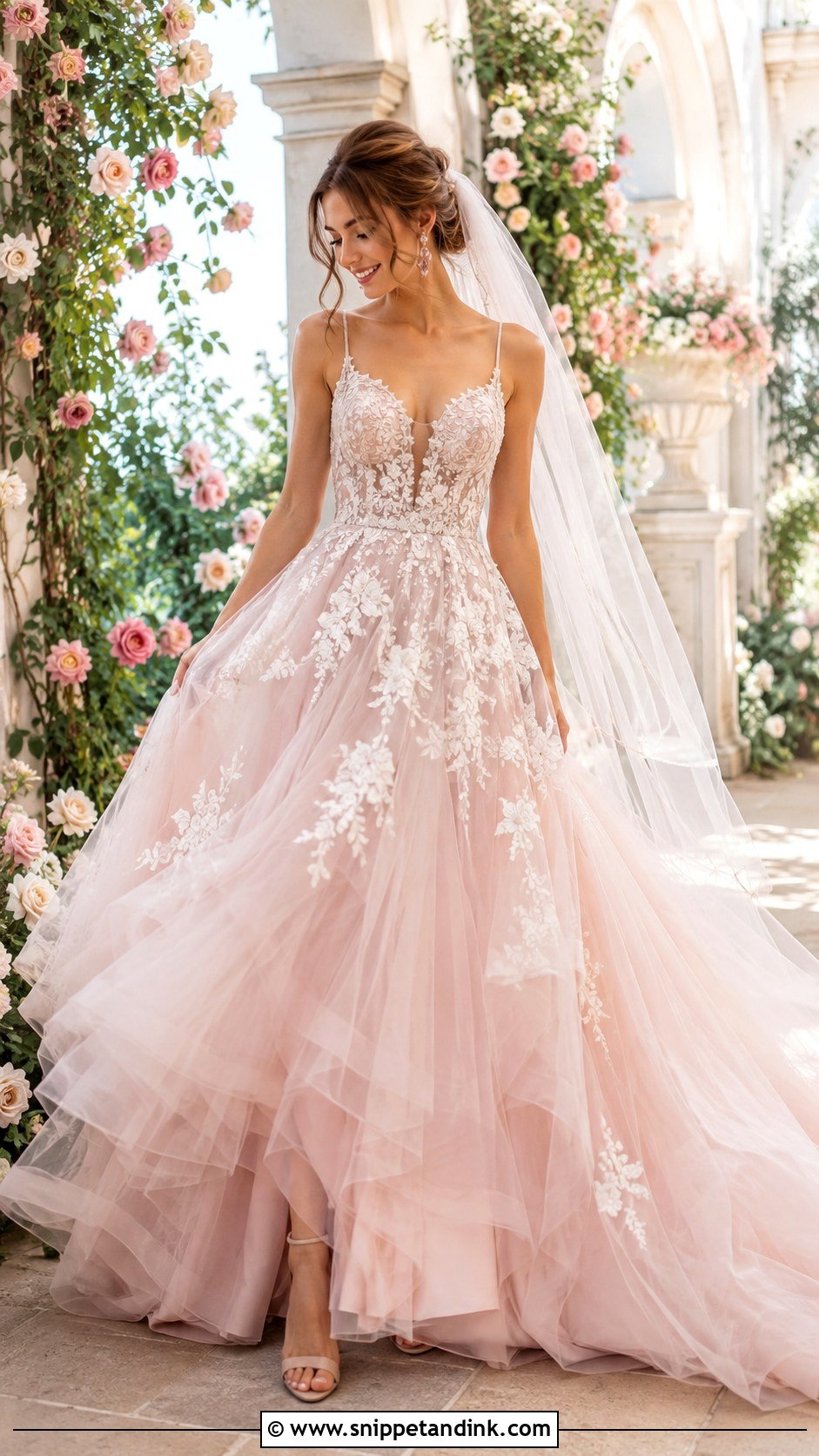
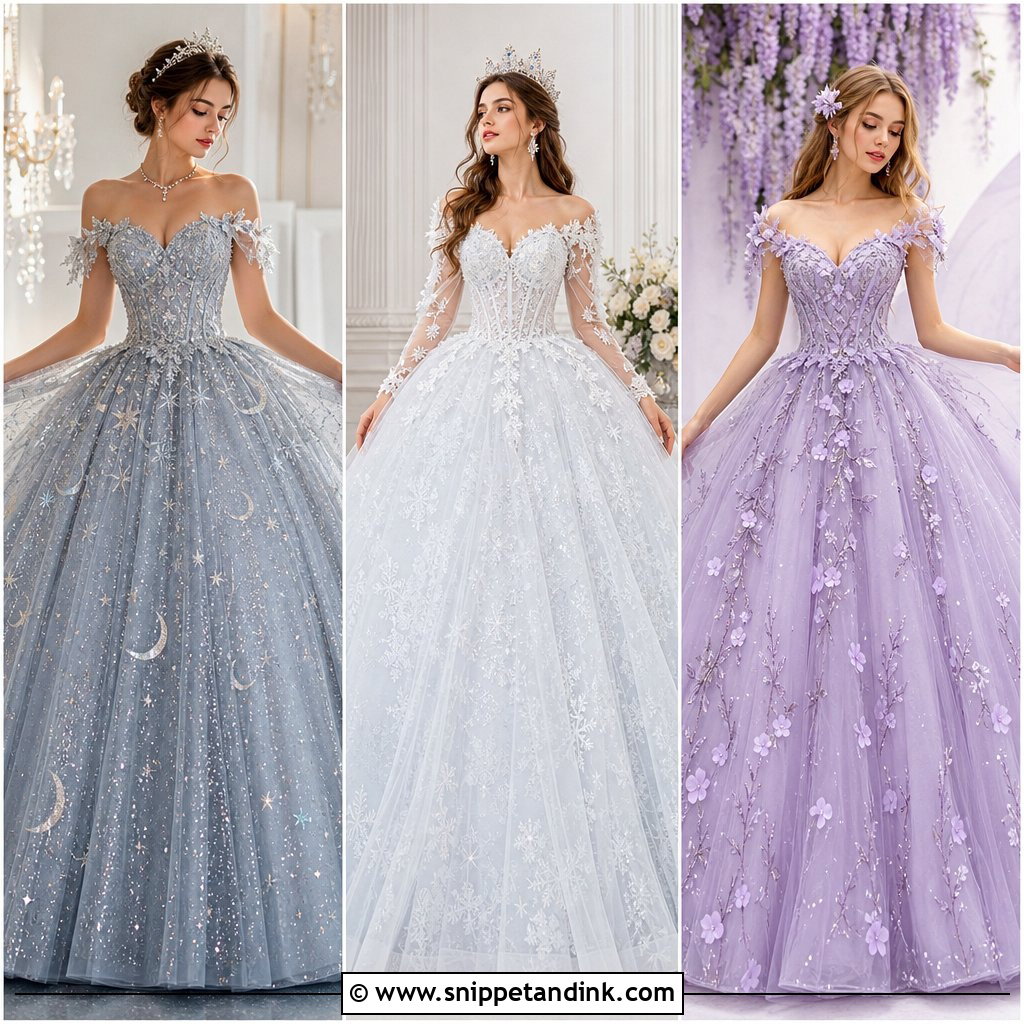
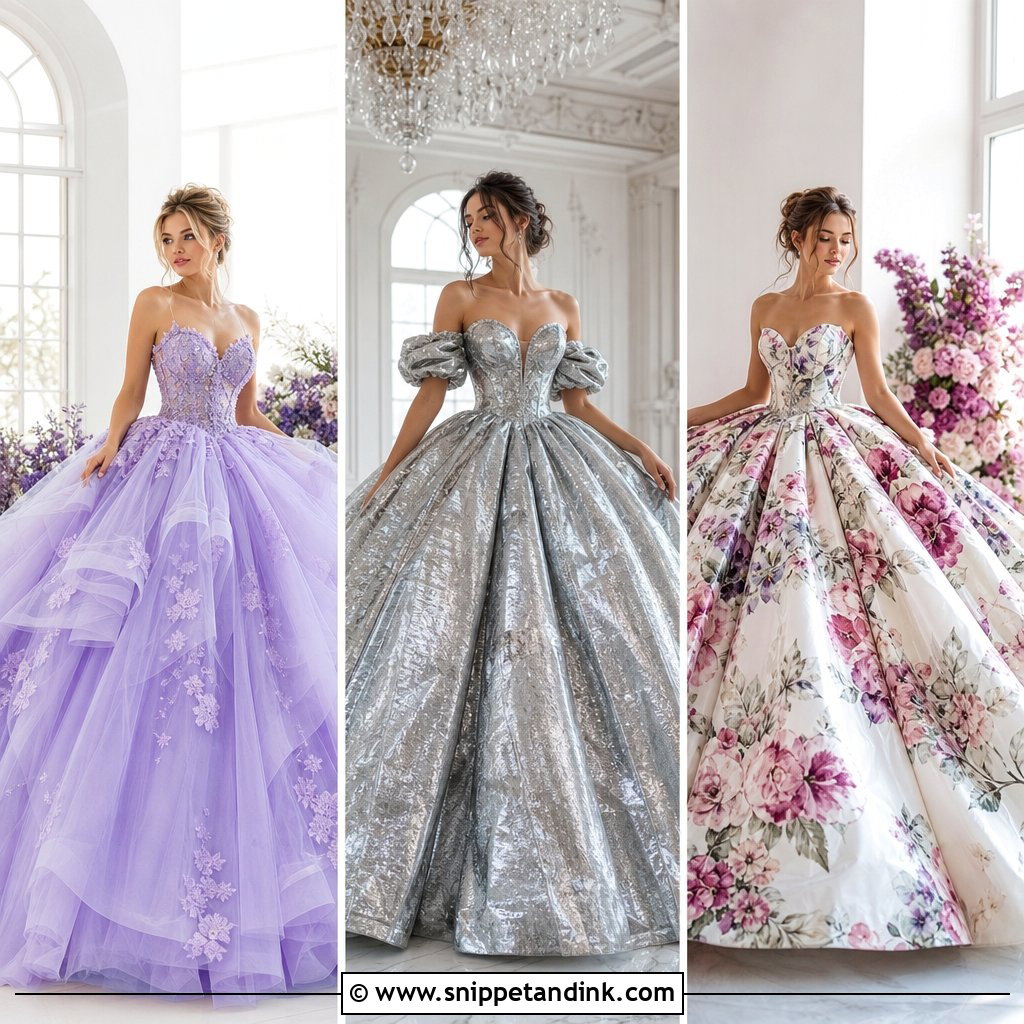
Blush reads bridal while being clearly not white, and I like it best as pale tulle over a slightly deeper lining so lace or pearls stand out. An ivory bodice gives soft contrast; full blush looks smooth from top to hem. Rose-toned earrings, neutral ivory heels, a sheer veil and white and pale pink flowers suit it. Don’t stack too many pinks, or it starts to look themed. Blush shifts with light. Check it in daylight and under warm indoor bulbs, since some shades lean peach or mauve, and pick the one that suits your skin and sits well next to your partner’s outfit.
18. Champagne Ball Gown Wedding Dress
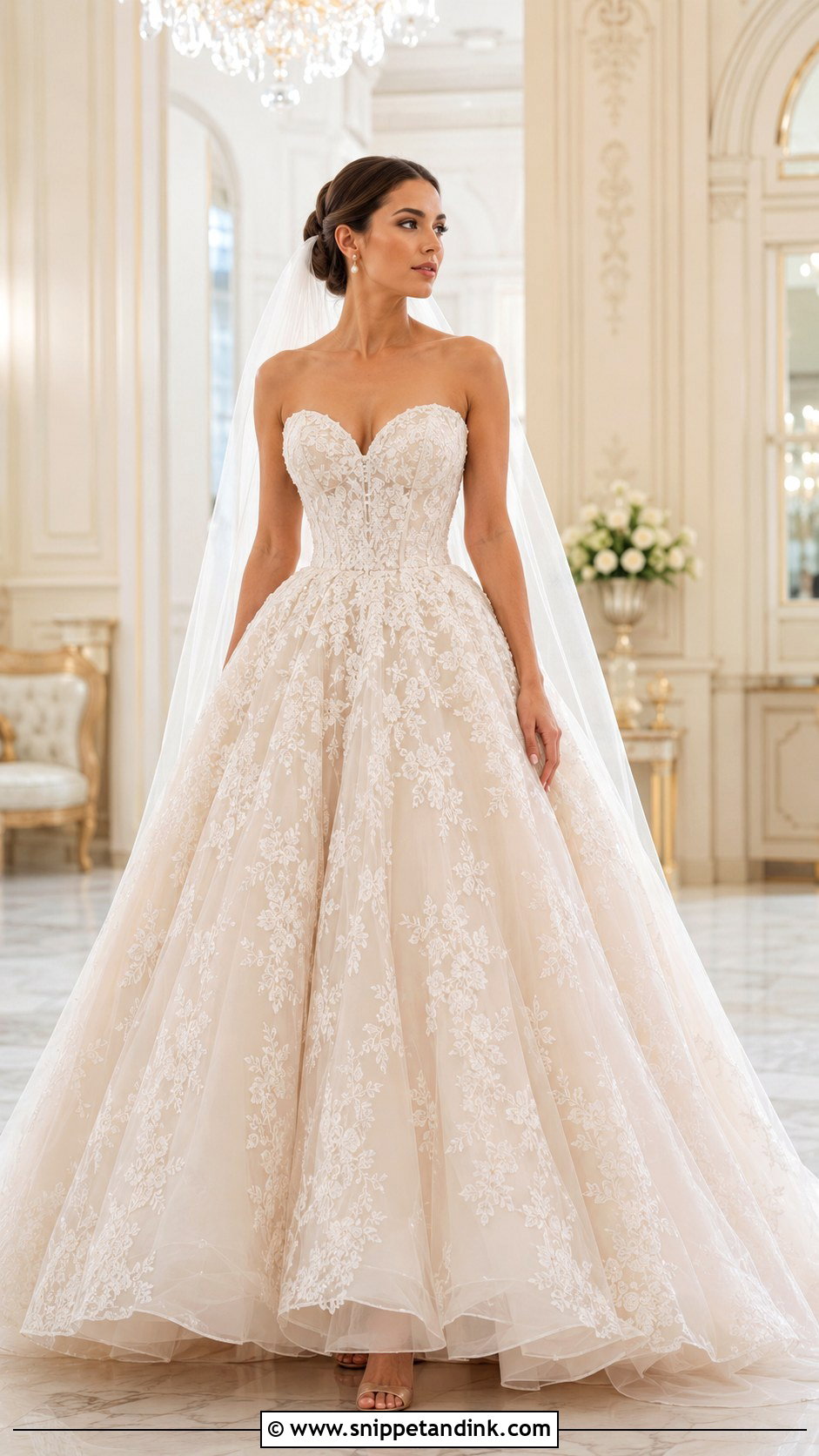
Champagne under ivory lace is my favourite trick for making embroidery visible in photographs, because the warm layer gives the pattern something to stand against. Choose a structured bodice, defined waist and generous tulle or satin skirt. I add gold-toned pearl earrings, nude or champagne heels, a plain ivory veil and a low bun, with cream flowers that complement the warmth without matching it exactly. Get a fabric swatch before buying accessories. Champagne ranges from pale beige to deep gold, and shoes or veil fabric can clash in daylight even if they looked fine in the salon.
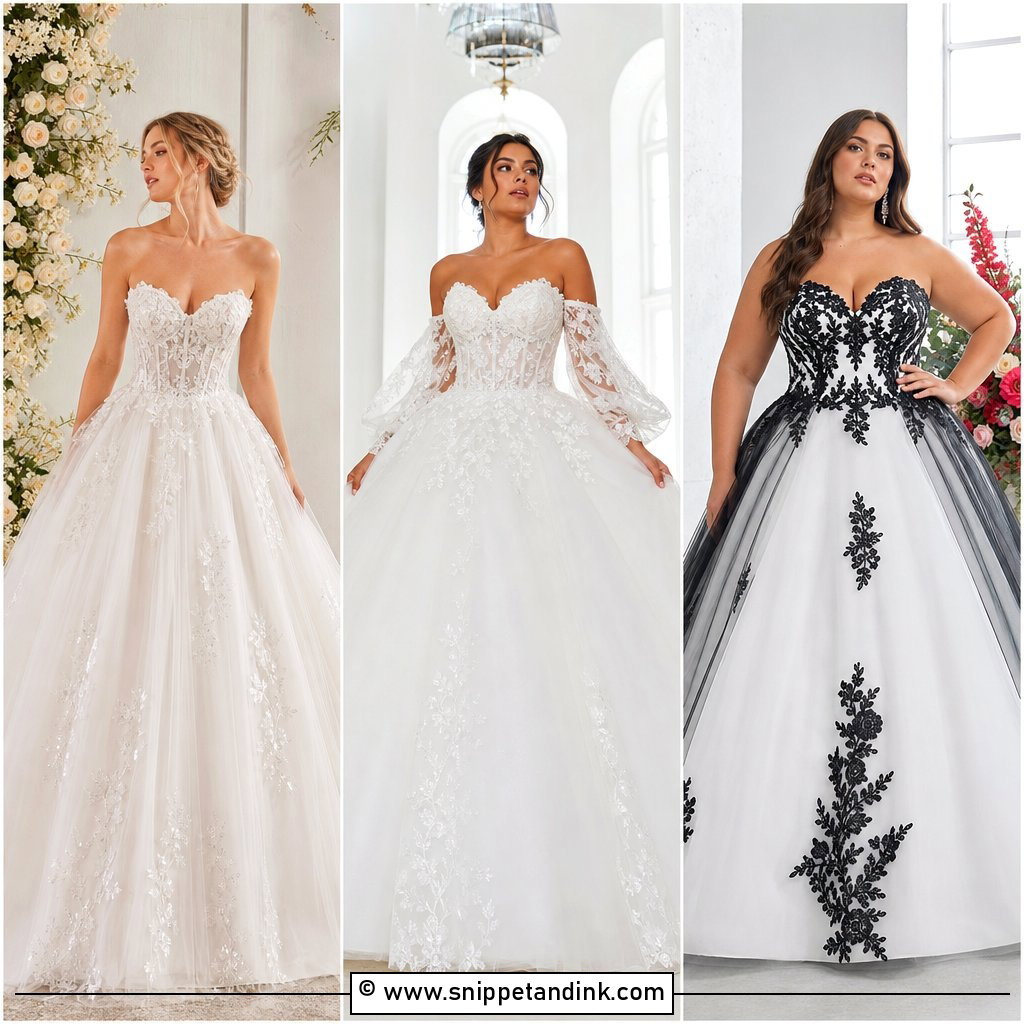
19. Plus Size Corset Ball Gown Wedding Dress
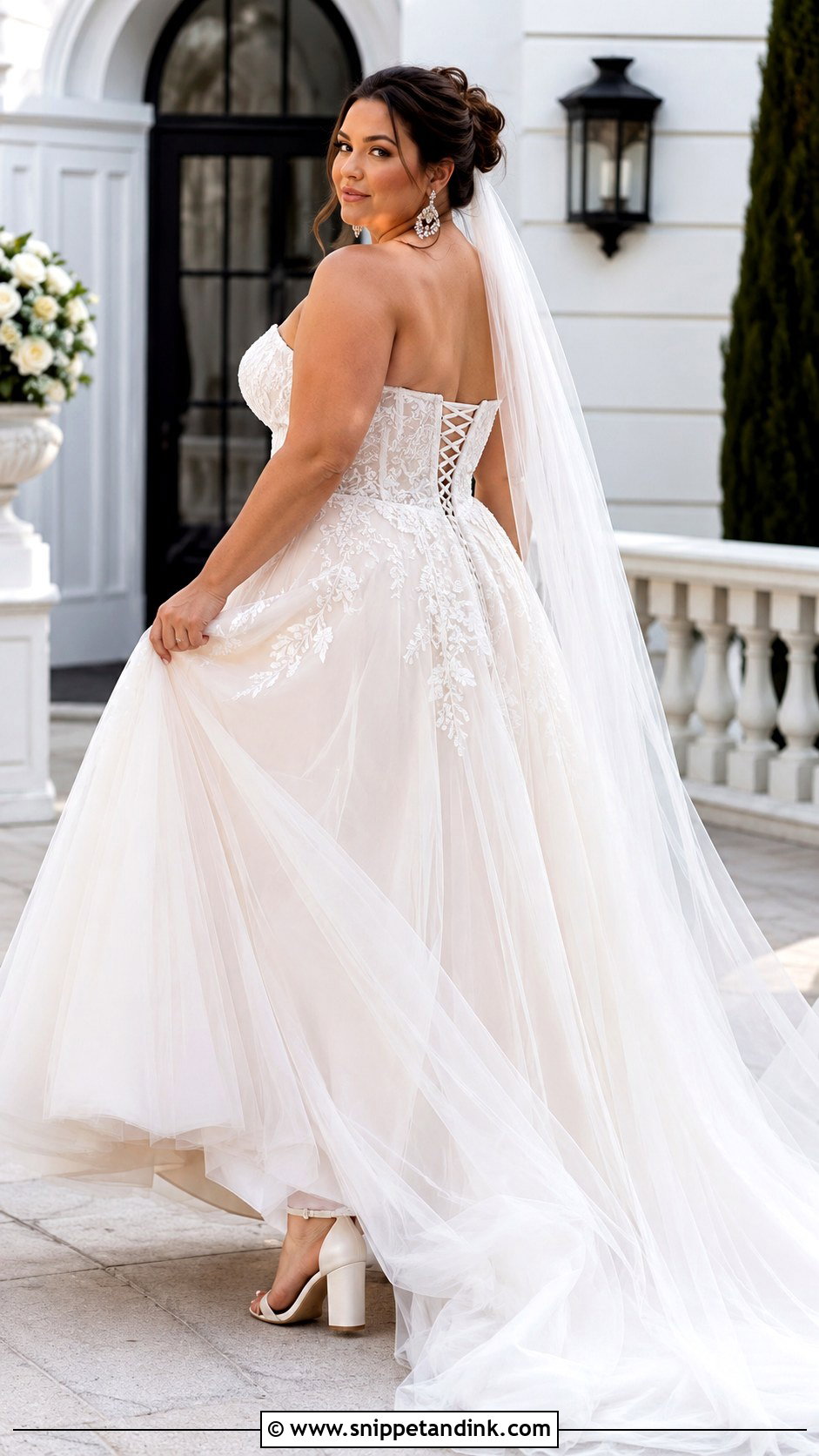
For plus-size brides, a properly built corset ball gown is one of the most supportive dresses you can wear. I look for substantial boning, cups sized to you rather than padded to fit, wide back panels and a waist seam at the point that feels right on your body. A lace-up back adjusts if your weight changes; a zip looks smoother. Tulle feels soft, mikado holds more structure. I add supportive block heels, statement earrings, a long veil and a secure hairstyle. Please don’t size down hoping alterations will fix it. Order for your largest measurement and let an experienced tailor shape the bodice in.

20. Vintage Lace Ball Gown Wedding Dress
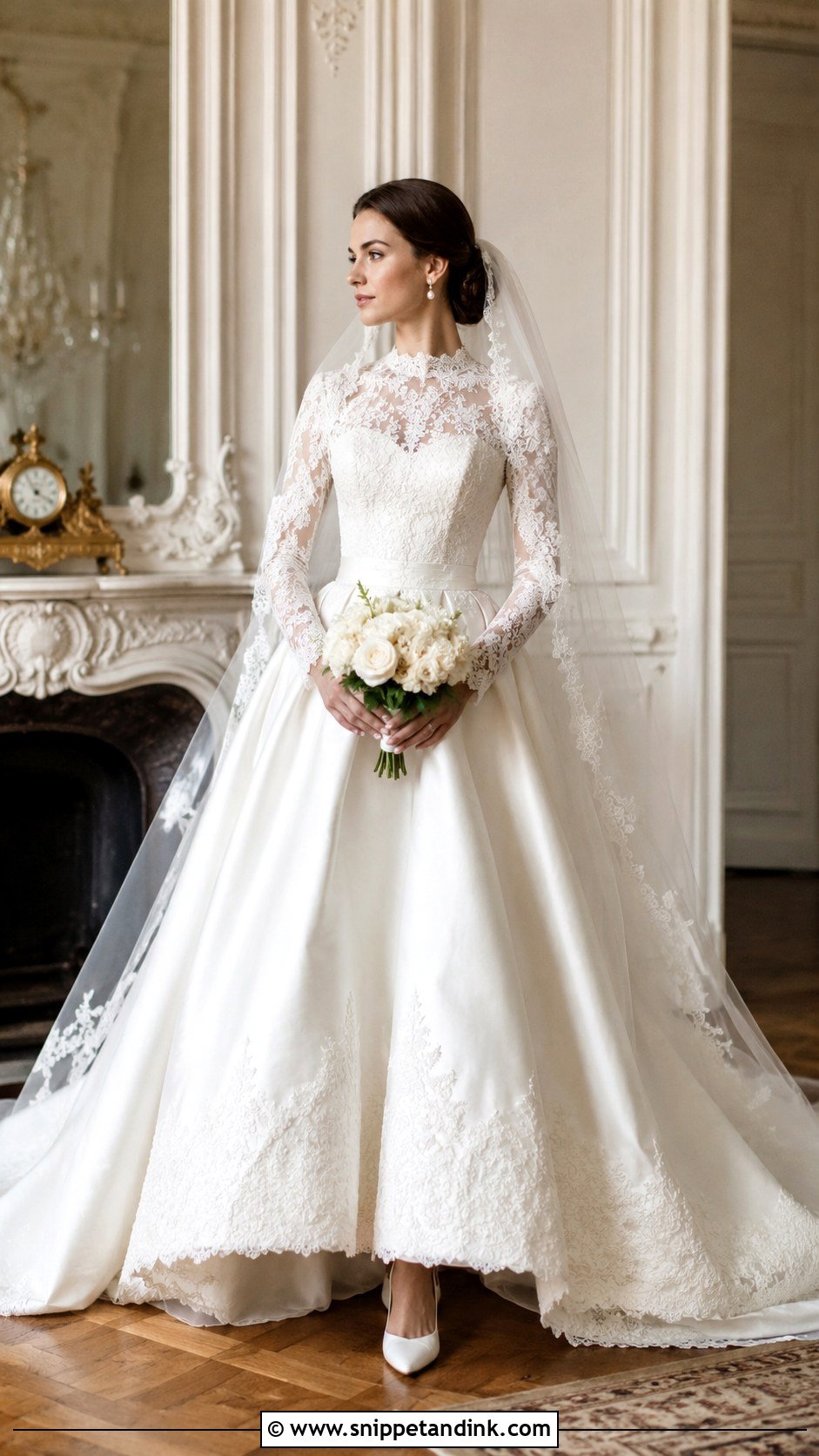
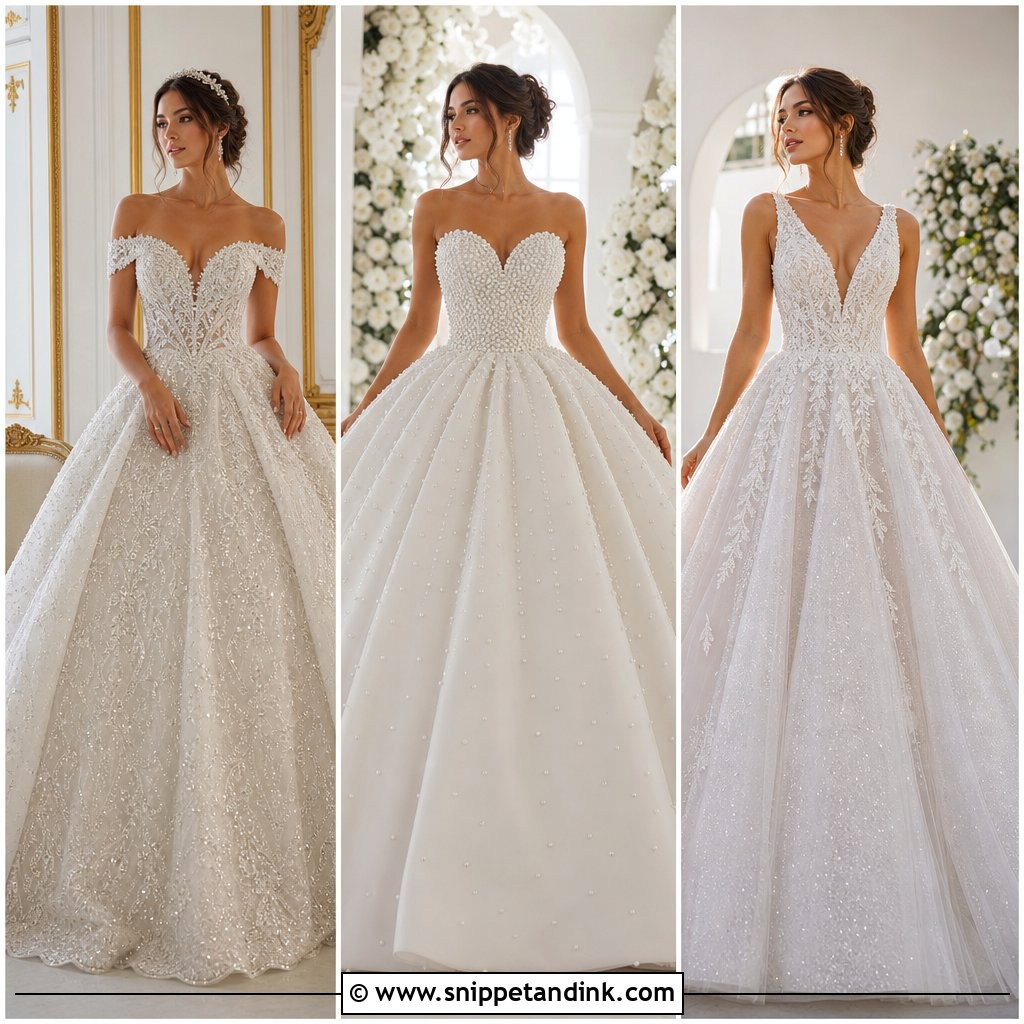
The trick with vintage lace is choosing one era. A fitted bodice with long lace sleeves, covered buttons and a soft waist already carries plenty of history. A satin skirt with a lace border looks polished; an all-lace tulle skirt is more romantic. Pearl earrings, closed-toe pumps, a lace-edged veil and a low bun suit it, with a compact classic bouquet. I’d pair Victorian-style sleeves with a clean modern skirt rather than adding period detail everywhere. Edited that way, buttons and scalloped edges feel personal instead of like a costume.
Cars, Doorways and Bathroom Breaks in a Ball Gown
The logistics of a big skirt are where weddings run late. I go through these with every ball gown bride a few weeks ahead.
Getting in and out of the car
Sit down backwards onto the seat first, then swing your legs in while someone gathers the skirt and train after you. A large car or a van with sliding doors is far easier than a low sports car. Ask the driver to leave extra time at each stop.
The bathroom
The method that works is facing the toilet, not sitting the usual way, while a friend holds the skirt up from behind. Some brides wear a gown slip or a large bag-style skirt holder that gathers the layers. Practise once at home in the dress or a full petticoat. It takes less time than you’d fear.
Your reception seat
Ask the venue for a chair without arms, and leave space behind the top table. A full skirt crushed against chair arms for two hours will come out creased, and tulle can snag on rough wood.
A Full Skirt Only Feels Grand If You Can Move in It
Volume is the easy part of a ball gown. Support, weight and movement decide whether you enjoy wearing it. Pick the mood first, from plain satin to lace, sparkle, colour or florals. Then judge the bodice, skirt weight, train and bustle before you think about veil, shoes, jewellery, hair or bouquet. Ask for full-length photos from the front, side and back at fittings, and walk, sit, turn and lift your arms in every one. With this much fabric, careful alterations matter more than any accessory you add.
You'll Like These Ideas:




Leave a Reply