
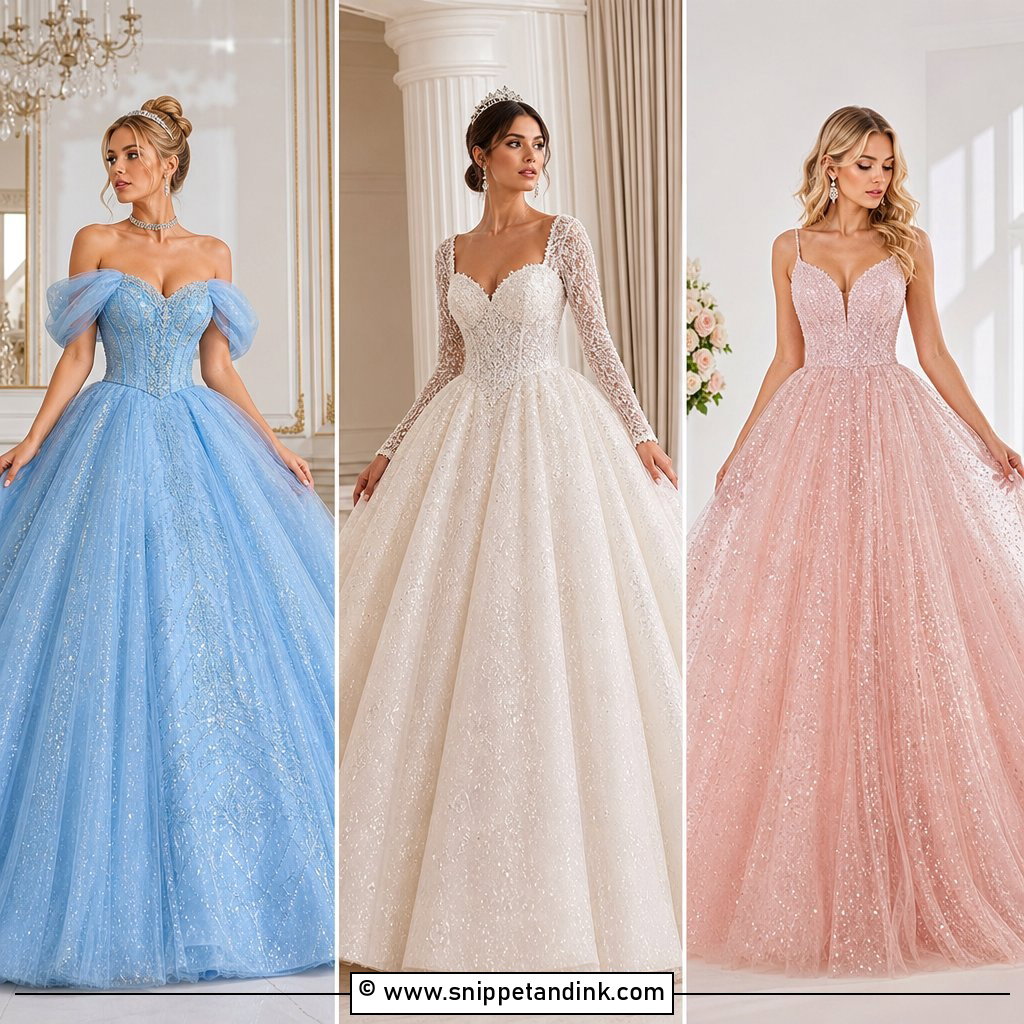
Most brides who ask me for a princess dress don’t actually want a ball gown. They want the feeling of one: a fitted bodice, a skirt that widens from the waist and some movement when they walk, without a petticoat the size of a sofa. An A-line with princess-style shaping gives exactly that, borrowing the grace of a princess gown while staying light enough to dance in. It flatters a wide range of figures and suits most seasons and venues. Here are twenty versions in tulle, lace, satin, mikado, crepe and chiffon, including modest, modern and plus-size options, with notes on what I watch for in each.
What Turns an A-Line Into a Princess Cut
The terms get mixed up in shops all the time. An A-line is any skirt that widens gradually from a fitted waist, like a capital A. A ball gown has a much fuller skirt, usually supported by a petticoat or hoop. The princess cut refers to seams: long vertical panels that run from the shoulder or armhole straight down over the bust into the skirt, with no separate waist seam. Those seams shape the bodice without darts, which gives a long, smooth line.
Many dresses sold as A-line princess gowns combine the two: princess seams through the bodice and a moderately full skirt. Others have a waist seam and are simply called princess for the mood. Neither is wrong, but they fit differently.
- True princess seams suit long torsos and fuller busts, because the panels can be shaped exactly to you.
- A defined waist seam suits brides who want a visible waistline or a contrast belt.
- If you’re short-waisted, ask to see both; princess seams can visually lengthen the torso.
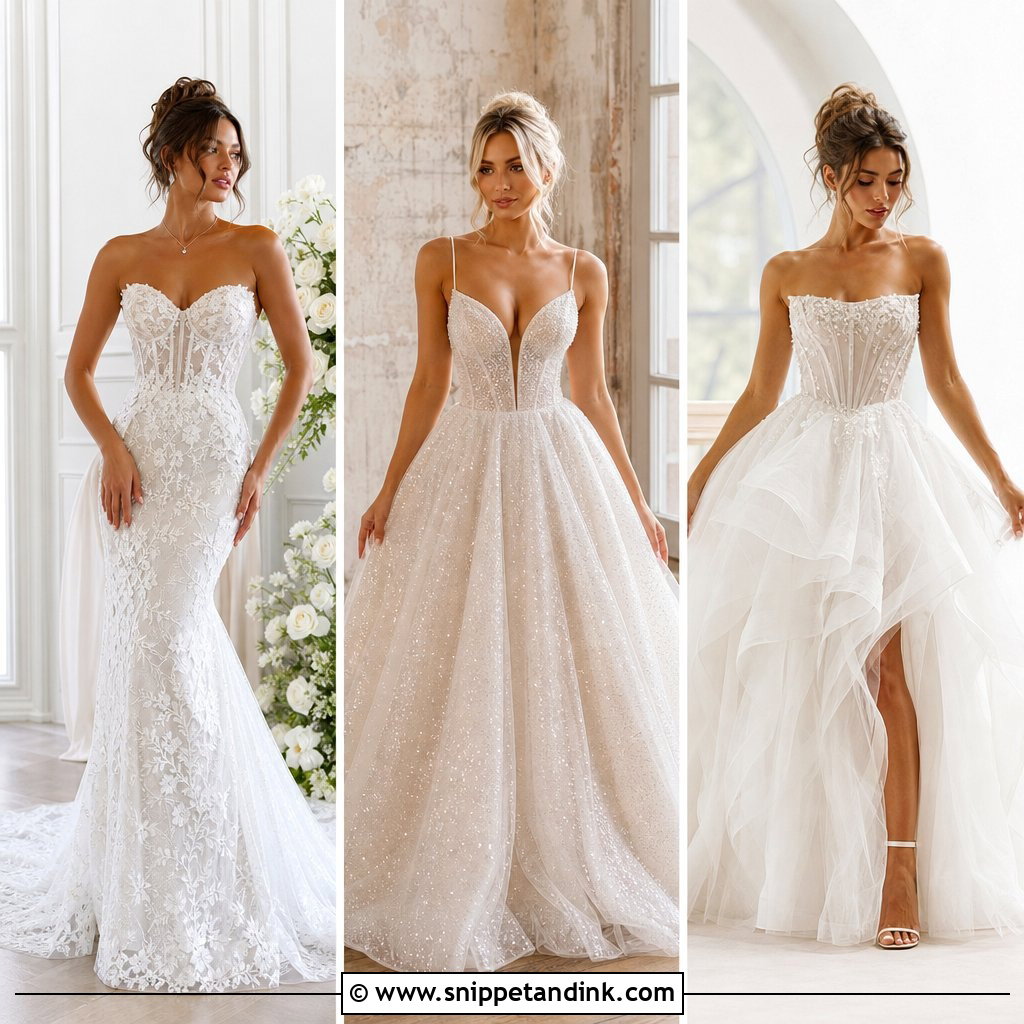
1. Sweetheart Tulle A-Line Princess Wedding Dress
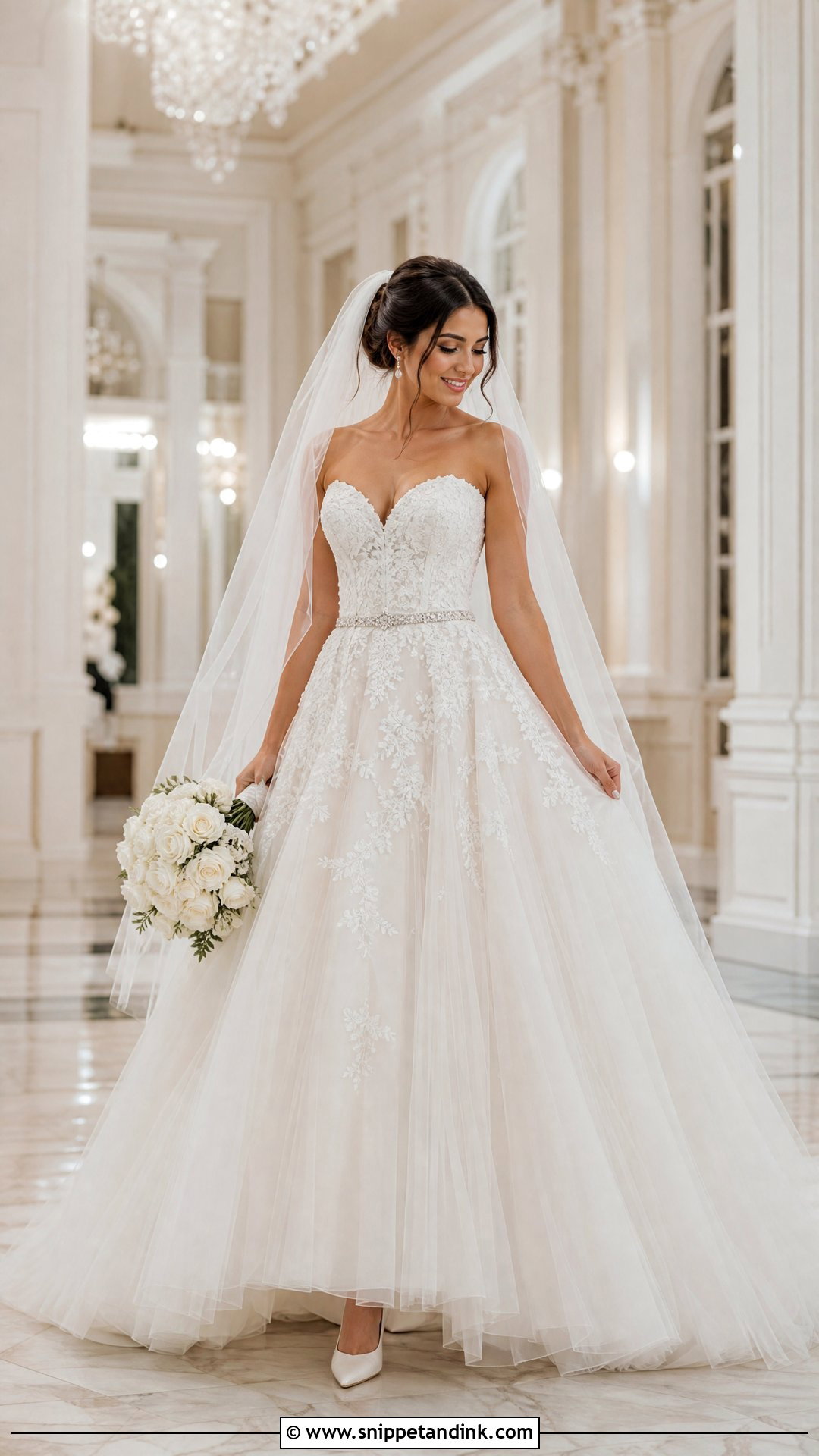
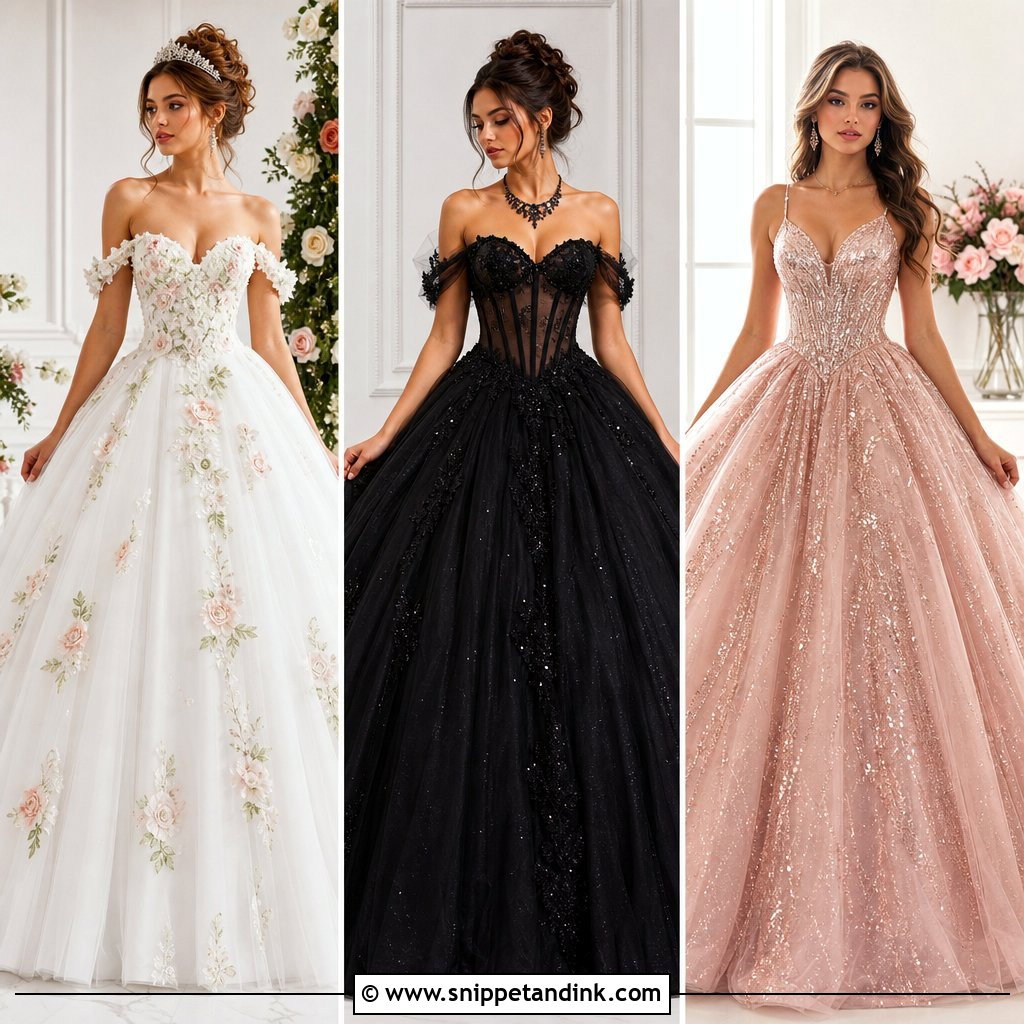
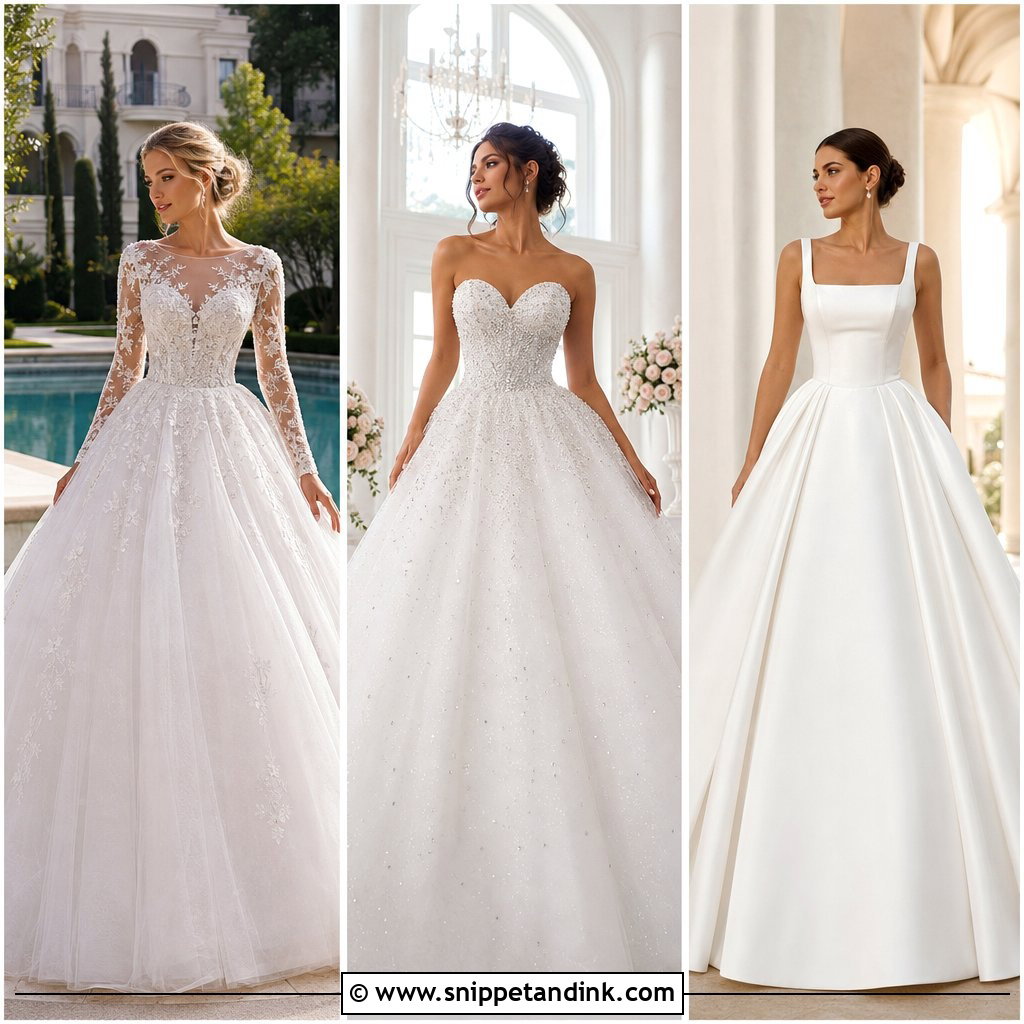
Sweetheart bodice, tulle skirt: this is the version most people picture. Tulle is light, so you get volume without weight, but count the layers. Too few and the skirt looks limp in photos; too many and it gets hot. Supportive boning and a few lace appliqués on the bodice are enough detail. A chapel veil with a narrow lace edge, pointed pumps and pearl drops suit it. If your waist needs more definition, a thin crystal belt does the job. A ballroom or hotel is its natural home.
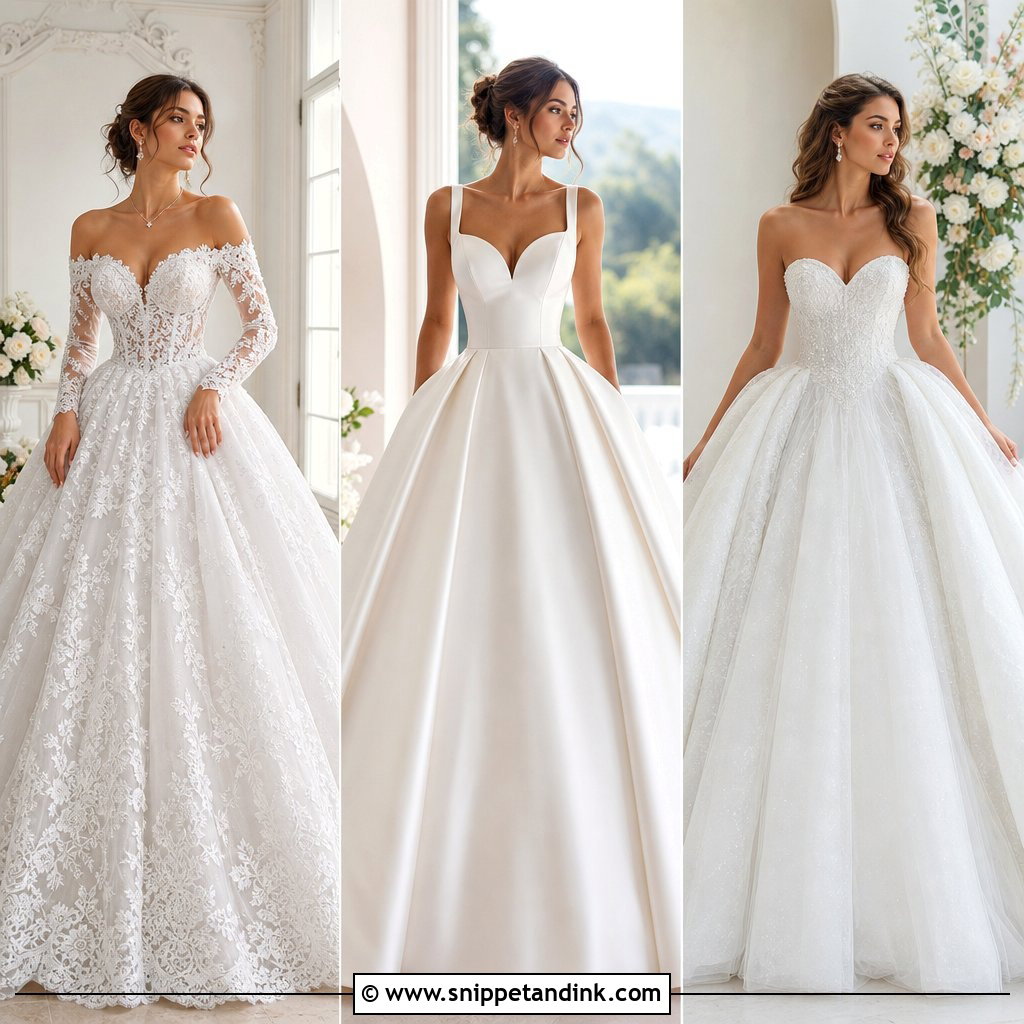
2. Off-the-Shoulder Satin A-Line Princess Wedding Dress
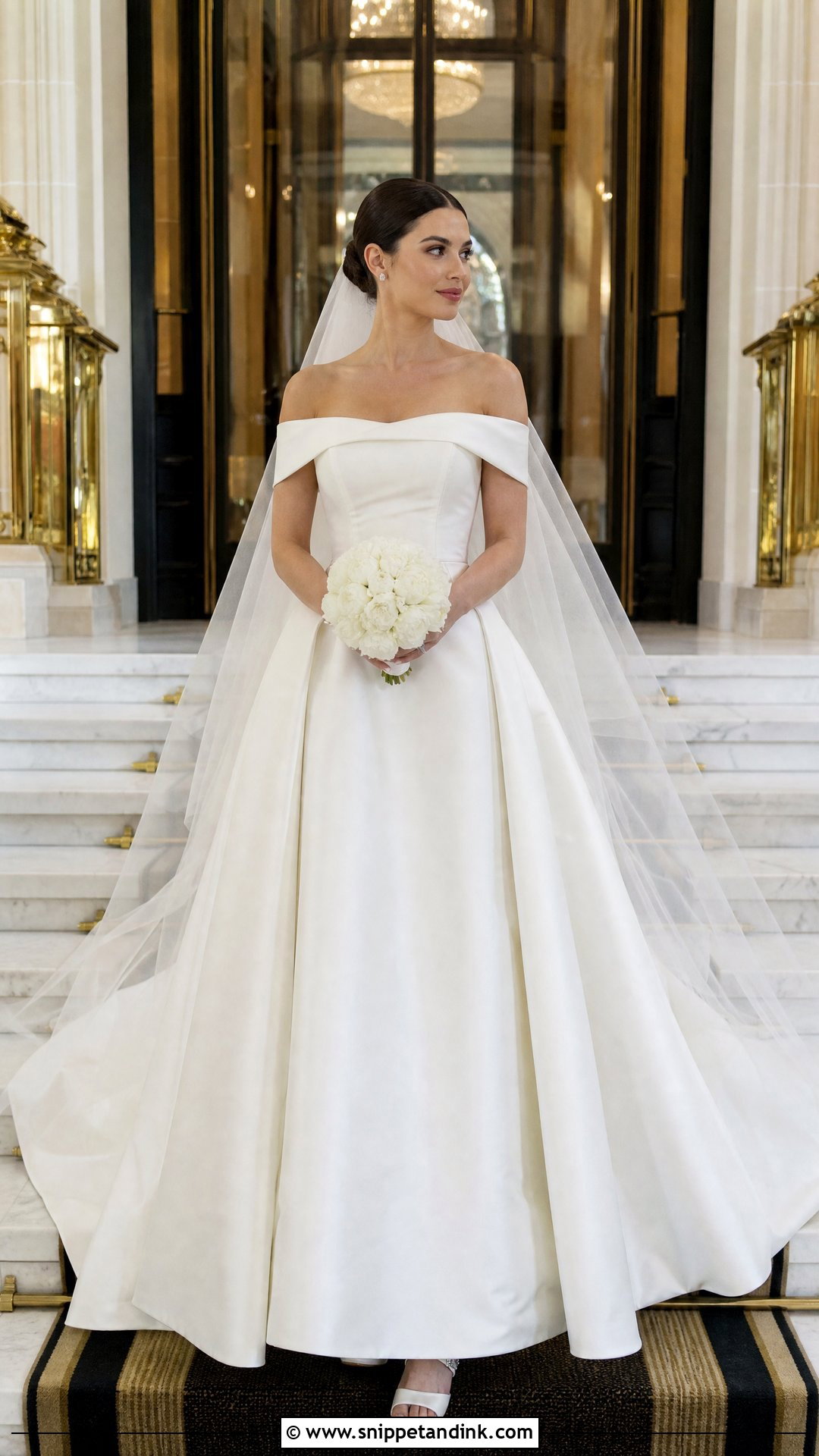
Satin with gentle pleats gives regal volume without layers of underskirt. I’d choose pleats over gathers on a satin A-line, since gathered satin bunches at the waist and adds bulk. An off-the-shoulder band needs grip tape inside, or it slides toward your elbows and you’ll spend the day hitching it up. Crystal studs, a cathedral veil and satin block heels keep it classic. A sleek chignon shows the collarbones, and a compact bouquet stops the skirt from looking crowded. It’s made for a grand staircase.
3. Long-Sleeve Lace A-Line Princess Wedding Dress
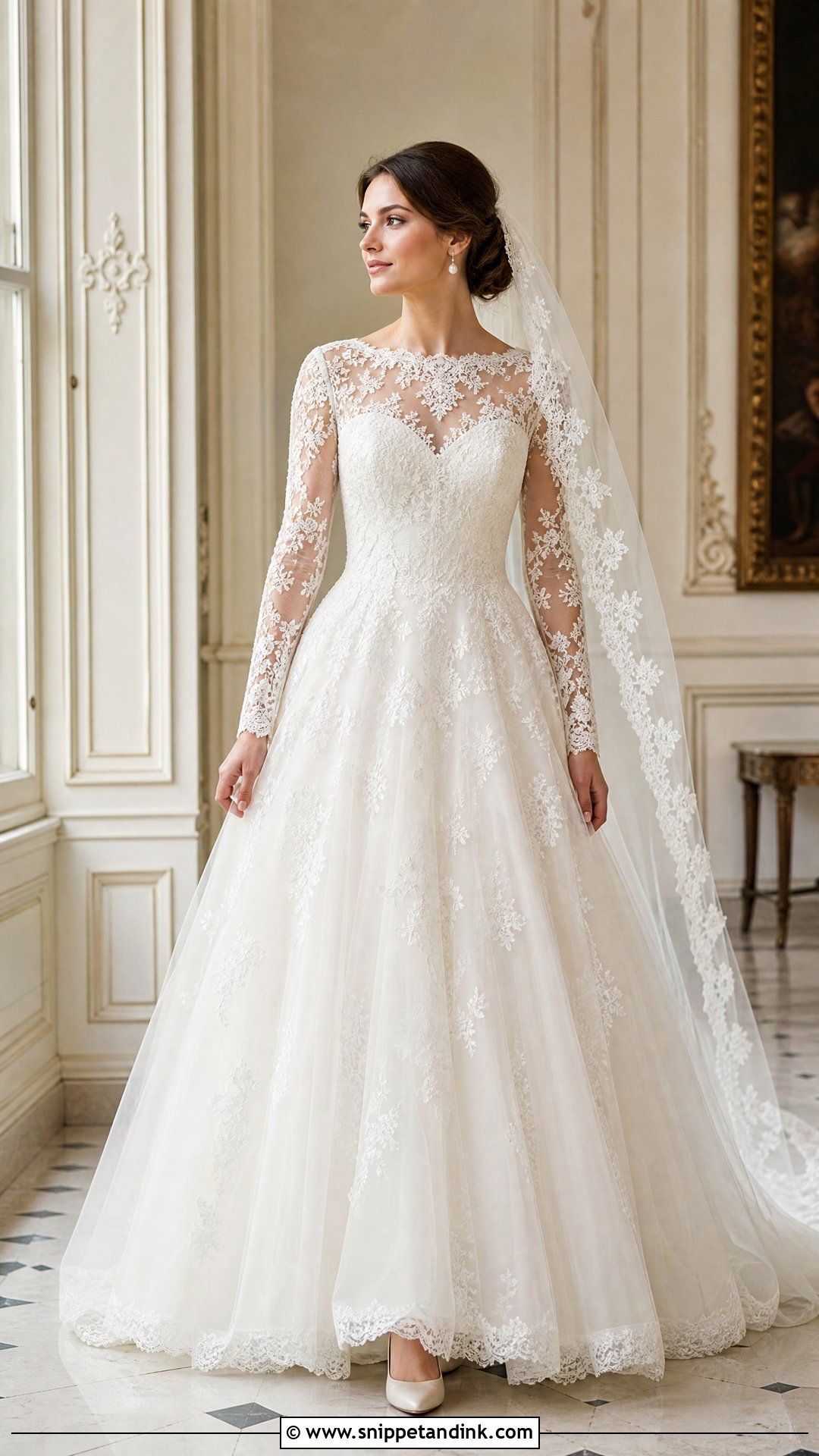
Long lace sleeves on a princess silhouette give romance with coverage. The bodice should be lined through the front so the illusion parts stay over the arms and back, and tulle or organza layers keep the skirt from feeling heavy. Bend and hug in the sleeves at every fitting; tight lace sleeves rip at the seam when you throw your arms around someone. Keep a lace-edged veil simple so it doesn’t fight the sleeve motif. Closed-toe heels and a low braided bun suit a cool-season or historic venue.
4. Square-Neck Mikado A-Line Princess Wedding Dress
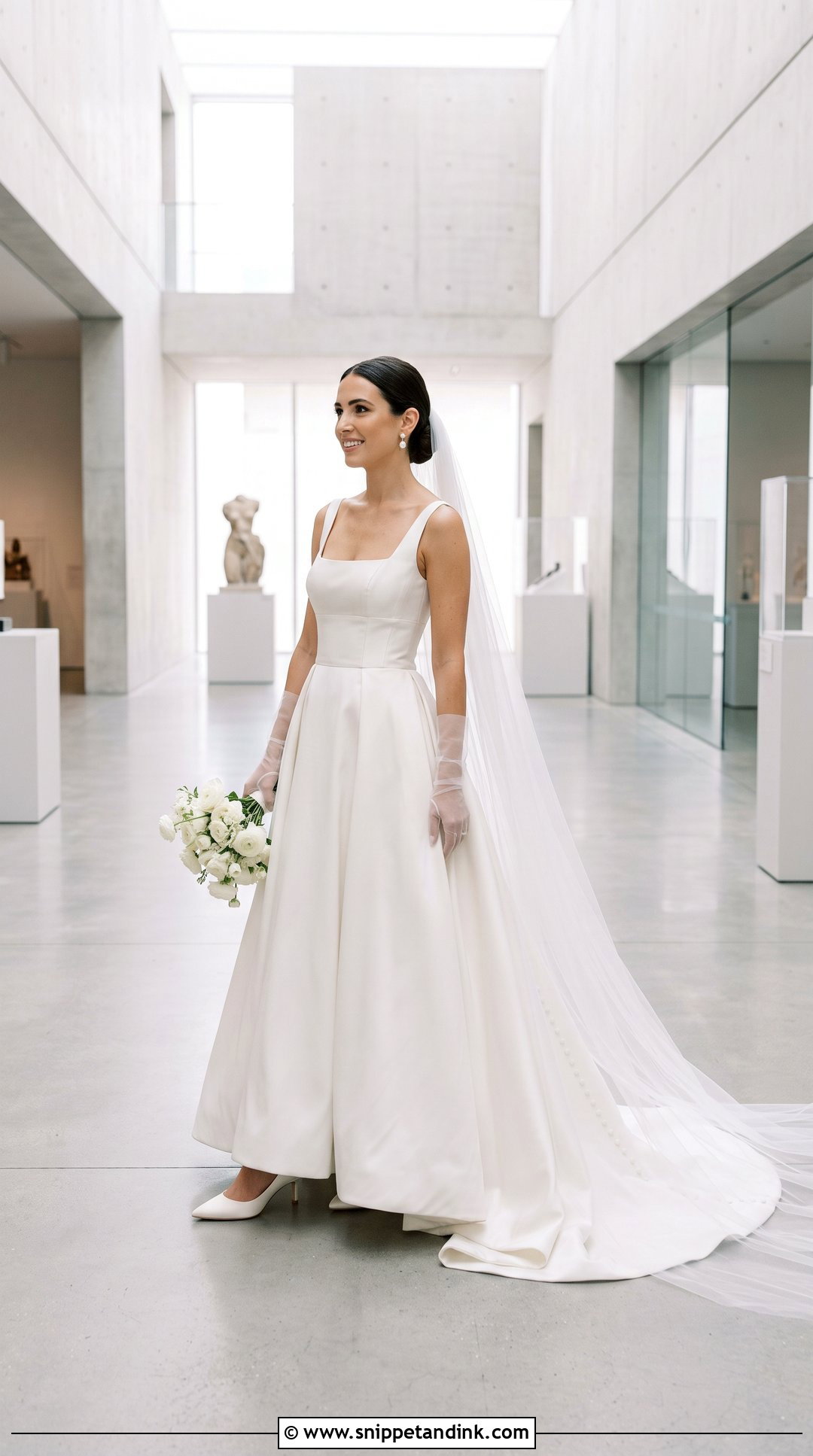
Mikado holds its shape almost like card, which is why it gives an A-line clean, architectural lines. Paired with a square neck and wide straps, it reads modern without losing the fairytale. Covered buttons down the back add a traditional finish. Elbow-length gloves look sharp here, but only in a formal setting; at a garden party they feel like a costume. Pointed pumps, a plain cathedral veil and a structured bouquet complete it. Mikado creases at the lap, so plan to steam it the morning of.
5. V-Neck Floral A-Line Princess Wedding Dress
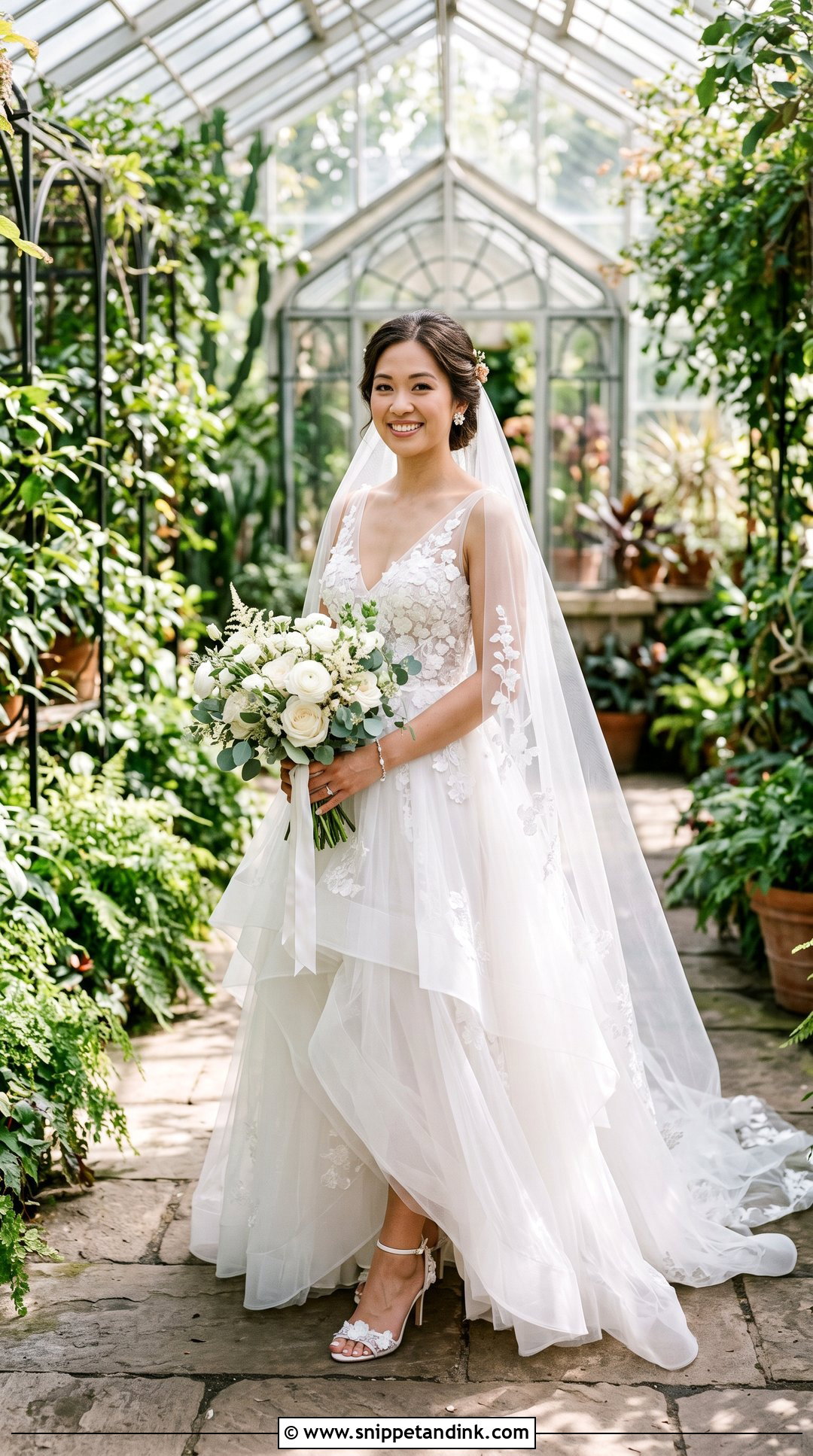
Flowers that start dense on the bodice and fade down the skirt are how a familiar shape turns into a garden look. A balanced V-neck and supportive straps keep it comfortable. If the appliqués carry tiny beads, go lighter on jewellery: floral studs at most. Ankle-strap heels and a sheer chapel veil let the texture show, and a loose low bun suits the mood. Conservatories and gardens are ideal because raised appliqué shows best in natural daylight.
6. Strapless Corset A-Line Princess Wedding Dress
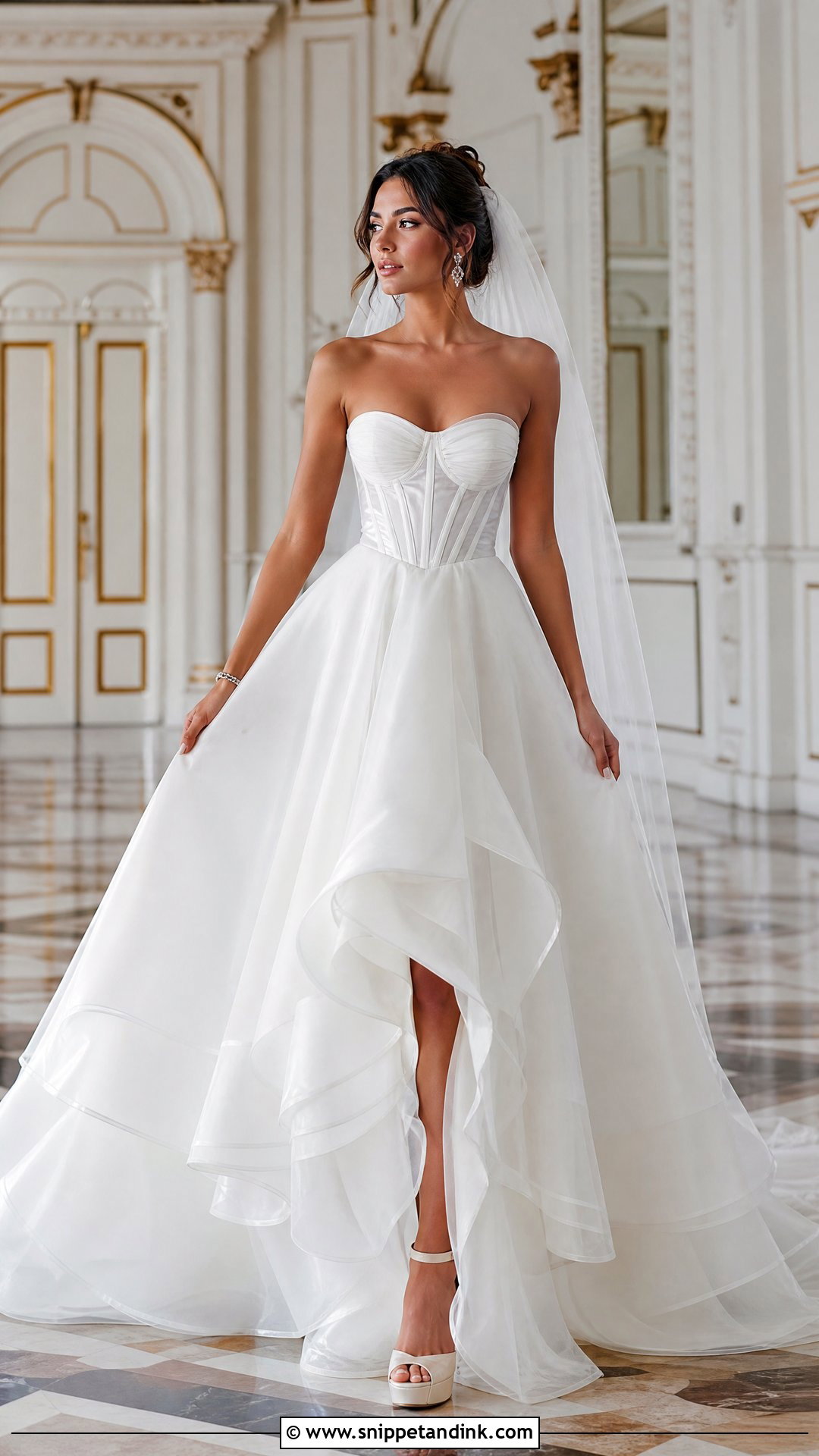
A strapless corset gives the princess shape its most defined waist. Exposed boning looks contemporary, and covered boning is softer and more traditional. Whichever you choose, the internal support has to hold the bodice up by itself, since there’s nothing at the shoulders. I check by having the bride hug me hard; if the top edge moves, it needs adjusting. For ceremony coverage, a tulle wrap or matching detachable sleeves come off later. Crystal drops and platform sandals finish it.
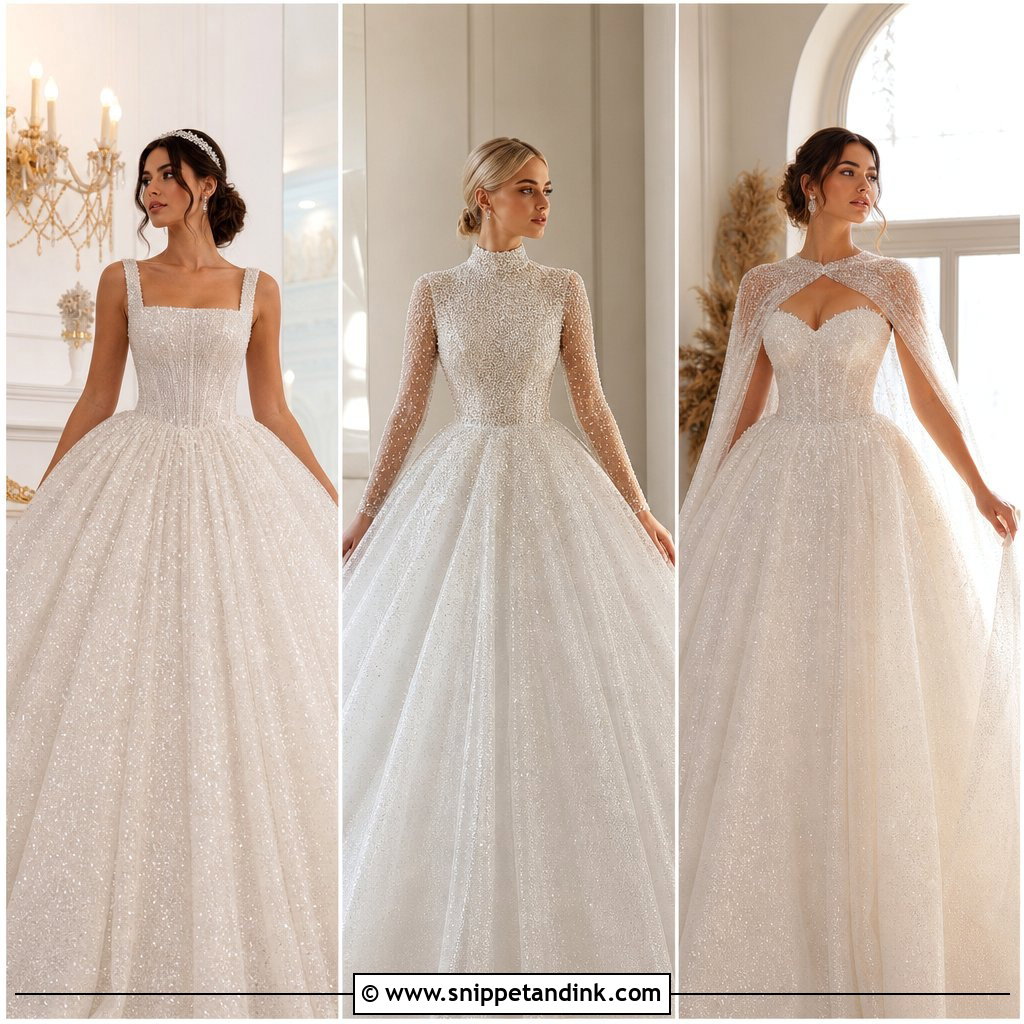
7. Beaded Scoop-Neck A-Line Princess Wedding Dress
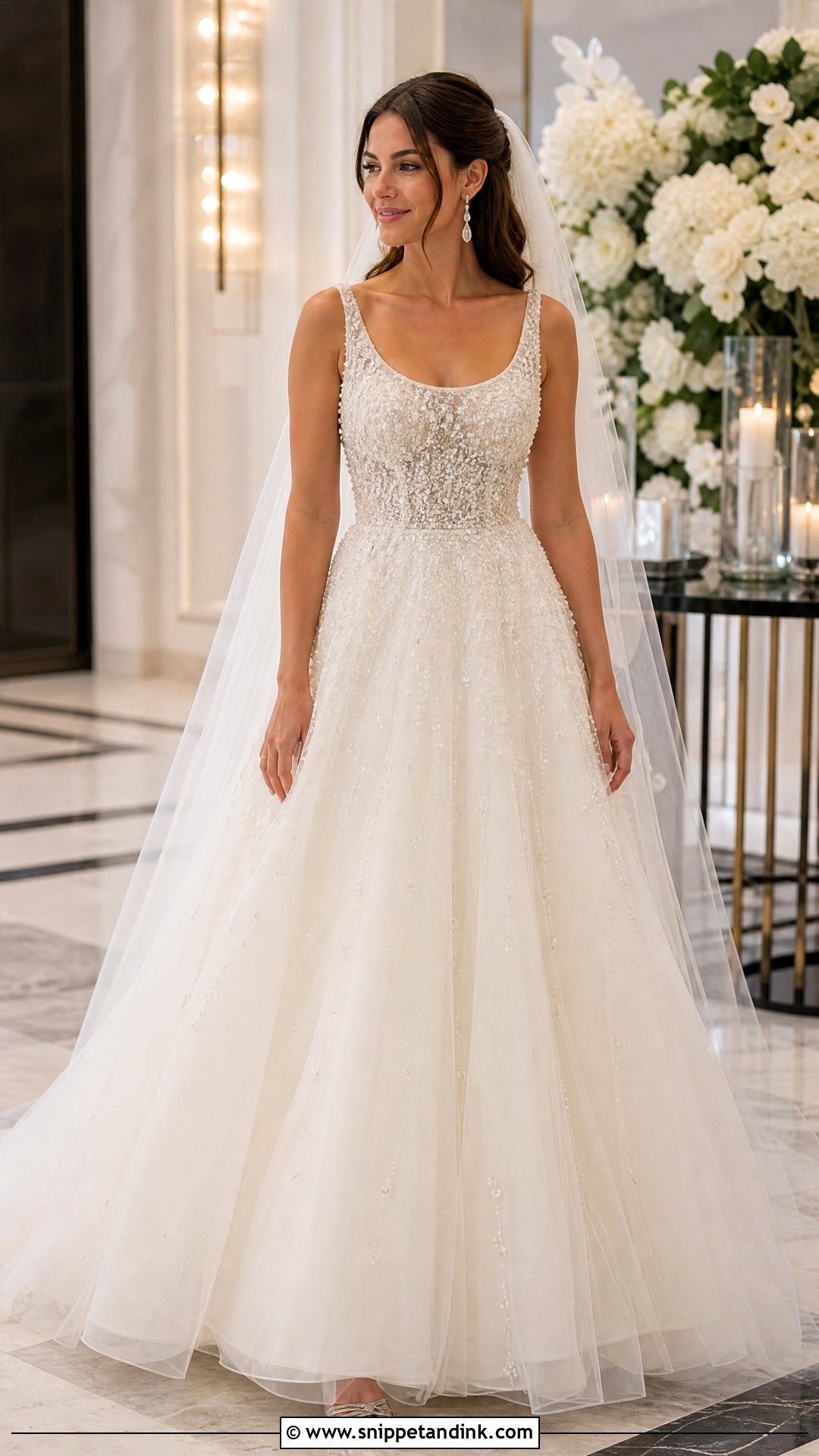
Beading on the bodice lets the skirt stay soft. A scoop neck with pearls, sequins or crystals and a tulle skirt below gives glamour without needing much volume. The scoop is the friendliest neckline here; it suits most bust sizes and leaves room for a short pendant. Look at the beading under bright light before buying. Some sequins look cheap under strong reception lighting, while pearls and glass beads tend to glow. A plain fingertip veil and silver heels finish the evening look.
8. High-Neck A-Line Princess Wedding Dress With Open Back
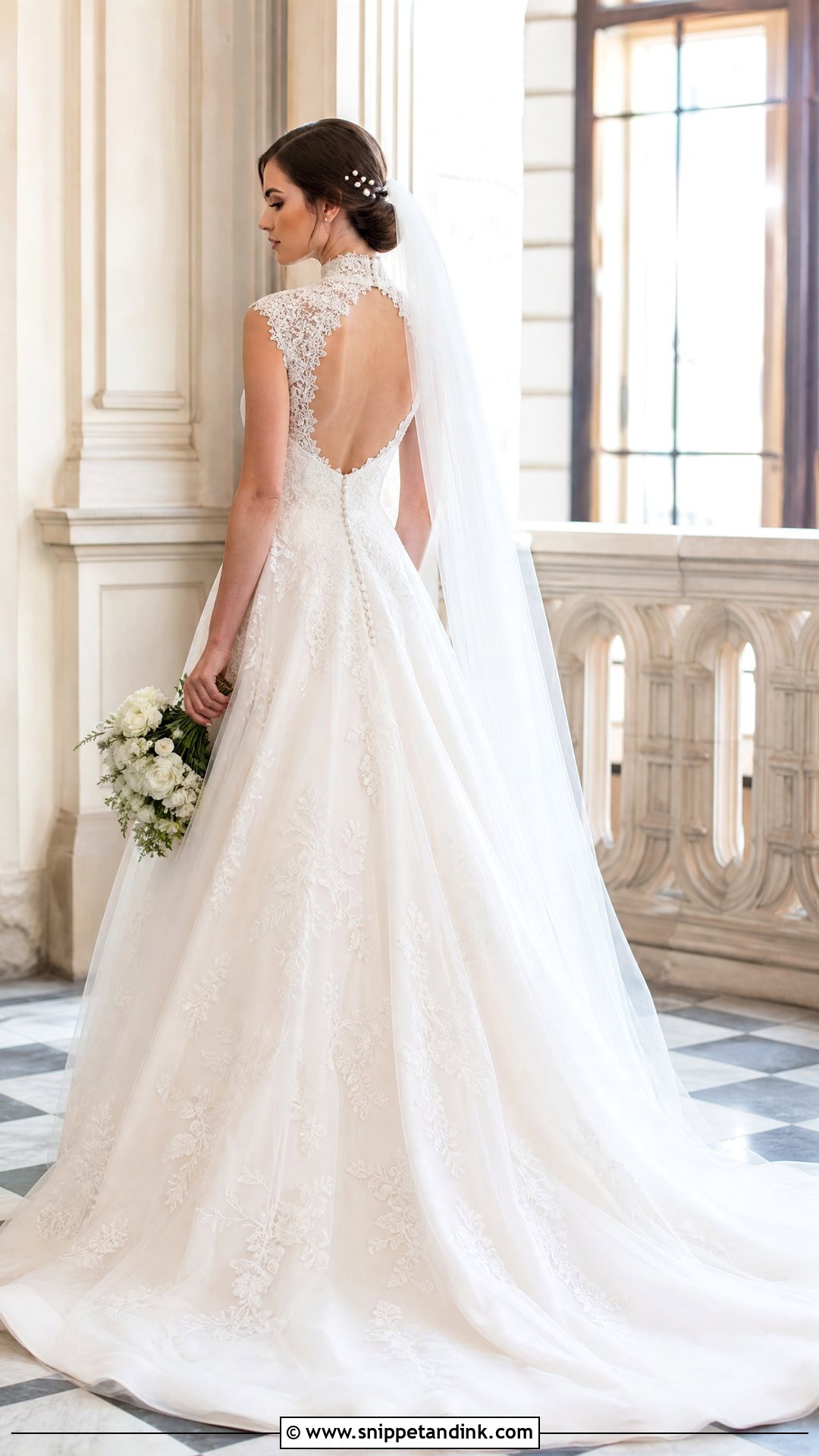
High neck in front, open back behind: you get coverage for the ceremony and a reveal as you walk away. The back opening needs careful shaping. Cut too low or too wide, it gapes when you lean forward, so I check it with the bride sitting and leaning. Covered buttons add a refined line. Attach the veil below a smooth bun so the back stays visible, and skip the necklace, since the neckline frames you already. It suits estates and gardens with formal architecture.
9. Cap-Sleeve Lace A-Line Princess Wedding Dress
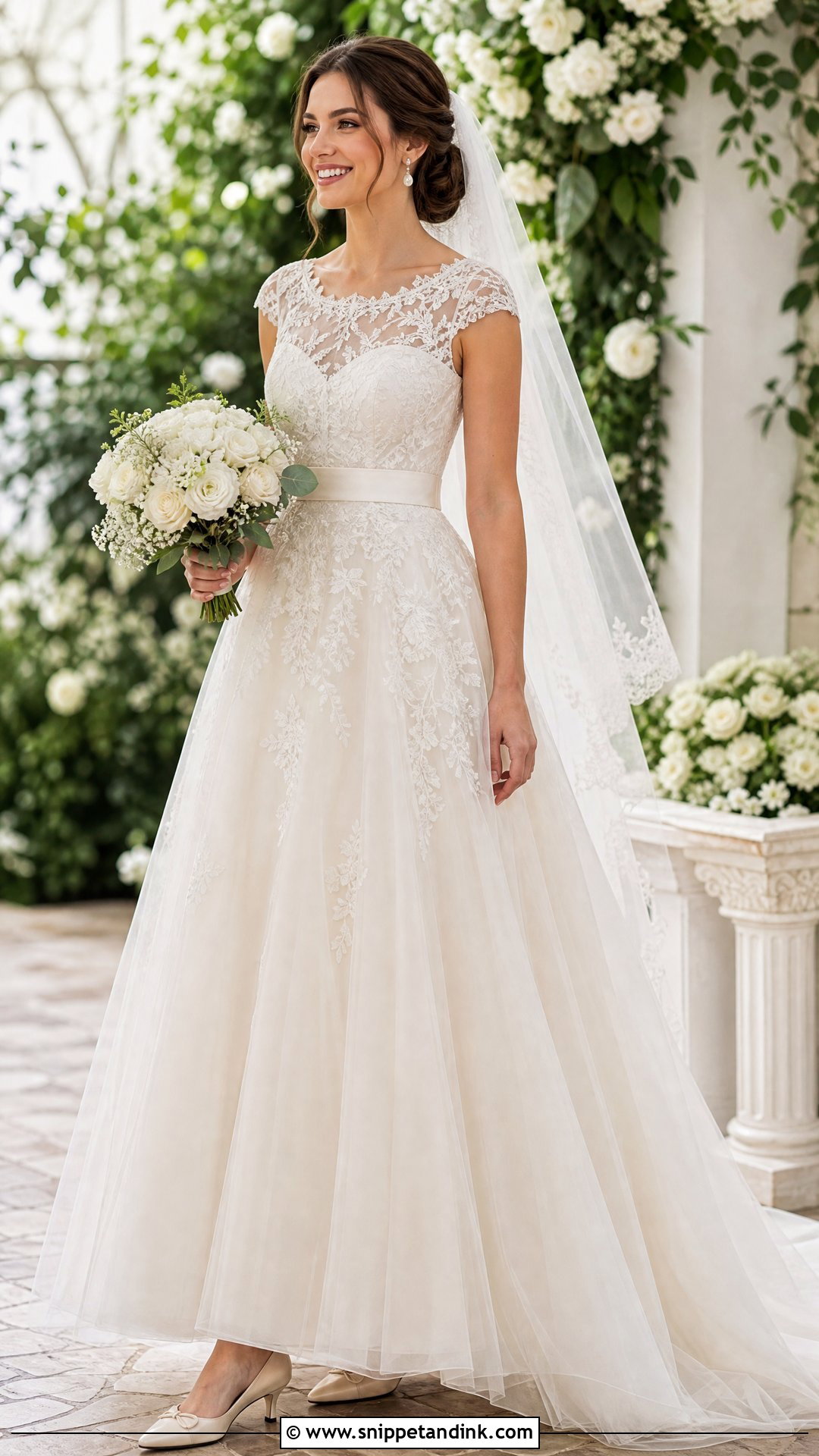
Cap sleeves give light shoulder coverage that many brides want for a religious ceremony but don’t want in full sleeves. Lace running from the sleeves across the bodice and fading into tulle looks unified. Check the sleeve edge against your arm. Lace cap sleeves can dig into the upper arm if the armhole is too small, and that shows in every photo. Pearl earrings, kitten heels and a rounded bouquet of white flowers suit it. It’s at its best in daylight, at an estate or garden.
10. Illusion-Neckline A-Line Princess Wedding Dress
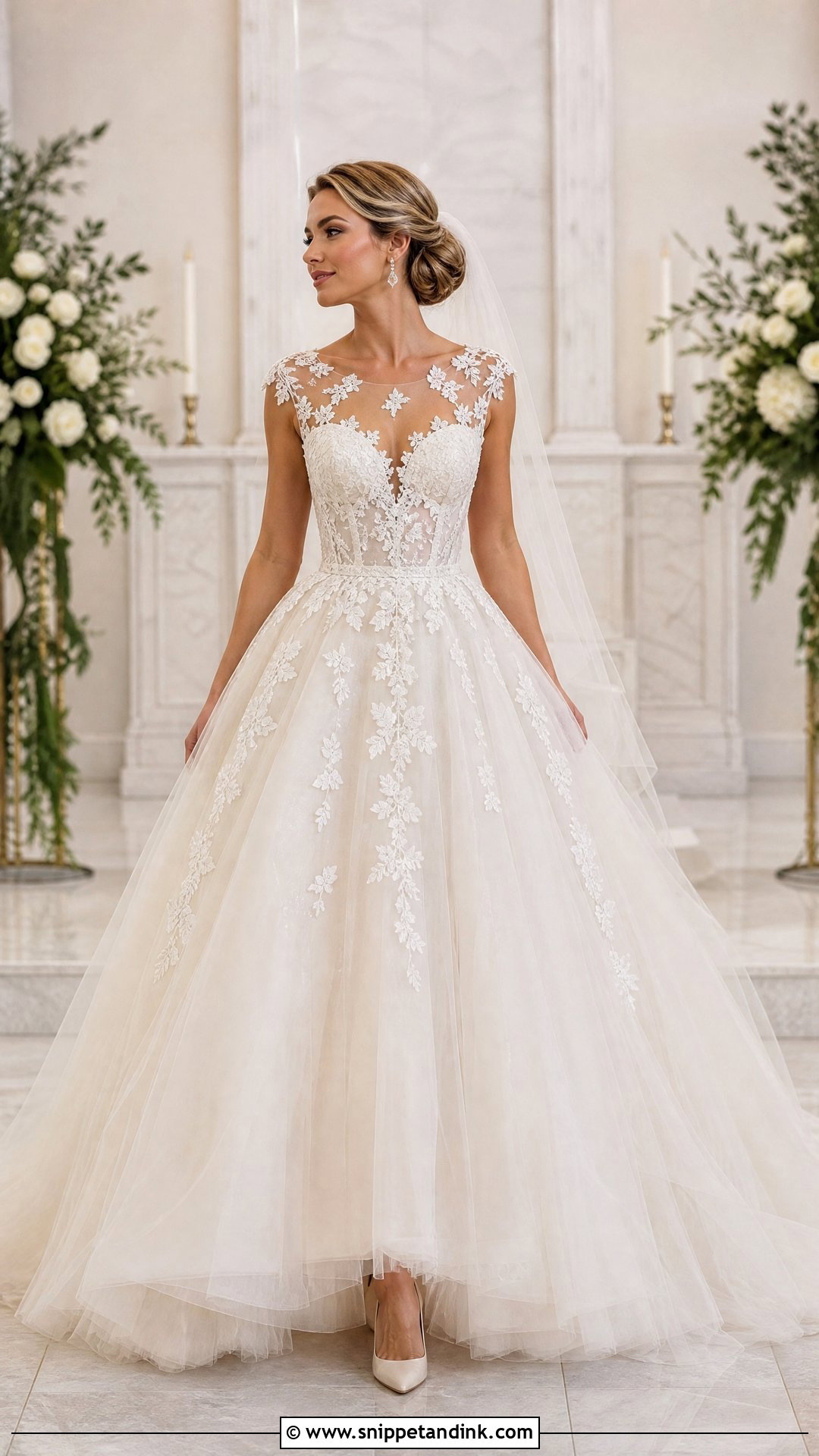
Illusion necklines look strapless and feel secure. The mesh has to match your skin closely, though. Look at it in daylight during fittings; a mesh that’s too pink or too grey shows up as a band across the chest in photos. Lace appliqués around the neckline and shoulders hide the mesh edge. A full A-line tulle skirt and a defined waist keep the volume in proportion. Crystal earrings, pointed heels and a low twisted bun keep the focus on the neckline.
11. Puff-Sleeve Organza A-Line Princess Wedding Dress
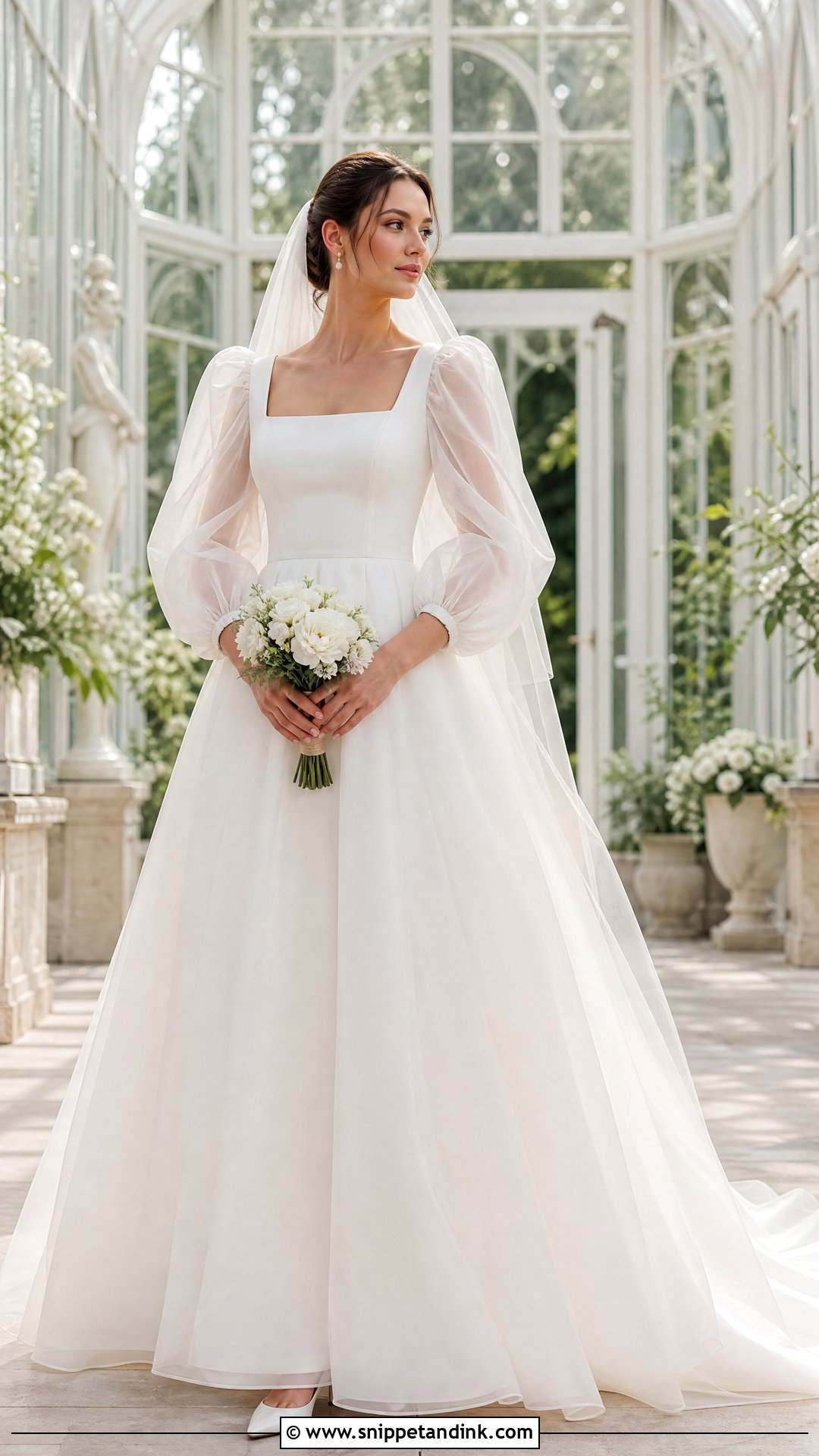
Airy puff sleeves in organza bring a storybook feel. Organza holds the sleeve shape where softer fabrics would sag. Balance them with a square or sweetheart neckline and a moderately full skirt, not an enormous one, or the proportions tip into costume. Removable sleeves are worth asking about, because they give you a cleaner reception look. A center-parted bun, pearl drops and low satin pumps keep it modern. Keep the bouquet compact so it doesn’t hide the sleeves.
12. Halter A-Line Princess Wedding Dress
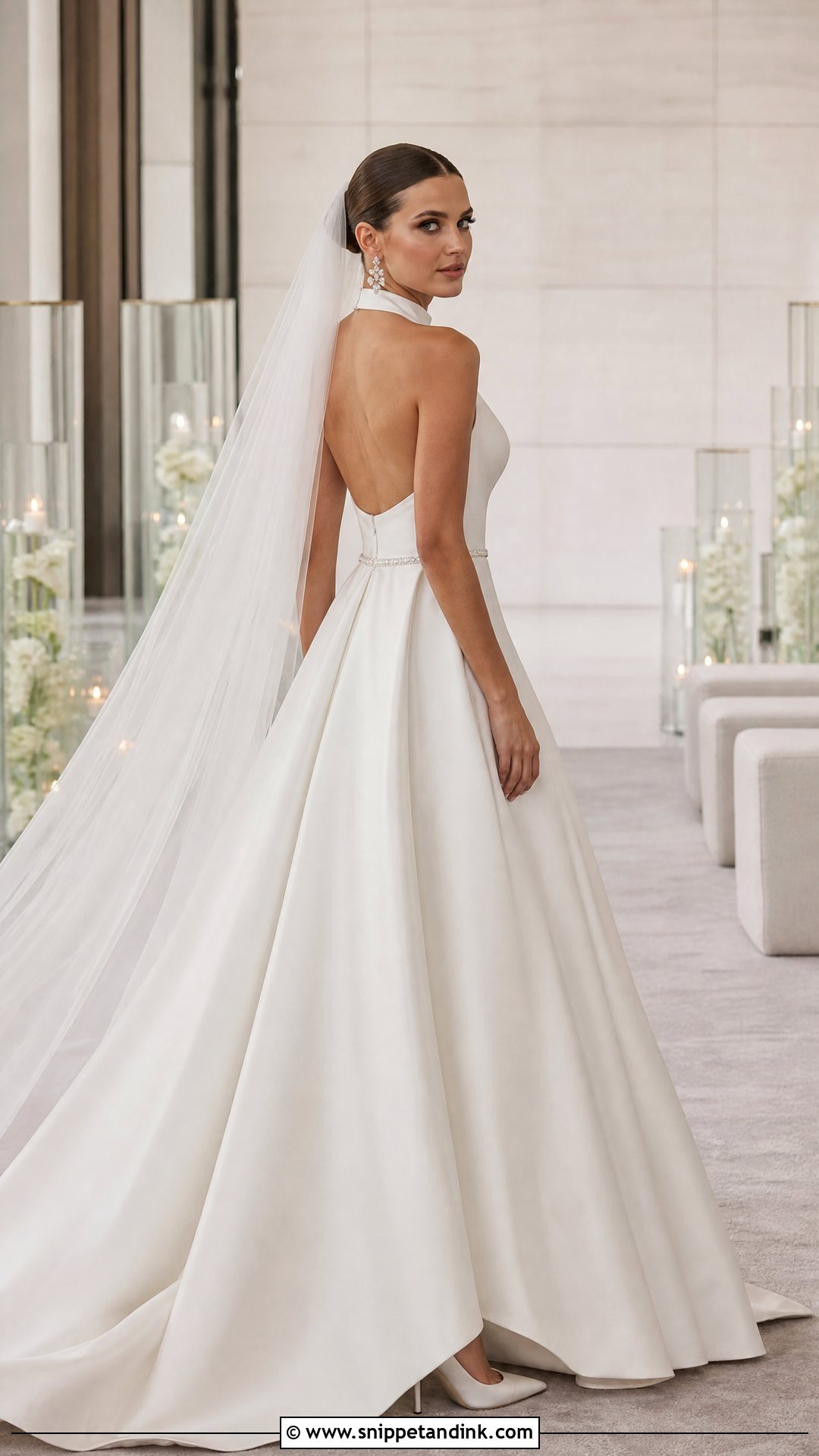
A halter brings a sleek line to the princess shape. The neck strap carries part of the bodice weight, so comfort around the neck matters; wear it for twenty minutes at the final fitting. An open or keyhole back balances the high front. Statement earrings, pointed pumps and a low bun with the veil underneath suit it, and skip the necklace. A narrow belt is optional if the waist needs definition. Rooftops and modern hotels suit its streamlined feel.
13. Champagne Tulle A-Line Princess Wedding Dress
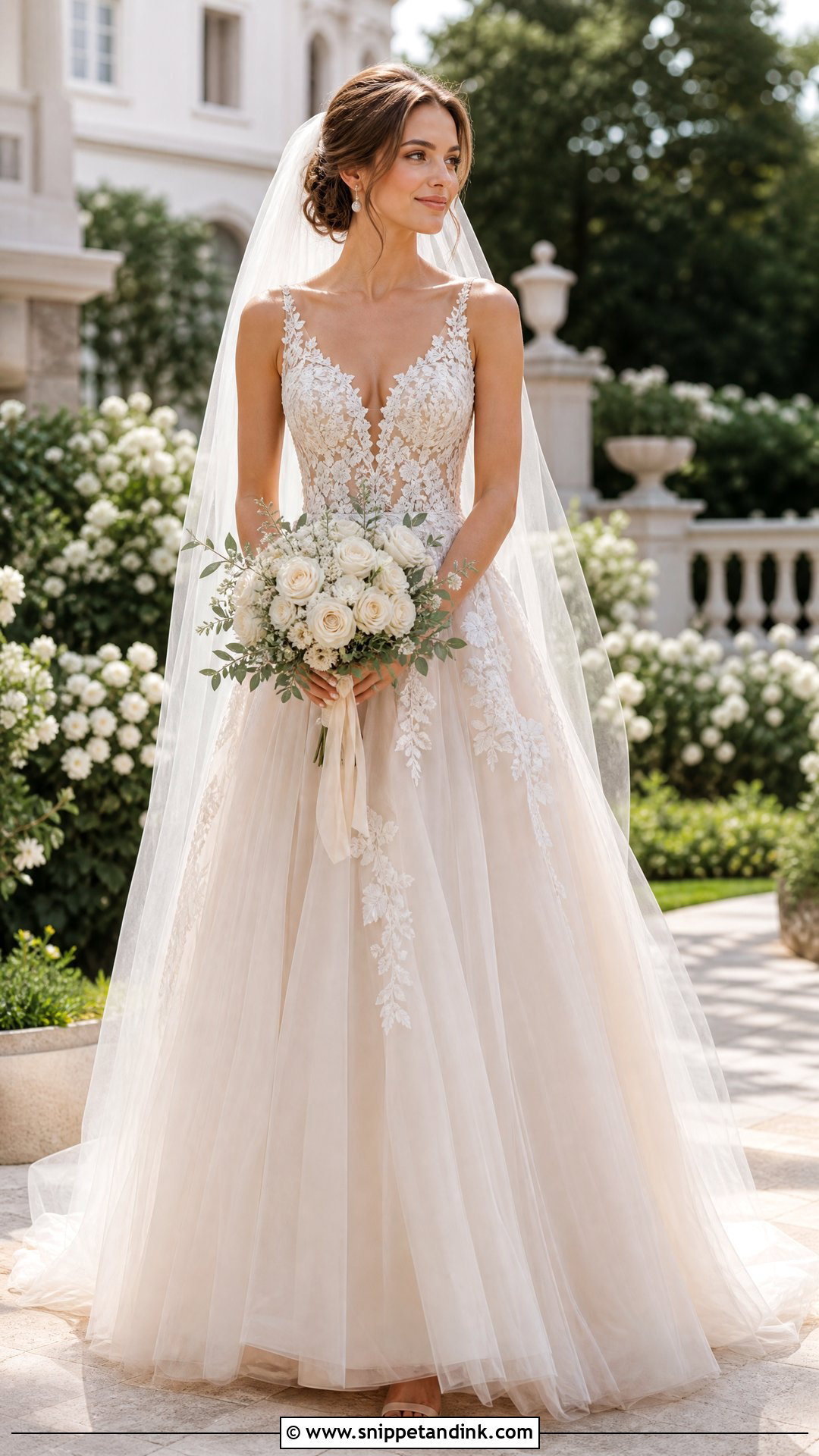
Champagne under ivory lace gives warmth and shows the lace pattern more clearly. Look at the gown as it moves; layers of pale tulle shift the colour slightly with each step. The tricky part is matching. Ivory accessories that look fine on their own can look grey next to champagne, so hold earrings, shoes and veil against the dress in daylight. Warm-toned pearls, nude heels and cream flowers suit it. Garden venues with neutral colours flatter it.
14. Plus-Size A-Line Princess Wedding Dress With Corset Bodice
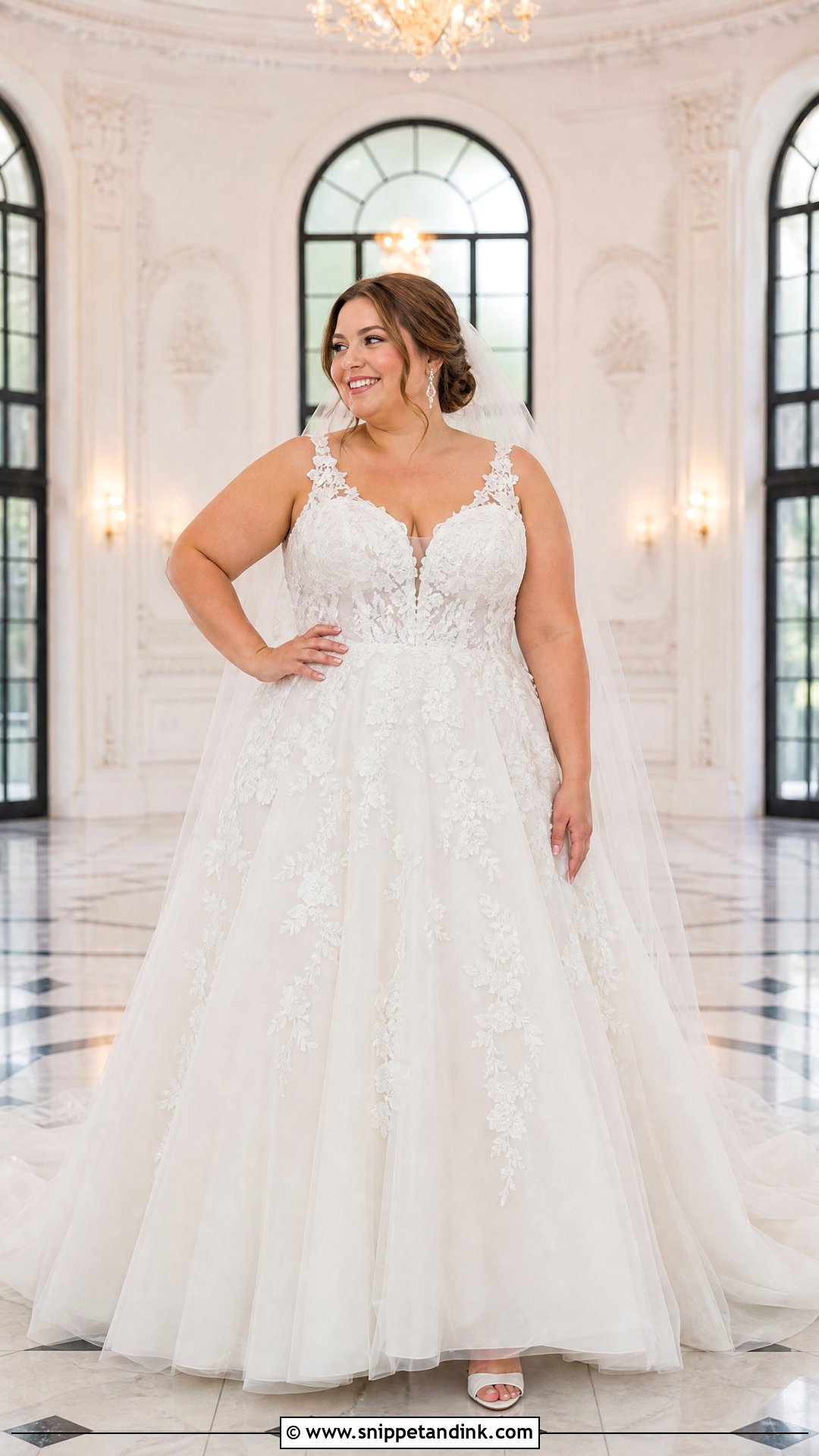
For plus size princess gowns, I start with support and work outward. Secure straps or a well-fitted strapless foundation, flexible boning and a waistline set where it feels best on your body, not where the pattern says. Layered tulle gives volume without a heavy skirt. Lace appliqués spread across the gown lead the eye around the whole silhouette. Bring a comfortable reception shoe. Raise your arms and sit during every fitting; the bodice should hold without you thinking about it.
15. Minimalist Crepe A-Line Princess Wedding Dress
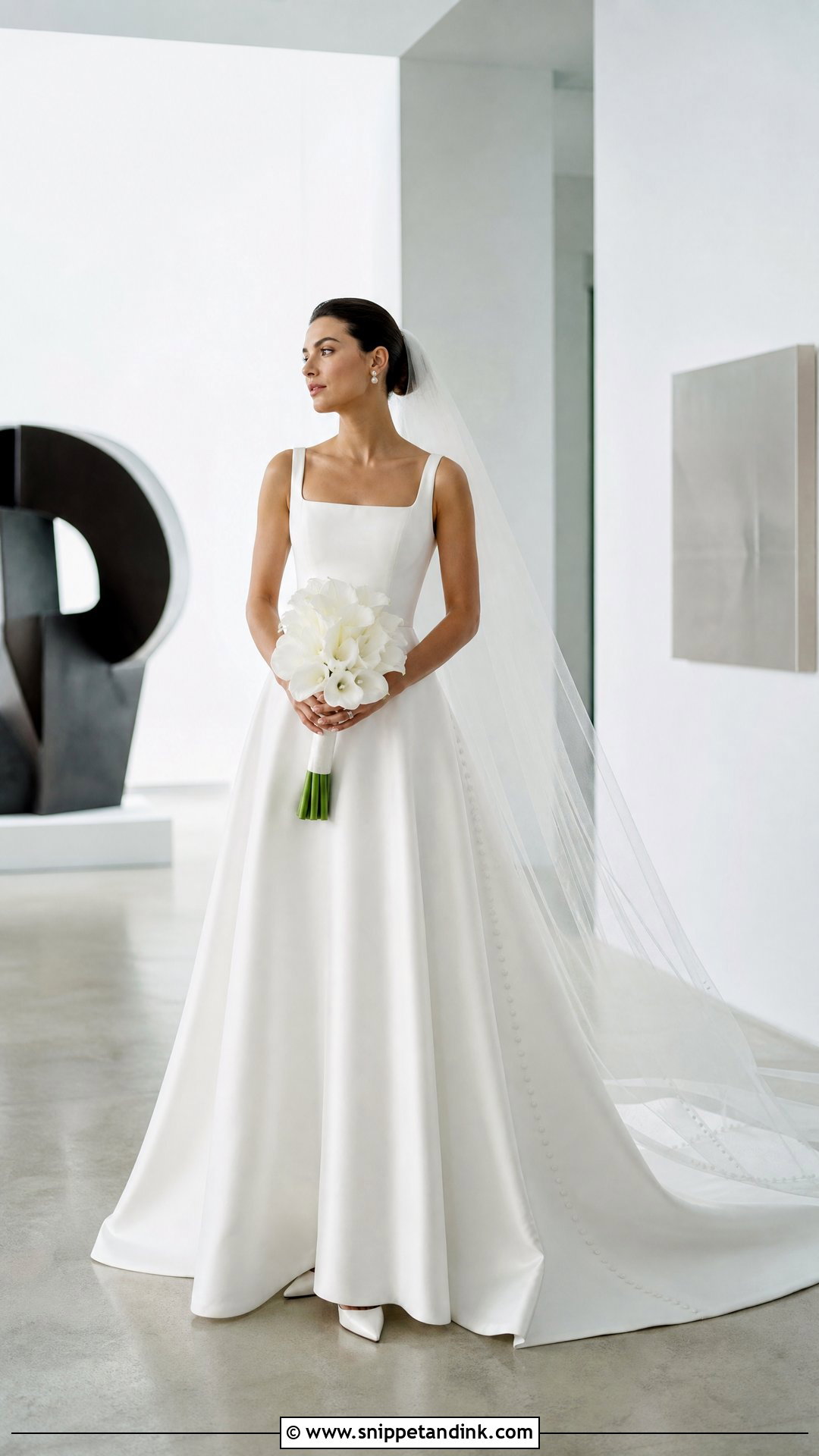
Could a plain gown still feel like a princess? Yes, if the structure is right. Crepe with a bateau, square or soft V neckline, a skirt that falls cleanly from the waist and a long train with covered back buttons is regal without a single bead. The trade-off is that crepe shows every seam and every line underneath. Smooth foundations and expert alterations aren’t optional. A plain cathedral veil, sculptural white bouquet and sleek bun suit a gallery or modern hotel.
16. Cathedral-Train A-Line Princess Wedding Dress
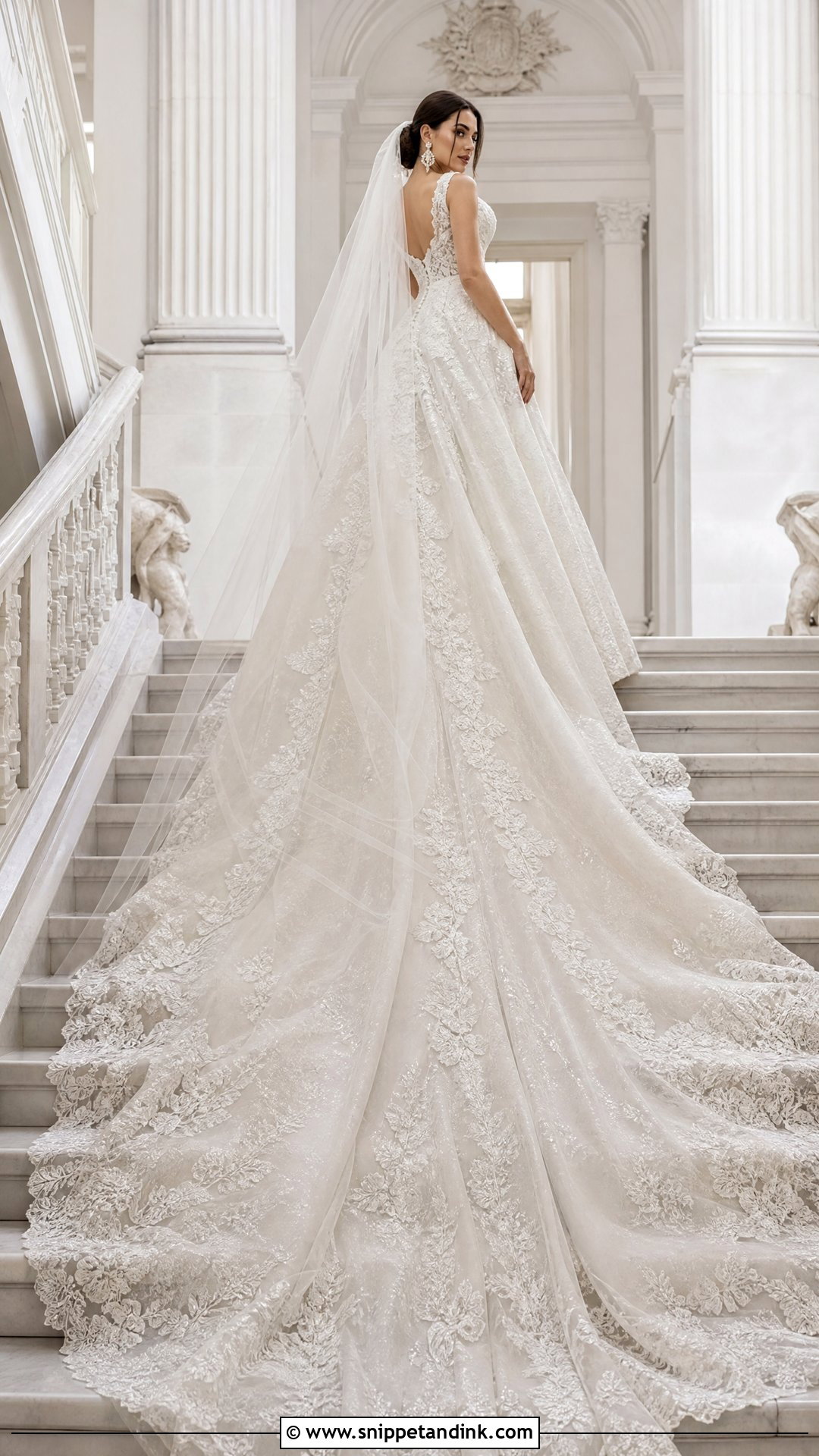
A cathedral train is the grand entrance version. The skirt needs enough structure to support that length, or the train collapses into a flat puddle. Details on the back, such as appliqués or buttons, are what people see as you walk. Keep the front accessories plain. Practise the bustle with whoever will do it on the day. It usually takes two people and several minutes, and it’s fiddly in a dim corridor. Wide aisles and big rooms are a must; a narrow chapel wastes it.
17. Detachable-Sleeve A-Line Princess Wedding Dress
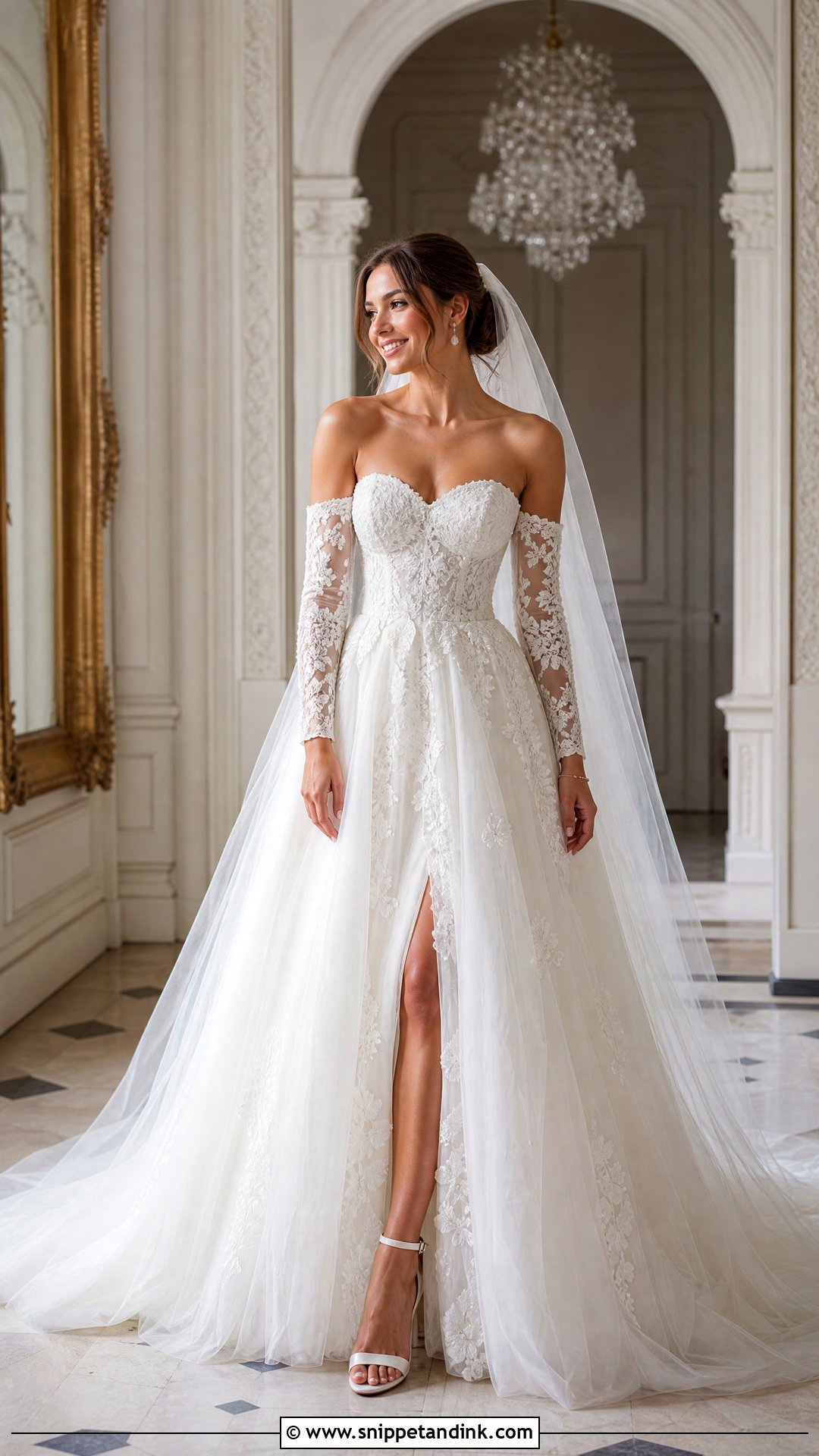
Two looks, one dress. Start with a strapless or sleeveless bodice and add fitted lace sleeves, off-shoulder drapes or cuffs for the ceremony. Take them off for dancing. Attachment is the weak point. Sleeves that hook onto the bodice should sit securely without pinching or slipping when you raise your arms, so try every movement in them. Ankle-strap heels, pearl earrings and a chapel veil suit both versions. A low bun shows off each neckline.
18. Bow-Back Satin A-Line Princess Wedding Dress
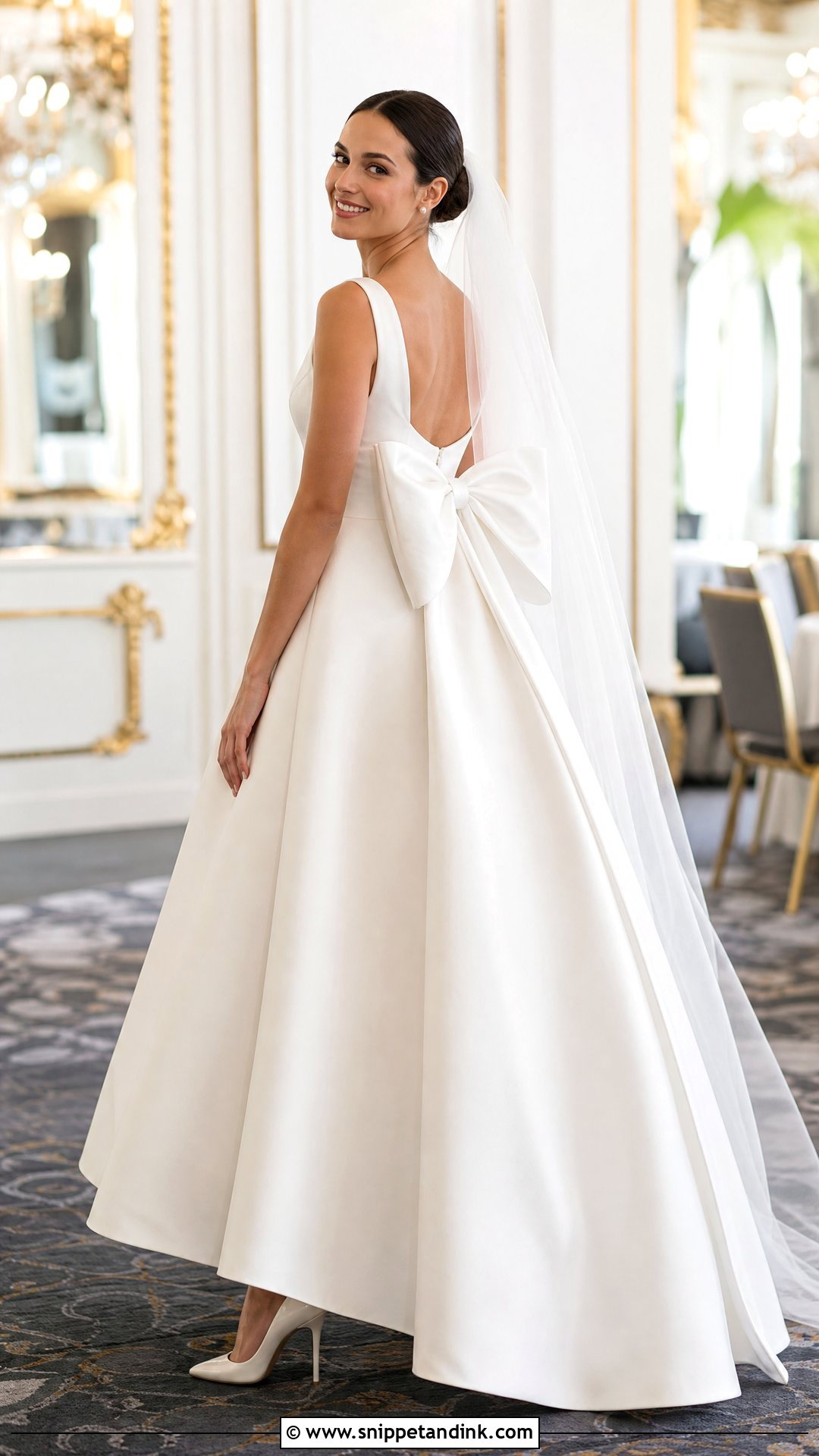
A bow at the back waist adds personality without sparkle. Proportion is what I look at. Long tails can melt into the train, while a small sculptural bow looks neat and modern. Skip any belt, since the bow already marks the waist. Ask whether the bow comes off or moves when the gown is bustled; sometimes the bustle points sit right under it. Pearl studs, pointed pumps and a plain veil with a polished bun fit a classic hotel or ballroom.
19. Floral Jacquard A-Line Princess Wedding Dress With Pockets
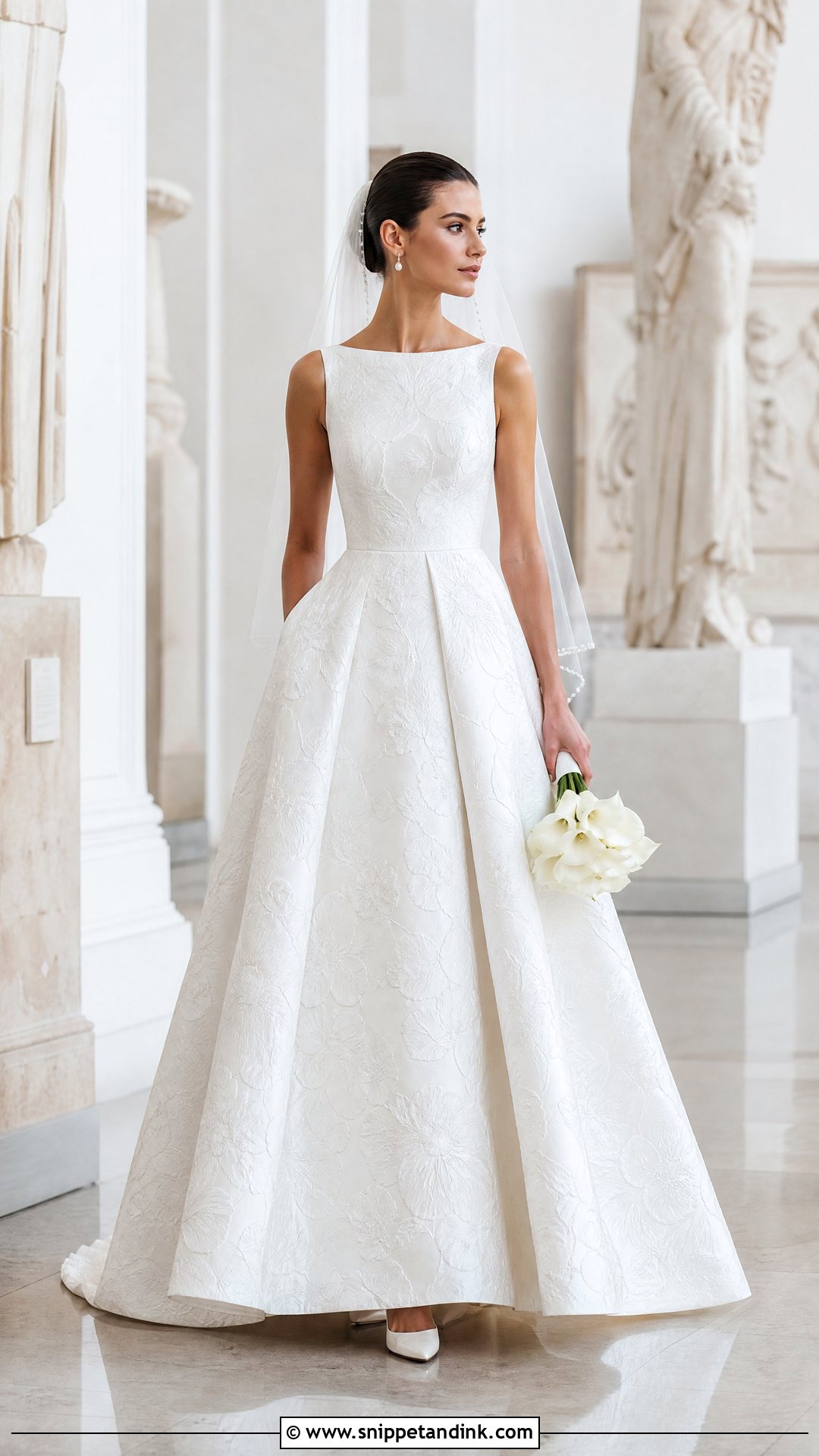
Jacquard has the pattern woven in, so the texture is part of the fabric rather than sewn on top. It has more body than tulle, which means more weight; walk around in it at fittings to see how it moves. A broad skirt displays the pattern well. Hidden pockets are welcome but should lie flat. Keep the bouquet to one or two white flower types, so it doesn’t compete with the weave. Cooler seasons and grand indoor venues suit its weight.

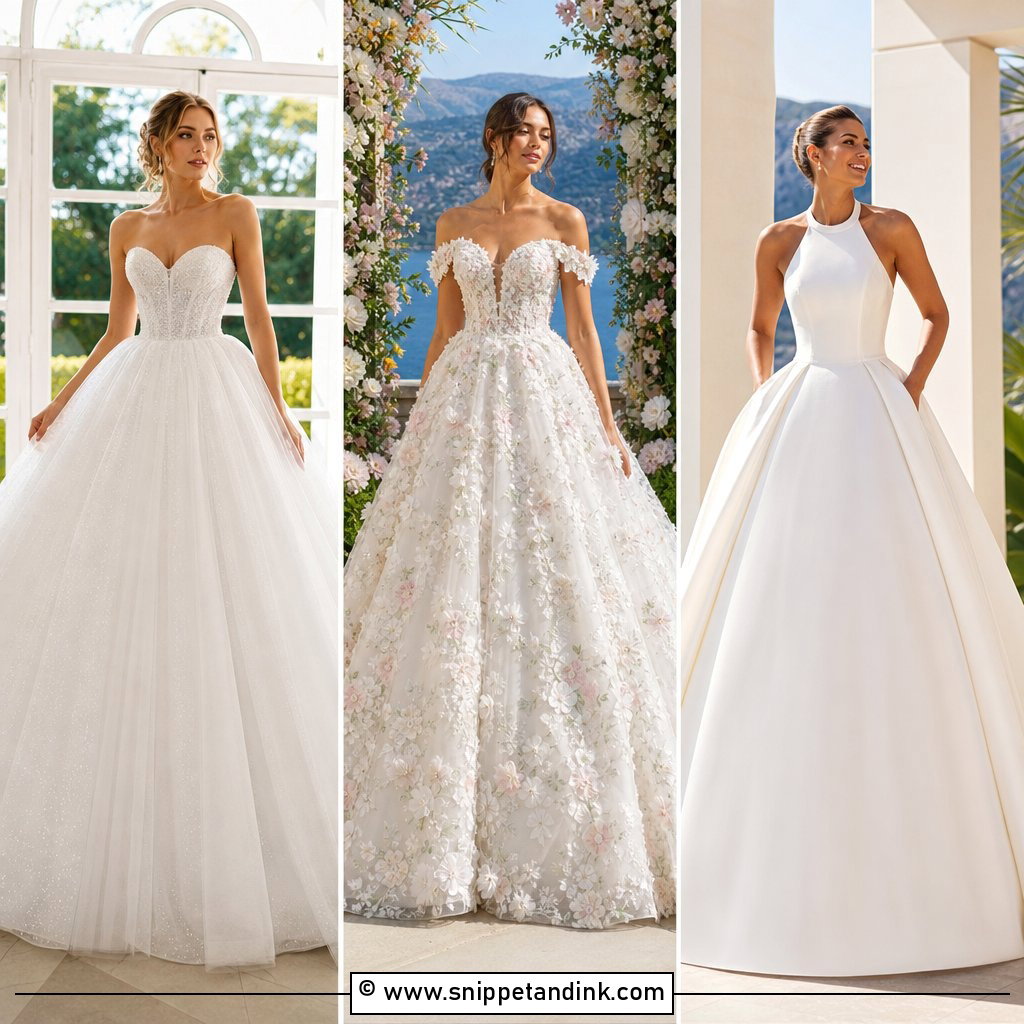


20. Chiffon A-Line Princess Wedding Dress With Slit
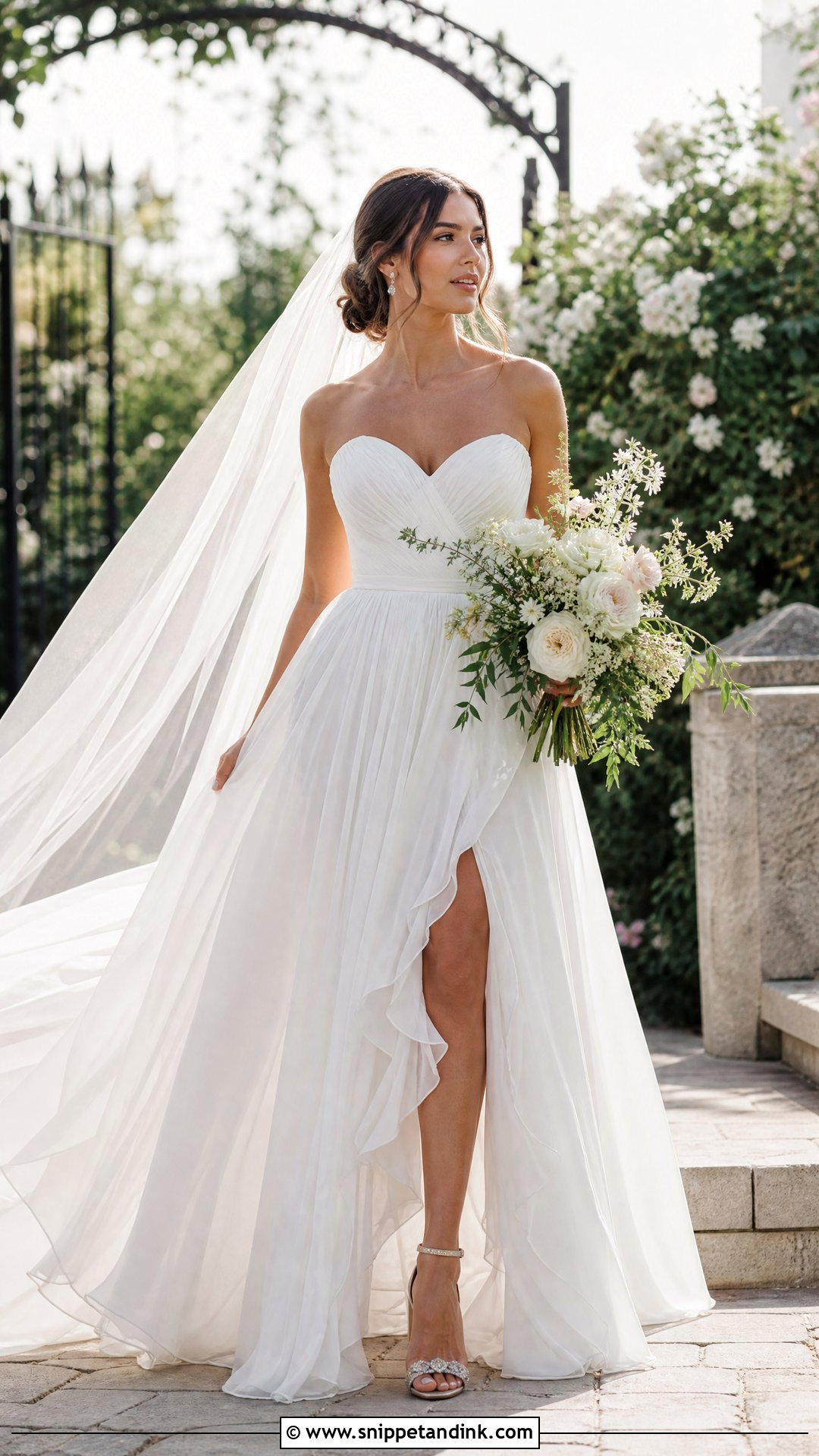
Flowing chiffon is the softest take on the shape. A pleated bodice, defined waist and layered skirt give enough fullness, and a controlled side slit opens as you walk. Ask how high the slit sits when you sit down, not only standing; they often climb. Removable flutter sleeves or a light cape add ceremony coverage. Embellished block-heel sandals suit outdoor ground, and an airy bouquet and loose bun match the movement. Destination and garden weddings are its territory.
Petticoats, Hoops and the Car Door
Volume has practical consequences, and I’d rather you know them at the boutique. A princess skirt over a soft petticoat bends easily. A hoop skirt does not: it tips up at the front when you sit, and it needs a large car or a minivan to travel in without crushing. Ask what’s underneath the sample. Many gowns can be worn with a lighter petticoat than the one in the shop, which gives a slightly slimmer shape and far more comfort.
The bathroom question nobody asks in the shop
It’s easier than people fear. Face the toilet, straddle it backwards and gather the skirt in front of you; that way the volume stays in your arms rather than on the floor. One helper is enough. Practise once at home in the dress before the day so it’s not a surprise.
- Measure doorways at the venue if your skirt is very full; old buildings can be narrow.
- Ask your seamstress for a loop on the petticoat so you can lift it with one hand on stairs.
- Practise sitting on a low chair. A full skirt pushes forward and can bump the table edge at dinner.
How Much Skirt Do You Really Want?
Necklines, fabric, sleeves, trains and accessories all change the same basic shape in very different ways. Start by deciding how much volume and bodice structure you’re comfortable in, then let the venue and season narrow the fabric. Bring your real underwear and shoes to every fitting, and sit, walk and turn in each gown. Ignore whatever trend is loudest this year. Romantic lace, smooth satin, sparkly tulle or plain crepe, the right one is the dress you stop noticing within a minute of putting it on.
You'll Like These Ideas:







Leave a Reply