
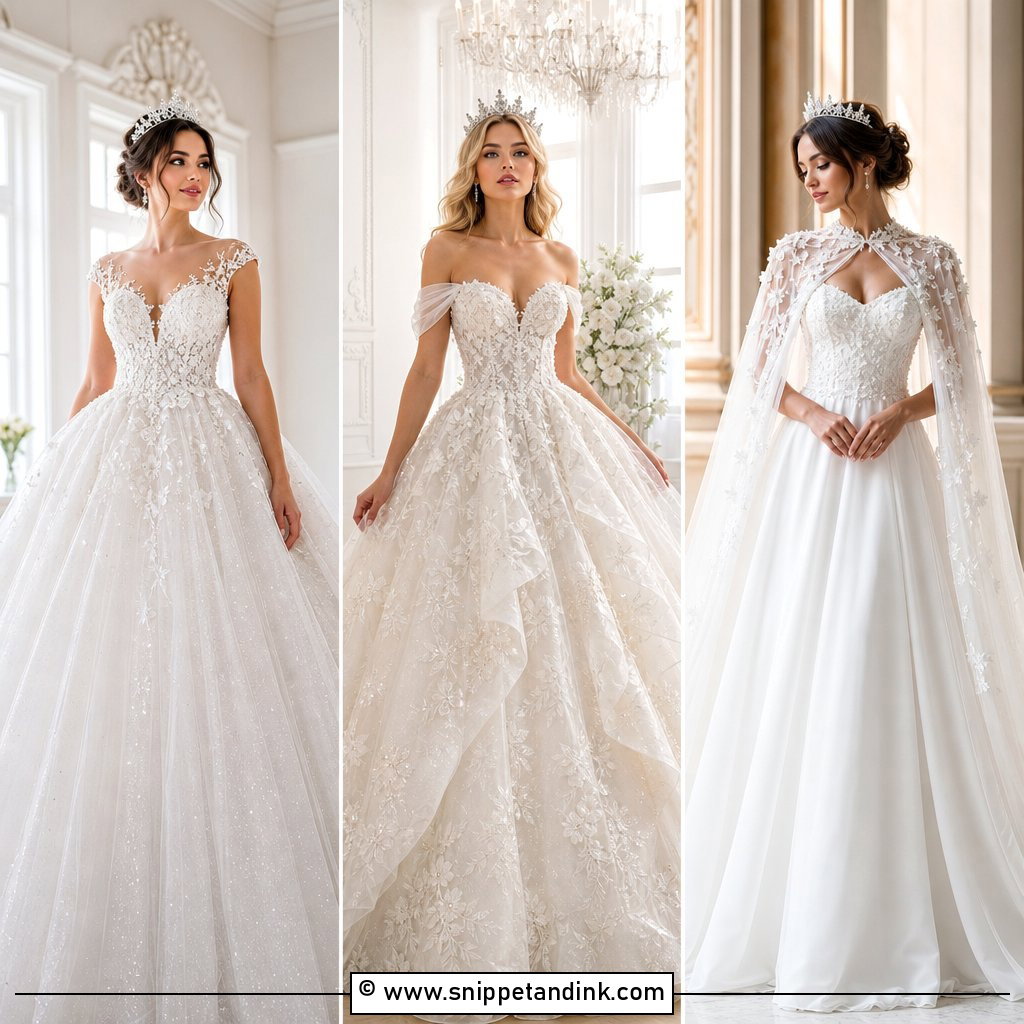
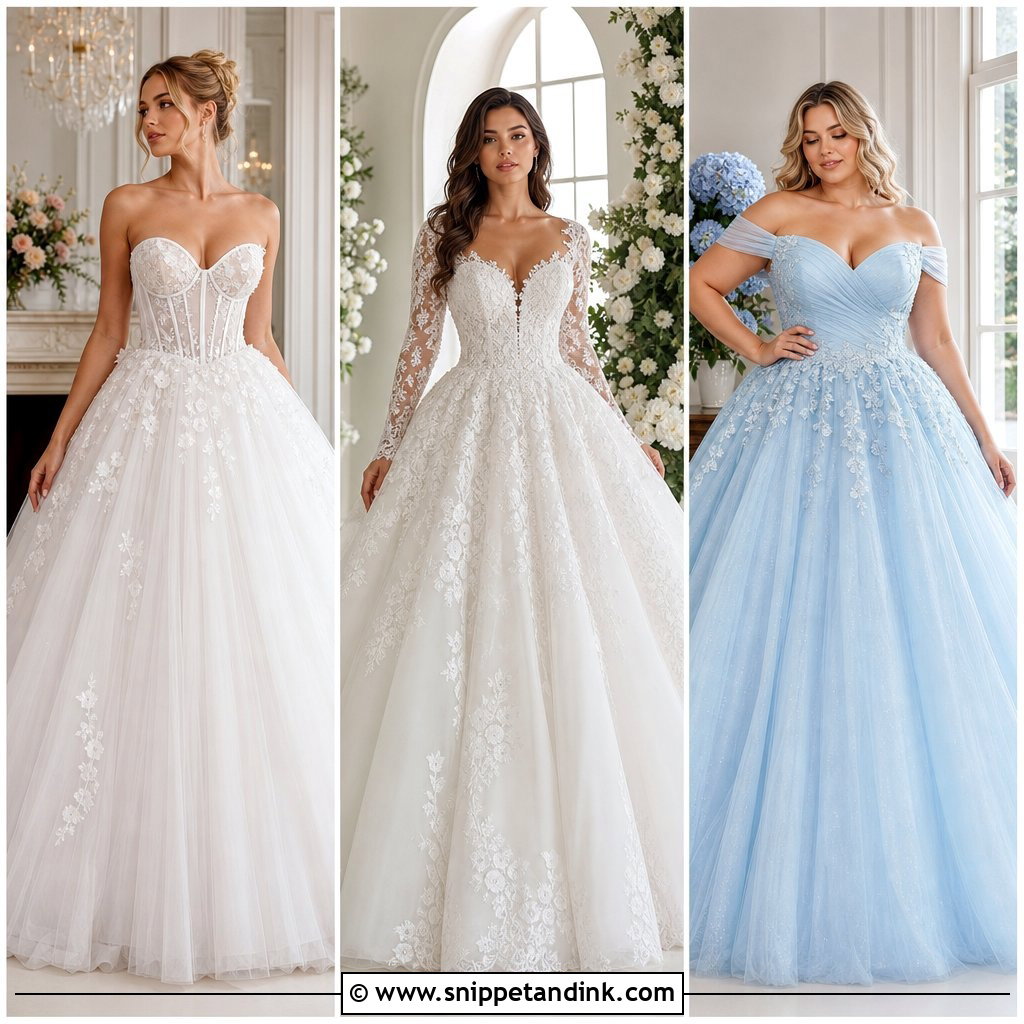
A princess silhouette comes down to three parts: a fitted bodice, a defined waist and a full skirt. Everything else is a choice made on top of that frame, from lace sleeves and floral appliqué to glitter tulle, corsetry or a crisp square neckline. Basque and drop waists, sculpted bodices, bows and plain luxury fabrics are keeping the shape current. When a bride tells me she wants a princess dress, my first question isn’t about sparkle. It’s about where her waist sits and how formal the room will be, because those two answers rule out half the racks before we start. The 25 gowns below cover the range.
Where Should the Waist Sit on Your Body?
Every princess gown is built around its waistline, and the right one depends on your torso length more than your size. Before I pull a single dress, I find where a bride naturally bends at the side. That crease is her true waist, and it’s often not where she thinks.
Natural waist
The seam sits right at that bend. It suits almost everyone and is the safest choice for a short torso, because it leaves your legs their full length under the skirt.
Basque waist
The bodice dips to a V a few centimeters below the waist. It lengthens a medium or long torso and makes the waist look smaller, but on a very short torso the point pushes into the skirt.
Drop waist
The seam falls toward the hip. It needs a long torso and some height, or a skilled seamstress to rebalance the proportions.
If you’re unsure, try all three in the same fabric on the same day. Seen back to back in the mirror, the difference is obvious within minutes.
1. Satin Ball Gown Princess Wedding Dress
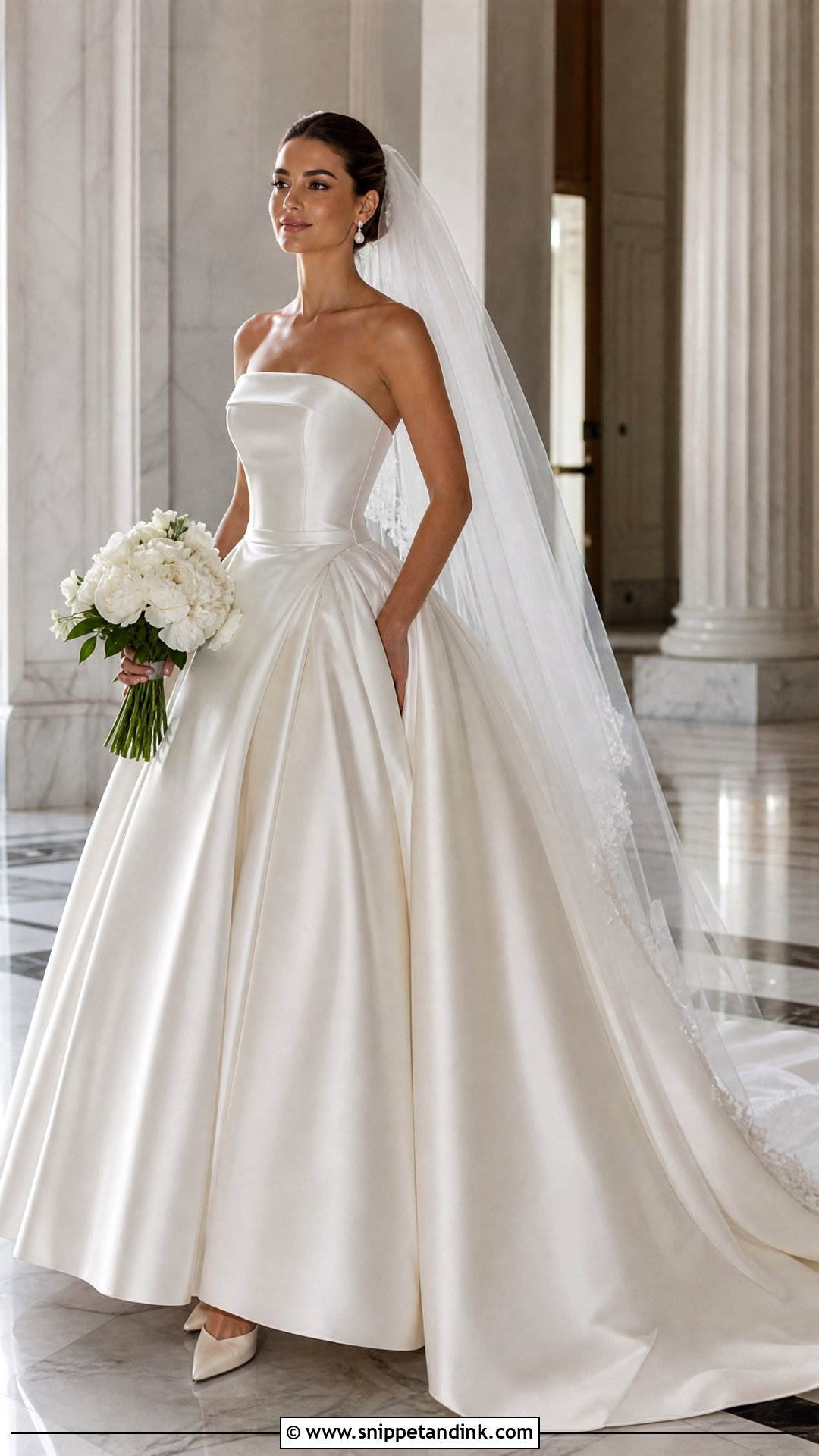
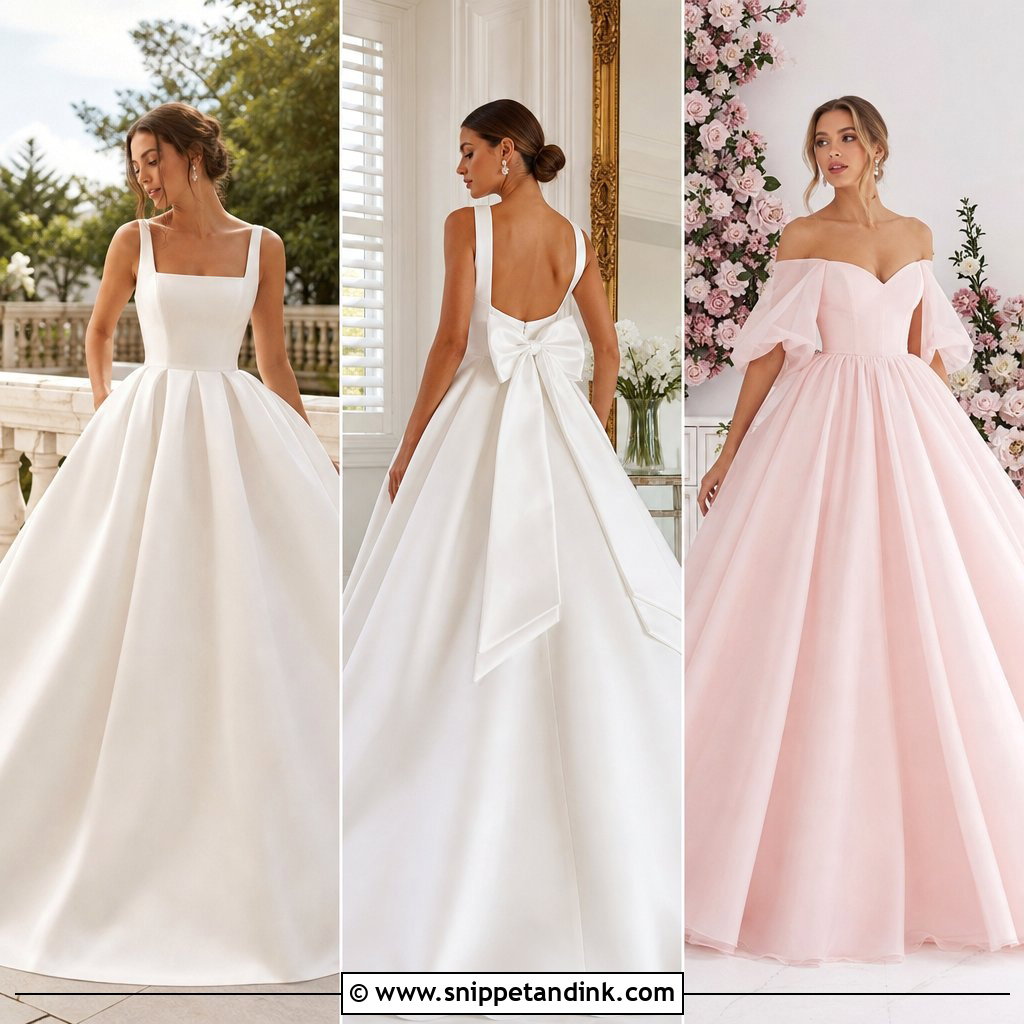
Satin ball gowns are the plainest version of the look and the hardest to hide behind, since there’s no lace or beading to soften a fit problem. The structured bodice shapes the upper body and the full skirt gives the volume. Bridal satin comes in several whites, from bright to ivory to a soft candlelight, so I compare swatches against the bride’s skin and the venue’s light before choosing. A cathedral veil, pearl earrings, pointed heels and a low bun suit grand ballrooms and black-tie evenings. With a strapless neckline, a fine necklace keeps the chest from looking bare.
2. Lace Princess Wedding Dress With Long Sleeves
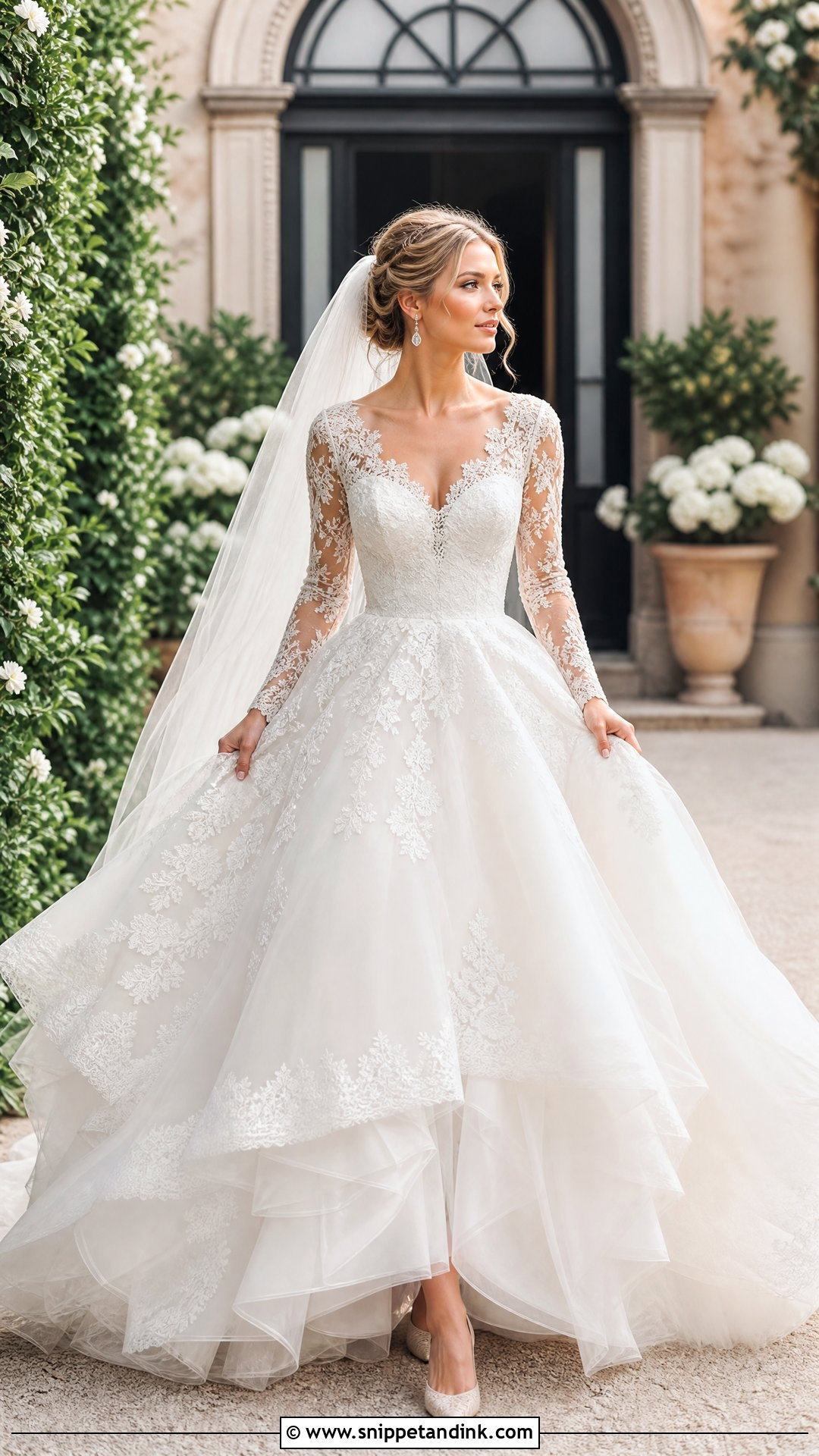
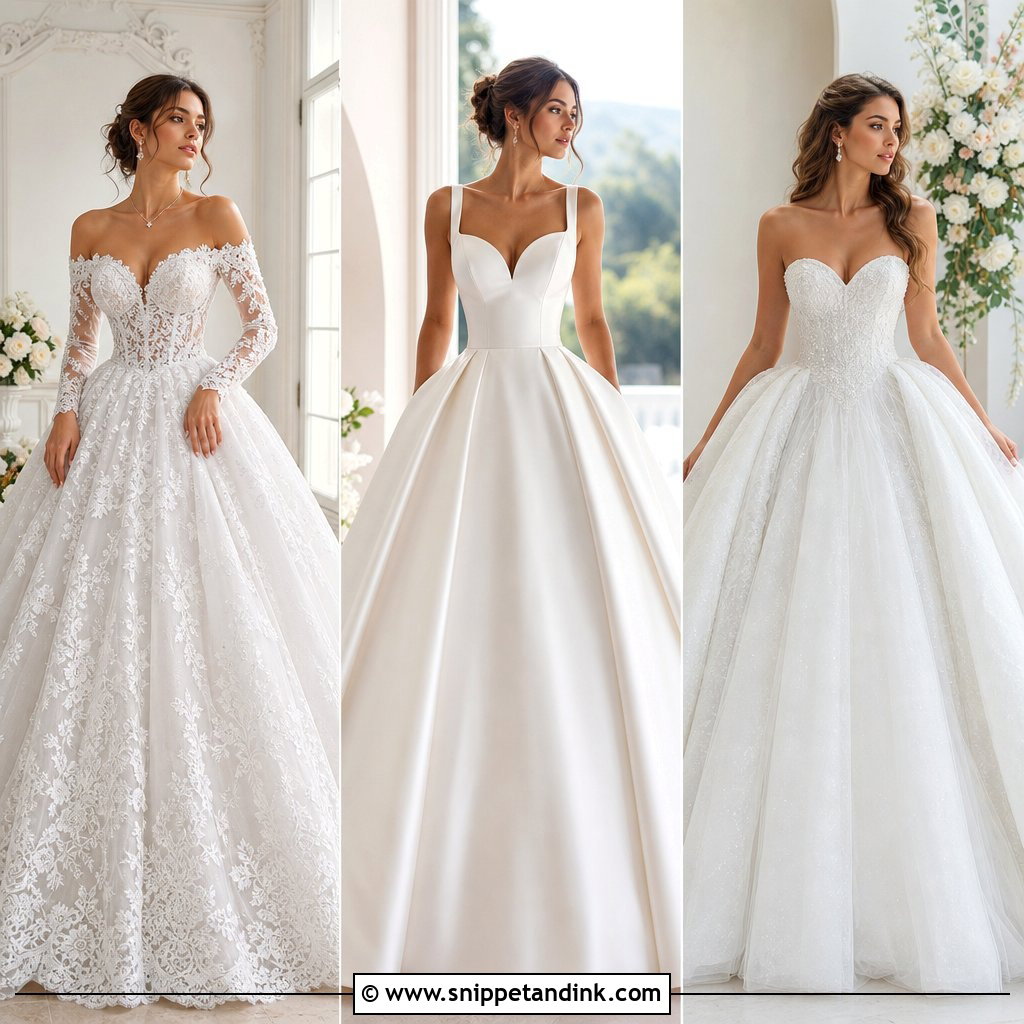
A lace princess wedding dress with long sleeves gives coverage and romance in one. The lace type changes the whole feel: fine Chantilly is soft and light, corded Alençon has raised outlines that read richer, and guipure is heavier and more graphic. Long sleeves suit fall, winter and early spring, though illusion lace makes them bearable in warmer months. Pair a soft veil, small drop earrings and ivory heels, and keep the hair relaxed so the lace stays the focus.
3. Basque Waist Princess Wedding Dress
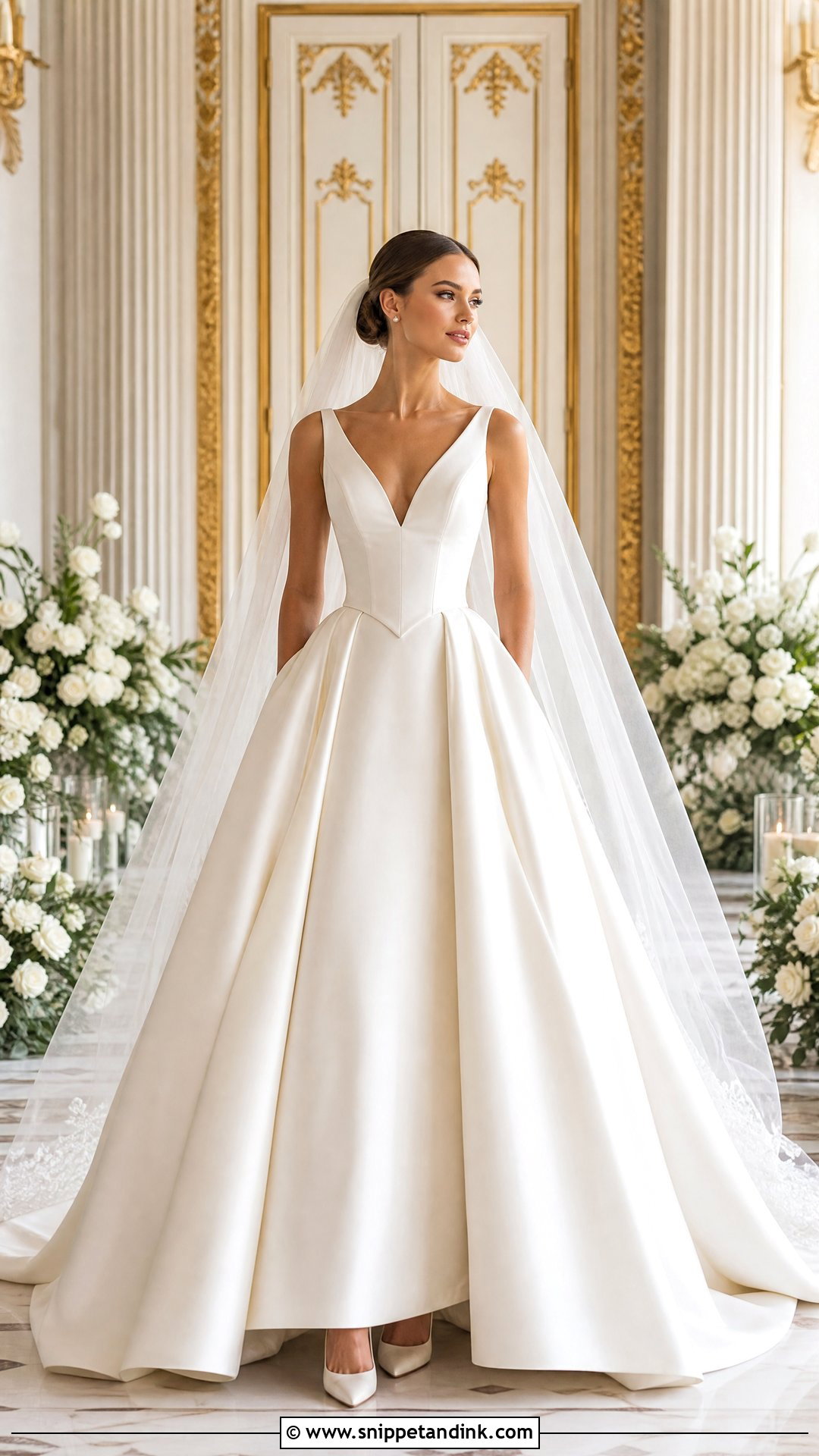
The basque waist dips into a gentle V below the natural waist, which lengthens the torso and makes a sharp transition into the skirt. It flatters most on a medium to long torso. If your waist is high and your torso short, the point can land near the hip and crowd the skirt, so I mark it on the body before ordering. Satin, mikado, lace and tulle all take the shape. Because the waistline is the feature, keep the veil clean, the earrings delicate and the shoes hidden under the skirt.
4. Corset Princess Wedding Dress
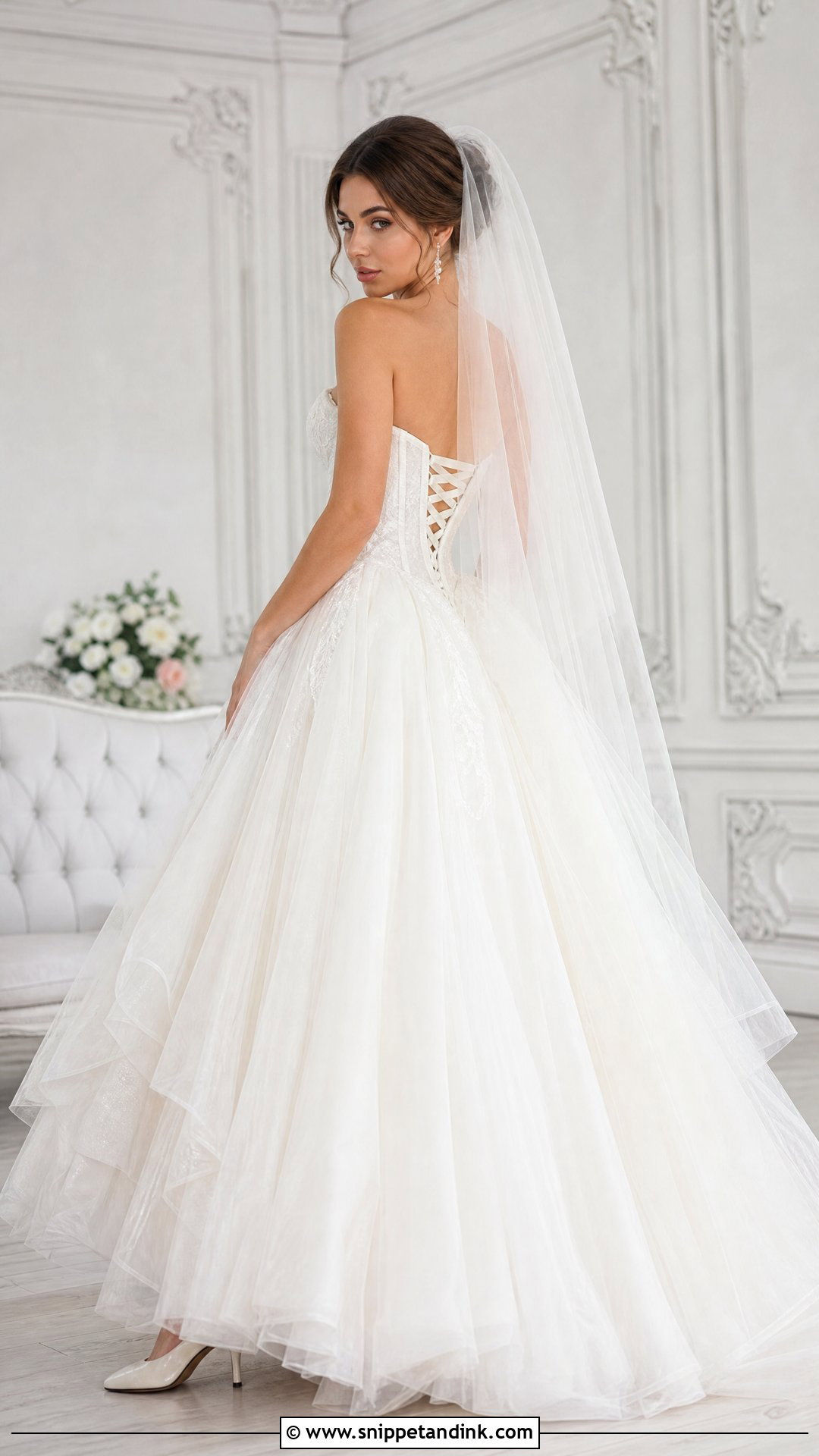
Corset gowns use boning, a lace-up back or a sculpted inner structure to hold the waist and bust. A lace-up back usually has a modesty panel underneath, and I check that it lies flat and matches the gown, because a gapped panel is very visible from the aisle seats. Lace makes the corset romantic, satin dramatic and tulle softer. Closed-toe heels, dainty earrings and a soft veil suit it. If the bodice is detailed, skip the heavy necklace so the neckline has room.
5. Off The Shoulder Princess Wedding Dress
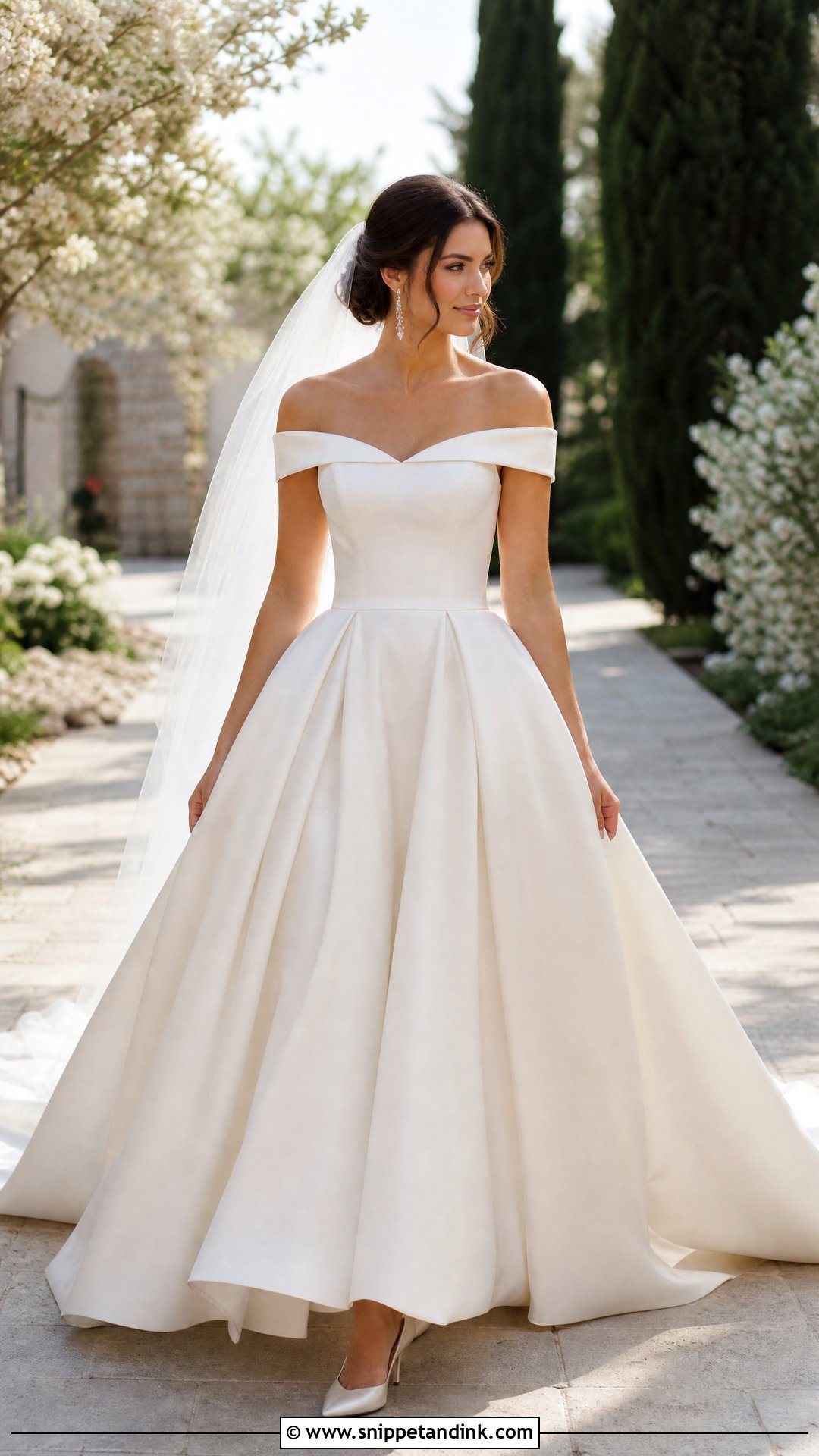
Off-shoulder gowns frame the collarbone and shoulders and look good from most angles, especially with a fitted bodice and a full skirt in satin, tulle or lace. Veil placement matters more here than with most necklines. Set at the crown, the veil falls over the bare shoulders; tucked under a low bun, it drops behind them and keeps the neckline visible, which is usually what I choose. Drop earrings suit the wide line, while a busy necklace competes with it.
6. Strapless Princess Wedding Dress
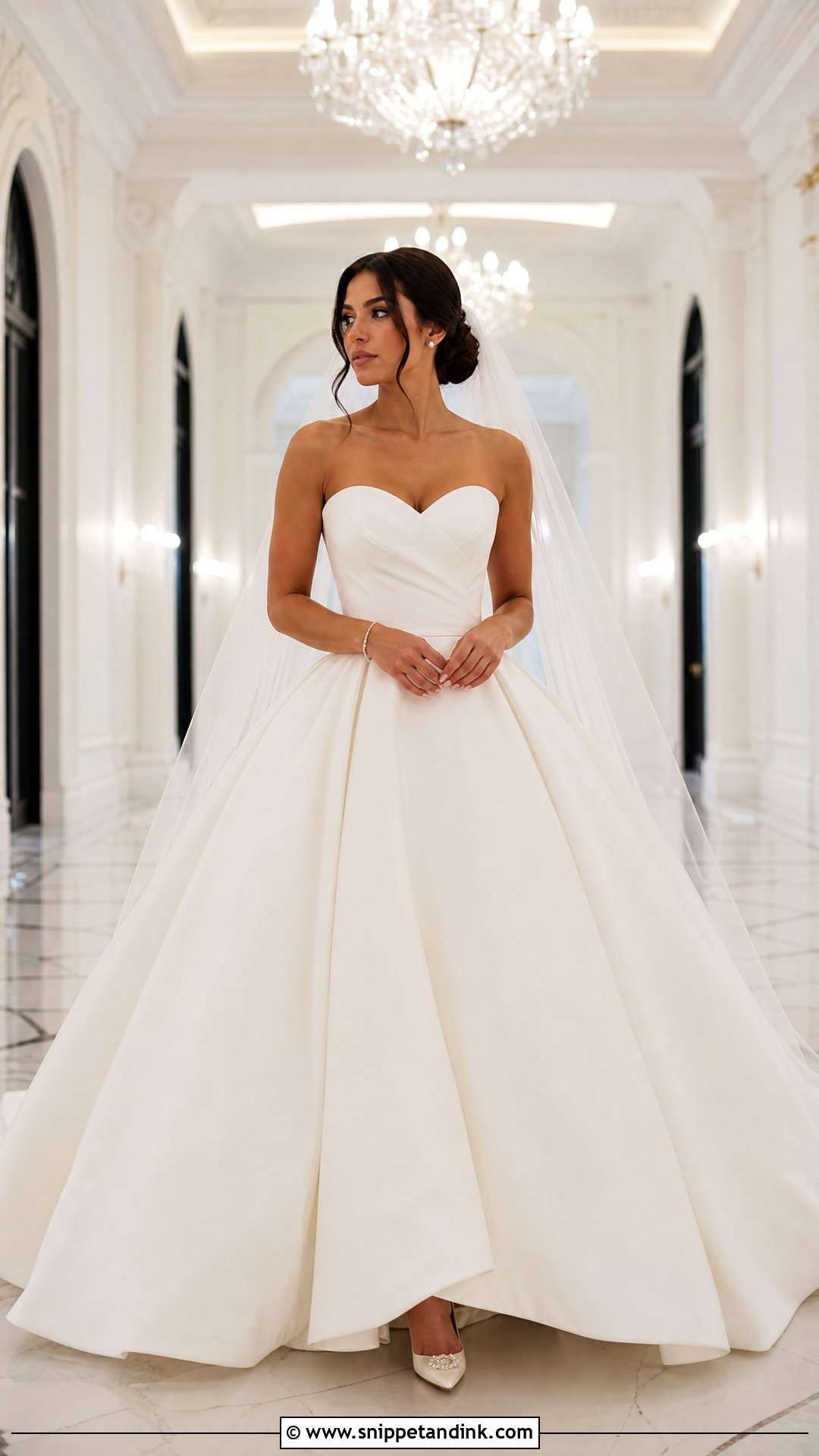
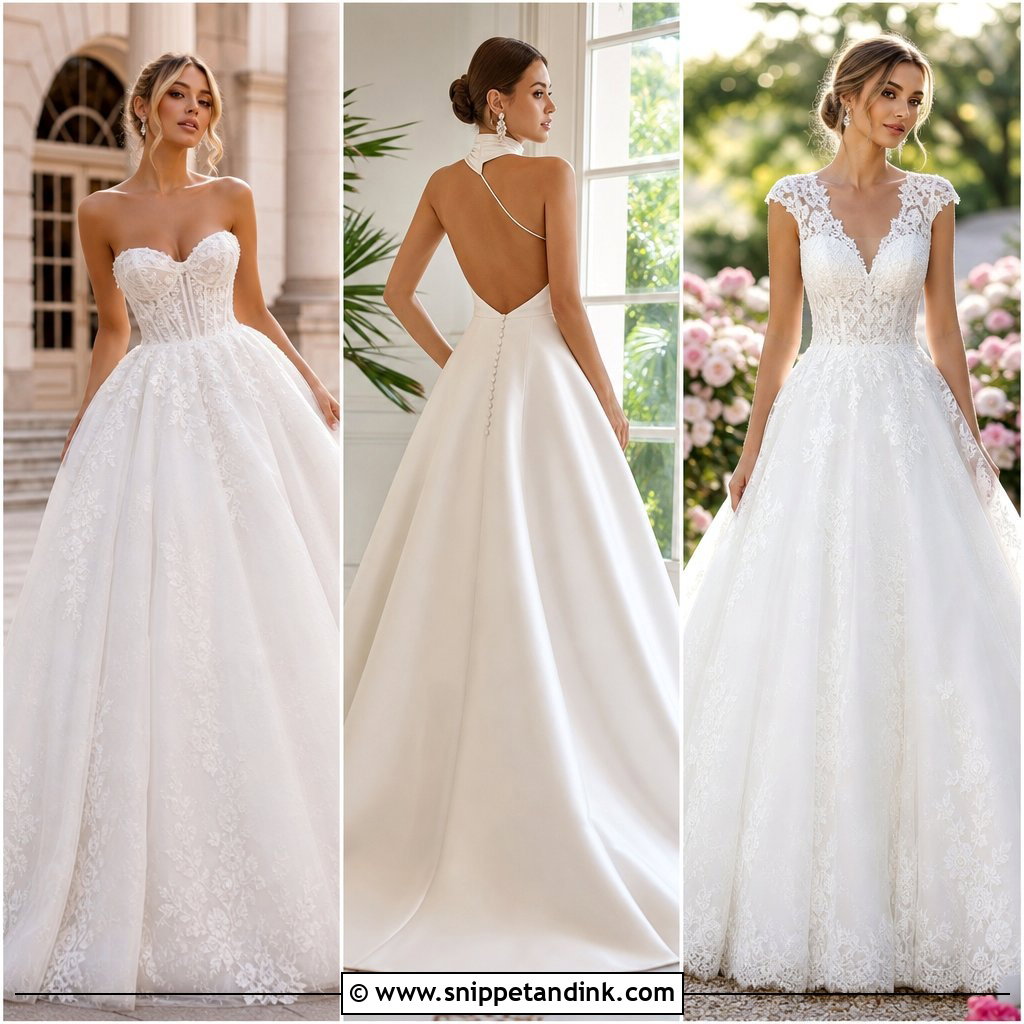
Strapless princess gowns put the focus on the shoulders and waist while the skirt brings the drama. A clean satin strapless gown feels modern and royal; lace or beading makes it more romantic. Fit is the whole game. At the fitting I ask brides to wave both arms overhead and bend to pick something up, and if the bodice shifts at all, it needs taking in or more structure. A veil, pearl studs, a bracelet and comfortable heels complete it, with hair up for formality or in soft waves for a gentler finish.
7. Tulle Princess Wedding Dress
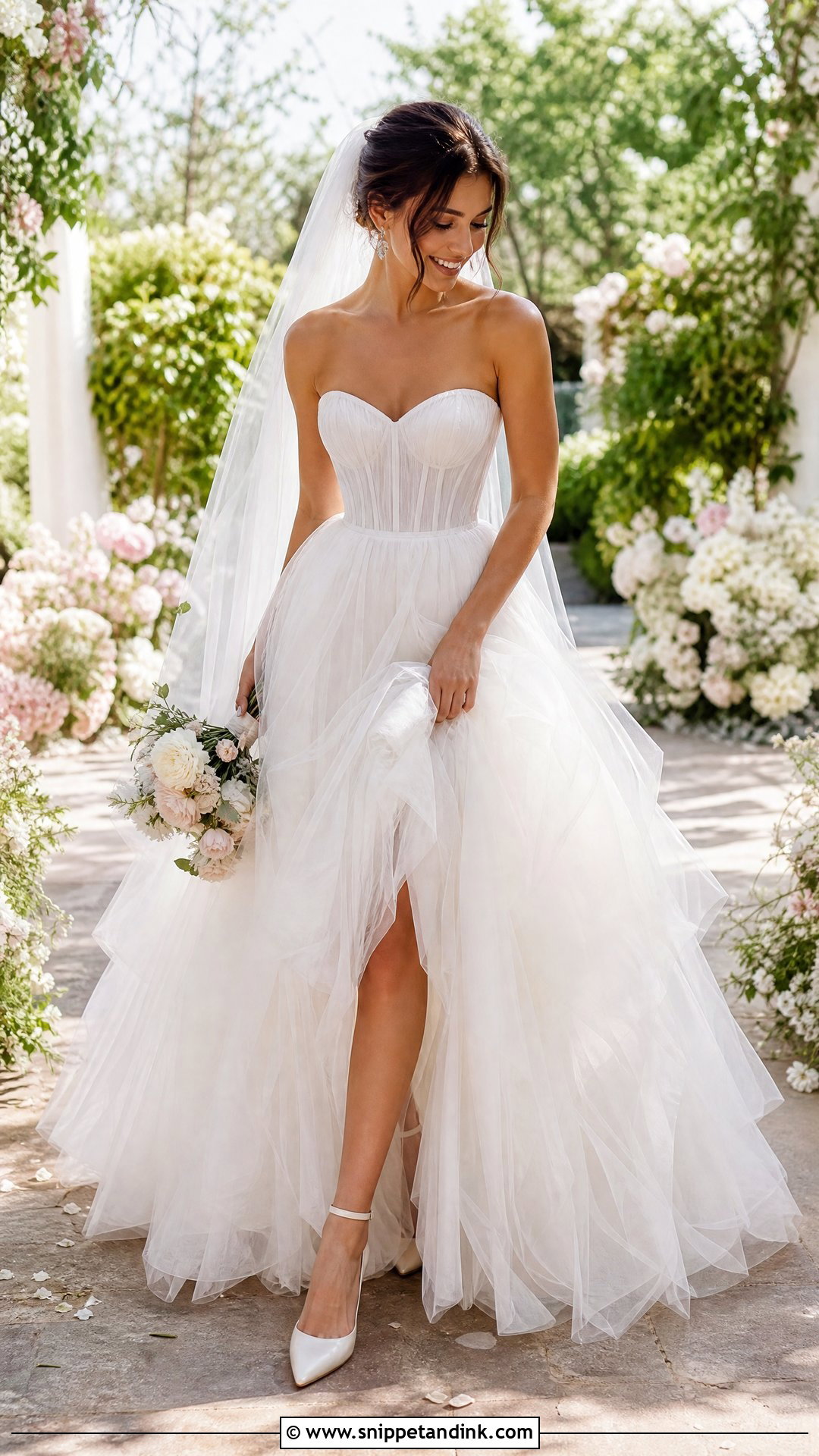
Tulle skirts create volume with very little weight, so they move well when you walk and dance. Plain ivory tulle looks soft; sparkle, appliqué or embroidery adds interest, and a fitted bodice keeps the skirt from overwhelming you. Tulle crushes when packed. I hang the gown as soon as it reaches the venue and let the layers drop for a few hours before steaming any stubborn folds. Delicate heels, a sheer veil and simple jewelry suit gardens, outdoor ceremonies and ballrooms alike.
8. Glitter Tulle Princess Wedding Dress
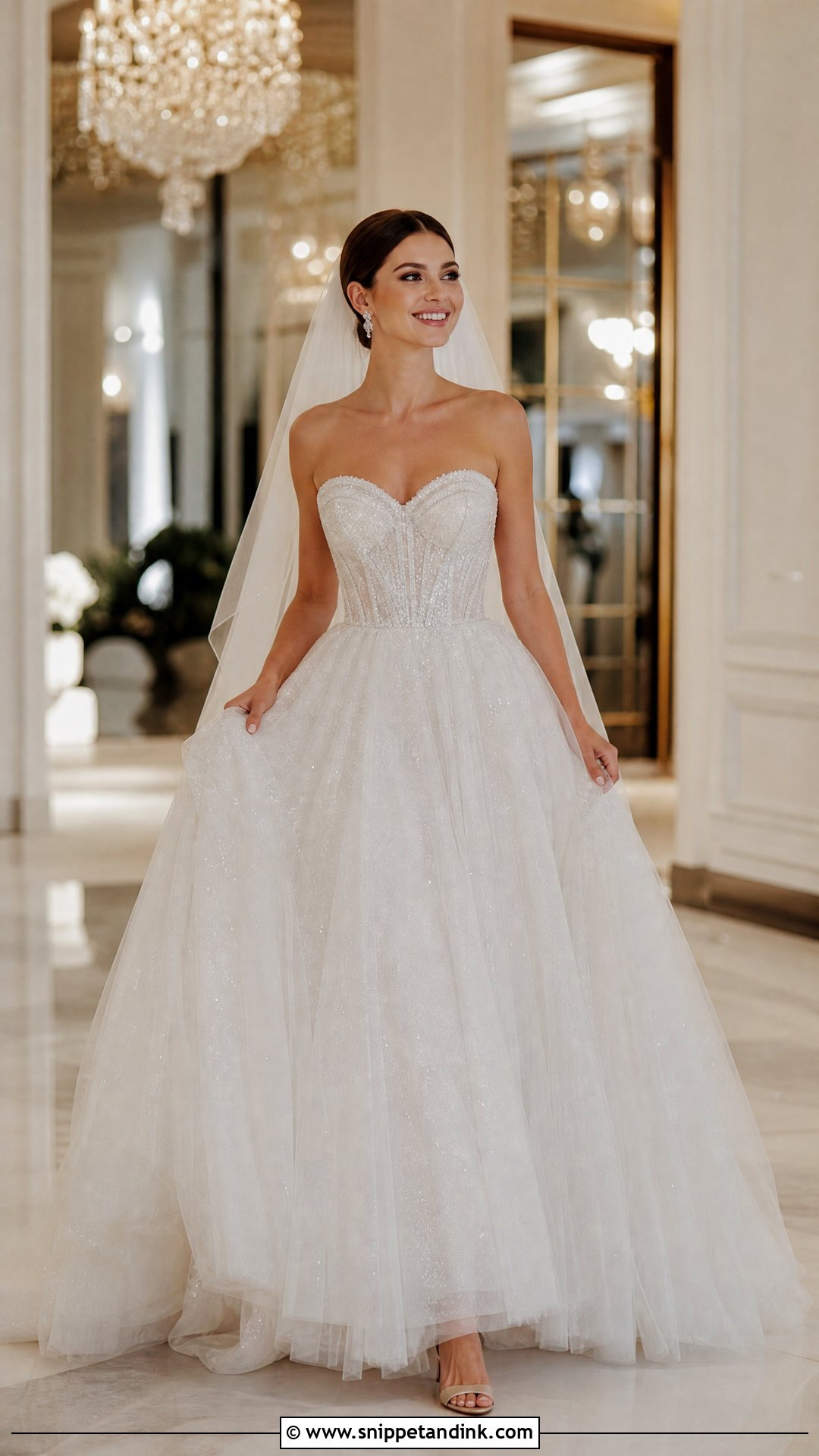
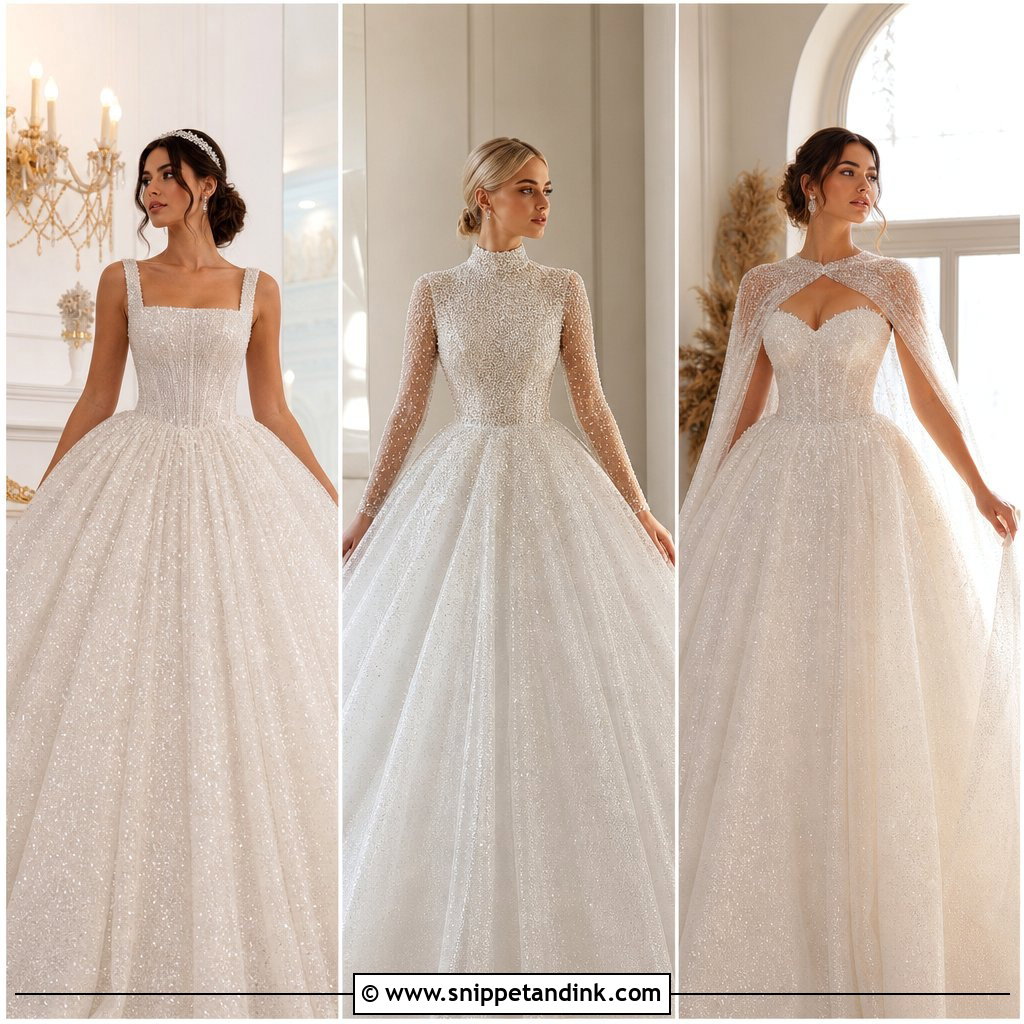
Glitter tulle puts shimmer through the skirt, often under a top layer of plain tulle so it glows rather than glares. It’s a softer route to sparkle than heavy beading. Candlelight and warm evening light are where it shows best; in flat daylight it barely registers, so for a noon ceremony outdoors I’d look at a sample by a window to see what you’re paying for. A structured bodice keeps it bridal, and simple earrings, a clean veil and neutral heels let the skirt be the accessory.
9. Floral Applique Princess Wedding Dress
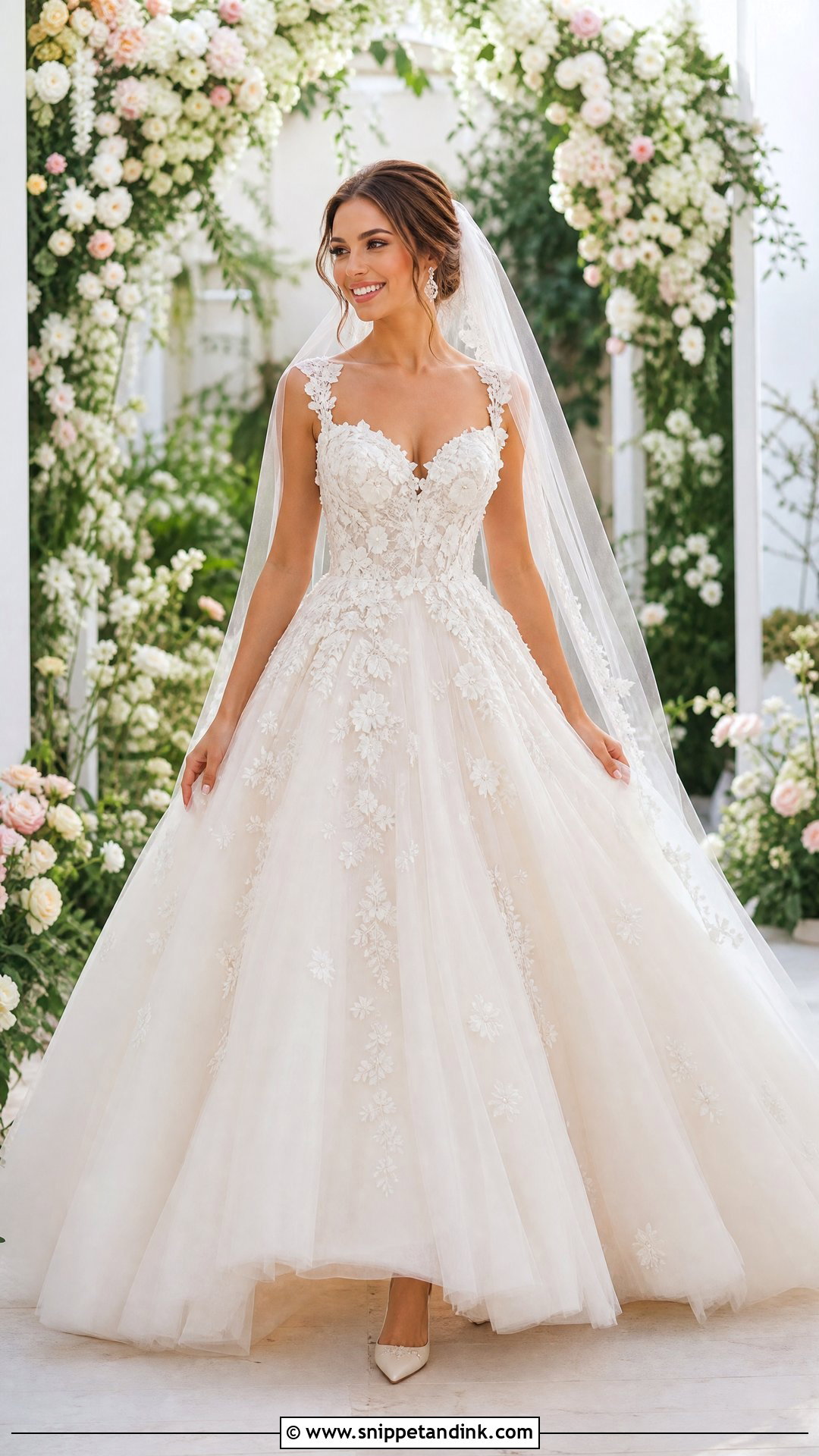
Floral appliqué adds texture you notice in close-ups. The flowers can be scattered over the bodice, trail down the skirt or cover the whole gown. Light appliqué suits spring and summer; deeper floral embroidery feels richer in autumn. The veil should let the flowers show, so I avoid veils with their own heavy pattern here, since two floral designs layered on each other look muddled. Soft makeup and simple shoes keep the focus on the dress.
10. Beaded Princess Wedding Dress
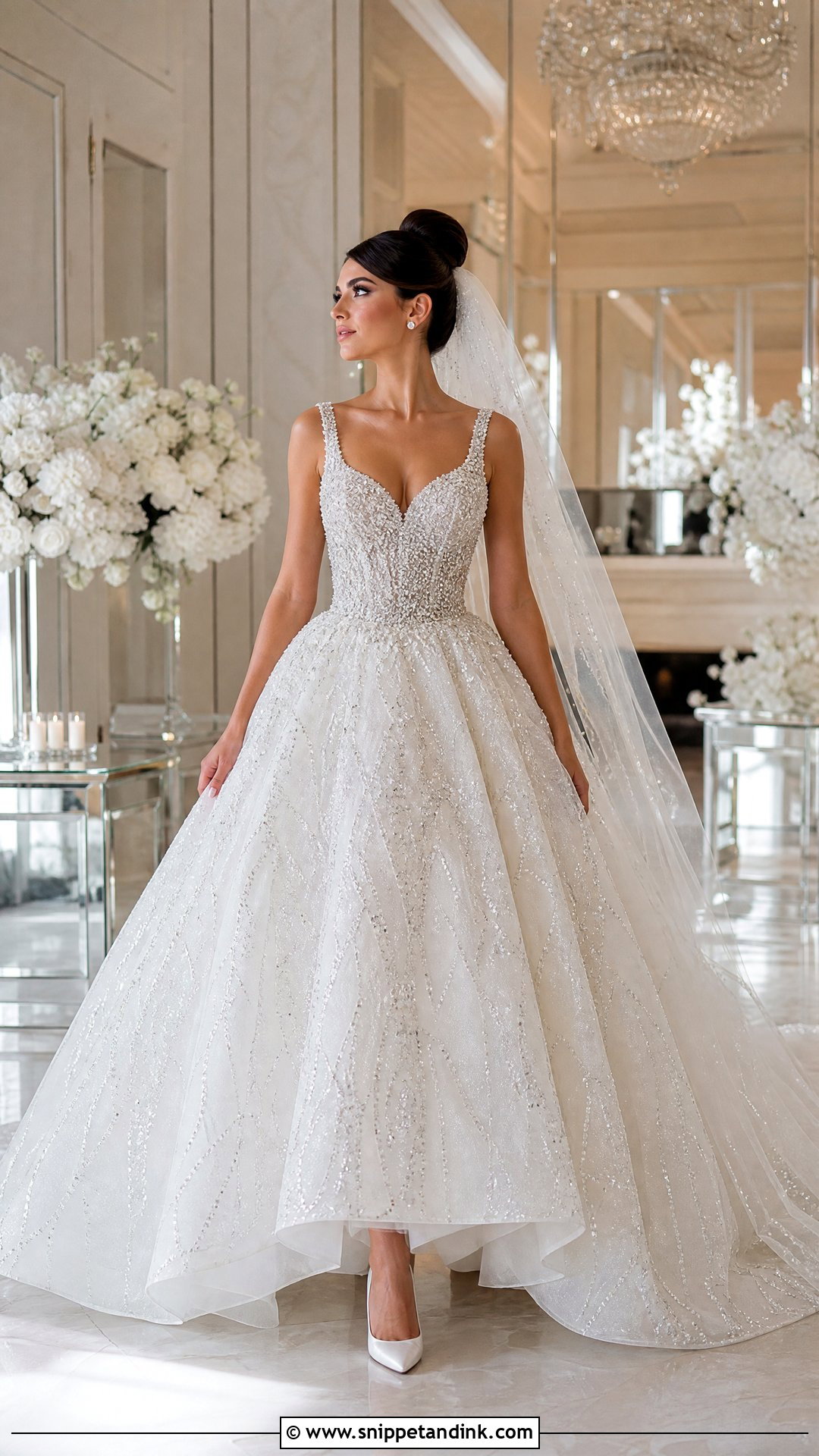
Beading can sit on the bodice only, run across the whole gown or form fine patterns that shimmer under light, and the cleaner the silhouette, the better it reads. Heavily beaded skirts get weighty on the dance floor, and beads along the hem catch on stairs and wear as you walk, so I’d keep most of the work above the hip. Crystal studs, a simple veil and satin or embellished heels suit evening weddings and hotel ballrooms. Keep the bouquet elegant and not too busy.
11. Square Neck Princess Wedding Dress
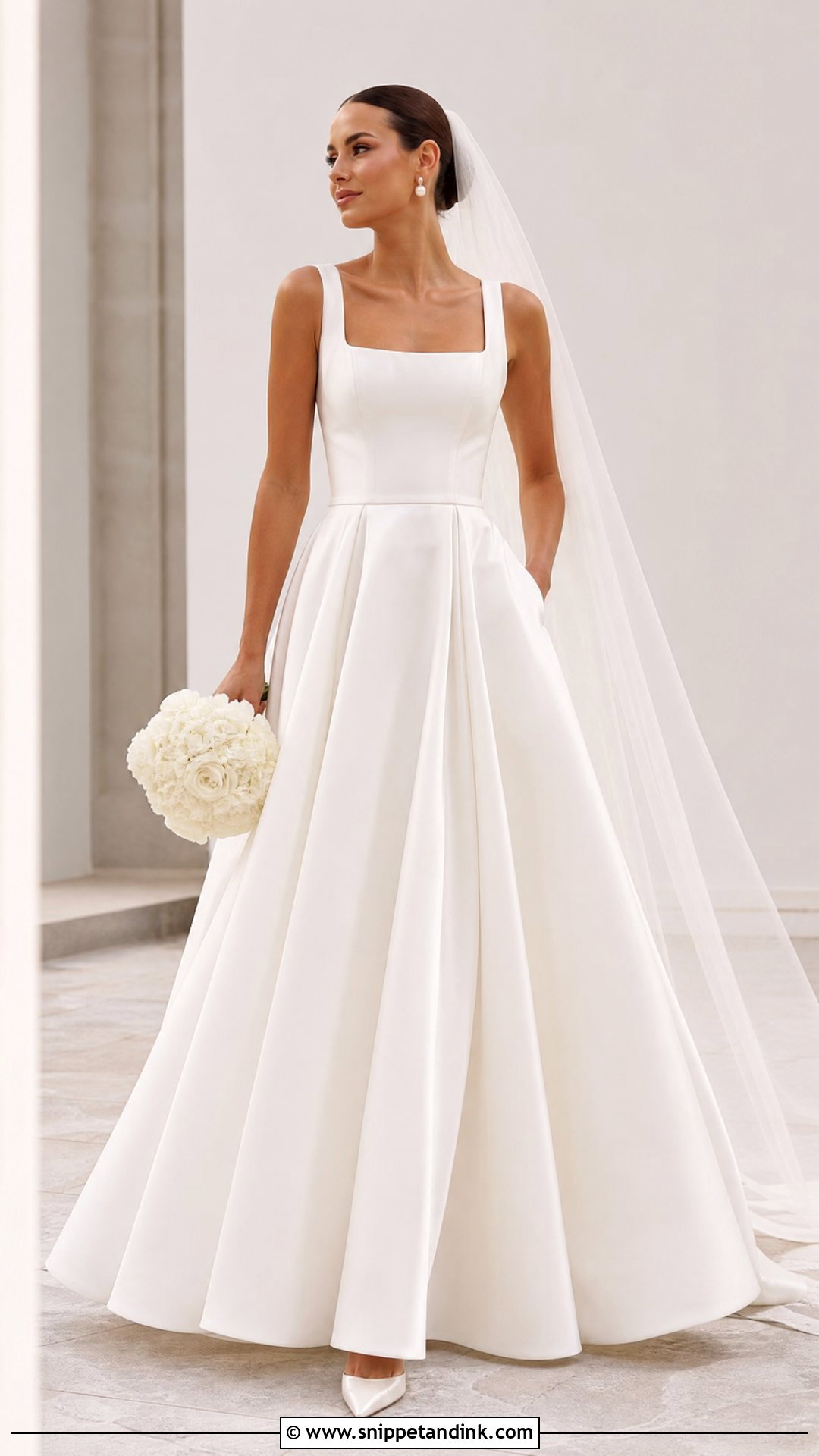
A square neck princess wedding dress gives structure around the collarbone and a modern line without fuss. It sits between strapless and off-shoulder in coverage, and many brides find it easier to wear because there’s no band to keep adjusting. Satin, mikado, lace and plain tulle all work. If the bodice is plain, a short necklace that sits inside the square looks deliberate; anything longer cuts across the corners. Pearl earrings, a sleek veil and a low bun or smooth waves finish it.
12. Sweetheart Princess Wedding Dress
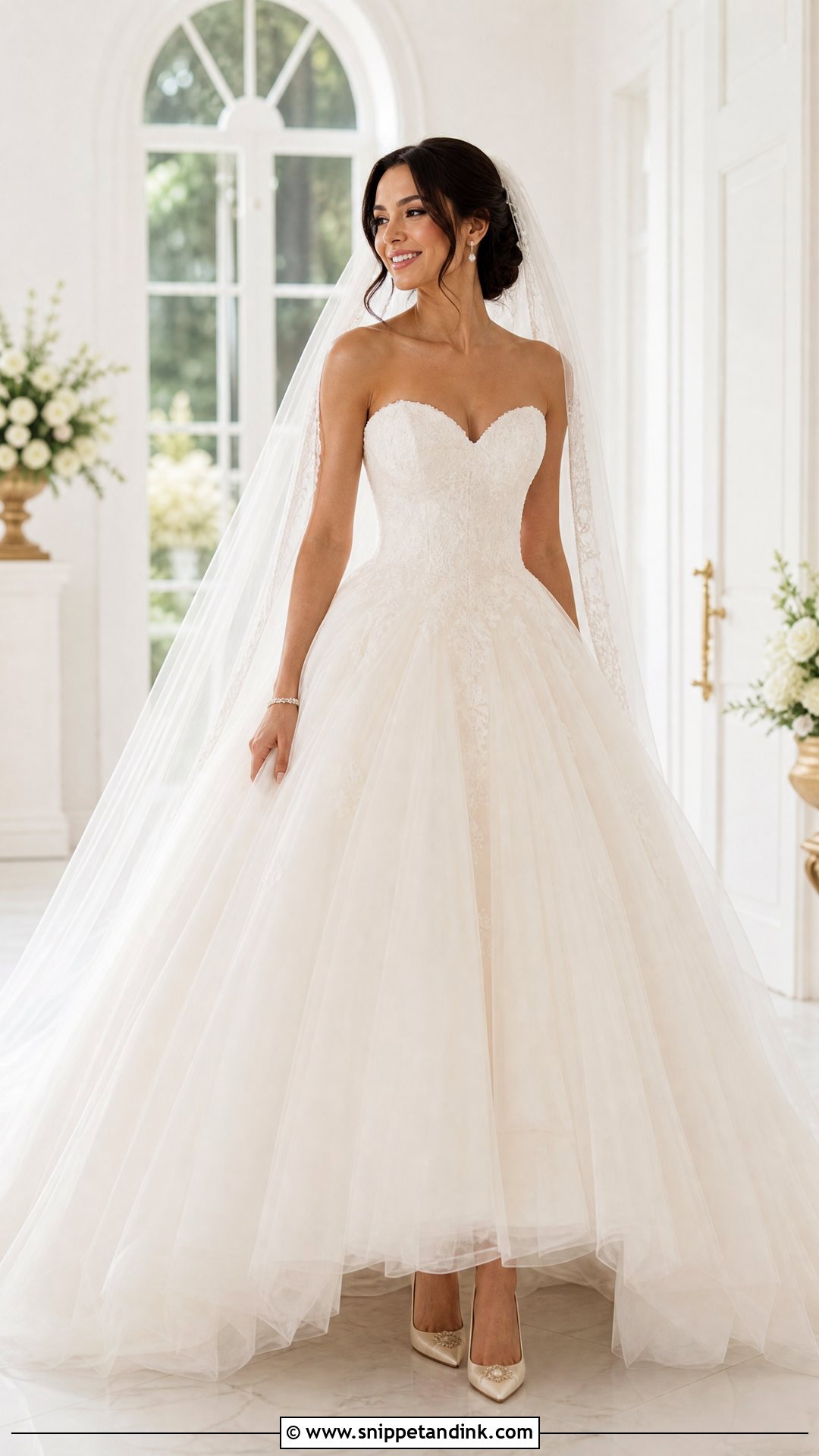
The sweetheart neckline softens the bodice and suits many body types, but the depth of the curve is where fit really happens. A deep sweetheart can feel exposed on a fuller bust, and a shallow one can look flat on a small bust, so I have the curve adjusted rather than accepting the sample as it is. It pairs with corset construction, lace overlays, satin bodices and tulle skirts. A cathedral veil, pearl earrings or a fine tennis bracelet suit it, and a strapless version needs a structured bodice for support.
13. High Neck Princess Wedding Dress
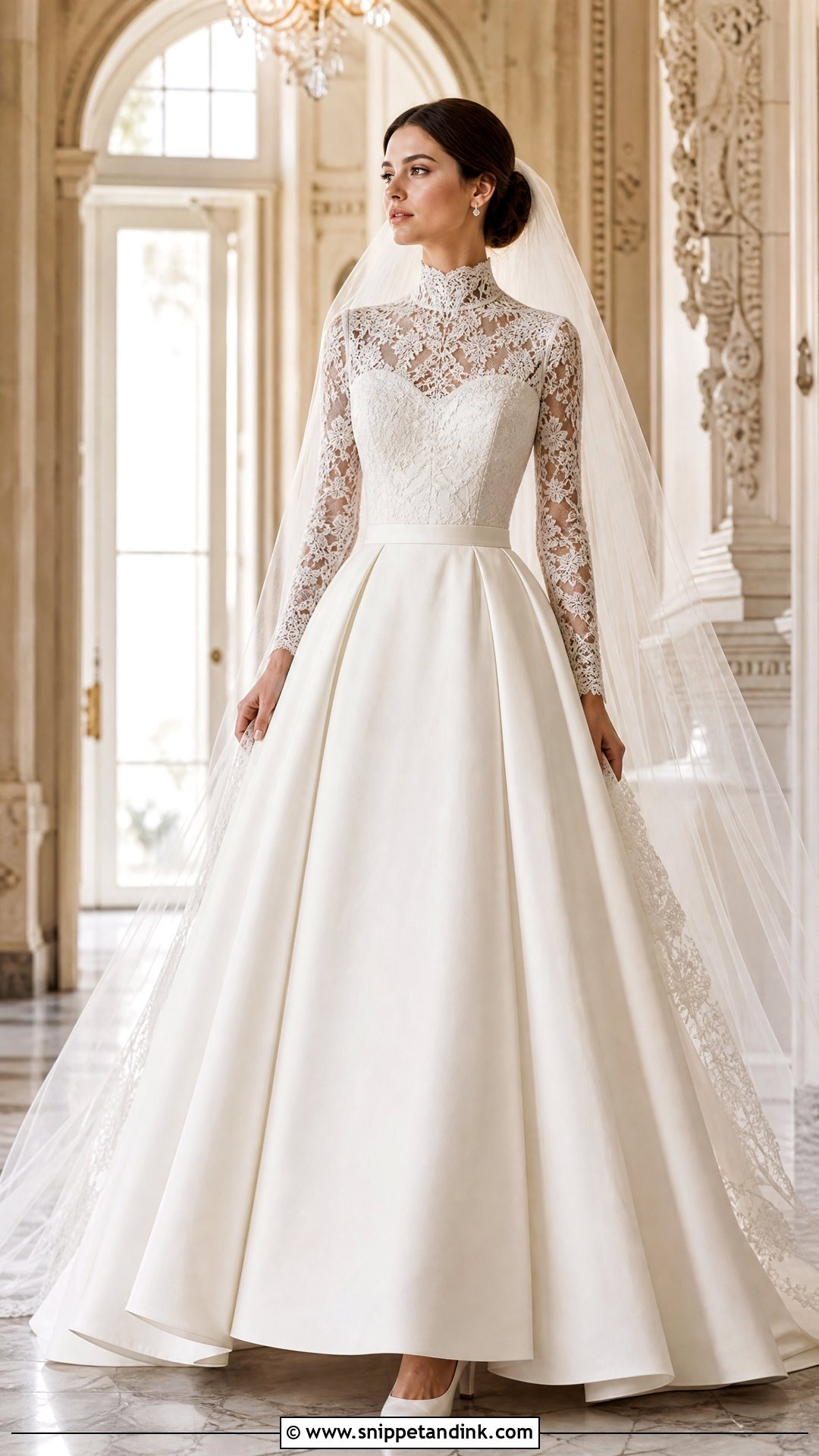
High necklines cover more of the upper body while keeping a strong outline. Lace versions feel vintage; satin or crepe versions feel sleek, and the full skirt stops the gown from looking strict. One thing I warn about: foundation and powder transfer onto a high collar during hugs, so I set the makeup well on the neck and jaw and keep a clean cotton bud handy for the fabric. A neat bun, small earrings and a long veil set behind the crown suit it. Skip a necklace entirely.
14. Drop Waist Princess Wedding Dress
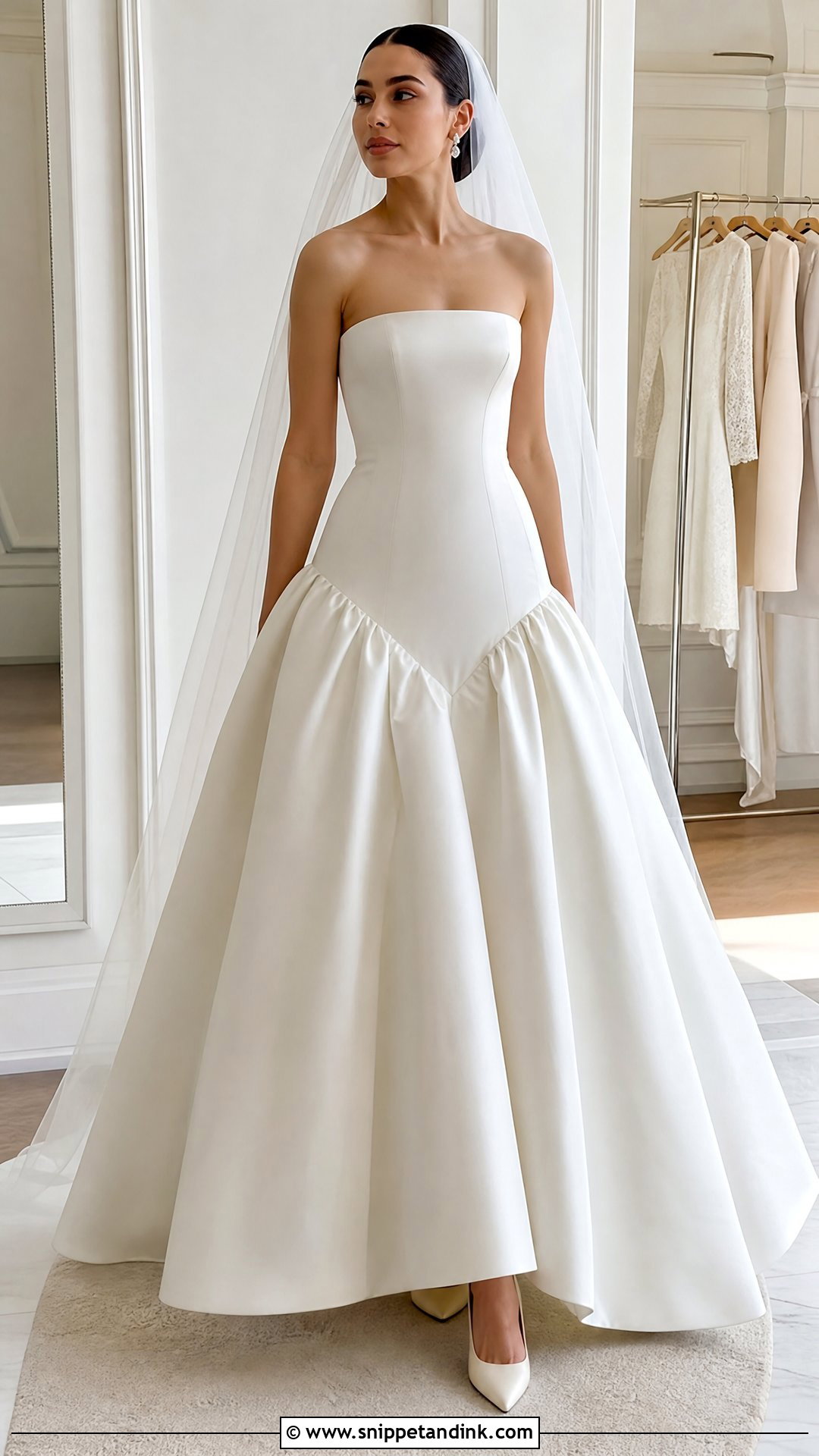
A drop waist extends the bodice below the natural waist before the skirt begins, giving a long, sculpted look. It suits brides with a longer torso. On petite brides the lower seam can shorten the legs, so I’d soften the skirt volume and keep the shoes slightly higher. It has a vintage feel but looks current in clean fabric or modern corsetry. Keep accessories simple and the waist free of belts, since the seam is already doing that job.
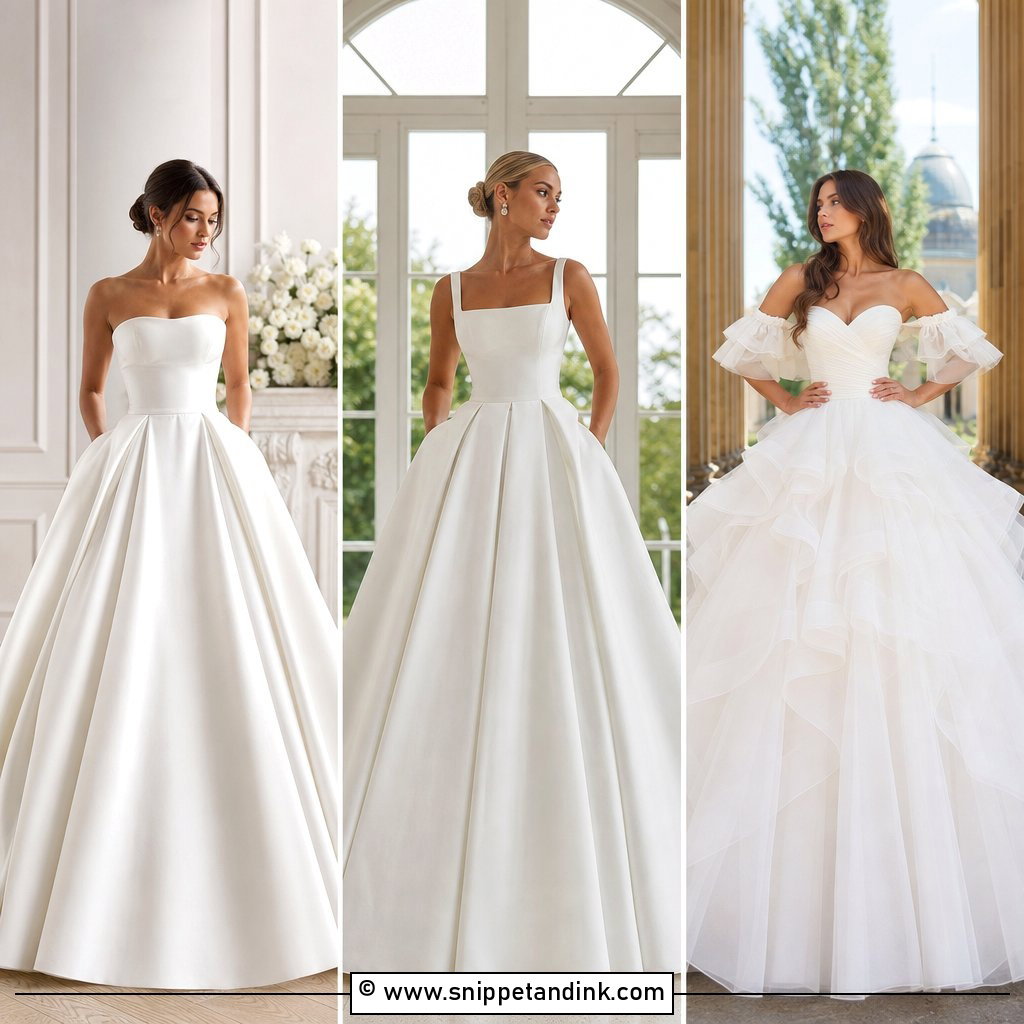
15. Mikado Princess Wedding Dress
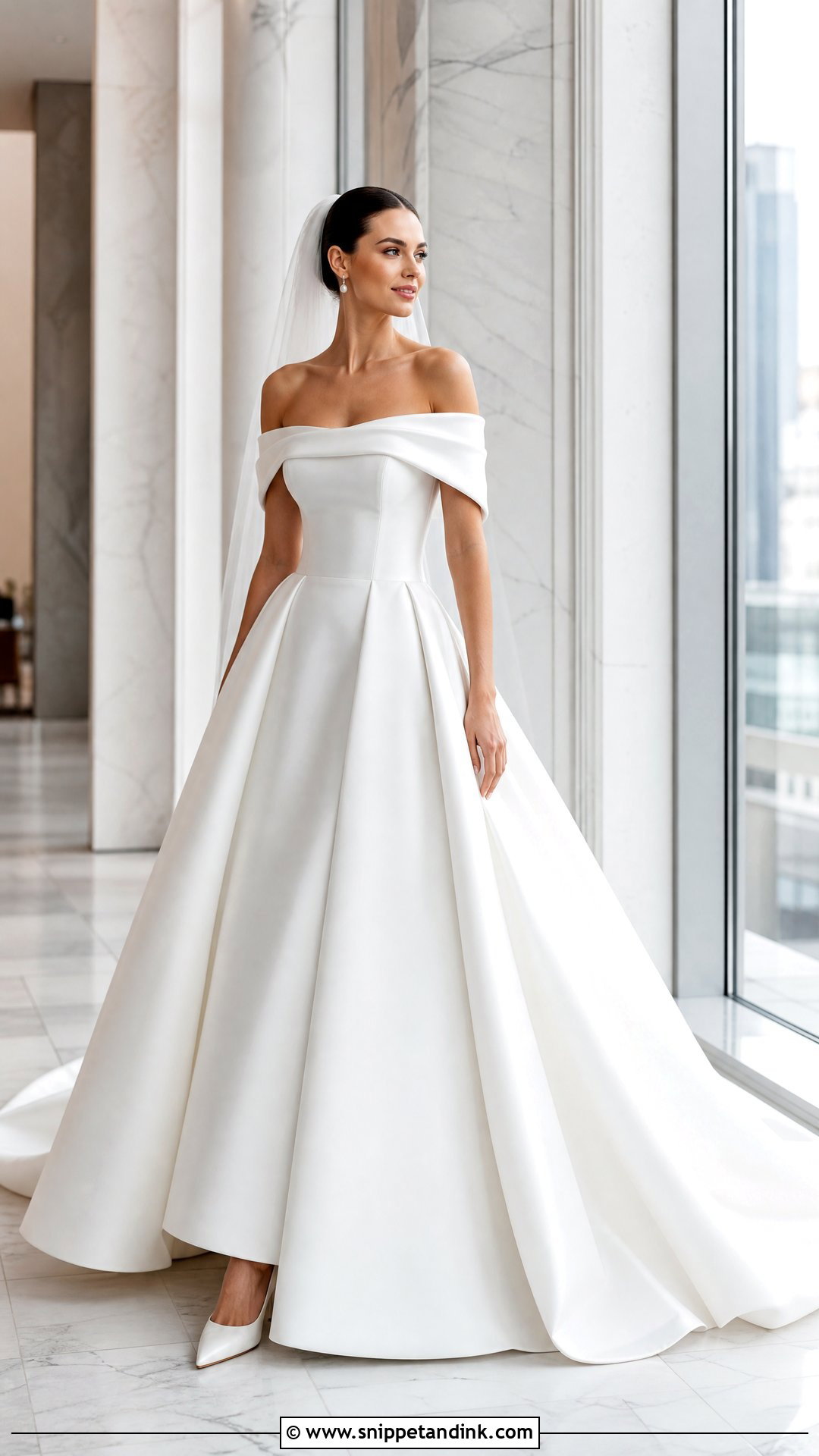
Mikado has a soft sheen and more body than lightweight satin, which lets the skirt hold a crisp, architectural shape. It suits strapless, square-neck and off-shoulder bodices. Silk mikado can water-spot, so I’d keep drinks away from the skirt and blot rather than rub any spill. Pearl earrings, a sleek veil and pointed heels are enough, and a bow, buttons or a dramatic train add personality. It looks right at formal weddings and in modern architectural venues.
16. Organza Princess Wedding Dress
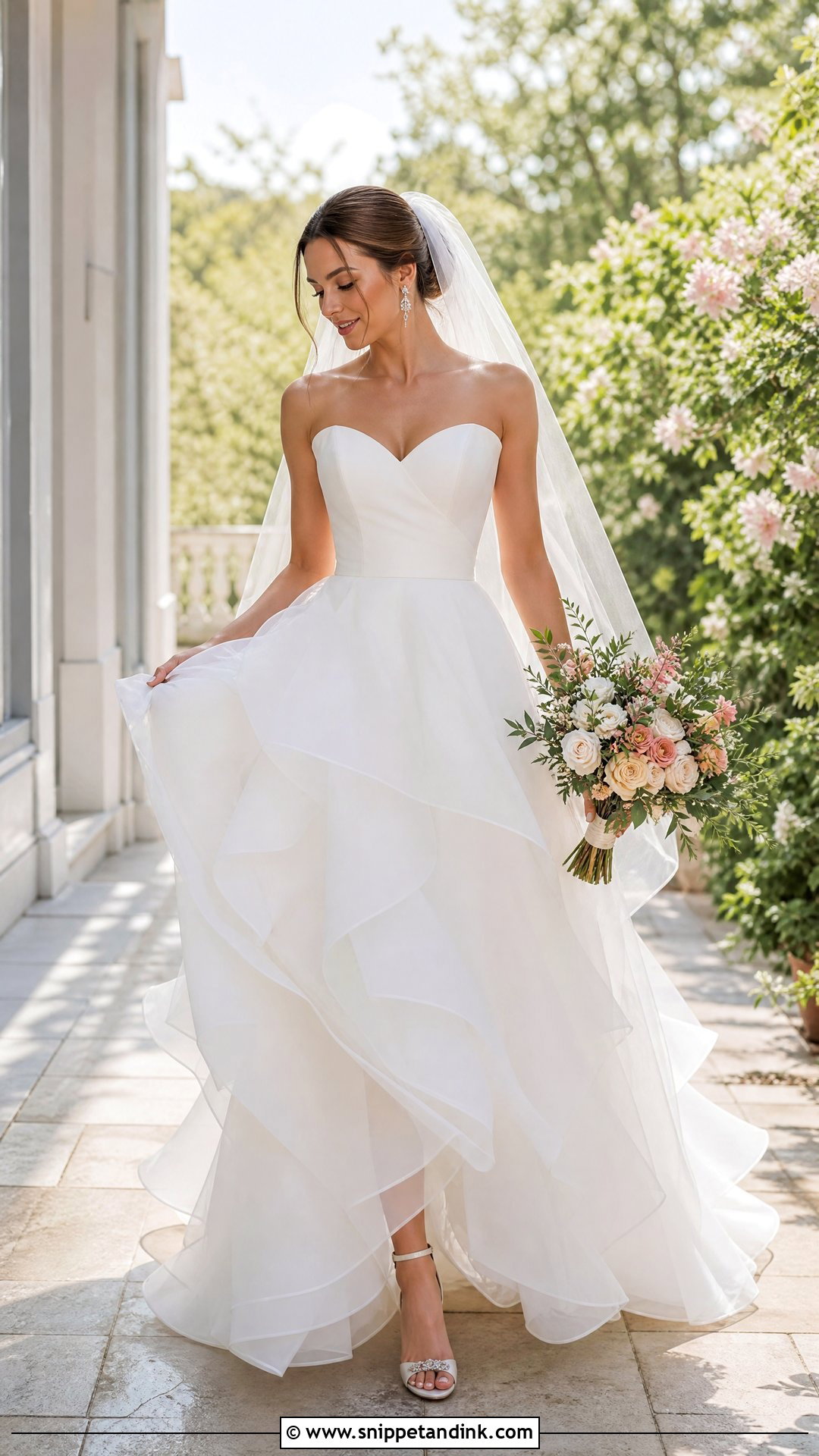
Organza is crisp but sheer, so it gives the skirt shape without looking heavy, and it’s lighter to wear than satin. A fitted satin bodice, floral embroidery or layered panels give it a cloud-like effect. It wrinkles more readily than tulle, and because organza is stiff those creases show, so I plan a careful steam on the morning. A sheer veil, delicate earrings and ivory heels suit it, with a polished updo or loose waves. Spring weddings, gardens and formal daytime ceremonies suit it best.
17. Minimalist Princess Wedding Dress
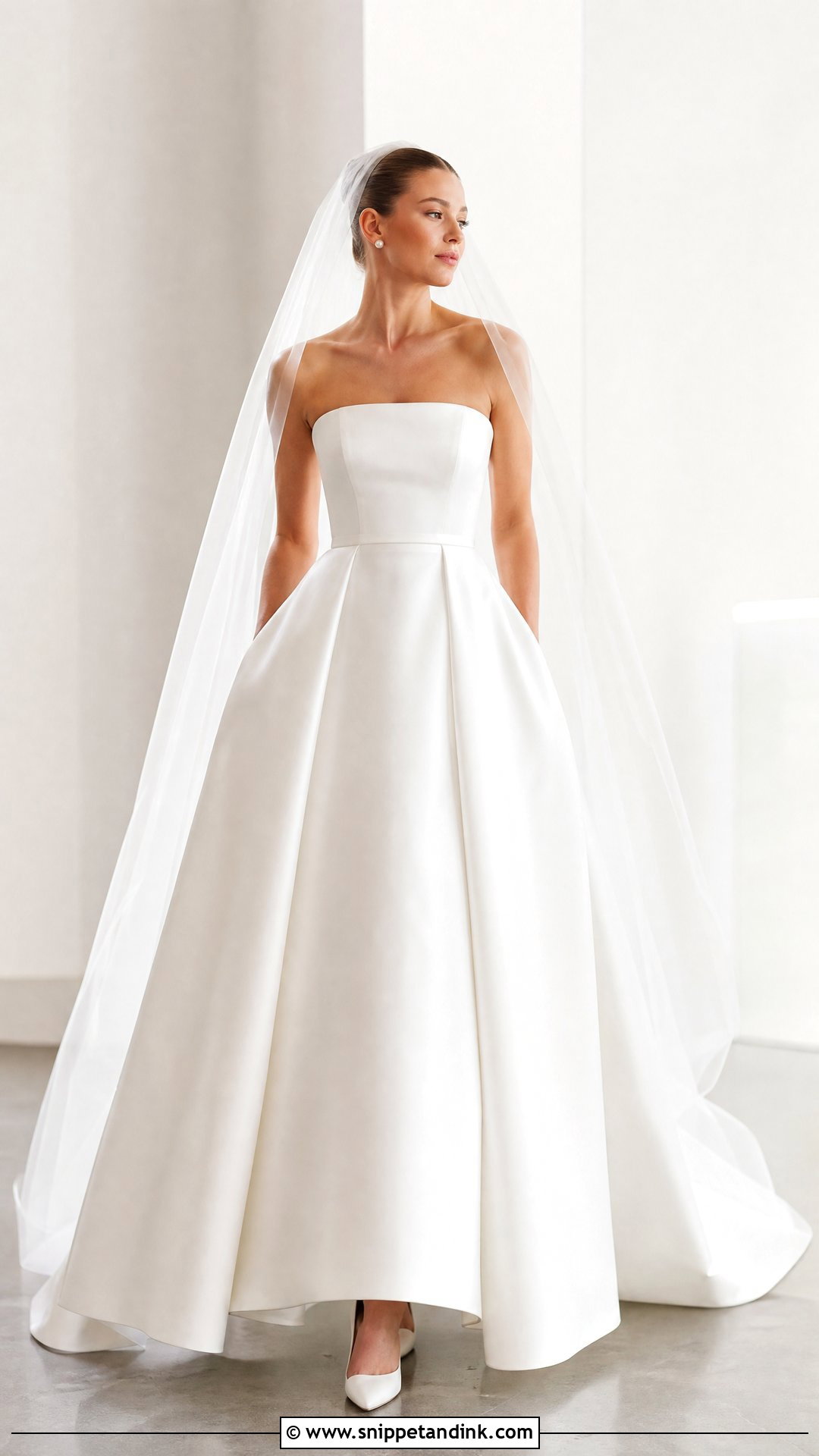
Minimalist gowns rely on fabric, fit, neckline and silhouette. A clean bodice and full skirt in satin, mikado or matte silk still look chic in photos years later. The catch is that plain fabric shows everything underneath, so I fit these with the exact undergarments the bride will wear and check for lines under a bright light. Pearl studs, a smooth veil and elegant heels are enough, and a bold bouquet or sculptural bow adds interest without breaking the calm.
18. Bow Back Princess Wedding Dress
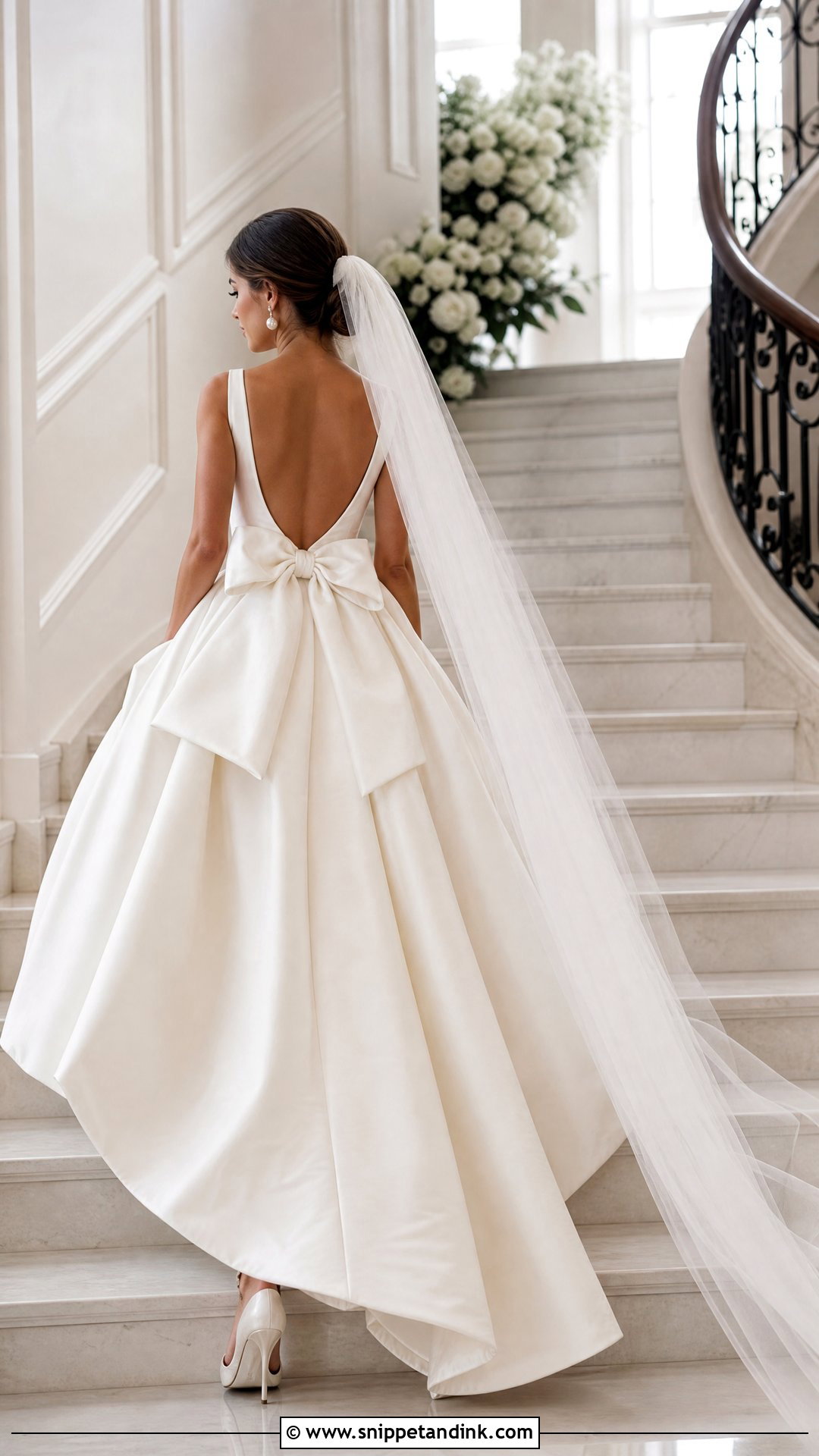
A bow at the back gives the gown a statement from behind, which matters more than people expect: guests see your back for most of the ceremony. The bow can sit at the waist, trail into the skirt or attach to a detachable train, and crisp fabrics like satin, mikado and organza keep its shape. At dinner you’ll be leaning against it, so I ask whether it can be removed or moved for the reception. Simple earrings, a long veil and classic heels are enough.
19. Pearl Detail Princess Wedding Dress
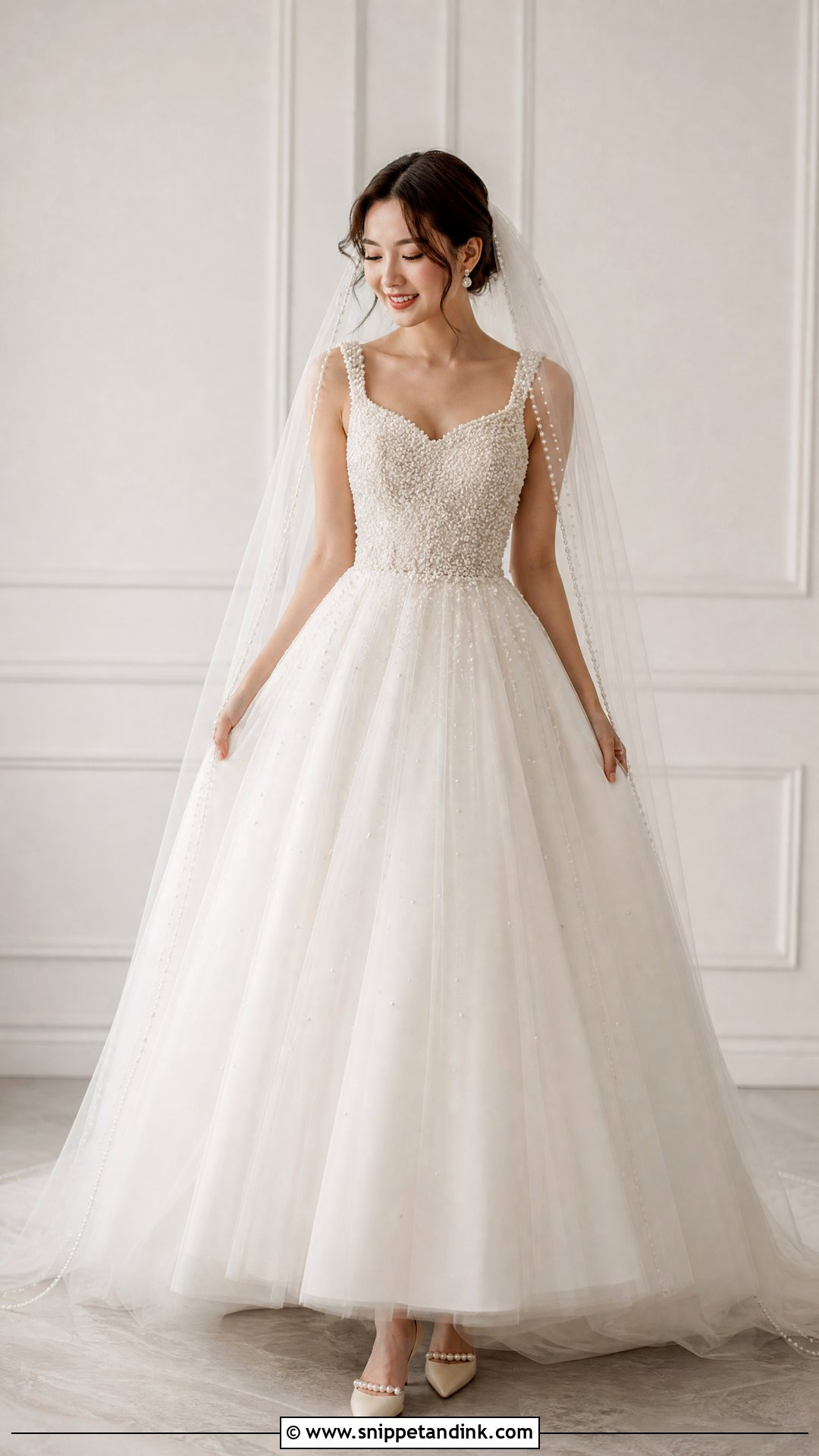
Pearls give a gentler shine than crystals. They may line the bodice, scatter through the skirt, trim the neckline or decorate the veil. Pearls come in different whites, and a bright white pearl on an ivory gown can look slightly grey, so I match the pearl tone to the fabric and to any pearl earrings. Tulle, satin and lace all take them. If the gown is heavily pearled, keep the veil plain. Coastal settings, gardens and formal receptions all suit it.
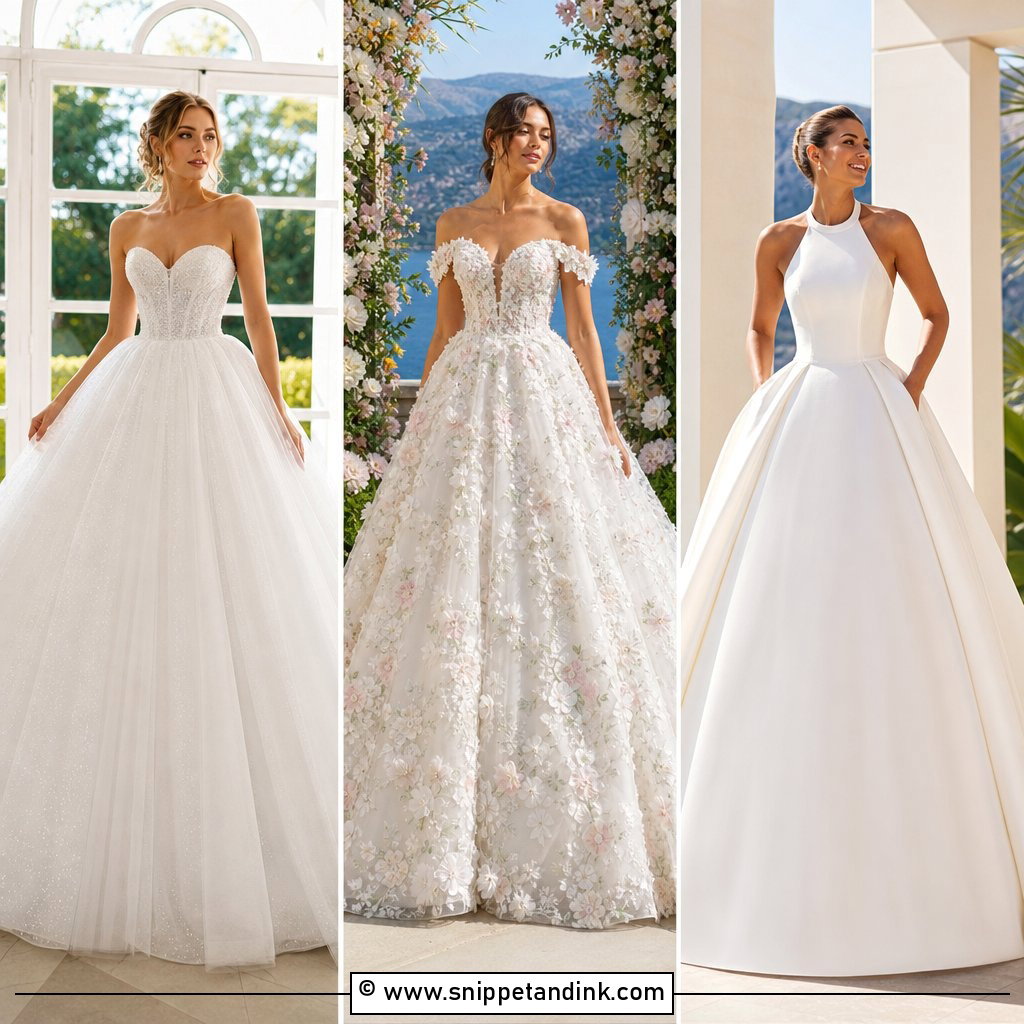

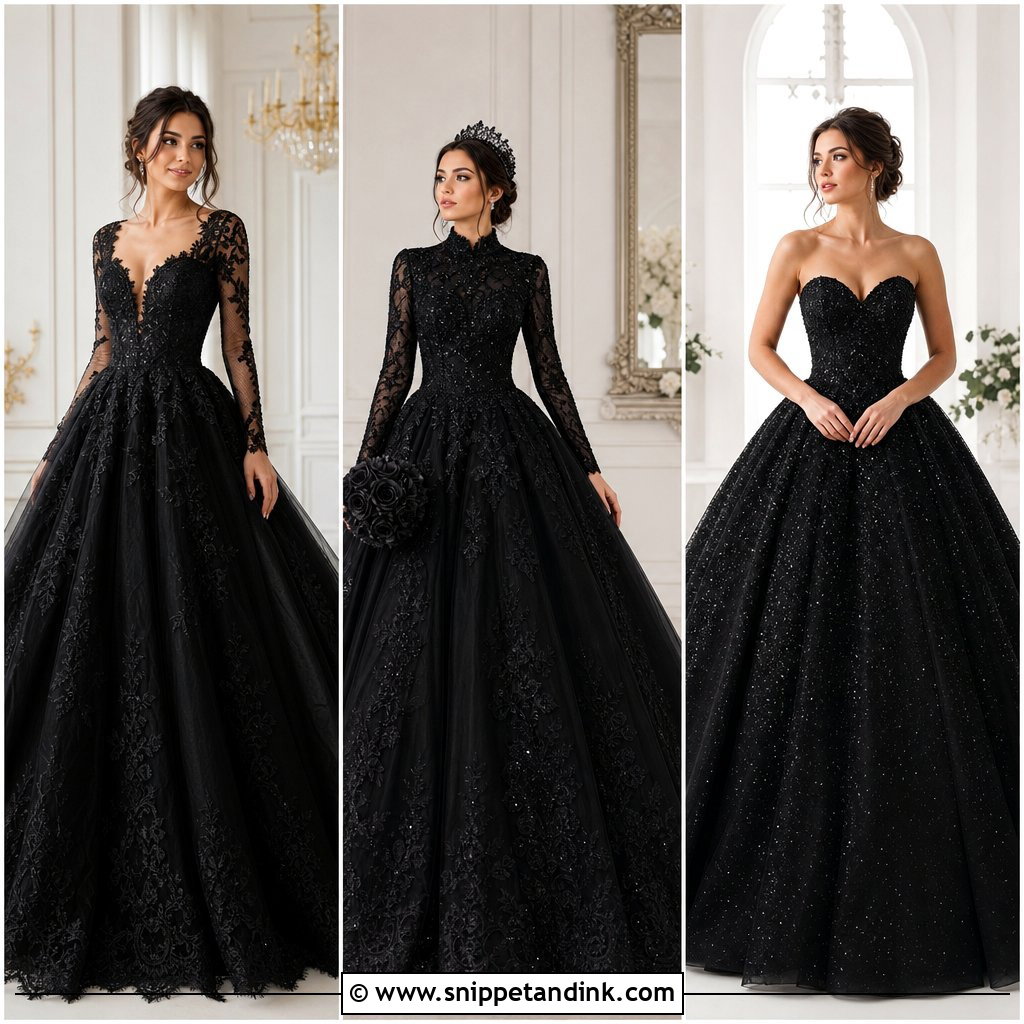
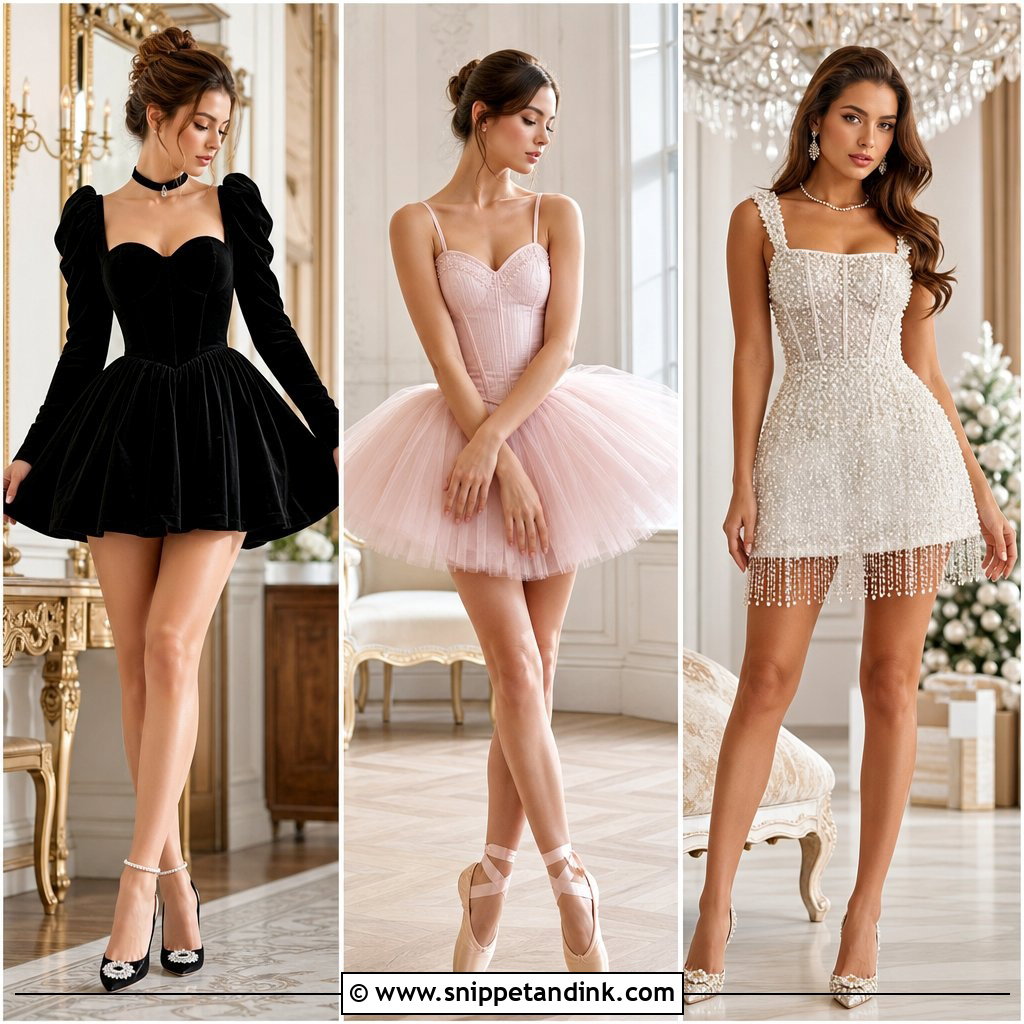
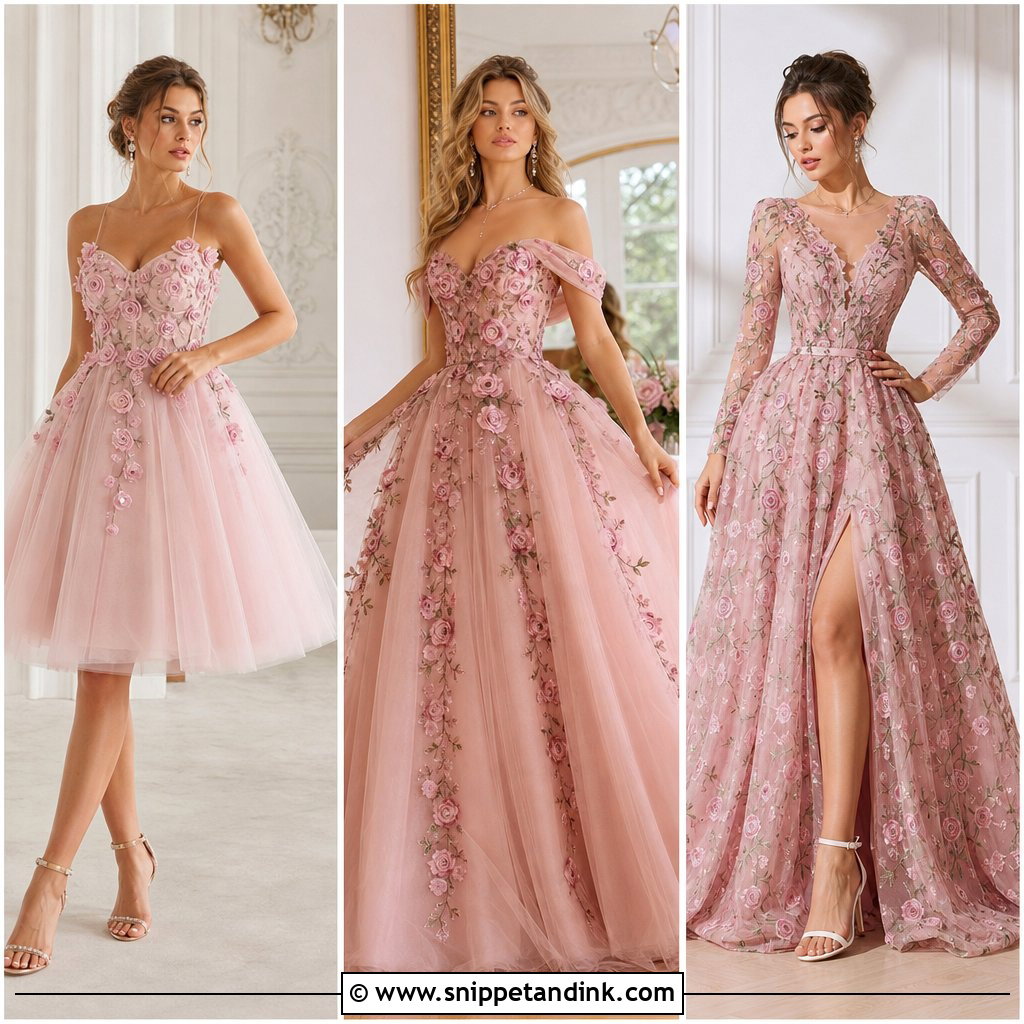
20. Embroidered Princess Wedding Dress
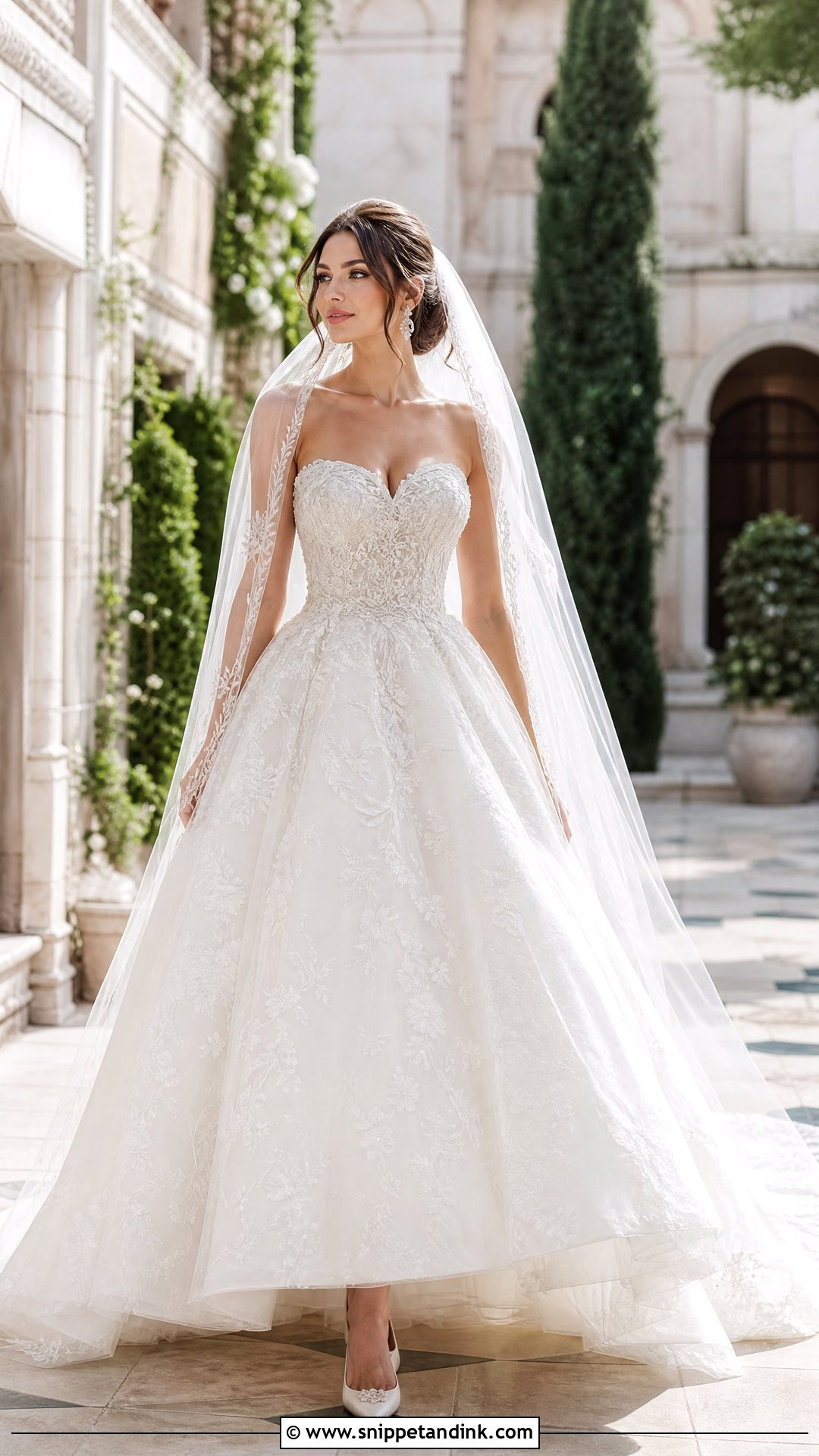
Embroidery creates vines, leaves, baroque shapes or fine texture across the bodice and skirt, giving depth without sparkle. The pattern sets the mood, whether vintage, romantic or regal. Dense embroidery adds weight and warmth, so for a summer garden wedding I’d look for it concentrated on the bodice with a lighter skirt. A simple veil, refined earrings and plain shoes keep it from competing, and historic venues suit it well.
21. Detachable Train Princess Wedding Dress
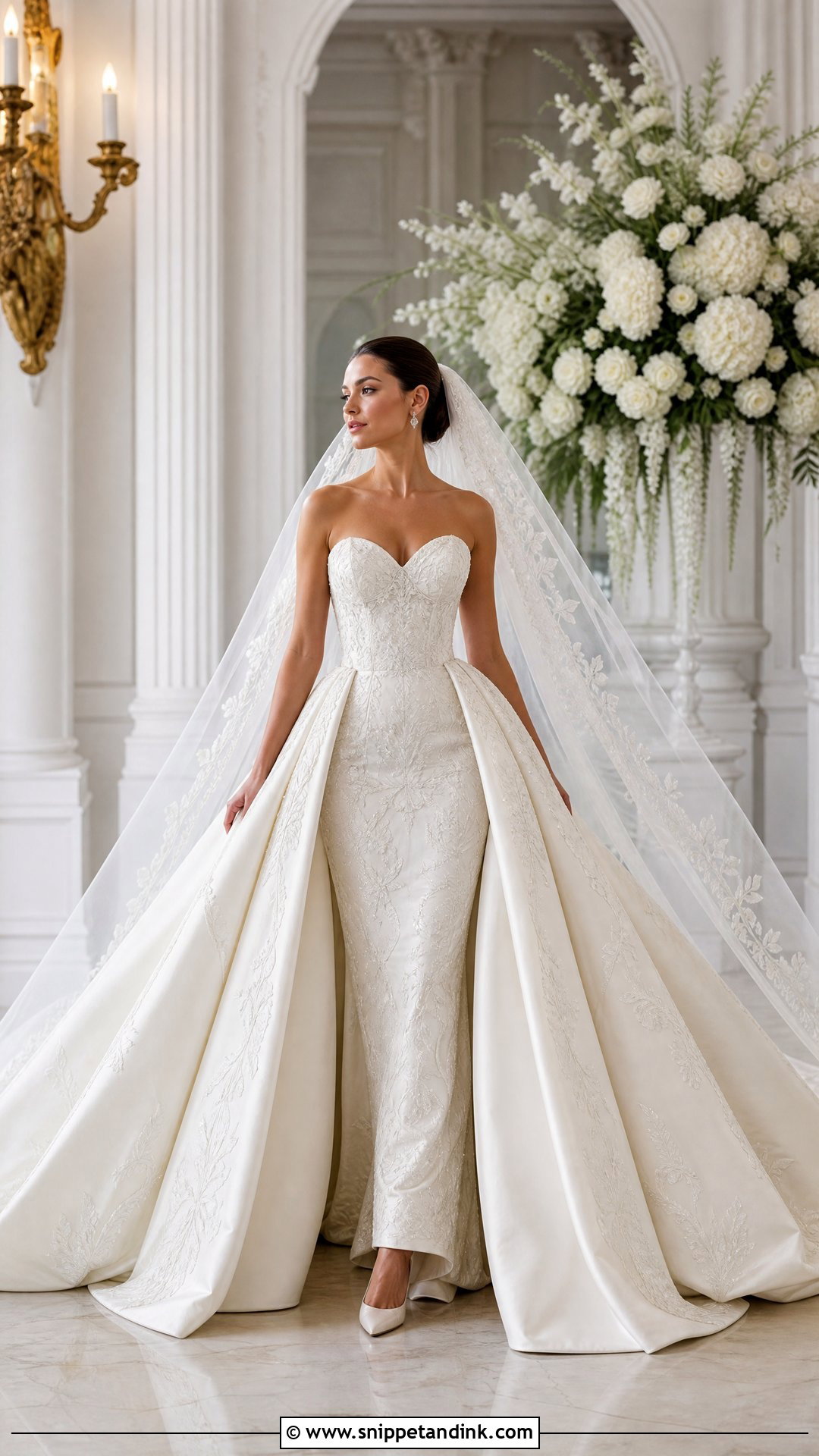
A detachable train gives you a grand entrance and an easier reception. The main gown keeps its ball gown skirt while the train adds length, volume or detail. Plan your formal portraits before it comes off; once it’s removed, nobody wants to reattach it for photos. Make sure the attachment points are hidden and secure. A cathedral veil suits the ceremony, and a simple hair accessory takes over later.
22. Tiered Skirt Princess Wedding Dress
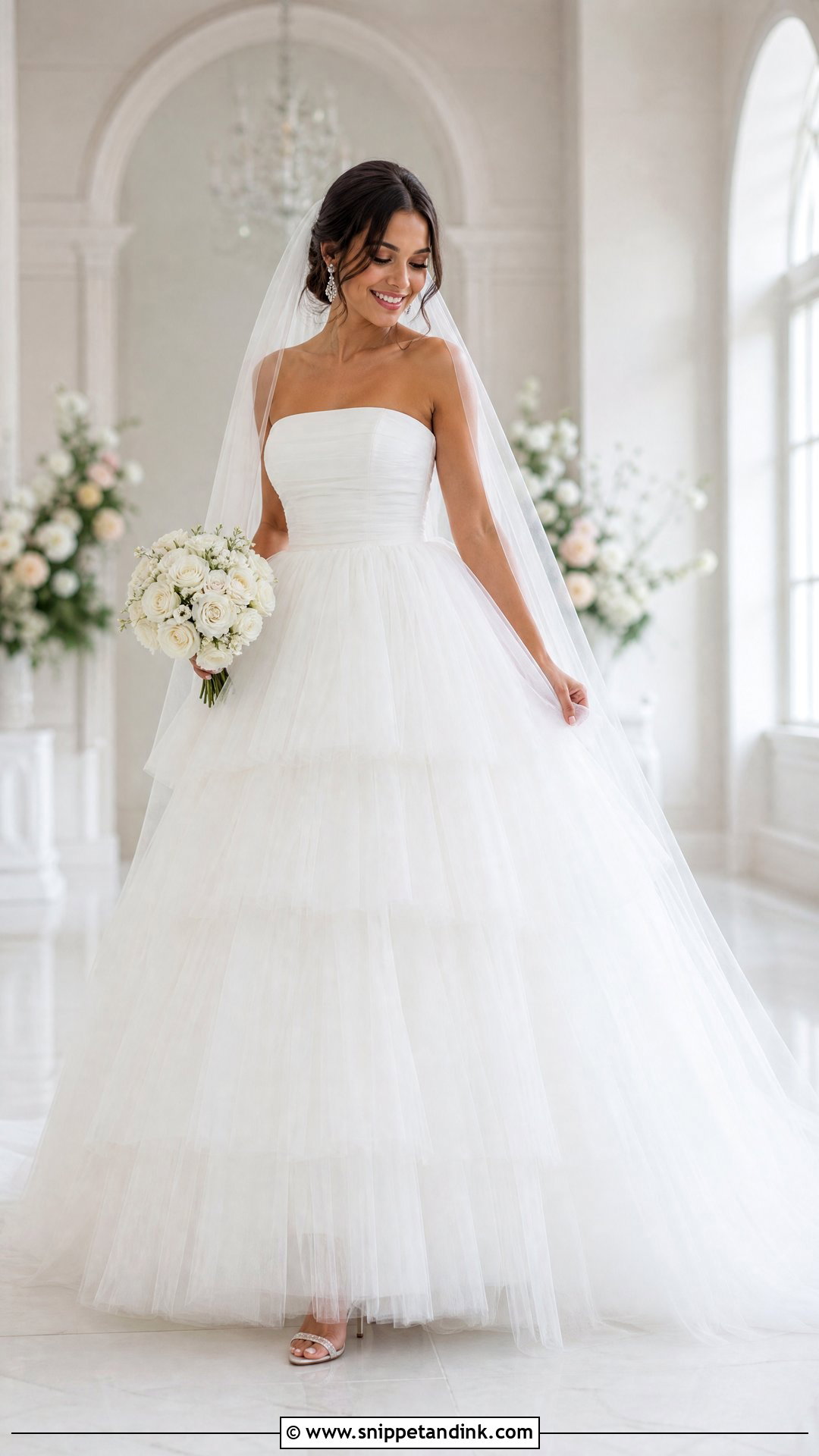
A tiered skirt princess wedding dress brings movement and texture, with tiers that can be soft, crisp and architectural, or ruffled. The bottom tier is the one that suffers. Ruffles catch under your toes as you walk forward, so the hem should clear the floor slightly at the front in your wedding heels. Keep the bodice fitted and quiet, with a strapless, sweetheart or square neck. Simple heels, delicate earrings and a veil that complements the tiers rather than hiding them finish it.
23. Vintage Princess Wedding Dress
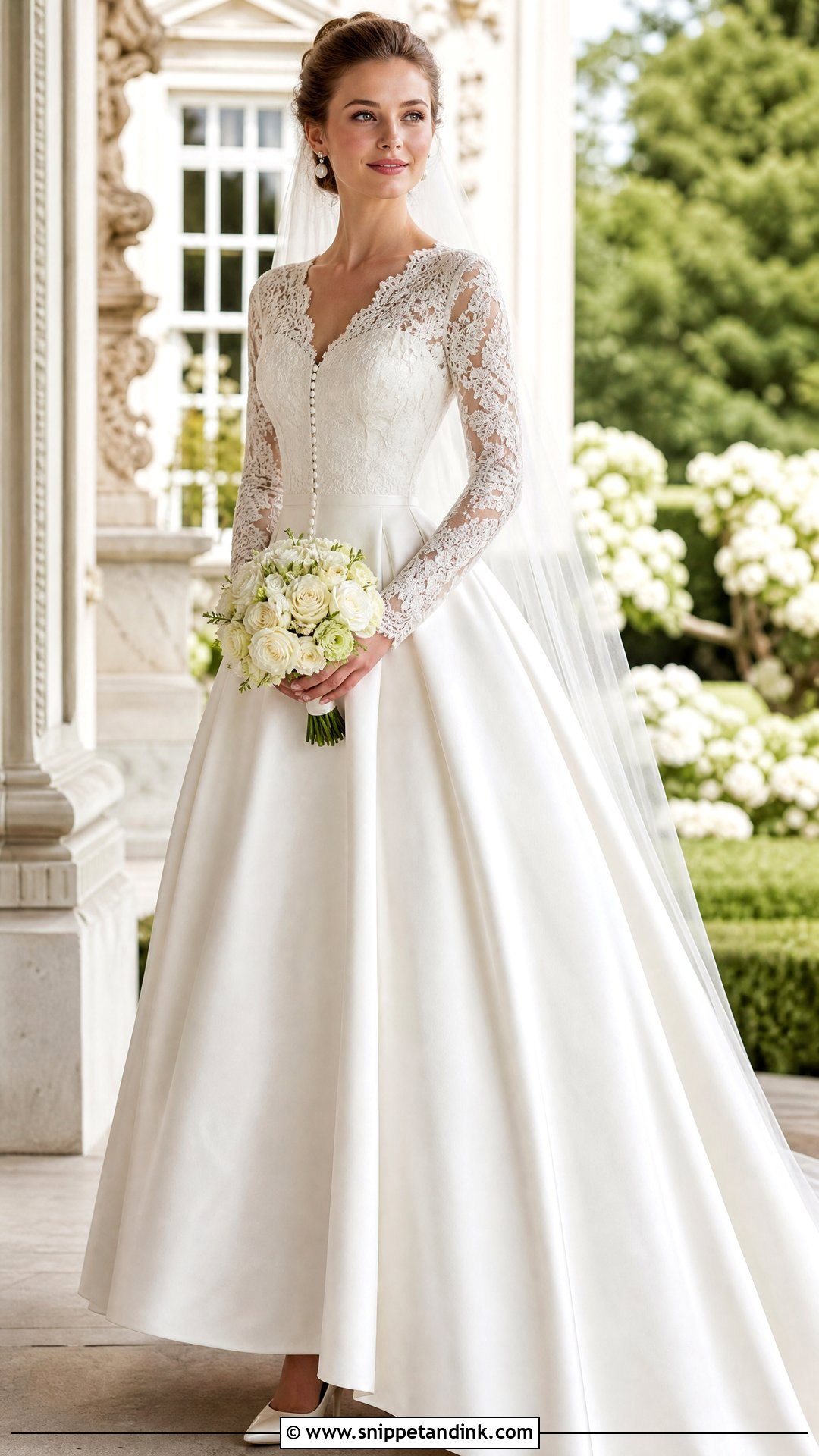
Vintage princess gowns draw on old-world details: lace sleeves, a basque waist, covered buttons, a high neckline or heirloom-style embroidery. If you’re wearing a genuine vintage or family gown, have a specialist seamstress assess it first, because old silk and lace can split at the seams under alteration. Pearl earrings, a soft veil and ivory heels suit it, with a low chignon or a classic half-up style. Historic homes and formal gardens suit the mood.
24. Modern Princess Wedding Dress
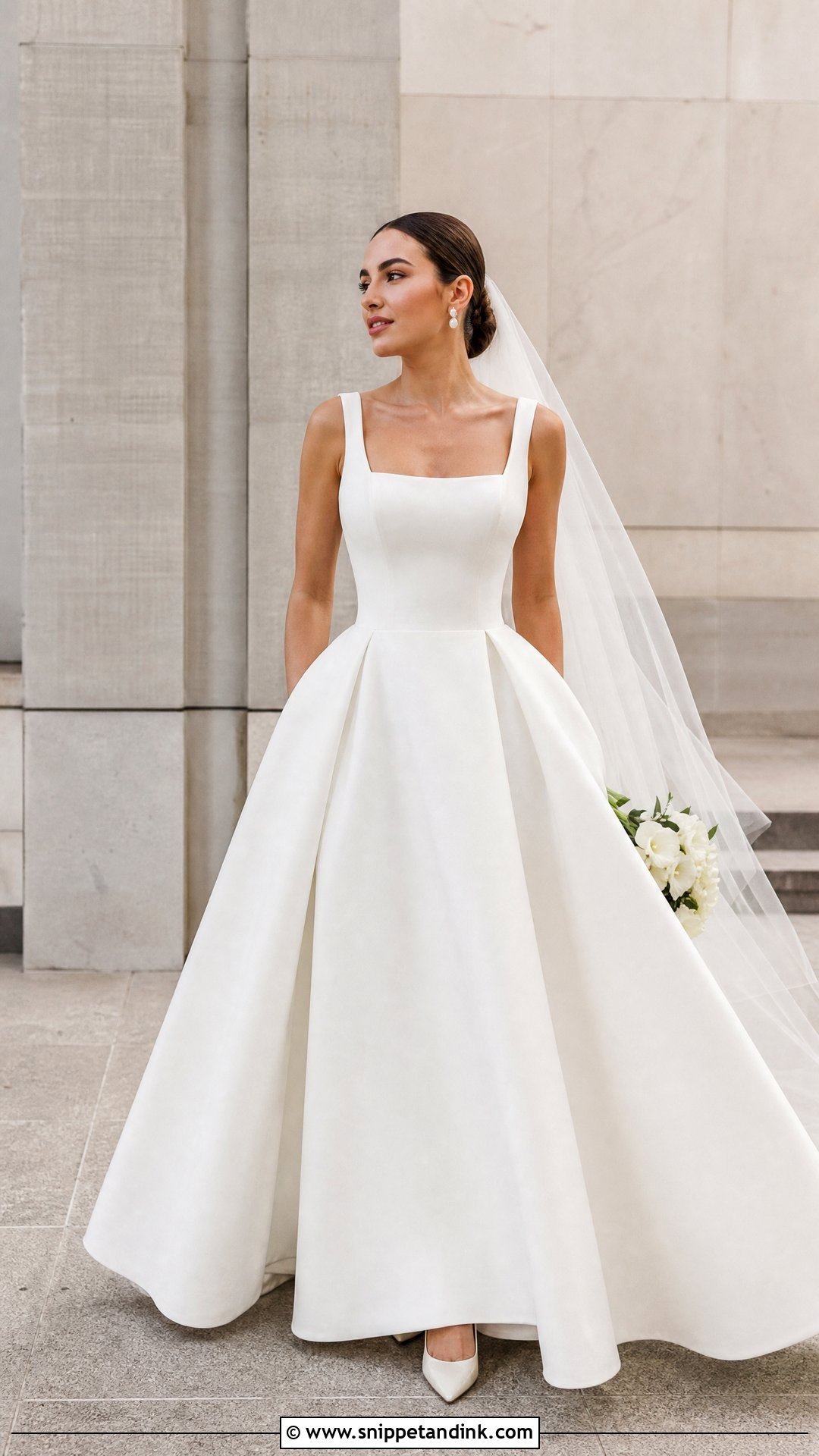
A modern princess gown keeps the volume and edits the rest: clean lines, sculpted bodices, square necklines, minimalist fabric, sharp seams or unusual waist shaping. Some brides skip the veil with this style, and then the hair has to carry the back view, so I’d plan a sleek updo with a clean shape from behind. Small statement earrings and pointed or satin shoes finish it in contemporary venues, museums, hotels and city weddings.
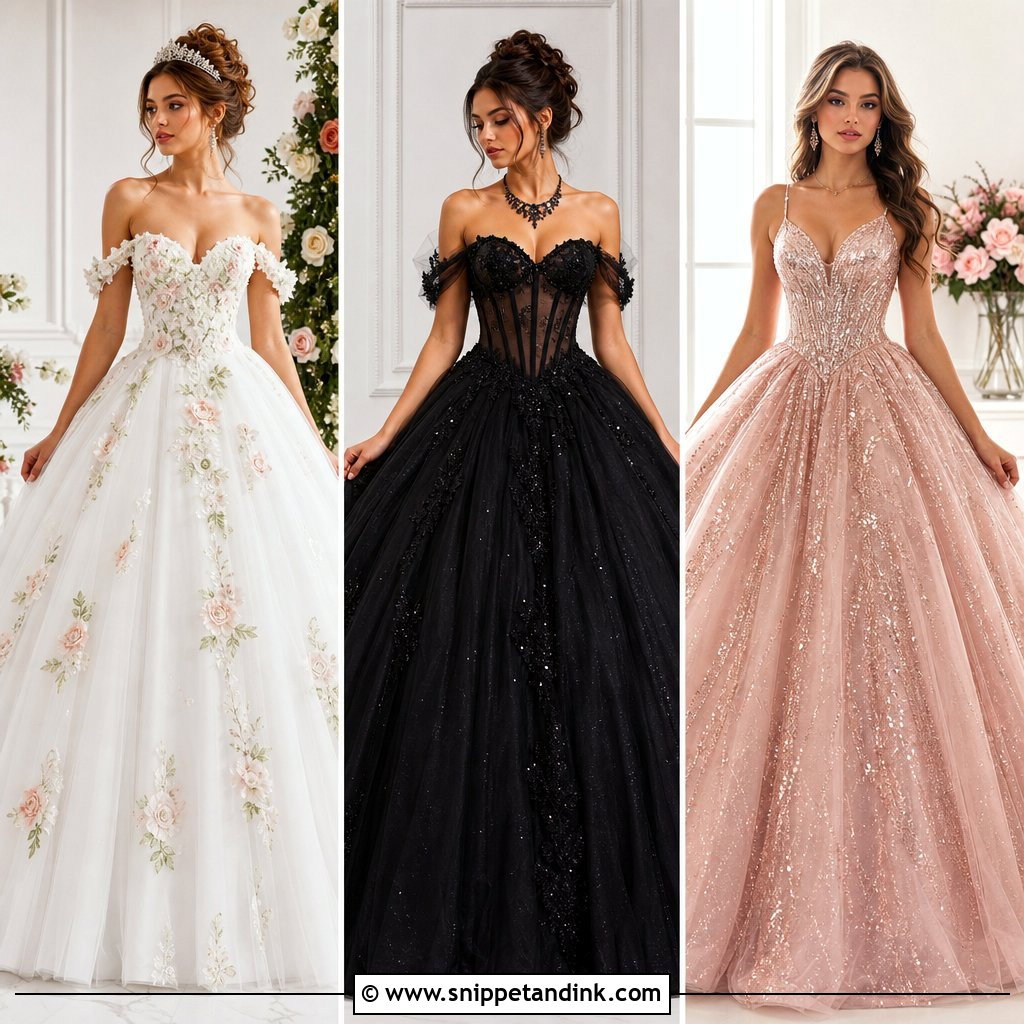

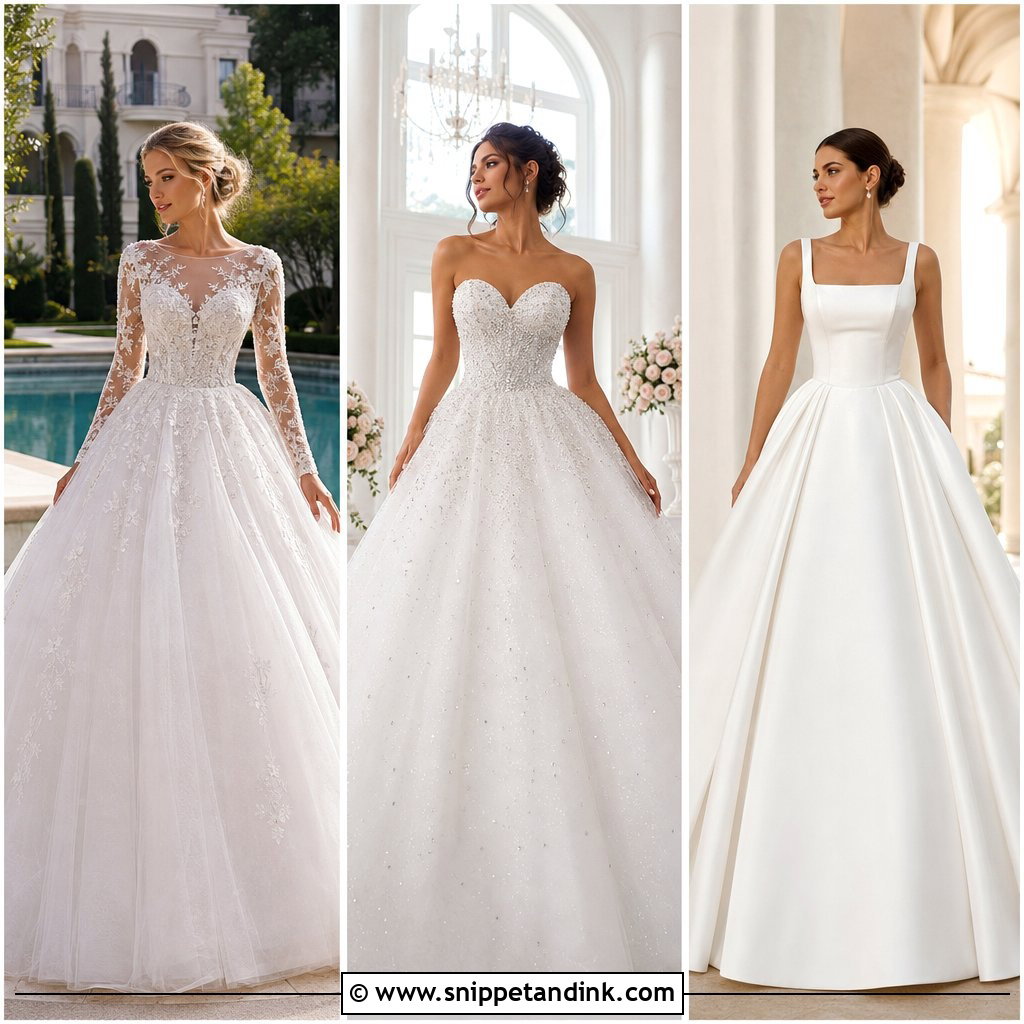
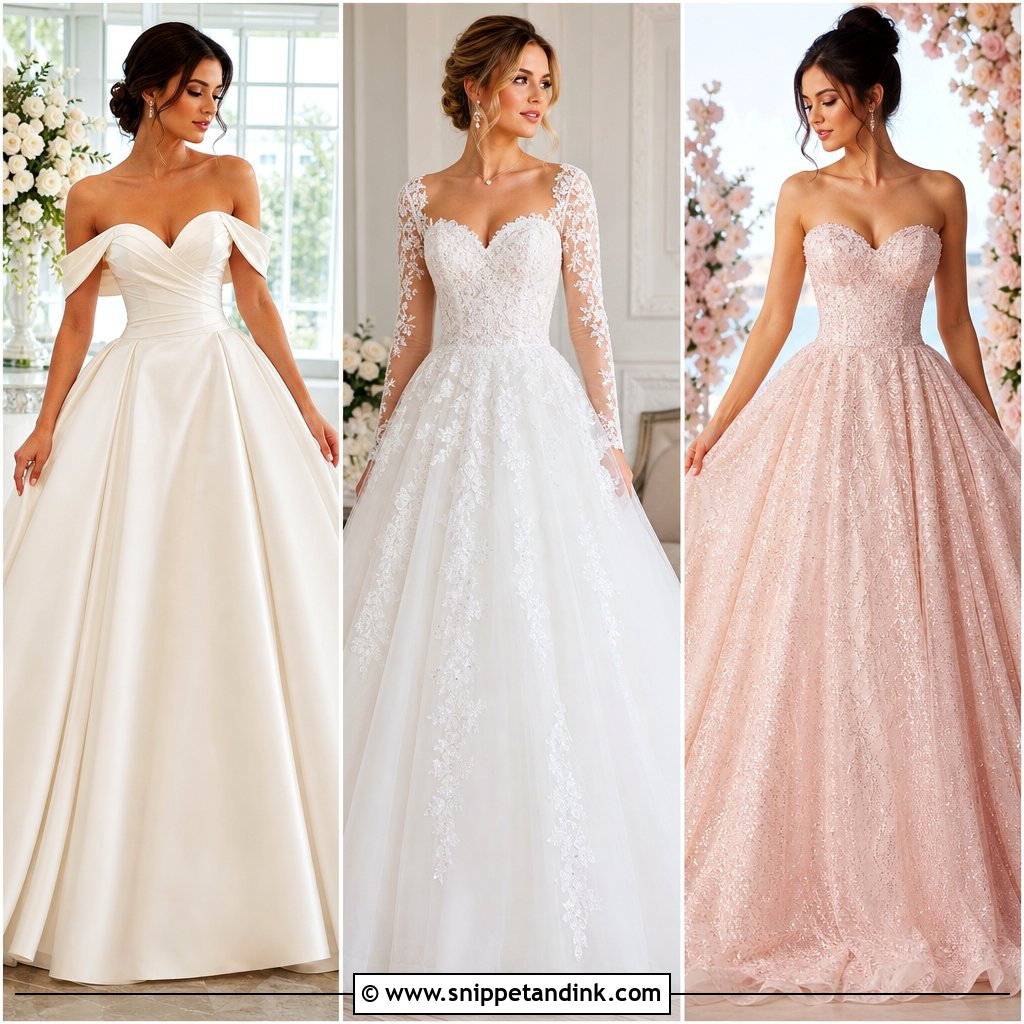
25. Fairytale Princess Wedding Dress
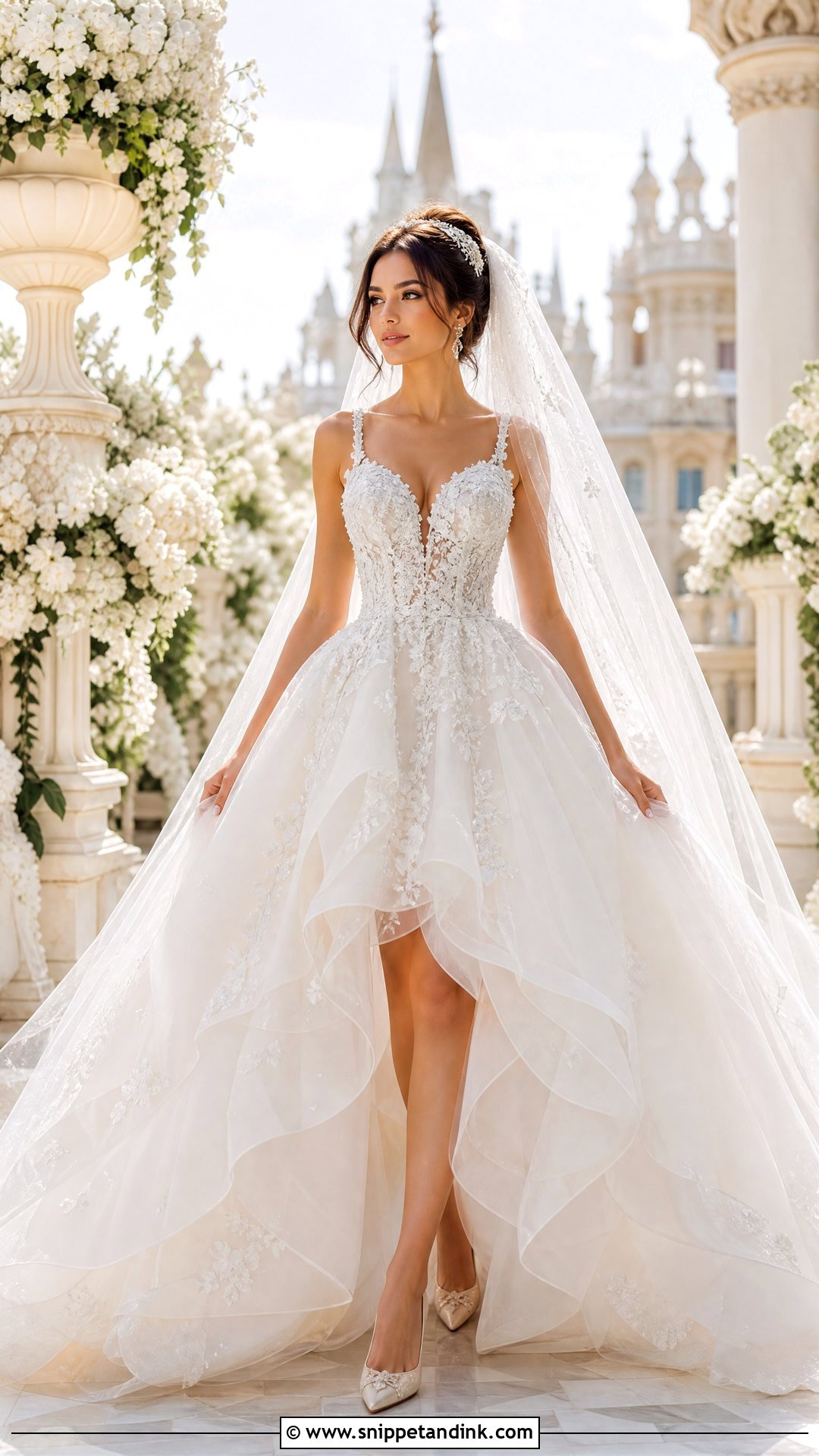
A fairytale princess wedding dress is the most romantic take on the silhouette: fitted bodice, dramatic skirt, soft sparkle, floral appliqué, lace or layered tulle. The risk is too much at once. I pick one fantasy element to lead and let everything else support it. A veil in the same mood, soft bridal heels and jewelry that adds light without competing finish it at grand venues, gardens and evening celebrations.
After the Last Dance, Before the Stains Set
A full skirt collects more than people expect: dirt at the hem, makeup at the neckline and spills you never noticed. Clear sugary spills like champagne or soda can turn brown weeks later as they oxidize, even when nothing showed on the night.
- Have the gown cleaned by a bridal specialist within a few weeks, and point out every spot you remember.
- Ask whether beads, sequins or glued appliqués will be cleaned by hand, since some don’t survive standard dry cleaning.
- Store it in an acid-free box with acid-free tissue in the folds, not in a plastic garment bag that can trap moisture.
- Keep the box somewhere cool, dark and dry. Attics and basements swing too much in temperature and humidity.
- Don’t leave a heavy skirt hanging by its straps for months, because the weight pulls the bodice out of shape.
Open the box once a year and refold the gown along different lines. It keeps permanent creases from setting into the fabric.
The Gown That Still Feels Right Sitting Down
Princess gowns range from classic to modern to softly vintage, depending on the fabric, neckline, waist and details. The right one isn’t the dress that looks best on a hanger but the one that still feels right when you move, sit and walk. Let proportion, comfort, tailoring and the mood of your venue guide you. A satin ball gown suits one bride; floral tulle, lace sleeves or a basque waist suit another. Take two or three favorites from this list to your appointments, and try each one seated as well as standing.
You'll Like These Ideas:








Leave a Reply