
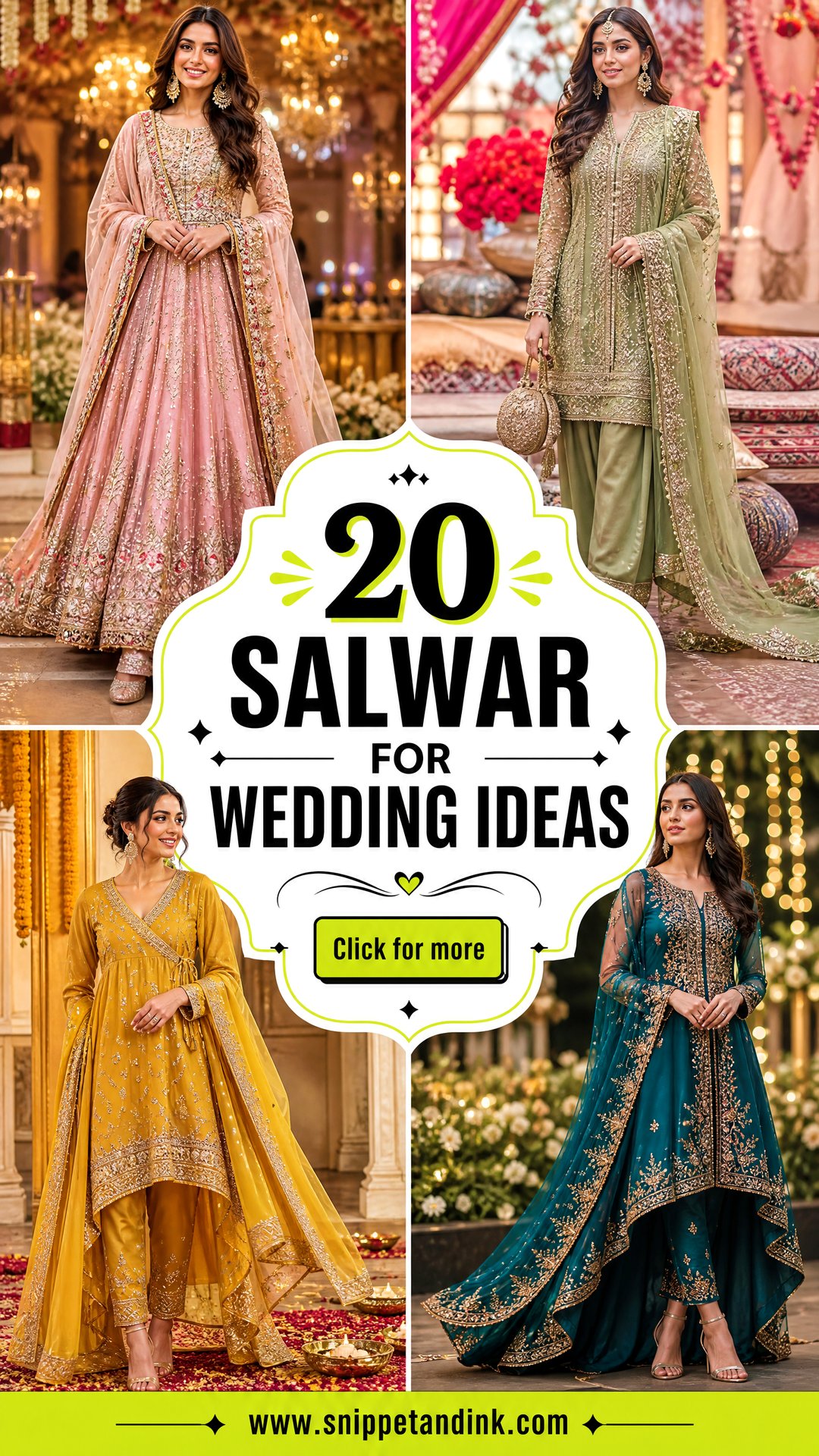
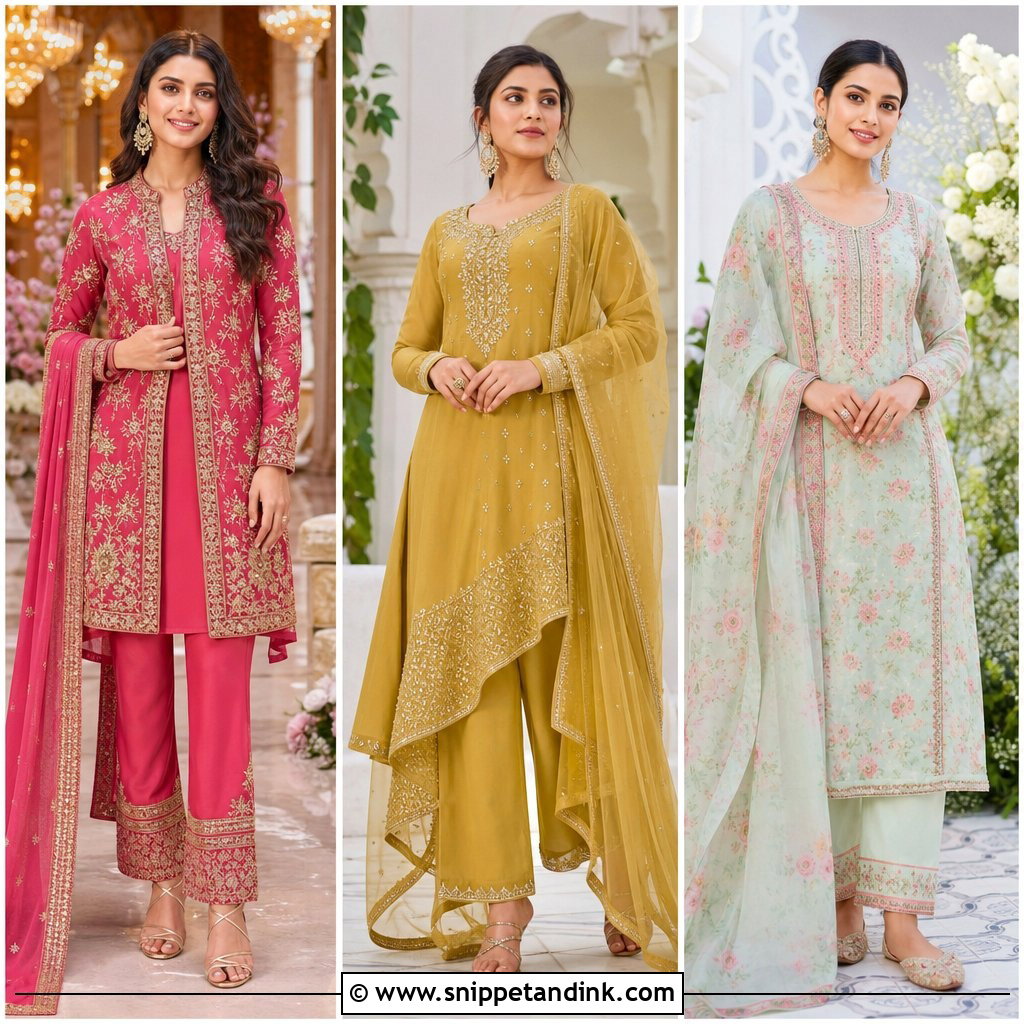
Guests often ask me what to wear to a wedding where the dress code is simply “Indian formal”, and the honest answer is a well-cut salwar suit in a fabric that suits the hour. It covers more situations than any other outfit: daytime ceremonies, dance-heavy sangeets and late receptions, for brides, bridesmaids, relatives and friends alike. My own preference is good fabric, a dupatta with character and comfortable tailoring rather than embroidery piled on for its own sake. The twenty looks below run from Anarkalis and shararas to straight cuts, palazzos and Patiala sets, in colors from pastel to jewel tone, each with my picks for shoes, jewelry and bag.
Ready-Made, Semi-Stitched or Fully Tailored?
Before you fall for a design, decide how it will reach you, because that sets your timeline and how well it can fit. I walk guests through the three routes like this.
Ready-made
Fastest and easiest to buy online, but cut for an average figure. Expect to adjust sleeve length and pant length at the very least. Check whether the seams have extra fabric inside; many good ready-made suits leave room so they can be let out by a size.
Semi-stitched
The kurta comes partly made, often with open side seams and unstitched sleeves, so a tailor can finish it to your measurements. It’s a sensible middle path when you want a better fit than ready-made but have only a few weeks.
Unstitched fabric
The most control and the longest wait. You choose the neckline, sleeve and length, and a tailor builds it from scratch. During the busy wedding season, I’d allow well over a month and plan a trial fitting.
Ordering online? Measure your bust, waist and hips with a soft tape over the underwear you’ll wear, then order for your largest measurement. Taking a suit in is simple; letting out a suit with no spare seam is often impossible.
1. Embroidered Anarkali Salwar Suit
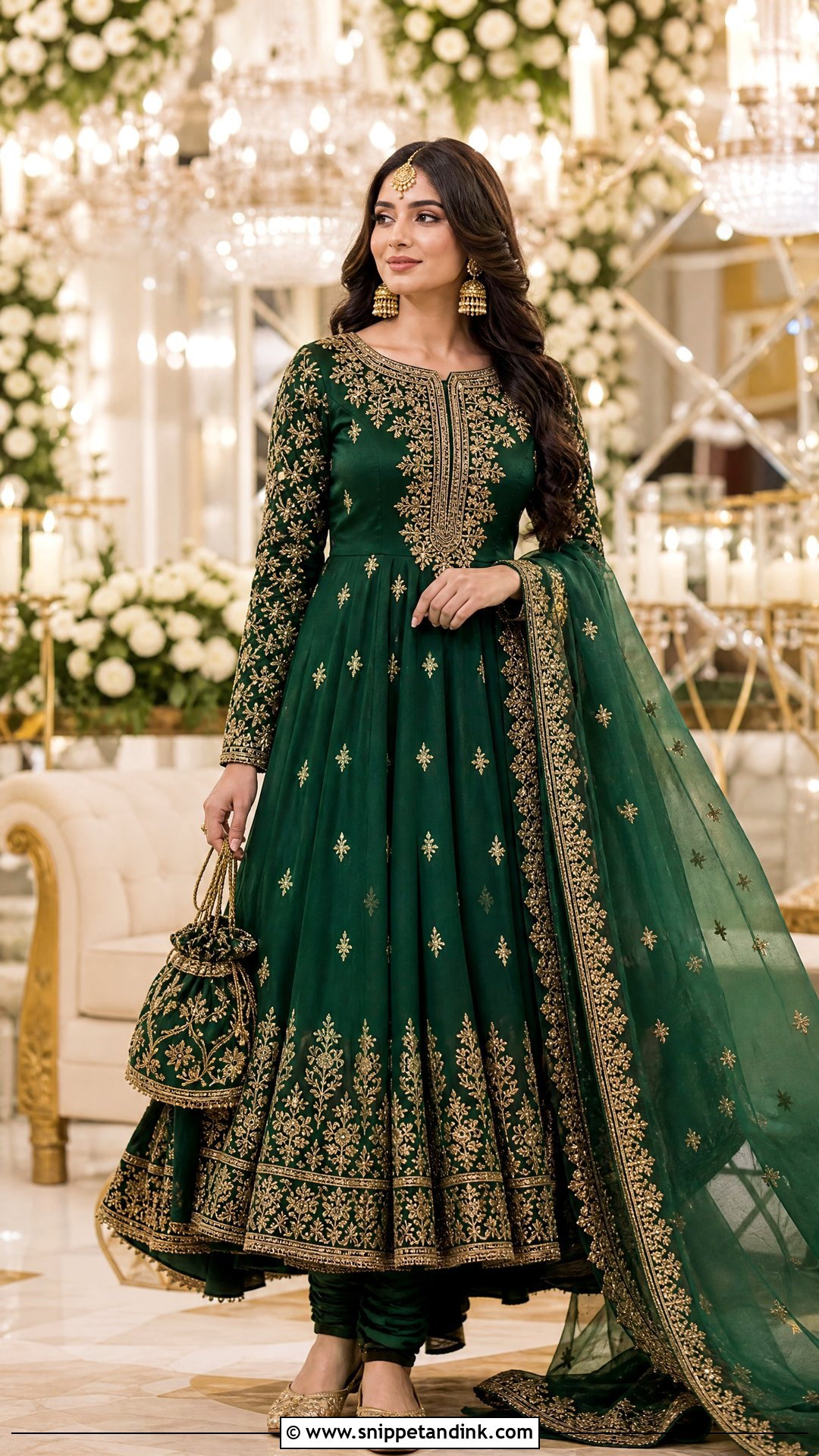
If you only own one wedding suit, make it an embroidered Anarkali. The fitted bodice and flared skirt suit nearly every function, and in georgette, chiffon or silk the skirt swings rather than hangs. Resham, small sequins or metallic thread give enough shine. Drape a light dupatta over one shoulder so the neckline stays visible, and add antique gold jhumkas, slim bangles and an embroidered potli. Choose the shoe before the hem is finished: block heels for a floor-length hem, juttis if it stops just above the ankle. Emerald and plum suit evenings; blush or powder blue suit daytime.
2. Silk Straight-Cut Salwar Suit
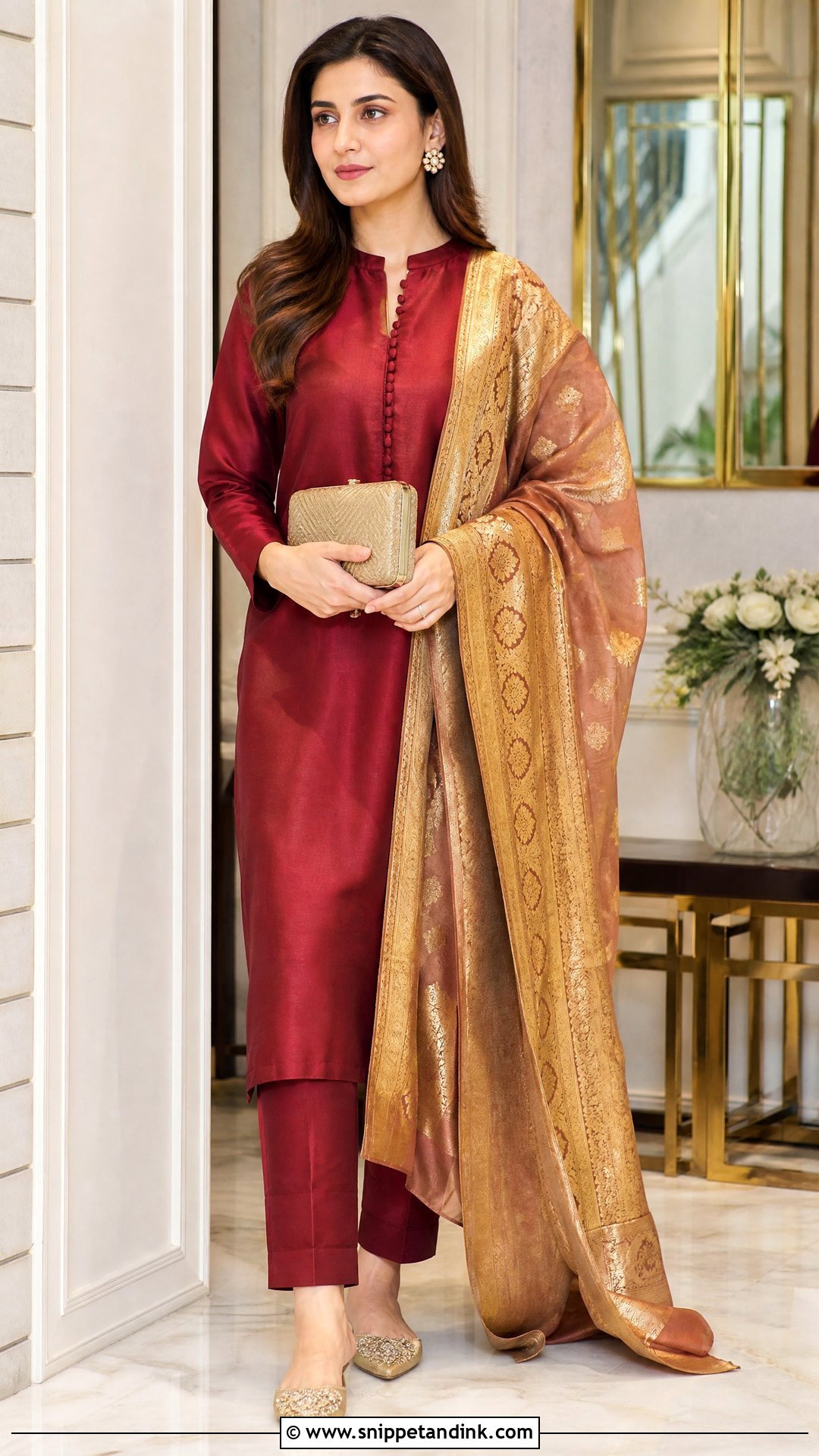
Silk in a straight cut is what I put on clients who want to look tailored rather than festive. A knee- or calf-length kurta with zari borders or woven motifs sits over cigarette pants, and a Banarasi, tissue or organza dupatta supplies the grandeur. The fit lives at the shoulders: silk doesn’t stretch, so a seam that’s slightly narrow pulls across the back every time you reach forward. Embroidered flats or low kitten heels, a structured clutch, kundan studs and two statement bangles are enough. Ruby and sapphire glow in silk. For a hot afternoon, a lighter silk blend in rose or pistachio breathes better.
3. Sharara Salwar Suit
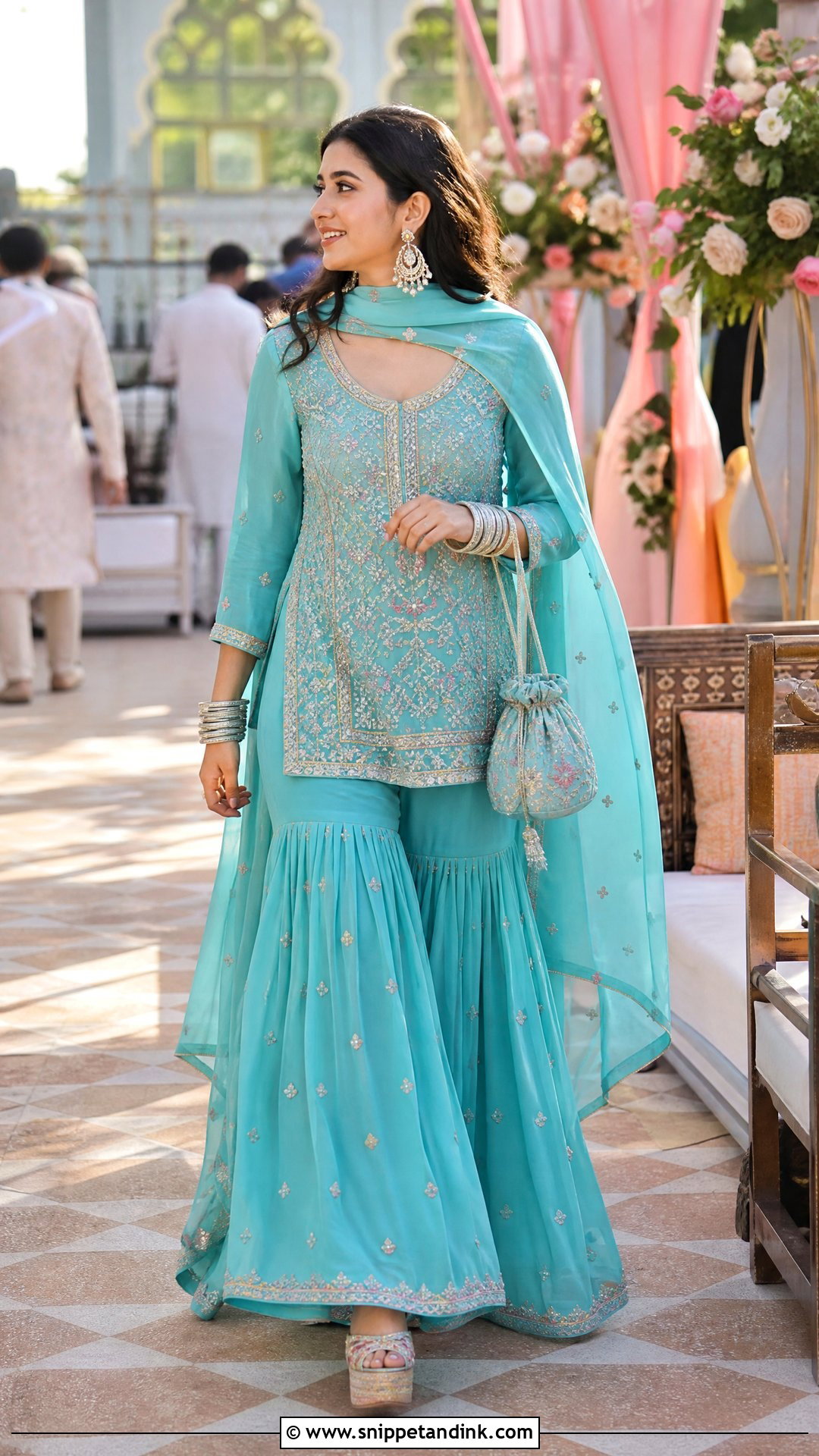
Sharara sets are made for functions with music. A short or mid-length kurta over wide flared pants, with a matching dupatta, gives you volume that moves as you dance. Brocade holds the flare crisply; georgette and crepe are lighter and swing more. I keep the embroidery on the kurta’s neckline and hem so the pants can stay plain. Chandbalis, slim bangles and a compact potli finish it. Platform juttis or block-heel sandals add the height the long hem needs. My advice for anyone in a full sharara: practise stairs at home, because the hem is easy to step on going up.
4. Gharara Salwar Suit
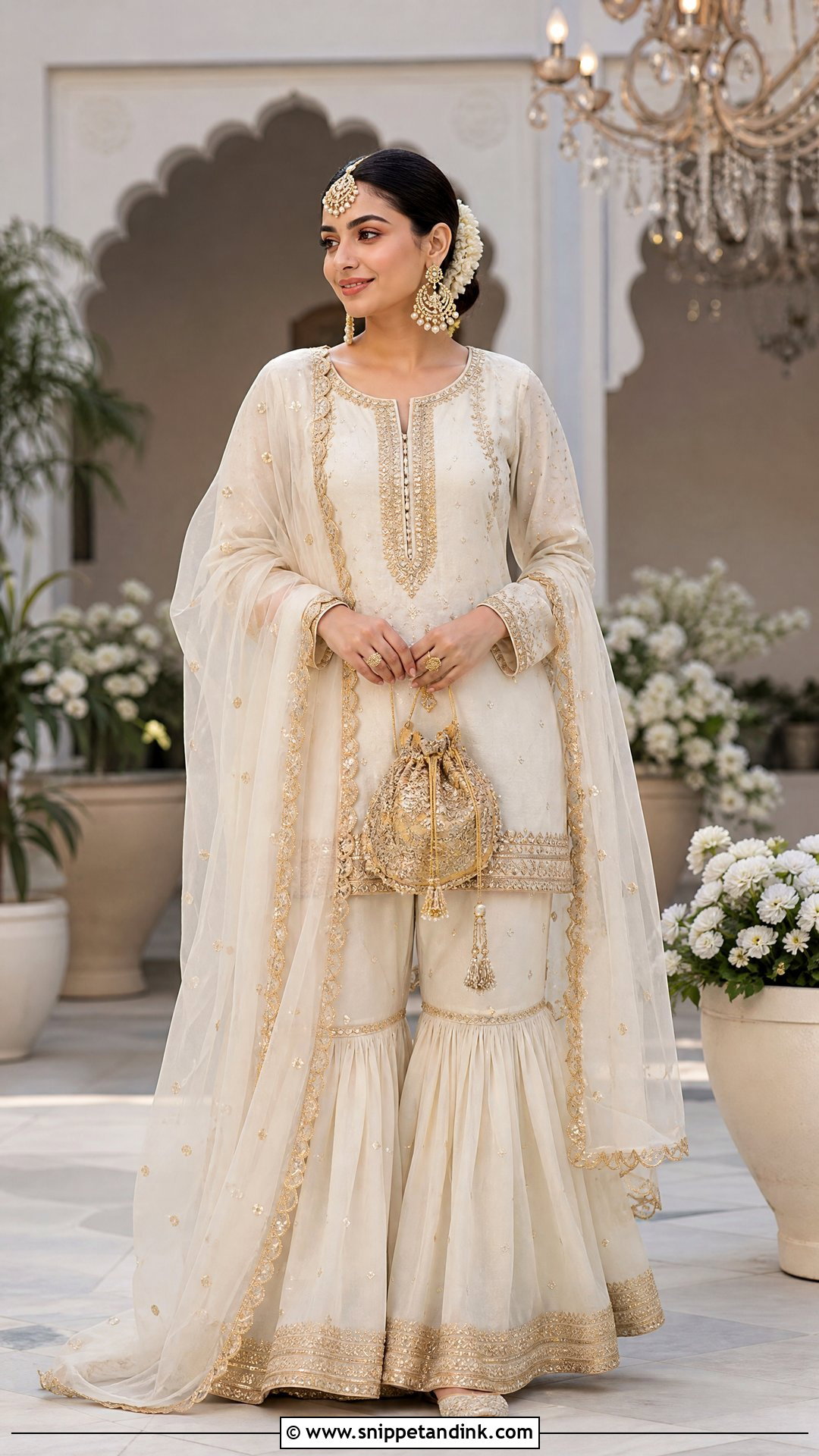
A gharara fits close from waist to knee and then flares out from a joined seam, usually covered with a decorative band. That joint is the signature, so a short kurta that shows it is essential. Gota patti, zari or fine floral embroidery gives a formal finish. Drape a sheer dupatta with an embellished edge over both arms, or pin it to one shoulder if you’ll be carrying a plate at the buffet. Pearl chandbalis, a maang tikka and embroidered juttis complete the look, with a small bag. Ivory and gold look polished by day; bottle green or royal blue after dark. Sit down at the fitting: a tight gharara knee makes floor seating hard work.
5. Patiala Salwar Suit
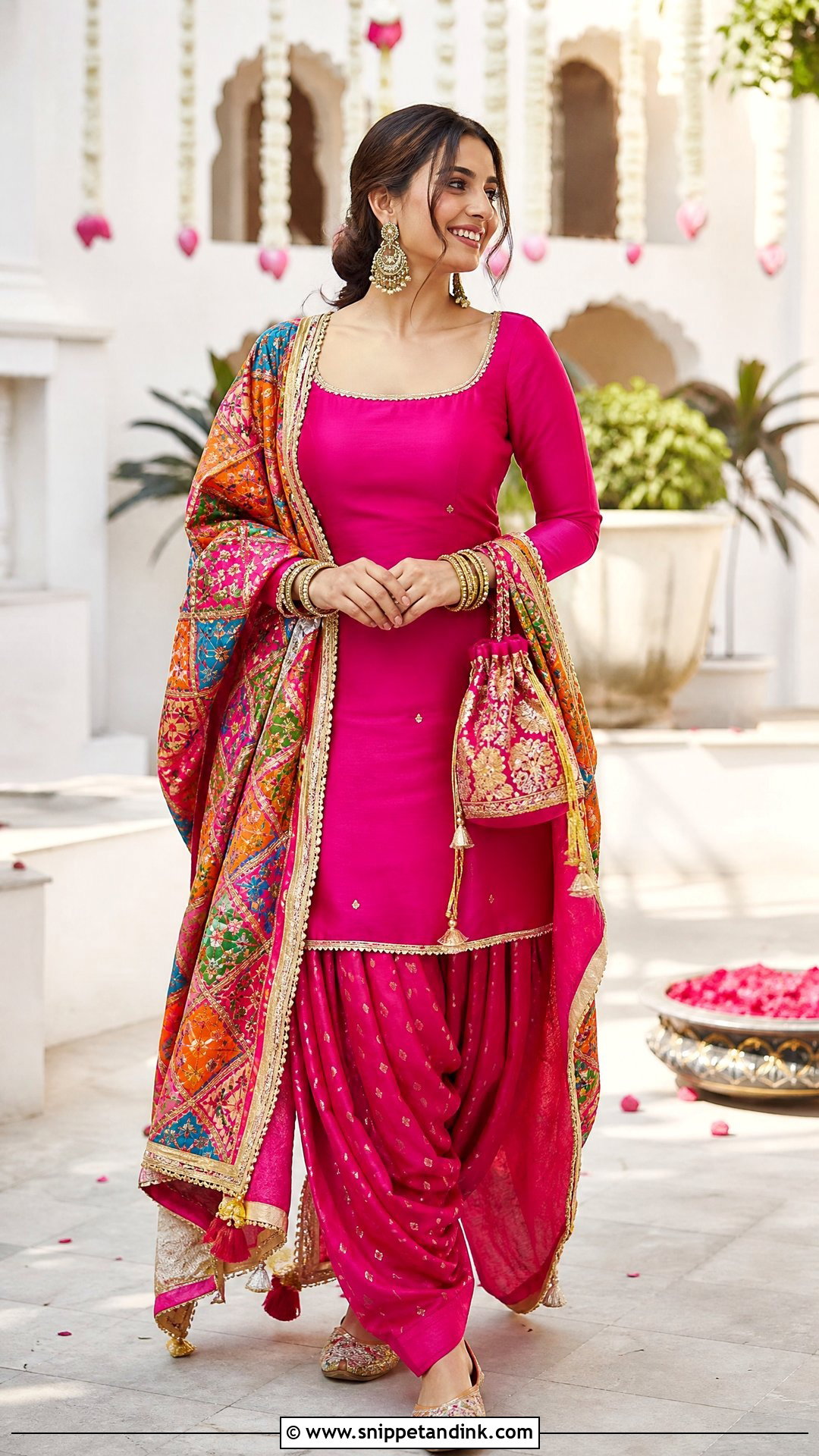
Nothing beats a well-tailored Patiala salwar suit when the dhol starts. The deeply pleated salwar needs a fitted, thigh-length kameez above it so the pleats stay on show. Raw silk, cotton silk or light brocade gives structure, and a phulkari or embroidered dupatta adds a Punjabi signature. I always pair it with juttis, which grip the floor and don’t sink into lawns the way stilettos do. Bold jhumkas, colorful bangles and a paranda in the braid suit the mood if you like them. Fuchsia and mustard look vibrant by day; magenta or navy with antique gold for evening.
6. Palazzo Salwar Suit
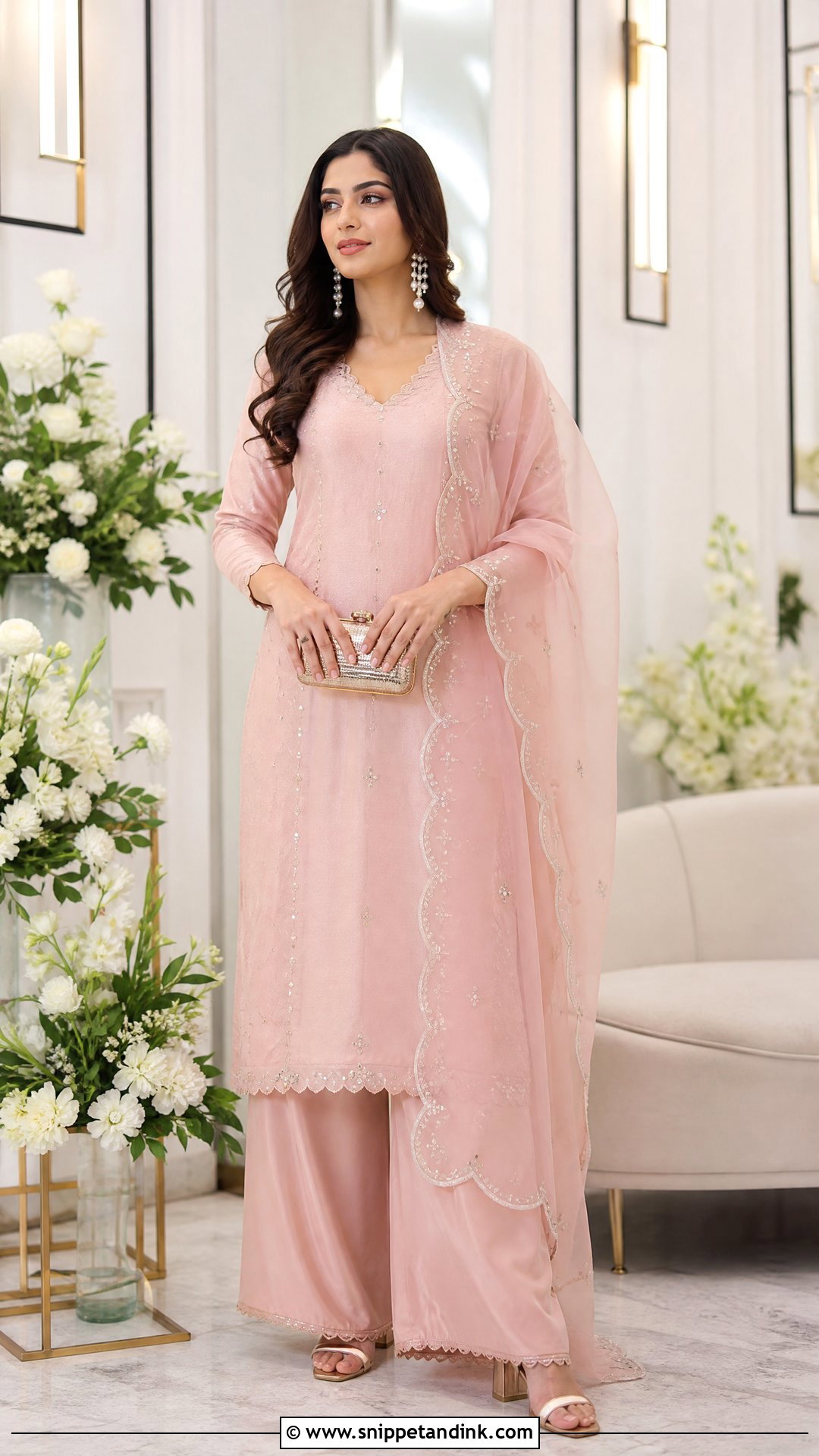
Palazzo suits are the answer for anyone who hates feeling constricted. Wide-leg pants under a straight, lightly fitted kurta falling to the knee or calf give an easy line. Chiffon, georgette and soft crepe flow; silk palazzos hold a more formal shape. A plain set gains a lot from an organza dupatta with scalloped edges or pearl detail. Wear block heels underneath, because the extra height lets the wide legs drape properly and keeps the hems off the floor where they’d fray. Shoulder-grazing earrings, a metallic clutch and one cocktail ring are enough. Tonal sets look sophisticated; a contrasting dupatta lifts a cream or beige outfit.
7. Churidar Salwar Suit
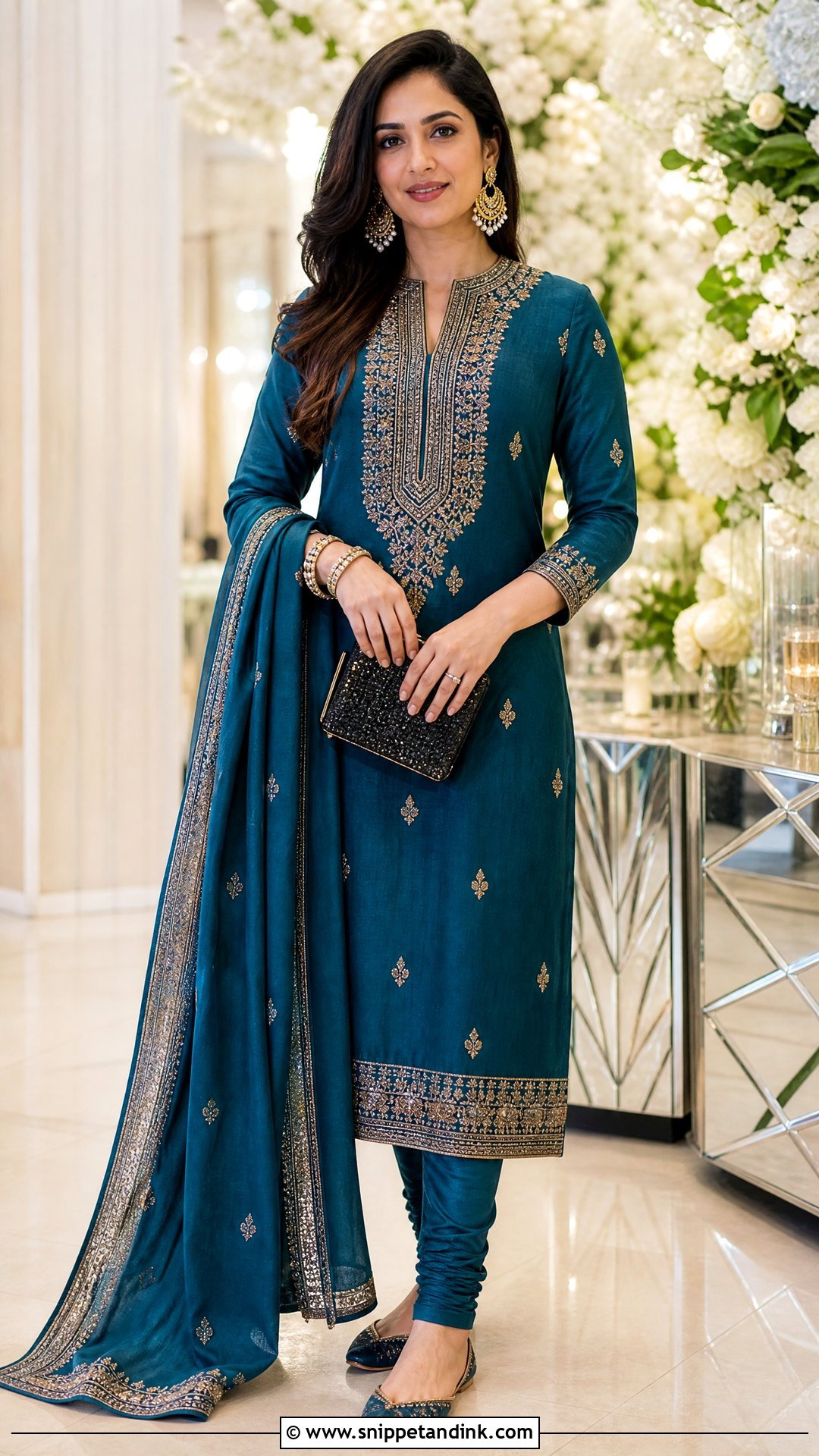
Churidars give a long kameez a slim base, and their soft gathers at the ankle are part of the look. A calf-length kurta with side slits shows those gathers best. Velvet-trimmed silk, embroidered georgette or jacquard reads properly formal. A long dupatta over one shoulder draws an unbroken vertical line. Pointed juttis, a beaded clutch and kundan or polki earrings finish it; if the neckline is heavily worked, I skip the necklace and add a maang tikka. Stretch churidars are far kinder for long ceremonies on the floor than rigid cotton. Maroon and aubergine suit night, sage and dusty rose daytime.
8. Pakistani Salwar Suit
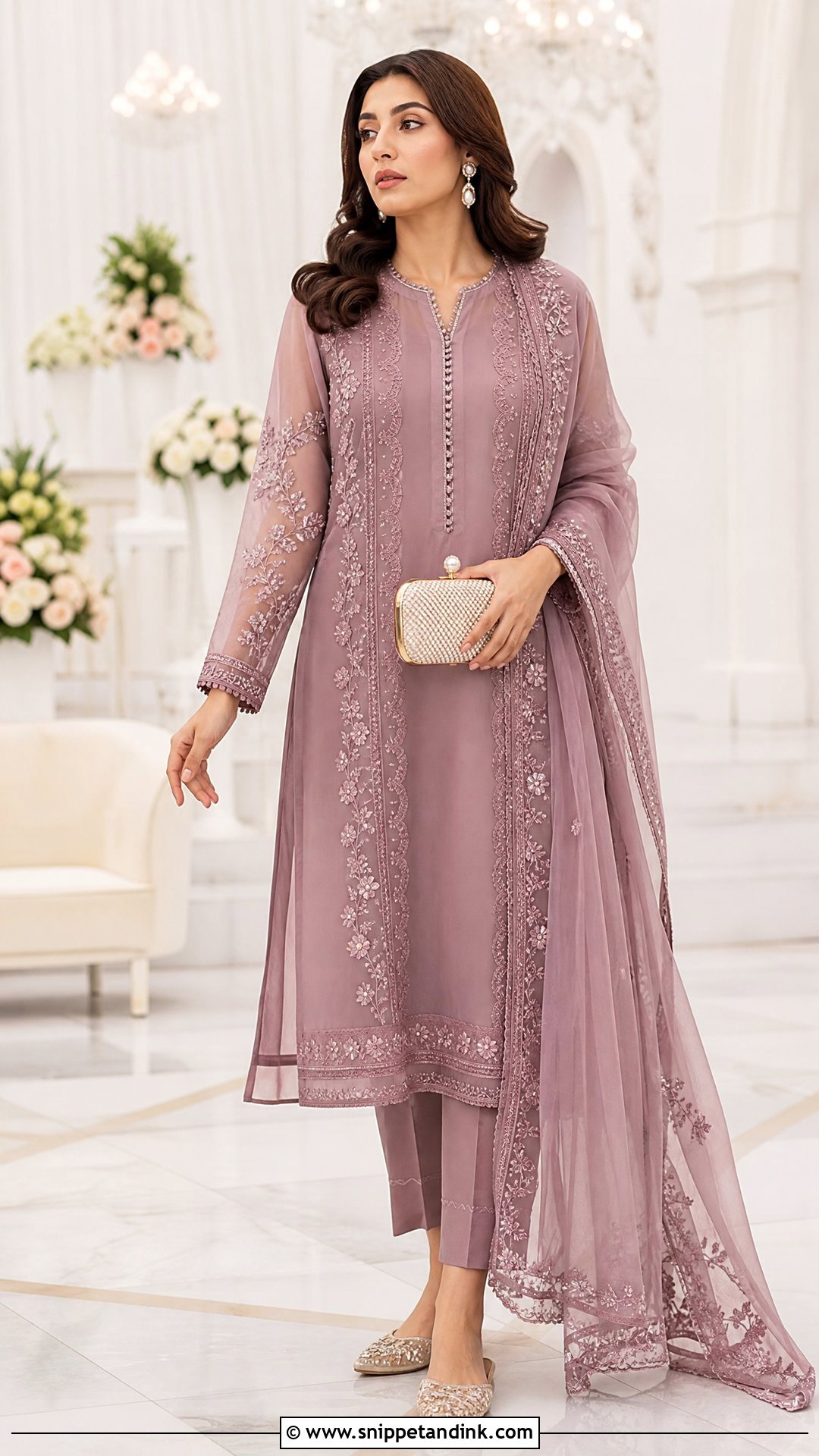
A Pakistani salwar suit gives graceful coverage through a long kurta, relaxed trousers and a generously draped dupatta. For weddings, chiffon, organza, silk or net with embroidery along the neckline, sleeves and side panels is typical. Straight trousers keep the line neat; gently flared ones add movement. I check two things in these suits: side slits high enough to sit comfortably, and a soft lining, since net and organza scratch over a long evening. Pearl drops, a delicate ring and a structured minaudière, with low block heels or embellished mules, complete it. Mauve and sage feel understated; emerald or burgundy carry more evening weight.
9. Angrakha Salwar Suit
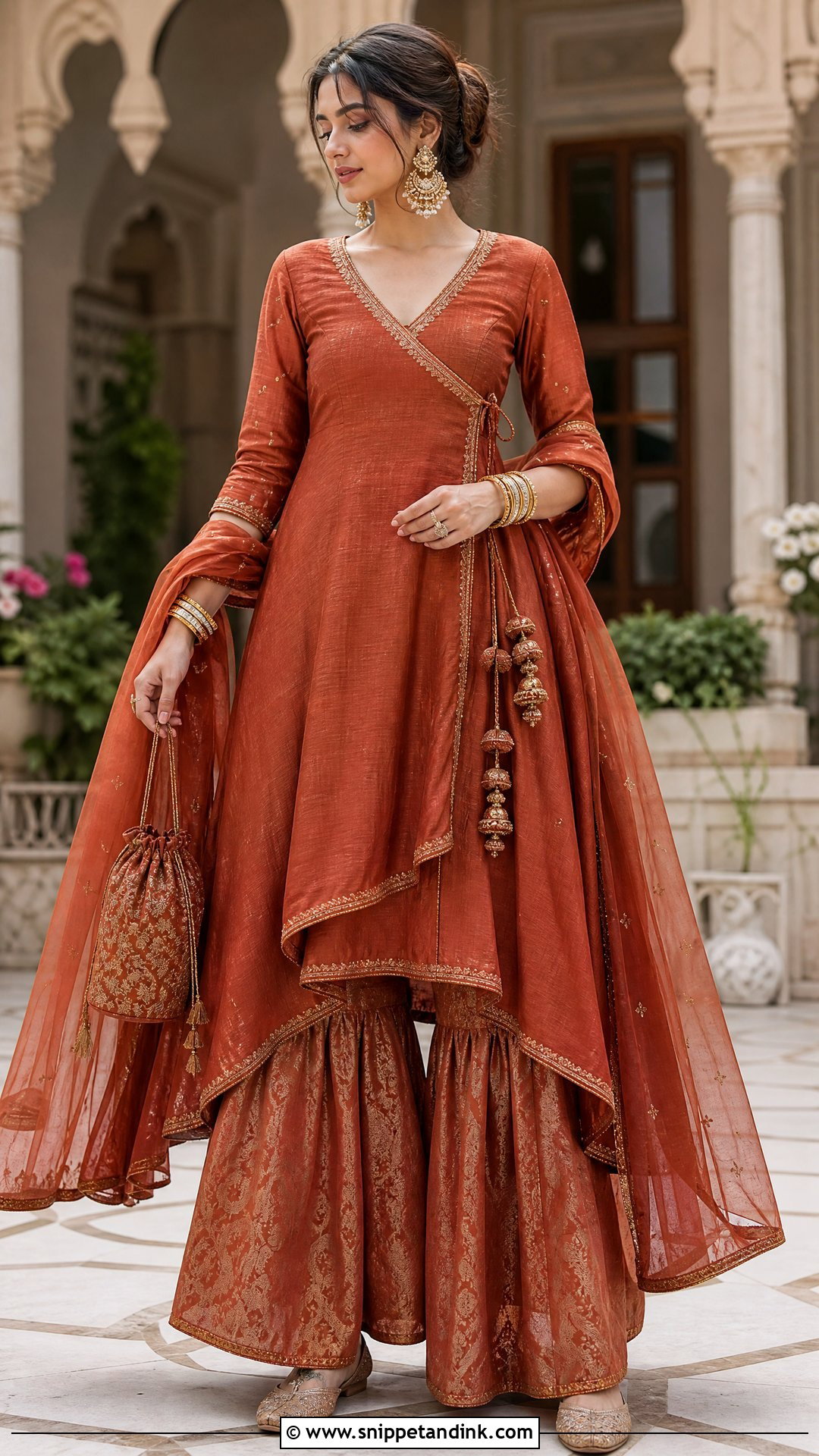
The wrap front of an Angrakha salwar suit gives shape without needing much ornament. A fitted crossover bodice fastened with tassel ties flows into a softly flared kurta, worn over a churidar for a classic look or brocade sharara pants for something grander. Embroidery along the diagonal neckline draws the eye so well that a heavy necklace becomes redundant; statement jhumkas and stacked bangles are better. Drape a sheer dupatta behind both shoulders so the wrap stays visible. Embroidered juttis and a small potli finish it. Rust and teal suit traditional settings. Ask your tailor for a concealed hook inside the wrap, or the tie alone will loosen by evening.
10. Jacket Salwar Suit
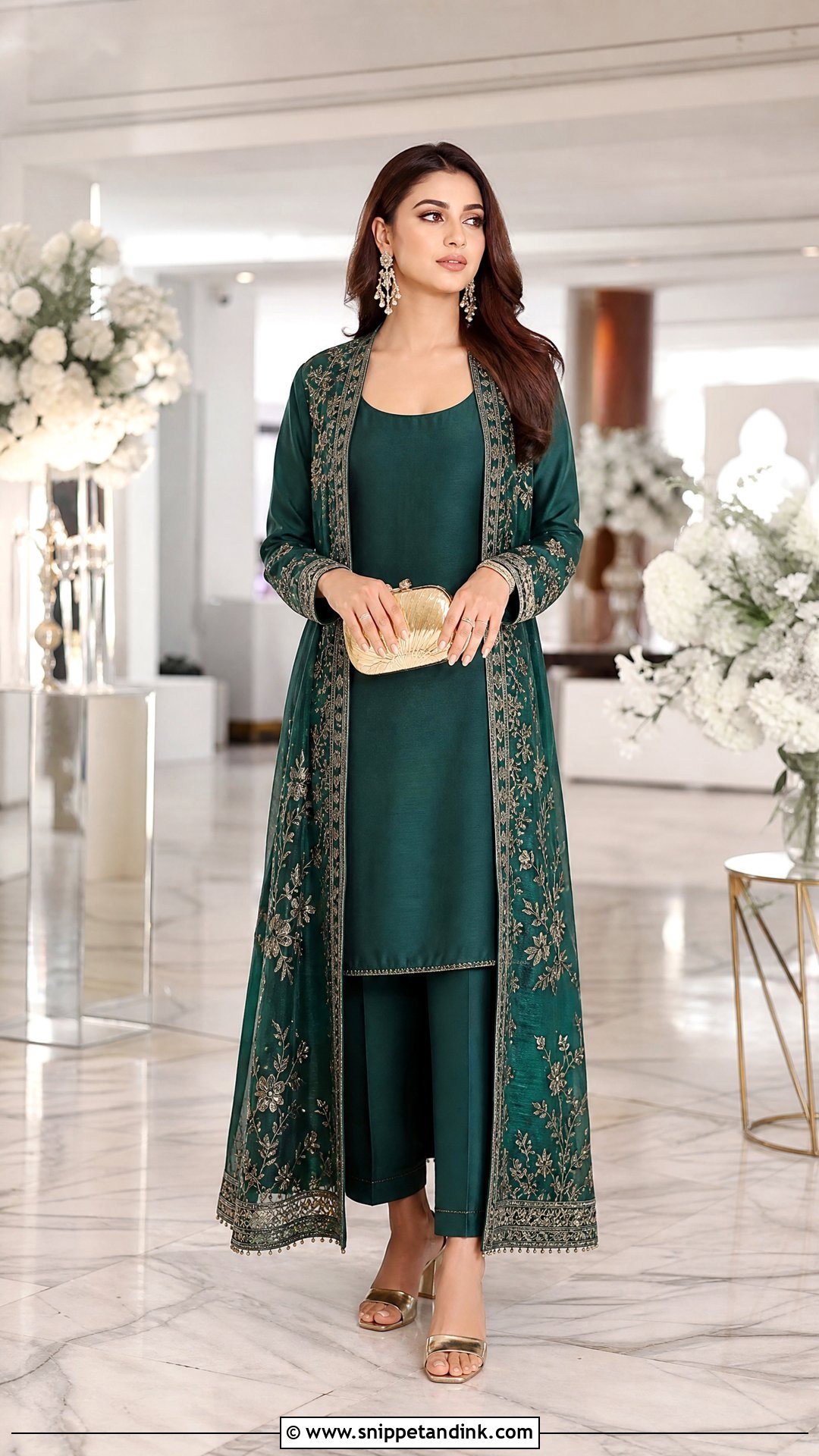
Layering a long embroidered jacket over a simple kurta and straight pants gives a formal outfit that’s still practical. Sleeveless or short-sleeved kurtas sit best under the jacket, since full sleeves under jacket sleeves get bulky and hot. An open-front jacket reaching the calves or ankles creates a long vertical line. Brocade or velvet suit cool weather, organza or light jacquard warm venues. Keep the inner set tonal and the accessories controlled: crystal studs, a sleek clutch and block heels for a modern finish, or antique earrings with juttis for something traditional. Emerald with gold and navy with silver are reliable pairings.
11. Cape Salwar Suit
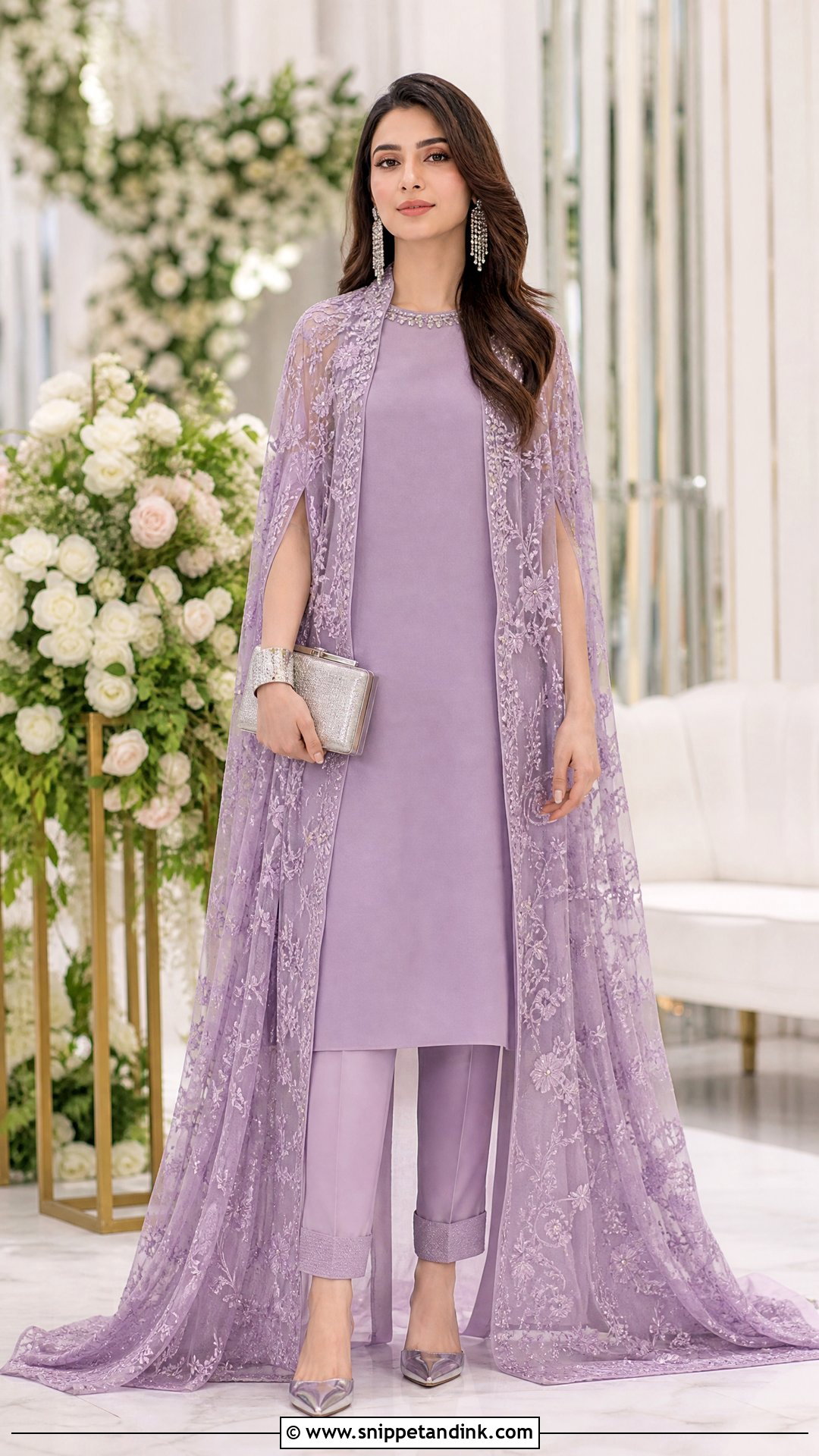
A cape takes over from the dupatta, which is exactly why I suggest it to guests who don’t want to keep adjusting fabric. A straight kurta and fitted pants sit beneath a sheer embroidered cape from the shoulders. Hip length feels light for daytime, floor length more dramatic for receptions. I make sure the cape has arm slits and stops above the outfit’s hem, otherwise it gets caught under heels and chairs. Sleek earrings, a cuff and a small hand-held clutch keep the jewelry visible, with metallic heels or pointed flats. Lavender and mint suit pearl detailing; wine and emerald suit sequins.
12. Peplum Salwar Suit
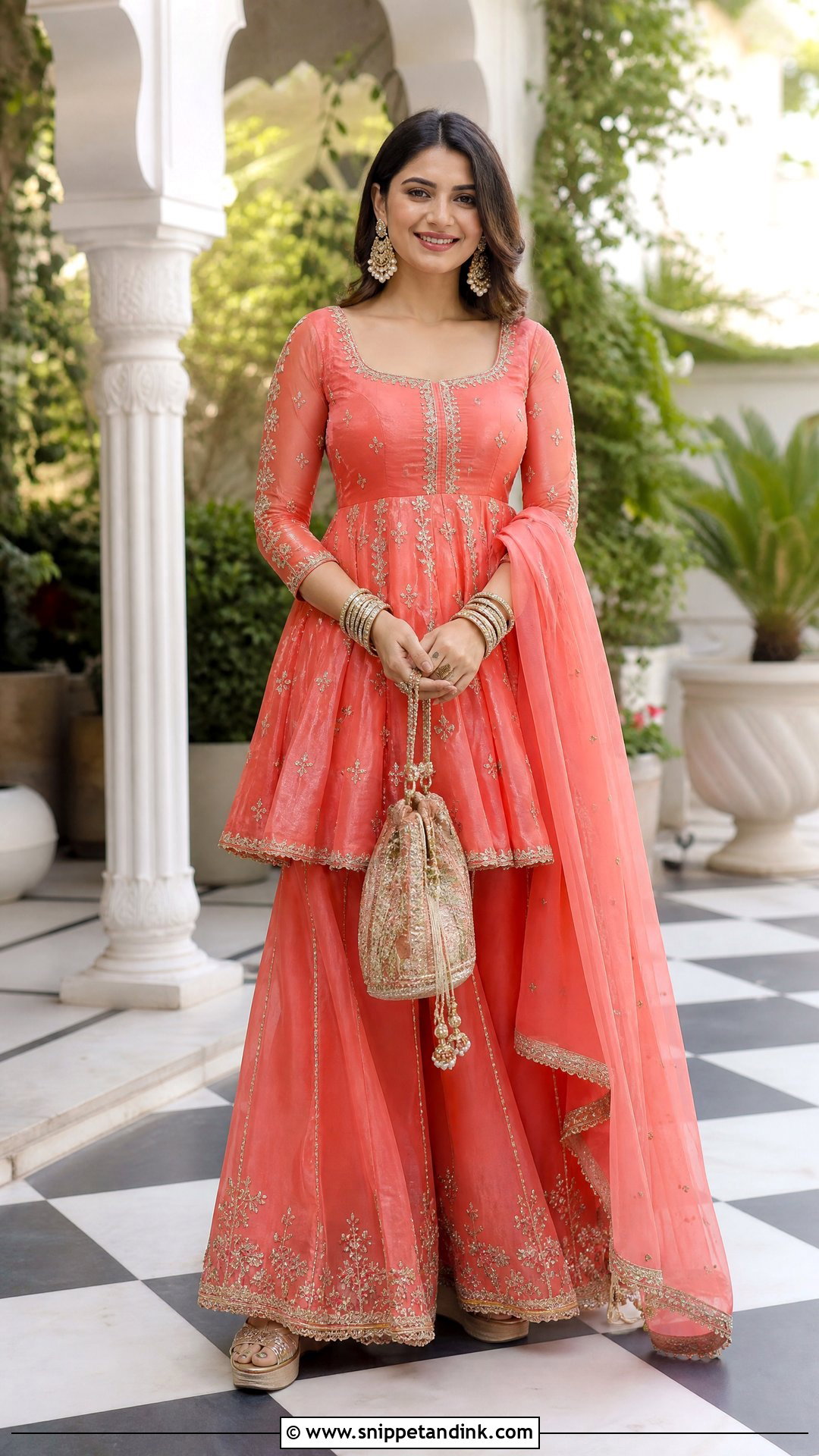
A peplum salwar suit nips in the waist and then flares, so it pairs best with wide bottoms like sharara or gharara pants, or with a slim churidar for contrast. The short top shows off waist detailing clearly. Shoulder fit matters most here: if the shoulders are loose, the peplum hangs from the wrong point and adds bulk at the hip instead of shaping it. Wear a light dupatta over one arm to keep the top uncluttered. Chandbalis, a small potli and platform juttis finish it. Coral and turquoise suit daytime, ruby and emerald suit evening functions.
13. High-Low Salwar Suit
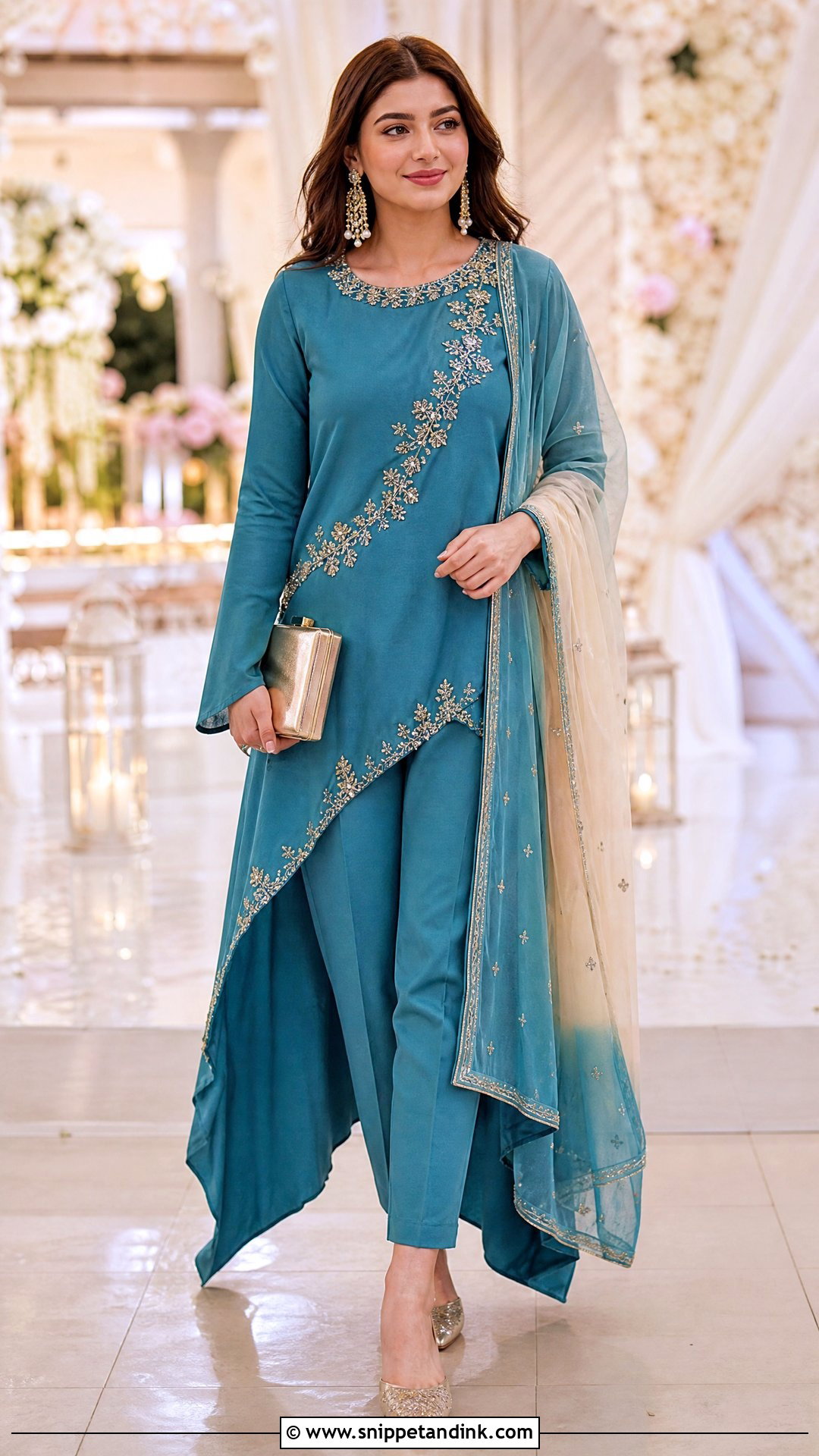
High-low hems are short in front and longer at the back, and the cut only works if the curve between them is smooth. A structured hem in silk, crepe or georgette holds the line better than a soft fabric that droops. Wear it over slim cigarette pants or a churidar, with embroidery at the neckline, cuffs and lower border. Because the raised front shows your feet, pick pointed juttis or kitten heels worth seeing. Long earrings, a metallic box clutch and a slim bracelet are plenty, and an ombré dupatta can echo the layered proportions. Teal and cobalt look sharp, while sage keeps it quiet.
14. Velvet Salwar Suit
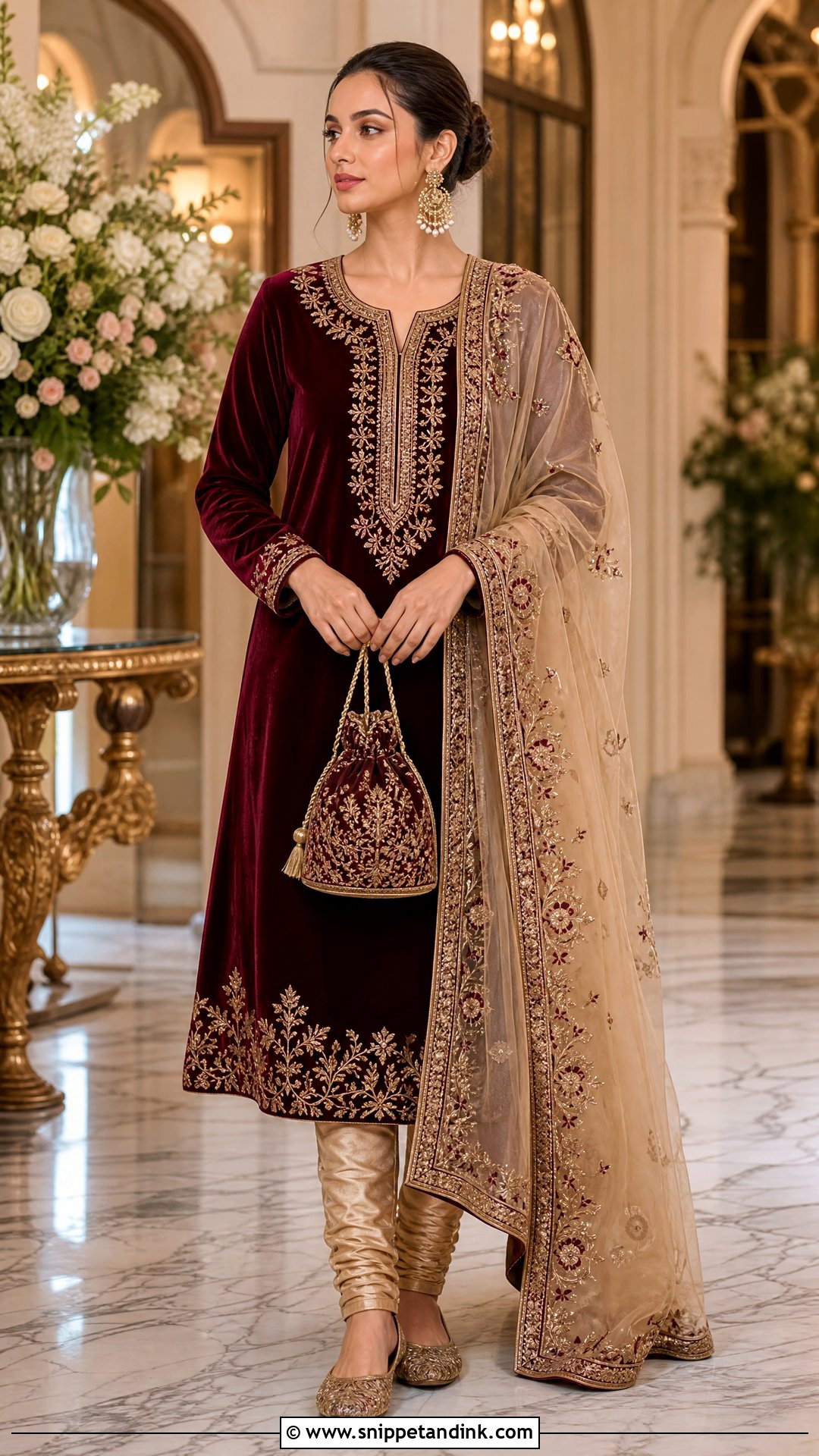
Velvet needs very little embroidery to look rich, which is the reason I love it for winter weddings. A long straight kurta or moderately flared Anarkali with zari only at the neckline, cuffs and hem is enough. Pair it with silk churidars or tailored trousers rather than velvet bottoms, or the outfit becomes heavy and hot indoors. A light organza or tissue dupatta adds contrast. Antique gold earrings, a structured potli and closed-toe embroidered juttis finish it. Burgundy and forest green show the pile best. Store it hanging, never folded tightly, because velvet holds crease marks for days.
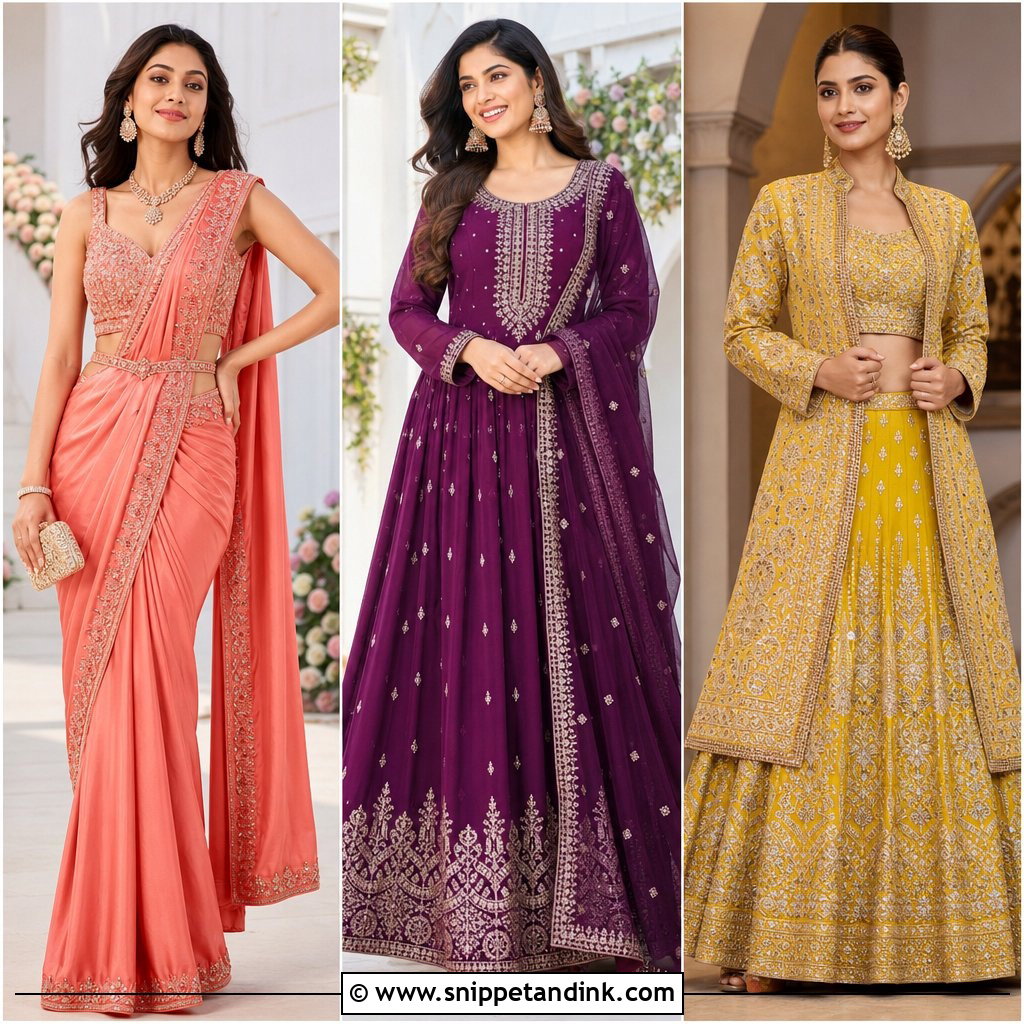
15. Organza Salwar Suit
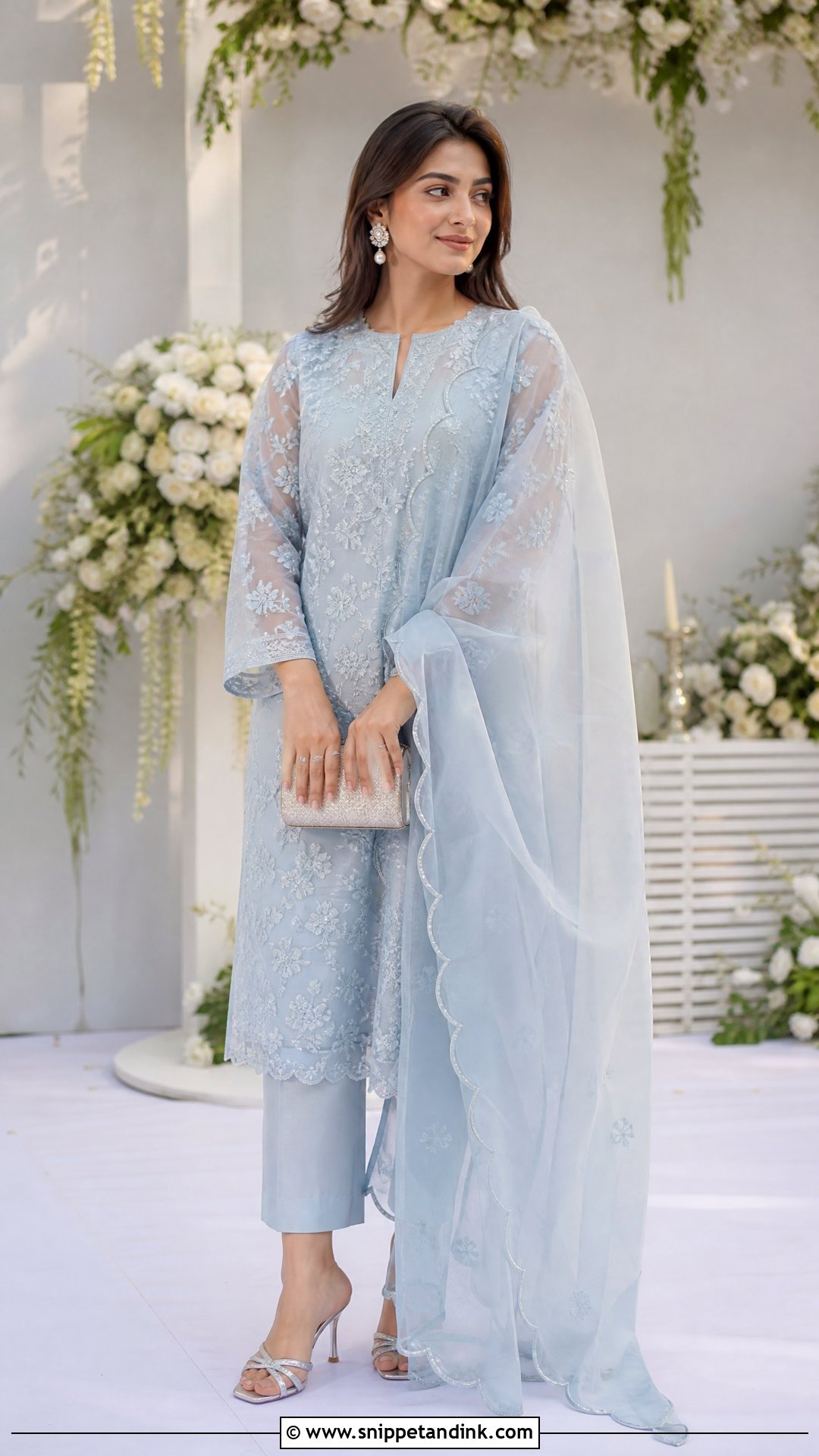
Organza catches the light, so even a plain suit looks dressed. A straight or gently flared organza kurta needs a smooth lining and pairs with silk or crepe cigarette pants. Floral threadwork and pearl accents suit its airy character better than bulky work. Add a matching organza dupatta with a scalloped border, but pin it, because organza slides off the shoulder constantly. Pearl earrings, a small satin clutch and fine heeled sandals finish it. I’d keep bracelets minimal, as chunky ones snag the sheer sleeves. Lilac and pistachio suit daytime; smoky grey or wine suit evening.
16. Floral Salwar Suit
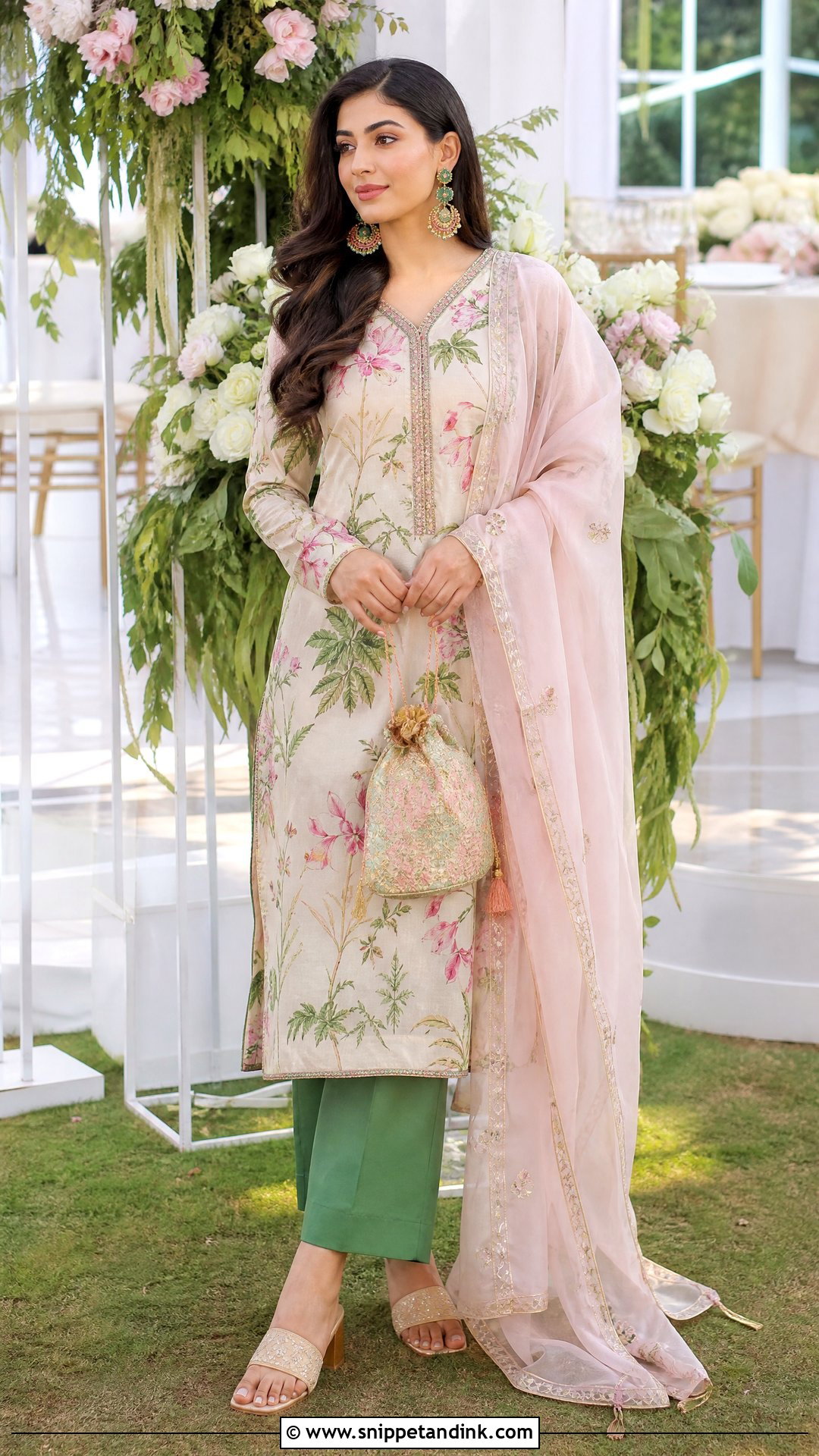
Printed florals feel right for garden weddings, mehndis and daytime ceremonies. A printed silk, georgette or organza kurta works best with solid pants pulled from one shade in the print. Hand-painted flowers or motifs outlined in sequins make a print formal enough for a wedding. A lightly embroidered dupatta adds texture without competing. Pearl or meenakari earrings, a pastel potli and block-heel sandals keep it fresh. Scale matters: large florals read bold from across a lawn, small scattered ones look subtle up close. In natural light, pink with green or blue with yellow comes across clearly.
17. Mirror Work Salwar Suit
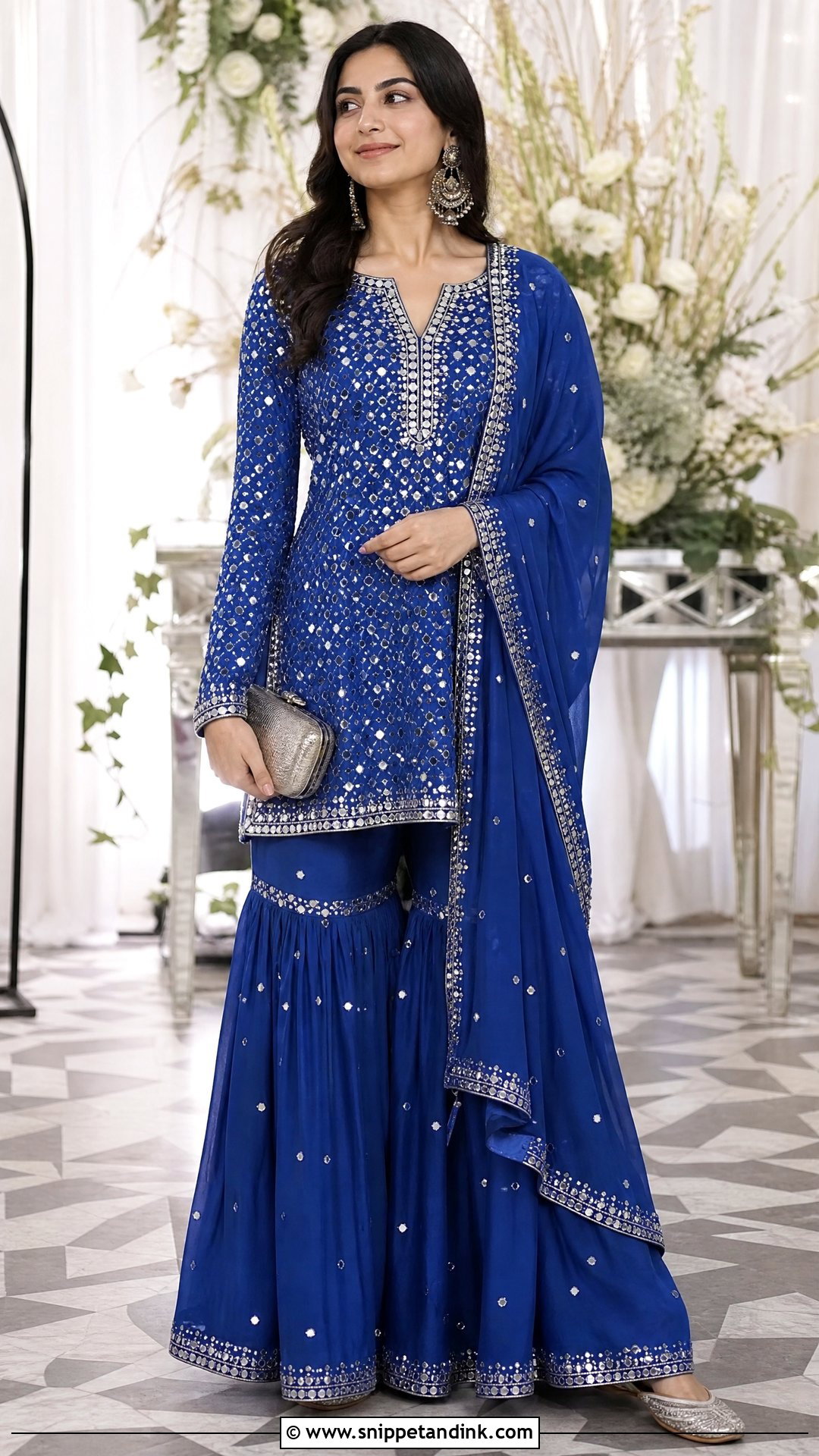
A mirror work salwar suit brings energy to music nights and evening functions, where every movement throws light. A short kurta with sharara pants suits dancing; a straight kurta with tailored trousers is cleaner. Mirrors around the neckline, cuffs and hem look more balanced than an outfit covered from top to bottom, and they keep the weight down. A soft georgette or crepe base stays comfortable under the embellishment. Simple metallic juttis, oxidized silver earrings and a plain clutch let the mirrors lead. Pin the dupatta at one shoulder to free your hands. Ivory with silver mirrors is a modern take.
18. Pastel Salwar Suit
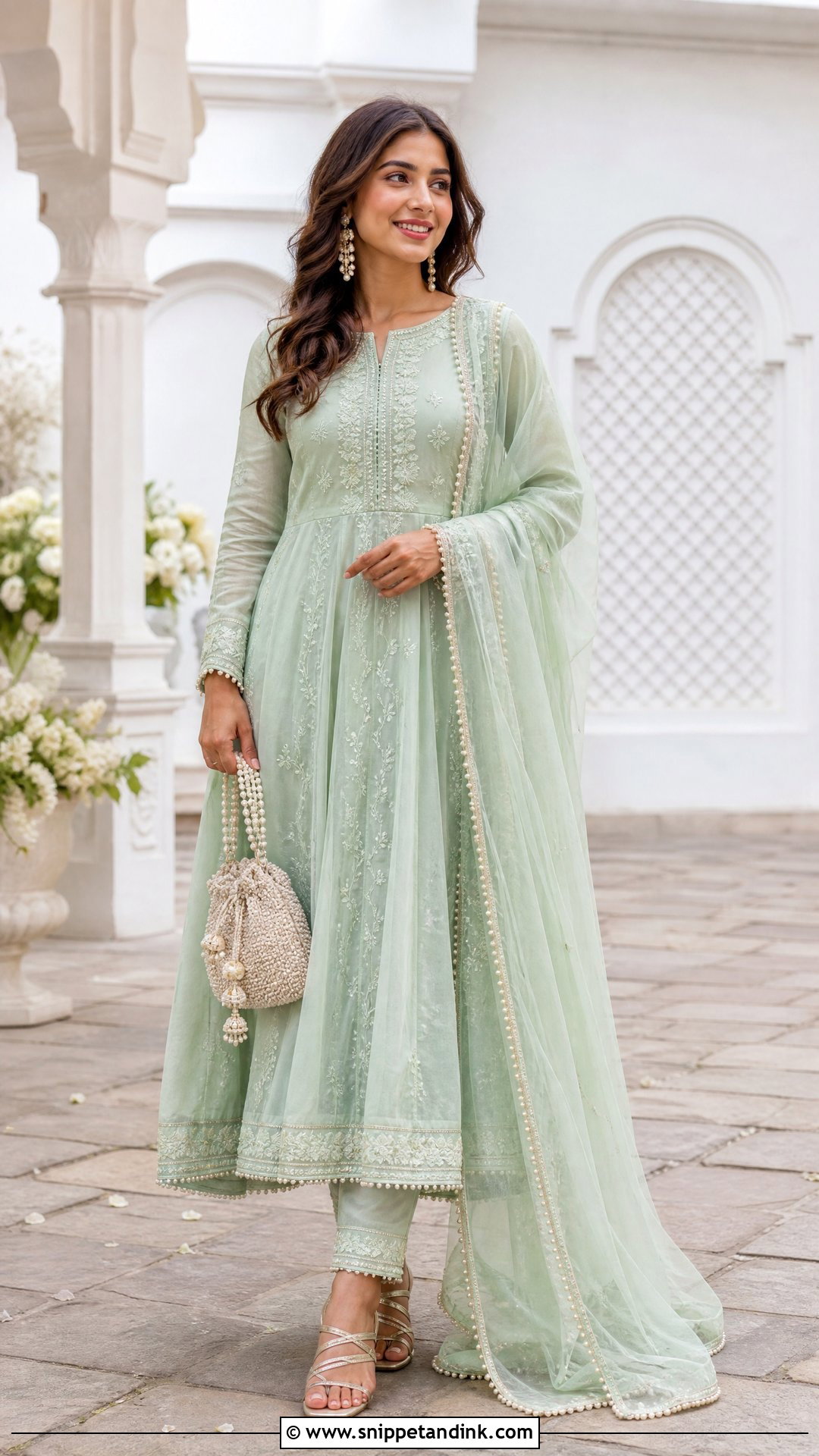
Pale colors can look flat in photos, so a pastel suit needs texture to carry it. Tonal embroidery, pearls, pleating or woven motifs all give the camera something to catch. Silk, organza, chiffon and georgette all suit pastels, whether as a floor-length Anarkali or a straight kurta with palazzos. I pair blush, mint or powder blue with champagne gold, not bright yellow gold, which can look harsh against soft shades. Pearl drops, a beaded potli and nude or metallic sandals keep the palette gentle. A sheer dupatta with an embellished edge, or a contrasting border, frames the whole outfit.
19. Jewel-Tone Salwar Suit
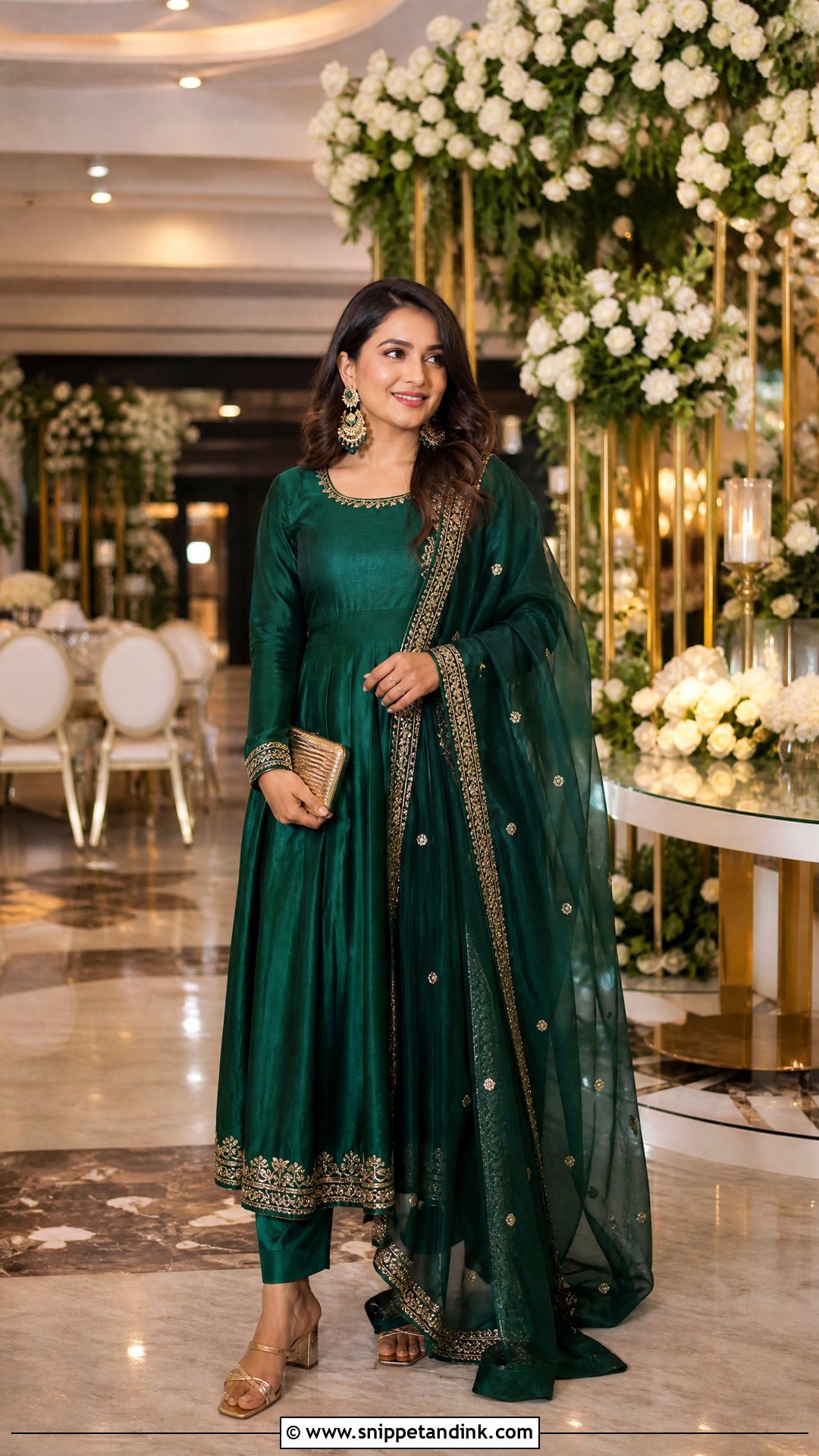
Strong color does most of the work in a jewel-tone suit, so it needs less embroidery than you’d think. Emerald, ruby, sapphire and deep teal look richest in silk, velvet or satin-finish fabrics. I choose one saturated shade for the kurta and pants and add depth with gold, silver or antique thread. An embroidered Anarkali brings drama; a straight kurta with palazzos is more relaxed. Kundan earrings, a metallic clutch and block heels complete it. If the suit is glossy, a matte dupatta balances the shine. Keep the makeup defined around one feature rather than matching every color in the outfit.
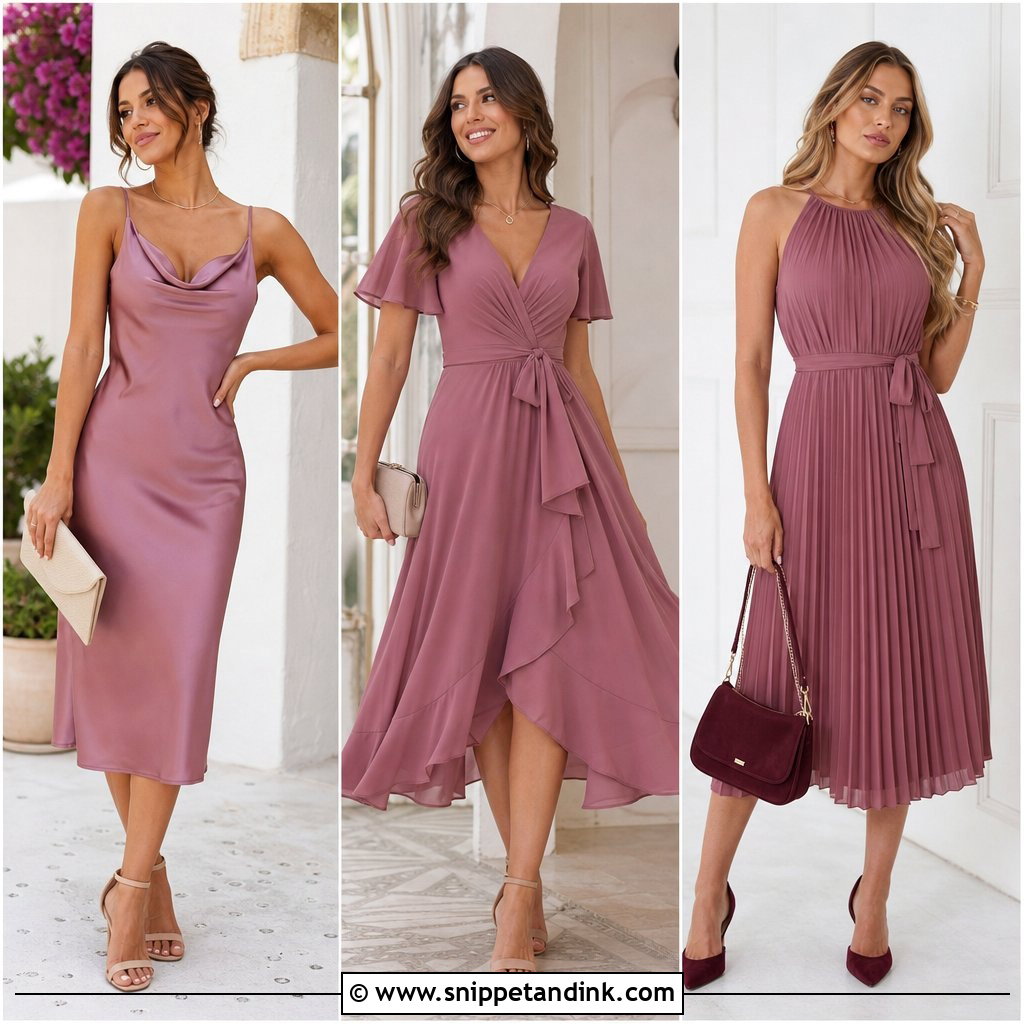
20. Bridal Red Salwar Suit
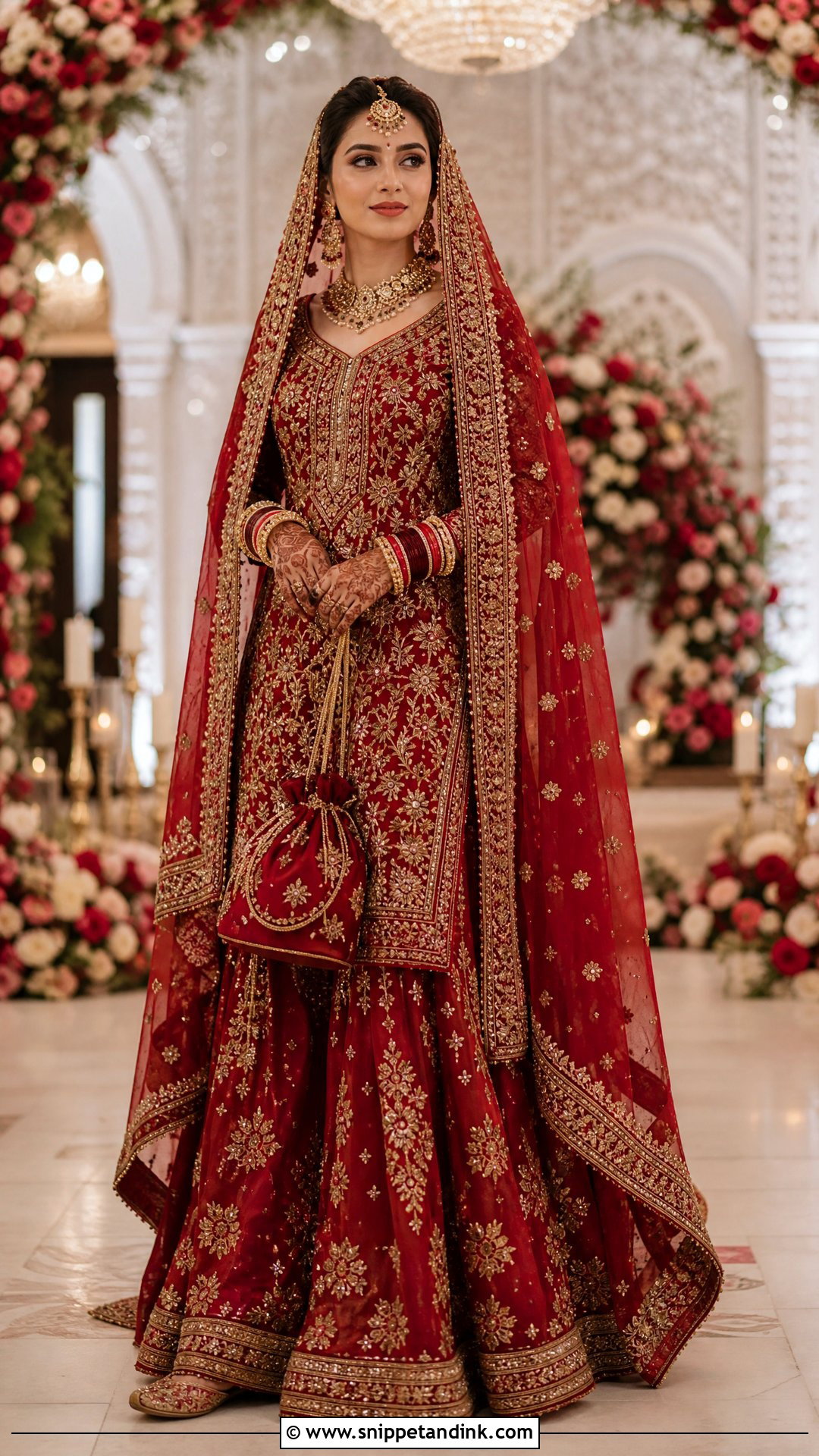
A bridal red salwar suit suits a bride who wants ceremonial color with far more freedom than a lehenga gives. Choose a floor-length Anarkali, an embellished Patiala set or a richly worked sharara suit in red, crimson or maroon, with zari, dabka or resham, and frame it with a gold or tonal dupatta. Coordinate the maang tikka, earrings and bangles with the embroidery metal. I fit bridal suits with the actual shoes and the full jewelry on, since a heavy necklace changes how the neckline sits. Talk to your family and officiant about coverage and color expectations for the ceremony before the final fitting, not after.
How I Pack an Embroidered Suit for a Wedding Trip
So many weddings now mean a flight or a long drive, and heavy embroidery suffers in a suitcase. This is the routine I use for clients’ outfits.
- Turn the kurta inside out so mirrors, zari and sequins face inward and can’t snag on zips.
- Lay acid-free tissue or a clean cotton cloth over the embroidered panels before folding, and fold along existing seams rather than across the work.
- Roll the dupatta loosely around a towel instead of folding it flat, which leaves fewer hard creases in net and organza.
- Keep the outfit in hand luggage if you can. A lost checked bag the night before a sangeet is not a problem anyone can fix quickly.
- On arrival, hang everything and use a steamer from the inside. Never press an iron directly on zari or mirror work; it can tarnish the thread or crack the glass.
Pack a small kit too: safety pins in two sizes for the dupatta, fashion tape for a slipping neckline, a needle and thread matched to the suit, and blotting papers. They take up no room and get used at almost every wedding.
Fabric and Fit First, Embroidery Second
One outfit category covers an enormous range of wedding roles, settings and seasons. Anarkalis and velvet bring formal drama, palazzo, straight and Pakistani suits give comfort with grace, and shararas, ghararas and Patiala sets are built for the dance floor. Let fabric, fit and proportion decide before embroidery or trend does. Then add comfortable shoes, jewelry that suits the neckline and a bag sized for the occasion. Wear the suit around the house for an hour before the wedding: if you can walk, sit, eat and lift your arms without fussing with it, you’ve got the right one.
You'll Like These Ideas:


Leave a Reply