
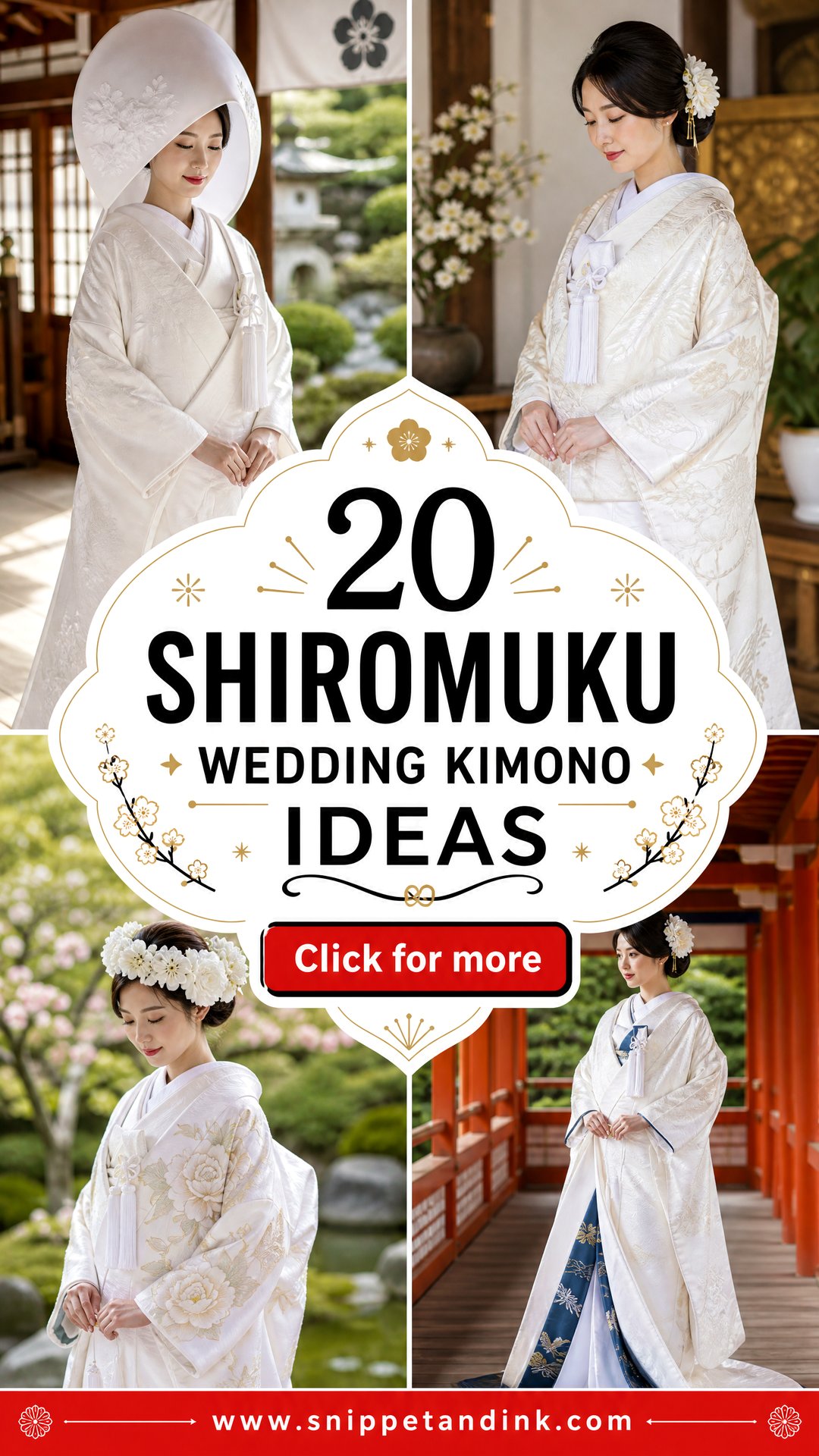
Shiromuku is the classic all-white bridal ensemble of a traditional Japanese wedding, and it is the most formal thing a bride can wear to a shrine ceremony. It’s built in layers: a padded white uchikake worn open over a kakeshita kimono and obi, with small accessories tucked into the collar and sash, white tabi socks and zori sandals. The palette never changes, so everything else does the work: the woven motif, the sheen of the silk, a coloured lining, the headwear and the hair. Nobody dresses themselves in one. A skilled kimono dresser builds it on you, and the looks below are best read as briefs to take to that person.
Each look starts from the same white robe, which is exactly why the small choices matter so much.
What Goes On Under the White Uchikake, Layer by Layer
Most brides only see the outer robe in pictures, so the first fitting can be a surprise. A shiromuku is dressed from the skin outwards, and each layer has a job.
- Hadajuban and nagajuban: thin underlayers that absorb sweat and carry the white collar you see at the neck.
- Kakeshita: the white kimono itself, tied at the waist with the obi and padded with cords and towels so the line stays flat.
- Accessories: the hakoseko slips into the breast fold, a small sheathed kaiken and a folded fan tuck into the obi.
- Uchikake: the heavy outer robe, worn open and never belted, with a padded hem that trails behind you.
- Tabi and zori, then the headwear and hair last of all.
Almost all shiromuku are rented, usually through a shrine, hotel or bridal kimono shop, and the rental normally covers the full set of accessories. When I help a bride plan, I ask for two appointments: one to choose and try the robe, and a separate fitting for the wig or traditional hairstyle. On the day itself, dressing alone takes a professional well over an hour once hair and makeup are added, so build the morning around it.
Wataboshi or tsunokakushi
The wataboshi hood belongs only with shiromuku and is mostly worn for the ceremony. The tsunokakushi band can be worn with white or coloured robes. If you want both, many brides wear the hood for the rites and switch to the band for portraits.
1. Classic White Shiromuku With Wataboshi
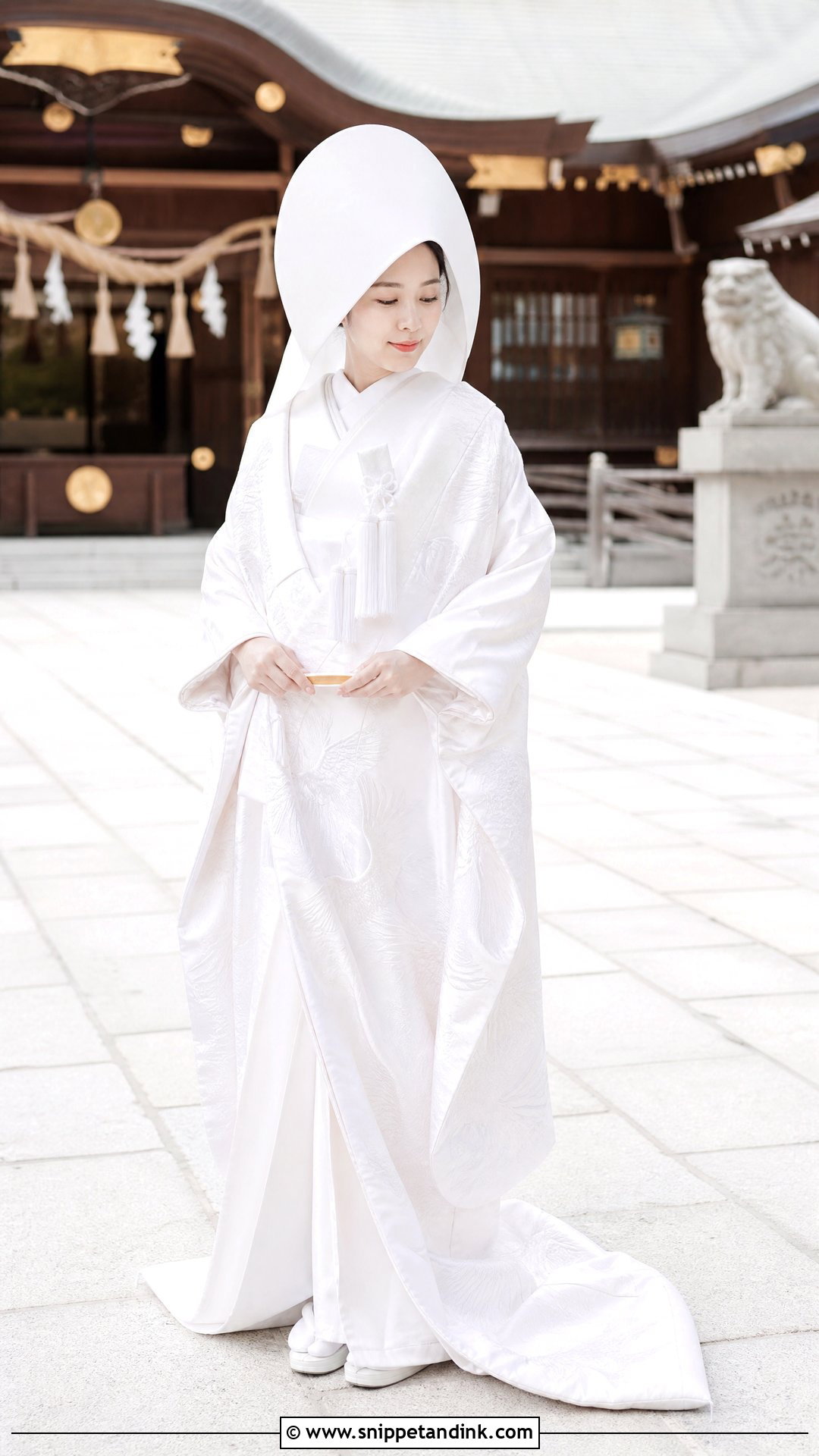
This is the shiromuku in its fullest ceremonial form: an embroidered white robe and a matching wataboshi hood, with every visible layer white, from kakeshita, obi and collar to the hakoseko, tabi and zori. The wataboshi is worn only with shiromuku, and it frames the face in a soft oval much as a veil does, hiding the bride from everyone but the groom during the rites. Choose silk with woven cranes, clouds or flowers that appear and disappear as the light shifts. Because the hood shades the face, makeup needs a little more definition than you’d think: matte skin, shaped eyes and a muted red lip. A folded white sensu fan completes it.
2. Crane Shiromuku With Tsunokakushi
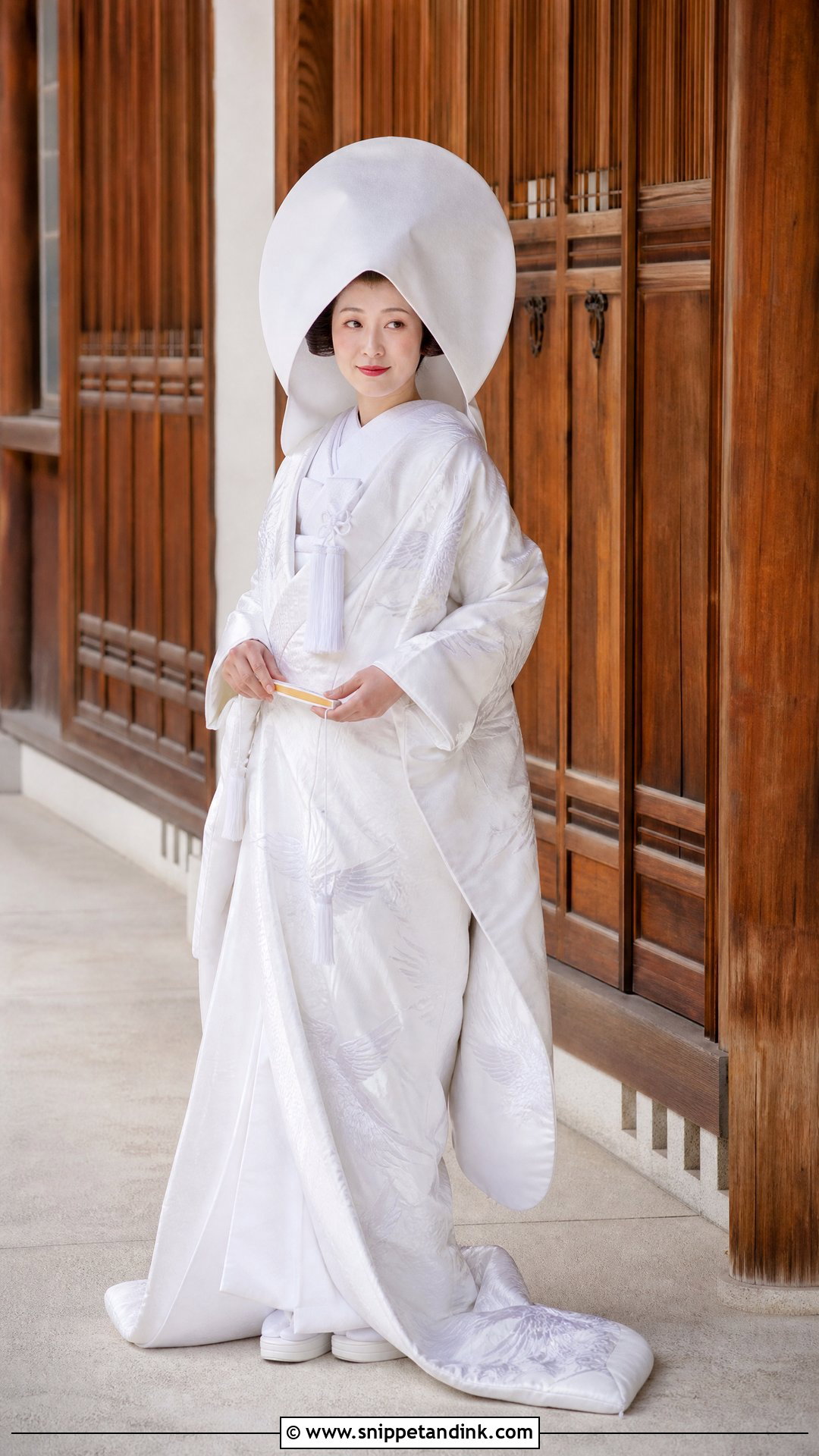
The tsunokakushi is narrower than the wataboshi and leaves the face and front of the hair open, so it suits brides who want their expression visible in the ceremony photos. It also needs a full traditional hairstyle underneath to sit properly. A traditional bunkin takashimada hairstyle or a well-fitted bridal wig gives it that base; I’d book the wig fitting weeks ahead, because a wig that’s even slightly loose makes the headdress tilt. Choose a robe with white-on-white cranes across the shoulders, sleeves and hem, symbols of a long marriage and good fortune. Smooth skin, defined brows, a classic red lip and a white fan finish it.
3. Floral Shiromuku With Shimada Hair
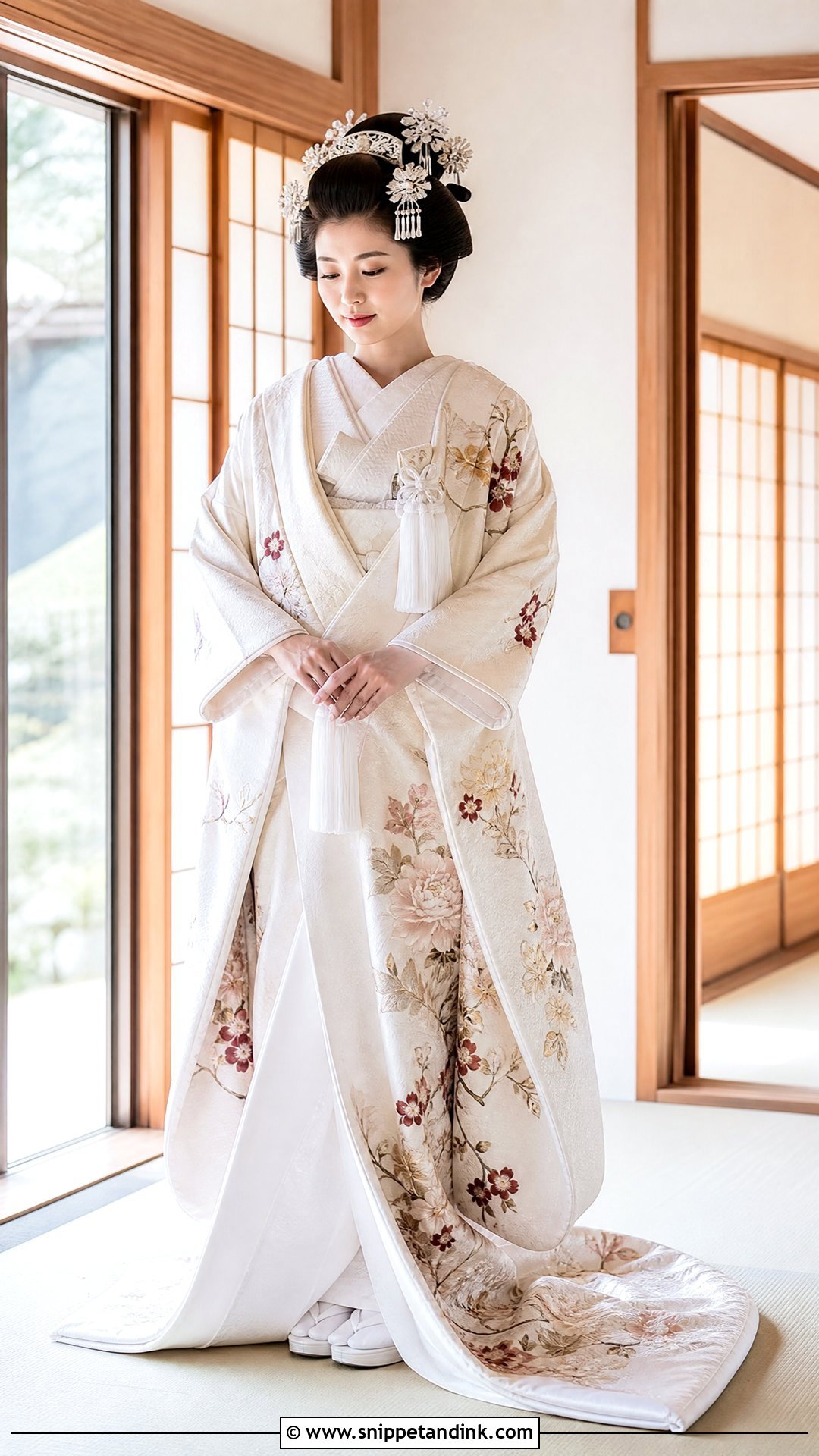
Floral embroidery adds depth without breaking the white. Peonies, plum blossom, chrysanthemums or long botanical branches woven into the uchikake all work. A formal Shimada-style hairstyle with small white or silver kanzashi balances the wide sleeves and the padded hem, which would otherwise make the head look small. Keep the underlayers, obi, tabi and low zori white so the flowers carry the interest. A touch of soft pink blush and a carefully drawn lip bring warmth to the face. It suits a historic interior or a shrine courtyard. Book the dresser and hairstylist together, since the collar depth and the height of the hair are decided as a pair.
4. Cherry Blossom Shiromuku With Floral Hairpins
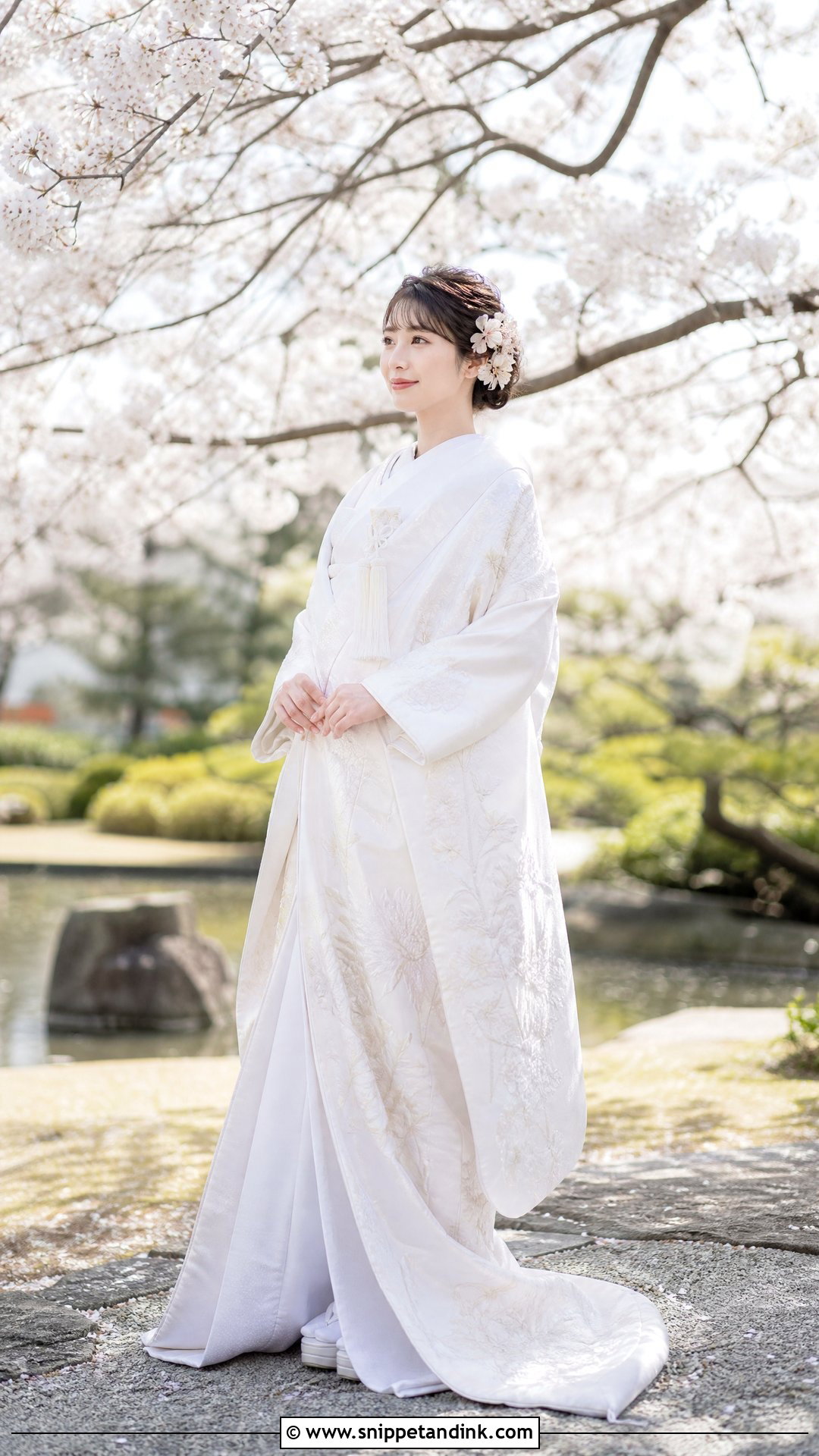
Cherry blossom is a spring motif, and a shiromuku with white cherry blossom branches reads quietly from across a room, then shows its detail in close photographs. Instead of a full hood, this look uses a polished low updo with small white blossom pins, which makes it a better fit for a reception or portraits than for a strict shrine rite. A few blush accents in the ornaments are fine if your ceremony allows a modern touch. Skip earrings and necklaces: the collar and the pins already frame the face. Fresh, luminous skin and a rosy red lip suit the season. Photograph it under flowering trees or beside old timber.
5. Red Lined Shiromuku With Red Accessories
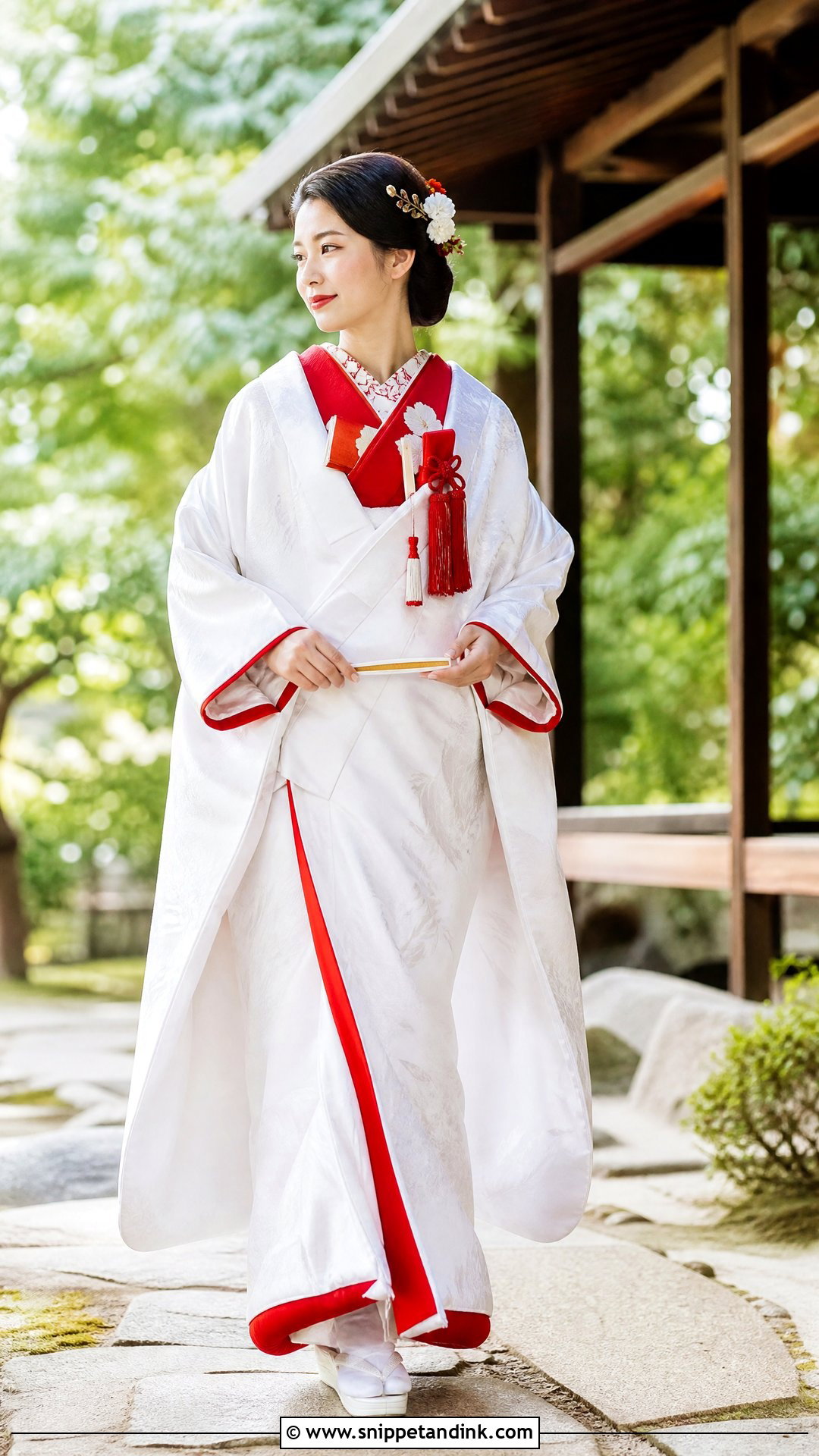
A red lining is one of the oldest ways to give a white robe warmth, and it shows only where the uchikake turns back: at the padded hem, the sleeve openings and the inner edge. Repeat the red once or twice, through a layered collar, the hakoseko or a fan cord, rather than adding new colours. White tabi and zori keep the base traditional. A sleek updo shows off the red collar line, and a rich red lip ties it to the face. Movement is what sells this look, so I always ask the photographer for walking shots, when every step flips the hem and flashes the lining.
6. Pink Layered Shiromuku With Soft Makeup
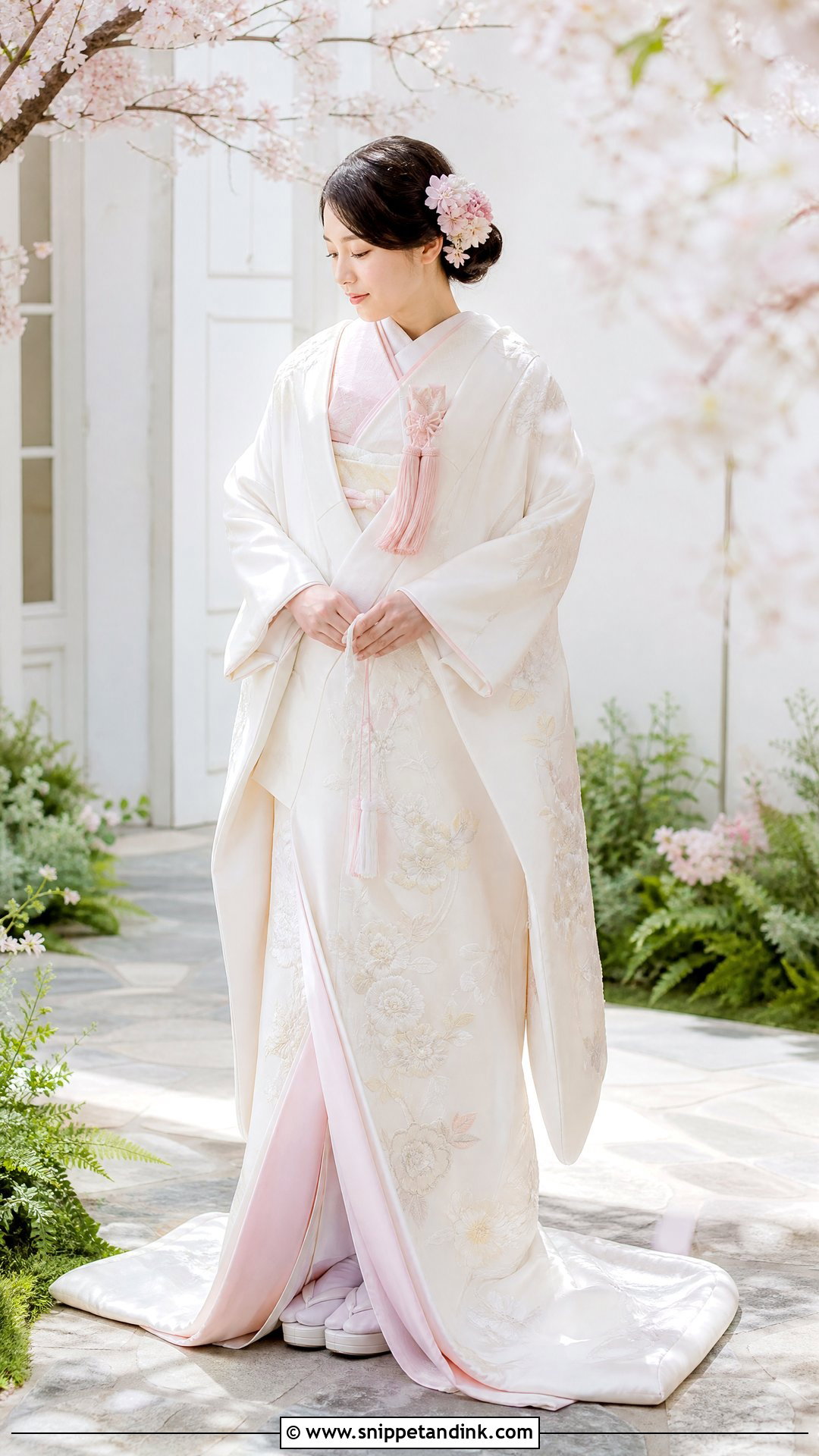
Pale pink softens the formality without turning the outfit pastel. Start with a white floral uchikake, then let blush appear in the kakeshita collar, the date-eri layer or the accessory set, and stop there. Two or three touches look deliberate; pink everywhere looks like a costume. White tabi and pearl-white zori keep the foundation traditional, and a neat low bun with blush and white floral pins echoes the colour. Fresh skin, softly shaded eyes and a rose lip finish it. Rooms with pale wood and plenty of daylight flatter the gentle colour best.
7. Gold Embroidered Shiromuku With Gold Kanzashi
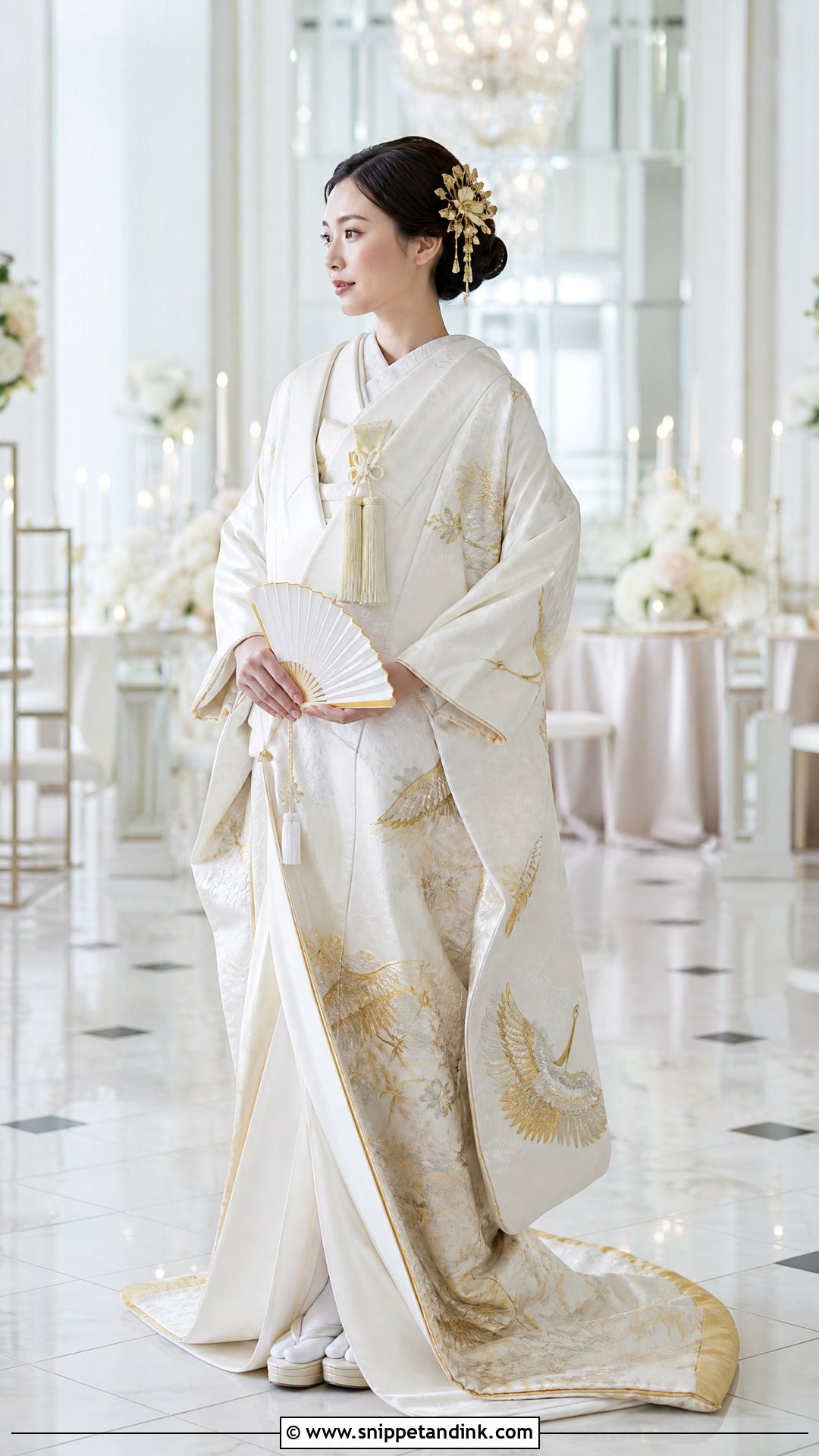
Gold thread makes the robe feel richer, but restraint is the whole trick: the cranes, fans or clouds should catch the light only as you move. Pair it with an ivory-white kakeshita, a white obi, gold-trimmed hakoseko, tabi and cream-white zori, and repeat the metal near the face with gold kanzashi in a smooth traditional updo. A mostly white fan with a narrow gold edge is enough. Lay every gold item side by side before the day; antique gold, bright yellow gold and pinkish gold all exist, and mixing them looks careless in close-up. Warm neutral eyes and a controlled red lip complete it for an evening room.
8. Silver Embroidered Shiromuku With Pearl Accessories
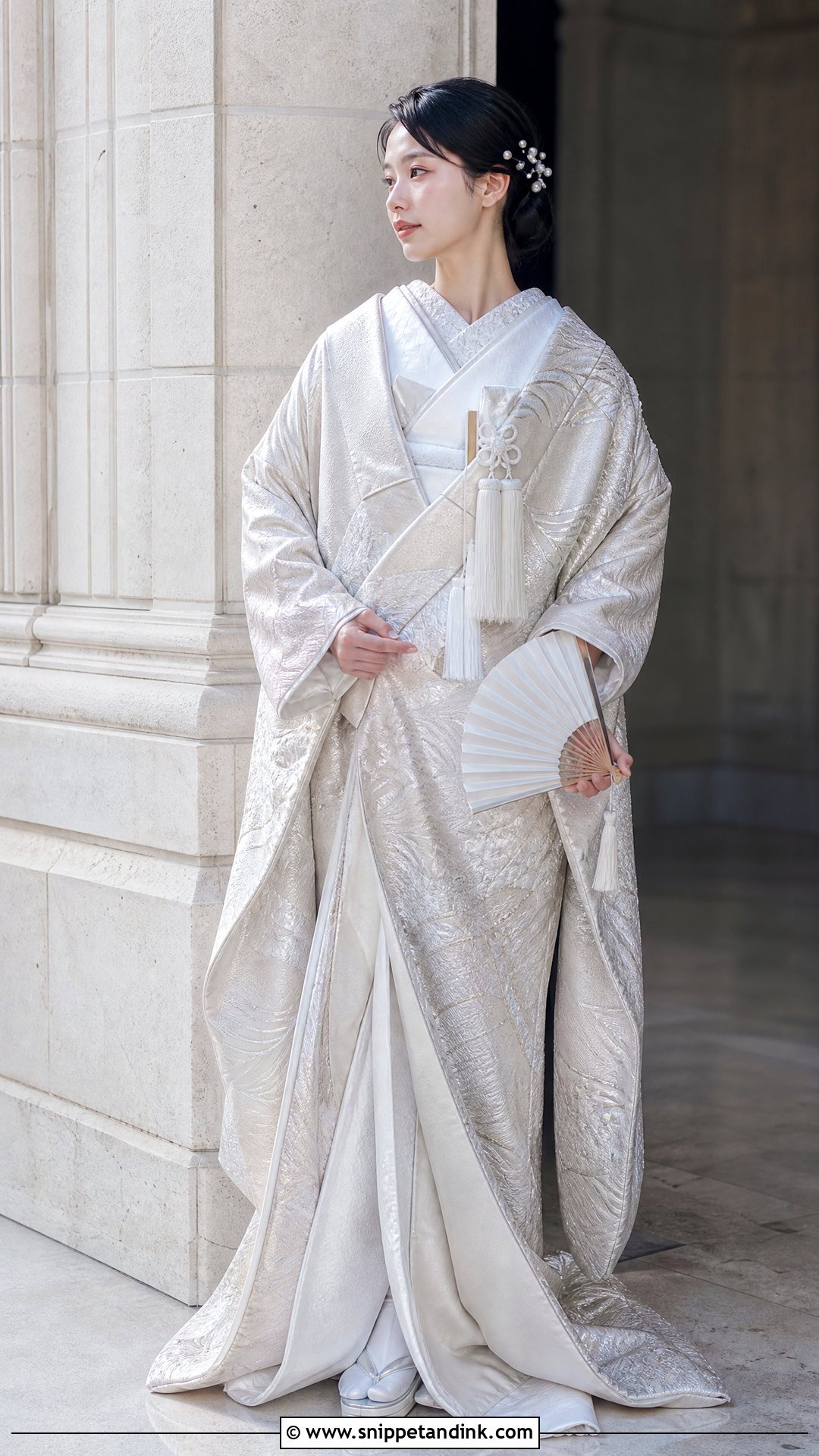
Silver thread turns the white cooler and brighter, which suits winter and modern interiors. Look for silver cranes, waves, clouds or geometric patterns on the uchikake, worn over white layers with a silver-edged collar. Pearl pins in a clean chignon work if they’re small and evenly spaced; crowded pearls on the hair look fussy against such a quiet robe. White tabi, silver-accented zori and a white fan with a hint of metal follow through. Cool rose blush and a berry-red lip suit the palette. Bright, even light reveals the thread; in dim rooms silver embroidery can look grey, so check the venue lighting.
9. Pine And Crane Shiromuku With White Fan
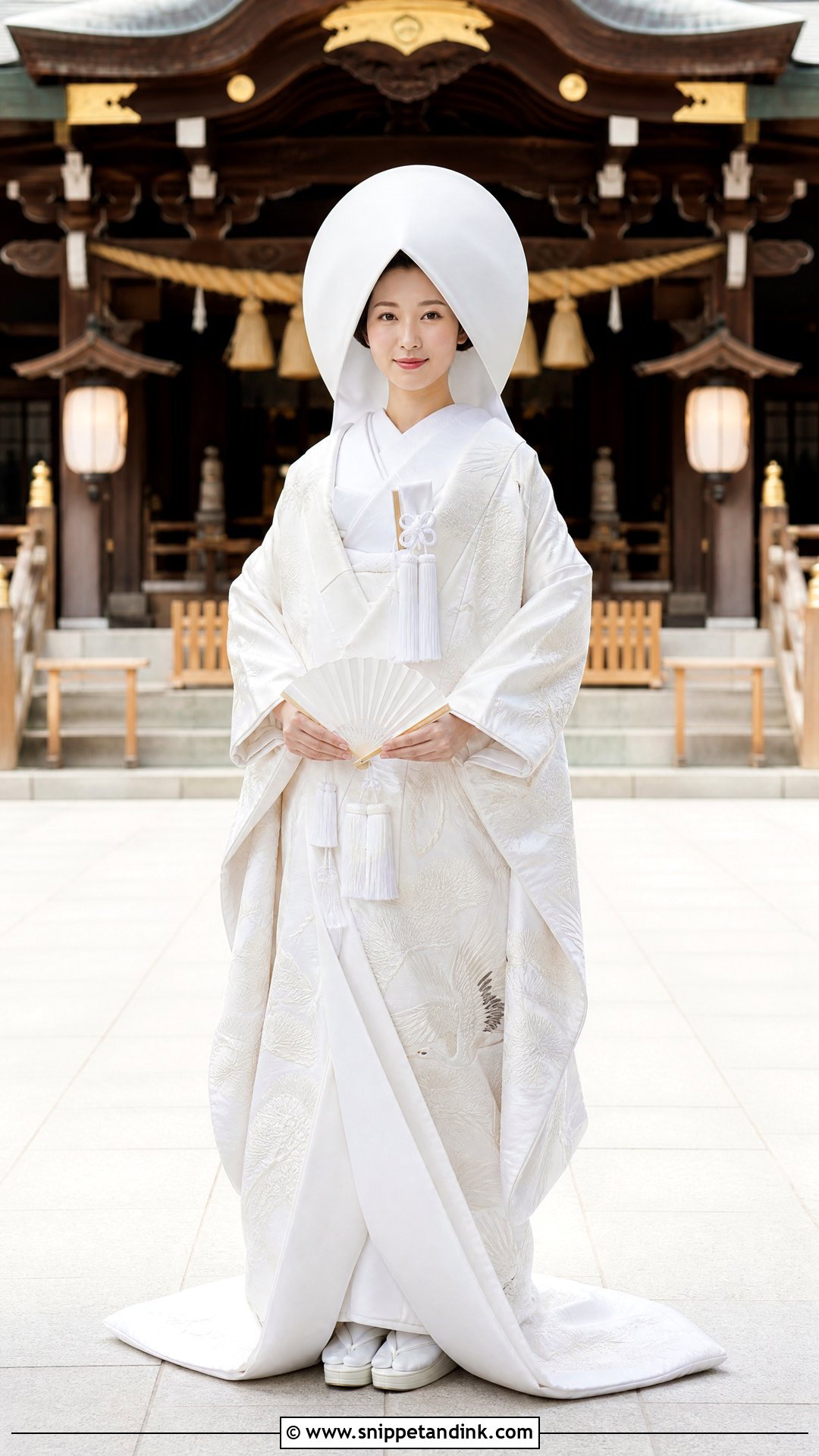
Pine and crane together carry wishes for long life and good fortune, which is why they appear so often on wedding kimono. On this robe the motifs can cover the back and the trailing hem in white embroidery, so let the uchikake lead and keep the underlayers, obi, hakoseko, tabi and zori plain white. A formal white sensu fan held at the waist gives a composed portrait pose. Use a traditional updo with one comb or a tsunokakushi. Against so much white, a slightly deeper lip keeps the features from disappearing in photos, which is a mistake I see often with very pale makeup.
10. Plum Blossom Shiromuku With Red Lip
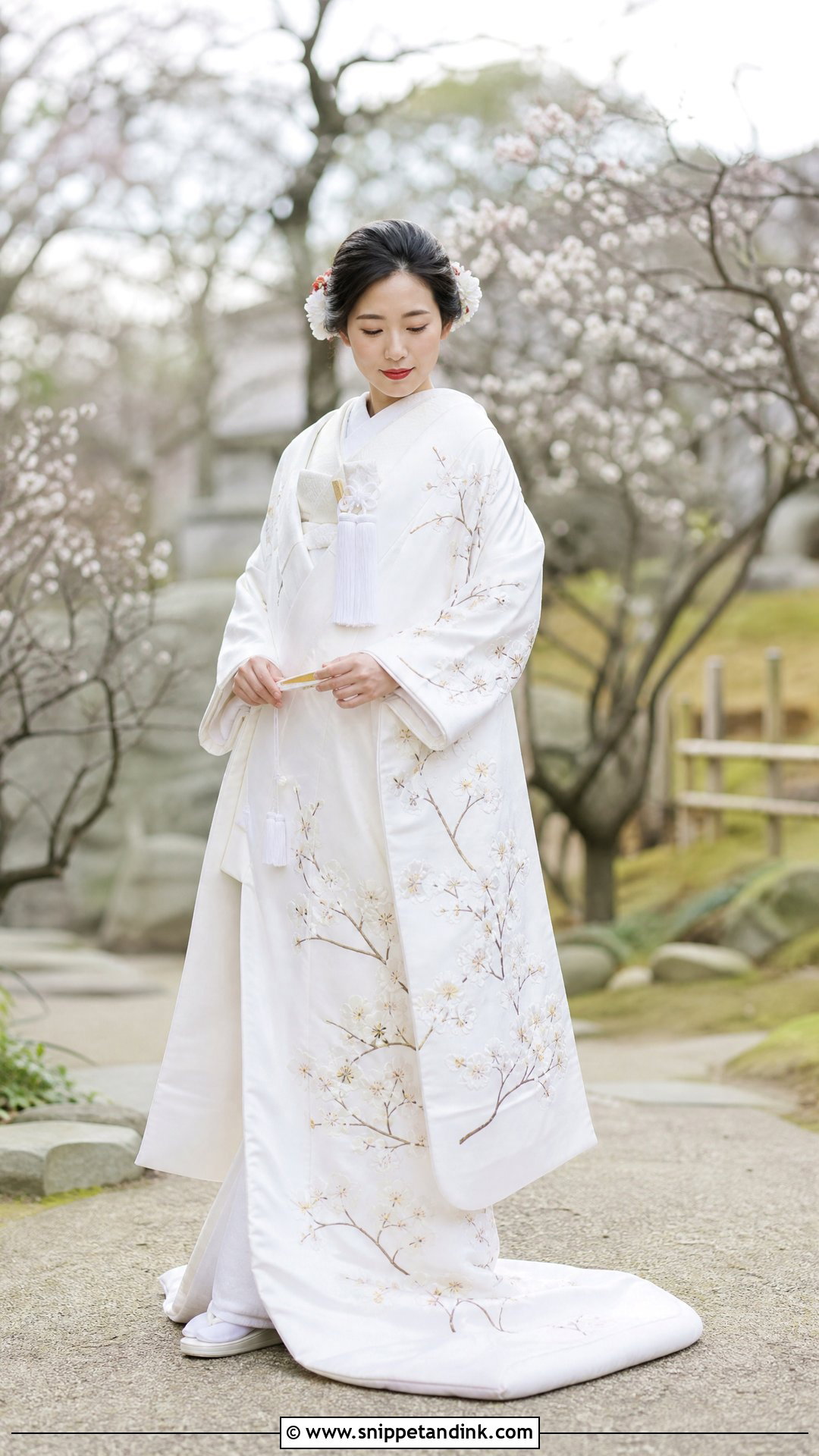
Plum blossom flowers in late winter, so this robe fits a cold-season or early spring ceremony. Branches that run diagonally across the sleeves and hem create movement through what is otherwise a heavy, static garment. Keep the kakeshita, obi, accessories, tabi and zori white, and add tiny white plum blossoms to a structured low bun. The one strong accent should be a classic red lip with a crisp edge, because a blurred lip looks smudged next to white silk. Matte foundation, light blush and soft eyes balance it. A plain white fan finishes the outline in a garden or a tatami room.
11. Seigaiha Shiromuku With Modern Updo
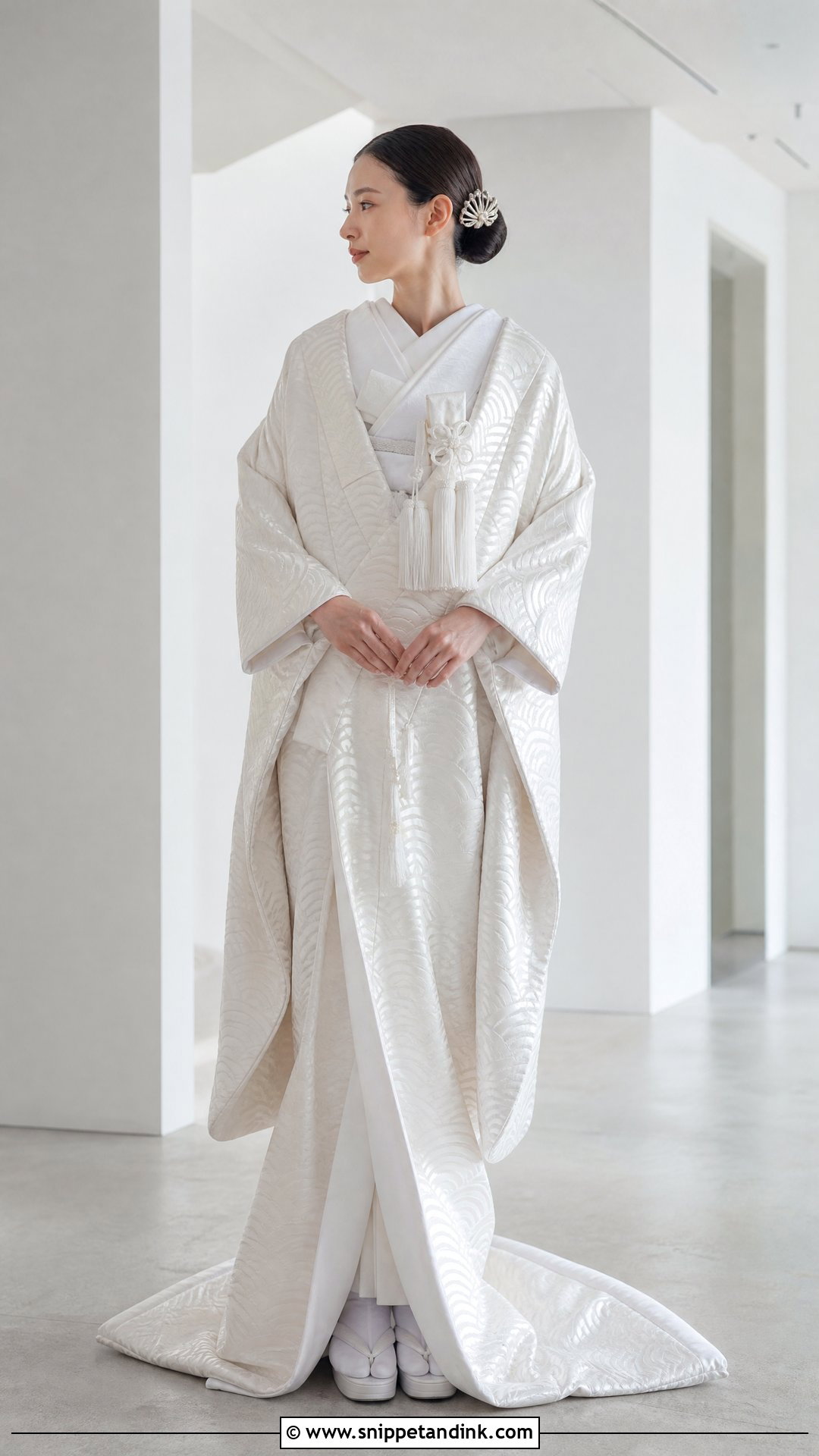
Seigaiha, the overlapping wave pattern, needs a wide surface to read, so it shows best on the big sleeves and the long padded hem. Wear the robe over an all-white kakeshita and obi with a white hakoseko, tabi and low zori. For a modern finish, swap the traditional wig for a smooth centre-parted chignon with one silver comb or a small cluster of white orchids. Luminous skin, neutral eyes and a red-rose lip keep it clean. Before full-length portraits, ask the dresser to fan the hem out so the waves aren’t hidden in a fold.
12. White Brocade Shiromuku With Minimal Accessories
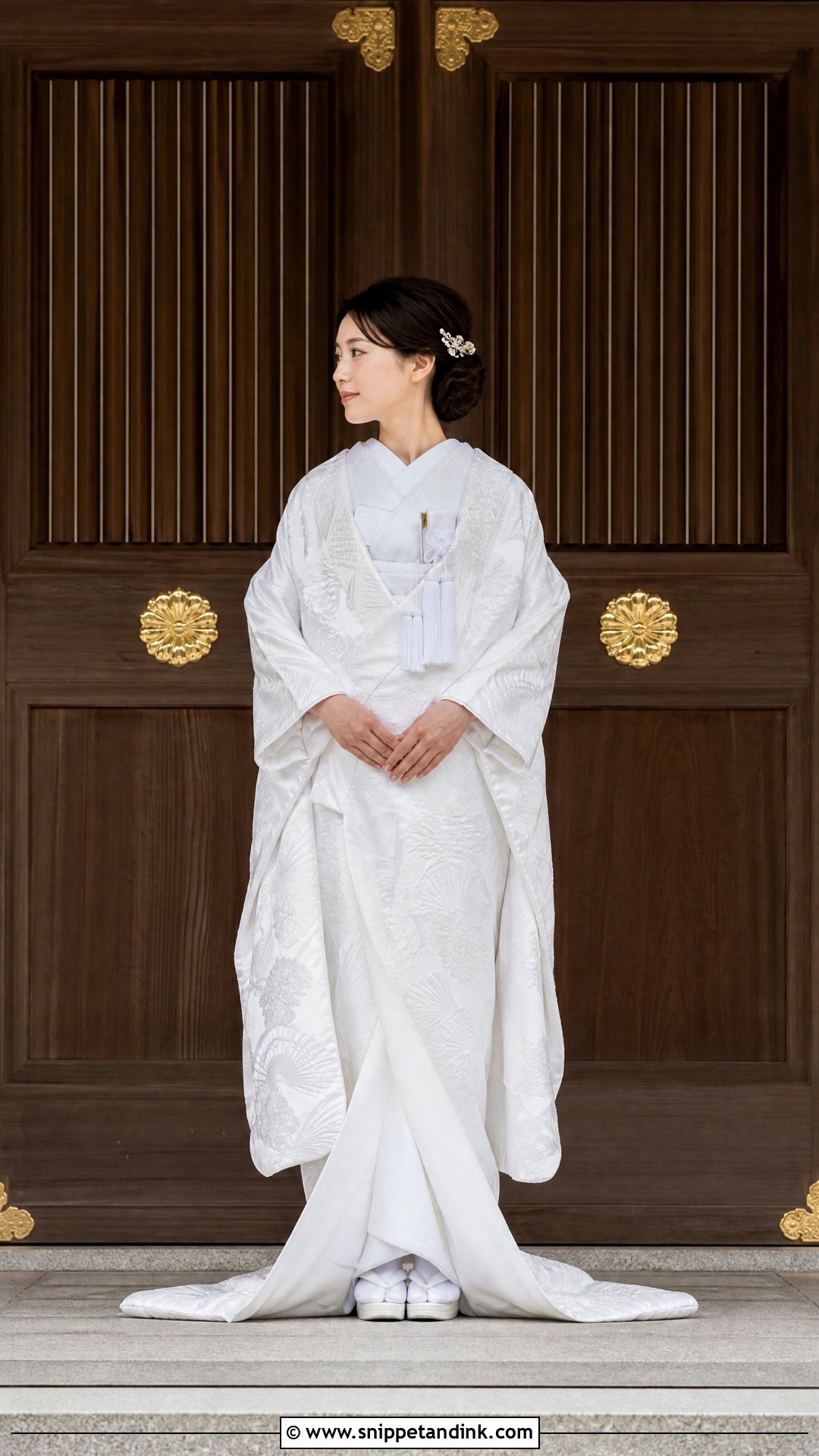
Dense white brocade is already decoration, so add almost nothing to it. Clouds, flowers, fans or geometric medallions woven into the cloth give texture that shows even in flat light. Smooth white underlayers, a clean obi, a simple hakoseko, plain tabi and understated zori keep the focus on the robe. A low bun with one small comb leaves the collar line clear. Makeup should match that restraint: soft matte skin, natural brows, a fine liner and a muted red lip. Brocade is stiff, so it holds its shape well against strong architectural backgrounds, and it creases less than soft silk during a long day.
13. Silk Shiromuku With Low Bun
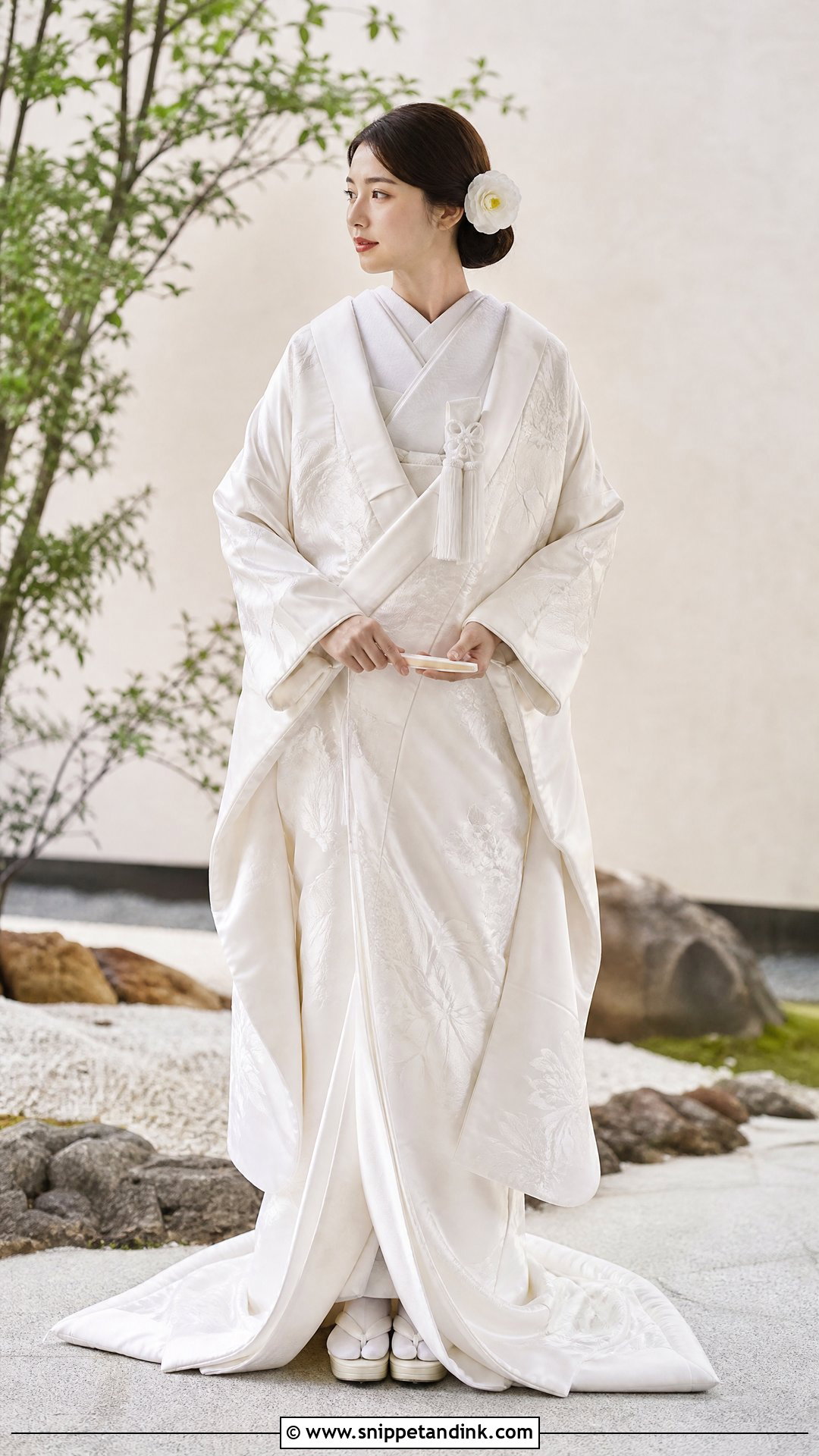
Smooth silk with light woven motifs gives a softer, more fluid shiromuku than heavy embroidery does. Coordinate it with white silk underlayers, a neatly tied obi, matching accessories, tabi and polished zori. The low bun has to sit above the collar, not on it: the back of a kimono collar dips away from the neck on purpose, and hair resting there pushes it forward. One white camellia or pearl comb is plenty. Natural makeup with gentle contour and a rose-red lip suits it. Glossy silk shows every wrinkle, so I ask the dresser to smooth the back before each standing portrait.
14. Peony Shiromuku With White Flower Crown
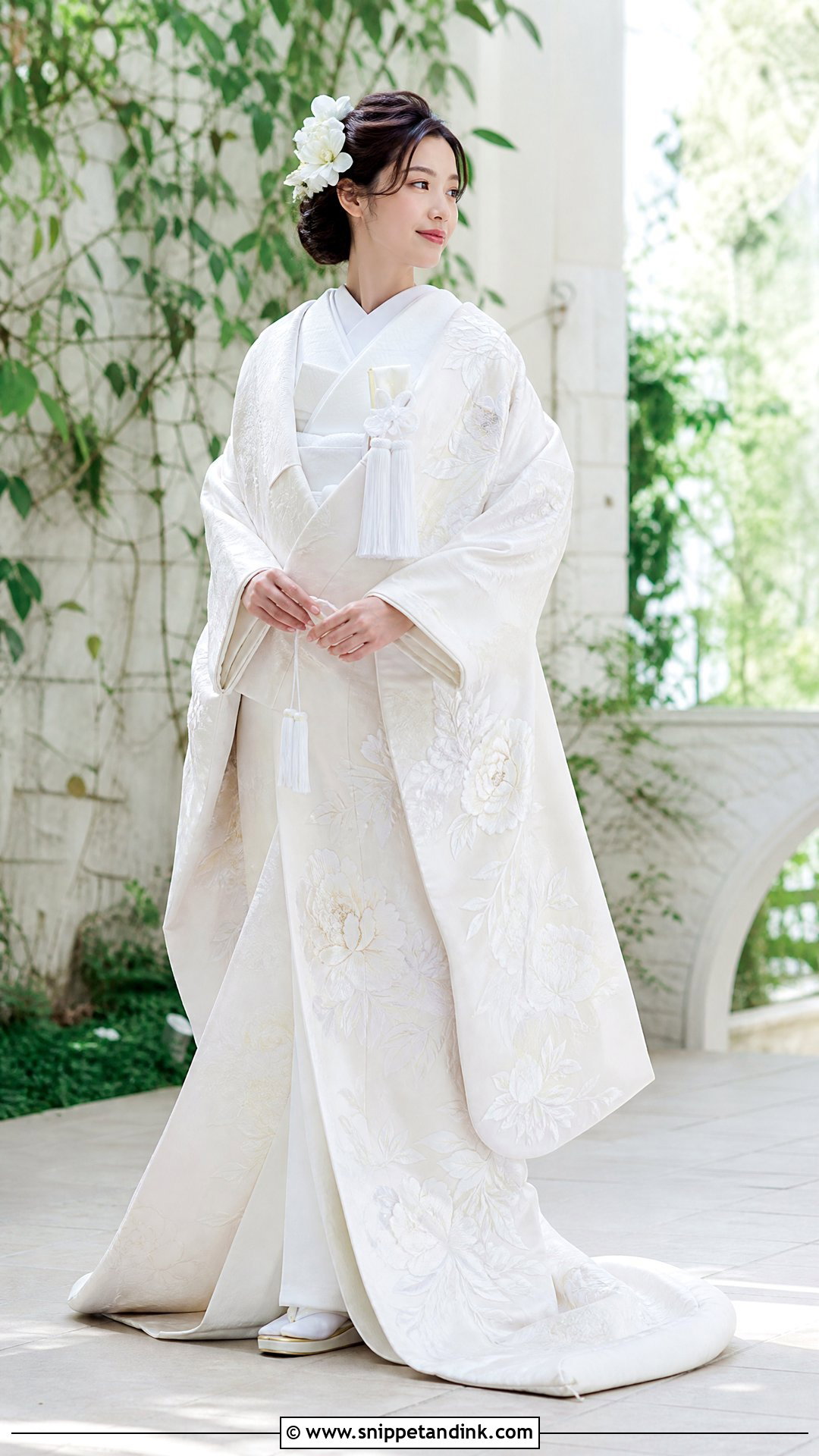
Large raised peonies give a lush look while staying all white, concentrated around the shoulders, sleeves and lower hem. A white kakeshita, obi, accessories, tabi and zori keep the base formal. For a modern take, a low textured updo with a small crown of white peonies and buds works, but keep it white so it doesn’t fight the robe. Soft blush, defined lashes and a rose lip finish it. A flower crown in place of traditional headwear is not right for every shrine ceremony, so confirm with the shrine and your dresser first, and save it for portraits or the reception entrance if in doubt.

15. Geometric Shiromuku With Sleek Hair
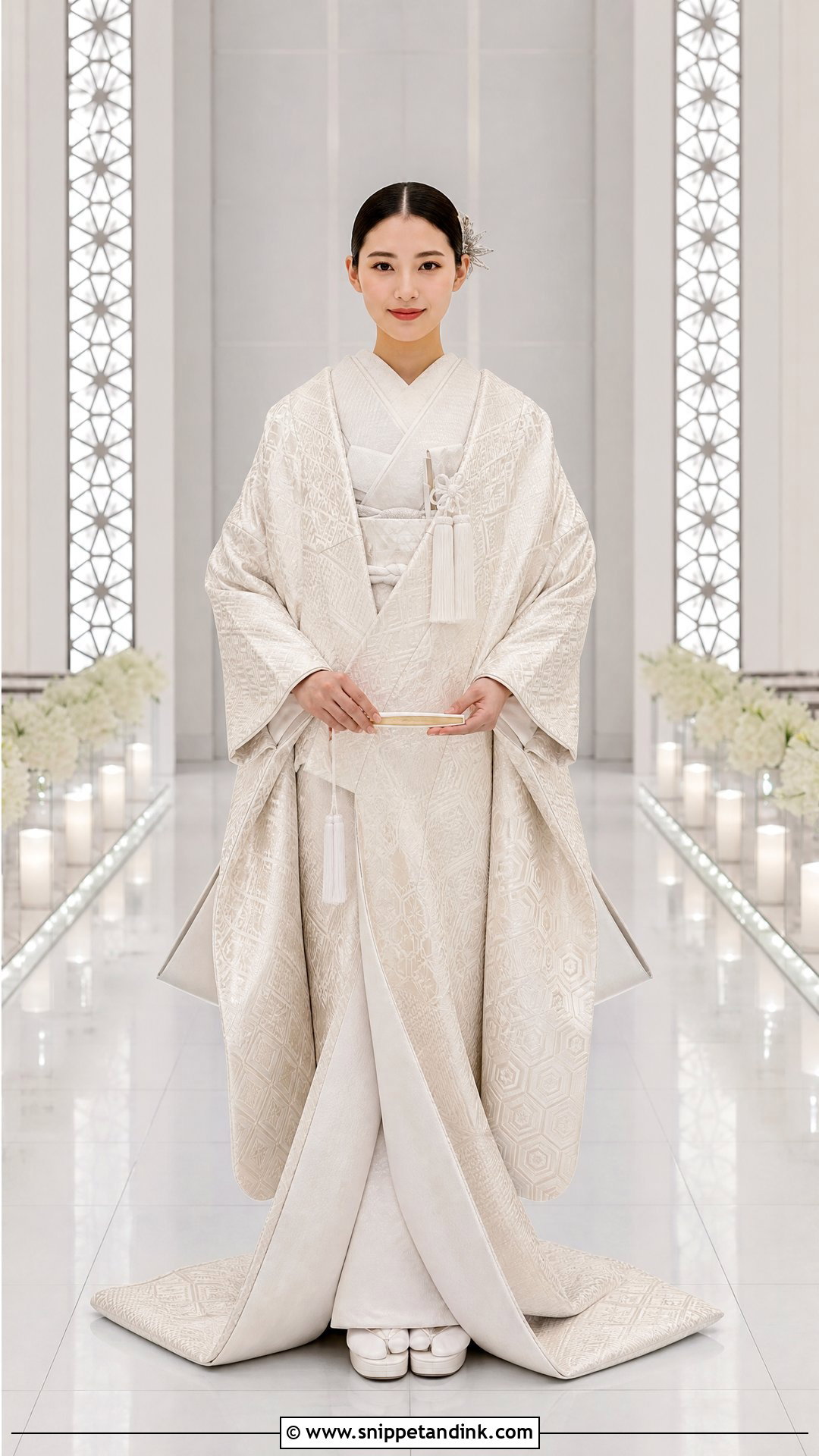
Geometric weaves suit brides who find florals too sweet. Interlocking diamonds, hexagons, fans or repeating lines look sharpest with plain white inner layers and very few accessories. Carry that structure into the hair with a sleek centre-parted bun and a narrow silver comb, and keep the fan precisely folded. White tabi and clean zori complete the outline, with sculpted cheeks, fine liner and a clear red lip. Posture matters more with a geometric pattern than any other: stand straight with both sleeves arranged evenly, or the lines visibly slant in the photo.
16. Ivory Shiromuku With Cream Accessories
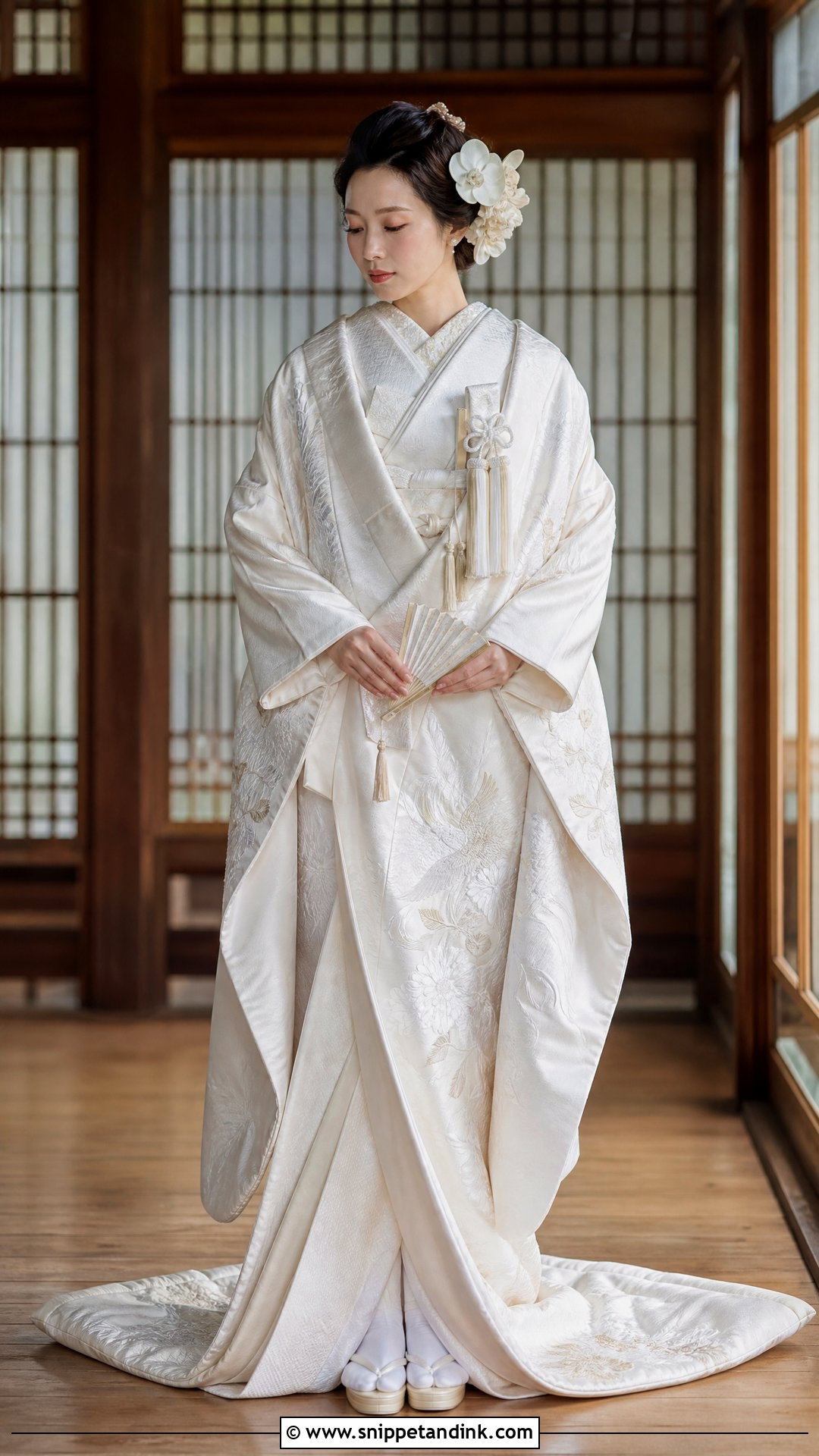
Whites differ more than people expect, and pure optical white can look cold against warm skin. An ivory or cream ensemble often flatters more. Choose the uchikake, kakeshita, obi, collar and accessories from the same tonal family and check them together by a window, not under shop lights. Ivory tabi, cream zori and a matching folding fan follow through, with ivory silk flowers or a pearl-toned comb in a soft updo. Warm beige eyes, peach blush and a muted brick lip suit it. Never slip a stark white piece into an ivory set; next to it, the ivory looks yellow in every photograph.
17. Shiromuku With Blue Kakeshita
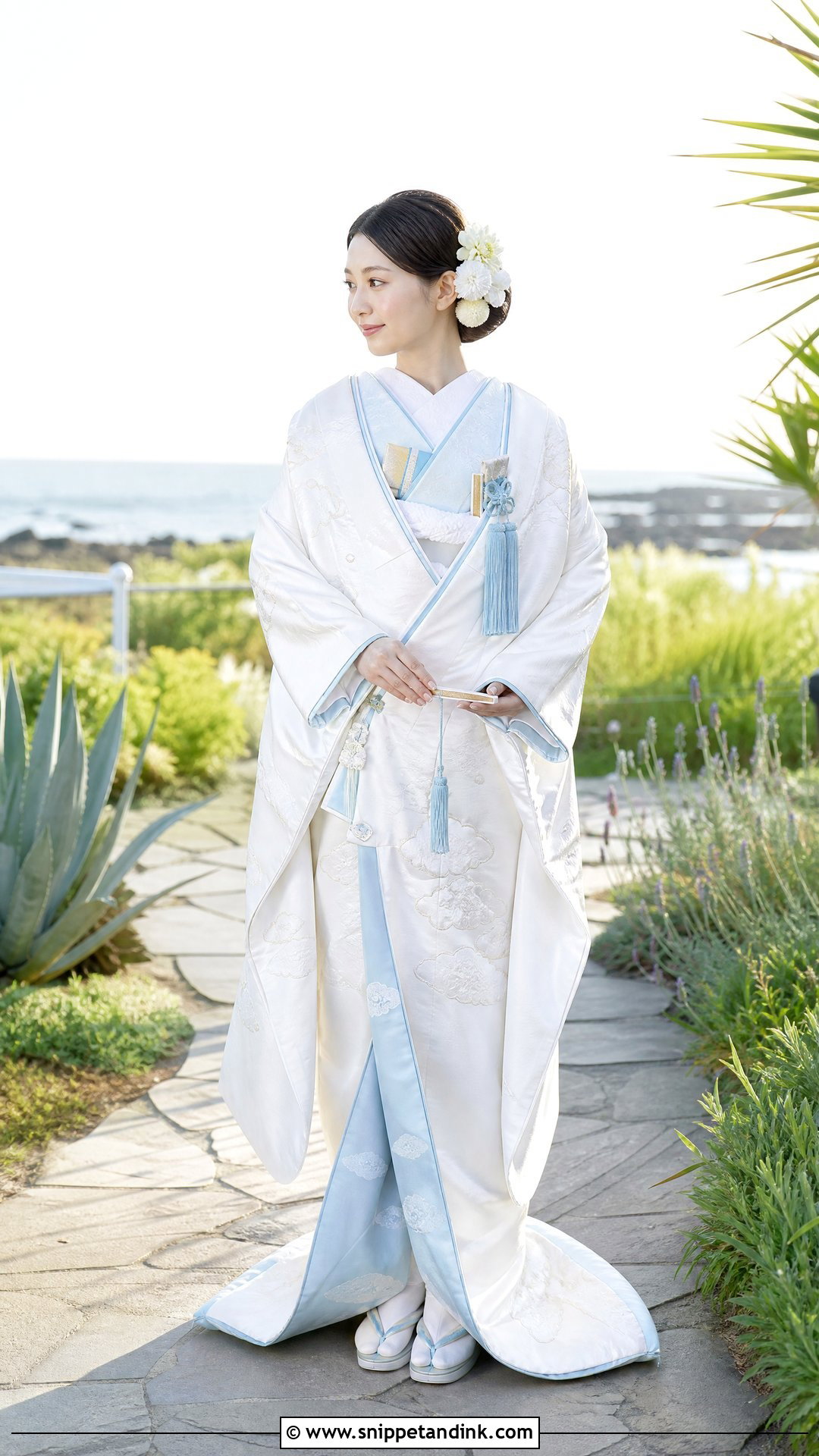
A pale blue kakeshita is an unexpected, cool accent, and it works because it shows only in slivers: at the neckline, sleeve openings and front edge. A robe with clouds, waves or cranes connects naturally to blue. Add a blue-edged collar, a coordinated hakoseko, white tabi and white zori with a subtle blue strap, and finish a smooth bun with small white flowers and one powder-blue ornament. Neutral grey-brown eyes, pink blush and a berry lip keep the face soft. A coloured under-kimono is a modern choice, so I’d check that your shrine or family is comfortable with it before booking. It shines in bright coastal or garden portraits.
18. Shiromuku With Green Kakeshita
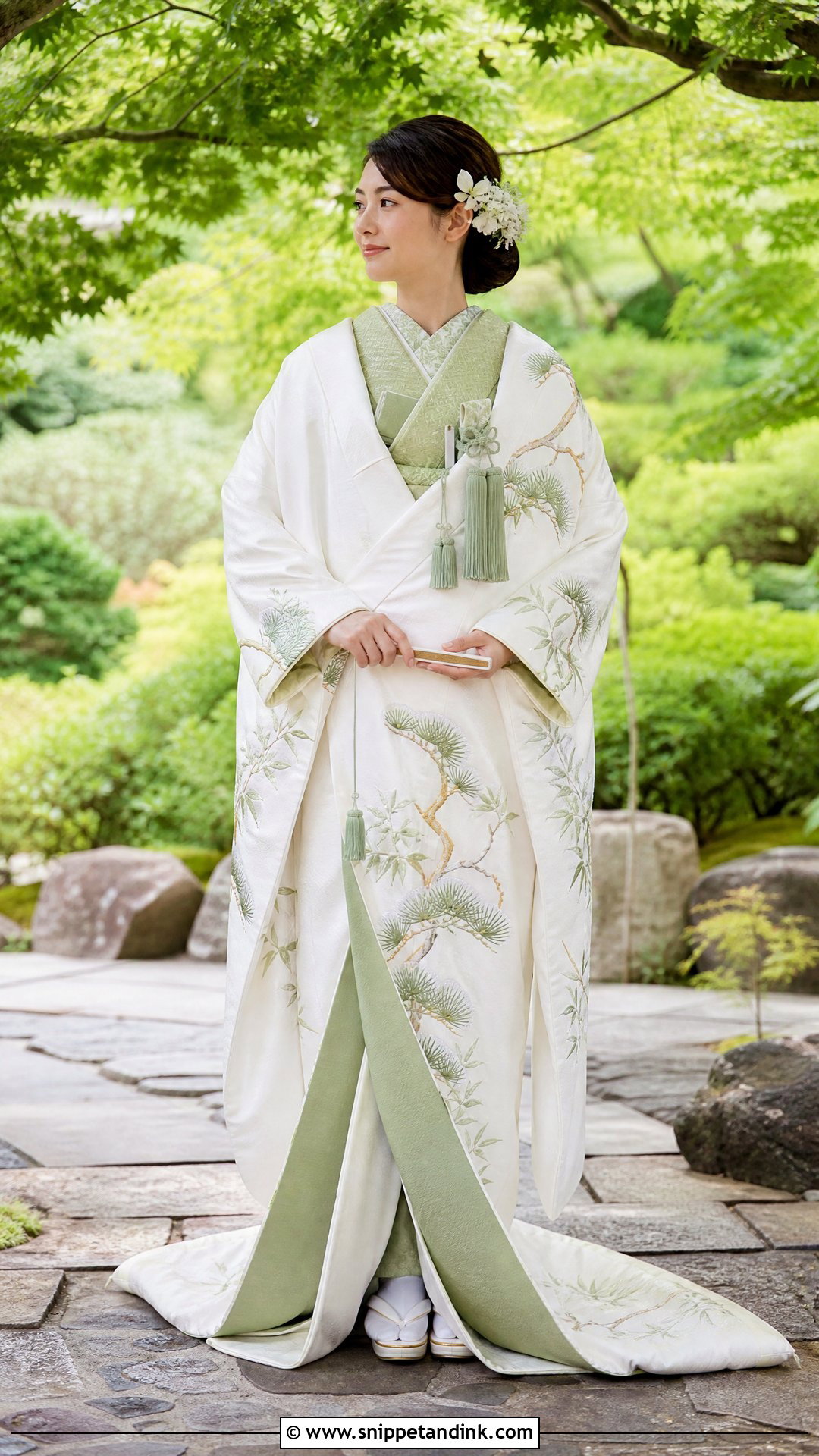
Soft sage under a white shiromuku gives a fresh, botanical feel. Pick an uchikake with pine, bamboo, leaves or vines so the green has a reason to be there. Let it show only in the layered collar and small accessories, with the robe, tabi, zori and fan white. A low chignon with white blossoms and a few green silk leaves continues the theme. Luminous skin, warm brown eyes, peach blush and a muted red lip suit it. Shade is the risk: a bright green looks loud against white, so see every layer together at the fitting and go duller than you think.
19. Shiromuku With Purple Kakeshita
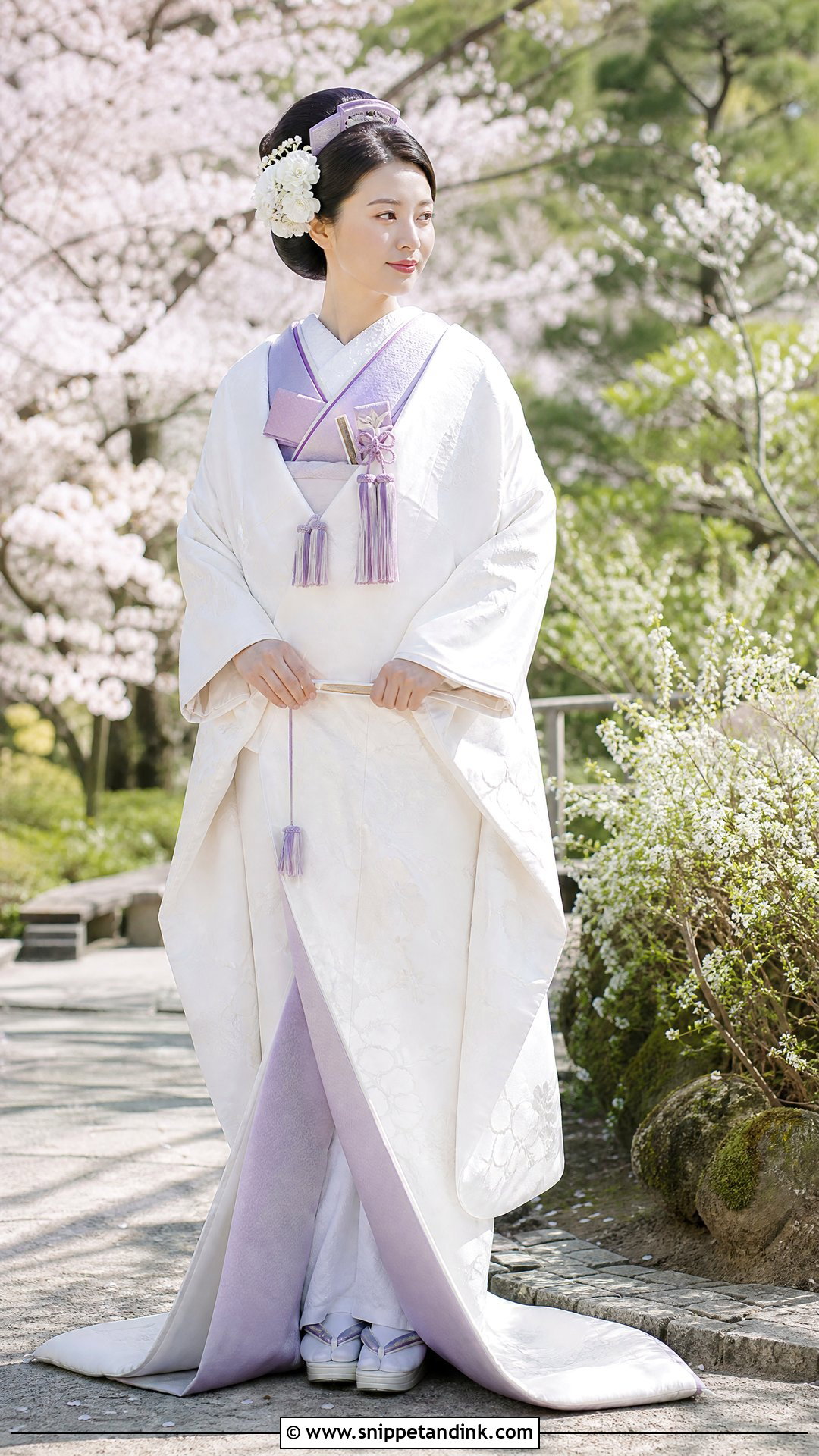
Lavender or wisteria purple under an embroidered robe looks quietly sophisticated. Use it at the collar, sleeve edges and a few hakoseko pieces, keeping the obi and outer robe white. Wisteria, chrysanthemum or flowing branch motifs support the colour. White tabi, zori with fine lavender straps and a smooth updo with white flowers and one pale purple comb tie it together, with soft plum eyes and a berry-red lip. Dusty purple works; saturated violet makes the white look blue in photos. Spring and early summer gardens suit it best.



20. Modern Shiromuku With Fresh Orchids
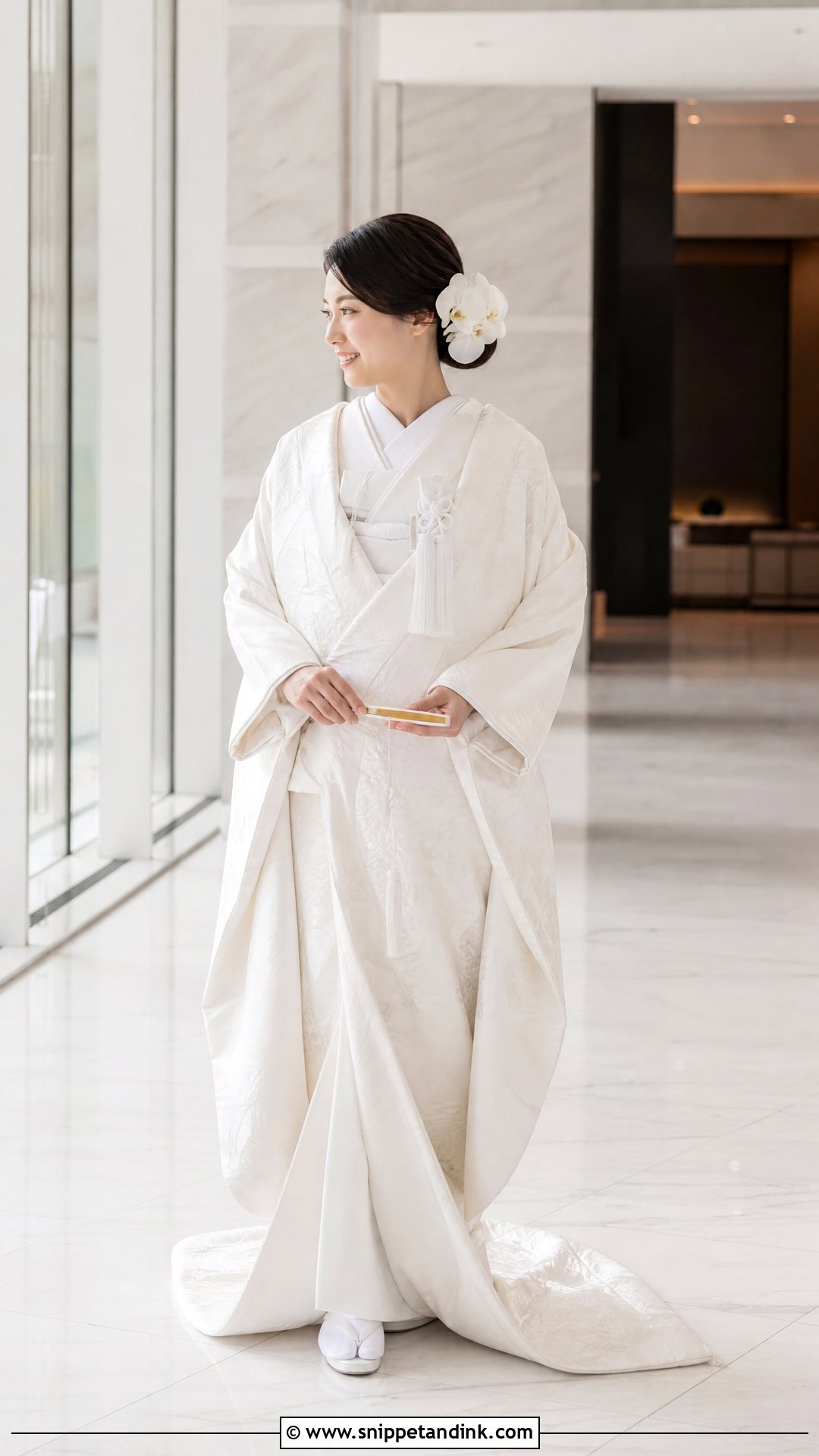
Fresh orchids make the cleanest modern version. Choose a lightly embroidered robe with subtle clouds, waves or abstract florals over a plain white kakeshita and obi, and keep the hakoseko, tabi, zori and fan white. Place two or three orchids asymmetrically behind one ear in a sleek low bun. Natural skin, soft eyes and a muted red lip hold the mood. Real flowers wilt in warm rooms within hours, so ask the florist for sturdy varieties, keep them chilled until the last moment and have the hairstylist wire them in without loosening the bun.
Walking a Shrine Path in Zori and a Padded Hem
Brides are always told the robe is heavy, but nobody explains what that means for the next six hours. The uchikake hem drags, the sleeves hang to the knee, and the zori force small, shuffling steps. You won’t be able to stride, and you shouldn’t try.
- Outdoors, lift the front of the hem lightly with one hand, or let an attendant hold it. In a shrine procession an attendant often carries a large red parasol over you.
- To sit, perch on the front edge of a stool or chair and let the dresser spread the uchikake behind you. Leaning back crushes the padding.
- Fold your sleeves over one forearm before you reach for anything: food, a pen, a glass.
- Plan bathroom breaks with the dresser before you’re fully dressed. It is possible, but it takes help and time.
- In summer, six silk layers are hot. Ask for a cooler underlayer, keep the ceremony indoors where you can, and sip water through a straw so your lip stays intact.
Many couples also change after the ceremony into a coloured iro-uchikake or a Western gown for the reception. If that’s your plan, the dresser needs to be booked for the change too, and the hairstyle has to suit both outfits. And if Japanese dress isn’t part of your own heritage, wear it with the formality it carries: follow the shrine’s rules, accept the dresser’s corrections, and keep the traditional pieces in their proper place.
Small Details Make One White Robe Unlike Any Other
Shiromuku balances tradition, symbolism and texture with a few personal touches. A wataboshi feels deeply ceremonial; floral pins or a coloured kakeshita feel more contemporary. Cranes, pine, blossom, waves and geometric weaves each change how the white reads in photographs. Treat the robe, underlayers, obi, accessories, hair, tabi and zori as one outfit rather than separate purchases, and let an experienced kimono dresser guide the fit and protect the garment. Start with the motif that means something to you, and the rest of the choices tend to follow.
You'll Like These Ideas:






Leave a Reply