
Flowers turn up on wedding gowns in more ways now than I can remember: embroidered vines, raised 3D appliqués, hand-painted blooms, lace petals and soft printed gardens. They give a dress romance without making it fussy, and they suit a ballroom as easily as a beach. What I spend fitting appointments on is placement and scale, because flowers on a gown are never just decoration. They draw the eye wherever they sit, they change how the dress moves, and they decide what the veil, shoes, jewellery, bouquet and hair can do around them. Here are 25 ways to wear floral detail, with the fit and styling notes I give brides at the salon.
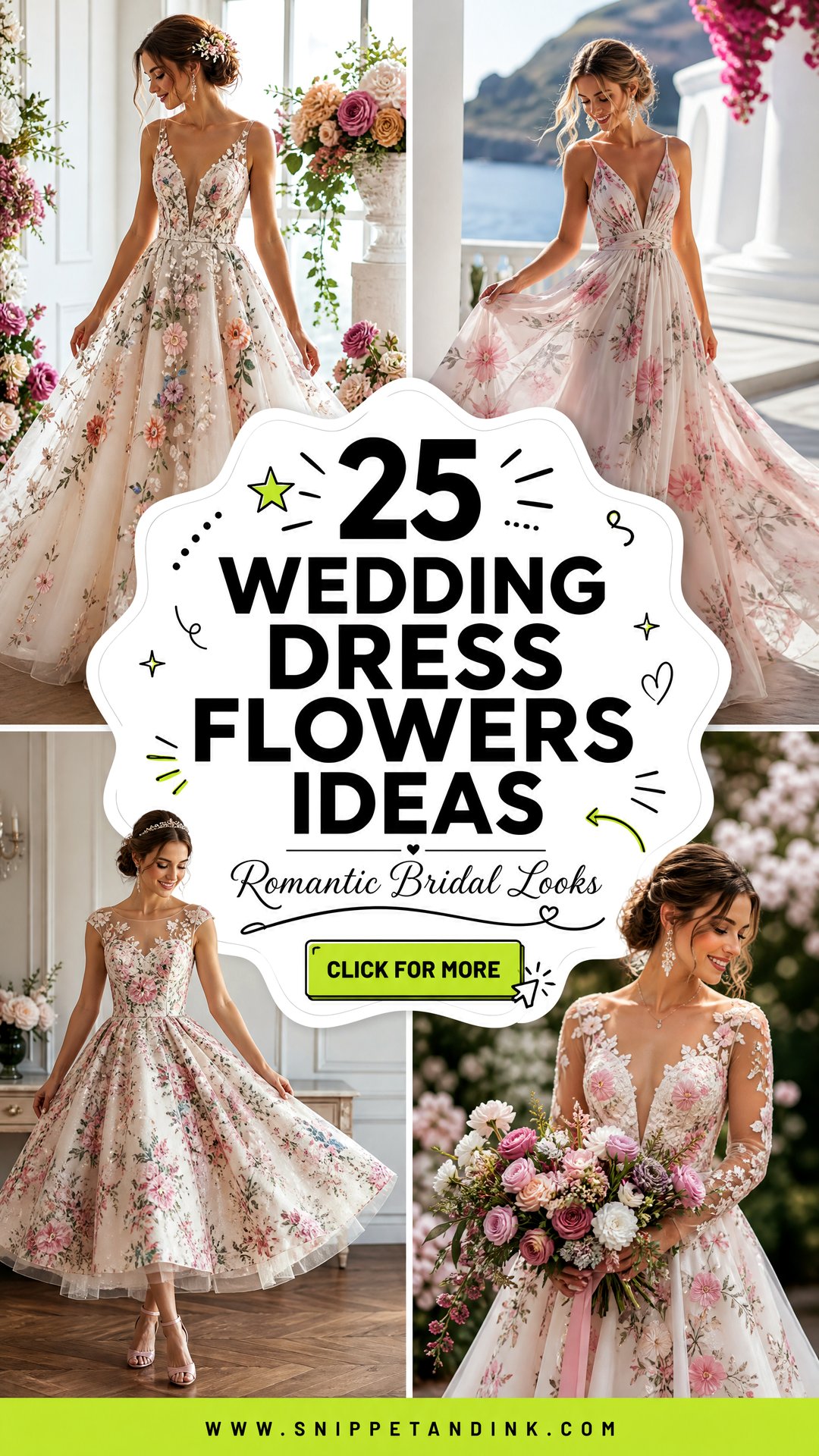
Raised Petals, Flat Lace or Print? How Each Technique Wears
Brides often fall for a floral dress from a photo without knowing how the flowers are made. The technique changes the weight, the care and how the dress holds up over a long day, so I explain it at the first appointment.
- 3D appliqué: layered petals stitched on. The most texture, but it can crush in a car or under a bustle, and it adds weight.
- Lace: flowers woven into the fabric. Flat, comfortable and the easiest to alter, though cutting a lace hem needs skill.
- Embroidery: thread stitched into the base fabric. Light and durable; metallic threads need gentle steaming.
- Print or hand-painting: almost weightless and the most colourful, but it can’t be moved or altered around seams.
If you’re wearing the dress all day and dancing late, I’d lean towards lace or embroidery. Save heavy 3D work for a shorter day or a dress you’ll change out of for the reception.
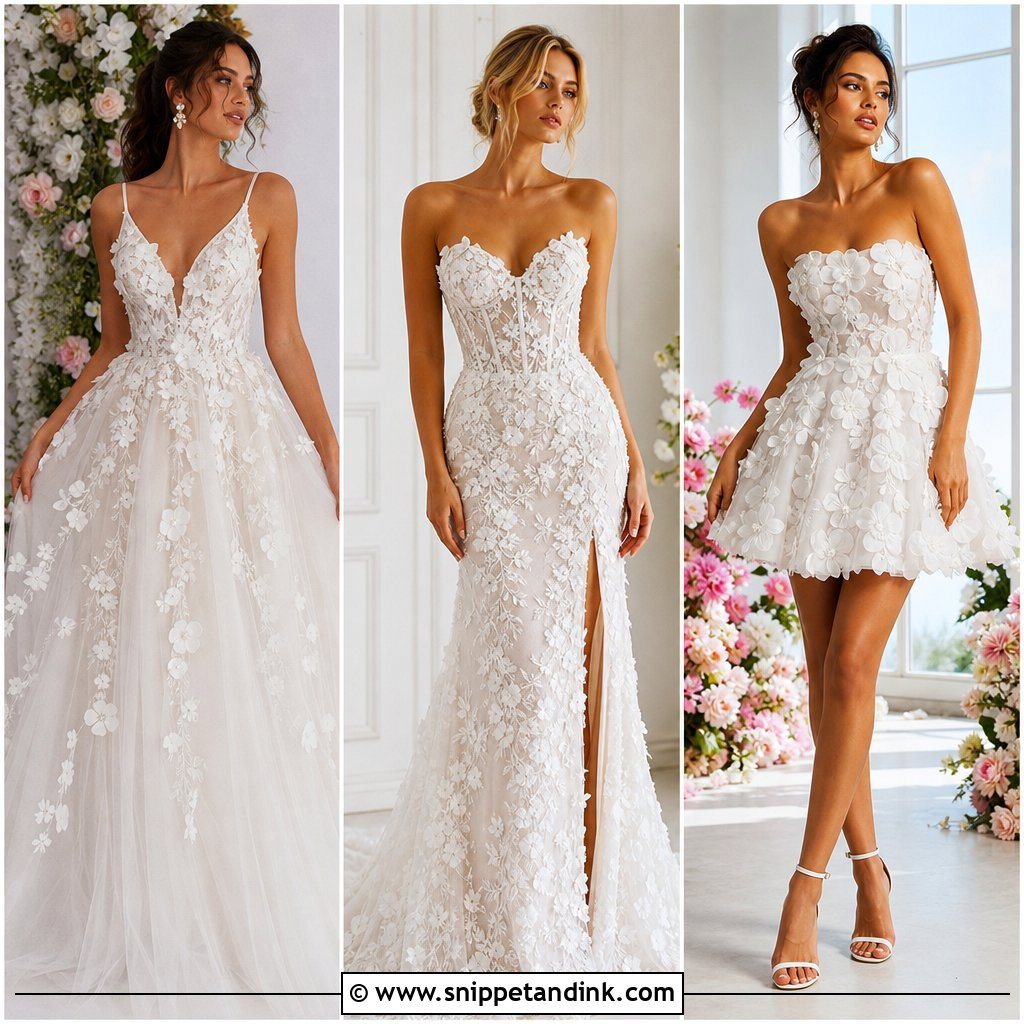
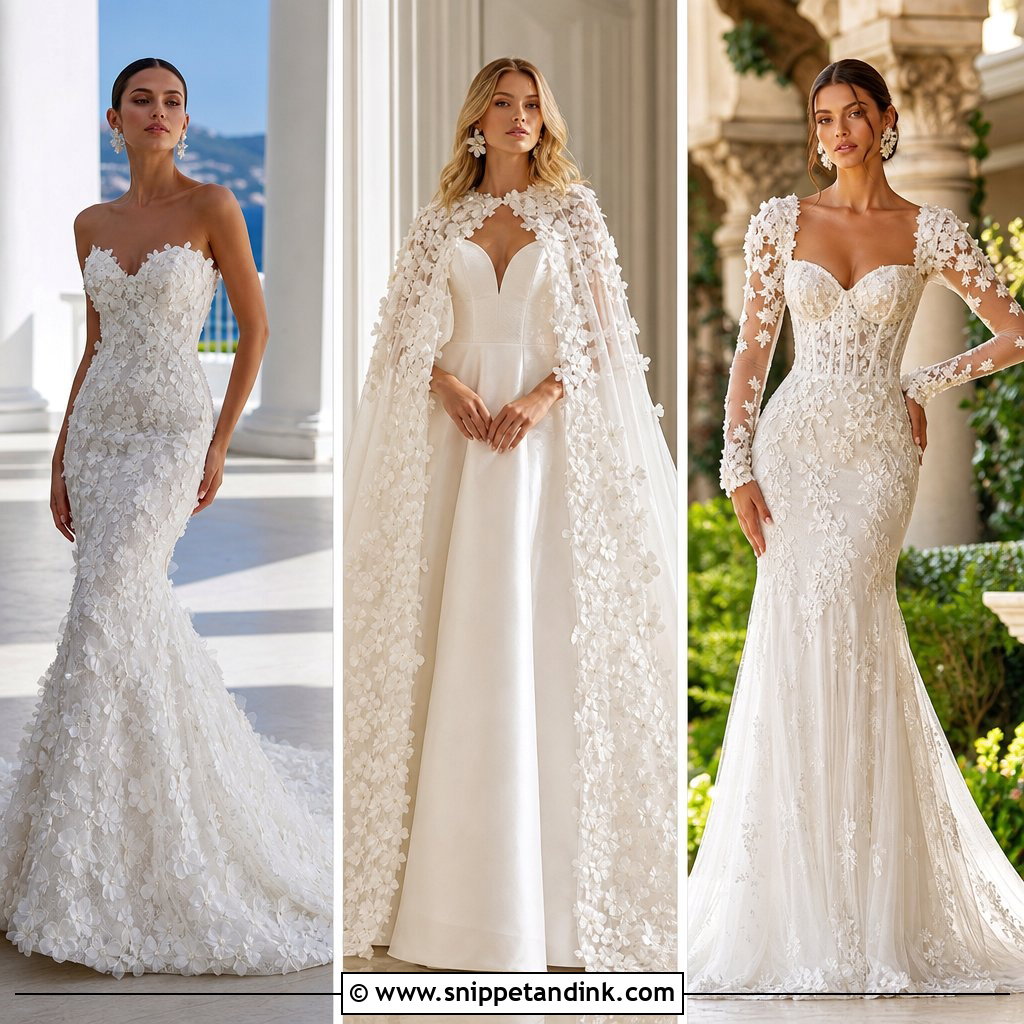
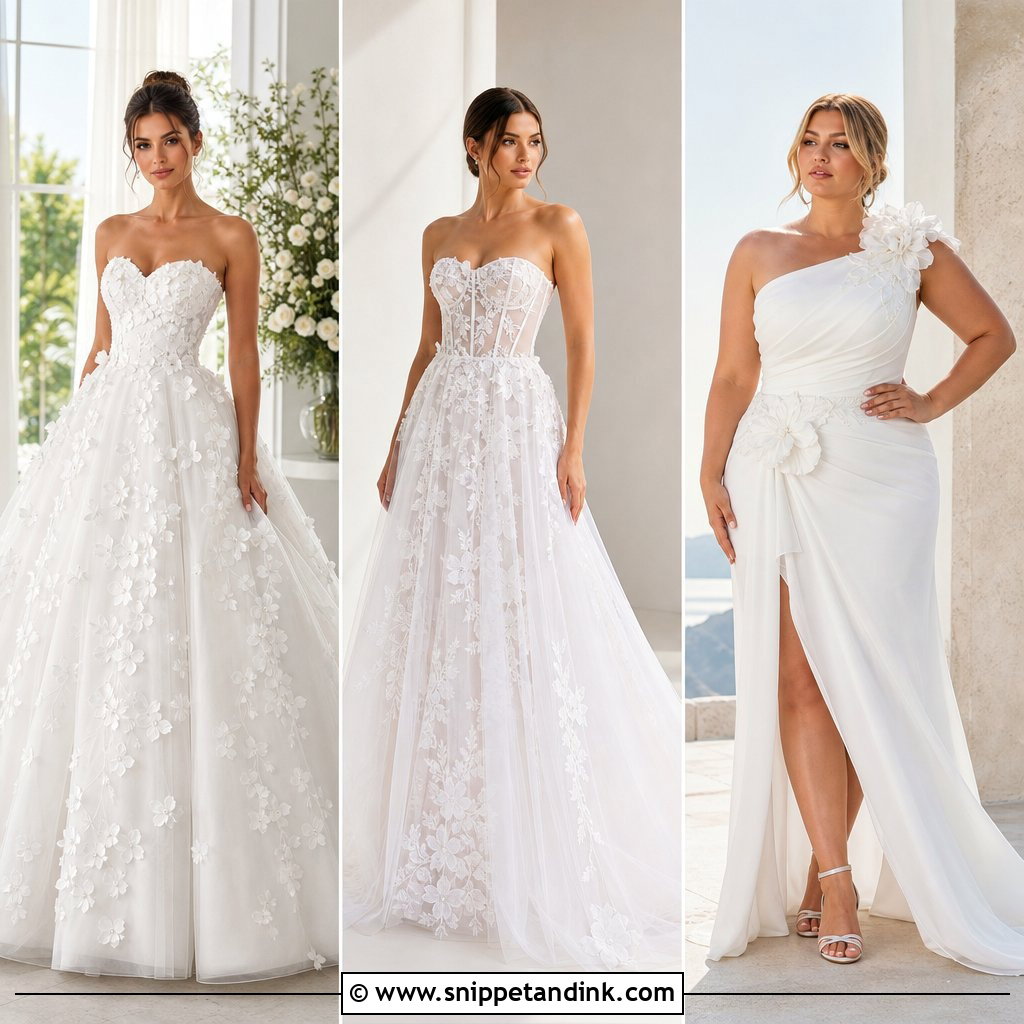
1. 3D Floral Applique Wedding Dress
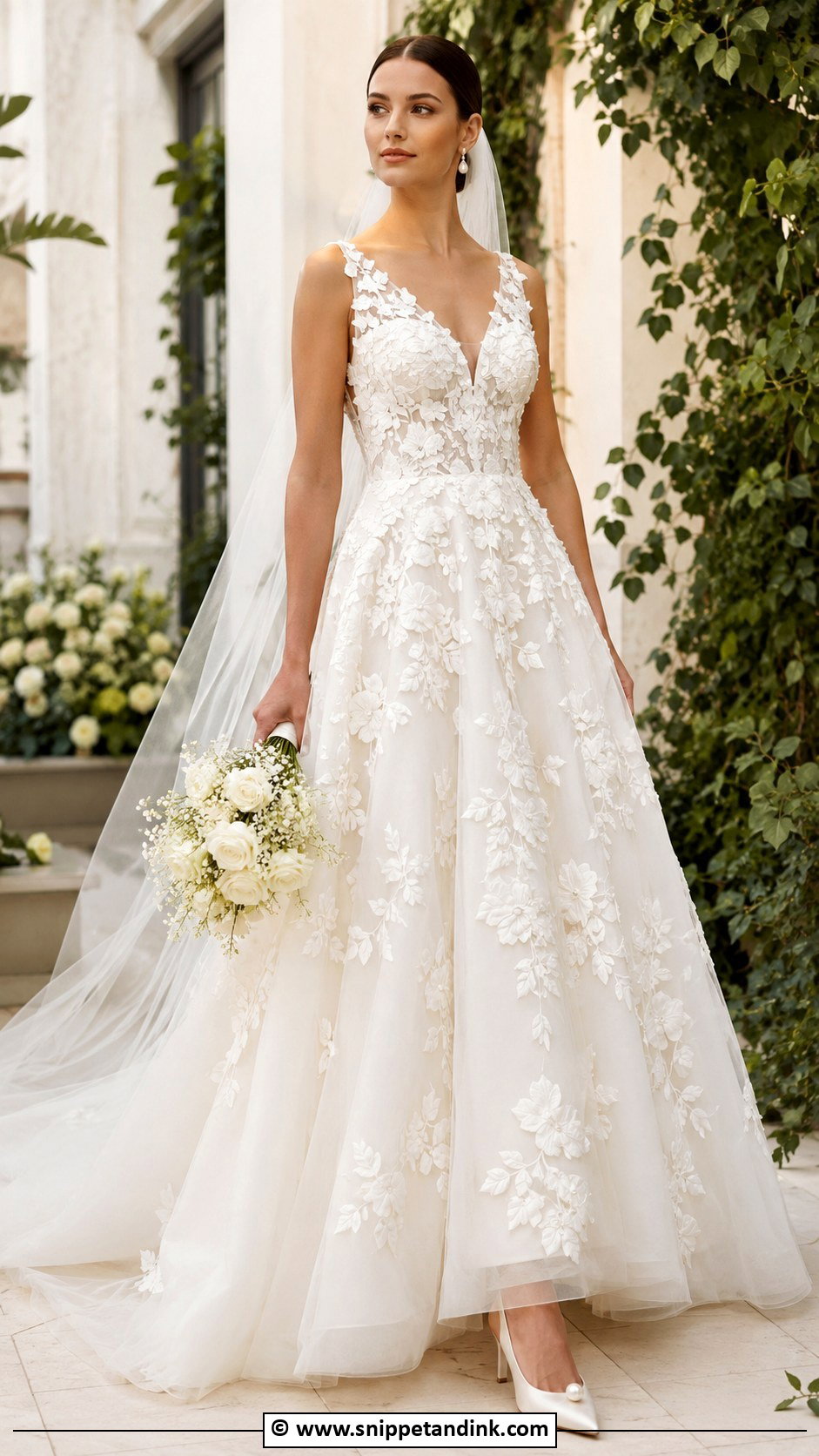
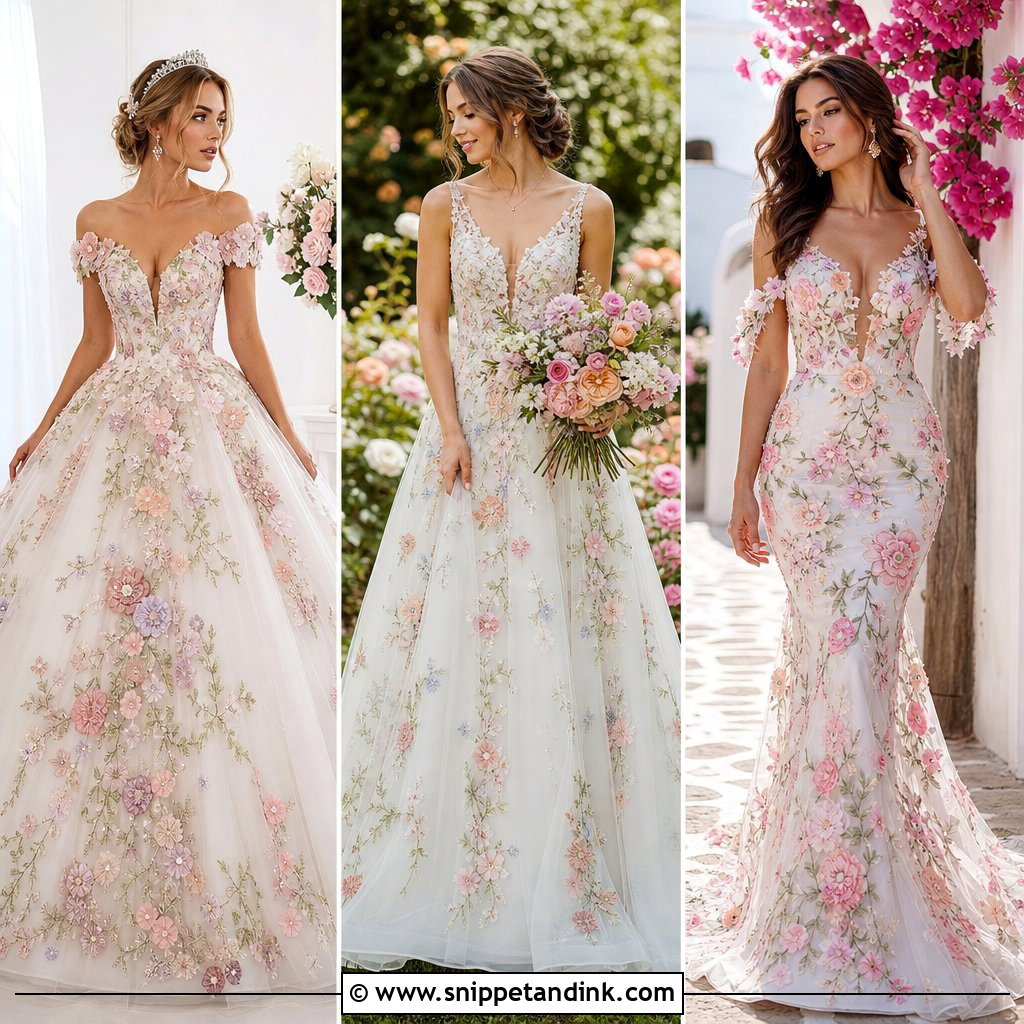
Raised appliqué catches light from the side, so it keeps its texture in photos even in flat daylight. Where the flowers sit changes the whole dress: across the bodice they frame your face, trailing down the skirt they lengthen you, and clustered on the train they give a sculptural back view. Ask how they’re attached, because hand-stitched petals survive a hug far better than glued ones. Everything else should go quiet: a plain tulle veil, pearl drops, satin heels and a loose bouquet. It suits A-line, ball gown and fitted sheath shapes.
2. Floral Lace Wedding Dress
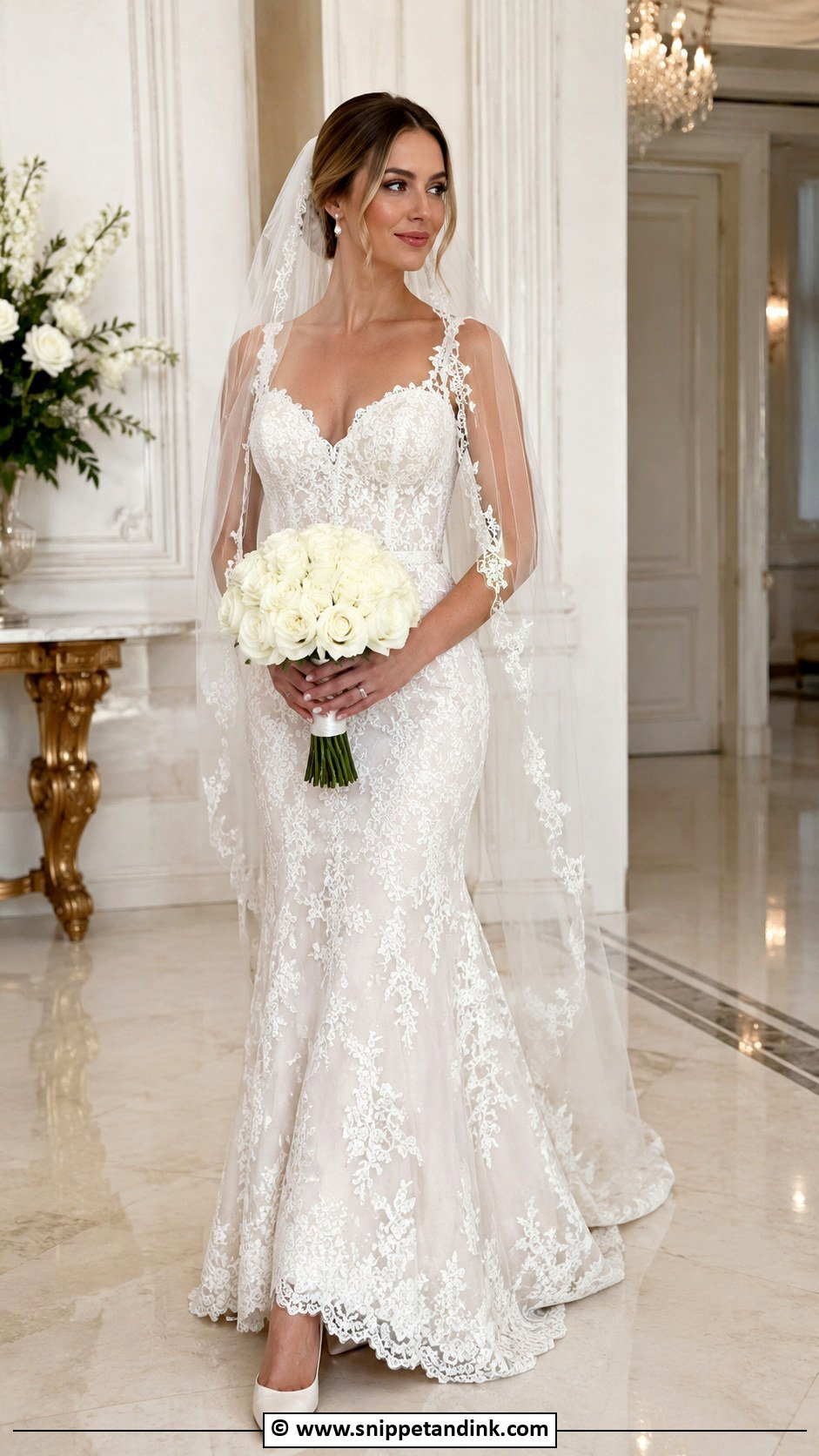
Floral lace is the quietest way to wear flowers, and the one I find suits the widest range of brides. The pattern sits flat, so it shapes the waist and neckline without adding bulk. Look at the scale of the motif: small, dense florals read as texture from across the room, while larger open blooms read as pattern. Ivory lace over a matching lining with a fitted bodice and flowing skirt is the classic version. Pointed satin heels, a fingertip veil and small studs suit it, and a simple bouquet of white roses, ranunculus or lisianthus stops the detail doubling up.
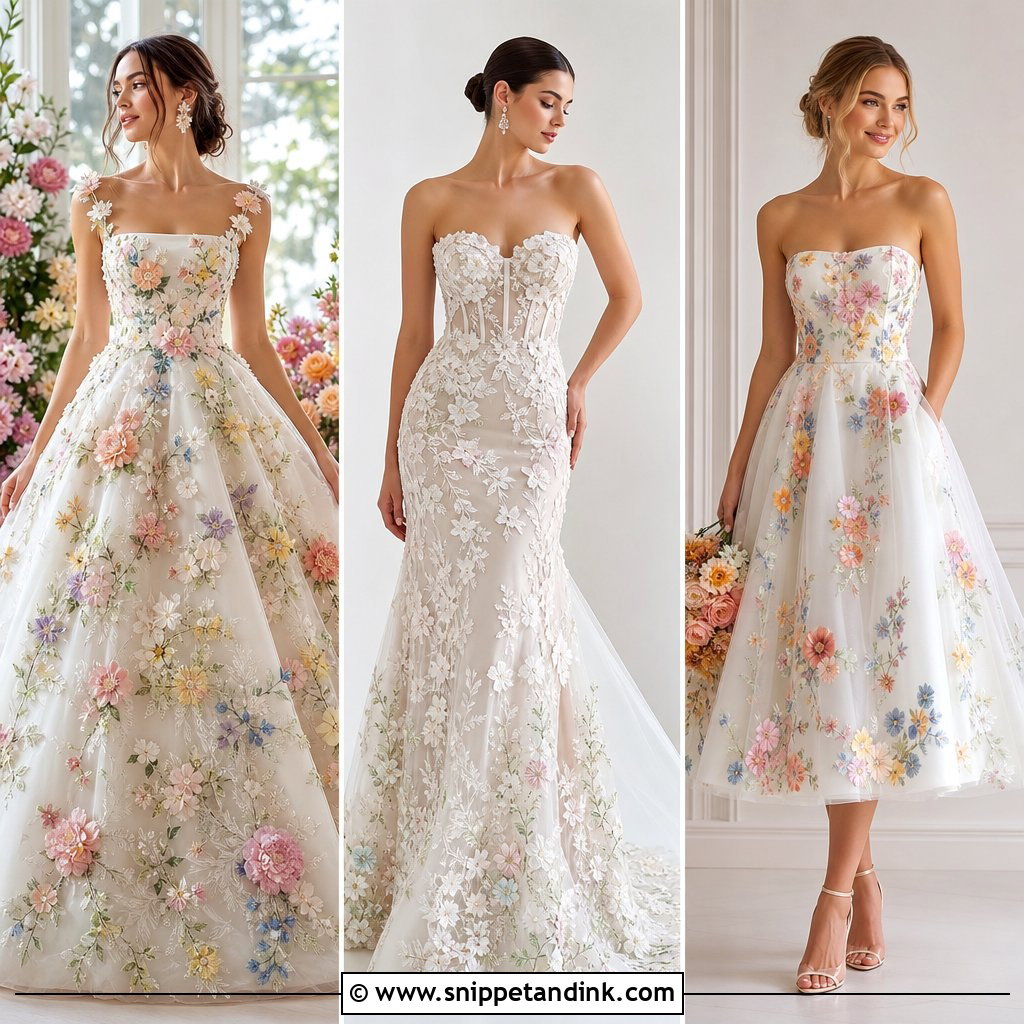
3. Embroidered Floral Wedding Dress
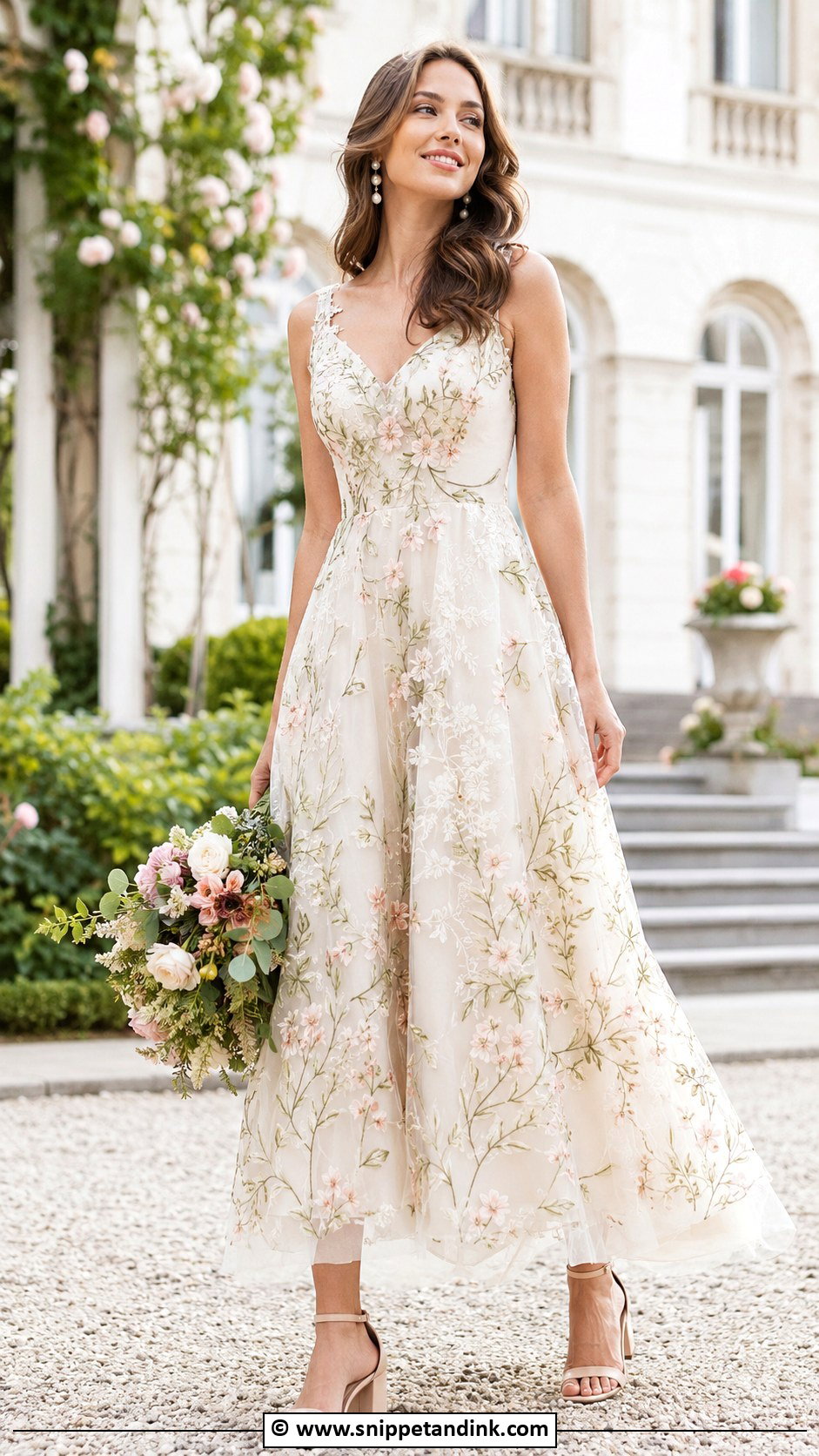
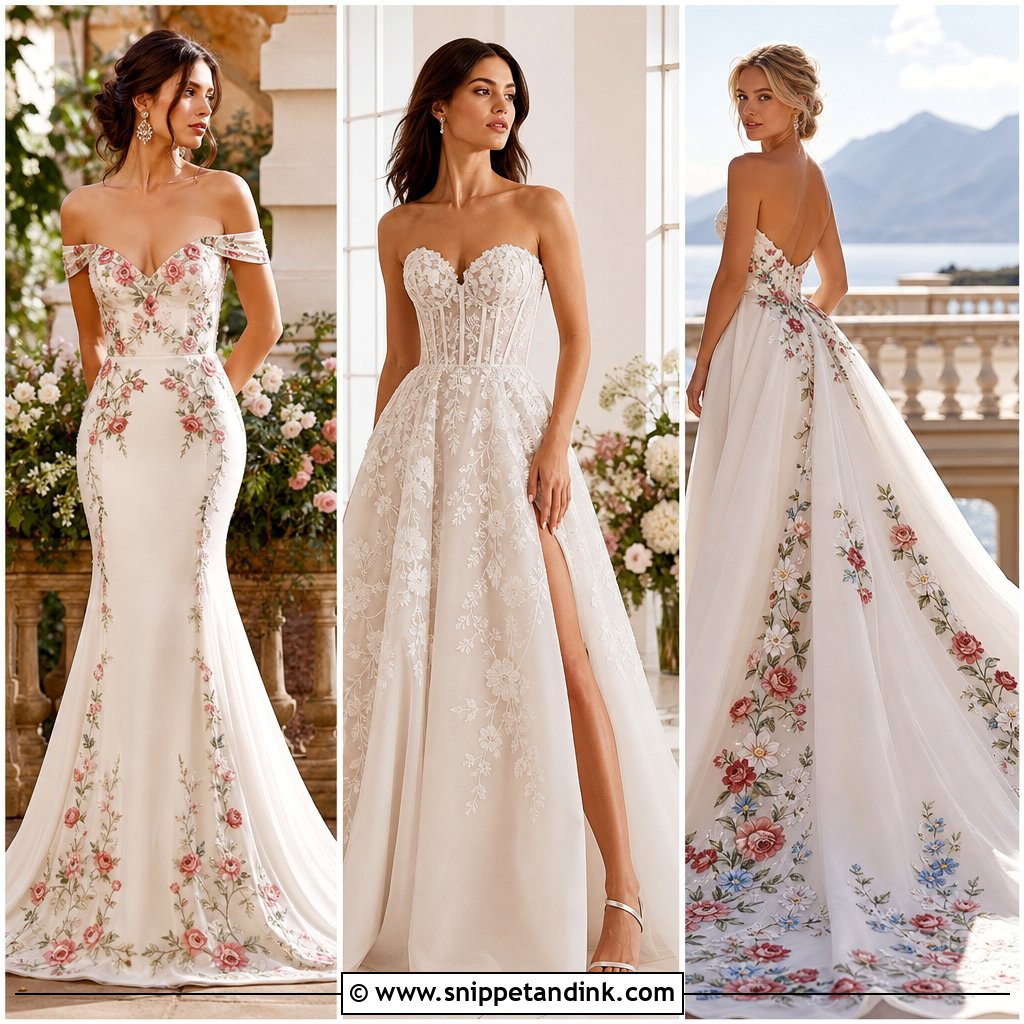
Embroidery is where a gown can feel like a personal object rather than a shop dress. Tonal ivory thread keeps it soft; blush, blue, green or lavender stitching makes it a talking point. My rule is that accessories echo the embroidery and never compete. Soft waves, a sheer veil with a clean edge, pearl earrings and block heels let the stitching lead. If you can, give your florist a close photo of the embroidered flowers so the bouquet can repeat a bloom or two. Garden and estate weddings in spring suit it best.
4. White Floral Wedding Dress
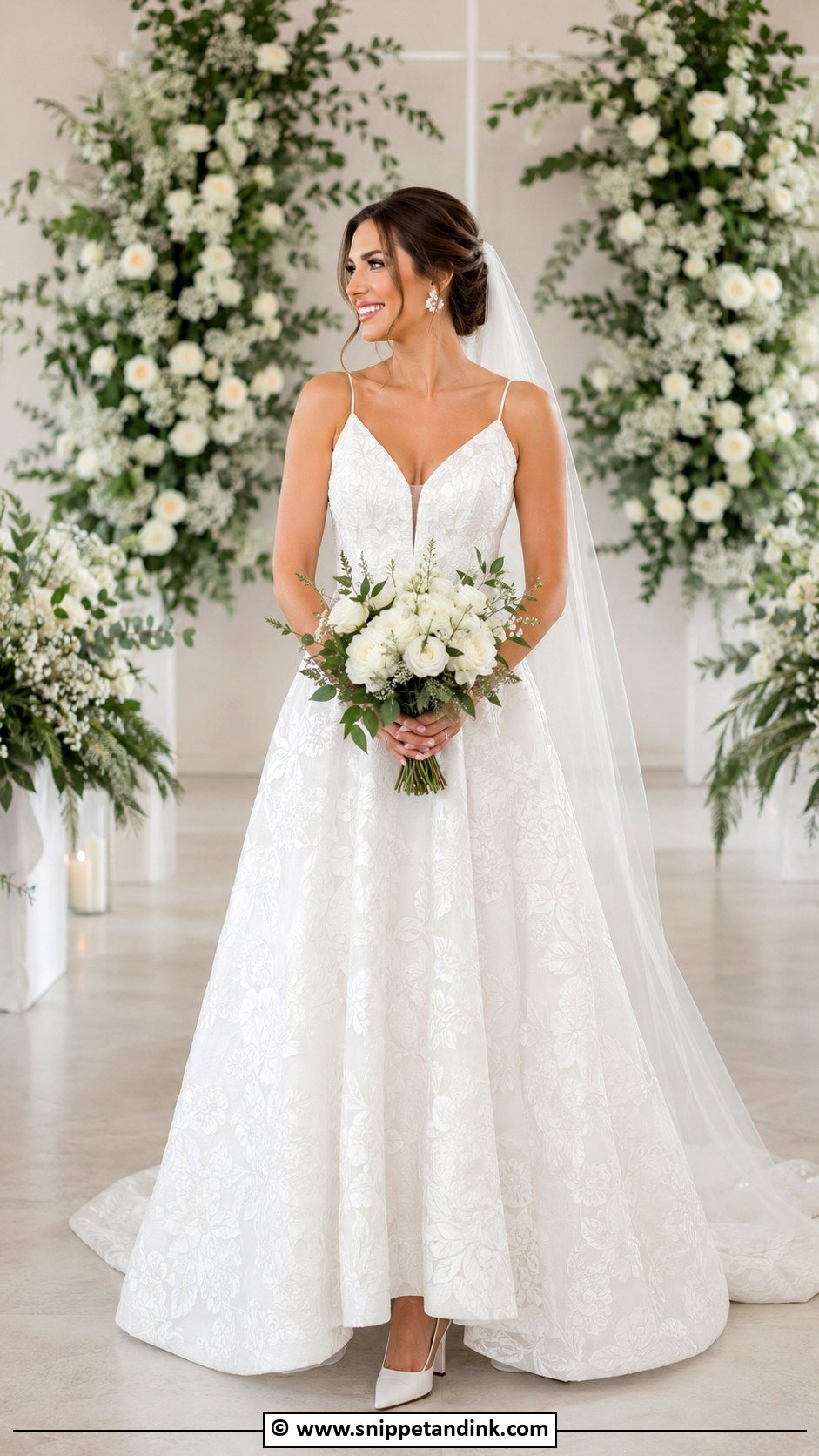
White-on-white florals give texture while keeping a fully traditional colour. The flowers might be lace, beading, appliqué, jacquard or embroidery. Because colour isn’t doing any work, shape can: a strapless ball gown, a fitted mermaid or an off-the-shoulder cut. I check the whites against each other before a bride buys, since an ivory appliqué on a bright white base can look slightly dingy in photos. White or ivory heels, a clean veil and polished jewellery finish it, with a white and green bouquet.
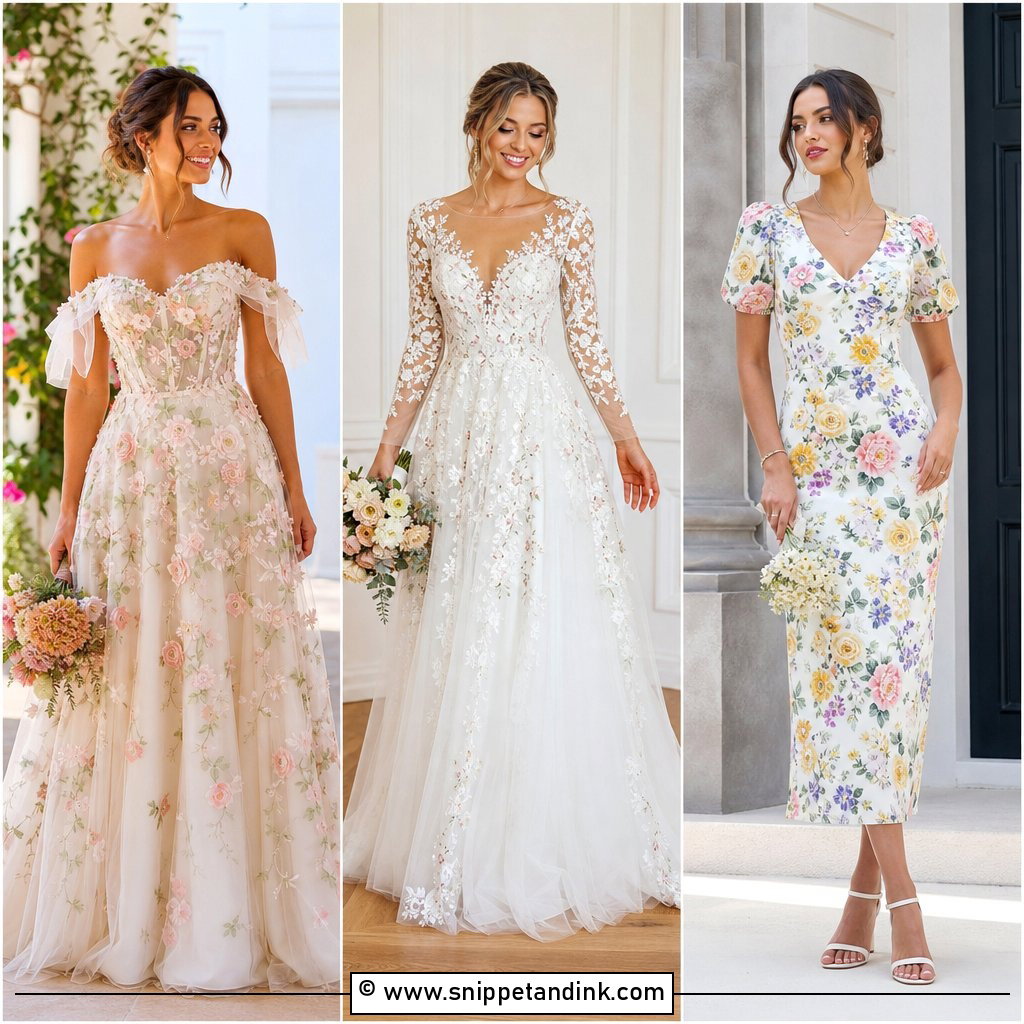
5. Blush Floral Wedding Dress
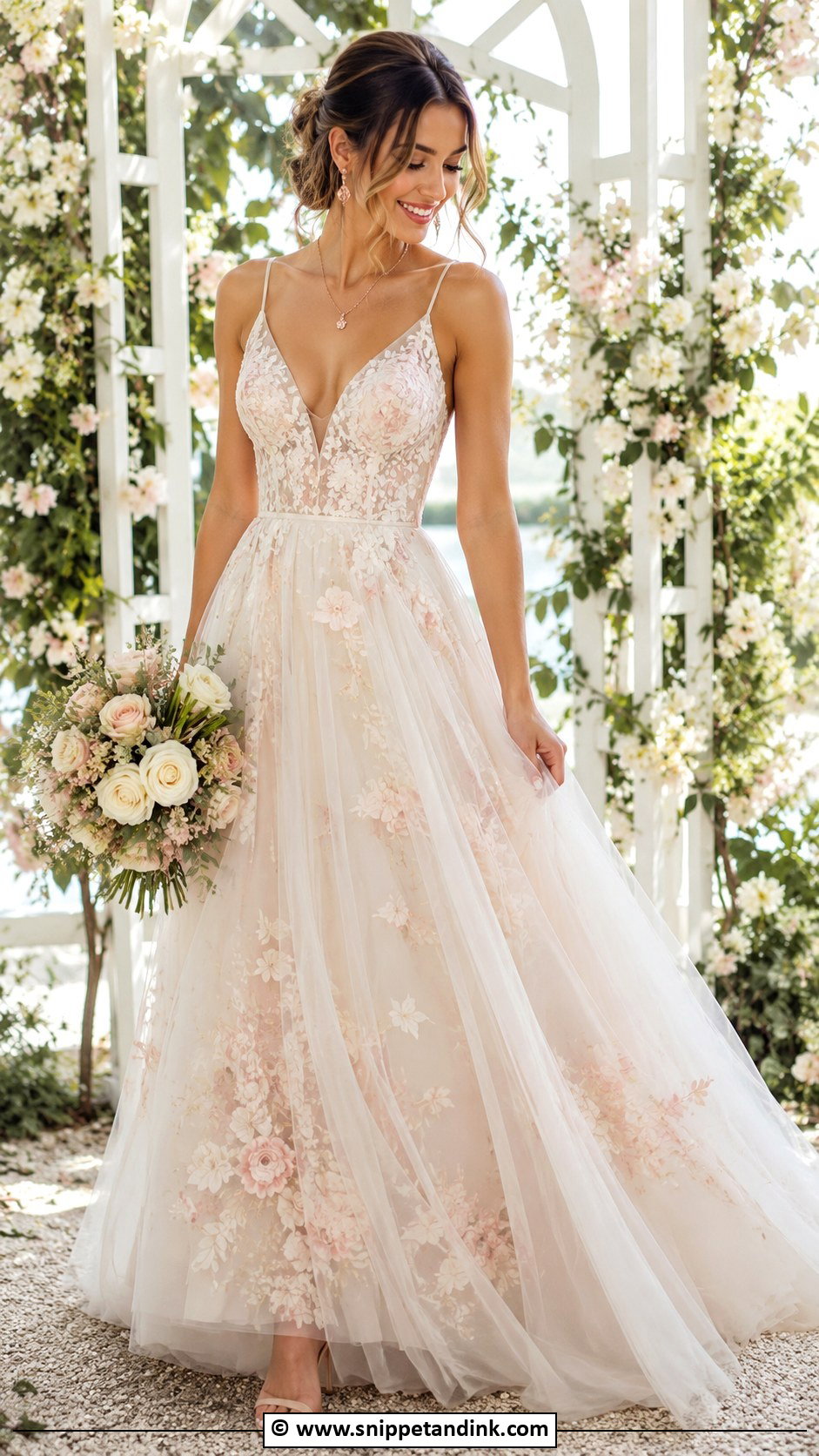
Blush works best as an underlay beneath ivory lace or as pale embroidery on tulle, where it reads as a warm glow rather than a pink dress. It flatters most skin tones and suits spring, summer and garden weddings. Do look at it in daylight before you commit; some blush linings turn almost nude in bright sun and peachy under warm reception lights. Nude or blush heels, rose-gold jewellery and a veil matching the dress base work well, with pink garden roses, cream peonies and soft greenery in the bouquet.
6. Blue Floral Wedding Dress
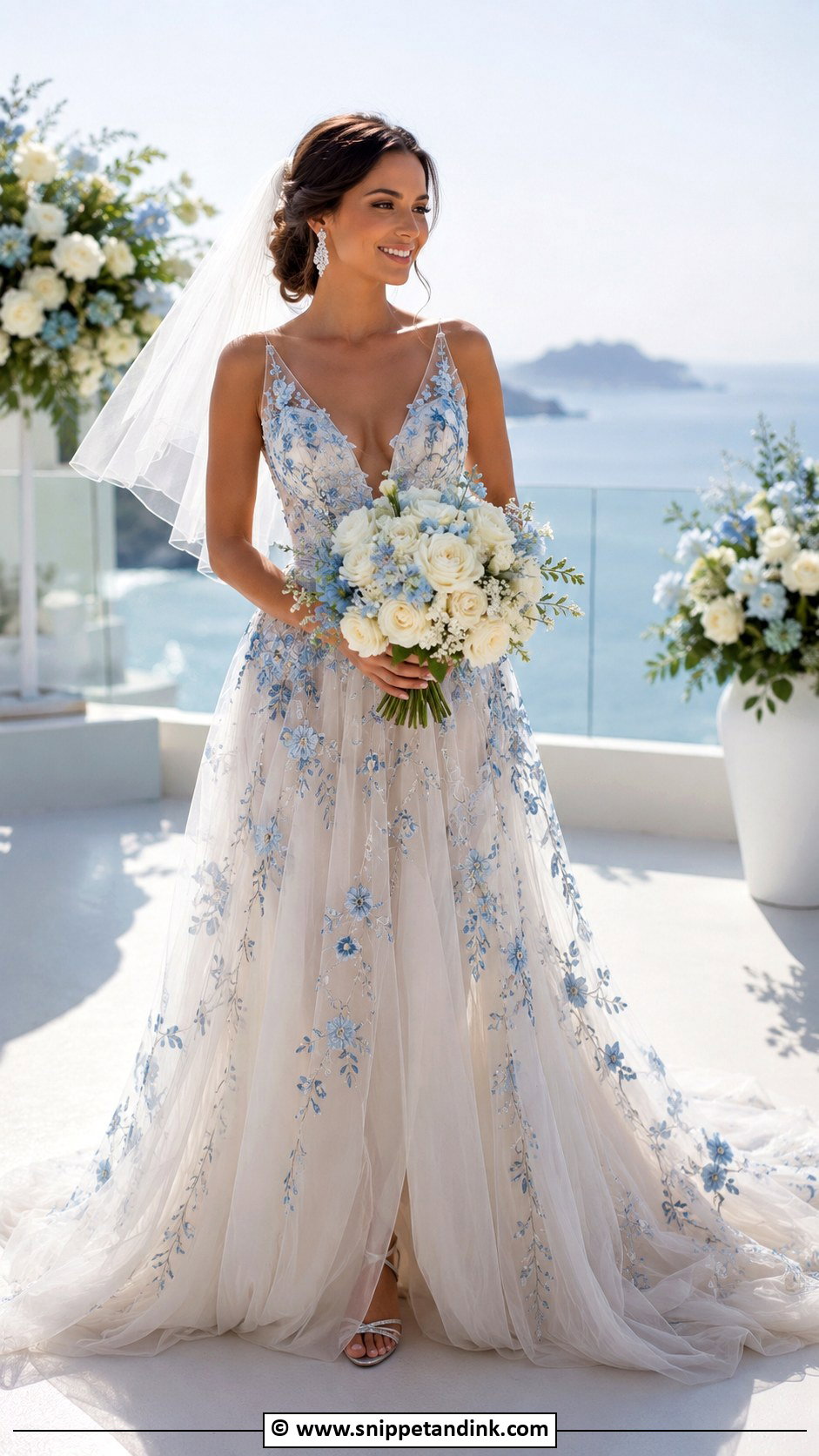
Blue florals give you your something blue in a way people actually notice. Pale blue embroidery, a watercolor floral print or blue appliqués all work, as long as the styling stays soft. Silver heels, crystal earrings, a sheer veil and a white bouquet with blue accents keep it polished. If the skirt is printed, the bodice and accessories should be plain. I’d choose this for coastal and garden ceremonies in natural light, where blue reads cleanly; under yellow indoor lighting, pale blue can turn slightly grey.
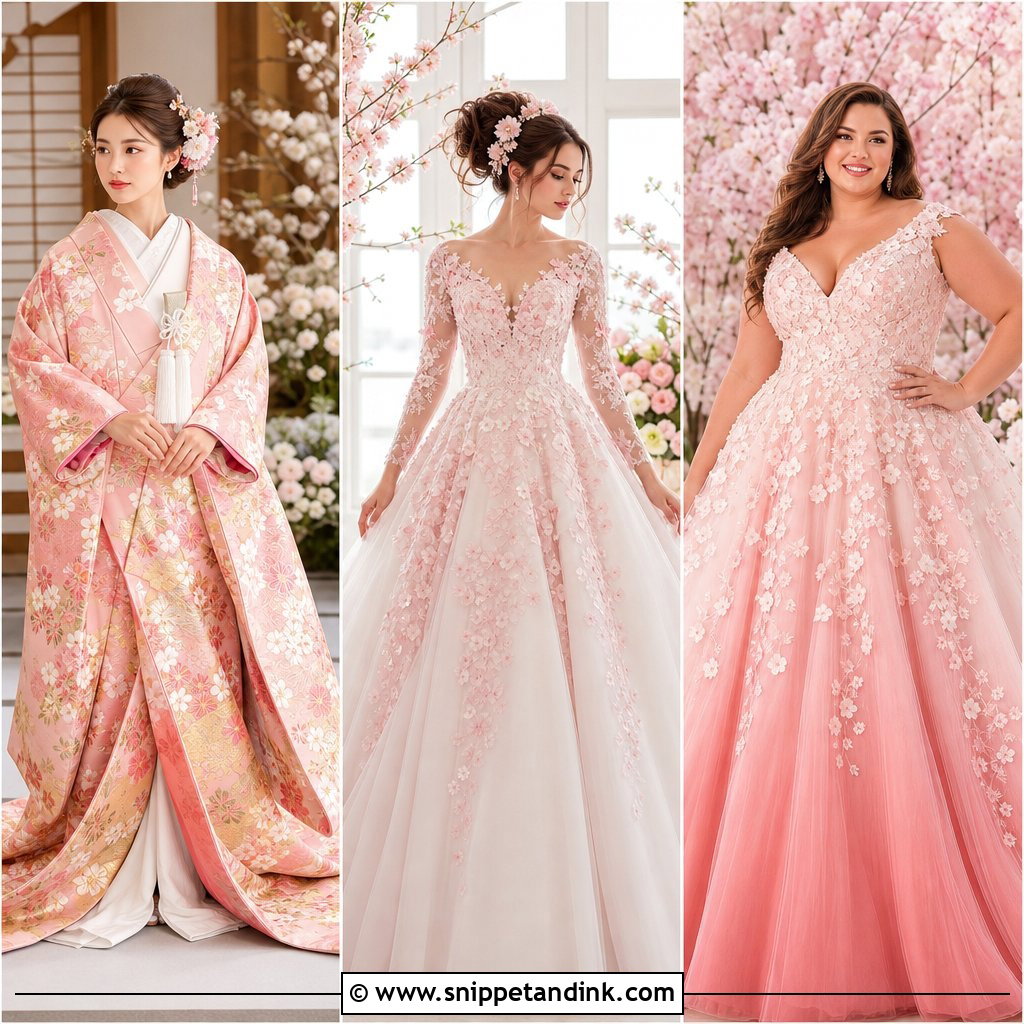
7. Pink Floral Wedding Dress
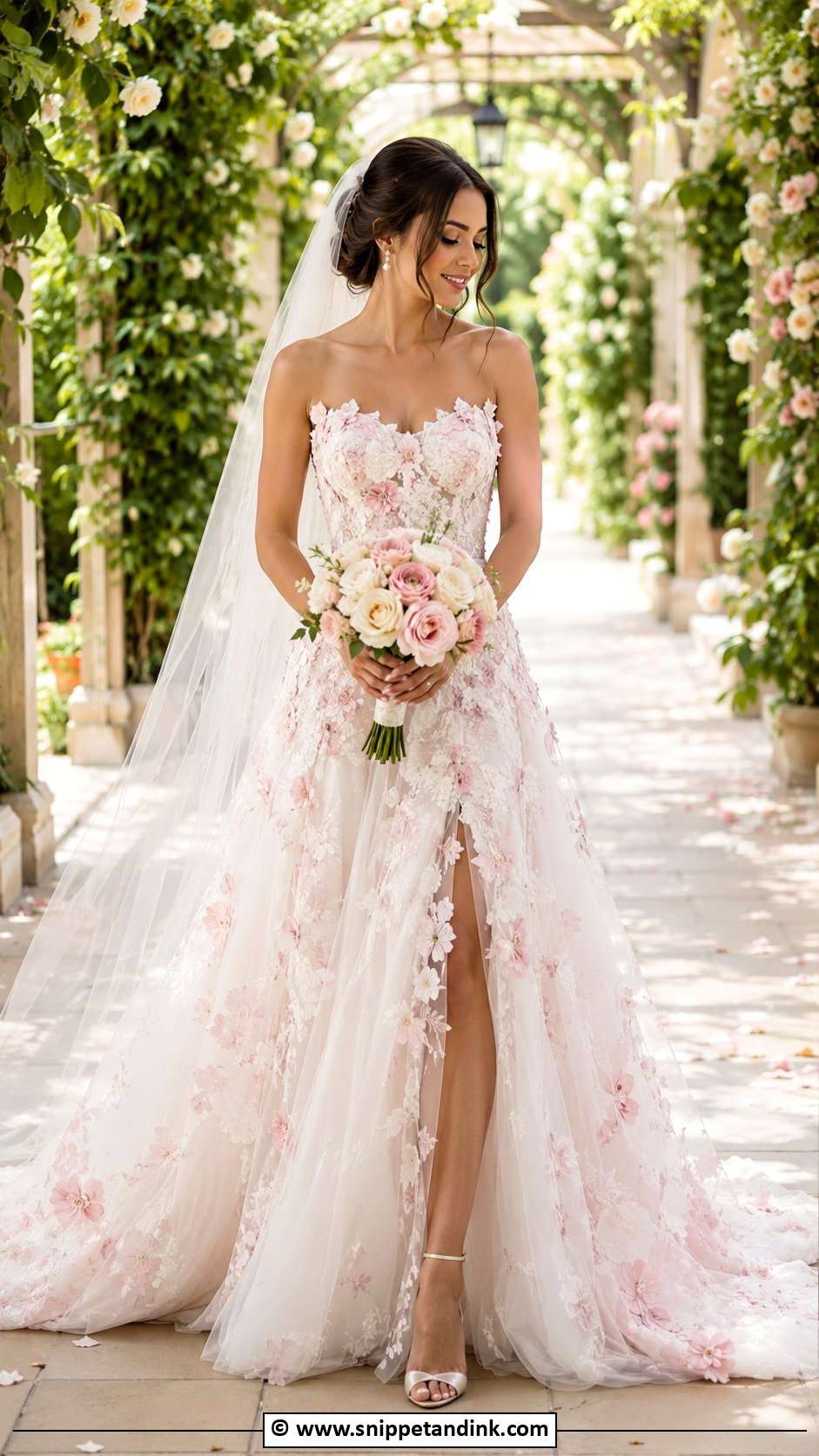
Pink florals carry more personality than blush, and the fabric is what keeps them bridal. Tulle, organza, chiffon or lace soften the colour; a heavy satin in pink starts to look like a party dress. You can wear pink flowers on a white gown or reverse it with a pale pink base and ivory floral layers. Pearl earrings, satin sandals and a soft veil suit it, and a bouquet of cream, blush and pale pink ties it together without overwhelming the dress at garden and spring weddings.
8. Floral Ball Gown Wedding Dress
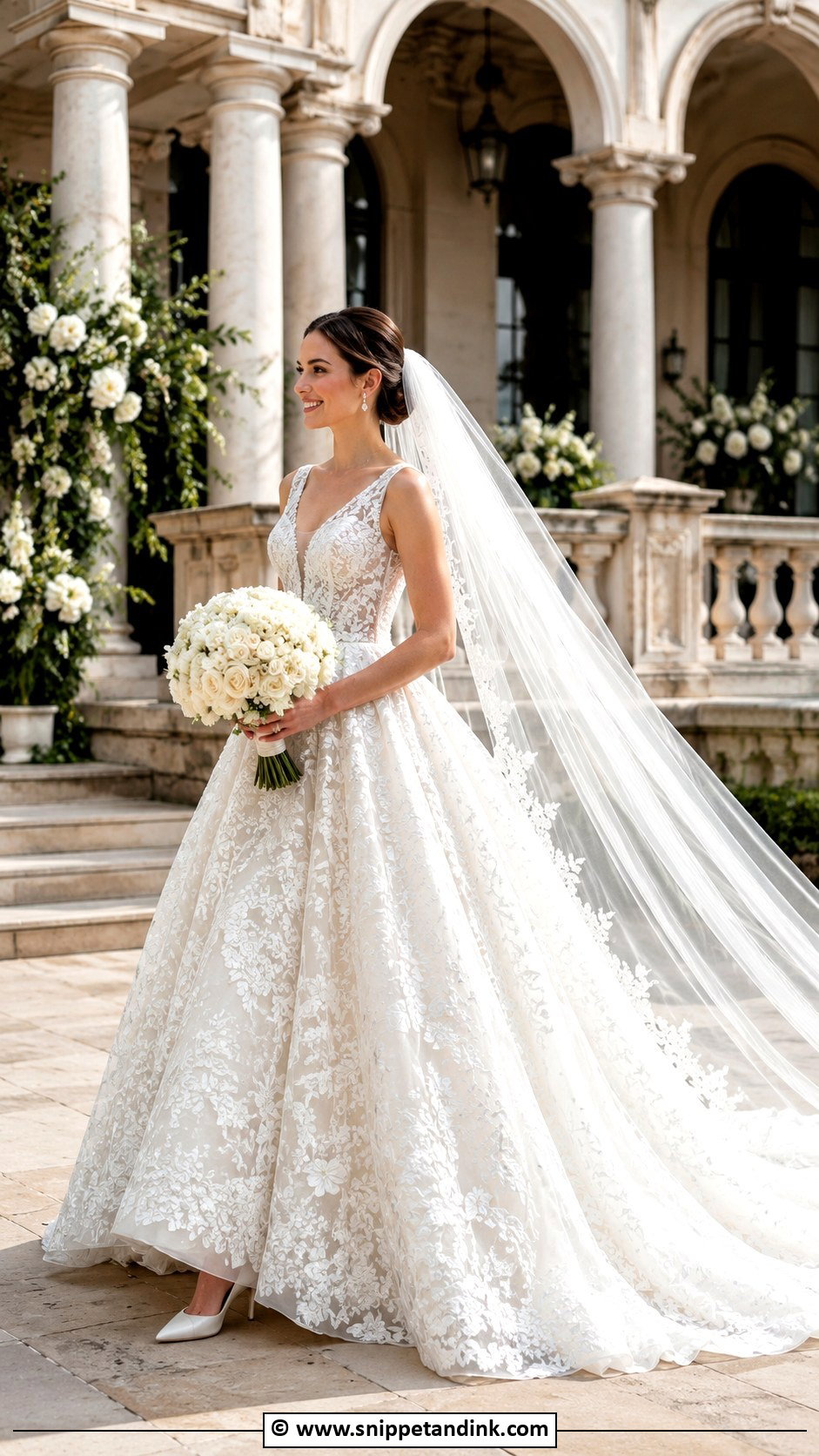
A big skirt gives flower details room to spread, whether they’re lace motifs, embroidered vines or 3D petals. Balance the volume with a fitted bodice and neat accessories. A cathedral veil looks dramatic here, but with a heavily floral skirt I’d always choose a plain one, because two layers of pattern blur together in photos. Bustling is the practical question: ask your seamstress to plan bustle points that don’t crush appliqués. Classic heels, small earrings and a structured bouquet suit ballrooms and estates.
9. Floral A Line Wedding Dress
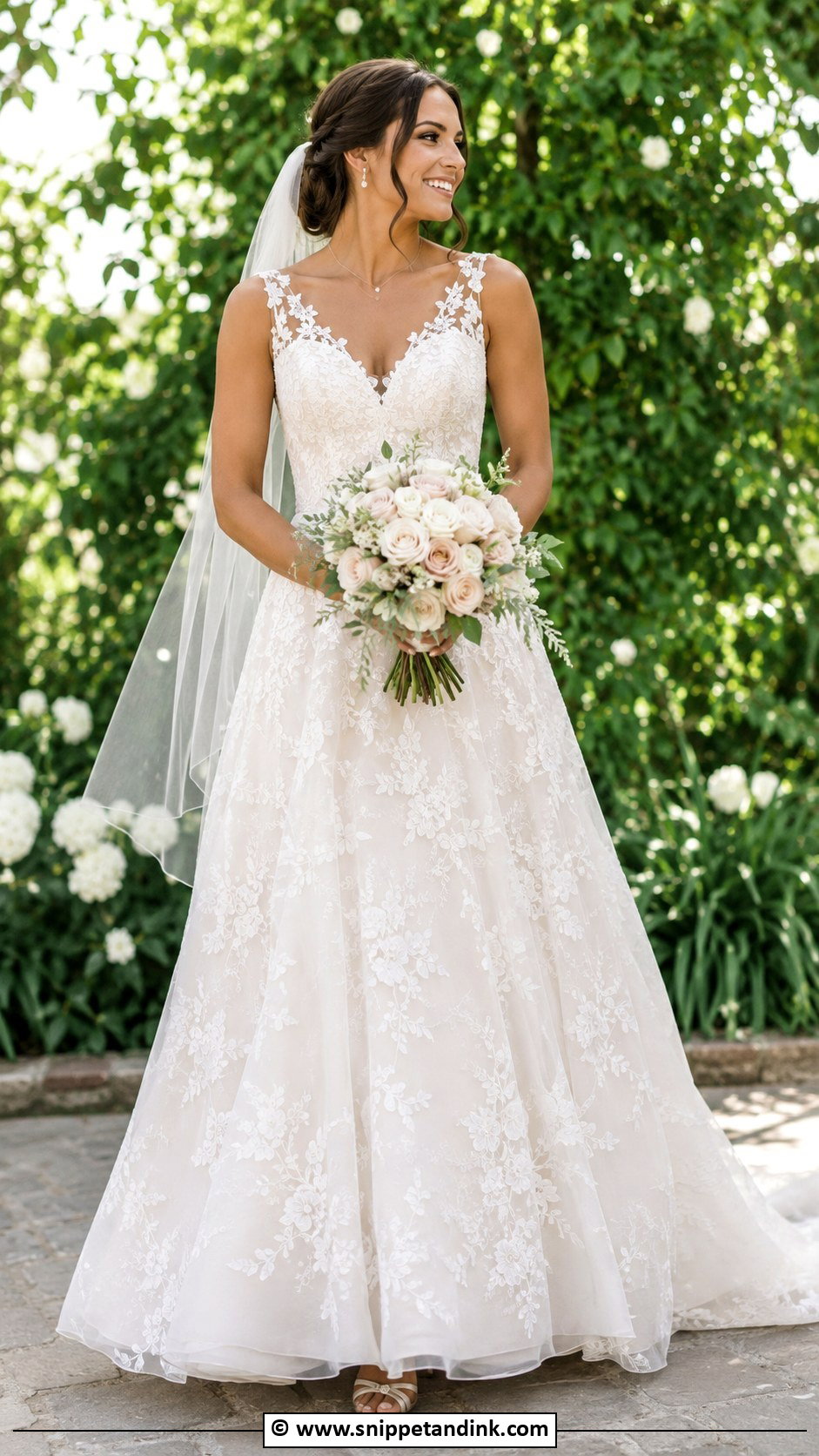
A-line is the shape I’d steer most first-time shoppers towards, because it suits almost every body and every floral technique. The fitted top and gently flowing skirt work with lace flowers, appliqués, embroidery or prints. You get movement without the weight of a ball gown, which matters if you’ll be on your feet for twelve hours. Comfortable heels or bridal flats, a simple veil, delicate jewellery and a rounded bouquet suit garden ceremonies and classic receptions equally well.
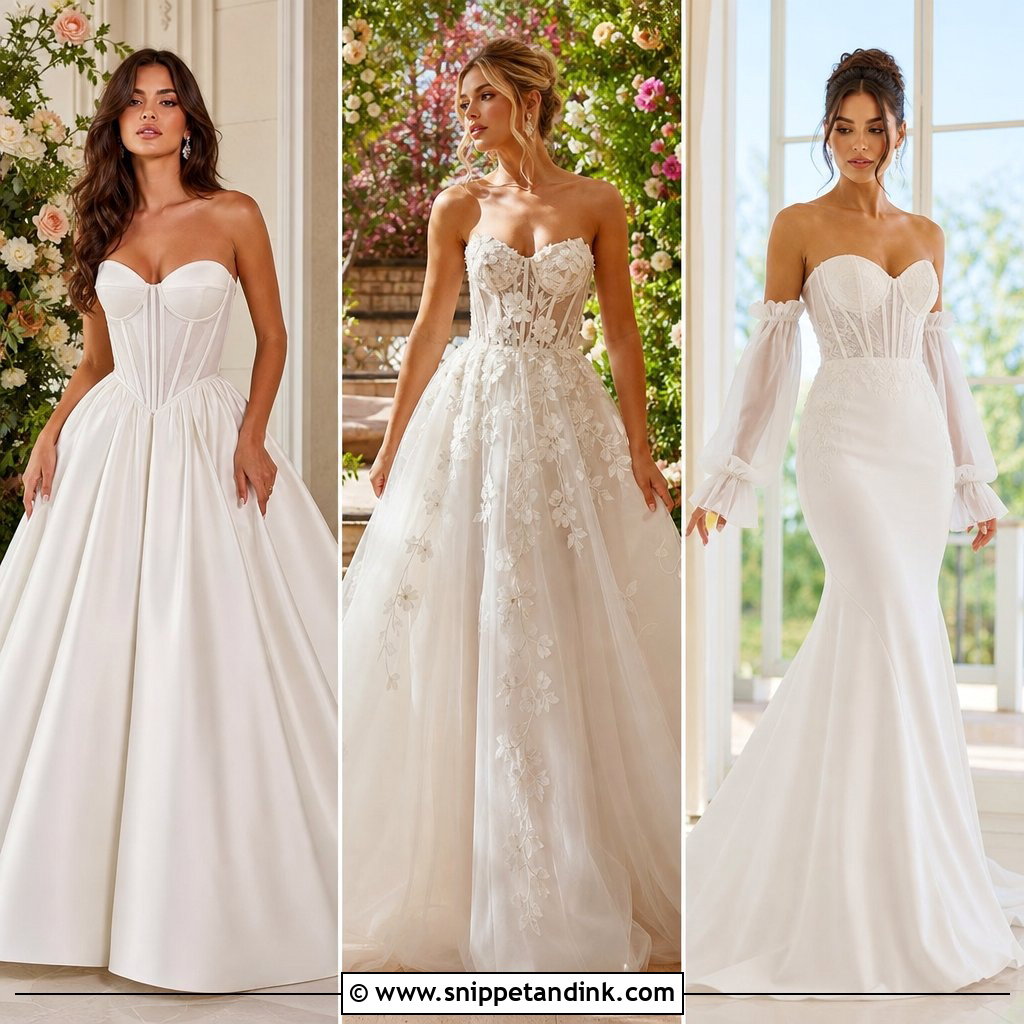
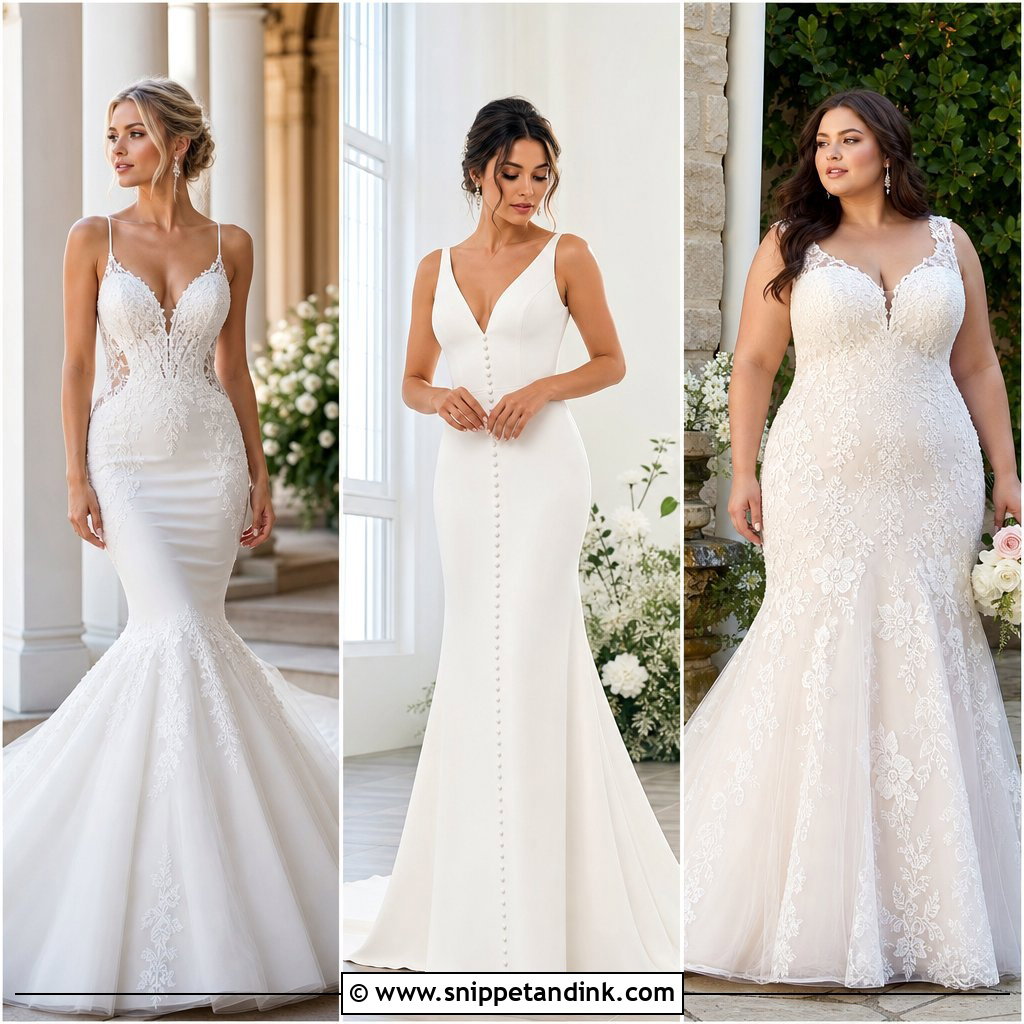
10. Floral Mermaid Wedding Dress
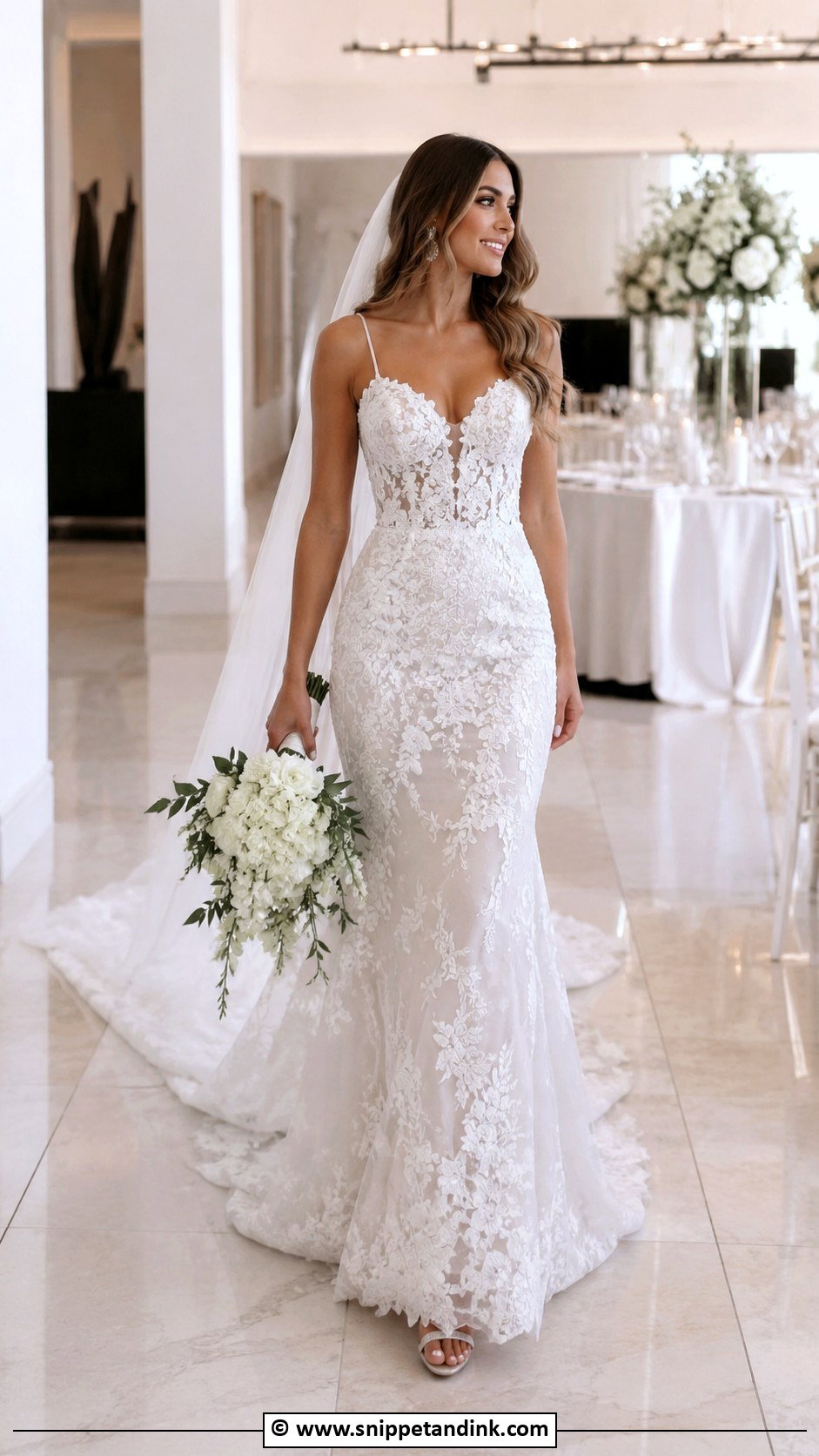
On a mermaid, floral lace or appliqués usually trace the bodice and hips and then spill onto the flare, which draws attention to the curve. That makes fit unforgiving: the flowers have to line up across the seams after alterations, and lace that’s been taken in badly will show broken motifs. Keep styling sleek with polished waves, a long veil, strappy heels and small statement earrings. A slim bouquet won’t add bulk at the hip. It’s a strong choice for formal evening weddings.
11. Floral Strapless Wedding Dress
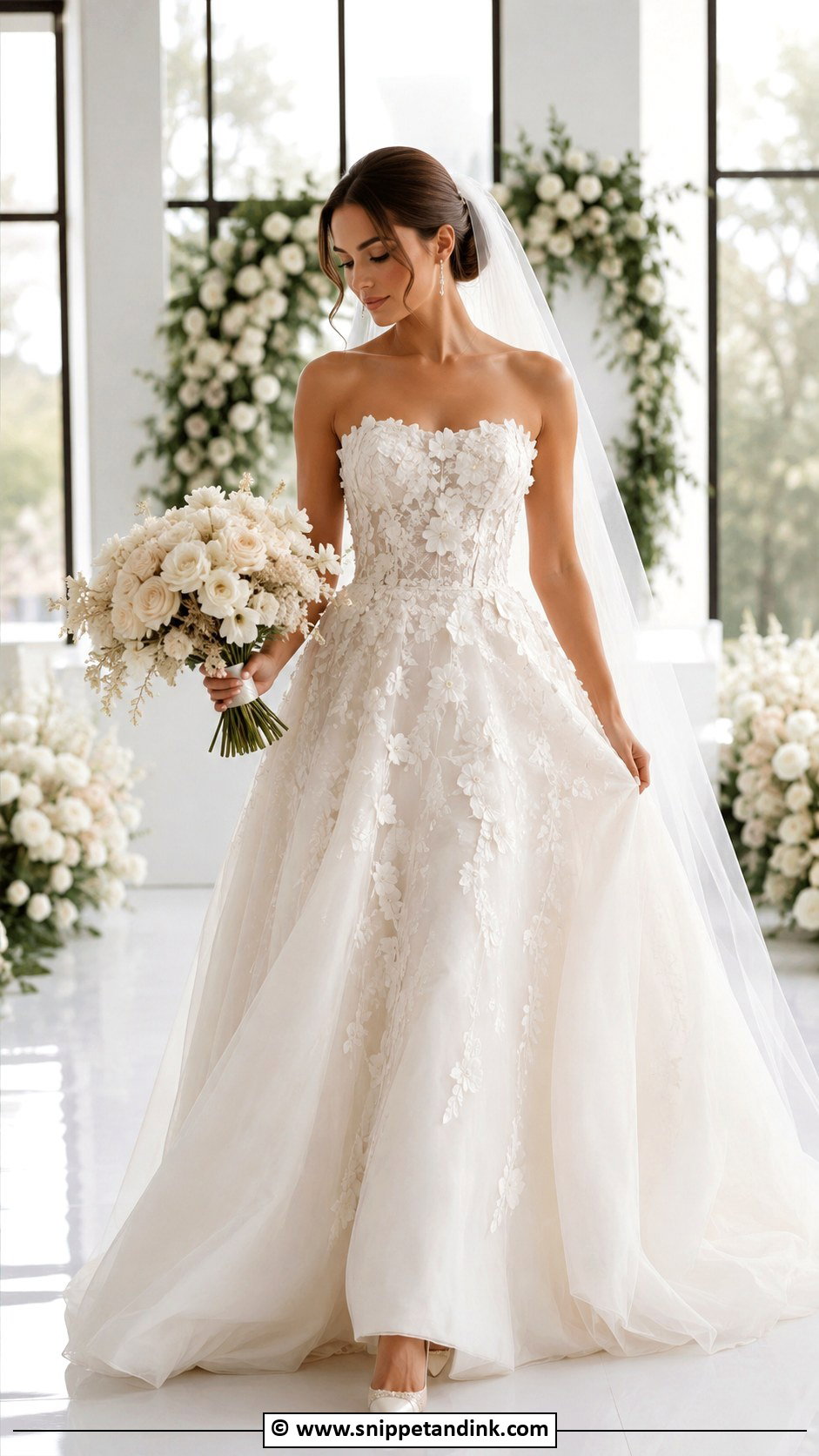
Strapless bodices leave the neckline clean so the flowers carry the romance. They suit a corset bodice, sweetheart line or straight-across top. If floral lace or appliqués cover the bodice, skip the necklace altogether; you’ll only hide the detail. Drop earrings, a smooth veil and pointed heels work, with a soft updo to show the neckline. The fitting check I never skip is lifting both arms: a strapless bodice must stay put when you hug, and a good one is built so it does.
12. Floral Off Shoulder Wedding Dress
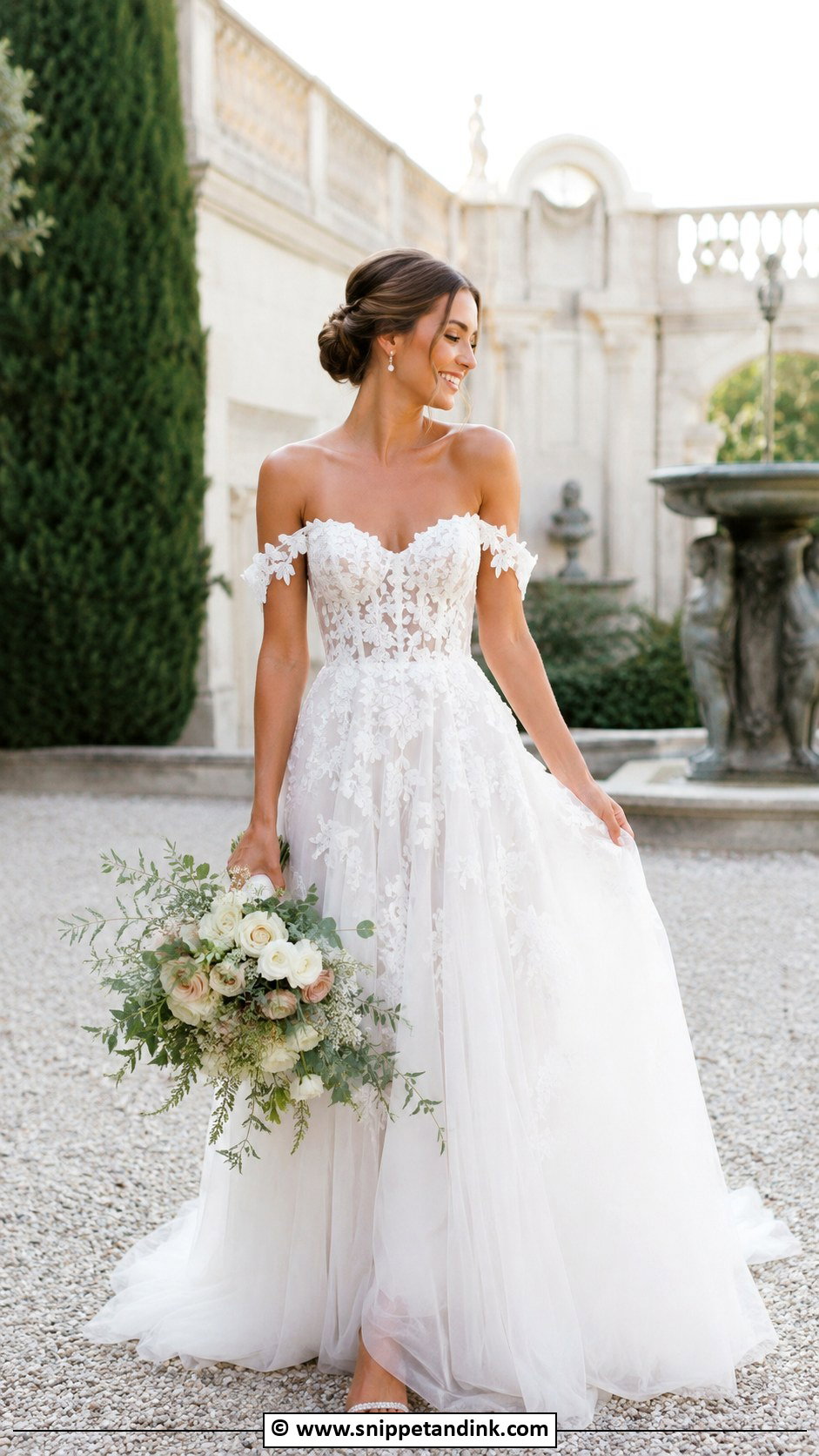
Off-shoulder necklines frame the collarbones, and flowers along the neckline or sleeves make that frame even softer. Lace, tulle and airy organza all suit the cut. I keep accessories gentle with pearl earrings, a low bun and a veil placed below the crown so it doesn’t sit on top of the floral band. Soft heels or embellished sandals and a loose bouquet with garden blooms suit outdoor and estate weddings. Make sure the band has silicone grip, or it will creep up during the first dance.
13. Floral Long Sleeve Wedding Dress
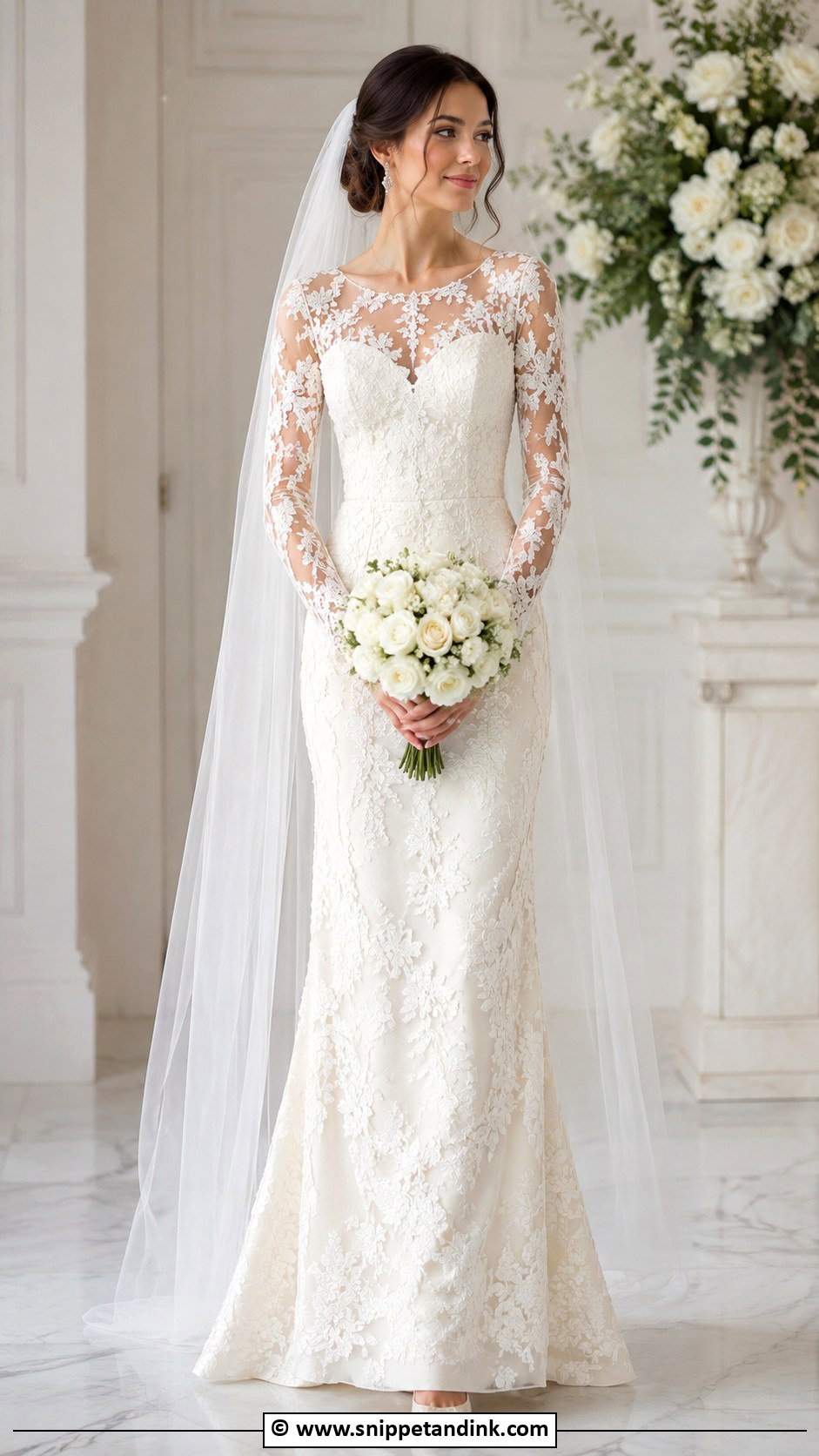
Sheer floral lace sleeves give coverage without weight, which makes them my usual suggestion for autumn and winter brides who don’t want heavy fabric. A more modern take is fitted sleeves with small embroidered flowers or appliqués only at the cuffs. A clean veil, closed-toe heels, refined earrings and a low chignon keep the sleeves and neckline visible. The sleeves also show up in every ring and bouquet close-up, so it’s worth choosing a lace you love up close.
14. Floral Tulle Wedding Dress
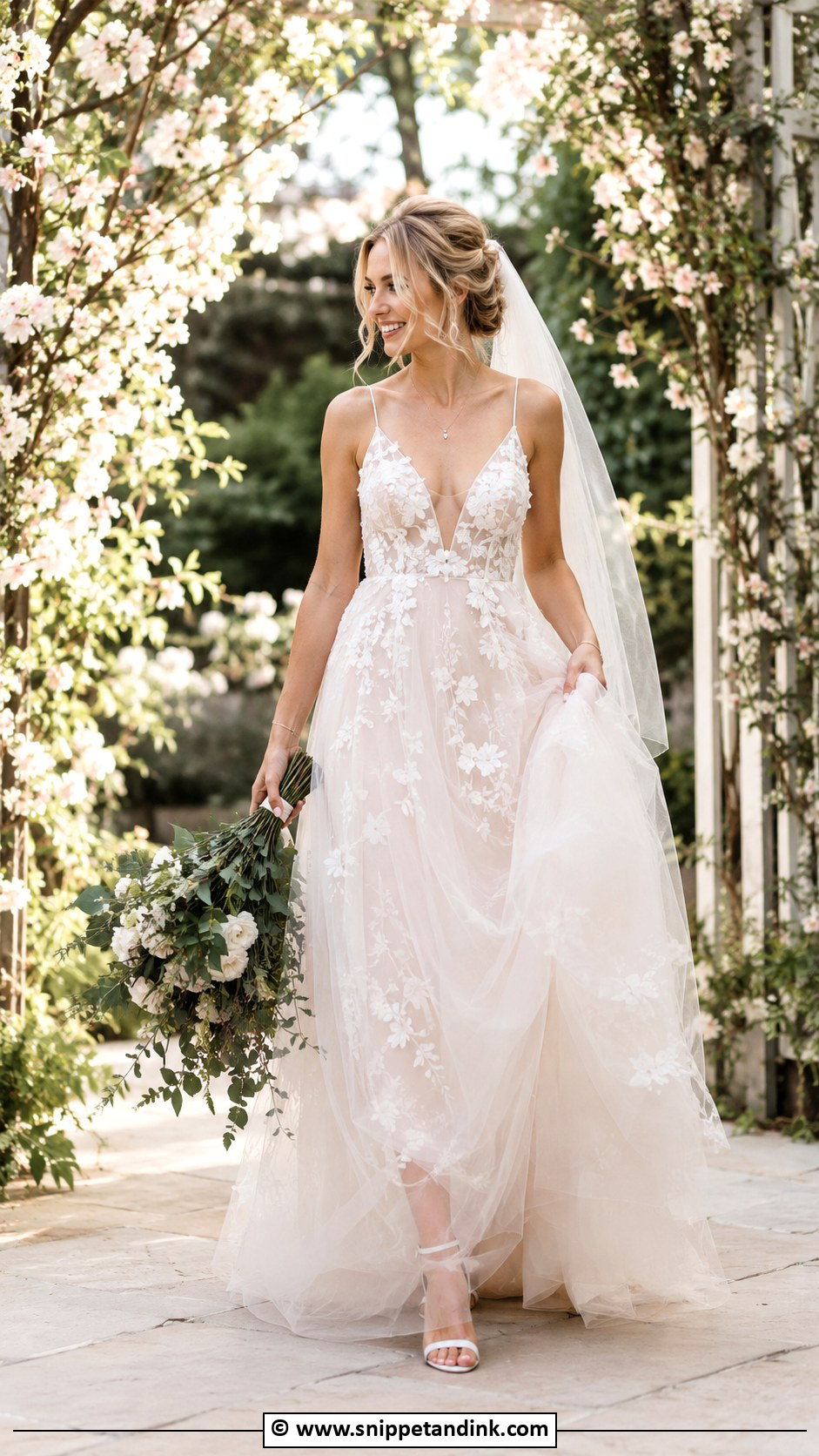
Tulle makes flowers look as if they’re floating, especially when appliqués or embroidery are layered between the sheer fabric. It can be subtle with small scattered blooms or bold with large flowers across the skirt. I warn brides that tulle snags easily on rough stone, bouquet wire and bracelet clasps, so the appliqués near the hem need checking after an outdoor ceremony. Delicate heels, a soft veil, minimal jewellery and a loose green bouquet keep it airy for garden and spring weddings.
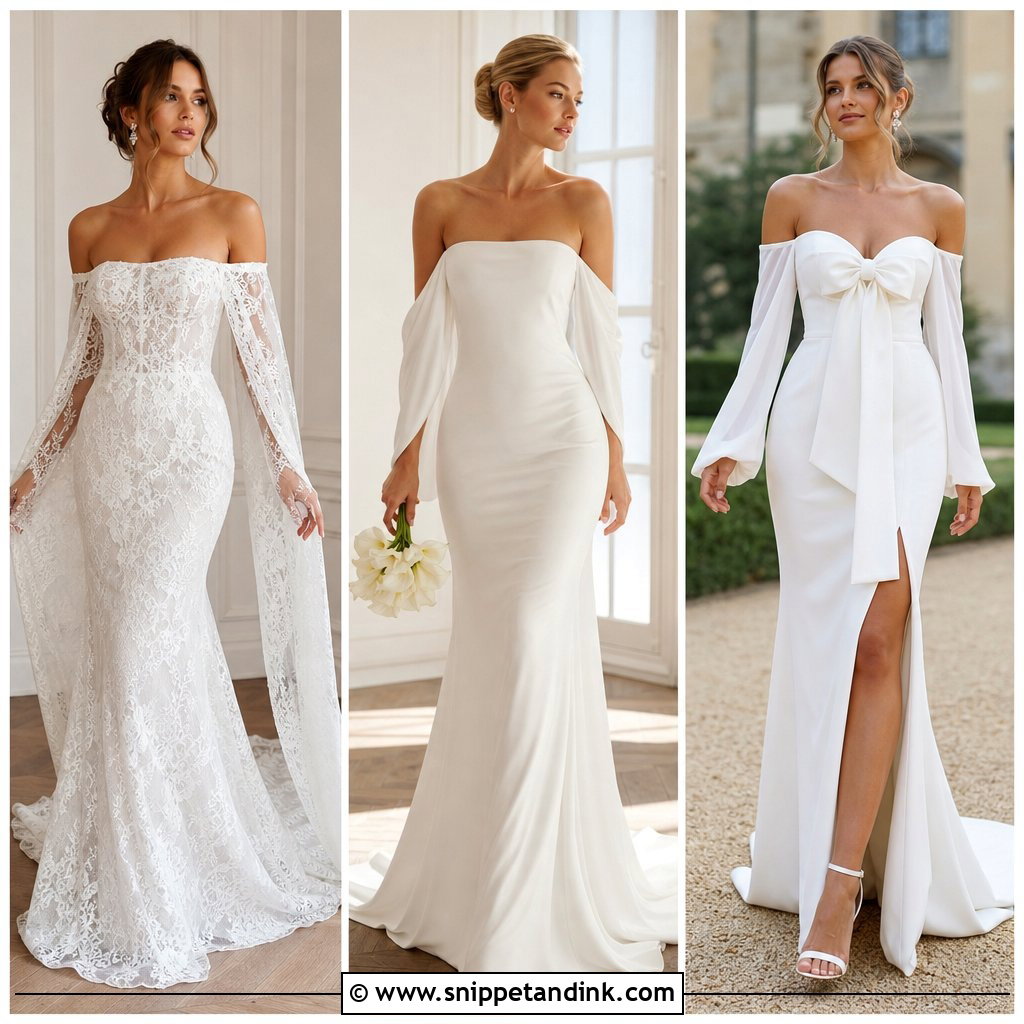
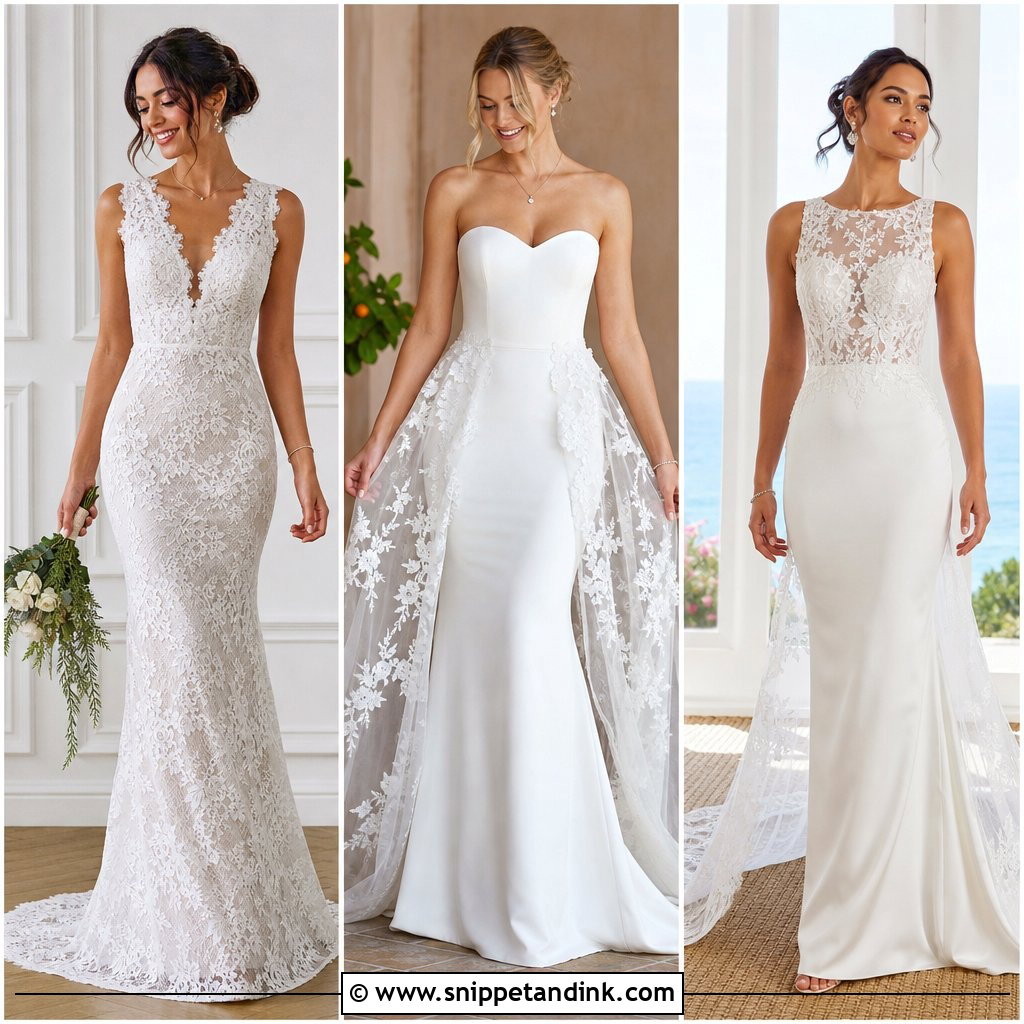
15. Floral Organza Wedding Dress
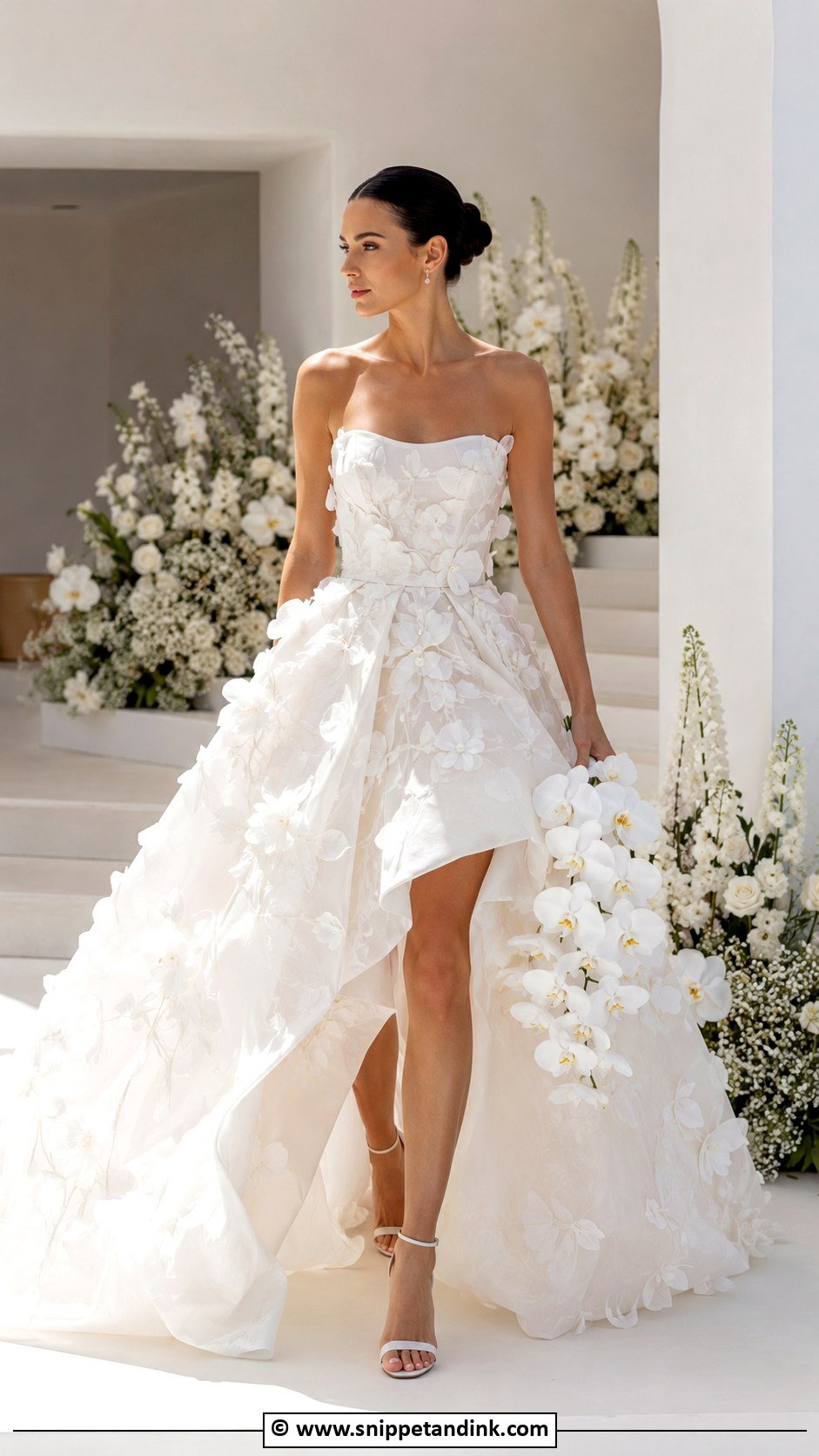
Organza holds a shape, so it’s the fabric for sculpted flowers, puff sleeves, tiered skirts and dramatic trains. It also has a crisp rustle and a slight sheen. That structure means the rest of the outfit should be clean and modern: sleek heels, polished hair and simple earrings. If the dress already has organza appliqués, don’t add a detailed veil. White orchids, roses or calla lilies keep the bouquet refined. Organza creases if you sit on it for long, so I steam the skirt again before the ceremony.
16. Floral Chiffon Wedding Dress
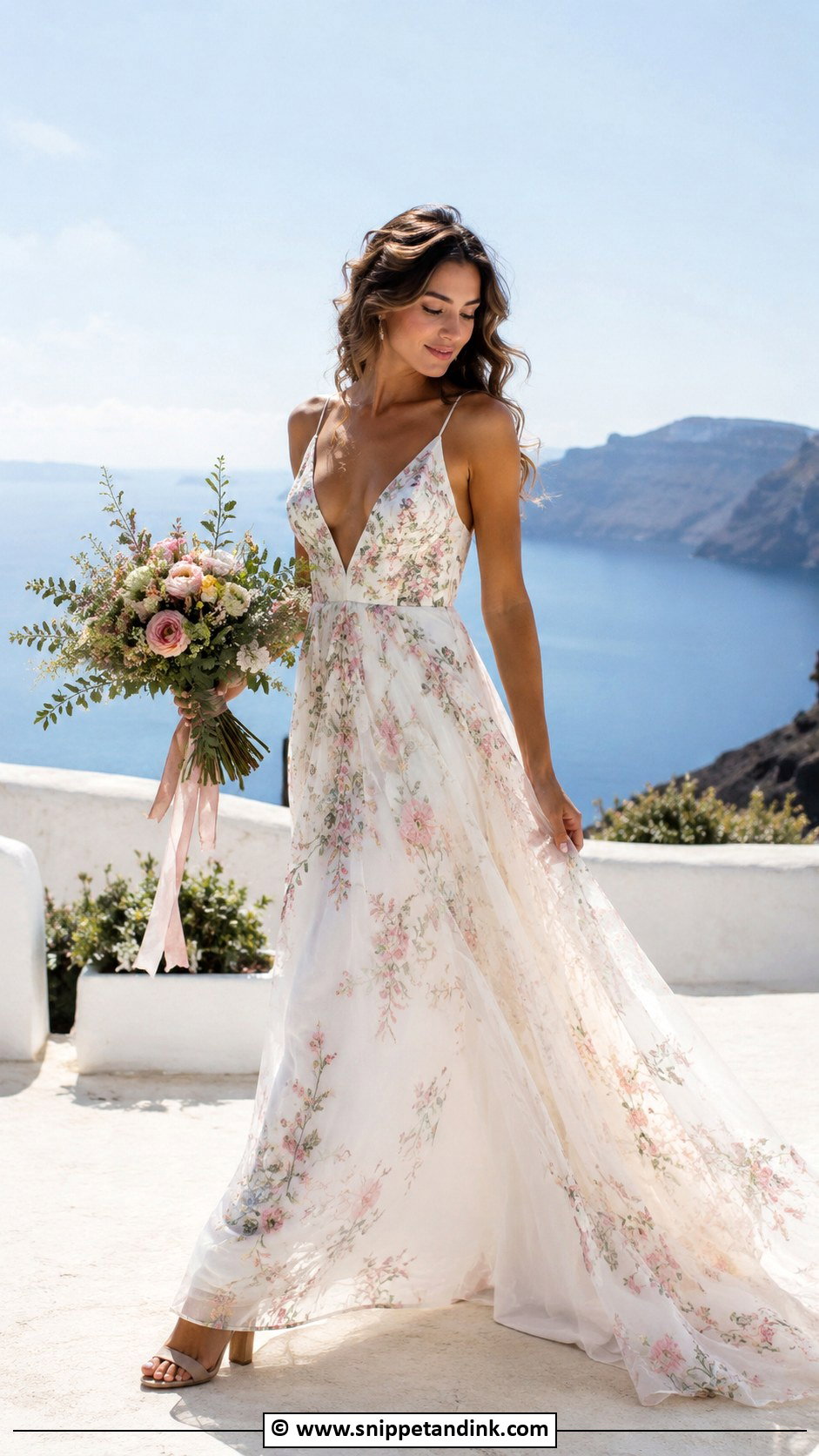
Chiffon is the warm-weather fabric I trust most for comfort. It breathes, moves in a breeze and packs reasonably well for travel, which is why it’s common for beach and destination weddings. Floral detail usually comes as a light print, delicate embroidery or small appliqués on the bodice. Low block heels, sandals or flats suit the venue, with soft curls, a barely-there veil and dainty earrings. A relaxed bouquet of seasonal flowers keeps it all light.
17. Floral Sheath Wedding Dress
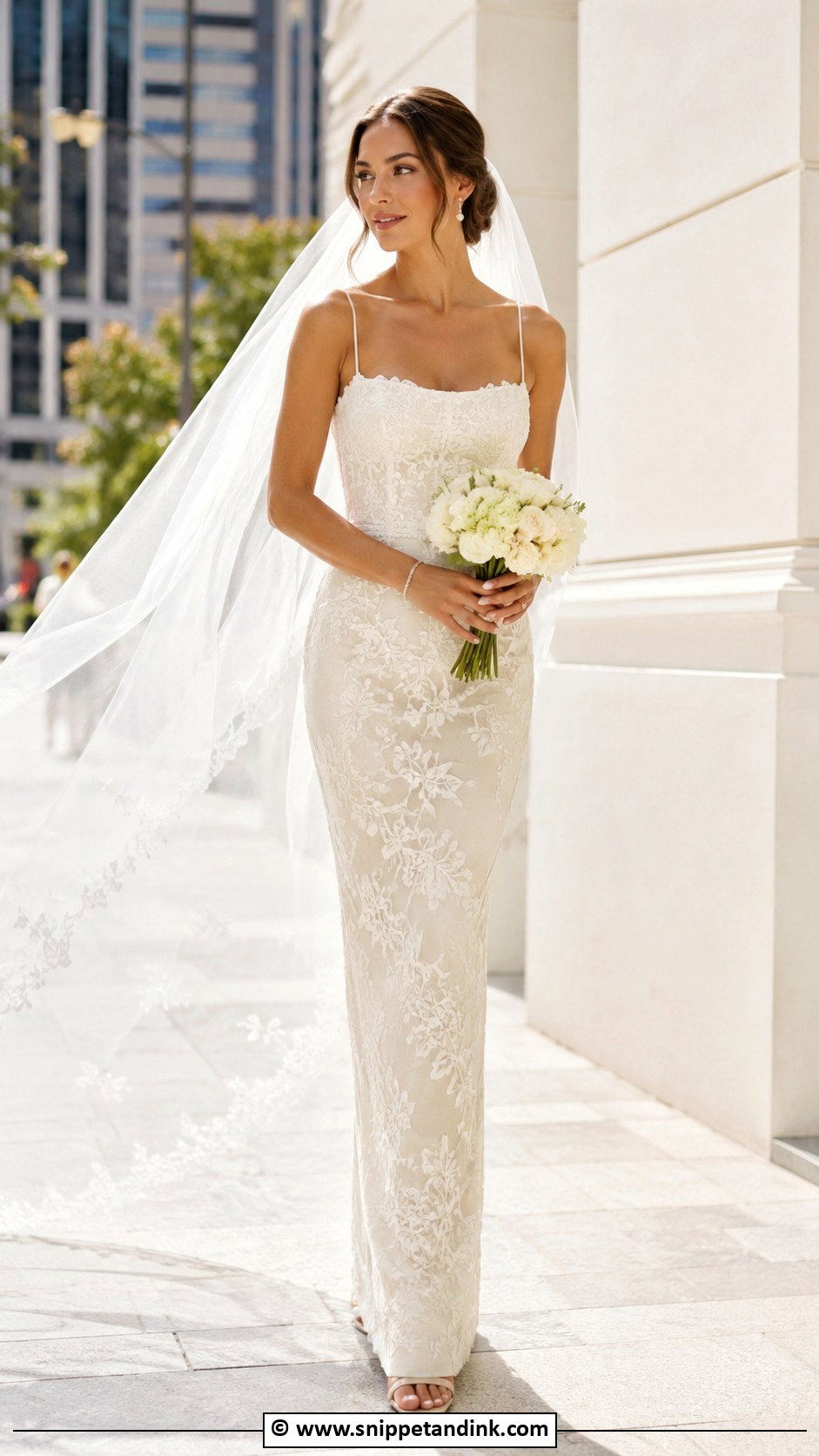
A sheath is the simplest silhouette here, and floral lace, beaded blooms or embroidered vines are what stop it looking plain. It suits brides who want a lighter gown with no volume. Slim heels, a long veil and modern pearl or crystal earrings finish it. Keep the bouquet small; a big cascade overwhelms a narrow shape. I’d check walking in the salon, as a close-fitting sheath with no slit or kick pleat can shorten your stride on steps and sand.
18. Floral Corset Wedding Dress
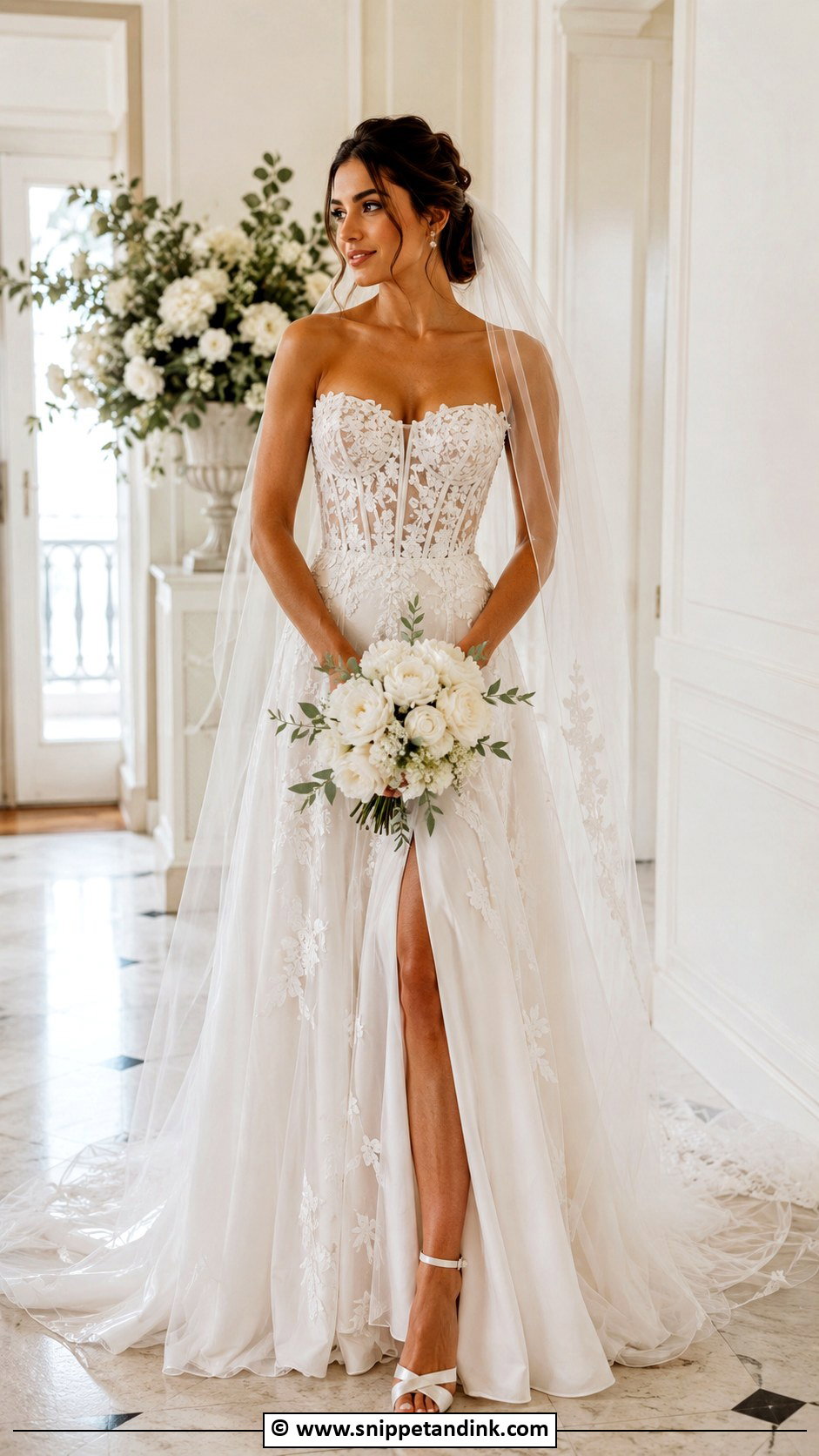
A floral corset wedding dress combines structure with softness: the boned bodice shapes the waist and the lace, embroidery or appliqués soften it. It works with an A-line skirt, tulle layers or a sleek fitted skirt. Visible boning looks more romantic when the flowers sit over it, and less like underwear. A sheer veil, delicate earrings, satin heels, soft hair and a romantic bouquet finish it. Make sure you can sit and eat comfortably at your final fitting.
19. Floral High Neck Wedding Dress
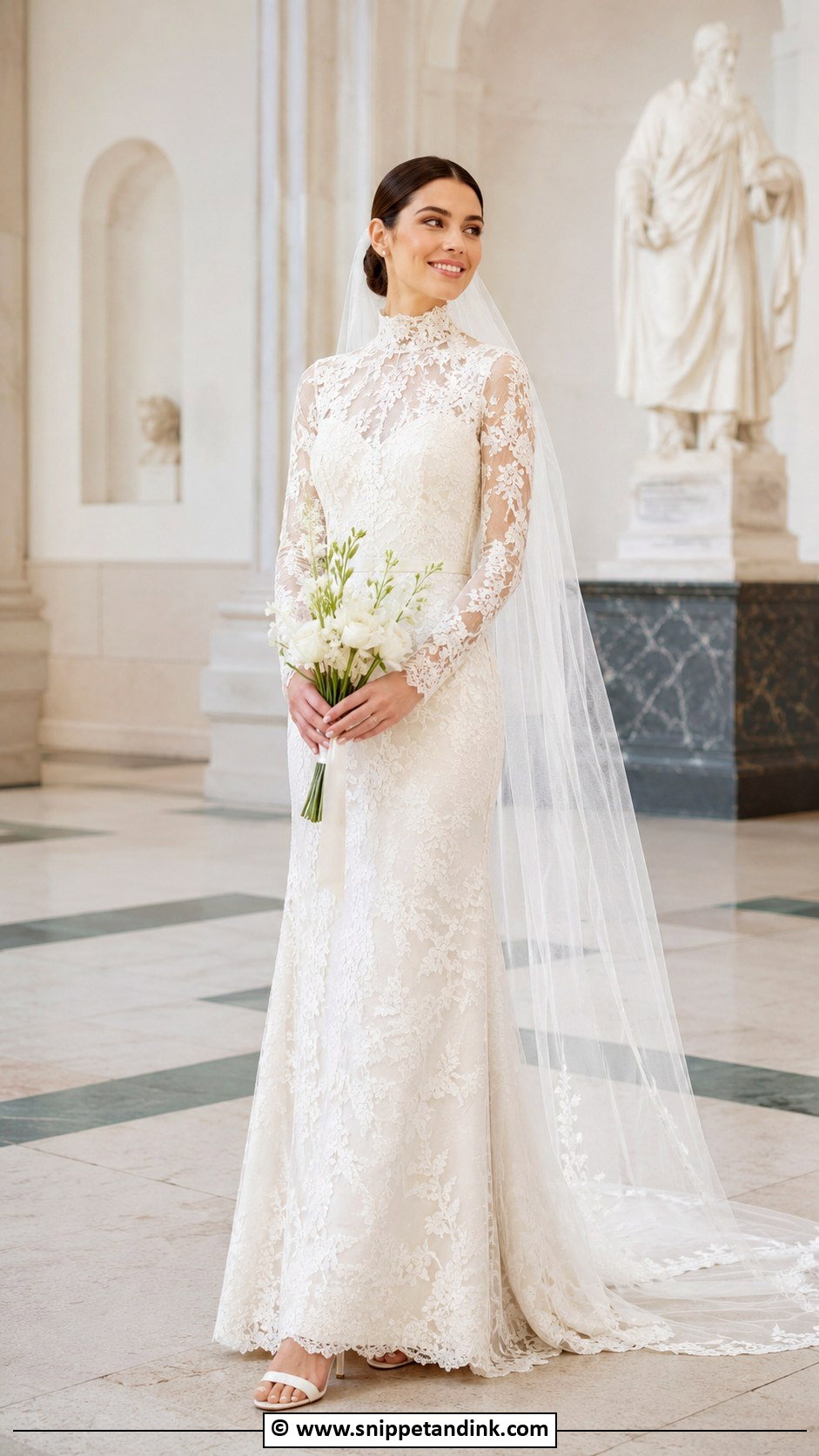
High floral necklines give coverage that still looks delicate when the lace or embroidered tulle is sheer. Pull the hair back, or the neckline and its pattern disappear behind it. Simple studs, elegant heels and a veil placed low at the back of the head keep the neck clear. A slim white bouquet keeps the outfit clean. It suits formal weddings, museum venues and cooler months. Check the collar while turning your head; stiff lace at the throat can scratch by the evening.
20. Floral Cape Wedding Dress
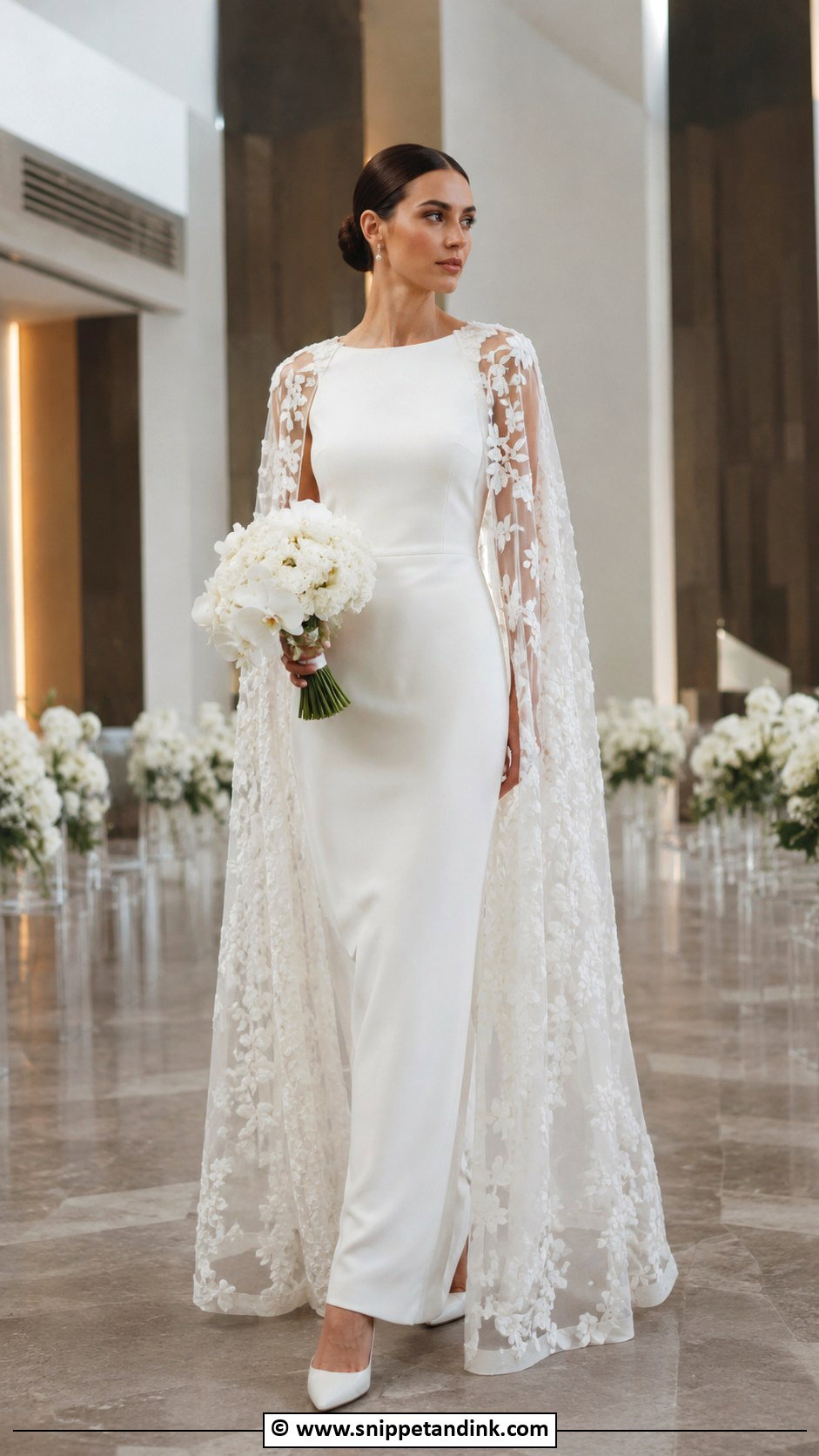
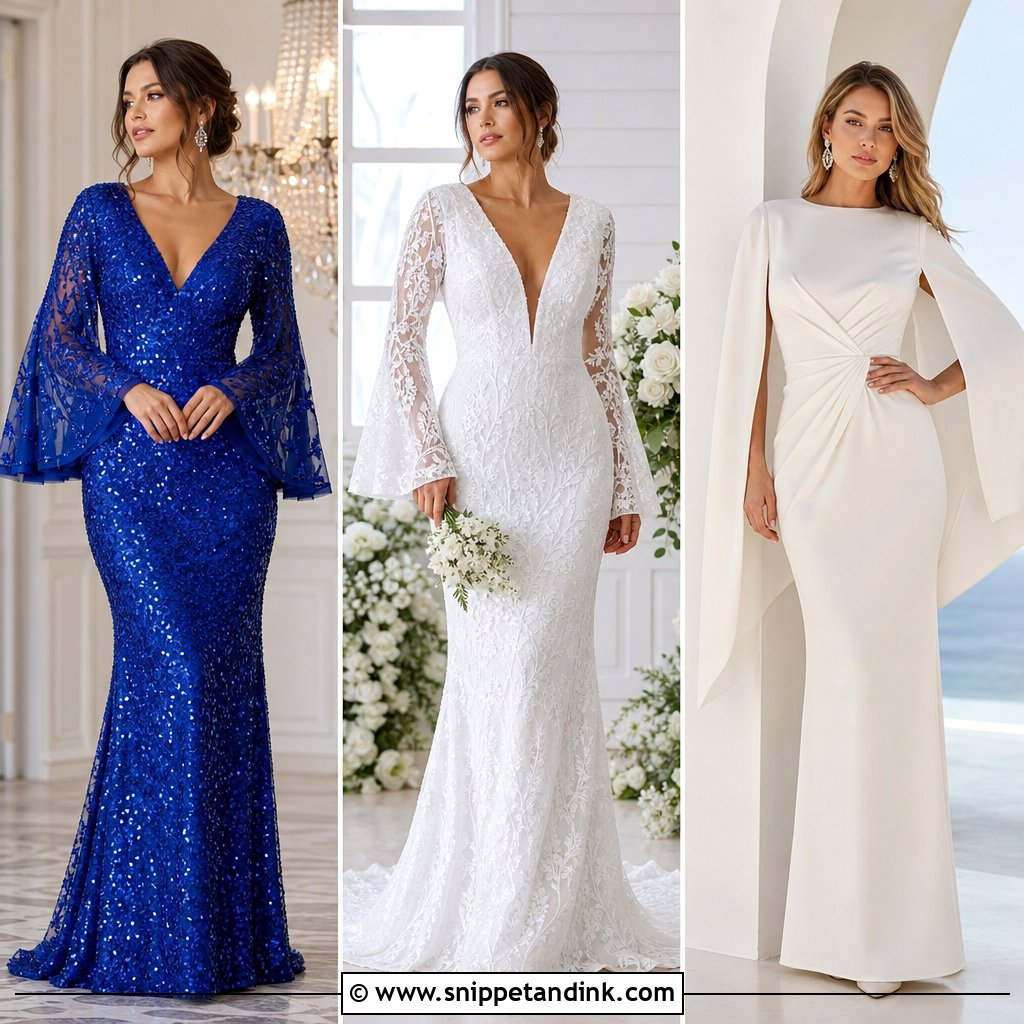
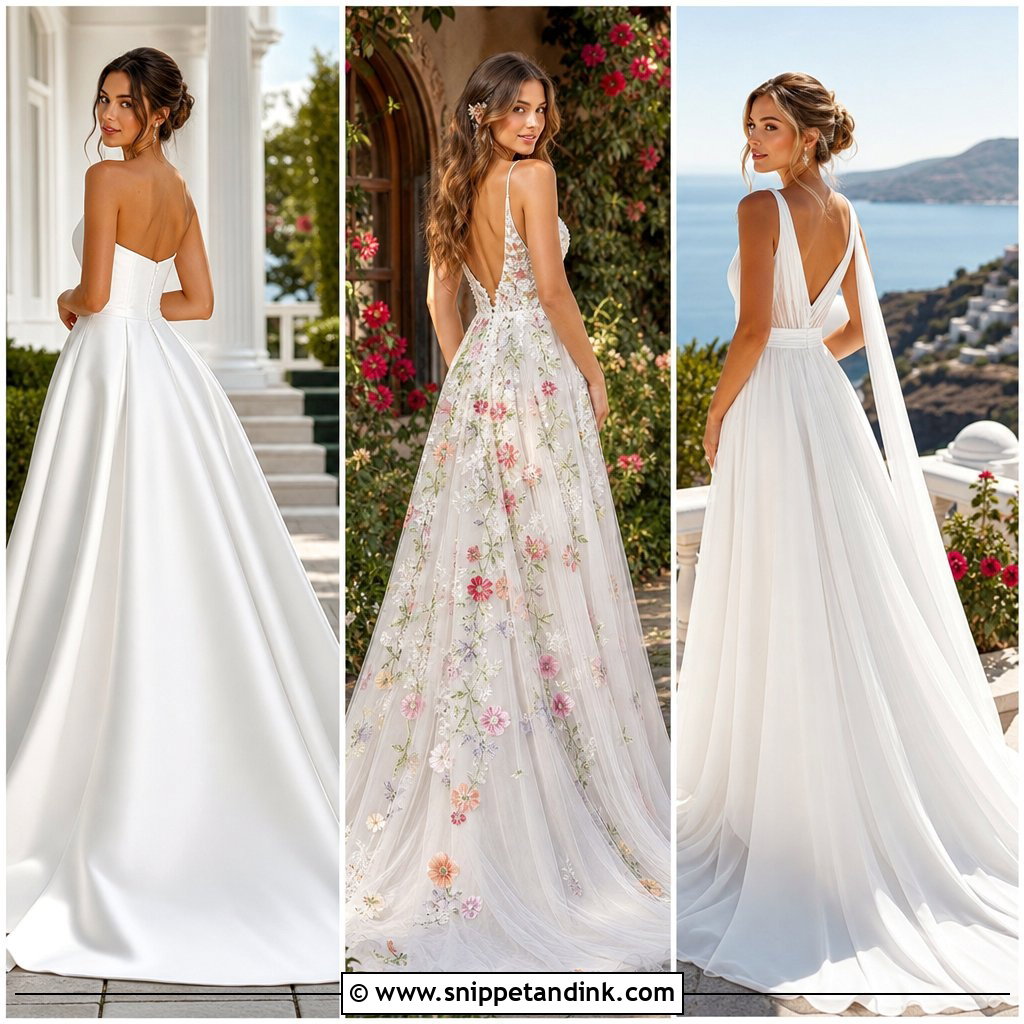
A cape gives you the movement of a veil without anything on your head. It can be sheer tulle, lace or organza with embroidered flowers falling from the shoulders to the train, and it moves dramatically as you walk down the aisle. Wear it over a simpler gown, such as a sheath, column or clean A-line, and keep jewellery minimal. Pointed heels and a neat bouquet finish it. Ask whether the cape attaches with hooks or snaps so you can take it off for dancing.
21. Floral Veil Wedding Dress
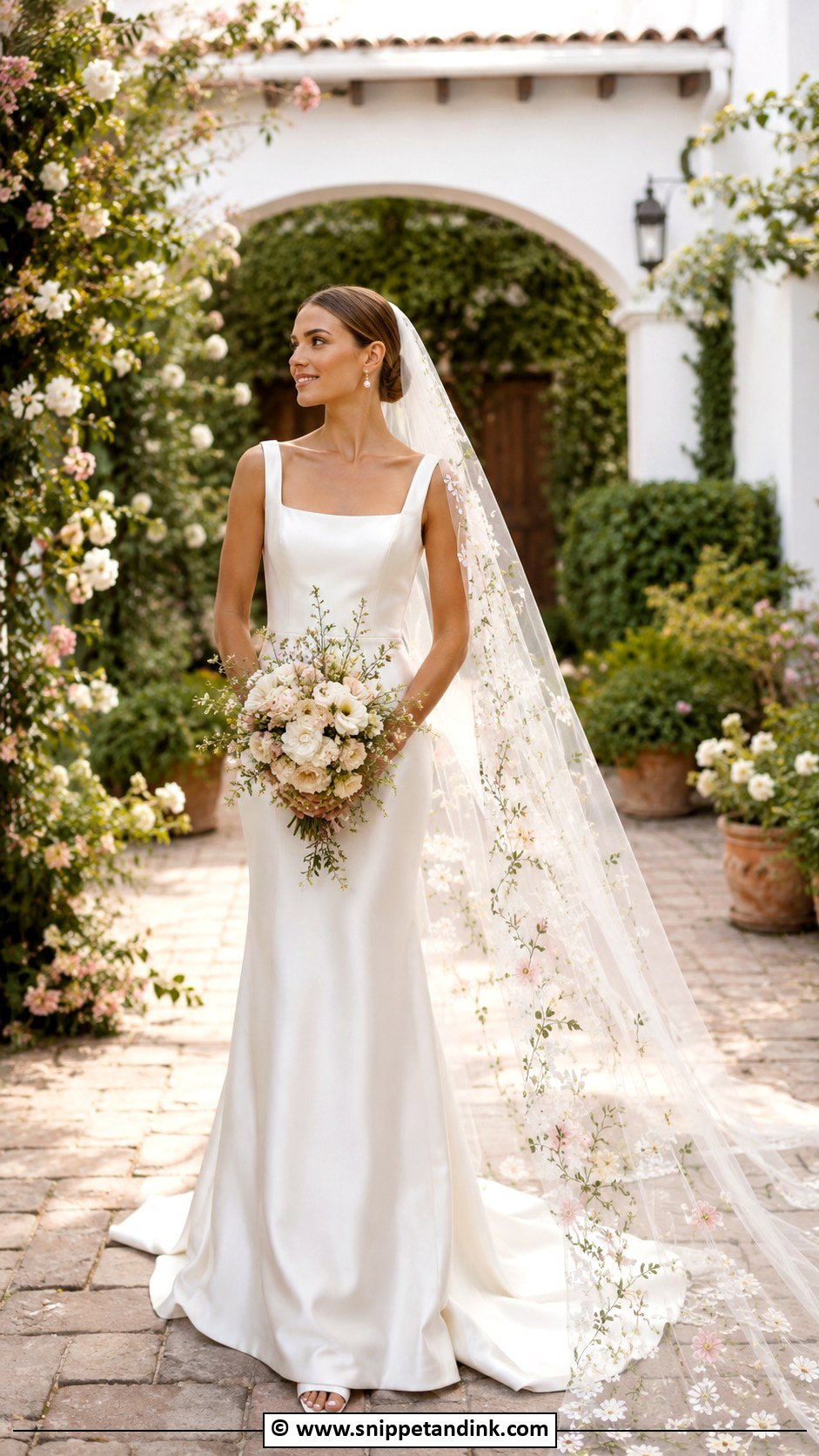
Putting the flowers on the veil instead of the gown gives you a romantic ceremony and a minimal reception. Choose a simple satin, crepe or lace dress, then a veil with embroidered flowers, scattered appliqués or a floral border. Clean heels, pearl earrings and a bouquet that echoes the veil complete it. I’d make sure the appliqués sit lower down the veil rather than right at the comb, so they don’t crowd your hair. Once it comes off, the dress feels completely different.
22. Floral Mini Wedding Dress
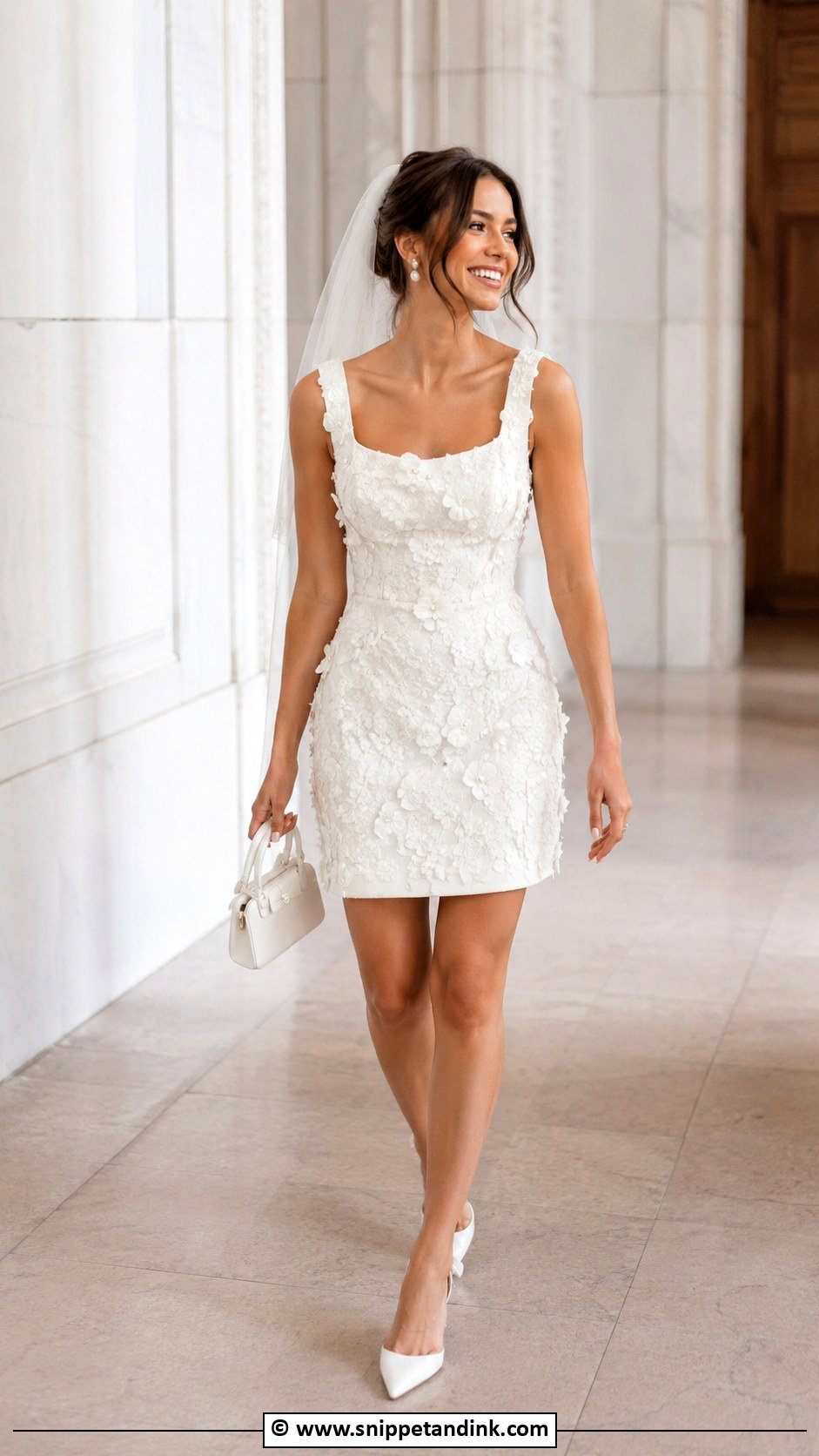
A floral mini works for a courthouse ceremony, a reception change, a shower or an after-party. White or ivory with floral lace, 3D appliqués or delicate beading keeps it bridal. Pointed heels, pearl earrings and a small structured bag finish it, and a short veil or bow hair accessory makes it feel more like a wedding. If the dress is fully covered in texture, keep the shoes plain. Minis are the easiest of all to dance in, which is why so many brides change into one later.
23. Floral Tea Length Wedding Dress
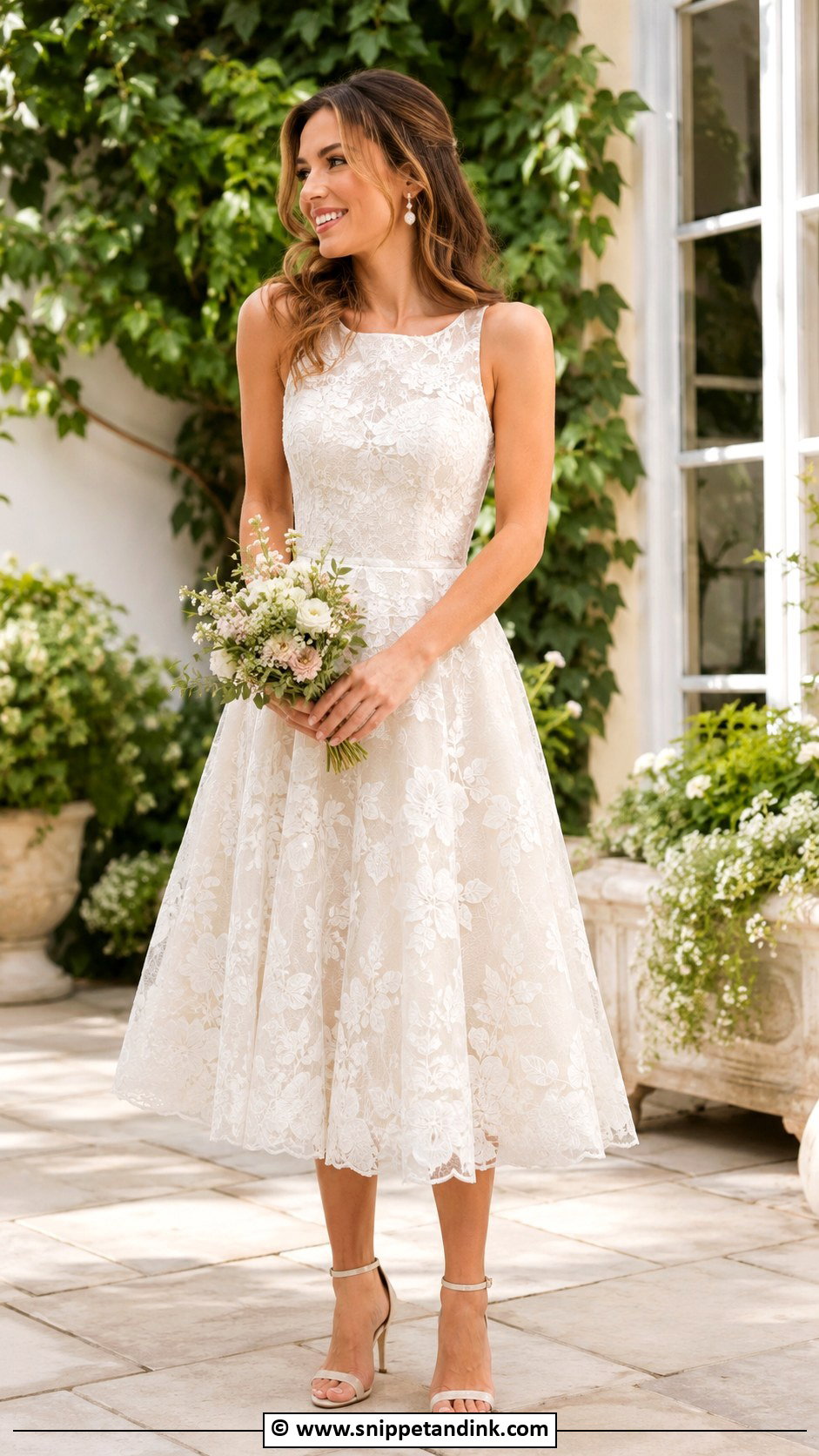
Tea length is a vintage shape that still looks current. The hem falls between the knee and ankle, so your shoes are part of the look: satin pumps, bow heels or delicate ankle straps. Floral lace or embroidered tulle adds charm without overwhelming the shorter length. Pearl earrings, soft curls and a small bouquet suit garden and courthouse weddings. Get the hem length set while wearing your shoes; a couple of centimetres change the proportion completely.
24. Floral Wedding Dress With Color
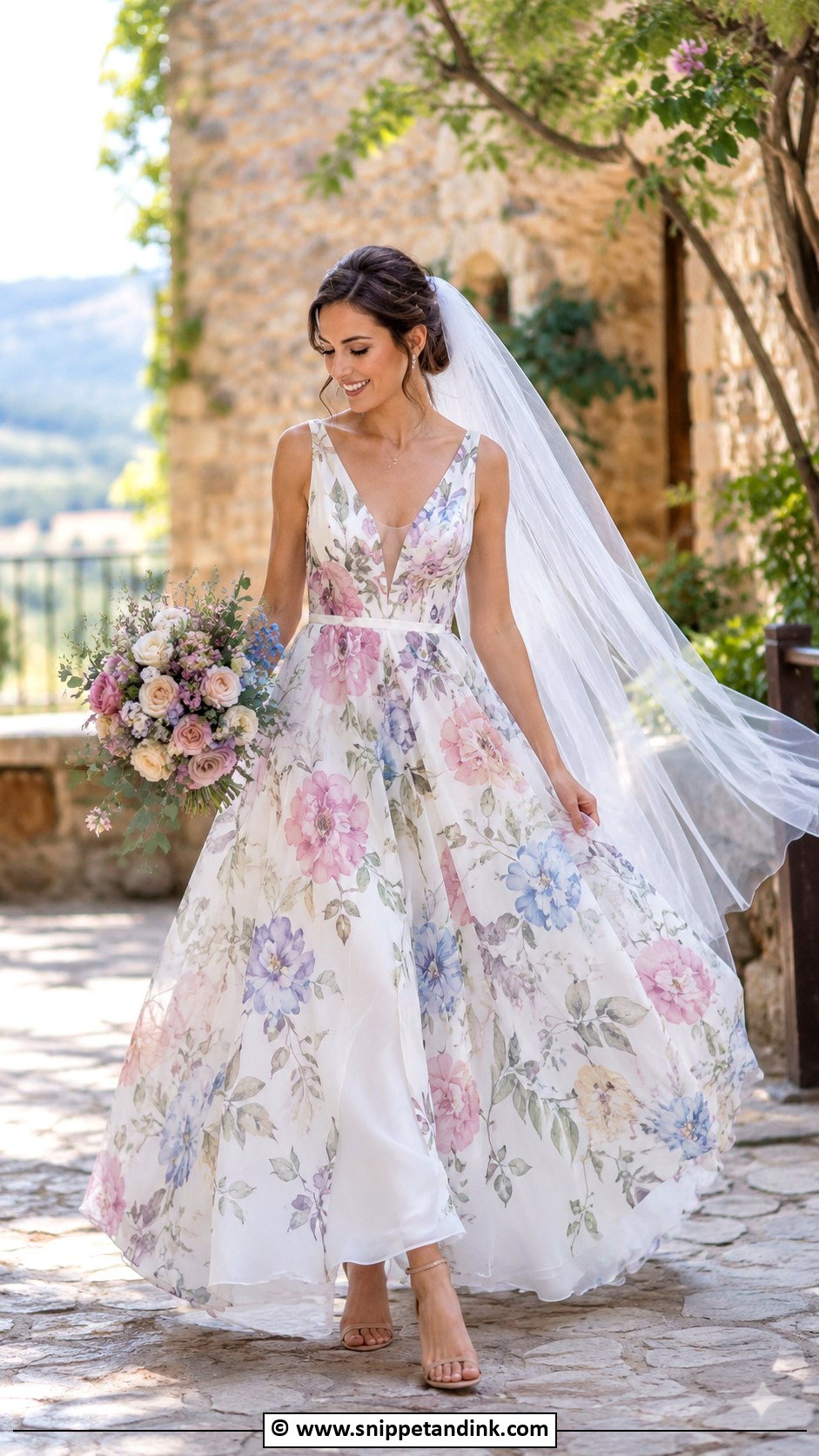
Colour turns a floral gown into something closer to art. It can be pastel, such as blush, blue, lilac or sage, or painted flowers across a white base. Pick one main colour story and repeat it in the bouquet or accessories; three colours on the dress plus three more in the flowers gets messy fast. Nude heels, simple jewellery and a sheer veil keep it calm. Outdoor weddings and creative venues suit it, and it’s a personal twist that photographs with real character.
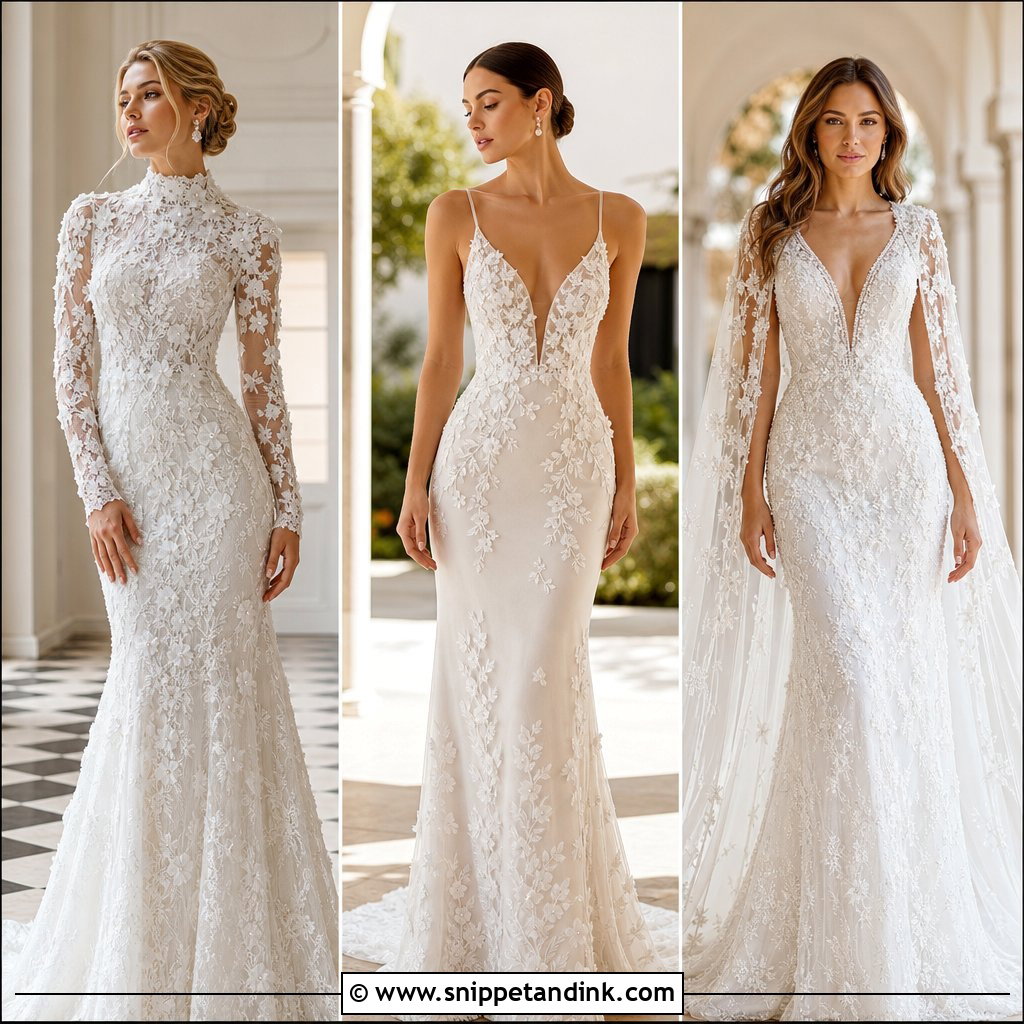
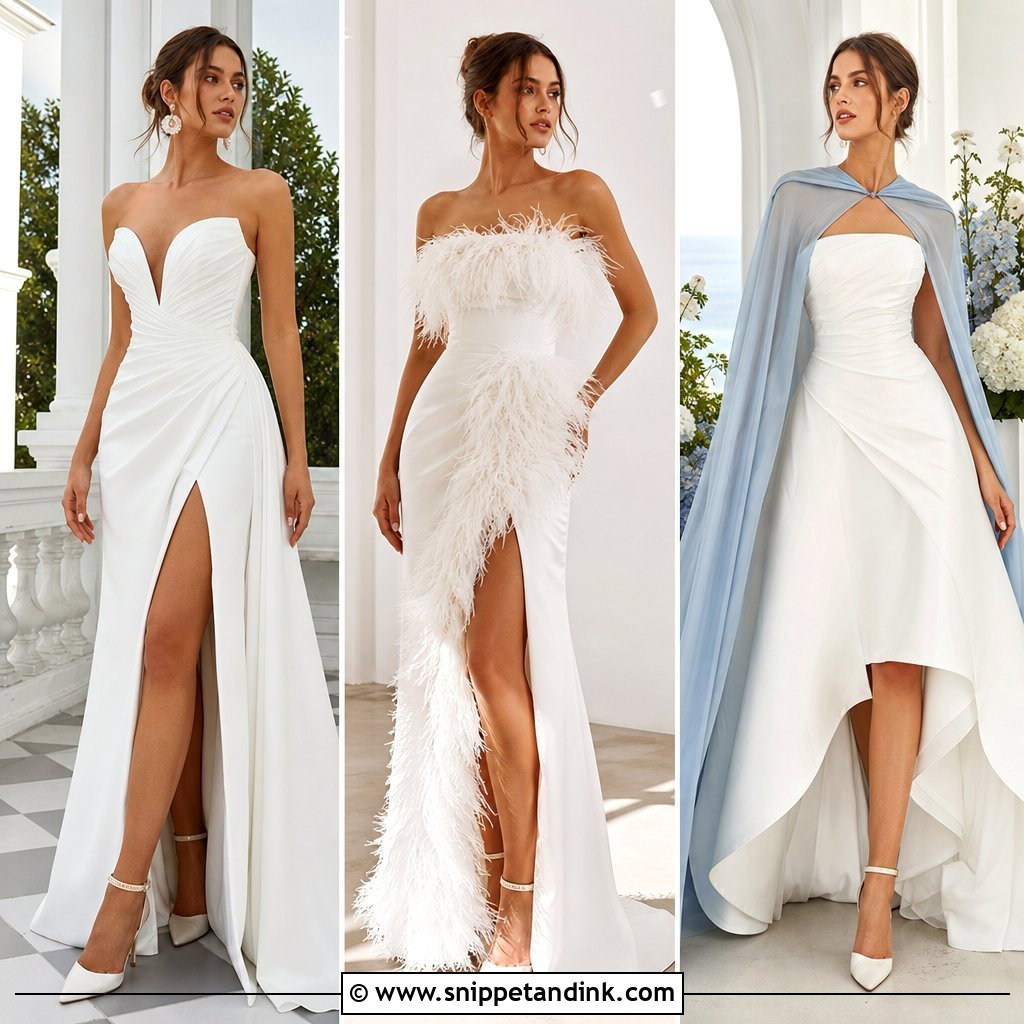

25. Floral Wedding Dress With Bouquet
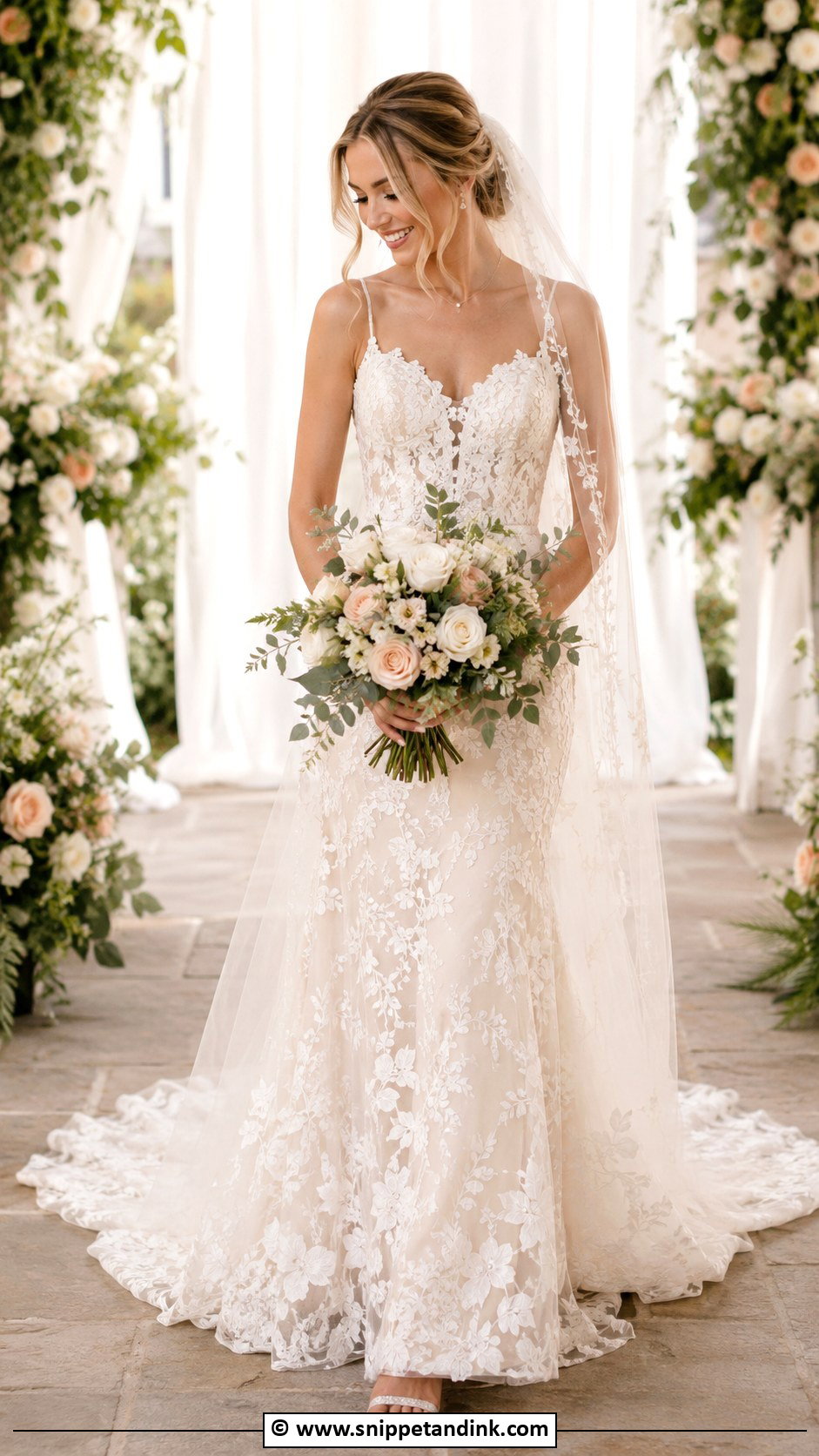
The bouquet should coordinate with a floral gown, not copy it. If the dress has bold flowers, choose a softer bouquet. If it has subtle lace or tonal embroidery, you can carry a fuller garden bouquet with more texture. Shape matters too: a cascade suits a simple sheath or clean A-line, and a round bouquet sits well with a ball gown. I always ask brides to hold their bouquet against the bodice at the final fitting, using a mock-up if needed, to check the colours and scale together. Comfortable heels, a veil that matches the dress detail and supportive jewellery complete it.
Altering a Gown That’s Covered in Appliqués
Taking in or shortening a floral gown is slower than altering a plain one. A seamstress usually unpicks appliqués along the seam, makes the change, and then stitches the flowers back by hand so the pattern still flows. Lace hems are often shortened from the waist or by moving the scalloped edge up, rather than simply cut. Plan for more fittings and a bigger alterations budget than for a plain gown, and ask the seamstress to save any spare appliqués for repairs.
On the morning itself, I carry a needle and thread in the dress colour. A petal that catches on a door handle or a bouquet stem can be tacked back in a couple of minutes, which is far better than snipping it off and leaving a gap in the pattern.
Give Your Florist a Fabric Swatch, Not Just a Photo
Screens shift colour, and gown whites vary from bright white to warm ivory and champagne. Pure white flowers held against an ivory dress can make the gown look yellow, while cream flowers often sit better. Ask your salon for a small swatch or snip of the lining, or take a daylight photo of the dress beside a sheet of plain white paper. With that, your florist can match tones and pick blooms that echo your embroidery or appliqués instead of guessing.
Let One Flower Story Run From Veil to Hem
Floral detail can be bold, soft, colourful or tonal, and the gown is only part of the picture. The veil, shoes, jewellery, bouquet, hair and venue all have to work with it. A subtle lace flower dress may need only pearls, while a 3D floral gown wants the cleanest possible accessories. Colourful embroidery can set your bouquet palette, and a floral veil can transform a plain dress. Decide where the flowers live, then let everything else support them.
You'll Like These Ideas:



Leave a Reply