
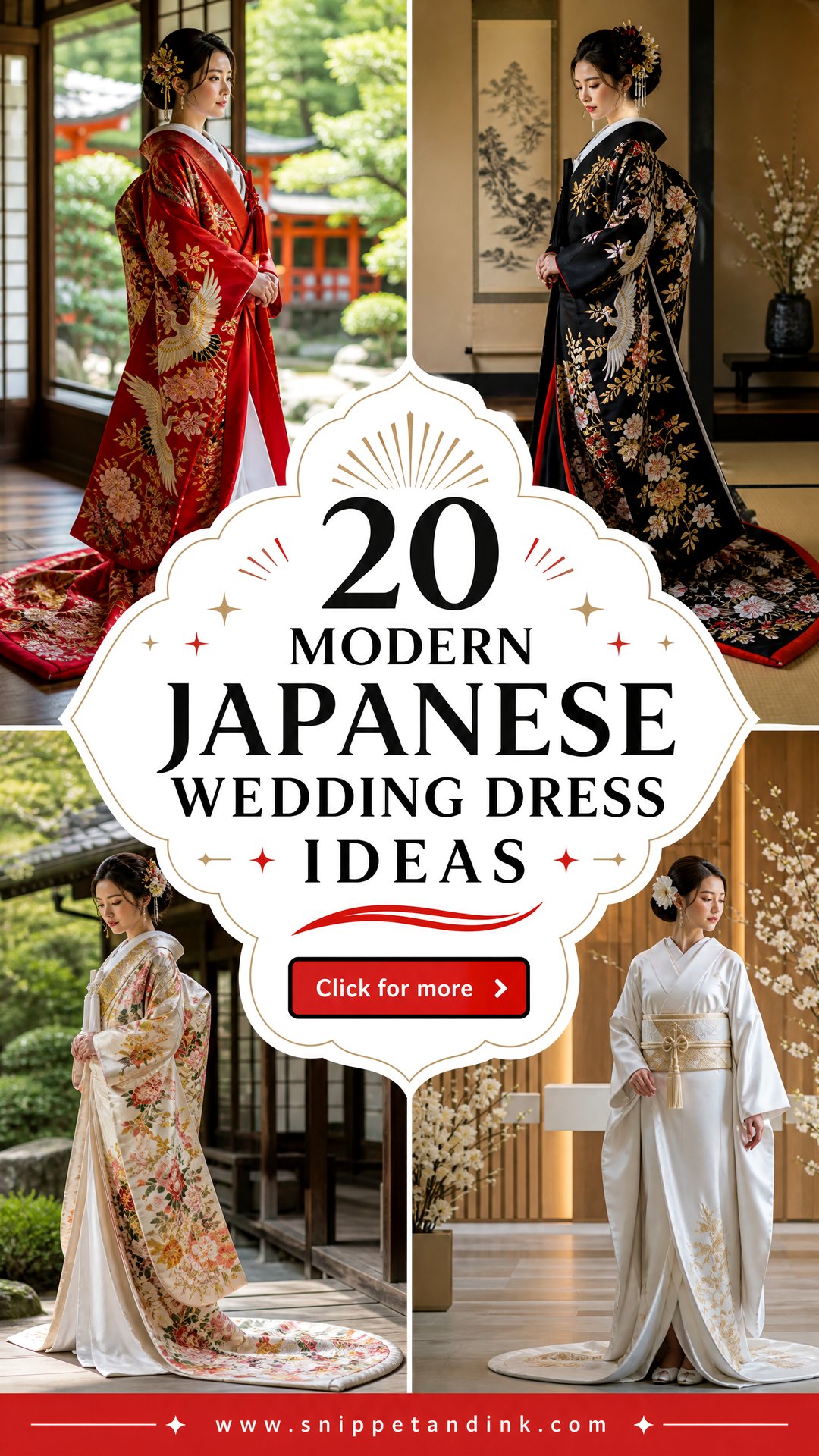
Japanese bridal dress covers two quite different worlds. One is the traditional kimono: the white shiromuku, the colourful iro-uchikake robe and the trailing hikifurisode. The other is Western gowns influenced by Japanese design, with obi-style waists, kimono sleeves, sakura embroidery or folded pleating. Many couples now wear both, with a kimono for the ceremony and a gown for the reception. My aim when styling either is the same: treat the traditional garments as the formal clothing they are, not as costume, and choose the modern pieces for how they suit the bride and the venue. Below are twenty looks across traditional, contemporary and fusion styles.
Renting a Bridal Kimono and What the Package Should Cover
Most brides rent bridal kimono rather than buy them. A shiromuku or a fully embroidered uchikake is a costly handmade garment, and rental studios exist precisely so a bride can wear one for a day. The rental is usually only part of what you need, though, so I go through the package line by line.
- Dressing: confirm a trained kitsuke dresser is included and ask how long dressing takes. Allow generous time in the schedule; layered bridal kimono cannot be rushed.
- The full set: under-kimono, collar pieces, obi, tabi, zori, fan and any hood or headpiece should all be listed. Missing items are hard to source on the morning.
- Hair: a wataboshi or traditional headpiece needs hair prepared for it, sometimes with a wig. Check whether the studio’s hairstylist does this or whether yours must coordinate with them.
- A try-on: book a fitting where you wear the full set, so you know the weight and can practise walking.
On the morning
Arrive in a top that opens at the front, so nothing has to come over your head once your hair and makeup are done. Ask your makeup artist to extend foundation onto the back of the neck as well, because kimono collars sit low at the back and show the nape clearly.
1. White Shiromuku Japanese Wedding Dress
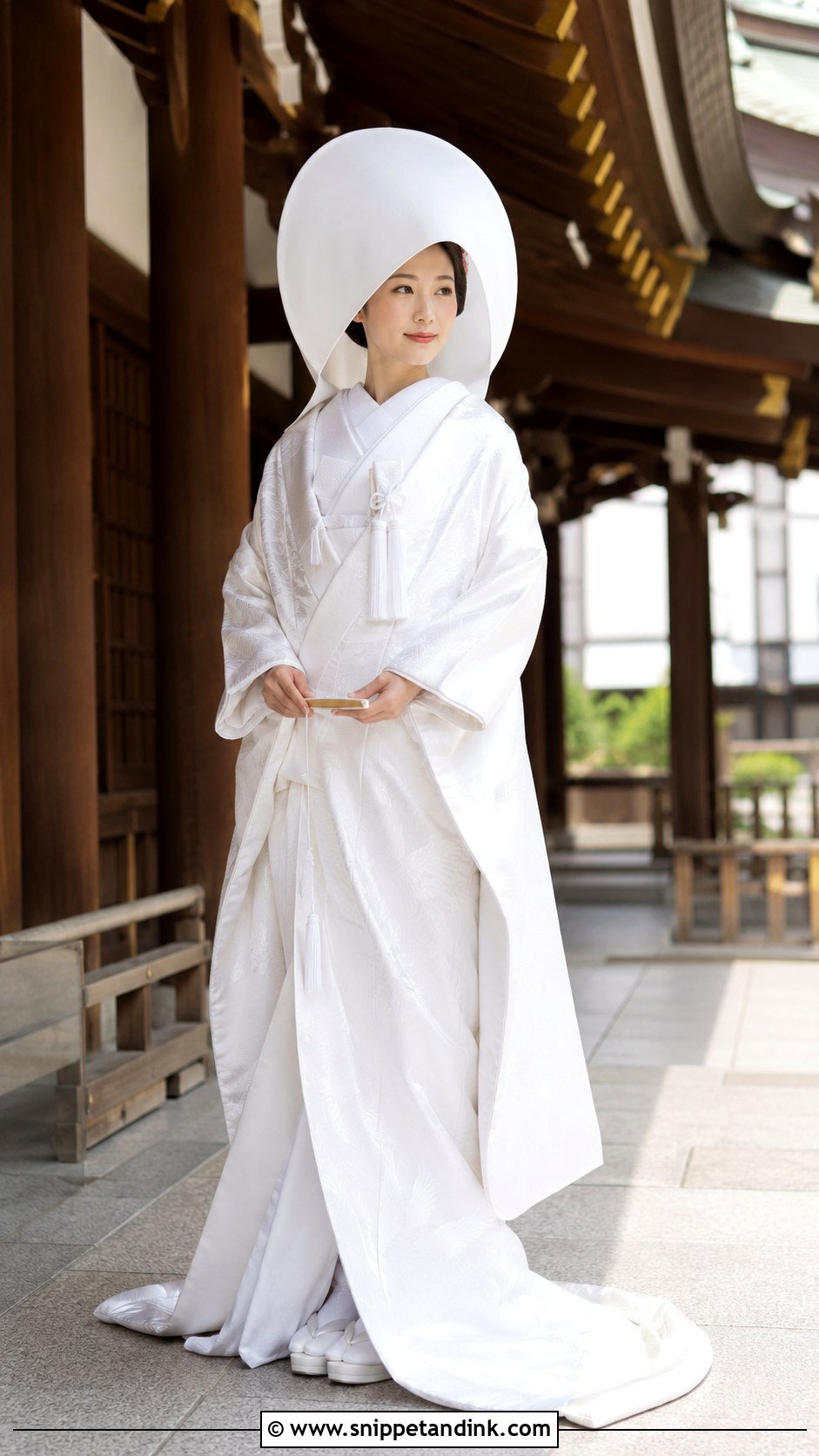
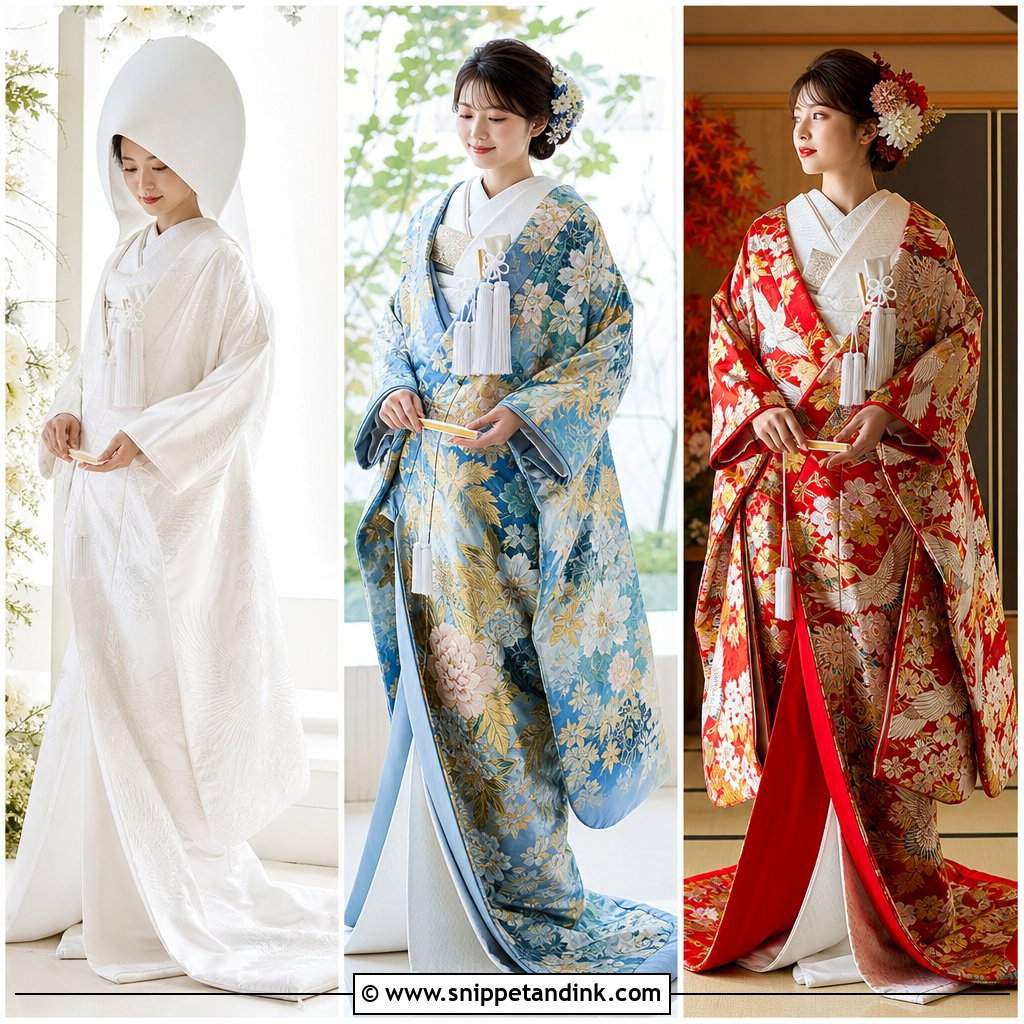
The shiromuku is the most formal bridal kimono, worn all in white for a Shinto ceremony or traditional portraits. The full set is a white bridal kimono with matching under-layers, obi, white zori sandals and accessories. Woven patterns such as cranes, pine or quiet florals give texture while keeping the palette white. The wataboshi hood is the most recognisable finish; a smooth low chignon is the lighter alternative. Makeup should be fresh with luminous skin, soft eyes and a muted rose lip. Earrings are usually left off for the ceremony. Every layer of a shiromuku is folded and tied in a set order, which is why it should always be put on by a trained kimono dresser.
2. Minimal Shiromuku Japanese Wedding Dress
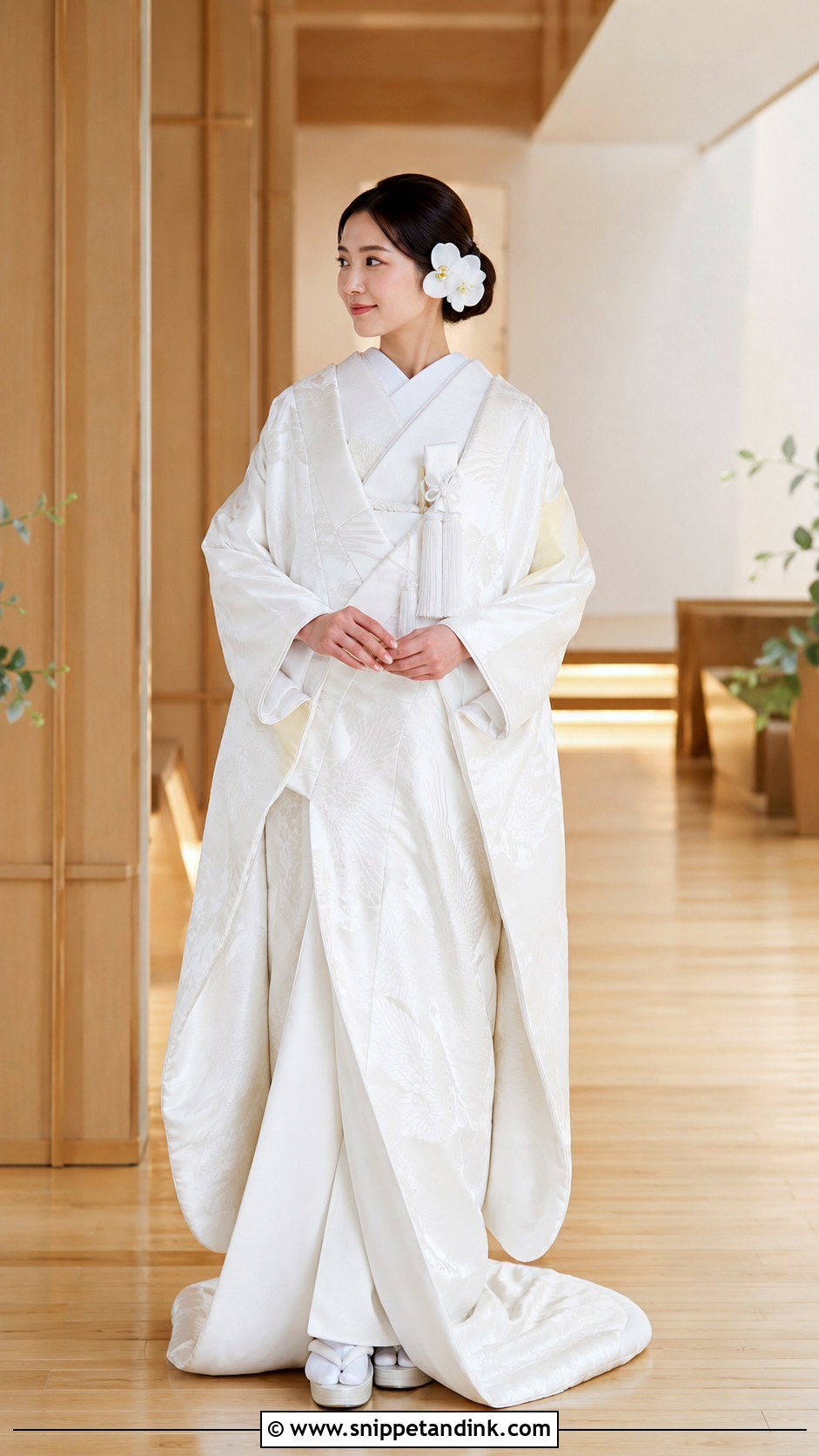
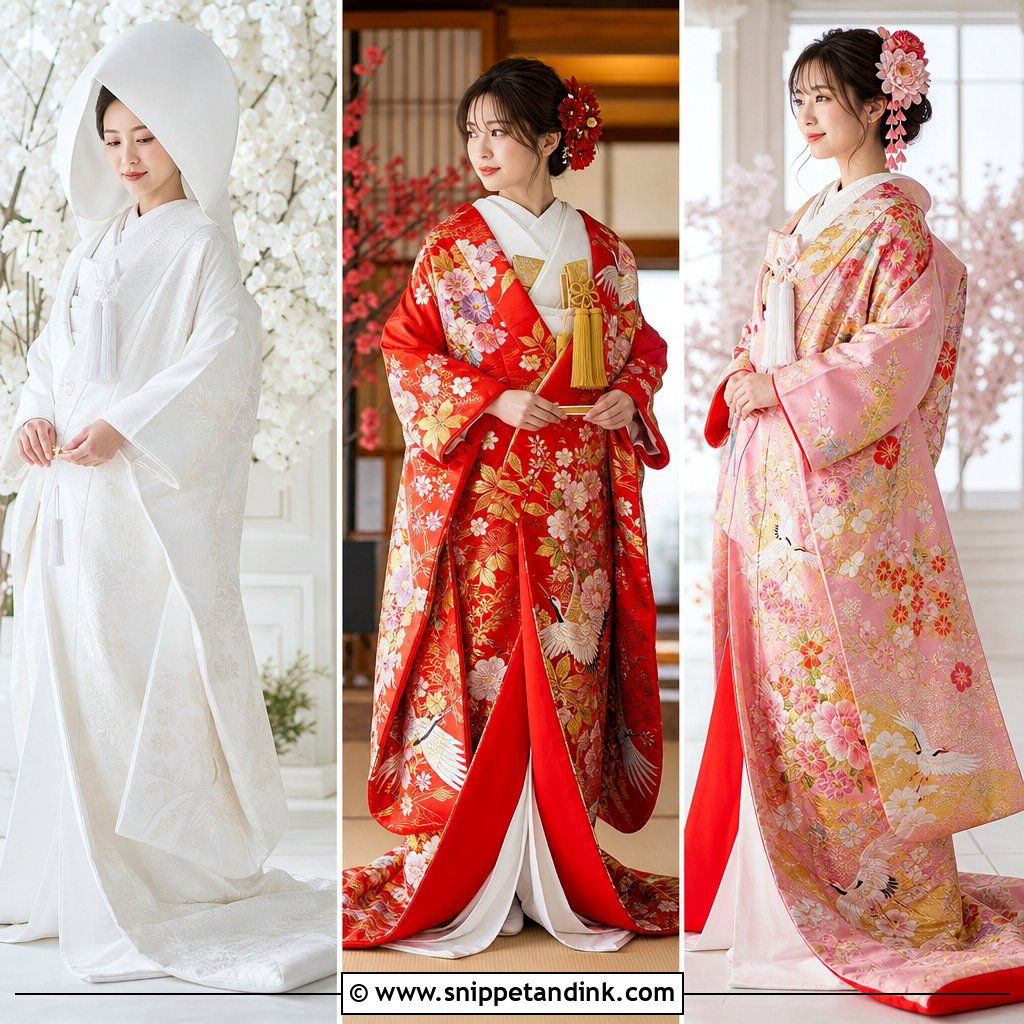
A shiromuku with restrained weaving puts the attention on the garment’s structure: the long sleeves, the layered collar and the padded hem that lets the robe trail. A white obi, white zori, a small fan and a neat chignon are all it needs. A single white orchid or a sculptural pin can replace a large floral piece. I’d keep jewelry off entirely; the collar layers are the detail near the face. Pale wood, stone and plain modern interiors suit this cleaner version. The styling may be modern, but the dressing is not, so it still needs an experienced kitsuke dresser who knows how bridal kimono should sit and move.
3. Shiromuku With Wataboshi Wedding Dress
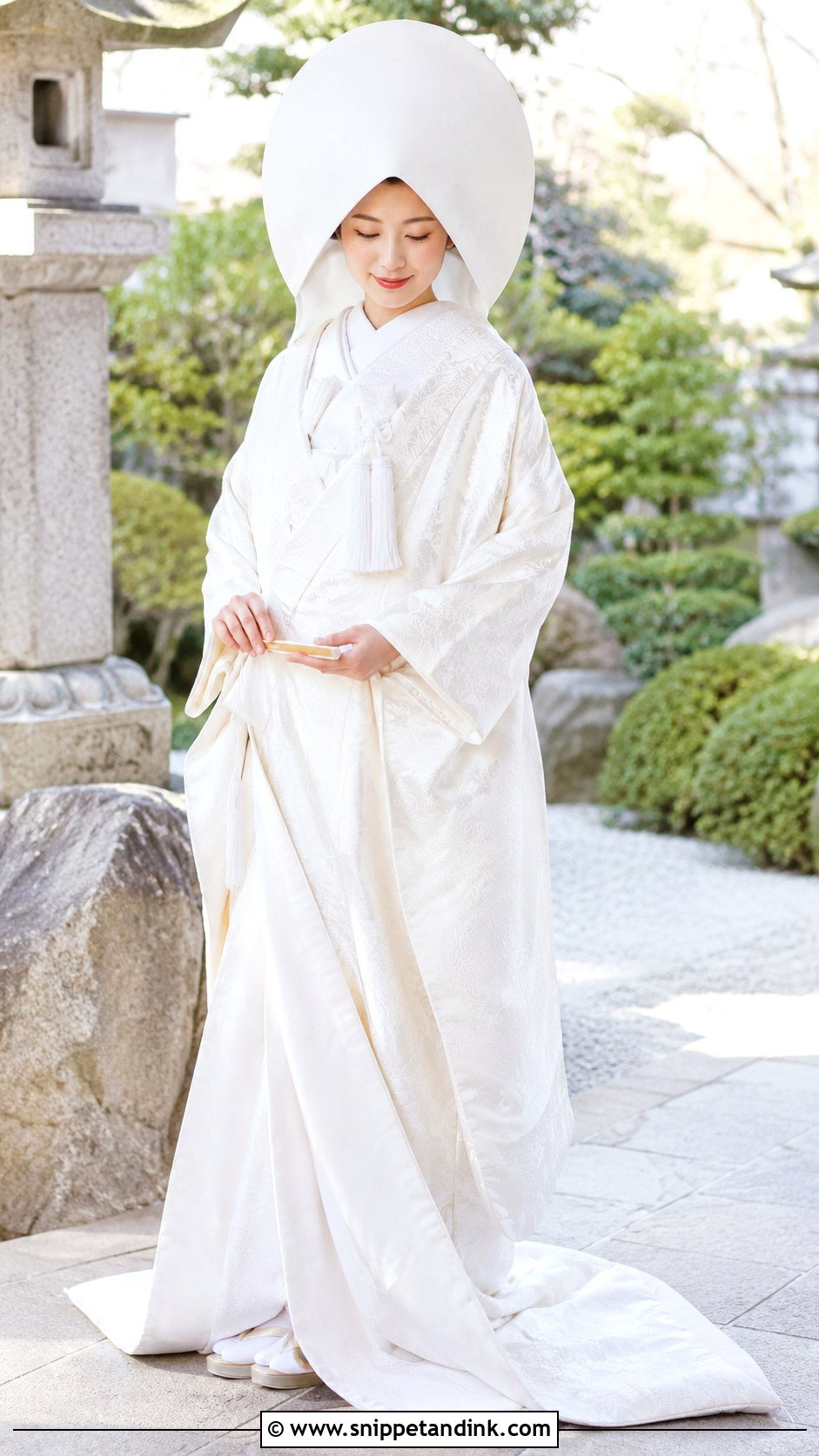
The wataboshi is a rounded white hood worn over the hair with shiromuku, and it frames the face in a way nothing else does. Kimono, obi, under-layers, zori and hood all stay white. Silk with tonal crane or floral weaving rewards close-up photos while staying calm from a distance. Underneath, the hair has to be arranged so the hood sits correctly, either in a traditional style or a firm low shape; loose waves will push it out of position. Polished makeup with defined brows and a soft red or pink lip suits it, and a folded sensu fan takes the place of a bouquet. Shrines and Japanese gardens suit it best.
4. Shiromuku With Modern Bridal Hair
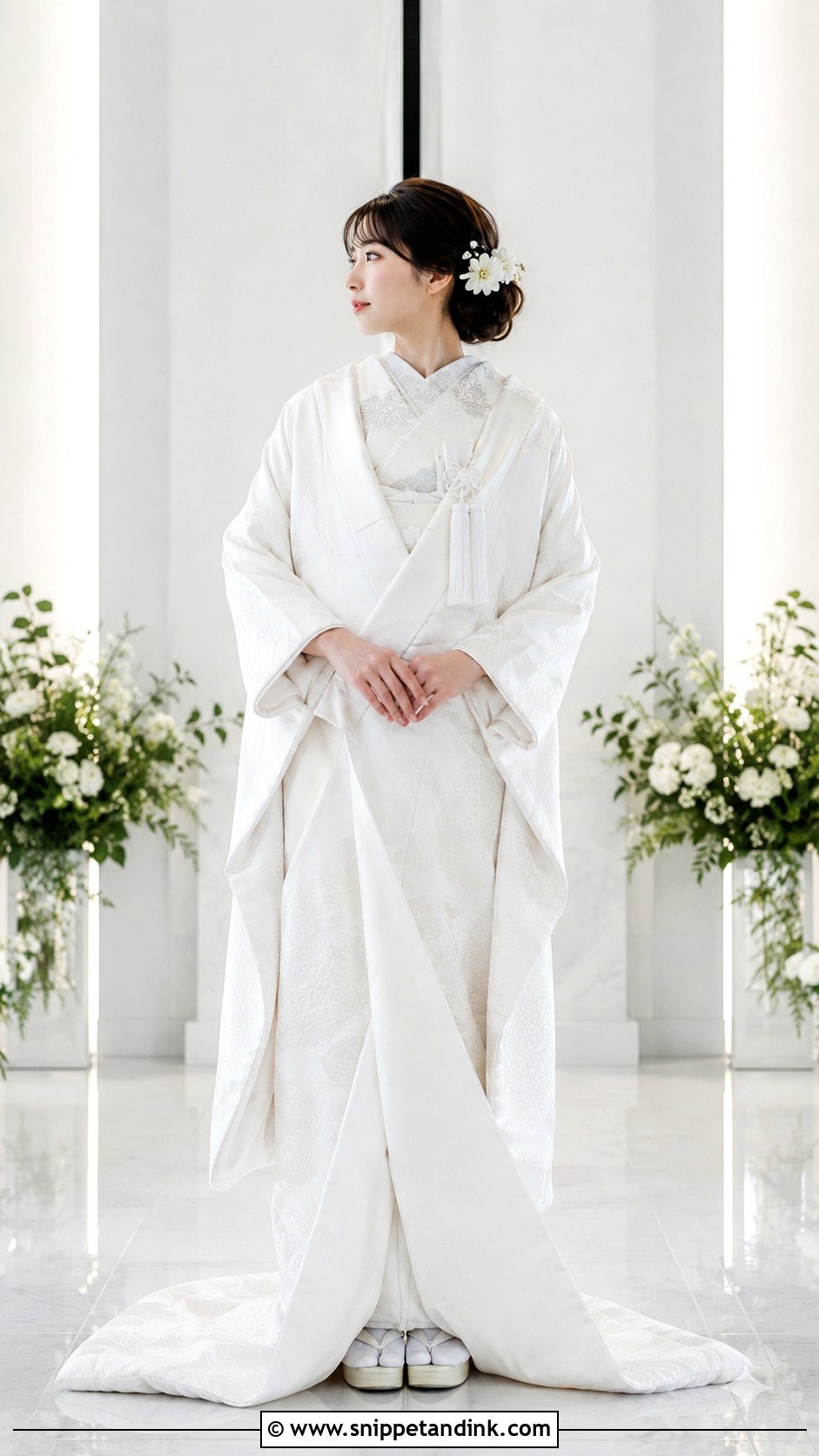
Modern hair softens an ornate shiromuku without lowering its formality. Pair the white kimono, obi, layered collar and zori with a low textured bun or a smooth chignon, then add small white flowers, pearl pins or a single metallic kanzashi. Avoid a big headdress. Security matters more than usual: a kimono session can run long, and you cannot raise your arms easily in it to fix a slipping pin, so I’d set the base with extra grips. Tonal embroidery and fresh blush keep the face light. It is a good route if you plan to change into a Western dress later, since the hair can stay as it is.
5. Red Iro-Uchikake Japanese Wedding Dress
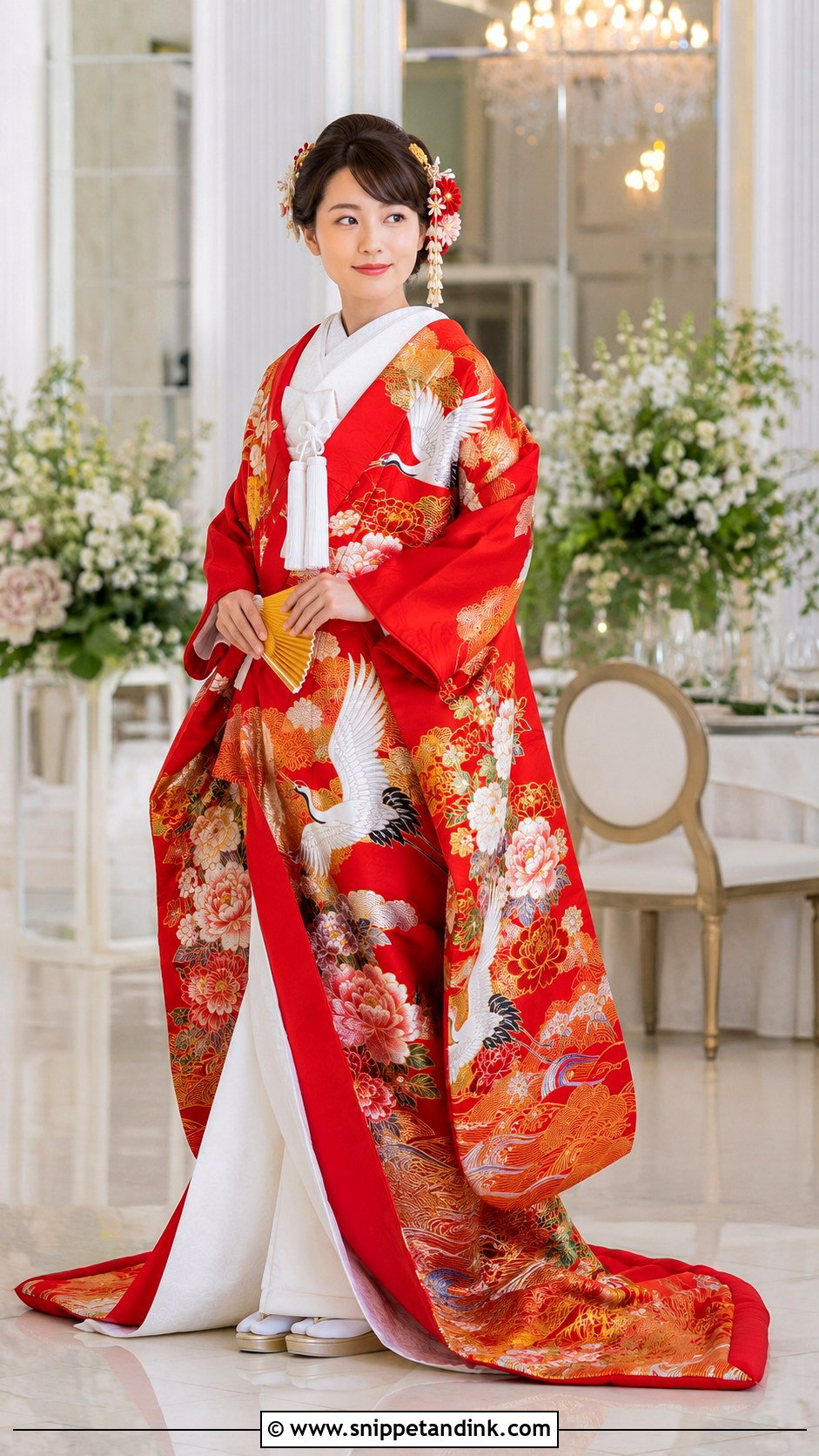
Red iro-uchikake is the classic colour change, and it reads strongly against neutral walls or green garden backgrounds. The uchikake is an outer robe worn open over kimono layers, never fastened with a visible belt. Gold cranes, peonies, pine or water motifs travel across the sleeves and padded train. White tabi, zori and a gold or tortoiseshell-style kanzashi set complete it, with a smooth chignon and a small red lip. An embroidered uchikake is heavy, so plan portraits around standing poses and short, measured walks rather than long strolls. It brings colour and richness to a formal reception.
6. Gold Iro-Uchikake Japanese Wedding Dress
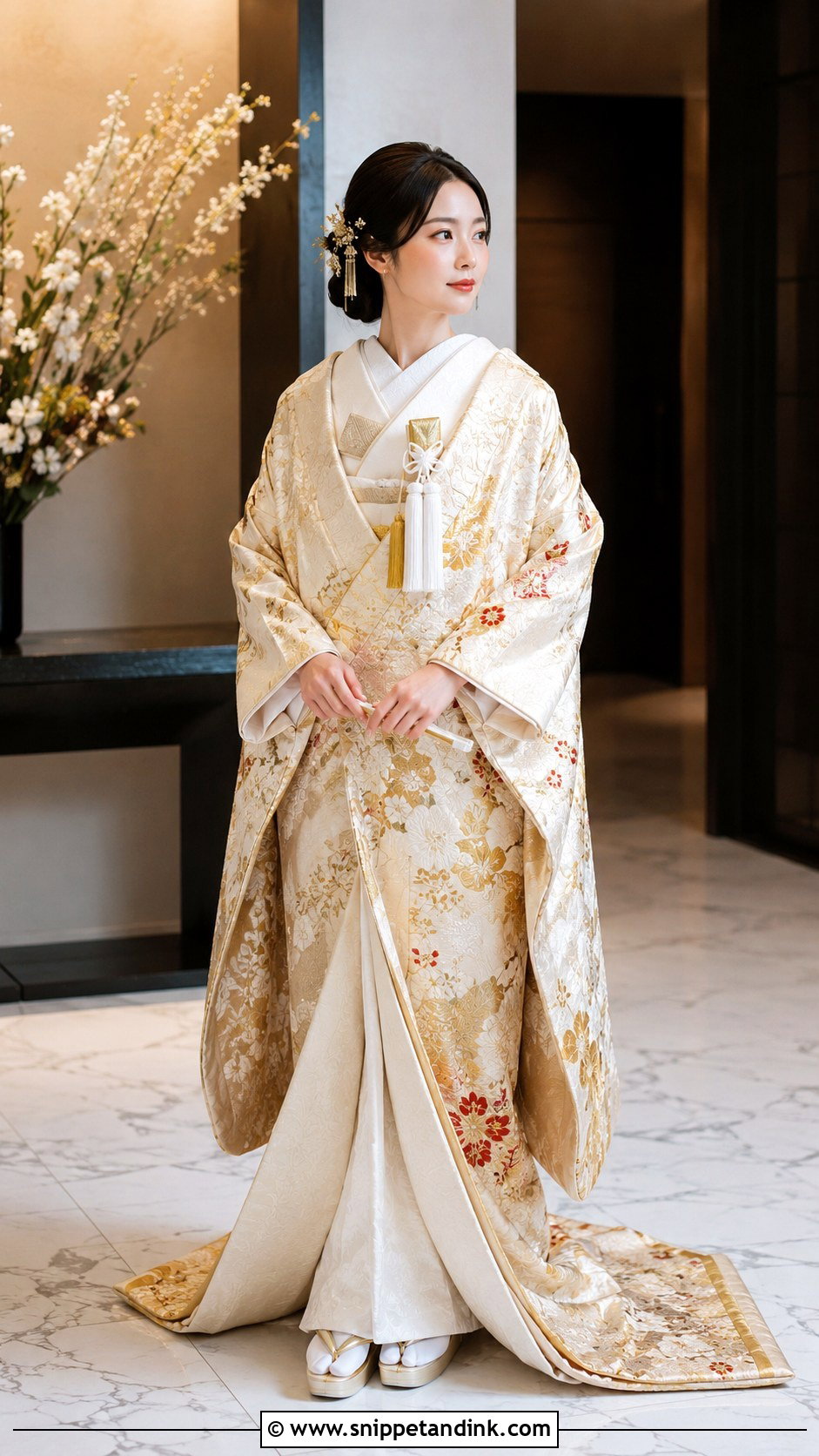
A gold iro-uchikake looks regal under clean evening lighting. I’d pick an outer robe that mixes pale gold thread with ivory, champagne and a little red embroidery, rather than solid gold, which can turn brassy in warm room light. It goes over the traditional kimono layers with white tabi and gold-accented zori. A sculpted low bun with one small metallic kanzashi keeps it from tipping into too much. Luminous skin, neutral eyes and a soft lip suit it. Hold a folding fan or a compact white arrangement instead of a big bouquet. It gives traditional embroidery a brighter, current feel while keeping the uchikake silhouette intact.
7. Pastel Iro-Uchikake Japanese Wedding Dress
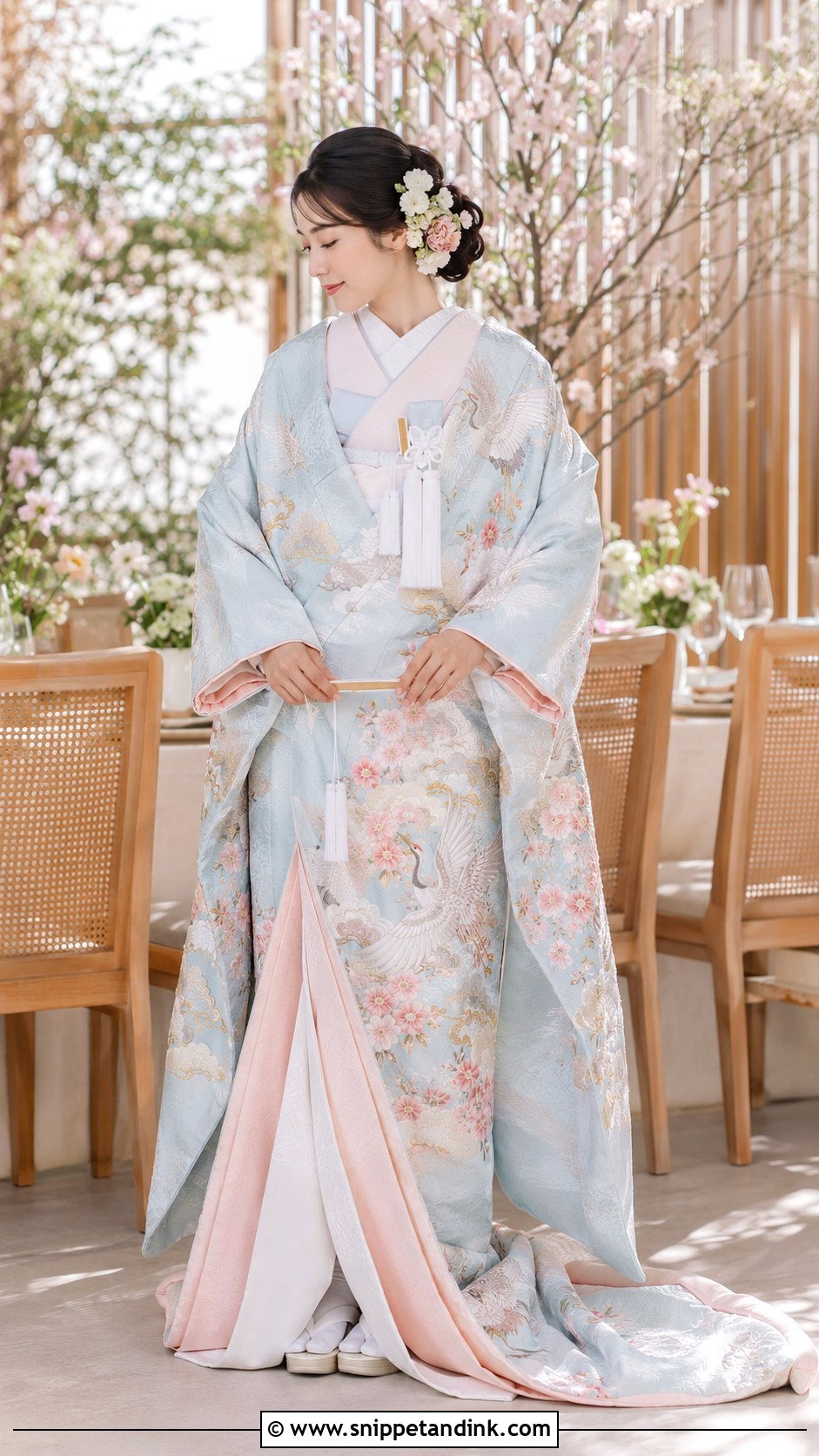
Pastel uchikake is a softer alternative to the deep reception colours. Pale pink, powder blue, mint, lavender or an ivory robe decorated with delicate blossoms, cranes or cloud patterns all work. Wear it over coordinated layers with a light obi arrangement, white tabi and neutral zori. Fresh flowers in a low bun can echo one or two embroidery colours. The risk with pastels is that the embroidery disappears in photographs, so I look for designs with enough contrast between ground colour and thread. Peach makeup and a natural pink lip keep it fresh. Spring and garden portraits suit it.
8. Black Hikifurisode Japanese Wedding Dress
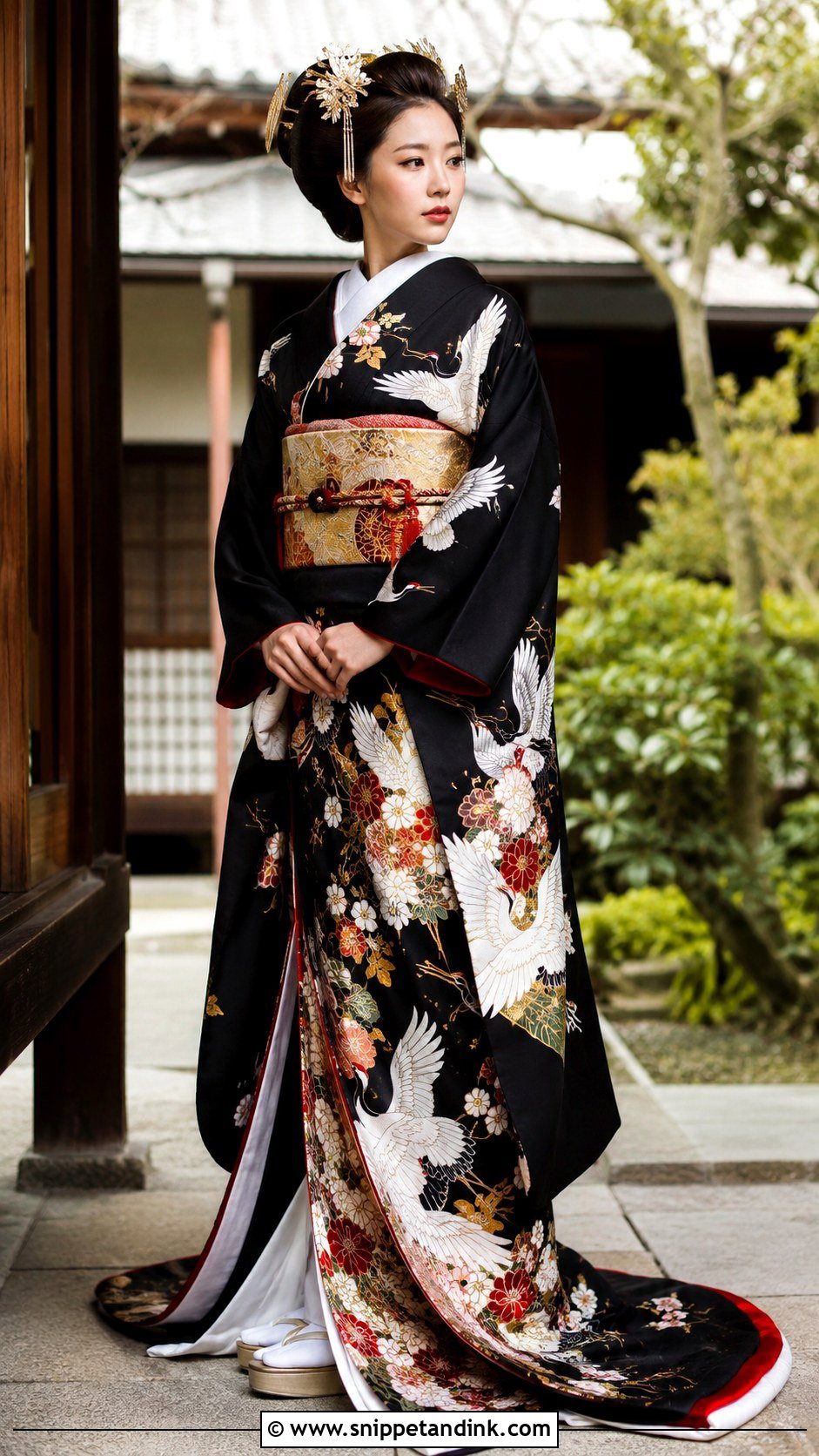
A black hikifurisode, sometimes called kurohikifurisode, has long sleeves and a trailing hem, with vivid cranes, fans, flowers or landscapes standing out against the dark ground. Unlike the uchikake, it is worn with a visible obi tied at the waist, which changes the silhouette completely. White tabi, zori and an ornamental comb or small kanzashi complete it. A smooth updo and red lip lean vintage; softer makeup makes it more current. It suits a reception, portrait session or change after a white ceremony look. Because it is formal bridal wear, the obi knot and accessories should be done by someone trained, not improvised.
9. White Hikifurisode Japanese Wedding Dress
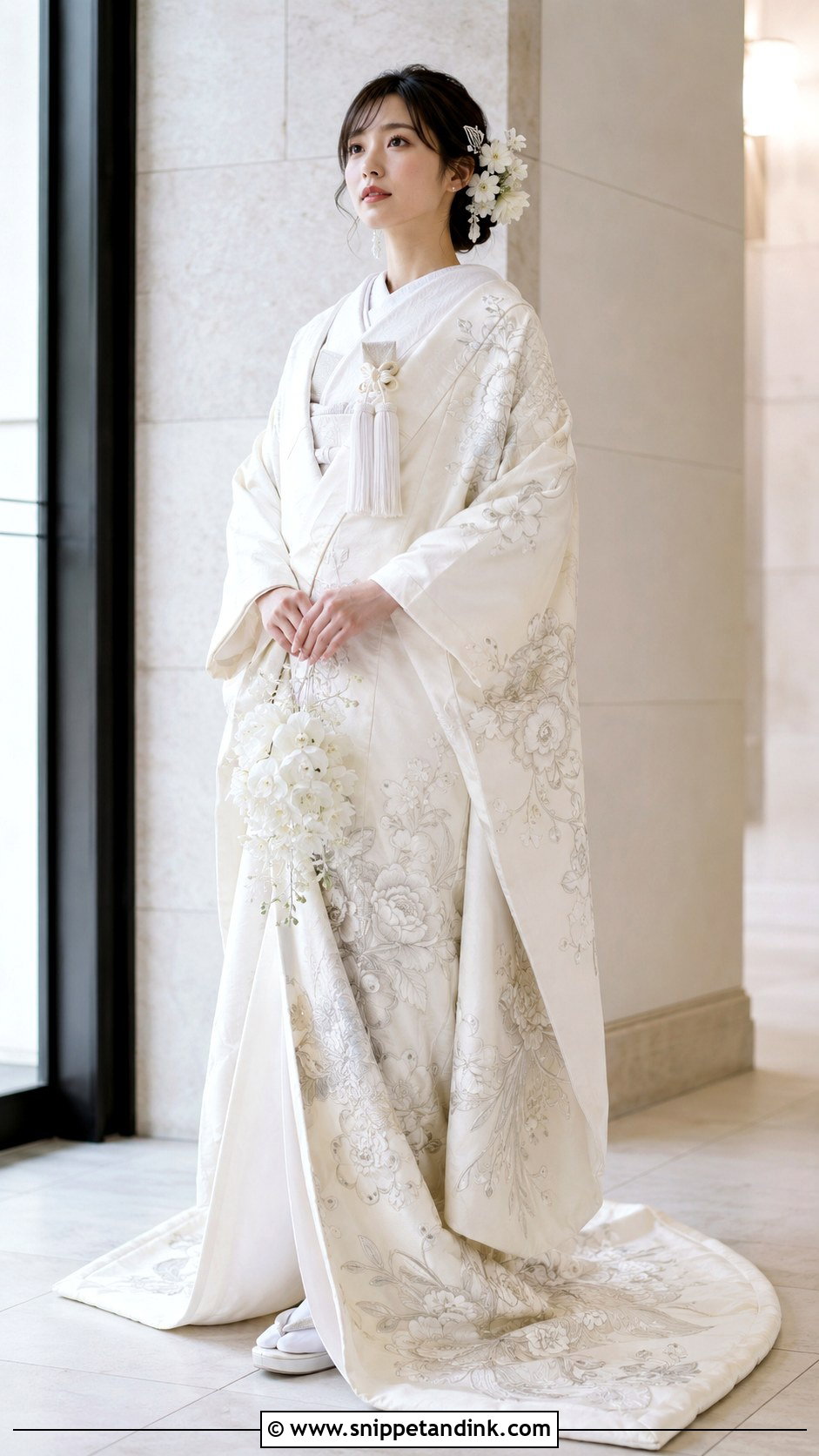
A white hikifurisode keeps the bridal palette but shows a defined waist, since the obi is part of the finished look rather than hidden under an outer robe. White or ivory with silver embroidery, faint gold or soft floral placement suits it. A pale metallic obi, white tabi and understated zori complete it, with a low chignon and a silver comb or white blossoms. The trailing hem moves well in portraits. I’d suggest it to brides who find the uchikake too heavy or too layered; the hikifurisode is lighter to wear and reads less padded in photos.
10. Floral Hikifurisode Japanese Wedding Dress
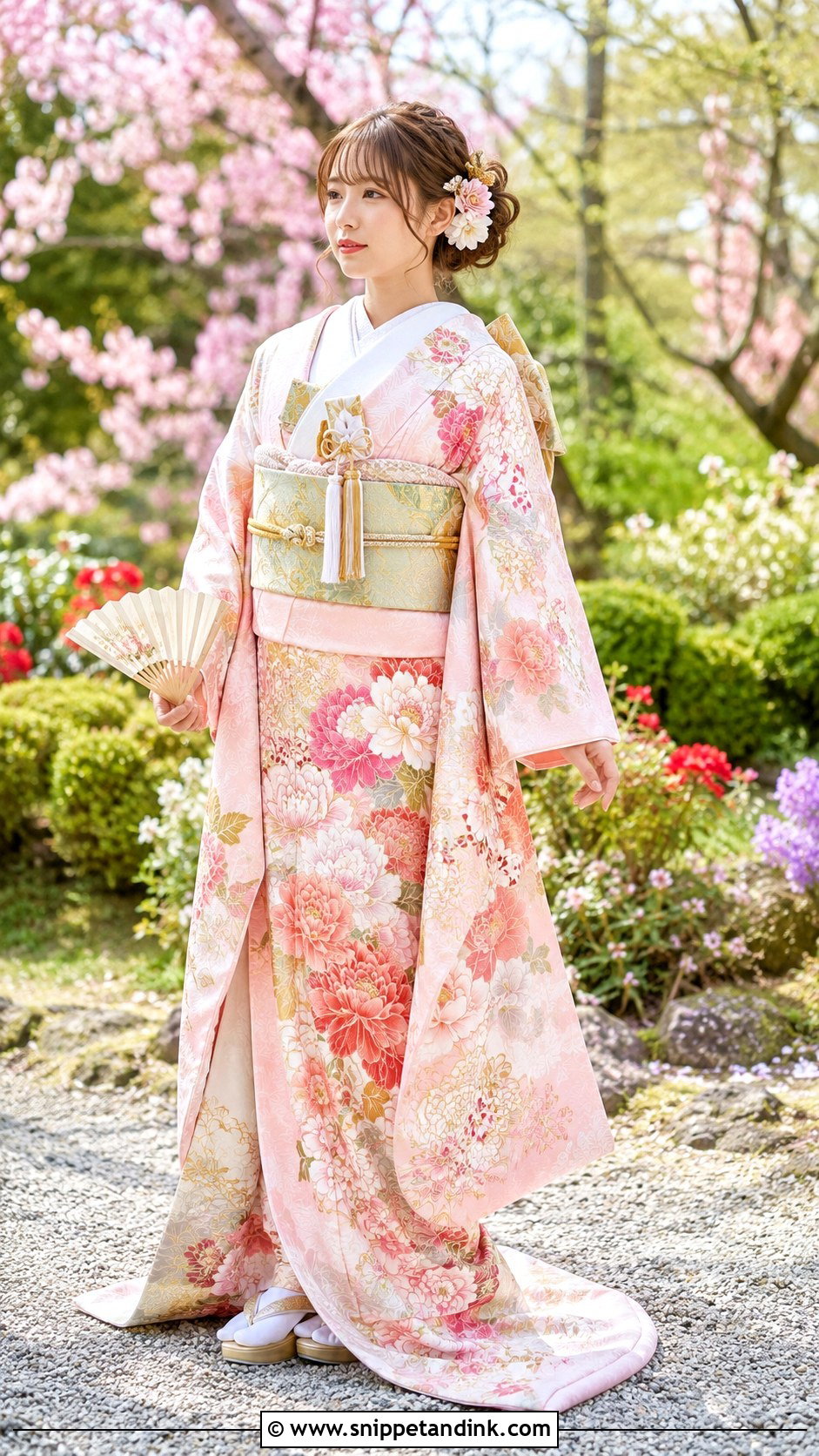
A floral hikifurisode in colour feels joyful, especially for a spring or garden reception. Choose one main ground colour, such as blush, deep blue, ivory or burgundy, and let the flowers carry the rest. A contrasting obi defines the waist, with white tabi and matched zori. For hair, a low bun with a small cluster of flowers taken from the kimono palette keeps things controlled. Skip a bouquet; it covers the front design. Carry a fan or simply let your hands rest so the sleeves fall straight. The test is repetition: accessories should repeat no more than two or three colours from the fabric.
11. Sakura Embroidered Japanese Wedding Dress
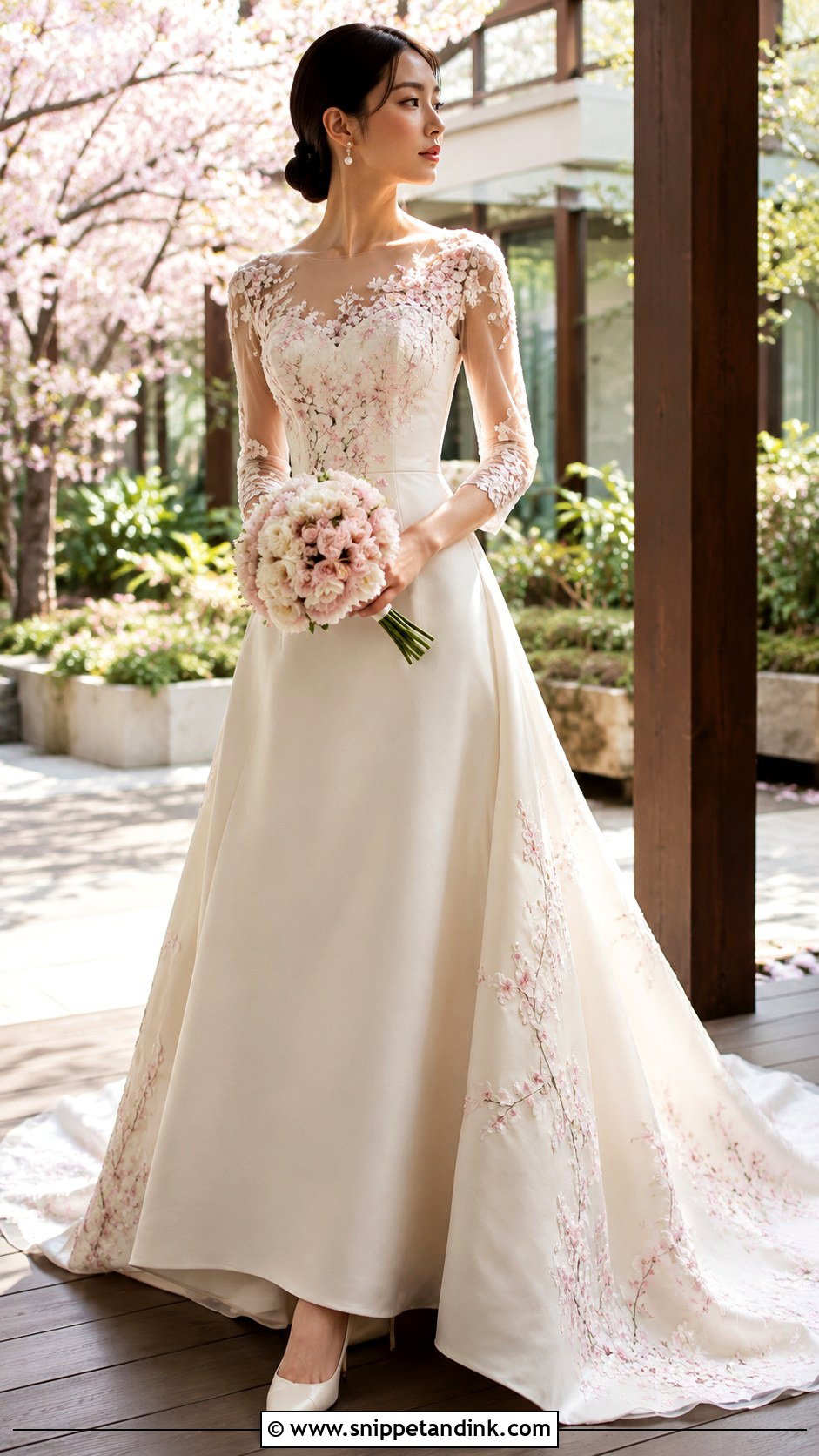
Sakura embroidery on a Western gown gives a quiet Japanese reference without borrowing ceremonial kimono. Start with an ivory A-line or column in silk, mikado or light organza, and place pale pink and white blossoms along the neckline, sleeves, waist or train. Leave open space between the clusters, because blossoms scattered evenly everywhere look like printed fabric. Pointed ivory heels, pearl drops and a small seasonal white and blush bouquet complete it, with a low bun or sleek ponytail. If authentic craftsmanship matters to you, work with a Japanese designer or a skilled embroiderer. Hotels, gardens and modern chapels suit it.
12. Kimono Sleeve Japanese Wedding Dress
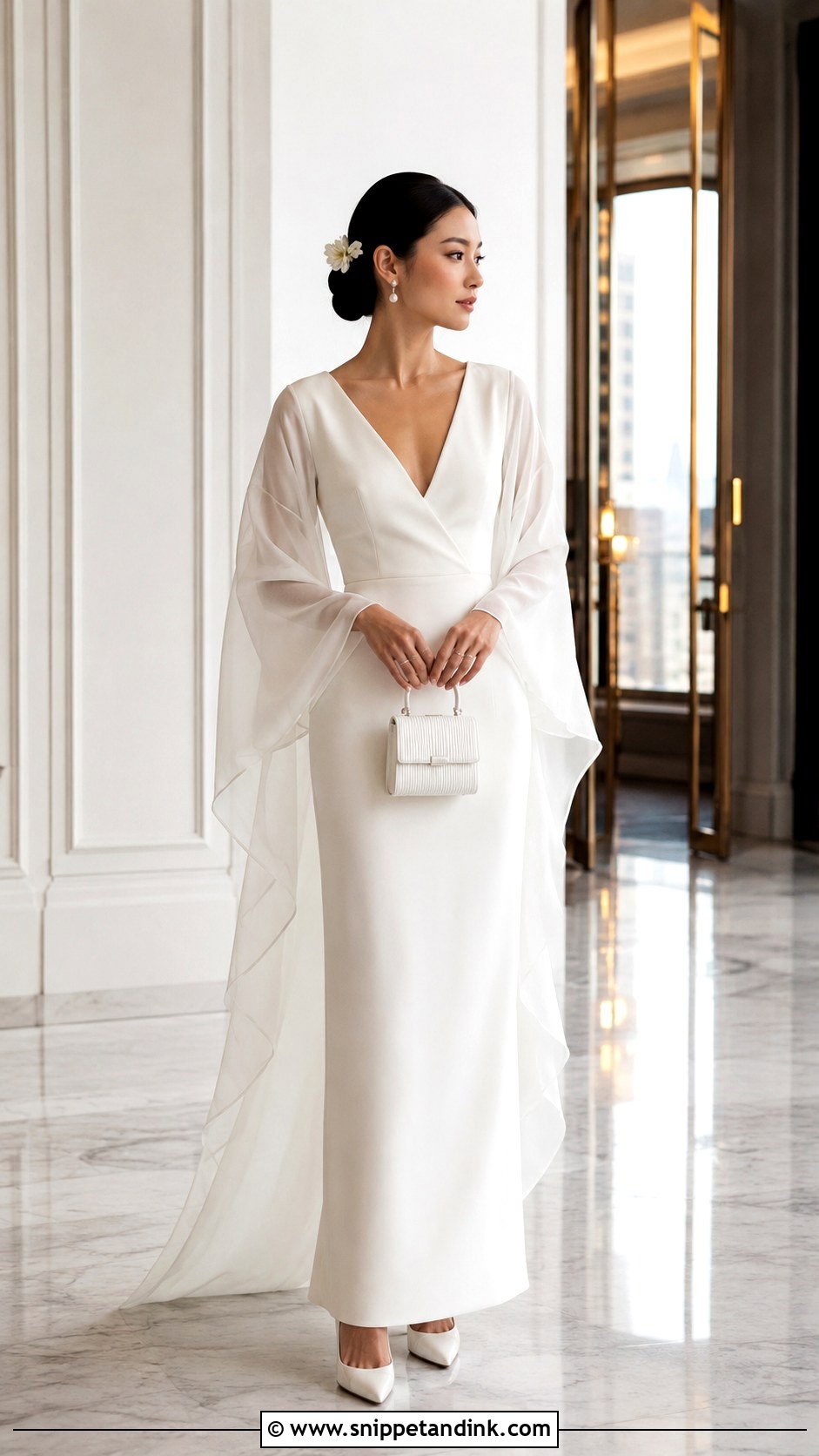
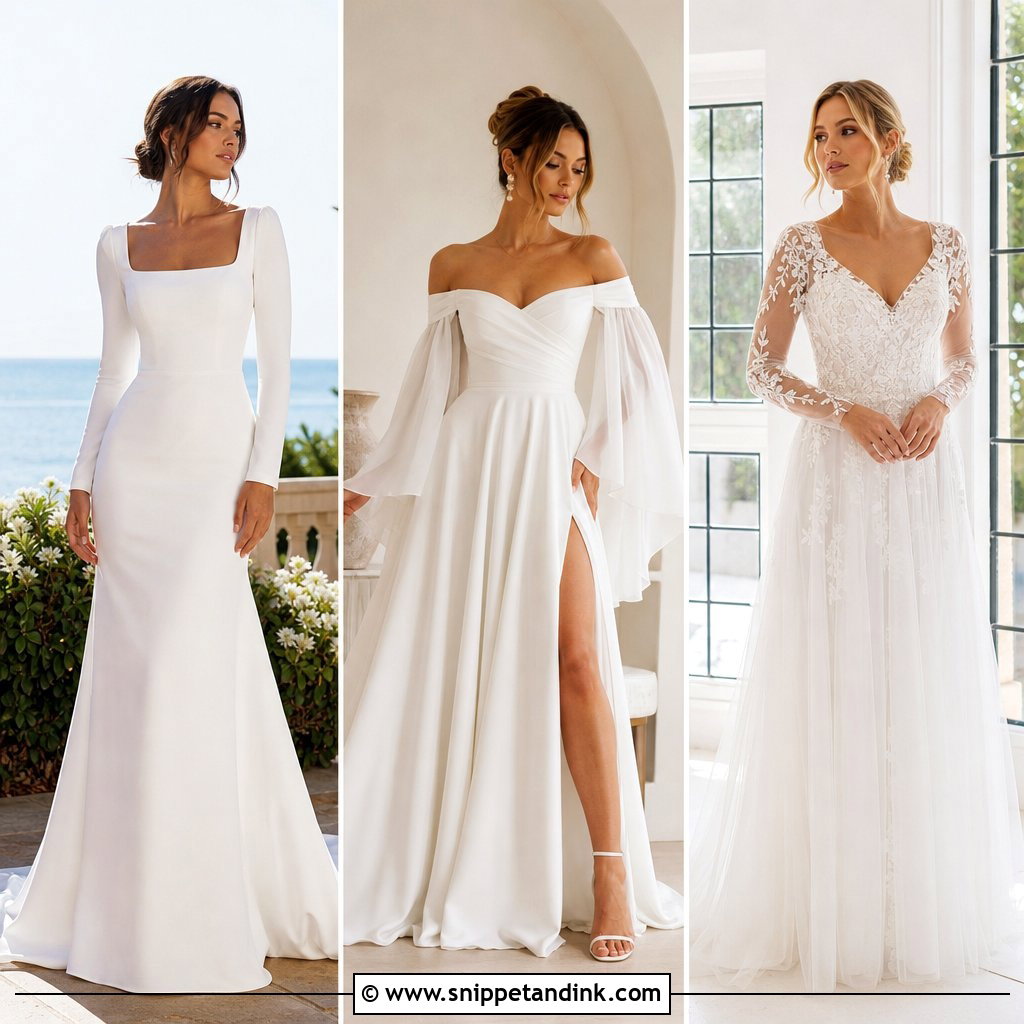
Wide kimono-style sleeves add movement to a Western dress structure. A fitted column, soft A-line or sheath with sleeves in silk crepe, chiffon or organza works, balanced by a clean V-neck or bateau neckline. The sleeves are the thing to test in practice. Wide sleeves dip into food and catch on chair backs, so I’d ask the seamstress for a small hidden snap that lets you fold them back at dinner. Ivory pumps, pearl earrings and a structured bag suit the reception, with a polished bun and one floral pin. Leave ceremonial kimono accessories to authentic kimono. This is fashion influenced by Japan, and it suits civil ceremonies and city weddings.
13. Obi Waist Japanese Wedding Dress
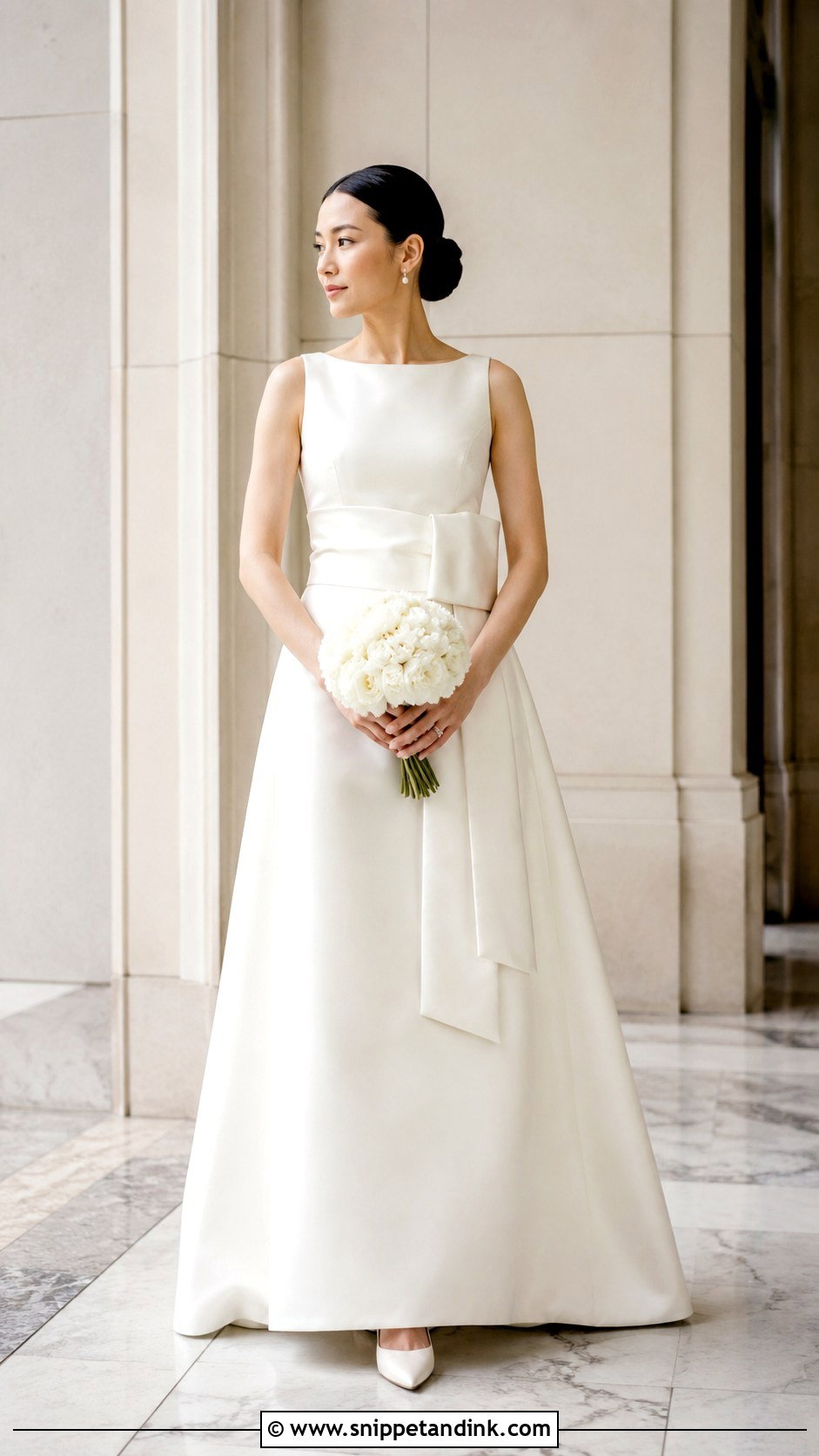
An obi-inspired waist gives a contemporary gown a strong, sculpted center. Pair a plain ivory column or A-line with a wide folded sash in matching silk or quietly patterned brocade, tied at the front or shaped at the back. It should read as a sash influenced by the obi, not a copy of a formal kimono obi, which has its own rules. Pointed heels, pearl or gold earrings and a compact white bouquet suit it, with a smooth chignon. Keep lace off the dress so the waist stays the focus. A wide sash sits firmly around the ribs, so check you can breathe and eat in it seated.
14. Origami Pleated Japanese Wedding Dress
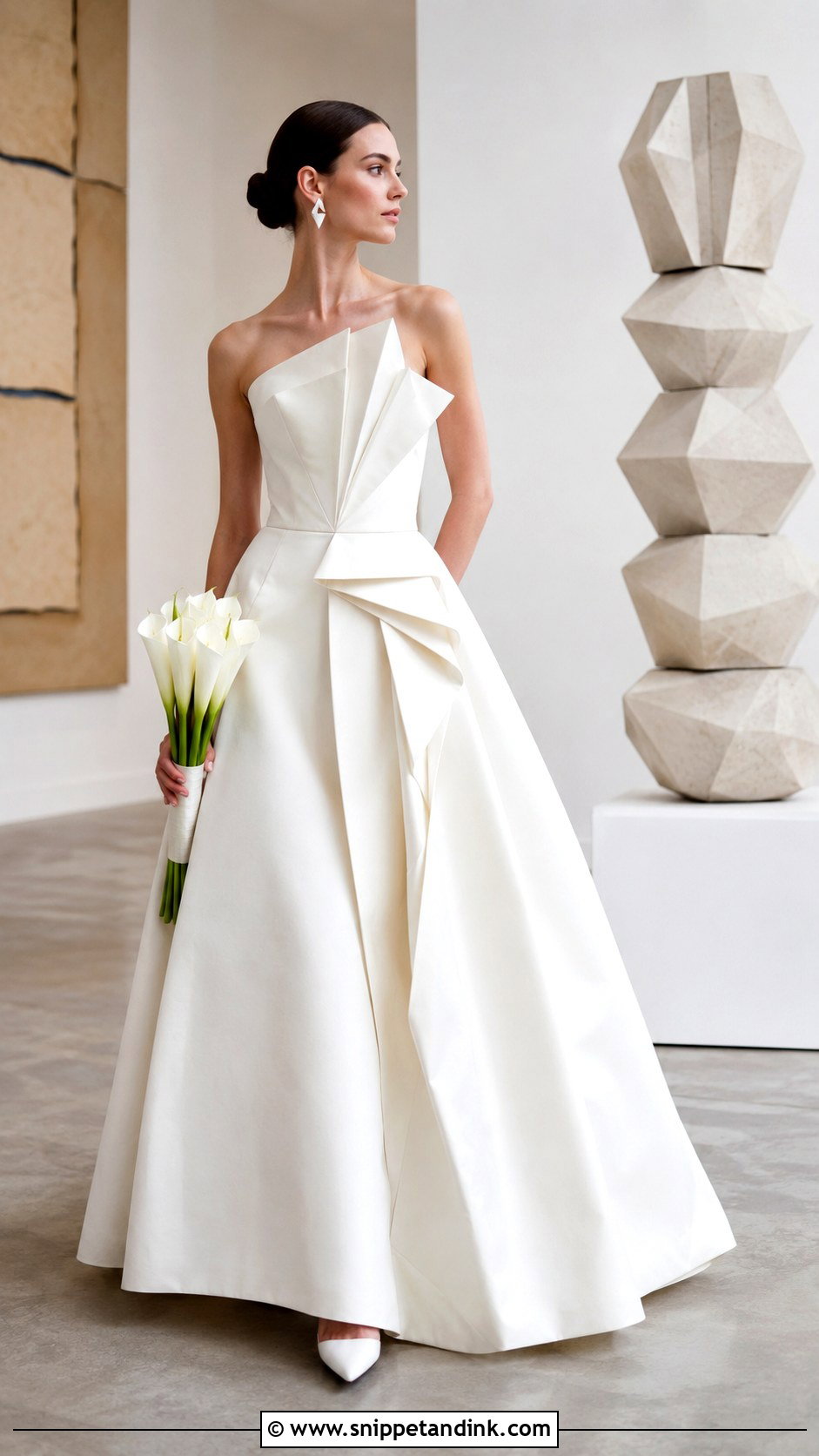
Crisp folds turn a plain white gown into something sculptural. Mikado or silk faille holds origami-style pleating across the bodice, hip, neckline or a detachable overskirt; softer fabric lets the folds collapse within hours. A column or architectural A-line keeps it wearable. Minimal white heels, small geometric earrings, a smooth clutch and sleek hair, either a low bun or a straight shoulder-length cut, reflect the precision. Calla lilies suit its geometry. Pleats like these mark easily, so I’d keep the dress on a padded hanger until the last minute and avoid sitting in it before the ceremony. Museums and modern hotels suit it.
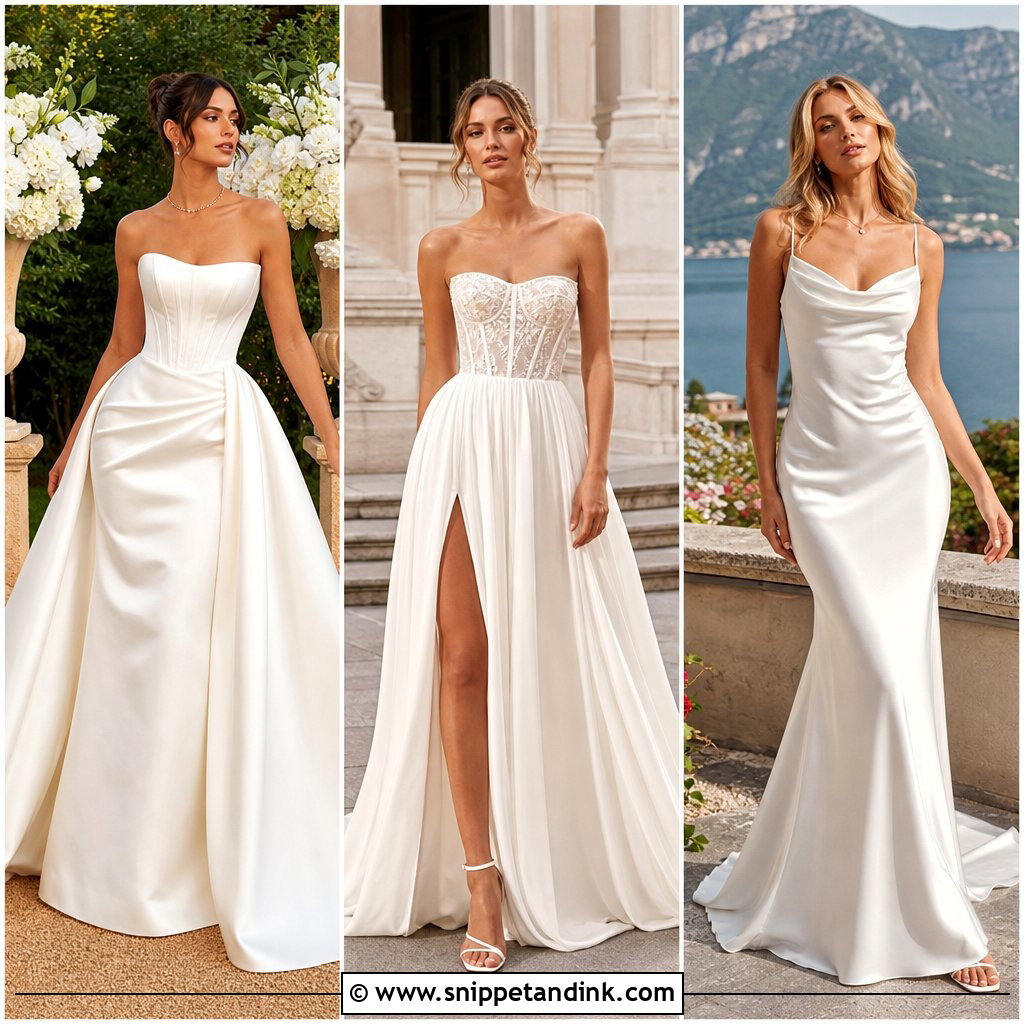
15. Japanese Lace A-Line Wedding Dress
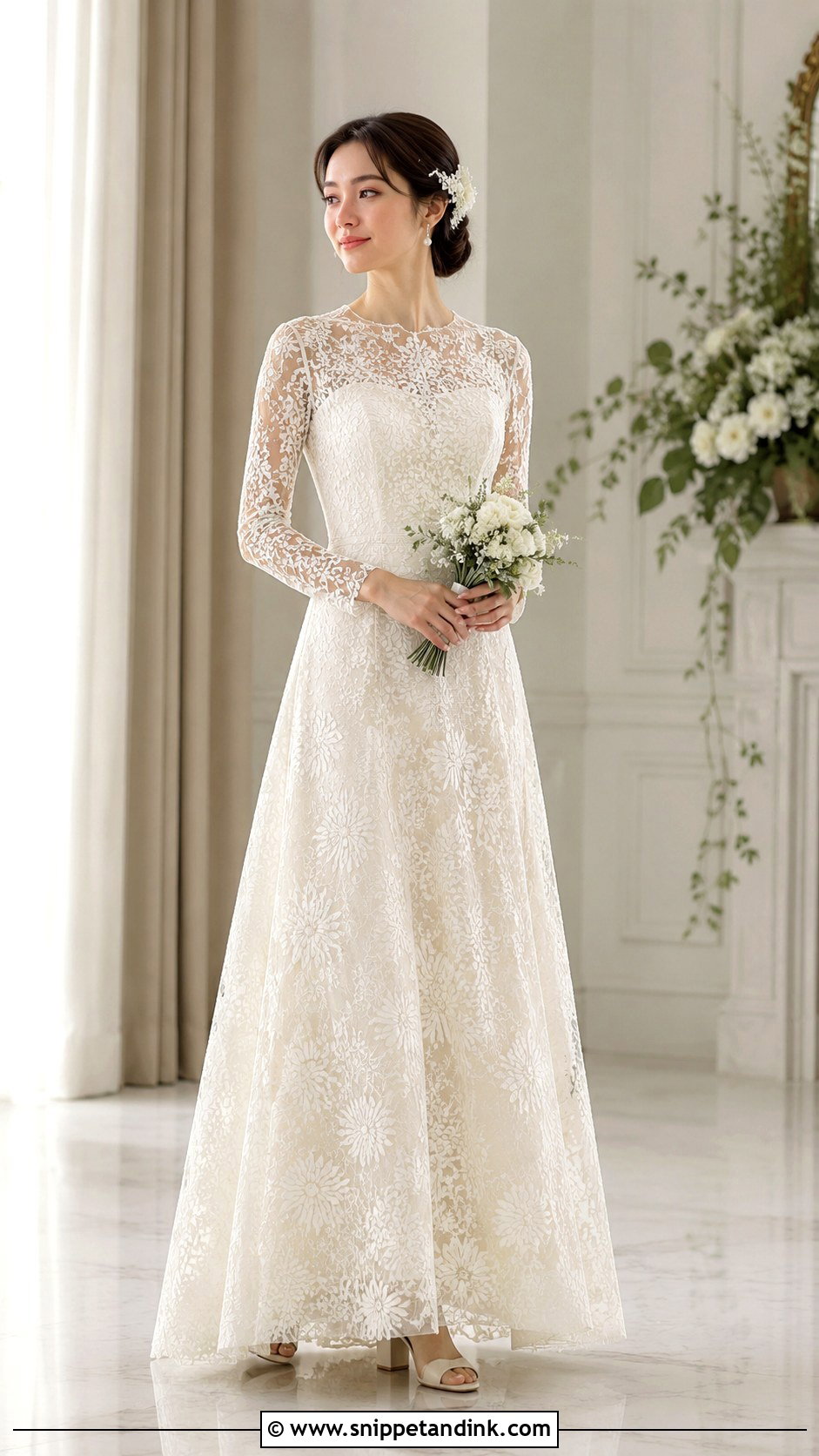
Lace can carry a Japanese influence through chrysanthemum, plum blossom, wisteria or wave patterns. Choose an A-line with a fitted bodice, a softly structured skirt and lace placed in specific areas rather than covering everything. Sheer long sleeves add coverage while showing the pattern. Ivory block heels, pearl earrings, a low bun with one floral comb and a small white and pale green bouquet suit it. When I look at lace like this, I check how the motifs are matched at the side seams; a wave pattern cut off mid-curve looks careless. The A-line suits many figures, since the waist adjusts and the skirt moves easily.
16. Minimalist Japanese Column Wedding Dress
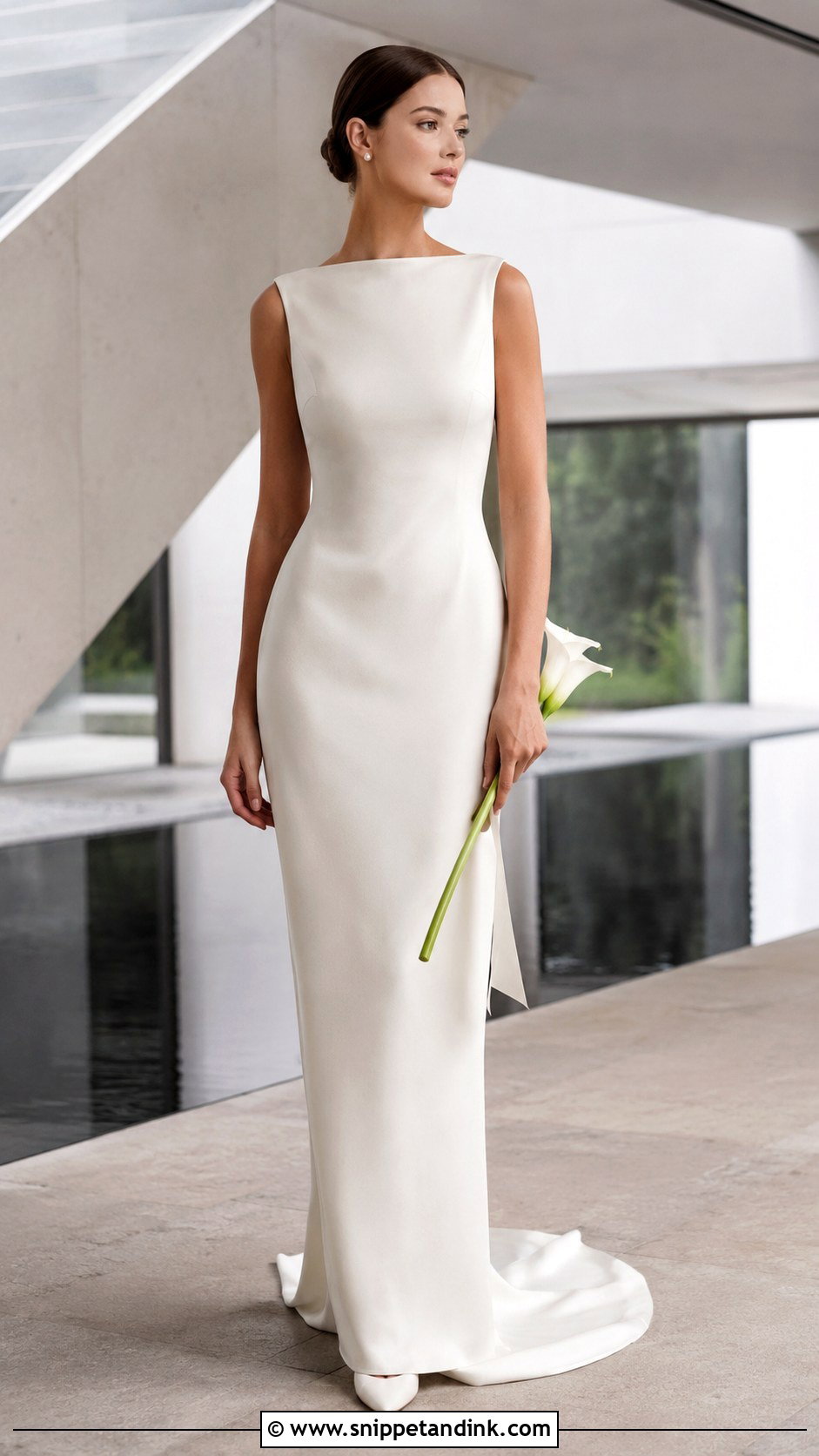
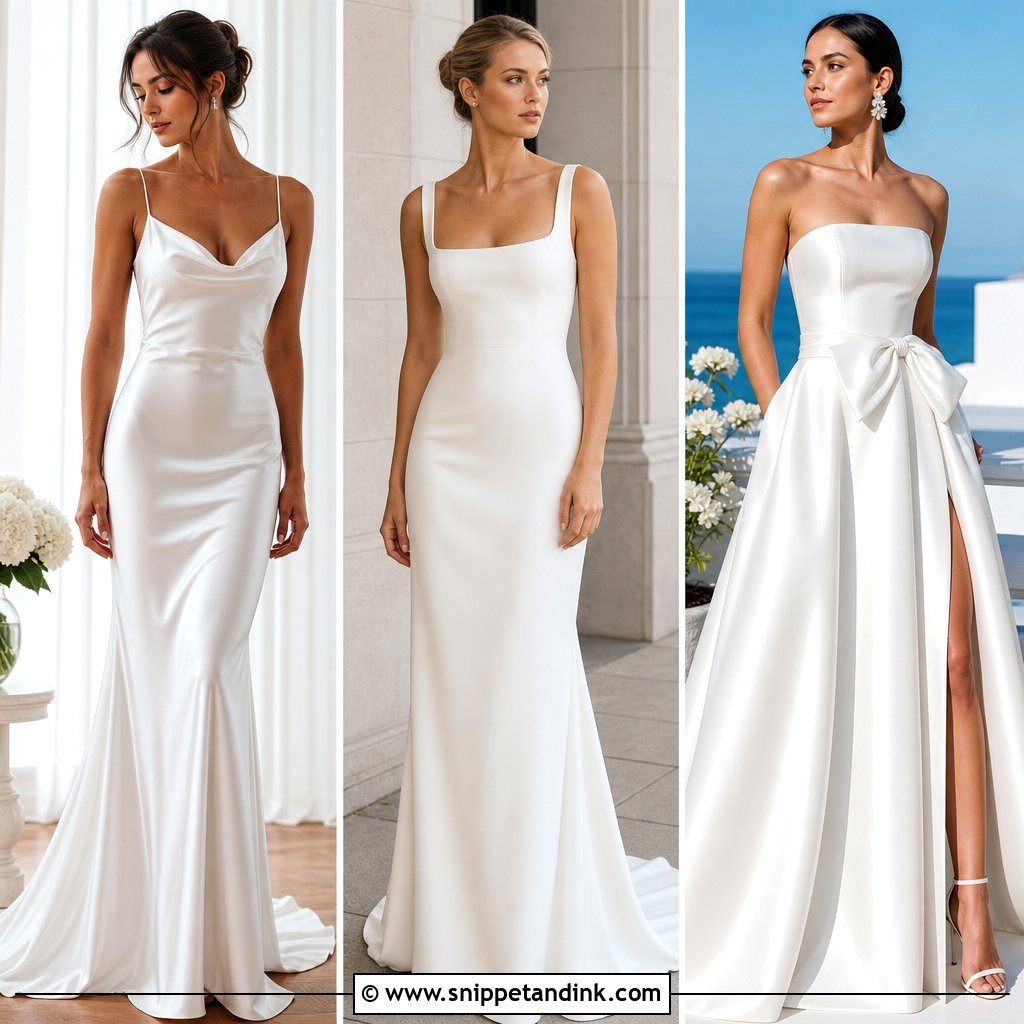
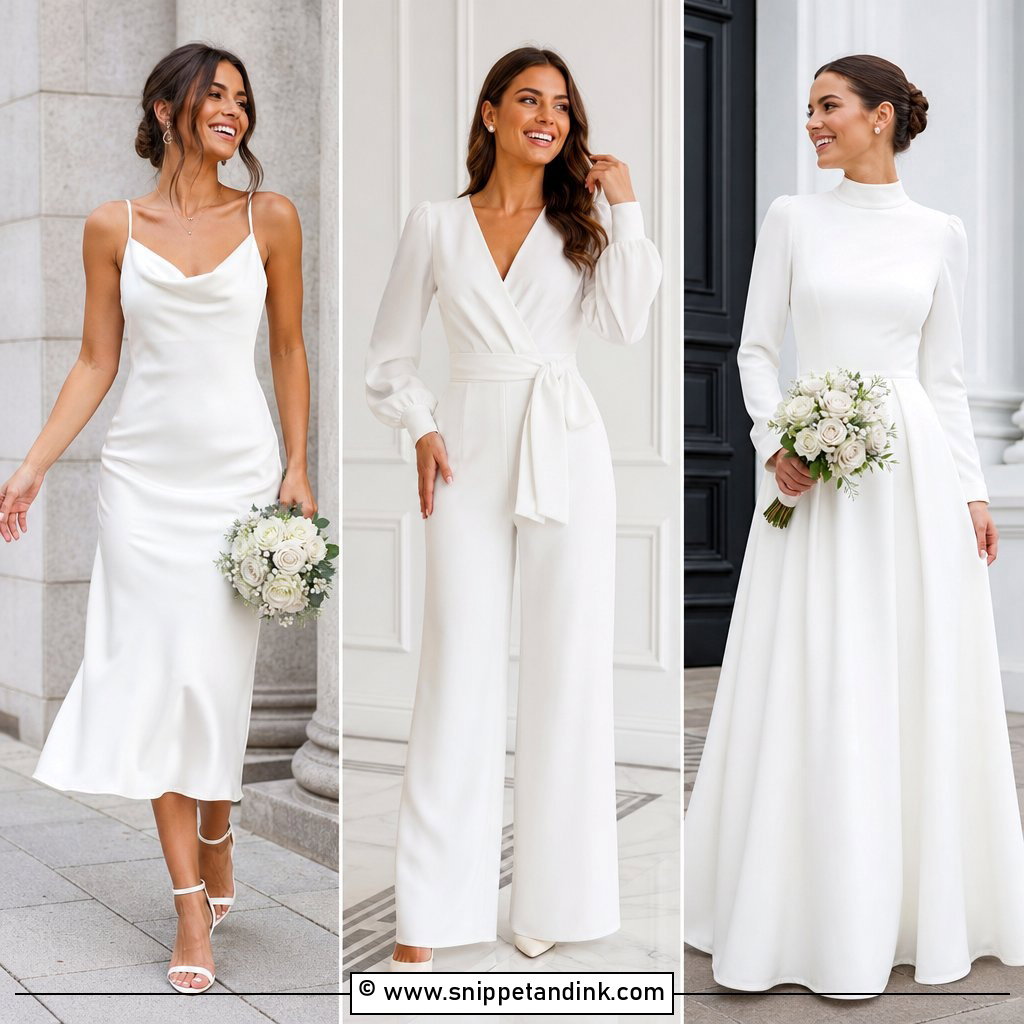
Restraint is the whole idea of a minimal column in smooth silk crepe or satin. A high bateau neckline, a clean shoulder line, a gently shaped waist and a narrow skirt with a short train are enough. A row of covered buttons or a folded back panel provides the detail. Pointed ivory pumps, small pearl studs and a structured white bag for the reception suit it, with a glossy low bun and natural makeup. A single stem or a compact arrangement keeps the line uncluttered. Silk crepe shows every bump under it, so smooth underwear is essential. It suits civil ceremonies and architectural venues.
17. Tea-Length Japanese Wedding Dress
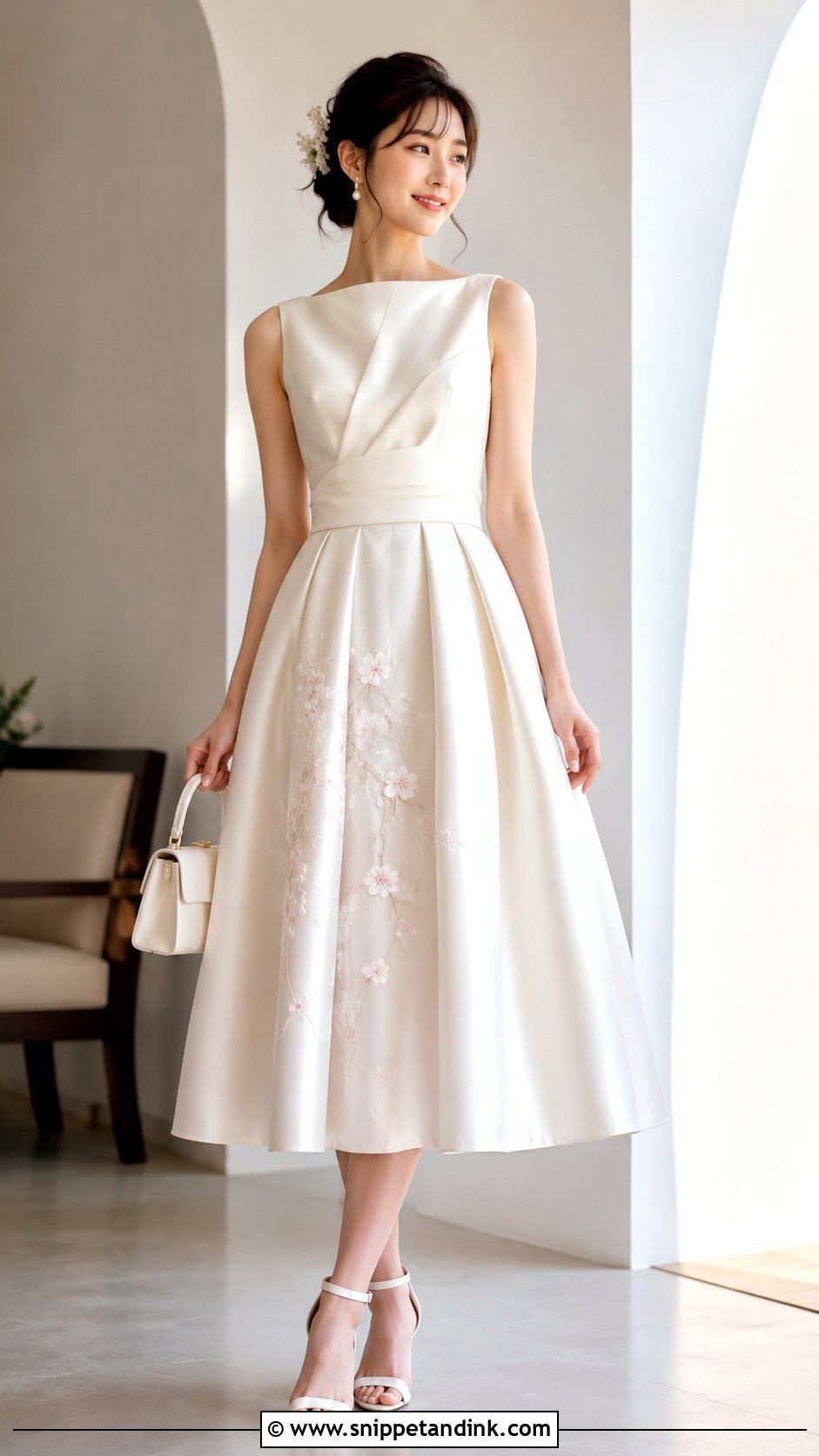
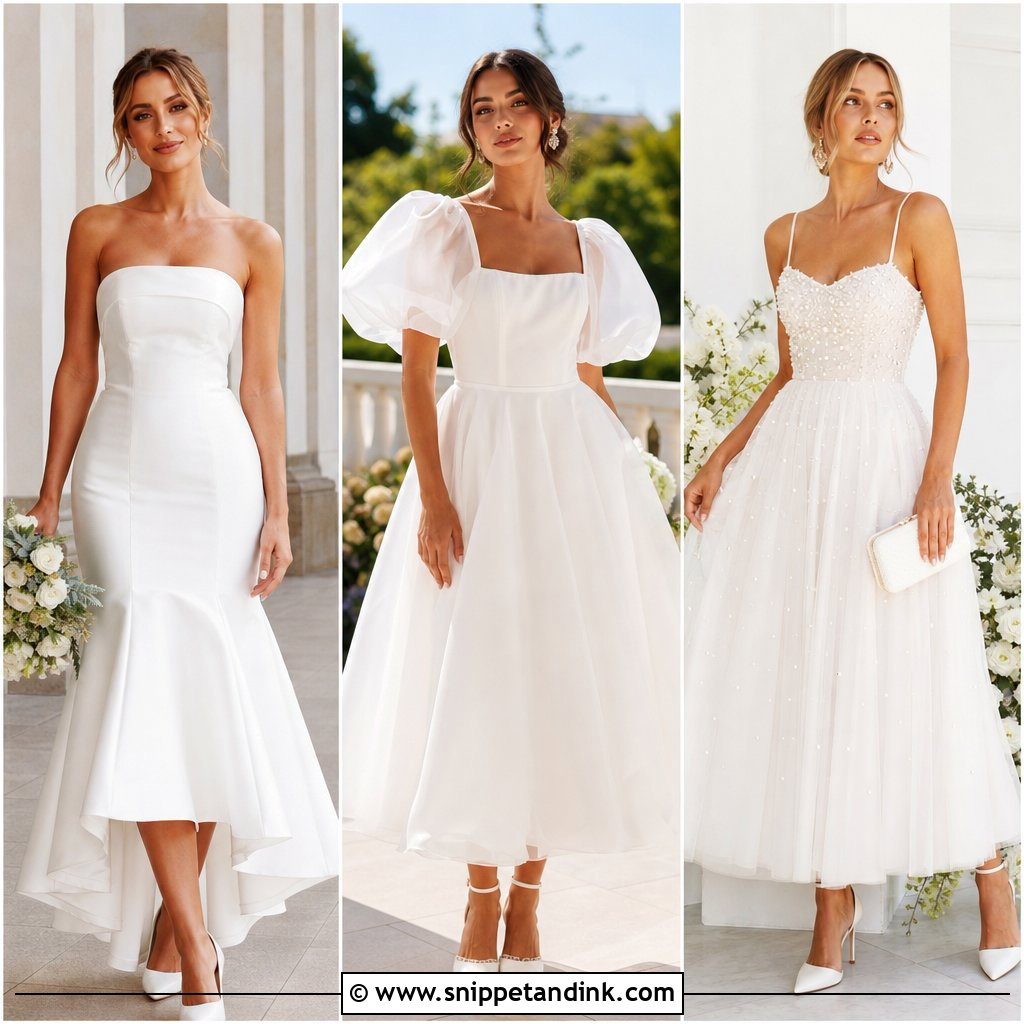
Tea length gives a Japanese-inspired look a lighter, more playful feel. A structured ivory dress with a fitted bodice, a modest neckline and a full skirt ending between knee and ankle is the base, with subtle sakura embroidery, a folded obi-style waistband or a quiet botanical jacquard. Pointed satin pumps or ankle-strap heels, pearl earrings and a compact bag complete it; a smooth bob, short waves or a tidy low bun suit the shorter hem. Your shoes are fully on show, so bring them to every fitting to set the hem. It works well as the change after a formal kimono.
18. Japanese Bridal Jumpsuit With Obi Belt
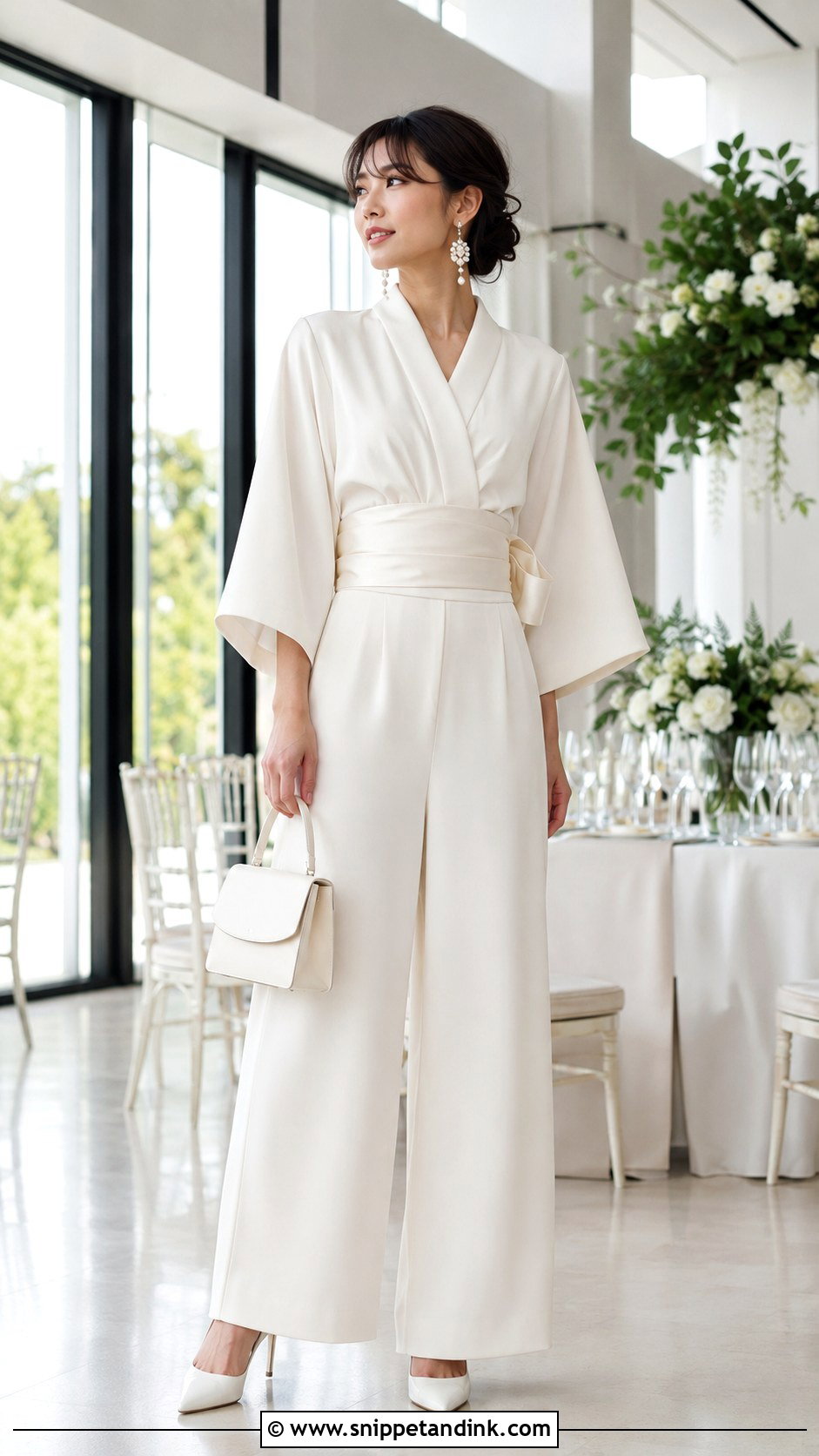
A jumpsuit gives comfort and freedom, and an obi-inspired belt adds a clear Japanese reference. Go for ivory crepe with wide-leg trousers, a structured wrap bodice and modest kimono-style sleeves, then define the waist with a broad folded sash in matching satin or quiet brocade. Pointed heels, sculptural pearl earrings, a small top-handle bag and a sleek ponytail or low bun keep it clean. Wide trousers need hemming with your exact heels, or they drag and fray. Keep it monochrome. It is a strong choice for the final change when you want to dance freely.
19. Detachable Uchikake Reception Wedding Dress
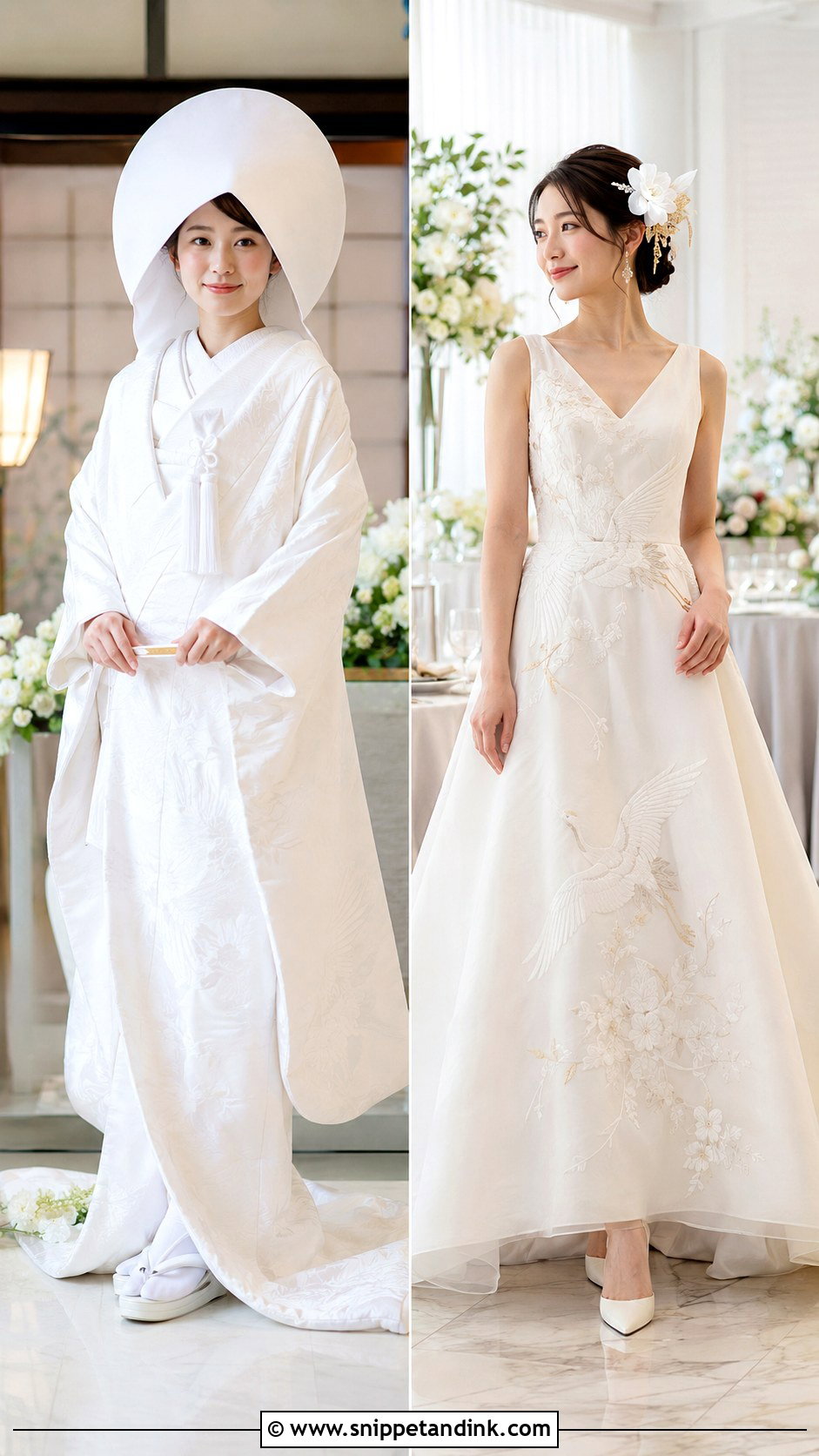
A planned outfit change can link traditional bridal kimono with a modern reception gown. Wear an authentic shiromuku or iro-uchikake for the ceremony or formal entrance, fitted properly with all its layers, footwear and hair ornaments, then change into a light ivory sheath, A-line or jumpsuit for dinner and dancing. Repeat one detail across both, such as crane embroidery, a floral pin or a red accent, so the two looks belong together. I’d advise against draping an uchikake loosely over a Western gown; it is a valuable garment built to be worn over kimono layers, and it rarely sits right otherwise. Multiple outfits across a Japanese wedding are common, so the change feels natural.
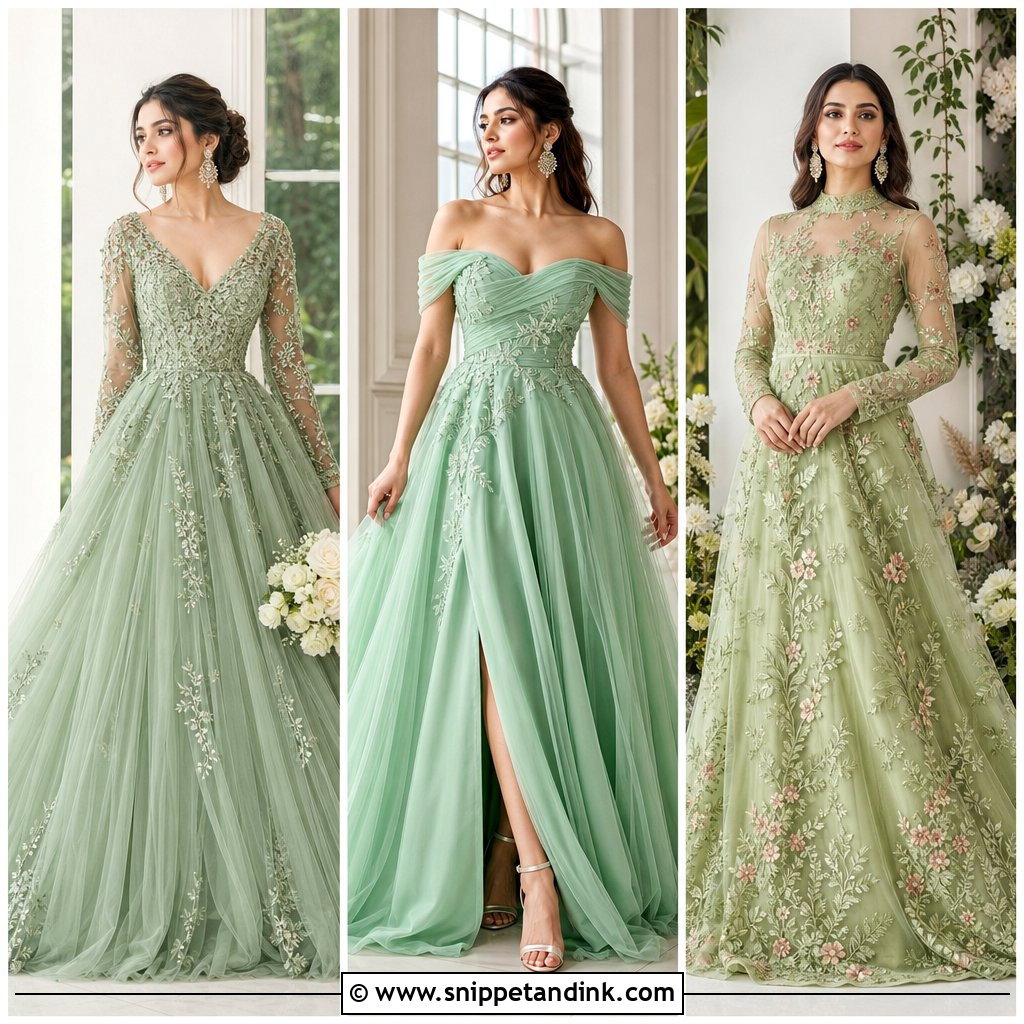
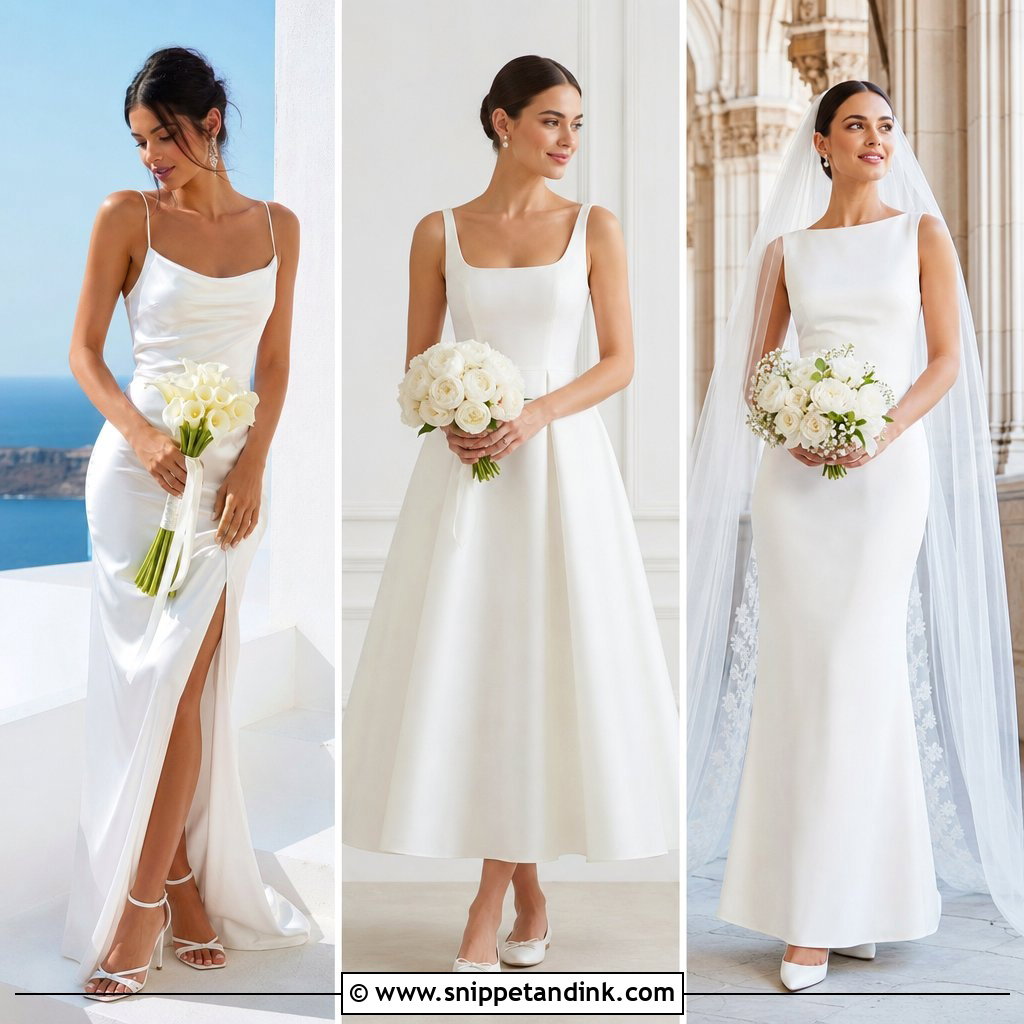
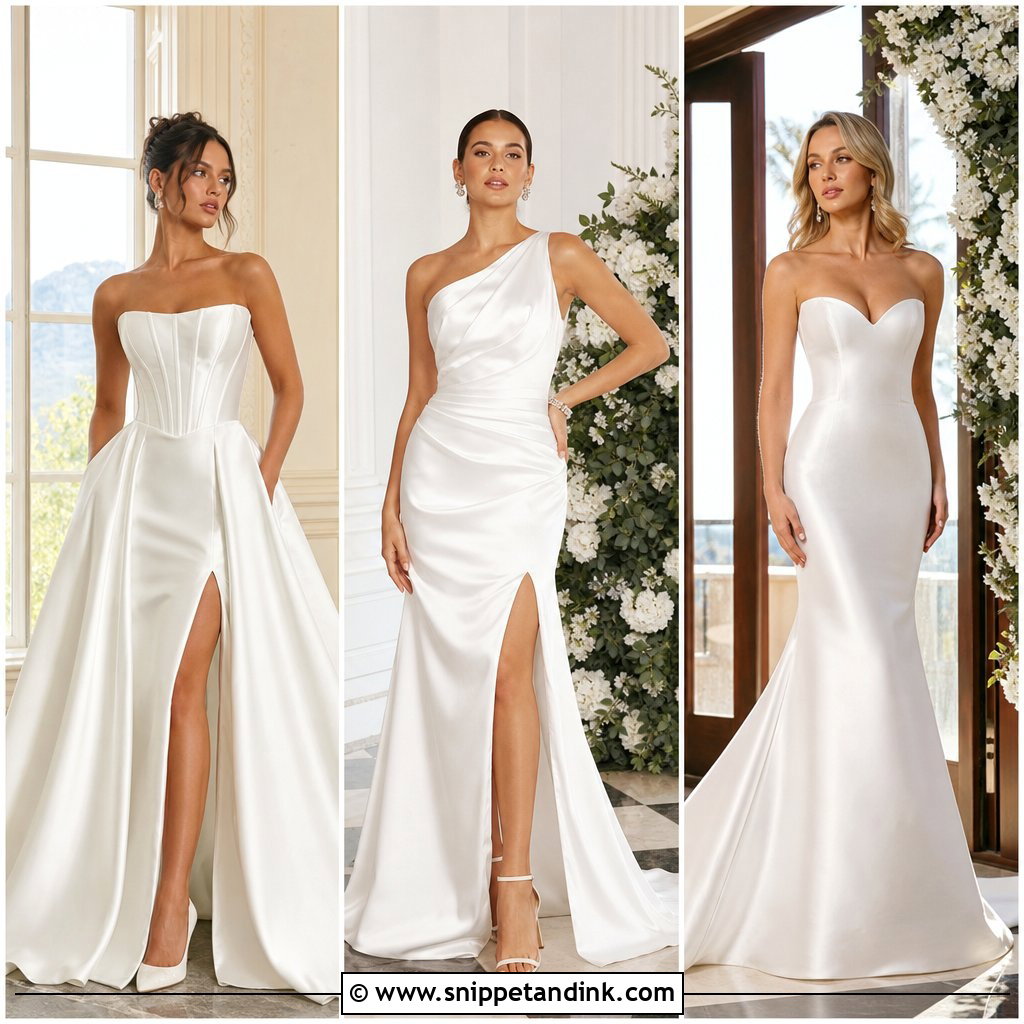
20. Red And White Japanese Wedding Dress
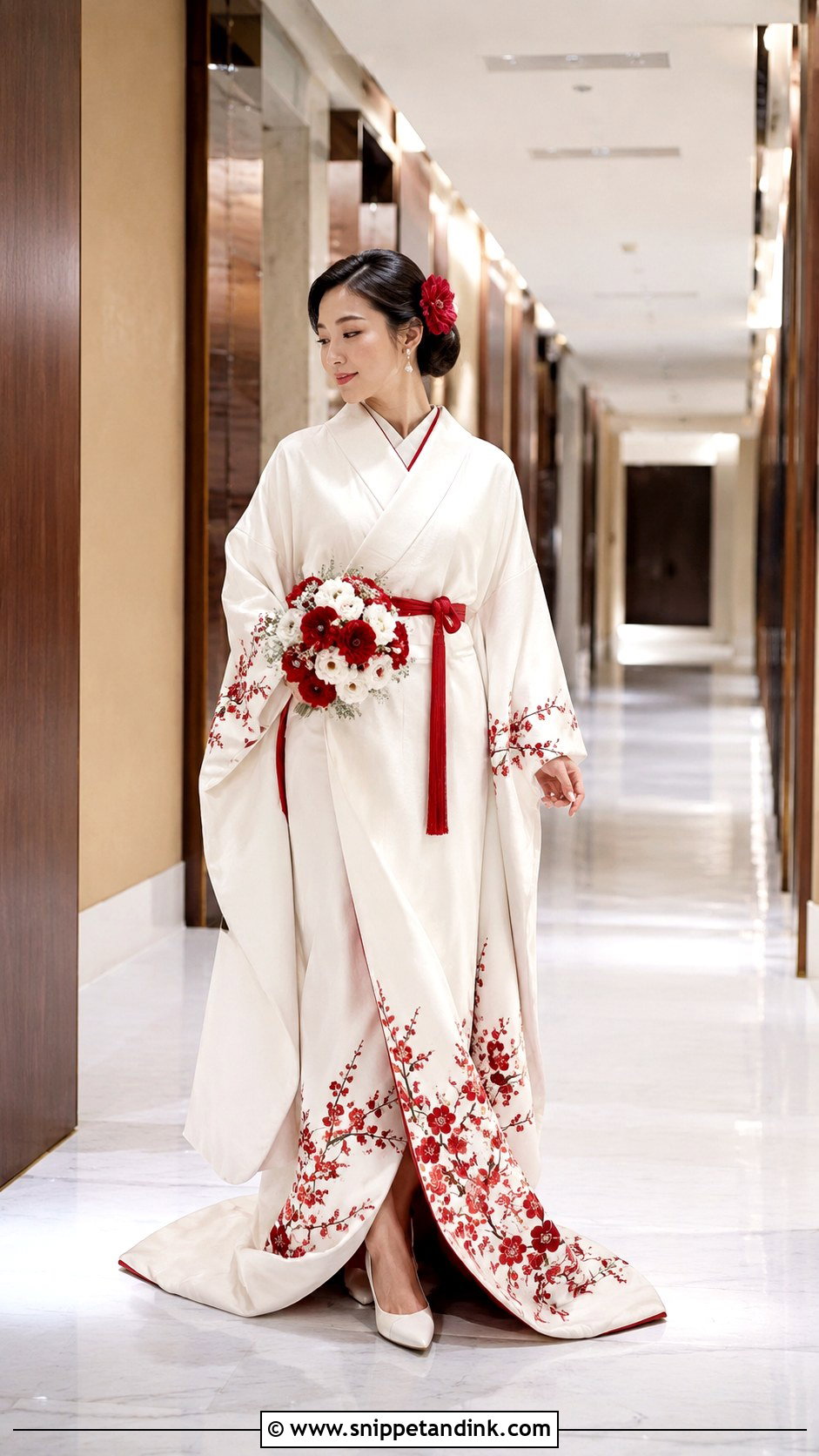
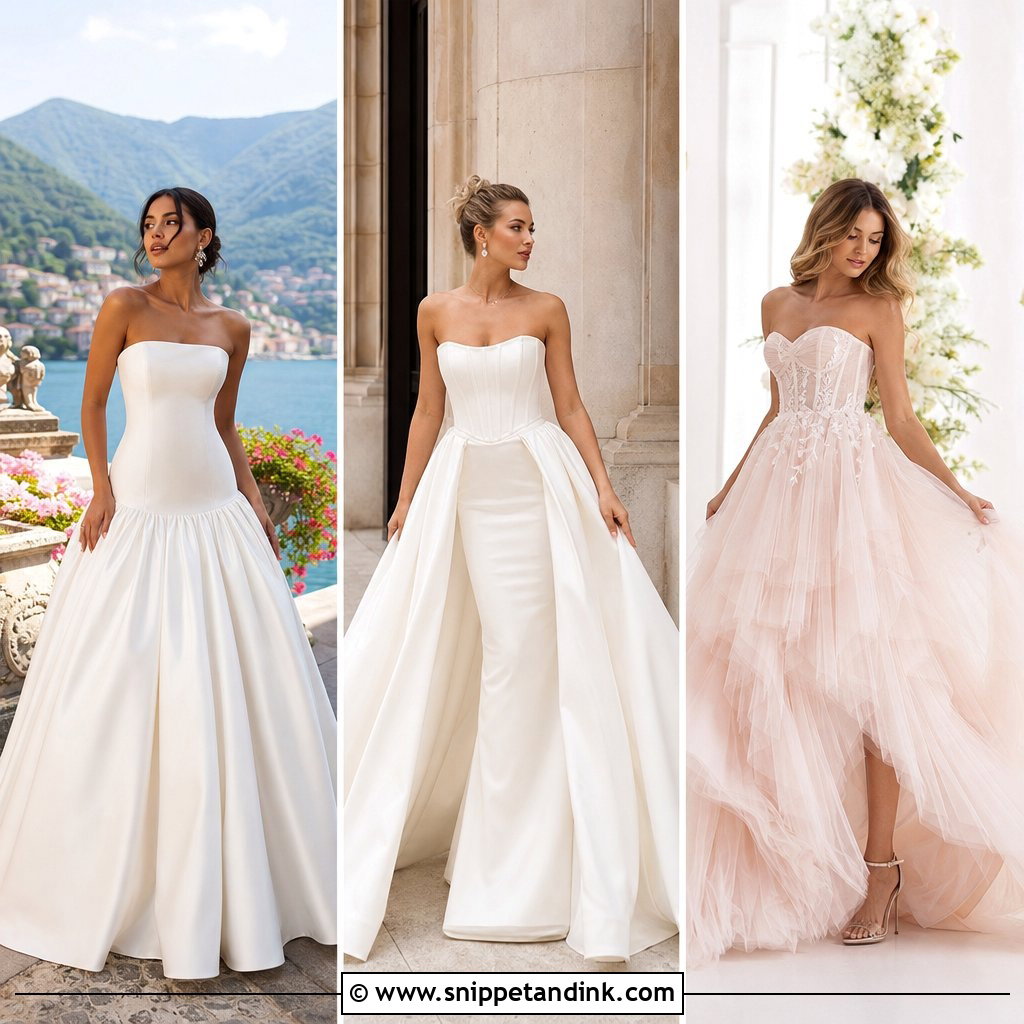
Red and white is a strong pairing that links clean modern styling to colours often seen at Japanese celebrations. Start with an ivory silk gown and add red in one or two controlled places: floral embroidery at the hem, a narrow sash, lined kimono-style sleeves or a detachable red overskirt. Ivory heels, a red and white bouquet, small pearl earrings and a sleek chignon with one red flower pin complete it. White should stay dominant. Red dye in embroidery can bleed onto ivory if it gets wet, so I’d ask whether the thread is colourfast before ordering. It suits a change after shiromuku or a multicultural ceremony.
Walking in a Trailing Robe Without Treading on It
Kimono changes how you move, and no amount of looking at photos prepares you for it. The padded hem, long sleeves and layers mean smaller steps and a straighter back than you are used to.
- Take short steps with your toes turned very slightly inward. Long strides open the front of the kimono.
- With an uchikake, hold the front edges together at about hip height with one hand, so the robe doesn’t drag forward under your feet.
- Let your attendant manage the train behind you on stairs and at doorways. Go down steps slowly, one at a time.
- Sit on the front edge of a chair or stool. Leaning back crushes the obi knot and can loosen it.
- Plan the bathroom. It takes a helper and several minutes, so go just before dressing finishes and keep drinks modest until the change.
If you switch into a Western gown afterwards, the difference is a relief, and that contrast is part of why so many couples plan both. Give yourself time between the two: the kimono must be removed carefully and handed back folded, not dropped over a chair.
A Shrine Ceremony, a Hotel Reception, and a Dress for Each
Japanese bridal dress can honour tradition and still leave room for personal taste. A shiromuku gives quiet ceremonial formality, while iro-uchikake and hikifurisode bring colour, pattern and movement. If you lean toward Western shapes, sakura embroidery, kimono sleeves, obi-style waists, folded pleating or a plain silk column all give a Japanese influence. Match the formality of each part of the day, suit the venue and make sure you can wear it comfortably for hours. For authentic bridal kimono, work with an experienced rental studio or kitsuke dresser. Careful fitting and respectful choices make any of these looks feel personal.
You'll Like These Ideas:


Leave a Reply