
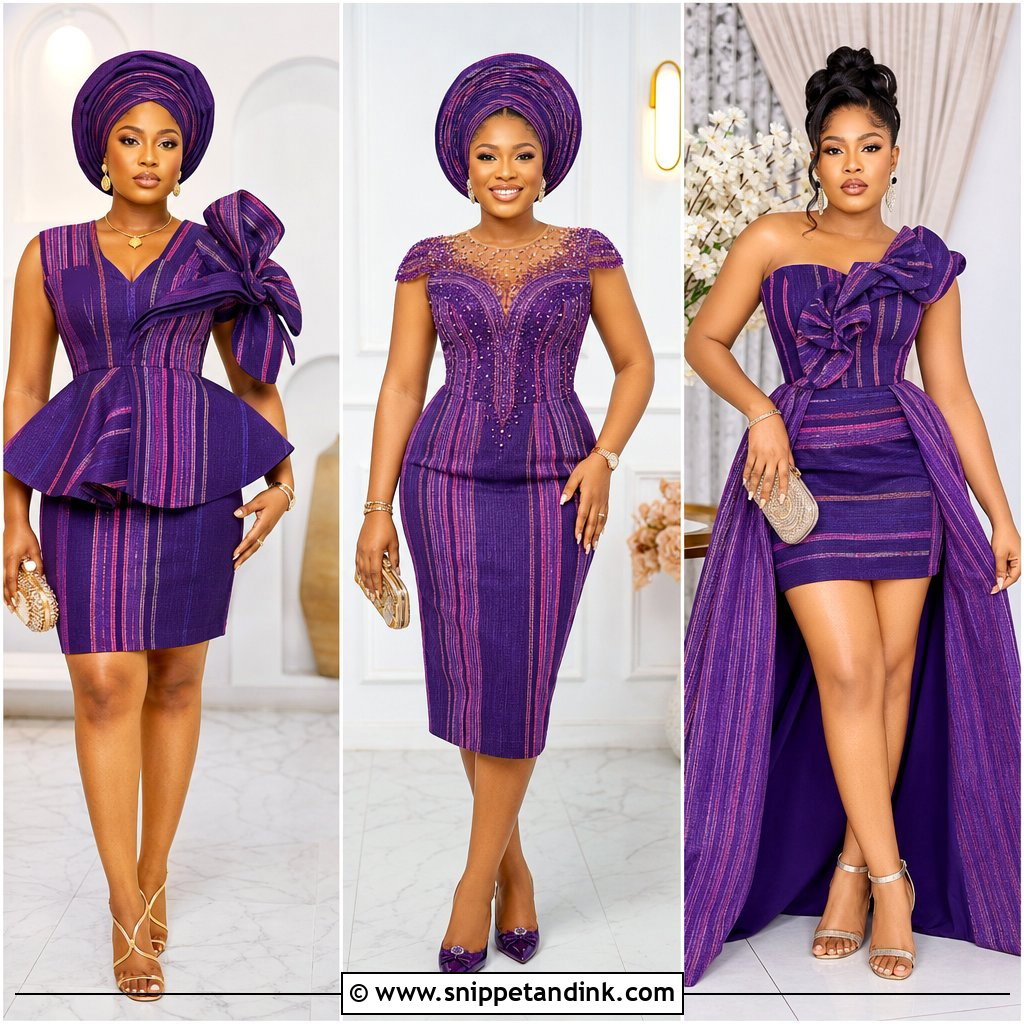
A short gown is one piece of clothing doing the whole job, which is exactly why the cut has to be right. Most of what I fit for guests, rehearsal dinners and second outfits lands somewhere between the knee and mid-thigh, and the same few things decide whether it works: where the waist seam sits, how the neckline is supported, and whether the fabric can hold the shape it was cut for. Ankara holds structure and carries colour; lace, satin, chiffon, crepe and organza each drape, crease and move differently. Below are twenty designs, each with what I’d check at the fitting and who I’d steer toward or away from it.
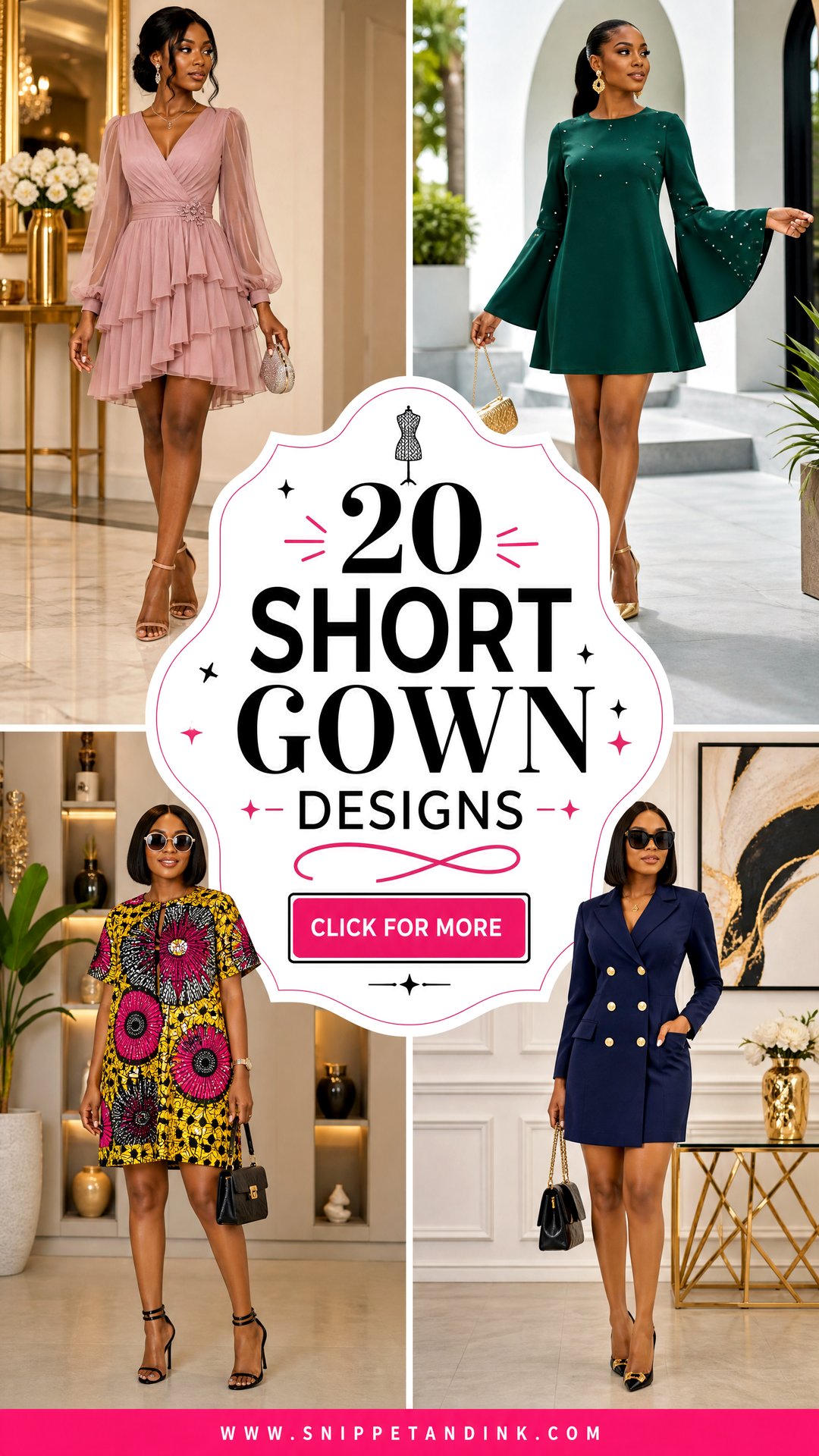
Hem Length for Wedding Guests: Where Short Stops Working
Short gowns get worn to weddings more than anywhere else, and the hem is where I see the most second thoughts. A dress that looks right standing in a mirror can be several centimetres shorter once you sit in a pew or on a low banquet chair, because the skirt rides up over the thigh.
- Church or mosque ceremonies: I’d keep the hem at or just below the knee and pack a light shawl for the shoulders.
- Garden and daytime receptions: just above the knee is fine, and a fuller skirt is easier on grass than a pencil cut.
- Evening and cocktail dress codes: shorter is acceptable, but a sleek fabric like satin or crepe makes it read as formal.
- Traditional celebrations: ask the family. Some expect knees covered; Ankara cut to midi length is a respectful option.
My simple test: sit on the lowest chair in the house and look down. If you’re tugging at the hem, add length before the wedding, not on the day.
1. Ankara A-Line Short Gown
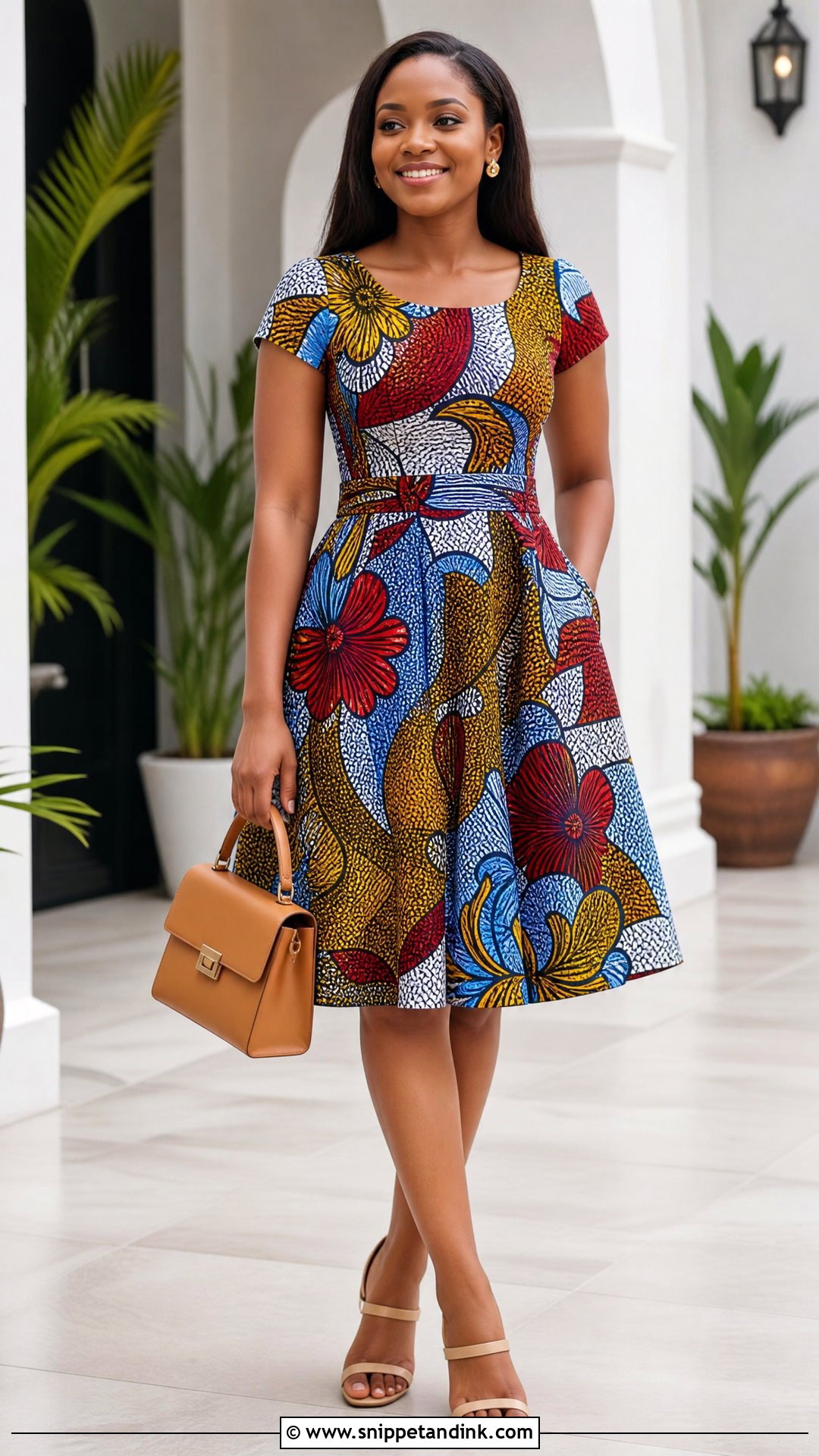
An Ankara A-line short gown is the shape I reach for first when a guest tells me she has a family celebration and no idea what to wear. The bodice fits through the shoulders and waist, then the skirt widens gradually, so wax print never has to stretch over the hips. When I cut one, I place the biggest motif away from the bust point; a large circle landing there is the most common print mistake I see. Knee length is the safe default. Fuller hips get room to move, and a petite frame does better with a smaller print and a hem just above the knee.
2. Lace Fit And Flare Short Gown
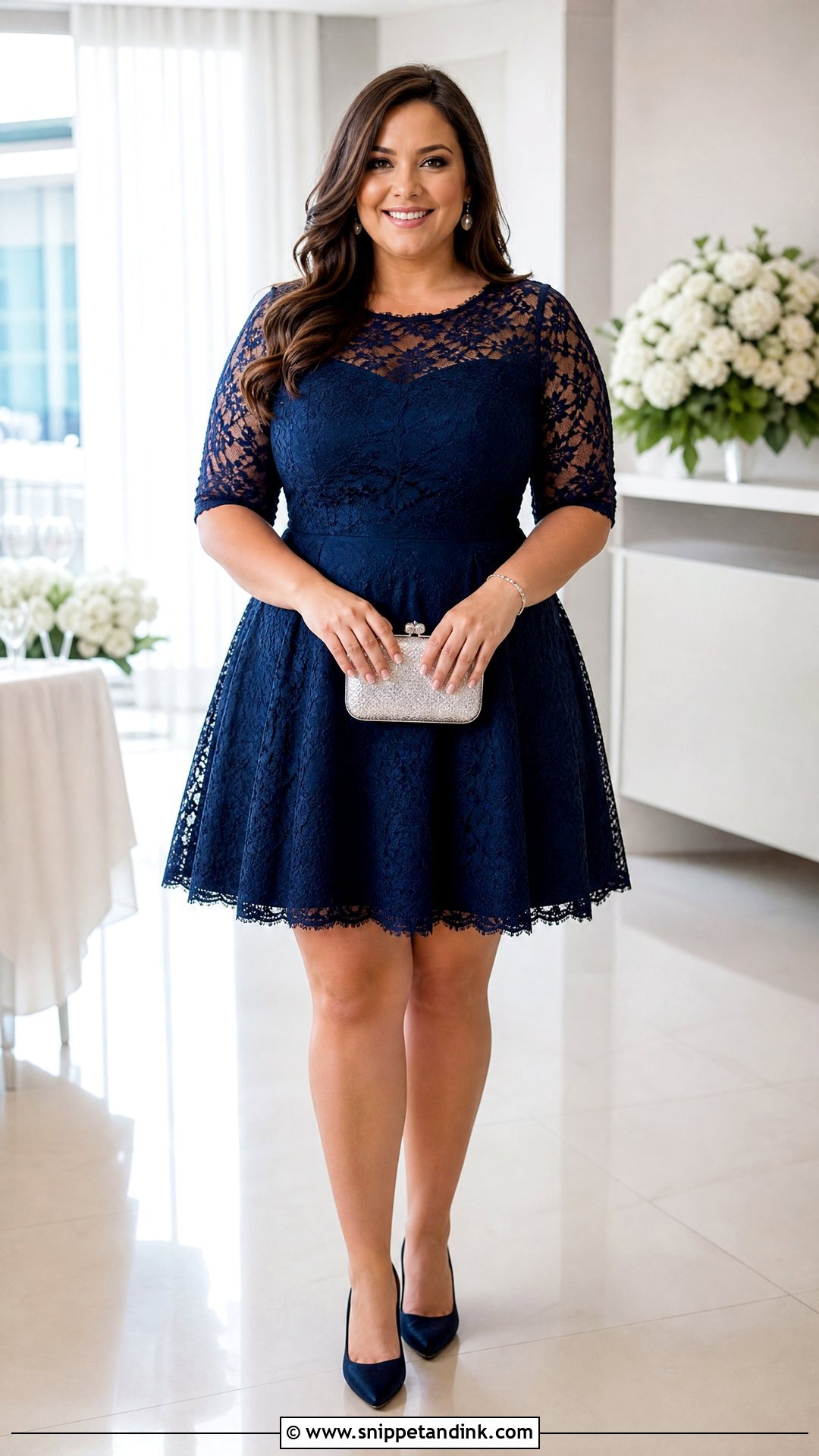
Lace on a fit-and-flare reads dressy without tipping into formal. I always ask for a full lining in stretch fabric under the lace, because unlined corded lace scratches at the underarm after a couple of hours. Sheer lace sleeves give coverage for church ceremonies. Navy, black and jewel tones all suit it. If the lace pattern is busy at the neckline, wear pearl or crystal studs and leave the necklace at home; two competing textures at the collarbone cancel each other out.
3. Puff Sleeve Short Gown
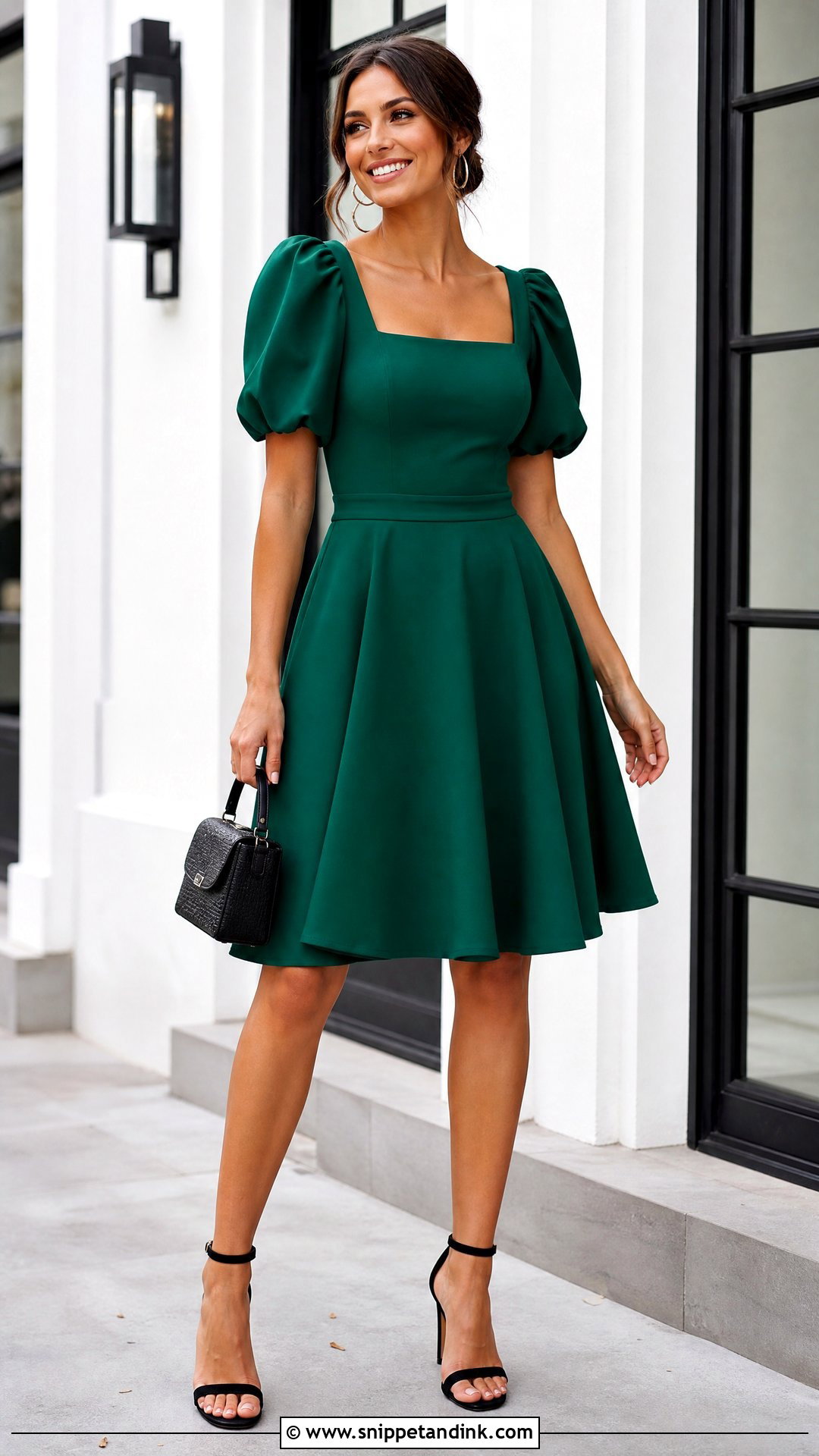
A puff sleeve short gown puts the volume at the shoulder, which is why it balances wider hips so well. The sleeve can be a short rounded puff or longer with a fitted cuff. My test at a fitting: raise both arms and hug someone. If the sleeve head pulls the whole bodice upward, it was set too tight. Broad shoulders don’t need extra height there, so I’d choose a softer, less gathered sleeve with a V or open square neckline. Crepe, cotton and quiet Ankara prints hold the puff without collapsing by evening.
4. Off Shoulder Short Gown
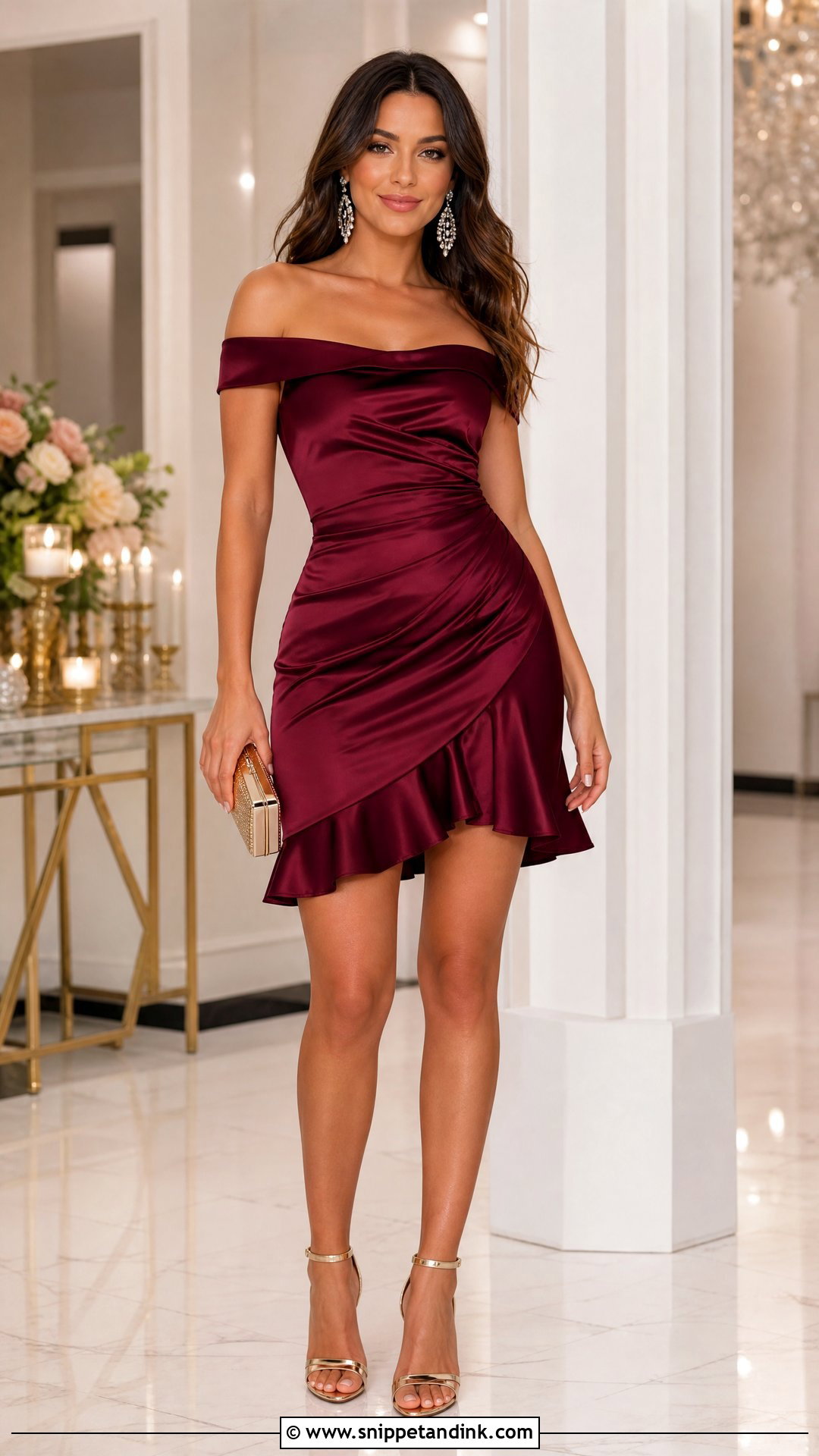
Off-shoulder necklines fail in one way: they creep. A dress that stays put has boning or a silicone grip strip inside the top edge and a bodice fitted snugly at the ribcage, not at the bust. I check this by having the wearer sit, reach for a glass and dance a few steps before I sign off on it. Satin, lace, Ankara and structured cotton hold the line well; jersey rarely does. The neckline is already the focus, so statement earrings are enough, and a hem near the knee keeps the proportions calm.
5. Ankara Peplum Short Gown
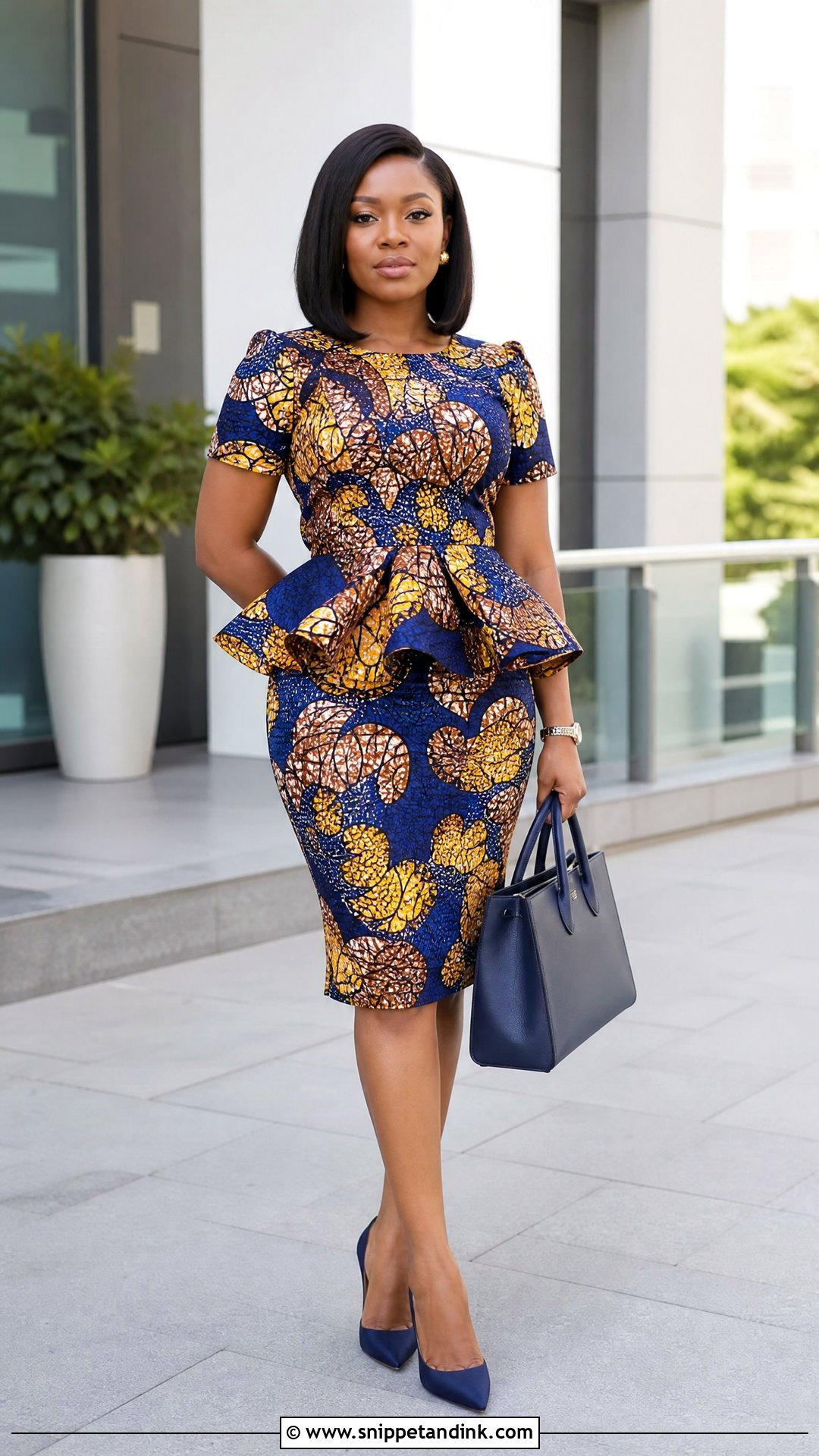
An Ankara peplum gown is really a fitted sheath with a shaped frill at the waist, and placement is everything. Started at the natural waist, it gives an hourglass line; dropped even two or three centimetres lower, it chops the leg and widens the hip. I mark the waist with elastic at the first fitting rather than trusting a size chart. A narrow peplum suits daytime and work events, a layered or asymmetric one makes a stronger point. Keep the shoes a solid colour so the print has room.
6. One Shoulder Short Gown
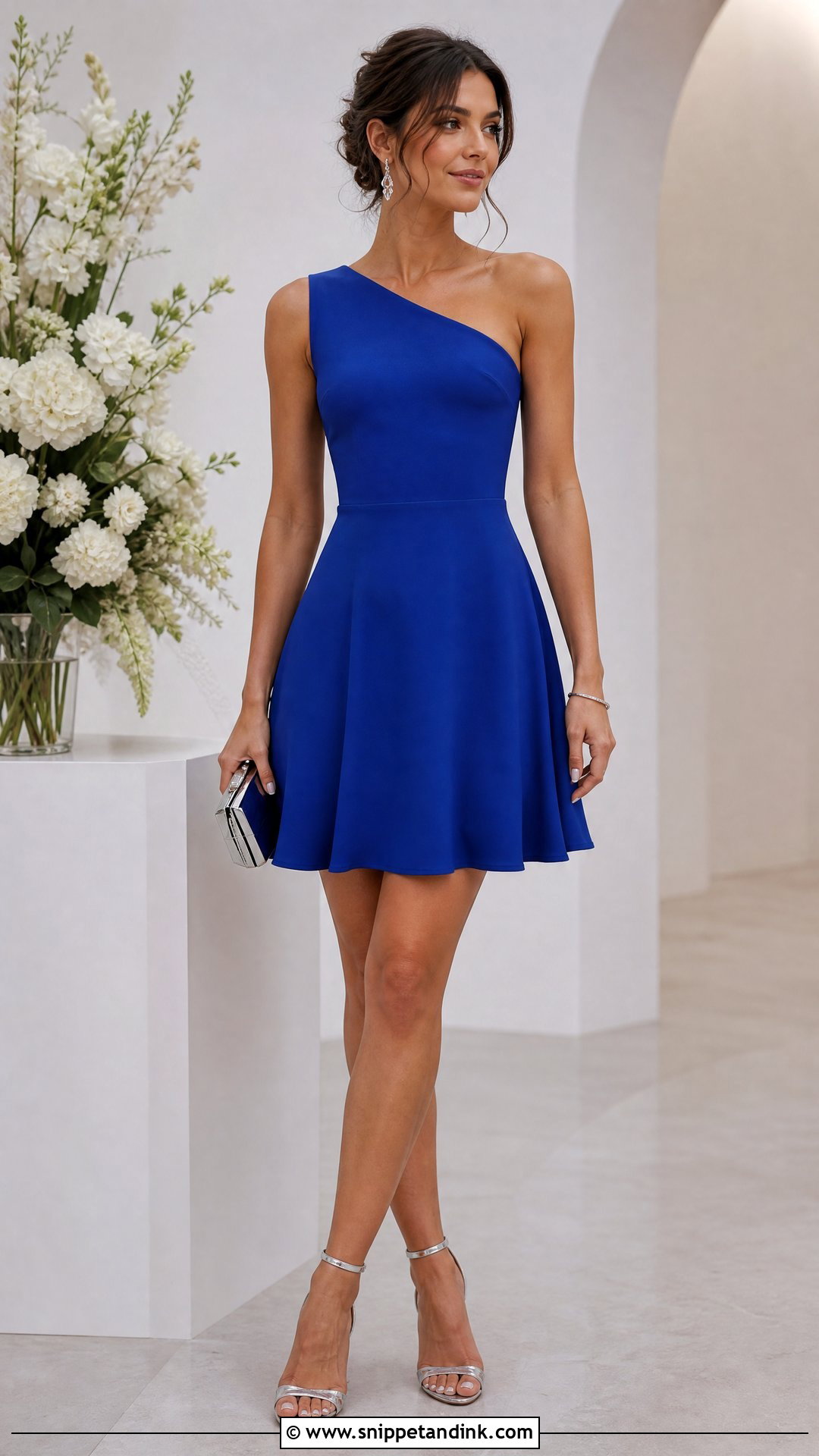
With a one-shoulder gown the asymmetric neckline is the whole design, so I keep everything else quiet: no necklace, one slim bracelet. The single strap carries the weight of the bodice, which means the inner bust seam and side boning have to be properly fitted or the dress slides toward the open side. A wider strap is more forgiving than a narrow one and gives better coverage. Sheath skirts look sharp; a flared skirt is kinder for a long reception. Velvet suits winter, crepe or satin most other months.
7. Shirt Collar Short Gown
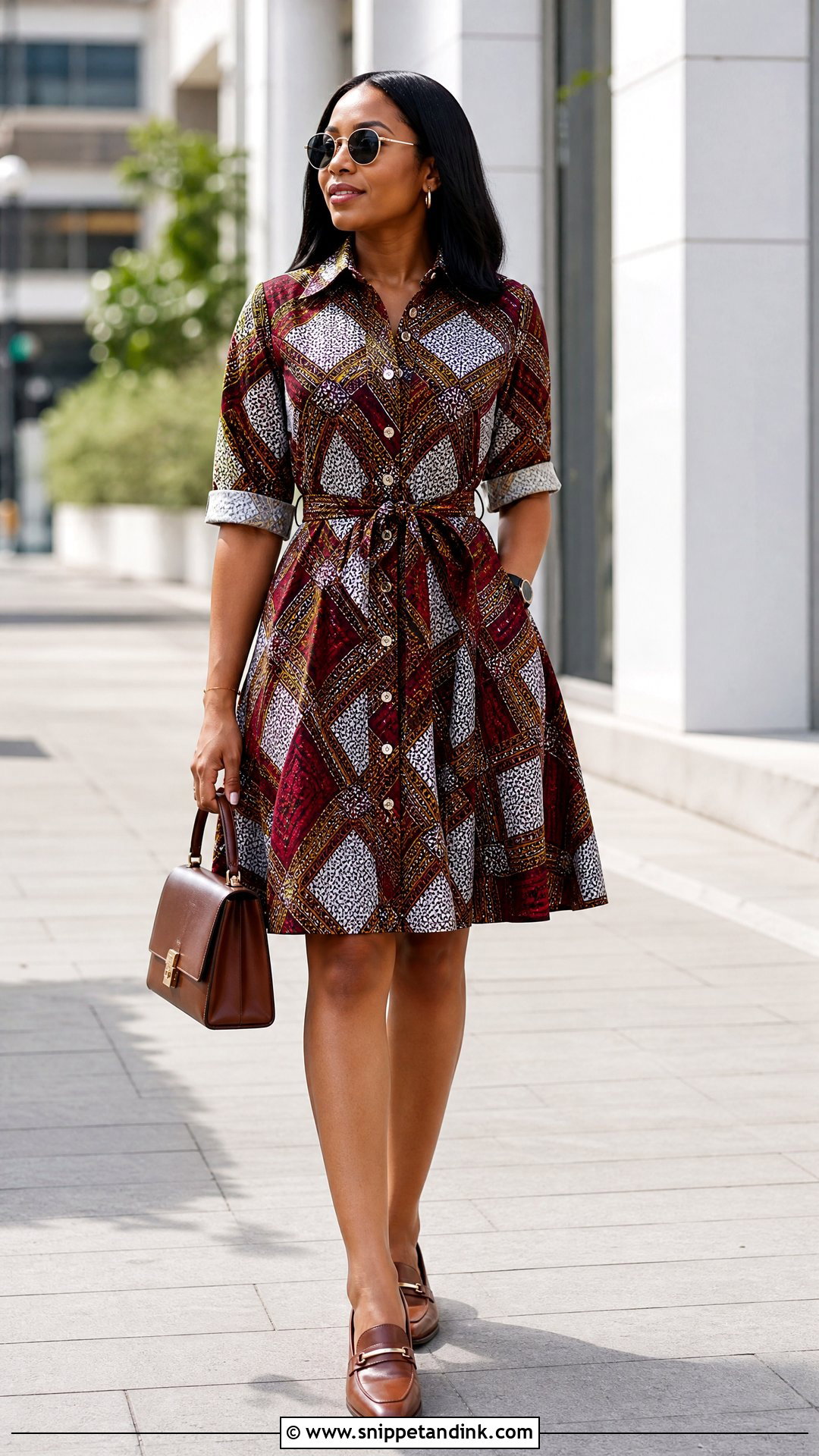
Shirt collar gowns live or die by the collar standing up properly. It usually comes with a buttoned front, defined collar, and a straight or lightly flared skirt. Cotton, linen blends, denim and Ankara all hold a collar; a limp rayon won’t, however well it’s pressed. I check the button stand while the wearer is seated, since that’s when gaping shows at the bust. A self-fabric belt adds shape. On a petite frame I’d keep the belt narrow and the hem shorter.
8. Chiffon Layered Short Gown
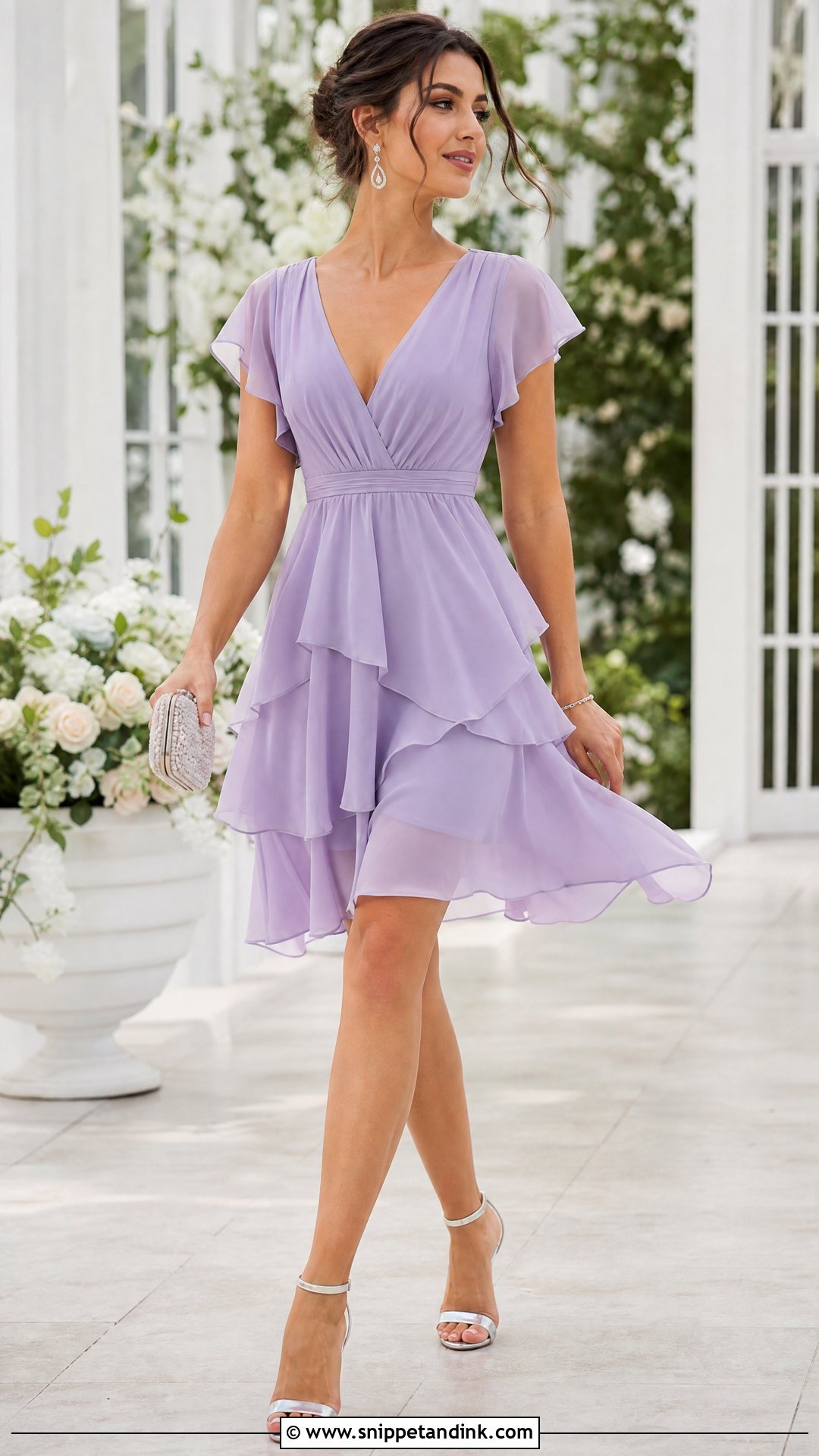
Chiffon moves with every step, which is its charm and its weakness. It is sheer, so a full lining matters, and it frays and snags easily on beaded bags and bracelets. Flutter sleeves, a gathered waist and a tiered skirt make a relaxed shape. Florals feel like daytime; a solid jewel tone dresses it up for an evening reception. On a petite wearer I’d cut the number of layers, because three tiers of chiffon on a small frame can swallow her.
9. Straight Cut Short Gown
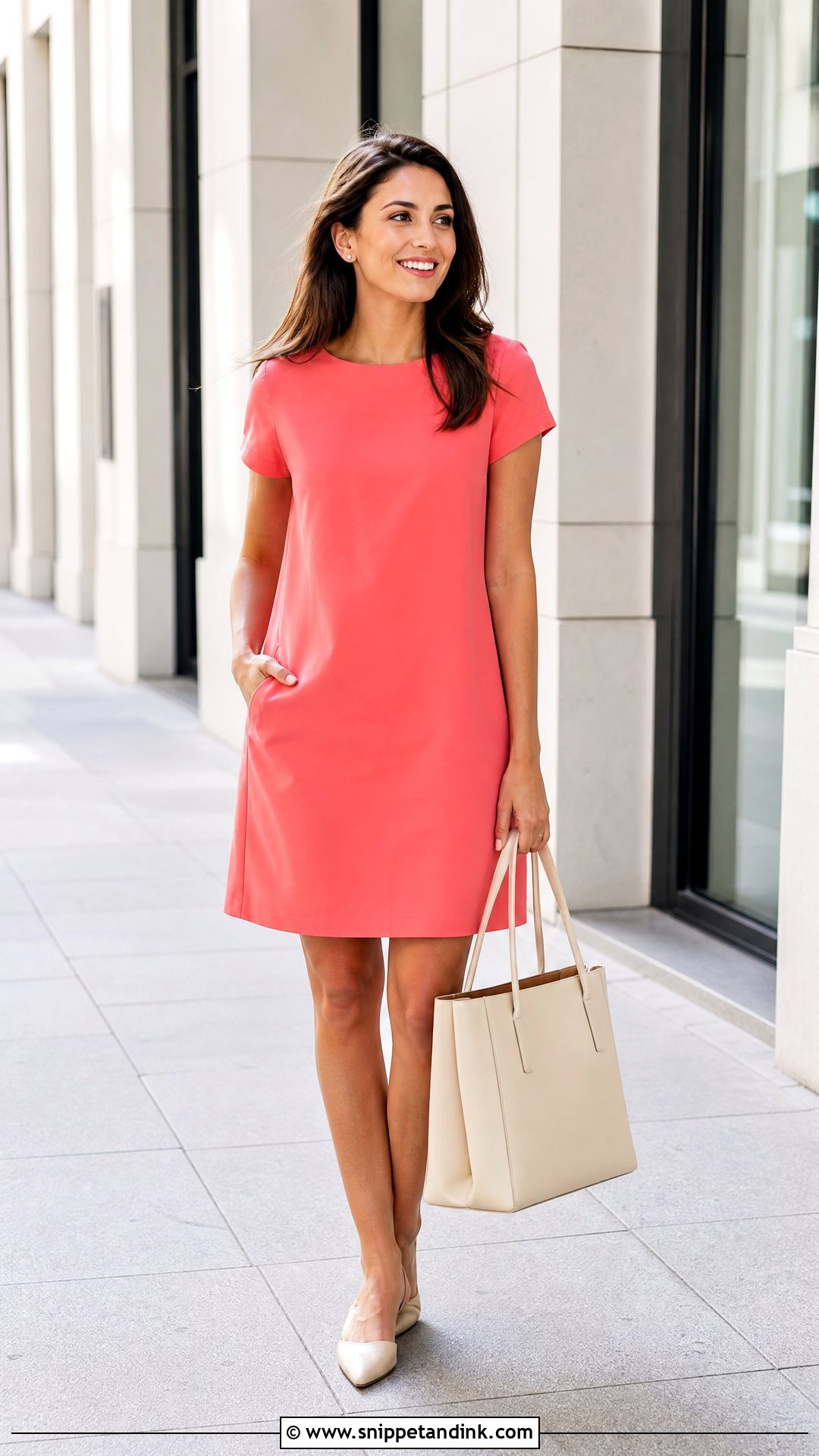
The straight cut is my answer for a guest who wants to wear one dress to three different events. It hangs from the shoulders with very little shaping, so the shoulder fit carries everything; if those seams sit too far out, the whole dress looks a size too big. Crepe, linen, cotton and medium-weight Ankara keep the form. Pointed flats and a tote for daytime, block heels and a clutch later. Before hemming, I have the wearer sit and climb a step to make sure the hips have enough ease.
10. Ruffle Hem Short Gown
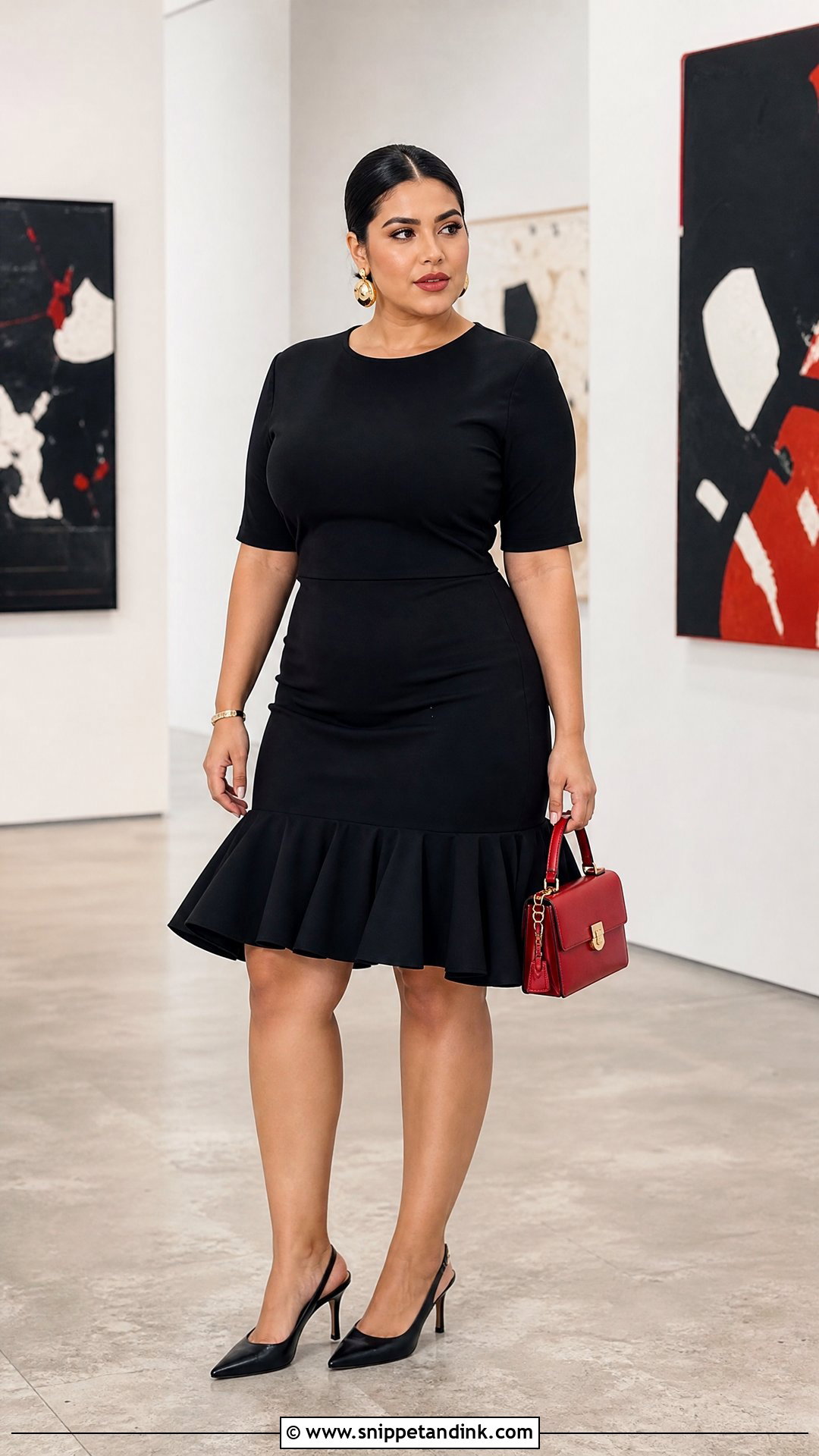
A ruffle hem adds movement low down without adding bulk at the waist. The body above can be fitted, straight or lightly shaped, finished with a gathered or circular flounce. Here’s what catches people out: a flounce lifts as you walk and rides up further when you sit, so I always hem these a little longer than the client first asks for. On a curvy figure, start the ruffle below the widest part of the hip, never on it. Solid colours show the hem detail clearly.
11. Bell Sleeve Short Gown
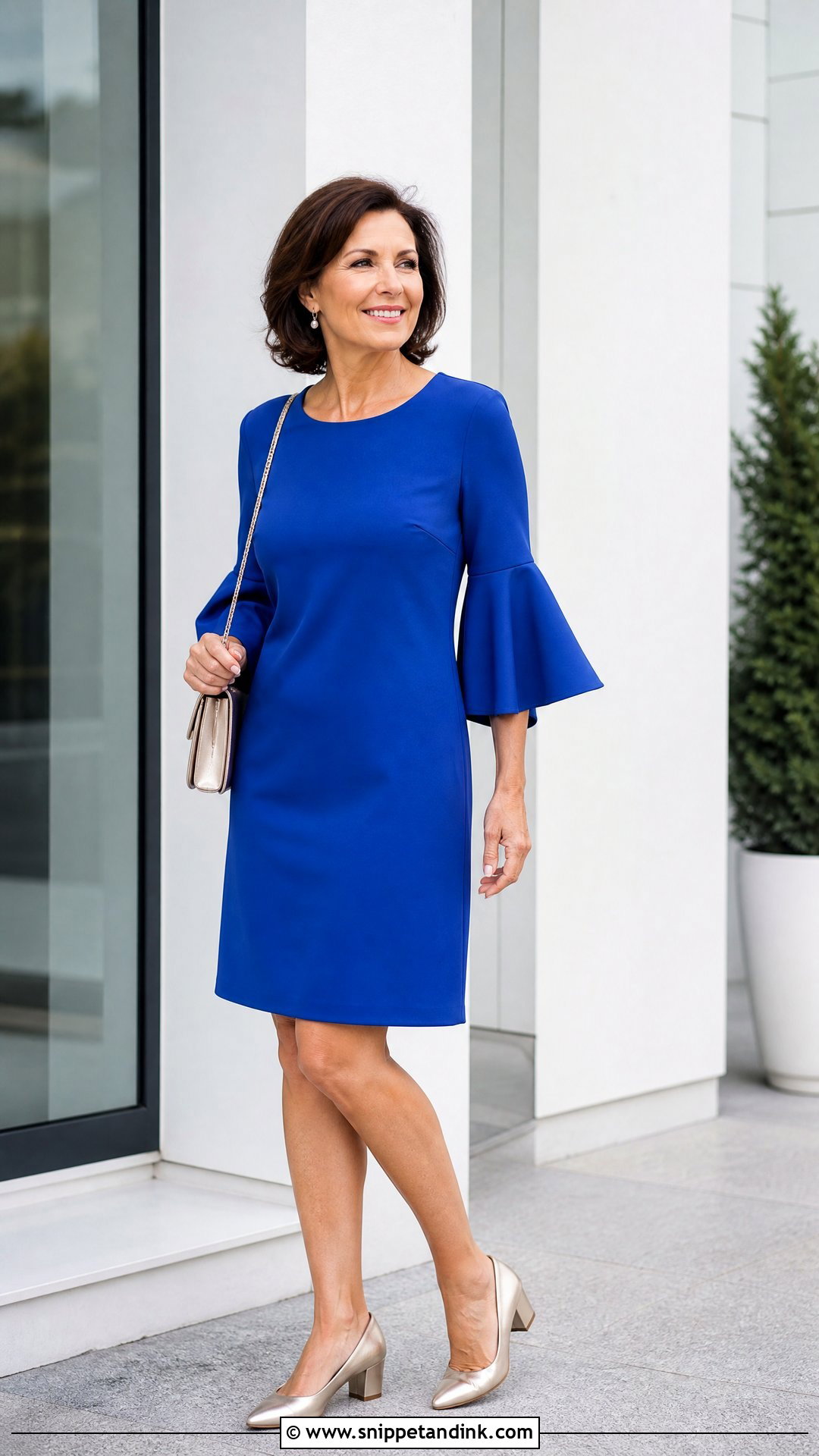
Bell sleeves are wonderful in photos and annoying at the buffet. A sleeve that flares from the elbow gives you drama without dragging through sauce; one that widens from the shoulder is fuller and harder to manage at dinner. Softer fabrics like chiffon or crepe swing; lace and Ankara hold a stiffer bell. Skip stacked bracelets, which tangle in the opening. For a petite wearer, I’d take the sleeve to three-quarter length so her hands stay visible.
12. Wrap Short Gown
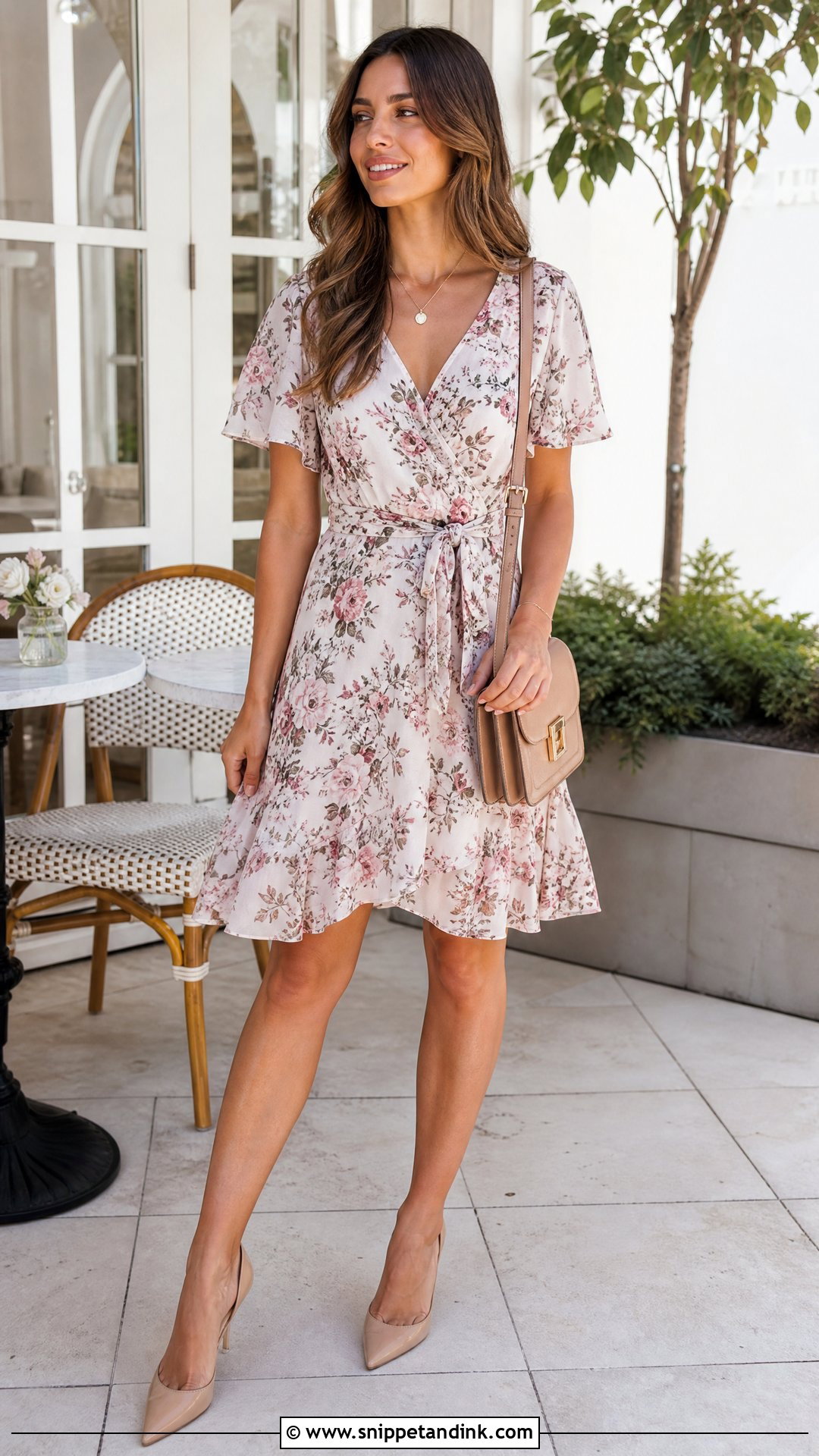
A true wrap adjusts to your body, which is why it suits changing shapes, but it also opens when you sit. That’s the first thing I test. If you’d rather not think about it all evening, a faux-wrap stitched shut at the waist is the calmer choice. Jersey, crepe, satin, and Ankara can all produce attractive results. I usually add a hidden snap at the crossover of the V, and a short pendant sits nicely in the neckline. A softly flared skirt accommodates fuller hips without pulling.
13. Ankara Shift Short Gown
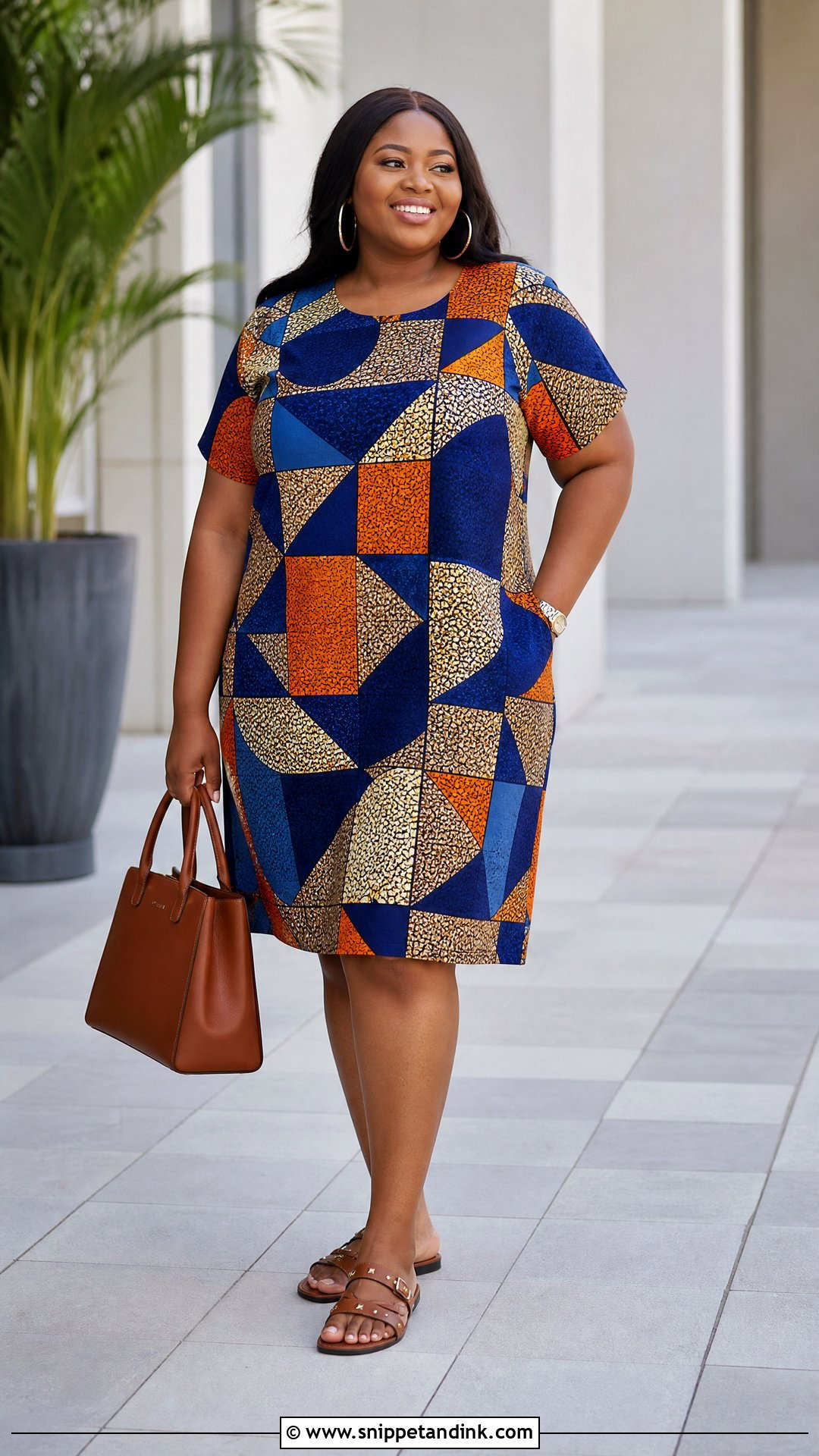
An Ankara shift has almost no waist seam, so the print does the talking and the shoulders do the work. If the shoulder seams sit right, the dress falls cleanly; if they sit wide, it looks borrowed. Bold geometrics and big florals both suit this shape because there’s no seam cutting the pattern. Short sleeves for heat, three-quarter for coverage. At knee length, I add a side slit or back vent, since a straight hem shortens your stride more than people expect.
14. High Neck Short Gown
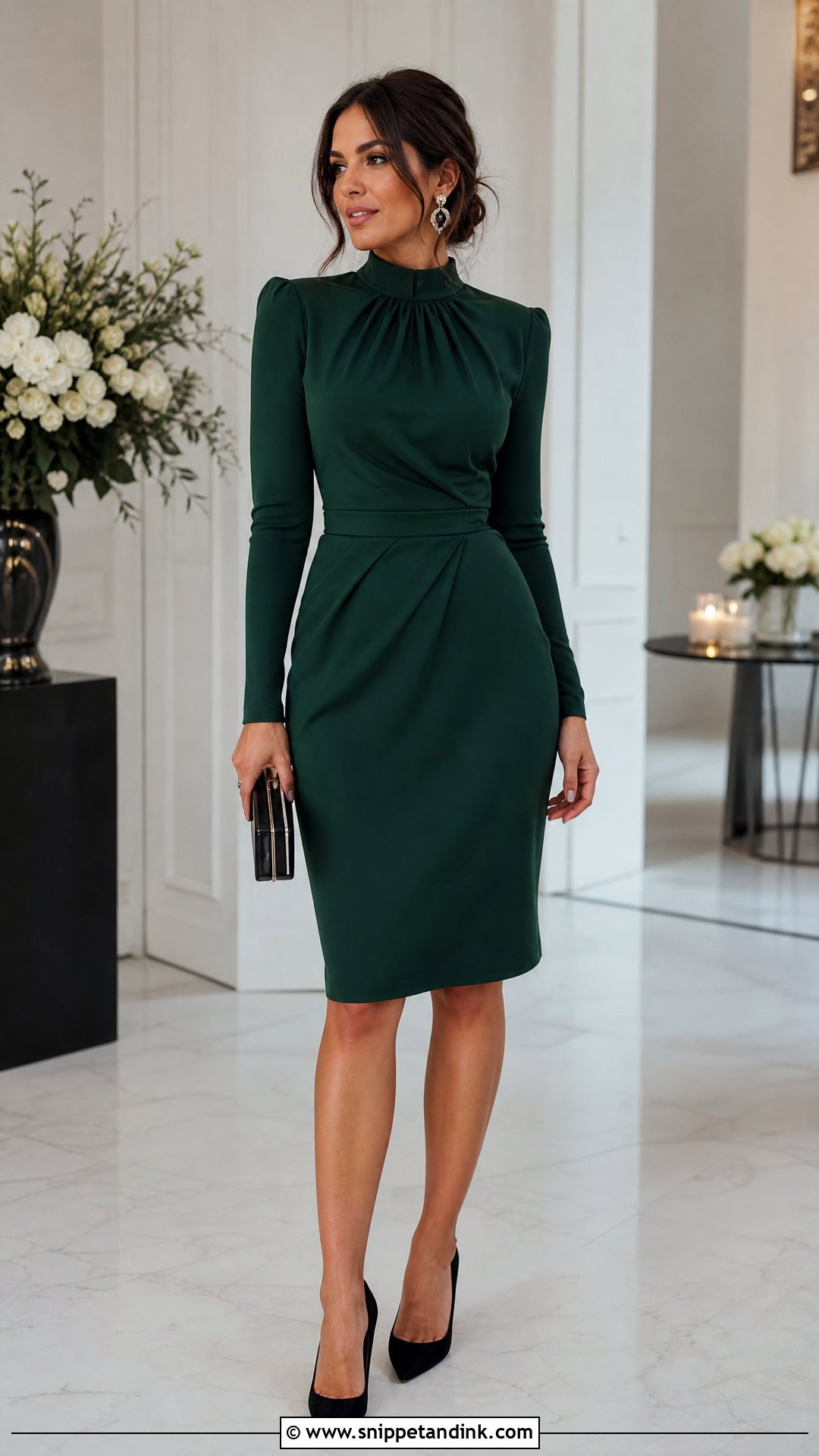
Covering the neck and showing the legs is a contrast I like a lot, especially for an evening reception where a guest wants coverage on top. Mock necks, gathered collars and draped finishes all count. A high neck shortens the torso visually, so I give the waist slight definition to stop the dress reading as a column. Sleeveless versions show the shoulders; fitted long sleeves suit cooler months. Wear statement earrings and no necklace, and keep the skirt plain if the collar is detailed.
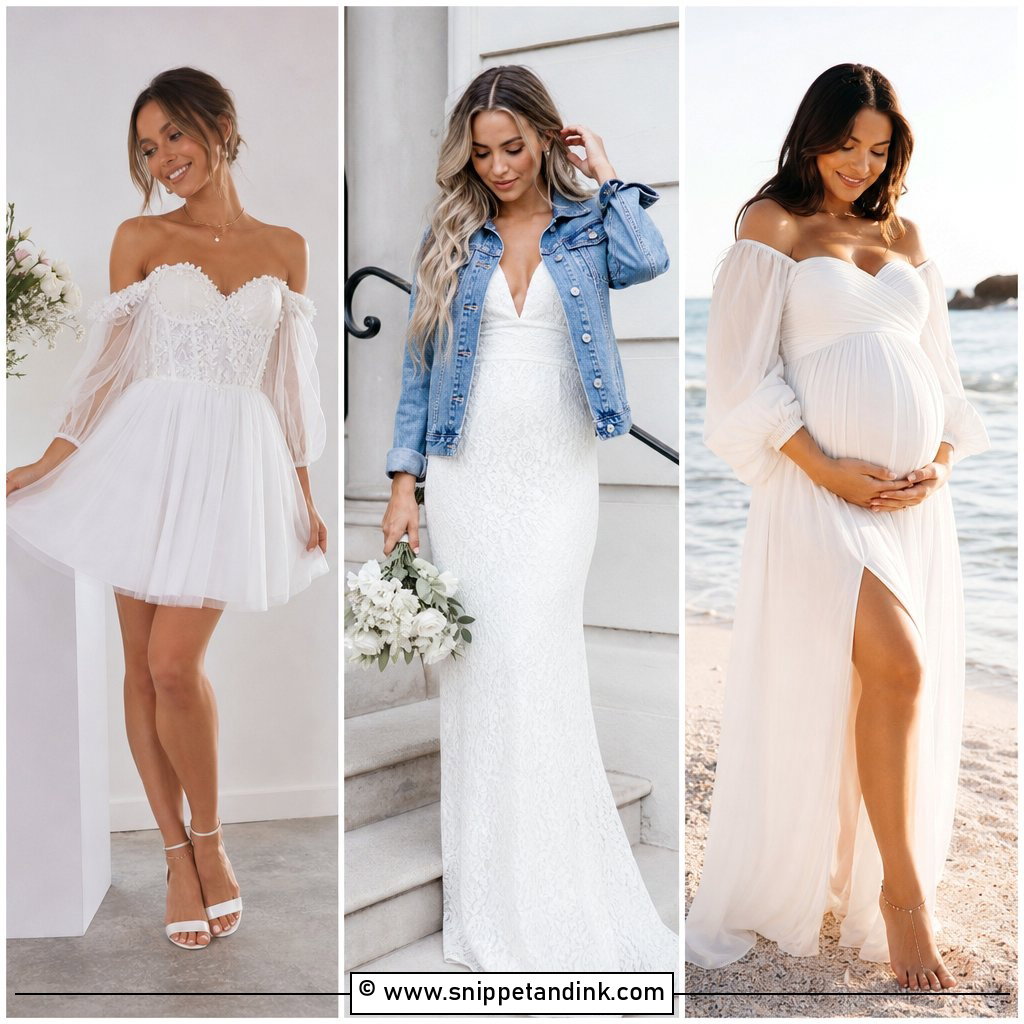
15. Pleated Short Gown
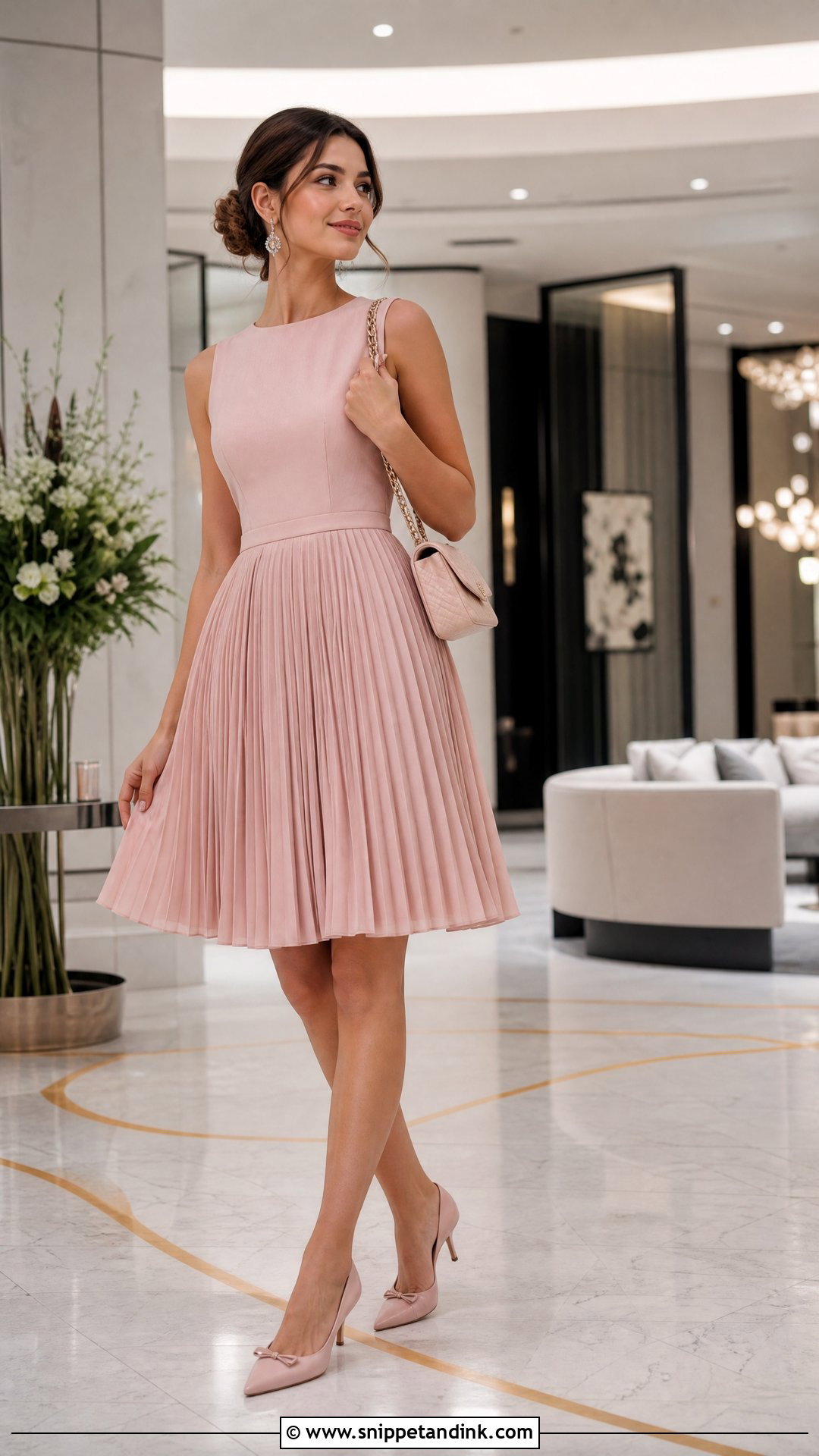
Pleats give a short gown texture without beading. A fitted bodice over a pleated skirt is the classic fit-and-flare; narrow pleats running the full length are more relaxed and lengthening. Chiffon pleats move softly, structured fabrics hold a sharper fold. The waist seam has to land on your natural waist, which I pin before the pleats are set. And please steam from inside, holding the steamer away from the fabric; pressing an iron flat on pleats can erase them for good on some synthetics.
16. Color Block Short Gown
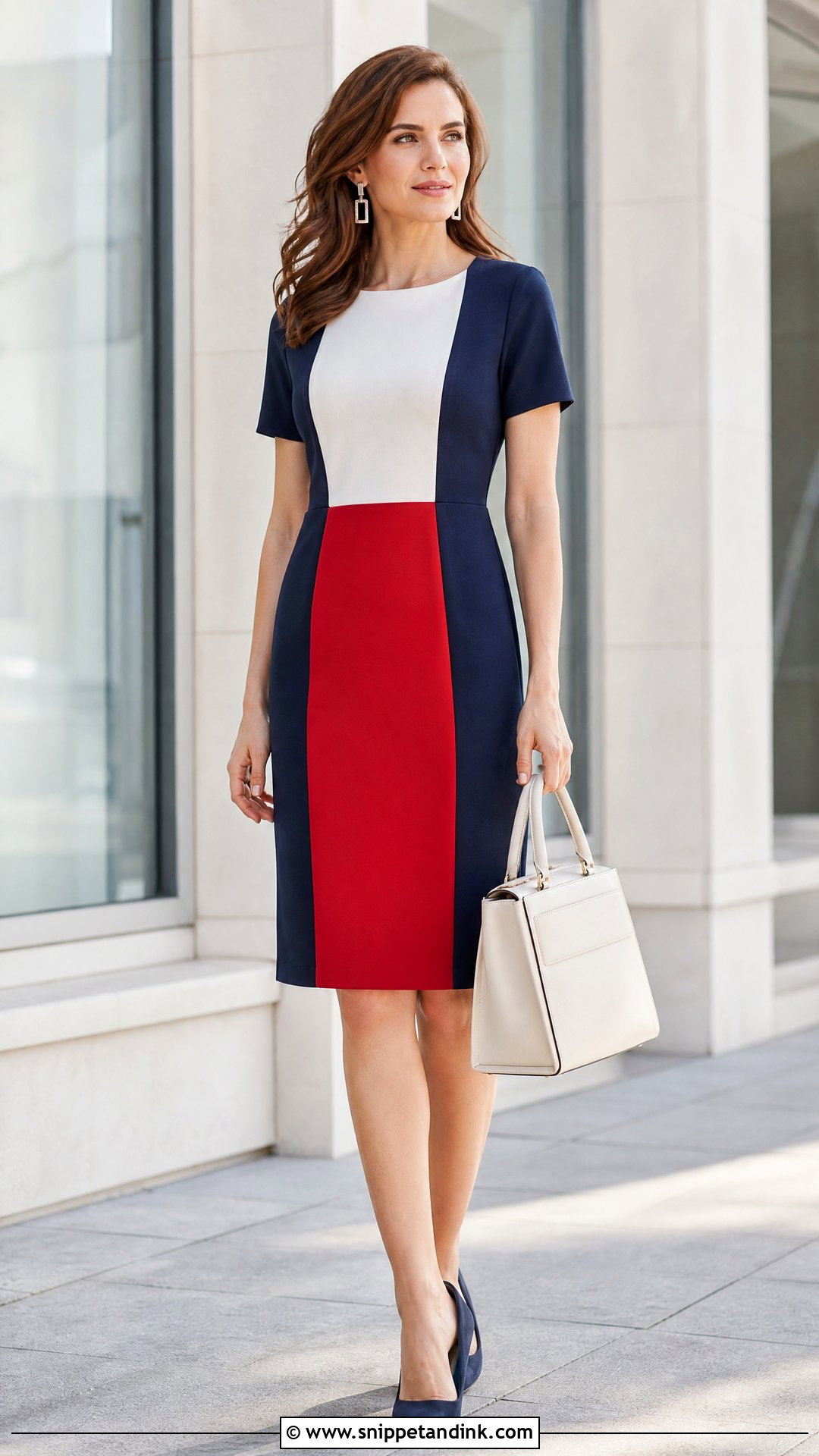
Colour blocking is tailoring disguised as colour. Darker side panels pull the eye inward and slim the outline; a bright centre panel draws the eye vertically. Because the effect depends on where each seam falls on your body, a ready-made version rarely lines up perfectly, and I’d budget for alterations. Keep the cut plain. For shoes and bag, borrow one shade from the dress rather than adding a new colour. Knee length suits work; a flared mini feels younger.
17. Organza Sleeve Short Gown
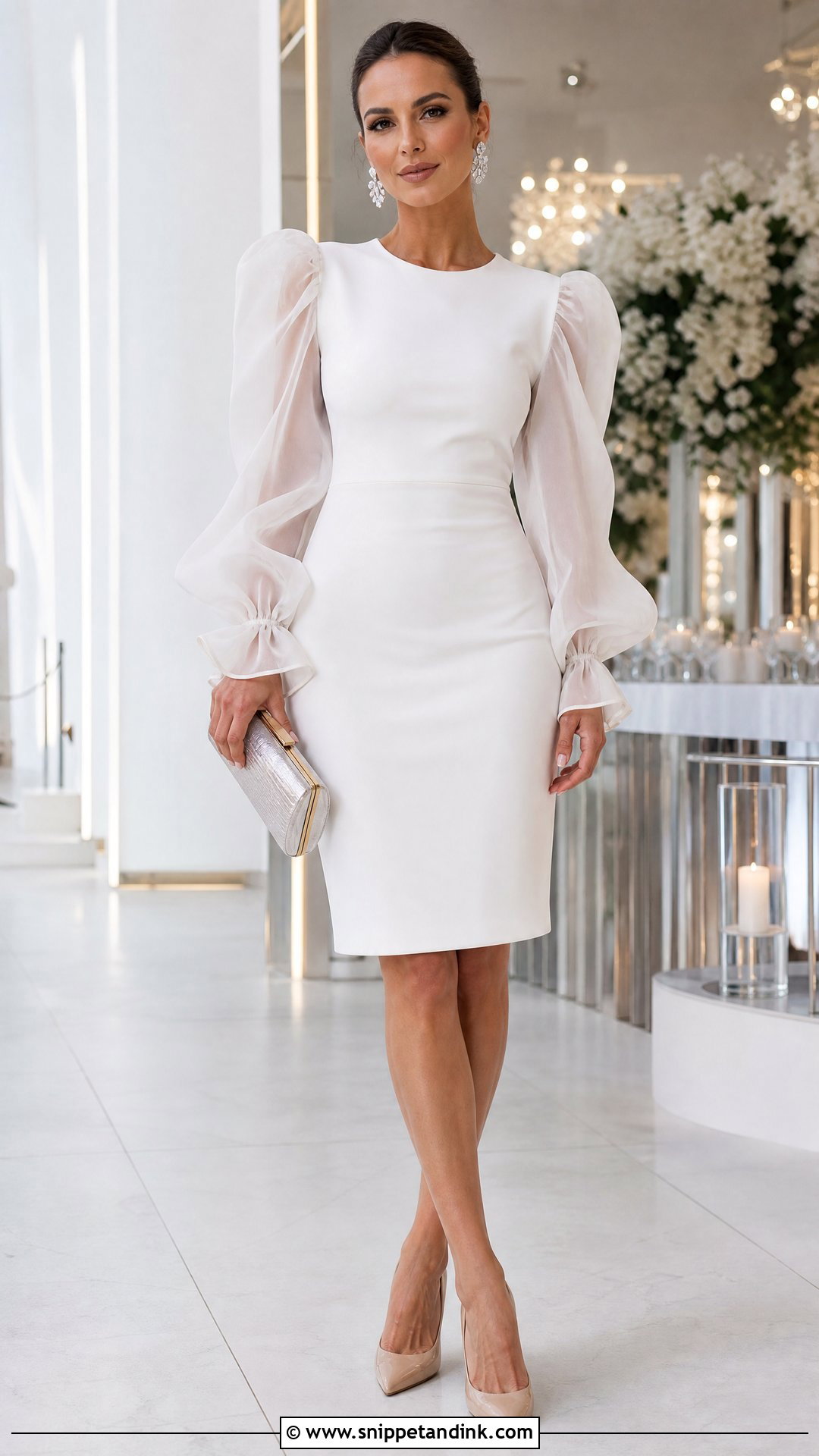
Organza sleeves are crisp, which is exactly what makes them uncomfortable if cut tight. The fabric has almost no give, so I check the armhole and cuff with the wearer reaching forward, as she would to sign a guest book or lift a glass. A fitted crepe or satin body with sheer puffs is the balanced version. Tiny fabric flowers or embroidery are fine as long as they don’t stiffen the elbow. Wear your hair up so the sleeves show, and on broad shoulders choose a sleeve that starts soft rather than standing upright.
18. Cold Shoulder Short Gown
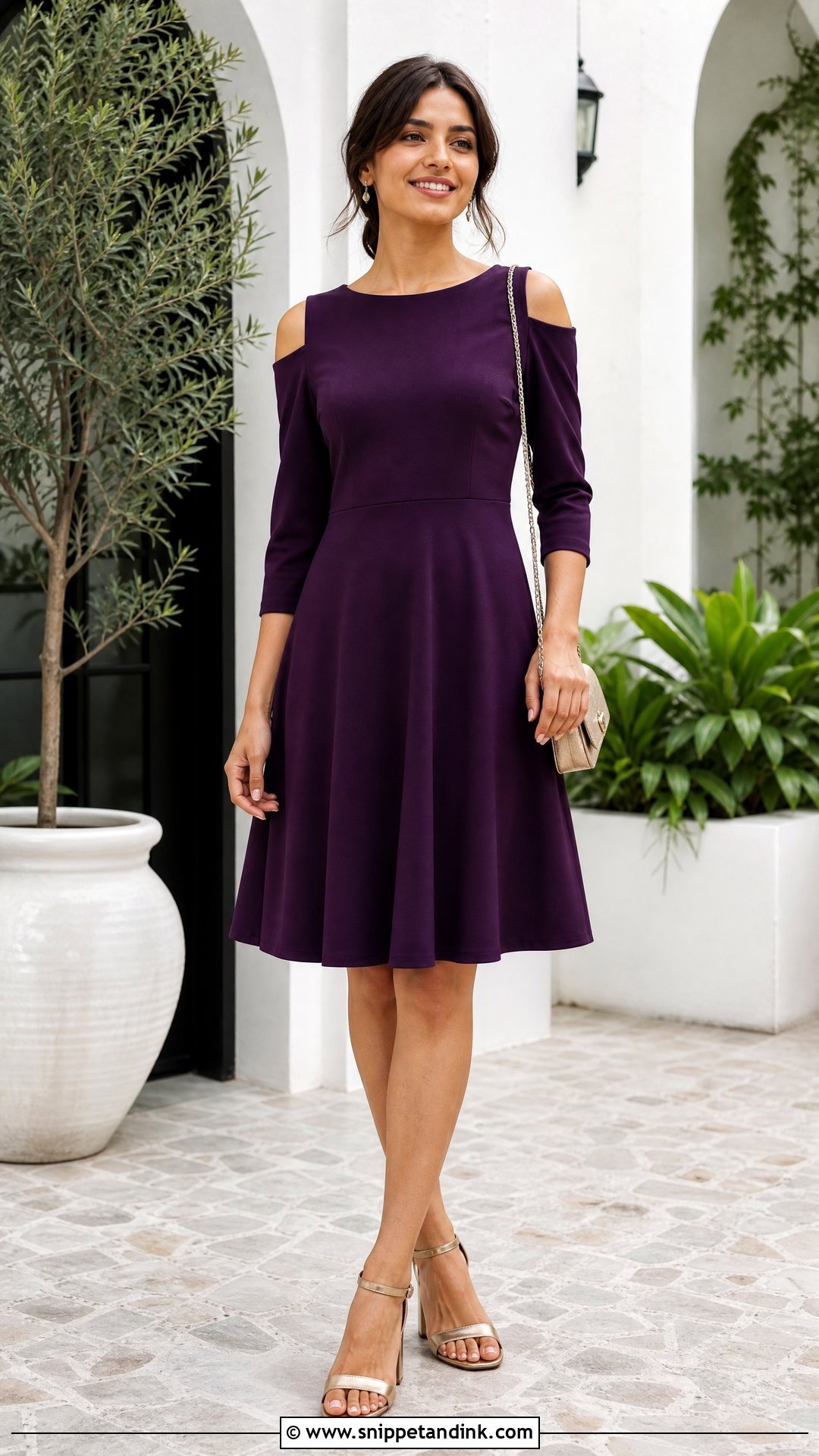
A cold shoulder shows a little skin while keeping fabric across the neckline and upper arm. It pairs well with short flutter sleeves or three-quarter sleeves. The detail I look at is whether the openings lie flat; if they pull toward the neck, the strap between them is too short and needs letting out. Crepe, jersey, lace and Ankara all work. For a modest version, ask for smaller openings and a knee-length hem.
19. Double Breasted Short Gown
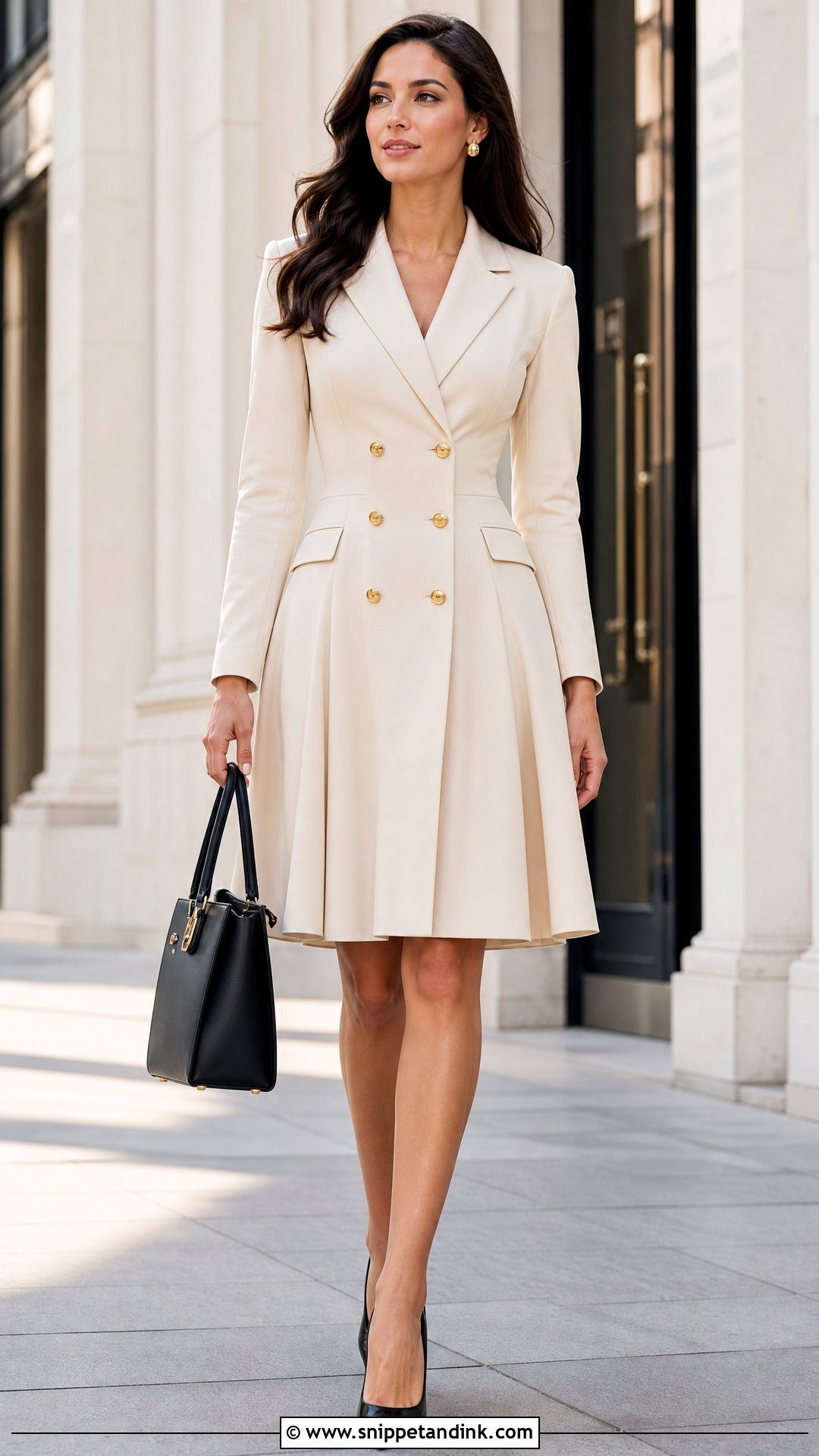
Borrowed from tailored jackets, the double-breasted gown has lapels, two rows of buttons and a defined waist. It needs real structure: medium-weight crepe, suiting or textured cotton. I fit it buttoned and seated, because a double-breasted front shows strain lines across the bust and hip more than any other style here. A hidden snap keeps a low lapel neckline closed. Pick buttons a shade off the fabric rather than a loud contrast, and keep the hem close to the knee.
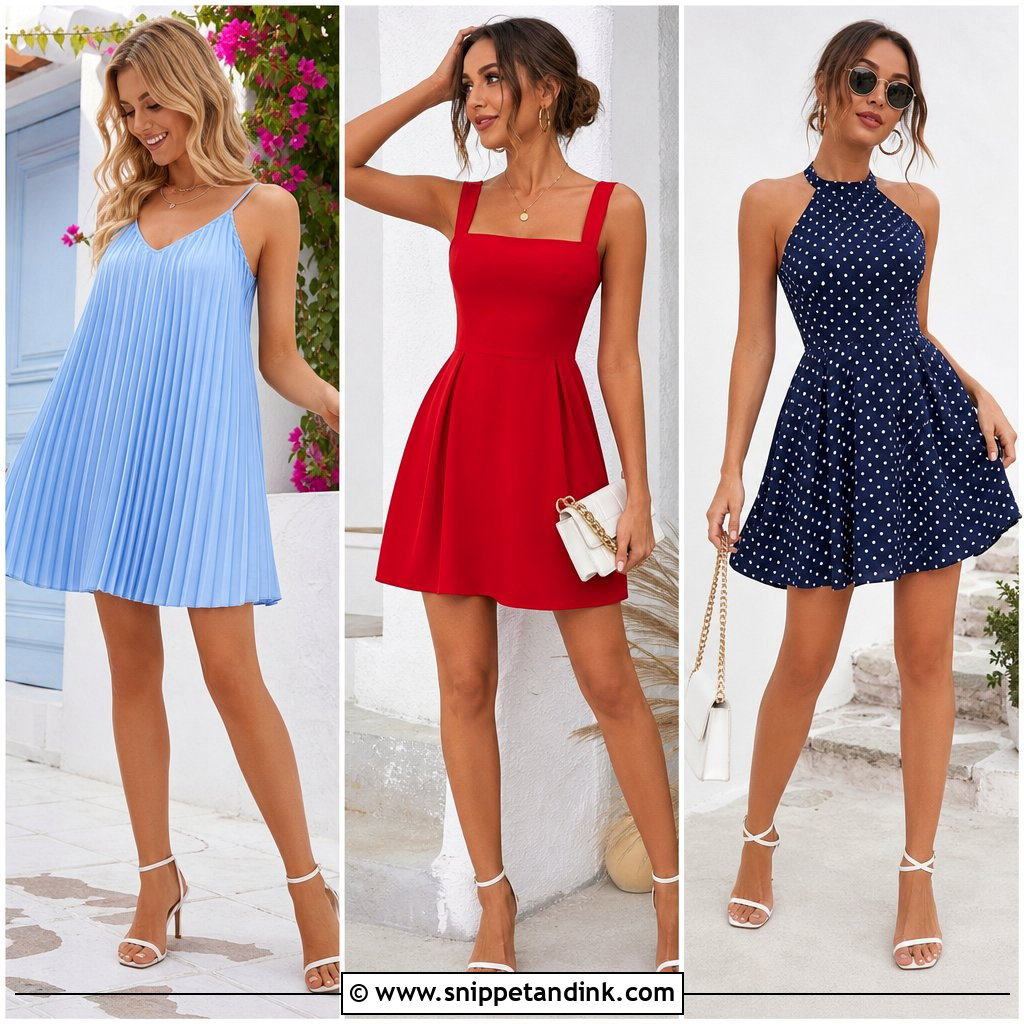
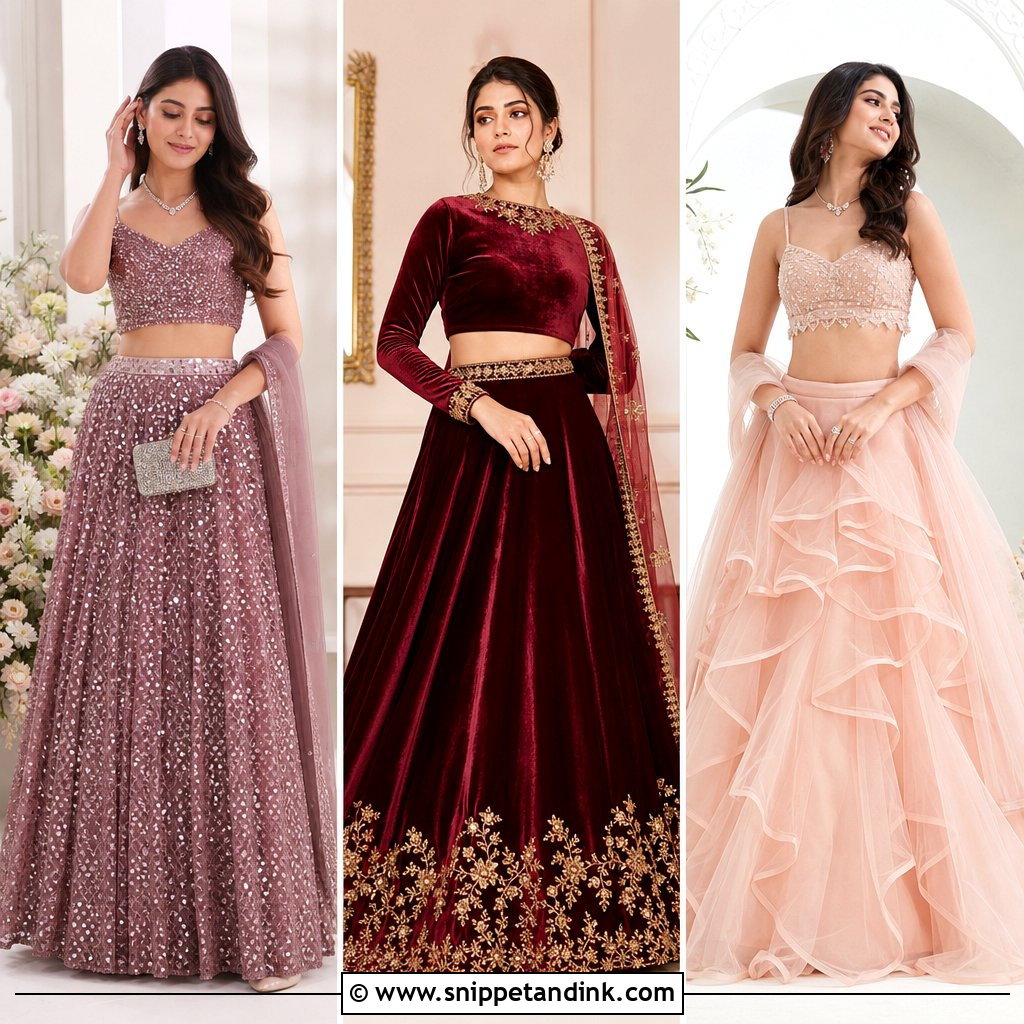
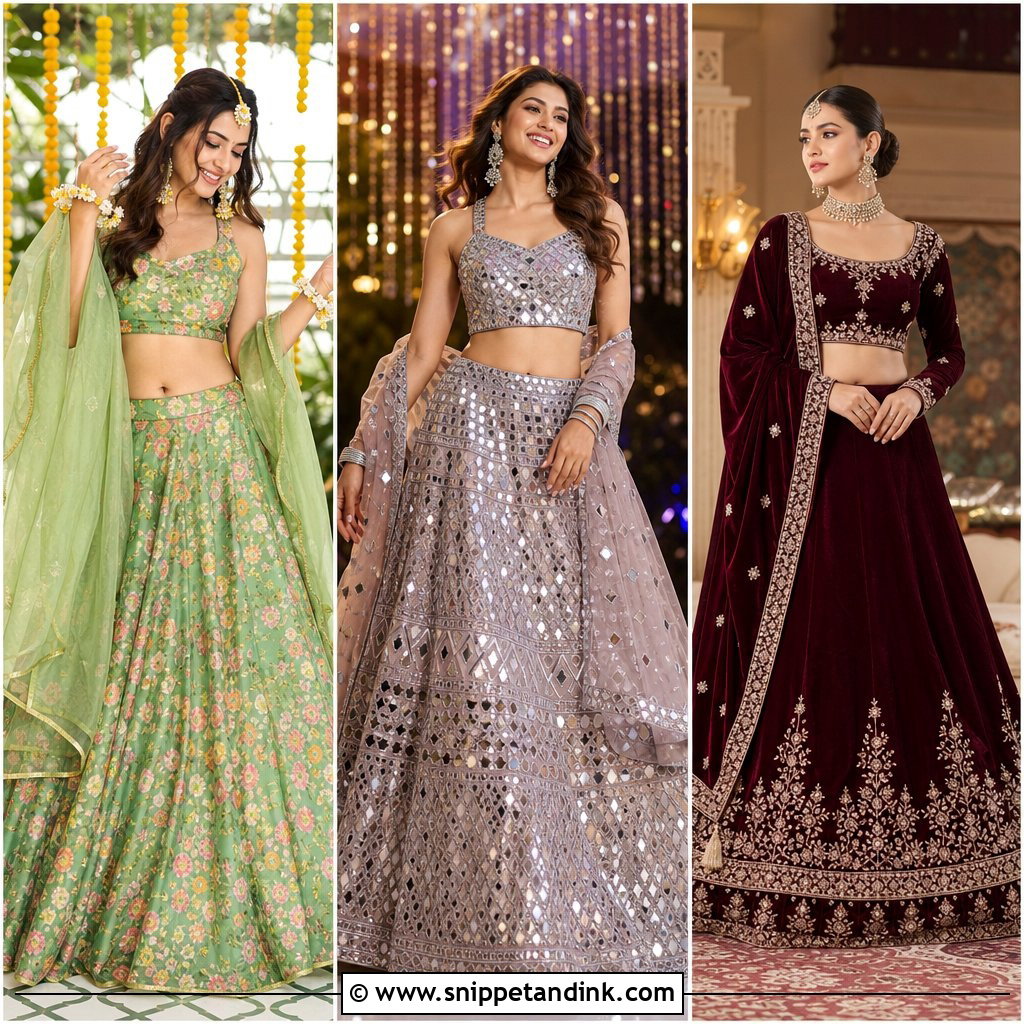
20. Tiered Ankara Short Gown
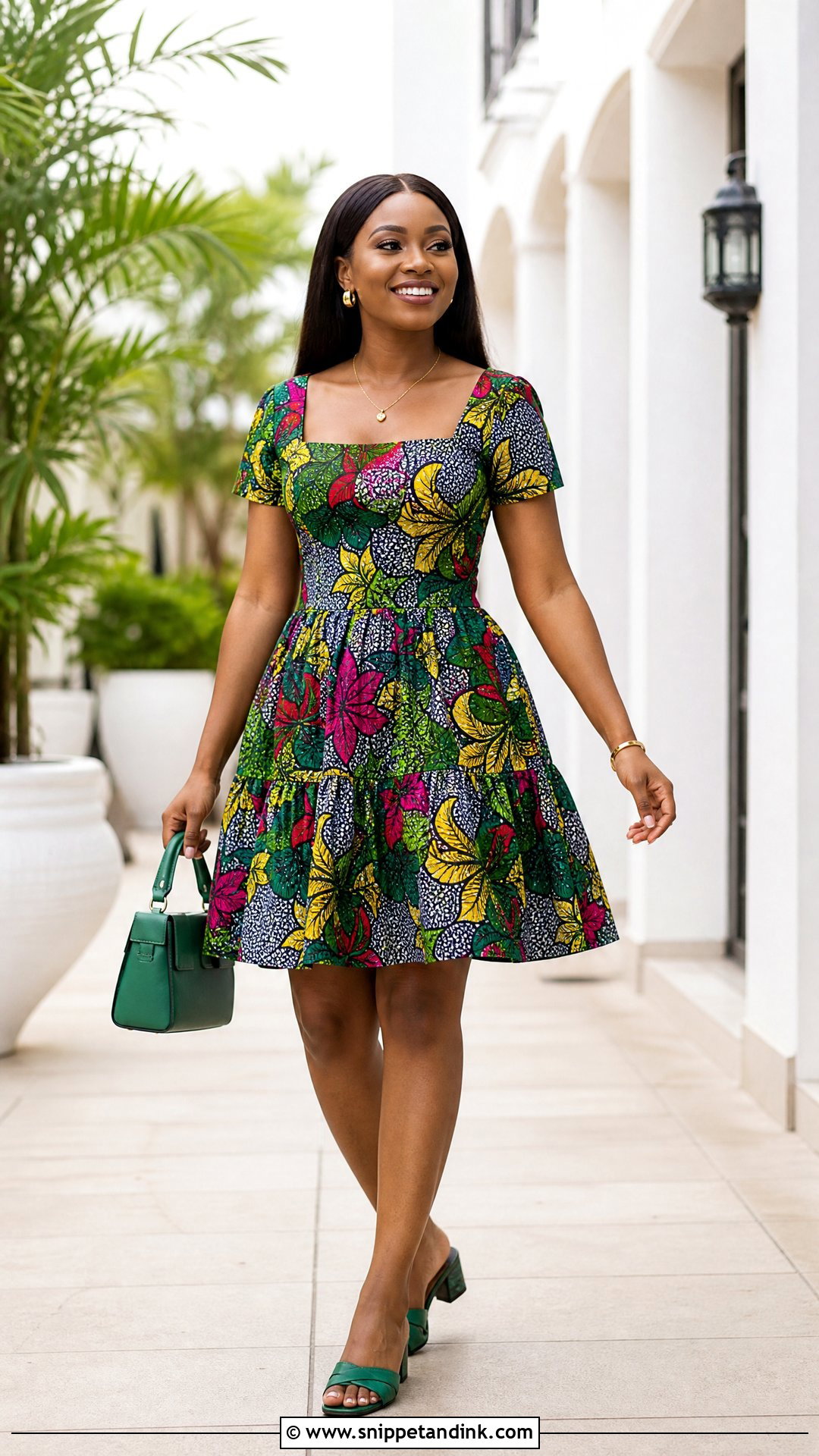
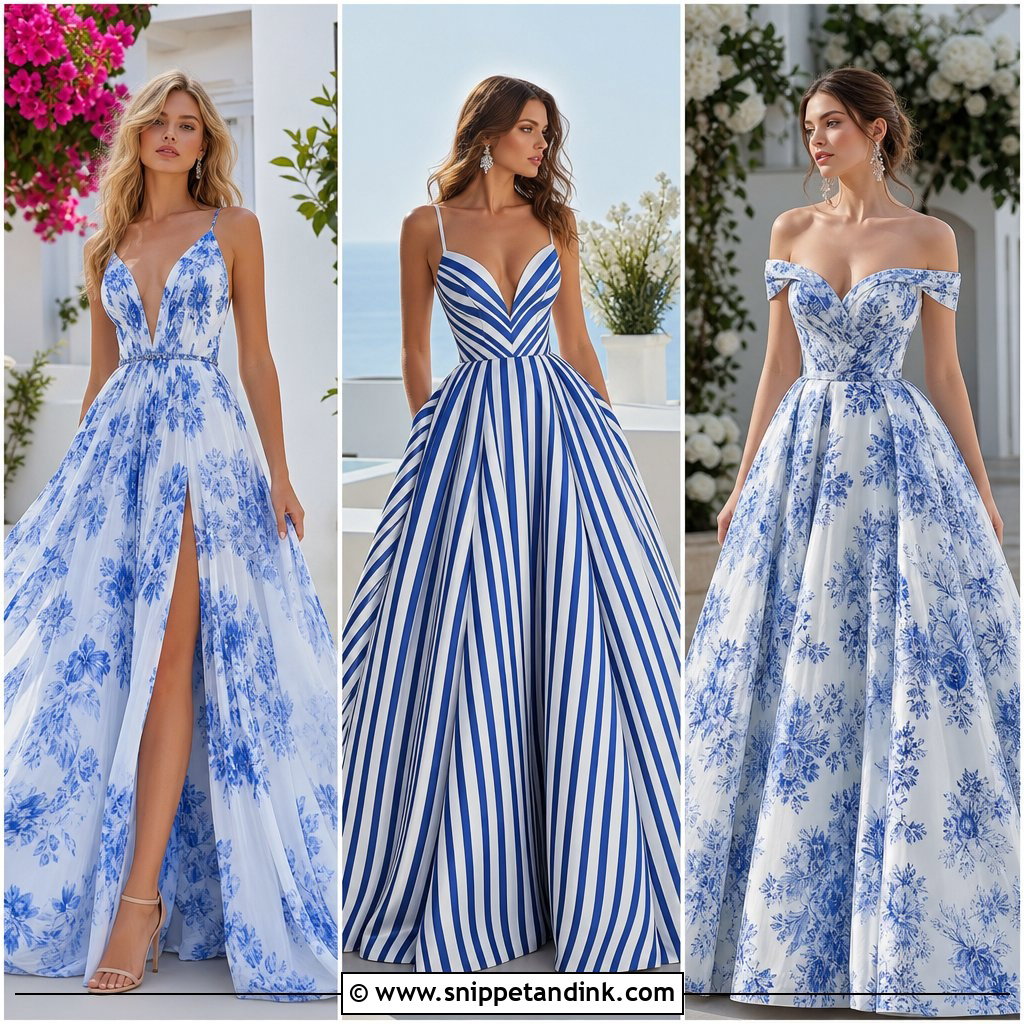
Tiers turn a busy print into something that moves. The design can have a fitted upper section with two skirt tiers or a looser body gathered from the bust down. The risk with Ankara is bulk: each tier adds gathered cotton, and stiff wax print stands away from the body. Shallow tiers, gathered lightly, keep the shape controlled. Petite wearers do best with two tiers and a hem above the knee; taller frames carry deeper ones. A fitted shoulder line stops the whole thing looking oversized.
Bringing a Short Gown Design to Your Tailor
Many of the gowns above, especially the Ankara styles, are sewn to measure rather than bought. That’s a big advantage, but only if the tailor knows exactly what you want. A photo alone isn’t enough.
What I’d hand over at the first appointment
- Two or three reference photos, with the detail you love circled: the sleeve, the neckline, the hem.
- The actual fabric, washed first if it’s cotton wax print, since it can shrink slightly.
- The shoes you’ll wear, so the hem is measured at the right height.
- The bra or shapewear you plan to wear underneath.
Ask how much fabric the design needs before you buy; tiered and peplum styles use noticeably more than a shift, and you need extra to match a large print across the seams. Book at least two fittings, and leave a couple of weeks between the last fitting and the event so there’s time to adjust.
Small finishing touches worth requesting
Pockets in the side seams, a full lining for lace or chiffon, a hidden snap on any wrap or low neckline, and an invisible zip rather than an exposed one if the print is busy. None of these show in photos, but you’ll feel every one of them by the end of the night.
Which of These Short Gowns Will You Wear Again?
Start with fit and fabric and the details look after themselves. A-line, wrap, shift and fit-and-flare shapes are the dependable bases; puff sleeves, peplums, pleats and ruffles add character on top. Ankara brings colour and holds structure, while lace, chiffon, satin, crepe and organza each drape and crease in their own way. Whatever you pick, sit, walk and reach in it before the day. In my experience a well-tailored simple gown outlasts a trend piece every time, and it’s the one you’ll keep reaching for long after the wedding.
You'll Like These Ideas:


Leave a Reply