
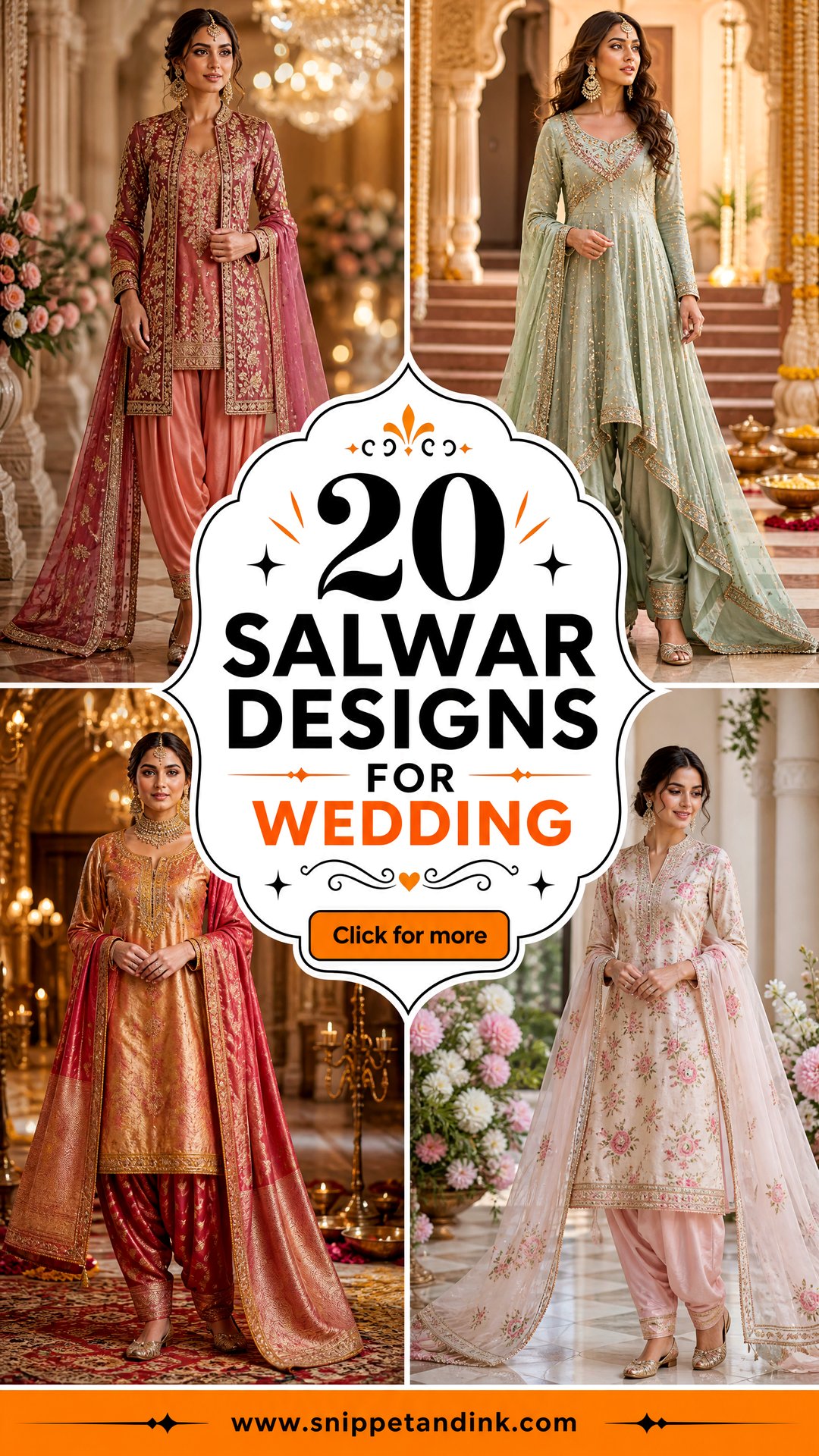
A wedding in a South Asian family can mean four or five functions in a week, and the salwar suit is the outfit that carries most of them. What makes one suit right for a mehndi and another right for a reception comes down to how the cut, the fabric and the embroidery work together, and that’s what I look at first when a client brings me a shortlist. Below are twenty shapes I style regularly for brides, bridesmaids, mothers and guests: Anarkalis, Patiala sets, shararas, ghararas, palazzo suits, jacket layers and clean straight cuts. Each comes with my notes on the dupatta, jewelry, shoes and the function it suits best. Heavy velvet or airy organza, there’s a version here for your build and your part in the celebration.
Which Suit Belongs at Which Function
The first thing I ask a client is not her favorite color but her schedule. A suit that’s ideal for a sangeet can be wrong for a haldi or a nikah, and families care about these differences more than outsiders realize. Customs vary by community, so check with the hosts, but this is how I usually map it.
- Haldi: yellow or a light, washable fabric you won’t mind staining. Turmeric paste does not come out of silk.
- Mehndi and sangeet: bright colors, mirror work, Patiala or sharara cuts that let you dance and sit on cushions.
- Ceremony: richer silk or embroidered suits, often with a dupatta that can cover the head if the ritual calls for it.
- Reception: evening tones, velvet in winter, capes and jacket layers for a more polished look.
As a guest, I’d steer away from heavy bridal red, which many families reserve for the bride, and check before wearing all white or all black, since some communities associate them with mourning. When in doubt, a jewel tone with moderate embroidery fits almost any function.
1. Floor-Length Anarkali Salwar Suit for Wedding
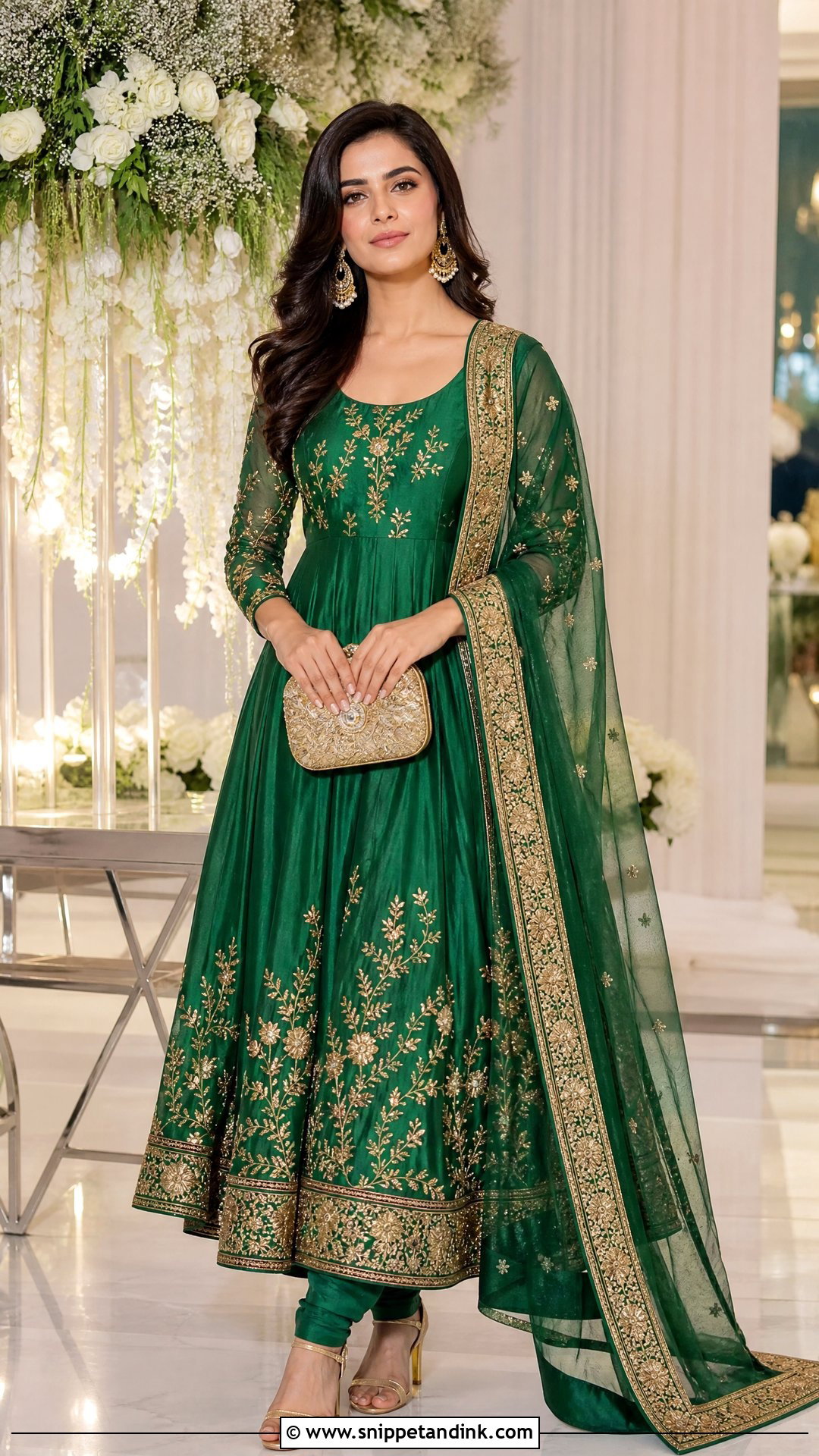
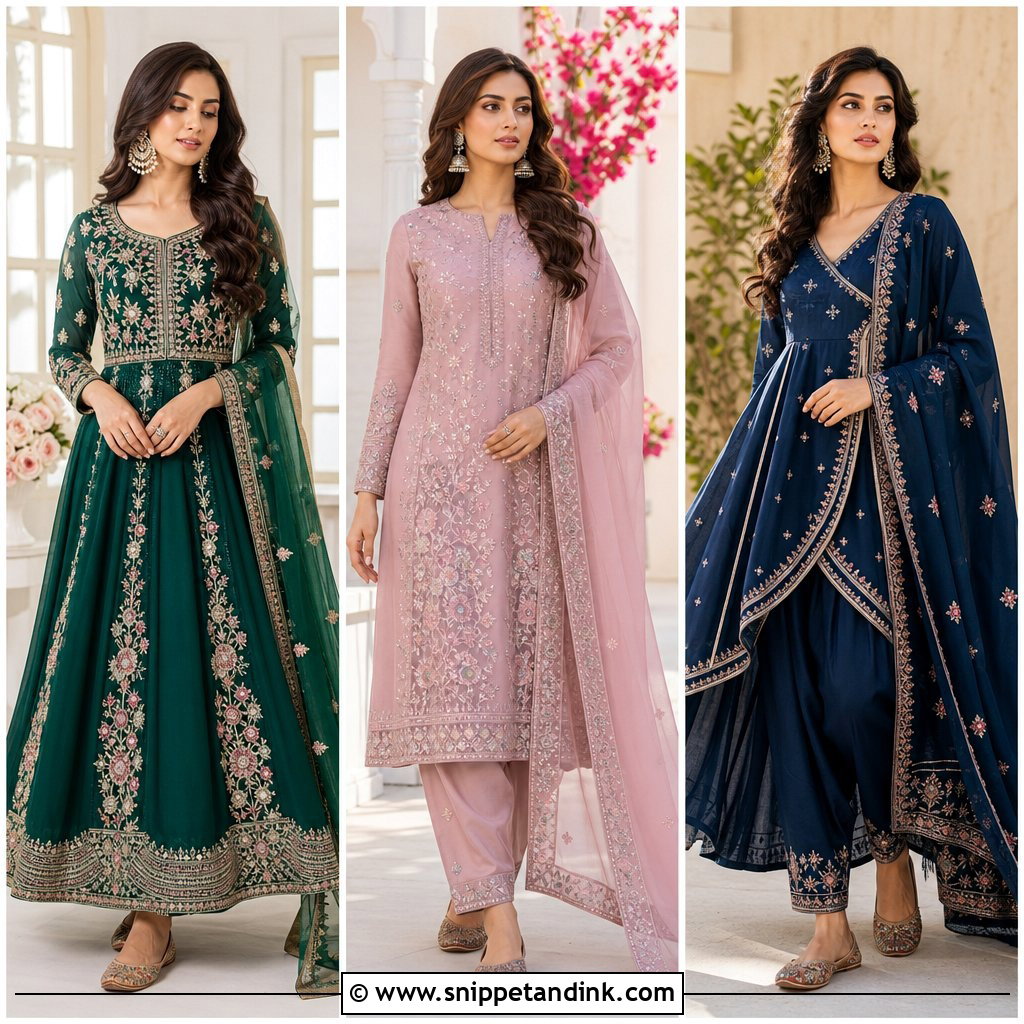
A floor-length Anarkali salwar suit gives the most sweep of anything on this list, which is why it turns up at so many engagements and receptions. The flare is cut from the bodice, so where that seam sits changes everything. On petite clients I raise the waistline slightly and keep the flare moderate; taller women can carry layered hems and broad contrast borders. Silk, georgette or chiffon all drape well, with zari, sequins or fine florals for richness. A matching churidar keeps the lower half slim, and a sheer dupatta over one shoulder shows off the skirt. Metallic heels, an embroidered clutch and chandbalis finish it. For evening, emerald, ruby and navy hold their depth under warm lights.
2. Punjabi Patiala Salwar Suit for Wedding
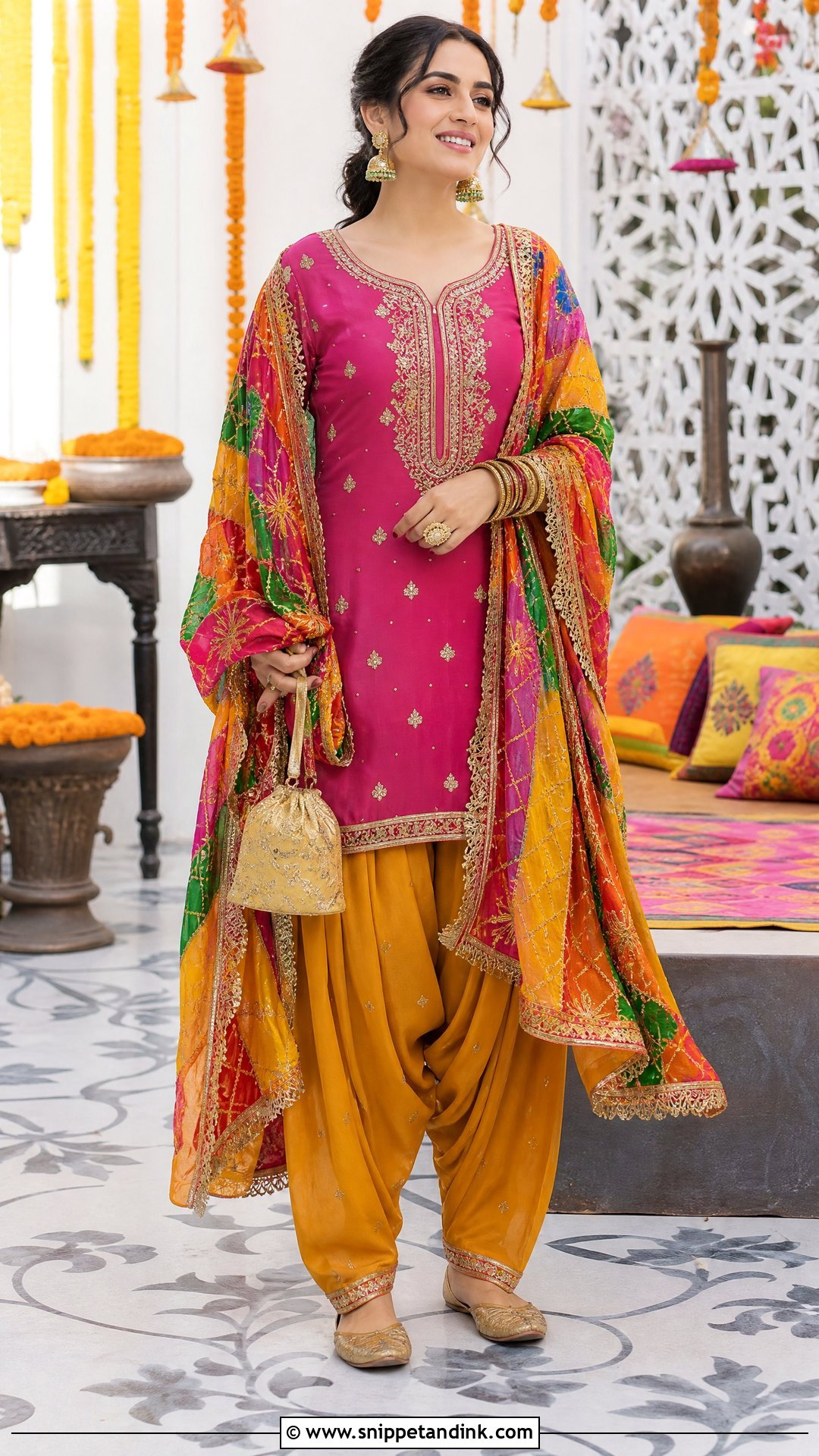
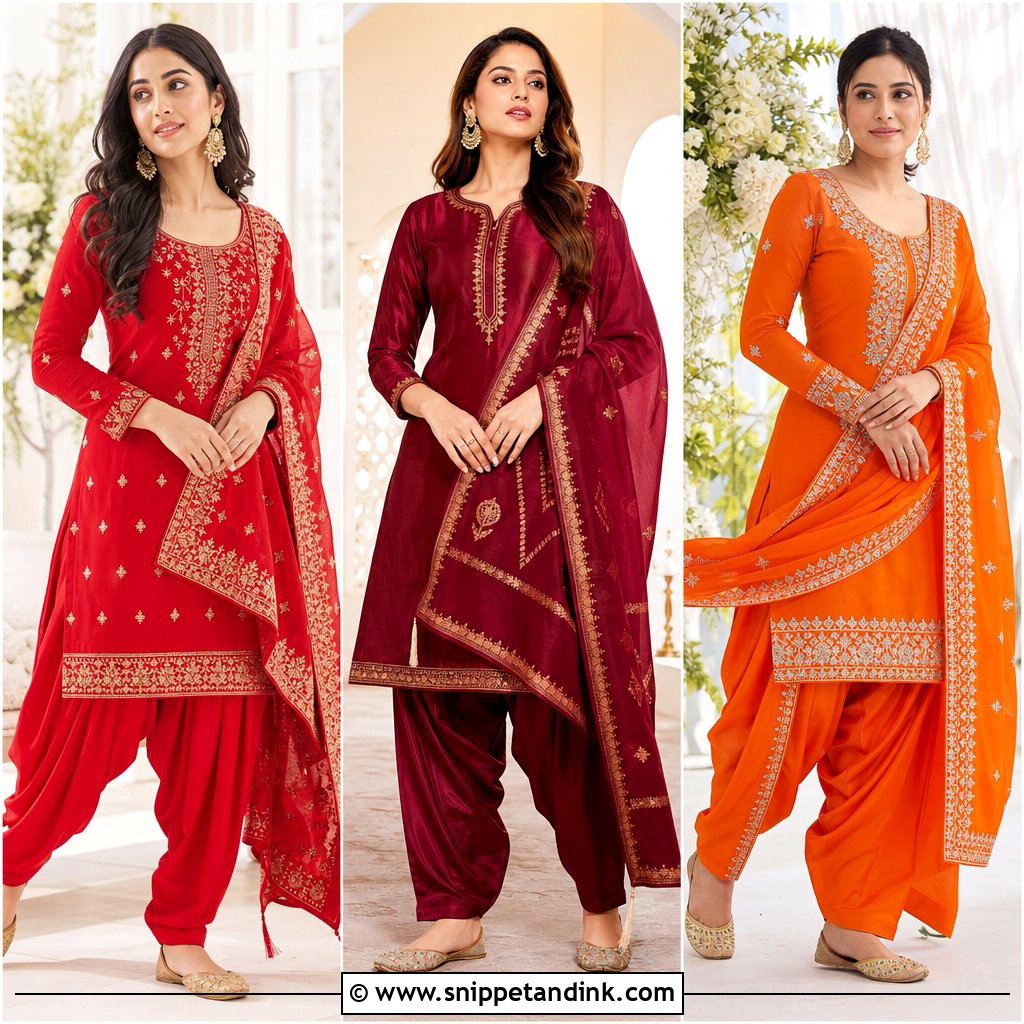
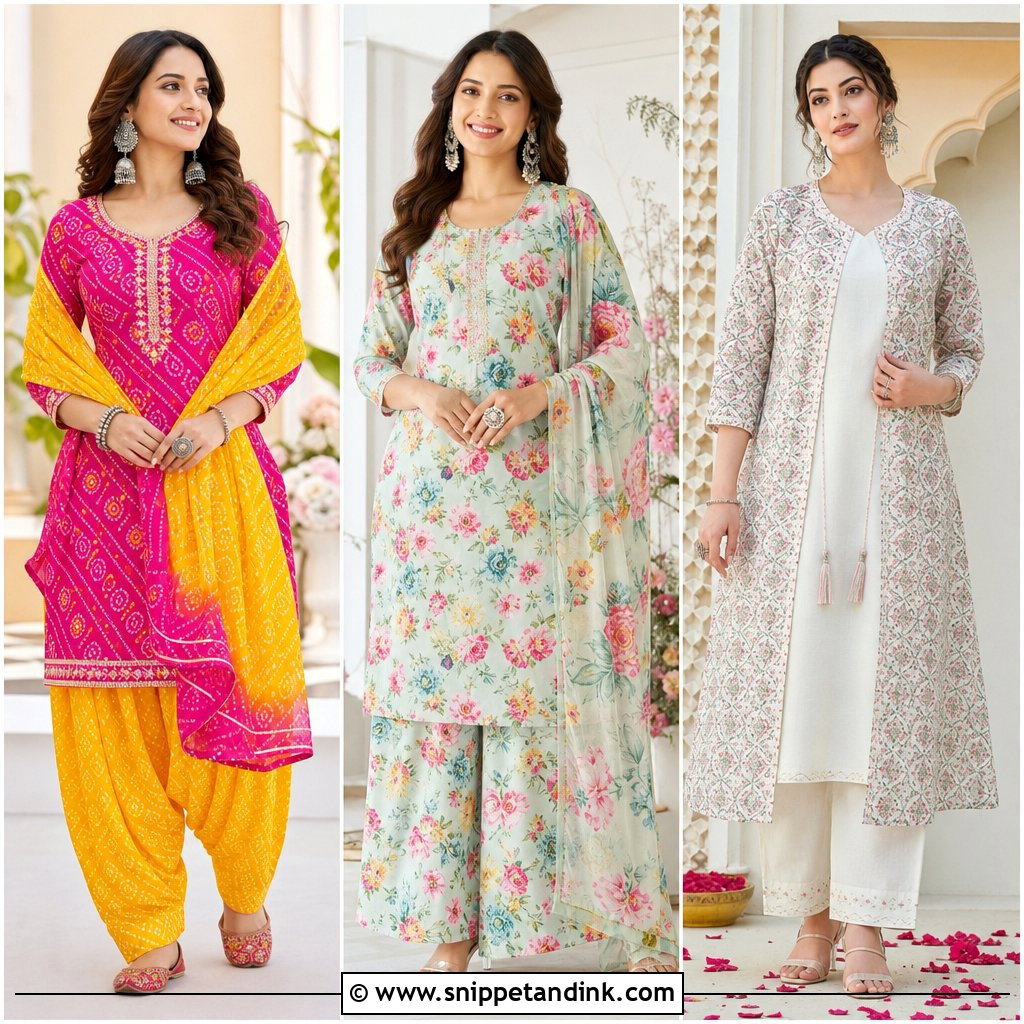
The Patiala is built for dancing. A Punjabi Patiala salwar suit pairs a short embroidered kameez with a salwar folded into deep pleats, plus a phulkari or net dupatta. I cut the kameez to the upper thigh, because any longer and those pleats disappear. Magenta, mustard, royal blue and bottle green feel festive, and gold juttis, jhumkas, stacked bangles and a potli bag complete it without effort. One thing to plan for: a true Patiala uses a lot of fabric, so lightweight cotton silk or crepe keeps the waist from bunching. If the dupatta is densely worked, quieten the kameez.
3. Sharara Salwar Suit for Wedding
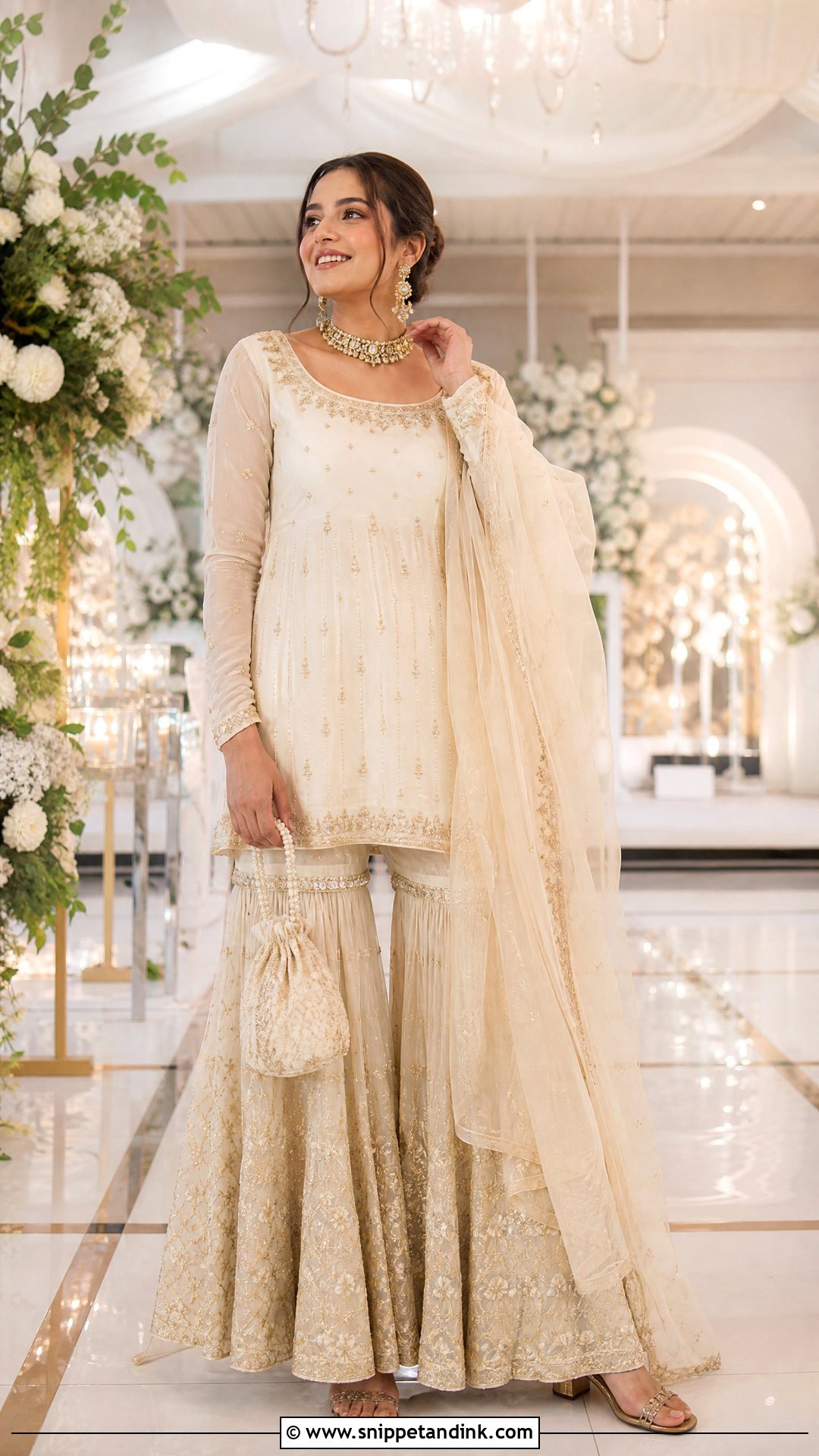
Shararas look dramatic yet wear like loose trousers, which is why I recommend them for long days. The pants flare from the thigh, and embroidery placed around the knee, where the flare opens, makes the shape read clearly from across a room. Georgette, crepe and light silk move well; heavy brocade can make the legs stiff. Wear block heels or embellished sandals with enough height to keep the hem off the floor, since shararas are long and you’ll be stepping onto stages. A choker, matching earrings and a potli finish it. Ivory and gold suit a reception, coral or turquoise a daytime function. Pin the dupatta firmly so it doesn’t fight the movement of the pants.
4. Gharara Salwar Suit for Wedding
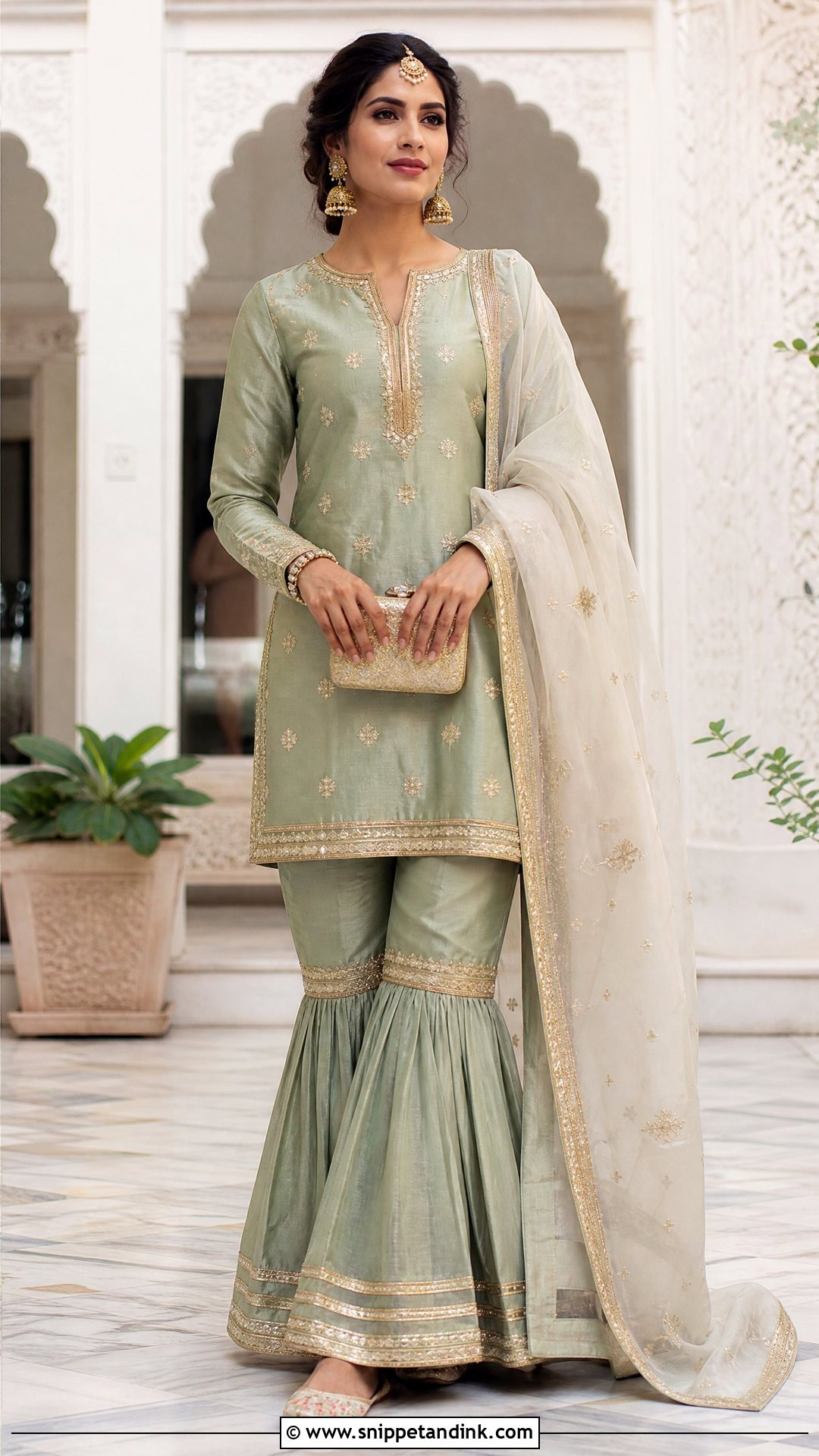
People mix up ghararas and shararas, but the cut is different. A gharara fits snugly from the waist to the knee and then breaks into its flare at a seam, often hidden under a band of gota or zari. That knee seam is where tailoring makes or breaks the outfit: too loose and the shape goes soft, too tight and you can’t sit cross-legged for the rituals. A short kameez shows the construction clearly. Brocade, silk or georgette pants with beadwork at the knee pair well with a light organza dupatta to offset the heavy lower half. Add jhumkas, a maang tikka, embroidered juttis and a small box clutch. Sage and blush suit daytime; maroon or deep teal after sunset.
5. Palazzo Salwar Suit for Wedding
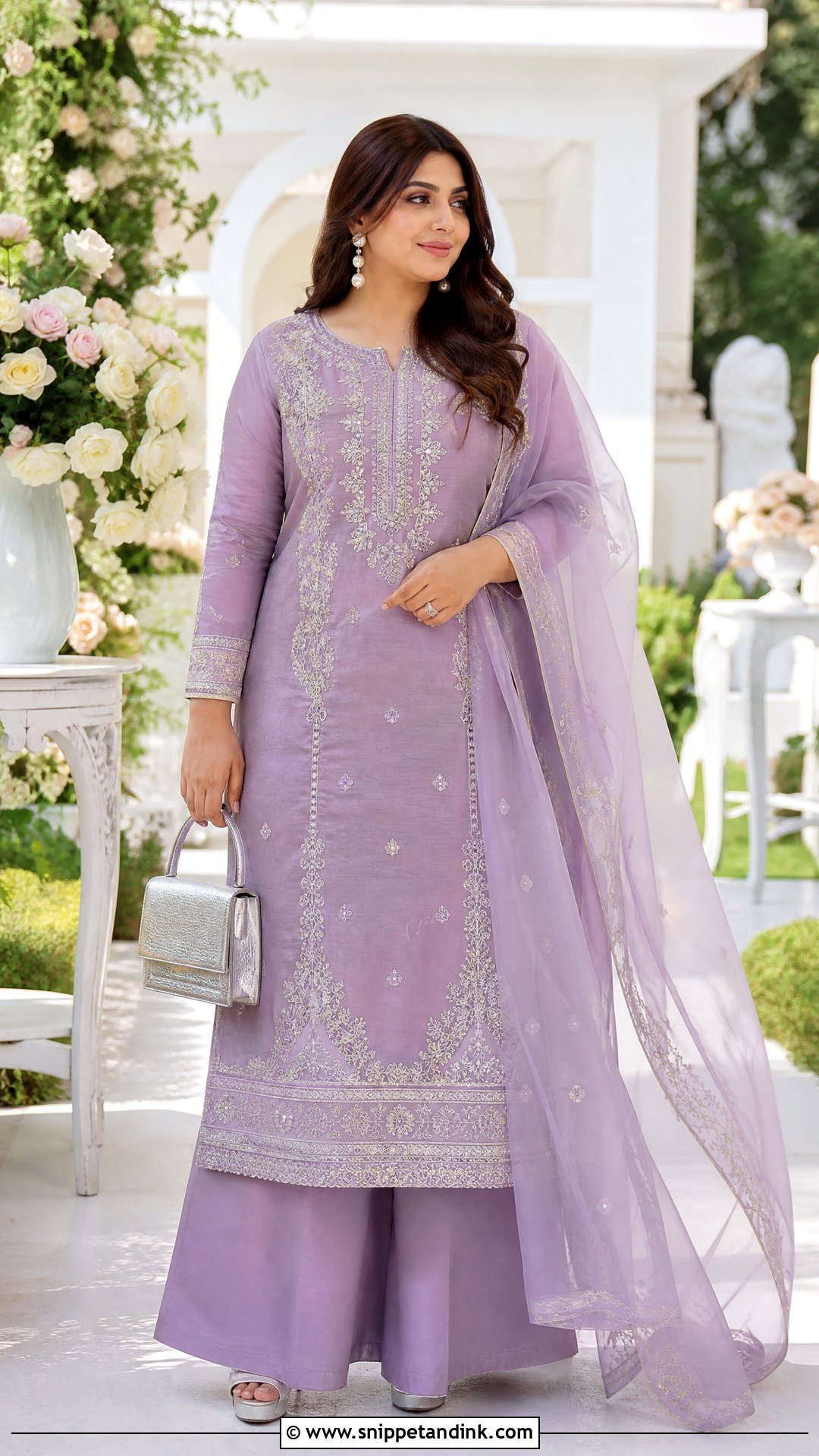
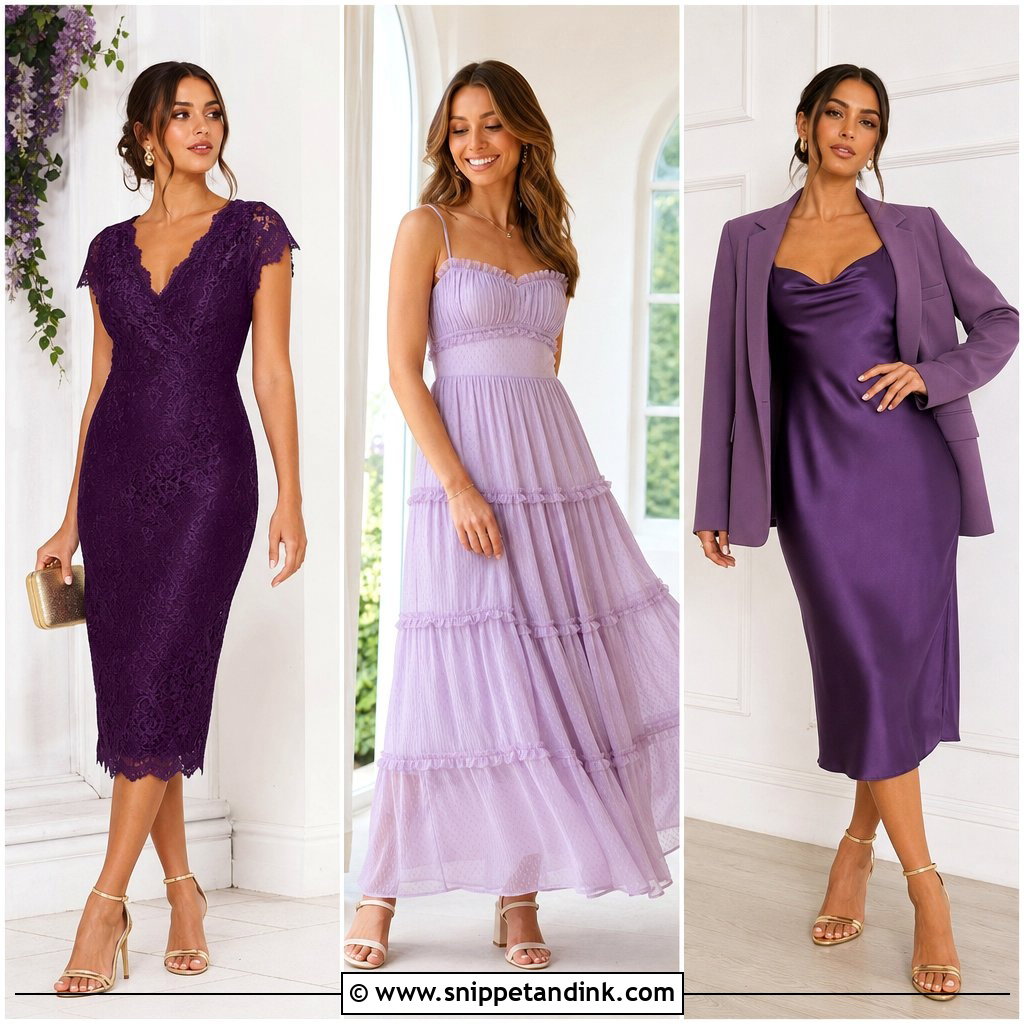
Palazzo sets are what I suggest to the aunt who’ll be on her feet all day. Wide-leg pants with a straight or lightly flared kameez and a flowing dupatta feel like loungewear and still look dressed. A short kurta shows off the pants; a long side-slit kameez gives a leaner line. Embroidered necklines and scalloped hems add enough detail. Monochrome lavender, peach or powder blue looks fresh by day, navy or plum by night. Because the pants already add width, I keep the dupatta light and the embellishment on the upper body, which draws the eye up and lengthens most figures. Platform heels, pearl or kundan earrings and a structured bag finish it.
6. Straight-Cut Salwar Suit for Wedding
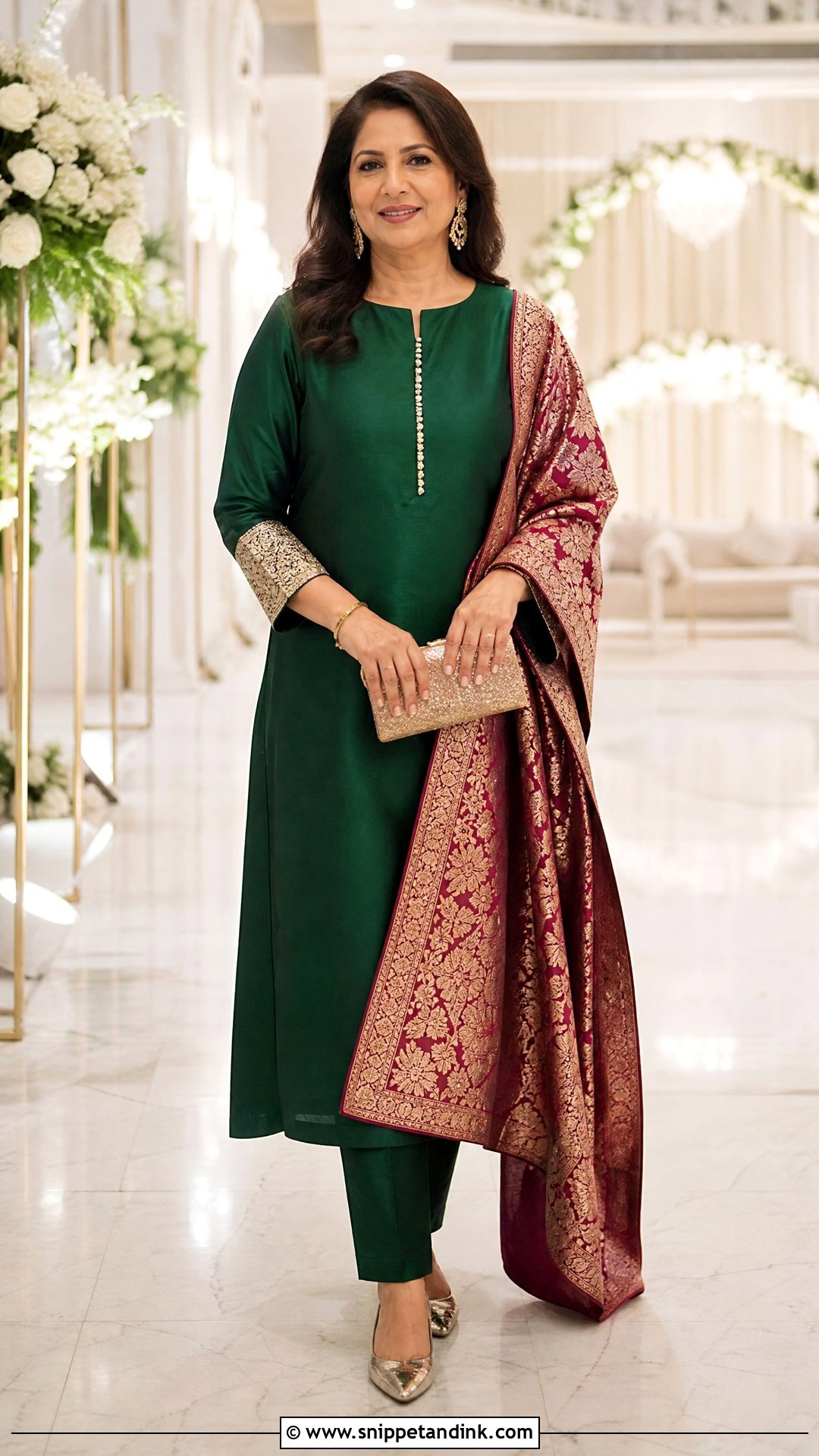
For guests who dislike volume, a straight cut is the quiet, tailored choice. A knee- or calf-length kameez with side slits and embroidery confined to the neckline, cuffs or hem pairs with slim cigarette pants or a narrow salwar in the same color. The precision is in the fit across the shoulders and bust, so I always check the slits sit flat when the client walks rather than flaring open. A contrasting Banarasi or embroidered net dupatta adds ceremony weight. Pointed metallic flats, drop earrings and a small clutch keep the line clean. Wine, forest green and rose beige worn head to toe lengthen the figure and move easily from ceremony to dinner.
7. Churidar Salwar Suit for Wedding
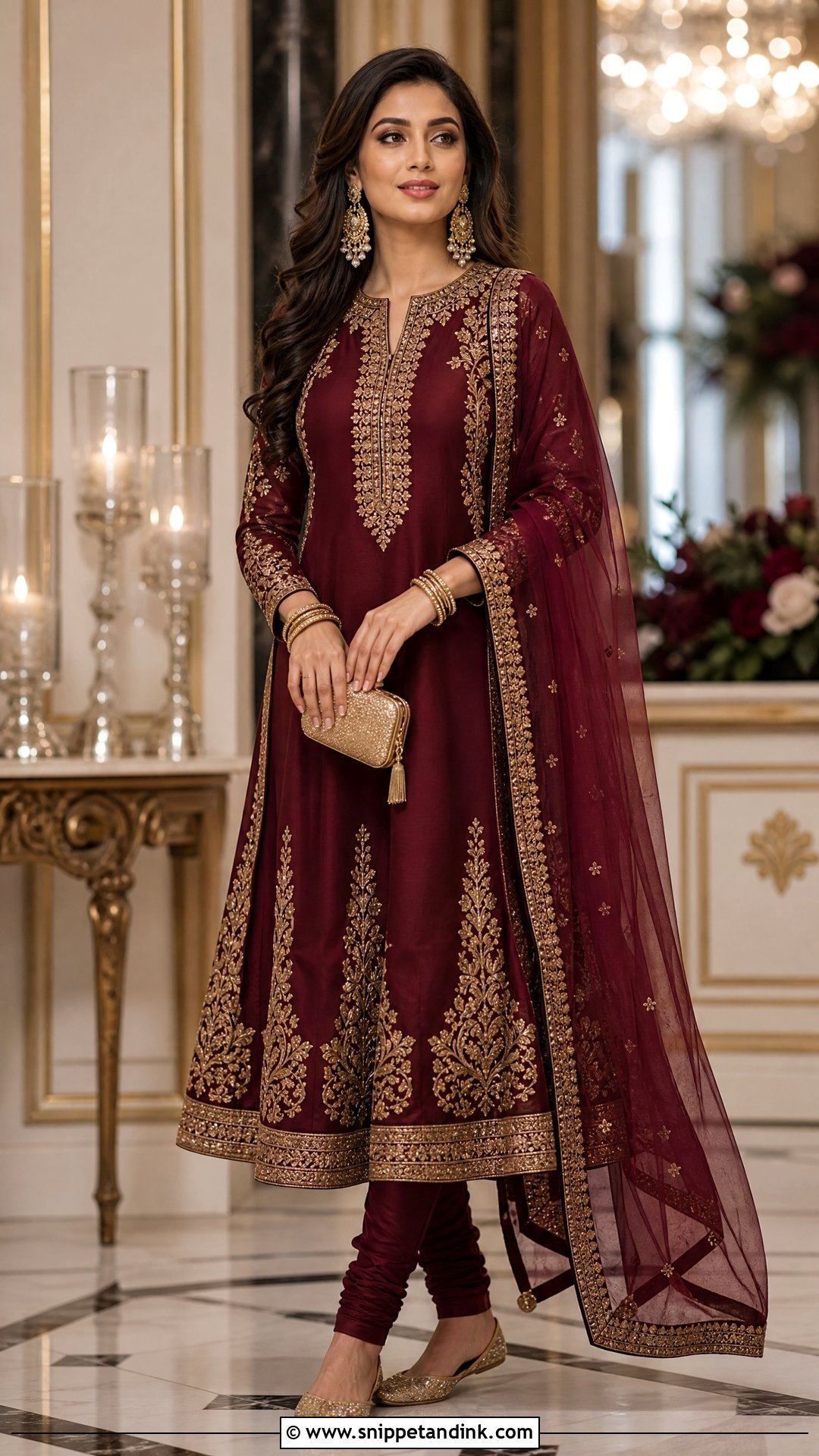
A churidar salwar suit gives an ornate kameez a fitted base so the top gets all the attention. The churidar is cut long and narrow so it gathers in soft rings at the ankle, which is why it suits a flared Anarkali, an A-line kurta or a long straight kameez. For weddings, I prefer silk-blend or stretch cotton, which lets you sit on the floor for ceremonies without straining the seams. Add a kameez with zari, resham or beadwork and a sheer bordered dupatta, plus pointed juttis and statement earrings. Get the length right at the fitting: too short and the gathers vanish, too long and they bunch into a lump at the ankle.
8. Pakistani Salwar Suit for Wedding
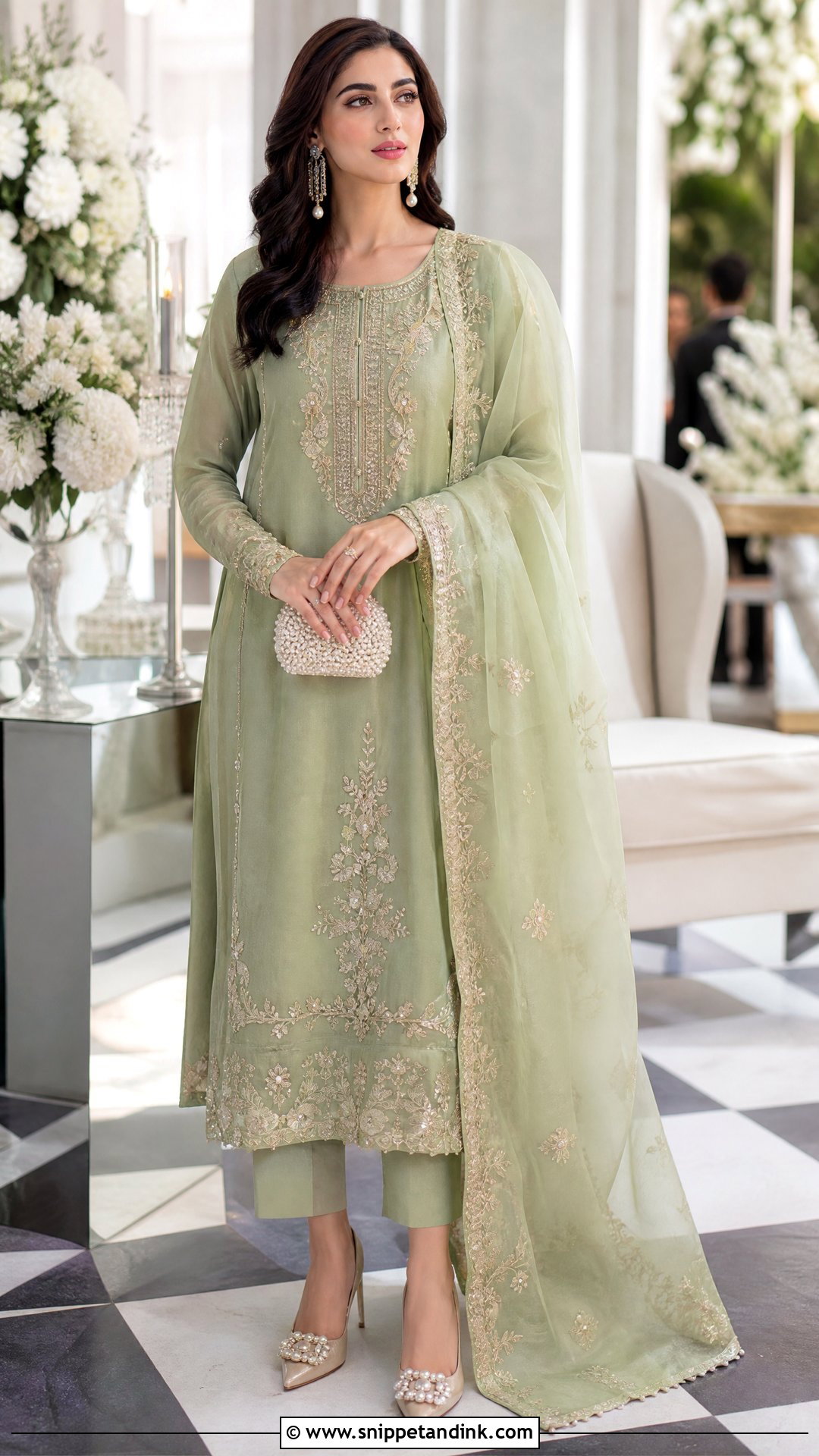
Pakistani suits lean on length and panel embroidery. The usual set is a long straight kameez, relaxed trousers or a traditional salwar, and a large dupatta. In chiffon, organza or raw silk, embroidery tends to run in panels down the front and along the sleeves and hem, with wide borders that make the kameez look regal. Long earrings echo that vertical line; a pearl clutch and pointed heels finish it. Ivory, pistachio, dusty mauve and deep maroon suit the formal shape. When the neckline is heavily worked, I skip the necklace altogether and let rings, earrings and well-done hair carry the jewelry.
9. Jacket Salwar Suit for Wedding
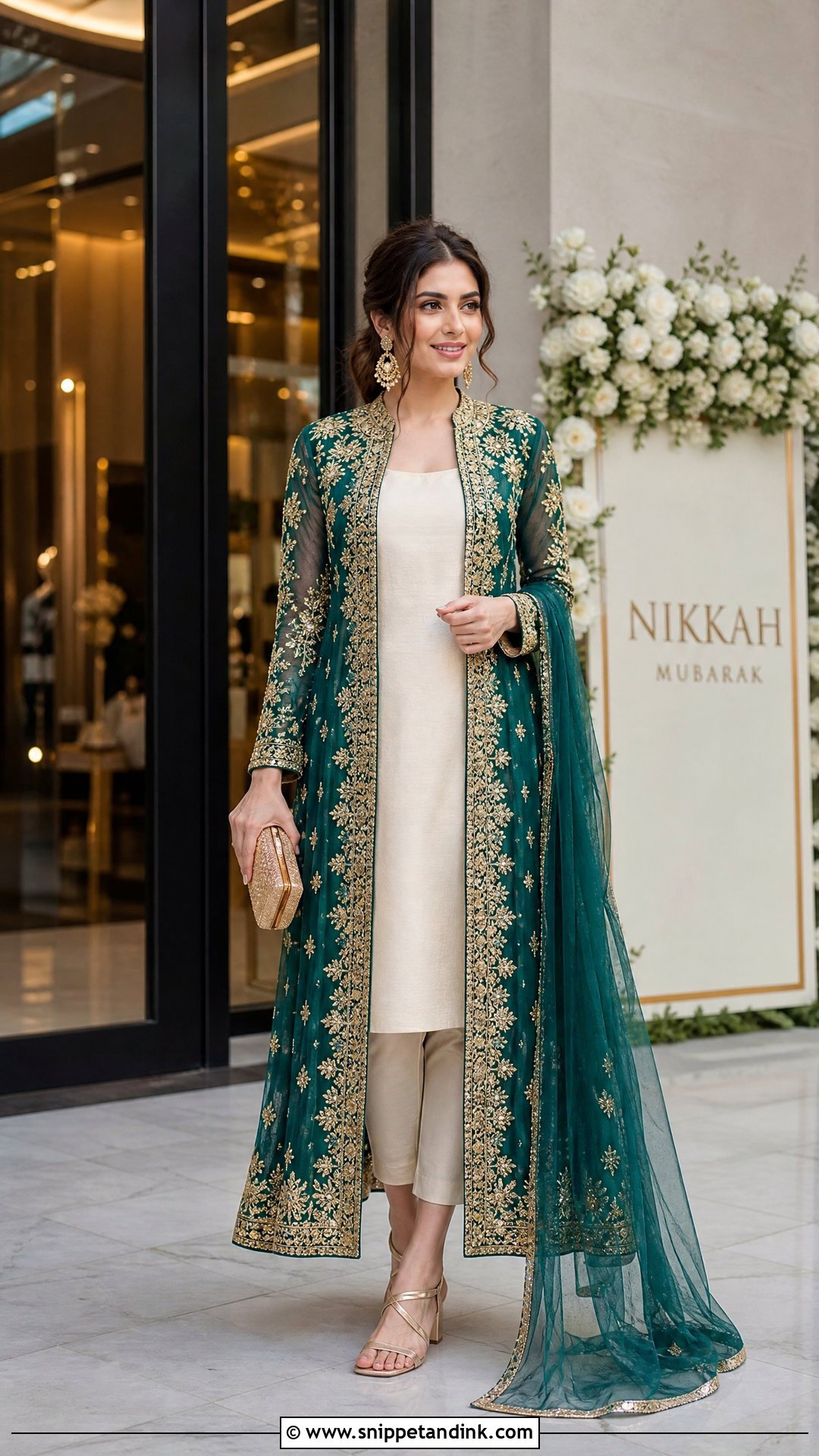
A long embroidered jacket over a simple kurta and fitted pants gives structure, and it solves a real problem: venues that are cold outside and warm inside. You can open it, belt it at the waist or choose an asymmetric cut. Velvet and brocade jackets suit winter; organza or light silk for warmer months. I keep the inner pieces plain so the jacket stays the focus, with block heels, statement earrings and a sleek clutch. A dupatta is optional, though a narrow one over the forearm adds formality. Black with gold and ivory with emerald are combinations I come back to. Check the jacket’s armholes, because a tight armhole over a kurta sleeve limits every hug and wave.
10. Cape Salwar Suit for Wedding
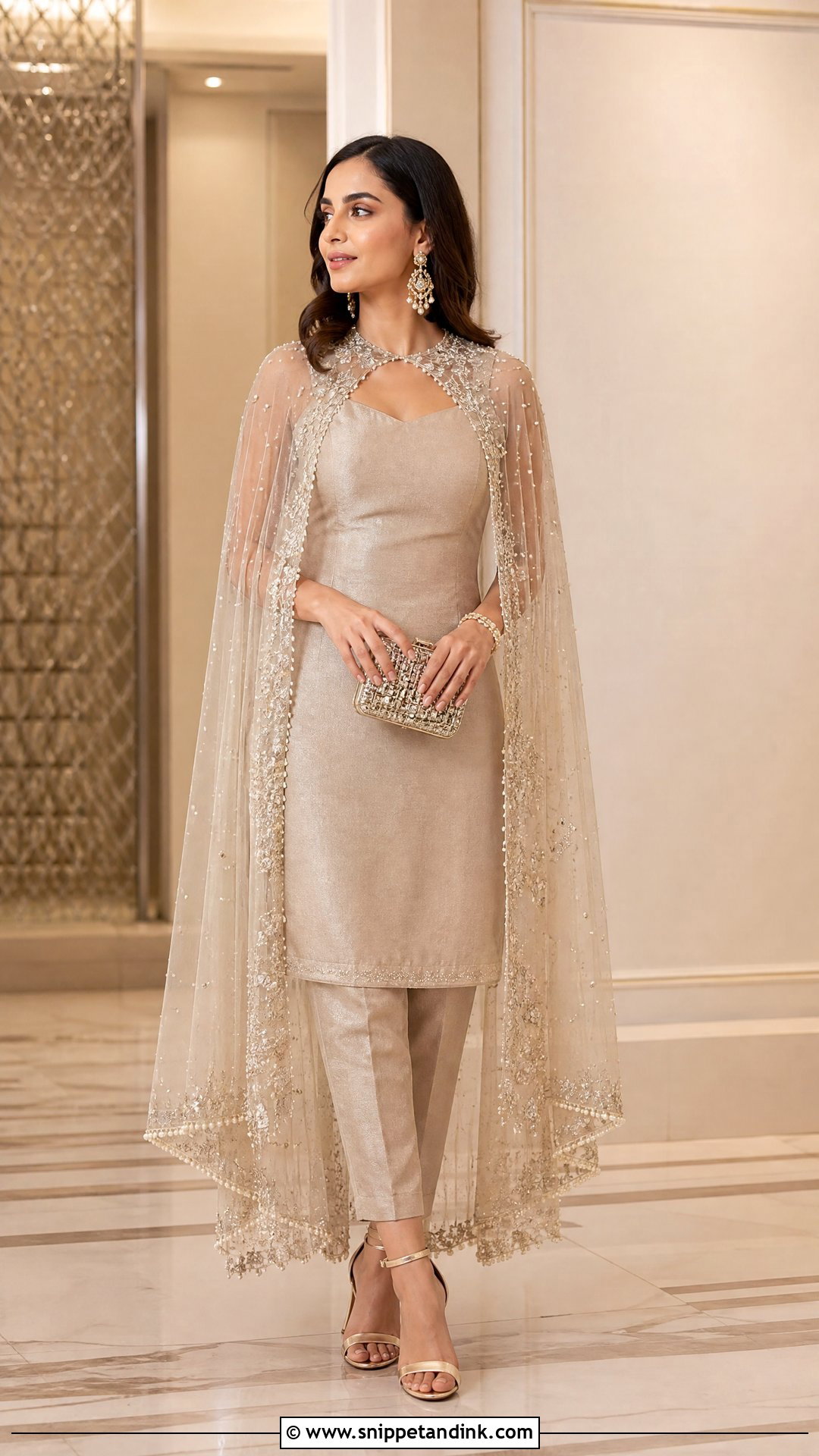
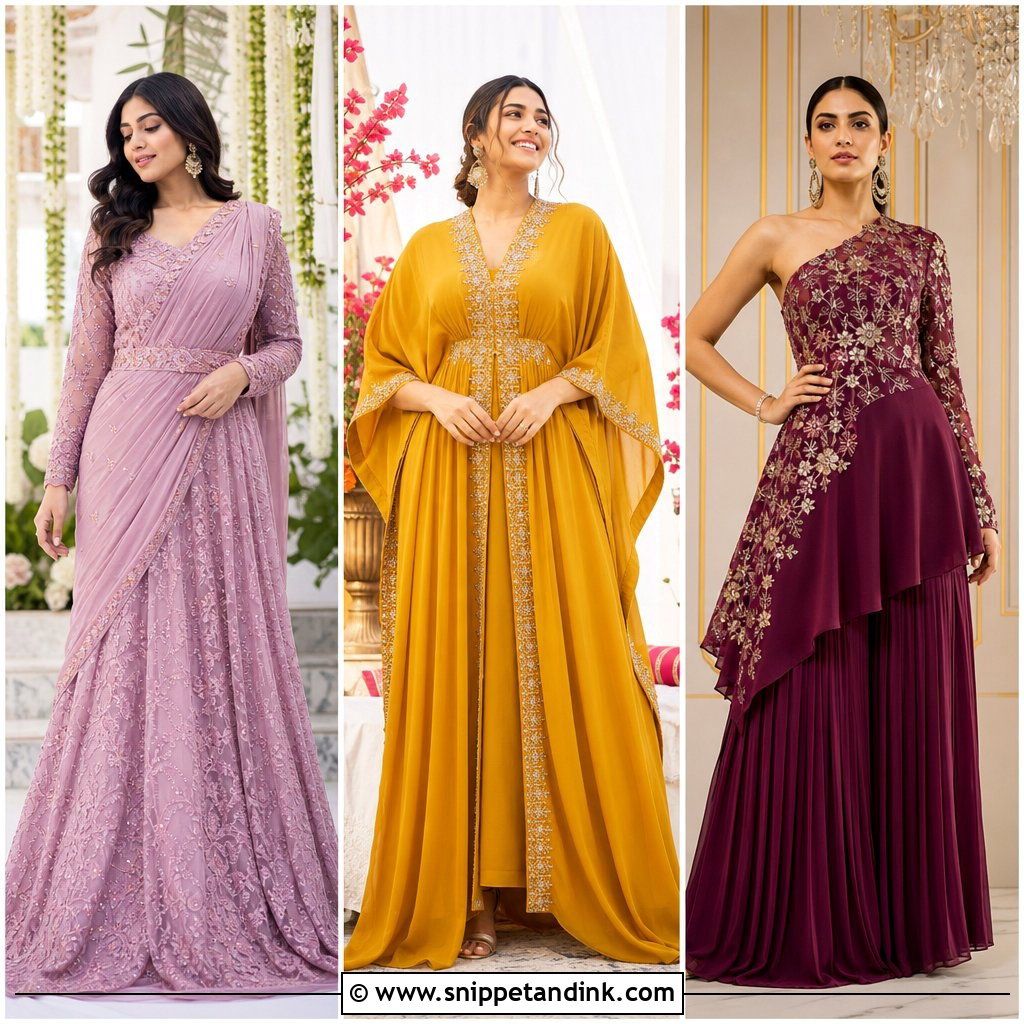
A cape replaces the dupatta, and that alone makes it popular with clients who hate managing loose fabric all night. It can fall from the shoulders, fix to the neckline or sweep from one side. Wear it over a fitted kurta with cigarette pants or a sleeveless tunic with palazzos. Sheer net, chiffon and organza keep the embroidery from looking bulky. My rule is wide cape, narrow pants, which keeps the proportions in check. Metallic heels, a jeweled clutch and bold earrings are enough; skip the necklace if the cape’s neckline is decorated. Champagne, lilac and midnight blue suit receptions and cocktail-style engagements.
11. Angrakha Salwar Suit for Wedding
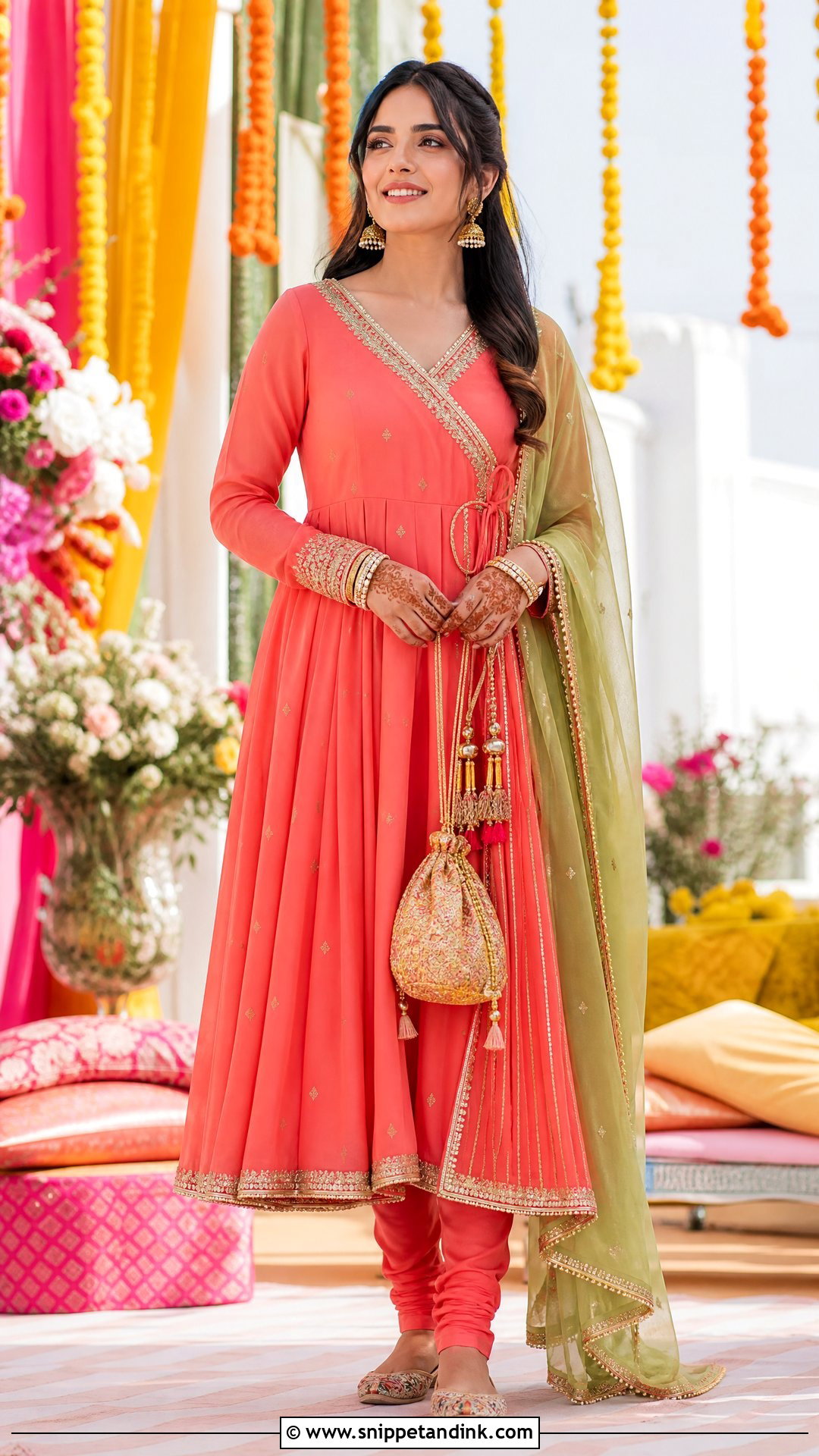
The overlapping front of an Angrakha salwar suit crosses over the body and ties at the side, giving a defined waist and a traditional diagonal neckline. It can be short and structured or long with an Anarkali flare. Ties, tassels and gota edging draw attention to that diagonal. A long Angrakha sits well over a churidar; a short one pairs with a flared salwar. Drape the dupatta over the opposite shoulder so the wrap stays visible. Coral, mustard and rani pink suit a mehndi, deep purple or green the evening. The inner flap needs a hidden hook or snap; I add one to almost every Angrakha I fit, because a wrap that opens when you sit down is the most common complaint.
12. Asymmetrical Salwar Suit for Wedding
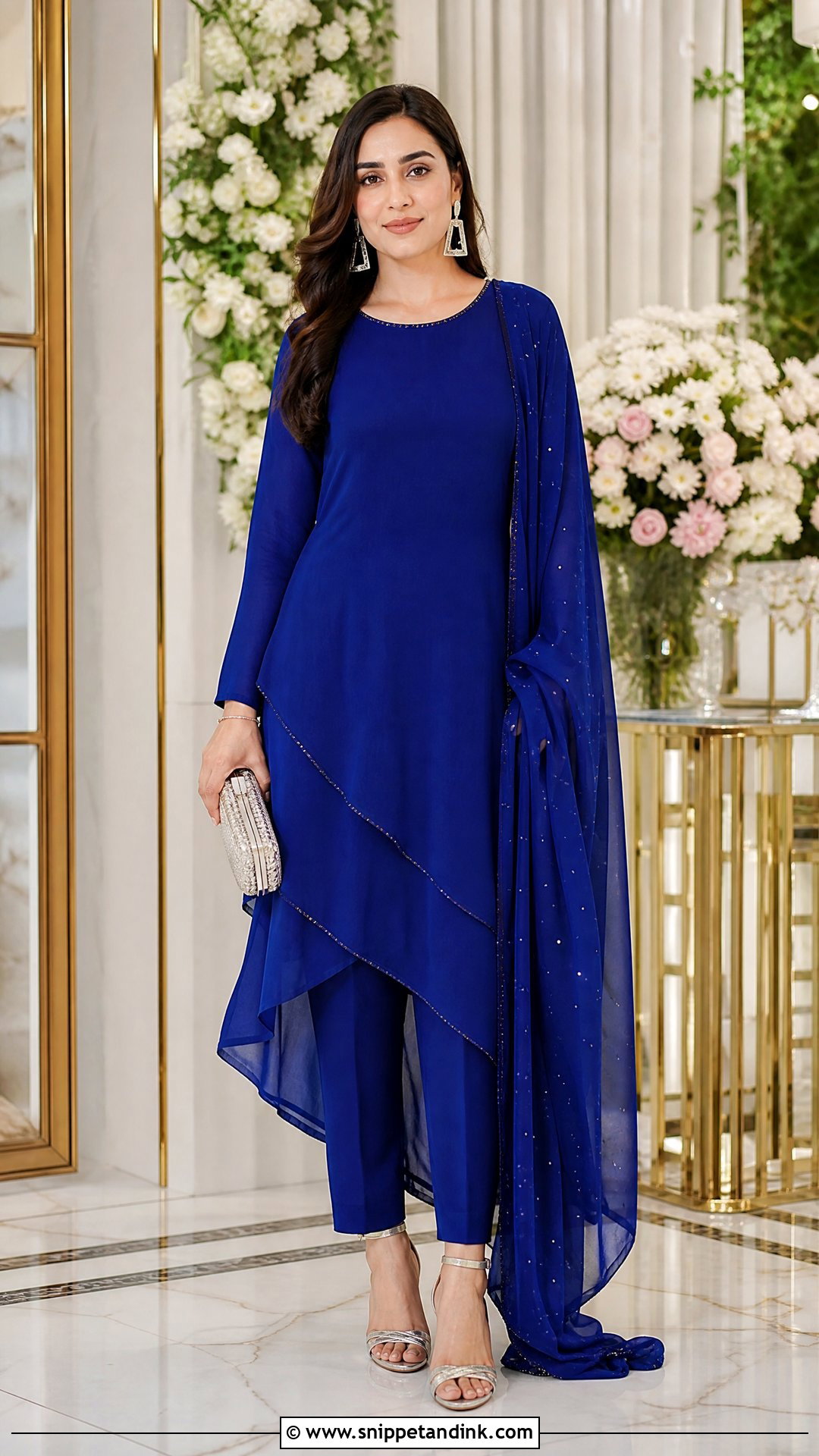
Asymmetric cuts bring a modern edge to a traditional three-piece: a high-low hem, a diagonal front panel, a draped side or an uneven layered border. Narrow pants or a fitted churidar keep the unusual hem visible. Crepe, georgette and satin let the cut fall naturally, while stiffer fabrics stick out at the long side. A lightly decorated dupatta over one shoulder works, or a cape-style layer. I’d keep embroidery to the neckline or hem, since covering an asymmetric piece in work hides the very cut you chose. Heeled sandals, geometric earrings and a structured clutch suit it. Cobalt and emerald look sharp. A good tailor checks it from every side, because asymmetry that’s slightly off just looks crooked.
13. Velvet Salwar Suit for Winter Wedding
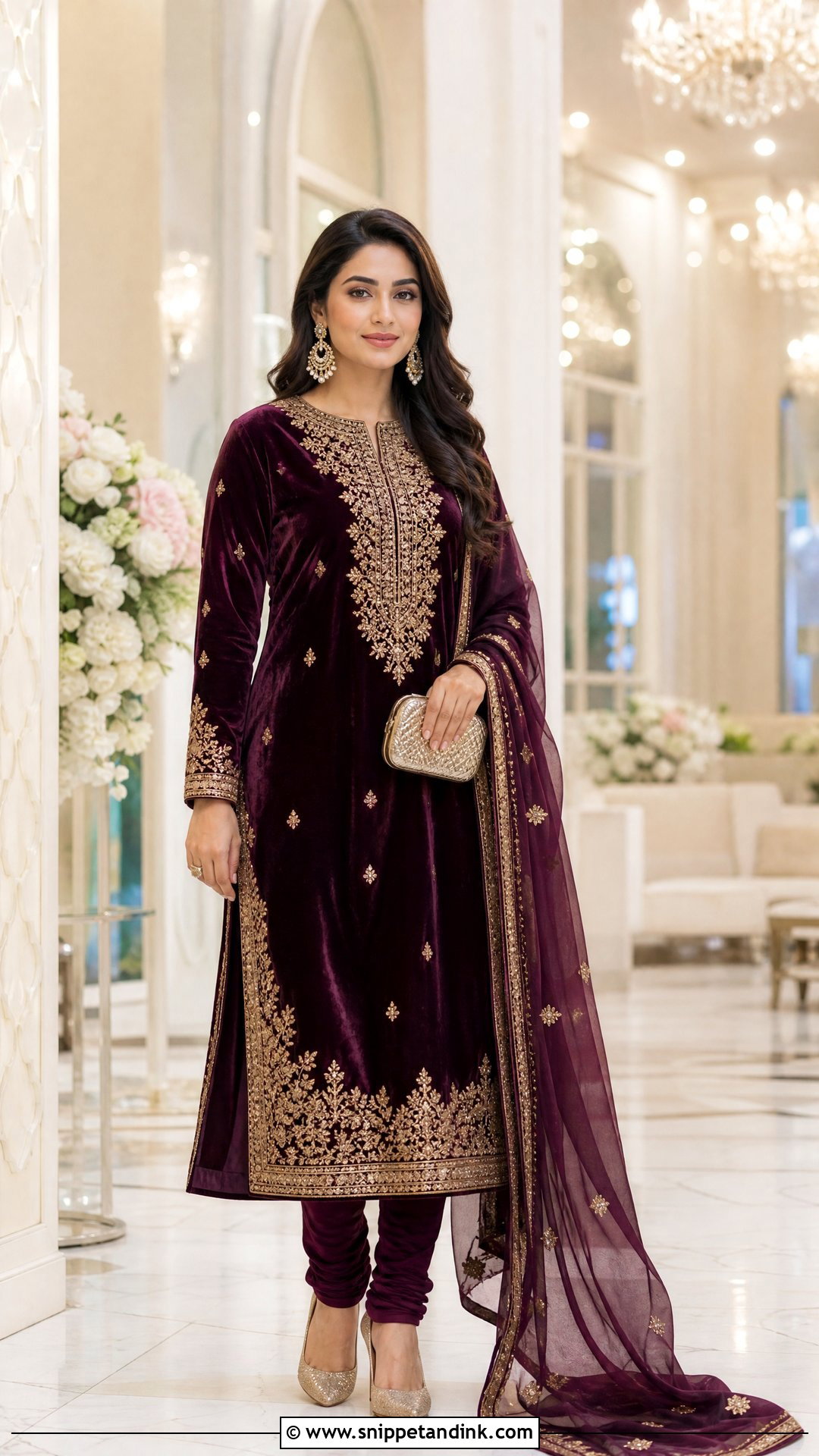
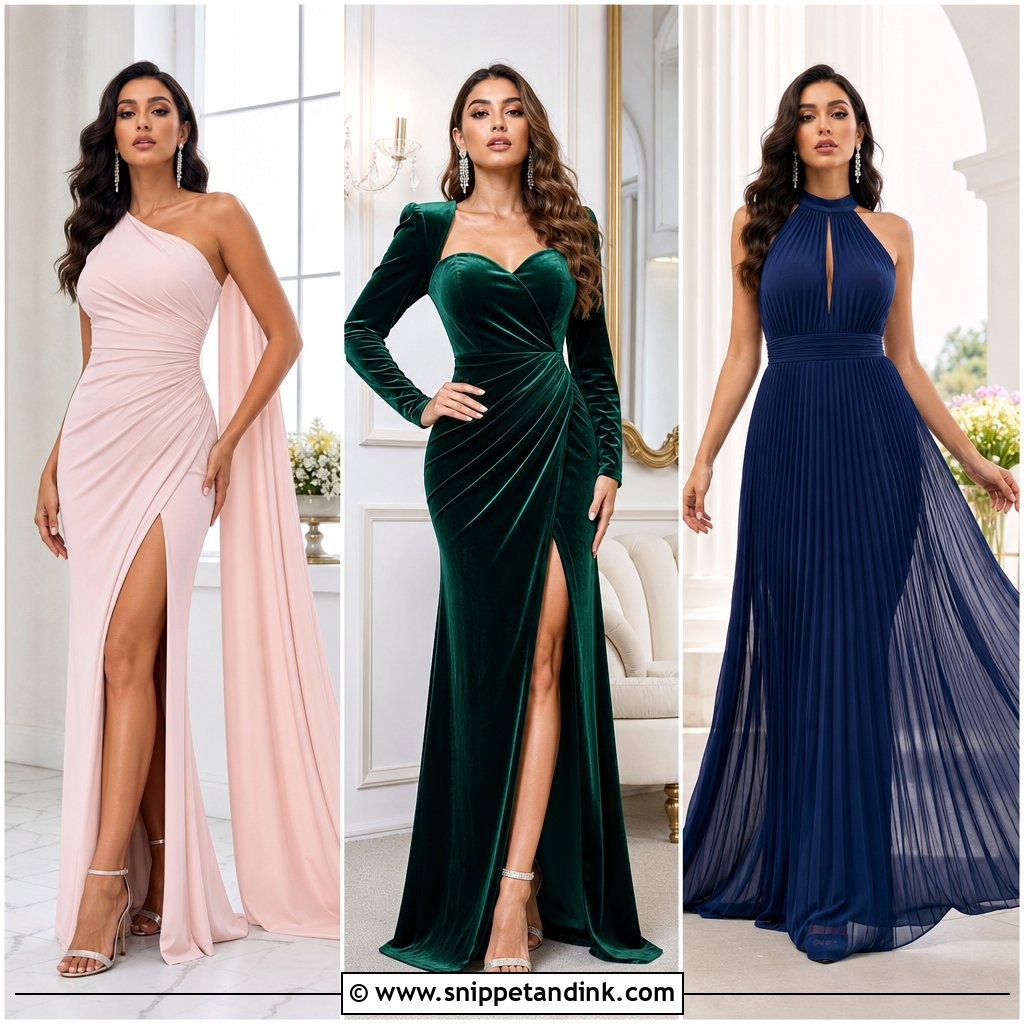
Velvet is the winter fabric, warm and deep in color, but it’s heavy and it marks easily. I keep the kameez straight or gently flared over slim pants or a churidar, and place embroidery only at the neck, cuffs, slits and hem. Antique gold zari and dabka work sit especially well on velvet. Pair it with a lighter chiffon or organza dupatta so you aren’t wrapped in weight, then add closed-toe heels, a metallic clutch and kundan earrings. Burgundy, emerald and midnight blue show off the pile. Insist on a smooth lining and roomy armholes. And never press velvet flat with an iron; steam it from the back instead, or the pile crushes and leaves shiny patches.
14. Silk Salwar Suit for Wedding
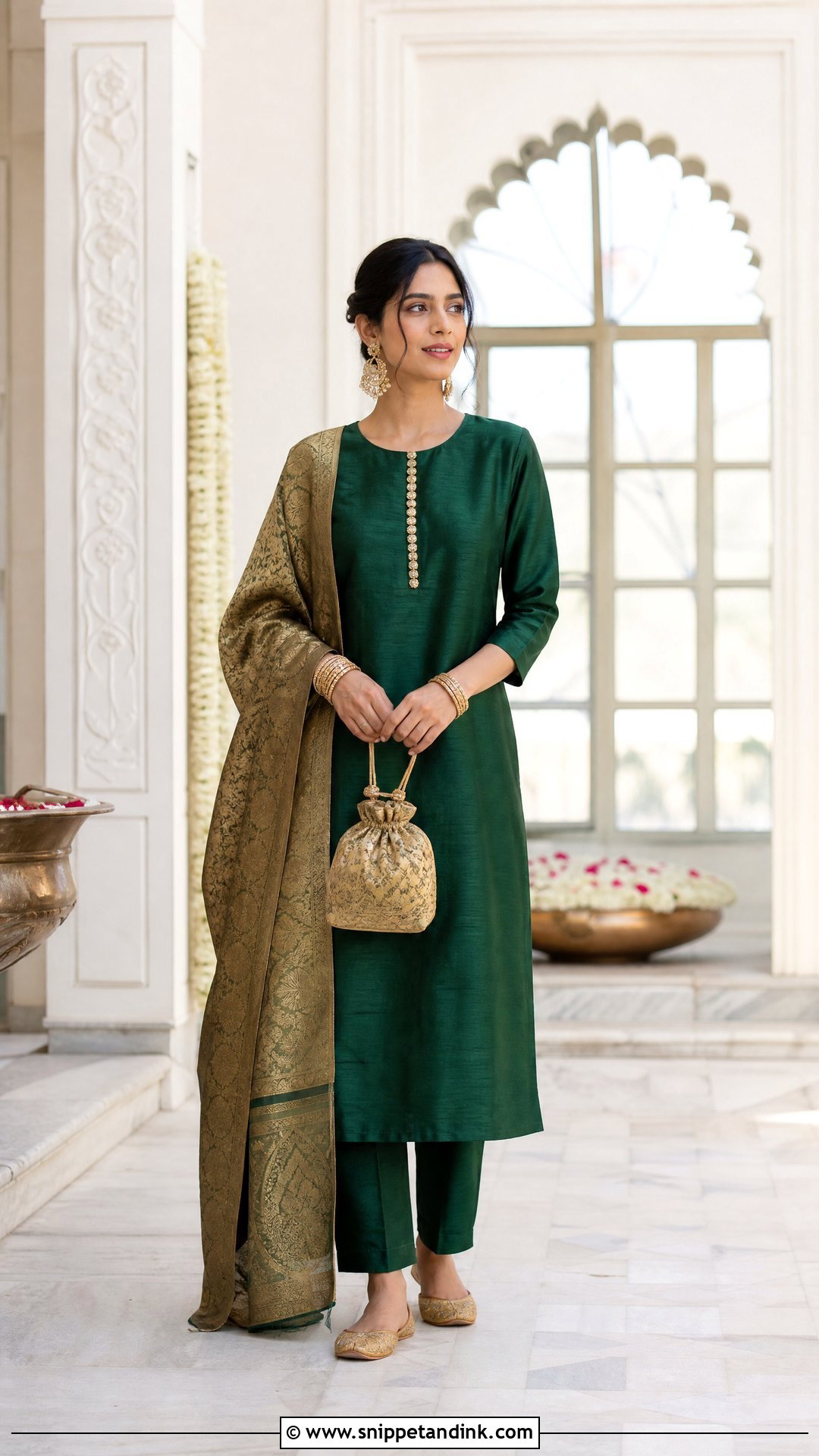
Silk holds its shape and has a natural sheen, so it rewards accurate measurements more than softer fabrics do. A raw silk straight kameez with tailored pants reads modern; a Banarasi Anarkali with a churidar reads ceremonial. Let woven motifs or zari borders do the work rather than covering the fabric in embroidery. Contrast dupattas are where silk shines: a solid emerald suit with a gold Banarasi dupatta, or magenta with an orange woven stole. Brocade juttis, gold earrings, stacked bangles and a structured potli finish it. Petite clients usually look better in small motifs and narrow borders; taller or curvier women can carry broad patterns.

15. Organza Salwar Suit for Wedding
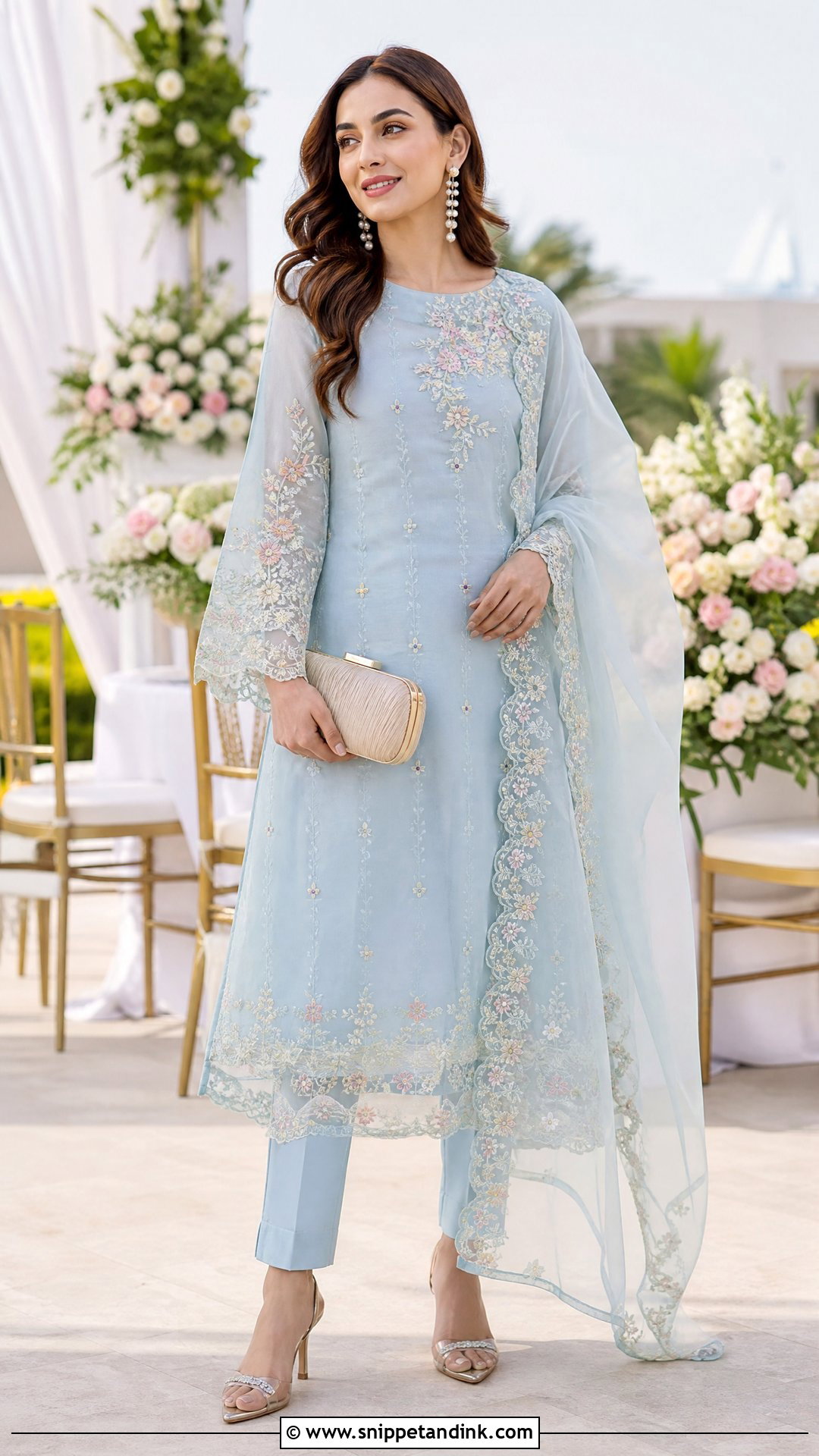
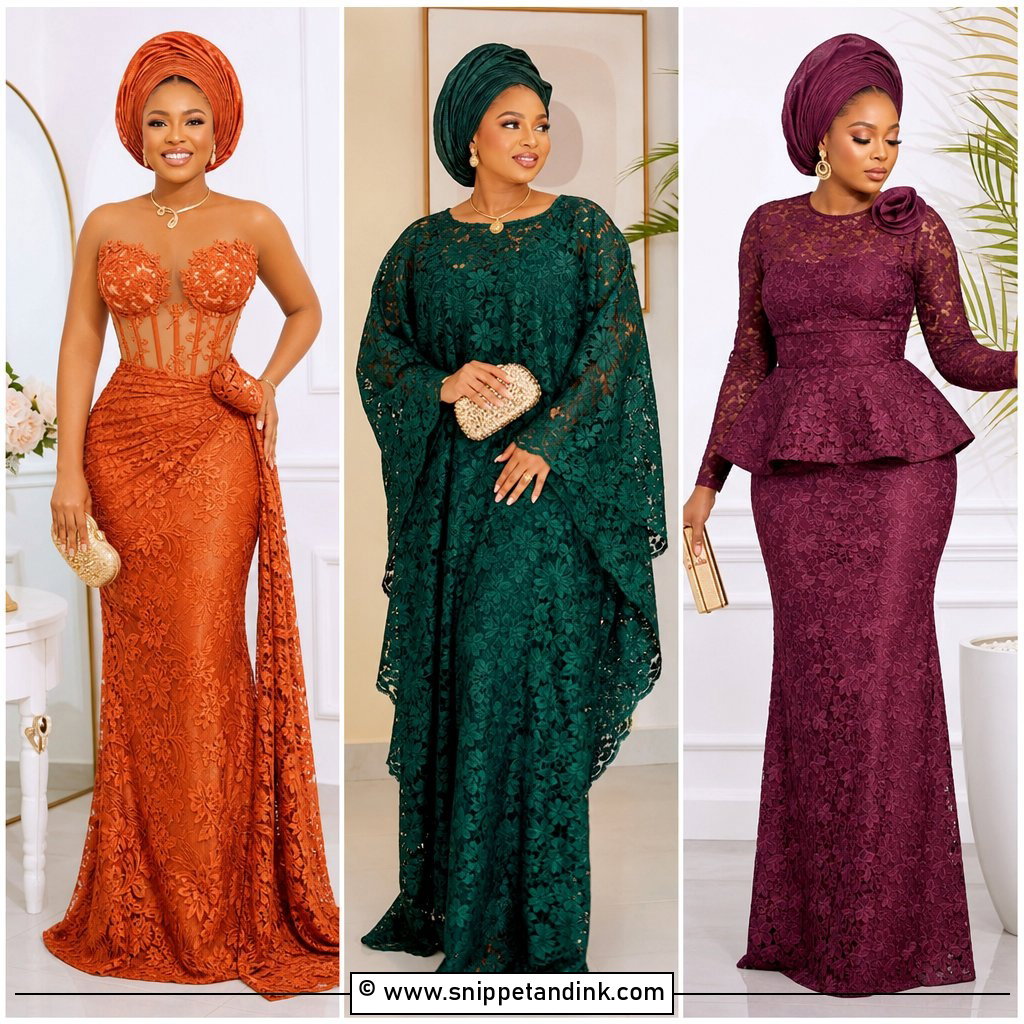
Organza is crisp and sheer, so it’s the daytime fabric I reach for when the forecast is warm. Because it holds its shape, a clean A-line or straight kameez with a soft lining works far better than anything heavily gathered, which makes organza stand stiffly away from the body. Pair it with silk cigarette pants or a narrow salwar. Floral threadwork, pearl accents and scalloped borders suit its delicacy. An organza dupatta is slippery, so I fix it at the shoulder with a small brooch pin rather than relying on drape. Slingback heels, pearl earrings and a small pastel clutch complete it in powder blue, peach or mint.
16. Mirror Work Salwar Suit for Wedding
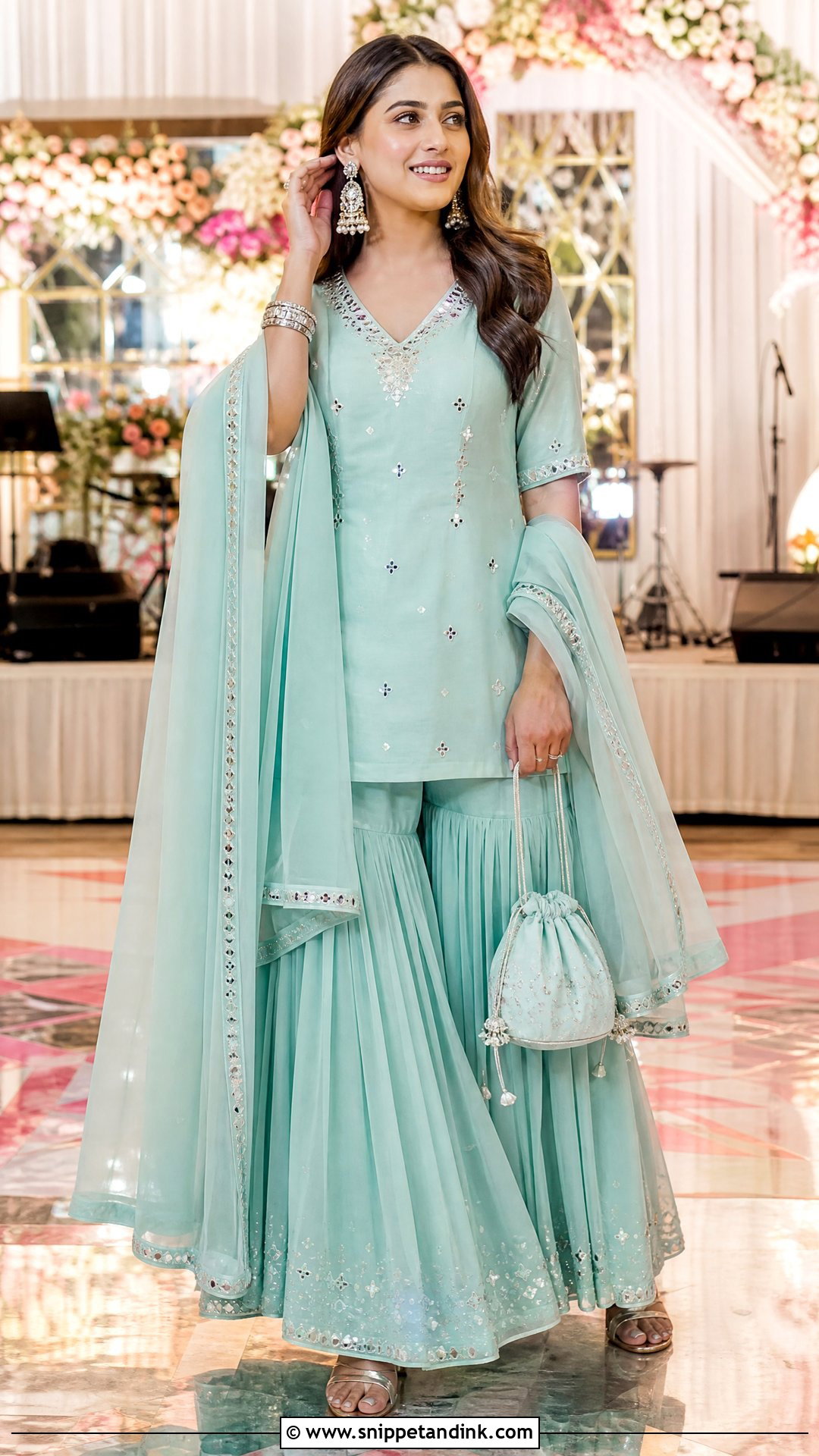
A mirror work salwar suit catches every light at a mehndi or sangeet, and evening functions are where it comes alive. Keep the silhouette simple: a short kurti with sharara pants, an A-line kameez with churidar or a straight tunic with palazzos. Mirrors at the neckline, sleeves and borders look better than mirrors everywhere, and they keep the suit lighter to wear. Neutral metallic sandals, simple bangles and one statement pair of earrings are enough, with a plain chiffon dupatta edged in a narrow mirror border. Pink, aqua and cobalt set an energetic mood. Run a finger over each mirror at the fitting; poorly edged glass catches the dupatta and scratches the inner arm.
17. Bandhani Salwar Suit for Wedding
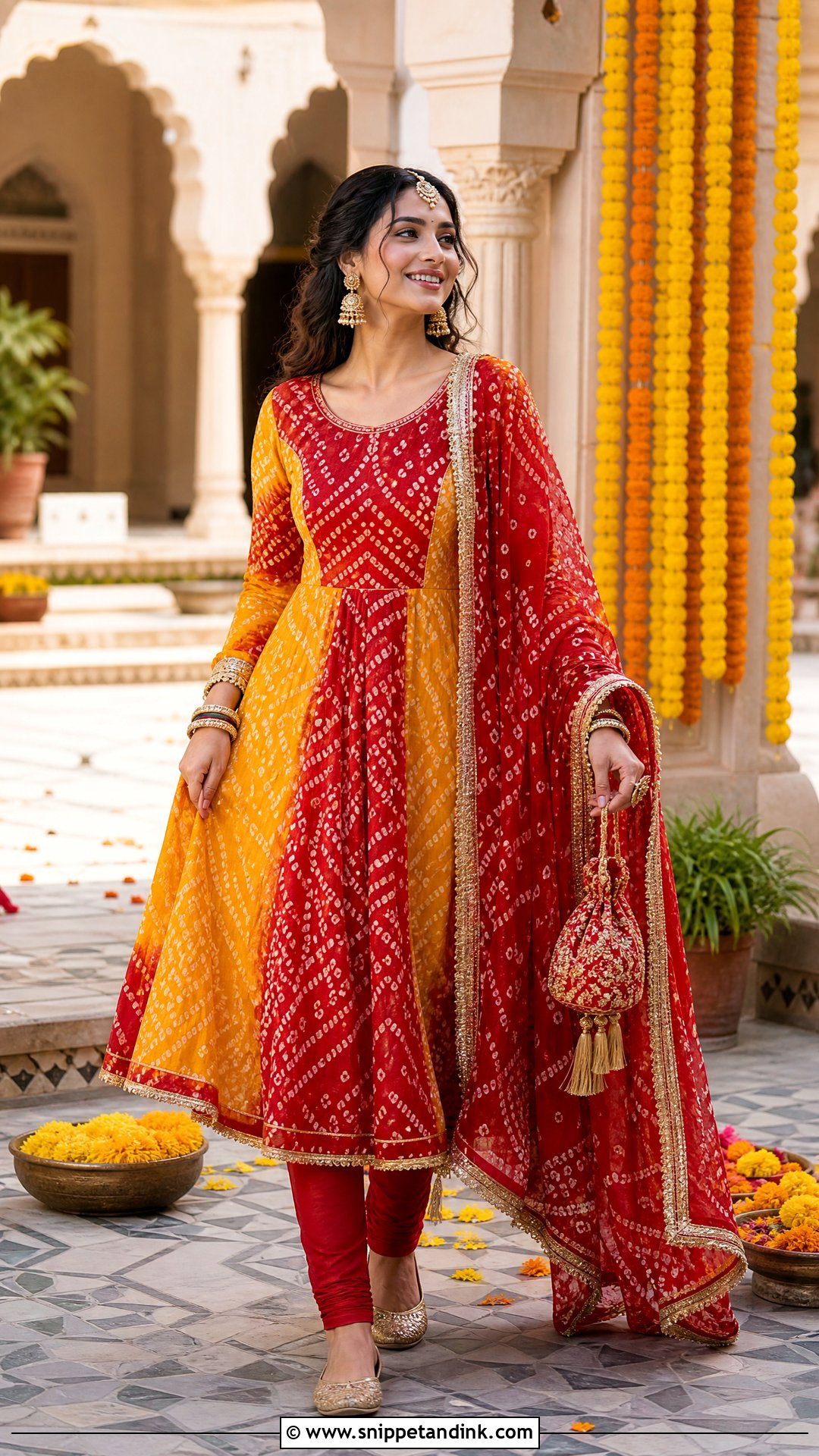
Bandhani is tie-dye done by hand, thousands of tiny knots resisting the dye to leave its dotted pattern, and it brings regional craft and strong color to a wedding wardrobe. For a quieter look, I pair a plain silk kameez with a Bandhani dupatta. For something bolder, an all-over Bandhani Anarkali with a contrasting churidar. Gota trim, small mirrors and tassels suit the dots without hiding them. Style it with gold juttis, jhumkas, bangles and a potli. Red and yellow feel the most traditional, while purple with green is more playful. Real Bandhani can bleed when first washed, so dry-clean it before the wedding and avoid sitting on damp grass in a pale salwar.
18. Phulkari Salwar Suit for Wedding
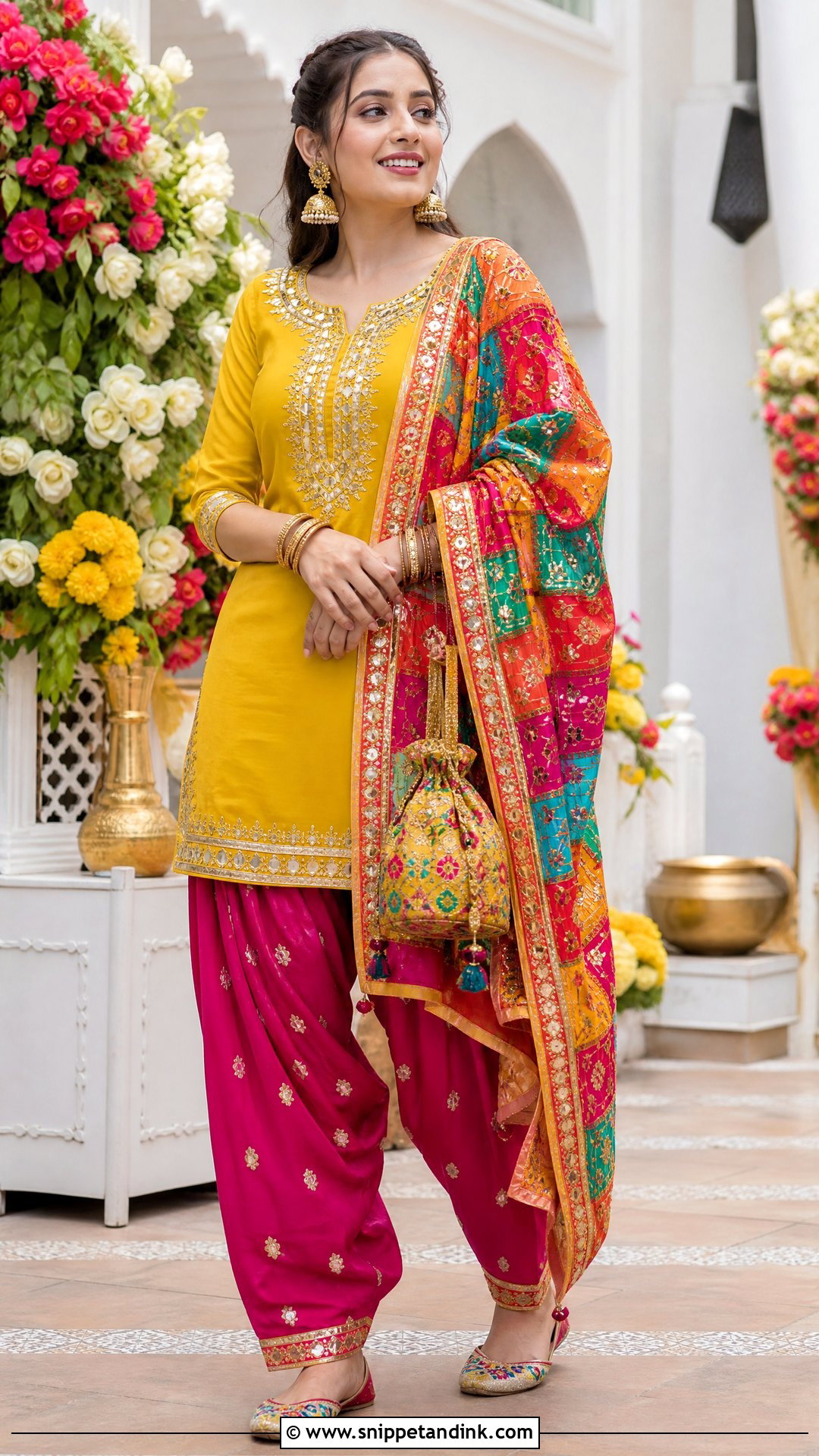
Phulkari is Punjab’s bold floral and geometric embroidery, and the dupatta is usually the star. I keep the kameez and Patiala salwar plain or lightly worked so the threadwork stays readable. For more detail, choose a short kameez with cuffs and borders that repeat colors from the dupatta. Embroidered juttis, gold jhumkas, glass bangles and a small potli complete it. Mustard with magenta and black with multicolor threads are combinations that photograph strongly. Drape the dupatta across both arms or over one shoulder to show it off. It moves easily, which suits mehndis and family functions with plenty of dancing.
19. Zardozi Bridal Salwar Suit for Wedding
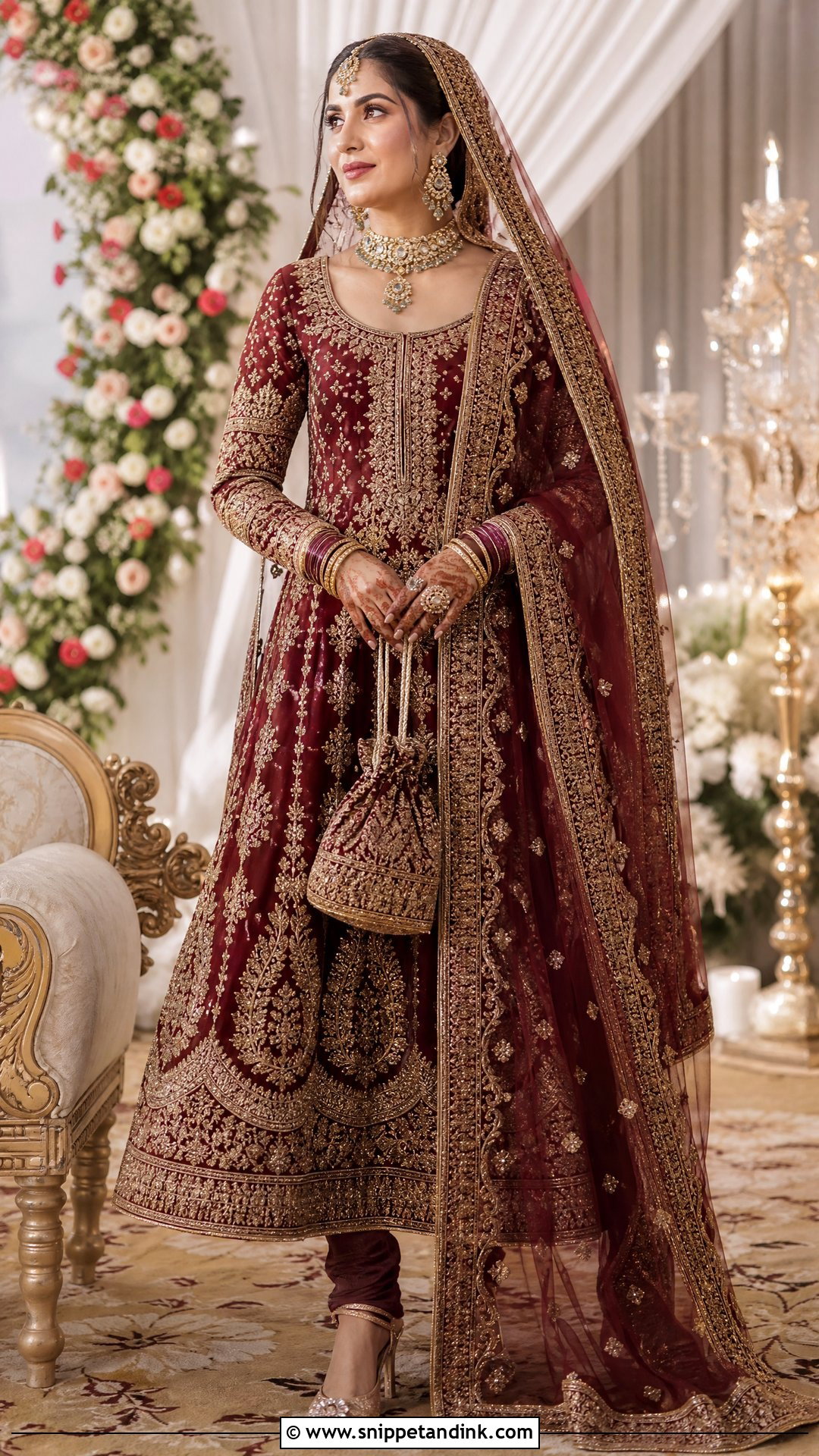
A zardozi bridal salwar suit has the richness of bridal wear with the comfort of a kameez and salwar. Zardozi uses metallic wire and thread, so it’s heavy; deep red, maroon, emerald or antique gold grounds carry it best, with the work spread across the bodice, sleeves and borders. A long Anarkali or structured straight kameez supports the weight, over a churidar or narrow salwar, with a net dupatta edged in a broad border. Bridal jewelry should sit with the neckline, not on top of it. I always ask the tailor for a soft cotton lining and reinforced seams, because metal threads against bare skin chafe within an hour and heavy panels pull weak seams apart by dinner.
20. Pastel Floral Salwar Suit for Wedding
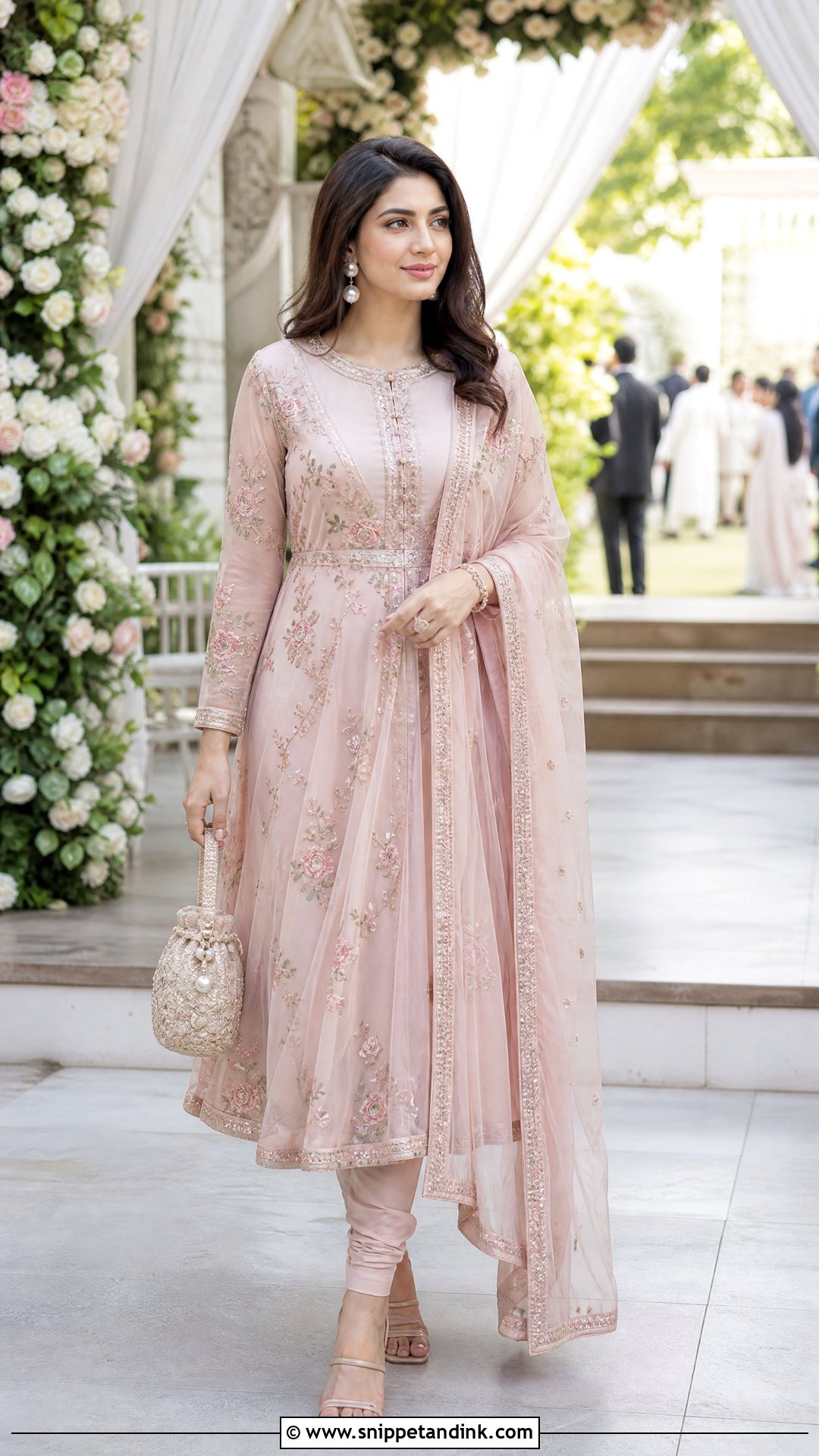
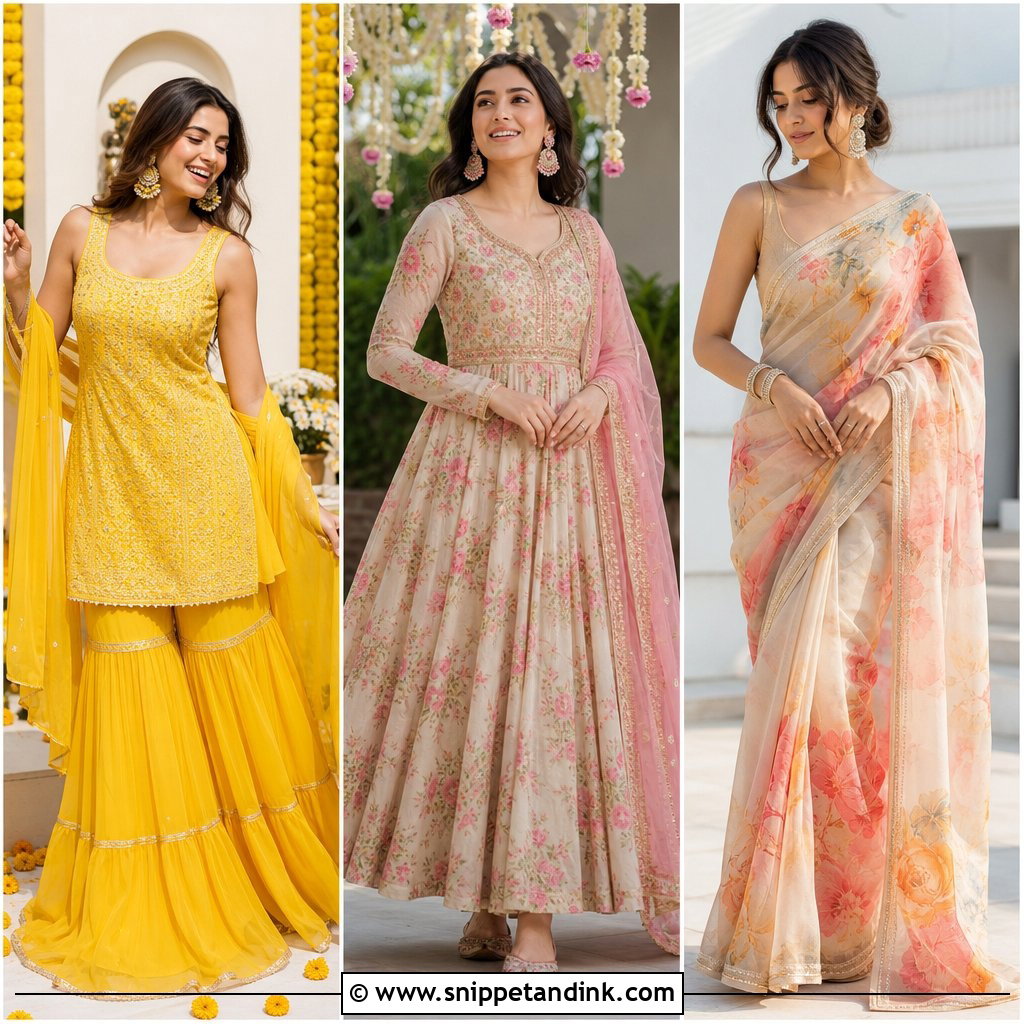
Pastels with floral threadwork suit outdoor and daytime weddings, where heavy jewel tones can look sweaty in the sun. An Anarkali, a straight kameez or a kurti with sharara in blush, mint or powder blue all work. Small sequins, pearls and beads add depth without losing the light look, and a sheer dupatta repeating one floral motif ties it together. Nude or metallic heels lengthen the leg, and pearl earrings with a small embellished bag stay in the same soft palette. Chiffon, georgette and light silk move easily. One caution from experience: pale fabrics show turmeric, mehndi and food stains instantly, so keep pastels away from the haldi.
Getting a Suit Stitched Without Last-Minute Panic
Many of the cuts above are bought as unstitched fabric and sent to a tailor, and that’s where most wedding outfit stress begins. In the busy wedding months, tailors fill up quickly and a simple suit can take noticeably longer than usual, so I tell clients to hand over fabric at least six to eight weeks ahead and expect the timing to vary.
What I give the tailor
- A kurta that already fits well, as a measurement reference alongside fresh measurements.
- A clear note on sleeve length, neckline depth and kameez length, with a photo if possible.
- The shoes I’ll wear, so the salwar or churidar length is right.
- A request to leave extra seam allowance at the sides, so the suit can be let out later.
Ask for a trial at least two weeks before the first function, and sit down in it on the floor, not just a chair. Pleated salwars, churidars and ghararas all behave differently once you’re seated cross-legged, and that’s when tight seams and short hems show up.
Start With the Function, Then the Silhouette
A good wedding suit should feel comfortable and right for your role in the celebration. The designs above cover daytime functions, formal ceremonies, dance nights, winter receptions and bridal looks, so begin with a silhouette you can move and sit in easily. Then weigh up the weather, the venue, how heavy the fabric is and what time the event starts. Let one feature lead, whether that’s a Phulkari dupatta, an embroidered jacket, a sharara or zardozi, and keep the shoes, jewelry and bag in support. Above all, insist on tailoring that lets you sit cross-legged, walk, greet elders and dance without adjusting anything.
You'll Like These Ideas:


Leave a Reply