
Most gown regrets I hear about have nothing to do with the photo on the hanger. They come from a skirt that couldn’t climb stairs, a bodice that dug in at dinner, or satin that creased into a map by the speeches. So the designs below are sorted by silhouette and detail, with notes on how each one actually behaves once you’re wearing it for five or six hours. Current gowns lean toward clean tailoring, corset bodices, soft draping and metallic cloth, which gives almost every body and every formal occasion a workable option. Treat the list as a starting point for a fitting room, not a finished decision.
Reading the Event Before Falling for a Silhouette
The invitation tells you more than any trend report. Black tie means floor length and a fabric with some weight, so satin, crepe or velvet. Black tie optional gives you room for a tea-length or a lighter chiffon. A garden or beach event usually rules out mermaid hems and long trains, because heels sink and hems pick up grass.
Then I ask three questions at every first appointment:
- How long will you be seated? Long dinners favor A-line, wrap and draped shapes over corsets and fitted mermaids.
- Is the venue warm or cold? Velvet and heavy beading are miserable in a hot room, and chiffon feels thin in a winter marquee.
- Will you dance? If so, check the skirt for a bustle loop or a hem you can lift without crushing it.
Once those answers are clear, the list of silhouettes usually narrows to three or four, and the fitting room becomes much faster.
1. A-Line Gown Design
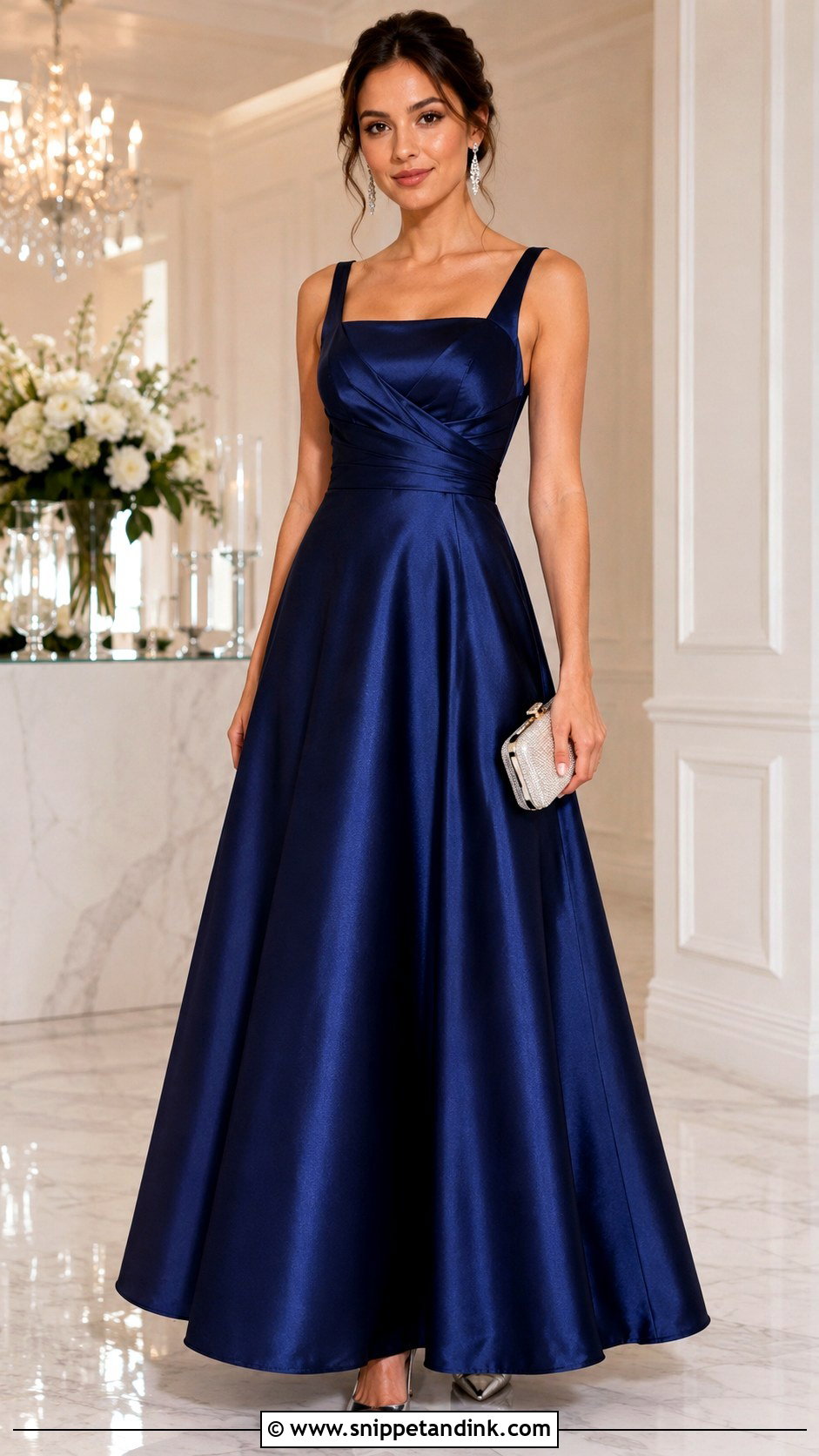
An A-line widens gradually from the waist, so it skims the hips instead of announcing them. That is why I reach for it first when someone walks in unsure of her shape. It suits formal parties, receptions and graduation dinners equally well. Fabric changes the mood more than the cut does: satin reads dressy, chiffon reads soft, crepe reads modern. Check where the waist seam lands on you, because a seam that sits even two centimetres below your natural waist makes the skirt look borrowed. Navy, emerald, burgundy or champagne keep it polished without tipping into drama.
2. Mermaid Gown Design
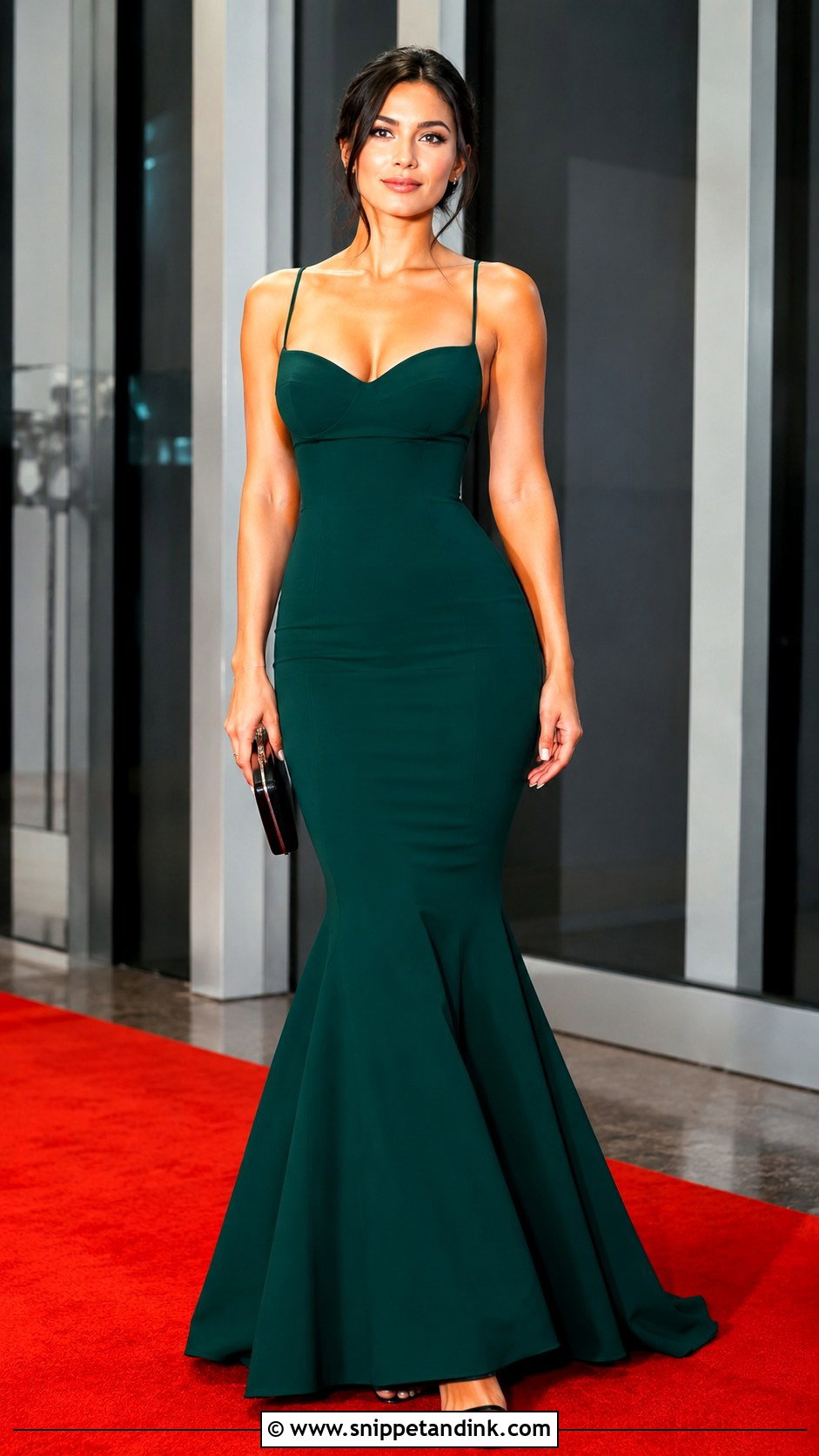
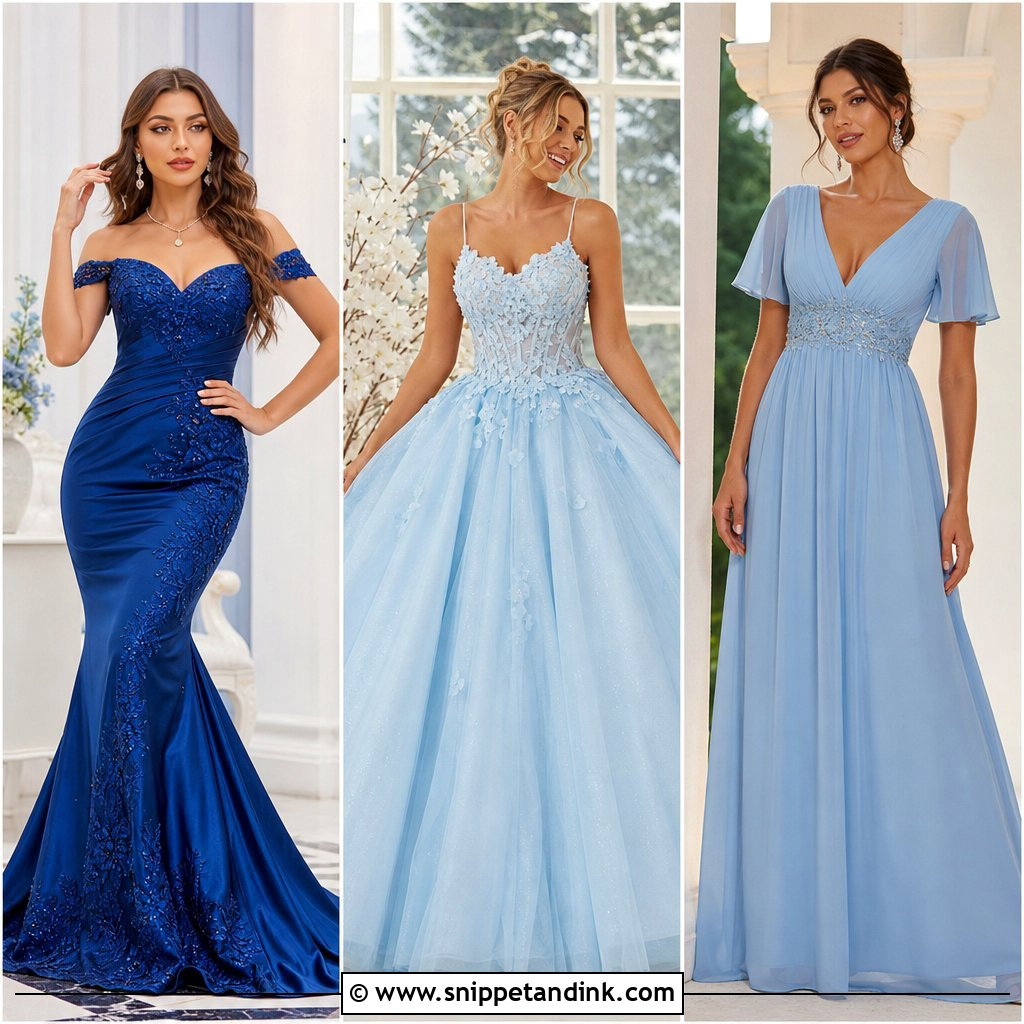
The mermaid fits through the bodice and hips and only flares near the knee, which means the fabric has to do serious work. Stretch crepe, heavy satin and scuba fabrics hold the line; thin satin wrinkles across the thighs the moment you sit. Before buying, I ask clients to climb a step and sit on a low chair in it. If the flare starts too high, your stride shortens to a shuffle. It belongs at black-tie events where the walking is short and the standing is long. Lace appliqué softens it if the plain version feels severe.
3. Ball Gown Design
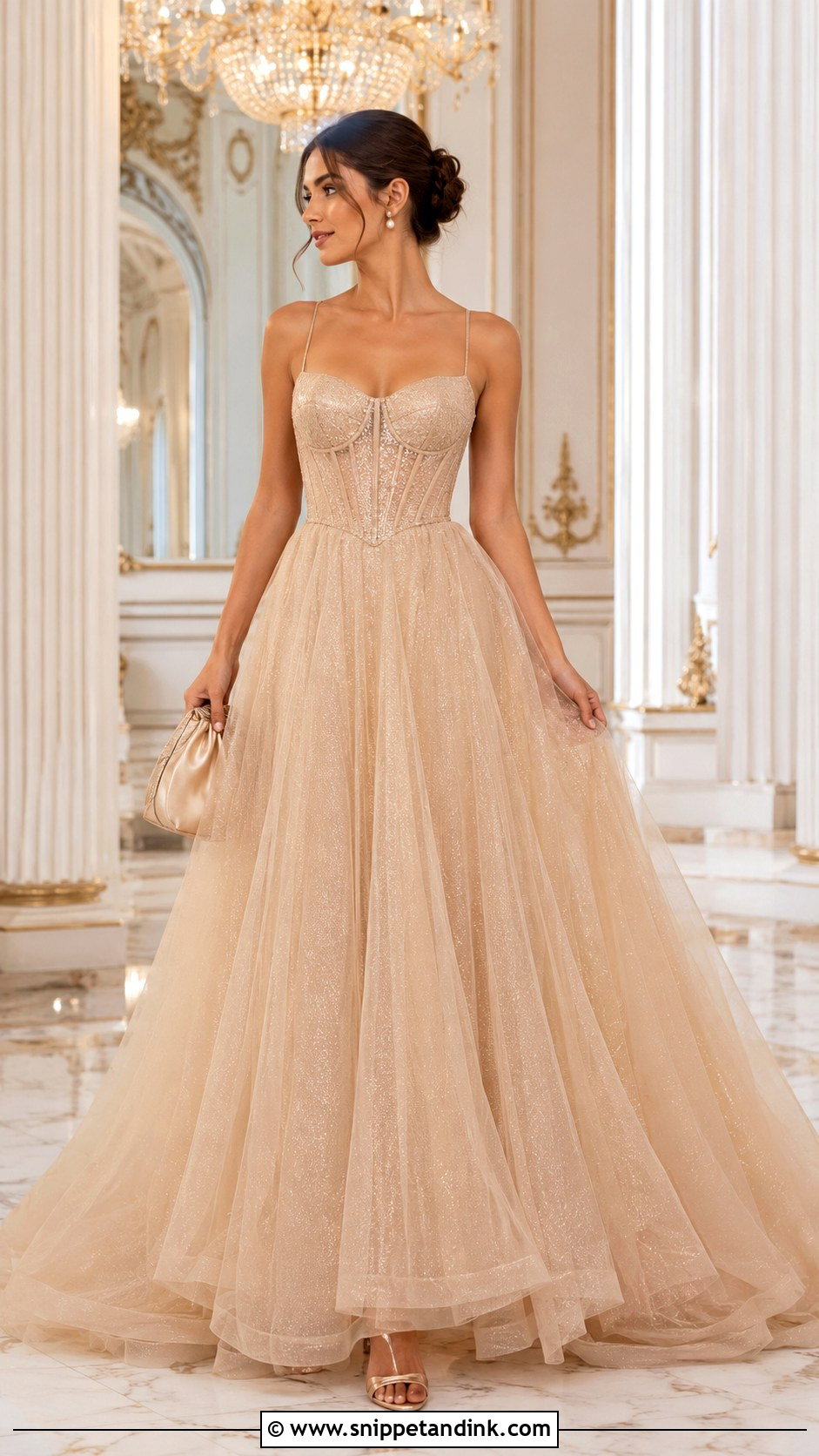
A ball gown pairs a fitted top with a full skirt, and the volume comes from what’s underneath as much as the fabric on top. Tulle, organza, mikado and layered satin each need a petticoat or built-in crinoline, so ask how many layers there are before you fall for it. Big skirts are heavier and warmer than people expect. Keep the neckline simple and the jewelry small so the shape stays modern, and pick a bun or smooth waves that won’t fight the volume below. Make sure the venue has room to turn around in it.
4. Off Shoulder Gown Design
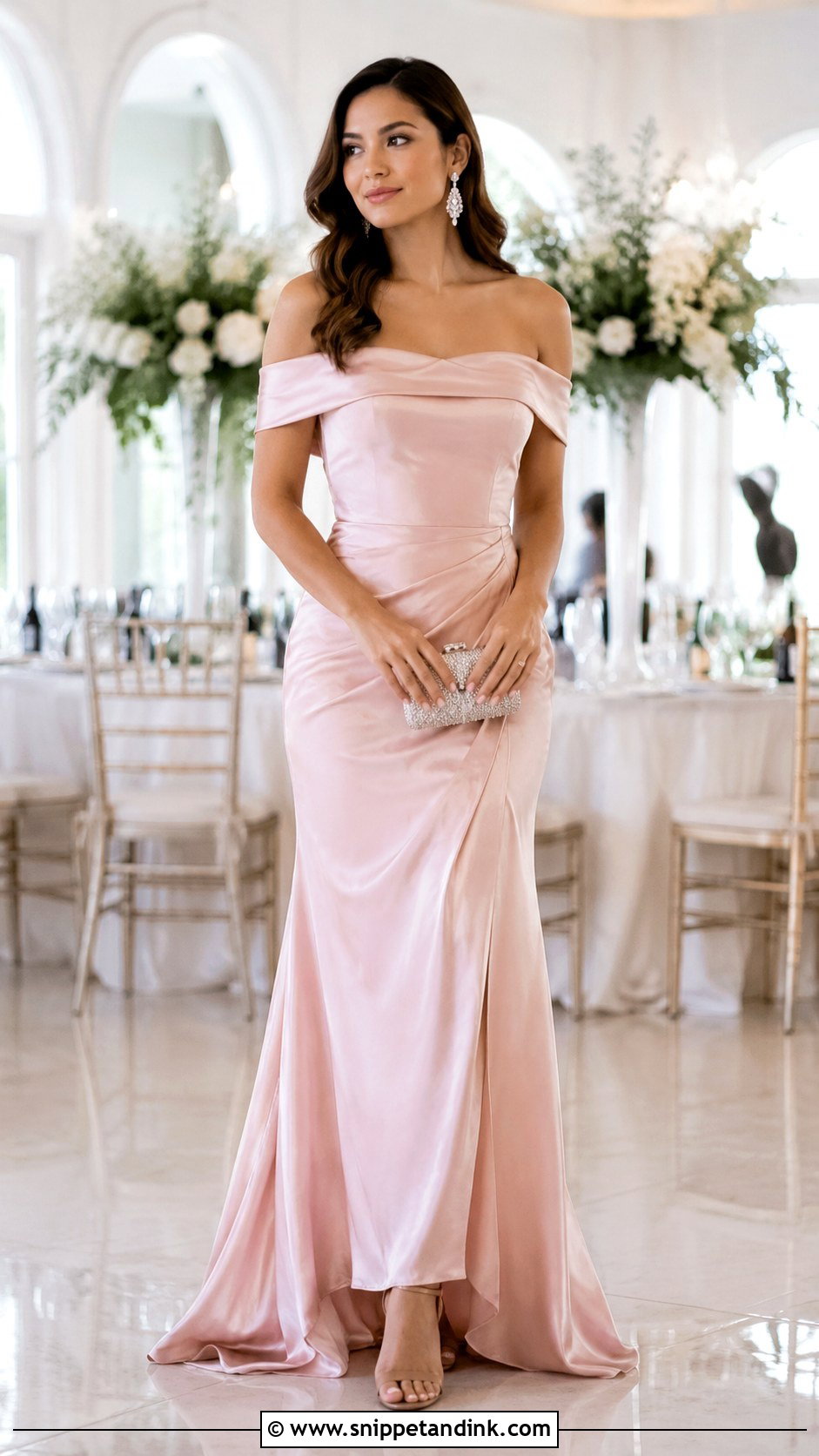
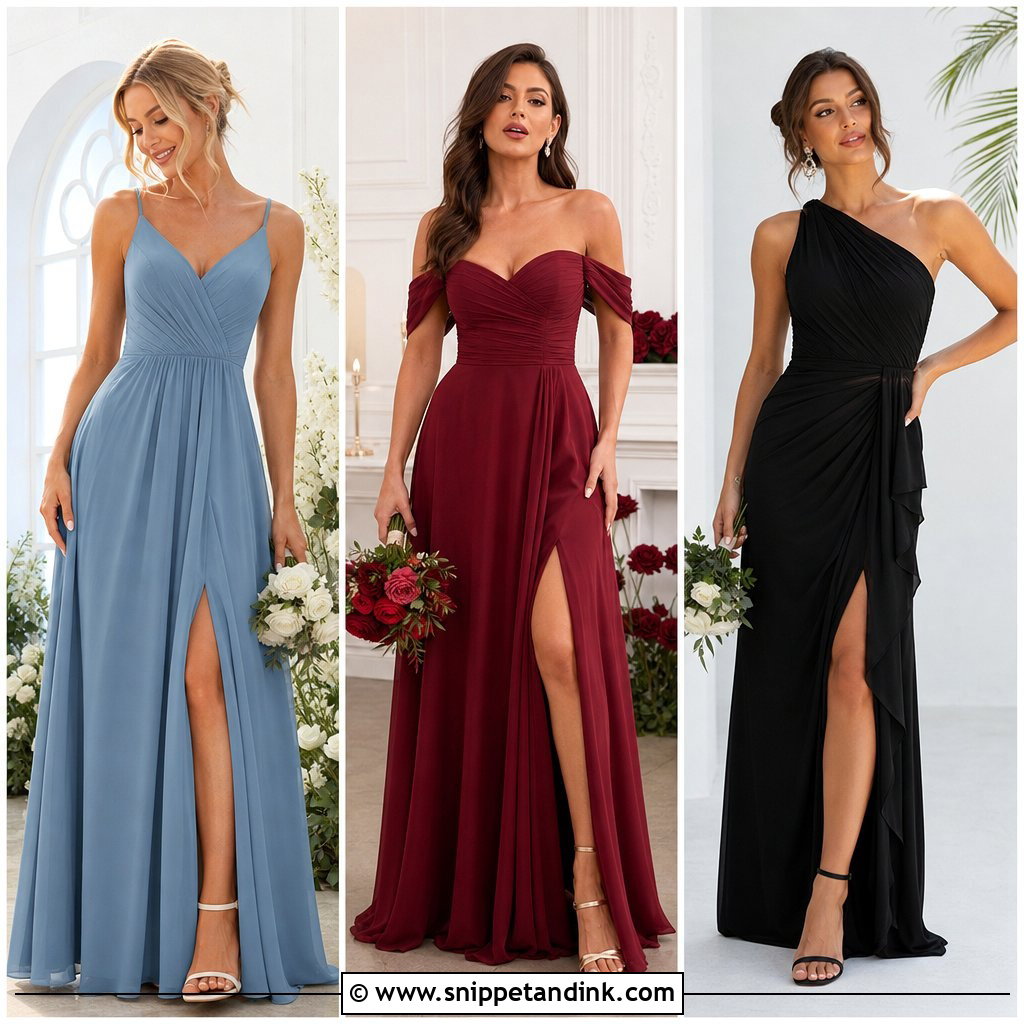
Off-shoulder necklines frame the collarbone, but they also limit how high you can raise your arms. I always ask clients to hug someone in the fitting room; if the band pops up over the shoulder, it needs internal elastic or a better fit at the bust. The neckline can be straight, folded or draped, and a slim column cut makes it feel current. Choose a short necklace or statement earrings, never both. Blush, royal blue, wine red and black all hold up well against bare shoulders.
5. One Shoulder Gown Design
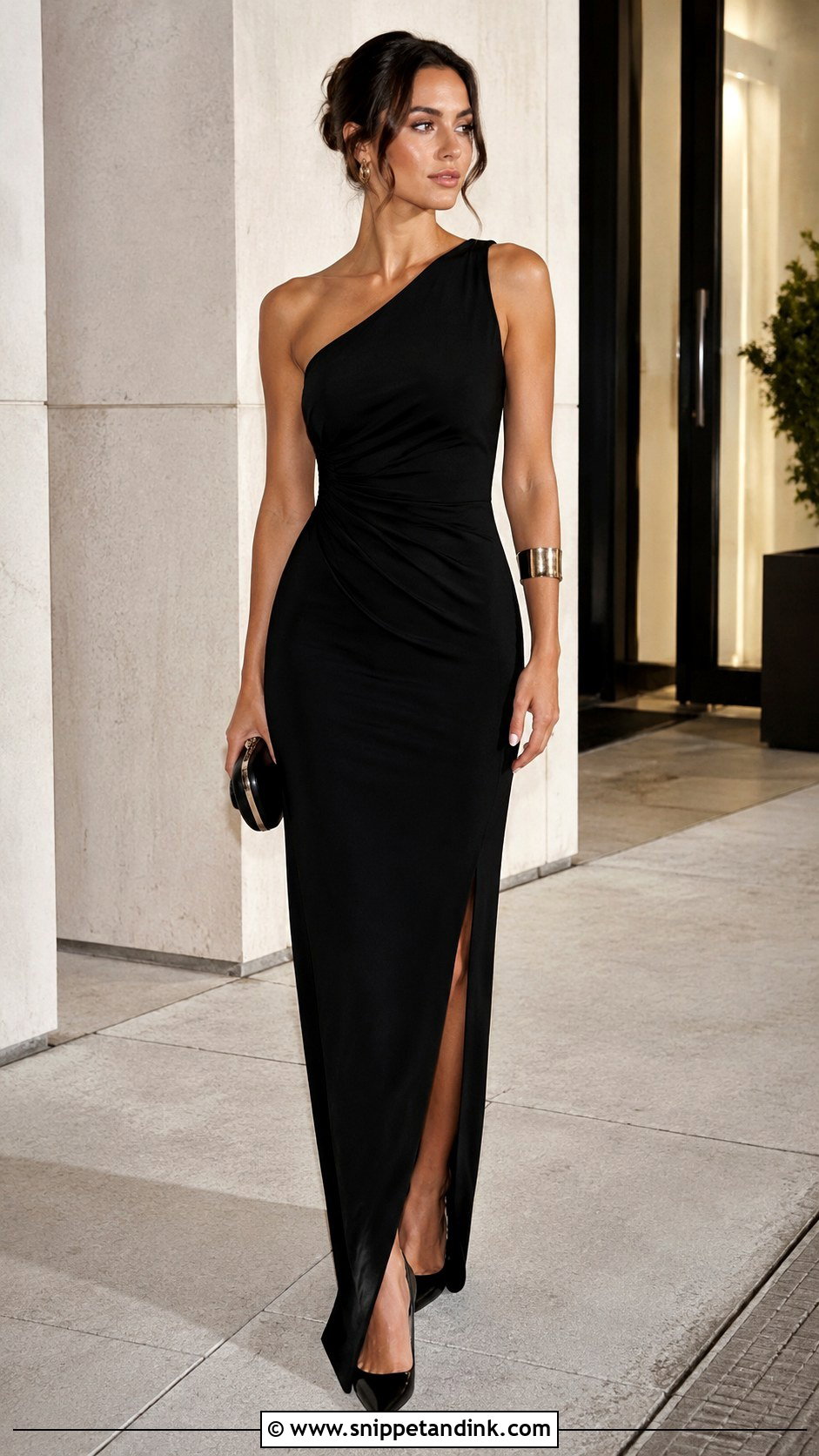
One shoulder does the accessorizing for you. The single strap can be pleated, ruffled or extended into a small cape sleeve, and a column skirt with a side slit keeps the line long. The practical catch is support: a standard bra won’t work, so look for a gown with a built-in cup or plan on adhesive options. I skip necklaces entirely here and use one cuff or bold earring on the bare side. Solid colors and smooth satin show the asymmetry best.
6. Corset Gown Design
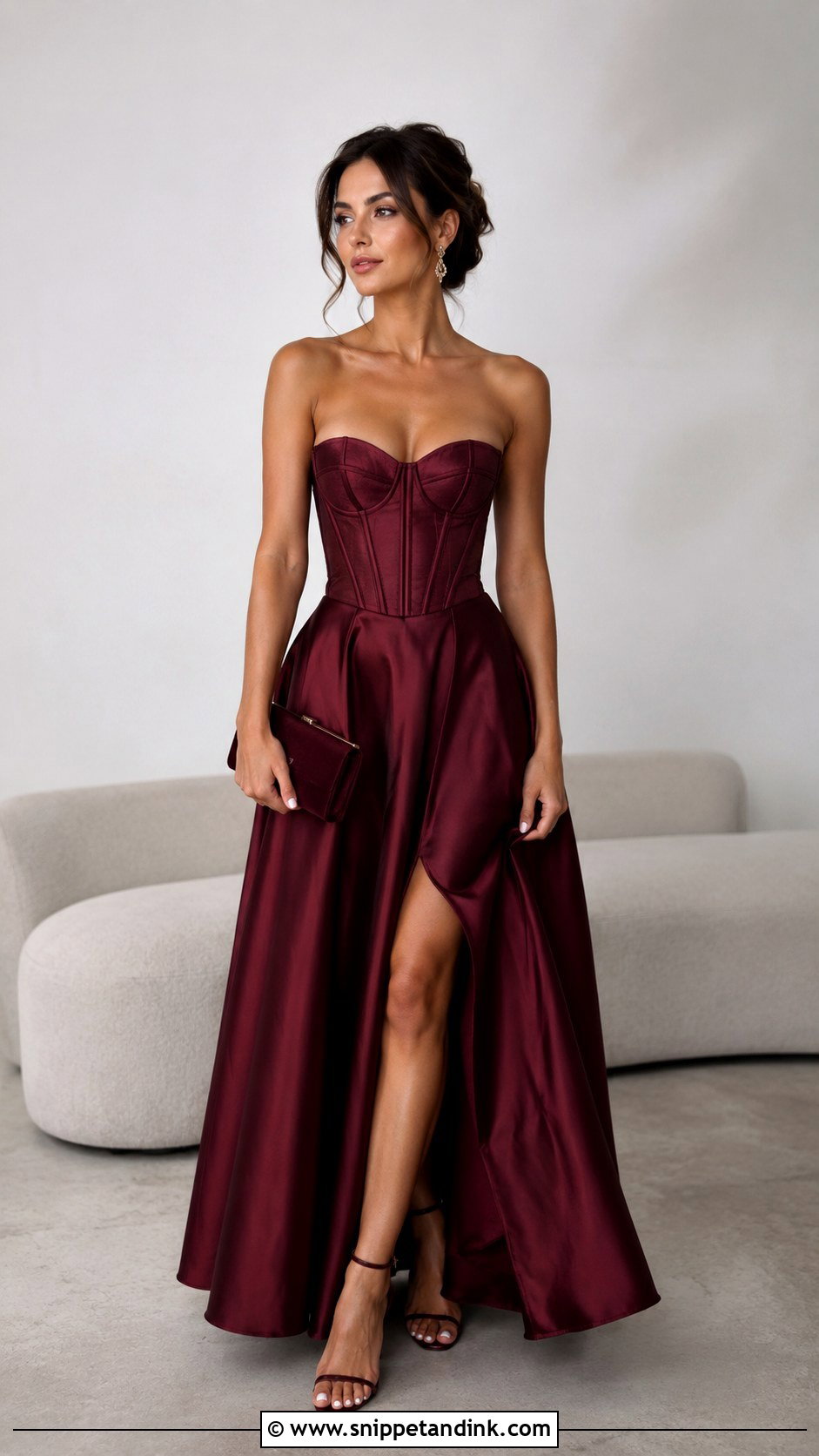
Corset bodices shape the waist with boning, and how that boning is placed decides whether you can eat dinner. Spiral steel bends with the body; cheap plastic boning tends to warp and poke at the hip when you sit. I check fit seated, not standing, because the bottom edge of the bodice is where the pressure lands. A satin corset over an A-line skirt is the classic version, and a sheer overlay feels more fashion-led. Wide straps or long sleeves add coverage without losing the shape.
7. Long Sleeve Gown Design
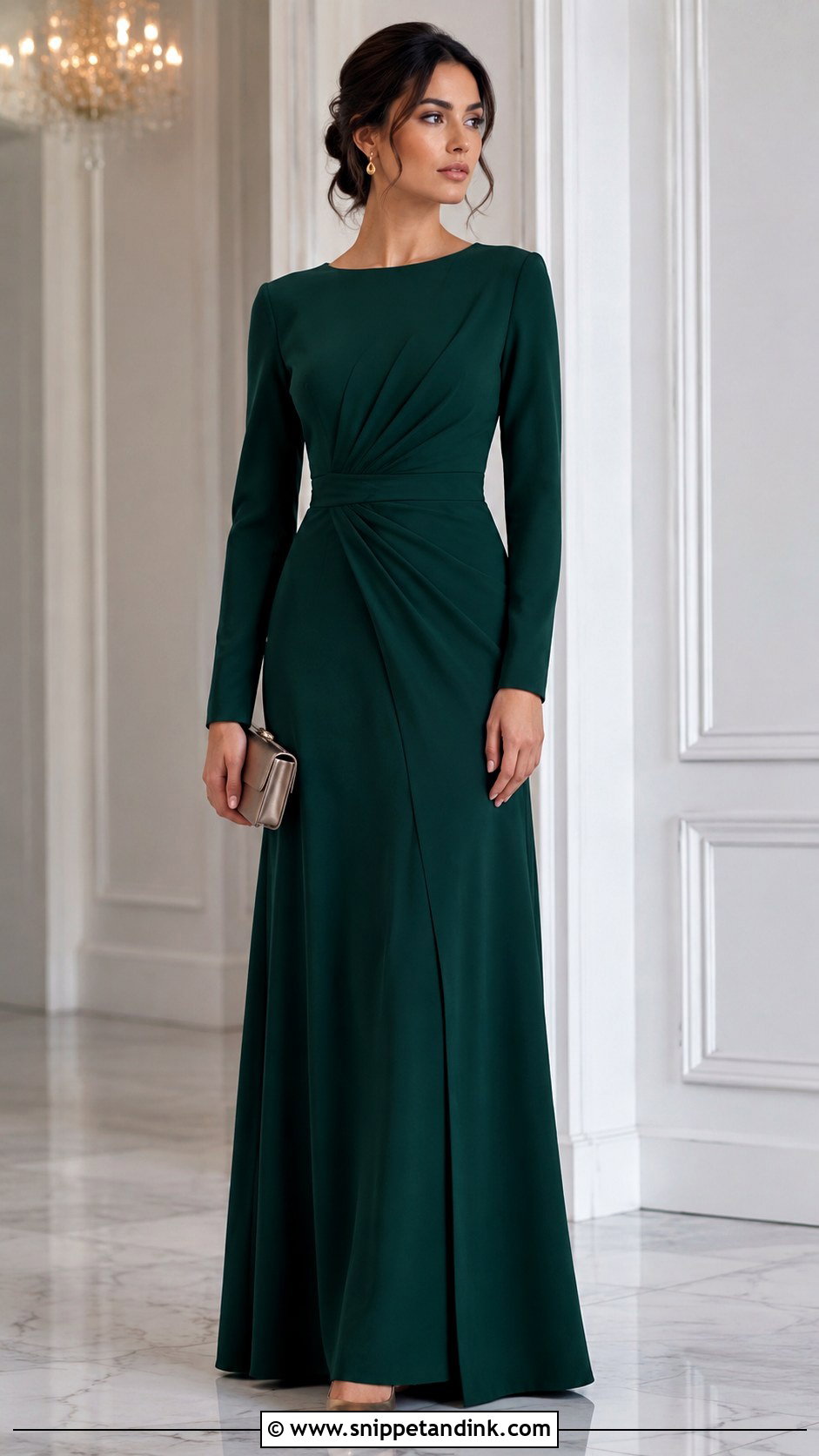
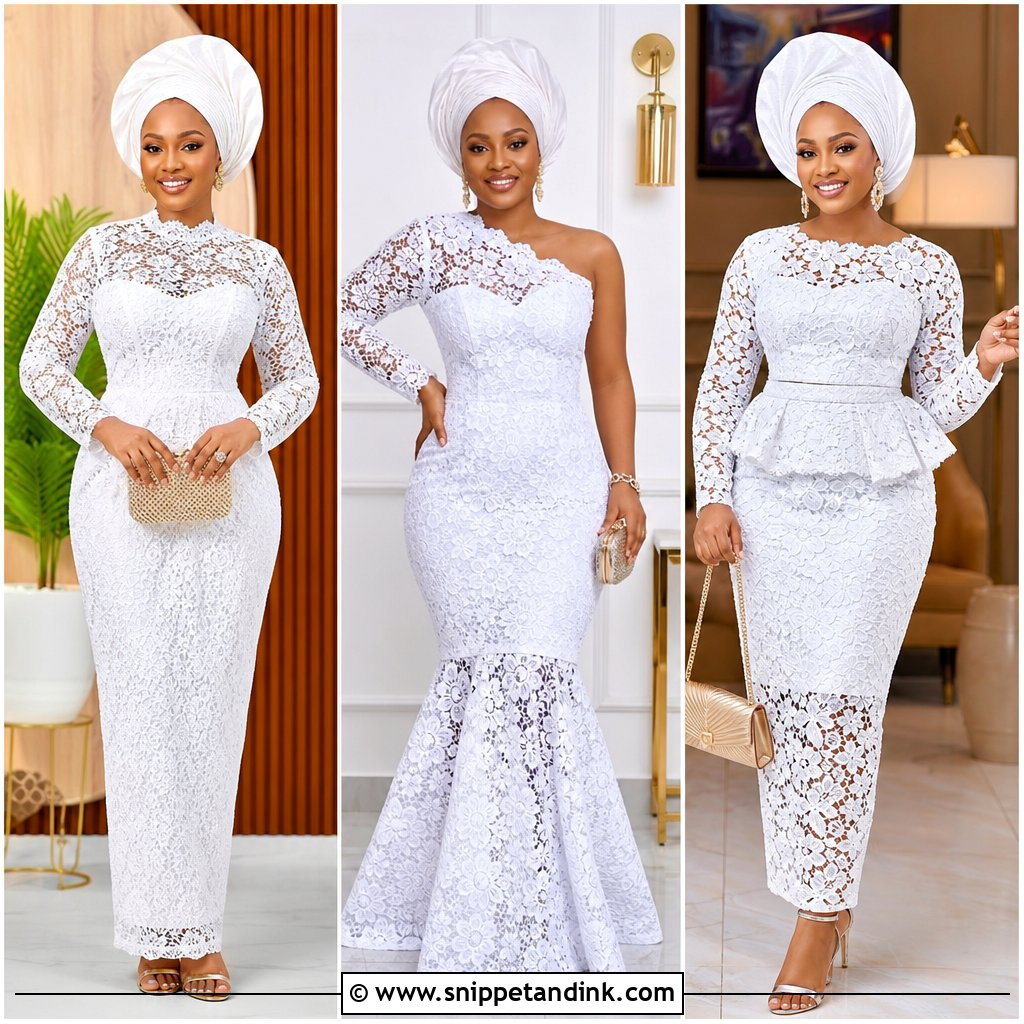
Long sleeves solve cold venues and modest dress codes, but the armhole is the detail that matters. A high, close armhole lets you lift your arm freely; a low one drags the whole bodice up when you reach for a glass. Sleeves can be fitted, sheer, puffed or bell-shaped. Crepe with a plain sleeve looks spare and sharp, while lace reads softer. Since the sleeves already carry detail, I keep jewelry minimal and choose closed-toe heels. A deep solid color or vertical seaming adds length.
8. High Neck Gown Design
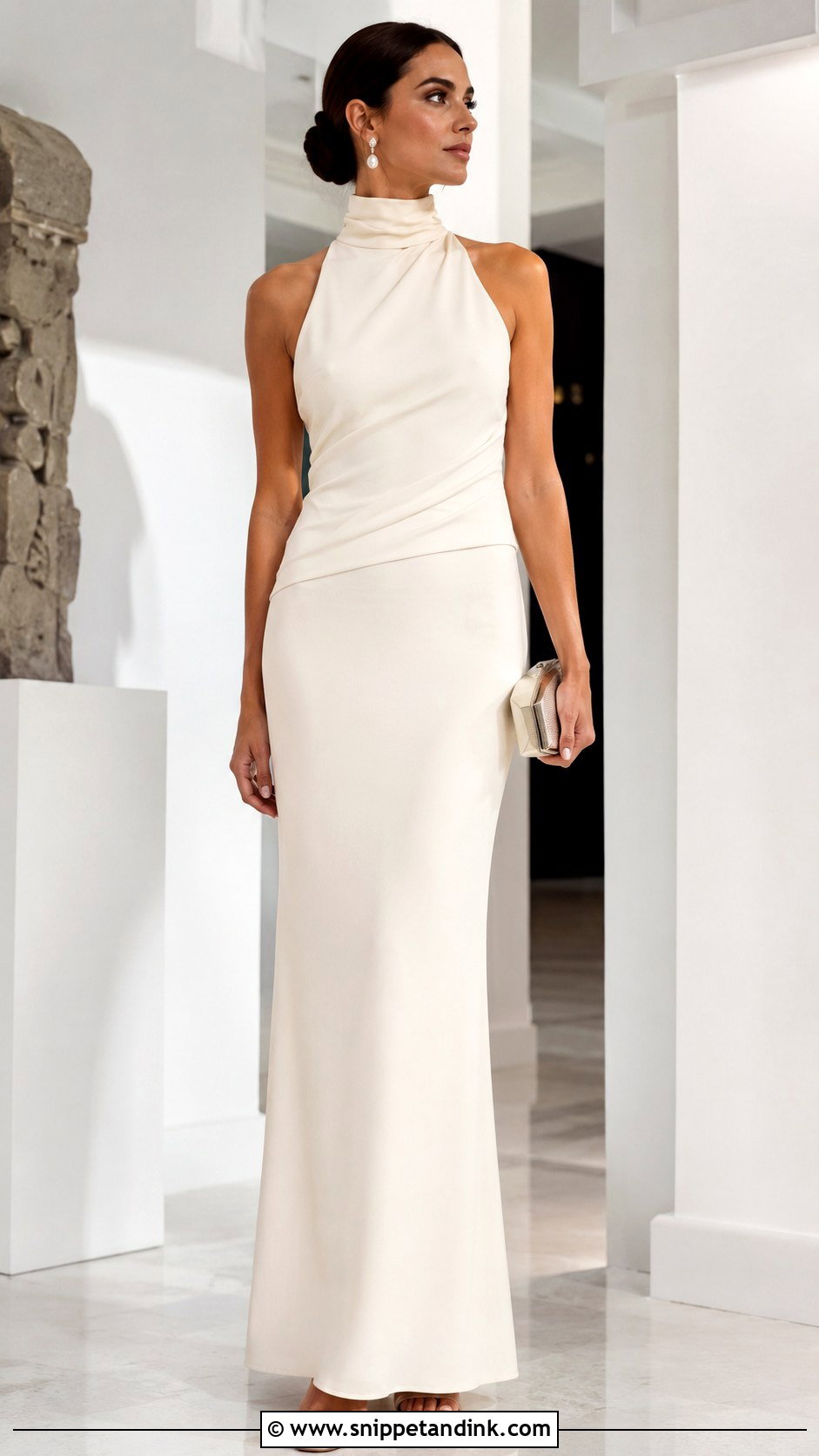
A high neck looks refined and covers a lot, which is exactly why the jewelry should move to the ears. Pearl drops or slim metallic earrings sit right; a necklace just disappears into the fabric. Wear the hair low and pulled back so the neckline isn’t hidden. The fit at the base of the throat needs attention: if the collar is snug when you’re standing, it will feel tight once you’re seated and talking. Satin, crepe, velvet and chiffon all carry the shape with quiet polish. A keyhole back or pleated bodice adds interest without noise.
9. Strapless Gown Design
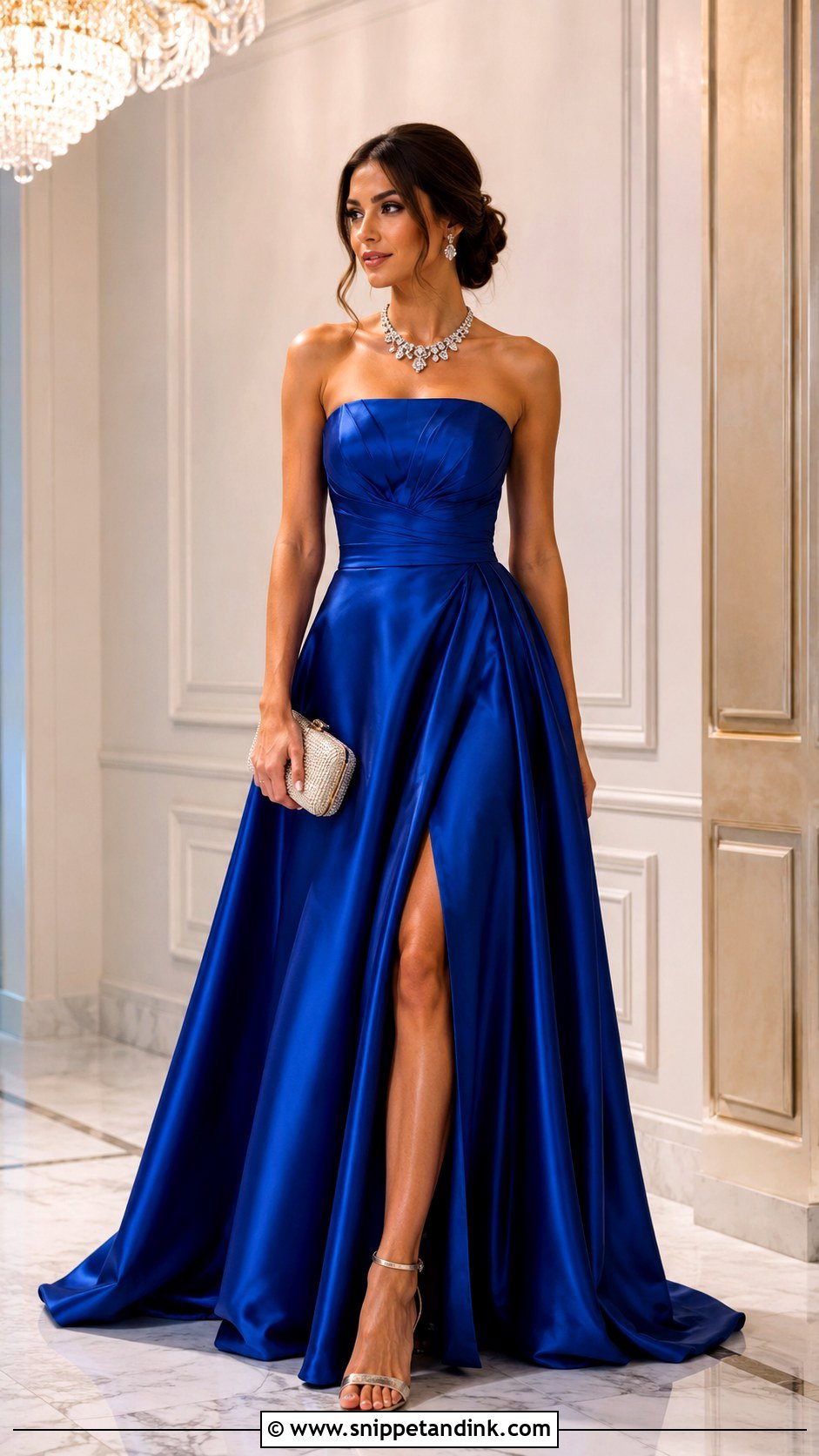
Strapless gowns depend on fit at the bust and waist, full stop. A structured bodice with internal boning and a waist stay (a grosgrain band inside that anchors the dress) keeps it from sliding. I’d steer anyone with a fuller bust toward a sweetheart cut with real internal structure instead of a straight neckline. Pick one focal point: a statement necklace for a traditional look or bold earrings for something cleaner. Full skirts feel romantic and fitted ones look sleek. Bring a tailored wrap for cool rooms.
10. Sequin Gown Design
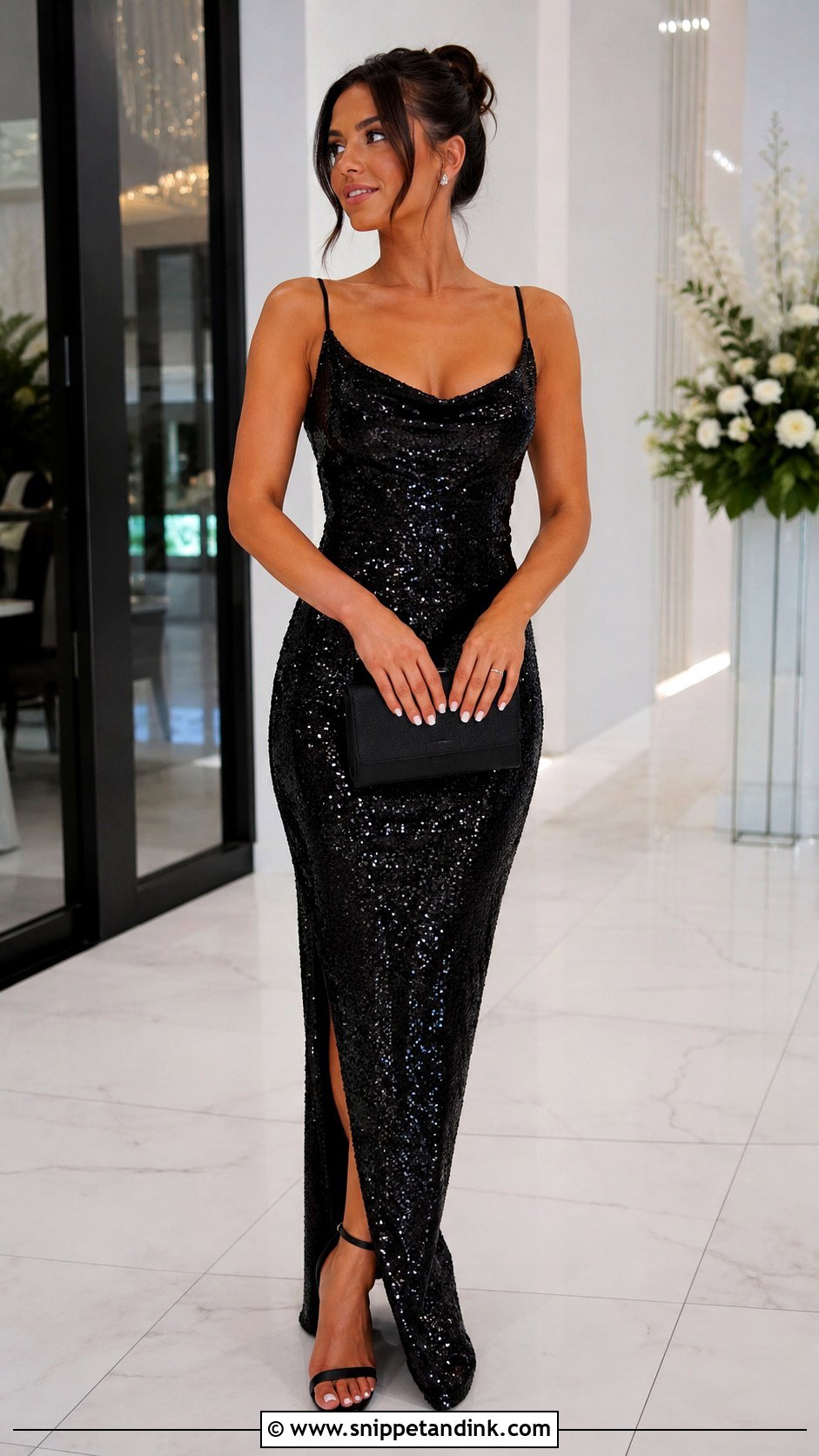
A sequin gown is its own accessory, so everything else should go quiet. Fitted versions look bold and A-line versions move more. Watch the seams under the arms, since sequins rubbing there for hours can scratch the skin; a lining that runs over the seam fixes that. Silver, gold, black, emerald and navy all catch light without looking cheap. Plain heels, a simple clutch, and that’s it. Scattered sequins or a beaded bodice with a plain skirt give the shine in a lighter dose.
11. Floral Embroidered Gown Design
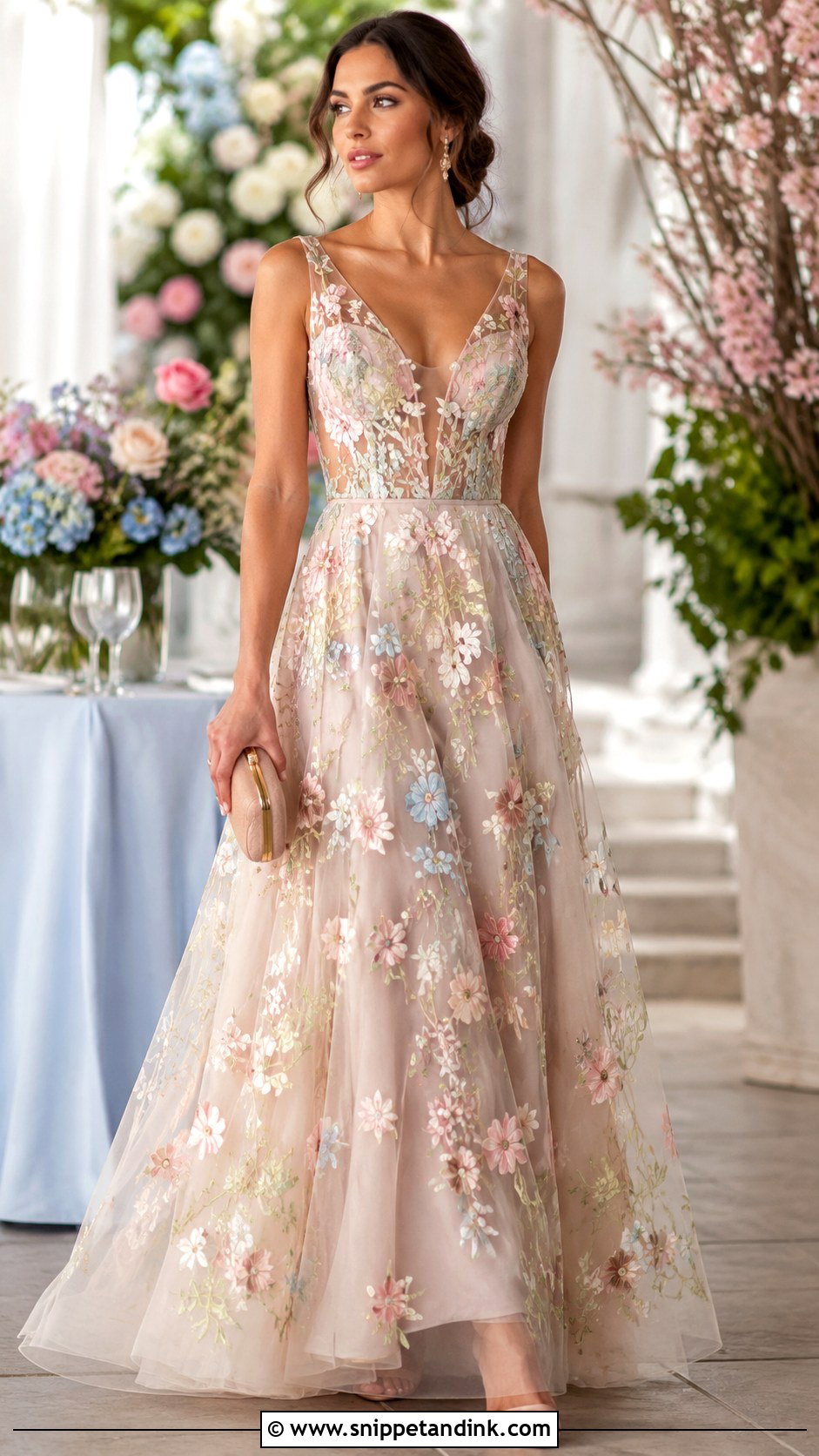
Embroidery gives texture and color without shine. Small florals look delicate, and oversized appliqués carry from across a room. The base fabric matters: soft tulle, organza and mesh show the stitching well but snag easily, so I steer clients away from beaded bags and bracelets with prongs. Keep shoes nude or metallic and let the embroidery lead. Soft waves or a relaxed updo suit it. Garden venues and daytime formal events are where this design looks most at home.
12. Velvet Gown Design
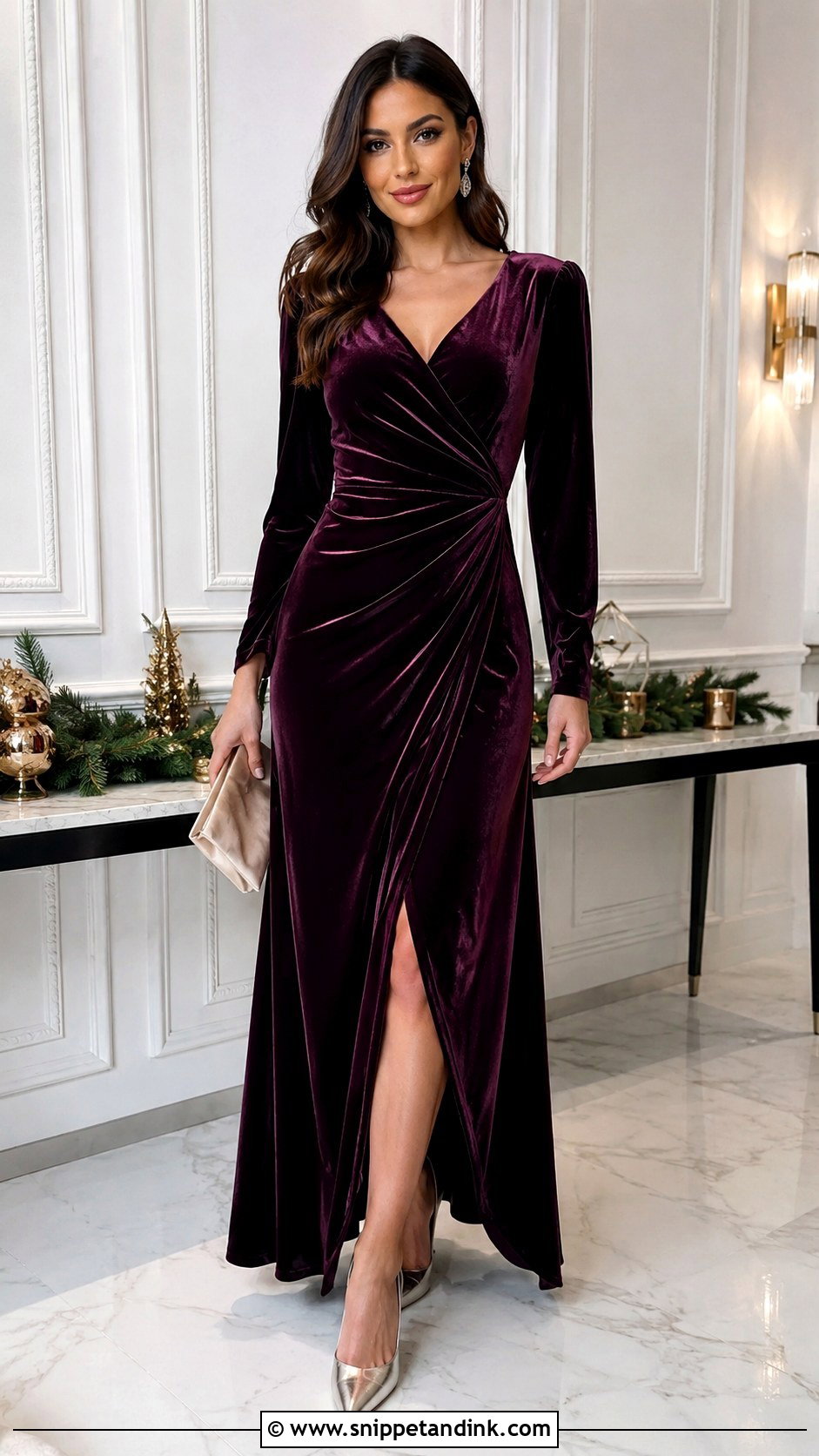
Velvet has depth on its own, so even a plain cut looks rich. Burgundy, forest green, navy, plum and black are the shades that show off the pile. Velvet is warm, though, which makes it a fall and winter fabric only. It also crushes if you sit on it for long or pack it tightly, and those flattened patches don’t come out with an iron. A wrap, long sleeve or off-shoulder velvet gown all work. Keep the jewelry light and the hair smooth.
13. Satin Gown Design
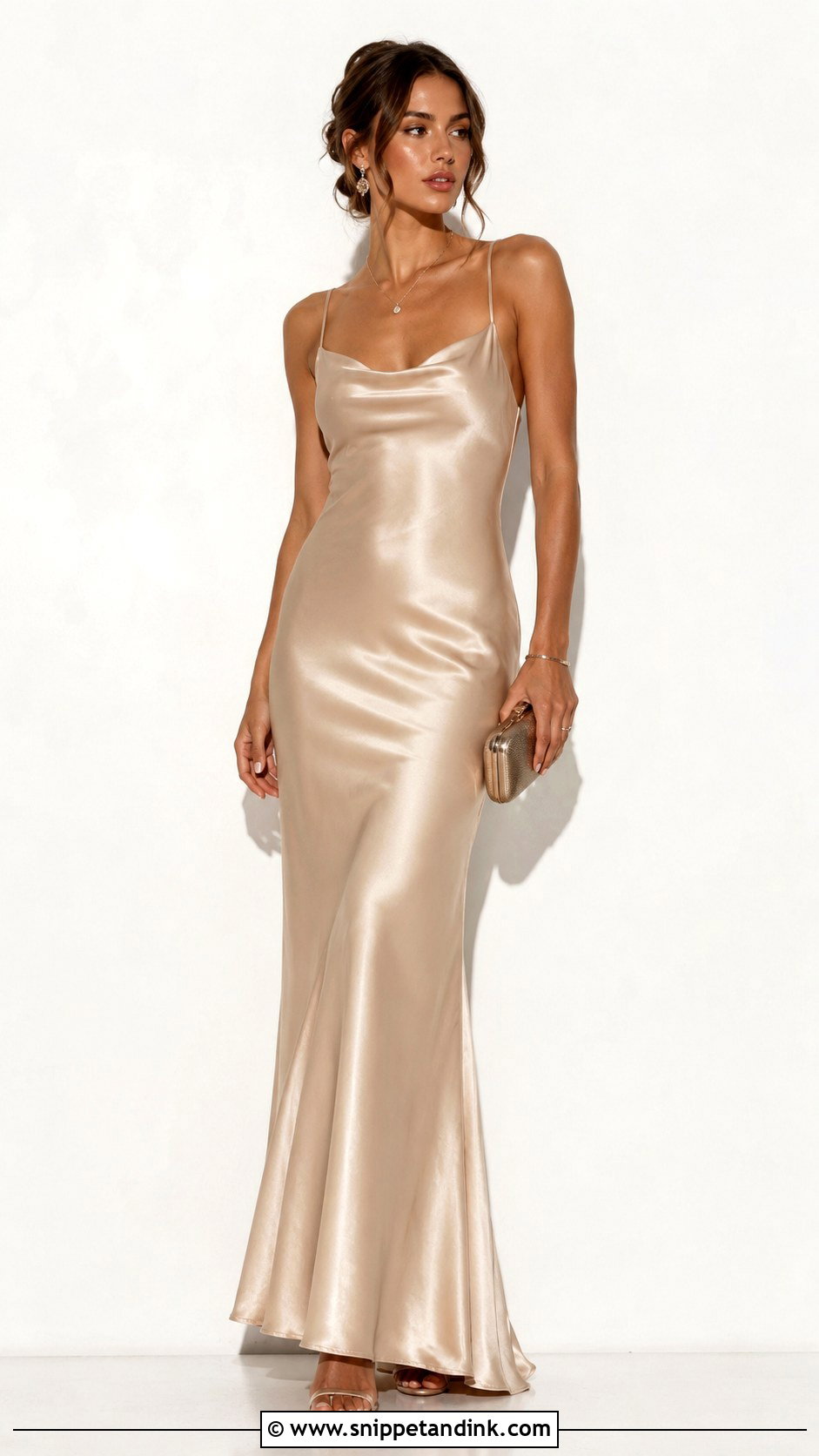
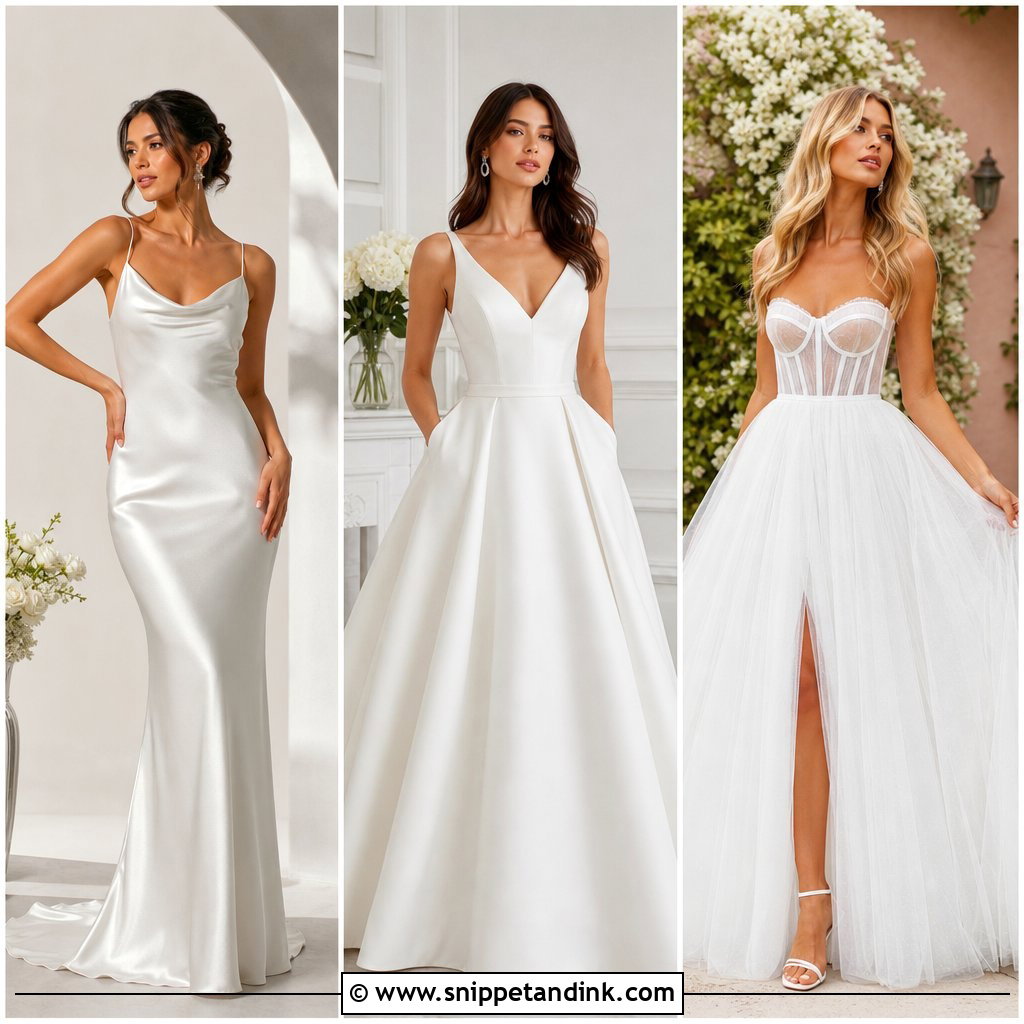
Satin looks dressy straight away, and a bias-cut satin gown drapes and moves in a way structured satin doesn’t. The downside is honesty: bias satin shows every line underneath, so smooth, no-line underwear and a smooth fit across the hip are essential. I always warn clients that satin creases at the lap after a seated ceremony, so steam it right before you leave and avoid long car rides in it if you can. A train, pleated bodice or high slit adds drama to the plain version.
14. Chiffon Gown Design
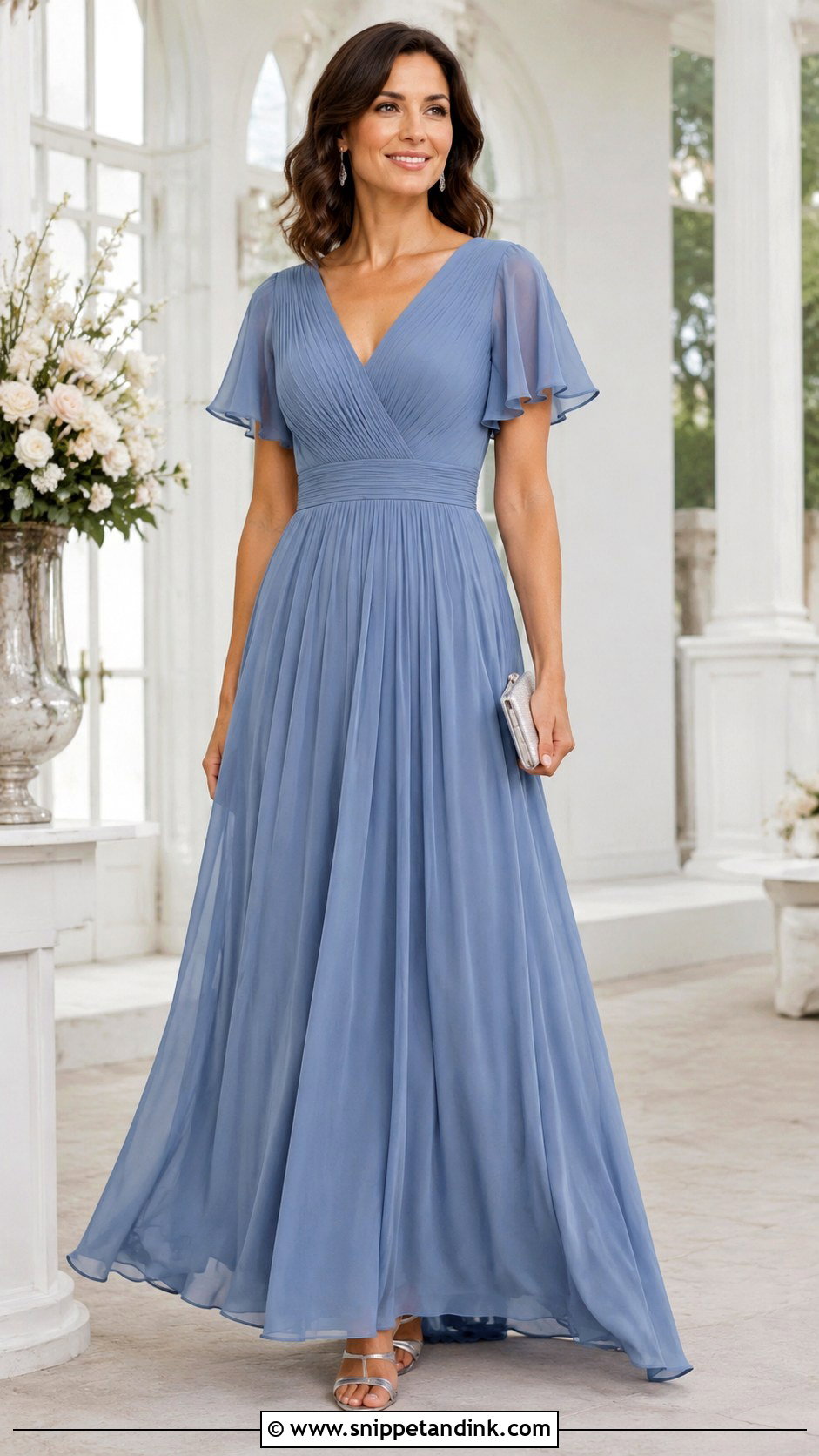
Chiffon is light and floats when you walk, which makes it the gown I suggest for outdoor summer events and long days on your feet. It looks right with pleated bodices, empire waists and flutter sleeves. It is also fragile. Watch out for ring prongs, beaded bags and velcro on a wrap; one snag can pull a visible run across the skirt. Dusty blue, sage, mauve and champagne look especially soft in it. Pair slim heels with small, smooth jewelry.
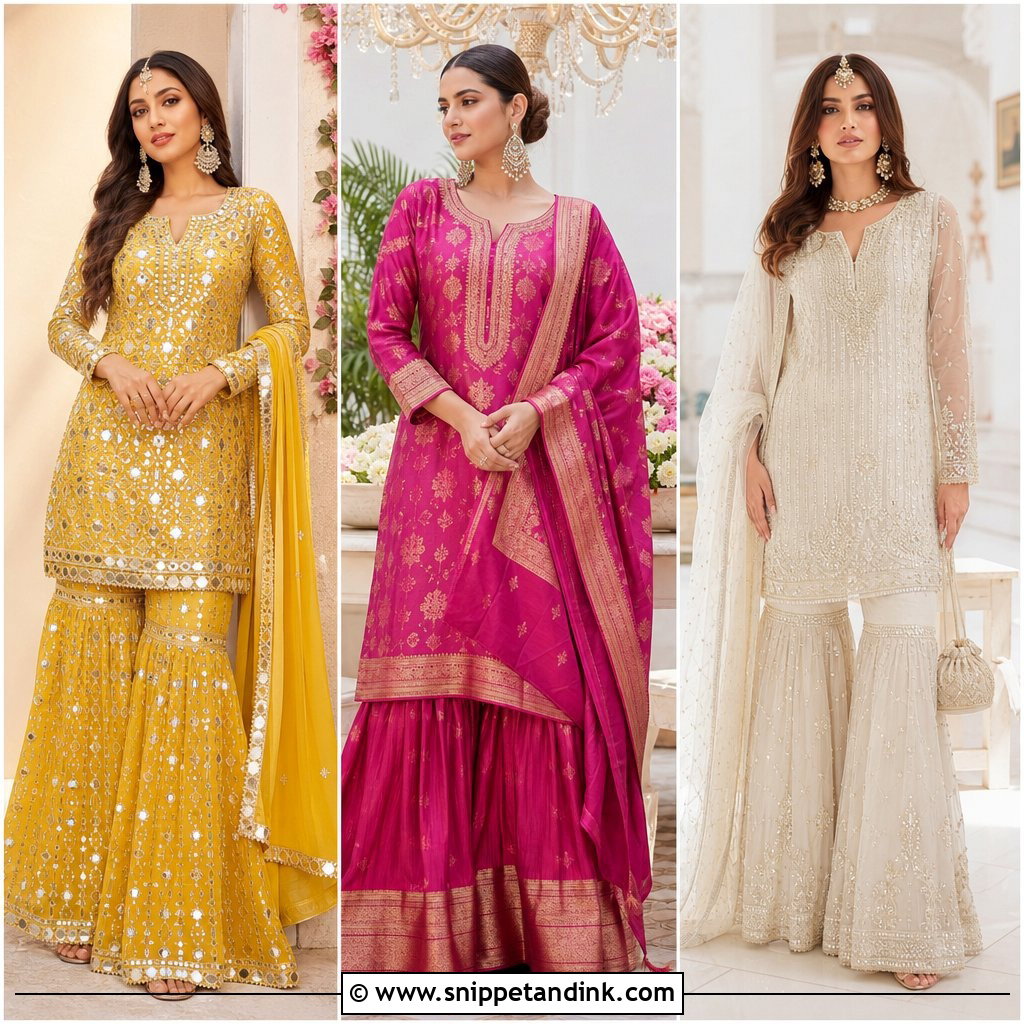
15. Cape Gown Design
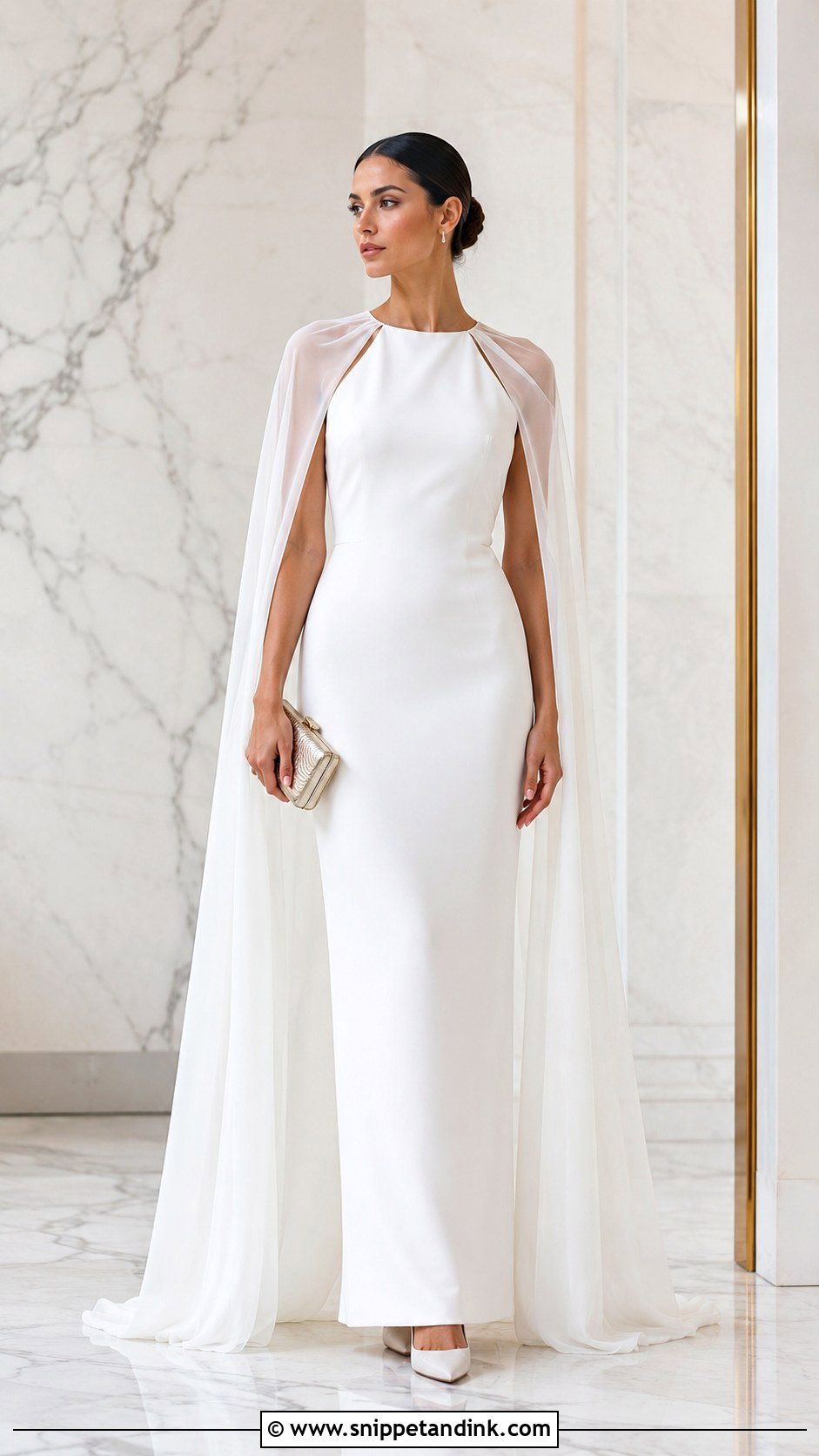
A cape gives arm coverage without the structure of a sleeve, and it moves when you walk. It can attach at both shoulders, fall from one side or sit as a sheer overlay. A column gown with a cape looks sharp; an A-line with a cape looks softer. The practical point is dinner: long capes trail on chairs and drag through food, so I’d look for a detachable one or a shorter shoulder cape for seated events. Keep accessories minimal and put the hair up so the back stays visible.
16. Ruffle Gown Design
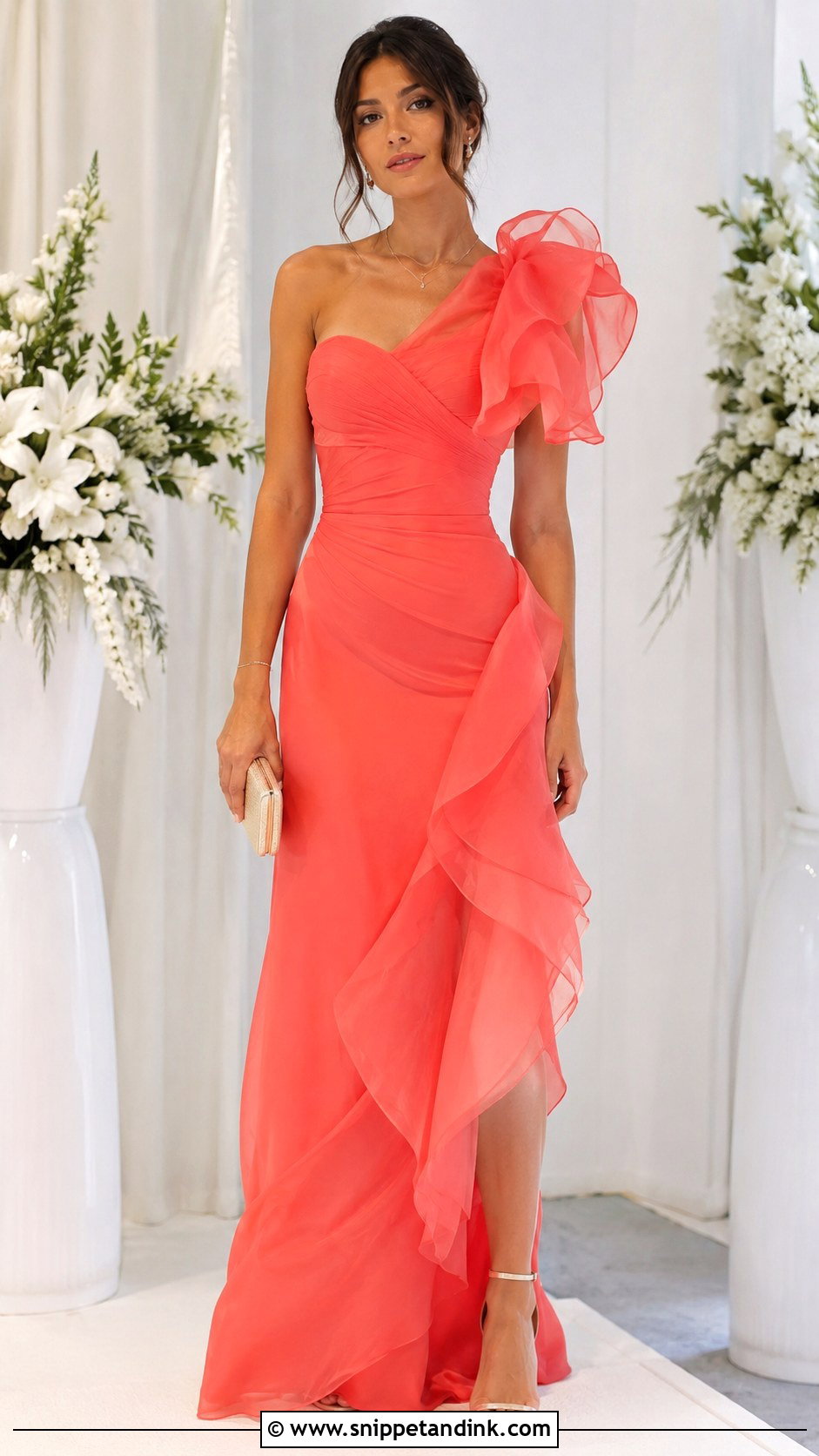
Ruffles add movement and volume, and placement decides whether they flatter or swamp you. Vertical ruffles lengthen the body; heavy ruffles at the hip widen it. I tell clients to pick one ruffle feature and let the rest of the gown stay plain. Organza, chiffon and tulle keep ruffles airy, while stiff taffeta ruffles can look bulky on smaller frames. Plain heels and clean jewelry keep the look from turning busy.
17. Pleated Gown Design
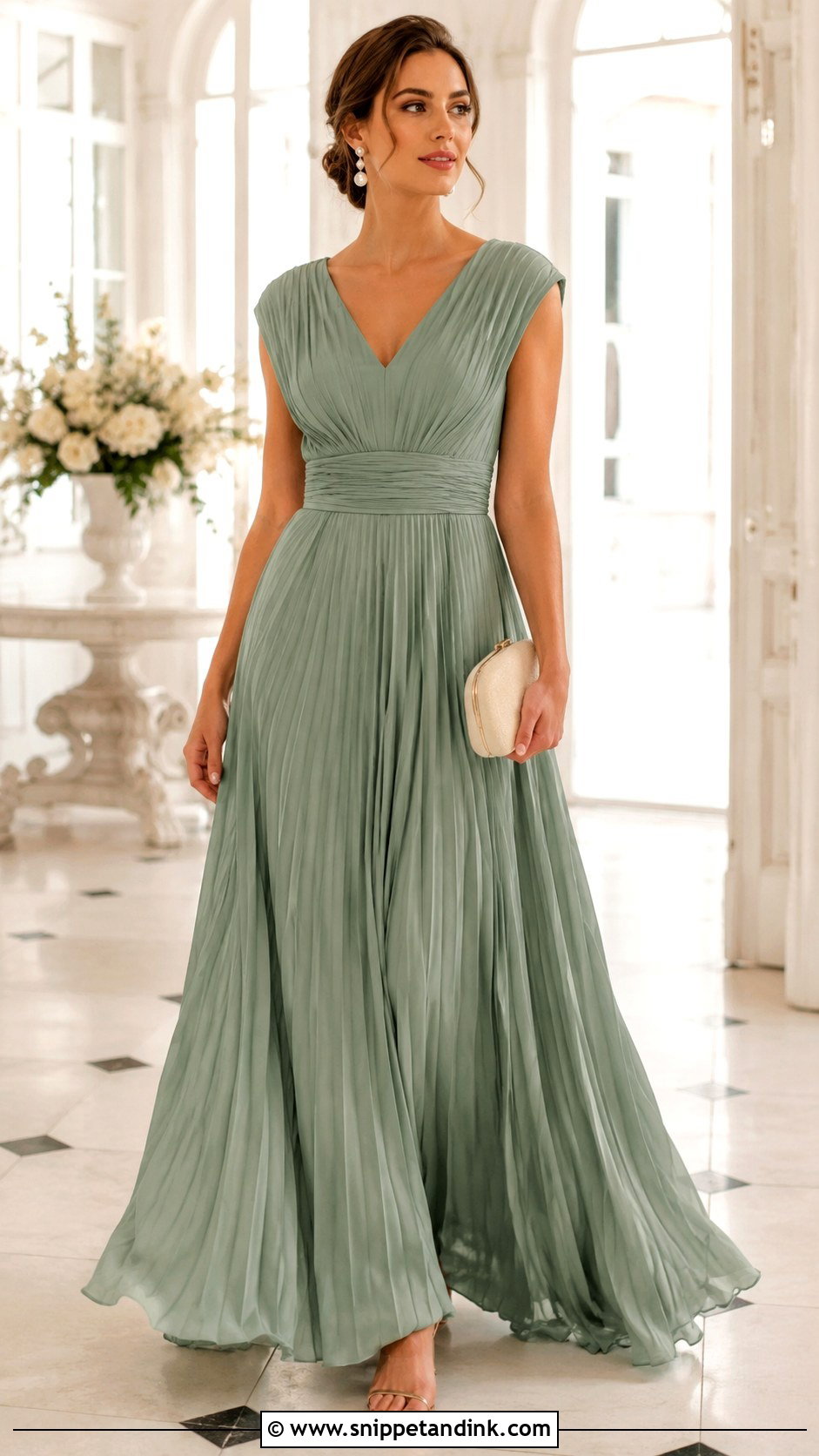
Pleats give texture without sparkle. Fine pleats feel soft and wide pleats look tailored. Pleating works beautifully on skirts, sleeves, bodices and waist panels, and vertical pleats add height. The one thing to check is whether the pleats are heat-set or just pressed. Heat-set pleats (common on polyester chiffon) survive a day of sitting; pressed pleats on natural fibers relax and need re-steaming. Slim heels and earrings that don’t compete with the texture finish it.
18. Metallic Gown Design
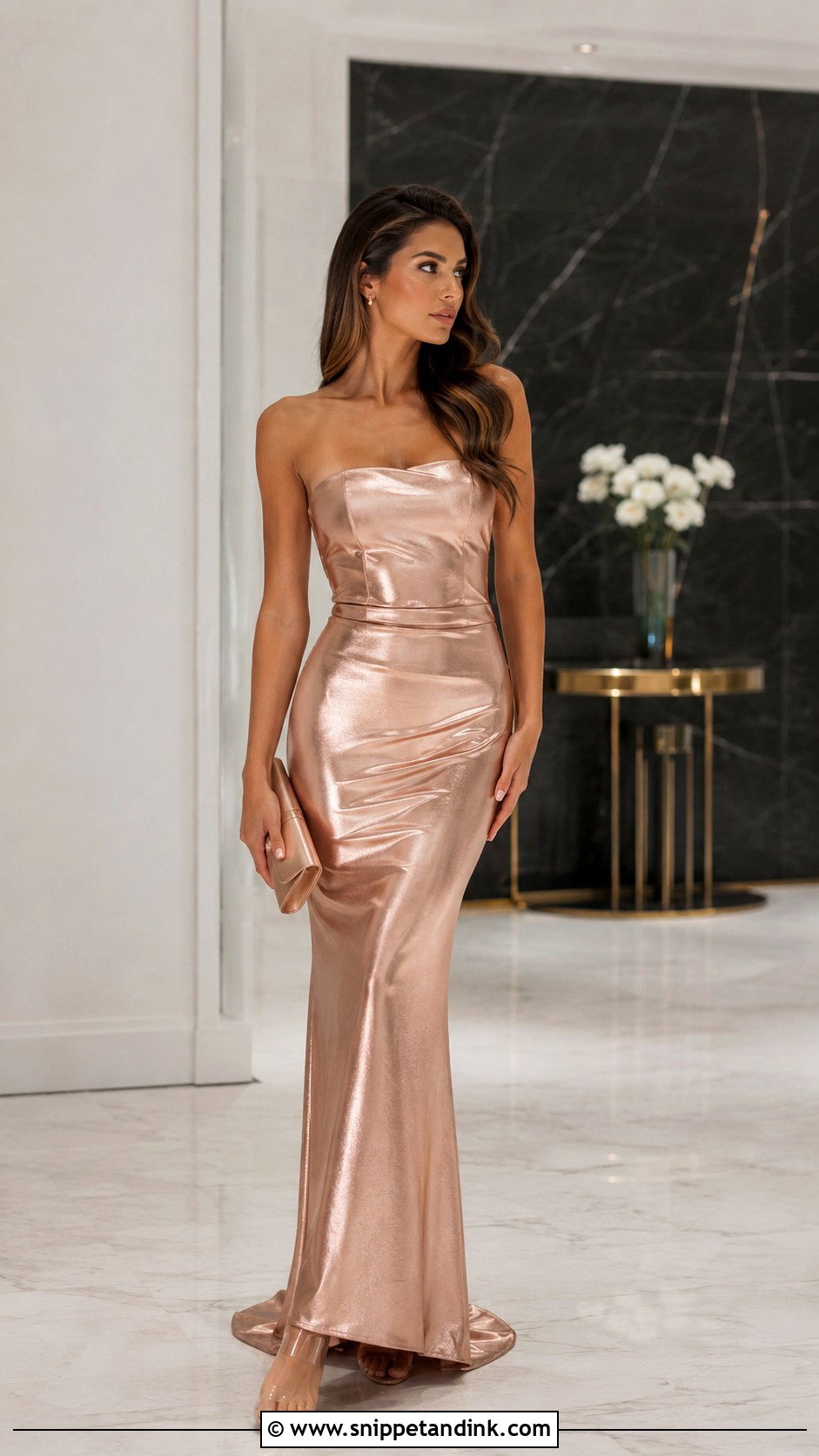
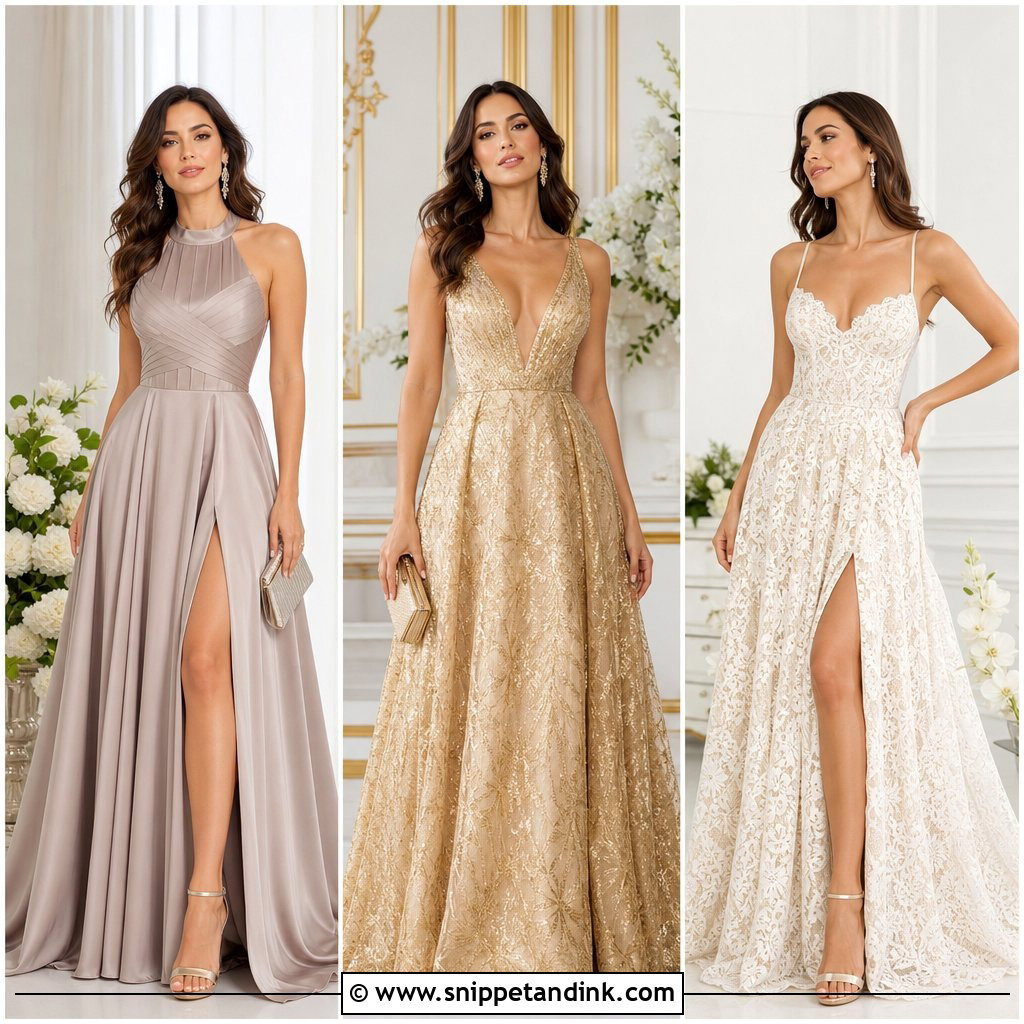
Metallic cloth reflects light at every fold, so the cut has to be clean. Column, wrap and simple draped shapes look expensive; busy seams in lamé look like a costume. Silver, gold, bronze, pewter and rose gold all work, and the right shoe depends on the shade, with clear heels or plain black pumps both being safe. Metallics also show every wrinkle under flash. I treat them as evening and gala fabric. Skip extra sparkle; the gown has already done that job.
19. Draped Gown Design
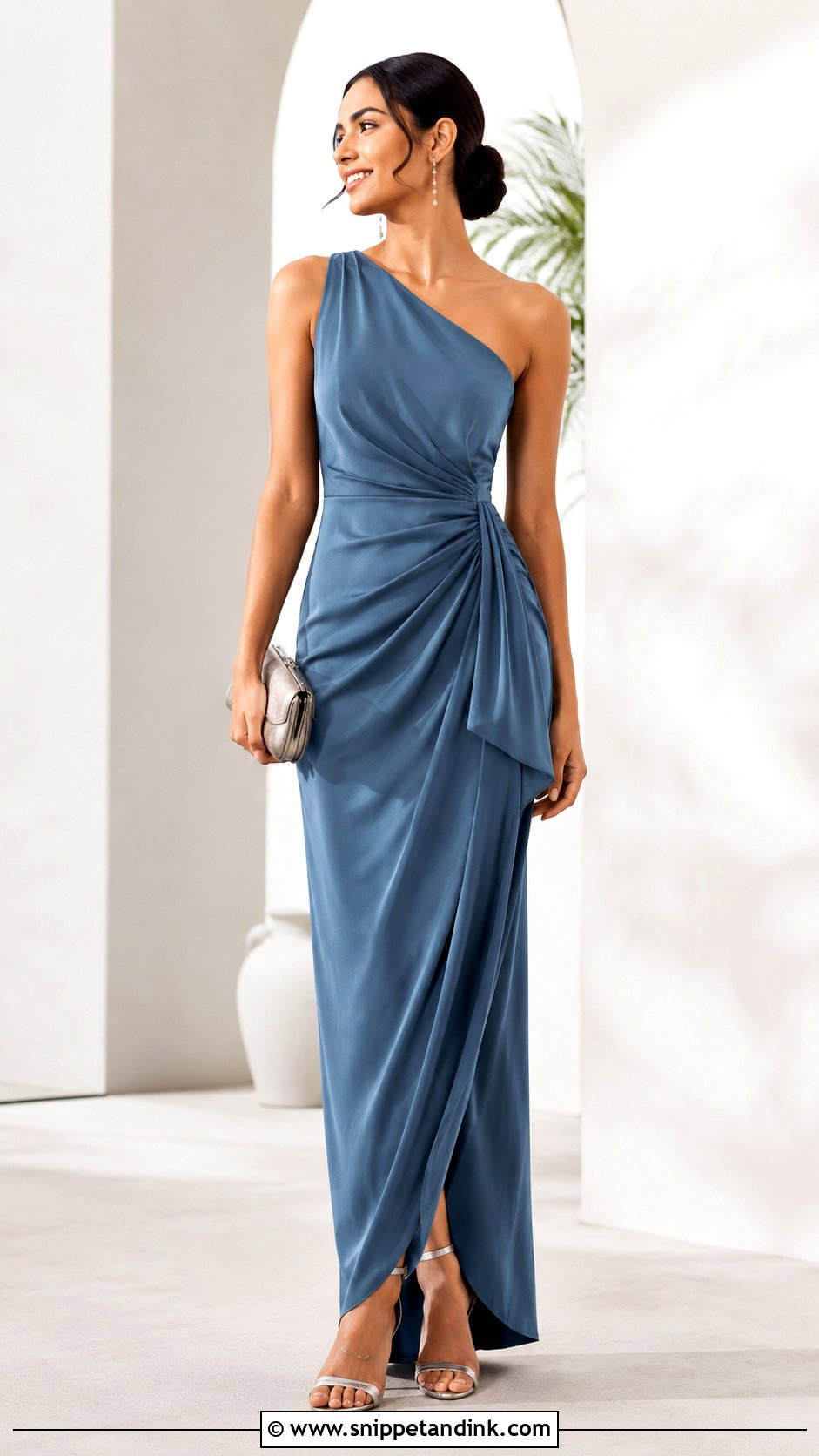
Draping uses gathered folds to shape the body without clinging, which makes it forgiving on the stomach and hips. The folds can sit at the waist, hip, shoulder or neckline. Jersey, satin, silk blends and crepe hold drapes well. What I check at a fitting is whether the drape is stitched down inside; loose drapes can shift and slide as you move, and you’ll spend the evening tugging them back. A one-shoulder drape feels modern, and a draped wrap looks classic.
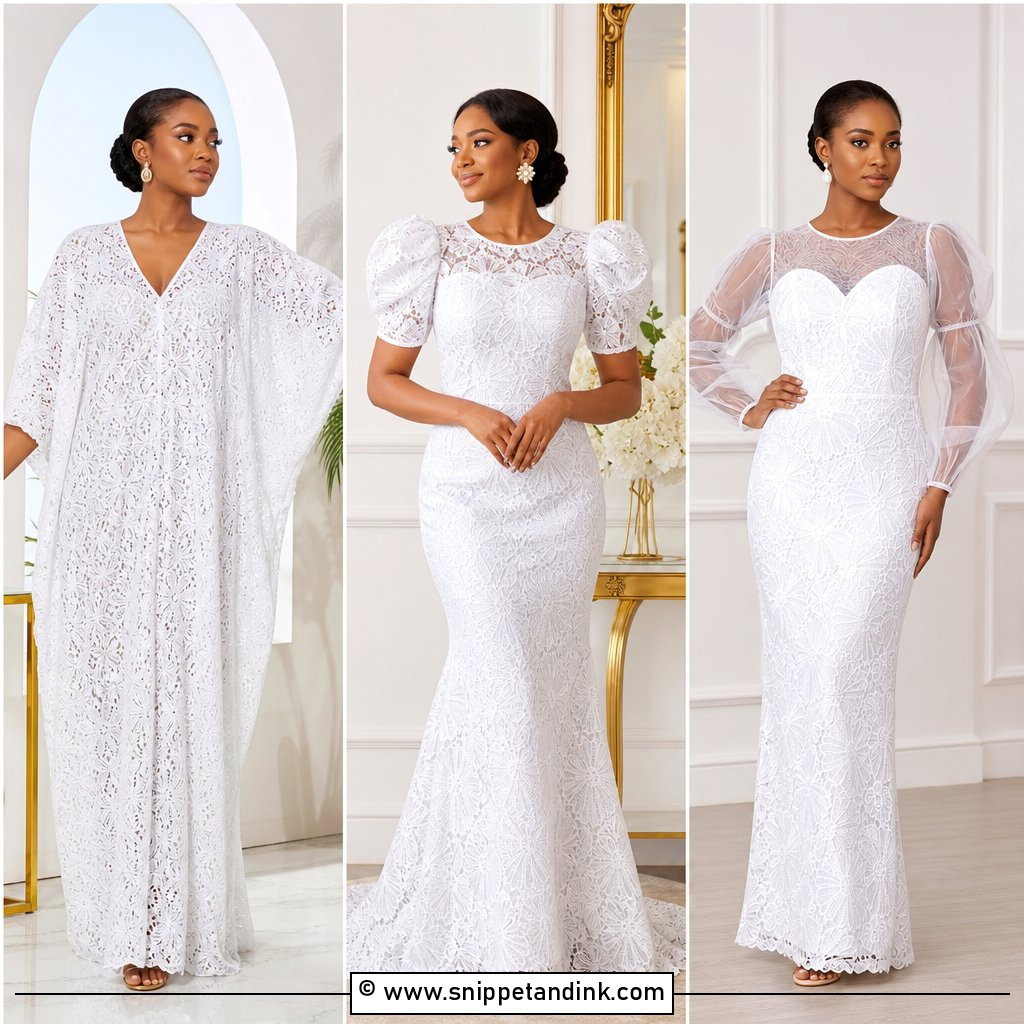
20. Beaded Gown Design
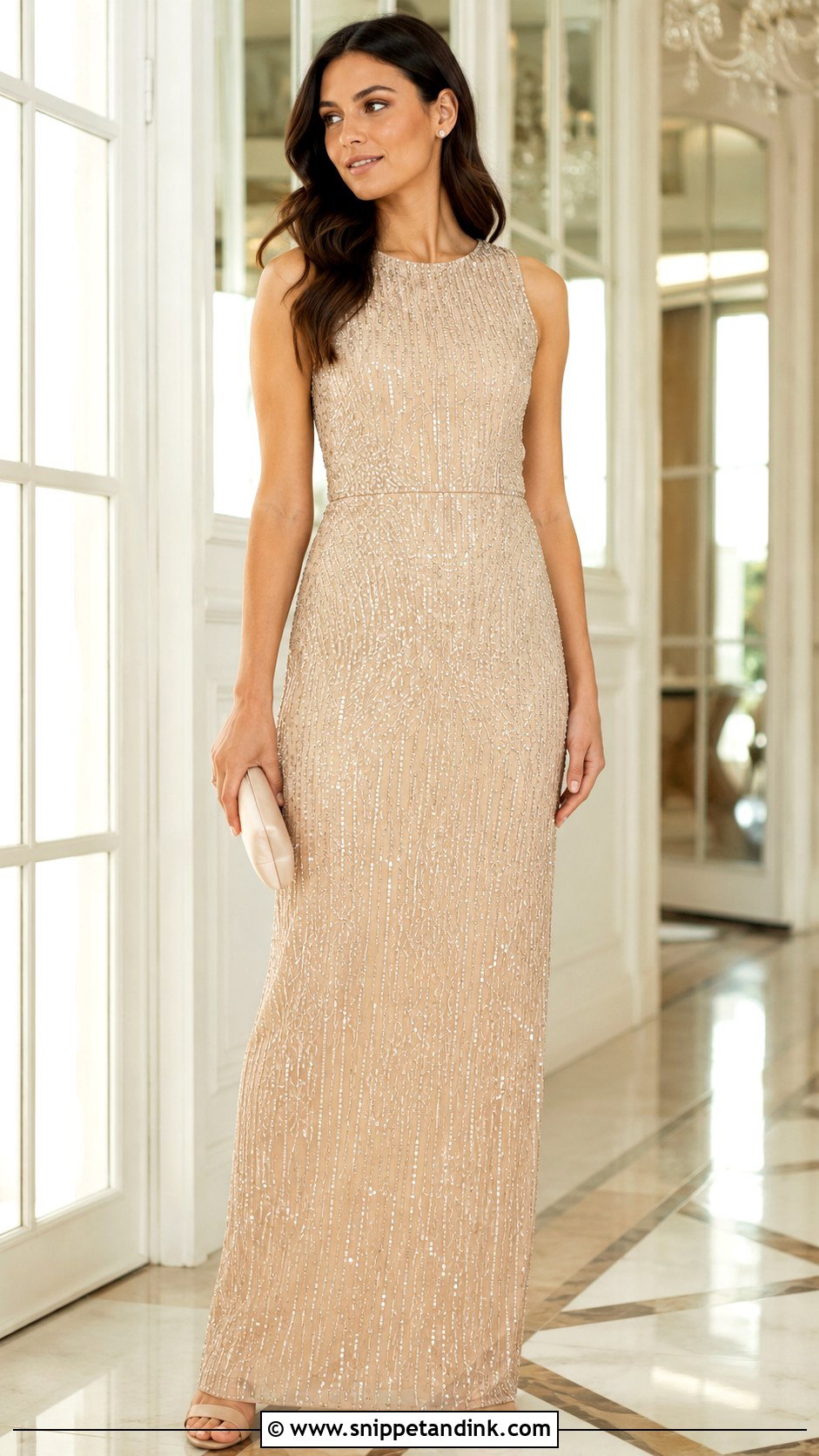
Beading adds craft and real sparkle, but it also adds weight. A fully beaded gown can feel heavy at the shoulders by the end of the night, so wear it for twenty minutes at the fitting before deciding. Clean silhouettes with intentional beadwork look more current than gowns covered edge to edge. A beaded column looks sleek and a beaded A-line looks softer. Alterations on beaded gowns cost more because the beads must be removed and re-sewn at every seam. Plain heels, a plain clutch and light jewelry finish it.
21. High Low Gown Design
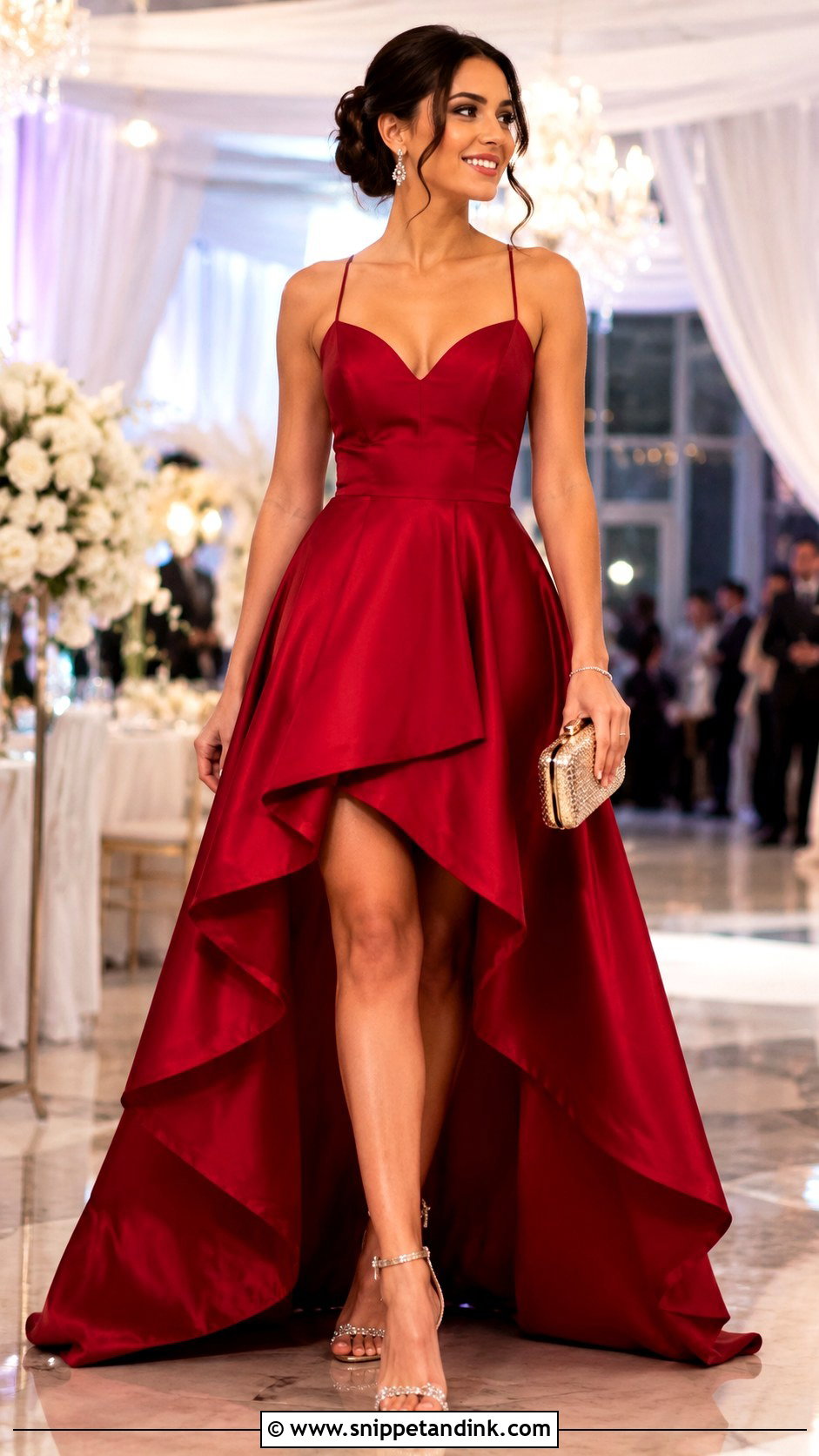
A high-low hem shows the shoes in front and keeps a long line at the back, so it’s easy to dance in. Tulle, satin, chiffon and organza all suit the shape. Since your shoes will be seen, they’re worth spending on: embellished heels, strappy sandals or pointed pumps. I like to get the front hem to sit just below the knee or mid-calf; anything higher reads as a cocktail dress with a train. A fitted bodice keeps the shape tidy.
22. Wrap Gown Design
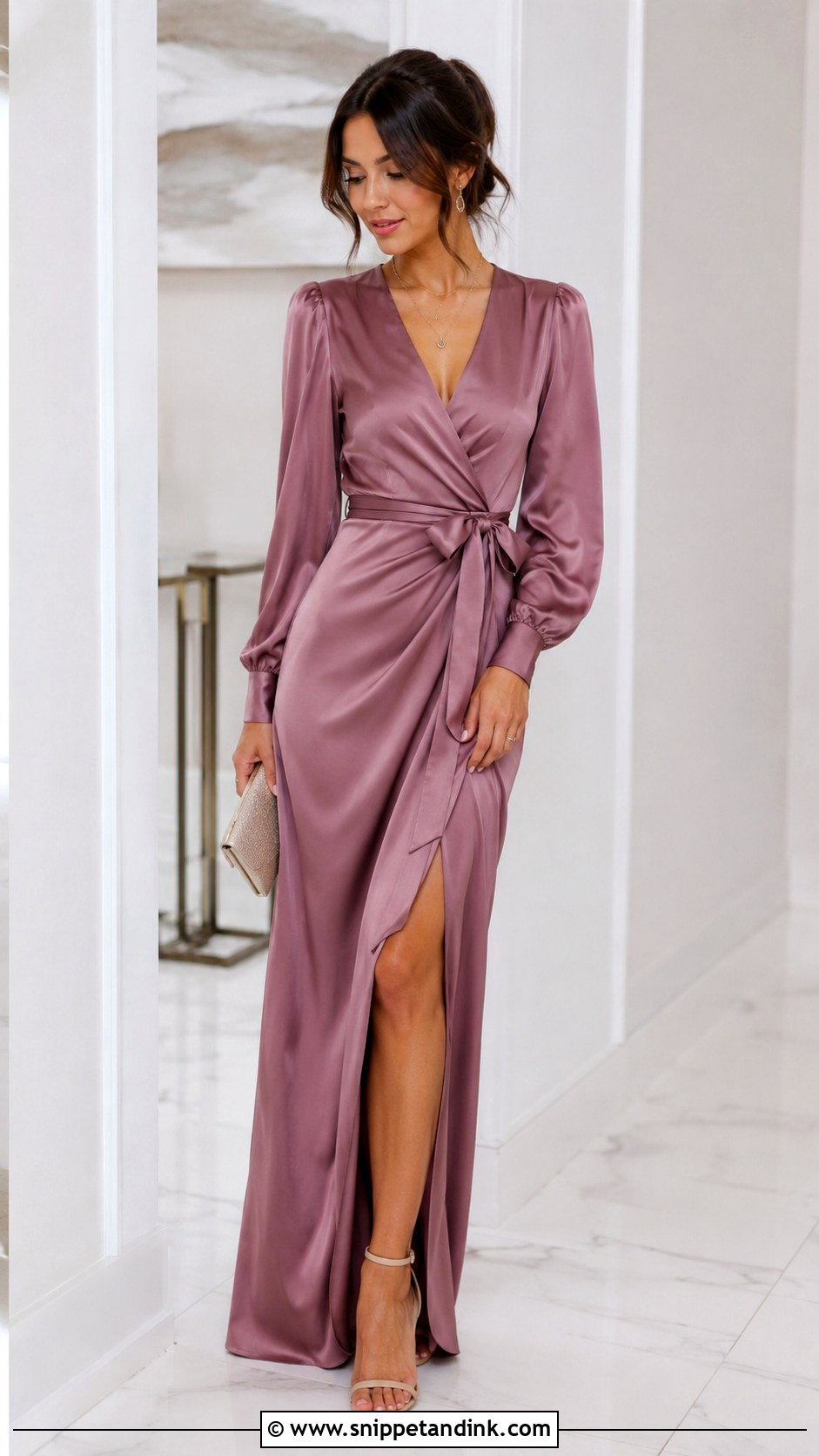
A wrap defines the waist and adjusts with the tie, which makes it one of the most forgiving gowns across sizes. The V-neckline is the catch, as wraps can gape when you lean forward, so I tuck a small snap or a stitch at the crossover before the event. Satin wraps feel dressy, chiffon wraps feel soft. For more coverage, a higher crossover or sleeves help. Heeled sandals and a slim clutch keep it formal, and it rewears easily with different accessories.
23. Tiered Gown Design
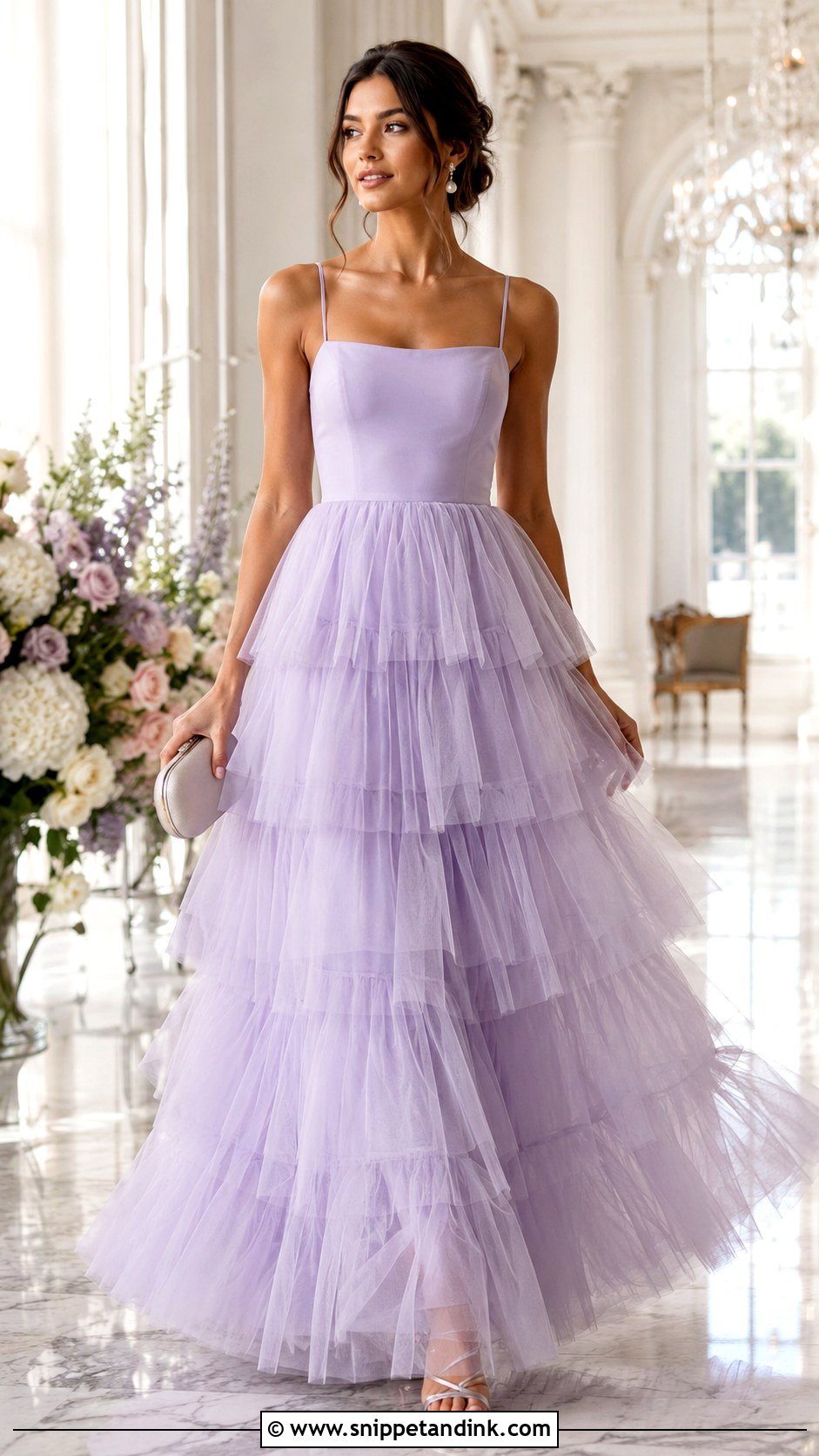
A tiered gown design builds volume in sections, and where those tiers start decides how it sits on your frame. On petite clients I keep tiers smaller and start them lower, because big tiers starting at the hip can swallow a short torso. Taller women can carry larger layers. Soft tulle tiers look dreamy and satin or organza tiers look more structured. Keep the bodice plain so the skirt reads clearly.
24. Slit Gown Design
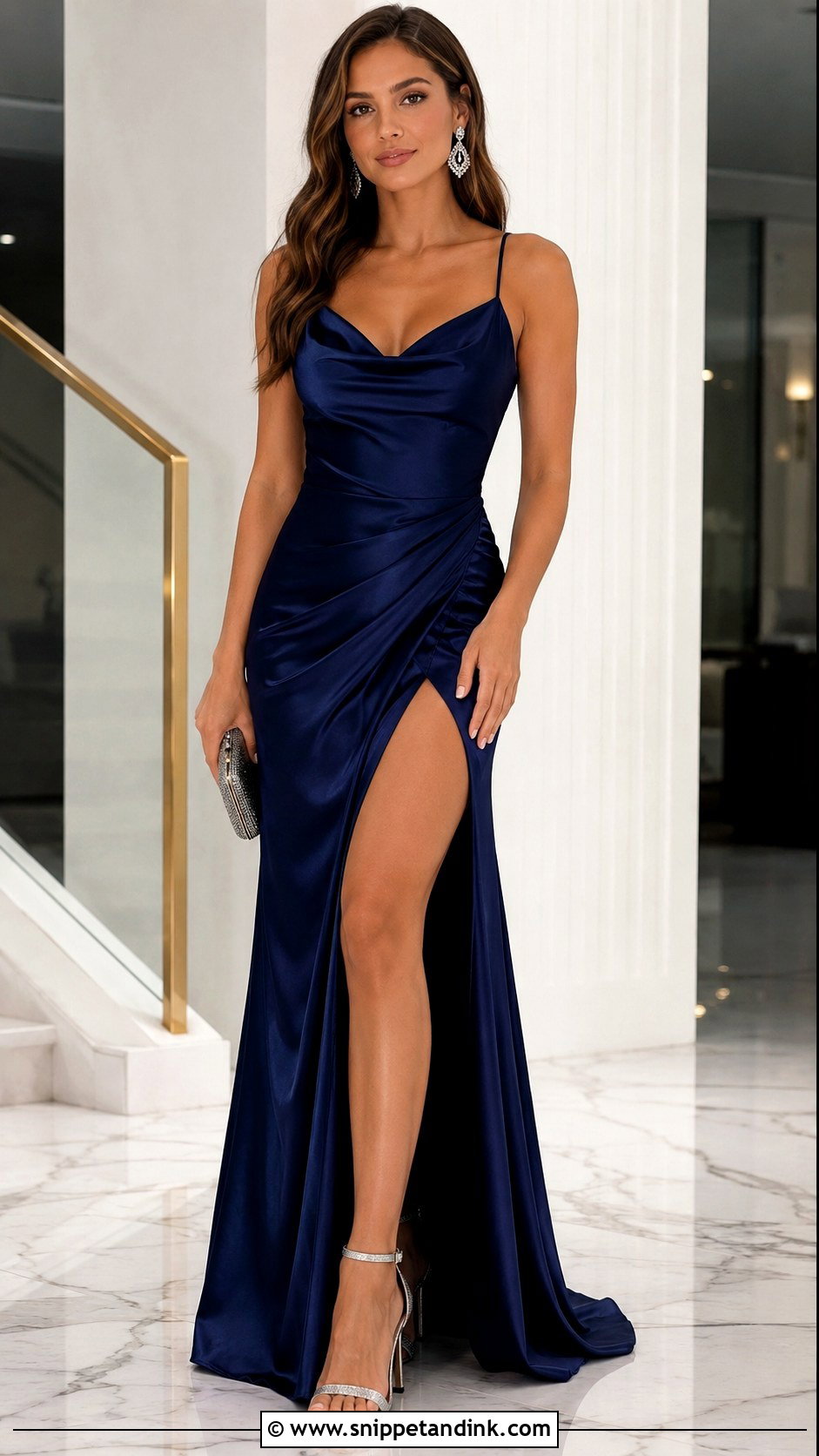
A slit adds movement and shows off the shoes, but height is everything. I have clients sit down and cross their legs in it before buying; a slit that’s fine standing can open well past what they wanted once seated. Side slits read more modest than front ones. Satin, crepe, chiffon and jersey all take a slit well. With a high slit, pair a more covered neckline or structured bodice so the look stays balanced.
25. Minimalist Gown Design
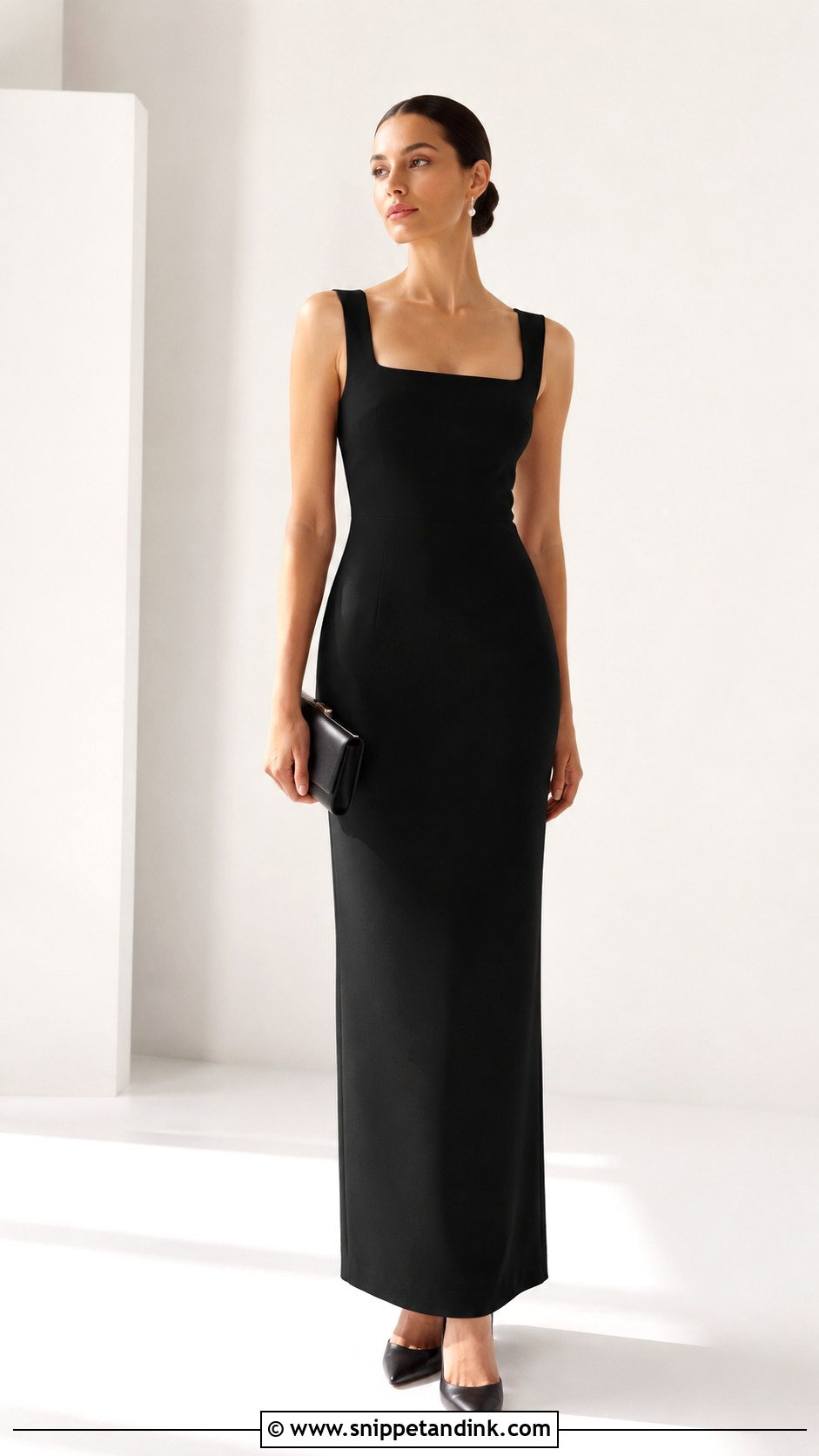
A minimalist gown has nowhere to hide, so the fit has to be close to perfect. Column cuts, square necklines, slip silhouettes and tailored A-lines all fall into this category. Crepe, satin and silk blends give the smooth surface this design needs. I spend more of the alterations budget on these than on embellished gowns, because a crooked hem or a pulled seam is visible from across the room. Add one strong piece, pearl earrings or a cuff, and stop there. Ivory, black, navy, taupe and champagne rewear easily.
Alterations a Gown Can Take, and Ones It Can’t
Most gowns bought off the rack need at least a hem and a little shaping at the waist. Plan on several weeks for alterations and book them well ahead of a busy season, because tailors fill up fast in spring and before the holidays.
Usually simple
- Taking in the side seams or the bodice by a size.
- Shortening straps and adding a waist stay or bra cups.
- Hemming a single-layer skirt in crepe or satin.
Usually costly or impossible
- Letting out more than a little, since most gowns have narrow seam allowances.
- Hemming a skirt with several tulle layers or a beaded border, where every layer or bead must be redone.
- Changing the neckline on a boned bodice.
Bring the exact shoes and underwear you’ll wear to every fitting. A hem set with flats will drag on the floor once you add heels, and a bra with a different shape changes how the bodice sits.
Getting the Gown to the Venue Without Creases
Hang it in a breathable cotton or nonwoven bag, never plastic, which traps moisture. For a car, lay it flat across the back seat or hang it from the grab handle. For a flight, I fold the skirt around tissue paper and carry it on rather than checking it.
Steam from the inside of the skirt at a little distance, and test a hidden spot first. Velvet needs steam from the back only, sequins and metallics need a low setting, and chiffon should never get an iron directly on it. A small travel steamer in the venue room is worth more than any accessory on the day.
Sit, Walk and Reach in It Before You Pay
Every silhouette here has a version that looks right on you and a version that fights you all evening. Ball gowns, ruffles, capes and tiers bring drama; satin, chiffon, wrap and minimalist shapes are easier to live in. Think through the event, the fabric, the neckline and how much you’ll be sitting, then test that in the fitting room. A gown should hold your posture, survive dinner and still look right when someone photographs you from the side.
You'll Like These Ideas:


Leave a Reply