
With a fitted gown, I start from the fabric and work back to the design, not the other way round. The same corset bodice behaves completely differently in wax print than in velvet or jersey, and the cloth decides how close the fit can be, how you’ll sit and how the colors read in photos. The looks below cover Ankara, lace, satin, velvet, crepe, chiffon and more, each with the neckline, sleeves, shoes, jewelry and bag that suit it. Some rely on firm structure, others on drape or stretch. Every one can be adjusted for coverage, color, size, age or the event you’re dressing for, so treat them as starting points for a conversation with your tailor.
Handing Your Fabric to a Tailor
Many of these gowns are made rather than bought, which puts more of the result in your hands. Most problems I see with custom fitted gowns start before the first cut, so here is what I go through with anyone bringing fabric to a tailor.
Buy more than you think
Ankara is usually sold in six-yard pieces, and a full-length fitted gown with sleeves often uses most of that once print matching is factored in. Bold, directional prints and velvet need extra, because every panel has to run the same way. Ask your tailor for a yardage figure before buying, and buy all of it from the same batch, as dye lots vary.
Wash or test cotton prints first
Wax prints and other cotton fabrics can shrink slightly and release dye in the first wash. If the gown will ever be washed, pre-wash the fabric in cold water before it’s cut. If not, at least wash a small offcut to see what happens.
Insist on a fitting before the final sewing
A fitted gown should be tried on while it’s still basted or pinned, so seams can move without leaving needle holes. I’d plan for at least two fittings, wearing the shoes and underwear you’ll have on the day, and allow several weeks before the event so nothing is rushed.
1. Ankara Corset Fitted Gown
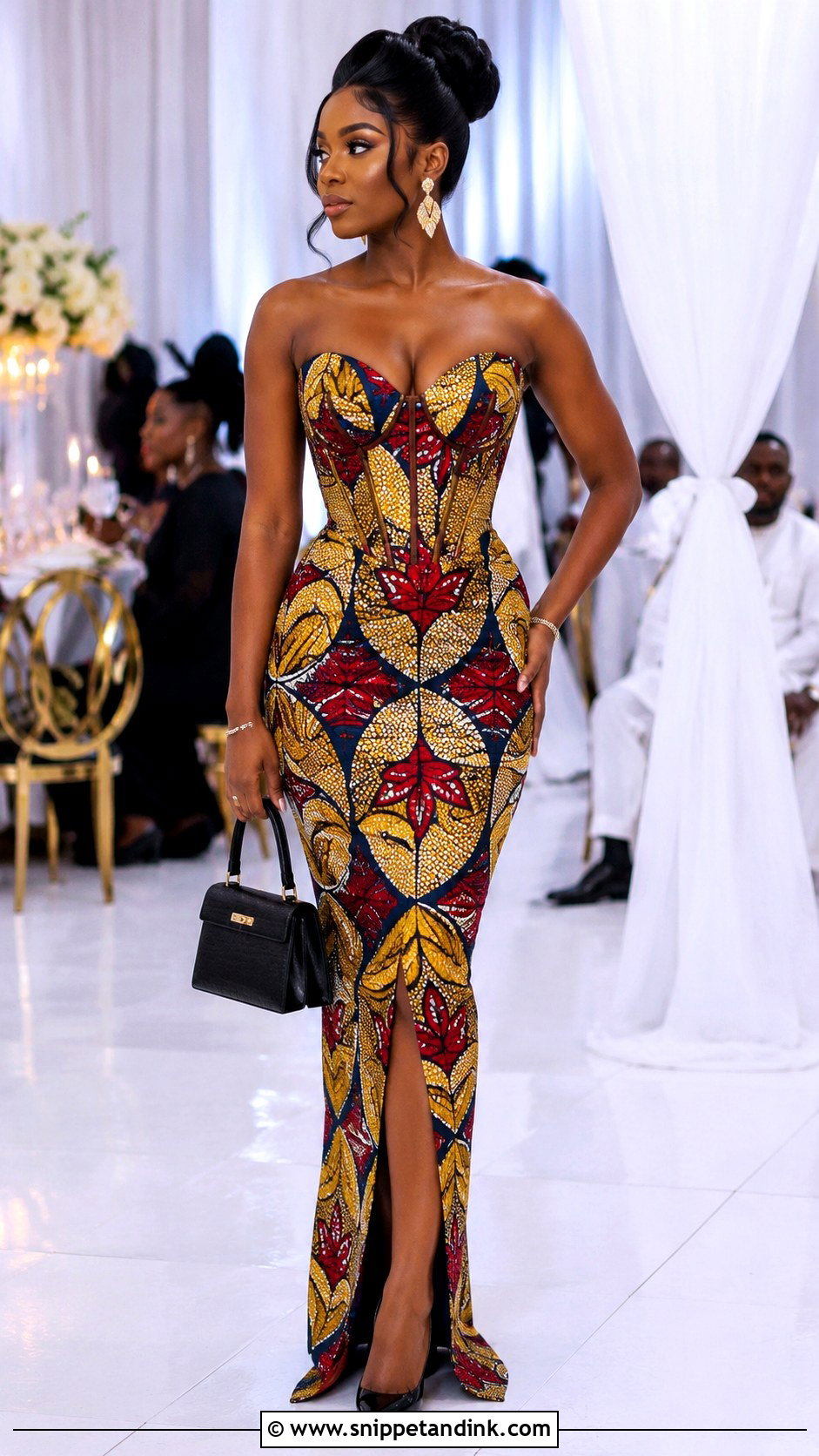
Wax print has almost no stretch, which is the first thing I tell anyone planning a structured Ankara corset gown. A boned bodice should follow the bust and waist closely, but the skirt needs a modest back slit or you’ll be taking tiny steps all evening. Print placement matters as much as fit. A good tailor centers the main motif on the bodice and matches it across the side seams, so the pattern looks planned instead of chopped. Keep the neckline straight, sweetheart or gently curved. Solid pumps, a small structured bag, simple drop earrings and one bracelet give a busy print room to breathe.
2. Lace Long Sleeve Fitted Gown
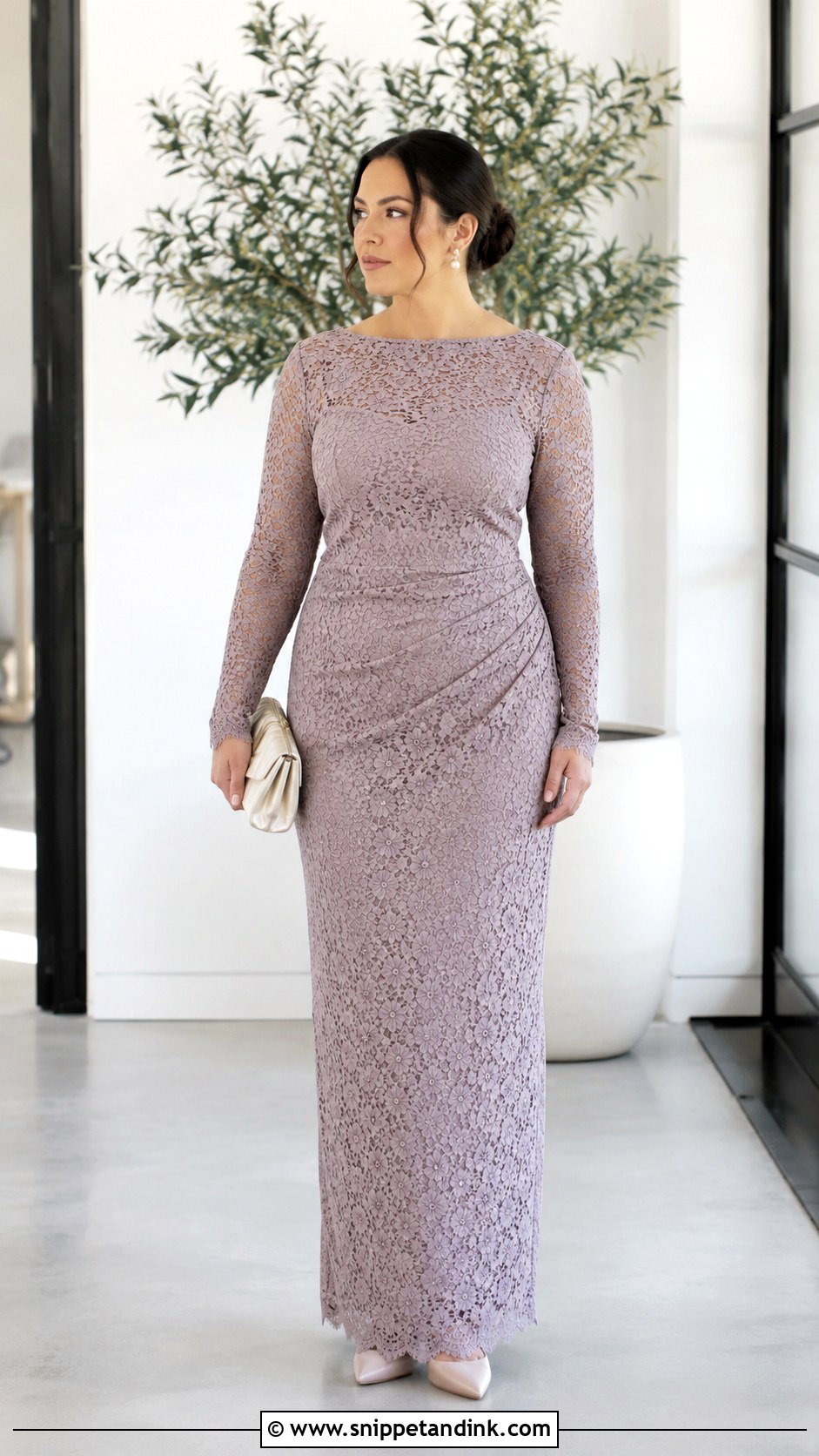
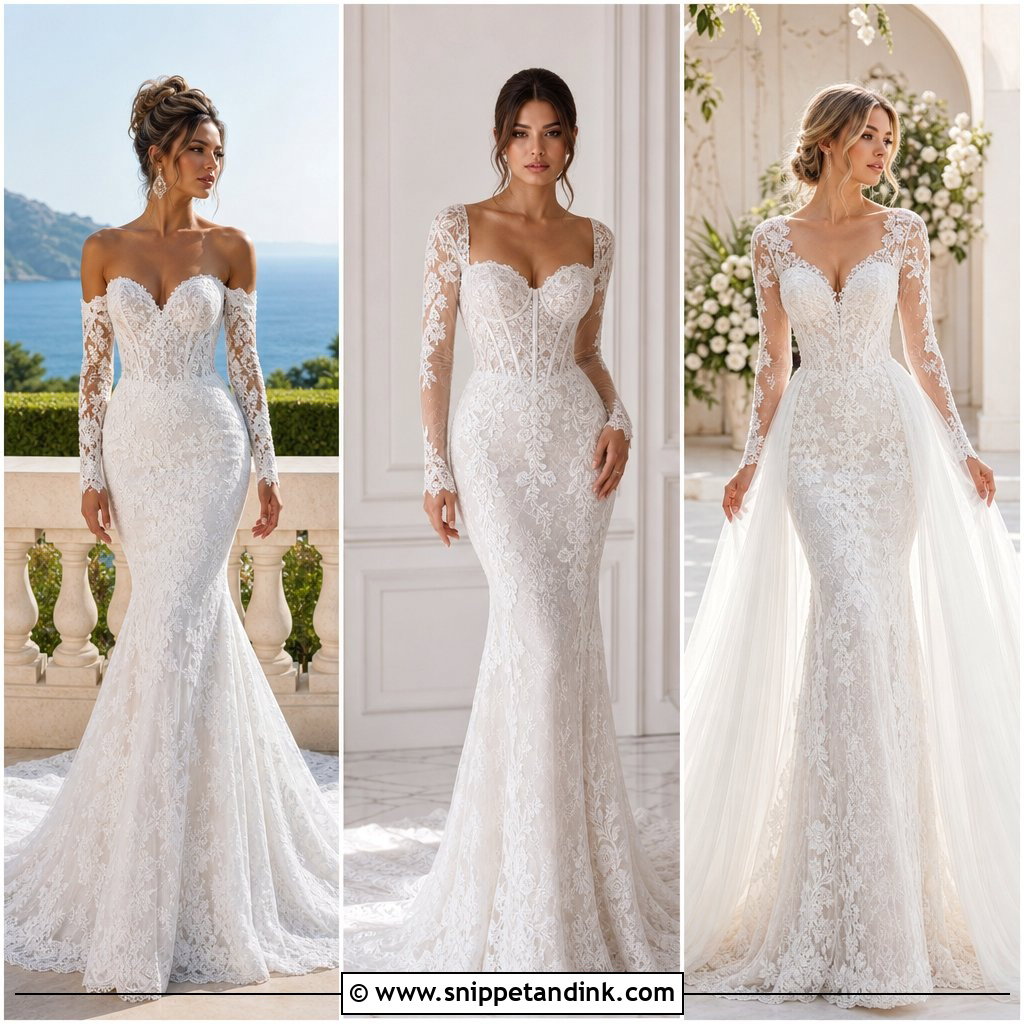
Long-sleeve lace gowns depend on the lining. A smooth, fully lined bodice and skirt let the lace pattern show while keeping coverage, and sheer sleeves stop the whole thing feeling heavy. I like a bateau neckline, defined waist and a floor-length skirt that tapers but leaves real room around the knee. Pointed pumps or slim heeled sandals continue the line, with pearl studs, a satin clutch and a neat low bun. If the lace is busy, don’t add a big necklace. The fabric is already doing the decorating.
3. Satin Cowl Neck Fitted Gown
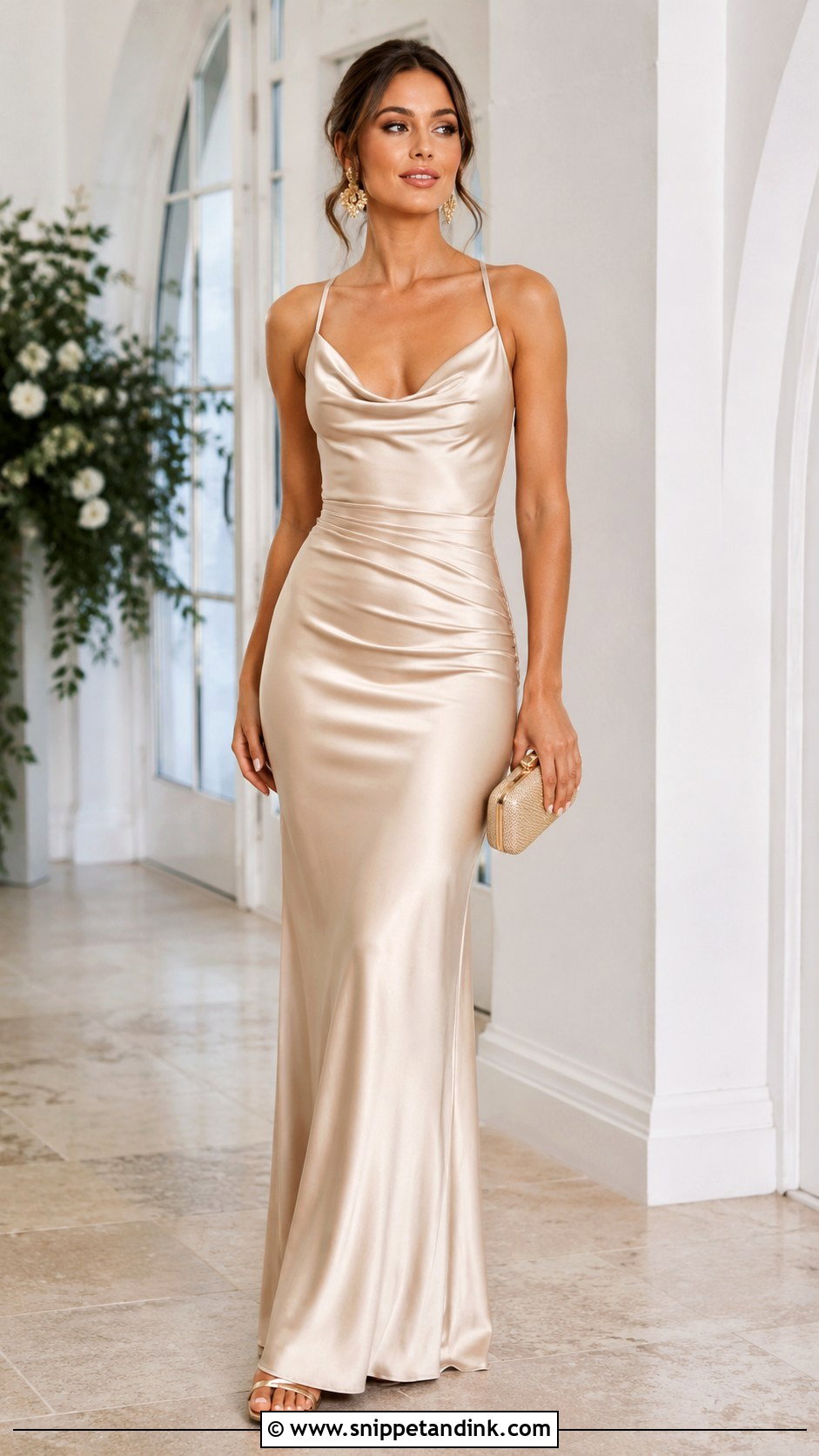
A cowl neck in satin works because of the bias cut. Fabric cut on the diagonal drapes and stretches slightly, so the cowl falls in soft folds and the skirt skims the body instead of sitting stiffly. It also shows everything underneath, which is the trade-off. Medium-weight satin is my preference; thin satin clings to the hip and wrinkles where you sit. Light ruching at the waist adds definition, and wider straps give more support than narrow ones. Metallic sandals, a compact clutch and earrings that pick up the sheen suit it, along with smooth, line-free underwear, sleek hair and understated makeup.
4. Velvet Off Shoulder Fitted Gown
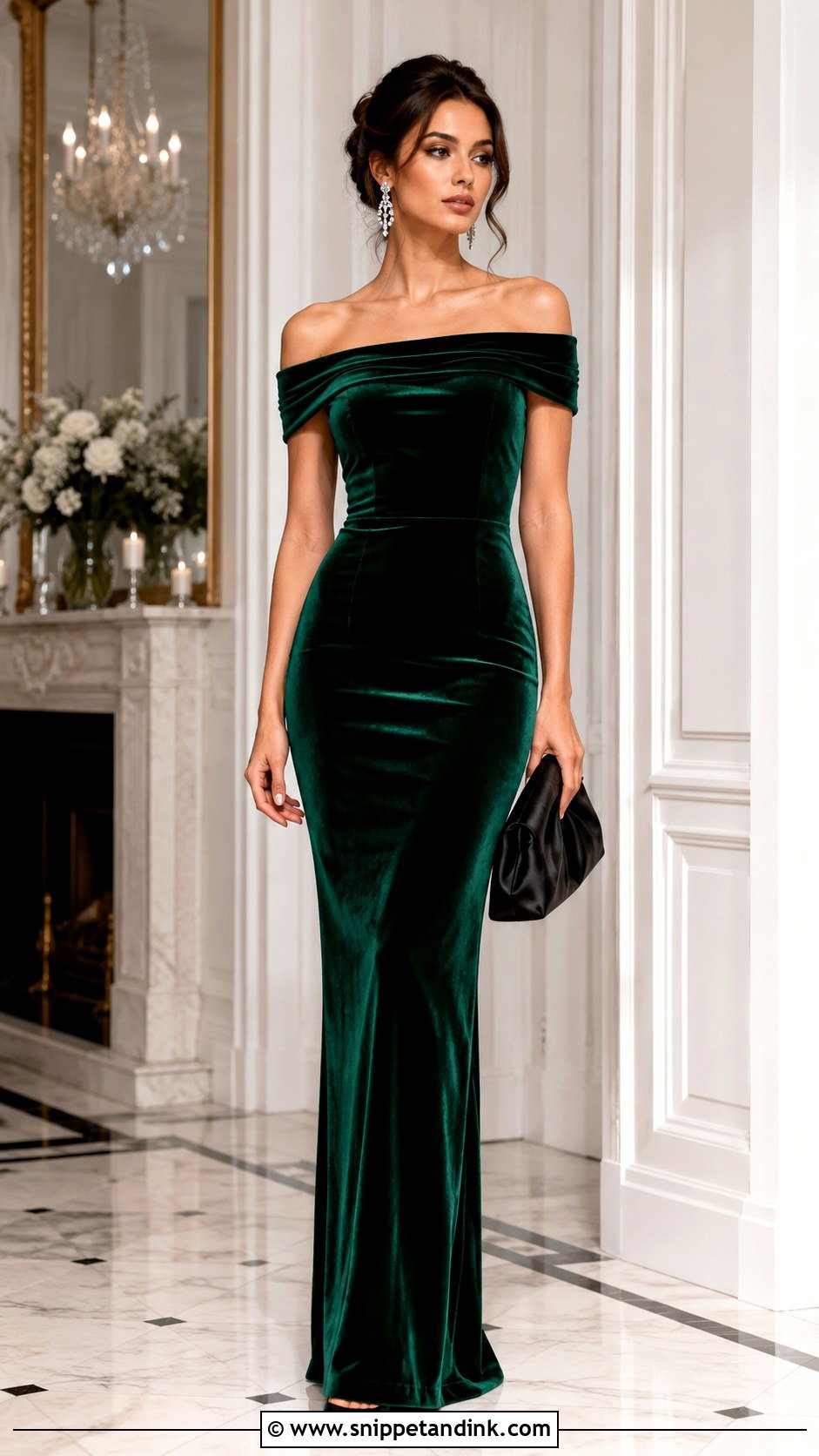
Velvet is my favorite cool-weather fabric for a fitted gown, and also one of the warmest to wear indoors. It absorbs light, so jewel tones such as emerald, navy, plum and burgundy look deep and rich rather than flat. A fold-over off-shoulder neckline needs a contoured, supported bodice to stay put. A long skirt with a back vent keeps the narrow shape while letting you walk. Closed-toe heels, crystal earrings and a smooth satin clutch are enough; skip extra textured pieces, as velvet already has plenty. Wear your hair swept back to show the neckline. Ask your tailor to cut all panels with the pile running the same direction, or the color will look patchy.
5. Sequin One Shoulder Fitted Gown
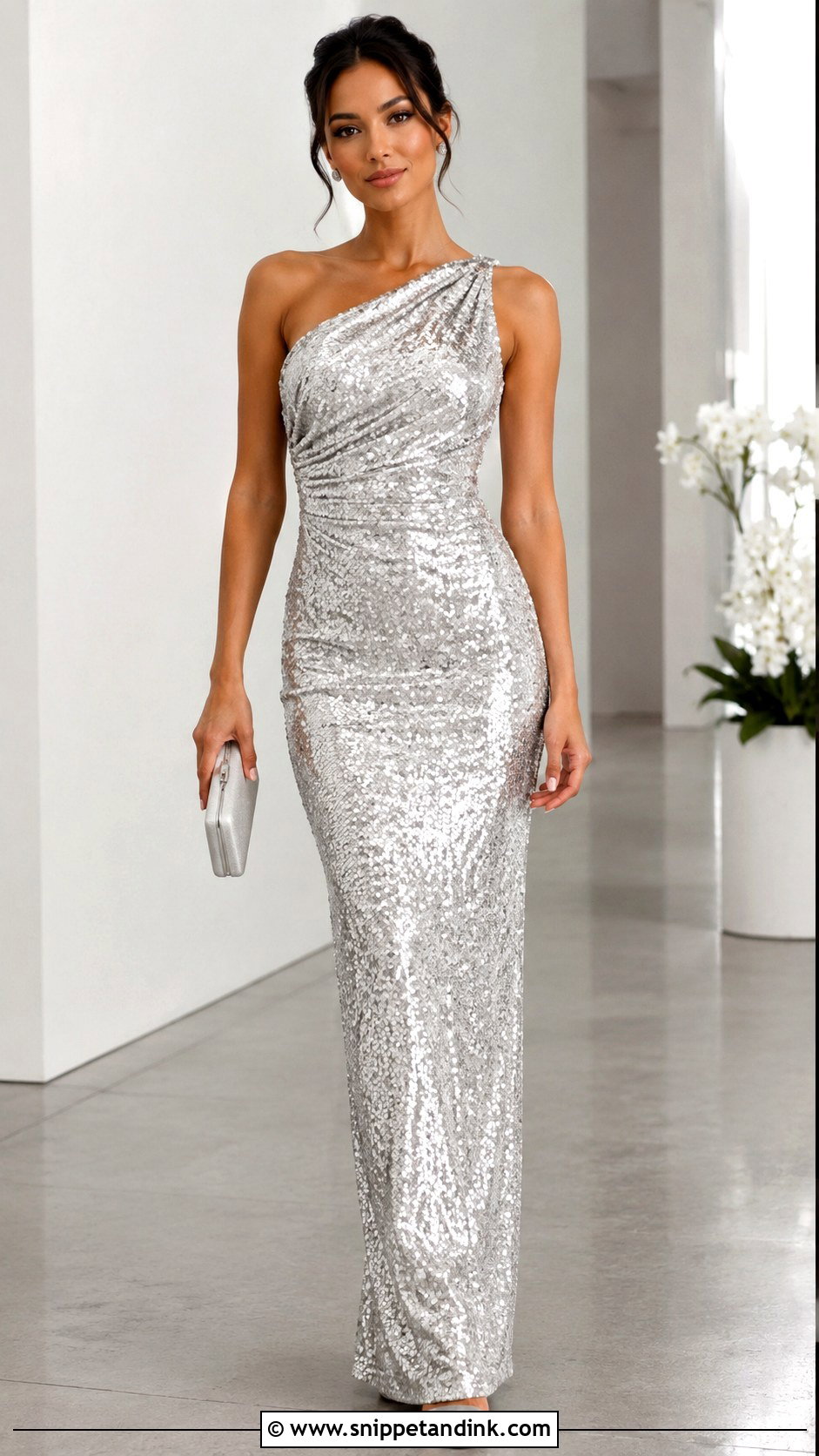
Sequins make the statement for you, so the work goes into comfort. A fitted column or mermaid keeps the shape polished while the surface does the drama. The lining is non-negotiable: soft fabric beneath the sequins at the arms, waist and legs, or they’ll scratch by the second hour. I check that the one-shoulder neckline sits firm without dragging across the bust. Simple heeled sandals, a small solid clutch and studs or one slim cuff are plenty. Keep the hair sleek or sweep it over the bare shoulder, which also stops it tangling in the sequins on the other side.
6. Crepe Square Neck Fitted Gown
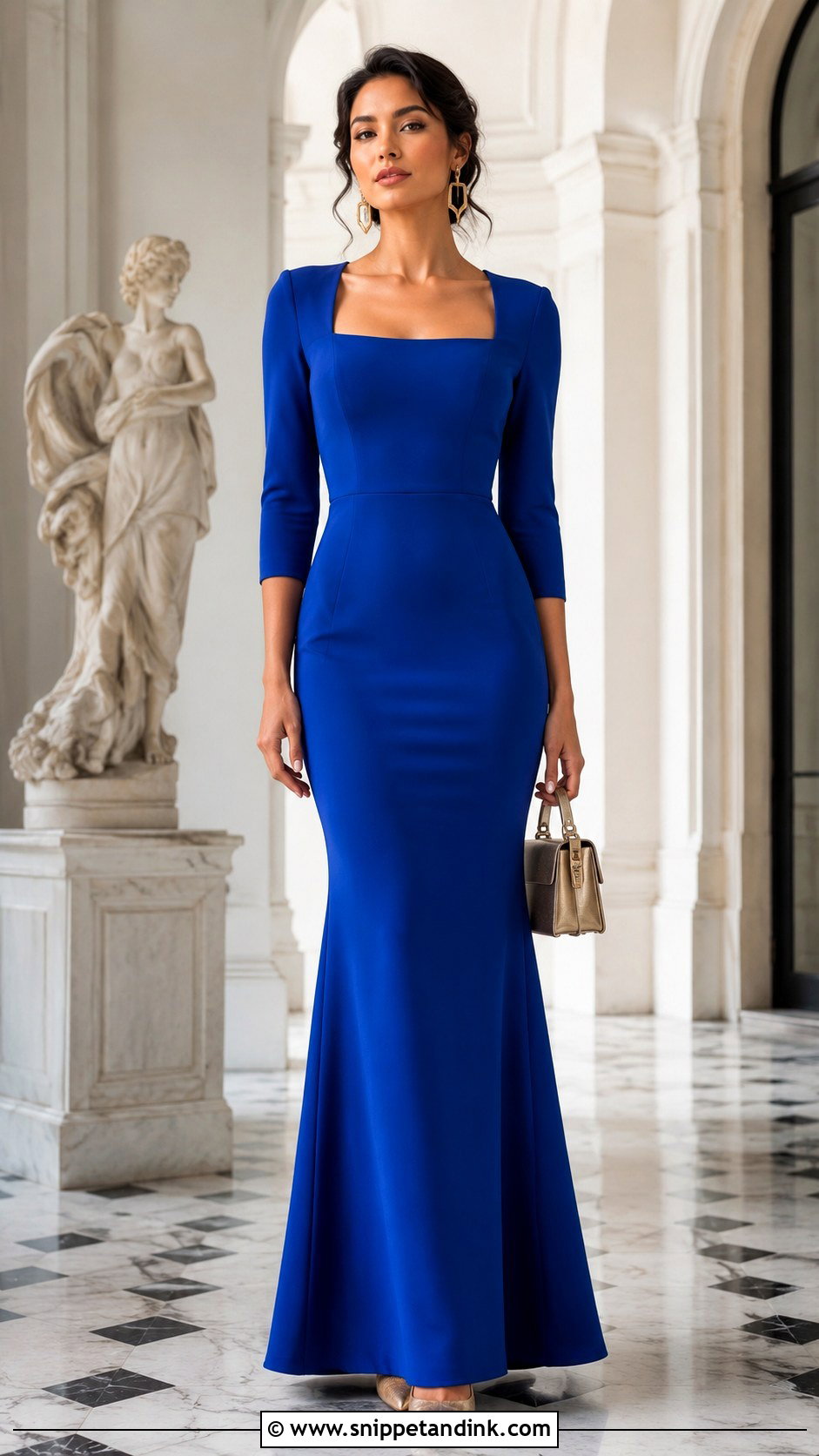
Crepe is the most forgiving fabric for a close fit. Its soft texture breaks up light, so small wrinkles and body contours show less than on satin. A square neck, defined waist, supportive bodice and a straight or slightly flared skirt give a clean, modern shape. Short sleeves look tailored; three-quarter sleeves give extra coverage. A short pendant or fine chain sits nicely in a square neckline, though it looks complete without one. Pointed pumps, a structured mini bag and geometric earrings suit it. Ask for a fitted lining so the crepe falls neatly. It works in strong colors, muted neutrals or classic black depending on the event.
7. Brocade Peplum Fitted Gown
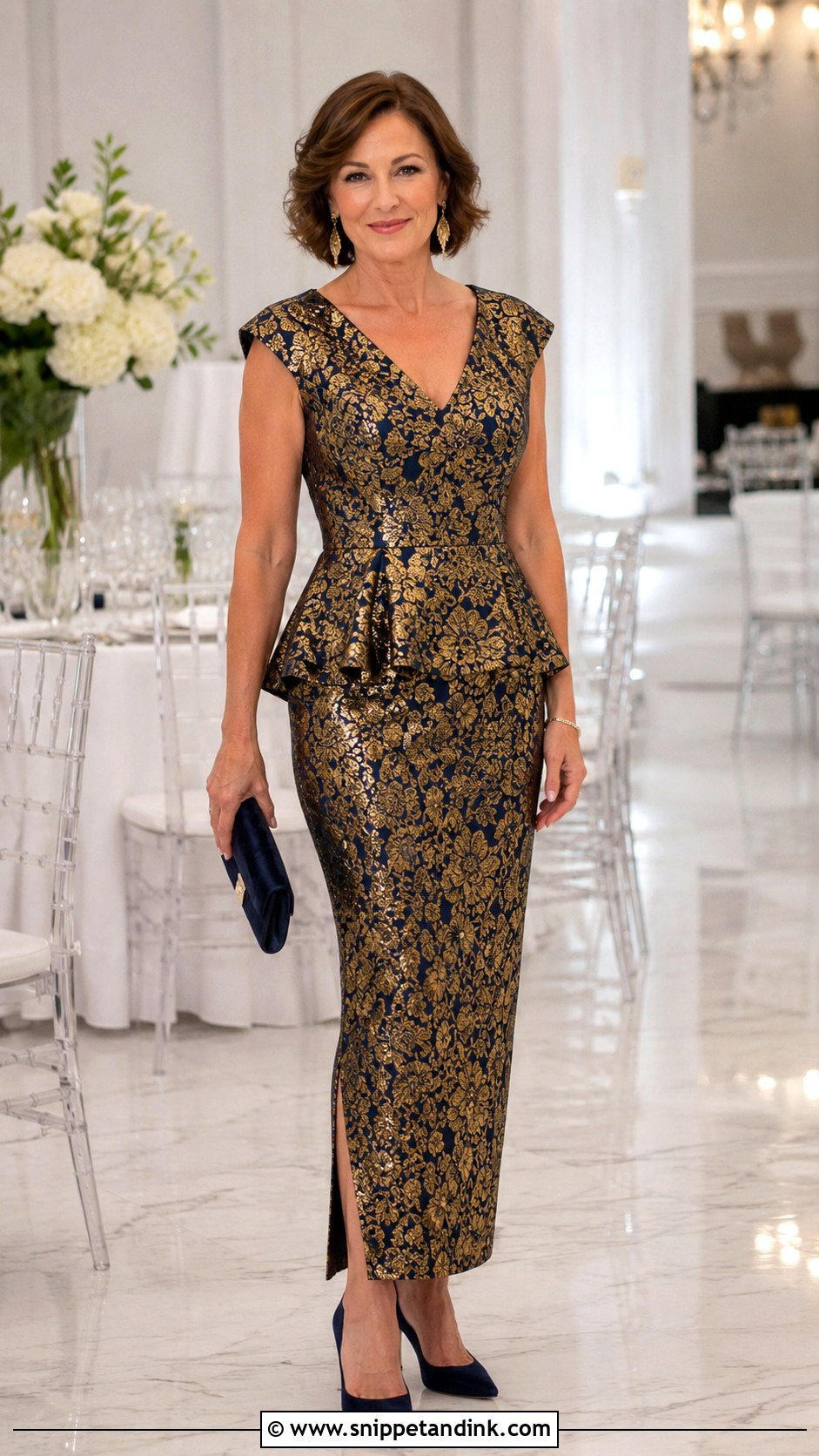
Brocade has the body to hold a peplum without collapsing, which softer fabrics can’t do. The peplum should sit exactly at your waist and be scaled to your height. On shorter frames, I’d go for a shorter, softly curved peplum over a wide or layered one, since big peplums cut the body in two. A clean bodice, narrow skirt and a modest V or rounded neckline let the woven pattern lead. Brocade is firm, so a back slit and soft lining are essential for walking. Plain pumps, a solid clutch and small metallic earrings that pick up the woven thread finish it. Skip patterned shoes.
8. Silk Halter Fitted Gown
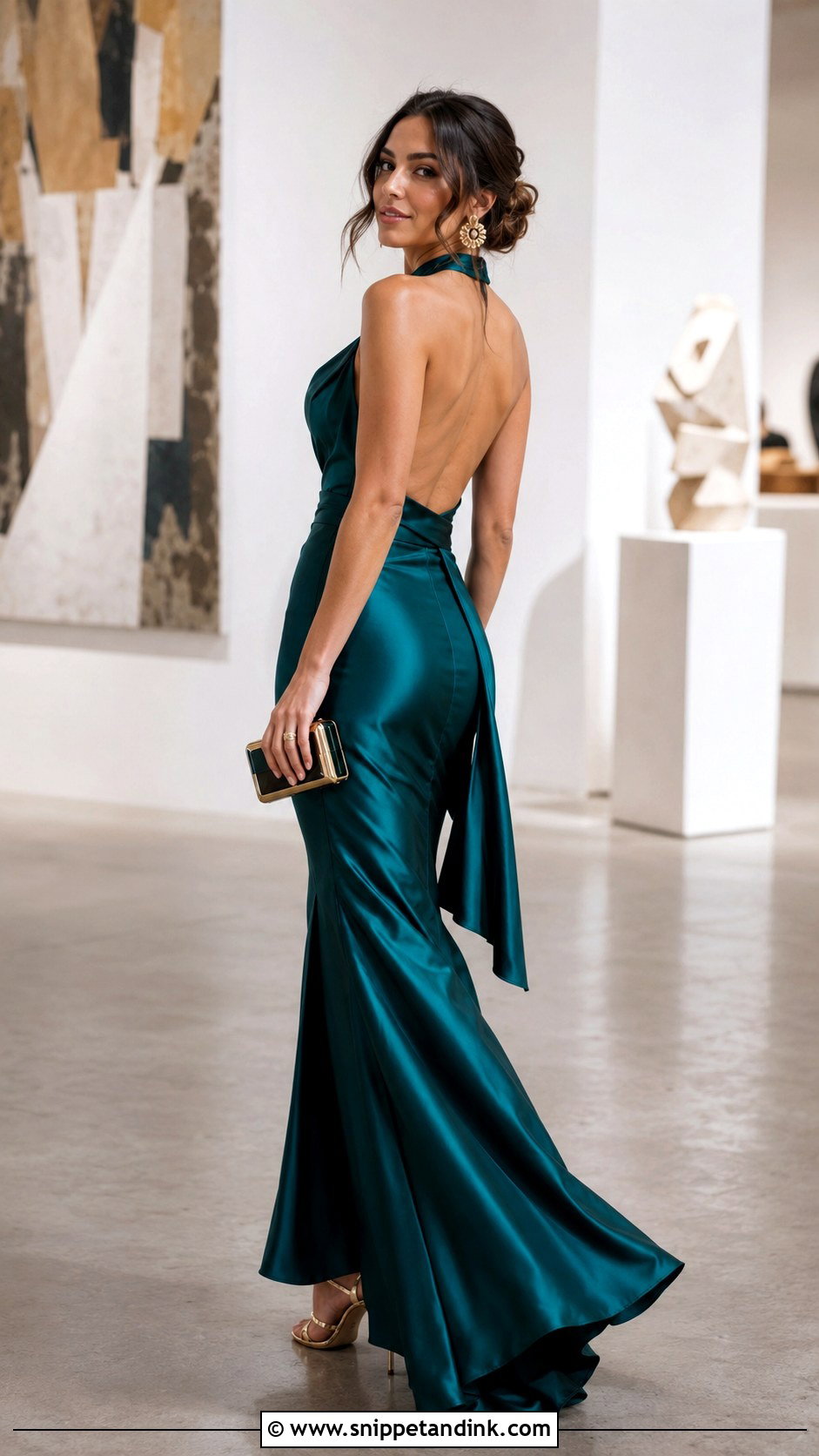
Silk halters look simple and are surprisingly technical. The silk needs enough weight to drape without clinging, and the bodice must support itself at the underarms, especially with an open back, so the neck strap isn’t carrying the gown. A fitted skirt that flares gently below the knee adds movement. Slim metallic heels, a small box clutch and sculptural earrings suit it; skip the necklace. A smooth updo or high ponytail shows the shoulders. Silk marks with water, so I steam it from a distance on the hanger rather than pressing, and keep drinks well away while you dress.
9. Chiffon Overlay Fitted Gown
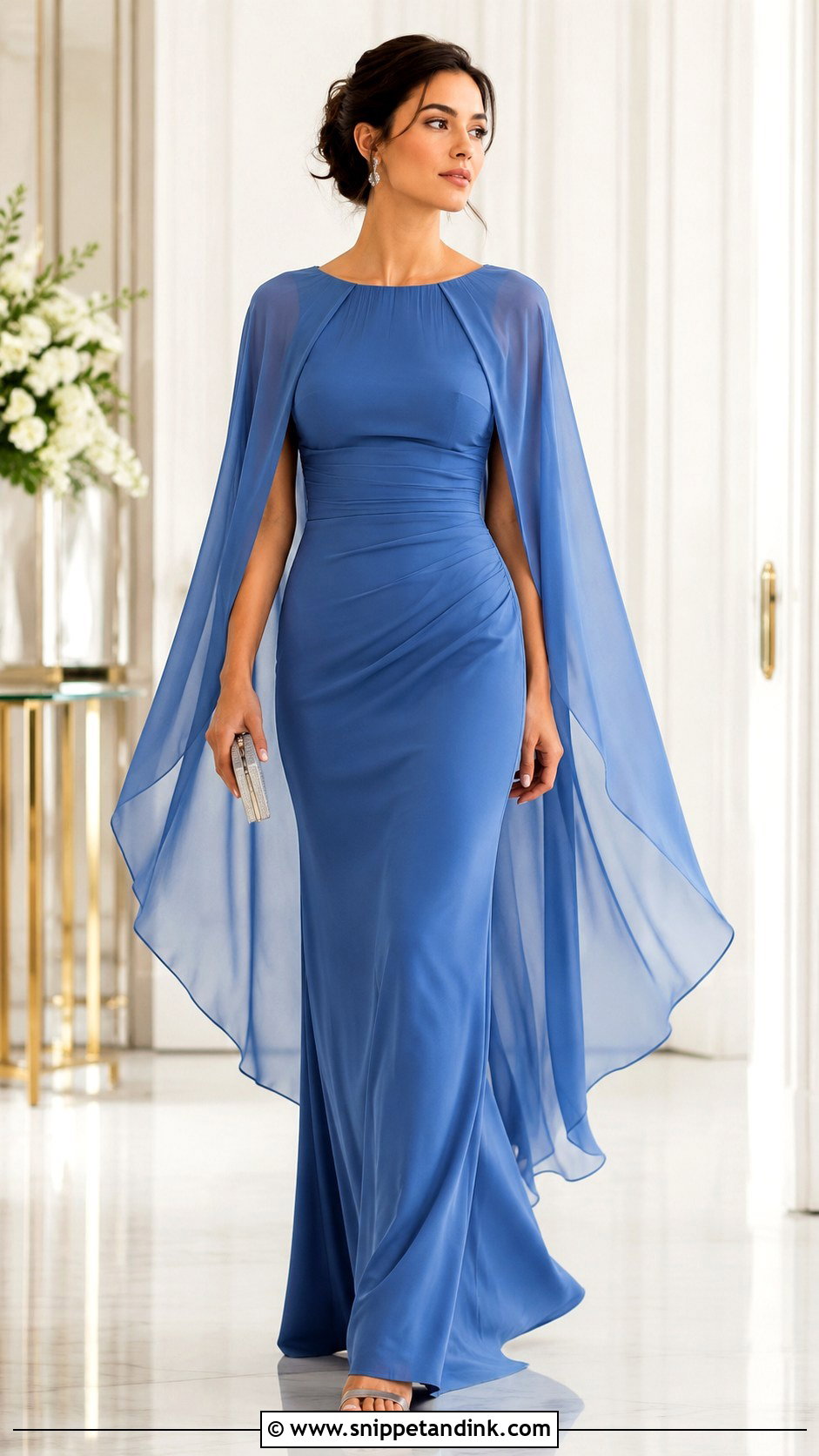
Can lightweight chiffon work with a fitted gown? Yes, as long as it isn’t asked to shape anything. Chiffon has no structure, so I use it as an overlay on a lined crepe or satin base that does the fitting. A sheer cape, a draped panel or flowing sleeves give movement without hiding the silhouette. Tonal fabrics blend into one look; a slightly lighter overlay adds depth. Heeled sandals, a slim clutch and delicate earrings suit it, with minimal bracelets if the chiffon falls around the wrists. A side-swept style moves with the fabric. Chiffon frays easily, so check that every edge is finished with a fine rolled hem.
10. Organza Sleeve Fitted Gown
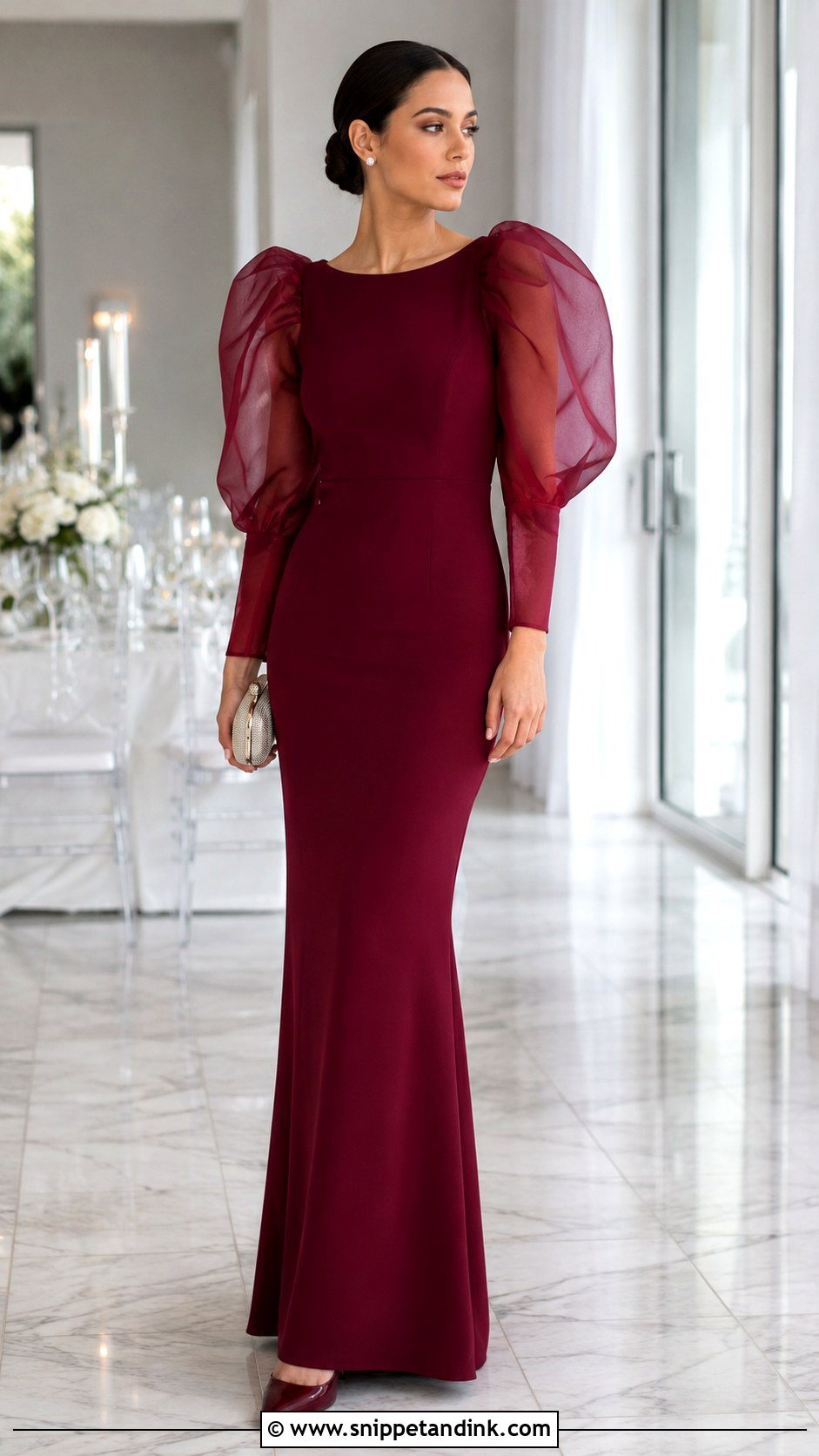
Organza sleeves turn a plain fitted gown into a formal one quickly. The base should be smooth crepe, satin or mikado with a narrow waist and a streamlined skirt; the organza adds puff, pleats or sculpted shoulders. Organza is crisp and holds a shape, which is why it works, but it also creases sharply if crushed in a car or bag. I’d keep the sleeves in proportion, especially if the gown already has a train or embellishment. Pointed heels, a neat clutch, studs or a single ring and a low bun let the shoulders show. Match the organza closely to the base fabric for a controlled, cohesive look.
11. Jacquard Strapless Fitted Gown
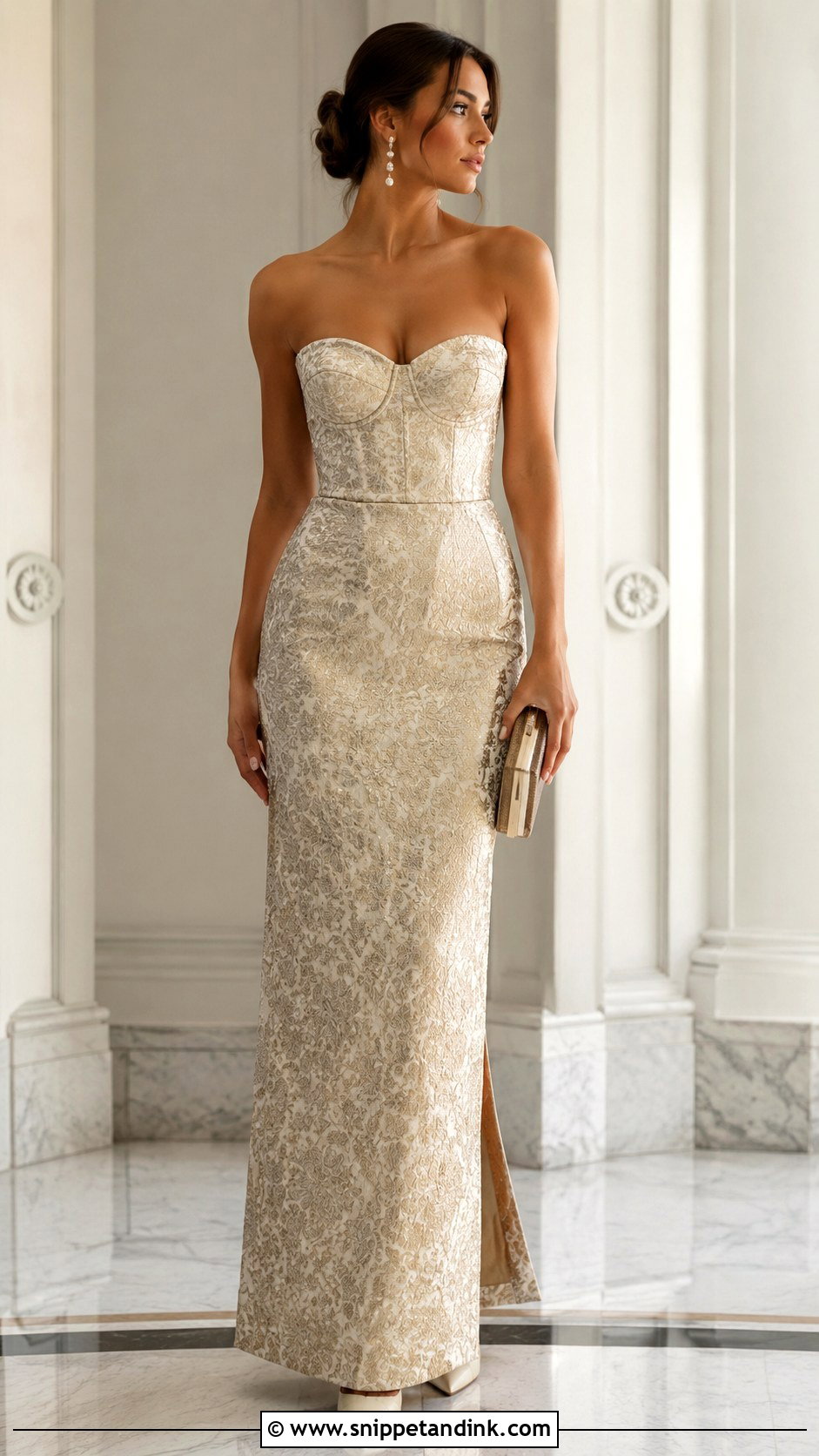
Jacquard’s raised woven pattern gives a strapless gown texture without any decoration. It holds its shape well, which is great for structure and unforgiving of poor measurements. The bodice needs boning, a supportive lining and an internal waist stay. A straight skirt or one that widens slightly below the hip makes walking easier. Pointed pumps, a hard-case clutch and a short necklace or refined drop earrings work well. Keep accessory colors consistent so the woven design gets the attention. A fitted jacket or wrap adds coverage if needed, and smooth hair and polished makeup complete it.
12. Georgette Ruched Fitted Gown
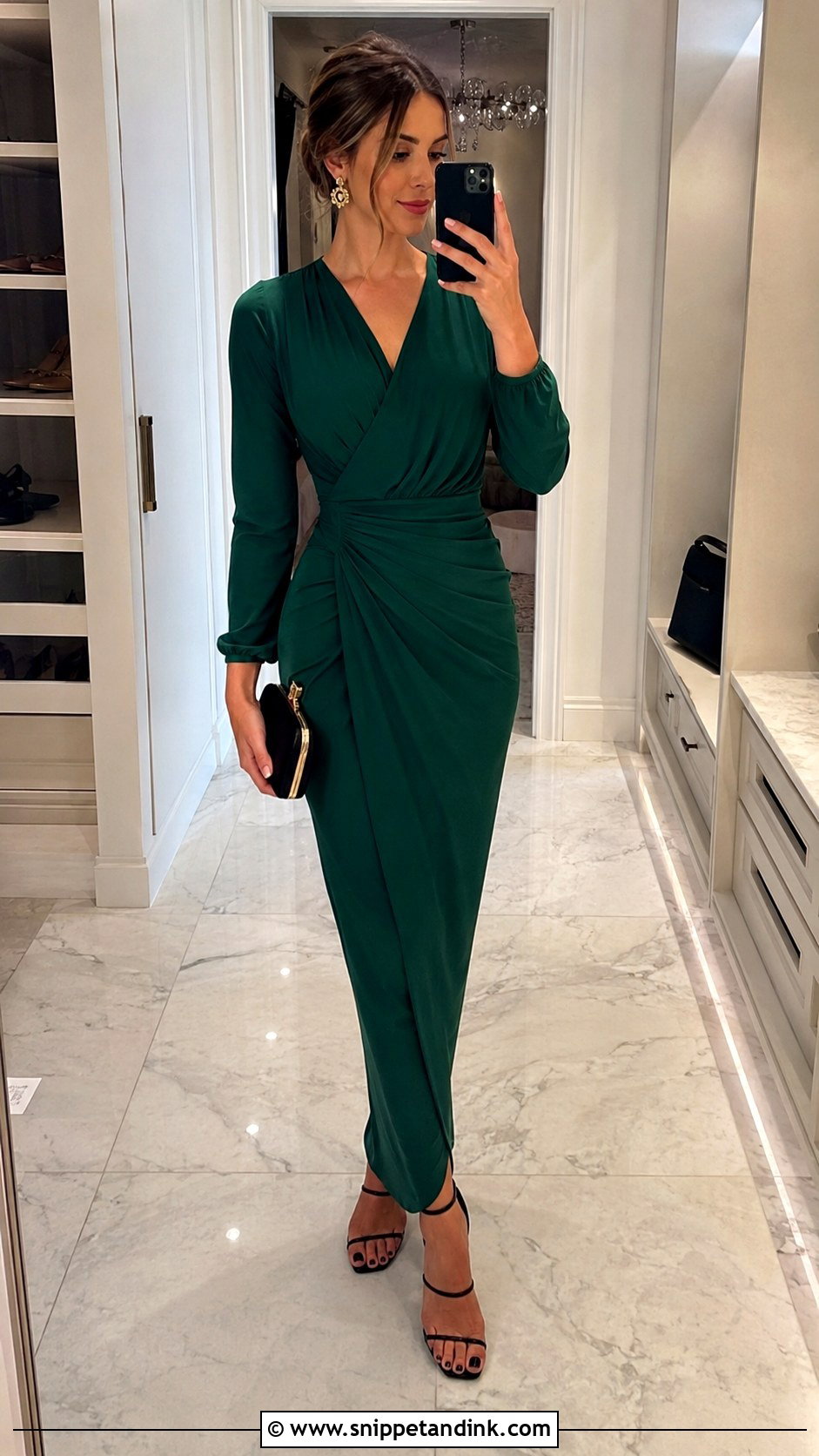
Georgette is light and slightly grainy, so on its own it won’t hold a fitted shape. That’s why I insist on an opaque, flexible lining underneath. Ruching placed diagonally or along one side shapes the waist and hips without adding bulk. A surplice neckline, long sleeves and a floor-length skirt make it graceful and easy to wear. Slim heels, a compact shoulder bag and medium earrings complete it. Avoid heavy necklaces, which drag on the delicate outer layer. Tonal ruching is more versatile than contrast panels. The fit should skim, letting the fabric move when you sit, walk or climb stairs.
13. Tulle Corset Fitted Gown
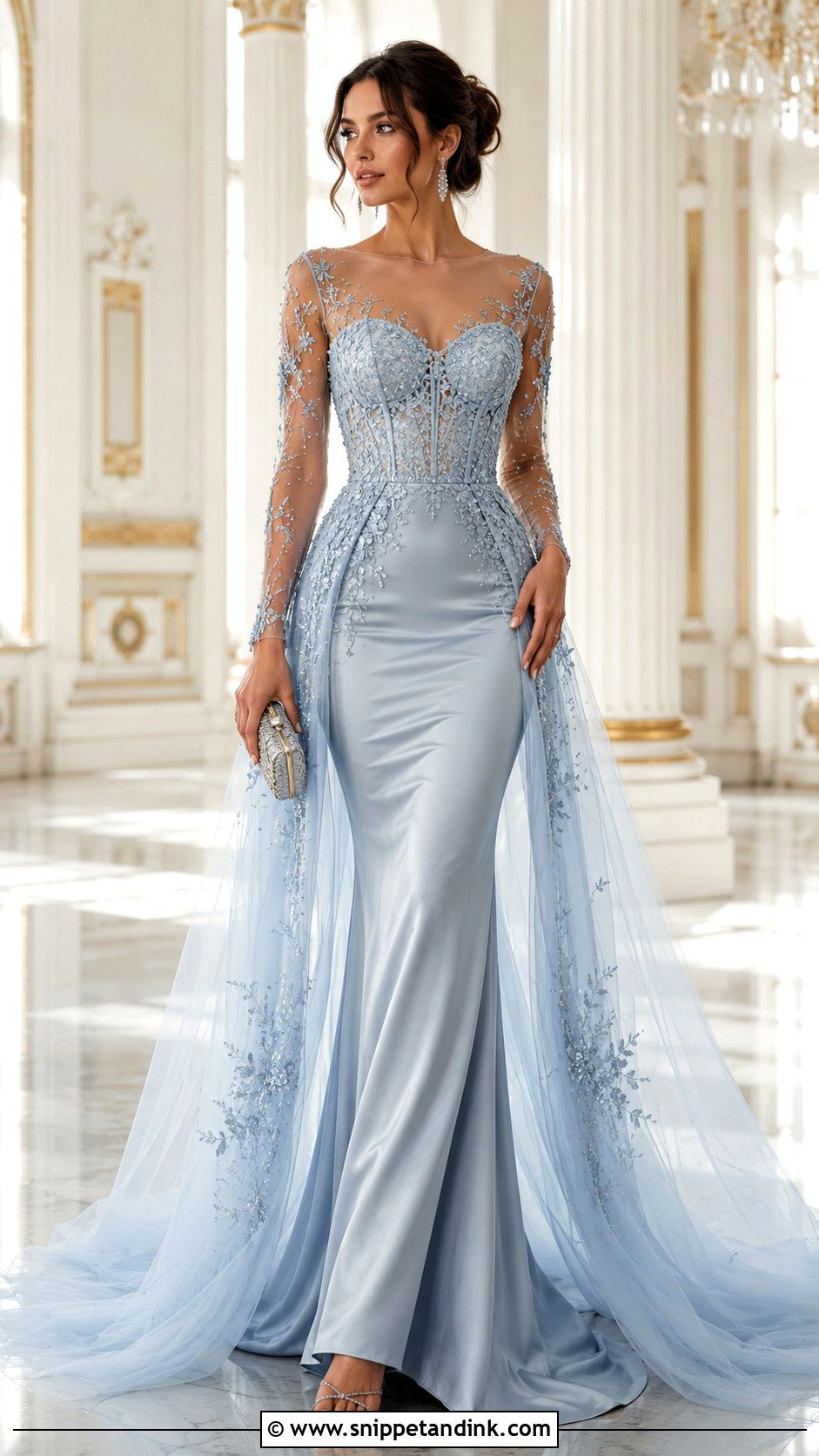
Tulle and corsetry are a good pairing because each covers the other’s weakness. The corset base in satin, crepe or stretch fabric gives structure; tulle adds lightness at the neckline, sleeves or as a detachable overskirt. A sheer tulle yoke can hold appliqués while making the neckline look wider. If you add an overskirt, make it removable so the slim gown shows later. Crystal sandals, a small embellished clutch and delicate earrings are enough, since layered tulle brings volume. I check that the corset lets you breathe and sit, and that the tulle edges are finished, as raw tulle catches on jewelry.
14. Damask High Neck Fitted Gown
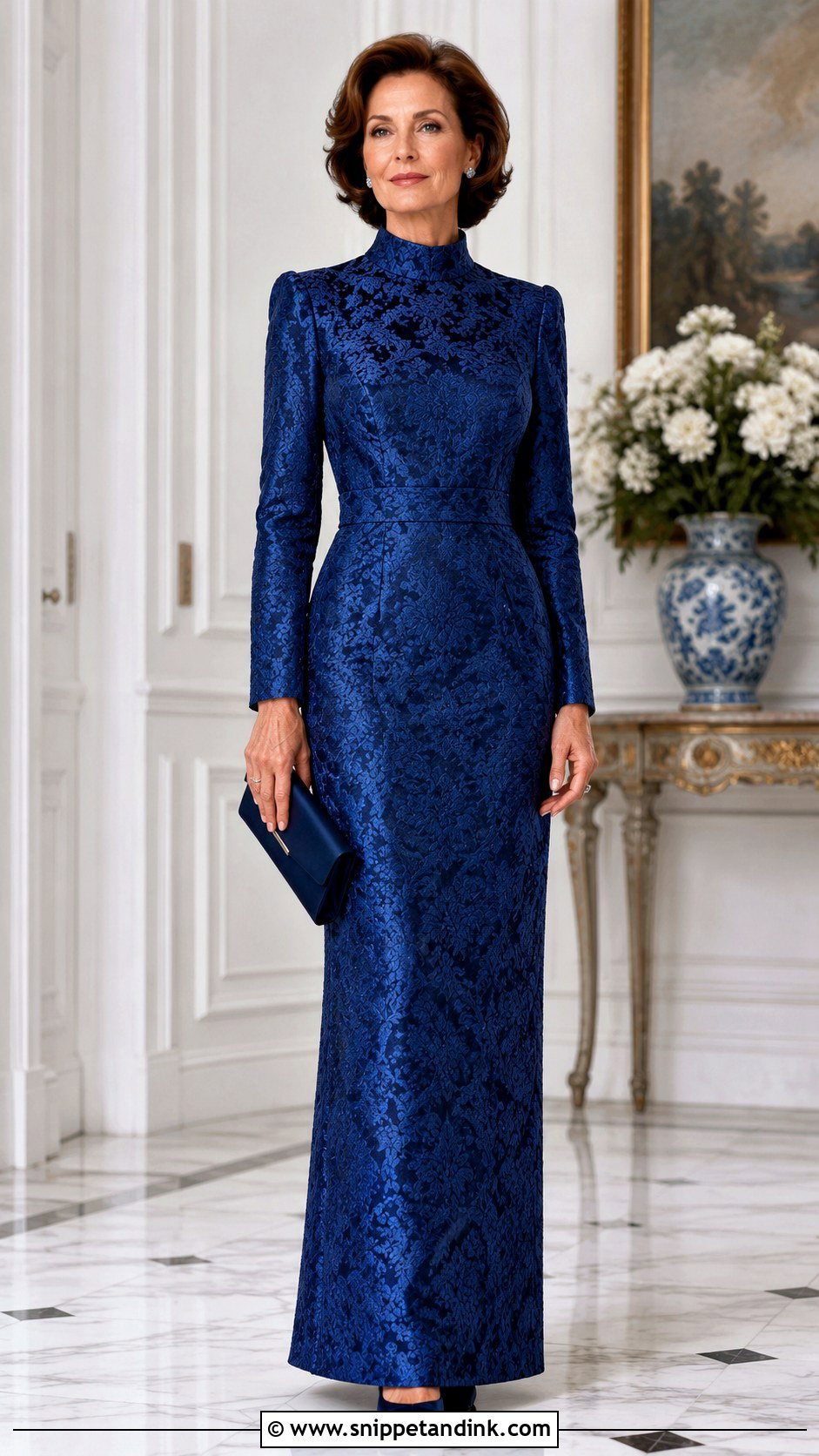
Damask is heavy and richly woven, so a high-neck damask gown needs precise tailoring, shaped seams and a clean waistline to avoid looking boxy. A sleeveless cut keeps it lighter; fitted sleeves add coverage. A straight floor-length skirt should have a center-back slit for movement. With the neckline already prominent, I’d wear small earrings and no necklace, plus pointed pumps and a smooth envelope clutch. If the pattern feels heavy on you, ask for a plain fabric waistband or cuffs to break it up. A sleek bun shows the structured neckline.
15. Beaded Mesh Fitted Gown
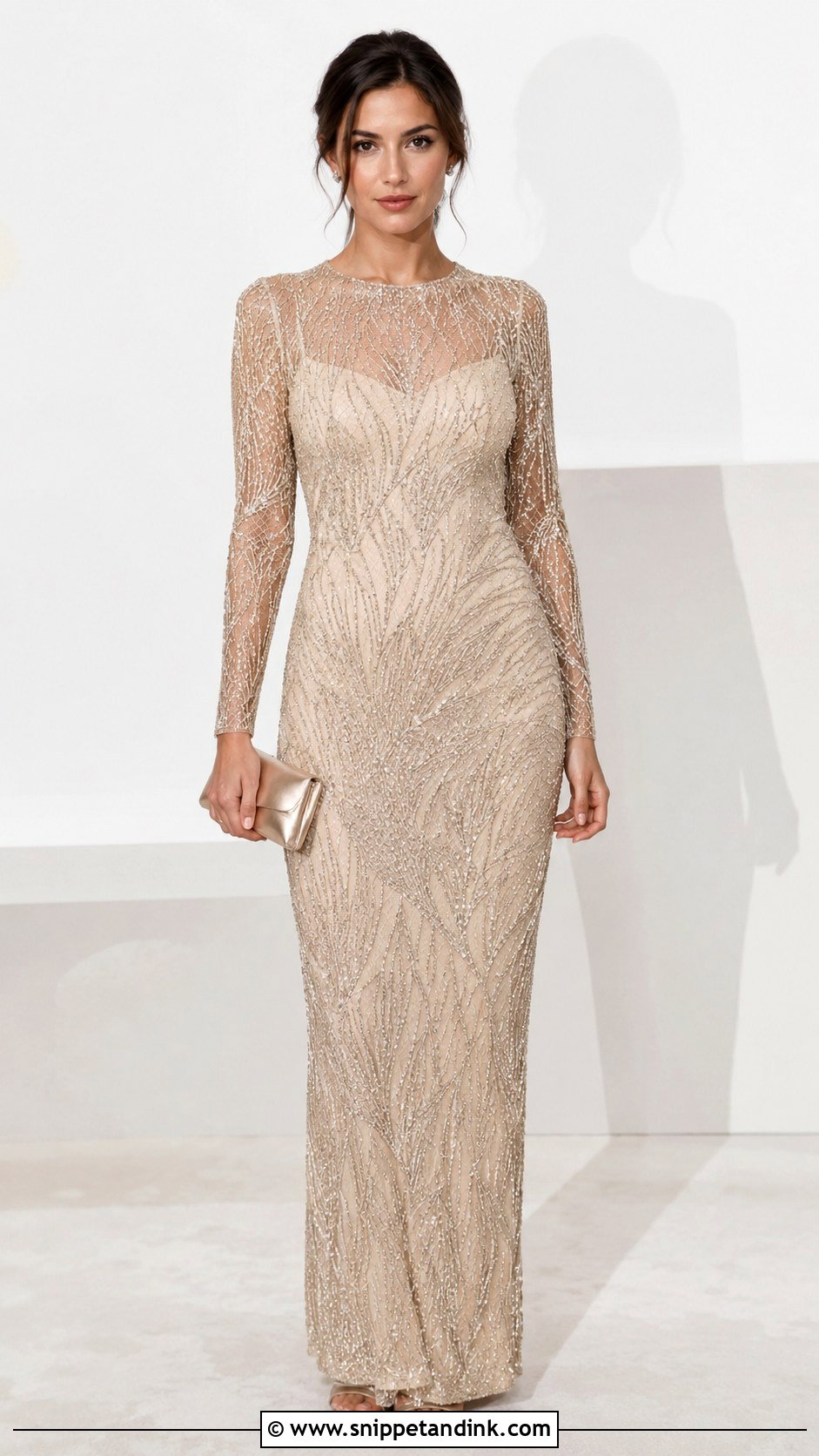
Beaded mesh is intricate and heavier than it looks on the hanger. I always have it laid over a smooth, opaque lining, matching or slightly contrasting, and kept to a simple column so the beadwork leads. Long sheer sleeves or a lightly covered neckline add elegance without bulk. Understated heels, a plain satin clutch and small studs are enough, especially if beads continue over the shoulders. Run your hands along the armholes and side seams for anything sharp. Because embellished mesh has little stretch, the gown needs enough ease for sitting, or the seams will strain every time you take your seat.
16. Stretch Jersey Wrap Fitted Gown
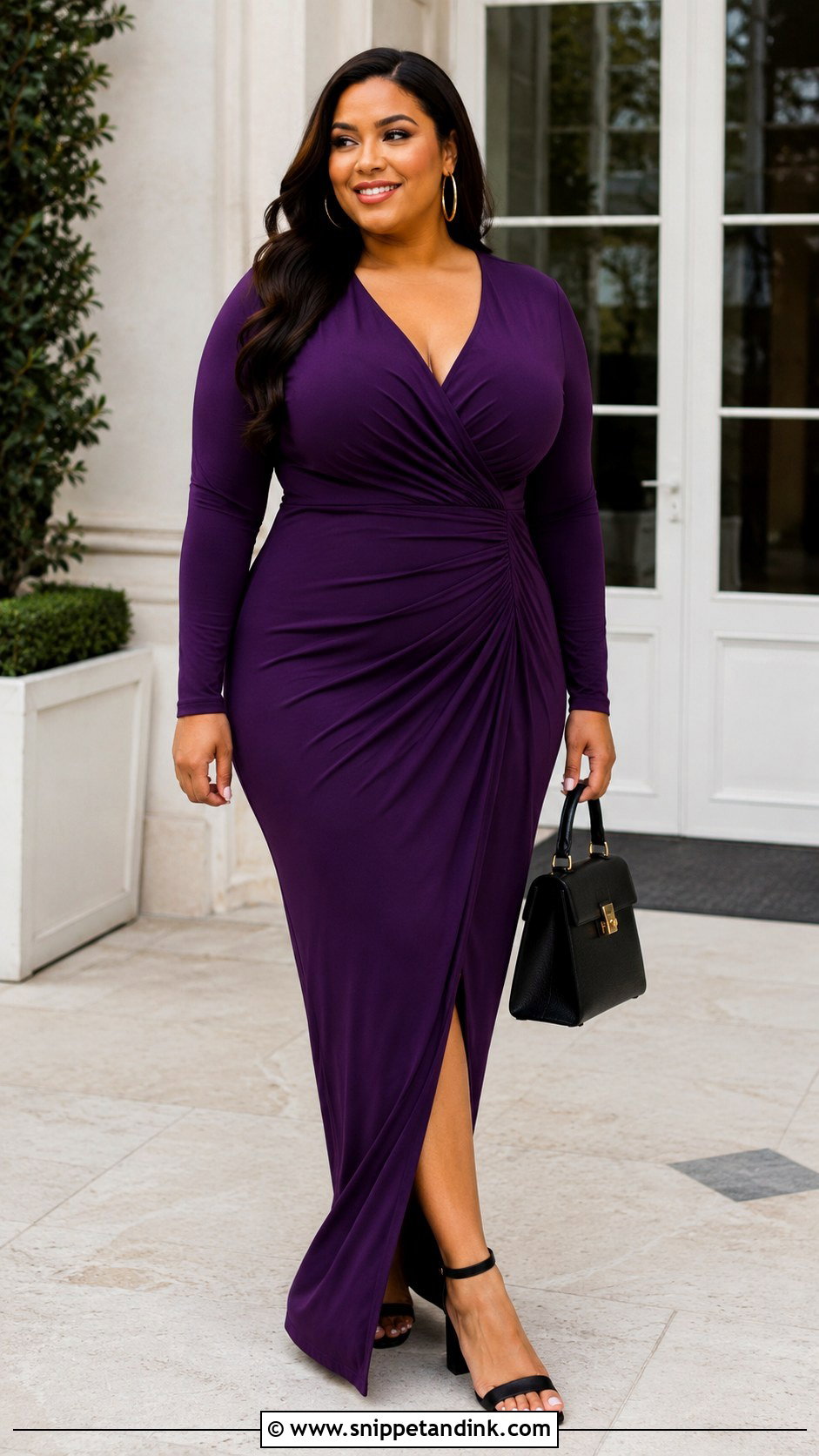
Stretch jersey is the most comfortable gown fabric on this list. A wrap bodice shapes the neckline and soft gathering at the waist gives a flexible fit. Choose a substantial jersey that drapes well; hold it up to light and stretch it, because thin jersey turns see-through when stretched over the hip. A long tapered skirt with a front or side opening helps you walk. Block heels, a structured bag and polished hoops keep it modern. A camisole panel adds neckline coverage if needed, and smooth underlayers prevent lines. It’s what I suggest when someone wants formal polish without boning or stiff tailoring.
17. Taffeta Draped Fitted Gown
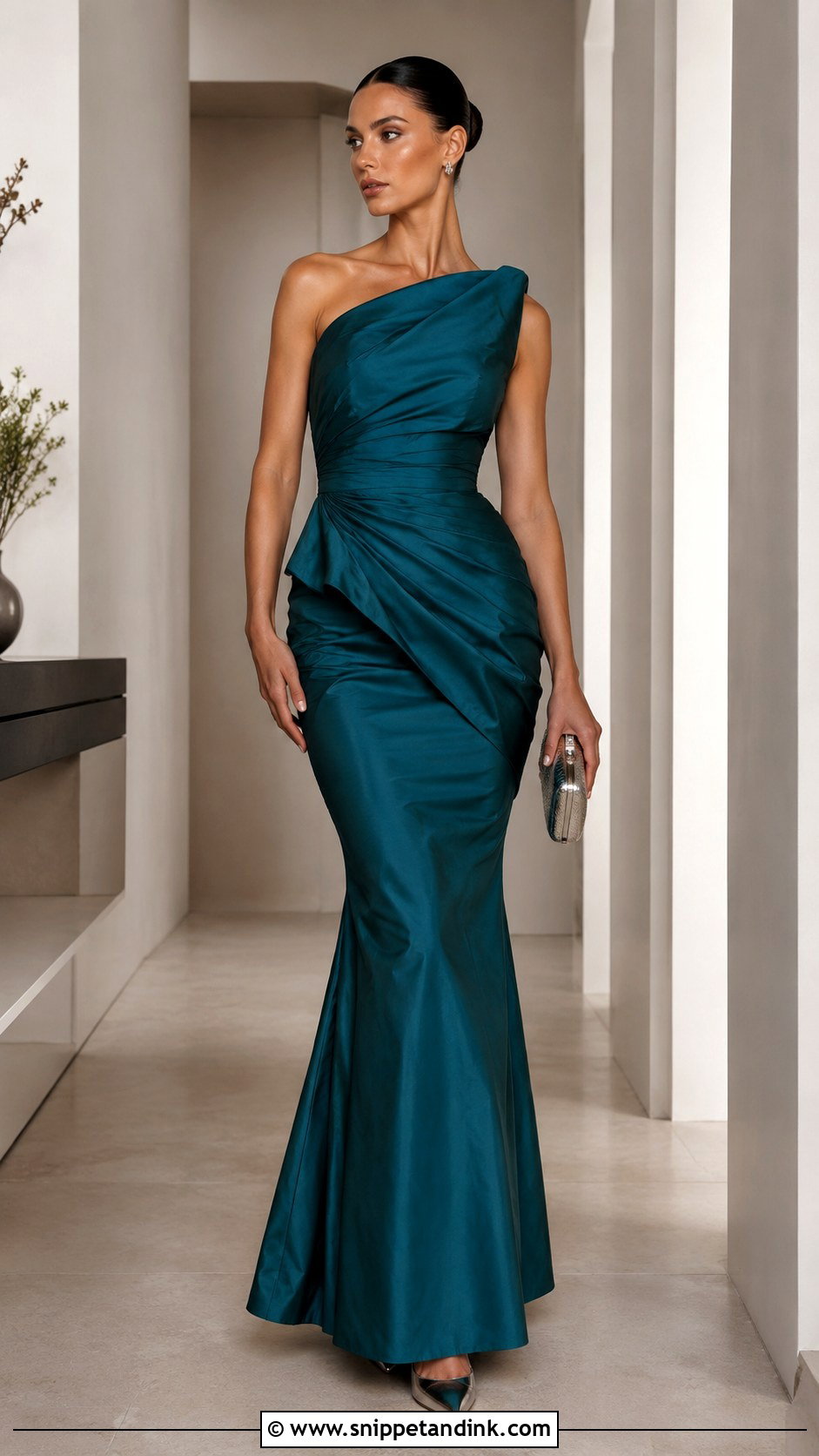
Taffeta is crisp, rustles slightly when you move and holds sharp folds, which makes it ideal for sculpted draping. On a fitted gown, I use it in a ruched bodice, an asymmetric hip drape or a controlled side panel rather than a big skirt. Strapless and one-shoulder necklines suit its structure. Keep the skirt close through the hip and let it flare slightly toward the hem. Pointed heels, a compact metallic bag and simple earrings are enough. Taffeta creases visibly where you sit, so allow a little ease and choose one dramatic drape, not several.
18. Guipure Lace Fitted Gown
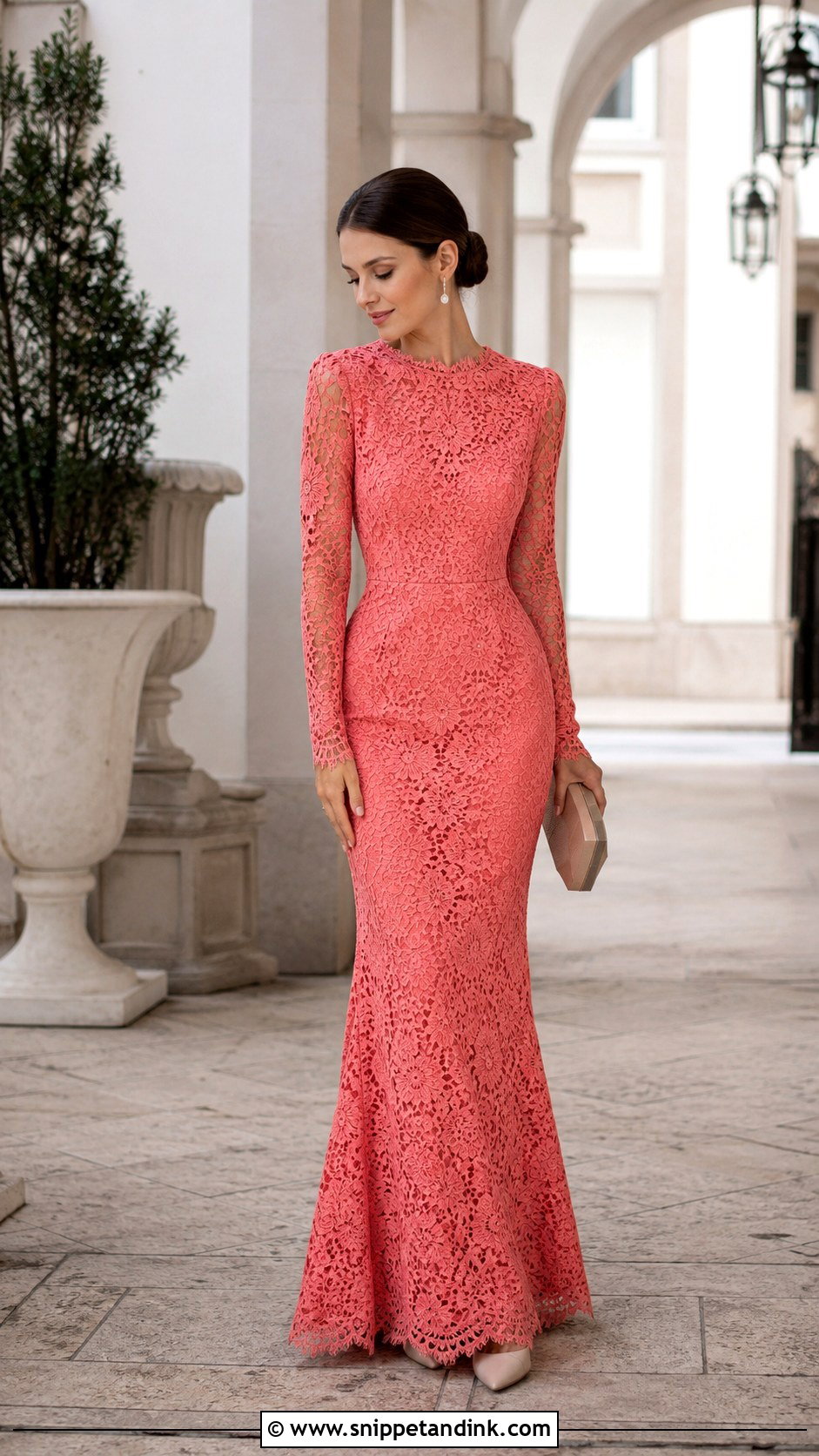
Guipure lace is a heavy, open lace with no net background, so its bold motifs stand on their own. Line it fully for coverage, or leave the sleeves and upper neckline sheer. A clean pencil or mermaid shape keeps the dense lace from looking heavy, and scalloped edges can finish cuffs, neckline or hem without extra trim. Neutral pumps, a structured clutch and small drop earrings suit it. I’d avoid jewelry with claw settings, which snag the open lace. Fit the waist and hip carefully but leave ease, as guipure tears at the motif joins if stretched when you sit.
19. Adire Panel Fitted Gown
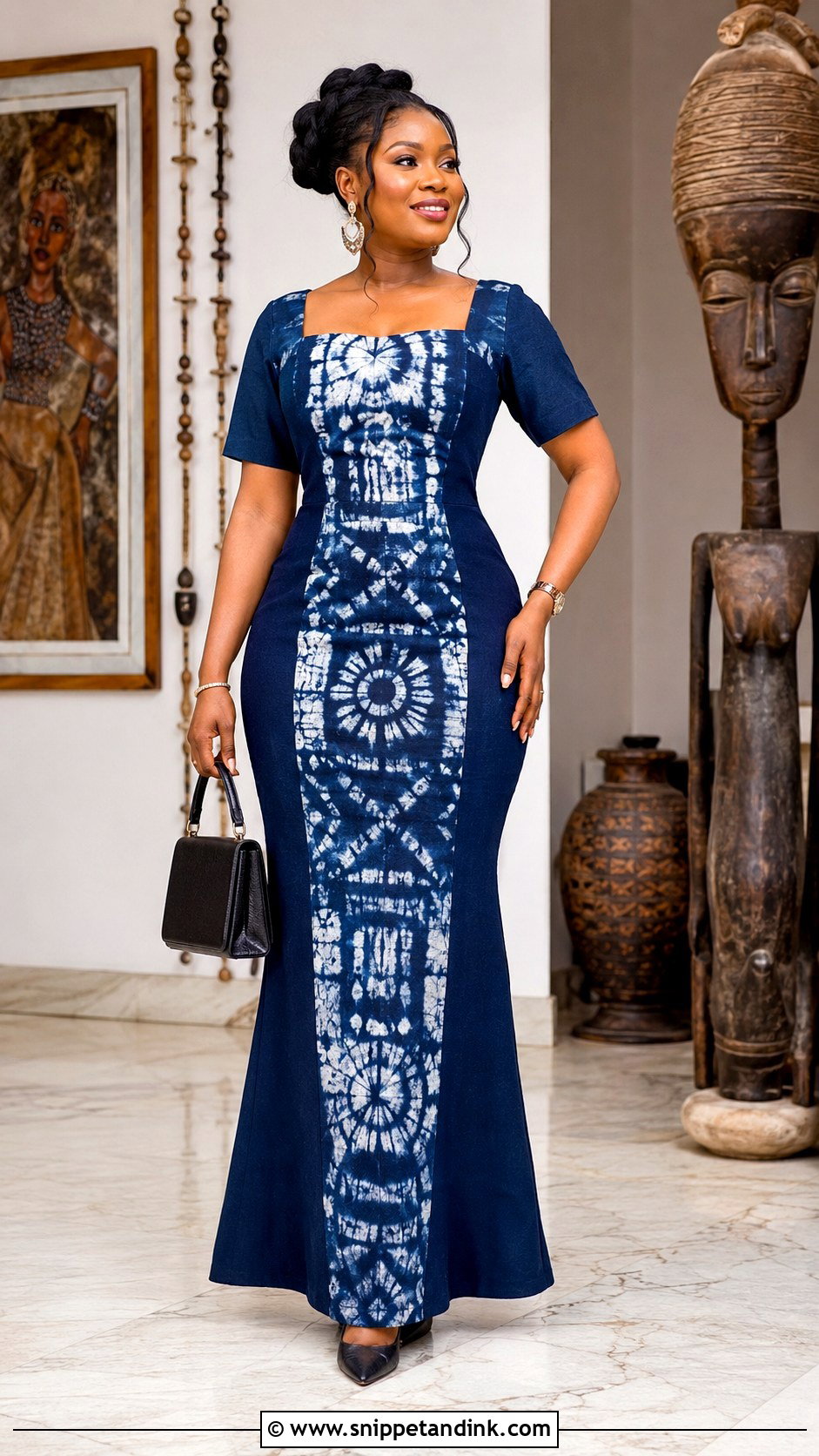
Adire is hand-dyed indigo cloth, and no two pieces are quite the same, which is what makes a fitted Adire gown feel personal. Plan panel placement with your tailor before cutting so the strongest pattern draws the eye toward the waist and the bodice and skirt balance. A square neckline, short fitted sleeves and a gently flared hem give the pattern a clean frame. Solid side panels add contrast and a longer line. Leather pumps, a simple top-handle bag and handmade metallic earrings suit it, with one color from the print guiding the accessories. A neatly wrapped headscarf adds cultural character; simple uncovered hair keeps the focus on the dye pattern.

20. Ankara And Lace Fitted Gown
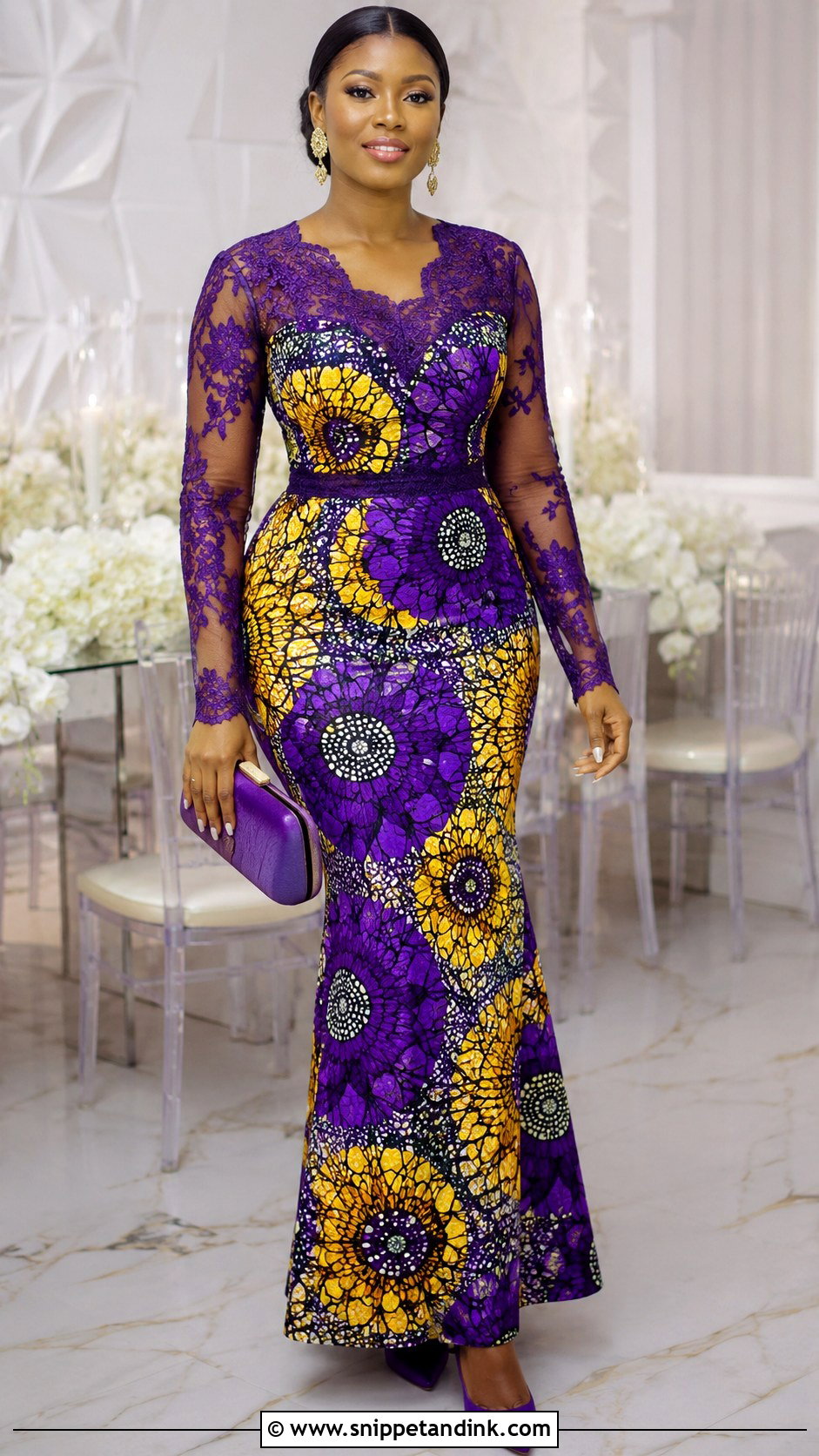
Ankara and lace together bring color, pattern and texture into one gown, and the join is where it succeeds or fails. I usually see Ankara used for the fitted skirt and structured bodice, with lace on the sleeves, neckline or upper back. A lace peplum is another option that defines the waist without covering the print. Choose one shared color so the two fabrics speak to each other. Solid pumps, a plain clutch and earrings that echo a subtle print color complete it. Keep everything else quiet. Where the fabrics meet, the seams must be precise and the lace edge neatly finished over the print.
Indigo Rub-Off, Crushed Velvet and Other Fabric Surprises
Statement fabrics have quirks that only show up once you wear them. A few I always warn people about:
- Hand-dyed indigo, including Adire, can rub off onto skin, light handbags and pale lace, especially in the first few wears or when you’re warm. Wipe an inside seam with a damp white cloth before the event to check.
- Velvet pile flattens where you sit and lean. Steam it from the inside and never press the face with an iron.
- Sequins and beaded mesh shouldn’t be ironed at all. Hang them to let creases drop, or steam lightly from the reverse.
- Taffeta and organza crease sharply in a car. Lay the skirt out flat across the seat rather than sitting on it bunched.
Afterwards, hand-dyed prints are best washed by hand in cold water, alone, and dried out of direct sun so the color doesn’t fade unevenly. Store velvet hanging with space around it, and fold sequined and beaded gowns with tissue between layers, since their weight can stretch the shoulders over time.
Let the Cloth Decide the Cut
A fitted gown begins with a fabric that can hold the silhouette you want. Structured Ankara, jacquard, brocade, and taffeta define the waist and support sculpted details. Satin, silk, georgette and jersey move more softly, while lace, sequins and beaded mesh add texture. Before you finalize a design, think about lining, stretch, seam placement, coverage and how easily you can walk. Let shoes and accessories work with the fabric rather than against it. Most of all, the gown has to fit when you stand, sit and move. Use the styles above as a starting point, then shape the neckline, sleeves and color around your body and your event.
You'll Like These Ideas:





Leave a Reply