
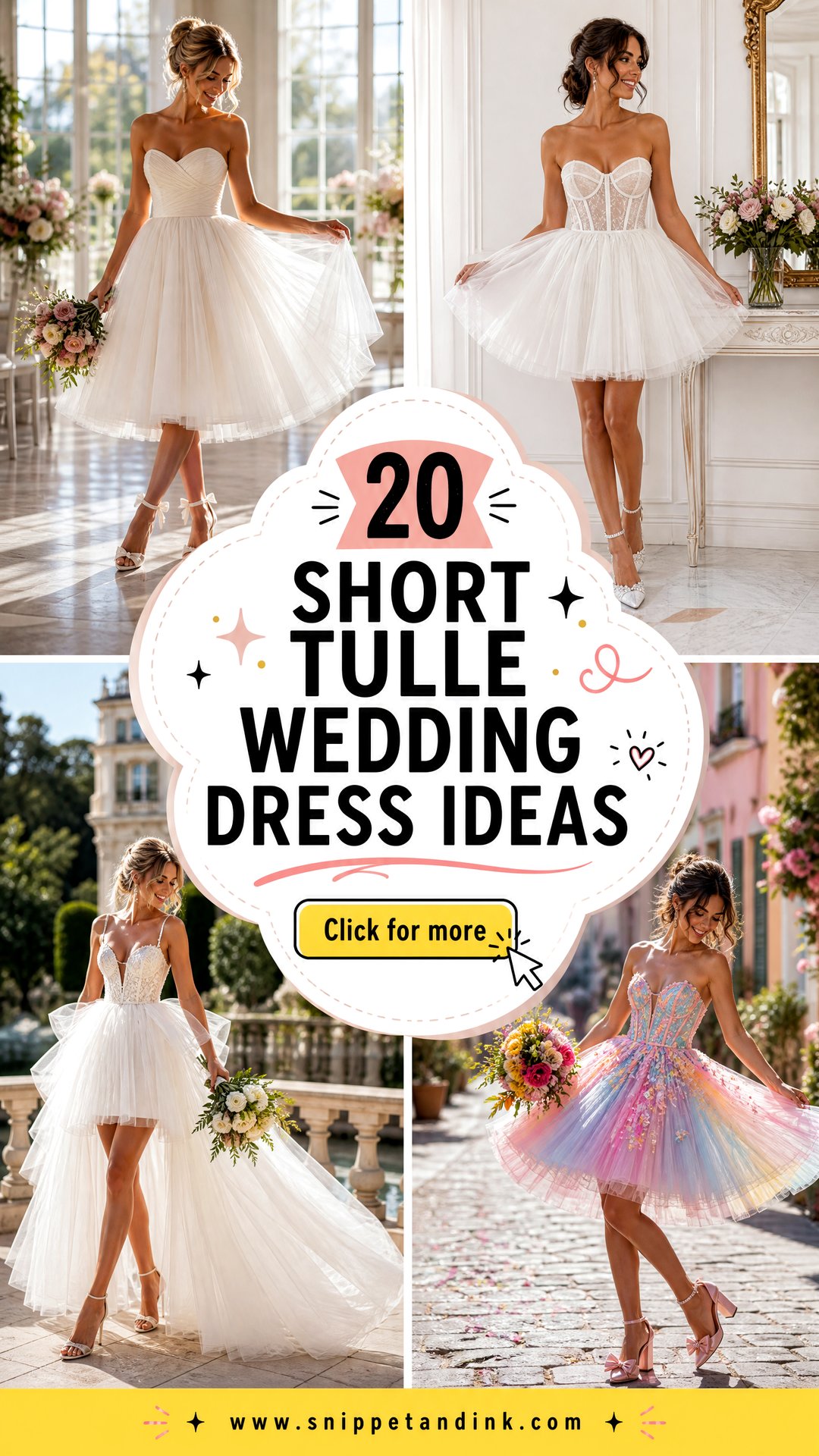
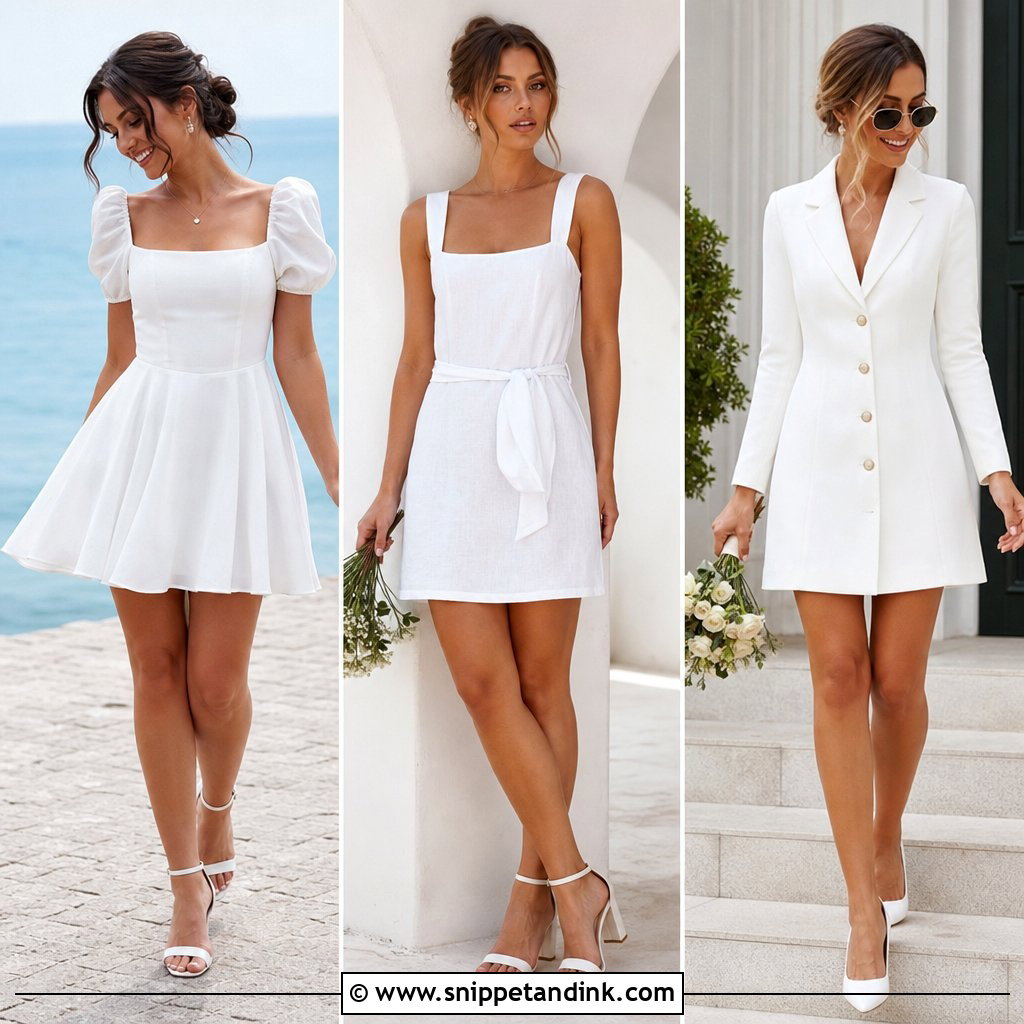
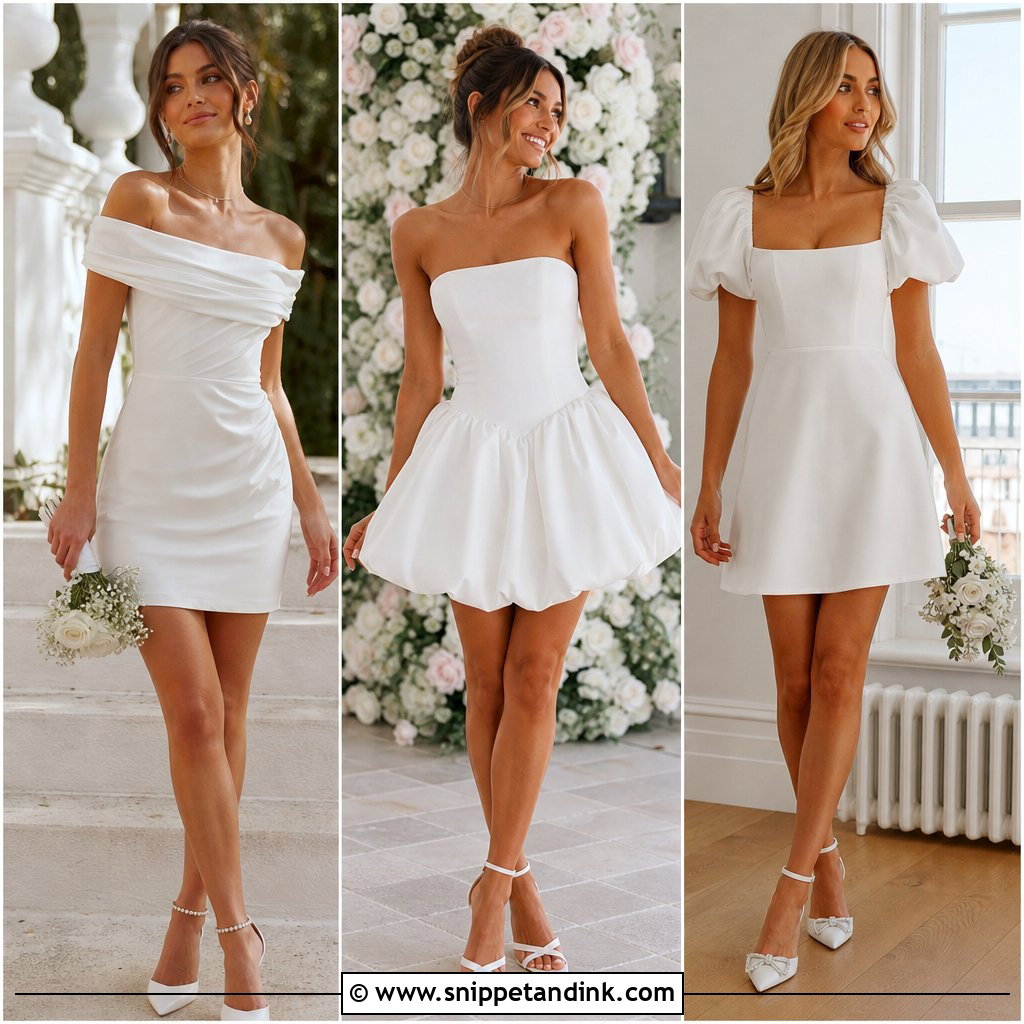
A short tulle dress is still unmistakably bridal, it just lets you move. You can walk down a courthouse corridor, cross a lawn or dance until the end without gathering up a train in one fist. The lengths run from a true mini to the knee to a tea-length hem that stops mid-calf, and the details that make one feel personal are usually small: a corset bodice, a cluster of appliqués, a bow, a pair of sleeves you can unhook. Short hems have had a strong run in bridal collections lately, alongside full skirts and dropped waists. Below are twenty I’d happily put a bride in, each with the shoes, veil and fitting checks I’d use myself.
Where a Short Hem Should Hit Your Leg
The single decision that changes a short dress most is where the hem lands, and it’s the one brides think about least. I look for the narrowest point nearby. Just above the knee and just below it both work on most legs because the eye lands on a slim part. Tea length works best when it stops below the fullest part of the calf rather than on it.
Bring your actual wedding shoes to every fitting, or at least the same heel height. A two-inch difference in heel moves a short hem’s proportion more than any style change. Then sit down. Tulle skirts lift more than you’d expect once the petticoat compresses on a chair, and a mini that looked modest standing can feel very short at the dinner table.
What goes underneath
- A soft slip or built-in lining stops tulle scratching bare legs, which matters more in a short skirt than a long one.
- A separate petticoat lets you adjust volume after purchase; one or two layers can be removed if the dress feels too wide.
- Smooth, close-fitting cycling shorts are worth considering if you plan to twirl, be lifted or sit on steps for photos.
- Nude or skin-matched underwear only; white shows through several layers of ivory tulle in flash photography.
1. Strapless Mini Tulle Wedding Dress
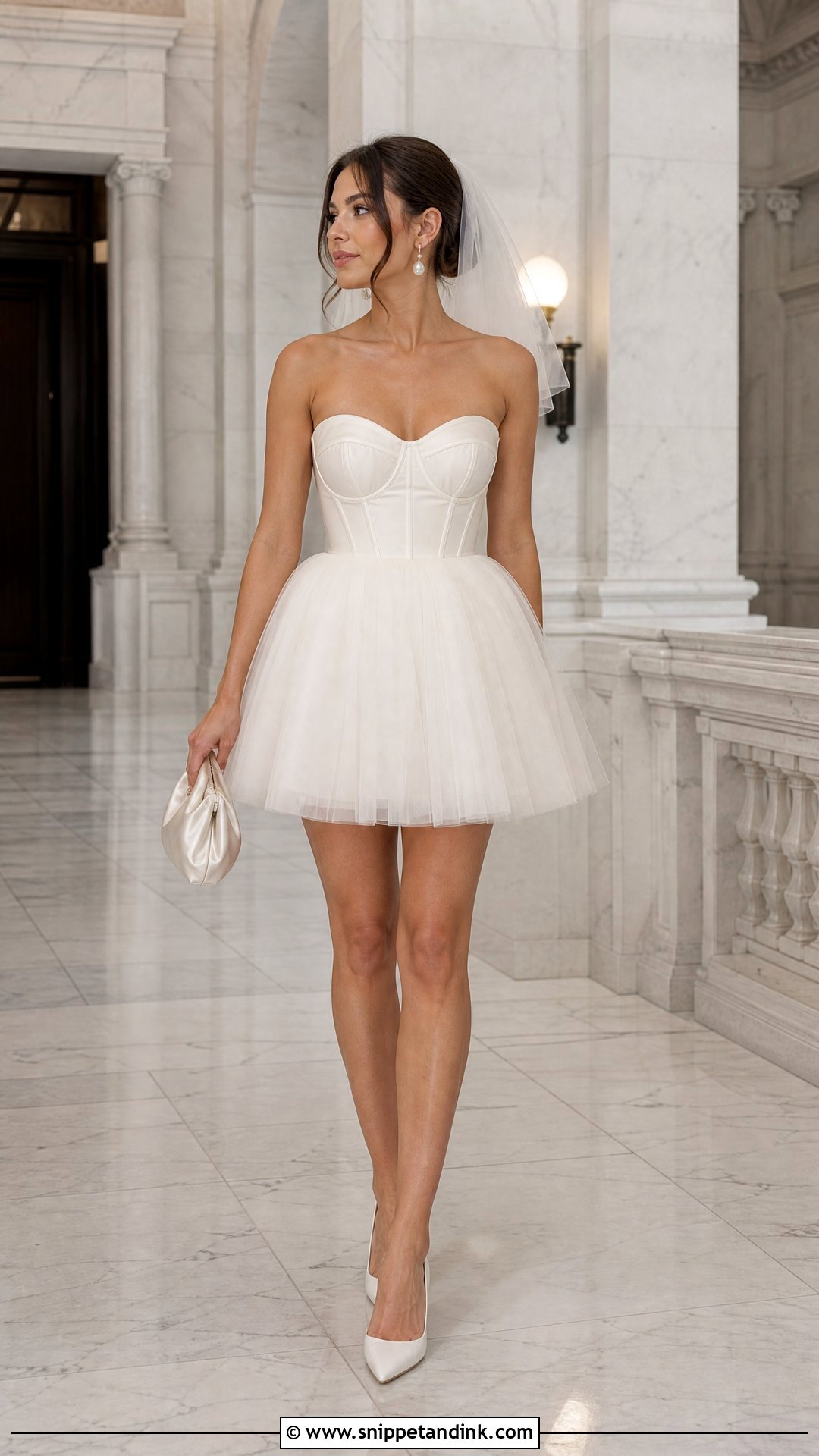
Strapless minis live or die by the bodice. I check the boning first: the bodice should stay put when the bride lifts both arms, without her hitching it up between photos. A softly layered skirt gives volume without weight. Pointed white pumps, pearl drops and a small satin clutch are enough. A shoulder-length veil pulls the short hemline back toward the ceremonial, and a cropped satin jacket covers the shoulders in a chilly registry office. Keep the hair sleek or loosely waved so the neckline stays clean.
2. Tea-Length Tulle Wedding Dress With Sweetheart Neckline
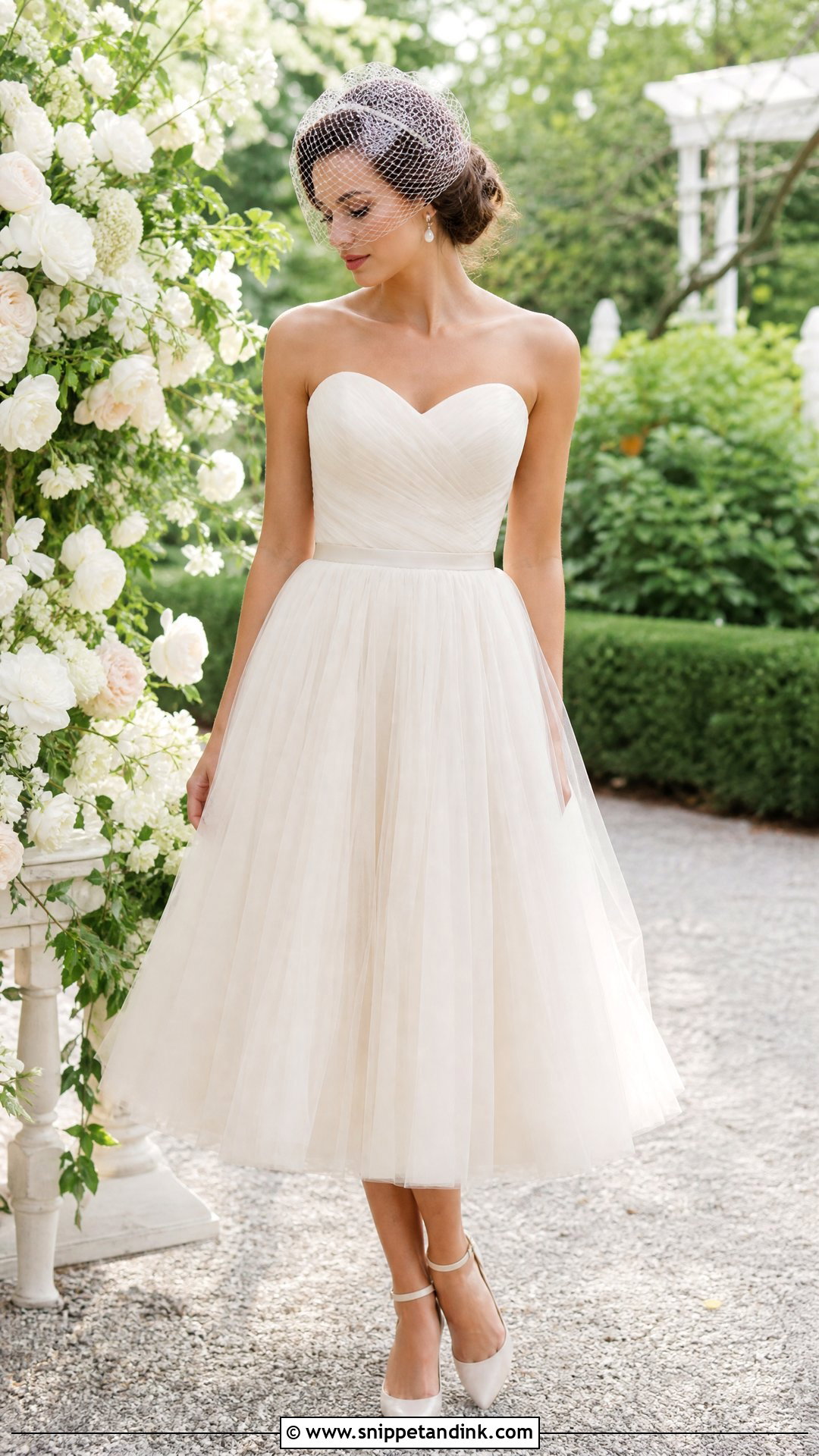
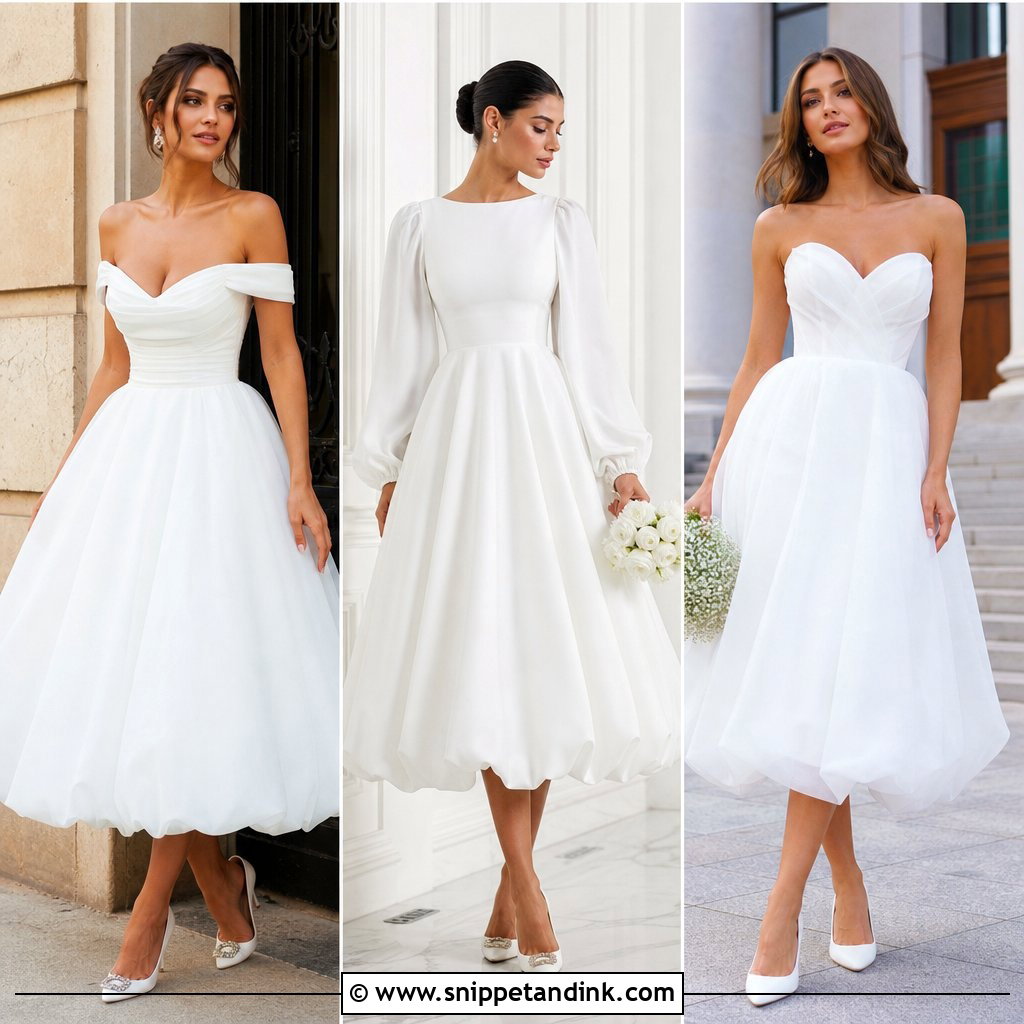
Tea length is the most forgiving short hem I work with, but only if the hem lands in the right place. A sweetheart neckline frames the collarbone, and the longer skirt gives more coverage than a mini. An ivory belt adds definition. For a vintage feel I’d use ankle-strap heels, pearl studs and a birdcage veil, with a small round bouquet that doesn’t cover the bodice. On petite brides I often take the hem up an inch or two to mid-calf, because tea length that hits the widest part of the calf can shorten the leg. Taller brides can carry the full length and extra fullness.
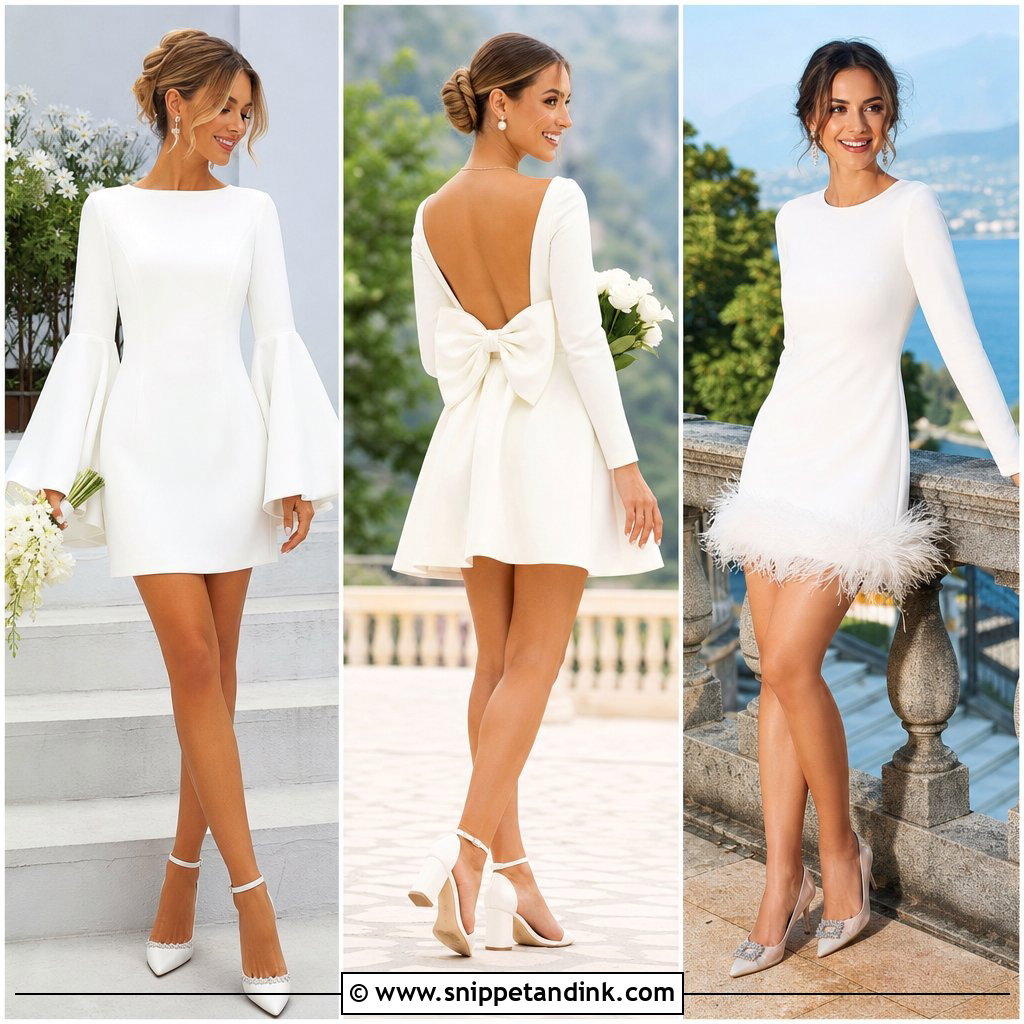
3. Long-Sleeve Short Tulle Wedding Dress
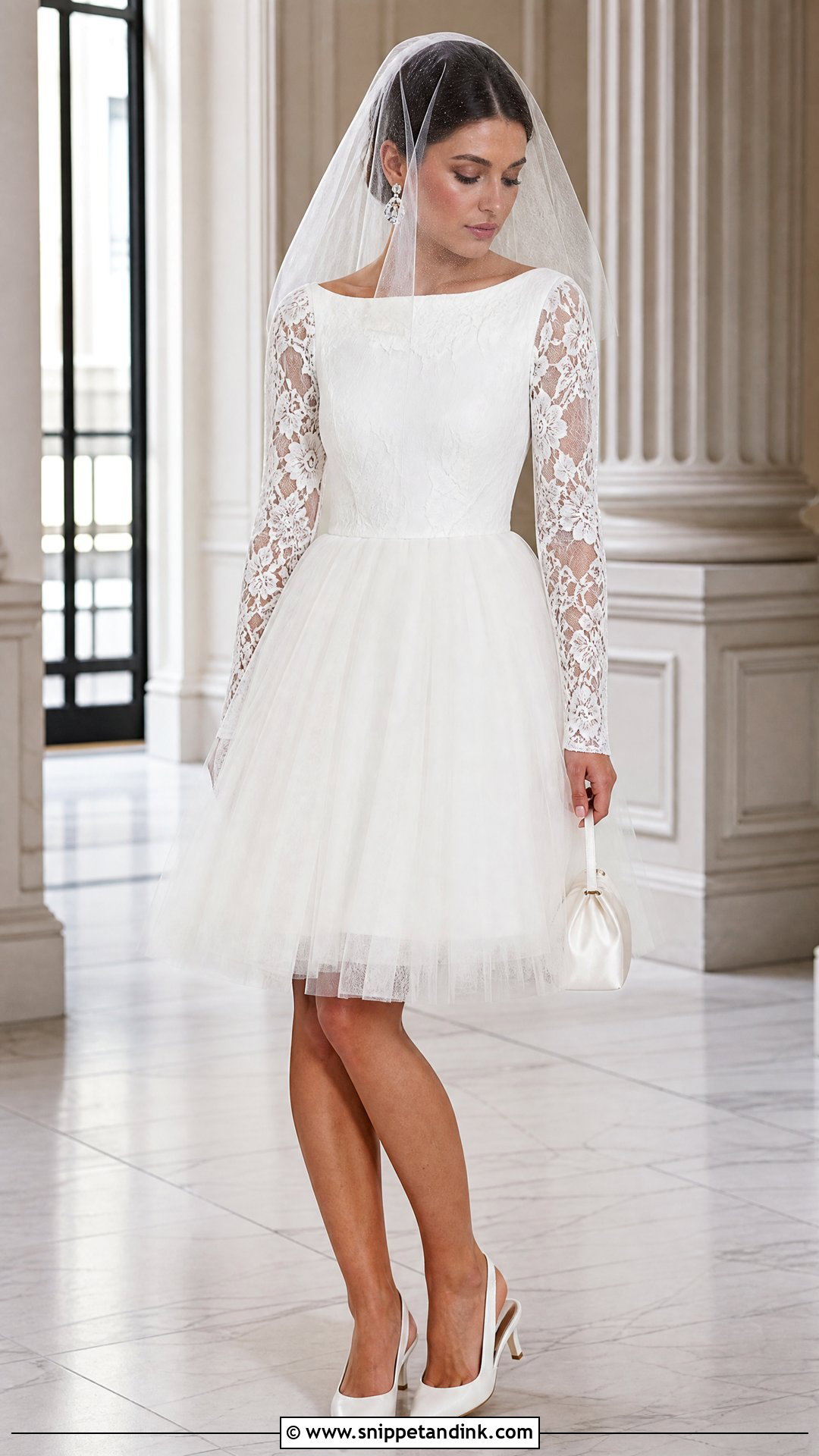
Sheer sleeves are where most of my fitting time goes on this style. Illusion tulle has very little stretch, so a sleeve that looks perfect with arms down can bind at the elbow the moment you hug someone. Lace appliqués, covered buttons or a clean cuff all finish the wrist nicely. A lined bodice over a mini or knee-length skirt keeps it light. Closed-toe slingbacks, a structured mini bag and modest crystal earrings suit it, and a low bun shows the sleeves off with a fingertip veil behind. I’d reach for this in spring, autumn or a city hall in winter. Soft lace or illusion tulle moves far better than heavy embroidery over the elbow and shoulder.
4. Off-the-Shoulder Short Tulle Wedding Dress
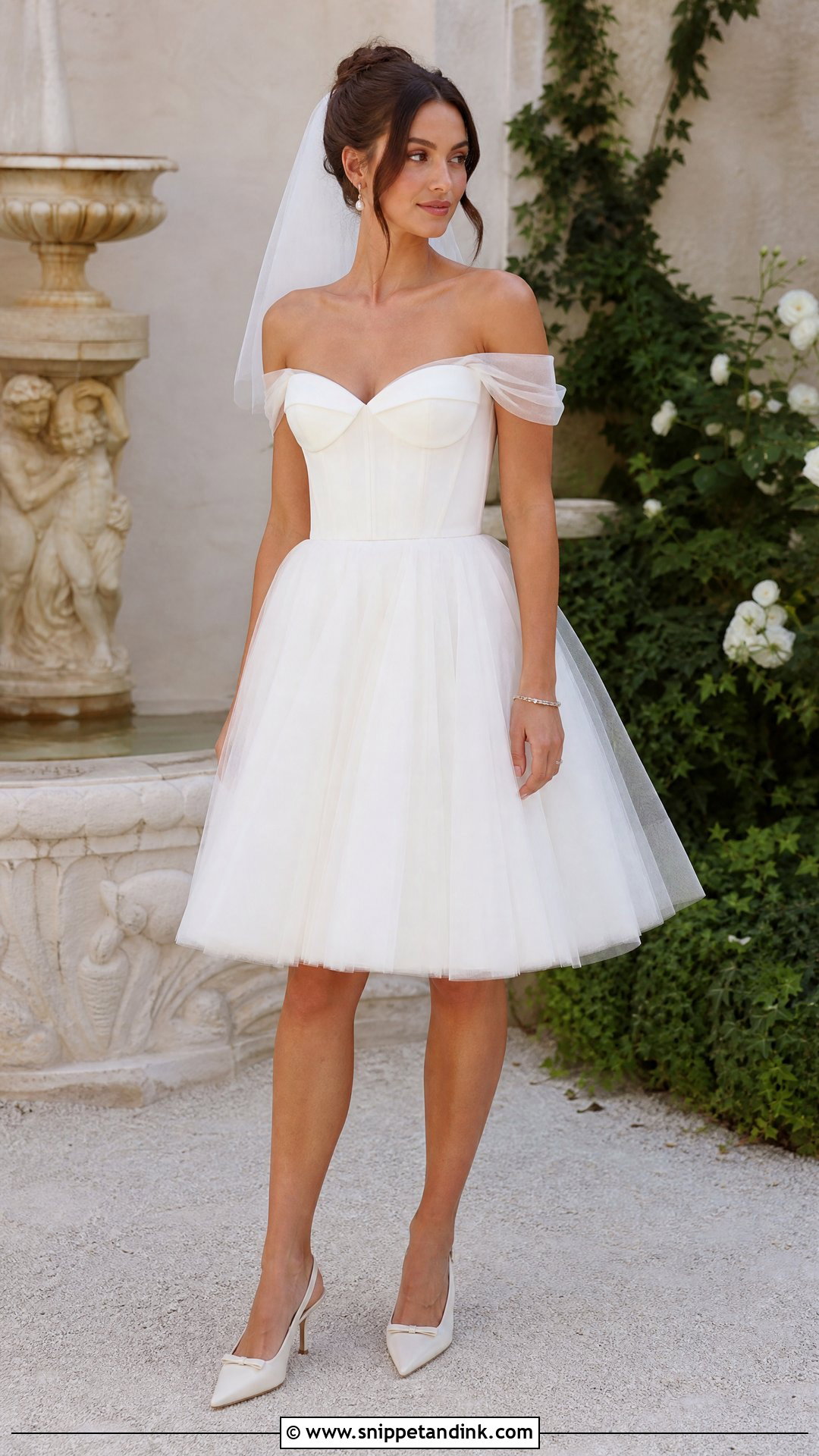
Off-the-shoulder sleeves sit across the upper arm, so they restrict how high you can raise your arms. That’s the honest trade-off. Ask for internal structure in the bodice so the neckline doesn’t slide, and do a full reach-and-hug test at your second fitting. A knee-length or mini A-line skirt balances the open neckline. Drop earrings, a fine bracelet and pointed slingbacks finish it, with a low chignon or side-swept style keeping the shoulders clear. Outdoors, carry a light wrap you can drop for photos. The neckline draws the eye up and the skirt marks the waist, which is why it suits so many figures.
5. Short Corset Tulle Wedding Dress
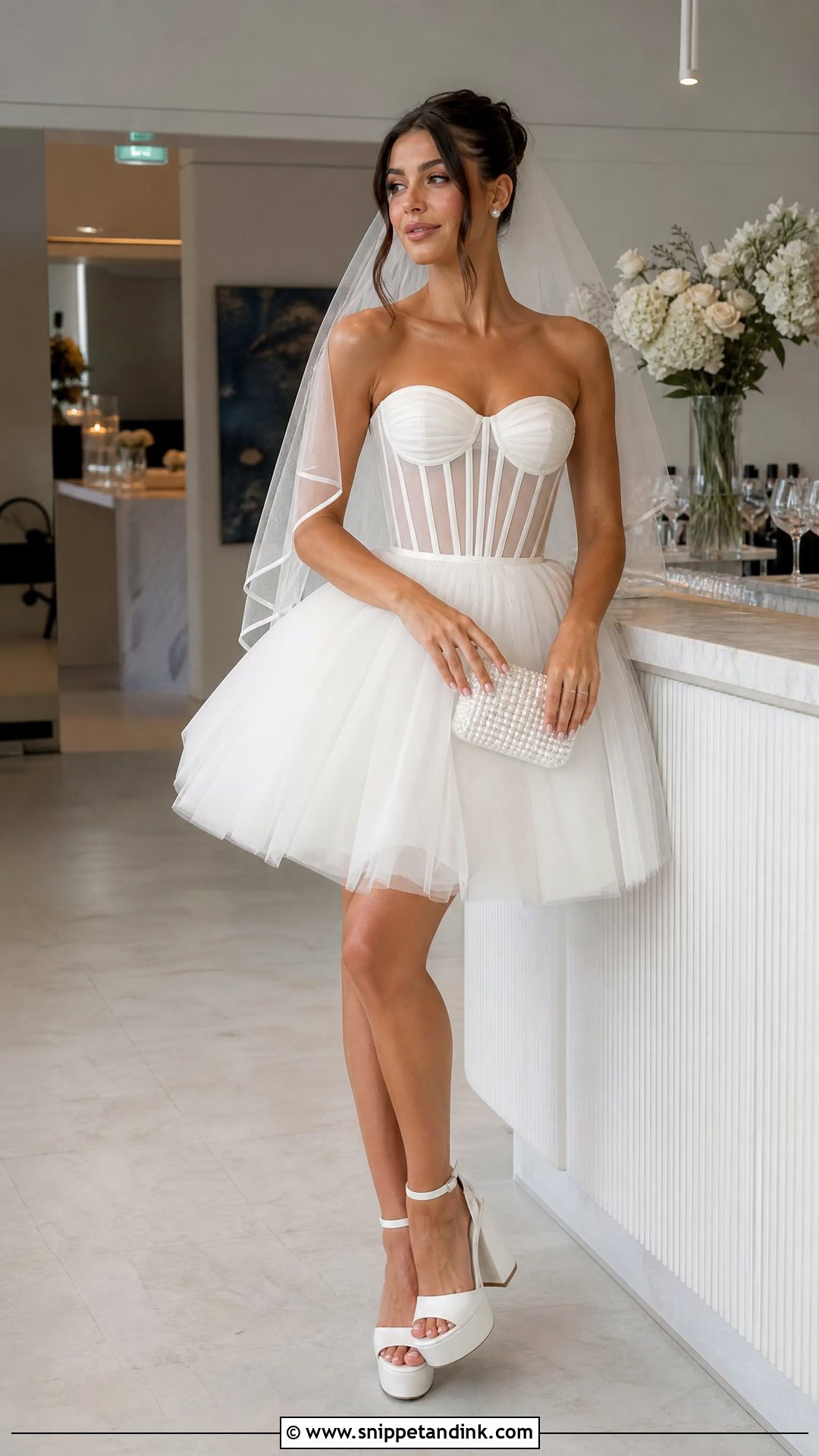
I judge a corset by how it feels after lunch, not at the first fitting. The boning should hold your shape without digging in when you sit, and the cups need to be secure enough that you’re not adjusting them all night. A full mini skirt turns it into a reception look; a knee-length skirt reads more traditional. Satin platforms, a pearl clutch and plain studs suit it, and an elbow-length sheer veil leaves the bodice visible. Visible seaming is the feature, so keep everything else quiet. At alterations, sit, walk and raise your arms before anyone pins it.
6. Short Tulle Wedding Dress With Bow
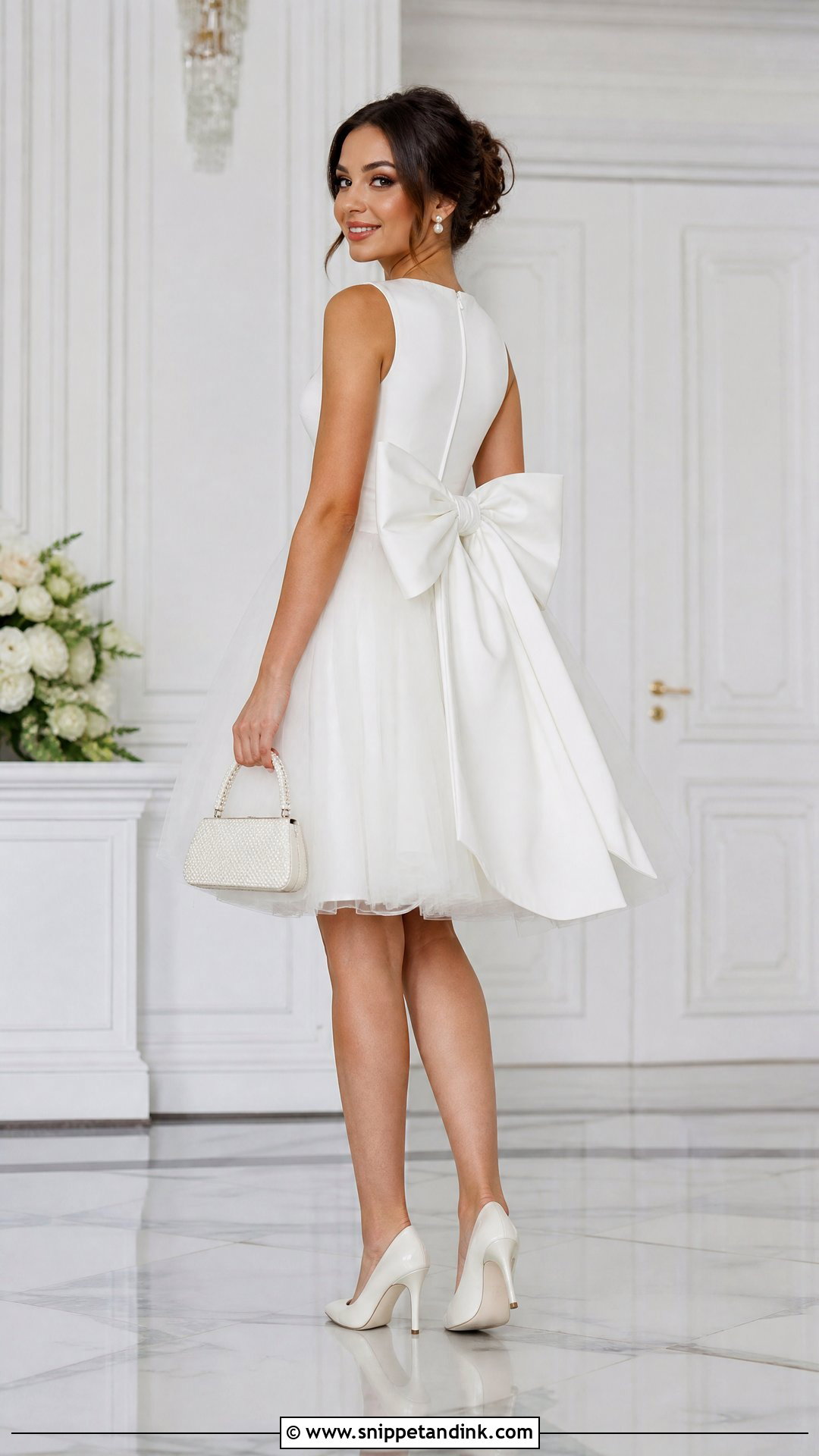
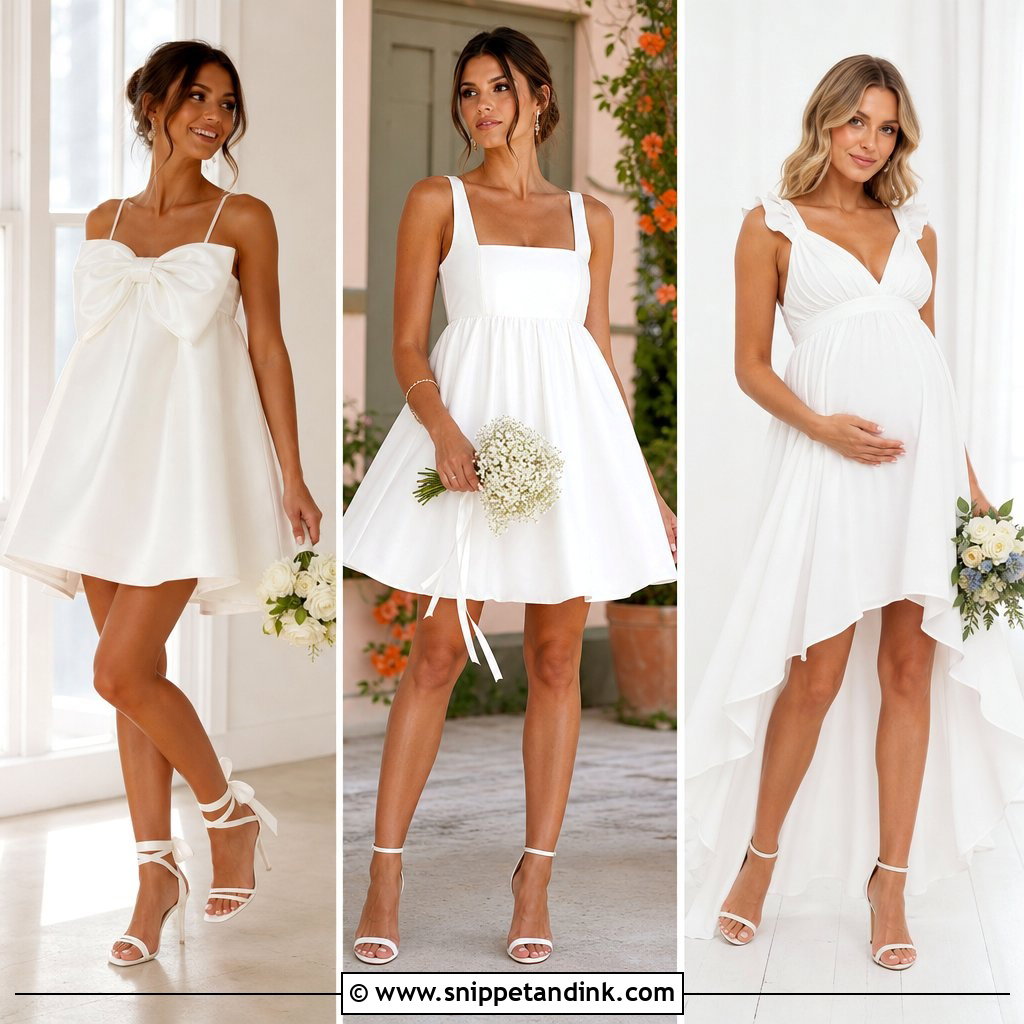
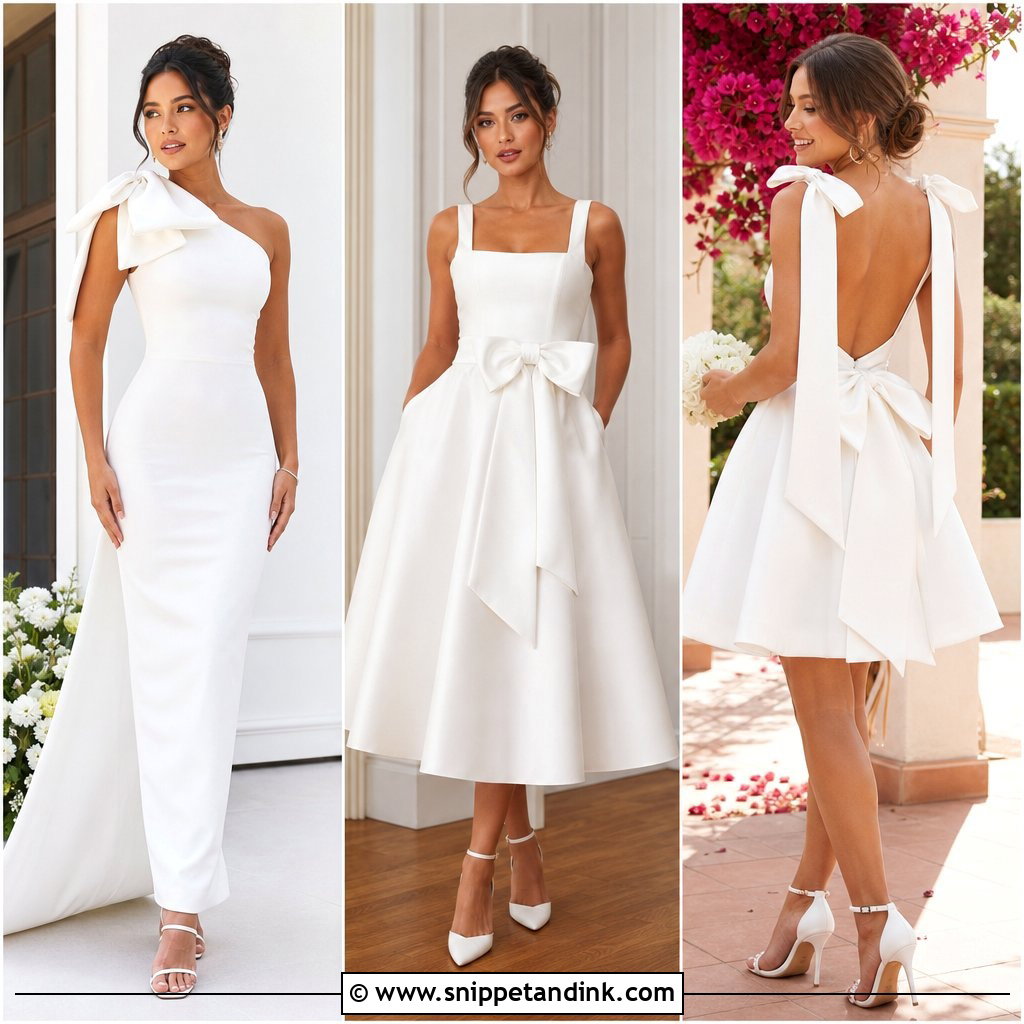
Where the bow sits decides almost everything else. A neat waist bow is subtle; shoulder bows feel playful; one oversized back bow is the whole statement. With a big back bow I usually swap the veil for a simple headband, because tulle draped over a structured bow crushes it and hides it in photos. Smooth satin heels, pearl earrings and a top-handle bag keep the rest calm. Crisp tulle gives a sculpted skirt, softer tulle relaxes. Scale matters: a bow wider than your shoulders tends to wear you. I like this one for a civil ceremony, a brunch or a reception change.
7. Short Floral Appliqué Tulle Wedding Dress
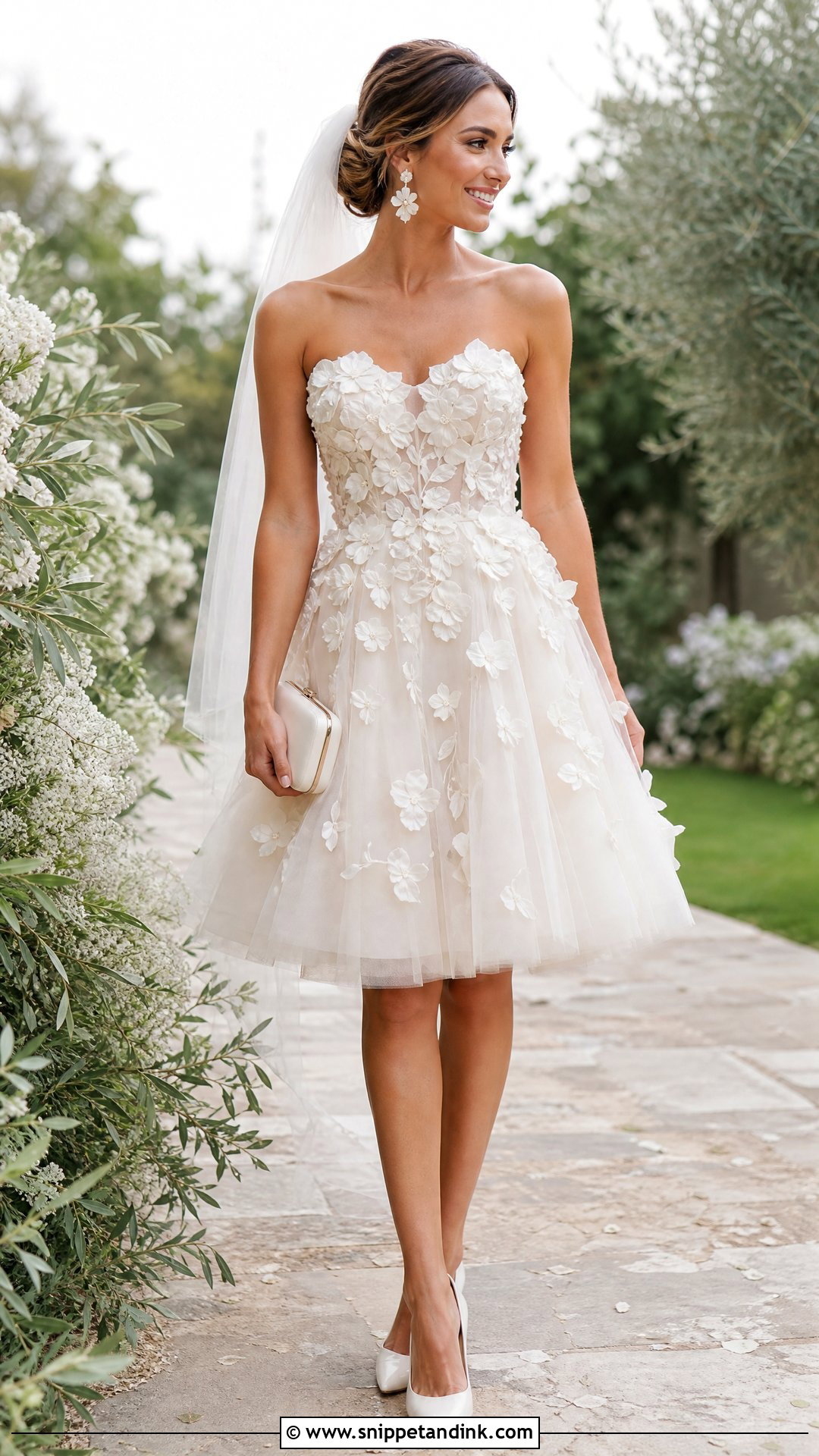
Floral appliqués give tulle depth without heavy beading, and you can choose tiny tonal blossoms or raised three-dimensional petals. Plain ivory heels and a smooth clutch let the texture lead; a floral comb only works when the appliqués are sparse. In heat, check the backs of the appliqués against your inner arm, since some are stiffened with glue and scratch. Gardens, conservatories and bright rooms suit it. Before the day, I always go over the waist, seat and hem with a needle, because those are the spots that get rubbed when you sit and hug, and a dangling petal is easy to prevent.
8. Short Tulle Wedding Dress With Puff Sleeves
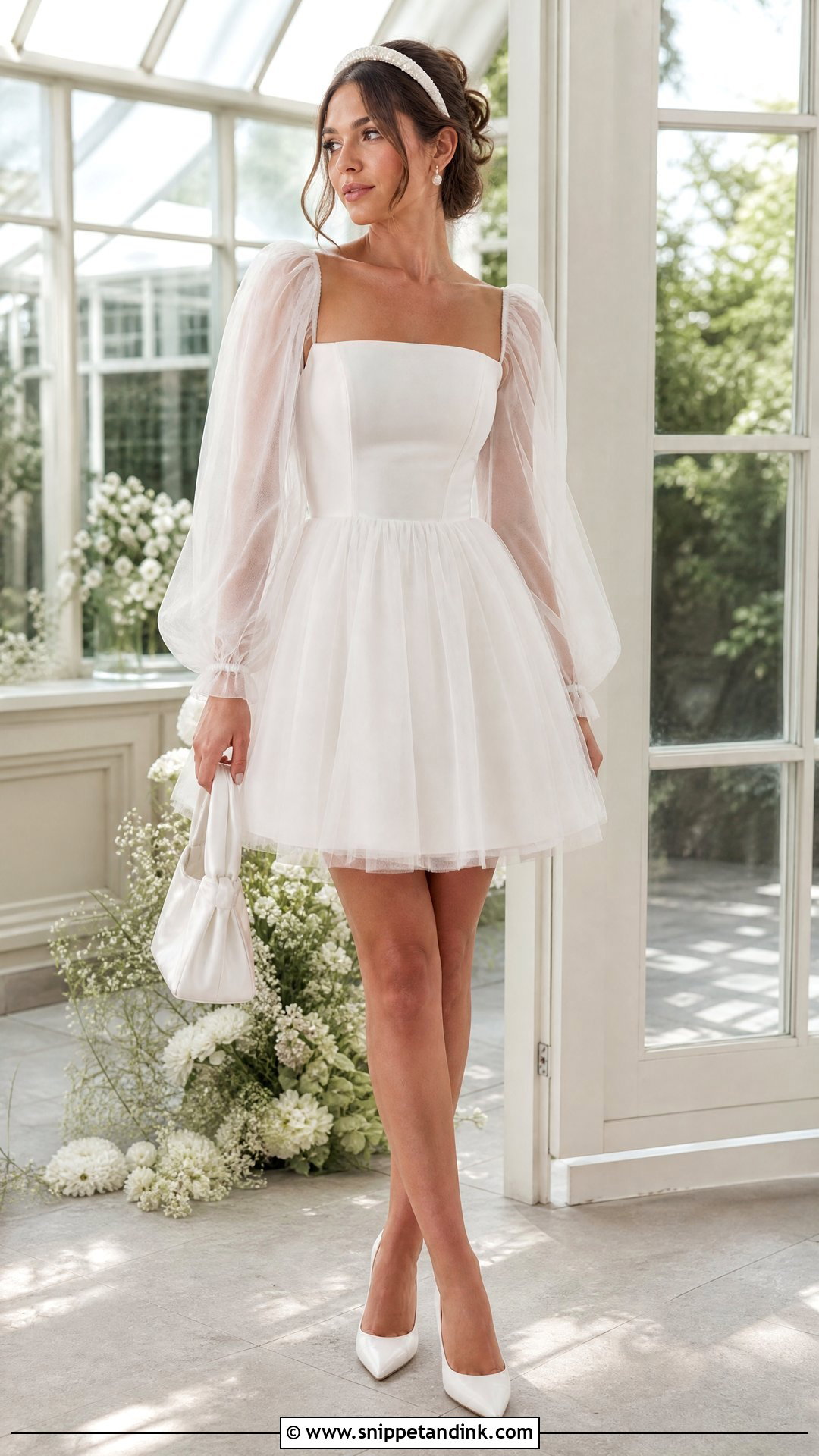
Puff sleeves add width at the shoulder, so the waist and skirt have to stay controlled or the whole dress reads as volume. Translucent puffs feel delicate; structured ones are more fashion. Streamlined pumps, tiny pearls and a clean satin bag are all it needs, plus a headband or short veil that doesn’t add more bulk near the sleeves. It suits whimsical garden celebrations and small indoor ceremonies. I check sleeve placement from the side as well as the front, because a puff set a half-inch too far back makes the shoulders look rounded. Removable sleeves give you a second look for the party.
9. Square-Neck Short Tulle Wedding Dress
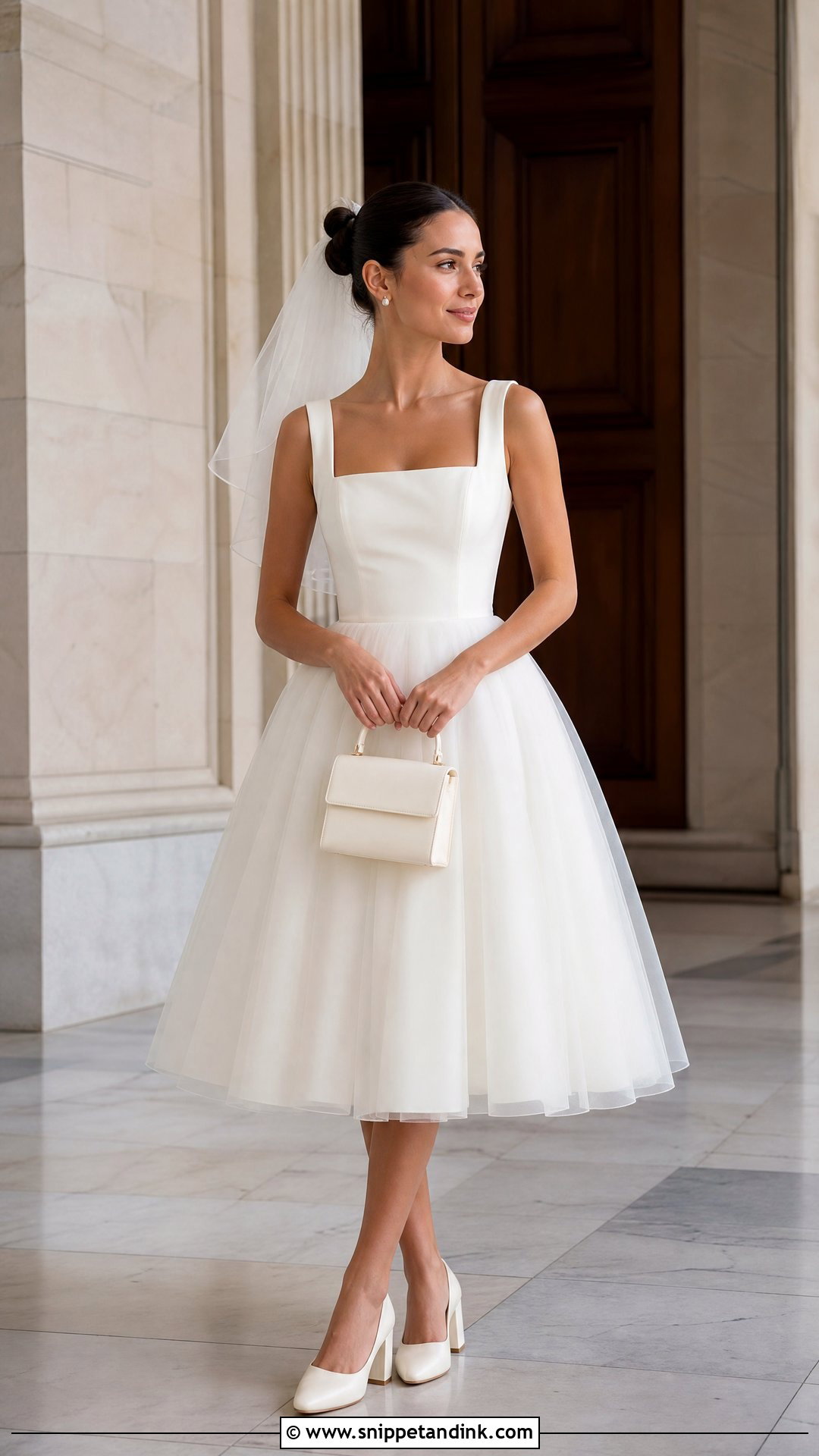
A square neckline is unforgiving about fit: it has to lie flat across the chest, and any gap at the corners or near the underarm shows immediately in photos. Wide straps help hold it. With a fitted bodice and a knee or tea-length skirt, it barely needs decoration; covered buttons or a narrow satin waistband are plenty. Block-heel pumps, a structured bag and pearl or gemstone studs suit it, with a neat bun and a short gathered veil. Courthouses, restaurants and classic gardens all suit its slightly vintage, tidy character.
10. Halter-Neck Short Tulle Wedding Dress
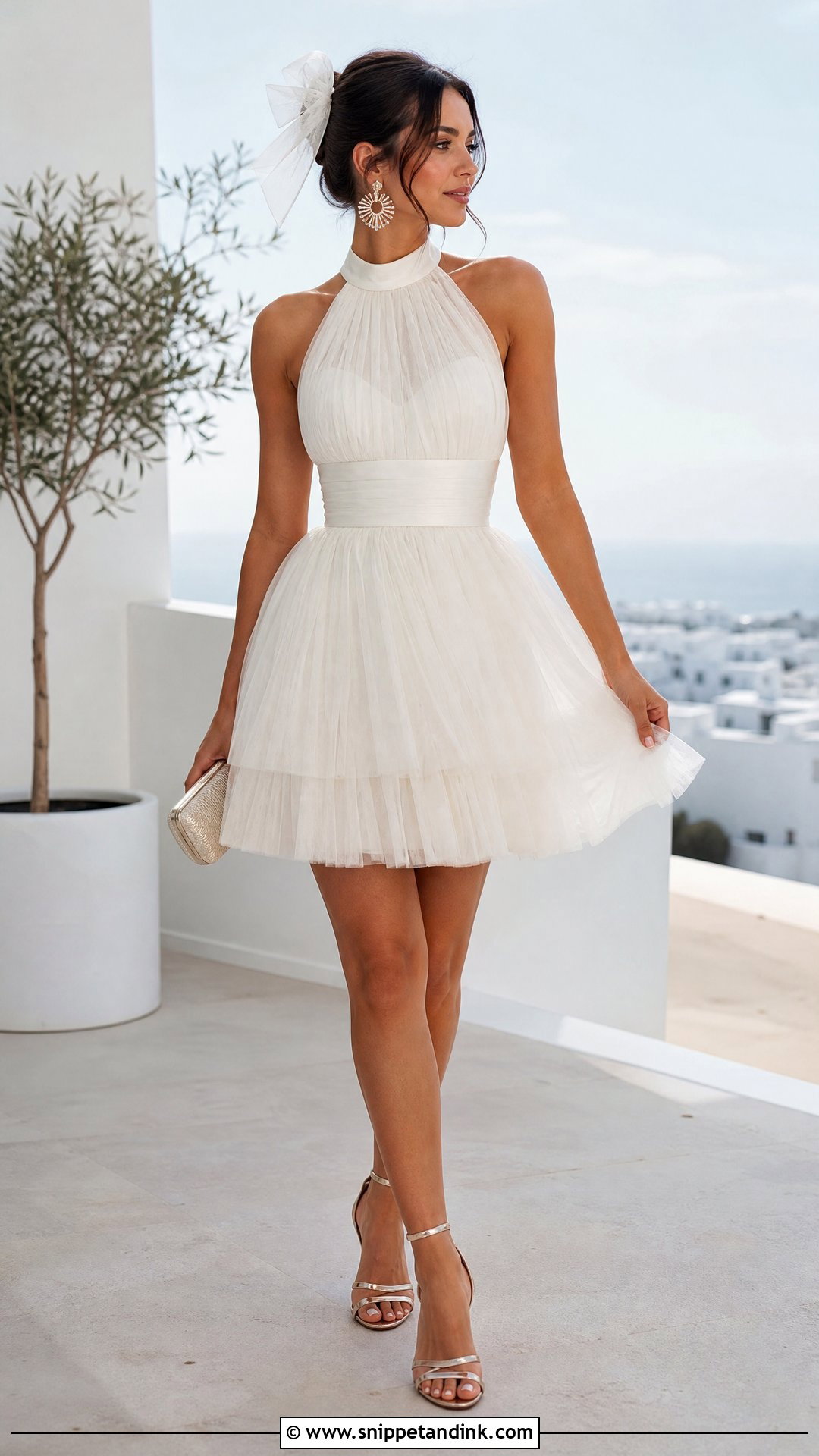
Halters show the shoulders without the worry of a strapless bodice slipping. The one thing I check is the neck fastening: a tie or hook that takes the bodice’s weight can start pulling at the back of the neck after a few hours, so the bodice needs its own structure. Pair it with a layered mini or a modest knee-length hem, metallic or ivory sandals, sculptural earrings and a small clutch. A sleek ponytail or high bun keeps the neckline clear, and a slim tulle bow or comb often looks better than a veil here. Destination weddings and rooftops suit it.
11. High-Neck Short Tulle Wedding Dress
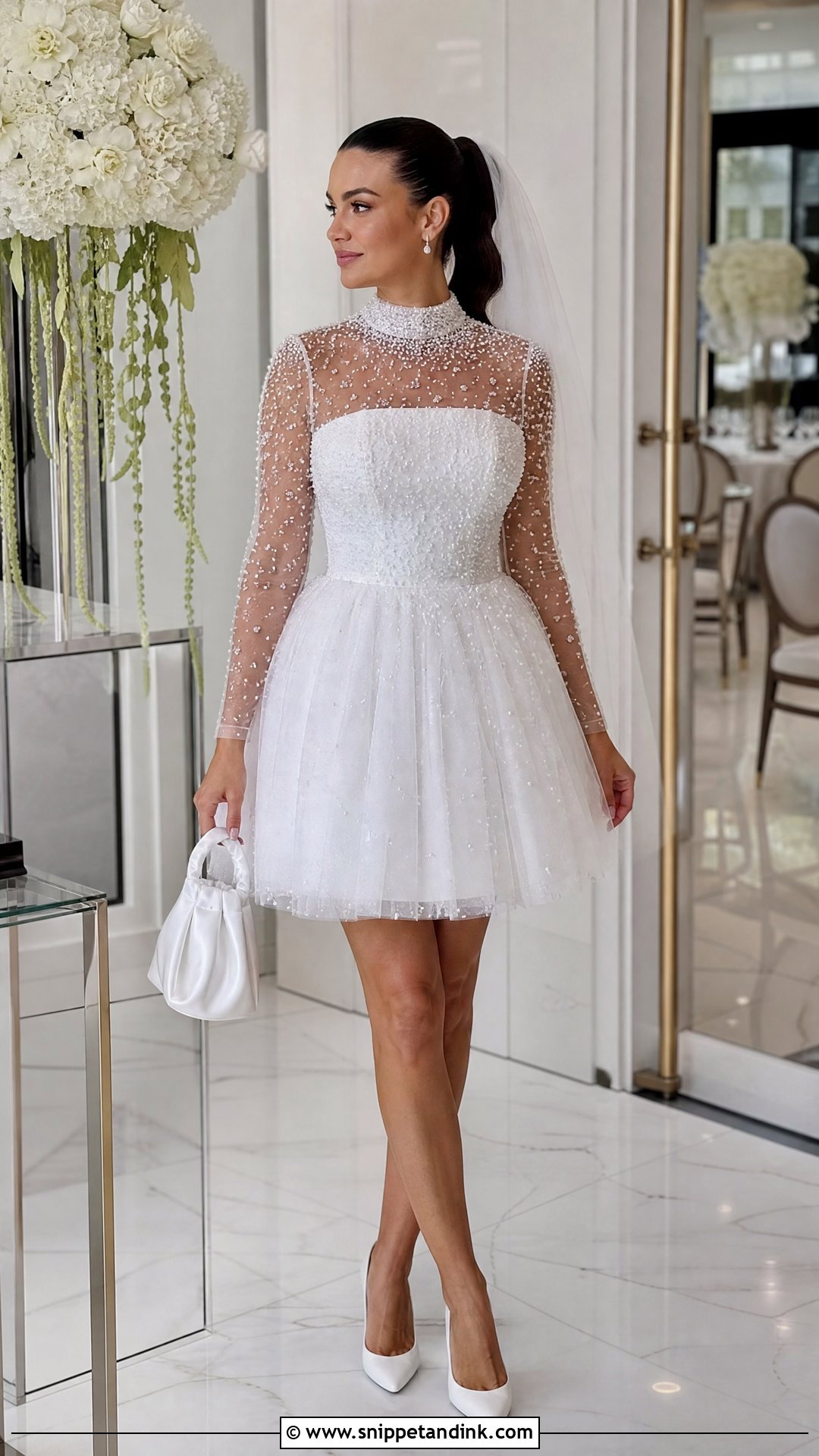
High necks can look severe on short dresses unless the neckline is softened with illusion tulle, lace edging or tiny pearls. Showing the legs balances the covered top, so I usually go mini or just above the knee. Pointed pumps, a small satin bag and delicate earrings, nothing at the throat. A low bun or polished ponytail keeps the shape clean, and a veil anchored beneath the hair gives drama from behind. At fittings, turn your head fully both ways: a collar that folds or scratches will bother you every time you look at your guests.
12. Drop-Waist Short Tulle Wedding Dress
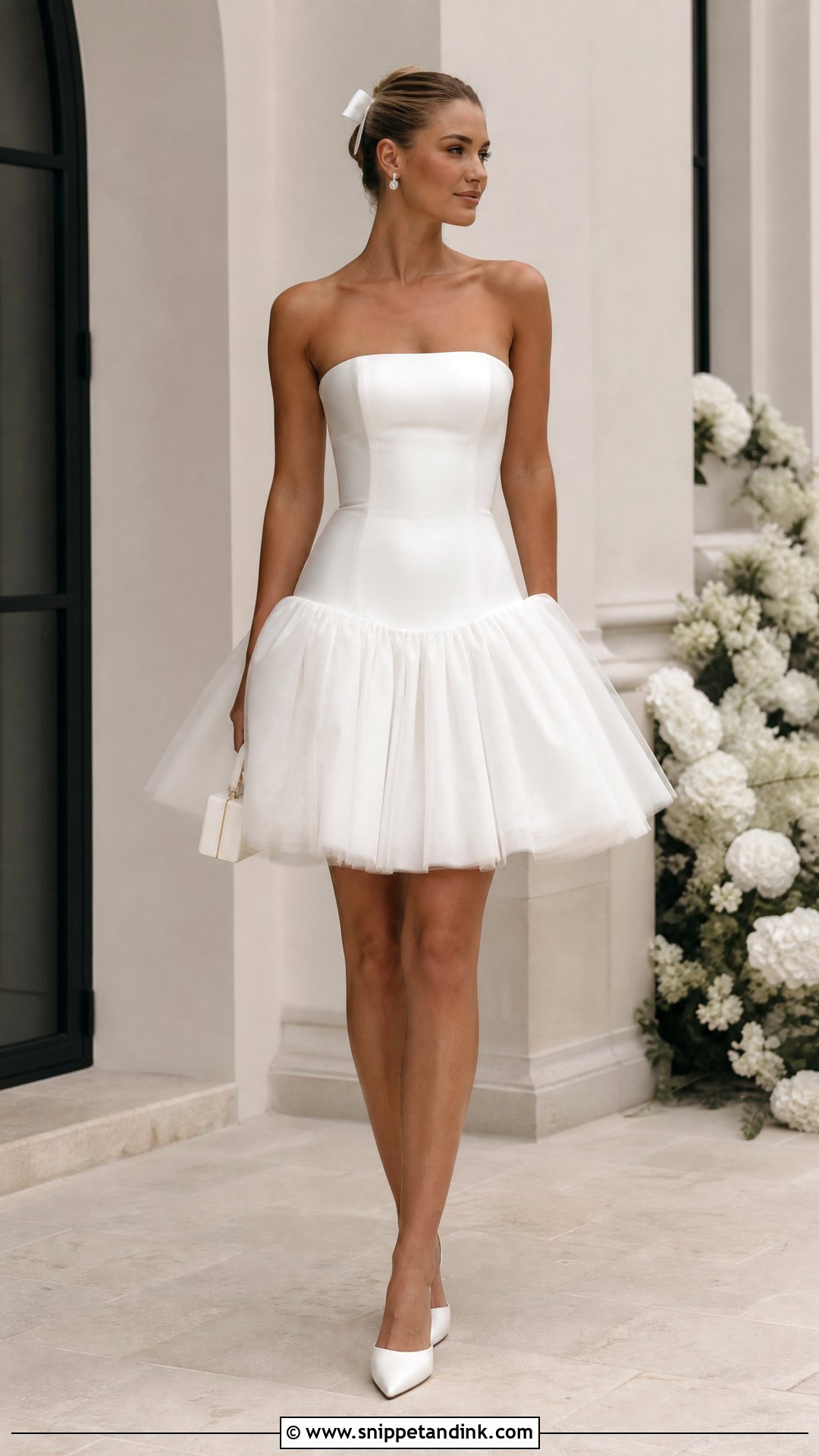
A dropped waist starts the skirt at the upper hip, which lengthens the torso and shortens the leg. That’s the effect, and it can be striking or it can swamp you. I pin the waistline at two or three heights in the fitting room before anything is cut. Keep the neckline simple, strapless, scoop or square, so the proportion reads clearly. Pointed heels, sleek earrings and a small structured bag, with a short veil or a narrow bow in the hair. Brides who enjoy visible construction and big skirt movement tend to love it.
13. Tiered Short Tulle Wedding Dress
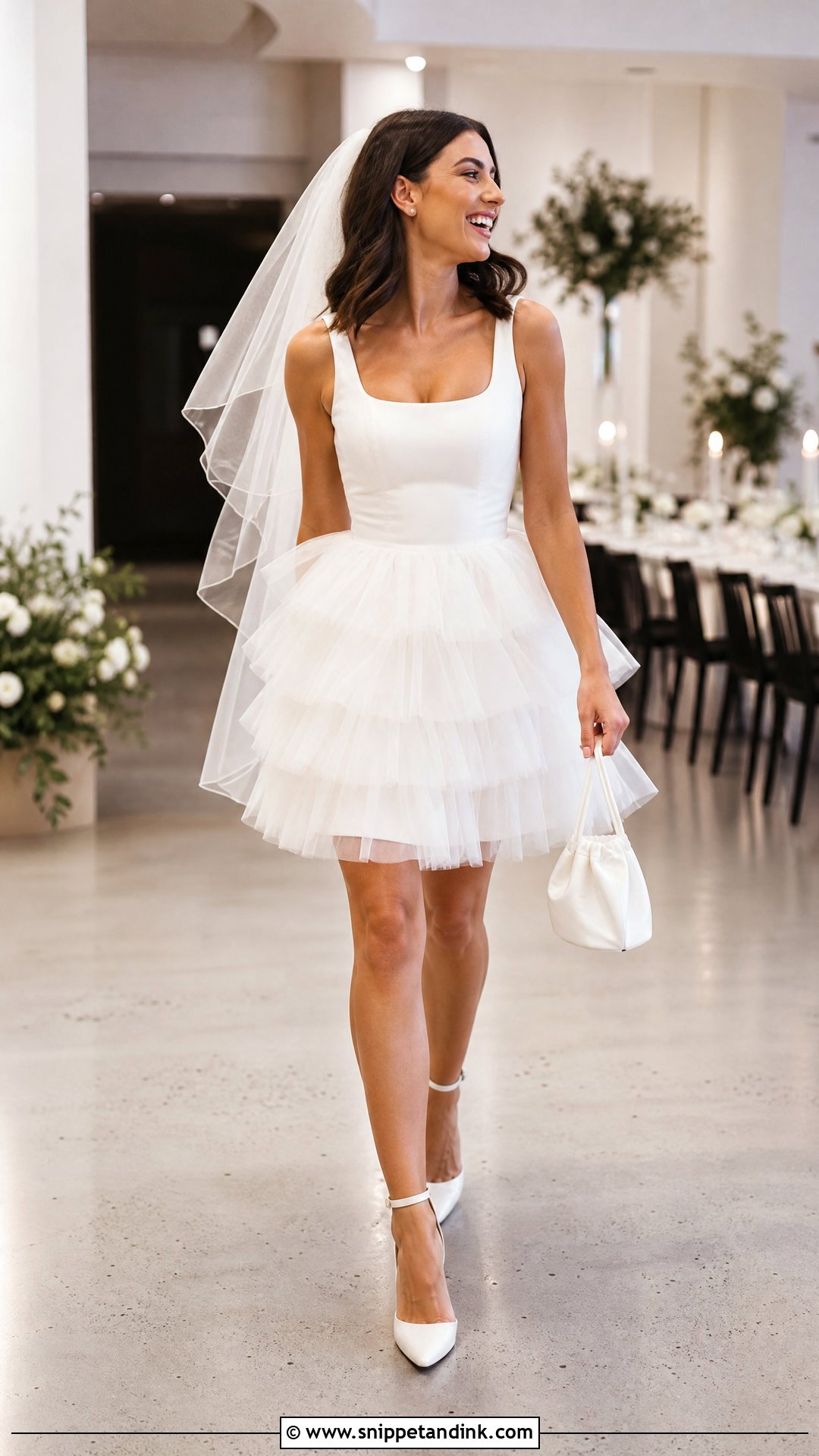
Graduated tiers make a tiered short wedding dress move every time you take a step. Narrow tiers are softer, wide ruffled ones more voluminous. Keep the bodice fitted and plain. Ankle-strap heels, small studs, a satin or pearl mini bag and a plain shoulder-length veil that contrasts with the layered hem. I always do a sitting test with tiers, because the shortest layer rides up more than you expect once the skirt is compressed on a chair. Spacing between tiers should be checked during alterations too. With a very full skirt, keep accessories small.
14. Beaded Short Tulle Wedding Dress
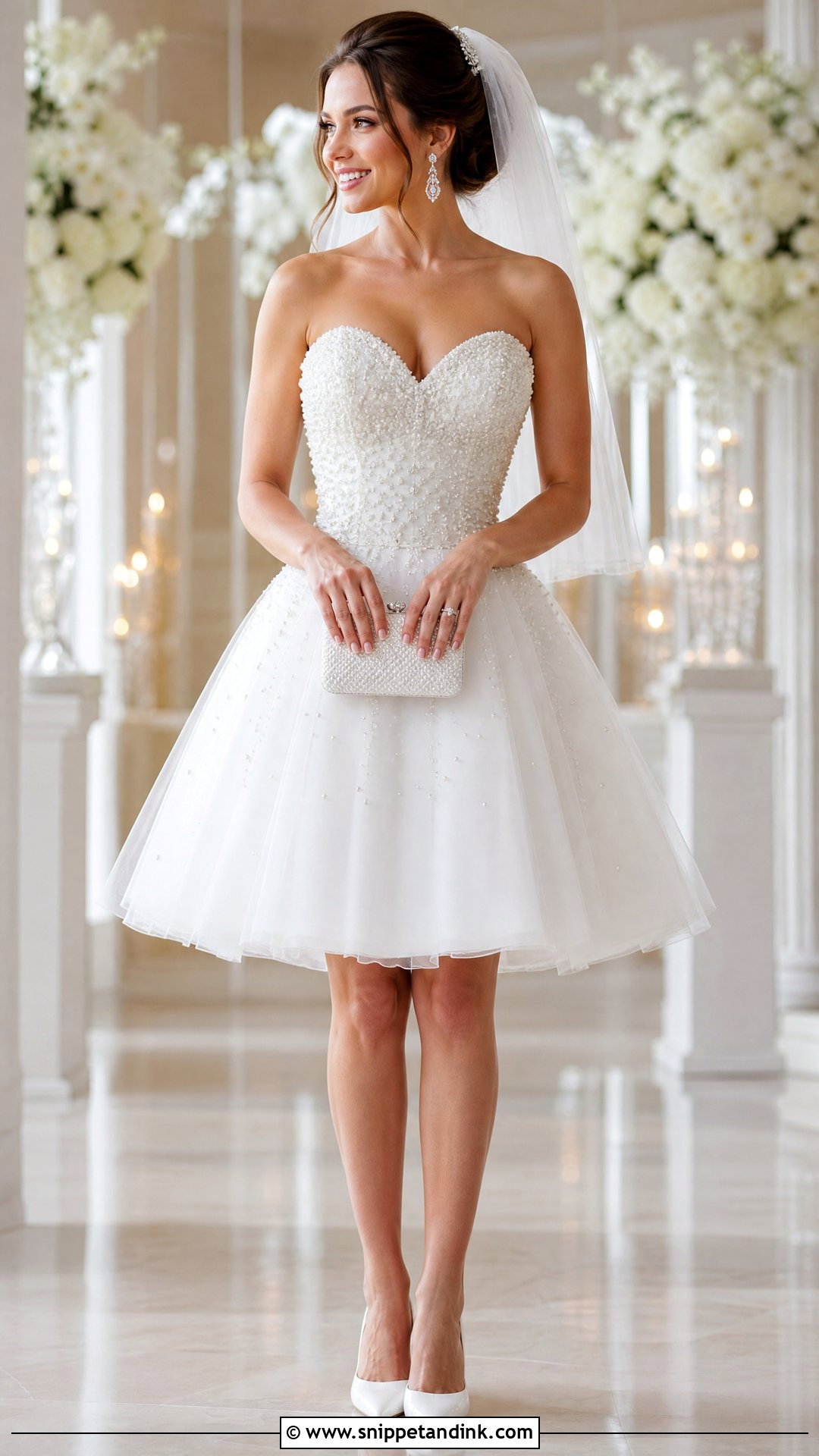
Beading reads luminous on tulle, and placement changes the mood: concentrated on the bodice with a plain skirt, or scattered for an all-over shimmer. Turn the bodice inside out before you buy. Rough knots and exposed thread on the underside will rub your skin raw by evening, and a good lining is the fix. Satin pumps, small crystal earrings, a plain clutch. Choose a plain veil, because lace edging catches on raised beads, and wear the hair up so loose strands don’t snag. It carries from ceremony into an evening reception without a change.
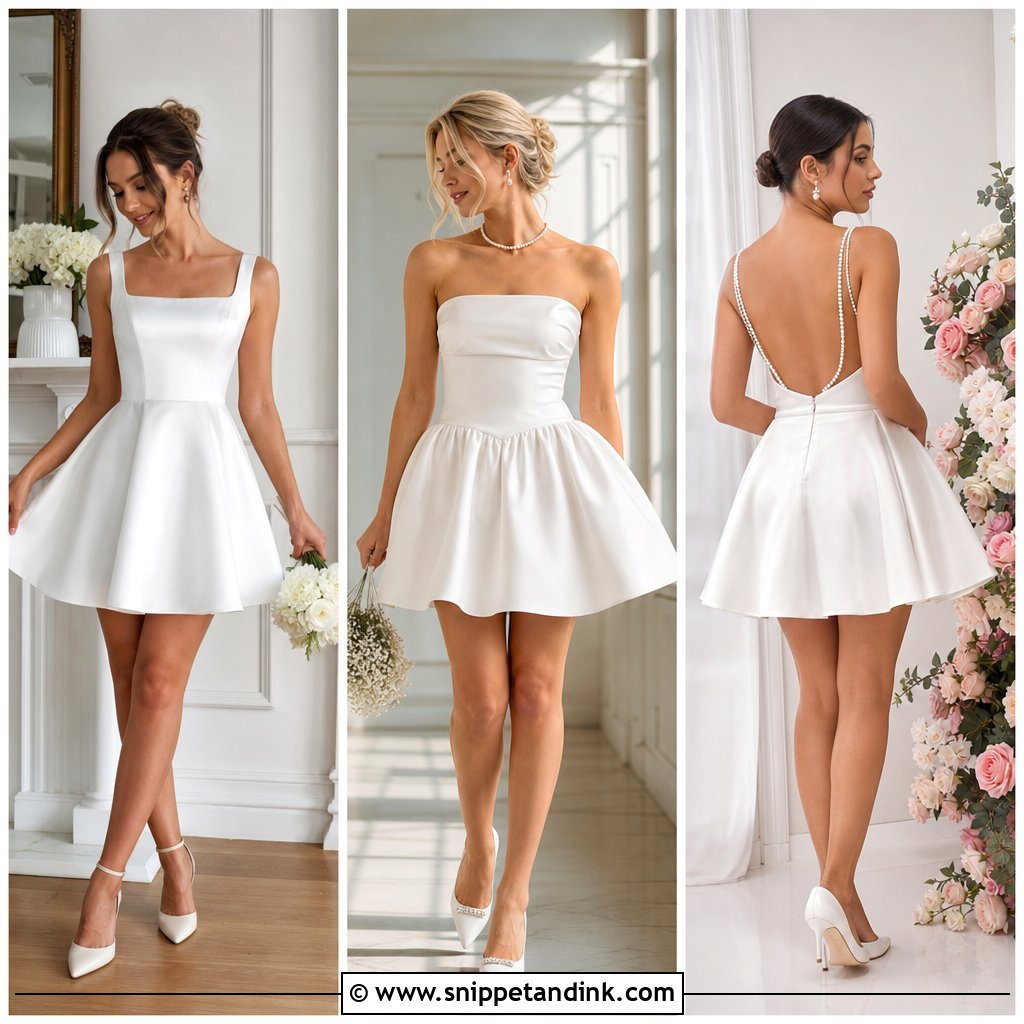
15. Polka-Dot Tulle Wedding Dress
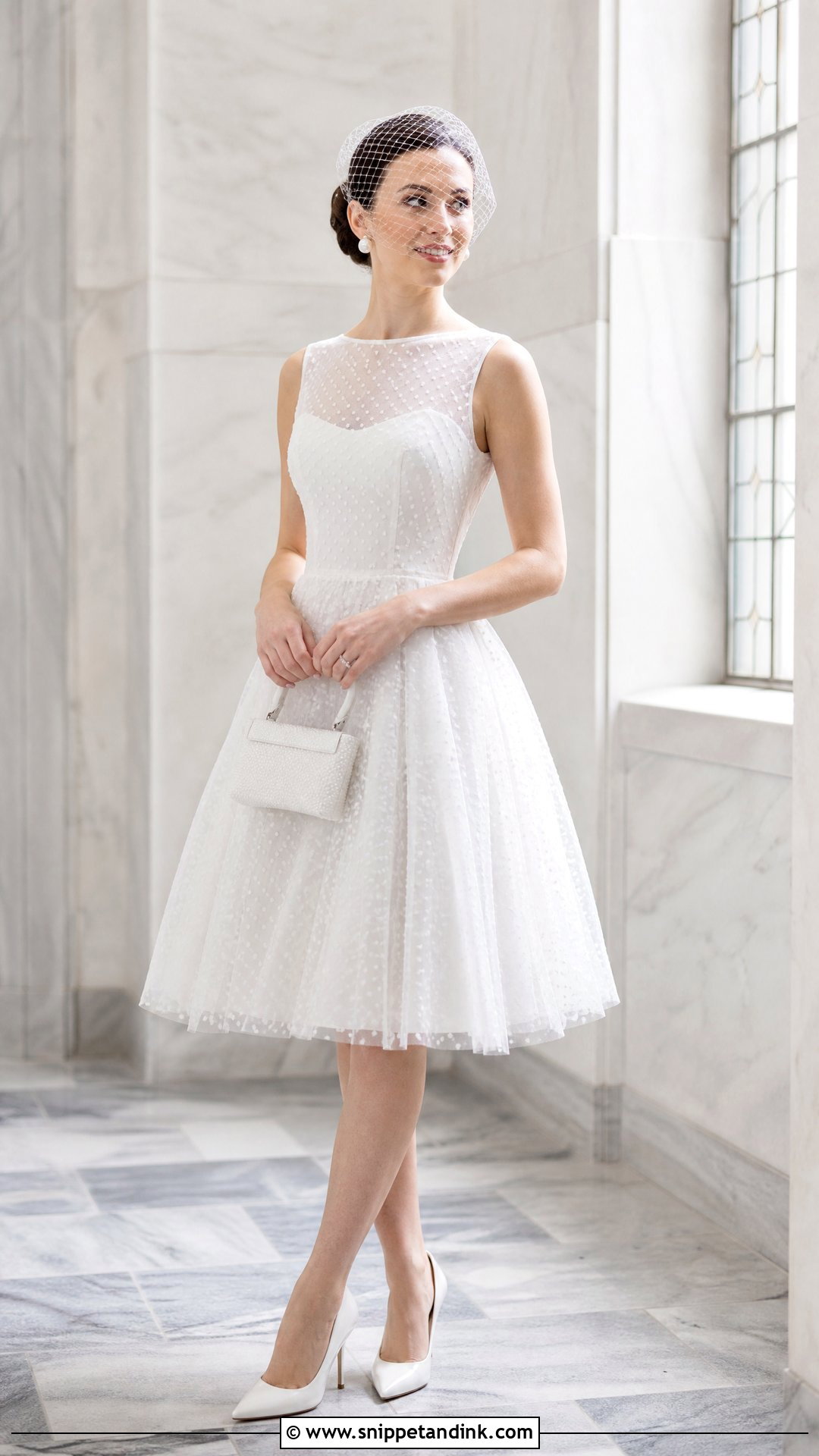
Dotted tulle has personality without being a costume, as long as the dot is scaled to the dress. Fine Swiss dots give texture; large flocked dots are playful, and on a petite mini they can overwhelm the silhouette or hide the construction. A fitted bodice with a gently flared knee-length skirt keeps it classic. Pointed pumps, pearl studs, a top-handle bag, and a plain birdcage or short veil so patterns don’t stack up. Red lipstick tips it vintage; neutral makeup keeps it modern. Courthouses, brunch receptions and small gardens suit it.
16. Asymmetrical Short Tulle Wedding Dress
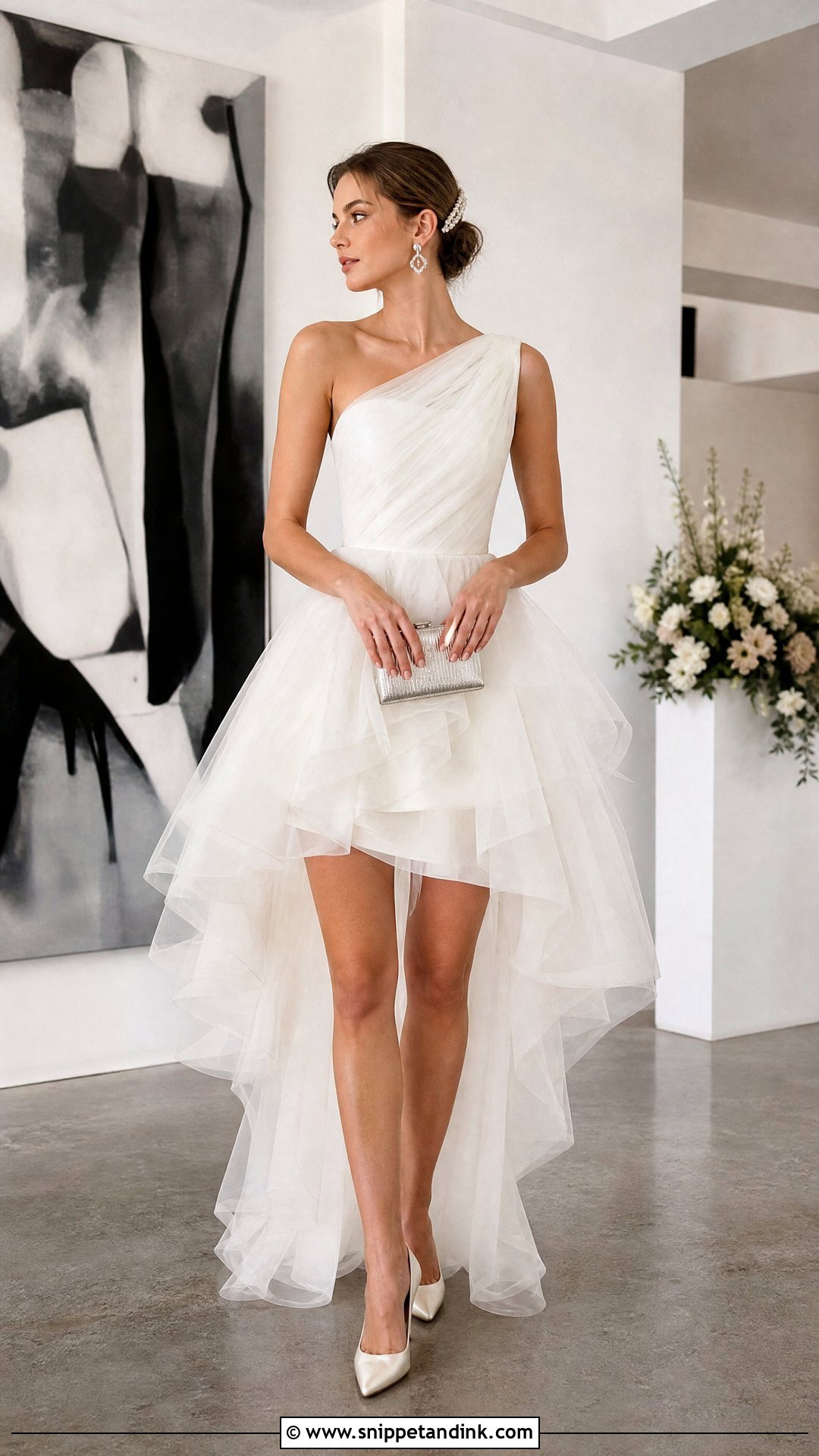
Pick one asymmetrical feature, not three. An uneven hem, a one-shoulder neckline or a diagonal drape each work alone; combined, the dress looks busy. High-low skirts are the most wearable version, showing the shoes in front with length behind. Sleek heels, geometric earrings, a structured clutch and a clean bun or side-swept style that follows the line of the neckline. A simple veil or none at all. Uneven layers need precise hemming, so I check the fall standing, sitting and walking before signing off.
17. Short Tulle Wedding Dress With Cape Sleeves
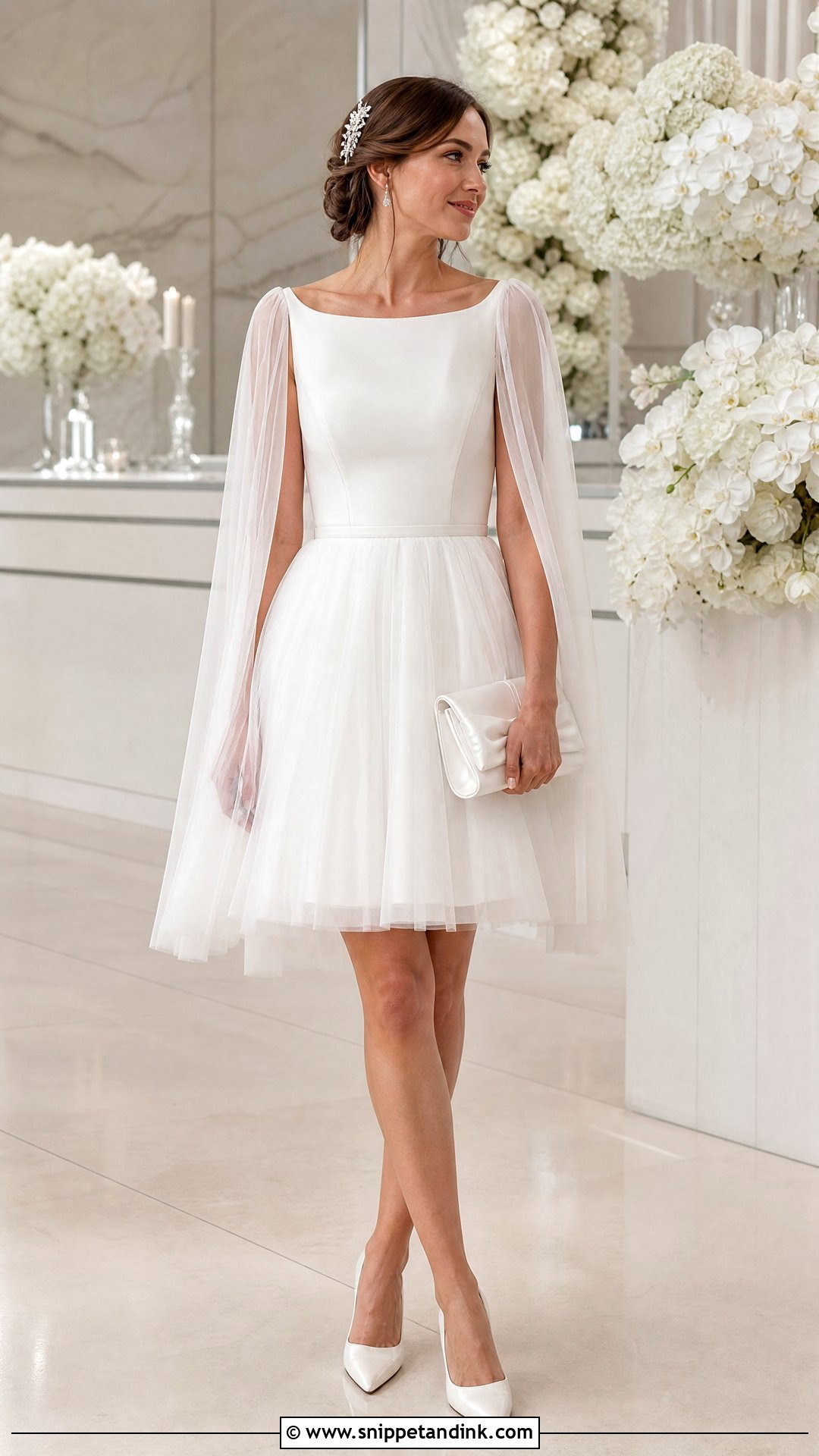
Cape sleeves bring ceremony drama without a train. Sheer shoulder capes float; elbow-length panels give more coverage. Keep the bodice fitted and the A-line skirt restrained so the cape reads clearly. Pointed pumps, slim earrings and a small satin clutch, with the hair up so the fabric falls cleanly off the shoulders. A veil often isn’t needed; a comb or headband is enough. The practical snag is literal: capes catch on bracelets, watch clasps and bag chains, so I keep the wrists bare. Finished edges move better and last the day. Cooler seasons and modern indoor venues suit it.
18. Plus-Size Short Tulle Wedding Dress
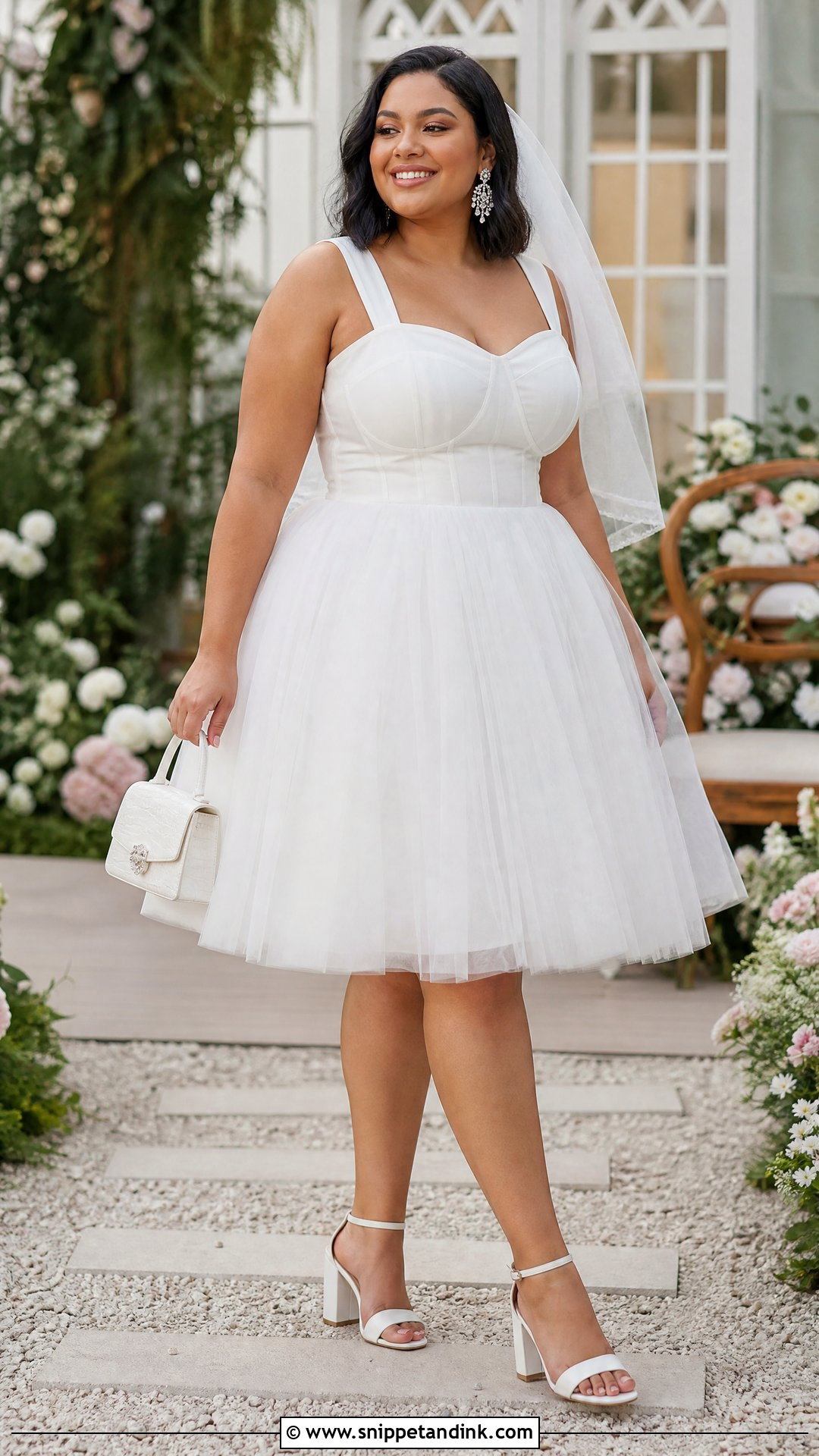
For plus-size brides, support comes first and volume second. An A-line or fit-and-flare skirt defines the waist and floats over the hips; wide straps, sleeves or a structured corset give the coverage you prefer. Try two or three layer counts, because more tulle isn’t automatically more flattering, and the right fullness depends on your height. Stable block heels, statement earrings and a small structured bag, with a fingertip or shoulder-length veil. Have every alteration done in the underwear and shoes you’ll actually wear. A good fit is built for your body as it is and stays secure when you sit.
19. Short Tulle Wedding Dress With Detachable Overskirt
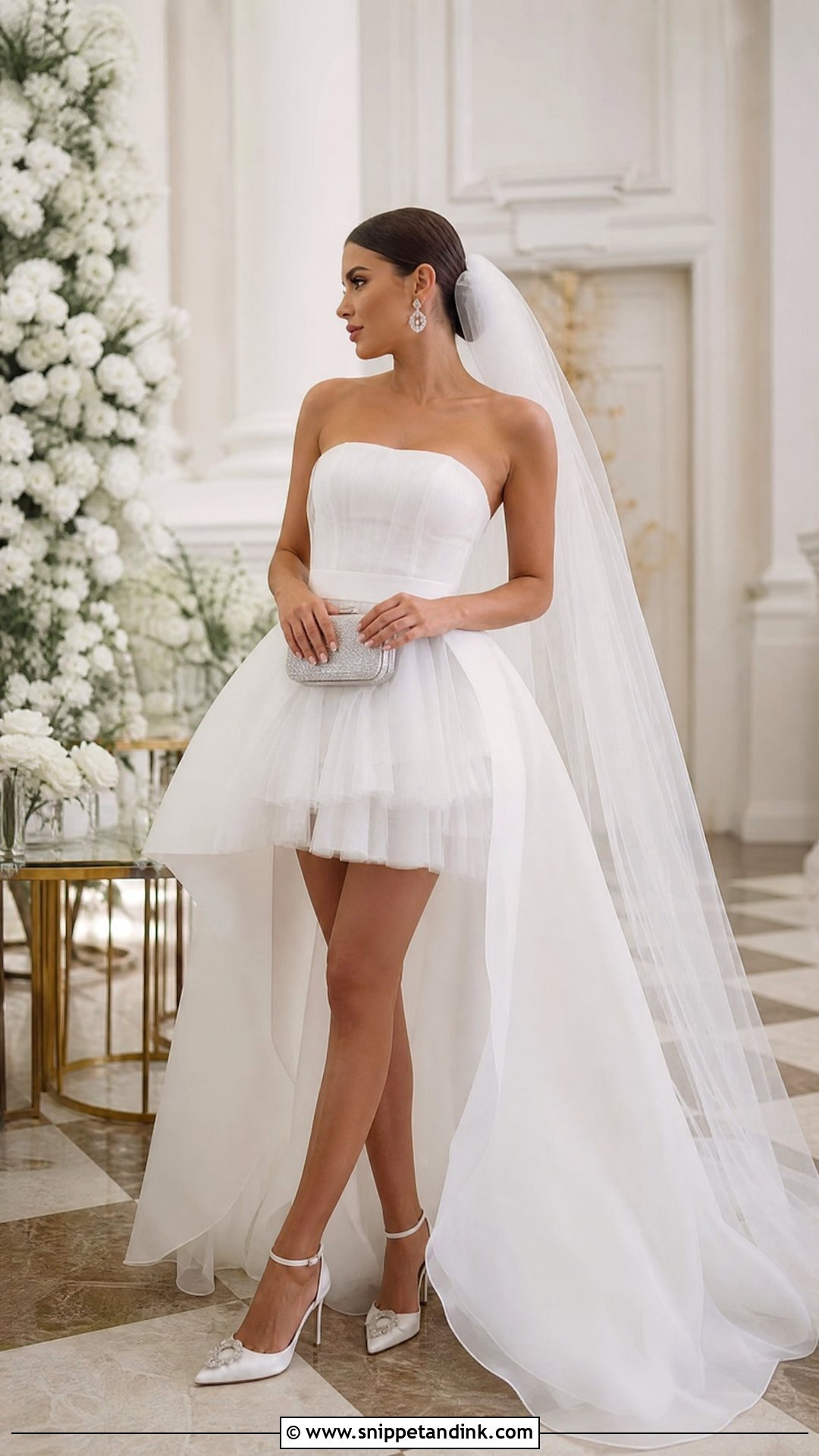
A detachable overskirt gives you a long ceremony silhouette and a short dress for dancing without a full change. The attachment is the whole job. I prefer hidden snaps or hooks on a narrow waistband, which lie flat, over ties that leave a bulky knot. Practise the removal with the person who’ll do it, ideally twice, so it takes a minute in a corridor rather than ten in a bathroom. Pointed heels, refined earrings and a compact clutch work for both looks; a long veil suits the ceremony and a bow or comb the party. Check the short dress alone is fully finished at the waist.



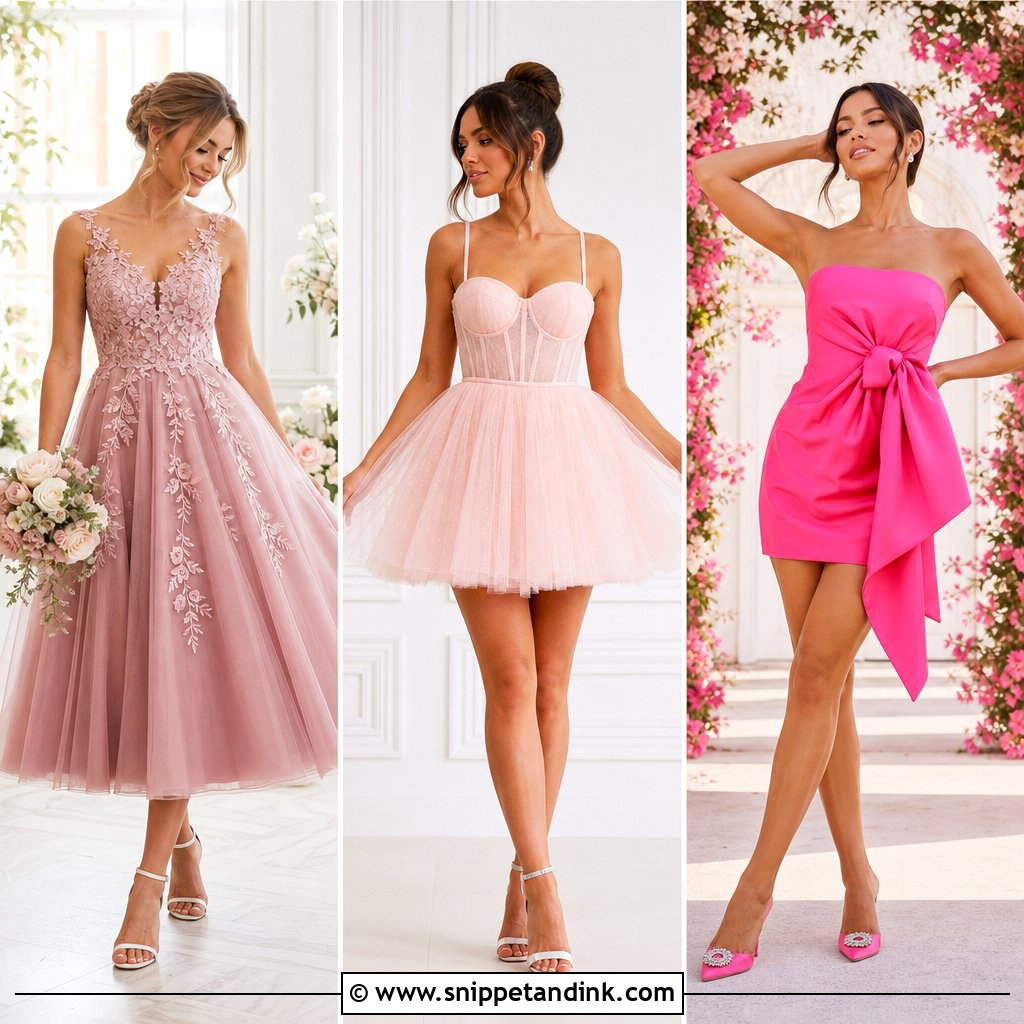
20. Colorful Short Tulle Wedding Dress
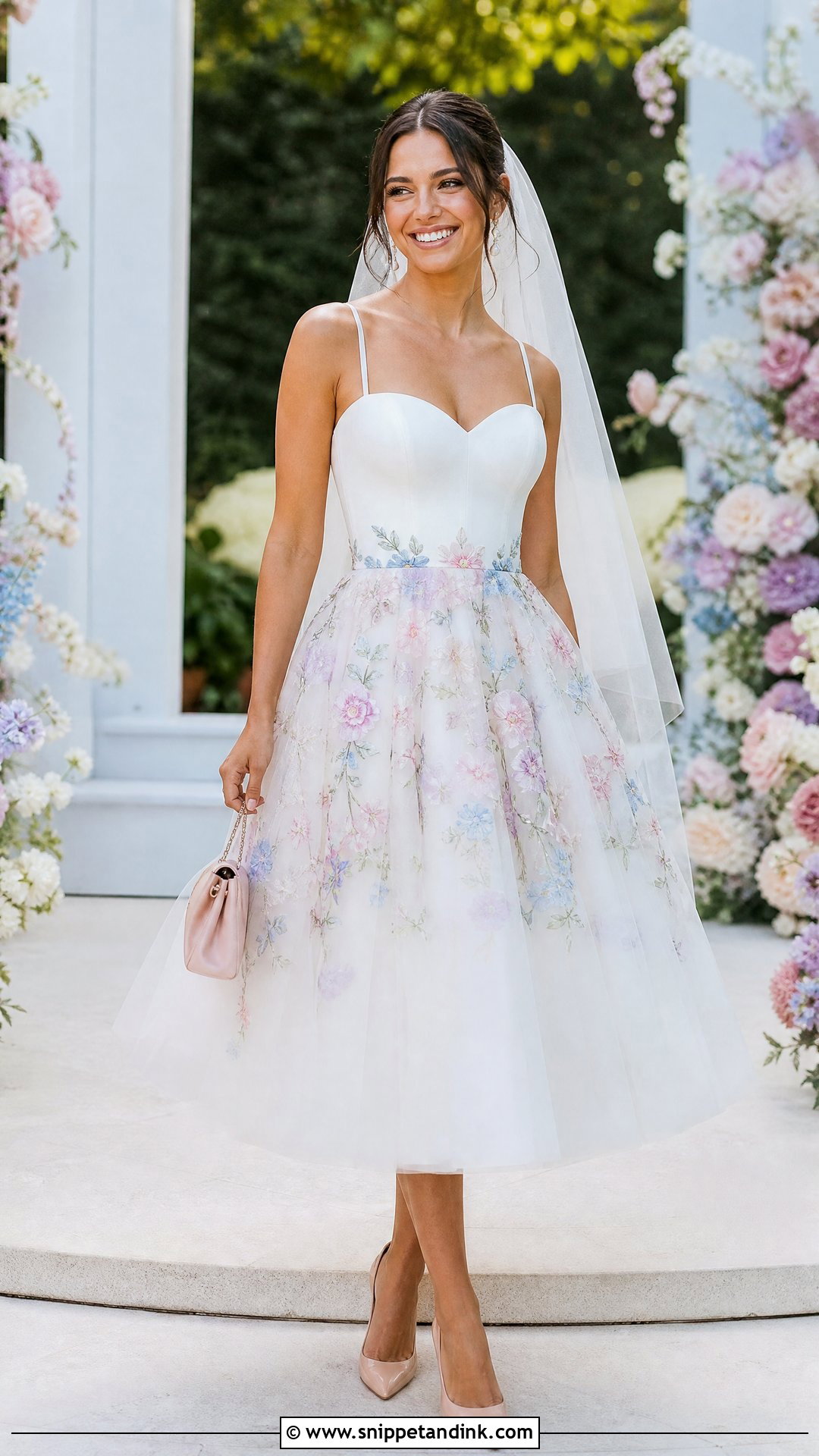
Colour reads as bridal when it’s soft: blush, pale blue, champagne and faint lavender all sit easily with ivory accessories. A white base with coloured embroidered flowers is the gentler route. Neutral heels, delicate earrings and a bag picking up one accent colour, plus a plain ivory or matching veil. Let the dress set the bouquet palette rather than adding unrelated shades. Layered tulle changes colour with the number of layers and the light, so I always ask for a swatch and look at it in daylight and under warm indoor bulbs before ordering.
Tulle Crushes, Snags and Clings: Handling It on the Day
Tulle is a fine net, usually nylon or polyester, and it creases where it’s folded and catches on anything rough. Plan for both. Hang the dress the moment it arrives, inside out in a breathable garment bag, with room around the skirt so the layers aren’t pressed flat against a wardrobe wall.
I steam tulle from inside the skirt, with the steamer held a few inches away and never touching the net. Synthetic tulle can melt or pucker under a hot iron, so an iron is off the table unless a professional is doing it with a pressing cloth. Light creases often drop out on their own after a night hanging in a steamy bathroom.
Small fixes worth packing
- Anti-static spray, lightly over the underside of the skirt, for dry winter venues where tulle clings to tights or legs.
- Clear nail polish to stop a small run in the net from spreading.
- A few matching safety pins and a needle threaded in ivory for a lifted appliqué or loose hook.
- A plastic garment bag for travel, with tissue folded into the skirt layers so they don’t crush into hard lines.
When you sit, sweep the back of the skirt under you with both hands rather than dropping straight down. It keeps the layers smooth and stops the hem riding up, which on a short dress is the difference between relaxed and fidgeting all evening.
A Short Skirt Still Needs a Full Fitting Plan
Short hems are freedom, but they show every fitting decision because nothing is hidden by length. Tulle can be soft, sculpted, textured or playful depending on how it’s layered and finished. Start from your venue, season and shoes, then test every shortlisted dress by walking, sitting and dancing in it. Book alterations early enough for a second pass on the bodice and hem. A corset mini, a tea-length sweetheart or a convertible overskirt can all feel completely yours when the fit is right.
You'll Like These Ideas:


Leave a Reply