
Satin is the fabric I reach for when a bride wants a short dress that still reads as a wedding dress. It has body, it holds a seam crisply, and the sheen does a lot of the bridal work that a long skirt would otherwise do. A shorter hem makes walking, dancing and showing off your shoes much easier, so these dresses suit courthouse vows, small celebrations, destination weddings, reception changes and after-parties. What satin won’t do is hide a poor fit. Before thinking about the veil or shoes, look hard at the neckline, the sleeve, the hem shape and the weight of the fabric, because those decide how it hangs. The twenty dresses below run from a clean A-line mini to a dress with a detachable overskirt, each styled as a full outfit.
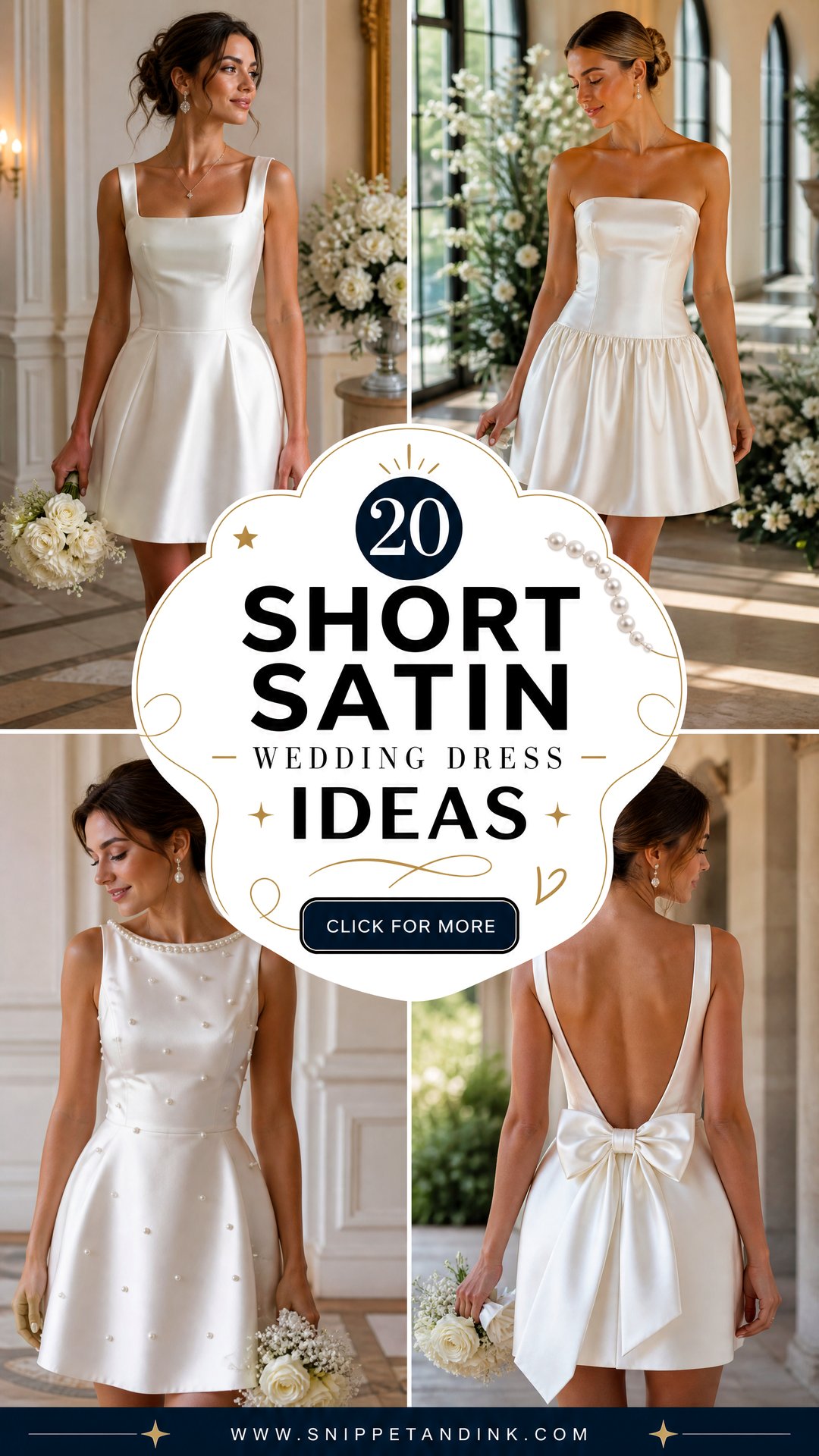
Duchess, Charmeuse or Crepe-Back? Not Every Satin Behaves the Same
Shops label all of these simply as satin, and they can look almost identical on a hanger. On the body they act very differently, and on a short dress the difference shows more because there’s less skirt to hide behind.
- Duchess satin is heavy, stiff and holds structure. It suits strapless minis, bubble hems, bows and anything sculptural. It’s warm, so think twice for a summer beach.
- Charmeuse is light and fluid with a high sheen on one side. It’s the slip-dress and cowl-neck fabric. It clings, shows underwear lines and marks with water.
- Crepe-back satin has a shiny face and a matte back. It drapes better than duchess and is less unforgiving than charmeuse, which makes it a good middle choice for wraps and tea length.
- Matte or peau satin has a low lustre that photographs softer and hides small creases better.
When I’m helping someone choose, I scrunch a corner of the fabric in my fist for a few seconds and let go. If it springs back almost smooth, it’ll survive a car ride and a dinner. If it stays crumpled, plan for a steamer at the venue.
Shine matters too. Very glossy satin reflects flash and sunlight and can make the body look wider where light hits it. If you’re nervous about that, look for medium lustre or one of the matte faces.
1. Strapless Short Satin Wedding Dress
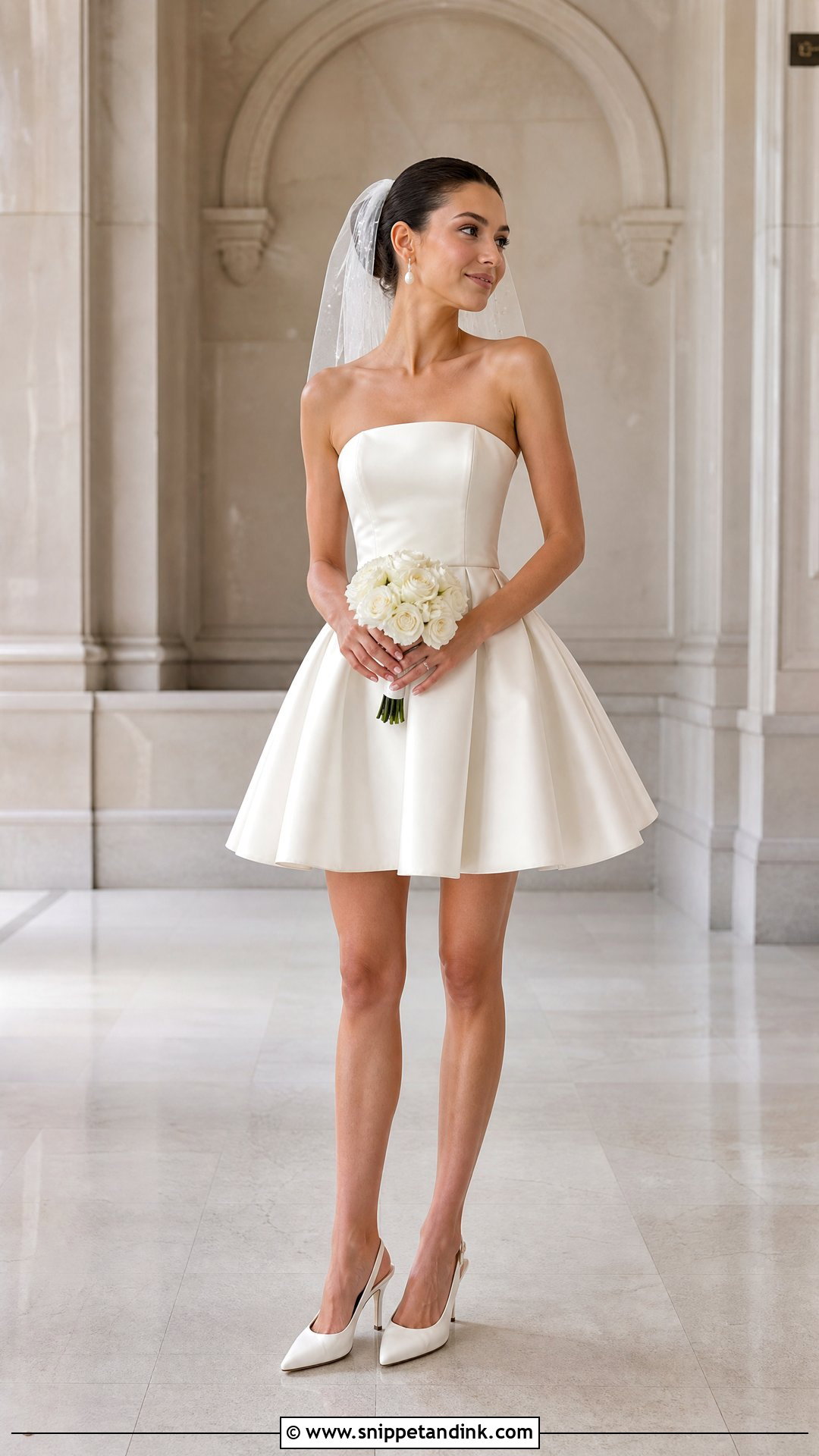
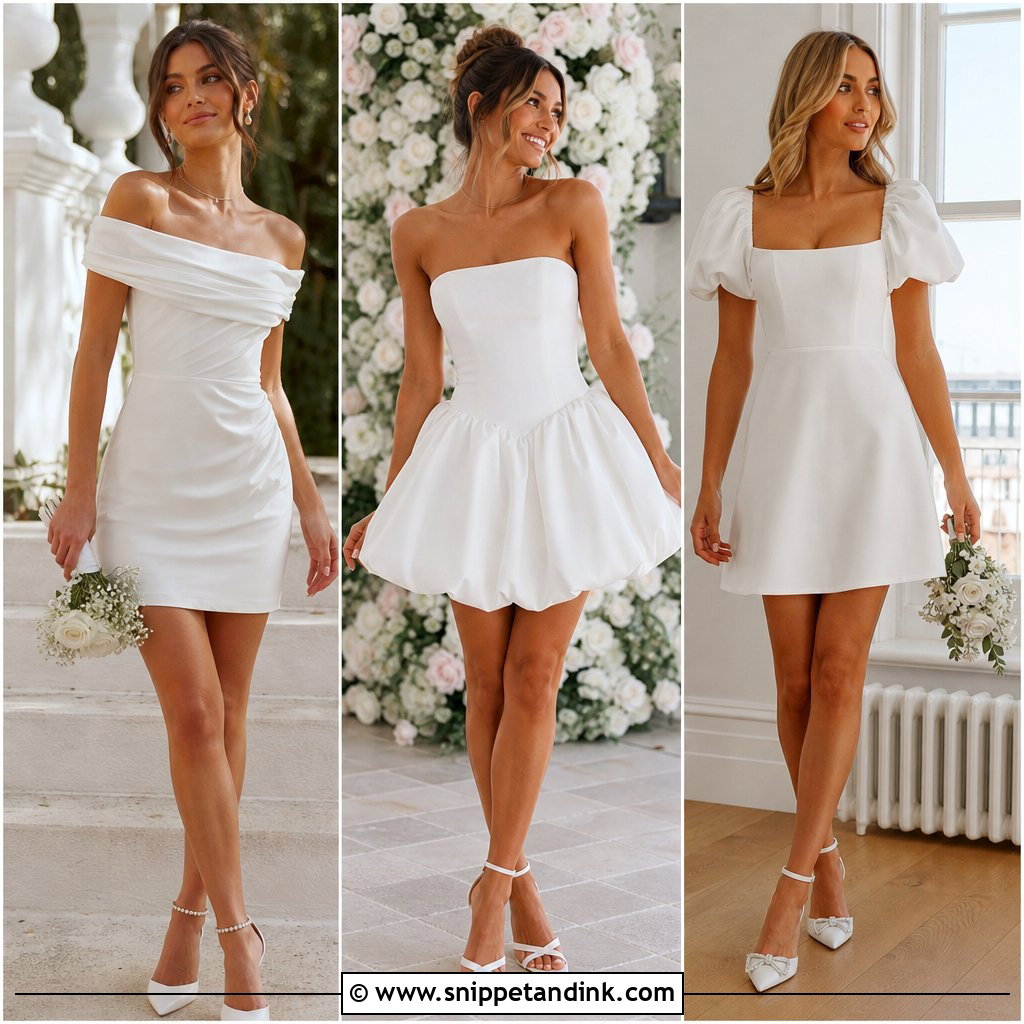
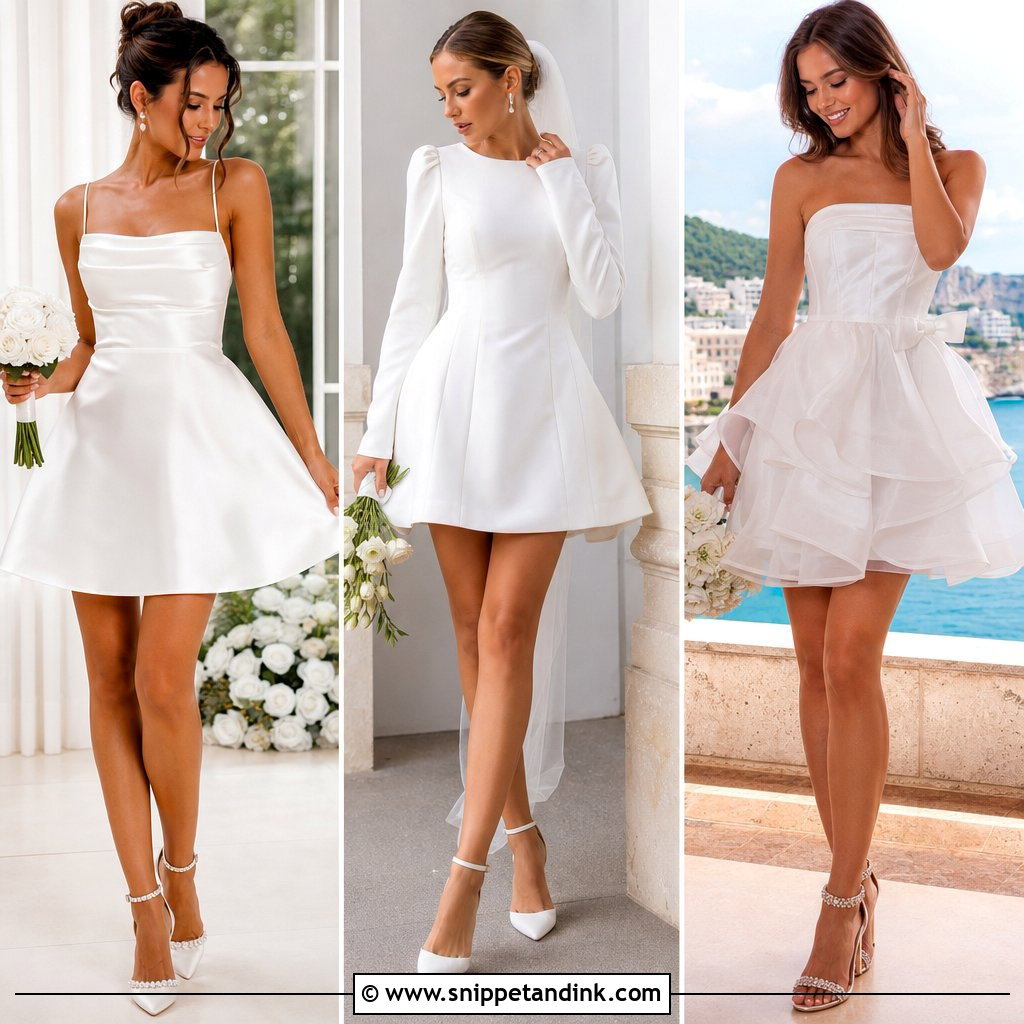
Strapless is the classic short satin shape, and everything depends on what’s inside the bodice. I want boning and a waist stay, not just a grippy strip at the top edge, so the dress holds itself up when you lean over to sign the register. A softly flared A-line skirt balances it. Ivory pointed slingbacks, pearl drops and a fingertip veil with a raw edge; a small bouquet of white roses or calla lilies leaves the shape visible. Bring a cropped satin jacket or light wrap if the day moves outside. Courthouses, rooftops and reception entrances suit it.
2. Square Neck Short Satin Wedding Dress
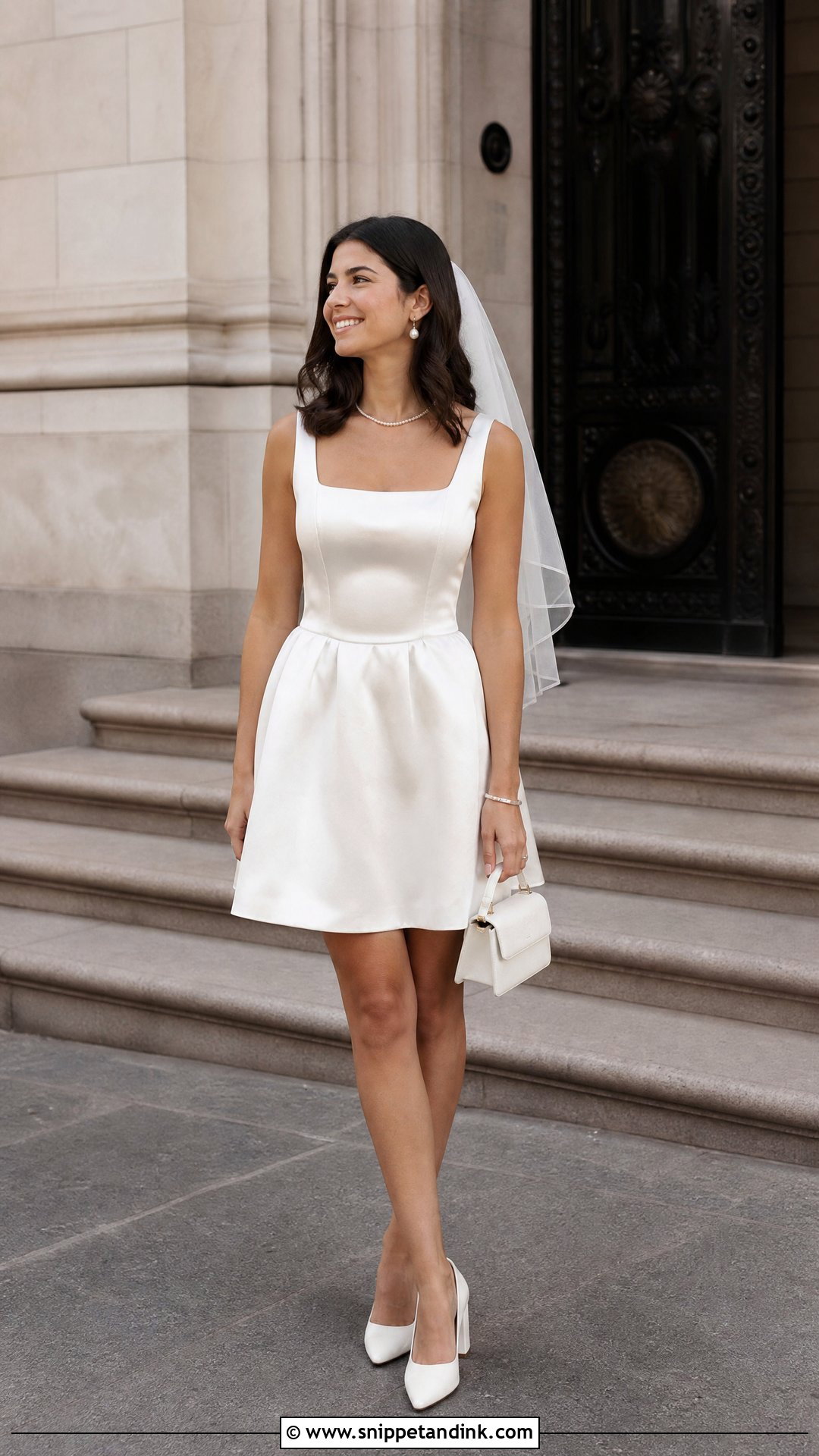
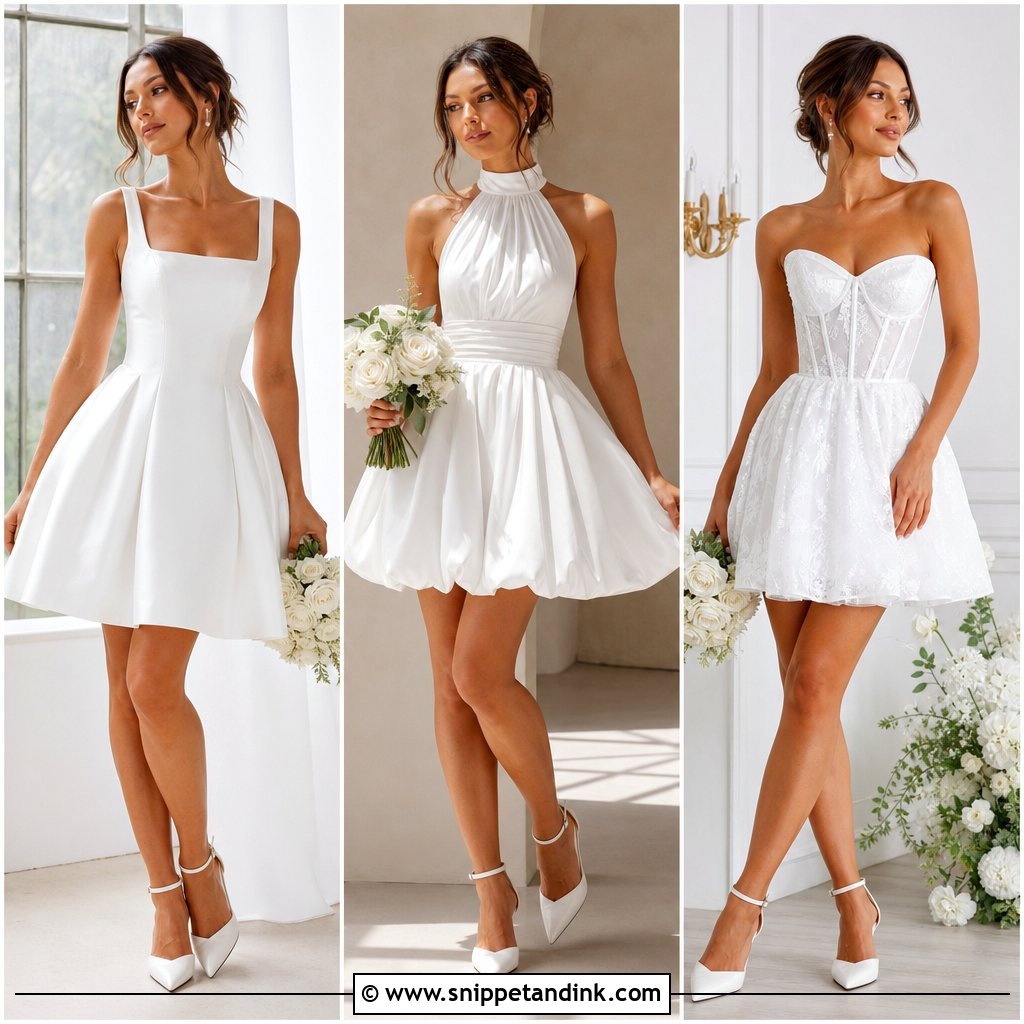
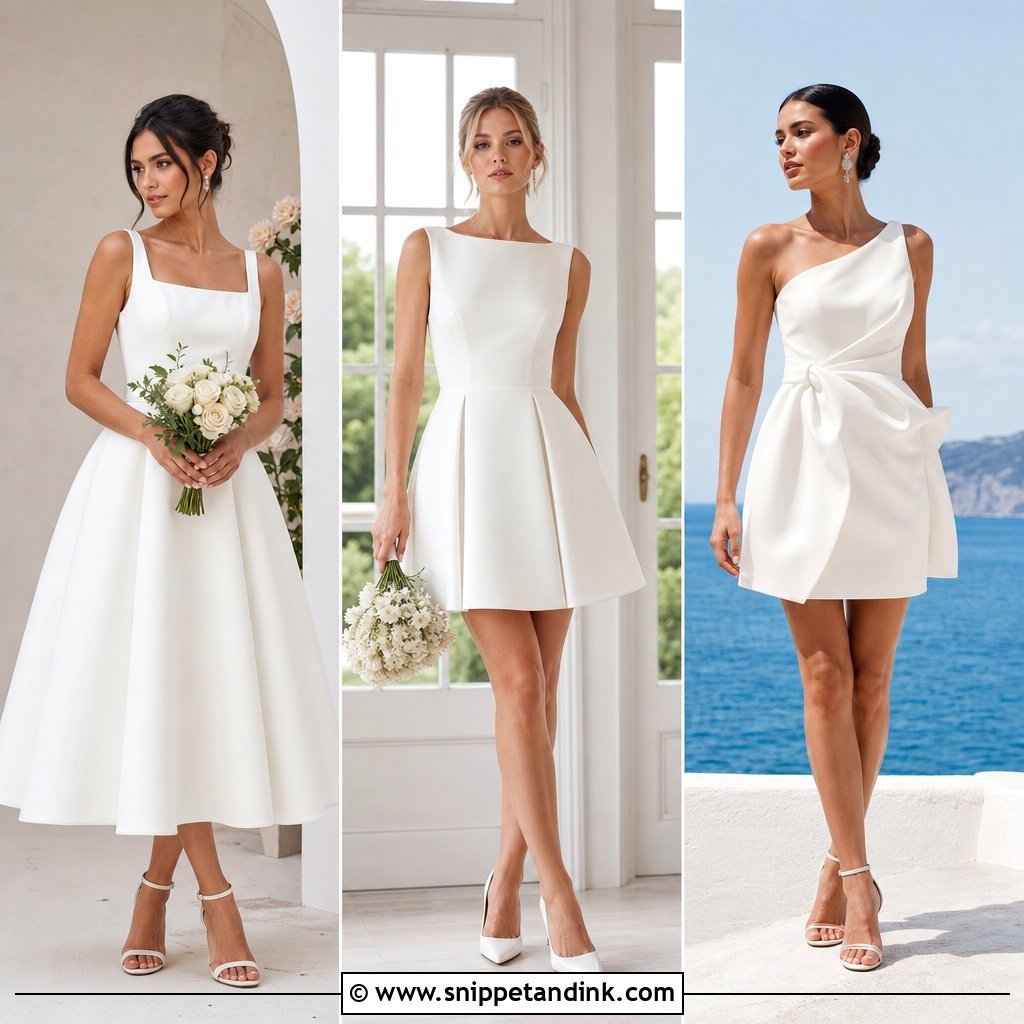
A square neckline gives satin a clean, almost architectural edge. Wide straps, a fitted waist and a straight or lightly flared skirt ending a few inches above the knee keep it modern. The open neckline frames a small pendant or short pearl strand, so nothing heavy is needed. Low block pumps, a structured mini bag and a shoulder-length veil under a sleek bun. Satin-covered buttons along the back add a traditional detail, but count them: a long row of loops takes ten minutes to fasten, so someone needs to start early. A tailored ivory coat covers it for travel. City halls, private dinners and gallery weddings suit it.
3. Off The Shoulder Short Satin Wedding Dress
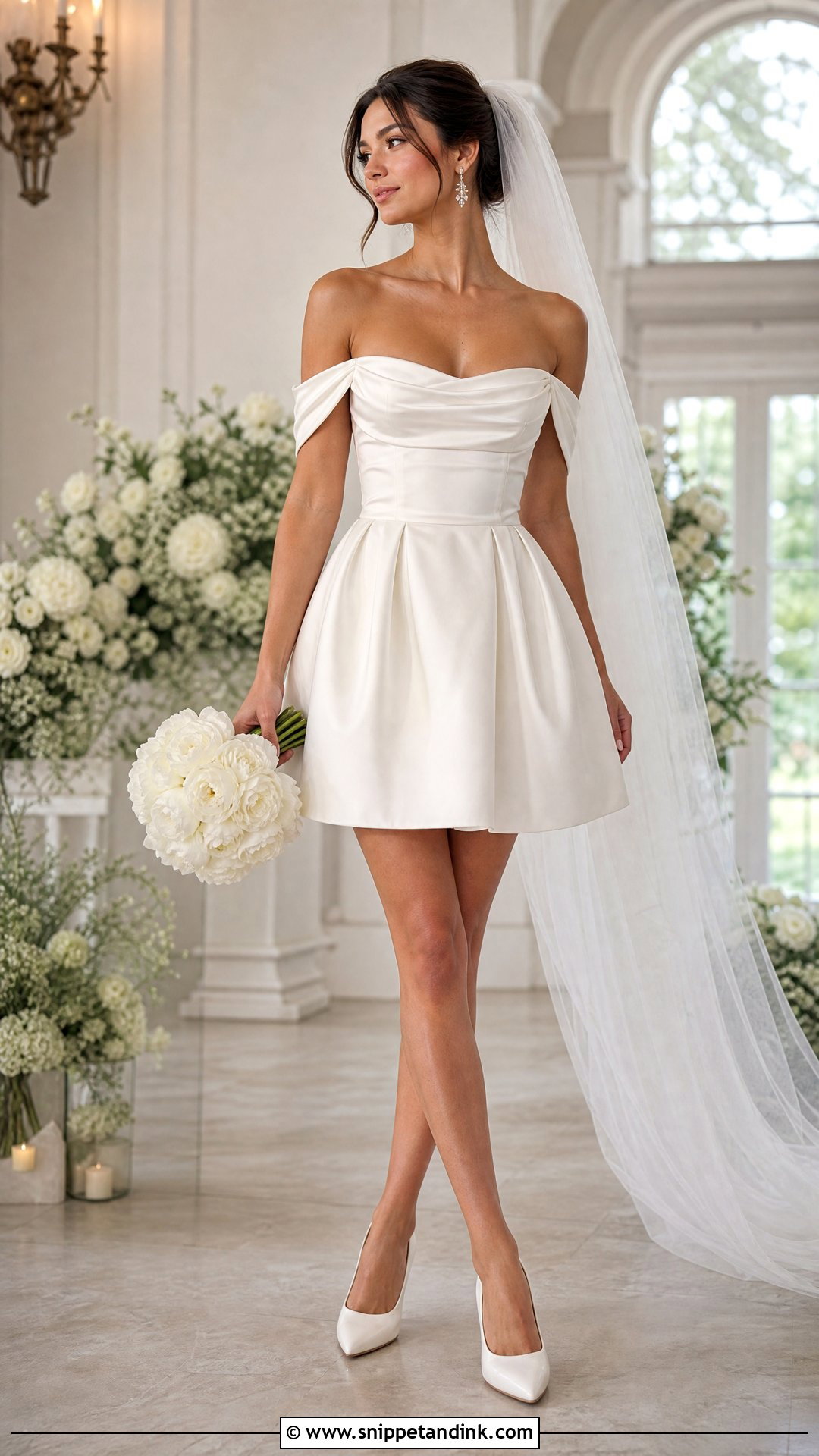
Draped satin across the shoulders is romantic without needing a long skirt. A structured bodice and fitted waist with a fuller skirt keep it bridal. Wear your hair in a low chignon or polished ponytail so the neckline shows. Crystal studs, satin pumps and a long sheer veil contrast nicely with the short hem, and peonies with trailing greenery add texture. The weak point of this neckline is grip. Fashion tape helps for an hour or two, but I’d rather see a silicone band sewn inside the drape and properly fitted cups, which hold all evening. Indoor ceremonies and restaurant weddings suit it.
4. Halter Short Satin Wedding Dress
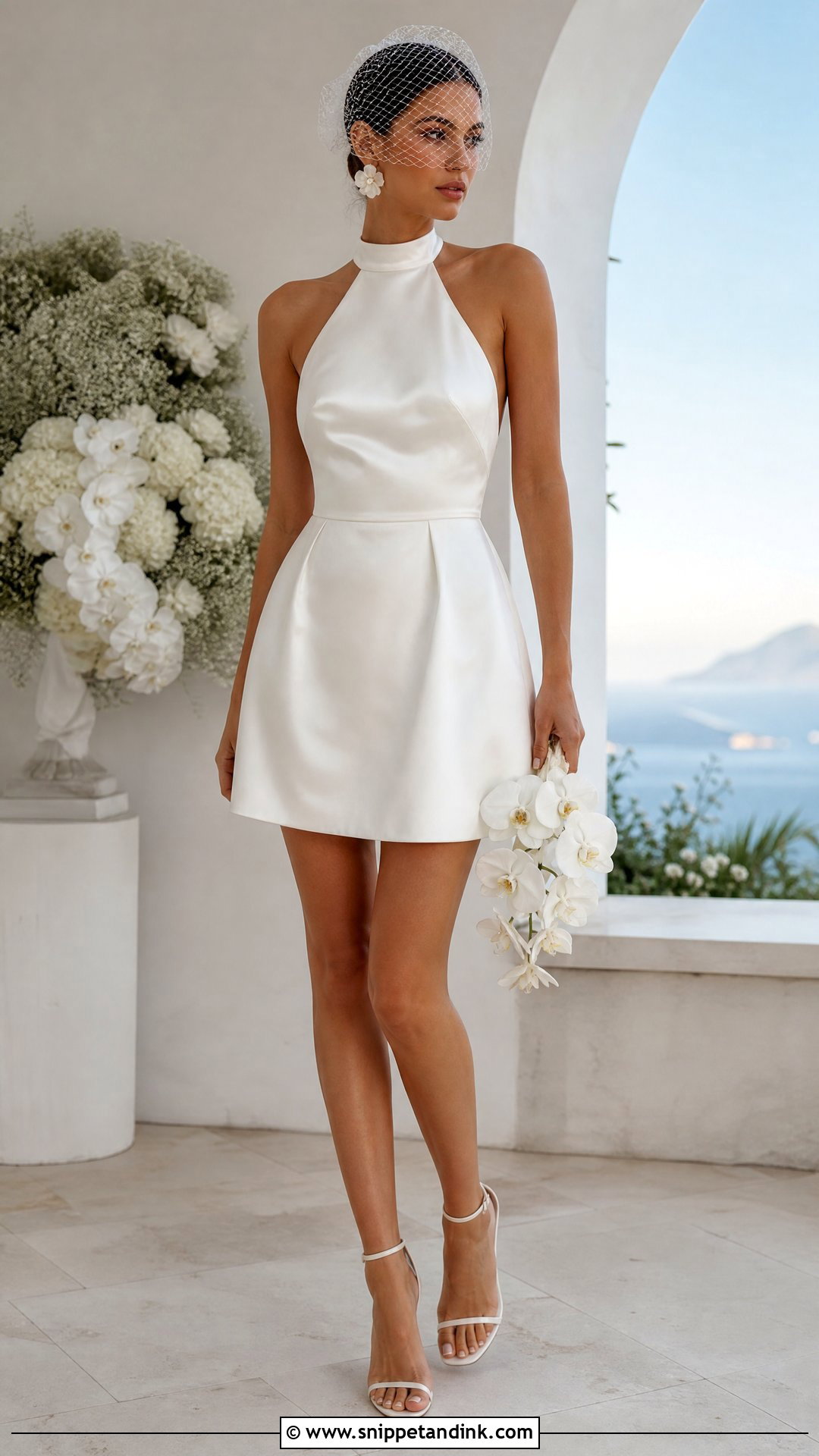
A halter draws the eye upward and makes the torso look longer, with bare shoulders keeping it light. A softly fitted skirt in satin finishes the line. Slim ankle-strap heels, sculptural earrings and an ivory satin clutch; a short birdcage veil or a simple bow suits it better than a necklace, which crowds the neck. A low bun shows off the back. Warm weather and destination ceremonies suit it, with orchids or anthuriums for a modern bouquet. One warning from fittings: heavy satin hanging from a halter tie pulls on the back of the neck. Ask whether the skirt weight sits on an inner waistband instead.
5. Long Sleeve Short Satin Wedding Dress
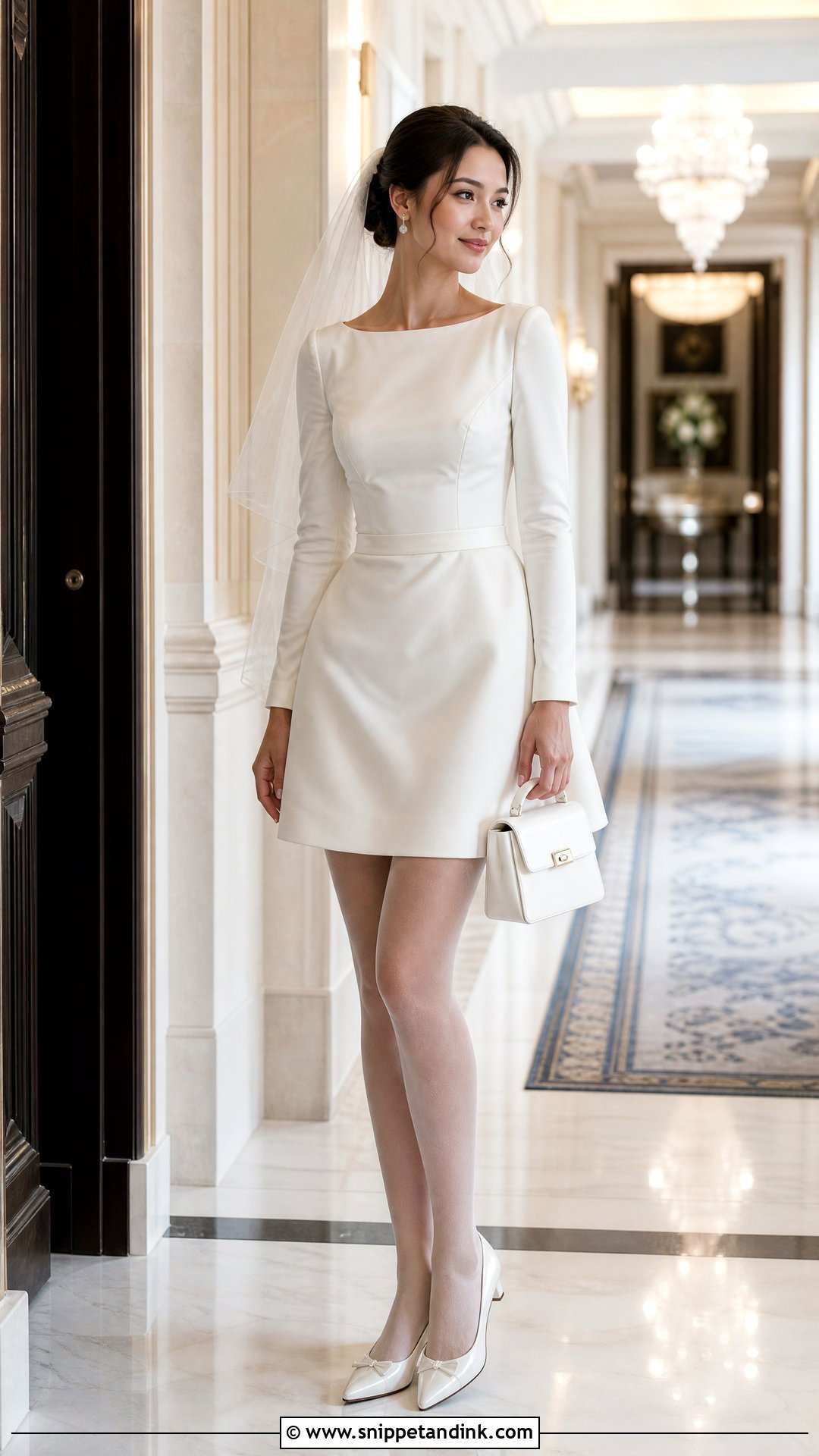
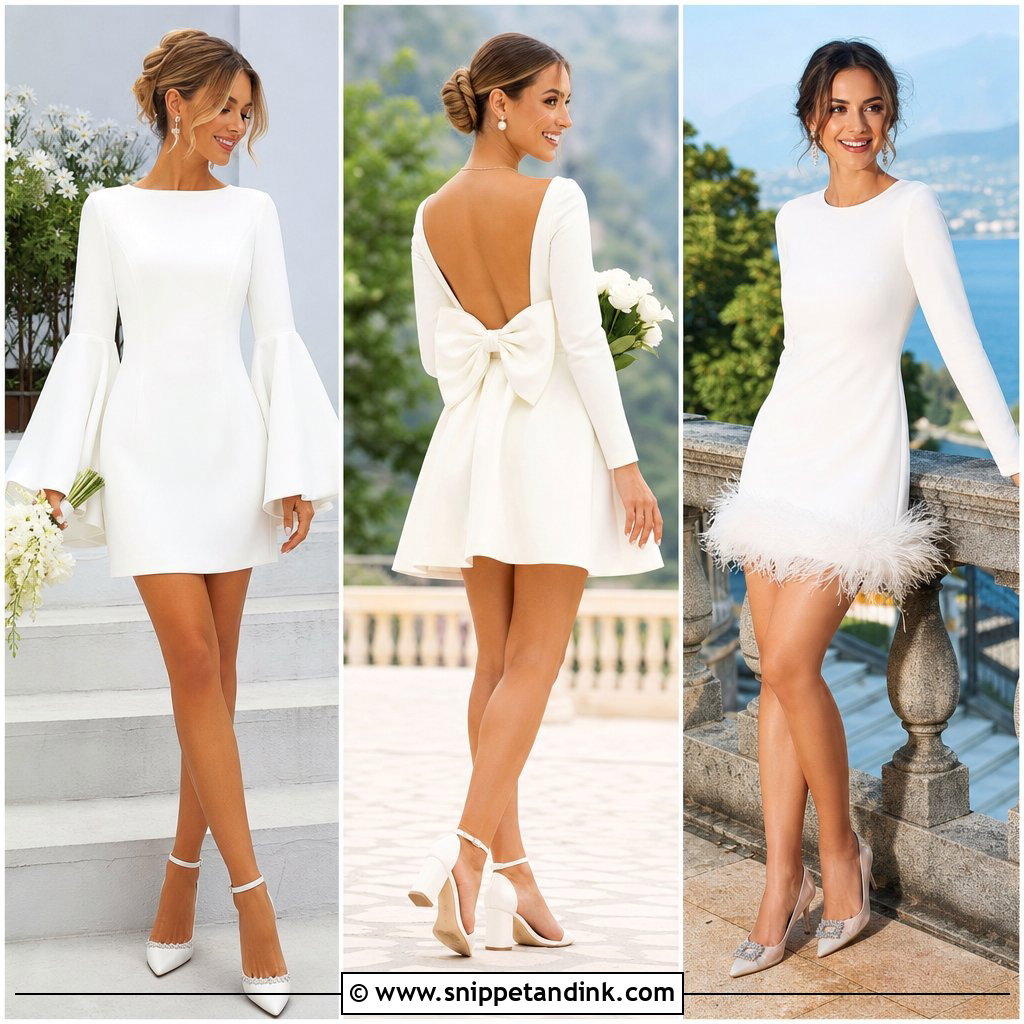
Long sleeves bring coverage to a short satin dress without losing its lightness. A tailored shape with fitted sleeves, a defined waist and a bateau, mock or modest V-neck. Closed kitten heels and sheer ivory tights make it practical for a cold-season ceremony. Pearl earrings, a structured top-handle bag and a medium veil on a smooth low bun. A heavier satin keeps the skirt from clinging and the sleeves from collapsing at the elbow. The sleeves need room through the upper arm; satin has no stretch, so I check the bride can lift a glass to her lips without the whole dress rising. White tulips finish it. Courthouses and hotel ceremonies suit it.
6. Cowl Neck Short Satin Wedding Dress
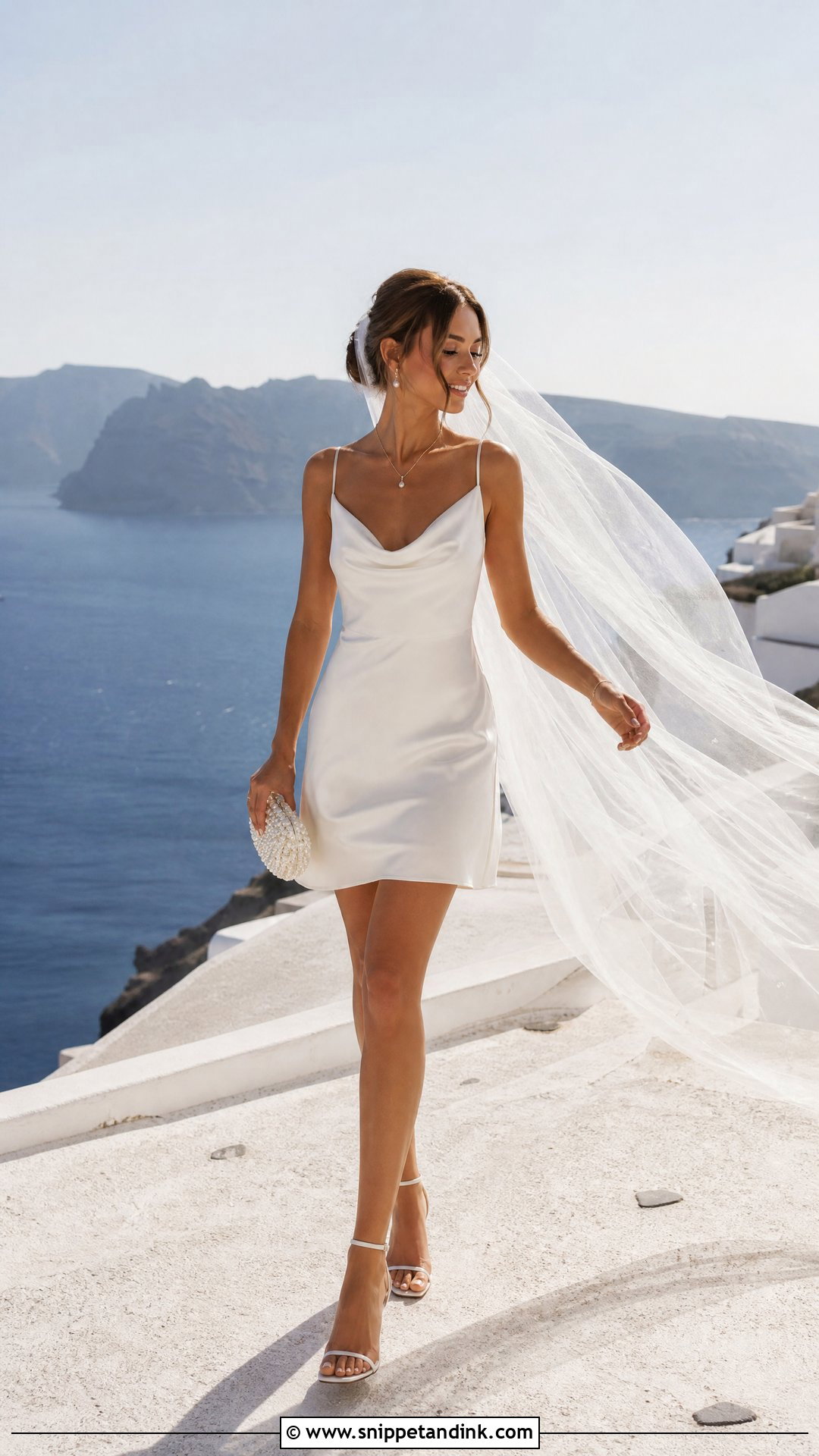
A cowl-neck satin slip dress is the relaxed one here. Cut on the bias, it should skim the body, not grip it, and the cowl should fall in soft folds rather than gape when you lean forward. Thin straps and a low drape suit a fine chain, small hoops and soft waves. Minimal heeled sandals, a pearl clutch and a sheer chapel-length veil add a little drama. Smooth, skin-toned underwear matters more than usual, since bias satin shows every line. Beach elopements, garden celebrations and rehearsal dinners suit it. For coverage, a light ivory blazer falling just below the hem keeps the proportions.
7. Corset Short Satin Wedding Dress
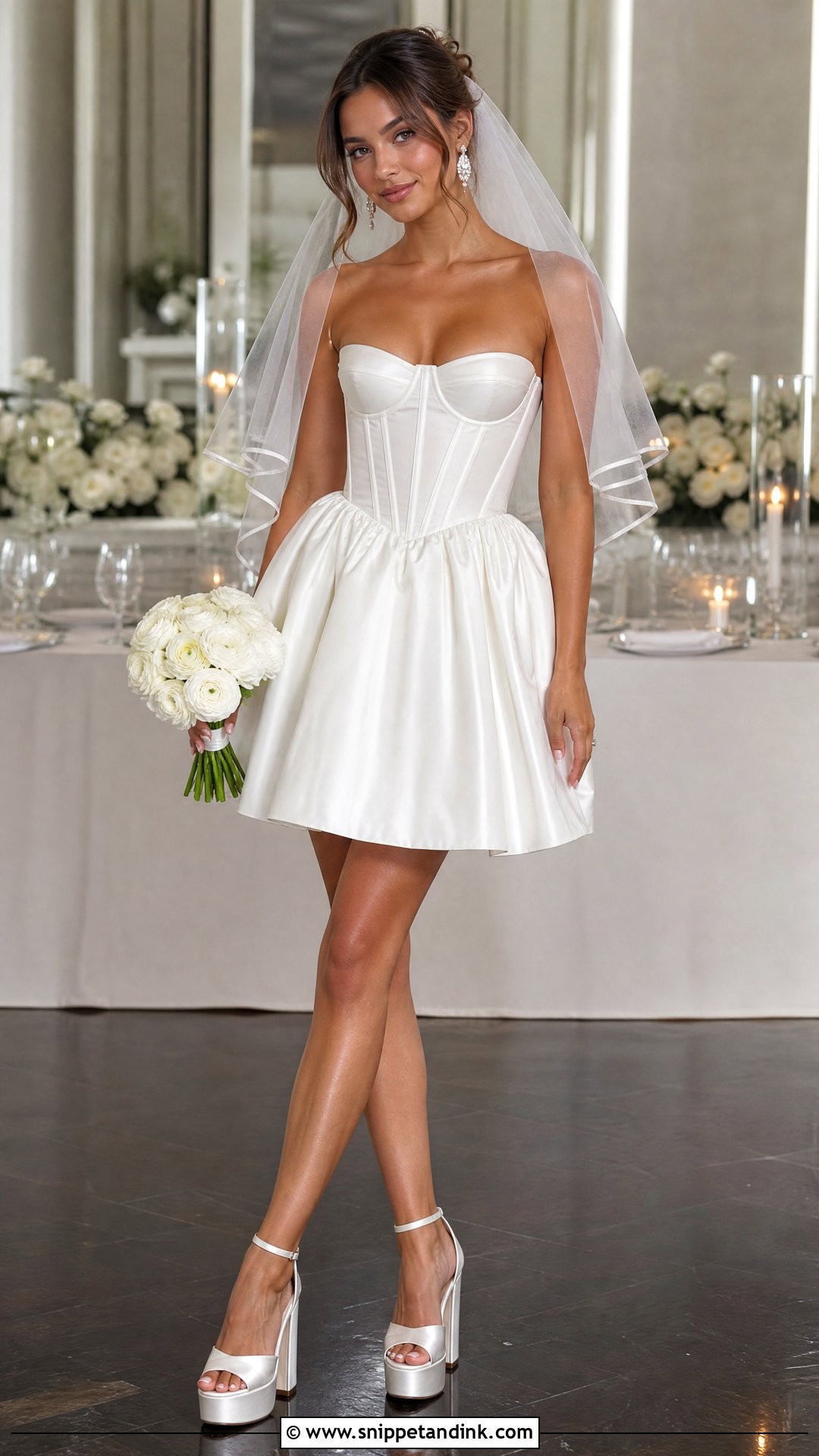
A corset bodice gives satin visible structure and a defined waist. Supportive boning, proper cups and a softly gathered A-line skirt keep it bridal rather than costume. Closed satin platforms or block heels, crystal earrings and a clean elbow-length veil, with a ribbon-tied bouquet of white ranunculus to soften the hard lines. The corset seams are already detail enough. At the fitting I ask you to sit, lift your arms and walk across the room. Satin wrinkles in horizontal lines across a corset that’s too tight at the waist, which tells me the size or the lacing needs adjusting. Formal receptions and second outfits suit it.
8. Bubble Hem Short Satin Wedding Dress
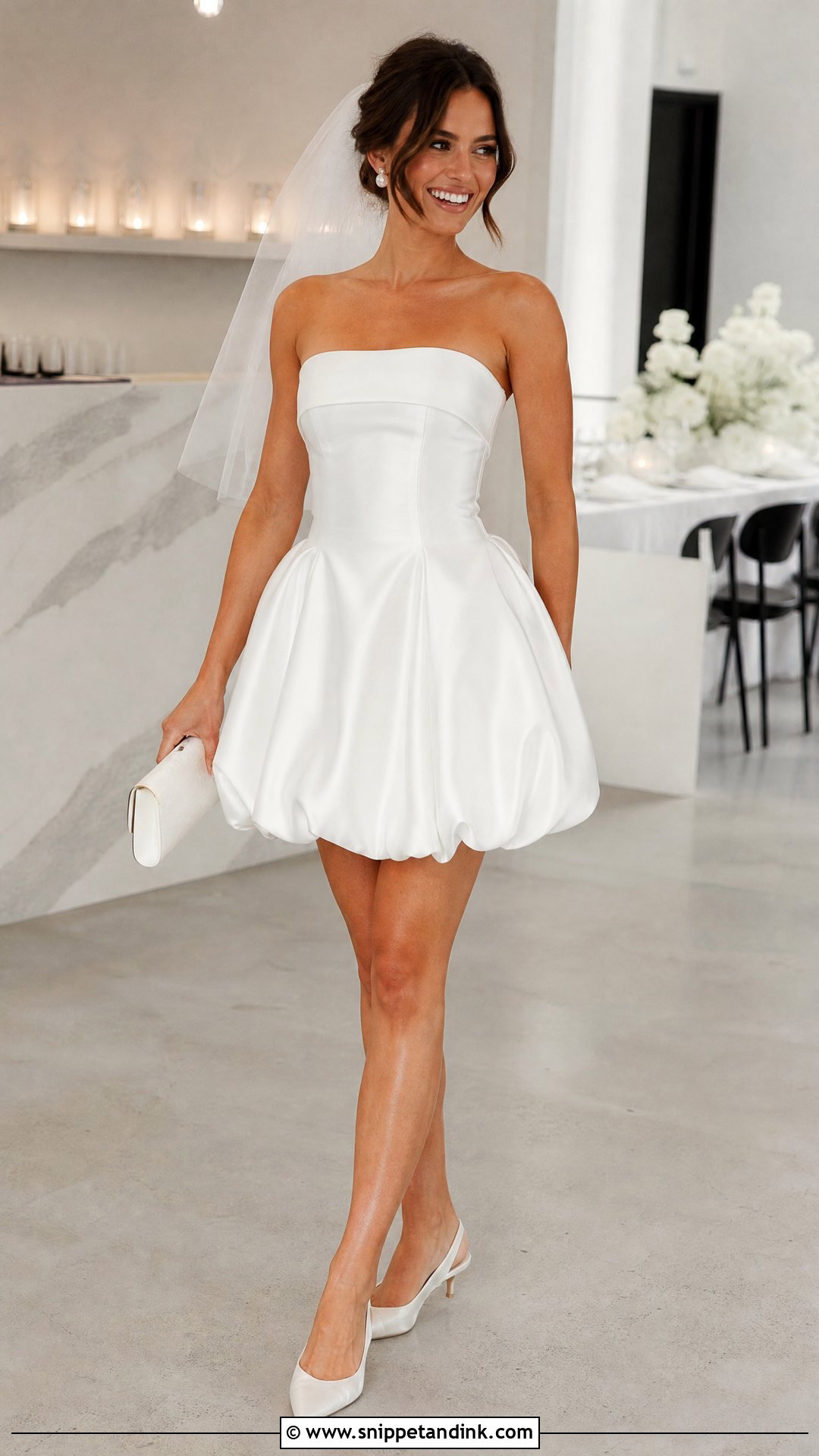
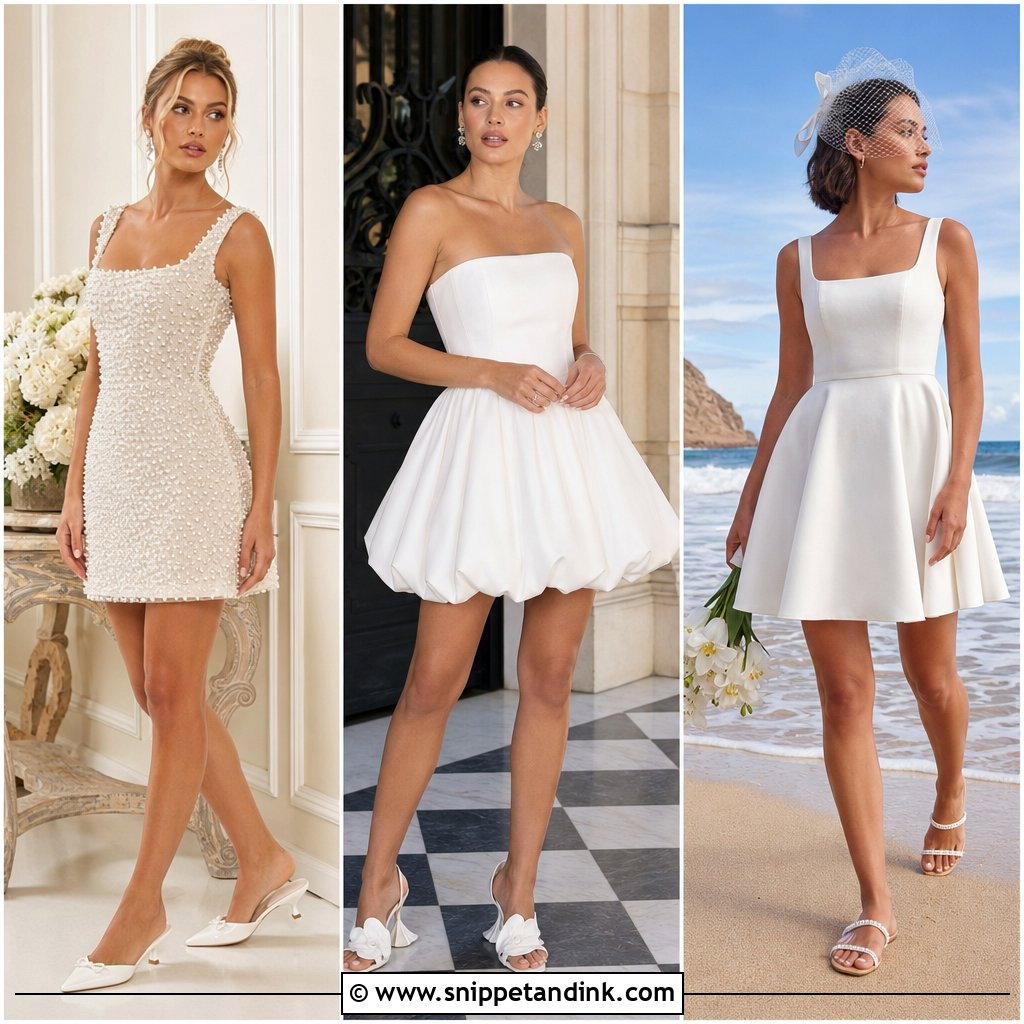
A bubble hem makes satin playful and sculptural. The volume sits at the hips and thighs, so a fitted strapless or sleeveless bodice keeps the shape in balance. Pointed kitten heels, pearl studs and a short veil, with a small bouquet or single stem so the hem stays visible. Use a slim clutch rather than a big bag. Bubble skirts rise when you sit, sometimes by a surprising amount, so check the length from every angle and on a chair before the hem is finalised. I’d skip this shape if you’re very petite and want to look taller. Dancing, fashion-forward courthouse weddings and after-parties suit it.
9. Bow Back Short Satin Wedding Dress
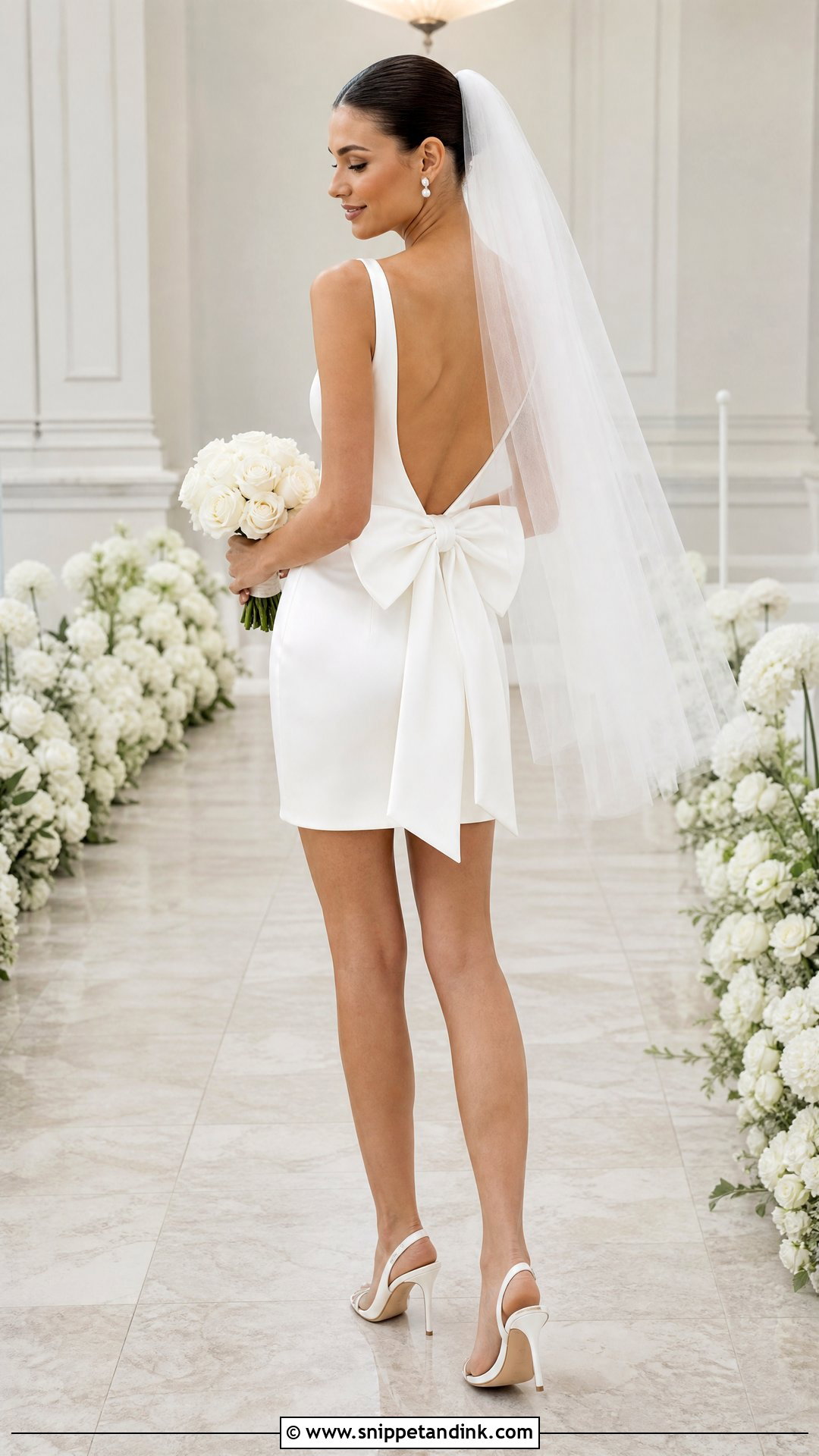
A large back bow puts all the ceremony drama behind you. A fitted or softly flared mini with a low back works best, with the bow fixed at the waist or across the shoulder blades. Wear your hair up. Slingbacks, small pearl earrings and a plain tulle veil keep the rest calm, and you can drop the veil after the ceremony to show the bow at dinner. Sweet peas or roses suit the shape. A bow in satin flattens the moment you lean back in a chair. I ask for light interfacing inside the loops and a couple of hidden stitches to fix them, so they’re still standing at the first dance.
10. One Shoulder Short Satin Wedding Dress
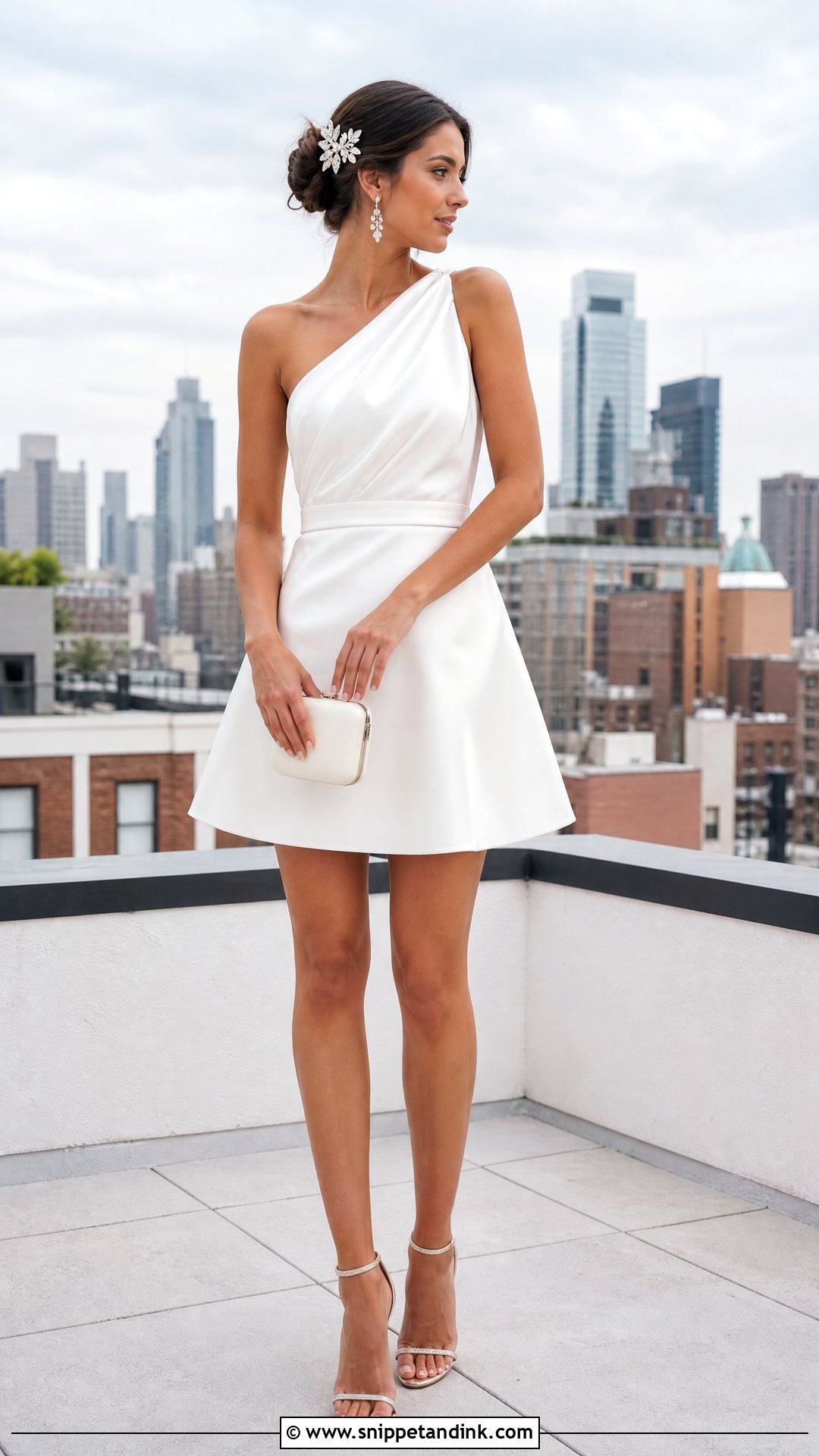
One shoulder gives a short satin outfit a modern edge. A fitted waist and either a straight skirt or a controlled A-line keep it balanced. Skip the necklace and wear one pair of statement earrings, pearls or polished silver drops. Slim-strap heels, a compact clutch and a hair comb on the opposite side to the strap. A short veil can work, but a sleek bun or sculptural bow suits the line better. The single strap carries the whole bodice, so it must be fitted snug; if it slips toward the arm, the neckline tilts. Rooftops, architectural venues and receptions suit it.
11. Tea Length Satin Wedding Dress
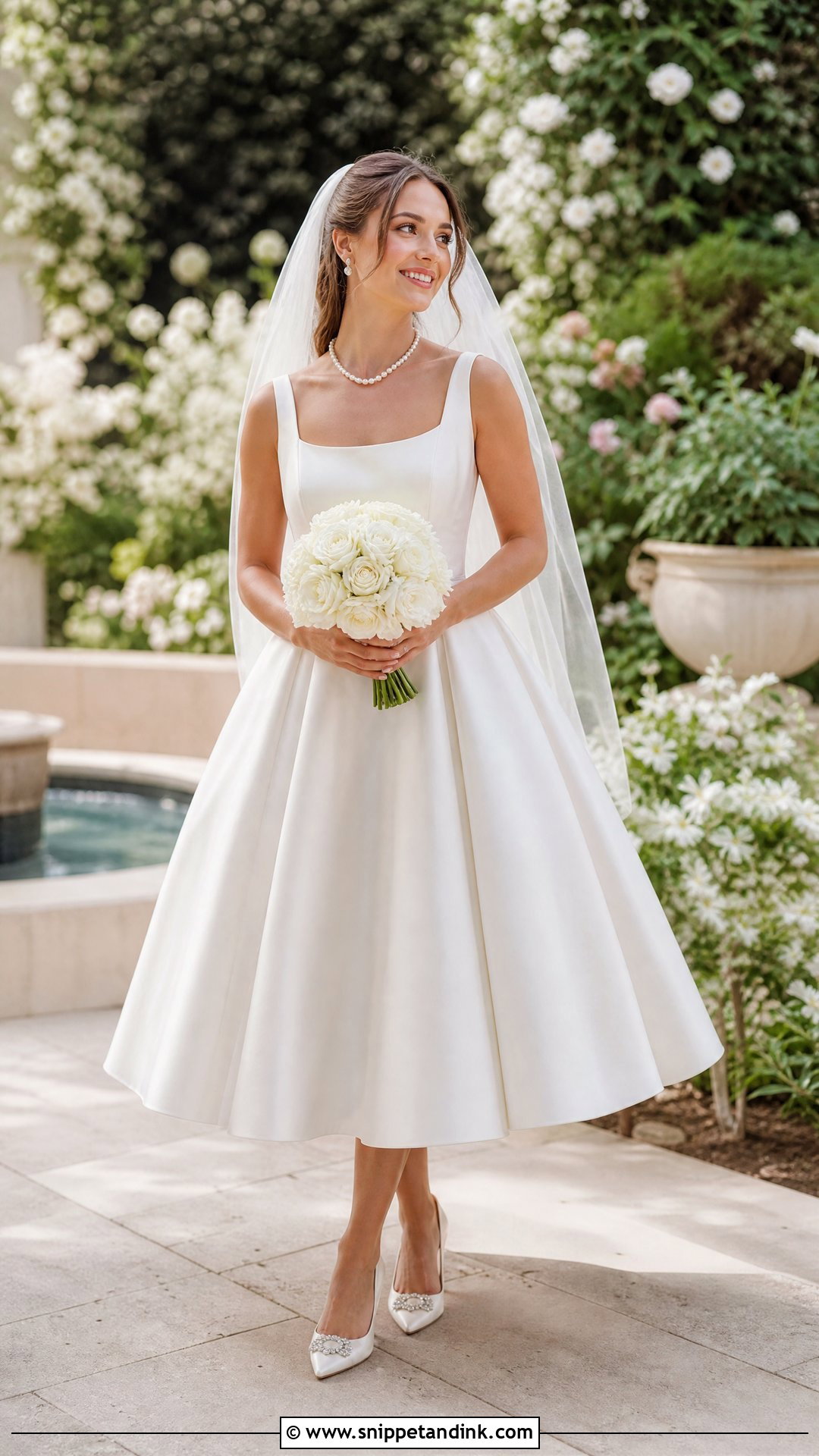
Tea-length satin has the presence of a traditional gown with more freedom. A fitted bodice, defined waist and full skirt ending between knee and ankle. The hem shows the lower leg, so the shoes matter: satin pumps, embellished slingbacks or pointed kitten heels. Add a waist-length veil, a pearl necklace and a structured bouquet. A petticoat adds volume, but its edge must never peek out; I have it cut a few centimetres shorter than the satin. Restaurant receptions, garden ceremonies and vintage-themed weddings suit it, and it covers more leg than a mini while still letting you move.
12. Blazer Short Satin Wedding Dress
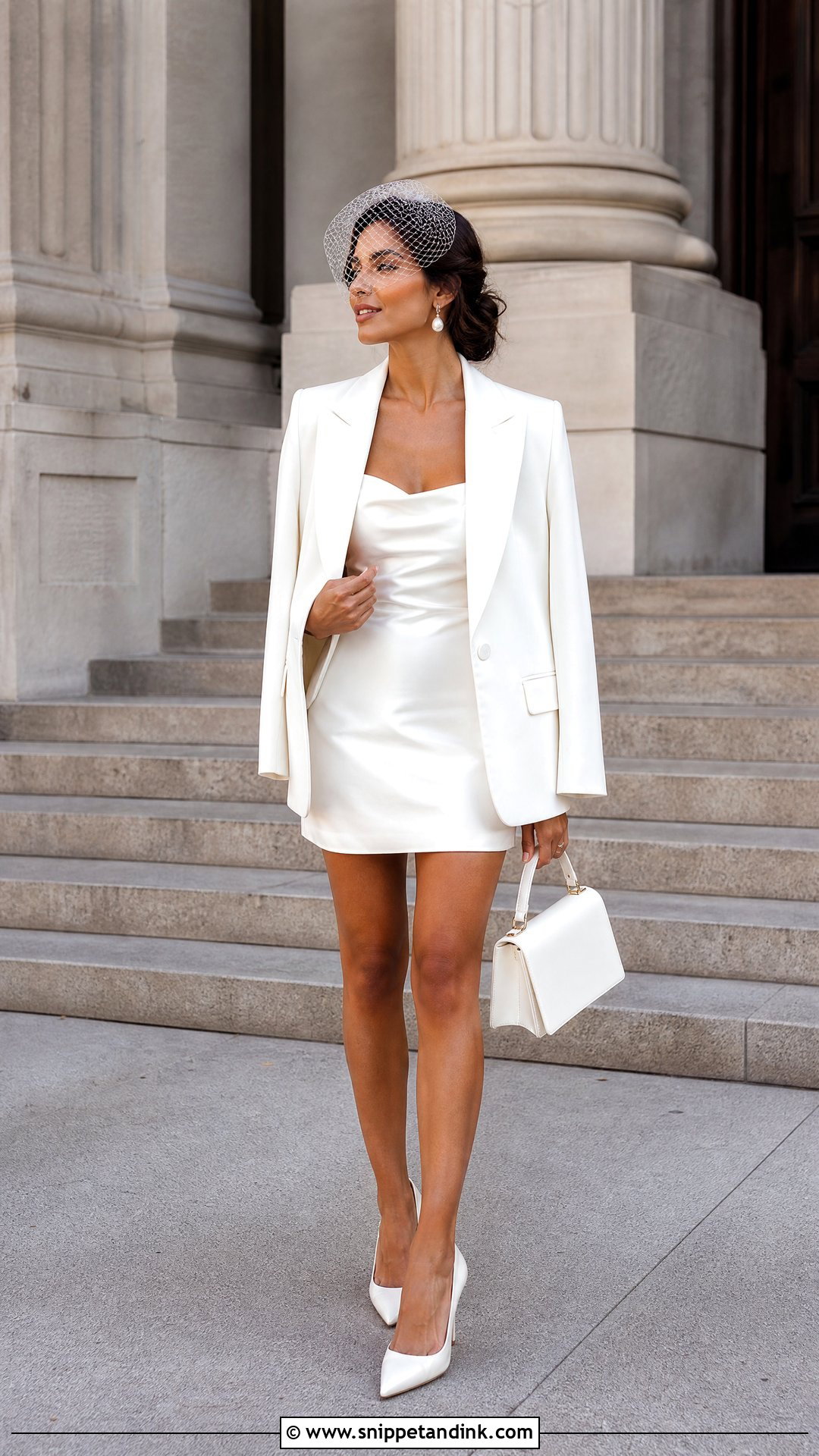
A satin mini with a tailored bridal blazer is the most practical outfit on this list. A simple slip, sheath or strapless dress underneath, with an ivory blazer whose length is planned against the hem. Oversized looks modern; fitted looks traditional. Pointed pumps, pearl earrings and a structured bag, plus a birdcage veil or small pillbox-style headpiece. Match the ivories in daylight, since a blazer in a whiter shade than the satin makes the dress look yellow. Wear the jacket for the ceremony and remove it for portraits. Cooler weather, civil ceremonies and city weddings suit it.
13. Cape Sleeve Short Satin Wedding Dress
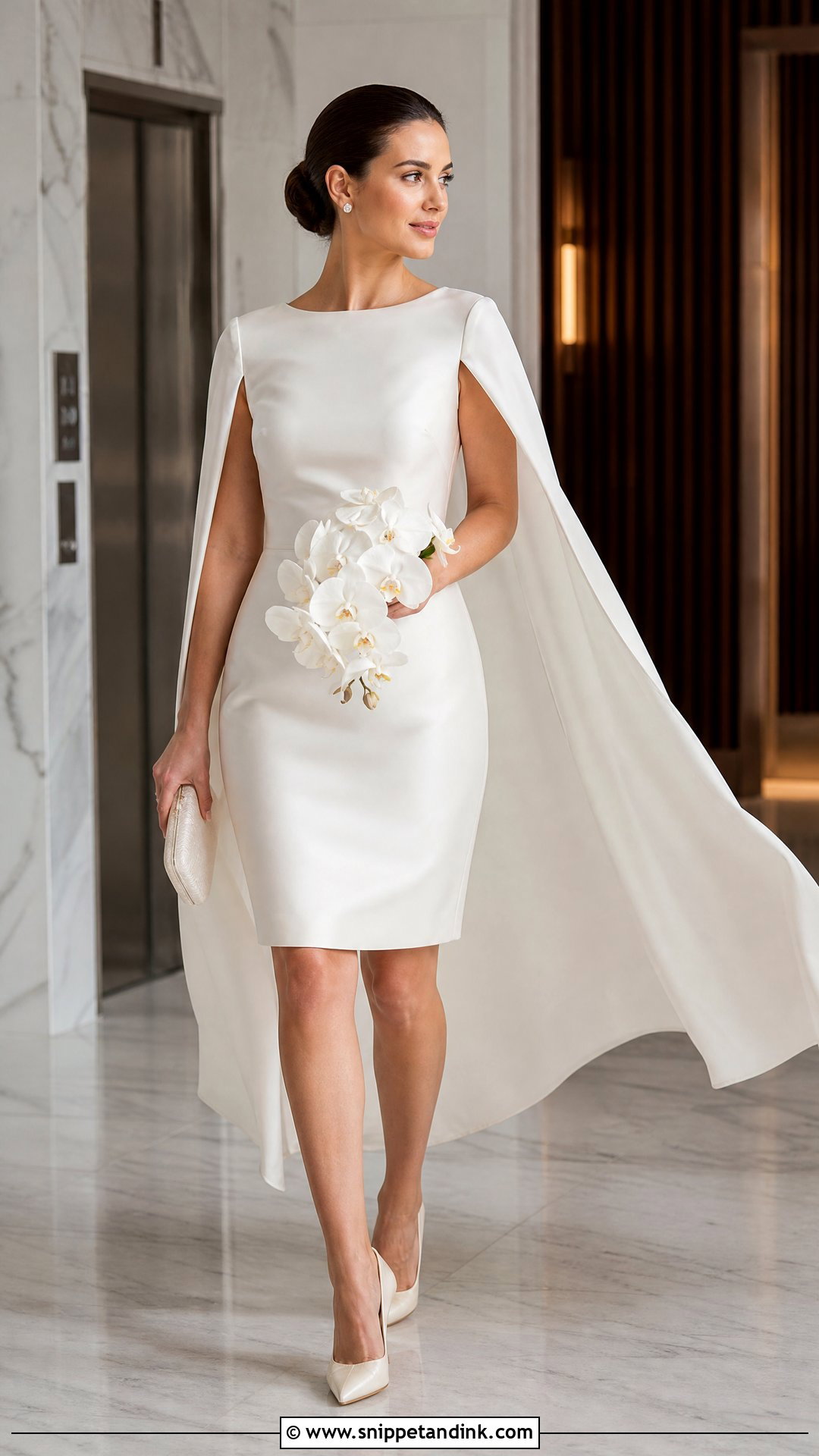
Want the drama of a veil without wearing one all day? Attached cape sleeves give movement around the shoulders while the legs stay free. A clean mini or knee-length sheath lets the cape lead. Pointed pumps, small studs and a smooth clutch, with a low bun or side-parted wave. Avoid necklaces, which tangle in the fabric. A compact bouquet of white orchids. Satin capes are heavier than chiffon ones and hang straight rather than floating, which I prefer indoors and on windy days. Formal civil ceremonies, hotel weddings and sophisticated reception entrances suit it.
14. Puff Sleeve Short Satin Wedding Dress
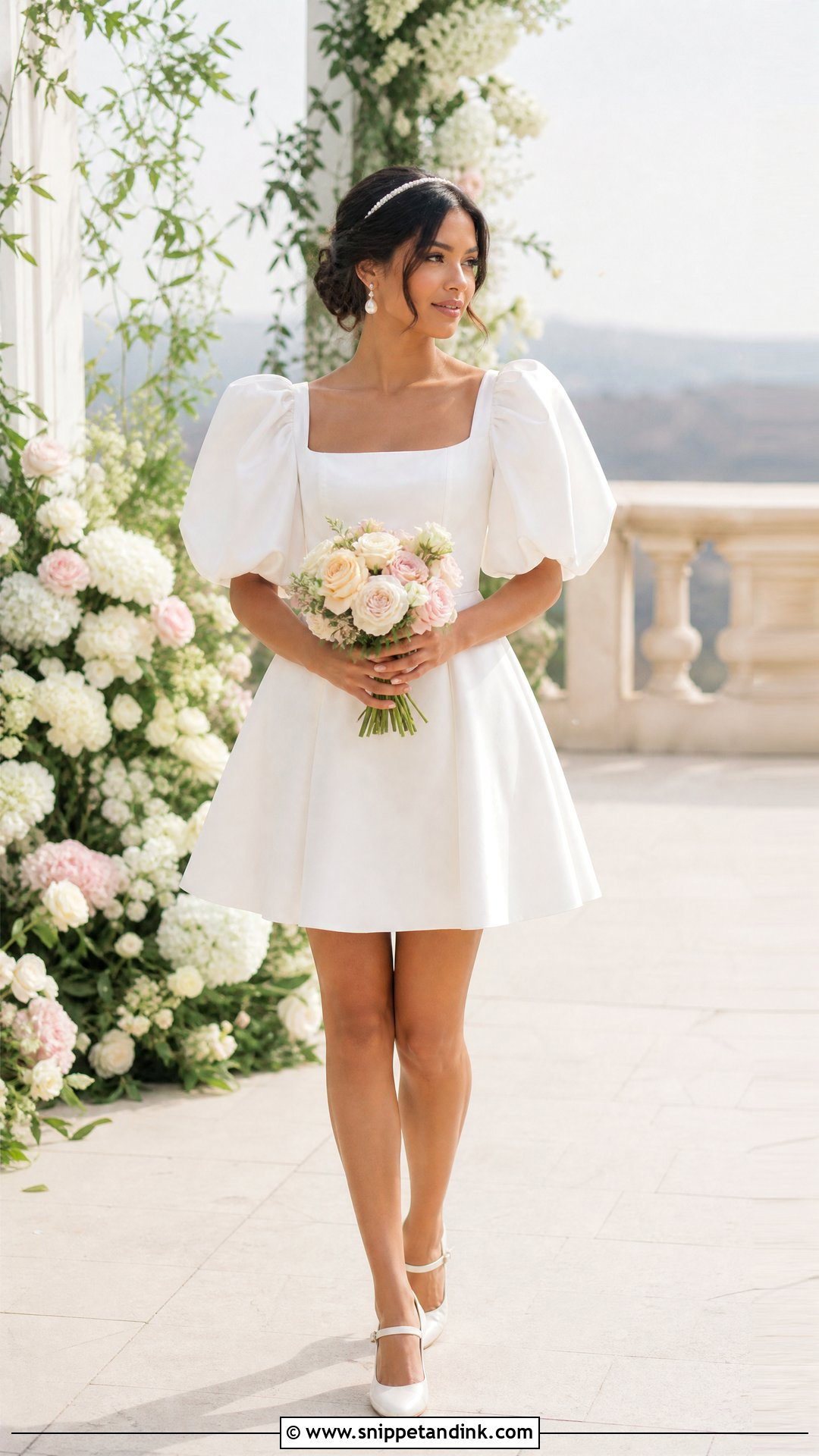
Puff sleeves add personality to a structured satin mini. Pair them with a fitted waist and a skirt that falls straight or flares gently. Short puffs feel summery; elbow-length ones cover more. Simple Mary Janes, pearl drops and a narrow headband or shoulder-length veil, with daisies, tulips or garden roses. On a petite frame, big sleeves plus a full skirt can swallow you, so I keep one of the two modest. Satin puffs hold their shape far better than chiffon ones but show creases from a garment bag, so steam them last. Garden ceremonies and daytime celebrations suit it.
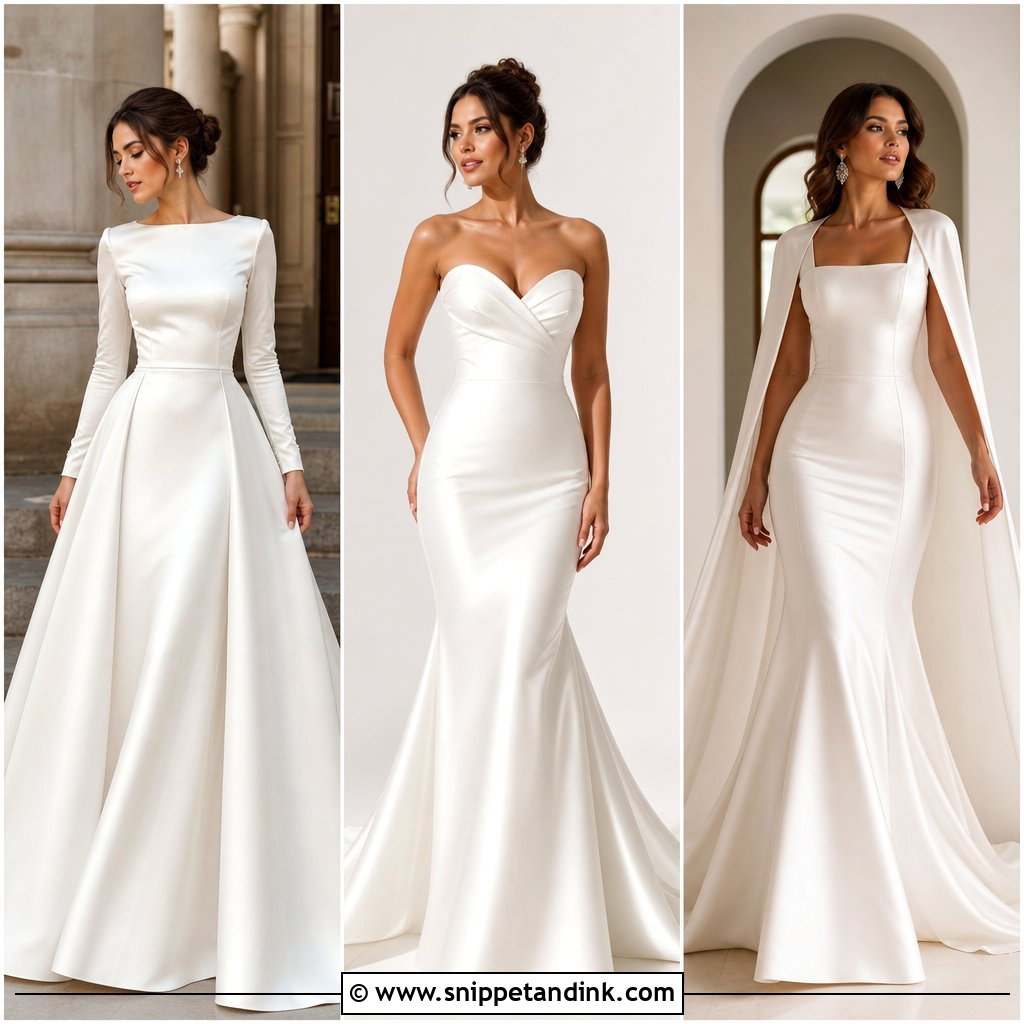
15. Drop Waist Short Satin Wedding Dress
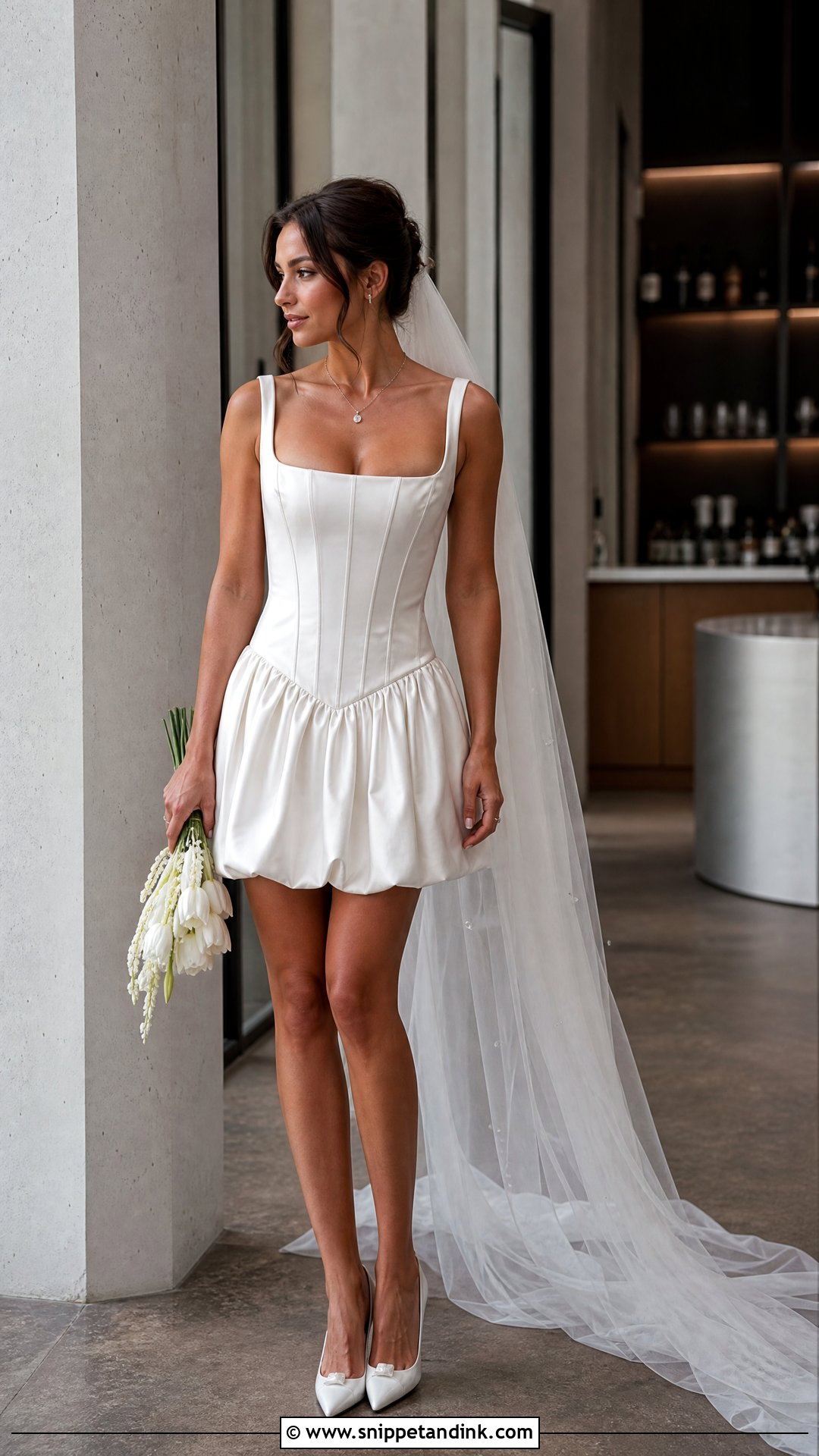
A drop waist moves the seam below the natural waist, giving a long bodice and a fashion-led shape. A structured top with a gathered or pleated skirt shows the line most clearly. Pointed heels lengthen the leg, which this cut needs. Small earrings, a slim bracelet and a long sheer veil that contrasts with the short skirt; keep the bouquet narrow so it doesn’t cover the seam. This is the dress where tailoring matters most. The dropped seam has to sit flat across the hips, and if it pulls, the whole shape looks wrong. I’d steer short-waisted brides toward a gentler drop. Contemporary ceremonies and evening receptions suit it.
16. Pearl Short Satin Wedding Dress
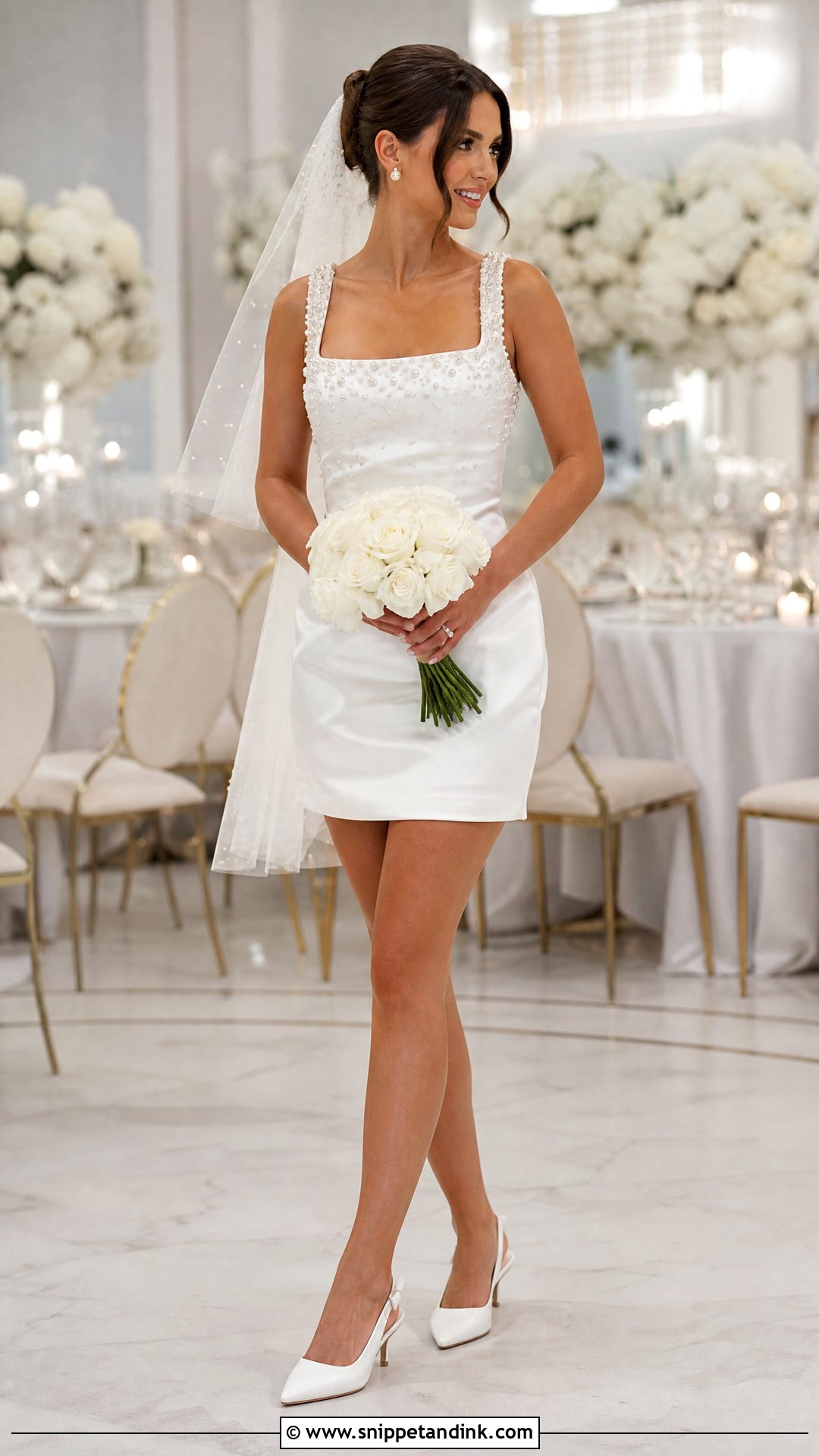
Pearls on satin add depth without glitter. Scatter them along the neckline, bodice or straps rather than everywhere, which keeps the dress light. Plain satin slingbacks, pearl studs and a veil edged with tiny matching beads, with a smooth bun or shoulder-length waves. A small bouquet of white roses and little foliage. Run your hand over the back of the skirt and the sides where your arms rest; pearls glued or held by a single thread come off on chairs and handbag straps. A little extra stitching from your seamstress solves it. Intimate ceremonies and quiet receptions suit this subtle decoration.
17. Rosette Short Satin Wedding Dress
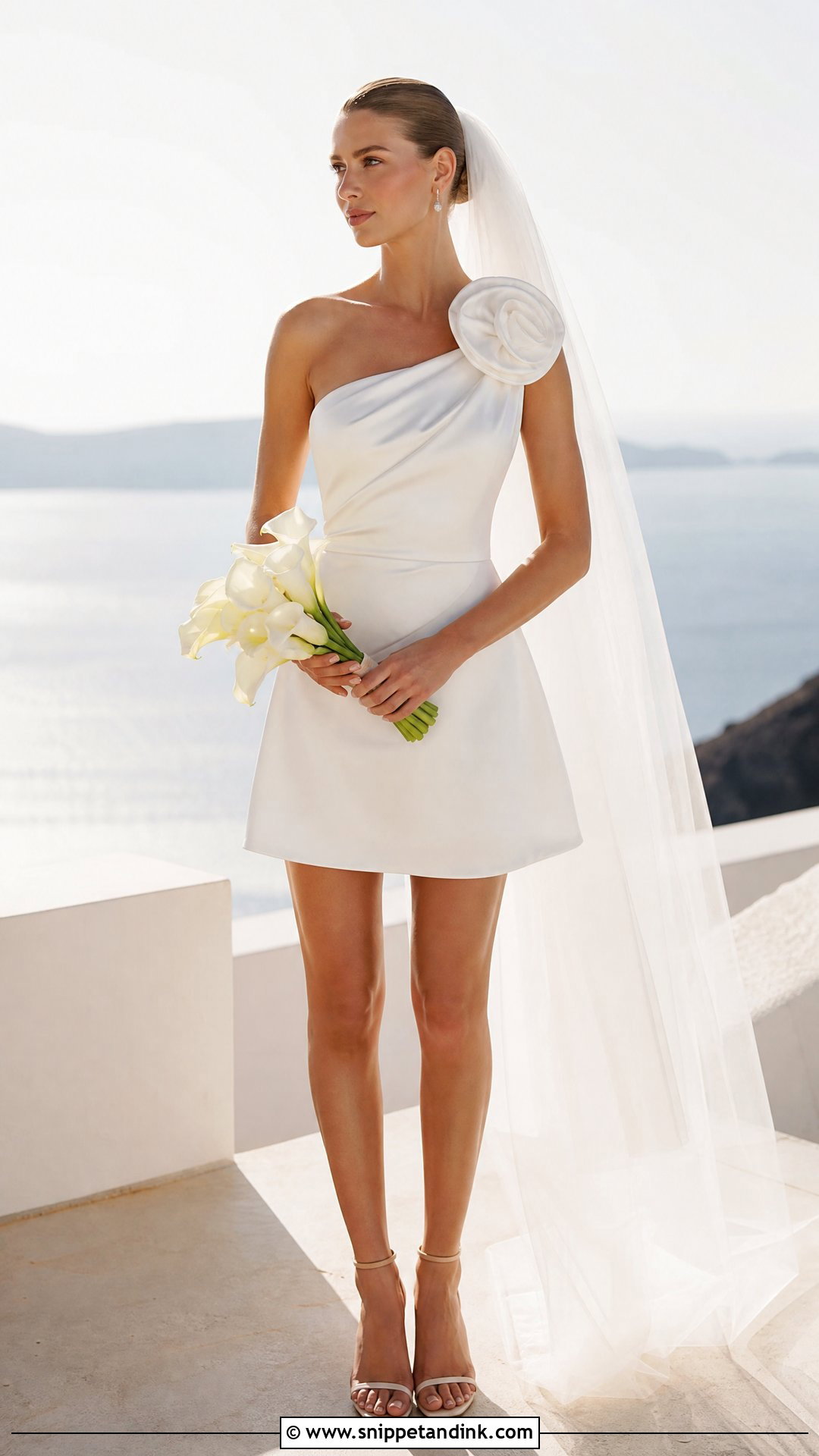
One satin rosette can turn a minimal mini into a romantic dress. Place it at the shoulder, waist, neckline or back, not in several places. Barely-there heels, fine earrings and a plain veil or sleek bow. If the rosette sits near the neckline, skip the necklace and let it frame the face, and carry calla lilies to echo the sculpted shape. A satin flower crushes when you hug people, so ask for it to be reinforced from inside and fixed with several stitches. Reception entrances, destination ceremonies and city celebrations suit it.
18. Open Back Short Satin Wedding Dress
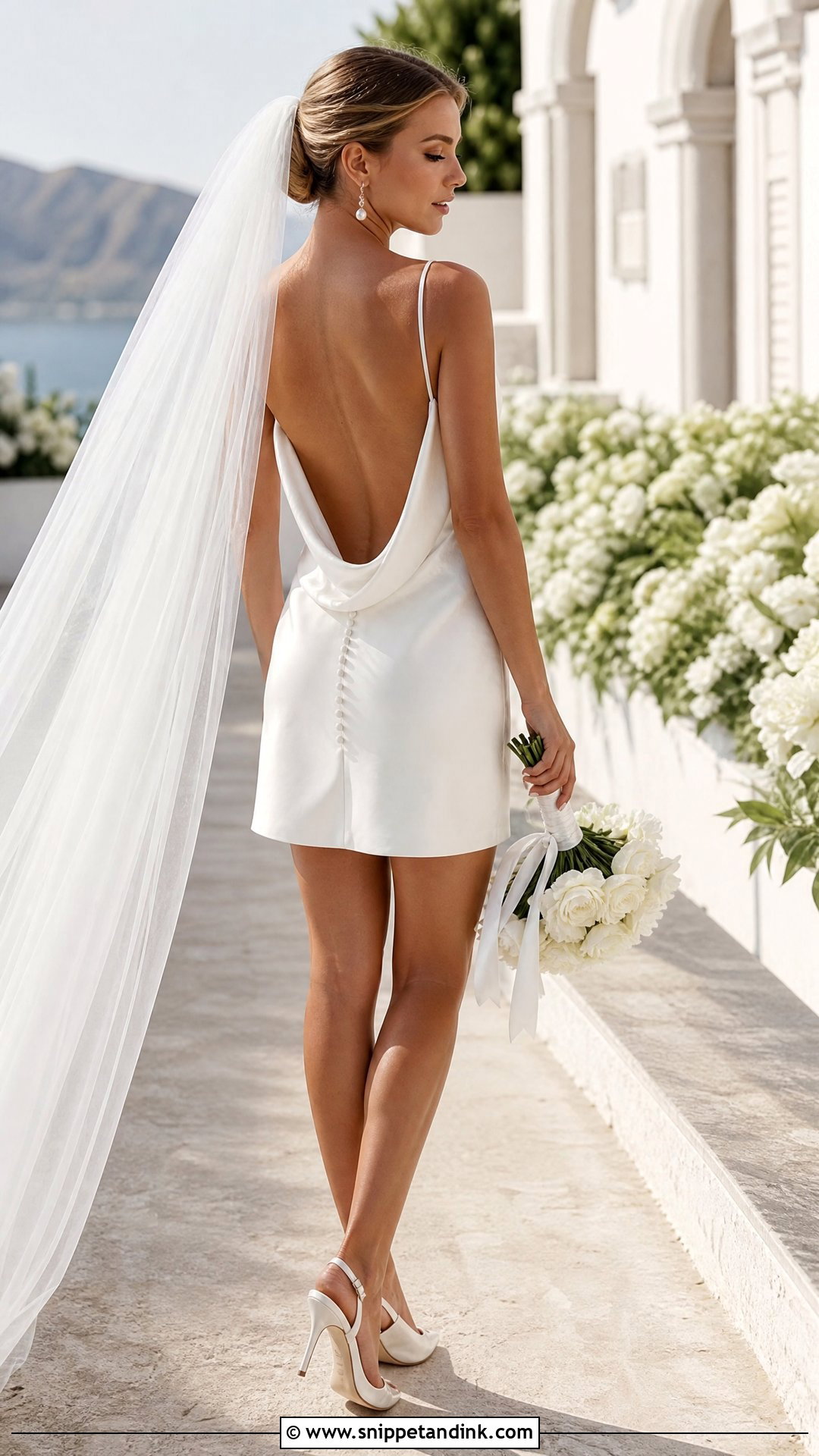
An open-back satin mini is plain in front and bold from behind. Secure straps and supportive side seams are what stop the back from gaping when you bend. Covered buttons, a draped cowl or a slim bow can define the opening. Wear your hair up and choose low-back underwear that stays completely hidden; adhesive cups suit some brides, while sewn-in cups suit more. Slingbacks, drop earrings and a long veil you can remove after the ceremony, with a smooth ribbon-wrapped bouquet. Test it sitting and dancing. Warm-weather weddings and reception changes suit it.
19. Wrap Short Satin Wedding Dress
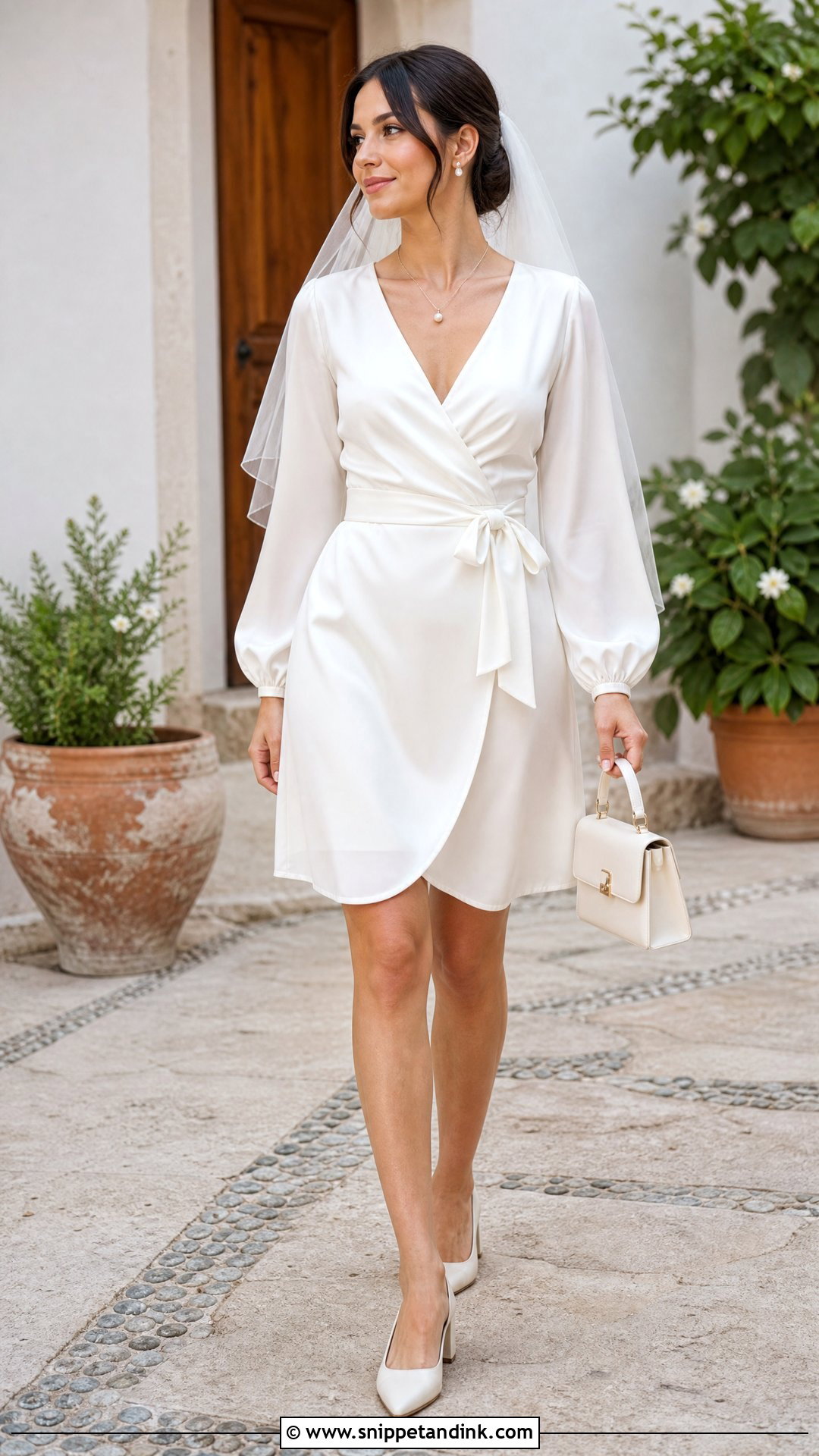
A satin wrap is softer and more adjustable than a structured mini, which helps if your weight shifts before the wedding. Choose knee-length or above, with a secure inner tie, a defined waist and enough overlap that the skirt doesn’t open when you walk. A modest V-neck suits a short pendant, pearl studs and soft waves. Low block heels, a small top-handle bag and a fingertip veil, with white and blush flowers. Fashion tape helps at the neckline. A wind gust is the wrap’s real test, so I’d add a hidden snap at the skirt overlap. Courthouses, backyard parties and travel weddings suit it.

20. Short Satin Wedding Dress With Overskirt
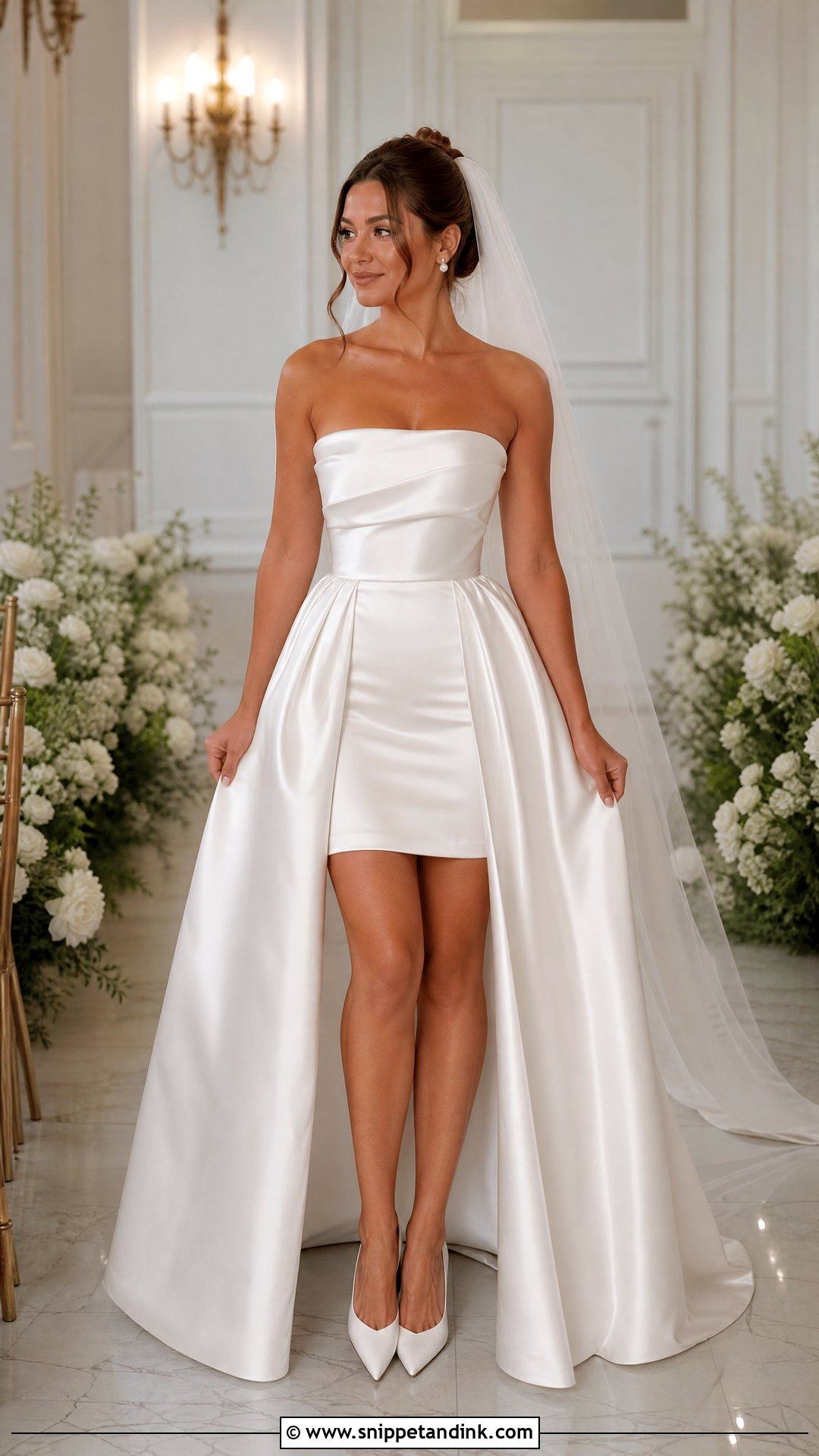
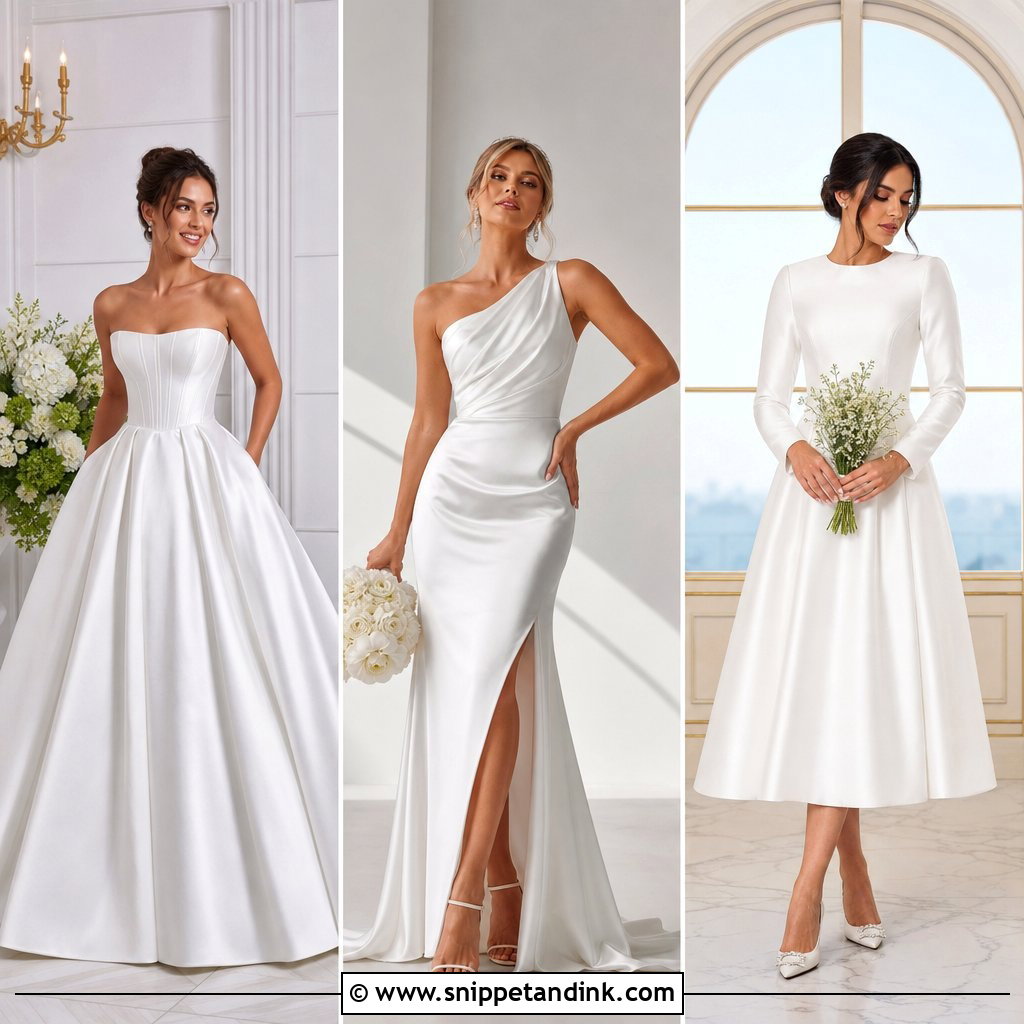
A detachable overskirt turns one satin mini into two looks. For the ceremony, a full-length satin or sheer overskirt opens at the front to show the short dress. Classic pumps, pearl earrings and a long veil give the formal version. After the vows or first dance, take off the overskirt and veil and change into comfortable block heels or embellished flats. The mini must look finished on its own, with a neat waistline and level hem. Ask for hooks or hidden snaps your bridesmaid can manage in under a minute, and practise once. It gives you a traditional aisle walk and a practical party dress from one purchase.
Creases, Water Marks and Getting Satin There in One Piece
Most of the satin problems I deal with on the day happen between the hotel and the ceremony, not during it.
- Hang the dress inside out in a breathable bag, never plastic, and stuff the bodice lightly with tissue so it doesn’t fold.
- Steam from the inside, holding the steamer a hand’s width away. Water dripping on satin leaves rings, especially on charmeuse and silk.
- Don’t iron directly. If a crease won’t move, press from the wrong side through a cotton cloth on a low setting.
- In the car, sit on the skirt as little as possible. Lift the back over the seat and sit on a clean sheet or towel instead.
- Pack a clean white cloth and a little talc or white chalk for oily marks. Blot spills, never rub, because rubbing roughs up the satin surface and leaves a dull patch.
Short dresses have one advantage: the hem stays off the ground, so dirt and grass stains are rarer than on a gown. The risky zones move up instead, to the front of the skirt where drinks spill and the sides where hands rest.
Afterwards, get the dress cleaned within a few weeks, especially if anything sugary or alcoholic touched it. Those spills can be invisible at first and turn yellow over time. Store it flat or folded with acid-free tissue in a cool, dark place, not on a hanger, where the shoulders stretch.
Satin Rewards a Good Fit More Than Any Trim
Short satin works when the silhouette suits you and the accessories match the venue, weather and formality. A structured mini looks polished with a veil and pointed pumps; a fluid slip suits simple sandals and fine jewellery. Bows, pearls, corset seams, cape sleeves and removable overskirts all make a short hem unmistakably bridal. Test the whole outfit walking, sitting and dancing before the final alterations. Support and tailoring count as much as looks. Pick the shape that moves with you, then add shoes you can last in and jewellery that means something.
You'll Like These Ideas:





Leave a Reply