
A mini wedding dress has less fabric to tell people you’re the bride, so everything around it has to help: the veil, the shoes, the bouquet, the way the fabric catches light. That’s the part I enjoy styling. Brides come to me for courthouse ceremonies, elopements and second looks for the party, and the same principle holds each time. A clean satin mini reads sharp and urban; lace, pearls, bows or floral appliqués bring the romance back. With the hem above the knee, your shoes are in nearly every photo, so they matter more than with a long gown. Each of the twenty dresses below is styled head to toe, with the detail I’d check at the fitting.

Which Veil Length Works With a Hem Above the Knee?
The veil is the quickest way to make a short dress read as bridal, and the length you pick changes the whole proportion. I think of it in three bands.
- Birdcage or blusher: sits at the face, never competes with the hem. My pick for blazer and slip minis, or a courthouse ceremony.
- Shoulder to fingertip: the safe middle. A fingertip veil ends near the hem of most minis, so the two lines meet. Fine if you like that, but some brides find it looks cut off; elbow length avoids the clash.
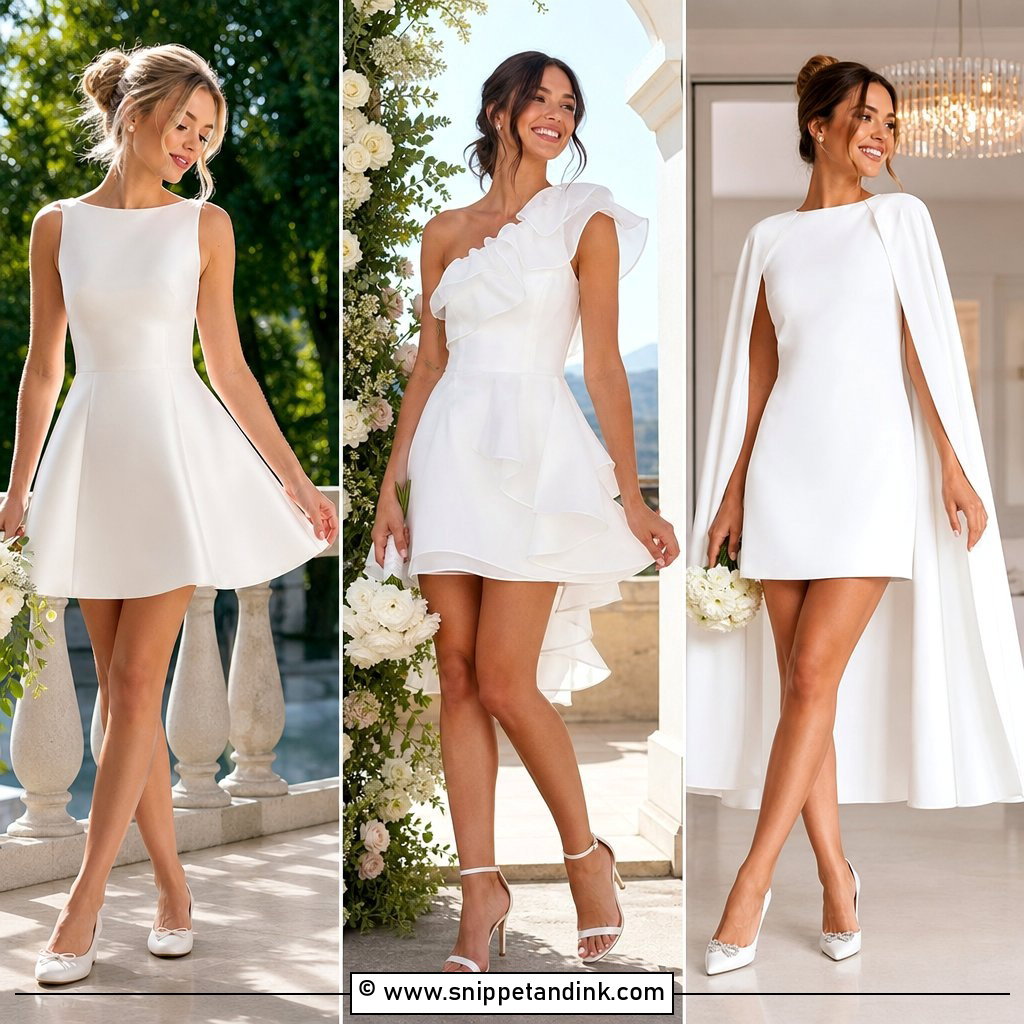
- Chapel or cathedral: the bold option. A long veil behind a short dress is a deliberate contrast and looks dramatic in photos. It needs wind-free conditions or a bridesmaid on duty.
Try veils on with the actual dress, not in a separate appointment. Raw-edge tulle looks lighter beside a mini than a heavy satin border, which can feel like a second hemline.
Comb placement matters too. With a short dress I usually set the veil lower, under a bun at the nape, so the tulle falls close to the back instead of standing away from it.
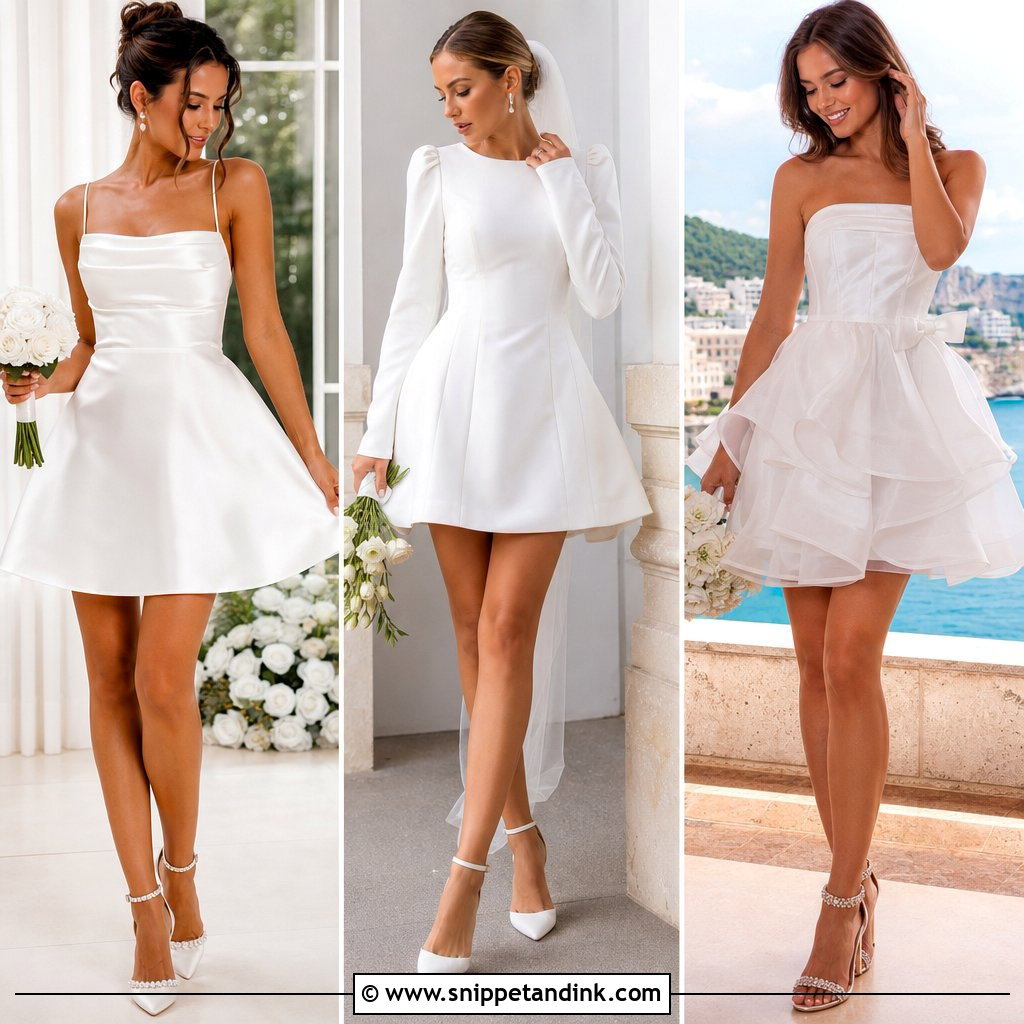
1. Satin Strapless Mini Wedding Dress
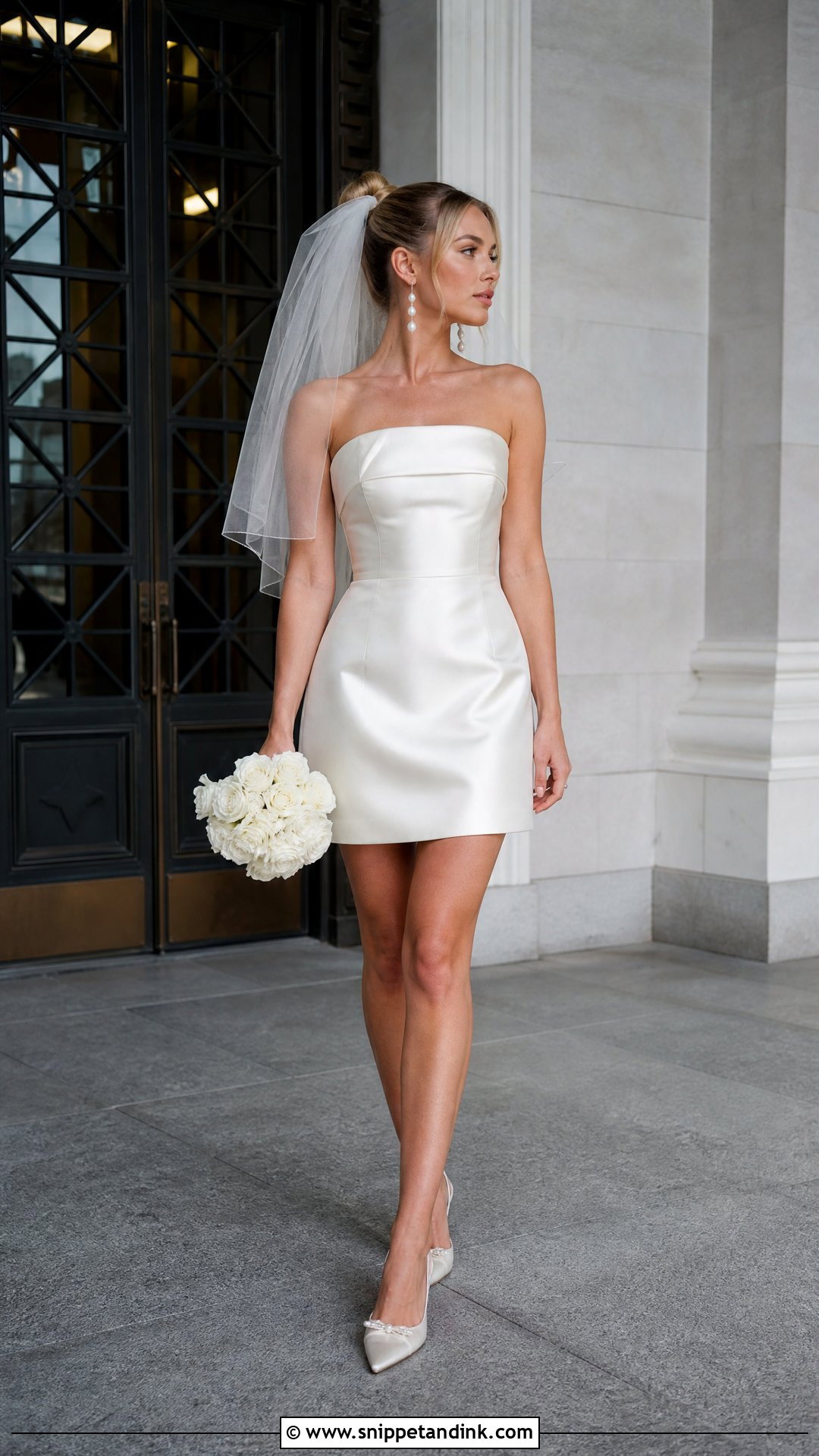
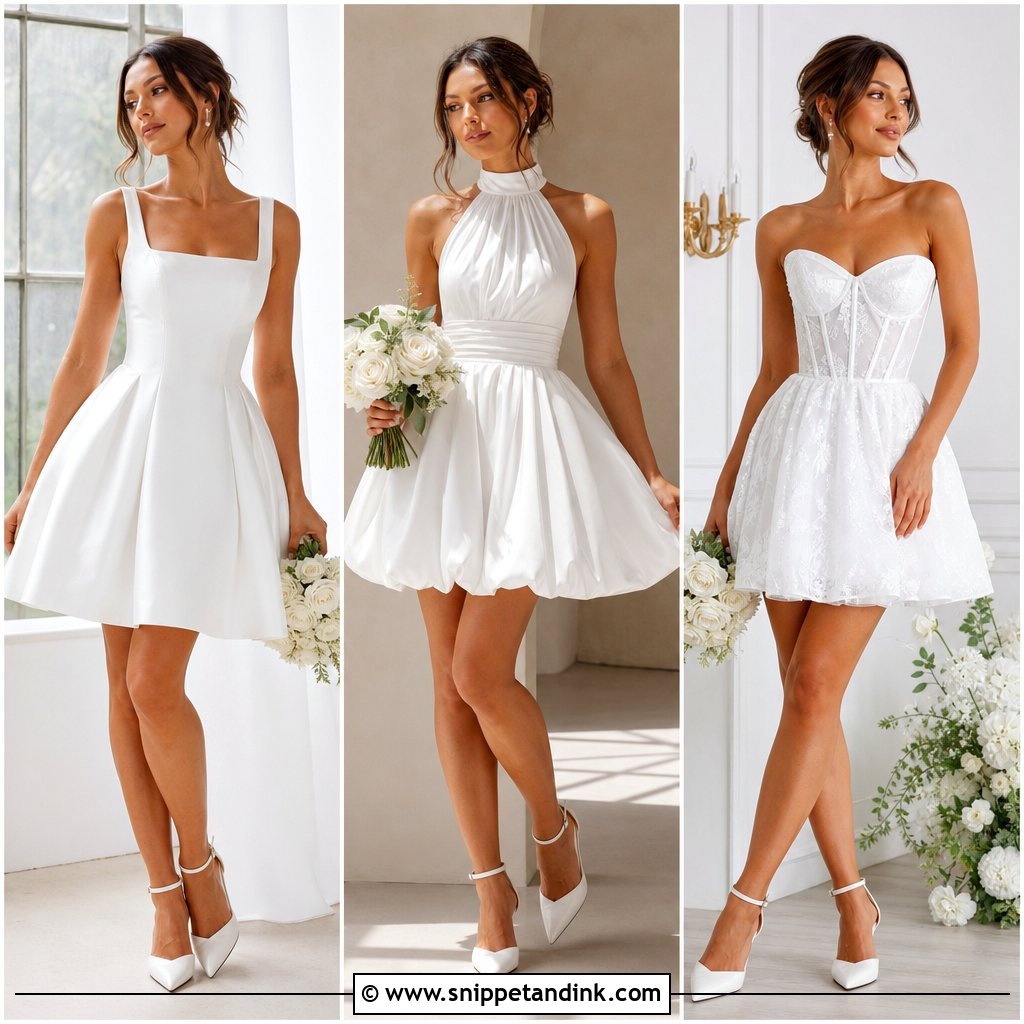
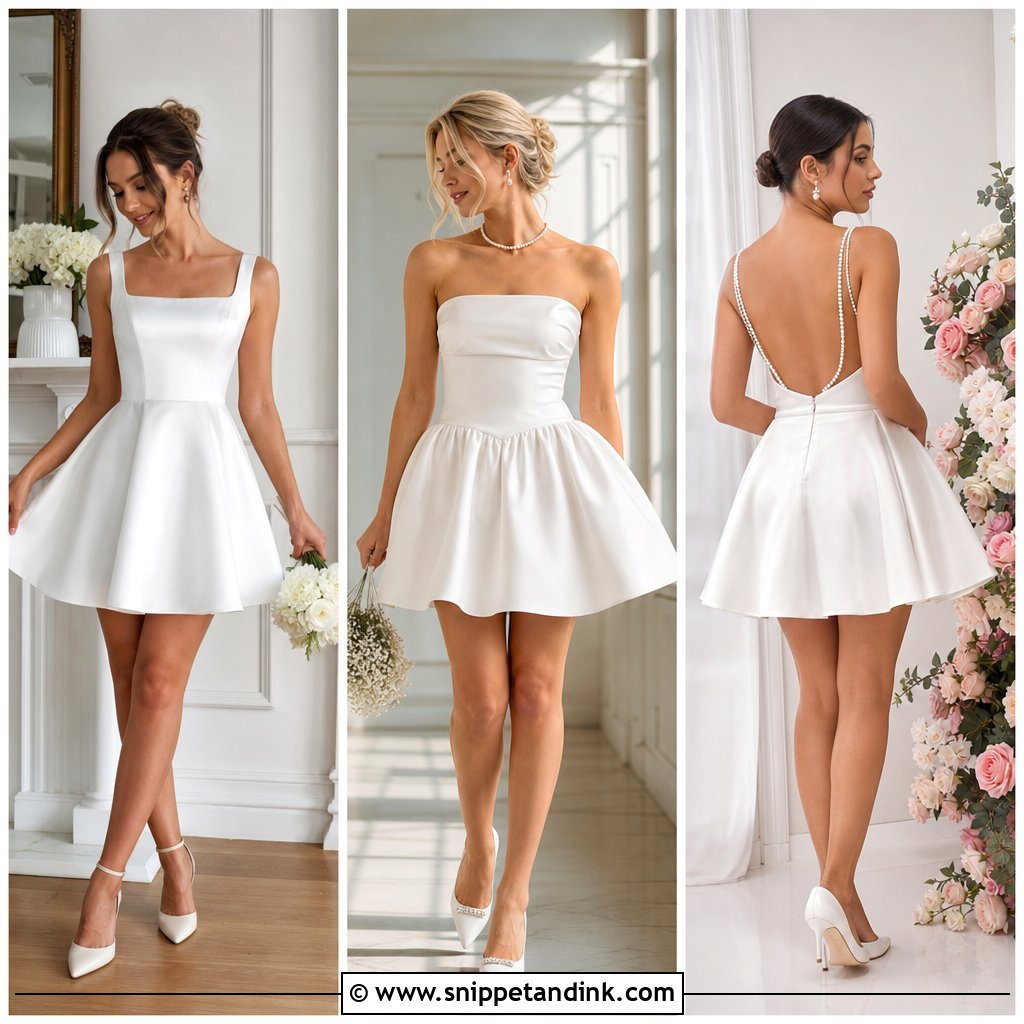
A strapless satin mini depends entirely on what’s inside the bodice. I look for boning, a waist stay and a grip strip along the top edge; without them, you’ll be hitching it up all night. Ivory satin holds its shape and shows tailoring clearly. Pointed slingbacks, pearl drops and a fingertip veil with a narrow satin edge. A compact bouquet of white roses suits the scale. For cooler weather, a cropped bridal jacket can go over your shoulders between photos. Courthouse, hotel or restaurant reception: all fit. Keep hair smooth so the neckline stays clean.
2. Lace Long Sleeve Mini Wedding Dress
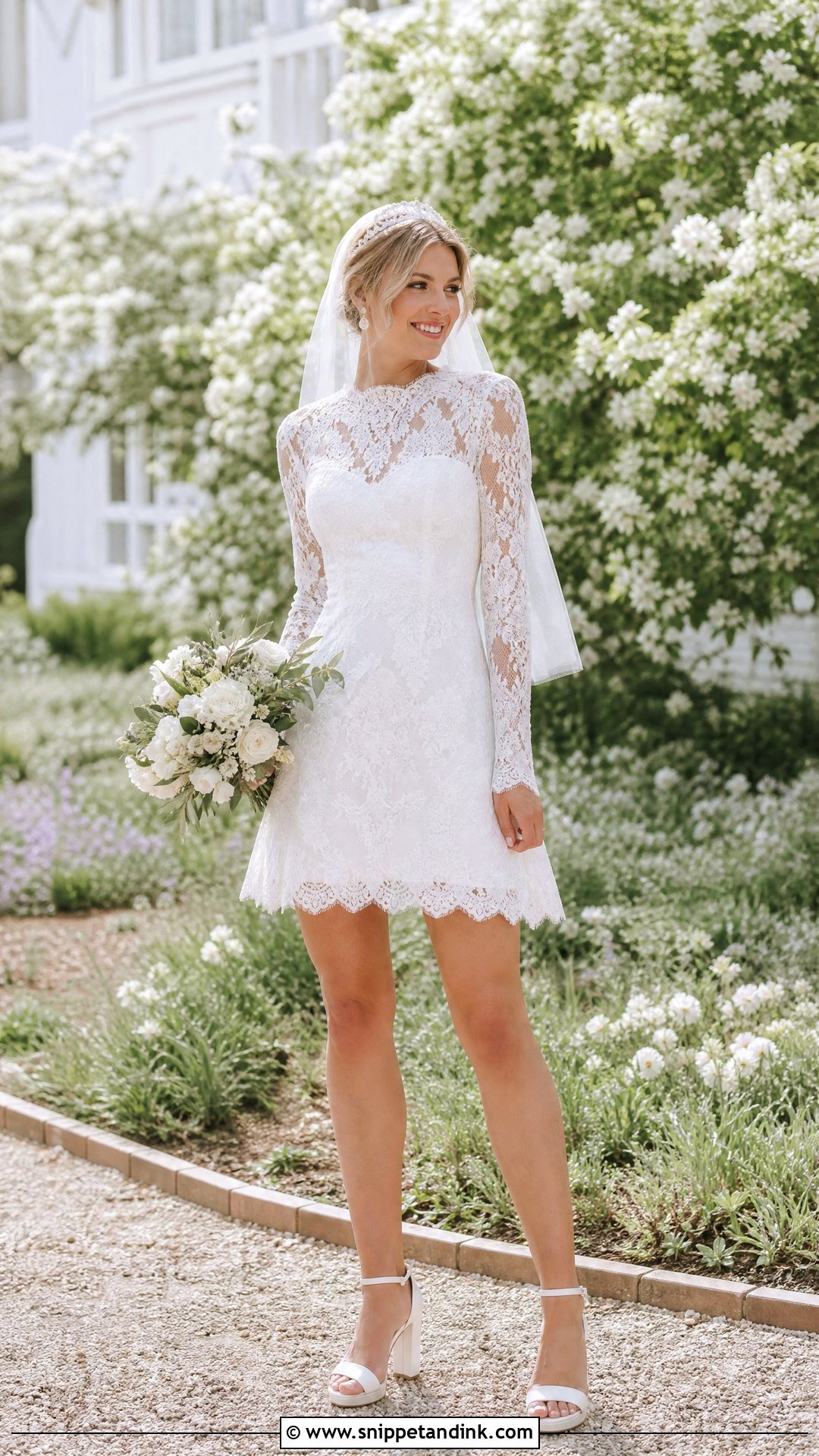
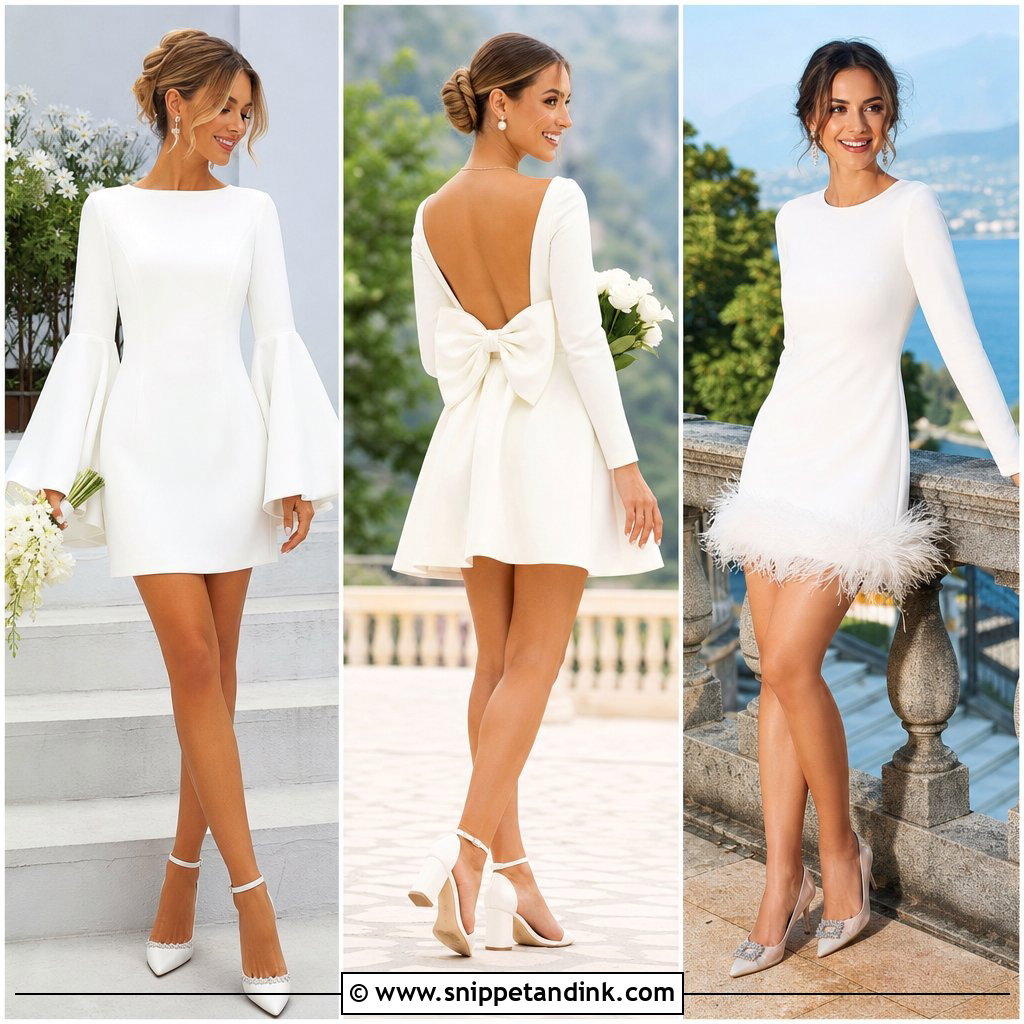
Long lace sleeves pull a short hem back toward tradition. The sleeve has to fit closely without restricting the elbow, so at the fitting I ask the bride to hold her bouquet up at chest height for a minute. Lined bodice, gently flared skirt, maybe a scalloped hem. Ivory block heels, a slim pearl headband and small crystal earrings. A short tulle veil lets the lace show through. Loose white flowers with greenery. If the lace is busy, simple shoes. Gardens, historic venues and spring ceremonies suit it.
3. Off Shoulder Mini Wedding Dress
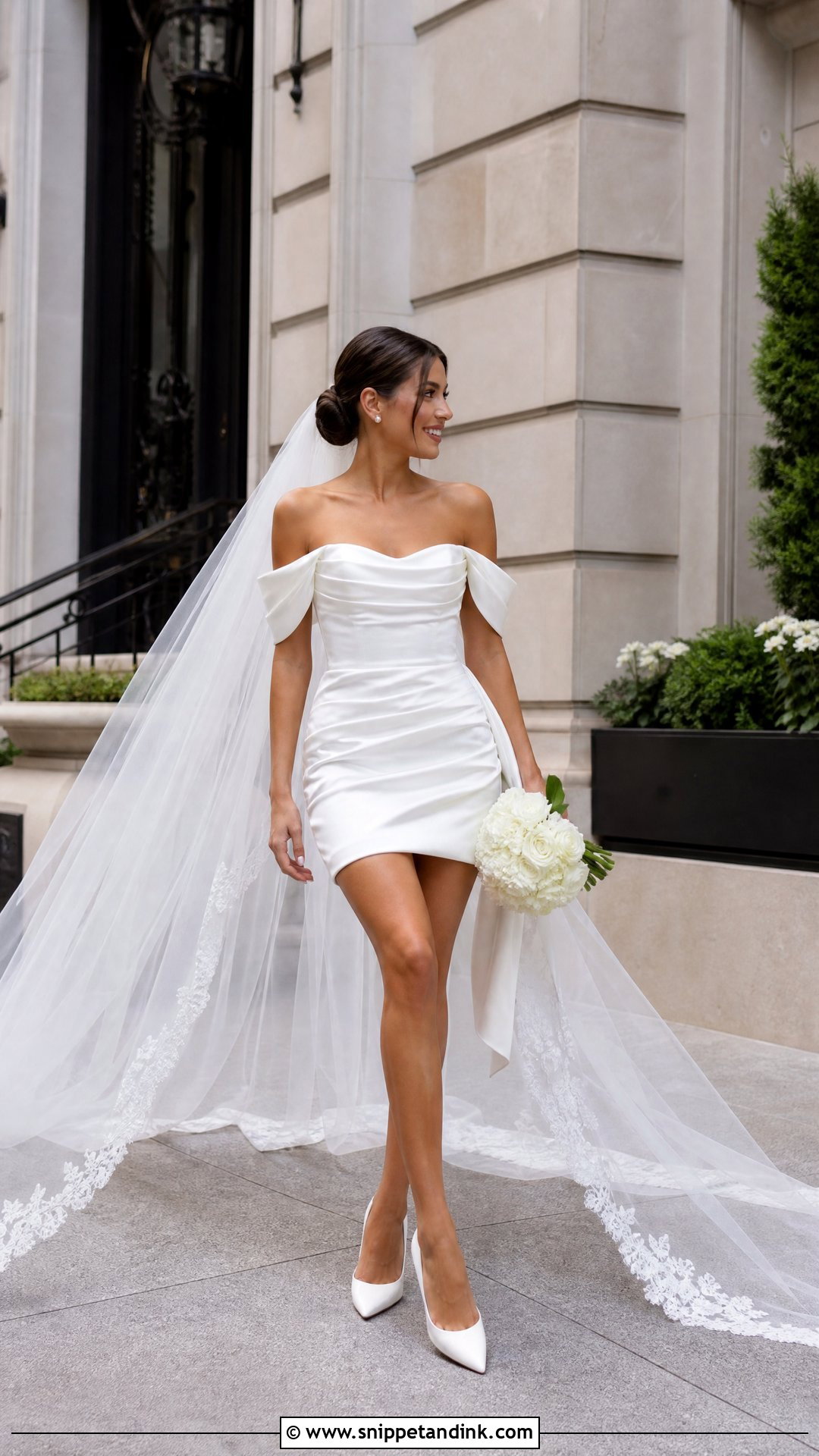
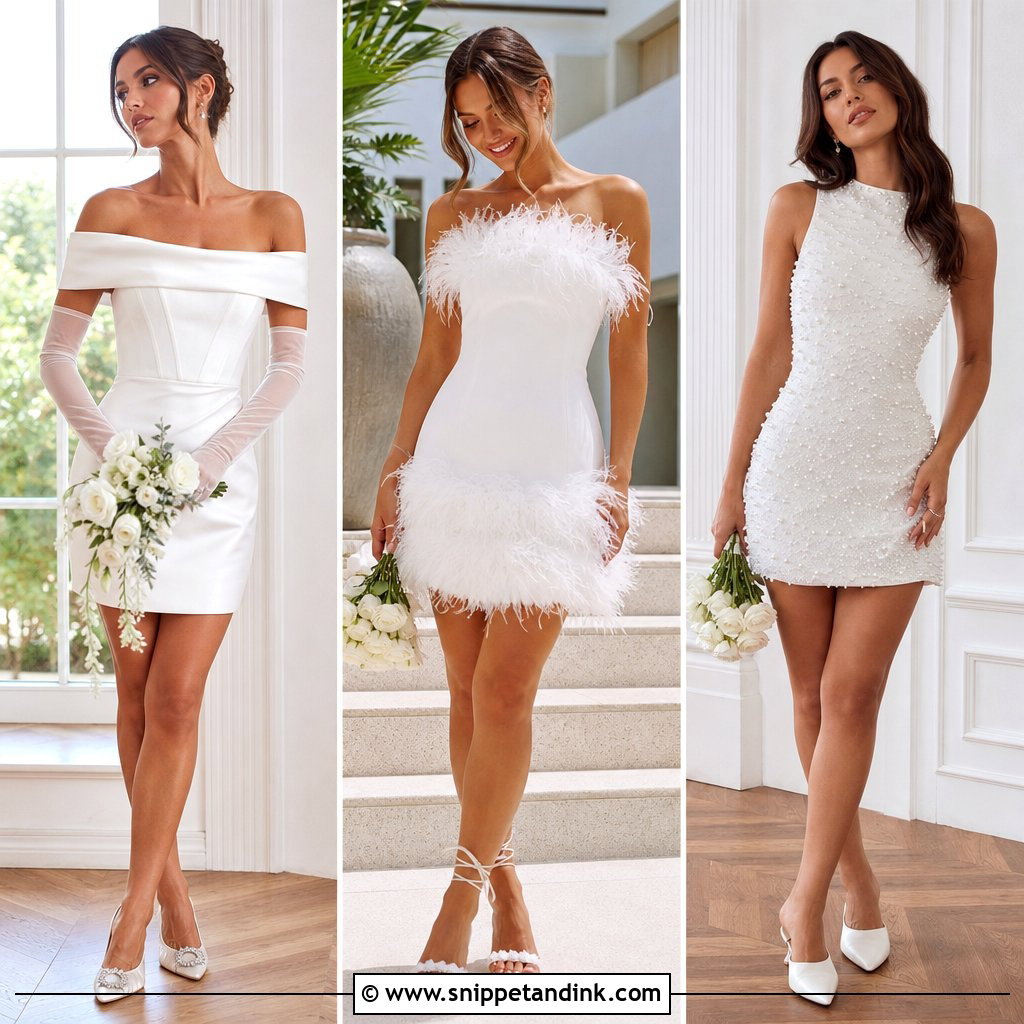
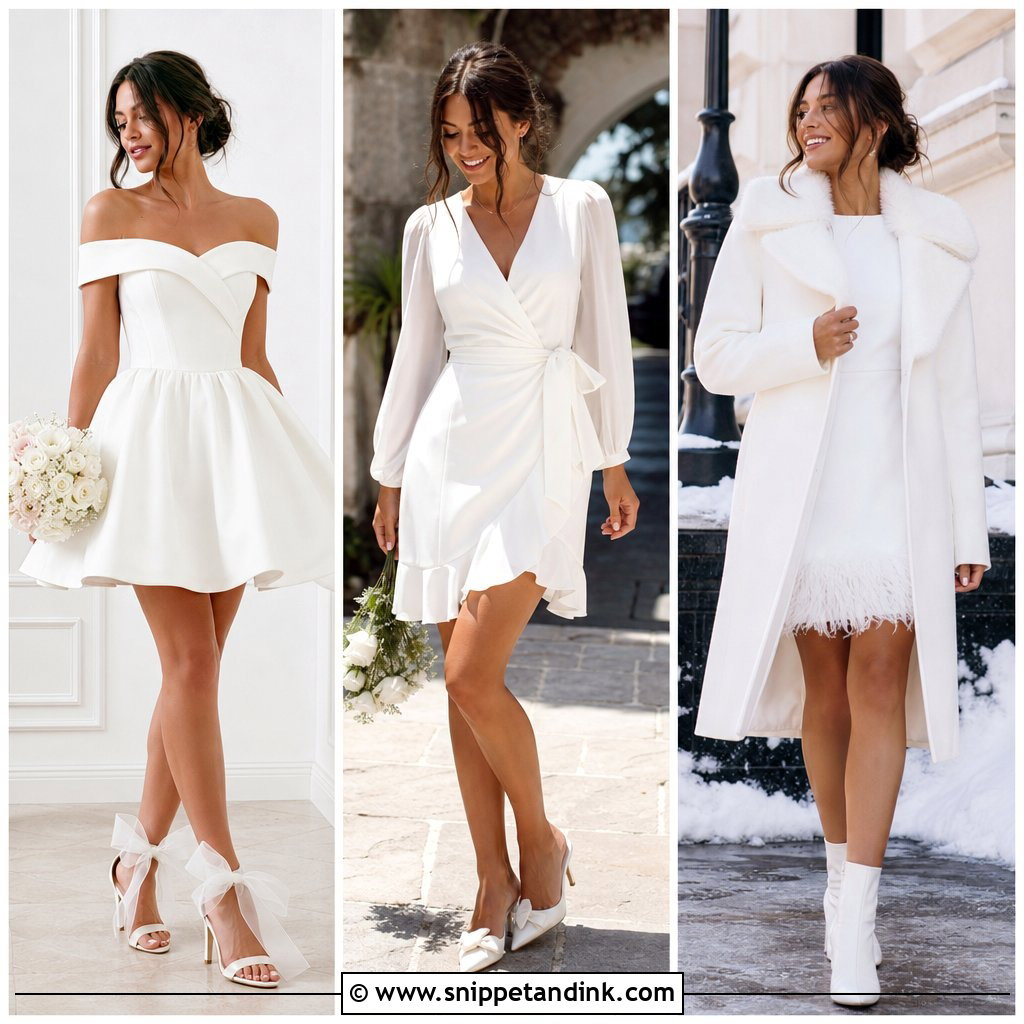
Off-shoulder necklines need a fabric with some body. Draped satin, crepe or mikado hold the line; soft chiffon just slides. Studs instead of a necklace, so the collarbone stays bare. Pointed pumps lengthen the leg and a small structured clutch finishes it. Here’s where a mini gets fun: a cathedral veil over a short dress is a striking contrast, though a shorter veil suits a relaxed ceremony better. A low bun keeps hair off the neckline. I’d send a bride to a city wedding or formal elopement in this.
4. Bow Back Mini Wedding Dress
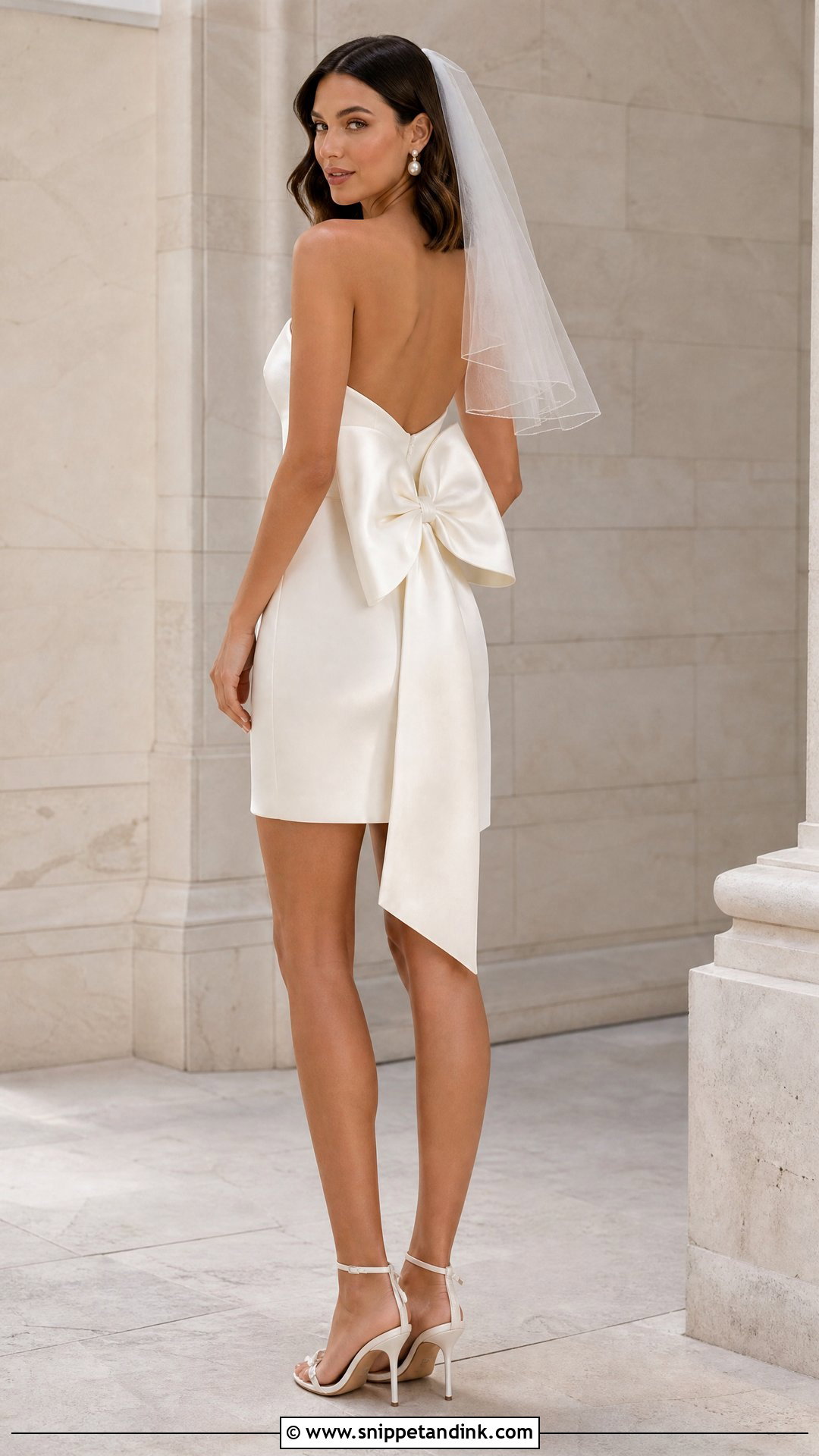
The front is plain on purpose. Turn around and there’s an oversized bow across the back, which is what guests watch during the whole ceremony. Satin or structured crepe holds the loops; anything softer collapses after the first hug. Minimal ankle-strap heels, pearl button earrings and a neat bun. A sheer shoulder-length veil can fall over the bow without hiding it. Keep the bouquet small and round. Tell your photographer about the bow so they plan walking-away and over-the-shoulder shots.
5. A-Line Mini Wedding Dress
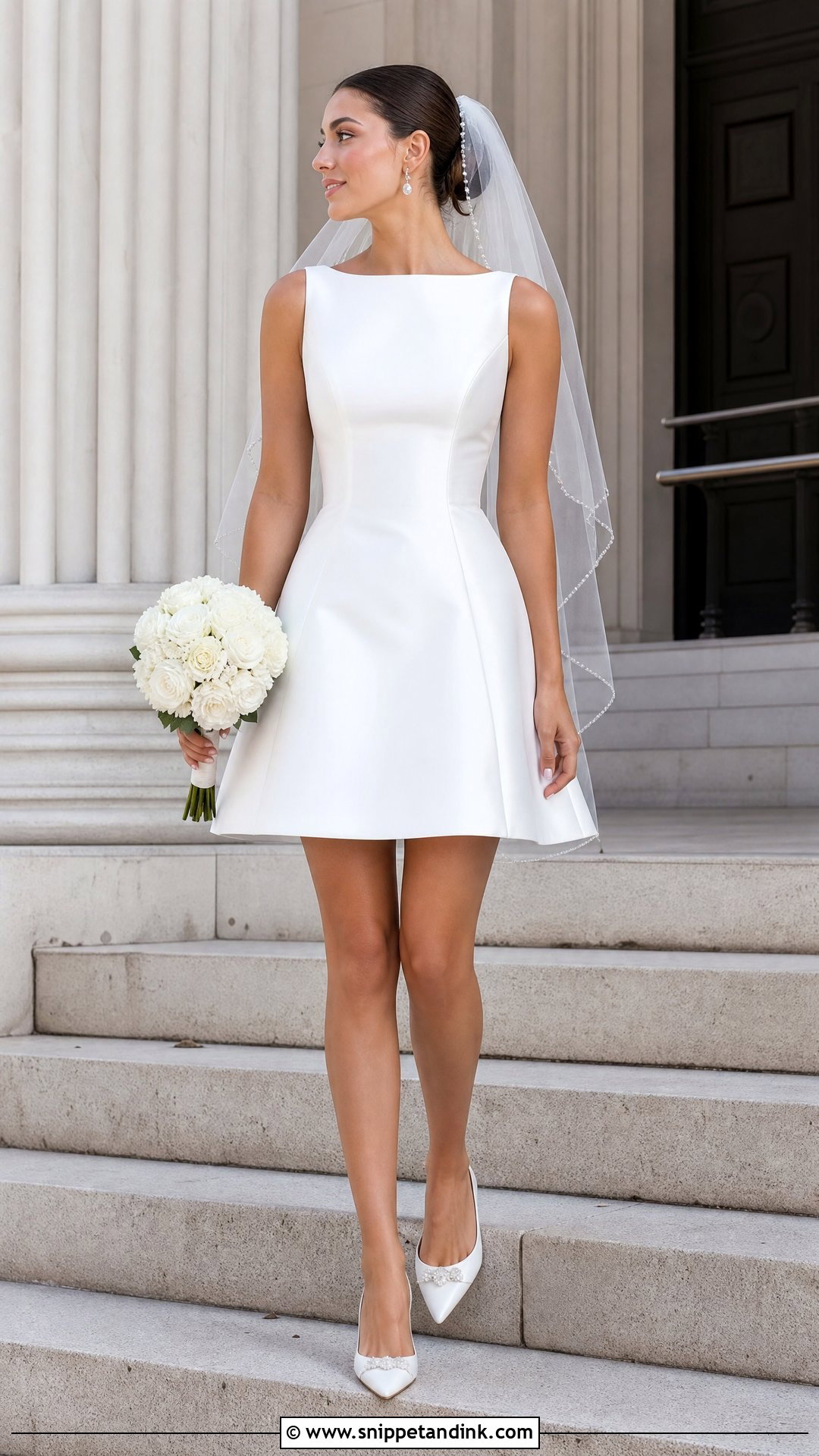
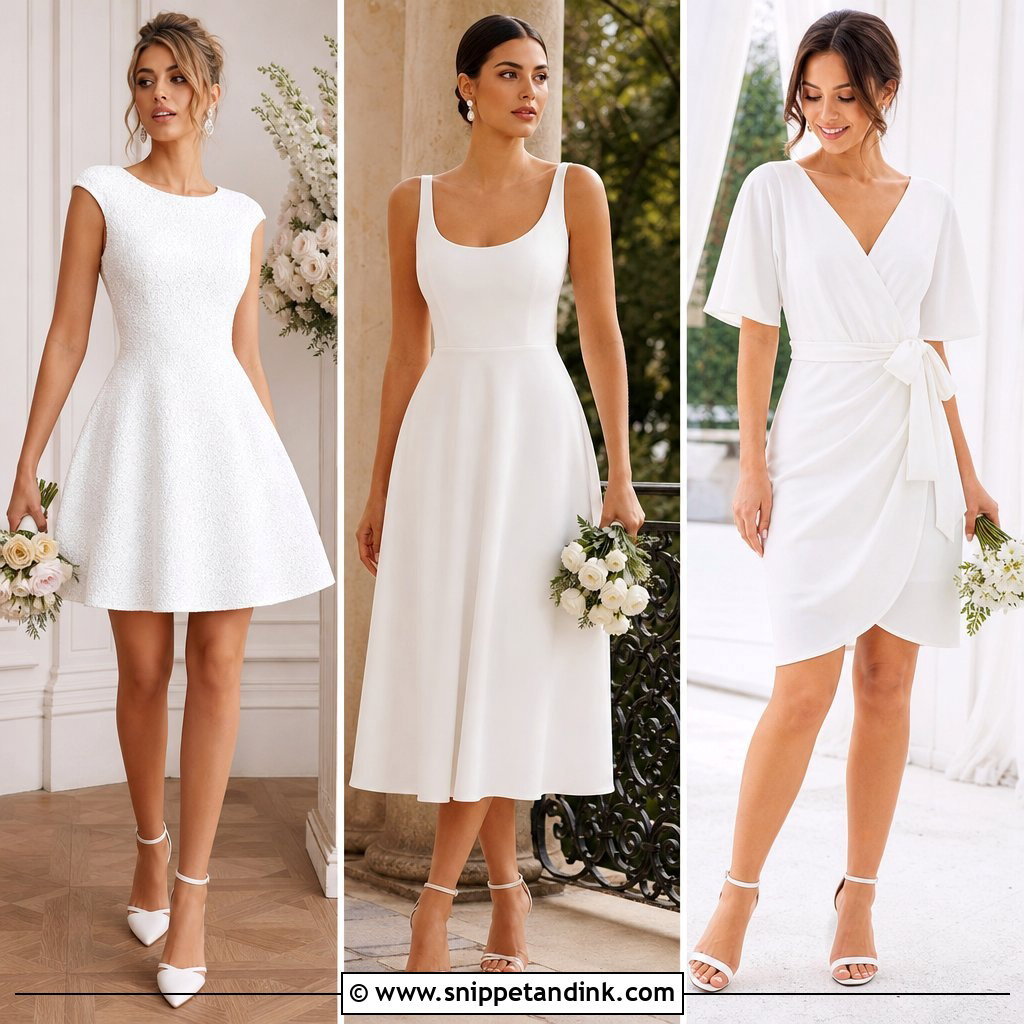
The A-line mini is the most forgiving shape in this list. It fits through the bodice and eases away from the hips, so it suits most figures and lets you climb steps without a thought. Mikado gives crisp structure; organza moves more. If you’ll walk a lot between locations, take low block heels or pointed flats. A pearl-edged veil, fine bracelet and small drops. A rounded bouquet mirrors the skirt. With so little detail, fit is everything: I’d have the waist and hem altered even on a dress that fits off the rack.
6. Blazer Mini Wedding Dress
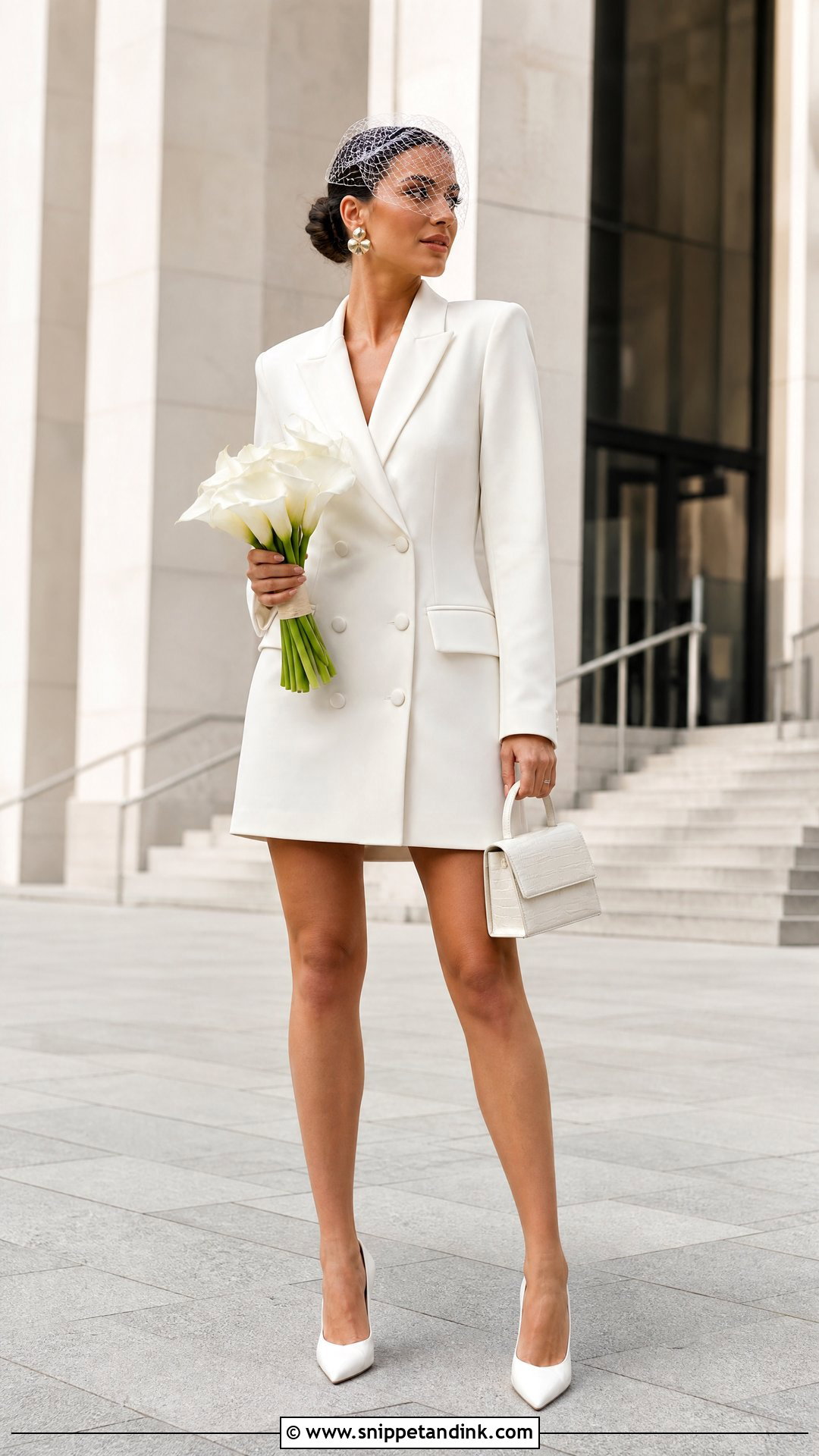
A blazer mini wedding dress gives you tailoring instead of tulle. Double-breasted, defined waist, secure buttons. Structured crepe or satin-backed crepe holds the lapels crisp in photos. I fit these seated, because a jacket-style front pulls across the stomach and hips when you sit at a signing table. Built-in shorts or a matching fitted skirt add coverage. White pointed pumps, sculptural earrings, a top-handle bag and a birdcage veil. A few calla lilies. City halls, rooftops and contemporary spaces.
7. Halter Neck Mini Wedding Dress
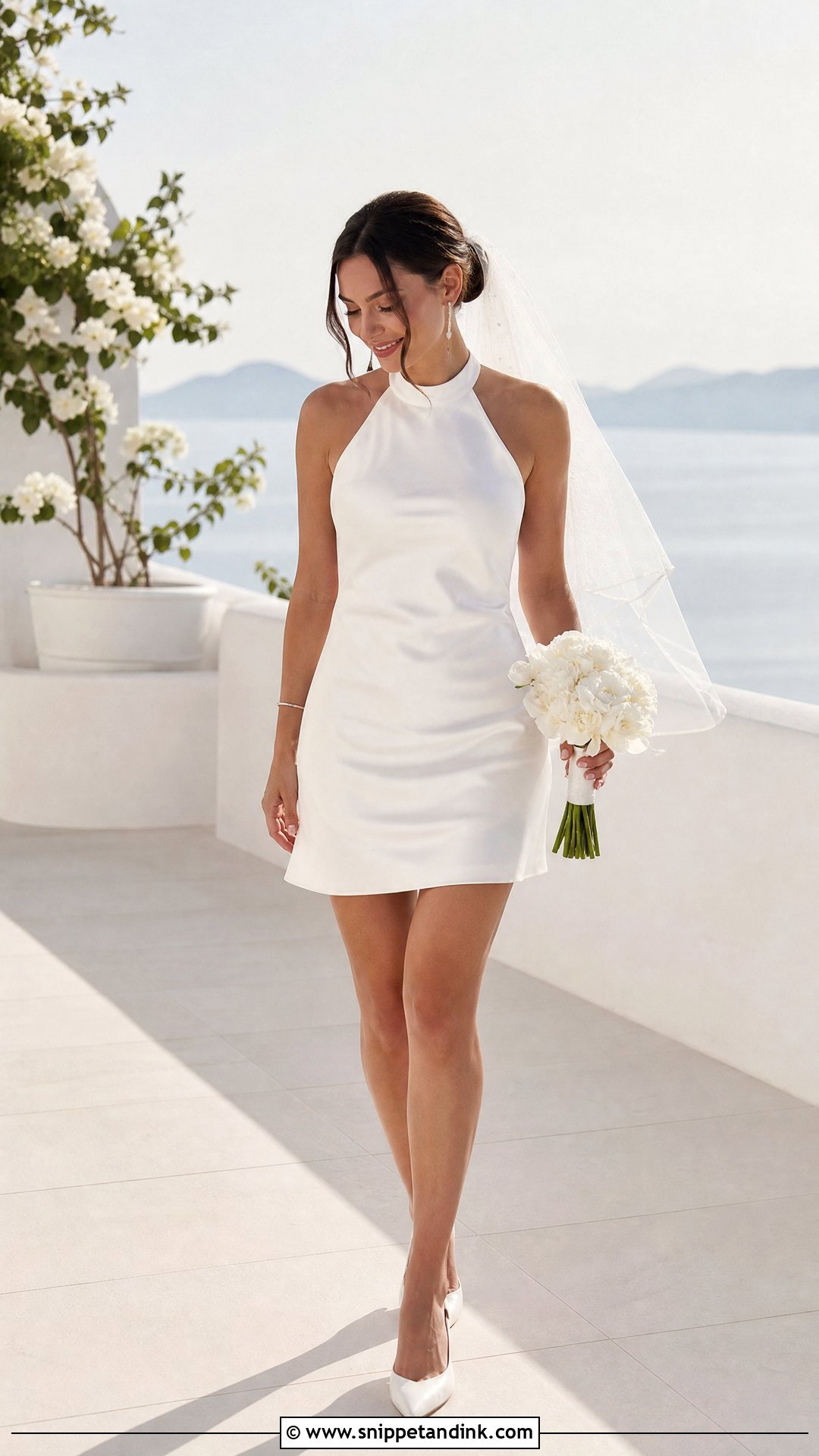
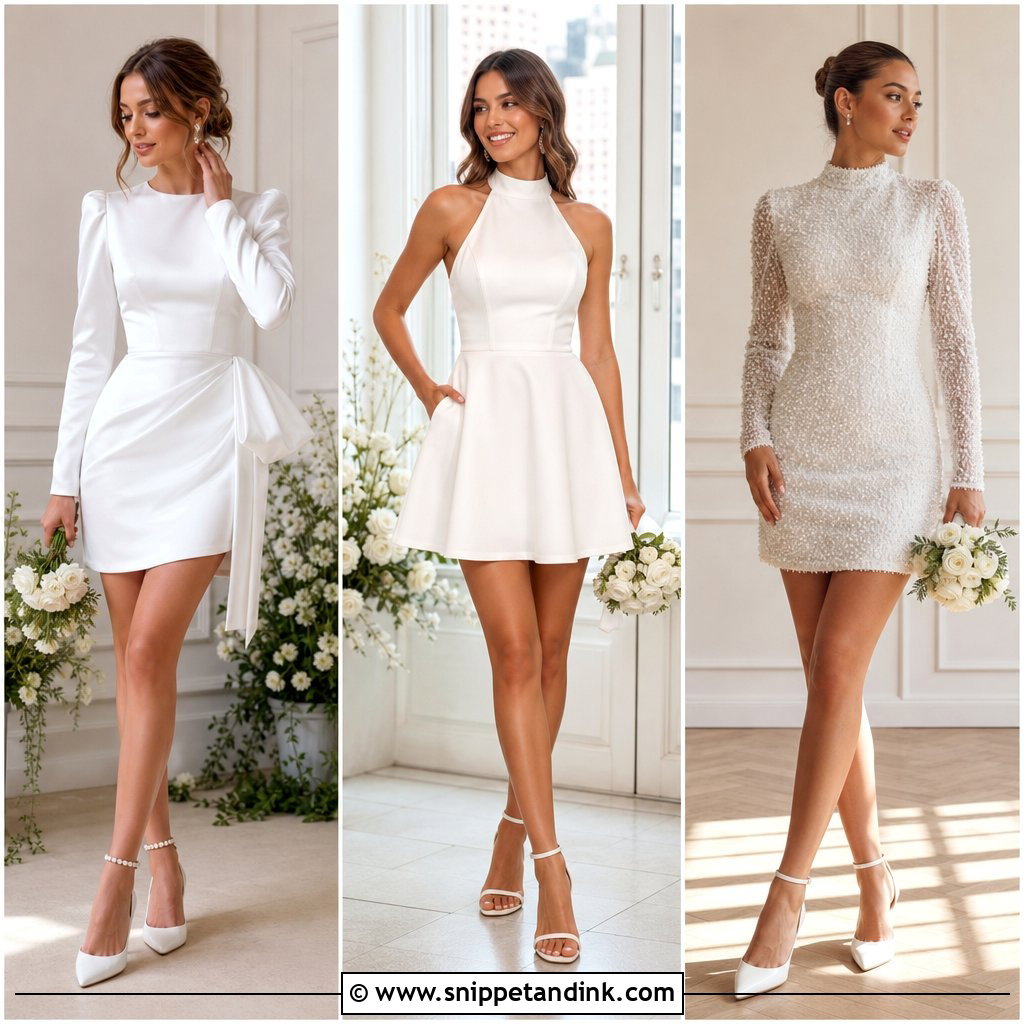
Halters show the shoulders and lift the eye. Fluid satin drapes; a structured fabric looks more architectural. The halter does the work of a necklace, so wear slim drops instead. Ivory or metallic kitten heels, a satin clutch, a narrow bracelet. A low ponytail or bun keeps the neck clear, with a fingertip veil pinned beneath it. It suits a summer ceremony, a destination elopement, or a lively reception. The armholes need careful fitting; a halter cut too wide shows the side of your bra when you dance.
8. Corset Mini Wedding Dress
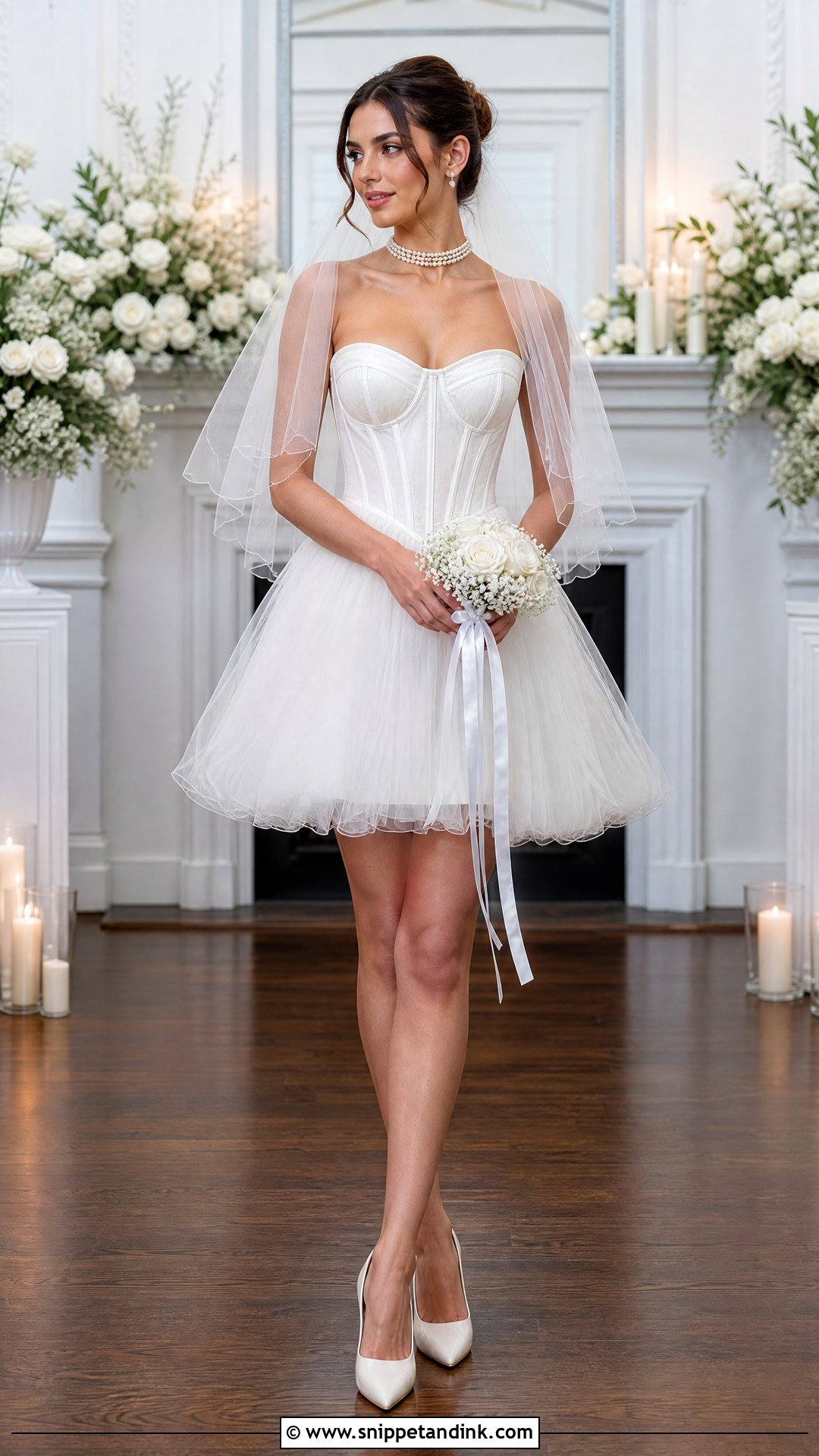
A real corset bodice is engineered: spiral or flexible boning, a waist tape, secure cups and a smooth lining. Decorative seams sewn onto a soft dress only look the part. I always check this before anything else, because only the real thing will hold you in all evening. A gathered tulle or satin skirt softens the fitted top. Closed pumps, a sheer elbow-length veil, a pearl choker or fine pendant. Ribbon trails on a small bouquet add movement. During alterations, sit, walk and raise your arms.
9. Pearl Embellished Mini Wedding Dress
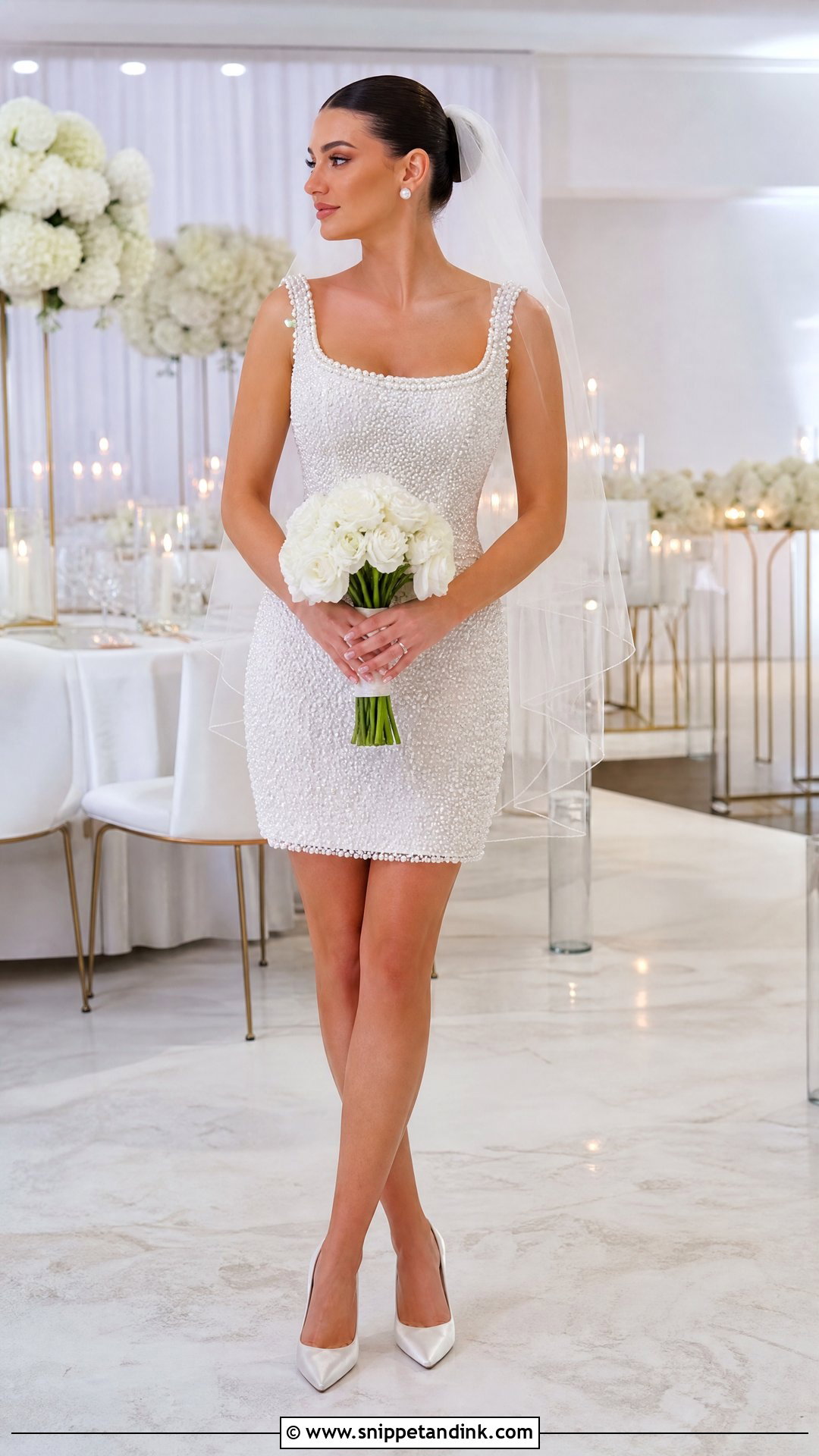
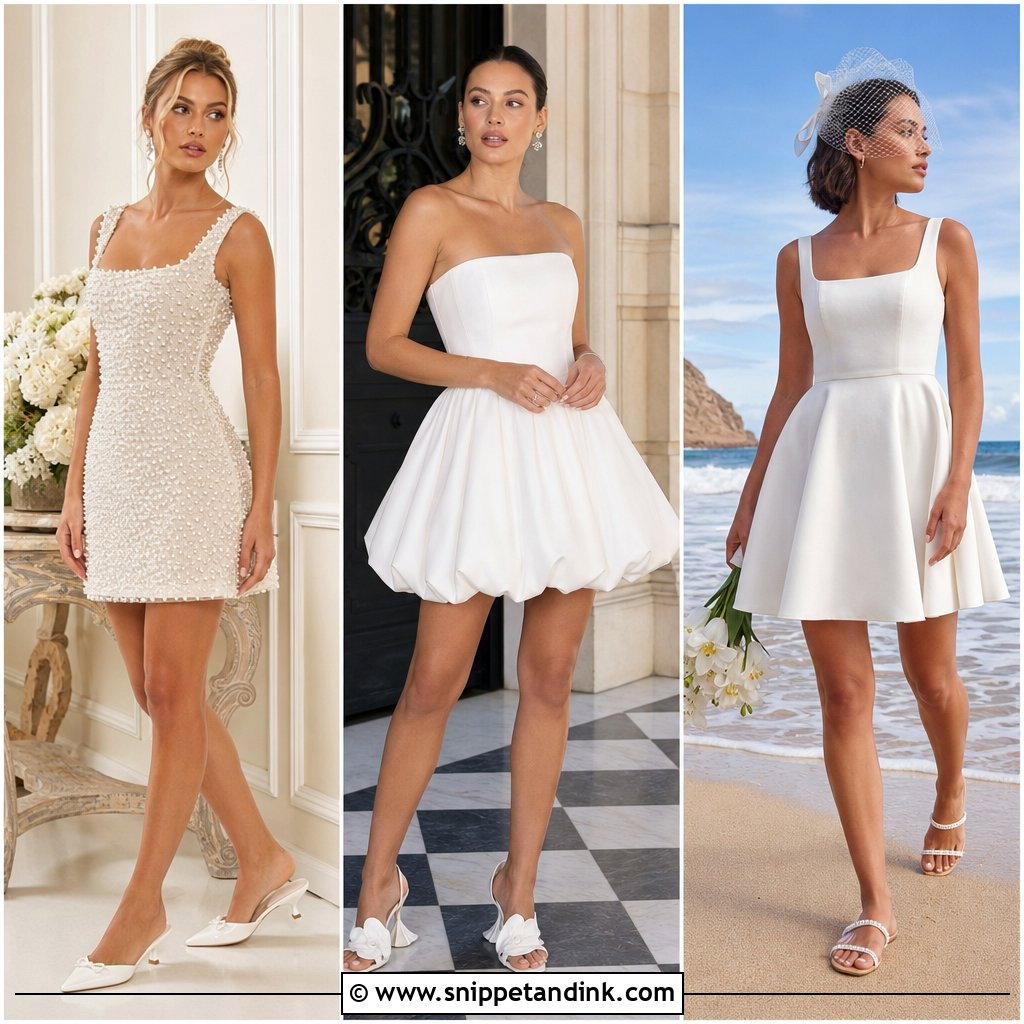
Pearls add texture and real weight. Evenly spaced pearls on tulle, satin or crepe catch light gently; dense clusters can drag a light fabric down. A straight or softly fitted cut gives them a clean background. Plain satin pumps, pearl studs, a simple tulle veil. Don’t add a beaded bag; the dress is already the sparkle. Sleek bun, fresh makeup. A compact white bouquet with little greenery. I’d recommend it for an indoor ceremony, dinner reception or second look, and I always check the pearls are stitched individually, not glued.
10. Feather Trim Mini Wedding Dress
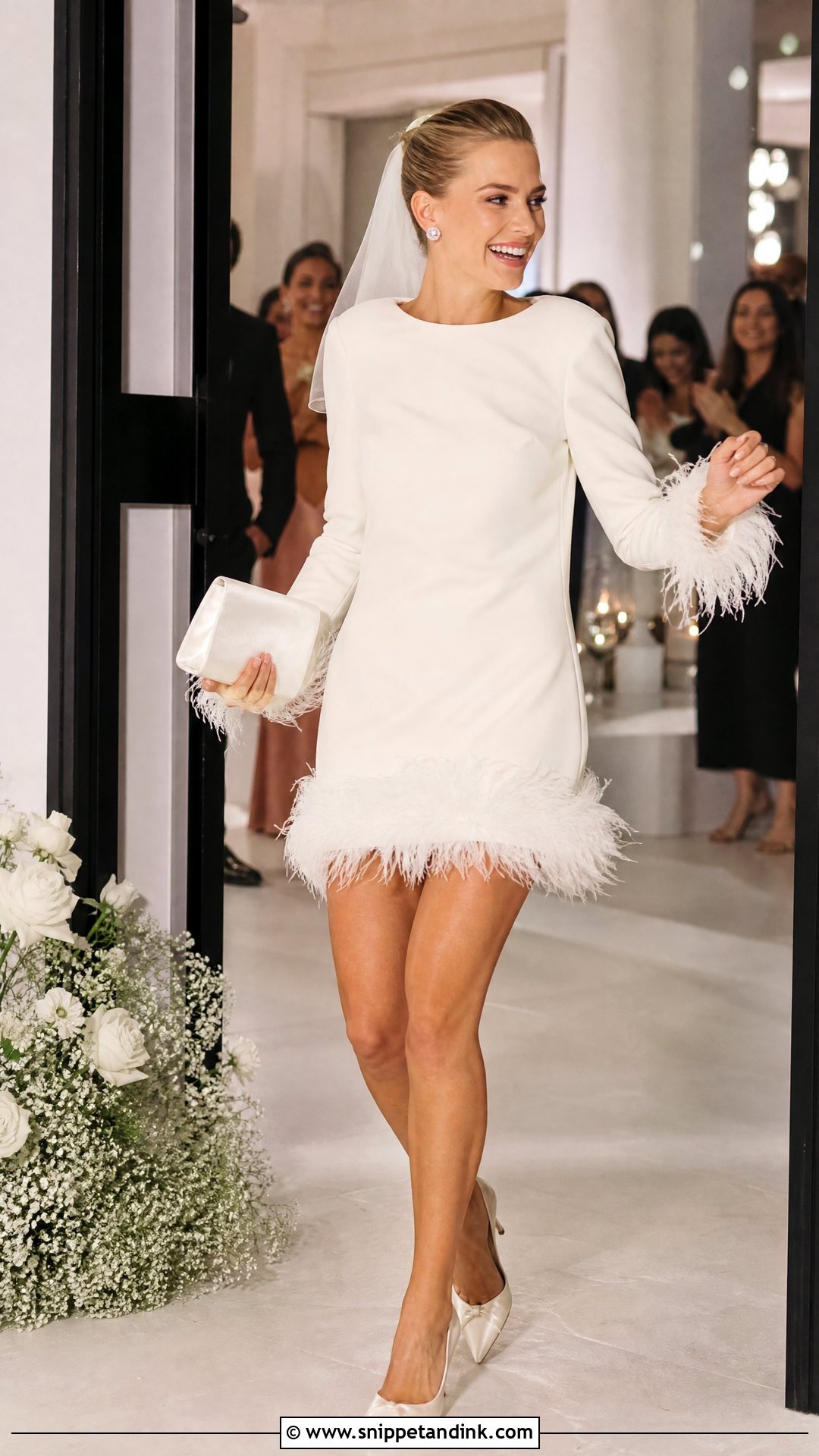
Soft feather trim at the cuffs or hem brings movement and a bit of humour. Put it on a clean crepe or satin shift so it stays the single feature. Feathers shed, especially ostrich, and they tickle anything they touch, which includes your bouquet and your partner’s face. That’s why I prefer them at the hem rather than the neckline. Pointed heels, crystal studs, a satin clutch. A short veil or a hair bow. Best for a reception change, a dance-floor entrance or a fashion-led civil ceremony.
11. Bubble Hem Mini Wedding Dress
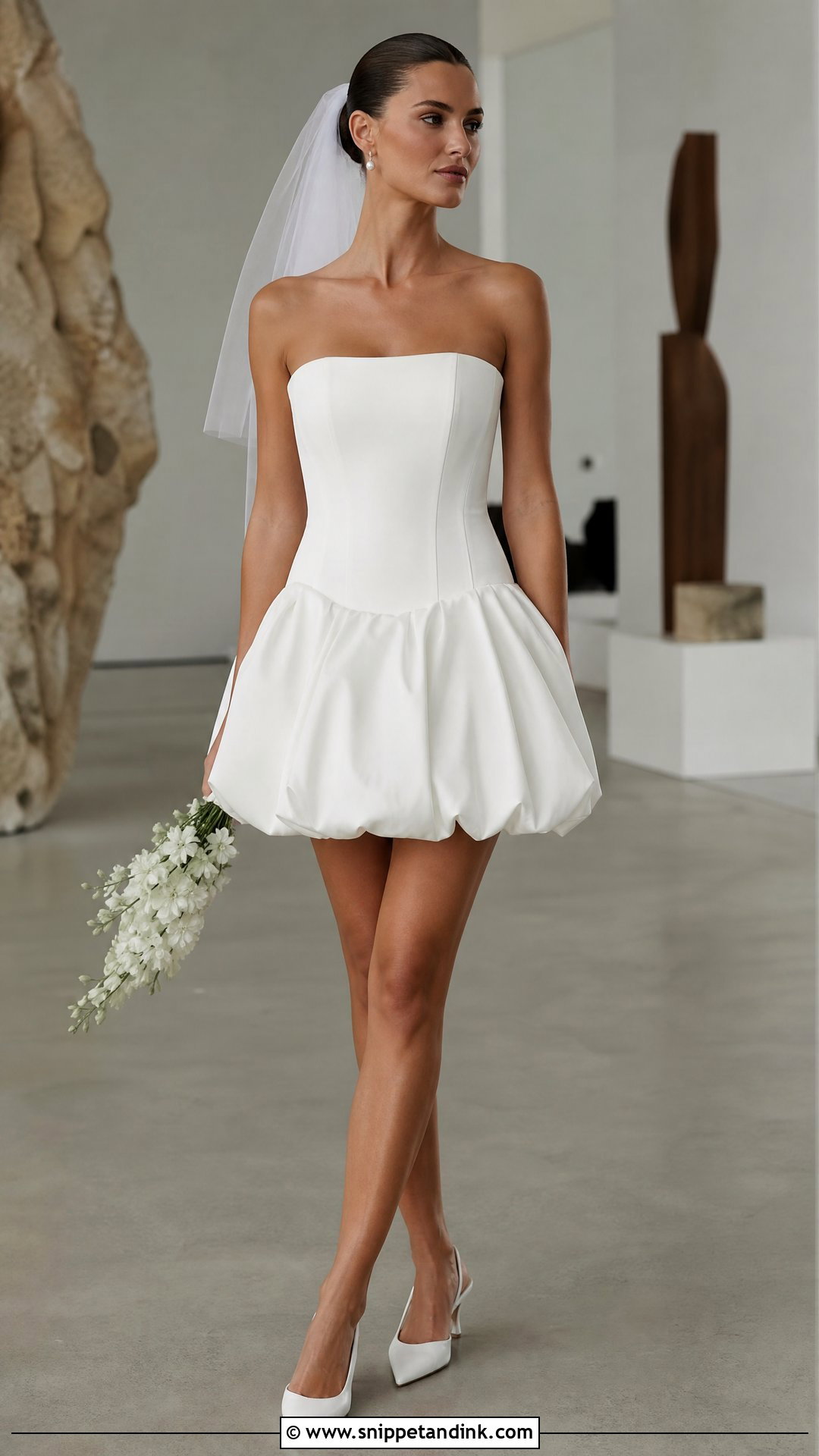
A bubble hem mini wedding dress gives the skirt a rounded, sculpted shape. It needs a supportive fabric like mikado or structured satin, and a plain bodice above: strapless, square-neck or sleeveless. The volume makes hips look wider, which suits slim straight figures well and curvier ones less. I’d be honest about that. Sleek slingbacks, small hoops, a minimal veil and a neat updo. Carry a narrow bouquet, not a wide one. Built-in shorts help with a hem this short.
12. Square Neck Mini Wedding Dress
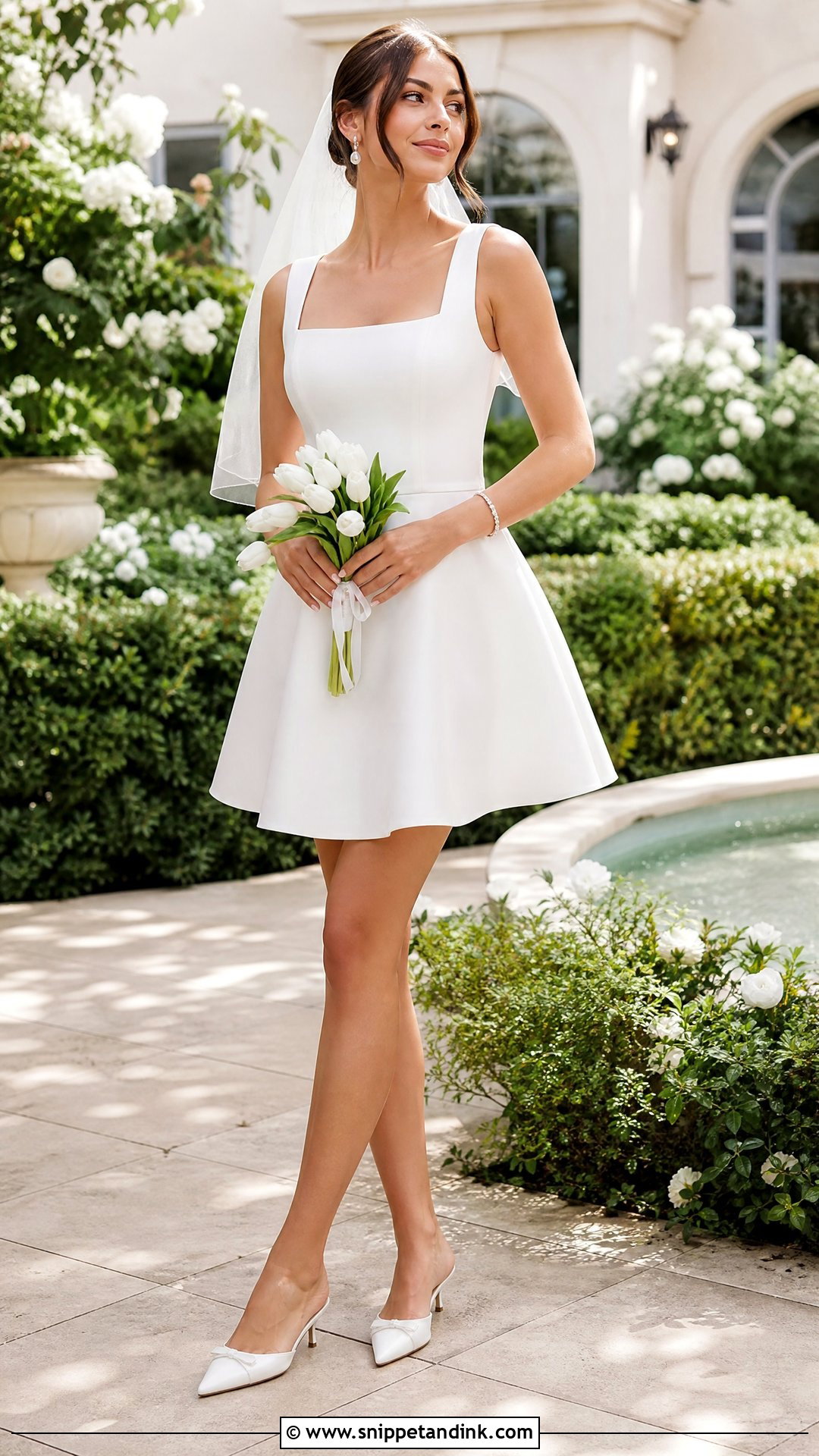
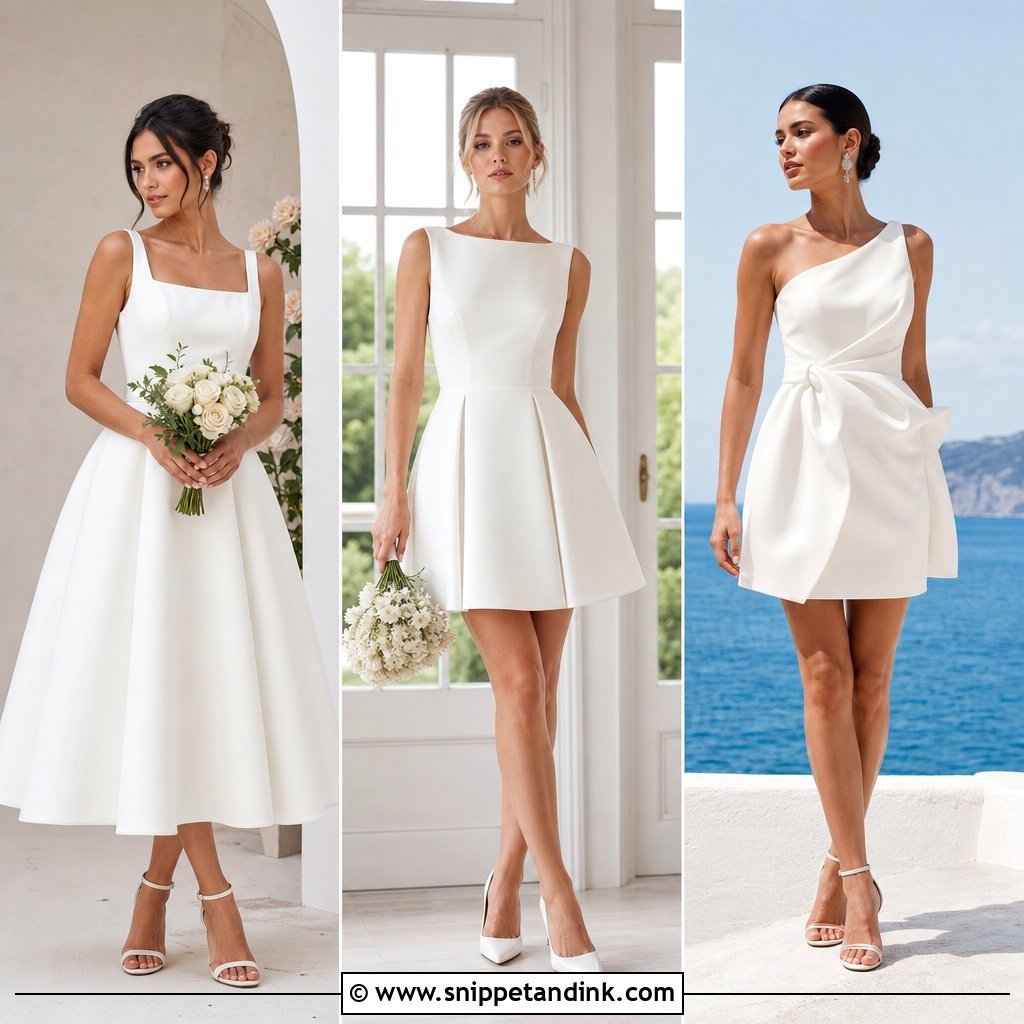
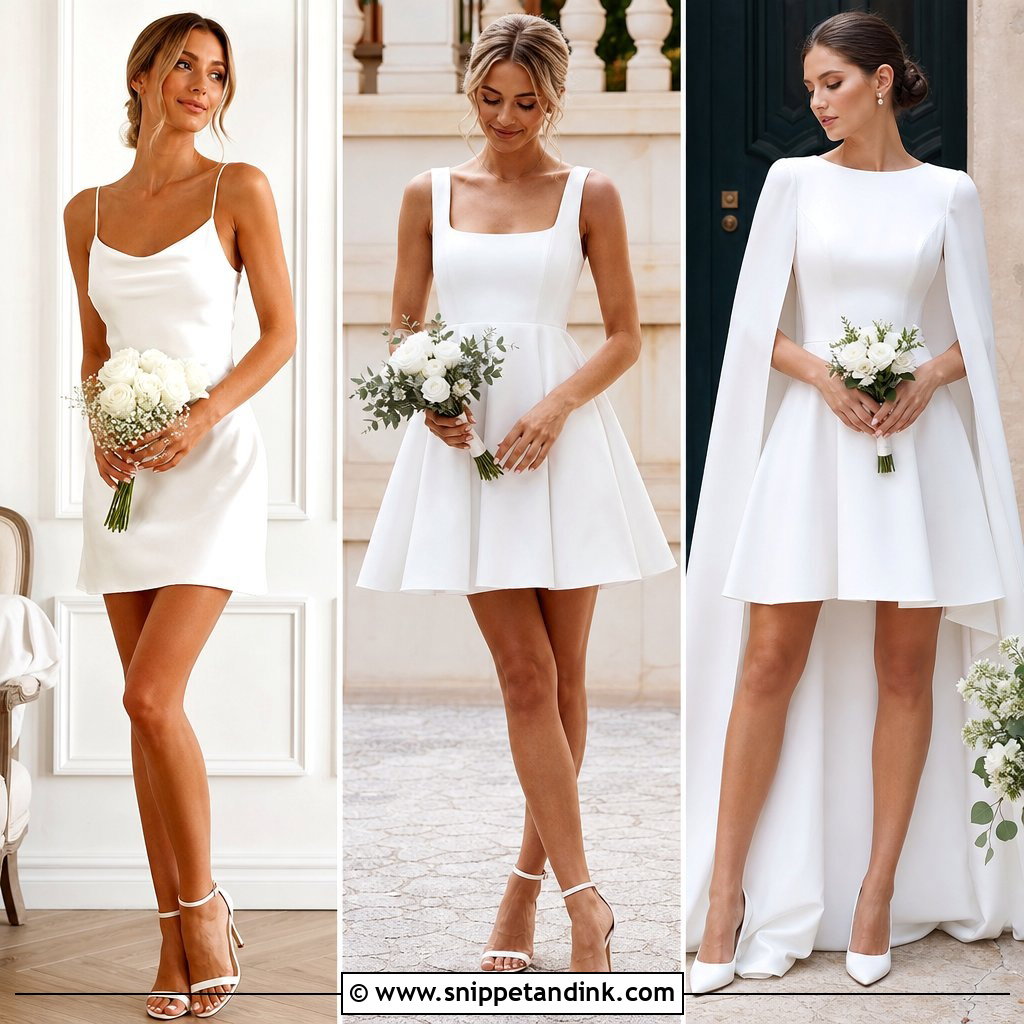
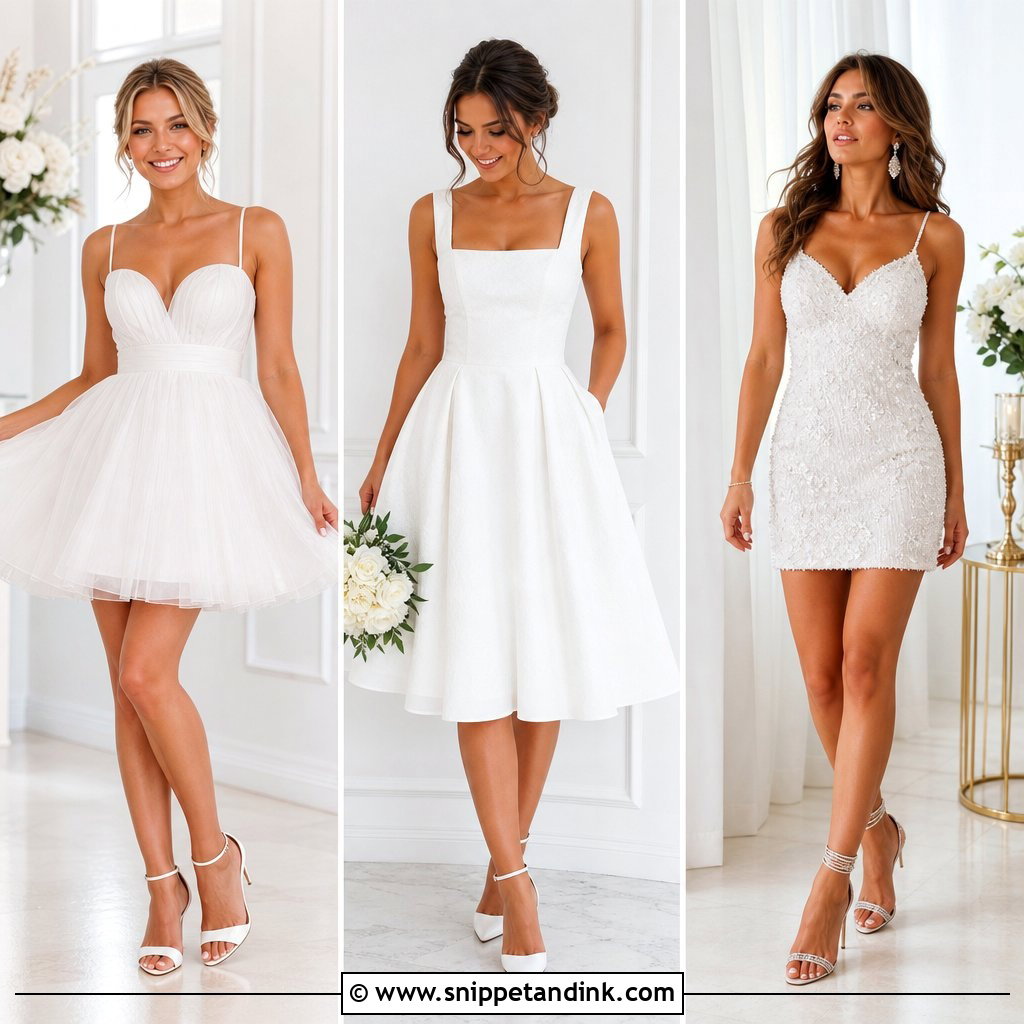
A square neck frames the collarbone and takes most bras. Wide straps give far more support than spaghetti straps, which matters on a long day. A fitted bodice over an A-line or straight skirt. Pearl drops, pointed kitten heels and a short veil under a low bun. White tulips or another clean-lined bouquet. For cool weather, a cropped cardigan or a coat ending at the waist; a jacket that stops mid-skirt cuts the proportions badly. Courthouses, gardens and small indoor ceremonies.
13. One Shoulder Mini Wedding Dress
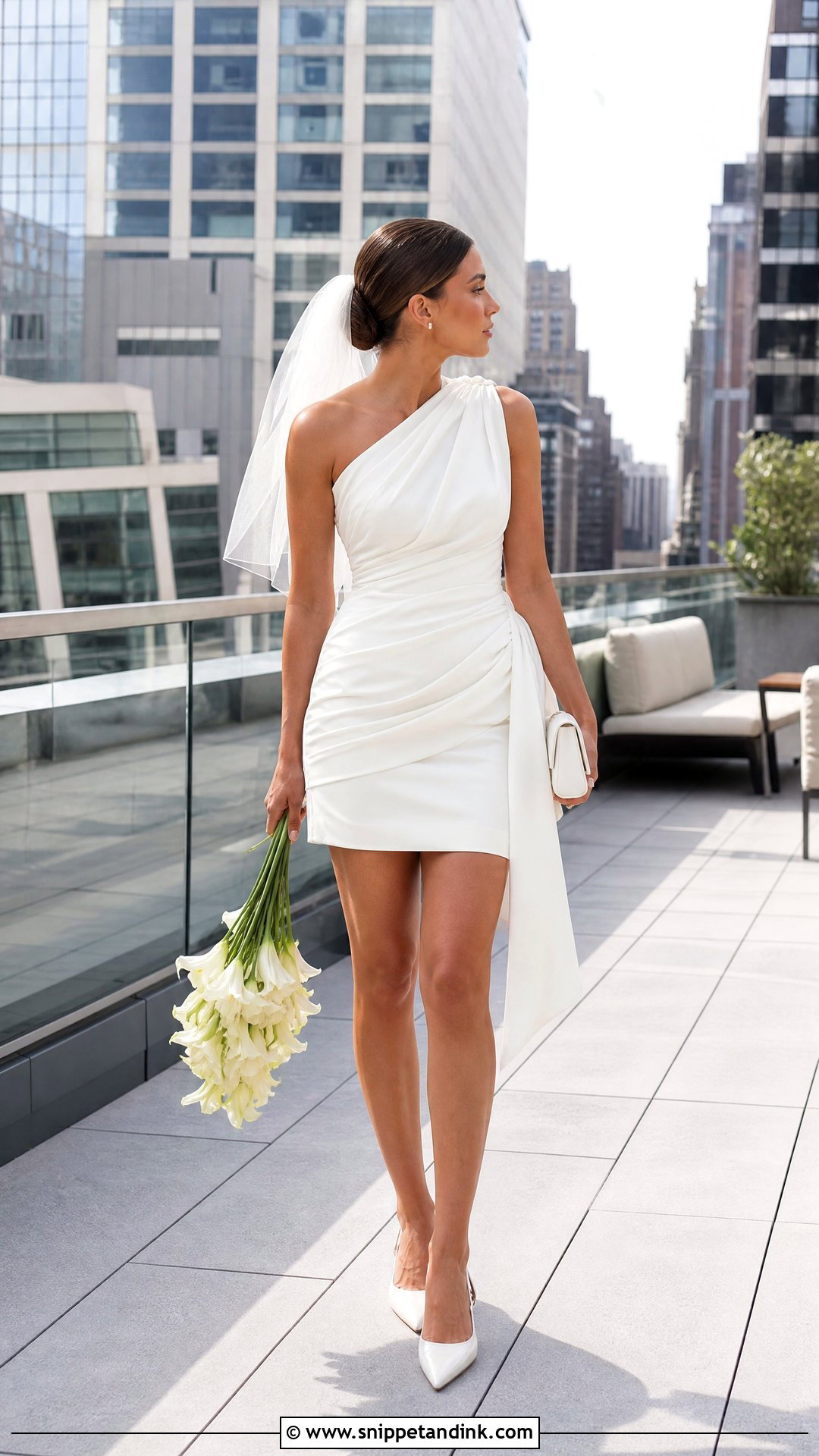
One-shoulder bridal minis are sculptural without any fuss. Look for a soft drape, a structured fold or a single statement sleeve. I set the bun to the side opposite the covered shoulder so the line shows from both angles. One bracelet and small earrings, no necklace. Pointed slingbacks and an ivory or soft metallic clutch. Skip the long veil; a small hairpiece or short tulle at the back keeps the shape. A narrow, long-stemmed bouquet. Rooftops, architectural venues and dressy receptions.
14. Puff Sleeve Mini Wedding Dress
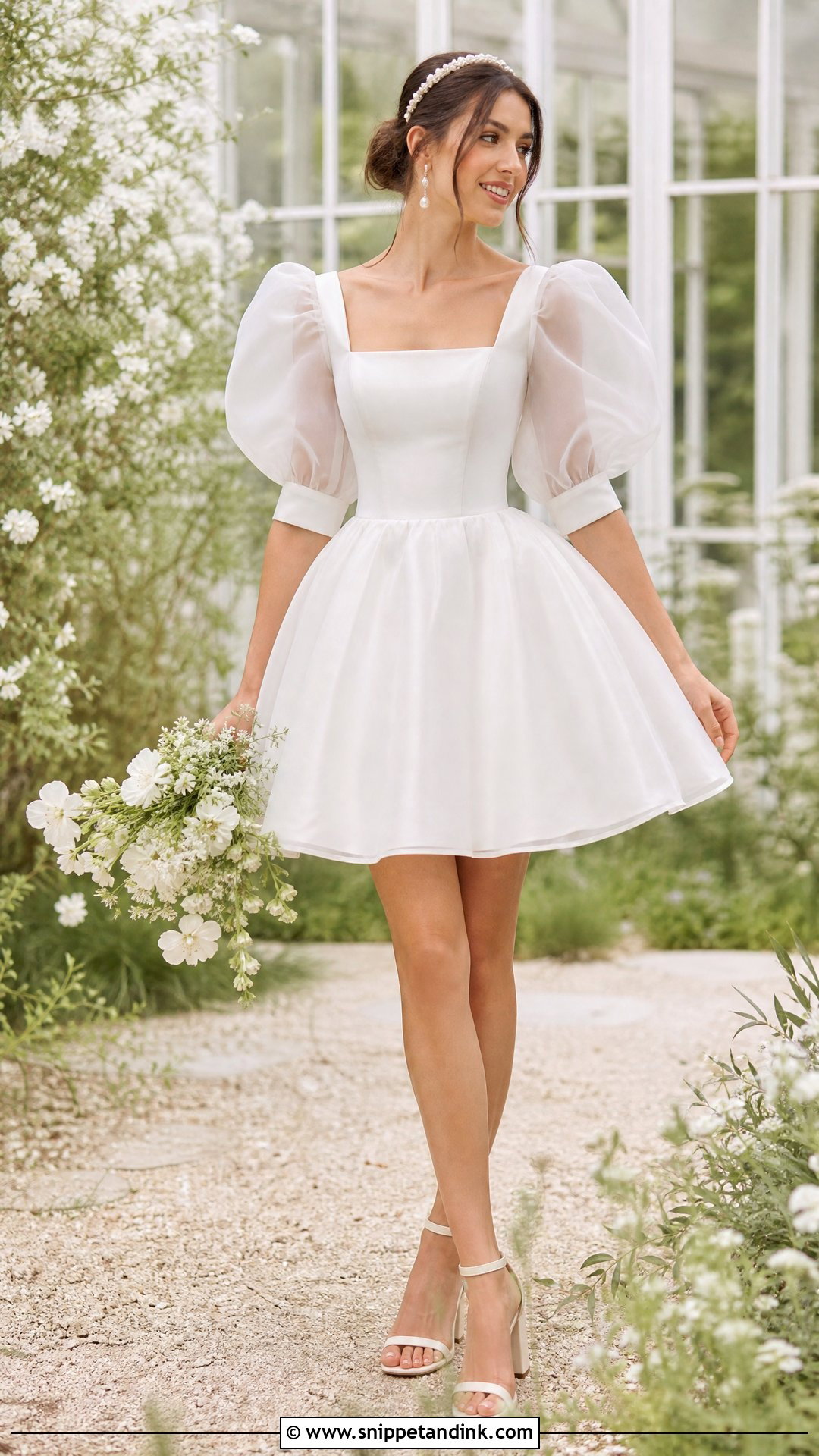
Sheer organza puffs look airy; satin ones are bolder and hold their shape. Either way, a defined waist balances them. Organza is crisp, so I check the inner sleeve seam doesn’t scratch where your arm rests. Simple block heels, tiny pearl earrings, a narrow headband or shoulder-length veil. A loose bouquet of white flowers and greenery. Spring gardens and countryside venues suit it. Ask whether the sleeves can be made detachable: you get a romantic ceremony look and a cleaner sleeveless dress for dancing.
15. High Neck Mini Wedding Dress
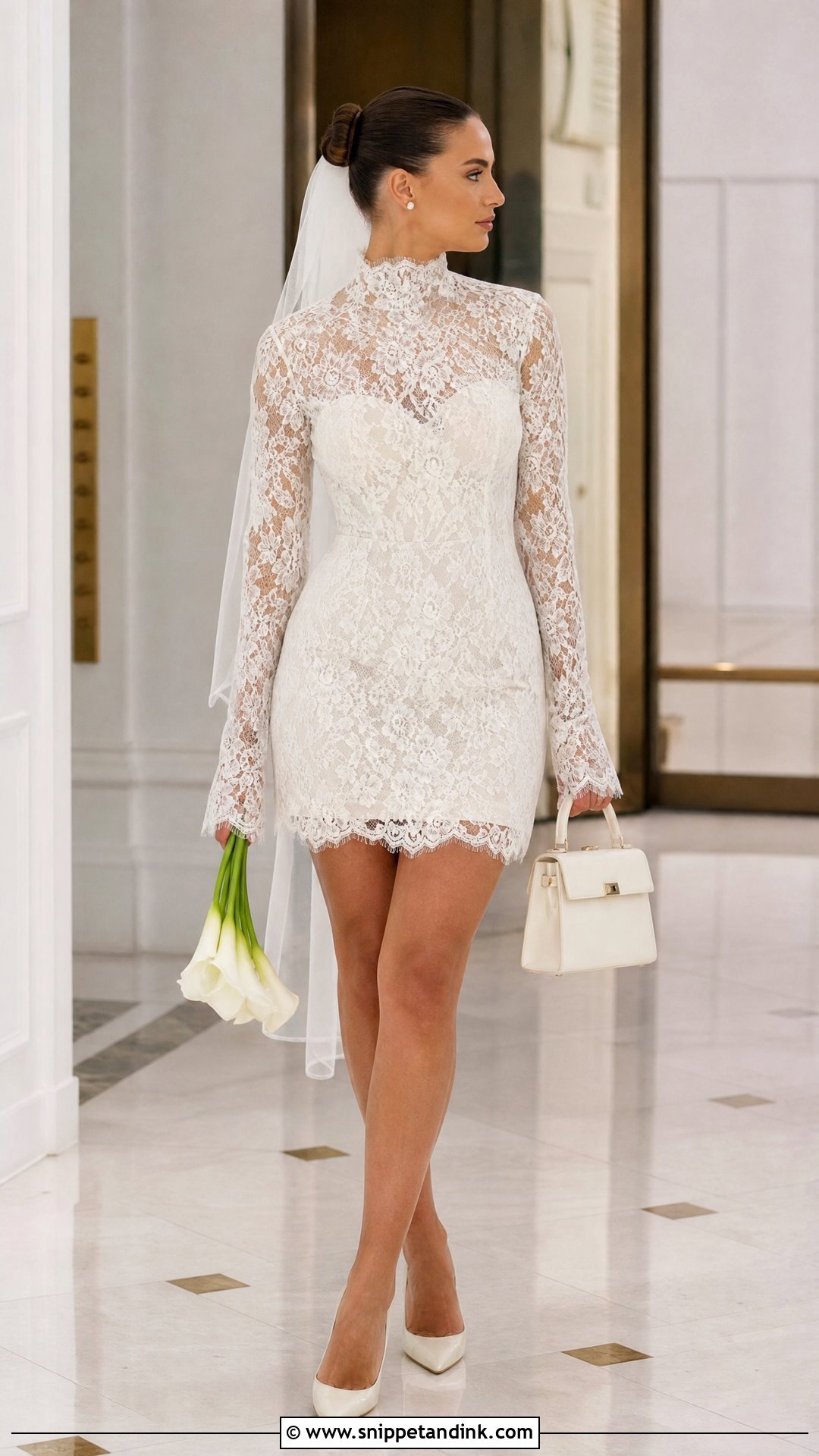
Covered above, short below: the high neck is a balance I find very modern. Lace leans vintage; smooth crepe or satin is minimal. Long fitted sleeves for a sleek line, sleeveless for warm days. No necklace, small earrings, pointed pumps, a structured mini bag and a veil set beneath a sleek bun. A few long-stemmed flowers keep the vertical line. The collar and shoulders must be tailored precisely, because extra fabric there wrinkles every time you lift your arms.
16. Cape Mini Wedding Dress
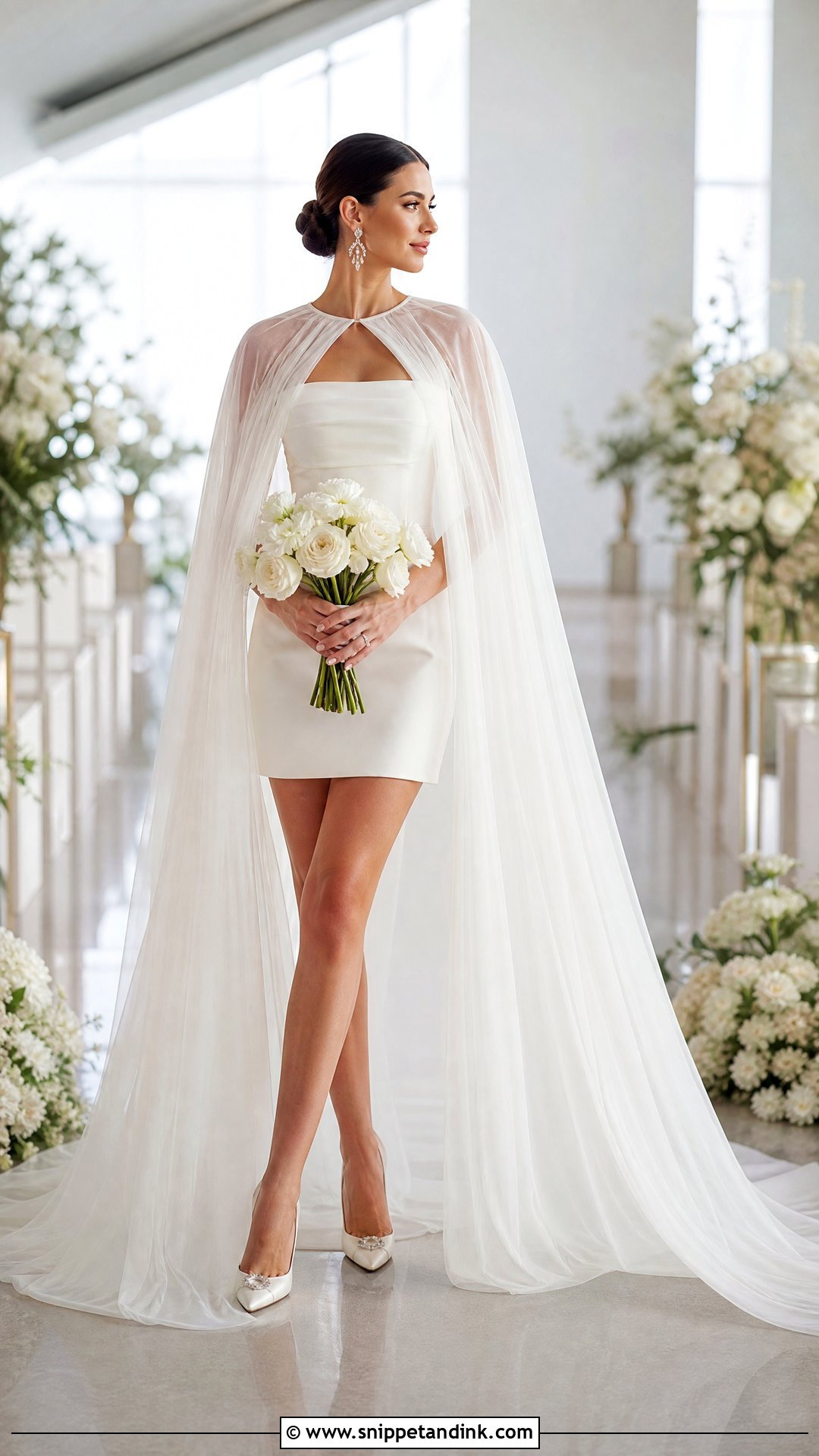
A cape gives you the entrance without a train. Underneath is a simple fitted mini; on top, a detachable sheer, crepe or pearl-edged cape that falls to the elbows, knees or floor. If the cape trails behind you, skip the veil or add a small birdcage. Understated pumps, crystal earrings, a smooth low bun and a structured bouquet. Make sure the cape fastens with hidden hooks or snaps that a bridesmaid can undo in seconds. Take it off after dinner and you’re in a dance-ready mini.
17. Sequin Mini Wedding Dress
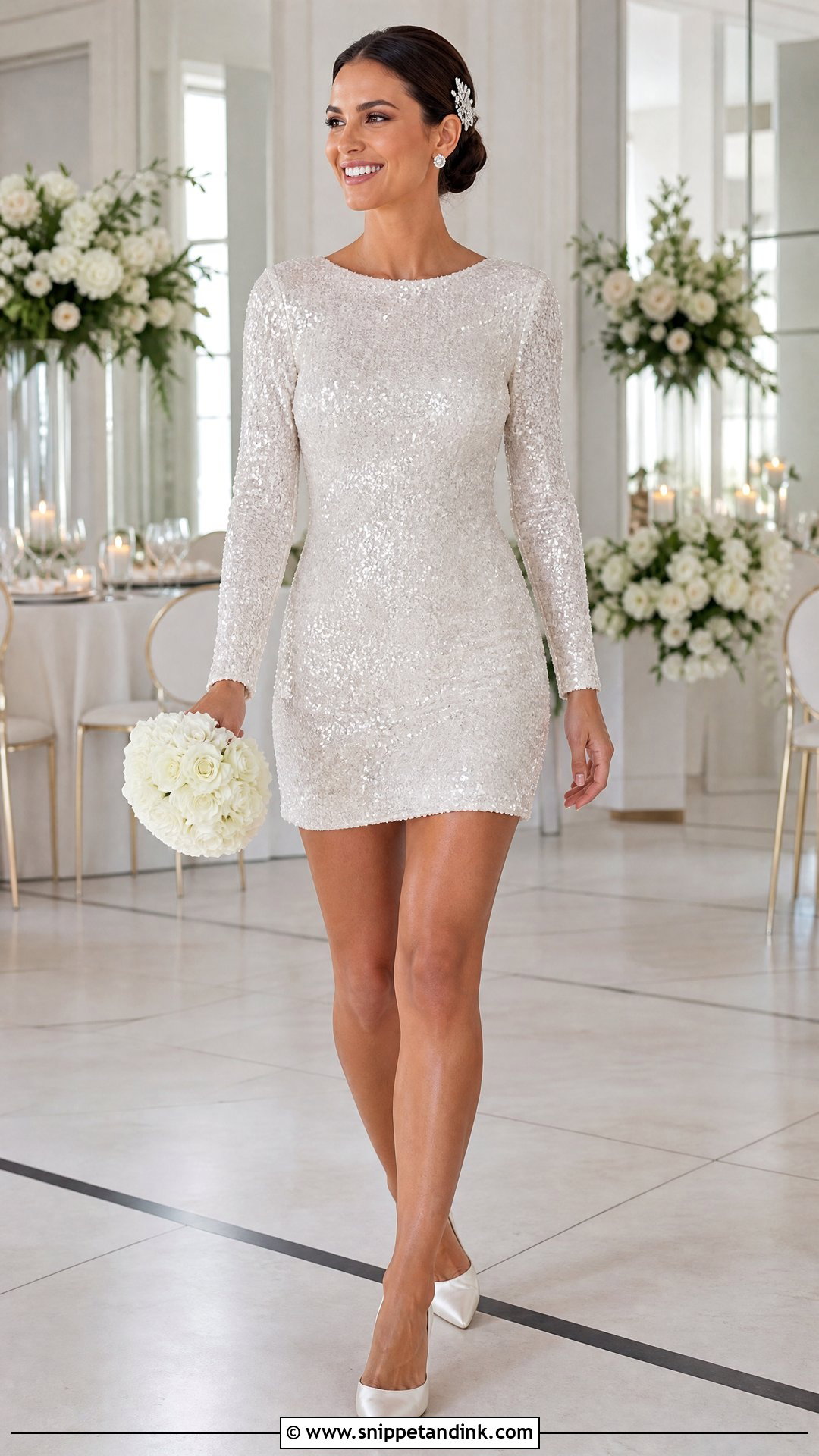
White or ivory sequins on a fitted base, with a lining that’s actually smooth against skin. Long sleeves balance the short hem; sleeveless is cooler for warm venues. Plain satin heels, crystal studs, a small metallic clutch. The thing I always test is the veil: tulle snags on sequin edges, so either choose a smooth-edged veil worn high or swap to a jewelled clip once the ceremony’s over. Keep the bouquet simple. Sequins come alive under reception lighting and on the dance floor.
18. Floral Appliqué Mini Wedding Dress
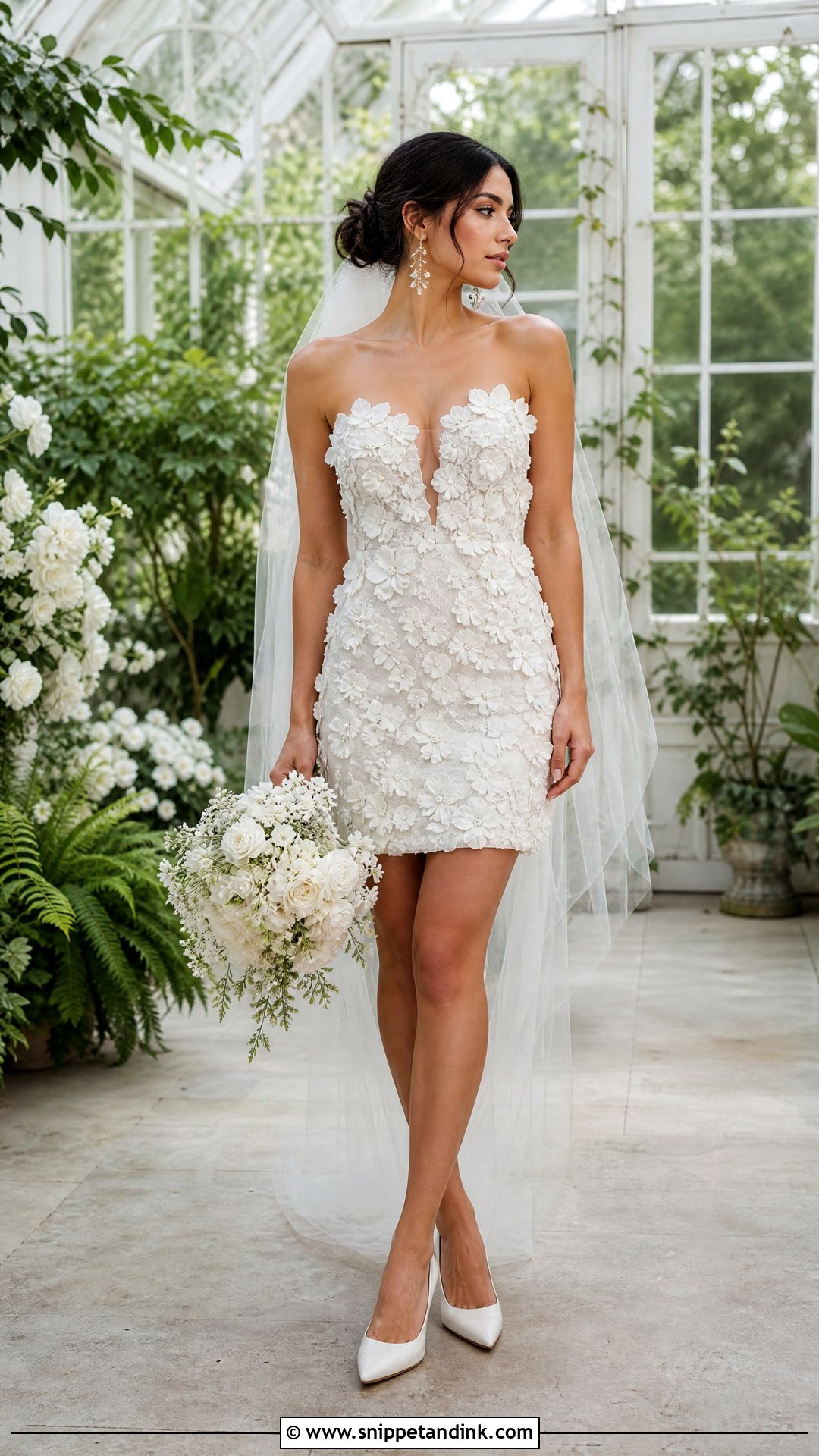
Three-dimensional flowers look richest when they’re placed with intention: scattered over the bodice, trailing down one sleeve, or gathered at the hem. A sheer overlay adds depth and a fitted lining keeps the shape. Plain ivory heels, flower-shaped earrings, a simple tulle veil and a soft bun. Pick a bouquet with one or two flower types that echo the appliqués. Before buying, check how the flowers are attached; appliqués near the waist or hem complicate alterations, and some seamstresses will need to remove and re-sew them.
19. Plus Size Wrap Mini Wedding Dress
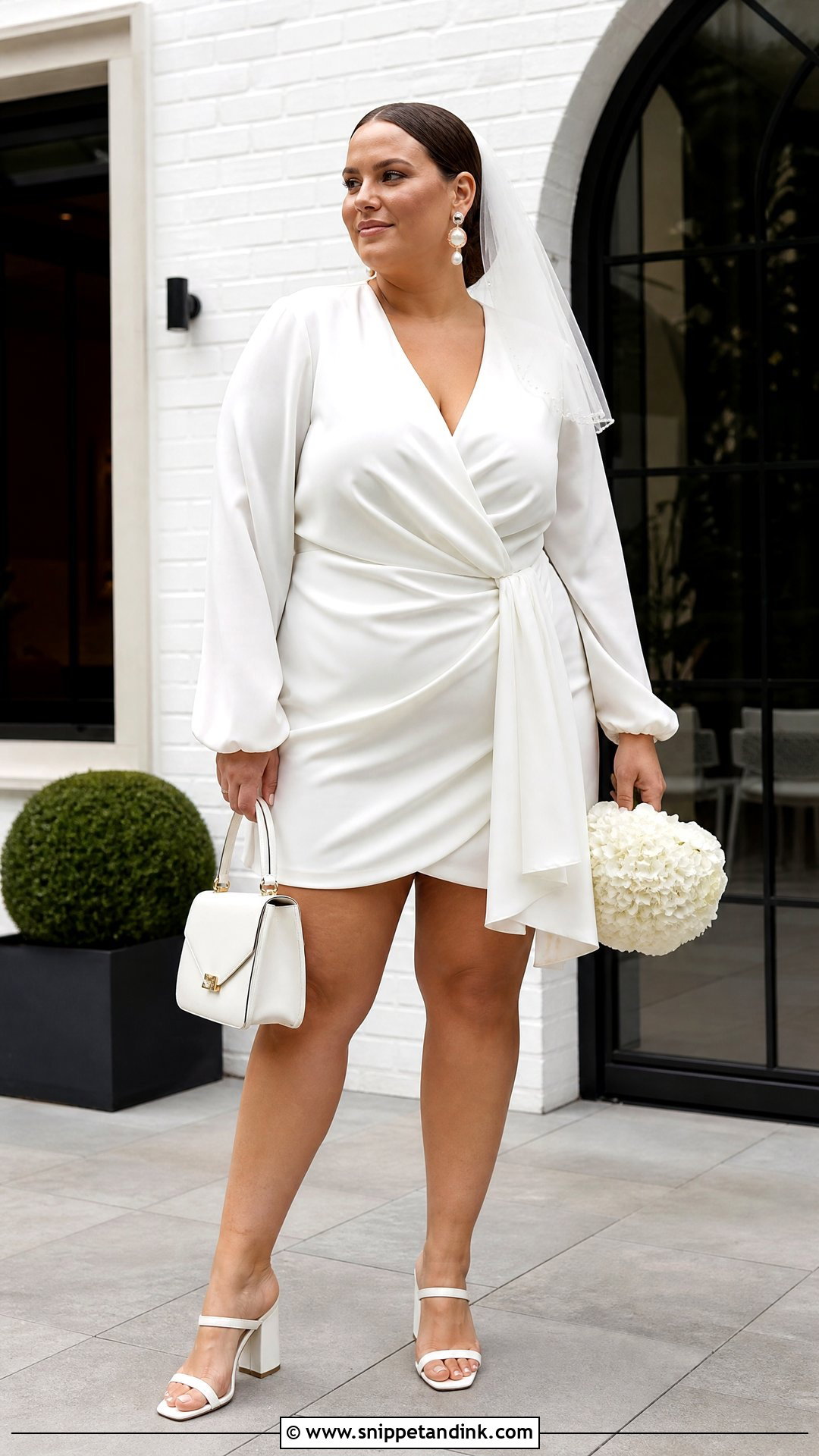
A wrap dress adjusts as you go, which is a real comfort on a long day. For a plus-size bride I’d choose substantial crepe or lined satin that skims rather than clings, and I always add an inner tie or a hidden hook at the waist plus a snap at the V so nothing shifts. Wide-fit block heels, statement earrings and a soft fingertip veil. Three-quarter sleeves give coverage; sleeveless suits summer. Set the hem with you seated. It fits civil ceremonies, small venues and relaxed receptions.
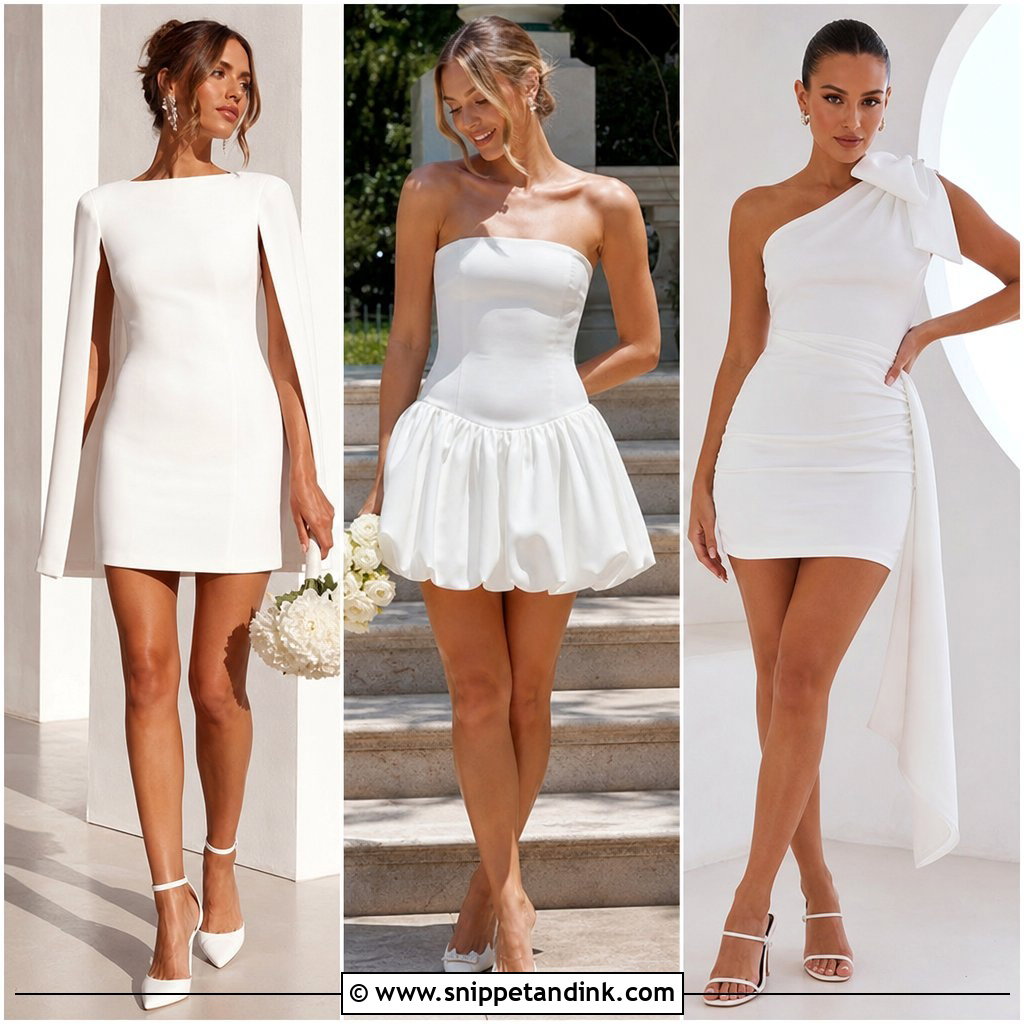
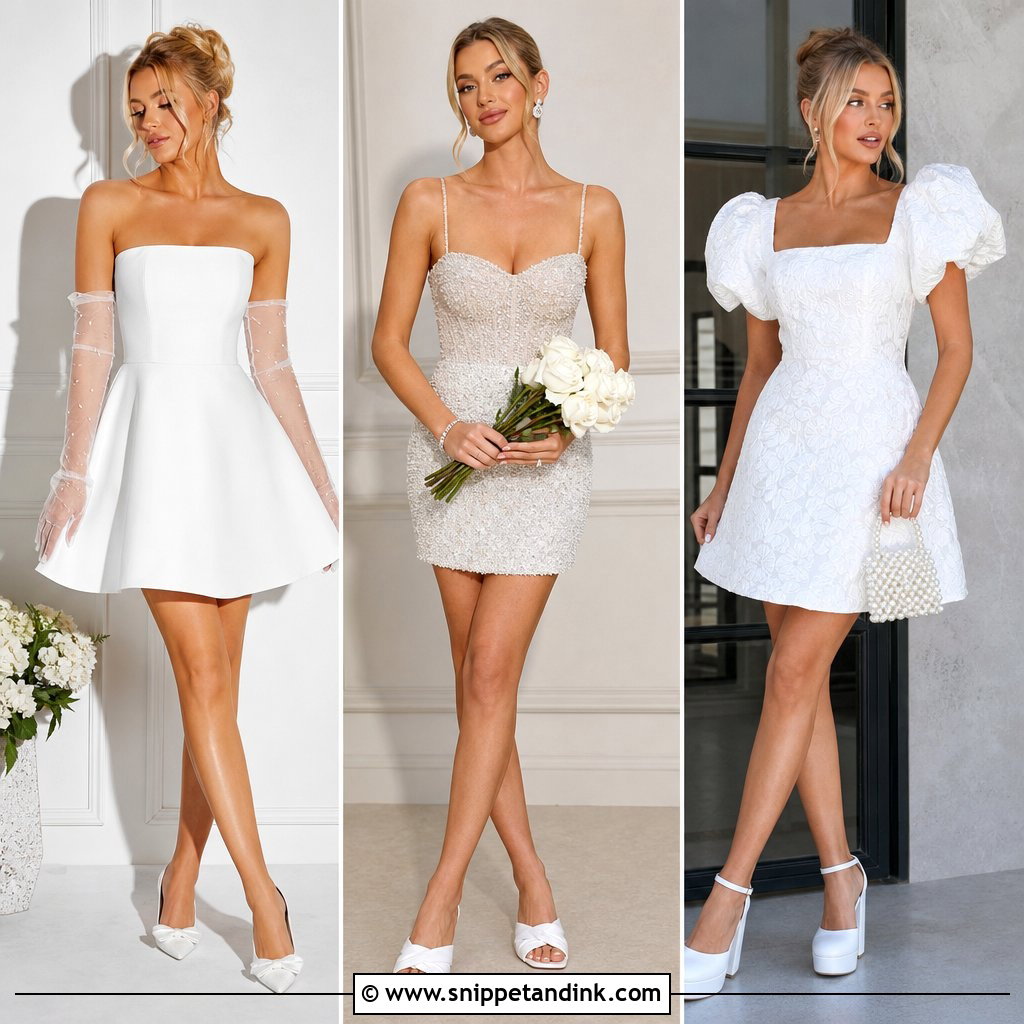
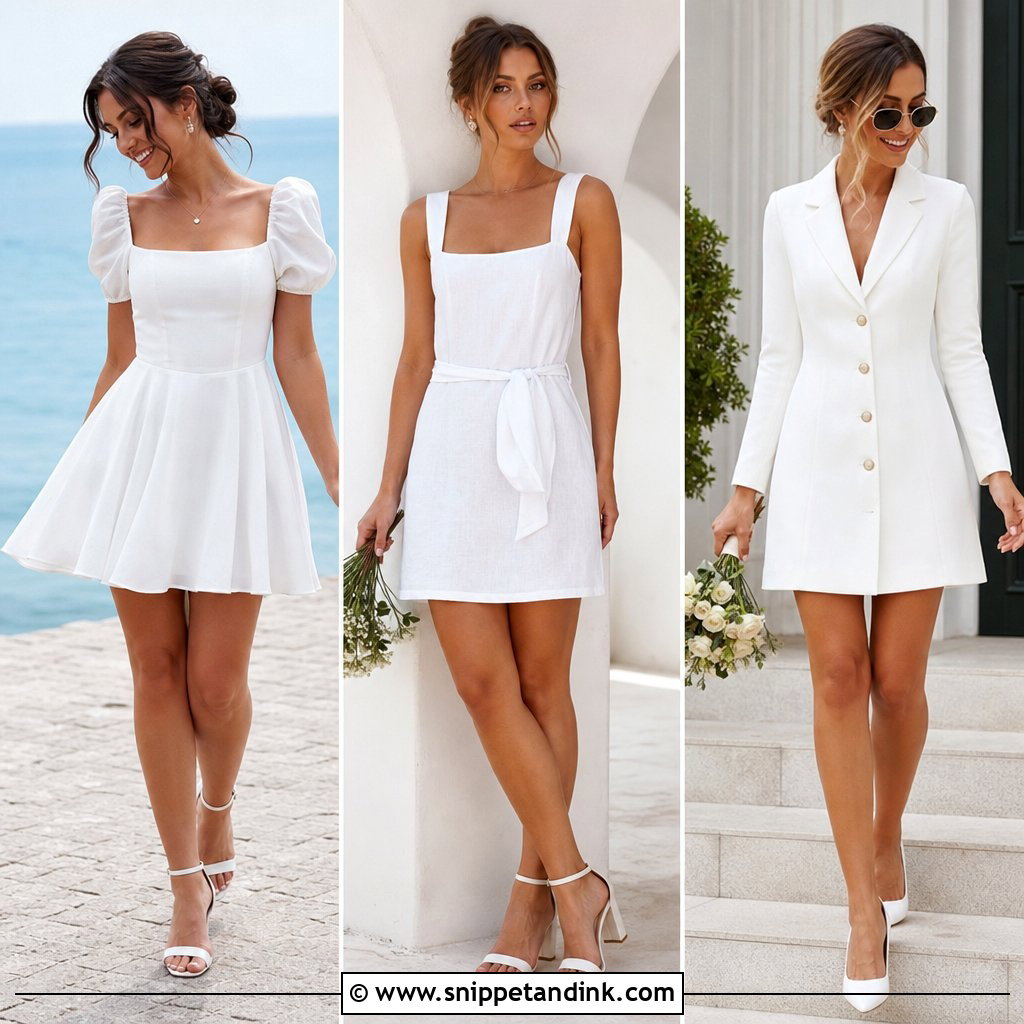
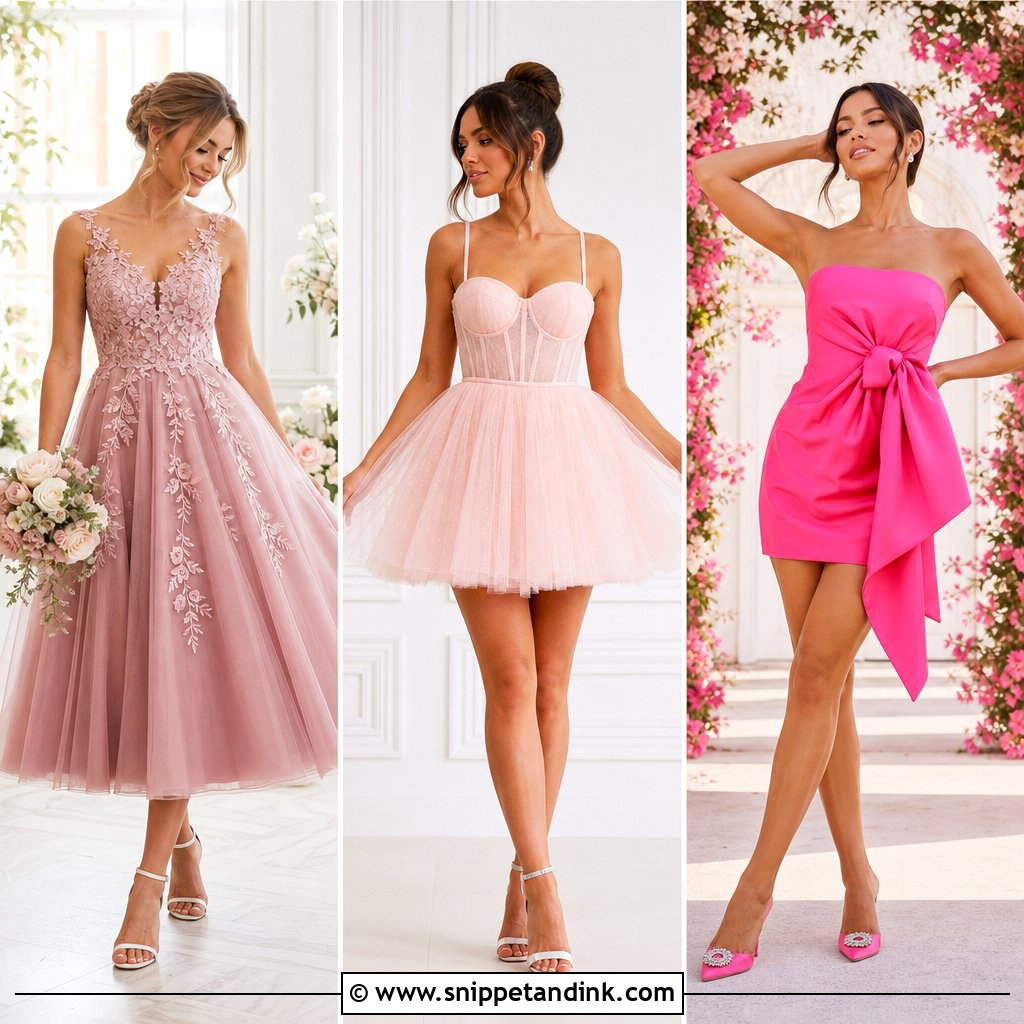
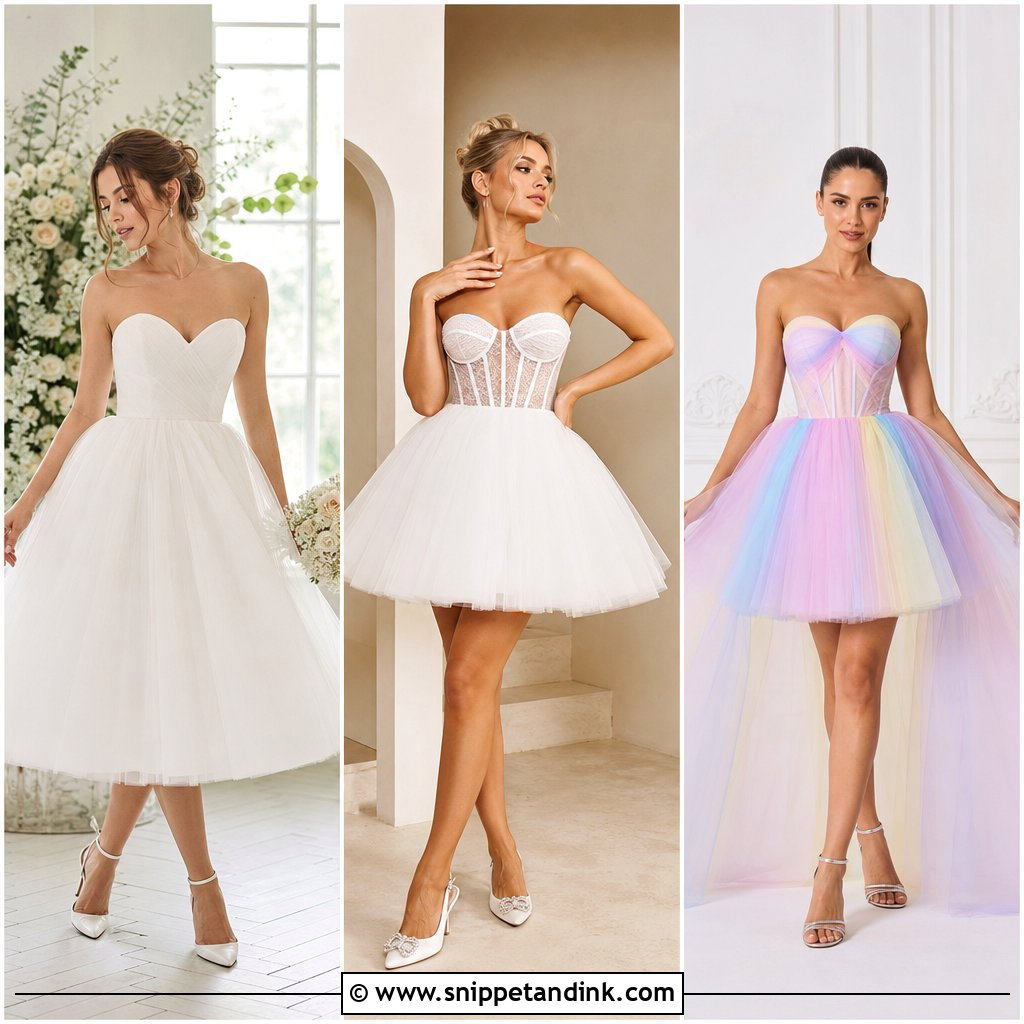
20. Minimal Slip Mini Wedding Dress
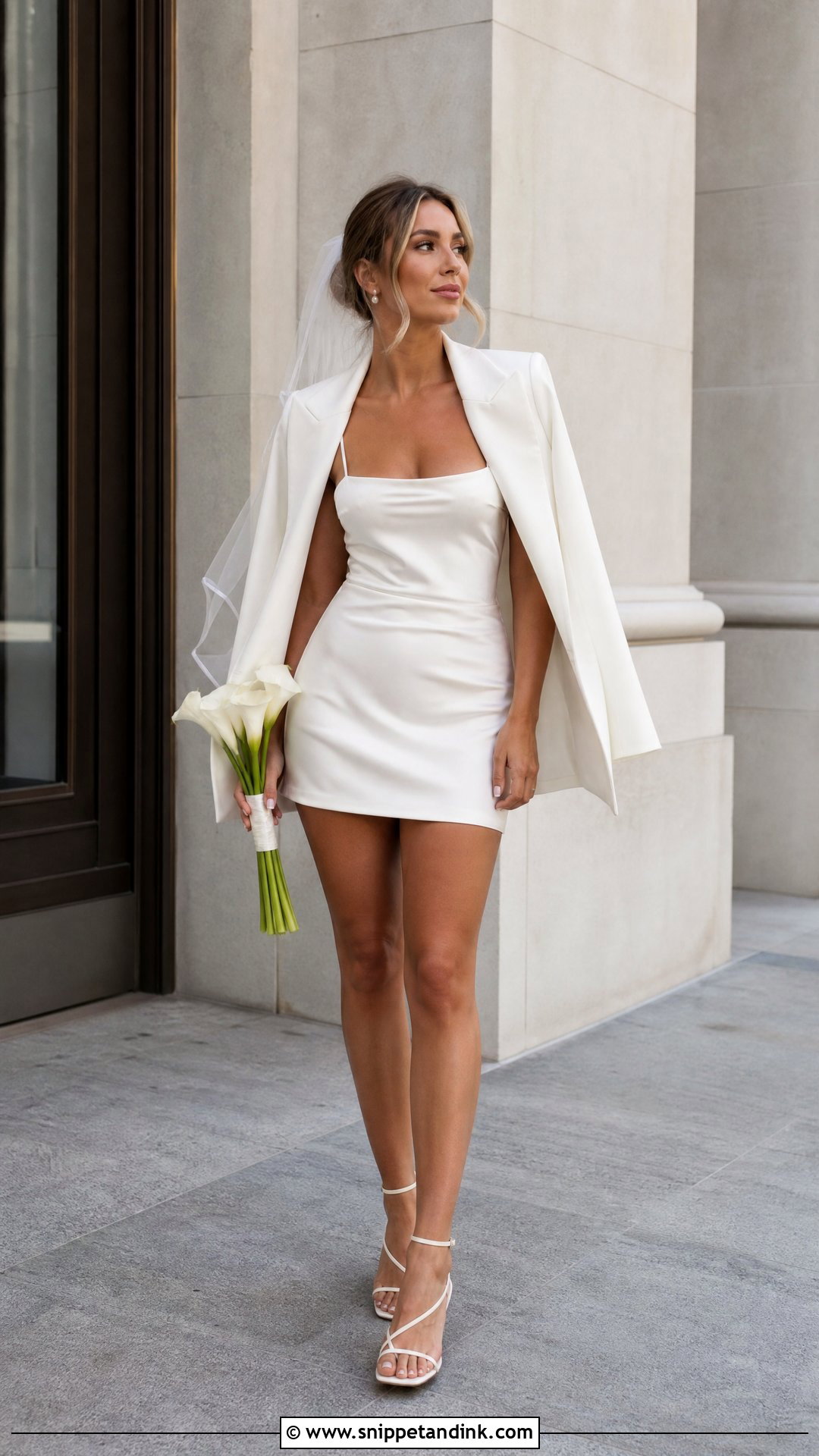
The slip is the simplest bridal mini and the hardest to fit. Silk, satin and fluid crepe reveal every line, so smooth underwear and careful alterations aren’t optional. A softly draped neckline or straight cut, with adjustable straps. Minimal strappy heels, delicate earrings and a light fingertip veil. An ivory blazer over the top for the ceremony or cool evening photos, then off for the party. White calla lilies echo the clean line. Beach elopements, courthouse weddings, and brides who want pieces they’ll wear again.
Planning the Quick Change From Gown to Mini
Many of the minis above are second looks. The change itself usually takes longer than brides expect, mostly because of buttons, bustles and pins rather than the new dress.
- Agree the timing with your planner. The usual slot is after dinner, before the first dance or the party set.
- Choose a private room close to the reception, with a full-length mirror and somewhere clean to lay the gown.
- Assign one person who knows the gown’s closures. Long rows of covered buttons are slow; a seamstress can add a hidden zip under them.
- Have the mini steamed and hanging, with shoes, earrings and any hair change ready on a tray.
- Bring a garment bag and padded hanger so the gown goes home flat rather than in a heap.
Practise the change once at home in both dresses and you’ll know exactly how many minutes to ask for. If you’re swapping hair too, a sleek ponytail or a bun let down into waves is the fastest adjustment for a stylist to make.
A Bridal Mini You Can Dance In All Night
A shorter dress gives you room to make the outfit personal and easy to move in. Satin, lace, structured crepe, appliqués, pearls or sequins can each make a mini look unmistakably bridal. Get the tailoring right, set the hem at a length you’re comfortable sitting in, sort the underwear, and choose shoes you can stand in for hours. Then let a veil, a cape, the bouquet or a single bow do the rest. From a clean slip to a sparkling party mini, my advice is the same: pick the one that moves with you.
You'll Like These Ideas:




Leave a Reply