
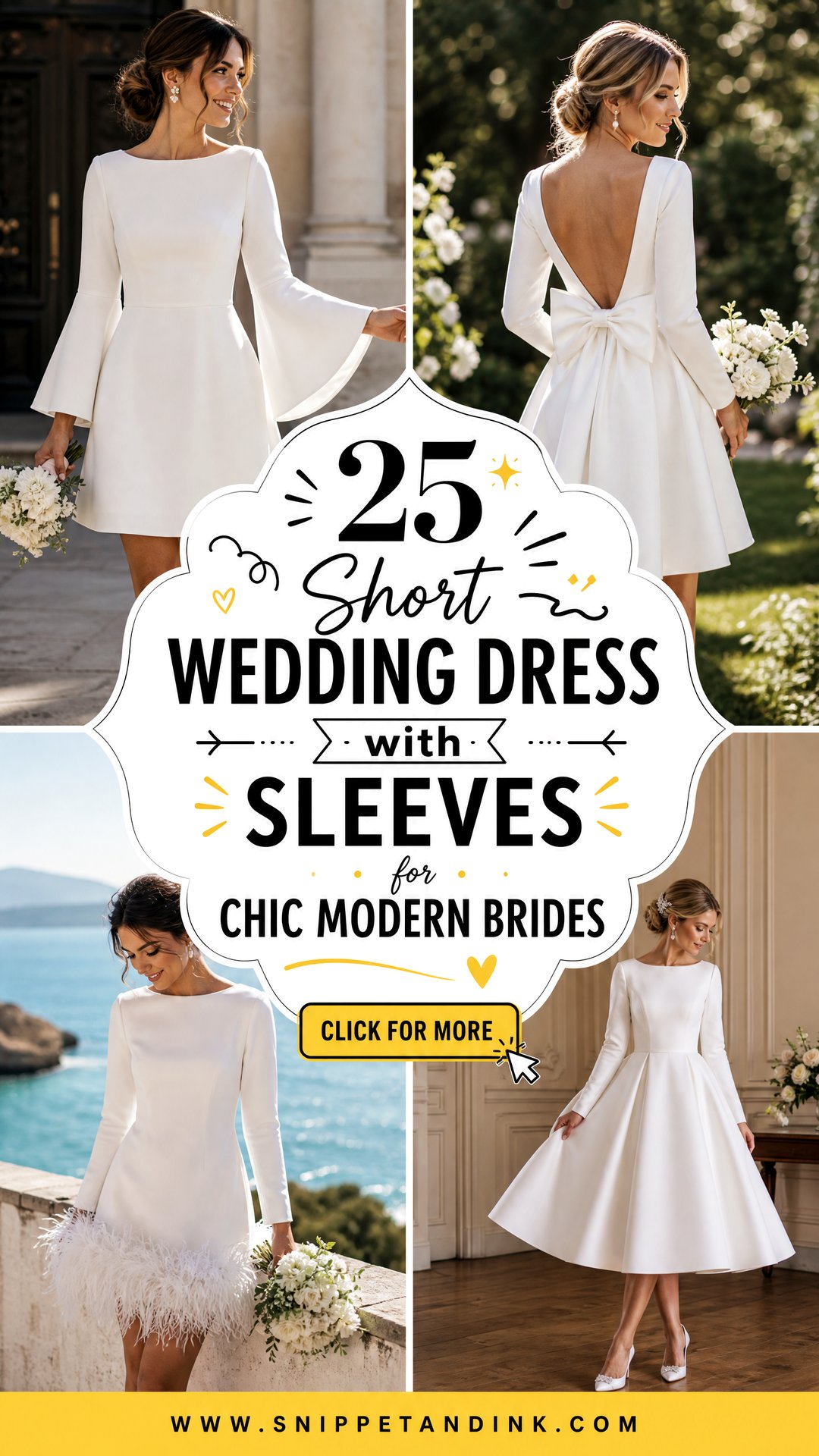
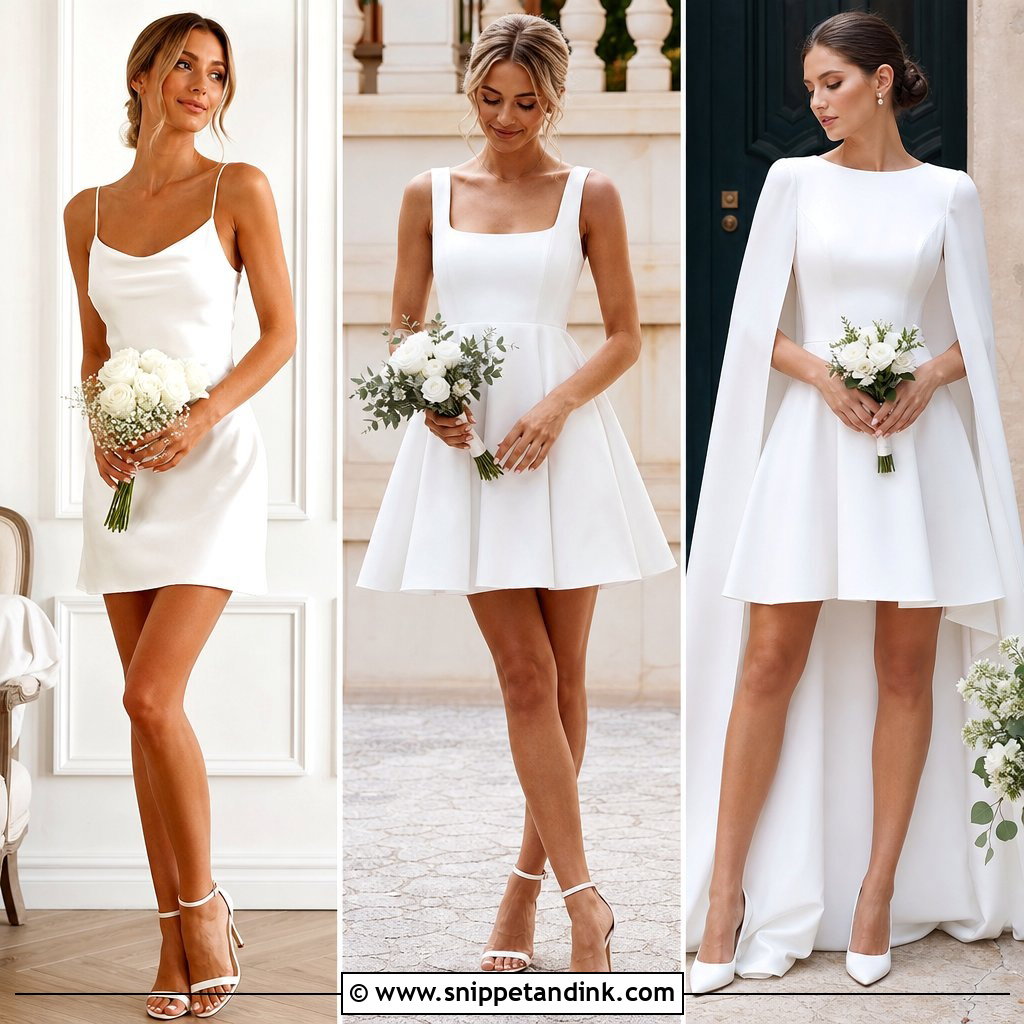
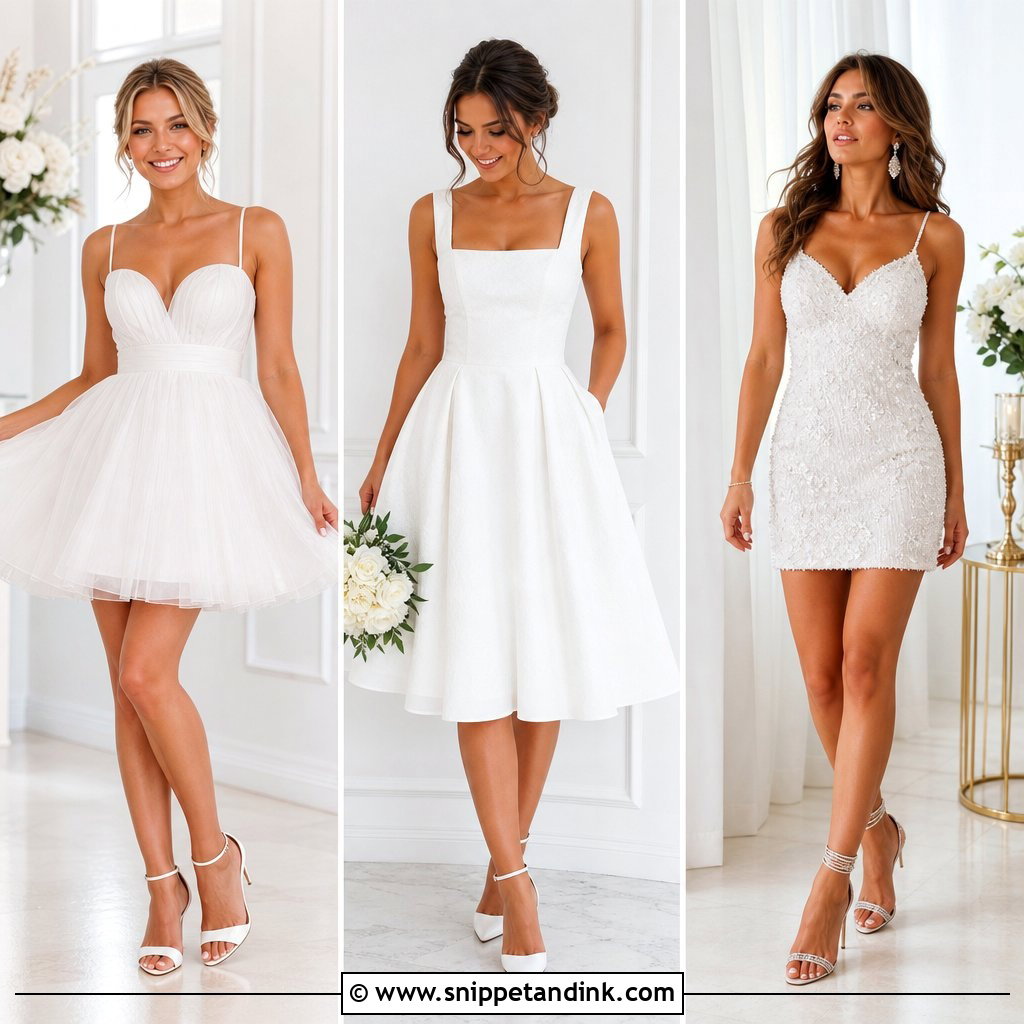
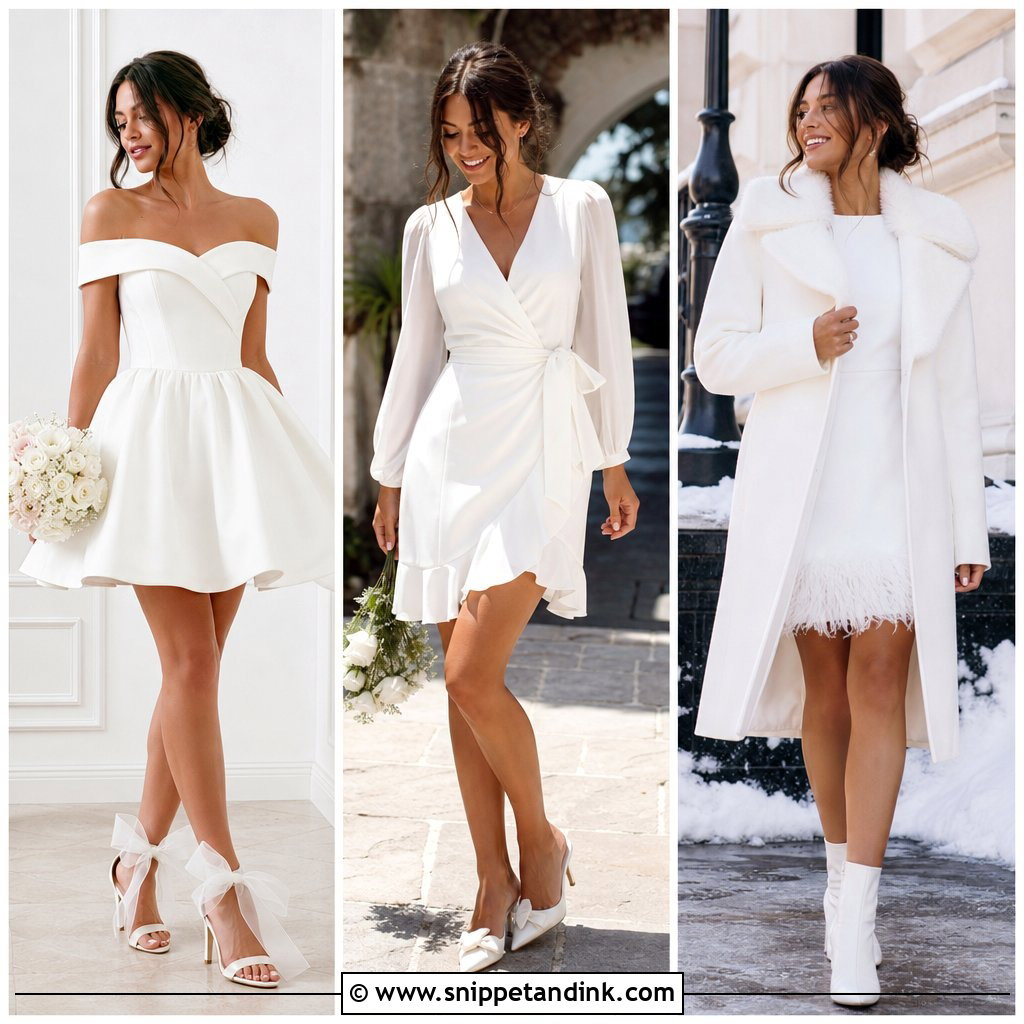
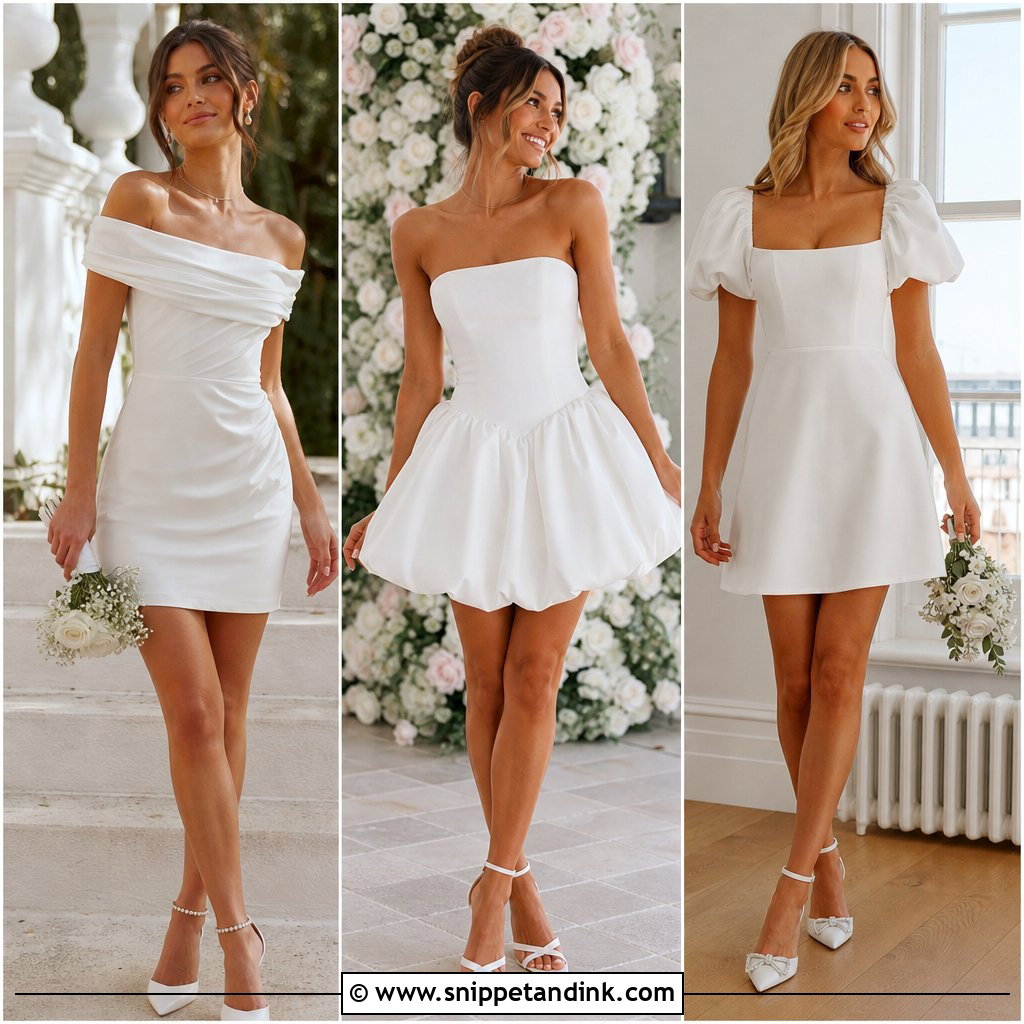
A short dress with sleeves solves two problems I hear about constantly at appointments: brides who want to move freely, and brides who don’t want to spend the day hitching up a strapless bodice. The shorter hem shows your shoes and keeps you mobile at a courthouse, an elopement or an after-party, while the sleeve gives the top half structure. The range is wide, from lace minis and satin shifts to puff-sleeve dresses, tailored blazer dresses, tea-length skirts and sheer-sleeve designs. Below are 25 complete looks, each with notes on how the fabric and sleeve actually behave once you’re wearing them.
Why the Armhole Matters More Than the Sleeve Style
When a bride tells me a sleeved dress feels restrictive, the sleeve is rarely the culprit. It’s the armhole. A low, loose armhole looks roomy, but it pulls the whole bodice up every time you raise your arm, and on a short dress that means the hem rides up too. A higher, closer armhole actually gives you more movement.
At every fitting I ask the bride to do four things in the dress: hug me, reach forward as if signing a register, raise both arms as if for a toast, and sit down. Whatever pulls during those four movements is what needs altering.
Sleeve alterations to expect
- Long sleeves usually need shortening, and lace sleeves are best shortened from the shoulder, not the cuff, if the cuff has a scalloped edge you want to keep.
- Sheer or mesh sleeves can be taken in along the seam, but letting them out is limited by the seam allowance, so buy for the widest part of your arm.
- Puff sleeves can be deflated or rebuilt by adjusting the inner support layer, which is a simple job for a good seamstress.
- Plan two or three fittings, starting roughly six to eight weeks before the wedding, and bring the shoes and underwear you’ll actually wear.
1. Short Lace Wedding Dress With Long Sleeves
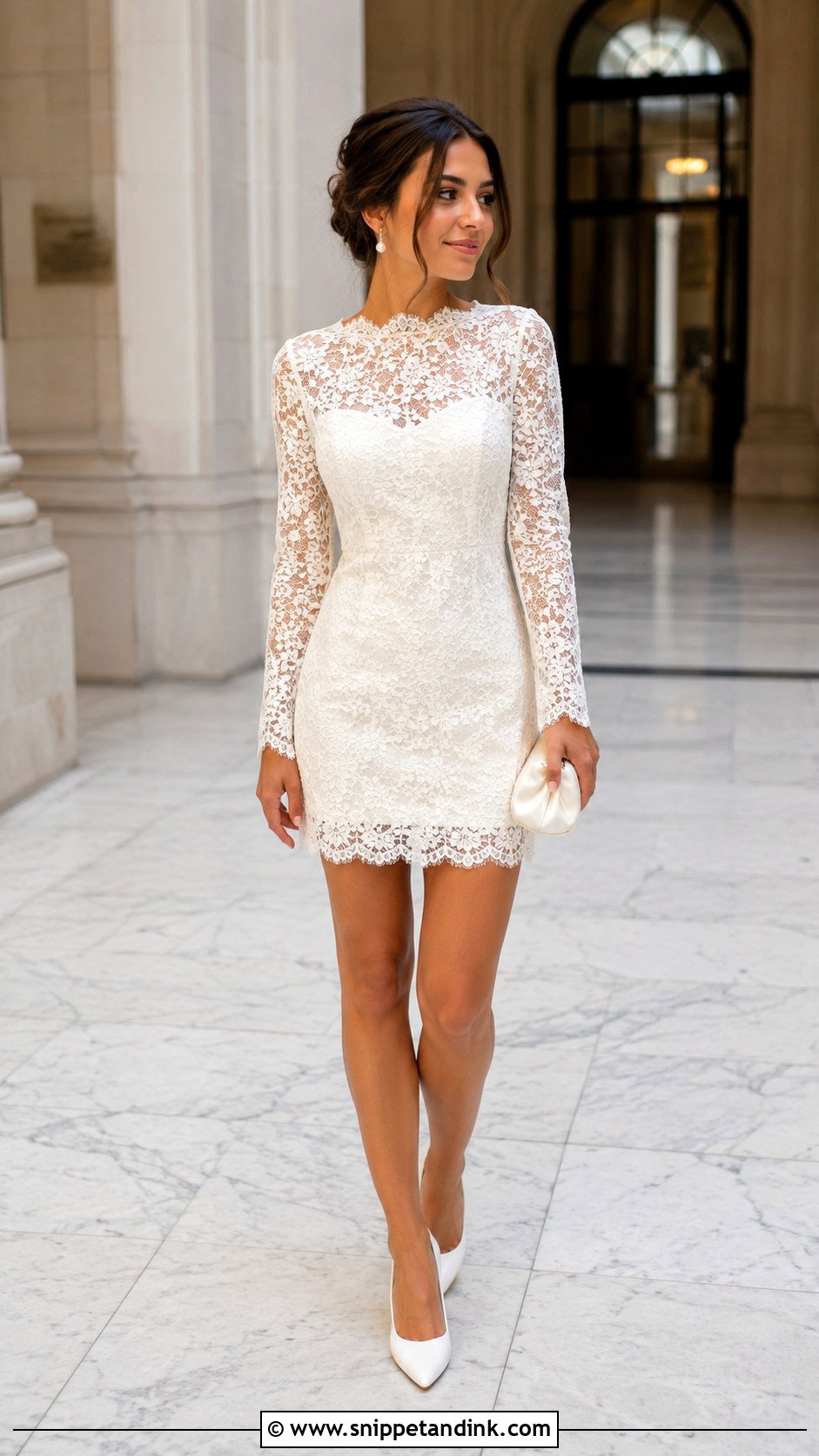
Long lace sleeves are the most forgiving sleeve I fit, because good lace has a little stretch on the cross grain and doesn’t bind when you hug people. Check that the lace motifs are matched at the shoulder seam; cheap versions cut straight through the pattern and it shows in close-ups. A fitted or softly flared skirt both work here. Pointed white pumps, pearl earrings and a small satin clutch finish it, and if the lace is busy, keep the veil to plain tulle or a bow clip. A lightly defined waist gives the dress shape without making it formal.
2. Short Satin Wedding Dress With Puff Sleeves
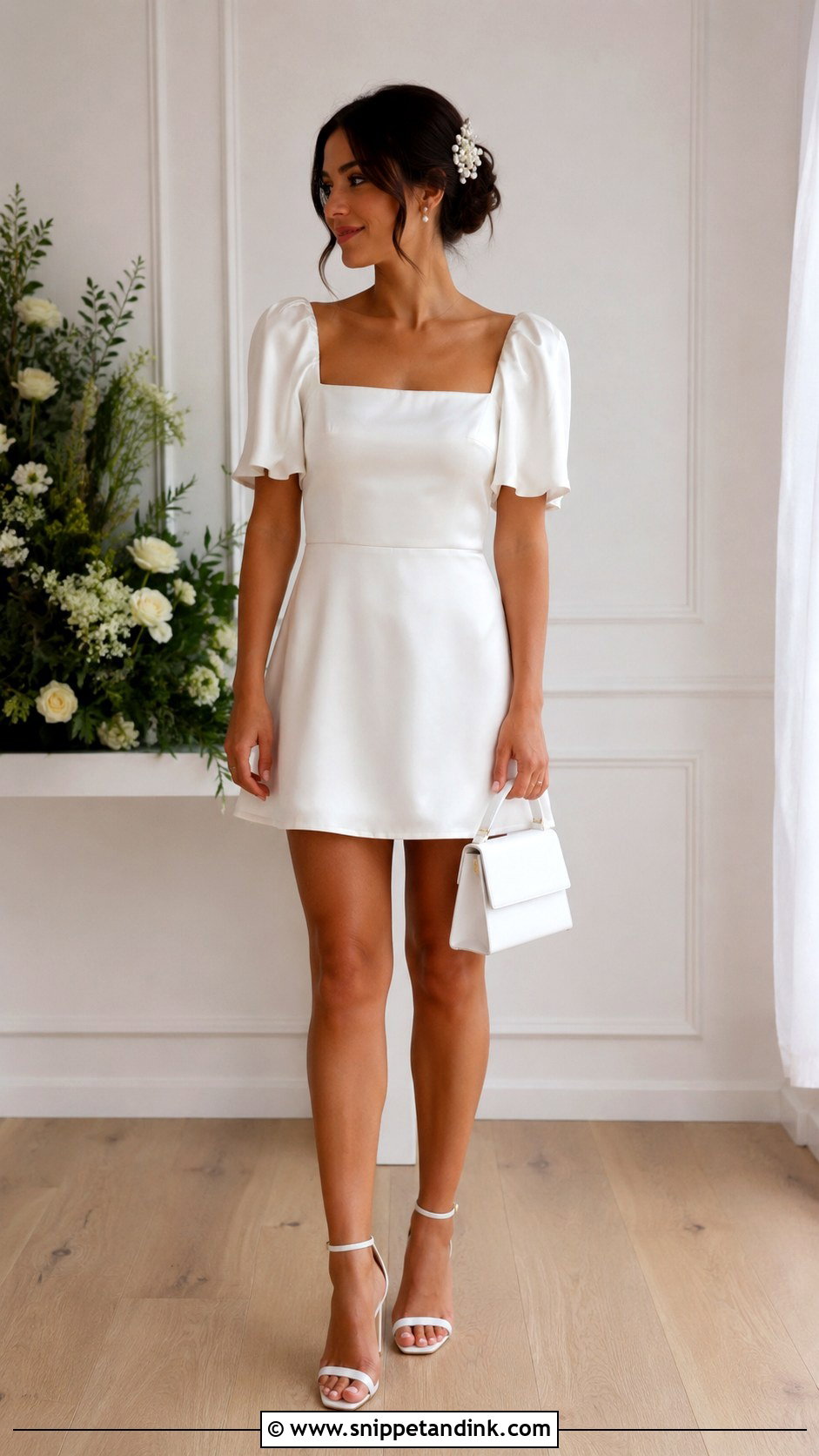
Satin puff sleeves hold their volume best when there’s a layer of stiff tulle or organza stitched inside the sleeve head. Without it, they flatten by the reception. Satin reflects light, so it reads well in daylight photos, but it also shows every seated crease, so I’d pick a heavier duchess or crepe-back satin over a thin charmeuse. A square or sweetheart neckline balances the fullness at the shoulder. Ankle-strap heels, a pearl hair comb and a structured mini bag are enough; delicate jewelry keeps attention on the sleeve.
3. Short Tulle Wedding Dress With Sheer Sleeves
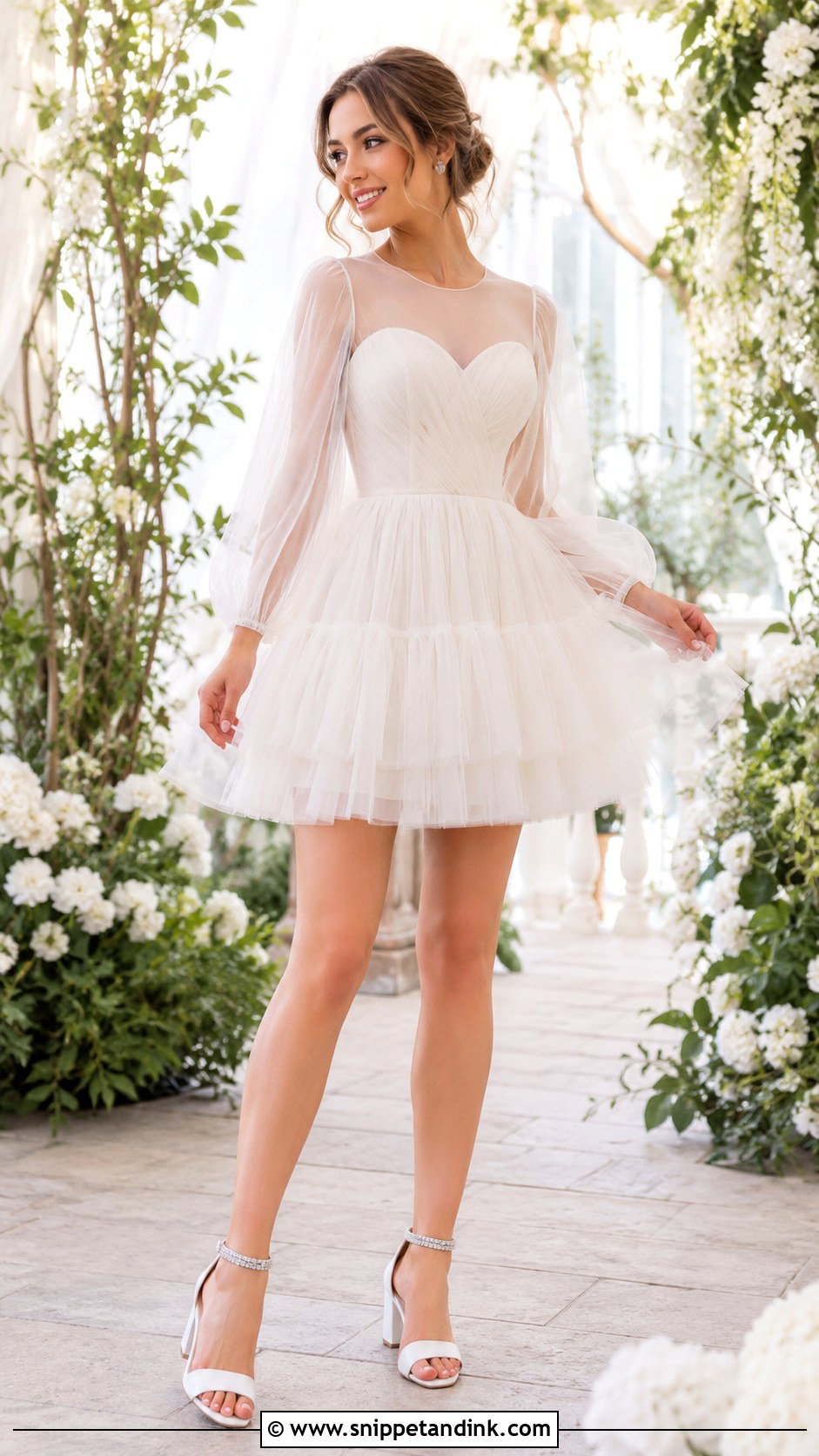
Tulle gives you that bridal float without weight, and on a short dress it moves every time you walk. Sheer sleeves on this style are usually stretch mesh or fine tulle, and the thing I check first is the cuff: fine tulle can catch on a bracelet or an engagement ring prong and pull a run. A fitted bodice stops the skirt from looking like a costume tutu. White or ivory block heels are kind to you during long photo sessions, and crystal studs with a soft updo are all the finishing it needs. Spring, summer and indoor dates suit it best.
4. Short Off Shoulder Wedding Dress With Sleeves
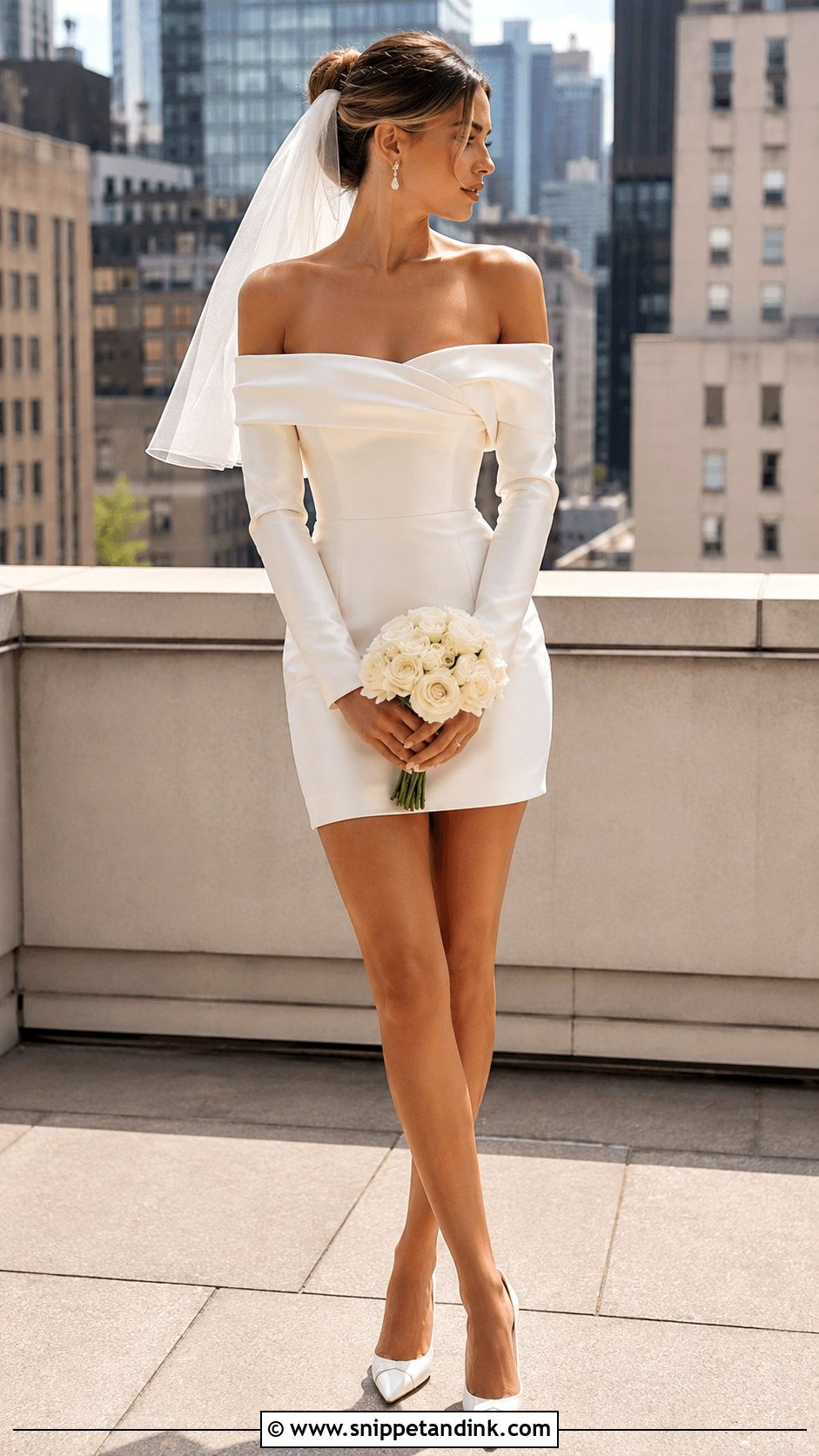
An off-shoulder neckline with sleeves frames the collarbone, but it only stays put if the dress has an elastic or silicone gripper band along the neckline and a well-boned bodice underneath. Without those, you’ll spend the day pushing it back up. Satin, crepe and mikado all hold the shape. Pair it with pointed heels, a choker or drop earrings and a smooth low bun. A short veil that stops just past the shoulder adds drama for a city hall or rooftop ceremony. One honest warning: this neckline limits how high you can lift your arms, so test a hug at the fitting.
5. Short A Line Wedding Dress With Cap Sleeves
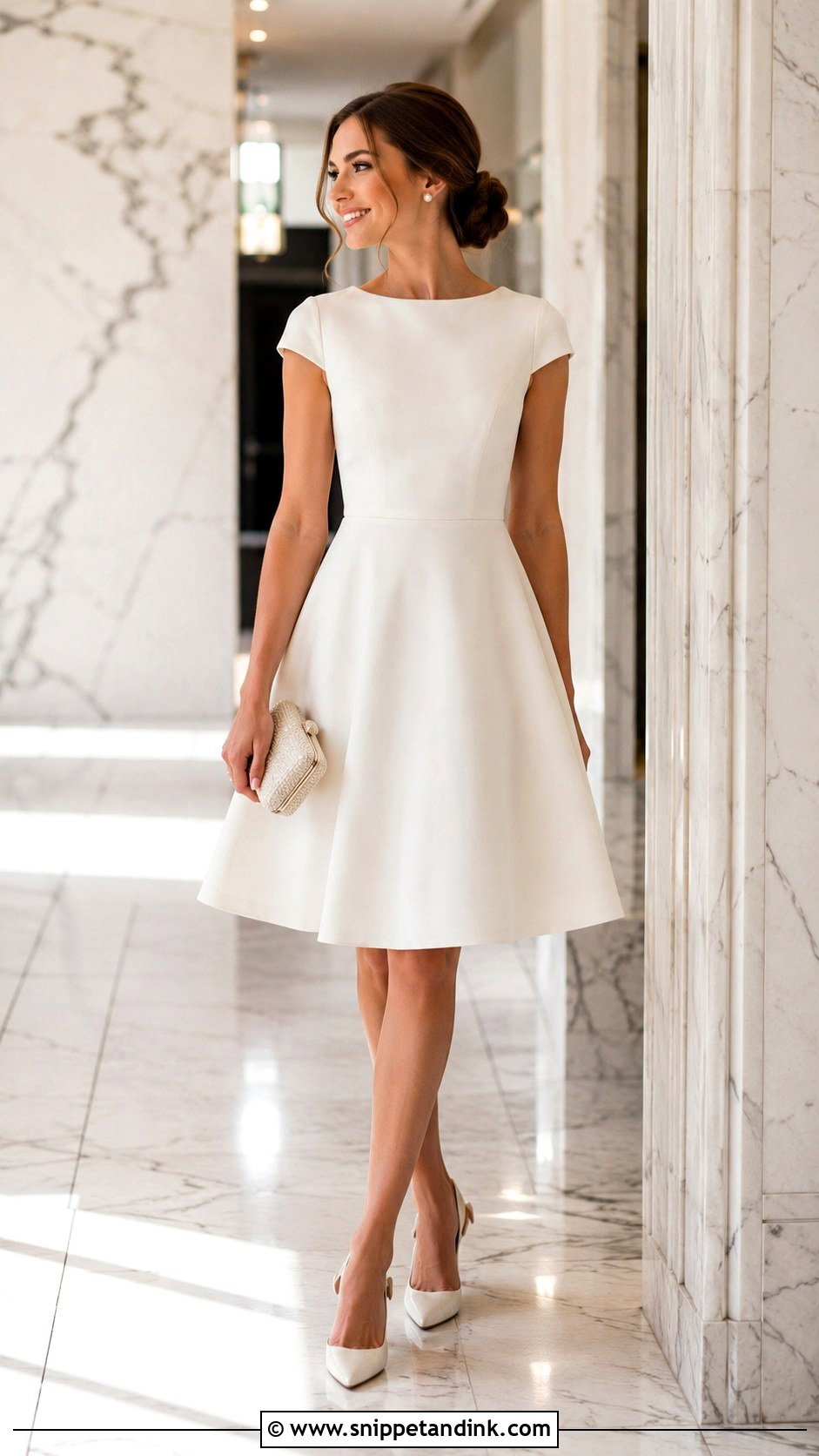
Cap sleeves sit right on the edge of the shoulder, so the fit of the armhole matters more than the sleeve itself. Too low and the bodice lifts every time you reach. The A-line skirt skims past the hips, which is why this shape is easy to sit and dance in and suits a wide range of figures. Slingback heels, pearl studs and a neat clutch keep it classic, with a short veil, bow or headband for the bridal note. Lace softens it; satin sharpens it.
6. Short Crepe Wedding Dress With Bell Sleeves
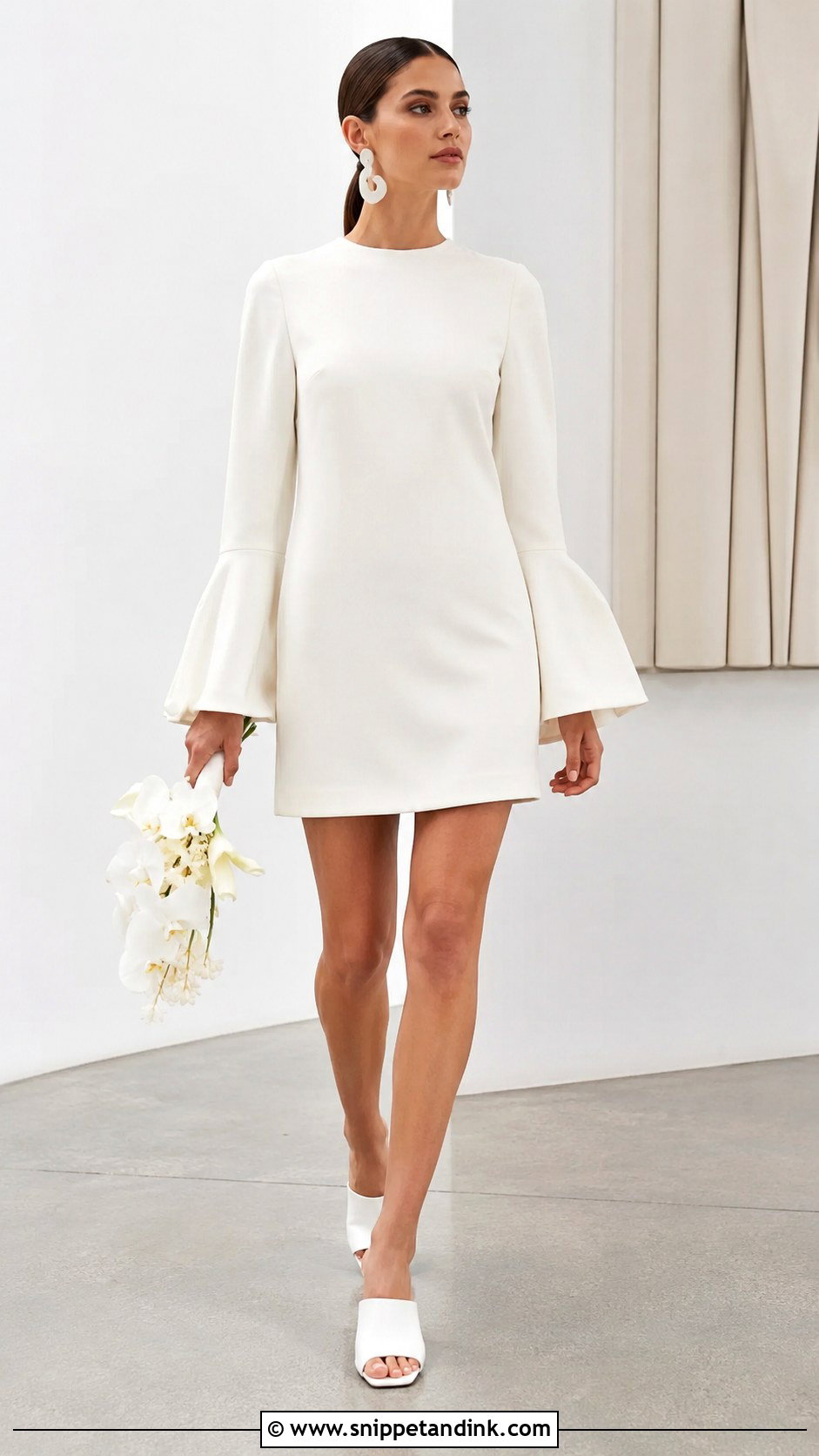
Crepe drapes cleanly and has almost no shine, which is exactly why I suggest it to brides who hate the look of satin under flash. Bell sleeves need that drape: in a stiff fabric they stick out like a funnel. Keep the body of the dress plain, a straight shift or fitted mini, so the sleeve does the talking. White mules, sculptural earrings and a low ponytail suit a city ceremony or a hotel dinner. Watch the sleeve opening at the dinner table; wide bells and gravy don’t mix.
7. Short Blazer Wedding Dress With Long Sleeves
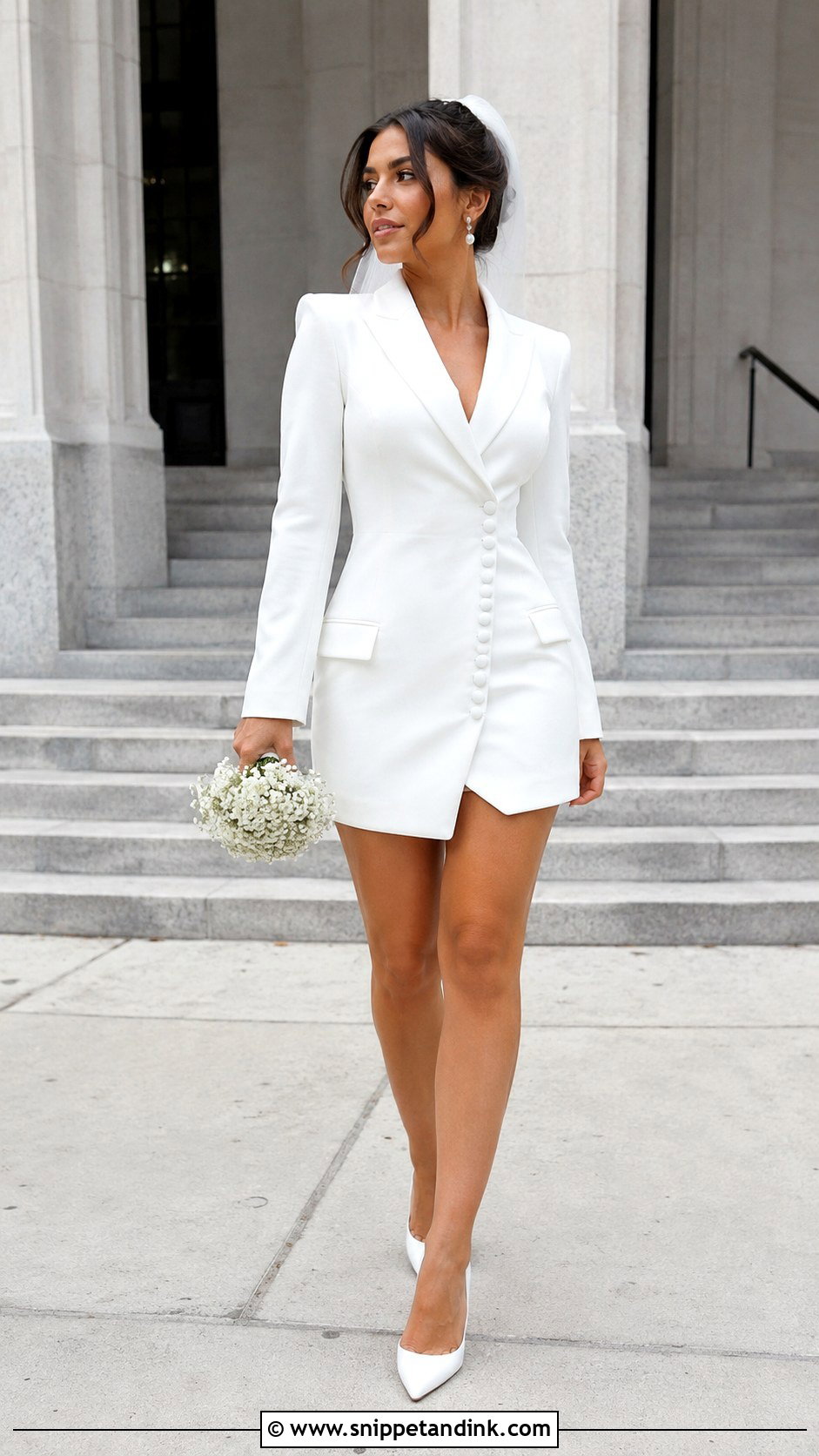
A blazer dress is sharp, but the line between bridal and office comes down to details. I look for covered buttons, a defined waist or a wrap front, and a fabric with some sheen, such as crepe-back satin, rather than suiting wool. The shoulder must fit exactly; a blazer shoulder that’s too wide can’t be fixed easily by a seamstress. White pointed pumps or slingbacks, pearl drops and a mini veil or satin headband soften the tailoring. Because the lapels already frame your face, skip necklaces entirely. Courthouse and civil ceremonies are where this one shines.
8. Short Sequin Wedding Dress With Long Sleeves
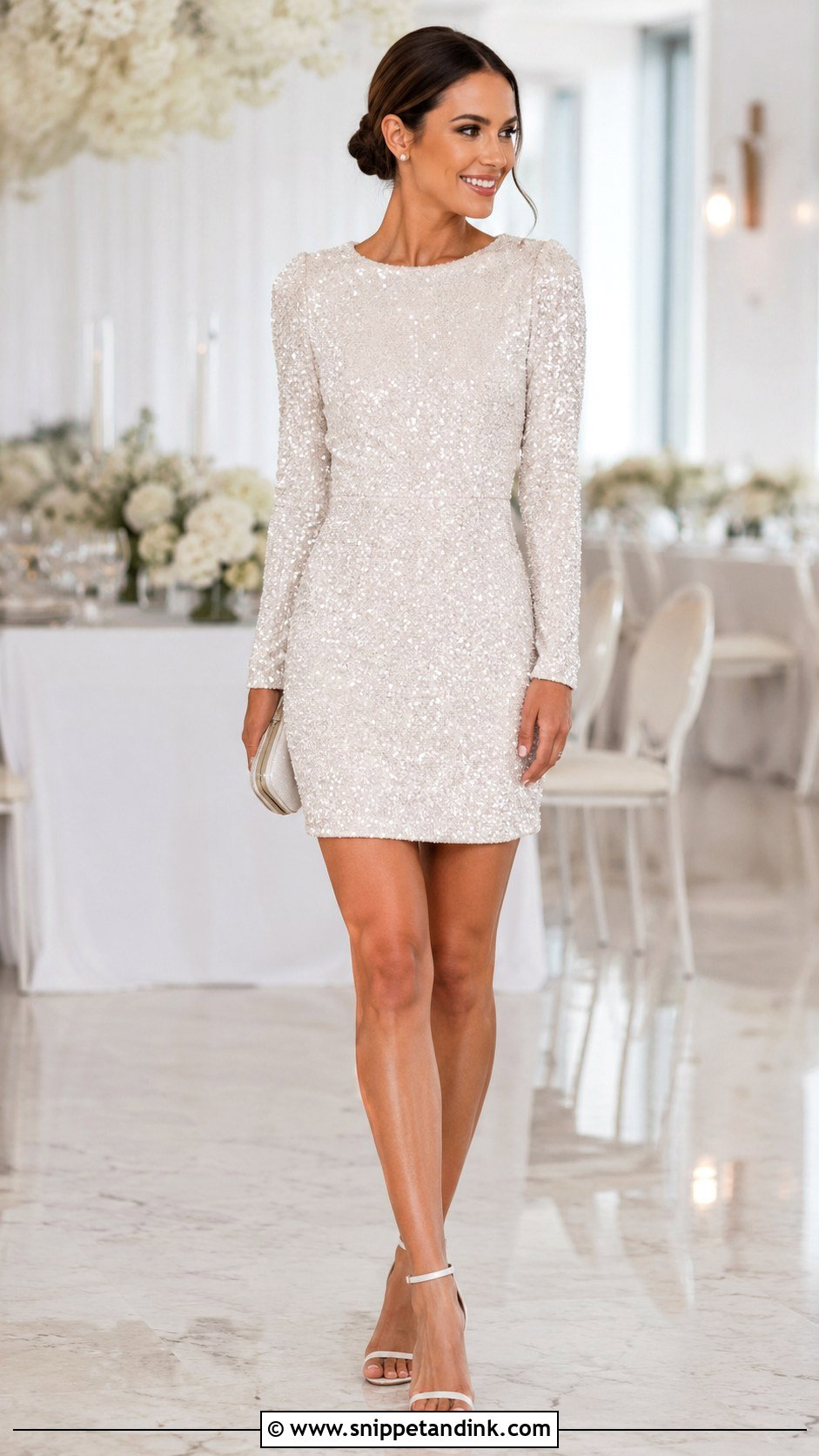
Sequins on a long sleeve are heavier than you’d expect, and they scratch the inner arm if the sleeve isn’t lined. Ask about that lining before you buy. As a reception or second look, a sequin mini gives you light and movement without a train to manage. White, ivory, pearl or pale silver sequins keep it bridal; a crew neck or wrap shape is easiest to style. Minimal heels, small crystal earrings and a sleek clutch are plenty. Anything oversized competes with a dress that’s already catching every light in the room.
9. Short Chiffon Wedding Dress With Flutter Sleeves
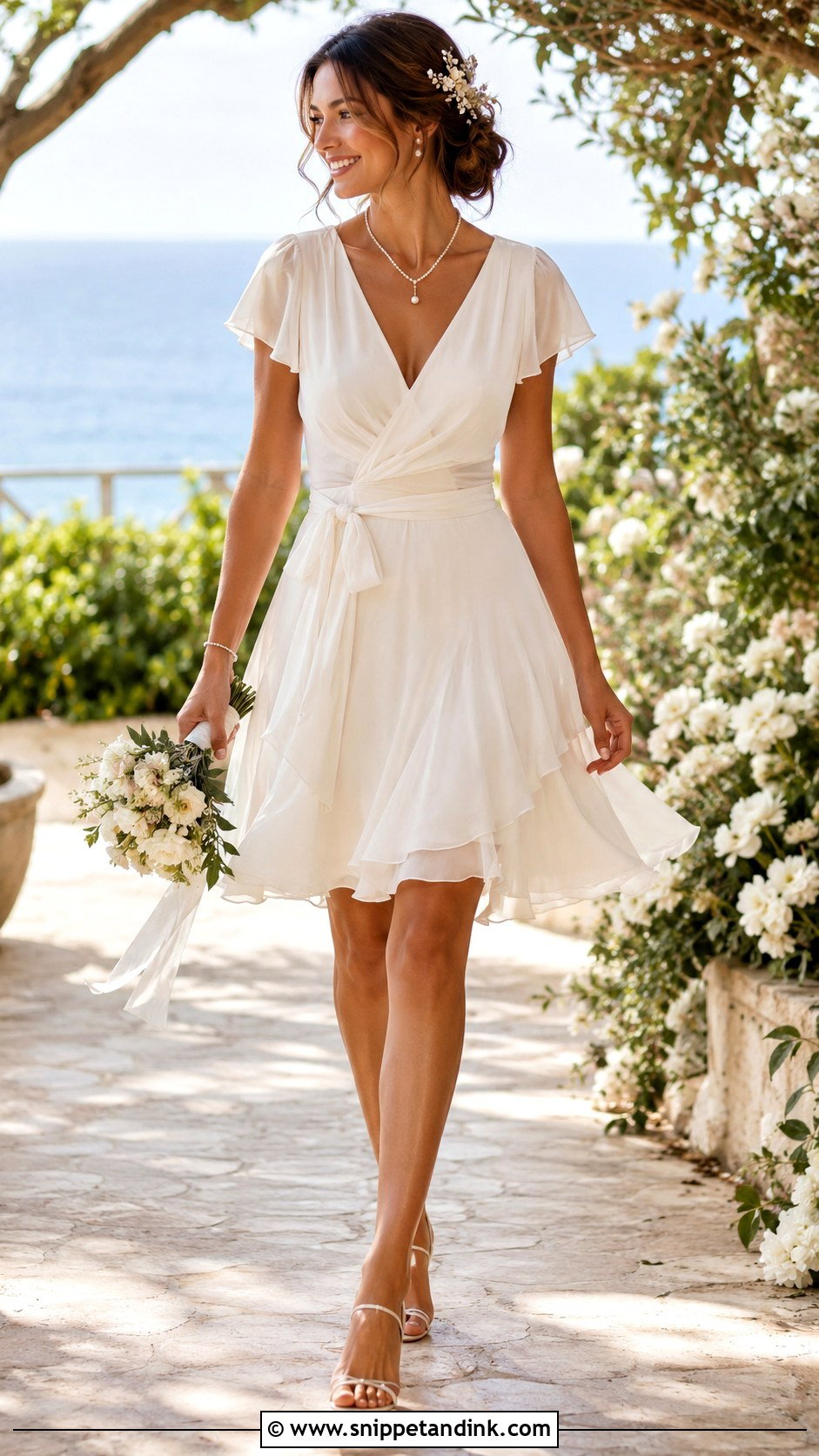
Chiffon is the coolest fabric on this list on a hot day, and flutter sleeves don’t grip the upper arm, so there’s nothing to sweat into. The catch is wind: chiffon lifts easily, so for a beach or clifftop ceremony I’d ask for a slightly longer hem or a weighted lining. Wrap, empire and gathered bodices all suit the fabric. Block heels, sandals or ballet flats depending on the ground, a small floral pin and light pearls finish it. It’s relaxed, so it suits a garden or outdoor celebration rather than a formal ballroom.
10. Short Mikado Wedding Dress With Short Sleeves
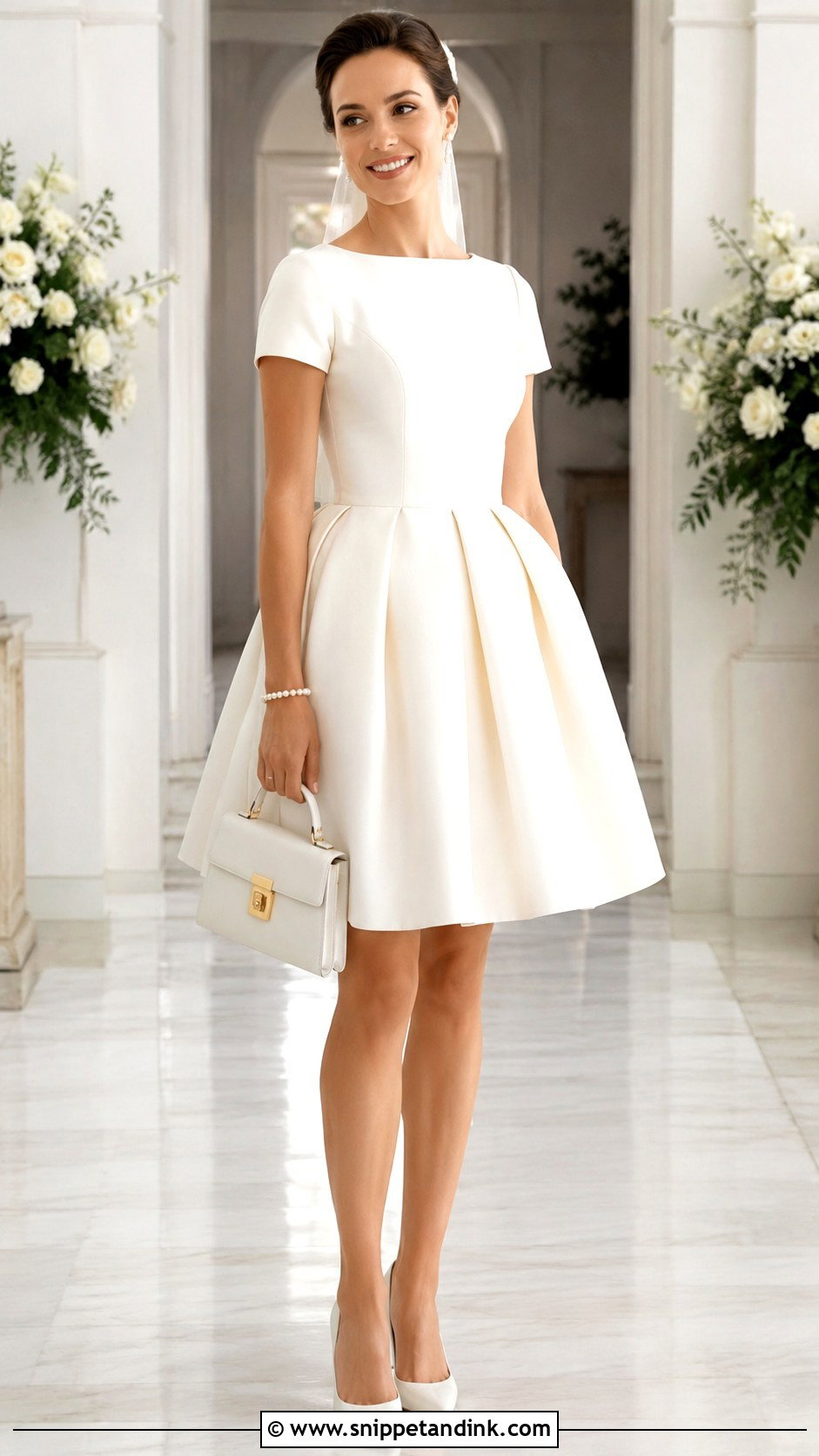
Mikado is a heavy silk-blend weave with a firm hand, so it holds a box pleat or a structured mini without help. That body is also its weakness: it creases sharply if you pack it badly, so steam it on the morning and travel with it hung. Short sleeves keep it neat with a fitted bodice. Satin pumps, a pearl bracelet and a structured handbag suit the crisp finish, and a simple veil or bow takes the edge off. It gives you a traditional bridal fabric at a modern length, formal enough for a church yet small enough for a registry office.
11. Short Square Neck Wedding Dress With Sleeves
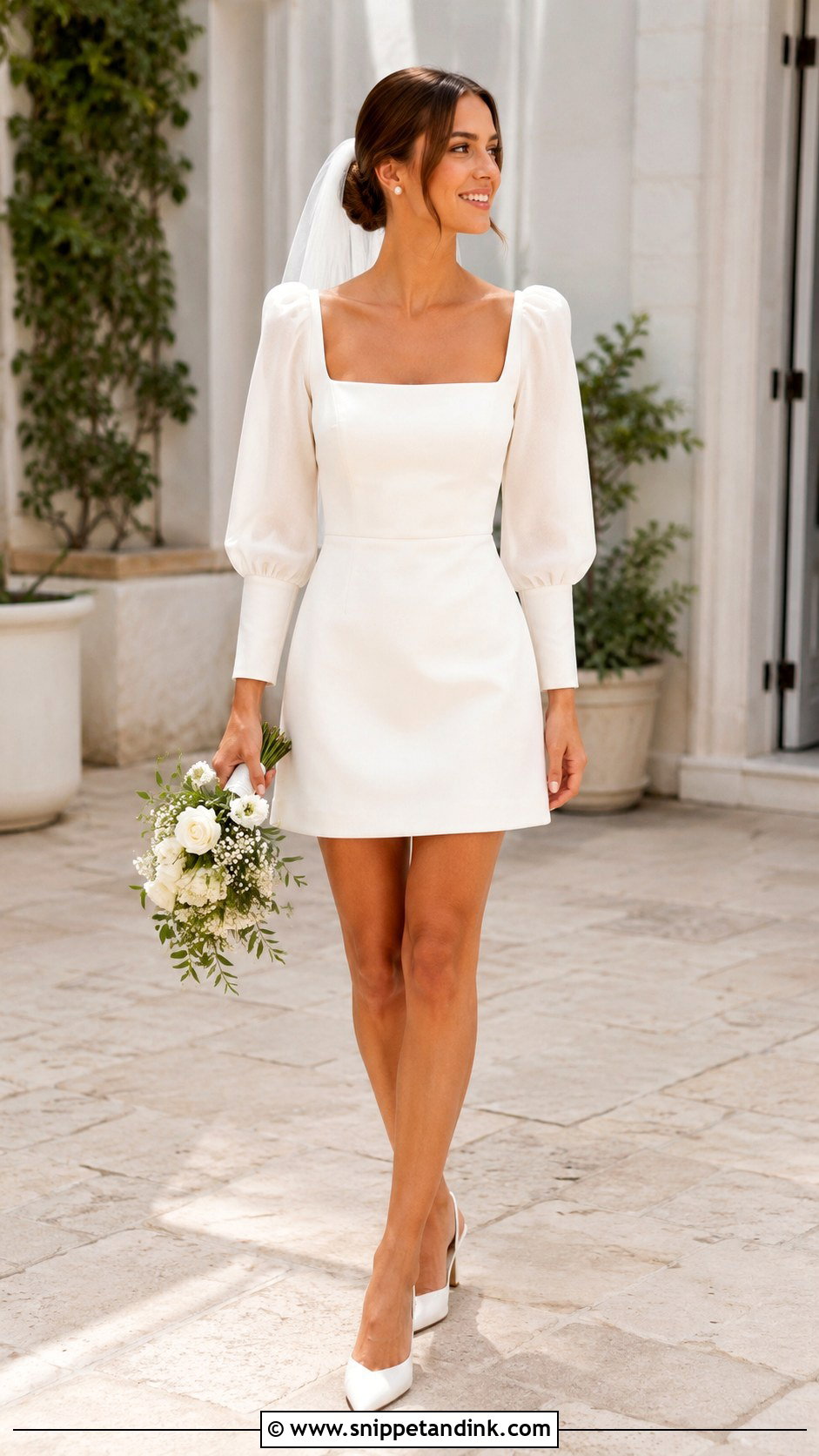
A square neckline frames the collarbone and shoulders cleanly, and it pairs with almost any sleeve: puffed, fitted or sheer. The fitting point I watch is the corners of the square; if the bodice is even slightly loose, they gape when you lean forward. A mini or above-the-knee hem is bold, knee length more refined. Low slingbacks, pearl studs and a soft veil suit it, and if the dress is very plain, a single pendant sits neatly inside the neckline. Lace, satin and crepe each change its mood completely.
12. Short High Neck Wedding Dress With Long Sleeves
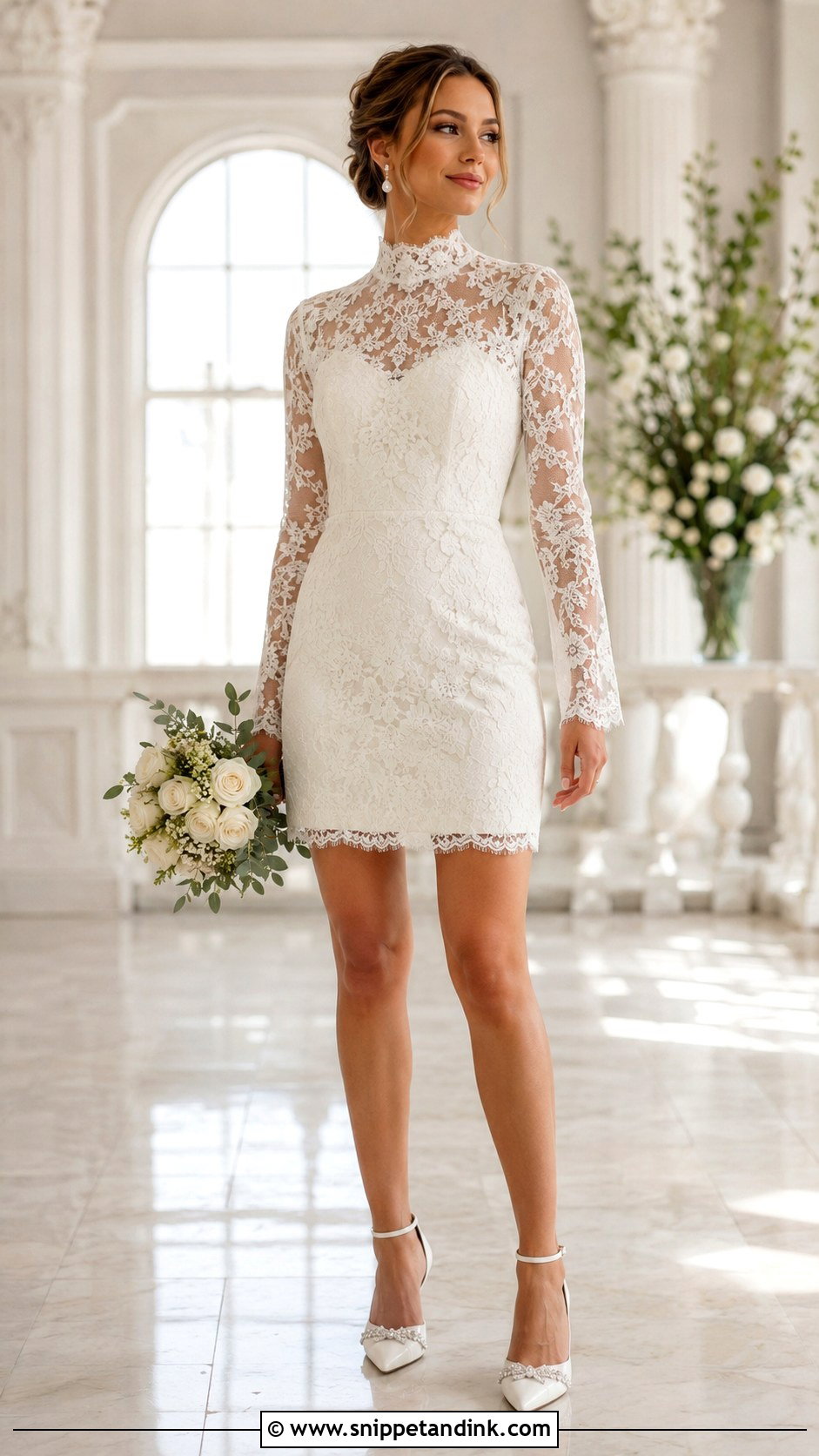
A high neck with long sleeves covers the top half, and the short hem stops it from feeling severe. This is the one dress where I always say wear your hair up or tucked back; loose hair against a high neckline hides the dress and tangles in any lace edge. Lace, crepe and satin all work. Pointed heels lengthen the leg, and small earrings are the only jewelry I’d add. Fall, winter and formal indoor ceremonies suit it, and it needs very little extra styling.
13. Short Bow Back Wedding Dress With Sleeves
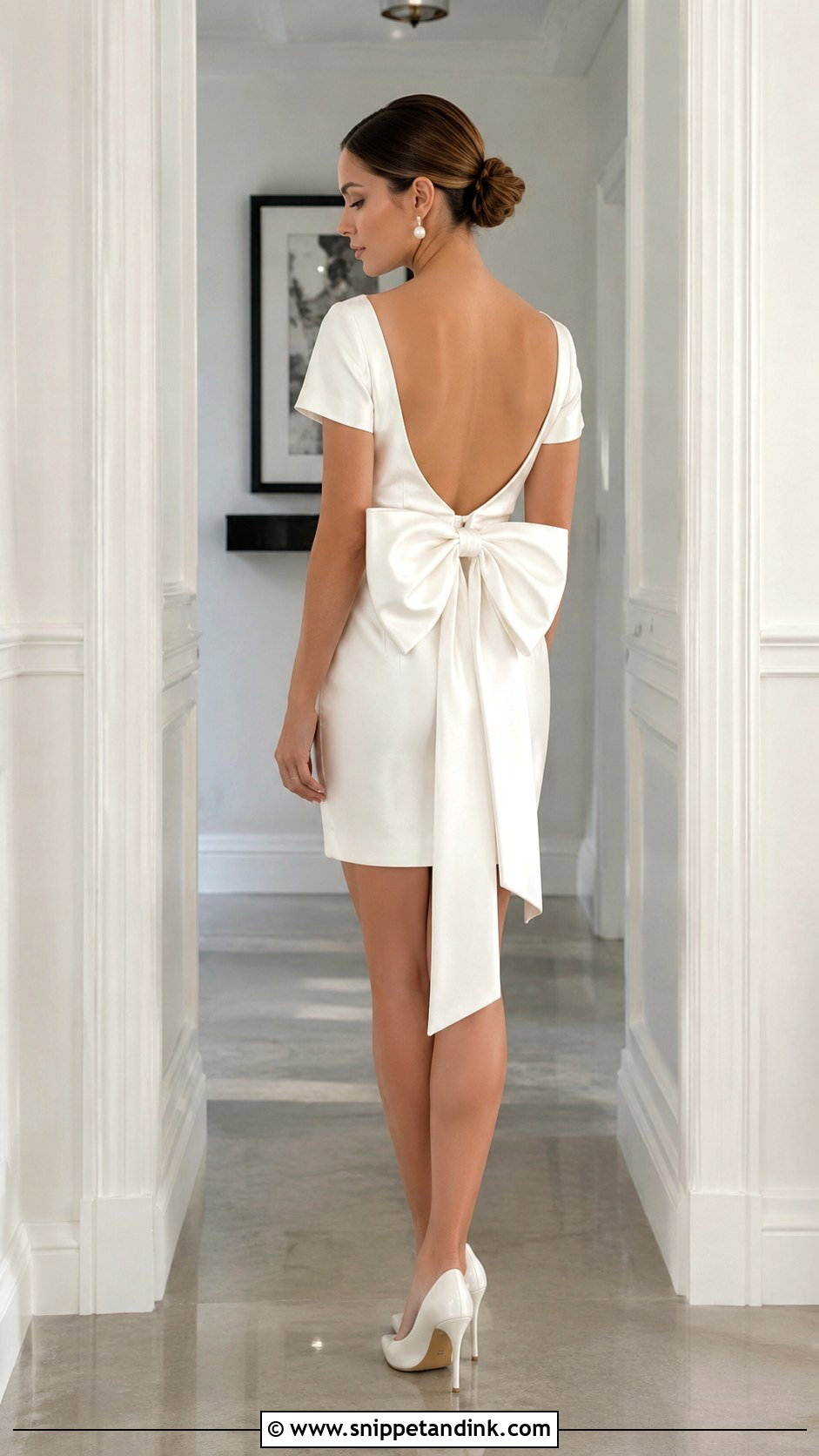
With a bow-back dress the front can stay plain, because guests watch your back for the whole ceremony. Make sure the bow is stitched or hidden-snapped in place; a loose bow slips sideways after an hour of sitting against a chair. Satin and mikado hold the loops best, with short, puffed or fitted long sleeves. Classic pumps and pearl earrings keep the bow as the only feature, and a low bun leaves the back clear. It’s a sweet option for a bride who doesn’t want lace or sparkle.
14. Short Pearl Wedding Dress With Sheer Sleeves
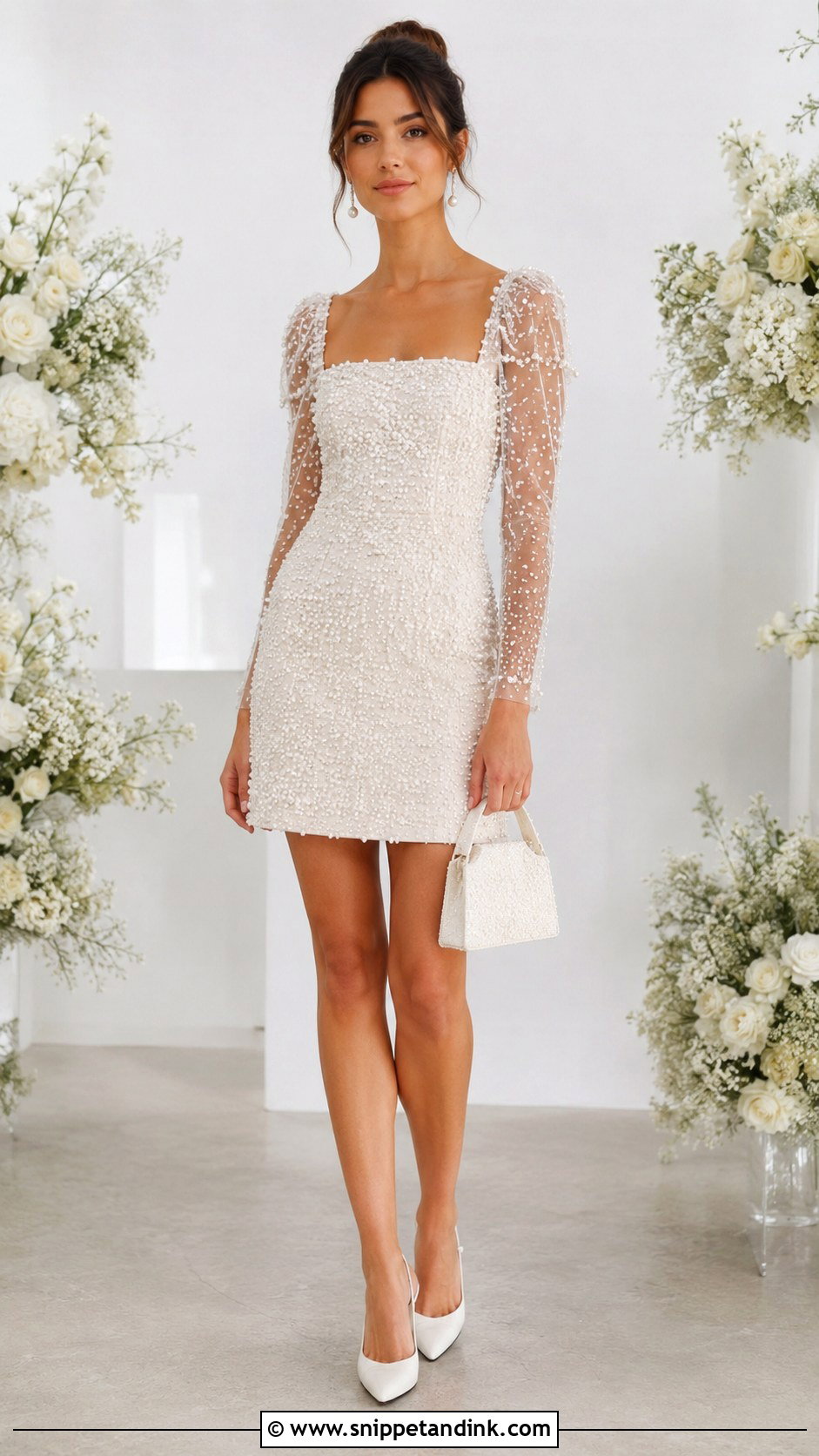
Scattered pearls on sheer sleeves add texture without glitter. Before buying, I run a hand over the sleeve: pearls should be stitched individually, not glued, or they pop off in the first hug. A fitted mini, A-line or shift keeps the embellishment from crowding. Satin heels, pearl drops and a small white bag pick up the detail, and if you wear a veil, choose a plain edge so the two don’t fight. Indoor ceremonies and portrait sessions suit it well.
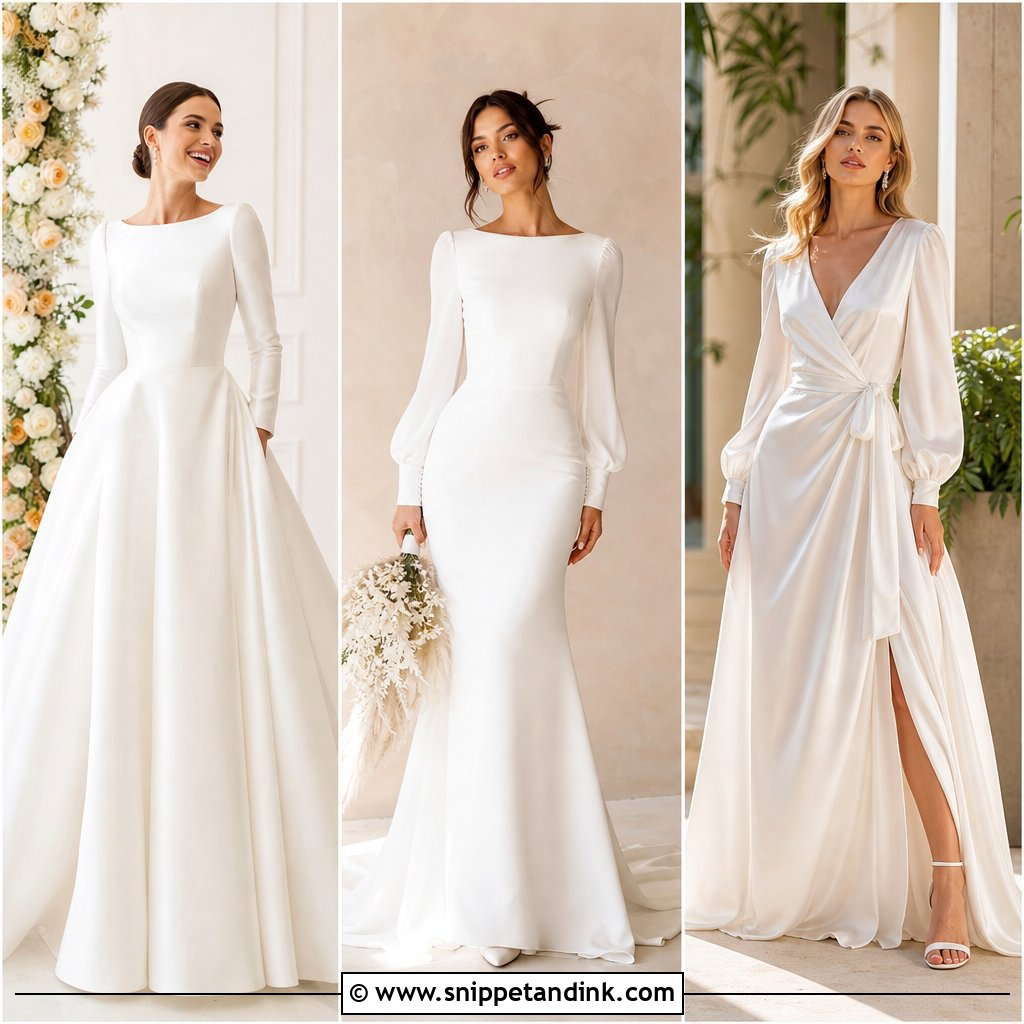
15. Short Ruffle Wedding Dress With Long Sleeves
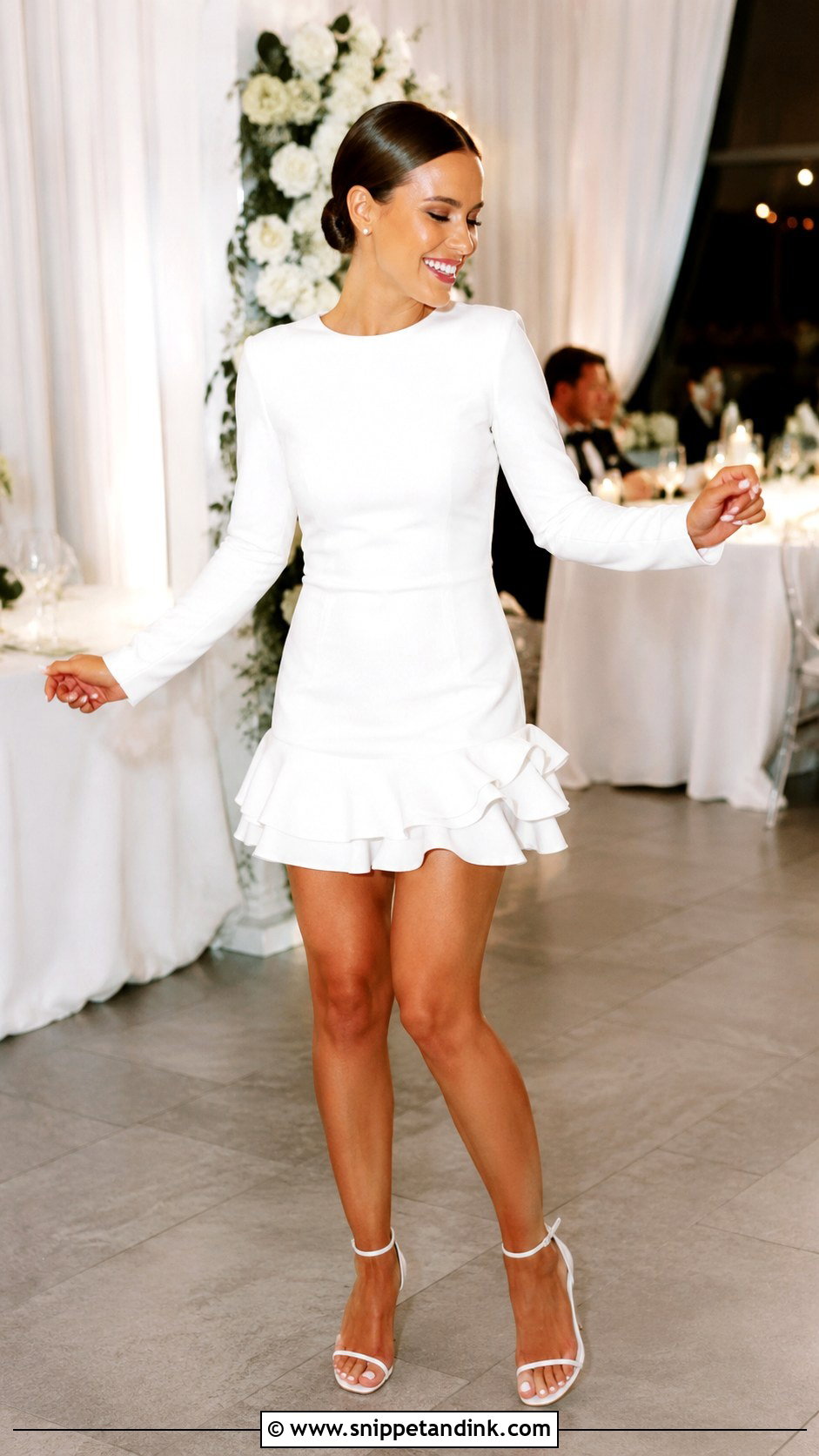
Ruffles are about personality, and the rule I give every bride is one ruffle zone only: the hem, the neckline or the cuffs, never all three. Long sleeves make the short hem look finished rather than playful. Check the ruffle edges are rolled or bound; a raw-cut organza ruffle frays after a night of dancing. Simple heels, small earrings and sleek hair let the movement show. It’s at its best on the dance floor or as a second look, where you actually move enough for ruffles to matter.
16. Short Wrap Wedding Dress With Sleeves
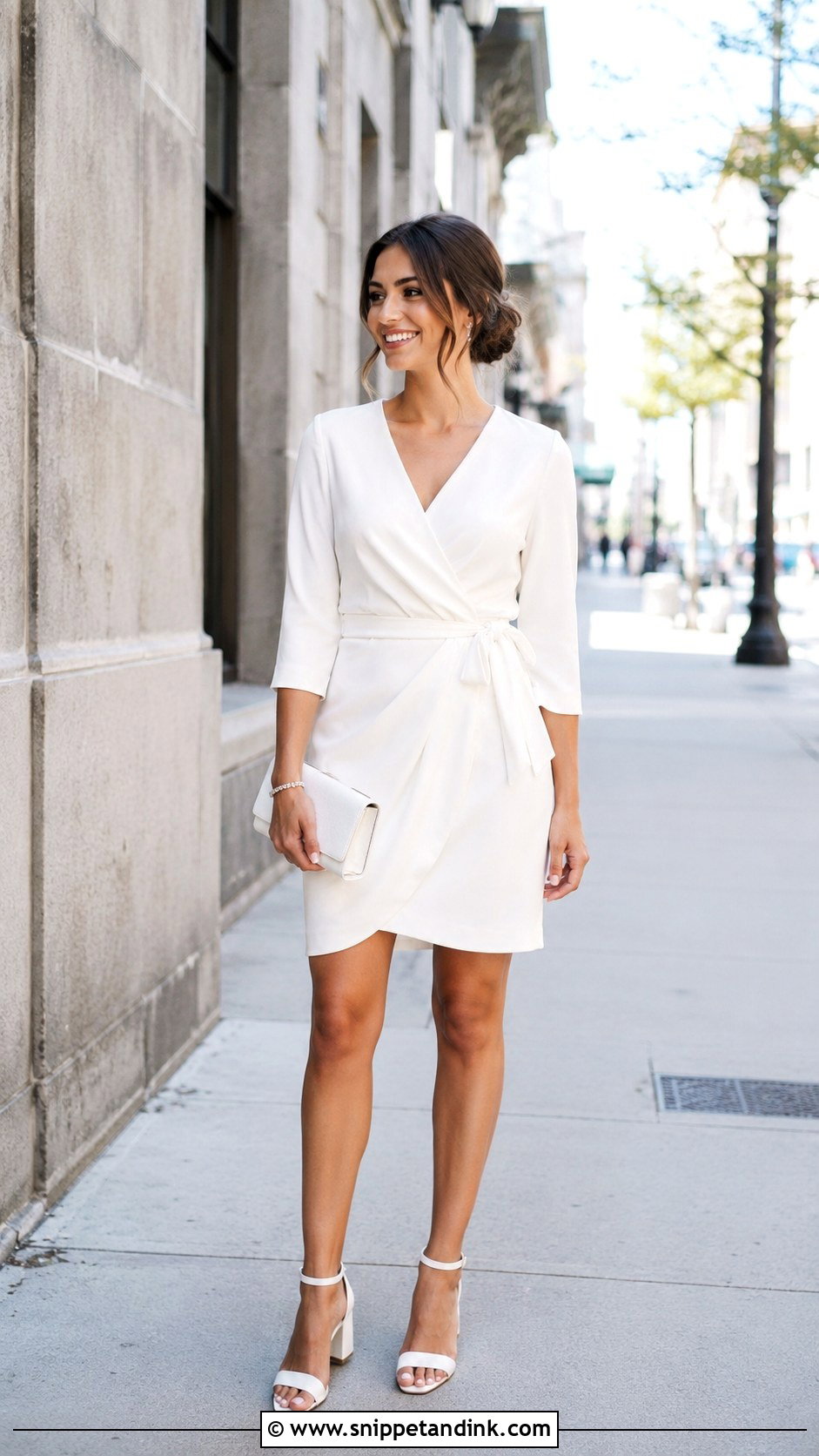
A wrap dress adjusts at the waist, which makes it the most forgiving shape if your size might shift a little before the date. The tie creates a V neckline and a soft drape in the skirt. The fitting issue is the wrap edge: it can open when you sit, so I’d have a seamstress add a hidden snap at the cross point. Satin, crepe, chiffon and lace all work. Block heels, a delicate bracelet and a small clutch suit a courthouse or a relaxed reception, and three-quarter or flutter sleeves make it wearable in most seasons.
17. Short Feather Hem Wedding Dress With Sleeves
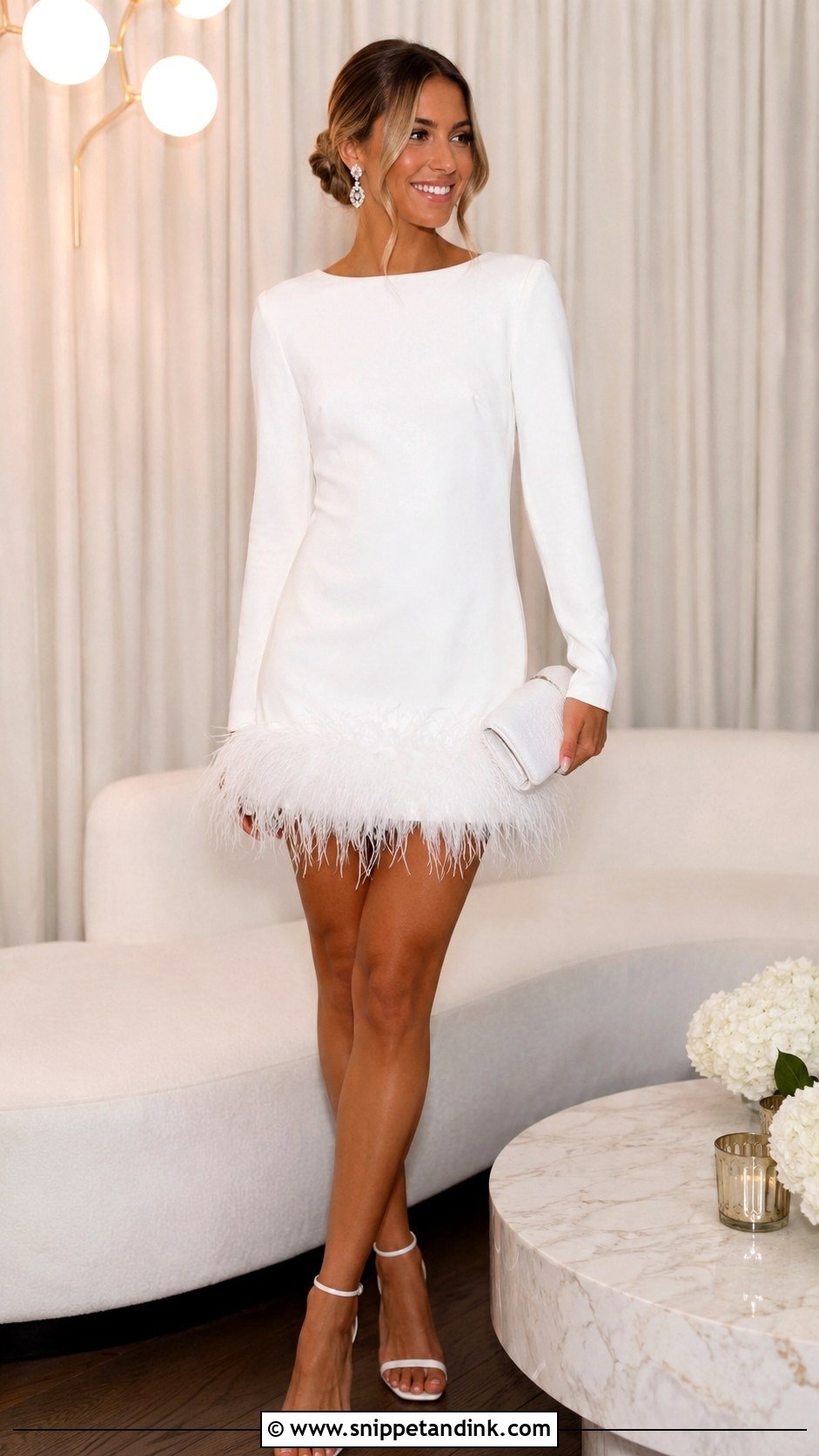
A feather hem is a statement, and it suits a bride who enjoys a little drama. Ostrich trim moves beautifully but sheds a few strands when it’s handled, so keep a lint roller out of sight for your partner’s suit. A plain long-sleeve mini or satin shift lets the trim look deliberate. Clean white heels, small crystal earrings and a smooth clutch are enough; extra textures fight the hem. I’d save this one for a reception, after-party, or second look rather than a ceremony where you’ll be kneeling or seated.
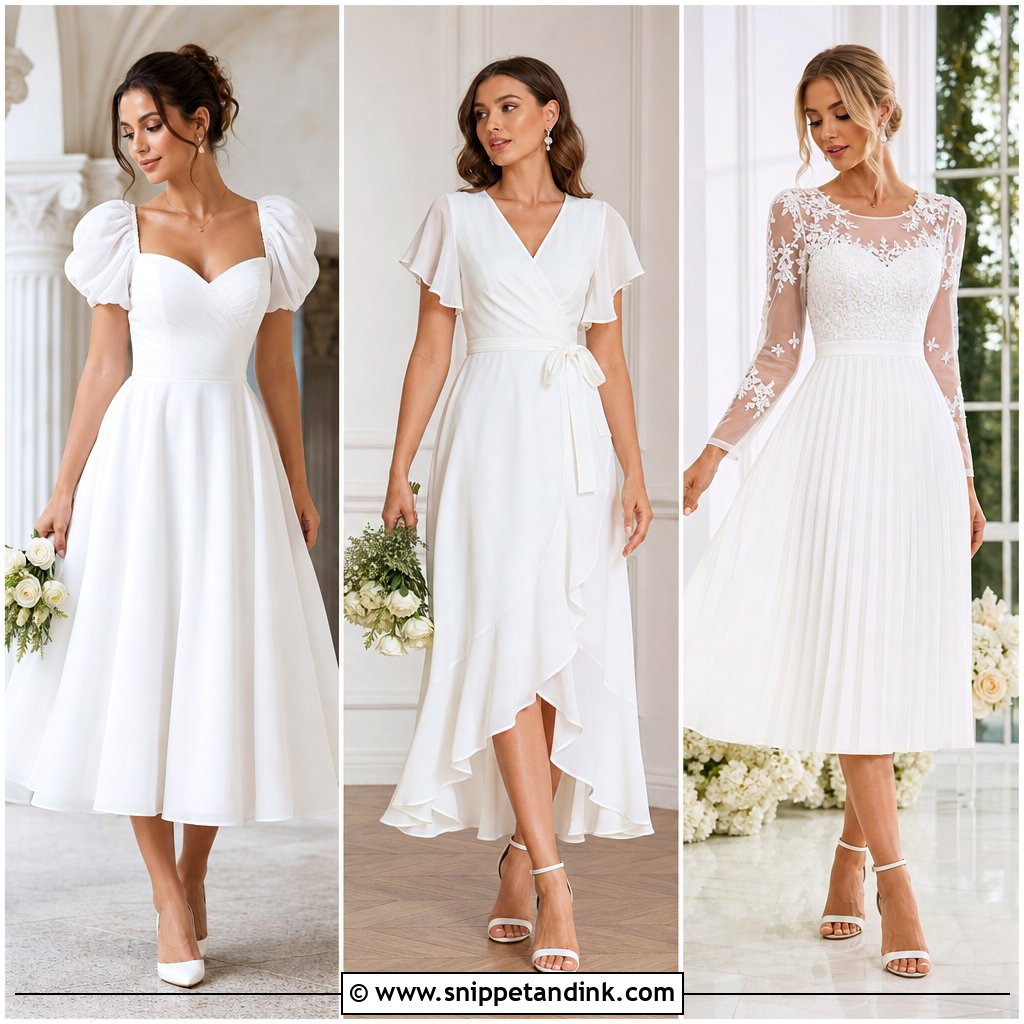
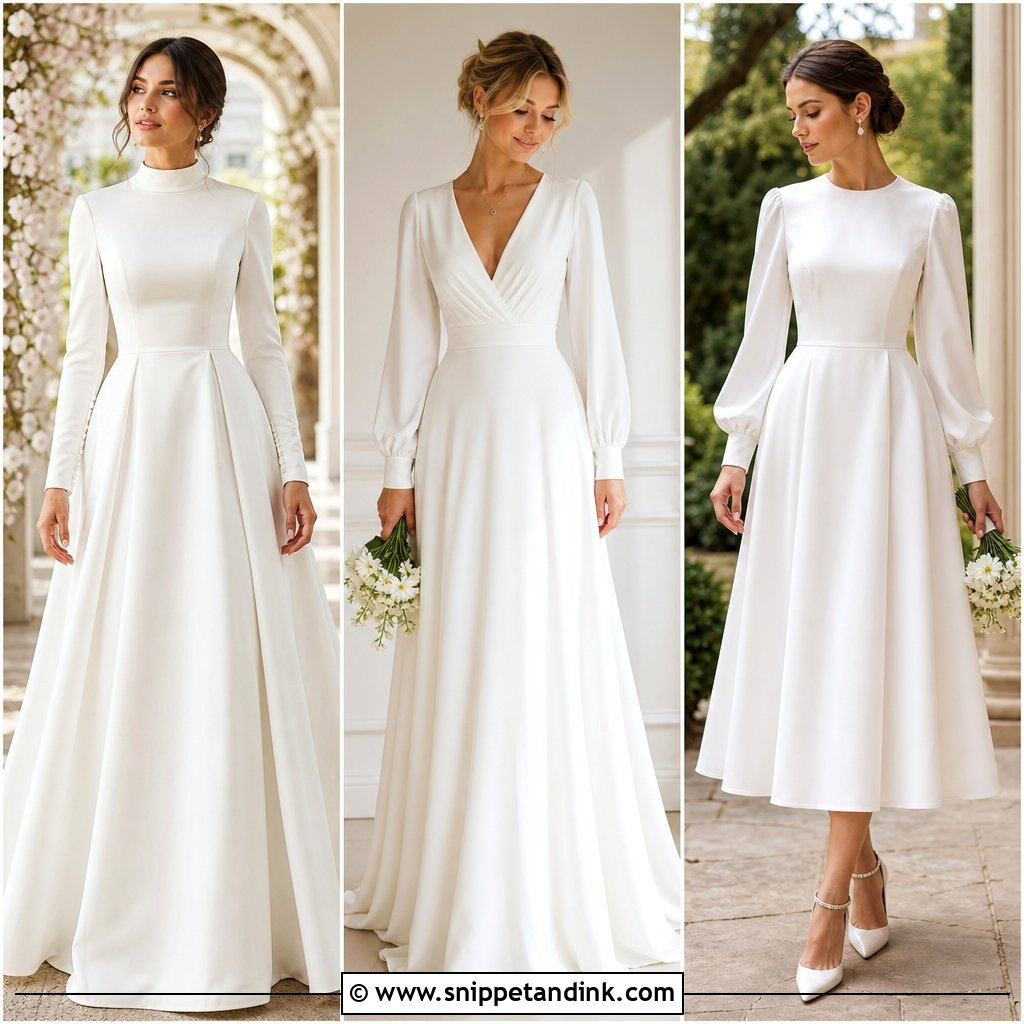
18. Short Tea Length Wedding Dress With Sleeves
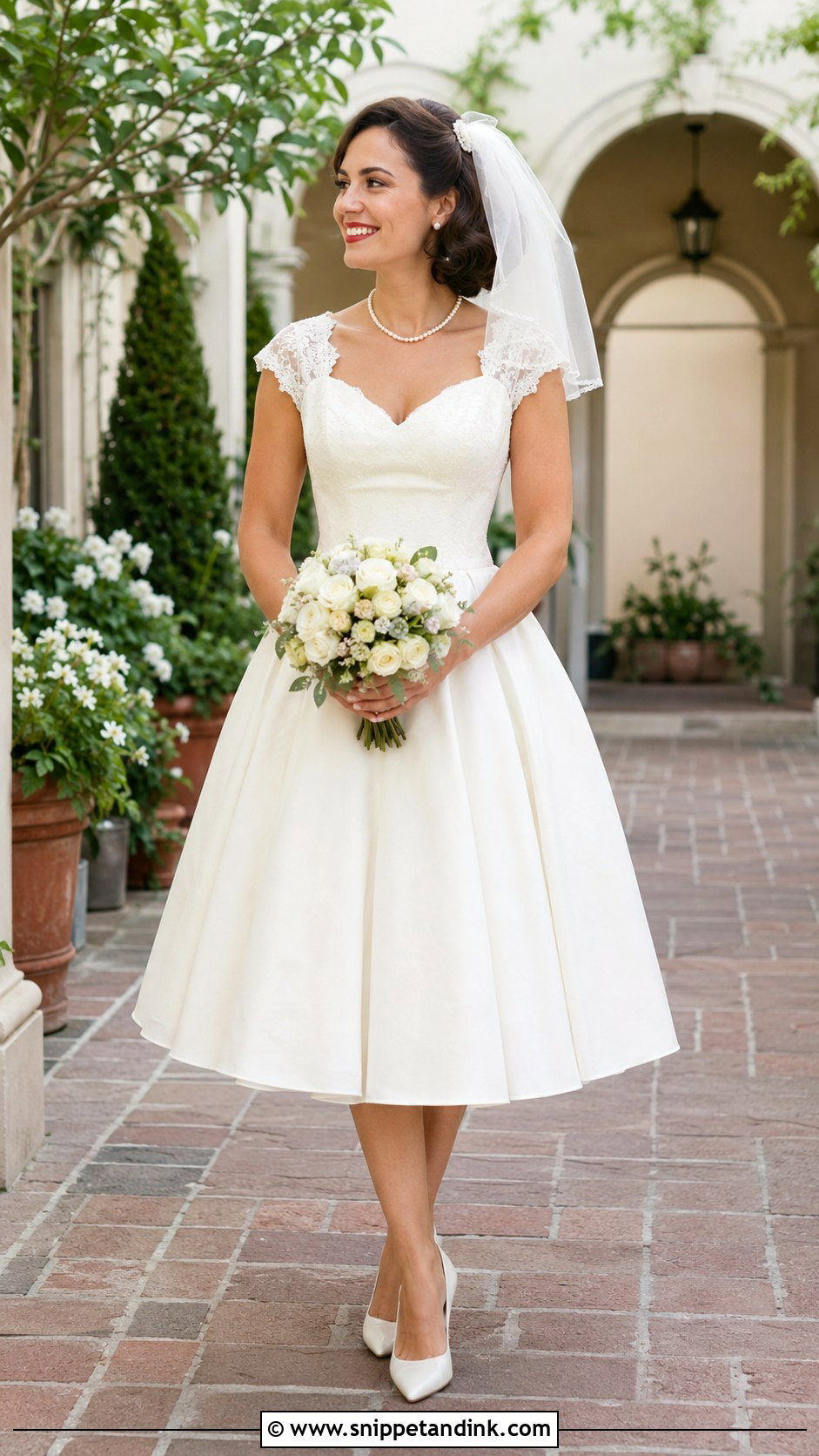
Tea length falls between the knee and mid-calf, so it gives more coverage while still showing your shoes. It’s the easiest length for a vintage feel without a full gown. Cap, short and three-quarter sleeves all balance it. The hem has to land on the slimmest part of the calf or just below it; an inch too high or low and the leg looks shorter, so judge it in the shoes you’ll actually wear. Pointed pumps, a small veil and pearls give a classic finish, and a fitted bodice over a fuller skirt defines the waist.
19. Short Courthouse Wedding Dress With Sleeves
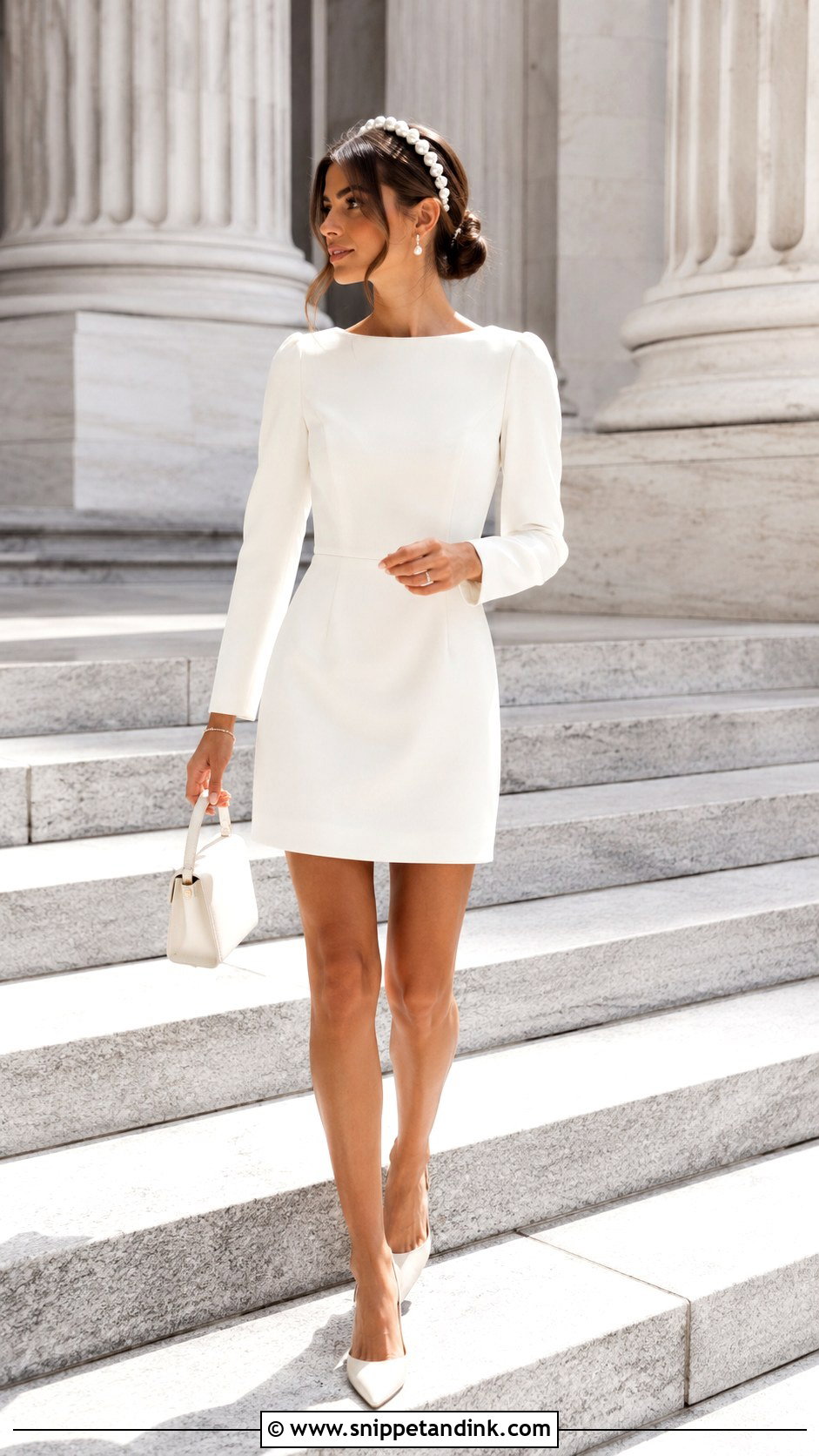
For a courthouse wedding you’ll walk corridors, stand at a counter for paperwork and probably head straight to lunch, so comfort matters more than spectacle. Clean crepe, satin, lace or a tailored blazer dress with a mini or knee-length hem all suit that day. Sleeves make it read as ceremony clothing rather than a nice outfit. Slingbacks, a structured bag and simple jewelry, plus a birdcage veil, satin bow or pearl headband for a clear bridal signal. Keep it simple; registry rooms are small and fussy details get lost.
20. Short Reception Wedding Dress With Sleeves
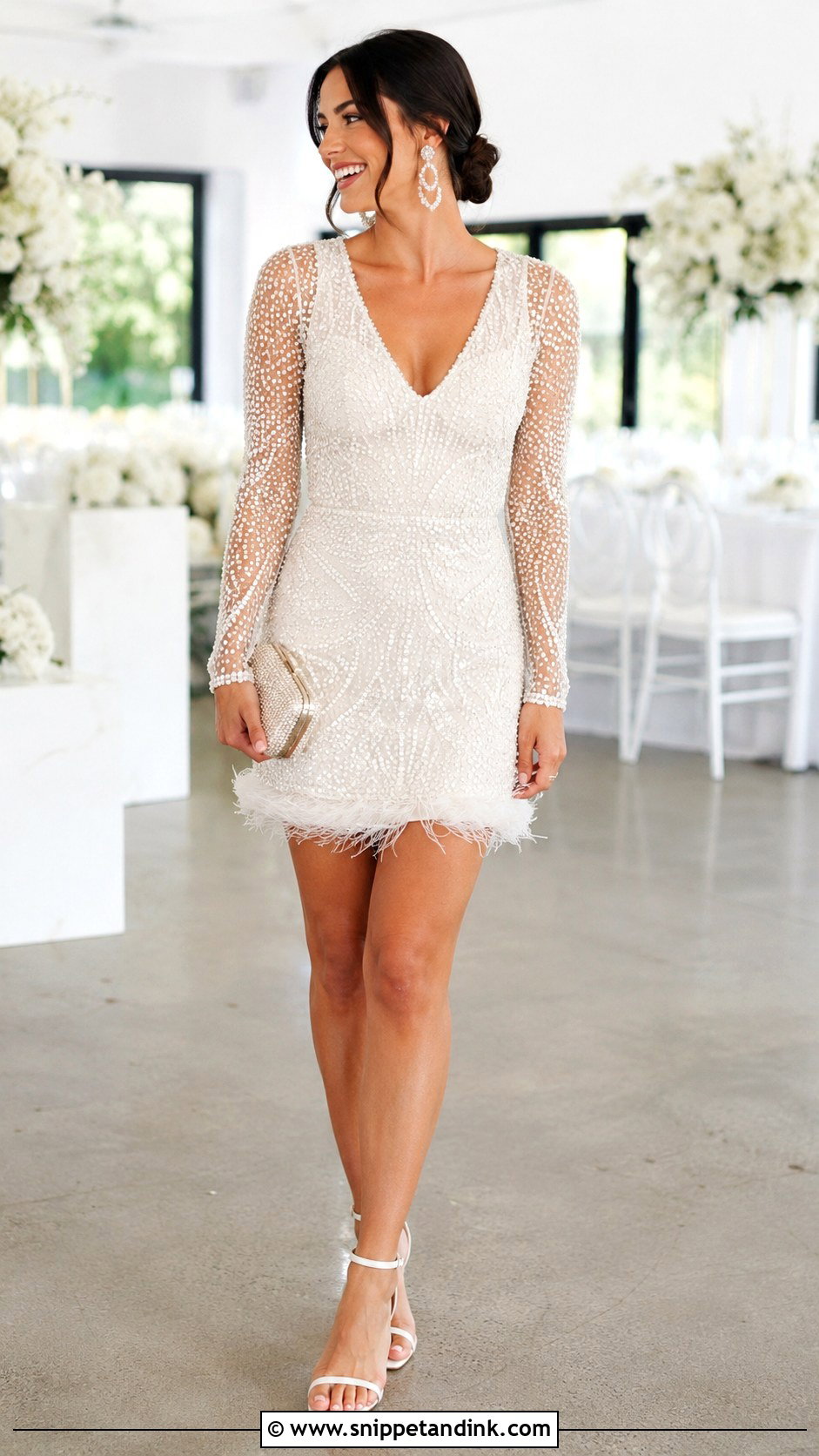
A reception dress has one job: let you walk, sit, hug and dance without thinking about it. That’s why I check the sleeve armhole first, since a tight armhole is what stops you raising your arms on the dance floor. Sequins, feathers, satin, tulle and pearls all work as long as the dress moves. Comfortable heels, a small bag and earrings that catch the light are enough. If your ceremony dress was plain, this is the moment for texture or sparkle so the change feels deliberate.
21. Short Minimal Wedding Dress With Sleeves
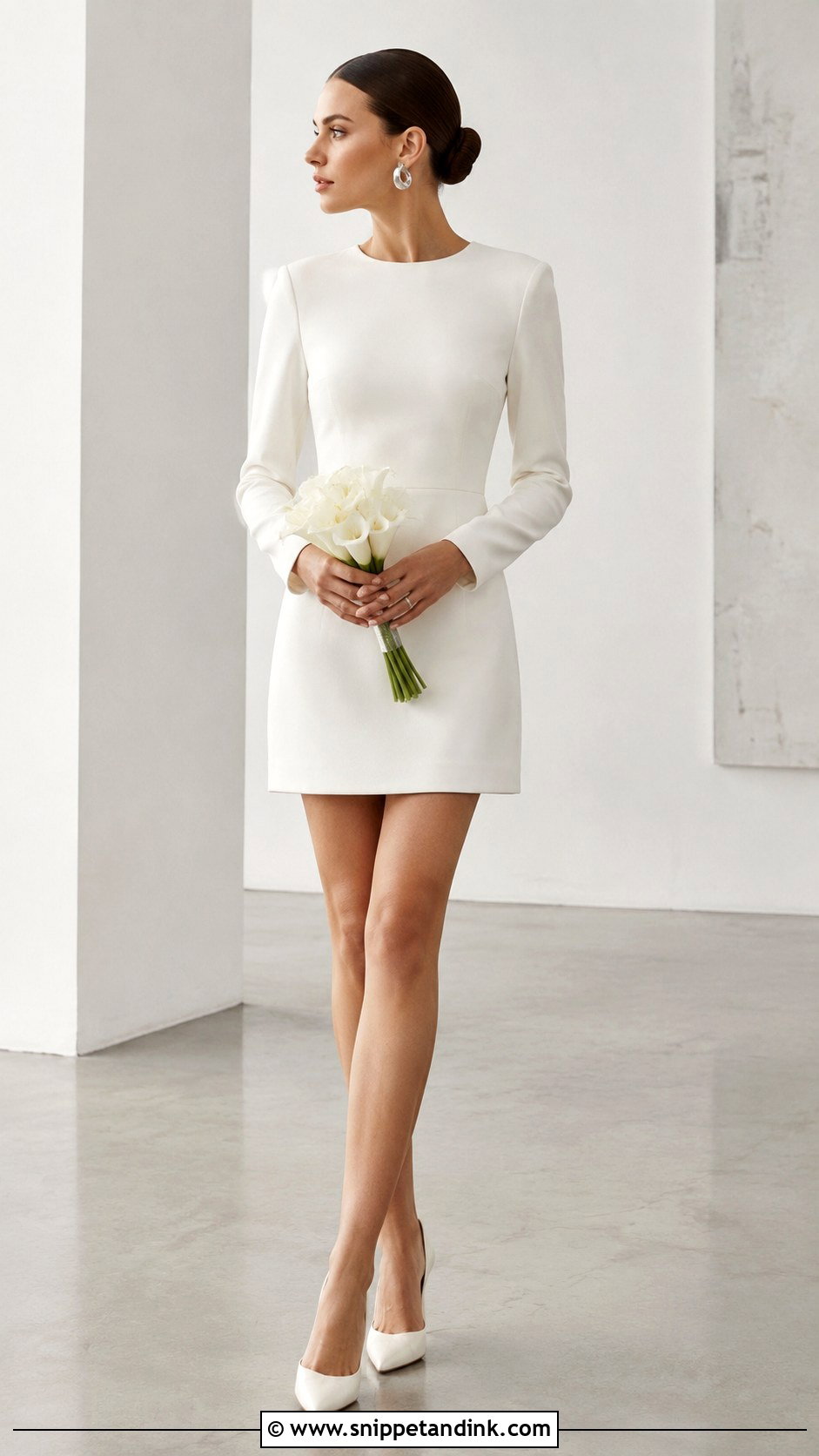
A minimal dress has nowhere to hide, so fit and fabric quality carry it. Smooth crepe, satin or mikado with very little decoration, cut as a straight mini, shift or simple A-line. I’d budget for alterations here more than anywhere else, because a seam that pulls by a few millimetres shows on a plain dress. Pointed pumps, a sleek bun and sculptural earrings give it a modern finish; a small bouquet and plain veil keep it calm. City ceremonies and gallery venues suit it, as do brides who don’t want lace or sparkle.
22. Short Vintage Wedding Dress With Sleeves
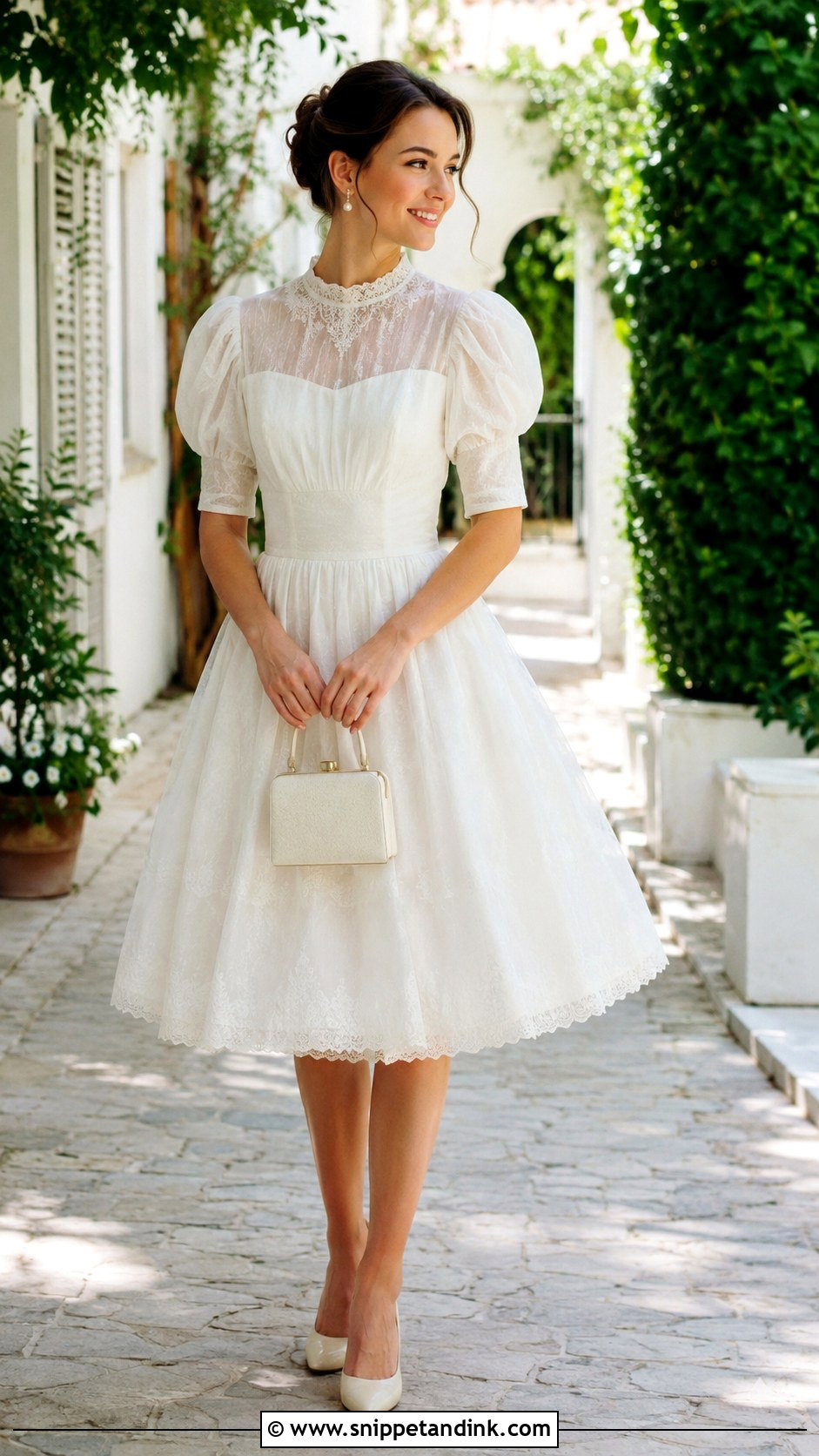
Vintage pieces bring character: lace collars, covered buttons, tea-length skirts, puff sleeves or fine embroidery. The aim is a nod to the past, not a costume, so keep the styling current. If it’s a genuine older dress, check the underarm seams and fabric in daylight; old silk weakens and can split under strain, and stains often yellow at the seams. Low heels, pearl earrings and a small structured bag suit it, with a soft veil or satin ribbon. Courthouse, garden and small indoor weddings all fit.
23. Short Plus Size Wedding Dress With Sleeves
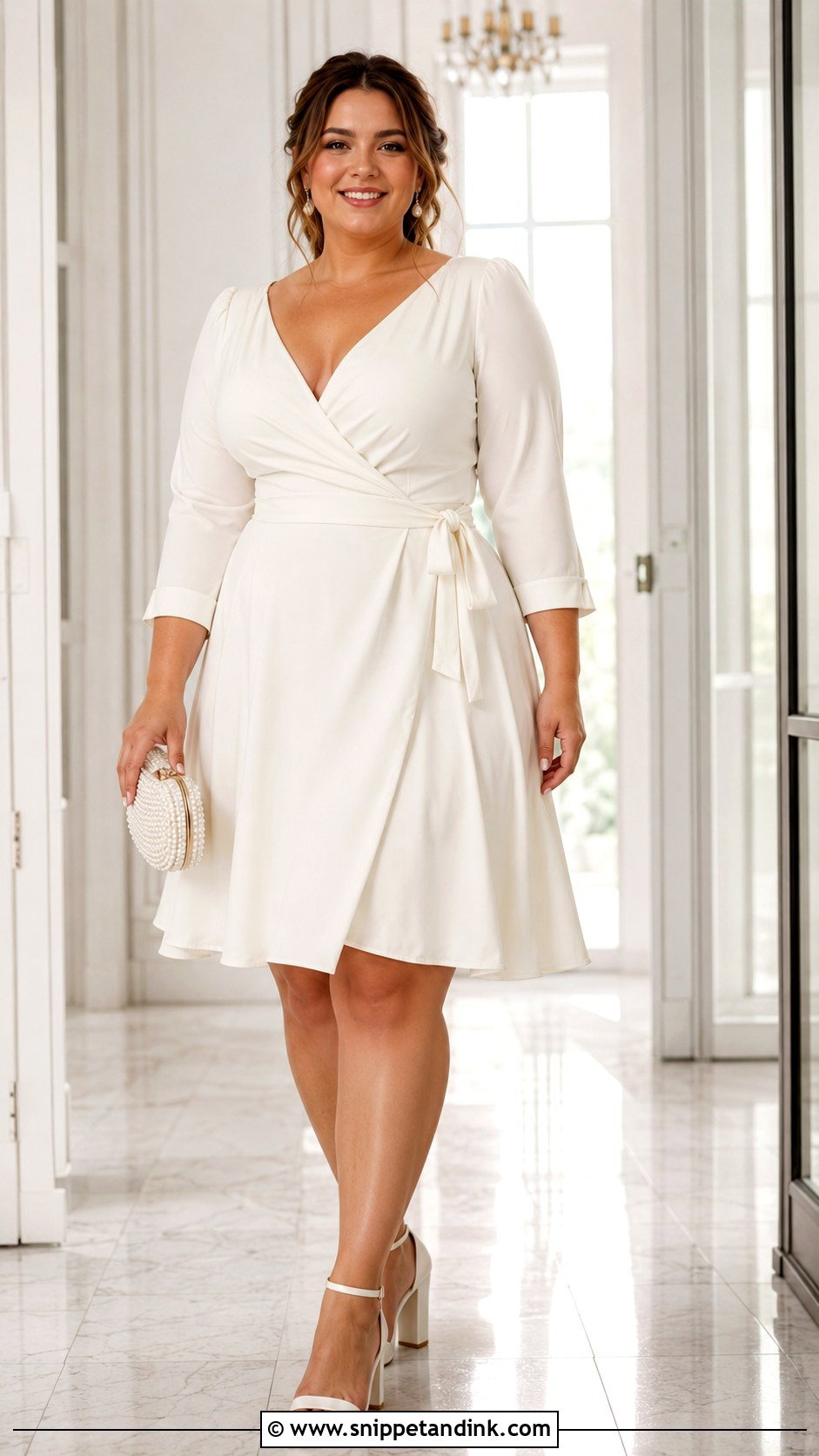
Fit is everything here, and the sleeve is where most off-the-rack dresses fail: they’re cut too narrow at the bicep and pull when you lift your arm. Ask whether the sleeve can be let out or replaced before you commit. Structured fabrics, a defined waist, and A-line, wrap, fit-and-flare or tailored mini shapes work well. V, square and sweetheart necklines balance the top half. Sturdy block heels, pearl earrings and a clutch matched to the fabric tone finish it, and stretch crepe or lined lace adds comfort. The aim isn’t hiding anything; it’s a dress that lets you move.
24. Short Petite Wedding Dress With Sleeves
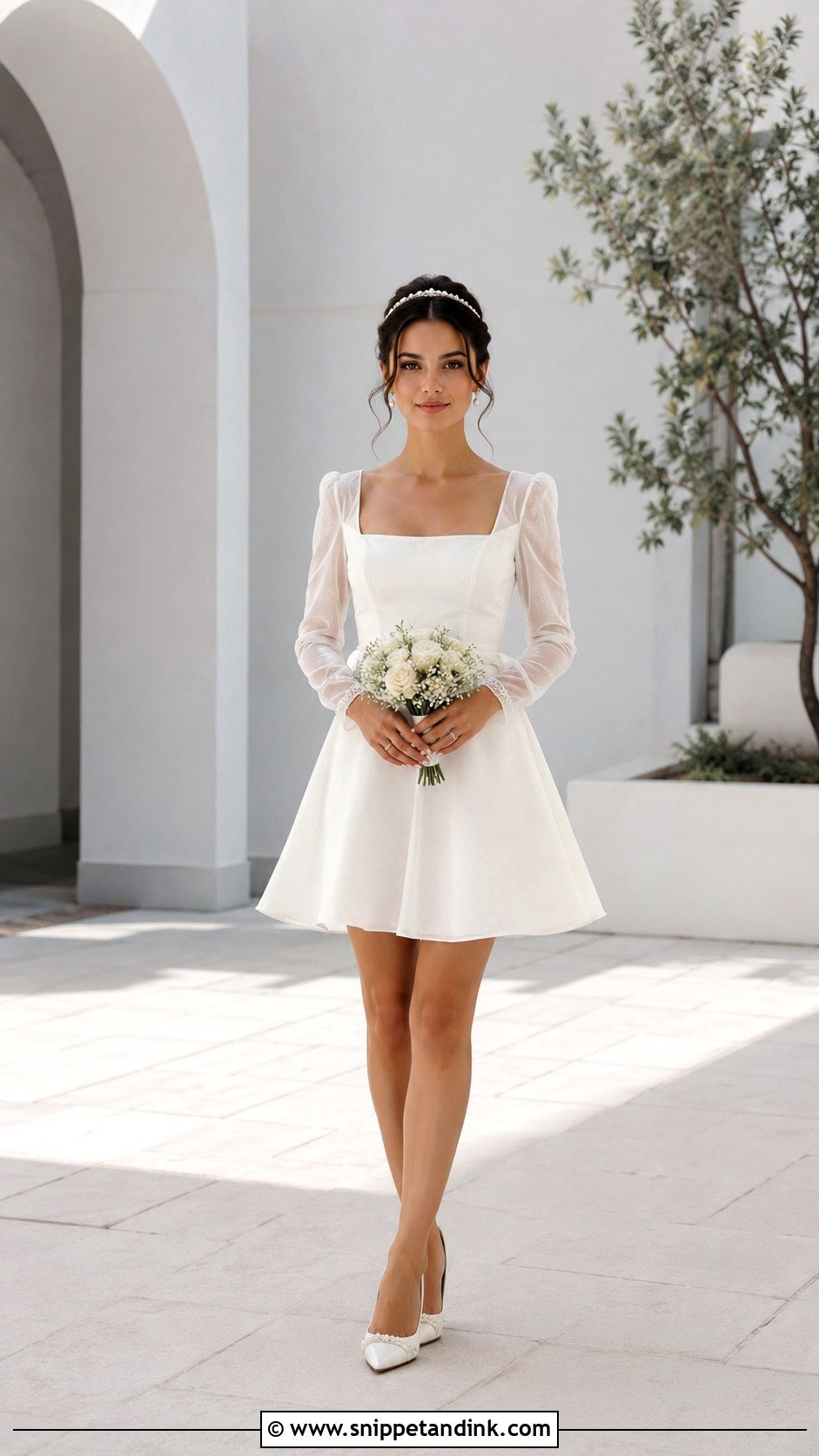
On a petite frame the right short dress makes you look taller, because more leg shows and there’s less fabric to swallow you. Minis, above-the-knee hems and clean A-lines work best. Keep the sleeve in proportion: fitted, sheer or a small puff, never a huge bishop sleeve that overwhelms the shoulders. Square, V and simple high necklines all suit. Pointed heels or nude-toned shoes extend the line of the leg, and small pearls or a slim headband keep accessories in scale. Sleeve length often needs shortening on petite brides, so allow for it.
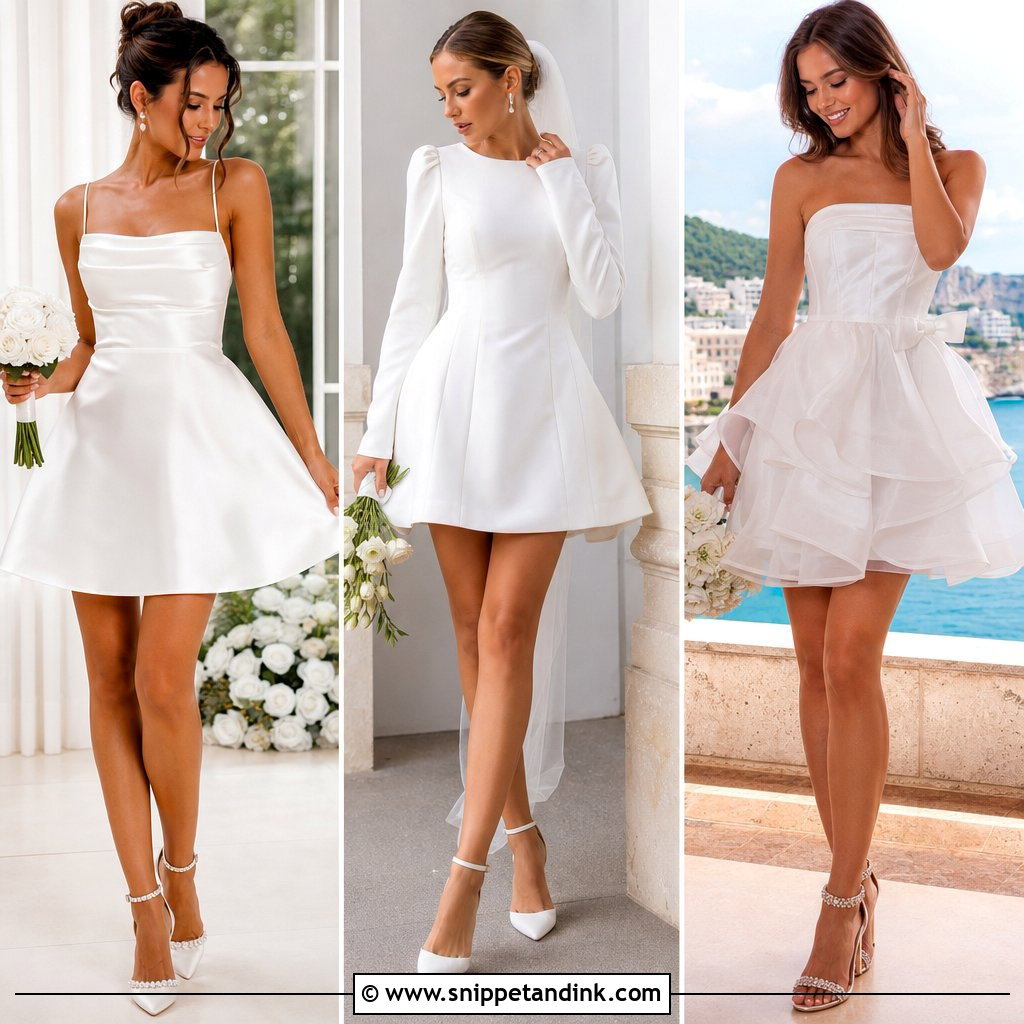

25. Short Winter Wedding Dress With Sleeves
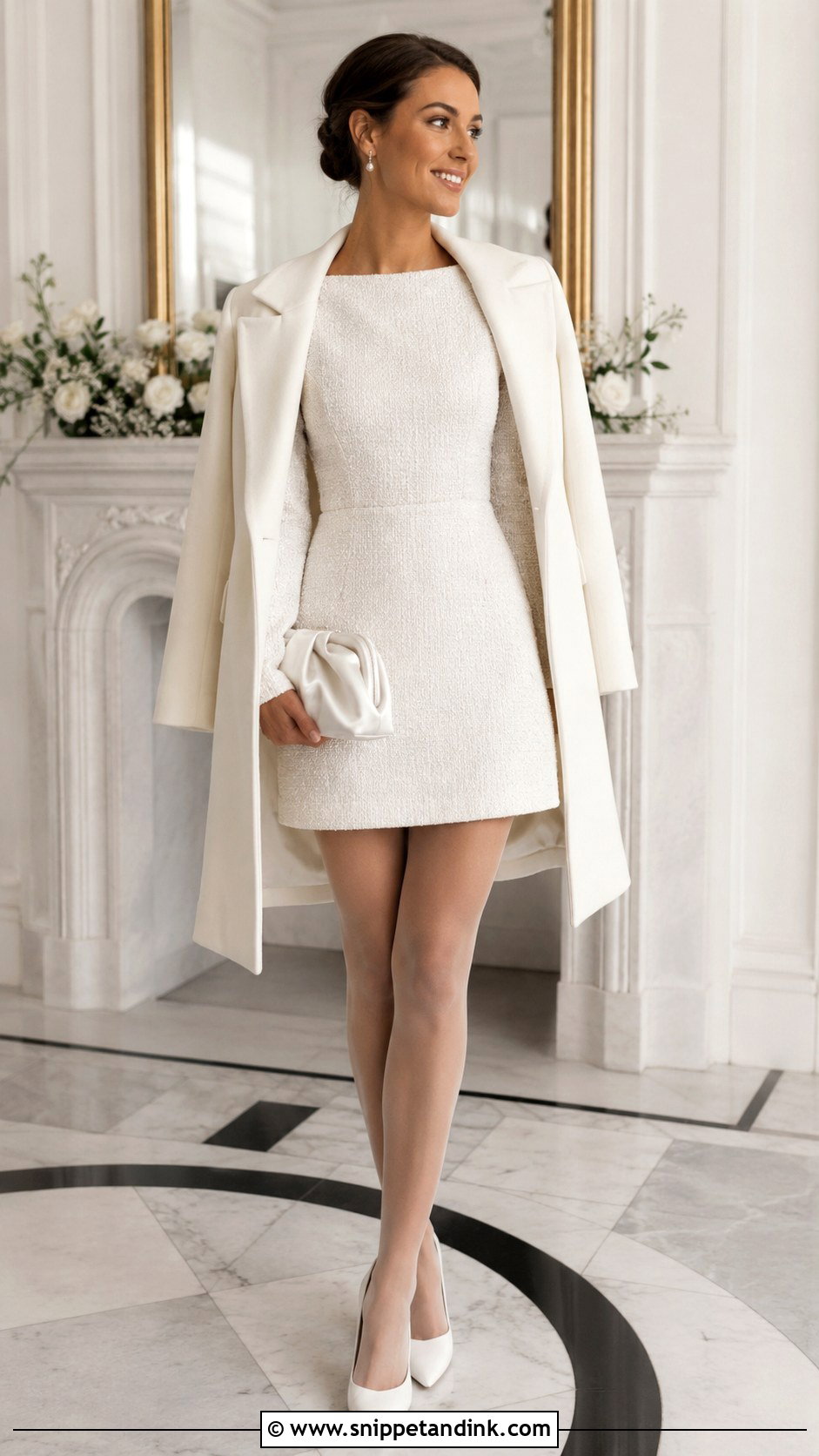
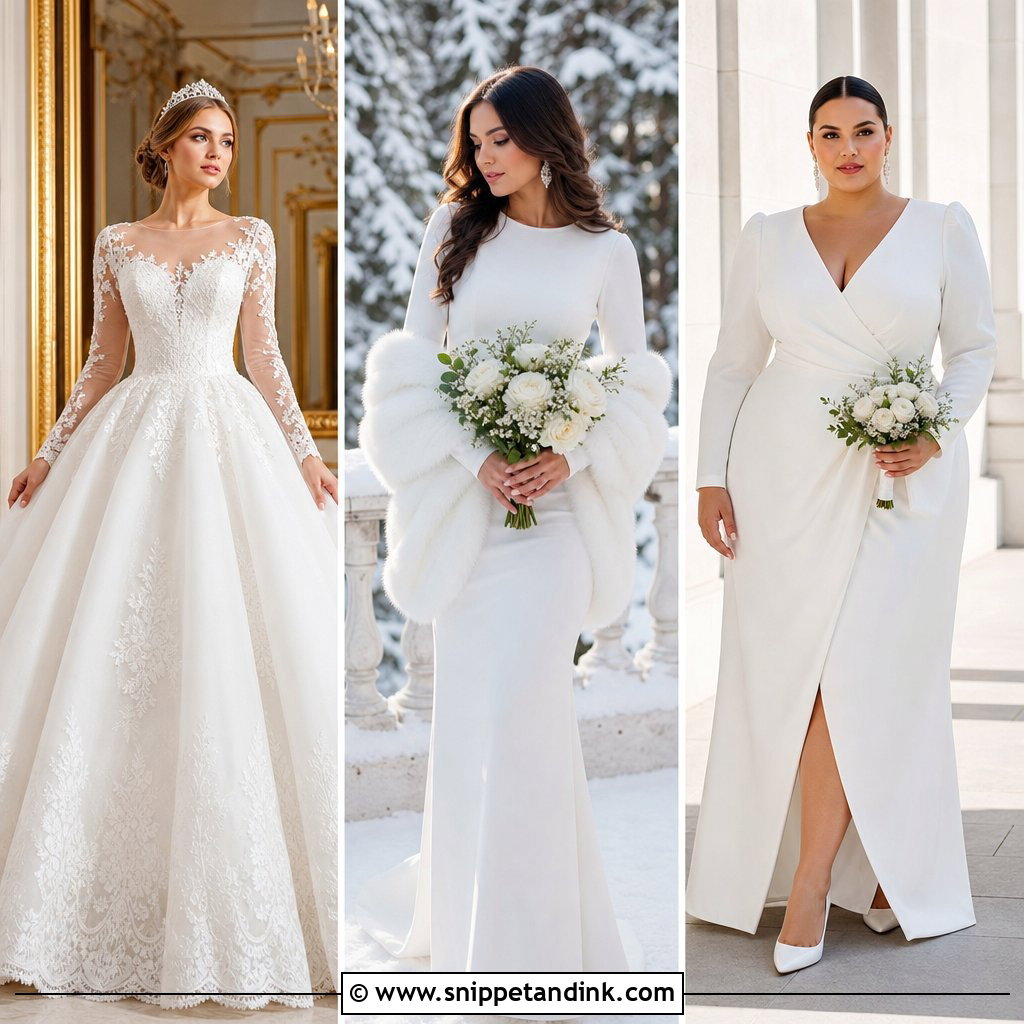
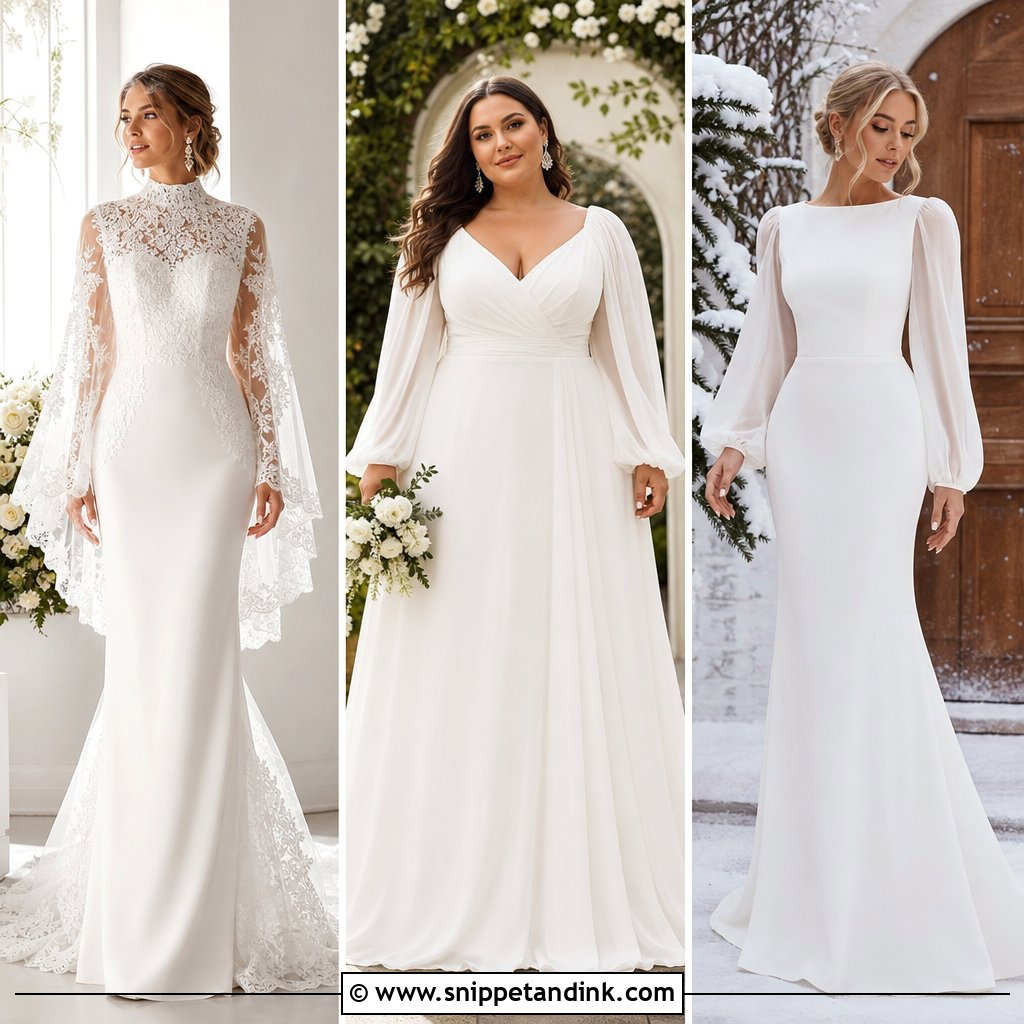
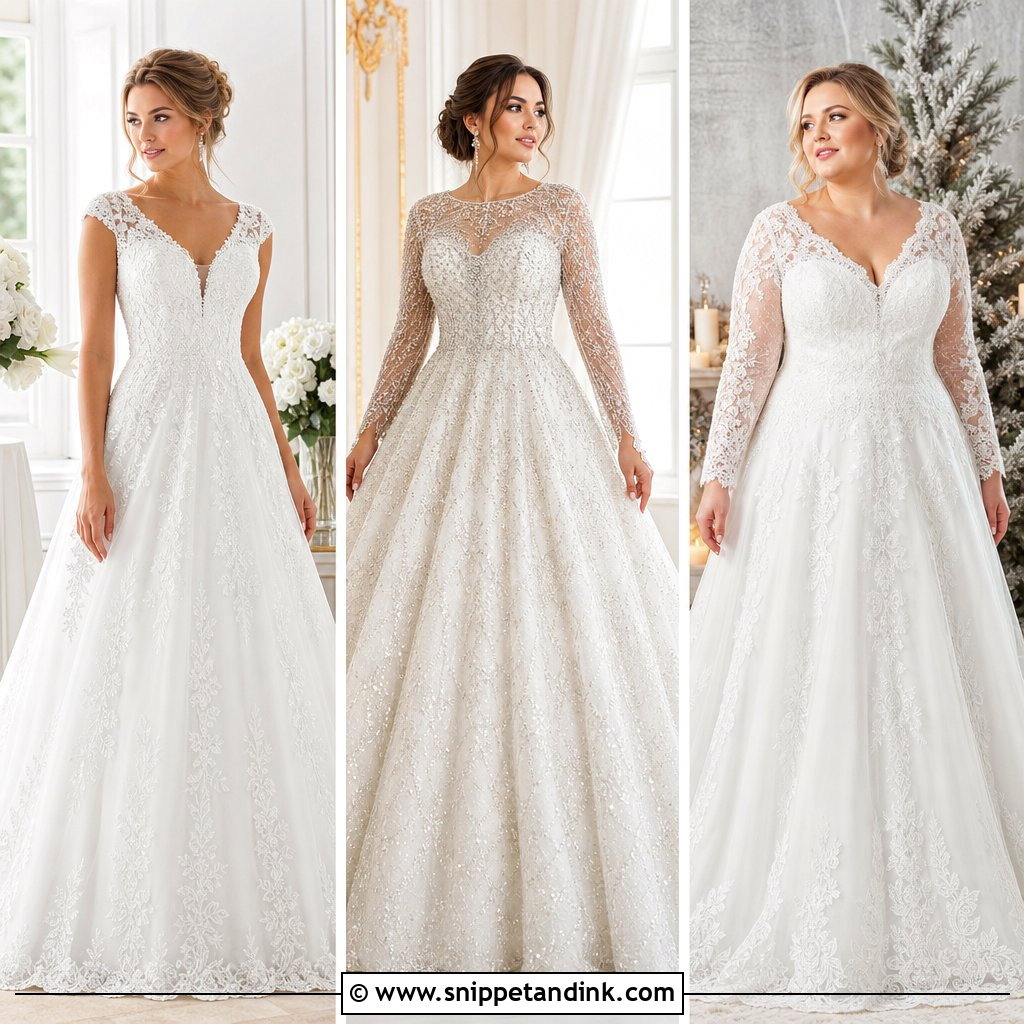
Winter fabrics need weight: crepe, satin, mikado, velvet-touch bridal cloth or lined lace. Long sleeves, high necklines and structured shoulders make sense when it’s cold. Closed-toe heels, sheer tights if you like them, and a faux-fur wrap or tailored white coat for outdoor photos keep you warm. Try the coat over the dress at a fitting; a long-sleeve dress can bunch inside a coat sleeve and crush the fabric. Pearl earrings and a satin clutch keep it bridal. The goal is warmth without bulk.
How a Short Hem Behaves Once You Sit, Kneel and Dance
A hem that looks right in a mirror moves two or three inches higher when you sit, and more if the skirt is fitted. Before I sign off on a length, the bride sits on a low chair, crosses her legs and then stands up again. If she’s tugging at the skirt, it’s too short for a seated dinner, however good it looks standing.
Think through the parts of your day where your body position changes. Kneeling at a religious ceremony, climbing into a car, sitting on a low step for portraits and going down stairs while someone photographs from below all reveal more than standing does.
Small fixes that make a big difference
- A slip or lining that’s slightly shorter than the outer skirt stops cling and static, especially with chiffon and crepe.
- Anti-chafe balm or slim shorts under a mini save your thighs during a long day of walking.
- Short hems put your shoes on display, so scuff the soles lightly before the day and break them in at home for a few evenings.
- If you’re between two lengths, choose the longer one. A seamstress can take a hem up the morning of a final fitting, but she can’t add fabric back.
Sleeves change the picture on the dance floor too. Long fitted sleeves get warm quickly, so for a summer evening reception I’d lean toward sheer, flutter or three-quarter lengths, or plan a second look for the party.
Fit the Sleeve, Then Everything Else Falls Into Place
A short dress with sleeves gives you coverage on top and freedom below, and that combination works for ceremonies, receptions and everything in between. From lace and satin to puff sleeves, blazer dresses, sequins and tea-length skirts, there’s a version for most settings. Get the sleeve and armhole right first, then settle the hem in your real shoes, and the accessories become easy decisions.
You'll Like These Ideas:



Leave a Reply