
One gown can carry you through the ceremony and the party if some of it comes off. Removable layers and a few accessory swaps let you go from formal to light without buying a second dress, and the reveal itself becomes a small moment guests remember. The ideas below run from detachable overskirts and sleeves to capes, trains, bows and lace toppers, plus a few modern routes with mini dresses, jumpsuits and separates. Before you commit to any of them, talk to your seamstress about where the attachments go, how closely the fabrics match and what the extra fittings will cost. Each removable piece has to feel secure, and the dress underneath has to look finished on its own.
Hooks, Snaps or Buttons? What Holds a Removable Layer
The hardware decides whether a two-look dress works on the day. I ask the seamstress about it at the first fitting, because the right fastener depends on how heavy the piece is and how fast it has to come off.
- Hook-and-bar closures carry weight best. I use them for overskirts and long trains, hidden under a waistband.
- Sew-on snaps are quick to undo and suit light pieces such as sleeves, straps or a modesty panel. Under a heavy layer they pop open.
- Covered buttons with elastic loops look lovely on capes and toppers, but take longer, and someone else has to do them up.
- Thread chains or small ribbon ties stop a light layer from sliding without holding much weight.
I avoid hook-and-loop tape and magnets on bridal fabric. Hook-and-loop pulls threads out of lace and tulle, and magnets strong enough to hold a skirt are bulky. Ask to see the base dress with no removable pieces on before you pay for anything. If it looks unfinished on its own, with raw waist seams or a gap where the overskirt joins, the reception look will show it.
1. Detachable Overskirt Wedding Dress
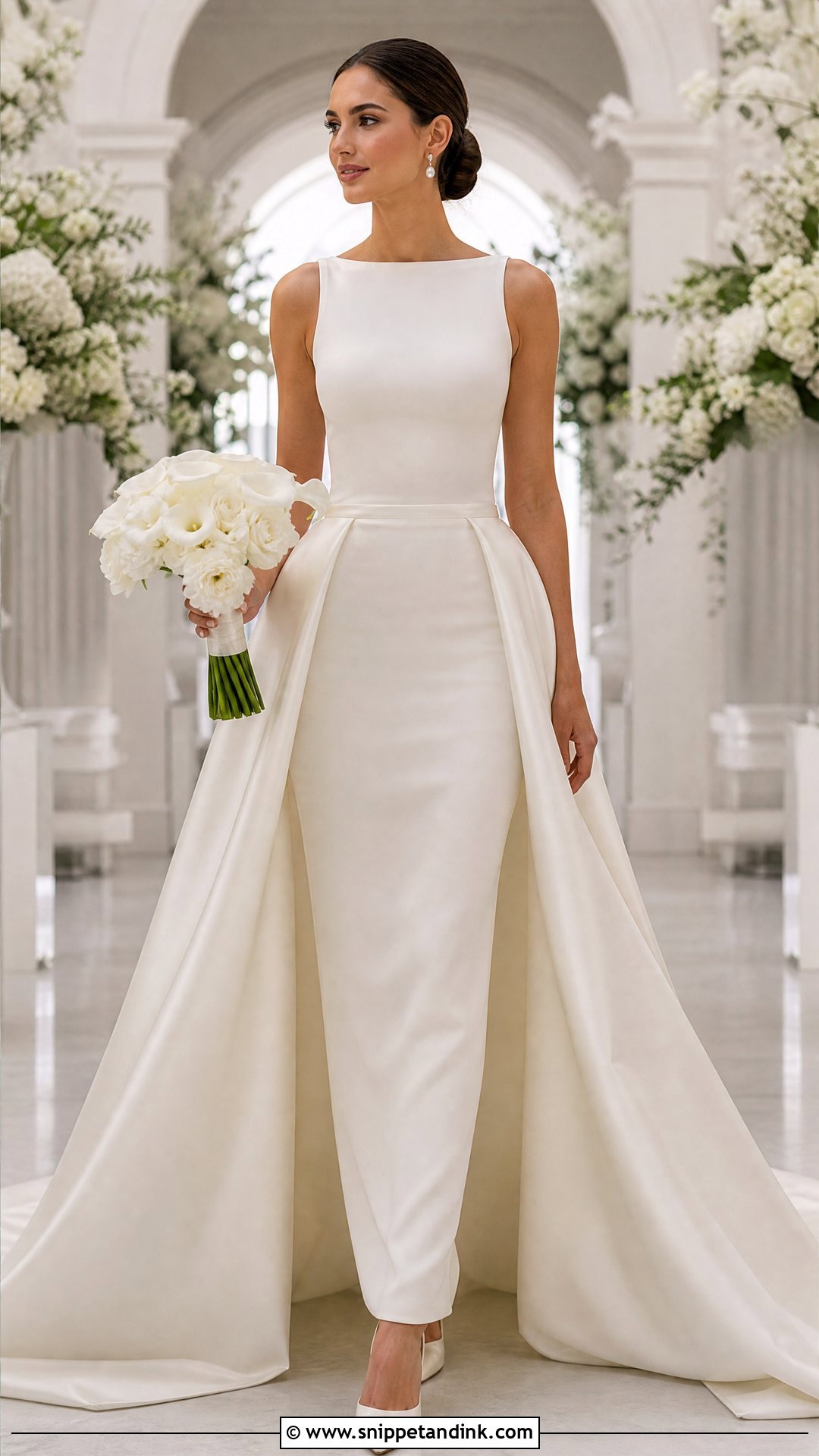
A detachable overskirt gives a slim gown ball-gown volume for the aisle. The base is usually a crepe, satin or lace column, and an open-front overskirt lets that line show as you walk. After portraits, the skirt comes off and you have a lighter dress for dinner and dancing. Pointed pumps, pearl earrings and a structured bouquet suit the ceremony; crystal sandals and smaller earrings suit the party. The waistband is where I spend the fitting time. Hooks need hiding under a narrow band, and the overskirt must sit flat without twisting the fitted gown beneath.
2. Mini Wedding Dress With Removable Ball Gown Skirt
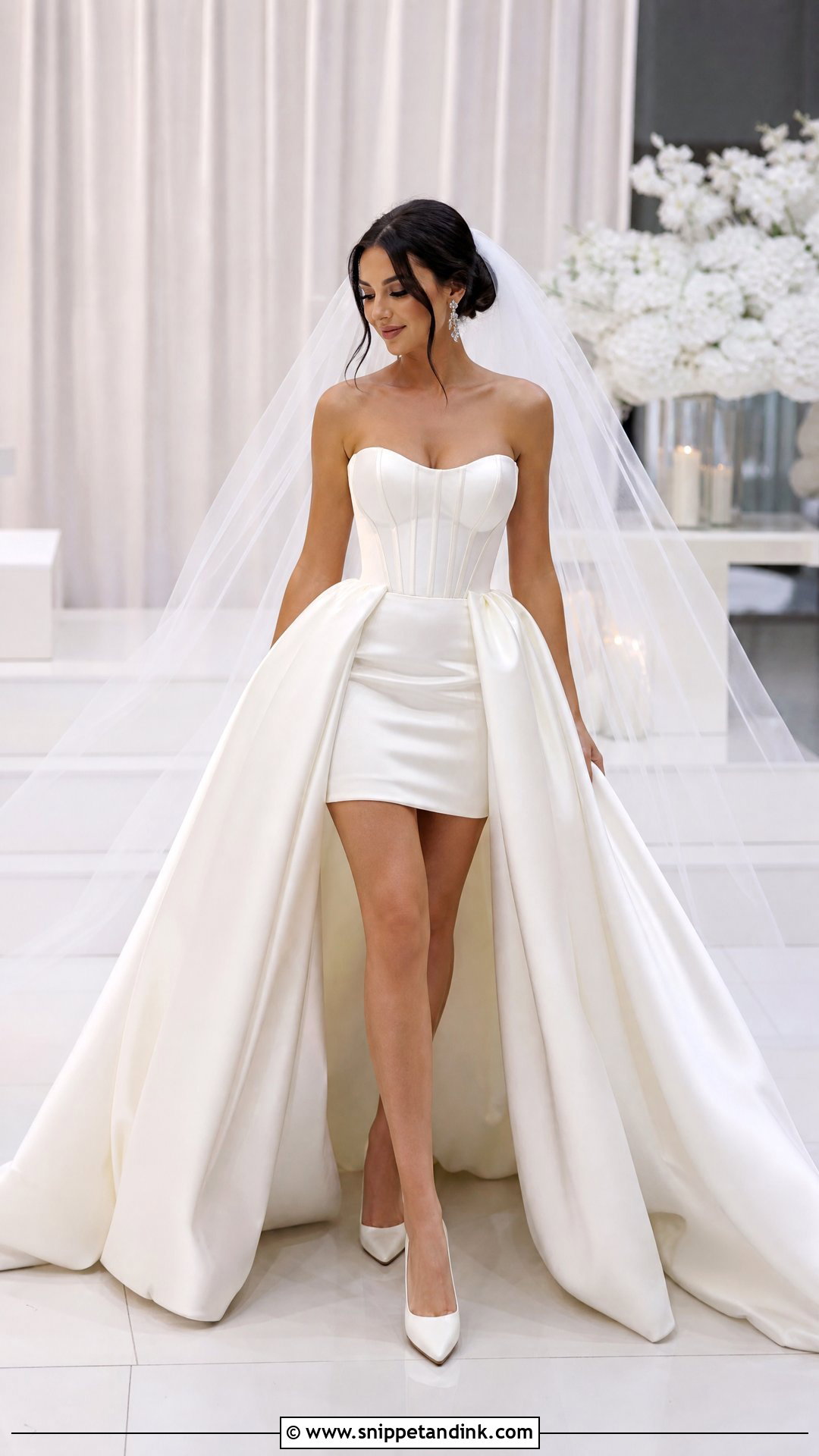
Walking in to a full ball gown and out to a mini is the biggest change on this list. It depends on the mini being properly built, with a corset bodice, secure straps or internal boning, because it carries the weight of the long skirt all through the ceremony. A floor-length satin or tulle skirt fastens around the waist so the two read as one gown. For the aisle, a cathedral veil, drop earrings and pointed heels; for the party, sparkly earrings, a small bag and comfortable embellished pumps. I’d keep the mini’s hem at a refined length, and match the fabrics so it looks designed as a pair.
3. Wedding Dress With Detachable Lace Sleeves
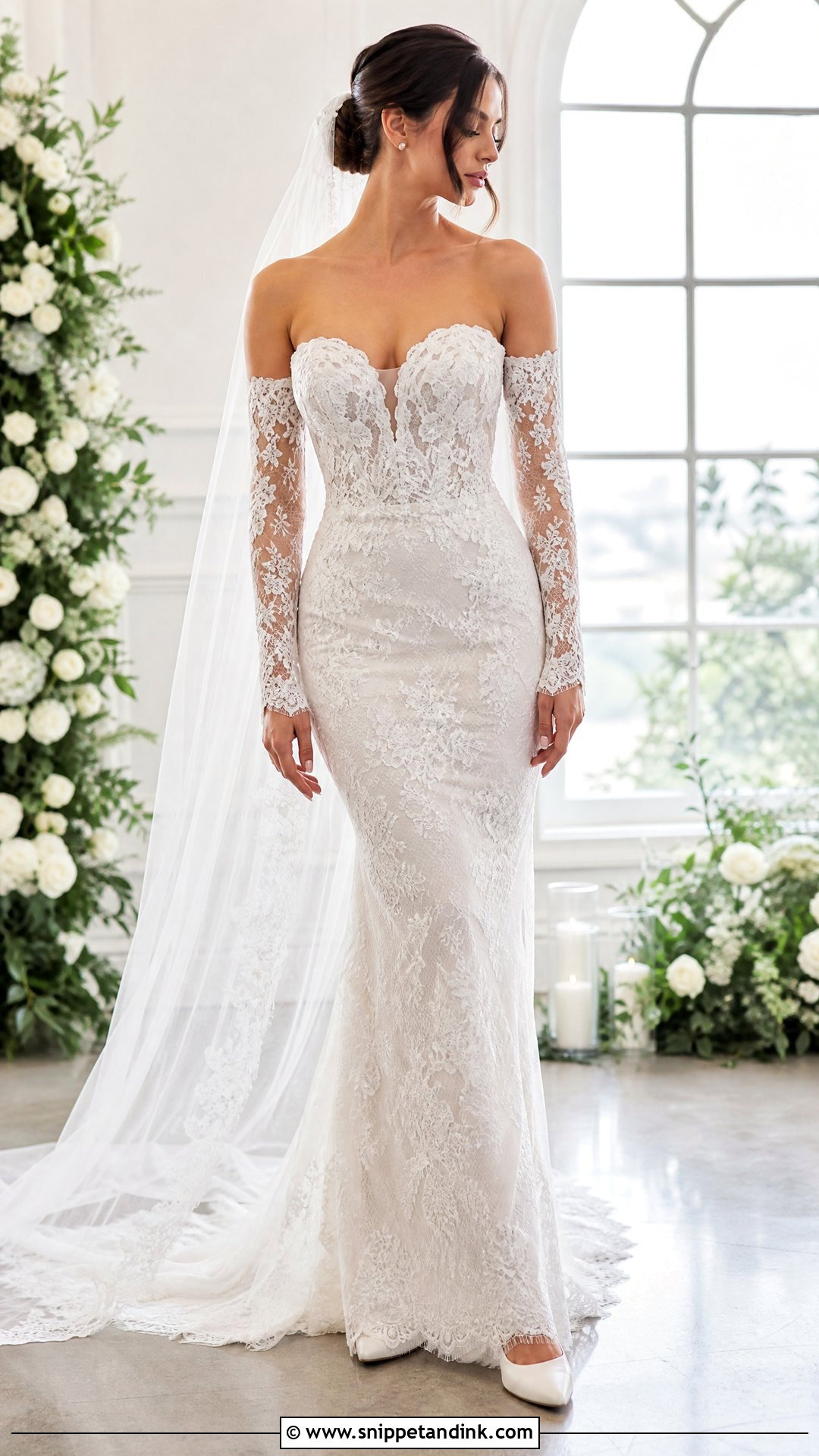
Detachable lace sleeves take a strapless or thin-strap gown from covered to bare in a few minutes. They look right only when the gown already carries matching appliqués, otherwise the sleeves read as borrowed. Long fitted sleeves suit a cold day or a formal church, styled with a low bun, a delicate veil, pearl studs and closed-toe satin shoes. Afterwards, loosen the hair or add bolder earrings to draw attention to the open neckline. Snaps, buttons or elastic all work as fasteners depending on the bodice. Raise your arms and sit down in them at the fitting, because sleeves attached at the armhole tend to dig in.
4. Off-the-Shoulder Wedding Dress With Removable Straps
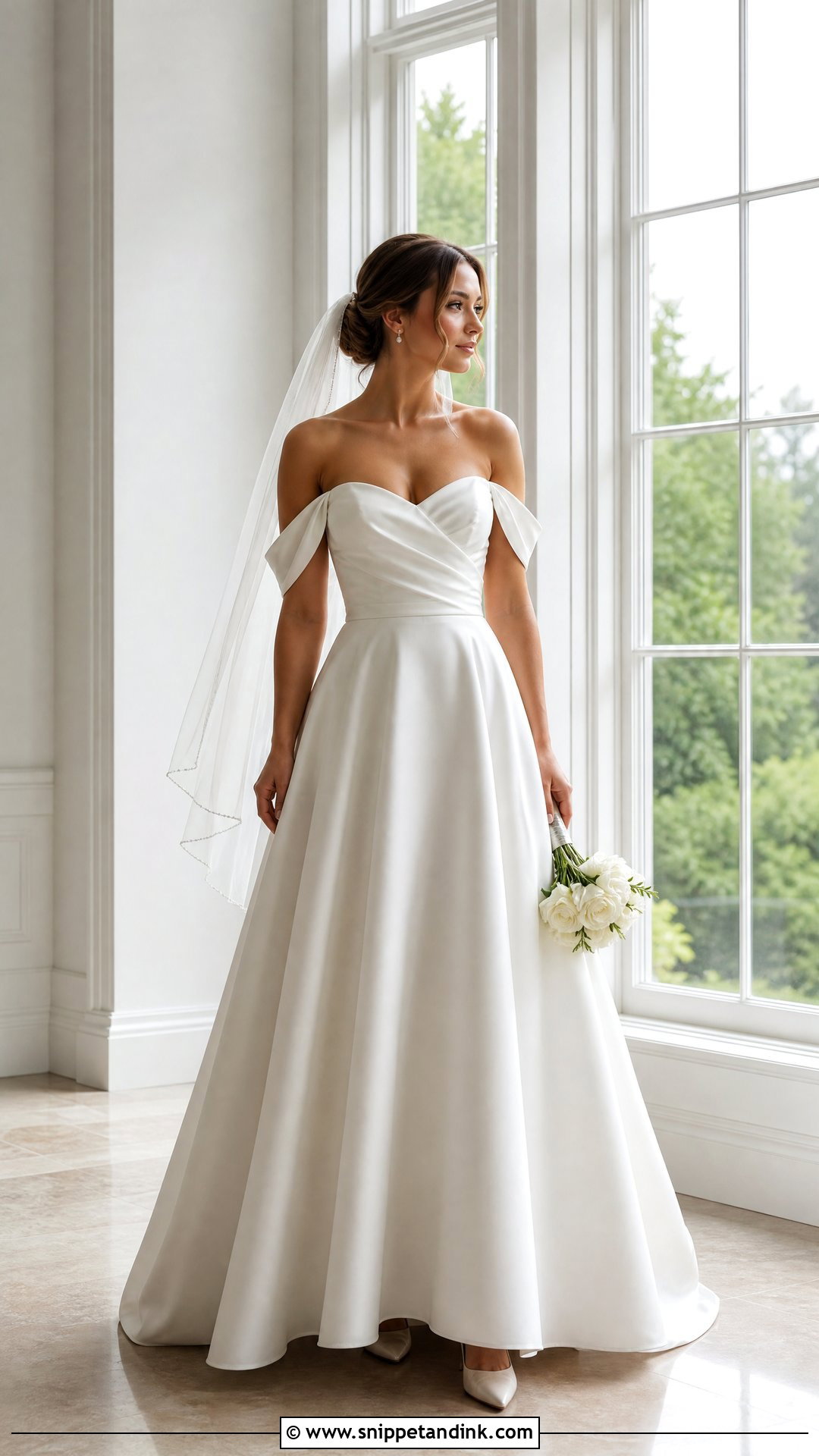
Off-the-shoulder straps soften a strapless dress for the ceremony without changing its neckline for good. Draped satin bands suit a minimal gown; floral lace straps suit an embellished one. Wear them with a fingertip veil, simple earrings and classic pumps, then take them off and switch to a sleek ponytail, bold earrings and metallic block heels. These straps are decoration, not support. If the bodice relies on them to stay up, the strapless version won’t hold once they are removed, so I always fit the gown strapless first. Match the strap fabric to the dress exactly.
5. Wedding Dress With Detachable Bridal Cape
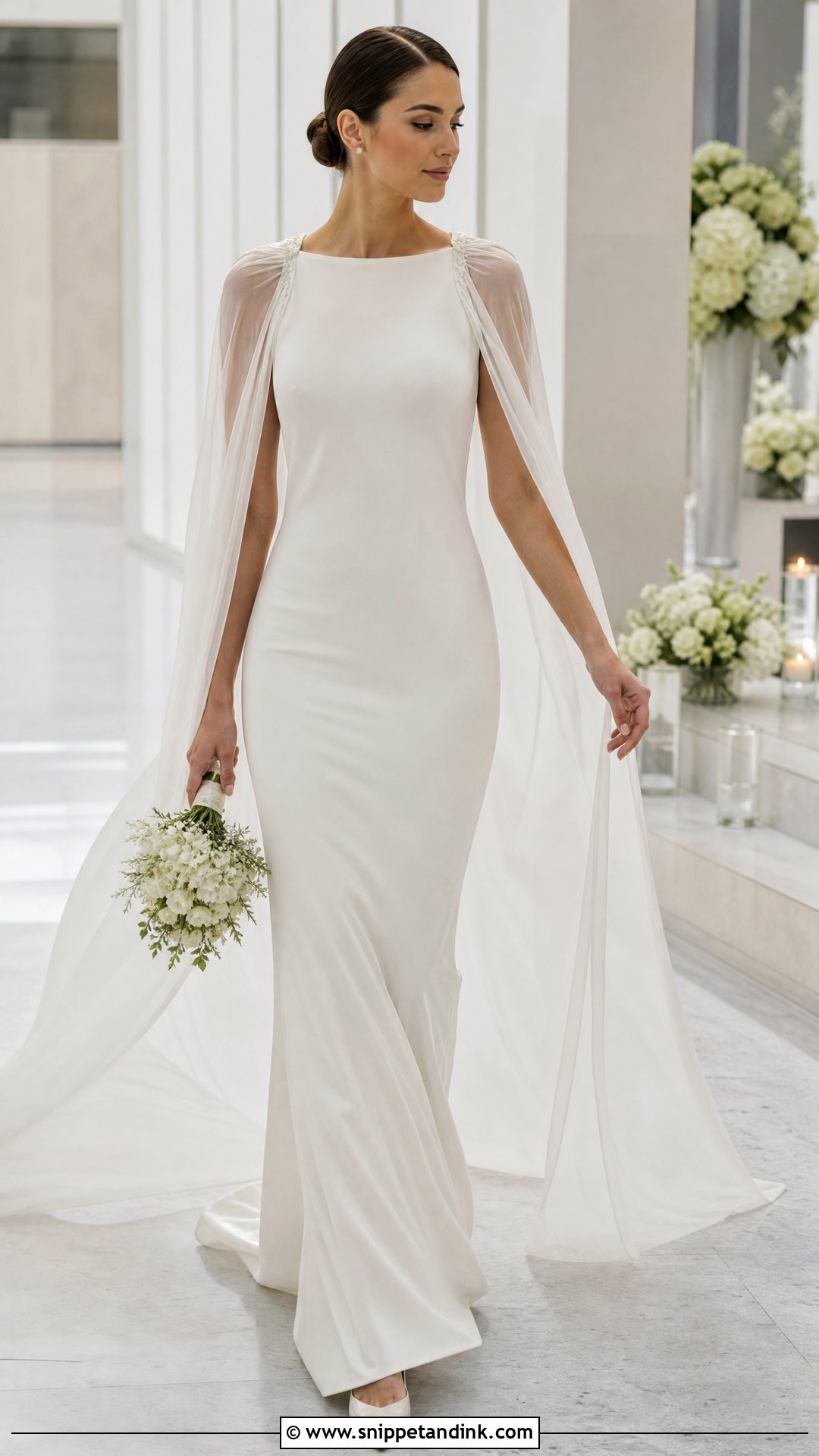
A cape brings movement and a sense of occasion to a simple gown, then leaves it easy to wear for the rest of the night. A satin column, fitted crepe or understated A-line underneath gives the cape room to be the feature. Sheer tulle floats, lace adds romance and smooth fabric looks modern. Style it with polished hair, studs, pointed shoes and a compact bouquet. Take it off before dinner and add a bracelet or bigger earrings. Check where the cape fastens: a long one pulls backwards on the shoulders, and fine straps or a straight neckline can be dragged out of place.
6. Wedding Dress With Removable Cathedral Train
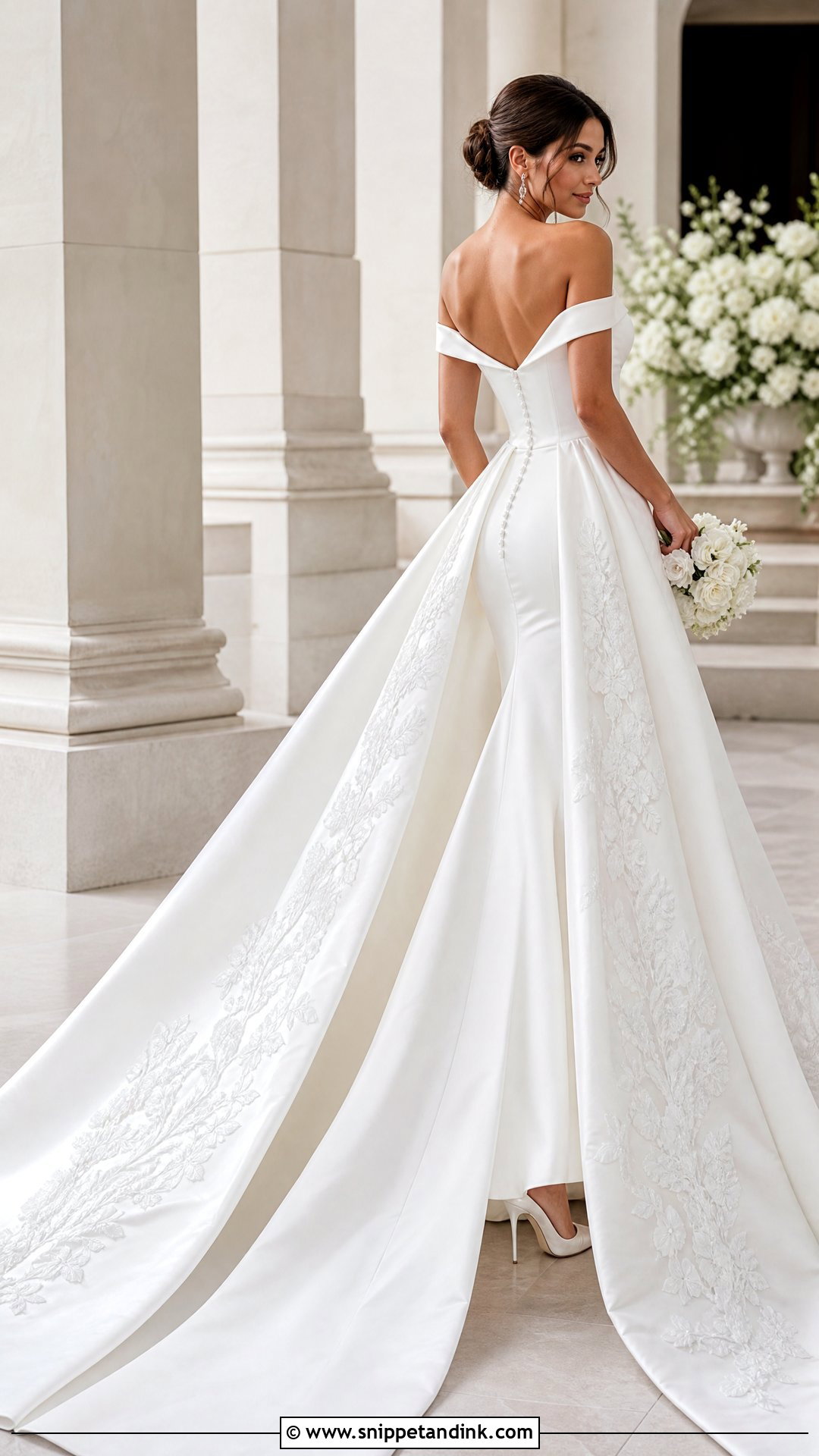
A detachable cathedral train gives you the long-gown entrance and saves you from a complicated bustle later. Start with a fitted trumpet, sheath or slim A-line that moves easily on its own, and attach a matching train at the waist or lower back for the ceremony. A shorter veil, understated jewellery and satin pumps keep the train the star. After portraits it comes off and you change into dancing shoes. I hide the attachment under lace, beading or a narrow waistband, and I ask the helper to practise removing it, folding it into its bag and checking the gown for any loose hooks.
7. Wedding Dress With Detachable Statement Bow
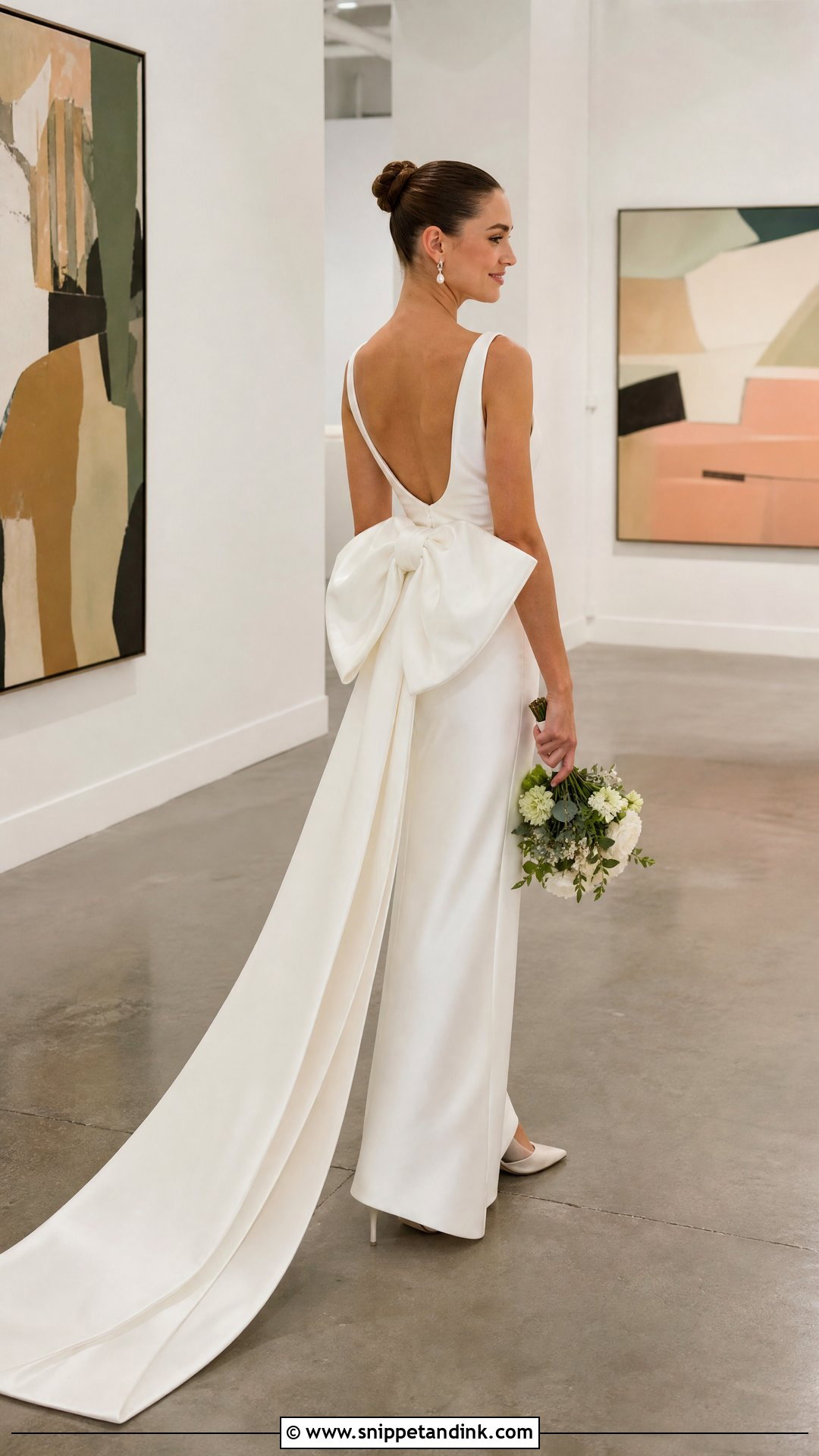
A big detachable bow changes the back of a plain gown without adding layers. It sits at the waist of a satin ball gown, a fitted column or a structured A-line. Long tails can mimic a train for the aisle; a compact sculptural bow looks more contemporary. A smooth bun, pearl earrings and pointed heels keep the focus behind you. Taking it off at the reception reveals buttons, a low back or a sharp waist, and a sparkling hair piece takes over. Large bows need interfacing to hold their shape all day, and a firm anchor so they don’t droop off centre and drag the dress fabric.
8. Wedding Dress With Removable Lace Topper
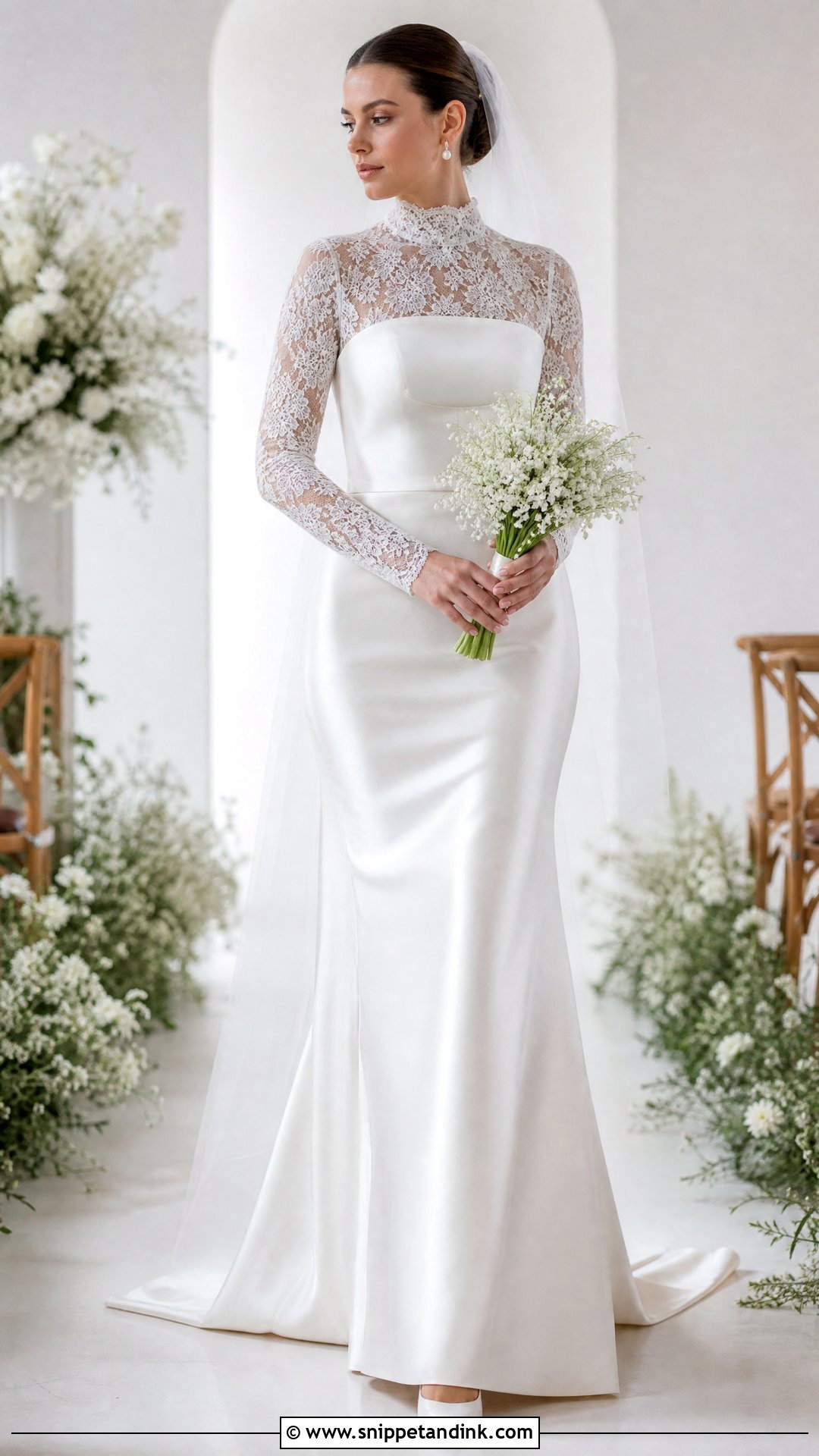
A removable lace topper adds coverage and texture, then disappears to leave a clean reception dress. A high-neck or bateau topper over a strapless satin, crepe or silk gown is the classic version, with cap sleeves, long sleeves or buttons down the back. Pair it with an understated veil, pearl earrings and closed-toe heels. Once it is off, a necklace, statement earrings or a brighter lip changes the mood. The topper should fit closely without squashing the bodice. Coordinate the lace with the veil, since two different lace patterns at the head and shoulders look busy.
9. Wedding Dress With Removable Bridal Bolero
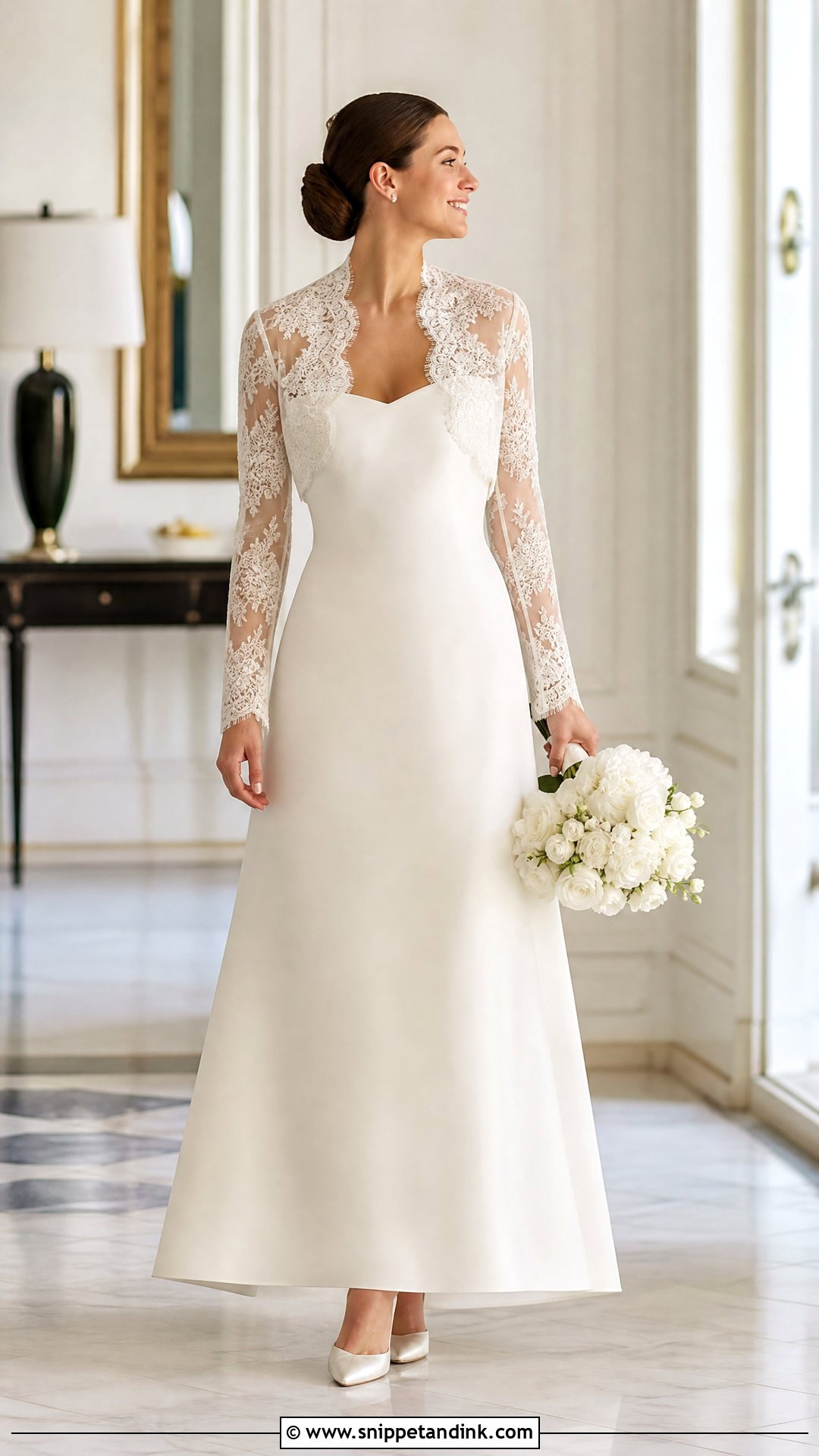
A bolero has more structure than a sheer topper and can change the whole shape of a sleeveless gown. A cropped satin jacket looks modern, lace looks romantic and beading adds texture. Wear it over a simple A-line or fitted gown with a neat updo, small earrings and classic pumps. Remove it and the neckline returns, with a tennis bracelet and comfortable sandals for the party. The hem matters: a bolero that stops above the natural waist cuts the body in an odd place. Check it across the shoulders while you reach forward, as if hugging someone.
10. High-Neck Overlay Wedding Dress
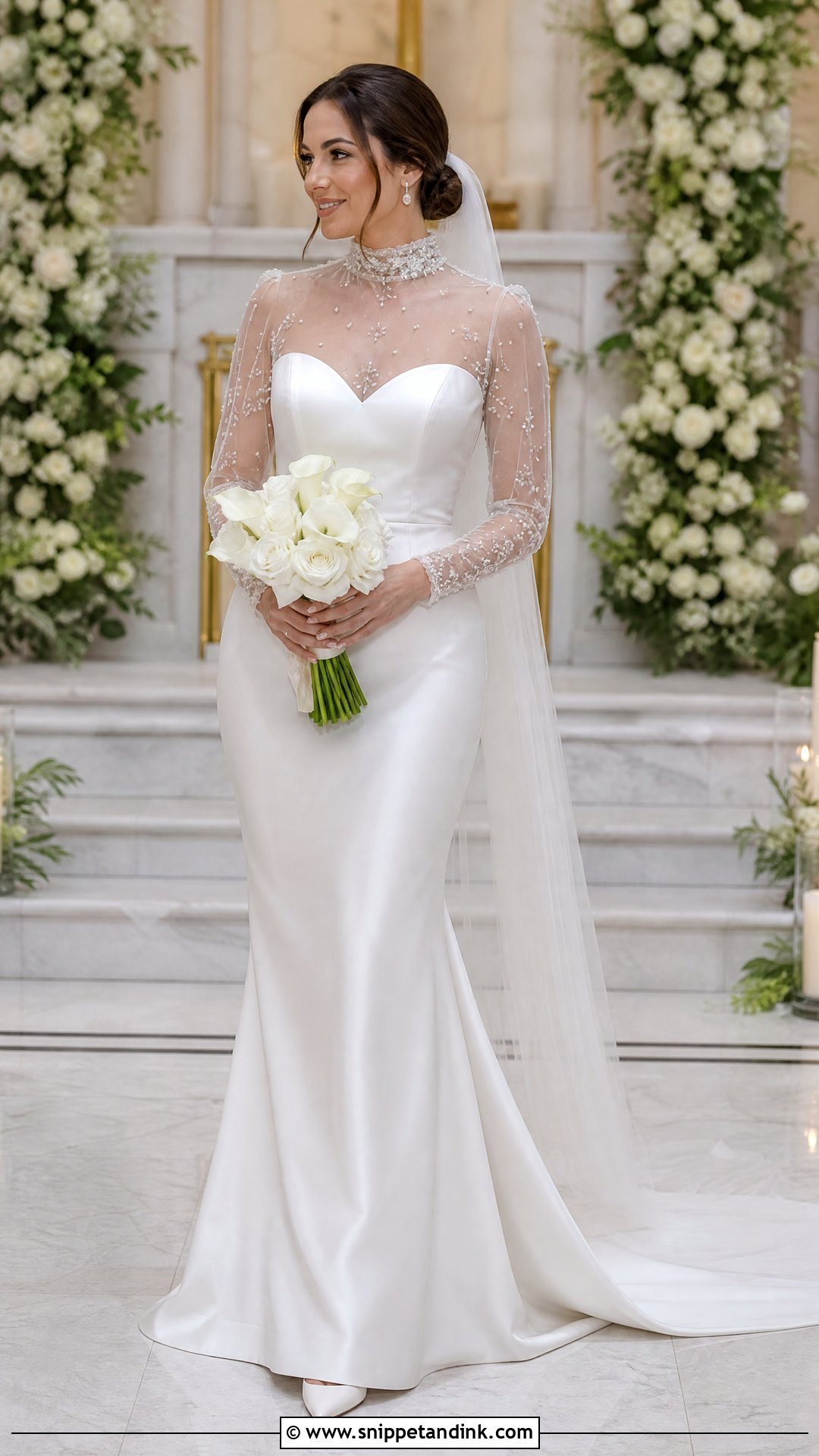
A sheer high-neck overlay turns a sweetheart gown into a covered ceremony dress. Illusion tulle with fine lace, pearls or light embroidery that blends into the bodice gives the best result. Long sleeves look formal; cap sleeves keep it light. A low chignon, drop earrings, a narrow veil and pointed satin shoes suit the covered version. Take it off and the sweetheart neckline is back, ready for a fine pendant or statement earrings. The overlay connects at hidden points along the waist or back. Choose soft mesh, because scratchy tulle against the neck for hours is miserable, and I check the collar edge on the inside before anything else.
11. Tulle Overlay Wedding Dress
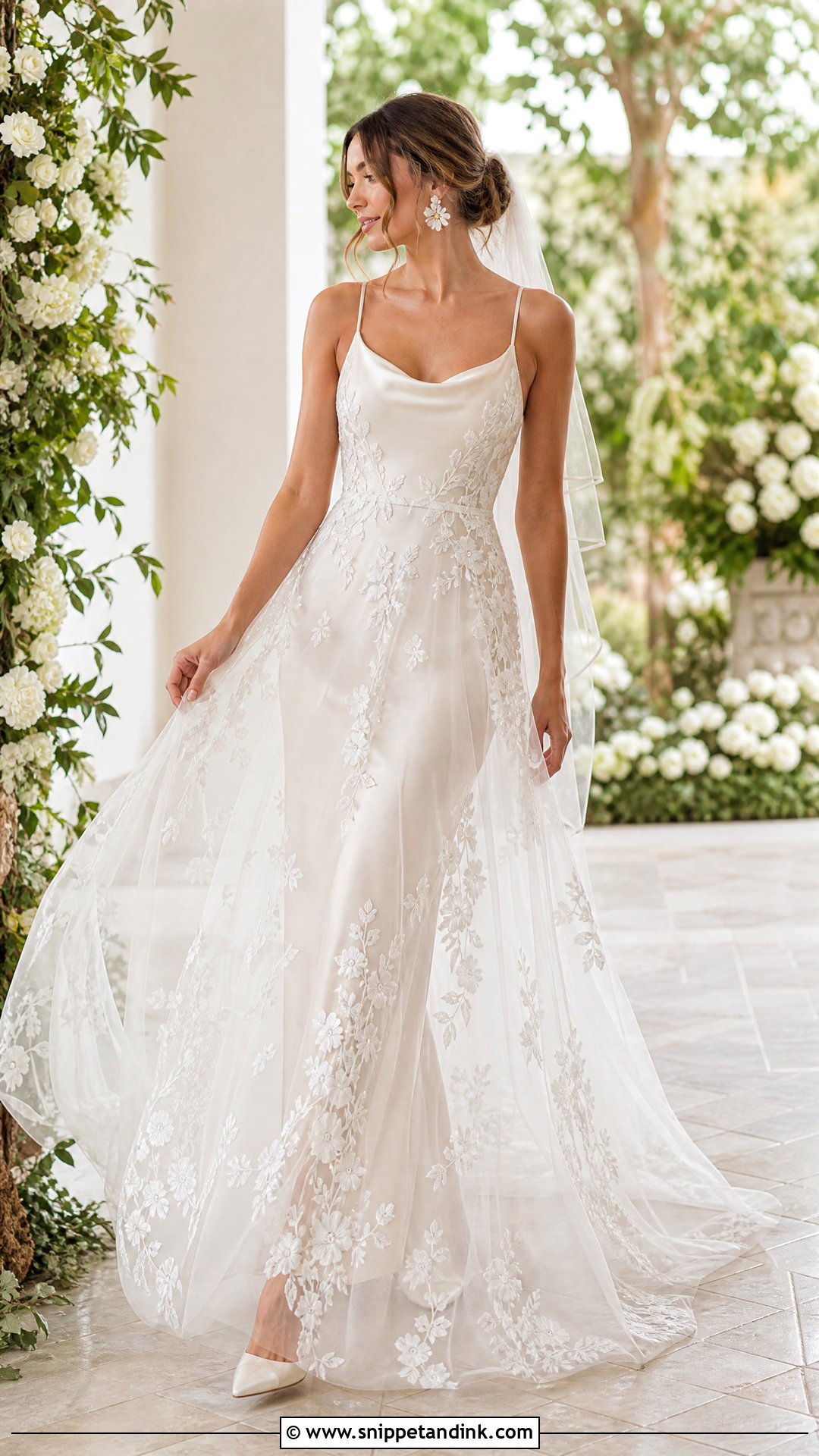
A floor-length tulle overdress over sleek satin is the softest way to change looks. Start with a slip, column or A-line that has a secure neckline, then add tulle with scattered appliqués, light embroidery or near-invisible buttons. For the ceremony, a light veil, floral earrings, pointed heels and a loose low bun. For the reception, the bare satin looks modern, with a jewelled comb and a small bag. The tulle has to float rather than cling. When it is cut too close, it catches on the satin and lifts in static ripples, so I leave a little ease through the hips.
12. Beaded Overlay Wedding Dress
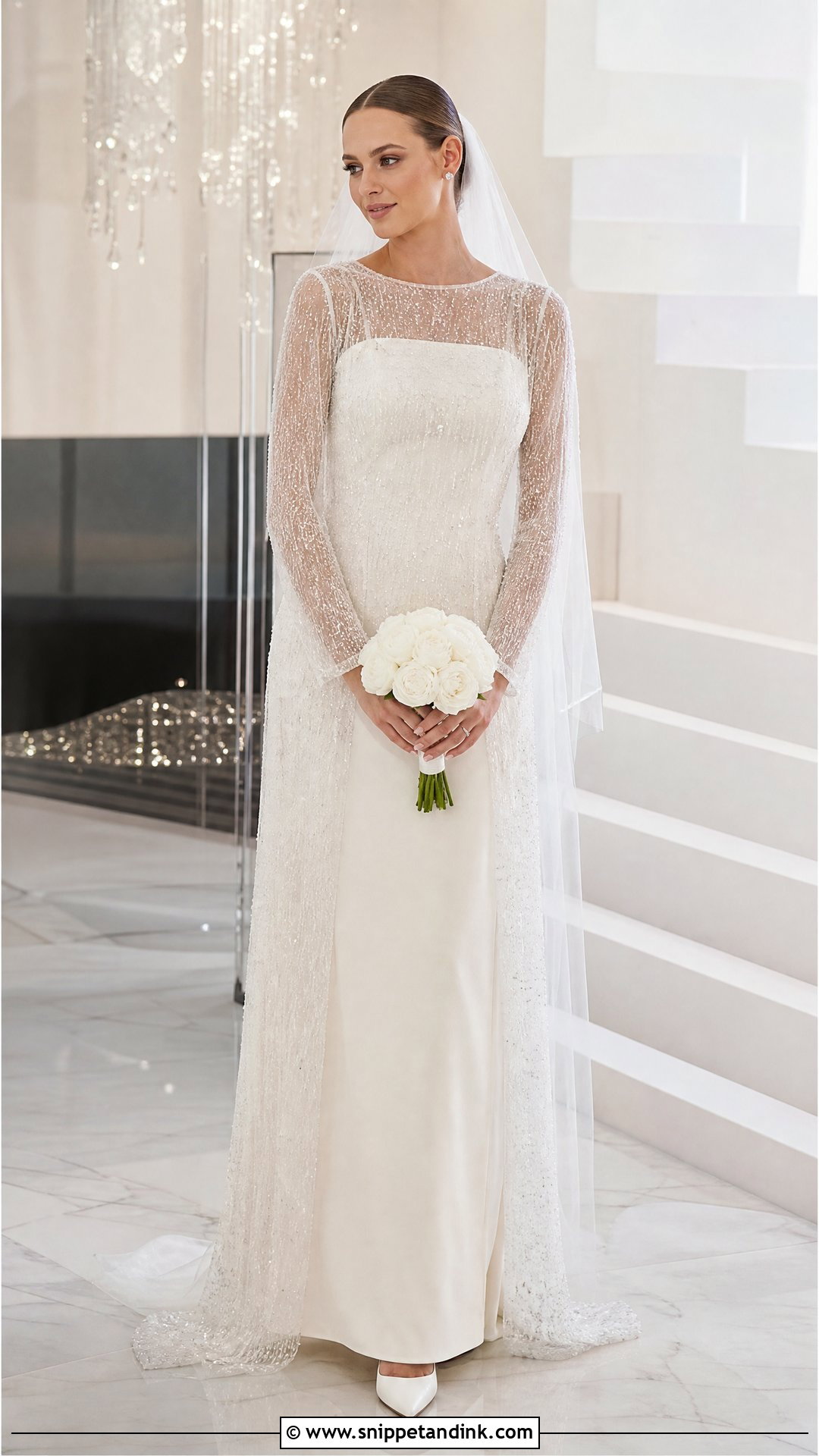
A beaded overlay gives you sparkle for the ceremony and quiet minimalism after. A sheer crystal layer can sit over a satin column, crepe sheath or structured slip without altering it. Keep the aisle accessories restrained: studs, a plain veil and ivory pumps. Once it’s off, a crystal belt, bold earrings and silver sandals carry a little shine into the night. Beading is heavy, so the overlay needs comfortable support at the shoulders and waist. Turn it inside out before the day and run your hand over every seam. One loose bead thread can pull a ladder in silk.
13. Wedding Jumpsuit With Detachable Overskirt
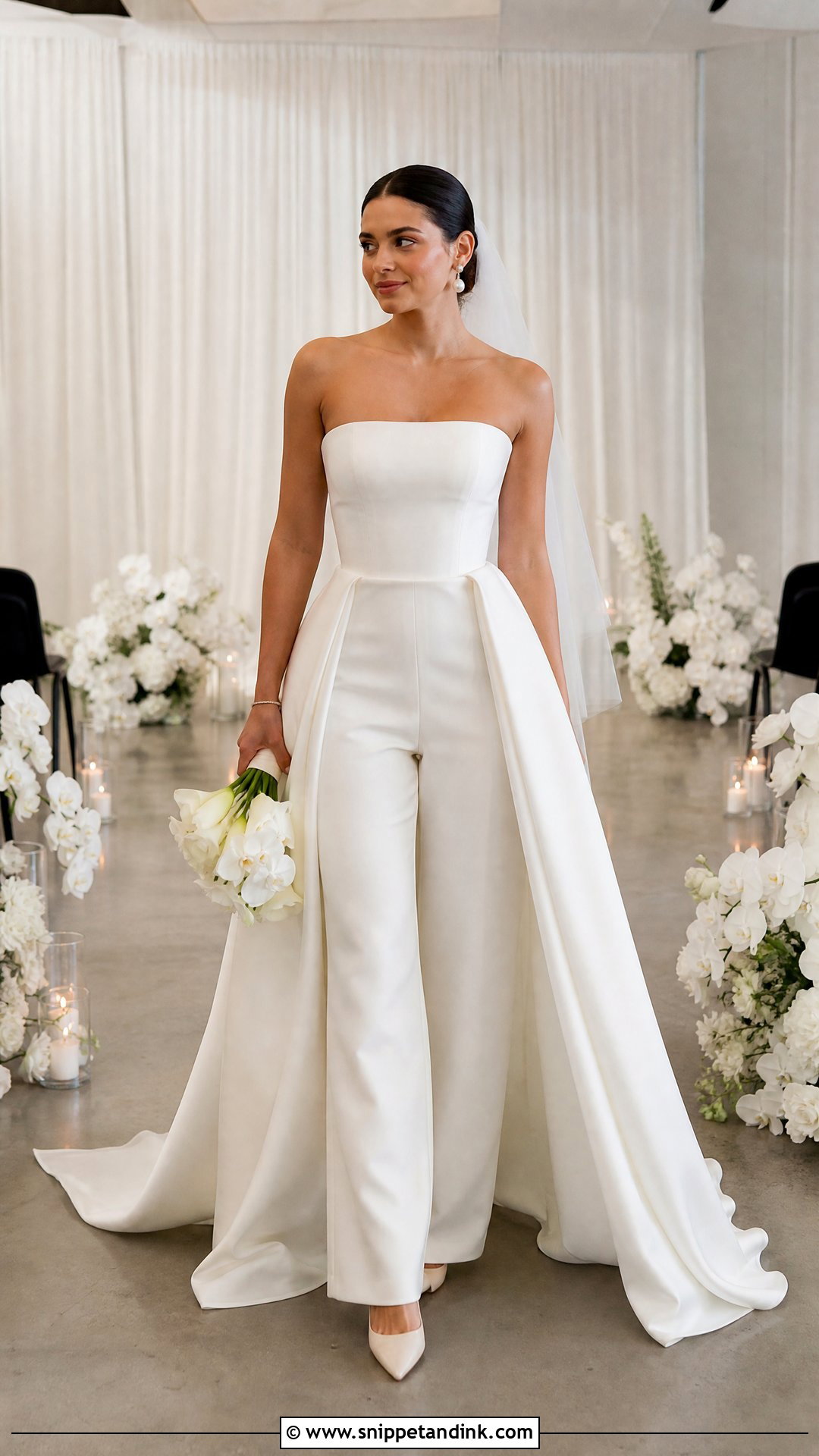
A jumpsuit under a detachable overskirt surprises guests and makes the dancing much easier. Choose a tailored jumpsuit with wide legs, a defined waist and a structured strapless or sleeved top, then layer a full satin, organza or tulle skirt over it. Pointed heels, pearl earrings and a sleek veil complete the aisle look. With the skirt off, a metallic clutch and sculptural earrings sharpen it. The overskirt waistband has to sit flat over the jumpsuit’s own closure, which takes careful fitting. Hem the trousers for the shoes you’ll dance in, and check them with the ceremony pair too.
14. Bridal Separates With Skirt And Trousers
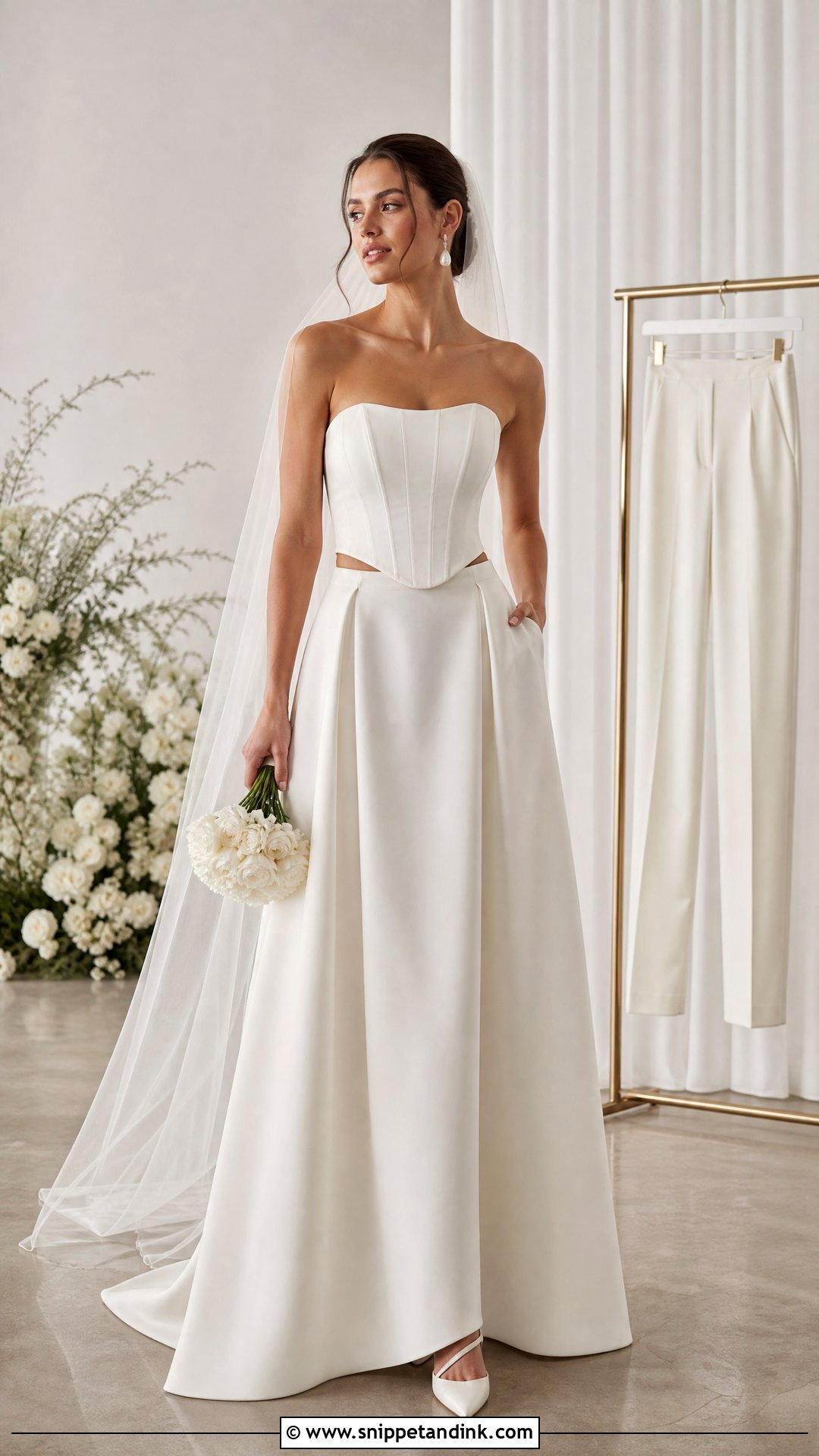
Separates let one statement top lead two outfits. Begin with a corset, lace blouse or structured satin bodice. For the ceremony, a flowing A-line skirt, a veil, delicate earrings and pointed pumps. For the reception, tailored high-waisted trousers, a small shoulder bag, modern earrings and comfortable heels. The ivories have to match, or the textures have to contrast on purpose; anything in between looks like an accident. I check the waist on both bottoms, since a skirt and trousers rarely sit at the same height, and the top needs to stay tucked or attached through dancing.
15. Wedding Dress With Detachable Peplum
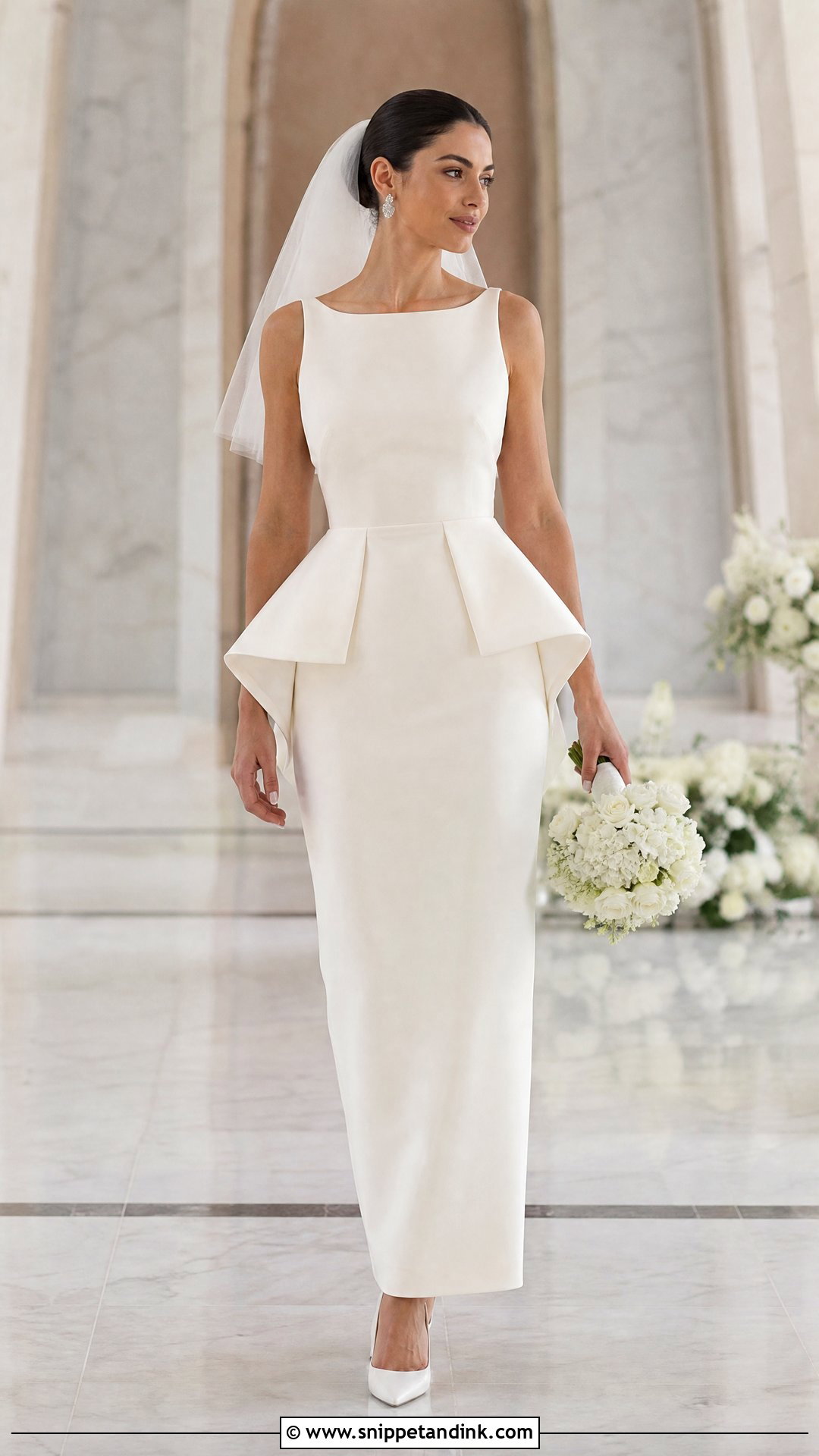
A detachable peplum defines the waist of a fitted gown and gives it a sculptural ceremony shape. Crisp satin, pleated organza, floral lace or soft draping all work. It wraps around a column, trumpet or sheath, worn with a short veil, simple earrings and sleek pumps. Remove it for a smoother reception line, adding a jewelled belt, statement earrings and block-heel sandals. A peplum flatters some figures and widens others, so I pin up two or three widths at the fitting. Its closure must lie flat from every side.
16. High-Low Convertible Wedding Dress
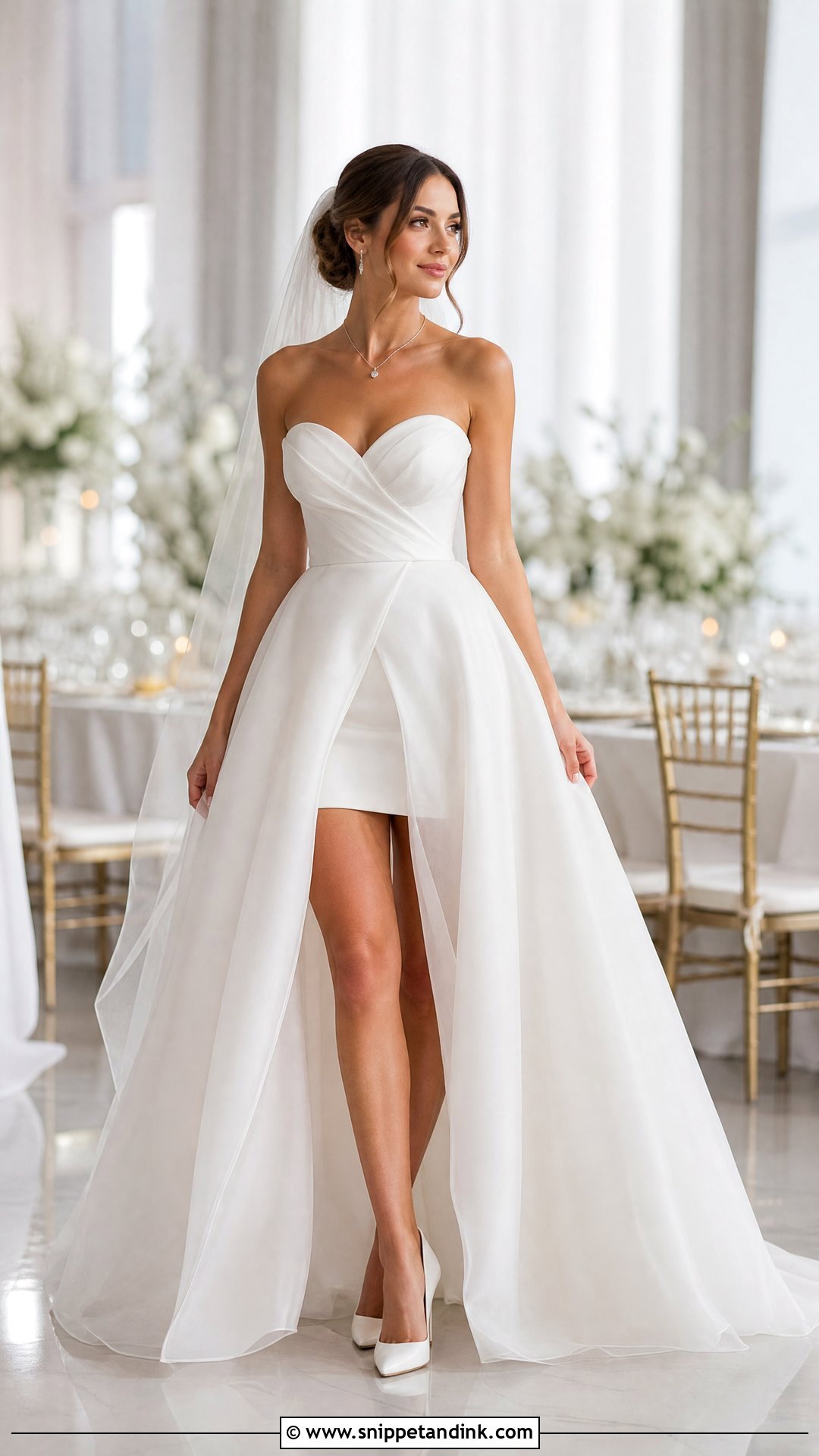
A removable skirt can turn a short or high-low dress into a floor-length gown for the ceremony. The base might be tea-length, a fitted mini or asymmetric, revealed later. The full outer skirt matches the bodice and runs into a soft train, worn with pointed heels, a neat veil and delicate jewellery. When it comes off, the shorter hem shows your shoes and frees your legs, so embellished ankle-strap heels and larger earrings take over. The underdress must look finished, not like a lining. In sheer outer fabric, a short hem can show through, and that is a fitting-room check, not a wedding-day surprise.
17. Wedding Dress With Removable Modesty Panel
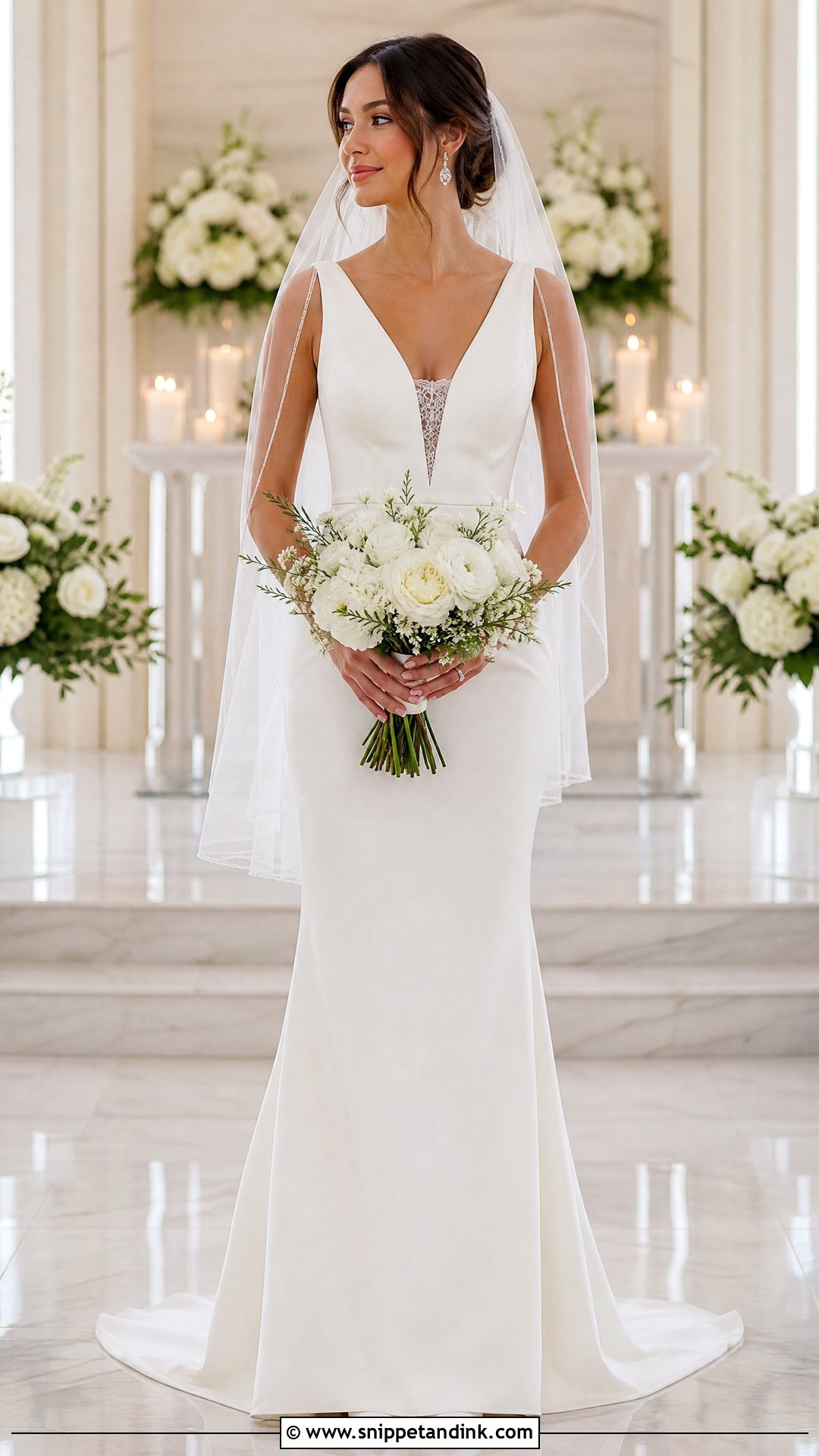
A removable modesty panel adds neckline coverage without hiding the gown’s shape. An illusion, lace or matching satin insert fills a plunging V for the ceremony, worn with a fingertip veil, delicate earrings and closed-toe heels. Take it out and the original neckline returns for a sleeker, more modern reception, balanced with a sleek hairstyle, a fine necklace and block heels. The insert must follow the neckline exactly and stay flat as you move. I match lace placement, lining colour and embellishment density so it reads as part of the bodice, not a patch.
18. Convertible Strap Wedding Dress
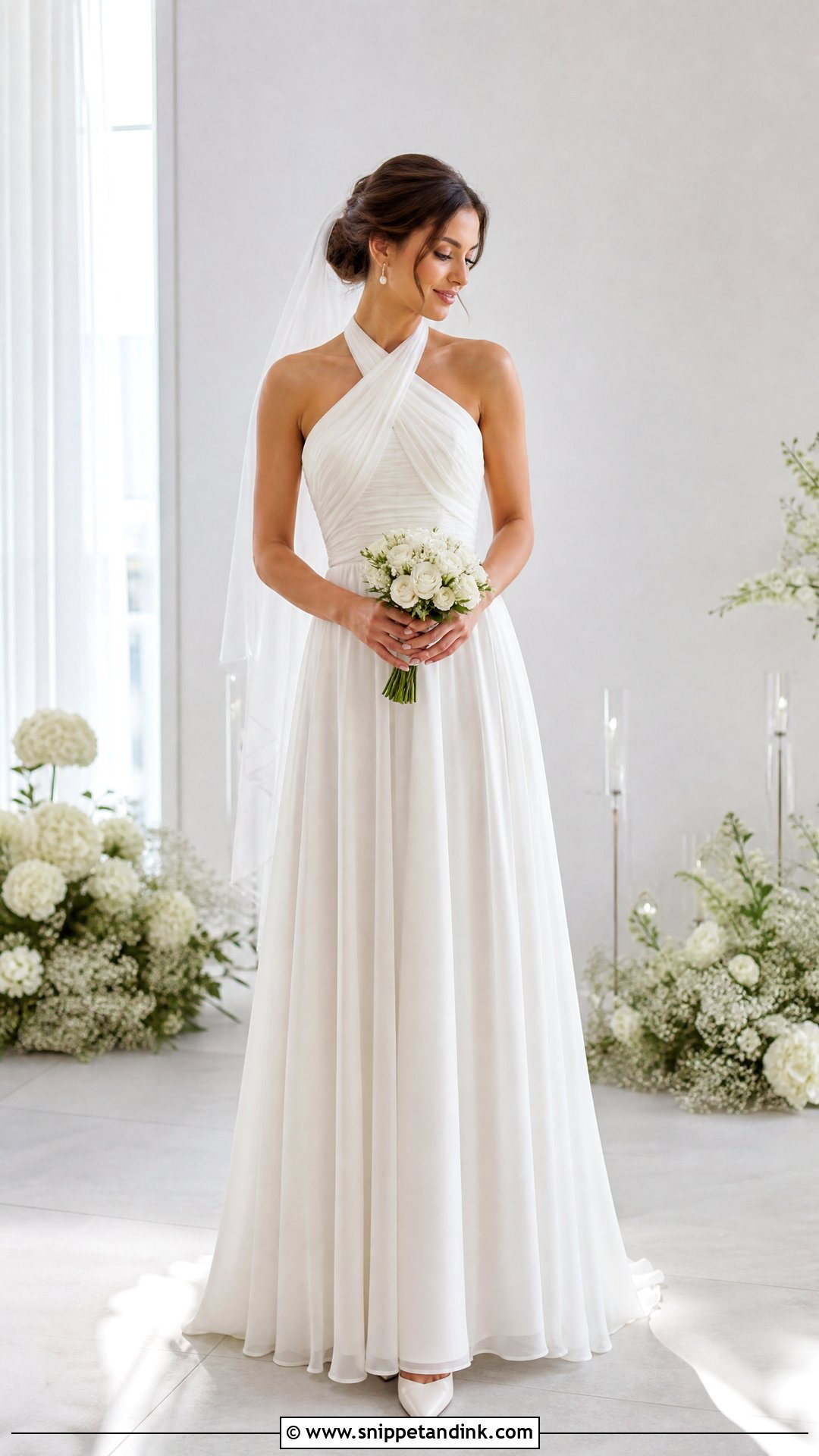
Long satin or chiffon ties let one gown change neckline several times: halter, crossed at the back, wrapped off the shoulder or as plain straps. Pick one secure version for the ceremony, with a veil, understated earrings and pointed pumps. Switch to a more open shape for the reception, drop the veil and add a bracelet and comfortable sandals. Practise every arrangement before the wedding, since tying a halter neatly on yourself is harder than it looks. The bodice has to support you in all versions. Hidden loops, snaps and a written diagram stop the ties twisting.
19. Wedding Dress With Detachable Skirt And Sleeves
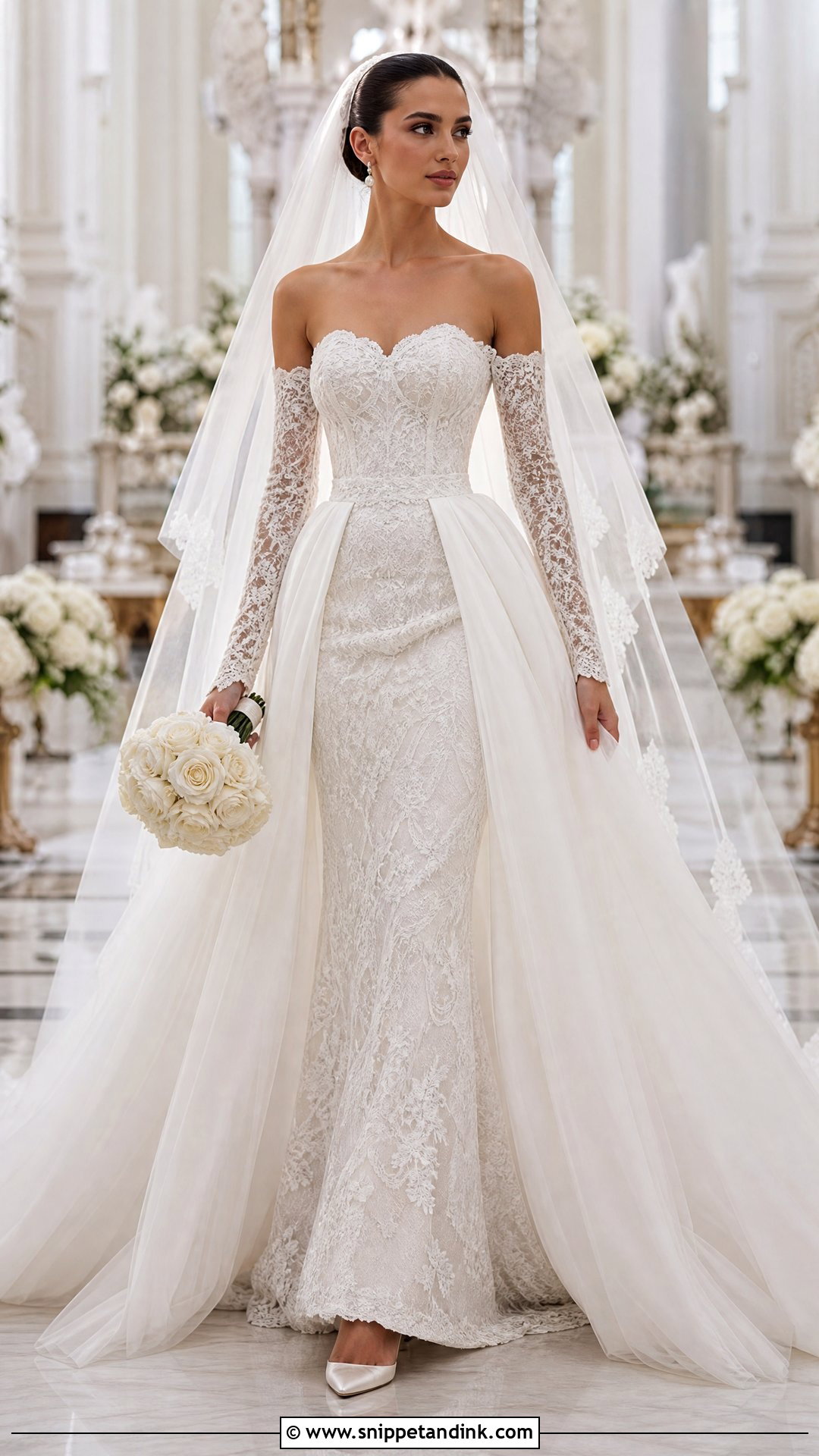
Removable sleeves plus a detachable overskirt can give you three looks from one base gown. Start with a fitted strapless dress. Sleeves and overskirt together make the most formal ceremony version, with a veil, pearl earrings and satin pumps. Remove the sleeves for portraits and you have a strapless ball gown. Take off the overskirt before the reception for a sleek dancing dress, with statement earrings and supportive block heels. With so many attachment points, the fittings take longer and the plan needs writing down. I label a bag for each piece and brief one helper who knows exactly how every fastener opens.
20. Heirloom Wedding Dress Transformation
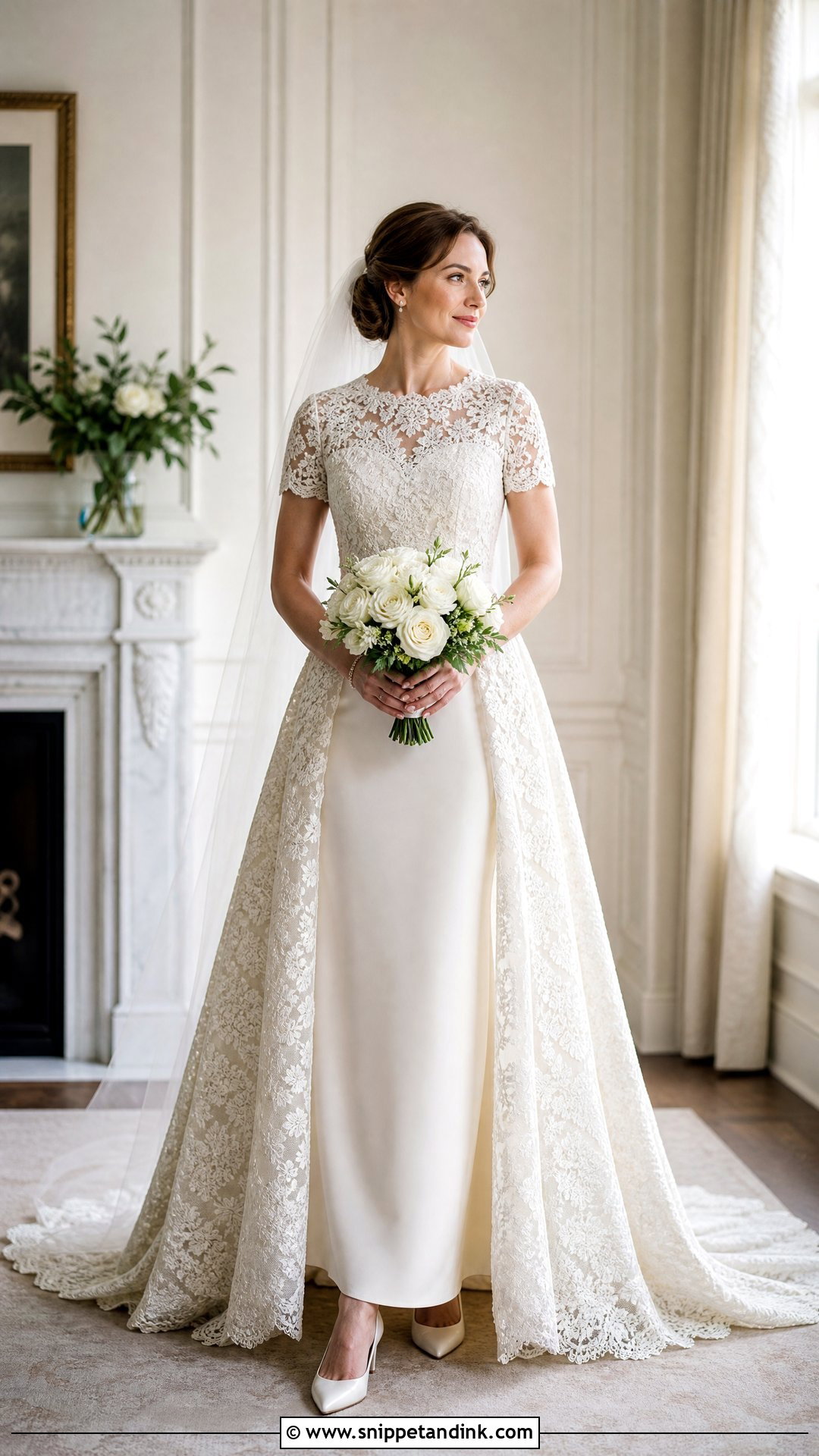
An heirloom wedding dress can be updated while keeping the fabric and details your family will recognise. A skilled seamstress might reshape the bodice, take off oversized sleeves, change the neckline or turn part of the skirt into a detachable overskirt. Old lace can become straps, a topper, gloves, a veil edge or appliqués on a simple new base. Pair it with classic pumps, quiet jewellery and a bouquet that suits the dress’s era, then remove the vintage layer to reveal a modern column, mini or tea-length dress. Start early. Old silk and lace can be brittle, so nothing should be cut until the whole redesign has been planned, and leftover fabric should be stored safely.
How Long Does the Change Really Take?
Most brides imagine thirty seconds. In practice, removing an overskirt or sleeves in a quiet room, checking the gown and freshening hair usually takes ten to twenty minutes, and longer with a three-piece system. I build that time into the day rather than hoping to squeeze it in.
- Agree the slot with your planner and photographer, usually after portraits or between dinner and the first dance.
- Book a private room close to the reception, with a mirror, a chair and a hook for hanging.
- Bring one helper who has practised at the final fitting, not a crowd.
- Check the bodice, hem and back for loose threads or open hooks once the layer is off.
- Swap shoes, jewellery or hair pieces last, then let the photographer catch the walk back in.
Keep the removed pieces safe. A labelled garment bag on a hanger stops a tulle overskirt being crushed under coats, and it should go home with someone reliable that night. If you ever want to sell or preserve the dress, the cleaner will need every piece together.
Two Outfits, One Fitting Schedule
A good transformation looks planned in every version, never like an accessory added at the last minute. A removable skirt gives the biggest change; sleeves, capes, toppers and trains make smaller ones; jumpsuits, minis and separates give you the most freedom on the dance floor. Whichever you pick, bring every removable piece, accessory and pair of shoes to your fittings. Practise the change before the day and choose the person who will help. Each look should feel secure and comfortable, from the first entrance to the last song.
You'll Like These Ideas:




Leave a Reply