
I tell brides to shop for the skirt first. The bodice gets the attention in the mirror, but the skirt decides how you move, how you sit, how the train behaves on stairs and how much room you need in the car. Classic A-line, ball gown, mermaid and sheath silhouettes are still the useful starting points, and layered fabrics and removable skirts add more flexibility than most people realize. Below are twenty dresses grouped by their skirts, from full satin ball gowns to two-pieces and light beach chiffon, with the shoes, jewelry and veil I’d pair with each and the fitting checks that matter for that shape.
Petticoats, Hoops and Built-In Layers Under a Full Skirt
Most of a skirt’s shape comes from what’s underneath it. Two dresses in the same satin can look completely different depending on the support, so ask what’s built in before you judge a sample.
- Built-in tulle or crinoline layers are sewn into many ball gowns and A-lines. Nothing extra to buy, but you can’t adjust the volume.
- A separate petticoat made of layered net adds fullness and can be swapped for a slimmer one for the reception. Soft tulle petticoats are lighter; stiff crinoline net holds more shape but can scratch.
- A hoop skirt uses flexible bands to hold the skirt out. It gives a wide shape with less weight, though it swings when you walk and needs practice with doorways and sitting.
Buy any separate petticoat before your first fitting, because the hem is measured over it. A hem marked without the petticoat will sit too high once the skirt is fully supported.
The Bathroom Question Nobody Asks at the Shop
With a very full skirt, the easiest method is to sit on the toilet backwards, facing the cistern, with one helper gathering the skirt and petticoat up behind you. A slim skirt is far simpler. Try it once at home in the dress before the day; it settles a surprising number of nerves.
1. A-Line Wedding Dress With Tulle Skirt
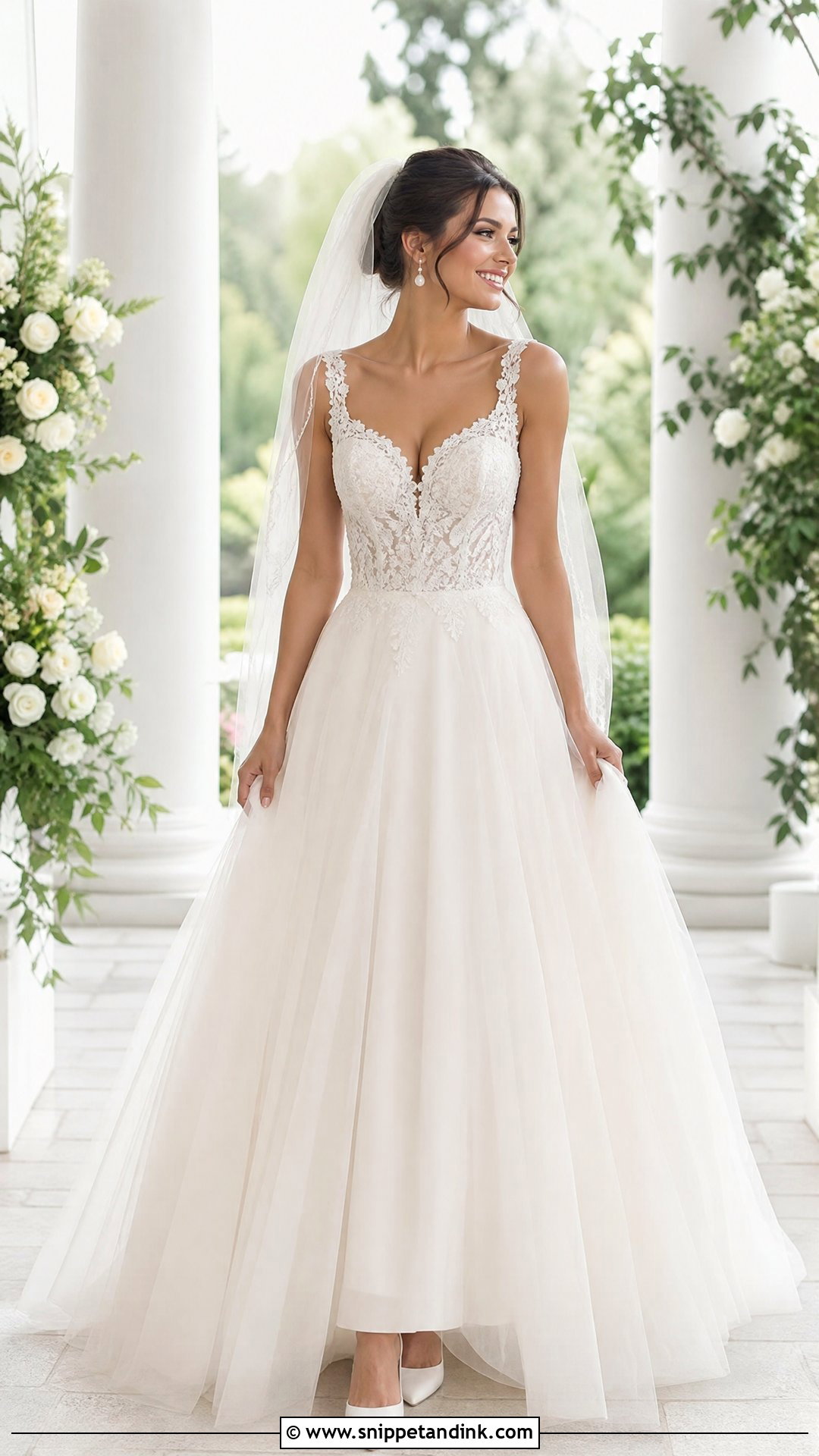
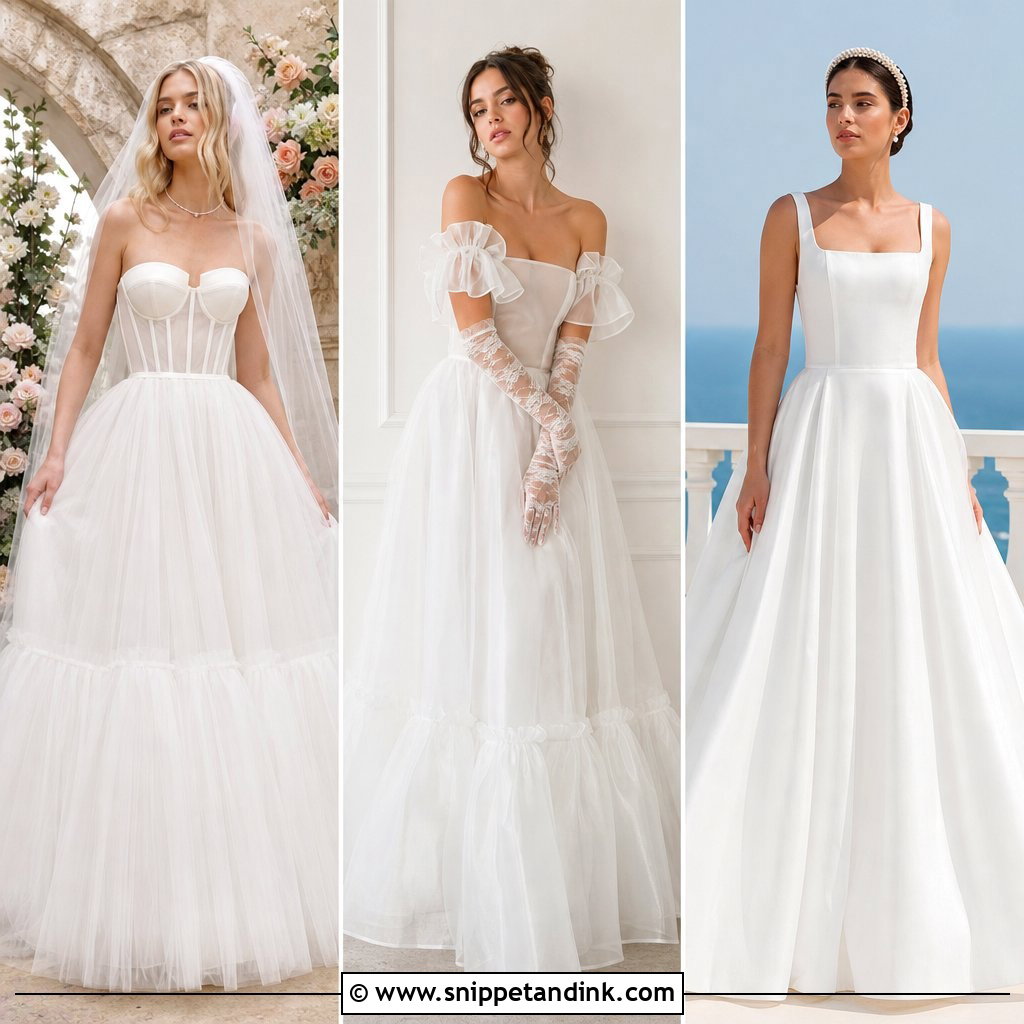
Tulle gives you an A-line’s shape at about half the weight of a ball gown. Several fine layers over a fitted lace or satin bodice that meets the skirt at your natural waist will move with you rather than swing. The thing I watch on tulle is the top layer: it snags on heel buckles and bracelets, so smooth shoes and simple jewelry help. Ivory pointed pumps lengthen the line and pearl drops keep it classic. A fingertip veil adds romance without covering the skirt, and a plain satin clutch suits a beaded bodice. During alterations, sit, walk and turn so you can feel how the layers settle.
2. Ball Gown Wedding Dress With Satin Skirt
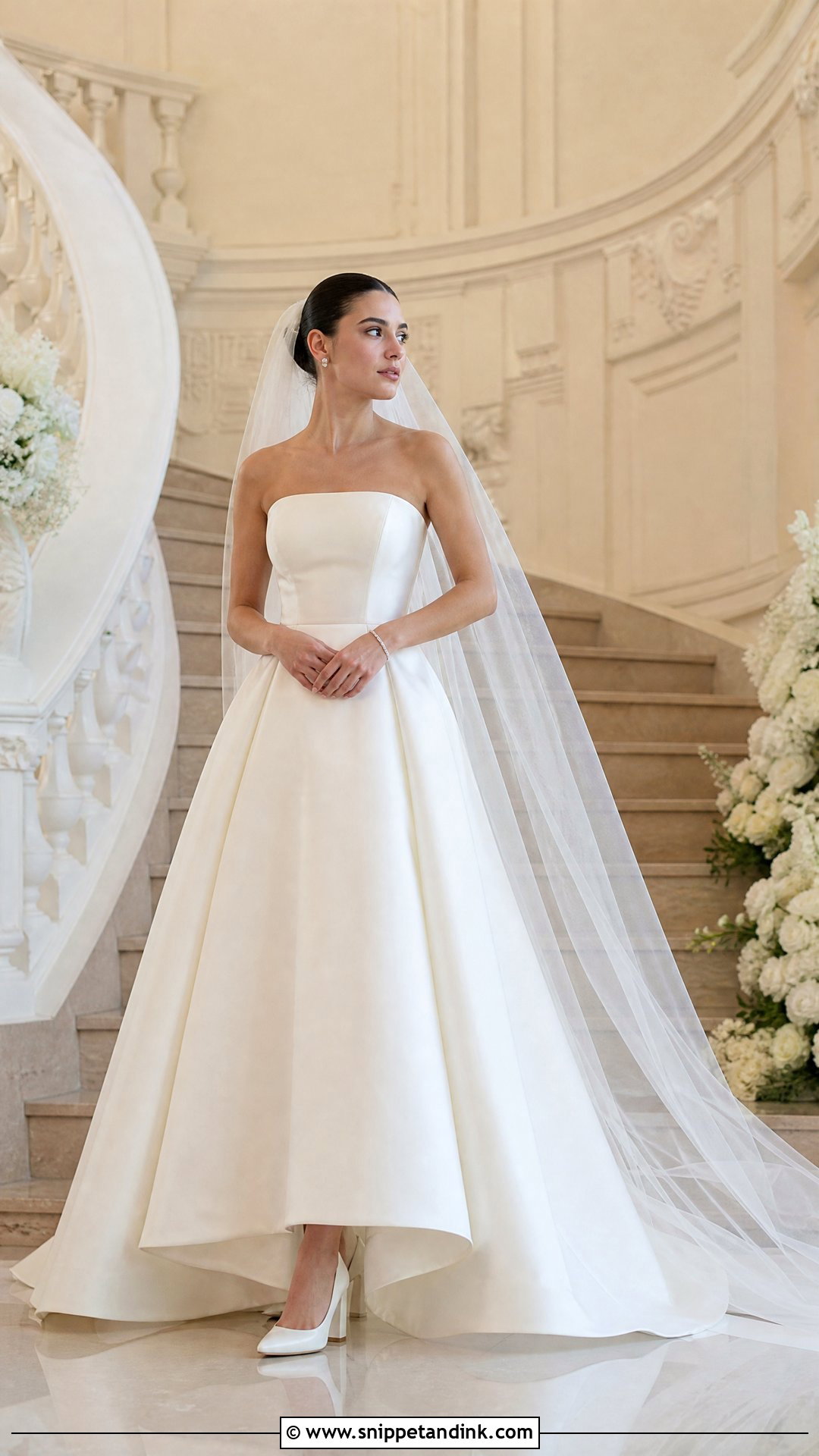
Satin holds its own shape, which is why it makes the smoothest ball gown skirts and why they’re so heavy. On a fitted bodice with a defined waist, the full satin skirt looks polished from any angle in photos. Block-heel pumps give you stability under all that volume. A cathedral veil suits the formality, though a shorter one is far easier to manage with a skirt this wide. Crystal studs, a slim bracelet and a small top-handle bag finish it. Practice walking and turning at home before the wedding, and make sure the bustle is built into the plan; a satin train is too heavy to hold over your arm all evening.
3. Lace Wedding Dress With Layered Skirt
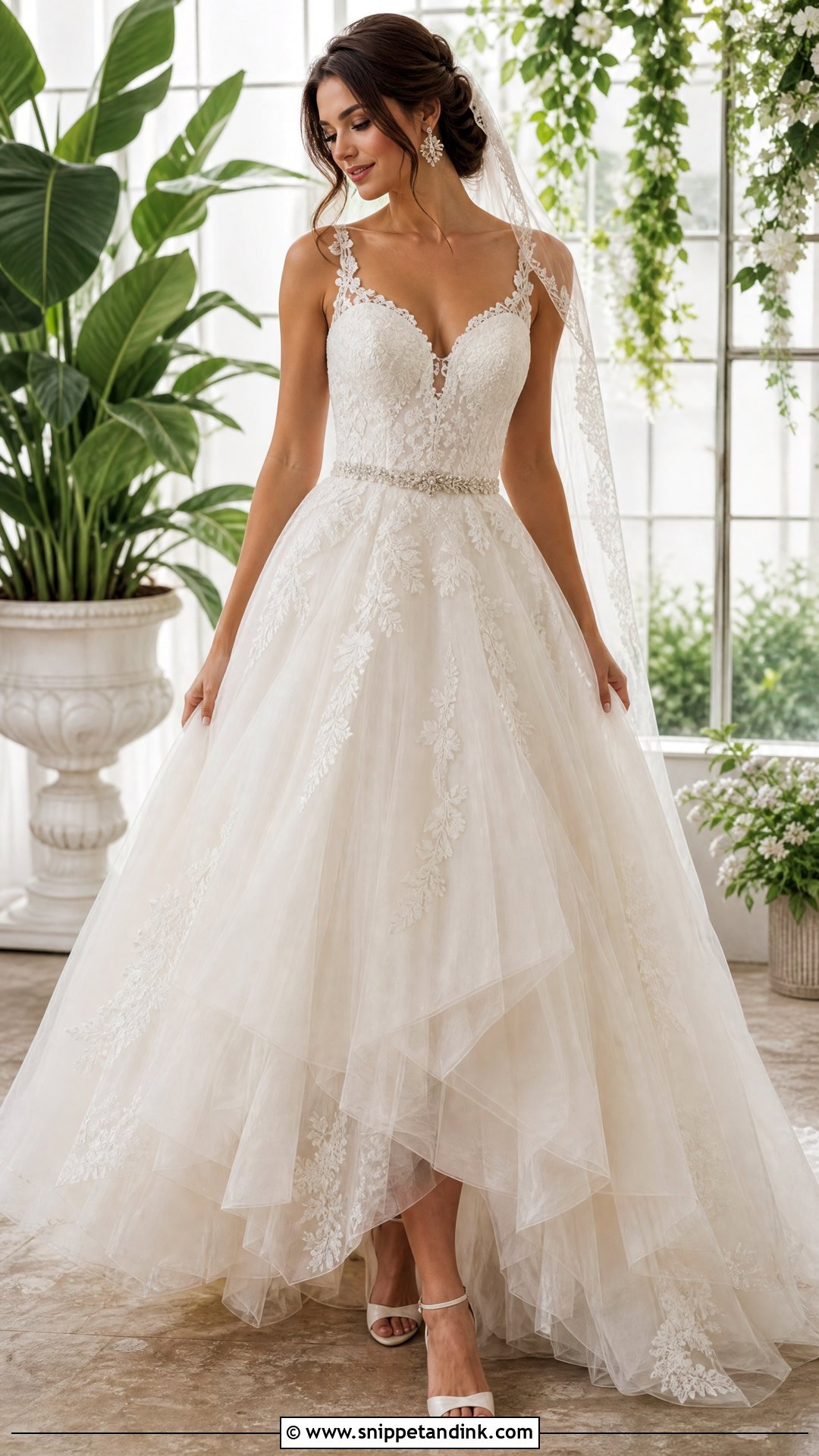
Lace that flows from the bodice onto the upper skirt avoids a hard line at the waist, which is the detail that makes a layered lace skirt look expensive. Tulle or organza underlayers add volume, while a plain lining keeps the lace pattern readable. Ivory ankle-strap heels, floral earrings and a sheer veil edged in matching lace suit it; keep the bouquet simple. A narrow beaded belt helps if you want more waist definition. One thing to raise with your seamstress early: alterations on a lace skirt often mean lifting and re-placing appliqués at the waist, hem and bustle points, which takes hand stitching and time.
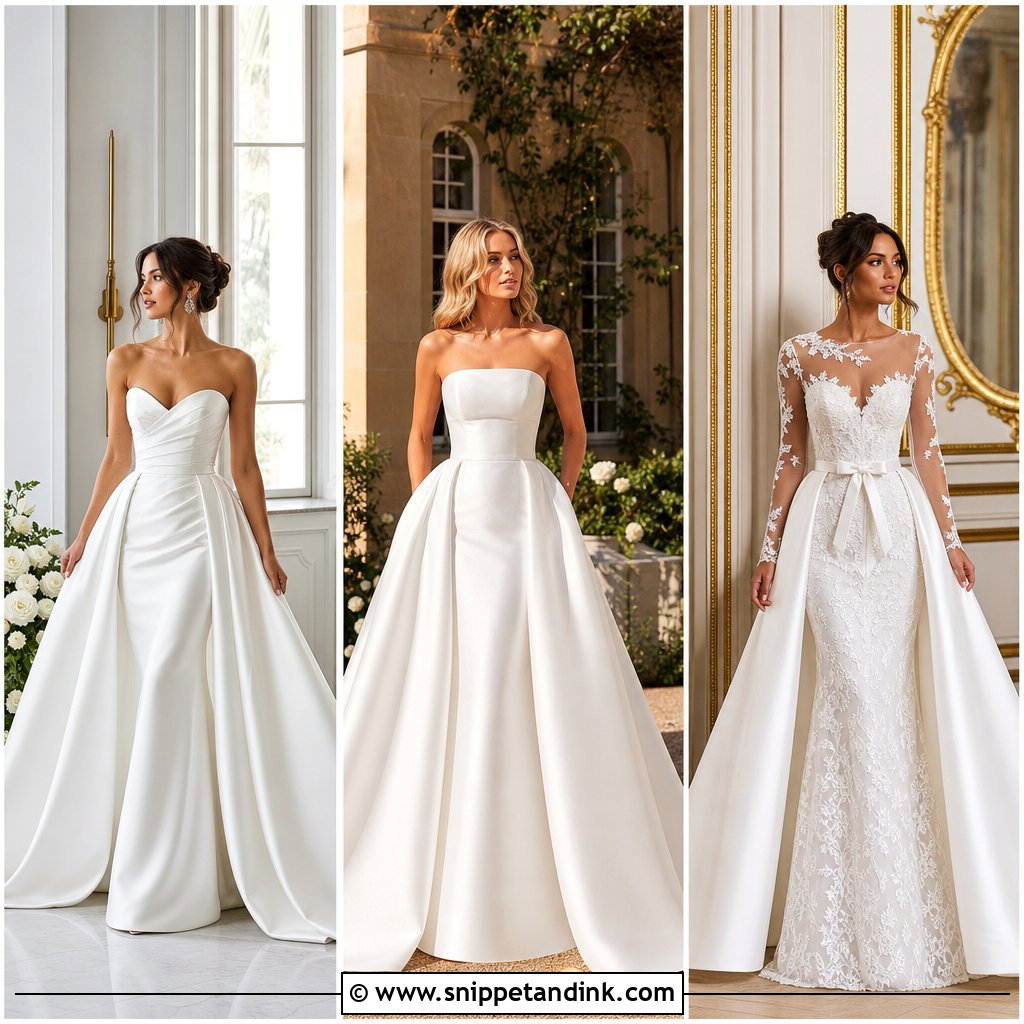
4. Mermaid Wedding Dress With Detachable Overskirt
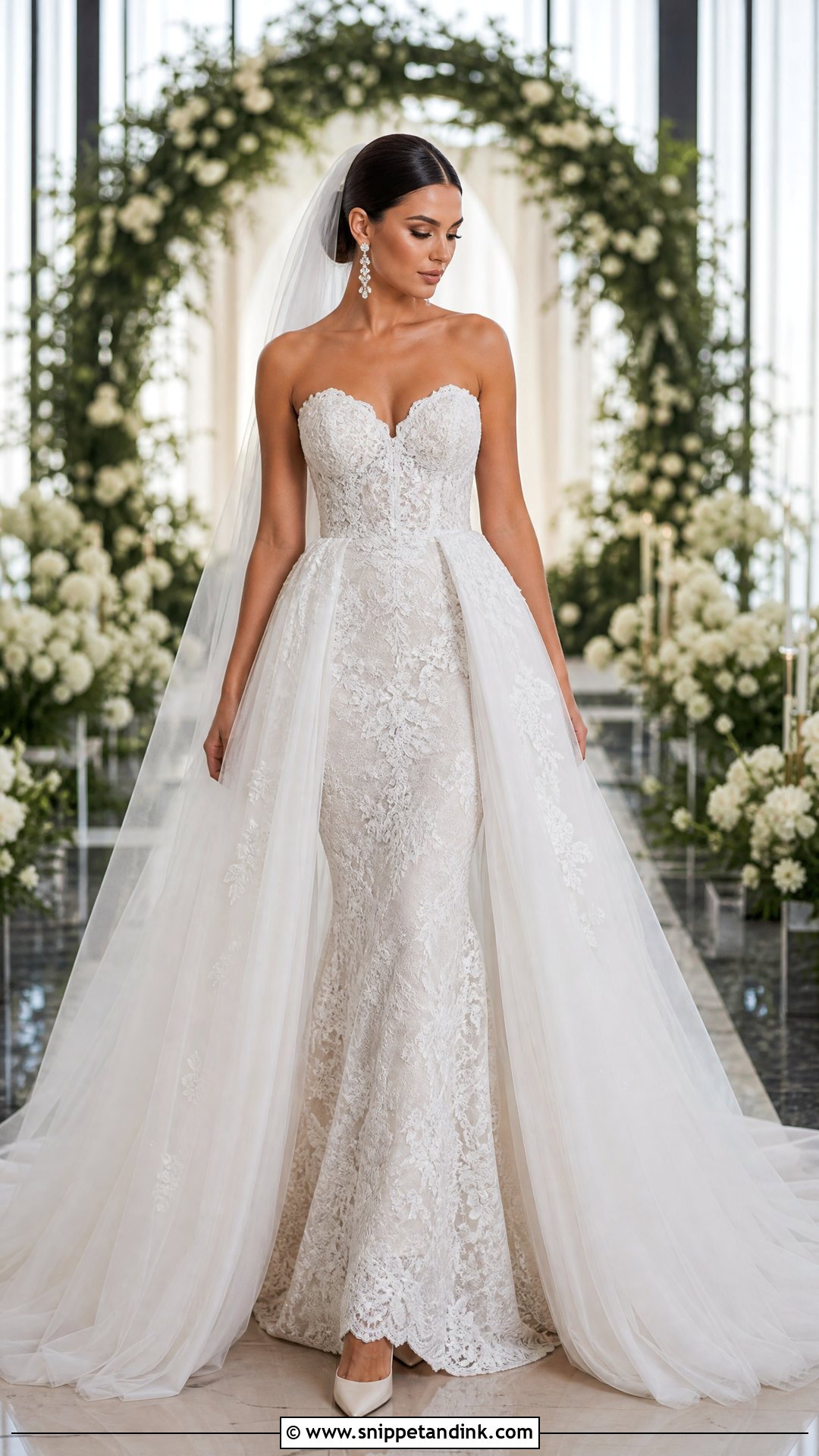
A detachable overskirt gives you the full ceremony shape and a sleek mermaid for the reception without changing dresses. These skirts usually fasten at the waist with hooks, snaps or a hidden button band, so the join has to sit flat against the bodice and not cut across its design. Tulle or organza keeps the fitted gown visible through the overskirt. Pointed pumps, drop earrings and a sleek veil suit both versions. Practice taking it off and putting it back on with your stylist or an attendant before the wedding. The fastening should feel secure enough for the aisle and still be reachable without undressing.
5. Corset Wedding Dress With Full Skirt
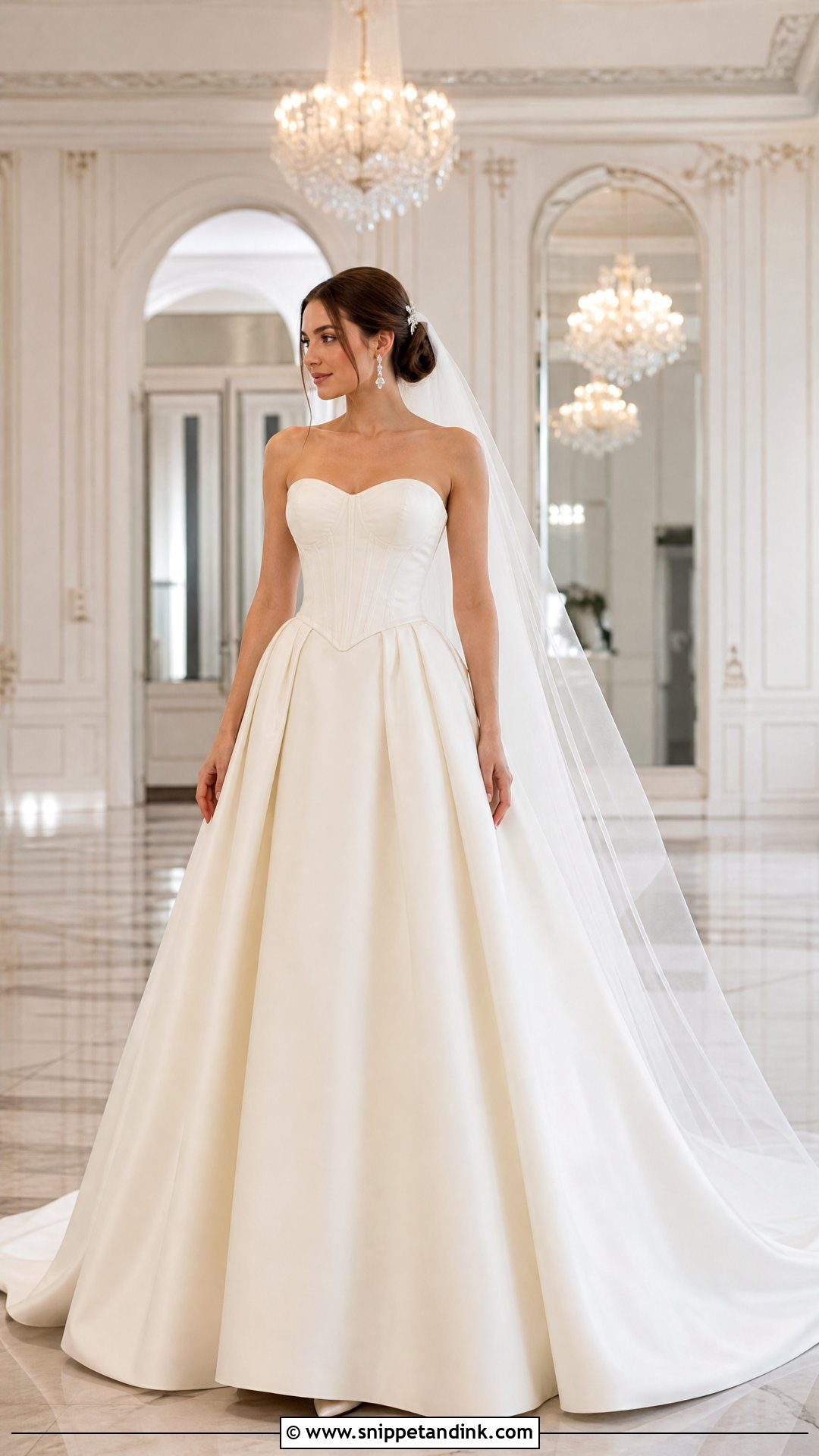
A corset paired with a full skirt gives the strongest waist definition of any shape on this list, and it can also be the most uncomfortable if the fit is lazy. Supportive boning, secure cups and a neckline that stays put when you sit are non-negotiable. Matte satin or mikado gives the skirt structure; tulle softens it. Closed-toe heels, pearl-and-crystal earrings, a simple comb and a chapel veil complete the look. Skip the heavy necklace if the corset has visible seams or embellishment. Wear your actual undergarments and shoes to every fitting, since a corset fitted over the wrong bra will be wrong on the day.
6. Long Sleeve Wedding Dress With Chiffon Skirt
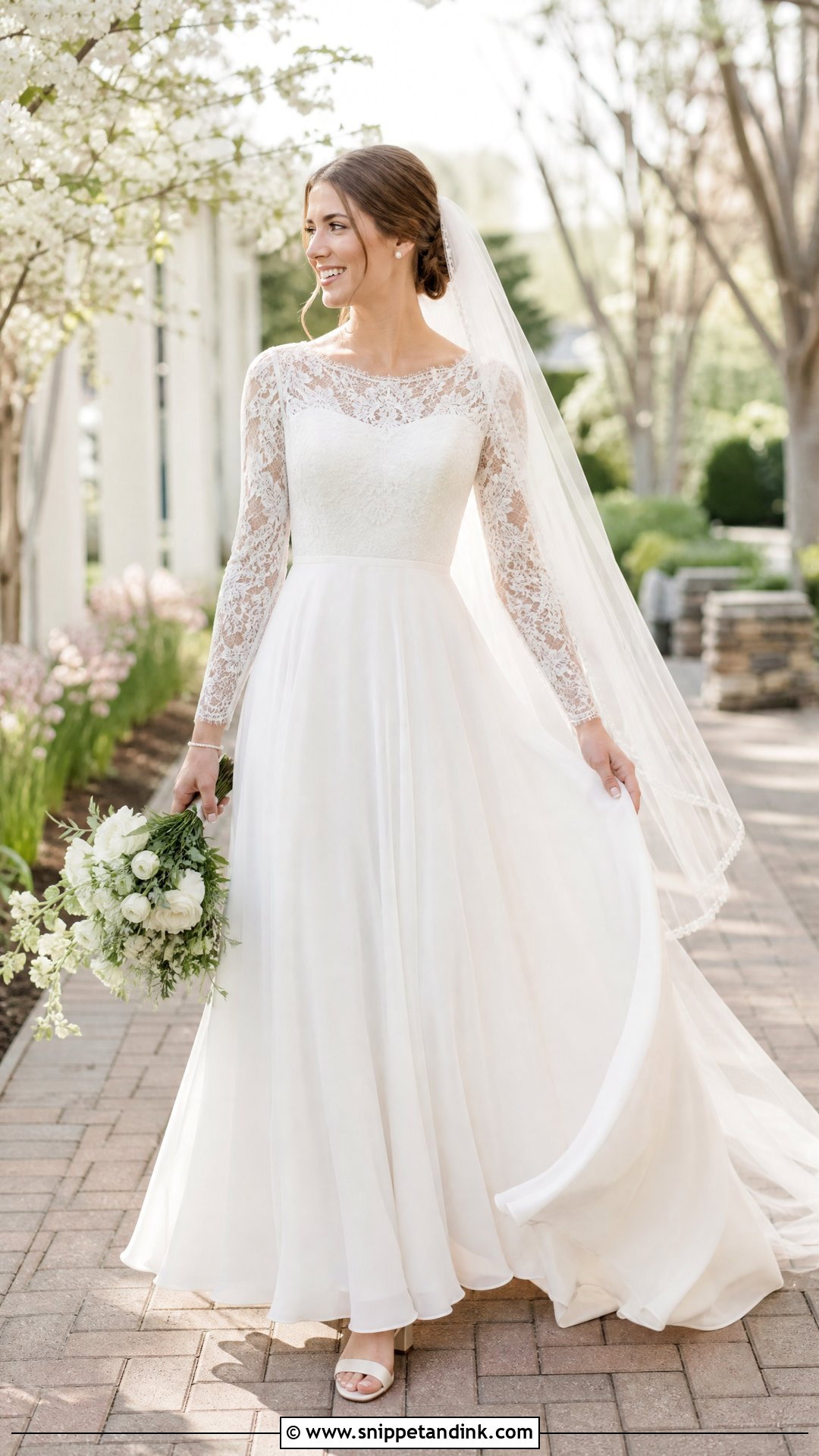
Chiffon falls close to the body, so it gives softness without volume. That makes it a good partner for long sleeves in fitted lace or clean crepe, especially in spring or autumn when you want coverage but not weight. Low block heels or elegant flats suit the easy movement. Pearl studs, a delicate bracelet and a flowing fingertip veil keep it relaxed. If the bodice is sheer, ask about lining it. And hem chiffon a little higher than you’d think; it’s light enough to float under your toes and catch on your shoes as you walk. Gardens and destination weddings suit it best.
7. Strapless Wedding Dress With Organza Skirt
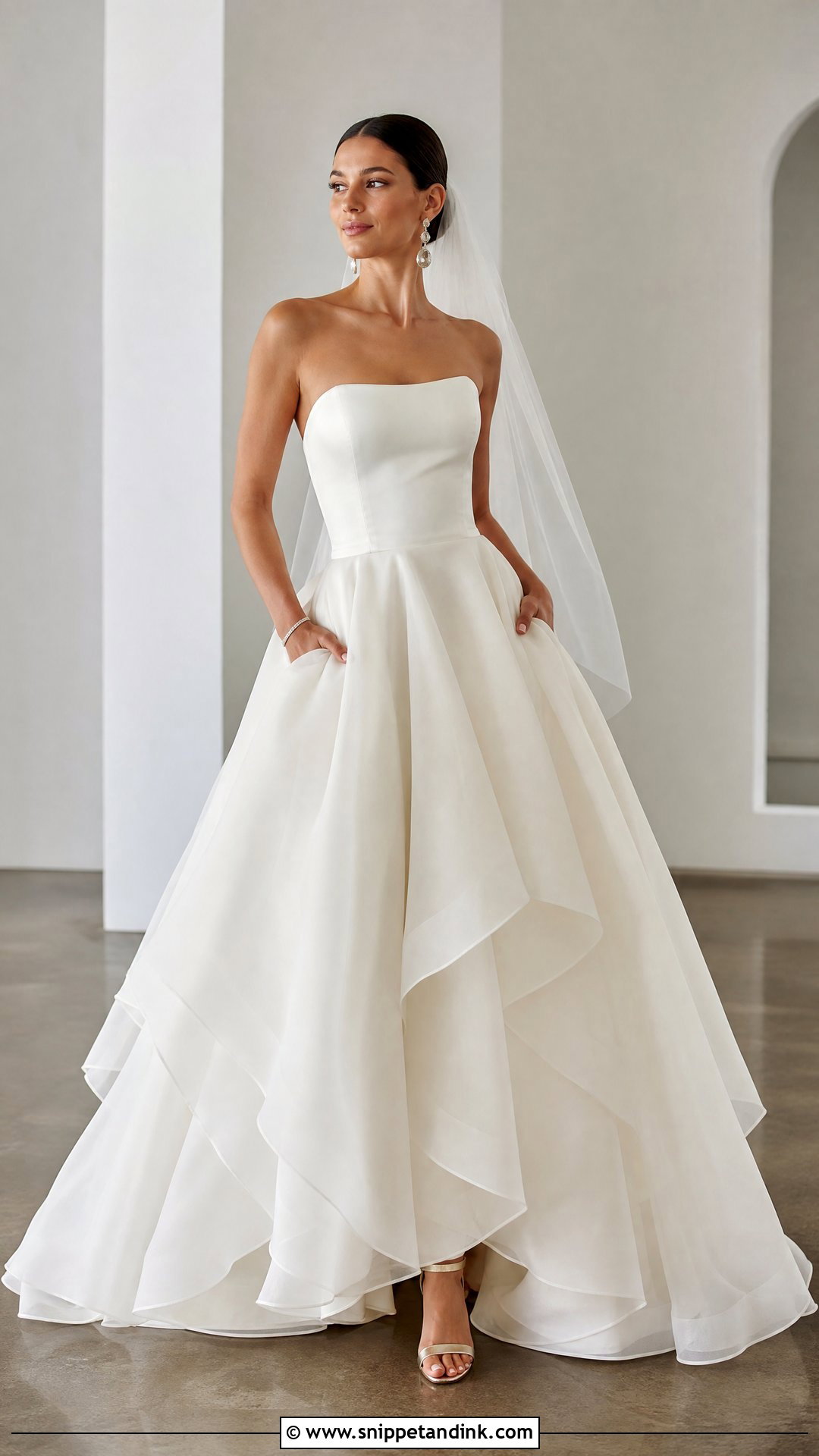
Organza is crisp and catches light, so it adds volume to a strapless dress without the heaviness of satin. The fit is where strapless dresses succeed or fail. Wear a supportive longline bra or rely on built-in corsetry your tailor approves, then raise your arms, sit down and dance during the final fitting. If you’re tugging the bodice up, it isn’t finished. Crystal drops, metallic ivory heels and a sheer chapel veil suit it, plus a slim tennis bracelet. Hidden pockets are worth asking about, though in crisp organza they can create a bump at the hip, so check them in the mirror.
8. Off-Shoulder Wedding Dress With Pleated Skirt
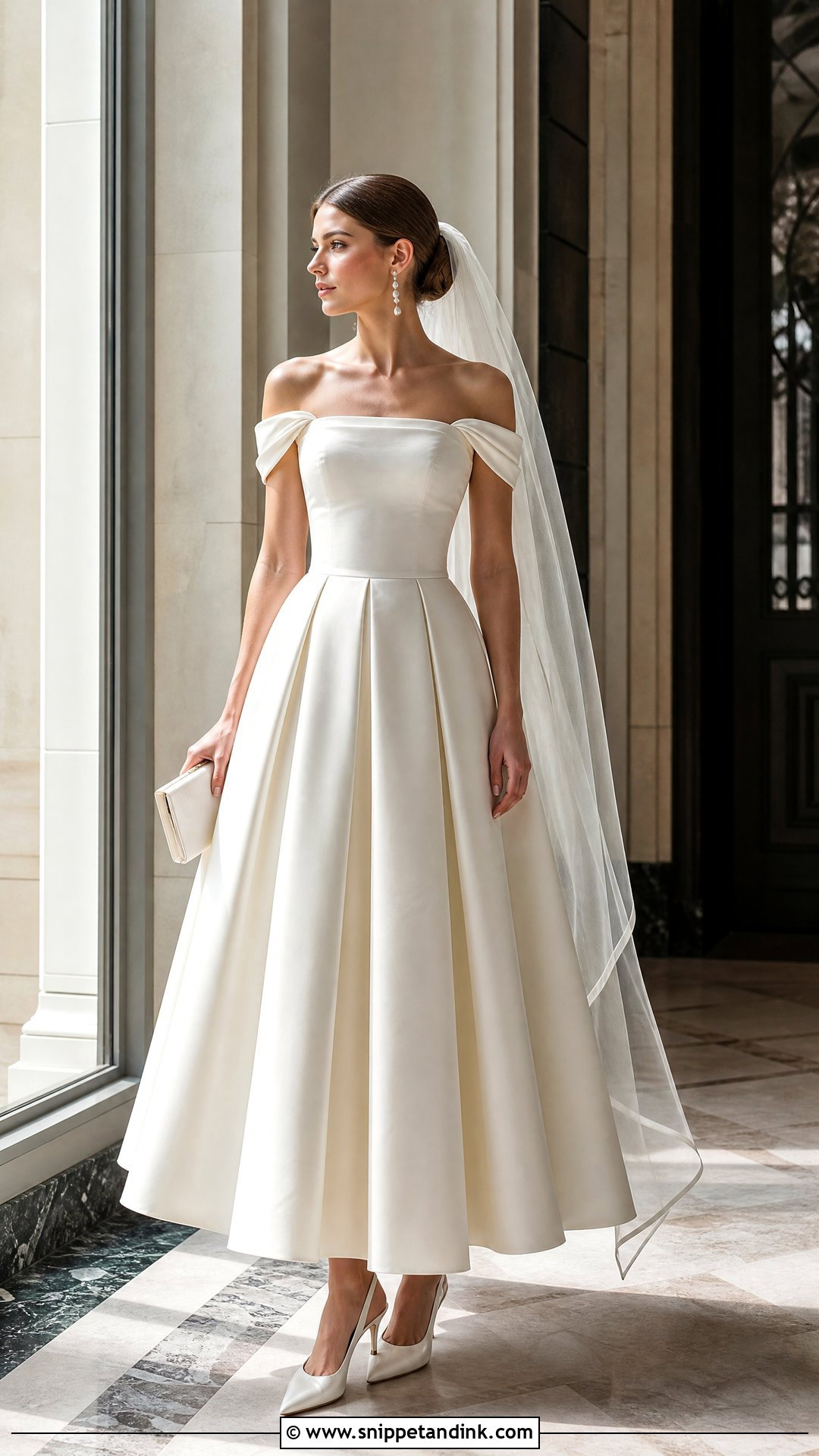
Pleats need the waist to be exactly right, because a waist that’s slightly too loose or too tight pulls them open. On an off-shoulder dress with a pleated skirt, box pleats give noticeable volume while fine knife pleats read lighter and more fluid. The straps should allow real arm movement, not sit tight across the shoulders. Pearl earrings, a low bun and a narrow ribbon-edged veil keep the neckline visible, with pointed pumps or slingbacks. Skip the large necklace. At fittings, check that the pleats fall evenly from the waist and lie flat again after you sit and after the bustle is done up.
9. Square Neck Wedding Dress With Mikado Skirt
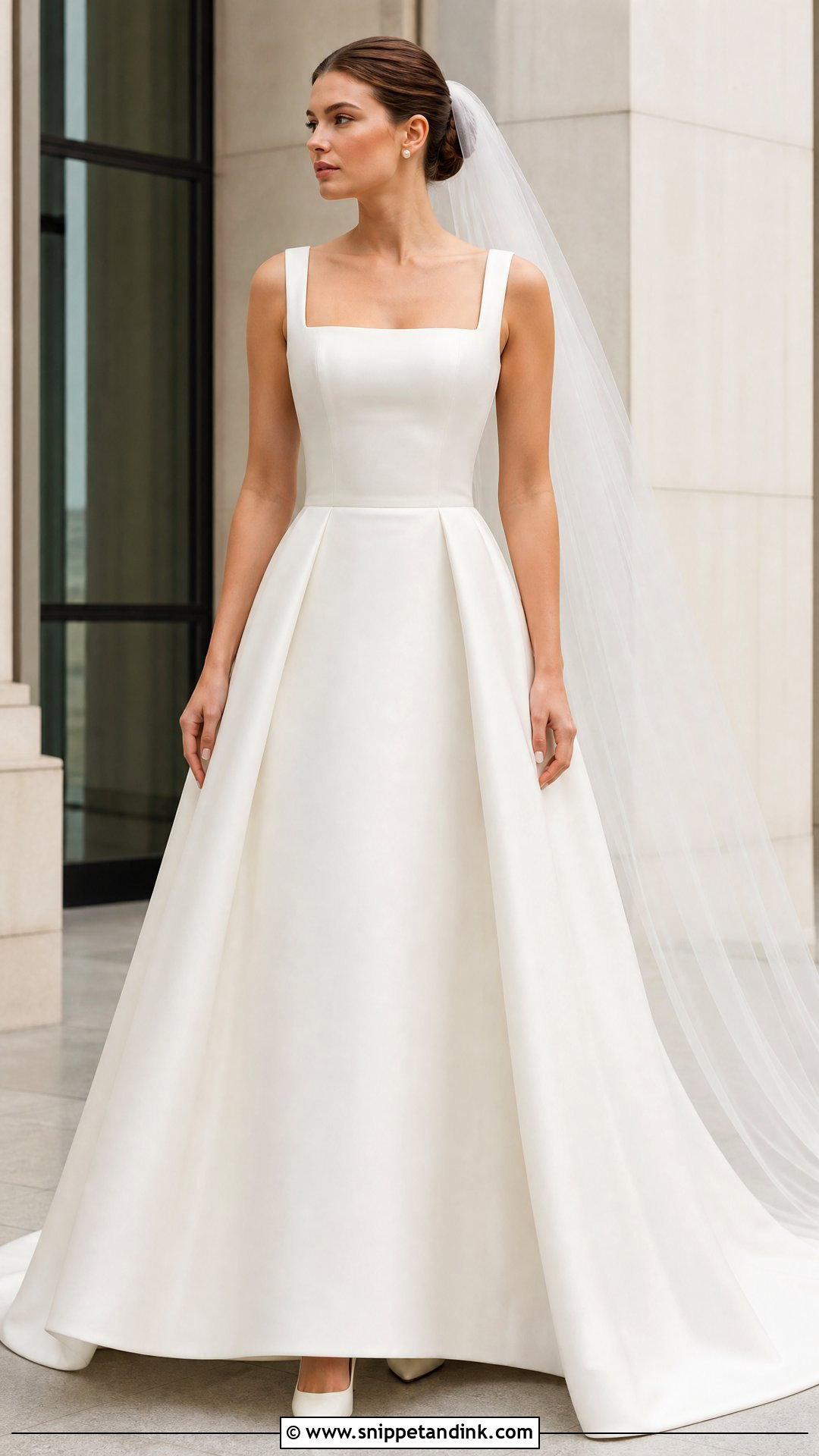
Mikado is a heavy, slightly stiff silk blend that holds a clean shape, so it shows the cut of a skirt more honestly than any soft fabric. Under a square neckline, an A-line or moderately full mikado skirt looks modern and photographs crisply from every side. Pearl button earrings, a polished bun and ivory pumps with a stable heel suit it, with a long plain veil for drama. Covered buttons down the back or a removable bow give a quiet focal point. Because mikado doesn’t drape, the hem has to be precise; it won’t hide an uneven line the way chiffon does. Check the lining and the bustle too.
10. Halter Wedding Dress With Flowing Skirt
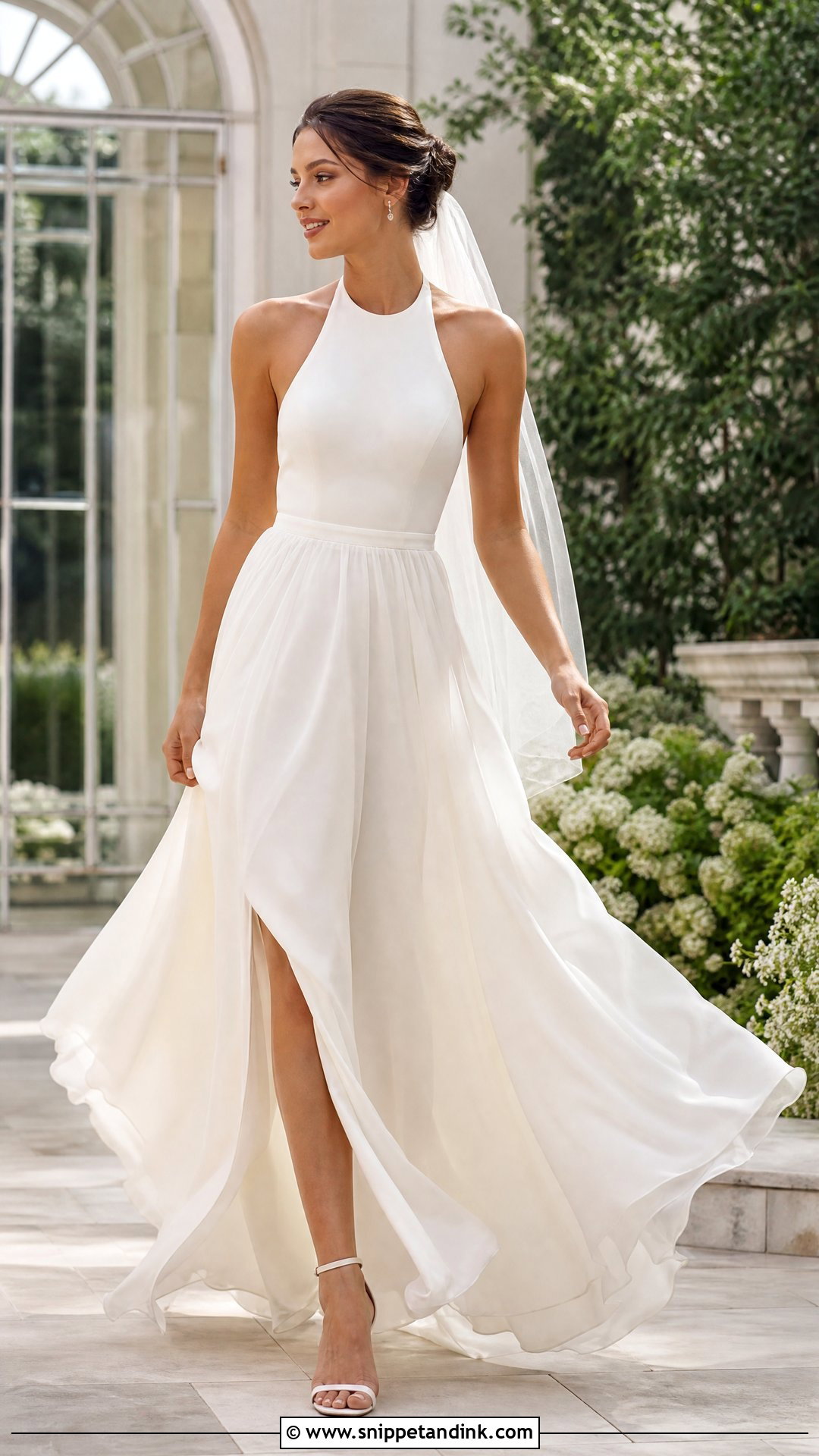
A halter neckline takes the bust’s weight on the back of the neck, and that’s my first question with this style. If the bodice isn’t built to support you on its own, the halter strap pulls and gives you a headache by dinner. A soft chiffon or georgette skirt balances the sleek top. An open back or keyhole adds interest from behind. Small drop earrings, a smooth updo and delicate ankle-strap heels suit it, and the neckline should stay bare. Attach a narrow veil below the bun. For outdoor walking, ask for a shorter train or a wrist loop.
11. Tea-Length Wedding Dress With Circle Skirt
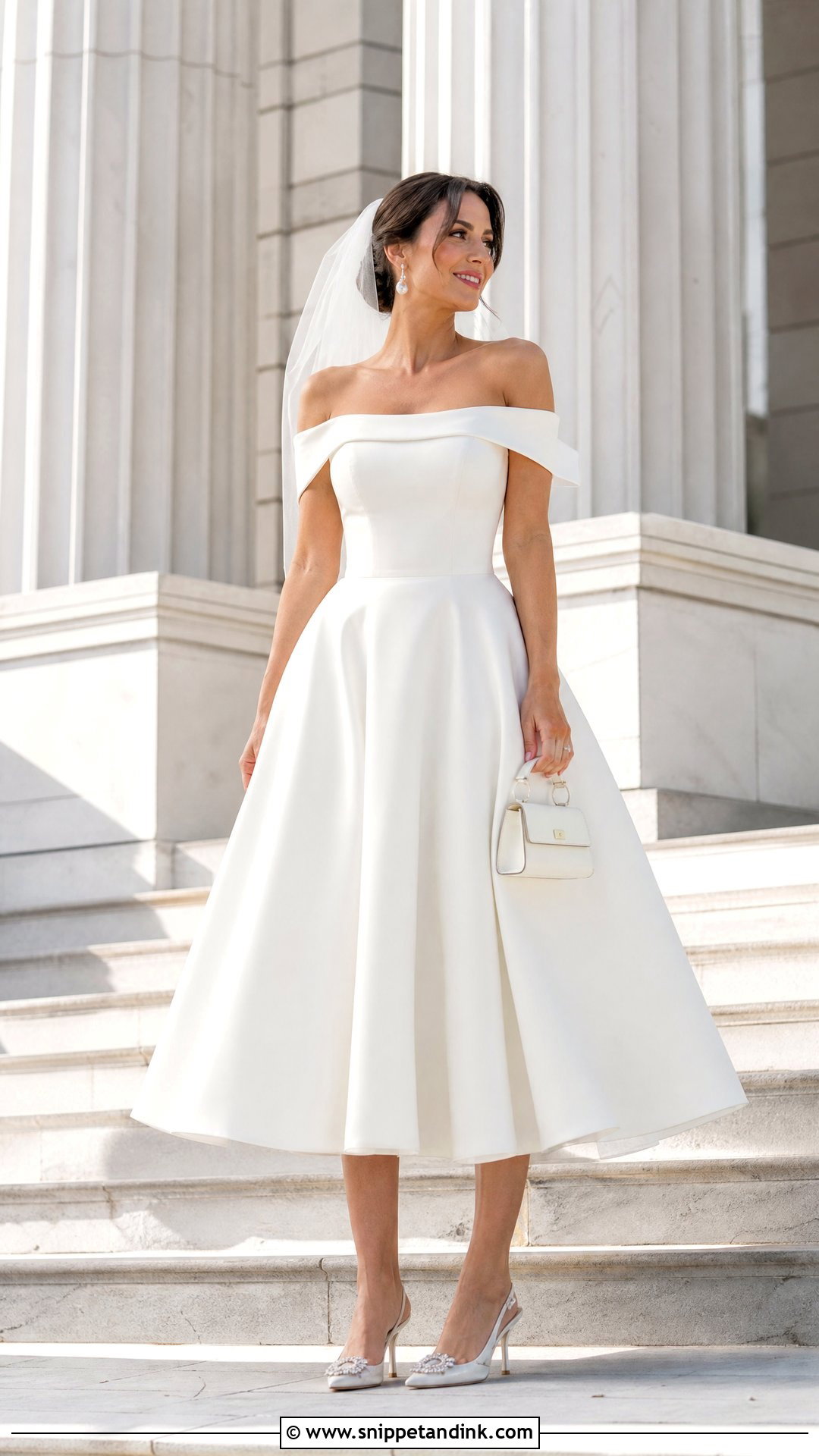
Circle skirts are cut from a full circle of fabric, so they turn and swing more than any other shape here. On a tea-length dress, that movement comes with a vintage feel and visible shoes. Pair a fitted sleeveless, short-sleeve or off-shoulder bodice with a skirt that turns smoothly rather than standing stiff. Embellished pumps, pointed slingbacks or polished block heels in ivory all work, with pearl earrings, a short veil and a small structured bag. Hem length is the decision that matters. A hem at the narrowest part of the lower leg usually looks balanced; one at the widest part of the calf rarely does. Bring your shoes when it’s marked.
12. High-Low Wedding Dress With Ruffled Skirt
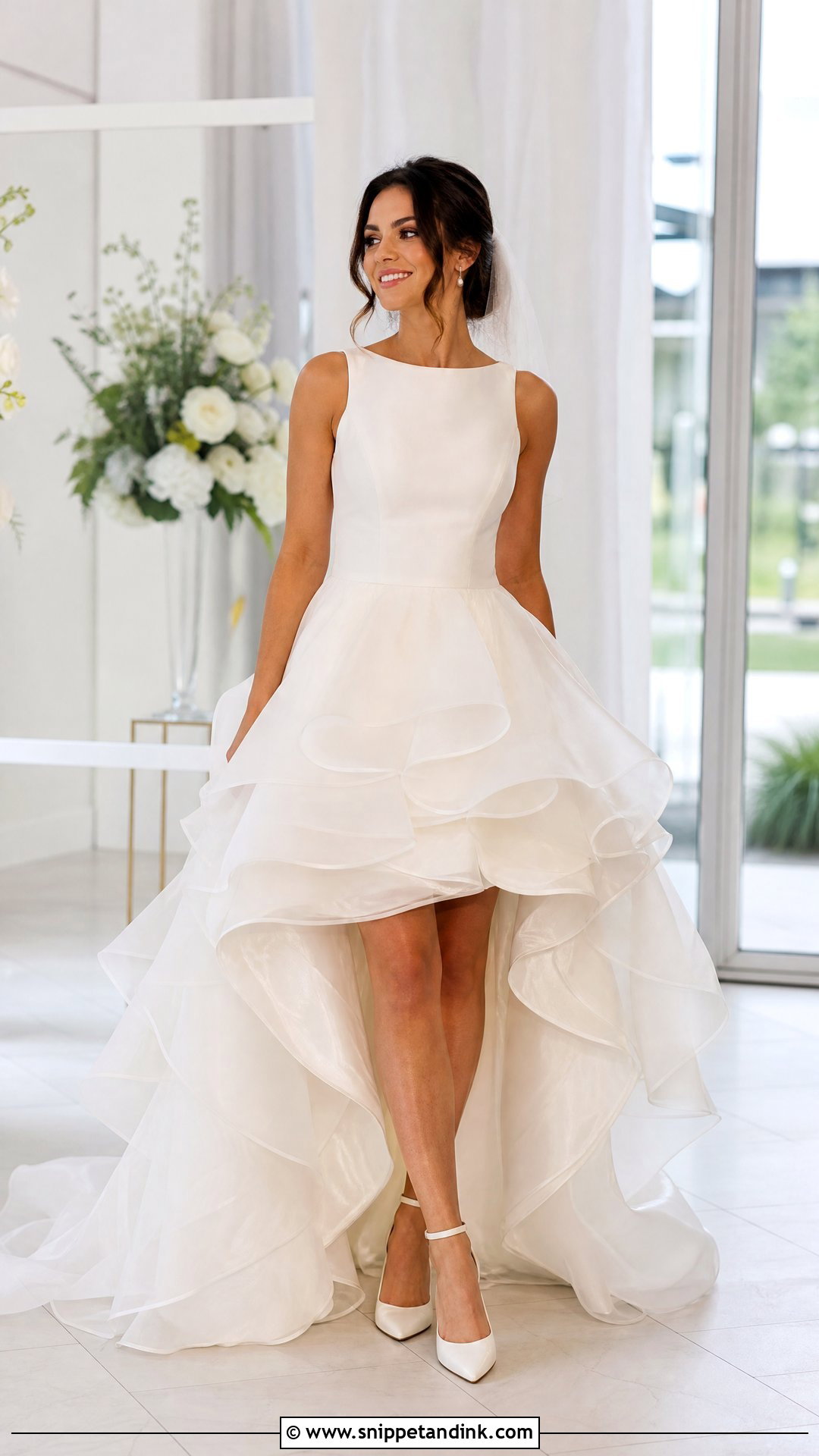
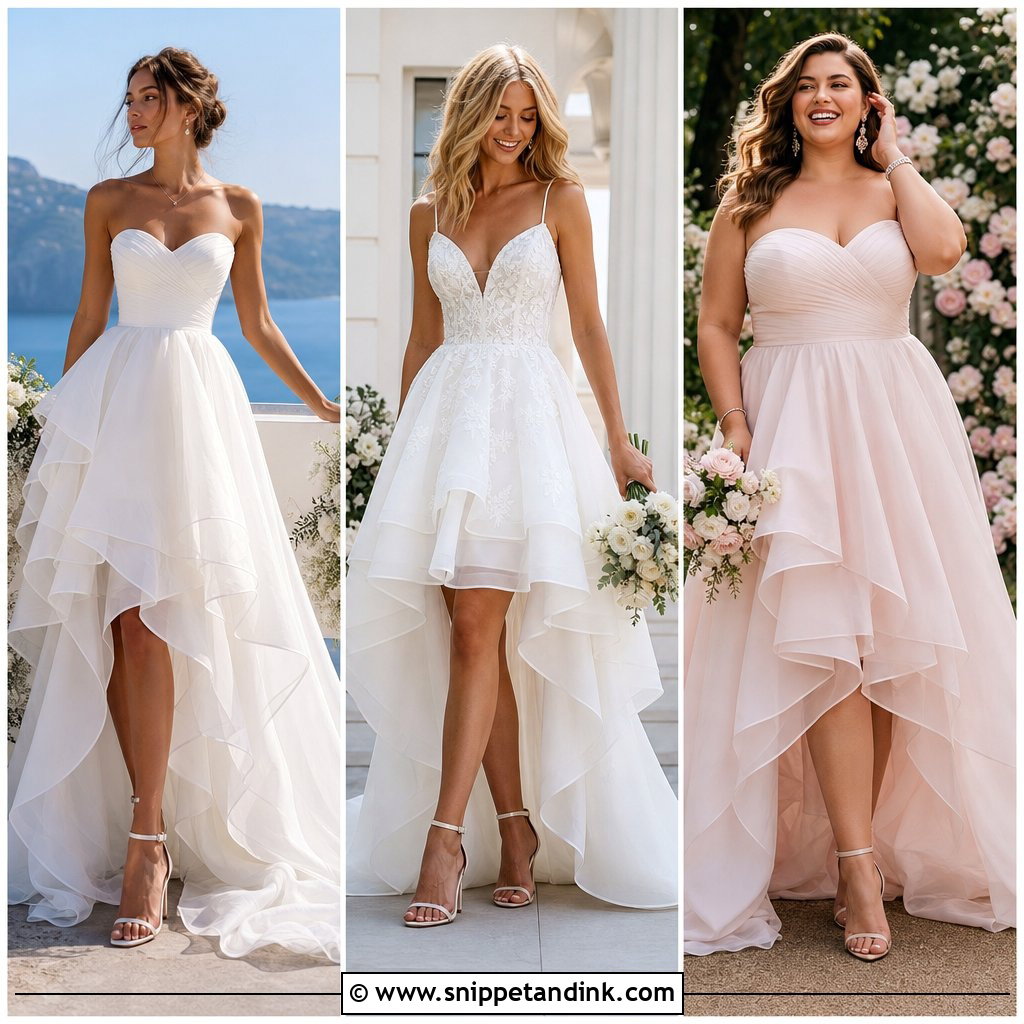
High-low hems are easy to walk in and very easy to get wrong. On a dress with a ruffled skirt, I’d choose a gently raised front rather than a dramatic drop, which can look like two different dresses. Layered organza, tulle or soft satin ruffles give volume without bulk. Your shoes will show completely, so pick statement pumps or refined ankle straps in a color that matches the gown. Simple earrings, a short veil and a compact bouquet keep the silhouette open. Check the hem from the front, side and back in your exact shoes, and make sure the long back section bustles securely.
13. Two-Piece Wedding Dress With Maxi Skirt
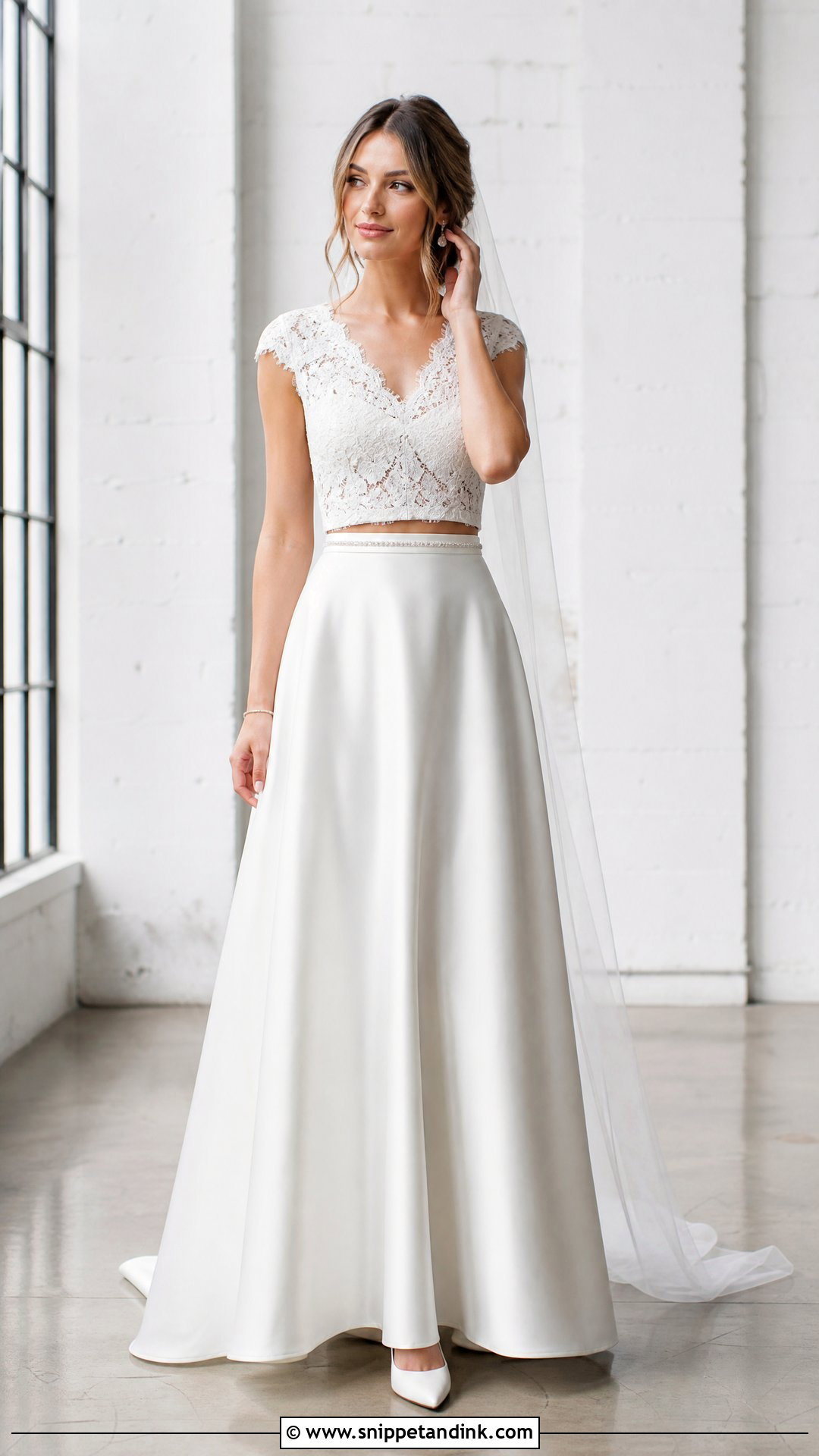
Would you rather wear the skirt again after the wedding? That’s often the real reason brides choose a two-piece wedding dress. A fitted lace top, satin camisole or structured cropped bodice over a high-waisted A-line maxi skirt lets you mix textures, and keeping the gap between pieces minimal gives a more traditional result. The fitting rule is simple: both pieces get fitted together at every appointment, or the waistlines drift apart. Hidden hooks or snaps stop the top from riding up when you raise your arms. Clean ivory heels, delicate earrings, a plain fingertip veil and a narrow belt if the fabrics differ complete it.
14. Minimal Wedding Dress With Column Skirt
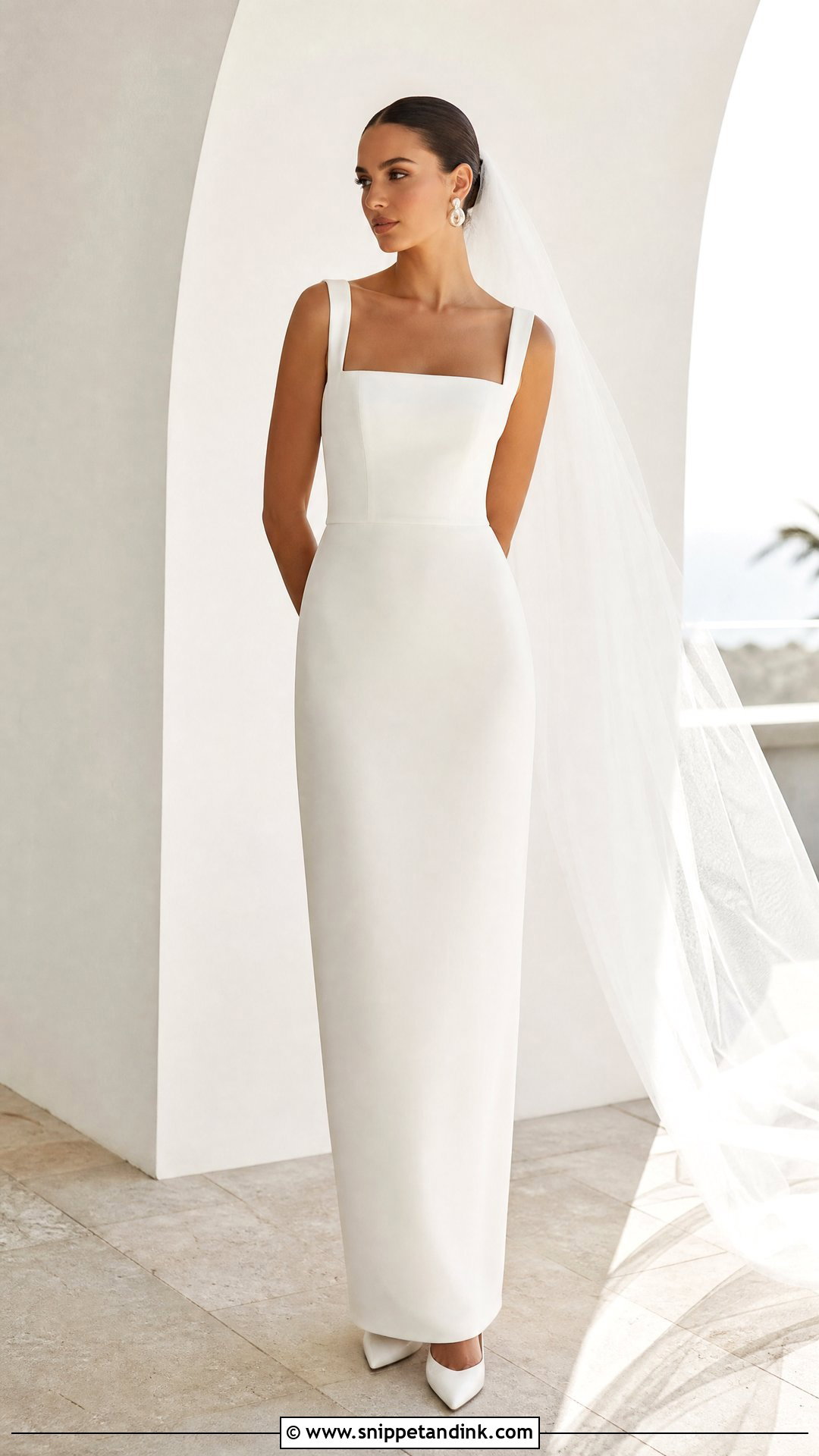
A column skirt has nowhere to hide anything. In silk, satin or crepe with smooth seams, it should skim the hips and fall straight without pulling across the thighs or bunching at the waist. Check the lining, zip, hem and the edges of your undergarments in bright light, because a minimal dress shows every line underneath. Pointed pumps, sculptural earrings and a sleek bun suit it, with a long sheer veil for the ceremony and a small matching ivory bag. One practical warning: a narrow column limits your stride, so try the stairs at your venue in it. A detachable train adds volume for the ceremony if you want it.
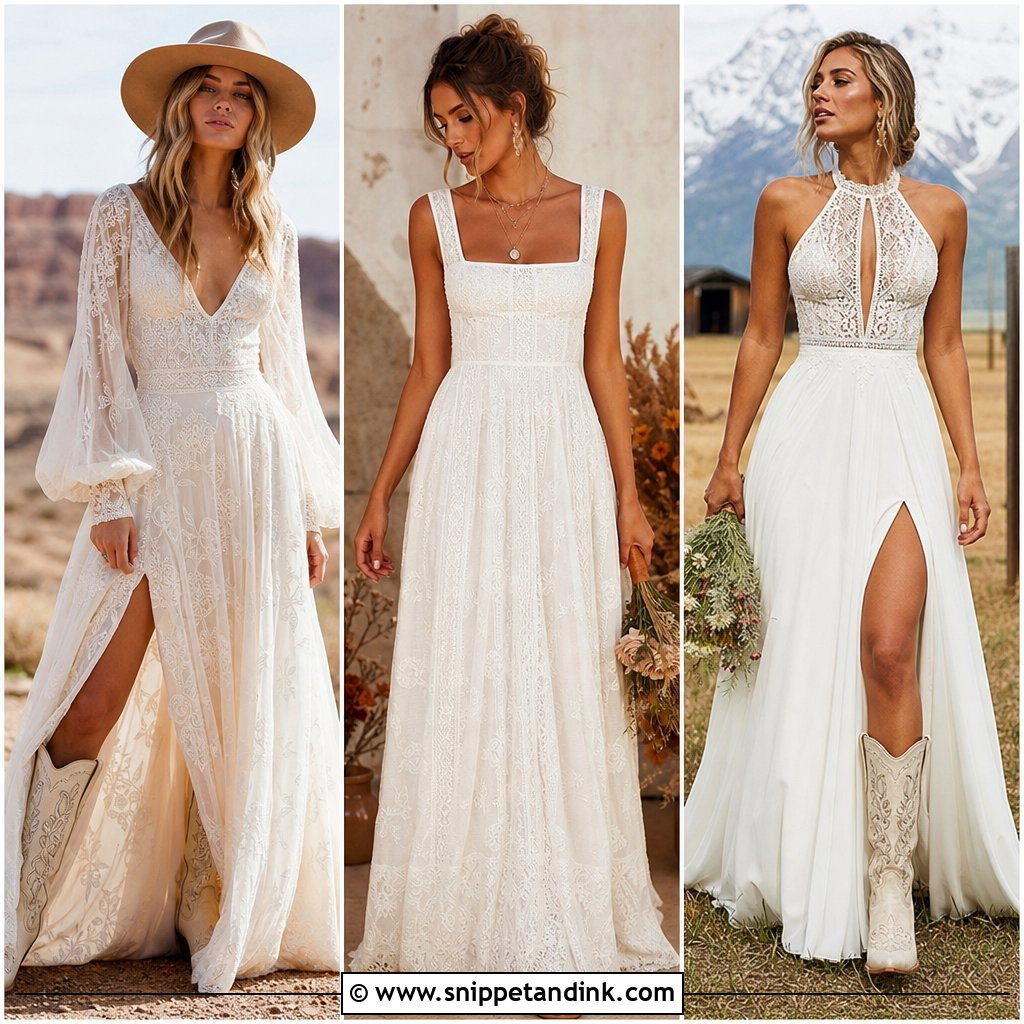
15. Boho Wedding Dress With Tiered Skirt
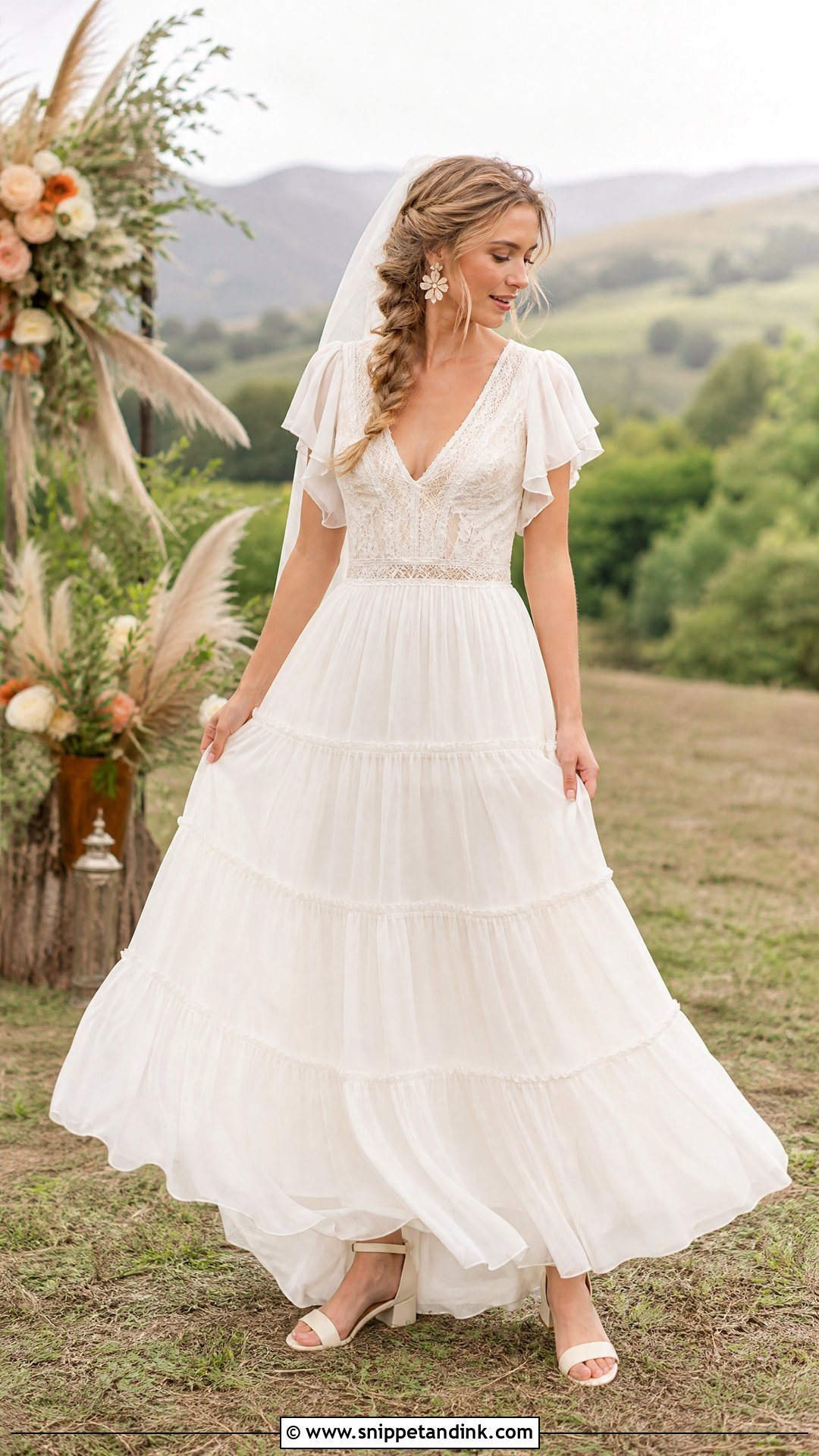
Tiers move well outdoors because each layer swings on its own. Lightweight lace, chiffon or dotted tulle keeps them free rather than rigid. A V-neck, square neck or flutter-sleeve bodice suits the flowing lower half, and the waist should stay defined or the tiers swallow your figure. Proportion matters here. Petite brides usually look better in fewer, narrower tiers, while taller brides can carry broader ones. Low block heels, bridal flats or clean ankle boots work on uneven ground, with small floral earrings and a loose braid. Ask the tailor to reinforce the bustle; several layers often need more than one attachment point.
16. Vintage Wedding Dress With Lace Skirt
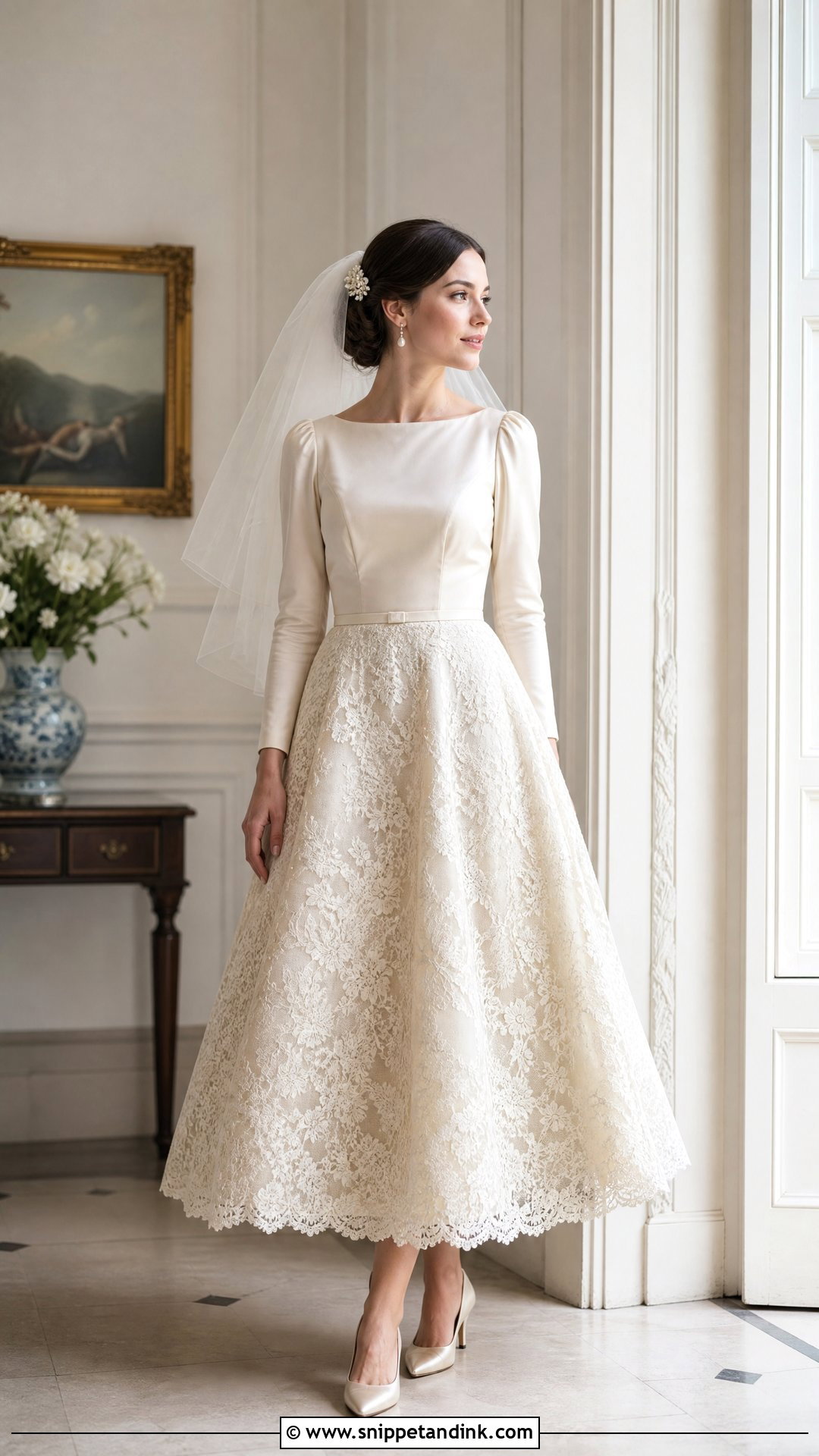
Vintage looks fresh when one detail carries the era. Pick a fitted bodice with covered buttons, a bateau neckline or softly gathered sleeves, and floral lace with a clear pattern over a lining in ivory, champagne or soft blush. The lining color changes the lace more than people expect, so try two side by side. Low satin pumps, pearl earrings and a small comb suit it, with a blusher or fingertip veil. If the lace is genuinely old, have it checked for weak spots before any alteration, since aged lace tears easily along a new seam. On a new gown, ask for reinforced seams and a smooth lining against the skin.
17. Plus-Size Wedding Dress With A-Line Skirt
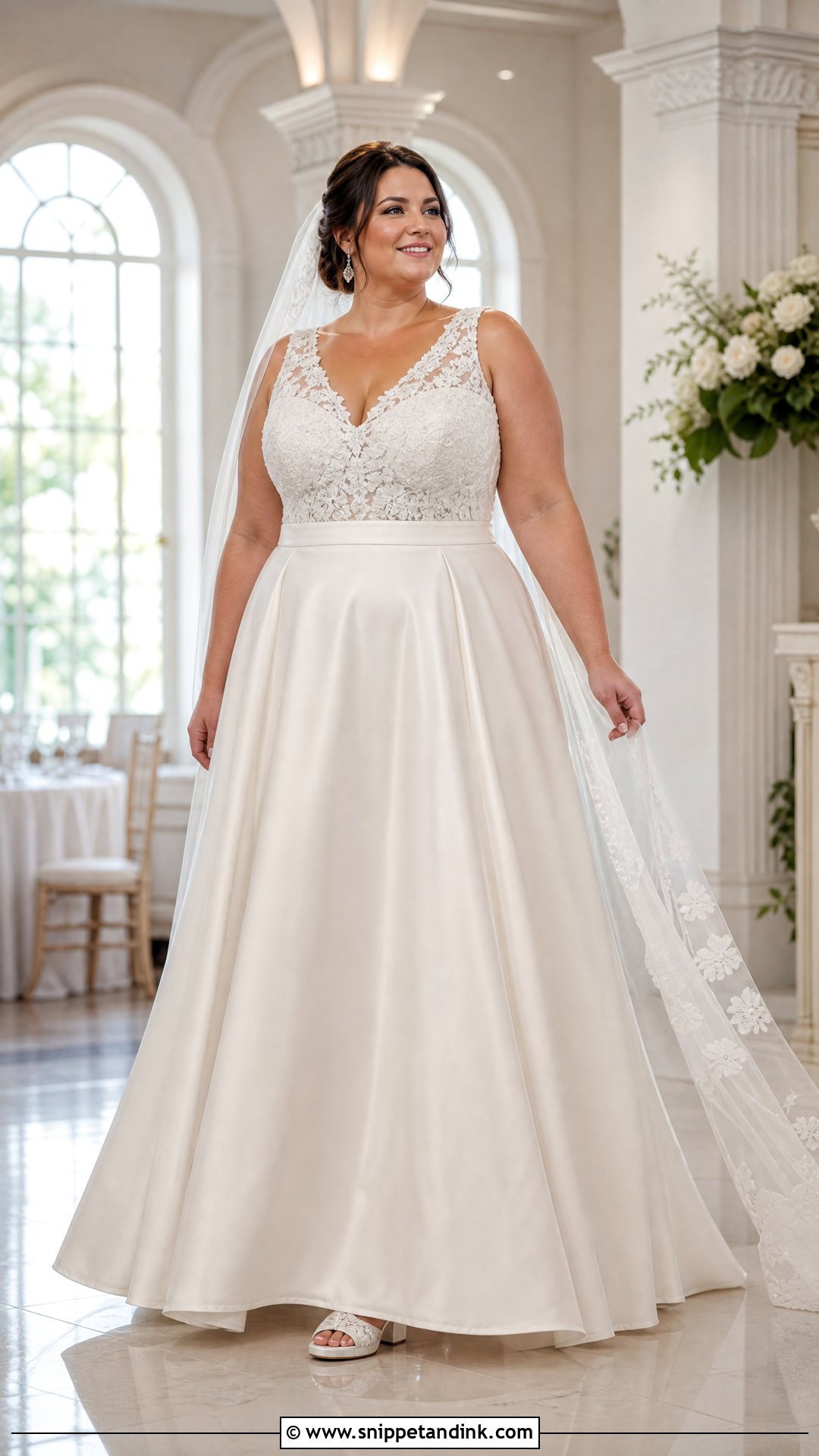
An A-line skirt flows from the waist, which gives you movement and lets the bodice do the supporting. On a plus-size gown I focus on fit and structure, not on hiding anything: wide straps, internal boning or built-in cups create a secure foundation. Satin gives a polished shape, chiffon lightness, tulle extra volume. A defined waistband marks a clean transition between bodice and skirt. Stable block heels, drop earrings and a veil scaled to the gown complete it. Make sure the size you order leaves enough seam allowance for precise alterations, then sit, walk and dance in it at fittings so the neckline and armholes stay comfortable.
18. Petite Wedding Dress With Slim Skirt
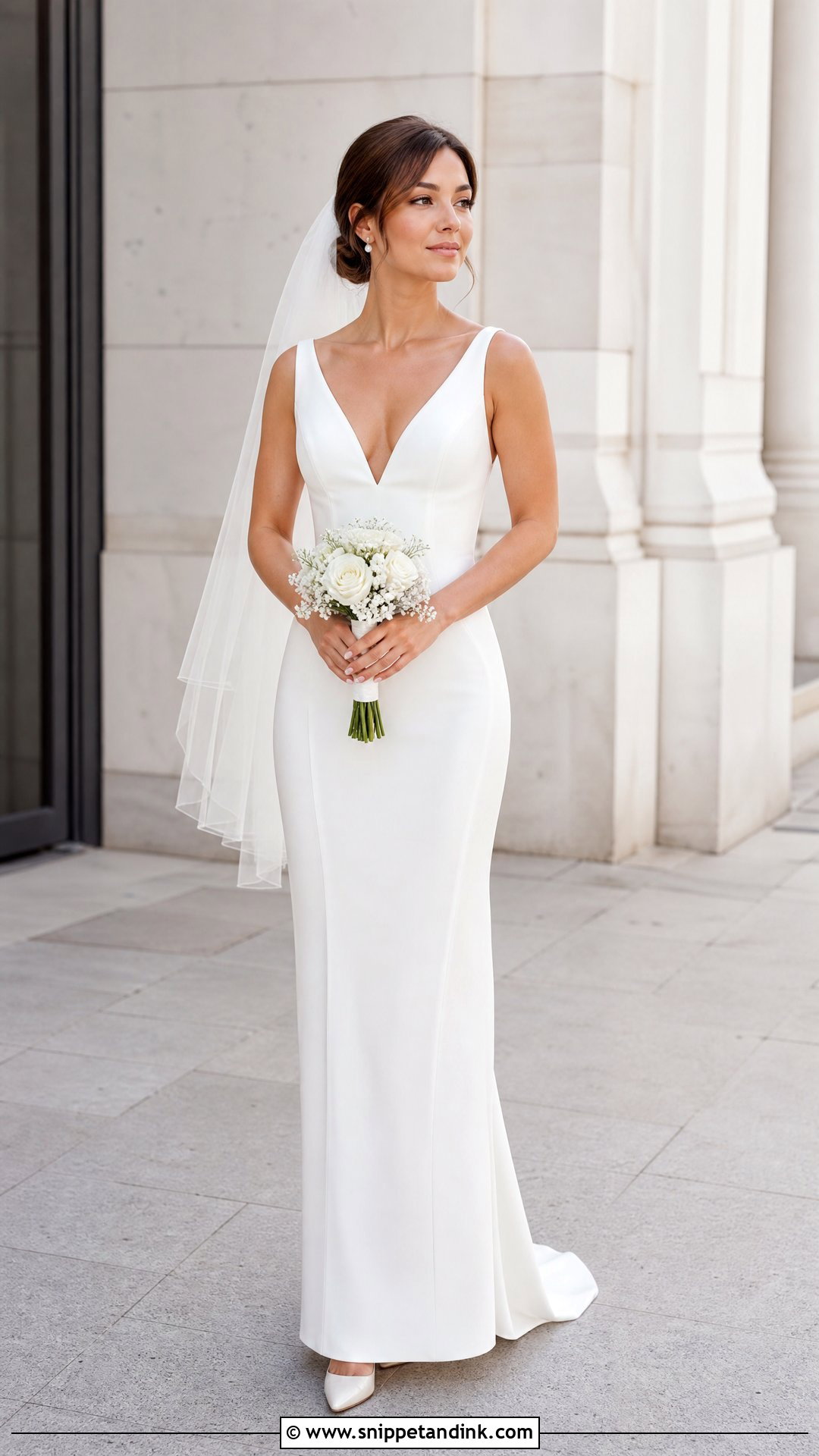
Volume is the enemy of a petite frame, and a slim skirt fixes that. Look for a natural or slightly raised waist, uninterrupted vertical seams and a skirt that falls close to the body. A sheath or narrow A-line also usually needs less shortening than a ball gown, which keeps alterations simpler. Pointed heels in ivory or close to your skin tone extend the leg line. Small earrings, a narrow veil and a compact bouquet keep everything in scale. Avoid horizontal details that cut across the figure. Petite sizing can put the waist, bust and hip in the right place from the start, though the hem, straps and train will still need fitting.
19. Beach Wedding Dress With Lightweight Skirt
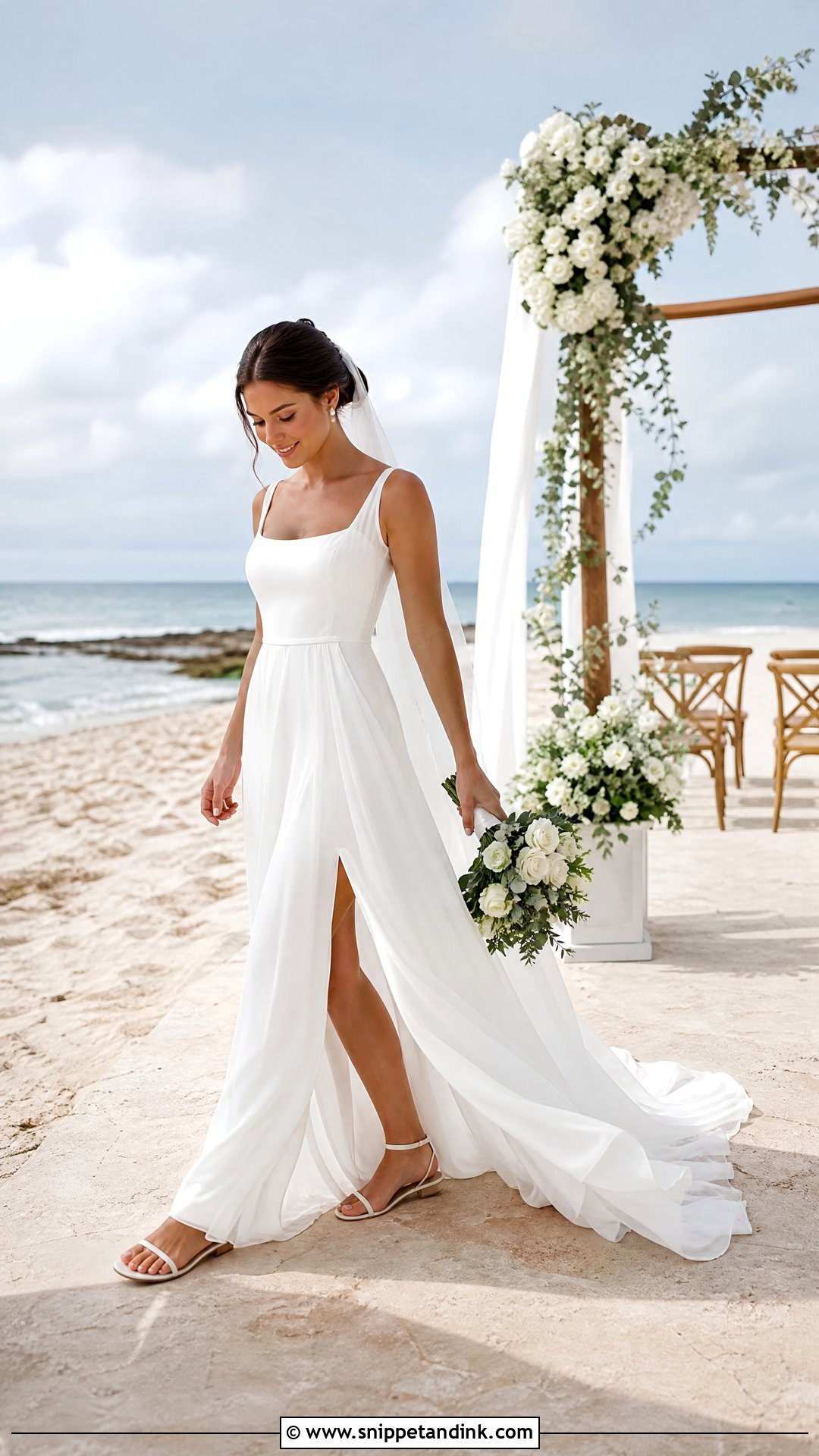
Sea breeze and soft fabric do the styling on a beach. Chiffon, georgette or soft tulle with a short, manageable train won’t scoop up sand the way a long satin one does. A fitted sleeveless, halter or off-shoulder bodice balances the loose skirt. Flat sandals, low wedges or bridal flats are the only sensible shoes on sand; narrow heels sink. Pearl earrings, a secure updo and a light veil you can take off if the wind picks up suit the setting. Avoid heavy beading, which weighs light fabric down and feels sticky in humidity. Ask for a wrist loop or simple bustle and a breathable lining.
20. Courthouse Wedding Dress With Midi Skirt
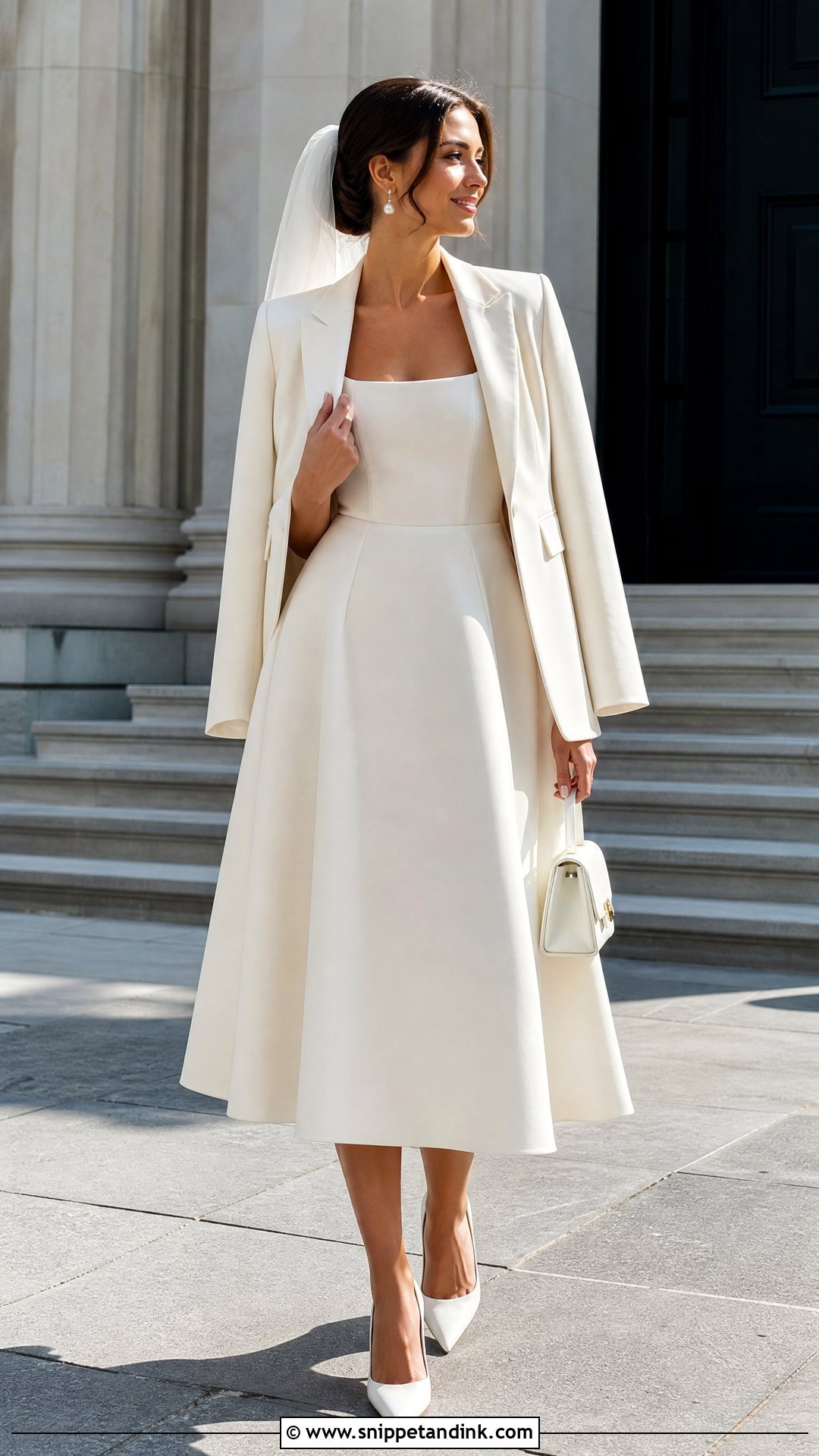
A midi skirt reads bridal without the logistics of a full-length gown, which is exactly what a civil ceremony needs. For a courthouse wedding dress, I’d pair a fitted bodice with a structured A-line, pleated or pencil skirt in satin, crepe or jacquard. Pencil skirts look sharp but limit your step on courthouse stairs, so test them on real steps. Pointed pumps, pearl or gold earrings and a small top-handle bag suit the setting, with a short veil, bow or headband as the bridal detail. A tailored blazer helps for arrival photos. Keep the hem near mid-calf or just below the knee, whichever suits your legs.
Over, Under or Ballroom: Matching a Bustle to the Skirt
Almost every gown with a train needs a bustle for the reception, and the type that works depends on the fabric and the shape of the skirt. Your seamstress will suggest one, but knowing the options helps you ask the right questions.
Over Bustle
The train is lifted and hooked or buttoned onto the outside of the skirt, usually at one to three points near the waist. It’s quick to fasten and suits lighter trains in tulle, chiffon and lace. Heavy satin can pull a single point loose, so ask for more than one.
Under or French Bustle
The train is tucked up underneath and tied with ribbons, often color-coded or numbered. It creates soft folds at the back and handles heavier satin and mikado well. It takes longer to do, so the person tying it needs a practice run.
Ballroom Bustle
The train is folded under so the hem becomes even all round, as if the dress never had a train. It’s the neatest option for dancing and suits ball gowns and A-lines, though it’s the most work to set up at alterations.
Whatever you choose, have your helper do the bustle at the final fitting while the seamstress watches, then take a short video on your phone. Ten seconds of footage beats a hurried explanation in a dim room.
A Skirt Is Only as Good as Its Hem and Its Bustle
Fabric, length, waist placement and volume change a gown more than any embellishment. Start with the skirt you feel most like yourself in, then build the veil, shoes and jewelry around it. Think through the venue, weather, walking surfaces and reception plans before committing to a heavy train or a delicate fabric. And go to every fitting in the right shoes and undergarments, testing the bustle and any detachable piece as carefully as the dress itself, so the skirt you chose for its look is also one you can live in all day.
You'll Like These Ideas:






Leave a Reply