
Lavender is the colour I suggest most often to a bride who wants to step away from white but still look like the bride the second she walks in. The same shade changes character with fabric: pale lilac tulle reads airy at an outdoor ceremony, while dusty lavender satin looks tailored and serious in a formal room. Designers have been giving colour plenty to work with lately, from corseted waists and three-dimensional flowers to detachable layers and shorter hemlines, so a colored gown no longer has to mean a bridesmaid dress in disguise. What makes or breaks it is everything around the dress. Below are twenty lavender gowns with the shoes, flowers, jewellery and hair I’d actually pair with each, plus the fitting checks I’d make before you commit.
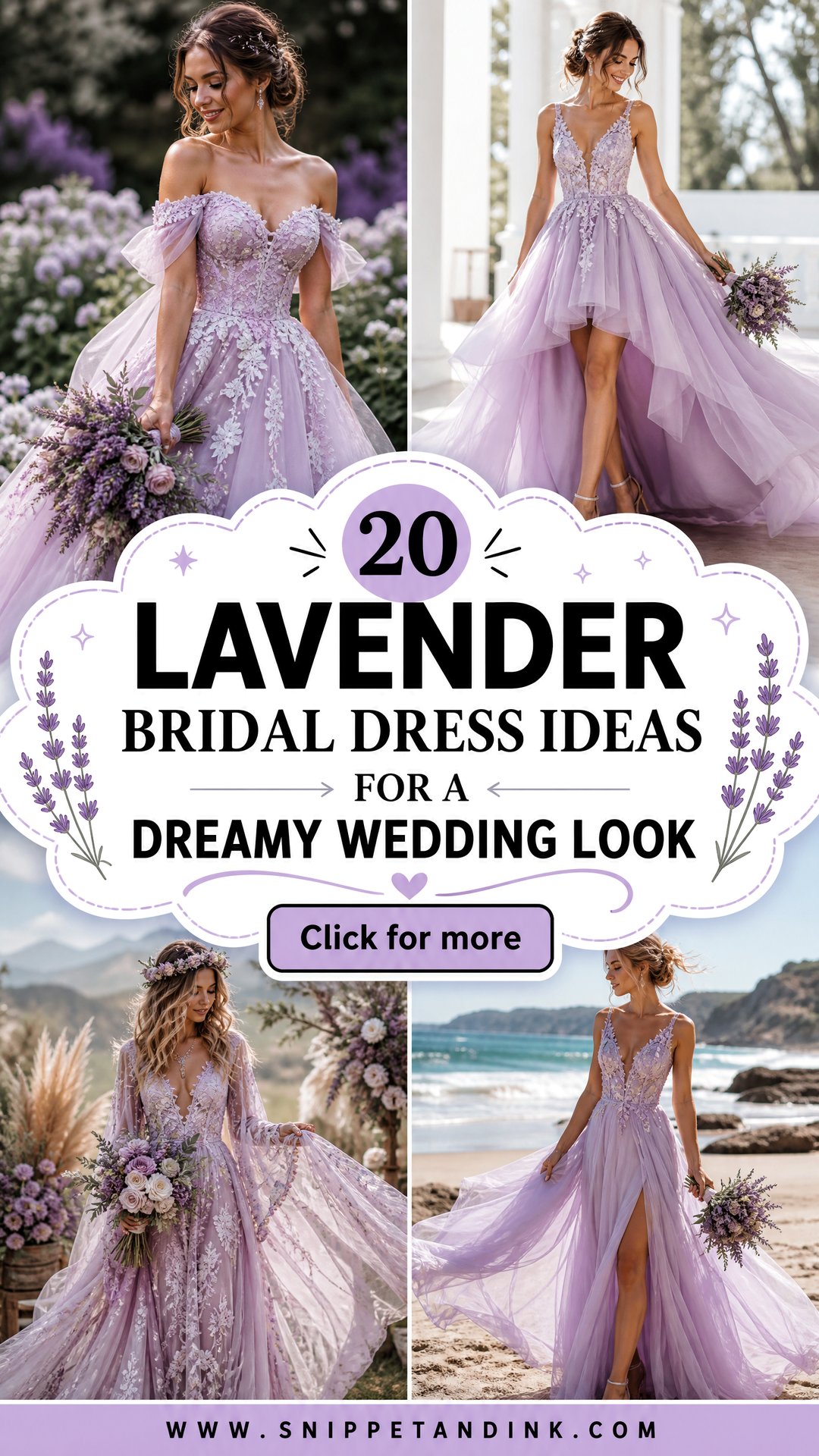
Lilac, Dusty Mauve or Periwinkle? Testing the Shade Against Your Skin
Lavender isn’t one colour. Some versions lean pink, some lean blue, and some are greyed down so far they read almost silver. The one that suits you depends on your undertone more than anything else, and the only reliable way to find it is to hold the fabric against bare skin, near your face, in natural light.
At an appointment I drape swatches across a bride’s collarbones with her hair pulled back and her makeup minimal. A shade that works makes skin look clearer and eyes brighter. One that doesn’t will pick out redness around the nose or make you look a little tired. As a rough starting point, warmer skin tends to glow in pinkish lilac and mauve, while cooler skin often suits the blue-leaning periwinkle and true lavender tones. Deeper skin can carry stronger, more saturated purples that wash out paler brides.
- Look at swatches by a window first, then under warm indoor bulbs. If a shade goes grey or murky in either, keep looking.
- Take a phone photo with flash and without. Some lavenders turn noticeably bluer on camera, which matters if your photographer shoots a lot with flash at the reception.
- Compare against the ivory you plan for shoes and veil. Pure white next to pale lilac can make the dress look dingy; soft ivory usually sits more kindly.
- Check the lining. A lining a touch lighter than the outer fabric gives depth, while a much darker one turns sheer layers muddy.
1. Lavender A-Line Bridal Dress
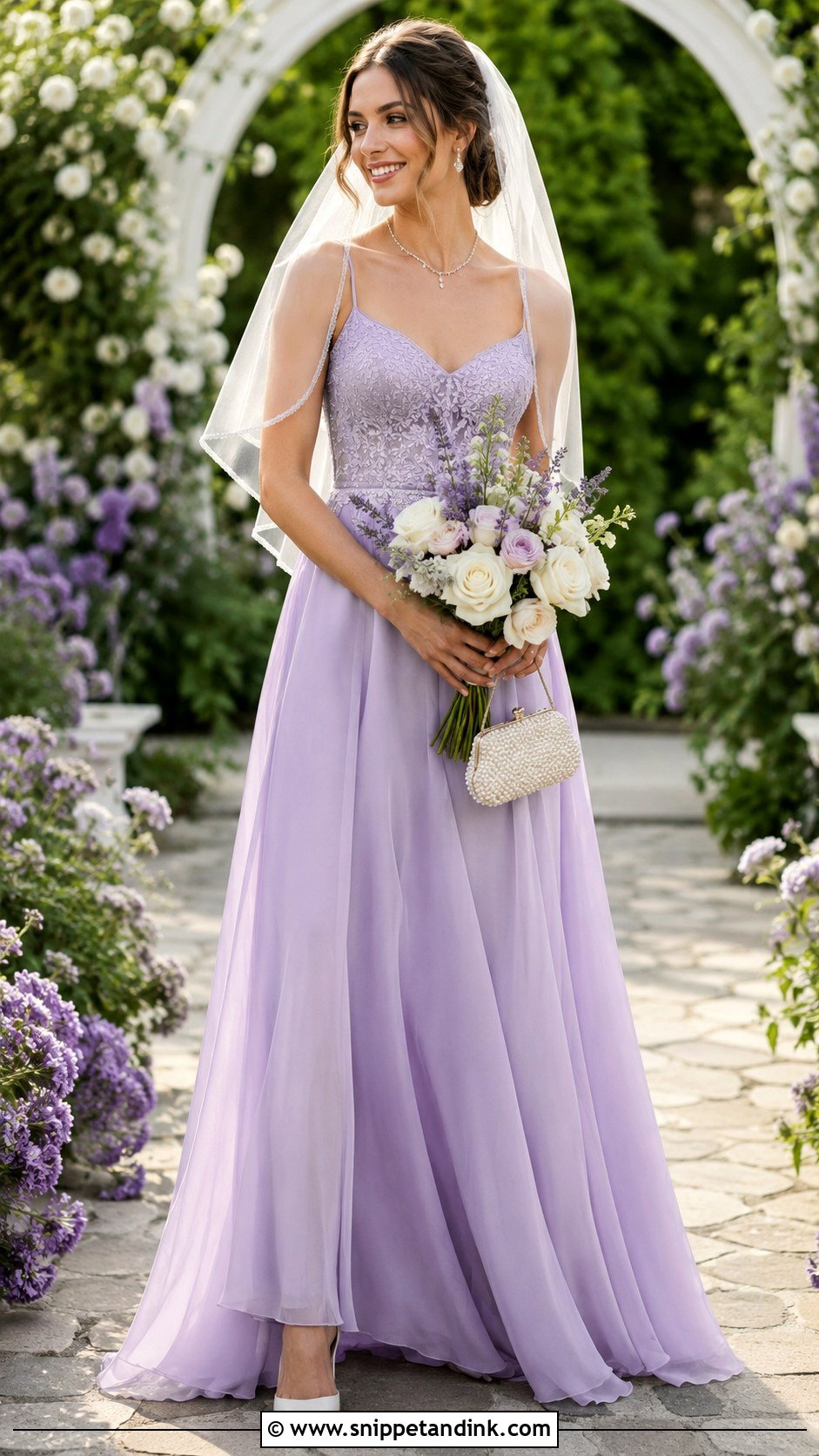
The A-line is where I start most first appointments in colour, because it flatters nearly every figure and lets you judge the shade without a dramatic shape distracting you. Lightweight chiffon or layered tulle keeps the skirt moving; a fitted bodice that sits at your natural waist does the defining. Silver drop earrings and a fine pendant are enough sparkle. Ivory pointed pumps, a small pearl clutch and a fingertip veil edged in narrow satin ribbon finish it, and white roses with lavender sprigs pull the bouquet into the palette. One thing I check in the mirror: if the skirt panels are cut on different grains, pale purple can look patchy from the side, so turn around slowly before you fall in love.
2. Lavender Ball Gown Bridal Dress
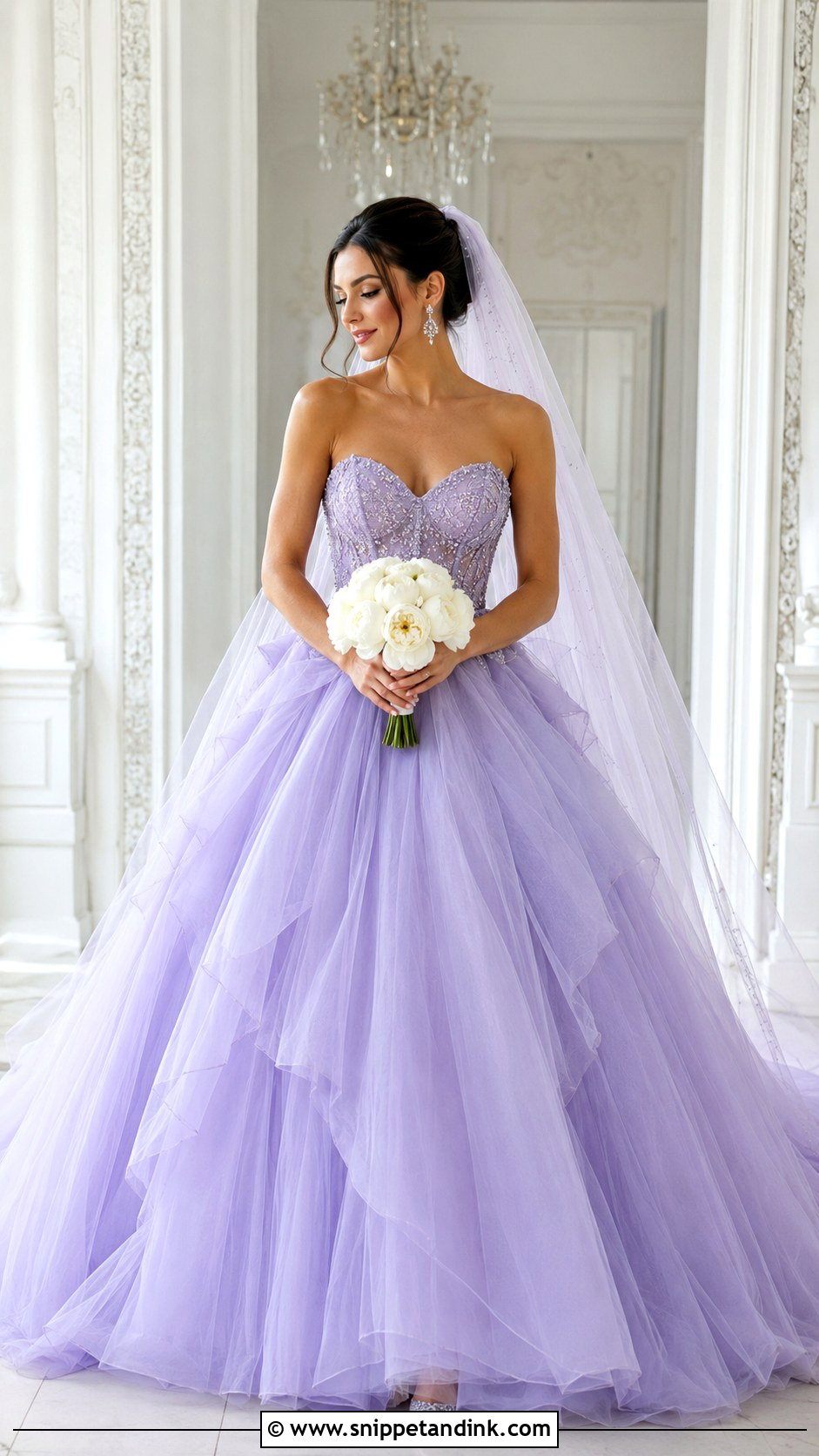
Nothing makes an entrance like a full skirt in colour. A structured bodice over layered tulle gives the classic bridal outline, and the pastel keeps it from feeling like a costume. I’d keep embellishment to the neckline, crystal beading or embroidered vines, because sparkle scattered over that much tulle starts to look busy in photos. Pair it with a cathedral veil, crystal studs and closed silver heels you’ll never see under the hem. Keep the bouquet compact, white peonies or garden roses, so it doesn’t fight the volume. A smooth chignon and one crystal comb are plenty. Practise sitting: a ball gown needs the hoop or petticoat lifted behind you, and a ballroom or estate gives you the space to manage it.
3. Lavender Lace Bridal Dress
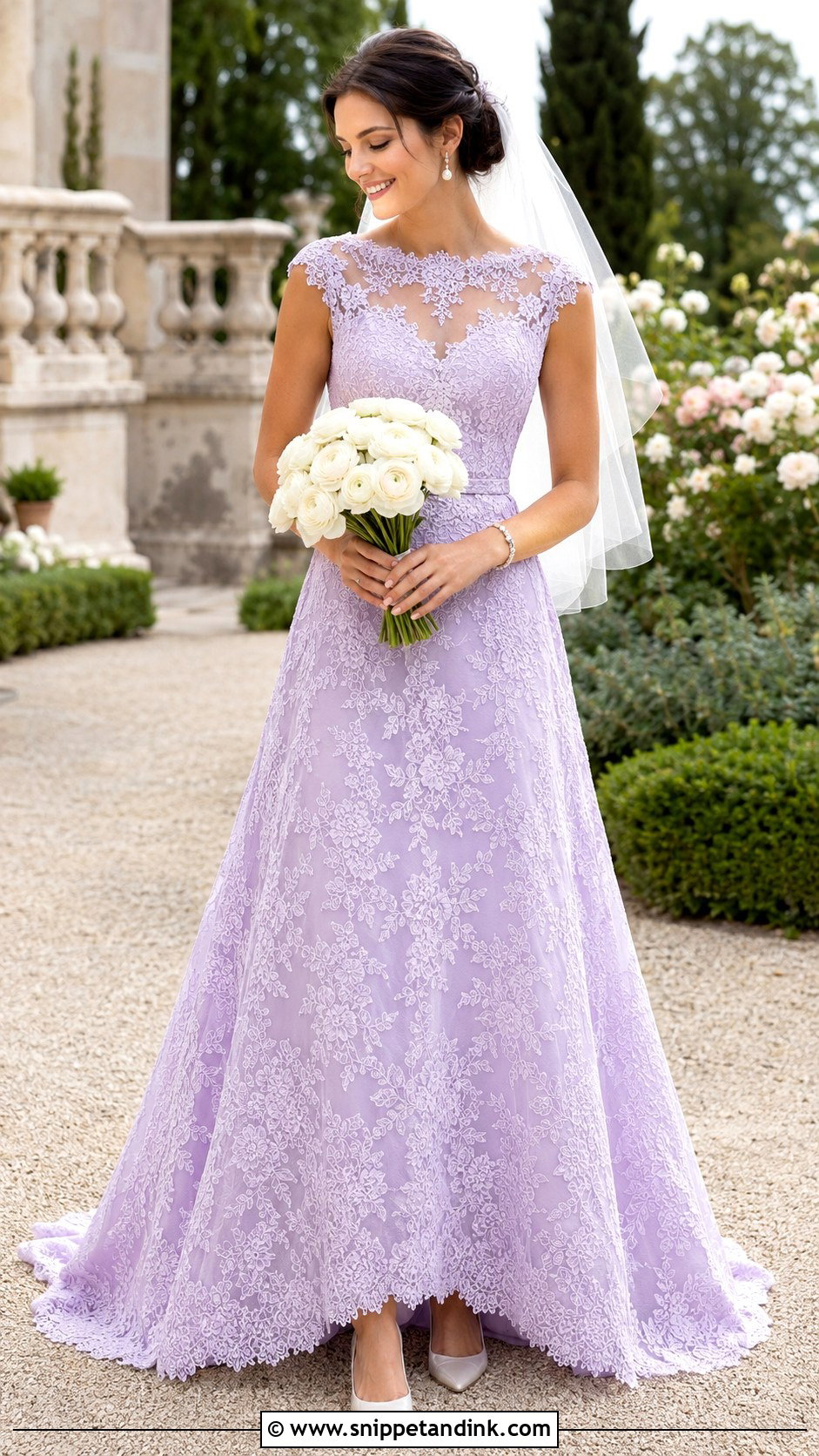
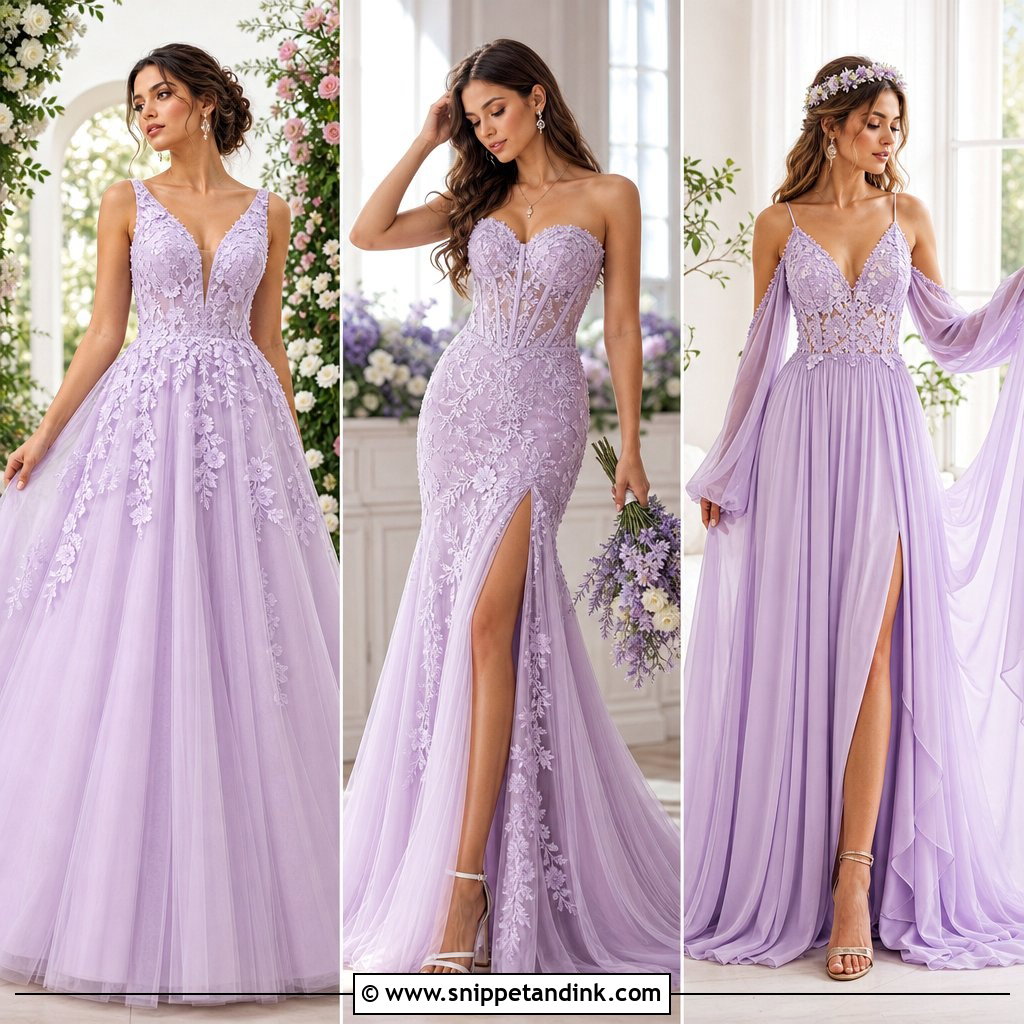
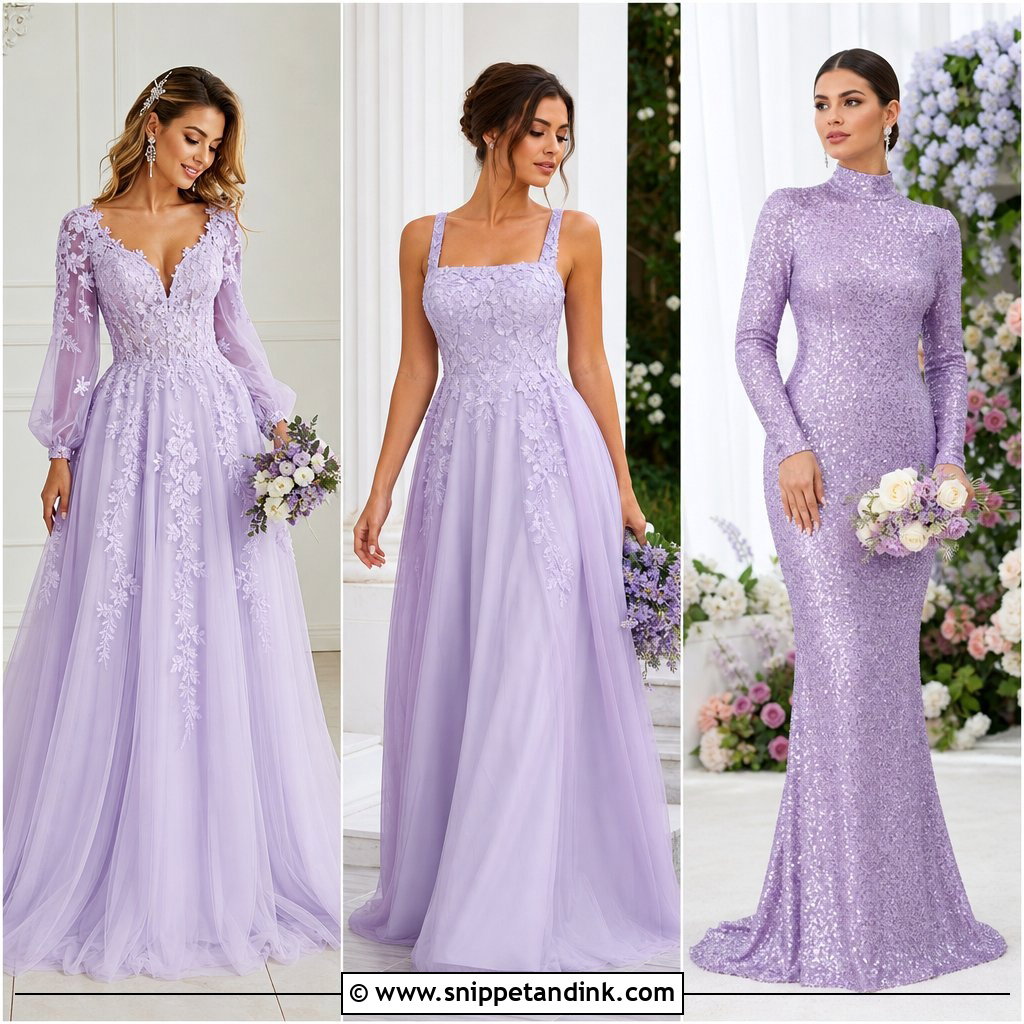
Lace over a slightly lighter lining is my favourite trick for lavender, because the pattern shows up with real depth instead of disappearing into one flat tone. A fitted bodice with an A-line or soft fit-and-flare skirt lets the lace stay the main event. Floral lace leans romantic; geometric lace reads cleaner and more current. Pearl earrings, a slim bracelet and ivory satin pumps sit quietly next to all that texture. Choose a plain tulle veil, since a lace-edged one layered over lace looks crowded once the two patterns meet at your shoulders. White ranunculus, lilac-toned blooms and eucalyptus give a gentle contrast, and soft curls or a low bun finish it.
4. Lavender Tulle Bridal Dress
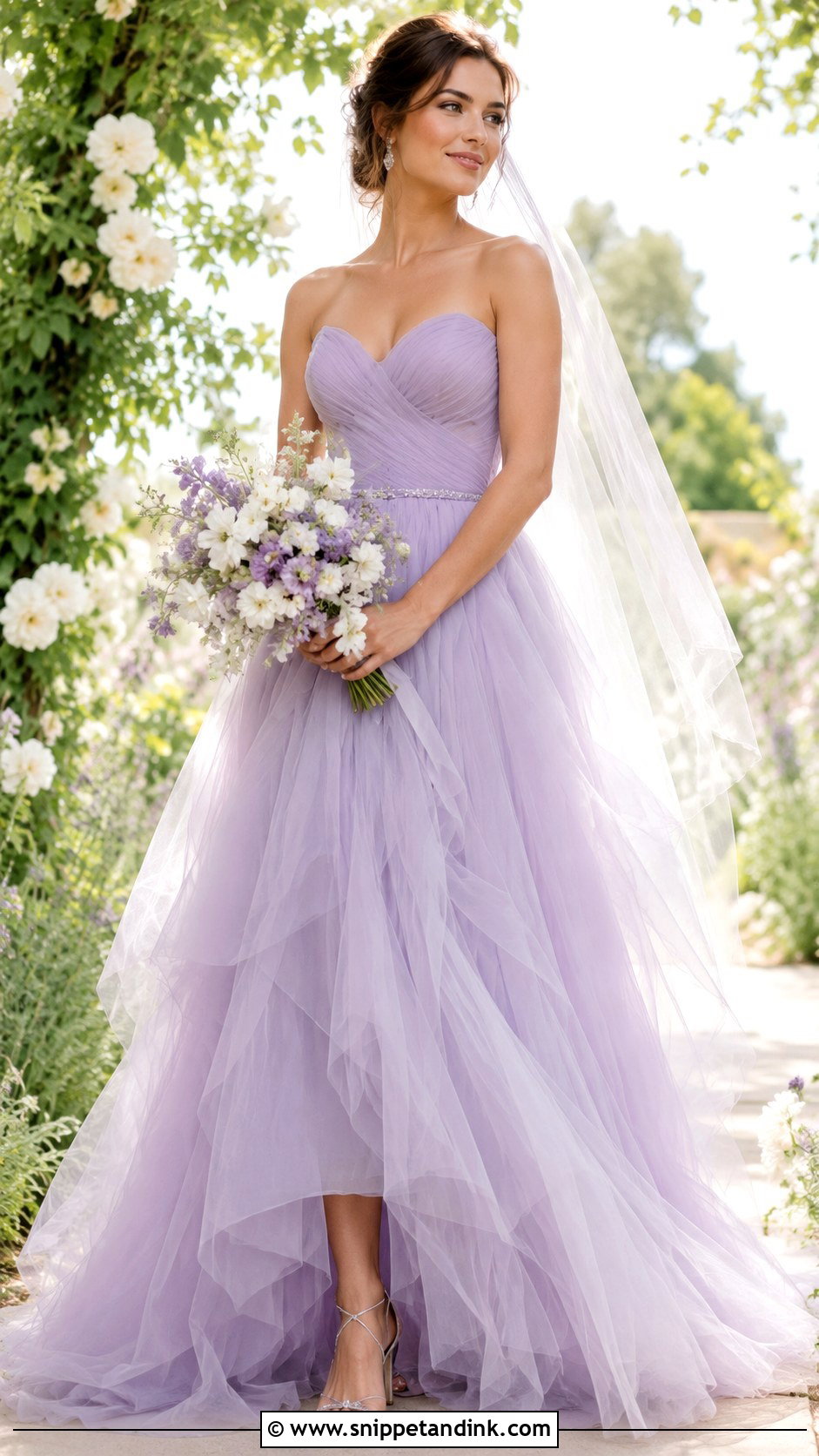
Tulle carries colour differently from any other fabric. Because it’s sheer, every layer you add deepens the shade, so a gown with a pale lavender lining under several soft layers photographs with dimension rather than looking like one flat sheet of purple. Look for a softly fitted bodice and a skirt that moves when you walk. Delicate silver sandals and small crystal earrings keep it light; add a narrow metallic belt only if your waist needs more definition. A sheer fingertip veil holds onto that weightless feel. Sweet peas, lisianthus and a few lavender blooms in a loose bouquet suit it, with a braided updo or half-up style dotted with tiny pearl pins. Tulle snags on rough bark and stone walls, so mind where you lean at a garden ceremony.
5. Lavender Satin Slip Bridal Dress
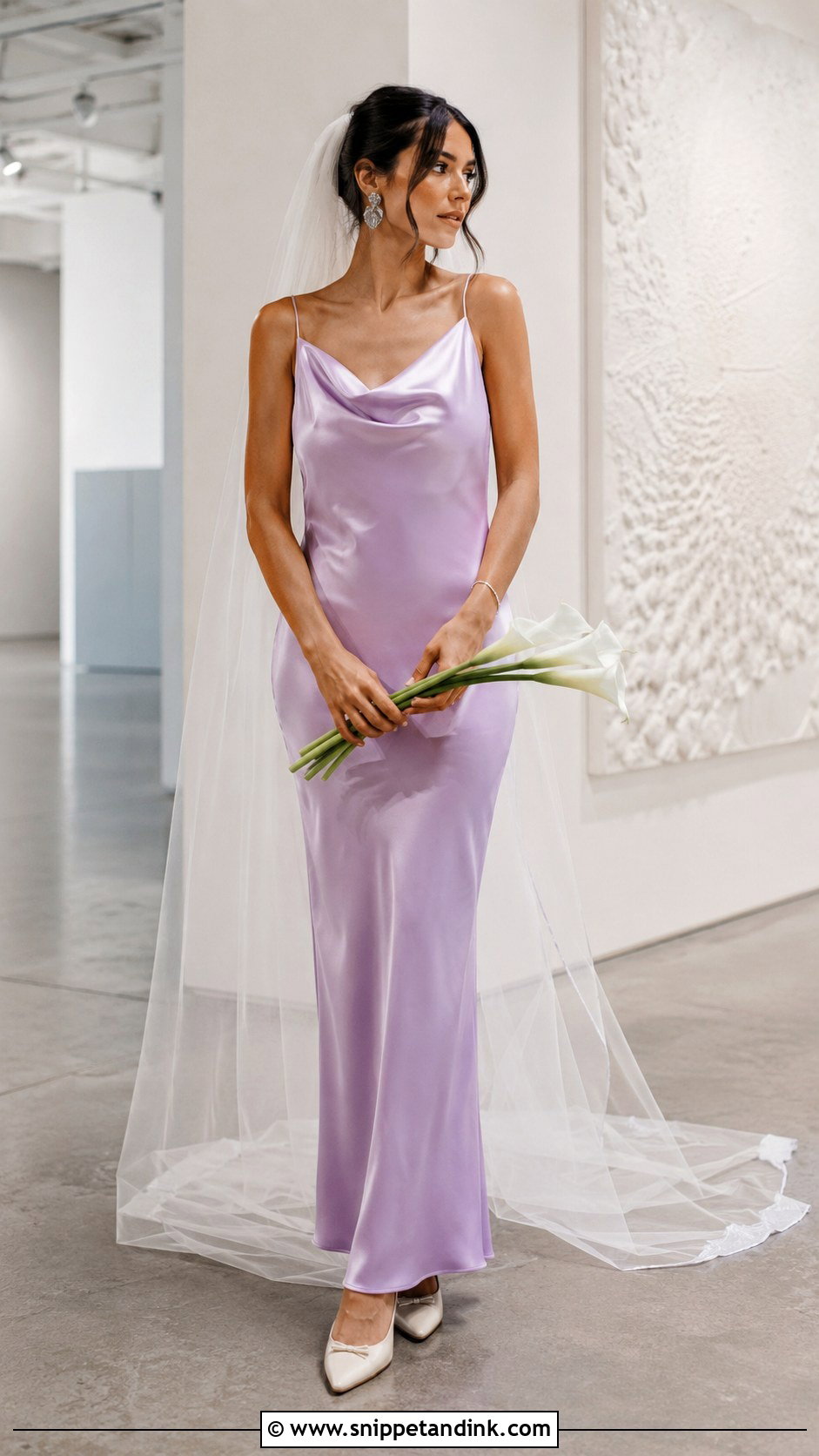
Satin is honest: it shows every line underneath, which is why I ask anyone trying a bias-cut slip to bring the exact underwear she plans to wear. Choose a softly draped neckline, straps that actually support you, and enough ease through the skirt to walk and sit. The fabric brings its own shine, so the accessories should stay spare. Sculptural silver earrings, a slim bracelet and ivory kitten heels with a pointed toe are all it needs, and a floor-length sheer veil adds the bridal note without fussing up the line. Calla lilies or long-stemmed roses tied with lavender ribbon, a sleek low bun and dewy makeup finish it. Satin creases where you sit, so steam it on the morning and expect soft lines by the reception. It’s at home in a gallery, a hotel or a city registry office.
6. Lavender Long-Sleeve Bridal Dress
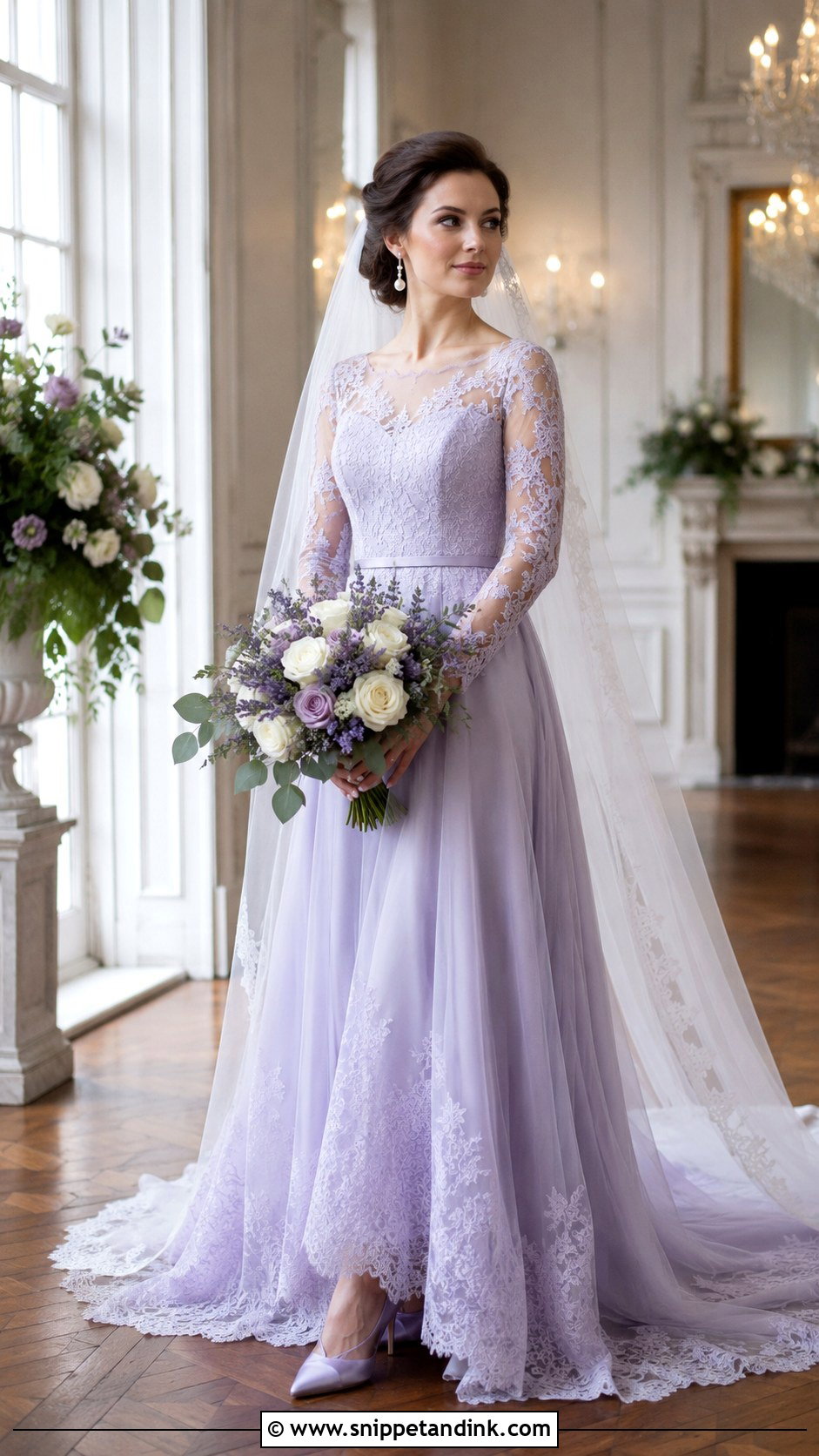
Sleeves change the whole mood of a lavender gown. Sheer lace sleeves keep it soft; lined crepe sleeves look cleaner and more covered. Either way, I want a defined waist and a skirt with some movement, otherwise long sleeves in colour can tip into looking heavy. Pearl drops, lavender satin pumps and a simple cathedral veil keep the details traditional. White roses, dusty miller and muted purple accents in a structured bouquet echo the shade. A neat low chignon keeps the neckline and sleeve detail visible. At the fitting, raise both arms as if hugging someone: fitted sleeves that pass that test will survive a cool-weather ceremony and a long evening indoors.
7. Lavender Off-Shoulder Bridal Dress
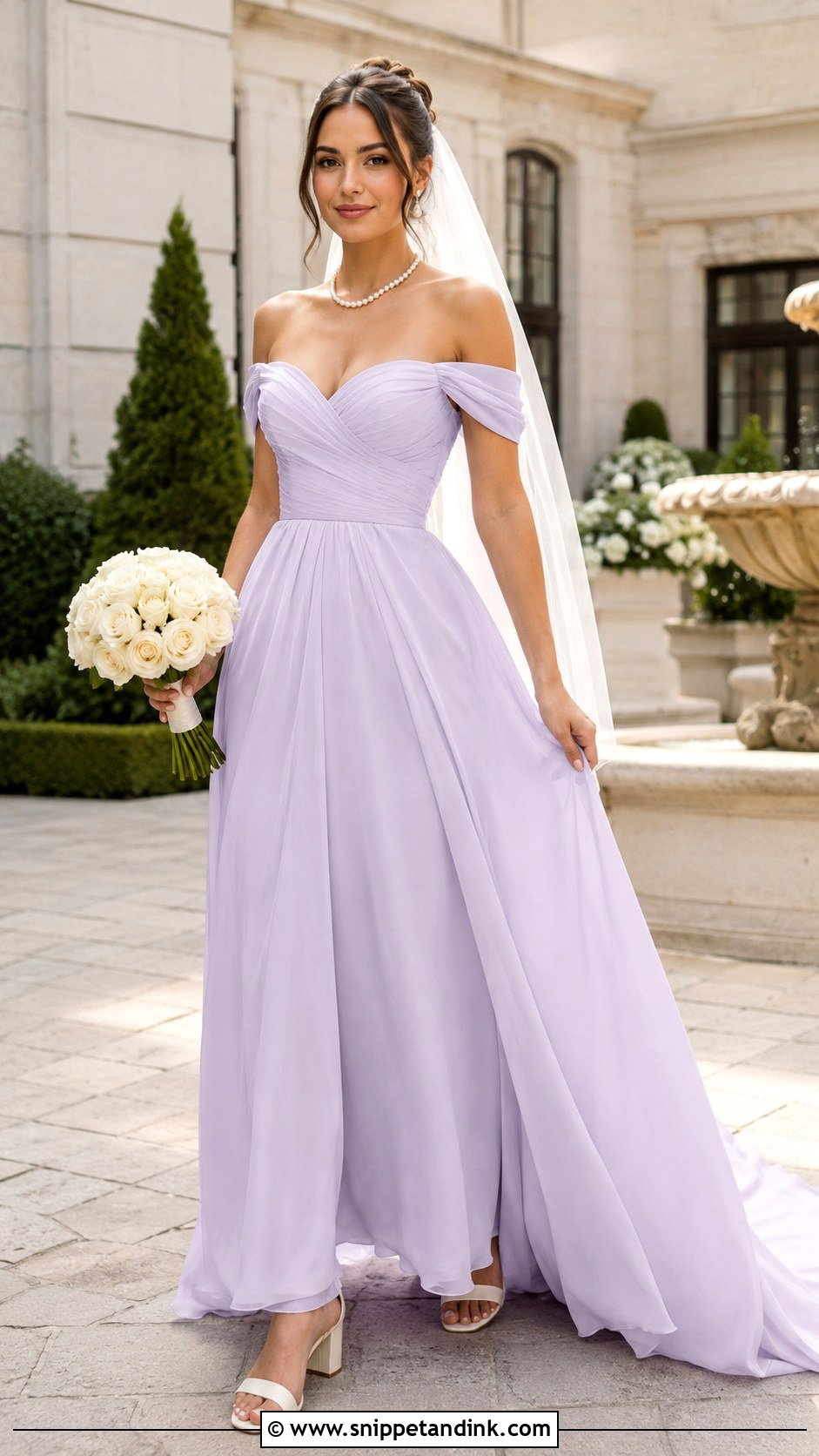
Off-shoulder necklines live or die on the bodice underneath. If the corsetry isn’t doing the work, the sleeves slide down every time you lift your arms, and you spend the day hitching them back up. Look for a supportive corseted bodice, draped sleeves that sit securely, and a flowing A-line skirt that keeps the eye on your collarbones. A short pearl necklace, matching studs and ivory block-heel sandals keep you steady. I’d anchor a chapel veil beneath a loose bun so the shoulders stay visible from the front. White roses and pale lilacs in a rounded bouquet complete it. Bring your fitter a checklist: sit, hug, wave, reach for a glass.
8. Lavender Corset Bridal Dress
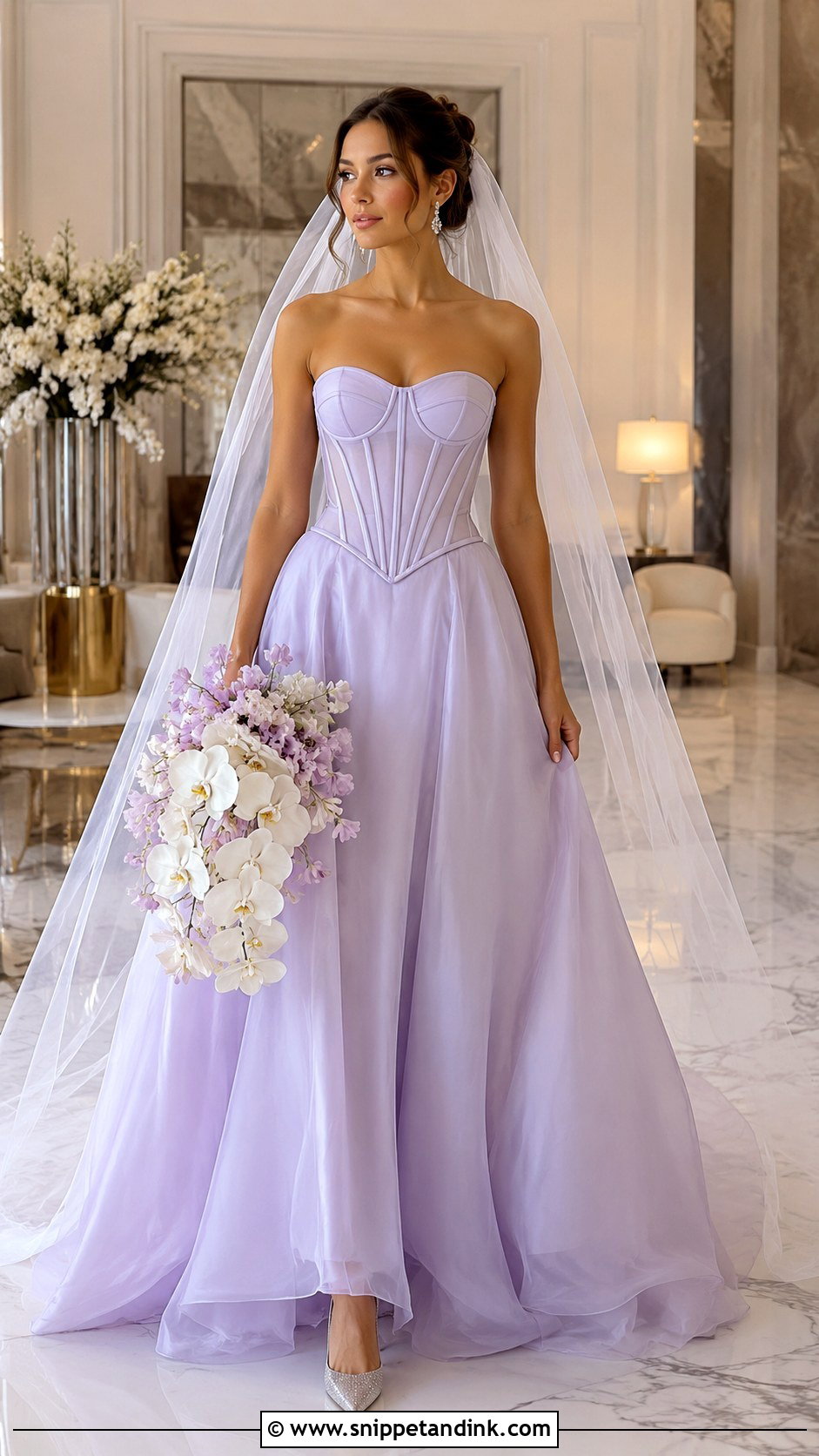
Visible structure and a soft colour make a good pairing, because the boning gives the pastel some backbone. Choose a bodice with real internal support, either a pointed basque or a natural waist, and decide whether you want the boning to show or sit under fabric-covered seams. Basque waists and corsetry have been everywhere in bridal lately, and lavender softens what can otherwise look severe. Balance the top with a flowing tulle, organza or satin skirt. Drop earrings, pointed silver pumps and a plain cathedral veil keep the rest quiet; white orchids and lavender-toned sweet peas carry the colour into the bouquet. A properly fitted corset should let you take a full breath while seated. If it pinches or gapes at the side seams, it needs another fitting.
9. Lavender Floral Appliqué Bridal Dress
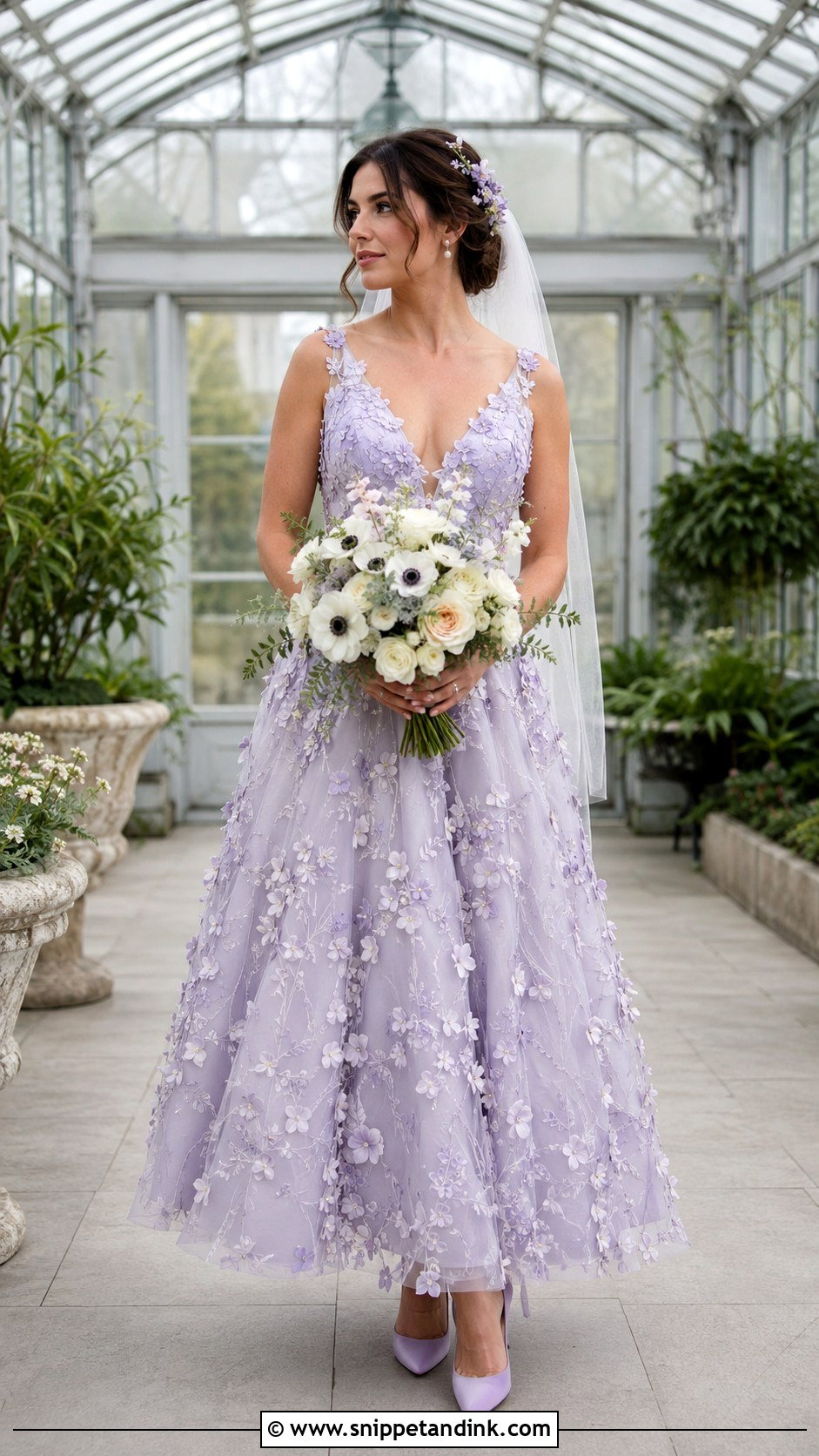
Appliqué works best when it thins out as it travels: dense around the bodice, scattering down the skirt, so the eye starts at your face. Gowns with flowers spread evenly from neckline to hem tend to look crowded in colour. Keep the accessories plain, pearl studs, pale lavender pumps and a raw-edge veil, and let the bouquet complement rather than copy the dress, perhaps white anemones with garden roses. Two or three matching flower pins at the back of a textured low bun tie the hair in. Check how the appliqués are attached; hand-stitched pieces sit flatter and survive a veil catching on them better than glued ones. It fits naturally in a botanical garden, greenhouse, estate lawn or a softly decorated room full of flowers.
10. Lavender Ombre Bridal Dress
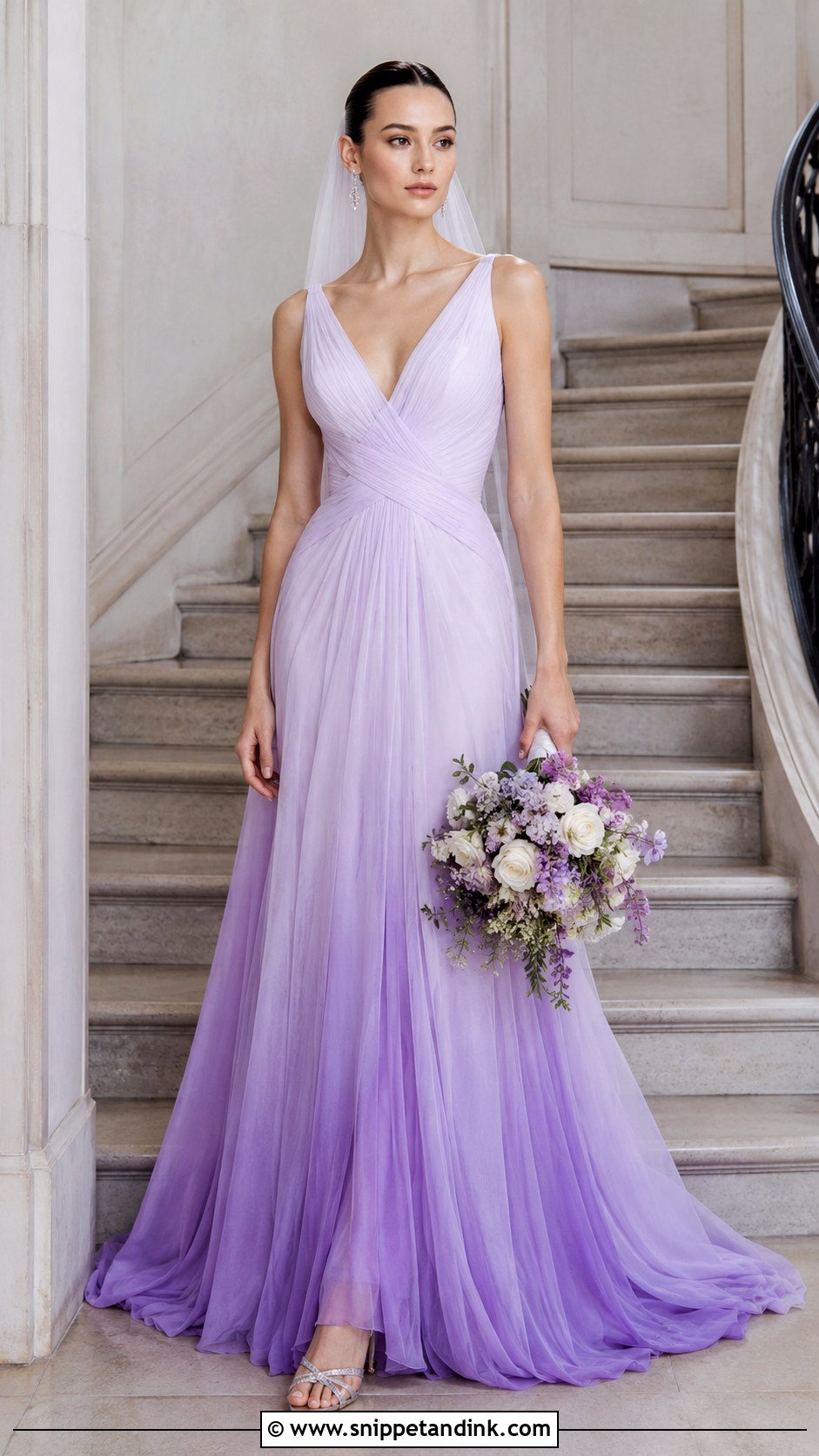
For a bride who wants more colour than a single pastel gives her, a lavender ombre bridal dress is the boldest option here. The best ones start almost white at the bodice and deepen gradually toward the hem, so the darkest tone sits farthest from your face. A plain A-line or ball gown shape lets the gradient read as deliberate. Clear crystal earrings, silver sandals and a veil that stops before the darkest band keep the transition clean. White, lilac and deeper purple flowers echo it in the bouquet, and a sleek updo keeps attention on the dress. Ask to see the fabric at a window and again under the shop lights, because dip-dyed purples can drift blue or pink depending on the bulbs.
11. Lavender Chiffon Bridal Dress
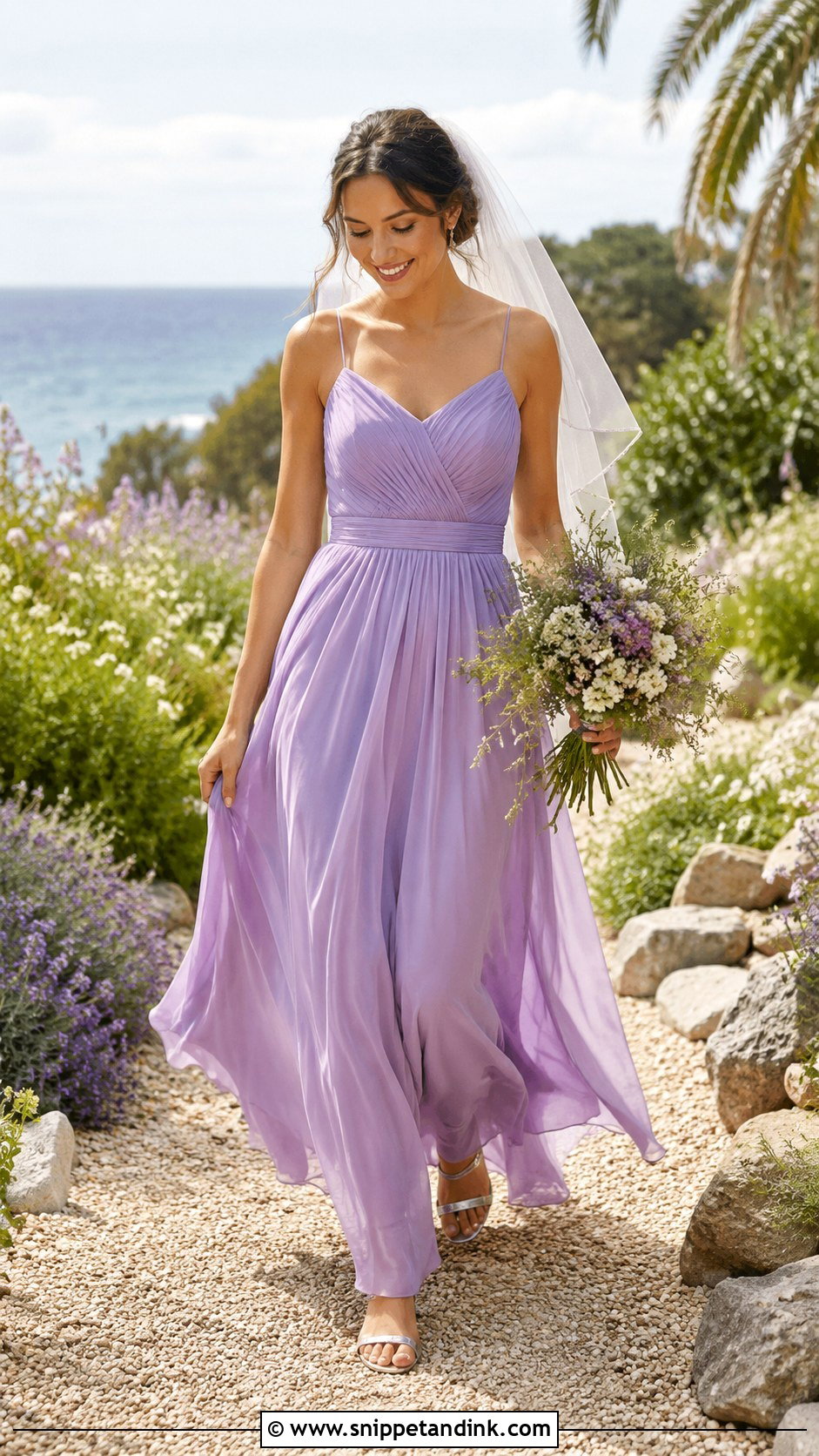
Chiffon is the fabric I recommend for heat. It breathes, it floats, and it doesn’t hold sweat marks the way satin can. Look for a softly gathered bodice, a defined waist and a floor-length skirt with a proper lining, because unlined pale chiffon turns see-through in bright sun. Silver flat sandals or low block heels depend on the ground you’re walking on. Add fine drop earrings, a thin bracelet and a lightweight fingertip veil, with a loose bouquet of white cosmos and lavender sprigs. A braided low bun or half-up style suits the movement. The trade-off: chiffon frays and snags easily, so keep beaded clutches and bracelets with sharp edges away from the skirt. It’s at its best at a beach, garden or vineyard in summer.
12. Lavender Tea-Length Bridal Dress
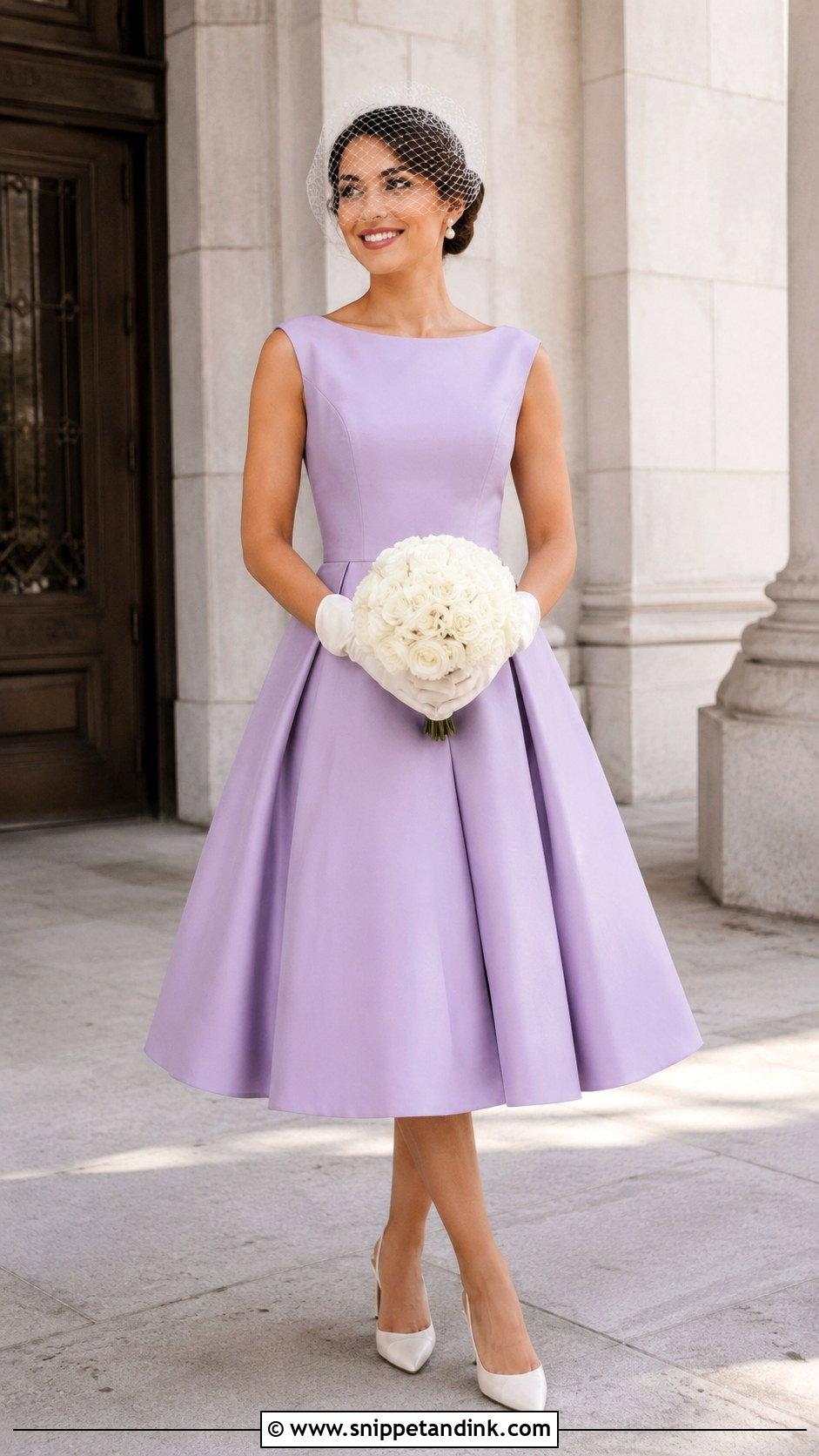
Tea length is a vintage cut that happens to be very practical. A fitted bodice with a structured skirt landing between knee and ankle puts your shoes on show, so they need to earn it: ivory slingbacks are my usual pick. Pearl earrings and short wrist gloves give a retro nod without tipping into fancy dress, and a birdcage or short tulle veil sits neatly above a smooth bun. White roses and lavender flowers tied with satin ribbon make a compact bouquet. Because the whole hem is visible, the alteration has to be exact; even a small dip at the back shows. Wear your wedding shoes to every fitting. It sits right at a courthouse, a daytime lunch or a restaurant where a train would just get stepped on.
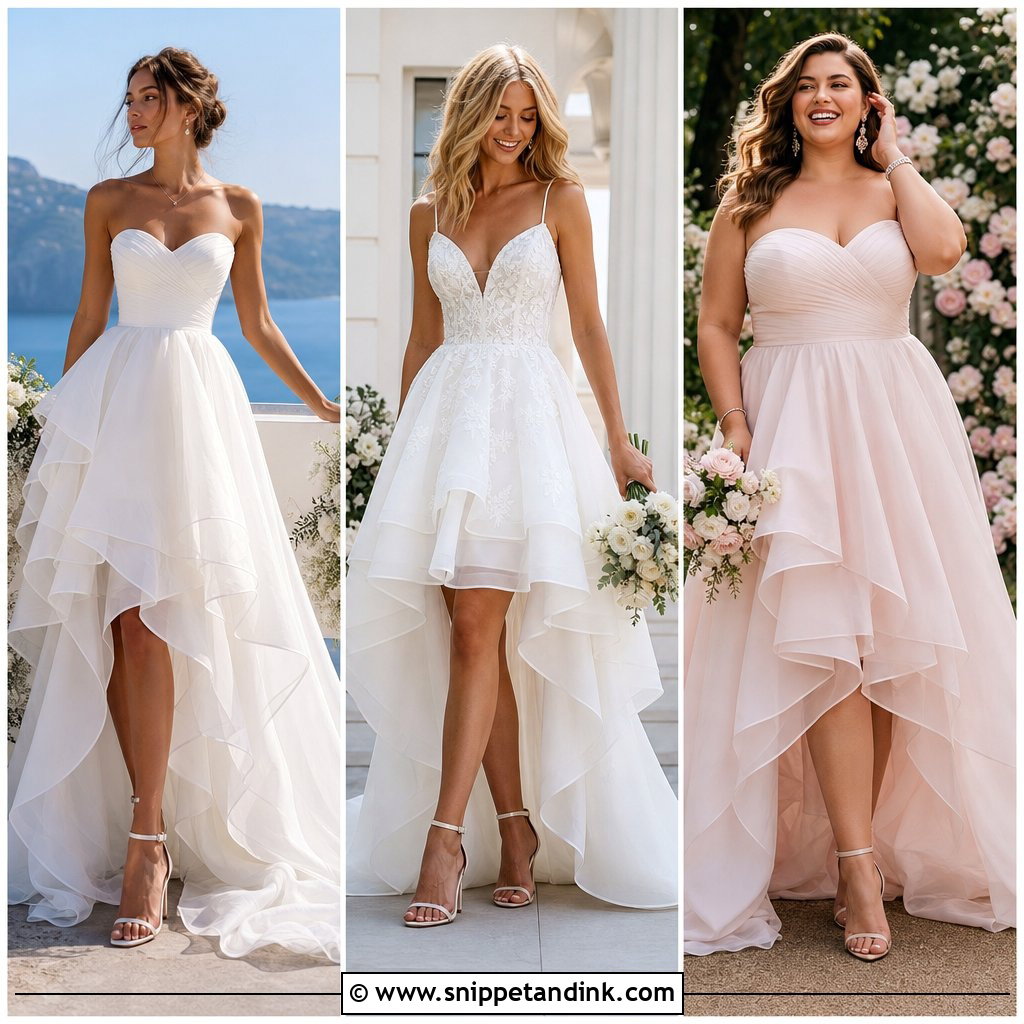
13. Lavender High-Low Bridal Dress
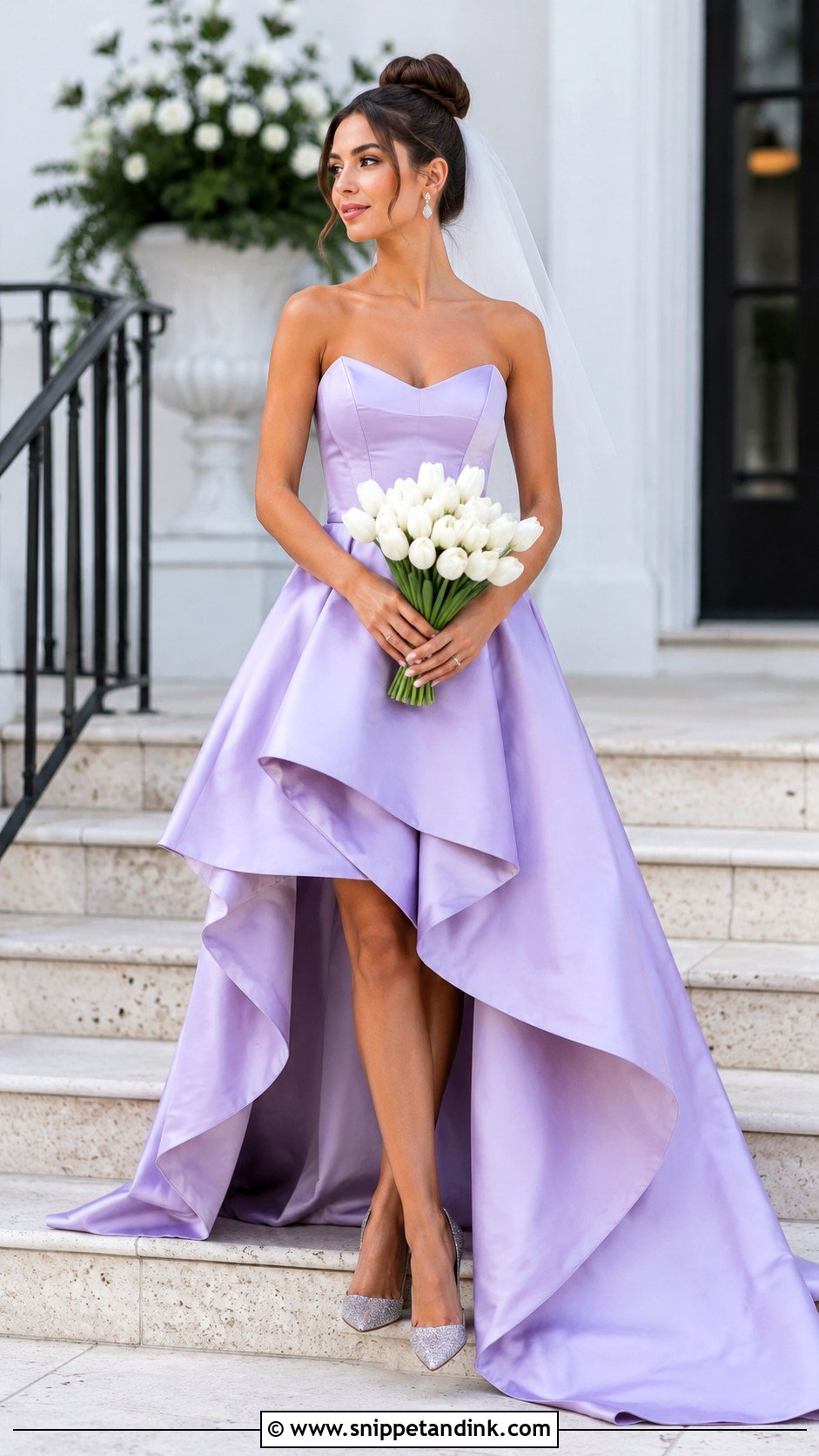
Want room to dance without changing dresses? A high-low hem shows your shoes in front and keeps a longer, flowing line at the back. The hem needs some structure, a horsehair braid or a firmer fabric, or the short front collapses and looks unfinished. Pair it with a supportive bodice, crystal-embellished silver pumps, small drop earrings and a short veil that won’t tangle with the back hem. White tulips or roses keep the bouquet crisp. A high polished bun or soft ponytail matches the energy. I’d skip this cut for a very formal church ceremony, where the exposed front can feel too casual; for outdoor steps and a busy dance floor, it’s a smart pick.
14. Lavender Plus-Size Bridal Dress
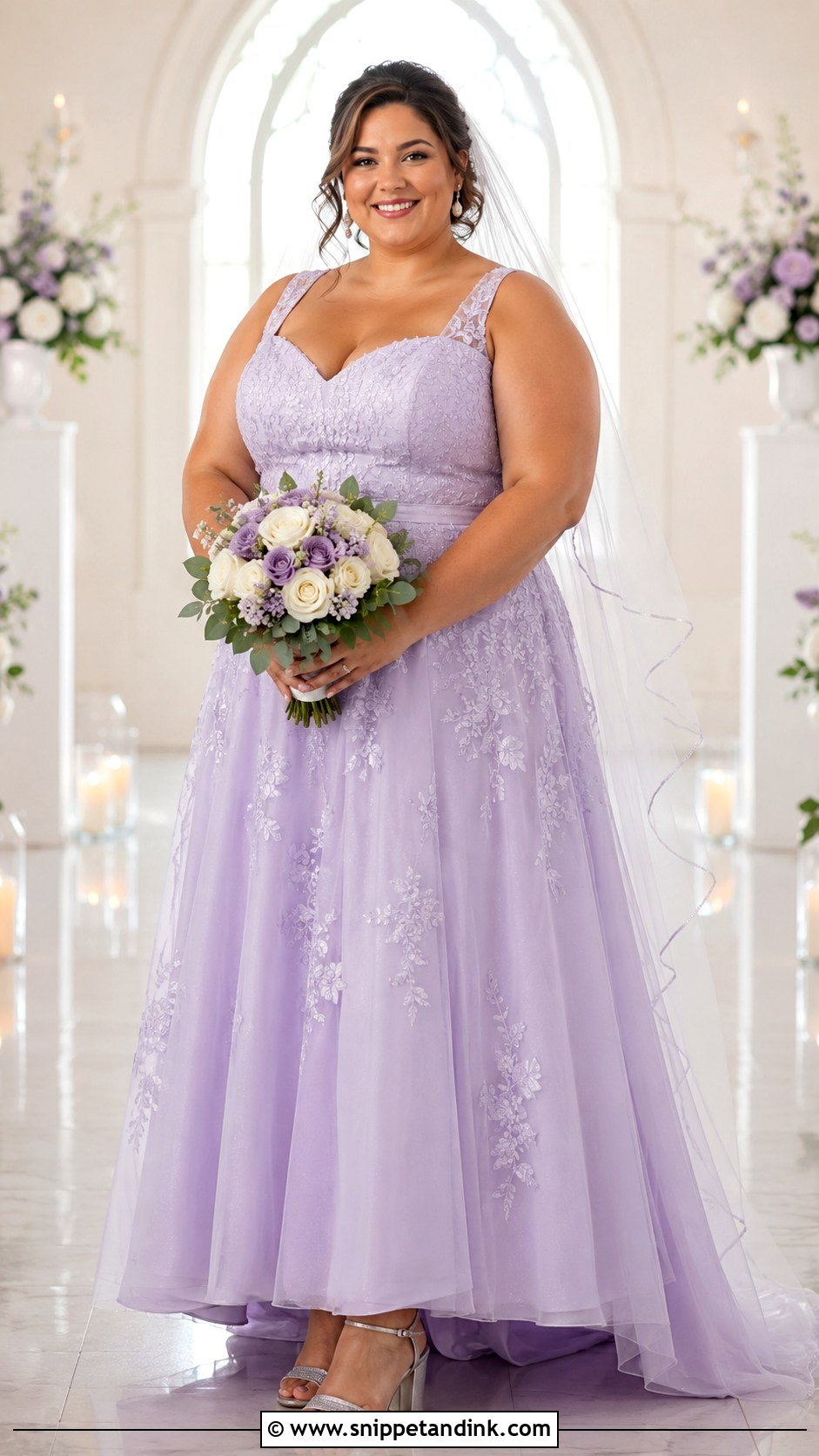
Support and movement come before any so-called rules about what curvier brides should wear. An A-line with a structured bodice, wide straps and a flowing skirt is a sensible starting point, but I’ve seen fitted and ball gown shapes look just as good when the corsetry is right. Buy your foundation garments before the first fitting, because changing your bra halfway through alterations shifts every measurement. Silver block heels, pearl drops and a lightweight chapel veil finish the look. Choose a medium-scale bouquet of white roses and pale purple flowers so it matches your proportions. A half-up style or low bun keeps the neckline clear. Walk around the fitting room and look at the back view; secure from every angle matters more than any single feature.

15. Modest Lavender Bridal Dress
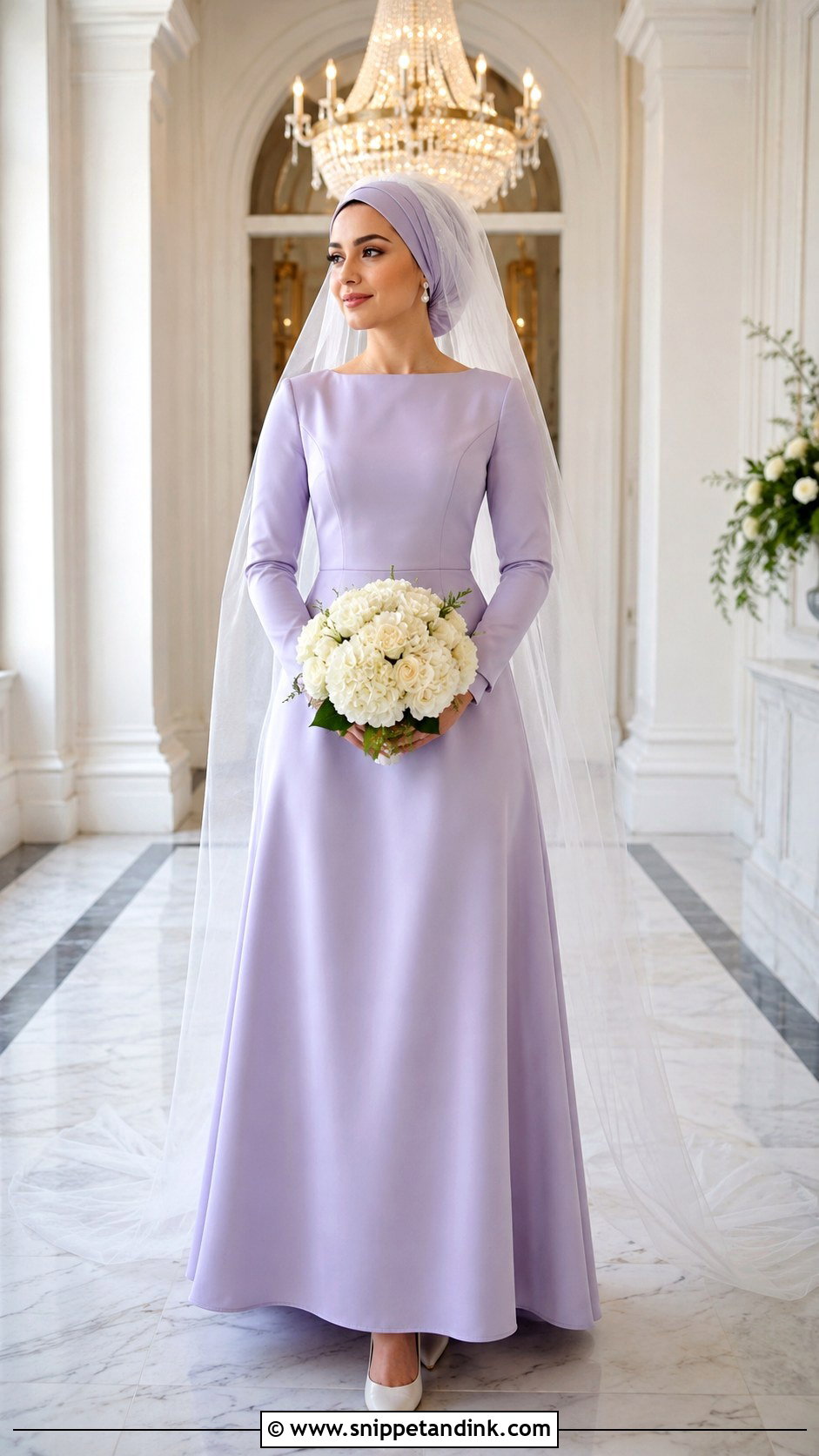
Coverage doesn’t have to mean shapeless. A high bateau neckline, lined long sleeves, a defined waist and a softly flared skirt give a modest gown real shape. Crepe looks smooth and modern; a lace overlay adds texture. Closed ivory pumps, pearl earrings and a long sheer veil fixed beneath a tidy bun keep the look traditional. White hydrangeas and roses with lavender accents add volume without bringing in a new colour. My rule with the veil: if the bodice is detailed, go plain; if the gown is simple, a narrow lace edge works. Shoulders and sleeve heads need the most careful tailoring, since that’s where modest gowns pull when you raise your arms.
16. Boho Lavender Bridal Dress
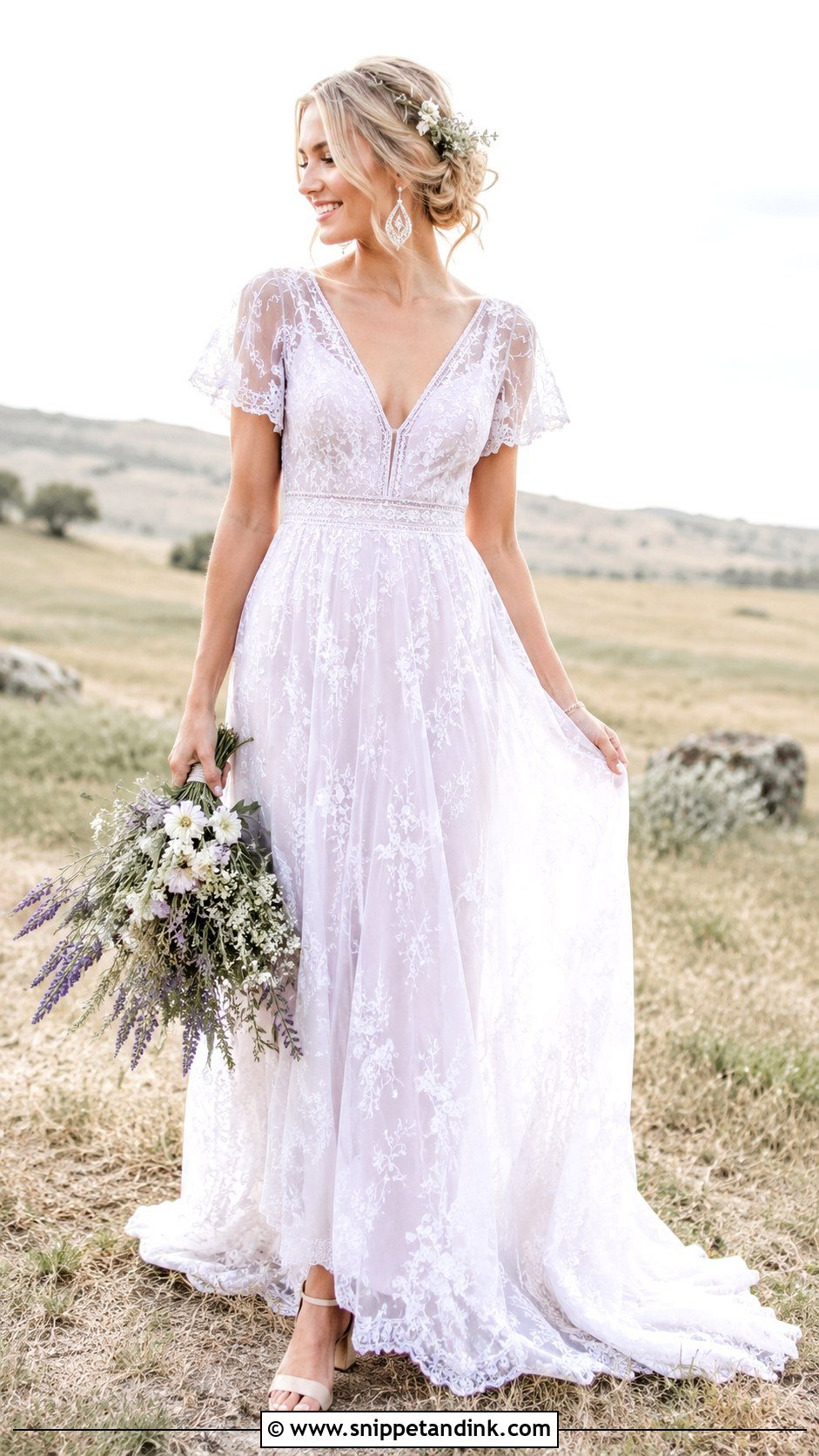
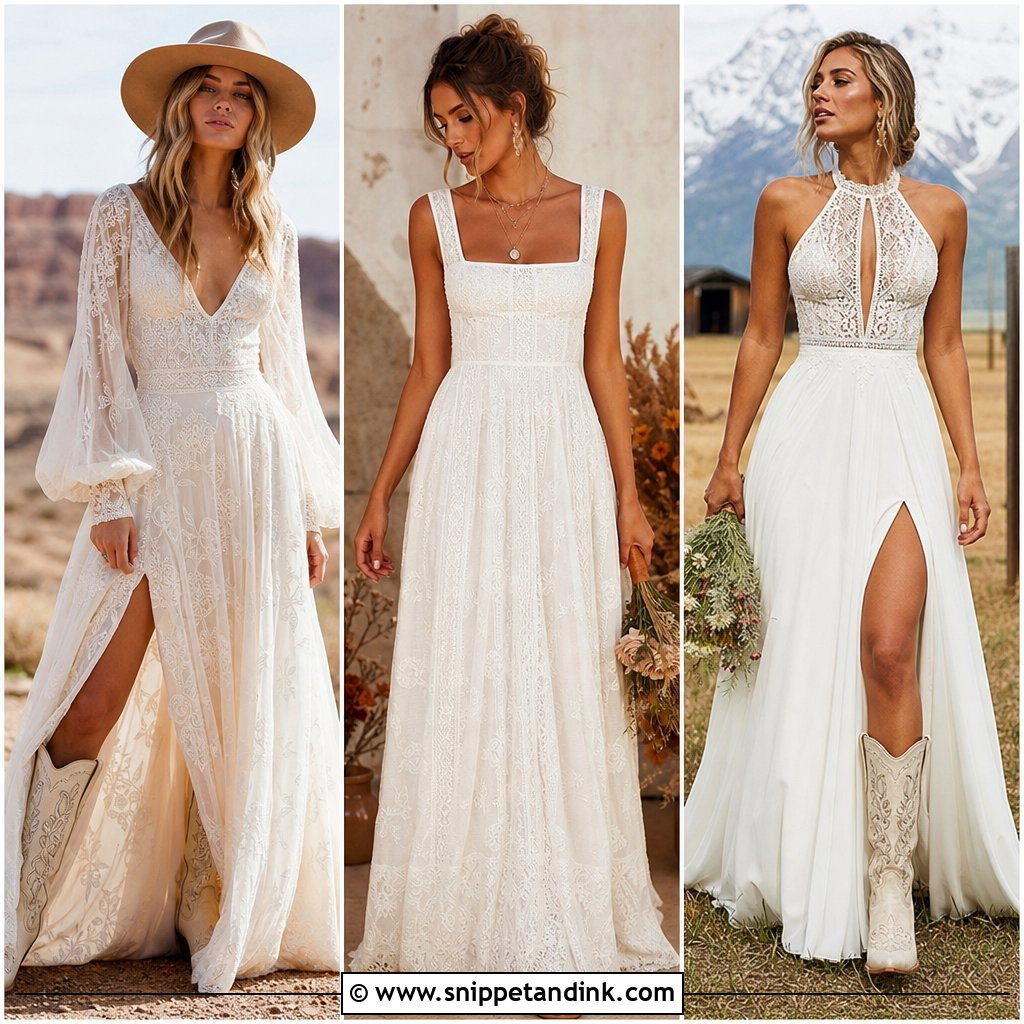
Boho looks pulled together when the relaxed pieces are chosen on purpose rather than thrown on. A flowing chiffon or soft lace gown with flutter sleeves, a gently defined waist and a train you can manage on grass is the base. Swap heavy crystals for hammered silver earrings and a slim textured bracelet, then add neutral block-heel sandals. A small flower comb or light crown replaces a tiara. White wildflowers and lavender sprigs tied with raw silk ribbon make an airy bouquet, and loose waves or a low braid suit the mood. Trains pick up grass stains and burrs, so I’d ask for a bustle point even on a short one. It belongs in a meadow, woodland, barn, desert or backyard, with the hem taken up for the actual ground underfoot.
17. Beach Lavender Bridal Dress
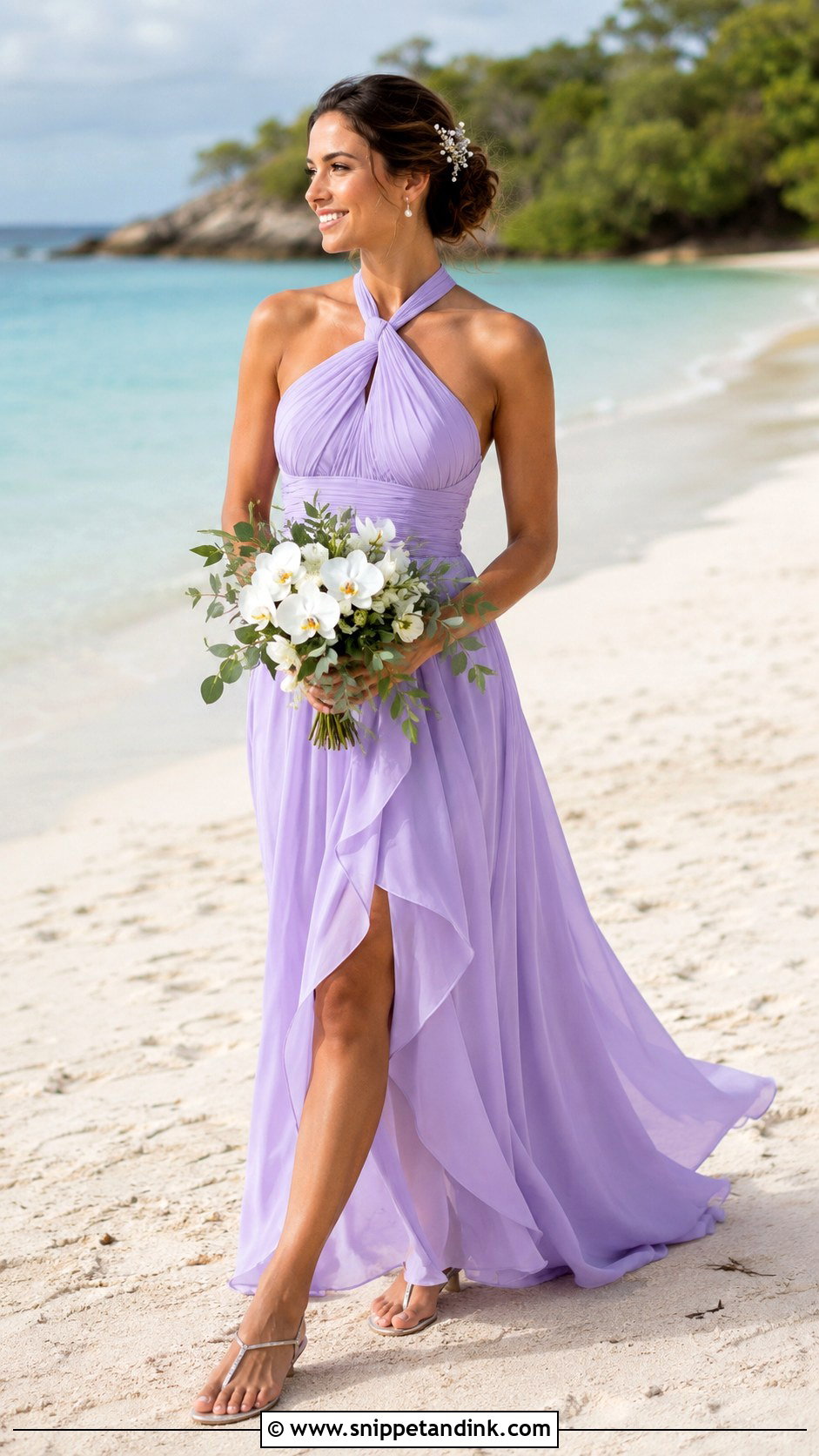
Wind is the real enemy at the water’s edge, so a beach gown has to stay put. Pick chiffon, lightweight crepe, or soft tulle with a short train and very little heavy beading, which drags and collects sand. A halter, wide straps or sleeves keep the bodice steady in a breeze. Flat metallic sandals beat heels that sink, and small pearl earrings plus a fine anklet are enough jewellery. Trade a long veil for a pearl comb or a shoulder-length one that won’t wrap around your face. A tightly arranged bouquet of white orchids is easier to hold in gusts than a loose one, and a braided bun keeps strands out of your lip gloss. Test the dress outside before the final alterations, ideally on a breezy day.
18. Lavender Mini Bridal Dress
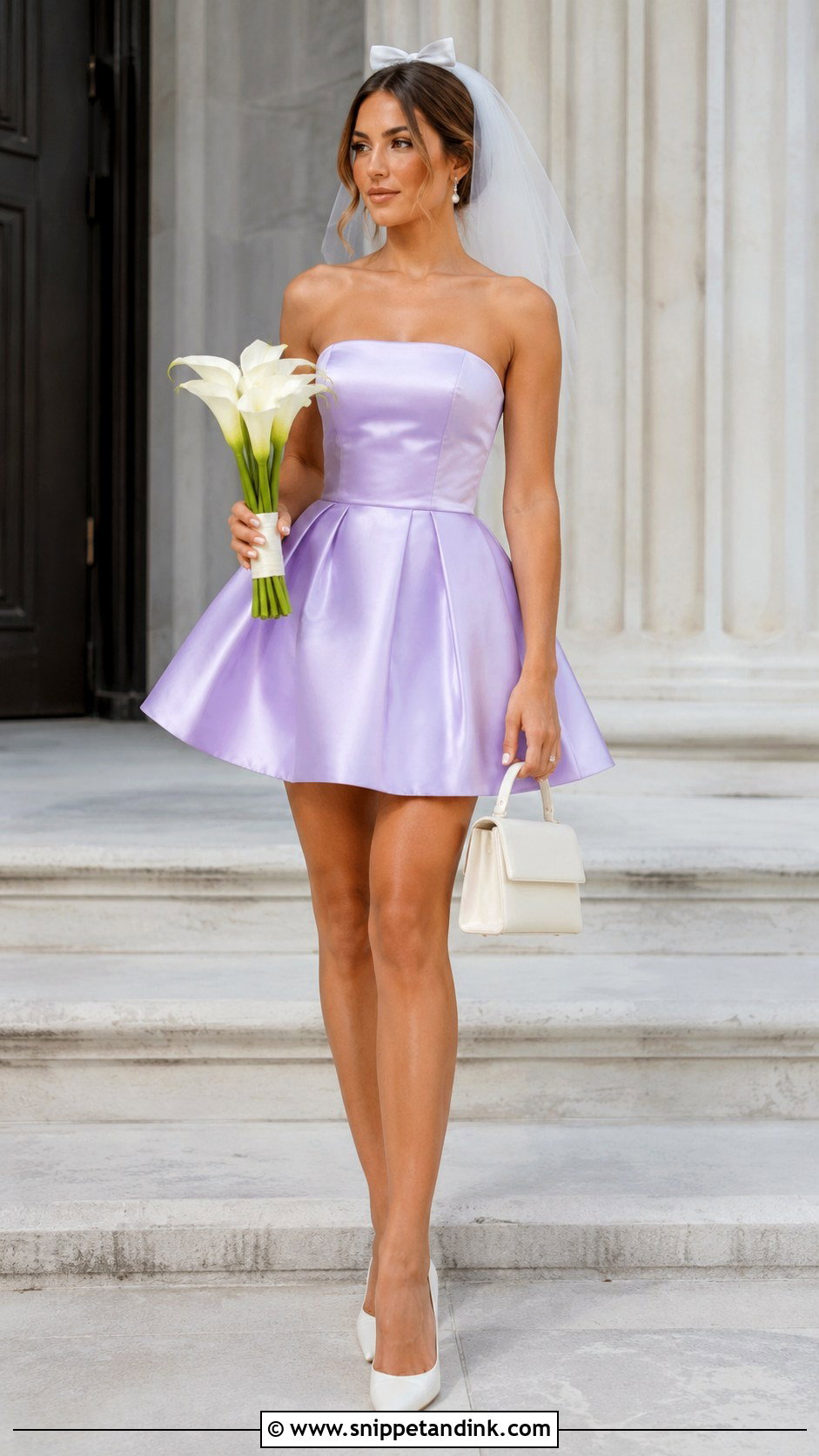
A mini is the most confident way to wear lavender, and I like it best at a courthouse or as a second look for the party. Choose a structured shift, a fit-and-flare or a tailored cut in a fabric with some body, such as satin, crepe or embroidered organza; flimsy fabrics look cheap at this length. Pointed ivory pumps, pearl drops and a compact top-handle bag balance the short hem. A short veil or an oversized satin bow tells everyone you’re the bride. Keep the flowers small, white roses or calla lilies, and the hair sleek. Sit down in it at the fitting. A mini that’s perfect standing can ride up uncomfortably once you’re at the table.
19. Lavender Sequin Reception Dress
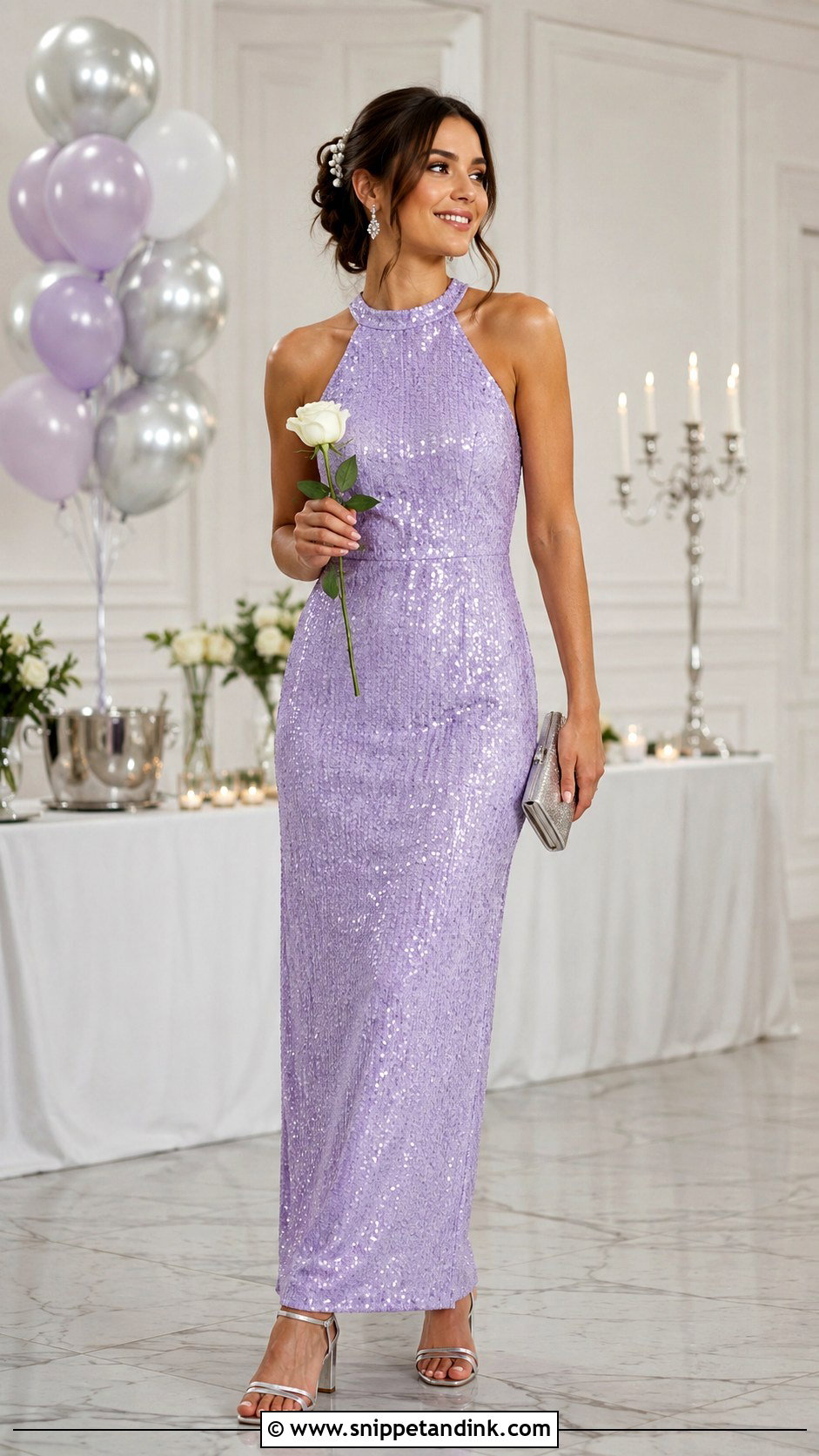
As the lights go down and the dancing starts, a lavender sequin reception dress gives you a second look with real life in it. A midi or floor-length cut with controlled sparkle, a soft lining and a bit of stretch is what I’d look for; a plain column shape stops the sequins looking overdone. Silver block-heel sandals, crystal studs and a small metallic clutch suit it. Swap the veil for a pearl headband or a sculptural pin, and carry a single white rose for the entrance photos if you like. Rub the inside of your arm against the side seams before buying: cheap sequins scratch skin raw over a few hours of dancing and snag your partner’s jacket too.
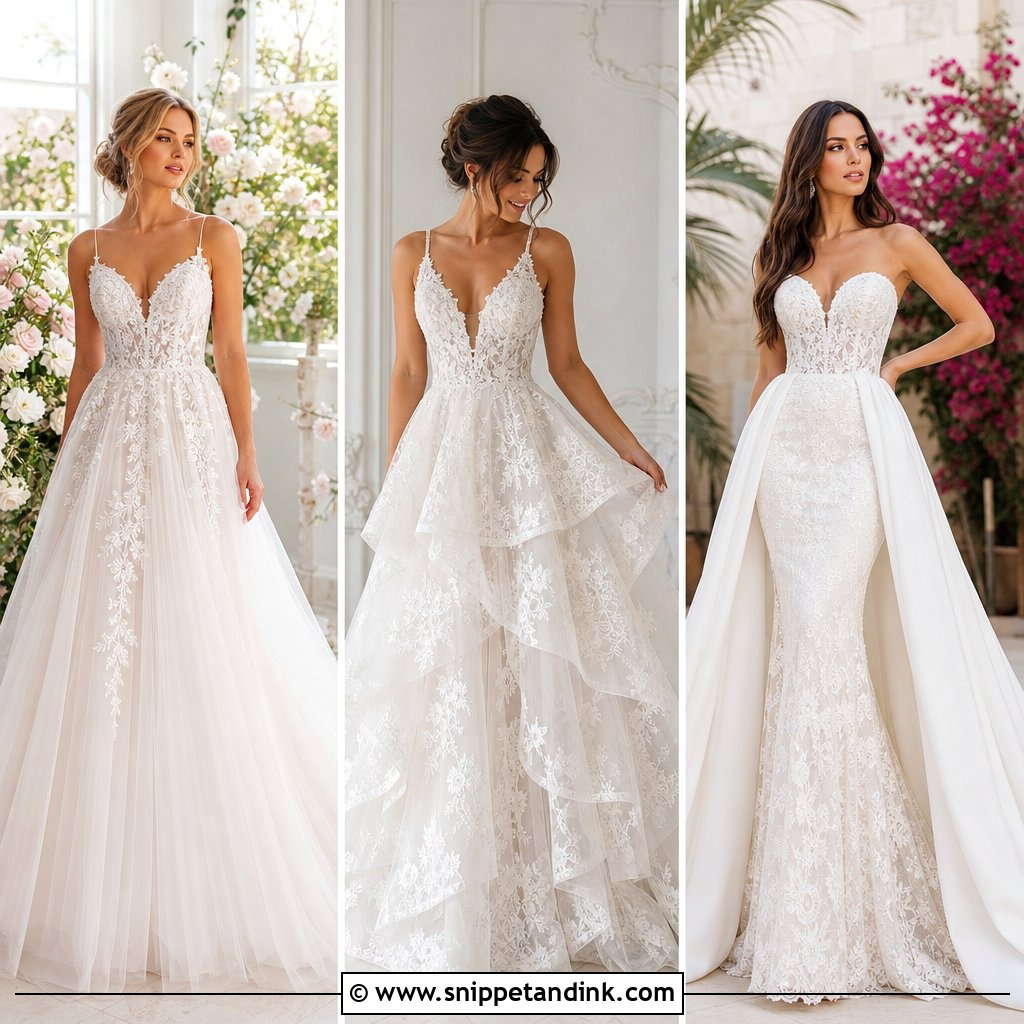
20. Lavender Bridal Dress With Detachable Overskirt
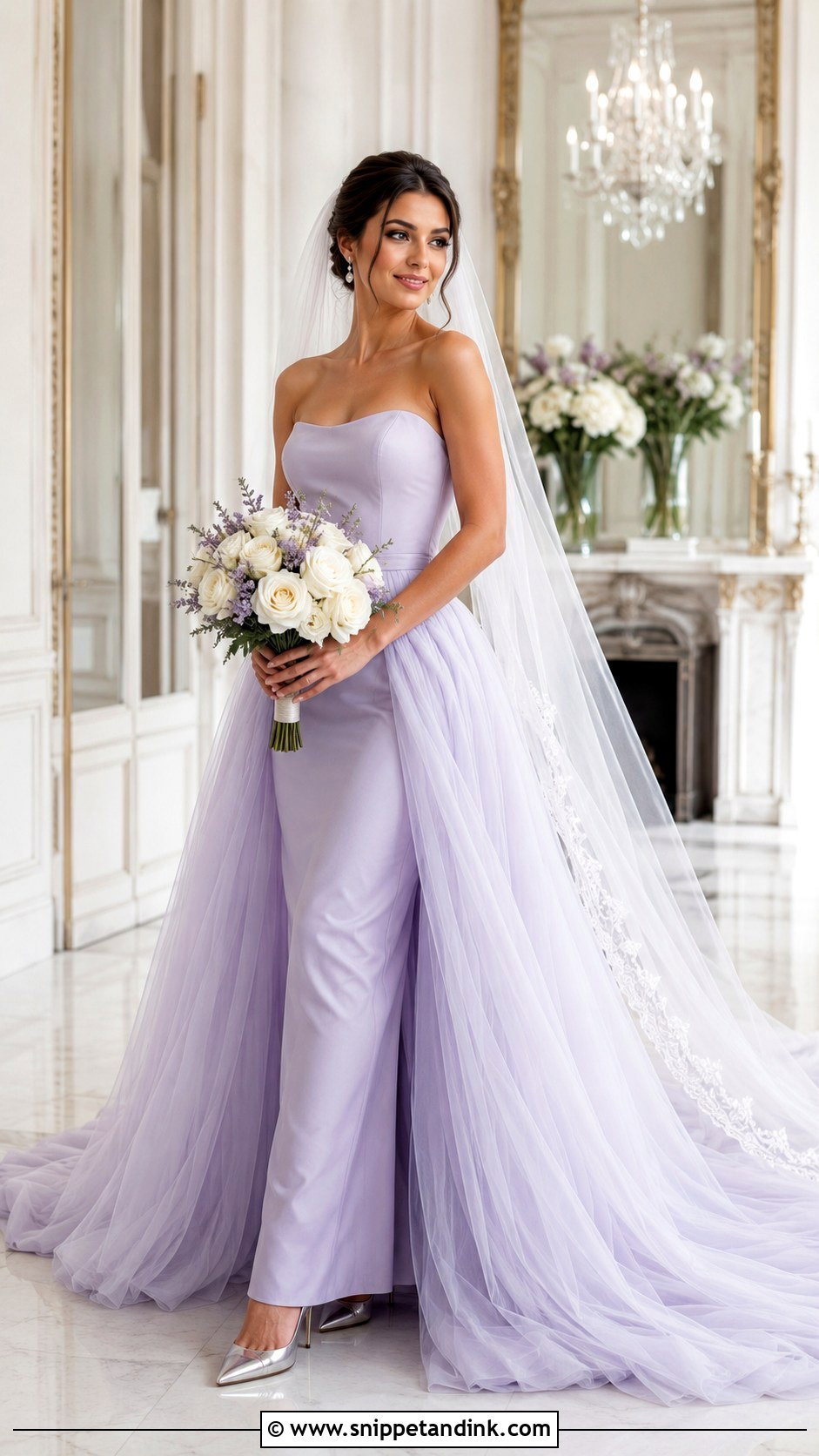
Two silhouettes, one dress, no full change: that’s the appeal of a detachable overskirt. Start with a fitted crepe, satin or lace column, then add a matching tulle or organza overskirt for the ceremony. The formal version takes a cathedral veil, pearl earrings, silver pumps and white roses with lavender accents. Later, unhook the overskirt and veil, add a crystal comb and switch to comfortable block heels. The hardware is what I check hardest. Hooks and snaps should lie flat under the waistband, and whoever is helping you should practise removing it once before the day so it takes minutes, not half the first dance.
Ordering a Coloured Gown Takes Longer Than You Think
Most made-to-order bridal gowns take several months to arrive, and colour can add time, because some designers dye the fabric for each order rather than pulling it from stock. I tell brides to order about nine months to a year ahead, then leave a couple of months on top for alterations. If you’re on a tighter schedule, ask the shop which shades are held in stock before you try anything on, so you don’t fall for a colour that can’t be made in time.
Dye lots vary. The sample in the shop may be a slightly different lavender from the one that arrives, especially if the sample has spent a year under bright lights. Ask for a fabric cutting from the production batch, and if the overskirt, sash or bolero is ordered separately, ask that every piece comes from the same lot. A matching veil should be dyed to the gown, not chosen from a chart.
Protecting Pale Purple From Light, Makeup and Spills
Purple dyes are among the quickest to fade in sunlight, and pastels show it first. Between fittings and after the wedding, keep the gown in a breathable cotton garment bag away from windows; plastic dry-cleaning covers trap moisture and can yellow the fabric over time. Fold long-term storage with acid-free tissue in the creases rather than hanging a heavy skirt by thin straps for months.
- Let fake tan and body oils settle fully before you dress. They transfer to light colours at the neckline and underarms.
- Spray perfume before you put the dress on, never onto the fabric, since alcohol can leave a ring on satin.
- Pack white chalk and a clean white cloth in the emergency kit for small marks; skip coloured stain pens, which can leave a halo on lavender.
- Get the gown cleaned by a specialist within a few weeks. Sugar from champagne is invisible at first and browns later.
Lavender From the Aisle to the Dance Floor
The right lavender gown suits your comfort, your venue and the way you actually want to feel on the day. Look at how the fabric moves, how the shade holds up in the light you’ll be standing in, and whether the silhouette fits the ceremony setting. Shoes, flowers, jewellery, veil and hair pieces should support the colour rather than compete with it. Book alterations with your real underwear and shoes, then walk, sit and dance in the dress before the wedding. From floating chiffon to a structured ball gown and a short party dress, pale purple stretches further than most brides expect.
You'll Like These Ideas:





Leave a Reply