
An overskirt lets one gown do two jobs. You walk down the aisle in something full and formal, then unhook a layer and dance in a slimmer dress. I’ve fitted plenty of them, and the ones that work are the ones planned as a pair from the start, not a skirt bolted on later. Below are twenty pairings, from structured satin and airy tulle to open-front layers and cathedral trains. For each, I’ve noted what to check in the fabric, the waistband and the accessories so both versions of the dress look finished.

Hooks, Snaps or a Hidden Belt: How Overskirts Actually Attach
Before falling for any fabric, ask how the overskirt fastens. It decides how smoothly the waist looks, how heavy a skirt you can hang and how fast you can change. I see three main methods.
- Hooks and eyes or snaps sewn into the base gown’s waist seam. Very secure and flat, but the base dress has to be altered to take them, so plan this with your seamstress.
- A separate waistband or belt that closes at the back. Works over almost any dress and is quickest to remove, though a thick band can look like a separate skirt.
- Buttons or ribbon loops under a sash. Pretty, but slower, and someone else will have to do them.
Heavier trains need more anchor points. A cathedral-length satin skirt hanging from two snaps will sag at the back by the first dance; spread the load around the full waist.
1. Satin Over Skirt Wedding Dress
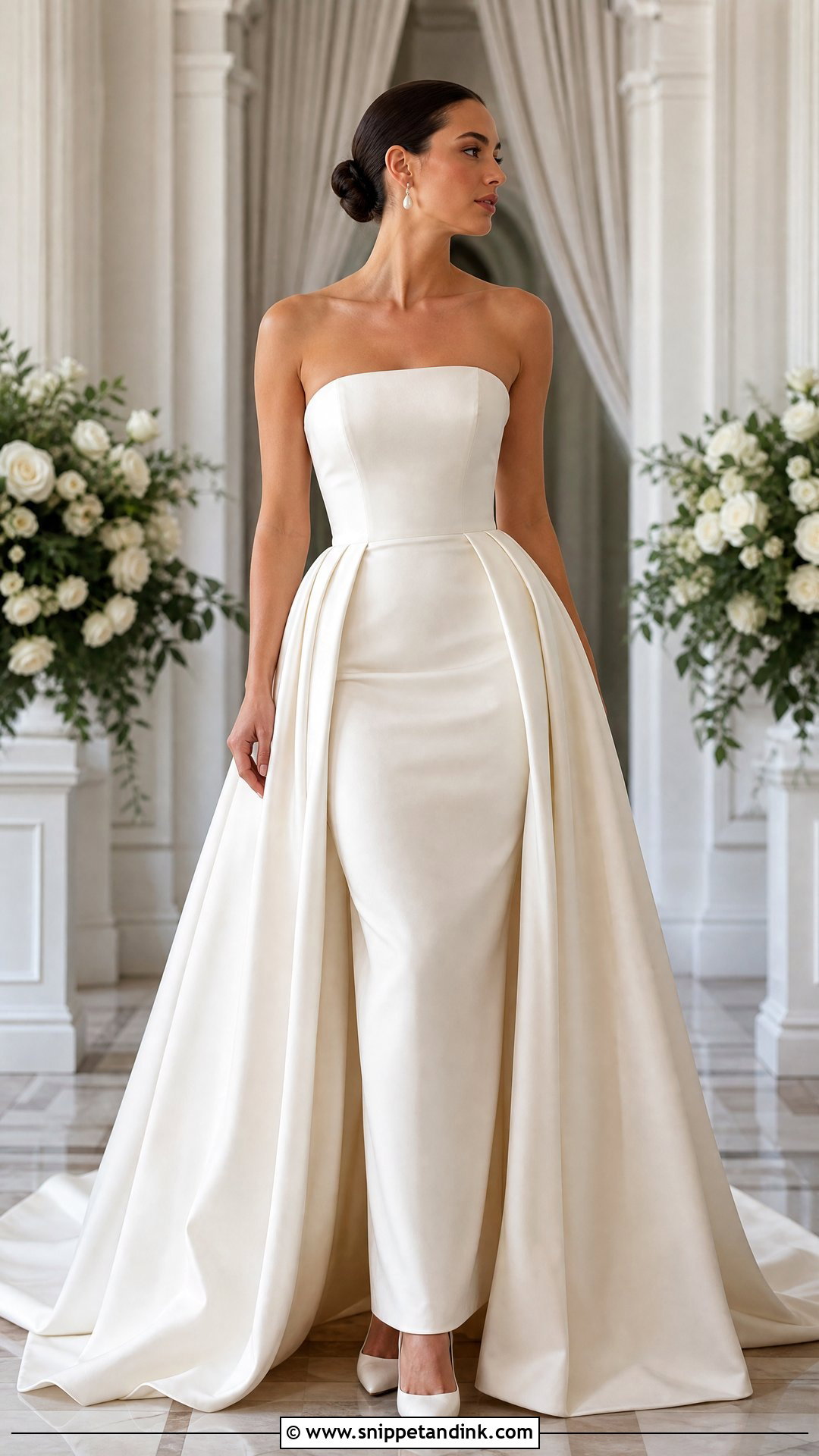
Matching satin over satin is the closest an overskirt gets to looking like a single ball gown. The trick is that both pieces must come from the same bolt or dye lot; two satins that look identical in the shop can differ in sheen under flash. A fitted strapless base with a box-pleated overskirt and chapel train is a classic pairing. Deep pleats need pressing on the morning, so tell whoever steams your dress. Pointed ivory pumps, pearl drops and a sleek low bun keep it clean, and a fingertip veil leaves the shape visible.
2. Lace Mermaid Over Skirt Wedding Dress
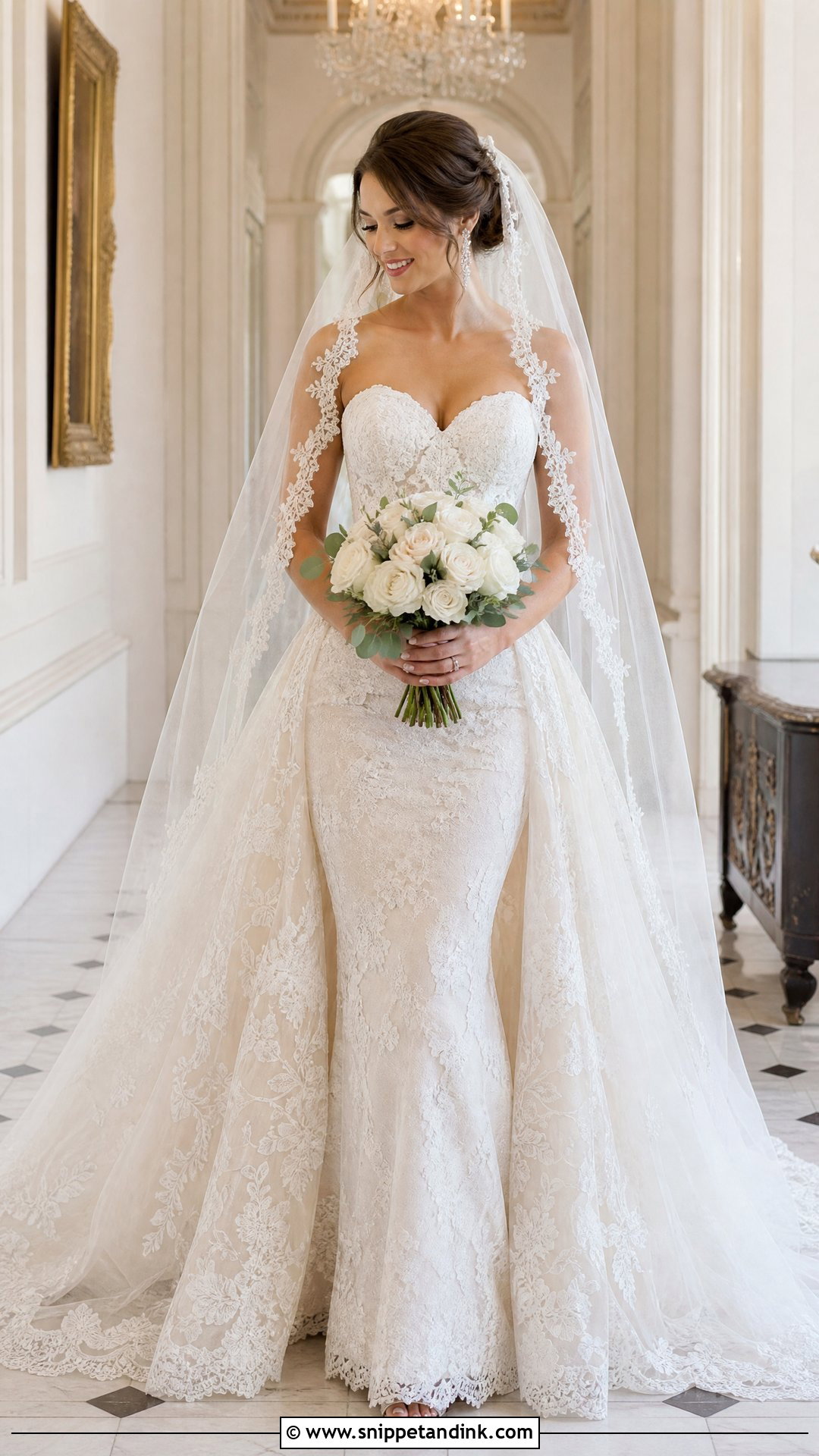
The open front is what makes a mermaid gown with a detachable overskirt work. Close the overskirt fully and the mermaid shape vanishes, which defeats the point. Choose a floral lace base with a sweetheart or soft V neckline, then an open lace layer from the waist to a sweeping train. I always check the two laces side by side at a fitting, because mismatched motif sizes look odd where they overlap. Your shoes will show through the opening, so pick ones you love. A lace-edged veil and a simple rose bouquet let the texture lead.
3. Tulle A-Line Over Skirt Wedding Dress
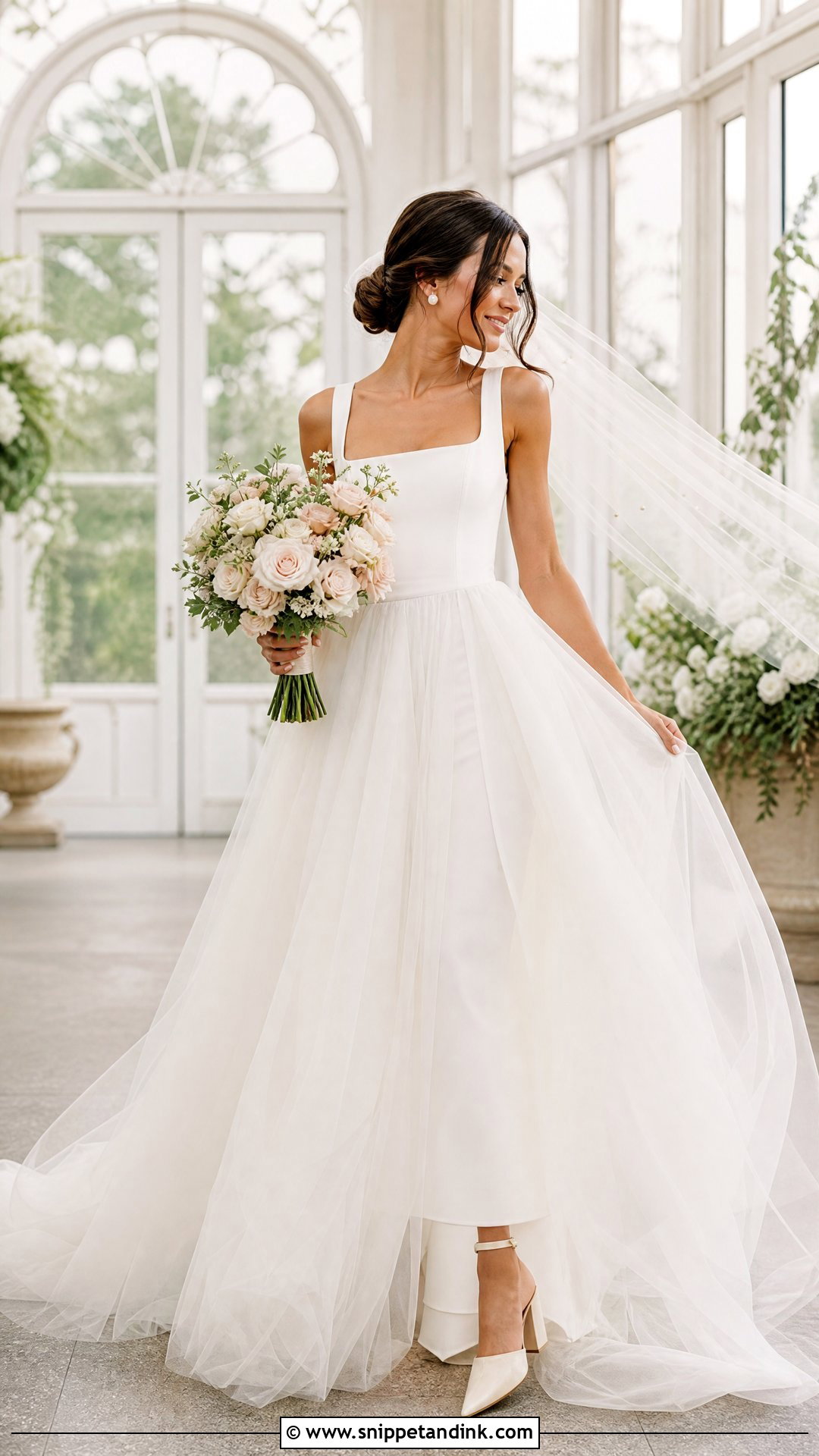
Tulle overskirts look heavy in the box and weightless on. Several fine layers over a plain crepe A-line give volume and still let small base details show. My caution is about snagging: tulle catches on bracelets, rough chair edges and bouquet wire, so I file any sharp jewelry clasps before the day. Ivory block heels and pearl studs keep the look gentle. A lightweight cathedral veil extends the airy feel, and loose waves suit it. Once the layer comes off, the crepe base is easy to dance in.
4. Sheer Organza Over Skirt Wedding Dress
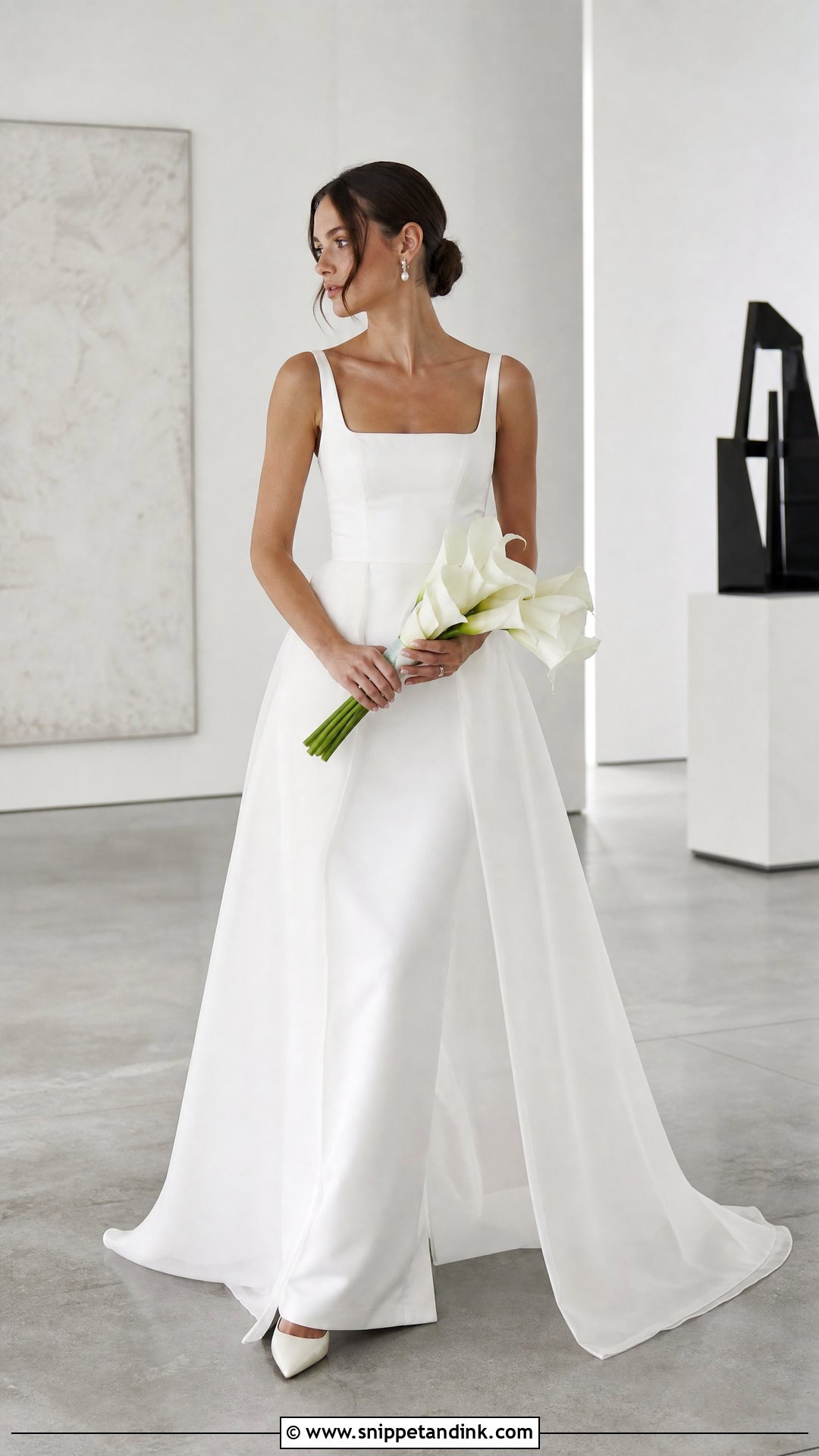
Sheer organza adds volume without hiding the dress beneath, which suits a strong base like a fitted column. It has more body than tulle, so it holds a full shape on its own. An open-front skirt from a smooth waistband keeps the column line visible. One thing I warn about: organza creases sharply if it’s packed flat, and those creases don’t always steam out fully, so transport it hanging. Pointed heels and small diamond-style earrings suit a modern venue. A neat bun and an elbow-length veil echo the lightness.
5. Open Front Over Skirt Wedding Dress
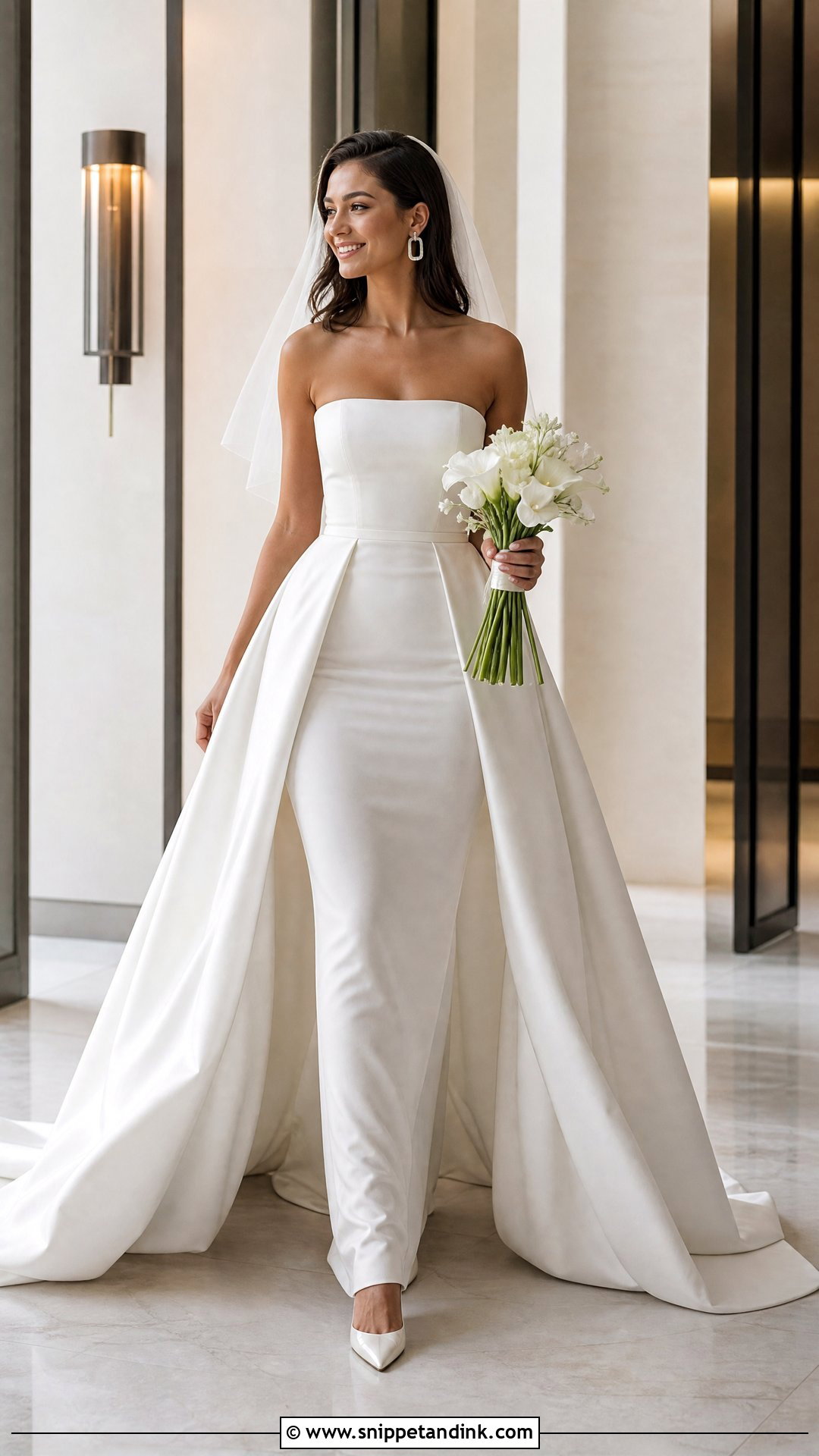
An open-front overskirt frames the base gown rather than covering it. The width of the opening is the detail I spend most time on. Too narrow and it looks like a closed skirt that didn’t quite meet; too wide and the layer looks like a cape that slipped. Mikado or satin holds a crisp edge, while organza drapes softer. Put it over a slim crepe sheath or fit-and-flare. Sleek pumps, geometric earrings and polished waves suit it. Keep the veil shoulder-length so the back of the dress isn’t buried in fabric.
6. Cathedral Train Over Skirt Wedding Dress
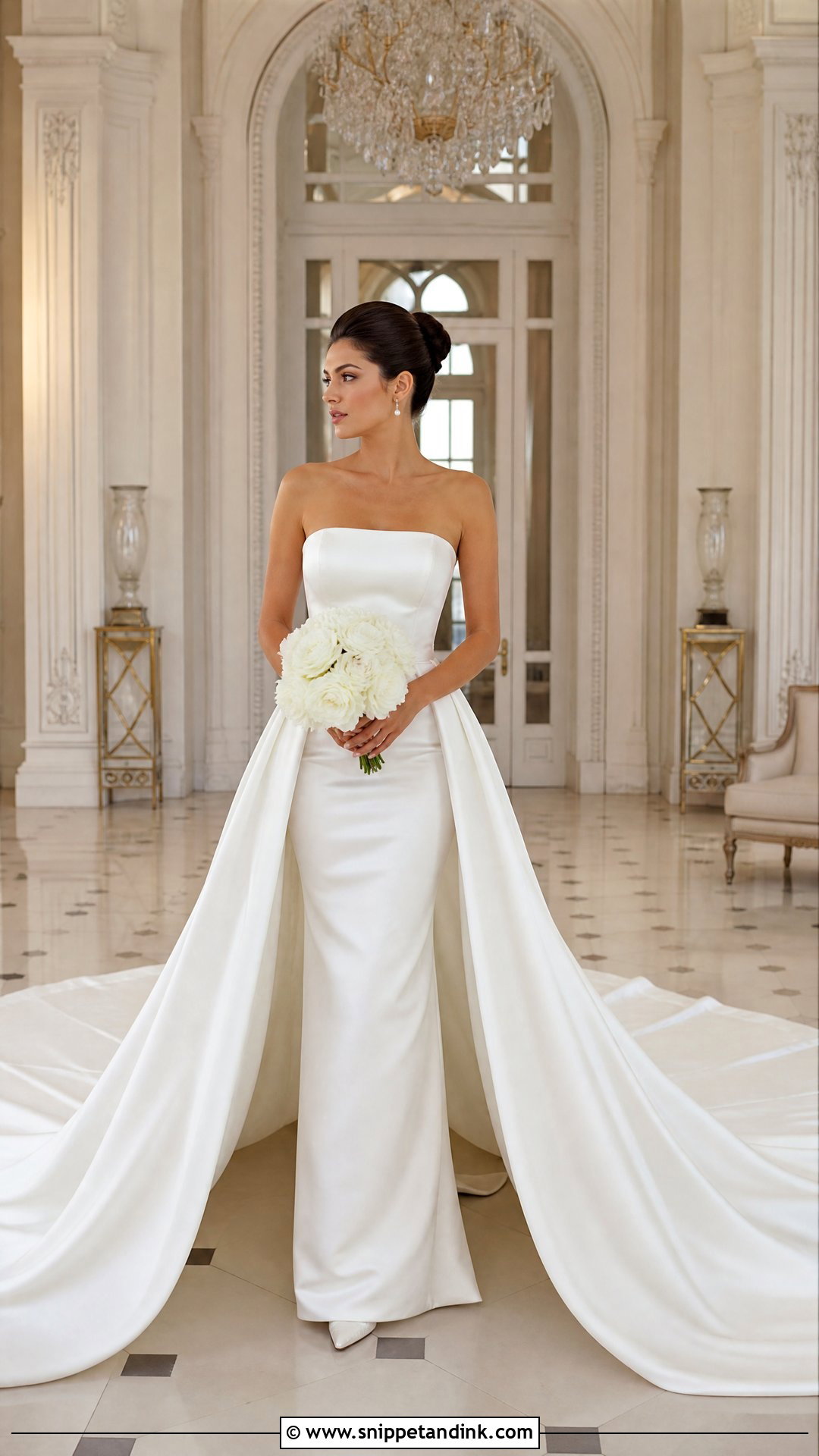
A cathedral train gives the entrance real drama, but it’s heavy, and that weight pulls on whatever it hangs from. Attach the overskirt firmly at the natural waist, ideally with internal hooks set into the base gown, or the train will drag the bodice down at the back. Supportive crepe or satin works best underneath. With this much fabric, keep accessories small: studs, a slim bracelet, closed-toe heels. A medium veil avoids two long layers competing. Assign one person to arrange the train before photos and to help remove it later.
7. Beaded Over Skirt Wedding Dress
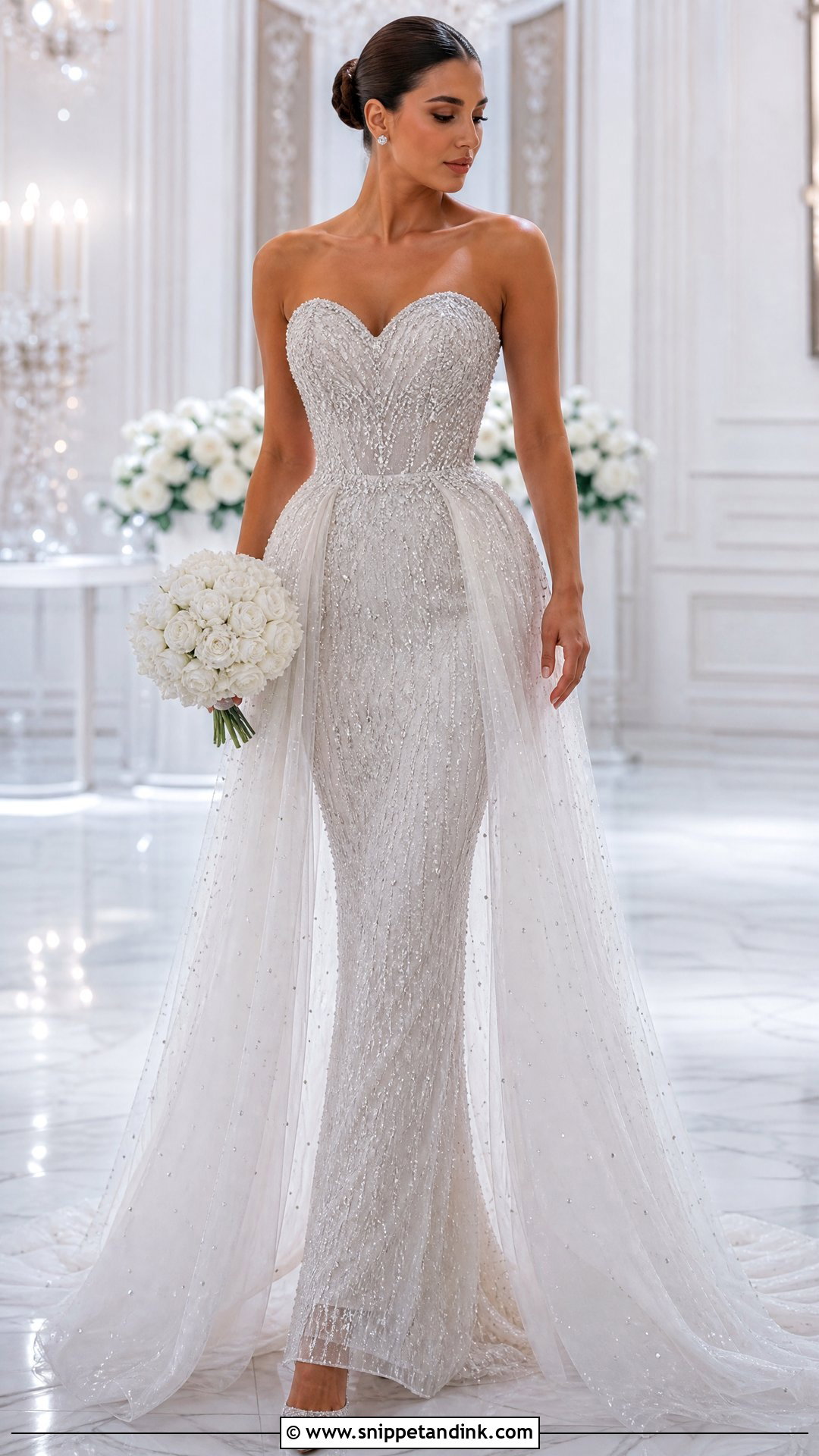
Beaded overskirts sparkle wonderfully at night, but beads add weight quickly. I’d look for crystals and pearls concentrated near the waist, thinning out toward the hem, so the skirt still moves and doesn’t drag. A fitted gown with light bodice beading pairs well. Heavy beading also scratches bare arms when you hold the skirt to walk, which is worth testing at a fitting. Crystal-accented heels and simple studs are plenty. Use a clean tulle veil and white flowers with little greenery. When the layer comes off, the beaded base still feels like evening wear.
8. Floral Applique Over Skirt Wedding Dress
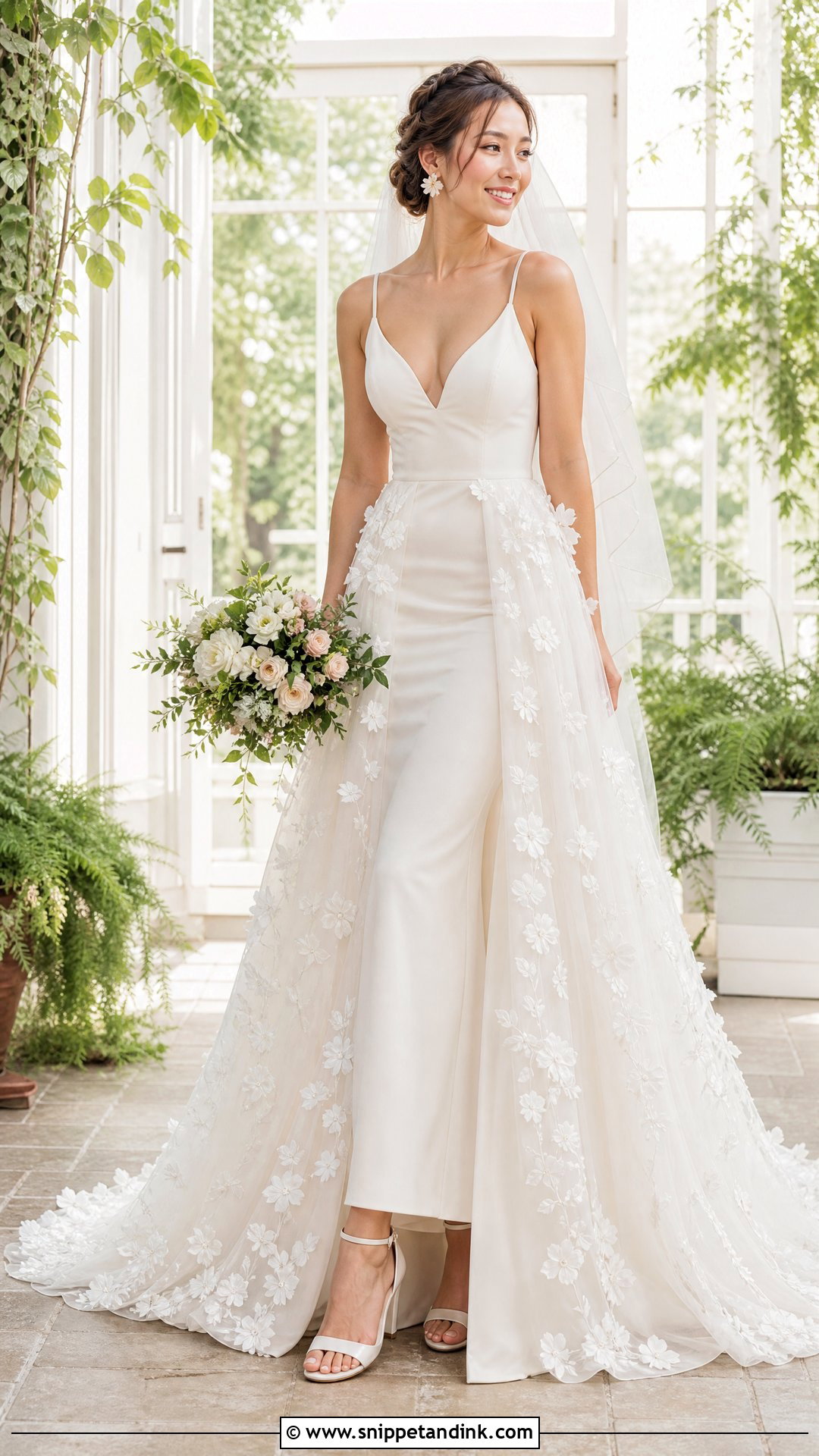
Raised floral appliqués give an overskirt depth and a garden feel. I prefer them dense at the waist and fading toward the hem, so they frame the dress rather than drowning it. Base it on a simple tulle or crepe gown with a supportive bodice. Appliqués can be moved by a seamstress, so if a flower lands awkwardly on the hip, ask. Ivory ankle-strap heels and floral earrings suit it. Keep the veil plain, since a second decorated layer competes. Roses and sweet peas repeat the shapes in a conservatory or estate garden.
9. Mikado Over Skirt Wedding Dress
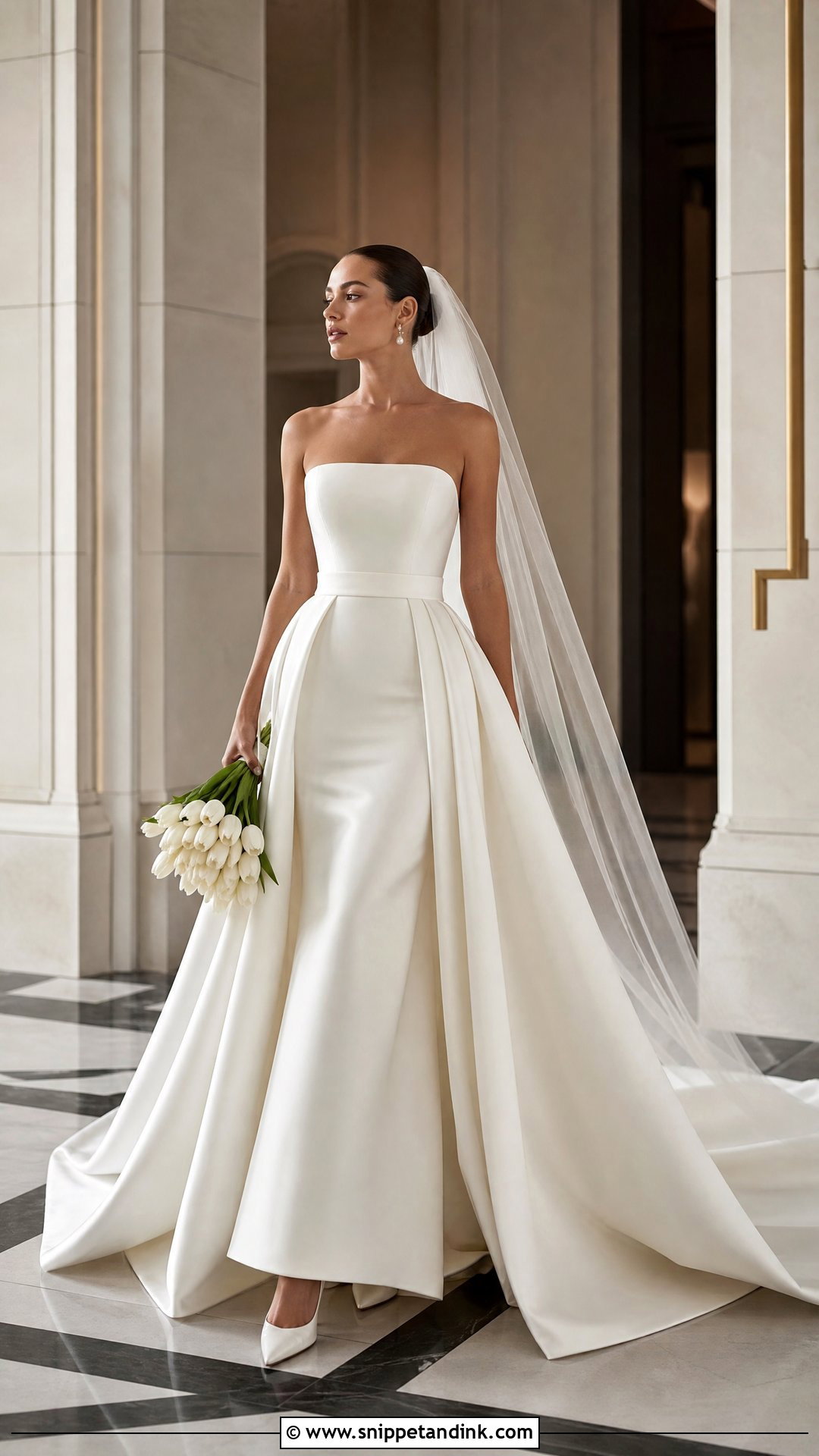
Mikado is stiff, slightly matte and holds pleats like paper, which is why it’s my choice for architectural overskirts. Pair a fitted mikado trumpet gown with a wide-pleated skirt on a structured waistband. Volume comes from the fabric itself, so you don’t need many layers underneath. Structured fabric shows every flaw at the join, so the waistband must sit exactly level; I check it from the side as well as the front. Satin pumps and a polished updo suit it, with a plain cathedral or bow veil and a compact white bouquet.
10. Pleated Over Skirt Wedding Dress
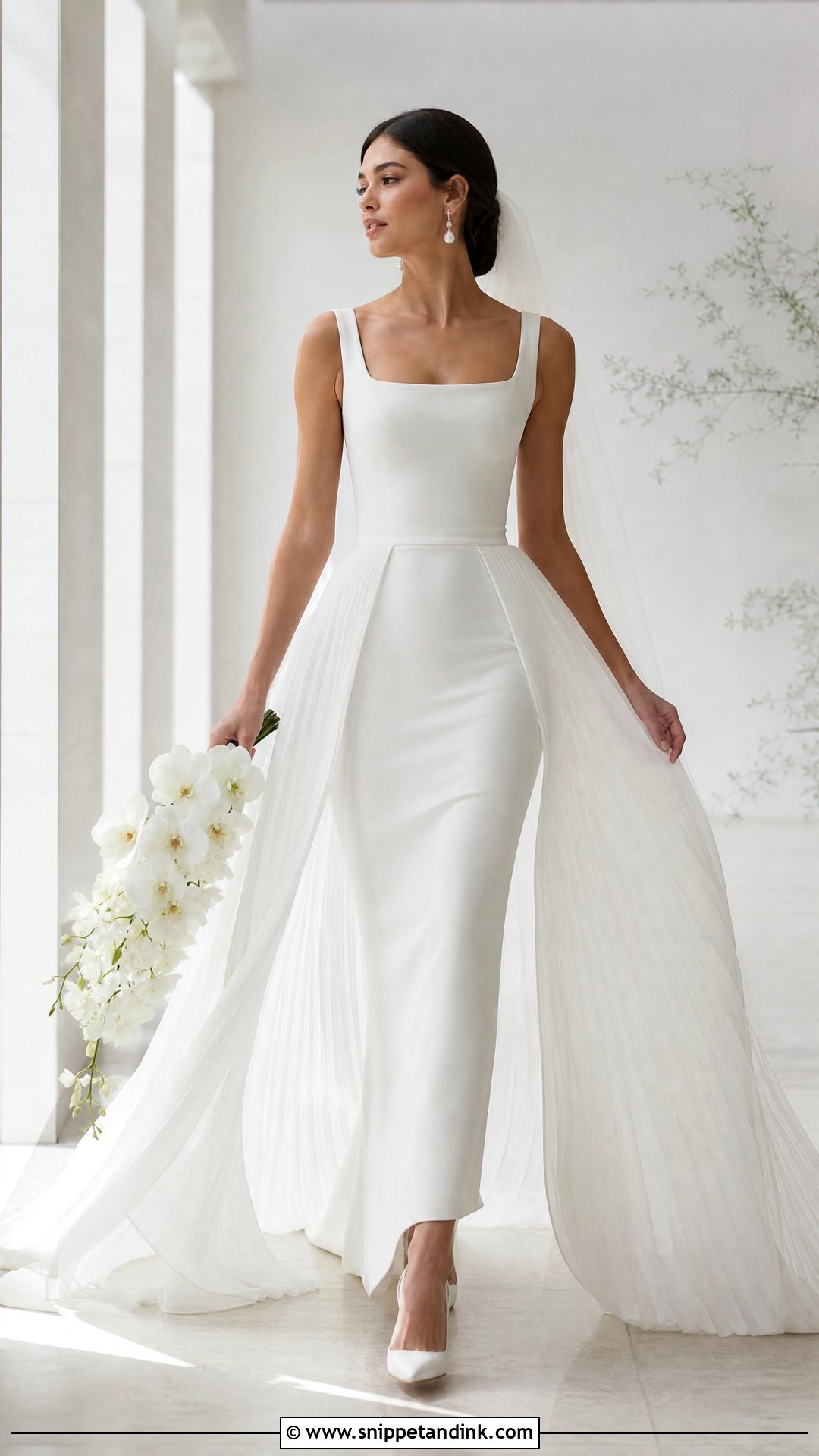
Fine pleats add movement while keeping the look orderly. A pleated organza overskirt with an open front or soft wrap fans outward as you walk, over a slim chiffon, crepe or satin base. Keep the waistband narrow, since a wide one adds bulk exactly where you’d rather not have it. Pleats can flatten in humid weather, so if the venue is warm, ask your seamstress whether they’re heat-set. Slingback heels, pearl drops and a low chignon suit the vertical lines. A long-stem bouquet echoes the movement of the skirt.
11. Ruffled Over Skirt Wedding Dress
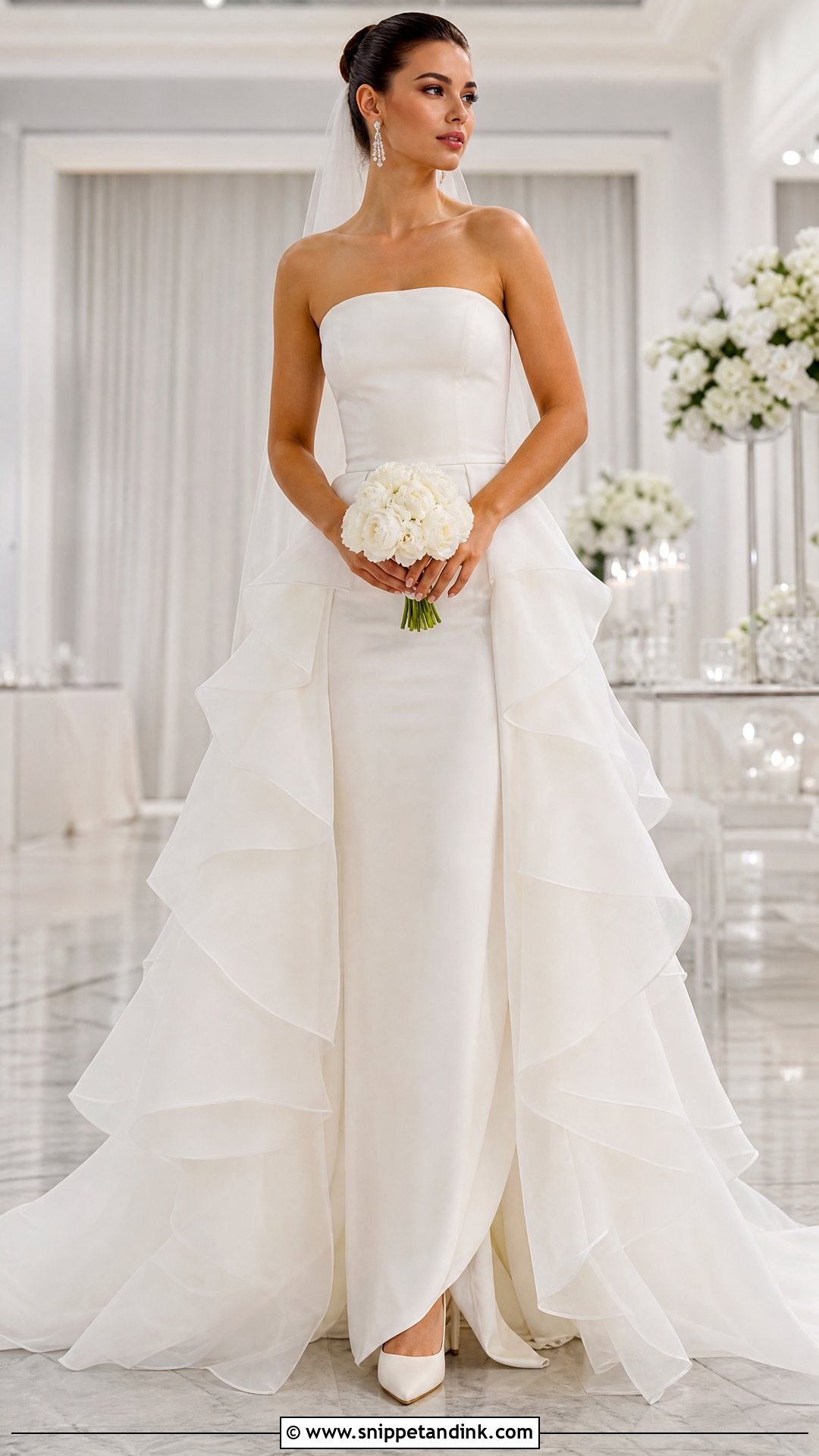
Ruffles bring volume and texture, and they need a quiet partner. A ruffled overskirt over a smooth fitted gown works far better than ruffles over another busy dress. Tiered organza or tulle starting below a clean waistband keeps the waist defined. On a petite frame I’d pick an open front, so the fitted dress breaks up the volume. Keep shoes, earrings and veil plain; with this much movement the eye needs somewhere to rest. Take it off for the reception and wear bolder jewelry with the base dress.
12. Mini Dress With Over Skirt
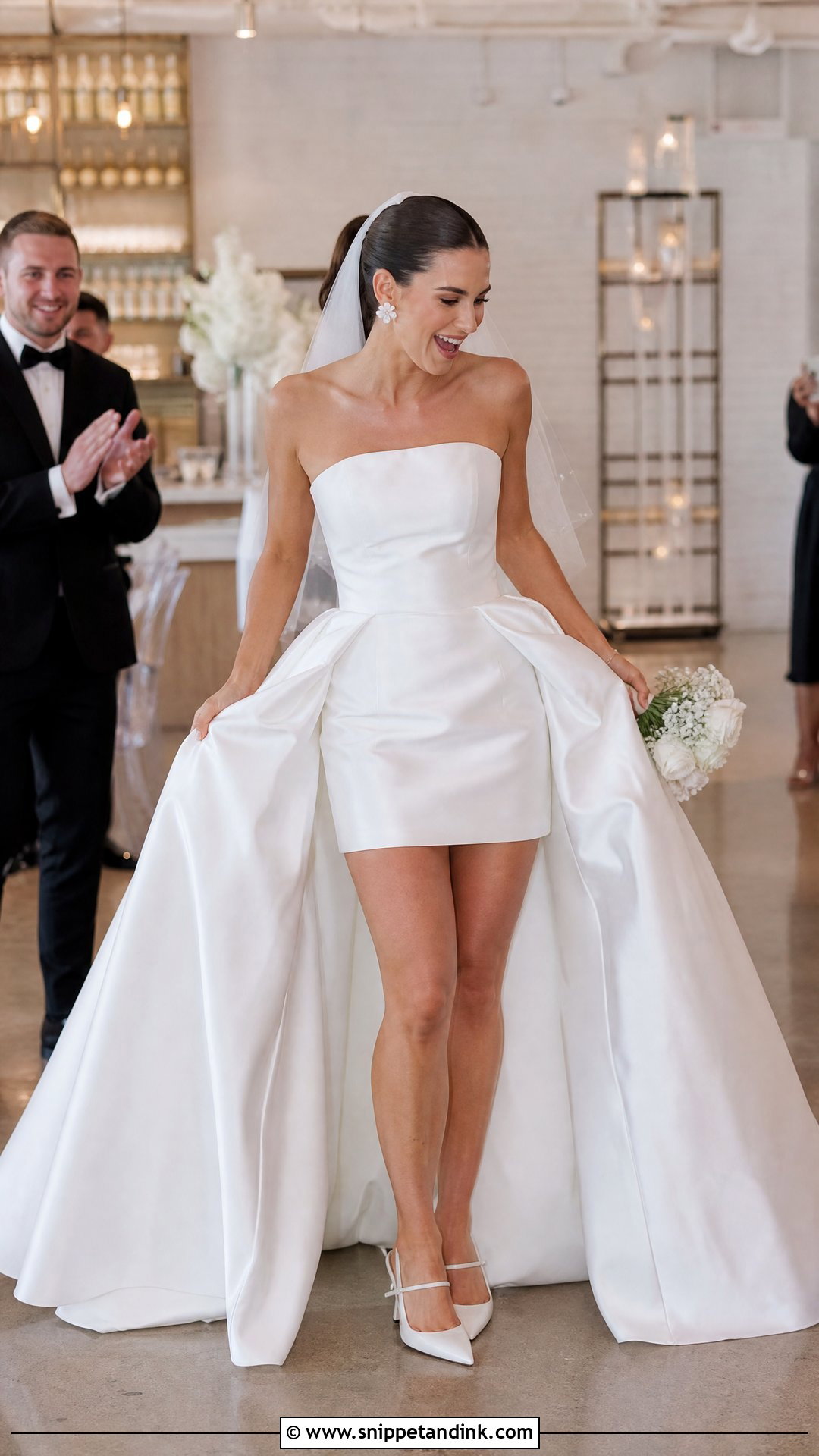
A mini under a full overskirt gives the biggest ceremony-to-party switch of any option here. The base needs proper structure, since a strapless mini that slips is far more noticeable than a long gown that does. The overskirt should close fully in front so the short hem stays hidden until the reveal. Choose shoes that suit both lengths; slingbacks or embellished pumps do. A birdcage or short veil suits the mini better than a long one. Check at the fitting that the waistband lies flat with no ridge from the mini’s hem.
13. Minimalist Column Over Skirt Wedding Dress
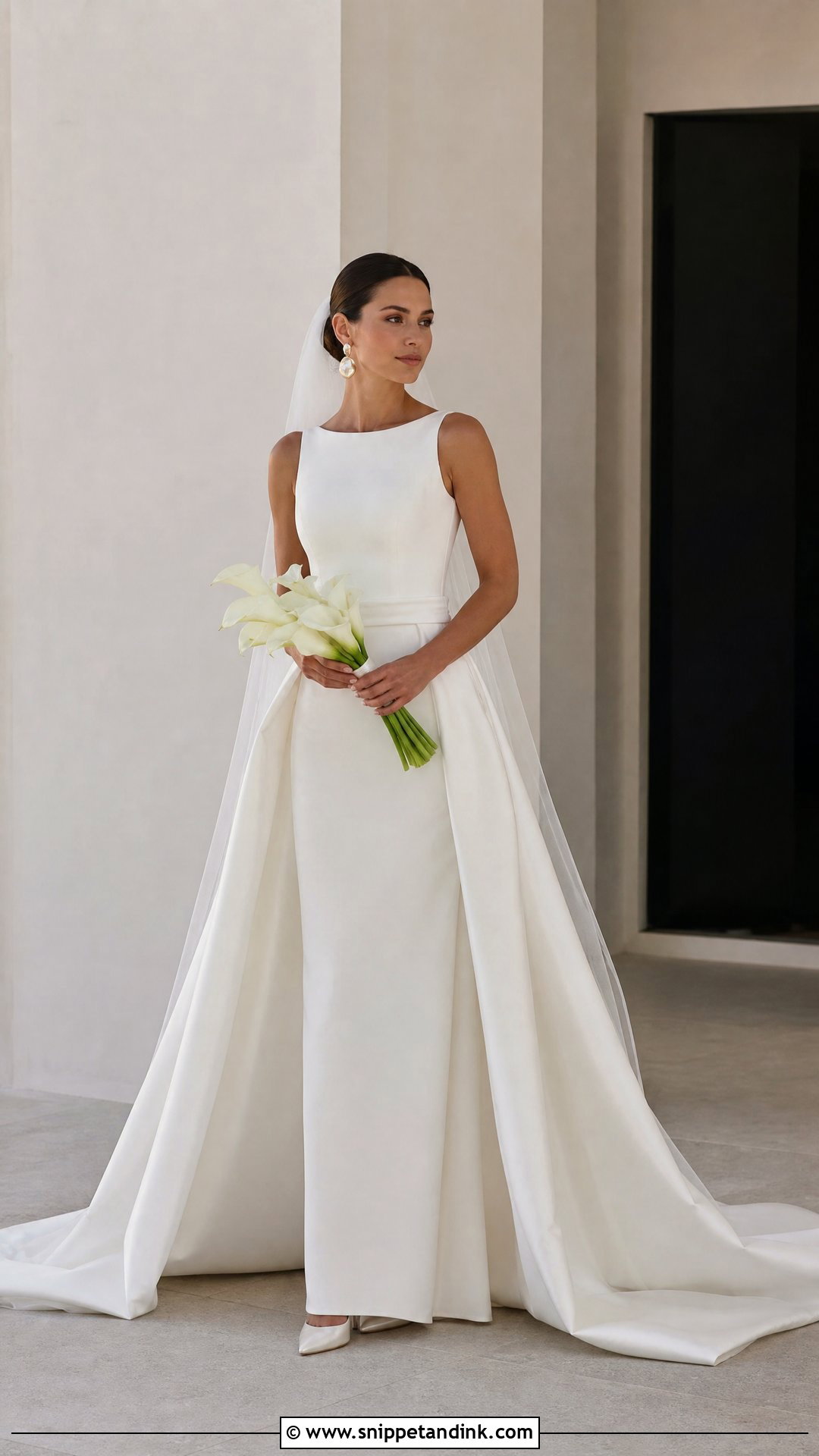
A plain crepe column is an ideal base because it gives the overskirt a clean shape to contrast with. Choose strapless, sleeveless or high-neck with little decoration, then add a smooth satin overskirt with a hidden waistband and a soft train. Crepe shows every lump, so the overskirt’s fastenings must lie completely flat against it. Sculptural earrings, pointed heels and a low bun suit the modern line. After the change, swap the veil for a hair comb or add a cuff so the reception look feels deliberate rather than simply reduced.
14. Off Shoulder Over Skirt Wedding Dress
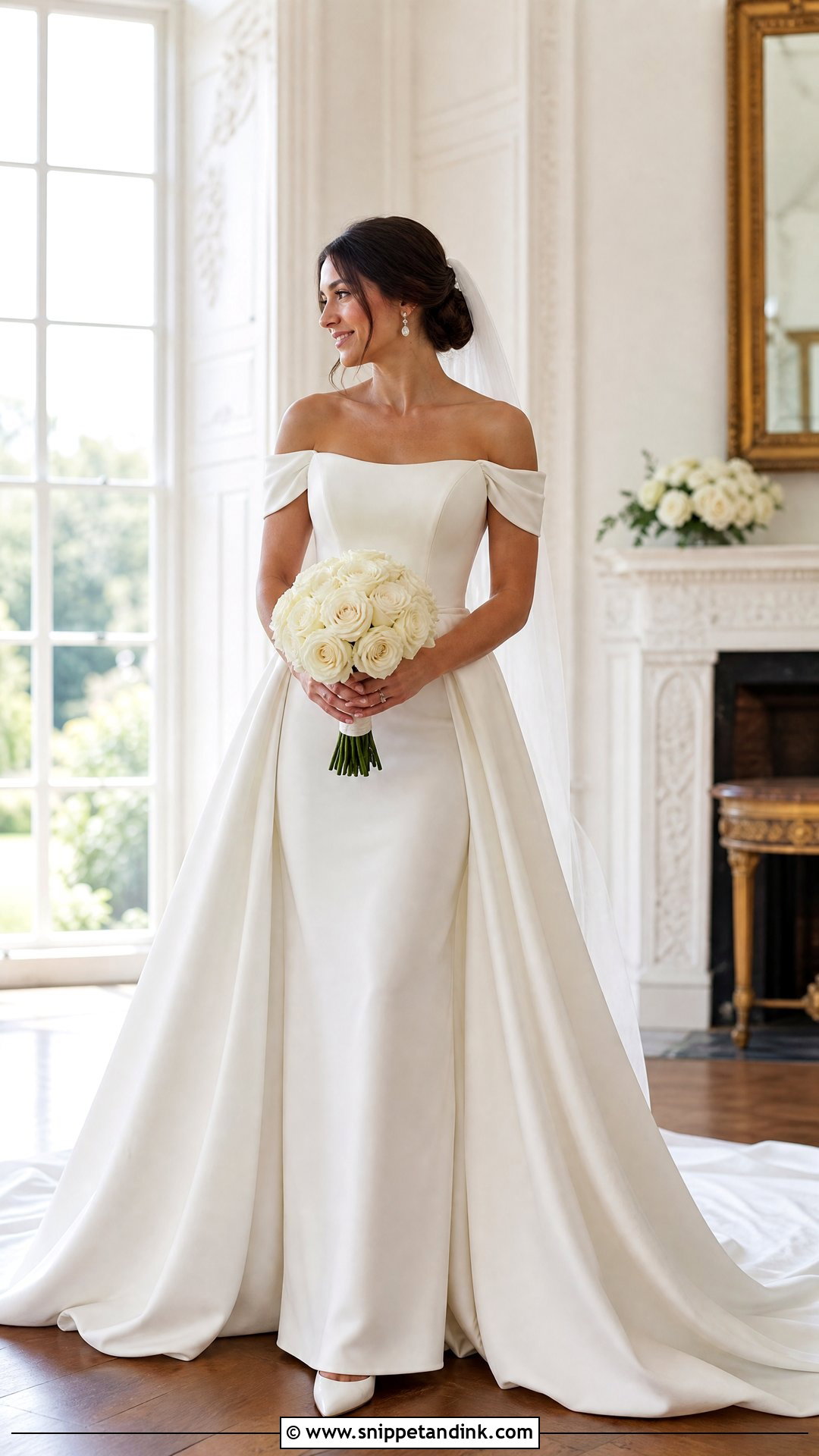
Off-the-shoulder necklines and overskirts both pull downward, and that’s what I watch for. The base dress needs firm internal structure so the neckline stays put while a full skirt hangs from the waist. Same-fabric satin or crepe keeps it looking like one gown. A chapel train gives drama without overpowering the shoulders. Wear a low bun or side-swept waves so the neckline shows, with delicate drops and closed-toe pumps. Set the veil below the hair for a clean back view. Roses and peonies suit the romantic shape.
15. Long Sleeve Over Skirt Wedding Dress
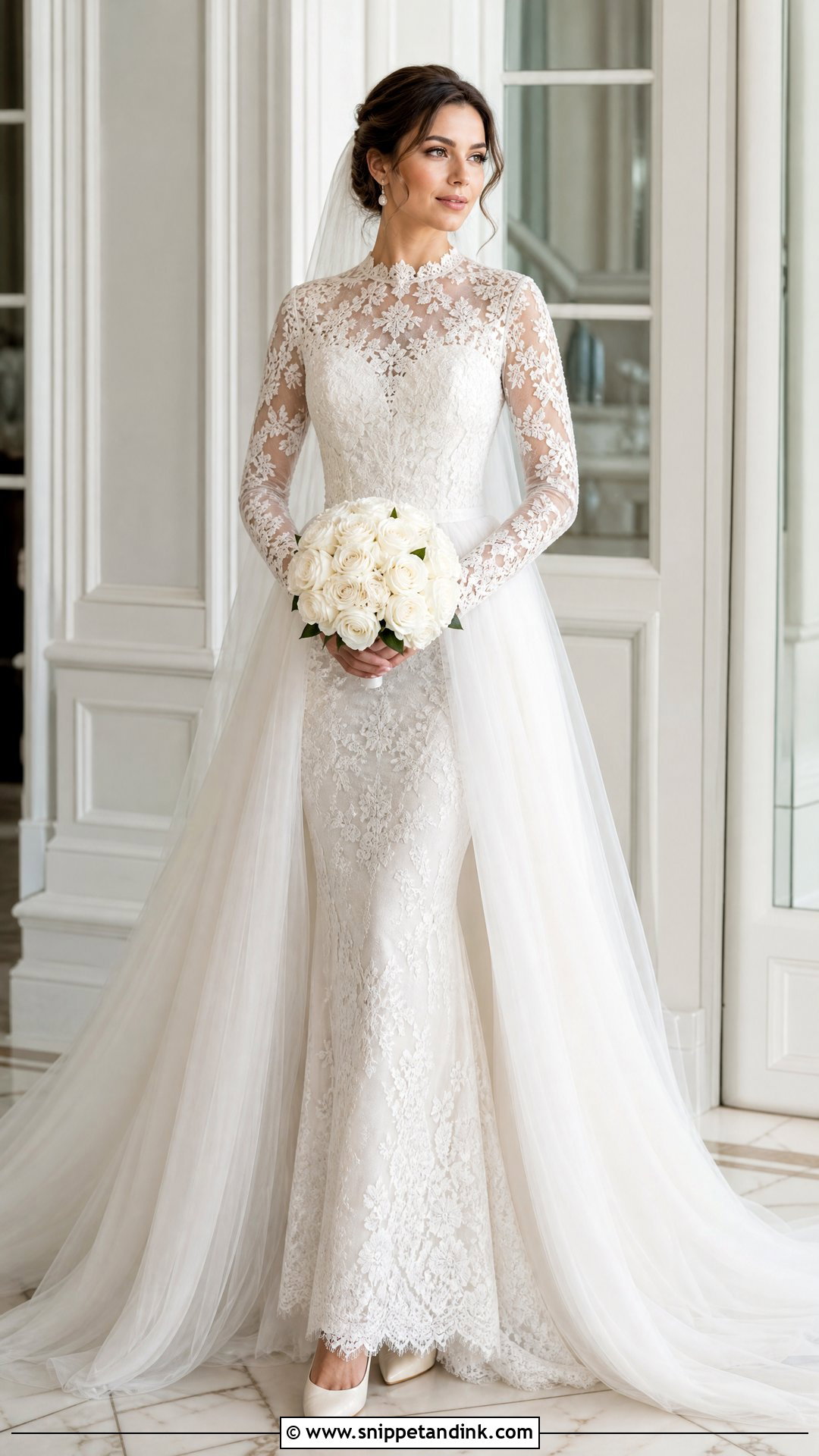
Slim long sleeves balance the width of an overskirt and keep the top half defined. A fitted lace or crepe gown is the base, with a detachable tulle, organza or satin skirt at the natural waist. Lace sleeves next to a lace-trimmed overskirt can blur into one busy surface, so I’d keep one of them plain. Lift your arms at the fitting too; tight sleeves can pull the bodice up and expose the waistband join. Closed-toe heels and pearl earrings suit cool seasons. White roses with restrained greenery keep the look formal.
16. Corset Over Skirt Wedding Dress
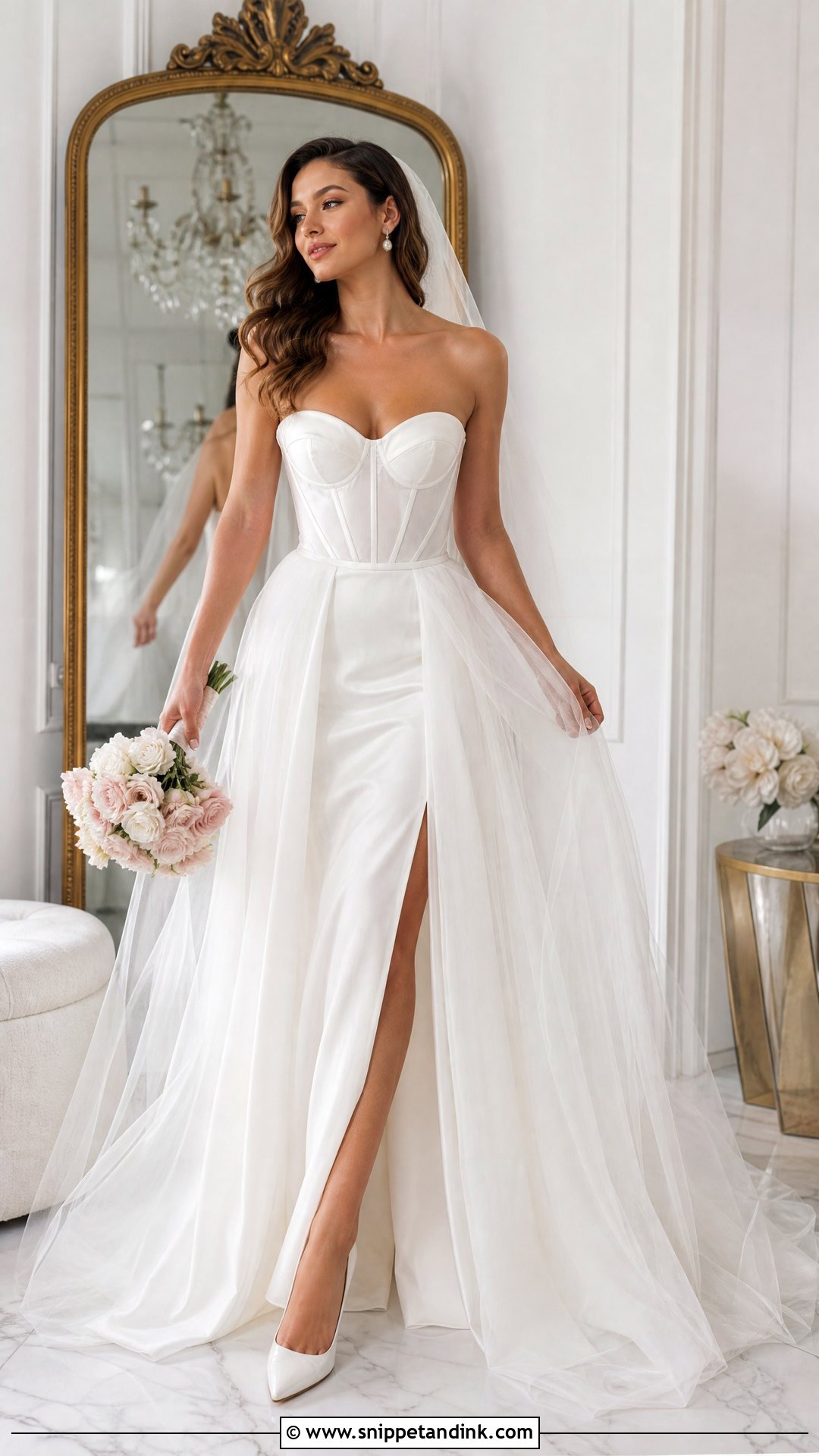
Corset bodices give the clearest waist for an overskirt to attach to. Choose a base with a properly fitted boned bodice and a straight, scoop or sweetheart neckline. The overskirt should fasten along the waist seam itself, not above or below it, so the two pieces read as one dress. Sit down at the fitting and feel for pressure: hooks that land on top of boning dig in after an hour. Pointed pumps, pearl drops and a lightly trimmed veil suit it. White and pale blush flowers keep it soft.
17. Plus Size Over Skirt Wedding Dress
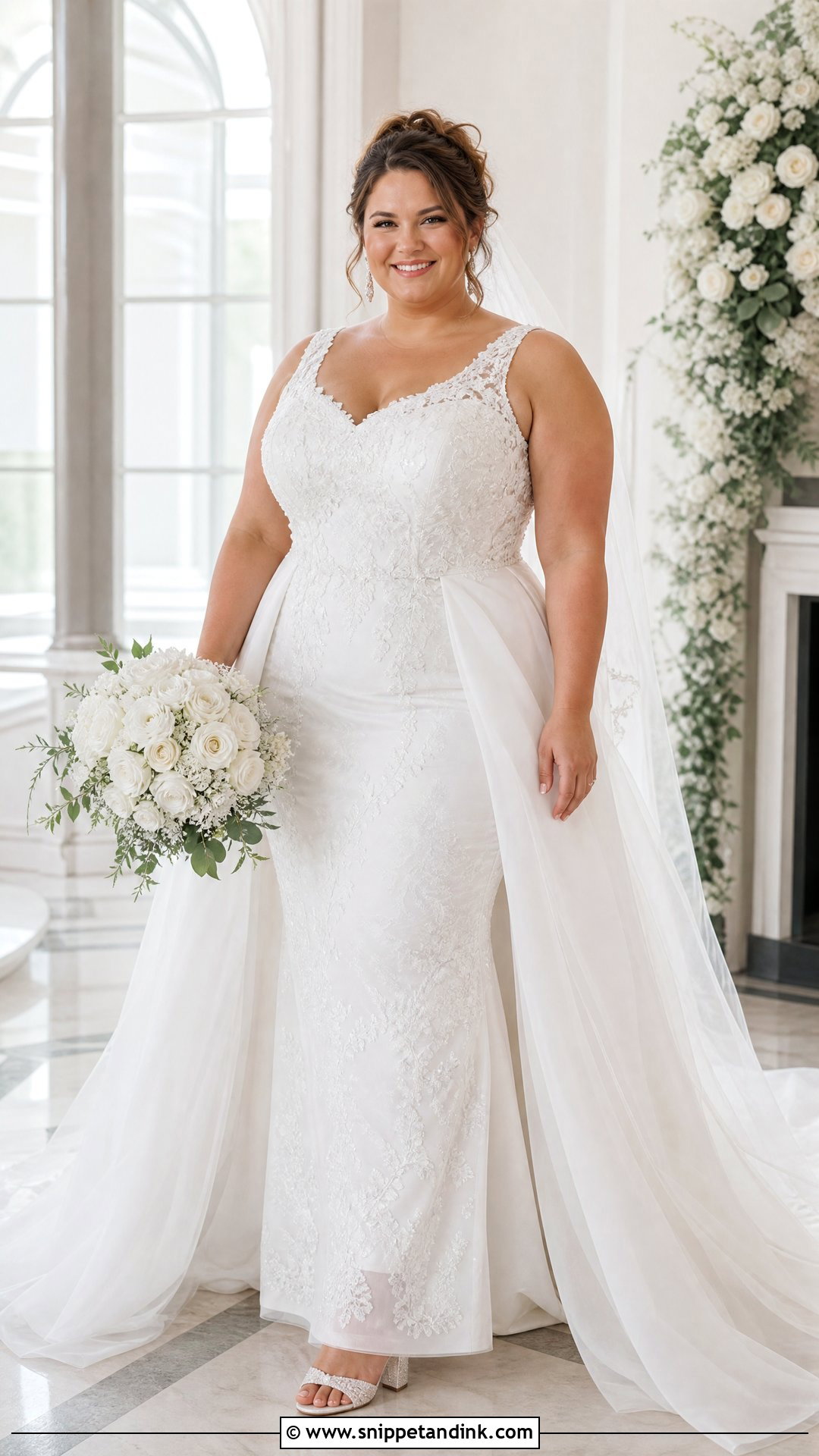
An overskirt can add movement on any body, and the waistband is where fit makes or breaks it. It should follow the dress’s natural waist seam rather than sit wherever the pattern says. On fuller figures I often move the pleats toward the sides and back, which keeps the front smooth and adds fullness where it looks good in motion. Choose heels, flats or block sandals for comfort. Scale the bouquet to the skirt. Test the closure yourself: it should stay level all day and come off without a complicated row of tiny hooks.
18. Blush Over Skirt Wedding Dress
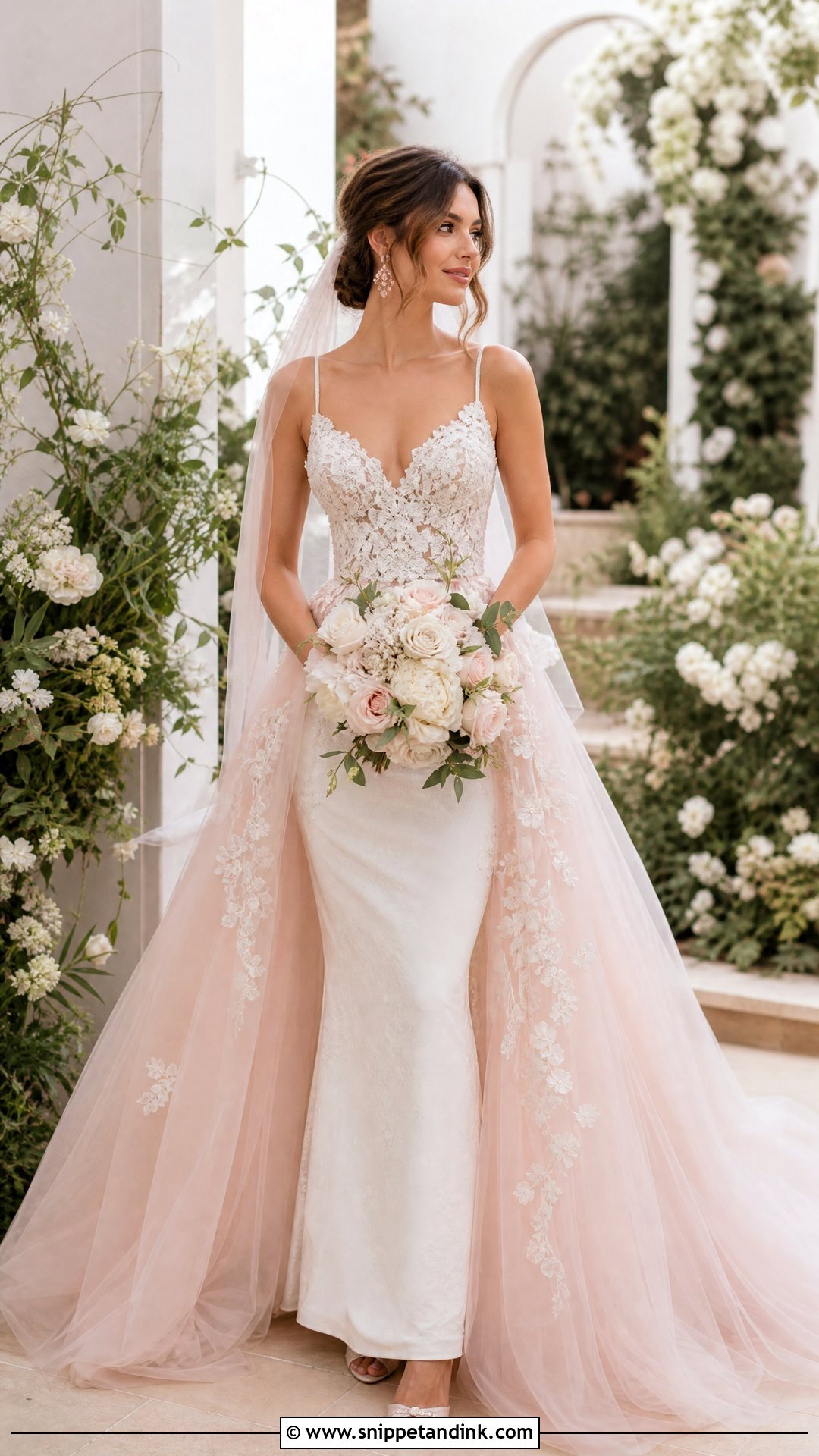
Blush is the color that shifts most between rooms. A pale blush tulle over ivory can look pink in daylight, beige under warm lamps and almost grey in shade, so I always compare the dress, overskirt and veil together in the light of the actual venue. Floral appliqués or small pearls help tie the two shades together. Keep shoes ivory so the skirt’s tint stays the focus. Rose-gold earrings and a soft pink lip suit it. A bouquet of ivory, pale pink and peach finishes the palette.
19. Bow Over Skirt Wedding Dress
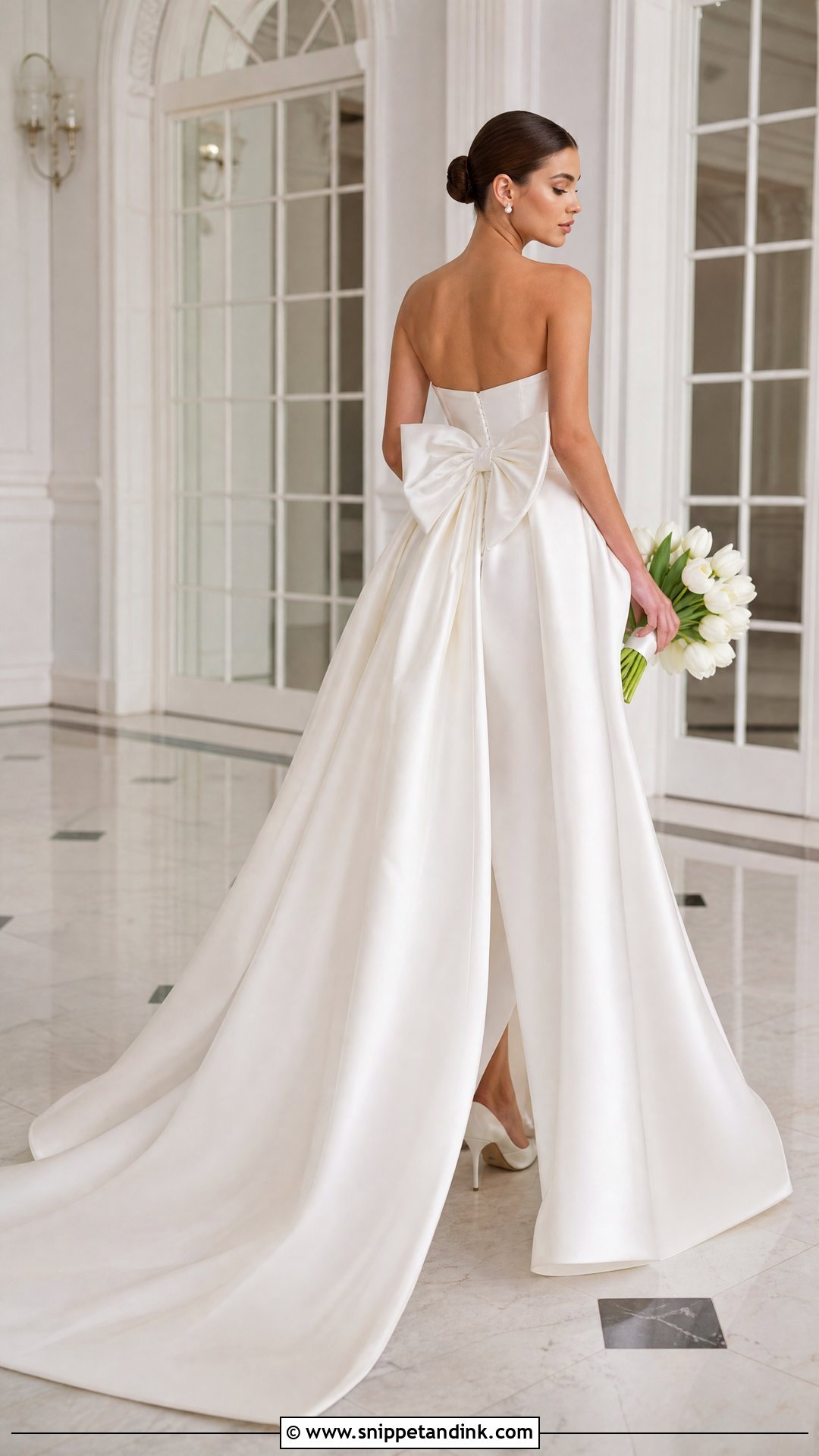
A large bow at the back of the overskirt sets up the walk down the aisle and the back-view portraits. Keep the front simple so the dress isn’t decorated from every angle. A structured bow can flatten if you sit against it, so I tell brides to perch rather than lean back during the ceremony. A sleek satin base and a smooth bun leave the bow visible. If you wear a veil, set it above the hair and take it off after the ceremony, or skip it altogether. White tulips or roses keep the bouquet clean.
20. Crepe Sheath Over Skirt Wedding Dress
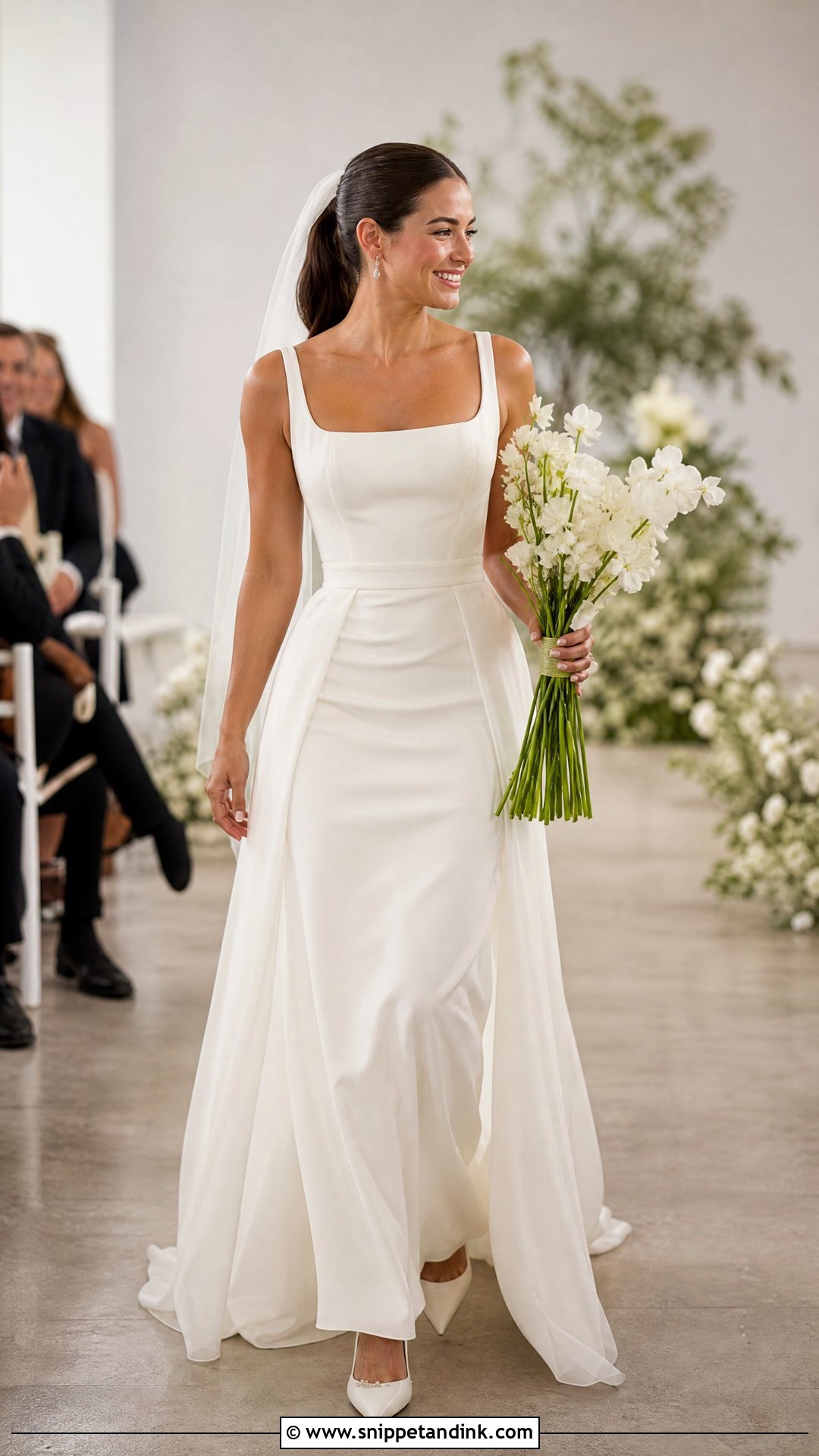
Crepe sheaths are comfortable all day, which makes them ideal for brides who’ll be glad to shed the drama later. Look for a smooth waist and supportive lining, then a light chiffon or organza overskirt. An open front gives the strongest contrast between flowing layer and fitted dress. Since the base is so plain, the overskirt’s quality shows; uneven hems on chiffon are obvious, so I check it on the stand before the fitting. Slingbacks, small drops and a sleek ponytail finish it. Afterward, the sheath needs almost no adjustment for dancing.
Who Takes It Off, and Where?
The switch itself is easy to forget in the planning. Decide on a room, a time and a helper weeks before. Most brides change between the ceremony photos and dinner, and a practiced helper can do it in a few minutes. An unpracticed one, under pressure, with the guests waiting, can take much longer.
I’d run the change twice at your last fitting with the person who’ll do it on the day. Have them hold the waistband as it releases, so the train doesn’t drop onto the floor and pick up marks. Fix your hair and veil at the same moment, since the reception look is a good time to swap a long veil for a comb.
The Overskirt Still Needs Care After the Switch
Once it’s off, the overskirt usually gets forgotten in a corner, and that’s when it gets stepped on or creased. Give it a hanger with loops, a clean garment bag and a named person to carry it home.
- Hang it by the waist loops, never folded over a chair; tulle and organza crease where they bend.
- Check the hem for dirt and grass before bagging it, and keep it apart from the base gown if either is damp.
- If you plan to have the gown cleaned and boxed, send both pieces together so the color treatment matches.
- Store it away from light. Pale fabrics can yellow at different rates, which matters if you ever wear them together again.
Practice the Change Before the Wedding Morning
An overskirt should look like part of the gown, never an afterthought. Compare fabric, shape, volume and how each one attaches before deciding. Try the full outfit with your real shoes, underwear, veil and jewelry, ideally with your hair styled. Walk, turn, sit and take the layer off at least twice so you know it holds and releases. Matching fabrics give the look of one ball gown; sheer or open-front layers show off the dress underneath. Pick the combination that’s comfortable and looks complete both at the ceremony and on the dance floor.
You'll Like These Ideas:






Leave a Reply