
A space theme in a wedding dress can be as quiet as a few silver stars on a sleeve or as loud as a skirt that fades from lilac into midnight. I’ve gathered twenty versions here, and the thing I say to every bride who brings me one of them is the same: the gown has to work as a wedding dress first and a theme second. Moon earrings, a crystal comb and a sheer veil can carry a lot of the story, which keeps a celestial bridal look from sliding into costume. The room matters as much as the dress, because sequins, metallic thread and dyed tulle all read differently in a planetarium, a ballroom or a desert at sunset.
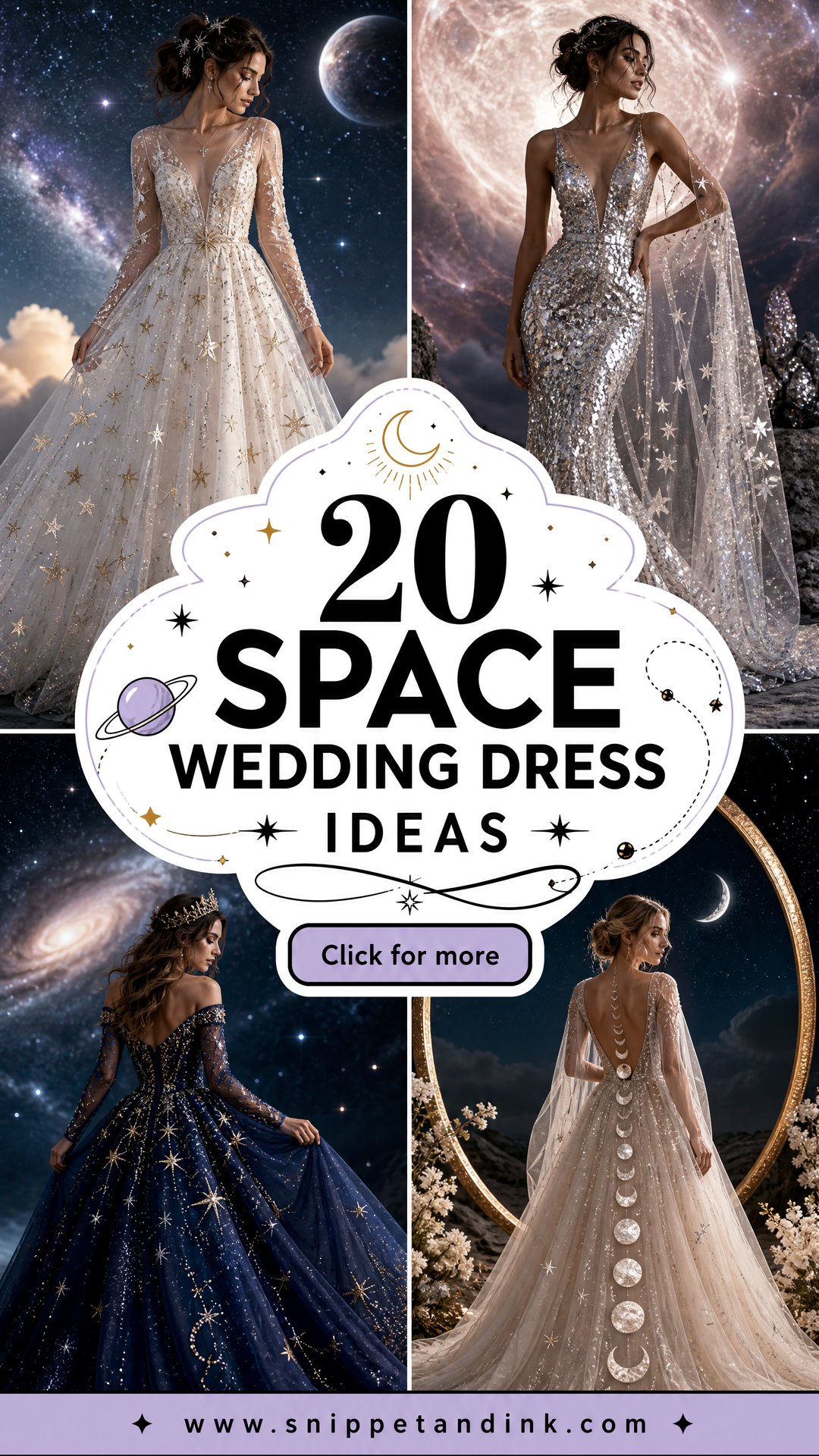
Sequins, Metallic Thread and Dyed Tulle Under Real Venue Light
Every celestial detail depends on light. The same gown can look like a night sky in one room and a flat white dress in another, so I always ask a bride where she’s marrying before we talk embroidery.
- Sequins and crystals need a light source to catch. In a dim planetarium or a candlelit barn, they go quiet until the camera flash fires, then they can glare. Smaller sequins handle both conditions better.
- Silver thread embroidery reads clearly on ivory or champagne but sinks on pure white from a few metres away. If you want your stars visible from the back row, a tinted lining helps more than adding extra embroidery.
- Dyed blues and purples shift under warm bulbs. Midnight can turn nearly black and lavender can turn pink, so view your fabric swatch in daylight and under a warm lamp at home before you order.
- Outdoor daylight flattens metallic effects but flatters iridescent and ombré fabrics, which show their colour changes best when the light is soft and even.
If you can, visit the venue around the time of day you’ll marry and take a sample with you. Holding a swatch of beaded tulle under the actual chandelier or sunset tells you more than any shop mirror.
1. Star Embroidered A-Line Wedding Dress
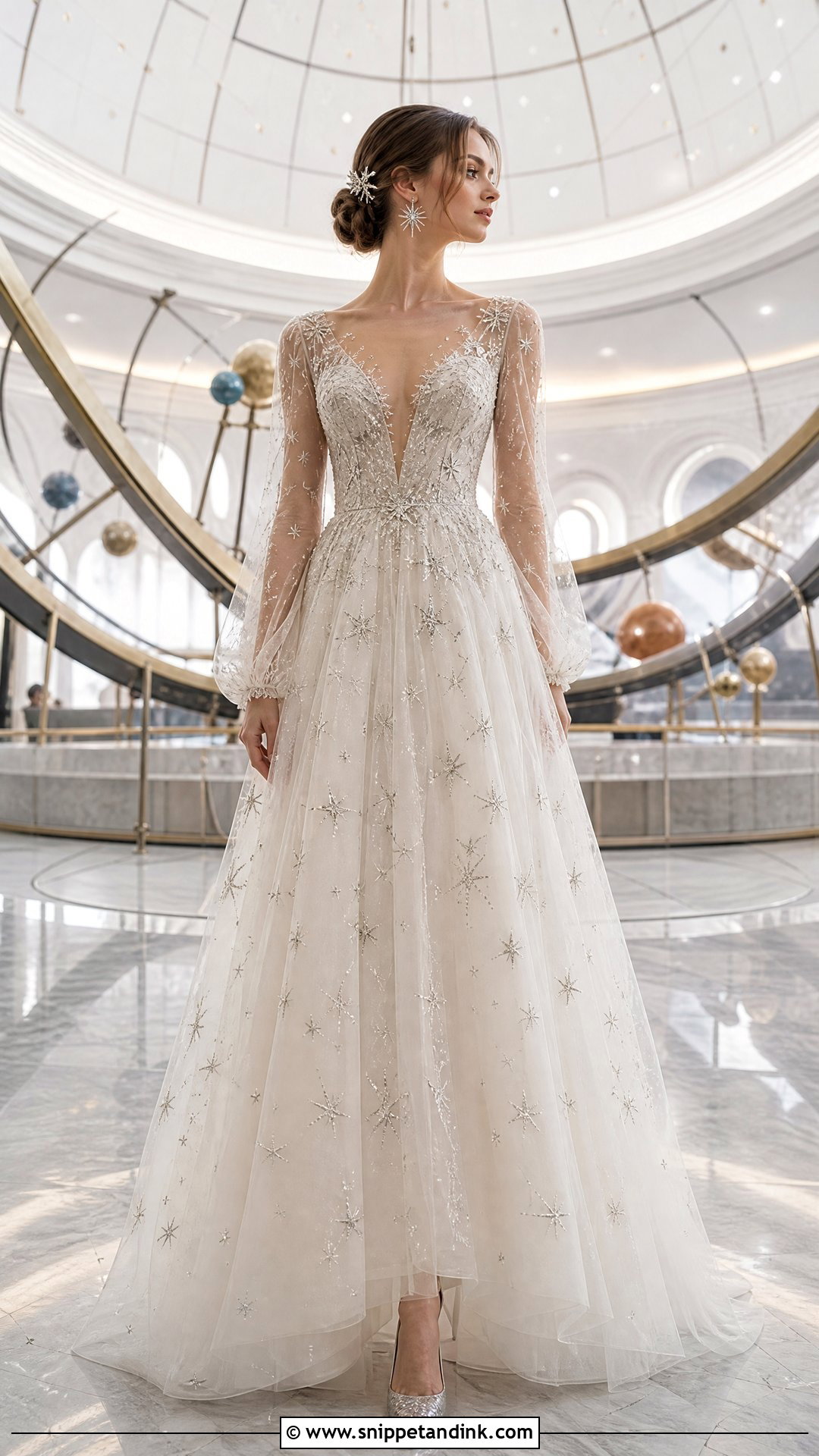
Scattered embroidery on an A-line is the easiest way into the theme, and it’s the one I suggest to brides who are nervous about going too far. Ivory tulle with small silver stars and a few crystals keeps the shape traditional while the detail does the talking up close. When I try these on clients, I look at where the stars sit on the bodice: a cluster right at the bust line can look like a pattern accident, so I prefer them thinning out toward the neckline. Sheer embroidered sleeves continue the motif nicely. Keep the veil plain and the hair low, with a few crystal pins, so the stars aren’t fighting three other sparkly things.
2. Moon And Star Tulle Ball Gown
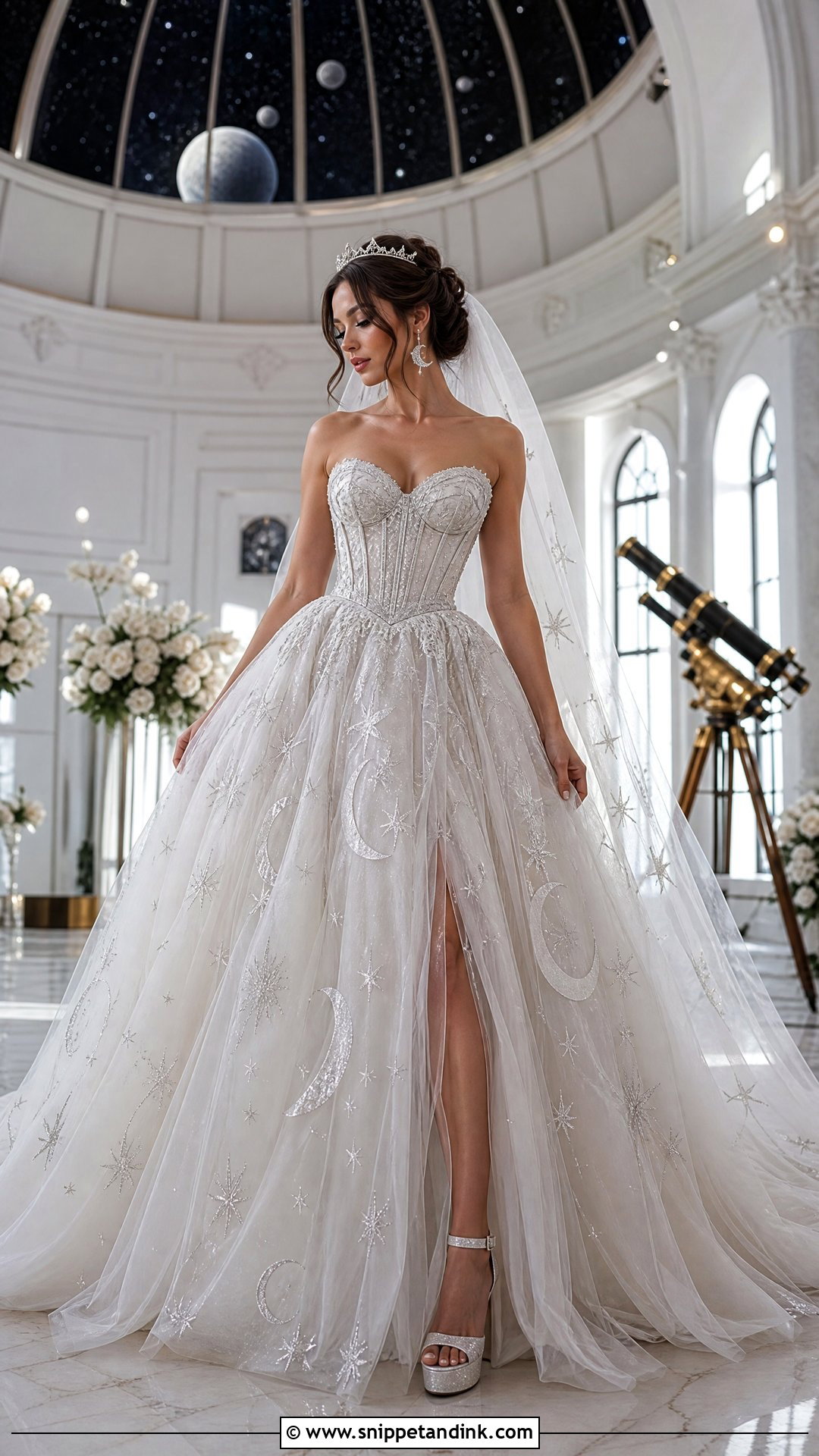
Volume is what this one is about. A moon-and-star tulle ball gown needs a properly boned corset bodice with built-in cups, because a full layered skirt pulls down on the waist all evening and a soft bodice will slip. I like a champagne or pale grey lining under white celestial embroidery; on pure white, silver crescents almost disappear from a few feet away. Block heels give you stability under all that tulle. A slim tiara with the cathedral veil set just below it, and a light white bouquet, is plenty.
3. Galaxy Ombre Wedding Dress
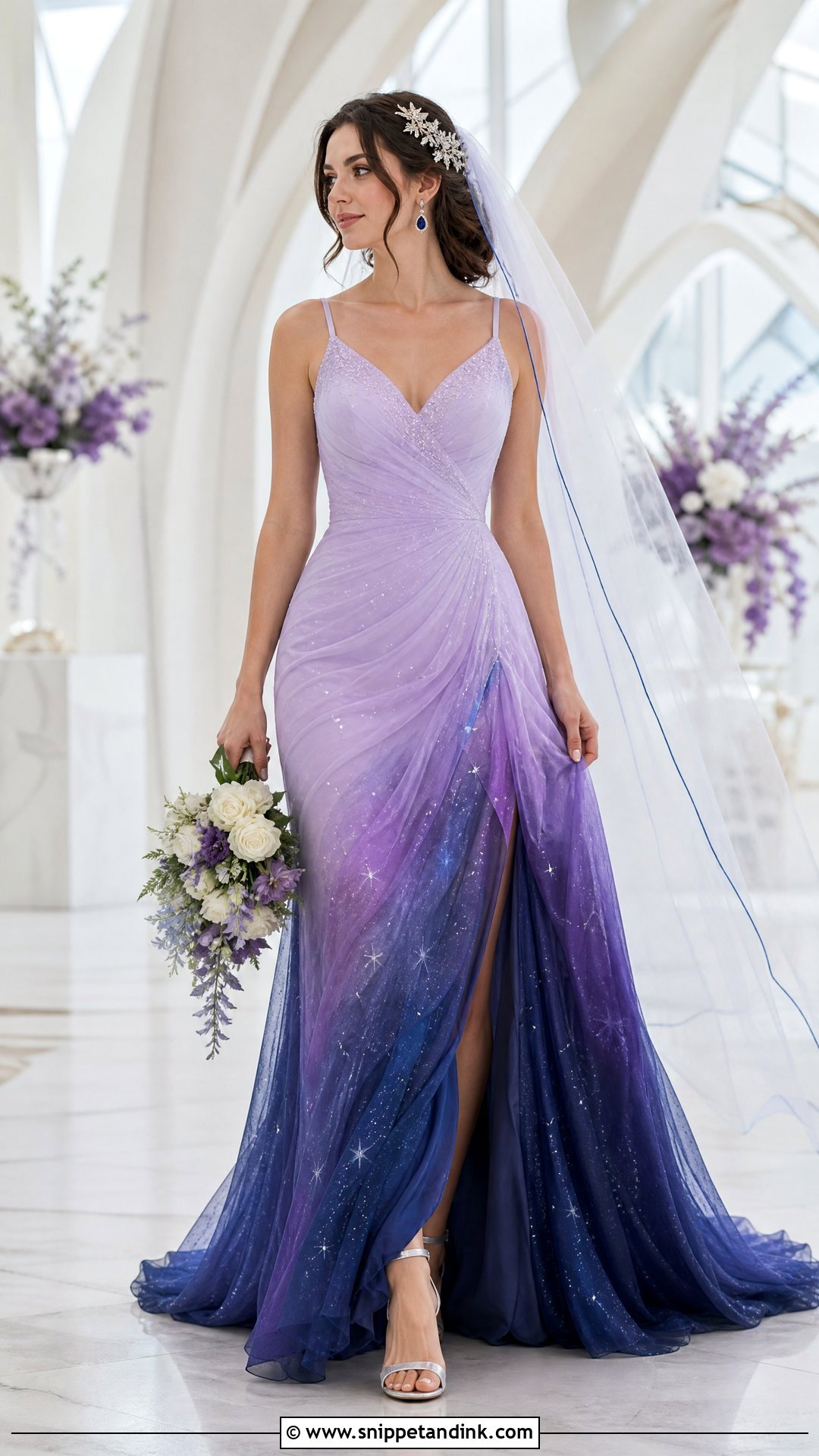
Colour does the work in a galaxy ombré wedding dress, so I’d keep everything else calm. The fade usually starts in a pale bodice and deepens through violet and indigo to midnight at the hem. Ask the shop to show you the dye on a sample in daylight and under warm bulbs, since deep blue can drift toward purple indoors. A few sequins can stand in for stars without a printed galaxy, which tends to look flat in photos. Choose a skirt full enough that the colour change shows from the side as well as the front.
4. Silver Sequin Space Wedding Dress
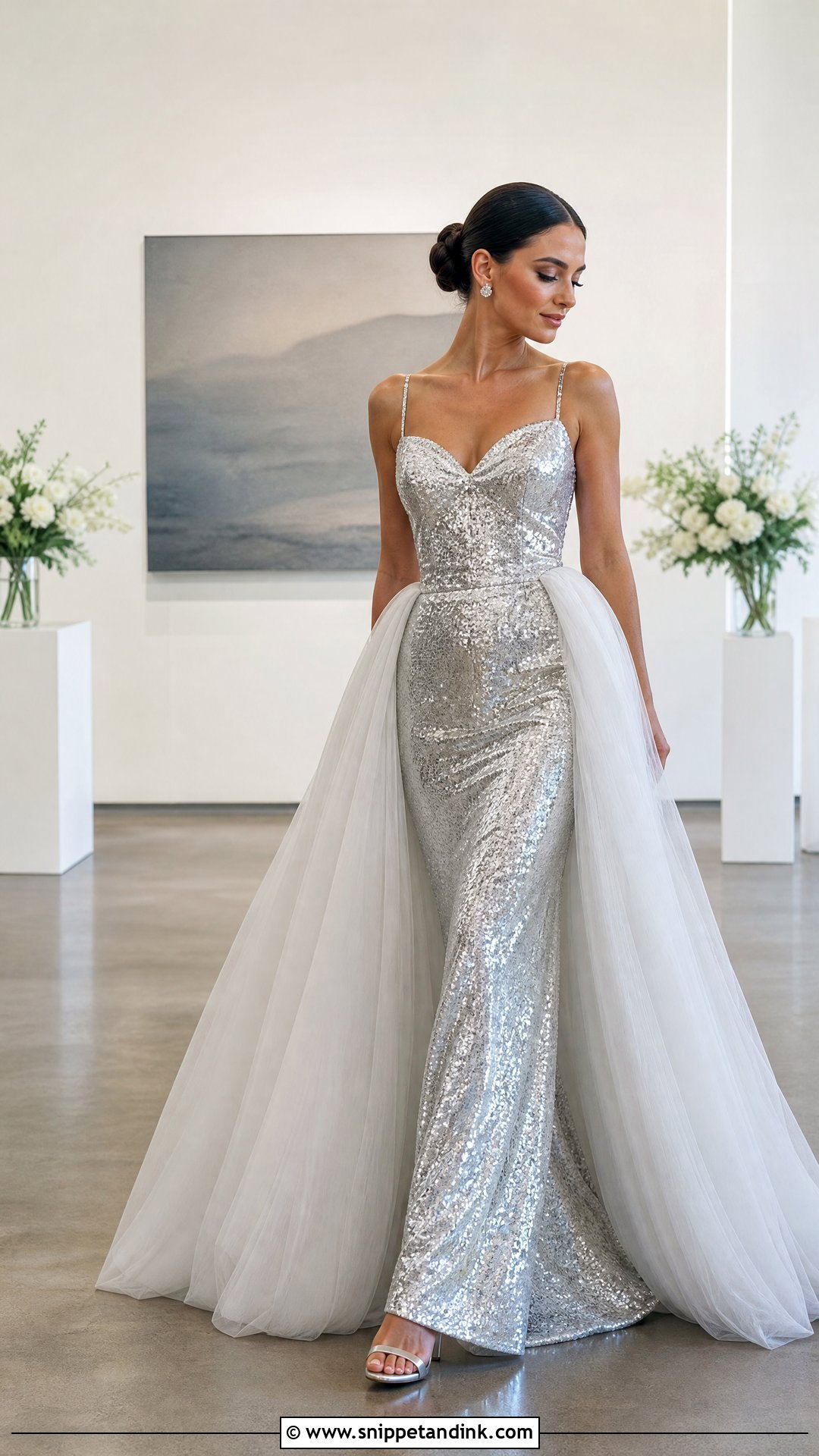
Fine sequins, not big paillettes. That’s my first rule with silver sequin gowns, because large discs bounce harsh light into the camera and can look cheap close up, while small ones read as stardust. A column or soft flare with a pale lining keeps it refined. One practical thing I always check is the inner arm: sequins on the side seams can scratch through a long reception, so a smooth panel there is worth asking for. A detachable tulle overskirt gives you a ceremony silhouette, and a plain sheer veil or a short shoulder cape stops the outfit from turning into a disco ball.
5. Midnight Blue Celestial Wedding Dress
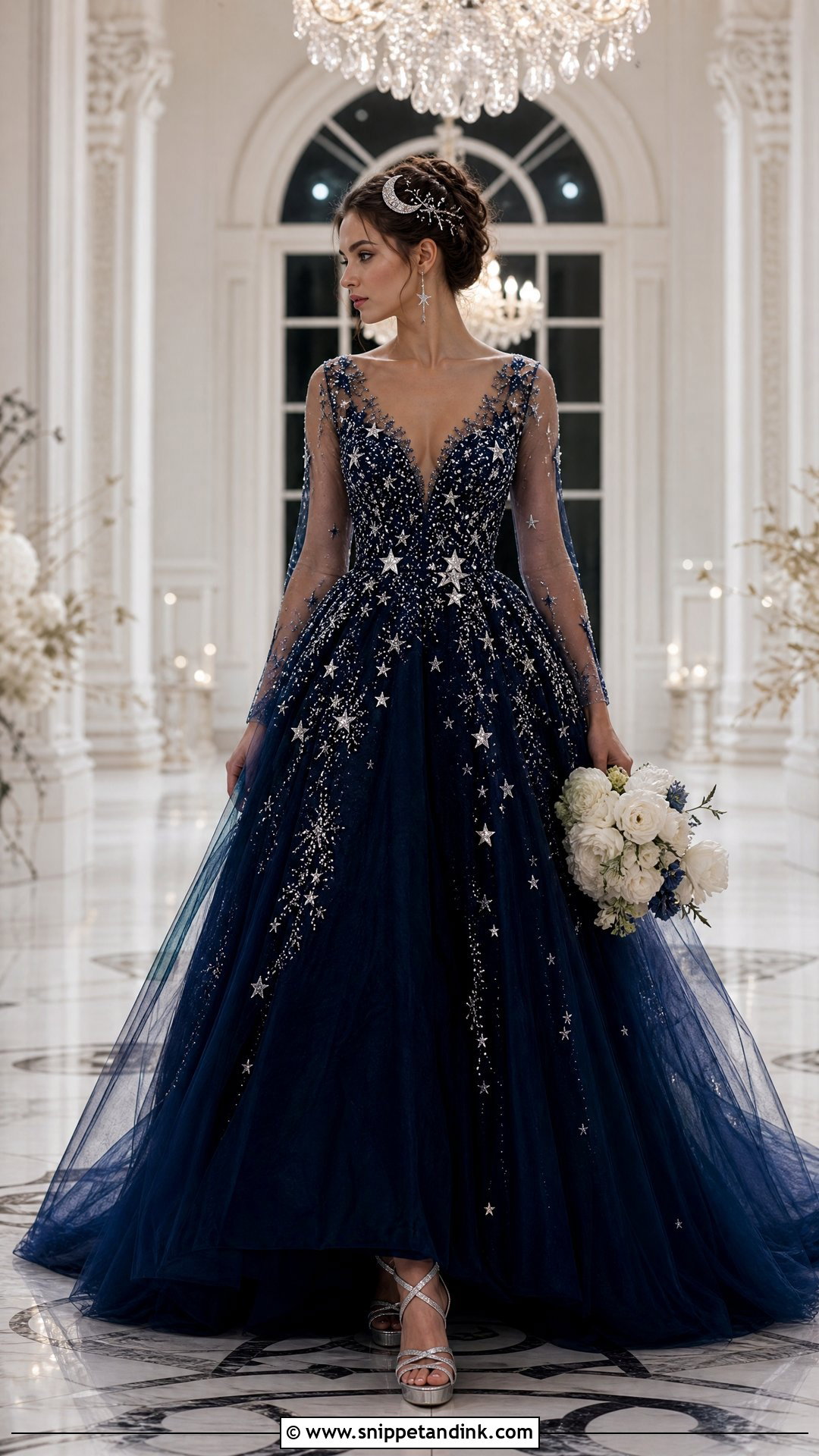
Navy tulle with silver stars is a real alternative to white, and it’s darker in person than most brides expect. I always pull a swatch outside before ordering, because midnight blue can look almost black under evening lighting. A sweetheart or square neckline gives the darker colour some shape, and the A-line skirt keeps it bridal. White flowers against the blue are the strongest contrast you can carry. If you add a veil, go pale grey or soft blue rather than stark ivory, which can look like it belongs to a different outfit.
6. Constellation Illusion Sleeve Wedding Dress
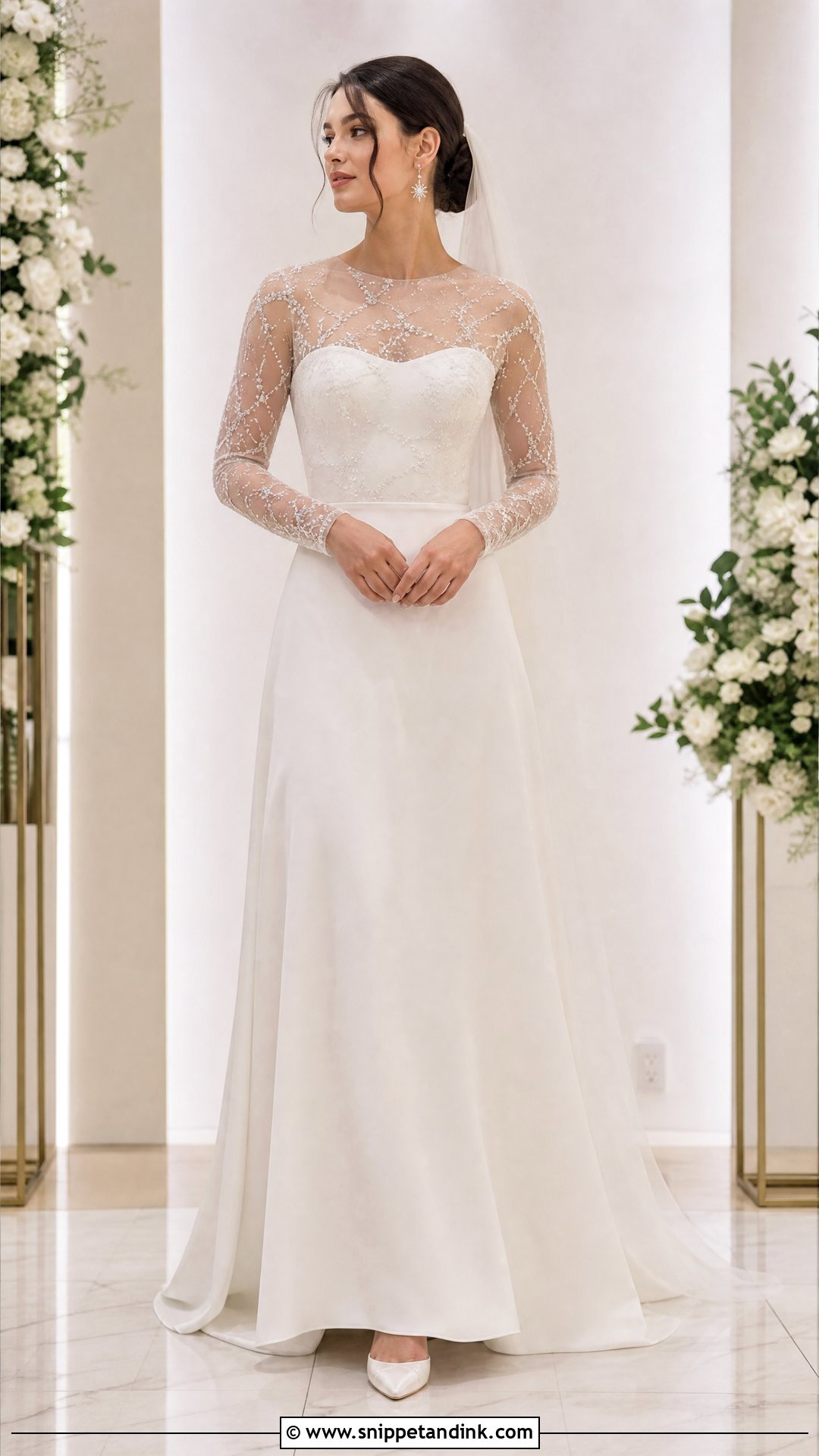
Illusion sleeves are where constellation embroidery looks its most delicate, since the tulle disappears against skin and the stars seem to float. The catch is fit: illusion mesh has very little forgiveness, and if the sleeve is even slightly tight, it wrinkles at the elbow every time you bend your arm. I have brides do a full hug and a pretend bouquet toss at the fitting for that reason. Keep the skirt simple in crepe or light tulle, wear closed satin pumps, and choose a plain chapel veil so the sleeves stay visible. It’s a good cooler-season choice because you get coverage without weight.
7. Gold Star Champagne Wedding Dress
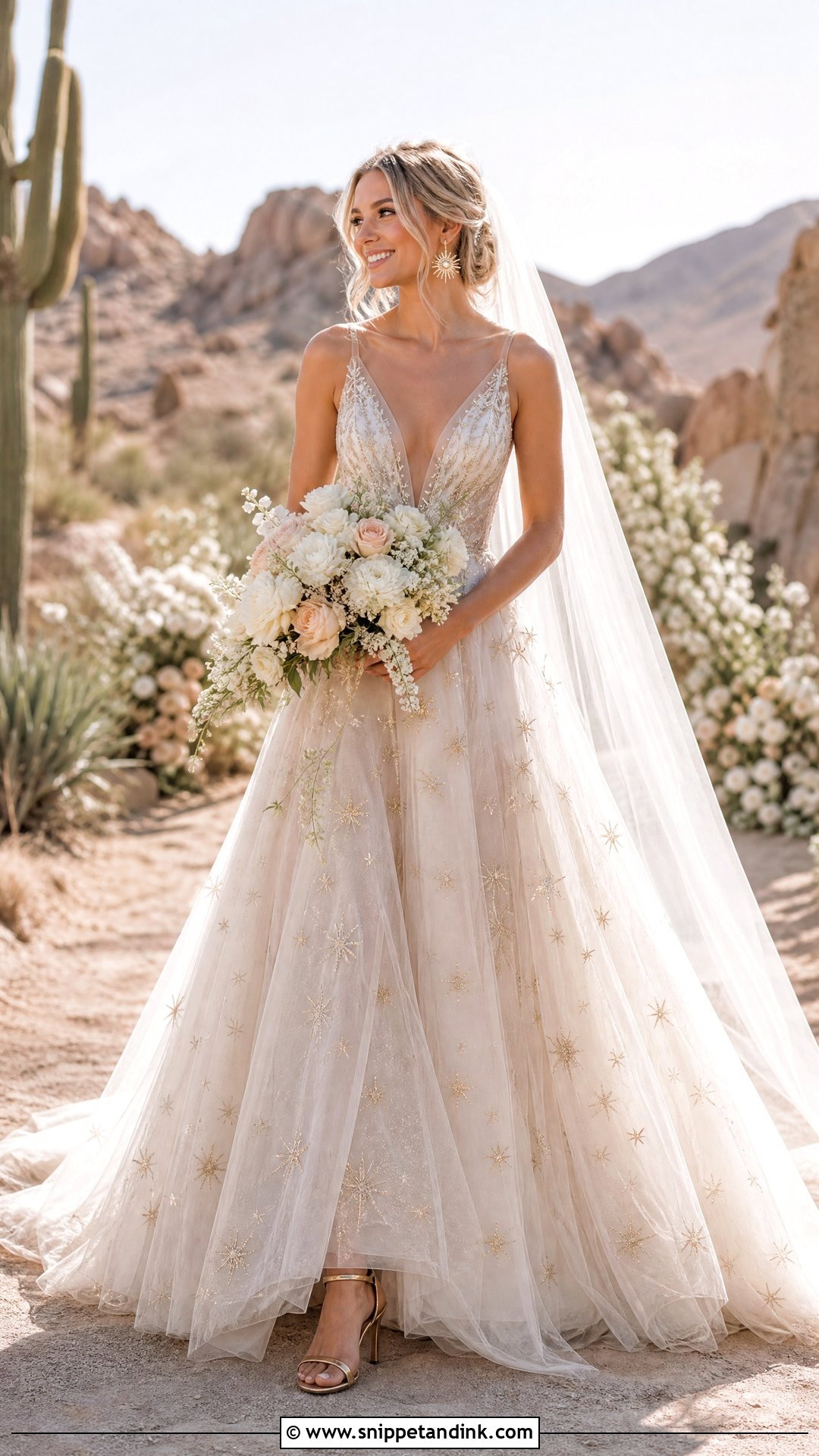
Warm skin tones often glow in champagne and gold in a way that silver and white can’t match. I’d look at an A-line with champagne lining, ivory tulle over it and gold stars running from bodice to train. A V-neck or wrap bodice lengthens the torso and leaves the seamstress room to take in or let out at the side seams. Brushed-gold heels, sunburst earrings and a narrow headband tie it together. Peach and white flowers sit better against gold than deep reds, which tend to drown the embroidery. Sunset light is kind to this palette, especially outdoors.
8. Iridescent Organza Space Wedding Dress
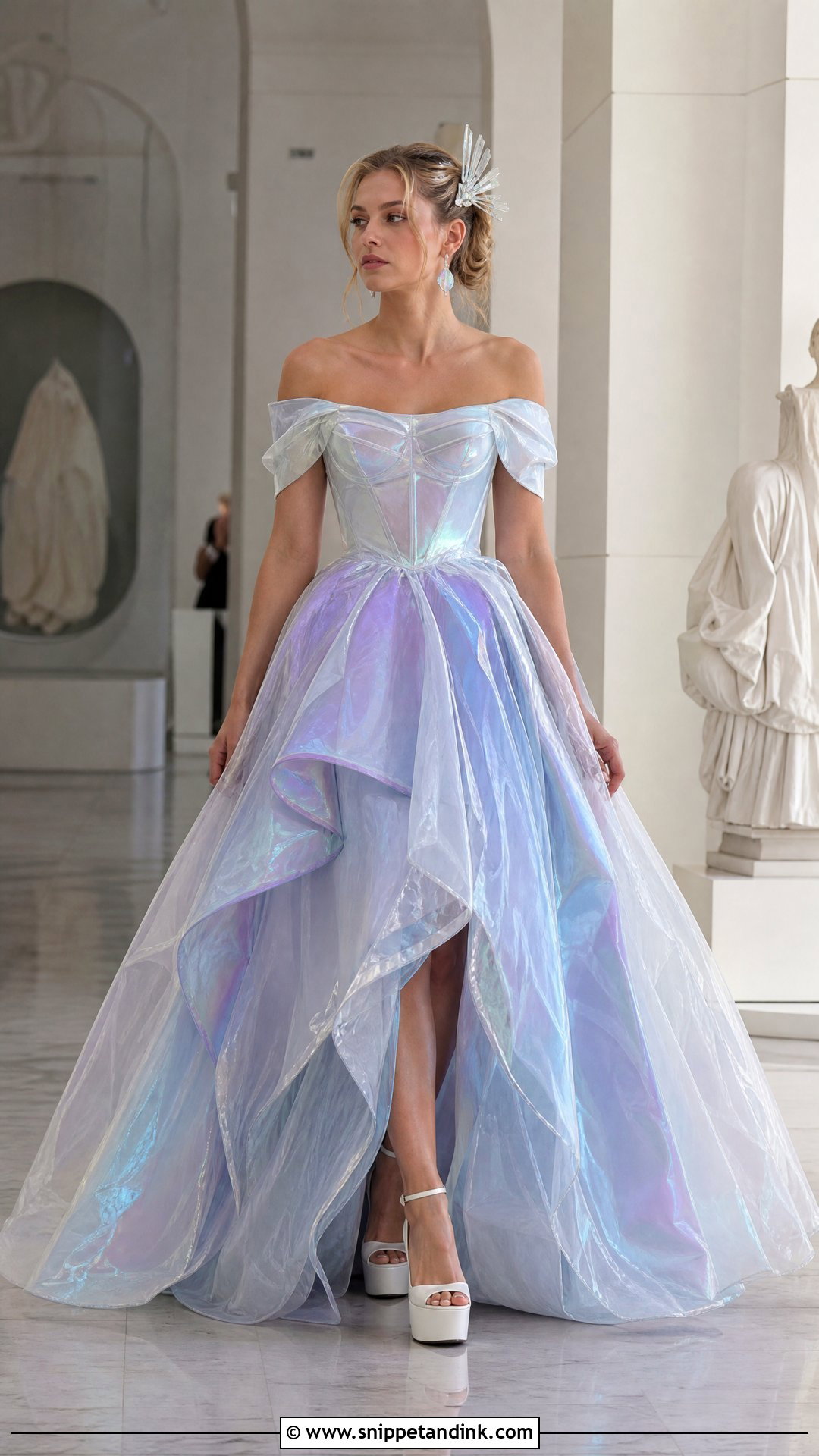
Iridescent organza changes colour as you move, shifting through pale blue, lavender and silver, so it needs almost no beading. Be aware that organza is crisp and creases sharply when you sit, and those creases catch the light more than they would on matte fabric. I always have brides sit down in it for a minute at the fitting and then stand to see how it recovers. A clean strapless or off-shoulder neckline balances the drama. Opal earrings and a sculptural silver comb suit it far better than lace, and calla lilies keep the bouquet as streamlined as the dress.
9. Planet Embroidered Wedding Dress
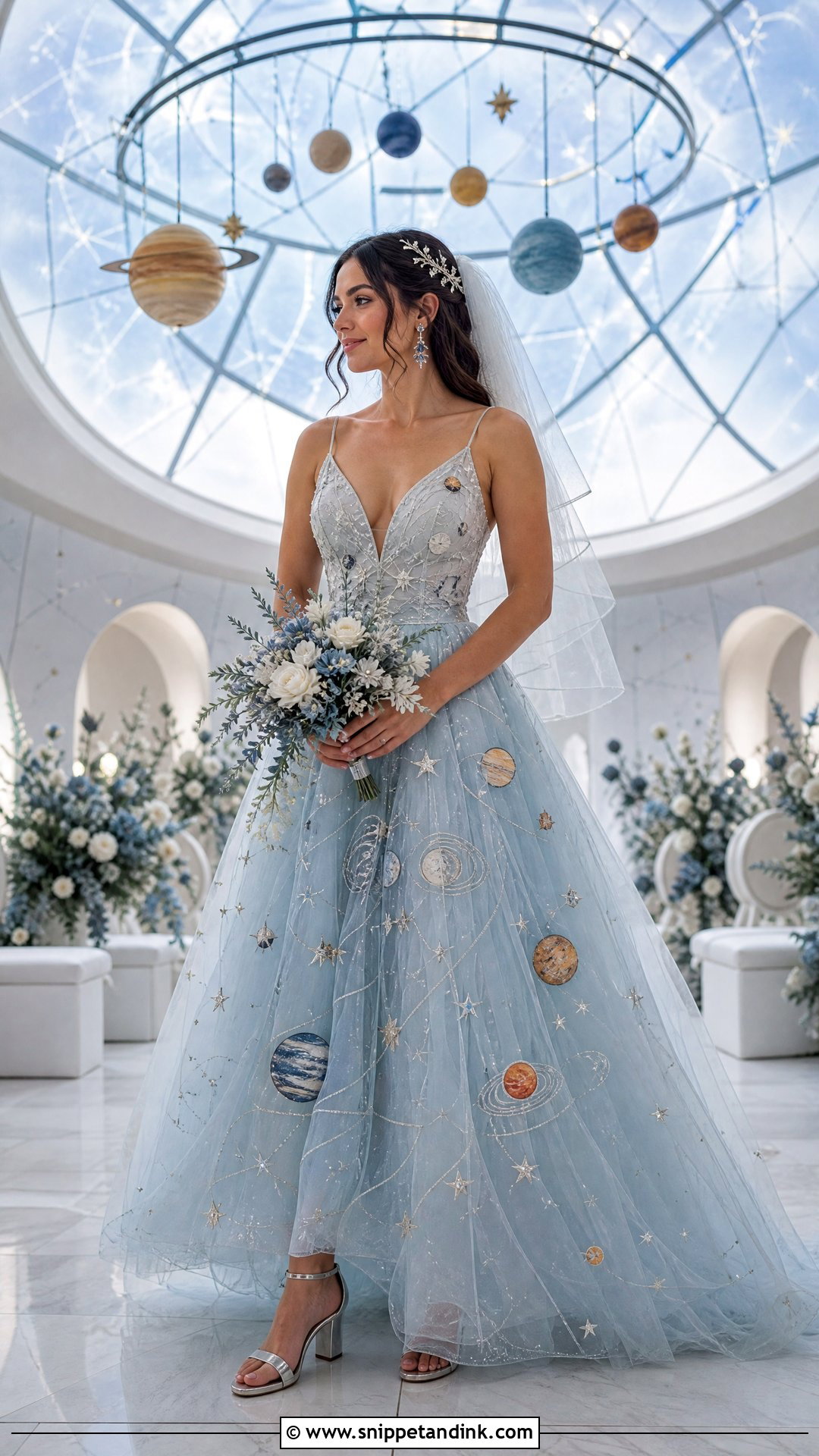
Tiny embroidered planets, rings and orbit lines across a white or pale blue skirt make a gown that is clearly about astronomy without shouting. Scale is everything. Planets bigger than a palm start looking like appliqués on a child’s costume, so I ask for them small and spaced out. A plain fitted bodice with wide straps or short sleeves gives the skirt room to be the story. Stop the veil around the waist so it doesn’t cover the embroidery. Many couples like adding a specific planet or constellation that means something to them, which is a lovely detail for an observatory or science-centre ceremony.
10. Meteor Shower Beaded Wedding Dress
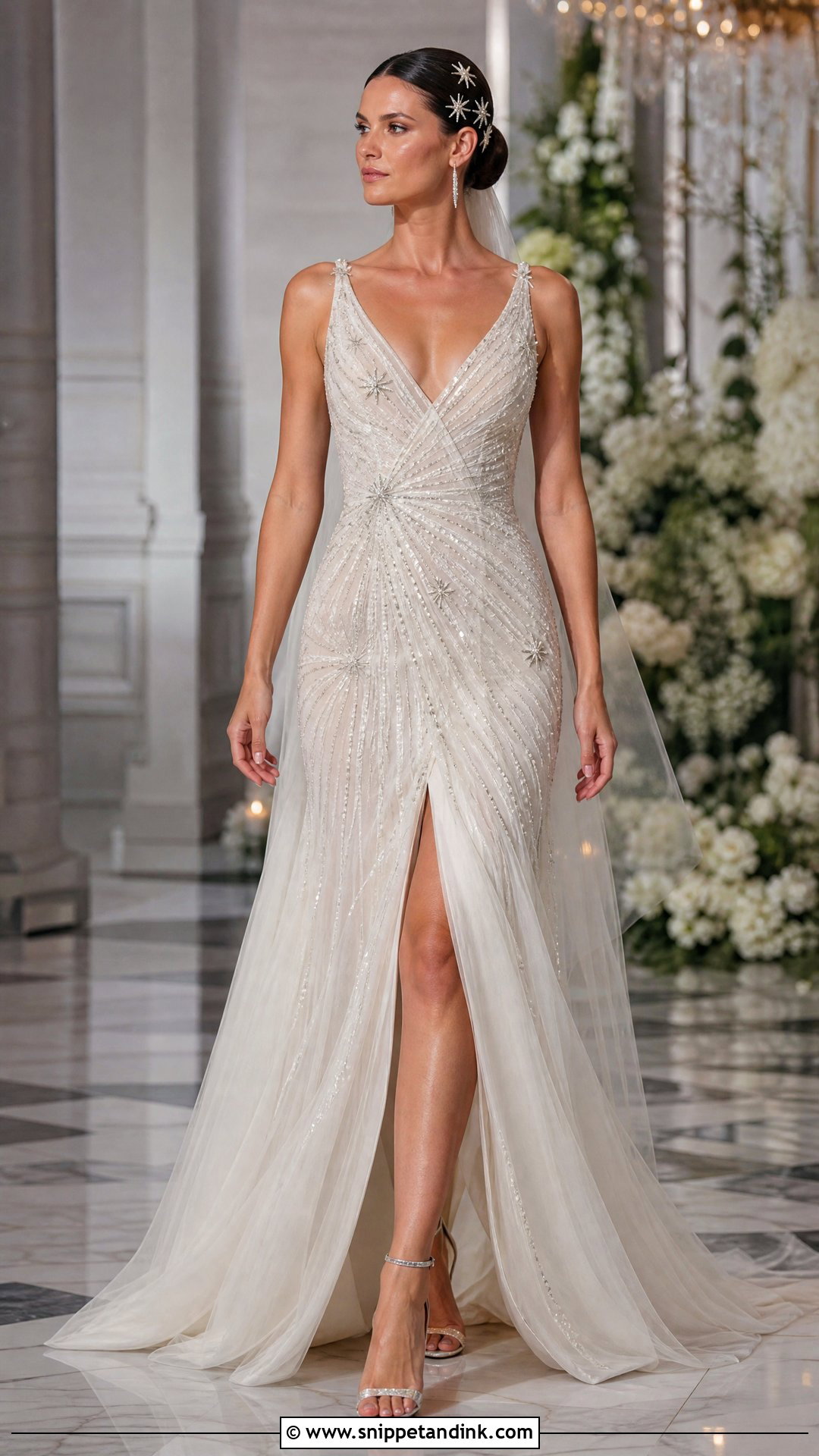
Diagonal trails of bugle beads and crystals can look like meteors crossing the gown, and in motion it’s one of the most exciting designs on this list. The weight is the thing I watch. Heavy beading on a chiffon skirt drags it downward and can distort the drape, so the beads should vary in size and thin out toward the hem. A soft V-neck and defined waist keep the shape flattering under all that sparkle. Two or three star pins in a sleek bun and a veil with a narrow silver edge finish it. Bright directional lighting on the dance floor brings this gown alive.
11. Black Celestial Wedding Dress
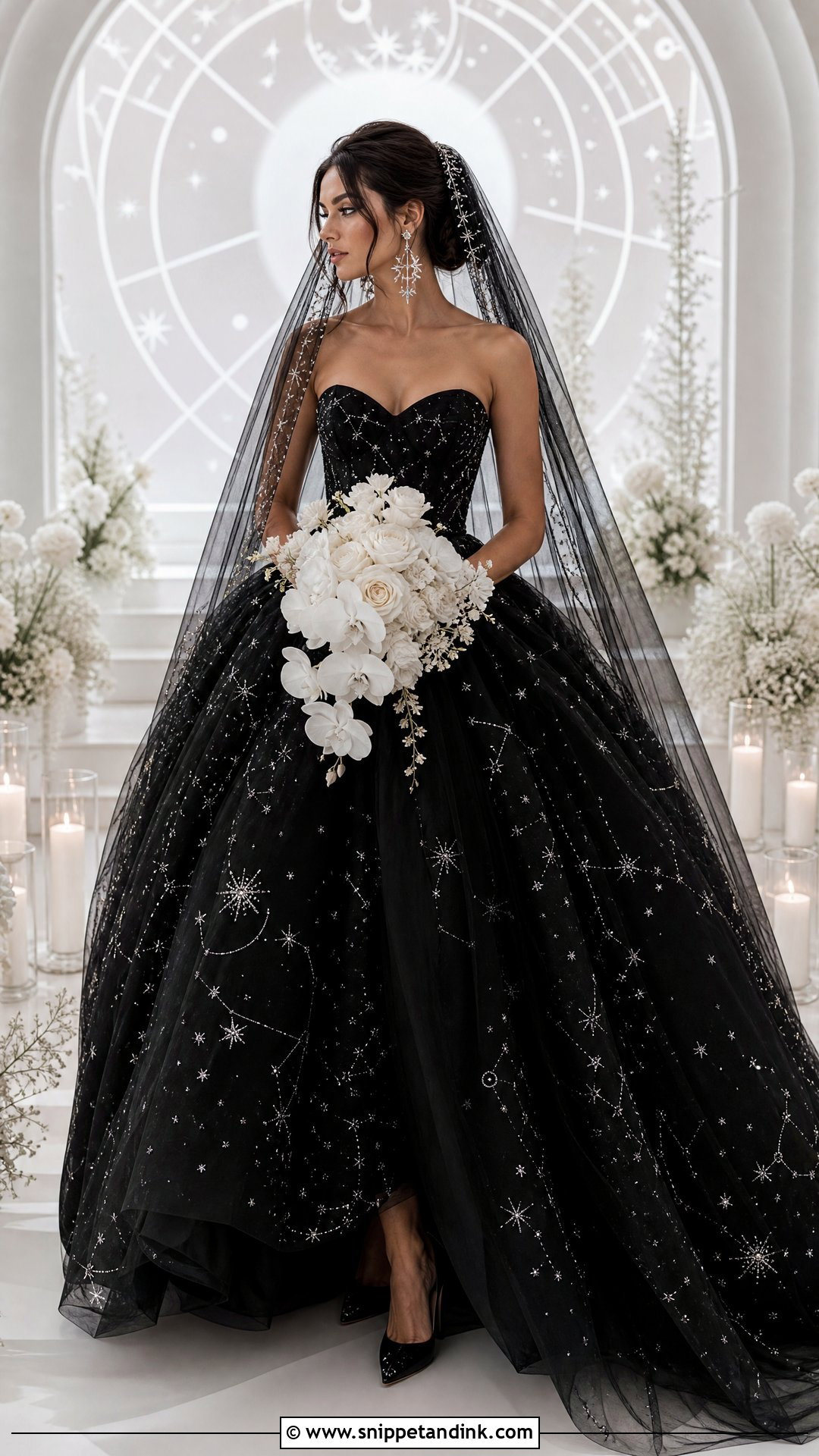
A black celestial gown is bold, and I’ll be honest: it isn’t the right call for every family or every venue. When it works, layered black tulle with silver or gold constellations is dramatic and very bridal in shape. I’d ask for a lined bodice and embroidery placed where you want coverage. Black pointed heels keep the line long, and silver starburst earrings bring light back to your face. A crystal-edged black veil leans fully into it, while a sheer white veil adds contrast. The decor should carry some dark tones too, or the dress can look like it walked in from another event.
12. Lavender Galaxy Wedding Dress
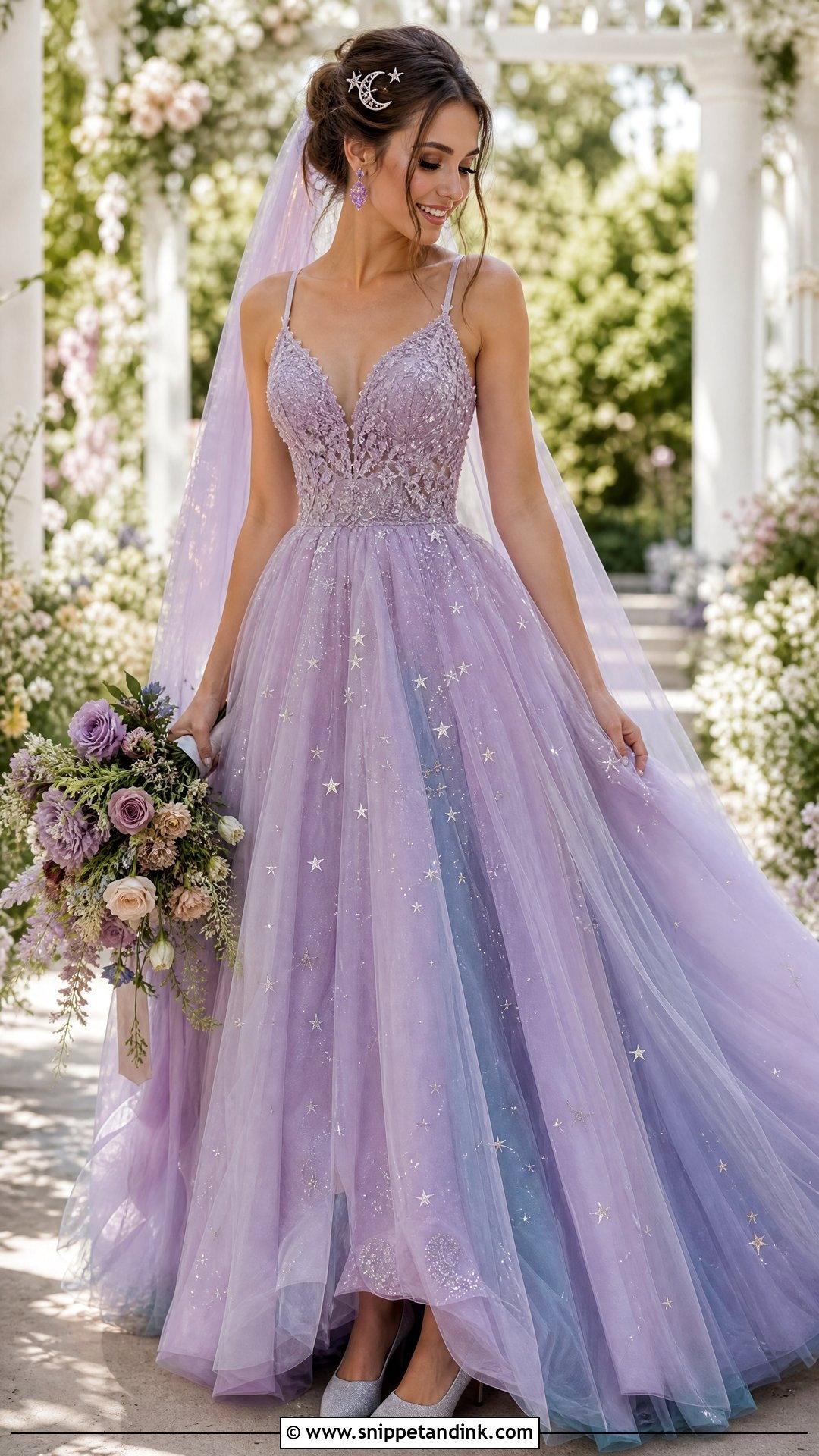
Lavender is a soft way into galaxy colour if pure white has never felt like you. I’d pick an airy tulle gown with lilac, dusty blue and pale grey layers and just a scattering of silver stars or crystals. Lavender is surprisingly sensitive to light, so it can wash out to grey in flat daylight and turn pinker under warm bulbs; check it in both. Amethyst earrings and a crescent comb suit the palette. A lavender-tinted veil matches, while ivory gives a more traditional contrast. Gardens and mountain venues suit it well.
13. Moon Phase Wedding Dress
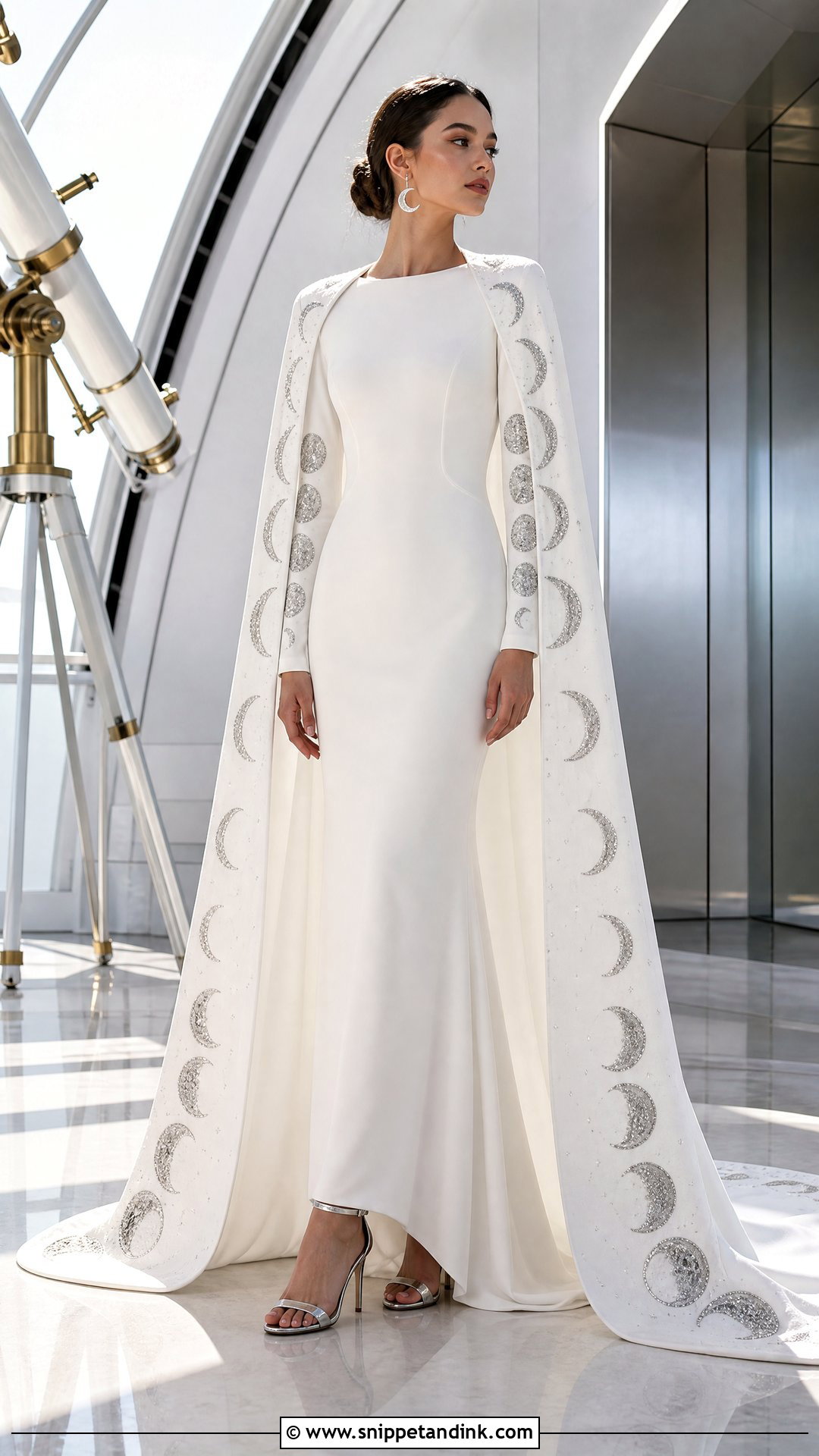
Lunar phases embroidered along a sleeve, neckline or train give the theme a clean, graphic feel. They show best on a smooth surface like crepe, satin or matte silk, because tulle breaks up the line of each circle. Thread colour depends on the dress: black on ivory is crisp, silver or pale gold is softer. I like replacing the veil with a detachable cape carrying more moon phases for the walk down the aisle. Everything else should stay minimal, including a polished low bun and plain metallic heels. It suits an elopement as easily as a formal evening.
14. Star Cape Wedding Dress
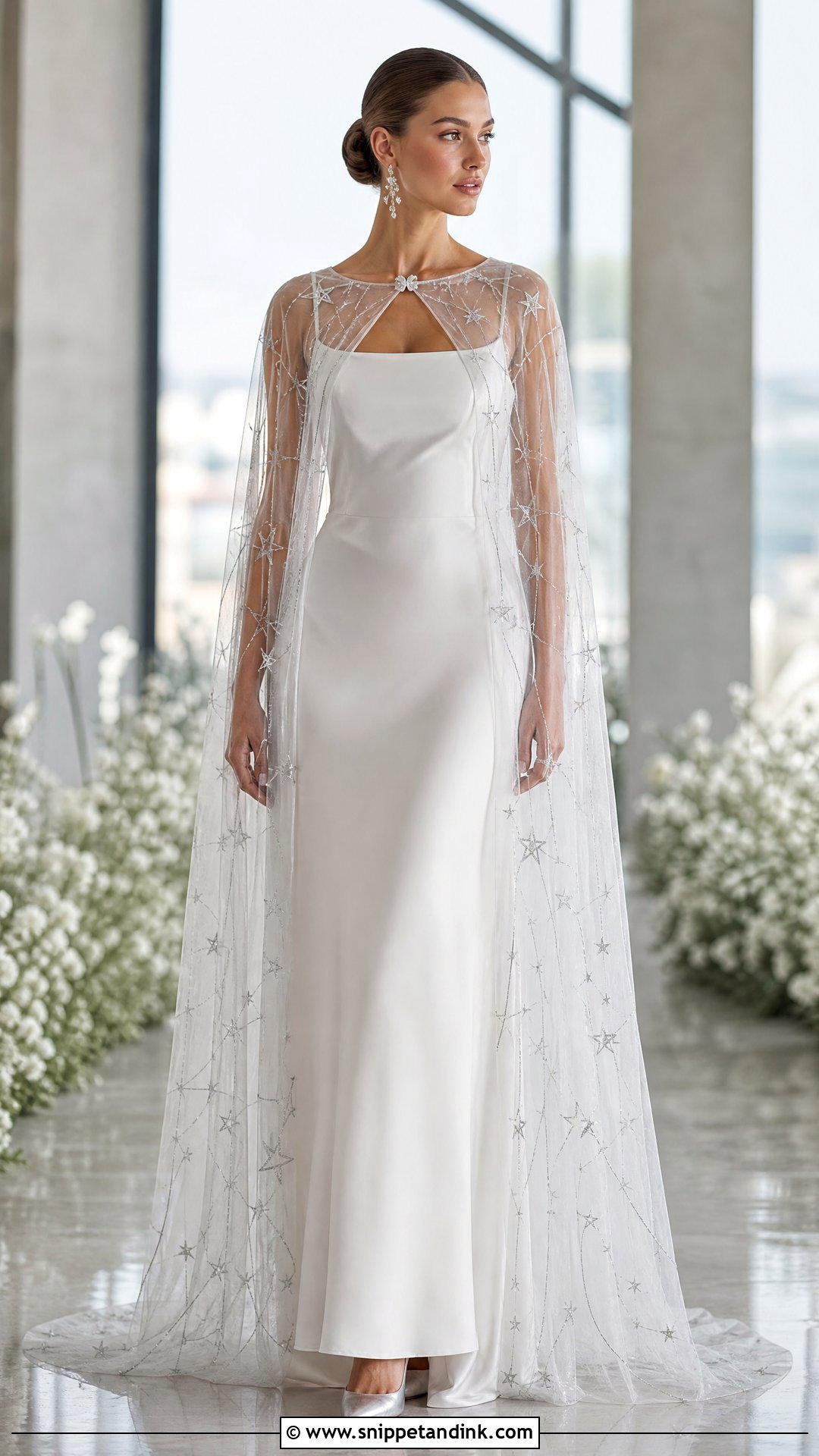
A star-covered cape turns a plain gown into a space look with one piece. Start with a clean satin, crepe or mikado dress, and add a sheer floor-length cape embroidered with stars or constellation lines. The attachment point matters more than most brides expect: I want the cape fixed at the shoulder seams with discreet snaps or loops, not just pinned, because a long cape catches air and pulls backwards as you walk. Skip the veil, since the cape gives you movement already. Take it off after the vows and you have a simpler reception dress.
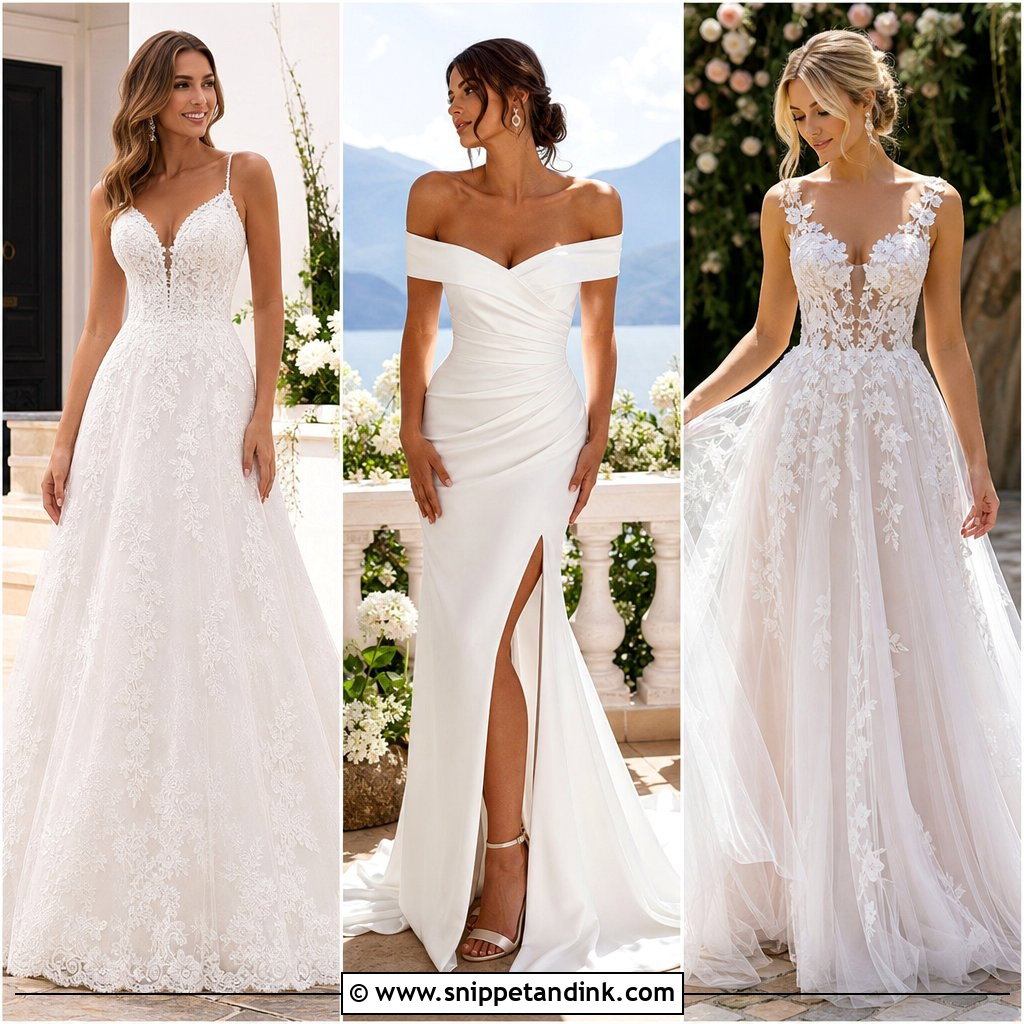
15. Celestial Mermaid Wedding Dress
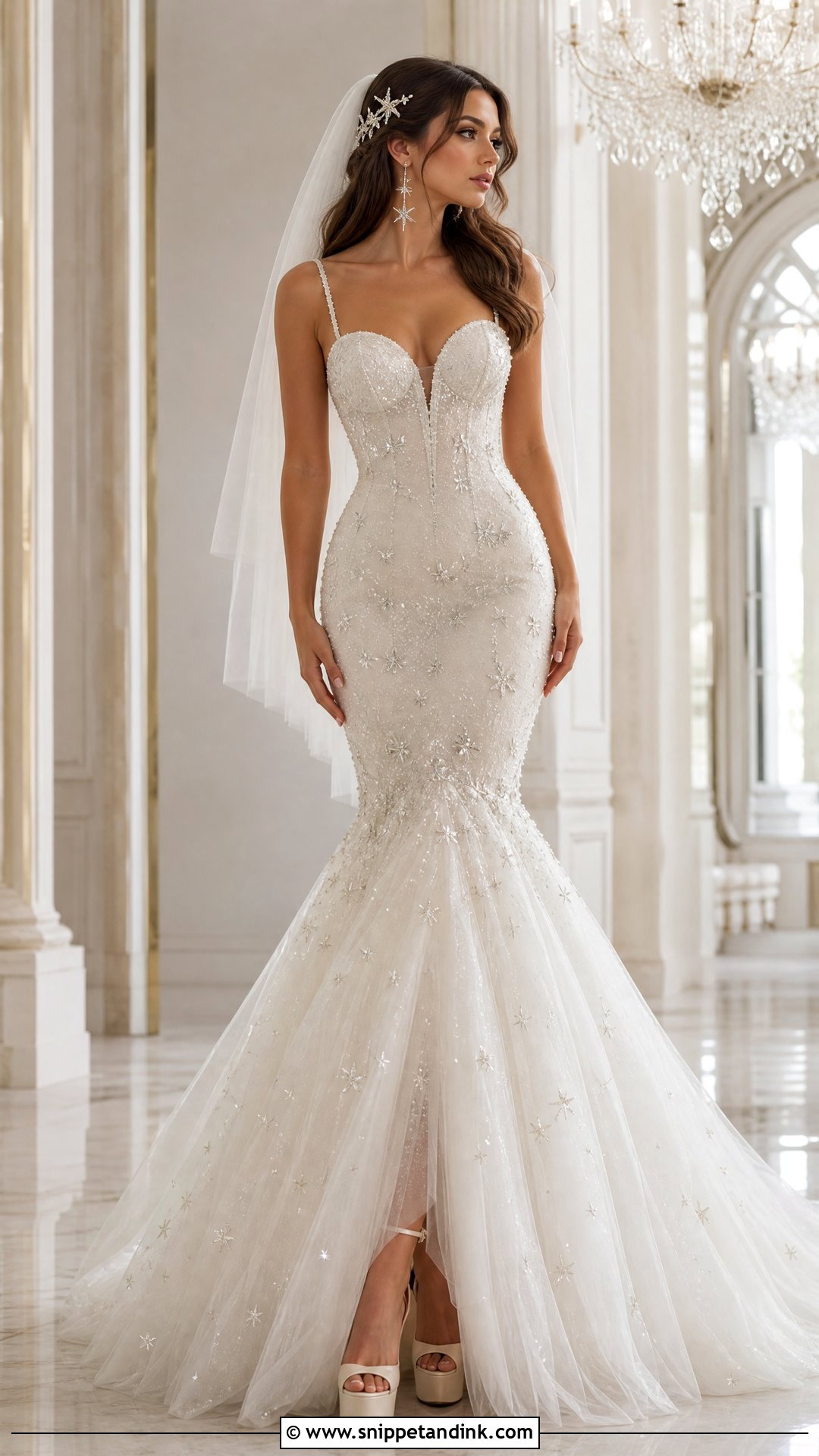
A mermaid shape with starry embellishment is glamorous and very fitted, so comfort depends on construction. The bodice should follow the waist and hips before flaring at or just below the knee; if the flare starts too low, you won’t manage stairs or a proper dance. Stretch lining helps a lot. I like the stars or beads getting denser toward the lower skirt so the sparkle pools at the hem. Hem the dress to the shoes you’ll actually wear, and choose a fingertip veil to keep the shape visible.
16. Space Princess Wedding Dress
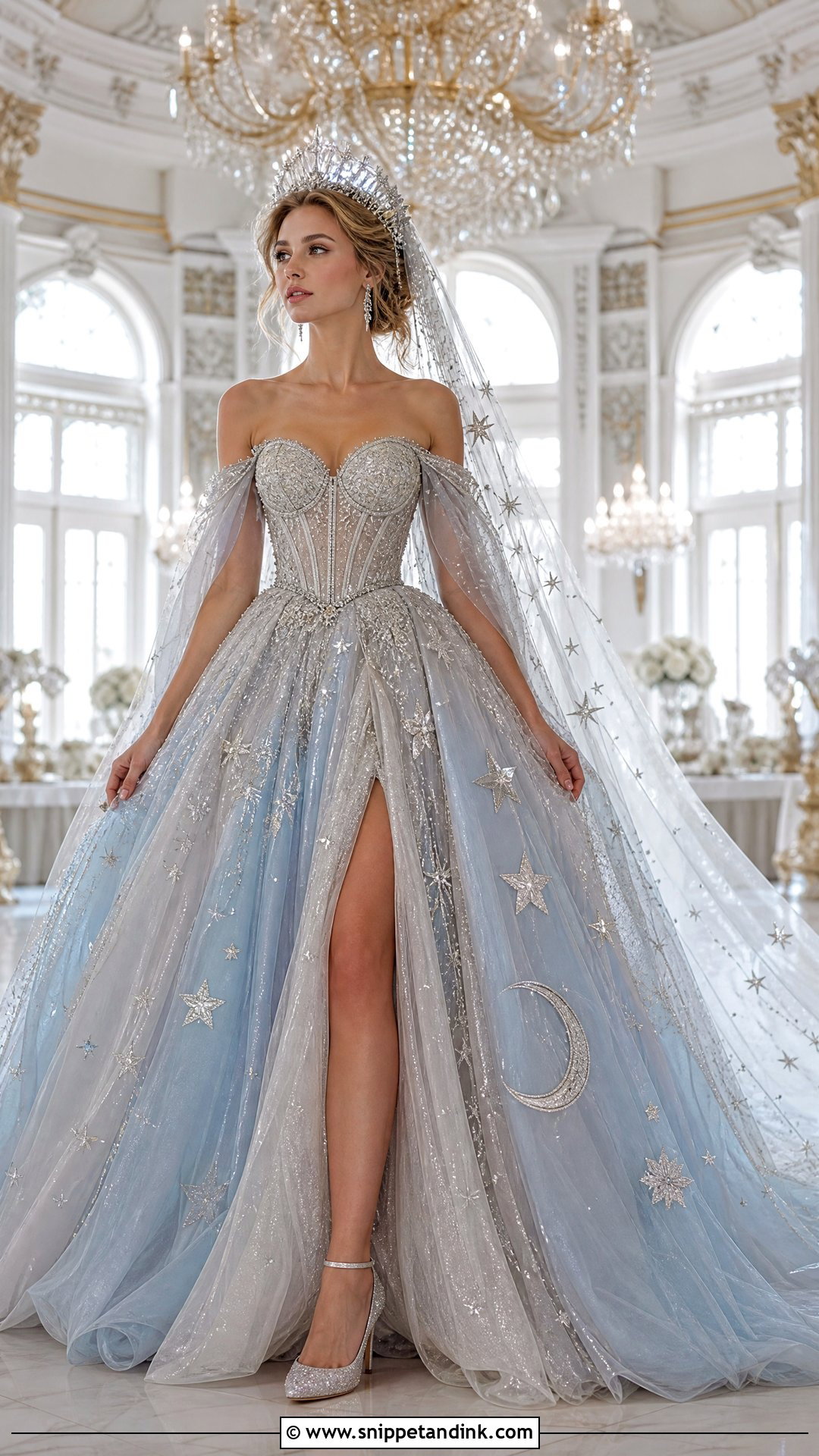
This is the full fantasy version: a big ball gown, a corset top and pale blue, silver or ivory tulle sprinkled with stars, moons and pearlescent beads that grow denser toward the train. It’s heavy. Layers of beaded tulle can weigh more than brides expect, so the bodice has to be secure, and I’d wear comfortable glitter heels you’ve walked in before. A cathedral veil with sparse stars extends the line without hiding the detail. Keep the bouquet compact. Ballrooms and historic venues give a skirt this size the space it needs.
17. Minimalist Starry Slip Wedding Dress
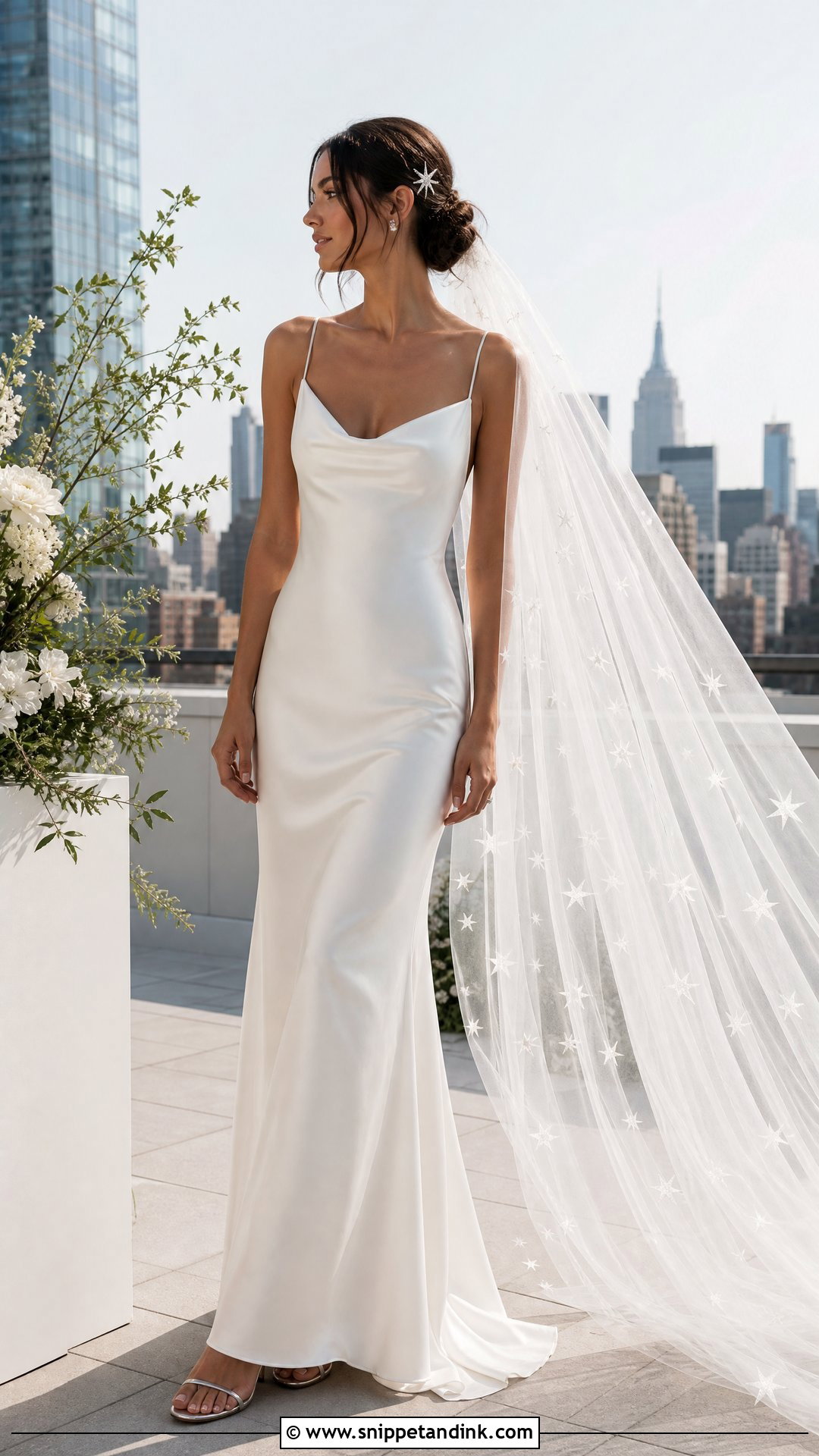
Not every space wedding dress needs layers of glitter and tulle. A bias-cut satin slip in ivory or pearl can carry the theme with one celestial detail, usually a sheer star-embroidered veil or a detachable overskirt. Bias-cut satin is honest about everything underneath, so I always fit these with the final underwear and look at the back under bright light. Metallic slingbacks, tiny studs and one star hairpin keep the lines clean. A structured silver clutch adds a single futuristic note. Rooftops and small ceremonies suit it, and it’s a joy to dance in.
18. Celestial Tea Length Wedding Dress
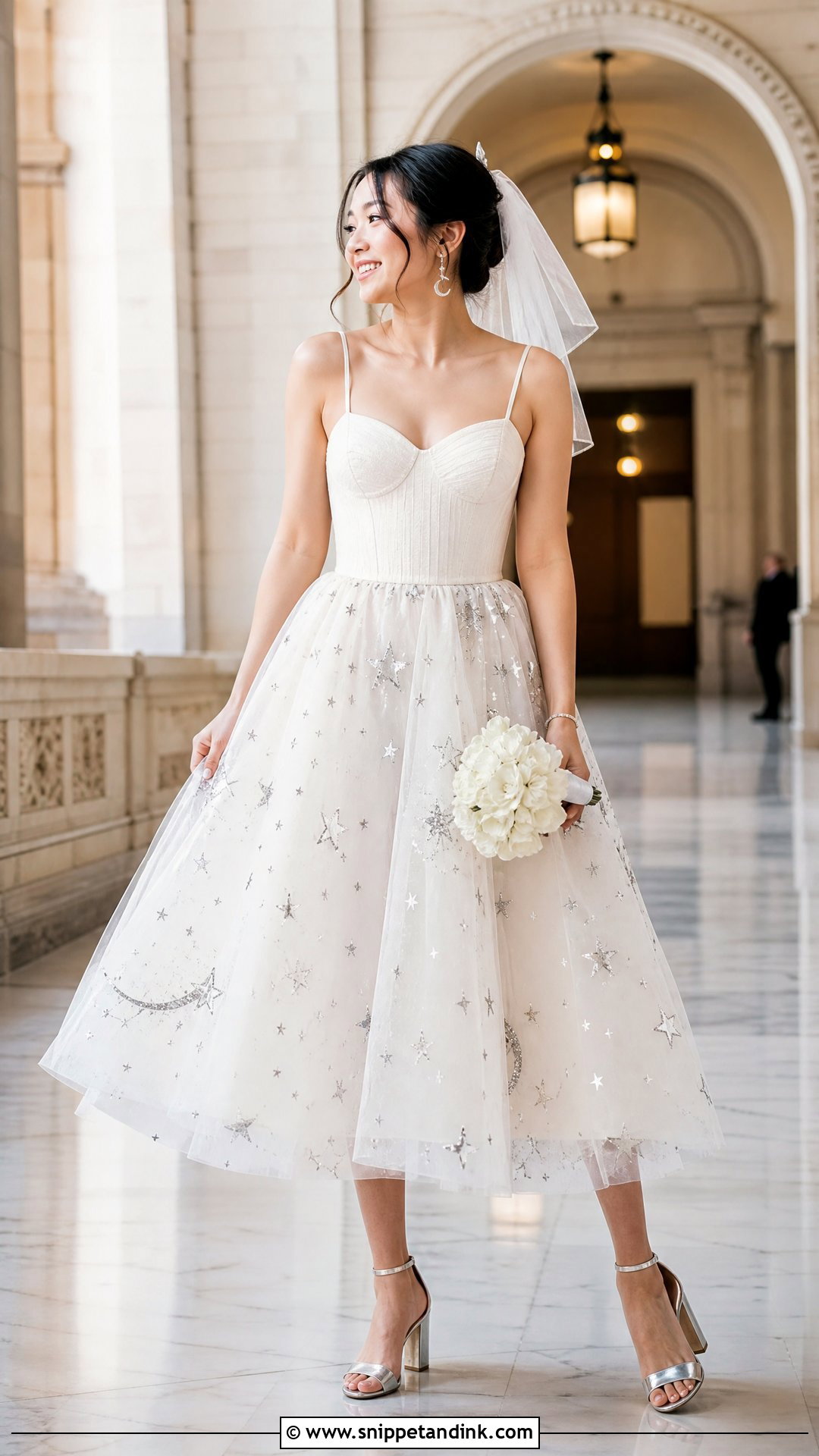
Tea length shows off your shoes, so treat them as part of the theme. A fitted bodice with a full tulle skirt ending between knee and ankle can carry star embroidery or fine sequins without feeling crowded. Metallic block heels, pointed flats or crystal ankle straps all work. I’d add a petticoat only if the skirt looks limp, and keep it to one layer so you can still move freely. Small moon earrings, a short veil and a neat updo or curled bob keep the proportions right. It’s cheerful at a courthouse or a daytime reception.
19. Celestial Wedding Jumpsuit With Detachable Skirt
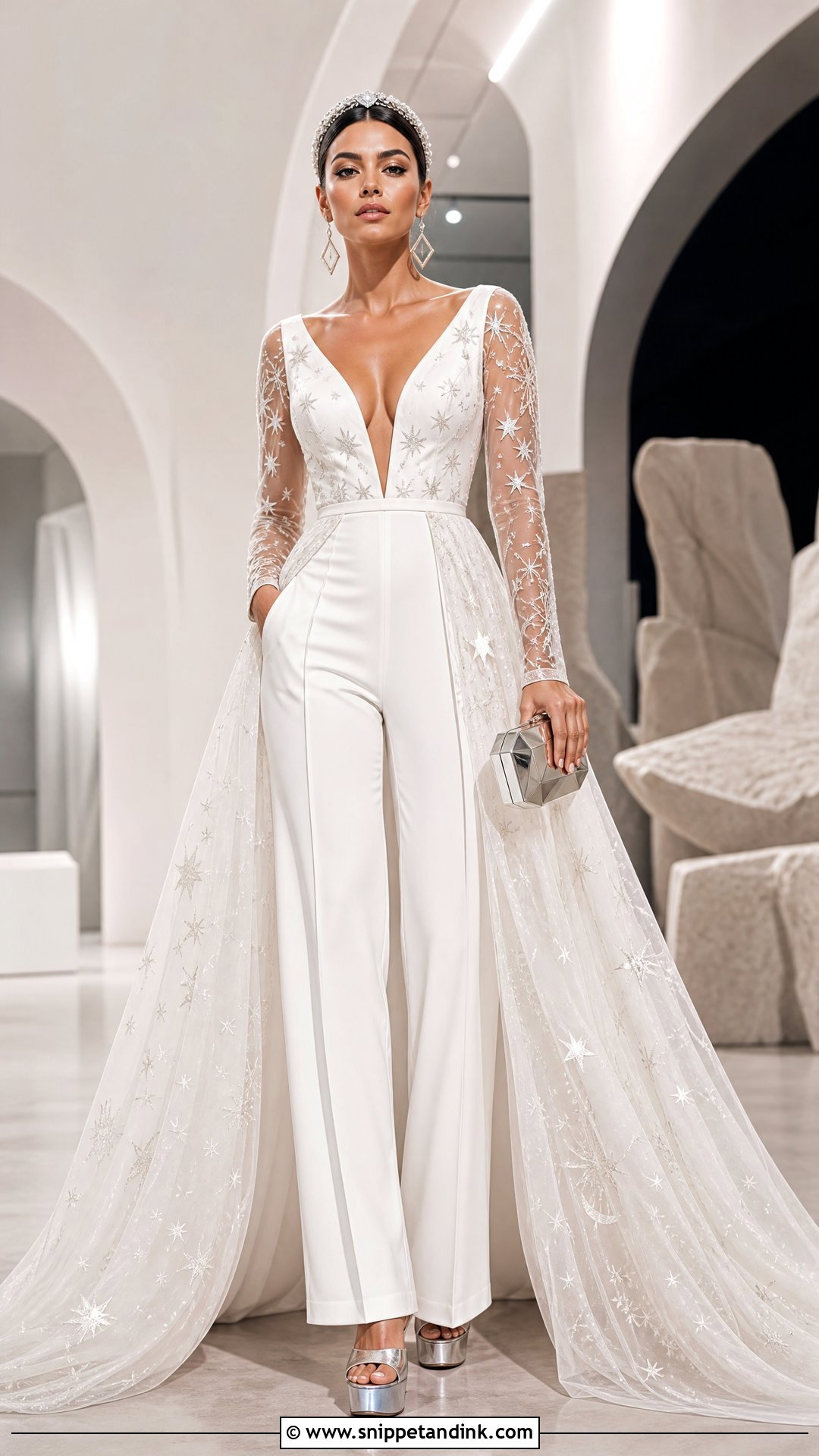
A white jumpsuit with a detachable celestial overskirt gives you two looks without a full change. Tailoring matters most in the crotch and seat; if the rise is even slightly short, you’ll feel it every time you sit, so I have clients squat at the fitting. The tulle overskirt with silver stars or constellations is for the ceremony and comes off for dancing. Silver platforms, a structured clutch and geometric star earrings work with both versions. A short tulle veil or crystal headband fits the modern shape better than a long veil.
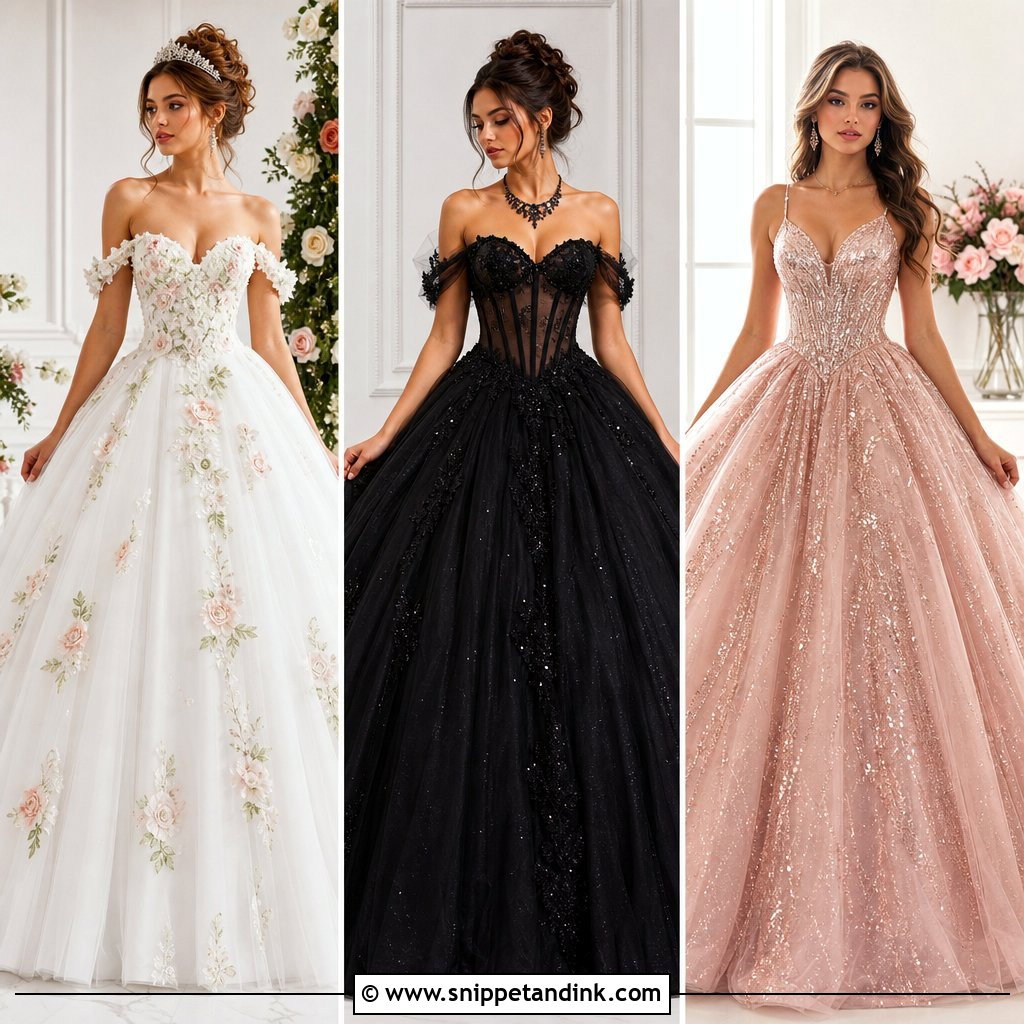



20. Custom Nebula Wedding Dress
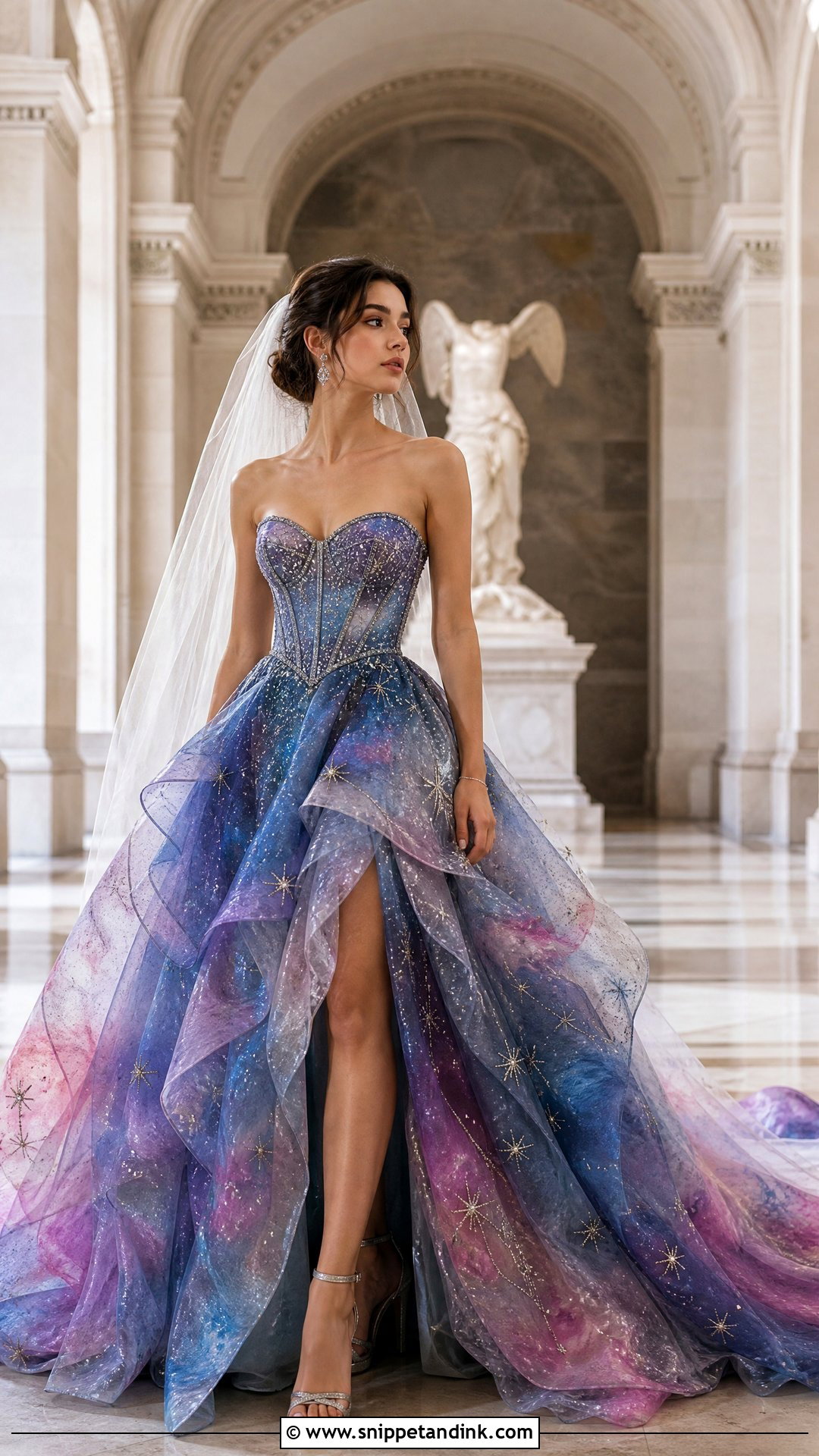
A custom nebula wedding dress lets you decide every colour and detail, which is exciting and a bit risky. Start with a silhouette you already know you feel secure in. Hand-painted or layered fabric in blue, violet, pink and silver suggests cosmic cloud, and a few crystals or embroidered stars add depth. Hand-painted silk can’t be dry-cleaned casually or easily re-dyed if something goes wrong, so I make sure brides approve a painted sample swatch before the full skirt is done. Leave plenty of time for fittings and check the colours under your venue lighting.
Alterations on a Beaded Celestial Gown Take Longer Than You Think
Embellished gowns are slower to alter. When a seamstress shortens a hem covered in stars and crystals, she has to unpick the beading, cut the fabric and sew each piece back by hand. The same goes for taking in a side seam that runs through embroidery. That’s why I tell brides wearing these gowns to book their first fitting earlier than they would for a plain dress, often around three months before the wedding, and to expect more than one session.
Bustles and Trains
A beaded train is heavy, and a bustle needs stronger anchor points to hold it through a night of dancing. Ask for the bustle to be tested with you walking and turning, not just standing. Have whoever will hook it up on the day practise once at the final fitting.
Coloured and Dark Fabrics on the Day
Navy, black and dyed tulle show marks differently from white. Light deodorant and powder transfer stand out on dark fabric, so I keep a clean dry cloth and a lint roller in my kit. Steam coloured tulle from a distance on a low setting, and never press sequins with a hot iron, since they can melt or curl.
Afterwards, a specialist cleaner who handles beaded and dyed gowns is worth the extra trip. Store the dress in a breathable bag, folded with acid-free tissue, rather than hanging, because heavy beadwork stretches the shoulders over time.
Starry Gowns Look Best When the Theme Comes Second
The celestial gowns that work best start with a shape you love wearing and then add the theme through colour, texture or one strong accessory. Across these twenty you’ve got everything from a few embroidered stars to full galaxy skirts, black tulle and iridescent organza. Before you commit, try the dress with the veil or cape, the shoes and the jewellery all at once, and walk around in it. I’d also take one photo of yourself in it under artificial light, because that’s how most people will see you that night.
You'll Like These Ideas:








Leave a Reply