
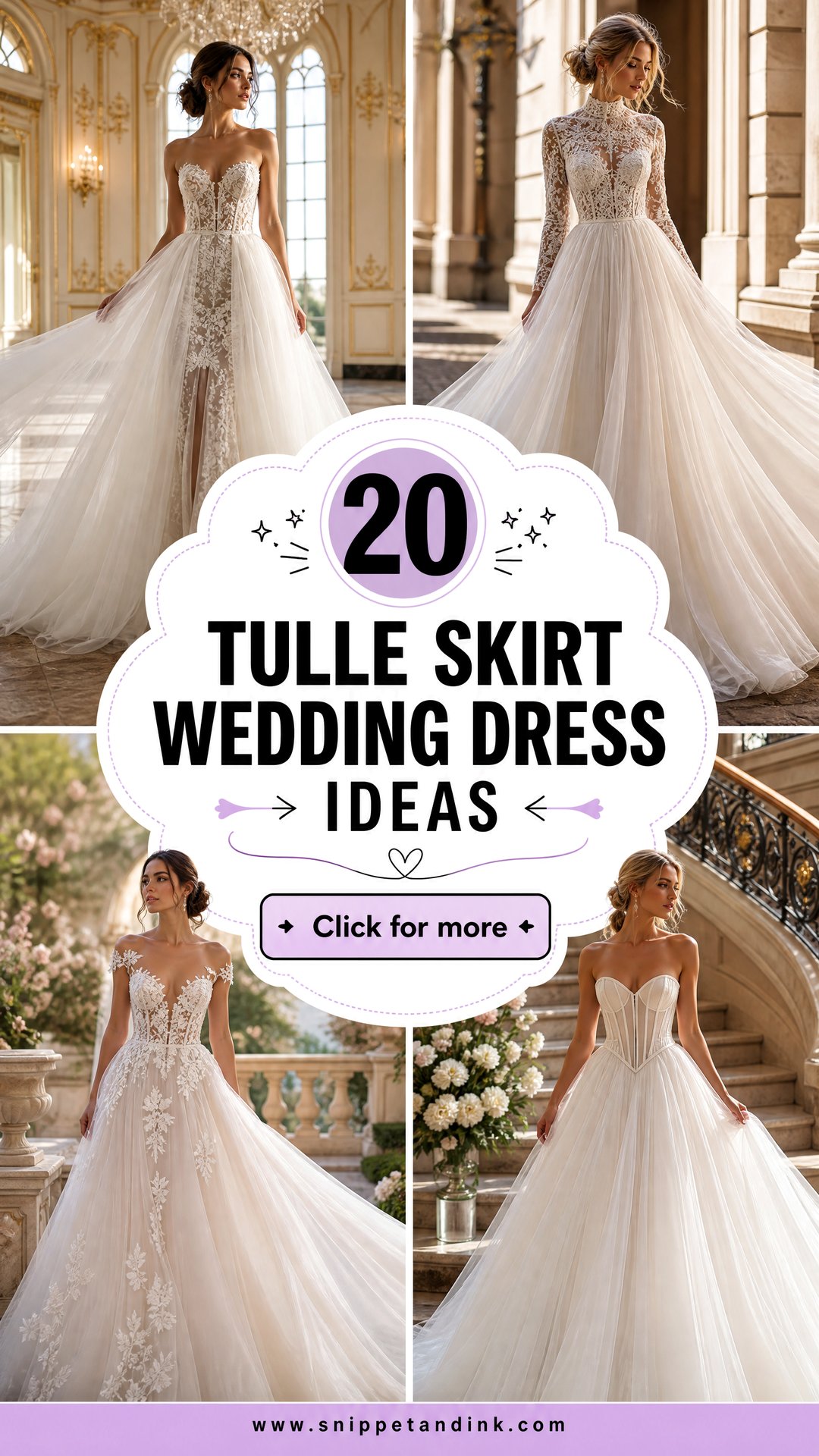
A full tulle skirt is still the shape most brides picture when they close their eyes, and it has never had more variety than now: corset bodices, drop waists, dimensional appliqués and overskirts that come off for the party. The question I ask first isn’t which neckline you love. It’s how much skirt your day can carry, because the same volume that fills a ballroom aisle can feel like a tent in a small registry room. Below are twenty gowns, each with the accessories I’d put with it and the fitting check that matters most for that particular cut.
How Much Skirt Your Wedding Day Can Carry
Brides tend to choose volume in the shop, under good lights with plenty of floor space. I’d rather you choose it with your actual day in mind, because a big tulle skirt affects far more than photos.
Walk through the day in your head
- The car. A full ball gown needs a back seat to itself, and getting in means someone gathering the skirt around you.
- The aisle. Measure it if you can. A very wide skirt brushes the chairs on both sides and flattens the ends of the rows.
- Stairs and doorways. Spiral staircases and old church doors are where big skirts get stuck.
- The bathroom. With several layers, you’ll need a helper, and a small cubicle is a real challenge.
- The meal. At a sweetheart table, a full skirt sits fine. At a long banquet bench, it ends up under your neighbor’s chair.
None of this means you can’t have the dramatic gown. It means you might choose a slightly smaller petticoat, a removable hoop or an overskirt, so you get the entrance you want and a lighter dress for the hours after.
1. Strapless Tulle Skirt Wedding Dress
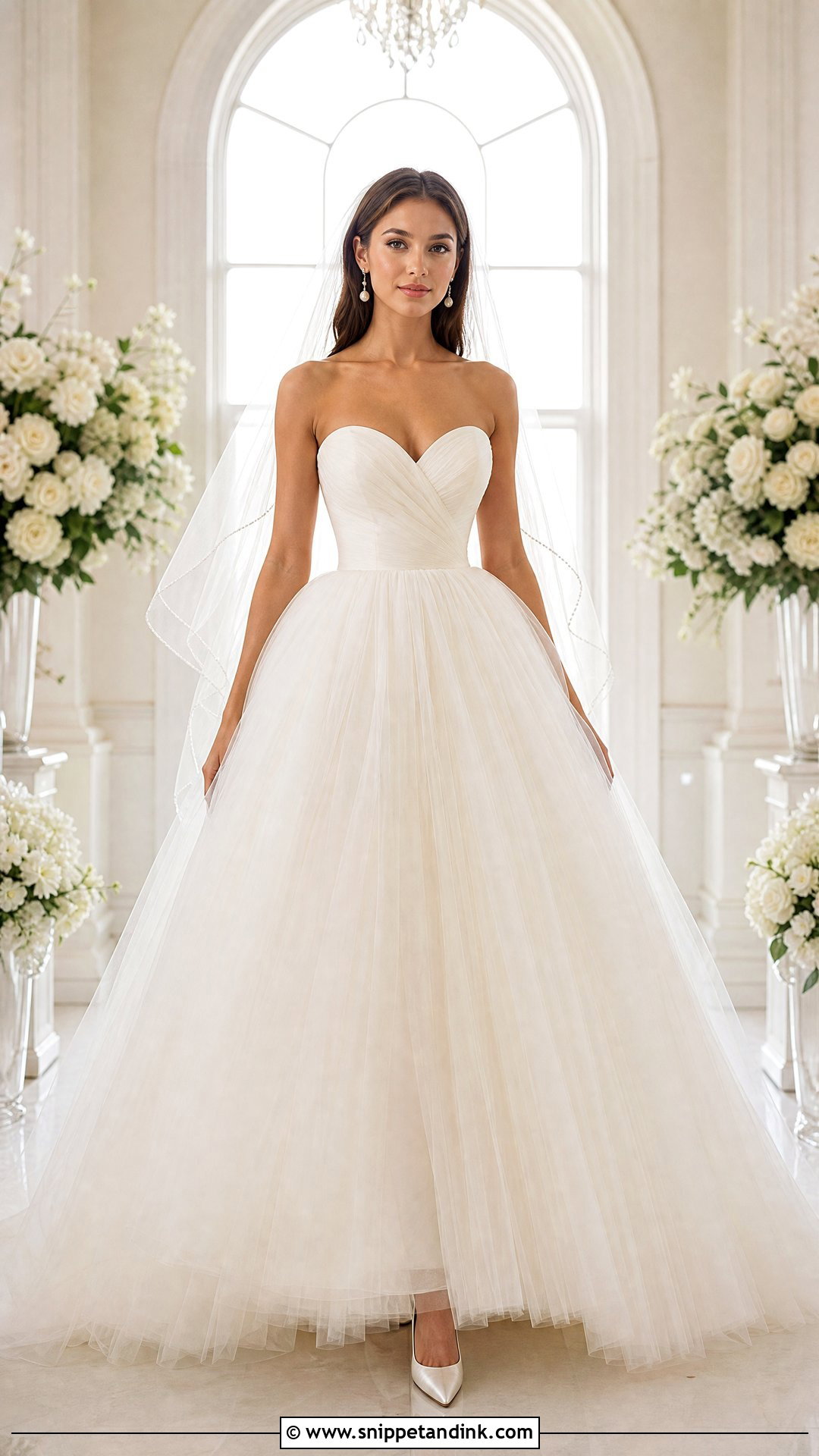
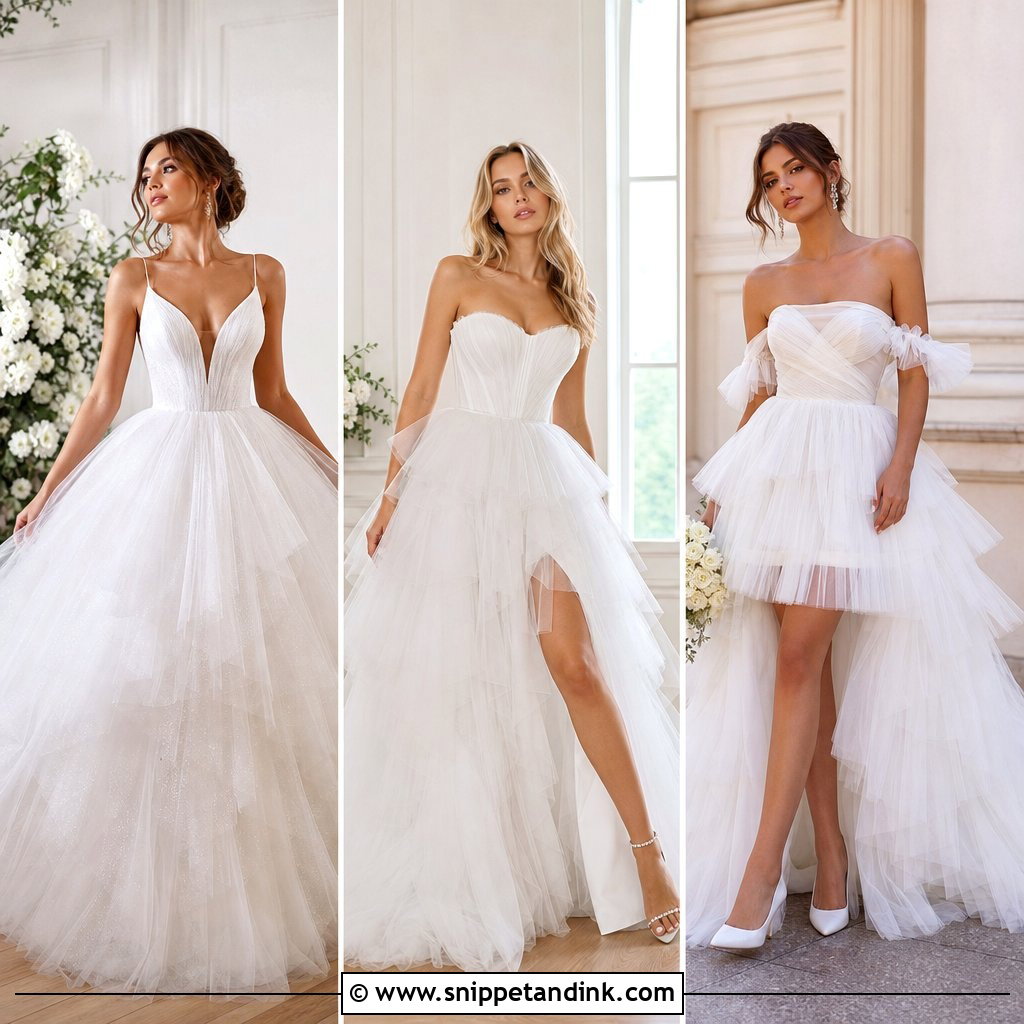
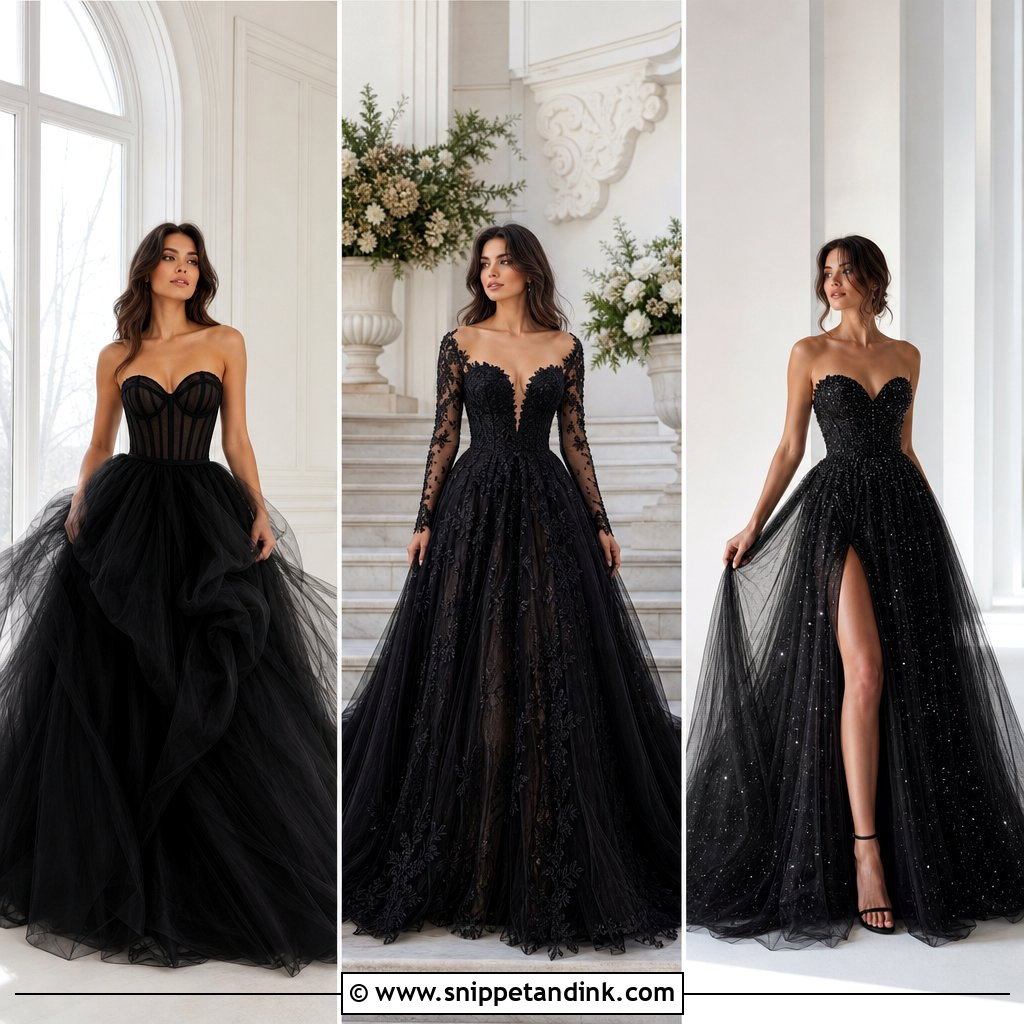
Strapless with a full tulle skirt is the classic ball gown, and it needs very little styling: pointed satin pumps, pearl drops, a fingertip veil with a narrow ribbon edge, a small bouquet and a sleek low bun. The fit is everything. Light boning is fine for a smaller bust. Brides with fuller busts usually need an internal corset or a gentle sweetheart line to stop the bodice creeping down under the skirt’s weight. In alterations, sit, walk and lift both arms above your head. If you find yourself tugging the top edge up, it isn’t finished yet.
2. Long Sleeve Lace Tulle Skirt Wedding Dress
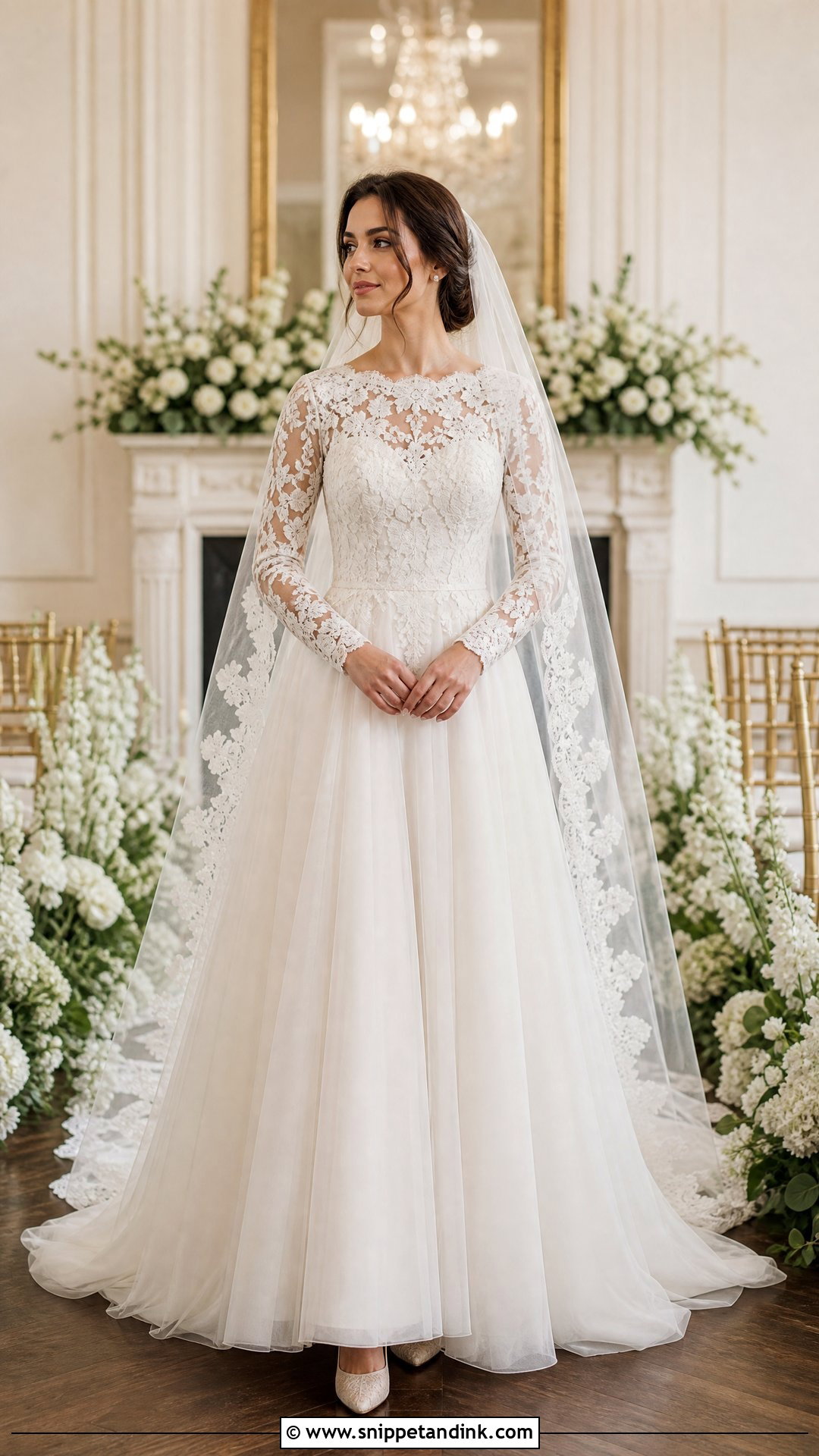
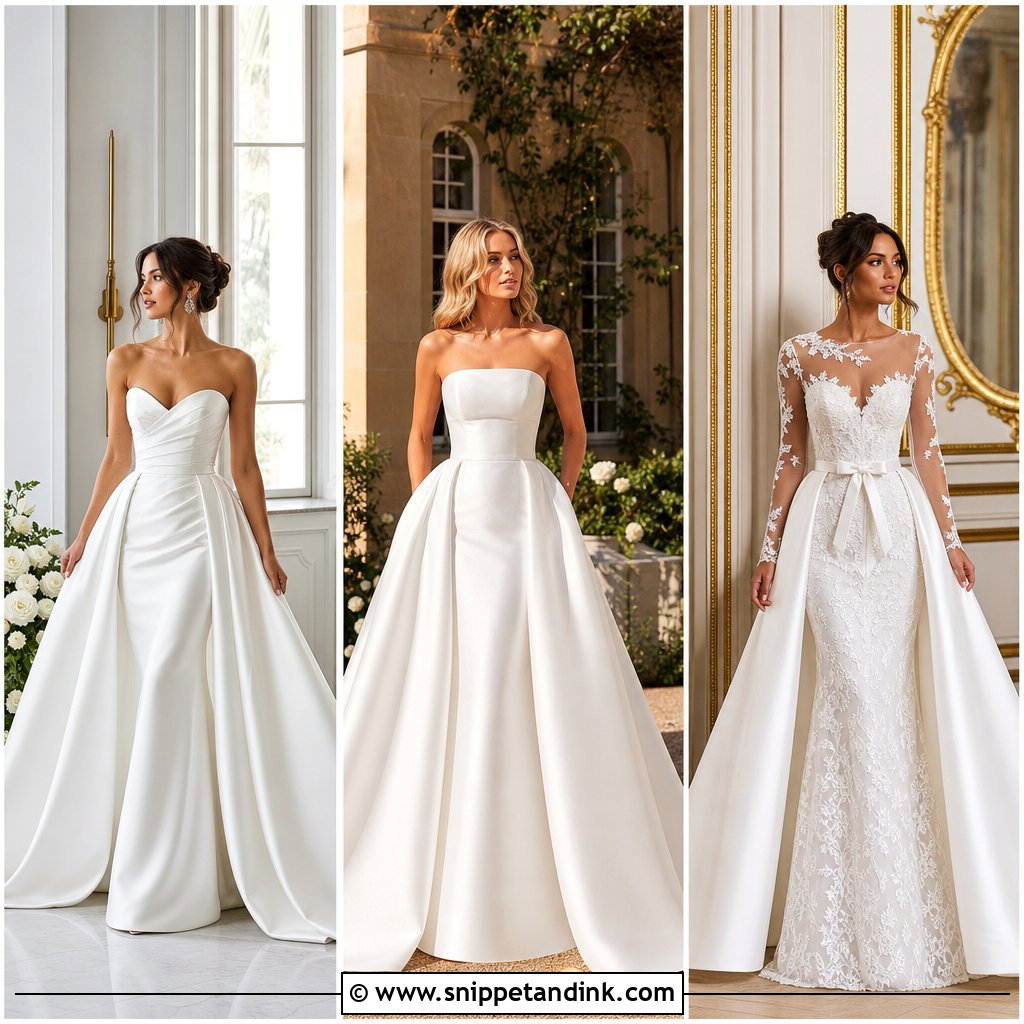
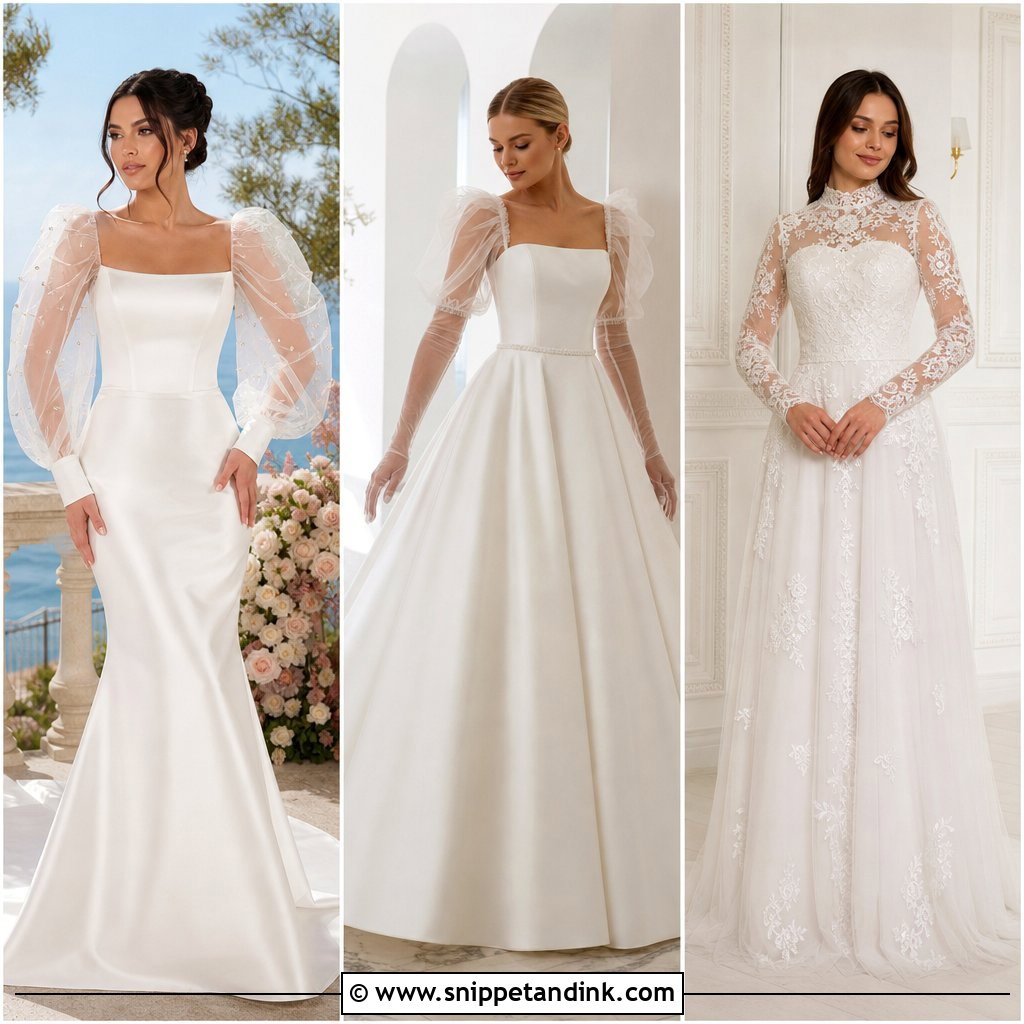
Lace sleeves over a lined bodice give coverage with a lot of detail, and the best versions let the appliqués drift a little way below the waist into the tulle. Armholes are where these gowns fail. Lace has almost no stretch, so if it pulls across the shoulder blades or the elbows when you reach forward, ask for the armhole to be lowered slightly. Closed-toe ivory heels, small studs and a lace-trimmed cathedral veil suit it. A soft updo keeps hair off the lace, where loose strands tend to snag. In cold weather, I’d bring an ivory coat for outdoor portraits and take it off for the indoor ones so the sleeves still show.
3. Drop Waist Corset Tulle Skirt Wedding Dress
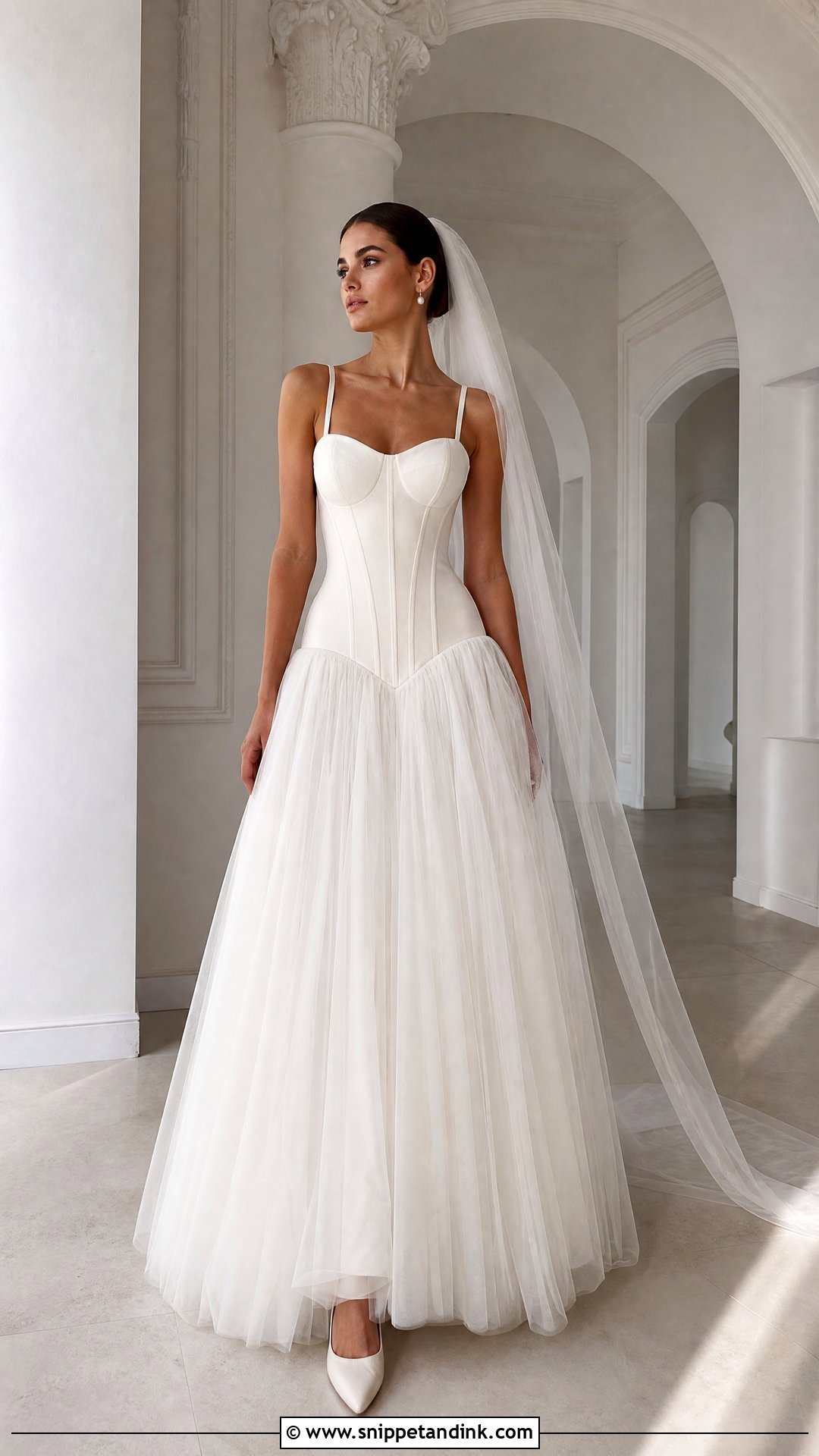
A drop-waist corset runs the bodice past the natural waist before the skirt opens, which gives a long, sculpted torso and pushes the volume lower. It suits brides who want definition through the middle and fullness at the hips. Where the skirt begins is the whole design here, and a seamstress moving that seam even a little can change the balance completely, so stand side-on to the mirror at each fitting. Visible seaming, soft ruching or plain satin all work. Keep the accessories plain: pearl earrings, pointed heels and a long unembellished veil. You should be able to breathe deeply and sit without the corset biting.
4. Off Shoulder Tulle Skirt Wedding Dress
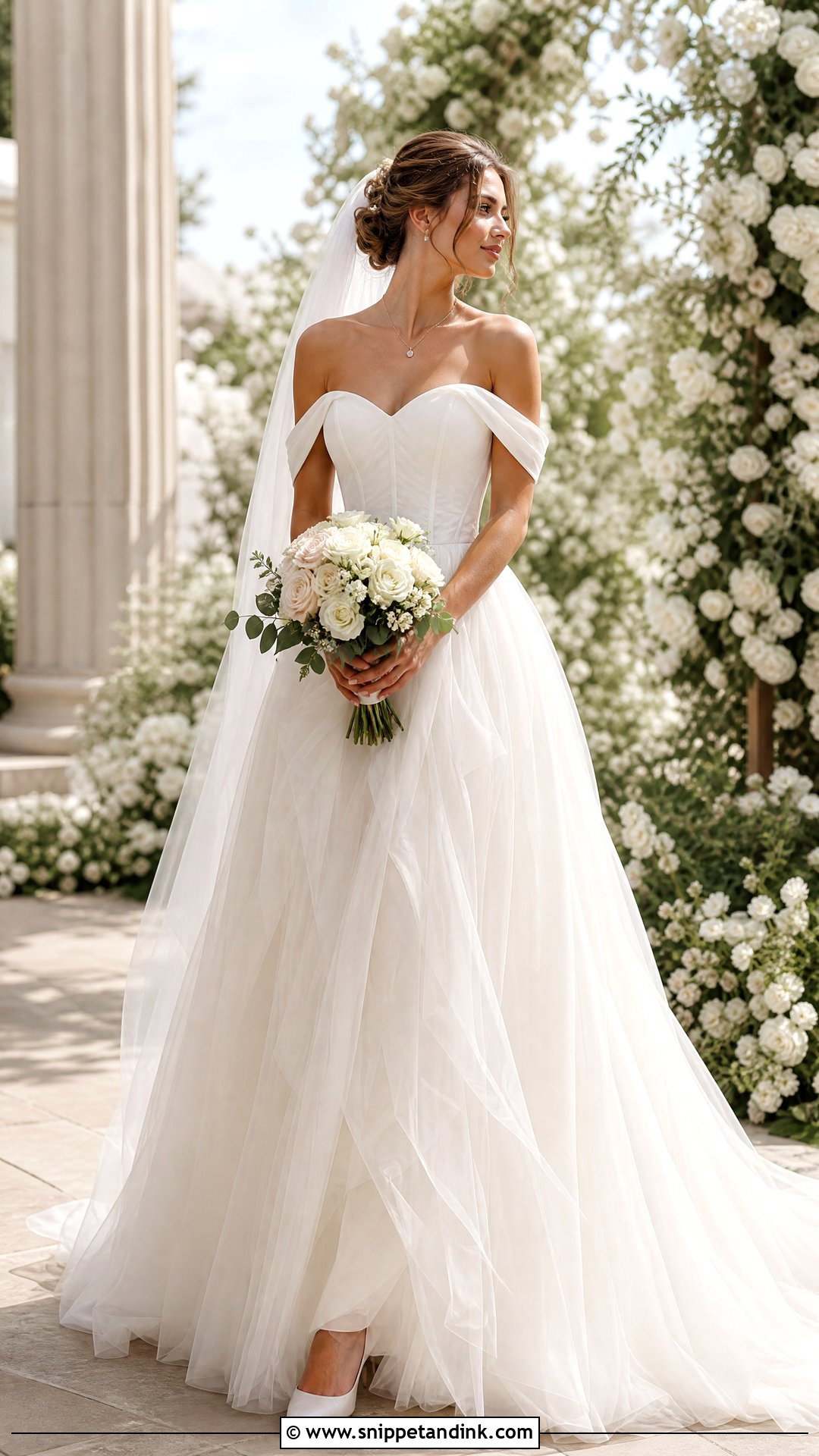
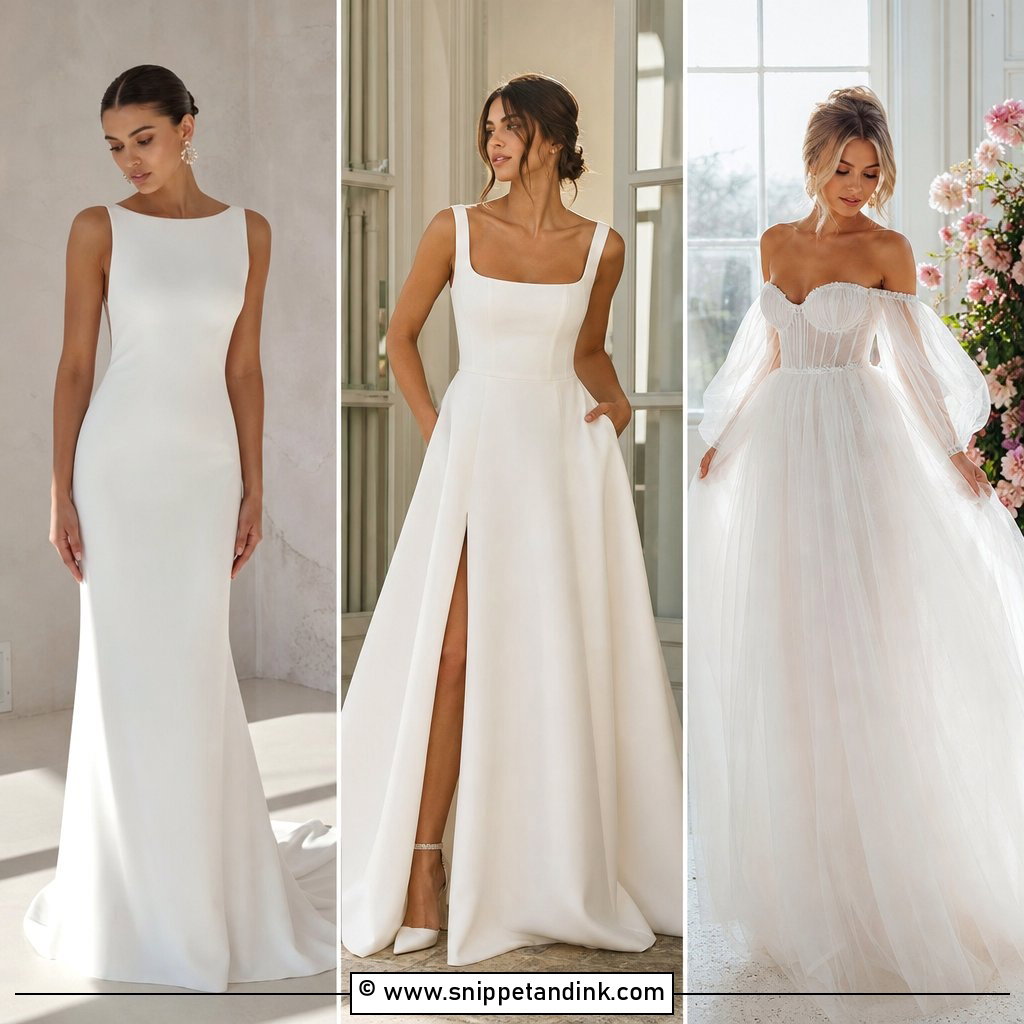
Off-shoulder sleeves soften a big skirt, and a structured bodice underneath does the actual holding up. Smooth tulle looks clean; scattered lace appliqués add texture. I’d choose either a collarbone-length necklace or small earrings, not both statement pieces, plus a low chignon, satin pumps and a sheer chapel veil. Test the sleeves by hugging someone and raising a glass. Some gowns come with detachable off-shoulder straps, which is the honest solution if you want the look for the ceremony but plan to dance hard later.
5. Square Neck Tulle Skirt Wedding Dress
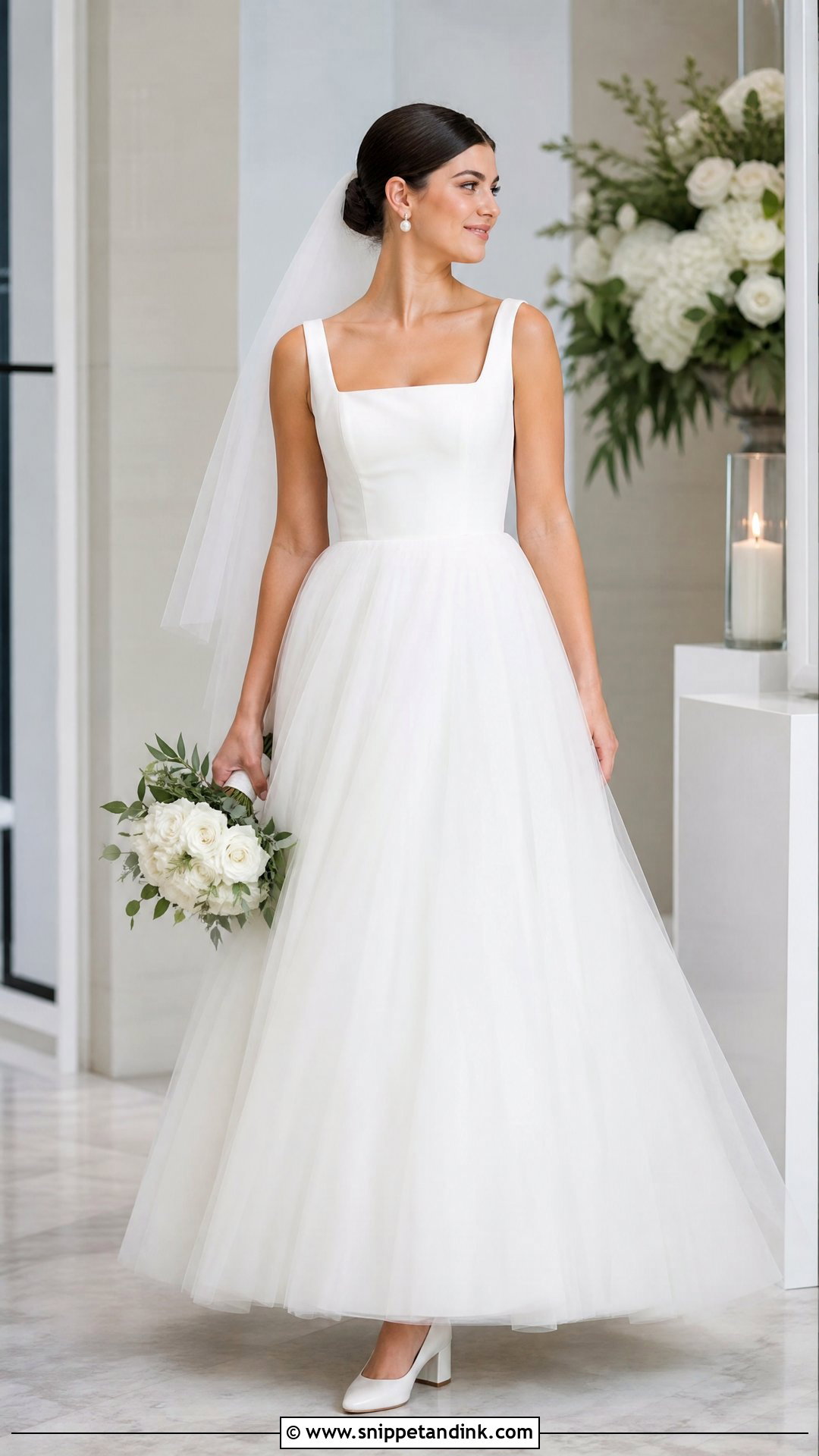
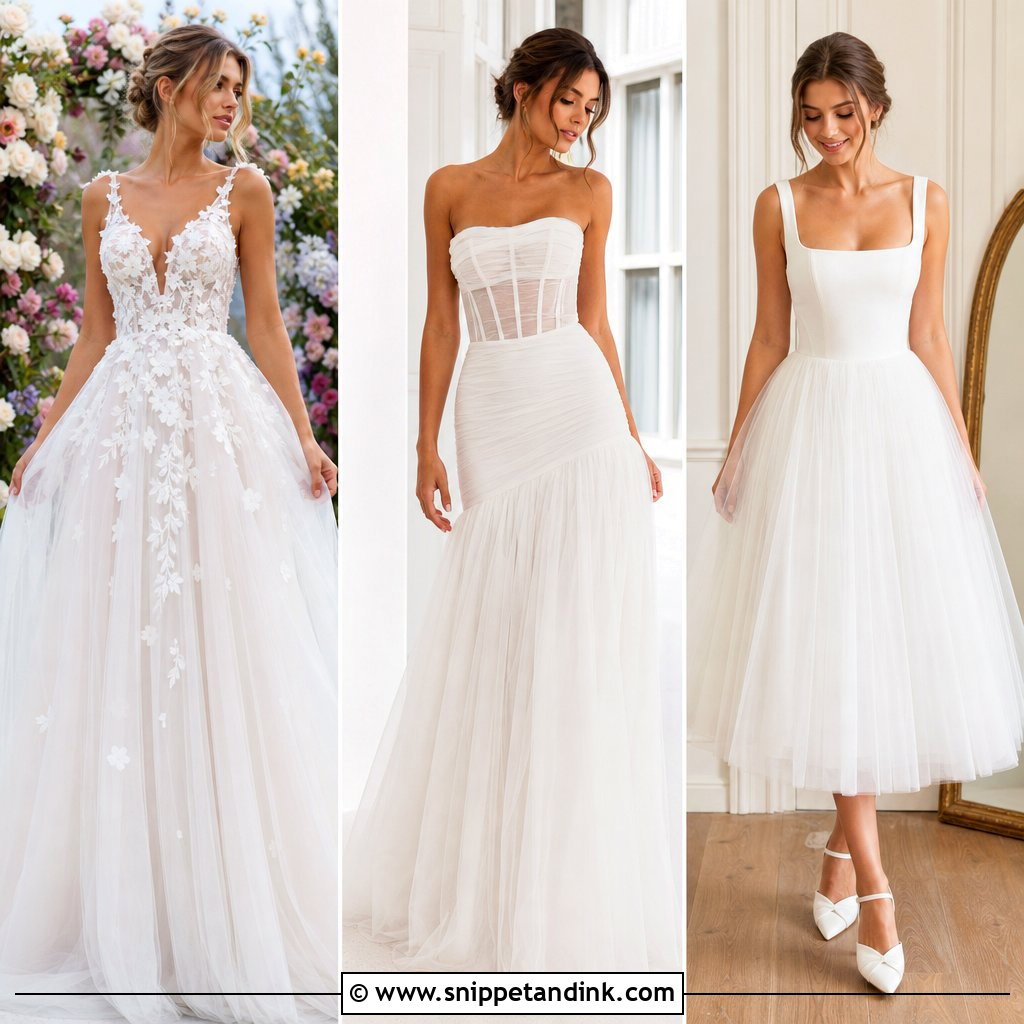
Square necks are underrated with tulle. The straight line gives a soft skirt some architecture, and wide straps mean real support without boning digging in. A plain bodice is modern; light embroidery along the neckline adds definition. I usually leave the neckline bare, with pearl buttons, block-heel pumps and a simple veil attached beneath a polished bun. Make sure the straps lie flat and don’t cut into the shoulders when you sit. Keep the skirt moderately full rather than huge, so the neckline isn’t overpowered. It’s equally good in a formal room and a garden.
6. V Neck A-Line Tulle Skirt Wedding Dress
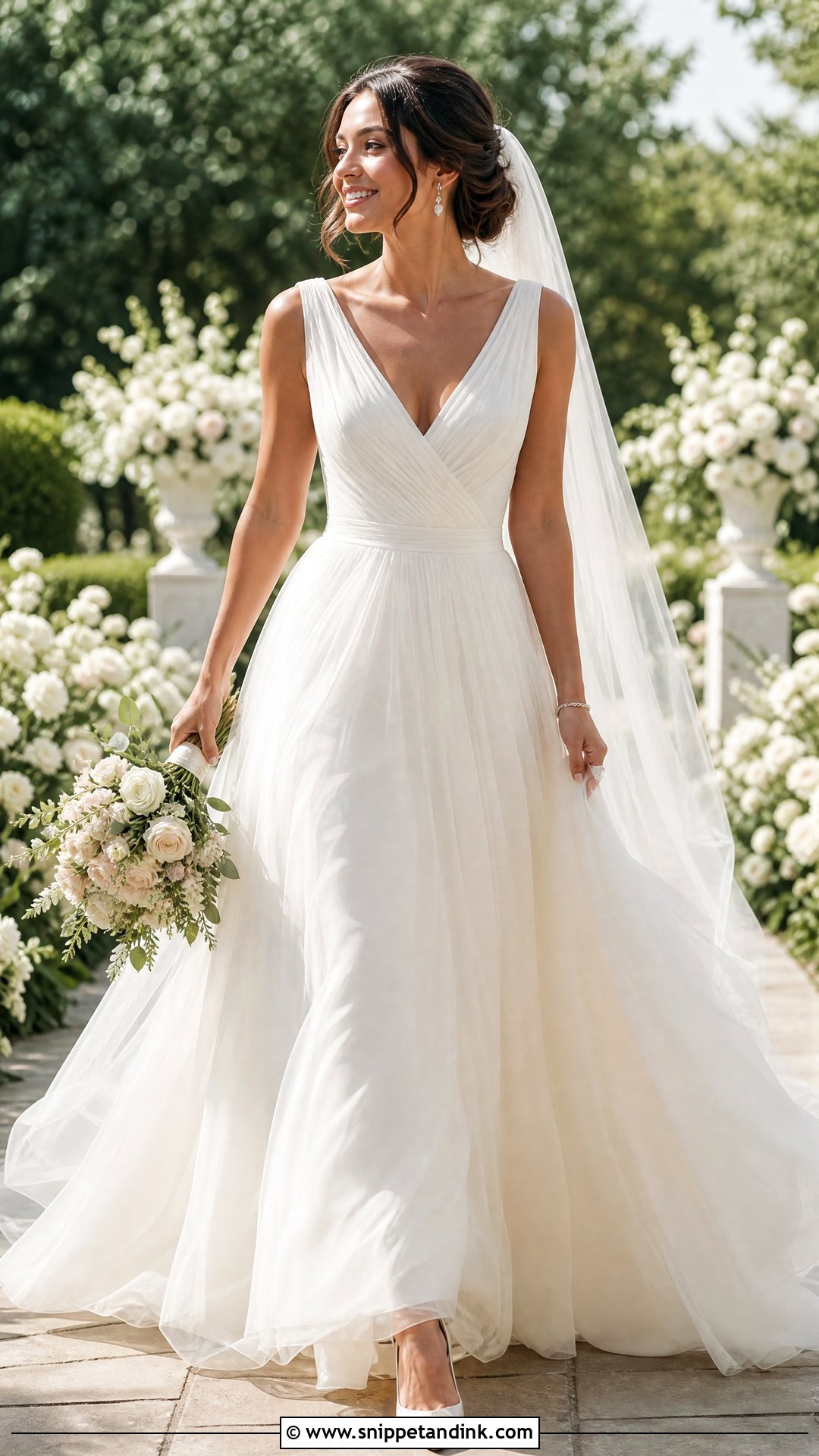
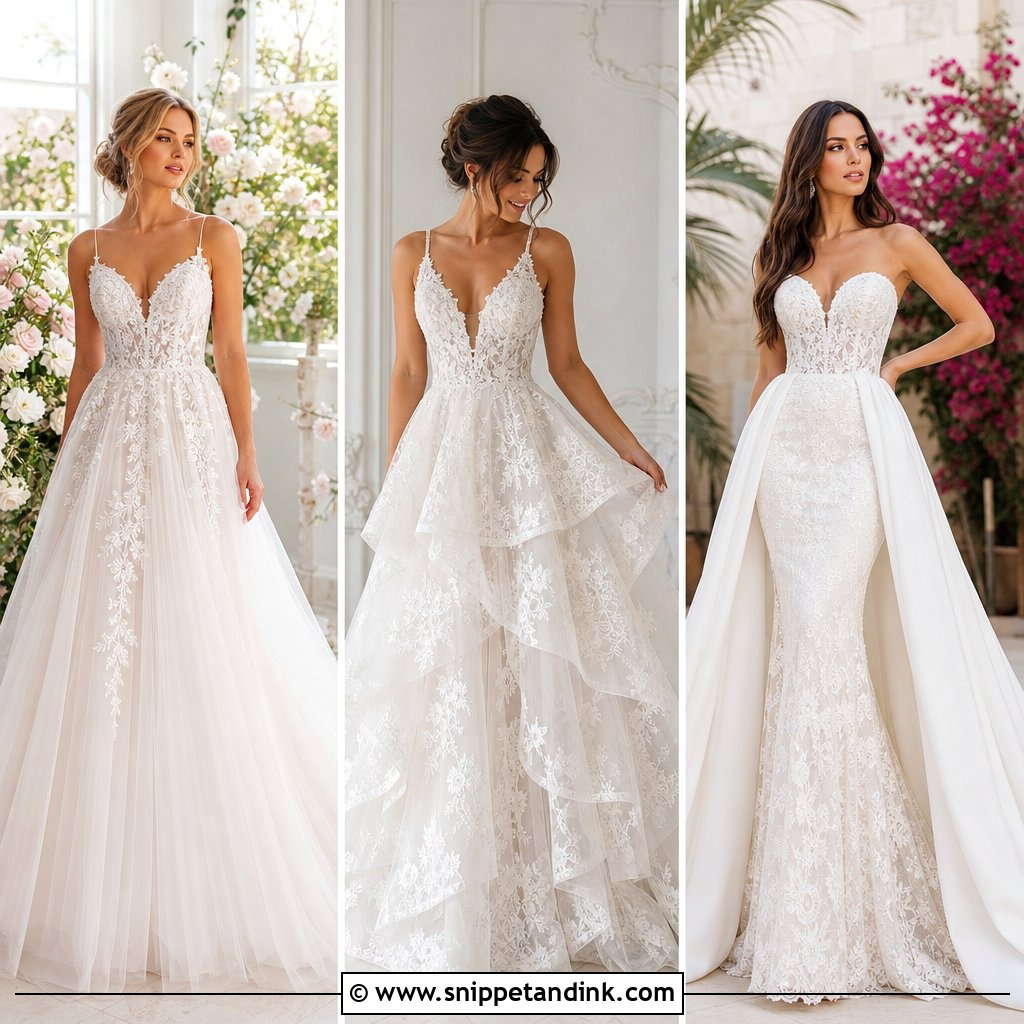
A V-neck with an A-line tulle skirt is lighter than a ball gown and far easier to walk in on lawns and courtyard stones. The skirt should widen gradually from the waist, not puff out suddenly. If a deep V worries you, wider straps, a mesh panel or a modest insert make it secure; a strip of fashion tape at the edges helps too. Slingback heels, a narrow bracelet, small drops and a flowing chapel veil suit the relaxed line, with soft waves or a loose bun. Even a light A-line needs a bustle for the reception. Ask for several soft layers over a smooth lining so the skirt isn’t see-through in sunlight.
7. Sweetheart Glitter Tulle Skirt Wedding Dress
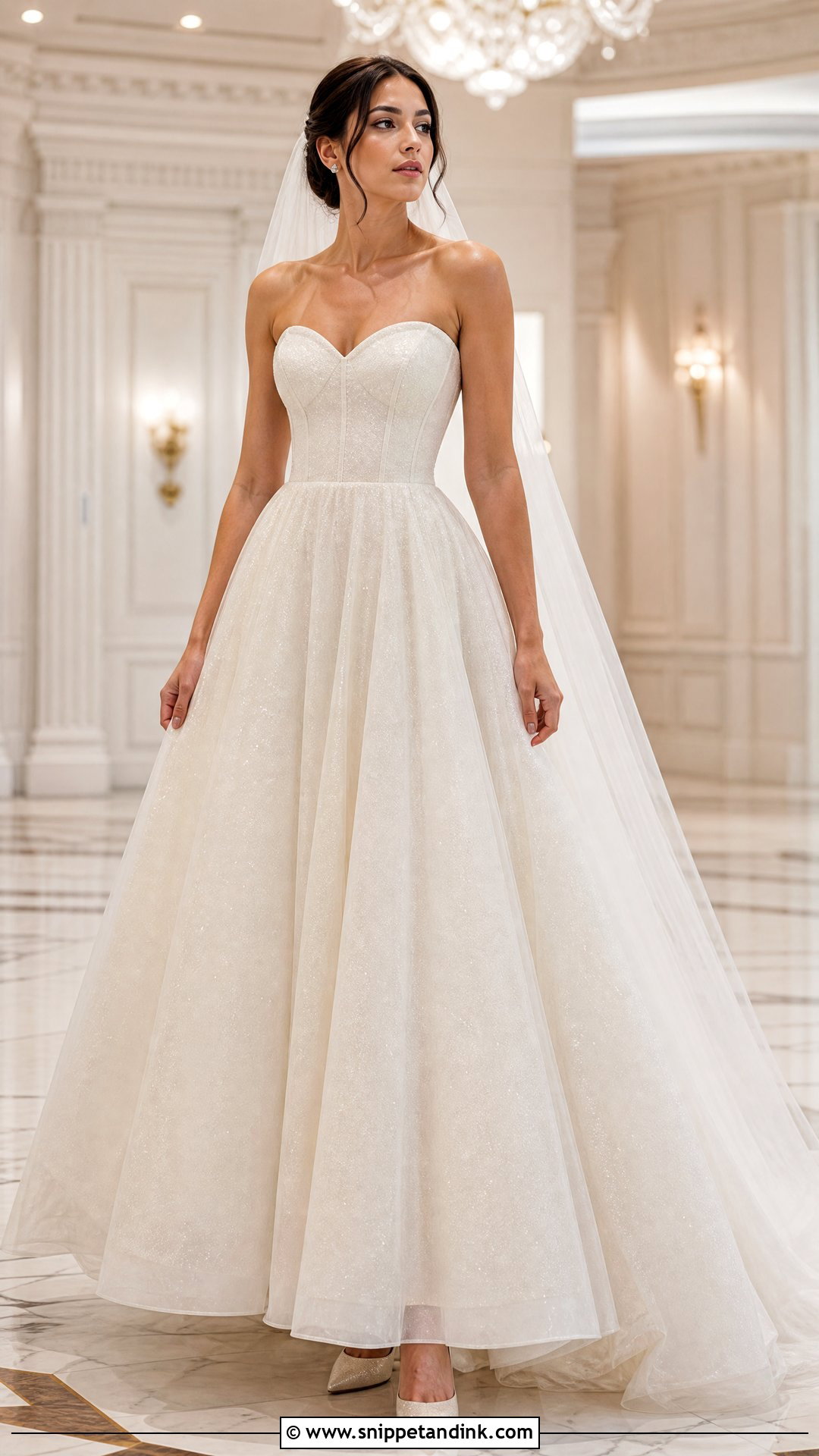
Glitter tulle under a plain top layer gives the softest kind of sparkle, a glow that appears as the skirt moves rather than a flat shimmer. On a sweetheart tulle skirt wedding dress, the structured bodice provides the contrast. Pick one source of shine: crystal studs, metallic ivory heels and a sheer veil, nothing heavily jeweled. View the fabric by a window as well as under shop lights, because some glitter nets look grey in daylight. Glitter layers can also be scratchy, so make sure there’s a soft lining between them and your legs.
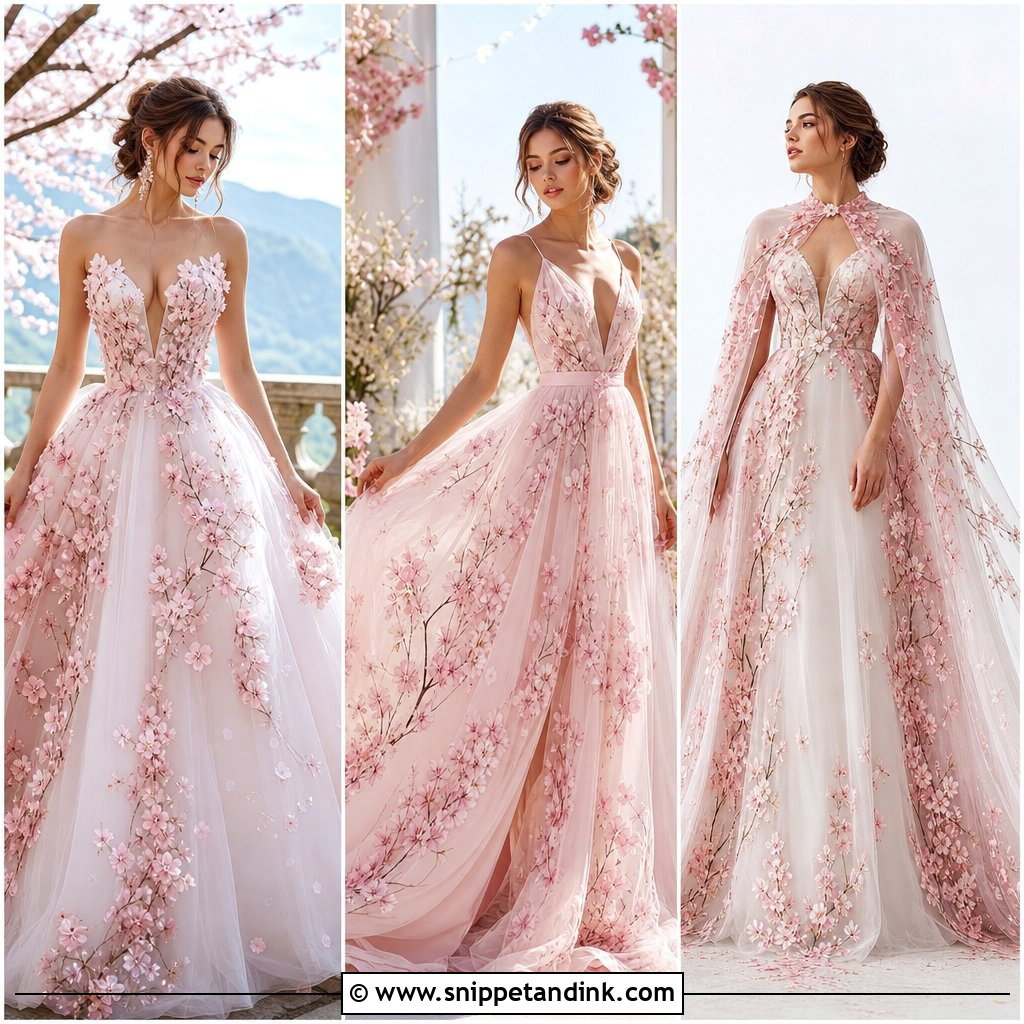
8. Floral Appliqué Tulle Skirt Wedding Dress
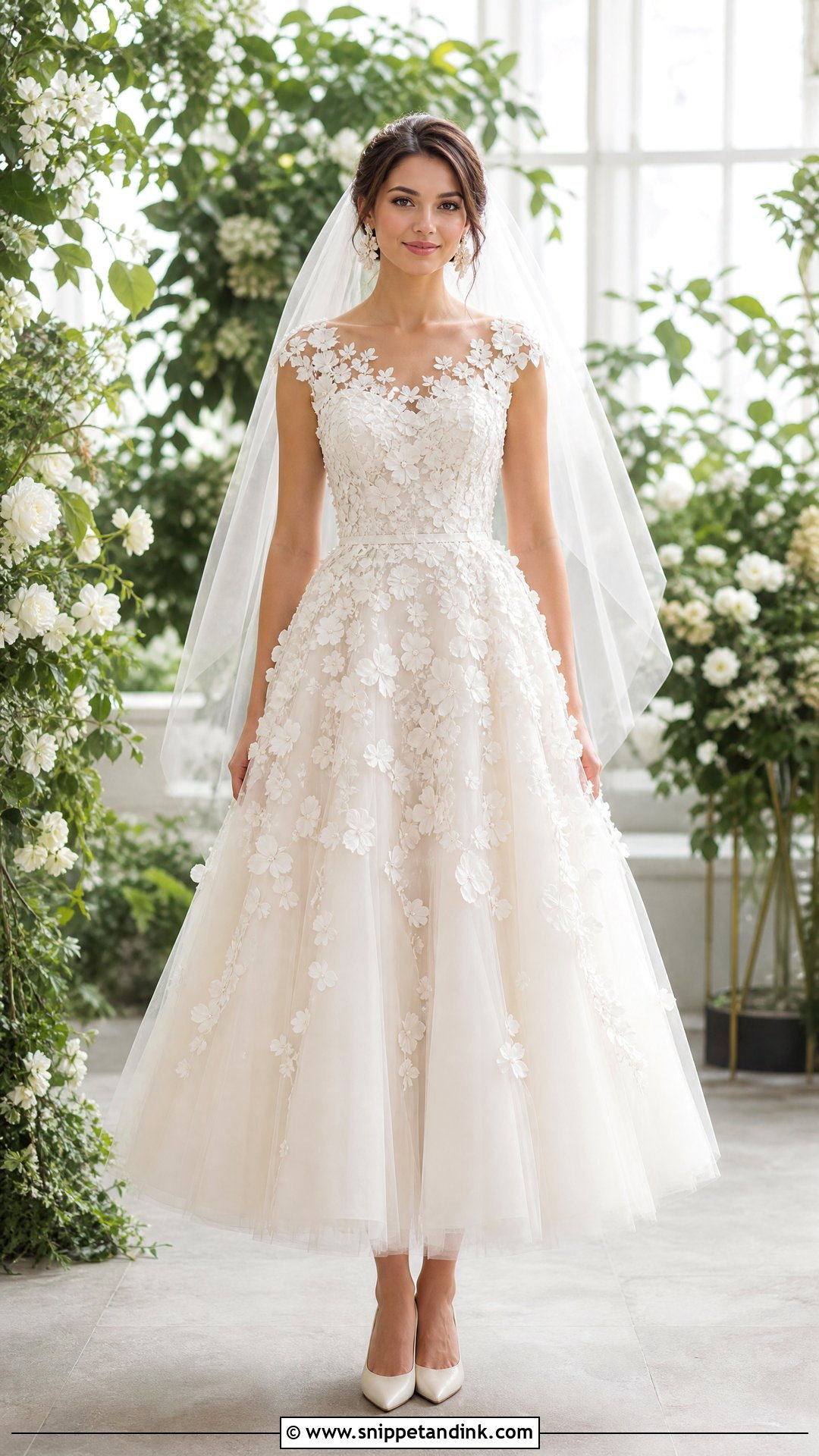
Raised floral appliqués make a simple tulle skirt richly textured, as long as the flowers are heaviest at the neckline and waist and thin out toward the hem. Load the hem and the dress looks bottom-heavy. Because the gown carries all the decoration, I’d keep the veil single-layer with no lace edge, with plain ivory pumps and modest earrings. A low textured bun keeps the flowers visible. Raised petals do catch on veils and on the tulle around them, so at a fitting, draw the veil across the bodice and see what grabs. Choose a bouquet that complements the appliqués instead of copying them.
9. Satin Bodice Tulle Skirt Wedding Dress
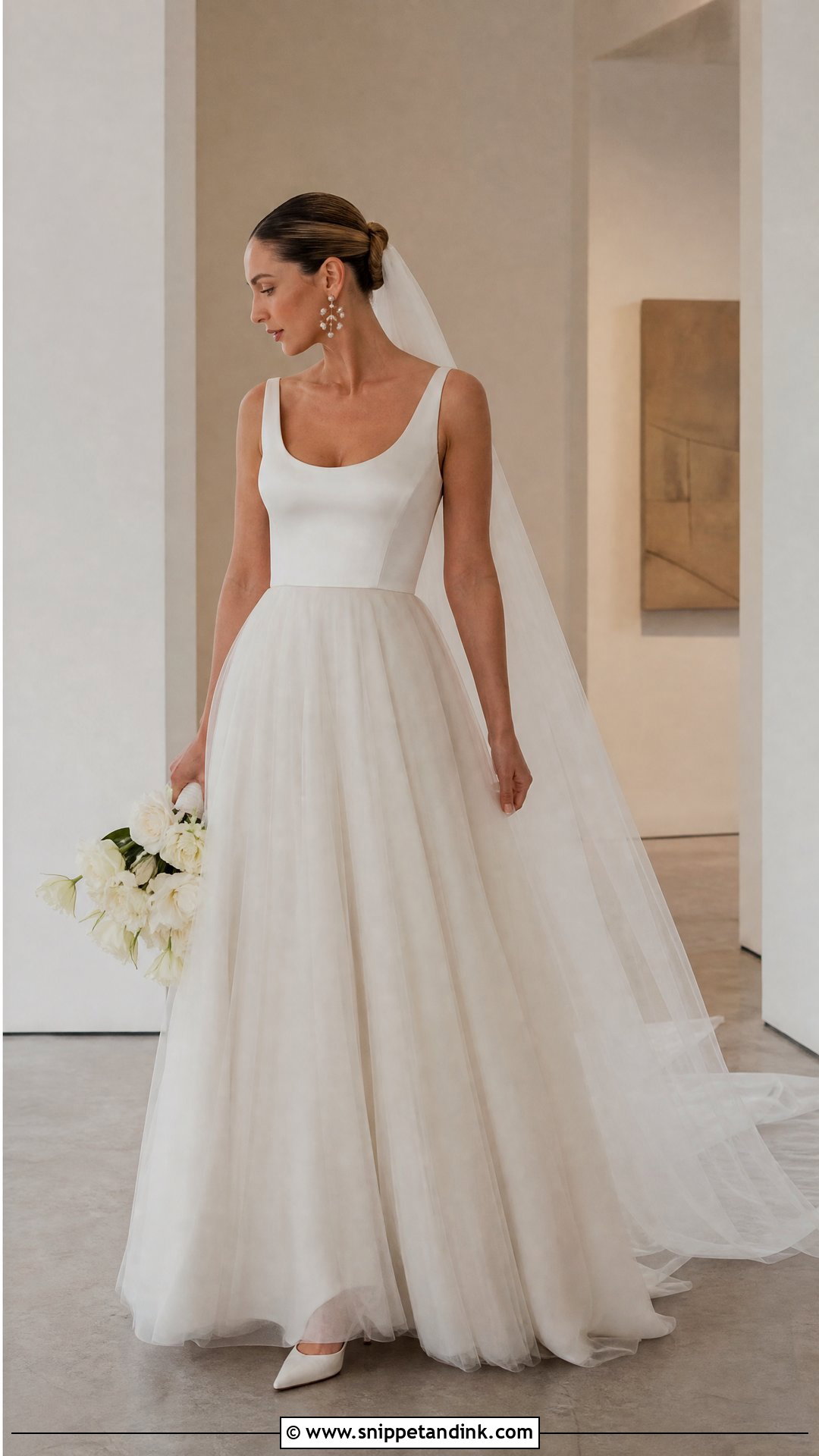
Satin over tulle has no lace or beading to hide behind, and that’s both its appeal and its risk. Smooth satin shows every seam, every pucker at the zip and any ripple at the waist, so inspect the construction closely before you buy and again after alterations. Strapless, scoop or wide-strap bodices all work depending on the support you need. Pointed pumps, sculptural pearl earrings, a sleek bun and a long raw-edge veil keep it modern, and an architectural bouquet suits it. A satin ribbon at the waist is optional. Satin also creases where you sit, so keep a steamer in the bridal suite.
10. Detachable Tulle Overskirt Wedding Dress
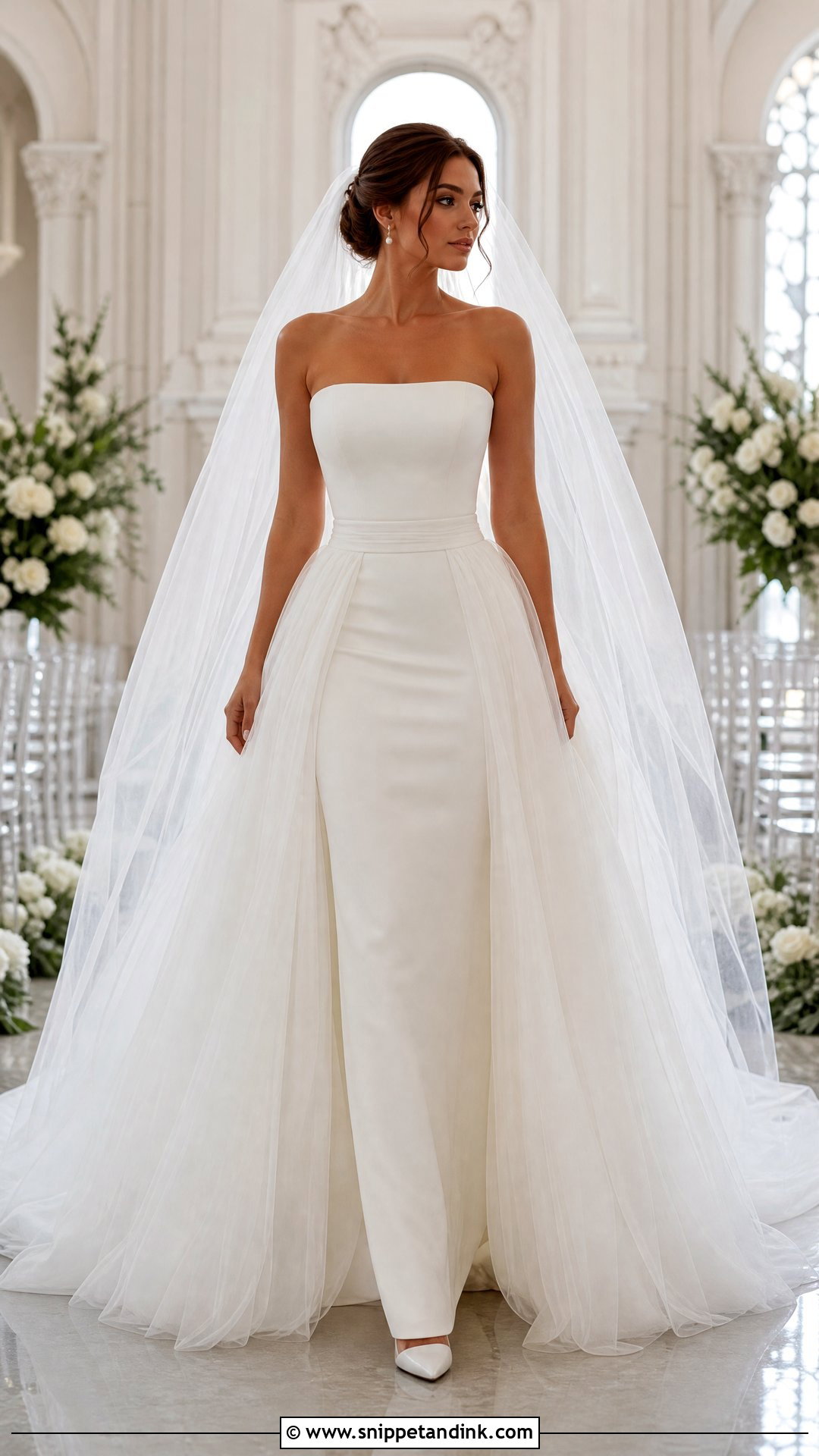
A detachable tulle overskirt gives you two looks: a full ceremony entrance, then a crepe, satin or lace column underneath for the party. For the ceremony, pair it with a cathedral veil, pearl earrings and closed-toe heels; afterwards, swap the veil for a jeweled comb or bow. The join should be hidden under a narrow belt or appliqué. Practice taking it off and putting it back on before the day, and choose one calm person to help. Have a large garment bag waiting so the skirt doesn’t end up crushed on a chair.
11. High Neck Tulle Skirt Wedding Dress
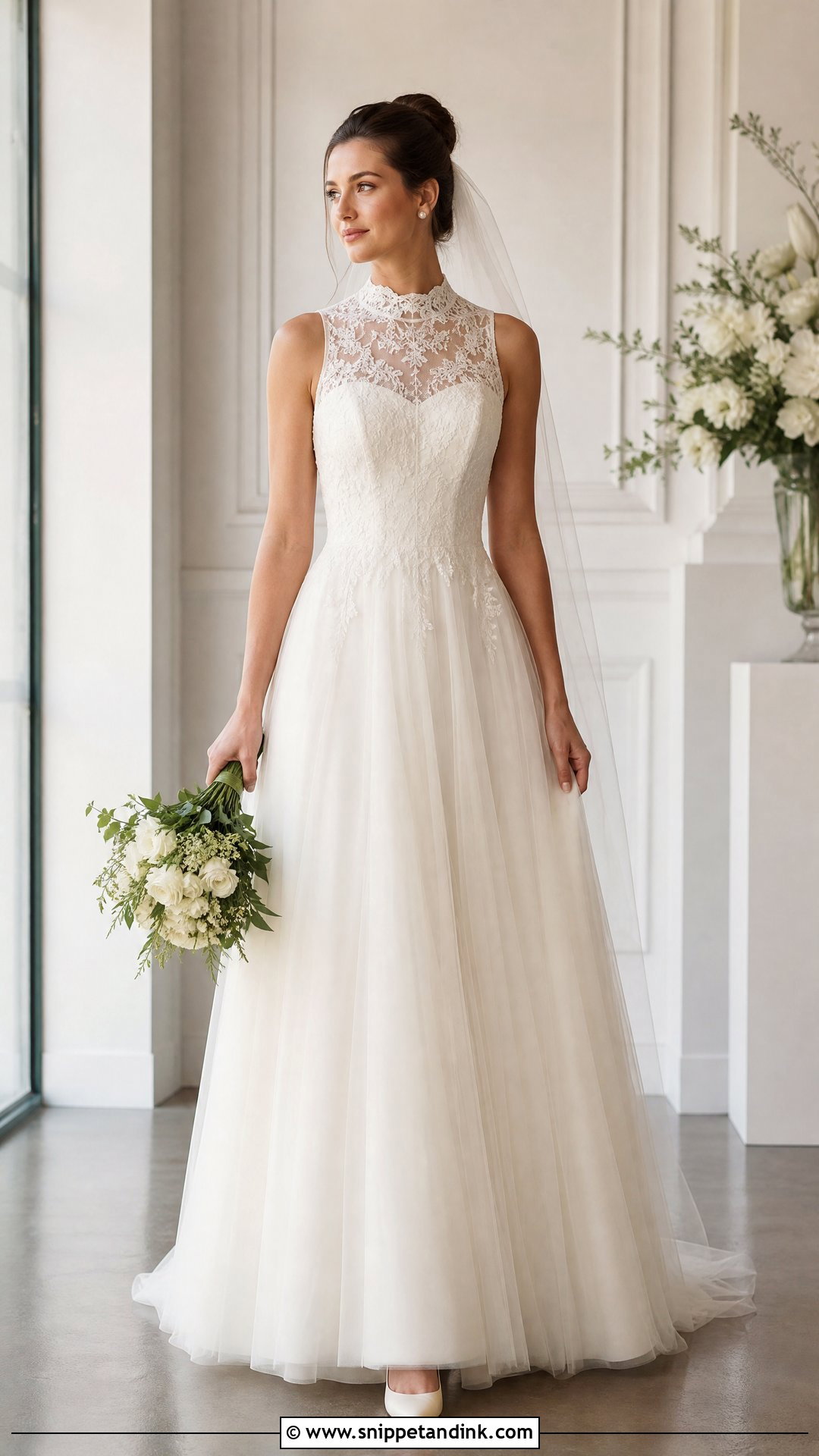
A high-neck bodice gives a tulle skirt a quiet, modest character. Sheer lace, embroidered mesh or smooth crepe all work, with long sleeves for full coverage or sleeveless for warmer weather. The collar is the part to test. Turn your head fully and sit down; a stiff collar that rubs the jaw is miserable after a few hours. If the bodice is sheer, ask for lining matched to your skin or to the gown. Skip the necklace and wear pearl studs, closed-toe pumps and a veil set beneath a neat bun. A narrow waist and moderate skirt keep the proportions even.
12. Cap Sleeve Tulle Skirt Wedding Dress
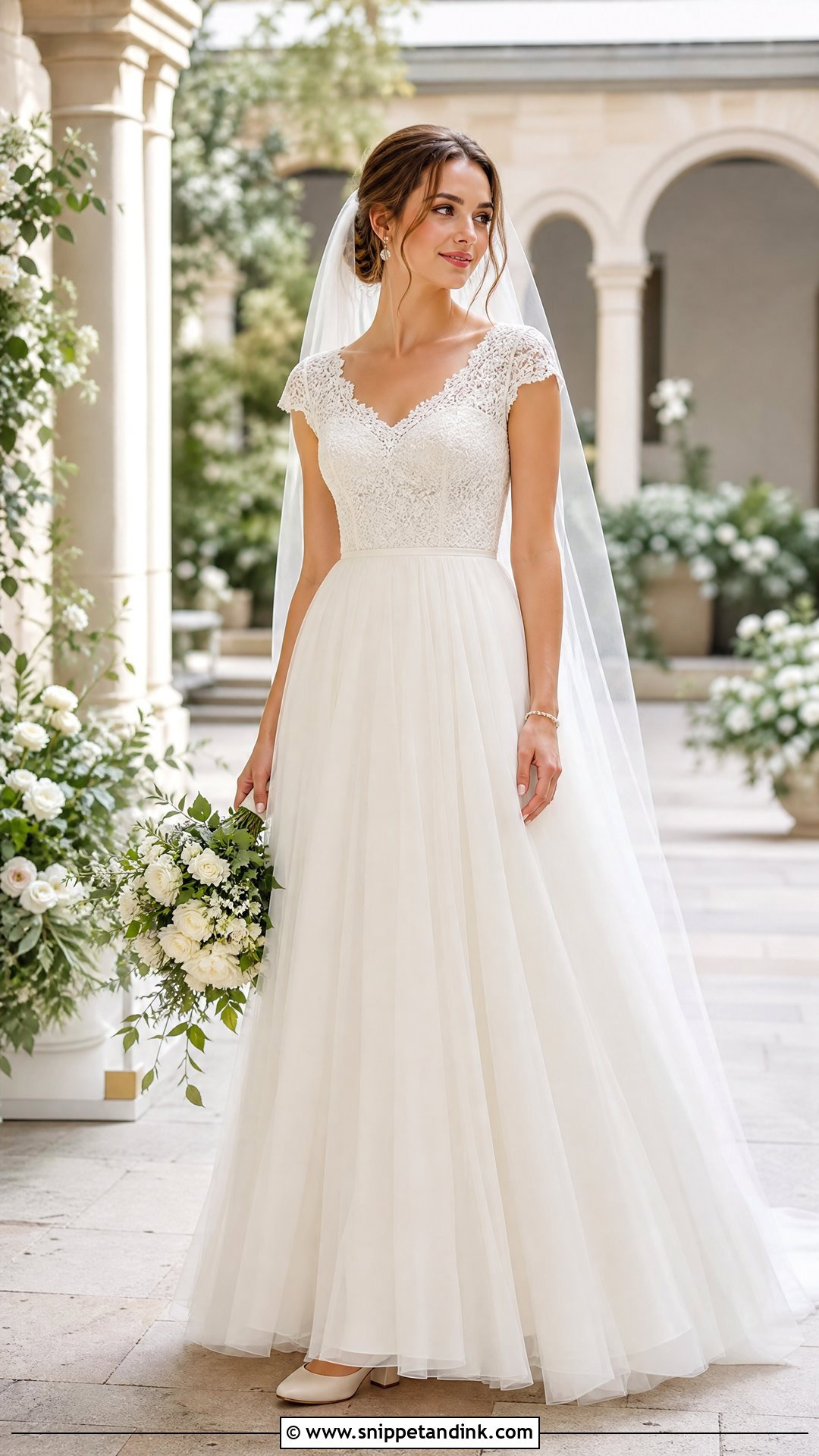
Cap sleeves sit right where many brides want a little coverage, and they’re easy to wear with a full skirt. Lace sleeves blending into the bodice look traditional; satin ones look cleaner. A natural waist balances the small sleeve against the skirt. Watch the edge of the sleeve on your upper arm: if it cuts in when you reach forward, a slightly longer sleeve usually sits smoother. Low block heels, a fine bracelet, pearl earrings and a fingertip veil suit it, and a half-up style adds volume without covering the sleeve detail.
13. Illusion Bodice Tulle Skirt Wedding Dress
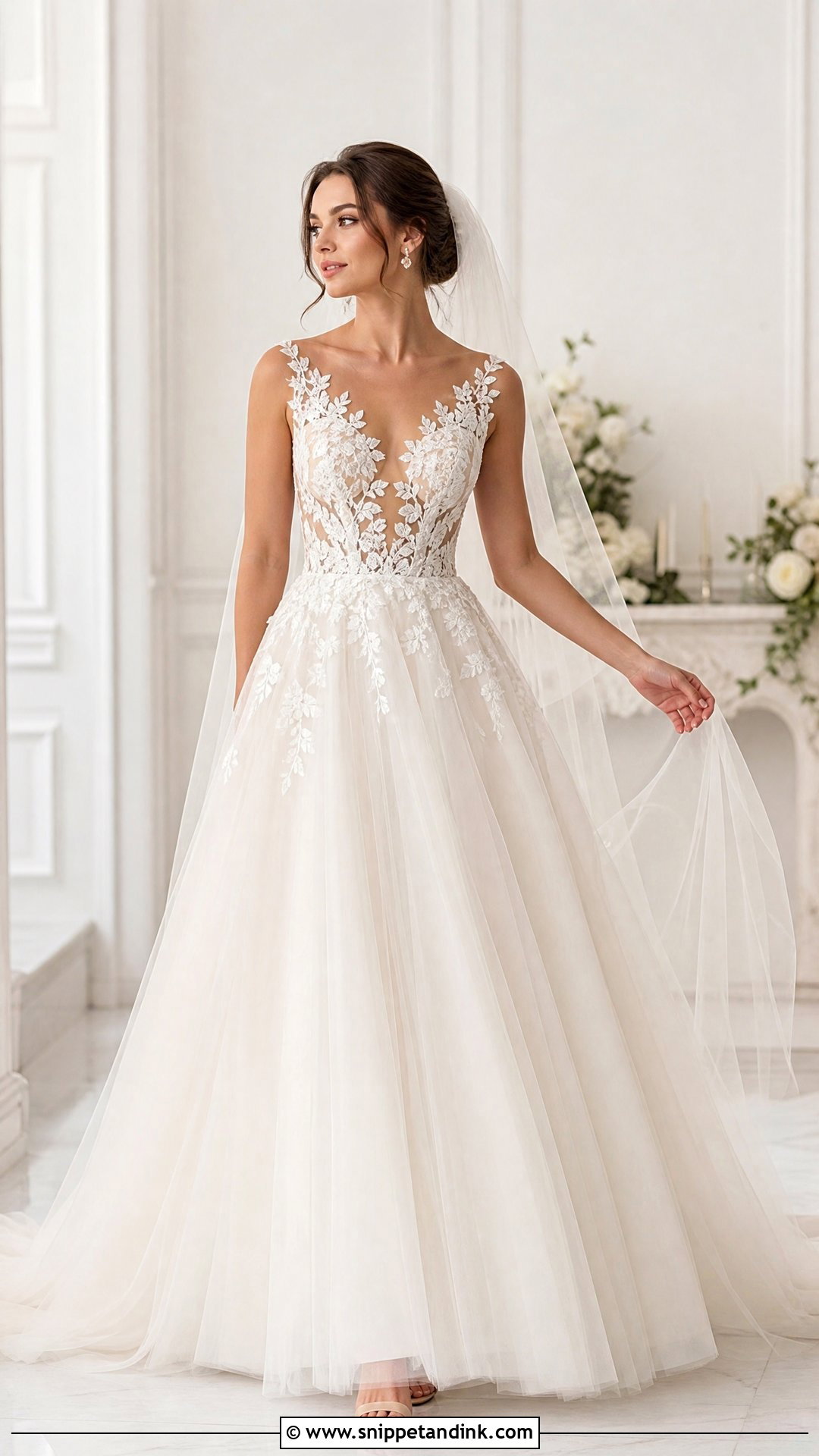
An illusion bodice makes lace or beadwork look as if it’s floating on the skin above the tulle. It only works if the mesh matches you. Look at it in daylight and in a phone photo, because mesh that seems right in the shop can photograph pink, grey or yellow. Appliqués placed with care give coverage without spoiling the effect. On a mostly sheer back, ask how the buttons are reinforced, since mesh tears at closures under strain. Keep everything else understated: small earrings, neutral ivory heels, a sheer veil and a polished updo that shows the neckline.
14. Blush Tulle Skirt Wedding Dress
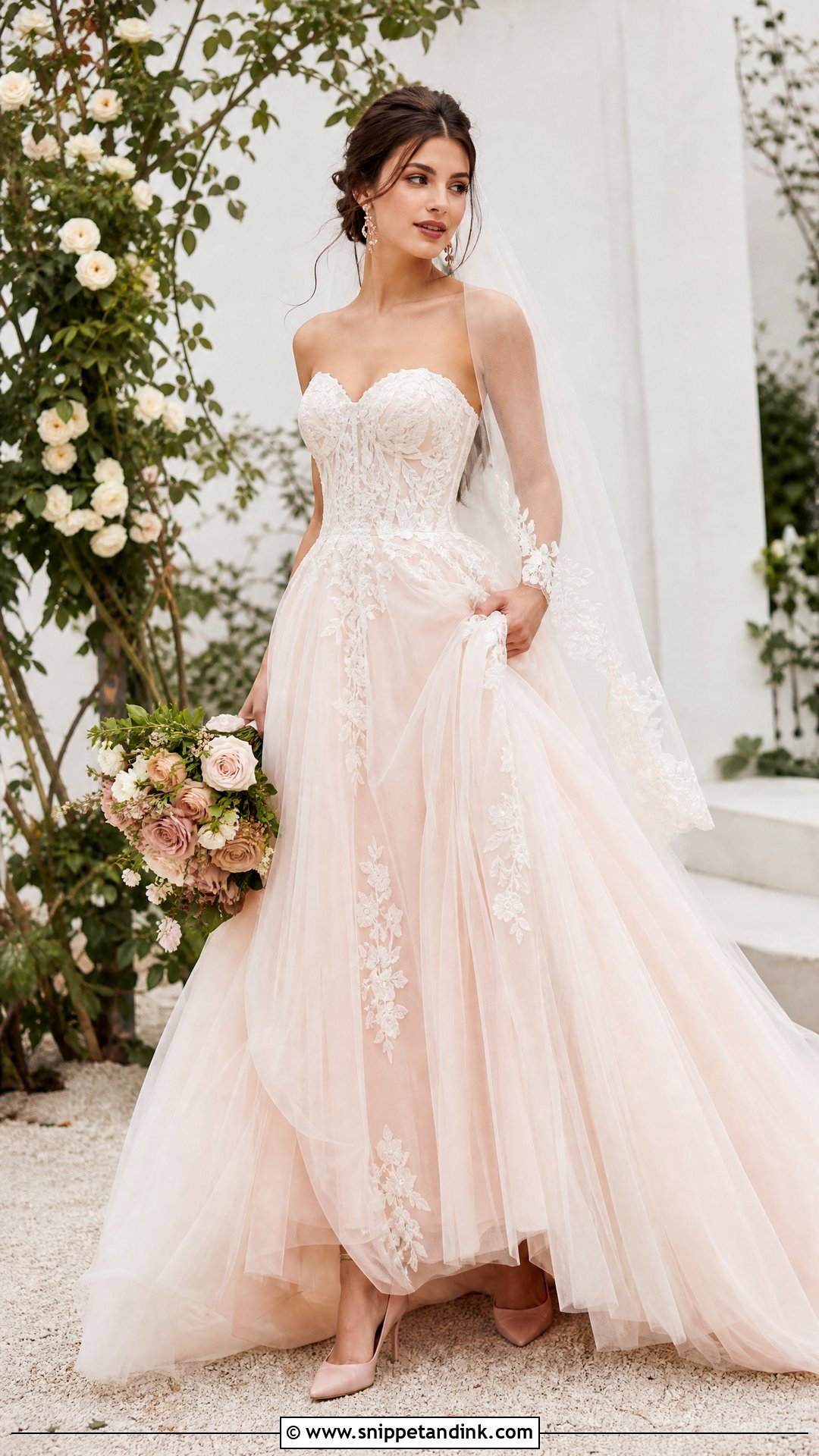
Blush tulle is unmistakably bridal and gentler than bright white. The color can run through the whole gown or sit beneath an ivory lace overlay for a subtler flush. Blush shades lean peach, pink or beige, and they behave differently against different skin, so hold the fabric near your face in daylight before deciding. Nude or pale blush heels, rose-gold earrings and an ivory veil that picks up the lighter appliqués keep the palette soft, along with a neutral bouquet. A sweetheart, V-neck or off-shoulder bodice all suit this color.

15. Tea Length Tulle Skirt Wedding Dress
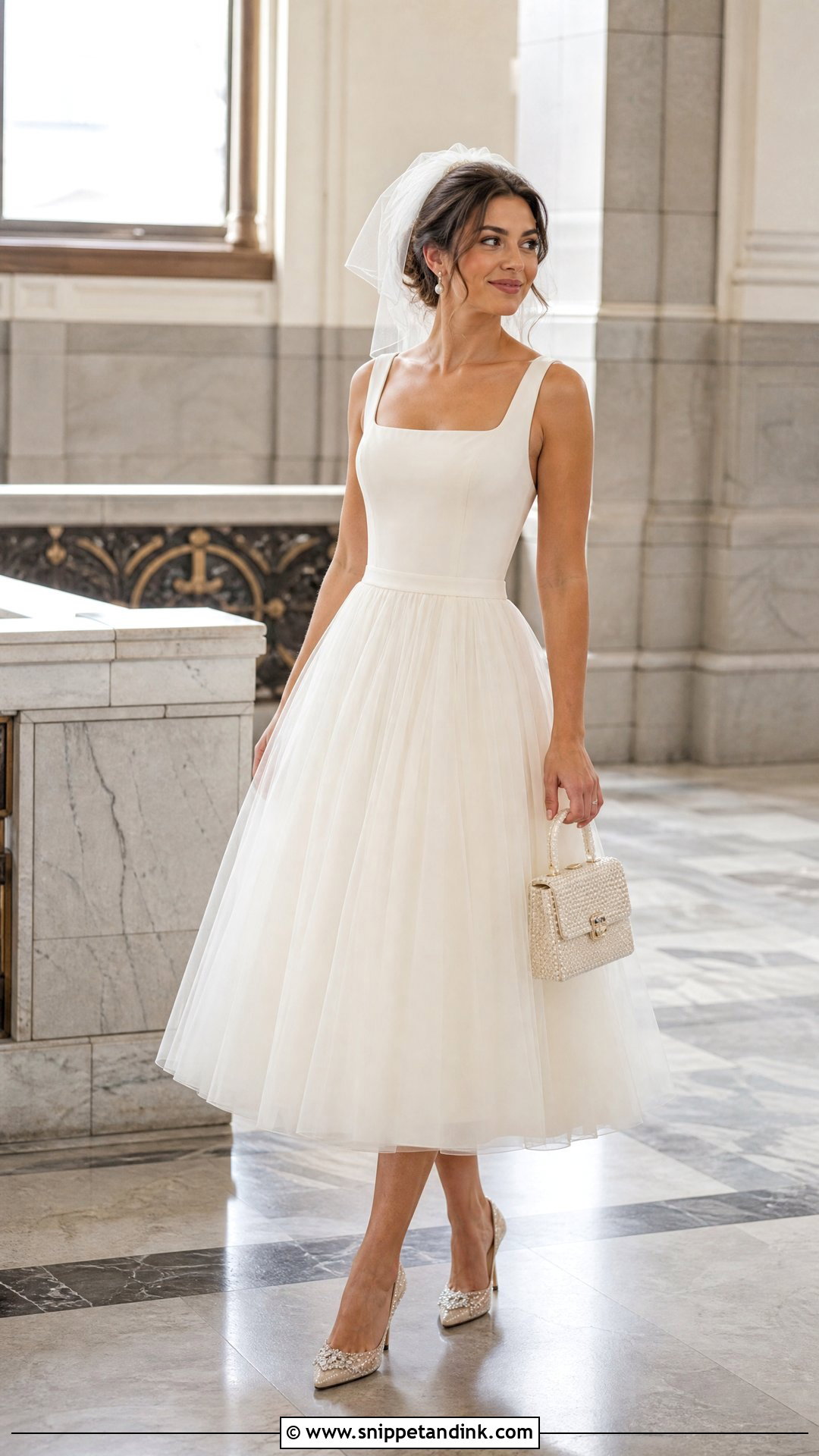
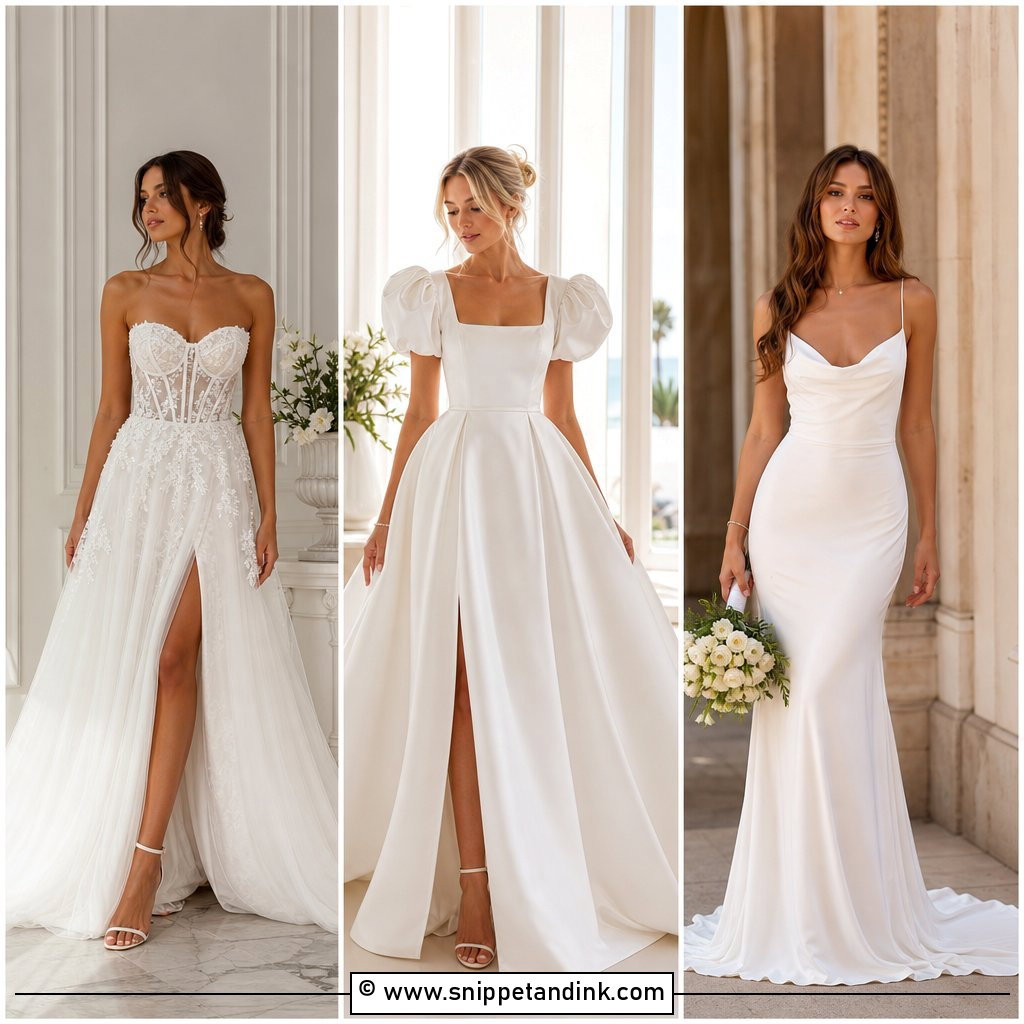
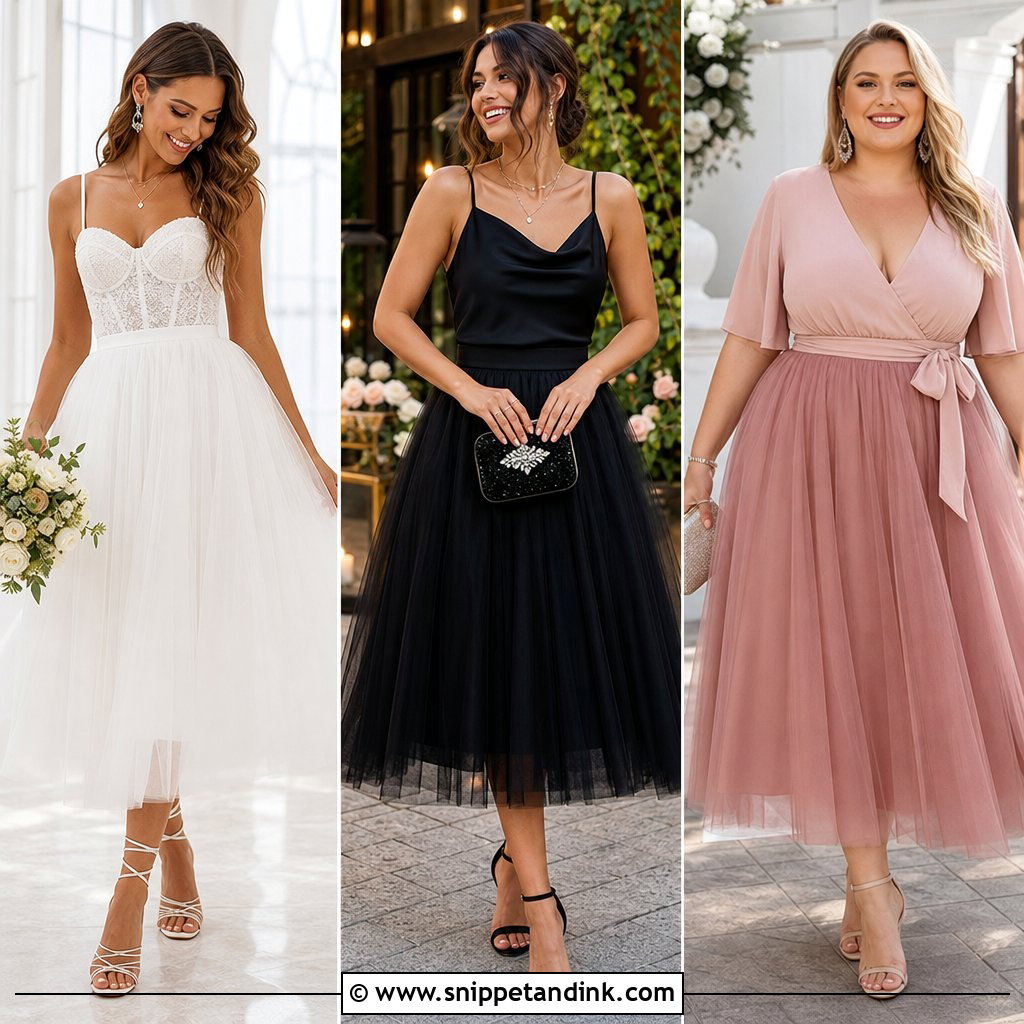
Tea length is the most practical tulle wedding dress I fit. It clears the ground, it’s easy to dance in and you never need a bustle. The hem falls between knee and ankle, so the shoes become part of the outfit; embellished pumps are worth it here. A fitted bodice with wide straps, short sleeves or a modest sweetheart neck suits it, with pearl earrings, a short veil and a structured mini bag. A light petticoat adds shape, but a stiff one pushes the skirt out when you sit. Have the hem set in your final shoes, since a centimeter makes a visible difference at this length.
16. Tiered Tulle Skirt Wedding Dress
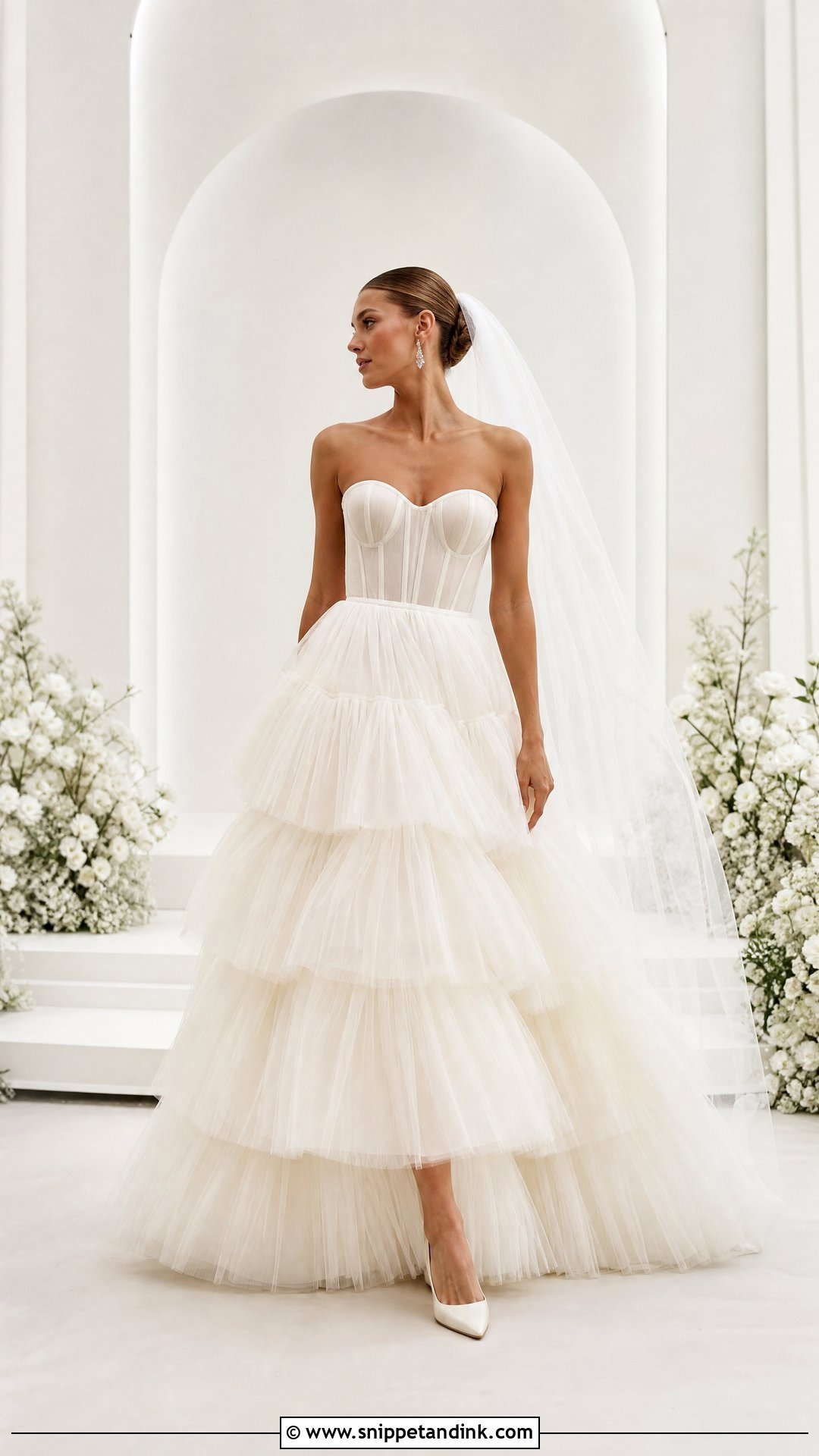
A tiered tulle skirt builds movement through horizontal layers, so the bodice should stay streamlined. A strapless corset, square neck or fitted satin bodice works. Wide, gently gathered tiers give softer volume; narrow, densely gathered ones look more dramatic and weigh more. Simple pumps, small crystal earrings and a narrow veil that falls behind the skirt keep the focus where it belongs. Walk and turn during fittings and watch the tiers in the mirror. If they bunch rather than fall, the spacing between them needs adjusting.
17. Ruffled Tulle Skirt Wedding Dress
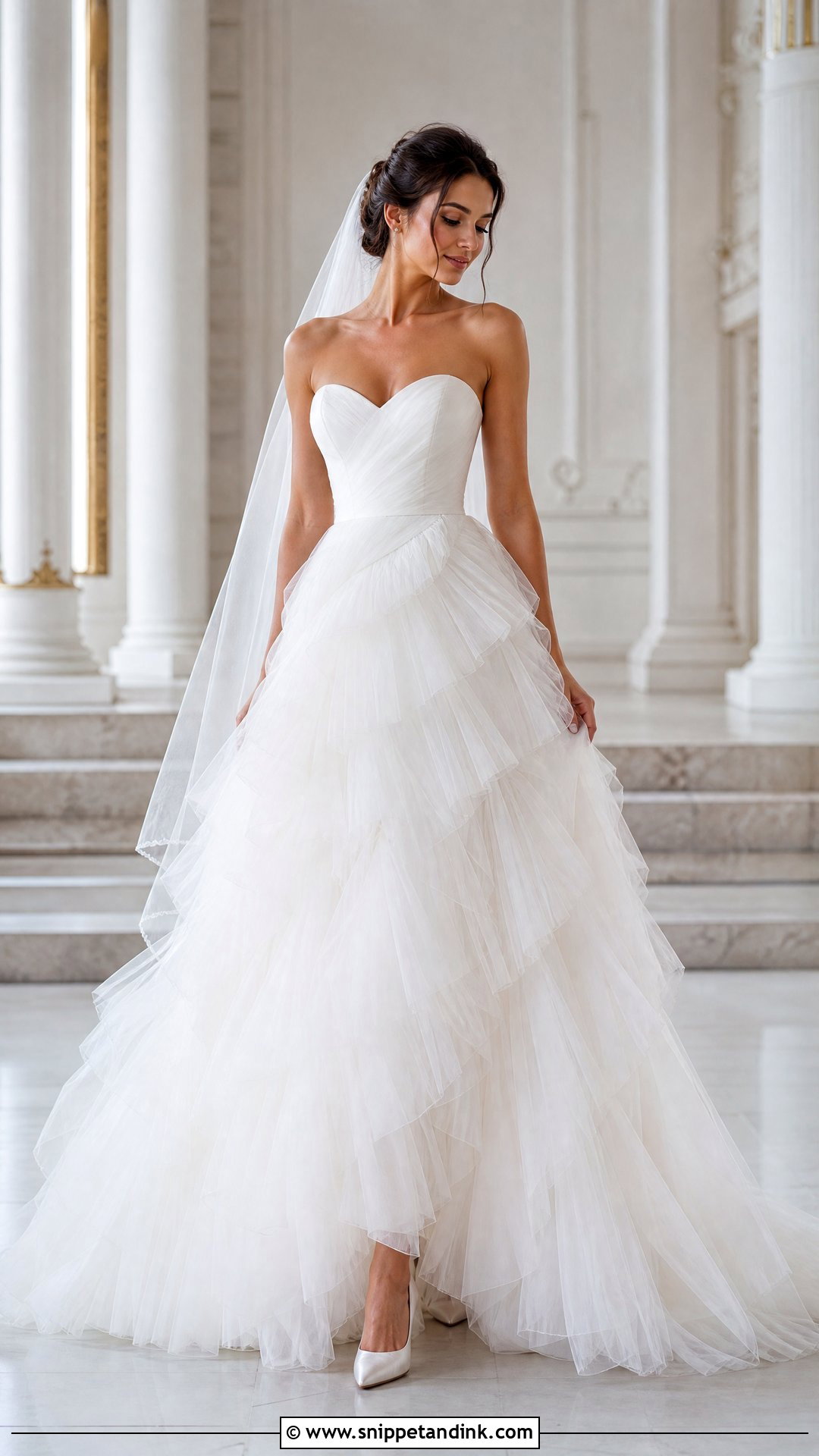
Cascading tulle ruffles running diagonally or vertically down a skirt give it the most movement of anything here. Diagonal cascades flow; evenly stacked ruffles give a fuller ball-gown effect. Keep the bodice clean, a sweetheart or narrow straps, and the styling plain: satin heels, small studs, a raw-edge veil and smooth hair. The bustle needs thought, because a standard bustle can flatten ruffles. Ask your seamstress to shape it around the ruffles so the skirt keeps its movement after the ceremony.
18. Basque Waist Tulle Skirt Wedding Dress
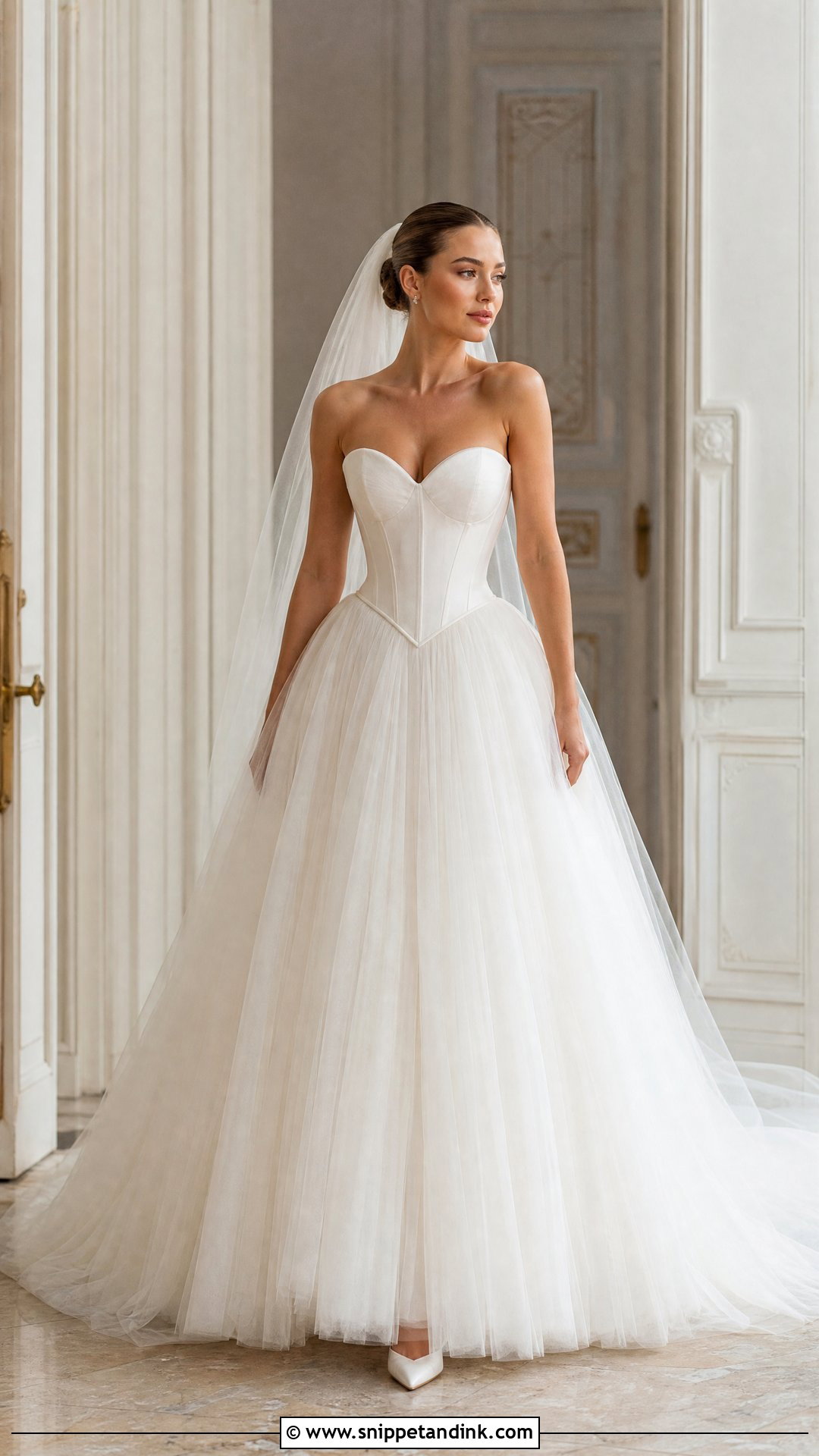
A basque-waist bodice dips to a point at the front before meeting the skirt, a historical detail that makes a waist look very defined. Skip the wide belt; it cuts straight across the V and ruins the line. The point should stay flat when you sit, and that depends on the boning following your torso, so sit in it at every fitting. Check too that the tulle starts evenly all the way round the hips. Satin is cleaner and embroidery more romantic. Pointed heels, a fine pendant or small earrings and a chapel veil beneath a sleek bun suit it.
19. Pearl Tulle Skirt Wedding Dress
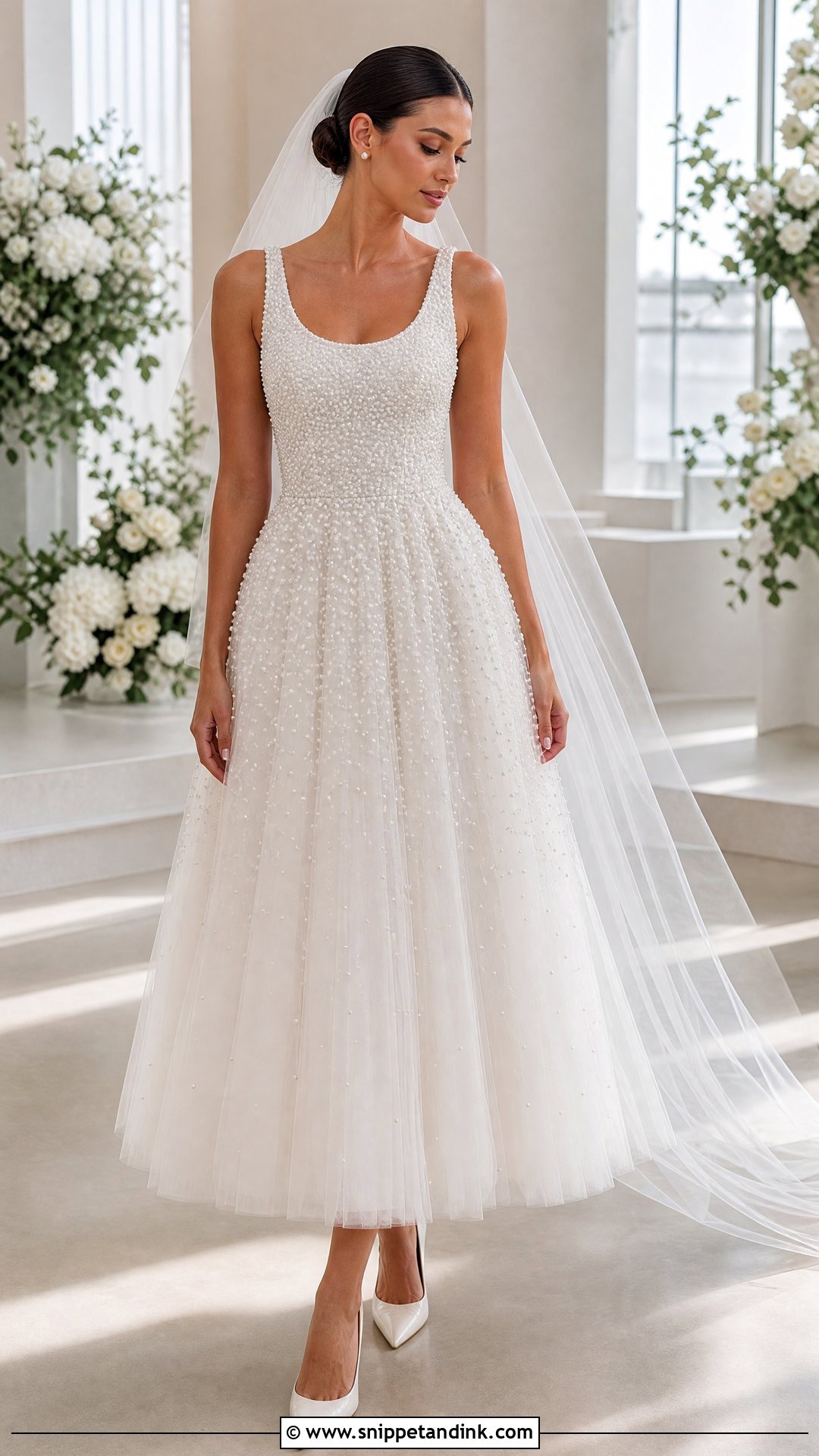
Scattered pearls give tulle a soft glow, best when they’re clustered on the bodice and dispersed lightly over the skirt. Pearls add real weight, so lift the skirt in the shop and imagine wearing it for ten hours. Then check the stitching: give a few pearls a gentle tug, because loose ones will drop all evening. A smooth lining stops the backs of the beads rubbing your legs. Pearl studs, ivory pumps and a plain veil are enough; skip the pearl necklace if the neckline is already dense.
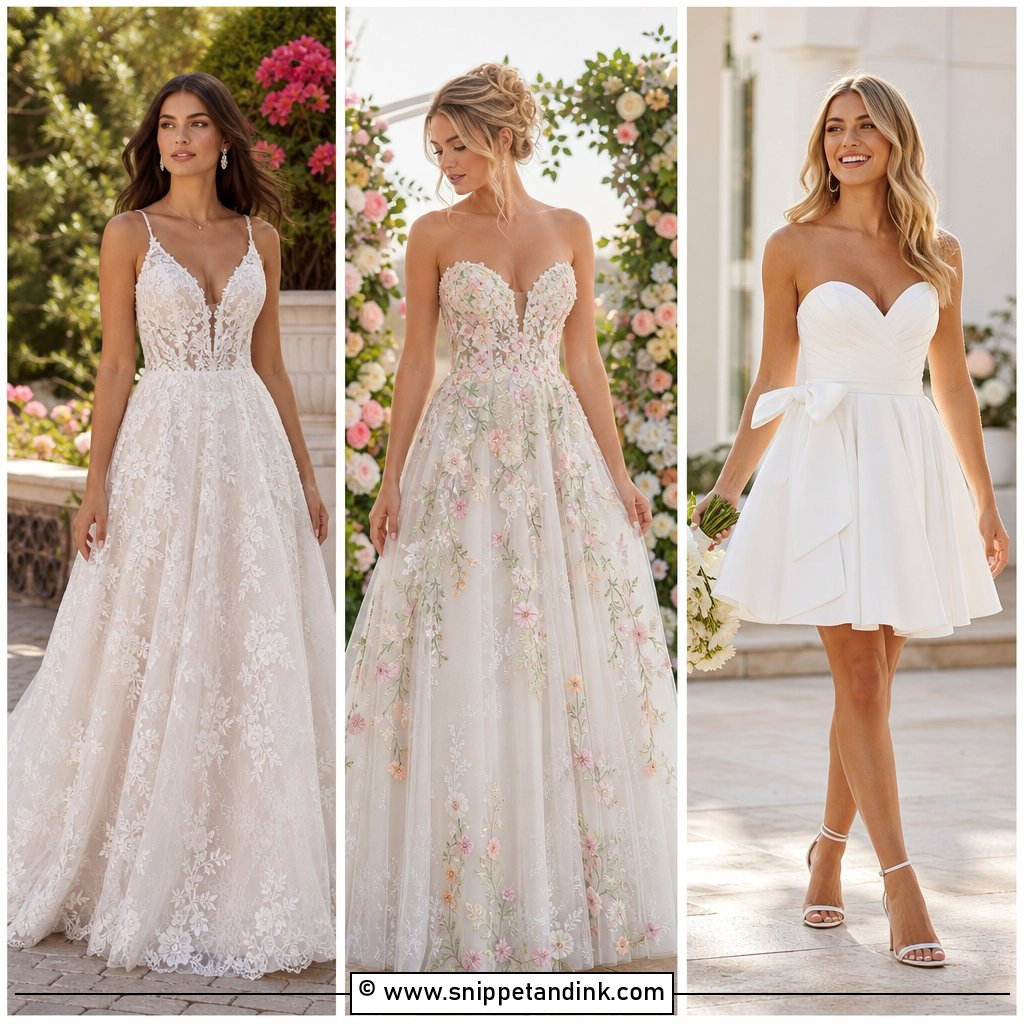
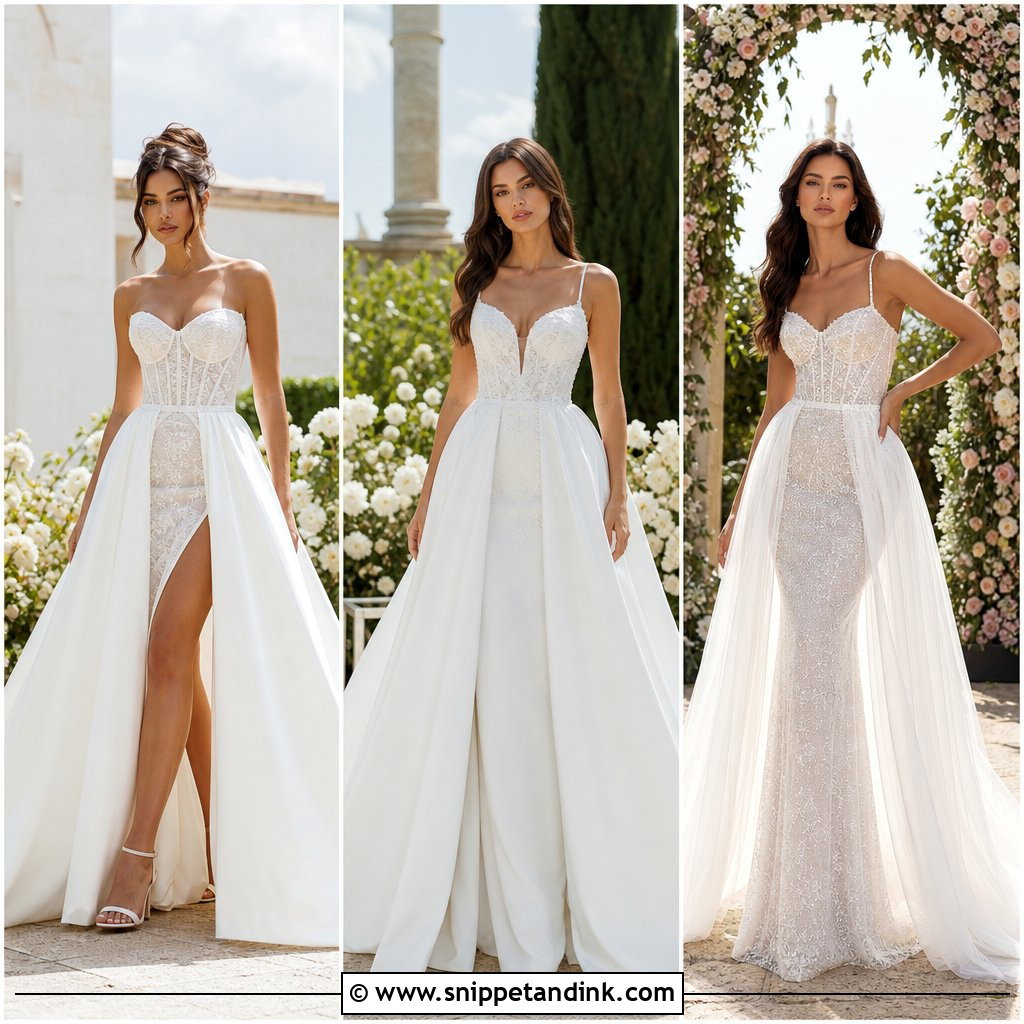
20. Champagne Tulle Skirt Wedding Dress
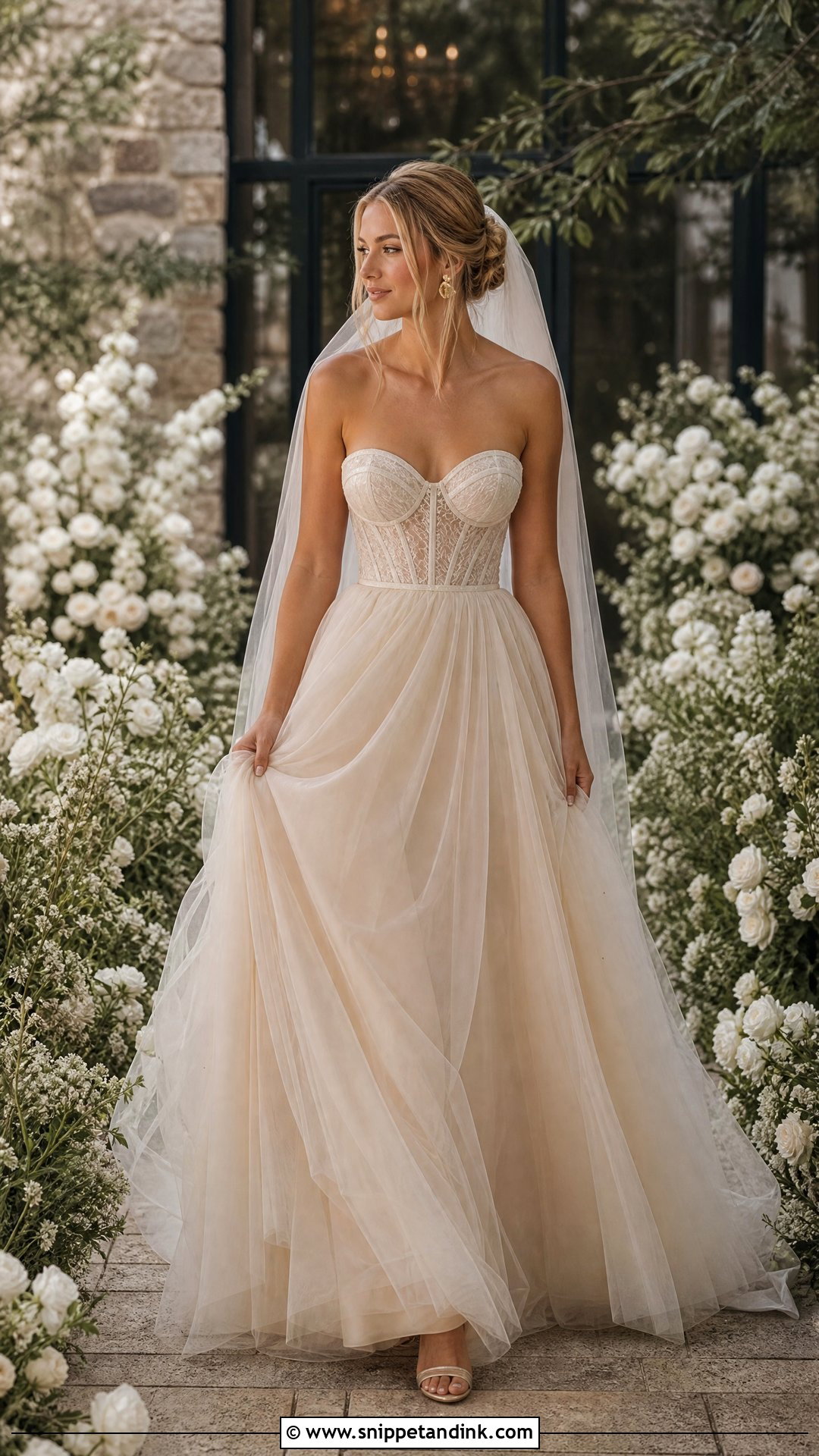
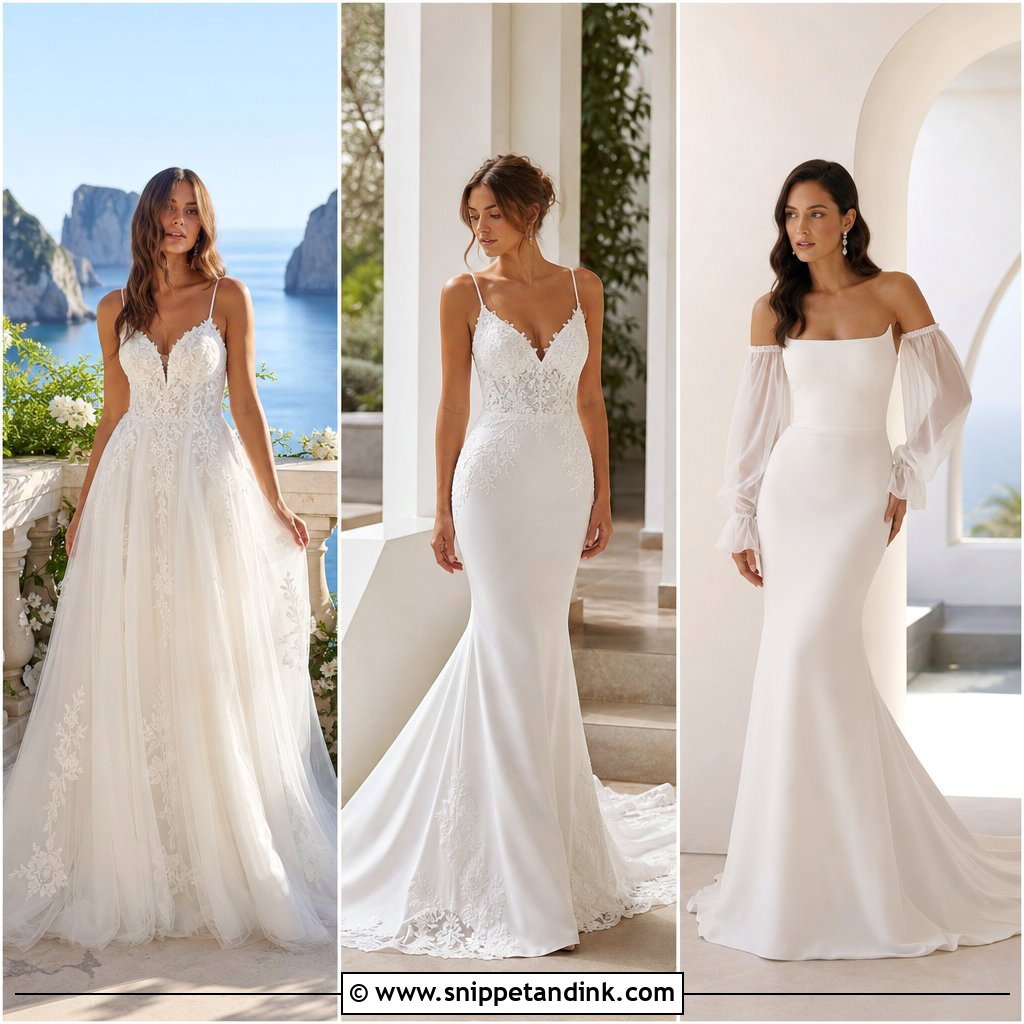
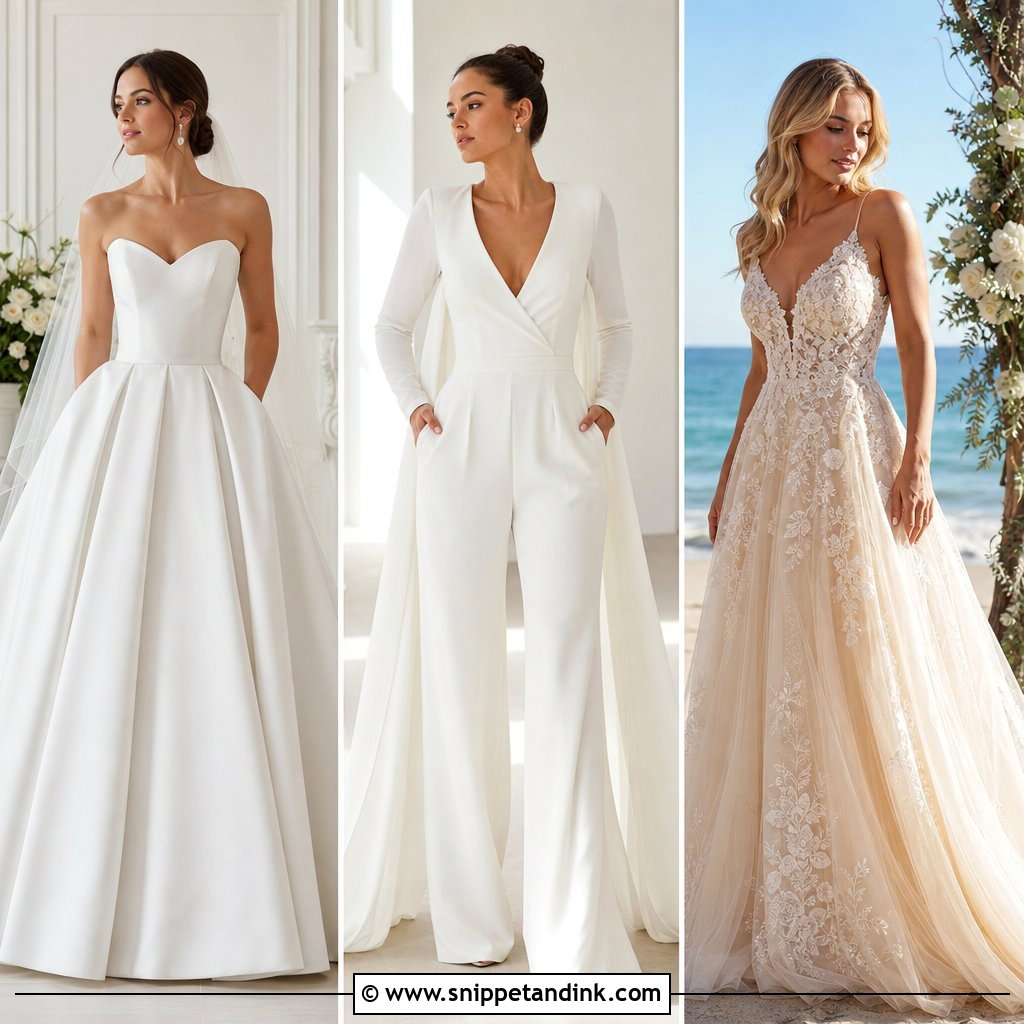
Champagne tulle adds warmth and depth while still reading as bridal. Pair it with ivory lace, a tonal corset or a closely matched satin bodice. Champagne varies enormously between makers, from almost gold to almost grey, so compare samples in daylight and, if you can, under your venue’s lighting. It should flatter your skin without blending into it. A subtler route is an ivory outer layer over a champagne lining. Neutral metallic heels, gold earrings, a sheer ivory veil and a bouquet with white flowers and muted greenery keep it fresh rather than beige.
What Sits Under the Tulle Matters as Much as the Tulle
The shape you see in a tulle gown is mostly created underneath. Bring the exact underwear and shoes you’ll wear on the day to every fitting from the second one onward; changing either later can shift the hem and the bodice.
Petticoats and hoops
A soft net petticoat adds gentle fullness and moves with you. A hoop gives a perfectly round silhouette but swings when you turn, and it lifts at the back when you sit on a hard chair. Many gowns have a petticoat built in; if yours doesn’t hold its shape, a separate one can be added, though it adds warmth on a hot day.
Bodice support
With a well-boned bodice, many brides need no bra at all, and cups can be sewn in. For lighter construction, a longline strapless bra or bustier gives a smoother line than a standard strapless one. Test it by bending to pick something off the floor.
The last fitting
Treat it like a rehearsal. Wear everything, including the veil and jewelry, and have your helper practice the bustle and the fastenings. Then sit for ten minutes, stand and check the skirt from behind. If anything slips or itches now, it will be worse at the end of a long day.
Why the Fittings Decide More Than the Showroom
A tulle gown has to move well, hold you securely and suit your proportions, and all three are settled in the alterations room rather than at the first try-on. Pick the silhouette and neckline that make you feel secure, then decide on volume, texture, color and embellishment. Shoes, veil, hair and jewelry should support the dress, not compete with it. At every fitting, walk, sit, turn and lift your arms. If you can do all four without thinking about the dress, it’s ready.
You'll Like These Ideas:




Leave a Reply