
The sweetheart neckline and A-line silhouette is the pairing I reach for most often when a bride can’t settle on a shape, because it flatters without asking much of her. The curved top edge draws the eye to the collarbone, and the skirt widens gently from the waist so it skims rather than clings. It takes almost any fabric, from satin and lace to chiffon and crepe, and it happily accepts sleeves, corsetry or nothing at all. What makes or breaks it is the fit of that bodice edge, so I’ll point out what to check as we go through the 20 versions below.
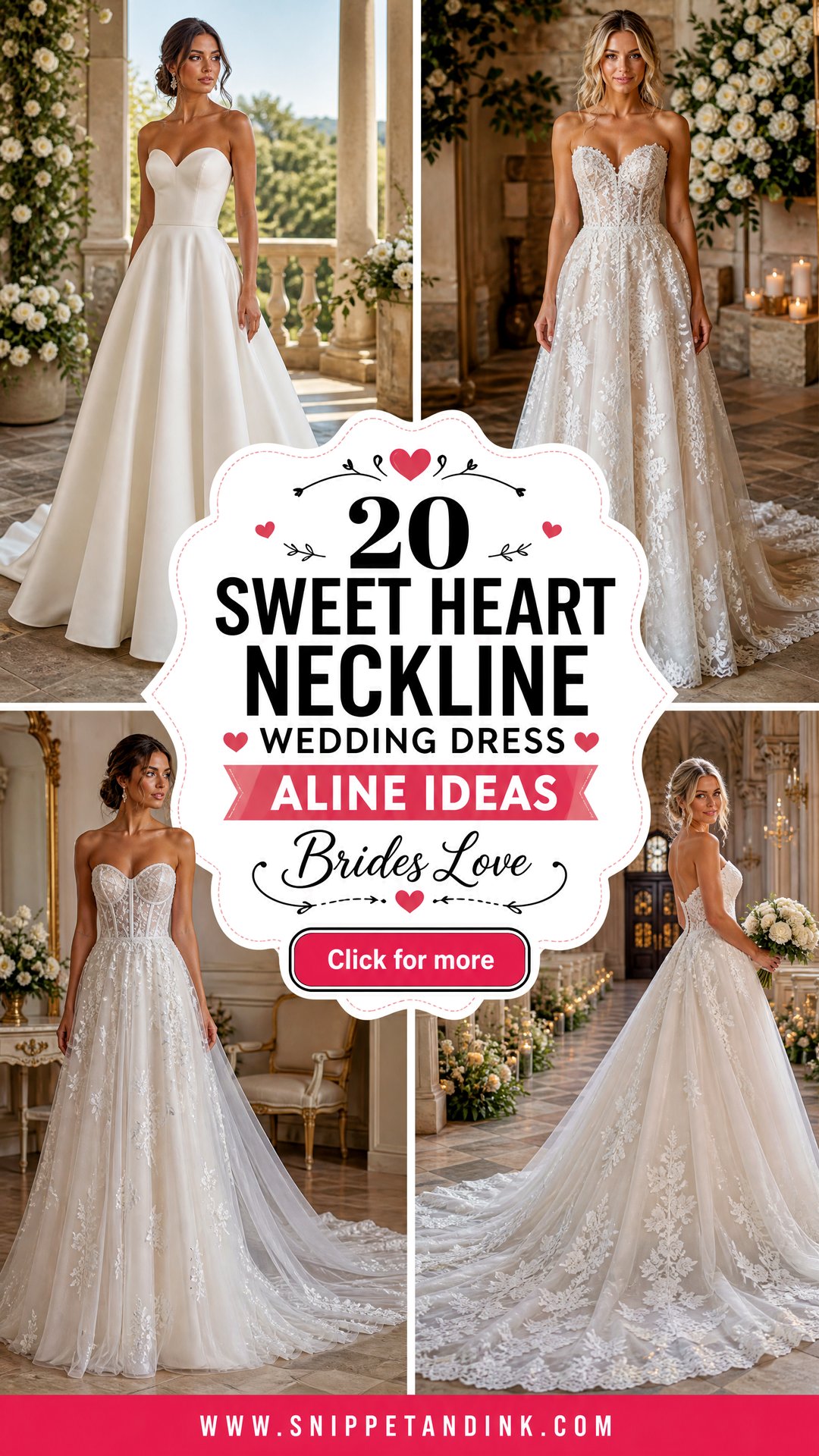
How Deep the Sweetheart Dip Should Go for Your Bust
Not every sweetheart is cut the same. The dip in the middle can be a shallow notch or deep enough to show cleavage, and the two arches can be rounded or almost flat. When a bride steps into one, these are the three things I look at before the fabric, the skirt or the price tag.
- Depth of the dip. A deep center suits a fuller bust, because the seam can sit close to the breastbone. On a smaller bust it tends to stand away from the body, and that gap shows as a shadow in photos.
- A soft or modified sweetheart, with only a gentle notch, suits smaller busts and brides who want less on show. It is also easier to keep flat when you bend to hug a grandparent.
- Where the arches peak. They should sit over the fullest part of each side, not drift toward the armpit, or the whole bodice looks wide.
Strapless is the most demanding version of the neckline. If you are a different size on top than on the bottom, or you know you will spend hours hugging guests, straps, an illusion panel or off-shoulder bands take the pressure off without hiding the curve at all.
1. Strapless Sweetheart Neckline A-Line Wedding Dress
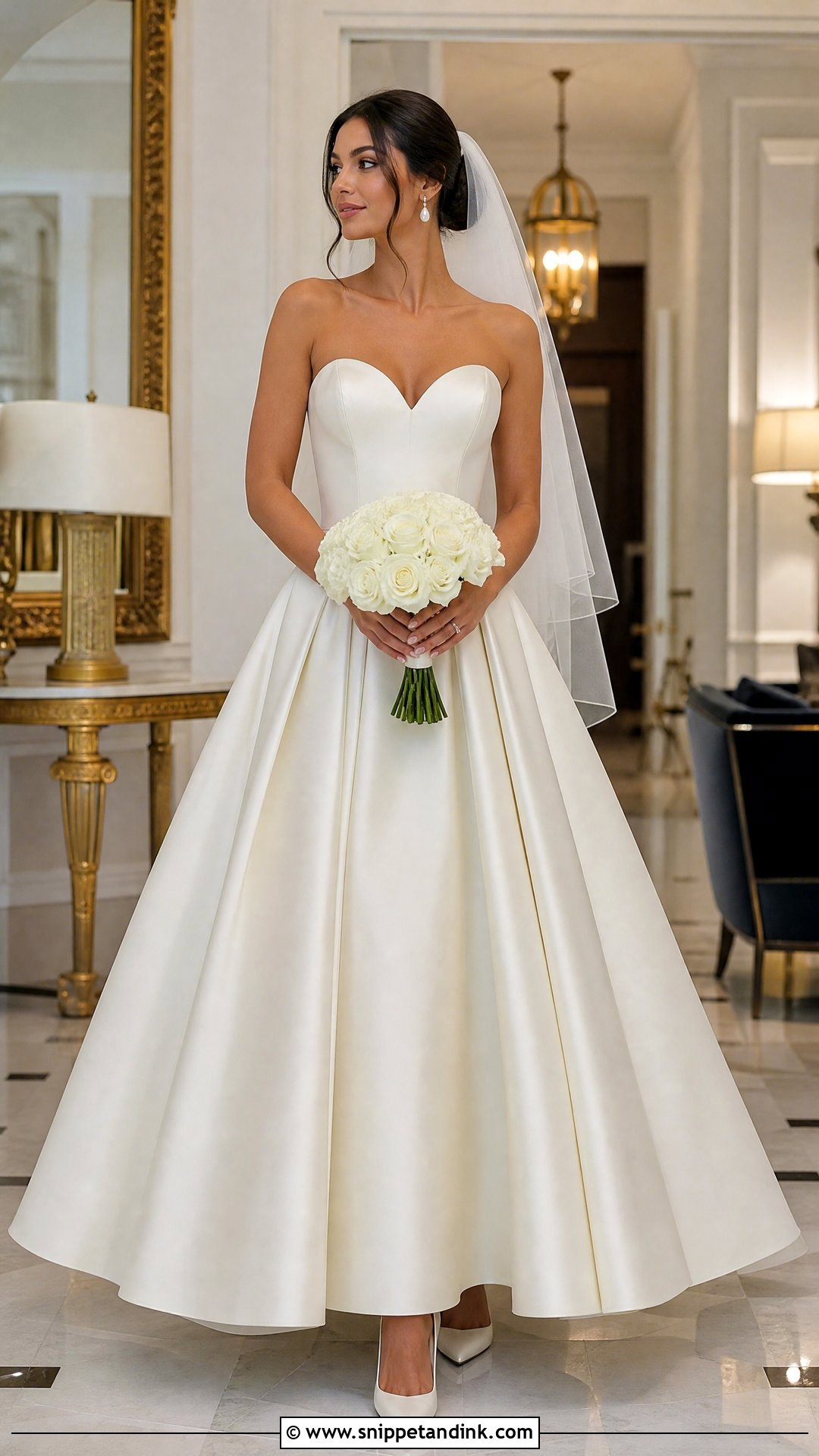
Smooth ivory satin, a structured bodice and a natural waist make this the plainest version, and it’s the one where fit shows most. With no lace to hide behind, any gap along the sweetheart edge reads instantly in photos. A softly pleated skirt keeps the satin from looking stiff. I’d style it with pointed ivory pumps, pearl drops, a fingertip veil with a narrow satin edge and a compact bouquet of white roses, and save it for a hotel, estate or formal indoor ceremony. At your first fitting, ask about internal boning and sewn-in cups. A strapless bodice stays up because it’s anchored at the ribcage, not the bust, so the seamstress should be snugging the waist and ribs first.
2. Lace Sweetheart Neckline A-Line Wedding Dress
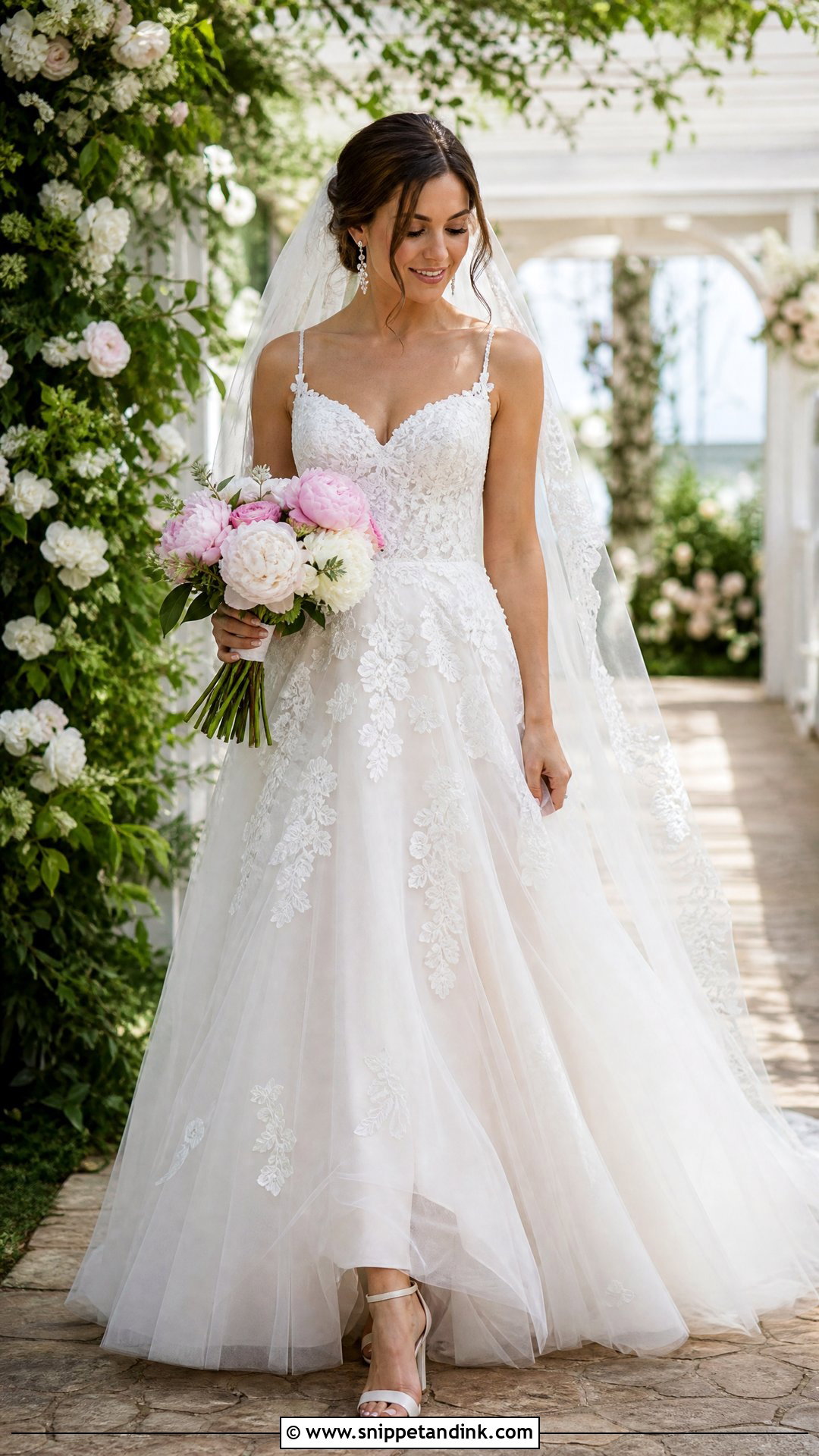
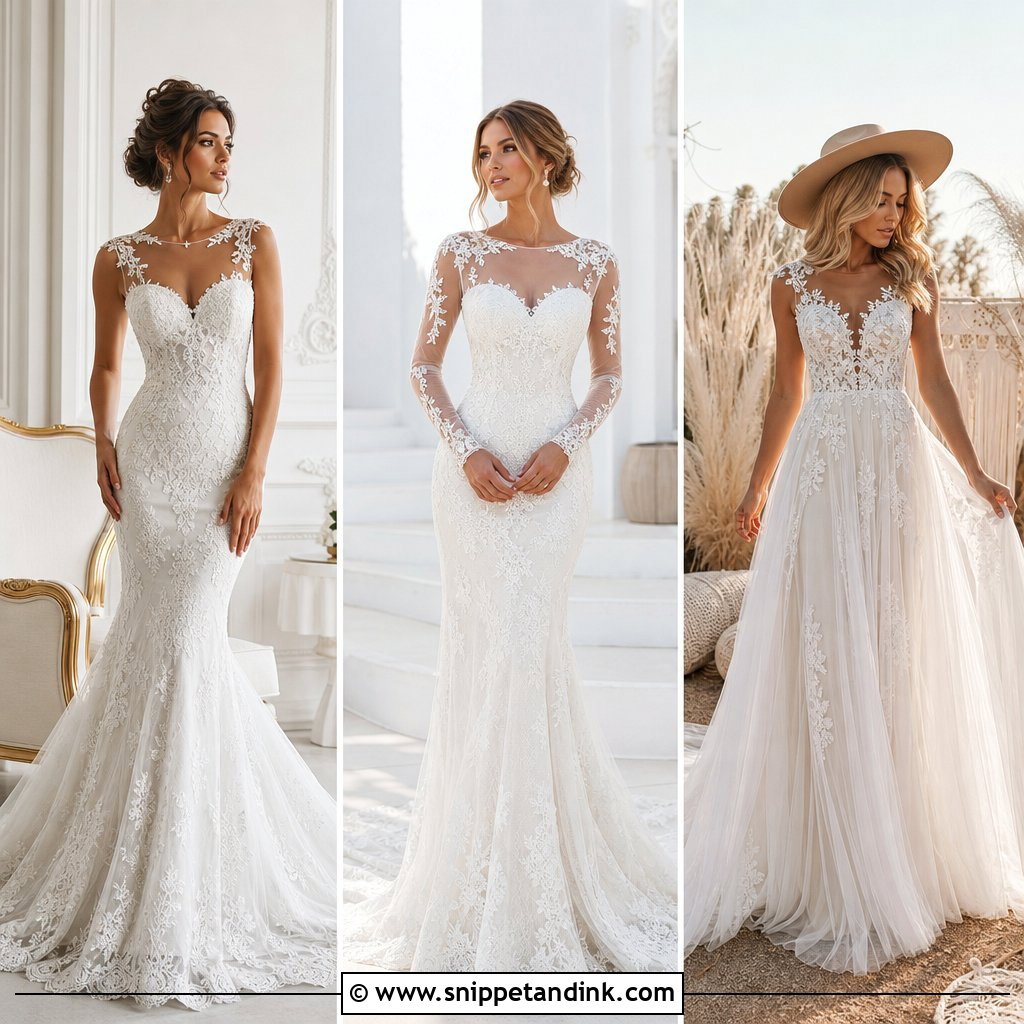
Lace that starts dense on the bodice and thins out as it spreads down a tulle skirt is the placement I look for, because the gown then reads as one piece rather than a lace top sitting on a tulle skirt. Thin lace straps take some weight off the bodice without hiding the curve. Appliqués along a sweetheart edge are usually hand-tacked, so they can be trimmed and reshaped during alterations if the edge pulls when you breathe in. Crystal studs, ankle-strap heels and a chapel veil edged in the same lace are enough; I’d skip the necklace. Garden ceremonies and conservatories with soft daylight show the texture best.
3. Long Sleeve Sweetheart Neckline A-Line Wedding Dress
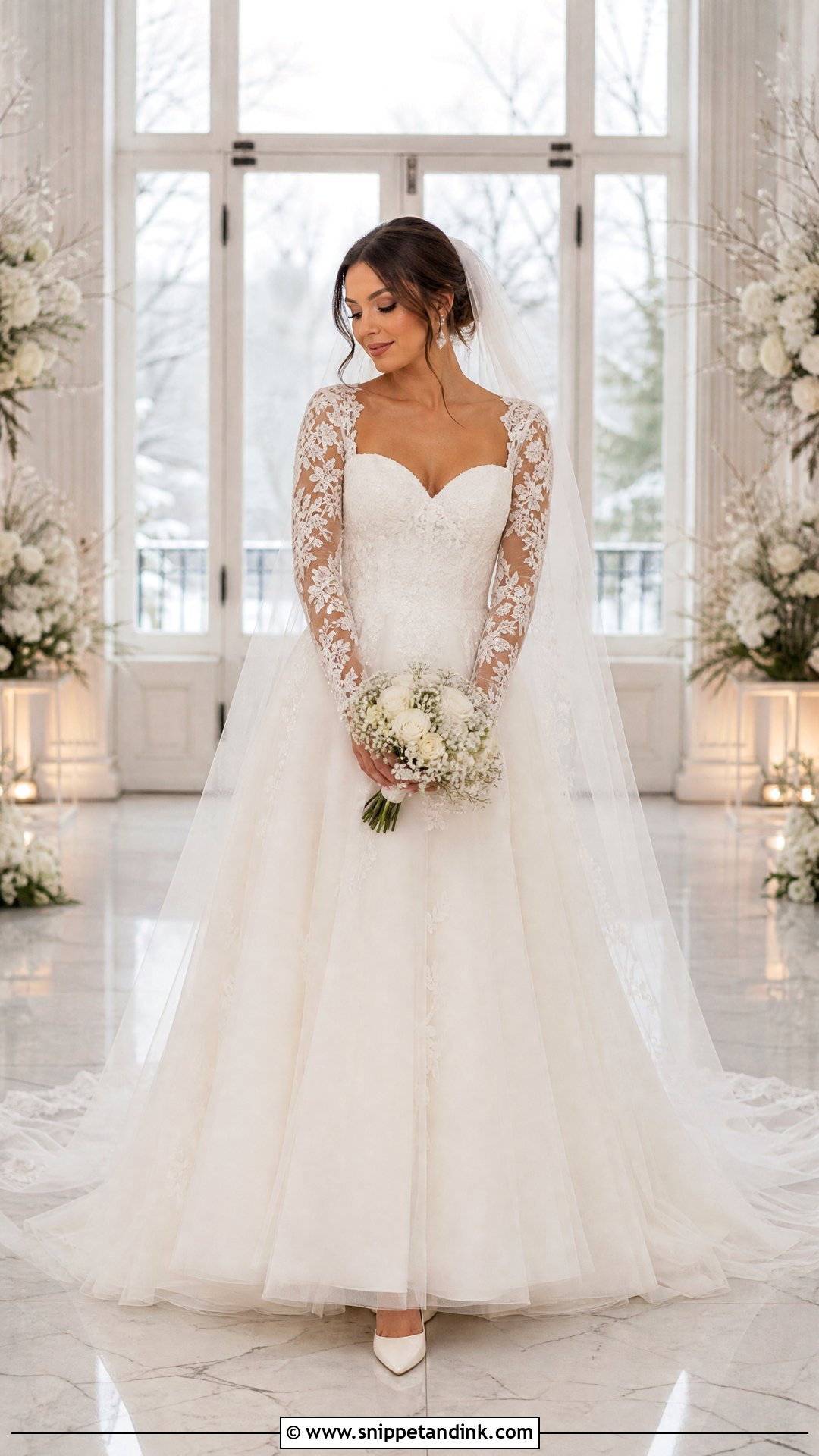
Sheer lace sleeves over a sweetheart bodice give you coverage without losing the shape, as long as the illusion panel is close to your skin tone. If it’s too white, the mesh shows up as a pale band across the chest in flash photos. That panel also does a job: it holds the sleeves in place. I like an ivory tulle skirt with appliqués near the waist and hem, pearl buttons at the wrists and back, closed-toe satin pumps, small pearl earrings and an untrimmed cathedral veil, with a low bun so the sleeves stay clear. Fall and winter suit it, though lightweight illusion tulle keeps it comfortable for a cool spring ceremony. Lift your arms at the fitting, because tight lace sleeves can tug the whole bodice upward.
4. Off-The-Shoulder Sweetheart Neckline A-Line Wedding Dress
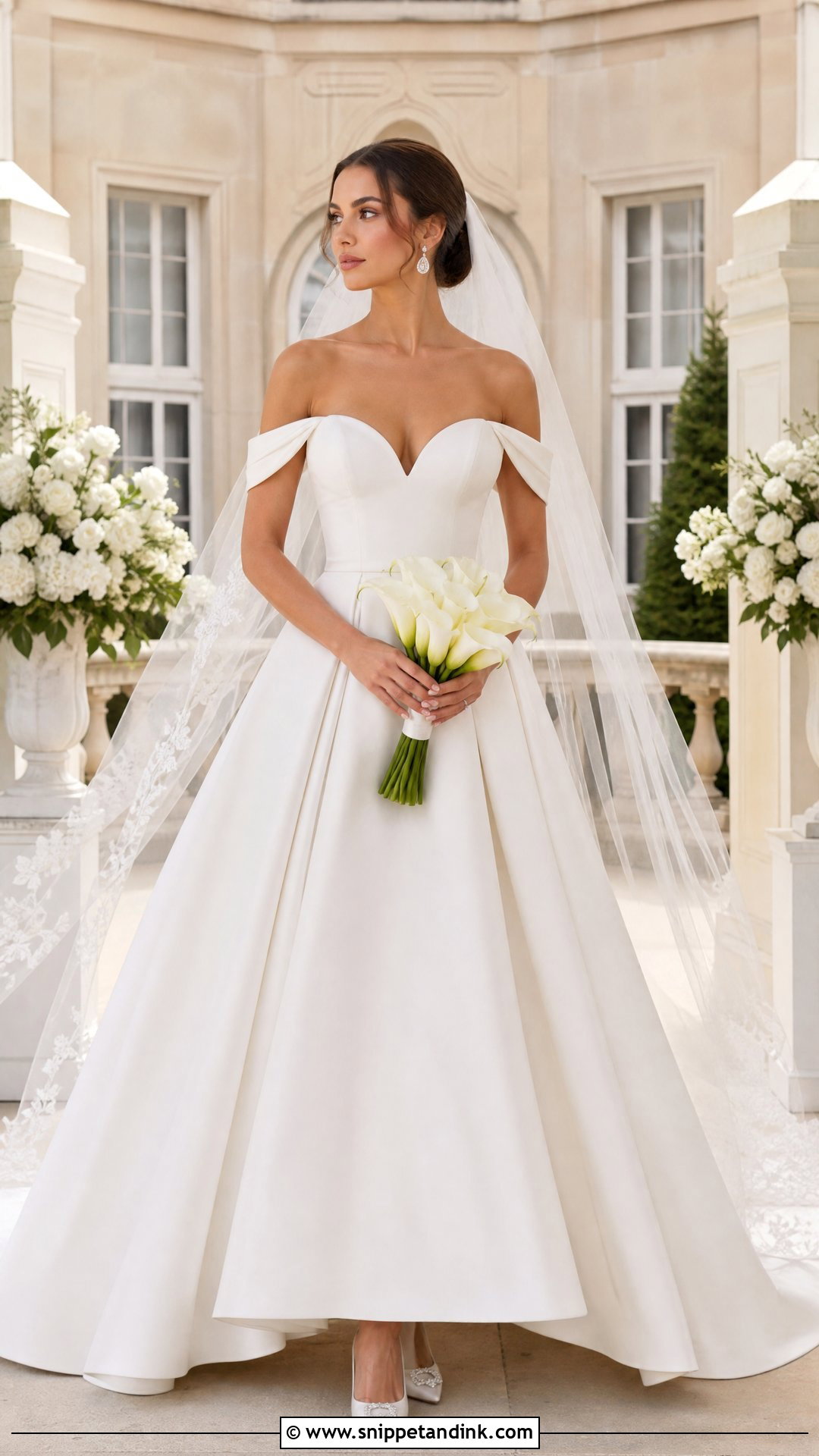
An off-the-shoulder sweetheart neckline frames the collarbone and shoulders, and in structured satin or Mikado it looks crisp rather than fragile. The draped bands are the part I watch. Set too tight, they pin your arms to your sides and you can’t hug anyone; set too loose, they slide toward the elbow by the speeches. A box-pleated skirt balances the width up top. Add a plain cathedral veil, teardrop earrings, pointed satin heels and a low textured chignon so the shoulder line stays visible from behind. It belongs in a ballroom or a classic estate. At alterations, raise your arms as if hugging someone and walk the room before anything is stitched.
5. Detachable Sleeve Sweetheart Neckline A-Line Wedding Dress
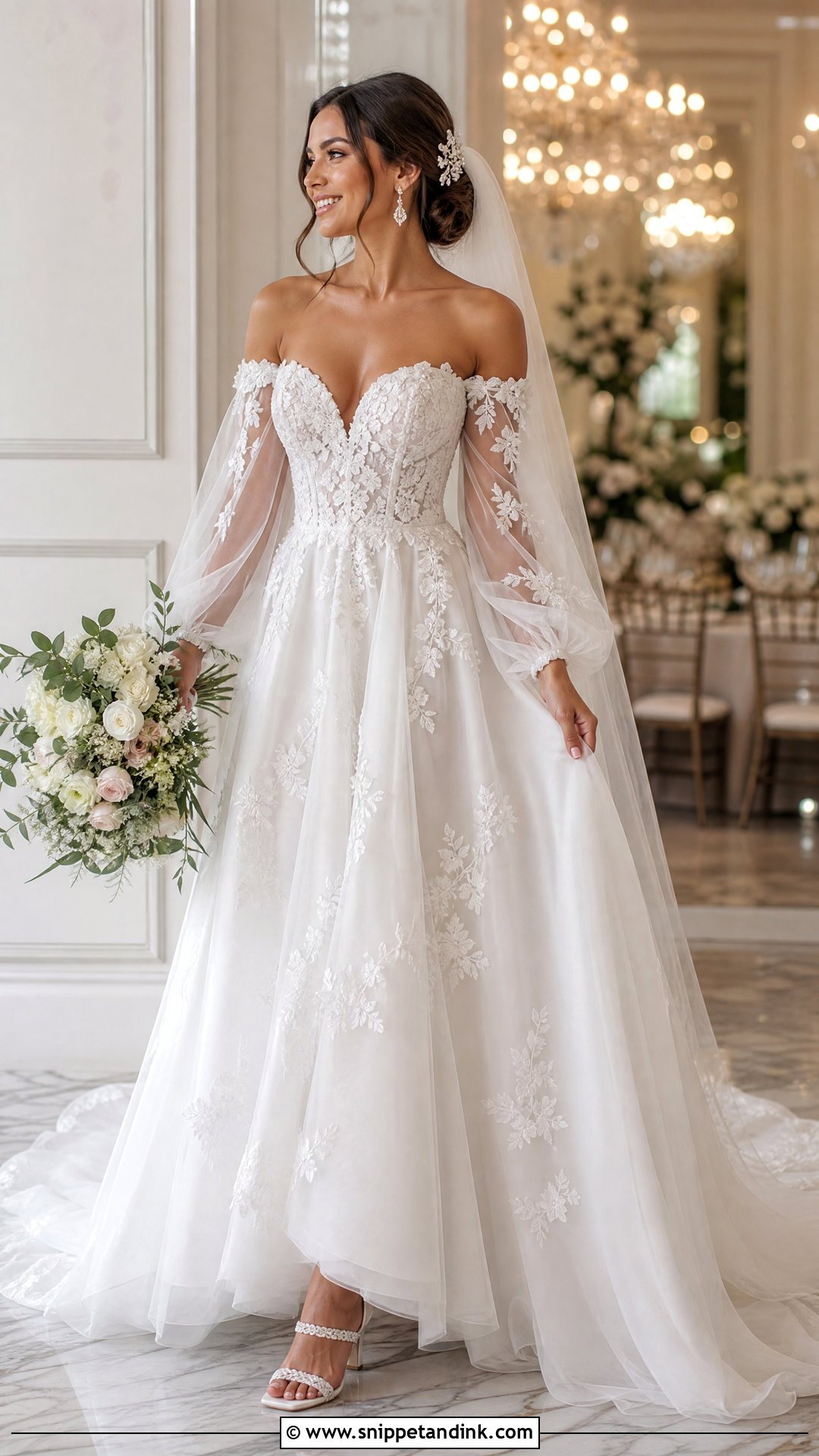
Detachable sleeves let one gown do two jobs. Start the ceremony in sheer off-the-shoulder tulle sleeves dotted with small lace appliqués, then take them off to reveal a strapless sweetheart bodice for dinner and dancing. Because the bodice has to work alone later, it needs full boning and a snug ribcage fit; the sleeves shouldn’t be holding anything up. Choose a softly layered skirt that moves without a heavy underskirt. For the ceremony I’d add pearl earrings, a lace-trimmed chapel veil and block-heel sandals, then swap the veil for a crystal comb once the sleeves come off. Ask how the sleeves attach. Hidden snaps or small hooks are far quicker for a bridesmaid than tiny buttons, and it’s worth practicing the removal once before the day.
6. Corset Sweetheart Neckline A-Line Wedding Dress
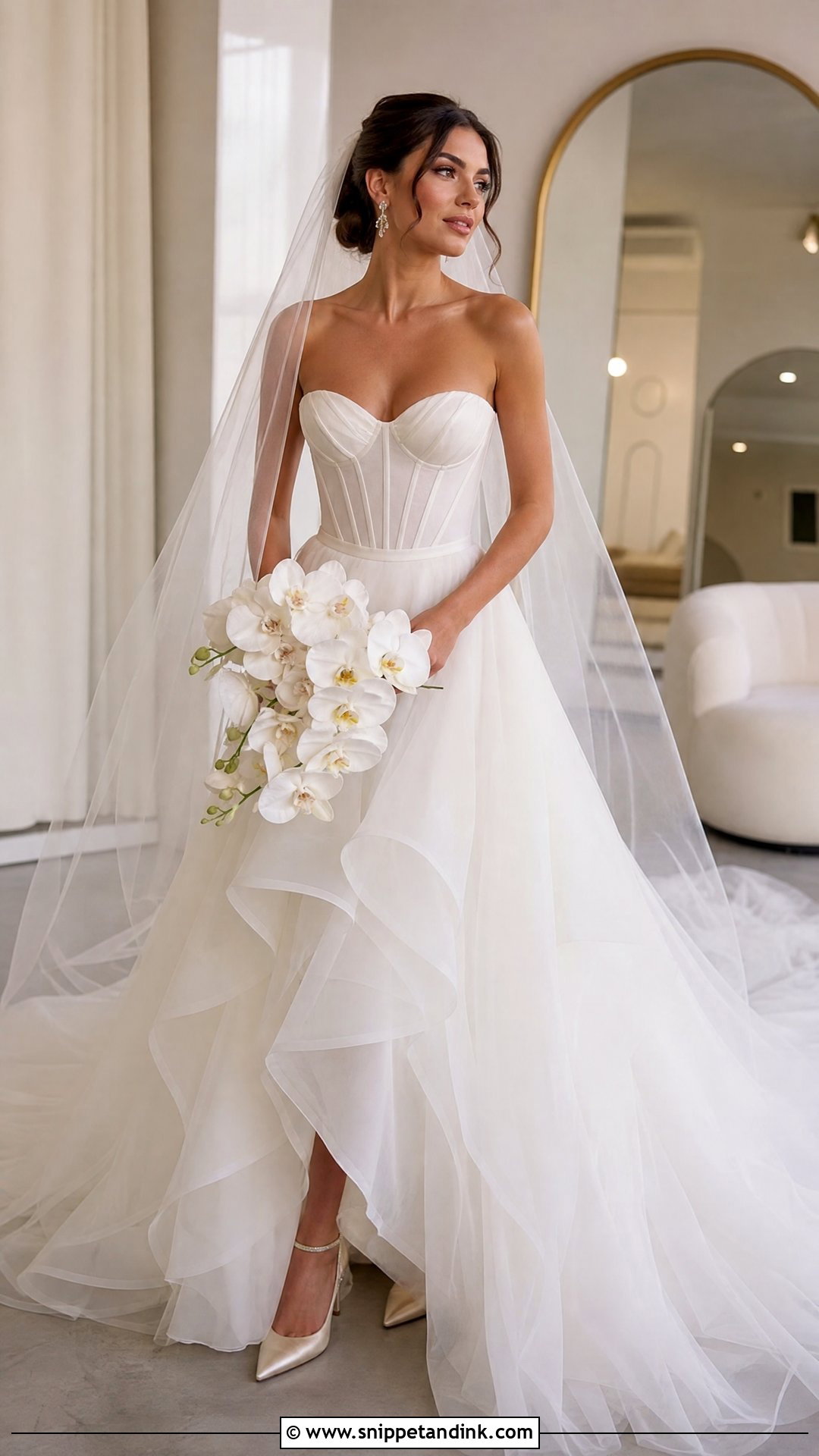
A visible corset bodice is all about structure, so the boning matters more than the overlay on top. Spiral steel bones bend with you when you sit, while cheaper plastic ones can kink and leave a ridge at the waist after a few hours. The sweetheart curve should lie flat against the skin. If it gaps while you’re standing, it will gape more when you lean forward to sign the register. A lace-up back makes the corset look more obvious; covered buttons soften it. Let plain tulle or organza fall from the waist without bulk, and keep accessories to crystal earrings, a raw-edge veil, metallic ivory heels and a small bouquet of orchids or roses. Professional alterations aren’t optional on this one.
7. Floral Sweetheart Neckline A-Line Wedding Dress
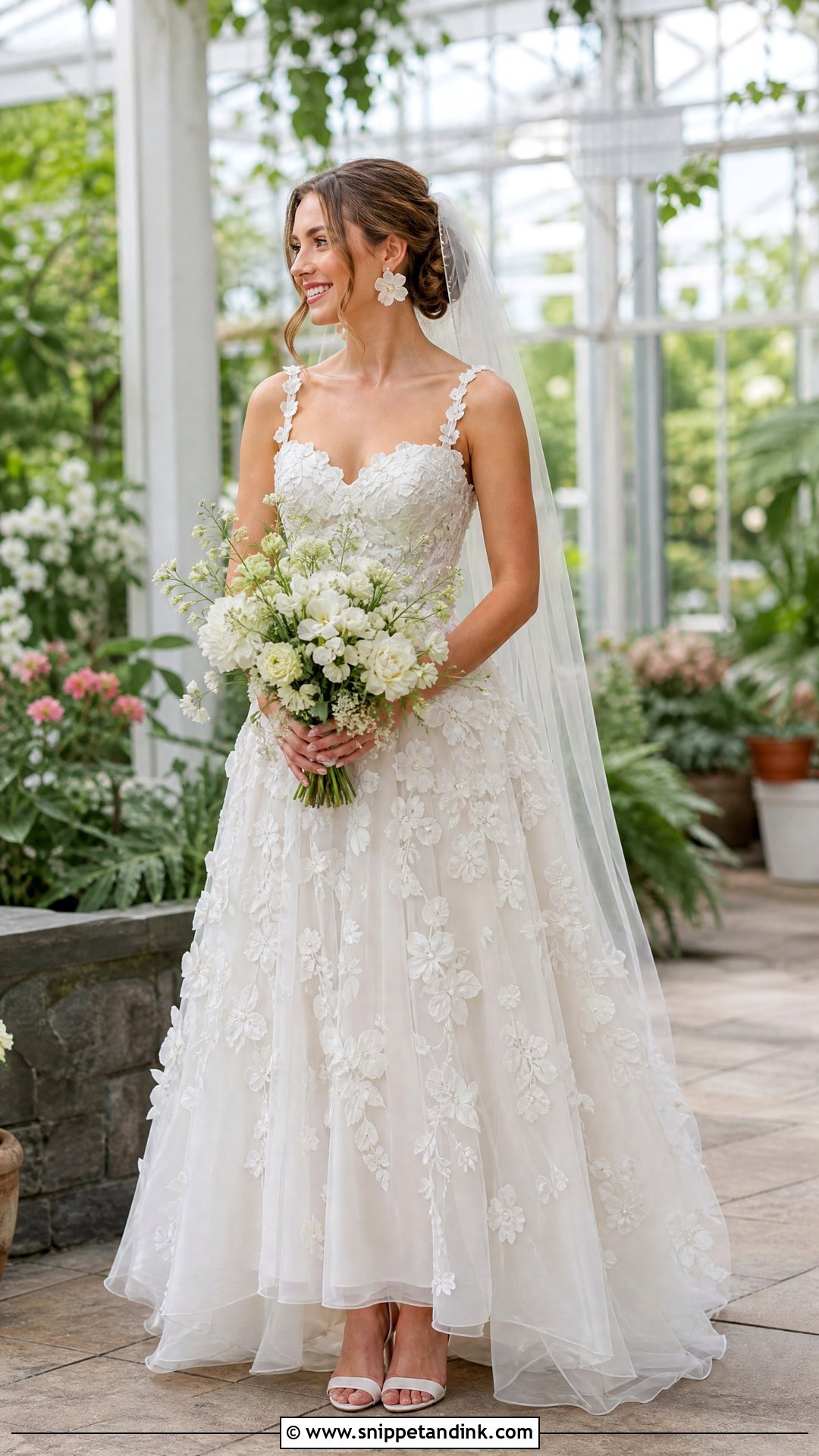
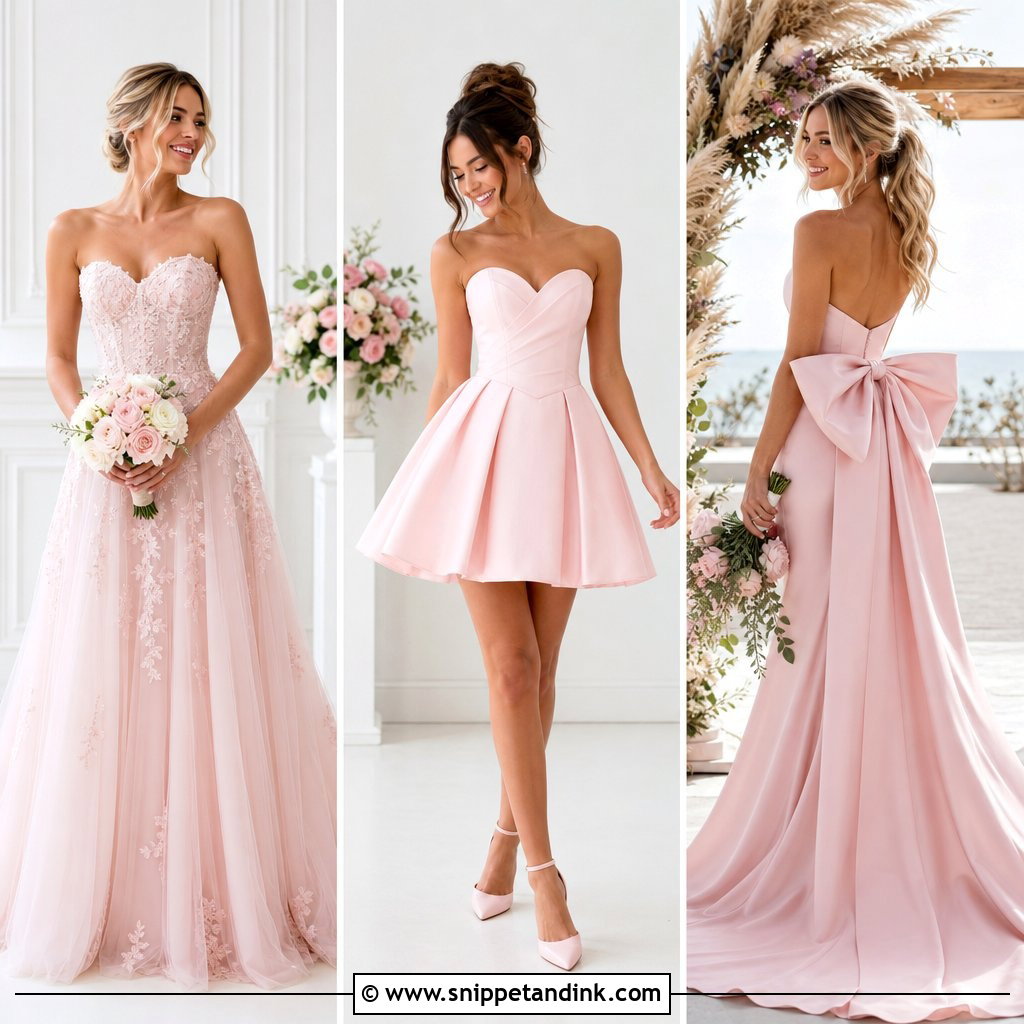
Three-dimensional flowers turn a familiar A-line into a textured gown. I look for appliqués clustered at the neckline, waist and upper skirt, then thinning toward the hem so the decoration doesn’t pull the eye downward or weigh the tulle. Ivory on ivory is classic; subtle blush flowers suit a garden. Raised fabric flowers get flattened in storage and in the car, so ask the shop to steam and plump them after the final pressing. Floral earrings, plain ivory heels and a sheer veil keep things calm, and a bouquet with similar flower shapes ties it all together. Gardens, greenhouses and spring estates are its natural setting.
8. Mikado Sweetheart Neckline A-Line Wedding Dress
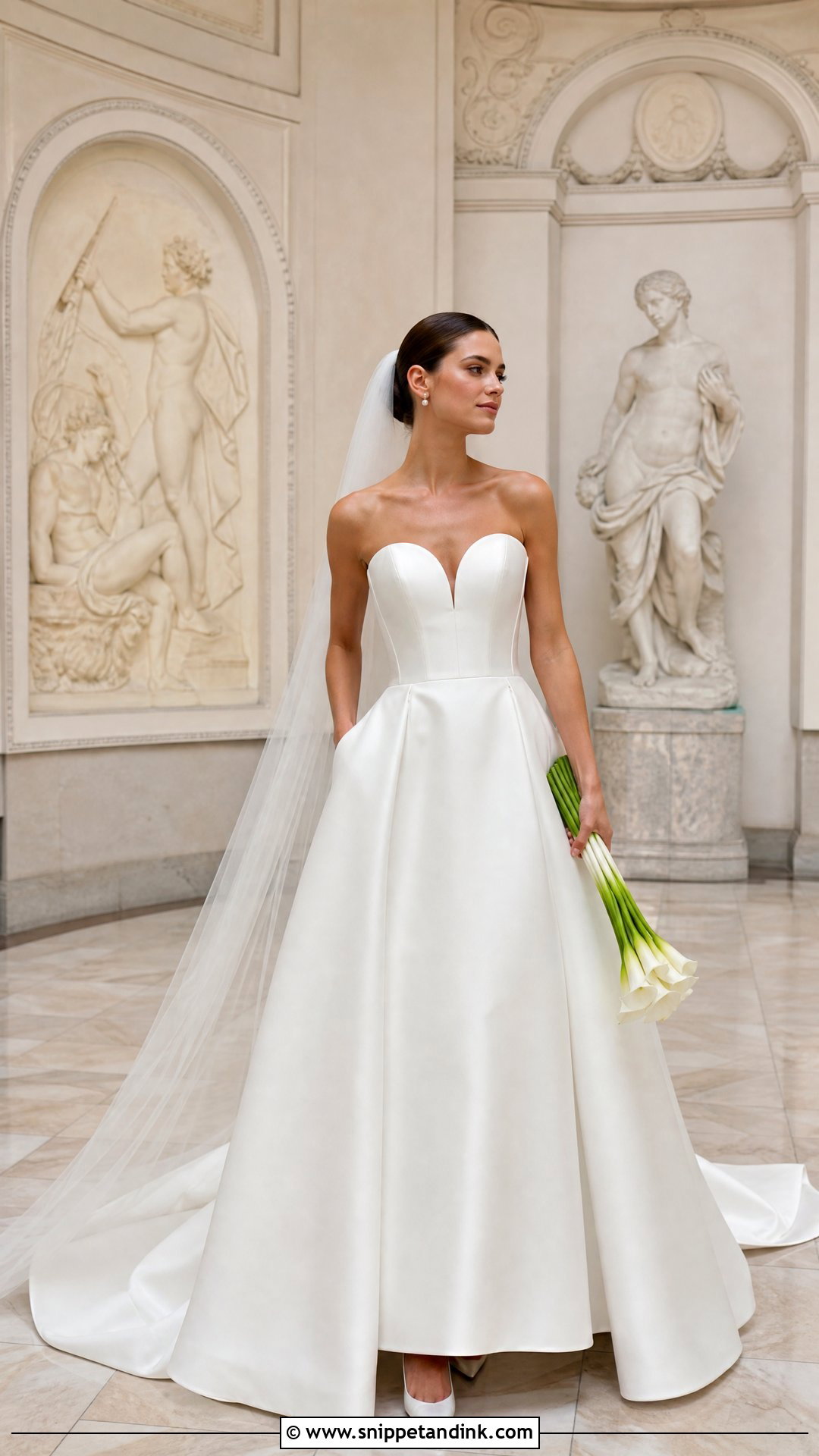
Mikado is a heavy, slightly crisp silk or silk blend, and it holds a sculpted bodice and a controlled skirt better than almost any other bridal fabric. Choose a clean natural waist, covered back buttons and deep side pockets so your hands have somewhere to go in photos. A medium train gives presence without being hard to manage. The trade-off is that Mikado creases across the lap when you sit, and those lines show in strong side light, so I steam it on site rather than trusting the shop pressing. Pearl and diamond earrings, pointed satin pumps, a long plain veil, a sleek bun and calla lilies suit its clean lines, while scattered beading fights them. Grand hotels, museums and cool-weather ceremonies are its home.
9. Tulle Sweetheart Neckline A-Line Wedding Dress
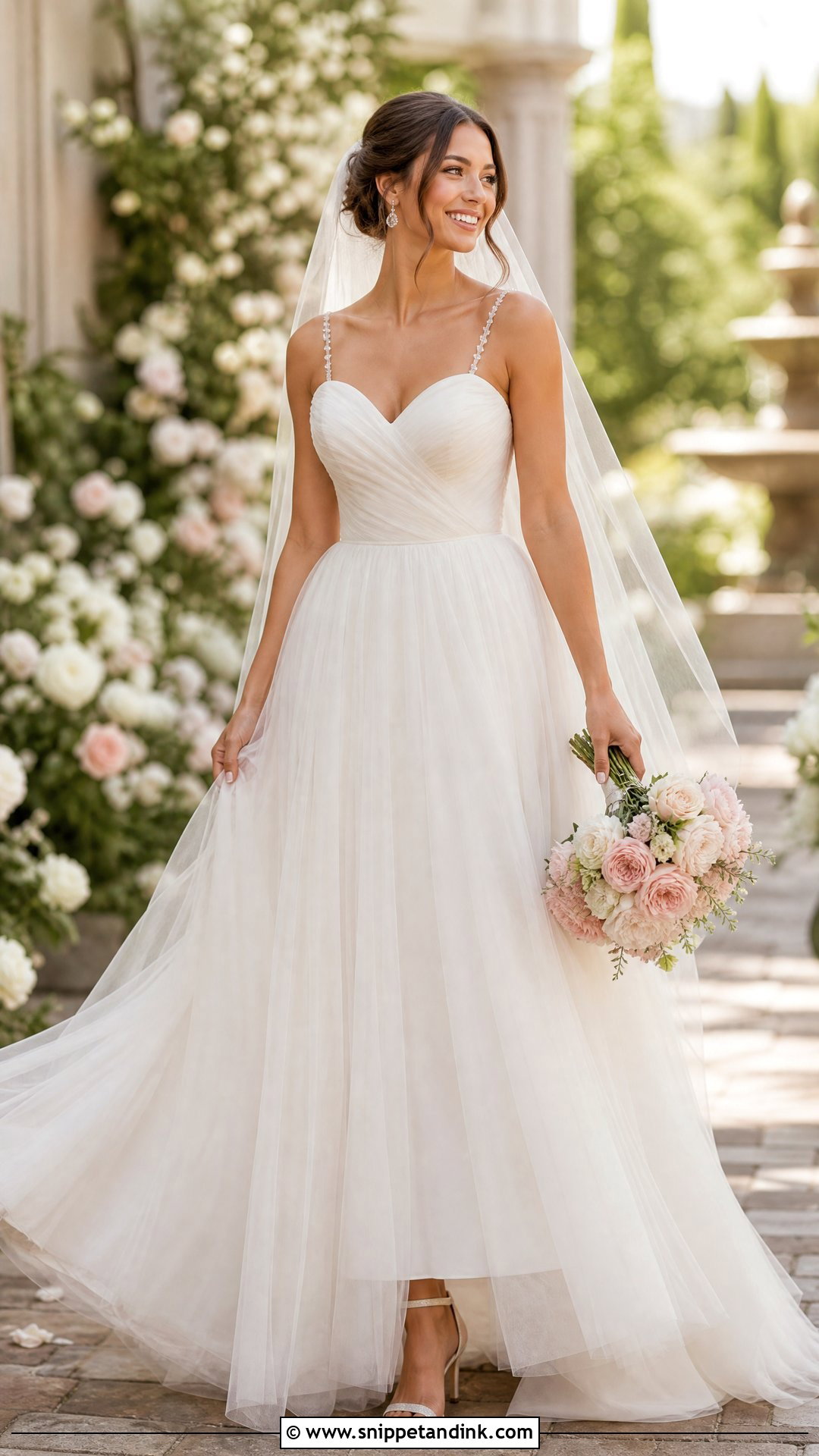
Several fine layers of tulle under a ruched or lightly laced sweetheart bodice give movement without the bulk of a ball gown. If you want the skirt to hold a clearer A shape, ask for horsehair braid at the hem; it stiffens the edge so the tulle flares instead of collapsing. Slim ankle-strap heels, small crystal studs and a fingertip veil that floats above the skirt keep it light, with white and pale pink flowers. Outdoors, the skirt catches every breeze, which looks good in moving shots. Tulle snags easily on bracelets and shoe buckles, so check that the lining is opaque and smooth against the legs before final alterations.
10. Chiffon Sweetheart Neckline A-Line Wedding Dress
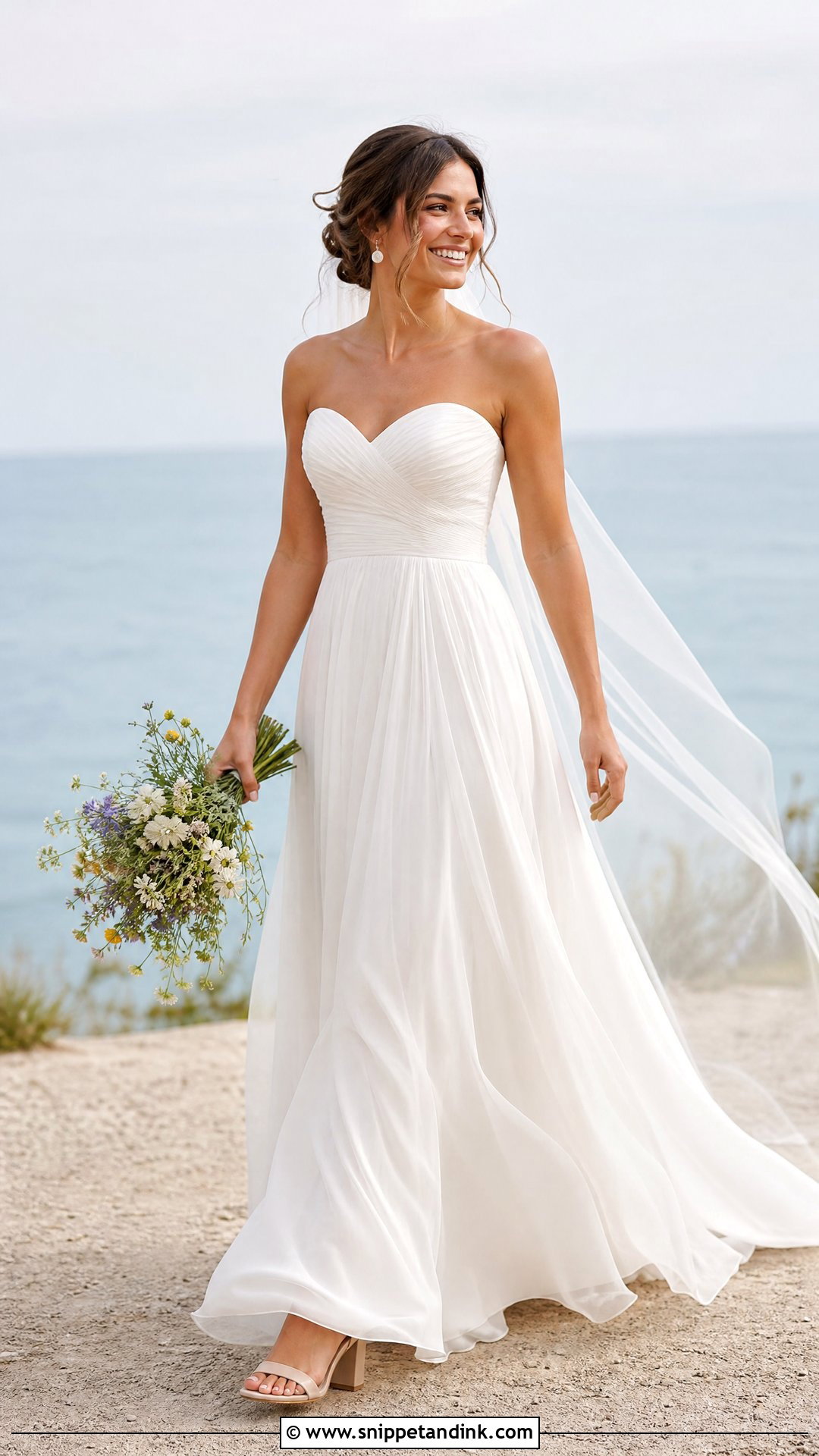
Chiffon is my answer when a bride says she wants to forget she’s wearing a gown. It’s light and falls from the waist in fluid layers without clinging to the hips. Because it has almost no body of its own, all the support has to come from the bodice underneath: soft pleating over a boned base, delicate straps or an illusion panel. Low block-heel sandals, a lightweight veil and small mother-of-pearl earrings suit it, along with loose waves or a twisted updo and a handful of white wildflowers. It breathes in heat, which is why it does so well at coastal and summer garden ceremonies. A well-cut lining keeps it from looking like a bridesmaid dress.
11. Crepe Sweetheart Neckline A-Line Wedding Dress
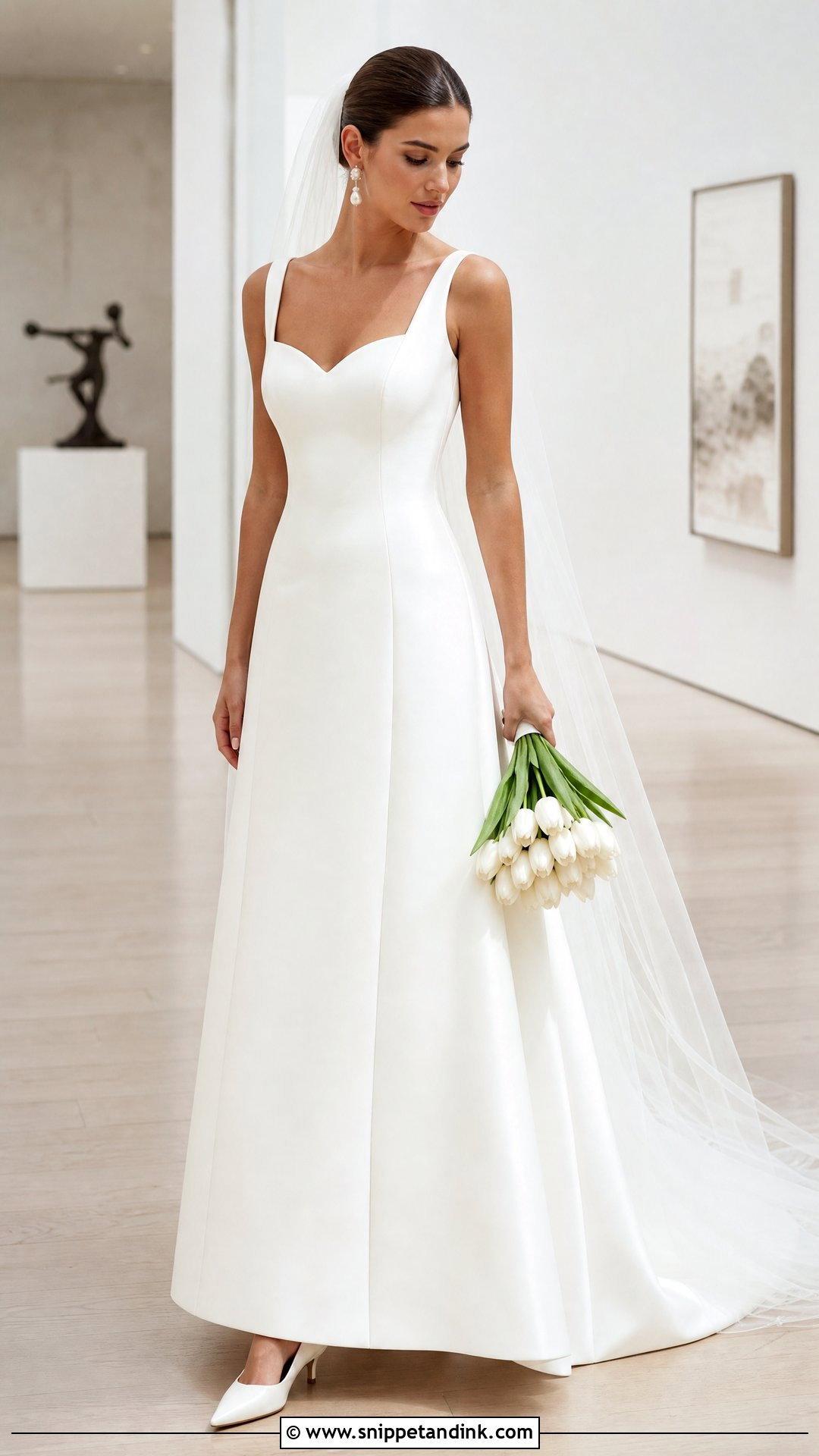
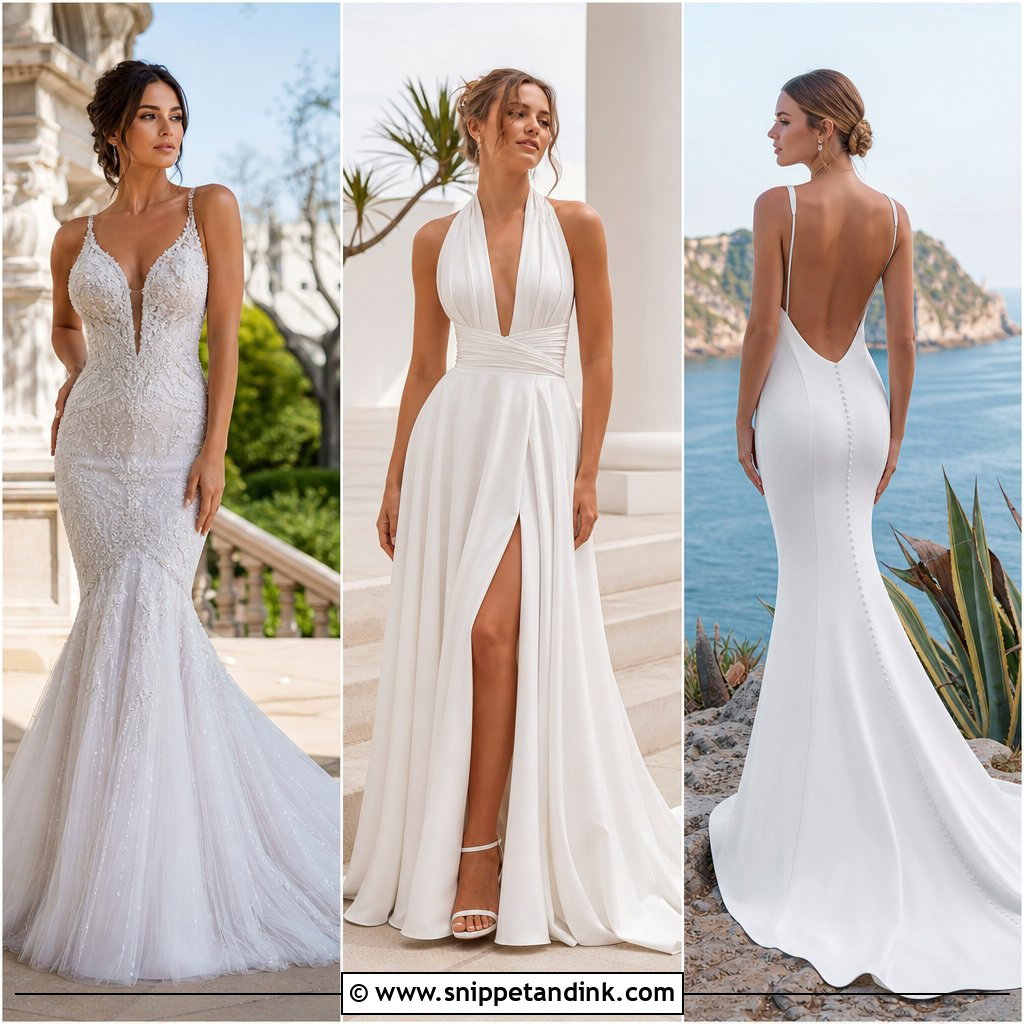
Crepe is unforgiving in the best sense. It’s smooth and matte, so construction and fit become the whole design. Princess seams and wide straps support the sweetheart bodice, and the skirt should skim the hips before widening toward the floor. A row of covered buttons down the back adds one traditional note. Keep the rest spare: sculptural pearl earrings, sleek ivory pumps, a plain cathedral veil, white tulips or calla lilies. Here’s the catch. Crepe shows every line underneath it, including bra edges and shapewear seams, so bring your actual underwear to every fitting and choose bonded, edge-free pieces.
12. Beaded Sweetheart Neckline A-Line Wedding Dress
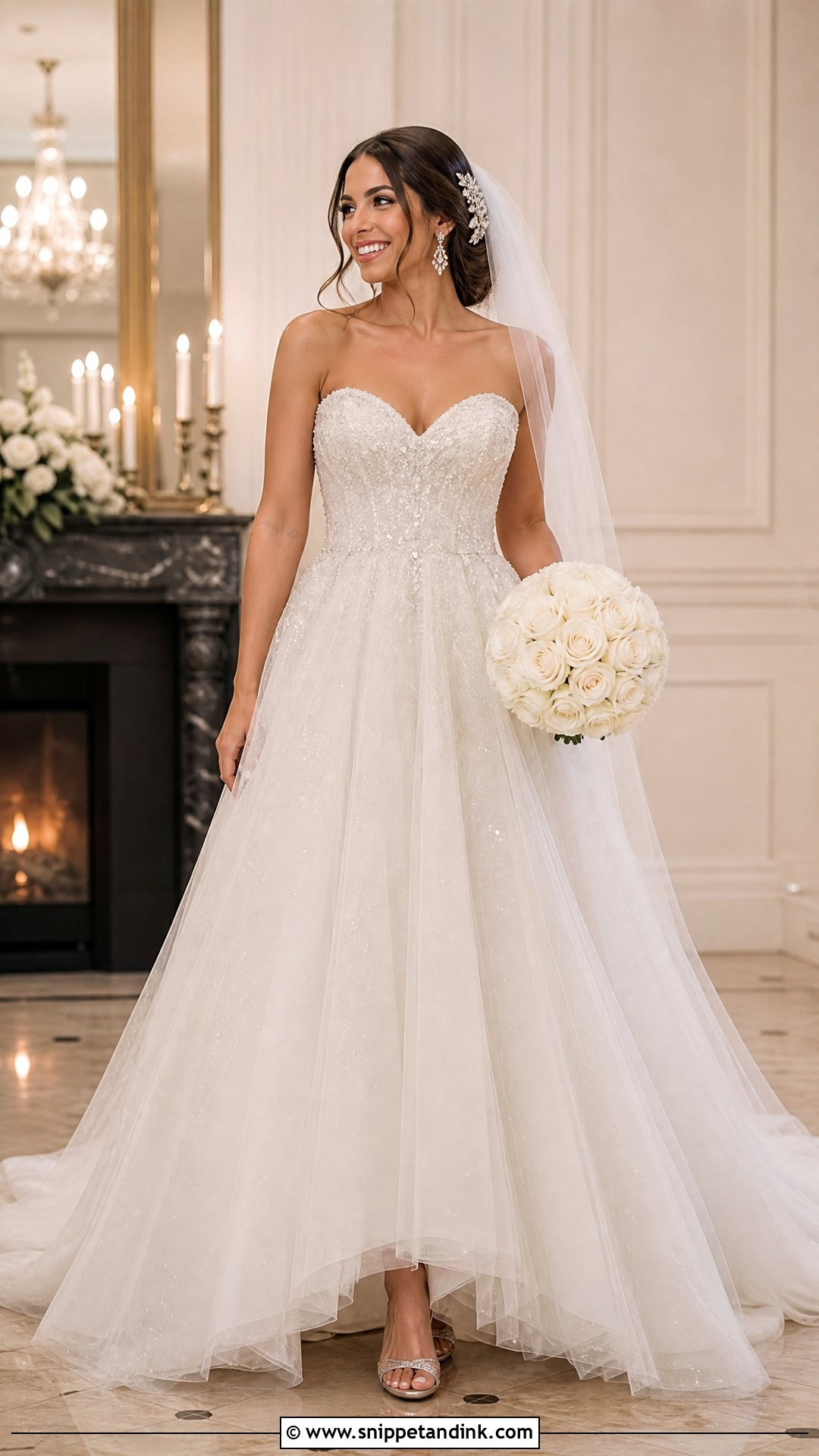
Concentrating fine crystal or glass beading on the bodice and letting it fade down the skirt pulls the eye up toward the face, and a tulle overlay adds a soft shimmer under evening lighting. Beading has real weight, though. On a strapless bodice that weight pulls the front edge down as the night goes on, which is one more reason to insist on a firm ribcage fit. Wear simple crystal studs, metallic ivory pumps and a sheer veil with minimal edging; a necklace would only compete with the neckline, so I move the sparkle to a bracelet or jeweled comb. Ballrooms and formal evenings suit it best. Drape your veil over the bodice at the fitting, because raised beads catch tulle and a snag mid-aisle is hard to undo.
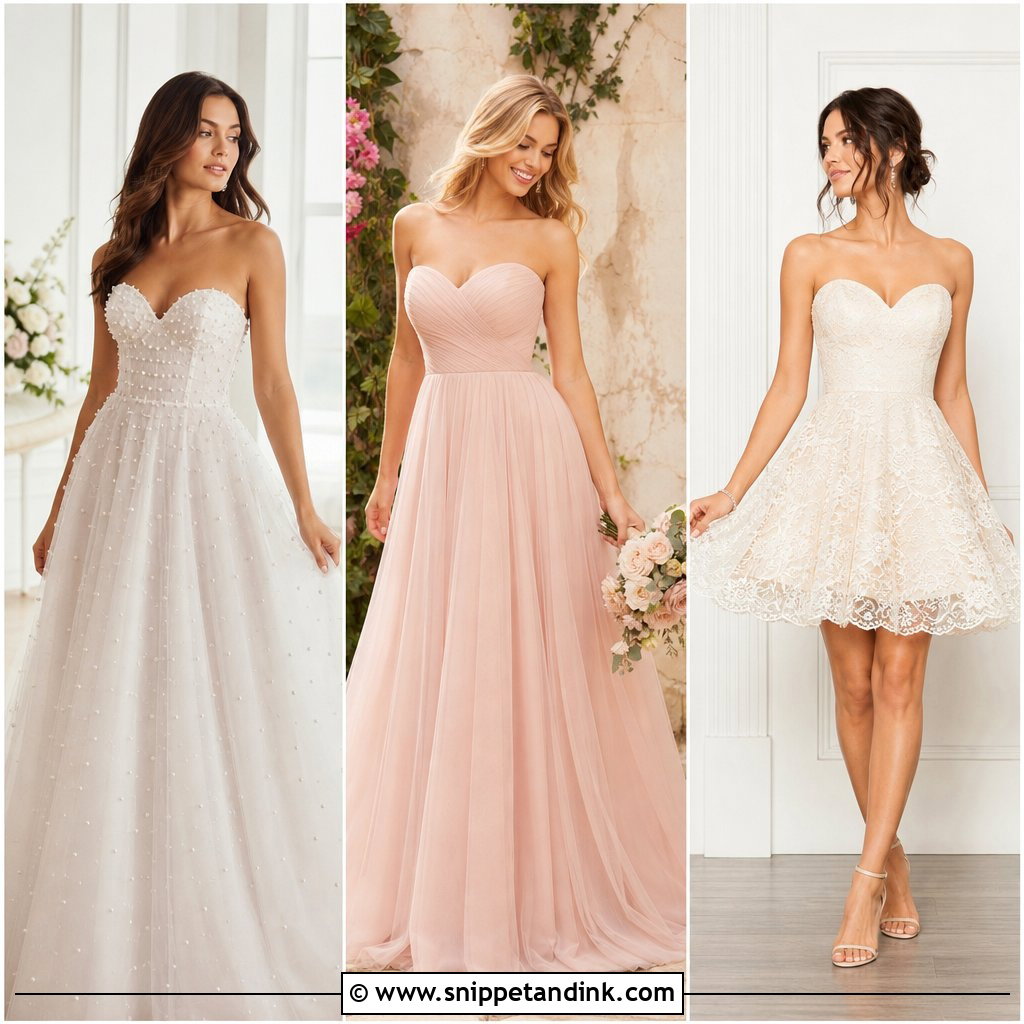
13. Pearl Sweetheart Neckline A-Line Wedding Dress
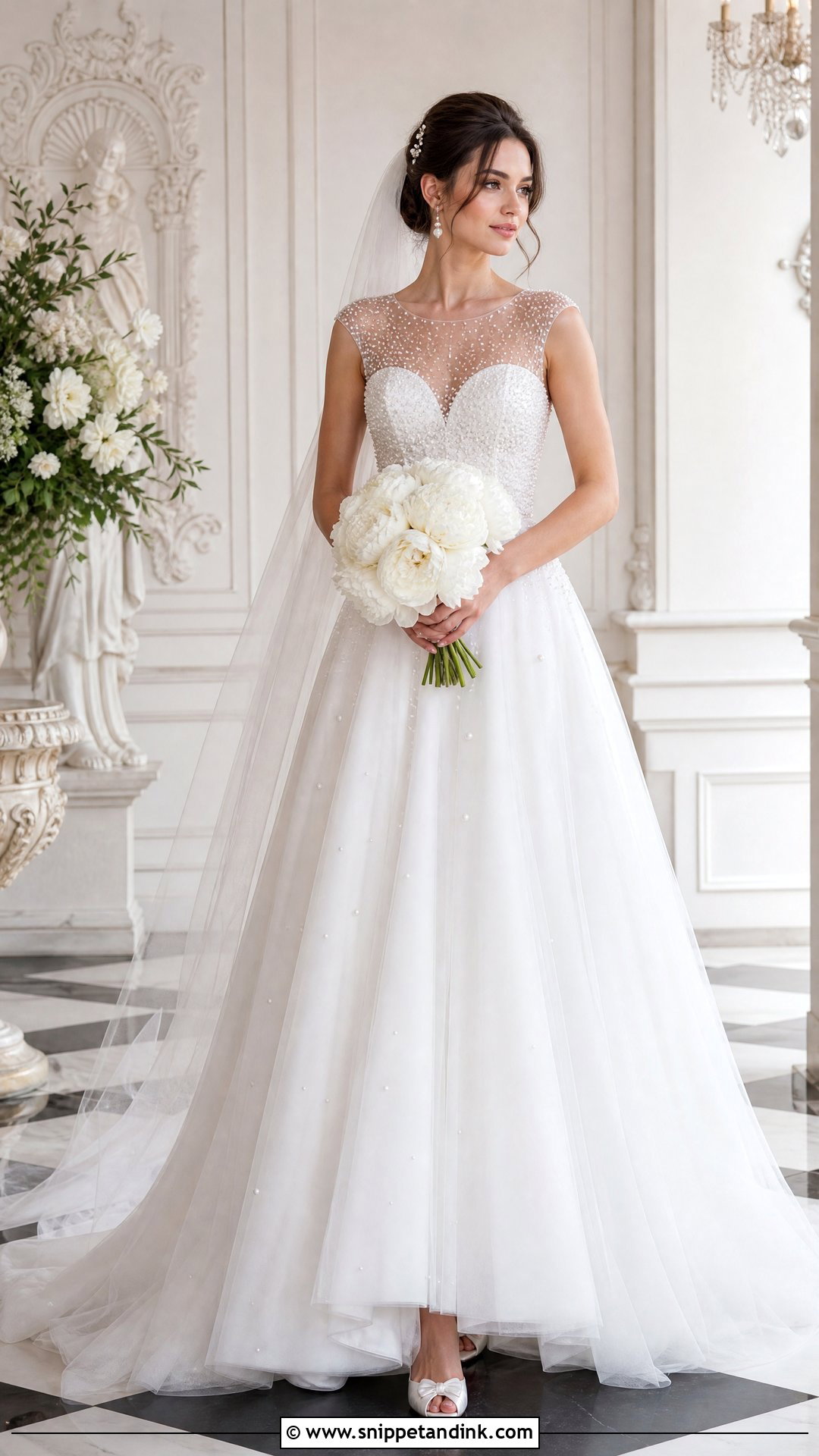
Pearls glow rather than sparkle, which is why they hold up in both daylight and candlelight. Look for small pearls scattered over an illusion corset, lace straps or the top layer of tulle. Even spacing reads refined; mixed sizes read more dimensional. Repeat them lightly with pearl drop earrings, satin heels, a veil edged with tiny matching accents and a few pearl pins in a low bun, and keep the bouquet to white roses or peonies. Then check the inner arm. Pearls sewn near the underarm can rub the skin raw by the reception if they sit where your arm swings.
14. Basque Waist Sweetheart Neckline A-Line Wedding Dress
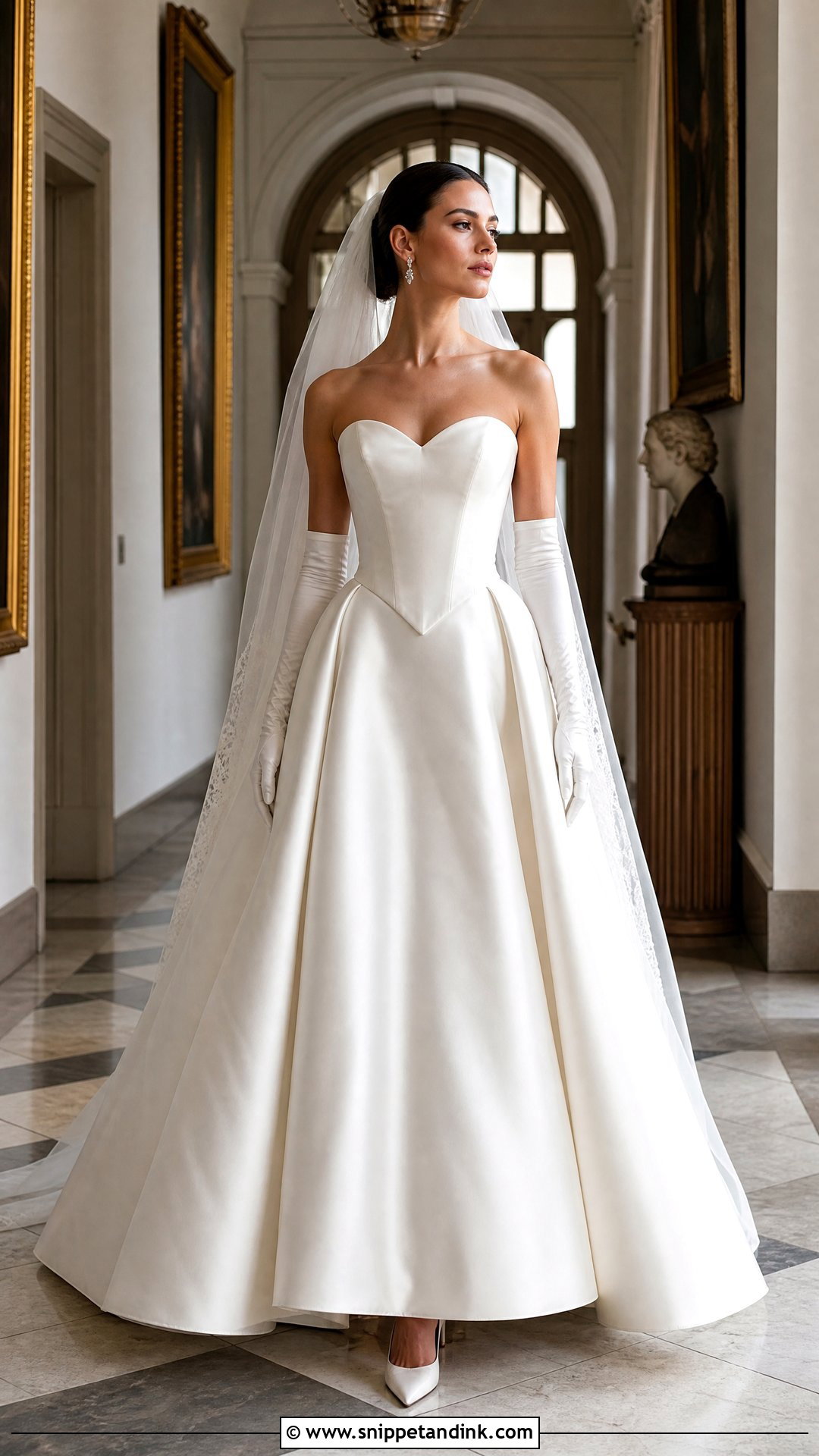
A Basque waist carries the sweetheart bodice down into a point below the natural waist, a vintage line that makes the torso look longer. It needs a structured skirt in satin or Mikado so the point stays visible, with light boning and curved seams easing the transition. I’d add pointed ivory heels, drop earrings, a chapel veil under a polished bun and, if you like, plain long satin gloves. Historic venues and formal evening ceremonies suit it. The seated test matters most here: the tip of the bodice presses into the lower stomach when you sit, so your seamstress may need to soften the angle slightly if it digs.
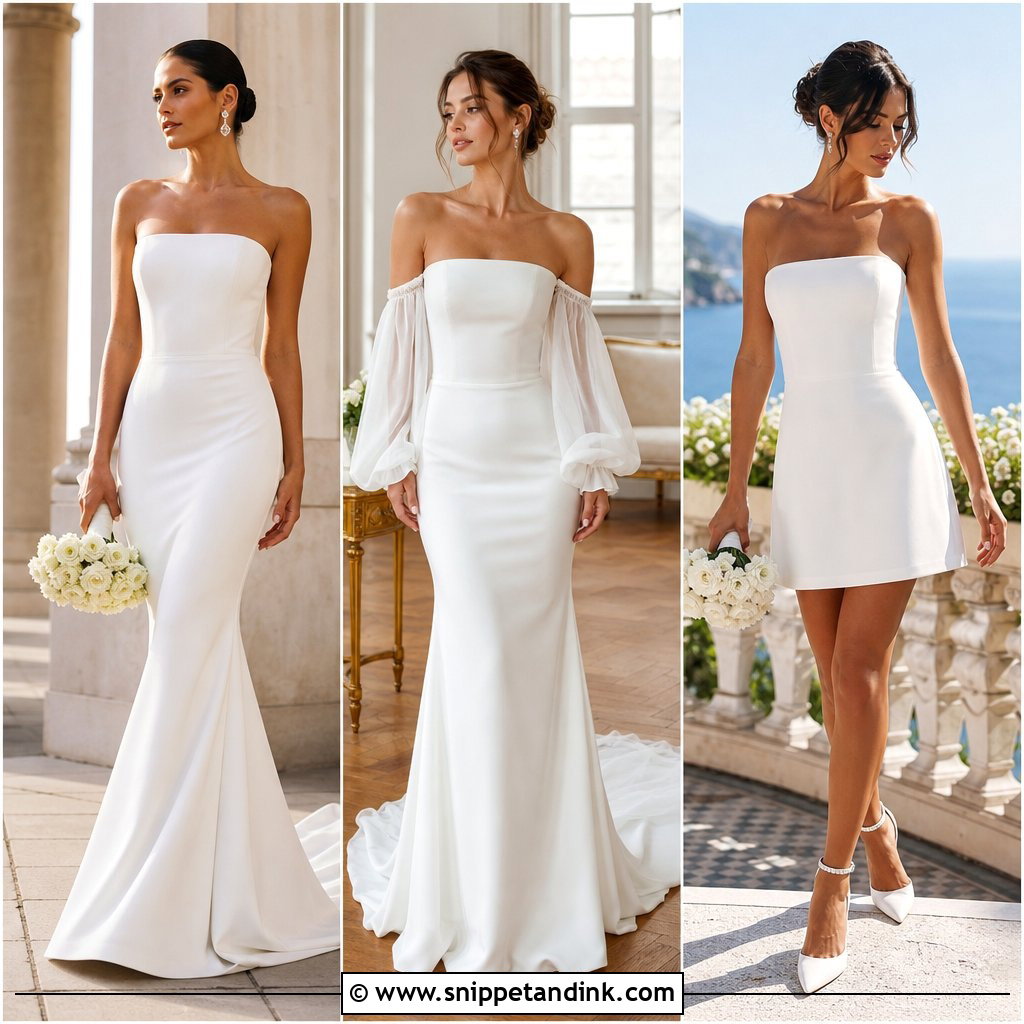
15. High Slit Sweetheart Neckline A-Line Wedding Dress
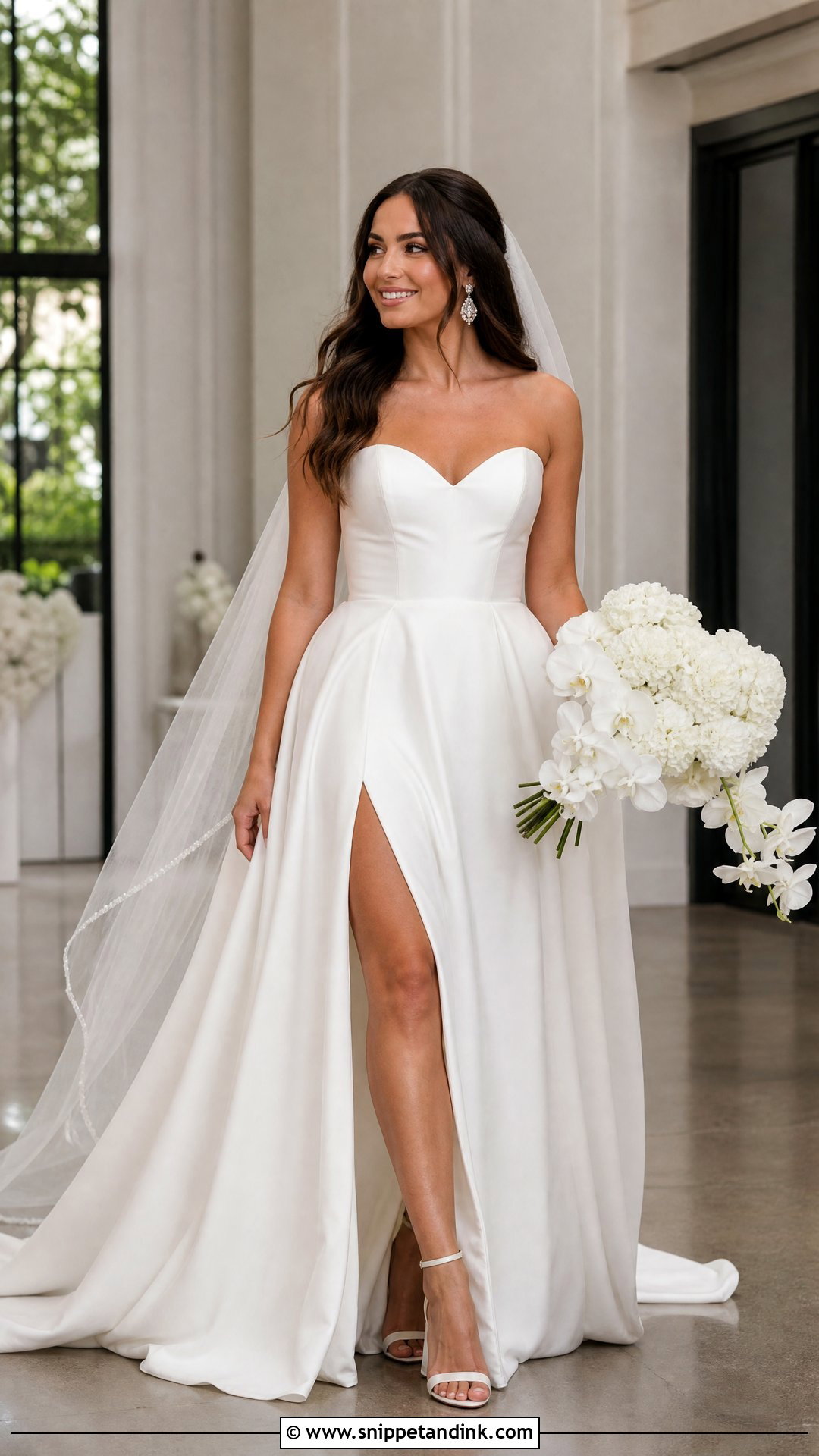
A high slit adds movement to the sweetheart A-line, and it works best in fluid satin, chiffon or layered tulle that opens as you walk and falls closed when you stand. A structured bodice balances the looser skirt. Your shoes will be seen, so pick ankle-strap heels stable enough to stand in through the vows, then add statement earrings, a plain fingertip veil and a side-swept hairstyle. I have the slit marked while the bride sits and climbs a step, not while she stands still. A slit that looks modest in the mirror can open far higher on a staircase, and a lined edge keeps it from flipping outward.
16. Blush Sweetheart Neckline A-Line Wedding Dress
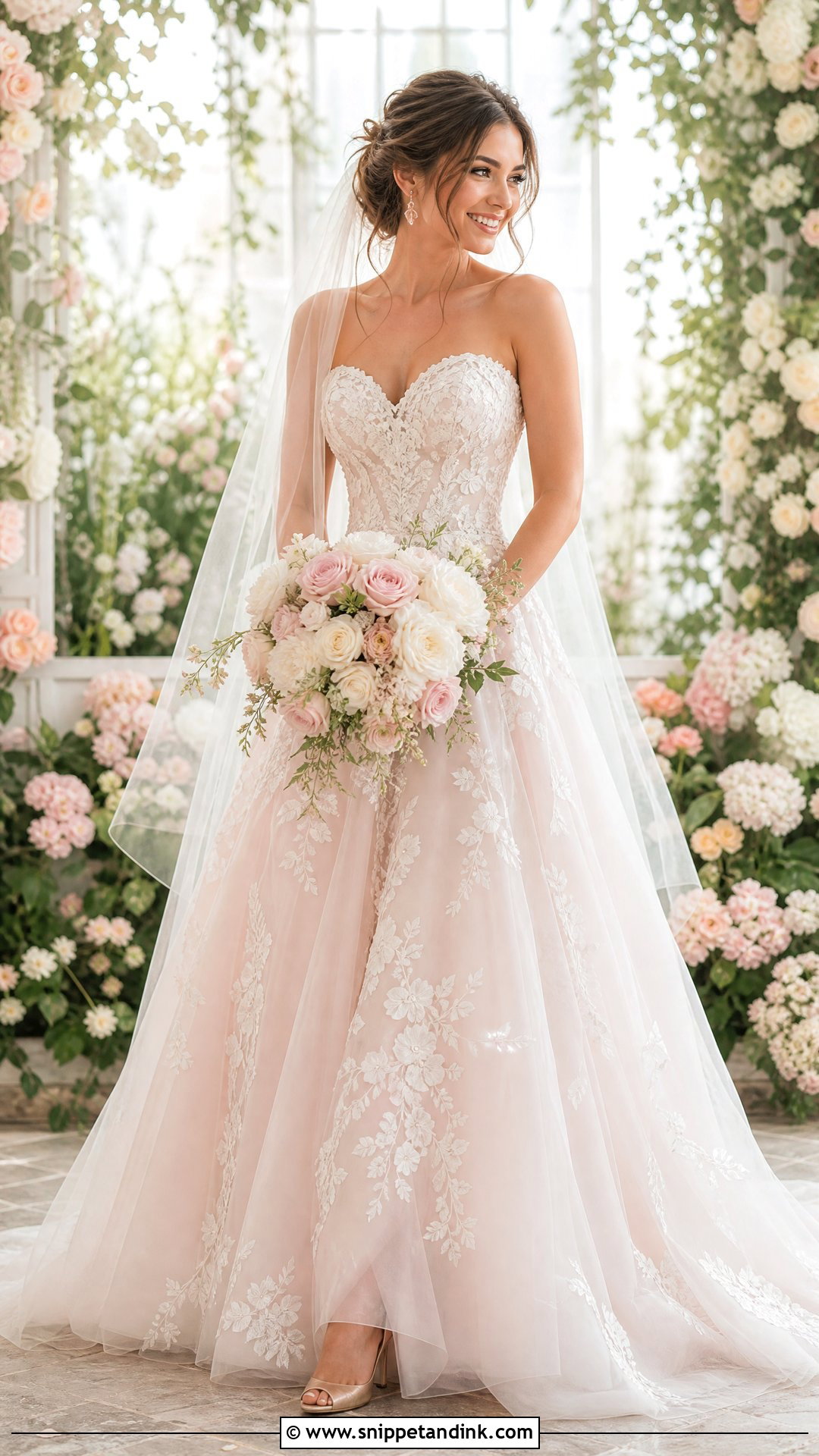
Blush is mostly a lining decision. A pale blush layer under ivory lace or tulle gives a hint of color and makes floral appliqués stand out against it. Champagne heels, rose-gold earrings and an ivory veil keep it bridal, and cream, pale pink and peach flowers carry the palette through. Compare blush, champagne and nude linings next to a window and photograph each one. Boutique lights run warm, so a blush that looks barely there in the shop can read pink, or completely white, outdoors. Hold the swatch up to your face as well, since some blushes flatter cool skin and others fight it.
17. Tea-Length Sweetheart Neckline A-Line Wedding Dress
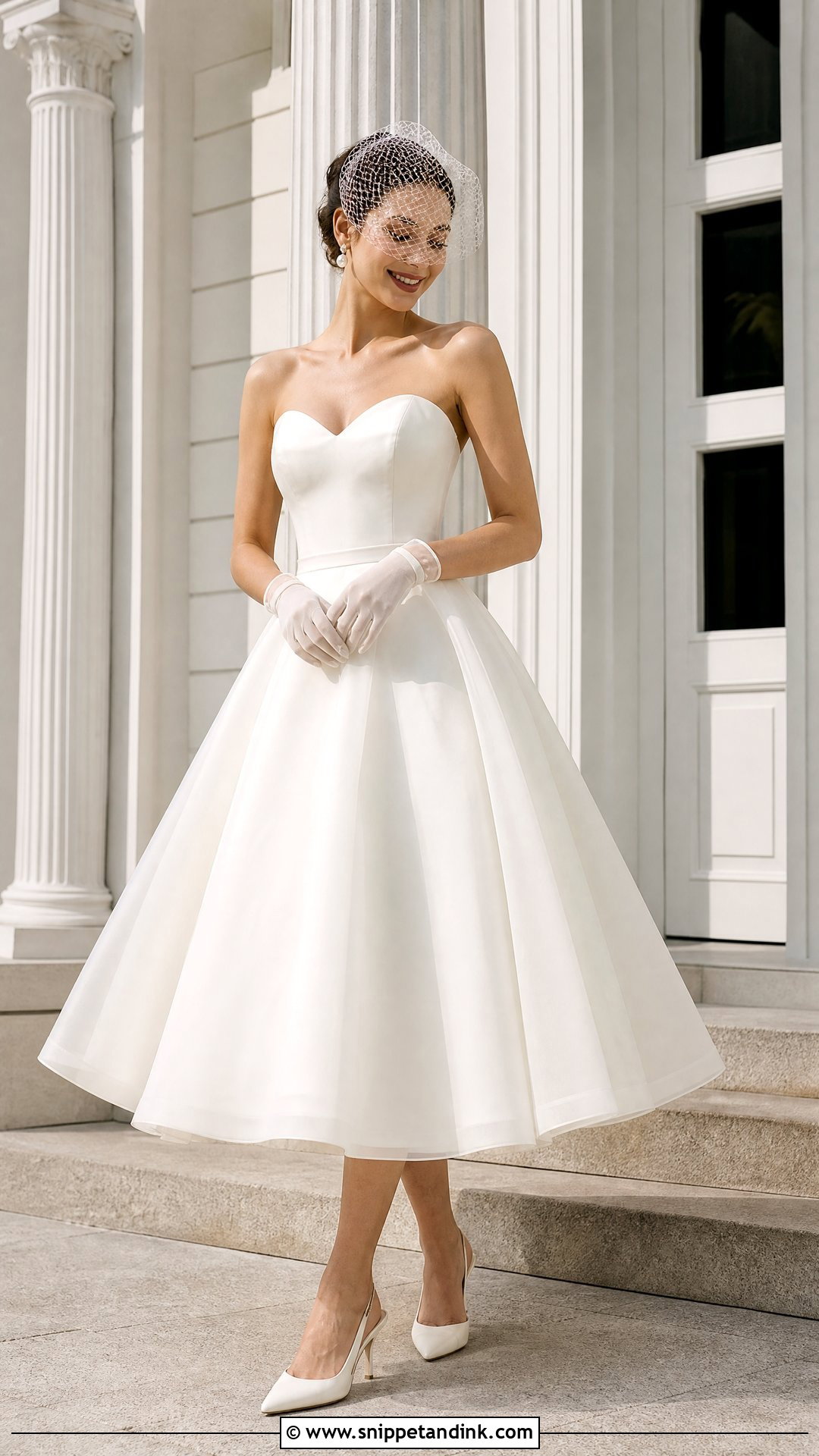
Tea length finishes somewhere between the knee and the ankle, and it needs enough structure in satin, organza or layered tulle to hold its flare rather than hanging limp. Because the hem shows your shoes, they become part of the design, so think pointed pumps, embellished block heels or slingbacks. Short gloves, pearl earrings and a birdcage veil push it retro; a plain fingertip veil softens it. It suits courthouse ceremonies and daytime weddings. With less skirt to look at, the eye goes straight to the neckline and waist, so the bodice has to fit exactly. Have the hem set while you wear the actual shoes, because a small difference changes the whole proportion.
18. Plus-Size Sweetheart Neckline A-Line Wedding Dress
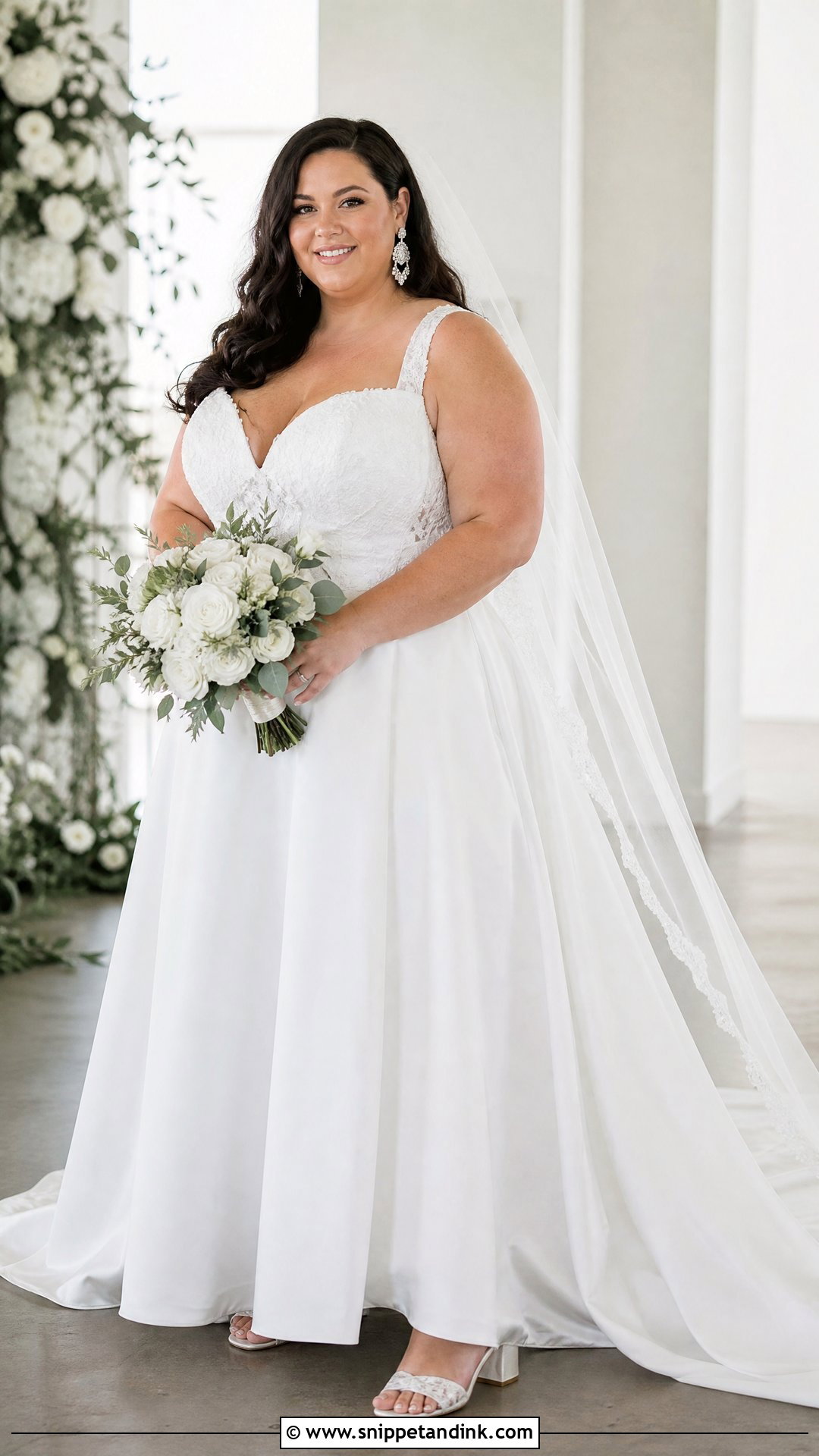
A plus-size sweetheart neckline A-line wedding dress has to support first, and the styling follows. I look for internal boning, built-in cups sized to the actual bust rather than to a sample, and wider straps or off-shoulder bands if you’d rather not rely on the bodice alone. A skirt that starts at the natural waist and falls over the hips without bulky gathers gives the cleanest line. Vertical lace appliqués lengthen; structured satin defines. Comfortable block heels, statement earrings and a veil in proportion to the train finish it. Ask boutiques for samples close to your size, and base alterations on your measurements, not on rules about what certain bodies are supposed to wear.
19. Boho Sweetheart Neckline A-Line Wedding Dress
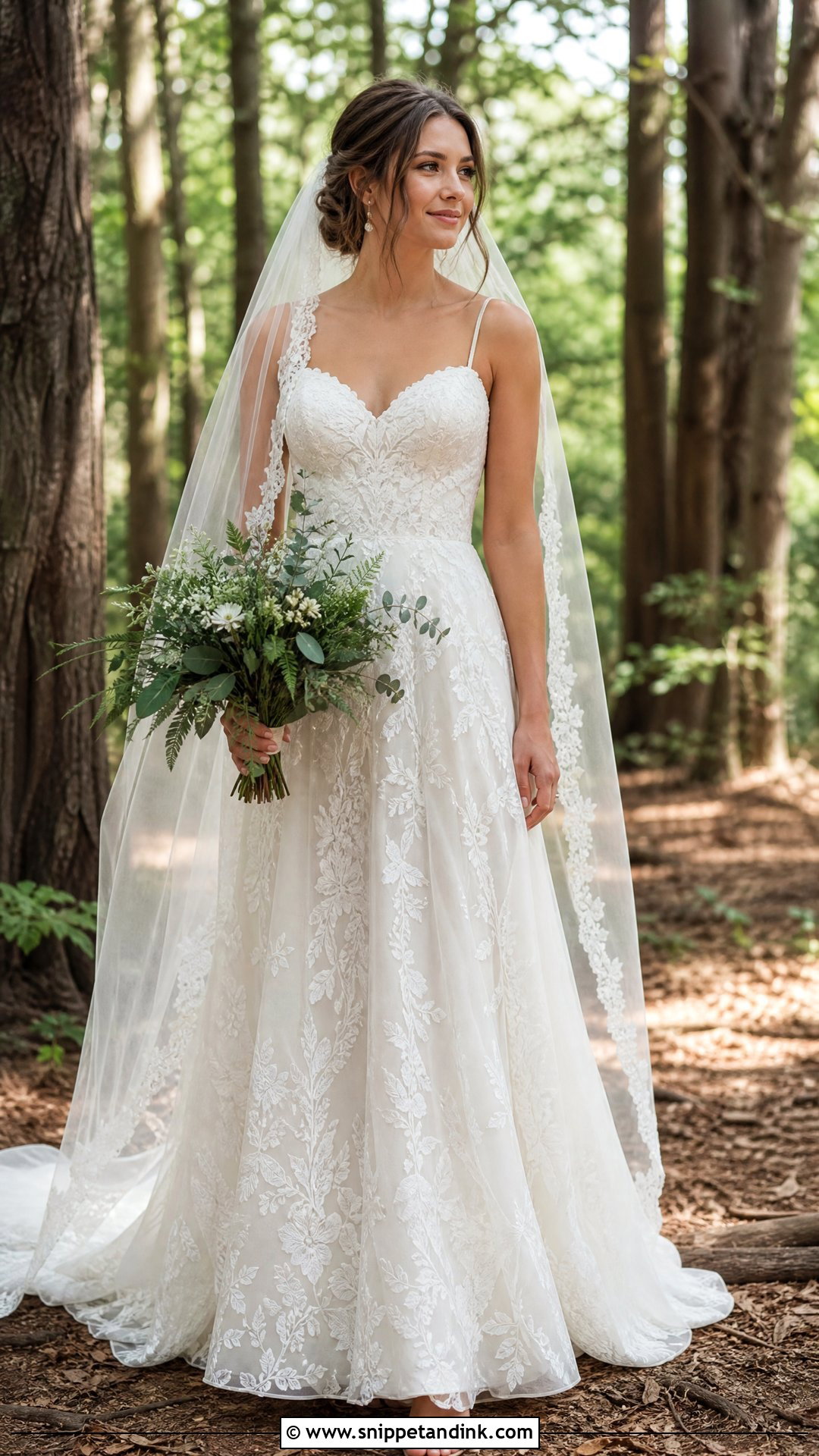
Boho only works when the details agree with each other. Botanical lace, slender straps and a light skirt keep it relaxed, while a lightly structured bodice still does the supporting underneath. Low block-heel sandals sink less than stilettos on grass, which matters at farm and woodland venues. Delicate drops, a lace-edged veil, loose waves or a braided updo, and a gathered bouquet of white flowers and grasses suit the easy shape. Where it goes wrong is layering. A flower crown, a heavy necklace, fringe and two lace patterns at once tip it into costume, so pick one lace and hold back on the rest.

20. Cathedral Train Sweetheart Neckline A-Line Wedding Dress
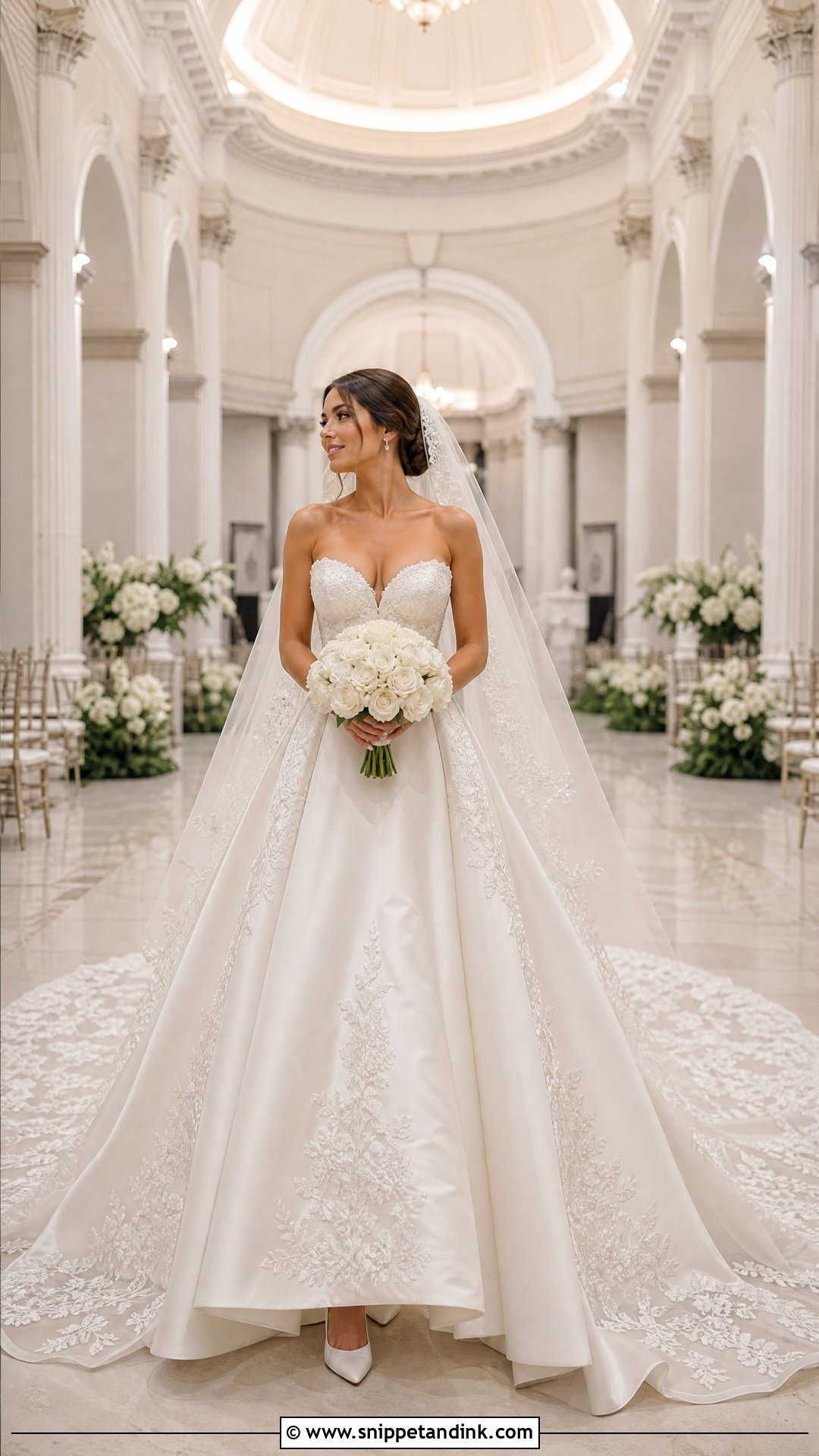
A cathedral train is about the entrance. Pair a structured satin bodice with a lace-covered skirt for a formal result, or keep the gown plain and let the train carry it. Choose a train whose edging or appliqués still show once it’s spread out behind you. A cathedral veil, sparkling studs and closed-toe pumps complete it, and your hair has to be pinned firmly enough to carry the longer veil. Measure the aisle before you commit, since in a narrow chapel this much fabric blocks the front pews. Ask your seamstress for a bustle and have a bridesmaid practice fastening it at the final fitting, because hooks and ribbon loops are confusing in a dim reception room.
Three Fittings, and What Gets Fixed at Each
Most gowns need two or three fittings, the first usually around two to three months before the wedding and the last in the final few weeks. Bring the shoes and underwear you will actually wear to every single one, or the hem and the bodice are being set for a different body.
- First fitting: the big changes. Side seams are taken in, cups adjusted, straps shortened and the hem pinned. This is when a gapping sweetheart edge gets tightened.
- Second fitting: those changes in motion. I ask the bride to sit, climb a step and lean forward as if signing papers, and I watch the top edge every time.
- Final fitting: bustle, pressing and handover. Whoever helps you dress should come along, learn the closures and practice the bustle twice.
If you expect to lose or gain weight before the wedding, say so at the start. The bodice is normally the last thing taken in for exactly that reason.
When a Strapless Bodice Starts Slipping at the Reception
Even a well-fitted strapless bodice can creep down after hours of dancing, especially in heat, when damp skin lets fabric slide. A small kit in a bridesmaid’s bag handles most of it.
- Double-sided fashion tape pressed along the inside of the top edge where it has started to lift.
- A few safety pins and a needle already threaded with ivory thread for a loose hook or a popped bustle loop.
- Blotting papers to dry the skin under the edge before re-taping, since tape will not hold on damp skin.
If it keeps sliding, have someone retighten the lace-up back or re-hook the waist stay. A waist stay is a grosgrain band sewn inside the gown at the waist that carries much of the weight, and if your dress doesn’t have one, ask for it at the first fitting.
A Curve That Fits Comes Before Any Lace or Beading
The sweetheart and A-line pairing takes almost any bridal direction, from plain crepe and structured Mikado to chiffon, floral lace and sparkling tulle. What I’d ask you to judge it on is the bodice. Sit, walk, raise your arms and lean forward at every fitting, and look at the top edge each time. Then build outward to the shoes, veil, jewelry, hair, bouquet and the weather you’re likely to get. Treat these 20 dresses as a starting point, and keep adjusting fabric, sleeves and color until you stop thinking about the gown and start enjoying it.
You'll Like These Ideas:



Leave a Reply