
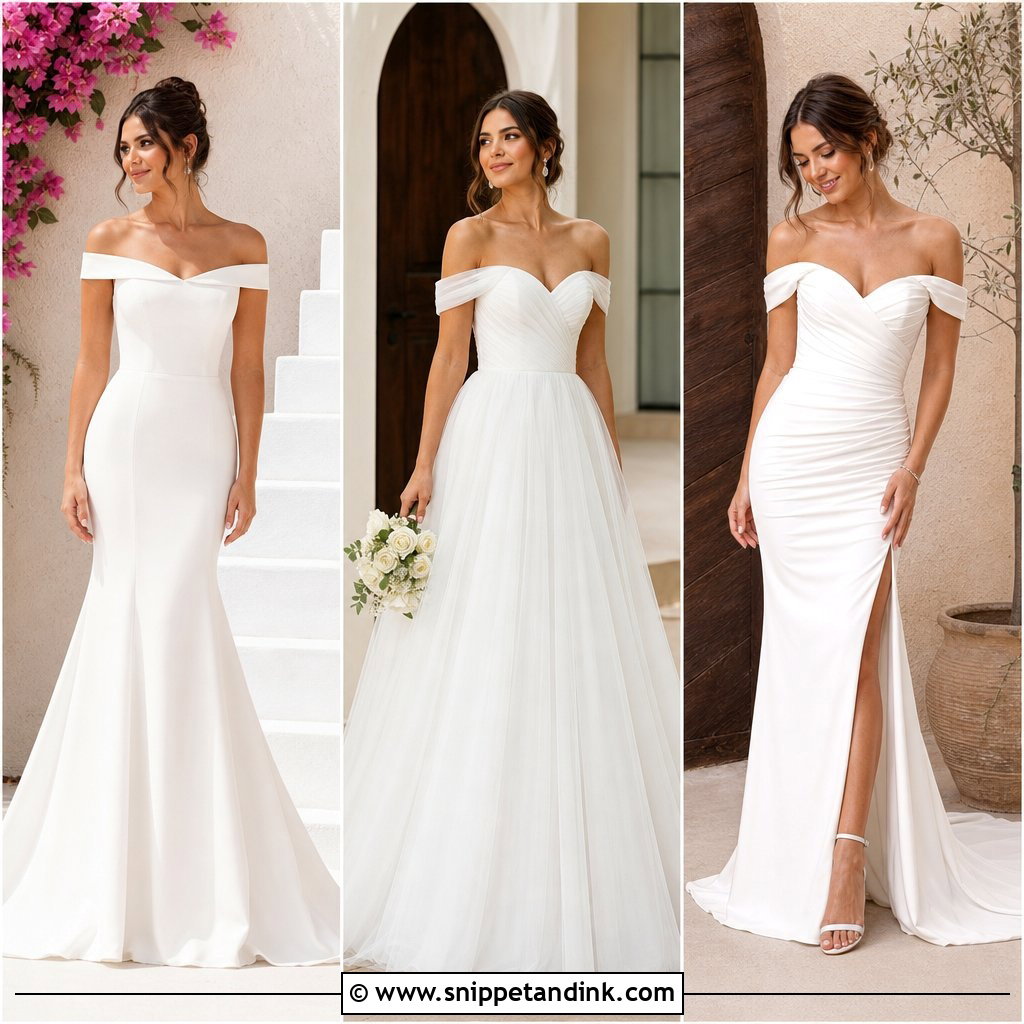
When a bride tells me she wants something elegant that doesn’t look overdone, I usually start her in an A-line gown. It fits through the bodice and then widens gradually to the hem, which flatters more figures than any other shape and works in almost every fabric: clean satin, airy chiffon, smooth crepe, fine lace and crisp mikado. Square necklines and pared-back, 1990s-style cuts are having a moment, and they suit this silhouette well. A plain dress puts more weight on everything around it, though. Shoes, jewelry, the veil, the flowers and your hair decide its mood. Here are twenty simple A-lines, each styled from head to toe, with what I look for in the fitting room.
Where the Waist Sits on an A-Line, and Why It Matters
Two A-line dresses can look nothing alike on the same bride, and the difference is almost always the waist seam and the width of the skirt. When I pull simple A-lines for a fitting, I sort them by those two things before neckline or fabric.
- Natural waist. The seam sits at your narrowest point. It’s the most classic proportion and suits most heights, especially if you want to show a defined waist.
- Slightly dropped waist. The seam sits an inch or two lower, which lengthens a short torso. On a long torso it can make the legs look shorter.
- Raised waist. Sitting closer to the bust, it lengthens the legs and suits petite brides, but on a fuller bust it can tip toward maternity wear.
Then look at how fast the skirt widens. A narrow A-line that barely flares looks modern and suits a slim venue aisle. A wide sweep reads more formal and needs firmer fabric, like mikado or satin, to hold it. If you’re petite, I’d keep the sweep modest so the skirt doesn’t swallow your frame. If you’re tall, you can carry a wider skirt and a longer train comfortably.
My quick test at a fitting: stand side-on to the mirror. If the skirt juts out sharply from the hip, the A-line is too wide for you. If it hangs straight down, it’s too narrow to give you shape.
1. Simple Satin A-Line Wedding Dress
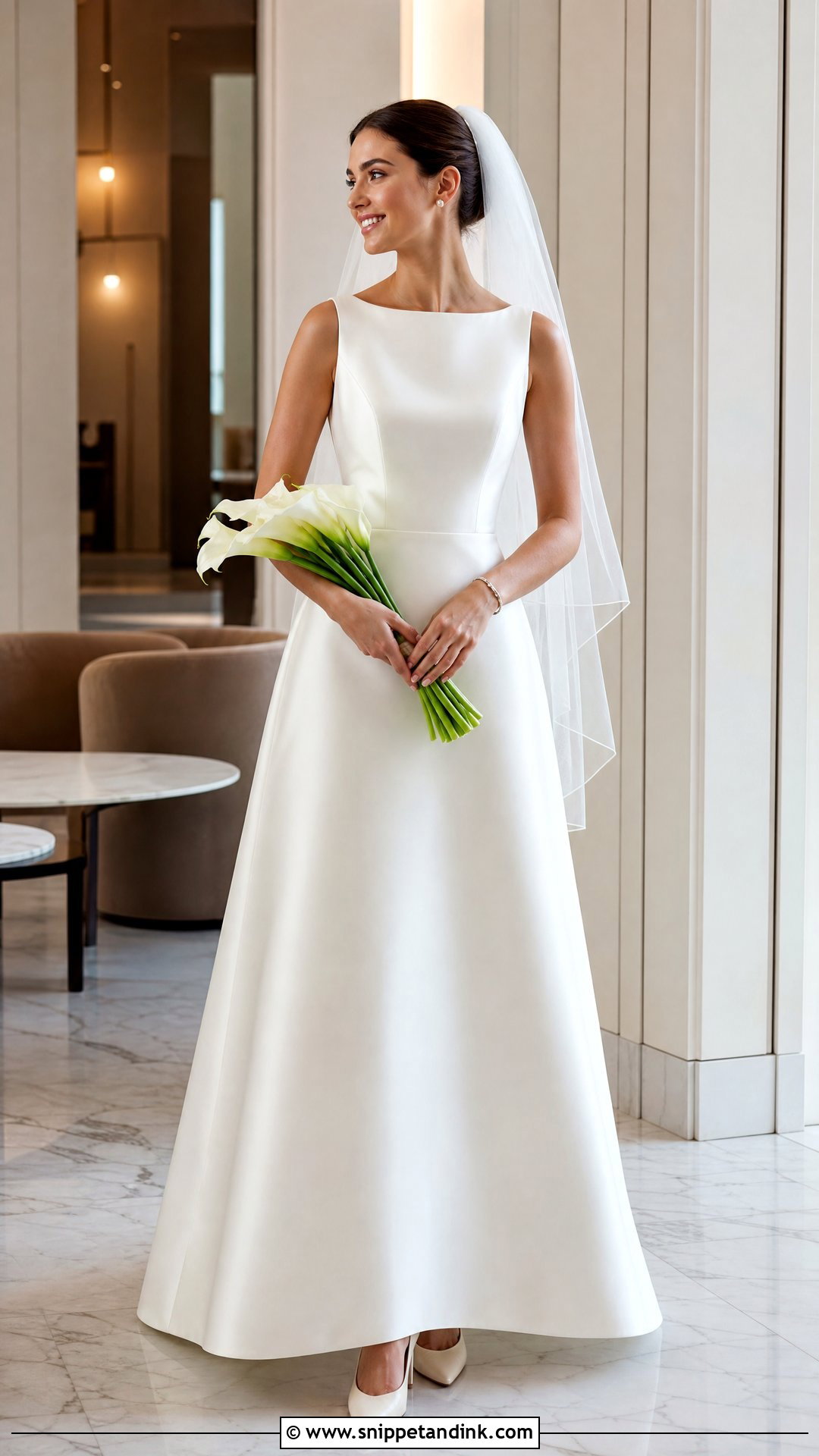
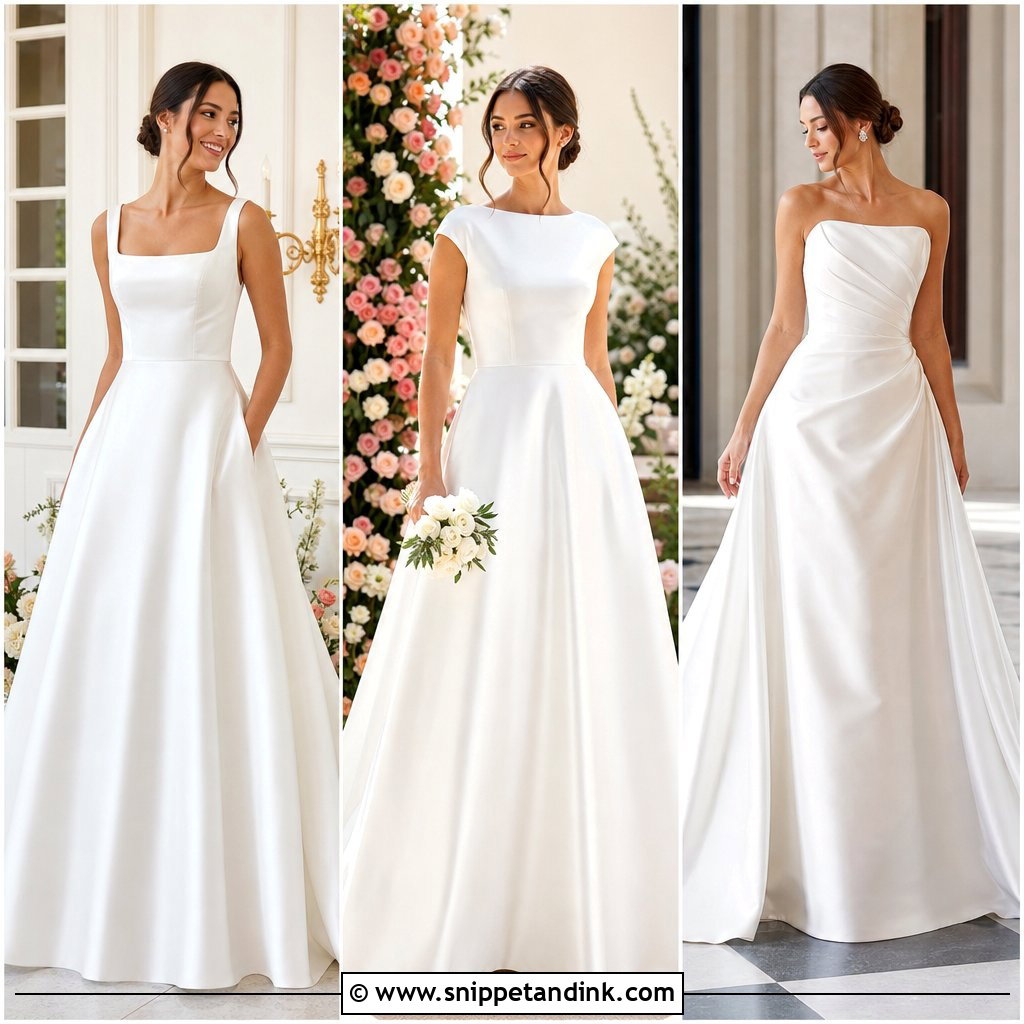
Satin does the decorating on this one. A fitted bodice, a natural waist and a softly structured skirt without much volume; a bateau or shallow scoop neck keeps it classic. On a plain satin A-line, the side seams and the zip are the only lines on the dress, so I check they run perfectly straight from underarm to hem. Pointed ivory pumps or low slingbacks, pearl studs and a slim bracelet. A single-layer fingertip veil, a small bouquet of white roses or calla lilies and a sleek low bun finish it. A formal indoor ceremony or a modern hotel suits it.
2. Square Neck A-Line Wedding Dress
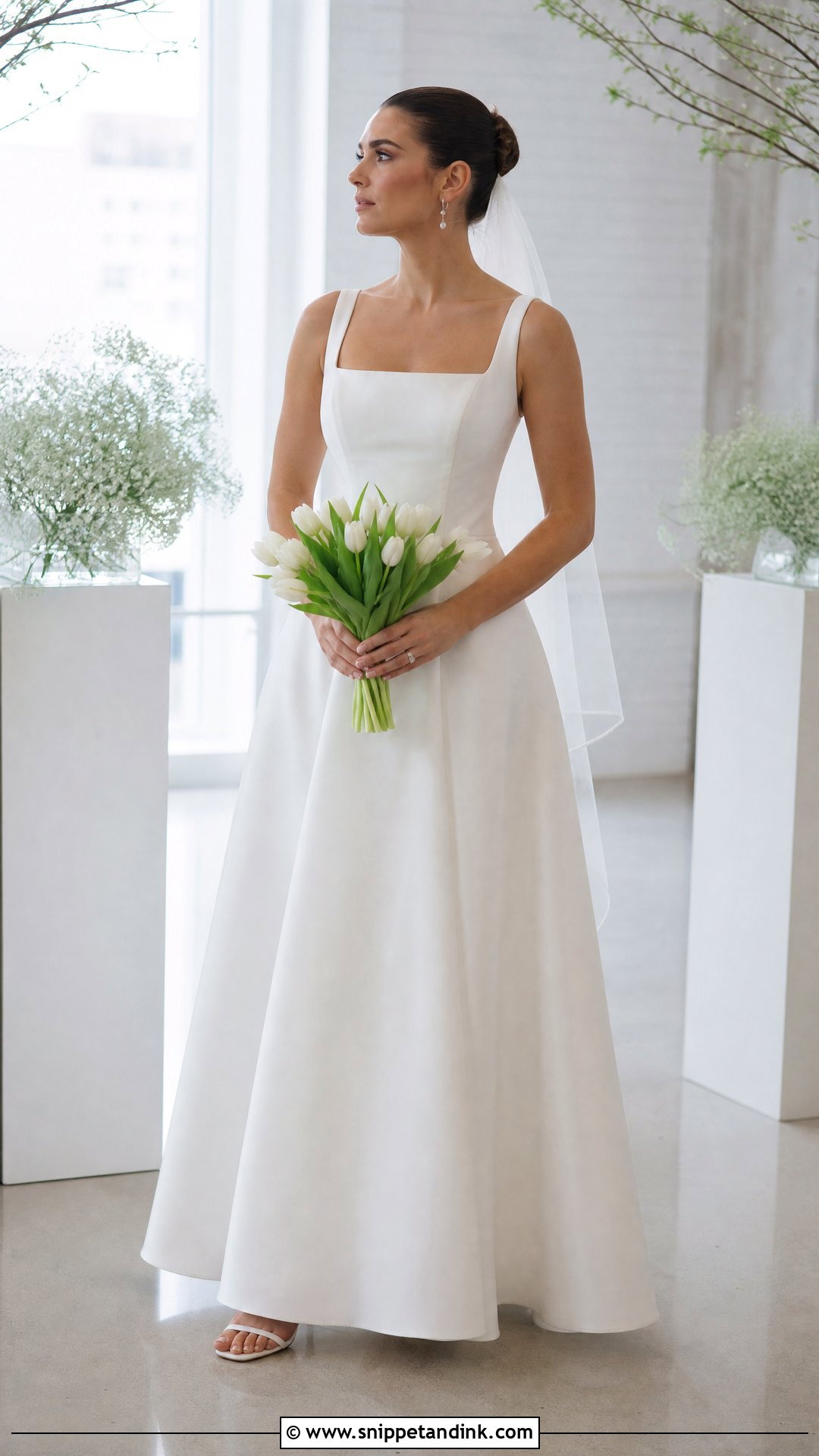
Square necks look modern on an A-line because they add straight lines to a shape that’s otherwise all curves. Wide straps, a softly fitted bodice and a plain satin or mikado skirt with controlled fullness. The open square frames a delicate pendant well, though small drops alone are enough. Here’s my one fitting warning: the two front corners are where a square neck lifts when you move, so test it bending forward. Block-heel sandals or pointed pumps, a medium-length veil under a smooth bun and a neat bouquet of white tulips or ranunculus. Natural makeup and a neutral manicure keep it quiet.
3. Long Sleeve Crepe A-Line Wedding Dress
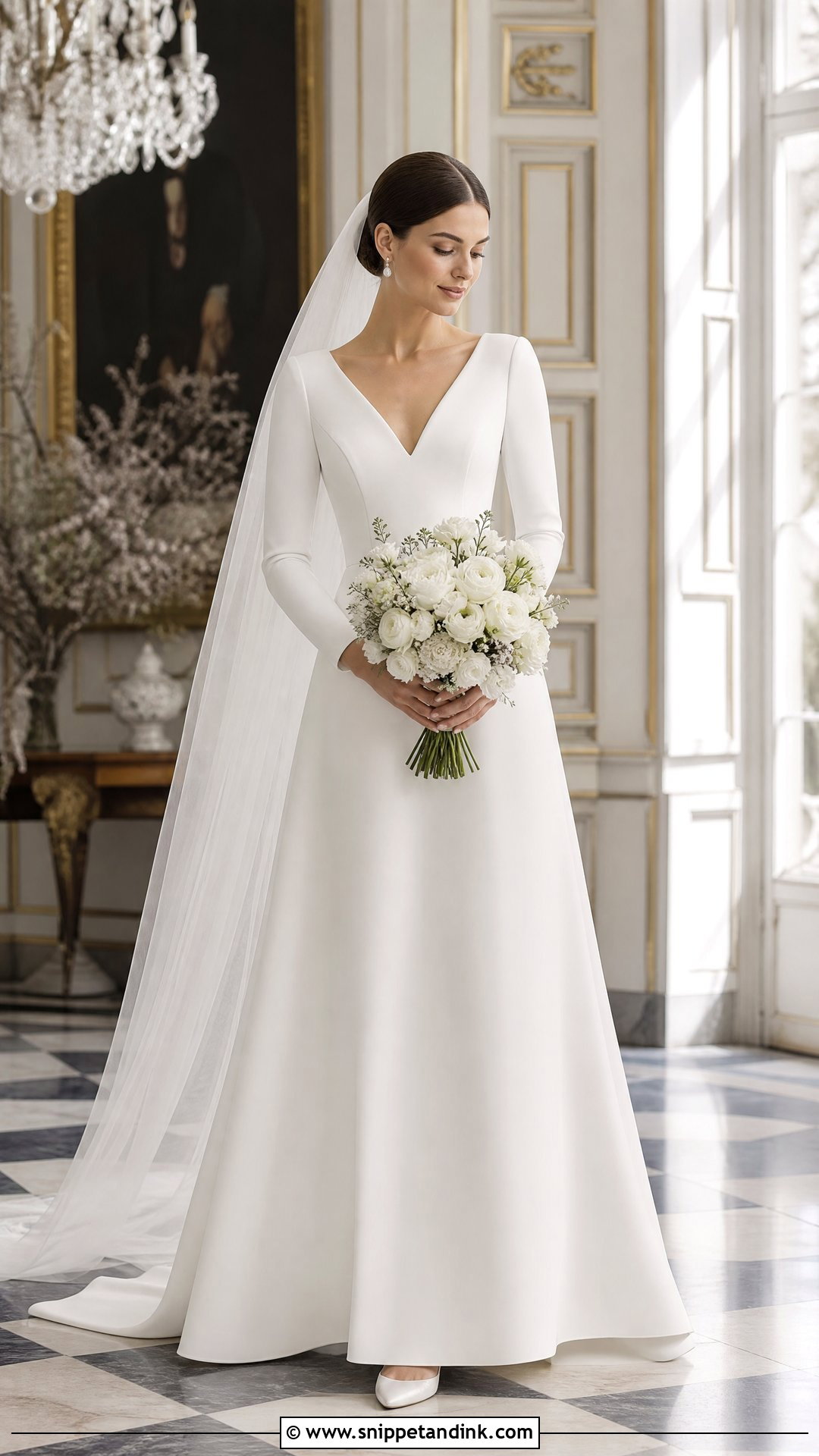
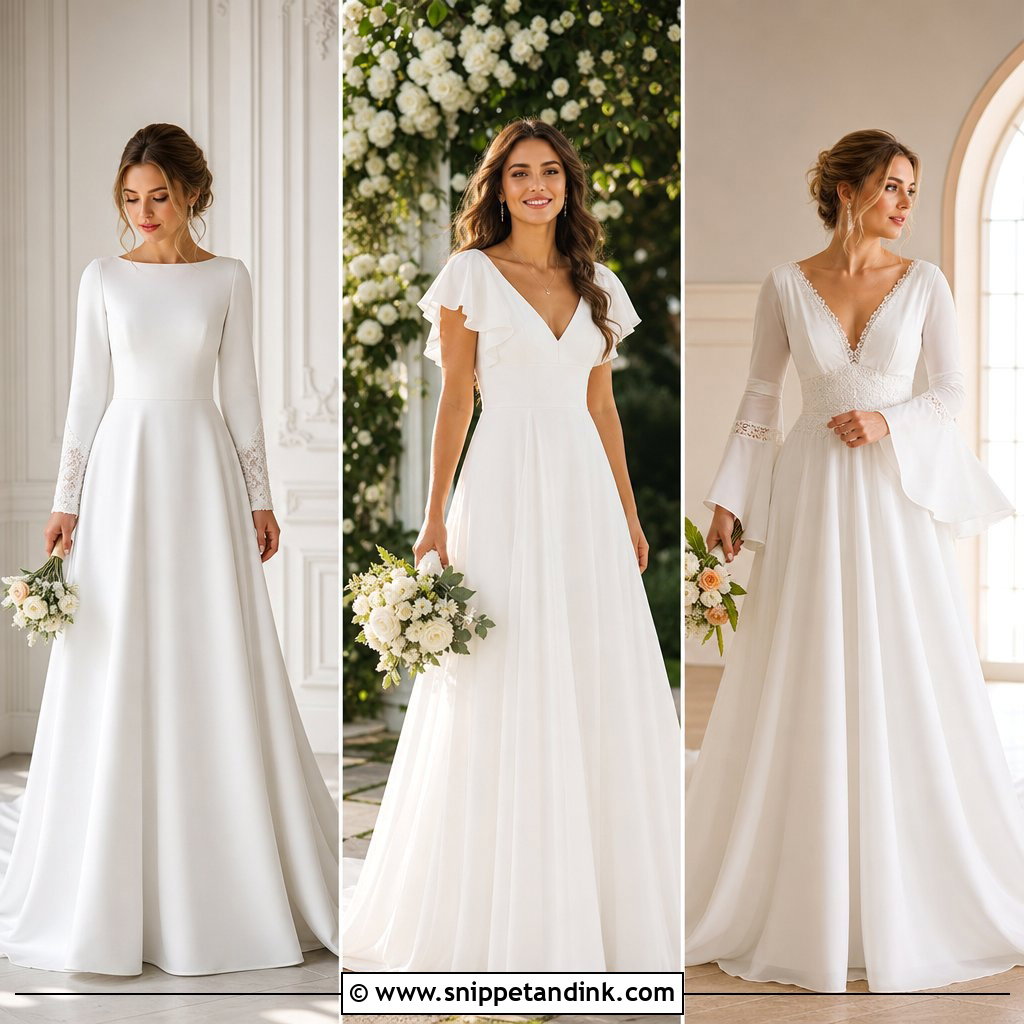
Crepe is matte, so a long-sleeve crepe A-line looks streamlined rather than shiny, and it’s warm without being heavy. A V-neck, bateau or modest square neck with a skirt that skims the hip. Crepe has a little natural stretch, which helps sleeves, but it also shows underwear lines, so I’d bring your actual underwear to every fitting. Closed-toe ivory pumps and sheer neutral tights help in the cold. Pearl earrings, a structured white bouquet and a chapel veil with a plain cut edge. Soft waves tucked behind the ears work if you’d rather wear your hair down. Leave the heavy necklace at home. Winter ballrooms, old houses, courthouses and city weddings all suit it.
4. Strapless Mikado A-Line Wedding Dress
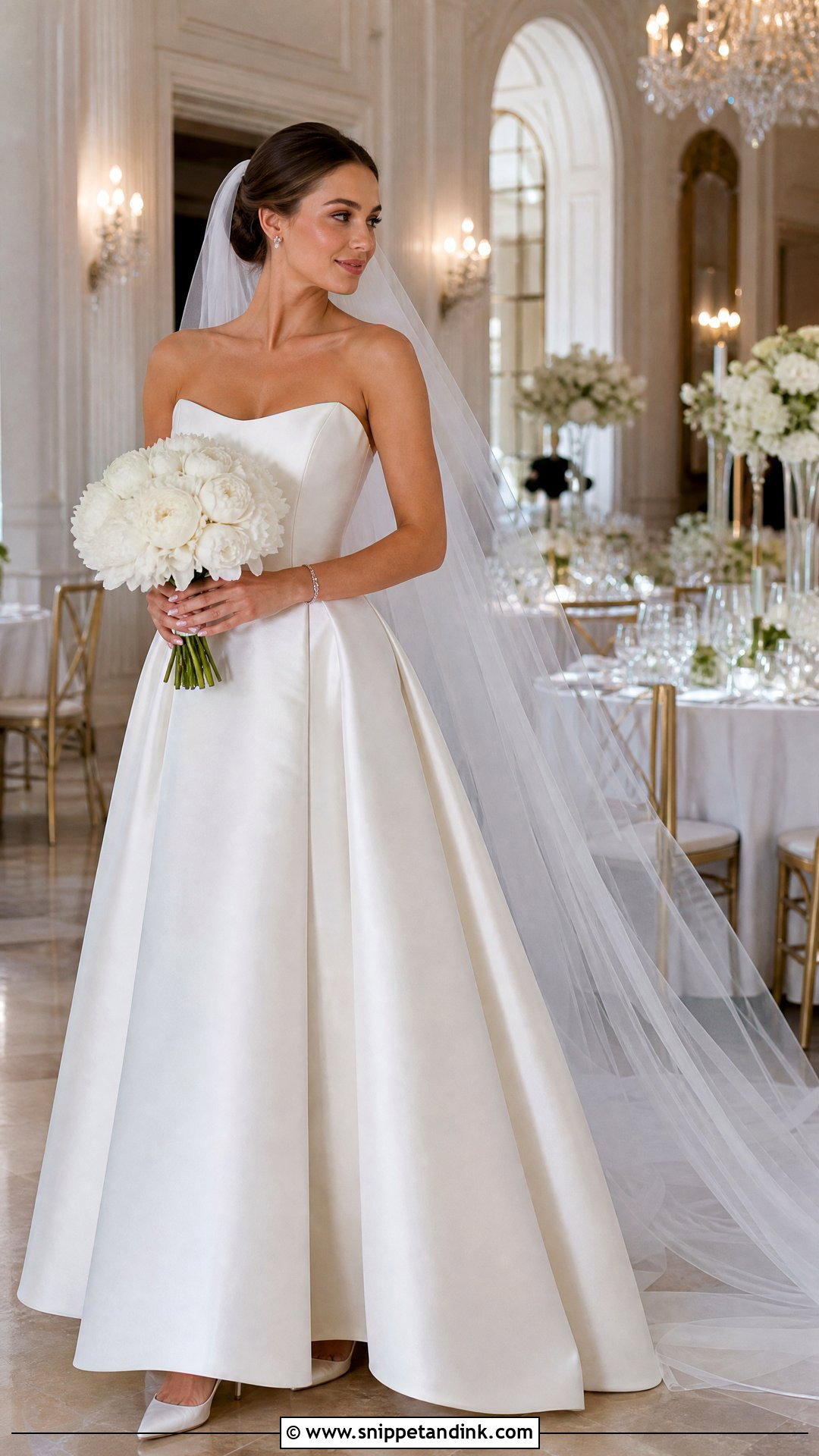
Mikado is a heavy, slightly crisp weave, which is why it holds a strapless A-line so well: the skirt stands away from the body on its own. A straight or softly curved neckline, with boning inside and proper alterations, keeps the bodice secure. Keep the skirt plain, perhaps a few soft pleats and a short train. The downside is that mikado creases sharply if it’s crushed, so it needs to travel hanging. Pointed satin heels, crystal studs and a narrow tennis bracelet; a cathedral veil for the ceremony impact. A compact bouquet of peonies or roses and a polished chignon. Remove the veil after dinner and you’re in a comfortable, clean dress for the evening.
5. V-Neck Chiffon A-Line Wedding Dress
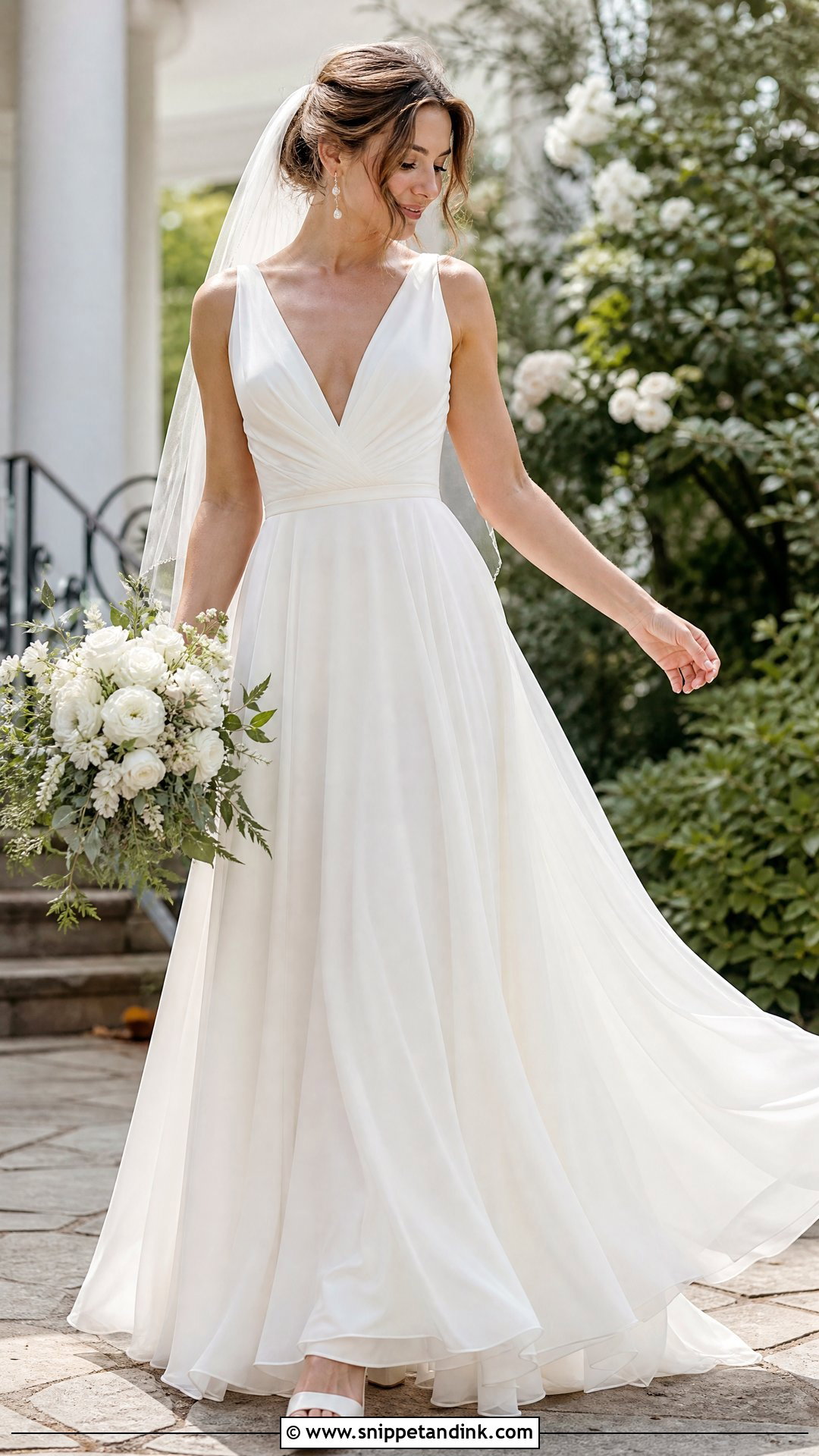
Chiffon moves with the slightest breeze, which is why I recommend it for outdoor weddings. A gently fitted bodice, a moderate V and a layered skirt from the natural waist. Make sure it’s lined; unlined chiffon is see-through in sunlight. Low block heels or flats stop you sinking into grass or sand. Small pearl drops and a fine bracelet are better than a bold necklace against such a light fabric. A loose updo with soft face-framing pieces and a light fingertip veil, and a seasonal bouquet of white flowers and greenery. Keep a lint roller handy; chiffon picks up grass and petals at the hem.
6. Lace Bodice A-Line Wedding Dress
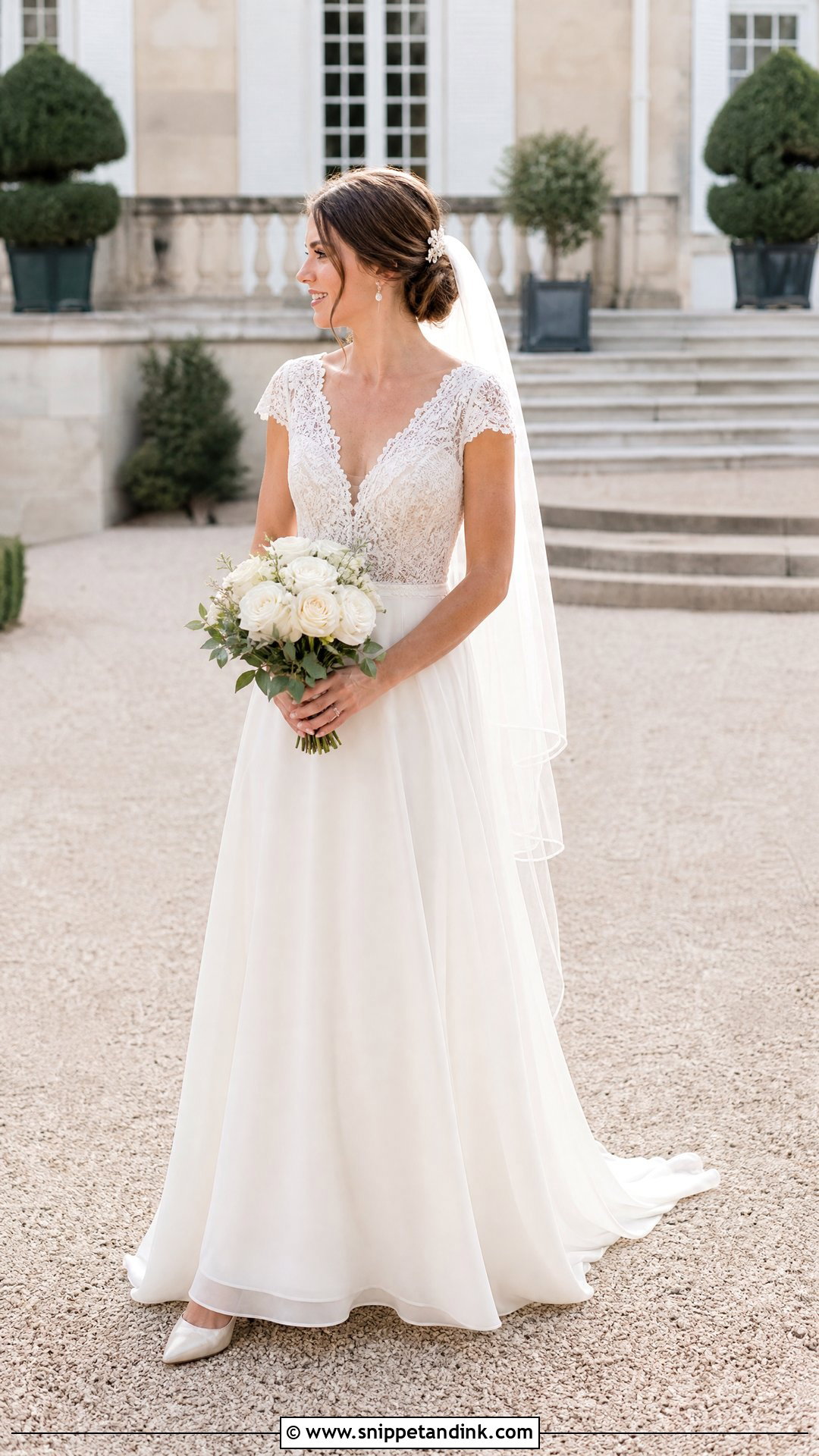
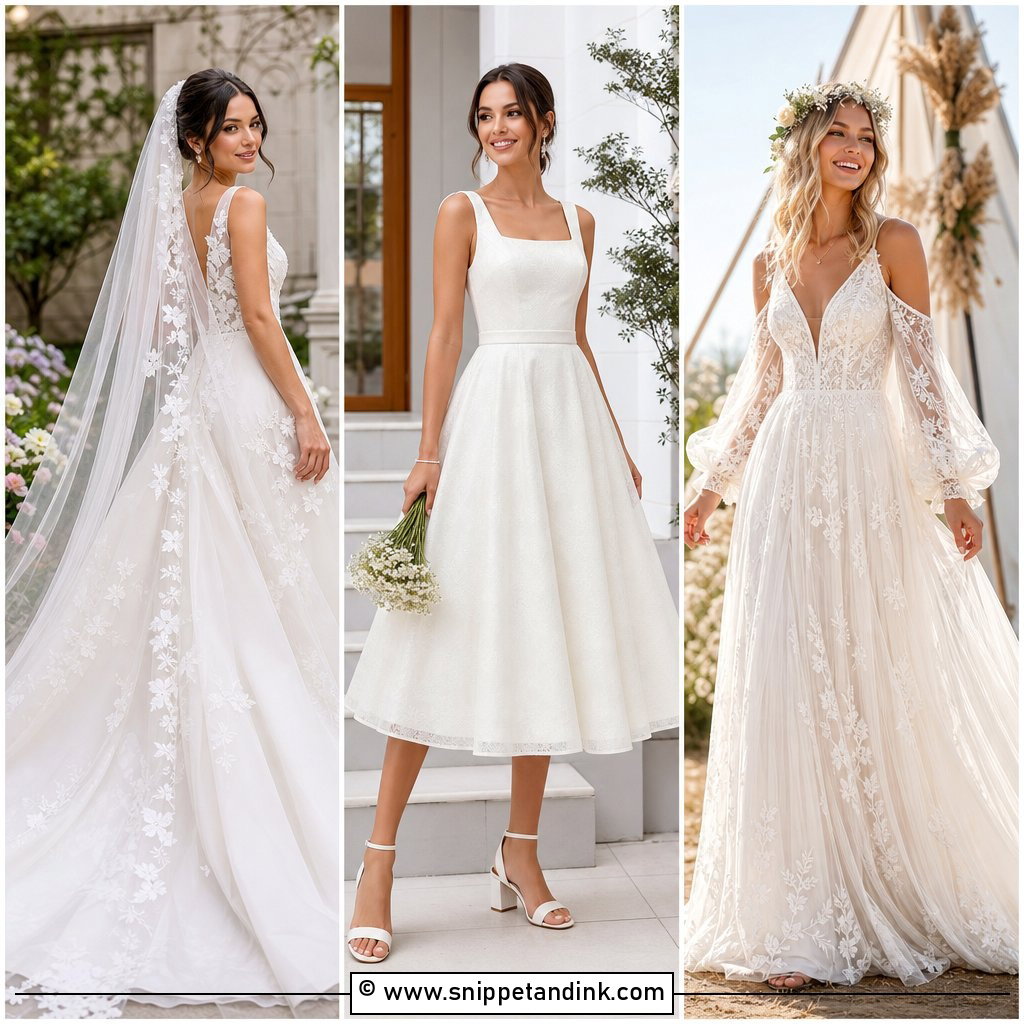
A lace bodice over a plain chiffon, crepe or satin skirt gives you texture where people actually look, close to the face. A modest V or scoop neck keeps it wearable. I’d check where the lace ends at the waist: a scalloped edge that’s been hand-cut and applied looks finished, while a straight seam across lace looks cheaper. Ivory pumps, pearl earrings and a narrow comb that echoes the lace. Choose a sheer veil with a plain border so the two laces don’t compete. White garden roses with a little eucalyptus, and a low textured bun to keep the lace on the shoulders and back visible.
7. Off-the-Shoulder A-Line Wedding Dress
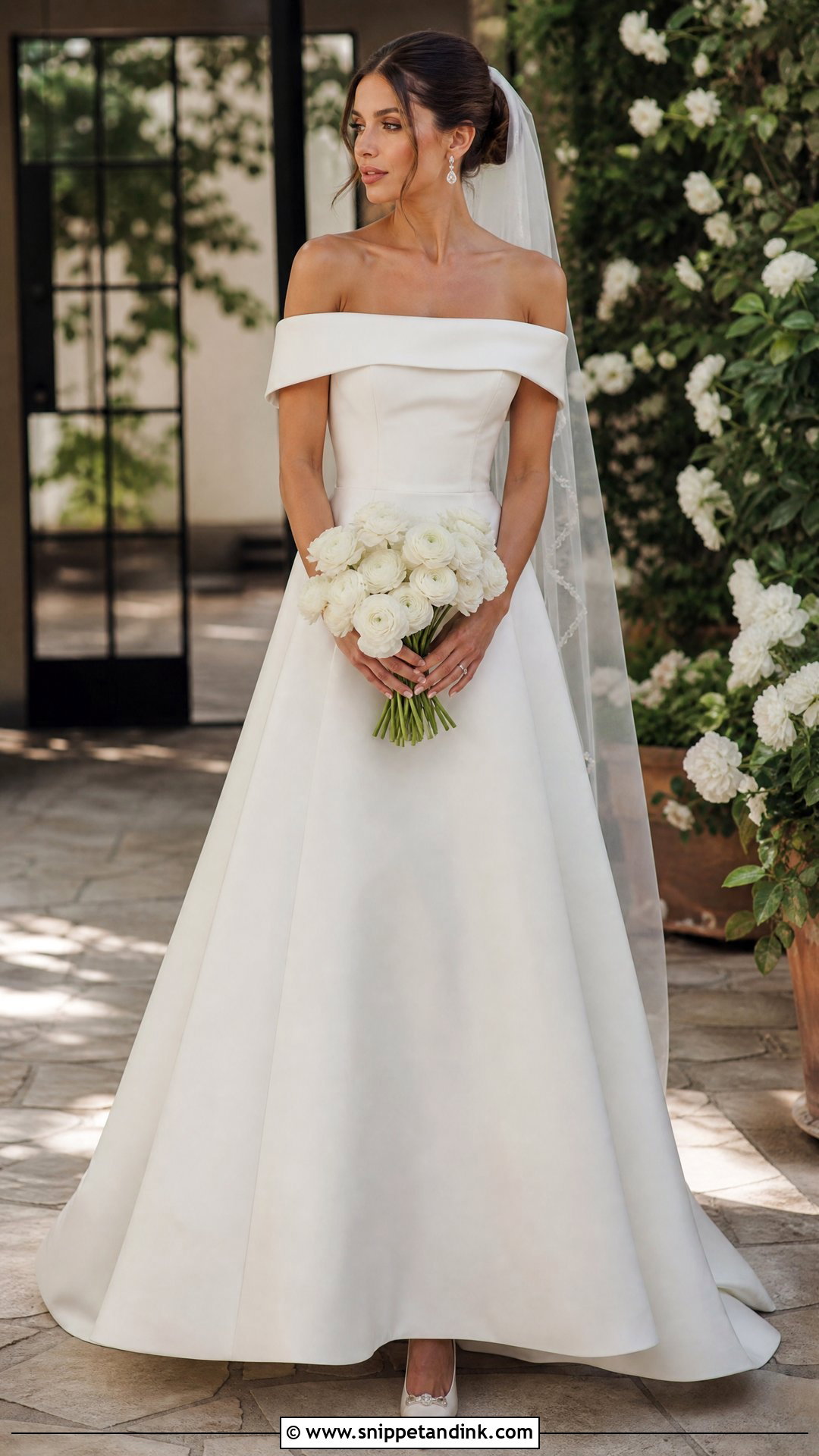
Fold-over satin or slim draped bands are cleaner than heavily decorated sleeves on an off-shoulder A-line. The bodice must do the holding, because off-shoulder bands slide if they’re asked to carry any weight. A softly flared skirt keeps it balanced. Wear either a short pearl necklace or delicate drops, not both. Pointed ivory heels and a plain chapel veil beneath a low bun. White roses, sweet peas or ranunculus suit the neckline. At alterations, lift your arms as if hugging, and sit; if the bands ride up or dig in, ask for more room at the upper arm.
8. Scoop Neck A-Line Wedding Dress
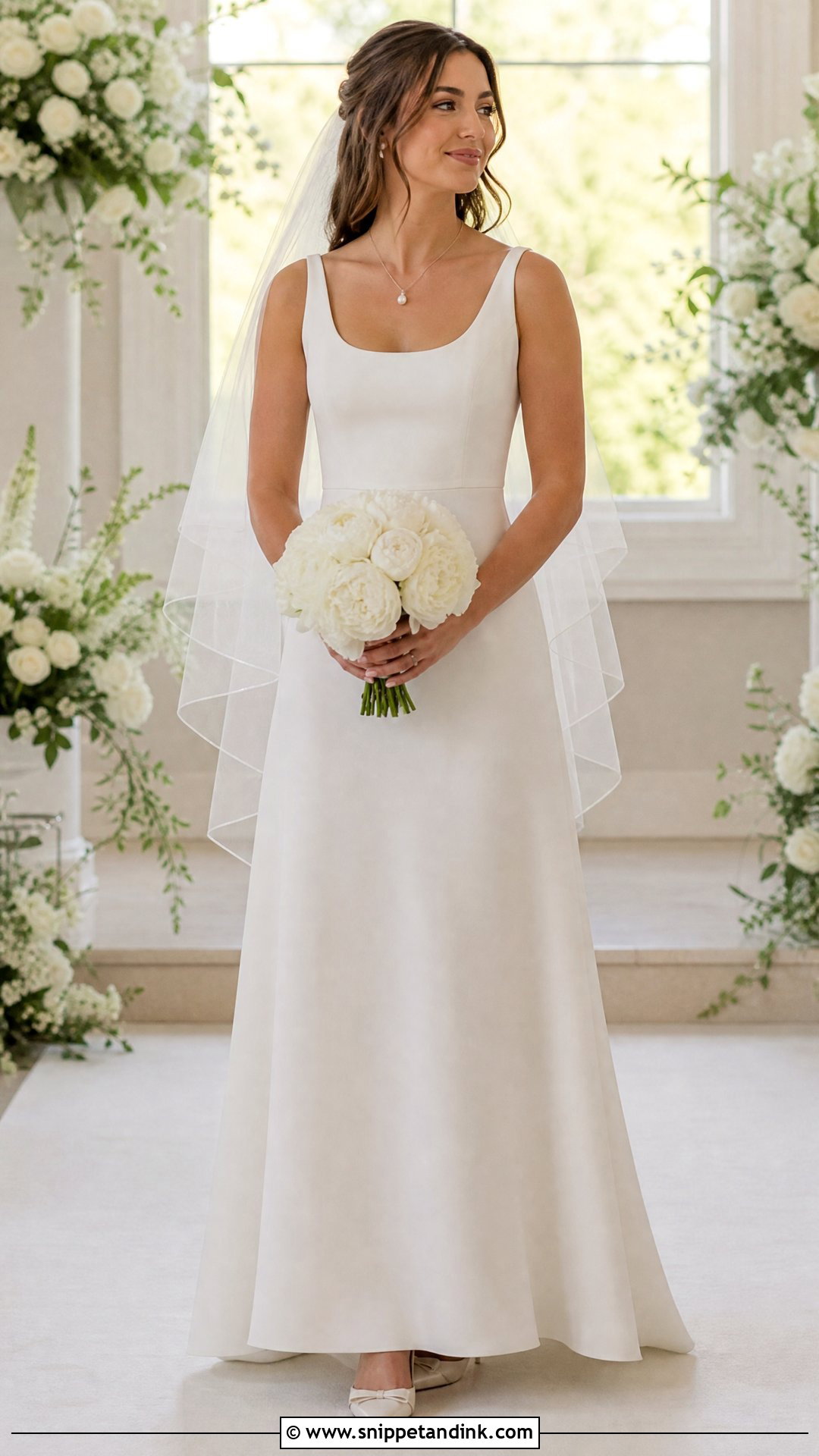
A scoop neck is the easiest neckline to wear, soft and rounded with no tricky corners to fit. Sleeveless with medium straps, a fitted waist and a plain crepe or satin skirt. The curve sits well with a fine pendant or a short strand of pearls; I’d measure the necklace so it falls just inside the scoop, not on the neckline edge. Comfortable kitten heels, pearl studs and a fingertip veil with a raw edge. Half-up hair frames the face without covering the dress, and a round white bouquet repeats the neckline’s curve. A plain scoop leaves room for an heirloom piece.
9. High Neck A-Line Wedding Dress
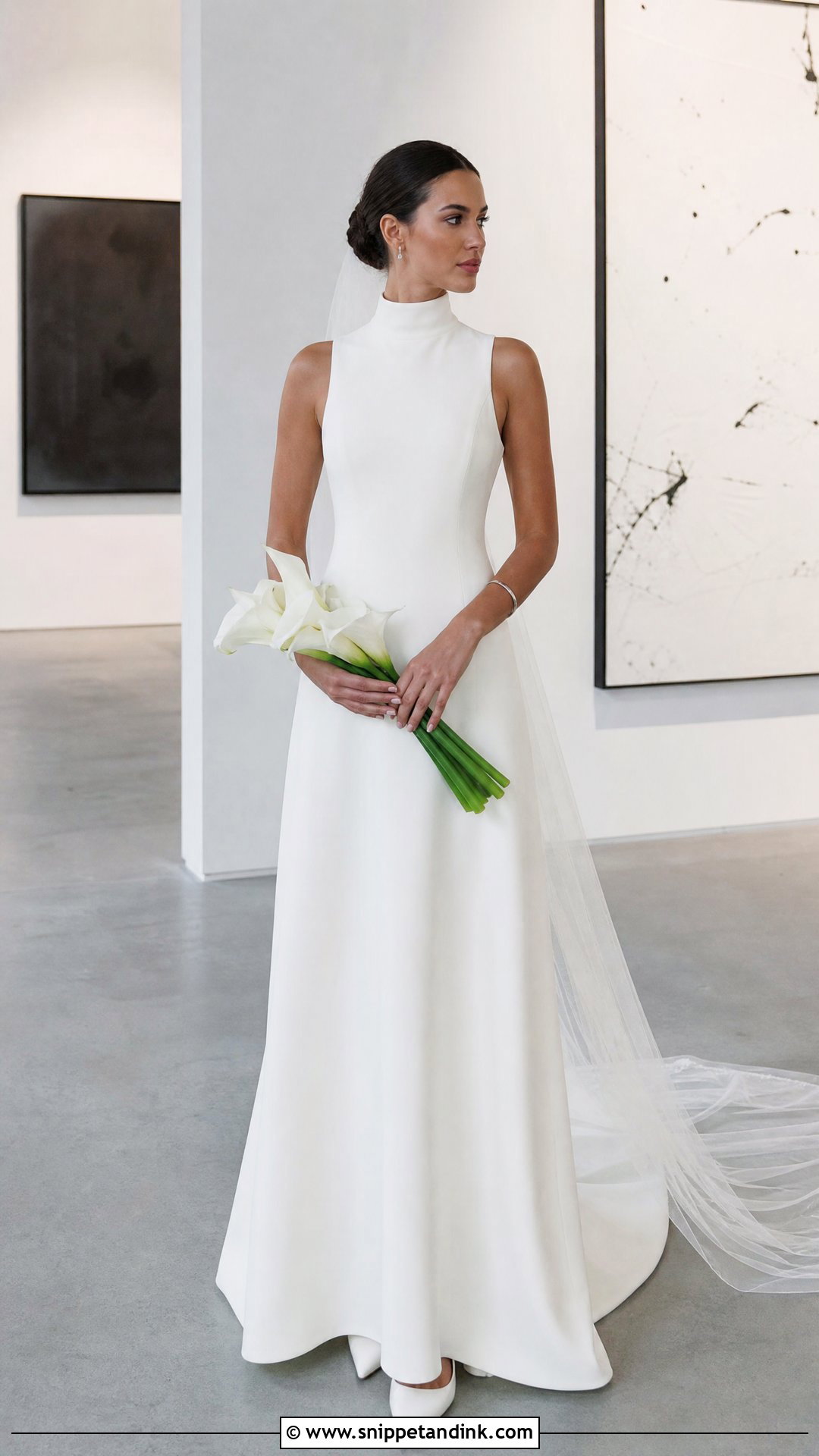
High necks give coverage through one clean line. Smooth crepe looks modern; fine lace looks softer. Going sleeveless with a high neck keeps it from feeling buttoned up. No necklace; small earrings or a slim cuff. Pointed pumps lengthen the line, a low bun keeps the neck clear, and a narrow chapel or cathedral veil with no heavy edging stays out of the way. Long-stem calla lilies suit the long shape. High necks need careful tailoring at the back of the neck: turn your head both ways at the fitting, because a collar cut too close rubs within an hour.
10. Cap Sleeve A-Line Wedding Dress
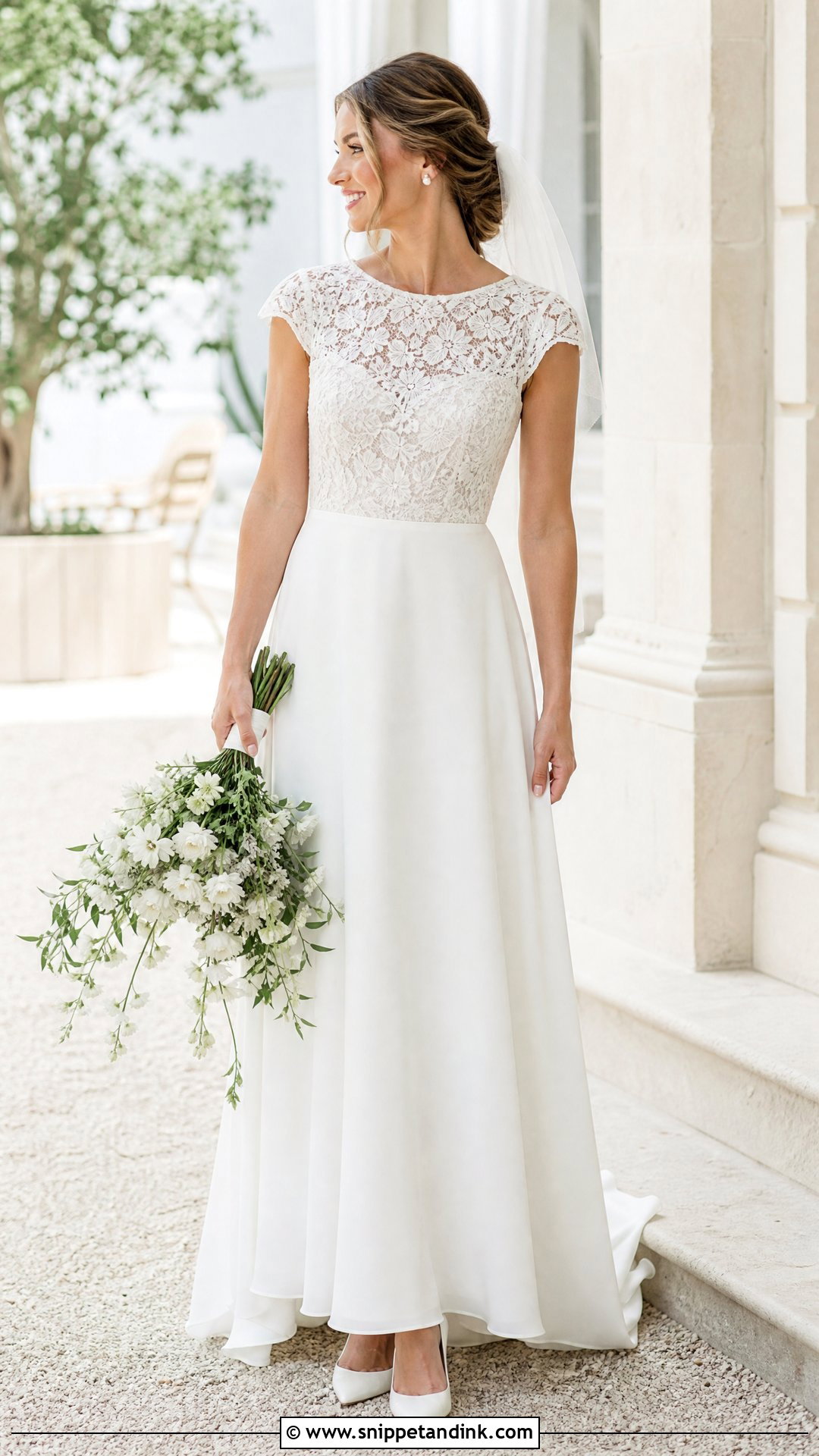
Cap sleeves sit just over the top of the shoulder, giving a little coverage without the commitment of a full sleeve. A simple V or round neck, a fitted lace or crepe bodice and a flowing skirt. Since the sleeves already frame the shoulders, keep jewelry to pearl studs and a fine bracelet. Low pointed heels or embellished flats if you’ll be standing for hours. A waist-length veil keeps proportions even and shows any back detail. Soft curls, a low twist or a half-up style all suit it, with loose white garden flowers. Cap sleeves can cut across a fuller upper arm at its widest point; if that bothers you, ask for the sleeve a little longer.
11. Spaghetti Strap A-Line Wedding Dress
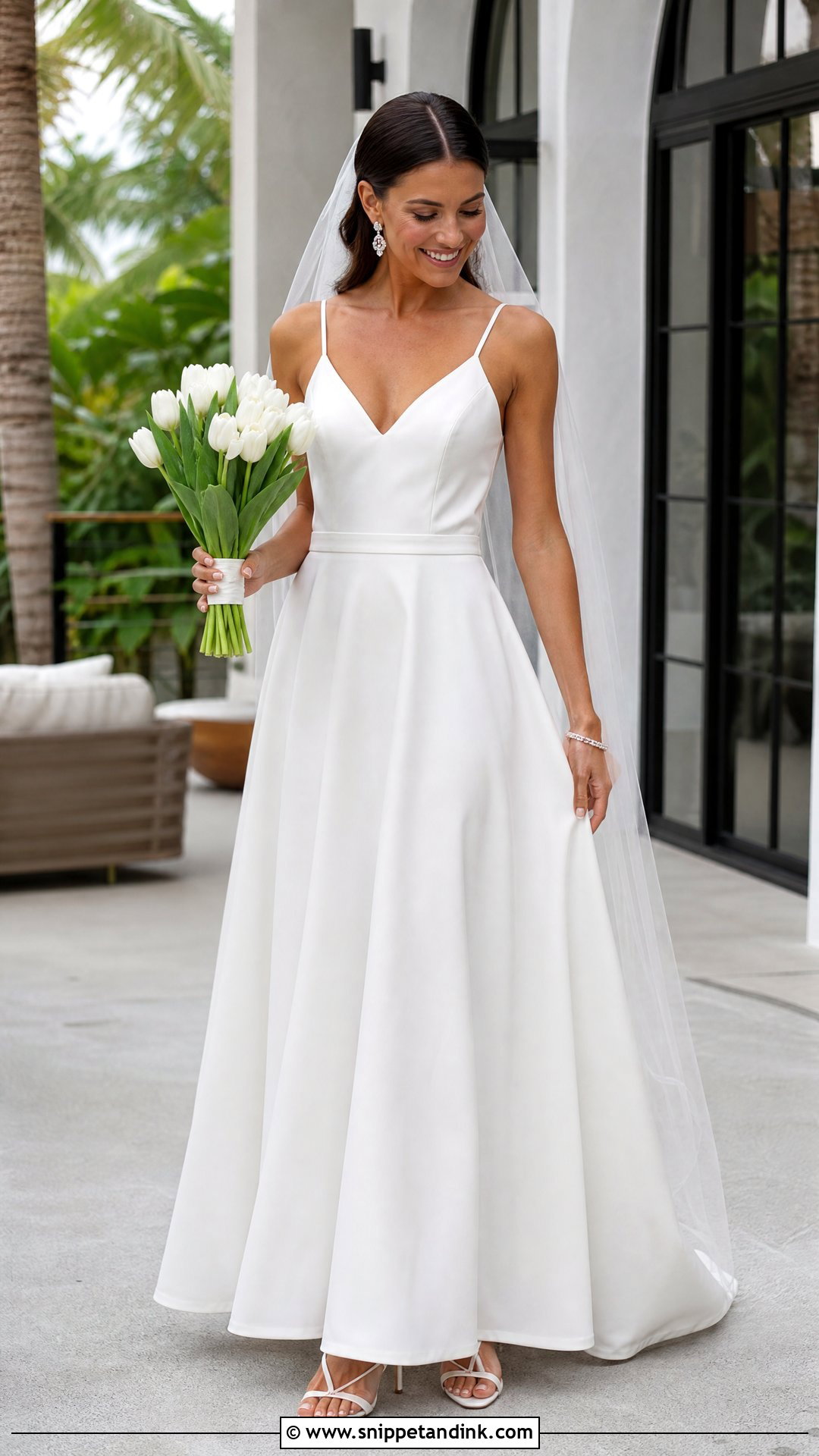
Thin straps look light and young, but they’re decoration, not support. I make sure the bodice is fitted closely enough to hold itself up, because spaghetti straps carrying the weight of a full skirt will dig into the shoulders by evening. A smooth satin bodice with a straight, cowl or modest V-neck over a flowing skirt. Strappy ivory sandals, small crystal earrings and a fine bracelet. A sheer fingertip veil for the ceremony, removed for the reception. A loose low bun or polished ponytail keeps the straps visible. White tulips or seasonal blooms with minimal greenery. Warm-weather, destination and relaxed outdoor weddings suit it.
12. Tea-Length A-Line Wedding Dress
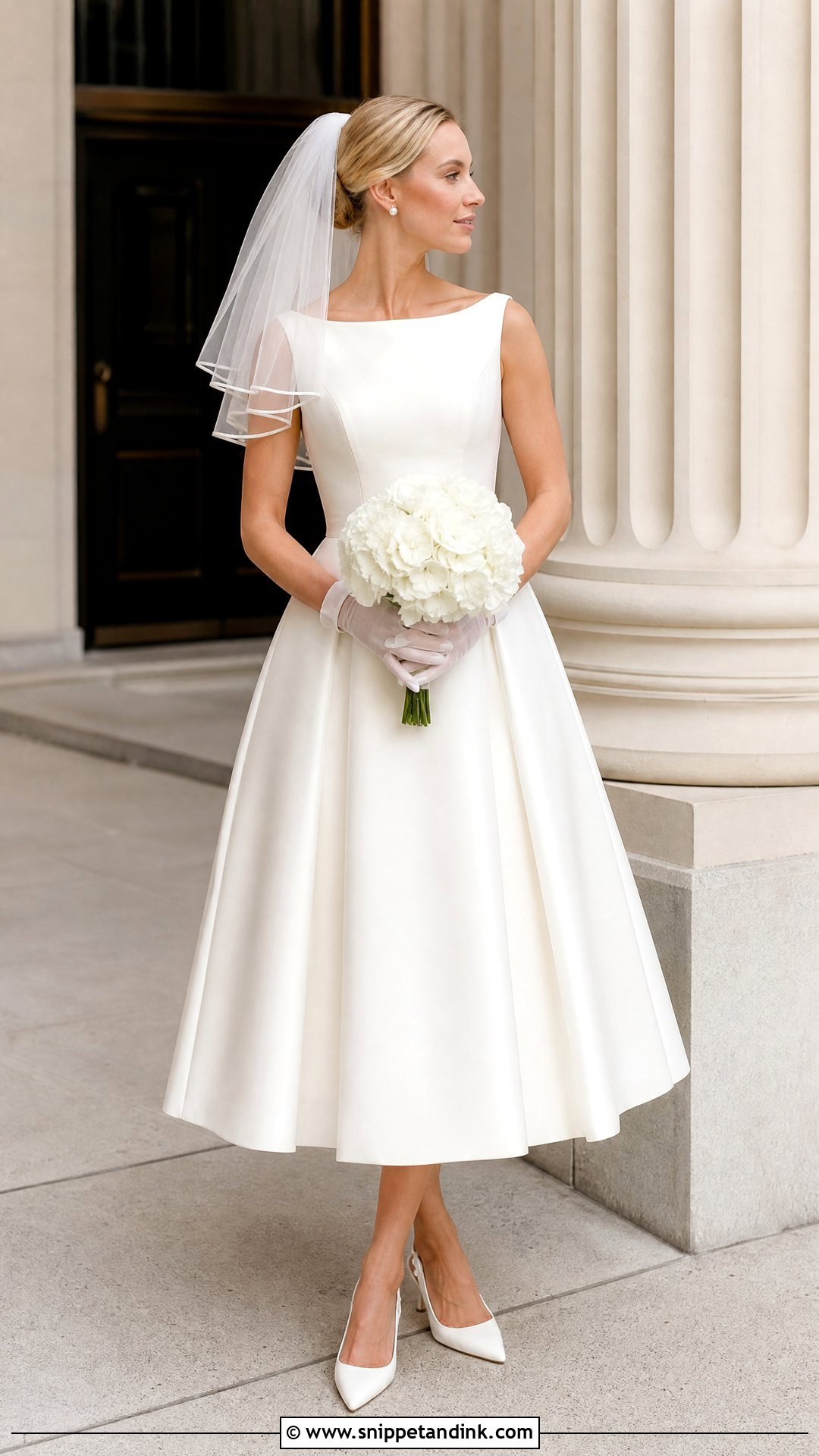
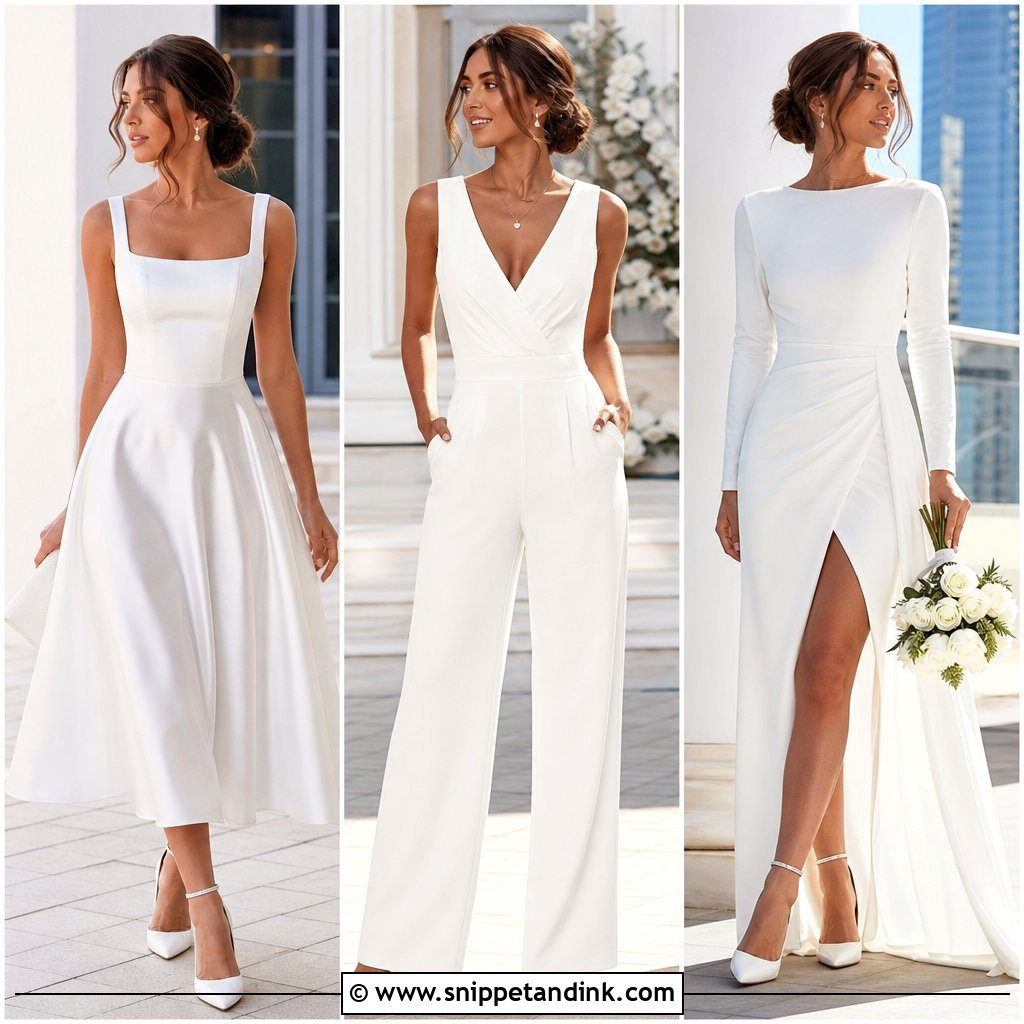
Tea length lands between the knee and ankle, so it’s the practical choice, and your shoes become part of the dress. A plain satin or crepe bodice and a gently structured skirt; the skirt needs some body, or a short A-line can droop. Pointed slingbacks, simple pumps or low block heels in ivory. Pearl earrings, short gloves and a small birdcage veil lean vintage; a plain headband looks more current. A small round bouquet keeps the proportions right. It’s the easiest dress here to walk, dance and travel in, which matters for a courthouse ceremony followed by a restaurant.
13. A-Line Wedding Dress With Pockets
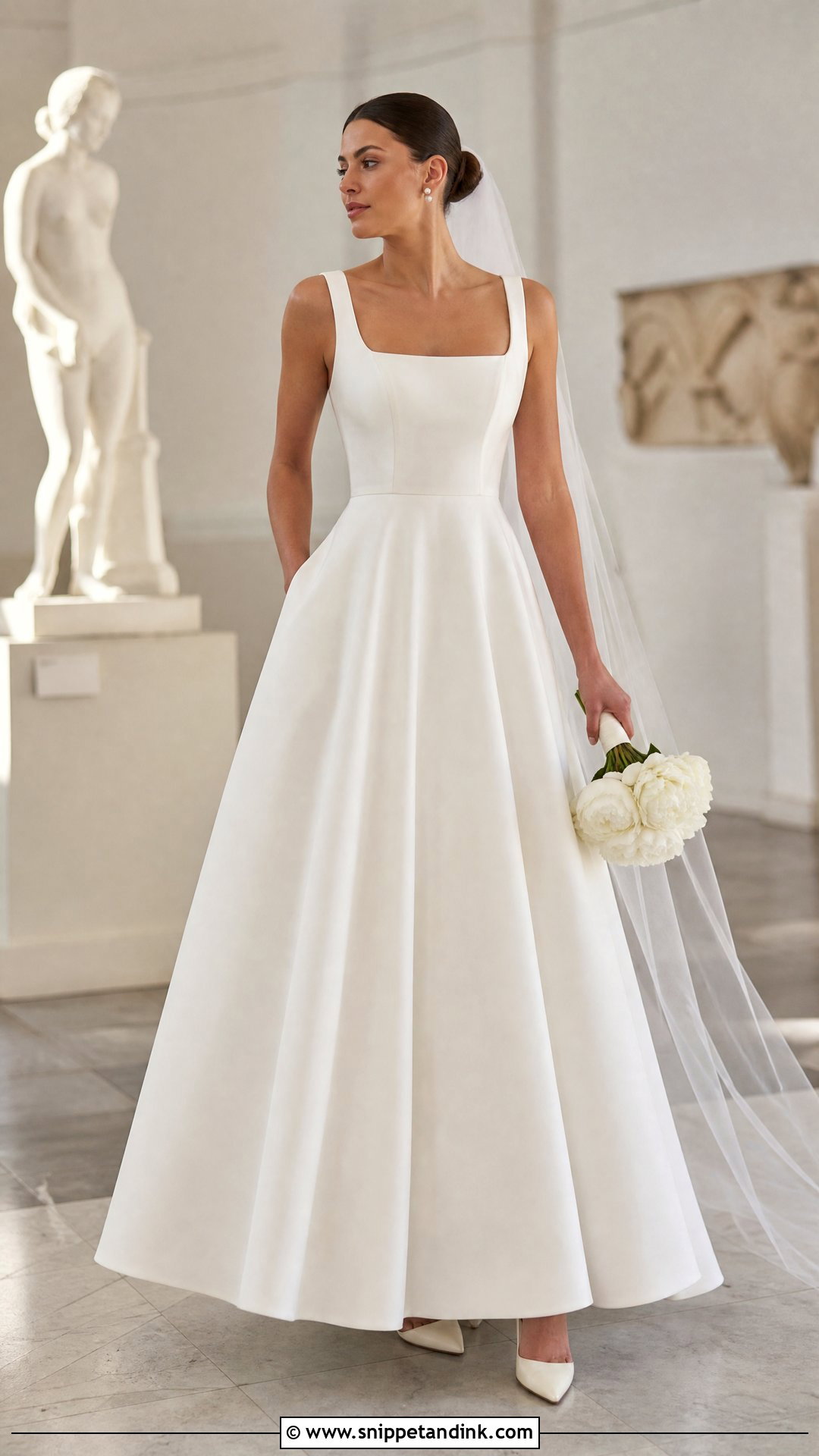
An A-line wedding dress with pockets is practical, if the fabric can carry them. In a structured satin or mikado skirt, side-seam pockets stay flat; in soft crepe, they can sag and add width at the hip. Pair with a square or bateau bodice, pointed ivory heels and small pearl earrings. A plain chapel veil and a sleek bun or soft low ponytail. Use the pockets for a tissue, a lip balm or a small keepsake, nothing bulky. I always ask brides to put their hands in them at a fitting and look sideways in the mirror.
14. Open Back A-Line Wedding Dress
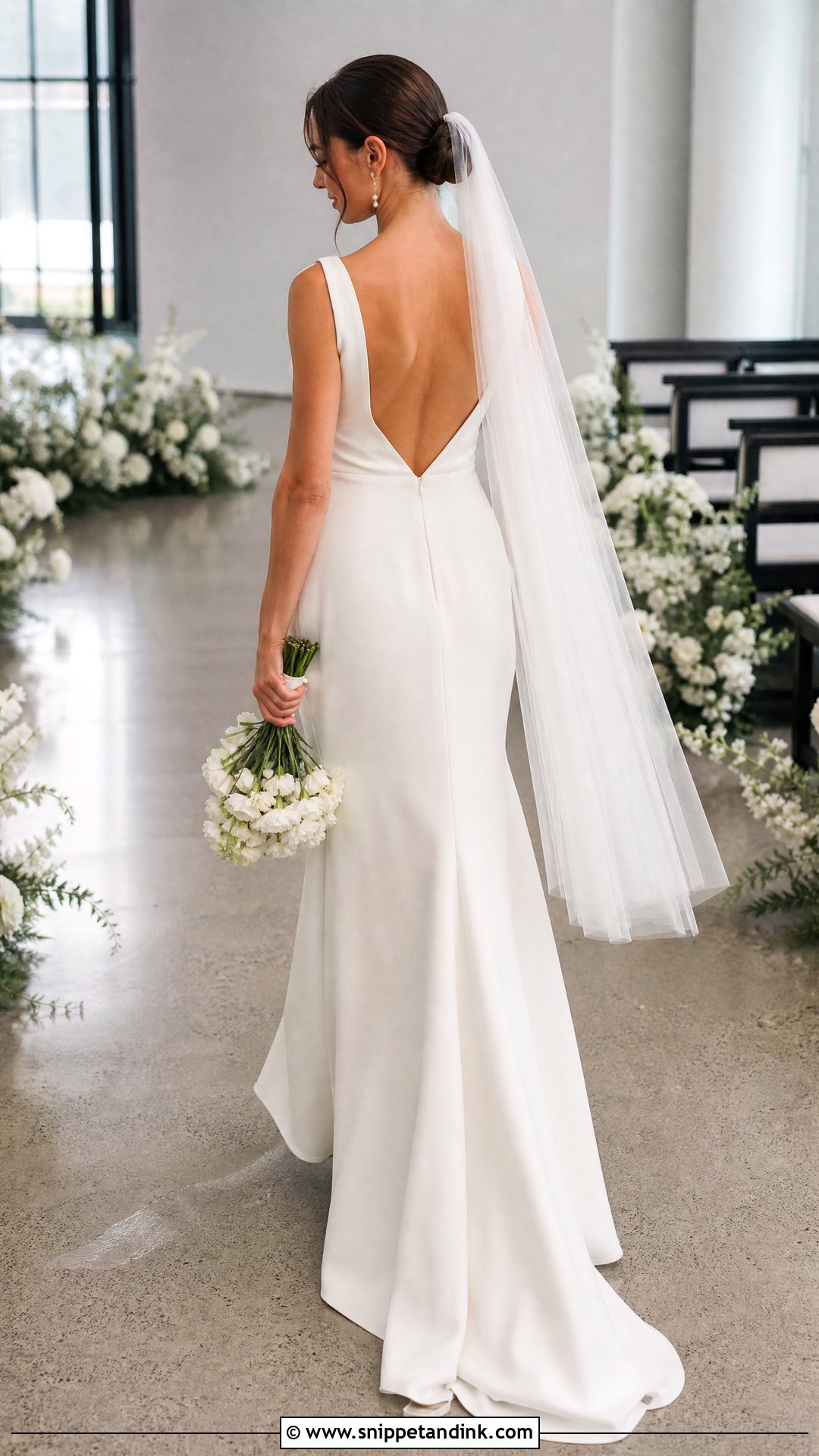
From the front, an open-back A-line looks modest; the surprise is behind. Secure straps, a modest neckline and a low V or rounded back in smooth crepe or satin. The trickiest part is support. Before you commit, ask the shop how the bust is held: sewn-in cups, a low-back body or adhesive options, because ordinary bras won’t work. Wear your hair up so the back shows, with small drops and a slim bracelet. A sheer veil set under the hairstyle frames the back rather than hiding it. Ivory pumps or block-heel sandals and a narrow white bouquet.

15. Button Back A-Line Wedding Dress
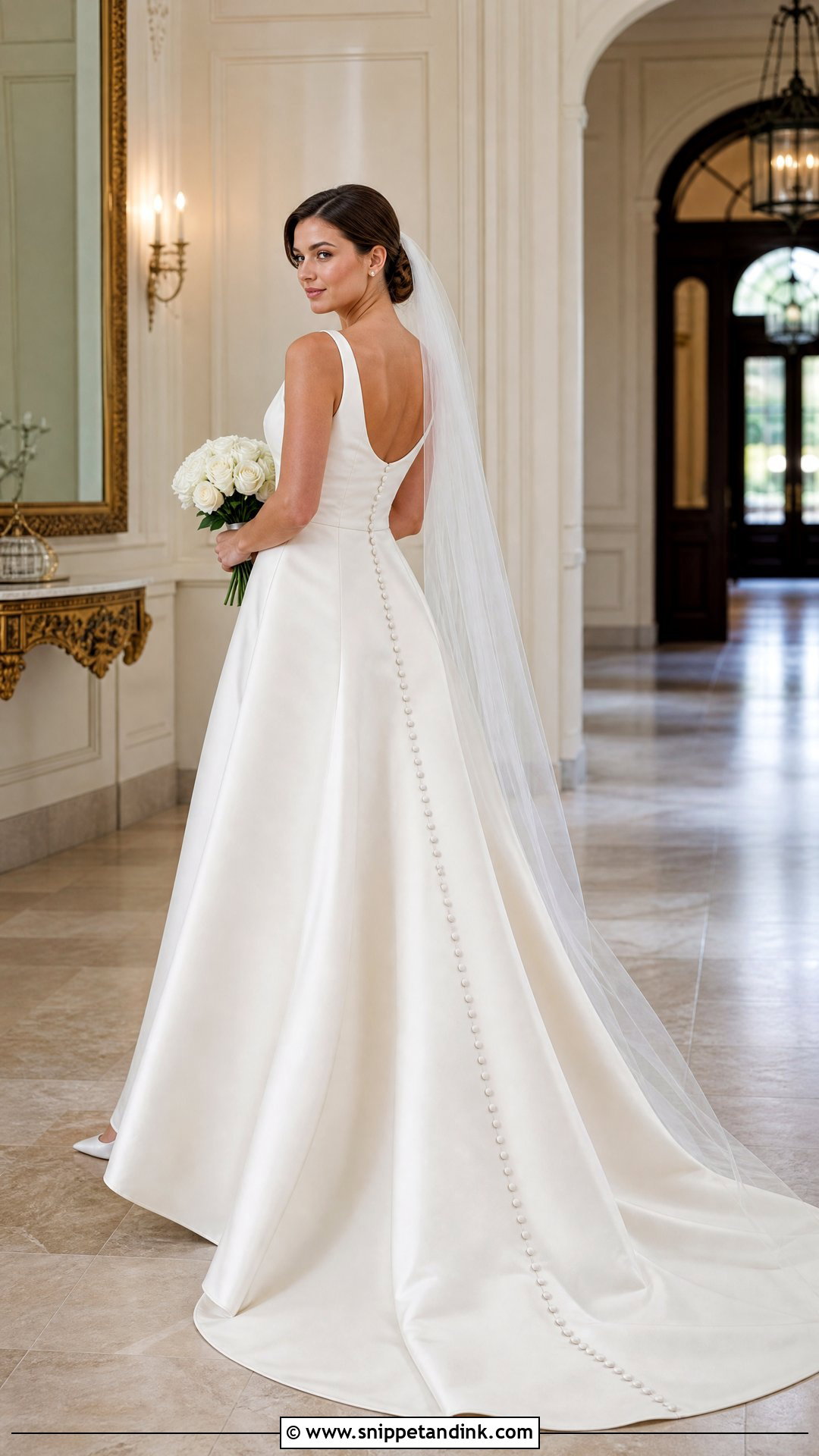
A row of covered buttons gives a plain A-line a traditional finish, running from the upper back to the waist or down onto the train. Satin, crepe or mikado shows them best. Buttons are usually decorative over a hidden zip, and I’d confirm that, because thirty working loops take a long time to fasten on the morning. Closed-toe ivory heels, pearl studs and a plain chapel veil. A low side-parted bun keeps the back visible. White roses tied with ivory ribbon, and nothing ornate at the neck.
16. Bow Back A-Line Wedding Dress
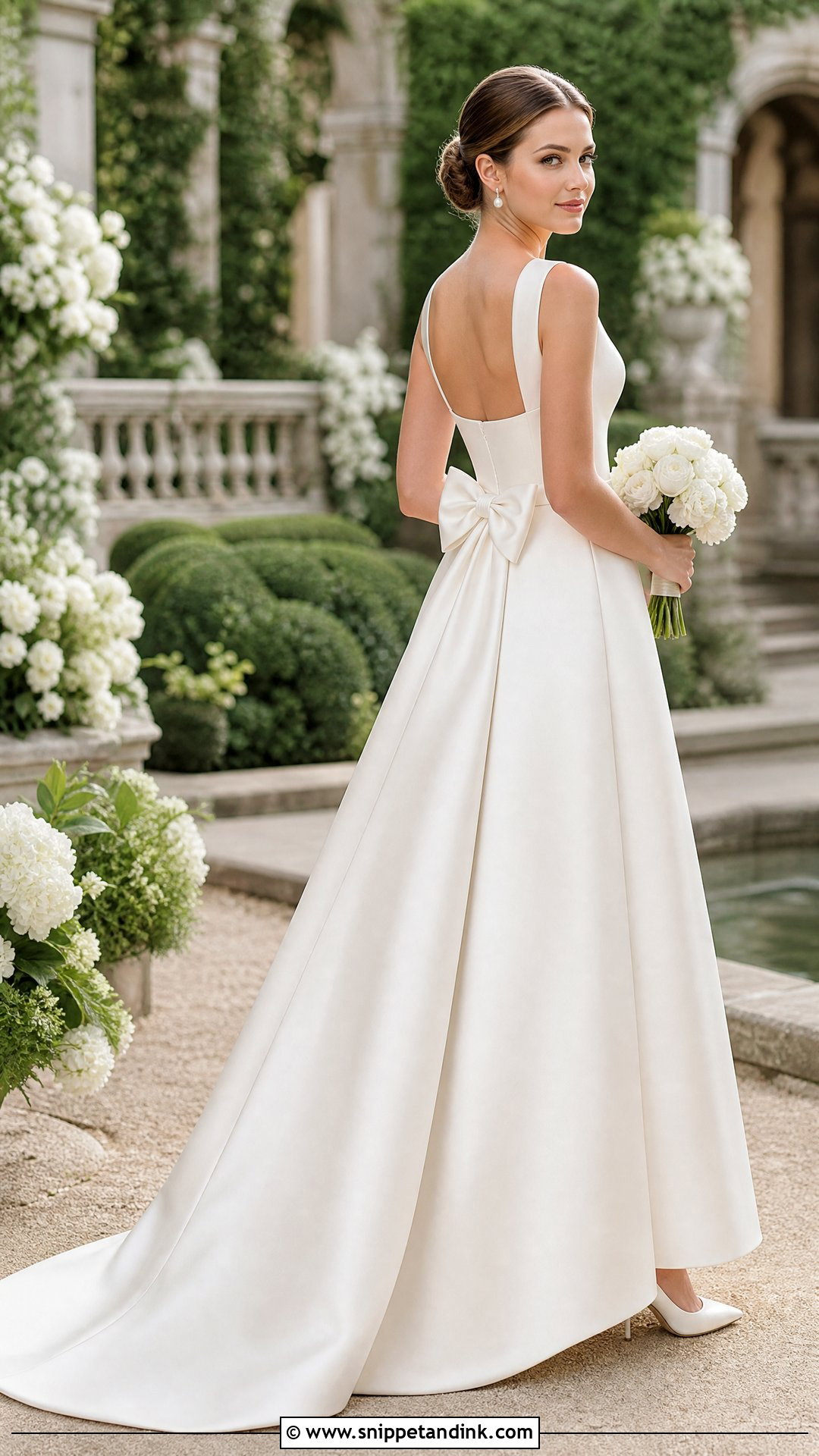
Keep a bow flat and medium-sized at the waist or across the upper back; oversized bows on a simple A-line overpower it. Plain mikado or satin makes the detail look deliberate. A square, bateau or strapless front stays simple. Pointed ivory pumps, pearl earrings and a sleek low bun. I’d take the fingertip veil off after the ceremony so the bow is visible all evening, and check that the bow is stitched to the bodice, not just pinned, before the day. A compact white bouquet with little greenery.
17. Pleated Skirt A-Line Wedding Dress
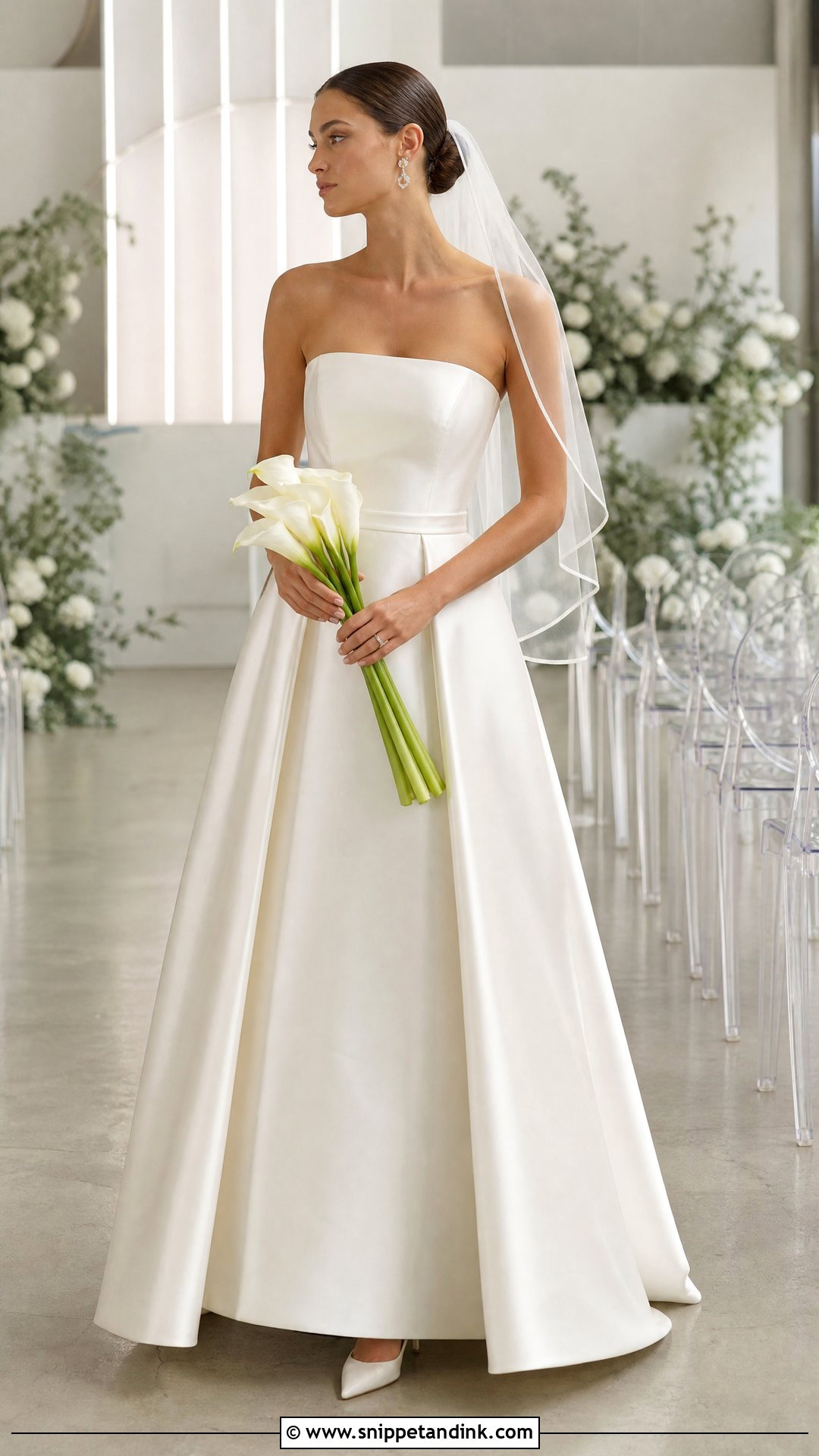
A few controlled pleats from the waist give shape without lace or beading. Satin and mikado hold sharp folds; softer fabrics make them relaxed. A clean fitted bodice with a square or strapless neckline, pointed heels and pearl or crystal earrings. A smooth bun and a plain fingertip veil. White tulips or calla lilies suit the clean lines. Pleats are sewn to fall when you’re standing, so sit and walk at your fittings; if they splay open across your lap, your seamstress can stitch them down a little further.
18. Pearl Detail A-Line Wedding Dress
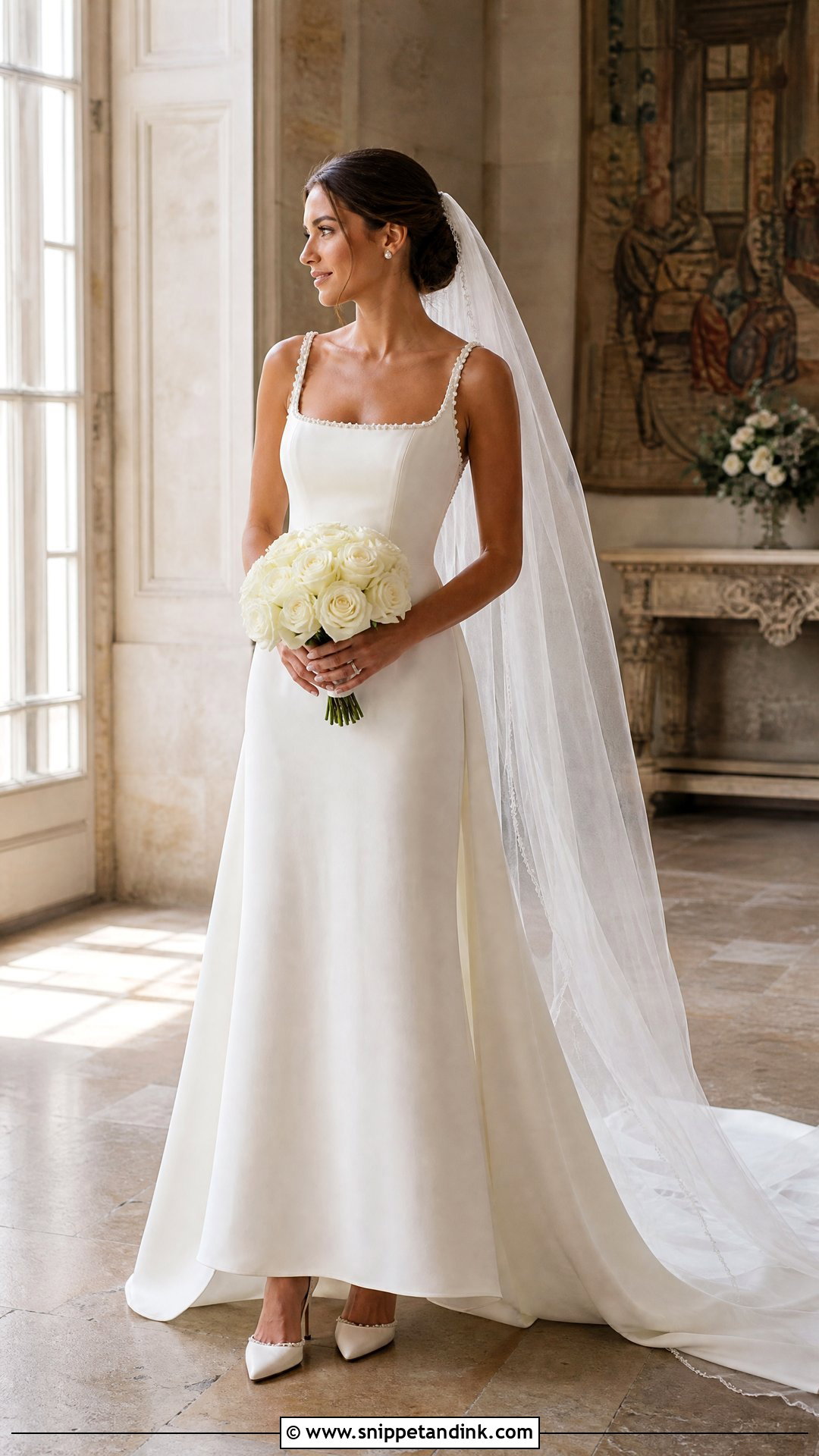
A light scatter of pearls along the neckline, straps, waist or upper bodice adds detail while the skirt stays plain satin or crepe. Pearl studs, but no necklace if pearls already edge the neckline. Ivory slingbacks, a sheer raw-edge veil and a low textured bun. A white rose bouquet. Look at the pearls in daylight; some synthetic pearls have a strong plastic sheen that looks cheaper than the dress. And run a finger along each beaded line, because loose stitching is easy to fix at a fitting and hard to fix on the dance floor.
19. Floral Appliqué A-Line Wedding Dress
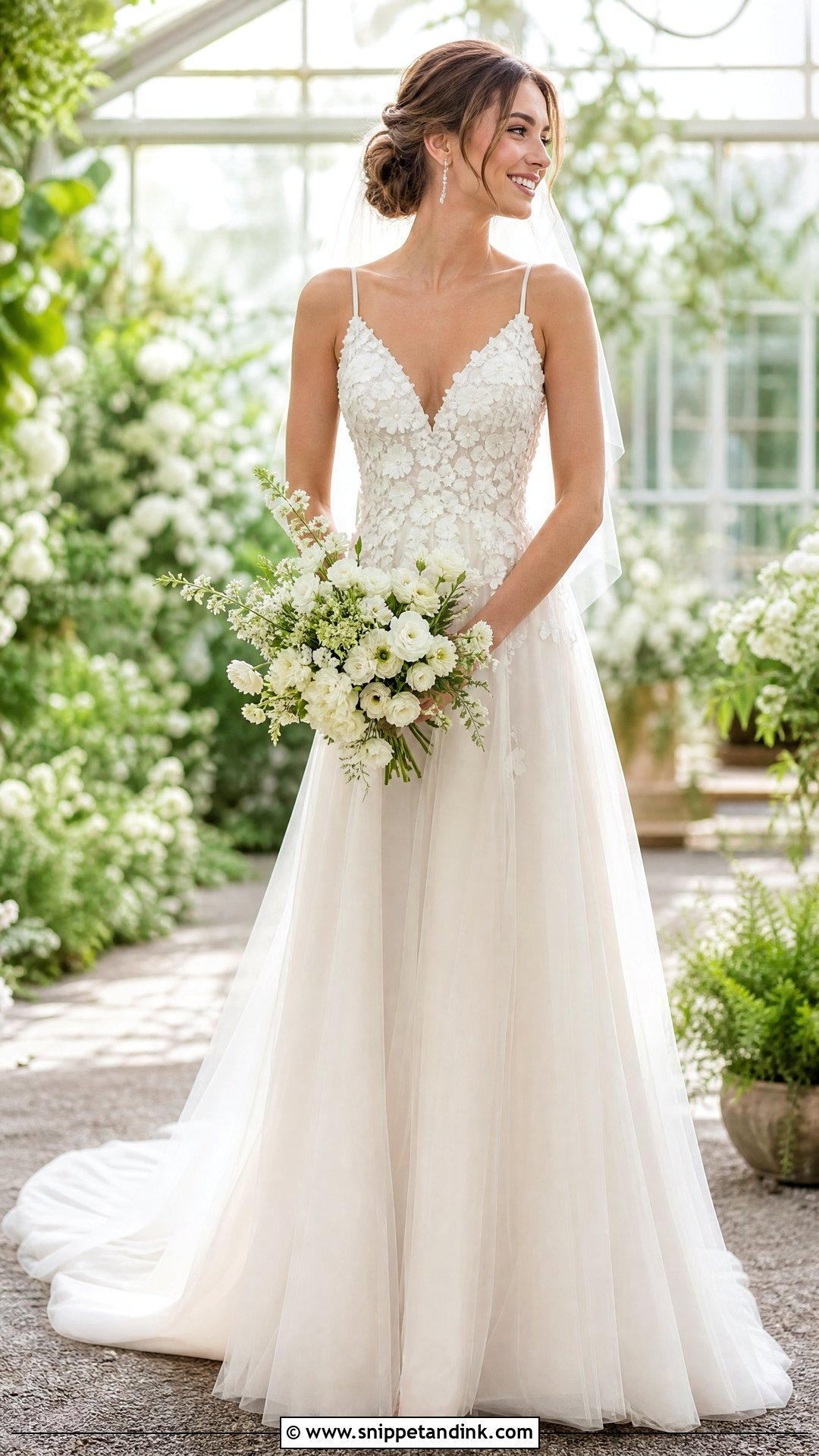
Tonal floral applique, kept to the bodice, waist or hem, gives a simple A-line a romantic touch. Plain tulle, chiffon or organza in the skirt keeps it airy. Low ivory heels, small floral earrings and a veil without lace edging. Soft waves or a loose low bun suit it. I’d skip a floral headpiece if the gown already has visible appliques; one botanical detail is enough. A small bouquet of white seasonal flowers. Gardens, greenhouses and spring weddings suit it, and the appliques give close-up photos texture.


20. A-Line Wedding Dress With Detachable Sleeves
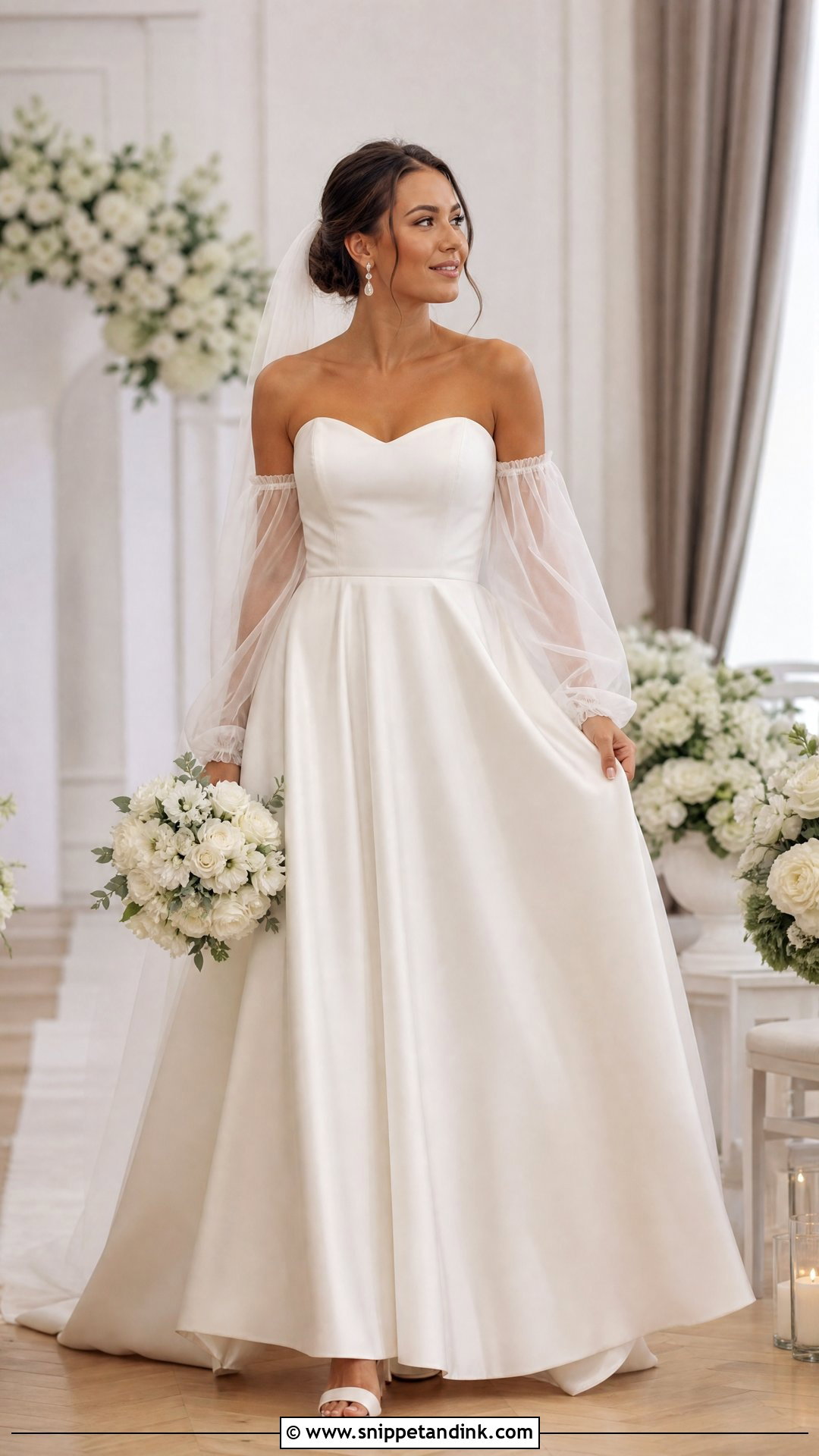
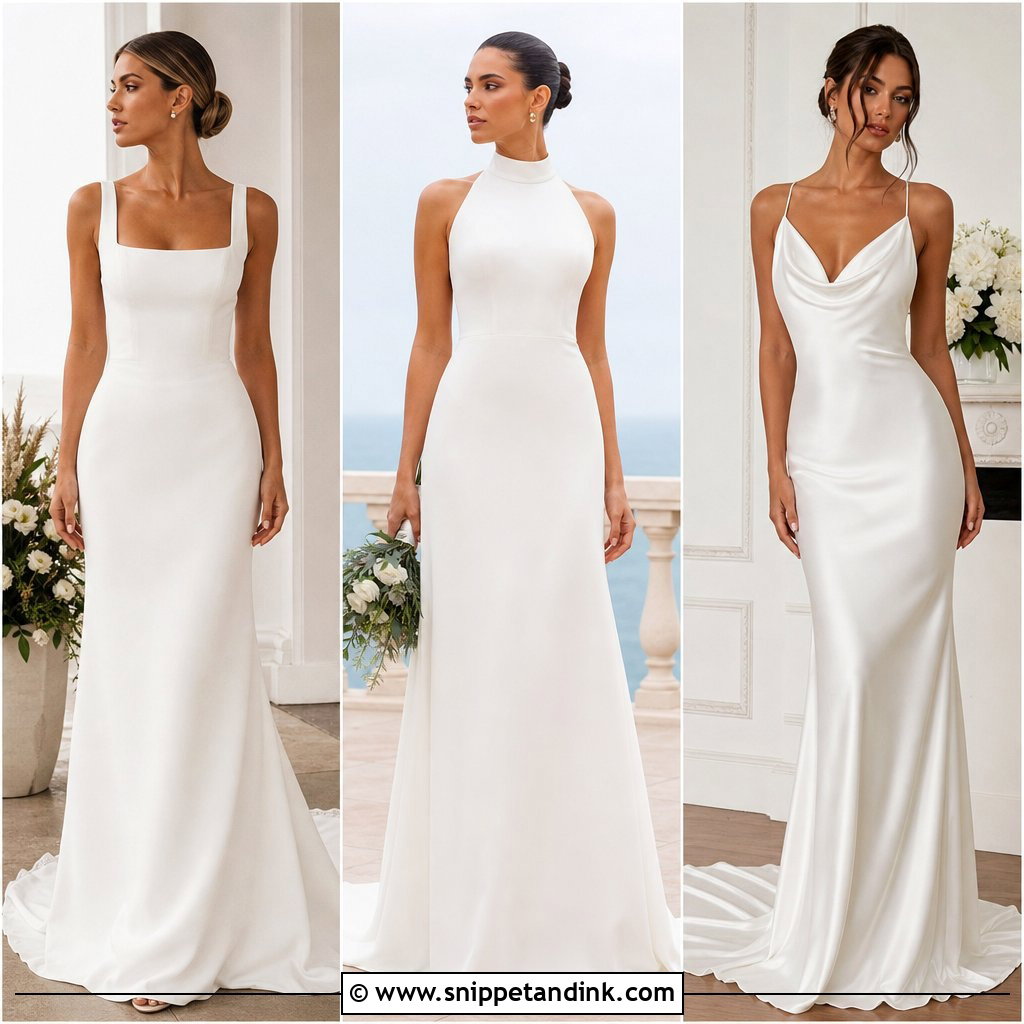
Detachable sleeves turn one A-line into two looks. Fitted lace sleeves, sheer bishop sleeves or clean off-shoulder bands for the ceremony, then off for dancing to reveal a strapless or sleeveless bodice. Check that the attachment points are invisible and that the bodice stands up on its own without the sleeves; some only fit properly with them on. Comfortable block heels, small drops, a single-layer chapel veil and a polished updo. A classic white bouquet. It’s a good answer if your ceremony venue asks for covered arms.
Three Fittings, One Bustle and a Hem Set for Your Shoes
A simple dress hides nothing, so alterations make or break it. Most brides need two or three fittings, and I’d start them about two to three months before the wedding, later than that if the dress arrives late, but never so late there’s no slack for a fix.
Bring the shoes to the first fitting
The hem is set to your exact heel height. Change shoes later and a floor-length A-line will either drag or show your ankles. If you’re planning flats for the reception, the hem still has to suit the ceremony shoes.
Decide on a bustle early
Any train needs lifting for the reception. An over bustle hooks the train up on the outside, which looks neat on satin and mikado. An under, or French, bustle tucks it underneath, which suits softer chiffon and crepe. Ask your seamstress which suits the fabric, and have a bridesmaid learn it at the last fitting.
Final fitting checklist
- Wear the exact underwear and shoes you’ll wear on the day.
- Sit, walk a few steps, climb a stair and raise both arms.
- Look at the side seams and zip from behind in a hand mirror.
- Ask how the dress should be stored and steamed until the morning.
Less on the Dress, More in the Fit
Every dress here is the same basic shape, changed by fabric, neckline, sleeves and one or two small details. Once you’ve found yours, style the whole look: shoes chosen for the venue, jewelry that suits the neckline, and a veil that balances the dress rather than hiding it. Put your money into alterations and support before anything decorative. A well-fitted A-line gown doesn’t need decoration to feel special; on a simple dress, the fit is the detail people notice.
You'll Like These Ideas:





Leave a Reply