
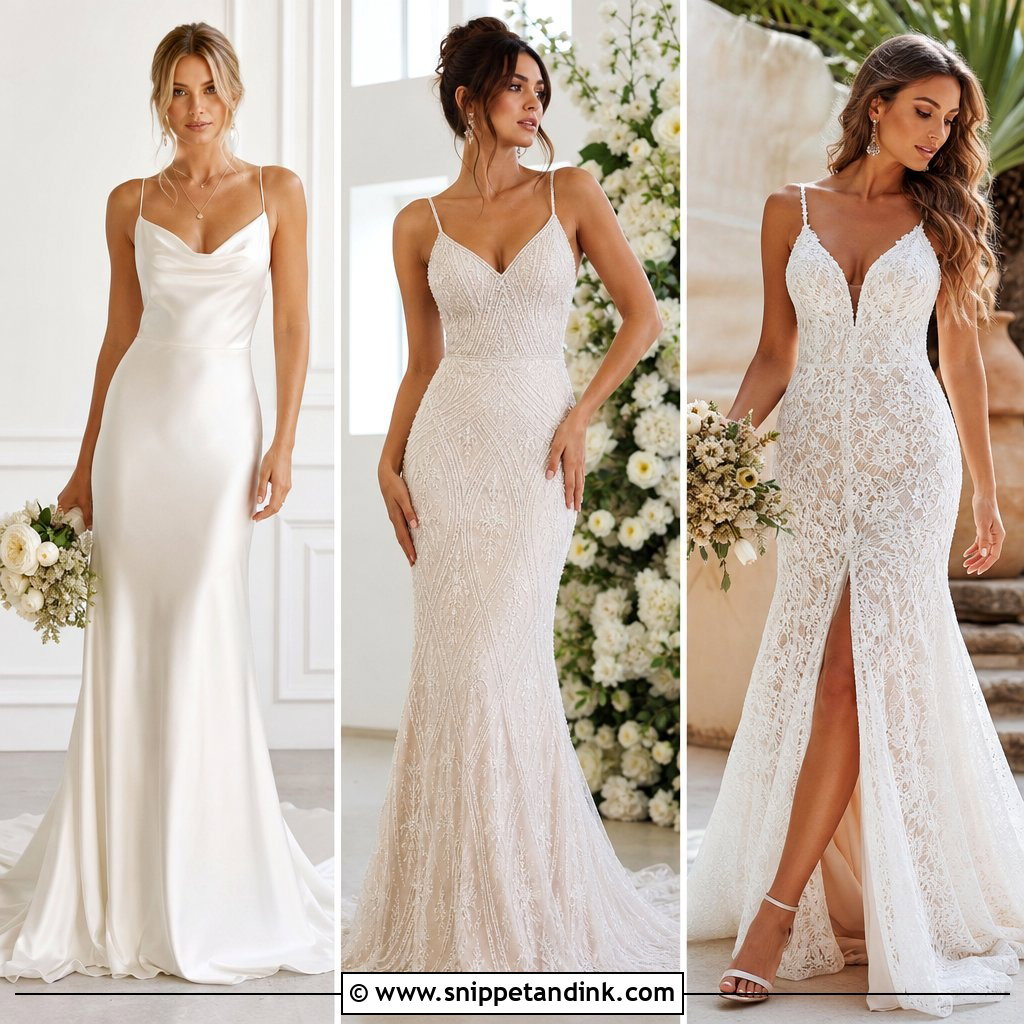
Frock is an old word for a dress, and I like it for weddings because it frees people from thinking there’s only one correct gown shape. Right now brides are asking me for clean silhouettes, pearl trim, bows, dropped basque waists, detachable skirts and soft color, alongside the classic ball gown. Those choices make the decision easier, not harder, because each one solves a specific problem: a venue, a season, a body that wants support, a party that needs dancing room. What follows is twenty-five frocks I’d actually put a bride in, with the fitting detail that decides whether each one works, from shoes to veil.
How Long a Frock Takes From Order to Final Fitting
The most common panic I see is a bride who falls in love with a made-to-order gown with too little time left. Timelines vary by designer, but the pattern is consistent enough to plan around.
- Ordering. Made-to-order bridal gowns usually take several months to arrive, often four to eight. Ready-to-wear and sample frocks can be taken home the same week.
- First alteration fitting. Book it roughly two to three months before the wedding, once the dress is in hand. Bring your actual shoes and underwear.
- Second fitting. Hems, bustles and bodice tweaks are checked here. Expect two or three fittings in total, more for a heavily beaded or lace gown.
- Final fitting. About two weeks before the date, with the person who will dress you on the morning, so they learn the fastenings.
Short or simple frocks, like the satin midi or tea length styles below, need far less alteration time. A full ball gown with a train and bustle needs the most.
1. White Ball Gown Bridal Frock
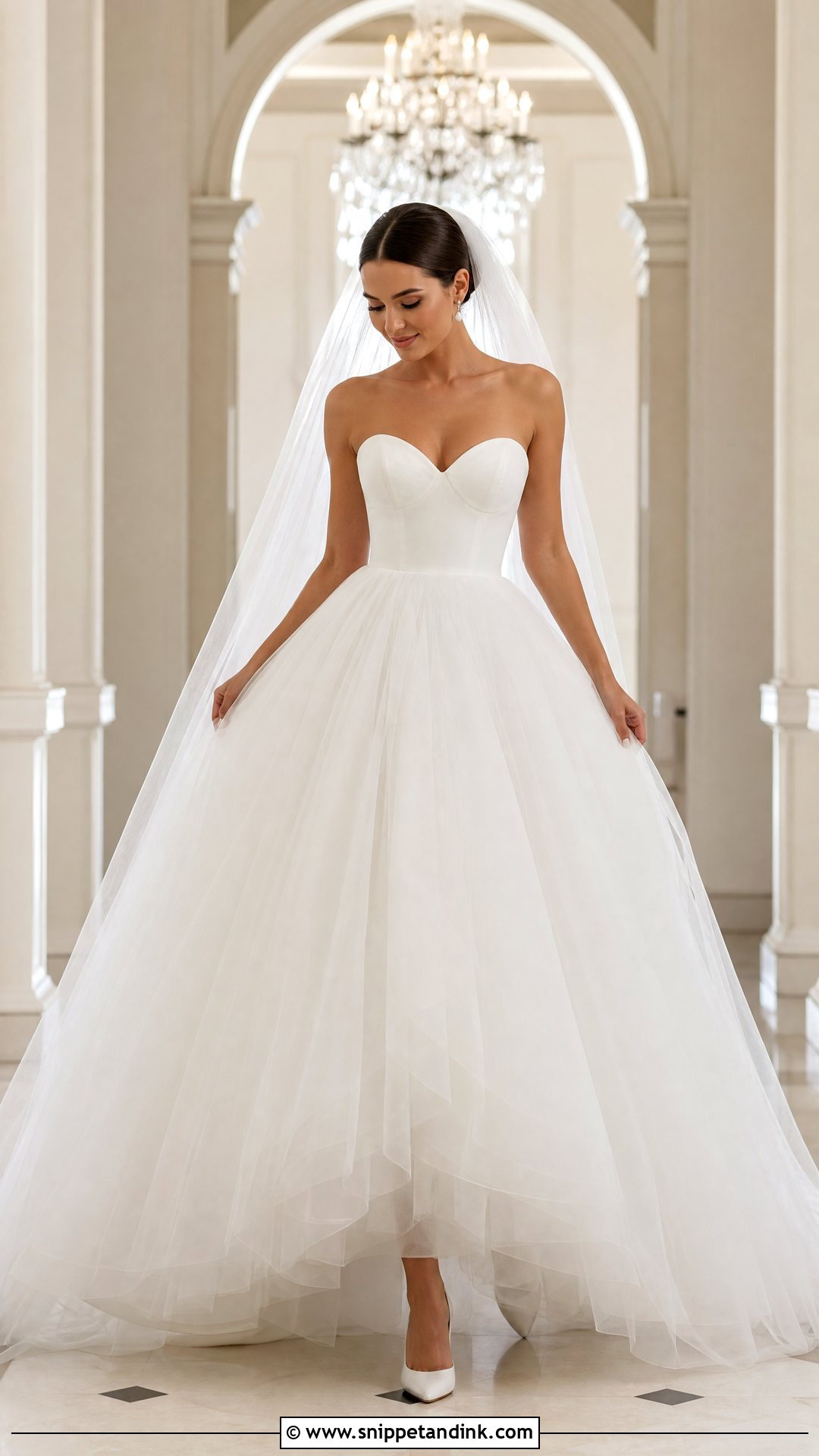
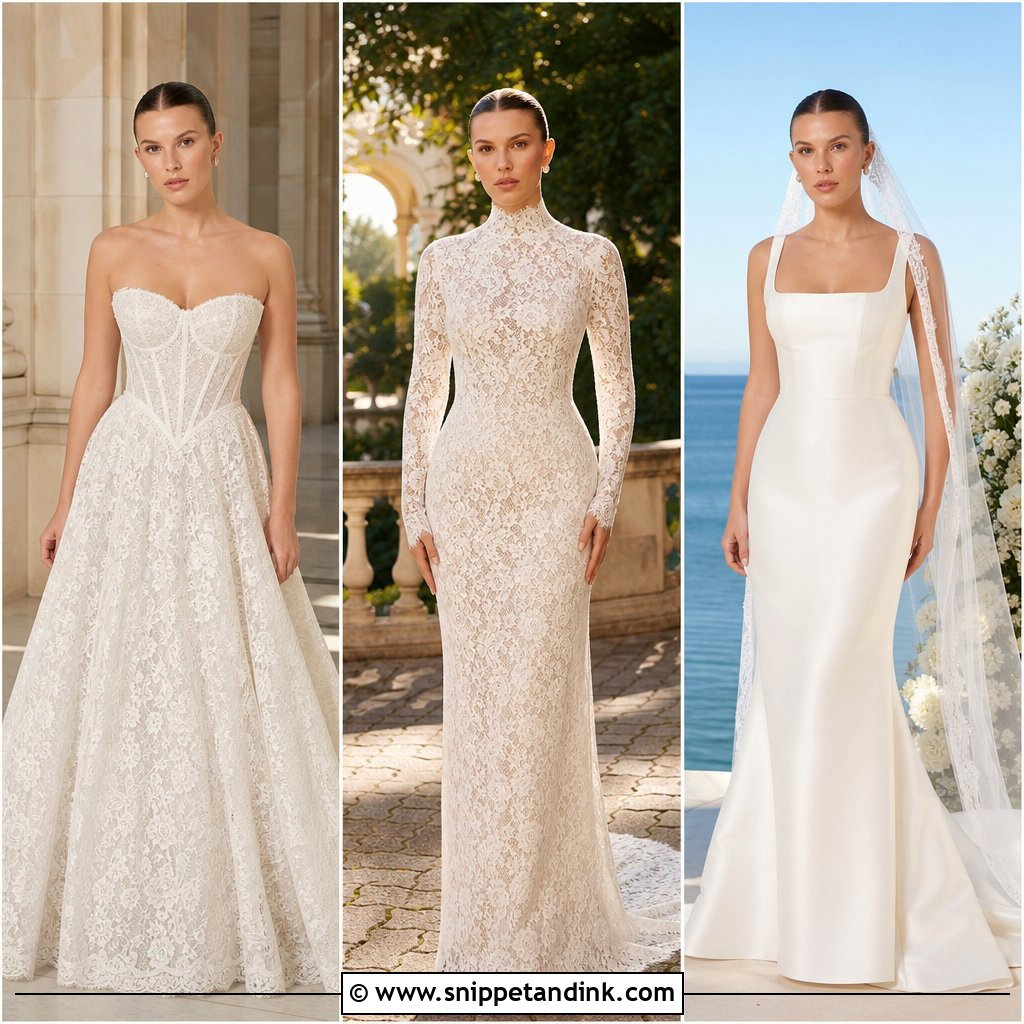
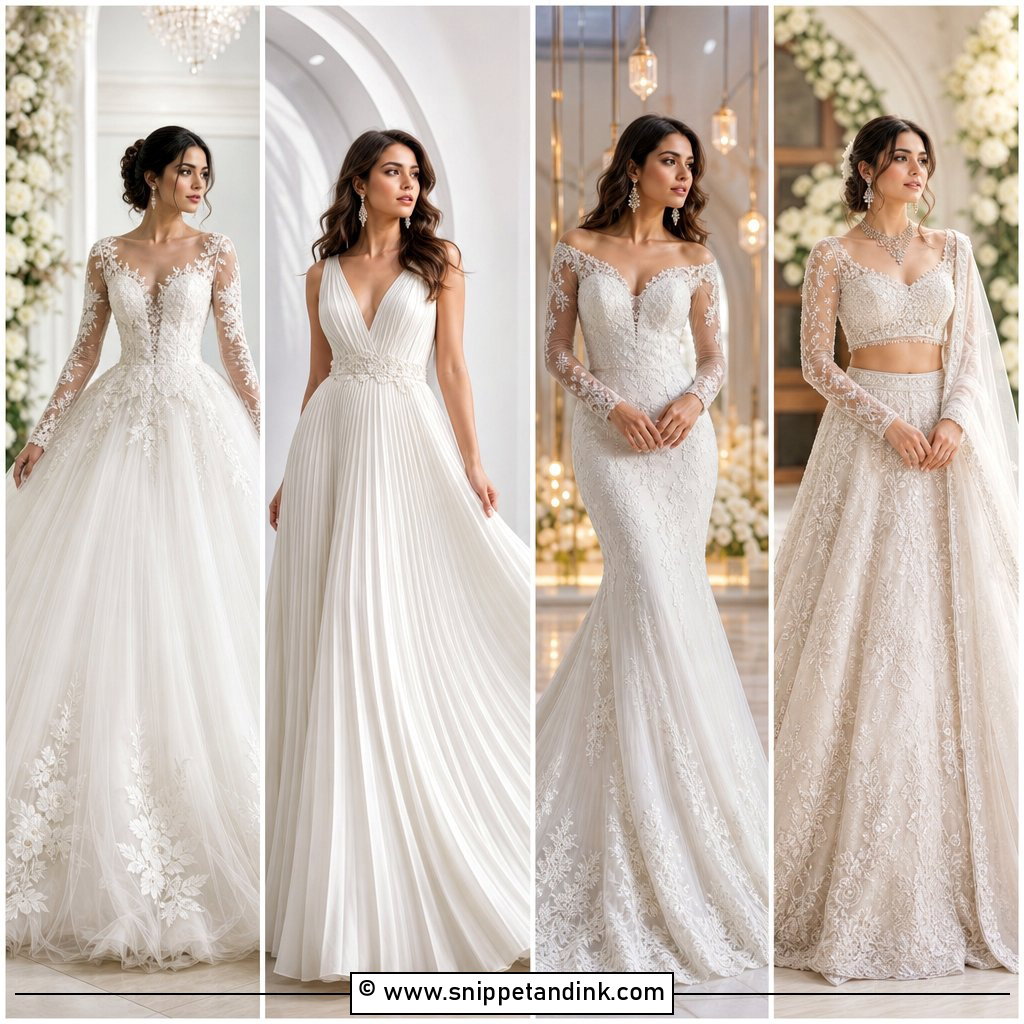
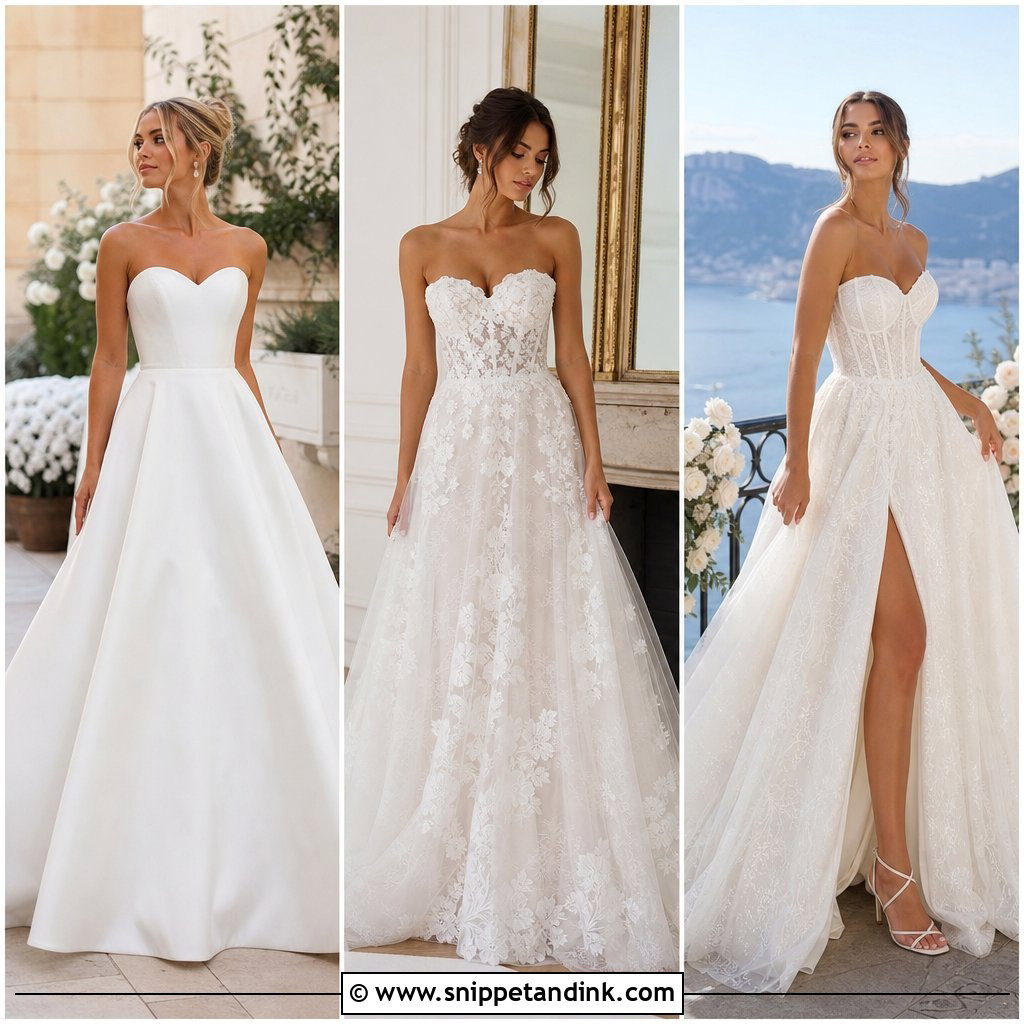
A white ball gown bridal frock has more presence than anything else on this list, and it asks the most of the bodice. All that skirt weight hangs from the waist, so the bodice needs proper boning or a built-in corset to stop it slipping down through the afternoon. A sweetheart or square neckline balances the volume. Choose a veil that falls behind the skirt; one draped over the front flattens the tulle. Ballrooms and formal gardens suit it. A narrow aisle or a tiny registry office doesn’t.
2. Lace A Line Bridal Frock
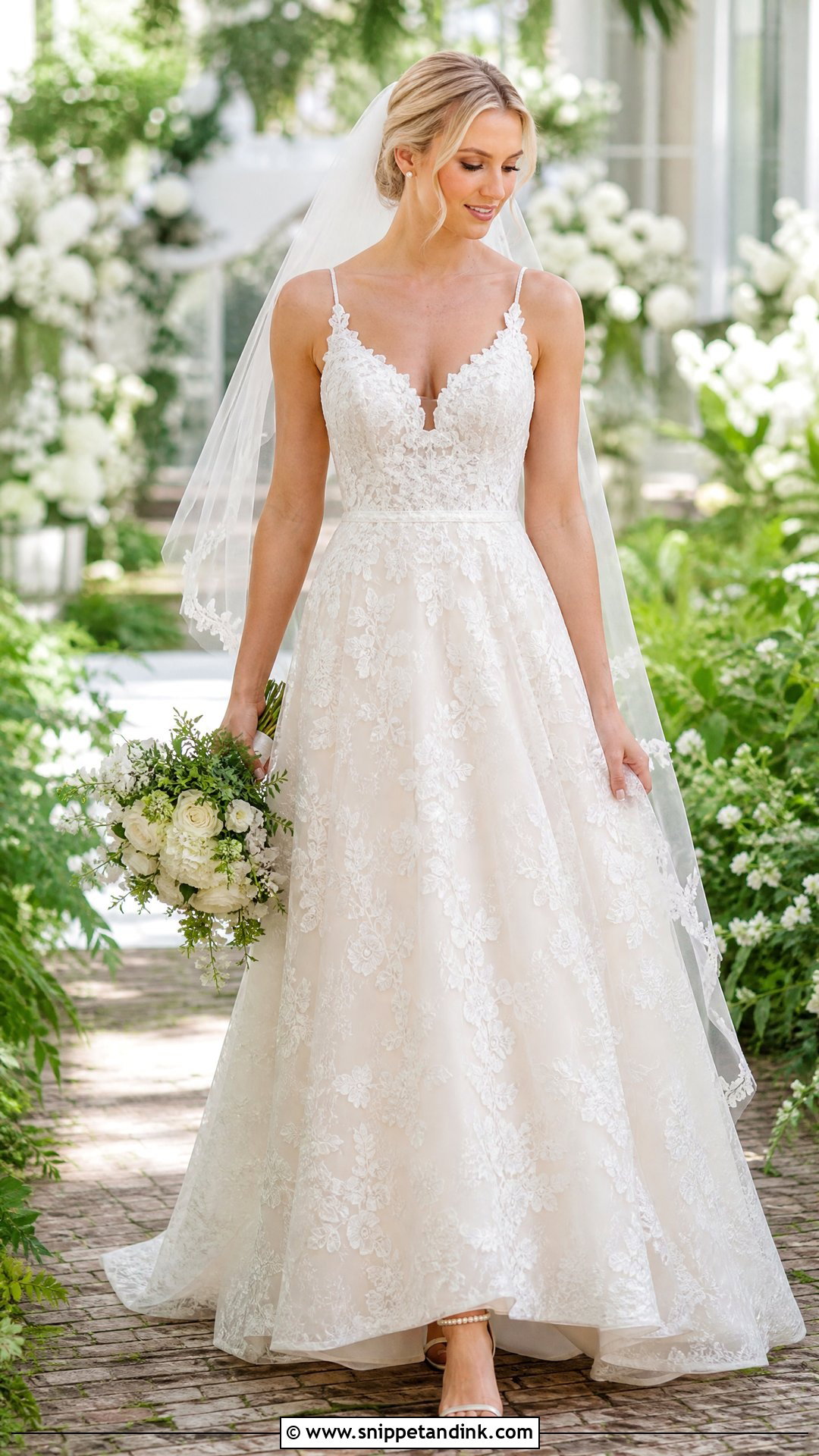
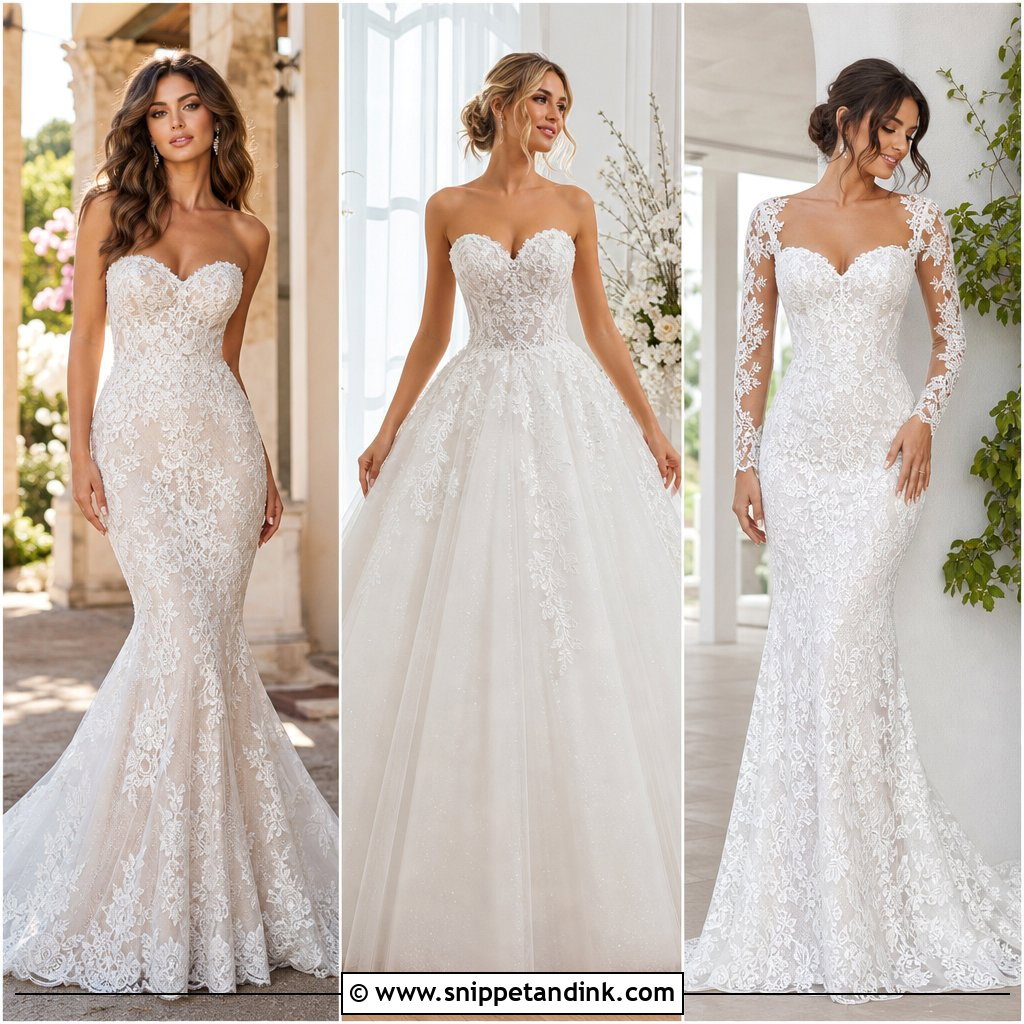
A lace A-line is the shape I suggest most often when a bride isn’t sure where to start, because the skirt skims away from the hips and forgives a lot. Pay attention to the lining color. Floral lace over a nude lining shows the pattern clearly; over ivory it reads softer and more traditional. Ask whether the lace is appliquéd by hand along the hem, since cheaper versions are cut straight through the motifs and the edge looks unfinished. A fingertip veil and a low bun keep the neckline in view.
3. Satin Midi Bridal Frock
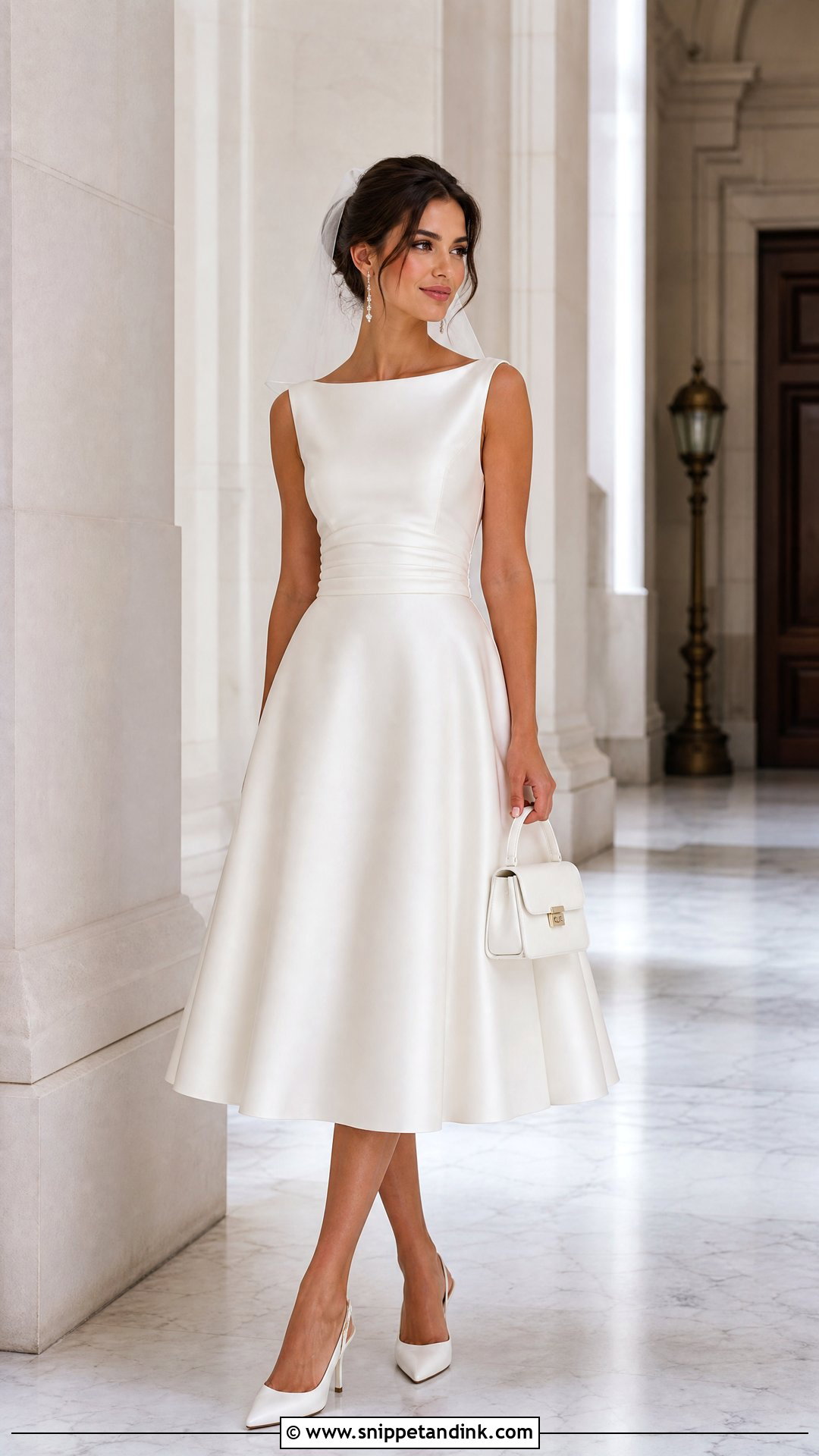
For a courthouse ceremony or a small lunch wedding, a satin midi is often all you need. Satin shows every wrinkle, though. Bias-cut satin moves well but creases across the lap the moment you sit, so a heavier duchess or crepe-back satin is kinder if you’ll be seated for a long meal. Slingbacks finish the length neatly. A short veil or a hair bow is enough to make it read as bridal, and you can wear the dress again afterward with different shoes.
4. Long Sleeve Bridal Frock
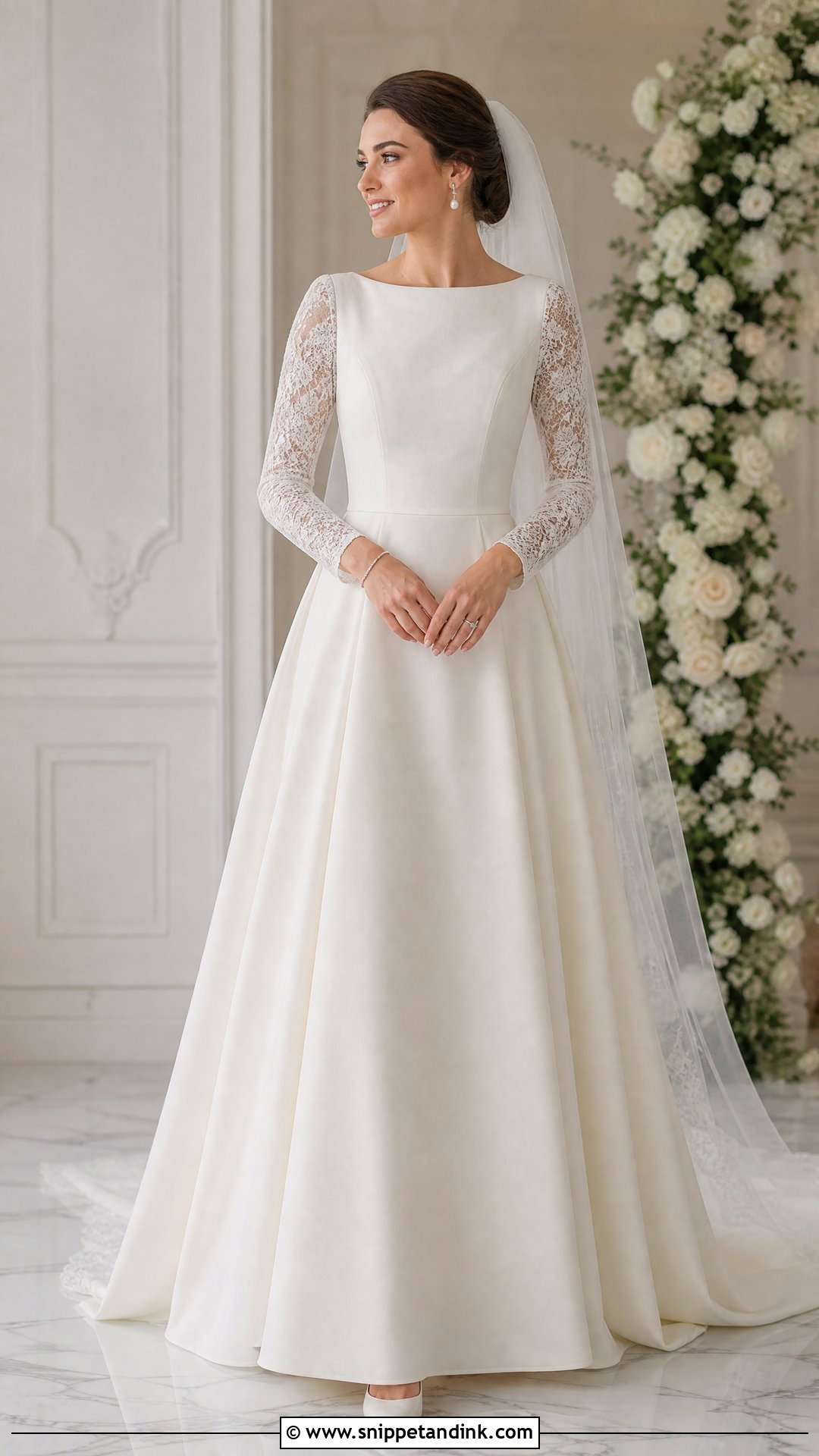
Sleeves change how a bride moves more than she expects. Fitted crepe or satin sleeves restrict how high you can lift your arms, so I always ask a bride to hug me and raise a glass during the fitting. Sheer lace sleeves give more room. With a high neckline, keep jewelry to studs and a slim bracelet; with a square or scoop neck, a small pendant or pearl choker fills the space. These suit cooler months and formal venues.
5. Off Shoulder Bridal Frock
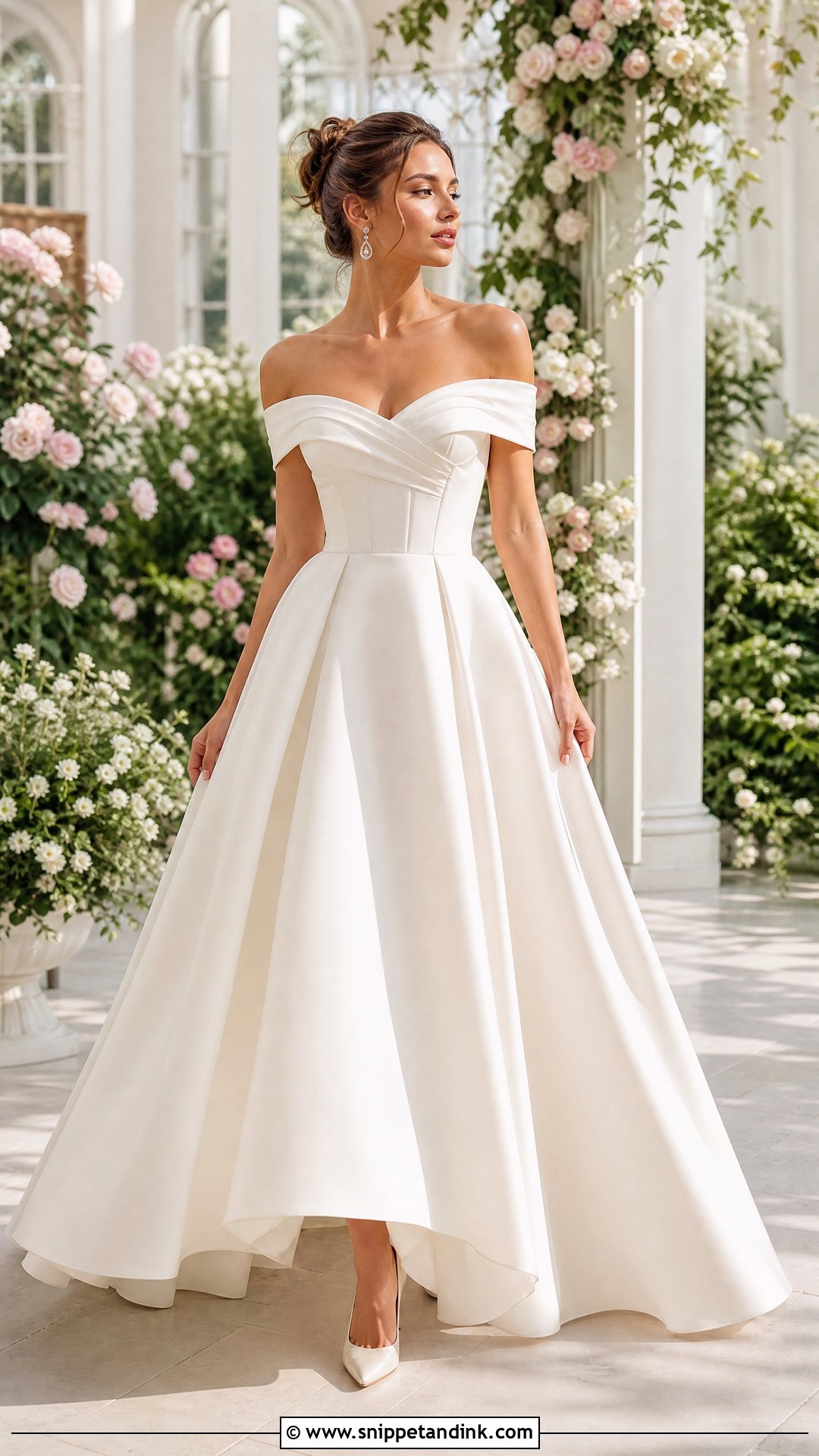
Off-shoulder frocks live or die by the bodice. Without structure, the neckline slides down every time you lift your arms, so look for internal boning and a grip strip of silicone along the top edge. A full skirt gives it a princess feel; a slim skirt makes it modern. Skip the necklace because the bare collarbones are already the focal point. One limit worth knowing: off-shoulder sleeves pin your upper arms, so the first dance will feel a little restricted.
6. Pearl Embellished Bridal Frock
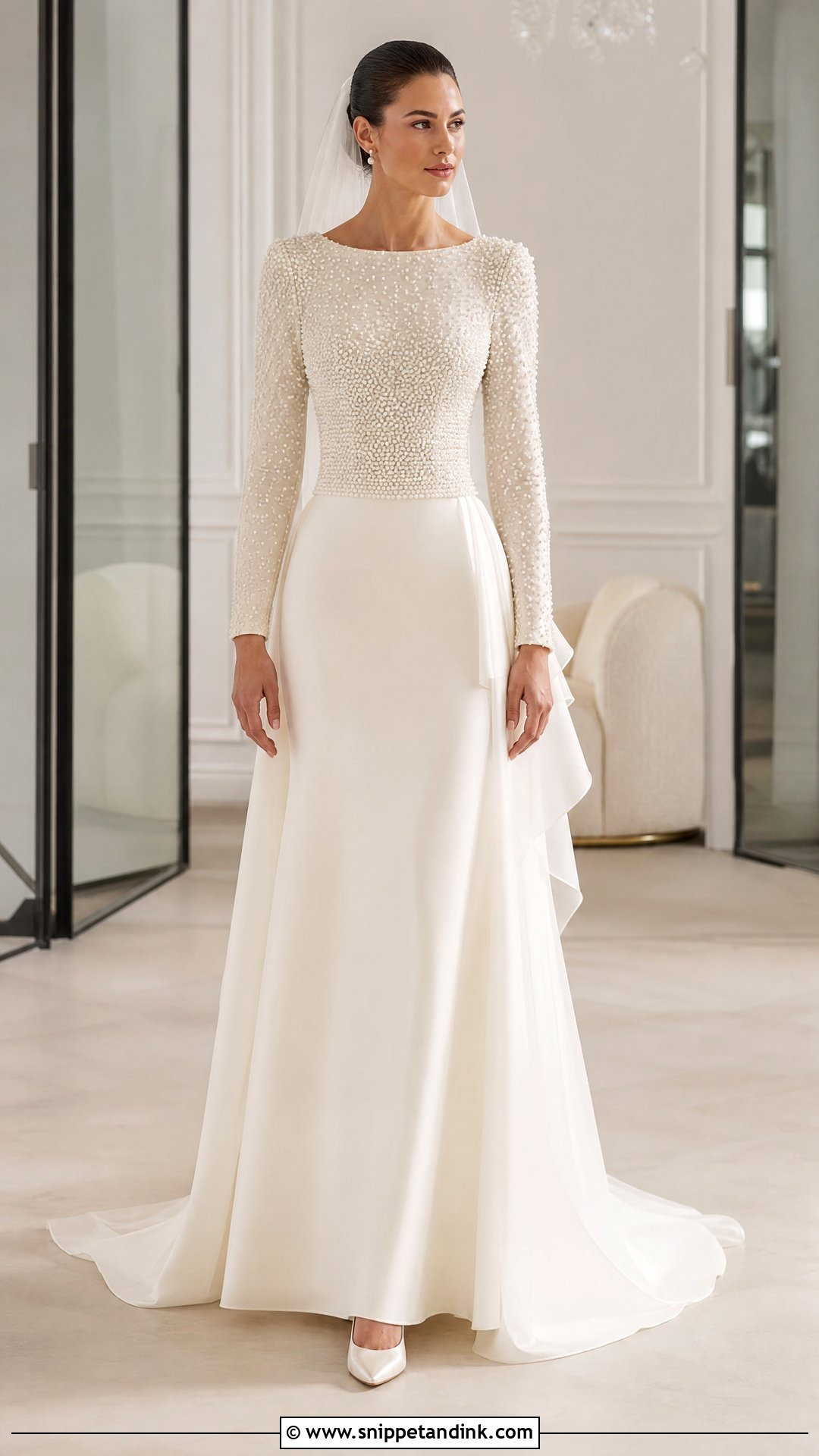
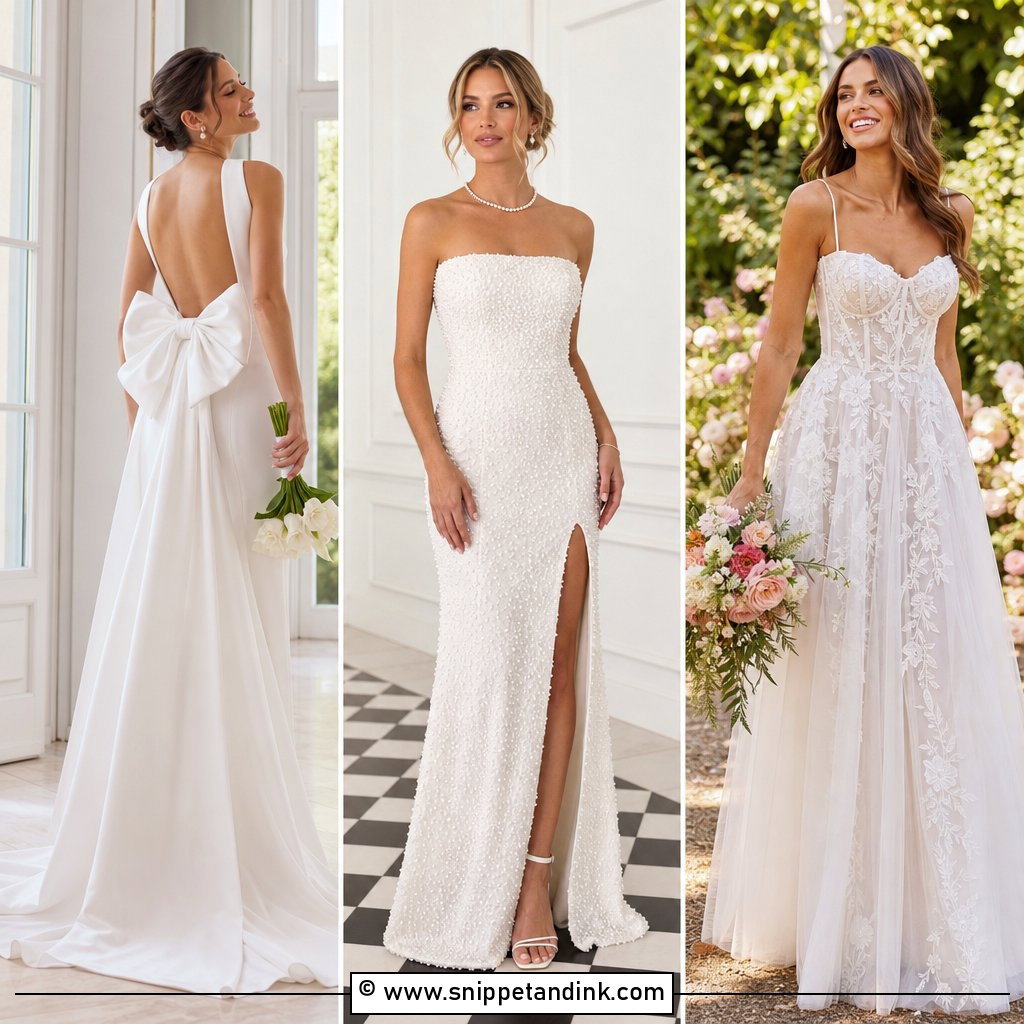
Pearls give a frock detail that catches light gently instead of flashing like crystals. They do add weight, and a heavily pearled skirt can pull a soft fabric out of shape, so I like them concentrated on the bodice or sleeves. A simple silhouette keeps the embellishment readable. Close-up shots love pearl work, which is a good reason to choose it if your photographer favors detail frames. Check the stitching: each pearl should be sewn individually, not on a glued strand that can unravel.
7. Tulle Princess Bridal Frock
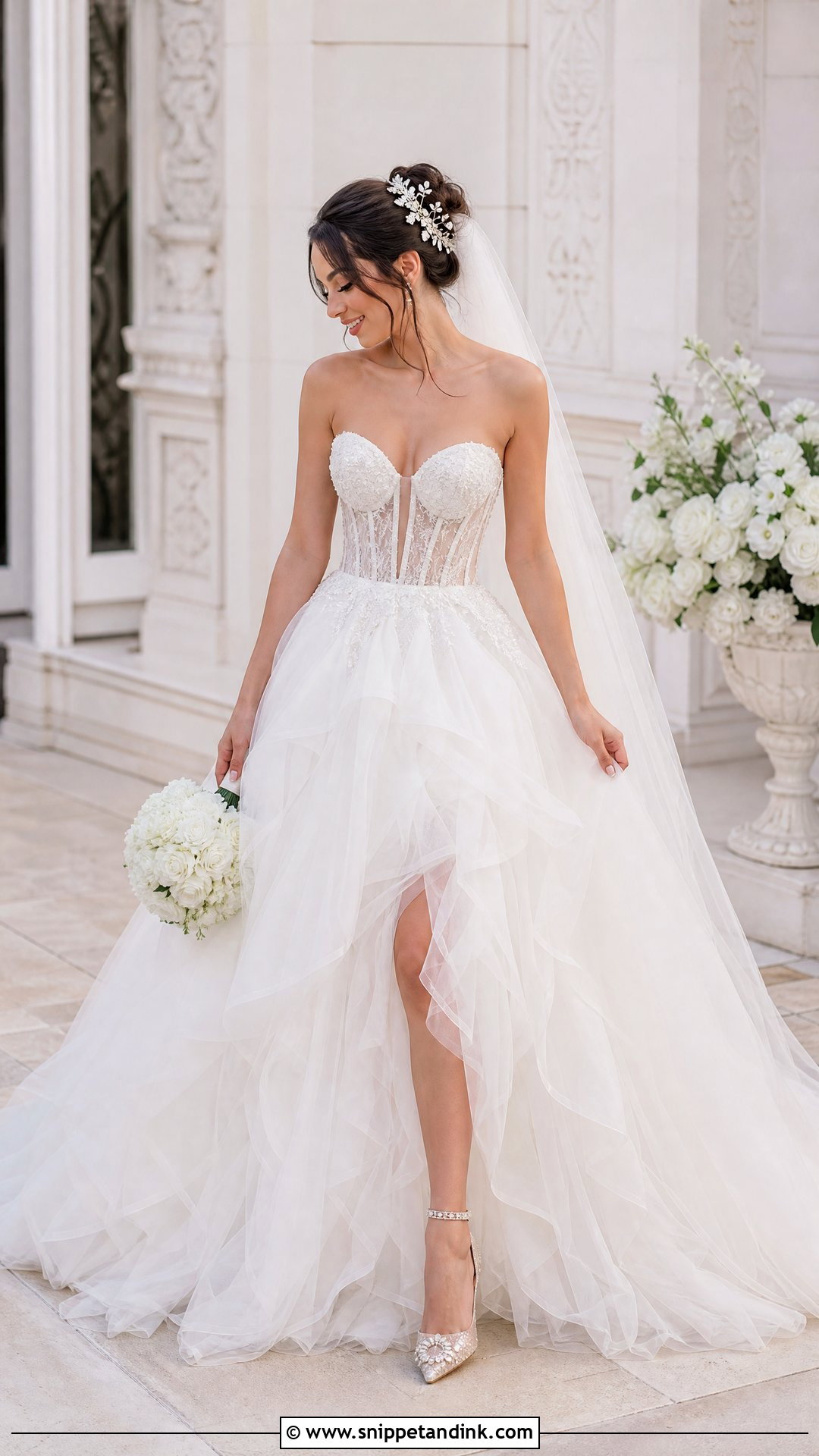
A tulle princess bridal frock is the fairytale shape, and the secret is layering rather than stiffness. Several layers of soft tulle over a single crinoline float; one stiff net petticoat looks like a costume. A fitted corset bodice keeps the waist defined against all that volume. Tulle snags on beaded shoes and bracelets, so keep jewelry smooth near the skirt. Expect to need help in the restroom with this one, and plan who that will be.
8. Short Bridal Frock
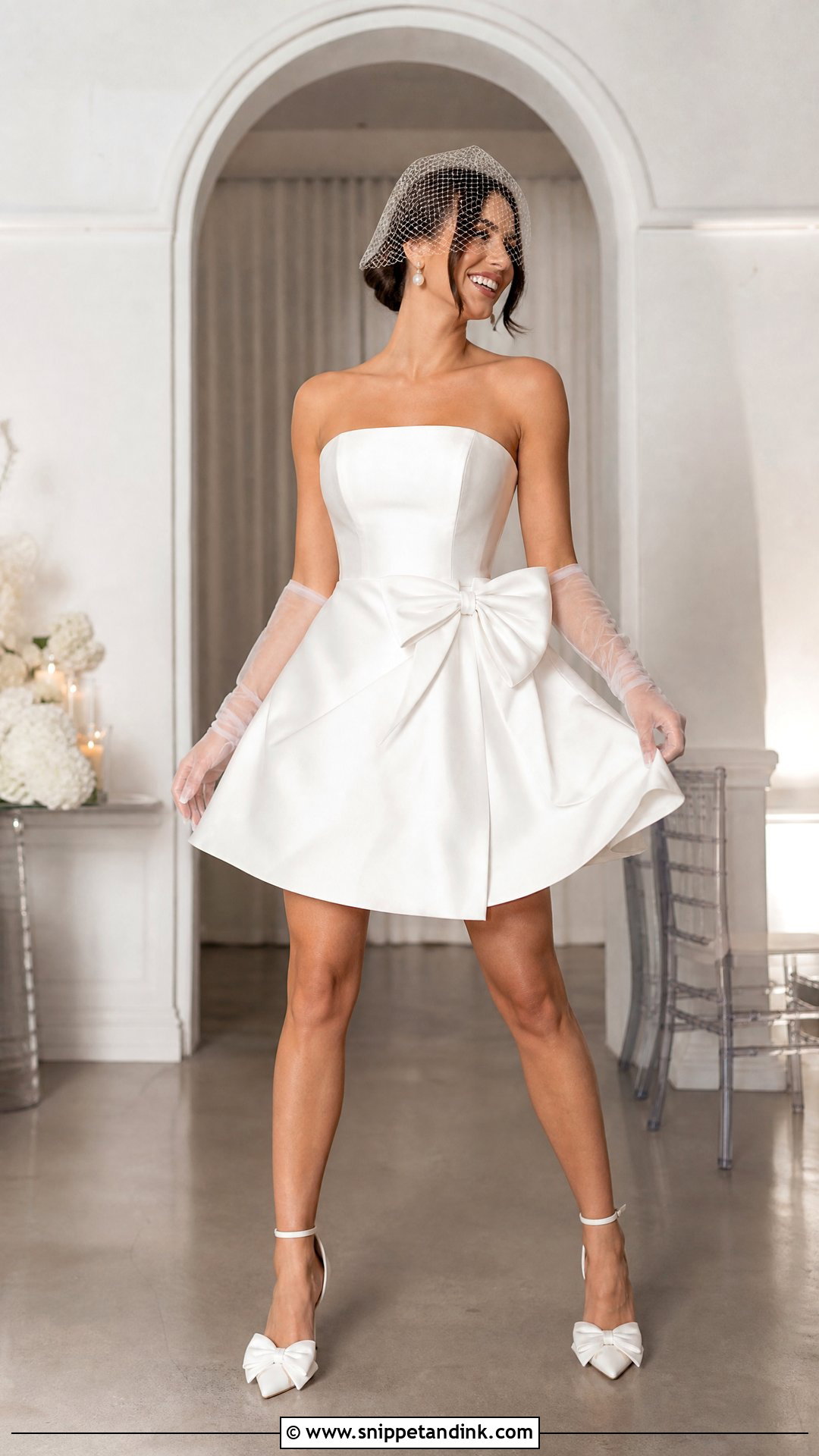
A short frock is the most comfortable thing you can wear to dance in, which is why so many brides use one as a second look. Choose a fabric with some structure, like mikado, lace or feathers; thin jersey looks like a party dress rather than a bridal one. Sheer gloves or a birdcage veil make it unmistakably bridal. Shoes are fully on show here, so wear them in at home for a week beforehand.
9. High Neck Bridal Frock
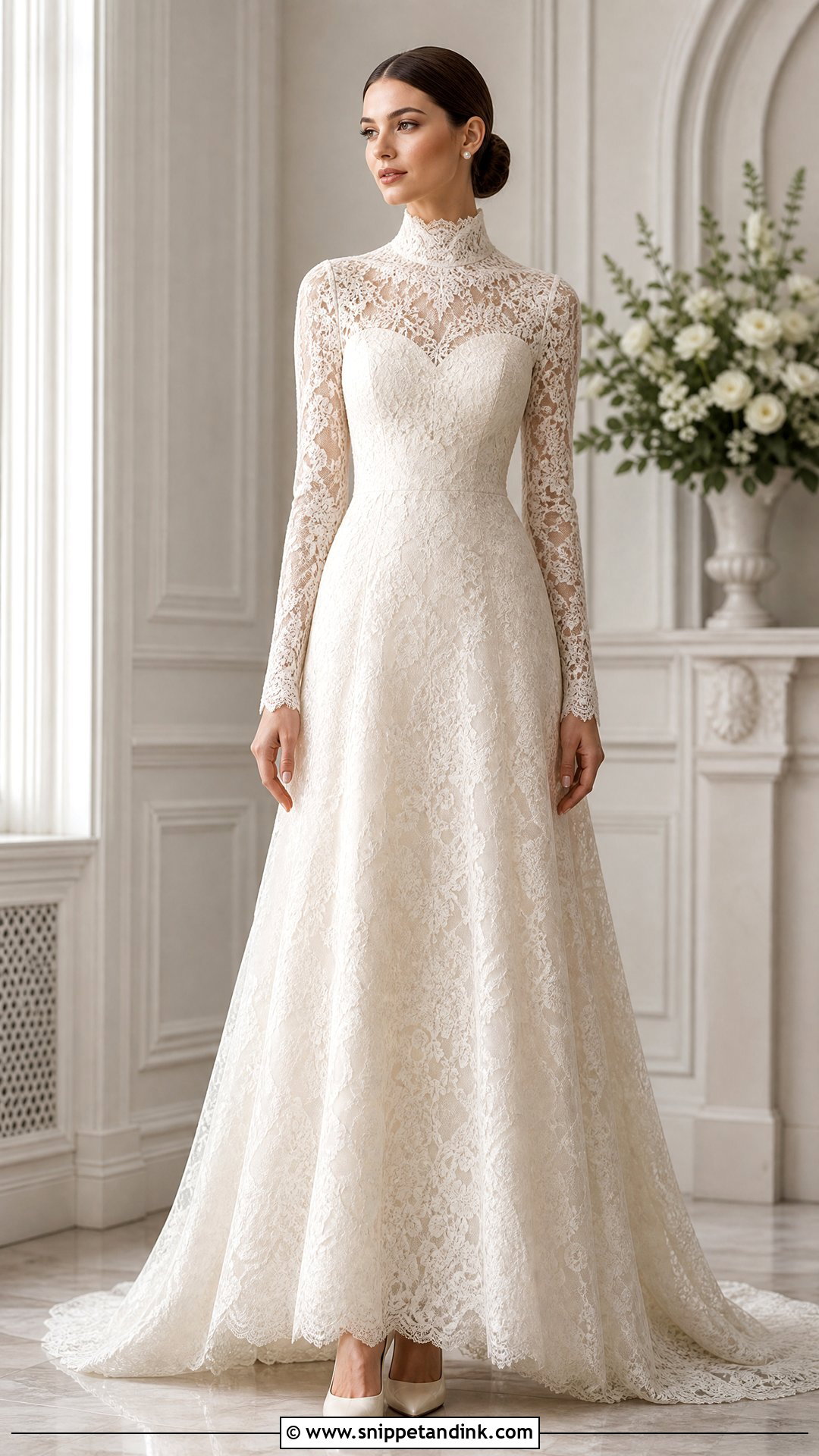
With a high neckline the face becomes the frame, so hair and earrings carry the look. A lace high neck feels romantic; satin or crepe looks sleek. I’d avoid it for a hot summer afternoon, since there’s nowhere for heat to escape and the collar shows sweat lines. The neckline should sit just loose enough to slide a finger in, or you’ll notice it every time you swallow. Fitted bodice, flowing skirt and a low bun keep it modest without looking shapeless.
10. Corset Bridal Frock
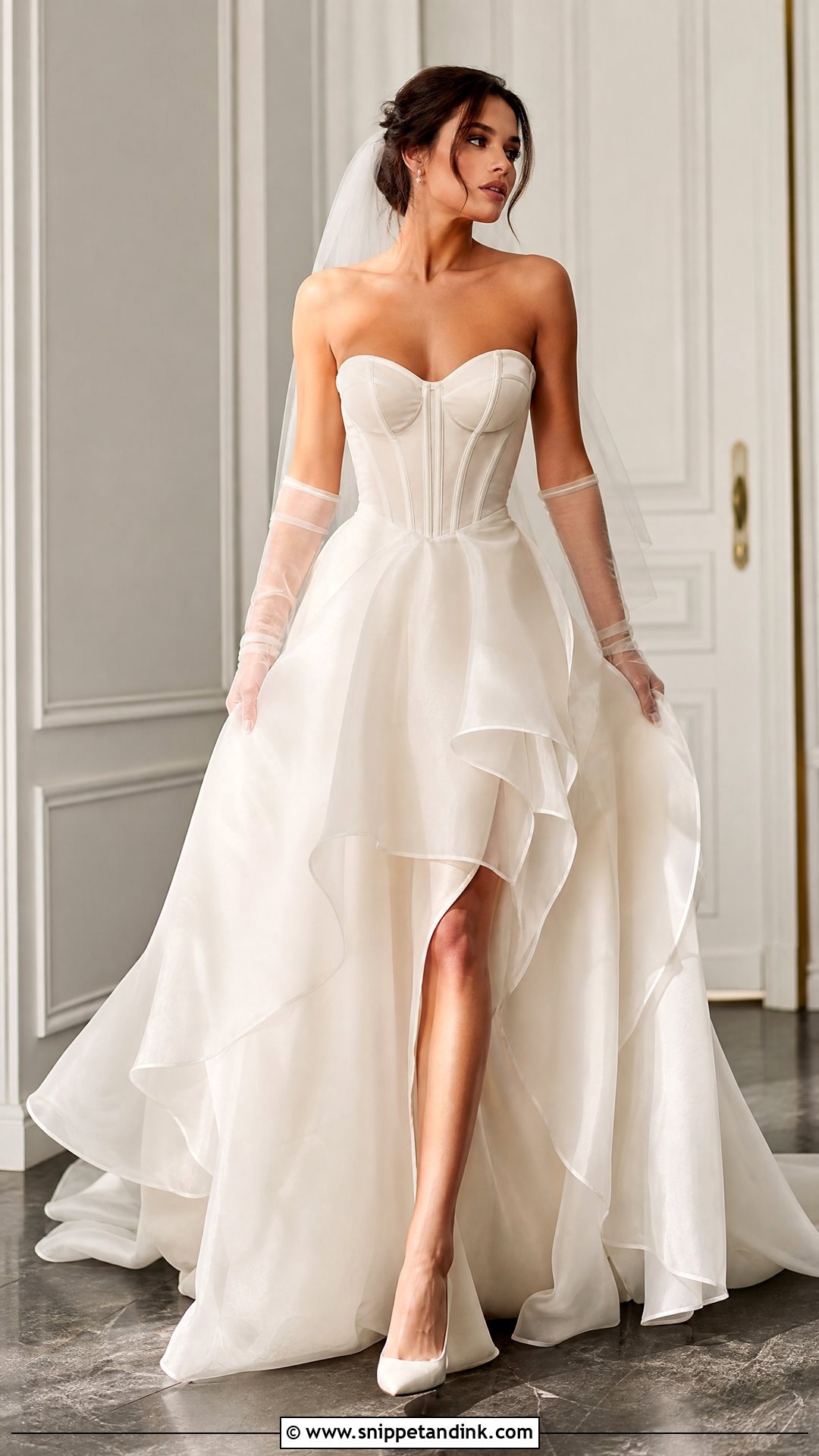
A well-made corset is one of the most comfortable bodices you can wear, provided it’s fitted to your real ribcage, not your hopes for it. Choose exposed boning for a fashion-led look or covered boning for a softer finish. Sit down at every fitting; boning that digs in when you sit will hurt by the speeches. Lace-up backs give the seamstress room to adjust for weight changes in the final weeks, which a zip doesn’t. A detachable veil or sheer gloves add ceremony drama.
11. Floral Embroidered Bridal Frock
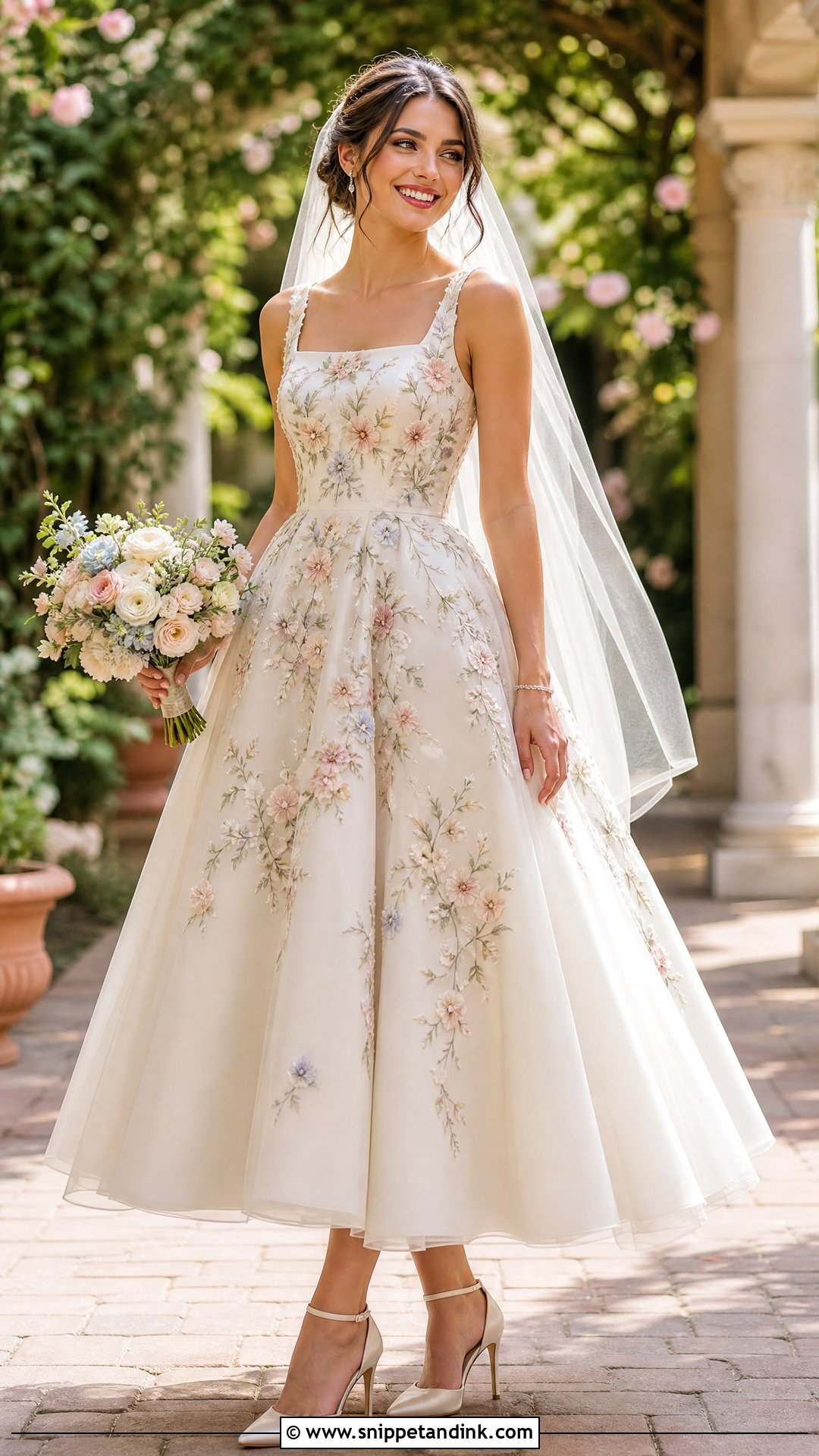
Embroidery makes a frock feel personal, especially when the motif means something, such as a flower from your bouquet or your mother’s garden. Ivory thread reads subtle; pastel florals or silver vines show from across the room. Where the embroidery sits shapes the body: dense work at the bodice draws the eye up, scattered motifs at the hem add weight to the skirt. Keep the veil sheer and plain so it doesn’t blur the stitching. Spring and garden weddings suit it naturally.
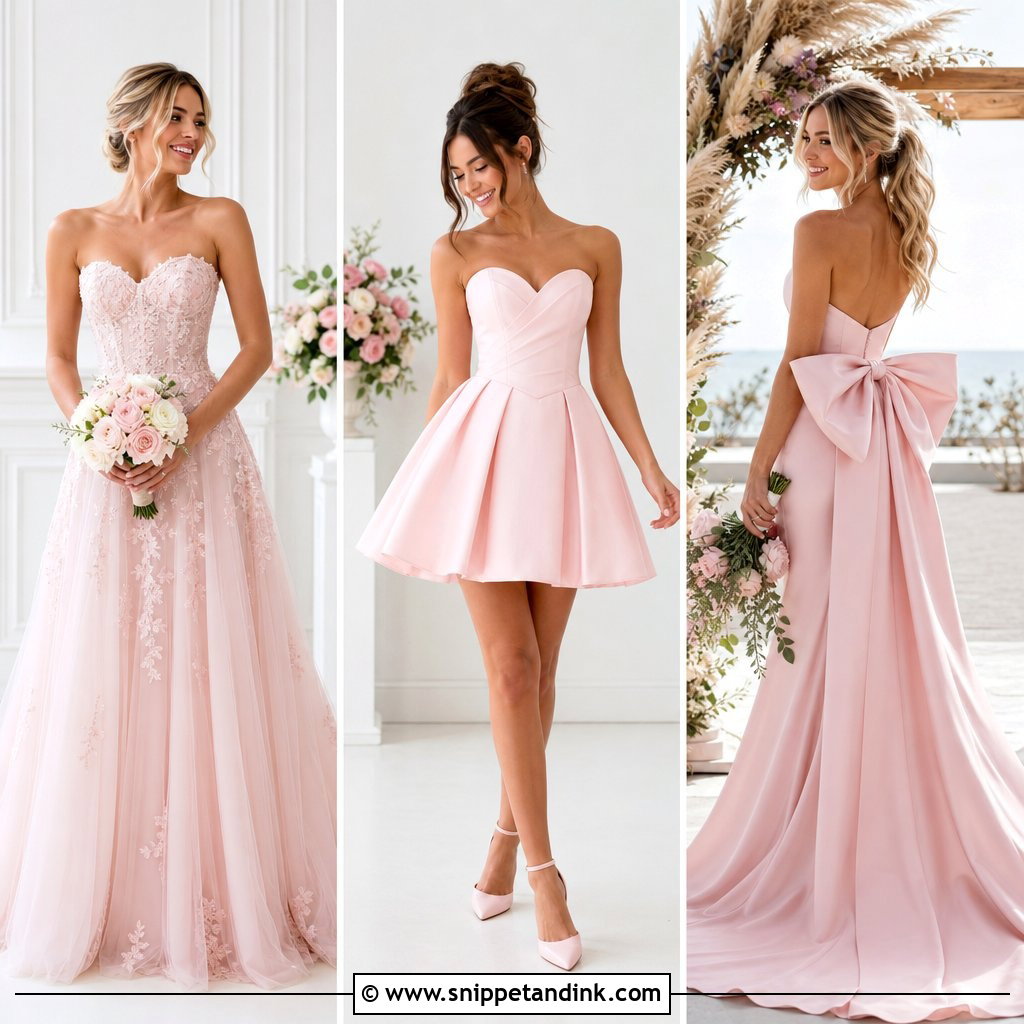
12. Blush Pink Bridal Frock
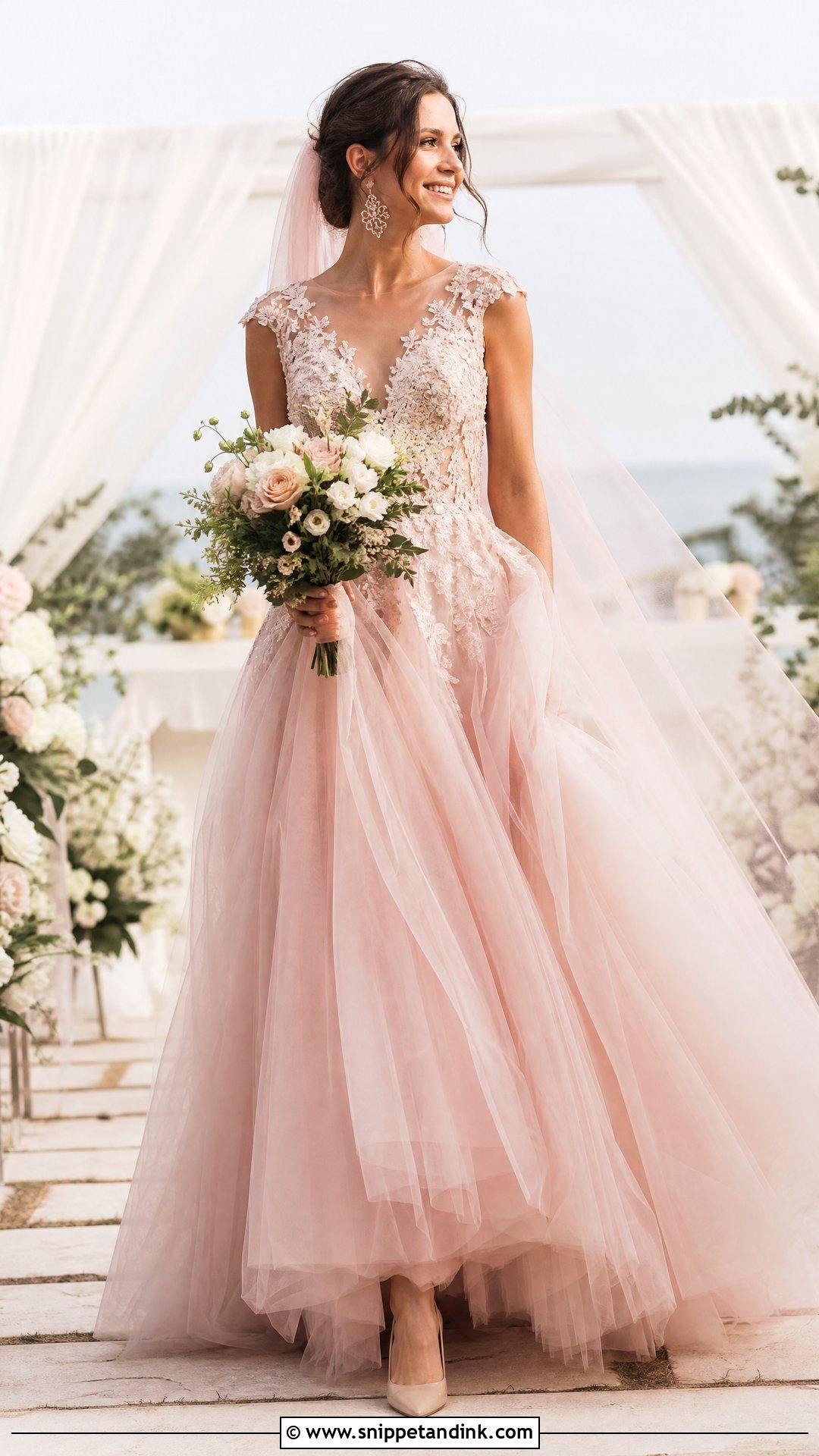
Blush is a good answer for brides who find pure white harsh against their skin. It warms most complexions, though very pale skin with pink undertones can look flushed in it, so try it in daylight with no makeup. Light is the other variable: blush can read almost white outdoors and much pinker under warm reception bulbs. Rose-gold jewelry and a bouquet of cream and pale pink tie it together. An ivory-edged veil keeps it bridal.
13. Tea Length Bridal Frock
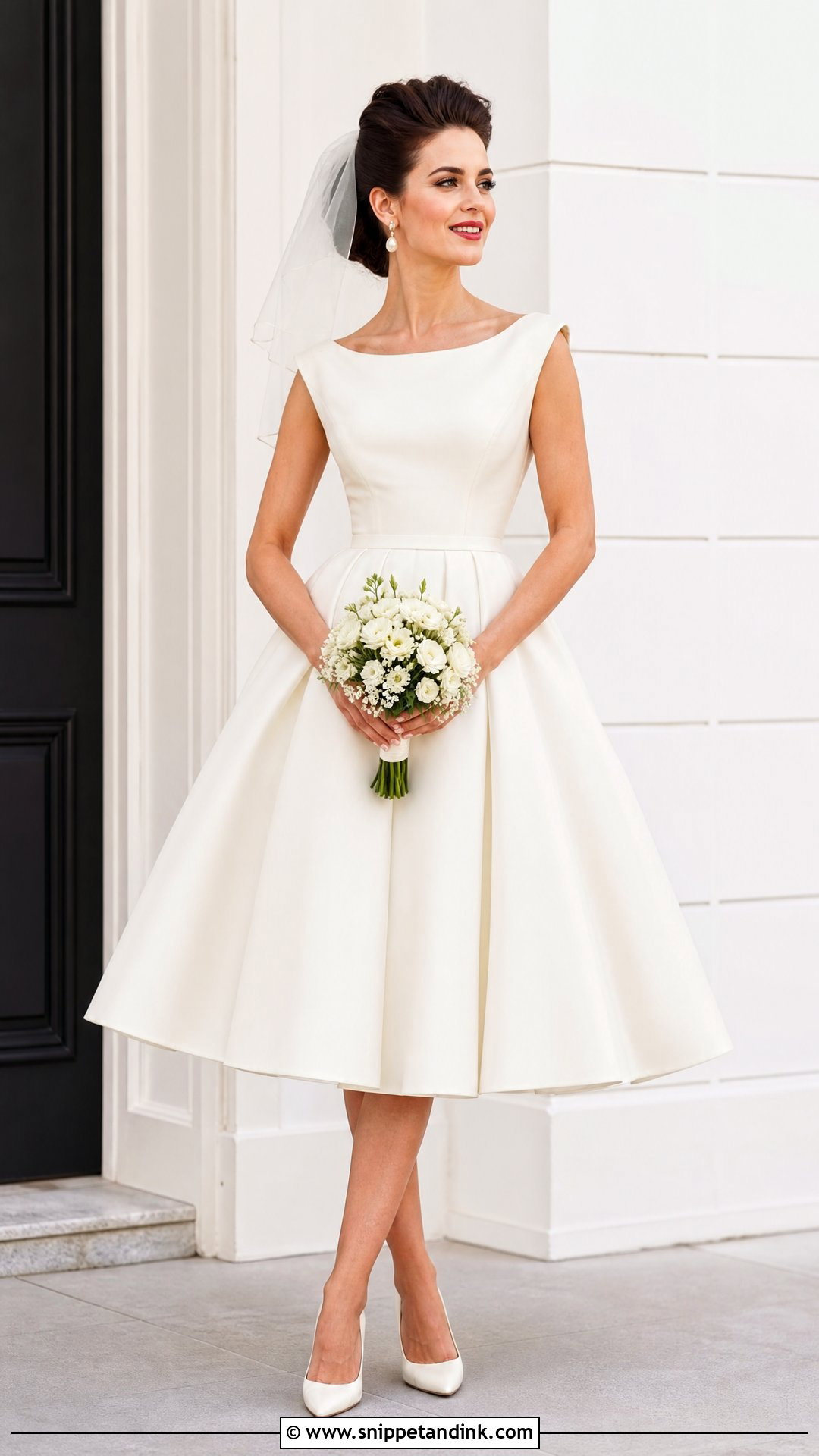
Tea length sits between knee and ankle, so it shows your shoes and keeps the hem clear of grass and dance-floor spills. It reads vintage, especially in satin or organza with a flared skirt. The hem height is critical: a few centimeters too long and it looks like a mistake rather than a choice, so have it set while you’re wearing the exact shoes. Courthouse ceremonies and garden receptions are its natural setting.
14. Square Neck Bridal Frock
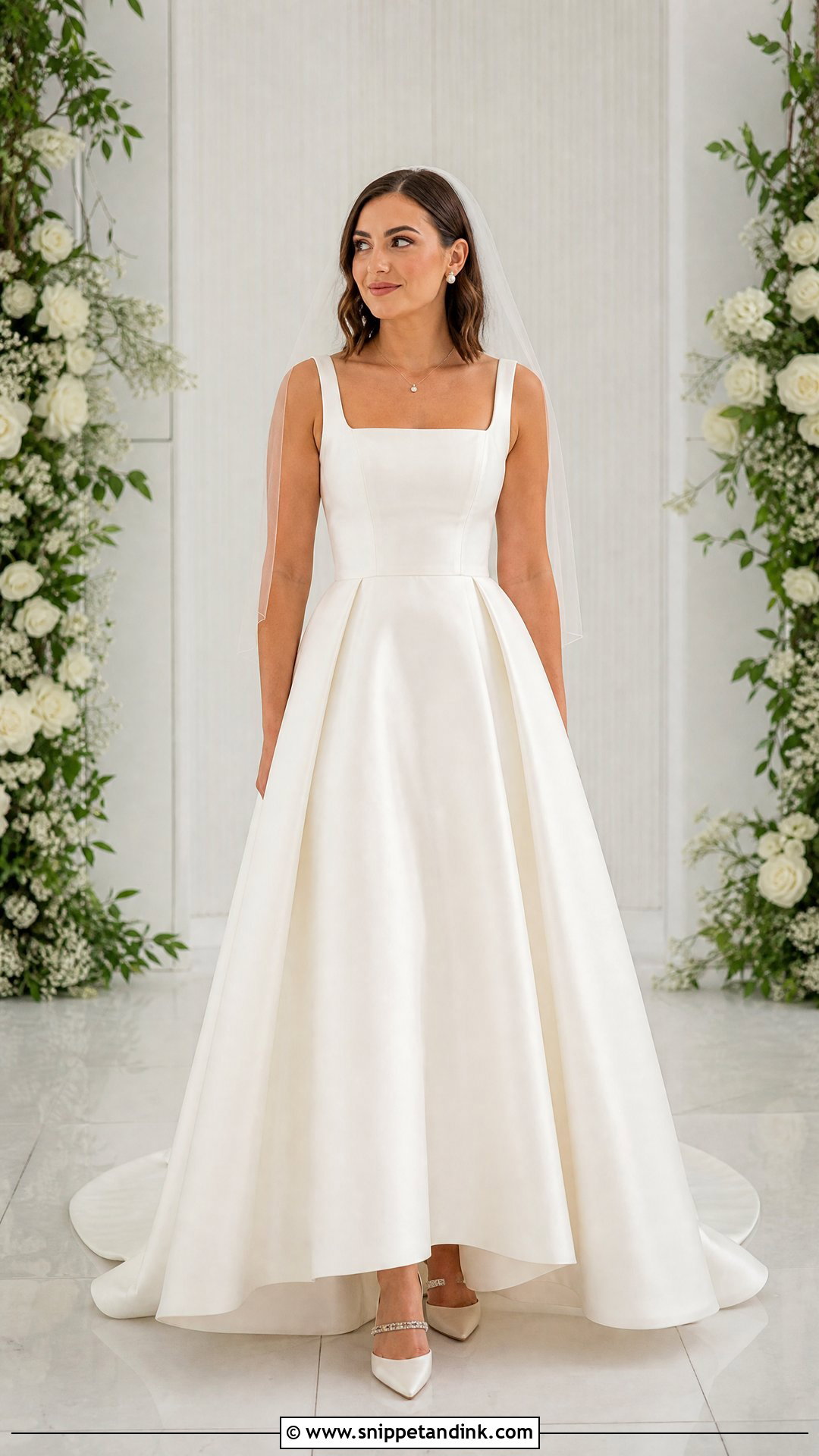
Square necklines are one of the most flattering cuts I fit, because the straight line widens the shoulders slightly and balances a fuller hip. Satin gives a sleek line; mikado holds a crisper edge. The neckline must lie flat. If it gapes when you lean forward, ask for a stay tape inside the top edge. A shoulder-length veil and a smooth updo keep the shape visible. It suits formal and modern venues equally.
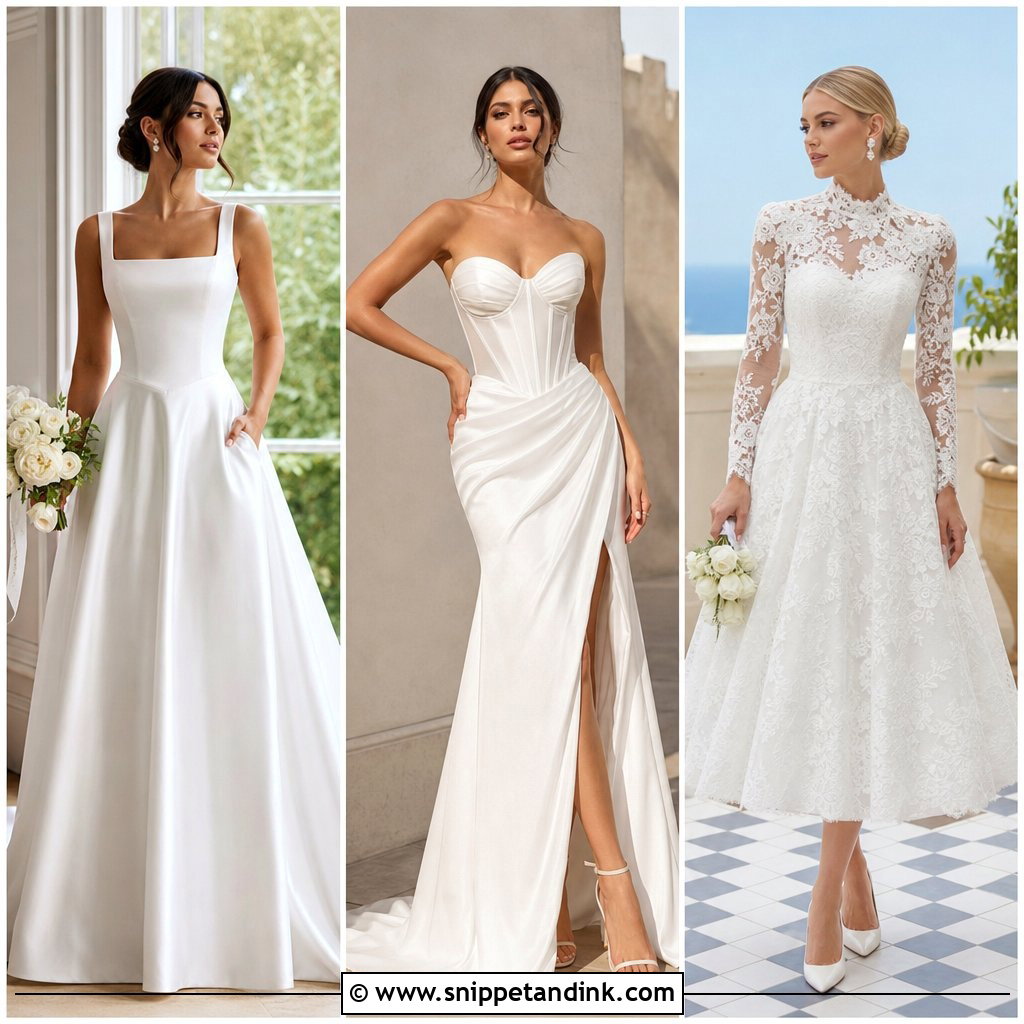

15. Basque Waist Bridal Frock
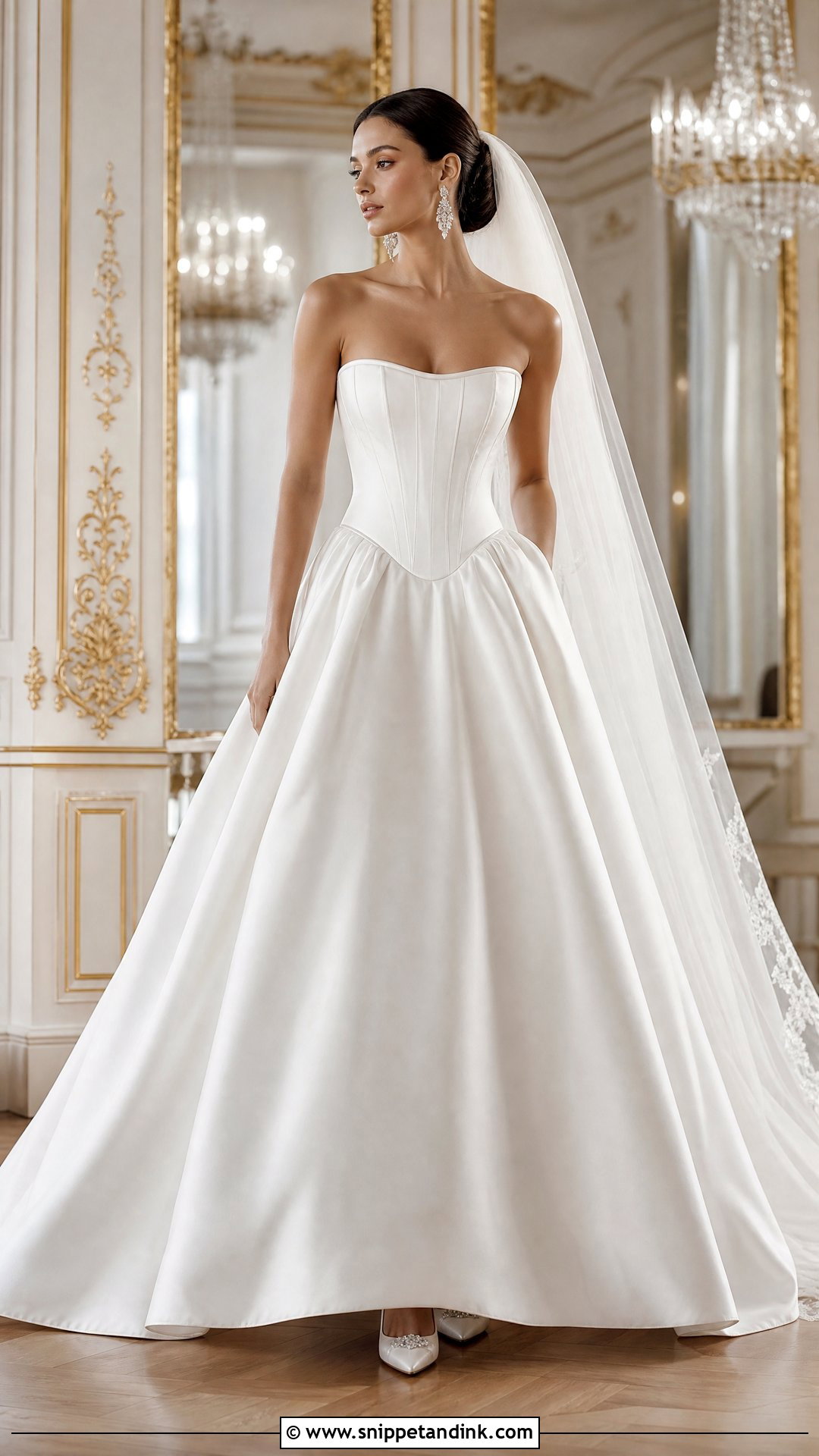
A basque waist dips into a V below the natural waistline, which lengthens the torso and makes a full skirt look even fuller. It needs a structured bodice to keep the point sharp; a soft basque just creases at the hip when you sit. Tall brides and those with a short waist both benefit. A long veil and pointed heels suit the drama. Hold the bouquet a little higher than usual so it doesn’t cover the dip.
16. Bow Detail Bridal Frock
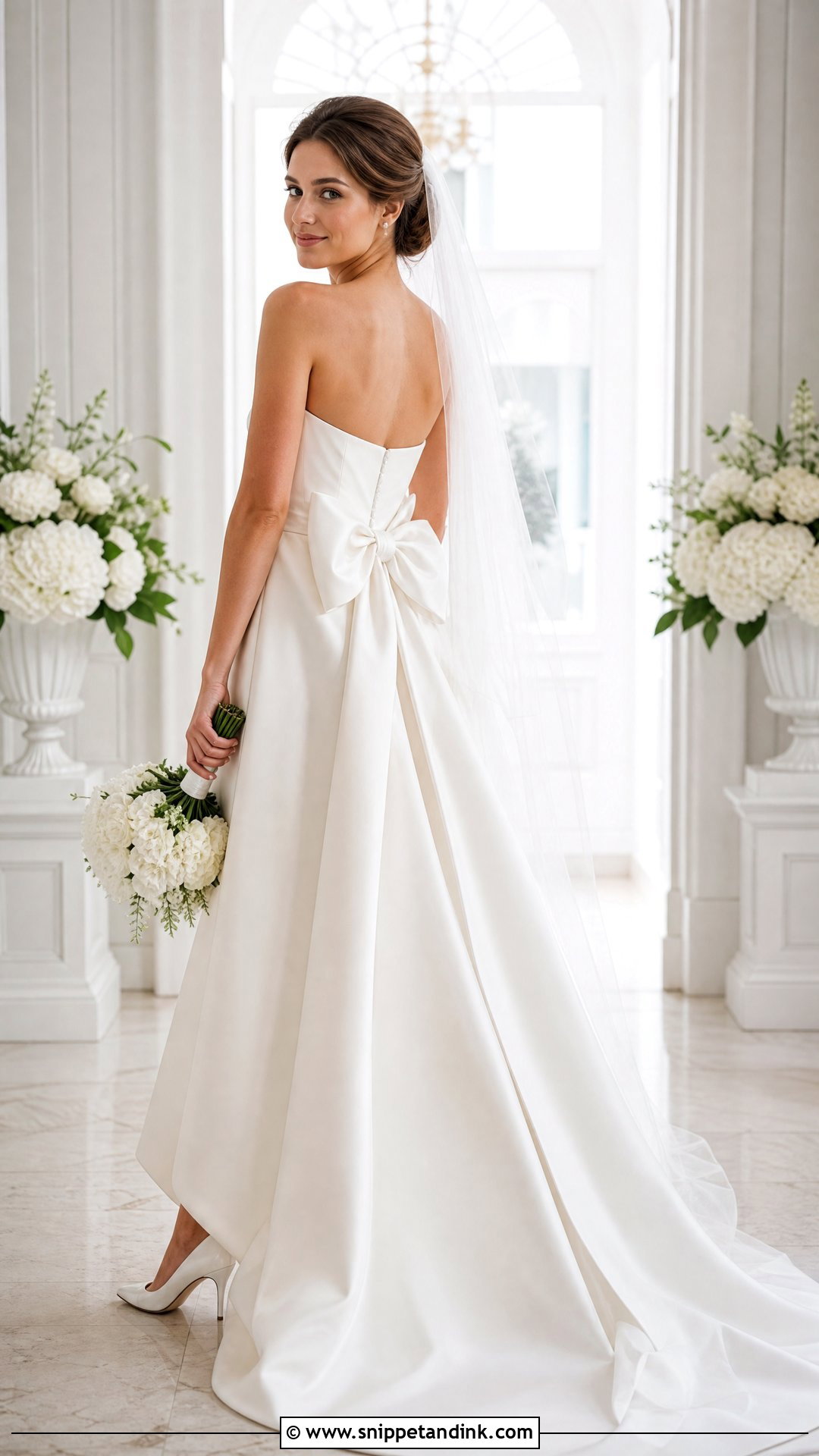
Bows look sweetest when there’s only one of them. A small shoulder bow feels delicate, a big back bow gives the aisle view a focal point, and a waist bow defines the figure. If the bow is at the back, check that it doesn’t get crushed when you sit, and choose a veil you can take off for portraits so it doesn’t hide the bow. Stiffened bows hold their shape all day; soft ones droop by evening unless they’re lined.
17. Detachable Train Bridal Frock
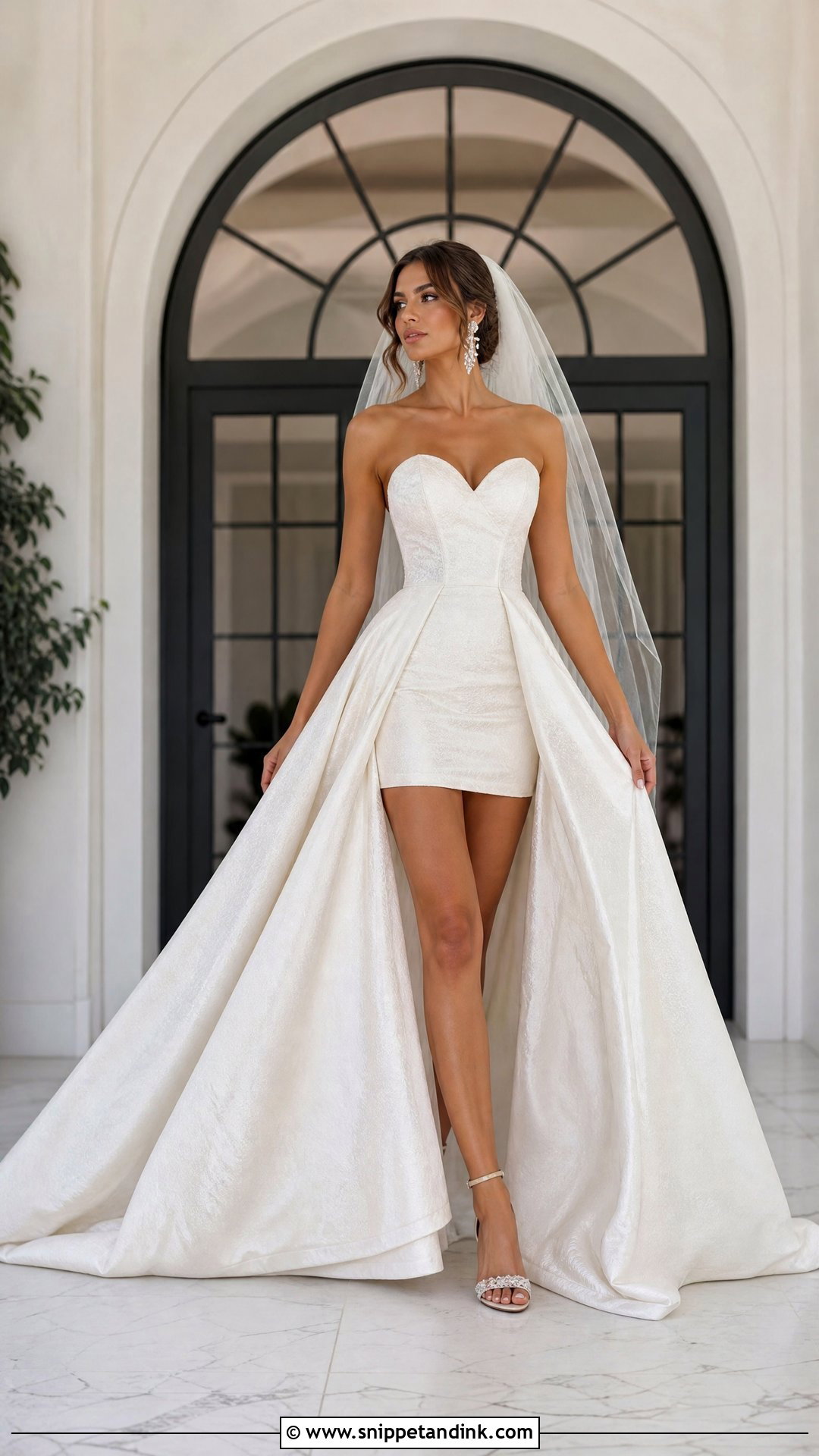
A detachable train bridal frock gives you a ceremony look and a party look without buying two dresses. The attachment point is what to check: snaps or hooks at the waistband should be hidden under a belt or seam, and someone other than you needs to practice removing it before the wedding. A slim gown or midi base works best under the overskirt. Swap the veil for statement earrings when the train comes off.
18. Sequin Bridal Frock
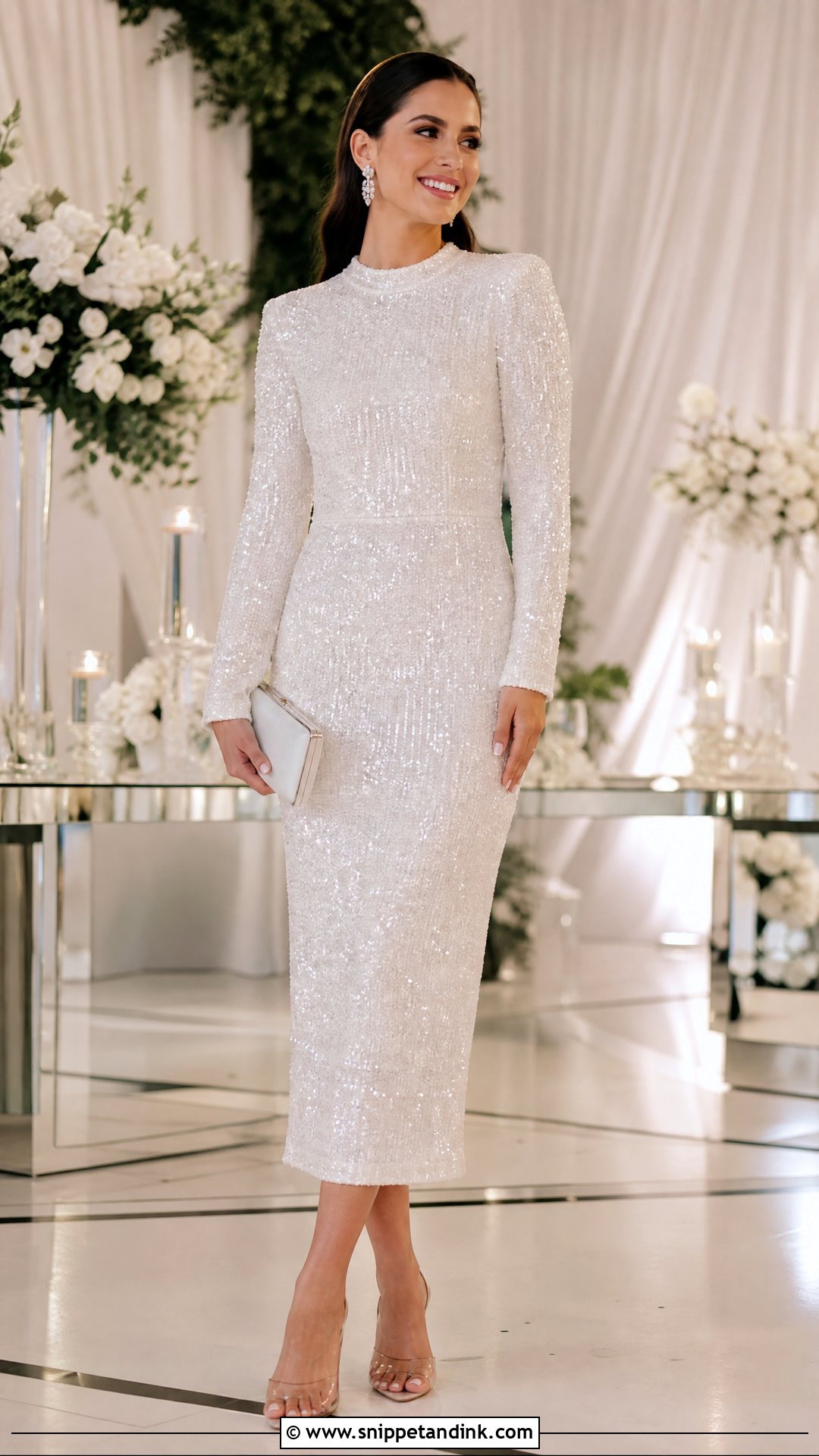
Sequins come alive under reception lighting and in candlelight. A simple silhouette lets them work; sequins on a ruffled or draped shape look cluttered. Ivory, champagne and silver read bridal. Check the seams inside the arms, because scratchy sequin seams rub the skin by the end of a long night, and a lined bodice prevents that. Clear heels and crystal earrings are enough. I’d drop the veil after the ceremony.
19. Minimalist Bridal Frock
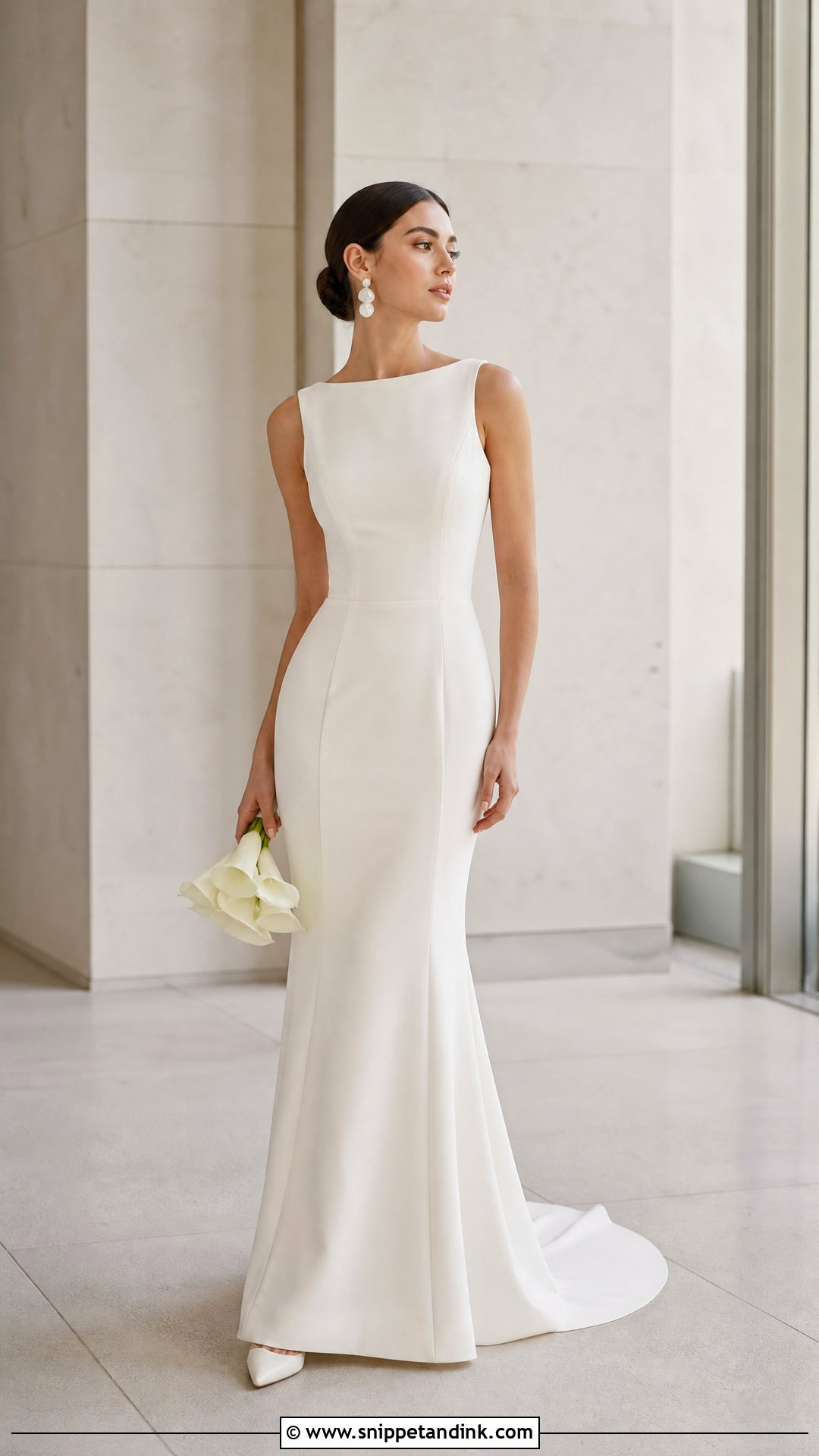
A minimalist frock hides nothing, so the cut and fabric have to be very good. Look at the seams: they should lie flat without puckering, and the hem should hang evenly when you stand. Satin, crepe and mikado all hold structure without needing embellishment. Sculptural earrings and a sleek bun suit the clean line, and so does no veil at all. City weddings, galleries and civil ceremonies are where this one shines.

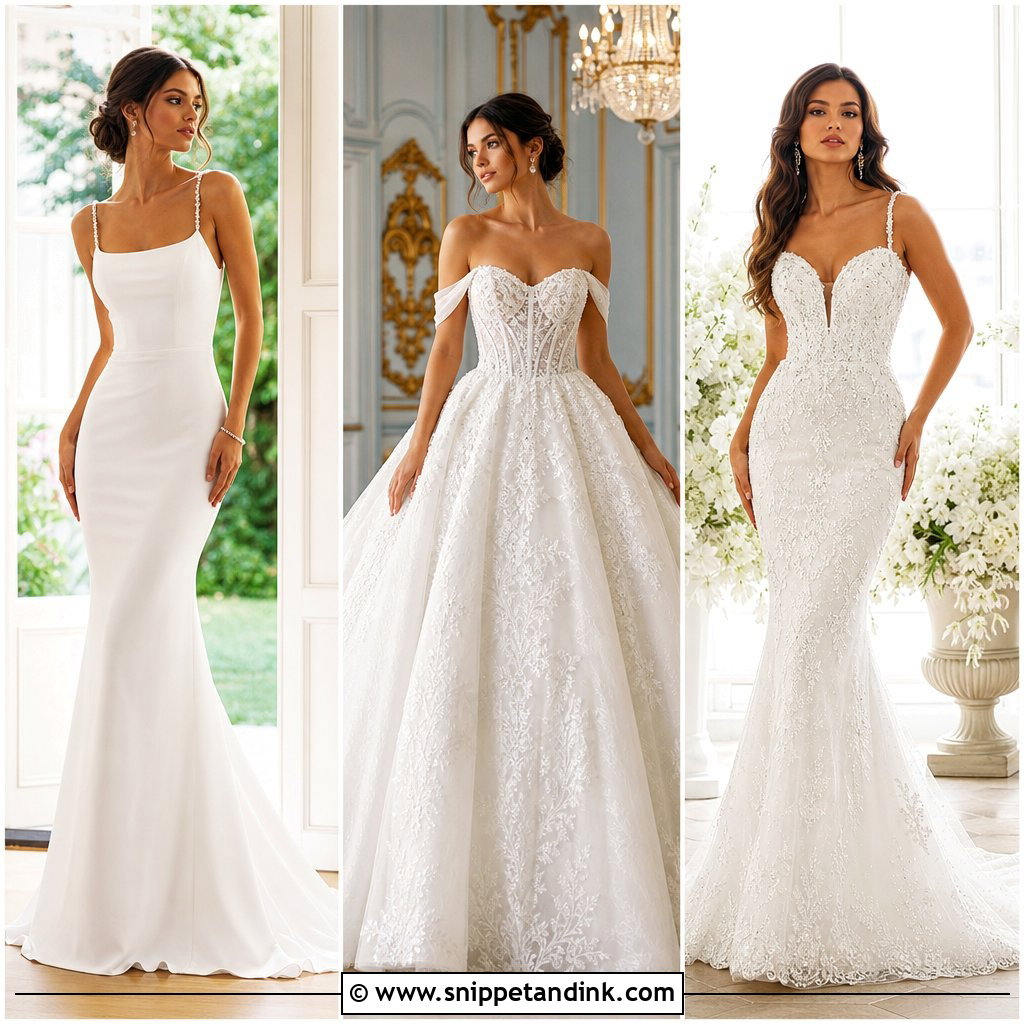
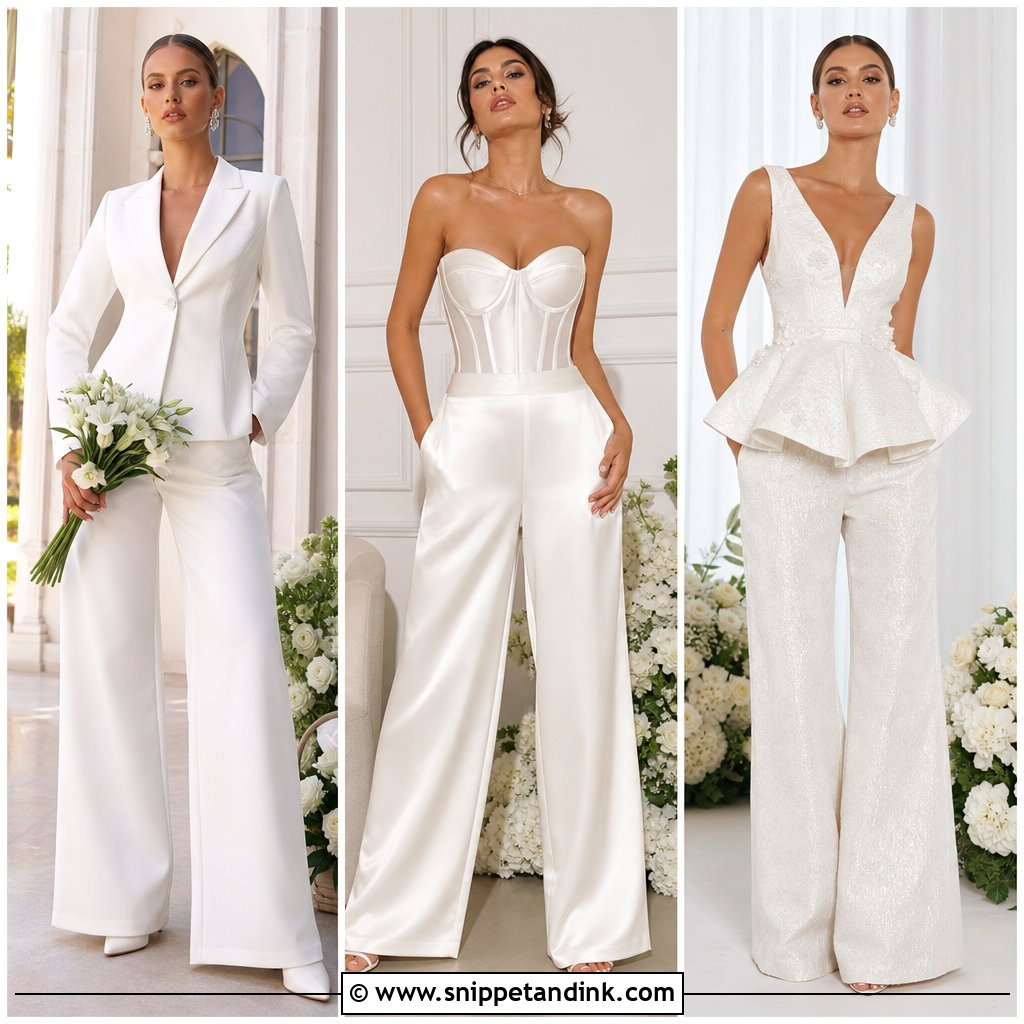
20. Ruffle Bridal Frock
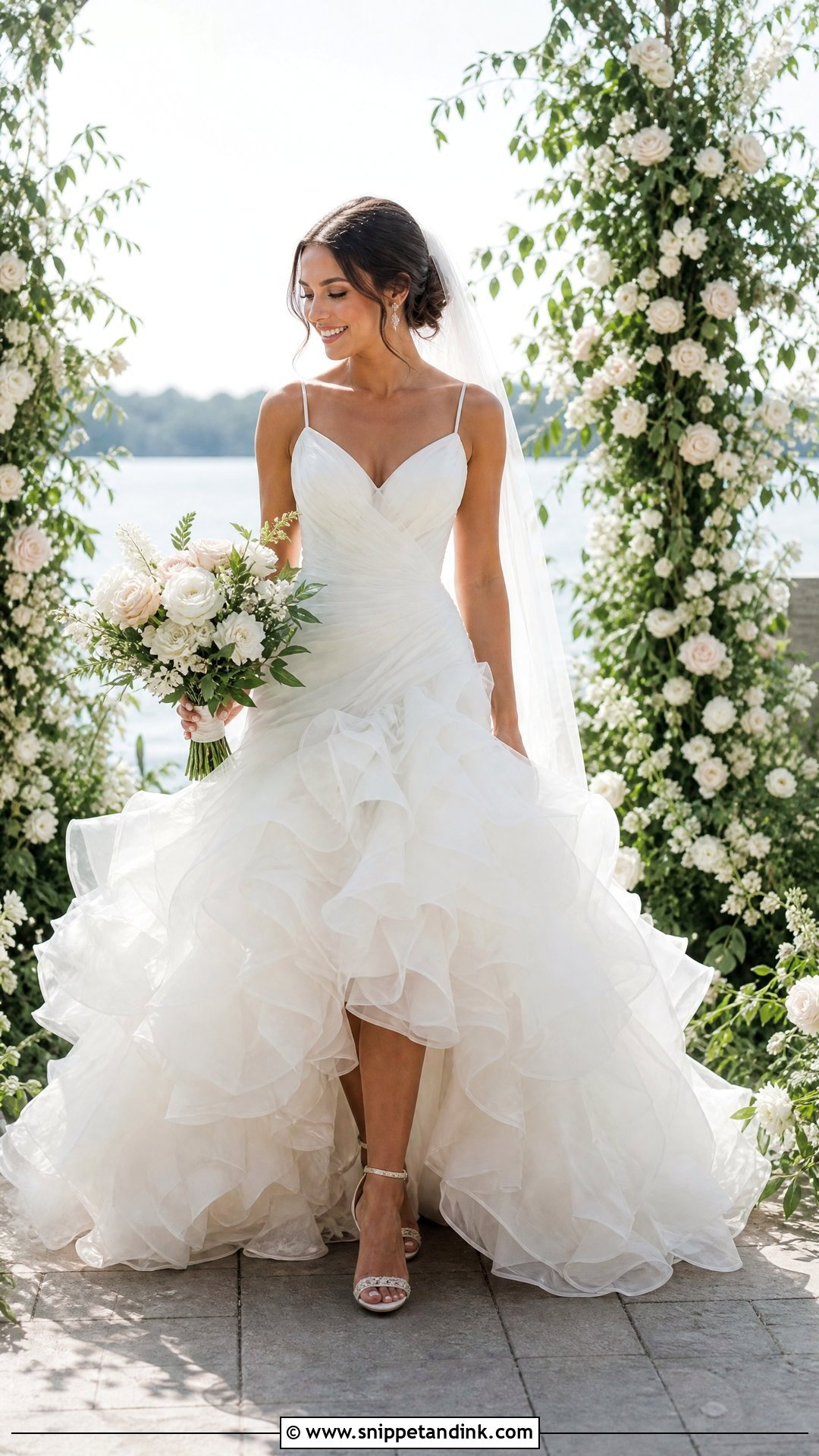
A ruffle bridal frock moves every time you turn, which makes it a joy in candid photos. Ruffles placed on one area, such as the hem, a sleeve or the neckline, look intentional; ruffles everywhere overwhelm most frames. Organza holds a ruffle crisply, chiffon softens it. With volume at the neckline, a low bun or half-up style keeps your hair from fighting the fabric. Outdoor and destination weddings suit the airy fabrics.
21. Cape Sleeve Bridal Frock
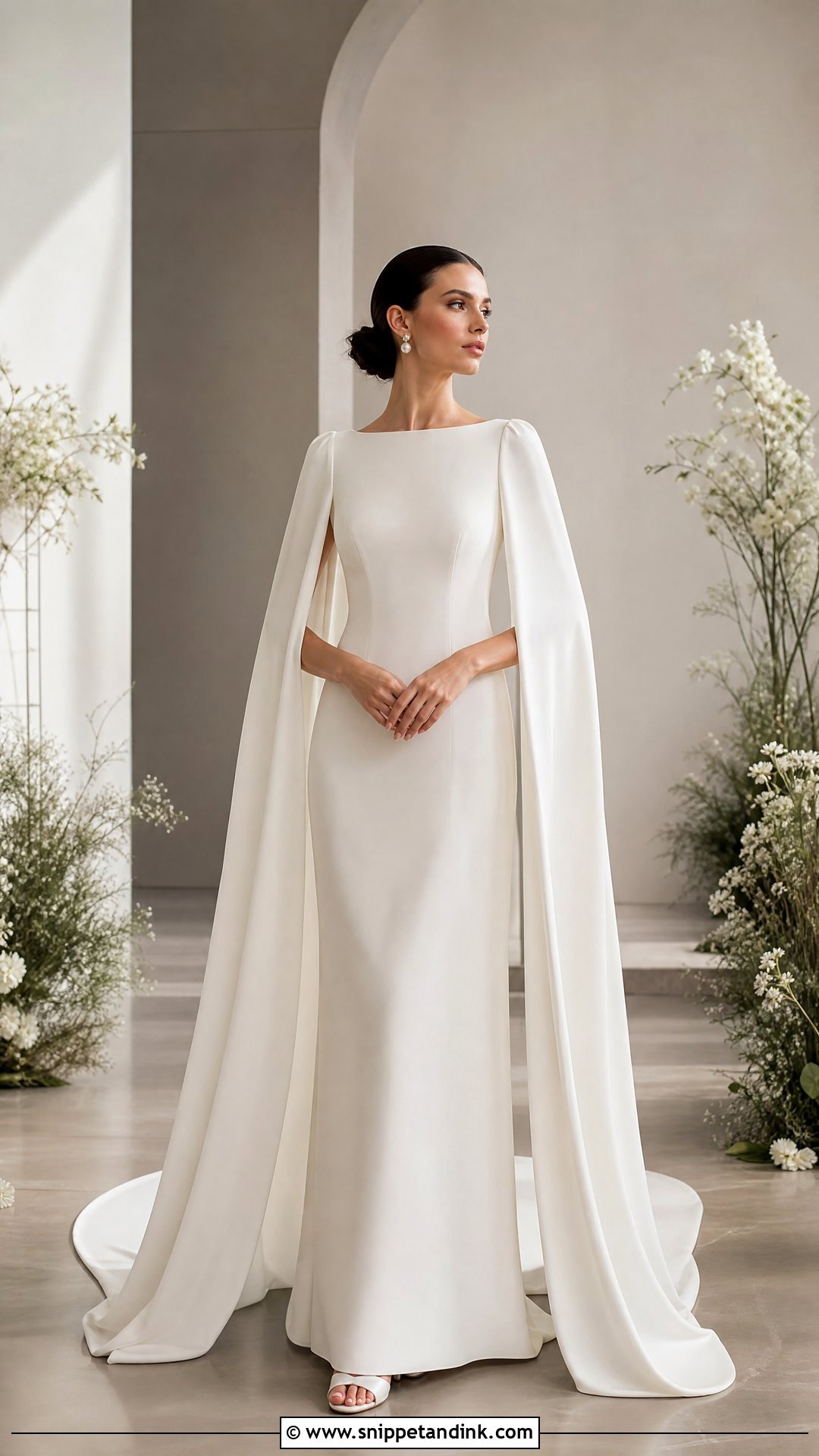
A cape sleeve gives you coverage over the arms and the movement of a veil in one piece. A short cape looks soft over the shoulders; a long one trails down the back and reads very dramatic in aisle photos. Keep the frock underneath plain so the cape has room. Because the cape already flows behind you, a veil is usually one layer too many. Modern ceremonies and formal rooms suit it best.
22. Tiered Bridal Frock
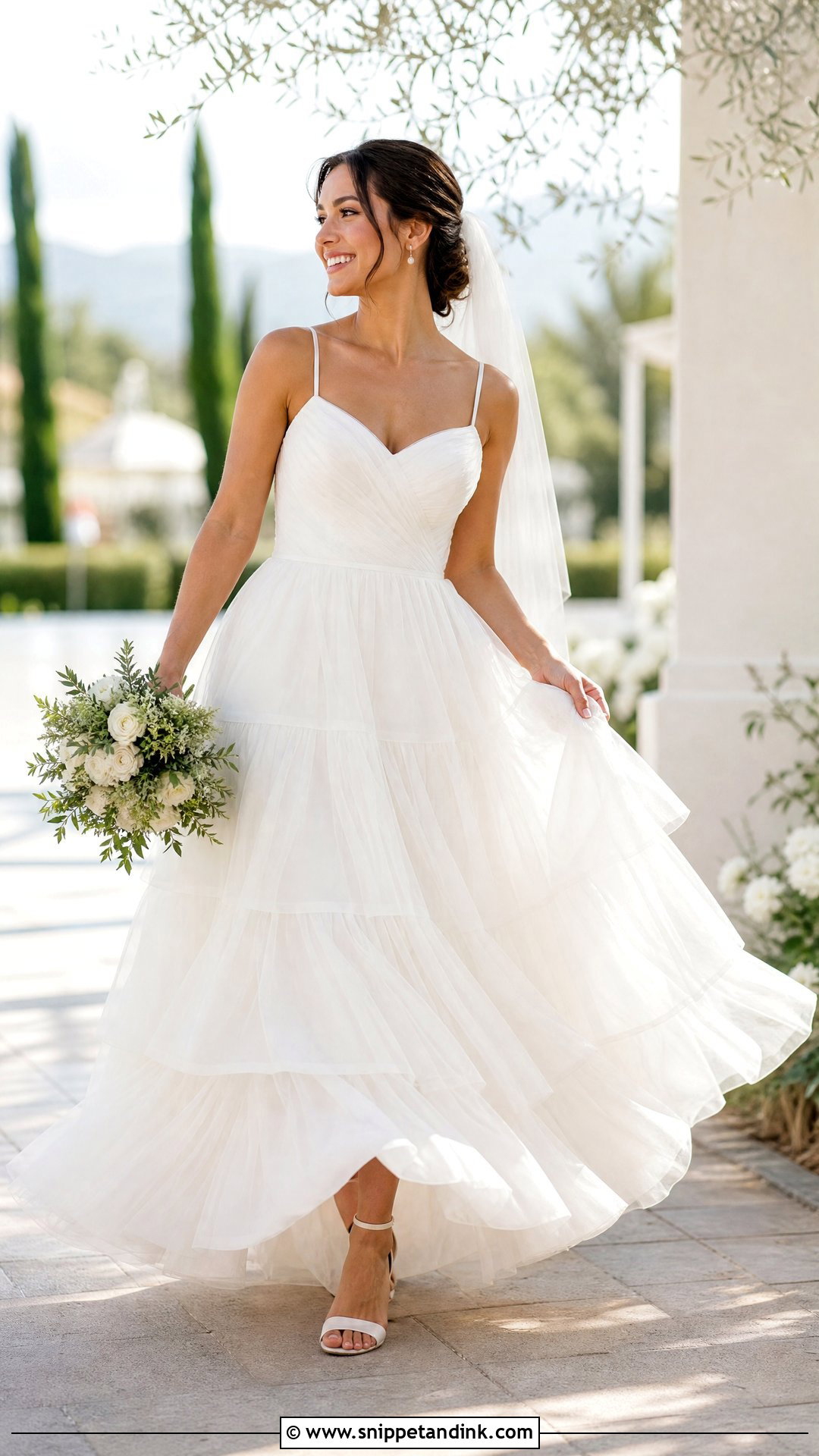
Tiers build volume from layered skirt panels rather than from a petticoat, so they move freely when you walk. Fabric decides the mood: organza tiers look crisp, chiffon looks boho, tulle looks romantic. Heavy fabric in tiers adds bulk at the hip, so keep it light. A fitted bodice anchors the shape. Block heels make sense here, since tiered frocks tend to suit lawns and outdoor ceremonies.
23. Sheer Sleeve Bridal Frock
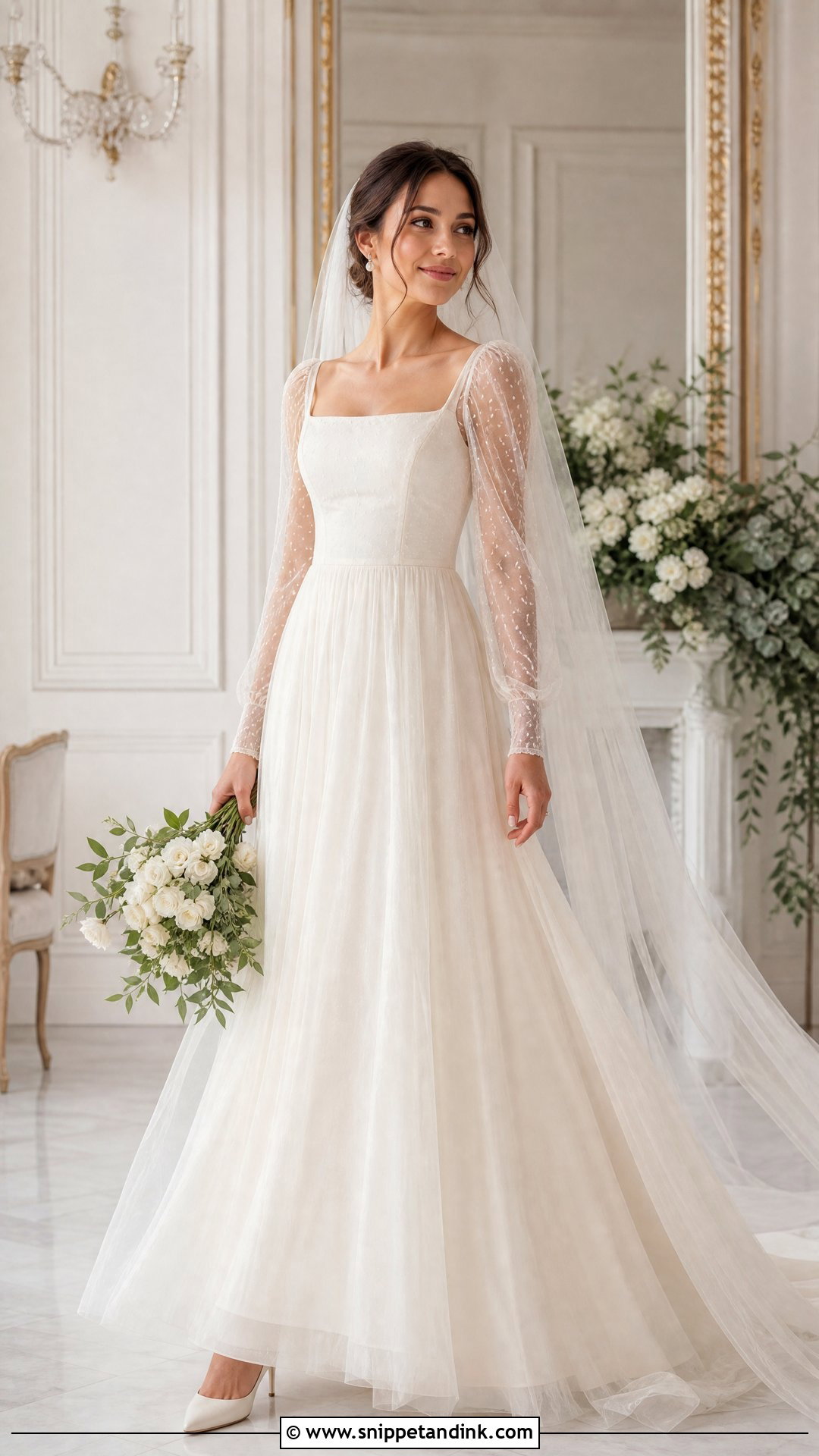
Sheer sleeves give arm coverage without the restriction of lined ones, and they’re cooler in spring and autumn than full lace. Dotted tulle and embroidered mesh both soften a plain bodice. The fit at the cuff matters more than people think: a sleeve that stops exactly at the wrist bone looks tailored, one that bunches at the hand looks borrowed. Keep any bracelet very slim so it doesn’t catch on the mesh.
24. Reception Bridal Frock
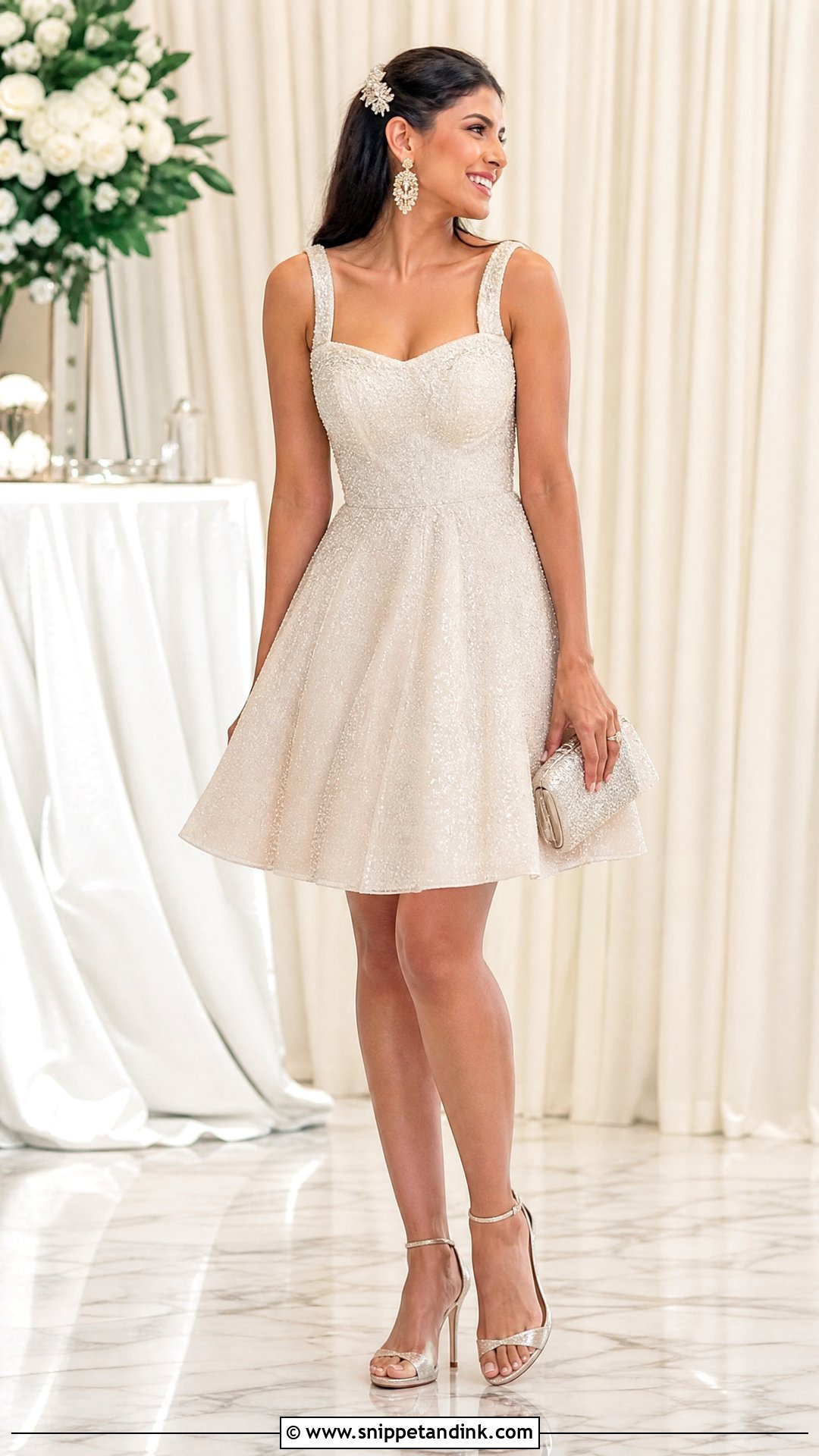
A reception frock should be about ease. A shorter hem, lighter fabric and a little sparkle let you dance without holding up a skirt. Plan the change itself: twenty minutes, a private room and one person who knows the fastenings. If you wore a long veil earlier, swap it for a bow or a comb. Comfortable heels matter more here than anywhere else in the day.

25. Modest Bridal Frock
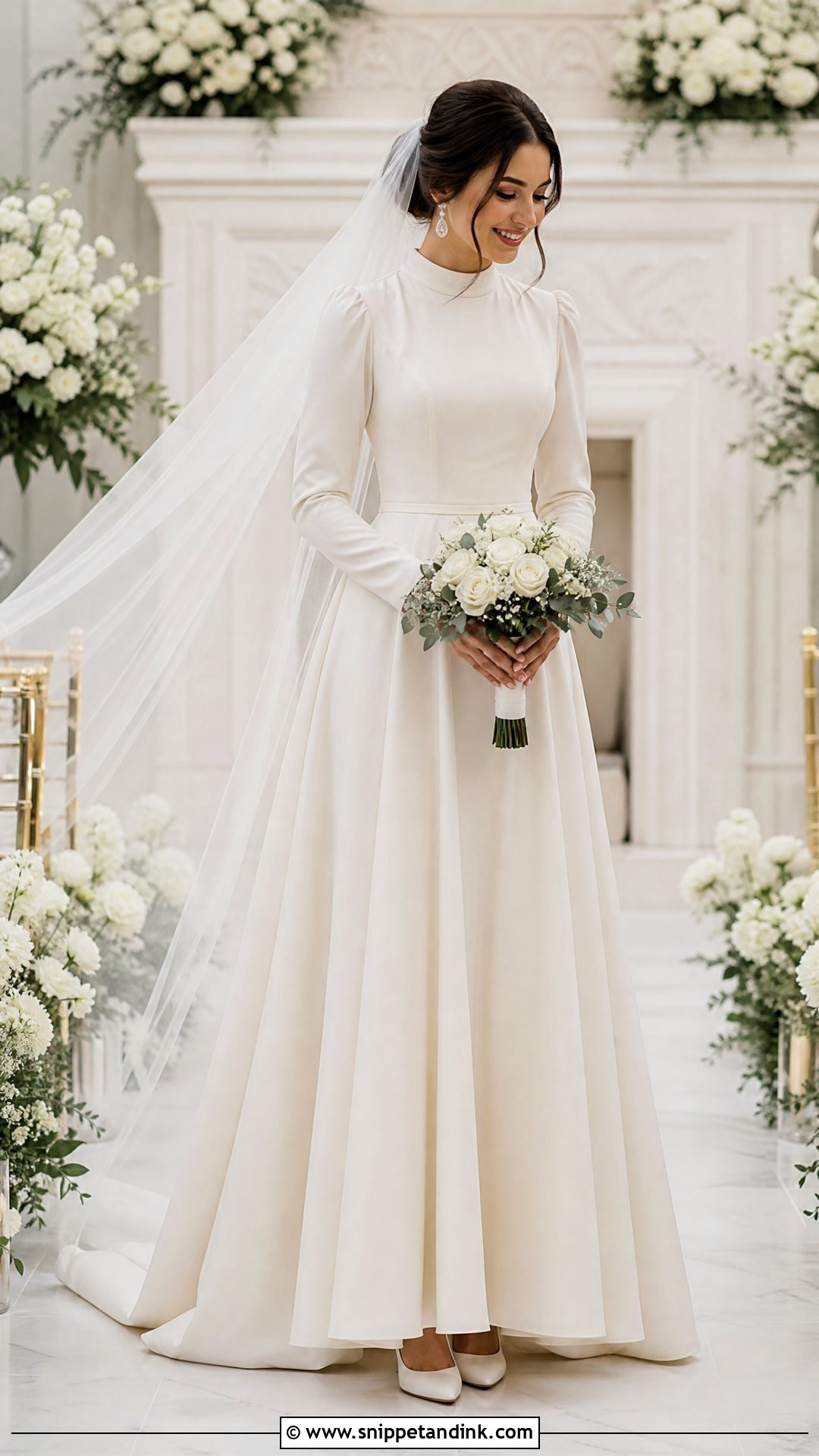
A modest frock can be detailed and shapely; coverage doesn’t mean a sack. Higher necklines, long sleeves and a full-length skirt pair well with lace overlays, satin buttons, or pearl cuffs. Tailoring makes the difference: either defined at the waist or skimming cleanly from the shoulder, never loose in between. Make sure sleeves allow you to raise your arms for prayers or rituals your ceremony includes. Closed-toe heels and a long veil finish it.
The Movement Test I Do at Every Final Fitting
A frock that looks perfect standing still can fail the moment you live in it. At the final fitting I ask brides to run through the day’s movements in the dress, because that is when a gaping neckline or a dragging hem shows up.
- Sit on a hard chair for five minutes. Watch for boning that digs, a bodice that pops forward and a skirt that bunches under you.
- Raise both arms as if hugging someone taller. Off-shoulder and fitted sleeves show their limits here.
- Walk up and down a step. If you have to kick the hem out of the way, it’s too long for your shoes.
- Dance for a minute with the bustle up. A weak bustle point will drop before the first song ends.
- Kneel, if your ceremony includes it, and check the hem doesn’t catch under your knees.
Anything that fails the test is usually an easy fix at that stage: a stay tape, an extra bustle hook, a few millimeters off the hem. Leave it until the wedding morning and you’ll be holding your dress up all night.
Sit Down, Dance, Then Decide
The frock that works is the one that fits your ceremony, your venue and the way you want to move. Some brides feel most themselves in a full ball gown, others in a satin midi, a lace A-line, a short reception dress or a modest long-sleeve design. Weather, shoes and how the dress looks from behind all count. Pearls, bows, embroidery, sleeves and detachable trains can each make a simple frock feel like yours. Try the shortlist on, sit down in each one, and trust the dress you forget you’re wearing.
You'll Like These Ideas:






Leave a Reply