
A straight neckline runs horizontally across the chest, framing the shoulders and collarbones with one clean line. It turns up mostly on strapless gowns and gives a bit more coverage at the centre than a sweetheart, which is why brides who feel exposed in a sweetheart often relax the moment they try one. It sits as happily on a structured ball gown as on an A-line, a mermaid or a modern column. Accessories decide the mood. Pearl earrings and a cathedral veil read classic, while removable sleeves or a big bow push it somewhere more fashion-led, depending on your venue and overall aesthetic. Below are twenty ways to wear it, size-inclusive options among them, each with the styling I’d give it and the fit points I’d watch.
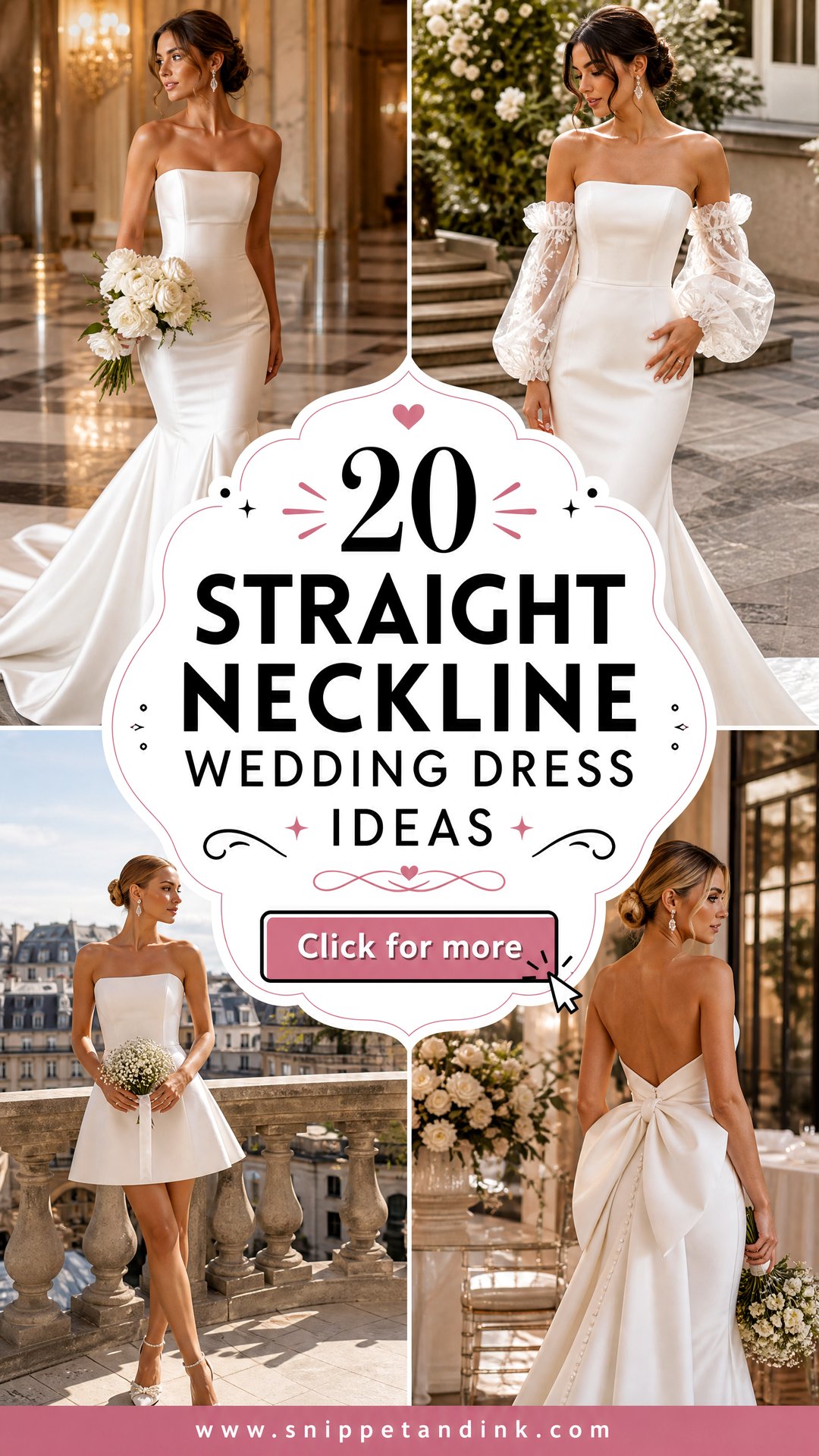
Does a Straight Neckline Suit Your Bust and Shoulders?
It suits more figures than its reputation suggests, but how the bodice is built matters more than the neckline itself. This is how I match it at a first appointment.
- Small bust: the straight edge can look flat or gape when you lean forward. Light padding or a soft pleat across the top fixes it.
- Fuller bust: look for built-in cups, a higher back and boning at the side seams. The straight edge often feels more secure than a sweetheart, which dips at the centre.
- Broad shoulders: the horizontal line balances them well, especially over an A-line skirt. Skip anything that adds width up top, such as puff sleeves.
- Narrow or sloping shoulders: thin straps or a slight off-shoulder drape give the line something to rest against.
- Short neck: wear your hair up and skip chokers, so there’s space between jaw and neckline.
Try a sweetheart on straight after it. Seeing both in the same mirror, under the same light, tells you quickly which line your collarbones prefer.
1. Strapless Satin Straight Neckline Wedding Dress
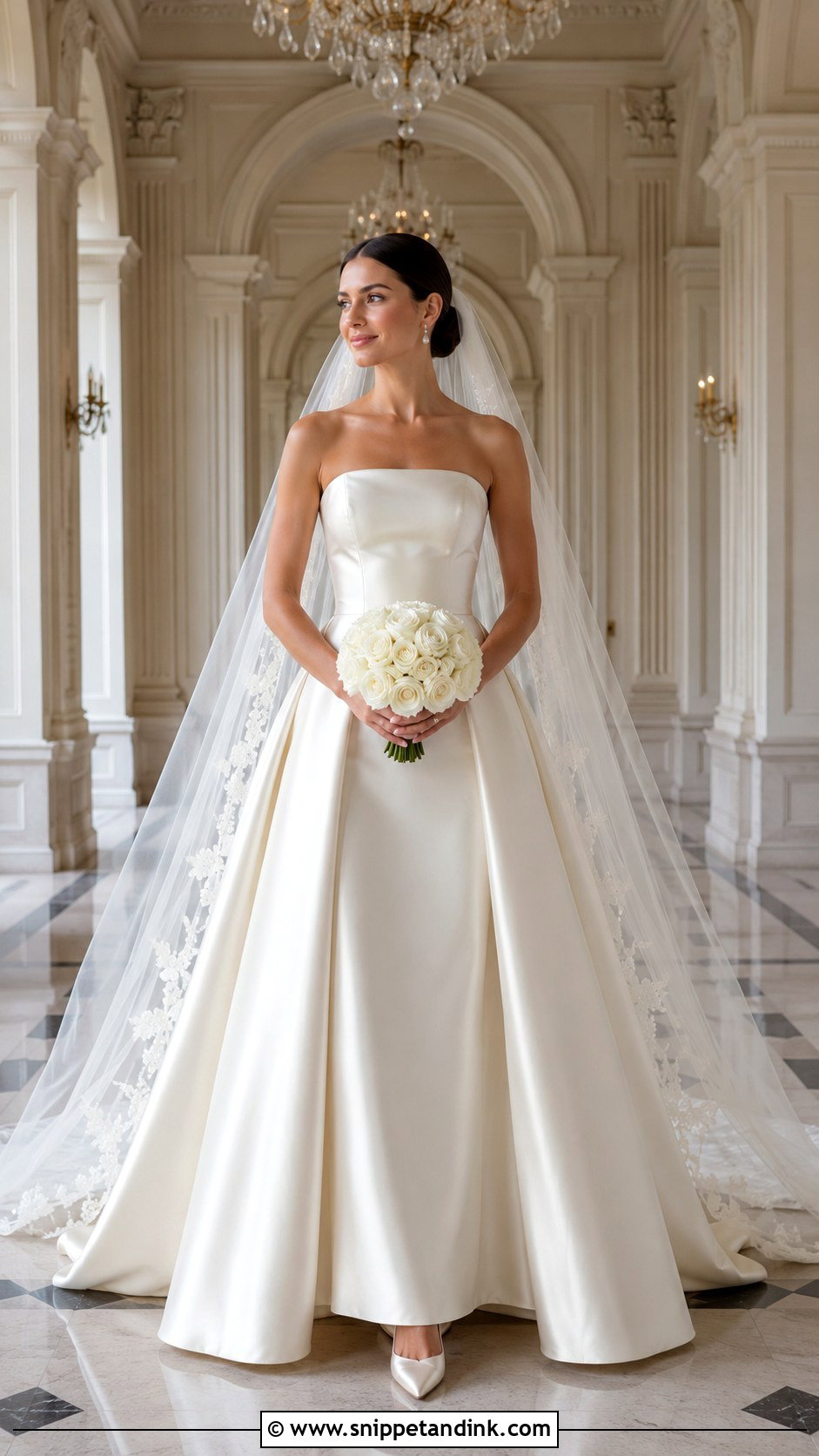
Satin and a straight neckline is about as formal as bridal gets. I’d look for a strapless ball gown with a fitted bodice, a defined natural waist and a softly pleated skirt. Inside, a concealed corset does the work so the outside stays clean. Pearl drops, a polished low bun and a cathedral veil with a plain cut edge suit it, along with pointed satin pumps and a compact bouquet of white roses. Ballrooms, hotels and formal estates are its natural setting. Leave the necklace off: the neckline and fabric already create the architecture, and anything at the throat interrupts it.
2. A-Line Lace Straight Neckline Wedding Dress
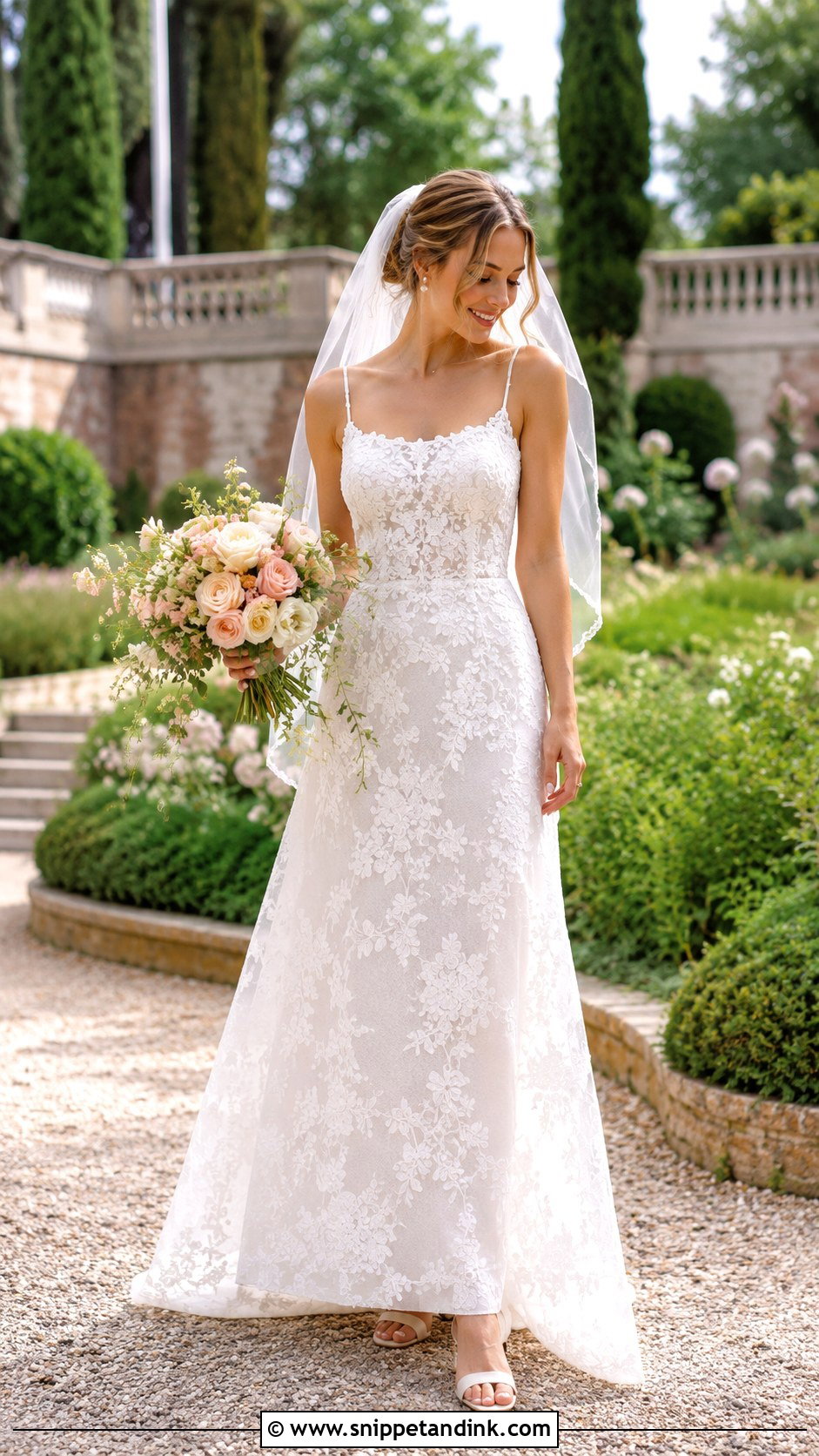
Lace softens what is otherwise a very crisp line. On an A-line with slim straps and botanical appliqués, I look for lace that carries on into the skirt rather than stopping dead at the waist seam, so the gown reads as one piece from behind as well. Pearl studs, an airy fingertip veil and ivory block heels that cope with grass or stone paths work well, with a loose low chignon and garden roses. Vineyards and outdoor estates suit it. Strap length matters more than people think here. A centimetre too long and the straight edge tips forward whenever you bend, so the seamstress should adjust each strap on your body.
3. Minimalist Crepe Straight Neckline Wedding Dress
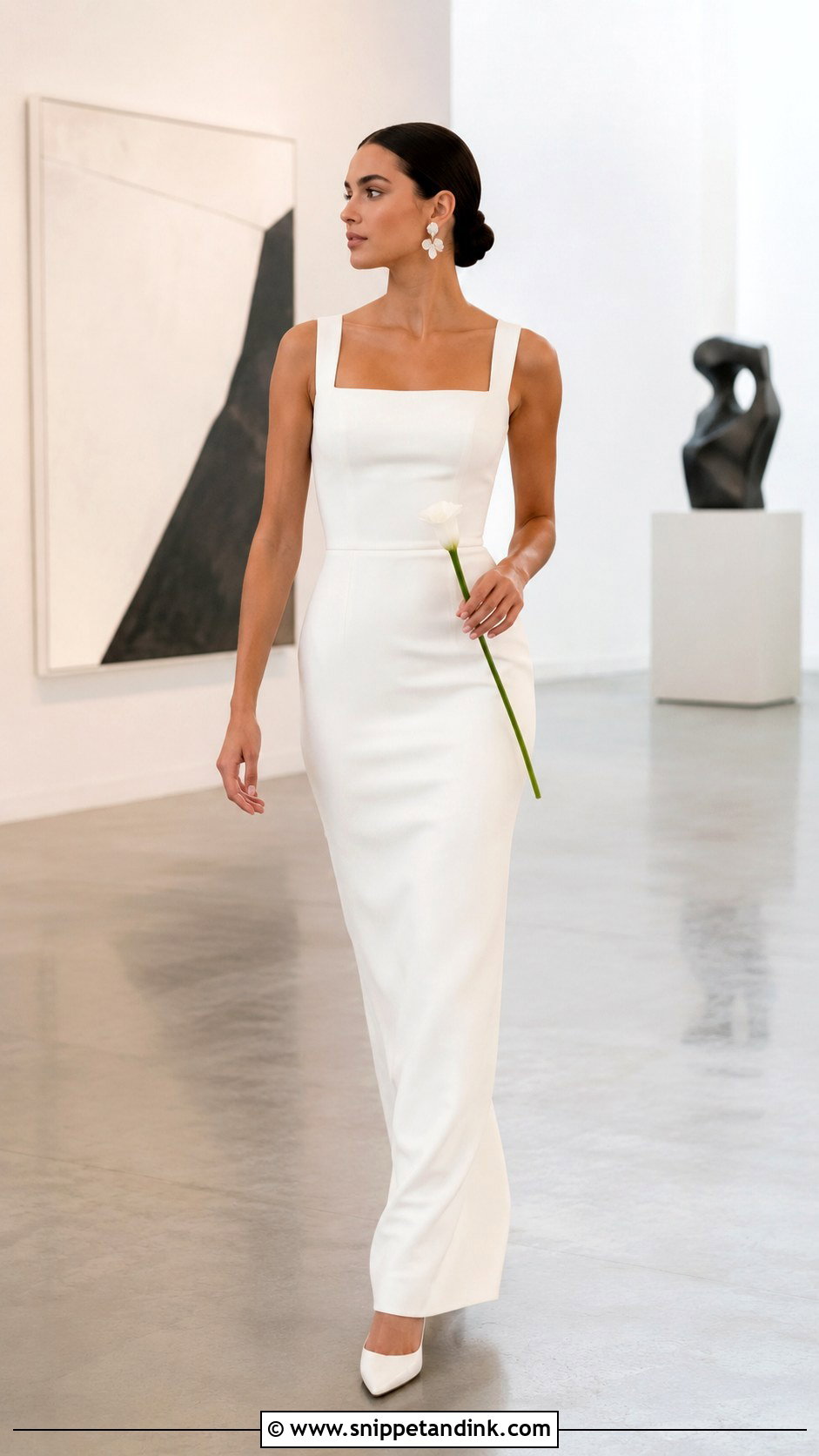
Crepe hides nothing. That’s its appeal and its risk. A fitted sheath with wide straps and clean princess seams needs no embellishment, but every pull line and uneven dart shows, so I’d only choose one with a seamstress I trust and boning placed carefully inside. A low square back or a row of covered buttons gives the aisle walk something to look at. Sculptural earrings, pointed white pumps, a structured mini bag and a sleek bun keep it modern, with a single-flower bouquet. City venues, galleries, modern hotels and courthouses suit it best.
4. Basque Waist Straight Neckline Wedding Dress
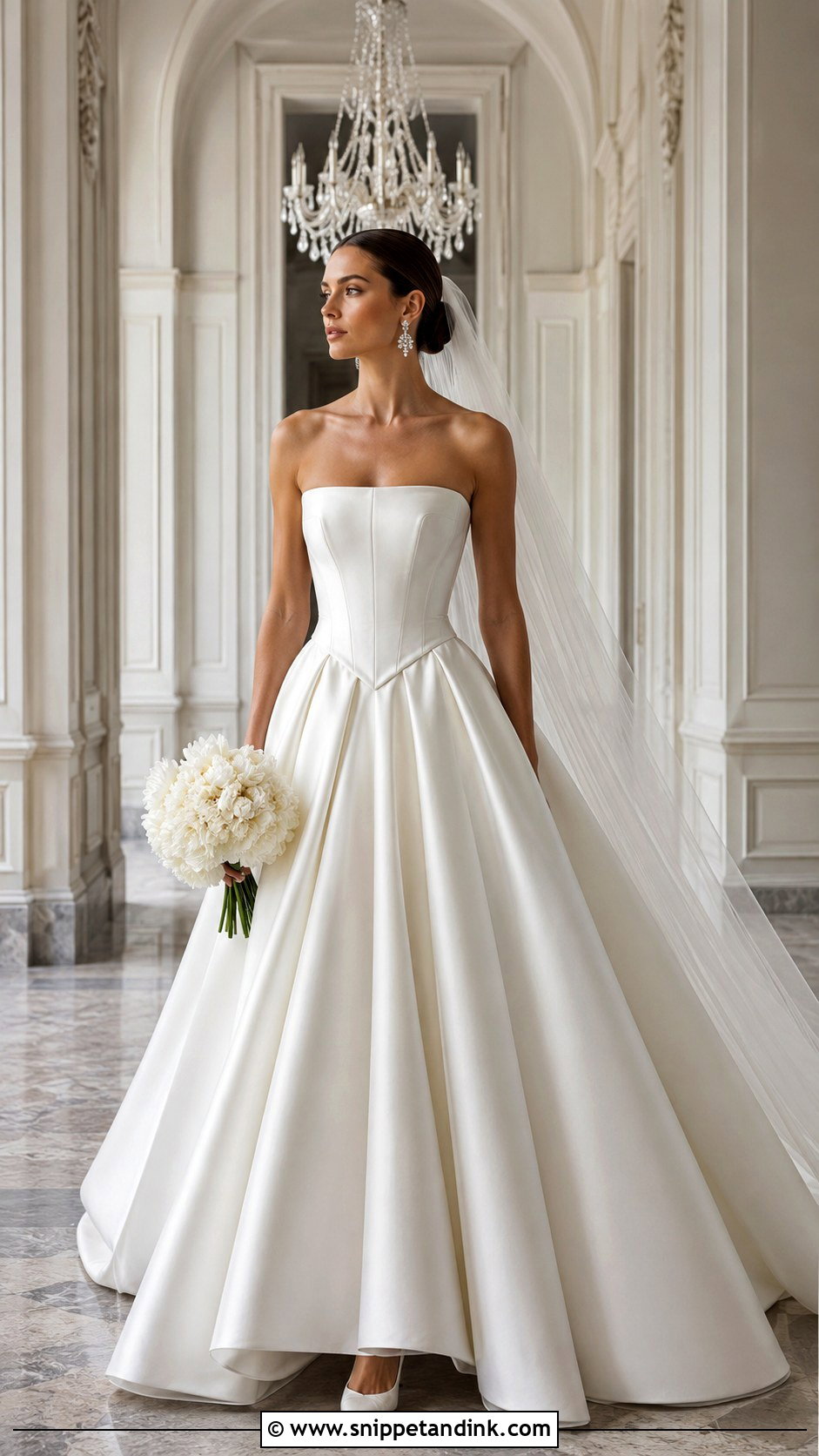
The V of a Basque waist cuts against the horizontal neckline, and that contrast is what gives this gown its regal feel. Look for a strapless corset bodice over a full satin or mikado skirt. Crystal drops, a long plain veil and pointed heels work, with a softly waved updo that leaves the bodice visible and peonies or roses in a compact shape. Formal halls and historic buildings are where it belongs. A Basque bodice runs longer than a standard one, so it presses into the hips when you sit. Sit, walk and lift your arms at every fitting, and if the point digs in, ask for it to be shortened slightly.
5. Mermaid Straight Neckline Wedding Dress
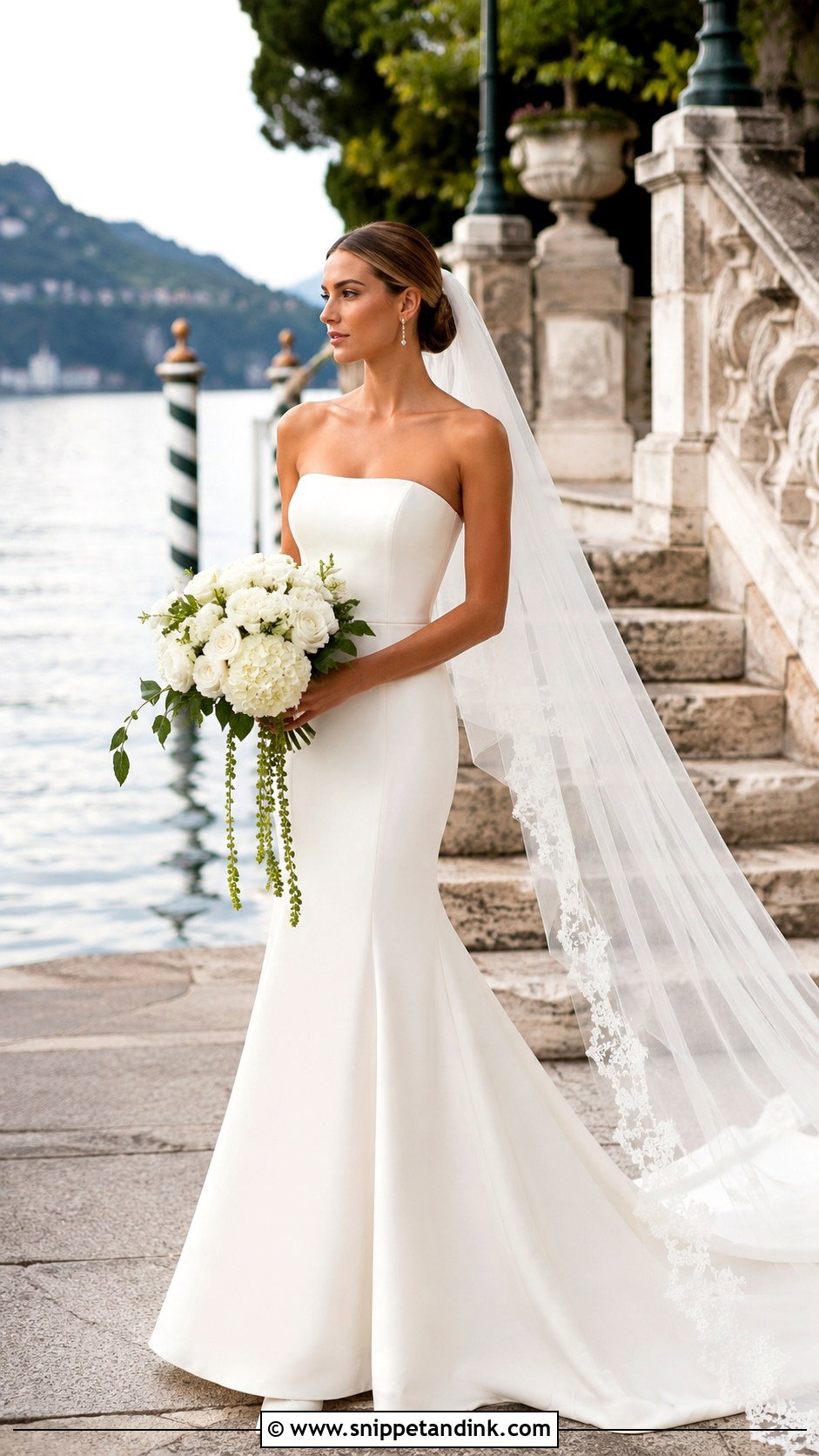
Mermaid gowns are confident, and a straight neckline keeps them from tipping into anything too sultry. The bodice should follow the waist and hips before flaring near the knee. Stretch crepe is smoother and more modern; lace is softer. Long drop earrings, a sleek ponytail or low bun, ivory satin pumps and a chapel veil suit it, with trailing greenery in the bouquet to echo the long line. My honest caution is about the flare point, because it decides whether you can walk. If it starts above the knee you’ll shuffle, so take full strides and a few stairs at the fitting before anyone pins the hem.
6. Silk Column Straight Neckline Wedding Dress
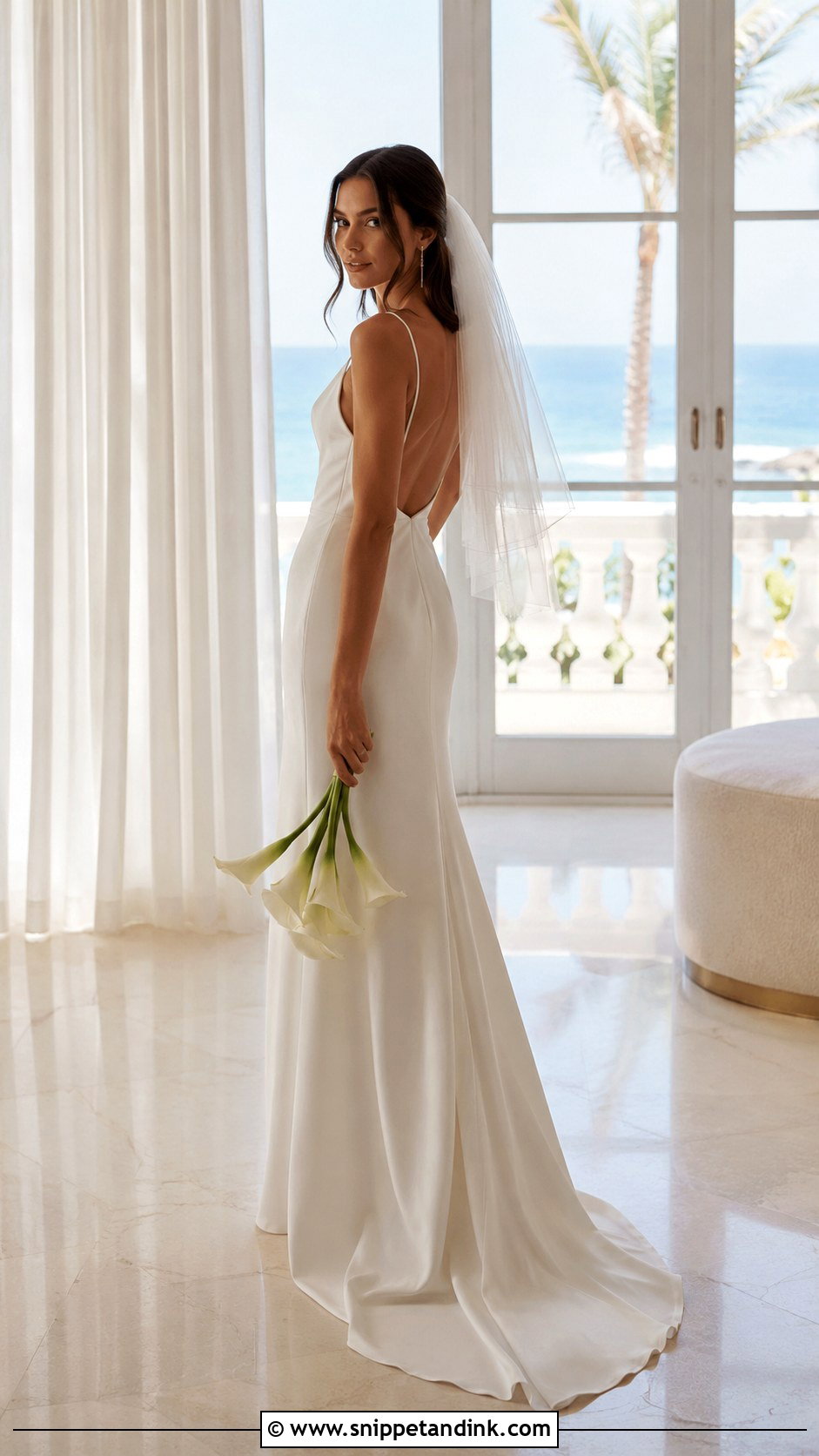
Bias-cut silk moves like water and asks very little of the styling. Choose a bias-cut or lightly structured column with narrow straps, a floor-skimming hem and minimal seaming; an open back, small buttons or a short train adds interest. Pearl threader earrings, barely-there ivory sandals and a soft shoulder-length veil keep it light, with loose waves or a relaxed bun and a few calla lilies. It’s at home on a coast, at a small hotel or at a destination ceremony. The downside is cling. Silk on the bias shows every line from underwear, so I test smooth, skin-tone foundation pieces in daylight and indoor light before signing off the look.
7. Pearl Beaded Straight Neckline Wedding Dress
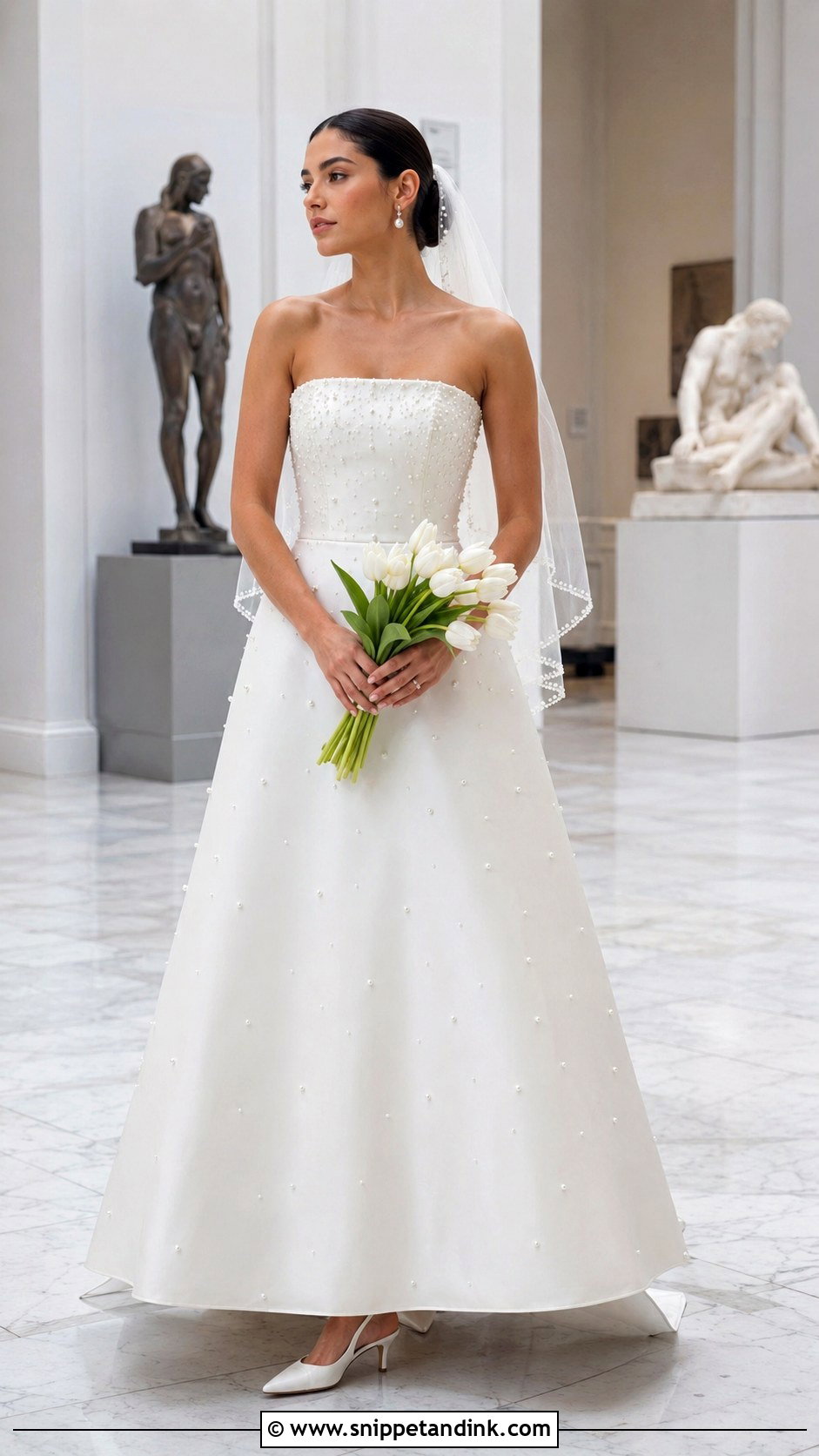
Scattered pearls that fade from the bodice into the skirt are my favourite way to add texture without blurring the neckline’s edge. A strapless A-line or column both work. Because the pearls already behave like jewelry, I hold accessories back to small pearl earrings, ivory slingbacks and a sheer veil with a faint pearl edge, and keep the hair smooth. White tulips or ranunculus add freshness without fighting the beadwork. It suits an indoor ceremony, a museum venue or an evening reception. Check where the weight sits: heavy beading right along the top edge can pull the neckline forward when you lean.
8. Floral Appliqué Straight Neckline Wedding Dress
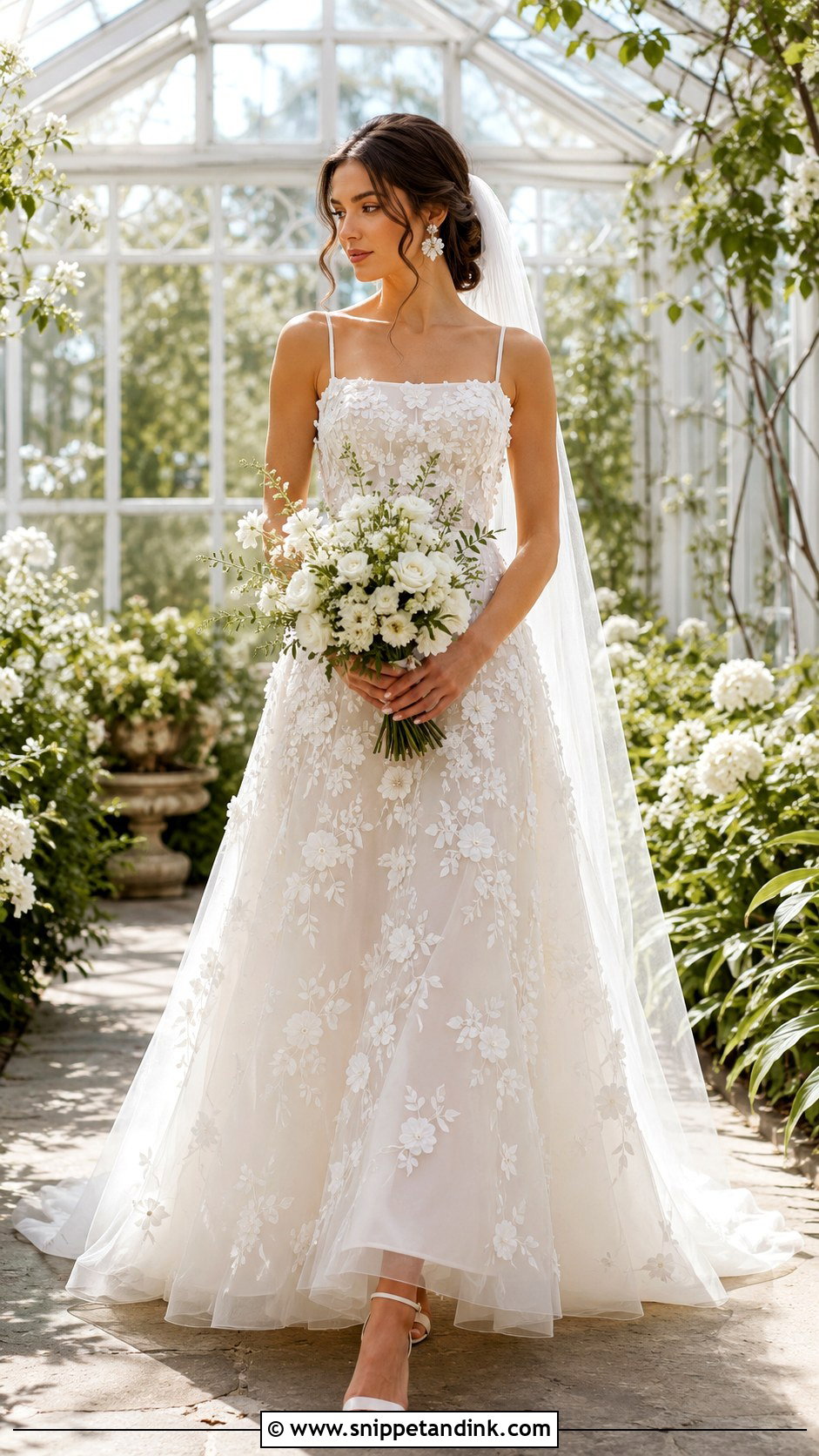
Raised flowers against a geometric line create a pleasing tension. An A-line gown with slender straps, a fitted bodice and layered appliqués gives texture from shoulder to train, and soft tulle lets it move. If the bodice feels too sheer, ask whether it can be lined; most can. Floral studs, ankle-strap ivory heels, a light veil that doesn’t hide the appliqués, a loose updo and seasonal white blooms finish it, and it settles naturally into estates, conservatories and botanical gardens. I prefer the flowers concentrated, say at the hip or trailing down one side, rather than spread evenly, which can look heavy in photographs.
9. Straight Neckline Wedding Dress With Detachable Sleeves
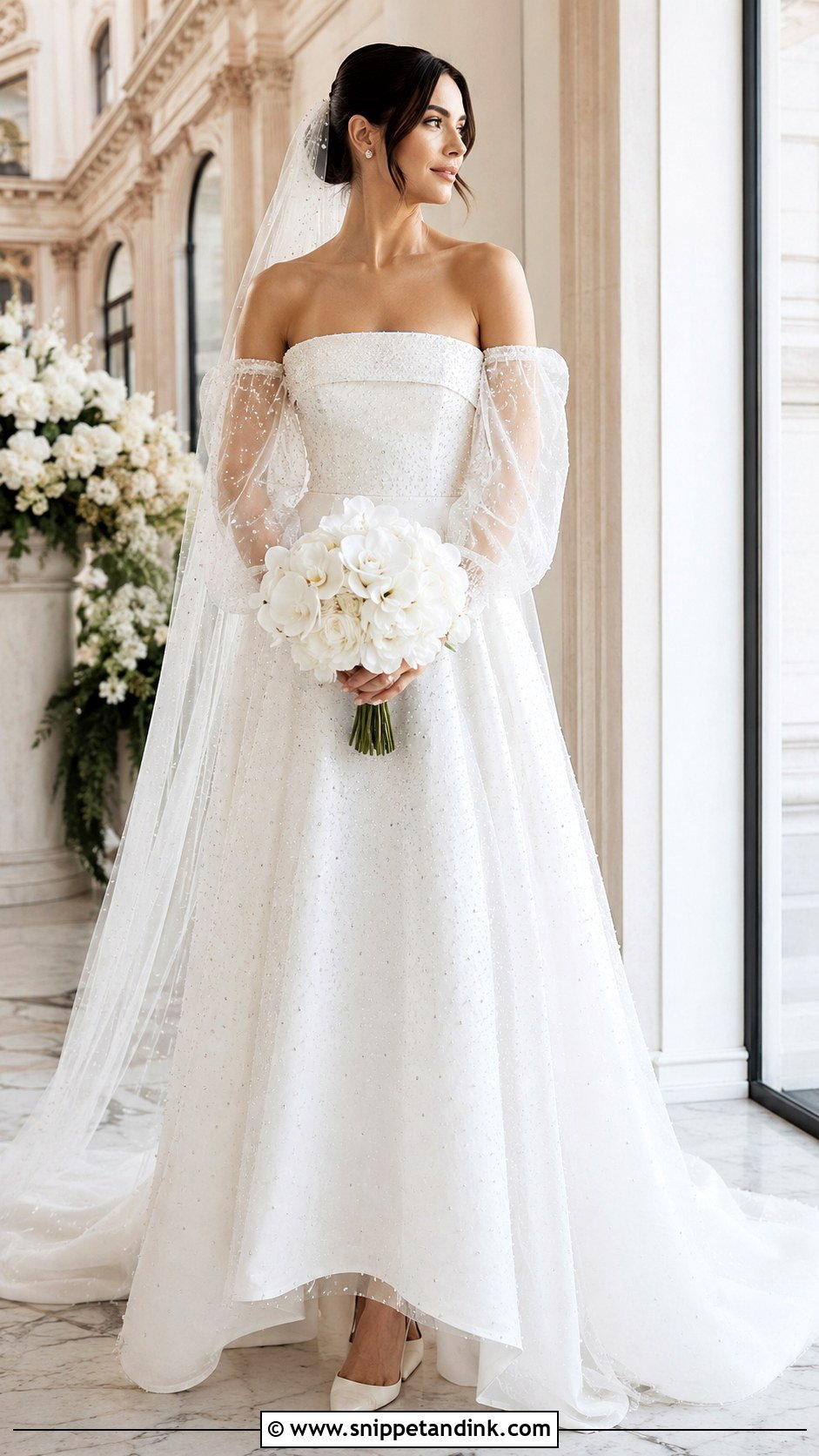
One gown, two looks. Start strapless, fitted or A-line, then add sheer tulle sleeves for the ceremony: slim ones with lace cuffs for something romantic, or big puffs for a fashion-forward shape. Take them off before the reception and the clean neckline returns, and dancing gets easier. Crystal studs, ivory pumps and a chapel veil tucked beneath a low bun stay neutral enough for both versions, with a structured bouquet. It’s the option I suggest when the ceremony is formal and the party isn’t. Sleeves usually fasten with small hooks or snaps under the top edge, and they should be stitched so they don’t drag the neckline down.
10. Thin Strap Straight Neckline Wedding Dress
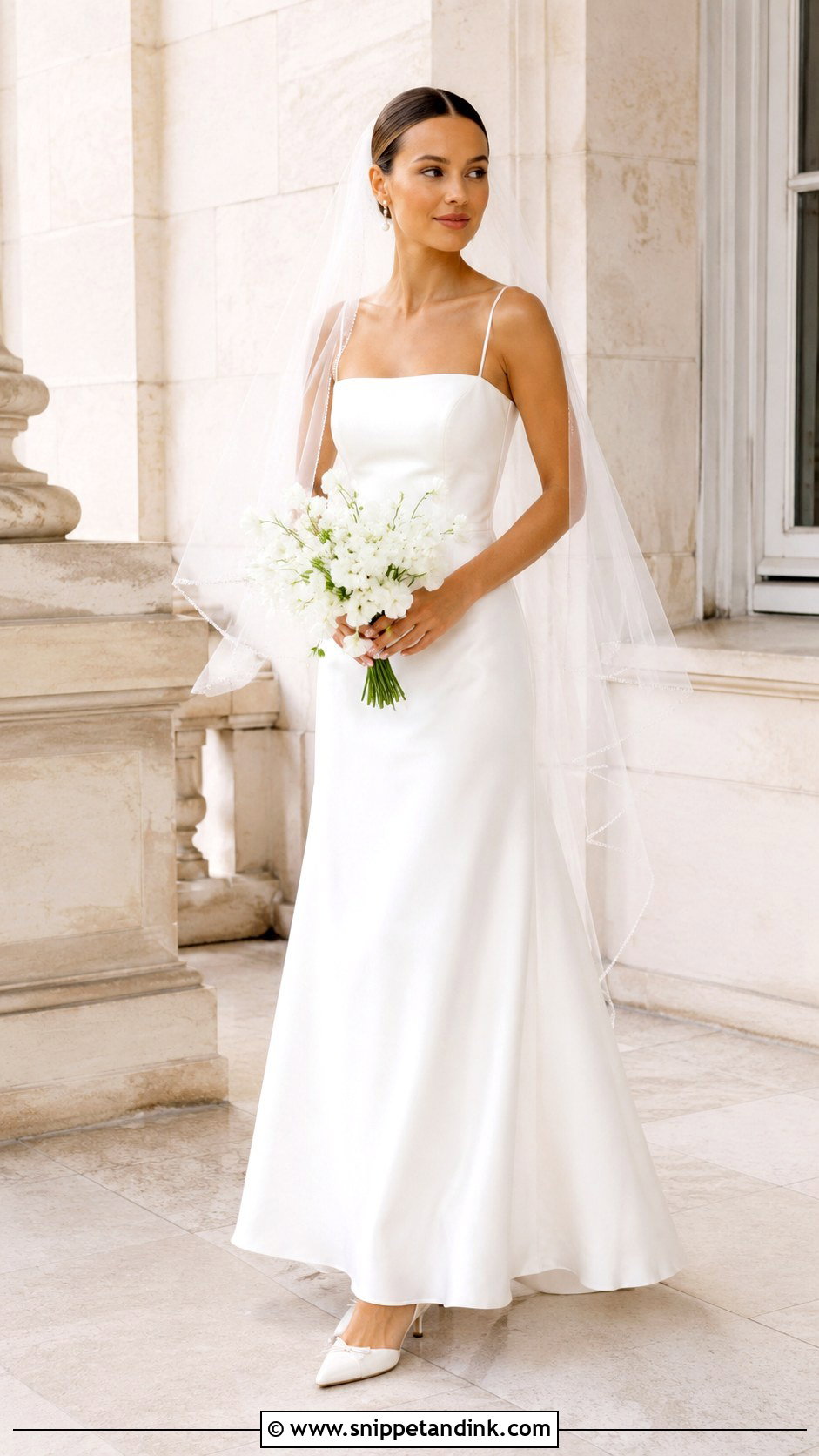
Delicate spaghetti straps give a little support without breaking up the open look. Pair them with a fitted satin bodice and an A-line, sheath or softly flared skirt. Matching fabric straps look cleanest; pearl or crystal ones add a small sparkle. Small drops, a fingertip veil and pointed kitten heels keep it comfortable, with a relaxed updo and white sweet peas. Thin straps are mostly decorative, though. They won’t hold up a heavy bodice by themselves, so the internal structure still has to be right. Have each strap shortened separately, because almost nobody’s shoulders sit at exactly the same height.
11. Off-Shoulder Straight Neckline Wedding Dress
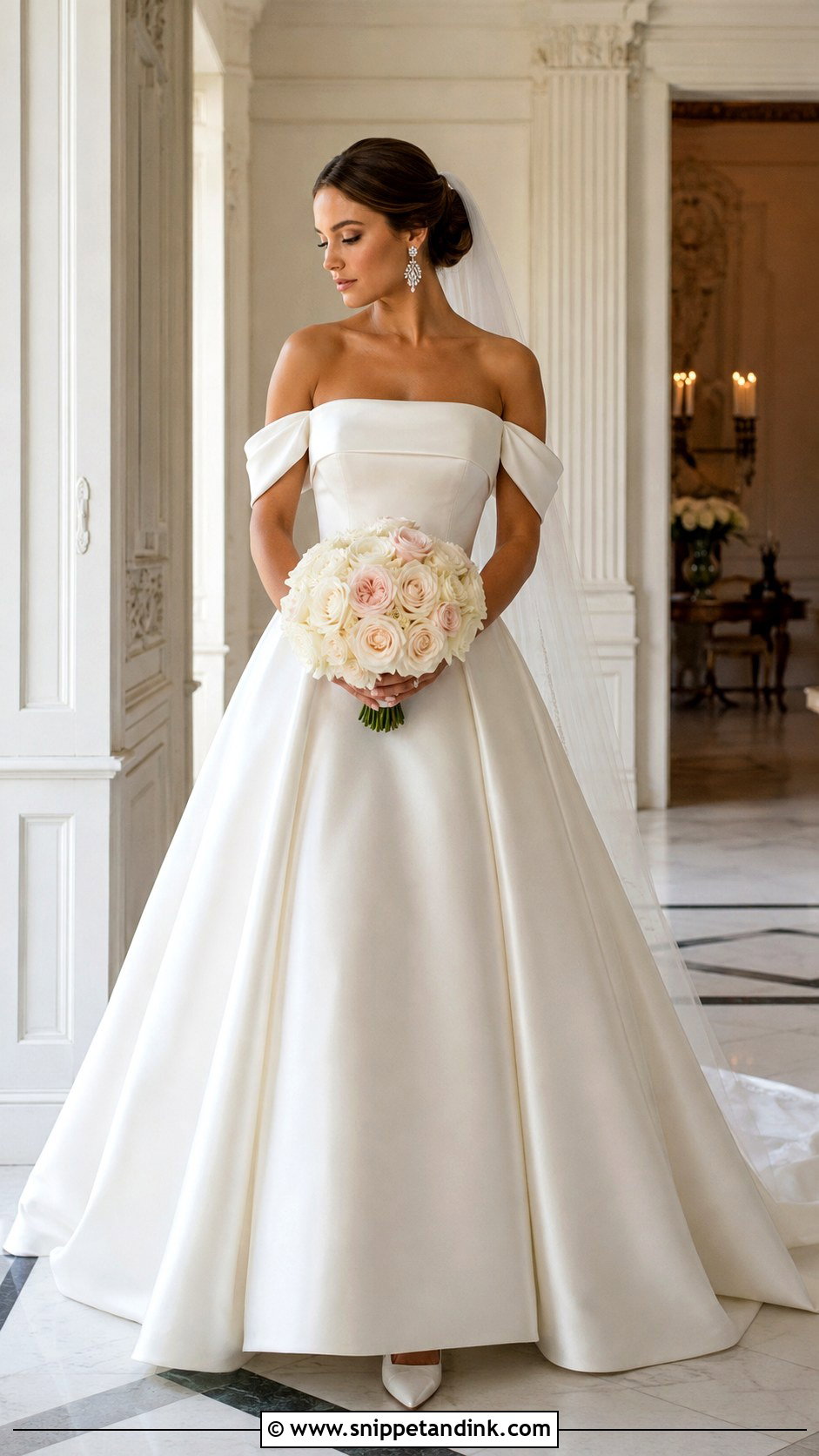
Draped straps resting just off the shoulder soften the straight line and add some romance. The best versions are removable and sit below the shoulder without dragging the bodice down. Satin looks regal, tulle or lace lighter. Chandelier earrings, an elegant chignon and a long veil set at the back of the hair suit it, with closed pointed pumps and a round bouquet of roses. Removable drapes give you a covered ceremony look and a simpler reception look. The drawback: drapes limit how high you can lift your arms. Raise them at the fitting, and if the bodice rides up, the drapes need more length.
12. Long Sleeve Straight Neckline Wedding Dress
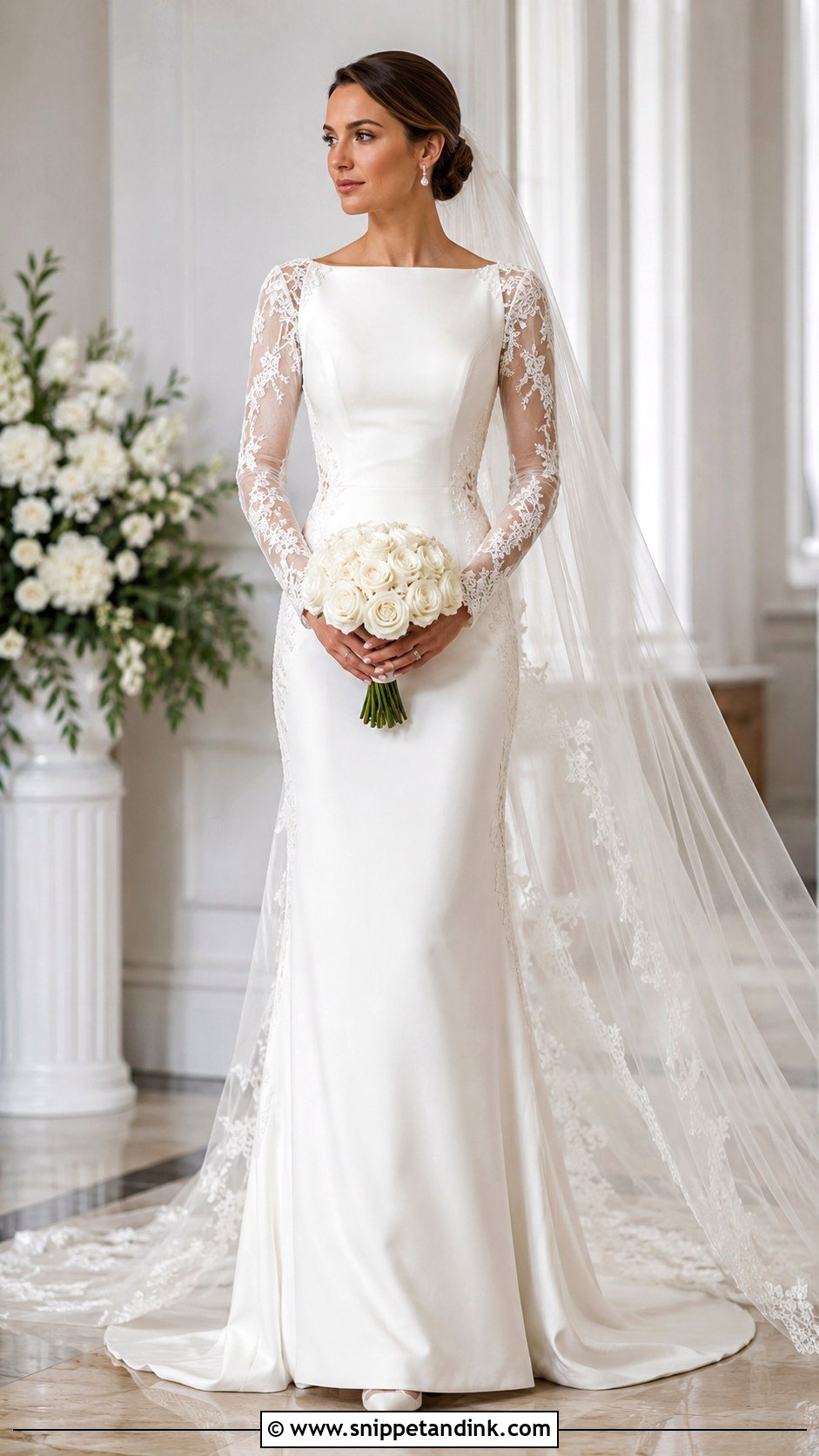
Illusion sleeves let you keep the crisp straight bodice and still have full coverage. Sheer sleeves join a structured bodice, and lace appliqués can hide the seam where they meet. Pearl earrings, closed-toe satin heels and a cathedral veil with minimal edging work, with a smooth low bun and white roses kept light on greenery. Cooler seasons and formal indoor venues suit it. Mesh without stretch binds at the elbow, so I ask brides to lift a glass to their mouth and then hug me. If the armhole pulls, it gets reshaped before anyone touches the hem.
13. Drop Waist Straight Neckline Wedding Dress
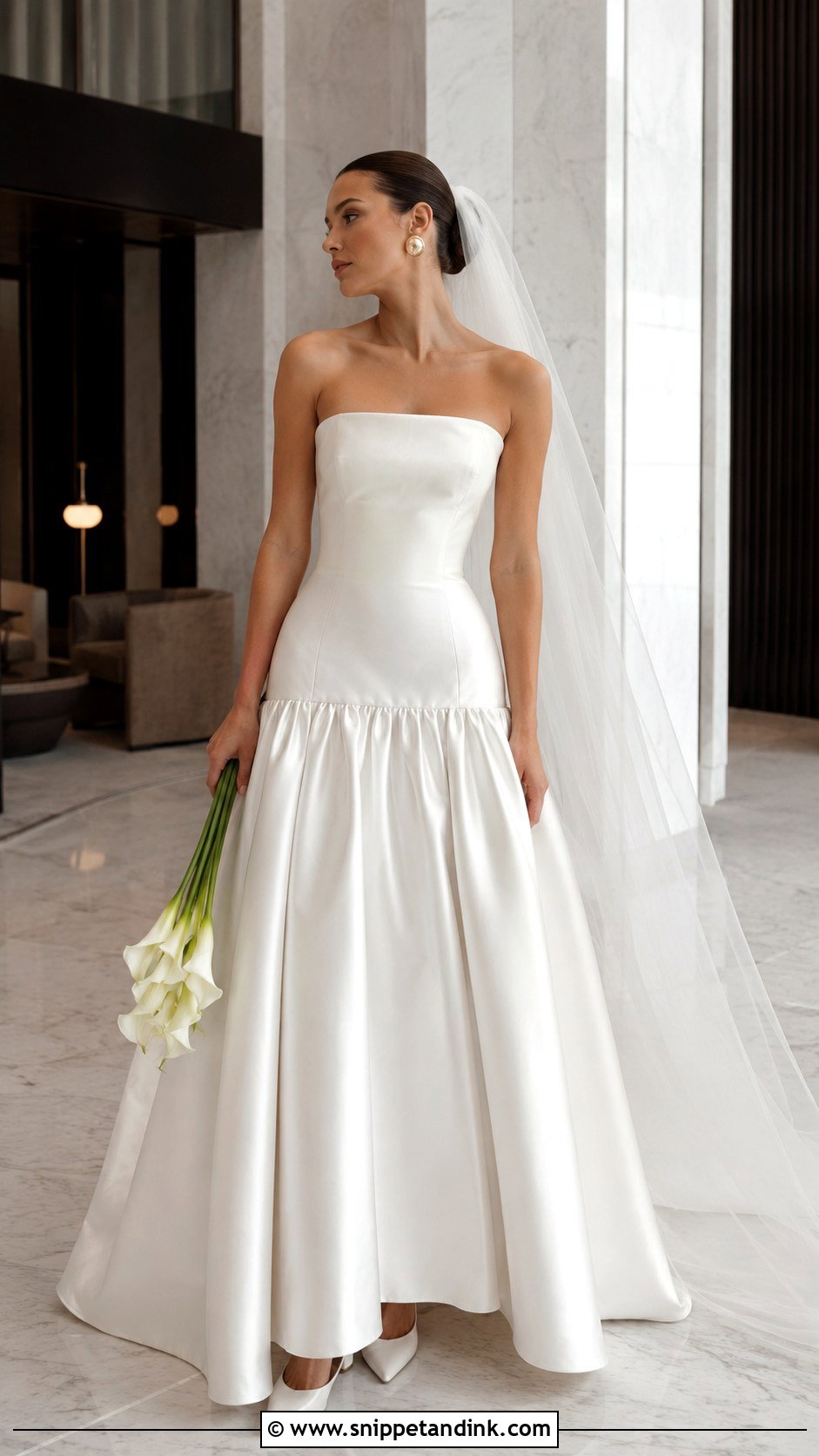
Here the bodice stretches down over the upper hips before the skirt releases, which makes the straight neckline look even more architectural. Satin or mikado shows off the construction; tulle adds air below the fitted part. Bold studs, pointed ivory heels and a long veil beneath a sleek bun keep the line long, and a narrow bouquet of calla lilies supports it. The fit around the hips is everything. Walk, sit and climb a few steps at the fitting, because a drop waist that’s smooth standing can crumple into folds the moment you sit.
14. Tea-Length Straight Neckline Wedding Dress
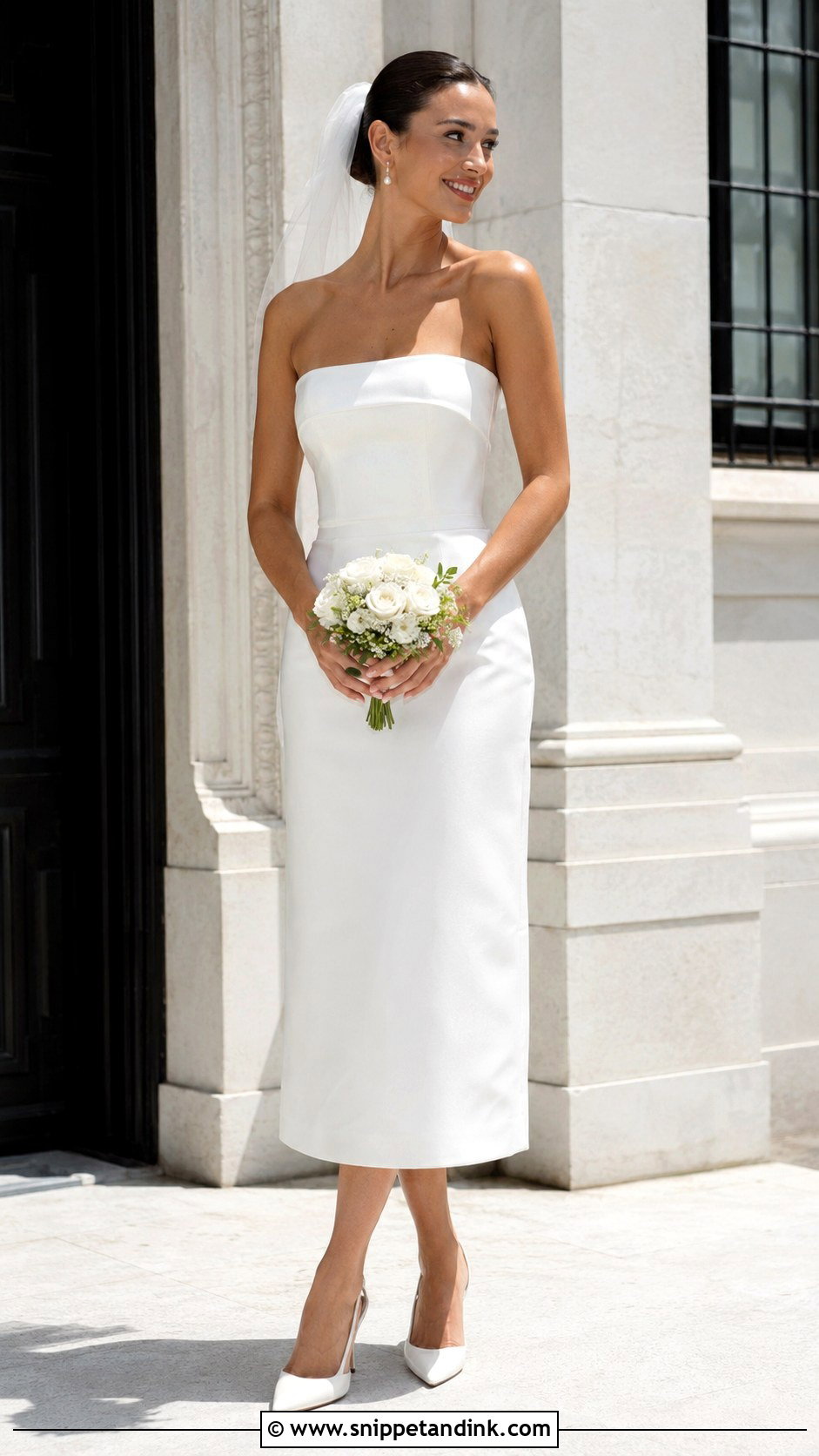
Tea length lands between knee and ankle and makes the whole look lighter, with a slightly retro feel. A fitted strapless bodice over a structured skirt is the classic version: satin for polish, layered tulle for bounce. Your feet are on show, so the shoes become a real accessory, whether refined slingback pumps, embellished flats or block-heel sandals. Pearl earrings, a short veil and a compact bouquet keep proportions balanced, with a smooth bun or a curled bob. Courthouses, restaurant receptions and daytime weddings suit it. Hem it in the exact shoes you’ll wear; on this length, two centimetres decides whether it looks intentional or just short.
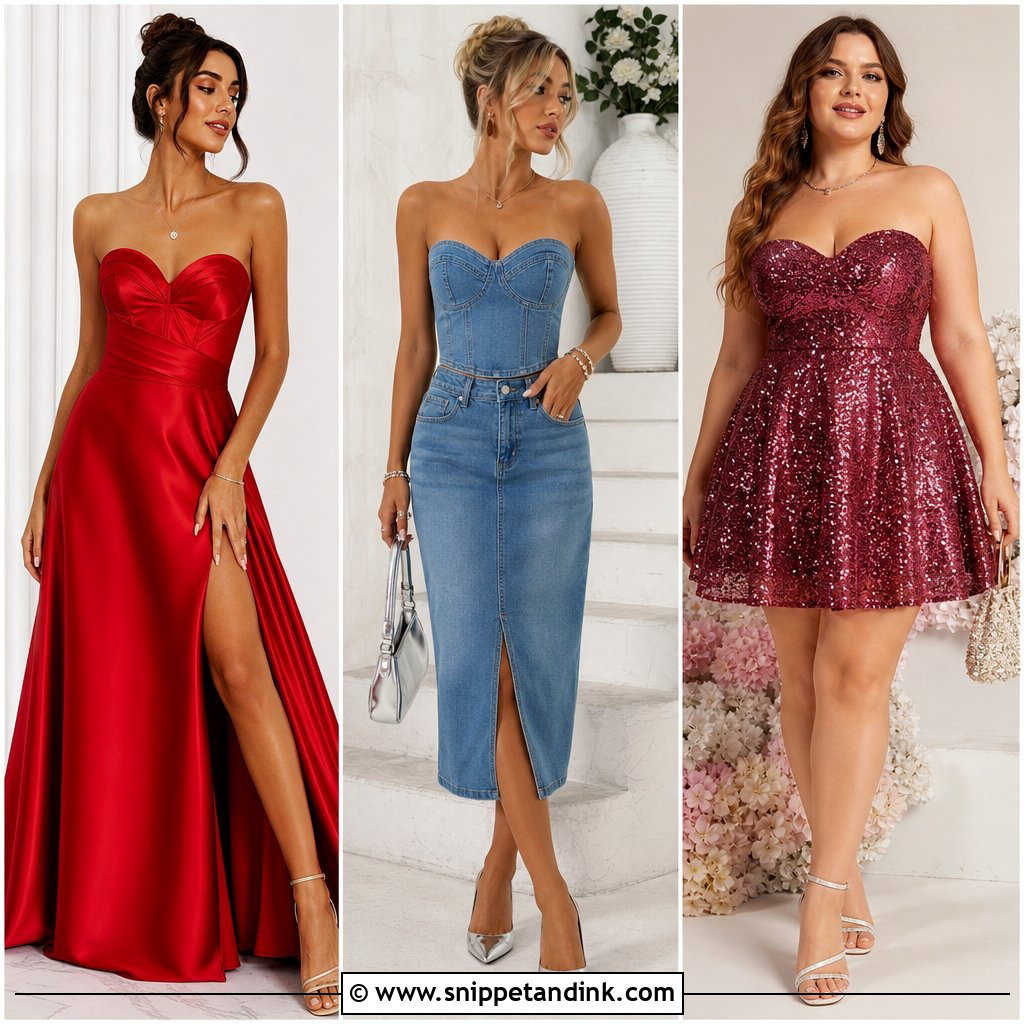

15. Mini Straight Neckline Wedding Dress
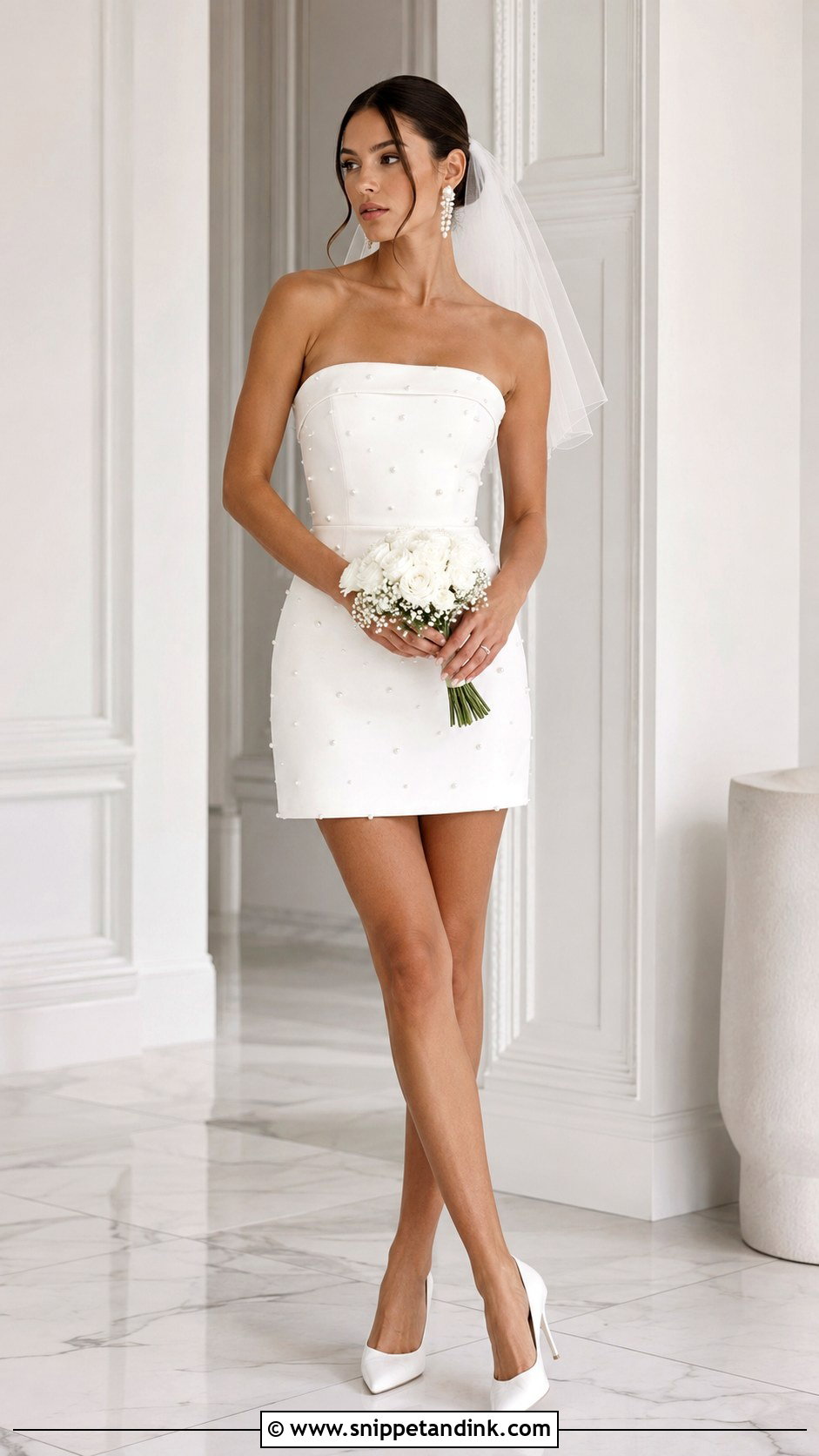
For a civil ceremony or a reception change, a strapless mini with a tailored bodice feels fresh. Clean satin is sophisticated; pearls or floral appliqués make it more celebratory. Pointed pumps, slingbacks or bridal flats all work depending on the venue, with statement earrings, a short veil or hair bow and a small handheld bouquet. Fitted mini skirts creep up when you sit and dance, so I’d ask for built-in shorts or a smooth lining. Keep accessories in one family rather than piling on drama. The hem and neckline already do plenty.
16. Plus-Size A-Line Straight Neckline Wedding Dress
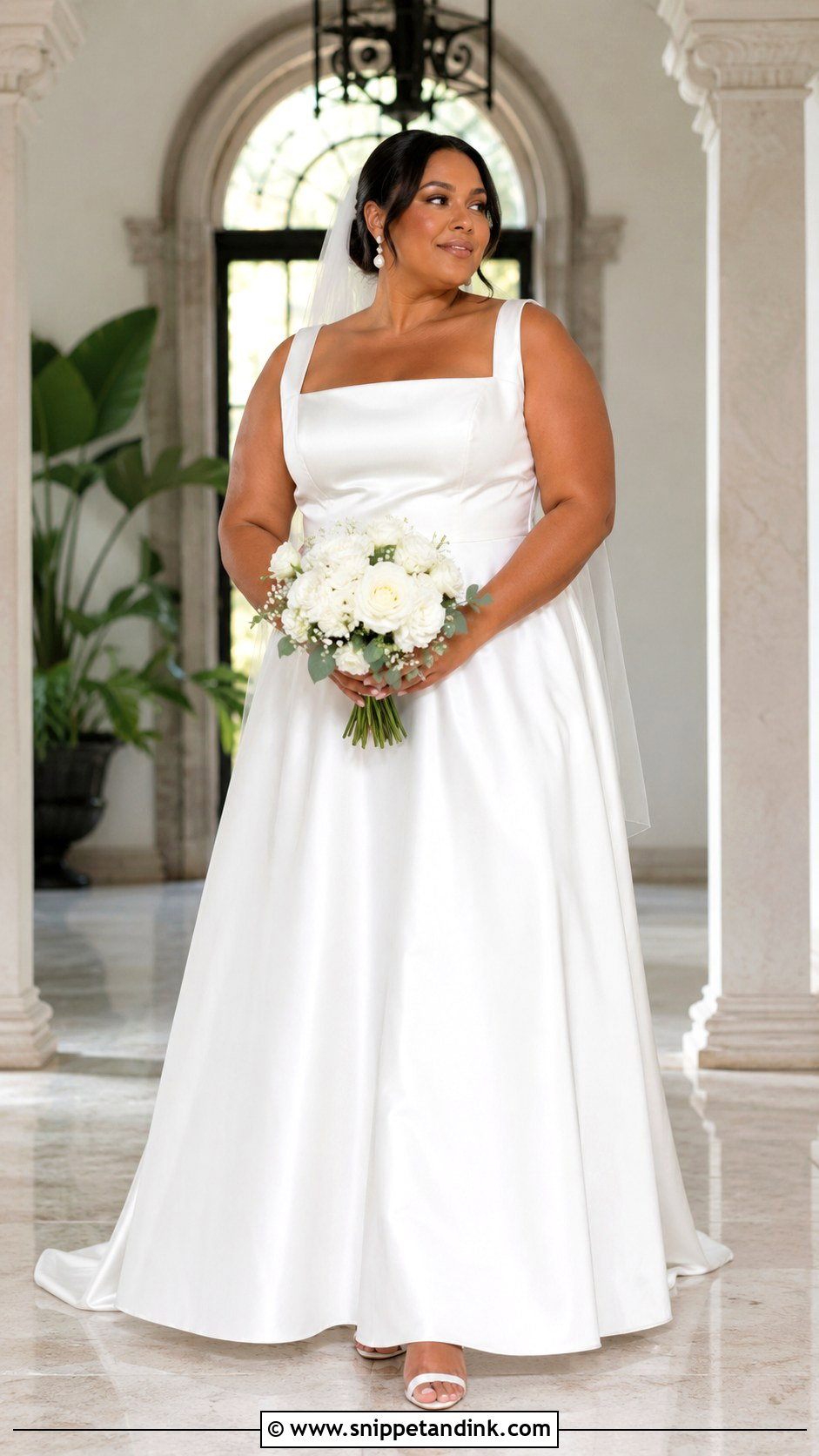
On curvier brides, a straight neckline often feels more secure than a sweetheart, because the top edge sits higher across the bust. An A-line with a structured bodice, plus straps or a well-built strapless foundation depending on what feels secure to you, gives shape and still moves. Satin is smooth and structured; lace and tulle are lighter. Pearl drops, supportive block heels and a veil past the waist suit it, with an updo or side-swept hair and a bouquet sized to your height and the skirt rather than to any rule. Inside, I look for built-in cups and a waist stay. Above all, find a boutique and seamstress who fit your size regularly, and judge the dress by how supported you feel after twenty minutes in it.
17. Straight Neckline Wedding Dress With Bridal Cape
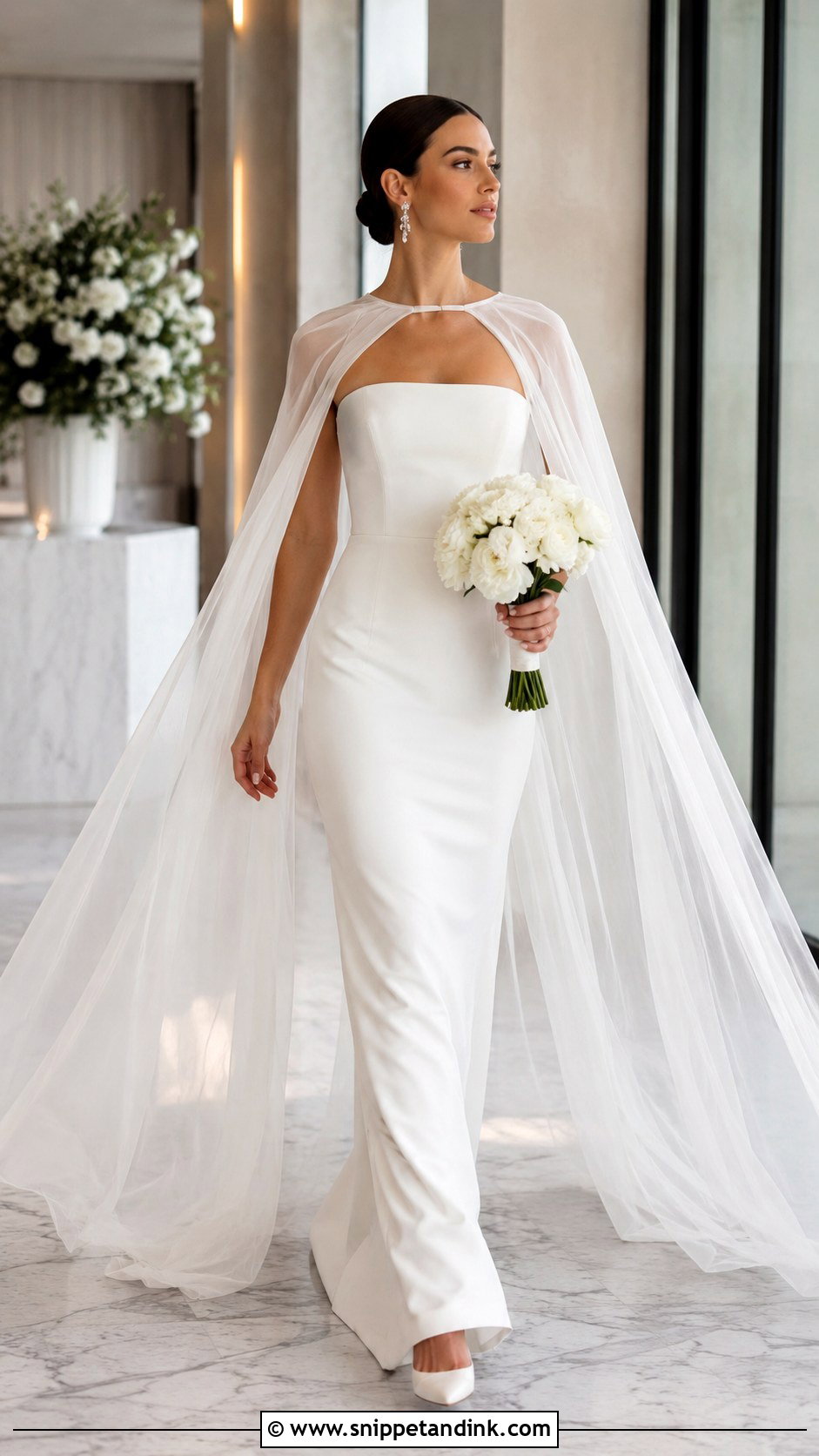
A sheer floor-length cape adds drama behind you while leaving the bodice untouched in front. Start with a strapless crepe or satin gown in a sheath, A-line or ball gown shape, and attach the cape at the shoulders or upper back. Plain tulle stays minimal; scattered pearls or a lace edge add a little detail. Crystal earrings, pointed pumps and a sleek low bun keep the focus, and the veil becomes optional since the cape supplies the movement. A simple bouquet helps. My fitting check is weight. If the cape pulls backward, the front edge lifts off the chest, so ask for the fastenings to sit a little lower on the back.
18. Bow Back Straight Neckline Wedding Dress
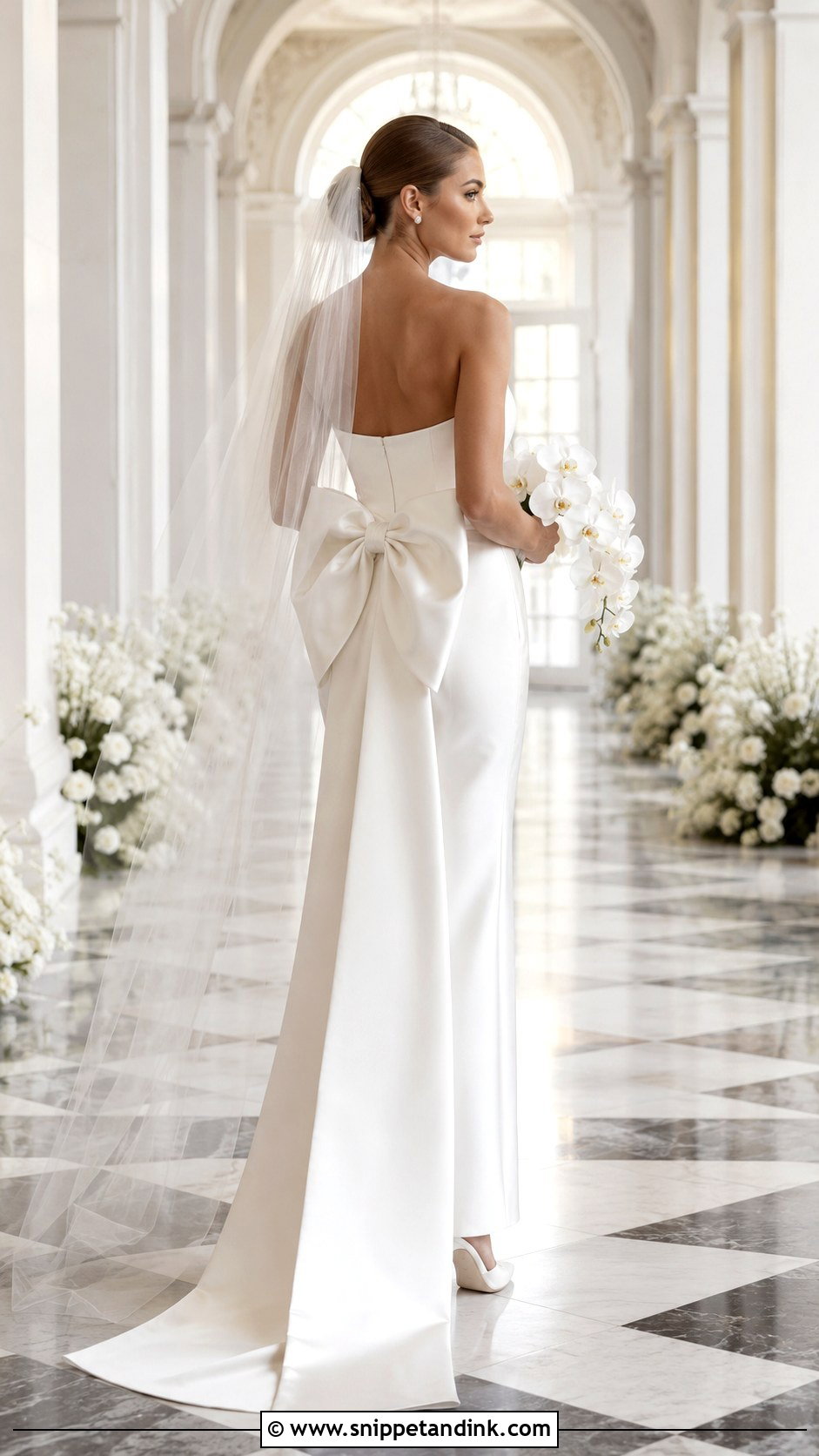
Front clean, back theatrical. A strapless satin gown with a fitted bodice and either a slim column or a full ball gown skirt can carry a big bow at the waist or upper back that frames the train on the aisle. Understated studs, satin pumps and a sheer veil ending above or below the bow, never over it, suit the look, with a neat bun and white orchids. Big bows are heavy and catch on chair backs, so I prefer detachable ones, lightly interfaced and fixed with hooks, that come off before dinner.
19. High-Slit Straight Neckline Wedding Dress
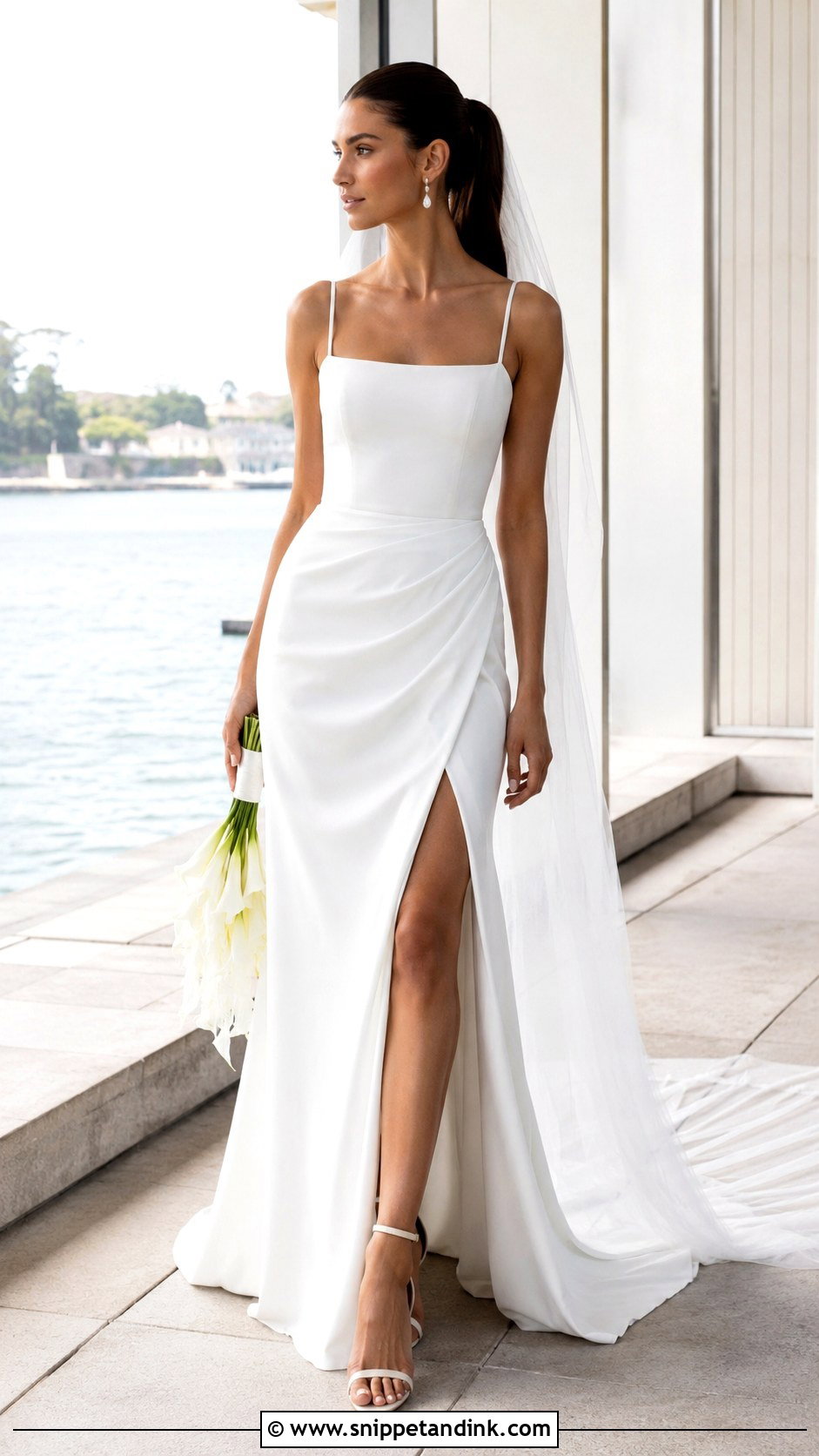
A high slit breaks up the horizontal line with movement on every step. Choose a strapless or thin-strap gown with a fitted bodice and a draped skirt in crepe, satin or fluid silk. Ankle-strap heels, drop earrings, a chapel veil, a sleek ponytail or bun and a narrow bouquet keep the mood modern. Set the slit’s height while you’re walking and sitting, not just standing, because it opens much higher in motion. A discreet modesty panel or lining keeps it controlled, so it reads as an accent rather than the main event.
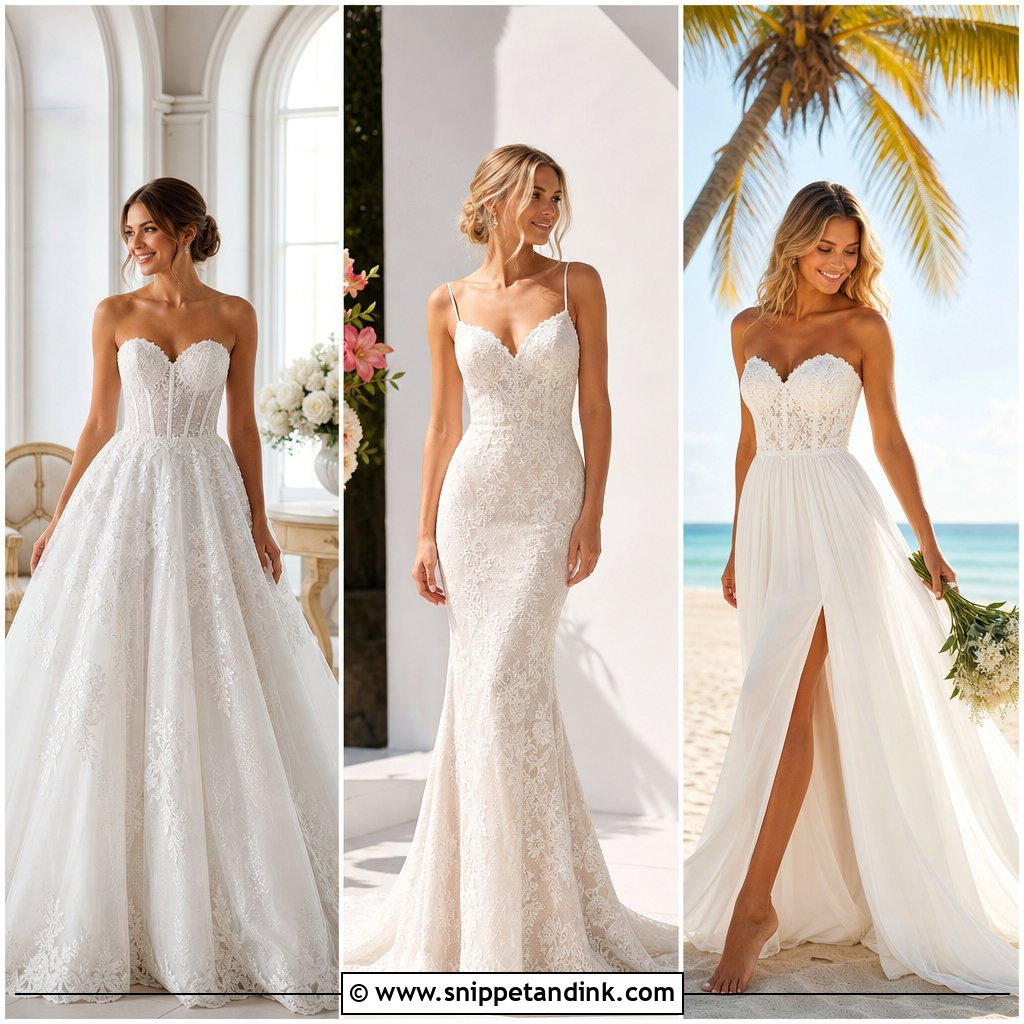
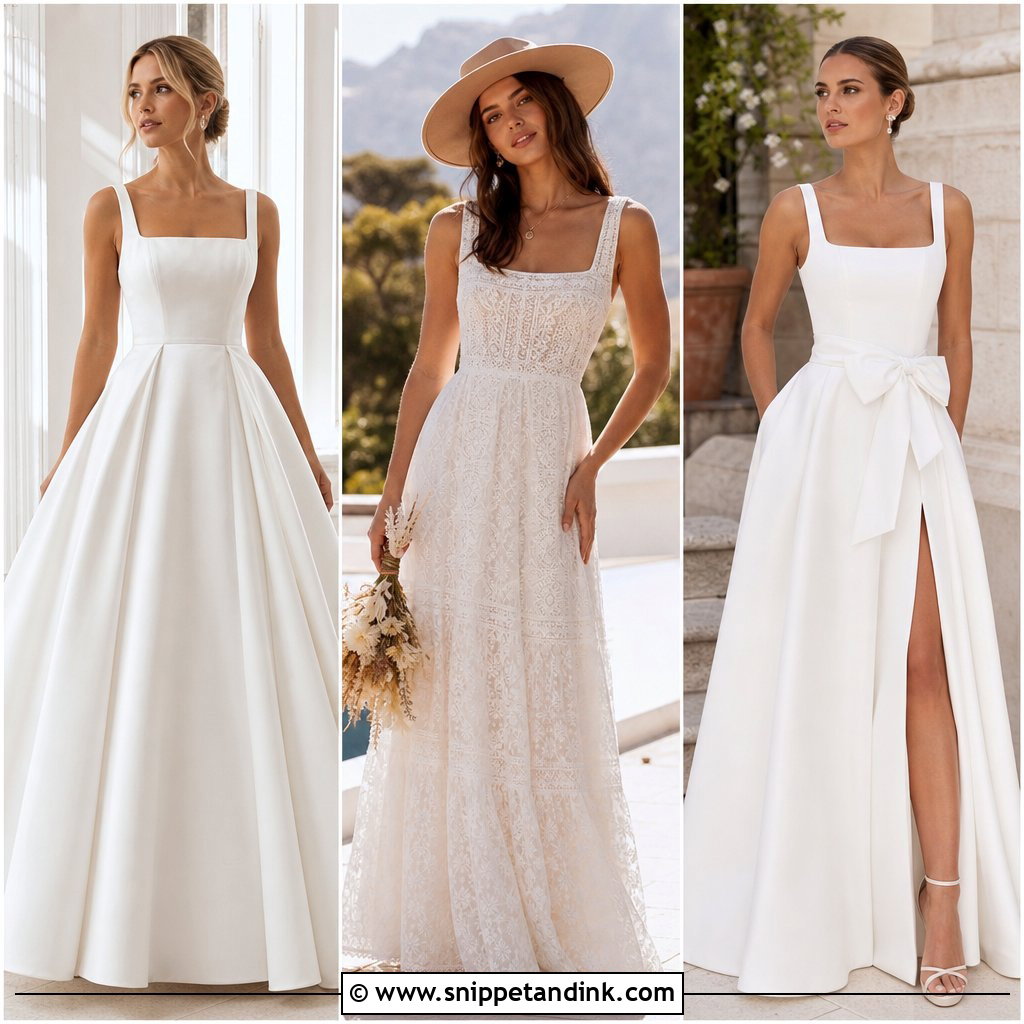
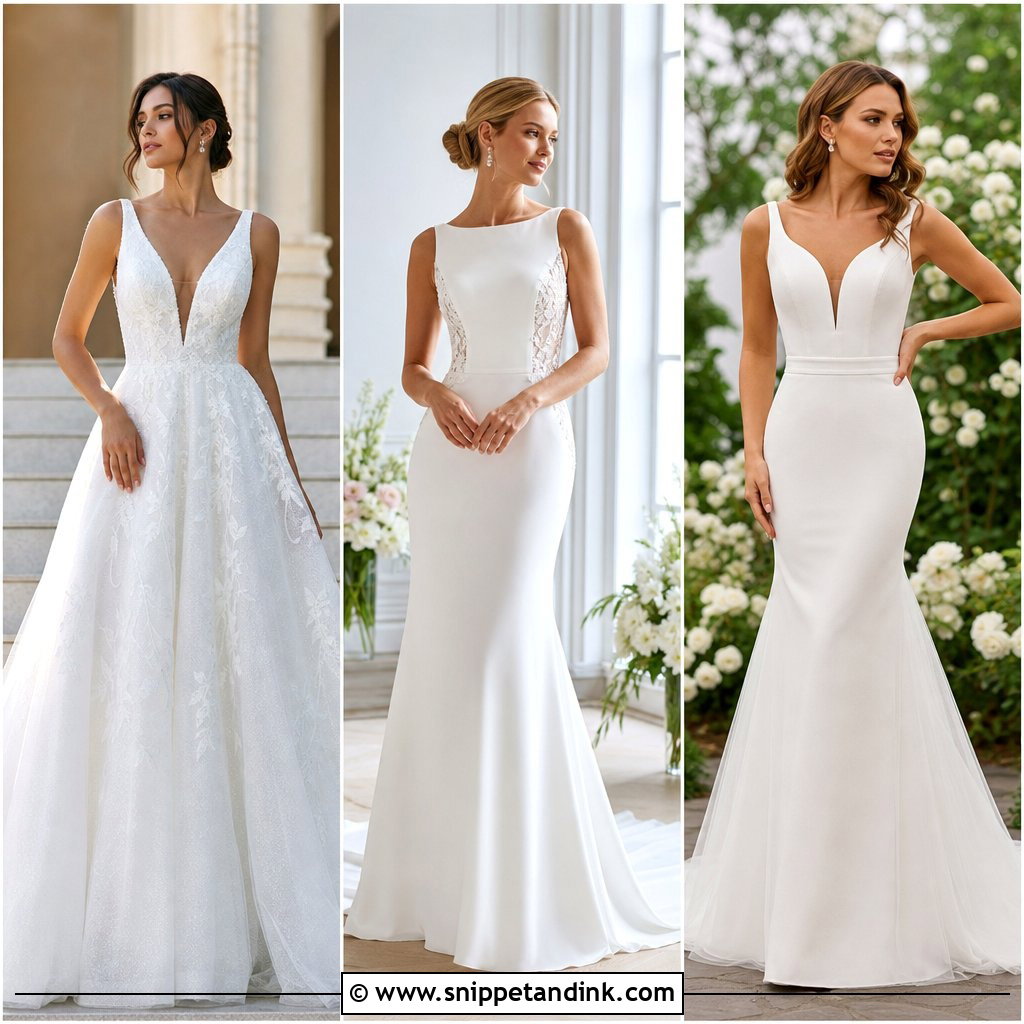

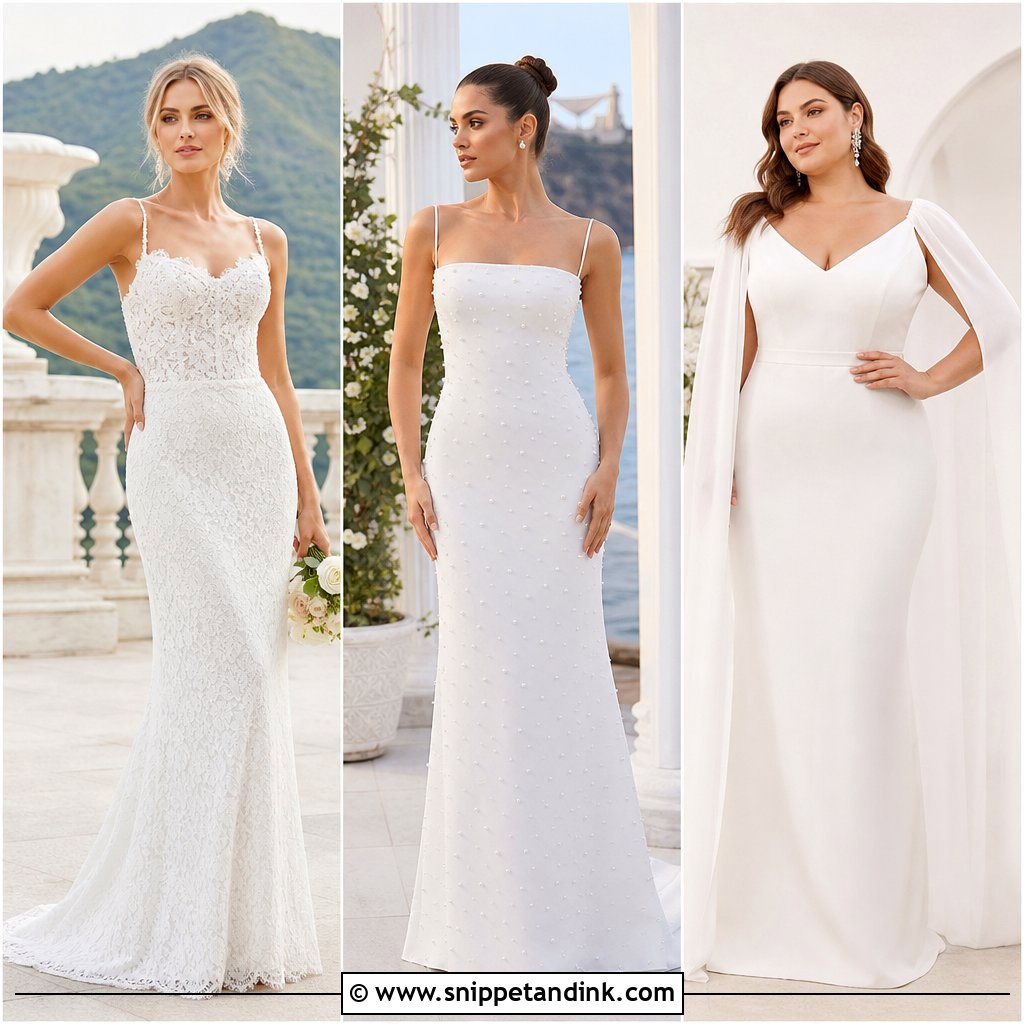
20. Overskirt Straight Neckline Wedding Dress
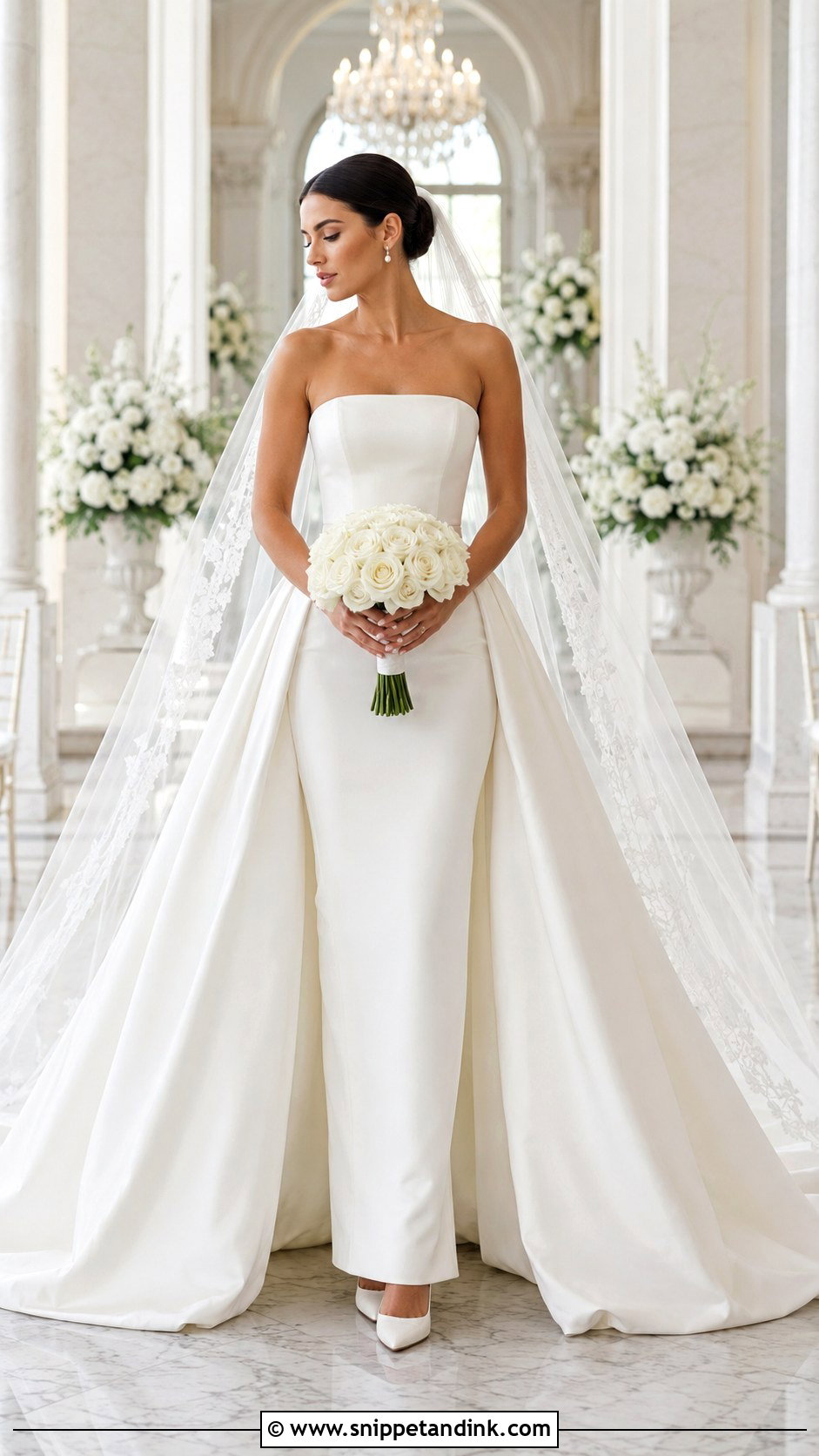
Ceremony volume first, then a sleek reception gown. Start with a strapless crepe sheath or mermaid dress and add a full satin or tulle overskirt at the waist for the aisle. Wear a cathedral veil, pearl earrings and pointed ivory pumps for the ceremony; after portraits, take off the overskirt and veil for dancing. A polished bun and white roses work with both versions. The waistband must lie completely flat and match the dress exactly. I prefer hooks set into the sheath’s own waist seam, so nothing shows once the skirt is off.
Why Strapless Straight Bodices Slip, and How Seamstresses Stop It
A straight edge shows movement far more than a curved one, so a bodice that slides even slightly looks wrong straight away. When a bride tells me she keeps hitching her dress up, the cause is nearly always fit rather than fabric.
The fix usually sits at the waist
Most slipping starts around the ribcage, not the bust. If the bodice is loose there, the weight of the skirt drags everything down. A waist stay, a grosgrain ribbon sewn inside and hooked snugly around the natural waist, takes that weight off the neckline, and it’s one of the simplest alterations a seamstress can add. Silicone gripper tape along the inside top edge helps as well.
Checks for the final fitting
- Wear the exact bra or shapewear you’ll have on the day; a different one changes the fit.
- Raise your arms over your head and hug someone. If the top edge moves more than a finger’s width, it needs taking in.
- Sit and lean forward as if signing the register. The neckline shouldn’t gape away from your chest.
- Bodies change in the last few weeks, so schedule the final fitting close to the wedding, ideally within the last two weeks.
A Clean Line Only Works If It Stays Put
This one neckline goes romantic with floral lace, regal on a satin ball gown, sharp in crepe and playful with a short hem. Start with the silhouette and fabric you feel most like yourself in, then look hard at the practical parts: support, strap placement, sleeve movement, hem length and what the venue will throw at you. Accessories should frame the neckline, not cover it. Book alterations early and test the whole look walking, sitting and dancing. A dress that looks right on the hanger but needs hitching up all night isn’t the right dress.
You'll Like These Ideas:





Leave a Reply