
Satin and an A-line skirt are an easy pairing to love. The fabric has enough body to hold the flare without petticoats, and its soft sheen does the decorating, so the gown can stay clean. That simplicity is also why satin is unforgiving: it shows every seam, every pull and every line underneath, which is what I spend most fittings on. Below are A-line satin looks I’d show a bride, from minimal strapless gowns and sleeved styles to corsets, pockets and statement trains. Newer collections mix satin with sweetheart necklines, leg slits, lace appliqués and pearl illusion details, and I’ve included those too. Each one comes with notes on veil, shoes, flowers and hair, and on the fitting detail that makes or breaks it.
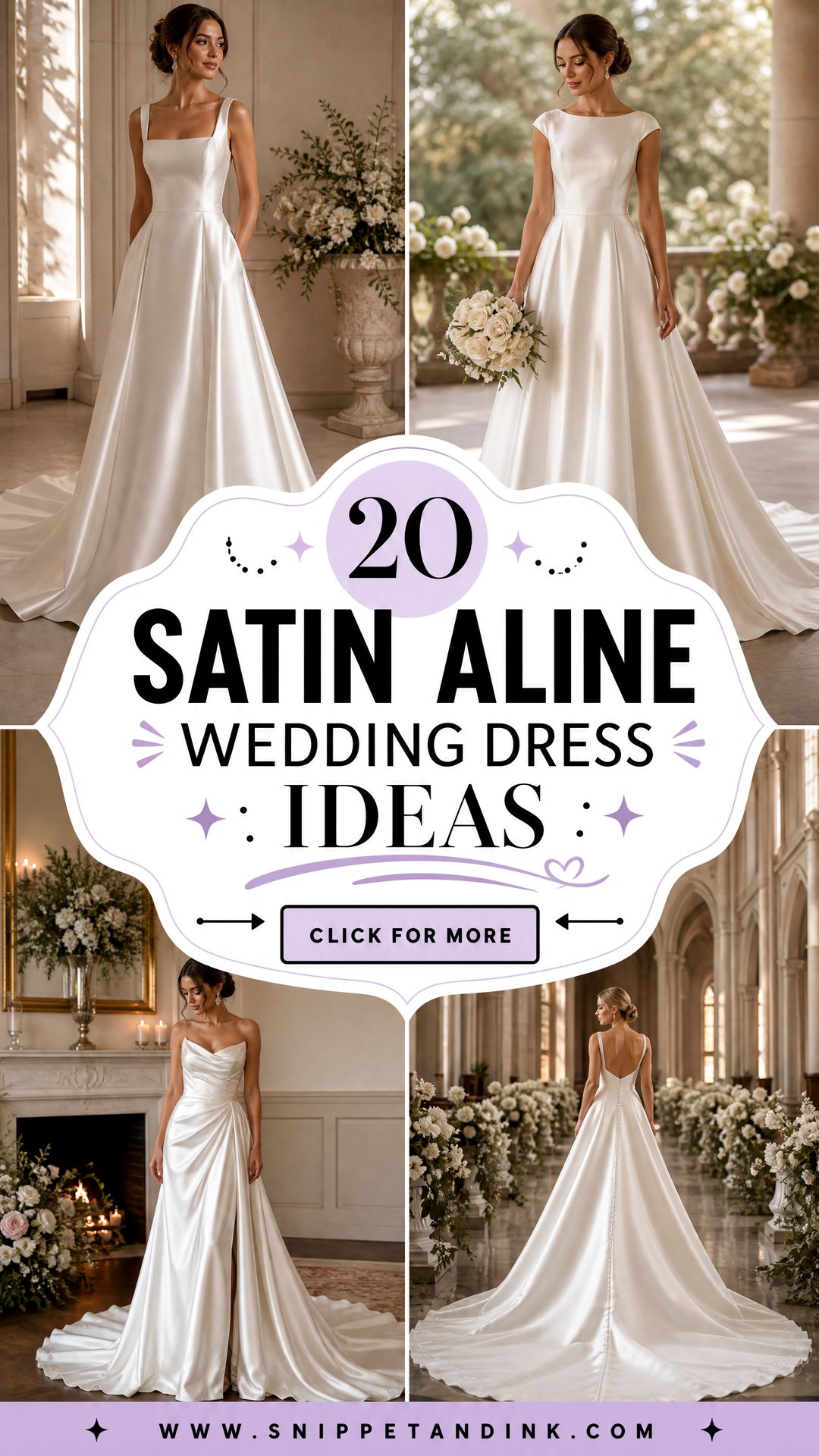
Duchess, Silk or Polyester: What the Satin Label Changes
“Satin” describes a weave, not a fibre, so two satin gowns can behave very differently. Before a bride falls for a silhouette, I make sure she has felt the fabric it’s cut in.
Duchess satin
Heavy and structured, often a silk or silk-blend weave. It holds an A-line beautifully on its own and gives a soft, low sheen. It’s also warm, so it suits autumn, winter and air-conditioned venues more than a midday summer garden.
Silk satin and charmeuse
Lighter, more fluid and more lustrous. These drape rather than stand, so the A-line is softer. They mark more easily, and water spots can show on silk, so I’d keep drinks well away during photos.
Polyester satin
Usually more affordable and less likely to water-spot. Quality varies a lot: better ones look close to silk, while cheaper ones have a glassy shine that flares in flash photography. Ask to see a swatch photographed with a phone flash before ordering.
Prices differ widely between fibres and makers, so compare by feel and weight, not just by label.
1. Strapless Sweetheart Satin A-Line Wedding Dress
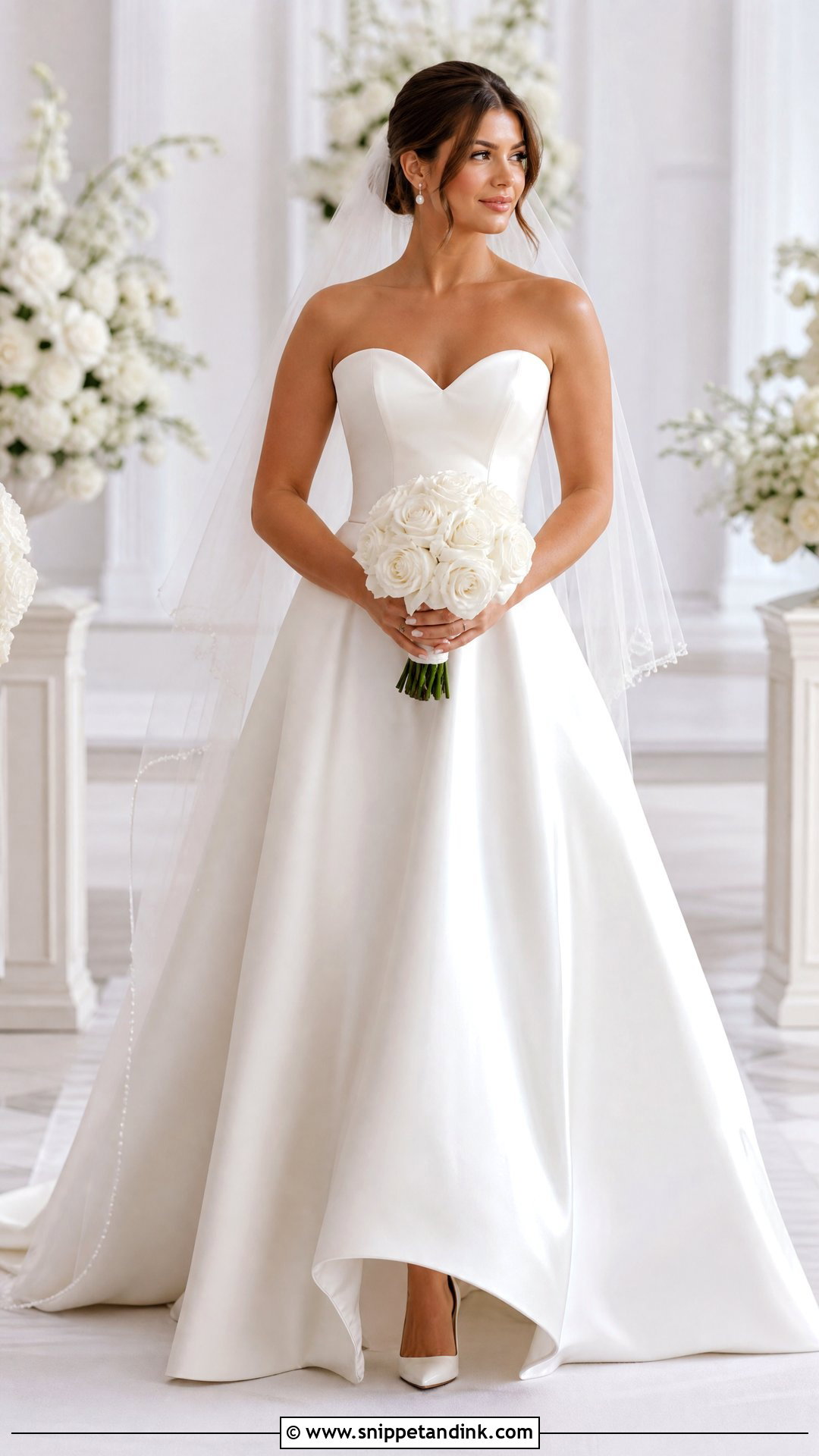
A strapless sweetheart is where many brides start, and with good reason. The curved neckline frames the collarbone, and the fitted bodice gives the satin skirt a clear point to flare from. Support is everything here. I look for inner boning, moulded cups and a waist stay, an inner grosgrain band that anchors the dress so the bodice doesn’t slide down as you move. Matte satin feels understated; a brighter finish suits an evening ceremony. A fingertip veil, pearl drops and a low chignon keep the neckline clear, and a compact bouquet of white roses fits the shape.
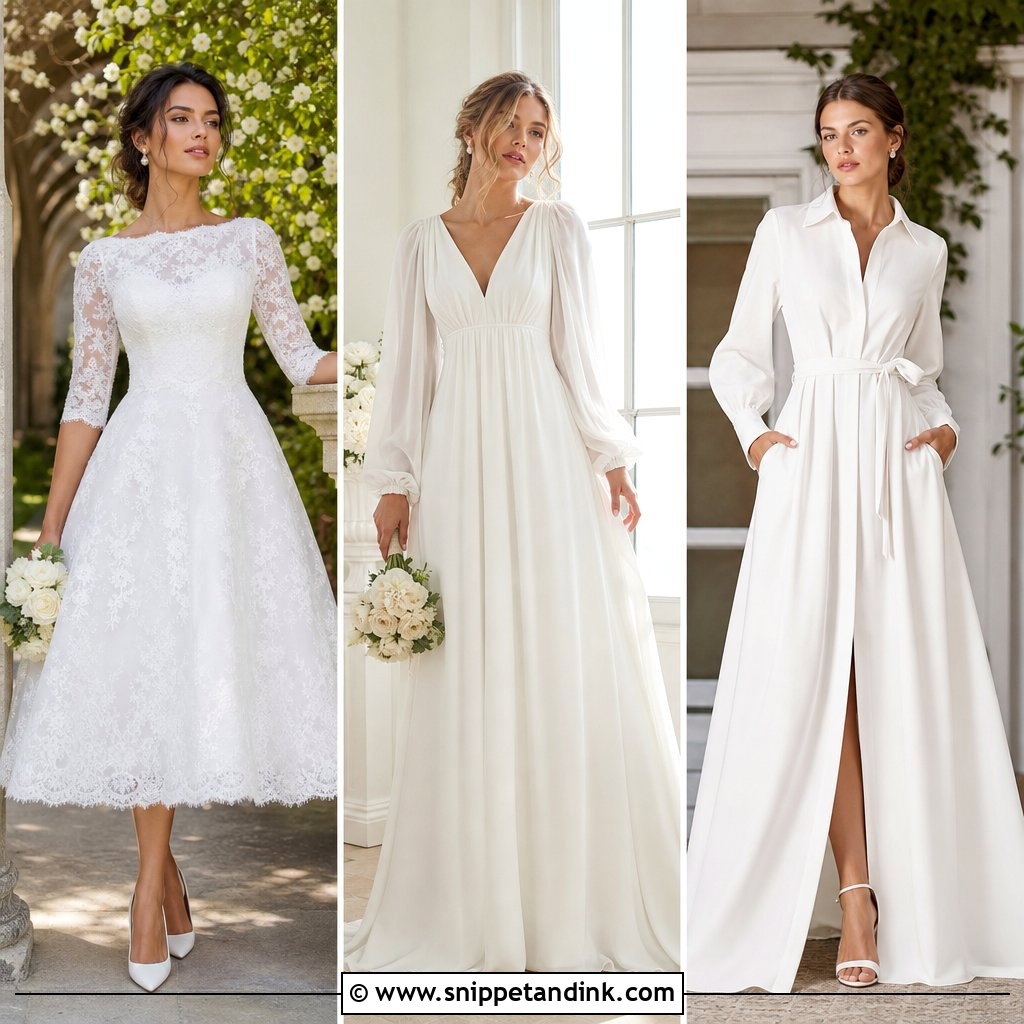
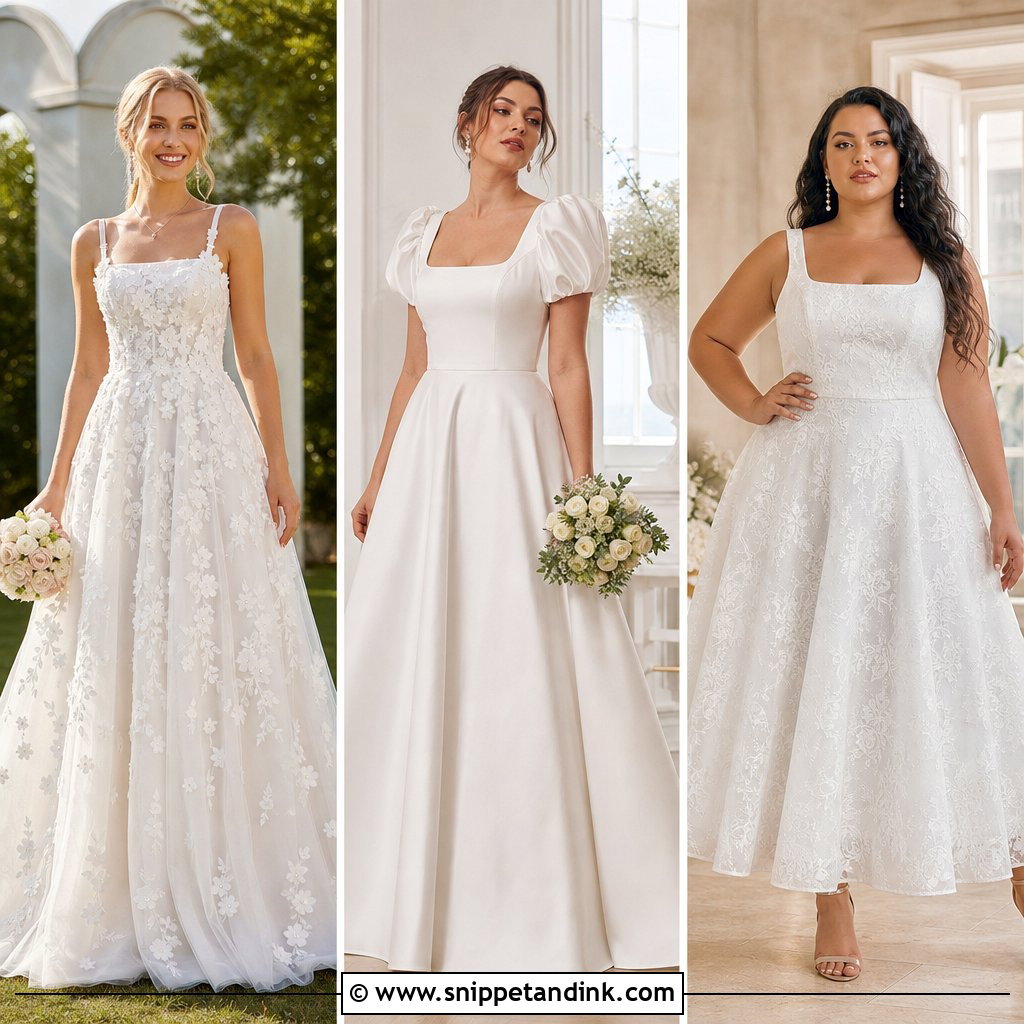
2. Square Neck Satin A-Line Wedding Dress
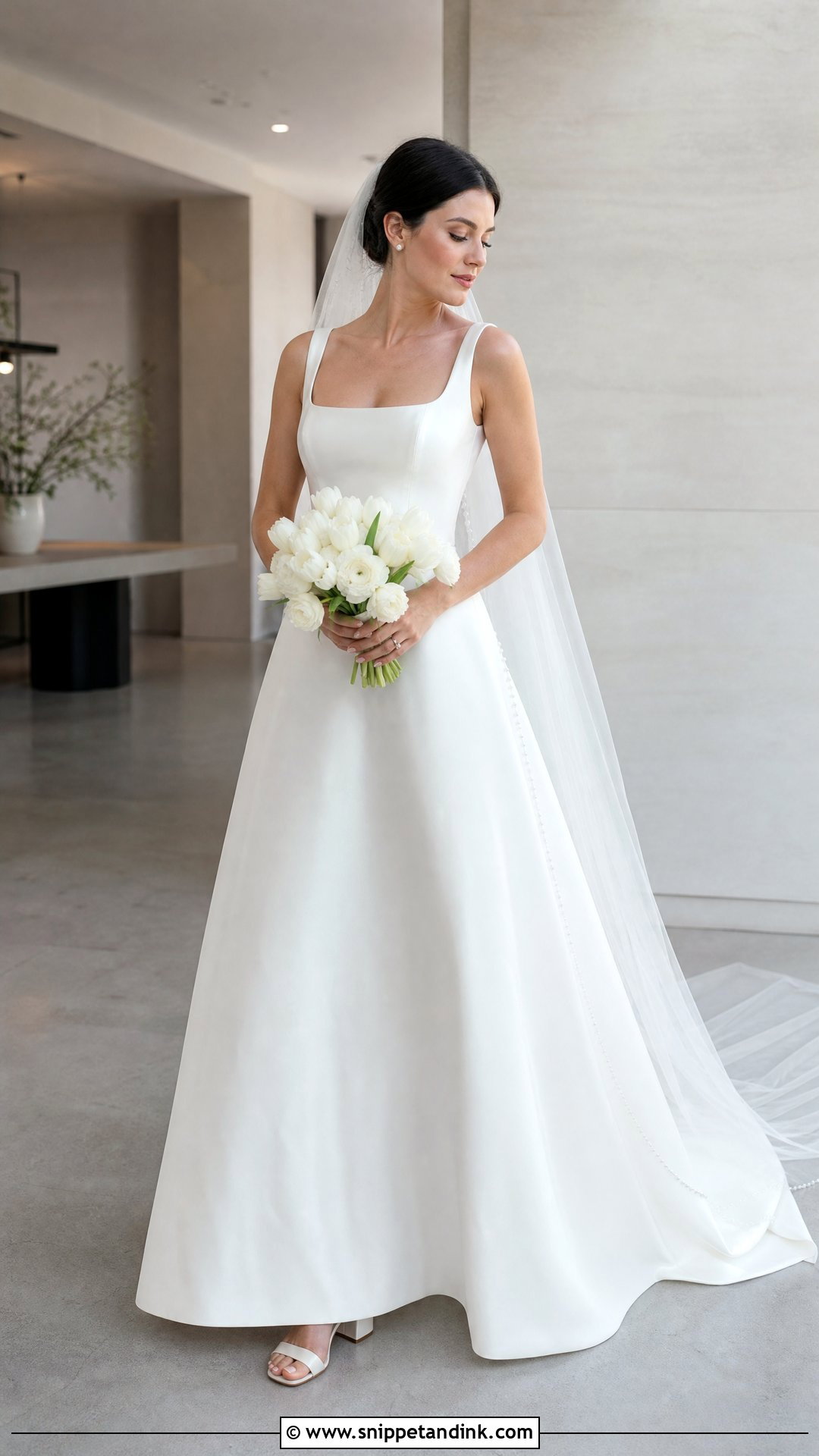
Square necklines give satin an architectural line. The angles frame the face, and wide straps make the shape feel sturdy rather than fragile. In satin, the corners of a square neck can gape when you lean forward, so I pin them while the bride bends at her fitting; a small dart or a stay stitch fixes it. Covered buttons down the back and a smooth skirt suit the crisp look. Pearl studs are enough jewellery. Block-heel sandals keep you steady, and tulips with ranunculus echo the clean lines.
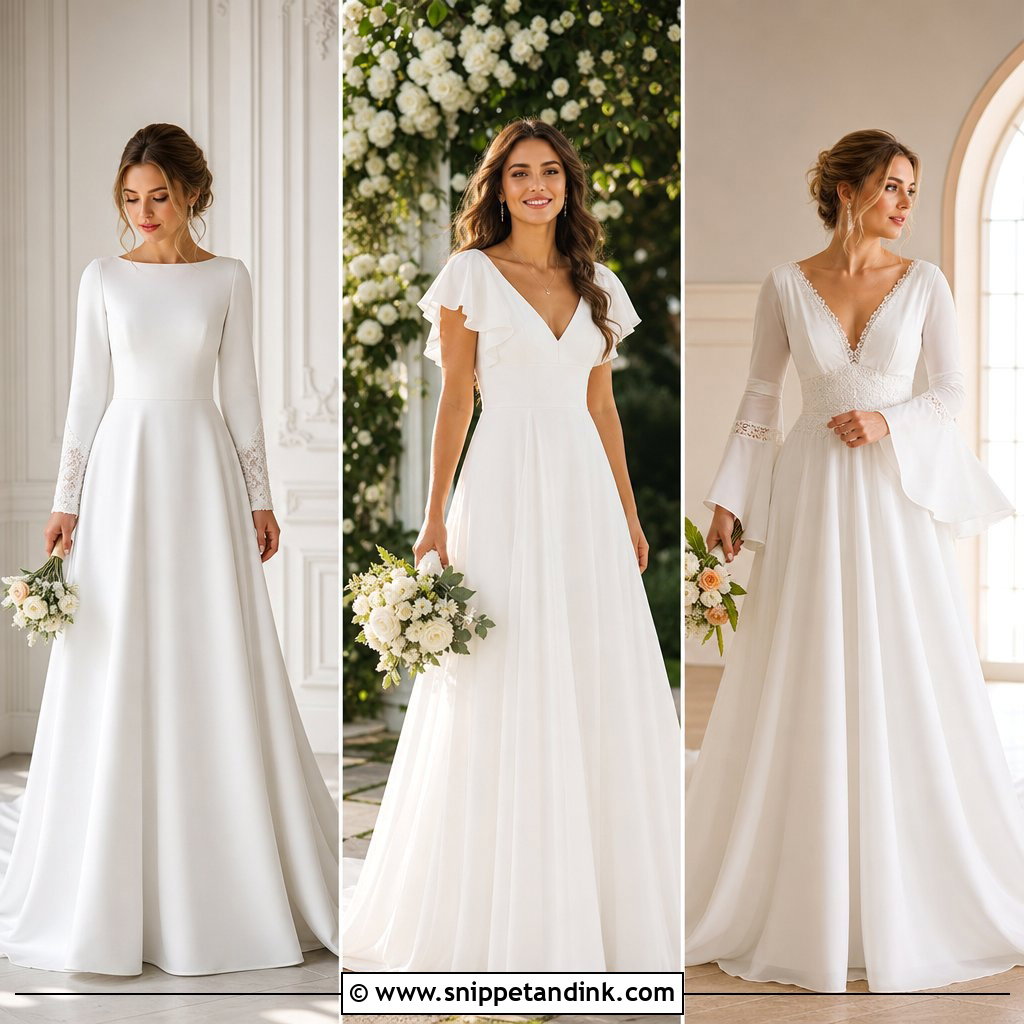
3. V-Neck Satin A-Line Wedding Dress
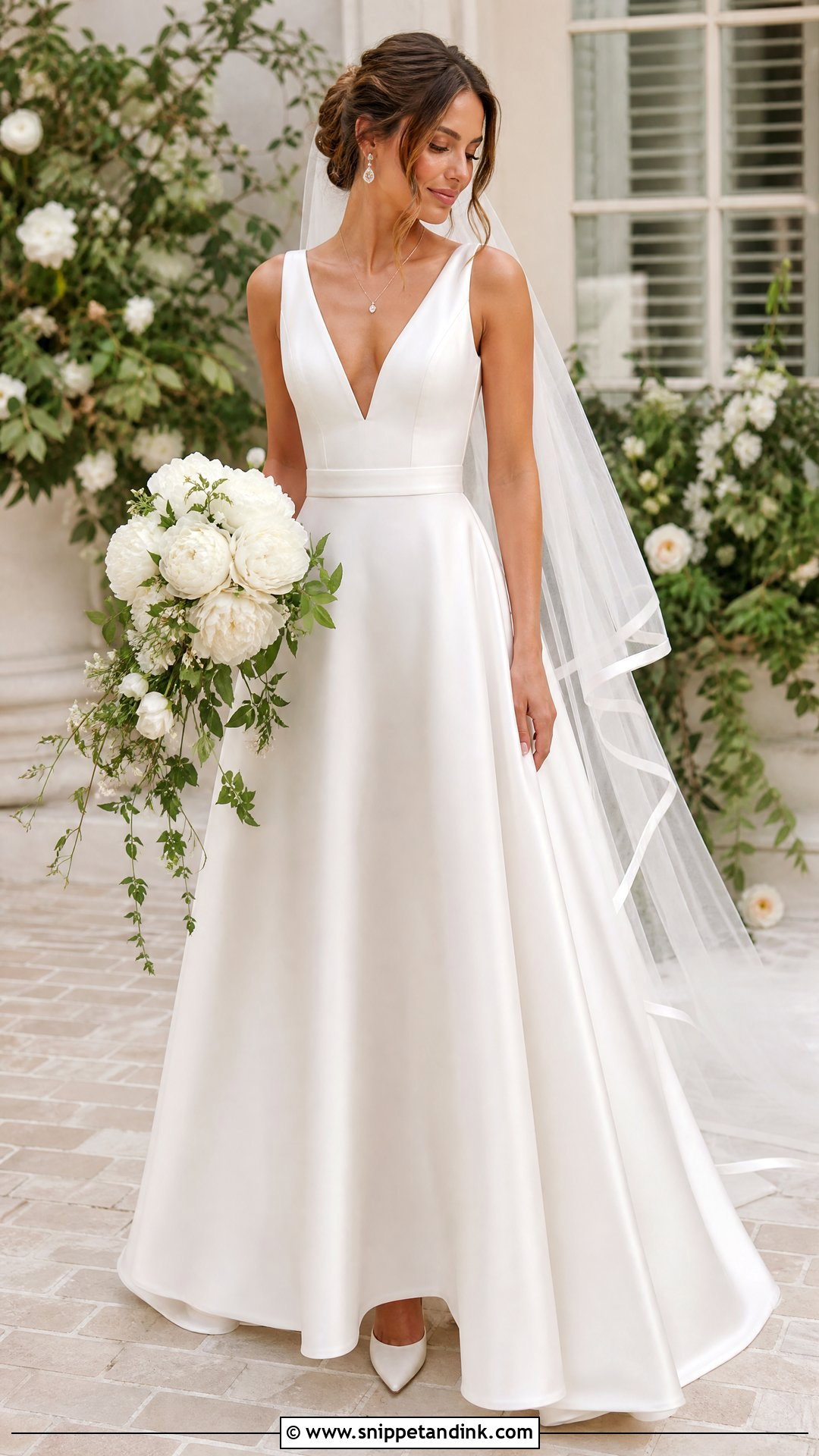
The V-neck lengthens the torso, and its depth can be anything from modest to plunging. In satin, a deep V needs structure: wider straps and a defined waistband stop the neckline drifting outward. If you want depth without worry, an illusion inset holds everything in place while looking nearly invisible. A delicate pendant follows the line of the V, and a tulle veil with a narrow satin edge ties into the fabric. A loose low bun keeps it from looking severe, and trailing peonies add a little softness.
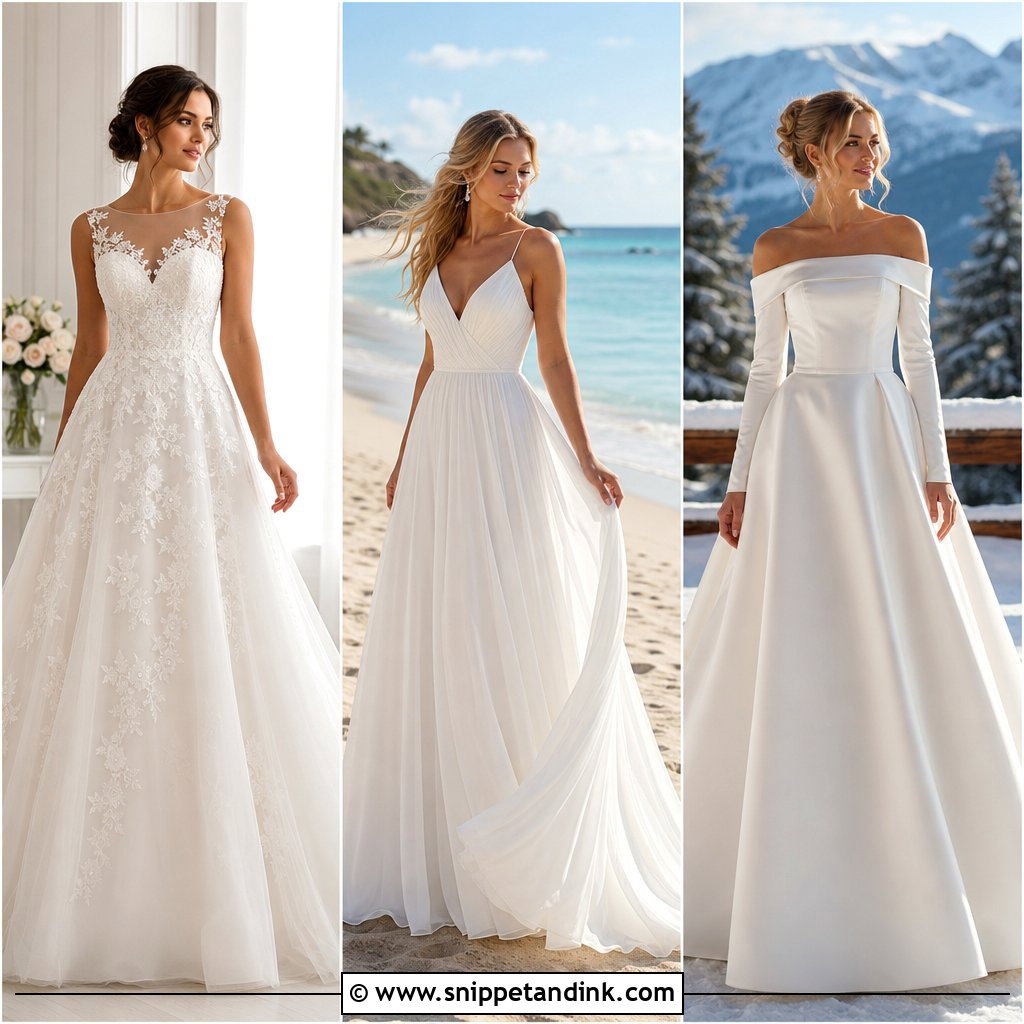
4. Off-The-Shoulder Satin A-Line Wedding Dress
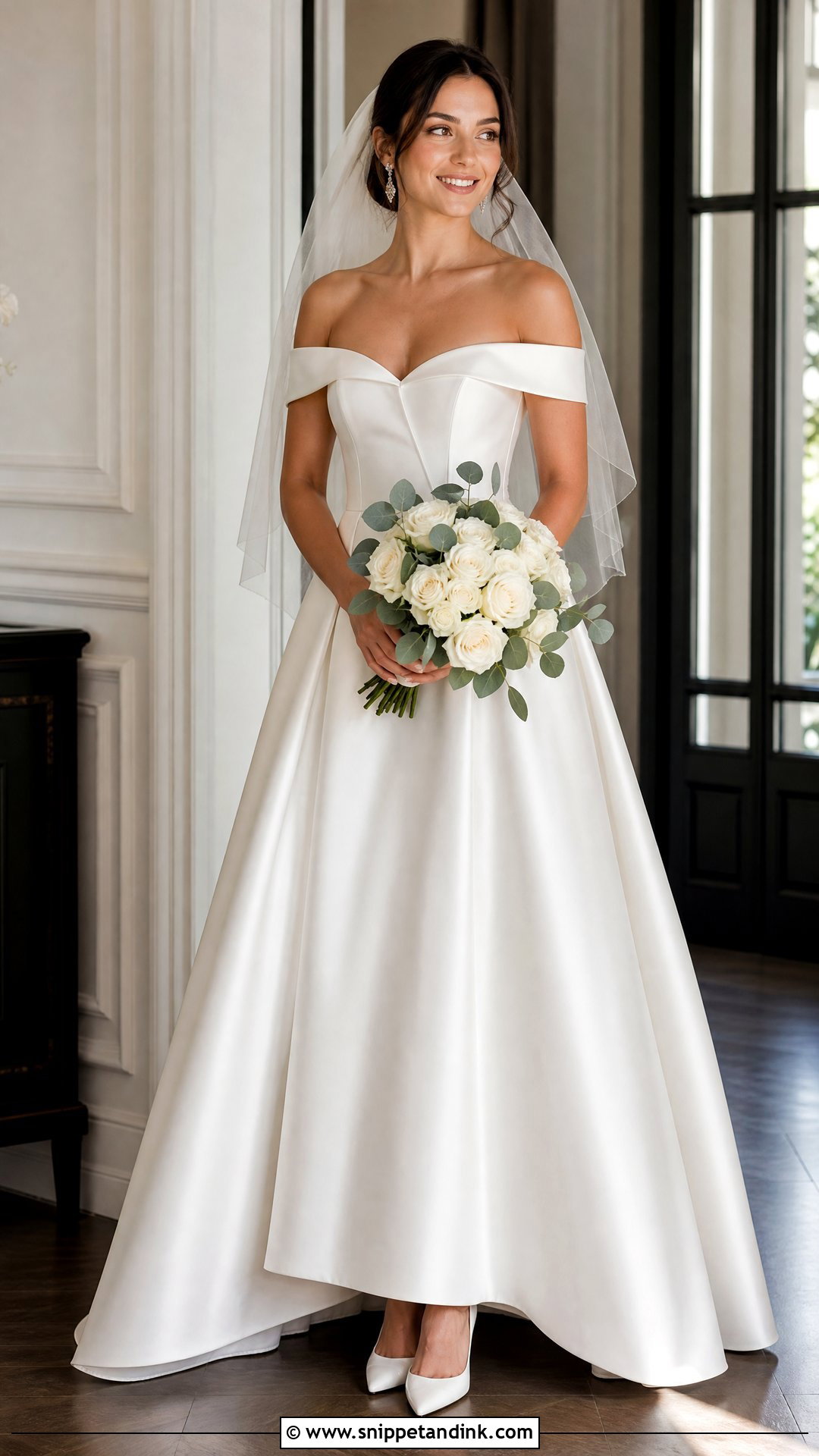
Off-the-shoulder sleeves make plain satin romantic in an instant. The structured bodice is what keeps it secure; without it, the bands slip and you’ll be hitching them up all day. That’s also why I like detachable sleeve bands, since you can take them off for dancing when your arms want to go higher. An elbow-length veil leaves the shoulder line visible. Skip the necklace. A gently pleated A-line skirt gives controlled volume without bulk, and a rounded bouquet of roses and eucalyptus suits the mood.
5. Long Sleeve Satin A-Line Wedding Dress
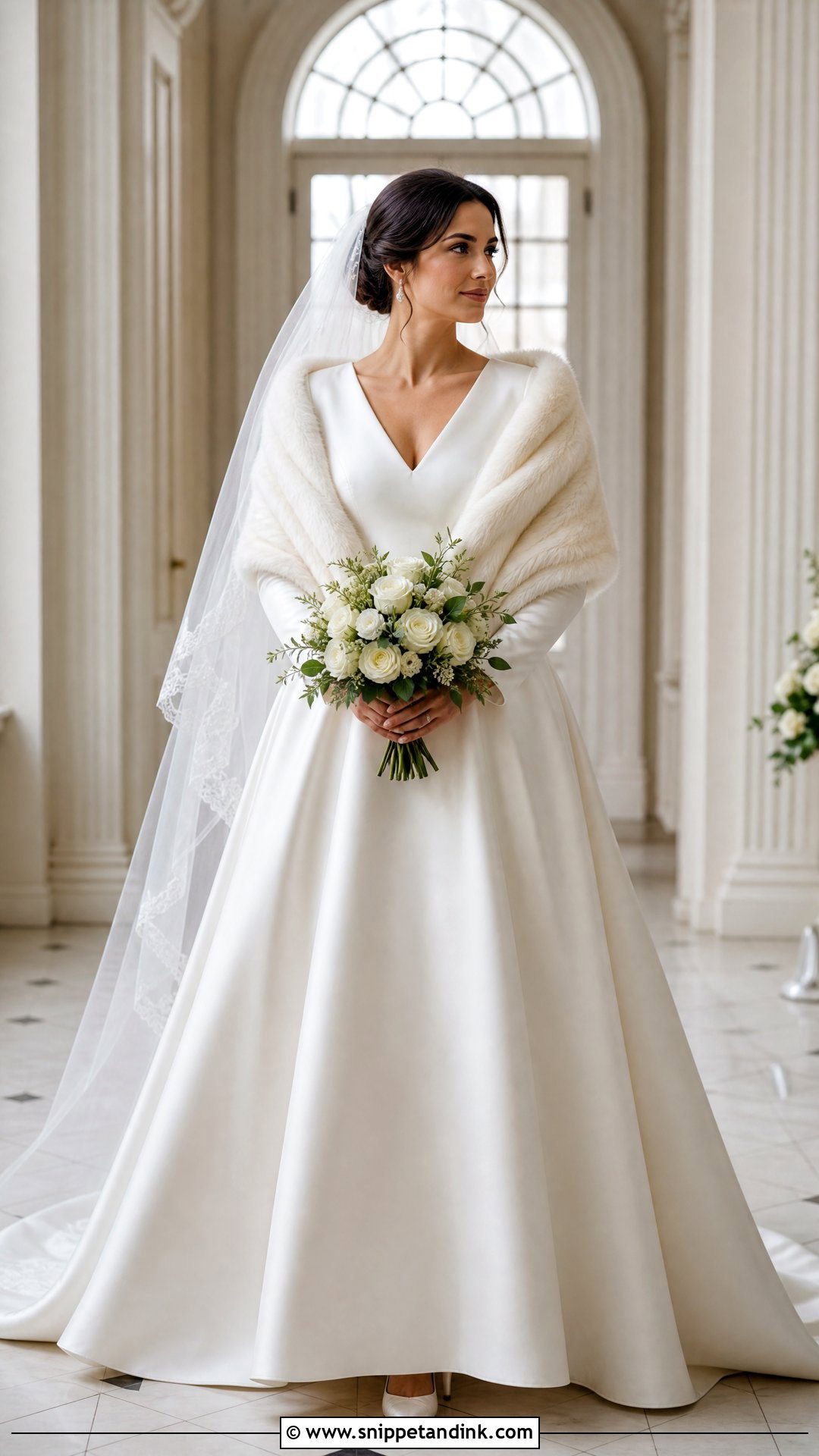
For a winter or formal indoor ceremony, long sleeves give satin a stately look. Fitted satin sleeves are sleek, while illusion sleeves with small covered buttons look lighter. Satin sleeves have no stretch, so I fit them with the bride’s arms raised and crossed; a sleeve that feels fine hanging down can bind when you hug someone. A bateau or modest V neckline balances the coverage. Hidden pockets add function, and a tailored bridal coat keeps you warm outdoors without hiding the gown.
6. Lace Bodice Satin A-Line Wedding Dress
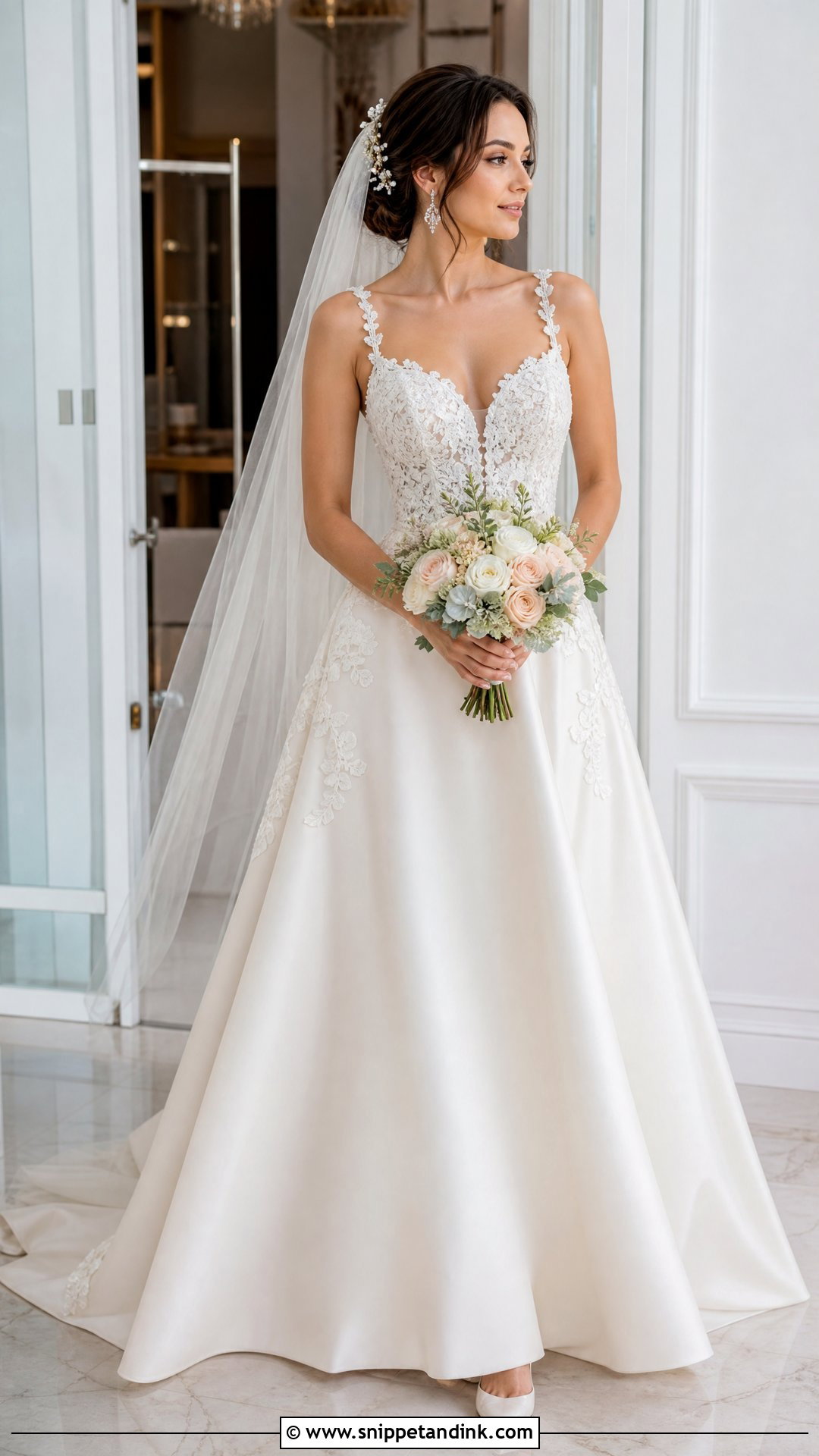
Lace on the bodice adds romance, and a satin skirt keeps the overall look clean. Match the lace to the satin’s ivory exactly. Ivories vary a lot, and a cool lace on a warm satin looks like two dresses joined together. Appliqués ending at the waist or trailing slightly onto the skirt both work. Wide straps support better than thin beaded ones. Go for a plain tulle veil so the lace pattern stays visible, and add a small pearl comb in soft waves. Garden roses suit the texture.
7. Ruched Bodice Satin A-Line Wedding Dress
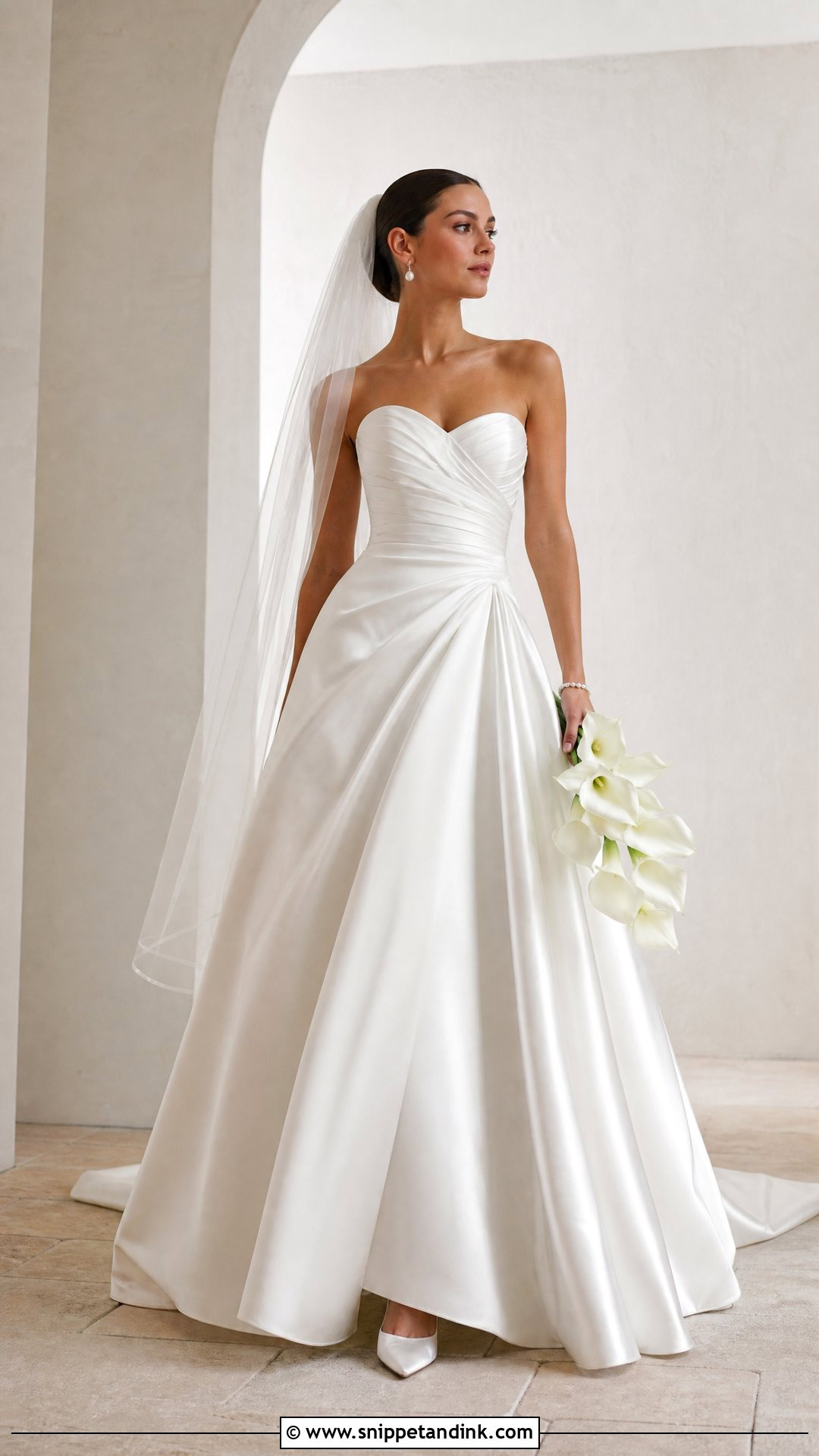
Ruching softens satin and is quite forgiving across the bodice. Asymmetric gathers bring movement, and a structured waist keeps it from looking draped all over. The gathers must lie flat when you sit, since that’s when ruching tends to bunch under the arms or at the waist. I ask brides to sit for a few minutes at the fitting and check. A sweetheart or V neckline suits it, and a waist-length veil keeps the bodice visible. White calla lilies look sculptural beside it.
8. Corset Satin A-Line Wedding Dress
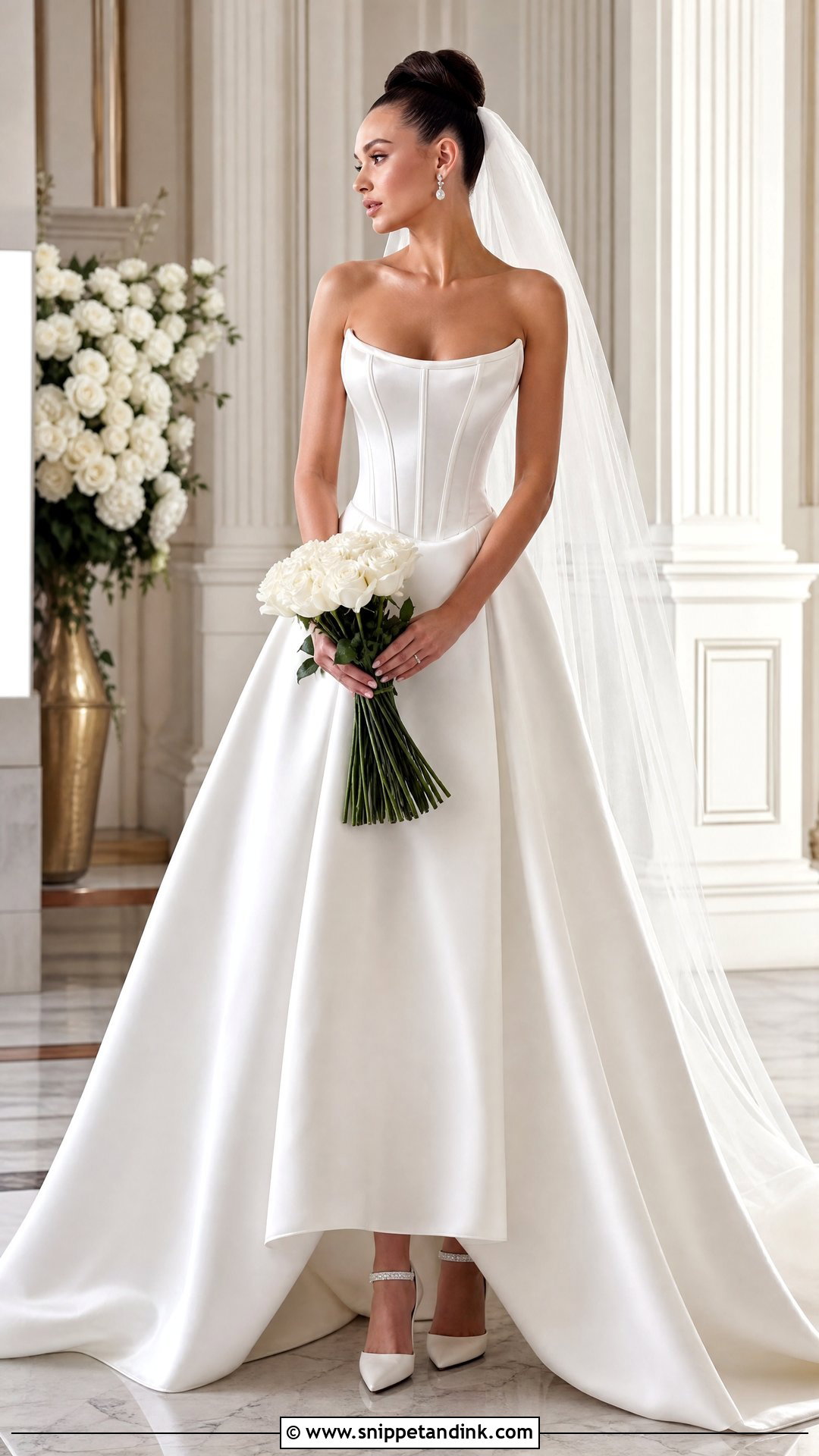
Corsets bring an editorial edge to a classic A-line. Look for neat boning, a softly curved neckline and a good lining. A lace-up back adjusts the shape on the day, while a hidden zip gives a cleaner line; for brides whose weight may shift before the wedding, I’d lean toward lace-up. Make sure you can breathe, sit and lift your arms before the final alterations. A full plain satin skirt sets the corset off. Ankle-strap pumps, a high bun and long-stem roses keep it sharp.
9. Basque Waist Satin A-Line Wedding Dress
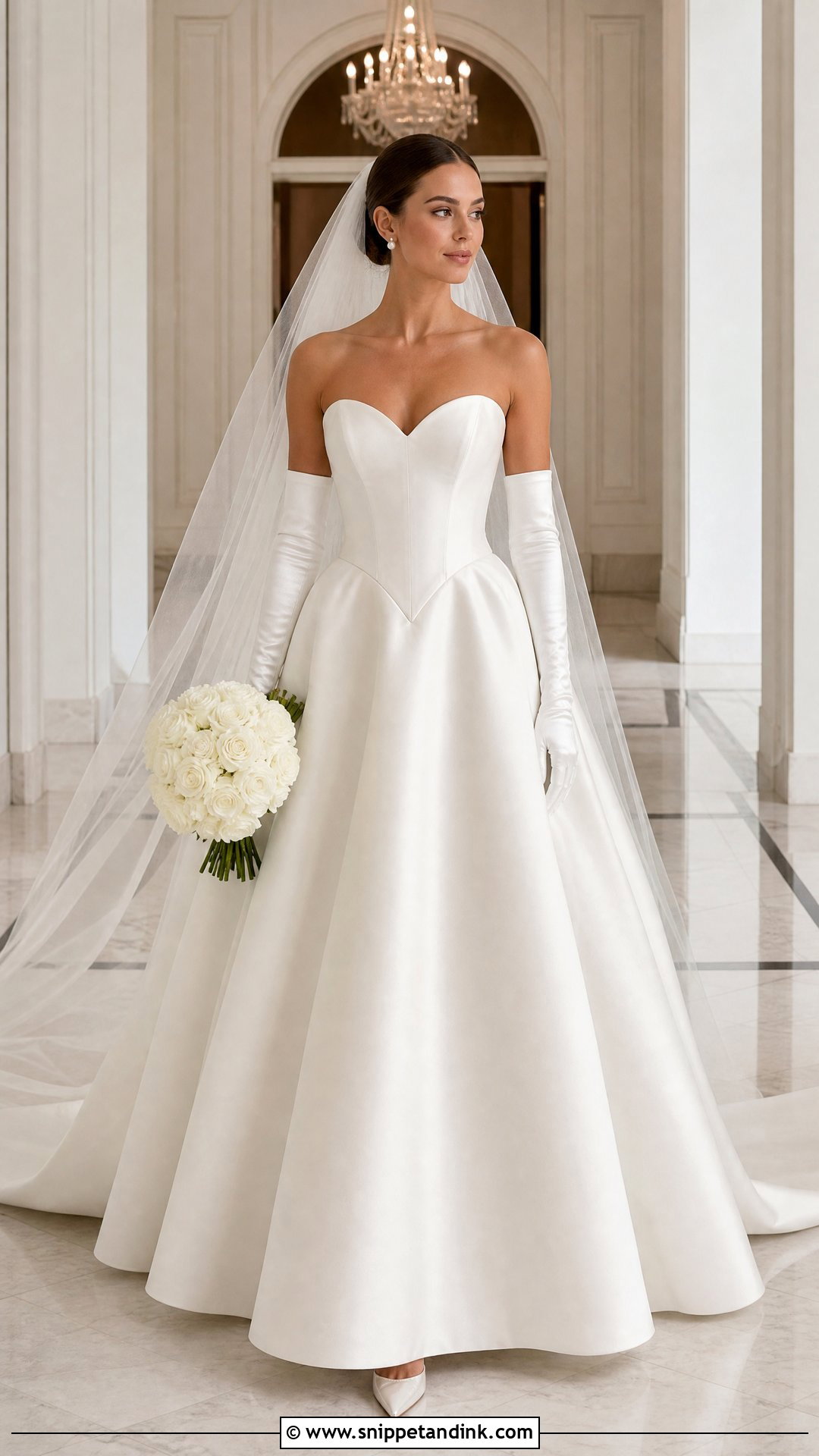
A basque waist dips into a point below the natural waistline, giving a long sculpted line into the skirt. It pairs well with a strapless scoop or sweetheart neckline. The point must sit evenly at centre front and stay flat when you sit; on shorter torsos it can fold, so check seated. Long satin gloves suit the formal mood, as do pearl studs and a plain cathedral veil. A smooth bun lets the waist do the talking, and minimal embellishment keeps it that way.
10. Satin A-Line Wedding Dress With Pockets
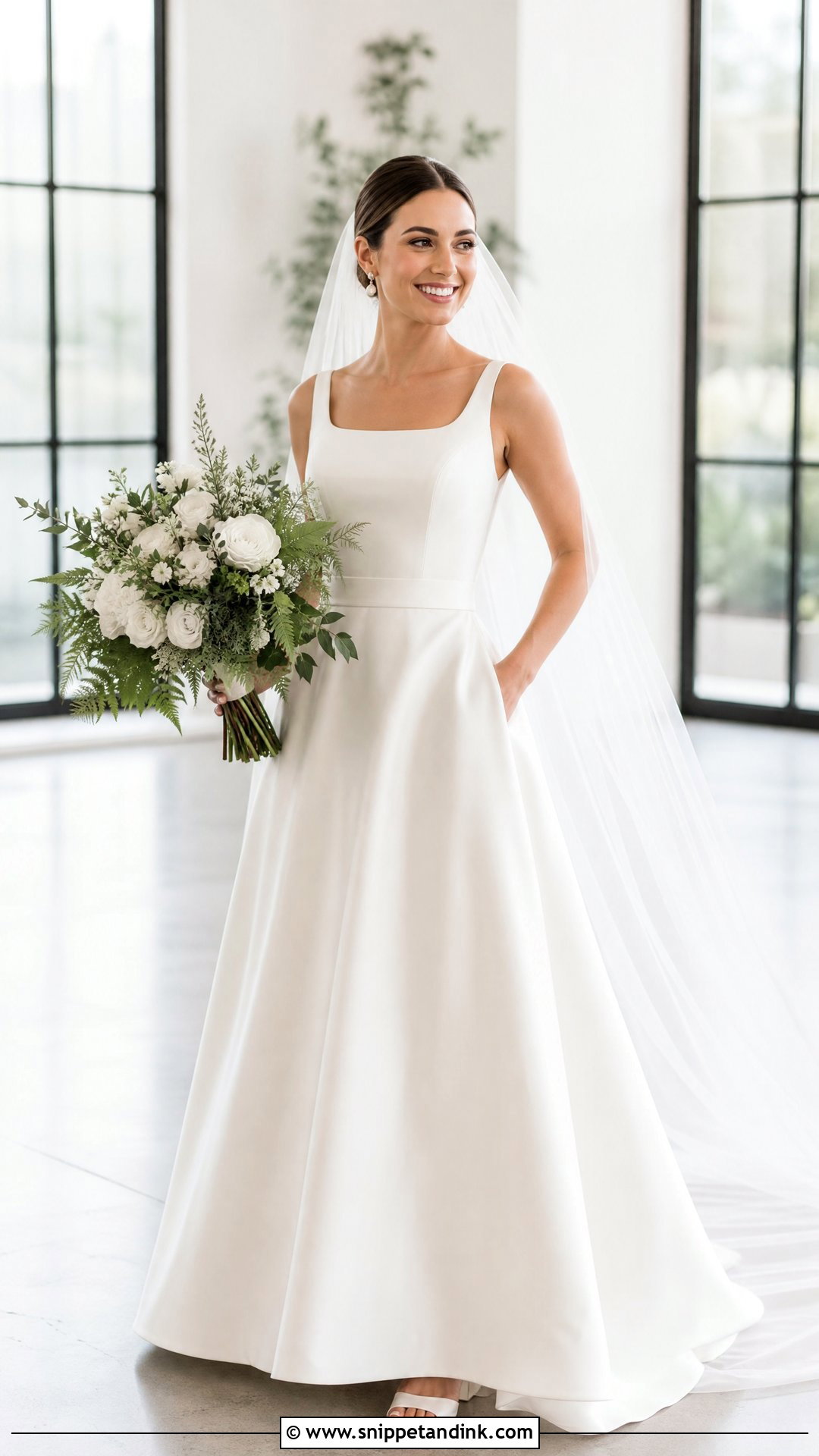
Pockets are the detail brides thank me for afterwards. In satin they need to sit inside the side seams, and they should be cut from a lighter lining fabric; a satin pocket bag adds bulk at the hip and shows through. Use them for a handkerchief, lip balm or a note, never a phone, which drags the skirt out of shape. A square or scoop neck suits the simplicity. Block heels, a neat low bun and a chapel veil make this an easy dress to live in all day.
11. Bow Back Satin A-Line Wedding Dress
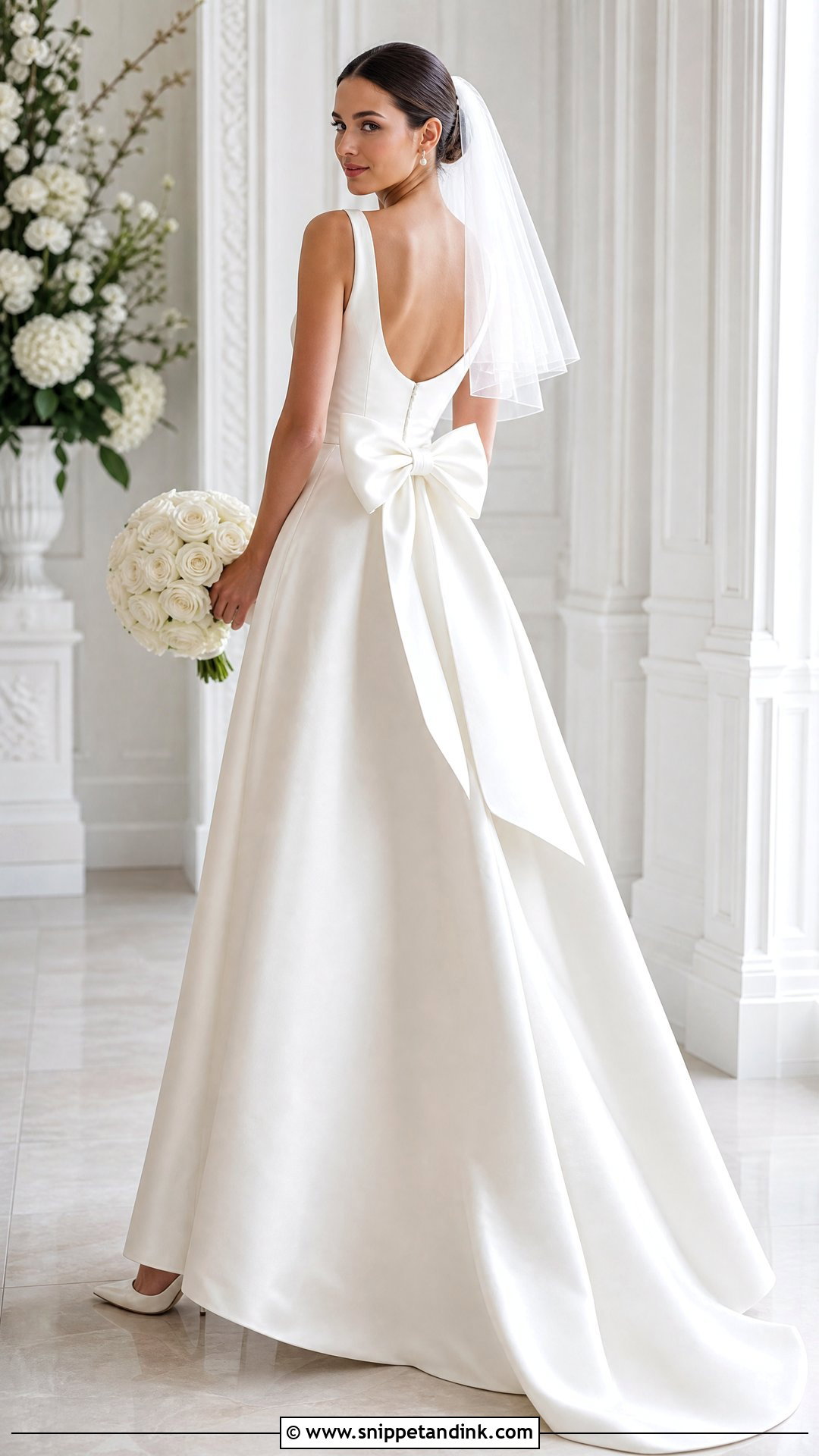
Bows put the drama at the back. A structured or softly draped bow at the waist defines the figure without swamping the skirt. Before you commit, check how it sits with your bustle; a large bow can hide or clash with the bustle points, and some sit awkwardly against a chair back. Detachable bows let you simplify for the reception. A clean front with a scoop or square neck balances it. Keep the bouquet compact and choose a short or sheer veil so the bow stays visible.
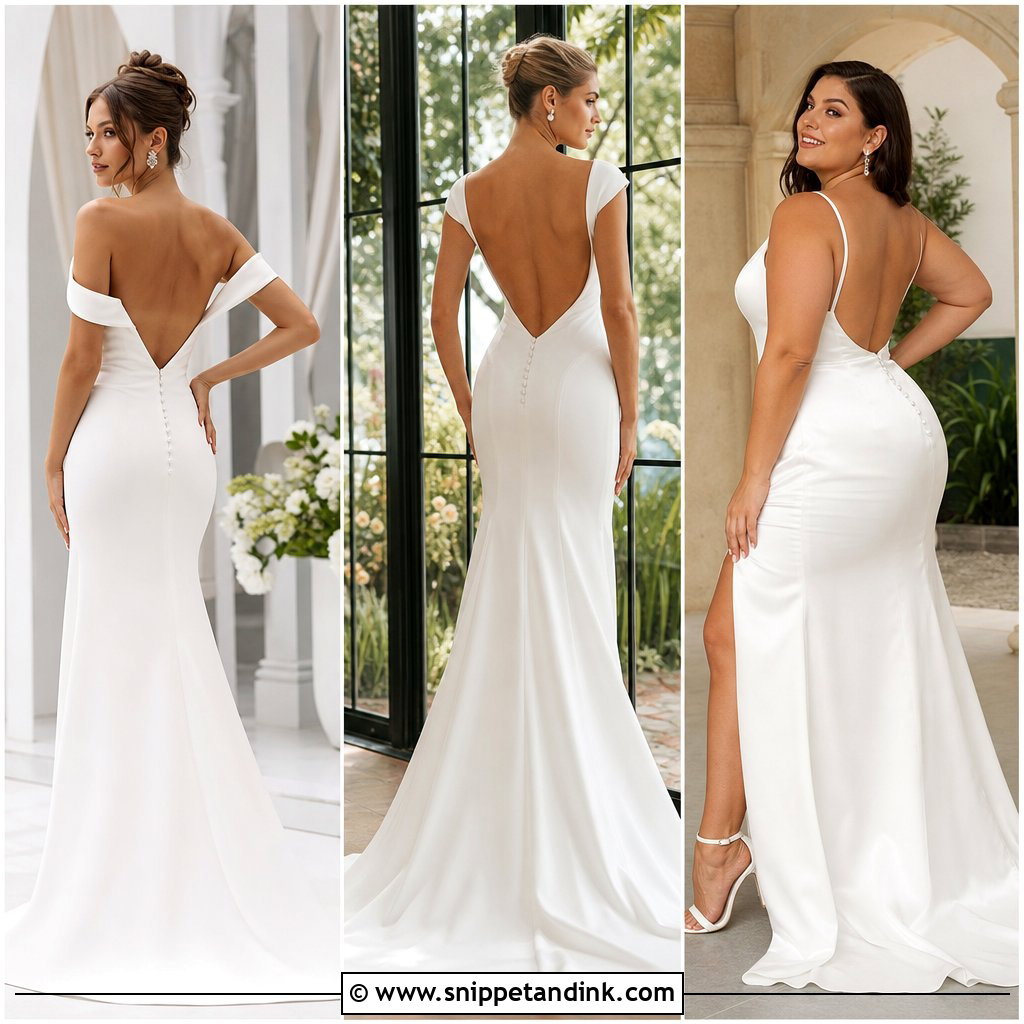
12. Pearl Back Satin A-Line Wedding Dress
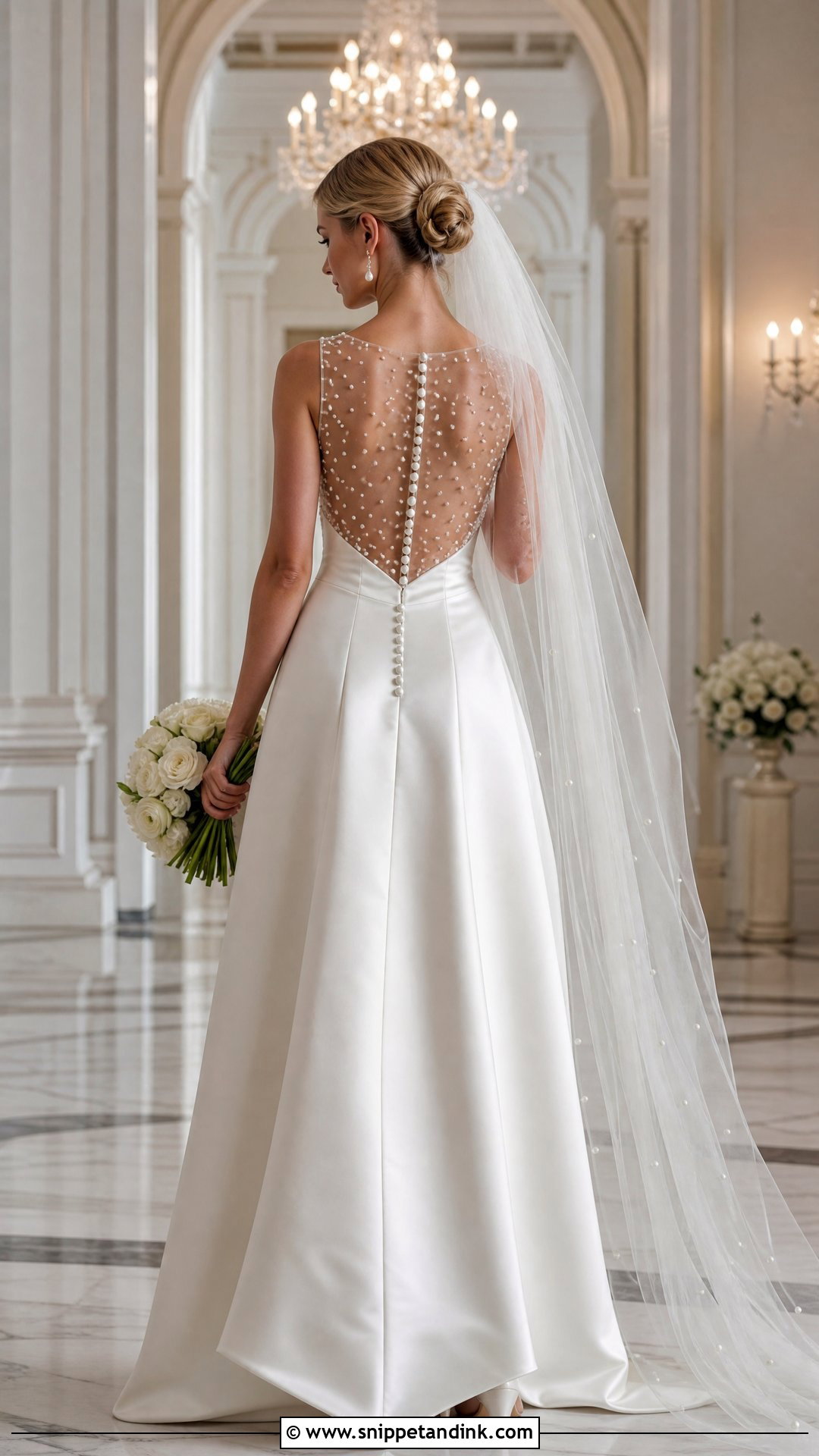
A pearl illusion back keeps the front quiet and puts the detail where guests see it during the ceremony. The sheer mesh should match your skin tone closely, which is easiest to judge in daylight and under indoor bulbs, since a mesh that looks invisible in the shop can look grey outside. It must lie flat without puckering between buttons. Wear your hair up and place the veil under the updo so the back is fully visible. Pearl drops, satin pumps and white ranunculus finish it.
13. Satin A-Line Wedding Dress With Leg Slit
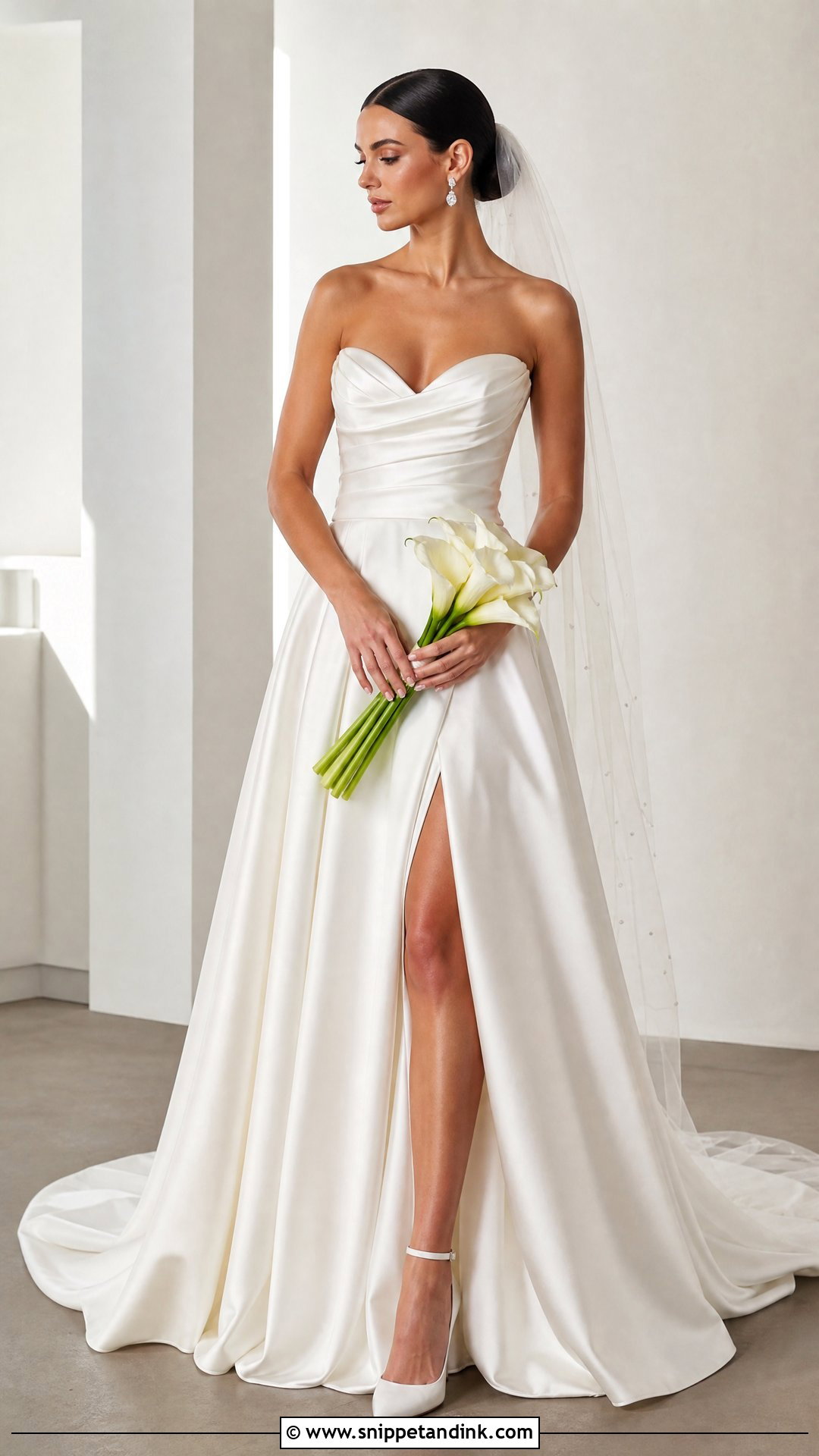
A leg slit makes satin feel modern. Starting the slit at the lower thigh or knee gives balanced coverage. Satin is heavier than chiffon, so it falls closed when you stand still, which is exactly what you want, but the slit should be reinforced at the top so it doesn’t tear on stairs. Walk, sit and climb steps in it at a fitting. Since your shoes will show, pick refined pointed pumps or ankle straps. A sleek bun and calla lilies keep the look streamlined.
14. High Neck Satin A-Line Wedding Dress
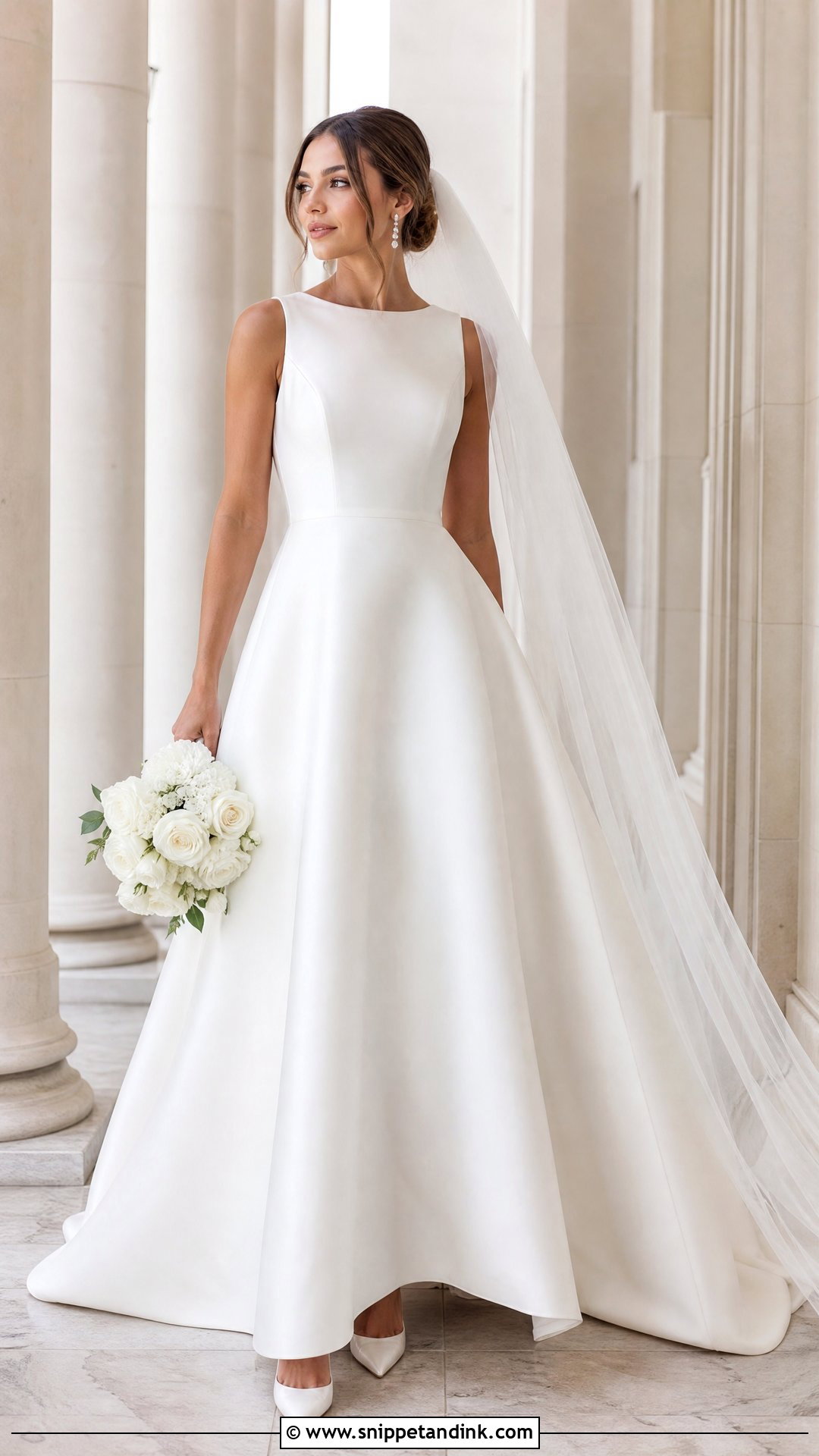
High necklines give a poised look with plenty of coverage. A sleeveless bodice with a jewel or bateau neck balances well against an open back or a line of covered buttons. Tailoring around the neck and armholes is critical, since satin shows pulling clearly. Turn your head and raise your arms at the fitting; a high neck that’s too snug rubs all day. Skip the necklace and wear drop earrings. A smooth bun and cathedral veil carry the long line, and sweet peas soften it.
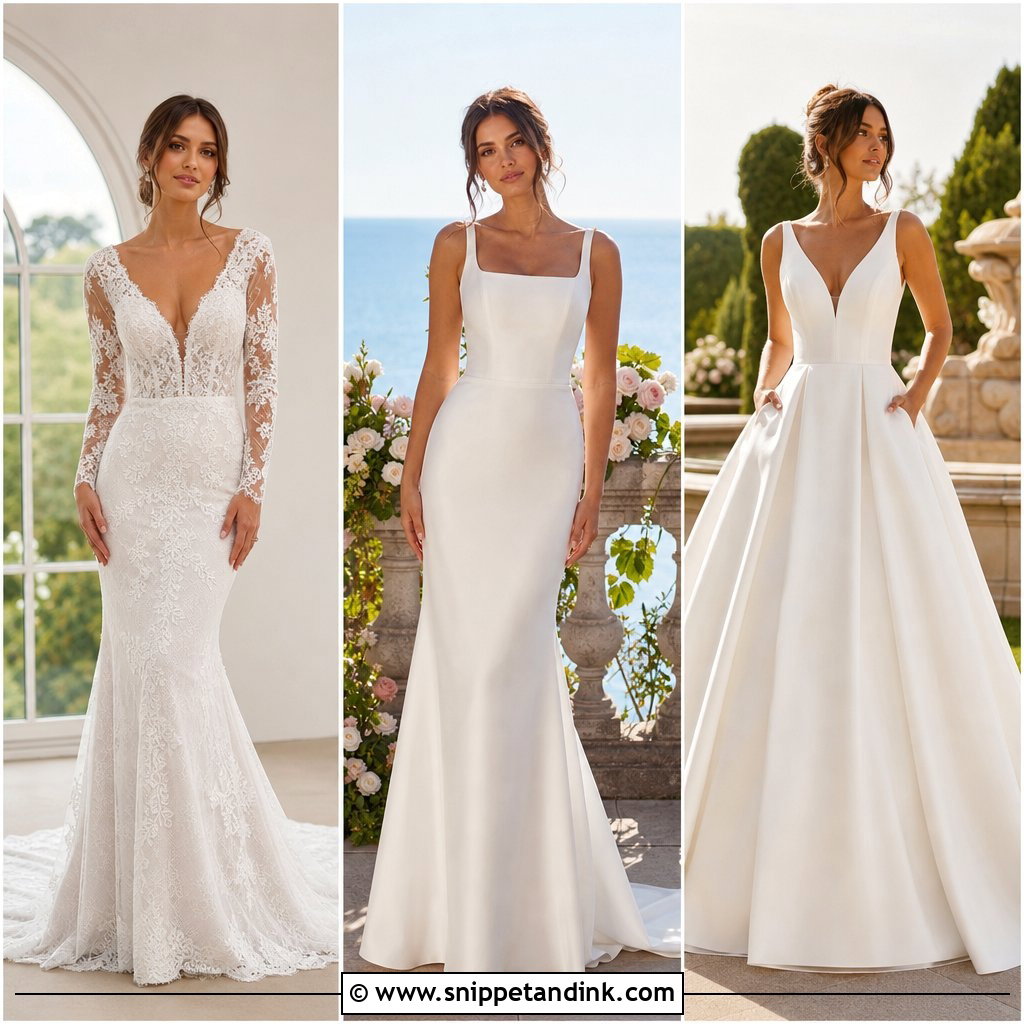
15. Scoop Neck Satin A-Line Wedding Dress
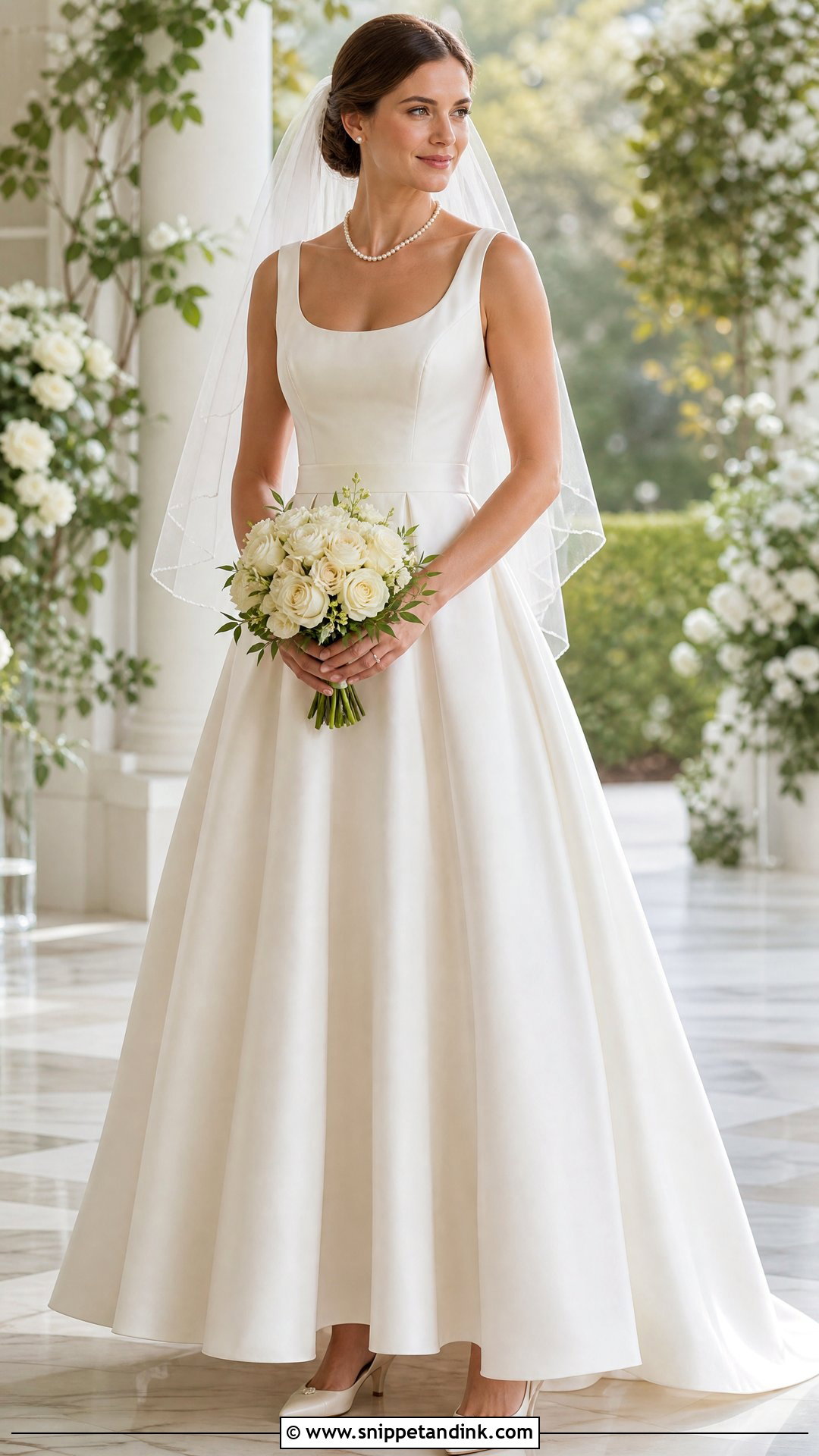
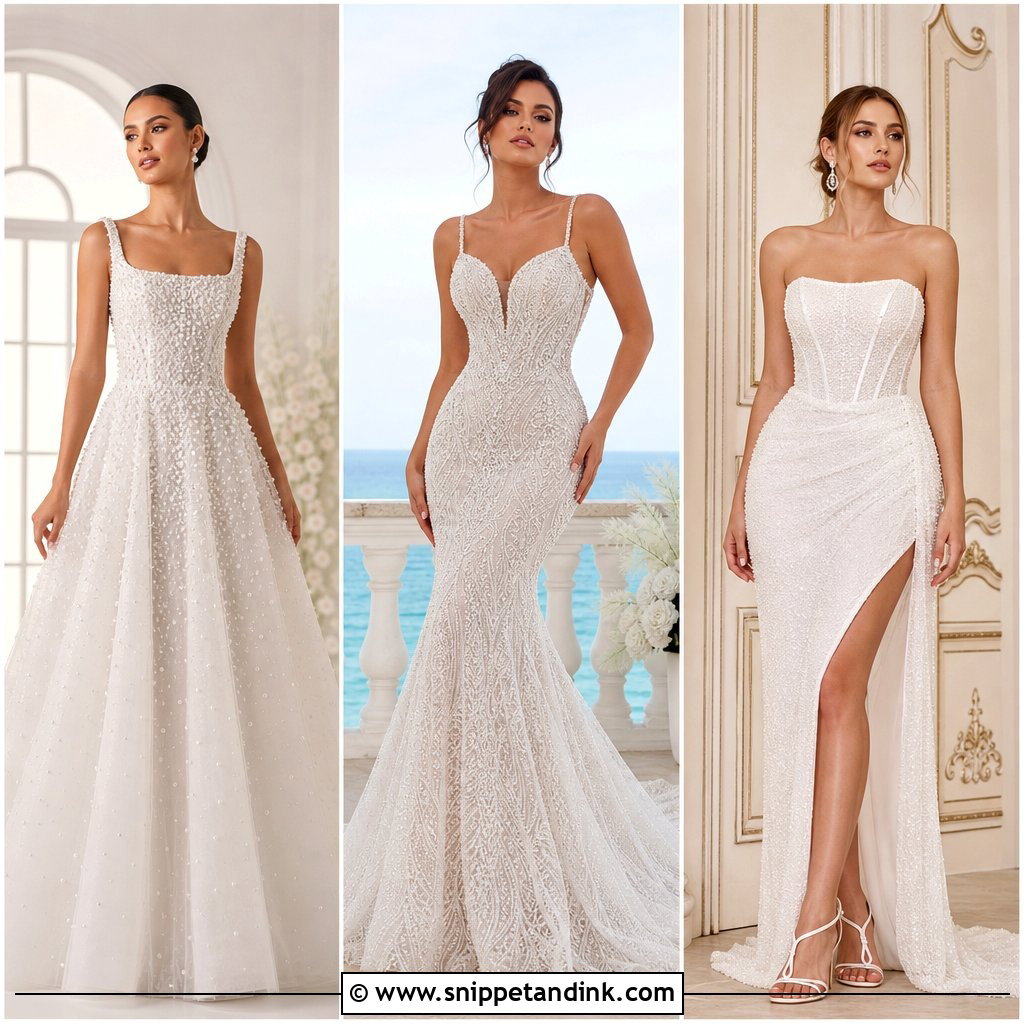
Scoop necks soften a satin bodice and suit almost every strap width. A fitted waist and lightly pleated skirt give a classic shape without decoration. A single strand of pearls can follow the neckline. The depth of the scoop changes the mood a lot: higher for coverage, deeper for a more contemporary look. Have it adjusted by the seamstress rather than relying on tape. Low satin heels, a fingertip veil and a low chignon with a few face-framing pieces finish it gently.
16. Cap Sleeve Satin A-Line Wedding Dress
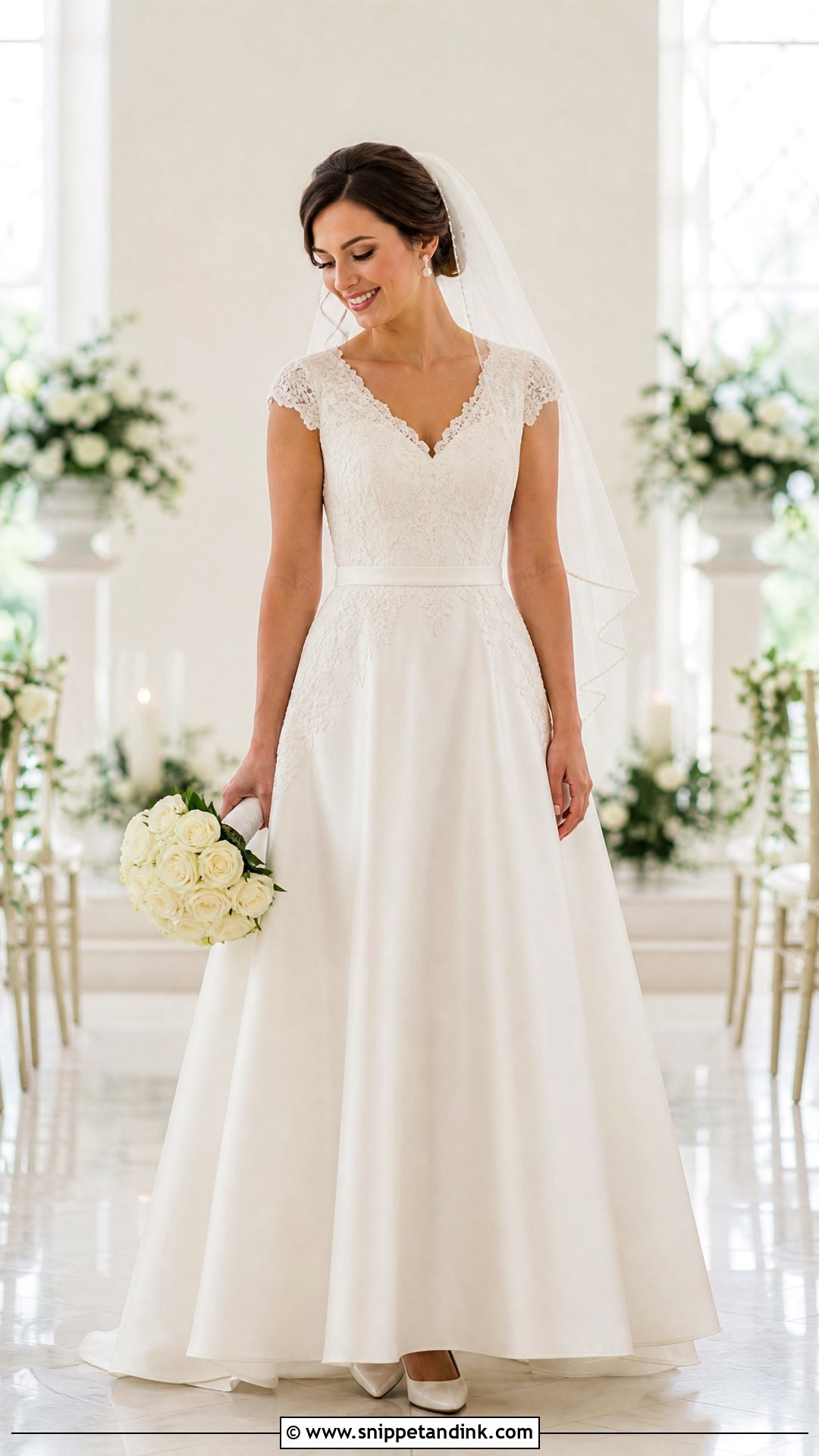
Cap sleeves give light shoulder coverage while the A-line stays graceful. Smooth satin keeps them minimal; lace appliqués make them romantic. Check that they don’t press into the shoulder or cut into your arm when you raise it, because satin cap sleeves have no give. A shallow V or rounded neckline keeps the bodice proportioned. Kitten heels are a comfortable alternative to tall pumps, and a rounded bouquet of ivory roses suits the scale.
17. Draped Satin A-Line Wedding Dress
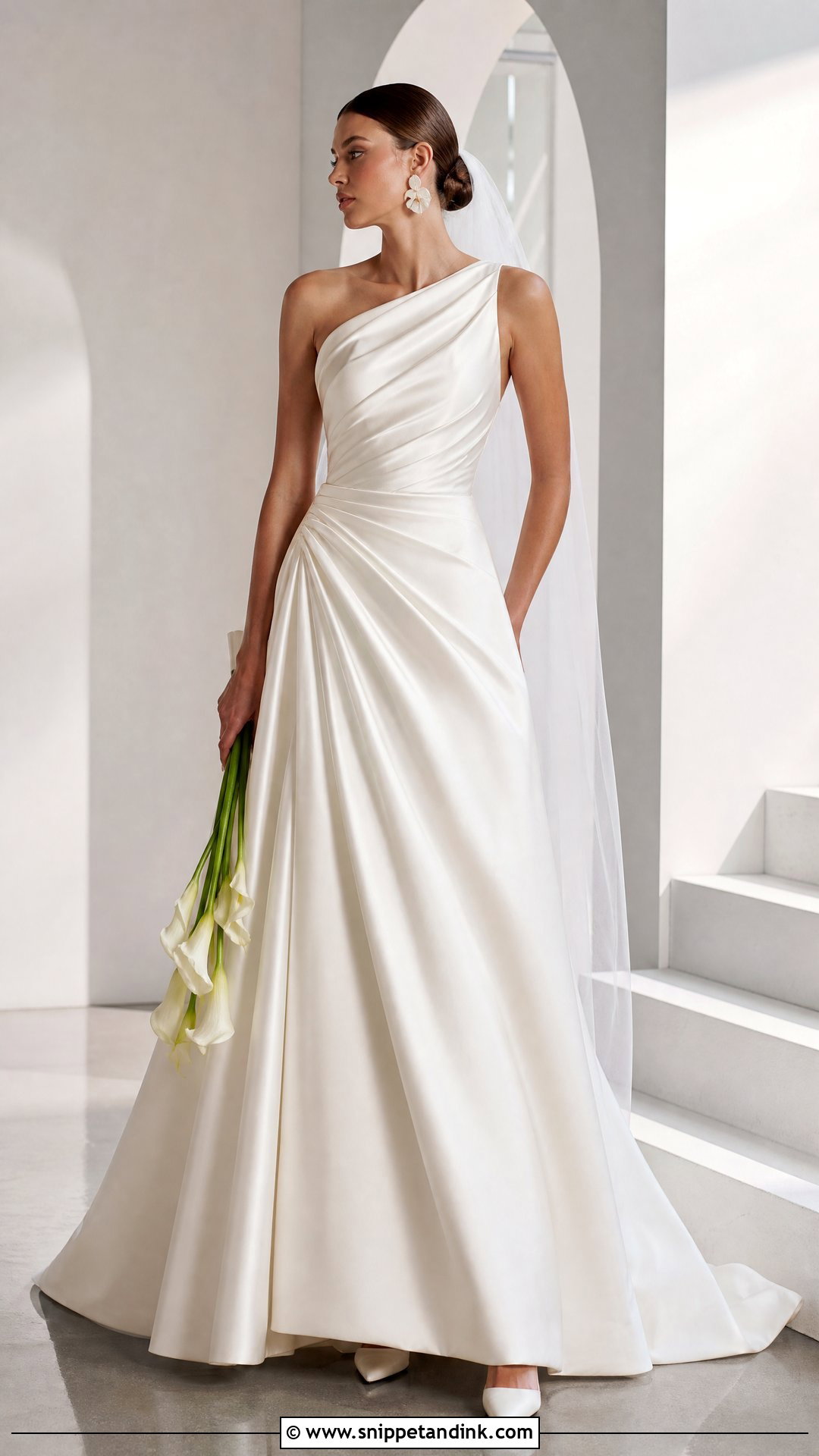
Draping lets satin catch the light in folds. Diagonal pleats across the bodice and a gathered waist add texture without lace or beading. An asymmetric neckline reads modern; a sweetheart reads classic. Draping has to look deliberate from the front, side and back, so view the gown in a three-way mirror at every fitting, since folds can collapse on one side. A plain veil keeps the focus on the fabric. Sculptural earrings and long-stem callas suit it.
18. Detachable Sleeve Satin A-Line Wedding Dress
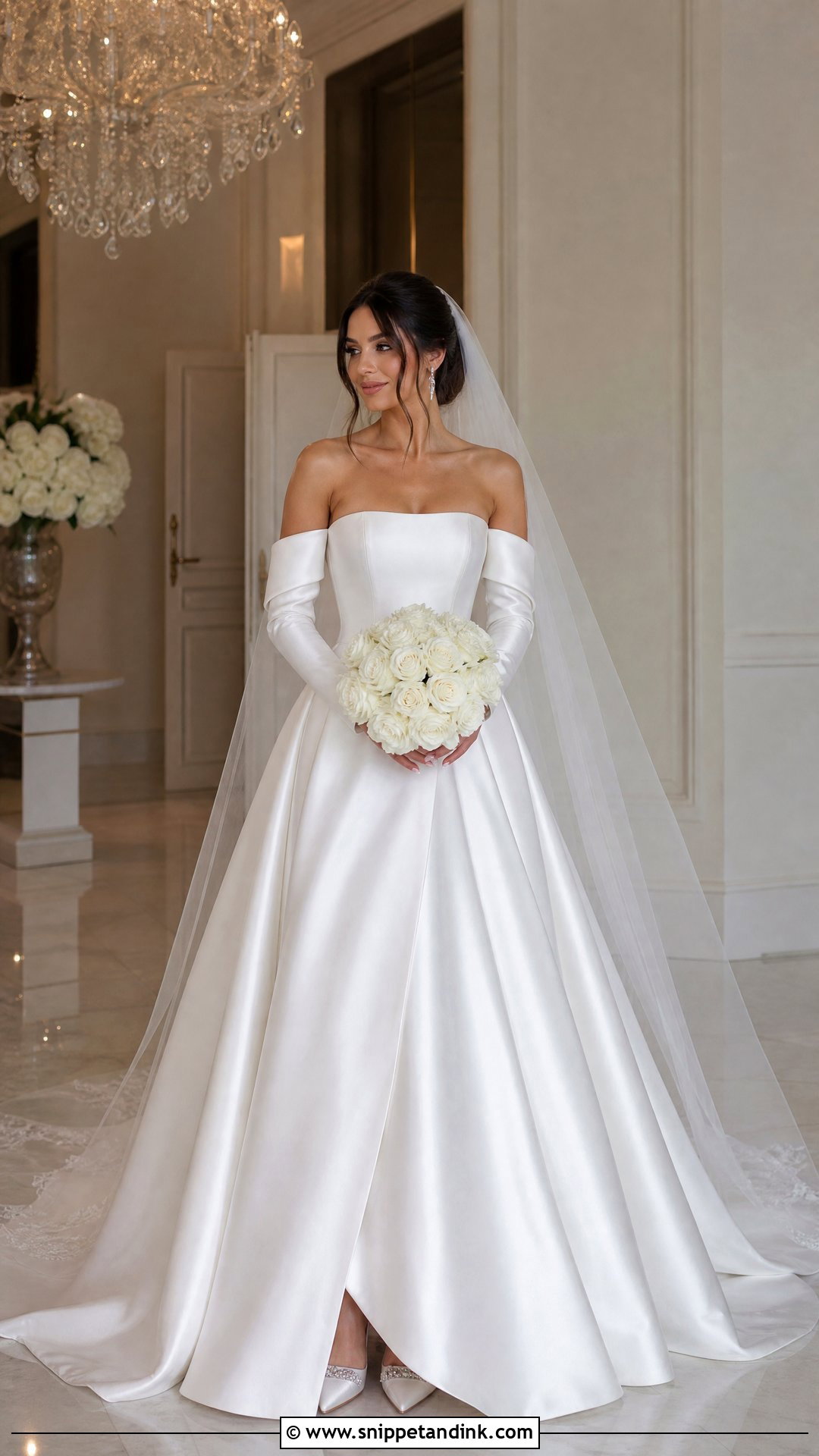
Detachable sleeves give you two looks from one gown. Long sleeves or off-the-shoulder drapes for the ceremony come off to reveal a strapless reception look. Matching satin or light sheer with a few pearls works best. The attachments are the part to fuss over: hidden snaps and thread loops are neater than hooks, and they must hold through movement yet release without pulling the bodice out of shape. Switch from drop earrings to statement ones after the change so the difference is obvious.
19. Chapel Train Satin A-Line Wedding Dress
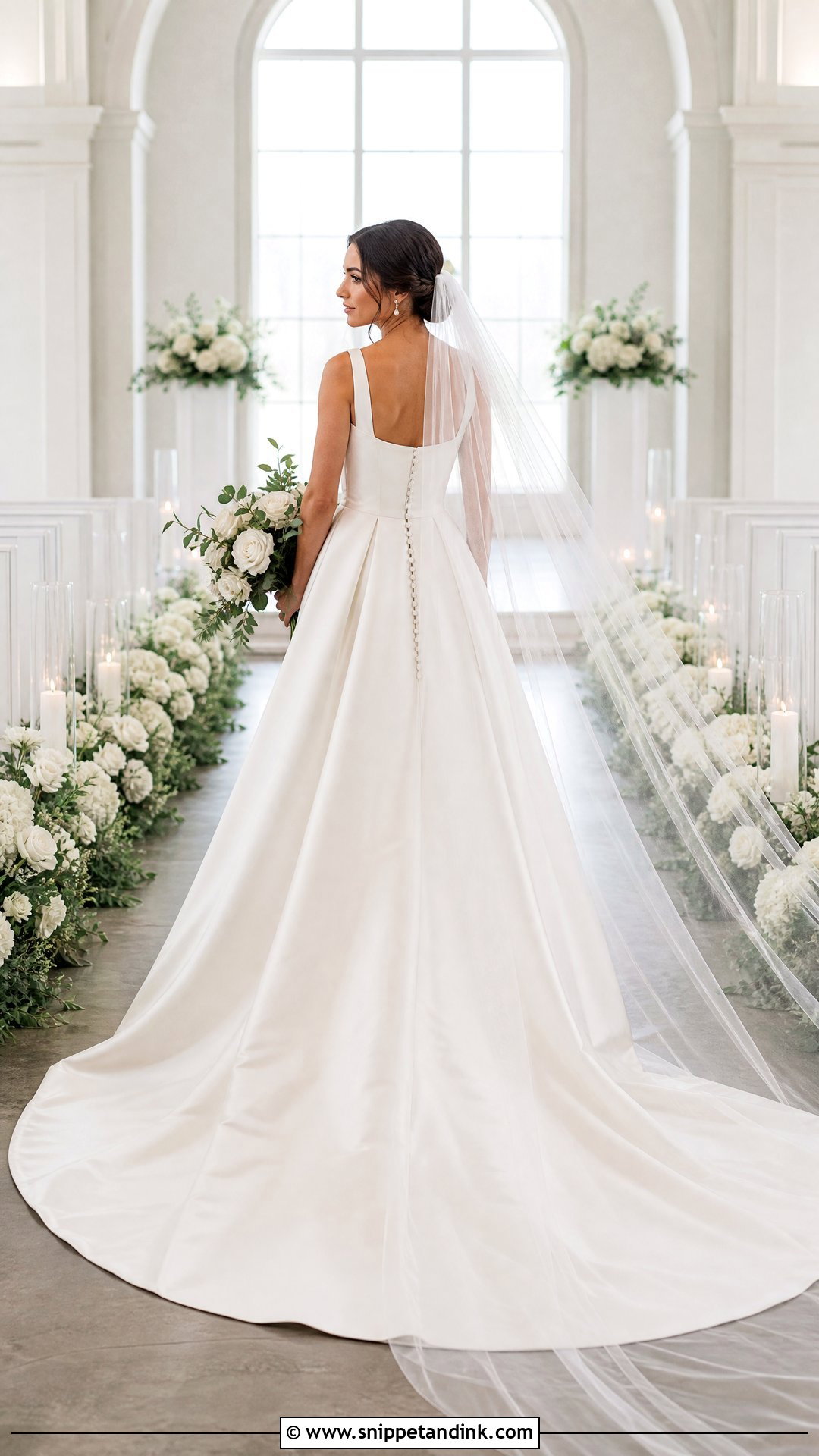
Chapel trains give drama without the weight of a cathedral length. Smooth satin shows off the shape of the train well, since its surface catches light along each fold. A fitted square-neck bodice with covered buttons and a pleated skirt is a classic pairing. Practise walking and turning in the gown. Then sort the bustle carefully; satin is heavy, so it needs strong bustle points spread evenly, otherwise the lifted train hangs in a lumpy cluster. Block-heel pumps, pearls and roses finish the look.

20. Tea-Length Satin A-Line Wedding Dress
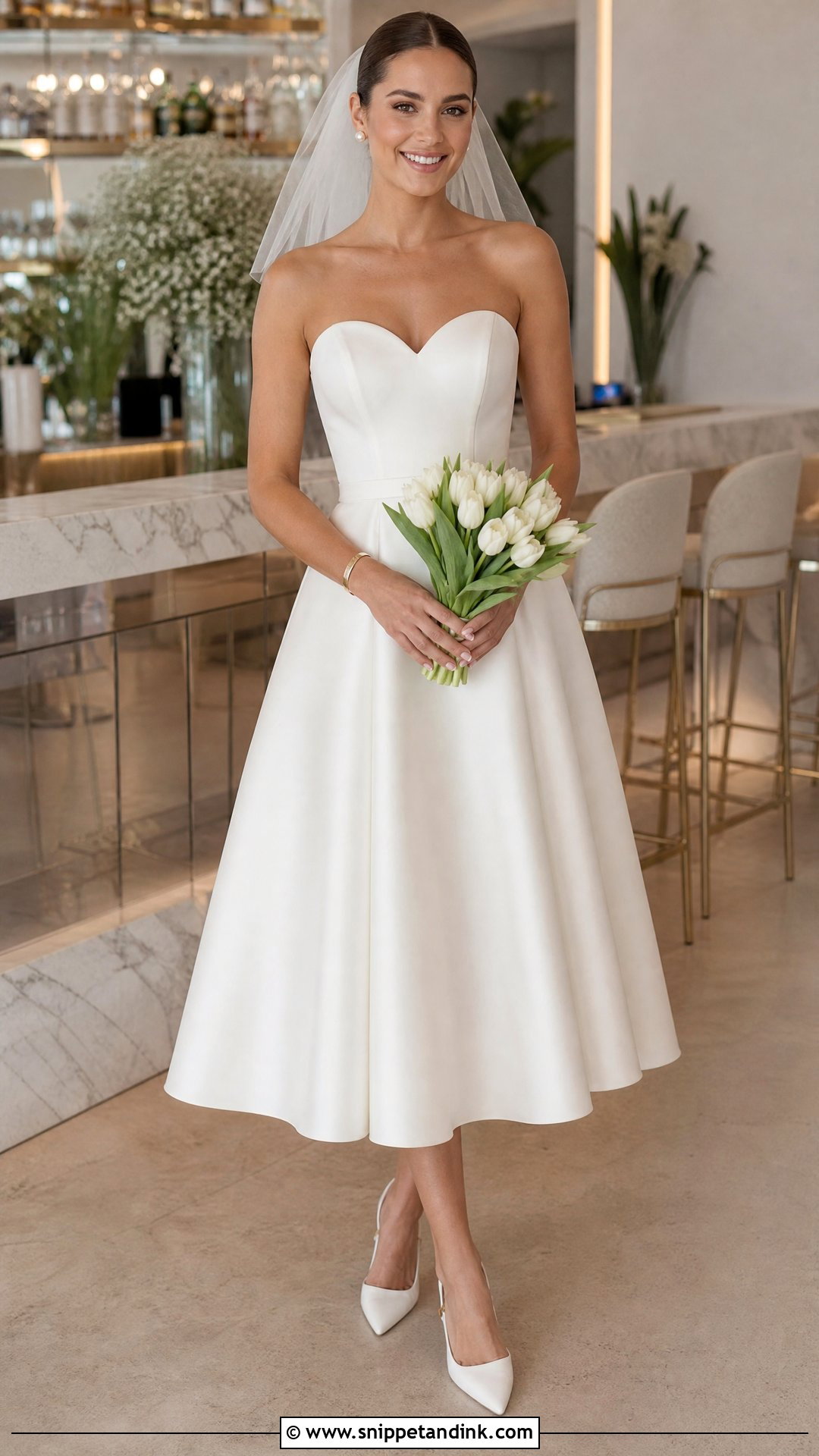
Tea length is a lively alternative to floor-length, landing between knee and ankle, so your shoes become part of the look. Pointed slingbacks or ankle-strap heels in ivory work well. A fitted square or sweetheart bodice gives the shorter skirt enough structure. The hem must fall at a flattering point on your leg and stay level as you move; satin shows an uneven hem more than tulle does. A birdcage veil or pearl headband suits the proportions, as does a compact bouquet of tulips.
Satin Shows Everything, So Plan the Underpinnings and the Steaming
Because satin reflects light, it highlights anything underneath it. Visible underwear lines, shapewear edges and bra bands all show through a smooth bodice or skirt. Bring the exact undergarments you’ll wear to every fitting, in a shade close to your skin rather than white, which can glow through ivory satin. Bonded or laser-cut edges show far less than stitched elastic.
Satin also creases where you sit, and a car ride to the ceremony is usually where it happens. On the morning, have the gown steamed from the inside, never ironed directly, as a hot iron leaves shiny marks. When you travel, sit on the back of the skirt with the train gathered on your lap, and do a final steam once you arrive if time allows.
- Pack a clean white cloth for blotting spills; never rub satin, which lifts the surface.
- Keep self-tan and heavy body lotion off for a couple of days, since both transfer to satin.
- Hang the gown from its inner loops, not the shoulders, so the bodice doesn’t stretch.
Start With the Amount of Structure You Want
Satin A-line gowns change character completely with the neckline, the sleeve, the waist and the train. Start by deciding how much structure and coverage you want, then think about venue, season, shoes, veil and hair as parts of one outfit. In every fitting, sit, walk, turn and raise your arms, because satin reveals any tension the moment you move. Photographs matter, but comfort is what lets you relax in them. A minimalist square-neck gown, a lace bodice, a dramatic bow or a dress with pockets can all be right once the tailoring is done well.
You'll Like These Ideas:






Leave a Reply