
A deep V gives a wedding dress a modern edge, and it suits far more bodies and styles than most brides assume. This collection runs from romantic lace to clean satin to sparkling ball gowns. A sheer illusion panel adds coverage and security while keeping the outline of the plunge. When I style one, I start with the support, straps, boning, side panels and the back, and only then think about veil and jewelry. The twenty complete looks below are arranged that way, with notes on venue and season, so you can see what each one will feel like to wear.
Will Your Ceremony Venue Ask for More Coverage?
Many churches, temples and some civil venues expect shoulders or the chest to be covered during the service. Ask your officiant before you shop, not after the dress has arrived. Plenty of brides find out at the rehearsal, when the only options left are a borrowed shawl or a rushed alteration.
You don’t have to give up the plunge to respect those rules. The easiest fix is a removable layer you wear for the ceremony and take off for the reception:
- A sheer lace or tulle bolero, cut to button or tie at the front of the bust.
- A cape veil, which covers shoulders and chest edges while doubling as your veil.
- A detachable illusion insert snapped into the V with tiny hidden poppers, made by your seamstress from the same mesh as the gown.
Have whichever piece you choose made alongside the dress so the fabric color matches. A cover-up from a different shop almost never matches the ivory of your gown, and the mismatch shows in every ceremony photo.
1. Lace A-Line Plunging Neckline Wedding Dress
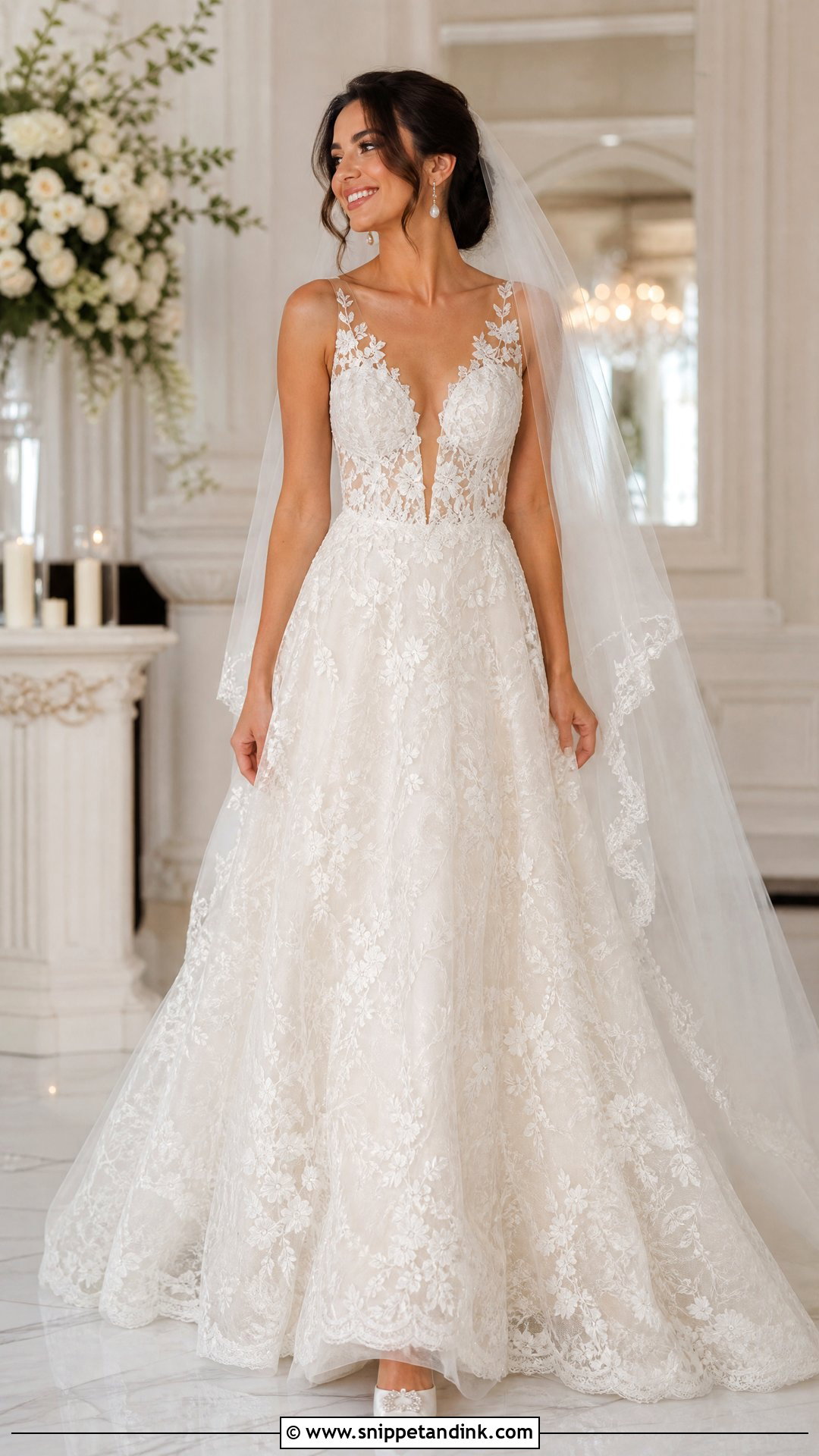
Supportive side panels are what make a lace A-line plunge wearable all day; they hold the bodice against your ribs so the V can’t drift. Lace appliqués that continue from the bodice onto the skirt tie the dress together, and a light ivory or nude lining lets the pattern show without looking see-through. The A-line gives you a waist and freedom through the hips. Pearl drops, a fingertip veil, pointed ivory pumps and a loose low bun keep the neckline in view. At alterations, sit, walk and raise your arms while the seamstress watches the neckline from the side.
2. Satin Slip Plunging Neckline Wedding Dress
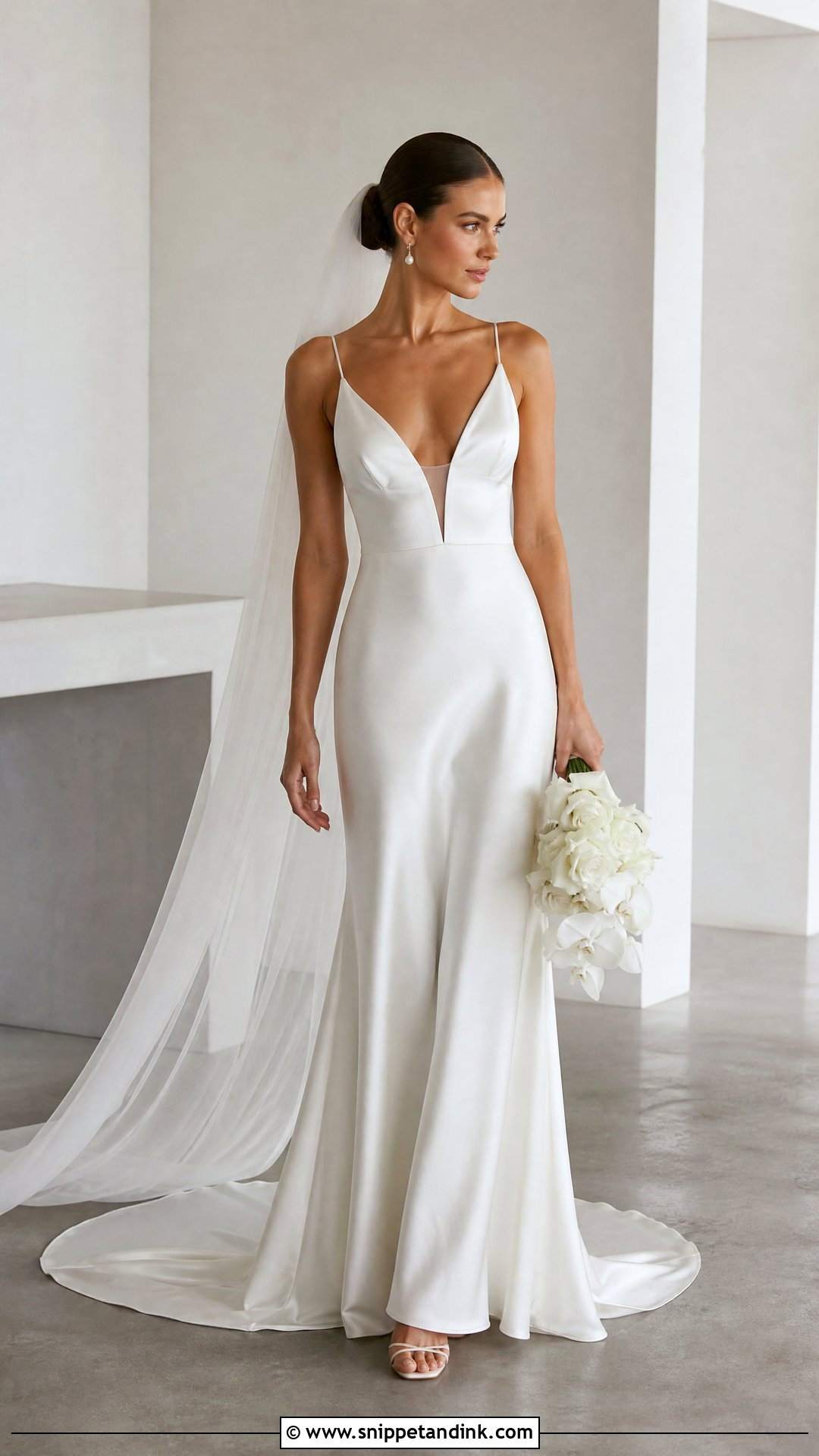
Bias-cut satin follows the body because the fabric is cut on the diagonal and stretches slightly, which is also why it shows every pull and uneven seam. Spend your money on tailoring here, not embellishment. A slip with a plunge, narrow straps and a low back needs a carefully shaped bust, discreet internal support and enough room at the hips to move. I’ll be honest: bias satin is the least forgiving fabric in bridal, and it suits brides who are relaxed about a little cling. Sculptural pearl earrings, strappy ivory sandals and a satin clutch work, along with a glossy bun or Hollywood waves. A chapel veil adds drama without hiding the line.
3. Long Sleeve Plunging Neckline Wedding Dress
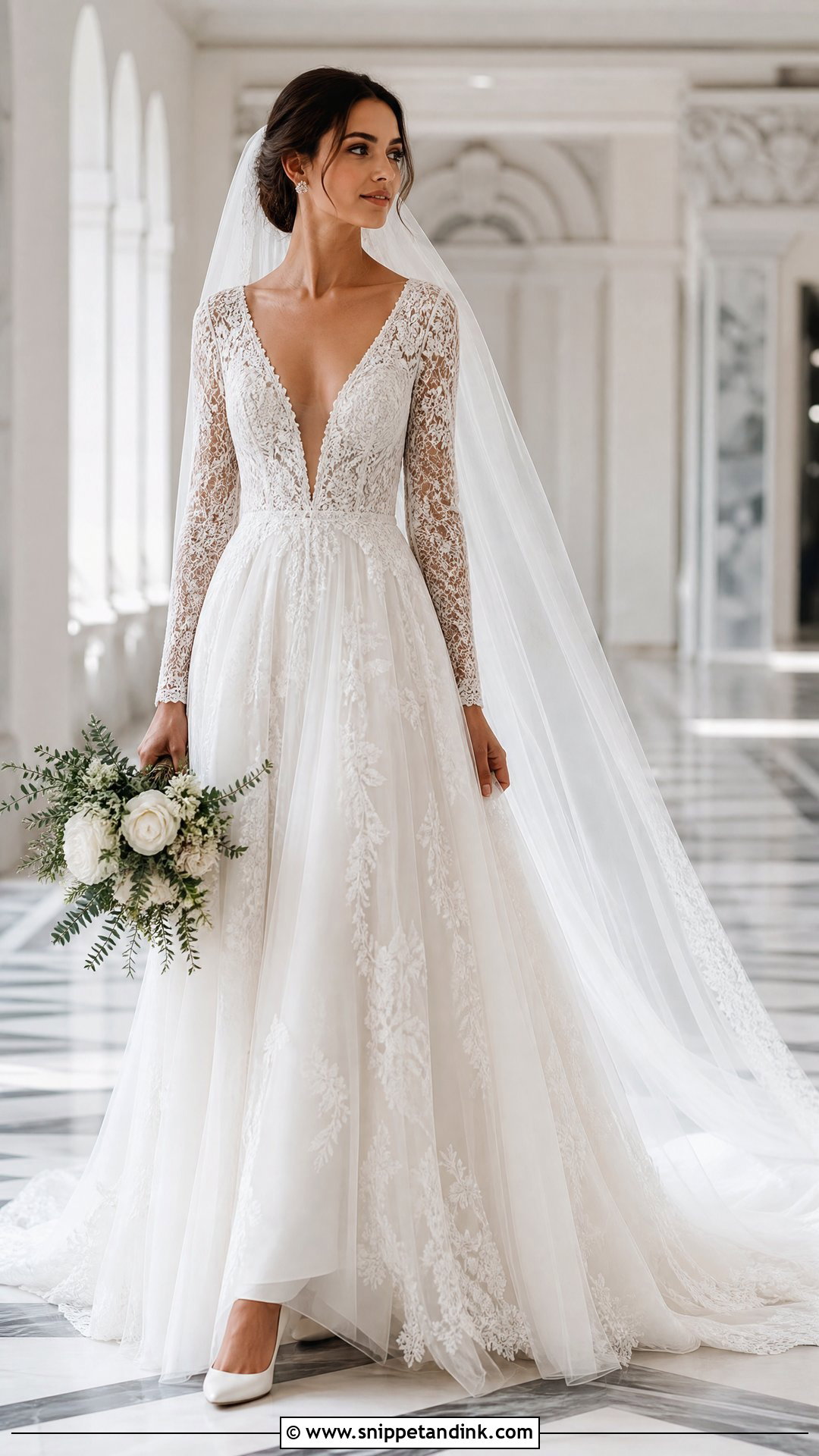
Sleeves soften a deep V and balance it. Fitted lace sleeves over a lightly lined bodice feel romantic; smooth crepe sleeves read minimal. A defined waist and flowing A-line skirt keep the gown from feeling heavy. Crystal studs, closed-toe pumps and a sheer cathedral veil edged in matching lace complete it, with a textured chignon. For a cold-weather wedding, bring a tailored ivory coat for outdoor portraits. Lift your arms and bend your elbows hard at fittings. Tight lace sleeves are the most common reason a bride can’t dance comfortably.
4. Illusion Plunging Neckline Ball Gown
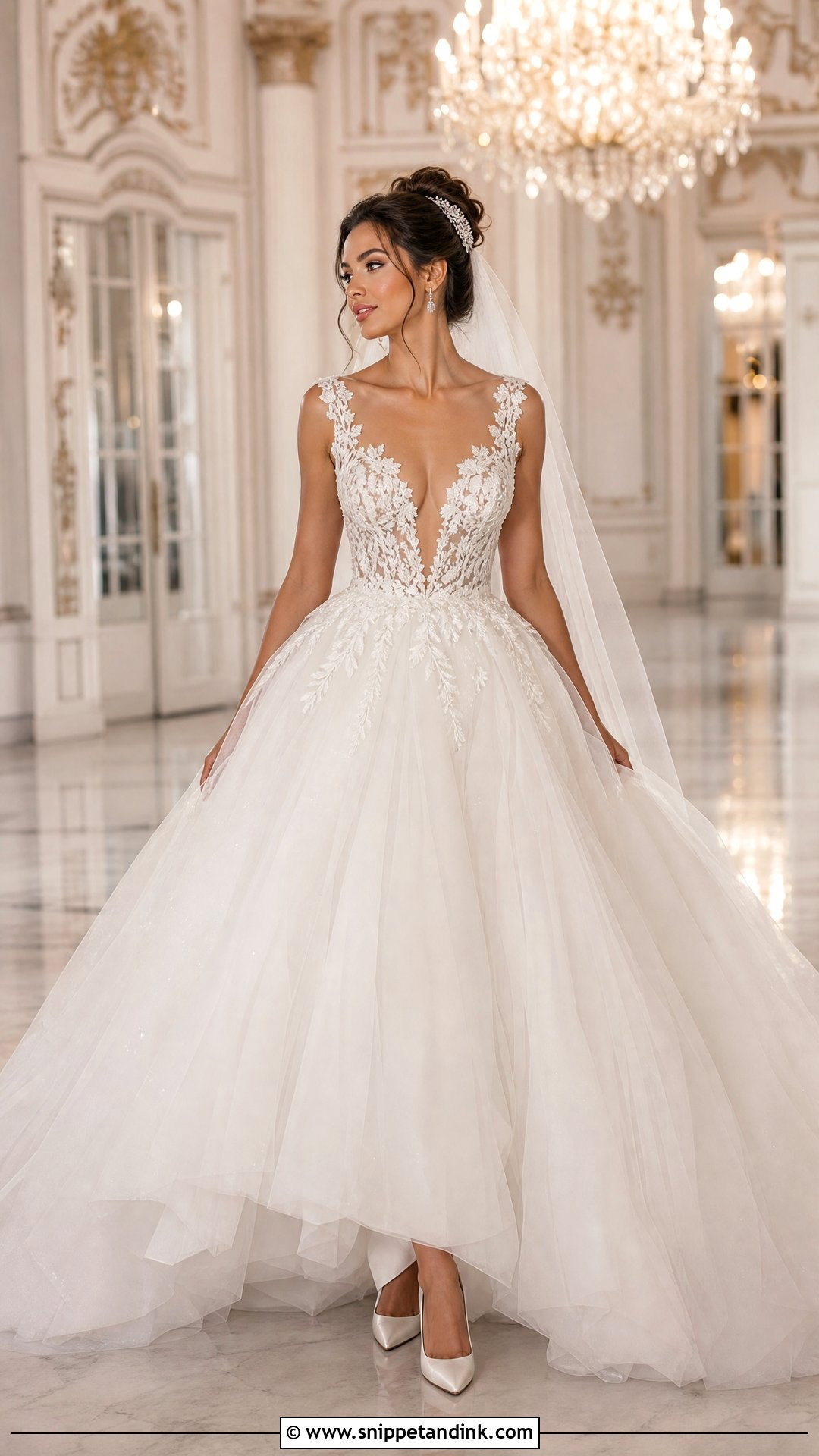
Volume below, coverage above: the illusion plunge ball gown gives you the outline of a dramatic V while the transparent mesh keeps the front connected and steady. A structured bodice with exposed boning, appliqués or light beading gives it shape, and layered tulle keeps the skirt from getting heavy. A crystal comb, small drops, pointed pumps and a long sheer veil finish it, with no big necklace. Spend fitting time on the mesh itself. It should match your skin and lie flat without puckering, and you need to check it in daylight as well as under indoor lights, because a panel that disappears in the salon can show as a pale patch in outdoor photos.
5. Beaded Mermaid Plunging Neckline Wedding Dress
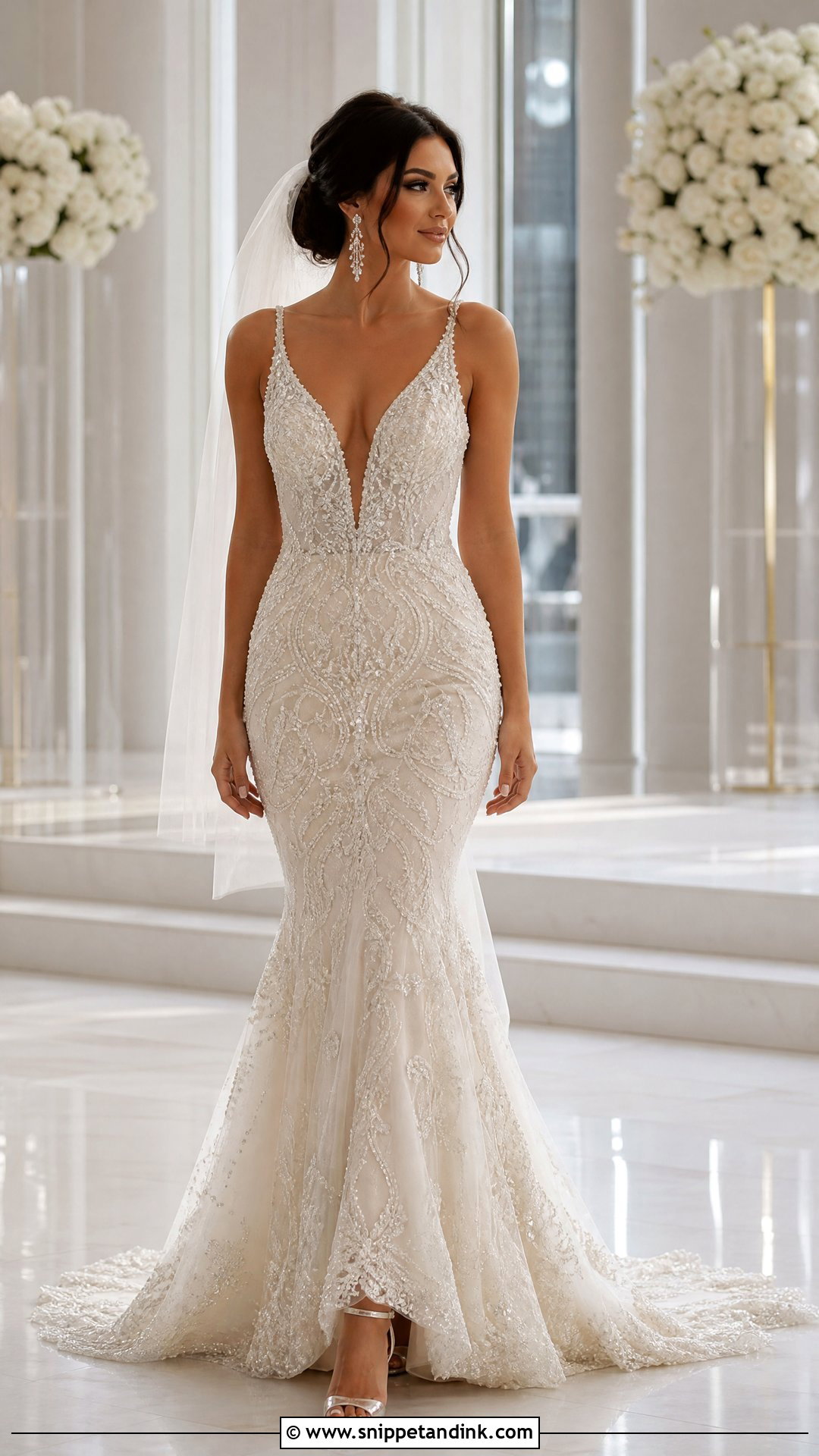
Beading that runs vertically or diagonally draws one long line from shoulder to flared hem, which is what makes a beaded mermaid look sleek instead of busy. Lining color changes the whole dress: nude makes the beads pop, ivory softens them. Beaded mermaids are heavy, often heavier than brides expect, and that weight pulls on a plunge. Check the dress’s weight and flexibility before ordering, then sit, climb steps and walk during alterations. Crystal earrings, metallic ivory heels, a simple tulle veil and sleek side-parted waves suit it. Ask for a bustle so the fitted train is manageable after the ceremony.
6. Boho Chiffon Plunging Neckline Wedding Dress
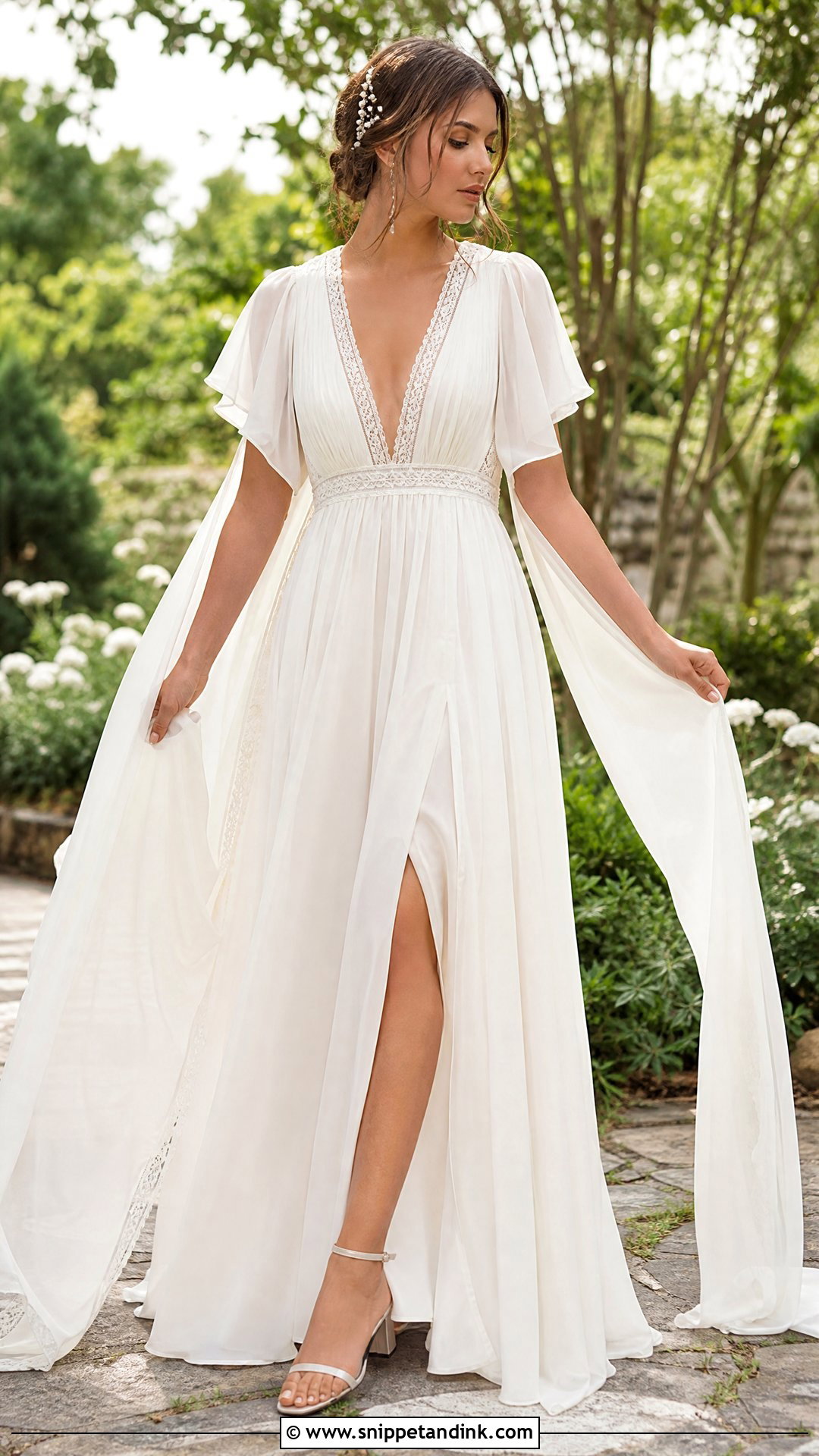
Chiffon relaxes a deep neckline. An empire or natural waist bodice with lace trim, narrow straps and a gathered skirt keeps it easy, and flutter sleeves or a light cape overlay add movement. Outdoors, avoid a long train; chiffon collects grass, sand and twigs more than any other fabric I work with, and stains show on it fast. A lightweight veil, detachable cape or floral comb gives ceremony drama without bulk. Pearl hairpins, low block sandals, loose waves or a textured braid and a small green bouquet suit it. Don’t skip the supportive lining, stable straps and discreet center mesh just because the look is relaxed.
7. Crepe Fit-And-Flare Plunging Neckline Wedding Dress
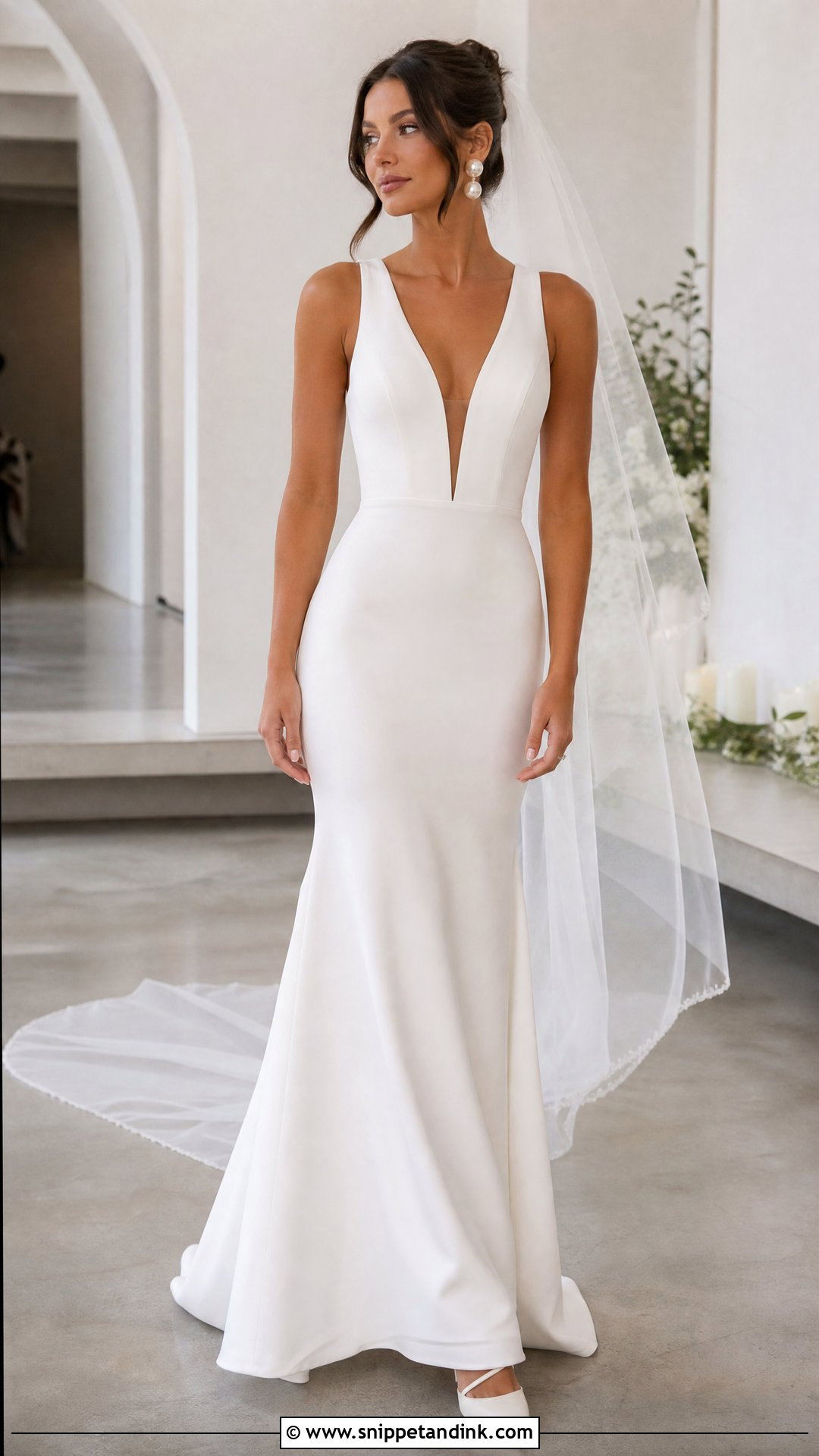
Crepe has no texture to hide behind, so the cut itself is what you’re looking at: curved seams, a defined waist and exactly where the flare begins. A fit-and-flare in crepe makes a plunge look architectural. If you want more shape, ask for internal boning or lightly structured cups. Crepe shows underwear lines, so bring your intended shapewear or seamless briefs to every fitting. The finished dress should skim, never squeeze. Pearl statement earrings, pointed slingbacks, a raw-edge long veil and a low ponytail keep it modern, and covered buttons down the back add a quiet classic detail.
8. Tulle Princess Plunging Neckline Wedding Dress
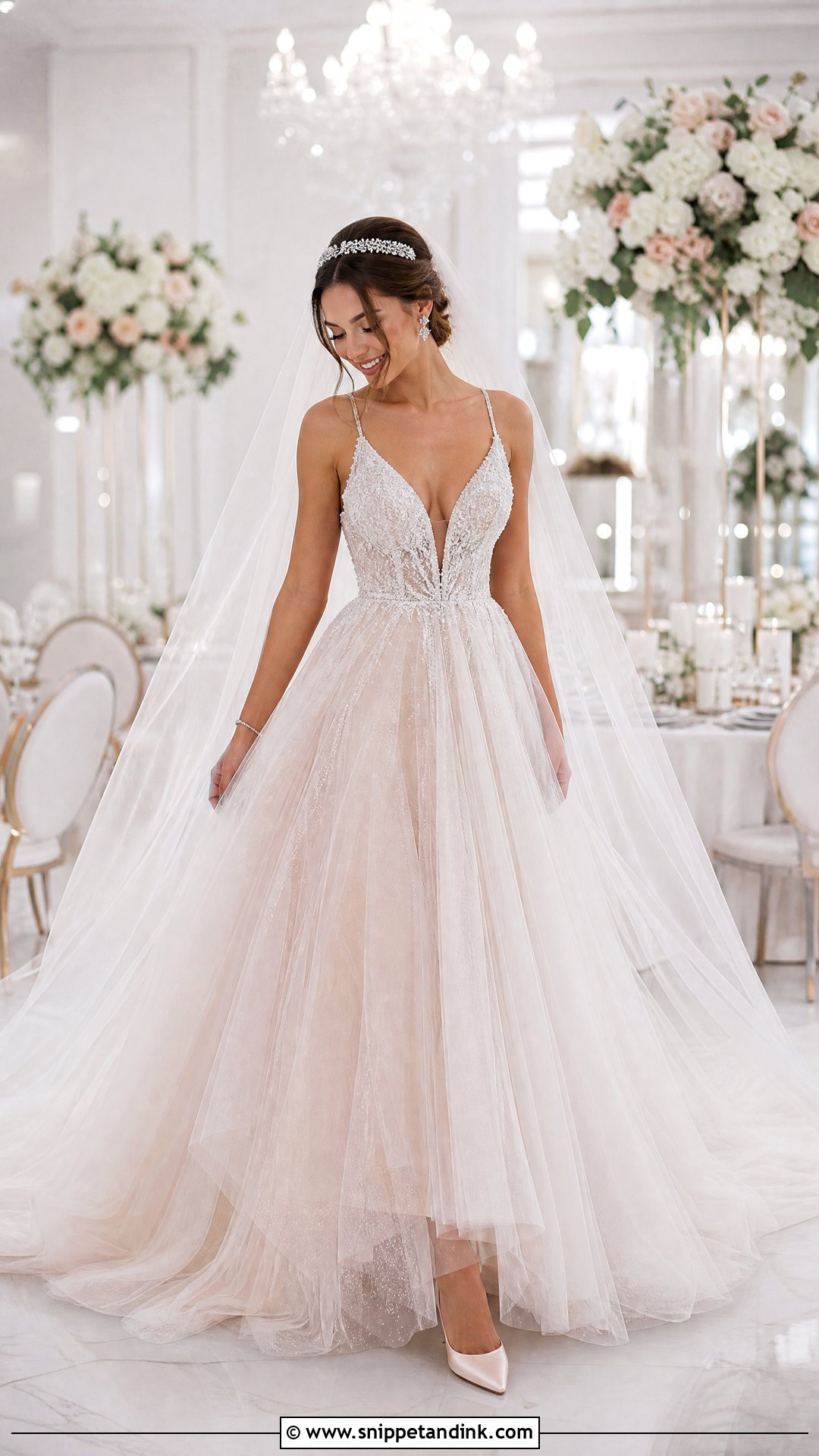
A blush or champagne underlayer beneath white tulle gives a princess plunge dimension while keeping it clearly bridal. Choose a fitted V bodice with fine straps, a touch of sparkle and a full skirt starting at the natural waist. A fine crystal headband, small earrings, satin pumps and a long veil that melts into the skirt make the entrance. Heavy jewelry plus dense beading plus an ornate veil is too much for airy tulle, so pick one. Two practical points: ask for a bustle that lifts every tulle layer, not just the top one, and make sure the bodice is anchored at the waist so the thin straps guide the fit rather than carry the skirt’s weight.
9. 3D Floral Plunging Neckline Wedding Dress
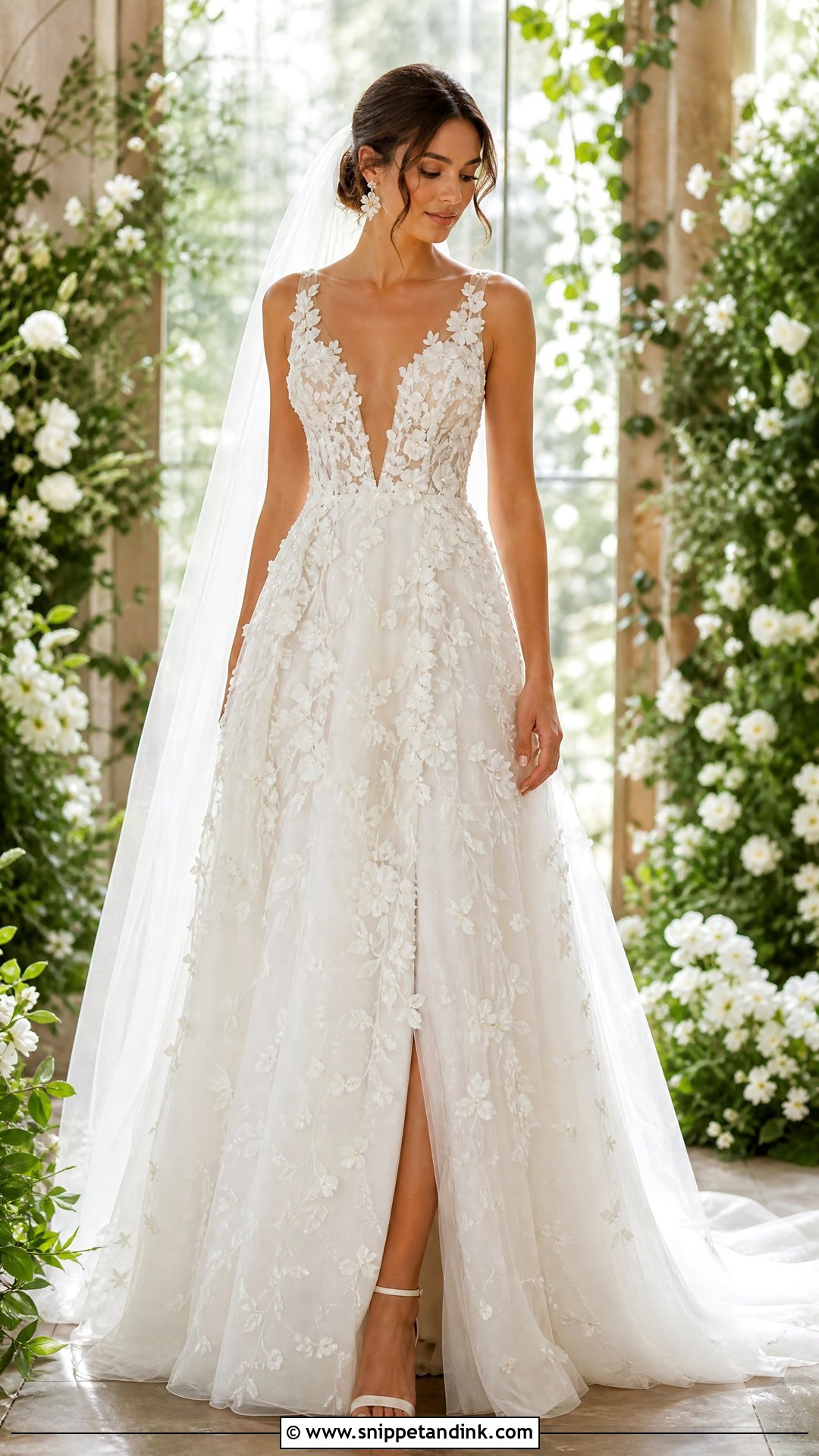
Raised flowers give a deep V depth and a softer outline. The best placement edges the neckline, covers the bodice and then scatters down an A-line or fit-and-flare skirt, so nothing looks crowded. Delicate floral earrings, ivory ankle-strap heels and a plain veil keep the appliqués visible, with a softly pinned bun or half-up style. Check the inner arm, though. Flowers with beads or sequins near the underarm rub through a long day, and they catch on tulle veils. Ask for any scratchy ones to be moved. A tonal bouquet supports the floral theme without competing with it.
10. Off-The-Shoulder Plunging Neckline Wedding Dress
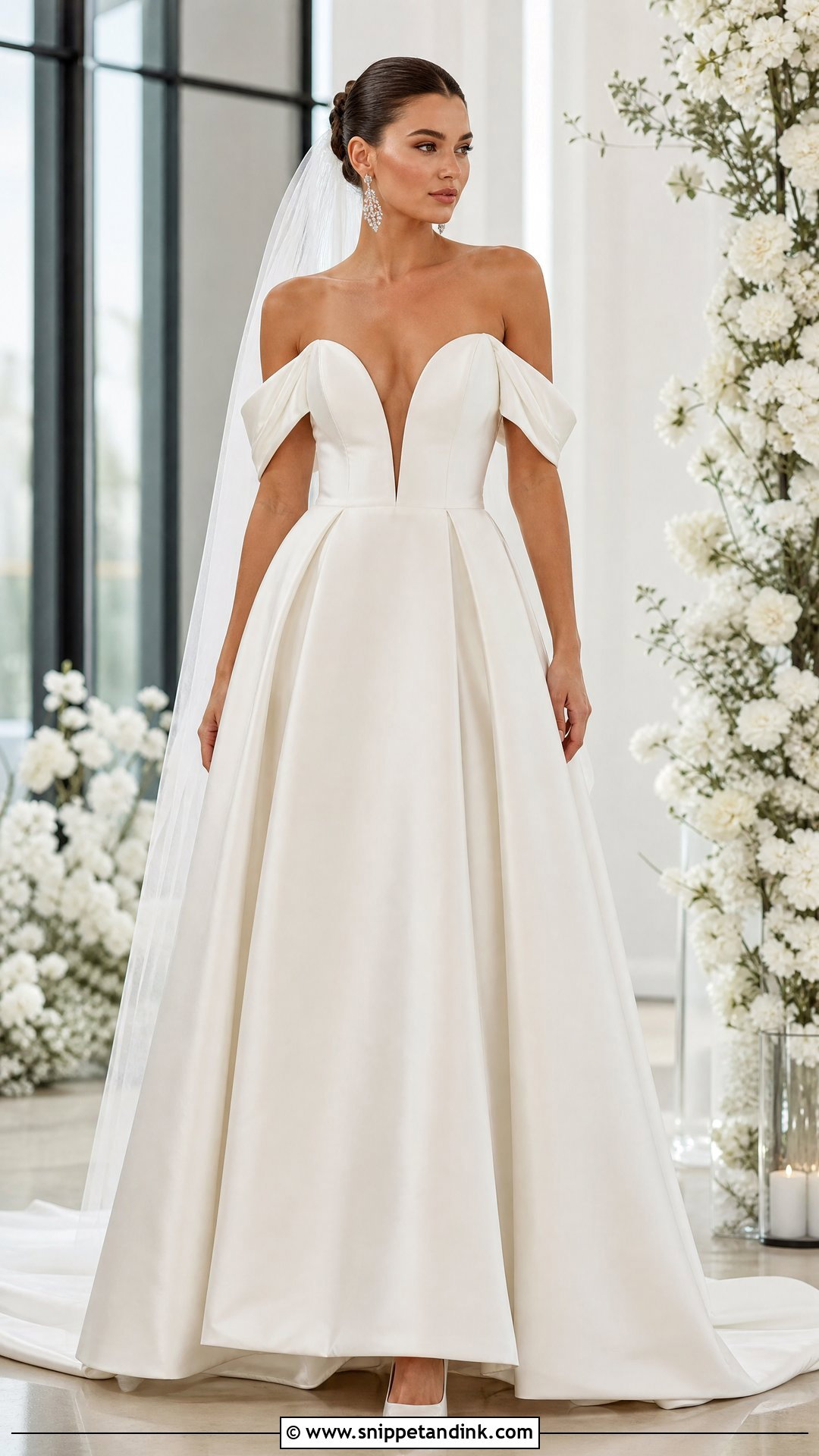
Off-the-shoulder sleeves frame the collarbones and the deep V adds a strong vertical line, which suits a structured A-line, a fitted mermaid or a draped satin gown. The risk is that sleeves get used as support. They shouldn’t be; when you hug someone they ride up and drag the bodice down with them. Internal boning, a secure waist seam and properly fitted cups should hold the gown so the sleeves are purely decorative. Detachable straps give more freedom for dancing. Chandelier earrings, a sleek updo with the veil set beneath it and pointed pumps are enough without a necklace.
11. Cap Sleeve Plunging Neckline Wedding Dress
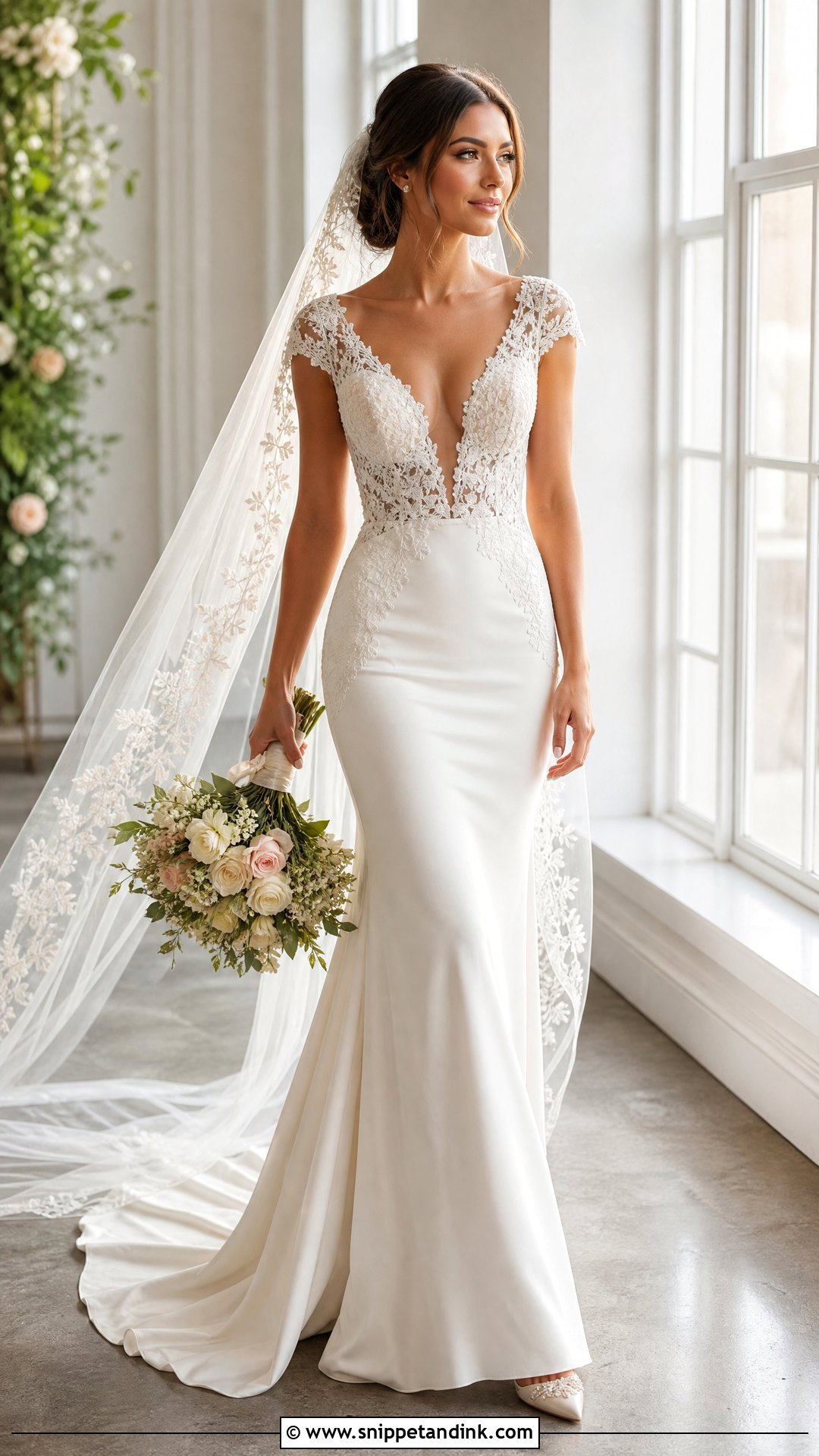
Delicate cap sleeves add a little coverage without hiding the shoulders or the neckline. Lace sleeves flowing into an illusion V bodice and down onto the skirt keep the design continuous; an A-line feels romantic, a slim sheath quieter. Pearl studs, an embroidered veil and low pointed heels make a comfortable all-day look, and a soft chignon stops hair catching on the lace. Watch the sleeve opening at alterations: it should lie flat without pinching the arm or pulling on the V. Corded lace can feel rough against the skin, and a soft tulle backing behind it is a small fix that makes a big difference by evening.
12. Halter Plunging Neckline Wedding Dress
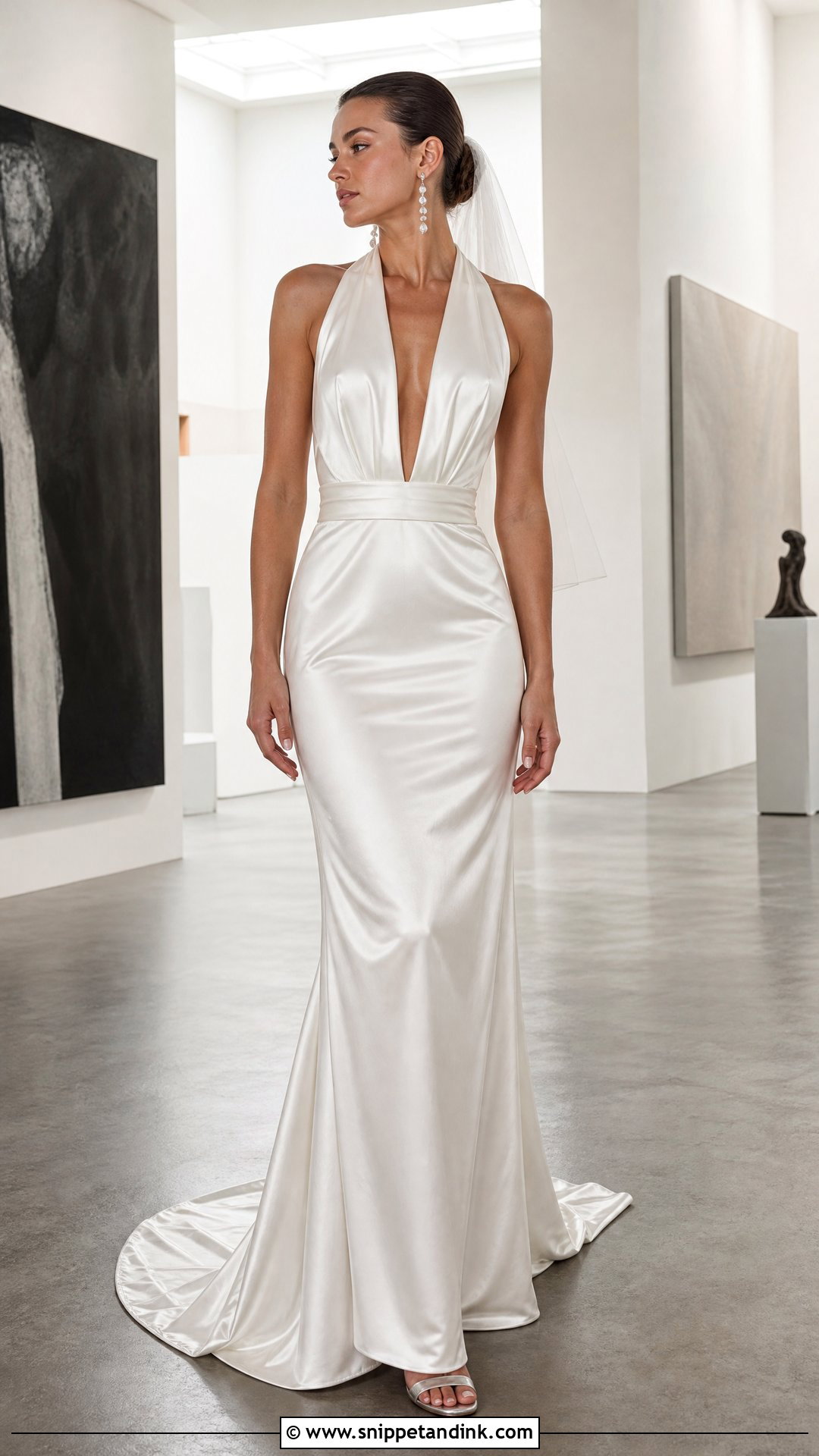
The halter plunge draws a single long line from the neck down through the bodice. Satin makes it glamorous, crepe modern, lace romantic. Look for a secure neck closure, a fitted waistband and an open back. The closure is where comfort lives or dies. If the gown’s weight hangs from the back of your neck, you’ll feel it by the speeches, so the bodice should take most of its support from the waist and internal structure. A sheer center panel or lace edging adds coverage if you want it. Bold earrings, a smooth bun, metallic sandals and a minimal veil finish it, and skip the necklace.
13. Spaghetti Strap Plunging Neckline Wedding Dress
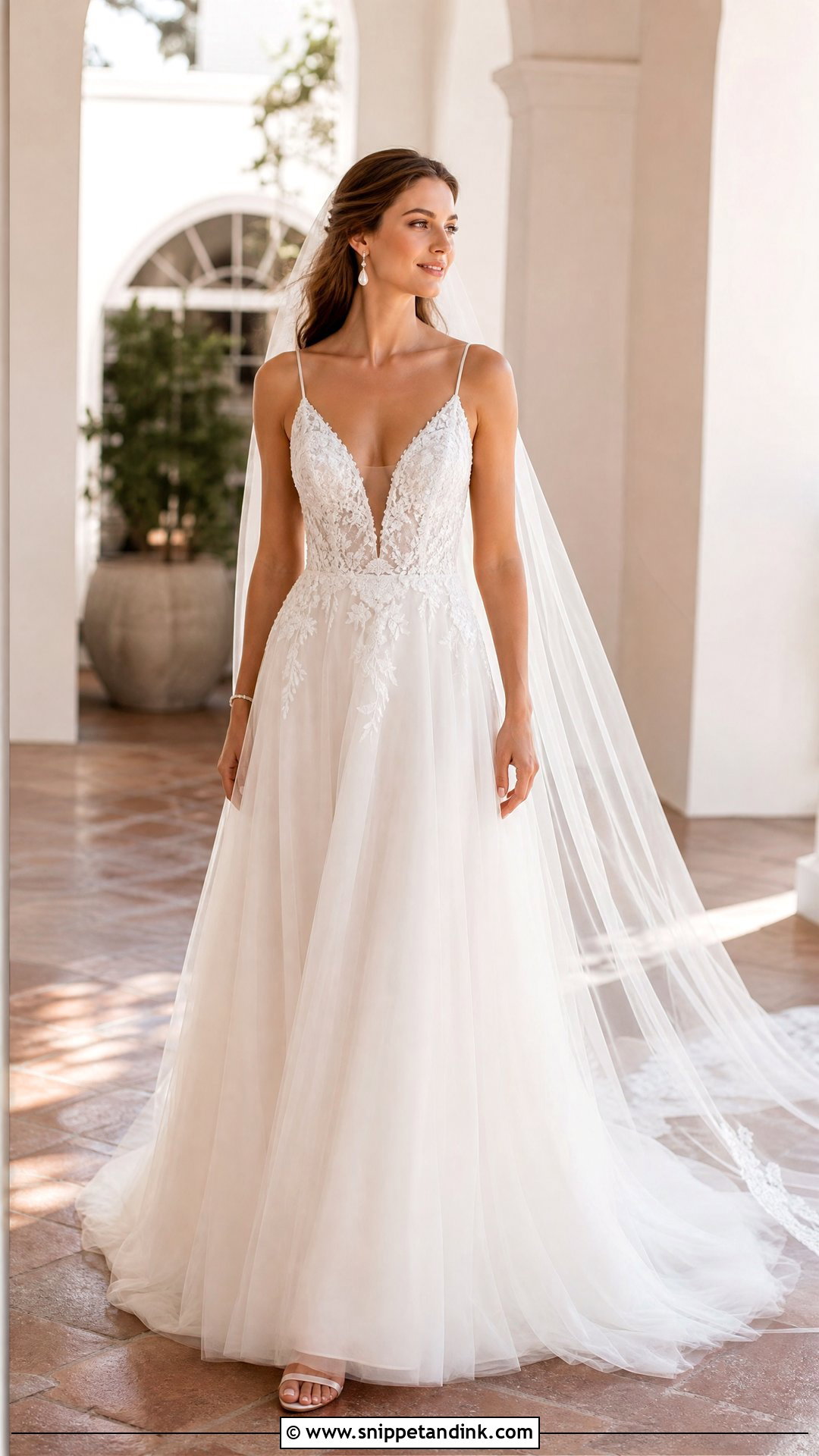
Spaghetti straps make a plunge look light, on satin slips, lace sheaths or floaty tulle A-lines. A cathedral veil, slim drop earrings and barely-there sandals finish it, with hair up or behind the shoulders so the straps show. Thin straps need reinforced attachment points and precise length adjustment, and the bodice should be structured enough that they aren’t carrying the dress. I’d avoid this option for a heavy beaded skirt, since thin straps will cut in. For two looks, add detachable pearl or beaded straps for the ceremony and go back to the plain ones for the reception.
14. Cape Sleeve Plunging Neckline Wedding Dress
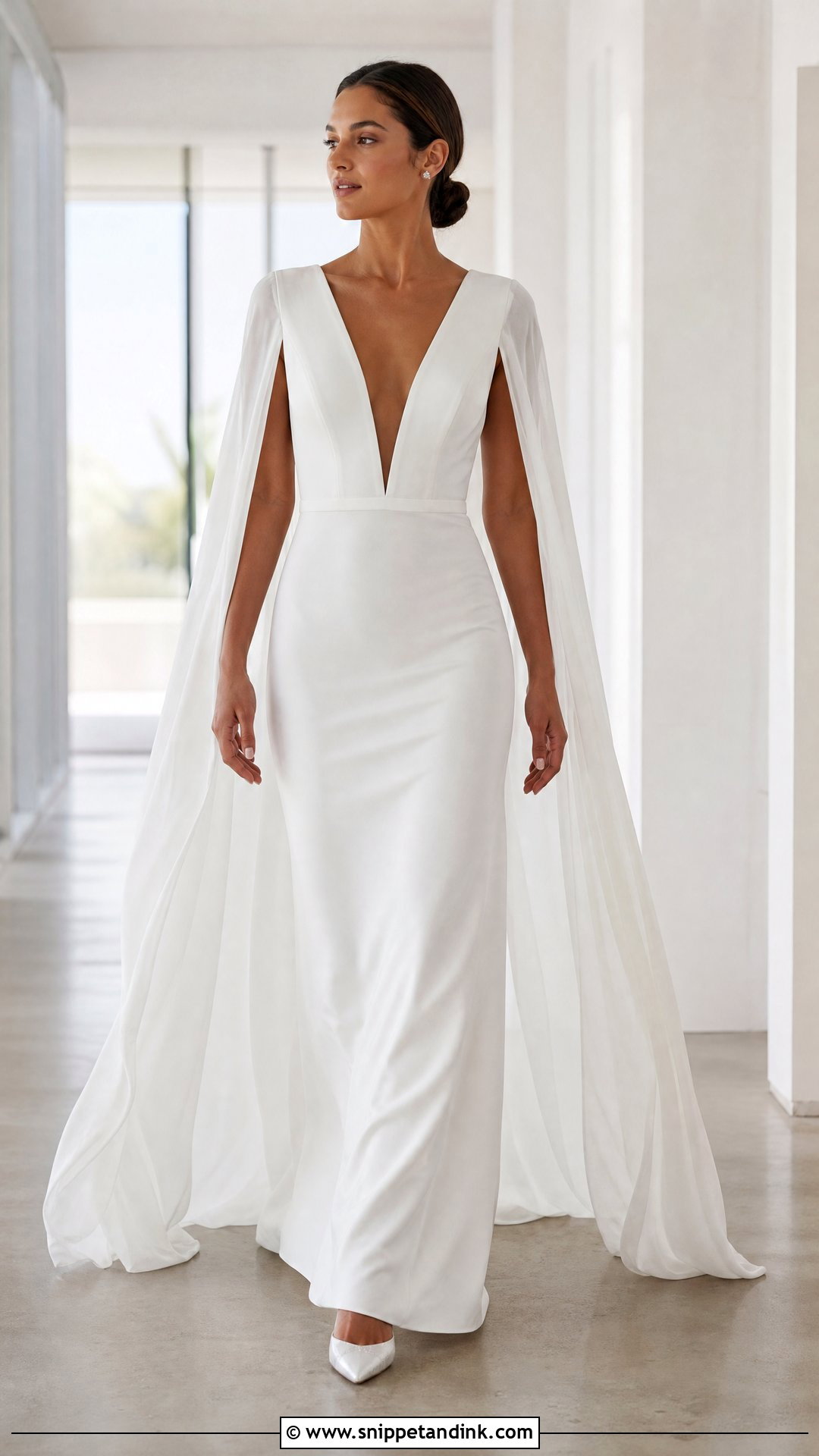
A cape adds coverage and movement and can replace the veil entirely. Choose a sheer shoulder cape, split cape sleeves or a floor-length piece attached near the back neckline, over a clean crepe sheath or satin A-line. Crystal studs, pointed heels and a polished bun finish it. Check the attachment points carefully. A heavy cape pulls the gown backward, and that pull tightens a plunge across the chest. It should also come off without disturbing your hair. Chiffon, tulle and organza move better than stiff fabric and keep the front of the V visible.
15. Corset Plunging Neckline Wedding Dress
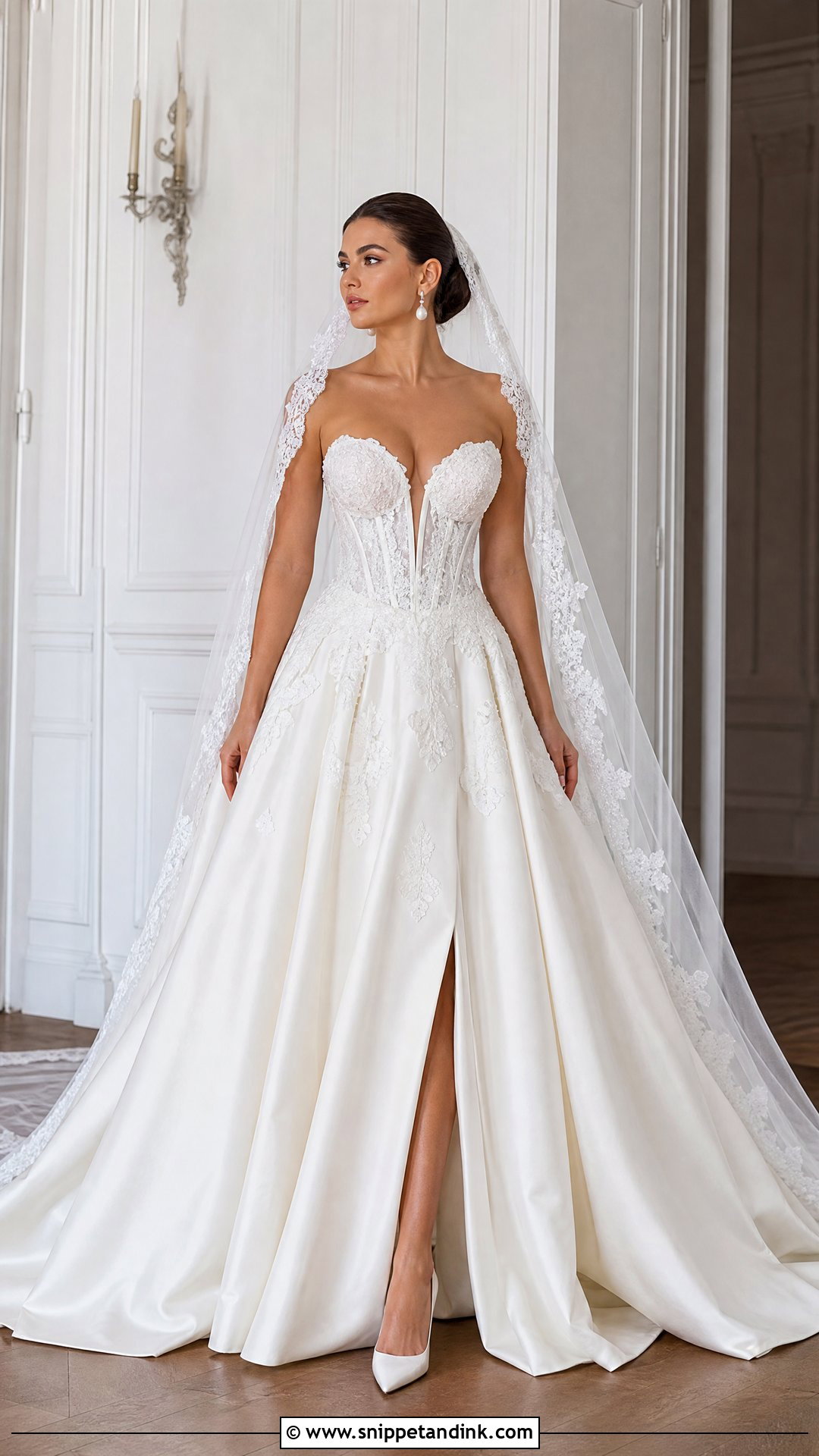
Boning, shaped cups and a firm waist make a corset bodice the most secure base for a deep neckline. Pair it with a basque, A-line or full ball skirt. Lace appliqués soften visible construction; smooth satin looks sharper. A corset should support you, not stop you breathing or sitting, and I check that by having brides sit and laugh during the fitting. Ask the consultant how the bust and waist can be altered before you order. If the boning shows, make sure it’s placed symmetrically. Pearl earrings, satin pumps, a fingertip or cathedral veil and a neat updo complete it.
16. High Slit Plunging Neckline Wedding Dress
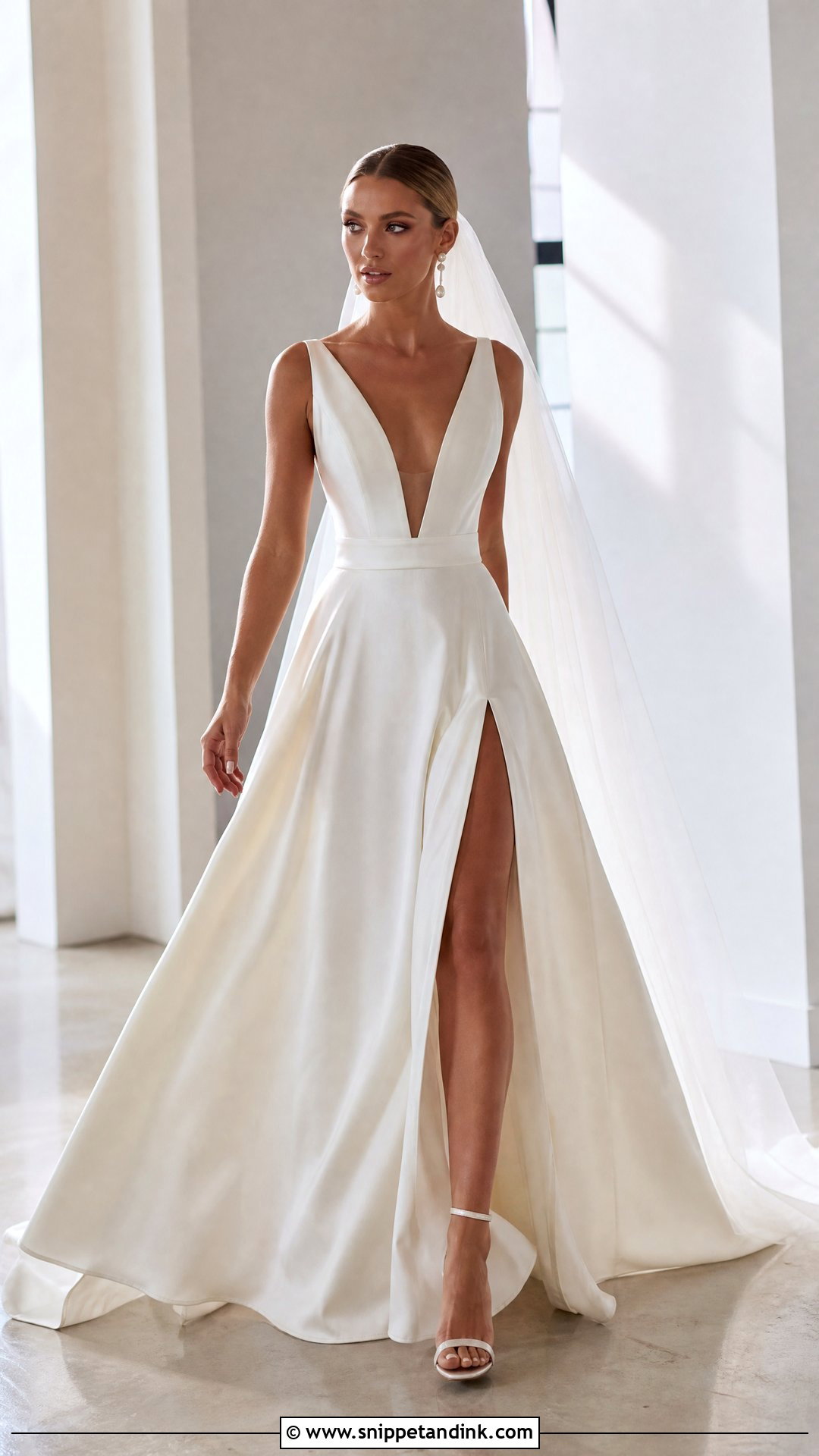
Two bold features need a quiet fabric. A thigh-high slit and a plunge work best in plain satin or crepe with clean seams and little decoration. An A-line moves softly, a column looks sharper. The slit should open as you walk and close when you stand still; take long strides, sit and climb stairs at fittings to check. An internal modesty panel can be added if it opens too far. Sleek earrings, supportive strappy heels, a plain veil and a polished ponytail or low bun keep it clean. Use fashion tape as a backup only. The bodice construction should be doing the real work.
17. Low Back Plunging Neckline Wedding Dress
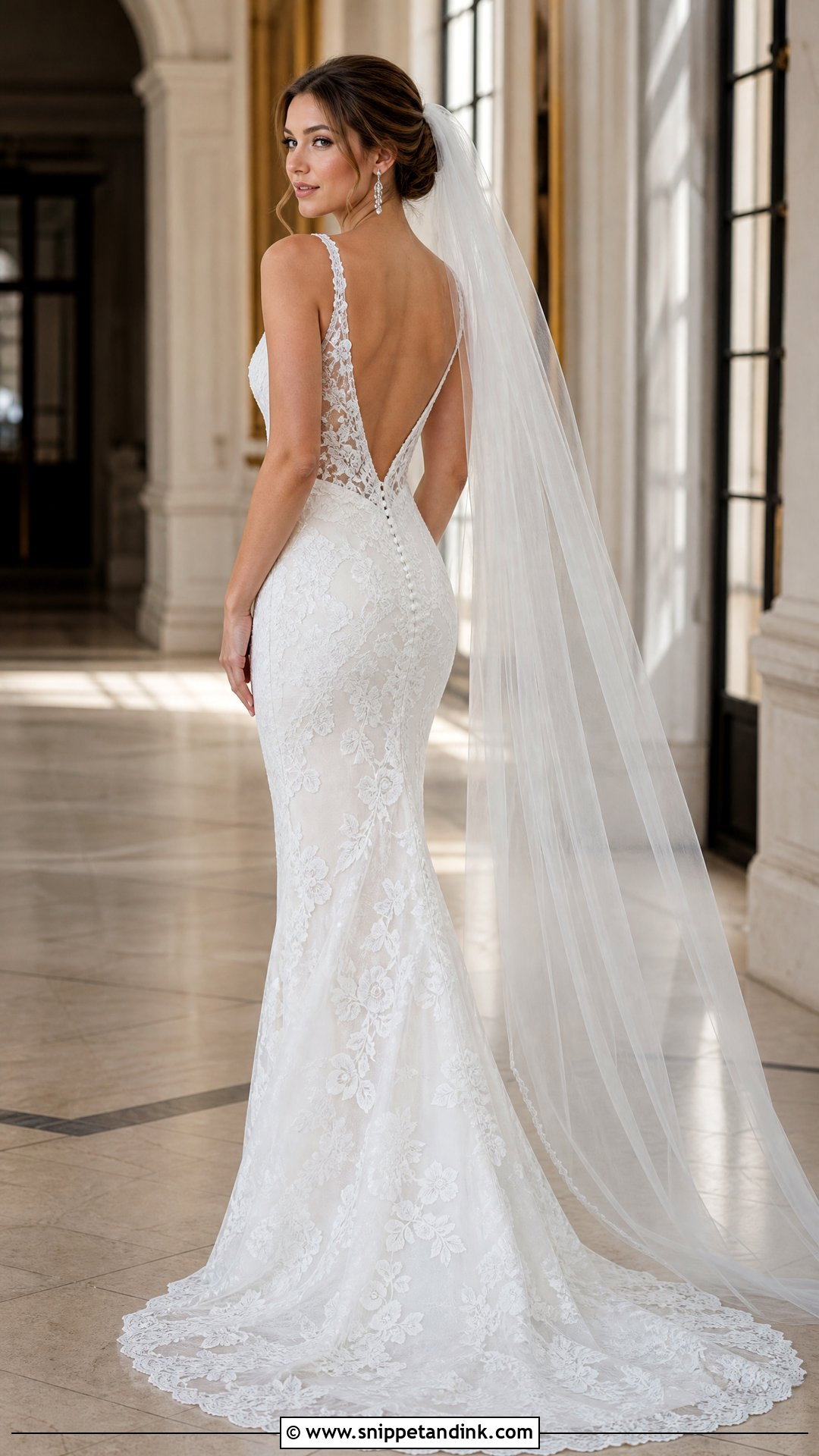
Open front and open back look dramatic from every angle, on a lace sheath, a satin A-line or a crepe fit-and-flare. Support takes planning when both sides are open: firm side seams, a structured waistband, illusion mesh or discreet internal cups. Drop earrings, a back necklace if you like and a veil secured above a low bun, with simple heels. If you plan to use adhesive bras or tape, try them at a fitting first. Products behave differently on every skin, and the wedding morning is no time to find that out. You should be able to walk, hug, sit and dance without adjusting anything.
18. Plus Size Plunging Neckline Wedding Dress
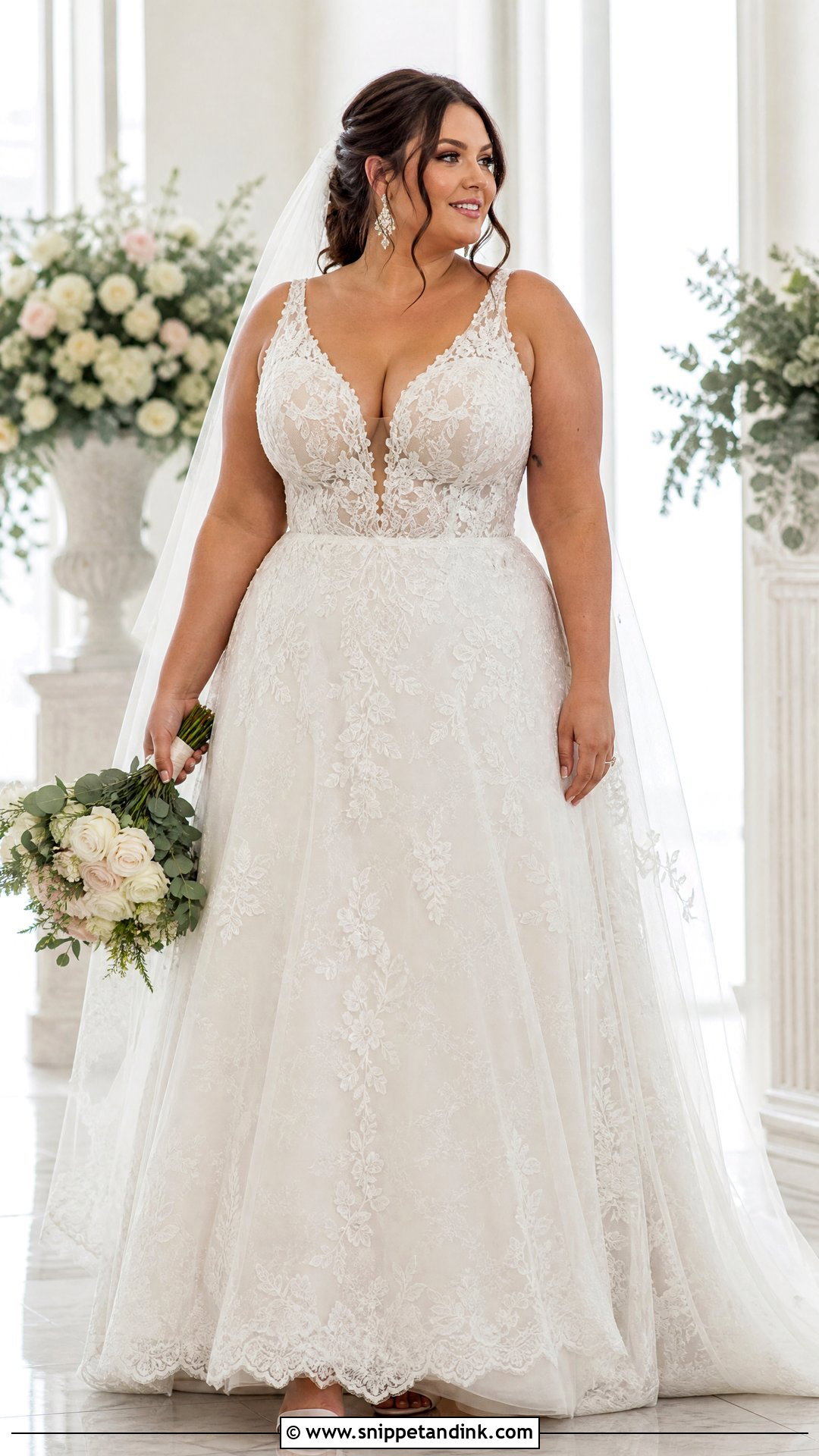
A well-built plunge flatters a plus-size figure, and the build is everything: internal boning, wider straps, shaped cups, strong side panels and a secure waist seam. An A-line or fit-and-flare shows the waist and moves easily. Lace edging or illusion mesh adds coverage while the V stays. Statement earrings, block heels and a long veil following the gown’s vertical lines finish it. Try to shop at boutiques that carry samples close to your size. Clipping a sample at the back hides exactly how a plunge will sit on your bust. A tailor who specializes in bridal can then refine the bust fit while keeping the designer’s proportions.
19. Petite Plunging Neckline Wedding Dress
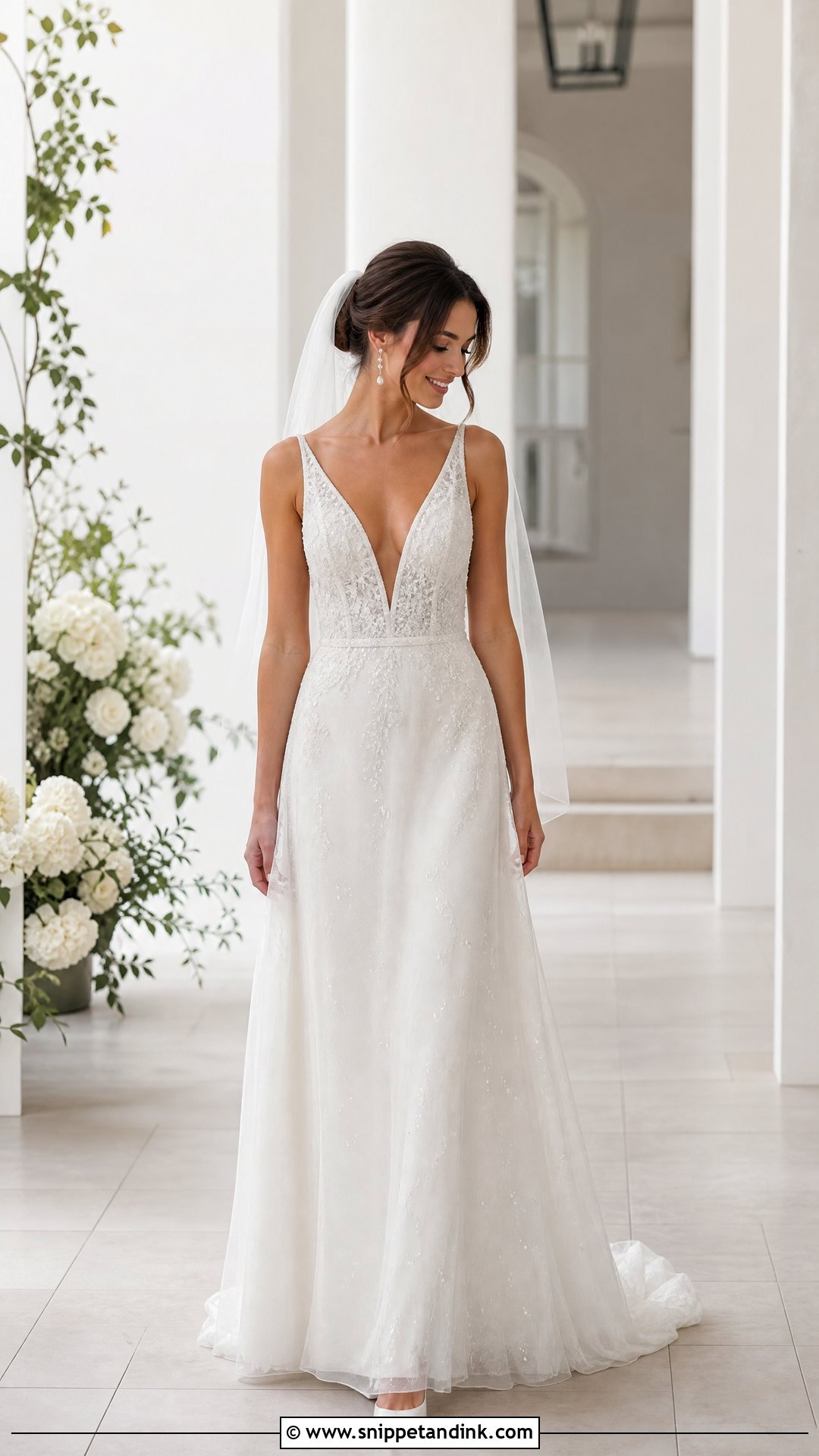
A narrow, clean V lengthens a petite frame. Choose a slim A-line, column or softly fitted gown with a natural or slightly raised waist, and keep appliqués small and skirts moderate. Pointed heels, delicate earrings and a single-layer veil keep the look streamlined. Straps on samples are cut for taller bodies, so they often need significant shortening. Judge where the neckline ends after that alteration, not on the sample. Ask whether the bodice and skirt can be adjusted in proportion, moving the waist seam and lace motifs, so the dress looks made for your height rather than chopped at the hem.

20. Minimalist Column Plunging Neckline Wedding Dress
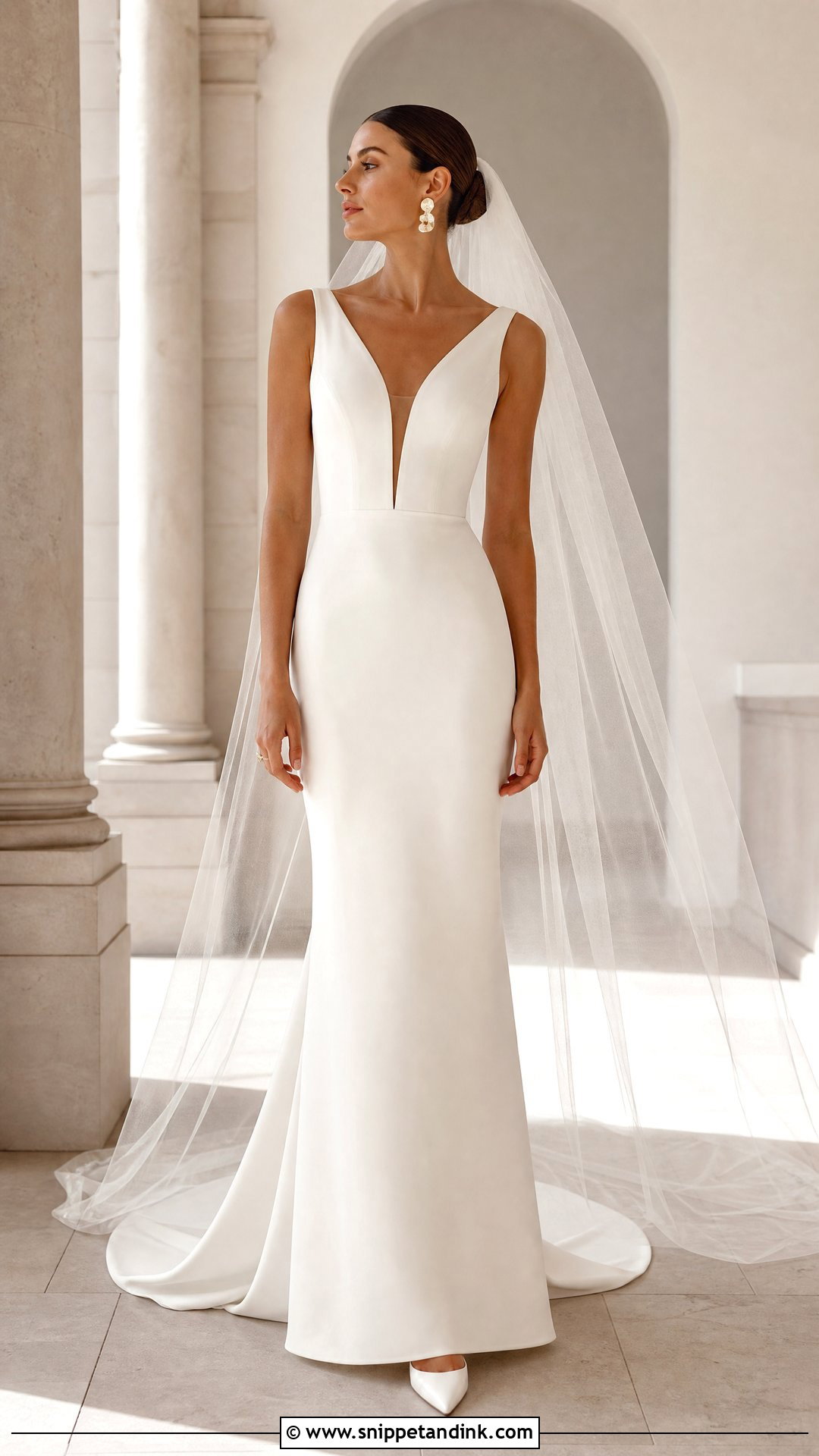
No lace, no sparkle: in a minimalist column the cut carries everything. Matte crepe, silk or softly structured satin with precise seams works, with a narrow V, a defined waist and a subtle train. Sculptural earrings, pointed pumps, a sheer cathedral veil, a smooth bun and fresh, understated makeup keep it modern. Because tailoring is the decoration here, I check three things at the final fitting: the neckline lies flat, the side seams run straight, and the fabric skims without pulling across the hips. Covered buttons or a detachable overskirt add ceremony detail if you want it.
Skin, Tan Lines and Jewelry Under an Open V
A deep neckline puts your skin on display as much as the dress, and that changes the weeks before the wedding. Bikini or sports-bra strap marks show up clearly inside a plunge, so cover up in the sun for the last month or two. If you use self-tan, apply it at least two days ahead and shower it off fully; fresh tan rubs onto the lining of an ivory bodice and won’t come out easily.
Ask your makeup artist to blend foundation down onto the chest, or at least even out its tone, so the face and neckline match under camera flash. Skip shimmer body oil near the edges of the bodice, since it stops fashion tape from gripping.
Jewelry that suits a deep V
Usually earrings are enough. If you love necklaces, a fine chain with a pendant that sits just above the point of the V follows the neckline; anything that lands lower or sits wider than the opening breaks the shape. Collars and chokers rarely work with a plunge because they cut the long vertical line in two.
Wear It Out of the Fitting Room Before You Say Yes
A plunging gown is only as good as its fit and support. Lace A-lines lean romantic, satin slips and crepe columns lean modern, and ball gowns, mermaids, capes, sleeves and appliqués give you endless ways to adjust the neckline. At appointments, move the way you will on the day and see each dress from the front, side and back. Ask about mesh, boning, cups, strap adjustments and bustles before you order. Then trust the dress that still feels like you after you’ve stopped looking in the mirror.
You'll Like These Ideas:




Leave a Reply