
Most brides who come to me unsure of their shape end up trying an A-line first, and many of them stop there. The A-line silhouette is simply a fitted bodice with a skirt that widens gradually toward the floor, which means it forgives a lot and still reads as a proper wedding dress from the back of a church. What changes from gown to gown is everything around that frame: a basque waist, a square neckline, visible boning, dimensional lace, a clean satin face. Below are twenty-five complete looks, each with the shoes, jewelry, veil and flowers I would actually put with it, so you can judge the whole outfit rather than a hanger shot.
Where the Waist of an A-Line Should Land on You
The first thing I check when a bride steps into an A-line is the waist seam, because every other part of the dress hangs from it. A natural waist should sit at the narrowest point of your torso, usually an inch or so above the belly button. A basque waist dips into a V below that, which lengthens the torso and suits brides who feel short-waisted. A dropped waist sits even lower and needs a long body to work.
In the fitting room, I ask brides to do three things before they decide:
- Sit on a chair for a full minute and see whether the bodice digs in at the ribs or folds at the stomach.
- Lift both arms as if hugging someone, then check whether the neckline or straps move more than a finger width.
- Turn sideways to the mirror; the skirt should start widening right below the waist seam, not two inches further down.
If the waist is in the wrong place, a good seamstress can usually raise it, but lowering it is harder because there is rarely extra fabric. That is worth knowing before you order a size.
1. Satin Square Neck A-Line Wedding Dress
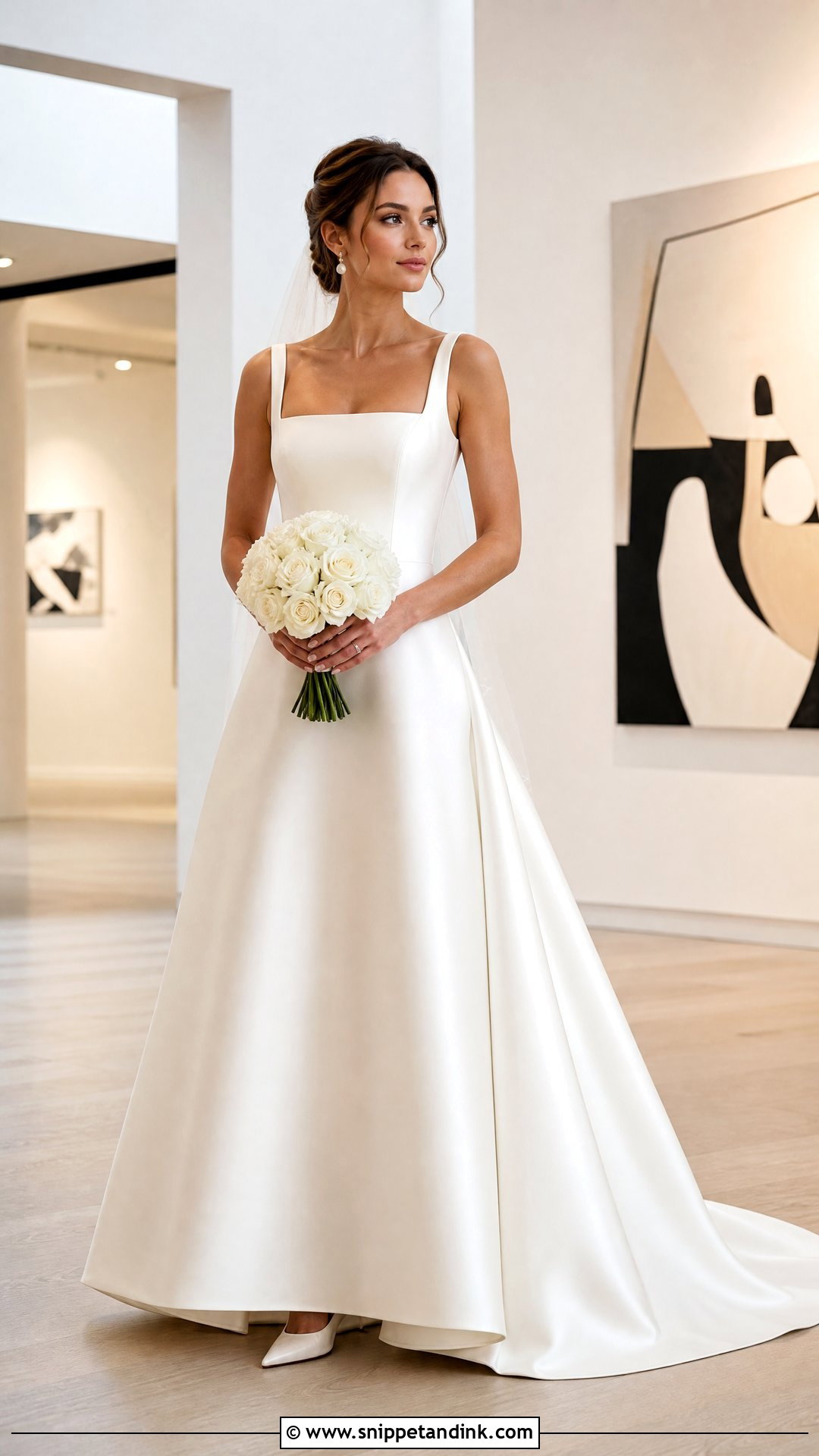
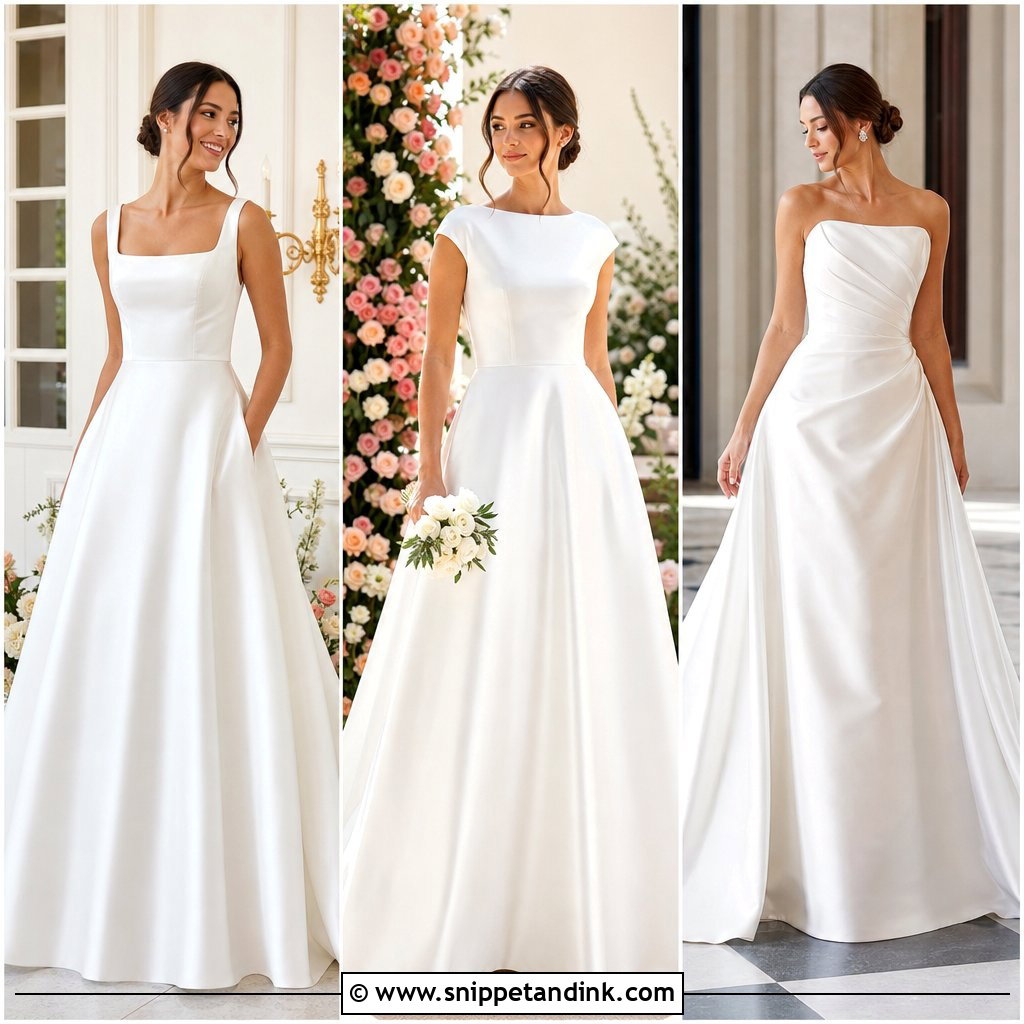
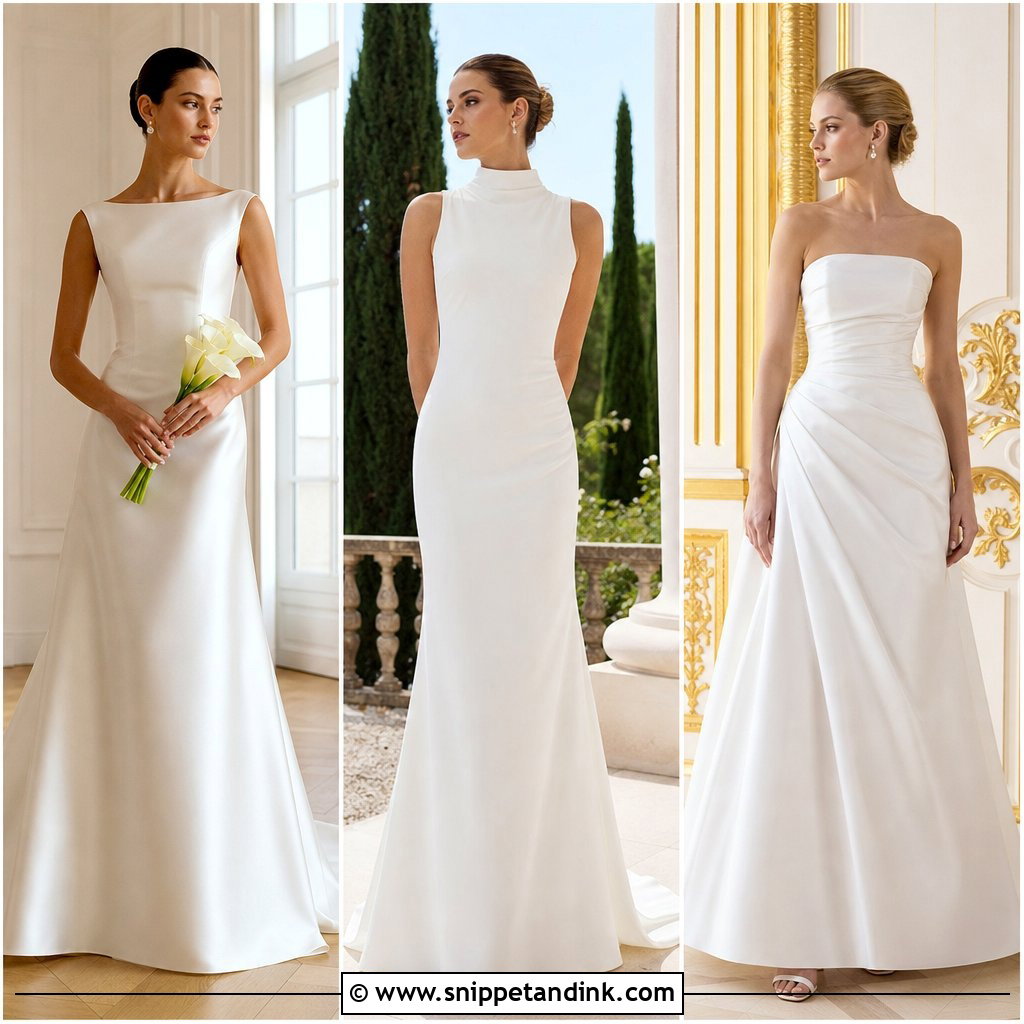
Satin and a square neckline together give you structure without stiffness. I look for wide straps, princess seams and a waist sitting exactly at the natural waist, because satin shows every ripple when the seam lands even half an inch off. The open neckline takes a short pearl strand or a small pendant, nothing longer. Pointed ivory pumps and pearl studs keep it tidy, and a fingertip veil with a narrow satin edge repeats the gown without hiding its shape. Keep the bouquet compact, white roses and a little greenery. Satin reflects light, so a bright hotel ballroom or a gallery with big windows does a lot of the work for you.
2. Long Sleeve Lace A-Line Wedding Dress
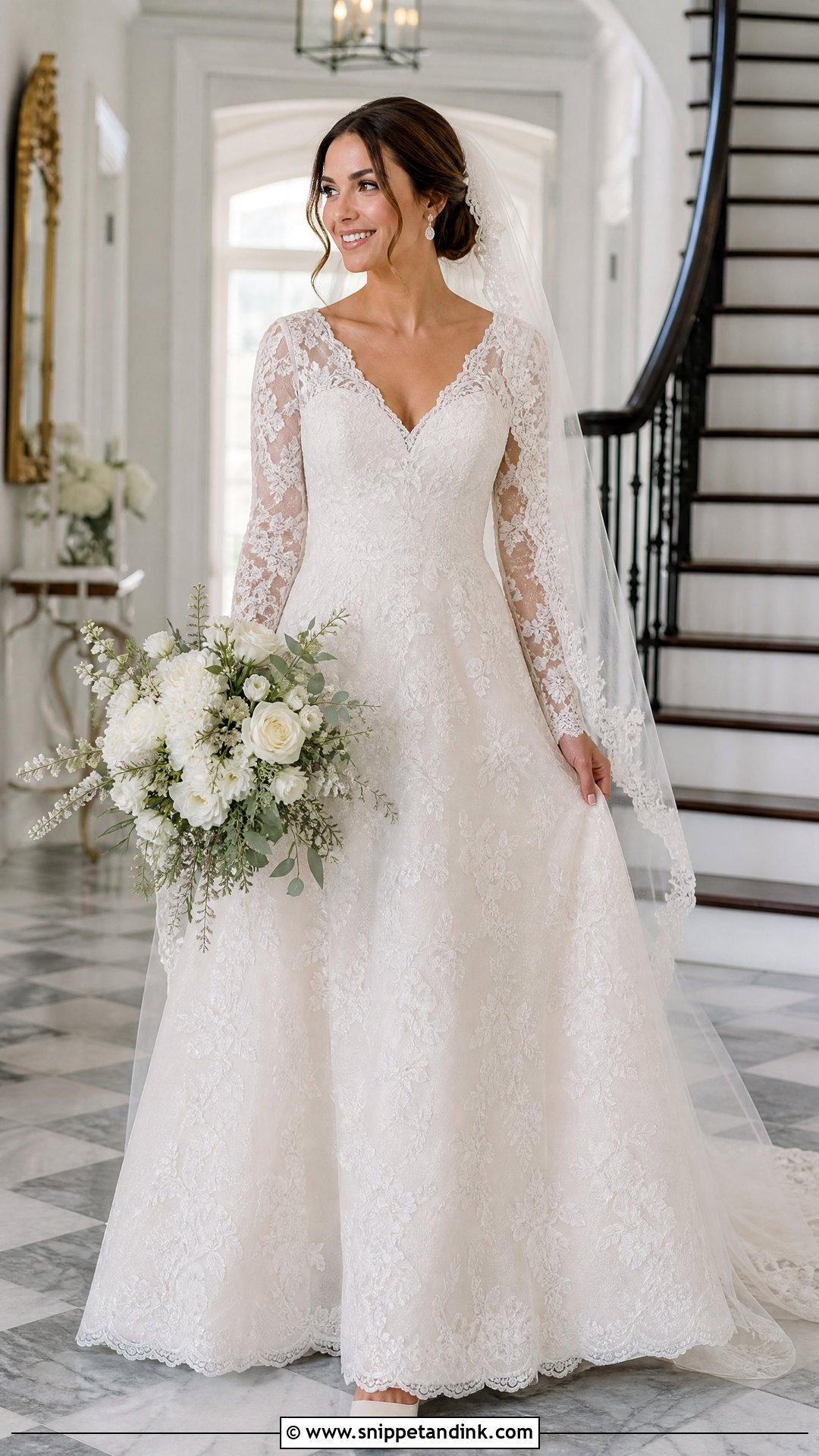
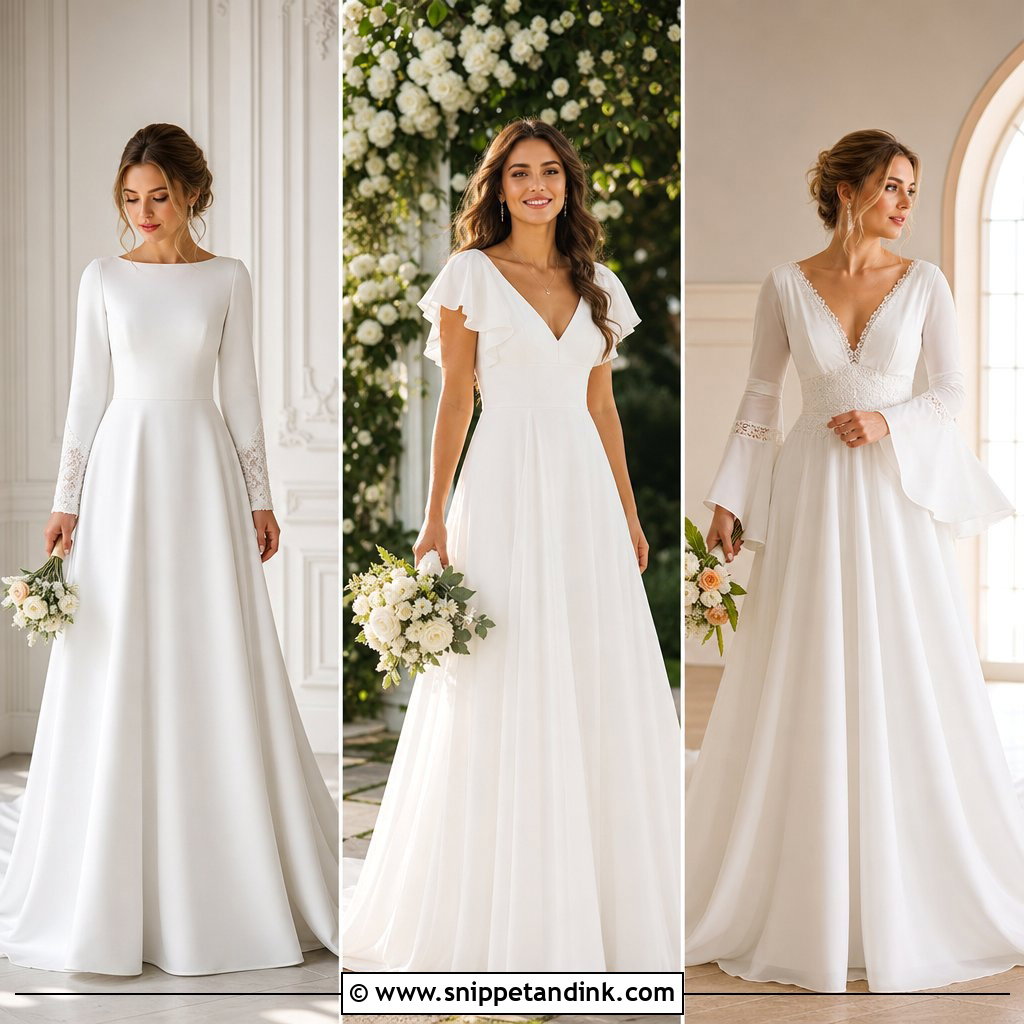
Long lace sleeves are warm, modest and easy to move in, provided they are cut with enough room at the elbow. At fittings I always ask a bride to raise her arms as if hugging someone; tight lace sleeves pull the whole bodice up when she does. A nude or ivory lining under the lace keeps the pattern visible without the gown looking sheer in flash photos. Closed-toe block heels, small crystal earrings and a lace-edged chapel veil finish it, and a low chignon keeps the sleeve and neckline lace clear. I like this one most for fall, winter and early spring.
3. Strapless Basque Waist A-Line Wedding Dress
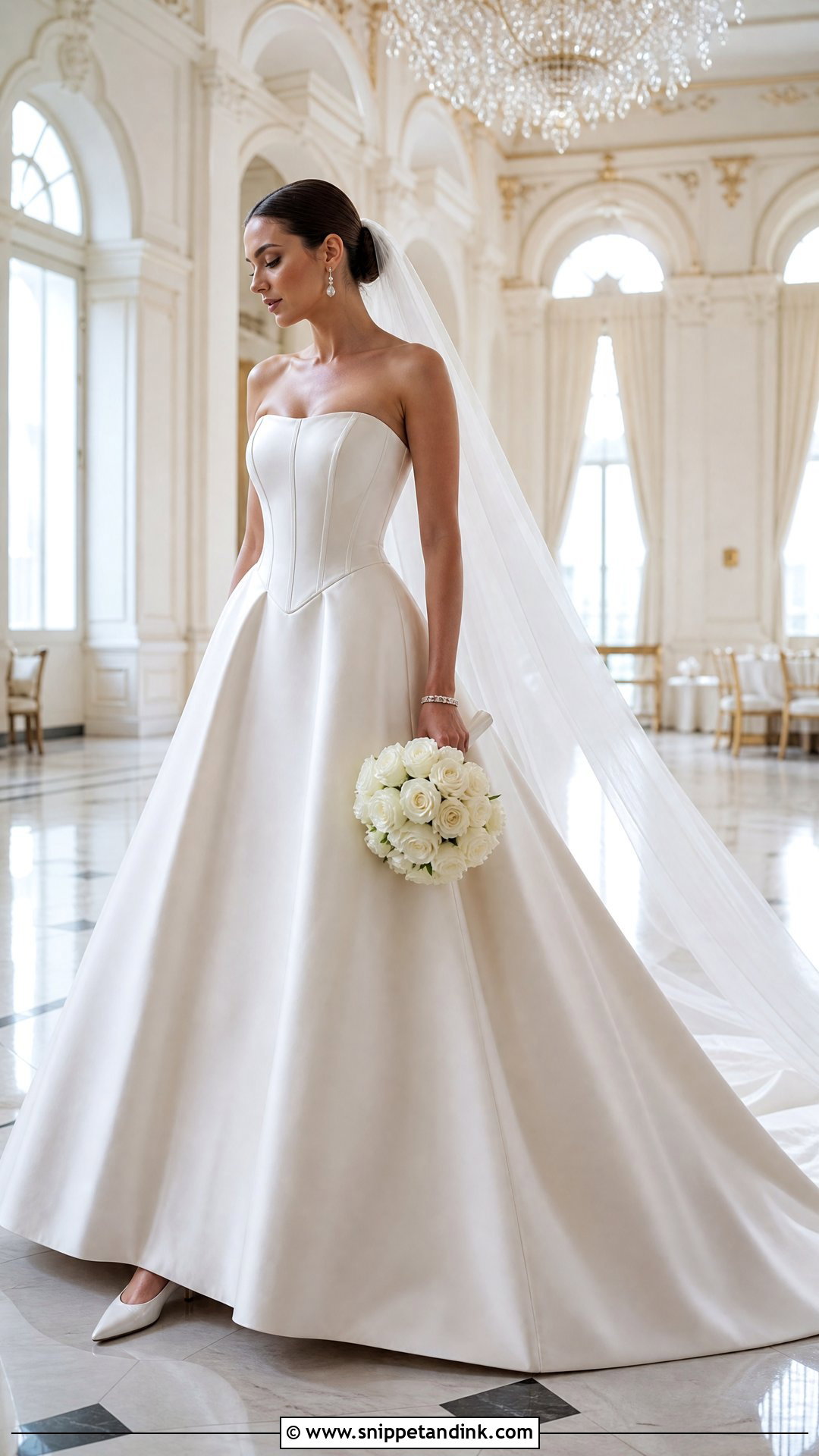
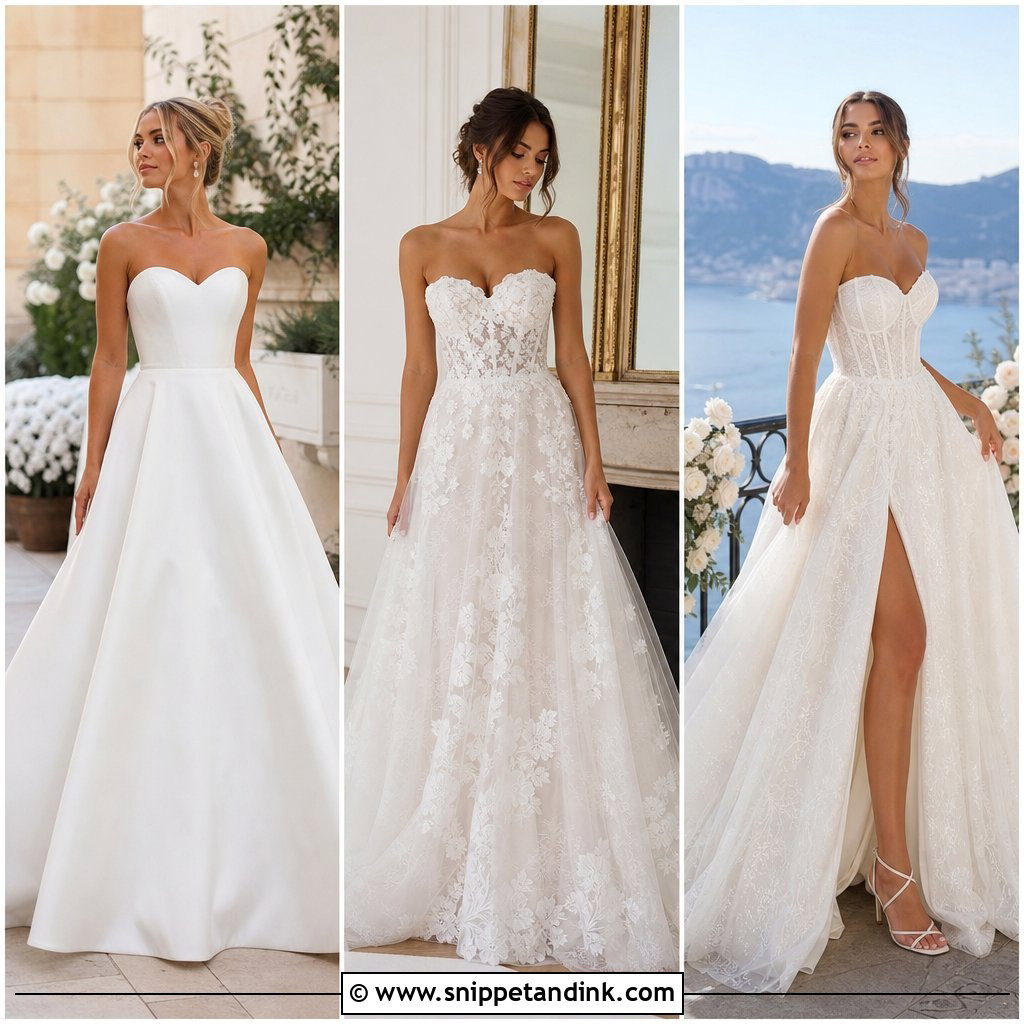
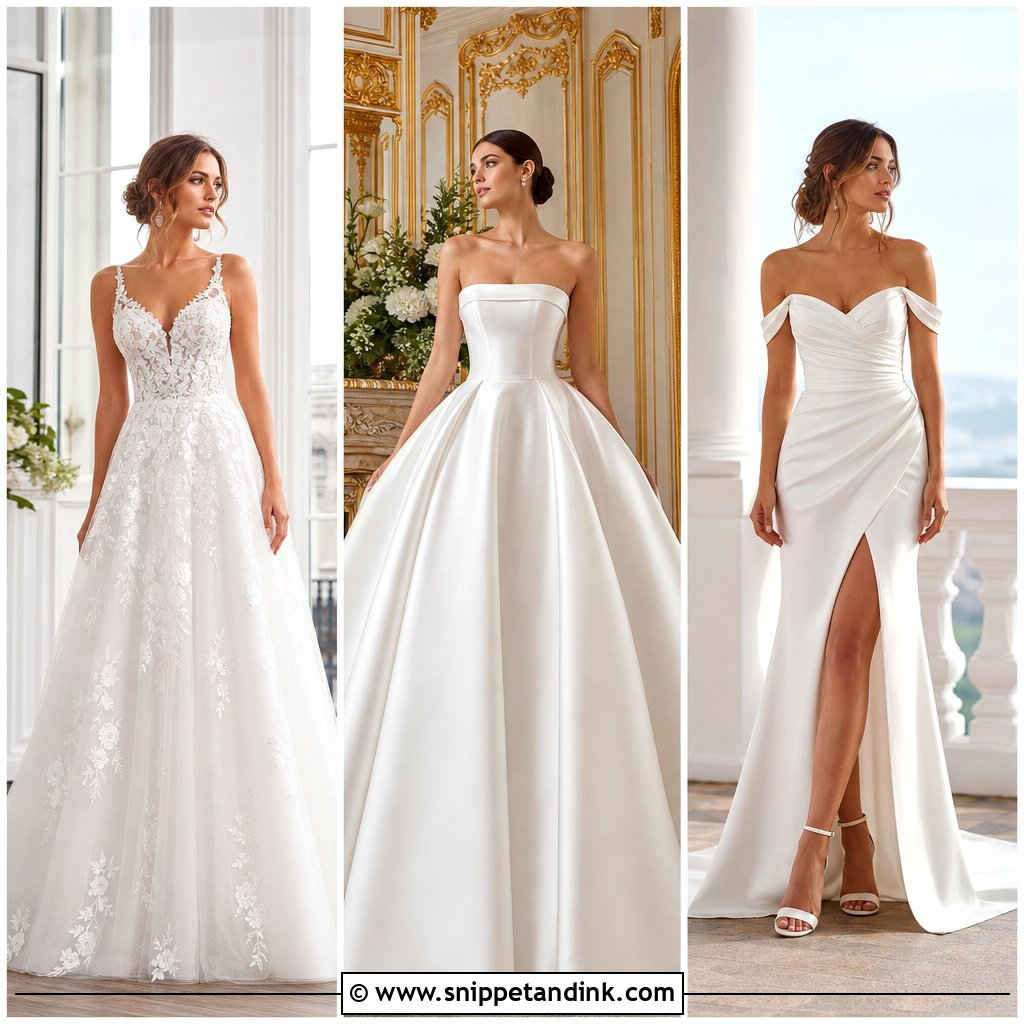
The basque waist dips into a V below the natural waistline, and that lowered point is what makes this gown look so current. It only works if the strapless bodice is properly built: boning, a waist stay inside and cups that are fitted to you, not padded in afterward. If you find yourself tugging it up in the mirror at the first fitting, it needs more internal support before anything else. A full satin or mikado skirt balances the narrow top. Drop pearl earrings, a slim tennis bracelet and pointed pumps with cushioned insoles suit it, and a cathedral veil adds length without competing with the waist. Smooth bun, white roses with trailing ribbon, ballroom or grand estate.
4. Off The Shoulder Mikado A-Line Wedding Dress
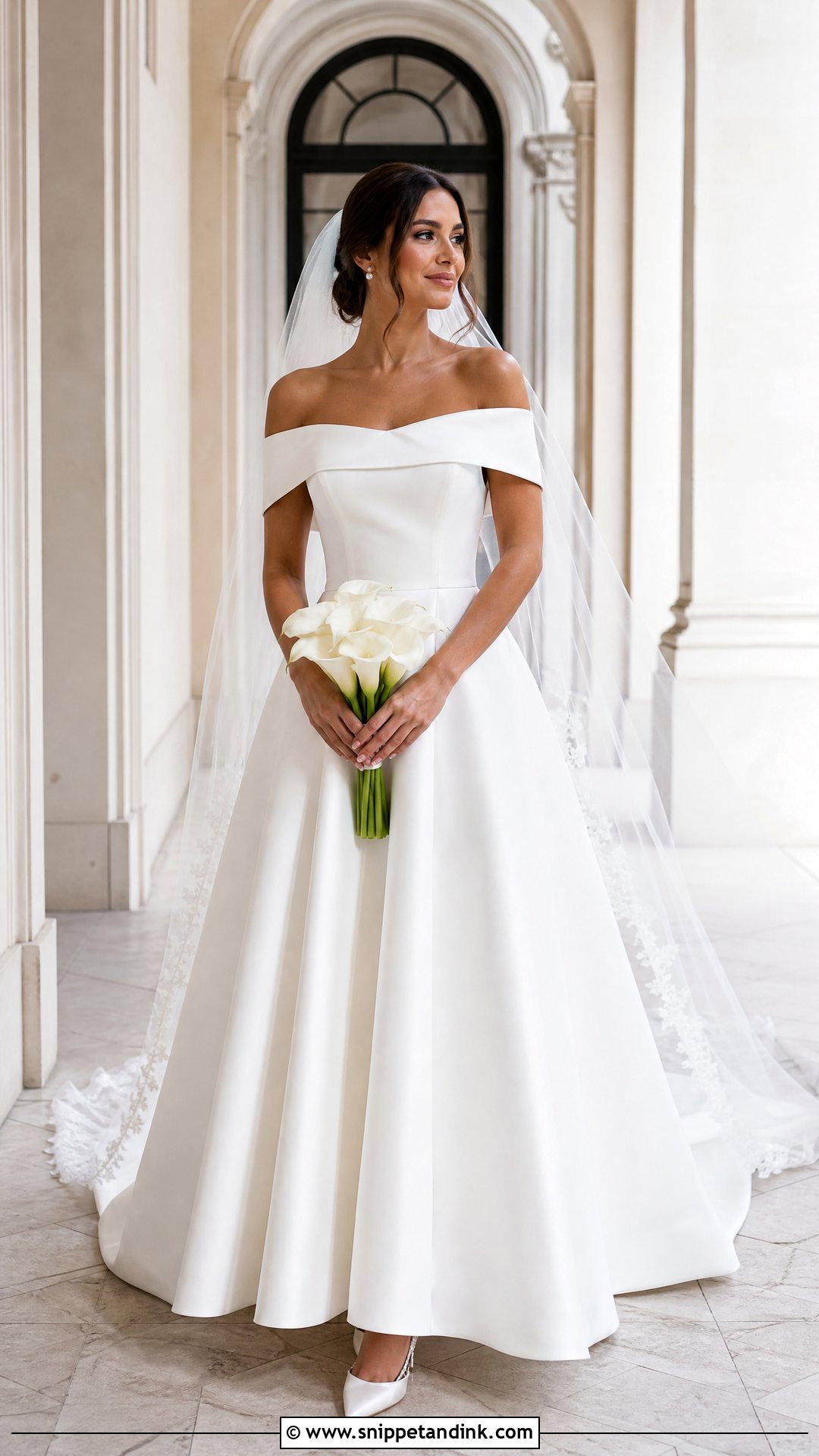
Mikado is a heavy, slightly crisp silk blend, which is why this off-the-shoulder neckline holds its fold instead of collapsing. The trade-off is weight: an off-the-shoulder band has to grip the upper arm, so I check that a bride can lift her arms to shoulder height without the band riding up. Keep jewelry to pearl drops or small studs so the collarbones stay the focus. Ivory slingbacks feel lighter than full pumps with this fabric. Secure a sheer cathedral veil under a low bun so the shoulder line stays visible from behind, and carry calla lilies or tightly arranged white roses. Formal indoor ceremonies and evening receptions suit it best.
5. V-Neck Chiffon A-Line Wedding Dress
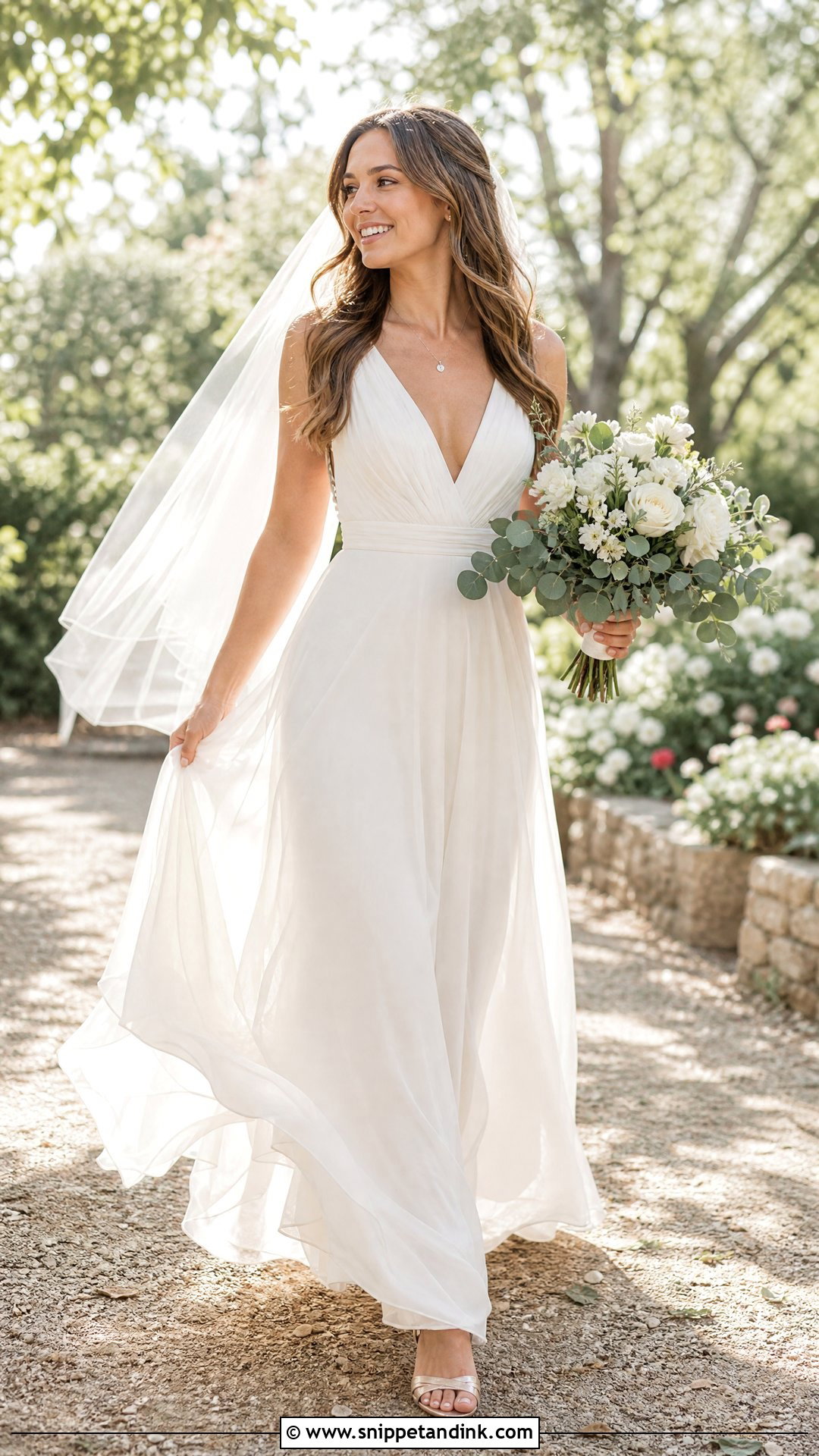
Chiffon is the fabric I steer warm-weather brides toward first. It breathes, it moves when you walk and it does not show sweat the way satin does. Look for a softly draped bodice with real straps, a defined waistband and several skirt layers so the lining never shows against the light. On sand or lawn, metallic low block heels or embellished flat sandals will save you, since stilettos sink. A fine pendant, tiny earrings and a lightweight fingertip veil are enough. Loose waves or a relaxed updo, then white seasonal flowers with eucalyptus. Beaches, gardens and destination weddings are where it shines.
6. Cap Sleeve Lace A-Line Wedding Dress
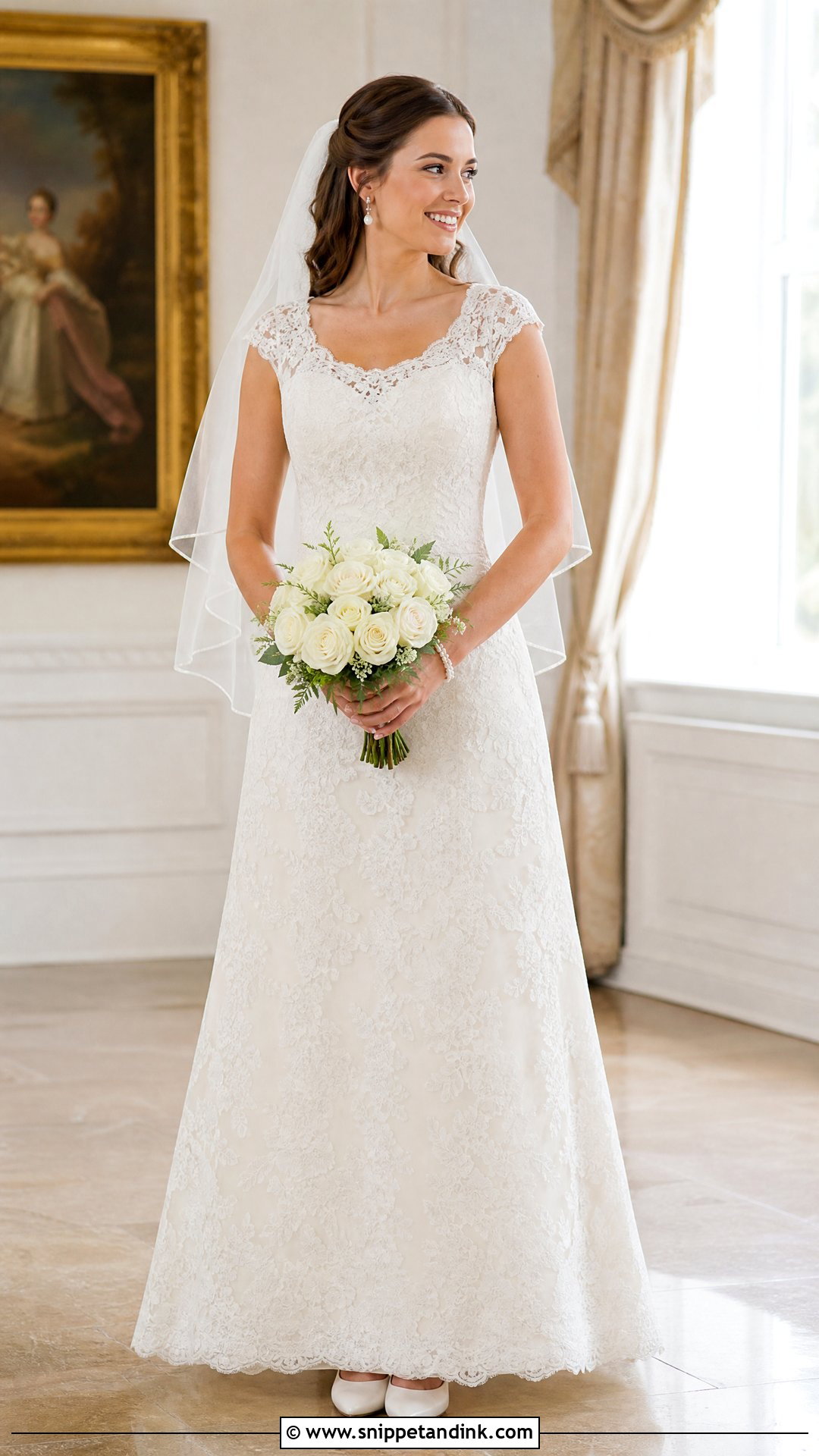
Delicate cap sleeves give just enough coverage to wear a strapless-style bodice with a little more security. The sleeve should sit on the shoulder point, not inside it; if it cuts in, it makes the upper arm look wider in every photo. A soft scoop neckline with floral appliqués that thin out toward the skirt looks lighter than lace from top to hem. Almond-toe pumps, a slim pearl bracelet and small drop earrings stay comfortable all day. A shoulder-length veil frames cap sleeves well, and a half-up style with pearl pins plus a rounded bouquet of ivory roses suits a daytime ceremony or a small spring gathering.
7. Spaghetti Strap Satin A-Line Wedding Dress
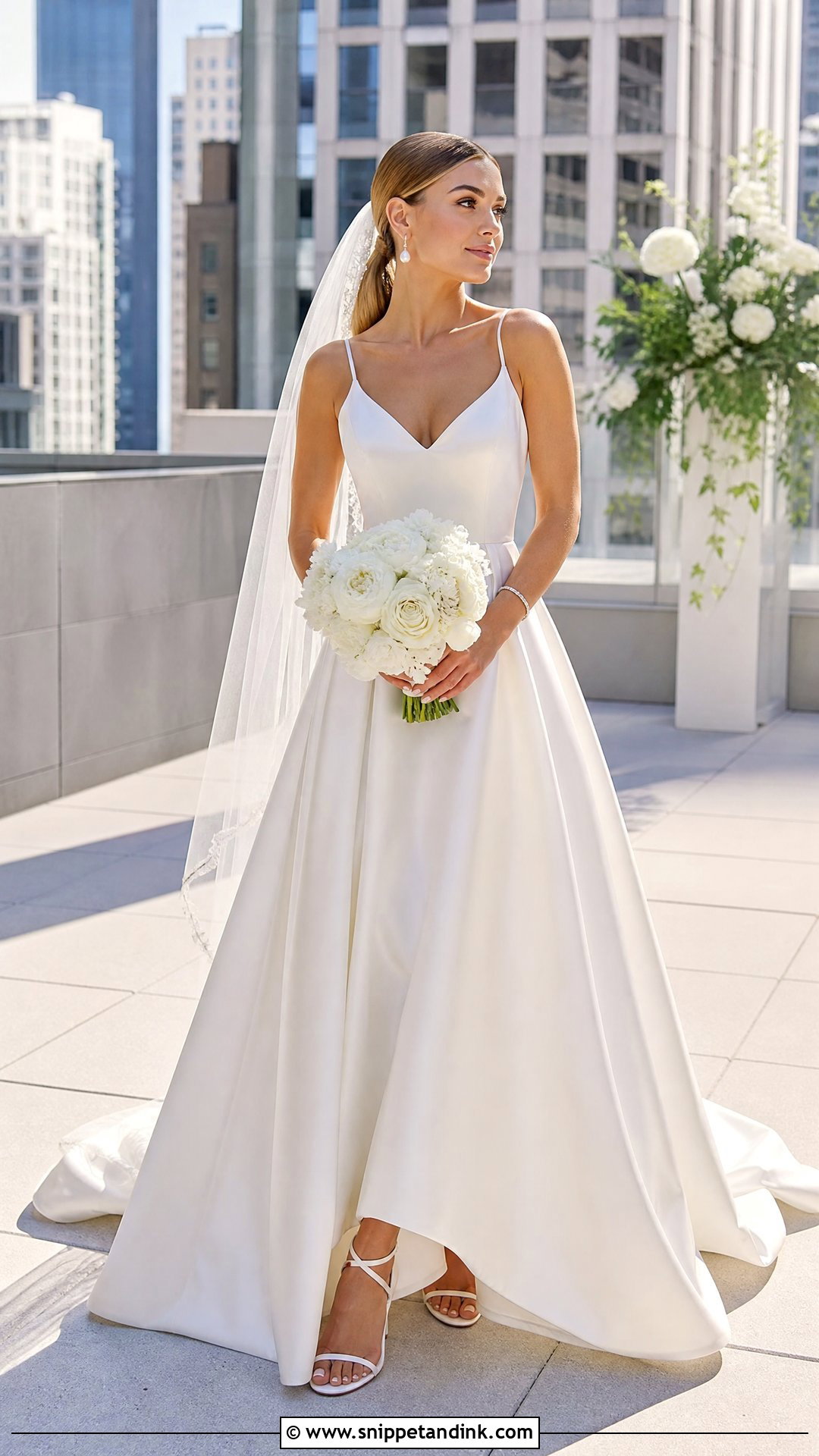
Spaghetti straps look fragile, so the support has to come from inside the gown. I want to see internal corsetry or at least a firm bodice lining, because thin straps cannot carry the weight of a satin skirt on their own and they will start to dig into the shoulders by evening. The skirt should fall smoothly rather than balloon. Strappy ivory heels, pearl drops and a slim bracelet are plenty, with a sheer chapel veil giving movement at the back. A sleek low ponytail shows off the straps. Add a structured white bouquet and a small satin clutch for lipstick and tissues. Rooftops and modern event spaces in warm weather suit it.
8. High Neck Crepe A-Line Wedding Dress
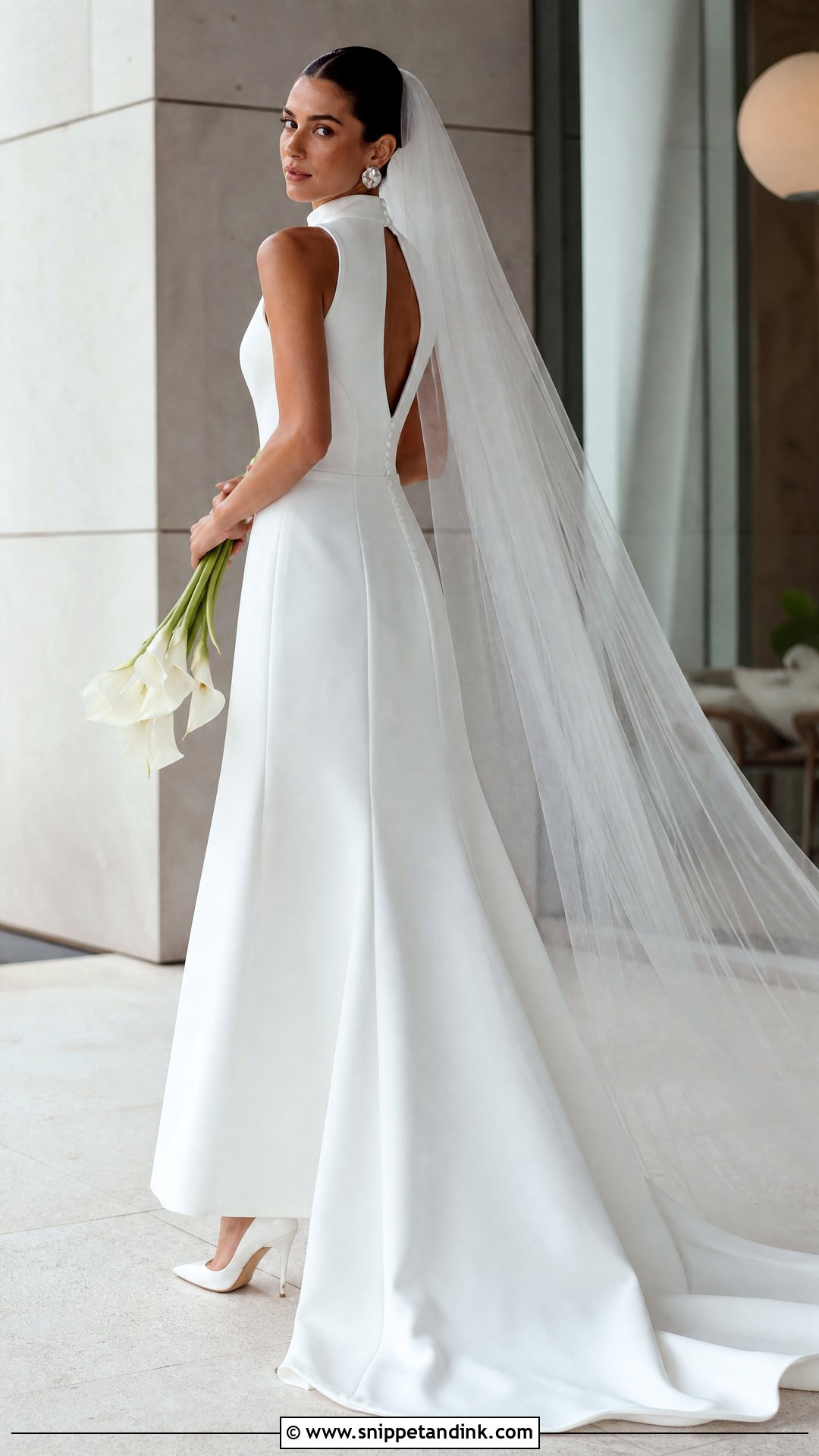
Crepe is a matte, fluid fabric with no sheen, so a high-neck A-line in crepe relies entirely on cut. Princess seams, a fitted waist and a controlled flare are what I check first, because there is no lace or beading to hide a poor fit. A keyhole or low back adds interest without changing the clean front. Skip the necklace; sculptural earrings do the work. Pointed pumps and a narrow chapel veil keep the long line going, and a smooth bun or twisted updo leaves the neckline readable. Long-stemmed white calla lilies finish it. One honest warning: crepe shows creases from sitting more than you expect, so steam it on the morning.
9. Sweetheart Tulle A-Line Wedding Dress
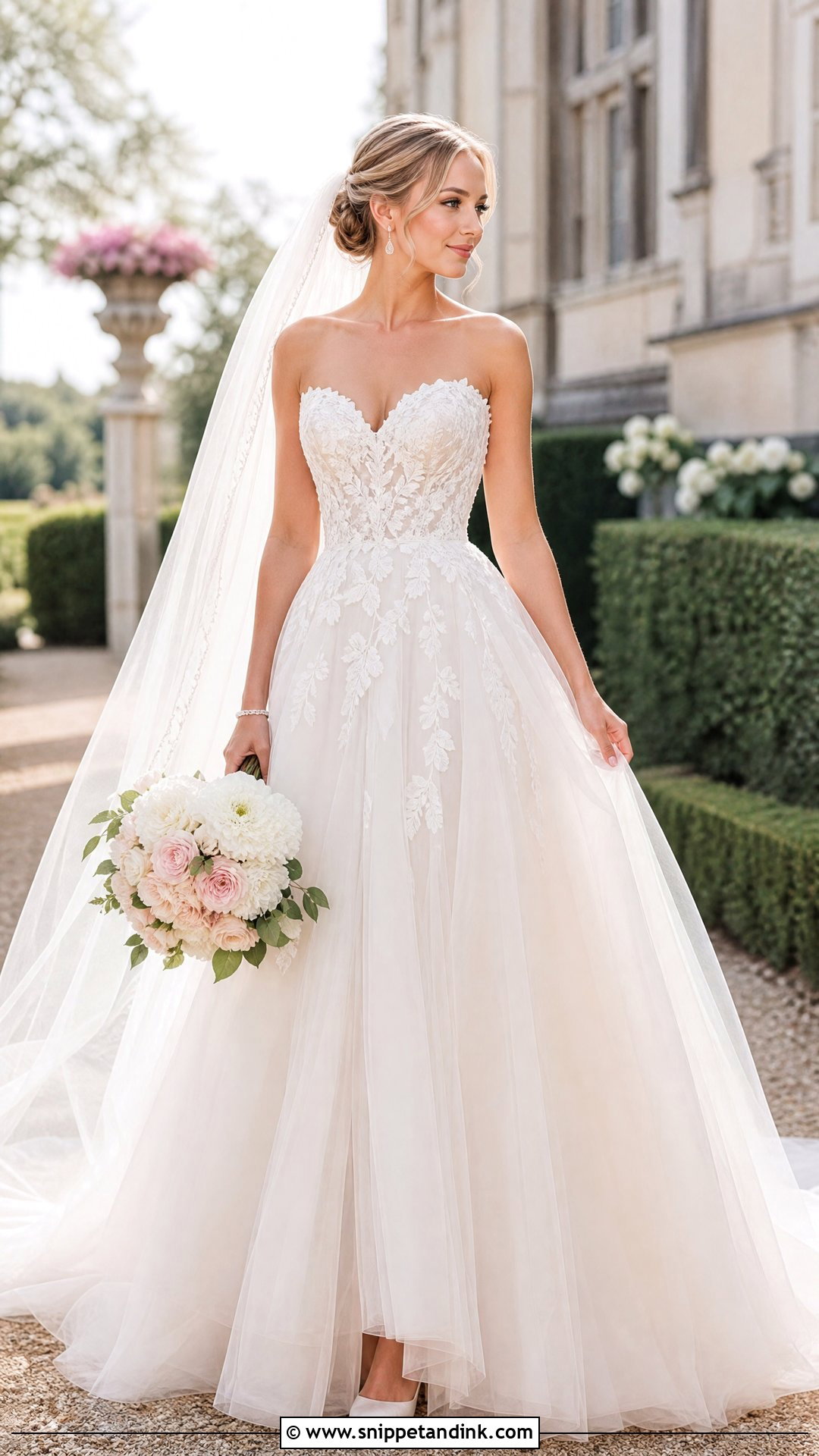
Tulle gives you volume for a fraction of the weight of a ball gown, which is why sweetheart tulle A-lines are so popular. The sweetheart cups need to be fitted to your bust; tulle skirts are light, so the bodice is doing all the holding. Choose several layers of fine tulle rather than two layers of stiff net, which can scratch. Classic ivory pumps, teardrop earrings and a delicate bracelet suit it, and a chapel veil scattered with tiny appliqués can echo the skirt. Loose waves for a garden, a low textured bun for a formal room. White and blush flowers tied with ivory ribbon round it off.
10. Jacquard Scoop Neck A-Line Wedding Dress
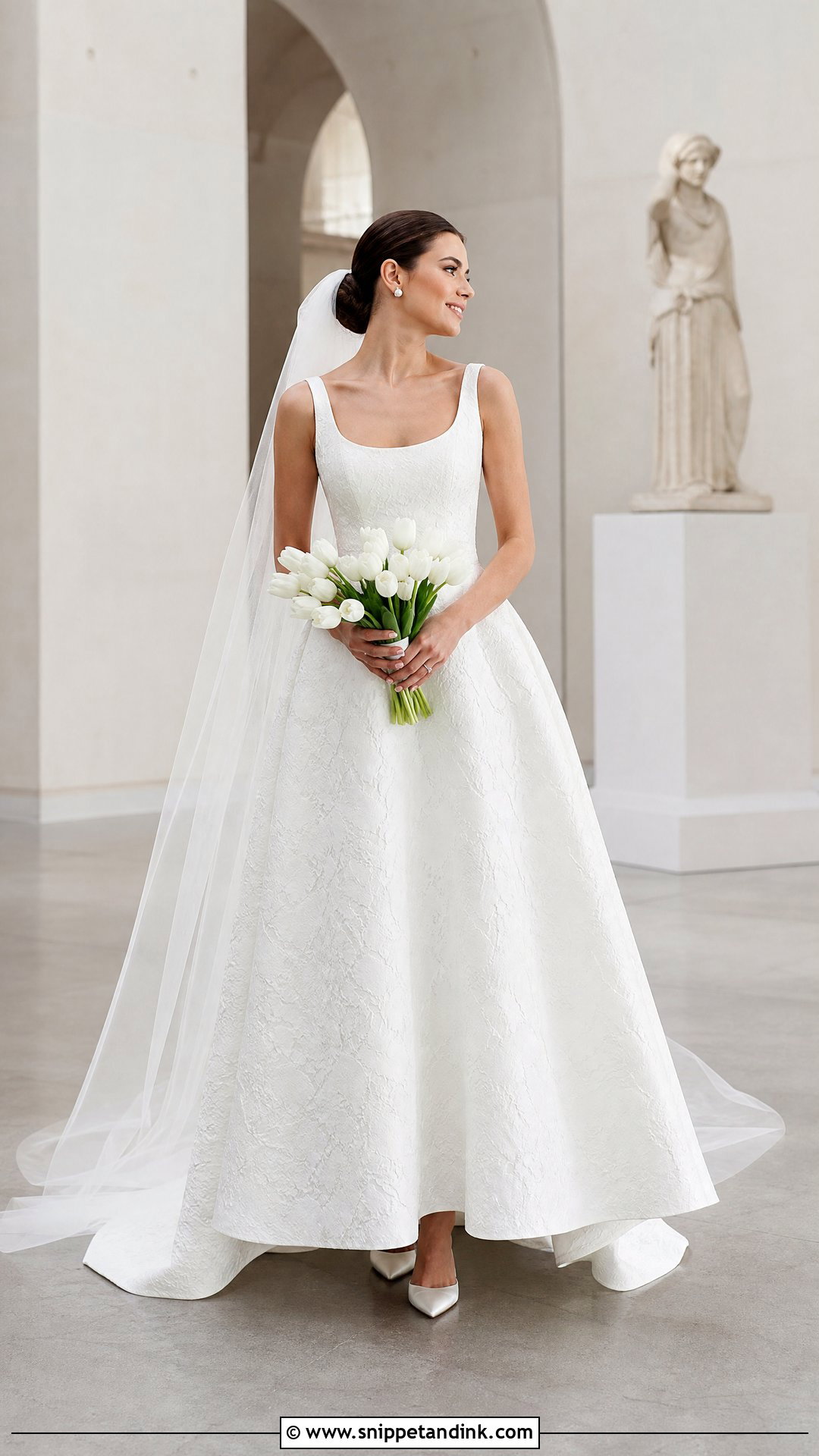
Jacquard has its pattern woven into the cloth rather than printed or appliquéd on, so it reads as texture from a distance and as detail up close. Because the fabric is already busy, I keep everything else plain: pearl studs, a simple bracelet and smooth satin pumps with a mid-height heel. A plain cathedral veil without lace or beading lets the weave stay visible. Broad straps and a sharply defined waist suit the scoop neck. Wear a polished bun and carry a structured bouquet of white tulips. Museums and grand indoor spaces suit jacquard because guests see it close up, which is where it looks best.
11. Illusion Neckline A-Line Wedding Dress
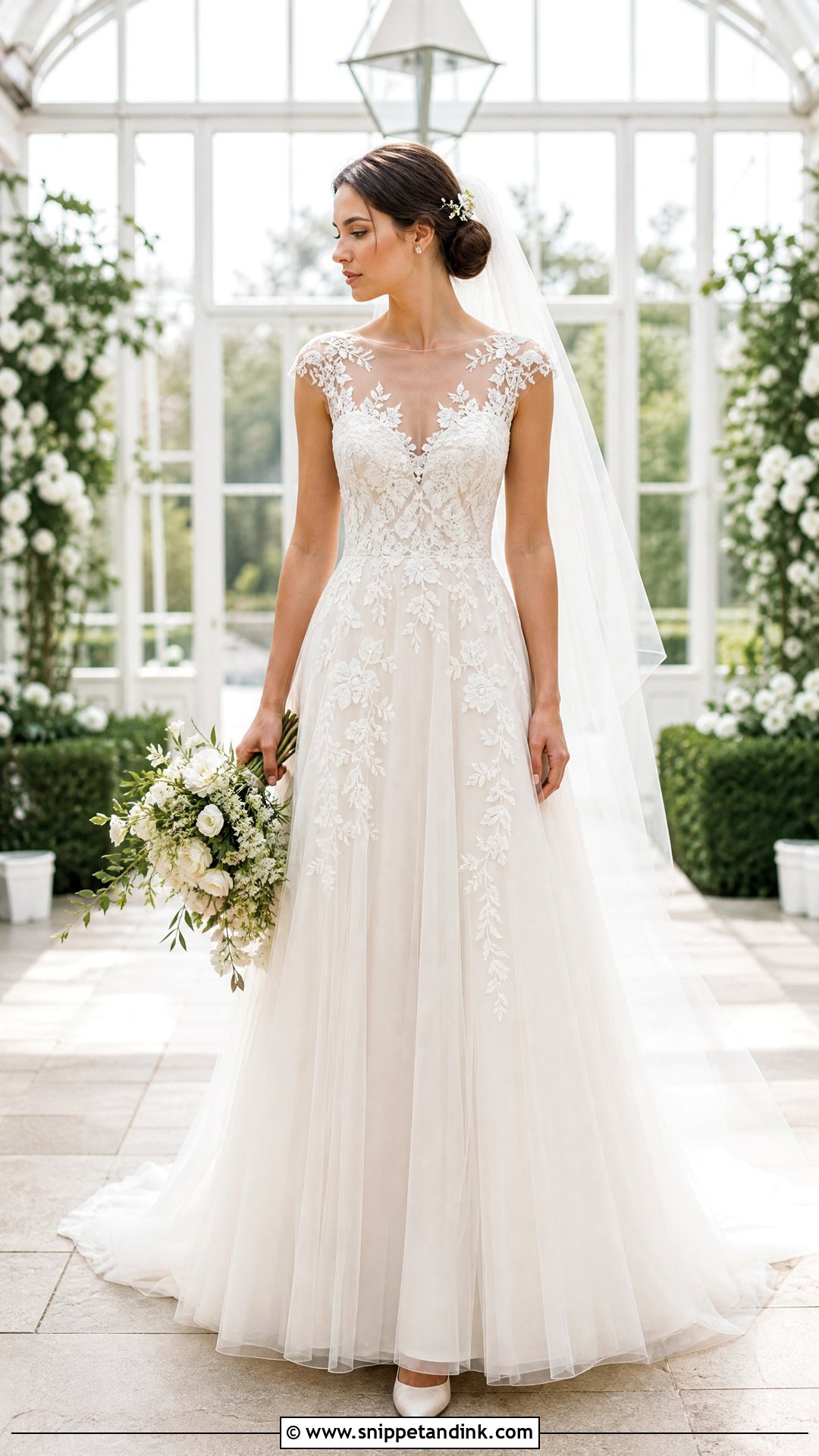
An illusion neckline is sheer mesh with lace appliqués placed over it, so the bodice looks open while staying secure. The mesh shade matters more than anything else here. I hold the swatch against a bride’s chest in daylight, not shop lighting, because mesh that is even slightly too pink or too yellow shows as a band in photos. Lace should continue lightly onto a tulle or organza skirt. Closed-toe pumps, crystal studs and a narrow bracelet keep it quiet, and a simple fingertip veil stops the shoulders looking crowded. Sweep the hair into a low bun with a few small floral pins and carry a loose white bouquet.
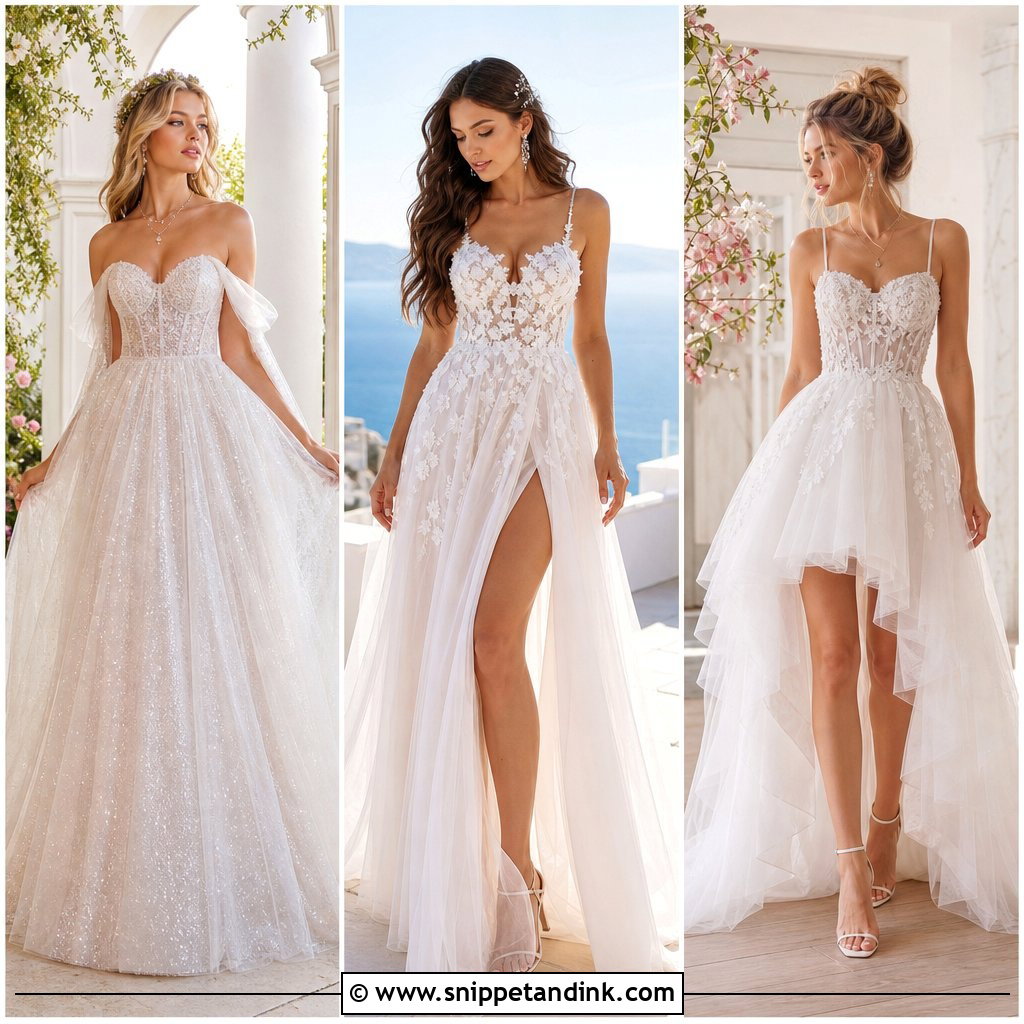
12. Corset Bodice Glitter Tulle A-Line Wedding Dress
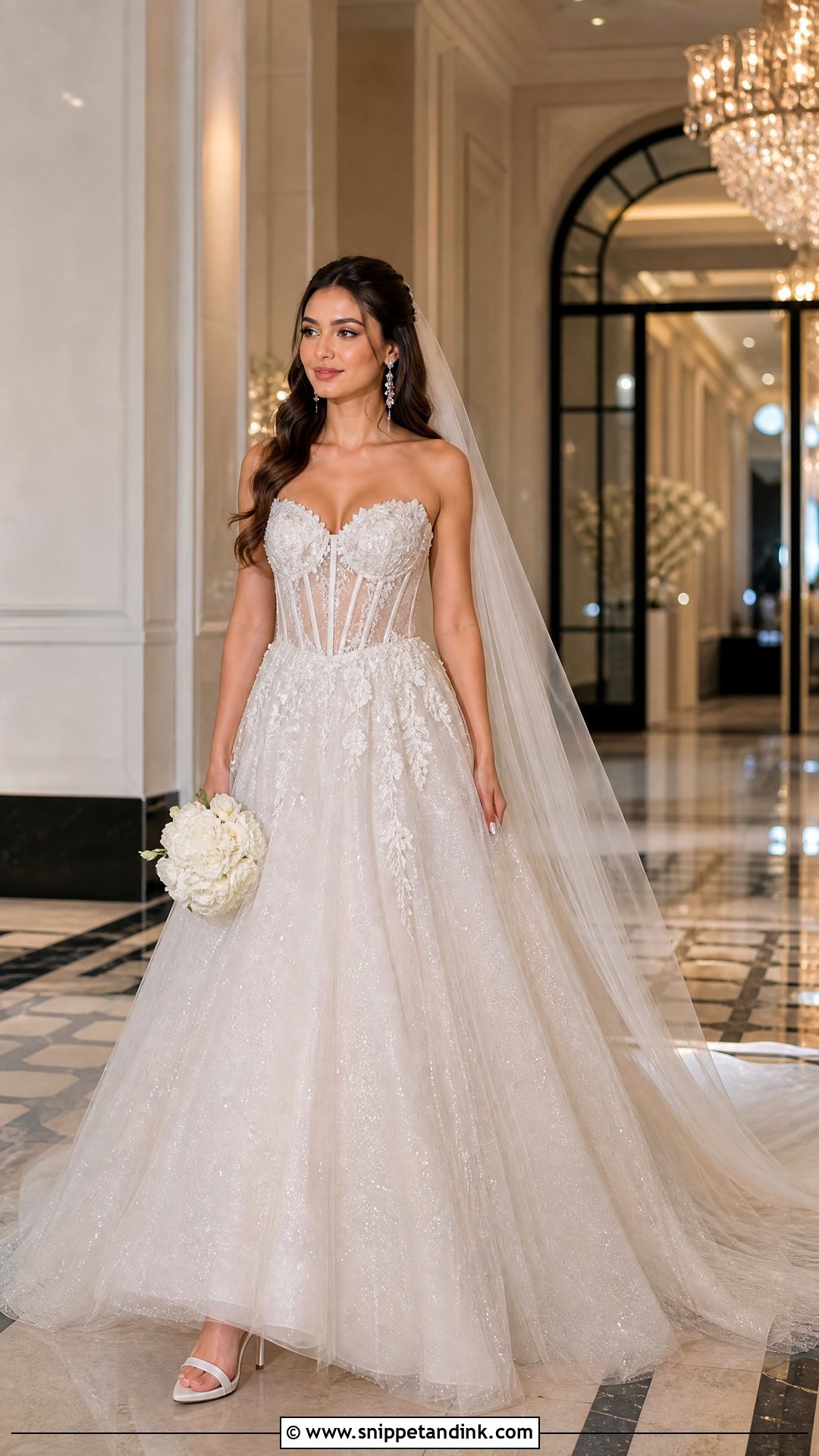
For shimmer with definition, pair a corset bodice with a glitter tulle skirt. Look for structured cups, neatly finished boning and appliqués across the bodice and upper skirt. Glitter tulle is subtle in daylight and much brighter under evening lights and camera flash, so I always ask brides to look at it under a phone torch before ordering. Simple satin heels, crystal drop earrings and a fine bracelet balance the sparkle, and a plain cathedral veil keeps it from tipping into costume. Soft waves or a smooth half-up style, then an all-white bouquet. Evening receptions in hotels are its natural home.
13. Modest Long Sleeve Satin A-Line Wedding Dress
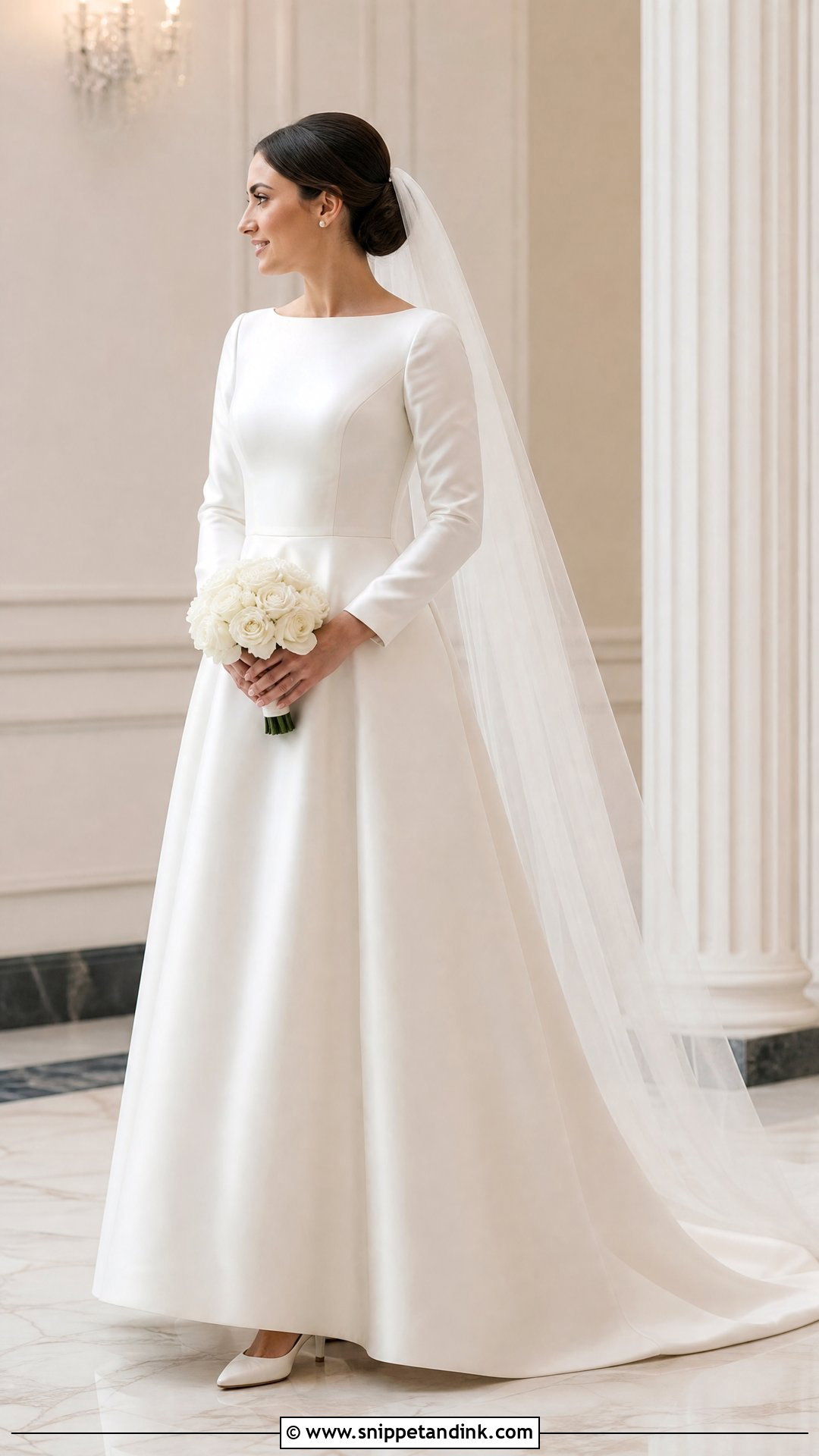
Full coverage does not have to mean heavy. Here the satin carries the look: a bateau or jewel neckline, tailored sleeves, a defined waist and covered buttons running down the back. Those buttons are lovely and slow; I tell brides to budget ten minutes for whoever is doing them up, or ask the seamstress for a hidden zip underneath. Keep the skirt smooth and moderately full. Closed-toe kitten heels, pearl studs and a delicate hair comb replace a necklace. A long plain veil, a low chignon and white roses or ranunculus complete it, and it sits comfortably at a cool-weather or faith ceremony.
14. Boho Lace A-Line Wedding Dress
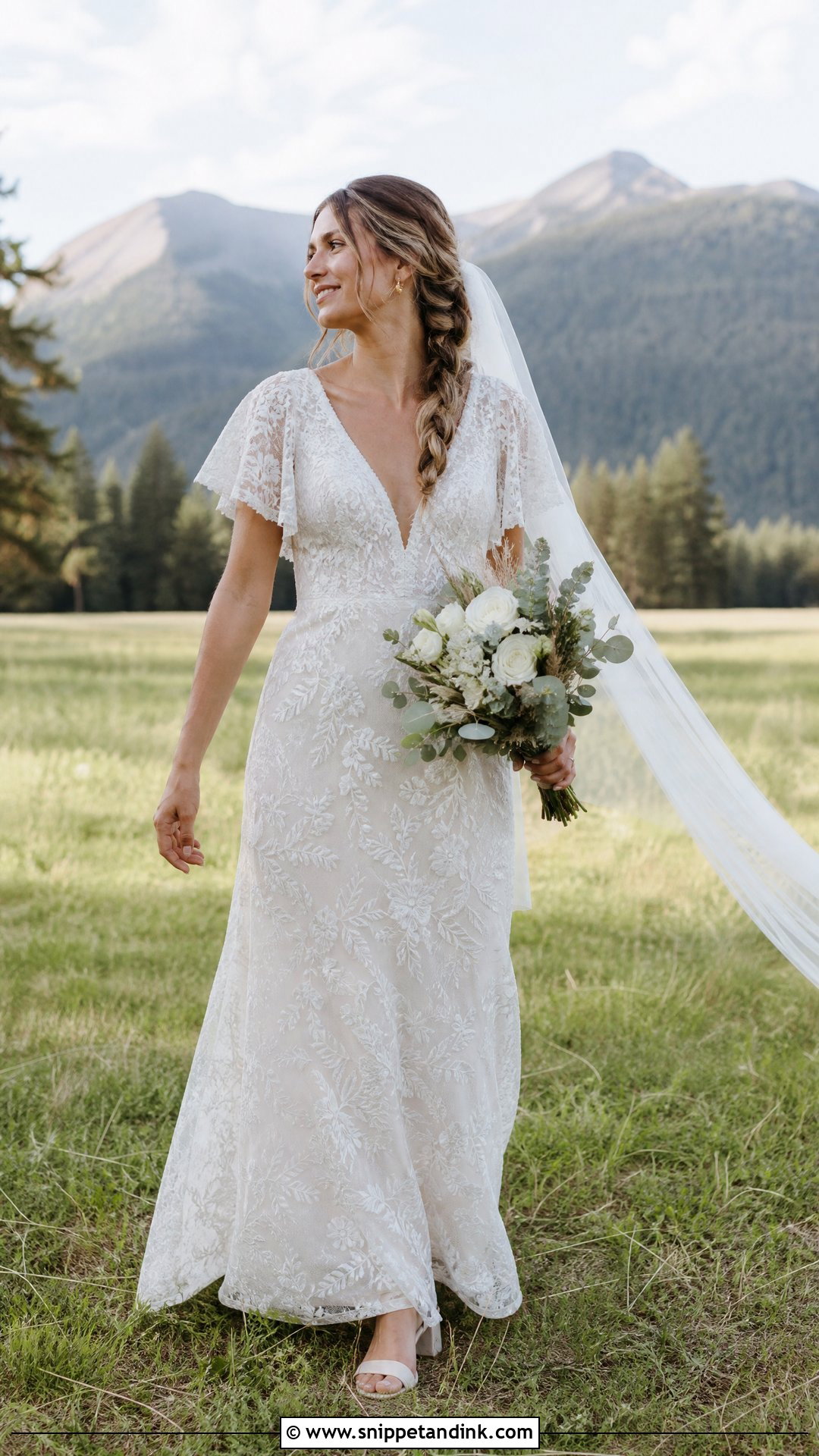
Boho should feel relaxed, not thrown together. I look for soft geometric or botanical lace, a fitted bodice that is comfortable sitting on a hay bale or a picnic bench, and a skirt with real movement. Flutter sleeves or wide straps help if you plan to dance outdoors. Ivory block-heel sandals, small gold earrings and a fingertip veil in plain lightweight tulle are enough. Loose waves or a textured low braid suit the mood. Carry white flowers with grasses and eucalyptus. The mistake I see most is stacking flower crowns, cuffs and feathers on top of patterned lace; the lace already has plenty of personality.
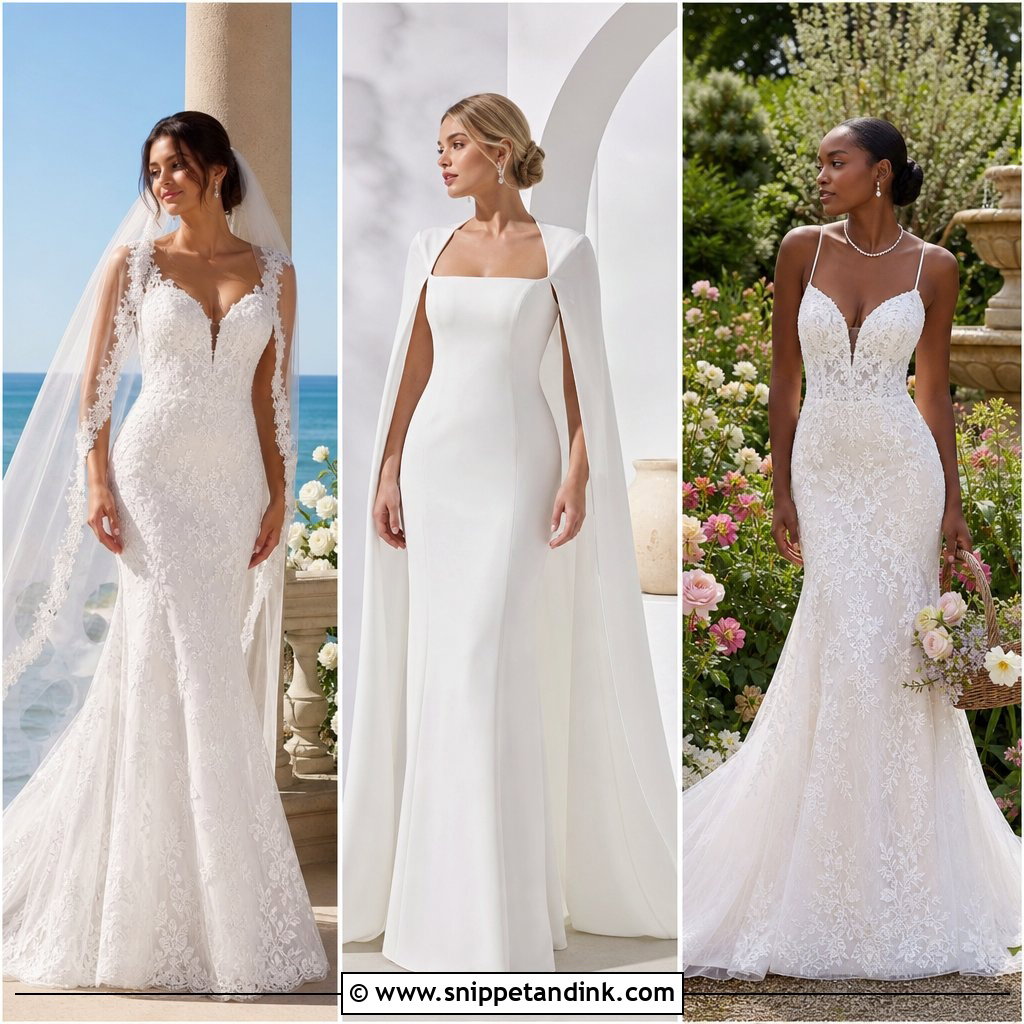
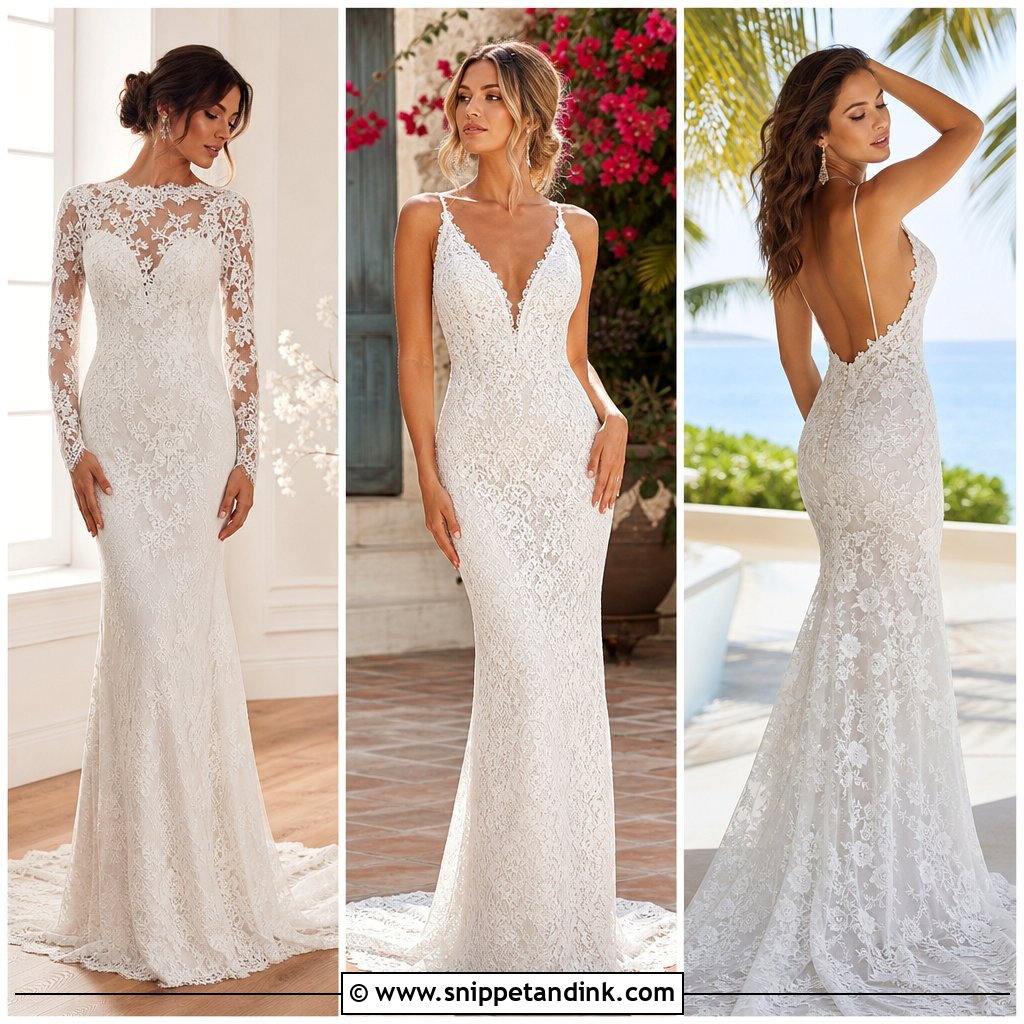
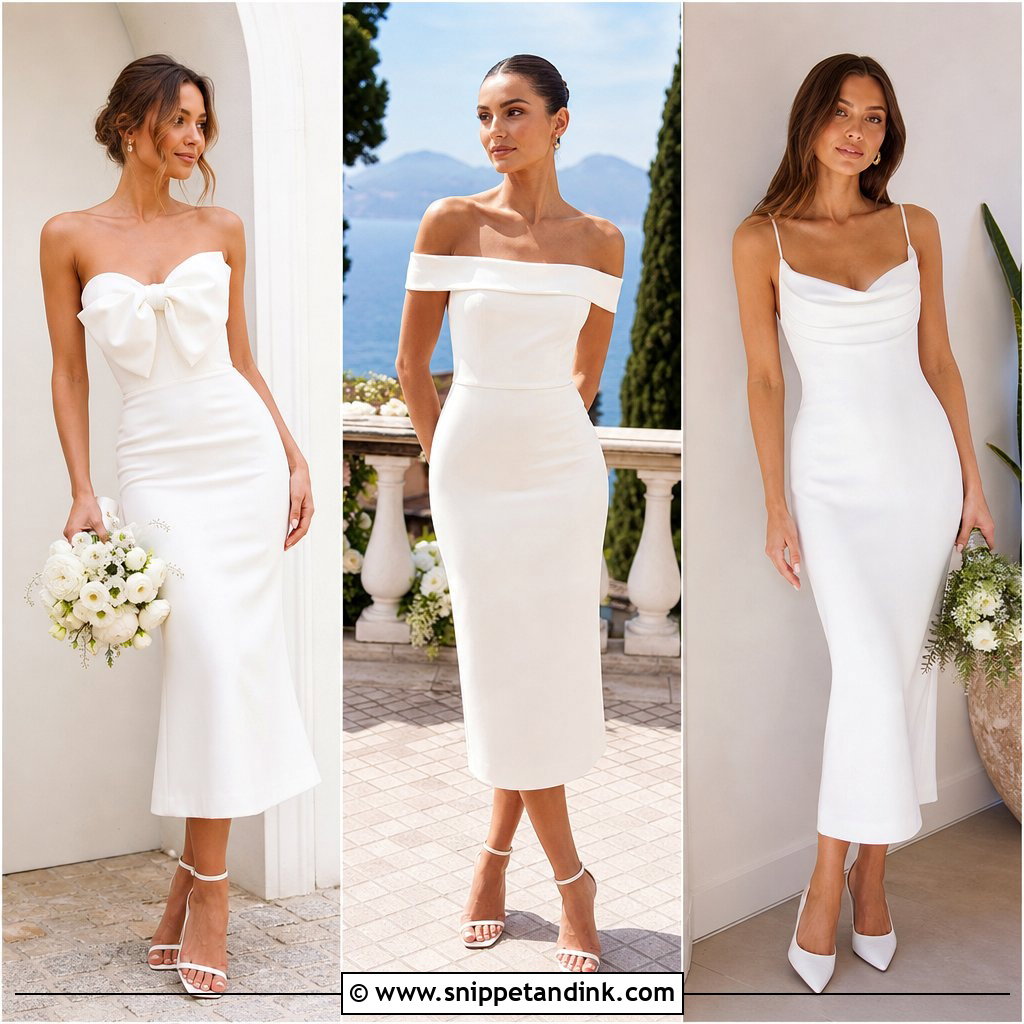
15. Beach Chiffon A-Line Wedding Dress
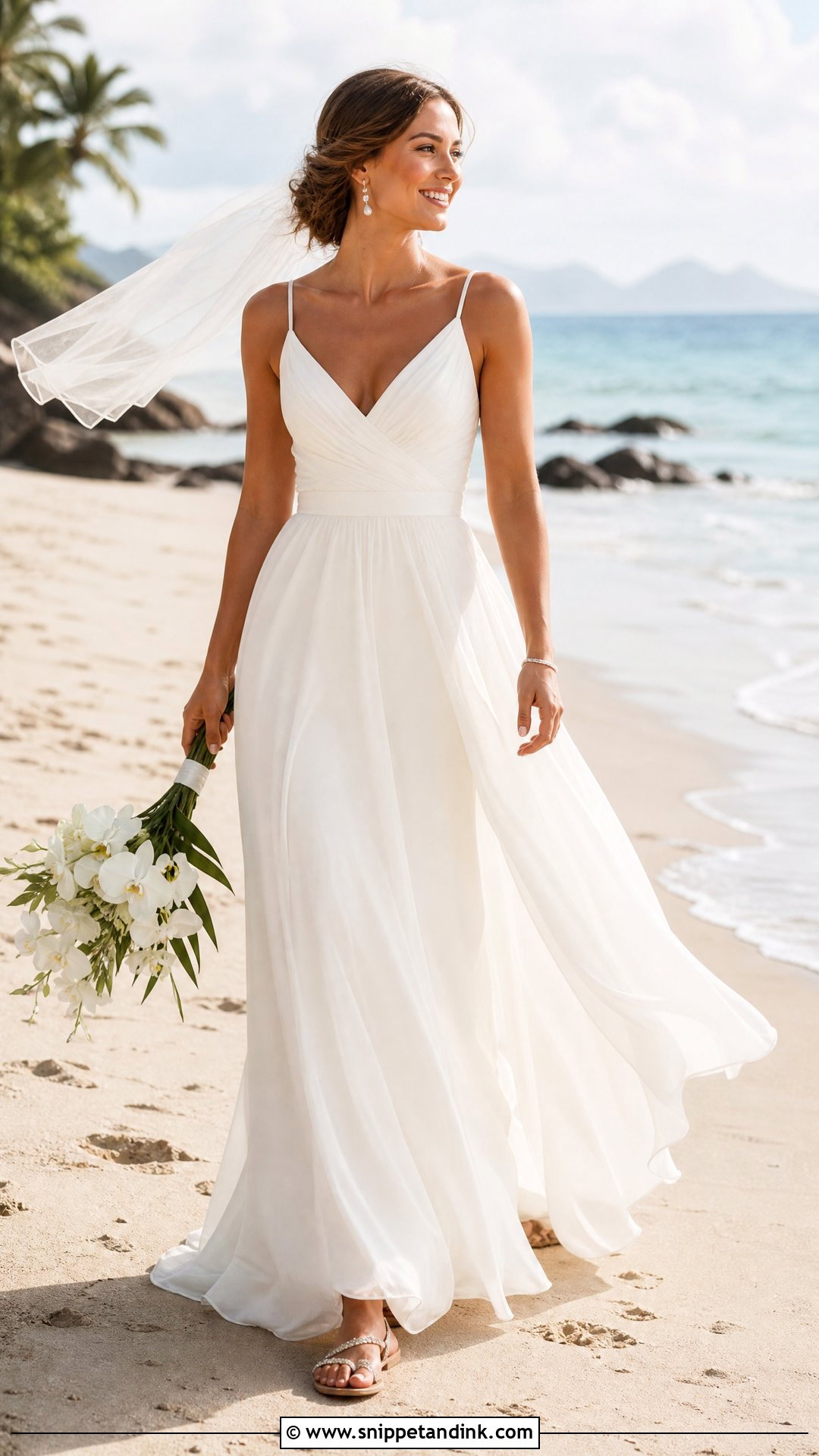
Sea air is damp and it moves fabric constantly, so a beach gown needs chiffon, secure straps and a lining that will not cling once it gets humid. Skip a long train; it fills with sand within minutes. Flat embellished sandals or barefoot sandals make walking on sand manageable in a way narrow heels never will. Small pearl earrings and a bracelet without prongs avoid snagging the chiffon. Near water, a short veil, a ribbon or a floral comb is easier to manage than cathedral length, which wind will lift straight over your head. White tropical flowers and greenery finish it.
16. Winter Satin A-Line Wedding Dress
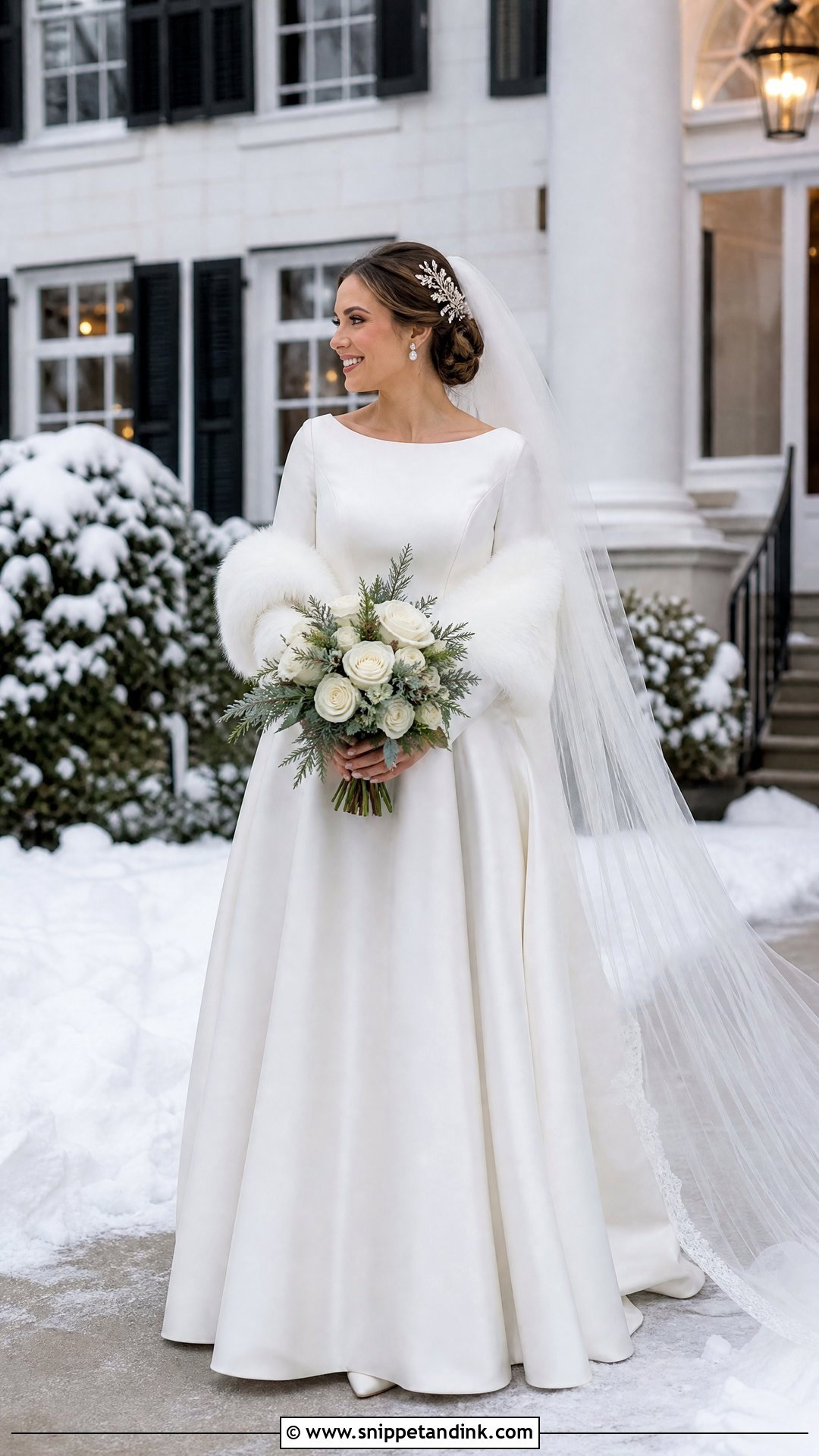
Winter is the one season where heavier satin earns its weight. Long sleeves or a higher neckline, a fitted bodice and a full skirt in substantial satin or mikado keep you warm and photograph with depth in low light. For outdoor photos, a white faux-fur wrap or a fitted bolero comes off once you are indoors. Closed-toe pumps, pearl earrings and a crystal comb finish it. A long veil can be swapped for a shorter one at the reception. Pin the hair into a secure low bun, since cold wind dries and frizzes loose curls quickly. White roses with a few evergreen sprigs give the season without a theme.
17. Floral Appliqué A-Line Wedding Dress
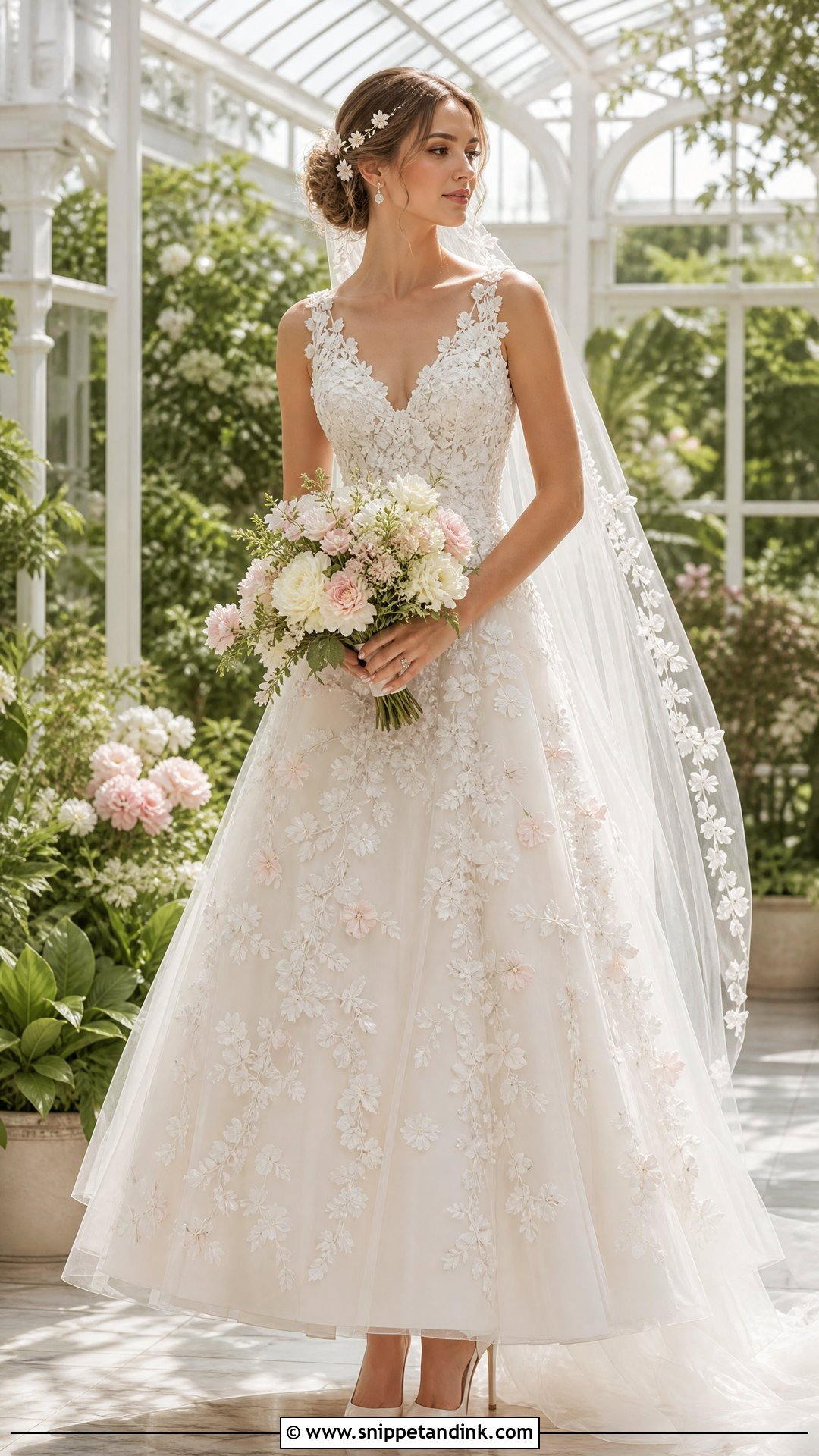
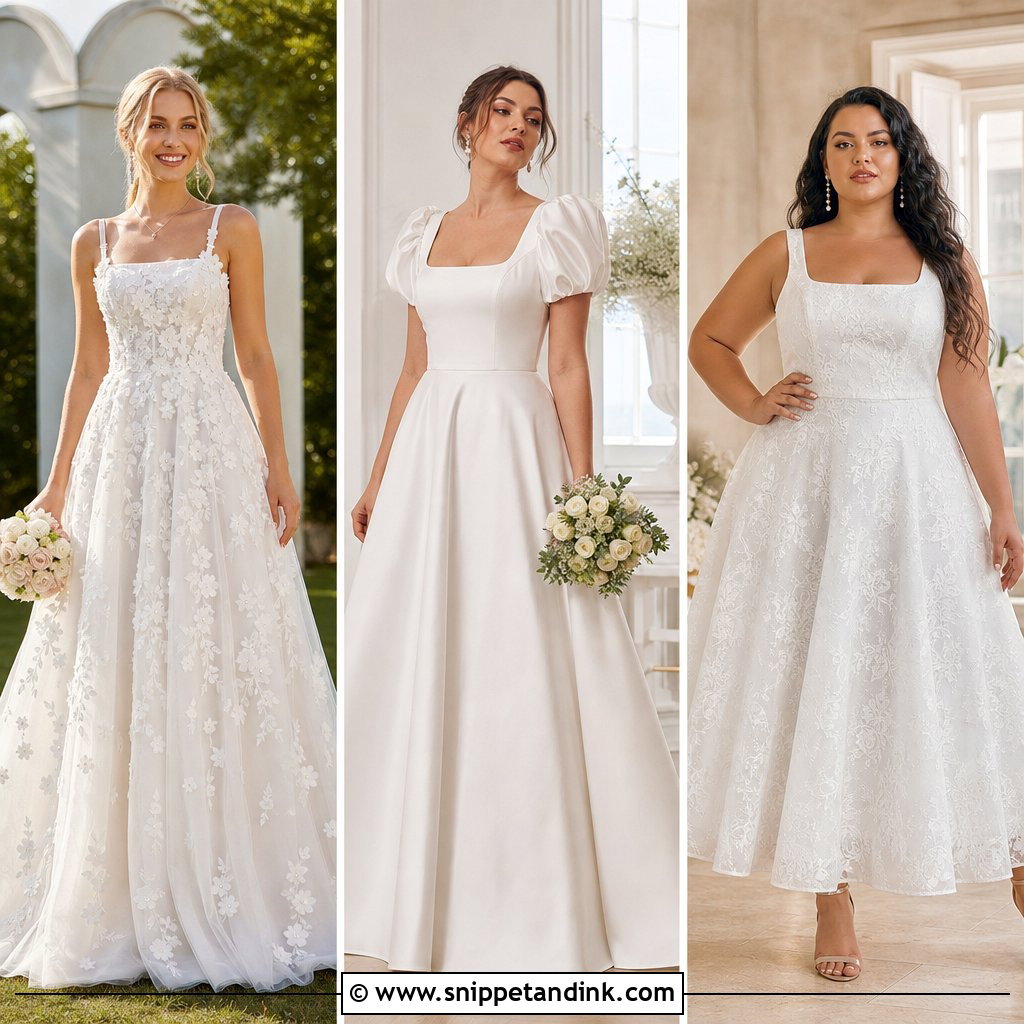
Three-dimensional appliqués are flowers cut from lace or fabric and stitched on so they stand off the surface. On an A-line I prefer them dense on the bodice and scattered more widely as they move down the tulle, because evenly spaced flowers from neck to hem look busy. Wide straps or off-the-shoulder sleeves help balance the texture. Simple ivory pumps, small pearl earrings and a sheer veil with only a few matching appliqués near the edge are enough; a fully appliquéd veil competes. A soft updo with small floral pins and a loose bouquet of white and pale blush blooms suit garden venues and glass conservatories.
18. Cathedral Train Satin A-Line Wedding Dress
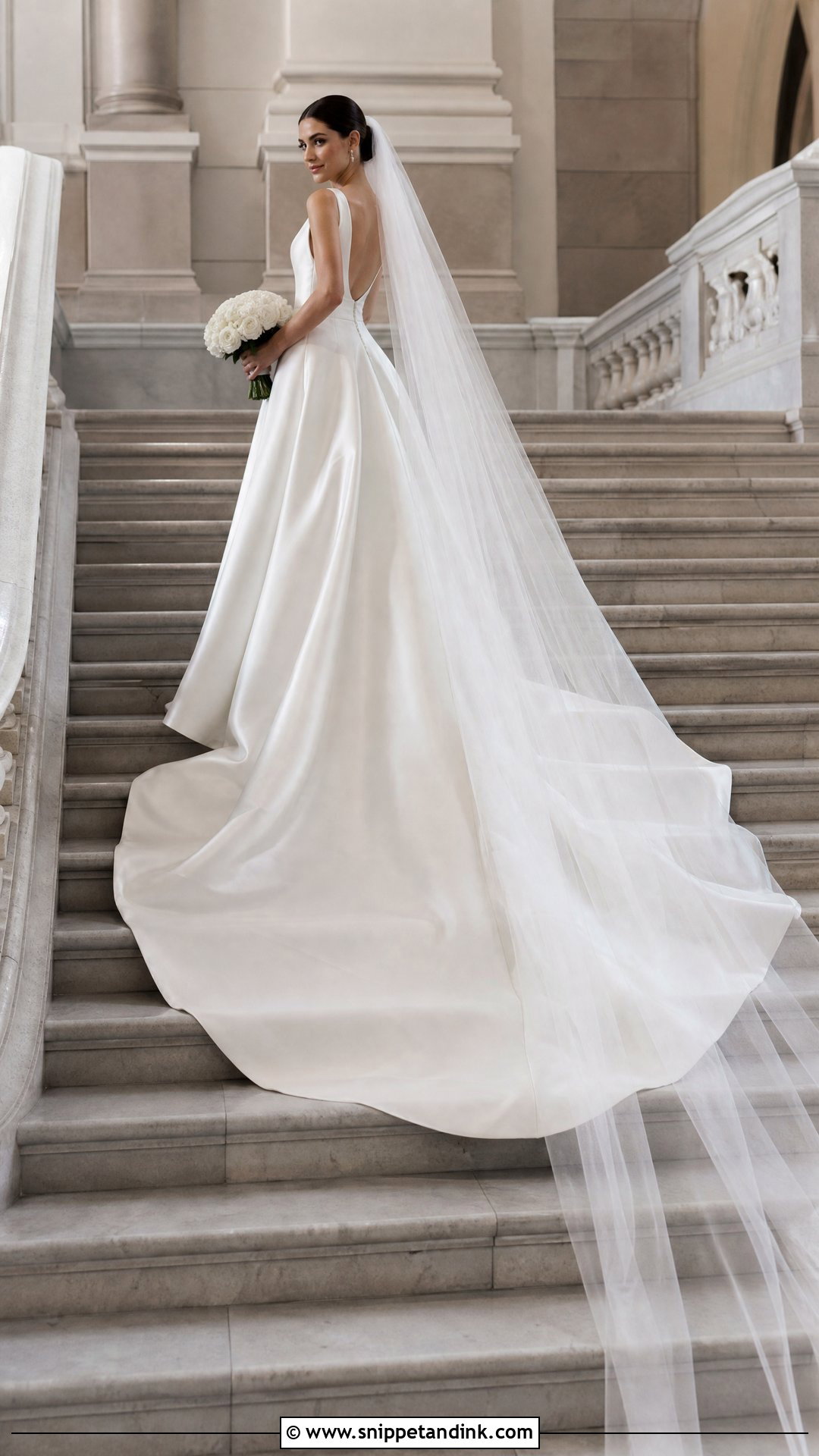
A cathedral train makes the walk in, and then it has to be dealt with. Before I approve one, I ask how the bustle is built: an over-bustle with hooks or an under-bustle with ribbons, and whether the bridesmaid who will fasten it has practiced. Without a sound bustle, a satin train gets stepped on within the first hour of the reception. Keep the bodice and neckline clean so the length is the feature. Pointed pumps, pearl drops and a narrow bracelet, then a cathedral veil reaching just past the train. Polished bun, structured white roses. You need a long aisle or a staircase for this one to make sense.
19. Tea Length A-Line Wedding Dress
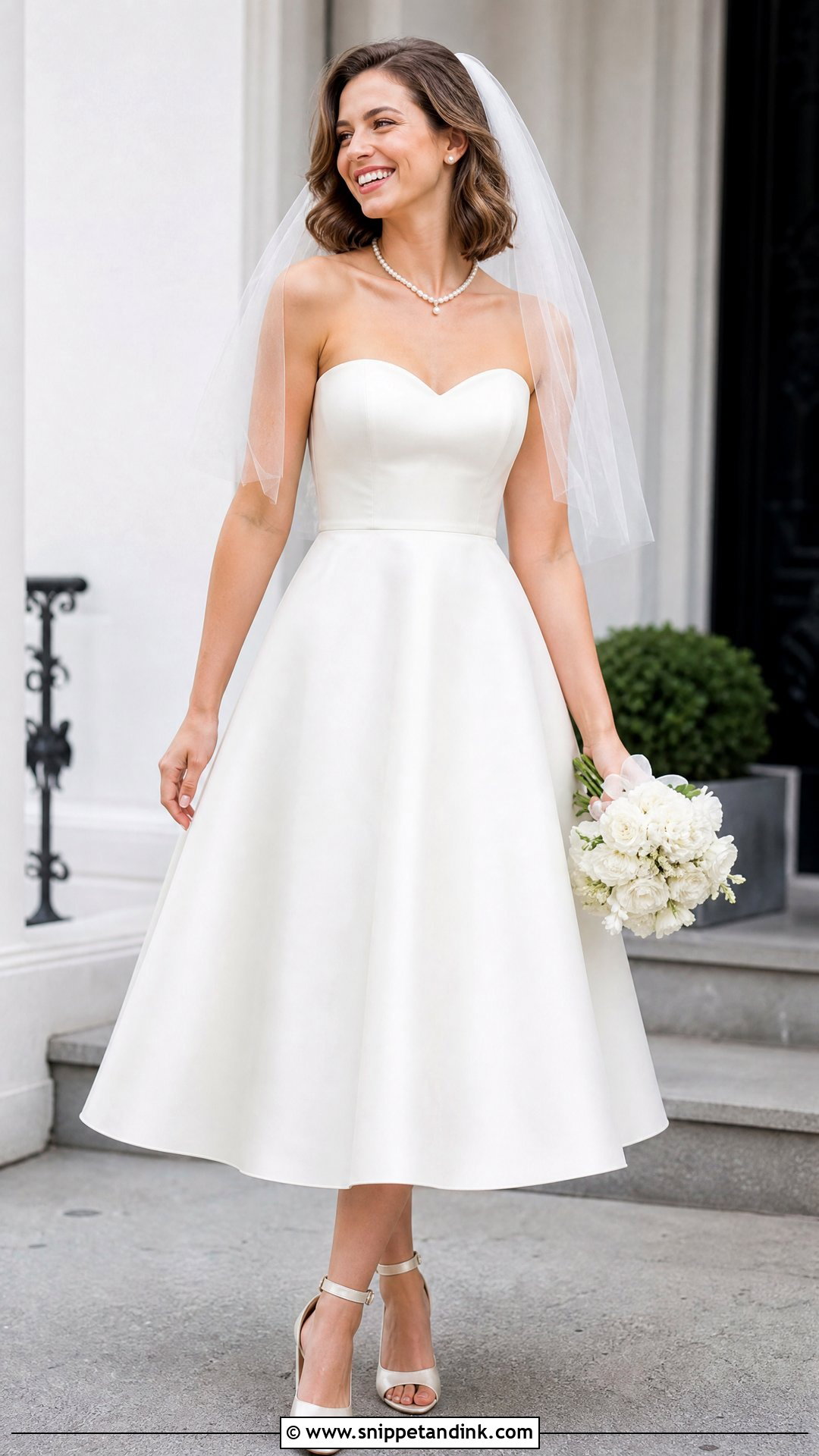
Tea length ends somewhere between the knee and the ankle, which turns your shoes into part of the outfit. I tell brides to buy the shoes before the hem is set, because a half-inch difference in heel height changes where the skirt falls. Pointed slingbacks, embellished pumps or satin ankle straps all suit it. Pearl studs, a short necklace and a birdcage or shoulder-length veil keep the proportions right. A smooth bun, a curled bob or a half-up style suits the vintage shape. Compact white bouquet. It is the most practical length I know for courthouse weddings, brunches and small city receptions.

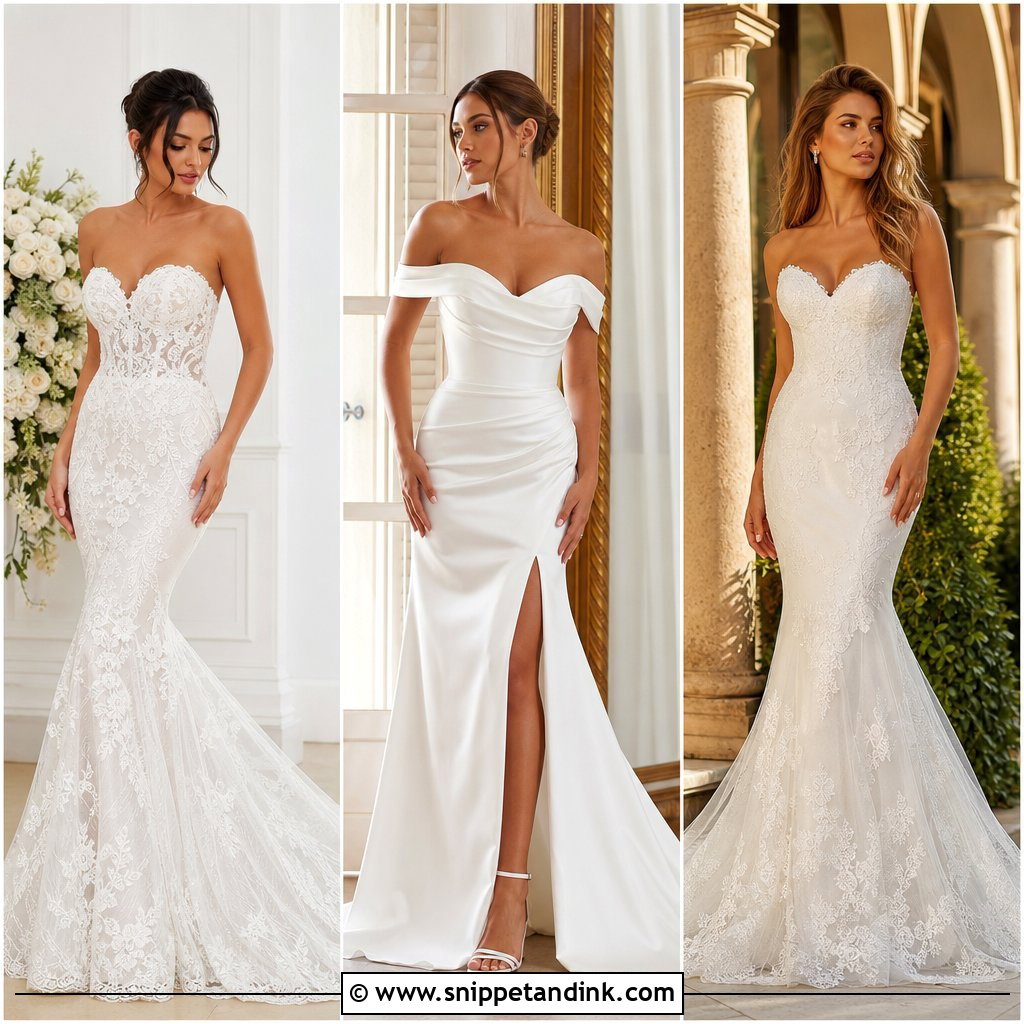



20. Plus Size Lace A-Line Wedding Dress
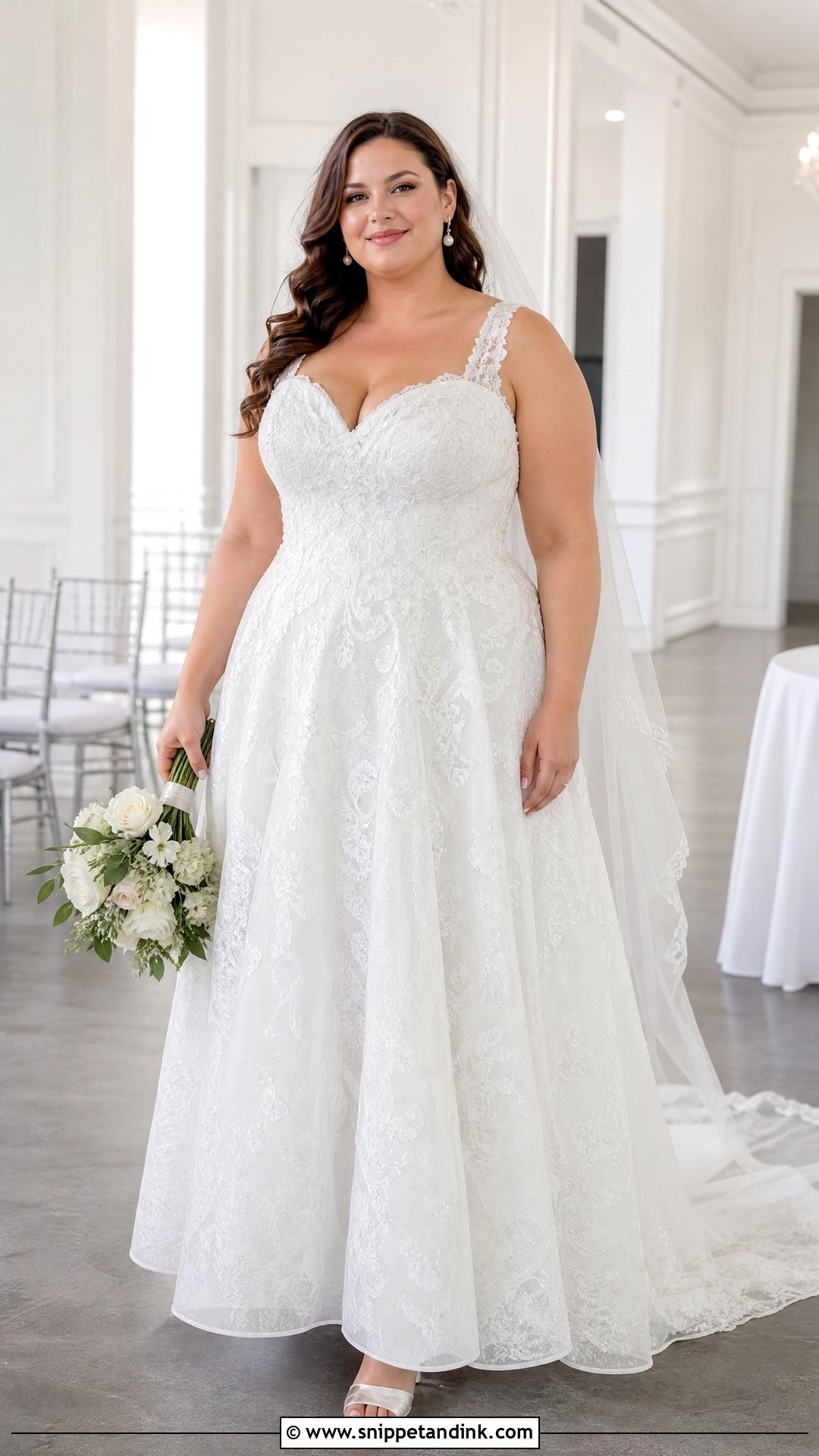
Plus size A-lines succeed or fail on structure, not on the neckline you were told to choose. I look for a supportive bodice with wider straps, cups built into the gown and seams placed to shape rather than flatten. A natural or basque waist defines the figure, and a softly flared skirt moves well. Pick the neckline you feel comfortable in. Cushioned block heels, pearl drops and a bracelet that slides on easily keep the day comfortable. A chapel veil frames the gown without adding bulk. Updo or flowing curls, with a medium bouquet in proportion. Above all, book an experienced seamstress so the gown supports you without pinching or gaping when you sit.
21. Petite Soft Tulle A-Line Wedding Dress
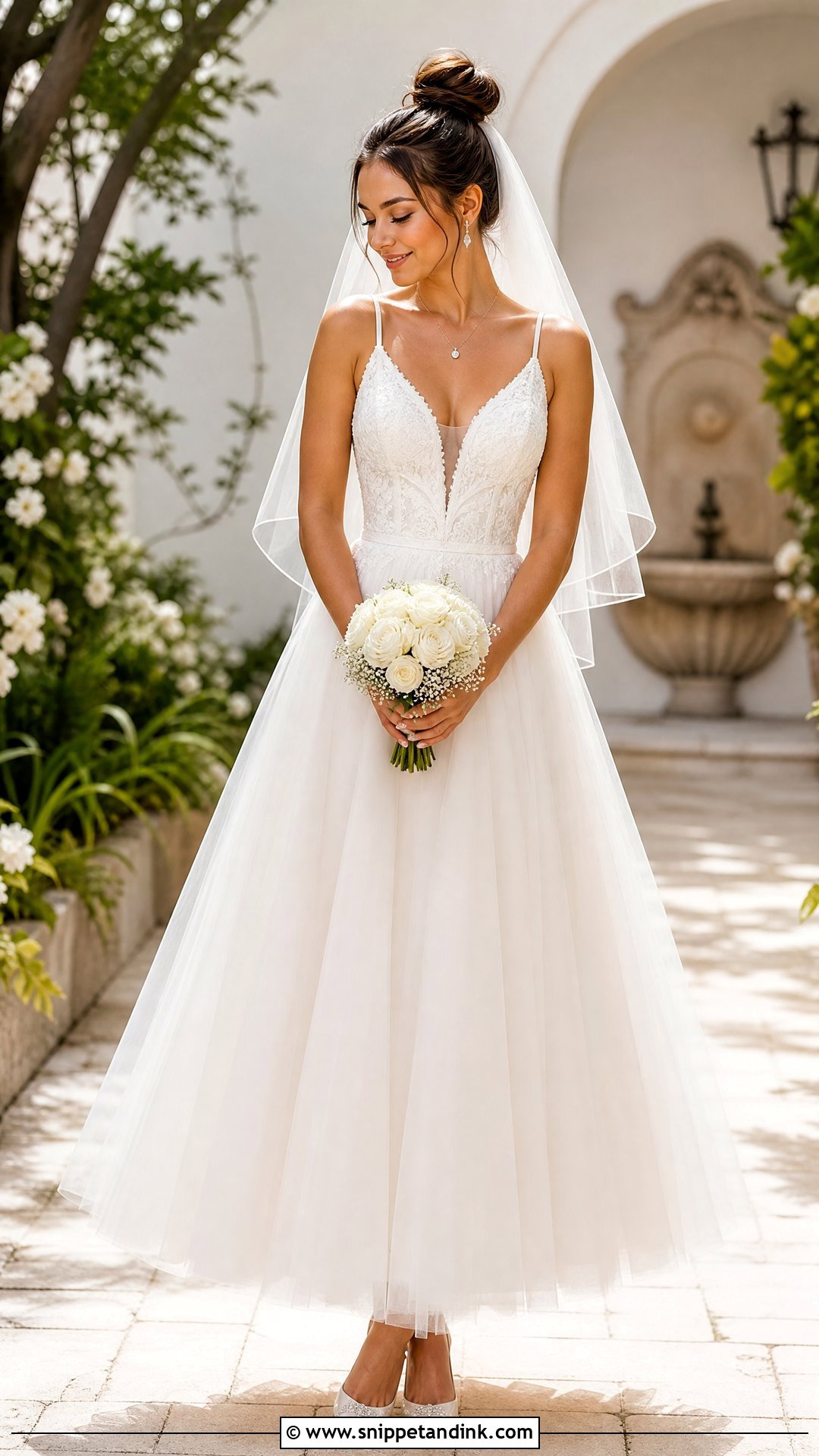
Petite brides often get told to avoid volume, but an A-line works well if the proportions are adjusted. The waistline has to be raised to your actual waist during alterations, otherwise the skirt starts too low and shortens your legs. Choose moderate tulle volume, and look for vertical lace placement or clean princess seams to keep a continuous line. Pointed-toe heels or low platforms help without hurting. Small drop earrings, a delicate pendant and a fingertip veil keep accessories in scale. A high bun adds height. Finish with a compact white bouquet, since a large one hides half the bodice.
22. Minimalist Cowl Neck A-Line Wedding Dress
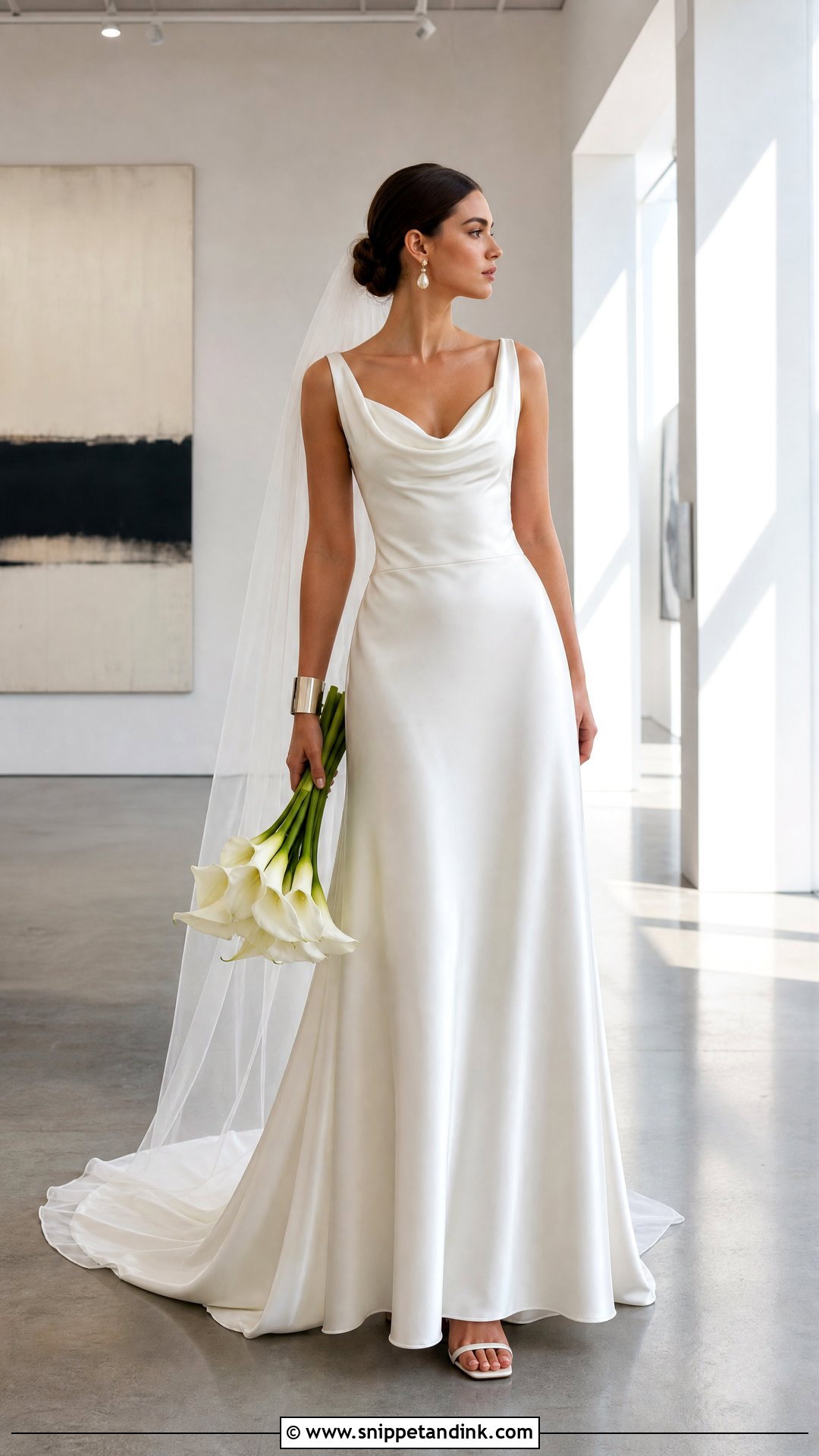
A cowl neck is fabric draped in soft folds below the collarbone, and in satin it moves every time you breathe. That movement is the appeal and the risk: on a fuller bust a deep cowl can gape when you lean forward, so I check it seated and bending before the final fitting. Slender straps and a skirt falling cleanly from the waist suit the minimal look. Sort undergarments early; a cowl front and a low back rule out most bras. Sleek ivory sandals, sculptural pearl earrings and a cuff bracelet are enough. A plain chapel veil, a low bun or glossy waves, and calla lilies. Galleries and rooftops suit it.
23. Pearl Beaded A-Line Wedding Dress
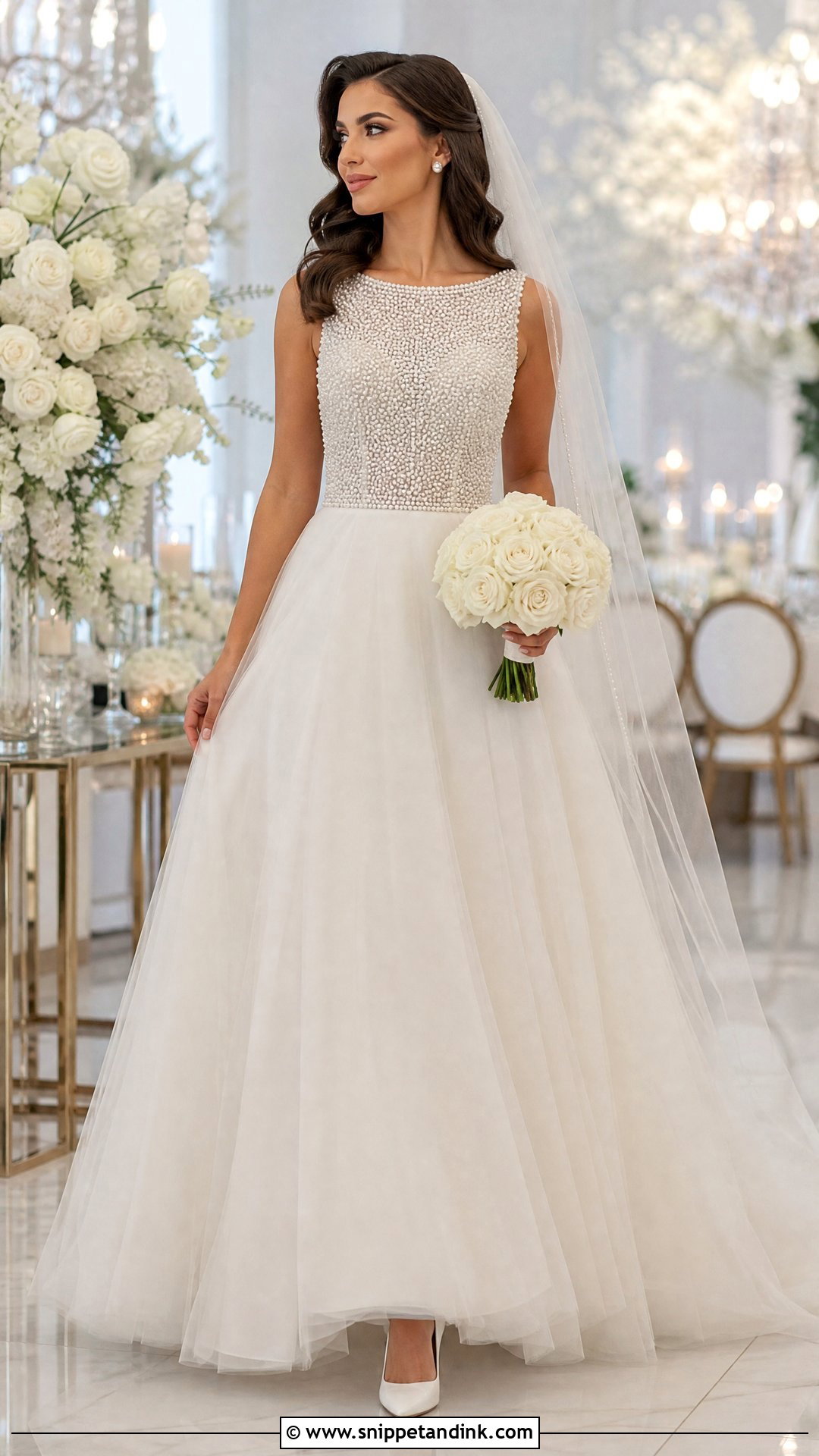
Pearl beading gives texture and a soft glow instead of sparkle. I prefer the pearls concentrated on the bodice, neckline or straps and fading into a plain skirt; a skirt covered in pearls adds real weight and pulls on the waist seam all day. With that much detail on the gown, wear pearl studs or small drops rather than a necklace. Satin pumps and a pearl-trimmed fingertip veil coordinate without doubling up. Polished waves or a low bun with a few pearl pins suit it, and white roses with sweet peas soften the bouquet. Formal daytime ceremonies and evening venues both work.
24. Detachable Sleeve A-Line Wedding Dress
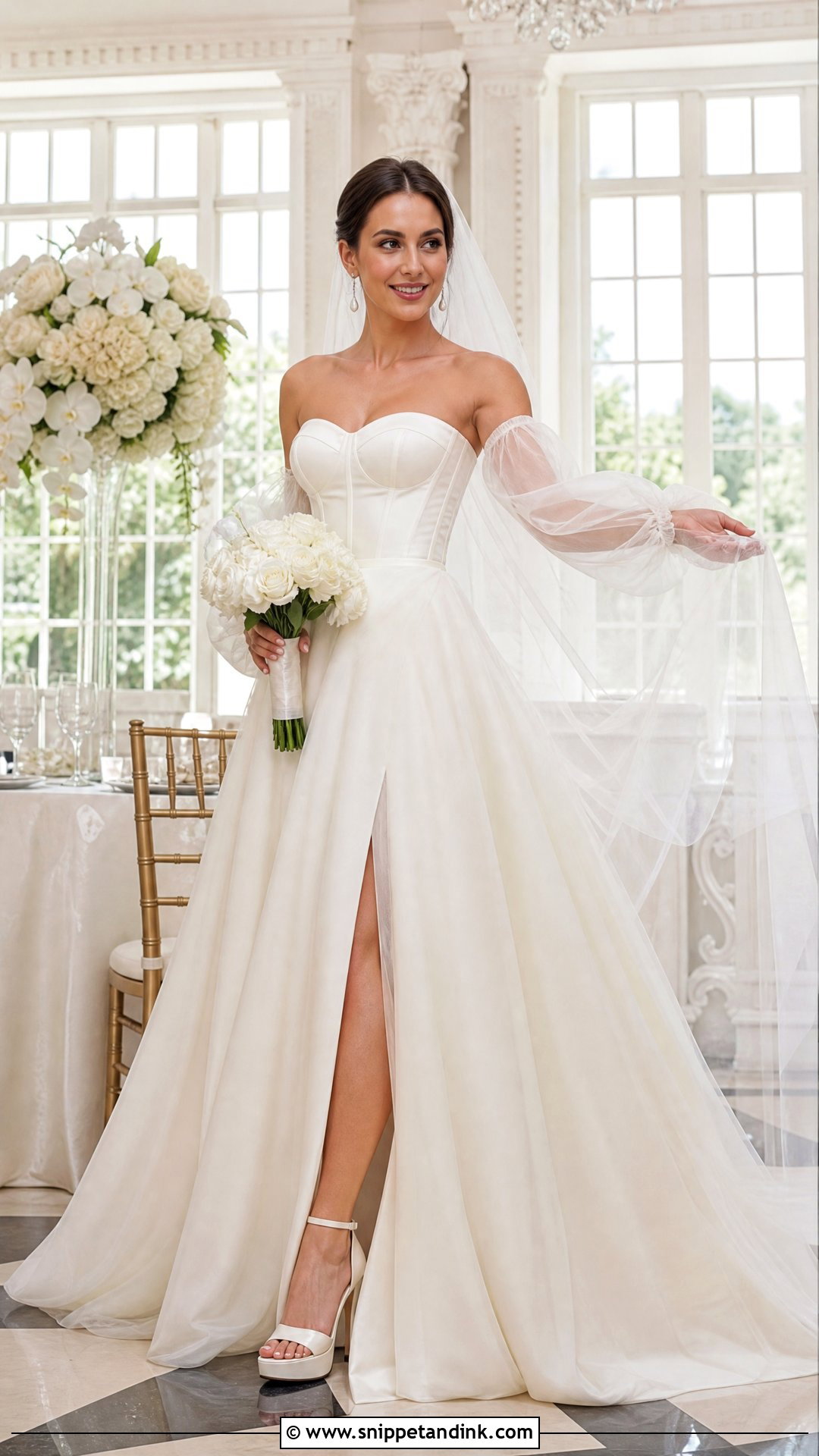
Detachable sleeves give you a second look without paying for a second dress. Off-the-shoulder drapes, fitted lace sleeves or airy tulle sleeves cover you for the ceremony, then come off to show a strapless or thin-strap bodice for dancing. The attachment matters: snaps or small hooks sewn into the bodice hold better than elastic, which slides down over the evening. Ivory block heels, drop earrings and a simple chapel veil suit the ceremony look. Once the veil and sleeves are off, add statement earrings or a sparkling comb. Have your maid of honor practice removing the sleeves before the day.


25. Blush Floral A-Line Wedding Dress
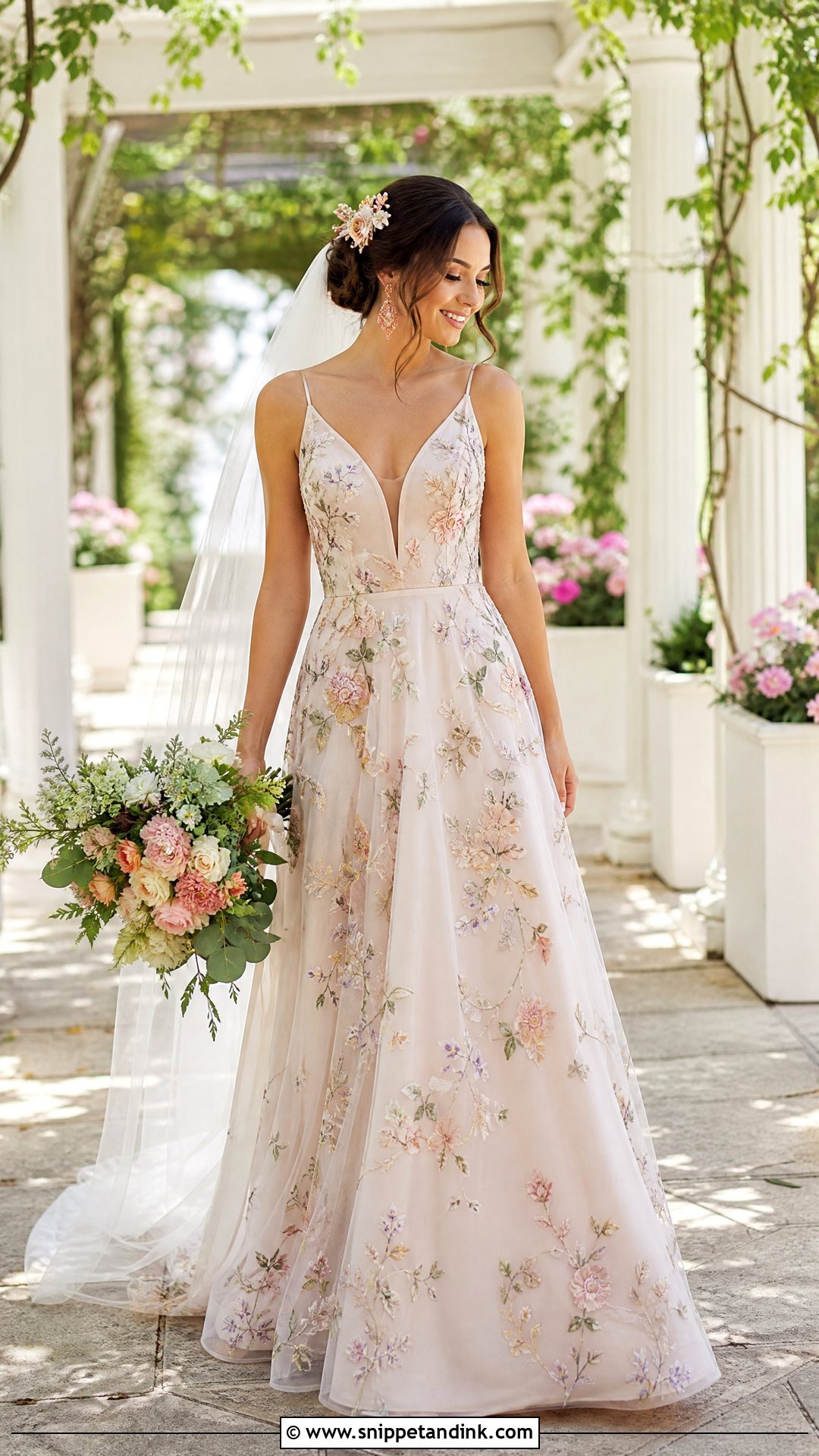
A blush floral gown gives color while still reading as bridal. Start with a pale blush, champagne or soft ivory base and delicate embroidered flowers in muted pink, blue or green. The structured bodice keeps the embroidery from swamping the silhouette. Ask to see the gown in daylight; champagne bases can look grey indoors and much warmer outside. Nude or blush heels, small rose-gold earrings and a plain ivory veil keep the embroidery visible. A loose updo with a subtle floral comb, plus a bouquet repeating one or two shades from the dress instead of matching every flower. Garden and spring weddings suit it best.
How Satin, Chiffon, Lace and Mikado Hold Up Over a Long Day
Brides choose fabric from photos, and I understand why, but each one behaves differently once you have been in it for ten hours. Here is what I tell brides at the first appointment.
Satin and mikado
Both hold shape well and photograph with a soft sheen. Satin creases across the lap the first time you sit for dinner, and those lines stay. Mikado creases less but is heavy and warm, so I keep it for cool months and air-conditioned rooms.
Chiffon and tulle
Light and cool, and they recover from sitting almost immediately. Chiffon snags on rough wood, bark and some bracelet clasps, and tulle catches on beaded veils, so check your accessories against the fabric before the day.
Lace and crepe
Lace hides small marks and wrinkles better than anything else. Crepe looks sharp but shows every crease, so ask your planner or a bridesmaid to bring a handheld steamer for the gap between ceremony and reception.
Alterations an A-Line Gown Almost Always Needs
Expect at least two or three fittings, and start them roughly two to three months before the wedding. Most A-lines need the hem taken up to your shoe height, the bodice taken in at the side seams, and the straps adjusted so the neckline sits flat. Gowns with a train also need a bustle added, and the cost depends on how many points it needs.
Bring the exact shoes and undergarments to every appointment. If you change heel height after the hem is cut, the skirt will either drag or show your ankles. Your last fitting should be close to the date, because weight often shifts in the final weeks.
One Silhouette, Twenty-Five Ways to Wear It
These gowns share one frame and go in very different directions, from minimal satin and long lace sleeves to floral embroidery and corsetry. The right one is rarely the most fashionable on the rack. It is the dress that suits your venue, lets you sit, walk and dance, and still feels like you after the last song. Treat fabric weight, neckline, waist placement, train, shoes and accessories as one outfit. Bring your shoes and undergarments to every fitting, sit down in the gown and walk across the room before you sign off on alterations. Get those details right and an airy chiffon or a structured mikado will both feel comfortable all day.
You'll Like These Ideas:




Leave a Reply