
Two pieces give you a gown’s presence with a lot more say over fit, fabric and shape. In the twenty pairings below you’ll find lace sets, satin combinations, tailored jackets and lighter options for outdoor weddings, each styled with shoes, jewelry and a veil so you can see the whole picture. Bridal separates also let you change just one half between ceremony and reception instead of buying a second outfit. In my fitting room, the pairs that work always share three things: the same colour tone, balanced proportions and the same level of formality. Classic, modern, bohemian or glamorous, start with those three and the rest follows.
Where the Waistband Should Sit on Your Torso
The single biggest decision in mixing a top and skirt is where the two meet, and it depends on your torso length more than on fashion. When I measure a bride for separates, I look at the distance from the underbust to the natural waist before I look at styles.
Shorter torso
If your ribcage sits close to your hips, a very high waistband can make the top look squashed. A waistband at or just below the natural waist, with a top that meets it, gives your torso more room. Flat waistbands are better than wide belts here.
Longer torso
A high-waisted skirt and a cropped top suit you, and the join can sit a little above the natural waist without looking odd. A contrasting waistband or slim belt helps break up the length.
Then balance volume: put fullness on one half only. A fitted top over a full skirt, or a dramatic top over a slim skirt, both work. Volume top and bottom tends to swallow the bride, especially in photos taken from a distance.
1. Lace Crop Top And Tulle Skirt Wedding Dress
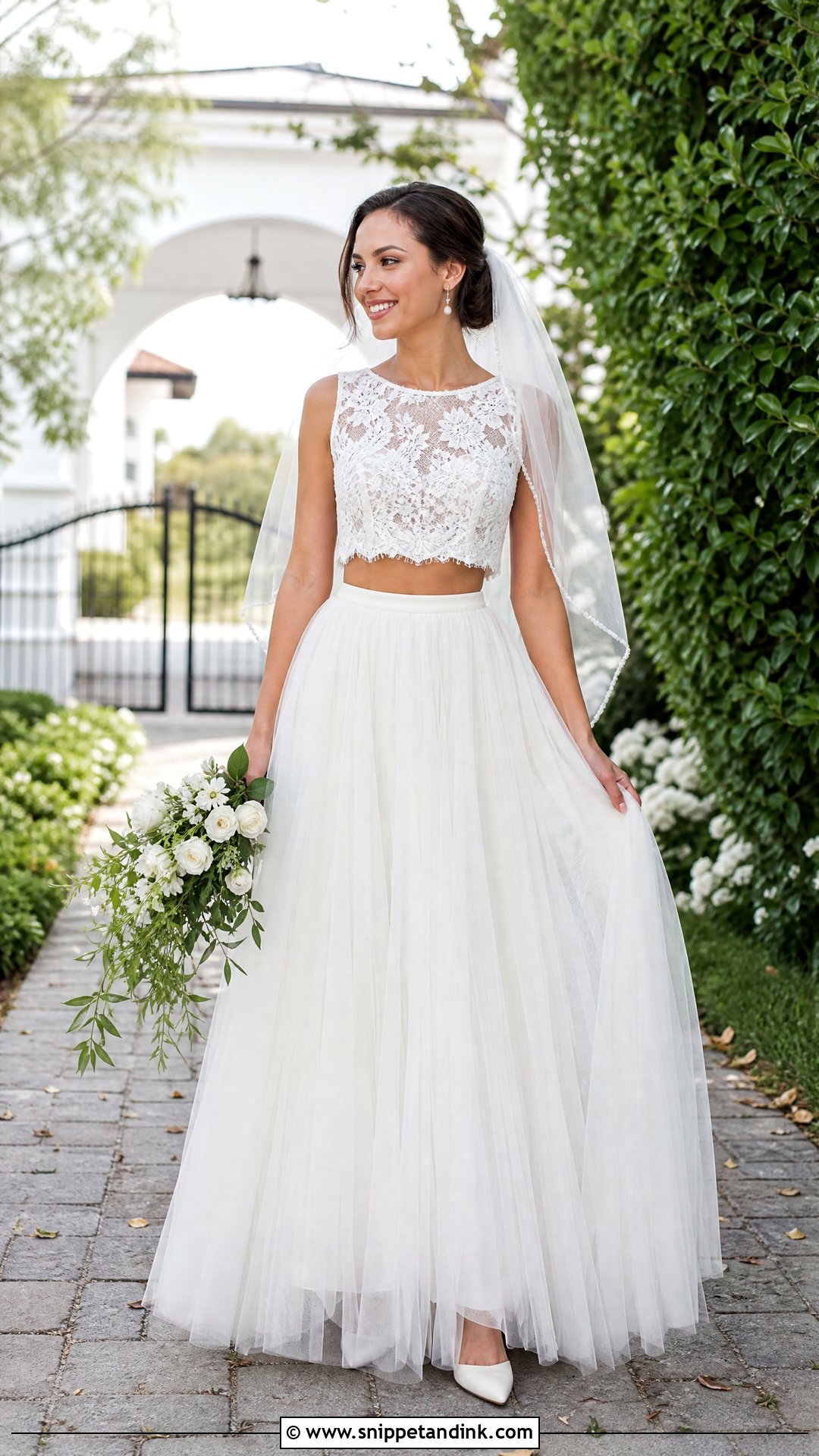
Lace and tulle is the softest pairing here. A lined lace crop top with a scalloped neck and some inner support sits over a high-waisted A-line tulle skirt, ideally meeting it at the narrowest point of your waist. A satin waistband gives the eye a clean break between the two textures and stops the lace edge from catching on tulle. Pointed ivory pumps, pearl drops and a light fingertip veil are enough. It suits ballrooms and gardens equally. Have both pieces altered in the same appointment, on you, so the alignment you see standing still holds when you dance.
2. Satin Corset And A-Line Skirt Wedding Dress
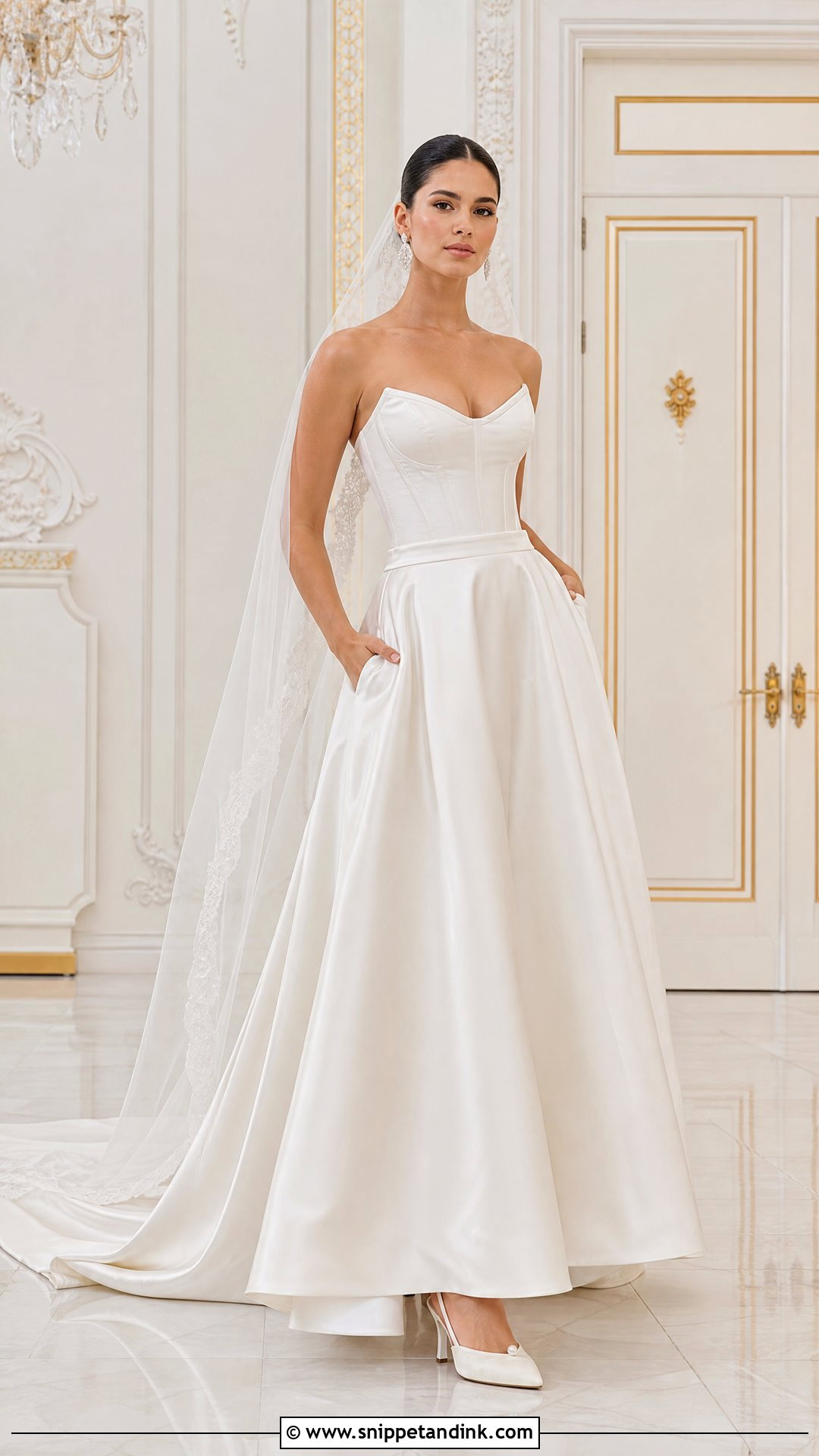
Satin on satin looks luxurious, provided the two satins genuinely match. Ivory shifts noticeably between fabric weights, so I always ask for both pieces cut from the same bolt, or at least compare them side by side in daylight. A structured corset with a curved neckline and well-placed boning sits over a high-waisted A-line skirt that falls into a soft train. Slingbacks, a tennis bracelet and small crystal earrings keep it restrained; a cathedral veil and neat bun add ceremony weight. Check that the skirt waistband doesn’t press into the corset’s lower edge, which is a common source of rubbing by evening.
3. Long Sleeve Lace Top And Crepe Skirt Wedding Dress
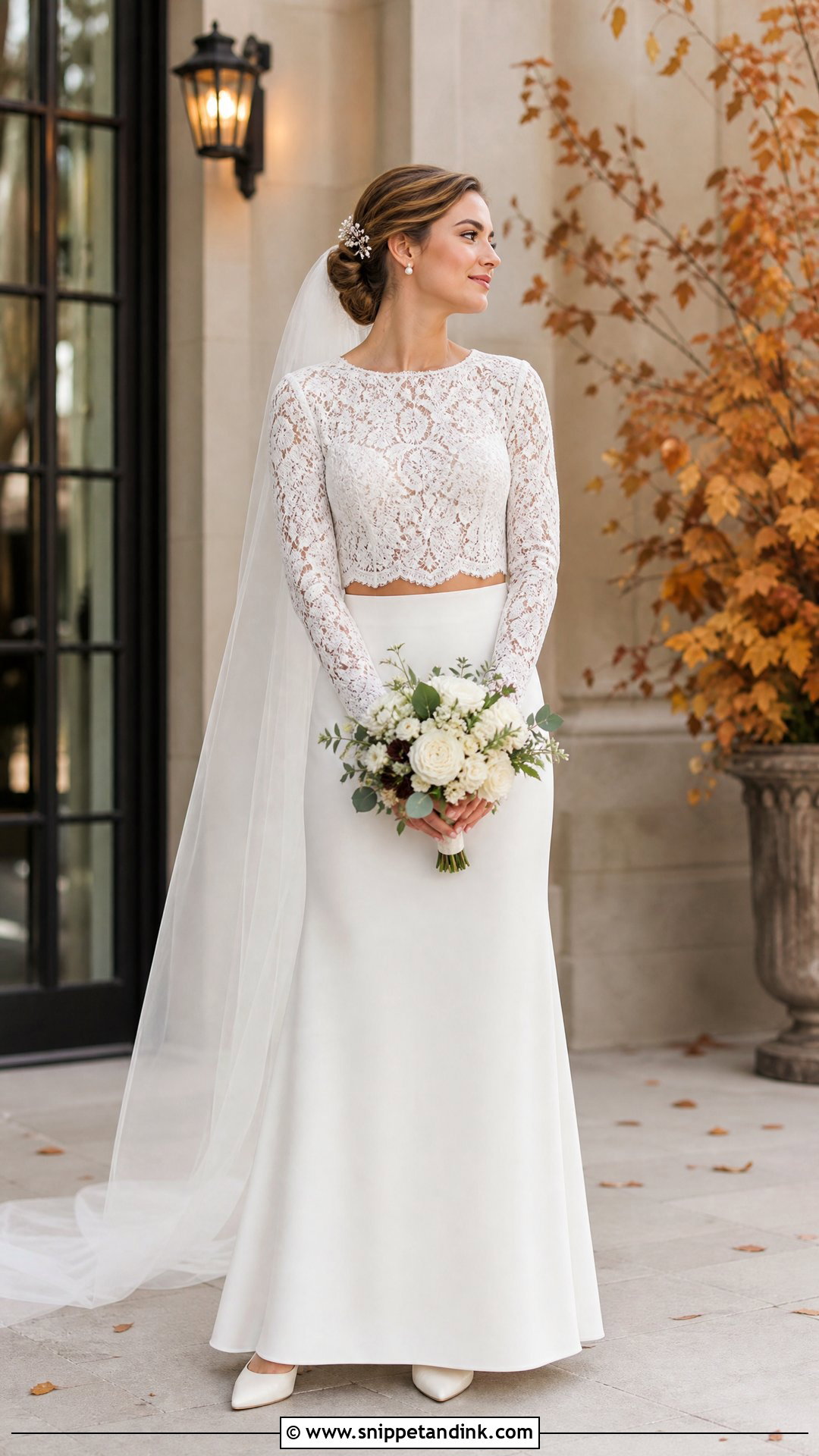
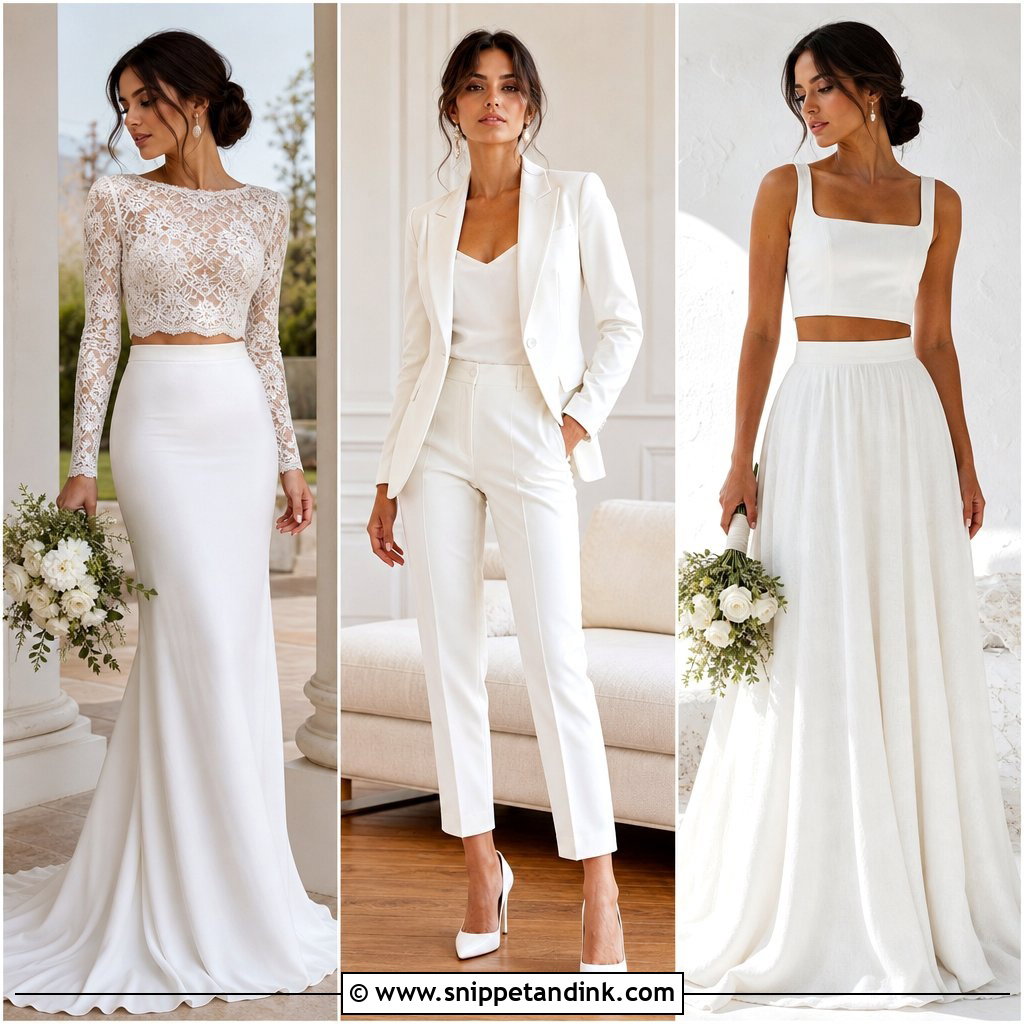
Lace sleeves need stretch. A long-sleeve lace top in a soft stretch lace lets you hug guests and raise a glass without the sleeve seams straining, and a lining matched to your skin tone or to the ivory keeps the pattern clear. Below it, a smooth crepe column or gentle fit-and-flare keeps the outfit from getting busy. Closed-toe pumps, pearl studs and a low chignon with a small comb suit fall and winter. A plain chapel veil won’t compete with the lace. At fittings, sit and raise your arms; a long-sleeve top that rides up exposes the waistband every time.
4. Off Shoulder Top And Ball Gown Skirt Wedding Dress
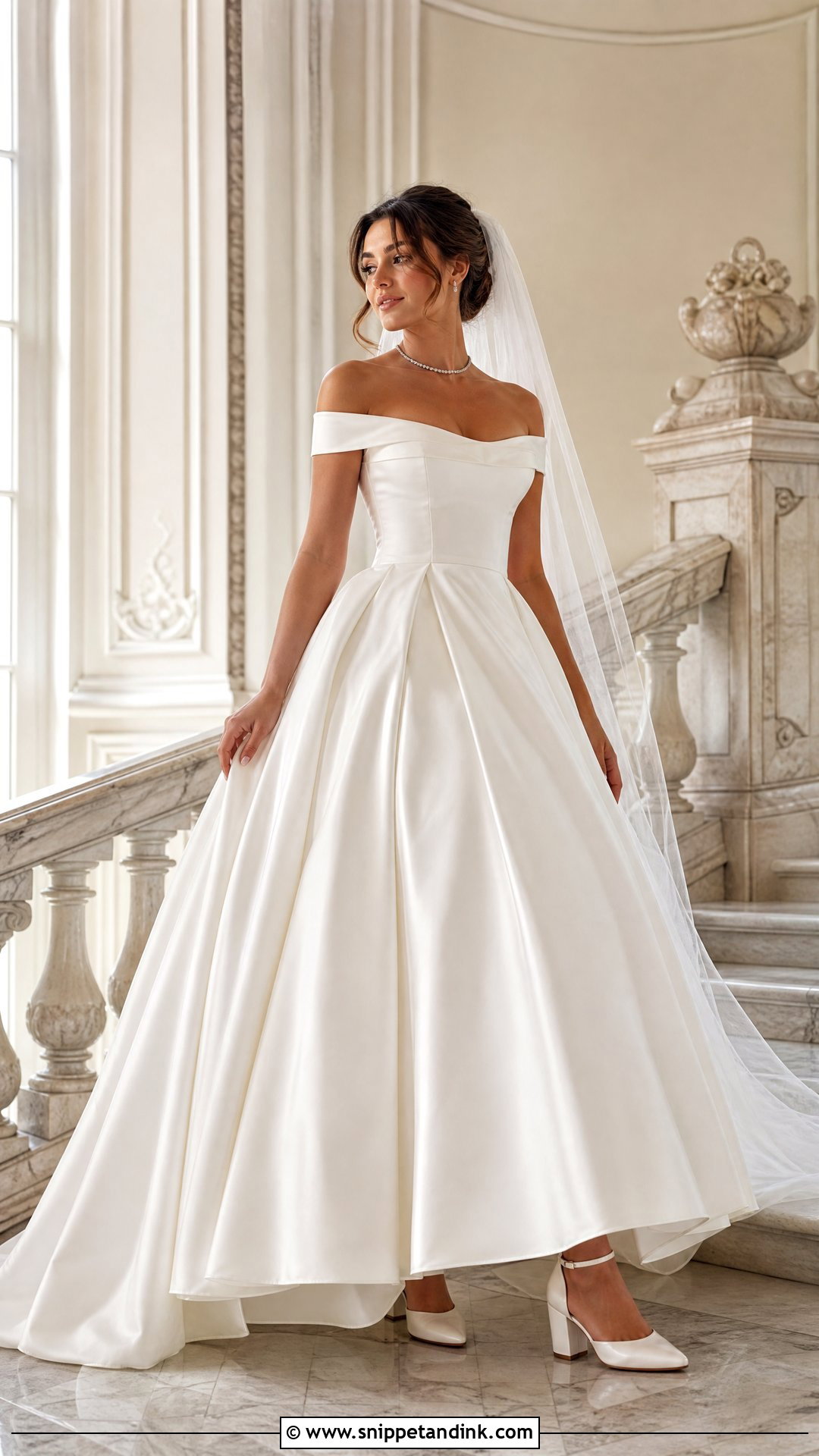
This is the grandest shape on the list. An off-shoulder bodice with an internal corset over a full ball gown skirt gives real formal impact, and the separation at the waist is the only hint it isn’t a traditional gown. The sleeve elastic should be firm but not tight, or it leaves red marks on the upper arm by the reception. A short crystal necklace and studs can work here because the neckline is wide. Satin block heels stay hidden and steady under the skirt. Choose a long veil with a narrow edge. If you want full coverage, ask for the top to overlap the waistband slightly.
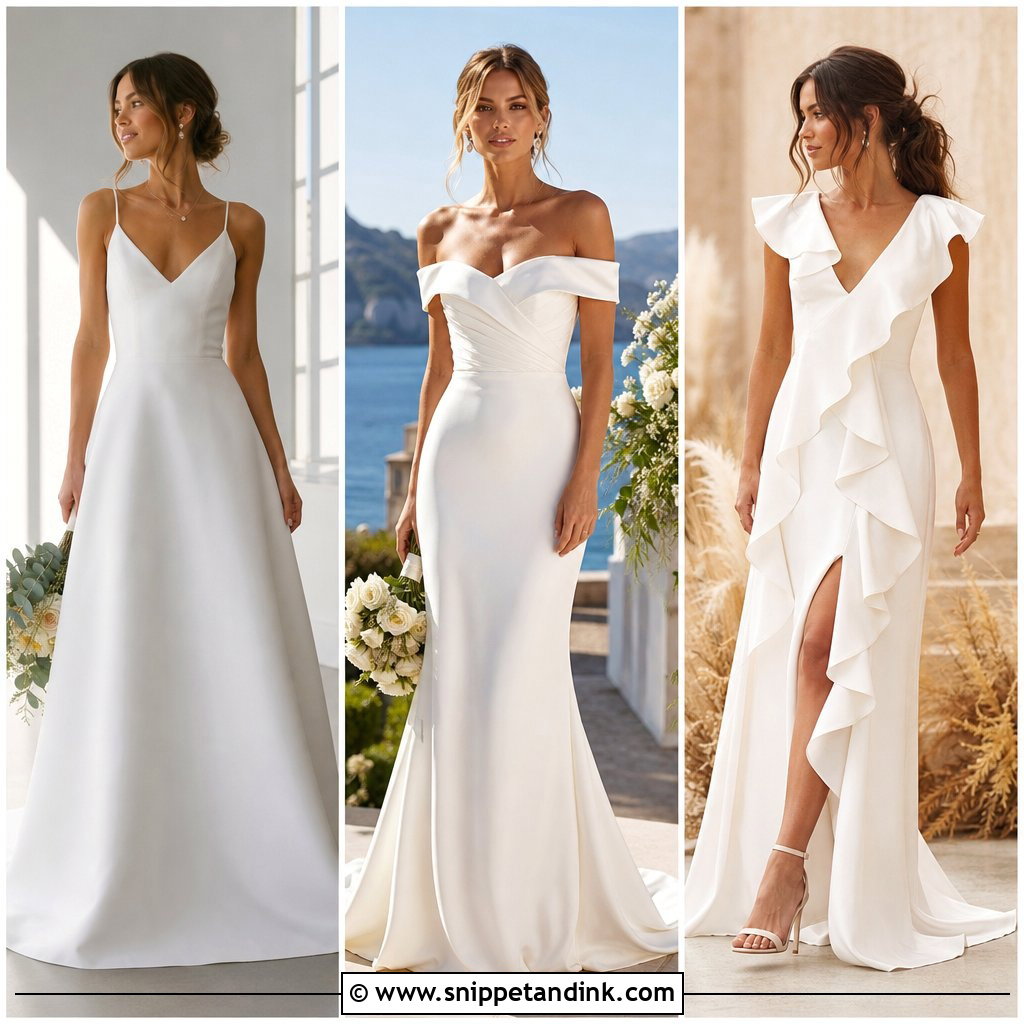
5. Halter Top And Bias Cut Skirt Wedding Dress
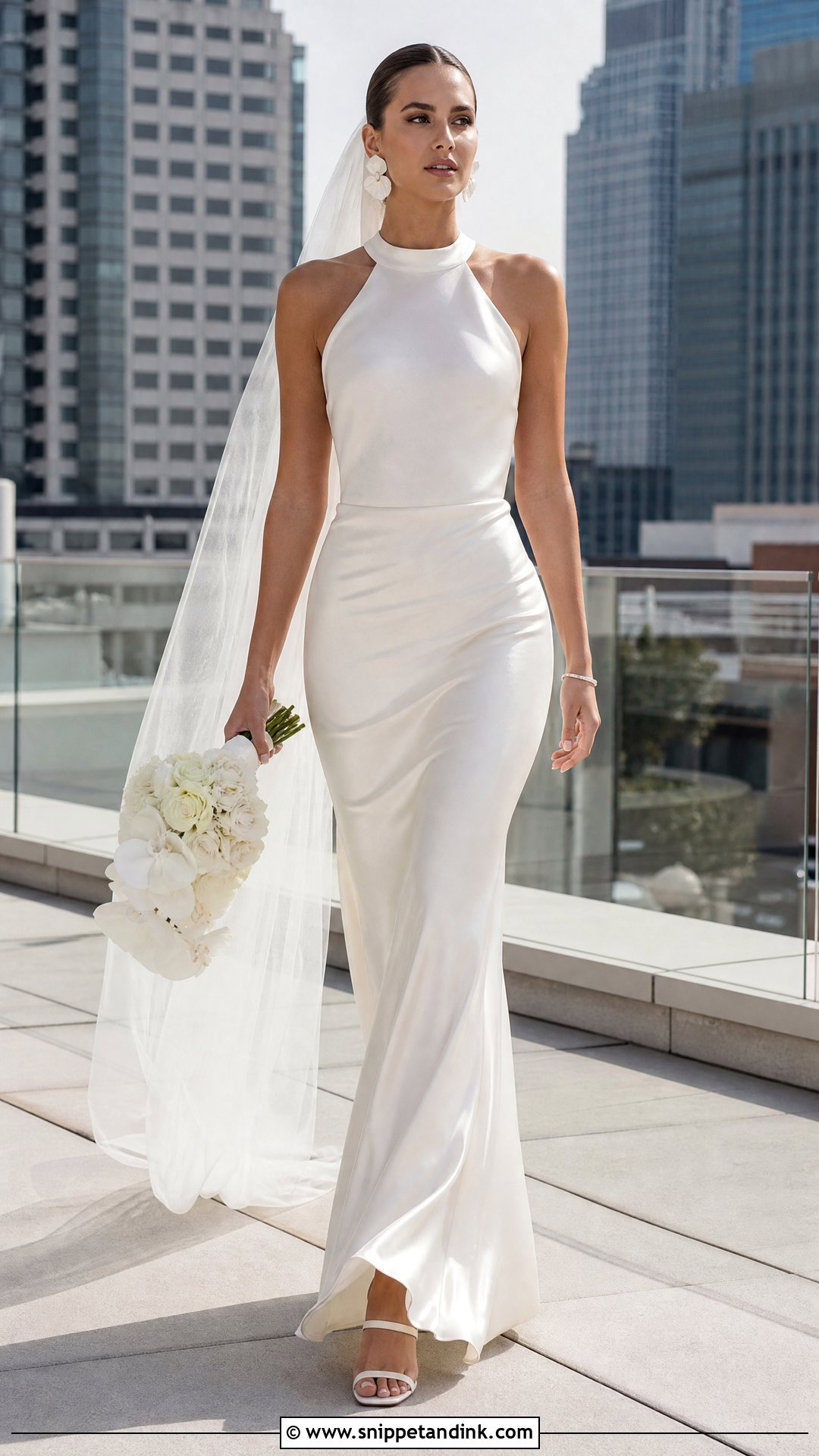
Bias-cut satin rewards brides who like clean lines and forgives very little. A halter, high or softly draped, frames the shoulders, and the fluid skirt follows the body with almost no structure. Cut both pieces from the same fabric and undertone so they read as one. Minimal sandals, sculptural earrings and a slim metallic bracelet are all it needs, with a sleek ponytail or bun and no necklace. Light satin can turn translucent in strong sun or flash, so look at the skirt outdoors and in a phone photo with the flash on before your final fitting. Rooftops and galleries suit it well.
6. Pearl Beaded Top And Satin Skirt Wedding Dress
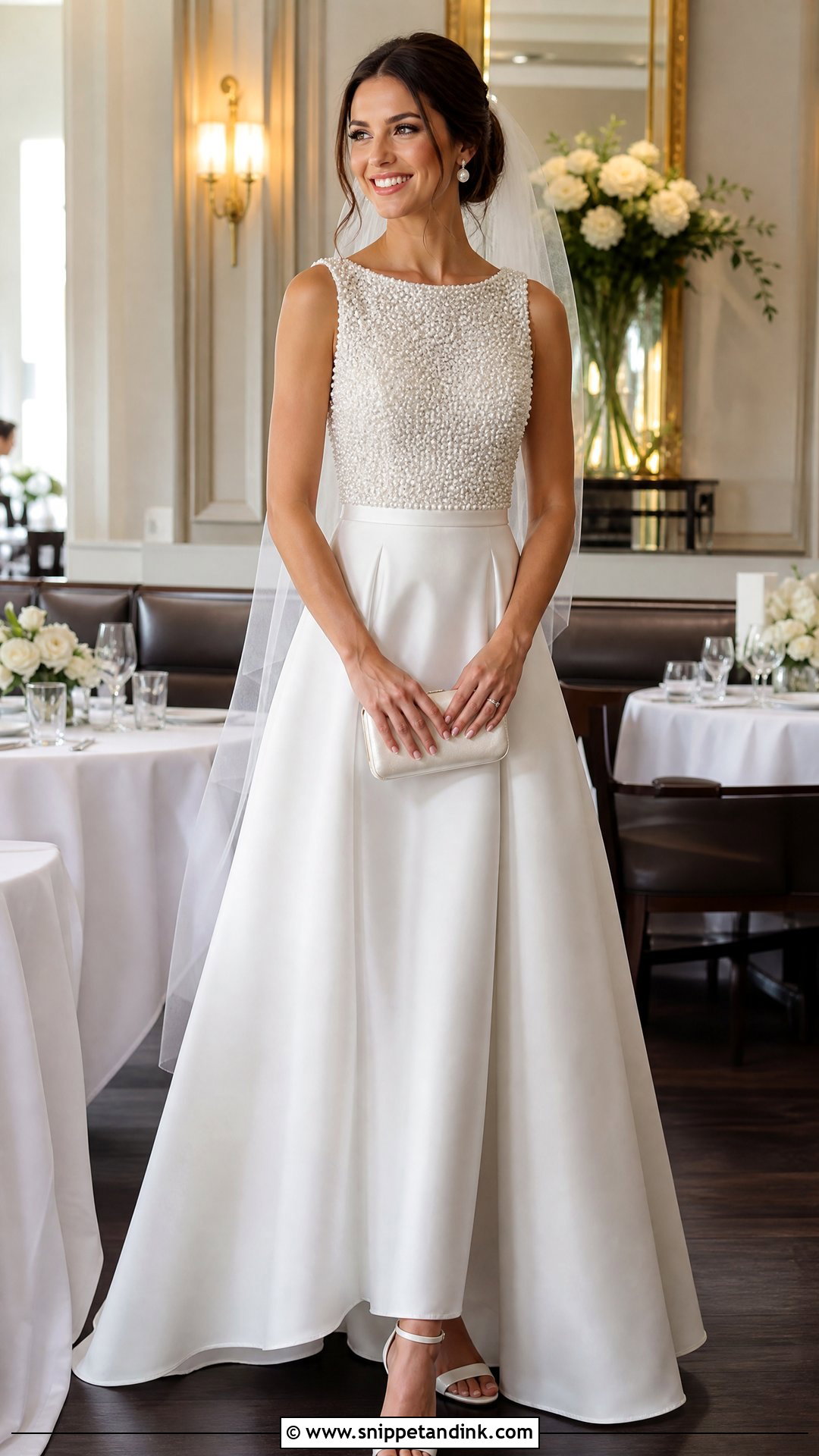
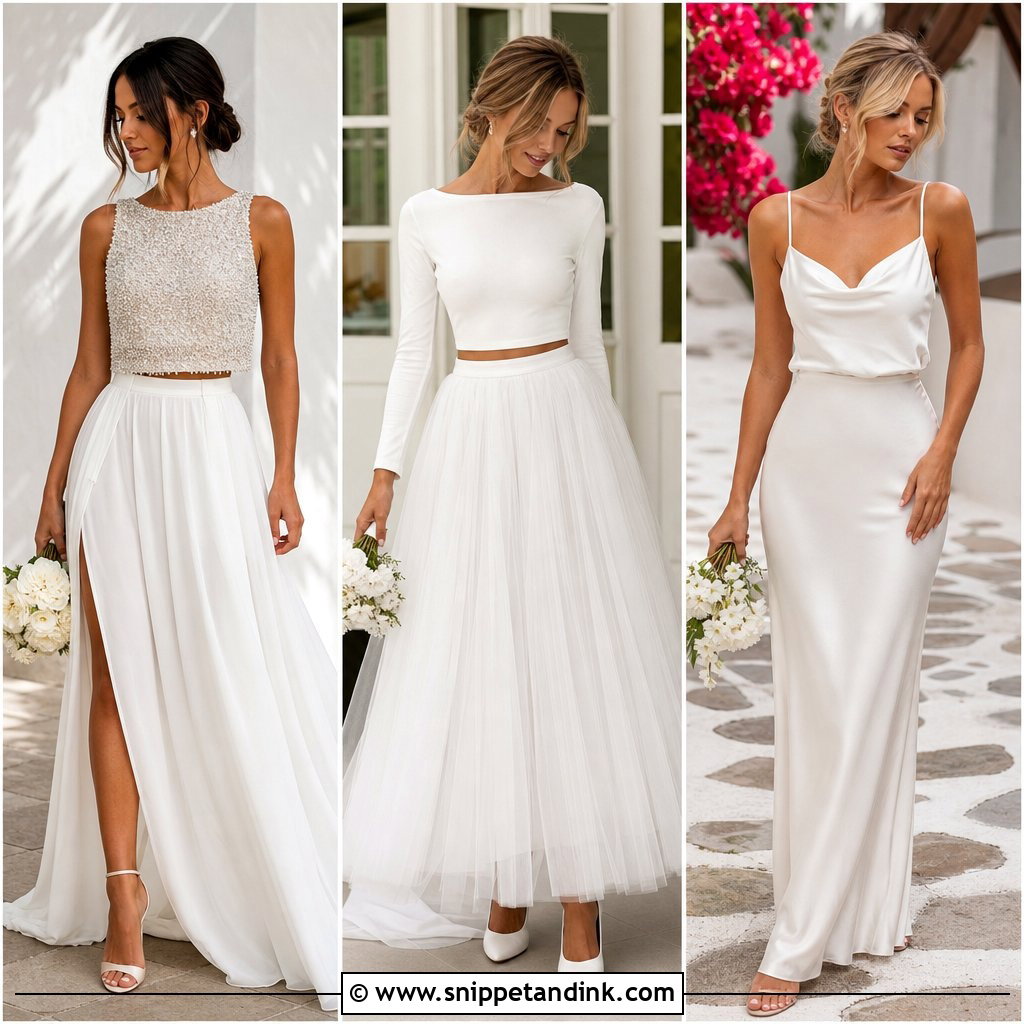
Pearls glow rather than glitter, which keeps a beaded top soft. Evenly spaced pearls on a fitted sleeveless or short-sleeve top, over a plain satin A-line skirt, let the top be the centre of attention. Pearl earrings, ivory ankle-strap heels and a small satin clutch tie it together, and a plain tulle veil keeps it light. The practical worry is snagging: pearls near the hem of the top can catch the skirt waistband and the veil. I also check the lining around the armholes, since rough beading backs there are what brides complain about most by the last dance.
7. Square Neck Top And Column Skirt Wedding Dress
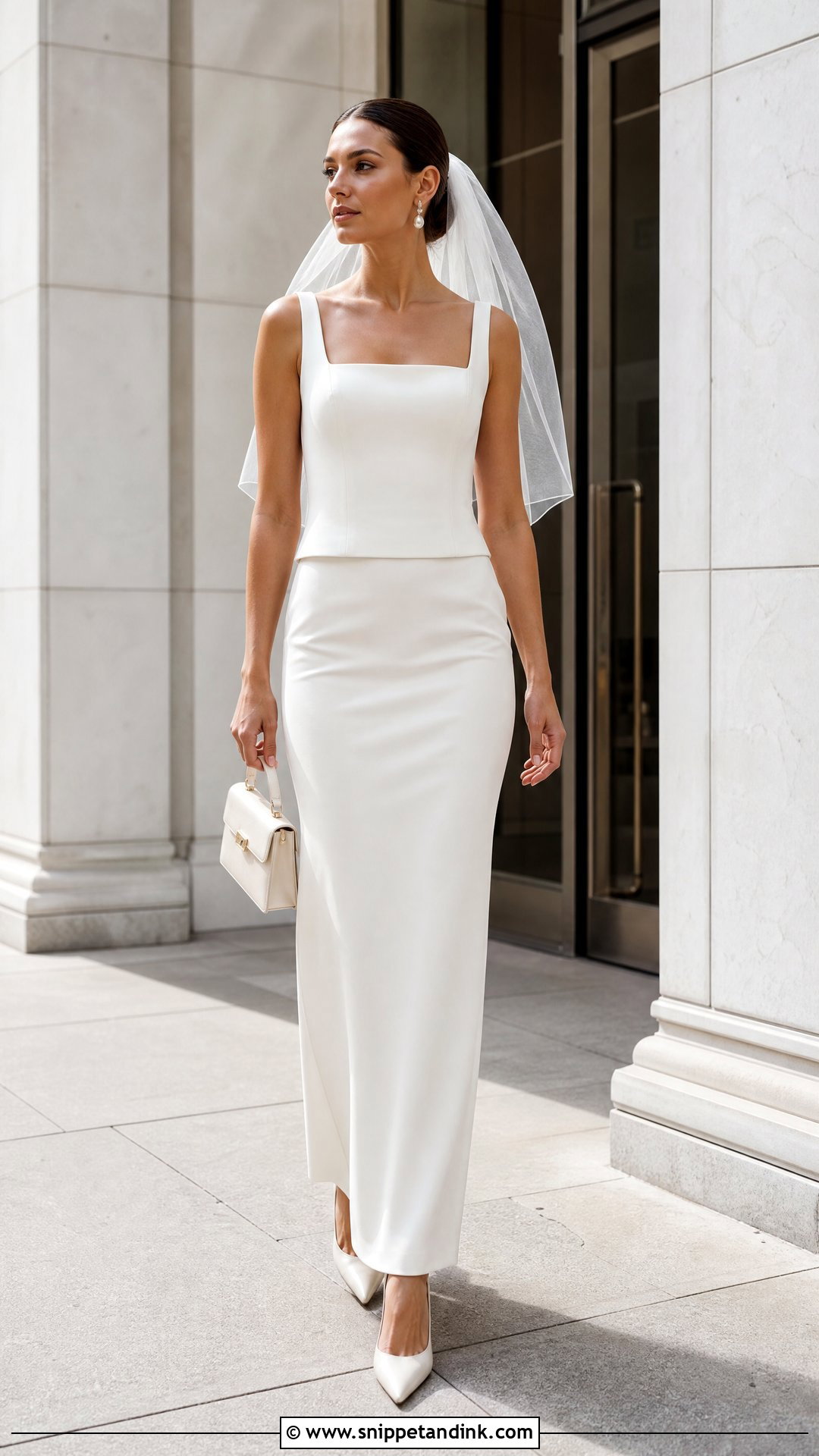
Simplicity hides nothing. A square-neck top with a column skirt has strong, architectural lines, and in substantial crepe or matte satin both pieces hold their shape. Wide straps, short sleeves or a fitted sleeveless cut all work with the neckline. The column should skim, with enough room in the hem for a natural stride. Pointed pumps, a structured mini bag and medium drop earrings suit it, plus a short veil or a hair bow. Courthouse ceremonies and minimalist venues are its home. During alterations, look from behind and the side, because pulling or uneven seams show far more on plain fabric than on lace.
8. One Shoulder Top And Draped Skirt Wedding Dress
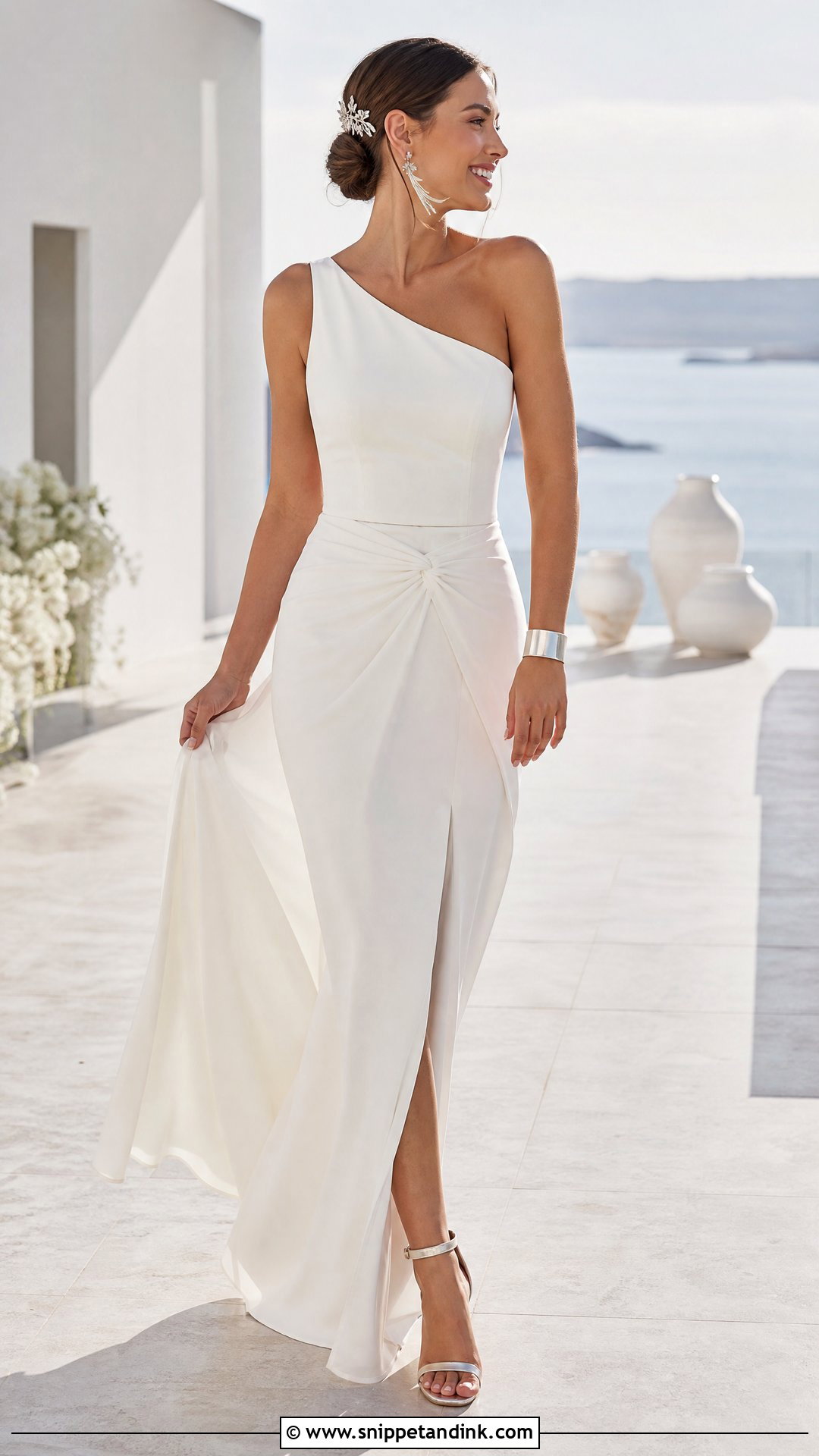
Asymmetry works best when the skirt answers the top. A one-shoulder bodice with enough inner support to stay put, paired with a skirt gathered at one hip, continues the diagonal down the body. Fit both pieces at the same appointment so the drape on the skirt runs the same direction as the top’s line; it’s easy to get wrong when they’re altered separately. Metallic or ivory sandals, one statement earring on the bare side and a smooth cuff finish it. A small comb above a low bun often suits it better than a veil. Keep the waistband slim so it doesn’t break the line.
9. High Neck Lace Top And Chiffon Skirt Wedding Dress
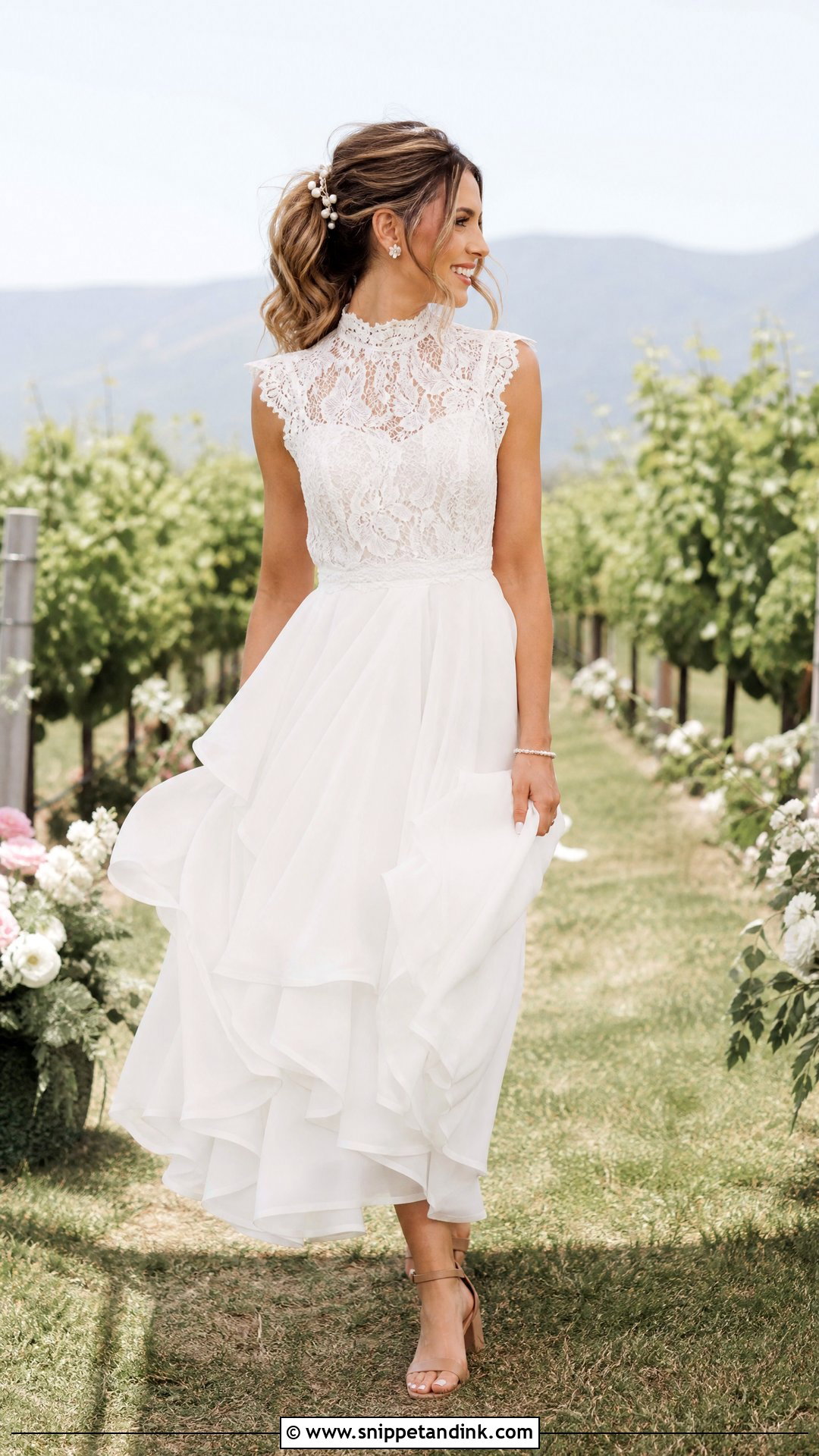
A breezy option for garden, vineyard and countryside weddings. A lightweight high-neck lace bodice with a soft lining and sheer details at the neck or sleeves balances a layered chiffon skirt starting at the natural waist. Nude or ivory block-heel sandals stay stable on grass. Small floral earrings, a delicate bracelet and a fingertip veil or pearl hairpins keep it romantic. Ask your tailor to reinforce delicate back closures, which take a lot of strain on a high neck, and to hem the skirt for your shoes and the ground you’ll be walking on, since grass and gravel both catch long chiffon.
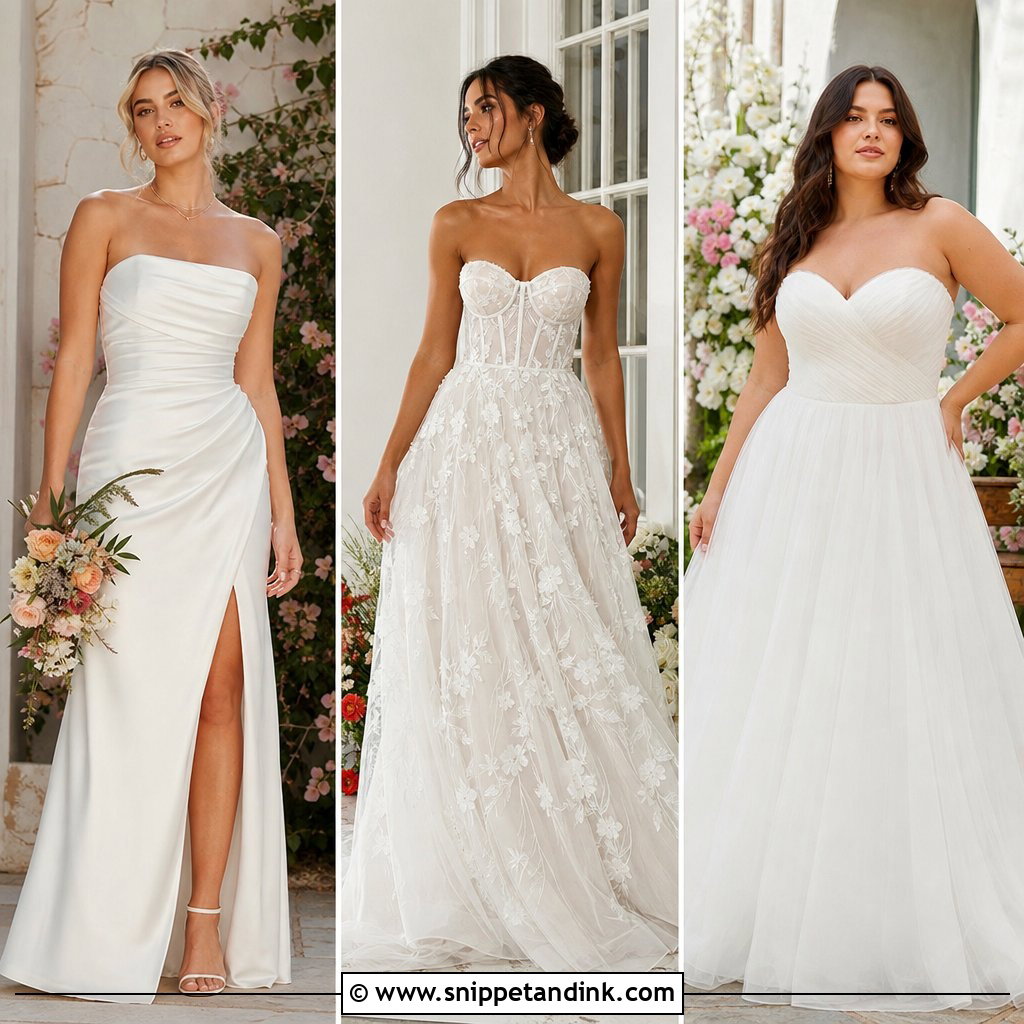

10. Strapless Corset And Detachable Overskirt Wedding Dress
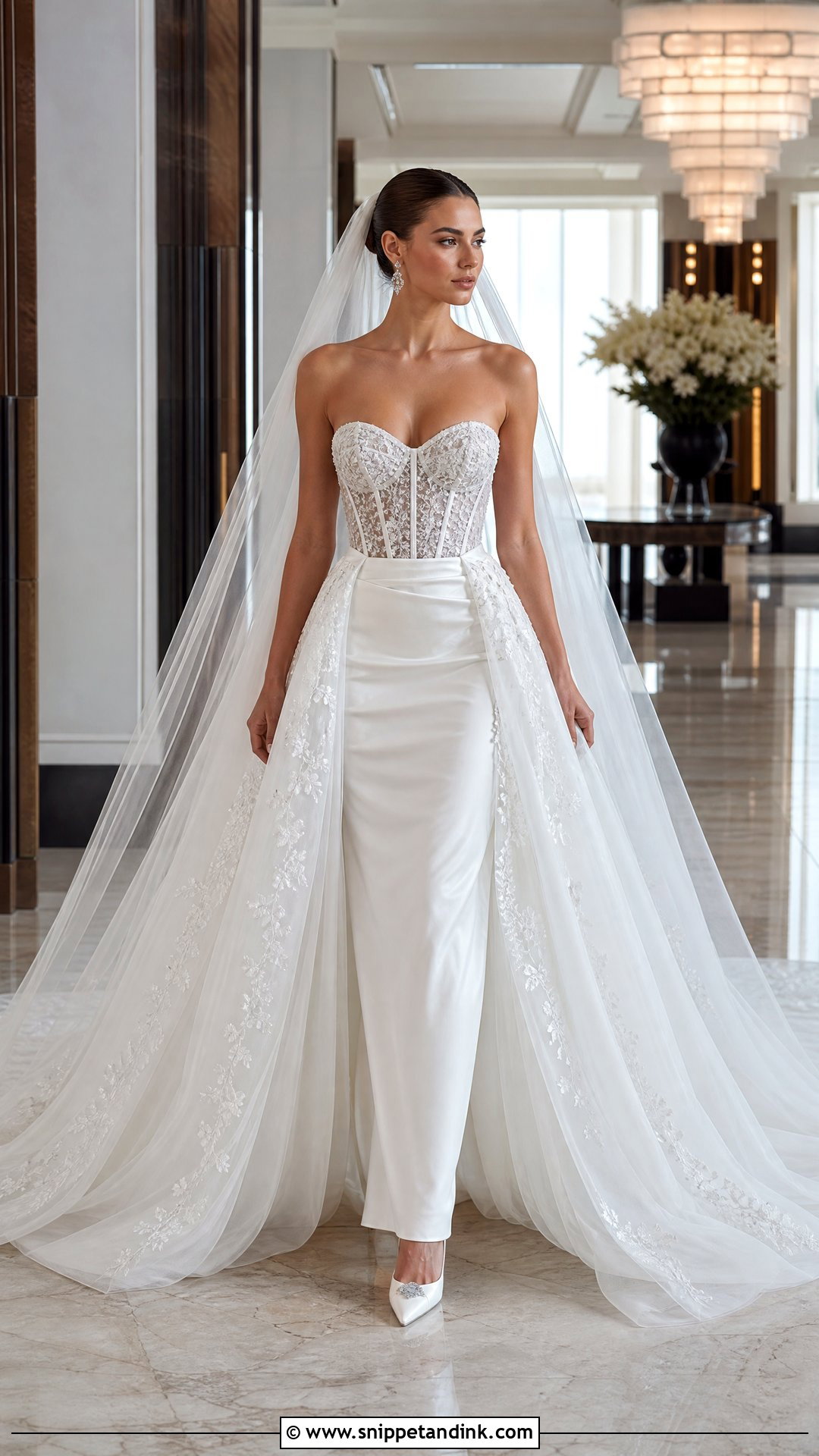
A strapless corset with a detachable overskirt gives two looks without a full change. Wear the corset with a fitted satin or crepe skirt, add a full tulle or organza overskirt for the ceremony, and take it off after the photos. Crystal earrings, pointed heels and a veil matched to the overskirt length complete the ceremony version. The corset needs firm boning, a secure closure and room to breathe and eat. Rehearse removing the overskirt at least once with the person who’ll help you, and check that every hook or snap stays hidden in both versions.
11. Bridal Blazer And Maxi Skirt Wedding Dress
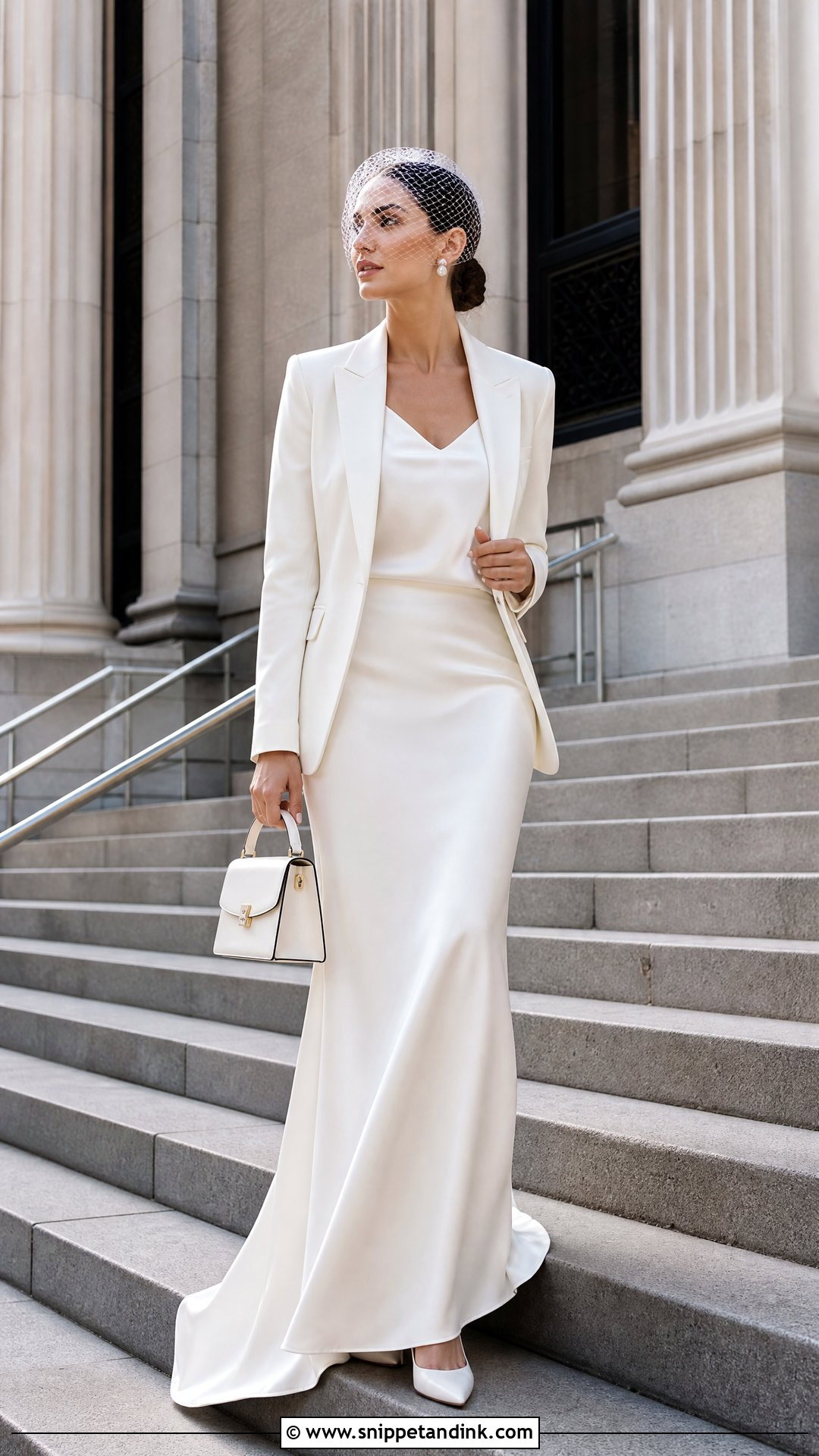
A sharply cut ivory blazer over a fluid satin maxi skirt is formal and a little unexpected. The blazer can sit over a silk camisole or be fastened as the main top if the neckline gives enough coverage. A high, clean waist on the skirt balances the jacket’s structure. Pointed pumps, pearl or gold earrings and a top-handle bag suit it, with a low bun and birdcage veil for the bridal note. Proportion is everything: a blazer that ends at the hip suits a column skirt, a cropped one suits fuller skirts. Sleeves should finish at the wrist bone, so your ring shows.
12. Cape Top And Fitted Skirt Wedding Dress
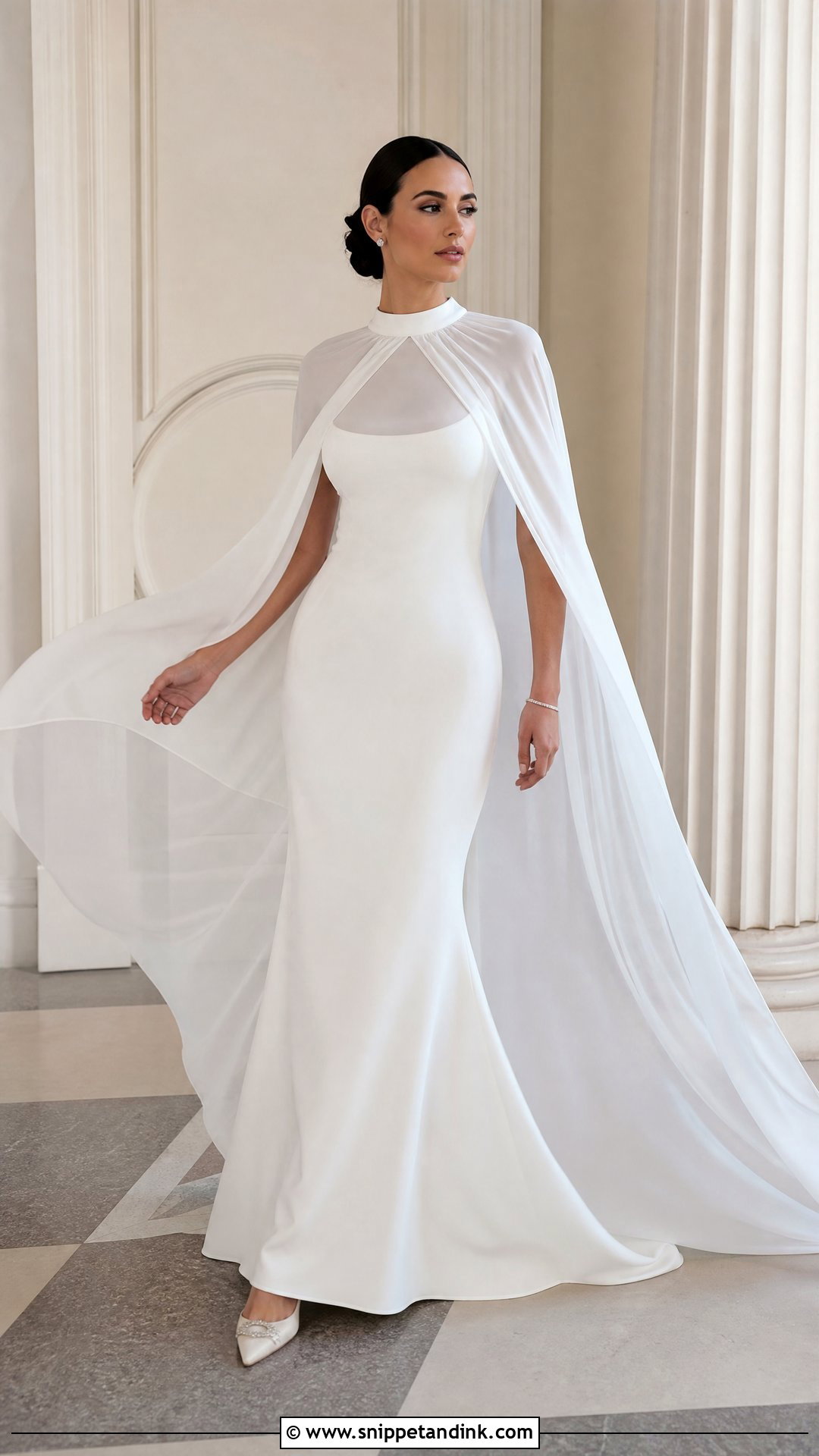
A cape top is the right call for a cool transitional day when you’d still like your arms free. Choose soft chiffon, crepe or light satin falling from the shoulders over a supportive sleeveless bodice, then a high-waisted trumpet or column skirt that opens near the hem. Pointed heels, crystal studs and a slim bracelet are plenty; the cape already does a veil’s job, so you may not need one. Watch the length. A cape that drops too far hides the waist, and one that reaches the train tangles with it on the walk back up the aisle.
13. Puff Sleeve Top And Full Skirt Wedding Dress
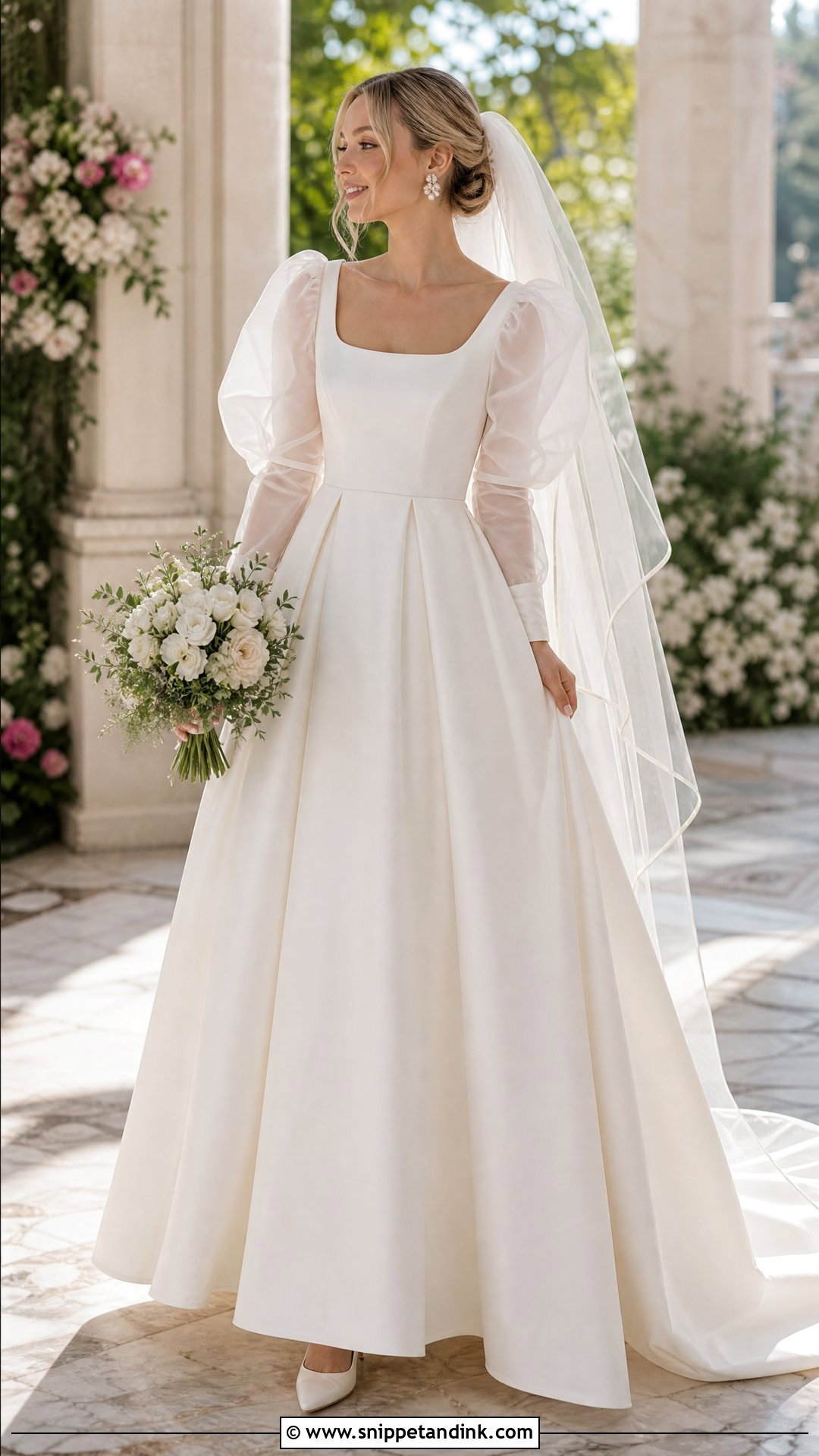
Puff sleeves add a gentle vintage note, and sheer organza or soft tulle keeps that volume light. A fitted bodice defines the waist underneath, and a pleated or gathered A-line skirt in satin, faille or crisp organza balances the shoulders. Low satin pumps, pearl cluster earrings and a ribbon-edged veil suit it, with a soft updo so hair and sleeves don’t crowd each other. Garden, barn and classic indoor venues all work. Lift and bend your arms at the fitting: the sleeve elastic should hold without digging, and the shoulder seams should let you reach forward comfortably.
14. Crochet Top And Tiered Skirt Wedding Dress
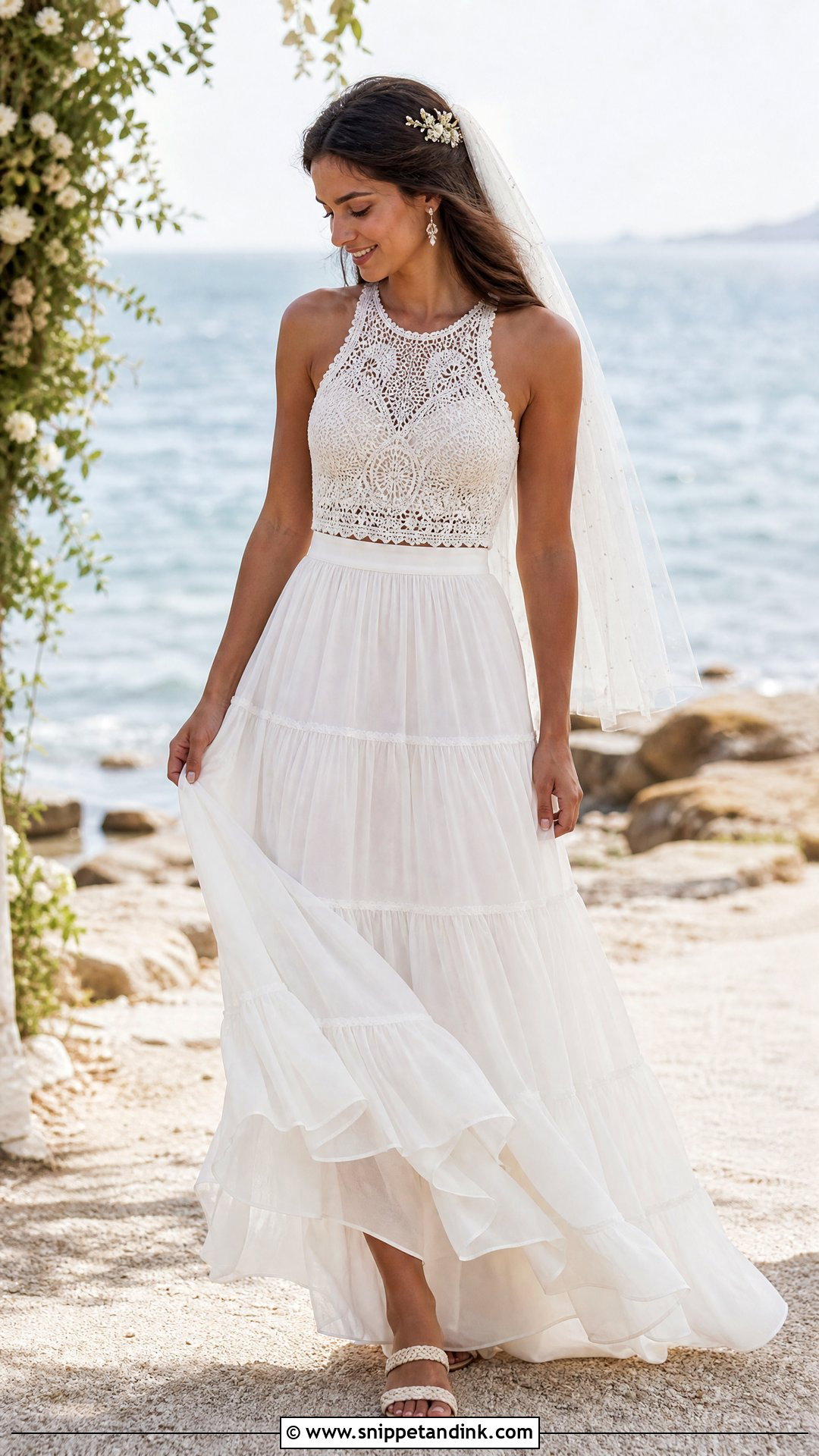
Crochet and tiers give a relaxed, bohemian bride texture and movement. Use refined crochet or guipure lace with a smooth lining, which keeps the top feeling polished and stops the open stitches catching on jewelry. Soft tiers in chiffon or light crepe suit it better than full volume. Ivory sandals, delicate drops and a floral comb complete it, and a fingertip veil adds a traditional note while leaving the crochet visible. Beach, desert and meadow ceremonies suit it well. If the two pieces come from different makers, match tones carefully, and test the skirt outdoors for sheerness.
15. Minimal Tank Top And Slip Skirt Wedding Dress
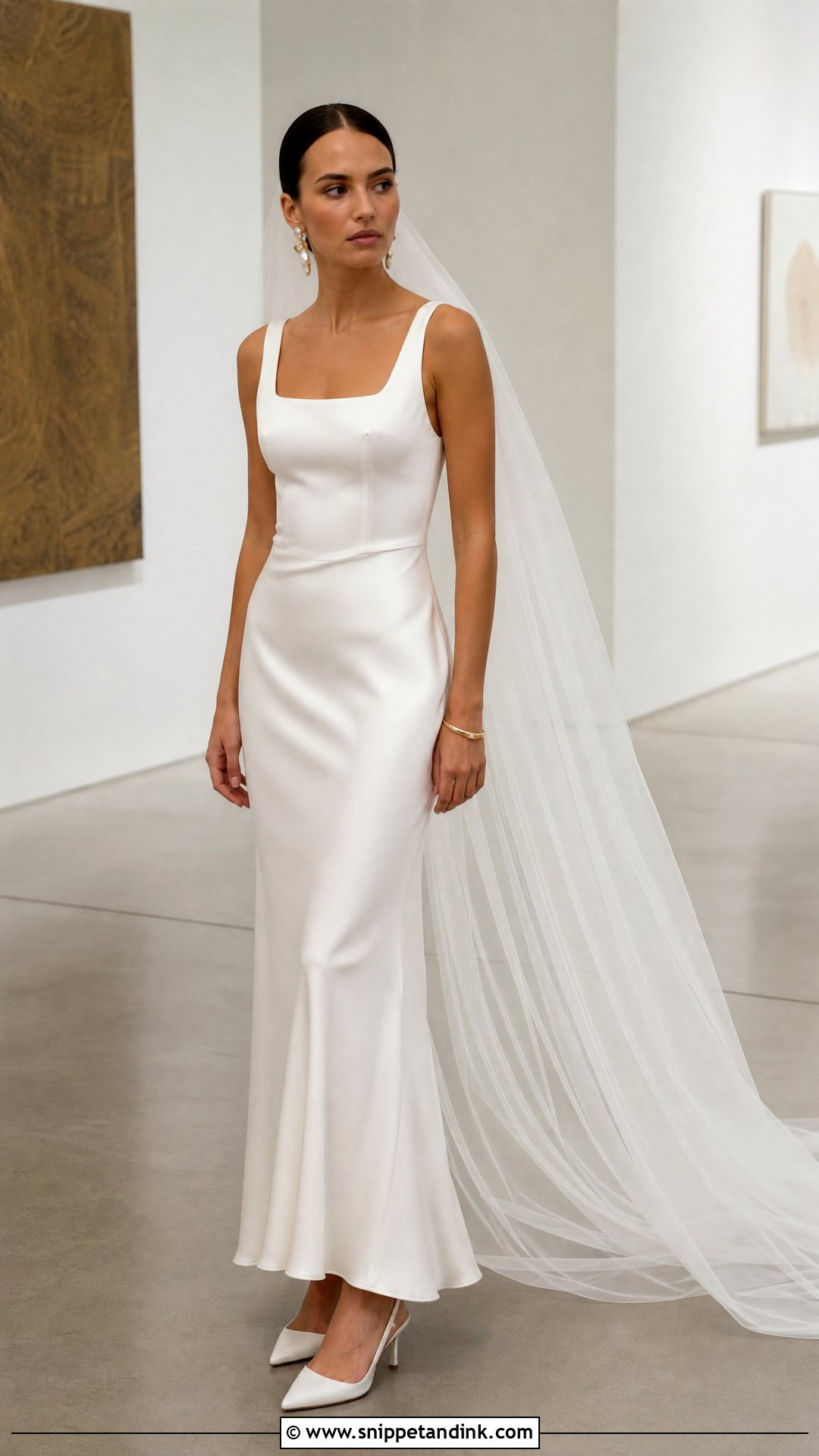
Minimal means precise. A structured tank top and bias slip skirt, in silk, satin or heavy crepe with as few visible seams as possible, give a clean, quiet bridal look. The top should end exactly at the waistband and the skirt should skim rather than cling. Sleek slingbacks, sculptural earrings and a narrow bracelet fit the mood. A cathedral veil adds drama; a short one keeps things pared back. With so little decoration, every fitting detail shows, so wear smooth undergarments, look at the fabric in a few kinds of light and steam both pieces shortly before dressing.
16. Peplum Top And Trumpet Skirt Wedding Dress
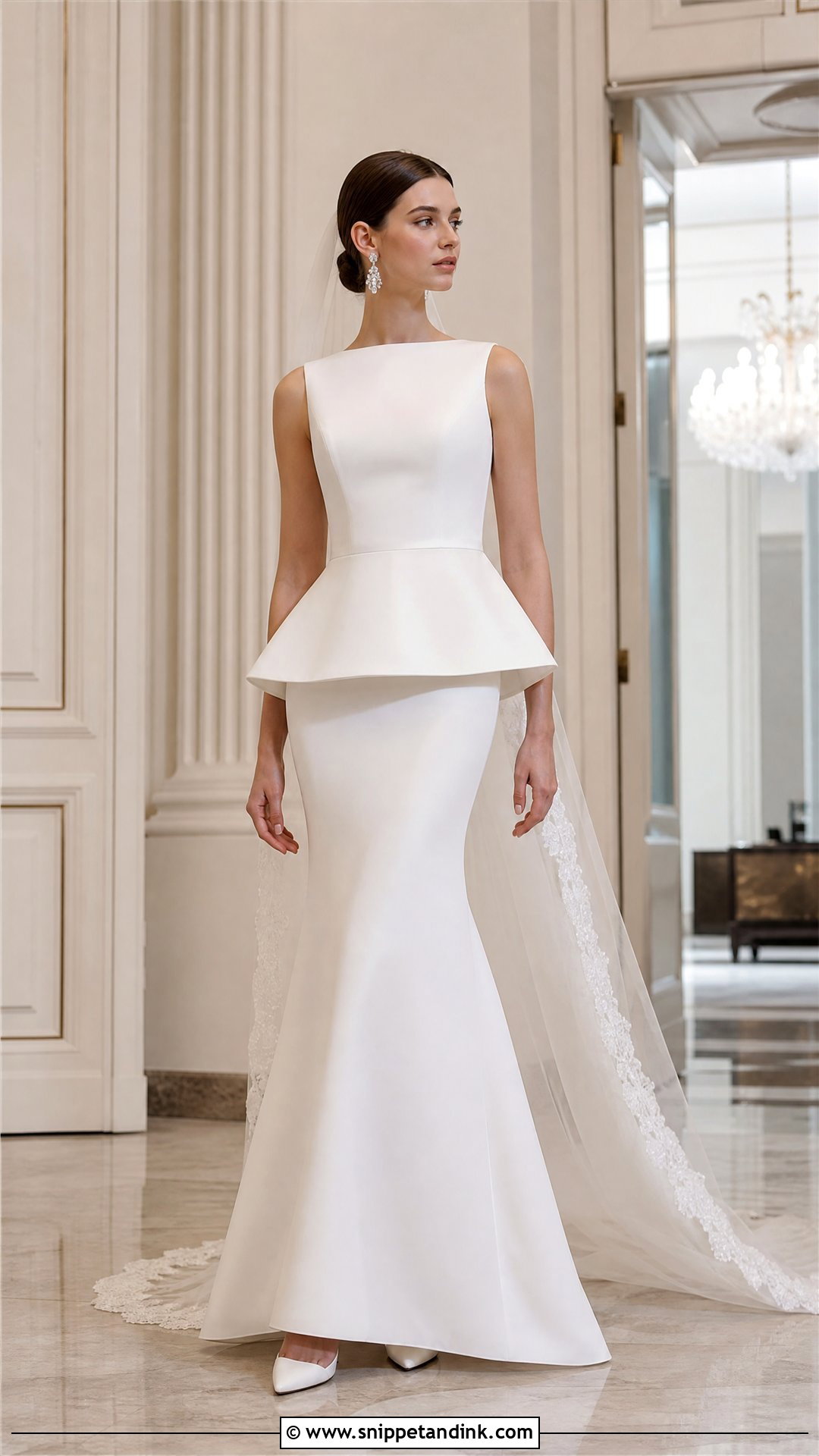
Peplum over a trumpet skirt is about as formal as separates get. The peplum should sit smoothly at the natural waist and end above the fullest part of the hips. A fitted trumpet skirt that flares gradually below the thigh lets you walk, and structured crepe holds both shapes without needing decoration. Pointed pumps, crystal drops and a sleek low bun suit it, with a chapel veil softening the tailored line. Hotel ballrooms and evening receptions are its setting. In fittings, watch whether the peplum lies flat over the waistband or folds and catches; a stiff interfacing in the peplum usually fixes it.
17. Embroidered Top And Tea Length Skirt Wedding Dress
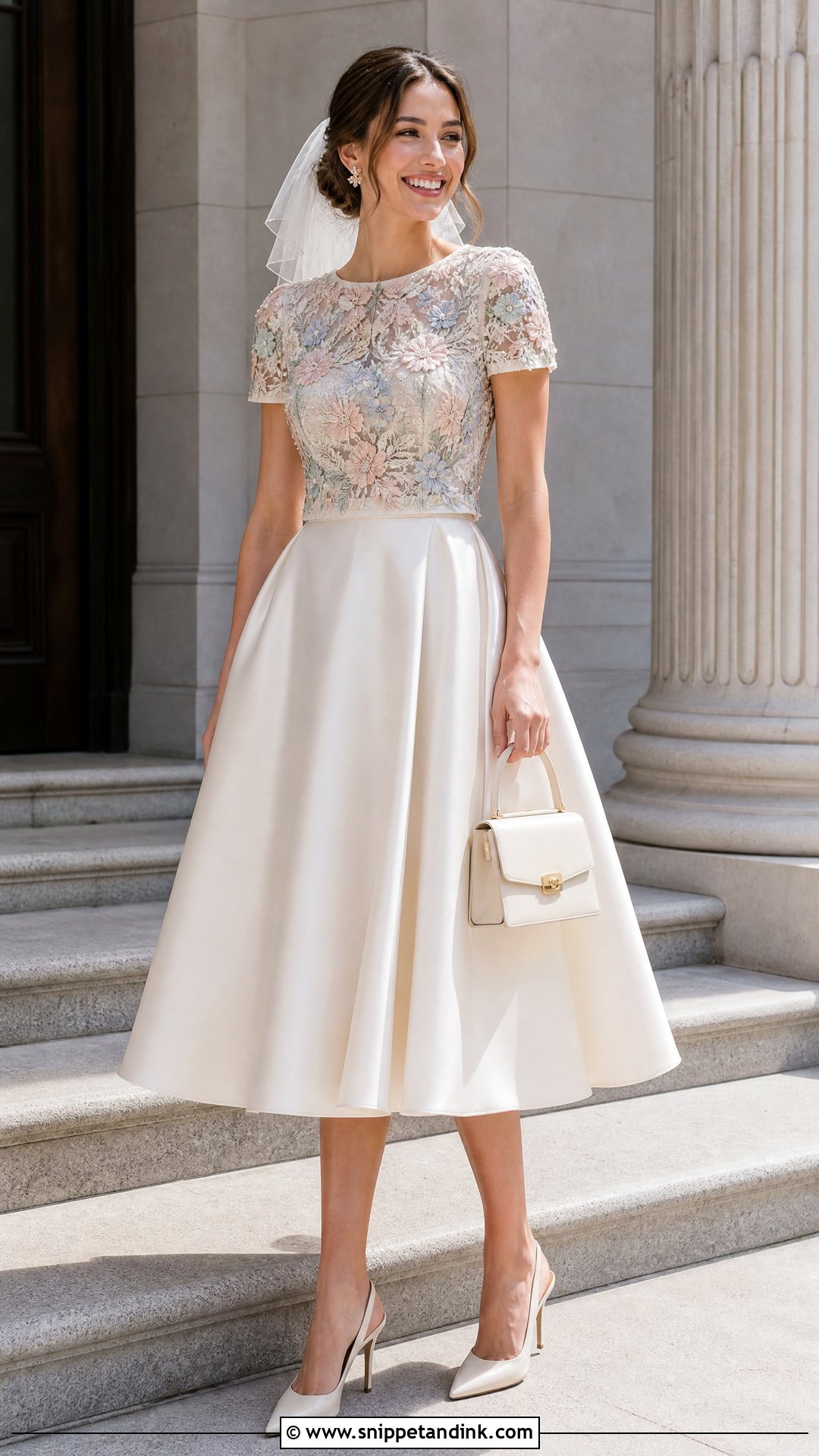
Tea length feels light-hearted, ideal for a courthouse ceremony, brunch reception or casual outdoor wedding. An embroidered top with ivory, pale blue, blush or soft green accents, over a plain satin or organza skirt ending between lower calf and ankle, keeps the top as the focus. Pointed slingbacks or low block heels, a compact bag and small earrings echoing one thread colour finish it, with a short veil or headband. Your shoes are on show all day, so pick a pair you’ve actually walked in. Give the skirt enough fullness to move, without so much that it looks like a costume.
18. Sequin Top And Feather Trim Skirt Wedding Dress
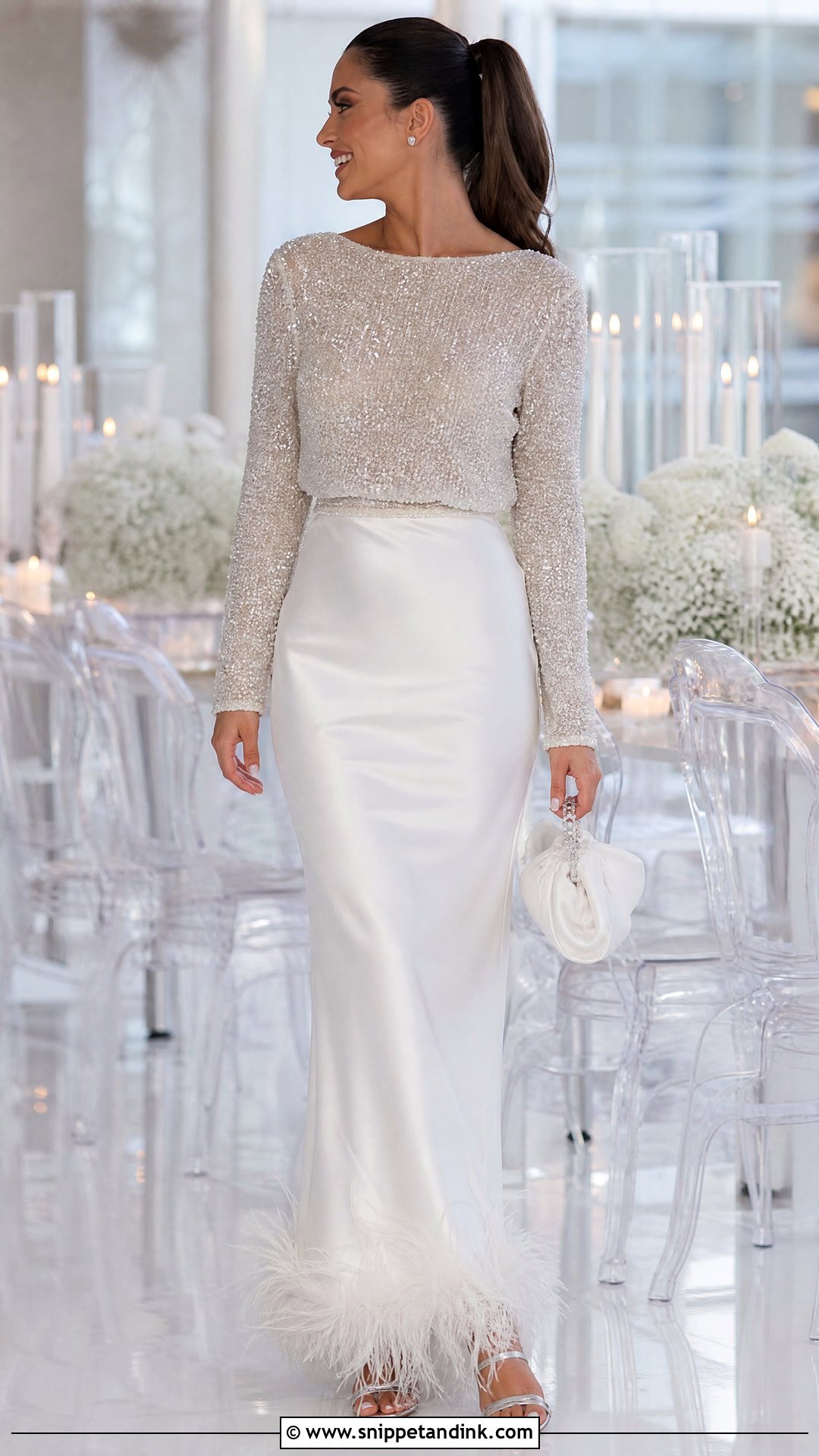
Feathers belong on the hem here, not the shoulders. A tonal sequin top, fitted and sleeveless or short-sleeved, over a high-waisted satin column skirt with a narrow feather trim is made for evening receptions and after-party celebrations. Keep the sequins small and close to ivory so the look stays bridal. Metallic sandals, crystal studs and a small satin bag suit it, with a high ponytail or smooth bun. Feather trim gets crushed and dirty if it drags, so hem the skirt to clear the floor in your dancing shoes. Check the sequin seams for scratchiness too.
19. Bow Back Top And Pleated Skirt Wedding Dress
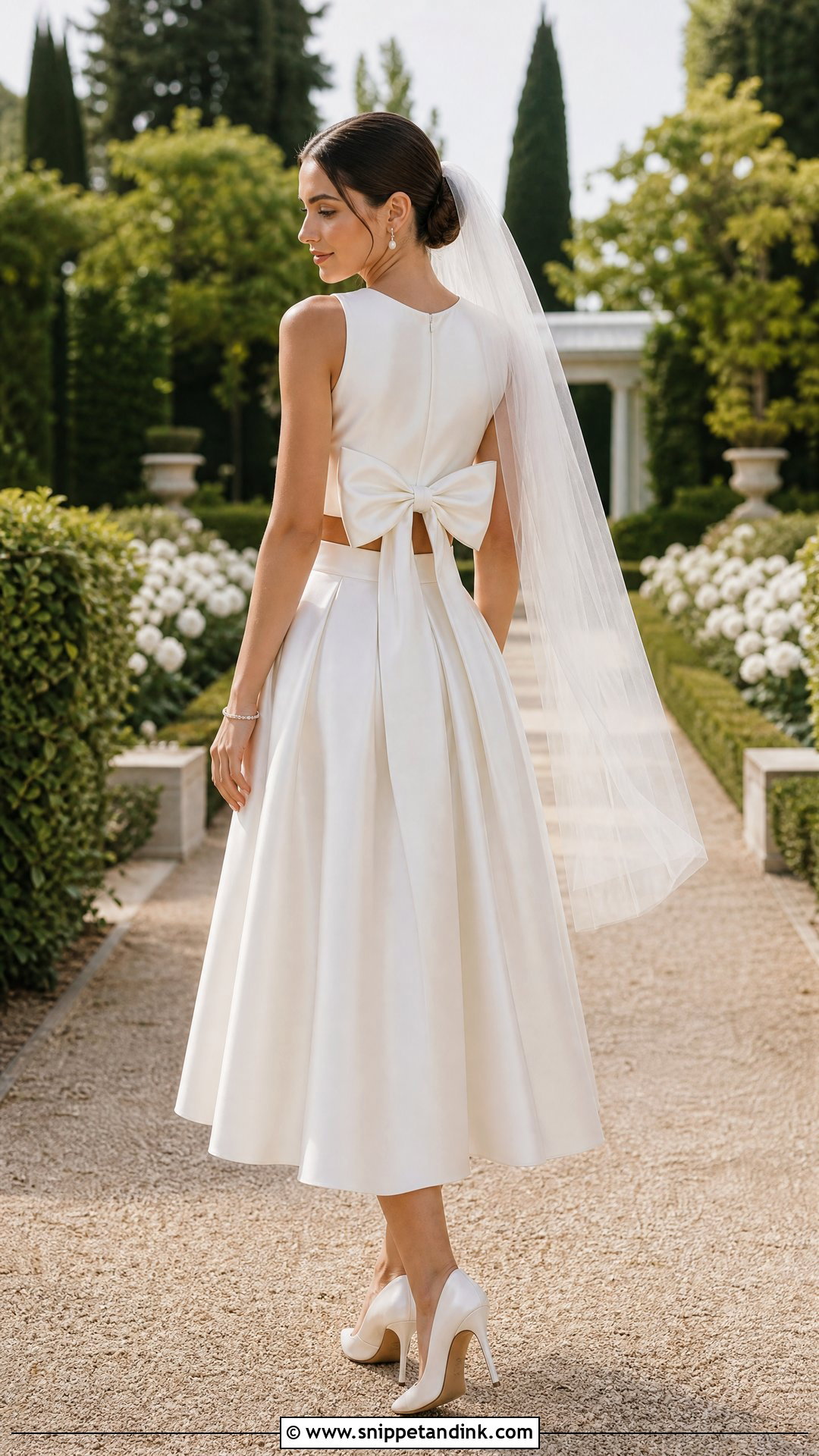
Most guests see your back during the ceremony, which is why a bow-back top can be so effective. Pair a clean satin top with a neatly shaped bow at the lower back and a high-waisted pleated skirt. Pointed ivory heels, pearl drops and a simple bracelet are enough, and an updo keeps the bow in view. Choose a sheer veil you can remove after the ceremony. A large bow is heavier than it looks and can drag the top backward, so ask for it to be lightly interfaced and anchored to the bodice. Check how it rests on the waistband when you sit.
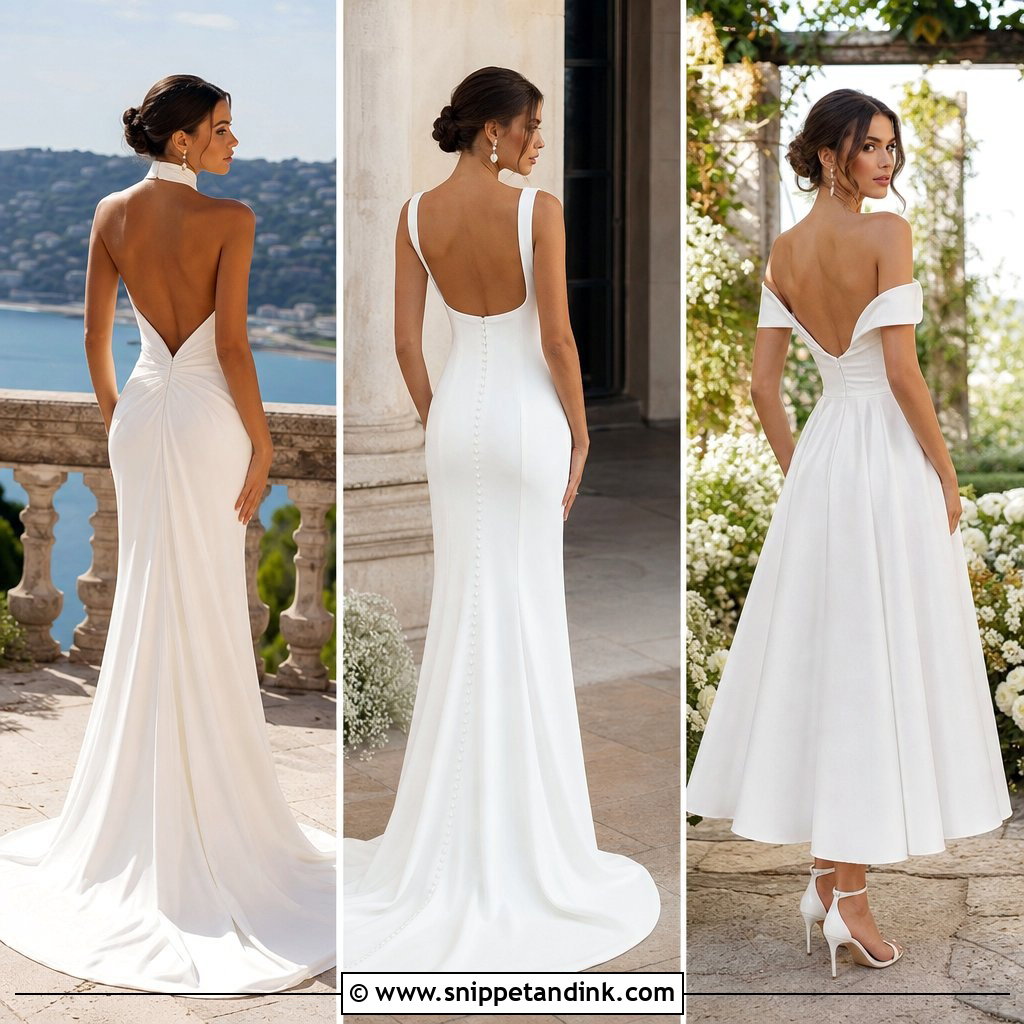
20. Floral Top And Ivory Skirt Wedding Dress
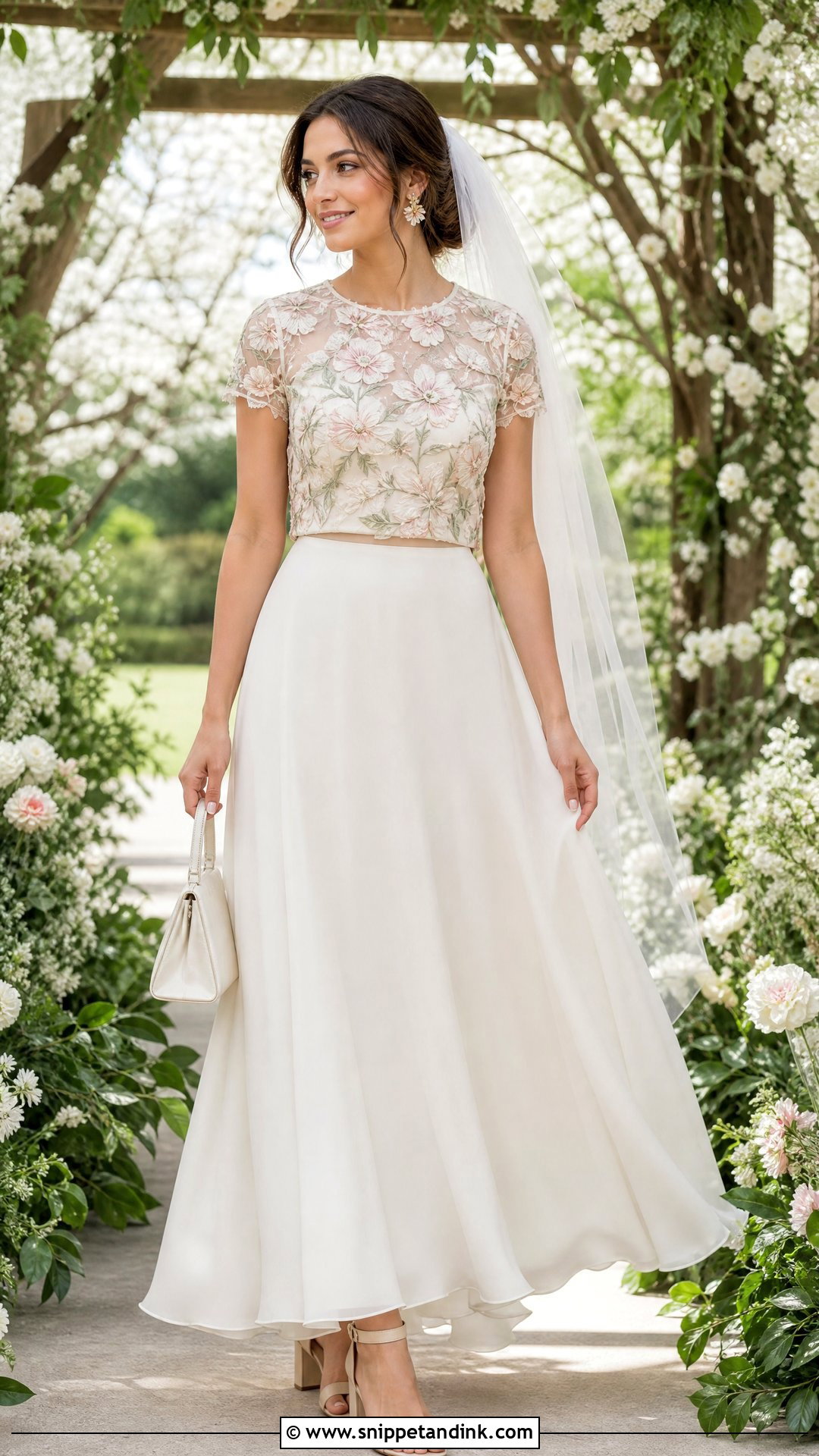
A floral top over an ivory skirt brings colour into the bridal look without taking it over. Choose soft botanical embroidery, dimensional appliqués or a muted floral print, and pair it with a plain ivory A-line or chiffon skirt that matches the lightest neutral in the top. Neutral block heels, delicate floral earrings and a small ivory bag suit spring gardens and destination ceremonies. A plain veil keeps it clearly bridal. Hold the palette to two or three colours. Always take the top with you when buying the skirt, because ivory, cream and white can look completely different side by side.
Swapping One Piece Between Ceremony and Reception
Changing only half your outfit is the most practical trick separates offer. You keep the same top, so hair, makeup and jewelry don’t need touching, and you switch the skirt for something easier to dance in, or take off an overskirt.
- Plan the change for cocktail hour or right after formal portraits, so the photographer has both looks.
- Allow fifteen to twenty minutes, not five. Fastenings take longer than you think in a crowded room.
- Find out where you’ll change. A locked room with a mirror and somewhere to hang the first skirt is worth asking the venue for.
- Choose your helper in advance and do a practice swap at your final fitting.
- Make sure the second skirt matches the top’s undertone as closely as the first, or the swap will show in every reception photo.
Have someone bag the ceremony skirt straight away, ideally in a breathable cover, and keep it away from the bar and the dance floor. Spills on a skirt you’ve taken off are the ones nobody notices until the next morning.
The Pair That Reads as One Dress
Good bridal separates feel intentional from the neckline down to the last accessory. Lace, corsets, tailored jackets, satin skirts and relaxed fabrics can all make a complete wedding outfit. As you compare options, look at undertone, waistband placement, coverage and formality together, not one at a time. Bring both pieces, your wedding shoes and the underwear you’ll wear to every fitting, so the tailor can sort proportions and movement early. Comfort and personality matter more than following any of these exactly, and a well-fitted two-piece gives you a traditional bridal feel with room to change things later.
You'll Like These Ideas:






Leave a Reply