
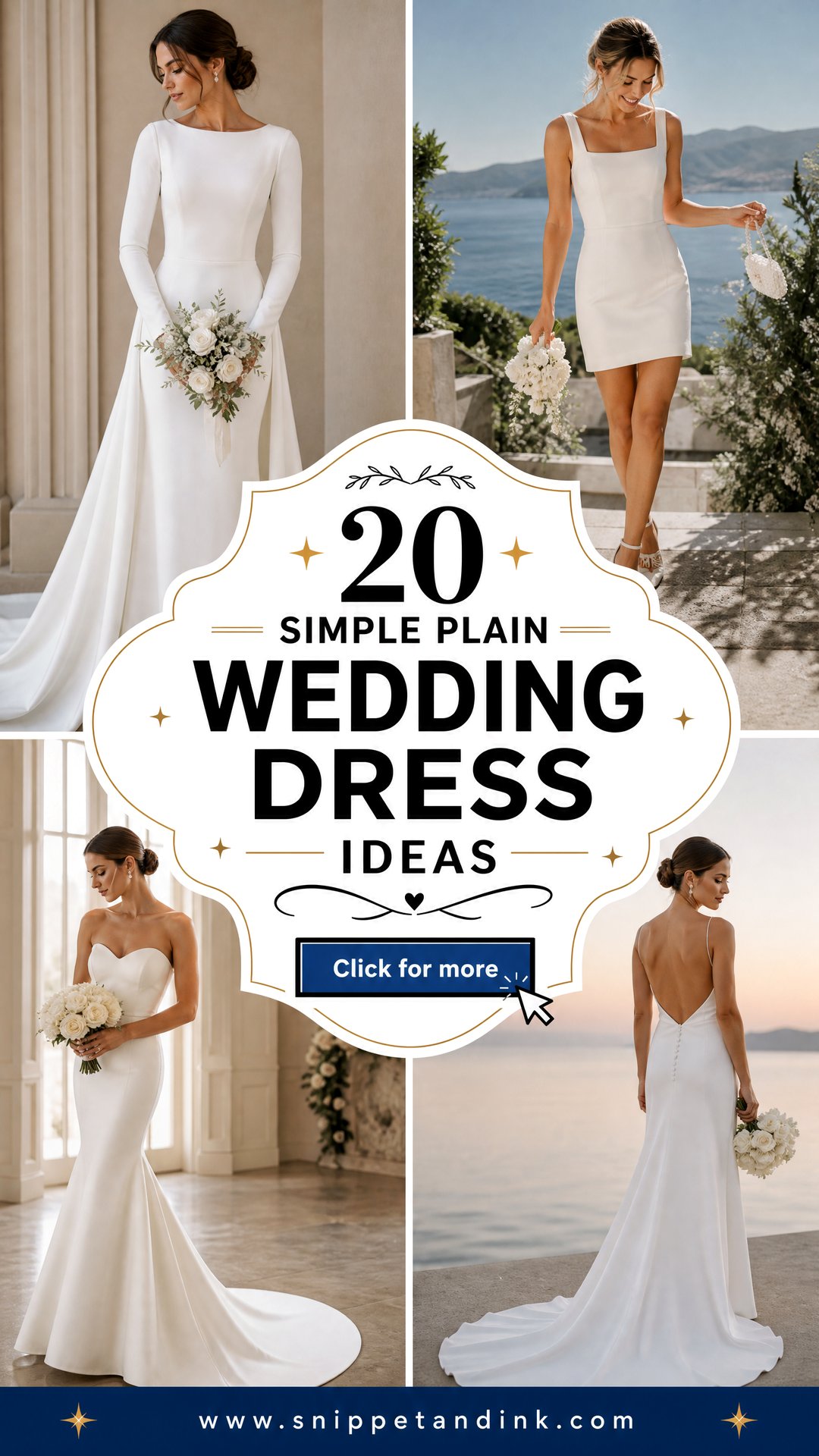
A gown doesn’t need lace, crystals or beading to be remembered. When there’s no decoration, the fabric, the tailoring and the silhouette carry everything, and good satin, silk, crepe or mikado can hold a room as well as any embroidered bodice. The styling then finishes the job: a sheer veil, the right shoes, small jewellery and a bouquet chosen to match the line of the dress. Below are twenty unembellished gowns, from formal ballrooms to courthouses, beaches and small gatherings, with notes on who each shape suits and what I’d check at the fitting.
Judging the Fabric When There’s Nothing Else to Look At
In a plain dress, the fabric is the design, and cheap fabric looks cheap from across a room. Before I let a bride fall for a shape, I put the fabric through a few quick tests in the fitting room.
- Crush a corner of the skirt in your fist for ten seconds. Good mikado and heavy crepe spring back; thin polyester satin keeps the crease.
- Sit down for two minutes, then stand. Satin creases across the lap, and you want to know how badly before photos.
- Look at it by a window. Shop lighting flatters, and daylight shows shine, puckered seams and undergarment lines.
- Check the inside. Clean seams, a full lining and hand-finished edges tell you how a plain dress will hang.
Which fabric for which plan
Silk and silk satin move beautifully but mark easily and cost more. Crepe is forgiving to wear and travels well. Mikado and duchess satin hold structure for ball gowns and A-lines. Chiffon is airy for heat but snags on brick and lace. Choose the fabric for the day you’re actually having, not the photograph you’ve saved.
1. Satin A-Line Wedding Dress
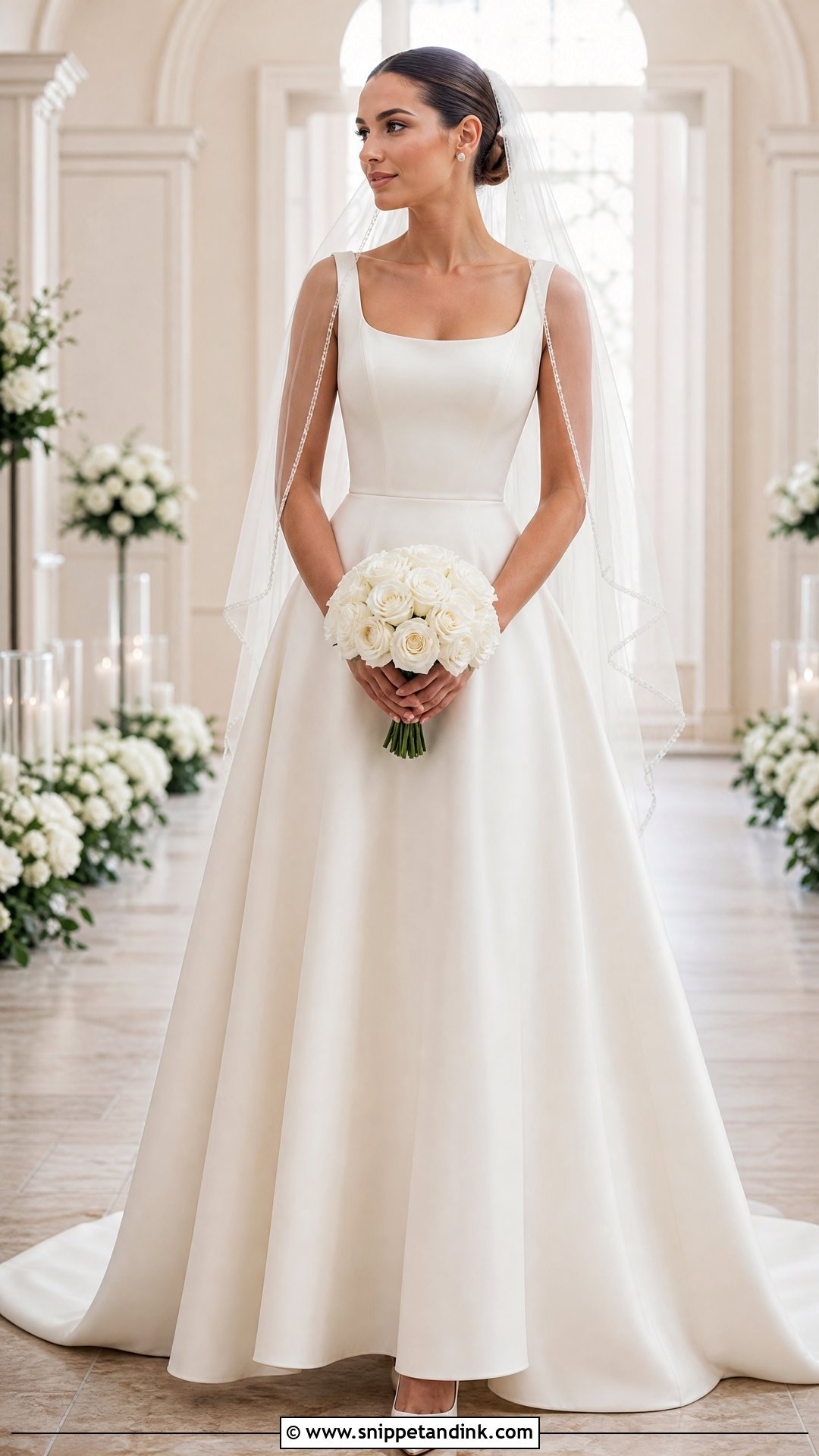
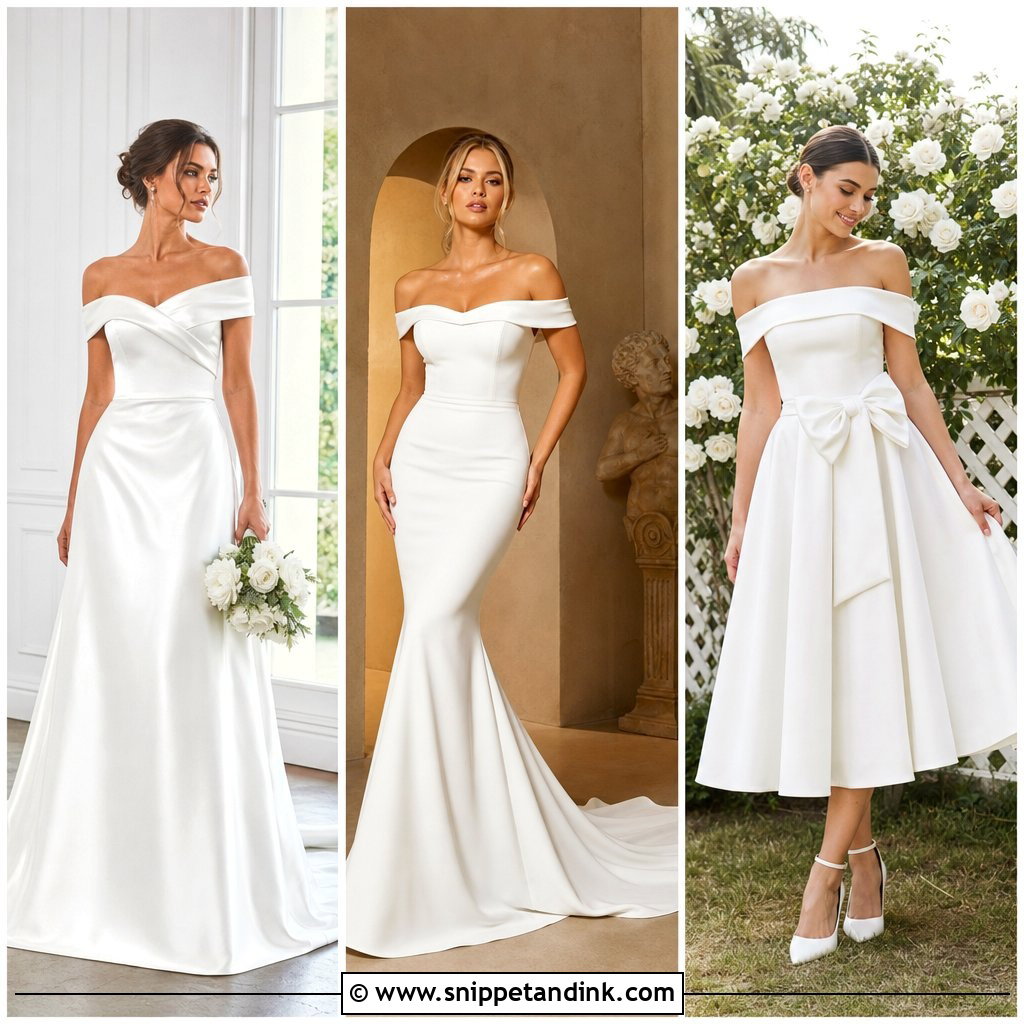
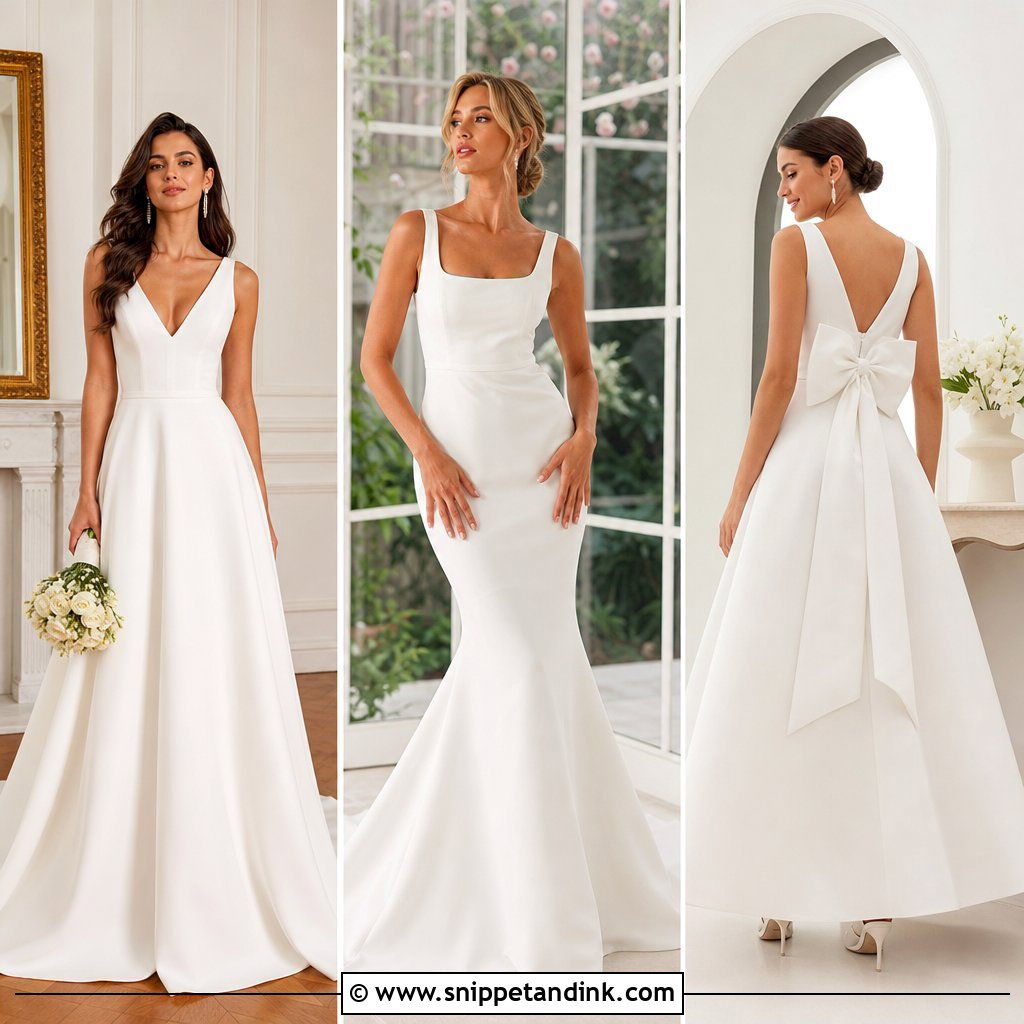
If a bride walks in with no idea what she wants, an A-line in satin is usually the first dress I pull. A fitted bodice, natural waist and a skirt that widens gradually to the floor defines the waist and gives the hips and legs room to move, which is why it suits so many figures. Heavier satin or mikado holds the shape crisply; lightweight satin falls in softer folds and can carry a small train. Pointed ivory pumps, pearl studs and a single-layer fingertip veil, with a compact bouquet of white roses or callas, keep it uncluttered.
2. Crepe Sheath Wedding Dress
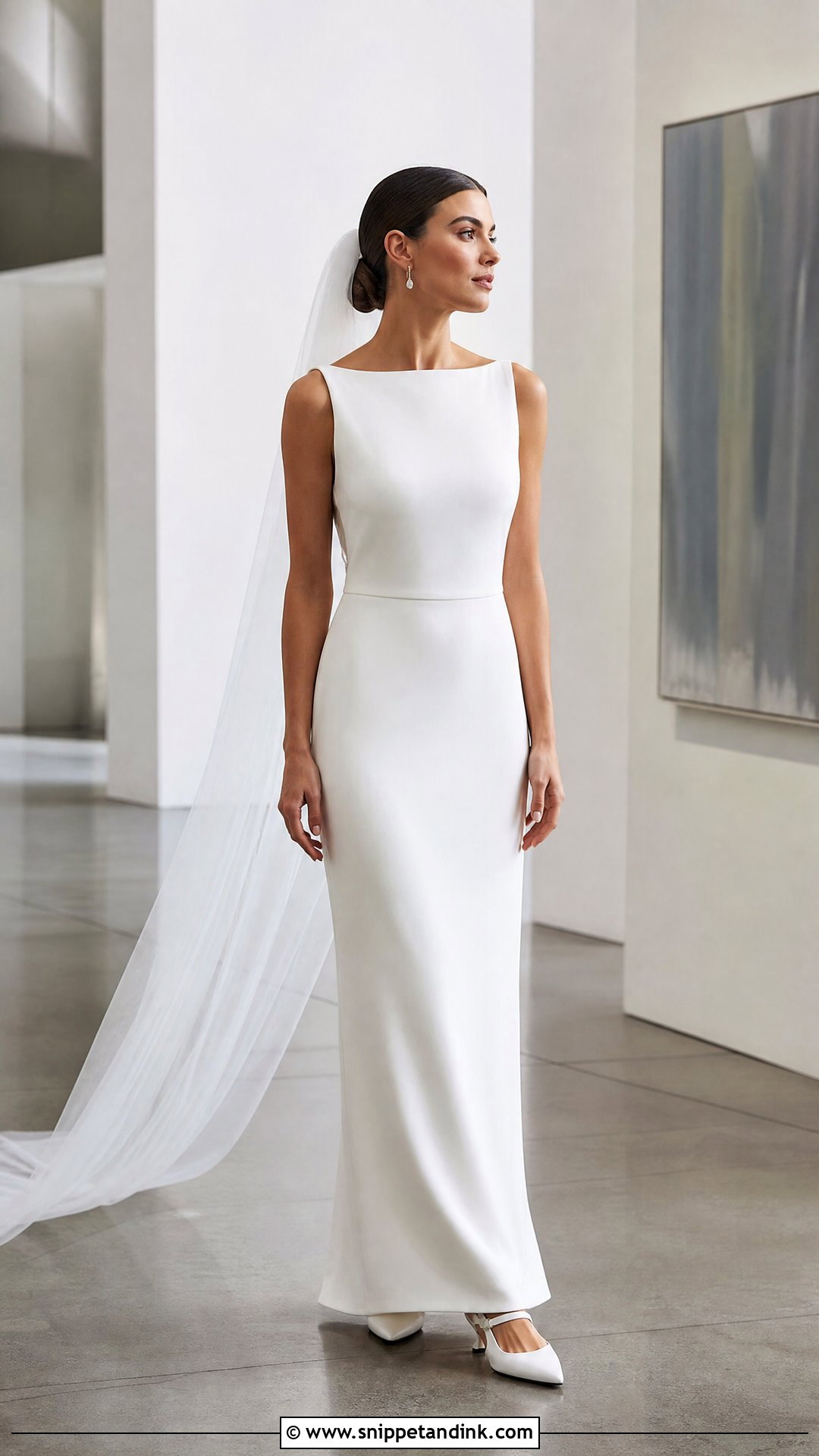
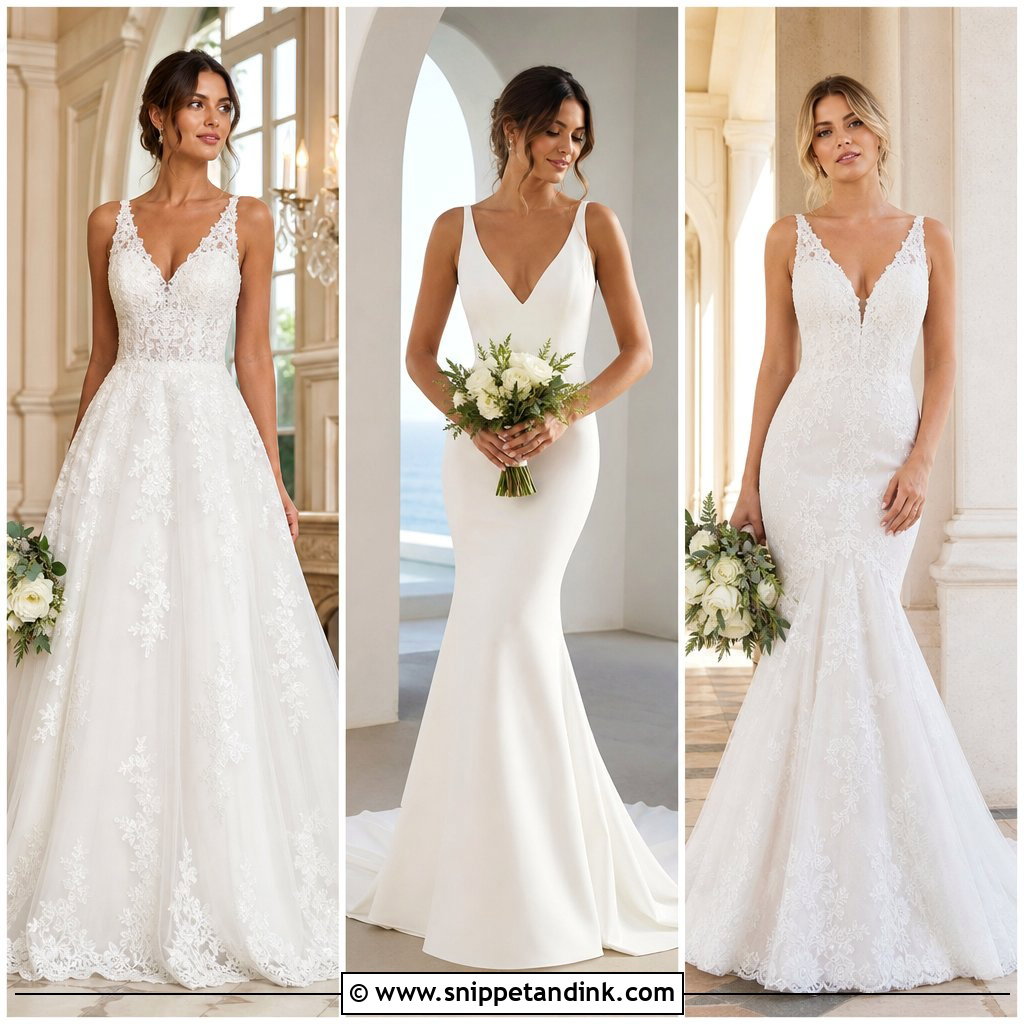
Crepe sheaths look modern because the line is unbroken from shoulder to hem. The weight of the crepe is everything: thin crepe looks like a work dress, while a substantial one drops smoothly and hides the body’s small lumps. A shaped waist with a bateau or narrow V-neck gives definition. Low slingbacks, a sleek bun and small drops suit it, and a cathedral veil adds drama for the ceremony only. Sheaths have little room at the knee, so sit, walk and try a slow dance at every fitting. Wear smooth, flat-edged undergarments; any lace trim will print through.
3. Silk Slip Wedding Dress
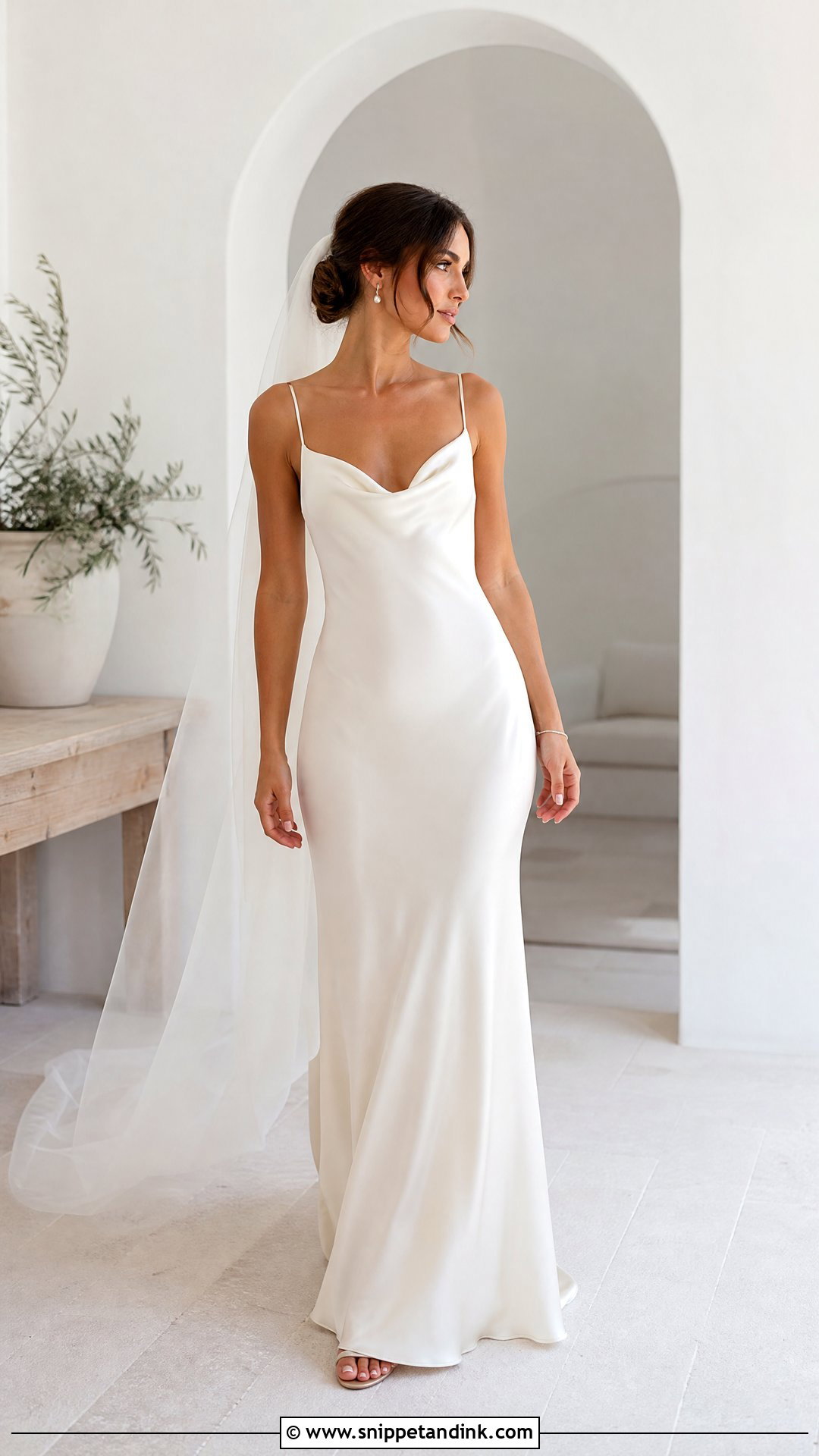
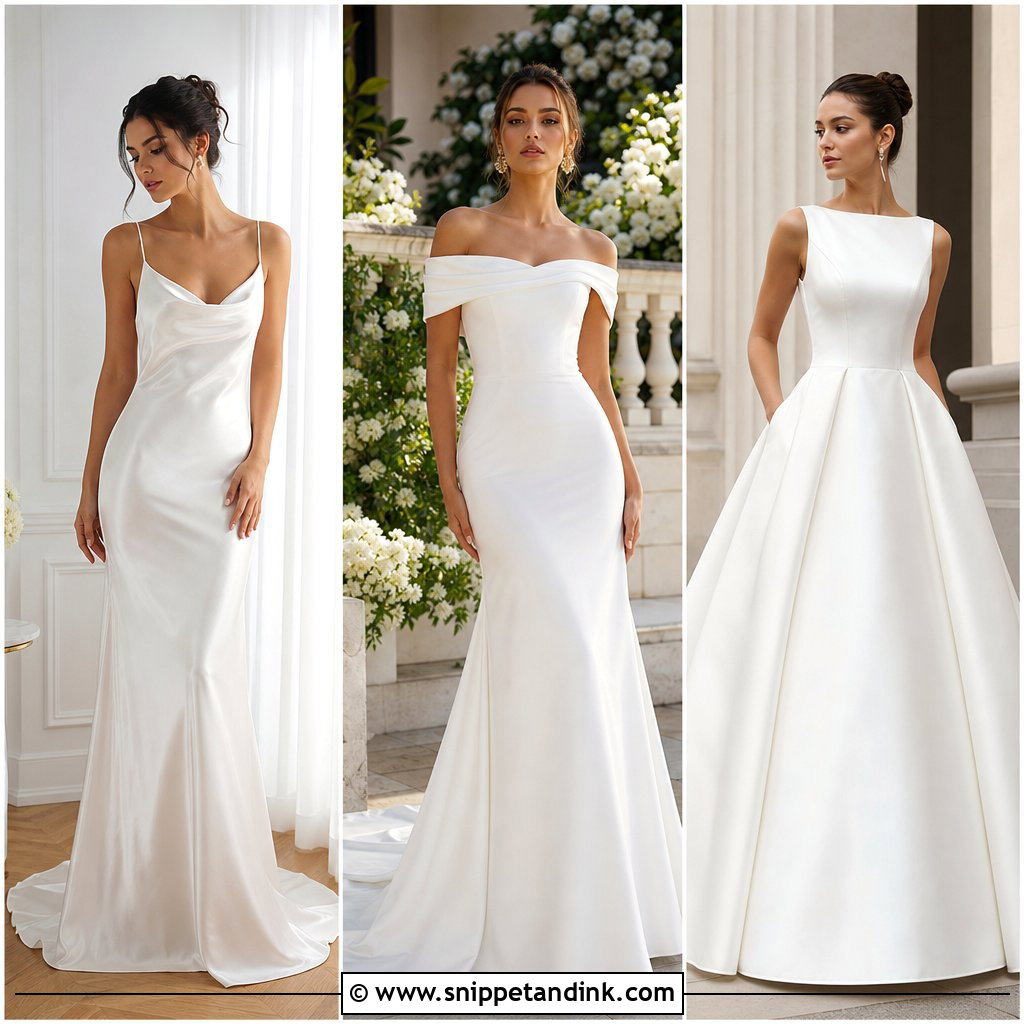
Silk slips look relaxed but are among the hardest dresses to fit. The fluid bias-cut skirt stretches on the diagonal, so the dress should skim rather than squeeze, and a seamstress who rarely works with bias can leave it twisting. A draped cowl adds dimension; a straight neckline looks cleaner. Strappy sandals, a slim tennis bracelet, pearl earrings, a low twisted bun and a light chapel veil keep it narrow. Silk shows every seam and water mark, so check undergarments by a window, and keep drinks well away while you’re dressed.
4. Strapless Column Wedding Dress
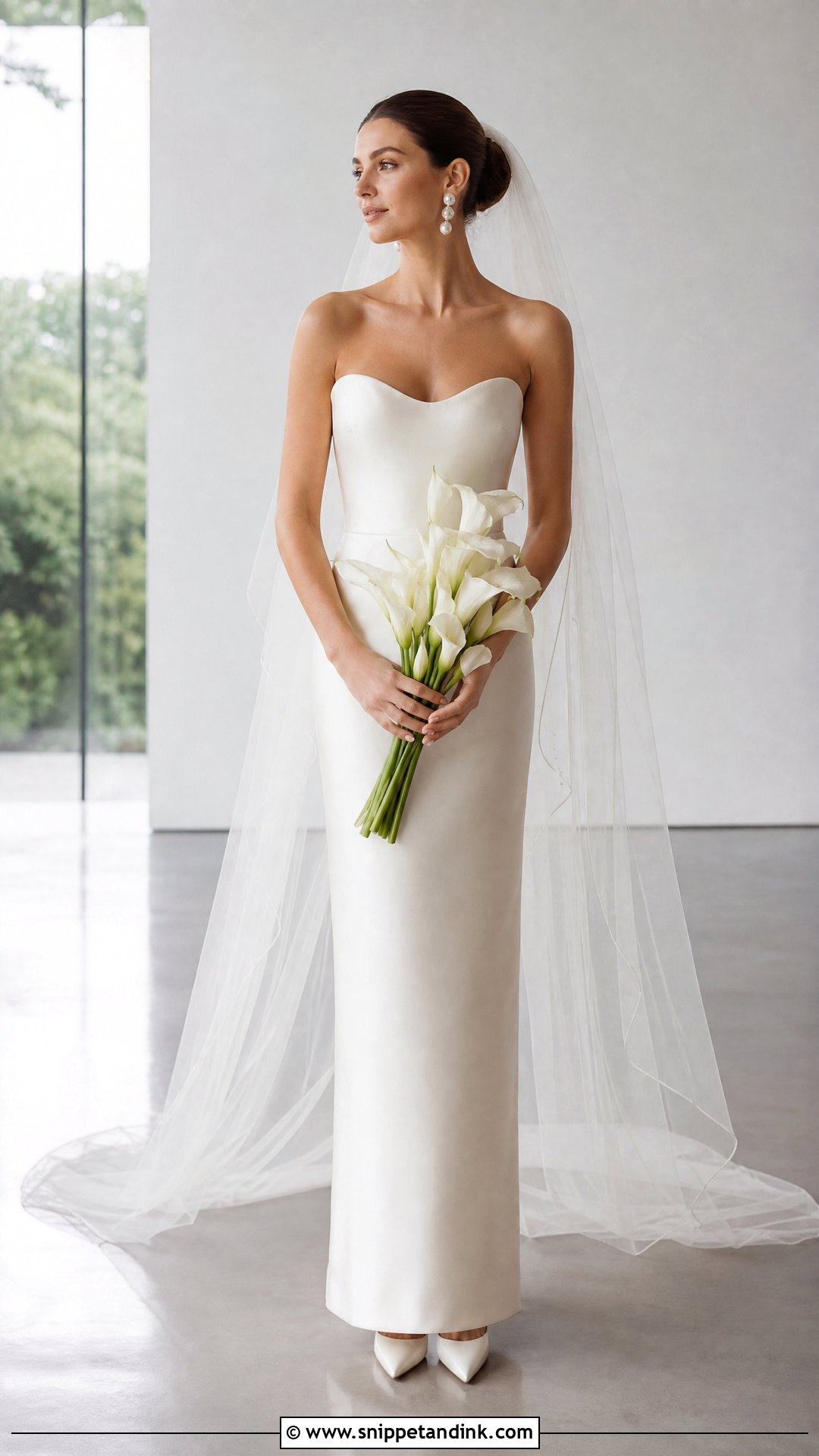
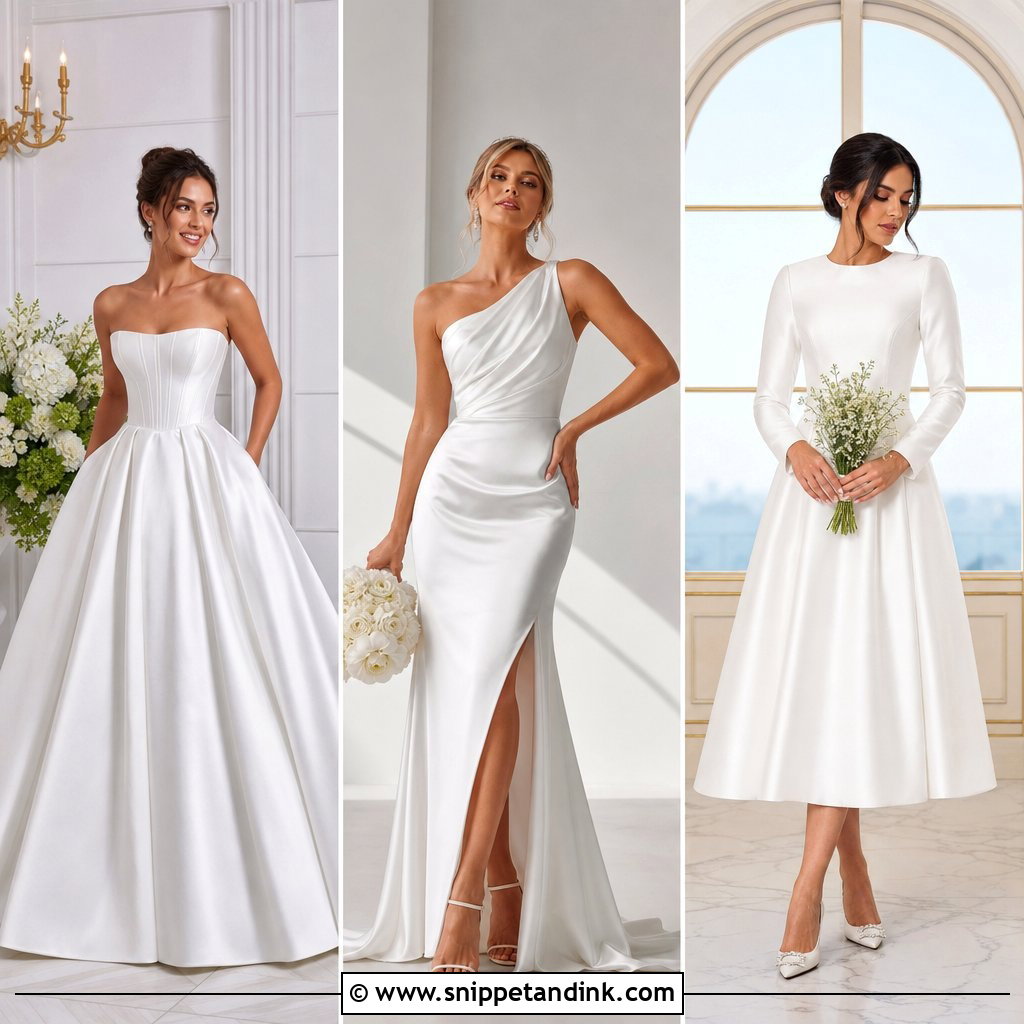
Strapless columns rely on what’s inside. A good one has an internal corset that grips at the ribs, not the bust, so you can breathe, eat and stay covered. Mikado, duchess satin or structured crepe keeps the line clean from neckline to hem. Pick one noticeable accessory, such as sculptural pearl earrings, and leave the neck bare. A cathedral veil and long-stemmed white flowers echo the vertical line. At fittings, raise both arms, sit, and walk around the room. If you catch yourself tugging the top edge up, the bodice needs taking in at the ribs.
5. Square Neck Wedding Dress
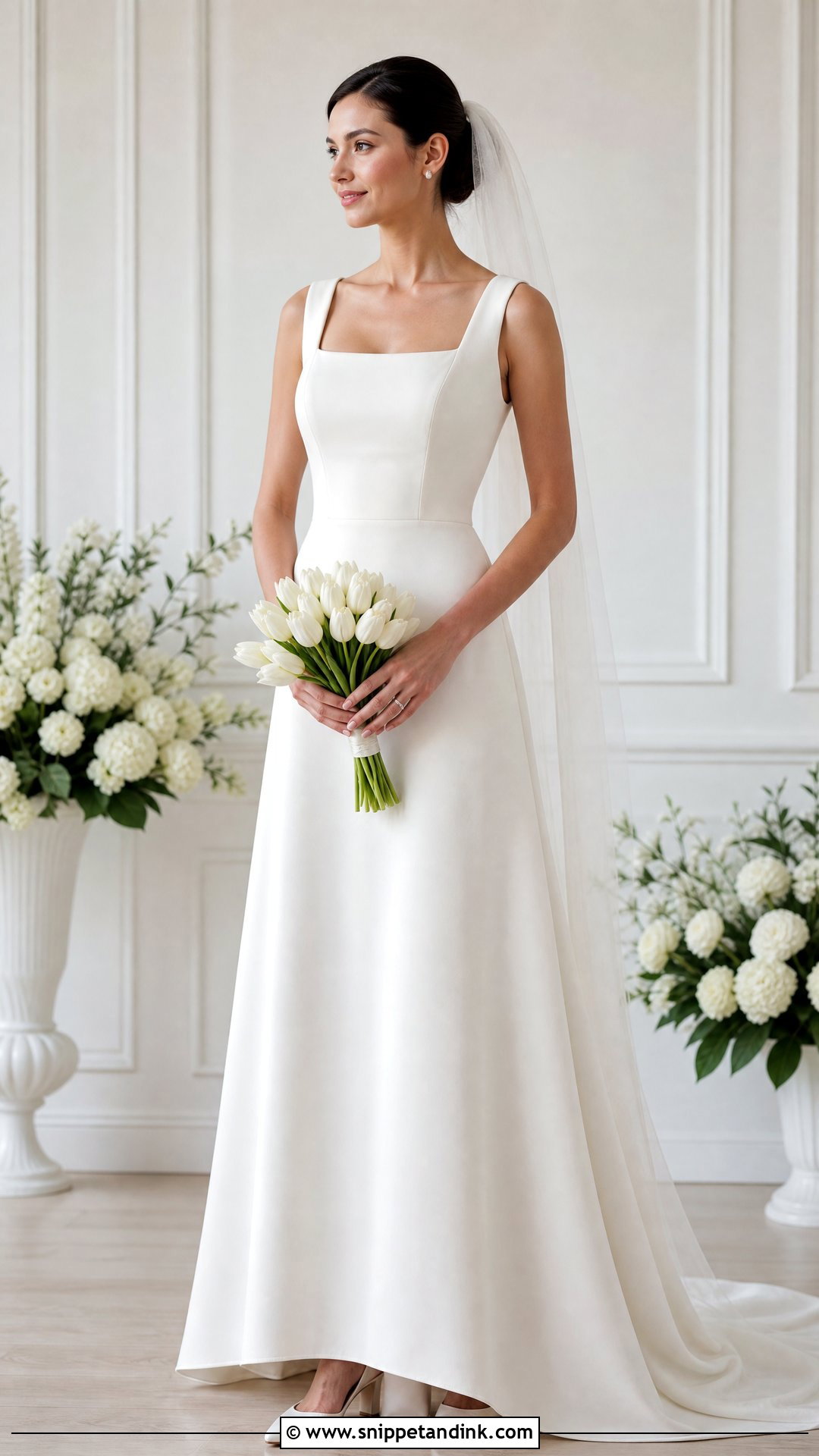
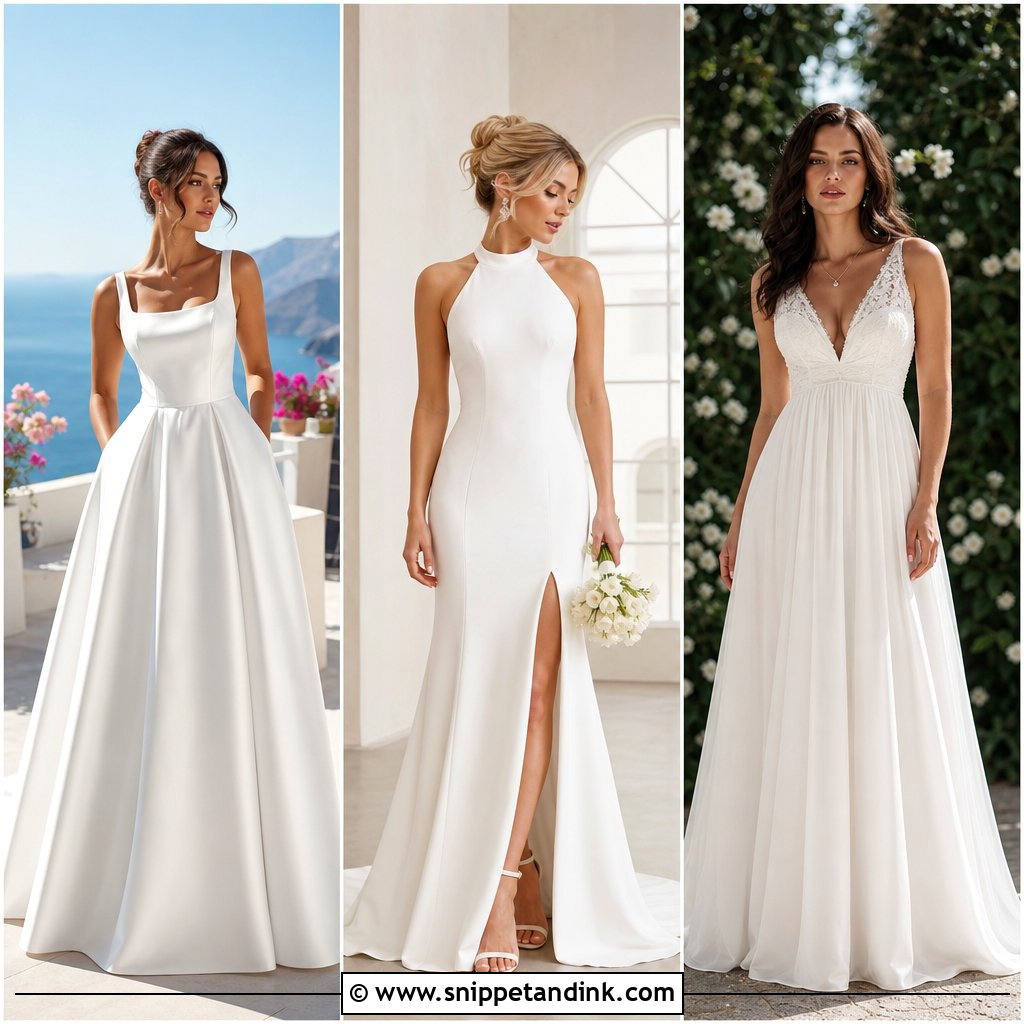
The square neck is the closest thing a plain gown has to architecture. It frames the collarbone and works with wide straps, cap sleeves or fitted long sleeves. Keep the seams minimal in smooth satin or crepe. An A-line skirt reads classic; a narrow column reads modern. Pearl studs, closed-toe block heels and a gathered veil under a low bun suit it, along with a few white tulips. For dependable support, choose wider straps and built-in cups. The corners are where it goes wrong: if they buckle or ripple when you breathe in, the neckline needs a stay tape sewn inside.
6. Long Sleeve Wedding Dress
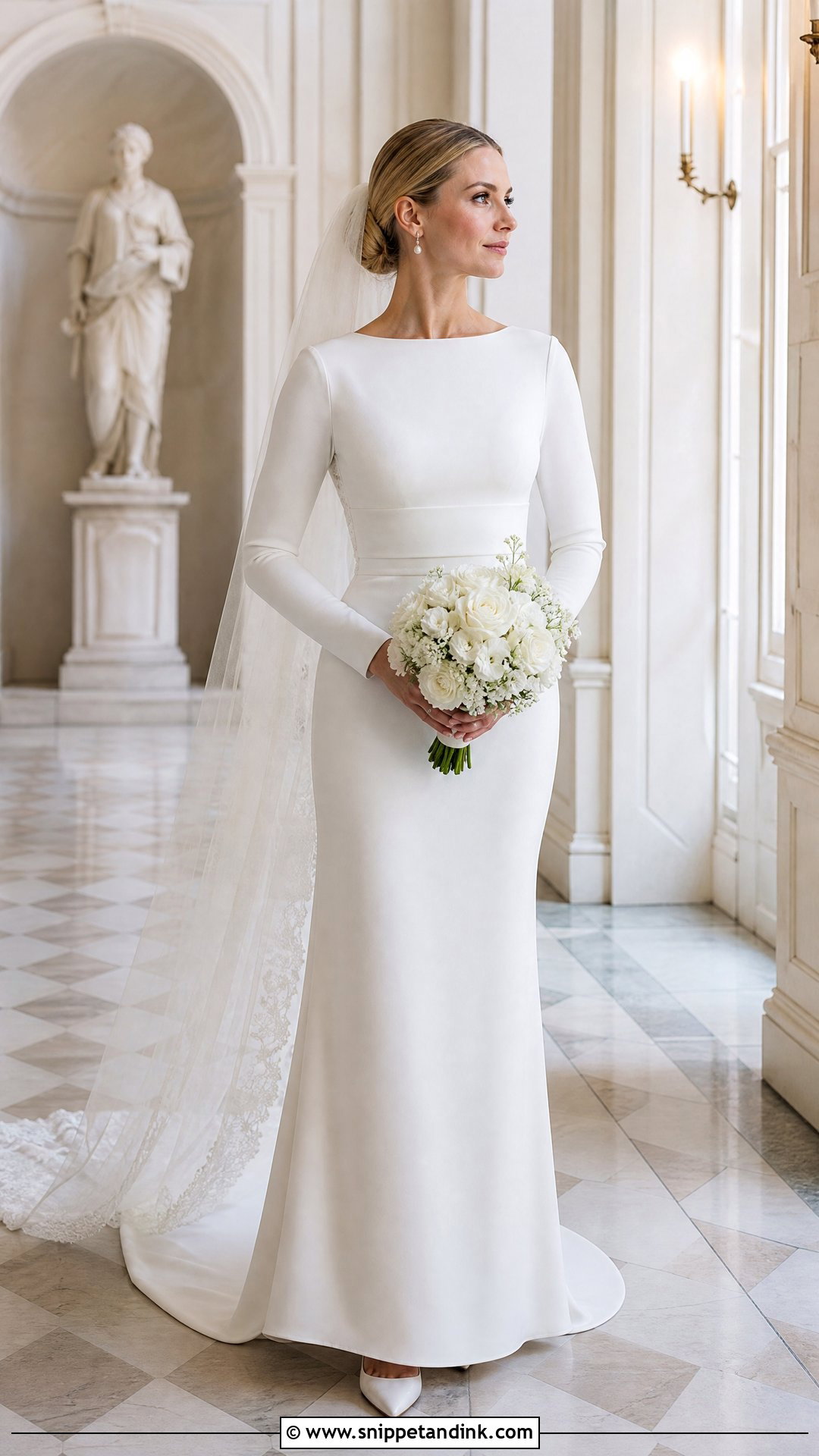
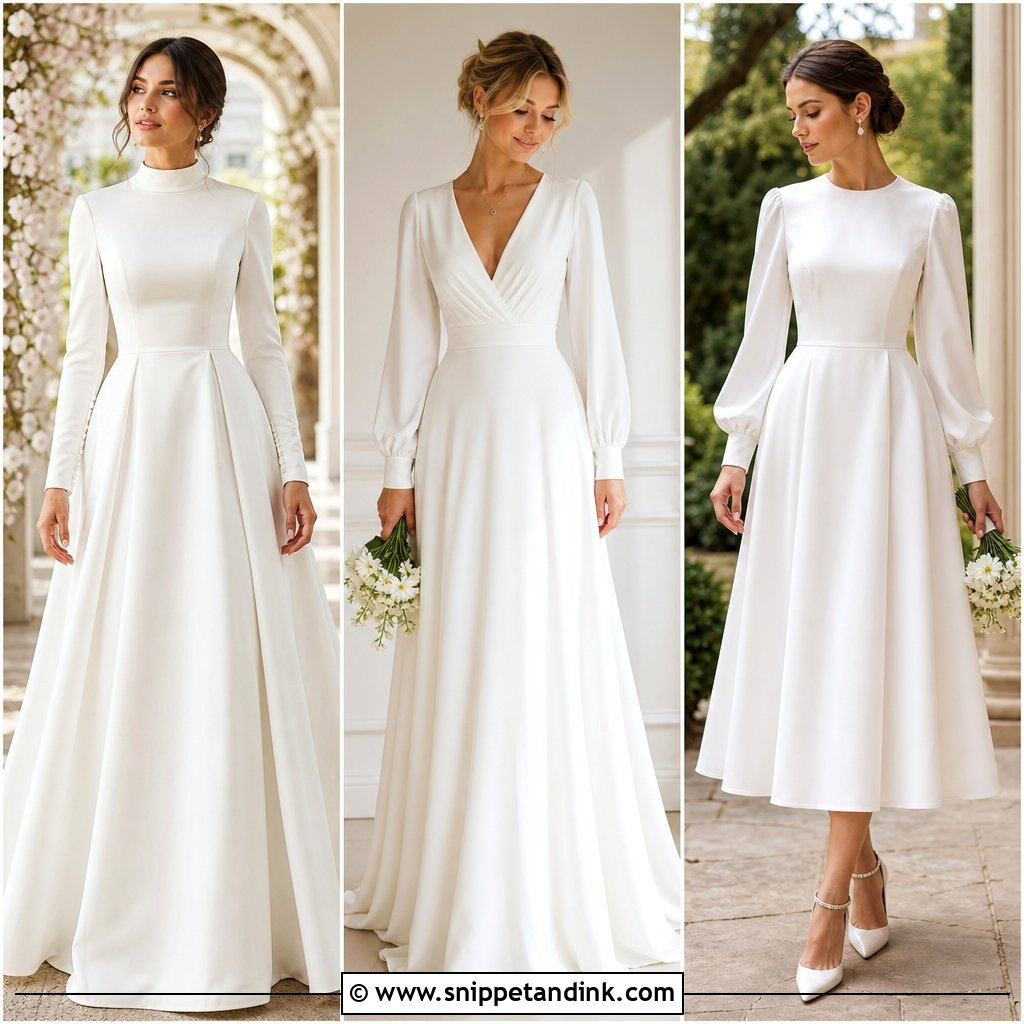
Long sleeves in plain crepe, matte satin or a smooth stretch fabric look simple, provided the shoulder seam sits exactly on your shoulder point. Avoid heavy cuffs and appliqué. A gently defined waist over an A-line or column skirt makes a tidy head-to-toe shape, finished with pointed satin pumps, tiny pearls, a low chignon and a single-layer chapel veil. A breathable lining matters indoors, since sleeved gowns get warm by the evening. The test I insist on is reaching forward to hug someone: if the back pulls tight across the shoulders, the sleeve head needs more ease.
7. High Neck Wedding Dress
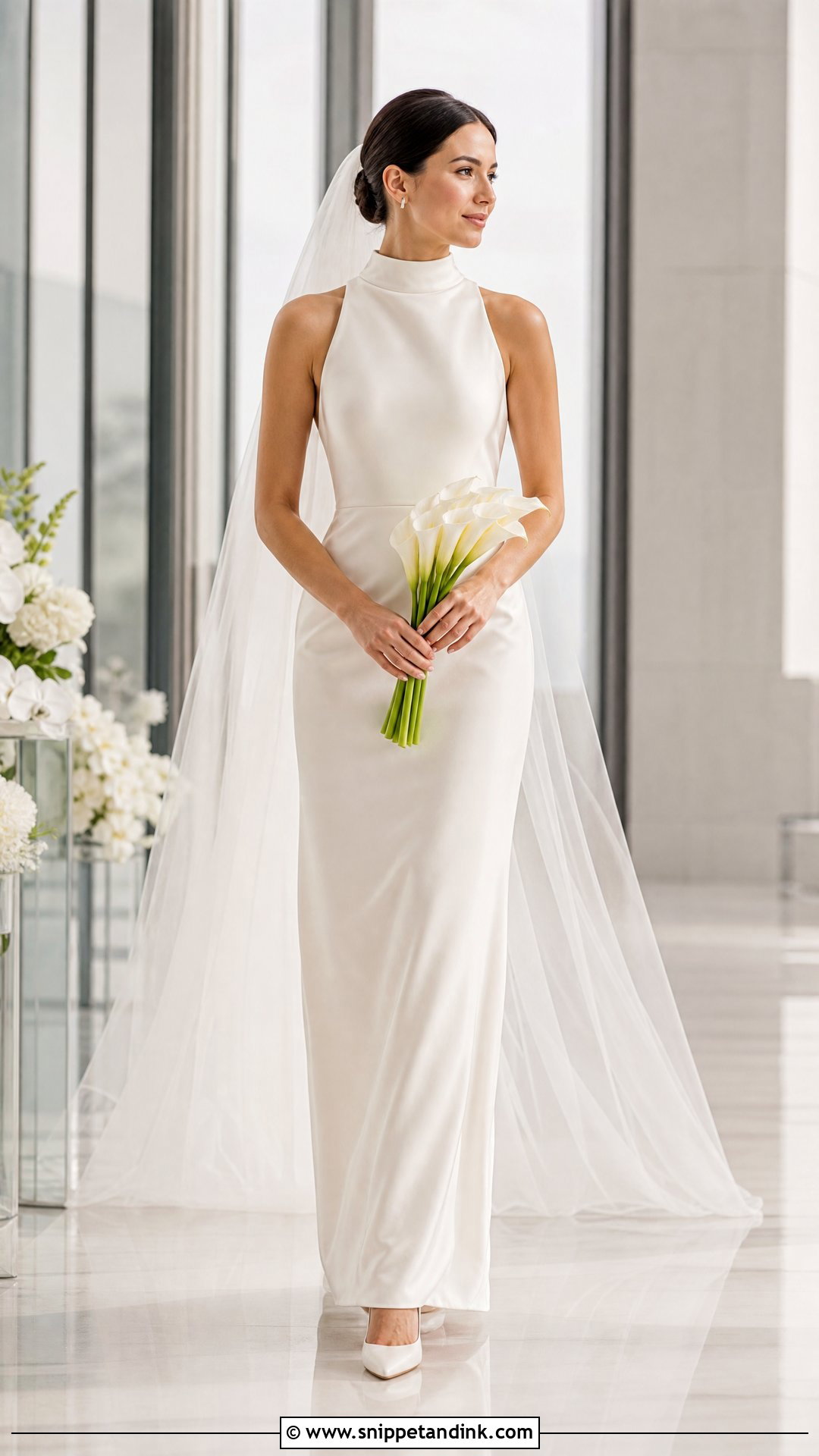
High necks give coverage while looking sleek, but a stiff collar is uncomfortable after a few hours of turning your head, so I look for a softly fitted neckline instead. Sleeveless with a column skirt is sharp and modern; long sleeves with an A-line feel more traditional. The neckline already frames your face, so skip the necklace and wear small earrings. A polished bun, ivory pumps, a veil set low at the back and a few calla lilies complete it. Plain fabric shows any puckering, so take the shoulder and neckline alterations seriously.
8. Off Shoulder Wedding Dress
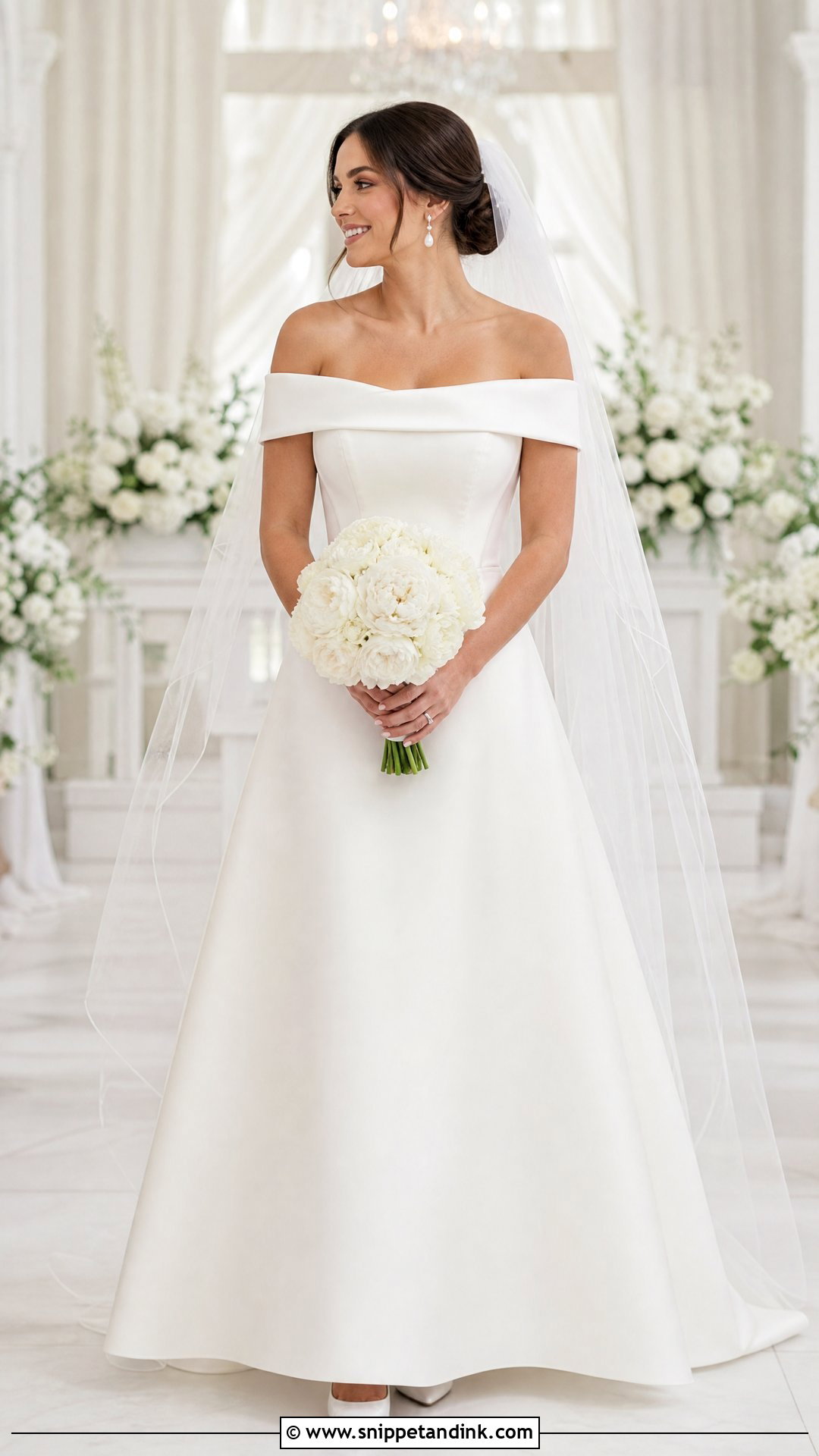
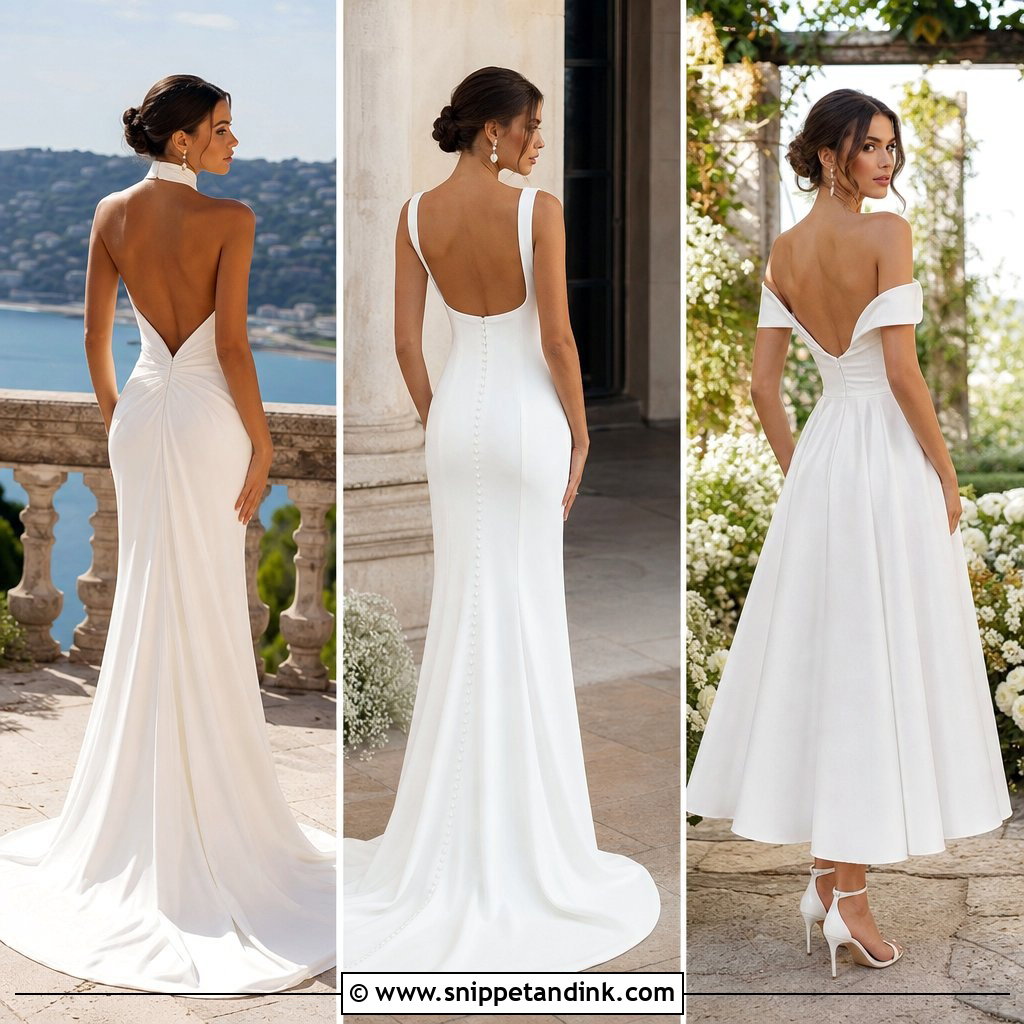
An off-shoulder band shows the collarbones, which is all the romance a plain dress needs. A folded satin neckline or a smooth draped band should sit securely across the upper arms; if it relies on you holding your elbows in, it will creep up. A fitted bodice with a full A-line skirt feels classic, a straight skirt quieter. Pearl drops, closed-toe heels, a sheer chapel veil and a neat updo keep the neckline visible. Ask for enough movement to hold flowers and hug guests. Detachable off-shoulder straps are a good compromise, worn for the ceremony and removed for the reception.
9. Cowl Neck Wedding Dress
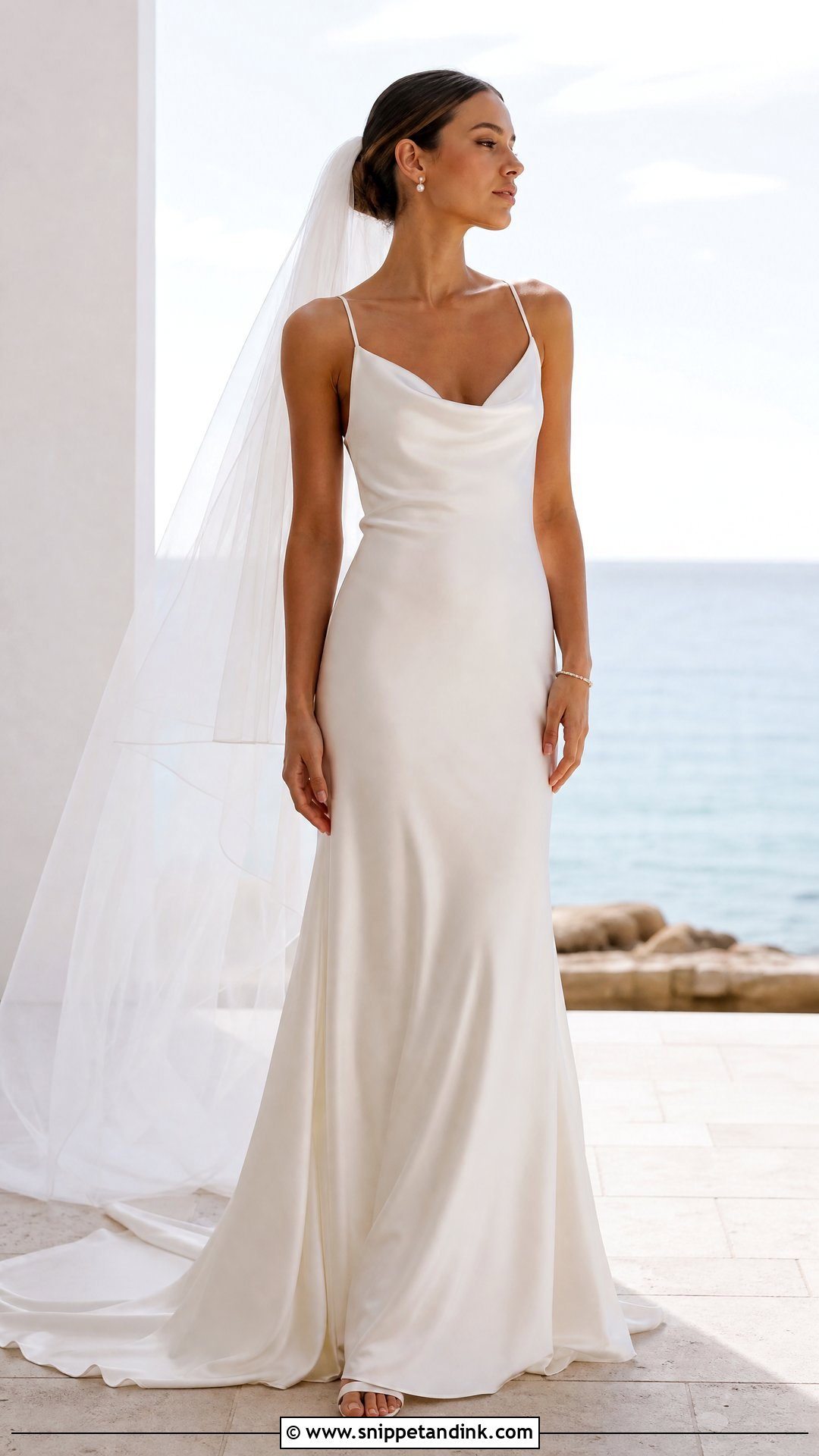
A cowl neck wedding dress creates interest purely through drape, so it only works in silk, satin or another fluid fabric that falls under its own weight. Slim straps and a bias skirt give a relaxed slip; wider straps and a defined waist give more support. Minimal sandals, a fine bracelet and pearl or crystal studs, with a sleek ponytail or low bun, keep attention on the folds. Wear a plain fingertip veil or a simple comb. Bend and sit in it before you buy, as a deep cowl can open further than expected, and a little fashion tape keeps it in place.
10. Boat Neck Wedding Dress
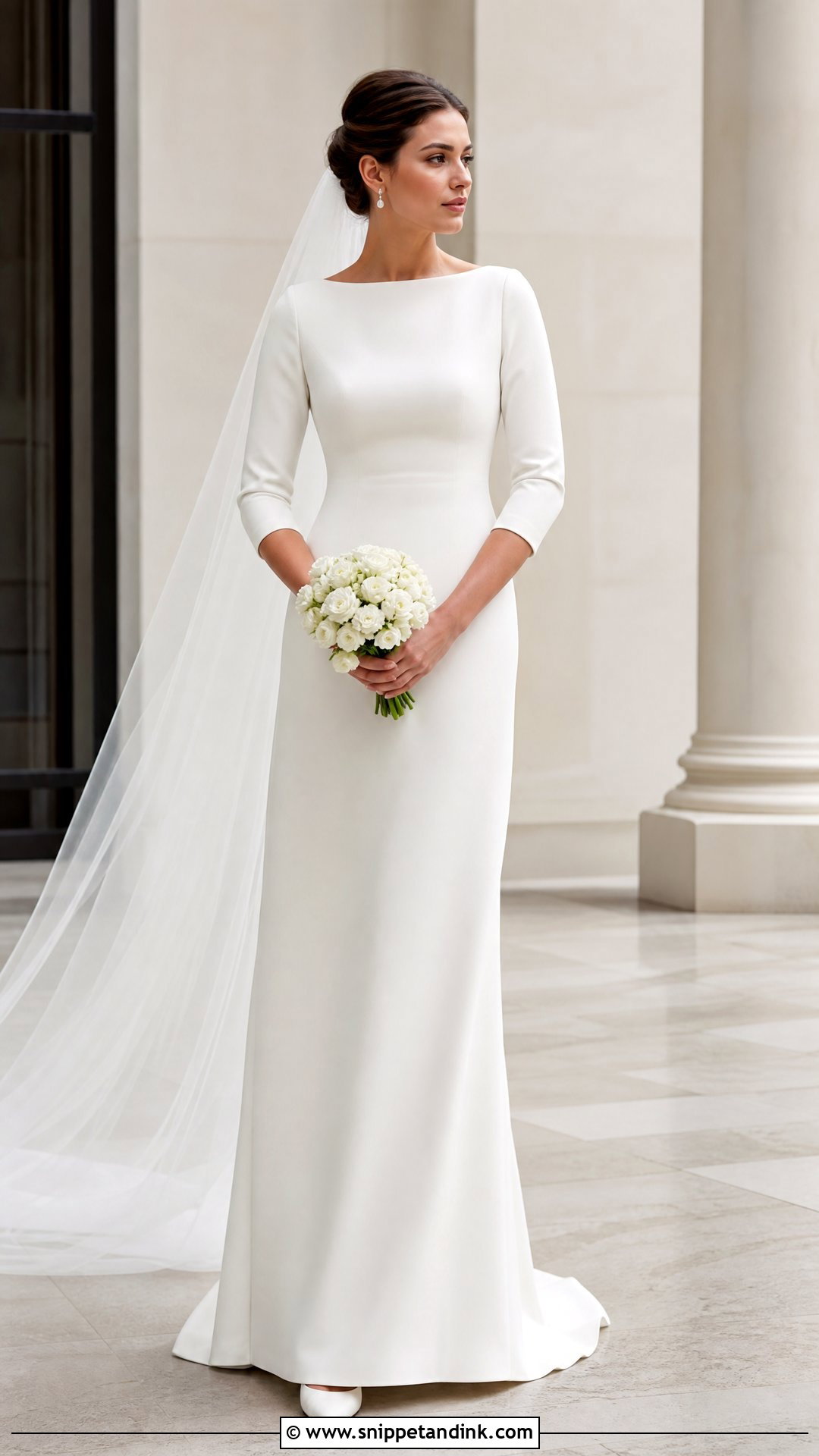
A boat neck wedding dress runs wide and shallow across the collarbones, and in plain crepe or satin, the construction is all anyone sees. Three-quarter sleeves give classic coverage; sleeveless is lighter for summer. Keep the skirt a narrow A-line for balance. Small pearl earrings, pointed pumps and a neat French twist, plus a cathedral veil attached below the hair, leave the neckline clear. Because the cut reaches toward the shoulders, it gapes at the collarbone if your shoulders slope even slightly, and a structured fabric helps the edge stay crisp.
11. Halter Neck Wedding Dress
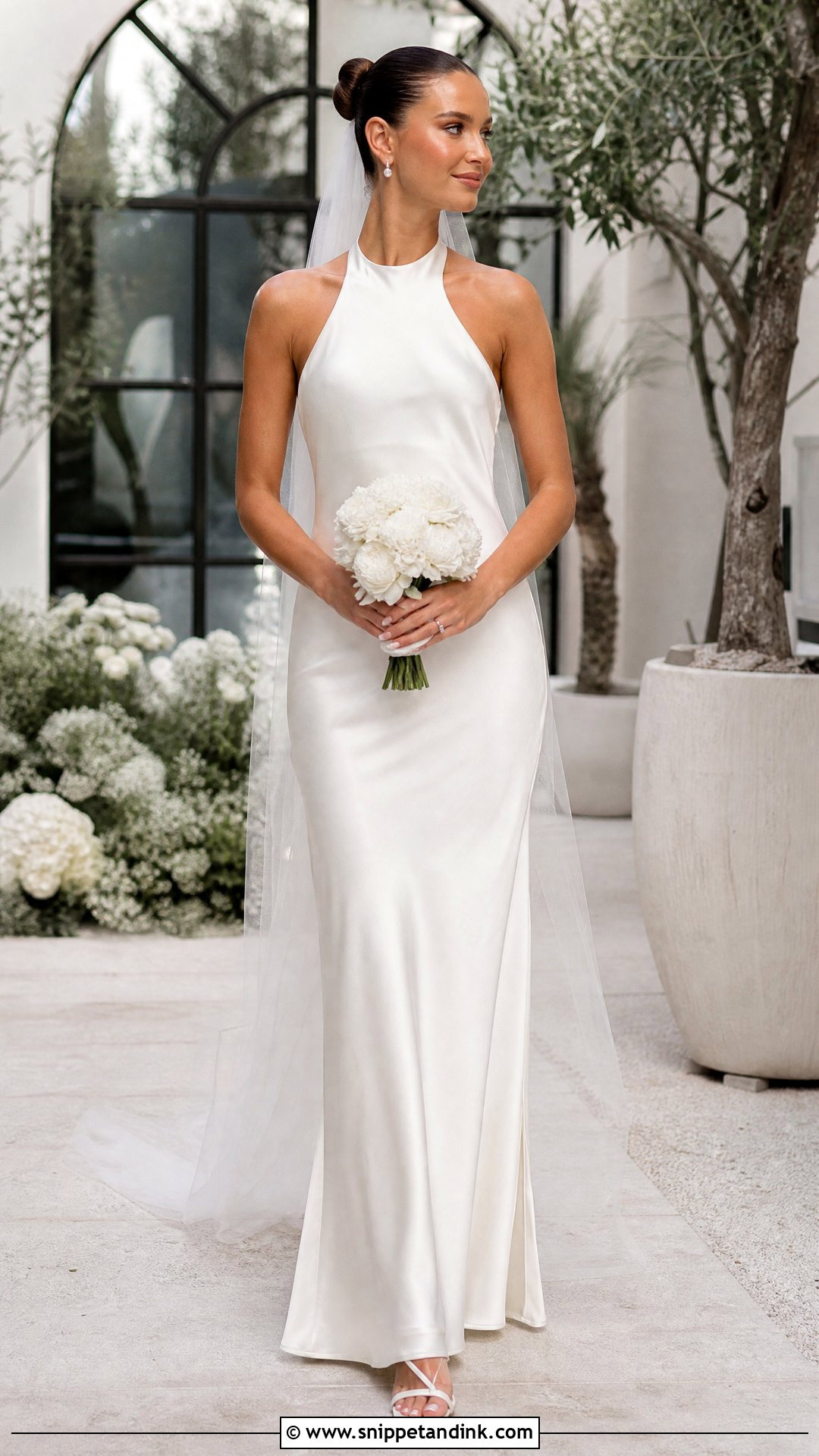
A halter swaps straps or sleeves for one clean line around the neck. A high, fitted halter looks polished; a draped one is more relaxed. In plain satin or crepe, the shoulders become the focus, over a column or gently flared skirt. Smooth bun, no necklace, simple earrings, slim heels, a small white bouquet and a light veil under the bun. Check the armholes during alterations: a halter cut too far in rubs the inner arm raw by the evening. Internal support means you won’t need a bra with visible straps.
12. V-Neck Wedding Dress
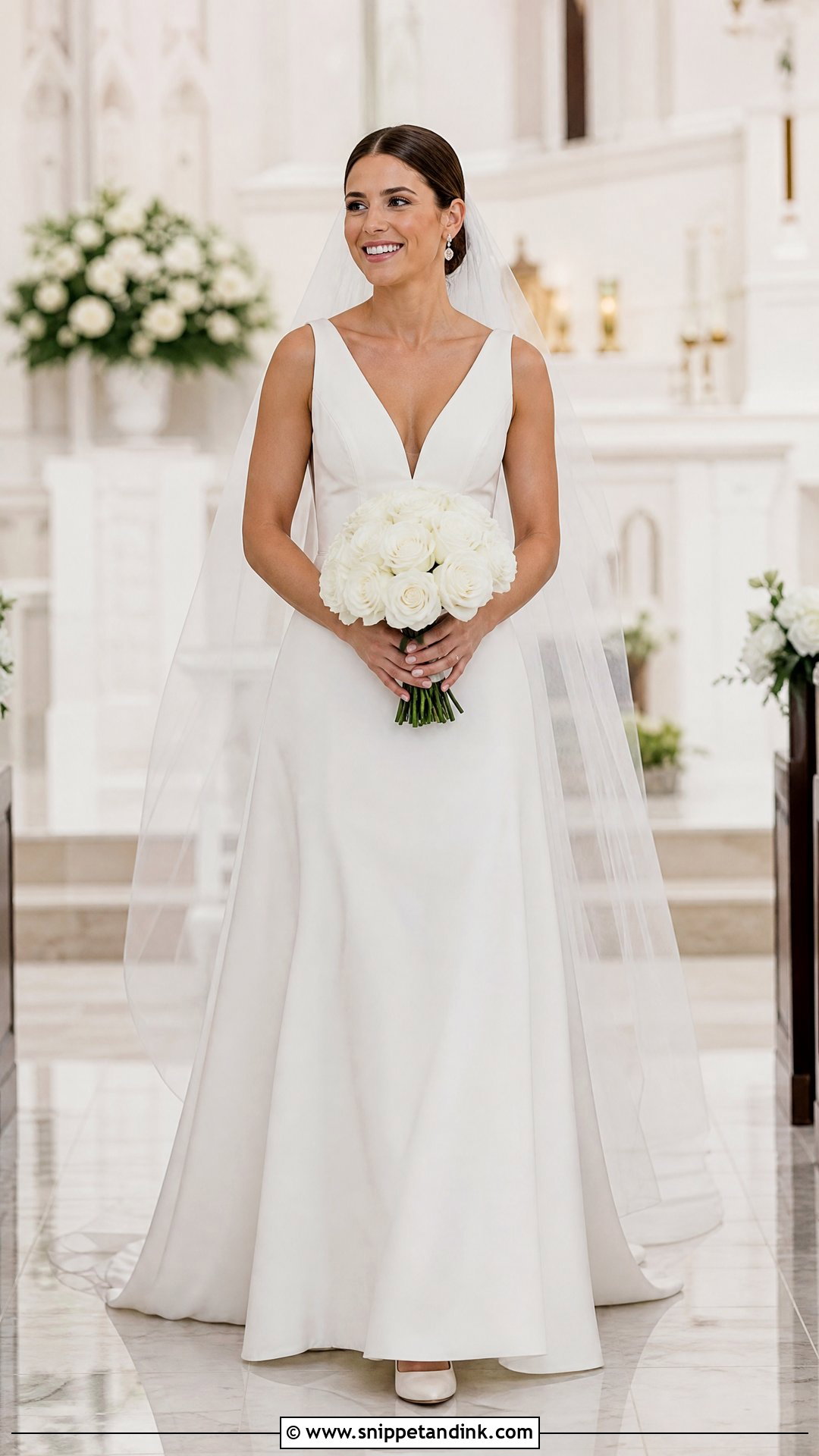
A V-neck draws a long vertical line, and the depth decides the tone. Shallow reads modest; deep reads modern and needs more planning underneath. For fuller busts, I’d go for wider straps and a structured bodice, which keep the V where it belongs when you lean. The skirt can be A-line, sheath or softly flared depending on the fit you prefer. Delicate drops, ivory pumps and a plain veil with a cut edge finish it. A tiny pendant can work with a shallow V, but a bare neckline usually looks cleaner. Look at the neckline from the side during fittings, and ask about hidden mesh if it shifts.
13. Empire Waist Wedding Dress
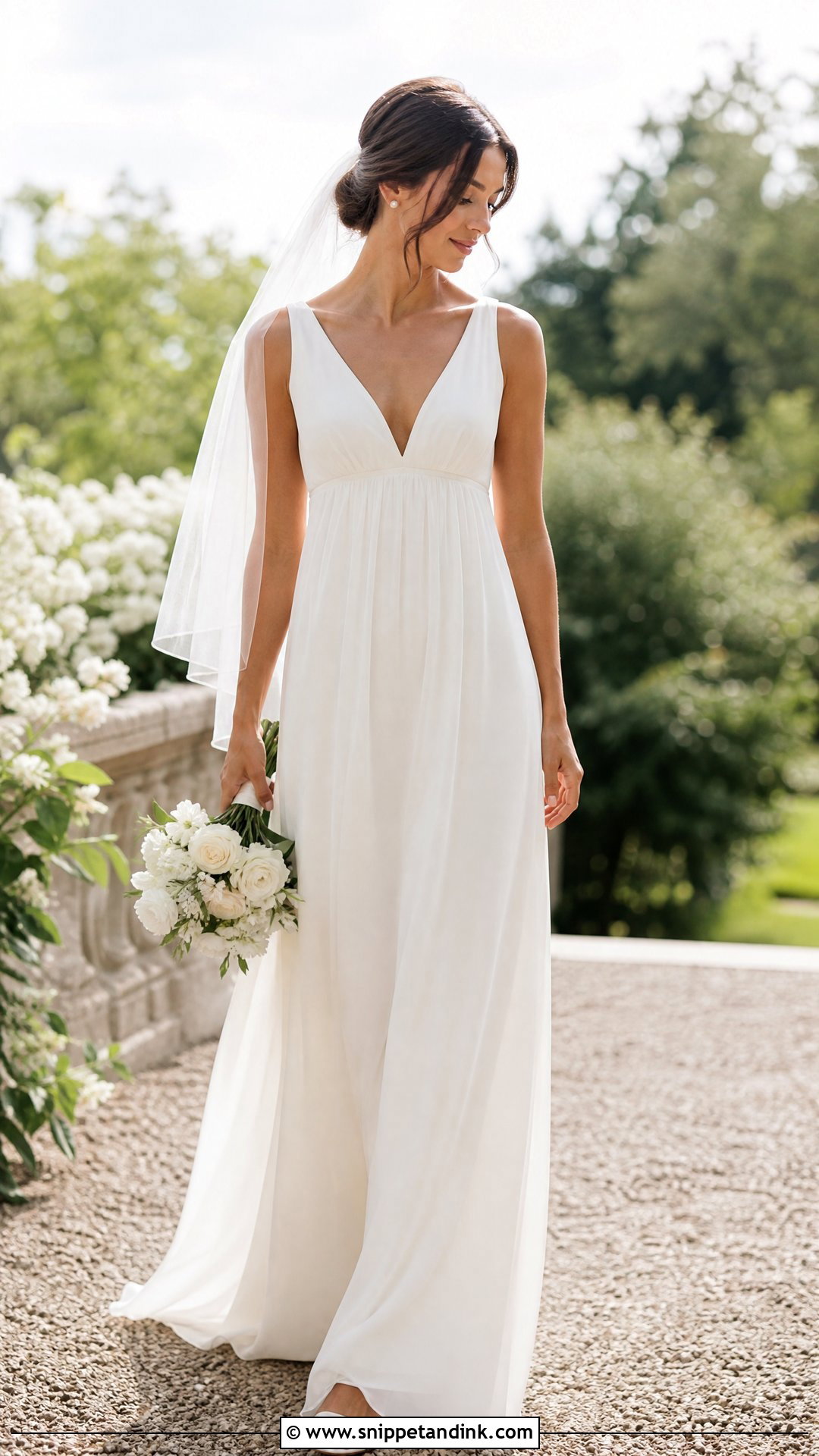
An empire seam sits just below the bust and lets the skirt fall loosely over the stomach and hips, which makes it one of the most comfortable shapes to wear all day. Plain chiffon, silk or soft crepe keeps it light. A scoop, square or V bodice with supportive straps balances it, and low block heels or bridal flats suit outdoor ceremonies. Small pearls, a loose low bun, a single-layer veil and a hand-tied bunch of seasonal white flowers suit its relaxed mood. Proper bust fitting is the whole job here. If the seam rides up when you lift your arms, the bodice is too short.
14. Tea Length Wedding Dress
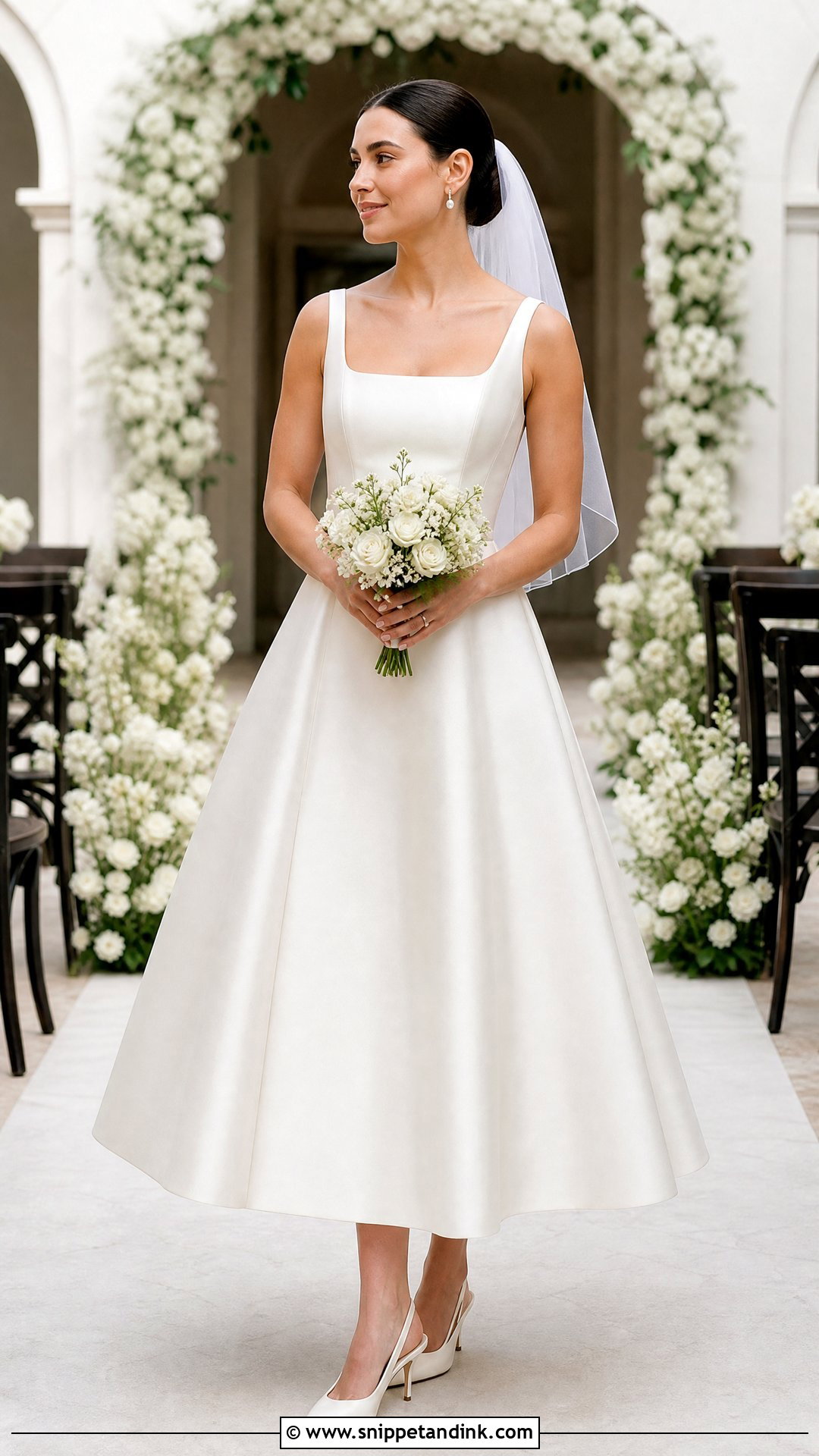
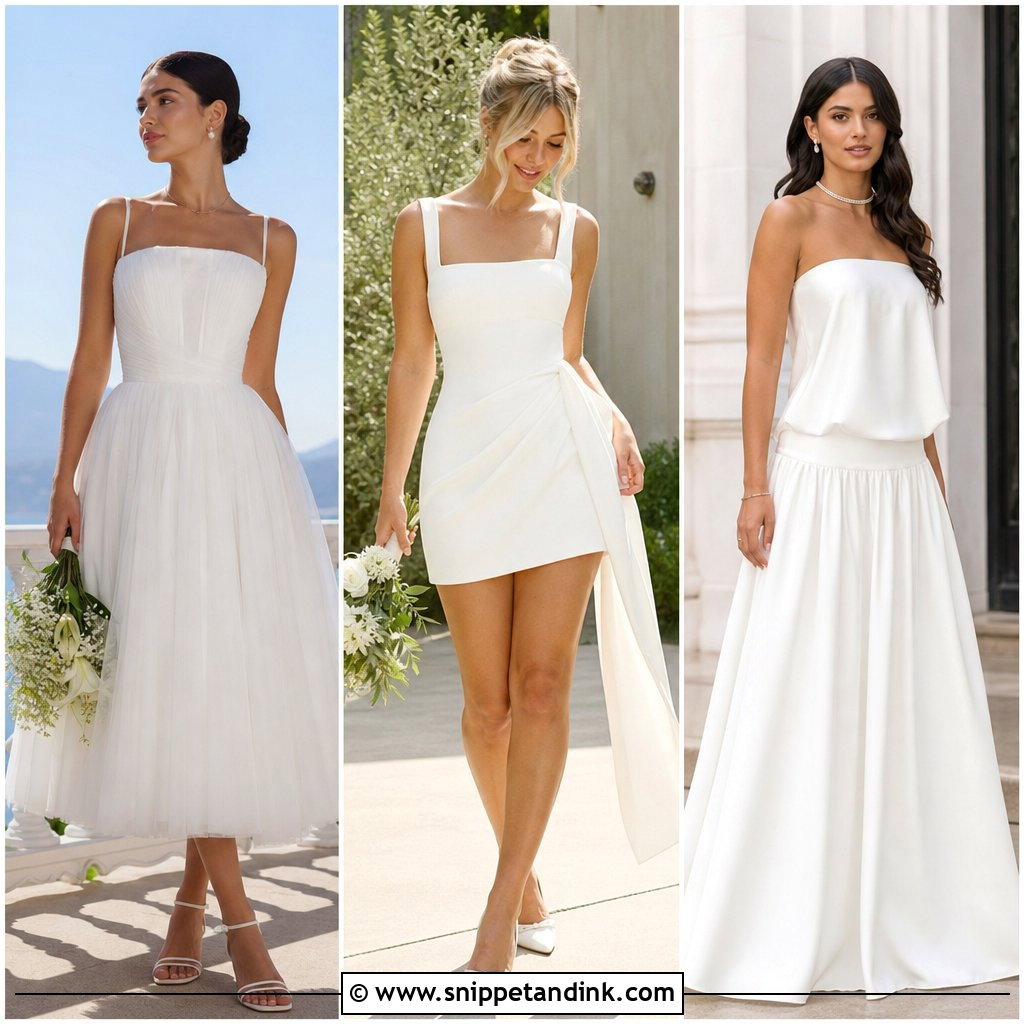
Tea length falls between the knee and ankle, so your shoes become half the outfit. I choose them before the dress goes for alterations. Plain mikado or structured satin with a fitted bodice and a softly flared skirt keeps the short length bridal, and a square or bateau neck stops it looking casual. Pointed slingbacks, classic pumps or a refined block heel all suit it, with pearl studs, a short veil and a compact bouquet. Hem it wearing the exact shoes. Watch the petticoat: too much and the skirt starts to look like a costume, too little and it collapses.
15. Midi Wedding Dress
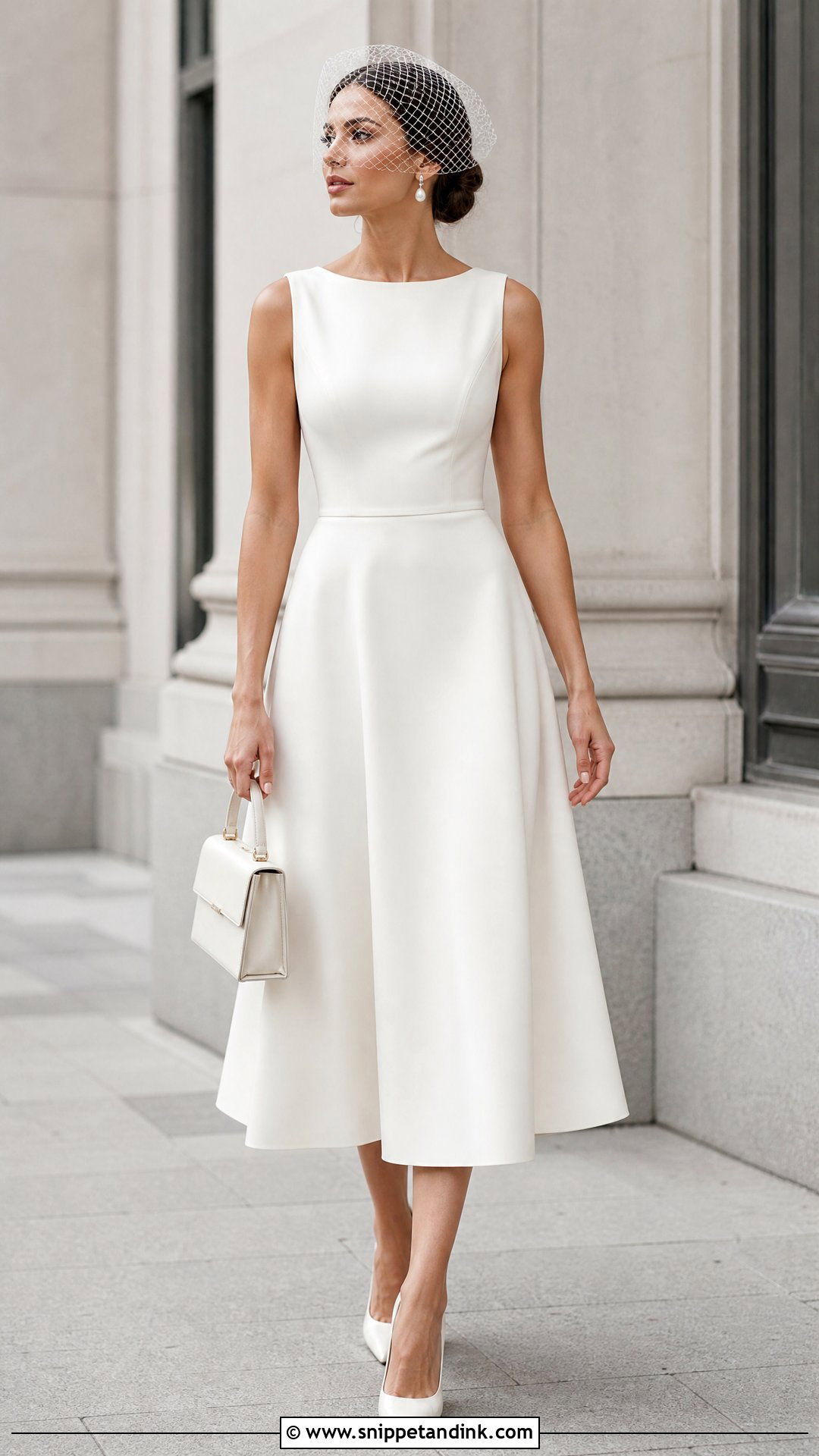
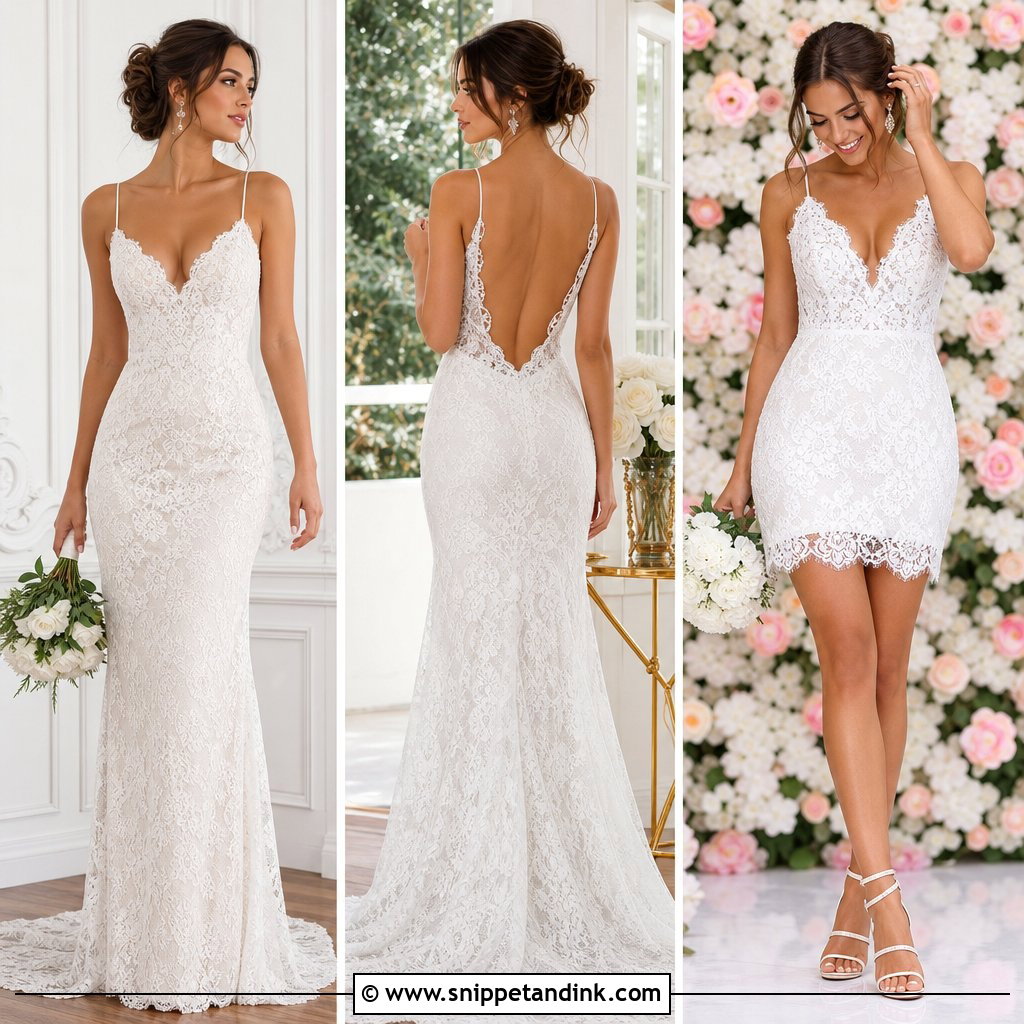
A midi is my usual suggestion for a city hall ceremony followed by dinner, because it can handle stairs, taxis and pavements. Set the hem below the knee or at mid-calf, avoiding the widest part of the calf if you want a longer line. A fitted sleeveless bodice with a straight or gently flared skirt keeps the shape clean. Pointed pumps, a structured mini bag and simple earrings go with it; add a birdcage veil for a fashion feel or a fingertip veil for something traditional. Shaped waist seams give definition more neatly than a belt. Crisp crepe or satin keeps it bridal.
16. Mini Wedding Dress
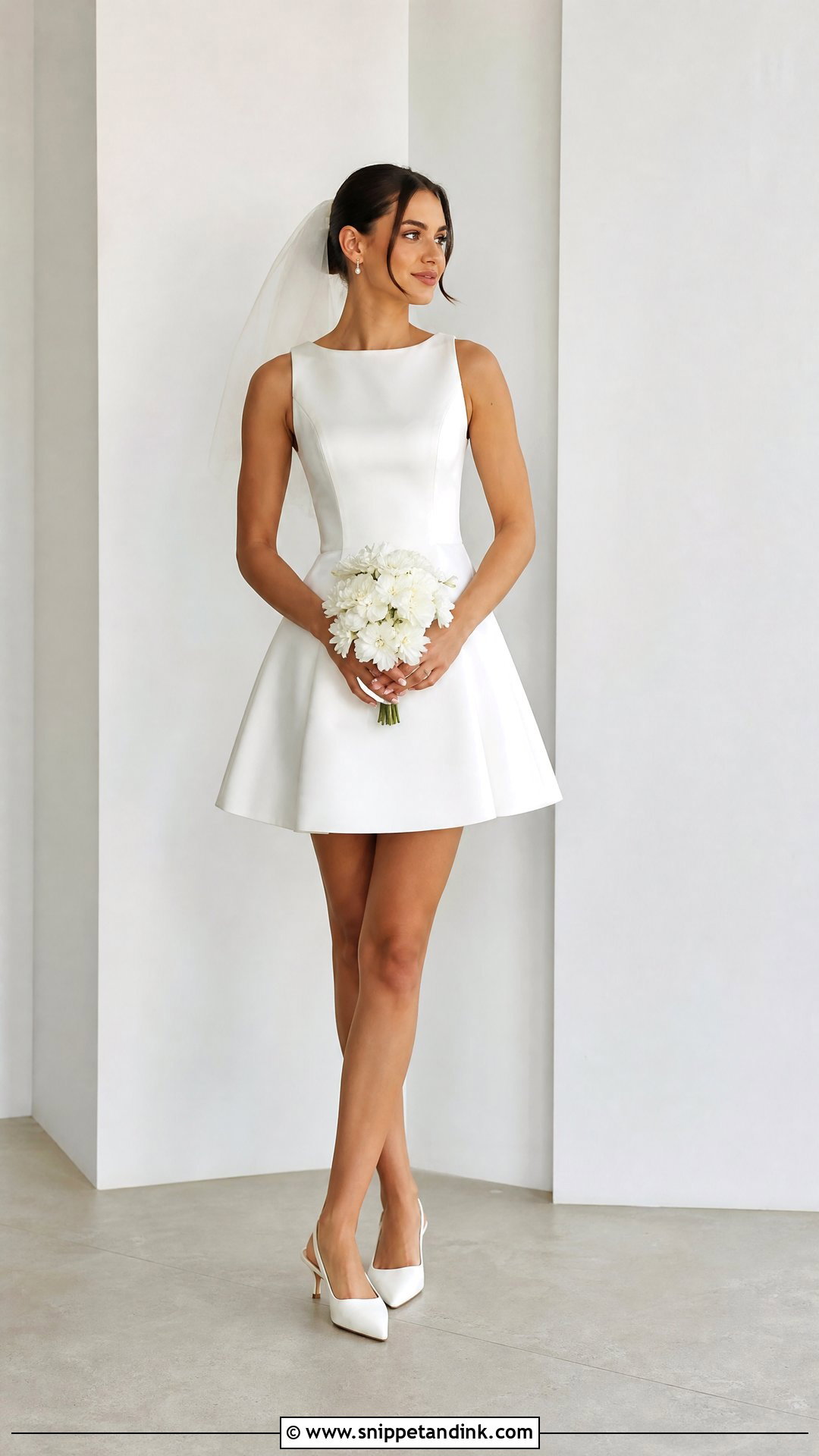
Minis need more care than long gowns, since a short dress in thin fabric quickly reads as a party outfit. A structured shift, fitted sheath or softly flared mini in substantial crepe, satin or mikado keeps it bridal. A high neck balances the short hem; a square or strapless neckline is bolder. Pointed slingbacks, pearl earrings and a short veil or oversized bow suit it, with a small bouquet so the proportions hold. A plain long coat works for cool days and arrival photos. Sit, walk and dance before setting the hem, and hidden shorts give you confidence without changing the outside.
17. Plain Ball Gown Wedding Dress
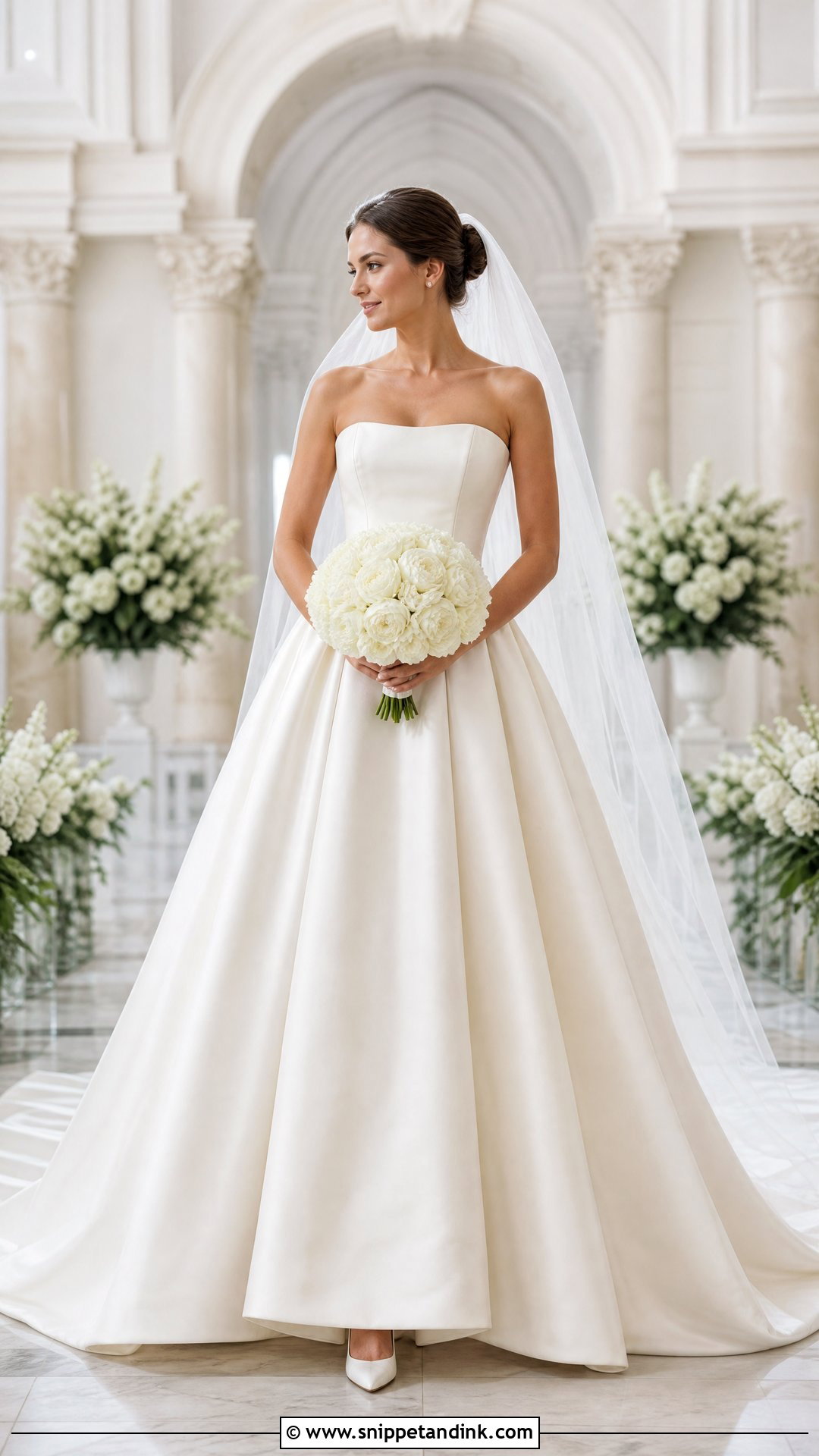
A ball gown makes its statement through volume, so the fabric has to stand up on its own. Smooth mikado, taffeta, or structured satin holds a full skirt crisply; softer satin will need a heavy petticoat. Keep the bodice clean, strapless, square or sleeveless, and the accessories small: pearl earrings, understated pumps, a plain cathedral veil, a tidy bun and a rounded white bouquet. Ask for pockets and a secure bustle. Practise walking and turning, because a ball gown has a turning circle, and you’ll need to know how much space it takes at the head table.
18. Fit And Flare Wedding Dress
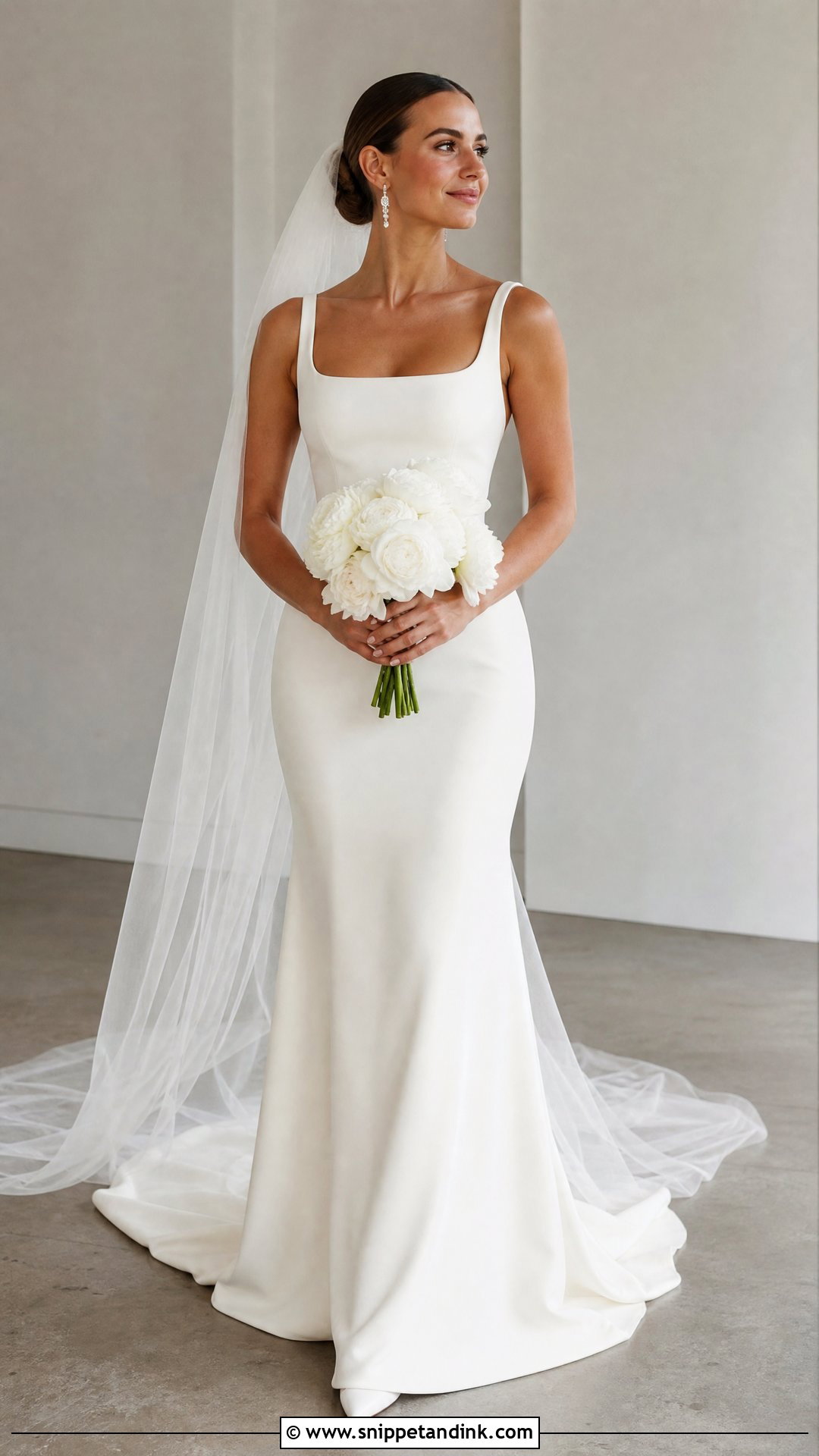
A fit-and-flare follows the torso and hips before widening through the lower skirt, so it’s close to a mermaid but easier to move in. Plain crepe or stretch satin looks sleek. Choose a square, V or strapless bodice depending on the support you need. Pointed heels, a low bun and long delicate earrings suit the vertical line, and a sheer cathedral veil softens it for photos. The flare point decides comfort: if it starts above mid-thigh you’ll walk freely, lower and you’ll take shorter steps. Smooth undergarments and expert alterations matter, since every seam shows.
19. Backless Wedding Dress
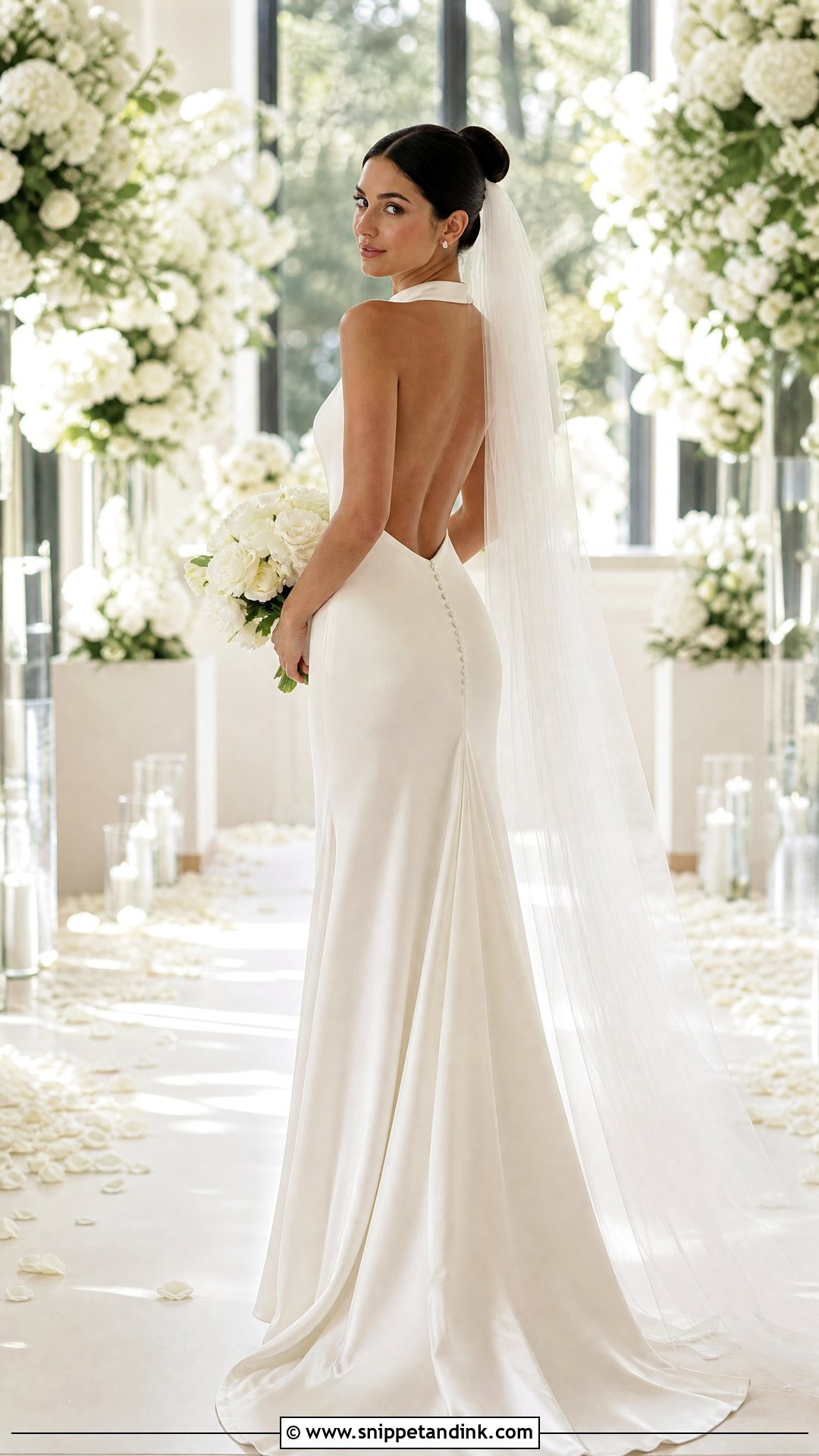
From the front, a backless wedding dress can look completely plain with a scoop, boat or high neckline, and then the bare back shows as you walk down the aisle. Fluid satin is soft, structured crepe sharper. An updo, small earrings, low heels and a plain veil set beneath the hair keep the back visible; a fine back chain adds a little shine if you’d like some. Skip the necklace. A tailor needs to confirm the straps and side seams do the supporting, with adhesive cups, built-in structure or specialist undergarments where needed.

20. One Shoulder Wedding Dress
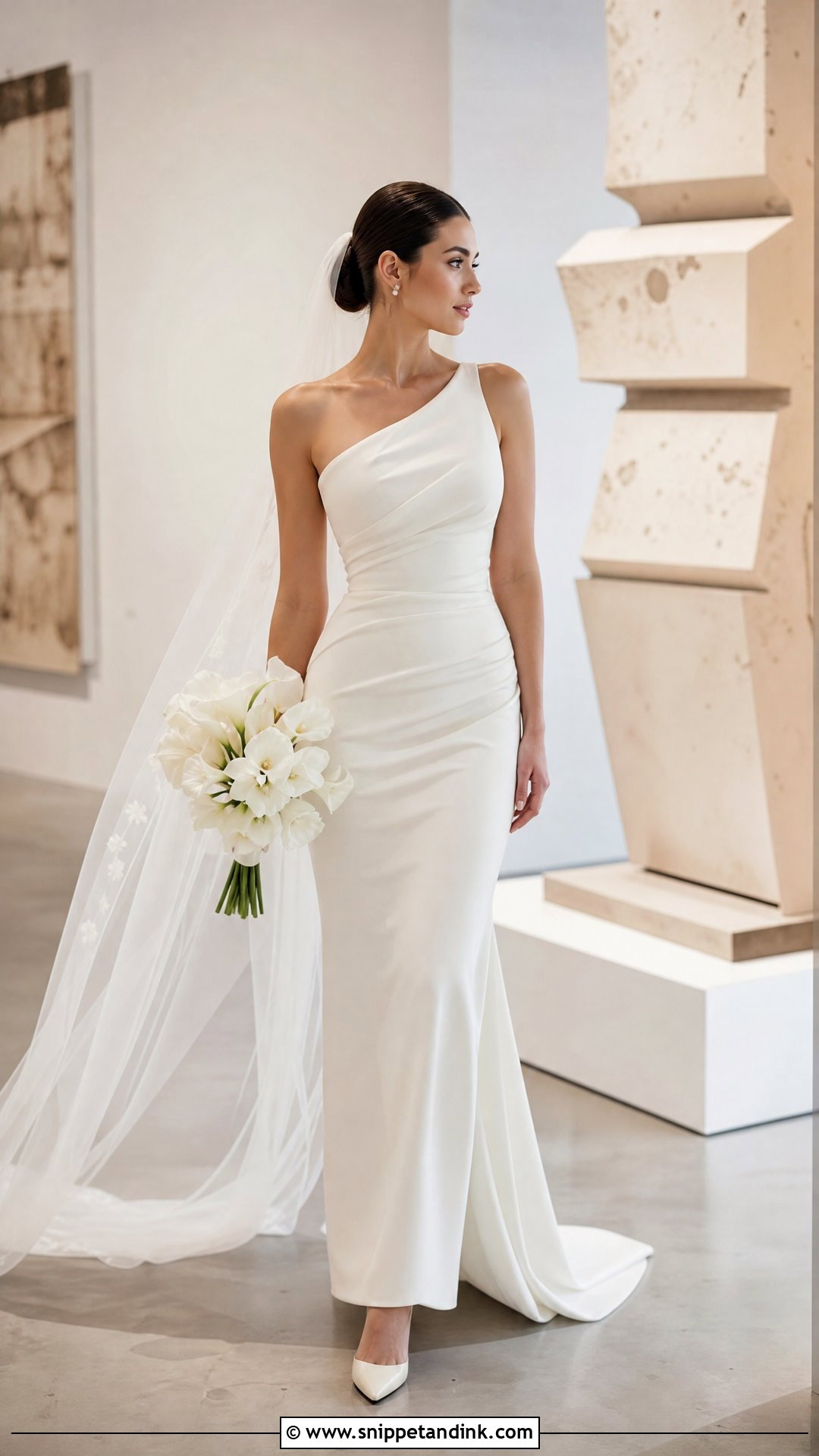
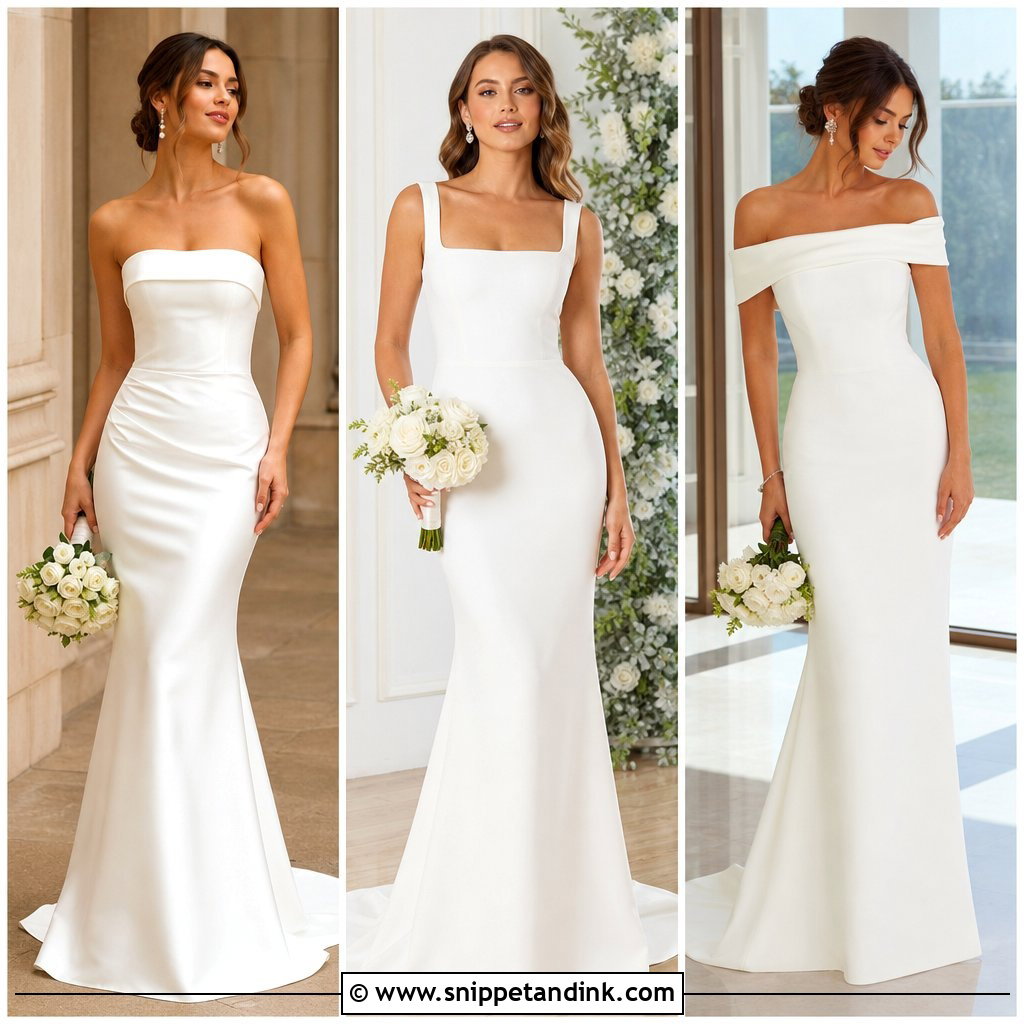
One shoulder gives a plain gown gentle asymmetry, but only if it stays plain, so skip big bows and ruffles. A smooth fitted neckline with one wide strap or a softly draped panel works; a column skirt makes it modern and an A-line softer. Set a sleek low bun away from the covered shoulder, wear small studs and pointed pumps, and choose a simple veil or a sculptural comb. One-shoulder bodices tend to rotate toward the bare side over the day, so during alterations, ask for the bodice to be anchored with boning or a waist stay, and check it sits evenly.
Creases, Steam and the Car Ride to the Ceremony
Embellished gowns hide wrinkles. Plain ones show every one, and the worst damage usually happens between getting dressed and arriving. Have the gown professionally pressed a few days before, then hang it in a breathable bag with the skirt loose.
- Bring a handheld steamer and someone who knows how to use it. Steam from the inside of the skirt, never pressing a hot plate onto silk.
- Get dressed as late as you can. Every hour sitting in the dress at home is an hour of lap creases.
- In the car, spread the skirt behind and around you, and avoid sitting on the train.
- Keep a clean white cloth to blot spills. Rubbing a mark on satin raises a dull patch that shows in flash photos.
Too Plain on the Hanger? Add One Thing, Not Five
Many brides panic a month out and want to add a belt, a cape, earrings and a hairpiece all at once. A plain dress usually takes one addition well. Pick a veil with a narrow satin edge, detachable sleeves, a row of covered buttons, or a bold earring, and let it be the only thing. Try the addition with the full outfit before buying more; if you need to explain what each piece is doing, there are too many.
Plain Gowns Leave Nowhere for a Bad Fit to Hide
A plain gown succeeds on silhouette, fabric and tailoring, and nothing else. Silk slips, crepe sheaths and structured satin ball gowns all prove how many directions minimalism can go. Think about the venue, the season, how comfortable you need to be and how much support you want before choosing a shape. Then let shoes, jewellery, a veil and flowers make it personal. Look at the dress in daylight and watch how it moves at every fitting. A simple dress leaves little room for construction errors, but when the fit is right, it looks completely assured.
You'll Like These Ideas:






Leave a Reply