
The brides who ask me for something cool rarely want something loud. They want a dress that looks like it was chosen by a person with taste, not pulled from a catalogue. Right now that covers a wide range: bias-cut satin slips, sculptural ball gowns, lace minis, pearl work, soft color, oversized bows, detachable overskirts and clean city hall shapes. In the fitting room, the dress that wins is the one that suits the venue, the body and how much the bride wants to move. Below are 25 directions I’d put in front of a bride who wants her wedding look to feel current, with what I check on each one.
Lead Times for a Dress That Isn’t Off the Rack
Directional dresses are often special order, and the more unusual the detail, the longer it tends to take. Colored fabrics, feather trims and hand-sewn pearl work rarely sit in stock. These are the rough timings I plan around, though every designer and shop sets its own:
- Order roughly nine to twelve months out for a made-to-order gown. Production commonly takes several months on its own.
- Leave about two to three months for alterations, which usually means two or three fittings.
- If you have less than six months, look at sample sales and ready-to-wear bridal, which you take home and alter right away.
- Rush orders exist, but they often carry an extra fee and limit your fabric choices.
I’d also ask every shop whether the dress you’re trying is the exact fabric it will be made in. A sample that has been tried on many times can look softer than the fresh version, and color can shift between fabric batches.
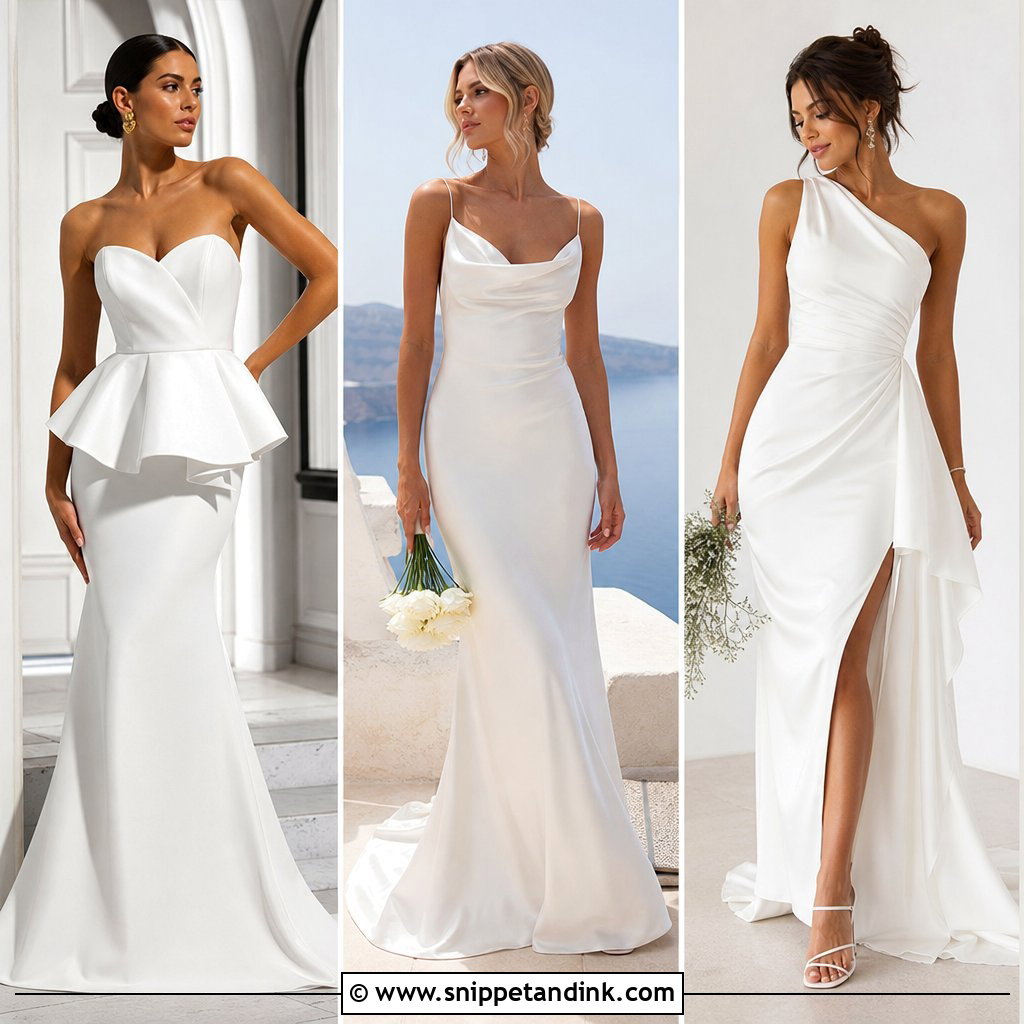
1. Satin Slip Wedding Dress
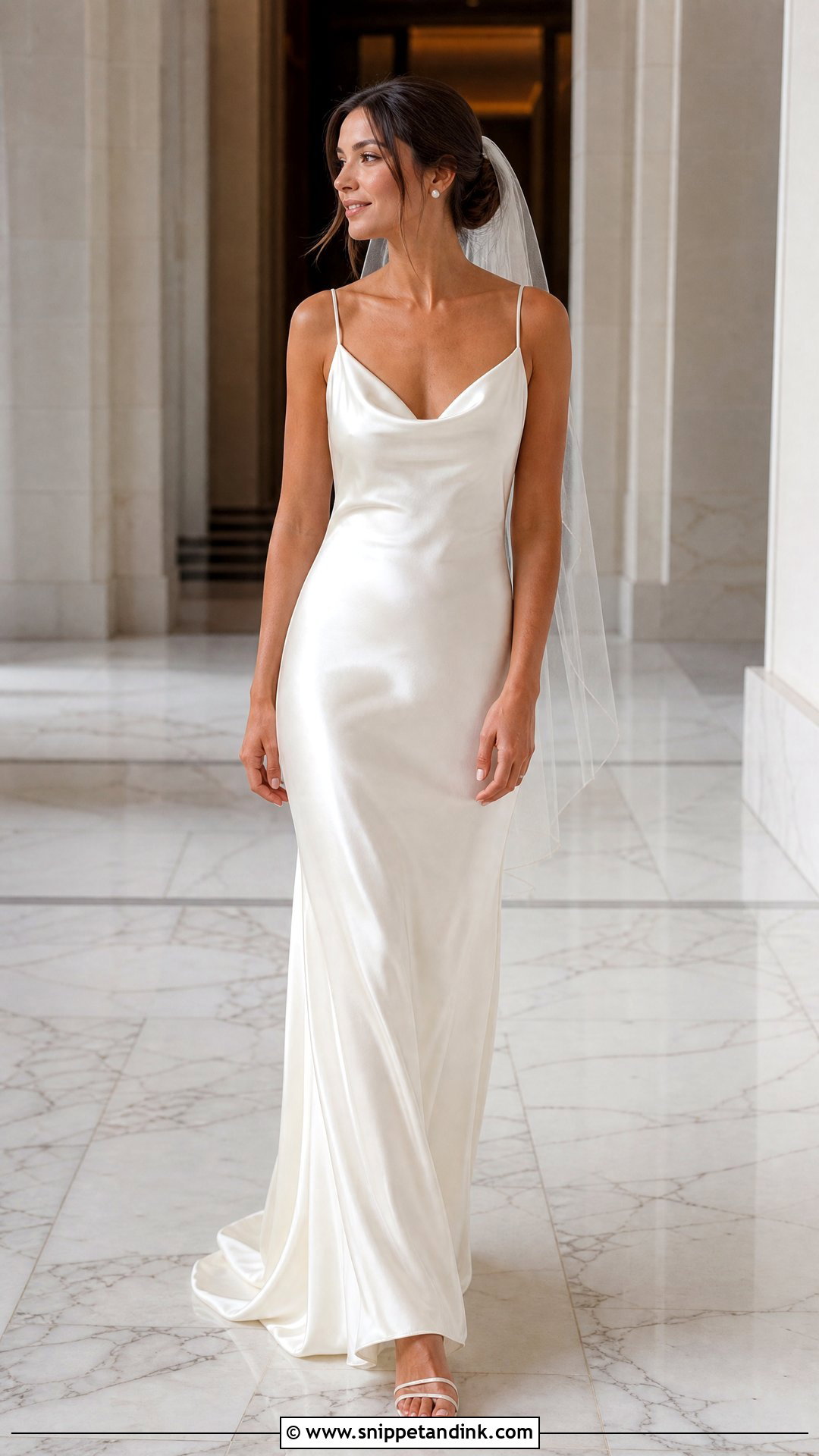
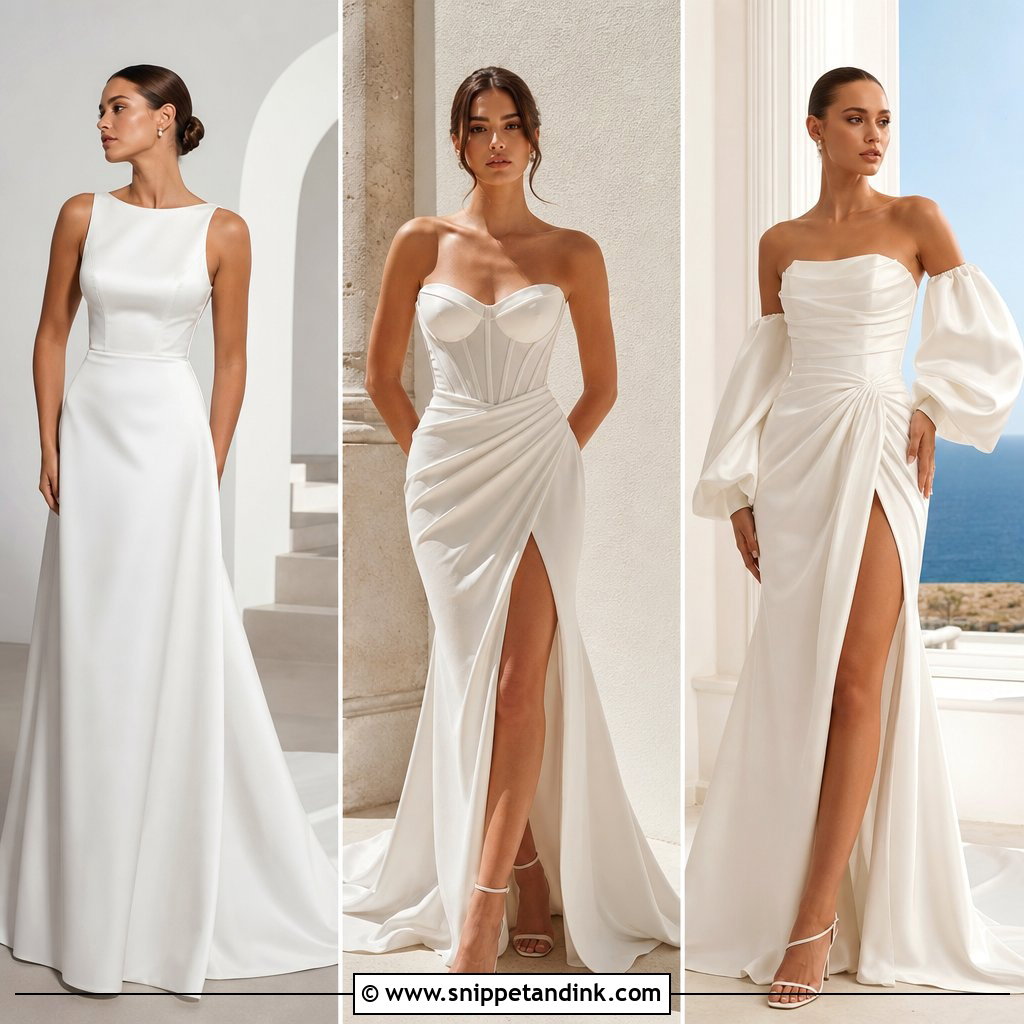
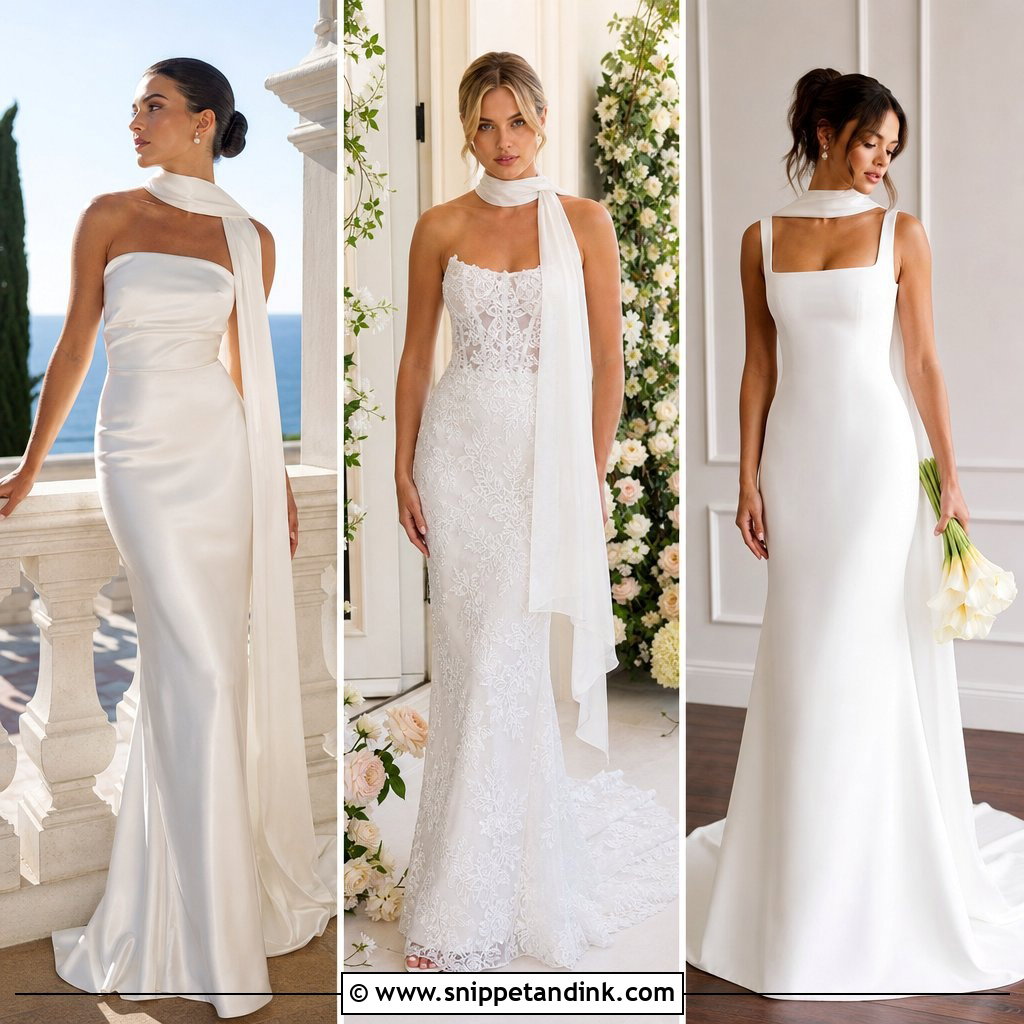
A satin slip wedding dress looks simple on the hanger and is the least forgiving dress in the shop. Cut on the bias, it moves beautifully and also shows every line underneath, so I fit it with the exact underwear she’ll wear on the day. A cowl neck gives a softer 90s drape; a square neck reads cleaner and holds the bust better. For a city ceremony or a cool evening, a cropped tailored blazer over the shoulders gives coverage without hiding the line of the dress.
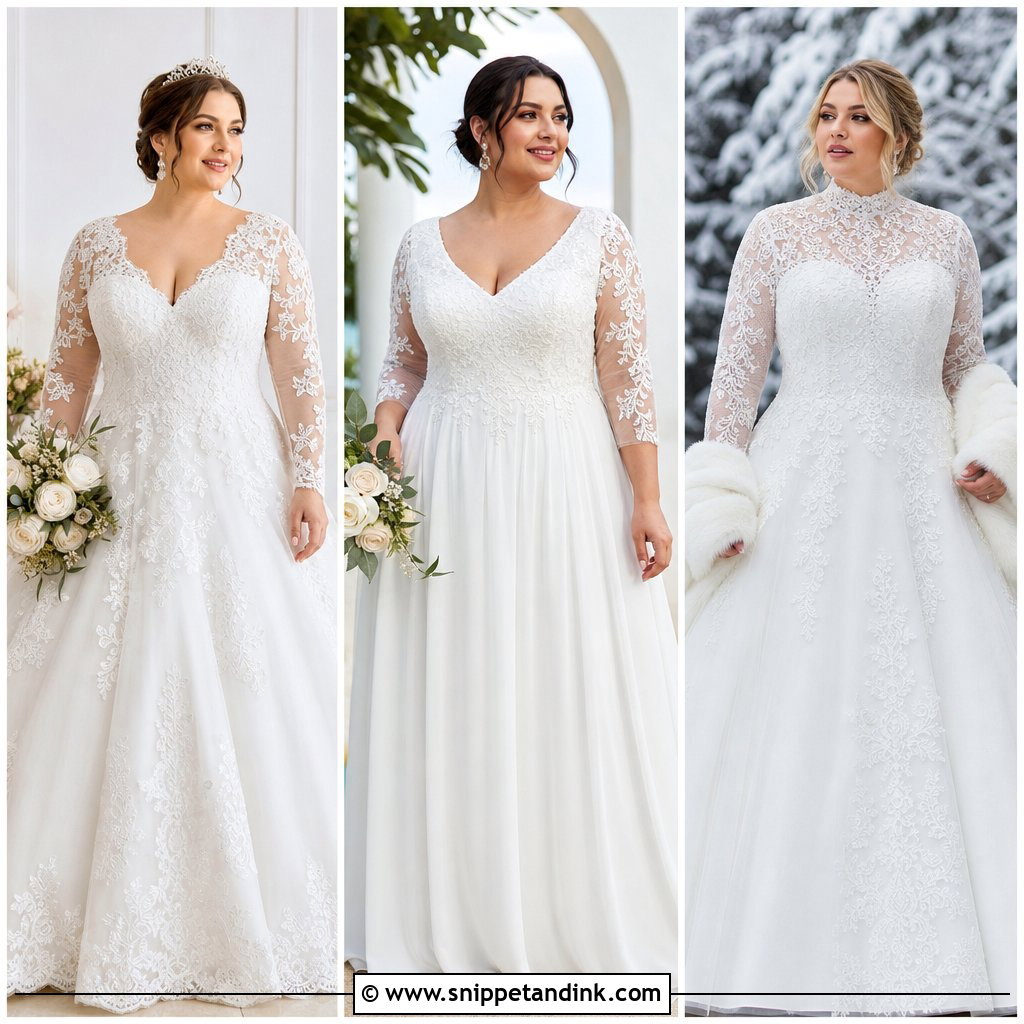
2. Lace Long Sleeve Wedding Dress
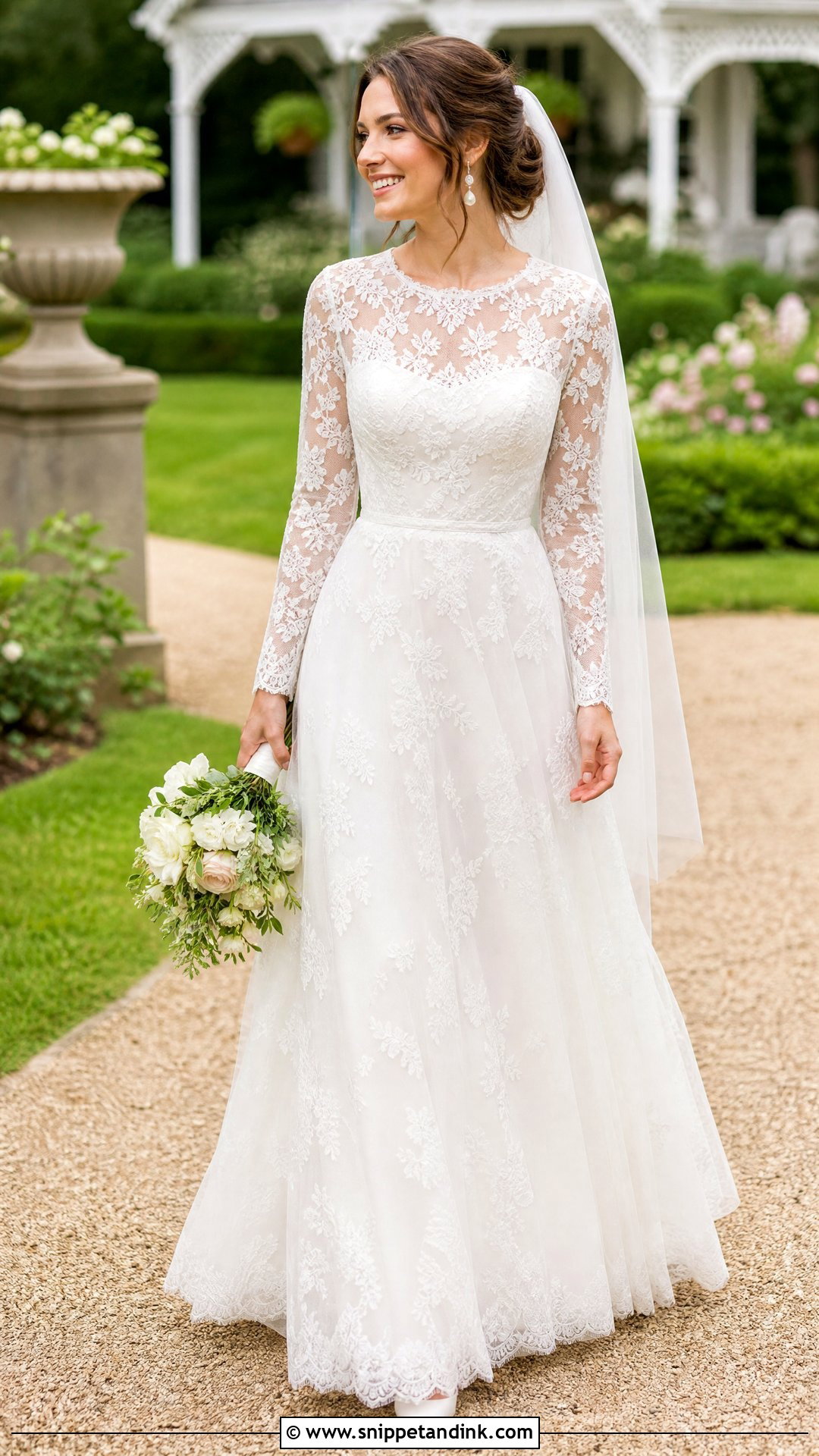
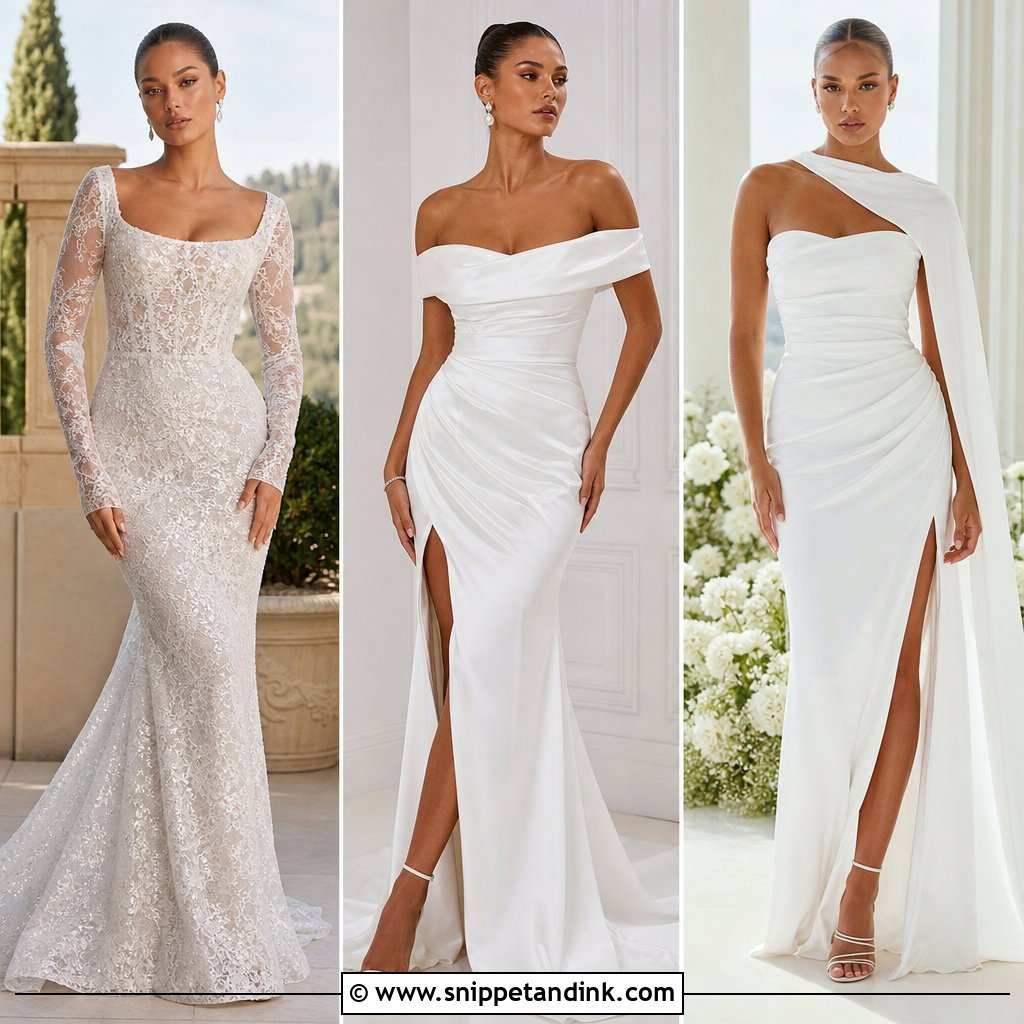
Lace sleeves only look old-fashioned when the lace is heavy and the shape is fussy. I steer brides toward a lighter floral lace with clean, scalloped edges, over a lined bodice so the sleeves are the only sheer part. Check the sleeve as you lift your arms: lace with no stretch pulls at the shoulder when you hug people, and you’ll hug a lot of people. A fitted column feels modern, an A-line more classic. Historic venues and fall ceremonies suit it, styled with a low bun and pearl drops.
3. Short Mini Wedding Dress
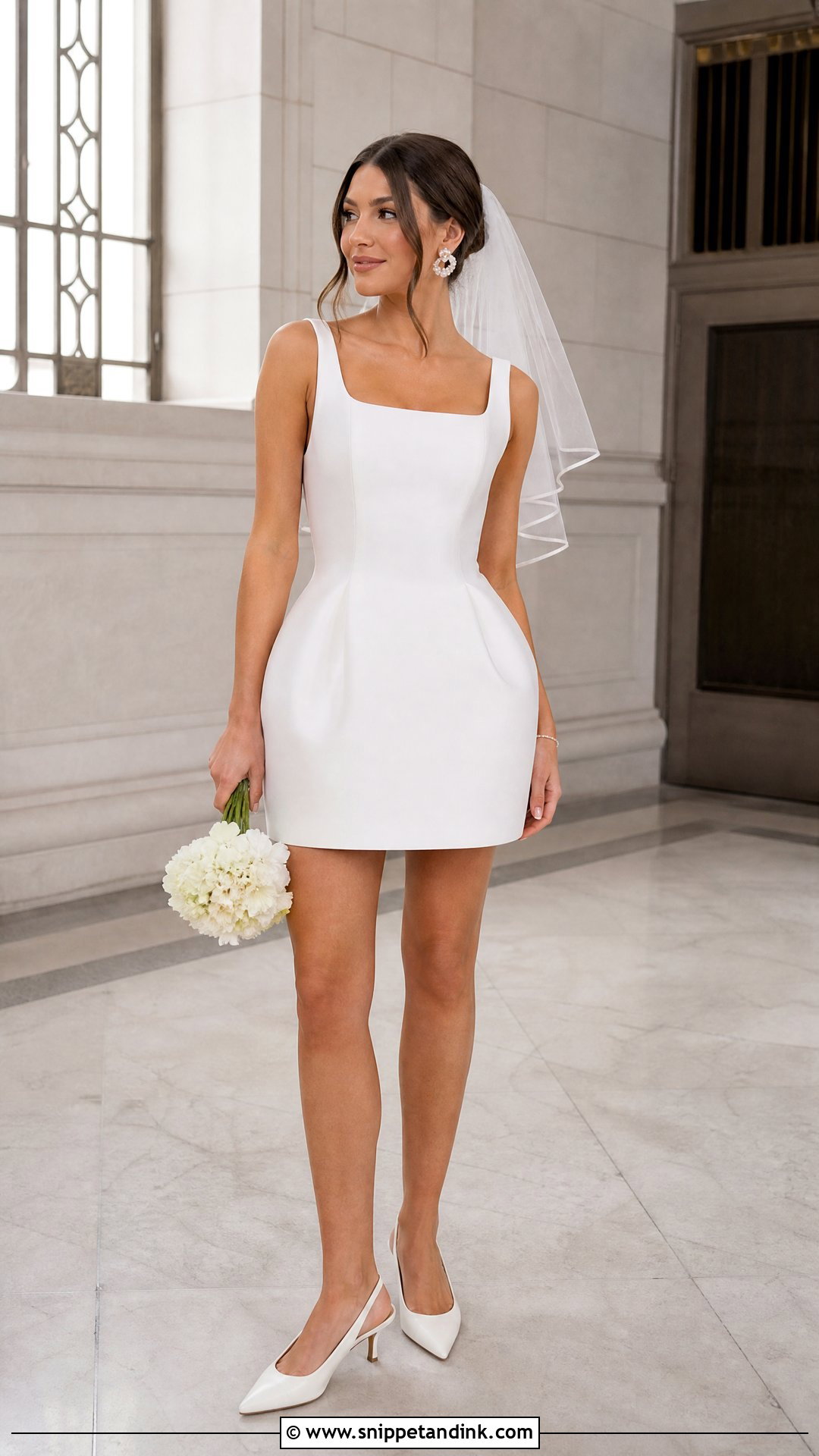
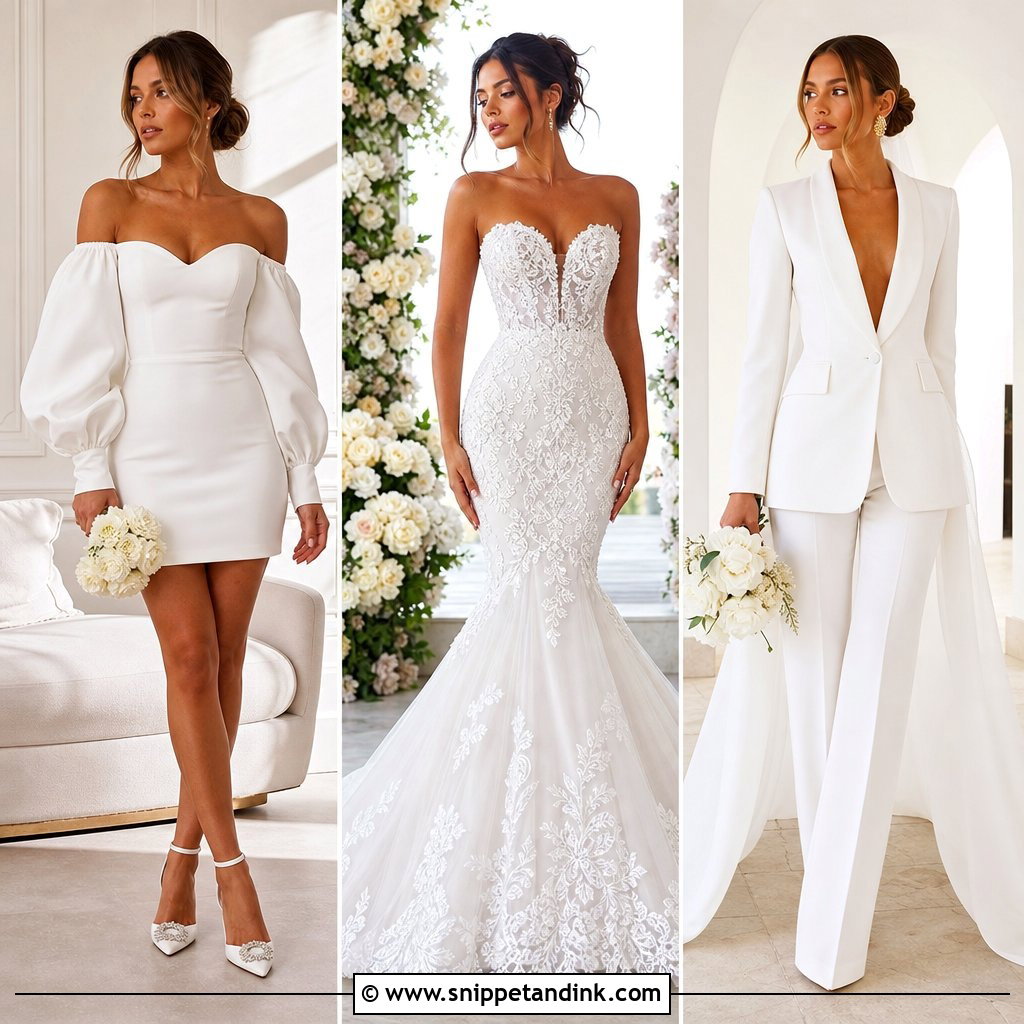
Short dresses need more structure, not less. A mini in thin, unstructured fabric looks like a party dress, while structured satin or lace appliqué on a firm lining looks deliberately bridal. I always do a sit test with a mini, because the hem rises a few inches when you’re seated at the ceremony or in the car. Keep the bodice clean and secure if the hem is short. This is the dress that puts your shoes on show, so satin pumps or crystal straps earn their place here.
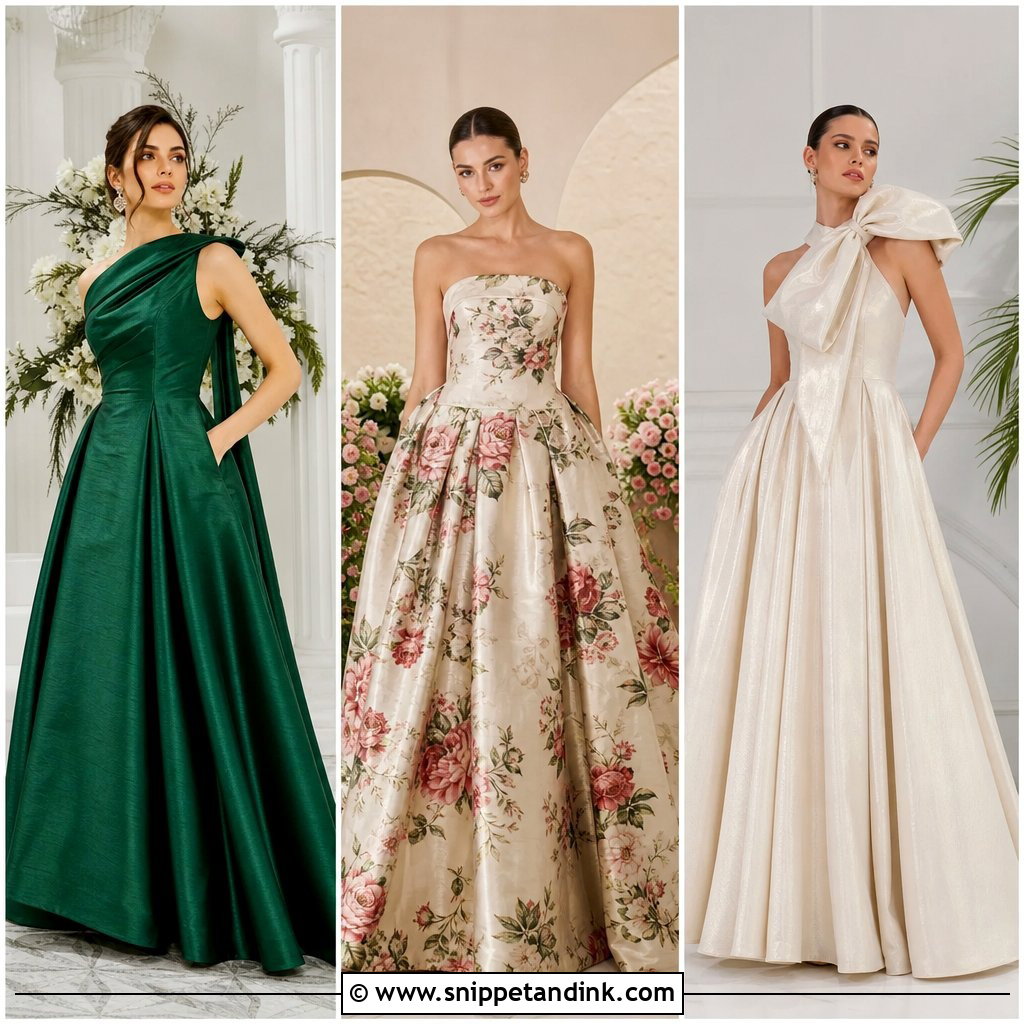
4. Strapless Ball Gown Wedding Dress
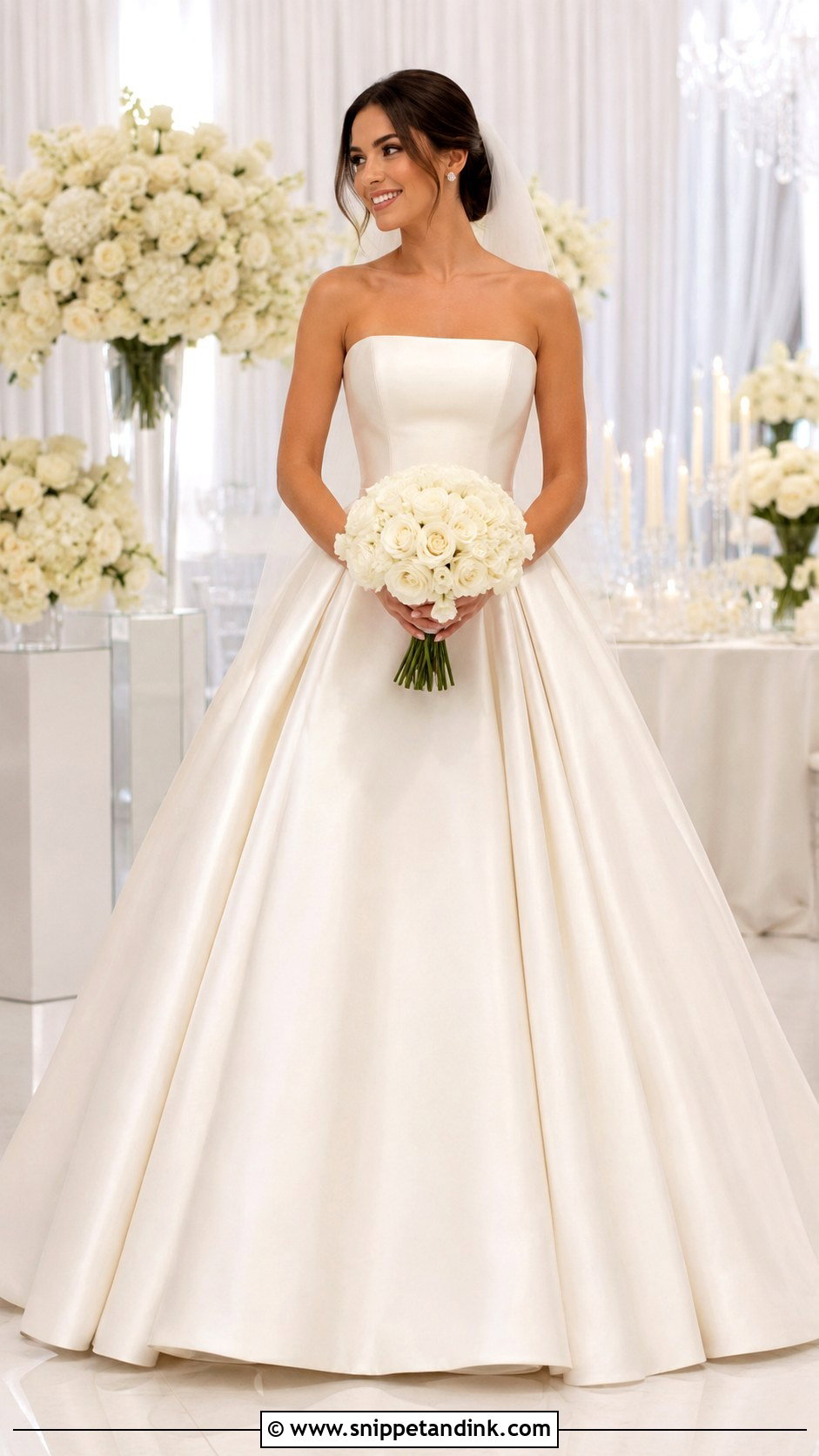
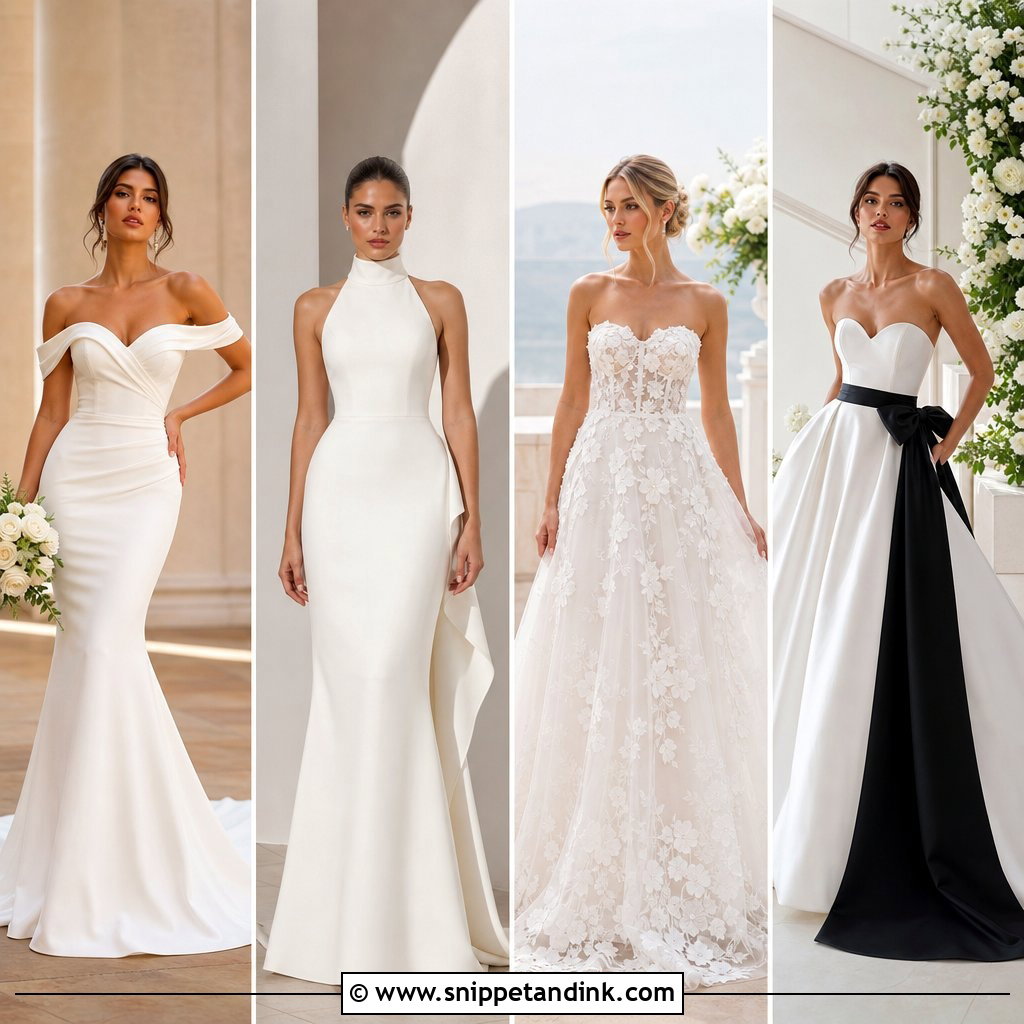
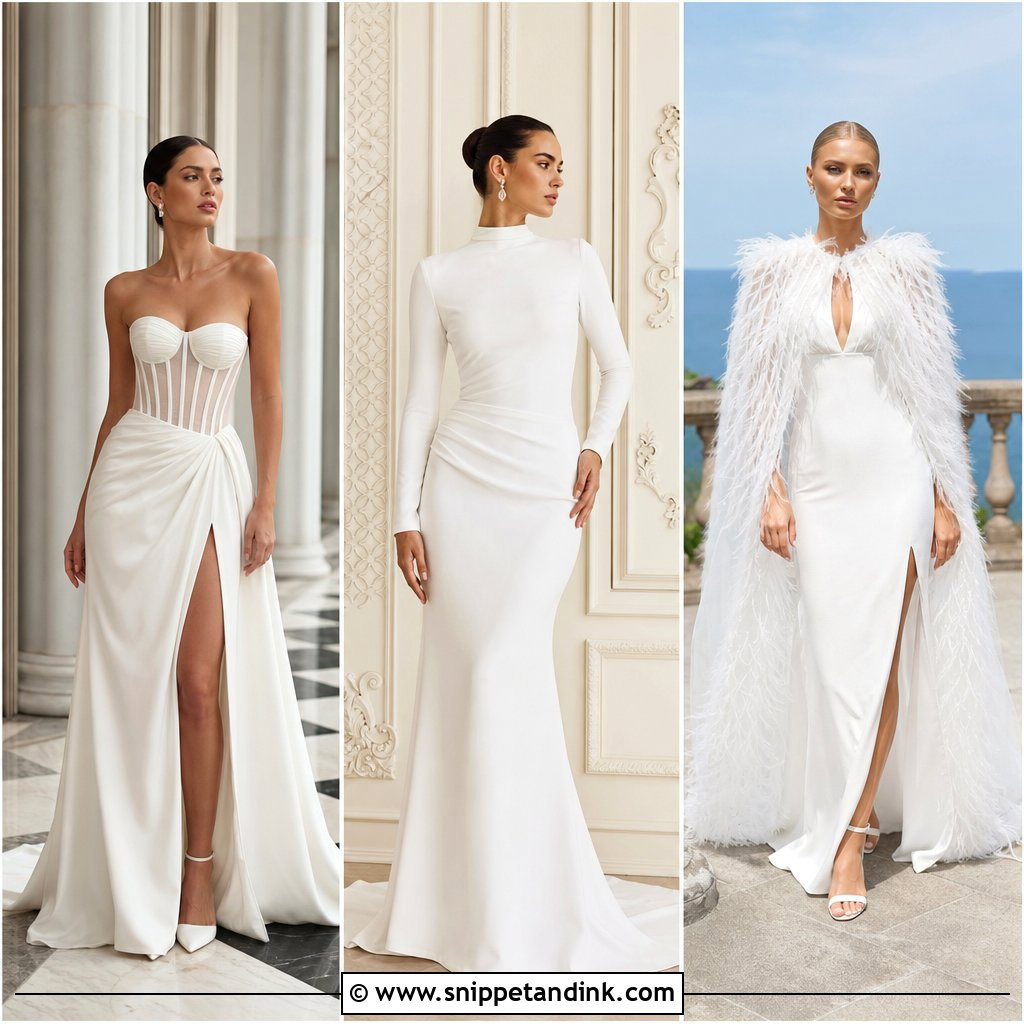
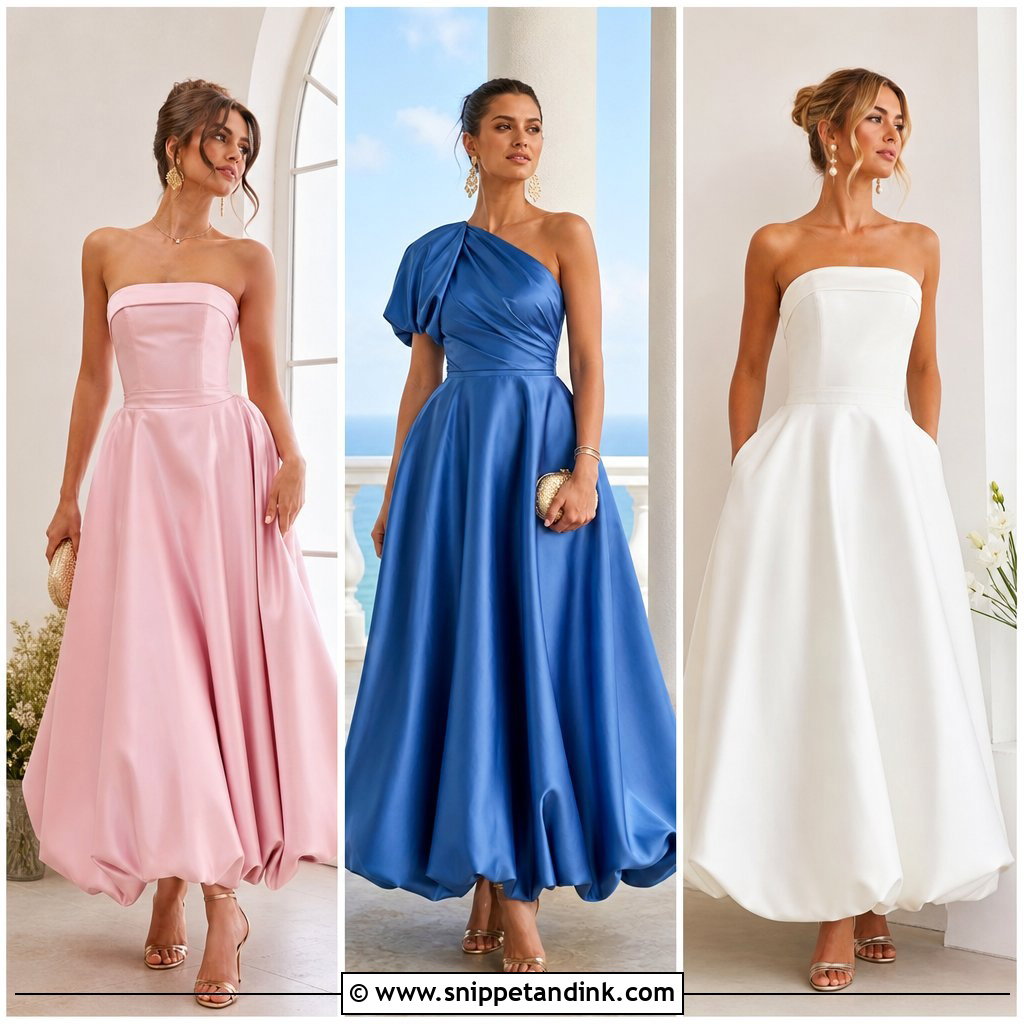
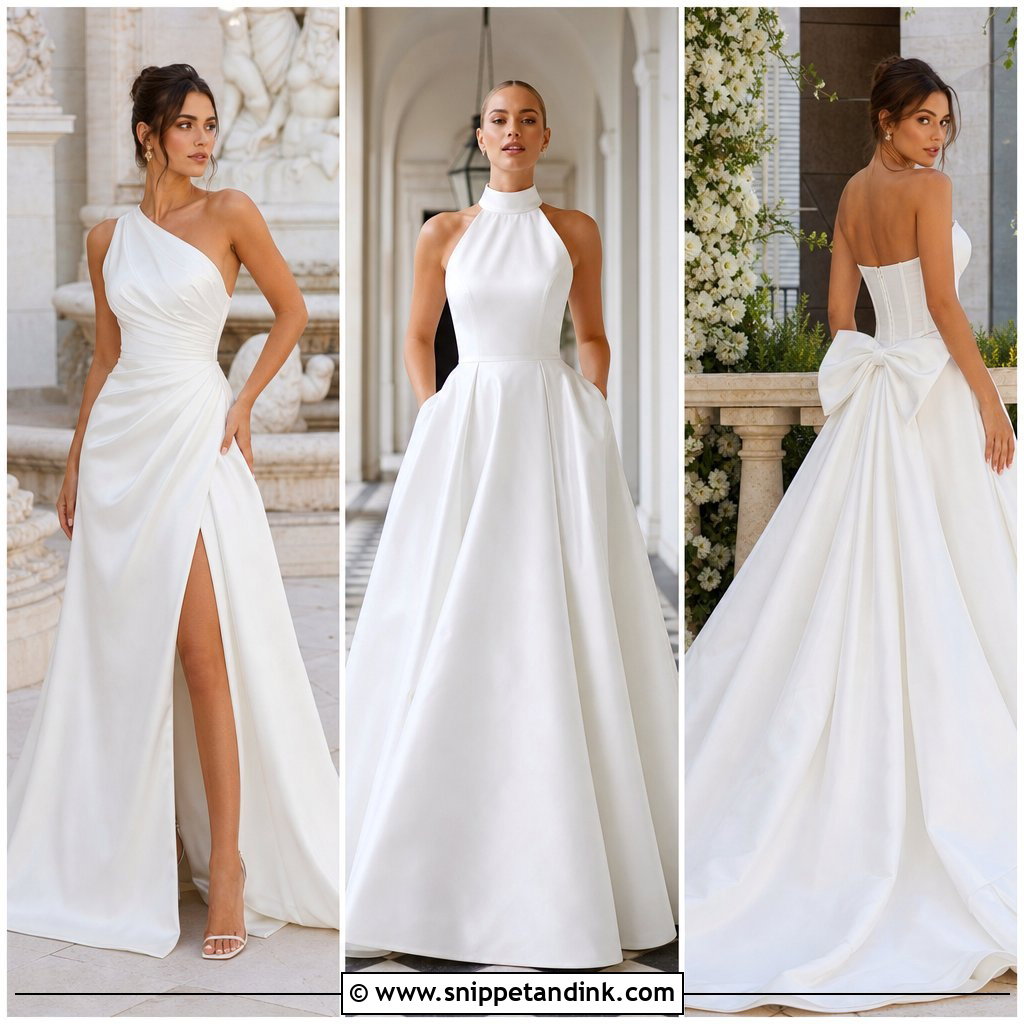
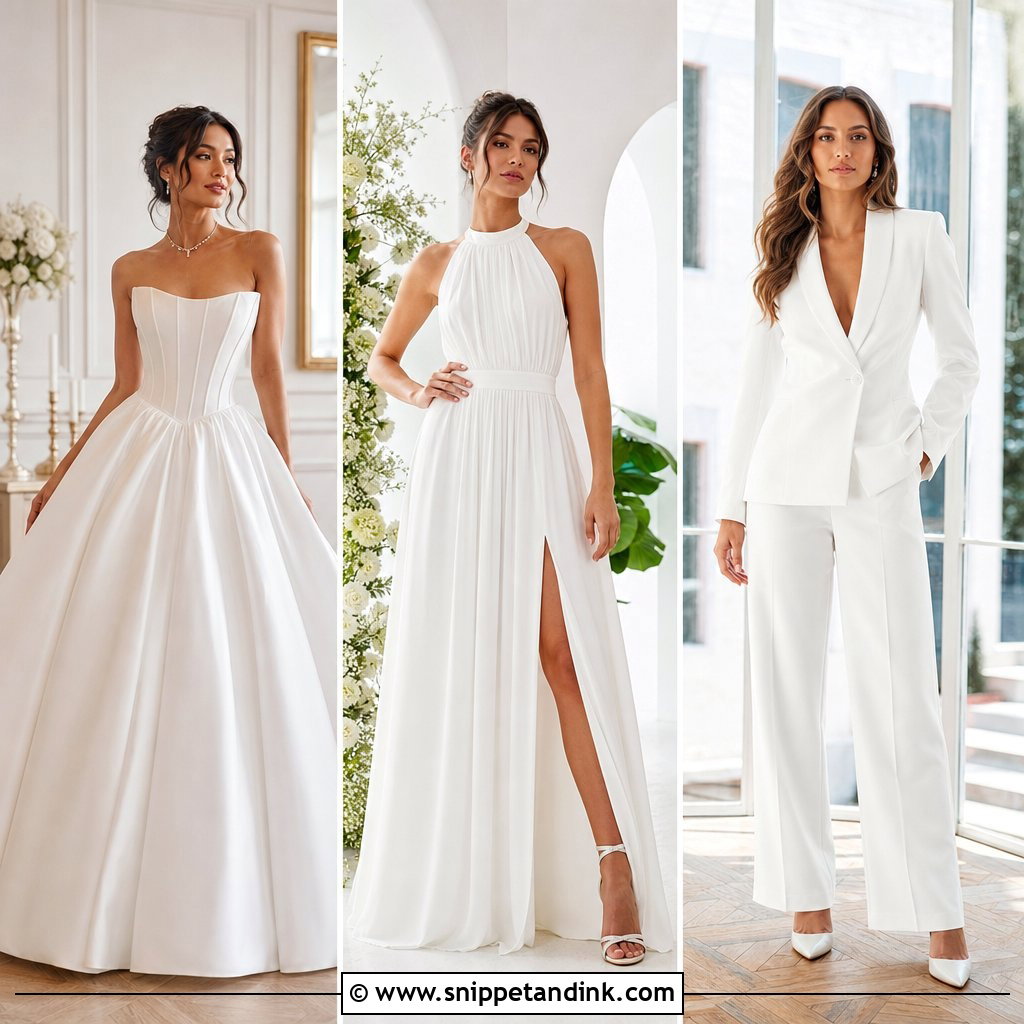
A strapless ball gown wedding dress gets its cool factor from restraint: a clean bodice, crisp fabric and no extra decoration. Mikado and heavy satin hold volume on their own, and organza adds it with less weight. The fitting detail I care most about is the bodice grip. A strapless dress should stay put when you raise your arms without you tugging at it, which usually means internal boning and a waist stay. Style it with a sleek bun and small earrings, and let the shape do the talking at a formal venue.
5. Off Shoulder Wedding Dress
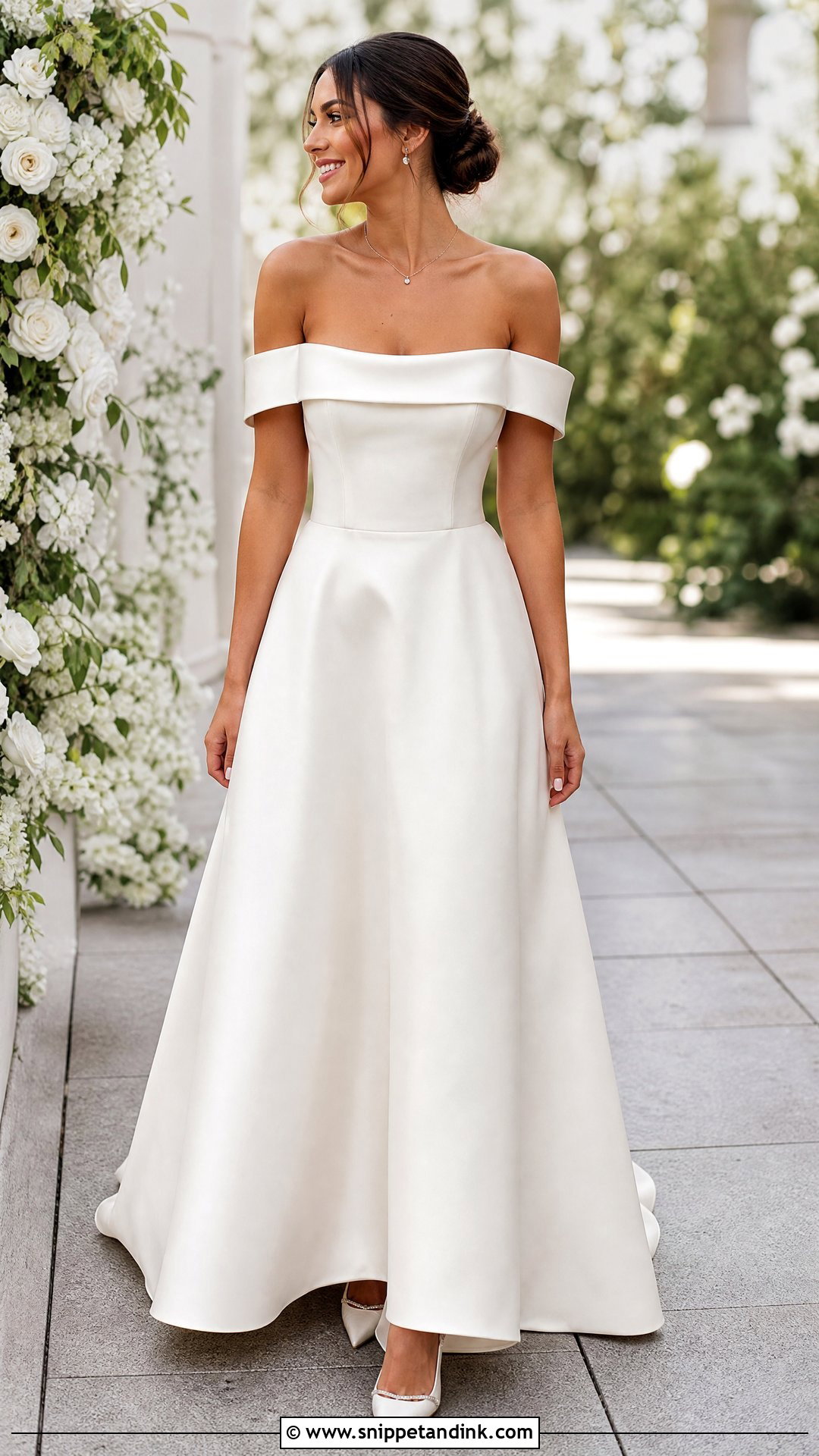
Off-shoulder necklines flatter a wide range of figures because they frame the collarbone and widen the shoulder line slightly, which balances fuller hips. The trade-off is arm movement. Sleeves that sit on the upper arm limit how high you can lift, so I have brides mime the first dance and the bouquet toss in the fitting room. Folded satin cuffs look sharper than delicate lace if you want the dress to read modern. A sleek crepe column gives the same neckline a more fashion-led feel.
6. Pearl Wedding Dress
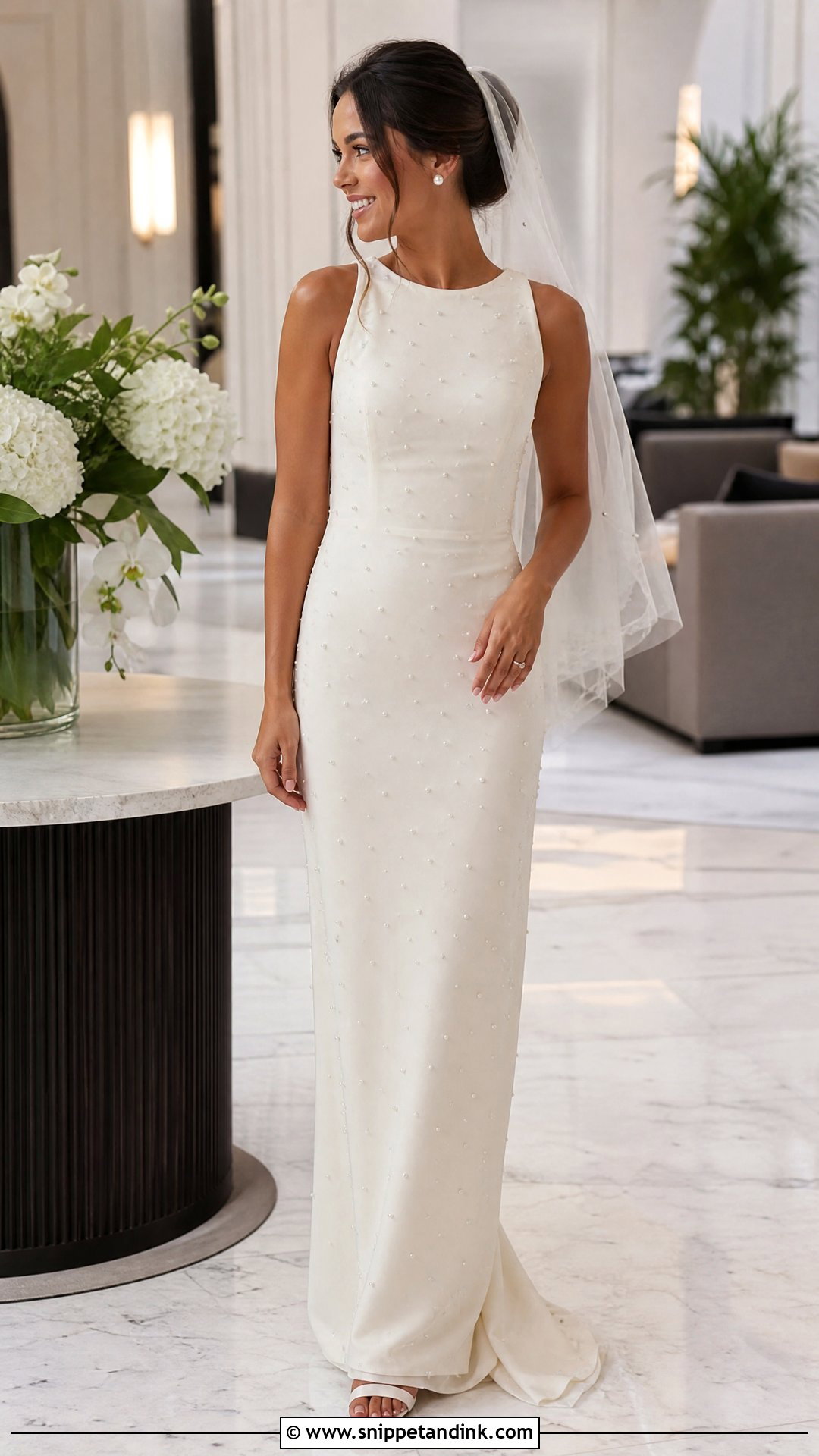
Pearls give a softer glow than crystals, and they read well in photos without the hard flash sparkle can produce. Allover pearl beading is heavy, though. A fully beaded bodice can add real weight, so I’d look at how the dress hangs on the hanger and feel it on your shoulders for a few minutes. Scattered pearls on tulle or pearl straps on a crepe gown are lighter ways in. Keep accessories quiet: pearl studs, satin heels and a clean veil. Evening receptions and hotel ballrooms suit it.
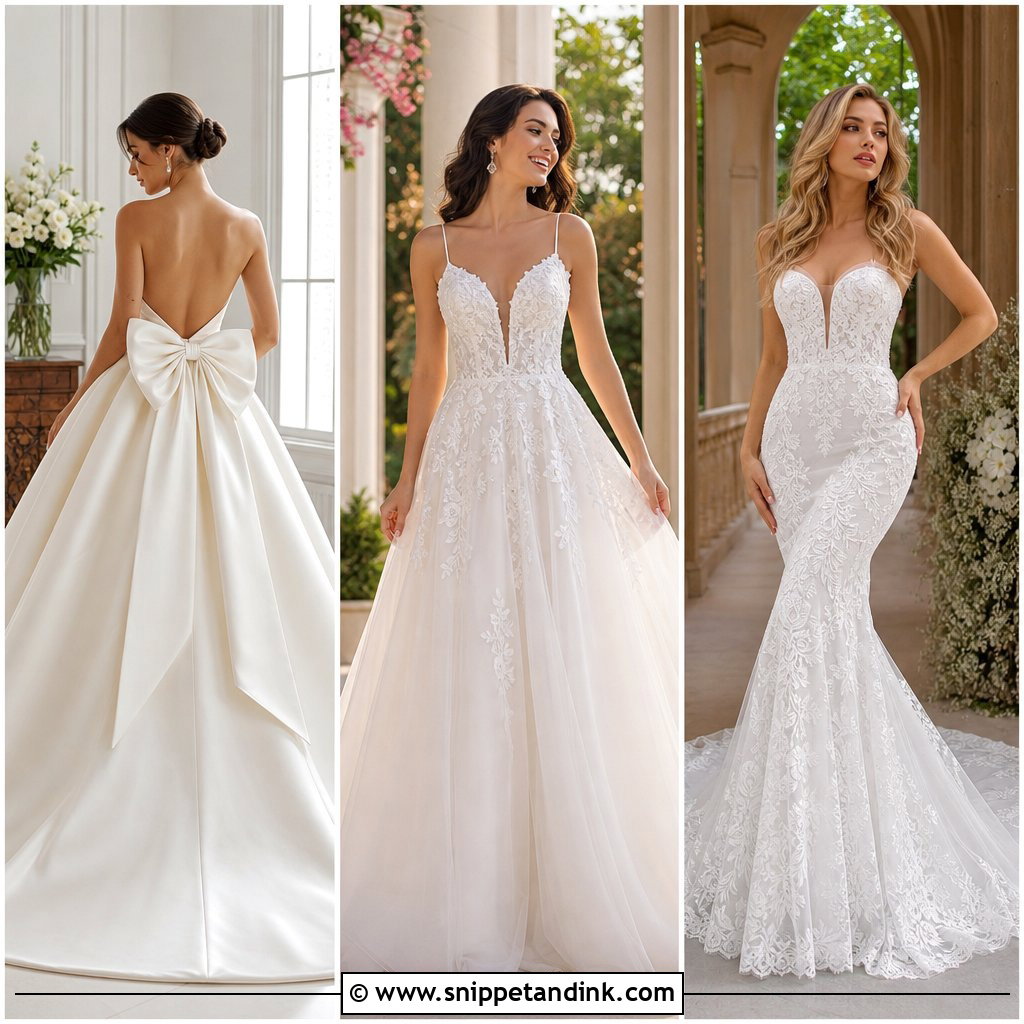
7. Bow Back Wedding Dress
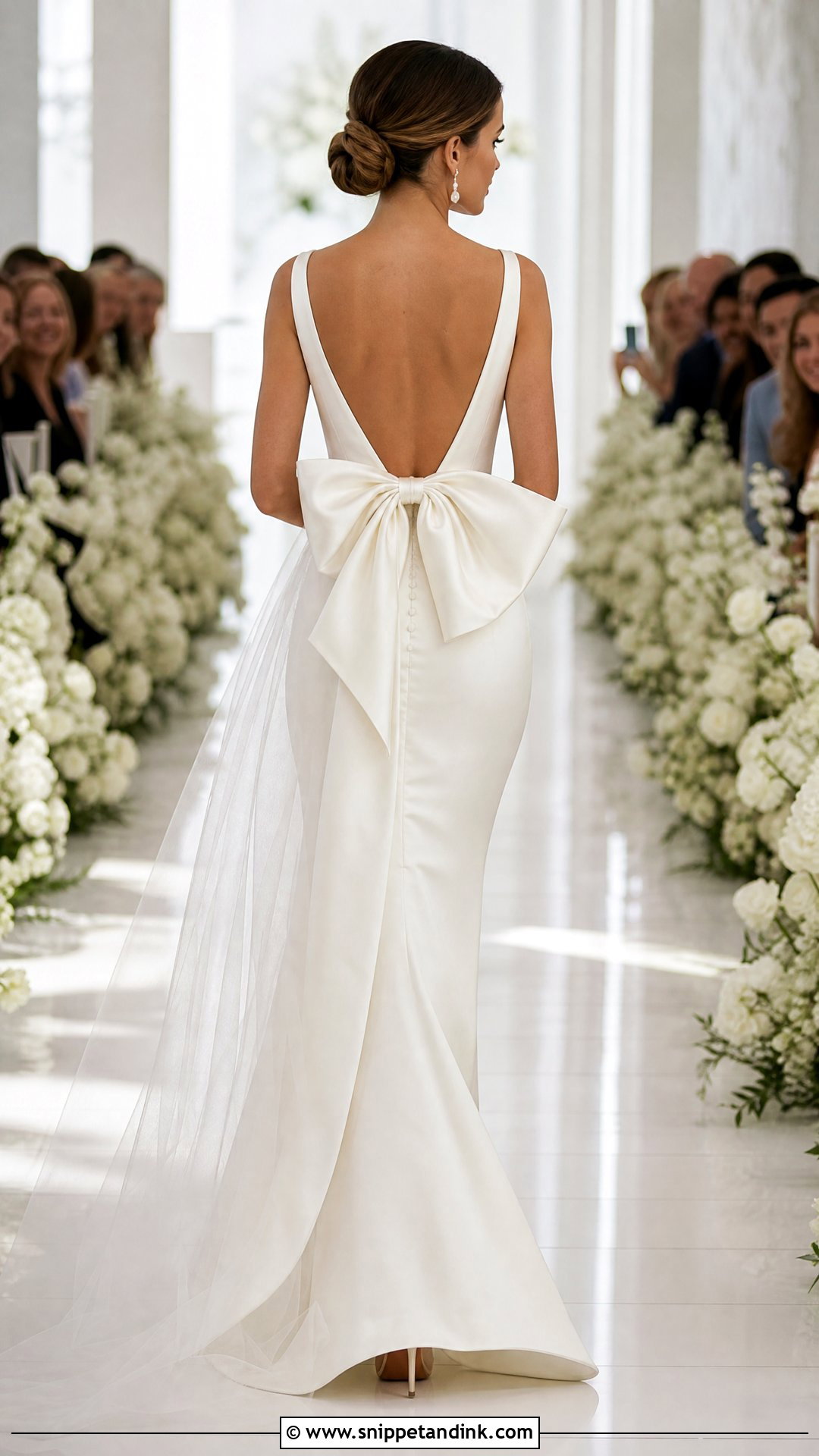
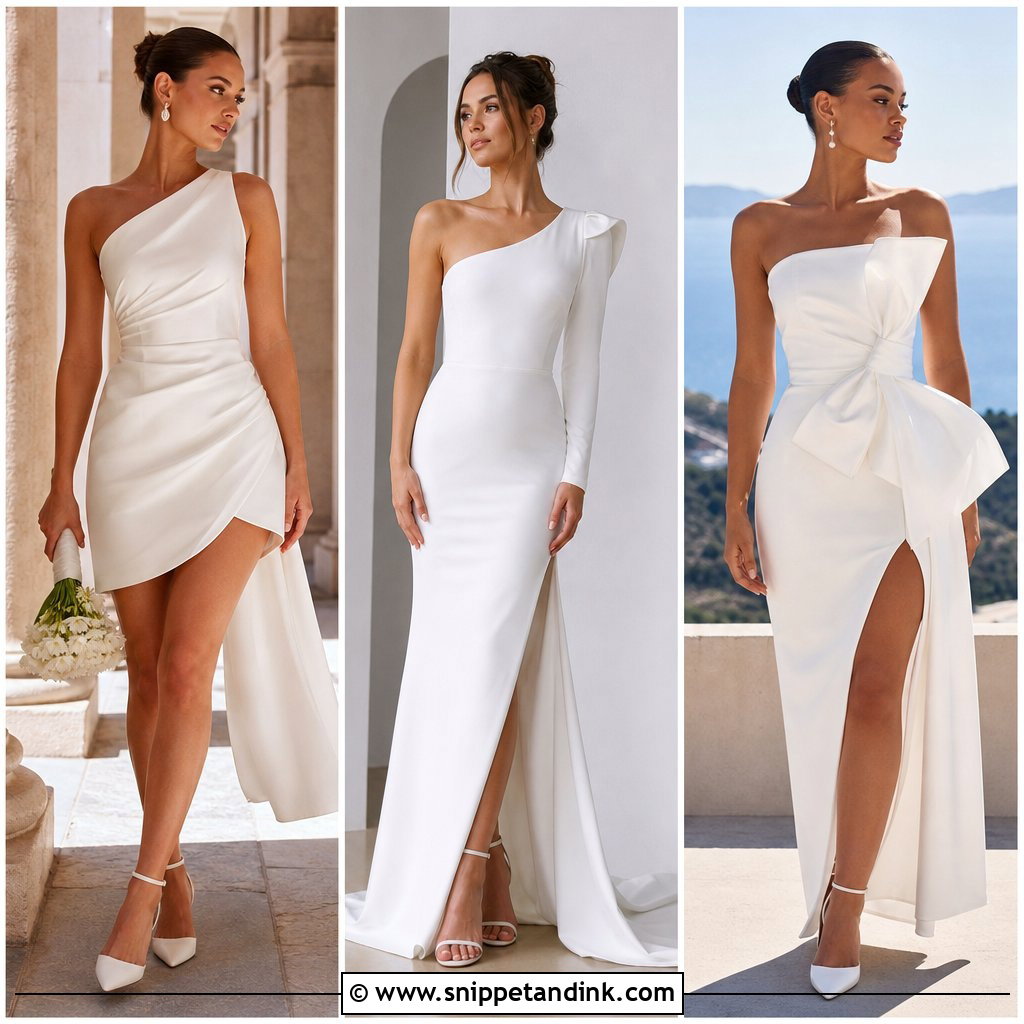
Guests see your back for the whole ceremony, which is the best argument for a bow back. An oversized bow on a plain column reads editorial, while a smaller bow at the waist of a full skirt feels more romantic. What I watch is the veil. A long veil can flatten or hide a big bow, so either choose sheer, unedged tulle that shows it through or attach the veil below the bow. Keep the front of the dress clean and finish with a low bun and drop earrings.
8. Drop Waist Wedding Dress
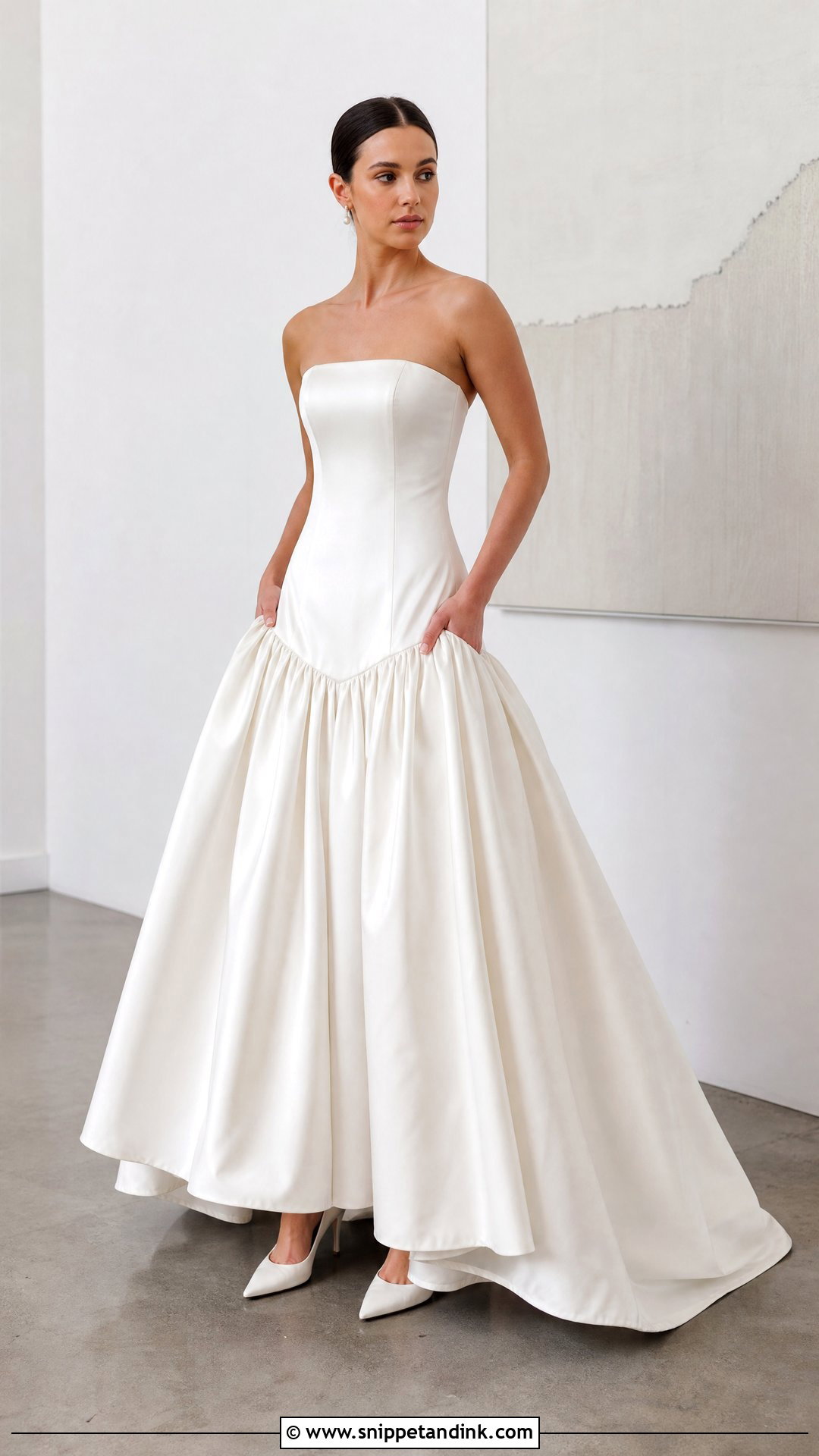
Drop waists change the usual bridal proportions, with the bodice running down past the natural waist before the skirt opens. They look sharp in satin, taffeta and structured organza. Fit makes or breaks this one. If the seam lands at the widest part of the hip, the skirt flares from there and shortens the leg, so I’d only buy it after seeing it on with the shoes you’ll wear. Art galleries and city receptions suit the shape best.
9. Corset Wedding Dress
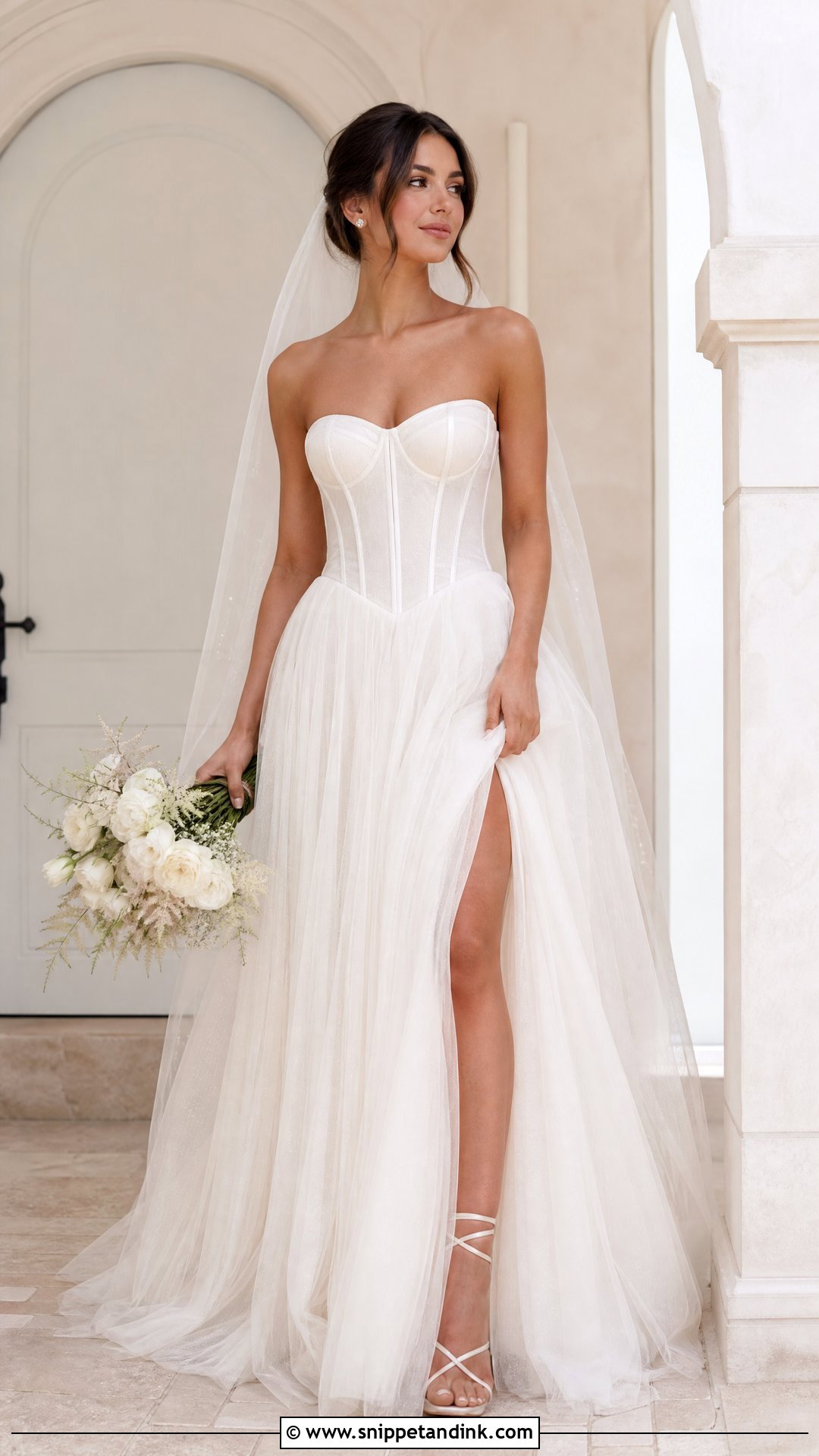
A corset wedding dress should feel firm, not tight. Visible boning gives a fashion-led look; hidden boning gives a smoother line under satin or lace. The test I use is simple: sit down, eat a pretend dinner and take a deep breath. If you’re aware of the bodice the whole time, it needs letting out, because by hour eight that pressure becomes the only thing you notice. Paired with a soft tulle skirt, it suits brides who want a defined waist.
10. Floral Applique Wedding Dress
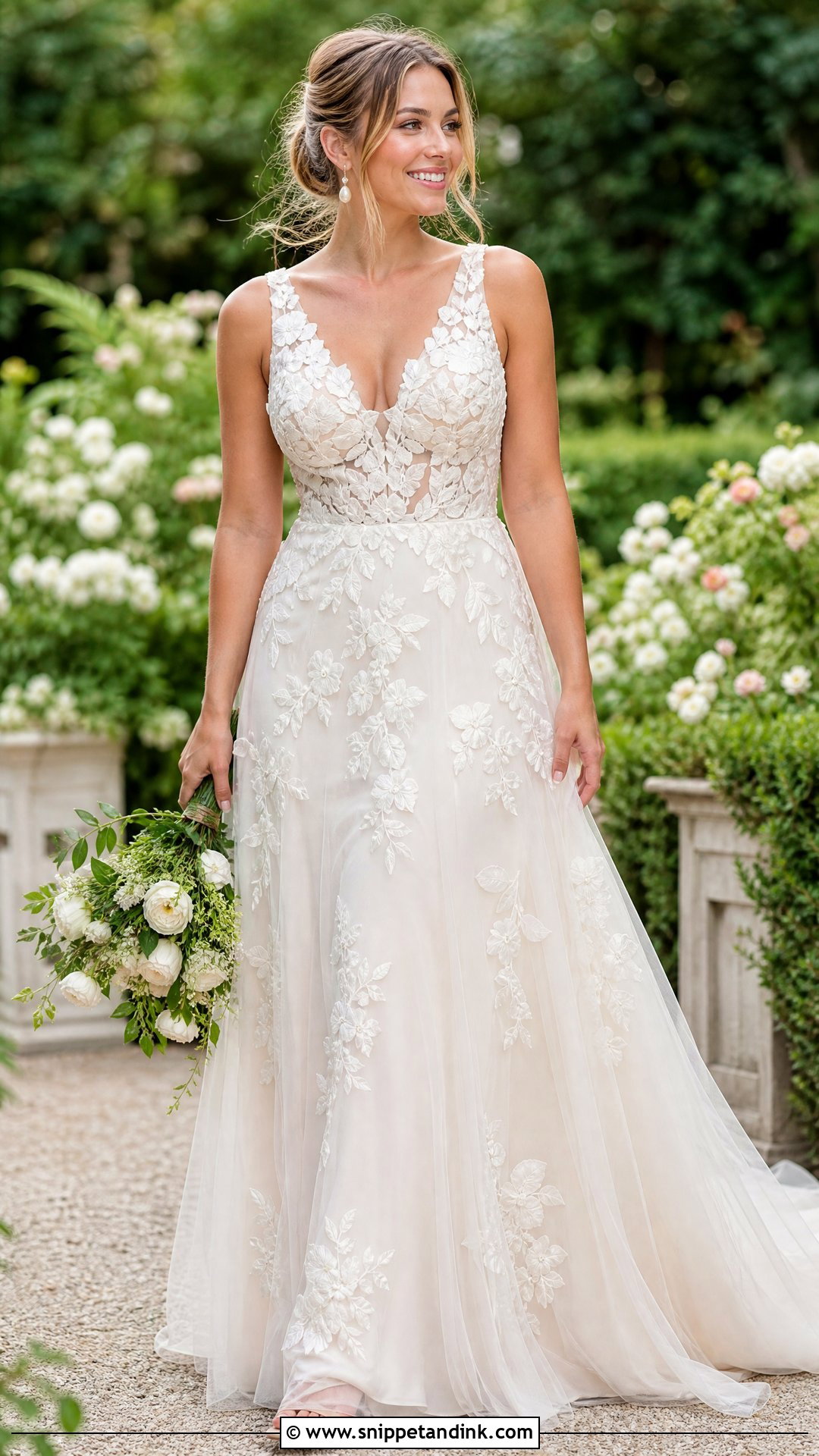
Raised appliqué flowers catch natural light and cast small shadows, which gives a floral applique wedding dress its depth in daytime photos. Oversized flowers feel runway; small scattered ones feel softer. I always ask how the appliqués are attached, because hand-sewn pieces survive a long day far better than glued ones on a busy dance floor. Keep the bouquet simple so the dress isn’t fighting it at a spring garden wedding.
11. Sheer Overlay Wedding Dress
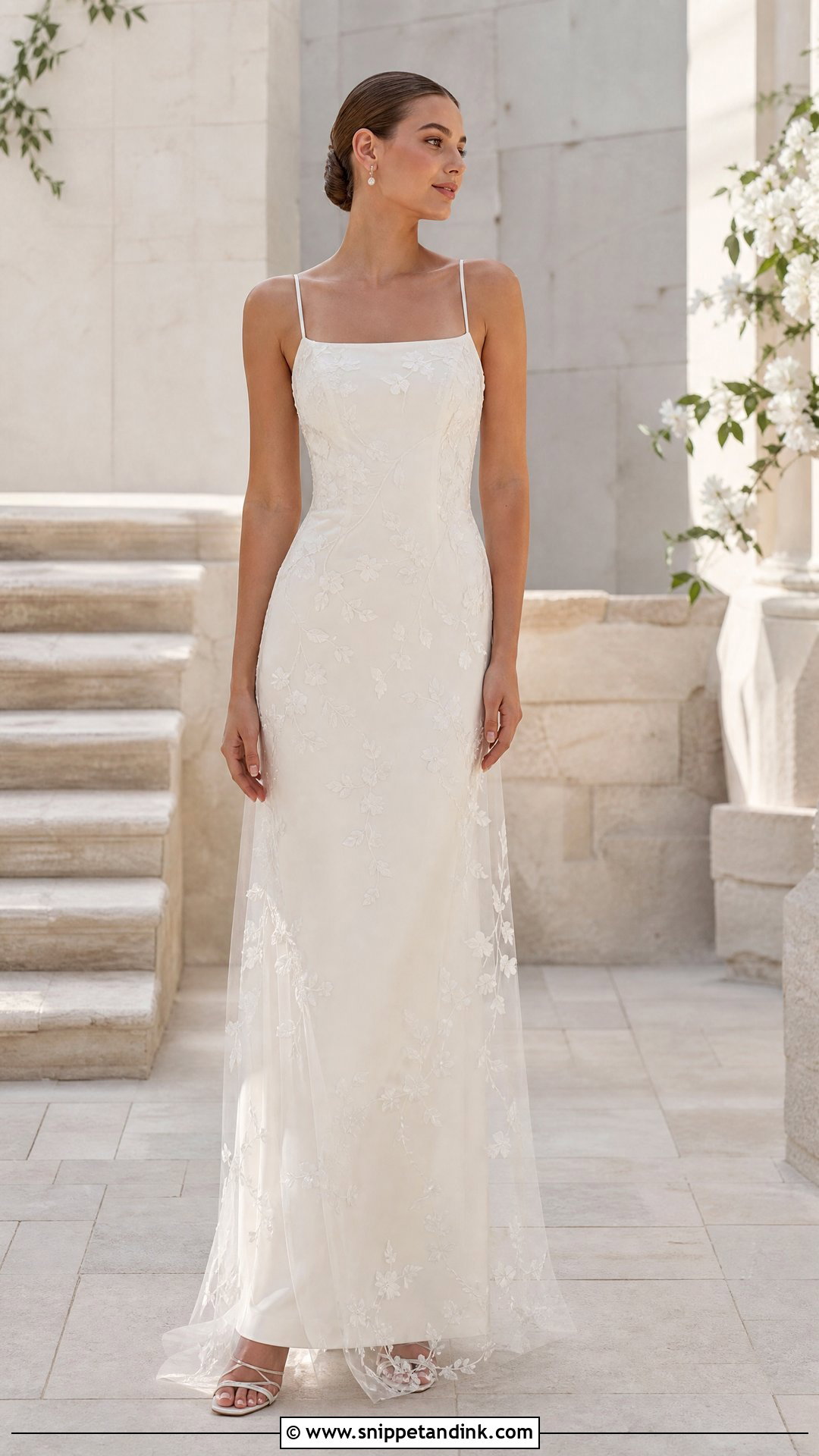
A sheer overlay gives you lift and movement without the weight of a ball gown. Tulle, organza and chiffon float differently: chiffon drapes, organza holds a crisp edge, tulle sits somewhere between. The lining is the part I fuss over. It should be matched to your skin tone or to the dress, and lined to a point you’re comfortable with in direct sun, since outdoor light shows more than a boutique mirror. Strappy heels and smooth hair keep it modern.
12. Minimalist Crepe Wedding Dress
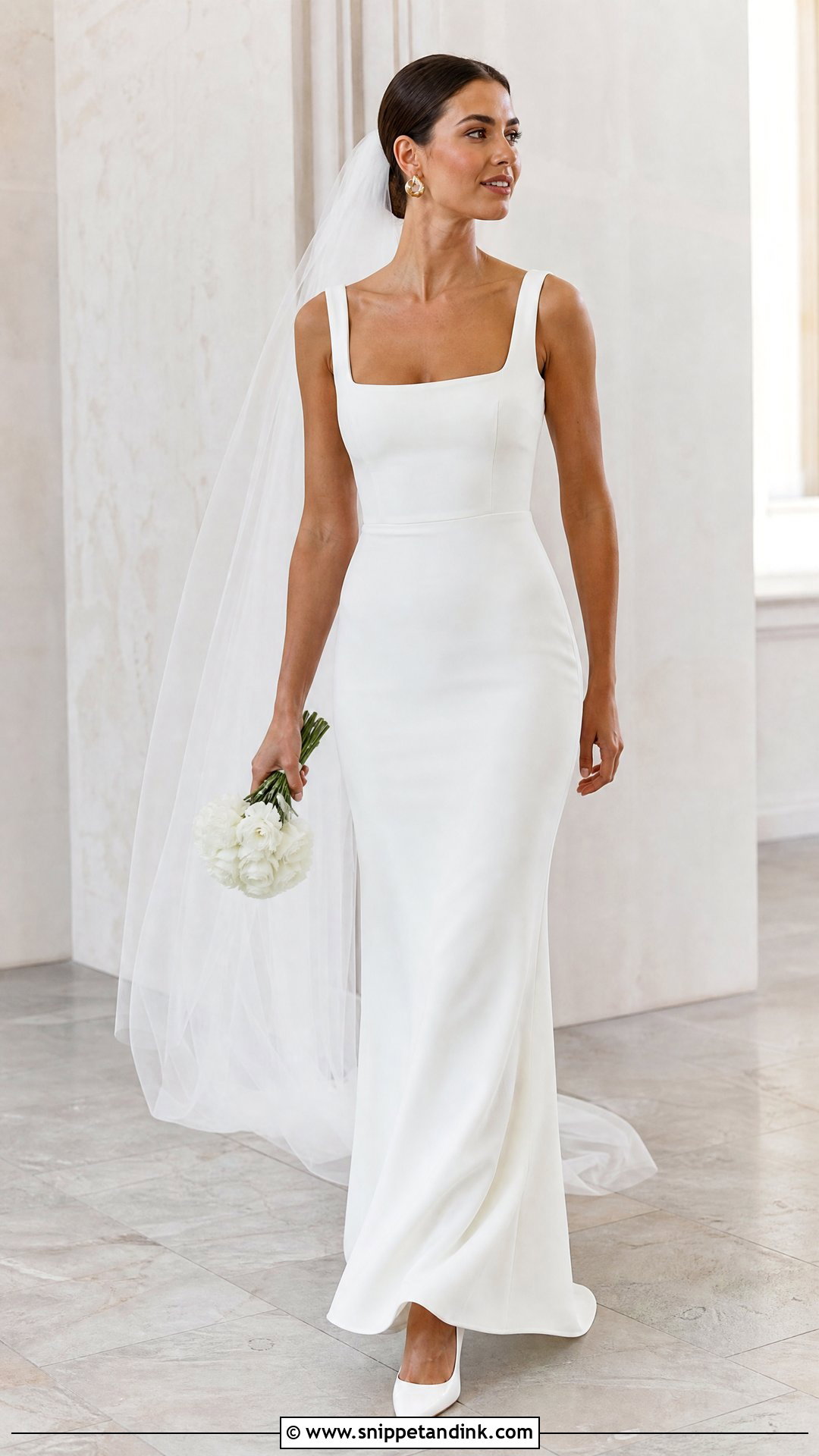
Plain crepe has nowhere to hide, which is exactly why it looks so confident. The slightly matte surface photographs without glare, but it also shows a poorly placed seam or a pulled zipper instantly. I’d budget for proper alterations on a minimalist dress before spending anything on embellishment. A square neck or long sleeves give it shape. Sculptural earrings and a long veil add drama at a modern venue or courthouse.
13. High Neck Wedding Dress
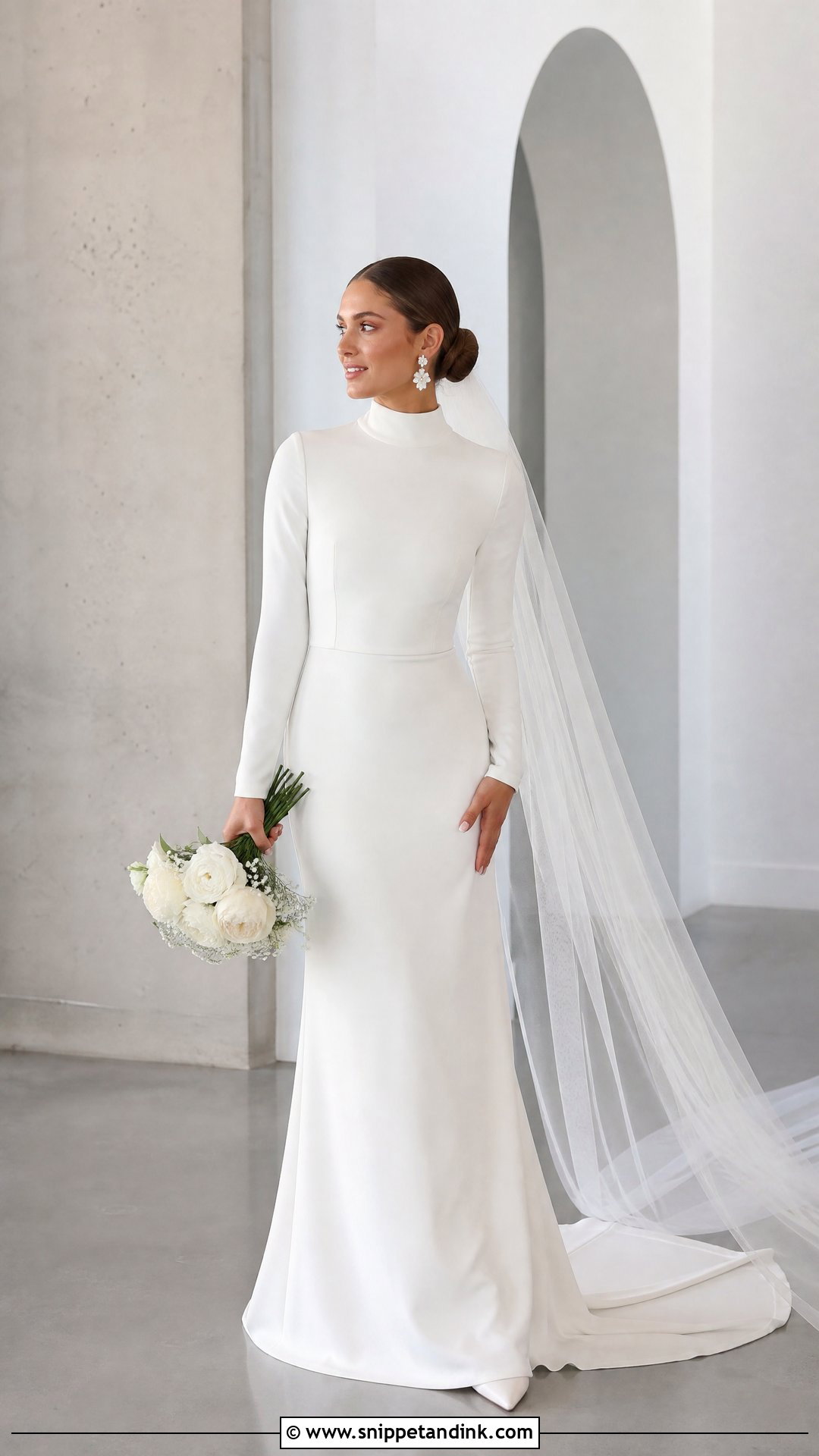
High necks feel unexpected at a wedding, and they give you coverage at the front while the back, sleeves or skirt take the drama. Lace feels romantic, satin or crepe sleeker. Wear your hair up or swept back so the neckline is visible, and skip the necklace altogether; earrings carry the jewelry. One thing to try in the fitting room is turning your head both ways, since a stiff collar that rubs the jaw becomes annoying fast.
14. Two Piece Wedding Dress
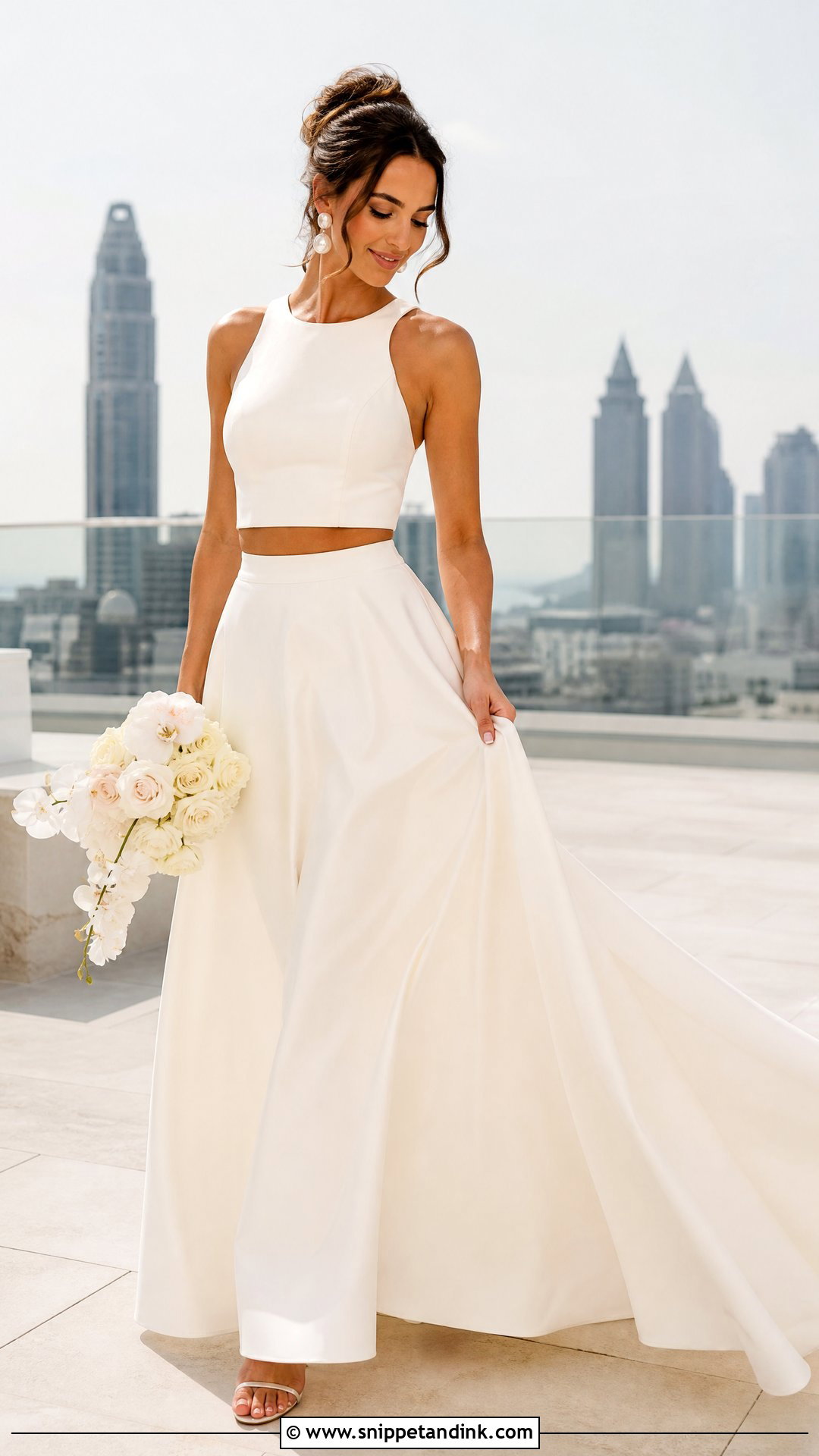
Separates give you movement that a single gown can’t, and often a better fit, since top and skirt can be sized independently. A cropped top with a high-waist skirt shows a sliver of skin; a fitted bodice over a separate skirt can pass for a gown. I’d test how the gap behaves when you raise your arms, because a cropped top can ride up further than you expect. Matching fabric keeps it formal, and satin with lace gives contrast. The pieces also restyle well after the wedding.

15. Tea Length Wedding Dress
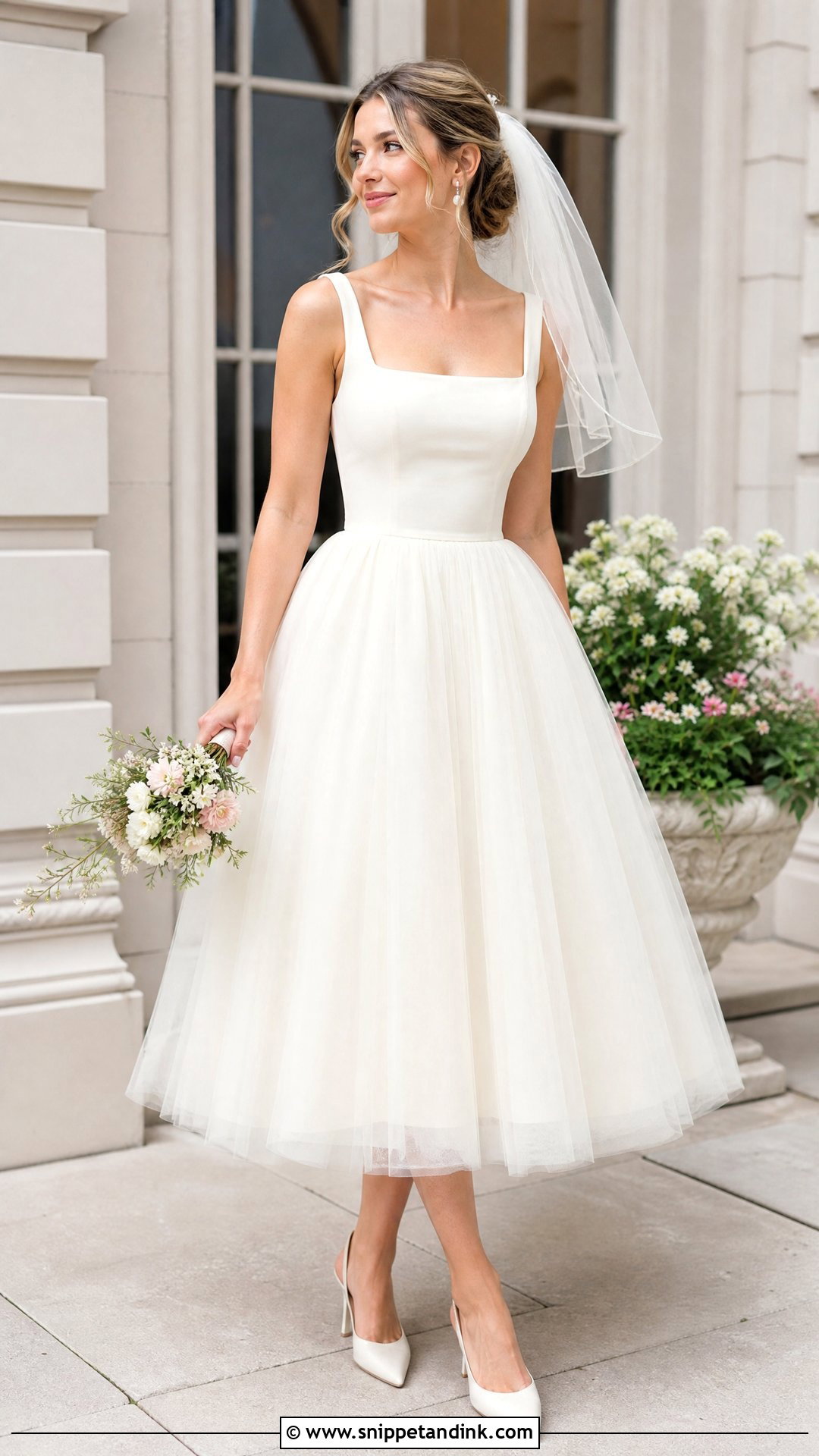
The hem of a tea length wedding dress falls between knee and ankle, so you walk, dance and climb steps without lifting a skirt. That length draws the eye to the shoes, which is why I take bridal shoe shopping more seriously with this one. Crisp tulle or satin keeps the skirt holding its bell shape. A short veil or a bow clip suits it at a courthouse or garden wedding.
16. Square Neck Wedding Dress
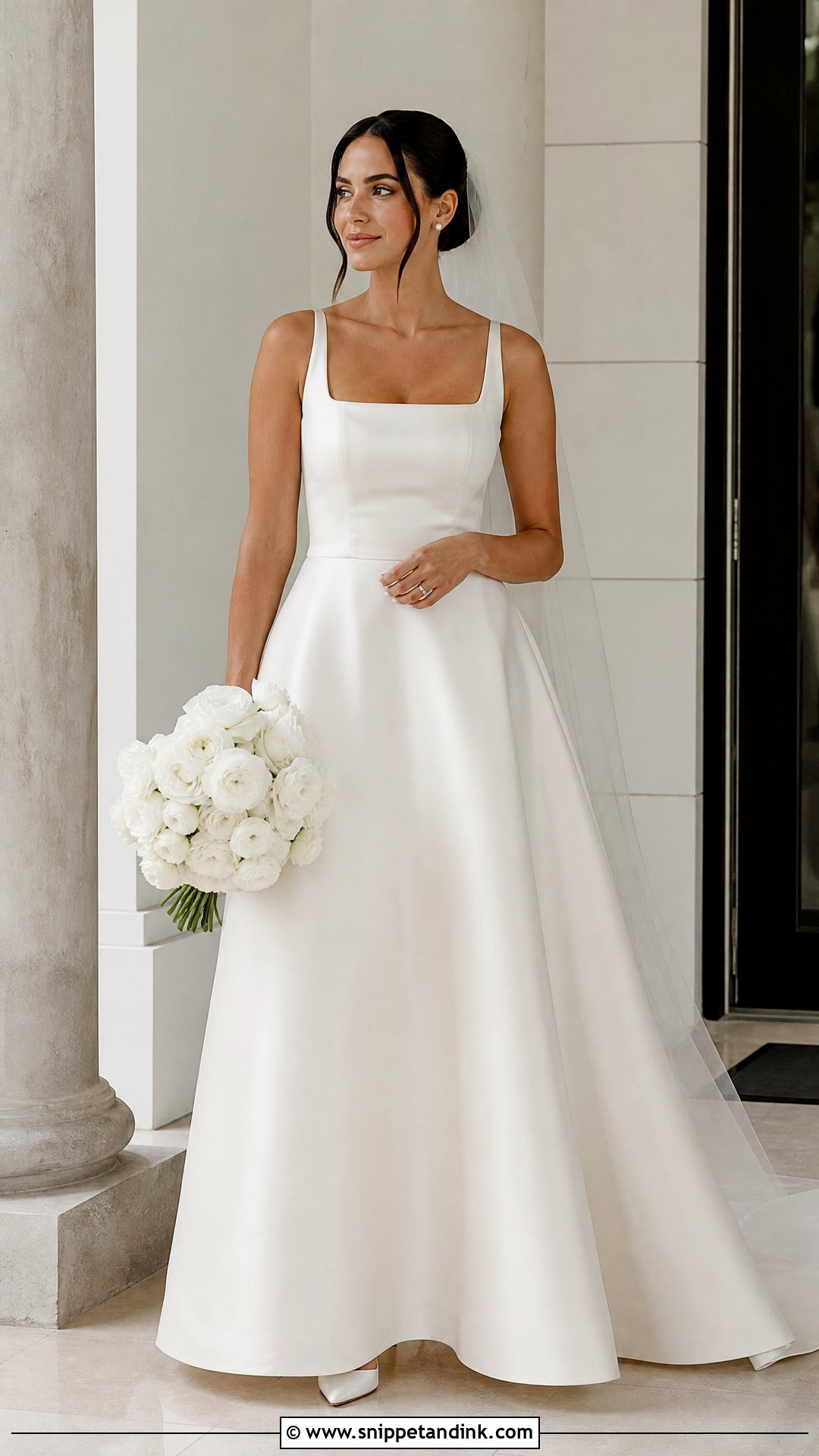
A square neck flatters almost everyone I fit, because it frames the collarbone with a straight line rather than drawing the eye down. Wide straps give real support for a fuller bust; thin straps look more delicate on a smaller frame. It works across crepe, satin A-lines and soft tulle. If the ceremony is formal and the party isn’t, a tailored jacket layers neatly over a square neckline for the first half of the day.
17. Bubble Hem Wedding Dress
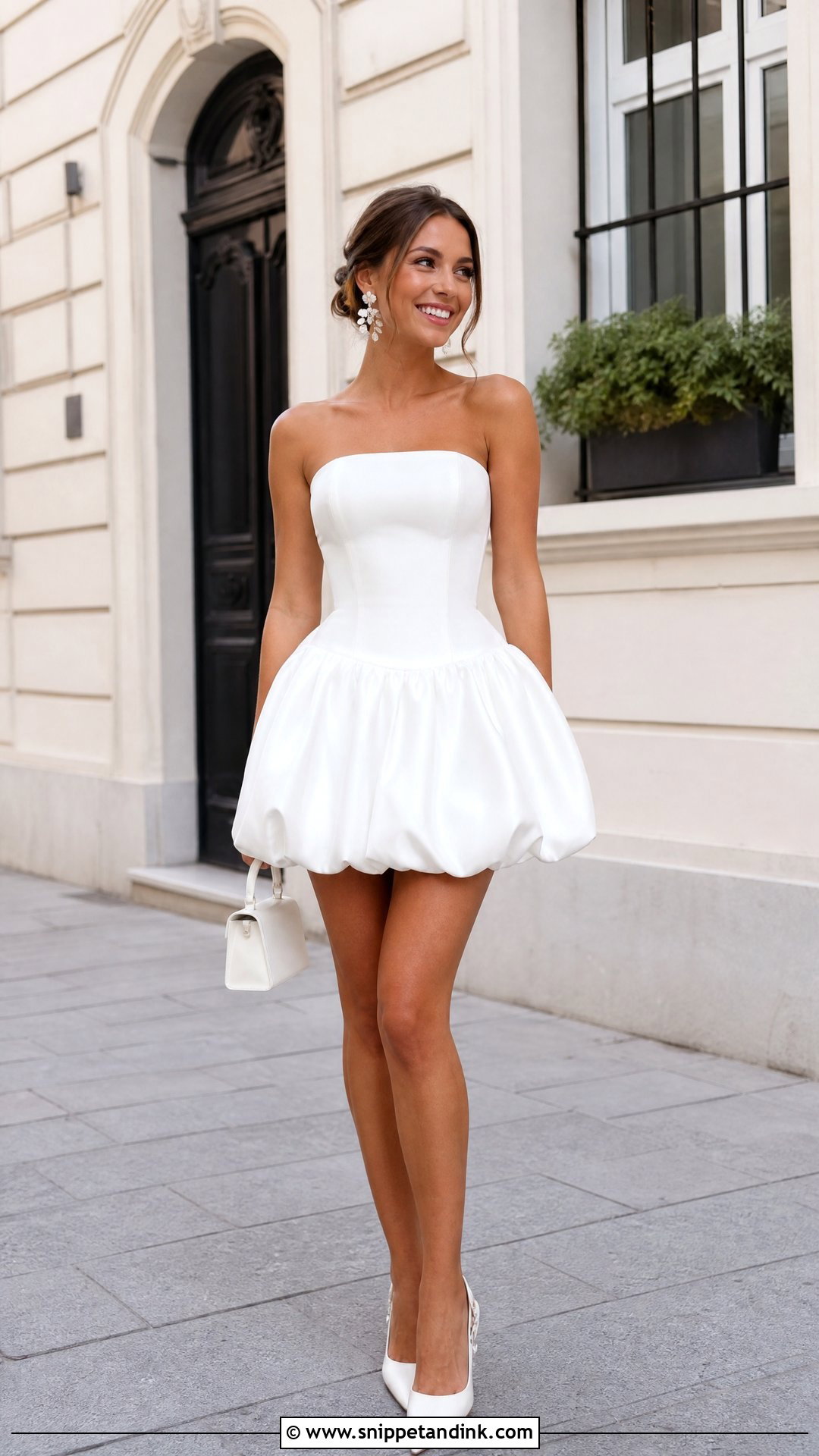
A bubble hem is pure fashion, and I’d only suggest it to a bride who already loves it. The tucked hem gathers volume at the bottom into a rounded shape, so the bodice needs to stay simple. It sits best on minis and midis at civil ceremonies, after-parties and summer weddings. Sitting compresses the bubble, so give it a gentle shake out after the meal. Sleek heels and statement earrings finish it.
18. Champagne Wedding Dress
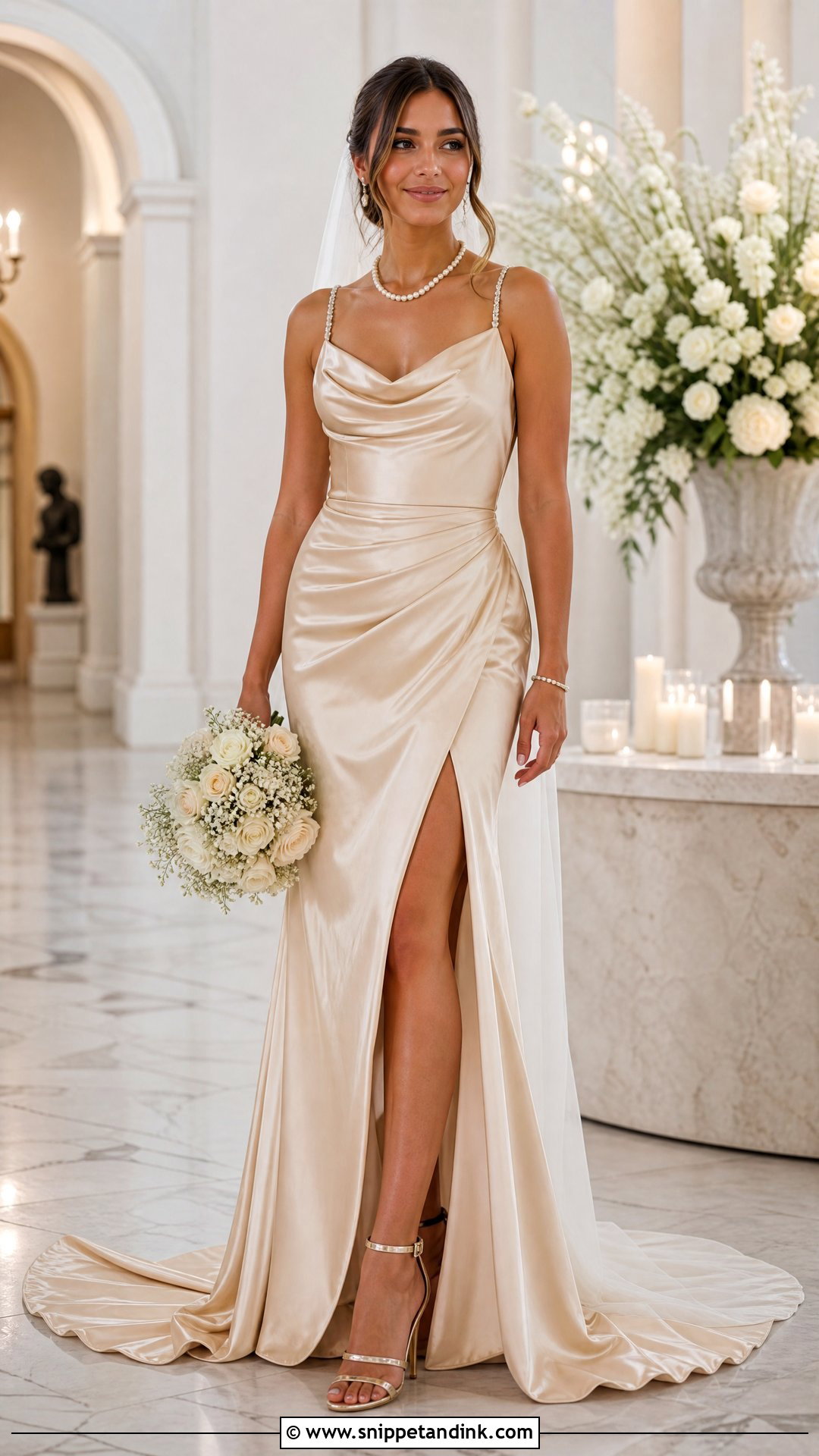
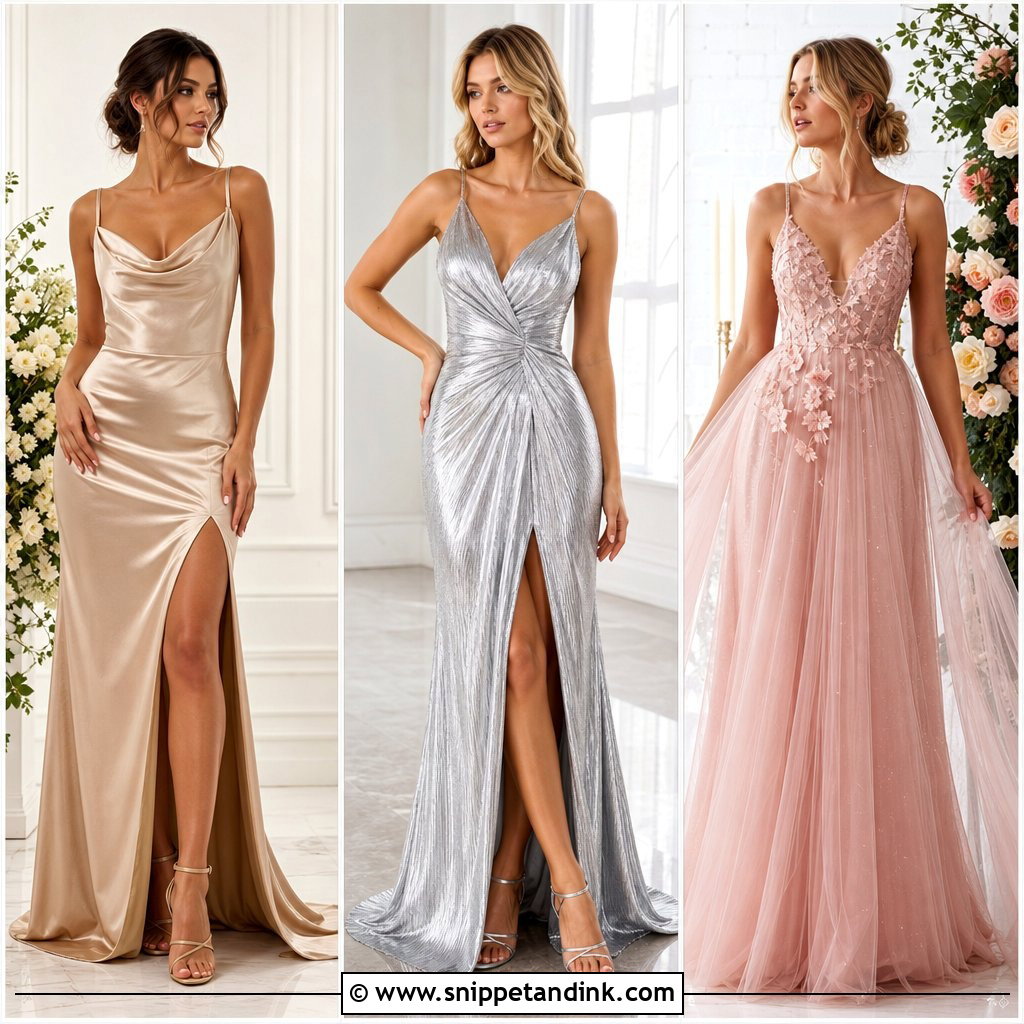
Champagne is the color I suggest most often to brides who find bright white draining. The warm undertone flatters a lot of skin tones and reads rich in evening light. The catch is that champagne varies hugely between fabrics, so I compare it against her skin in daylight before ordering, not just under boutique bulbs. Satin looks glamorous, tulle softer. Keep makeup in warm neutrals so the dress and face sit in the same color family.
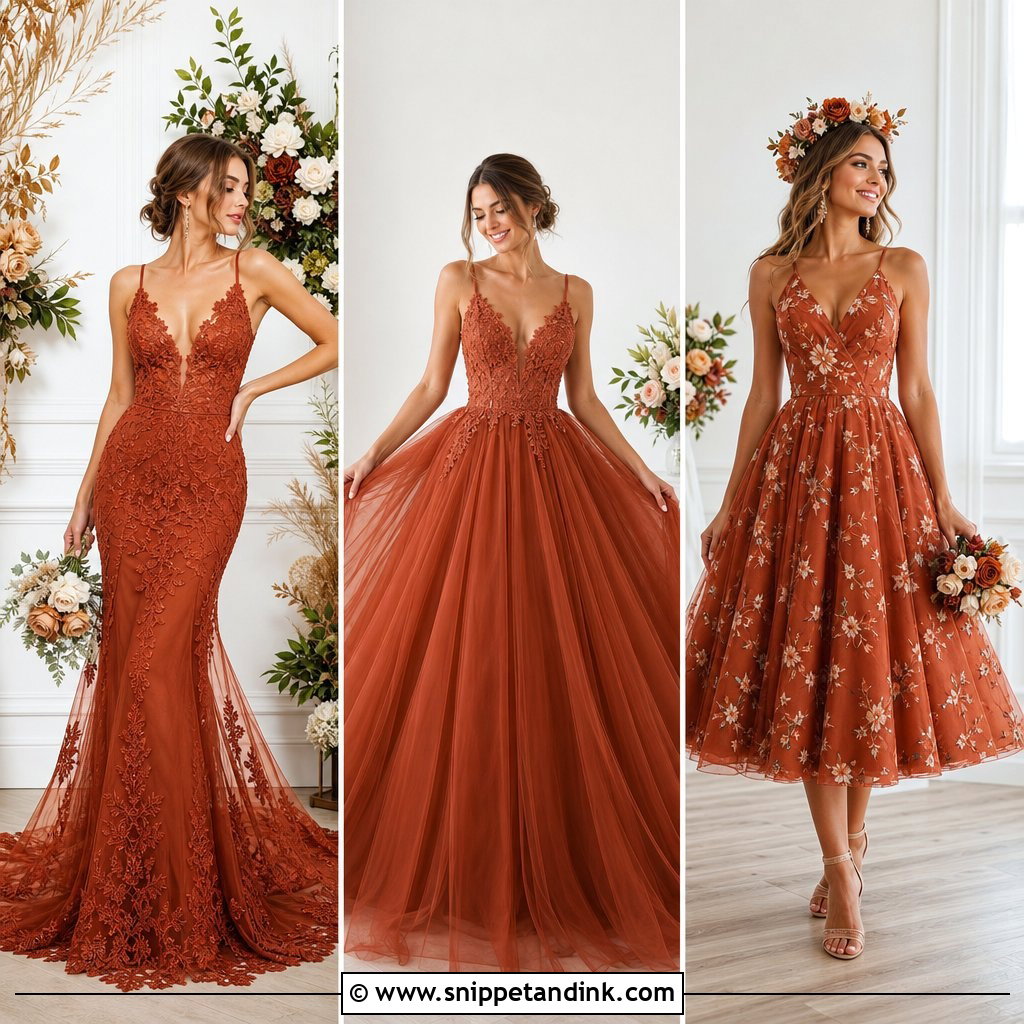
19. Blush Wedding Dress
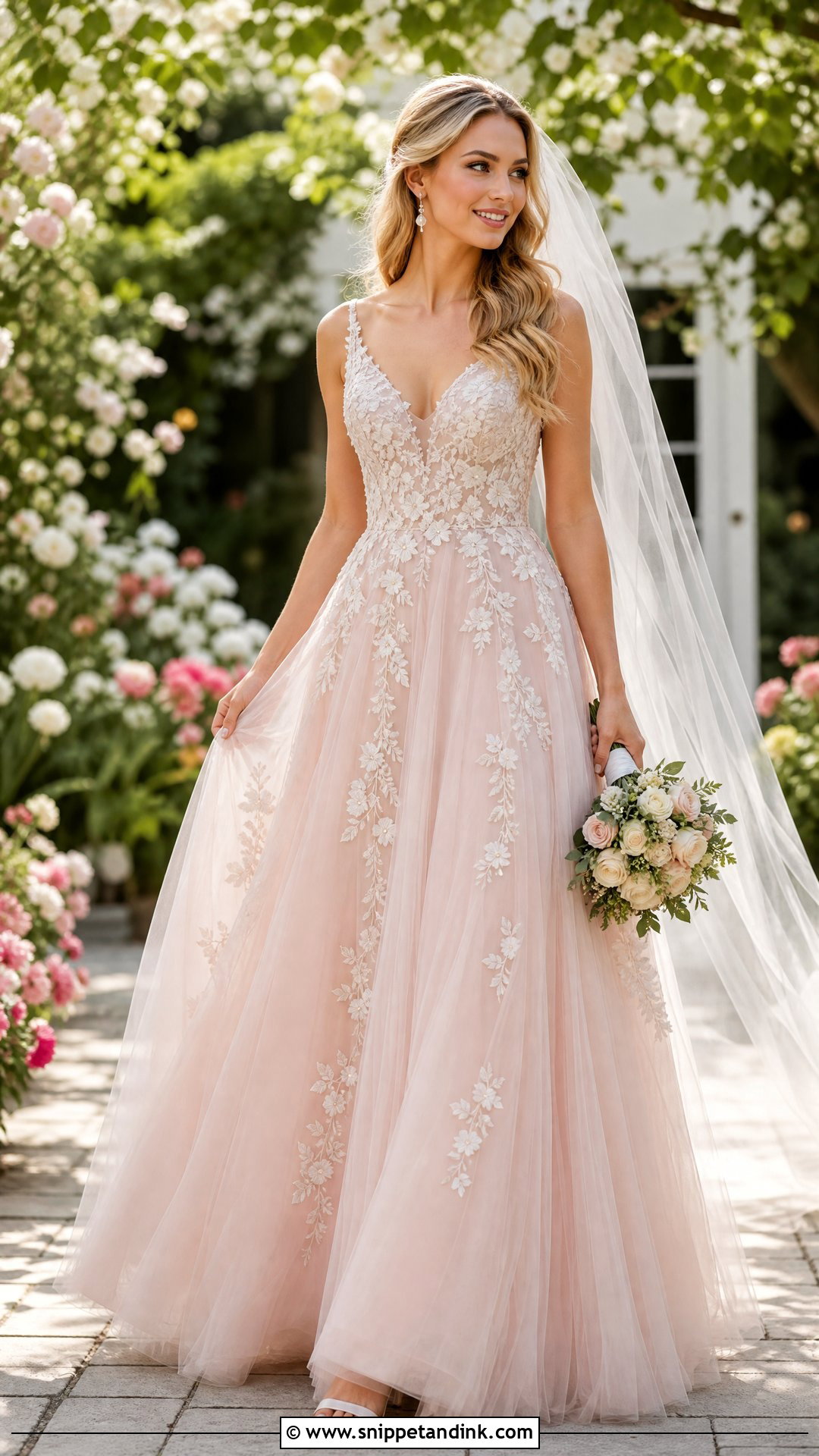
Blush shifts with the light. A shade that reads pink in the shop can wash out to ivory in bright sun, and pale pink tulle layered over nude can look skin-colored from a distance. I always ask to see a sample outdoors. For a modern take, go clean with little embellishment; for drama, a layered blush ball gown. Ivory or pearl accessories and loose waves suit a spring garden wedding.

20. Black And White Wedding Dress
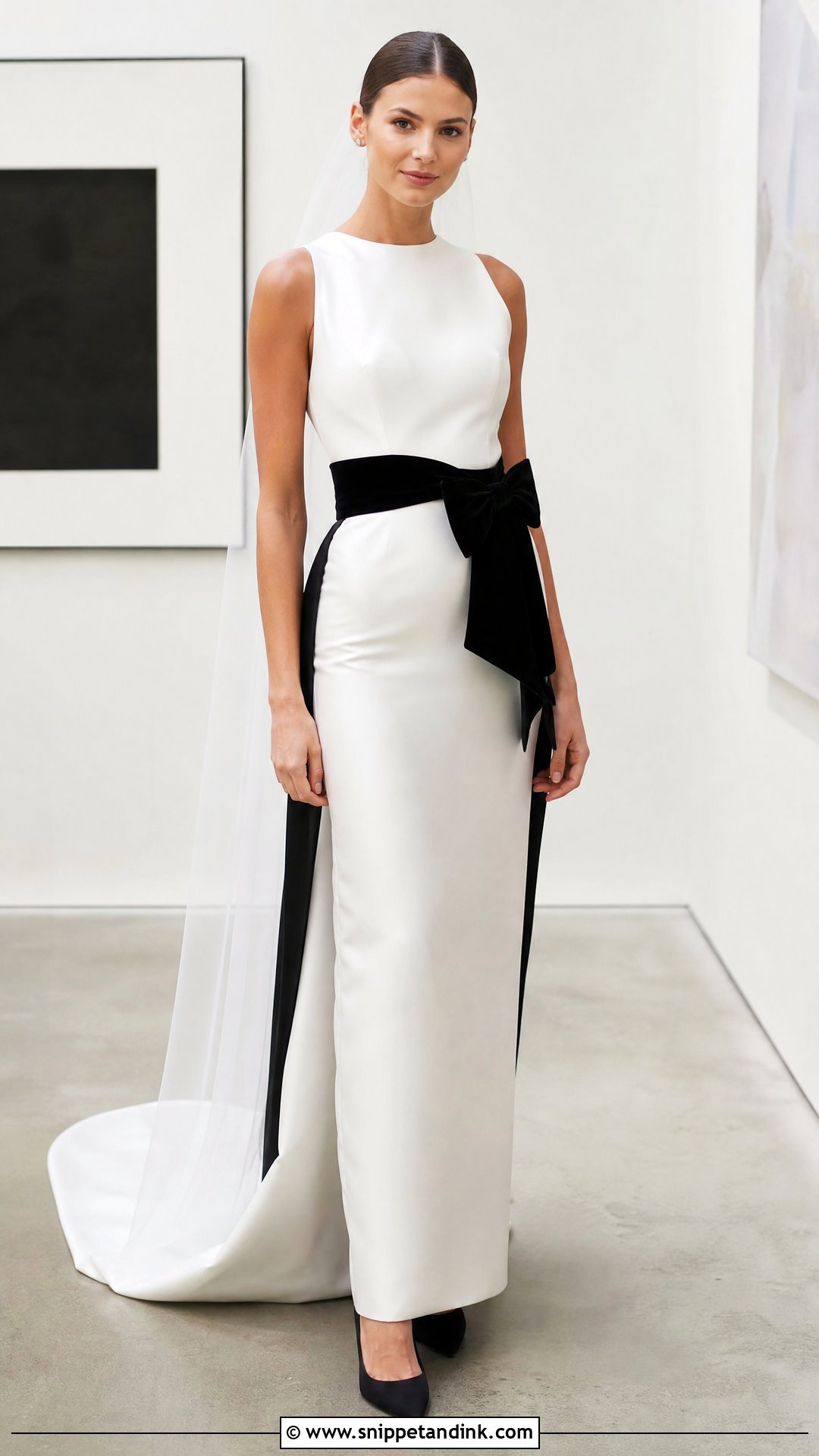
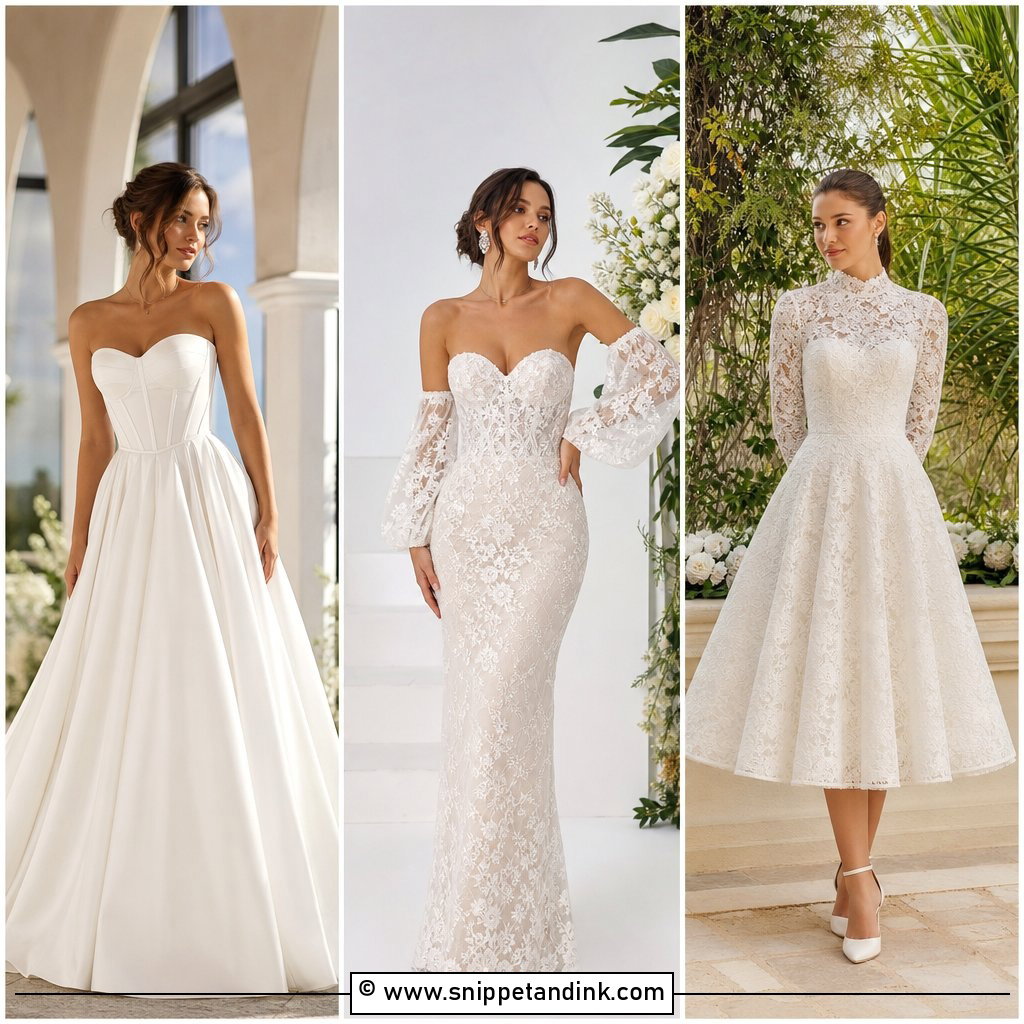
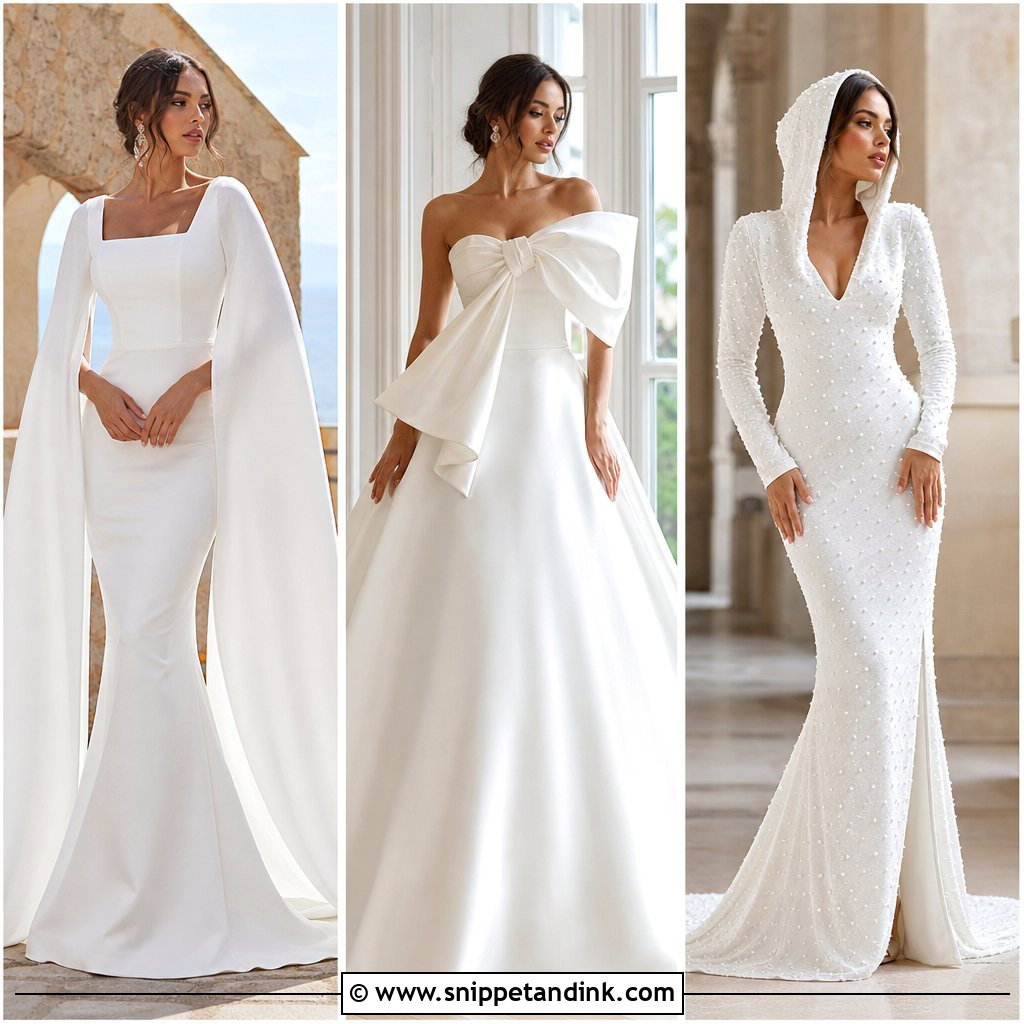
Contrast does the work in a black and white dress, so everything else should be quiet. The black can be a velvet bow, gloves, embroidery or trim along the neckline. A simple white gown with one black bow feels chic; lace with black floral accents is more dramatic. Black velvet details can mark if they rub against white fabric for hours, so check that trims are lined where they touch. Minimal jewelry and a sleek style keep it modern.
21. Detachable Overskirt Wedding Dress
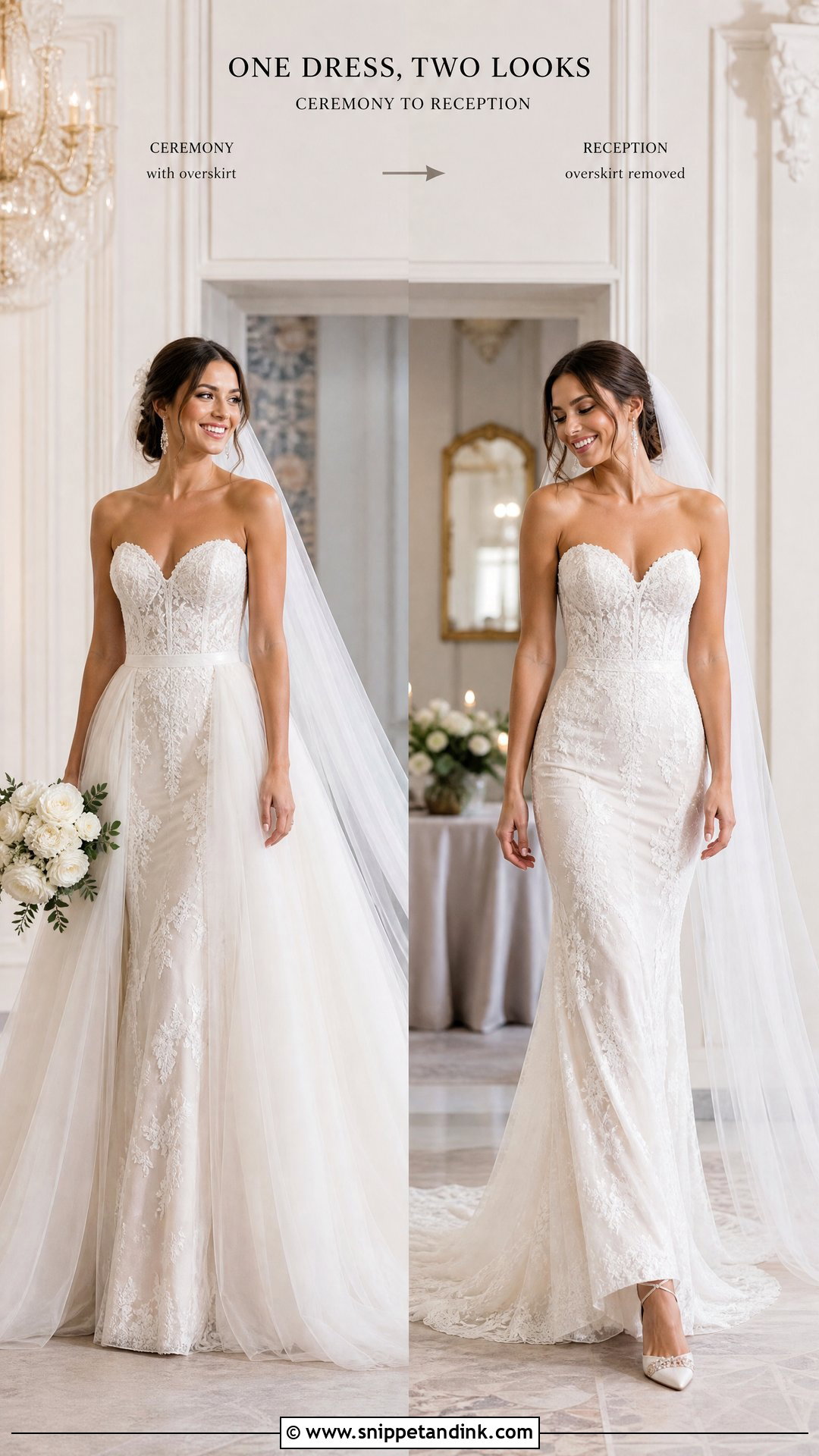
Two looks, one dress. Wear the overskirt for the ceremony and unhook it for the reception to reveal a fitted gown or mini underneath. Tulle overskirts are romantic, satin ones structured. The part people forget is the fastening. Practice taking it off yourself or with one helper, because a row of tiny hooks at the back is a slow job in a busy bridal suite. It suits weddings with a formal ceremony and a looser party after.
22. Feather Trim Wedding Dress
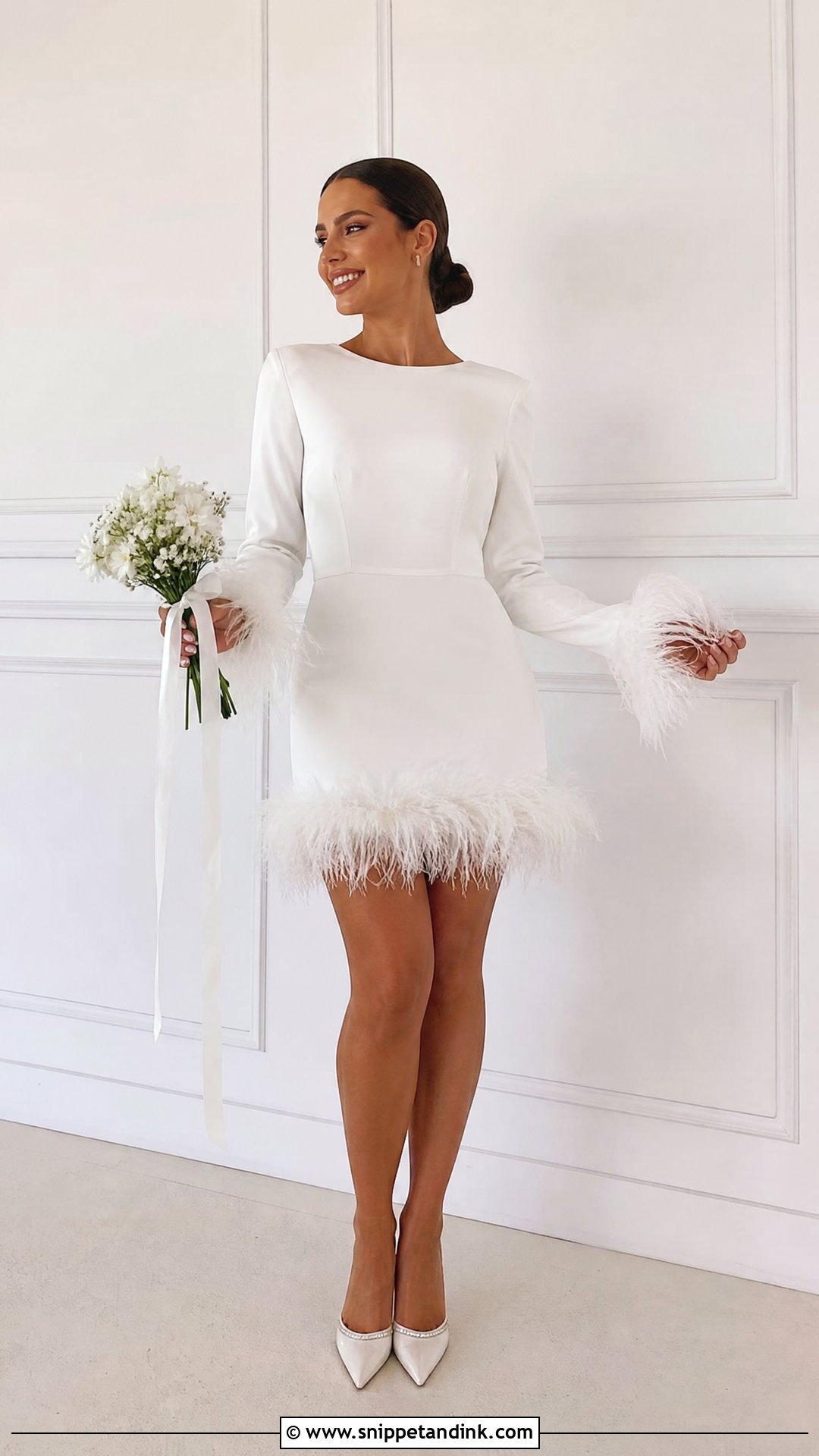
Feathers move when you move, which is the whole appeal. They can sit at the hem, neckline or cuffs. A feather-trim mini works for a reception or city hall, while long feather cuffs feel more formal on a gown. Expect some shedding, and keep feathers well away from lip color and from a lace veil, since they catch on both. Pair them with plain satin or crepe so the texture isn’t fighting anything else.
23. Cape Wedding Dress
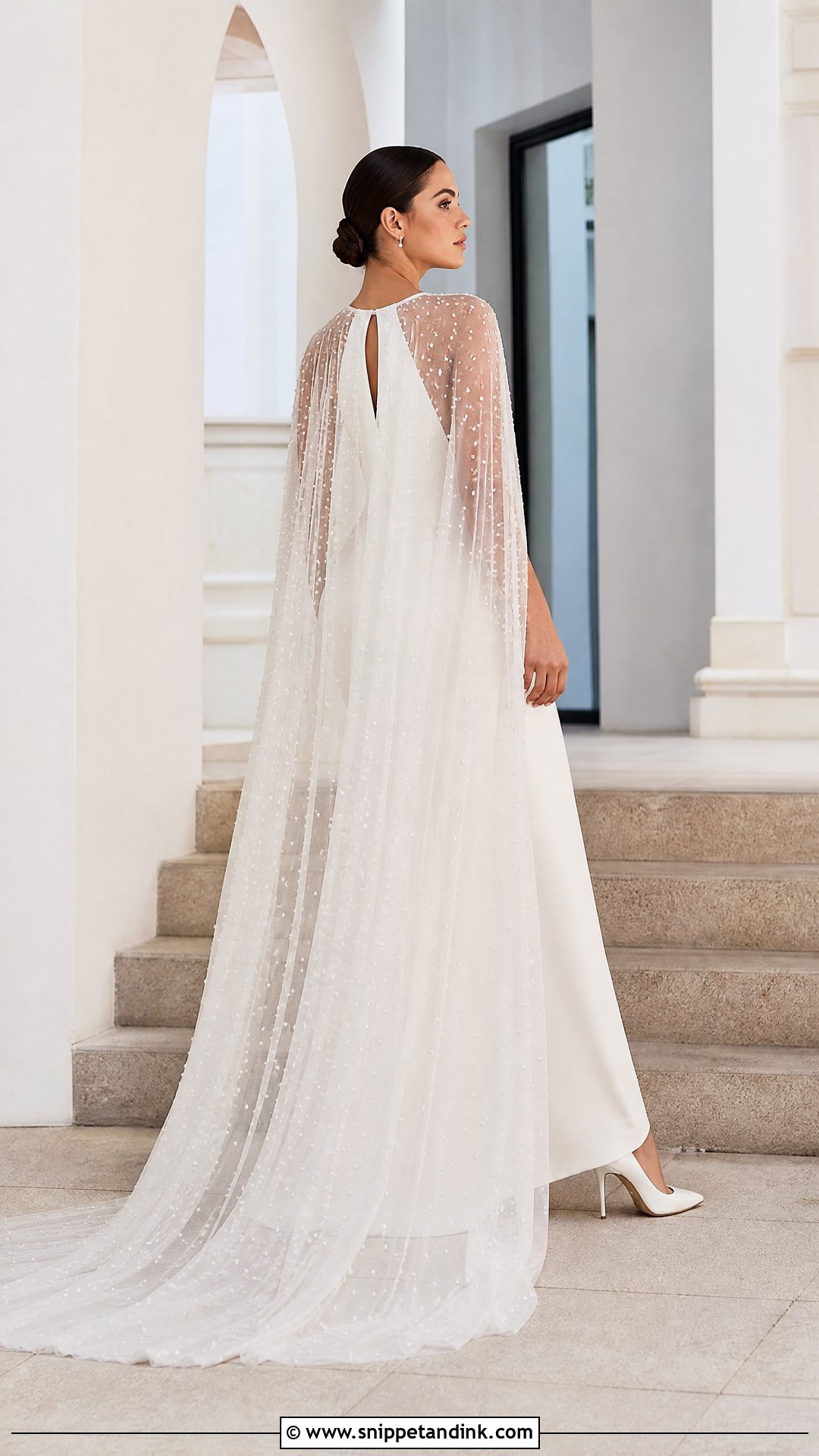
A cape gives you veil drama without anything on your head, and I like it for brides who don’t want to wear a veil all day. It can be sheer, lace, pearl-dotted or smooth crepe. Weight matters: a heavy cape drags the shoulders back for hours, so I’d choose a light tulle cape if you’ll keep it on for the reception. A detachable version gives you an easier dance floor look. Keep the jewelry minimal.
24. Sequin Wedding Dress
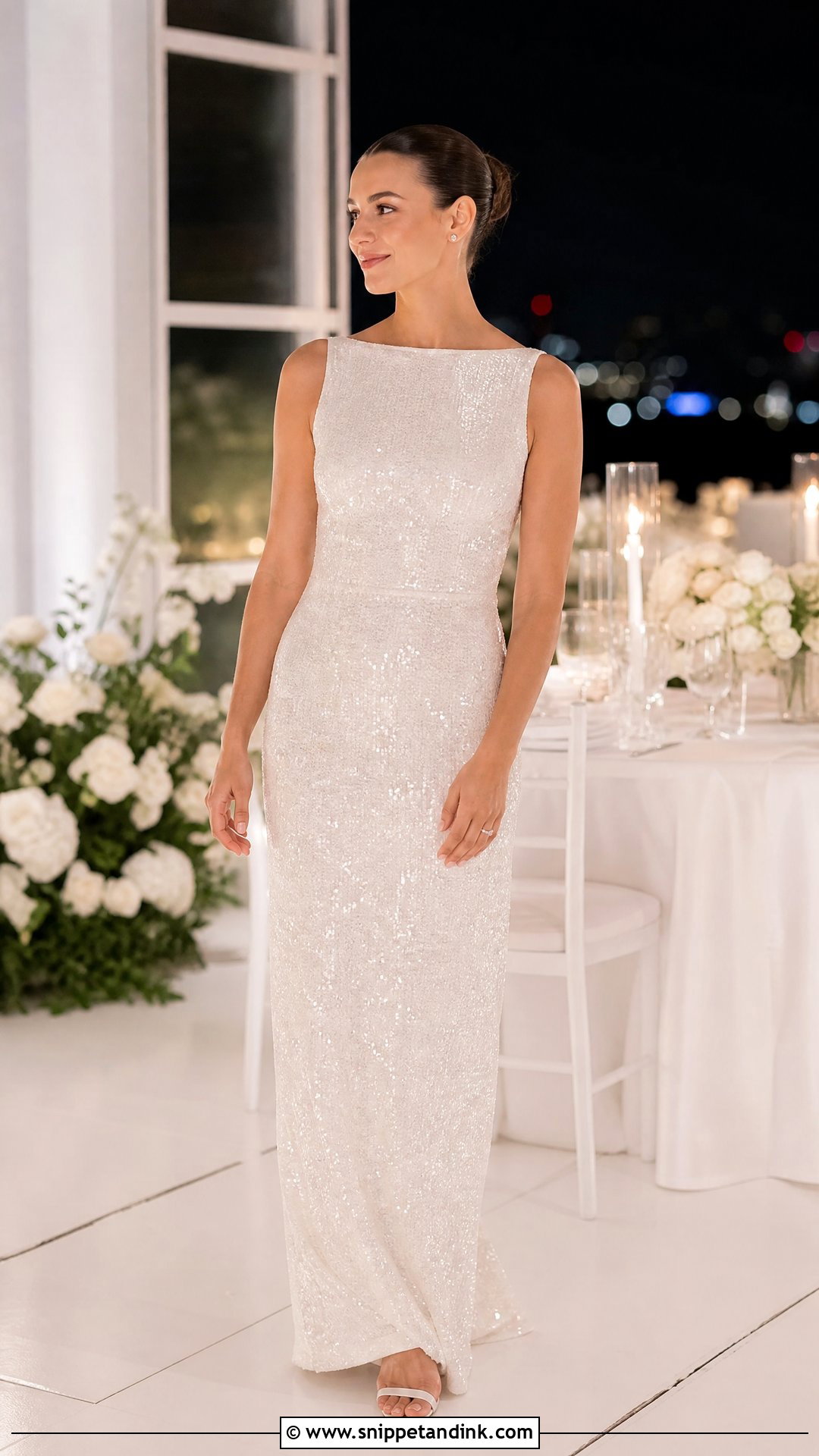
Sequins need a simple shape underneath or they tip into costume. Soft ivory sequins or clear paillettes over a column or slip cut look the most polished. Sequins are also scratchy on the inner arm where it brushes the bodice, so I check where they sit before ordering. Evening and rooftop weddings suit them, and they make a good reception change. Small earrings and smooth hair are enough, because the dress already throws light.
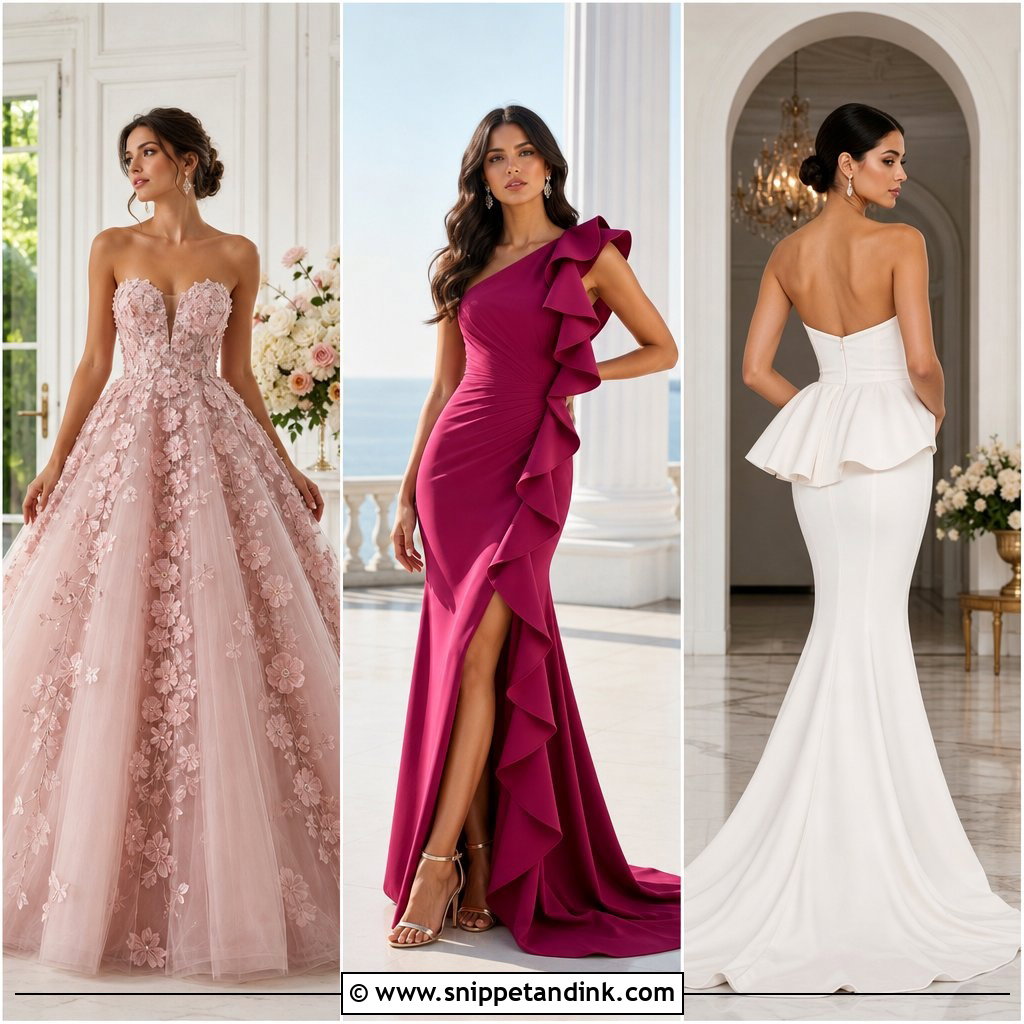

25. Courthouse Wedding Dress
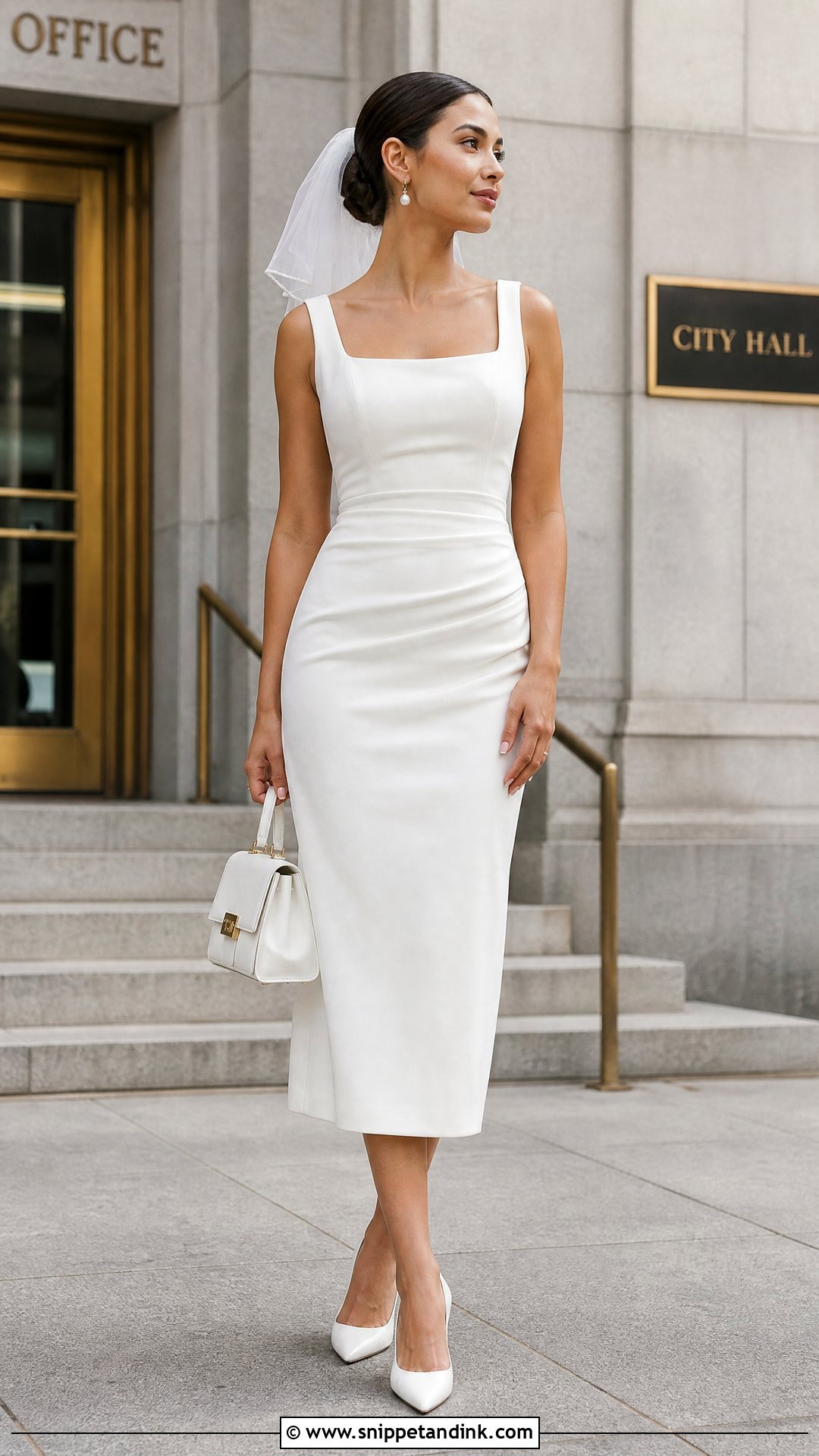
A courthouse wedding dress has to work standing in a hallway, signing a register and walking city streets for photos. That’s why I lean toward a tailored mini, a satin midi or a crepe column rather than anything with a train. Structured fabric like satin, crepe or a cotton blend survives the day better than delicate tulle. Pointed heels, a structured bag and a short veil or bow make it read clearly as bridal.
The Movement Test I Run at Every Fitting
A fashion-forward dress gets judged standing still in a mirror, and then worn for ten hours of moving. I close that gap by making brides act out the day in the fitting room. It feels silly for about a minute, then it saves a lot of regret.
Sit, Reach, Hug
Sit in a chair without arms for two minutes, then stand and look at the creases. Reach both arms up as if fixing your hair. Hug someone taller than you. Strapless bodices slip, off-shoulder sleeves pin the arms, and satin shows where it was folded. Each of these tells the seamstress what to adjust.
Bring the Real Things
From the second fitting onward, I ask brides to bring their wedding shoes, the actual underwear and any jewelry or veil they plan to wear. Hem length depends on the shoe heel to the quarter inch, and a different bra can change how a bodice sits completely.
Ask About the Bustle
Any dress with a train needs a bustle for the reception, and the style changes how the back looks. Some lift the train up with hooks on the outside; others tuck it under. Ask to see it bustled before the last fitting, and have whoever will do it on the day practice once while the seamstress watches.
Start With the Detail You Keep Going Back To
The dress that feels cool is the one that makes you feel like yourself. Some brides land on a clean satin slip; others on a cape, a mini or a full ball gown. Think about your venue, your season and how you want to move, then judge every option from the front, back and side, in daylight, after you’ve sat down in it. If one detail keeps pulling you back across several shops, a bow, pearls or a certain neckline, that’s usually the dress telling you where to start.
You'll Like These Ideas:





Leave a Reply