
Creative bridal fashion lets you keep the parts of tradition you care about and change the rest. The gowns below range from romantic to architectural, with color, texture and a few clever tricks like detachable skirts and capes. In appointments I ask brides to judge an unusual dress on more than the mirror: how it moves, what goes underneath it, what alterations it needs, how it handles the weather and how it reads on camera. A long dramatic train belongs in a ballroom, and a short sculptural dress can look exactly right at a courthouse or on a rooftop. Look at the complete outfits, then notice which details you keep coming back to.
Custom Color and Hand Embroidery Need a Longer Runway
Unusual dresses tend to be made to order, and that changes your timeline. A standard bridal gown is often ordered several months before the wedding, and many salons quote six months or more for production alone. Hand embroidery, dyed fabric, custom beading and detachable pieces can add to that, and lead times vary a great deal between designers, so ask for the date in writing at the appointment.
Then leave room for alterations. Structured bodices, asymmetric drapes and two-piece sets usually need more fittings than a simple A-line, not fewer. I’d plan on starting alterations roughly two to three months out and having your shoes and underwear ready by the first fitting.
Questions worth asking at the salon
- Can I see a physical swatch of this exact color or print before I order?
- Is the embellishment hand-sewn, and can my seamstress repair it if a piece comes loose?
- How are detachable parts attached, and will the fastenings show?
- What does a rush order cost if production runs late?
1. Basque Waist Wedding Dress
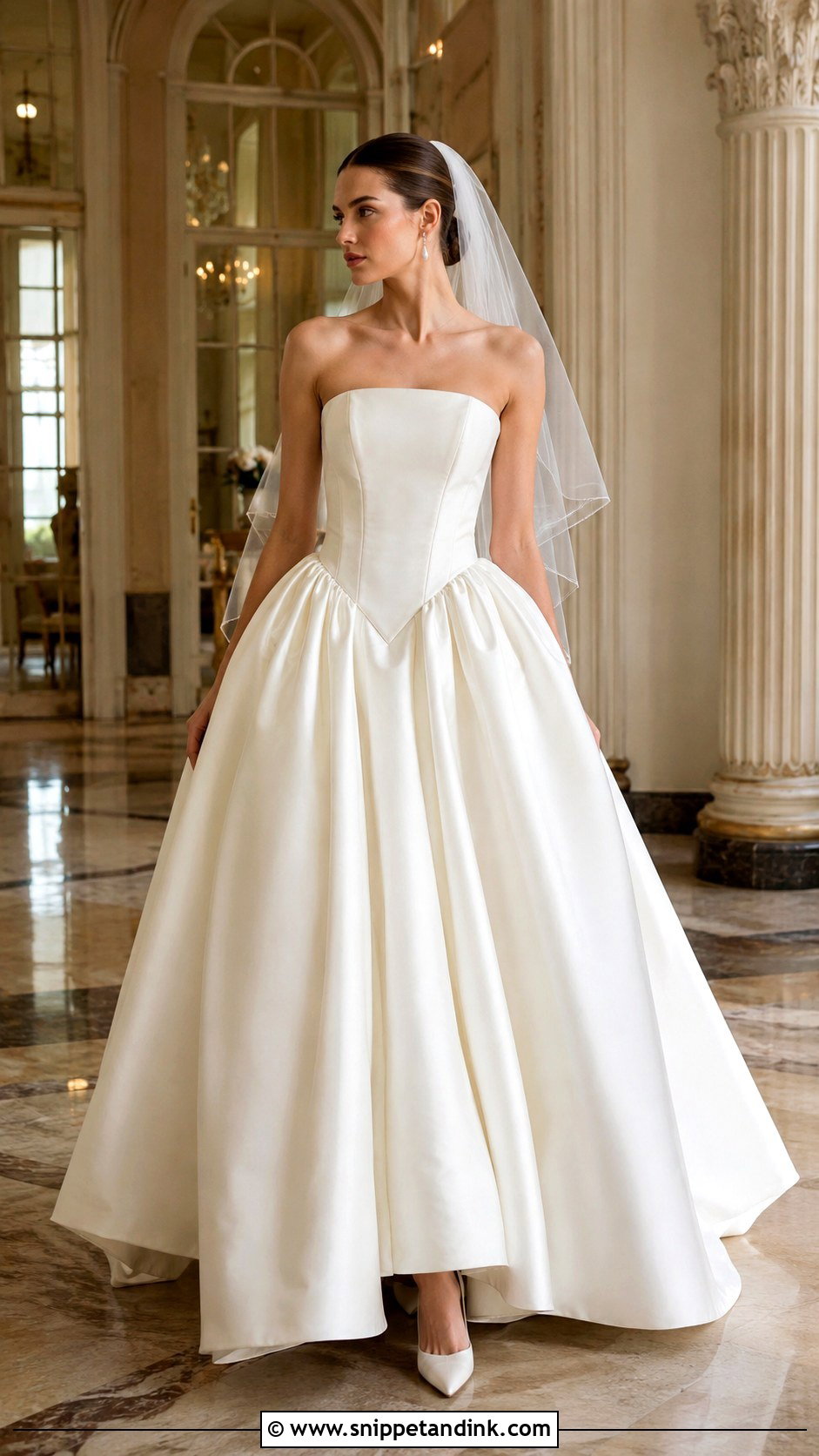
The Basque waist dips below the natural waist in a soft V, which lengthens the torso and makes a full skirt look less heavy. It needs real structure: a satin bodice with proper boning, usually over a ball-gown skirt. Strapless keeps the line clean, and detachable off-shoulder straps give you coverage for a church ceremony. Pointed satin pumps, pearl drops and a fingertip veil are all it wants. At fittings I have brides sit, walk and dance, because that low point sits right on the hip bones and should feel secure without digging in. Formal ballrooms and historic estates suit it best.
2. 3D Floral Wedding Dress
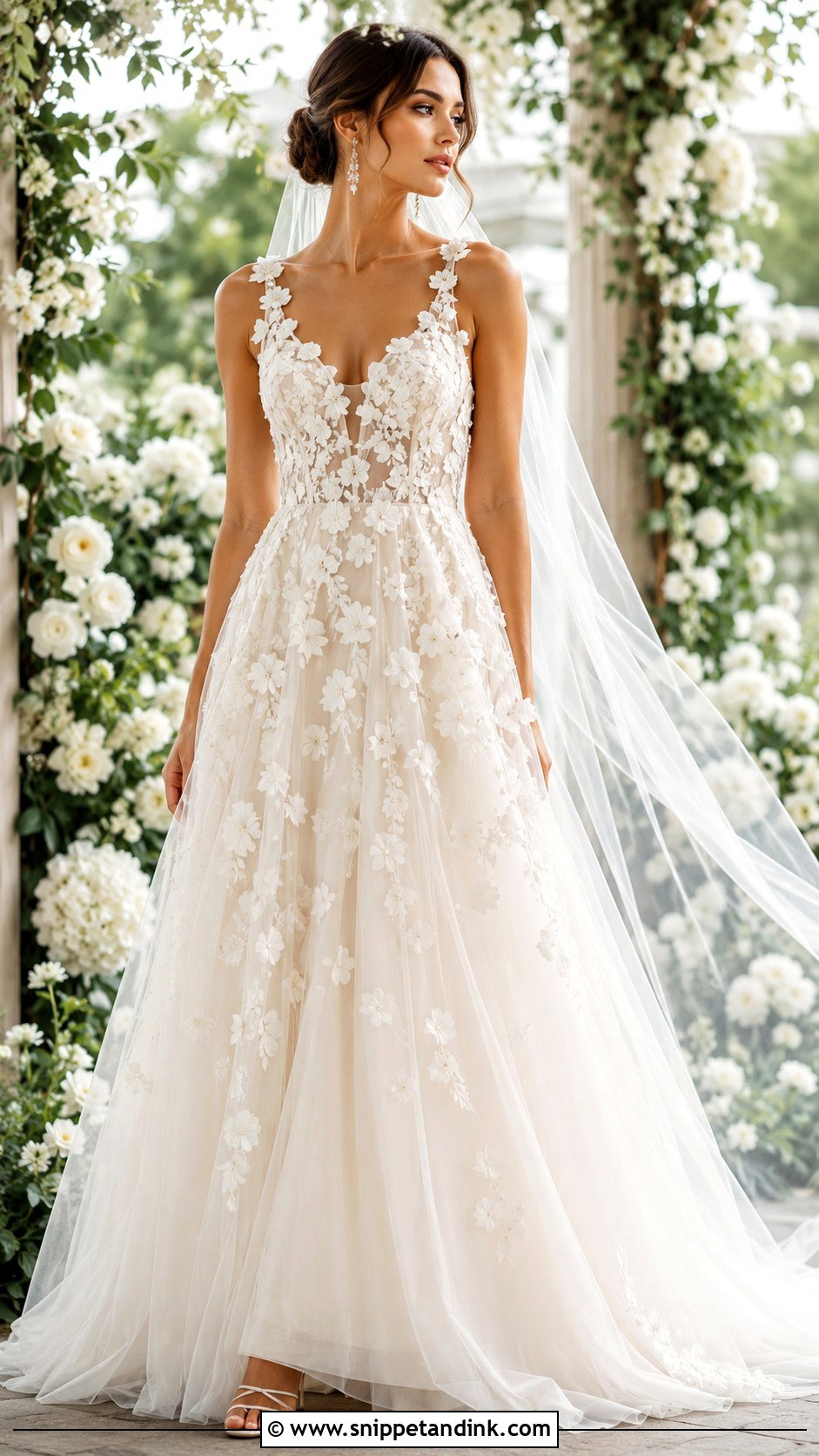
Raised petals give an A-line real depth, but weight is the issue I watch. The best versions cluster lightweight flowers on the bodice and let them thin out down the tulle skirt, so the gown doesn’t drag at the shoulders by evening. A sheer bateau neck or fine straps support the work without hiding it. Ivory sandals, small crystal earrings and a low bun with two or three matching fabric flowers are enough. Keep the bouquet modest, since a large one sits right over the bodice flowers in every photo. Garden and spring weddings are the obvious home, though pale icy flowers work in winter too.
3. Sculptural Satin Wedding Dress
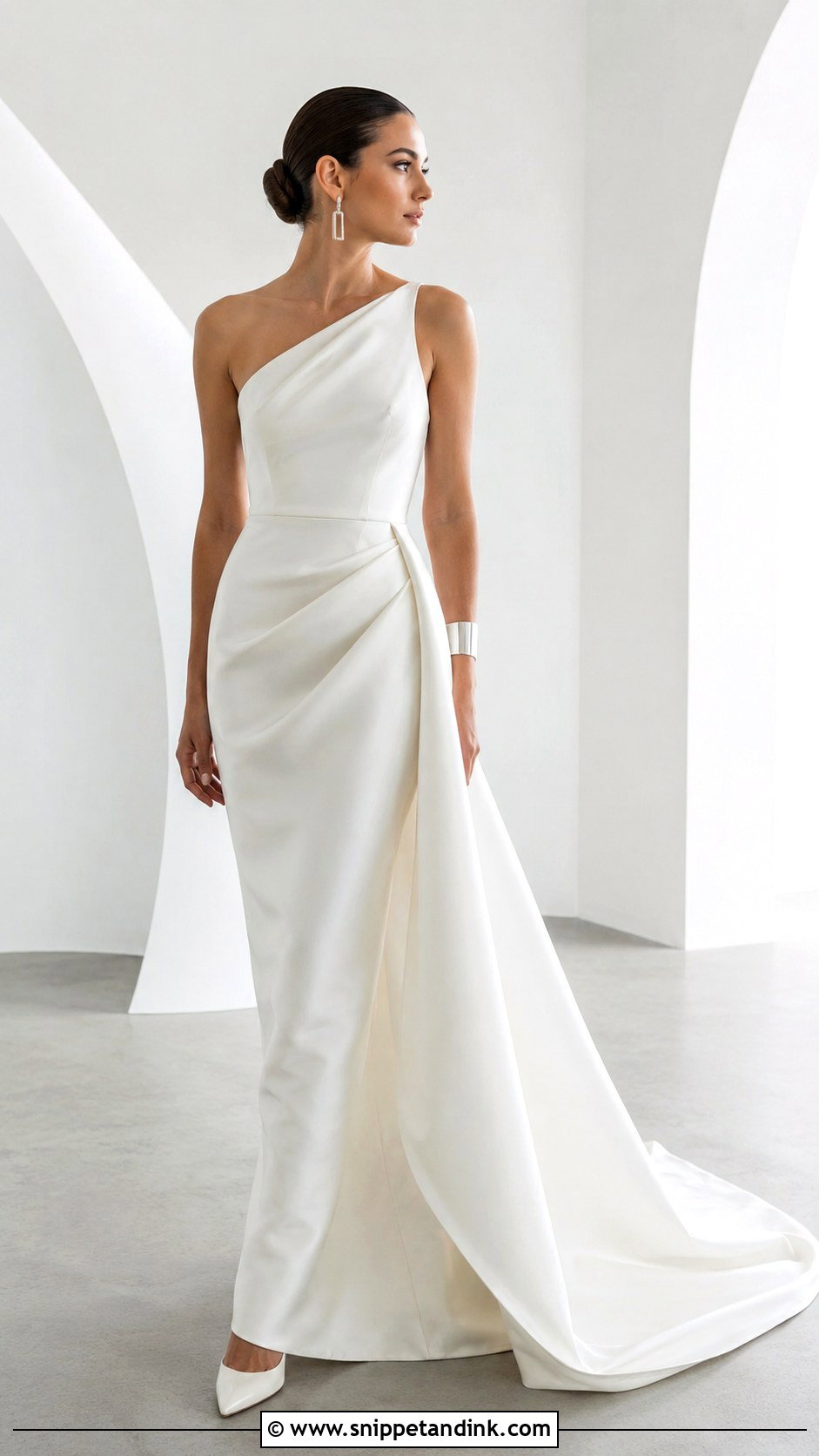
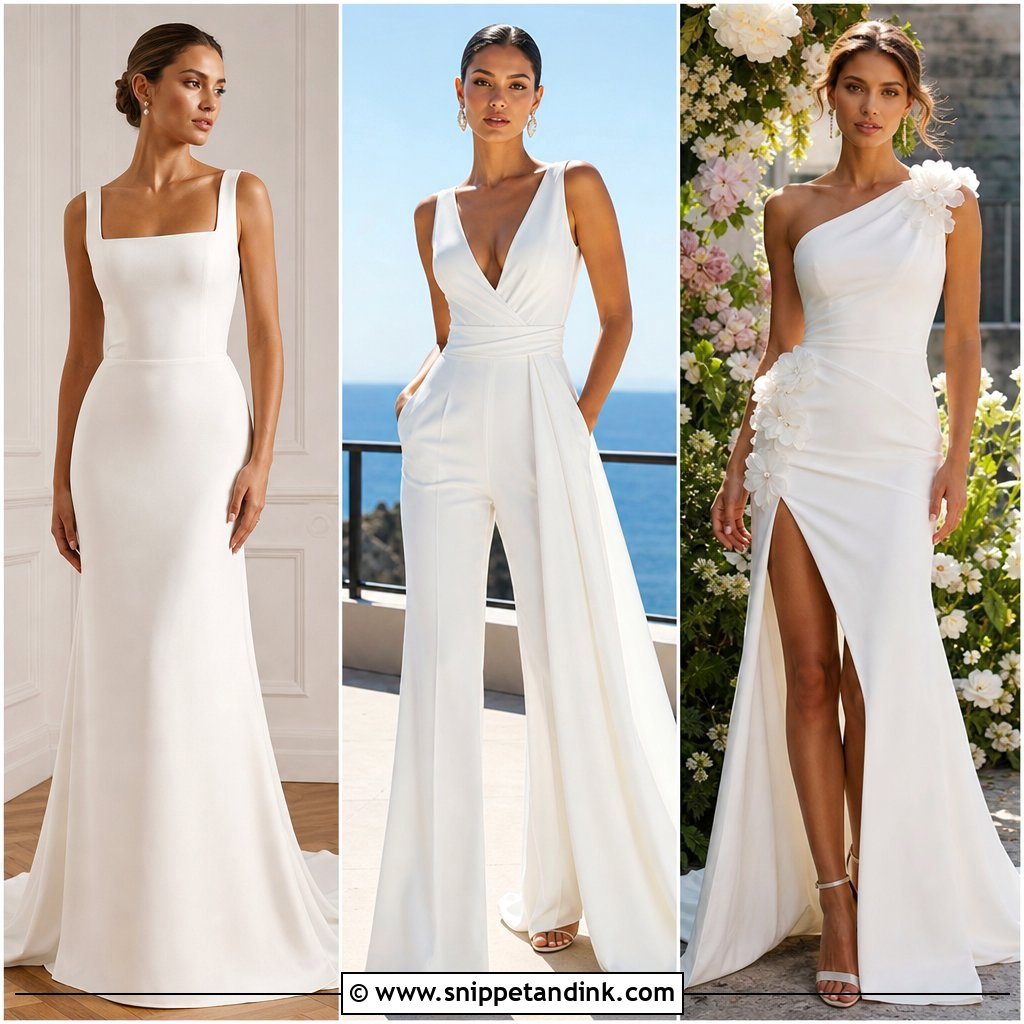
Folded, twisted and draped satin is the closest bridal wear gets to sculpture. Expect an asymmetrical neckline, a pleated hip detail or a large side drape running into the train. The construction does the talking, so I keep accessories modern: pointed heels, a slim metal cuff, geometric earrings and a sleek bun. The catch is that satin reflects light off every pull and pucker, so precise alterations matter more here than with lace, which hides small faults. Ask for a heavy satin that holds its folds after hours of sitting. Galleries and minimalist hotels suit it.
4. Colorful Embroidered Wedding Dress
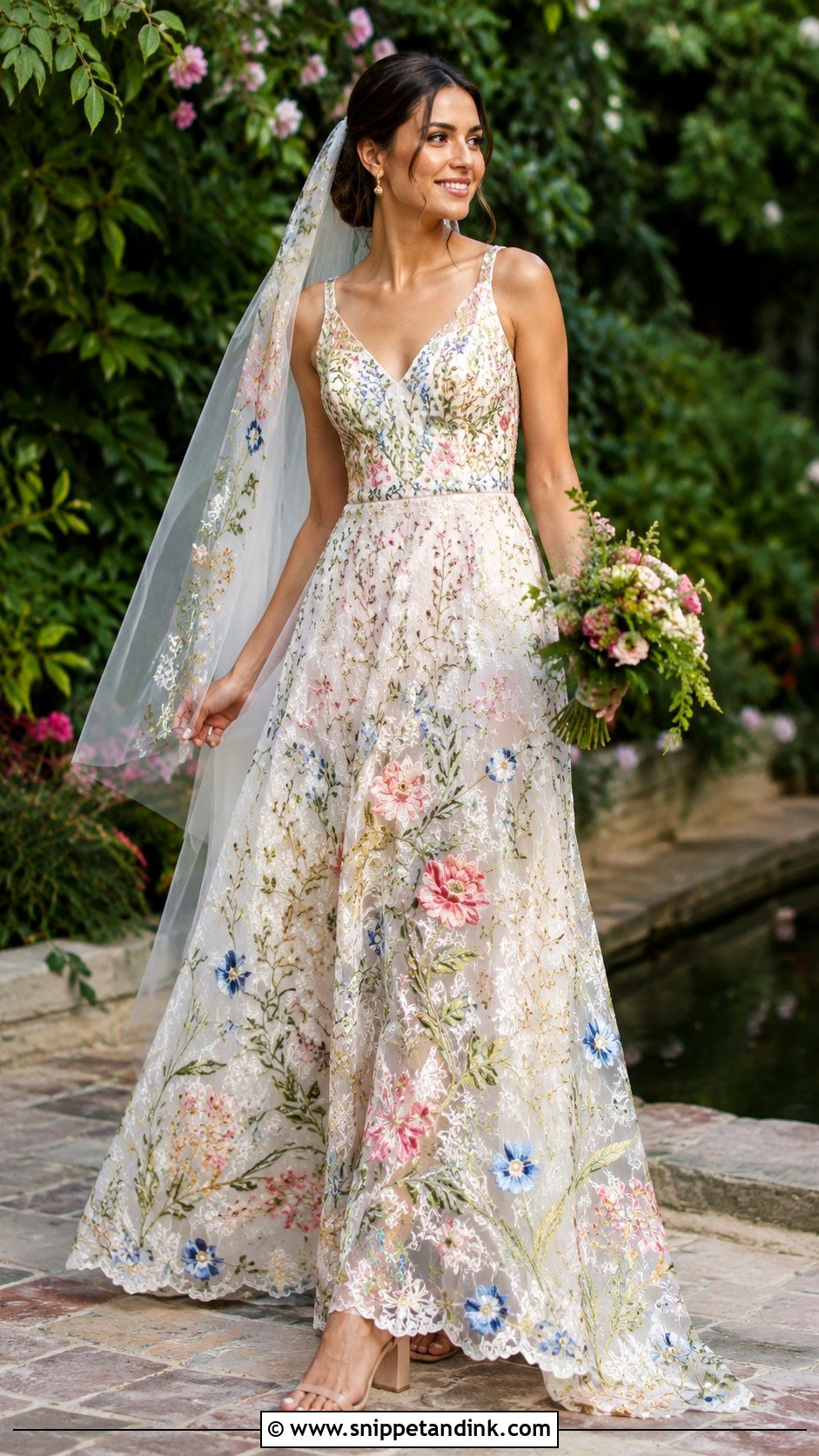
Picture vines, flowers or stitched symbols that mean something to you running over the skirt. Start with an ivory or soft beige base so the embroidery feels refined, then pick thread colors from your bouquet, your heritage or the season. A fitted bodice and A-line skirt give the stitching a calm canvas. I like to repeat one motif on the edge of a plain veil, with neutral block heels and fine gold earrings. A velvet ribbon at the waist adds color if you want more. Hand embroidery takes time to make, so this is a dress to order early.
5. Detachable Overskirt Wedding Dress
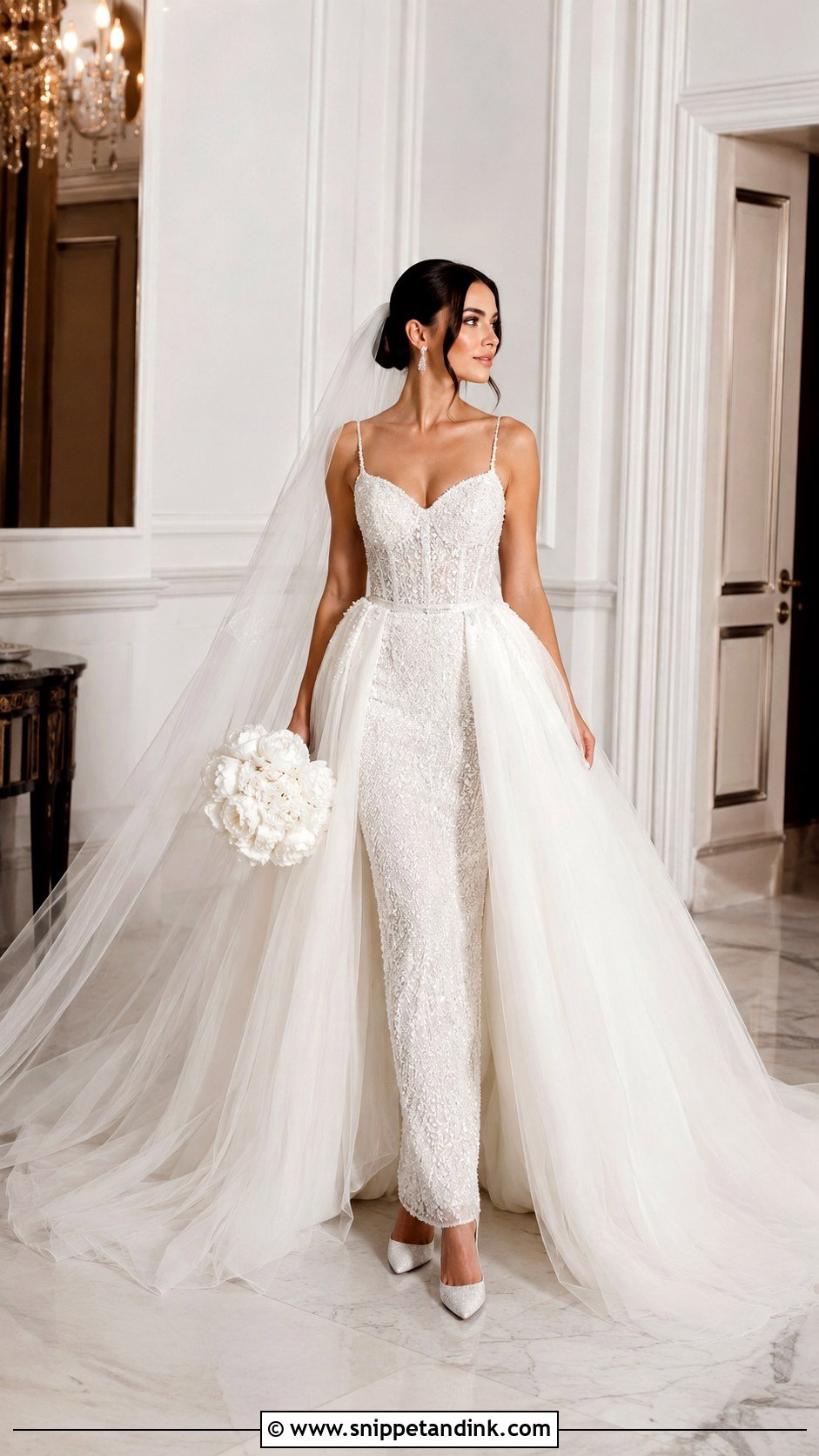
Two looks, one dress. You walk in wearing a fitted crepe, lace or beaded column under a full tulle or satin overskirt, and after portraits the overskirt comes off for the reception. It gives you a ball-gown entrance without carrying all that volume through dinner. Wear a cathedral veil, classic pumps and a structured bouquet for the ceremony, then swap to statement earrings and embellished flats later. Check that the hooks or snaps don’t show from any angle, and practice taking the skirt off with whoever will help you, because on the day it should take a minute, not ten.
6. Wedding Dress With Cape
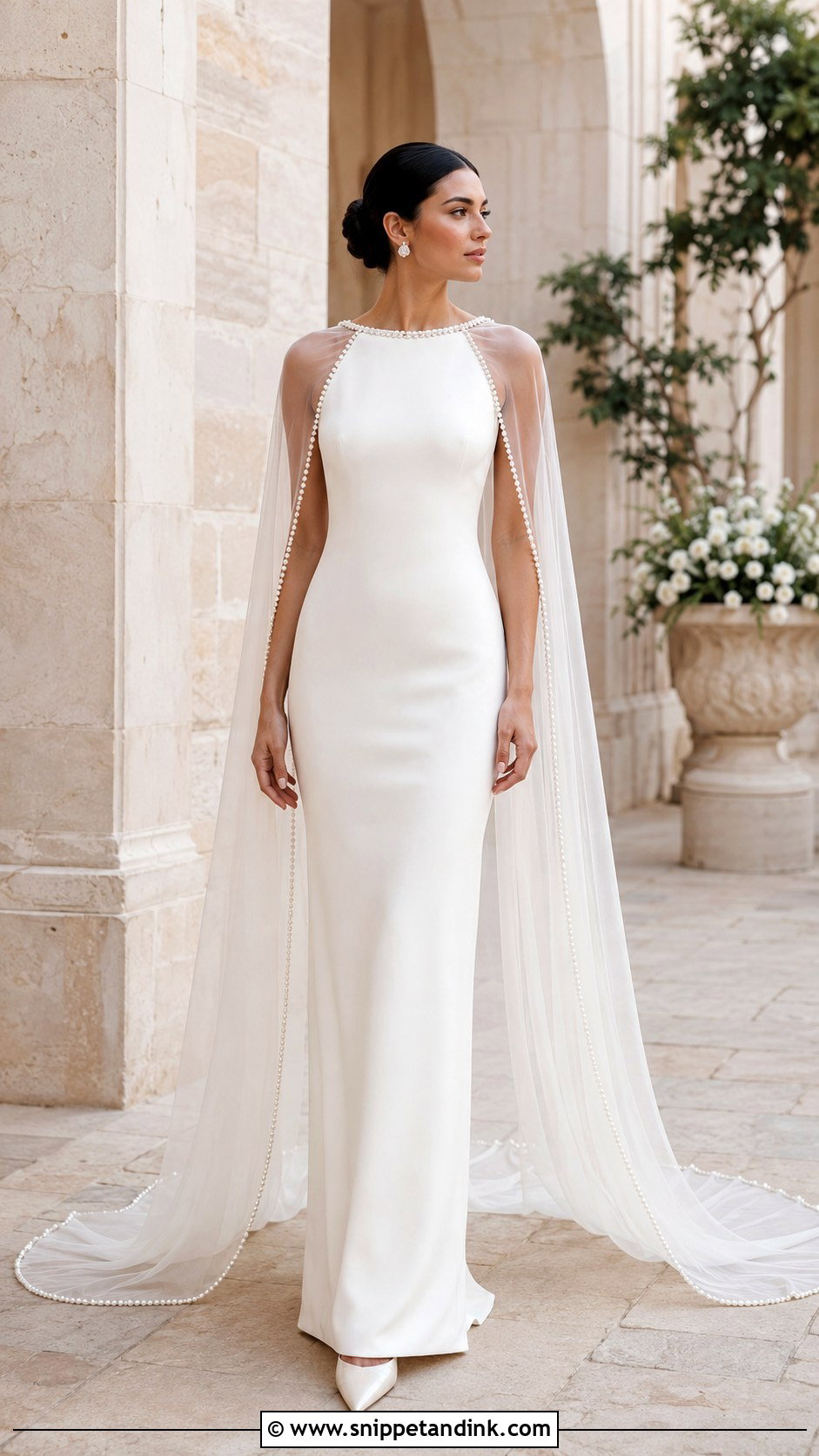
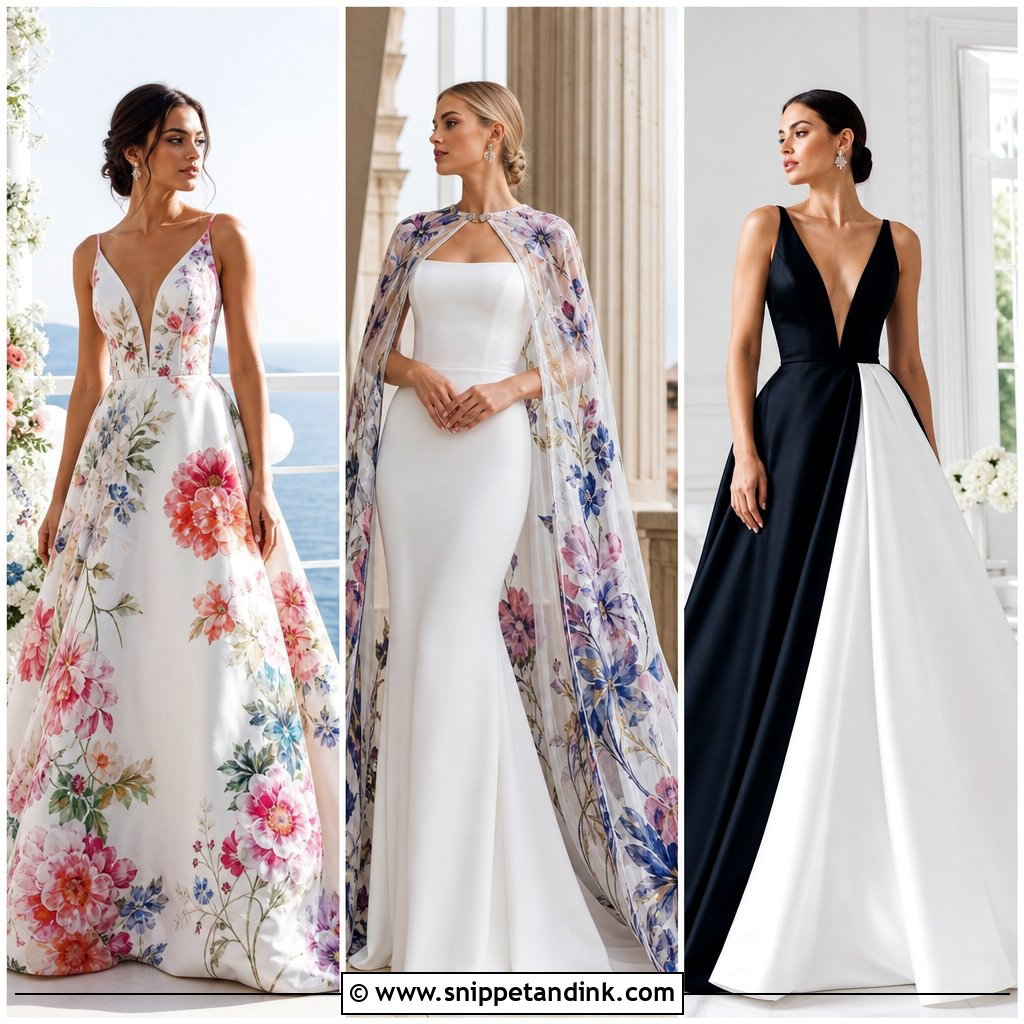
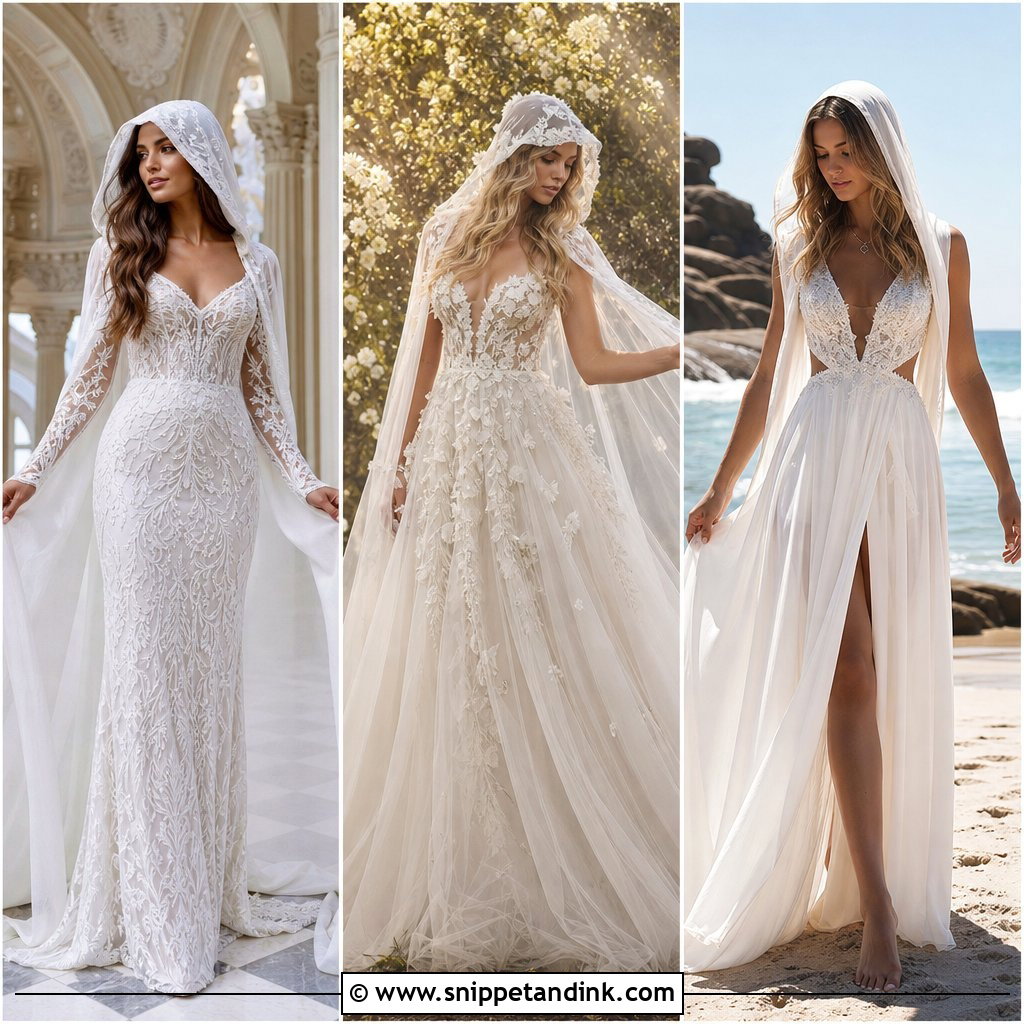
A cape gives drama and coverage and replaces the veil rather than adding to it. I pair a sheer cape falling from the shoulders into a train with a clean sheath or fitted A-line, sometimes edged with tiny pearls or scattered crystals. For a cold wedding, a heavier crepe cape with structured shoulders and a shorter hem keeps you warm. Pointed pumps, a low chignon and close-set earrings finish it; skip the necklace if the cape fastens at the throat. The fitting check that matters: turn quickly and greet someone. If the cape pulls the dress backward, the fastening point needs moving.
7. Short Wedding Dress With Veil
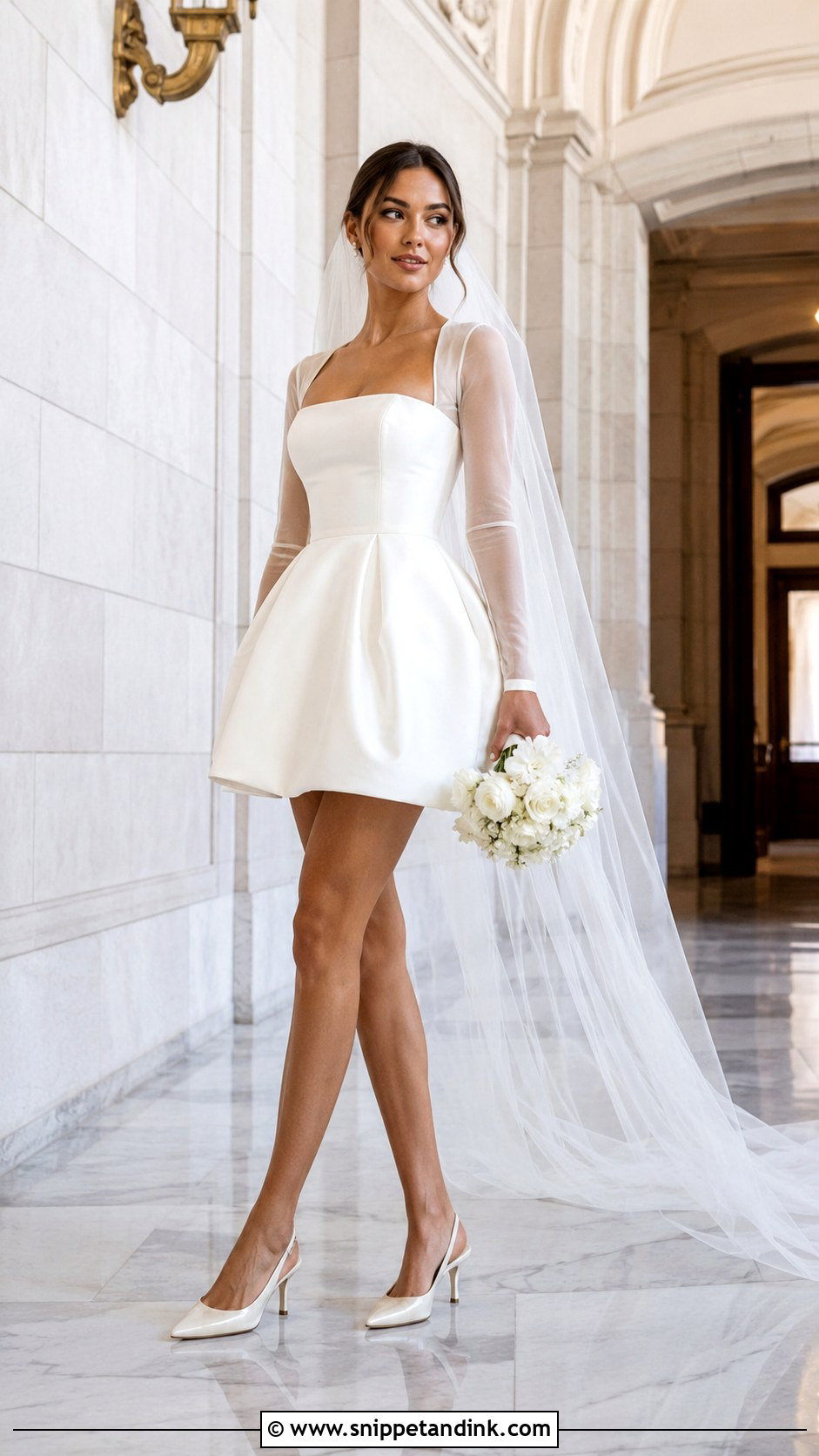
Short dresses read bridal when the proportions are deliberate. A structured mini or knee-length dress with a fitted bodice and sculpted skirt, set against a long sheer veil, gives you the contrast that makes it look planned. Slingback heels, pearl earrings and a compact bouquet keep it light. Sheer sleeves or a high neck add coverage without losing the length. Before you buy, sit, cross your legs and dance in it; most brides end up wanting hidden shorts or a smooth bodysuit underneath. Courthouses, restaurants and reception changes are where it shines.
8. Two-Piece Wedding Dress
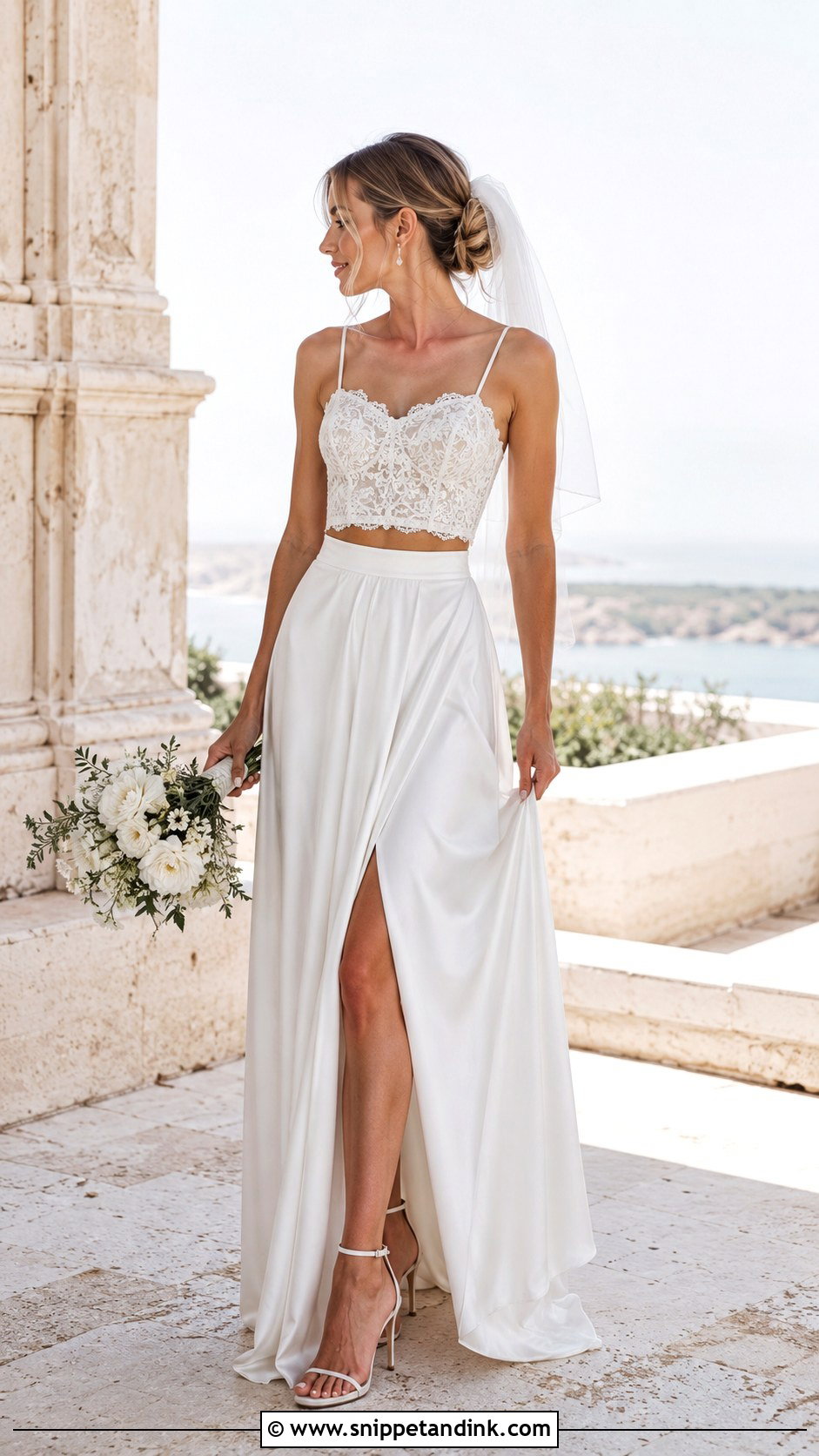
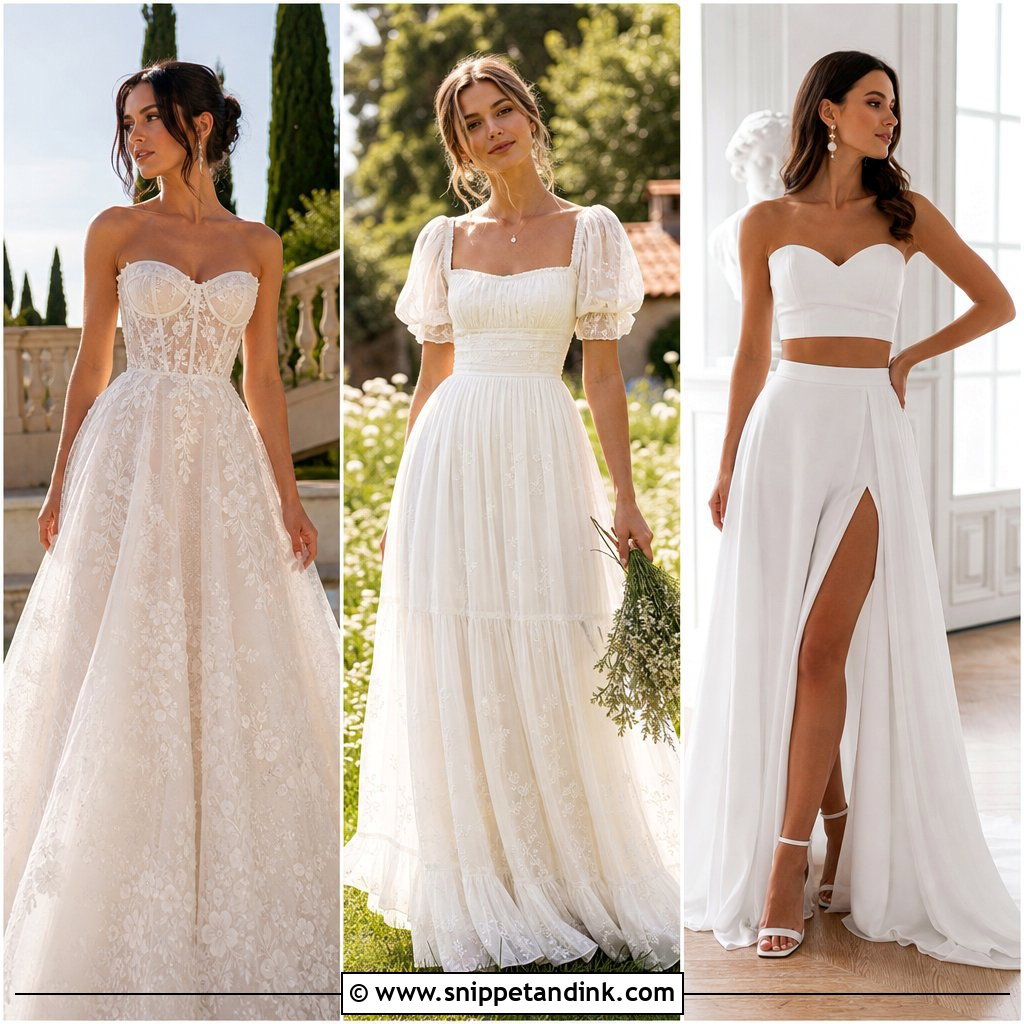
Separates give you flexibility, and the join is where the fitting time goes. A fitted lace or satin top meets a high-waisted floor-length skirt, either with a narrow sliver of skin or with a longer corset top that covers it entirely. Full organza feels dramatic; fluid silk suits a relaxed destination wedding. Delicate ankle-strap heels, a short veil and small earrings complete it. Matching fabrics make the two halves read as one gown, while mixed textures make the split look intentional. I’d ask the tailor for a couple of hidden hooks between top and skirt so nothing shifts when you hug people.
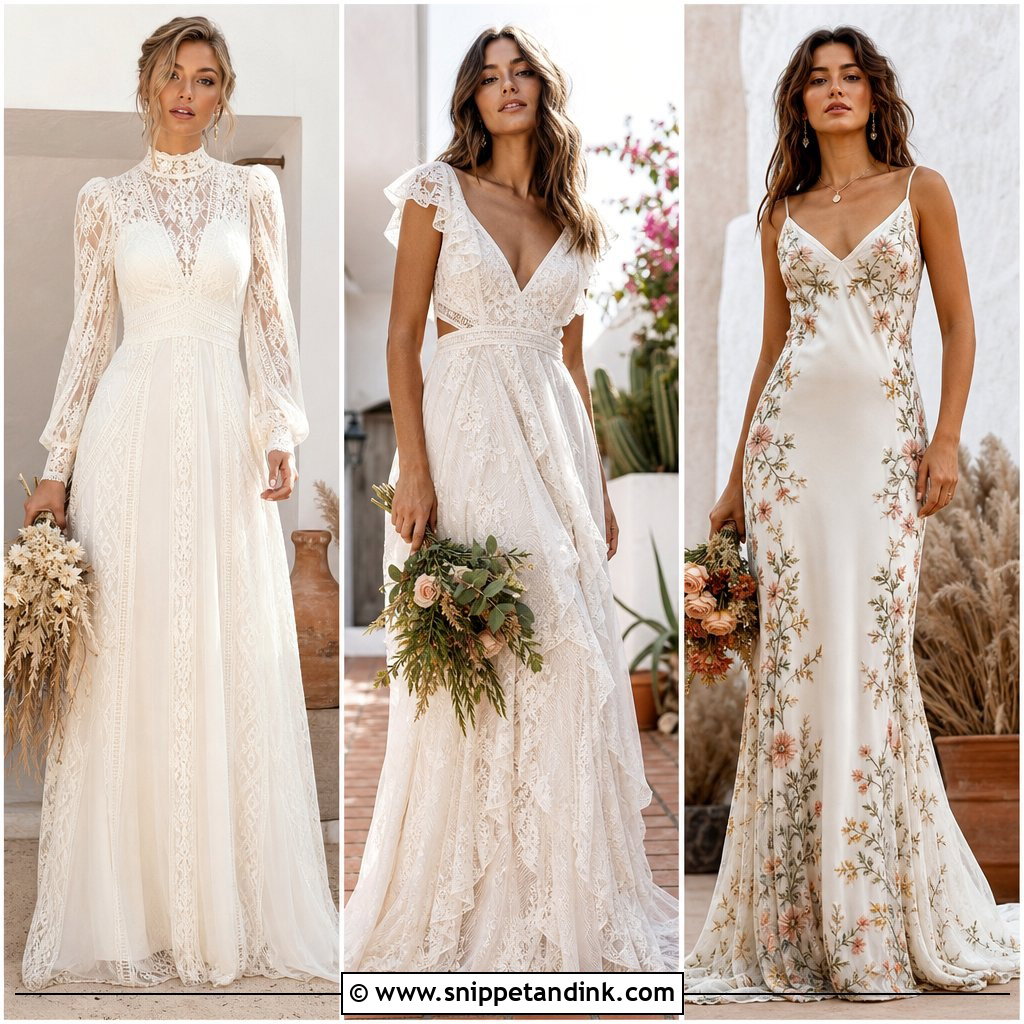
9. Vintage Lace Wedding Dress
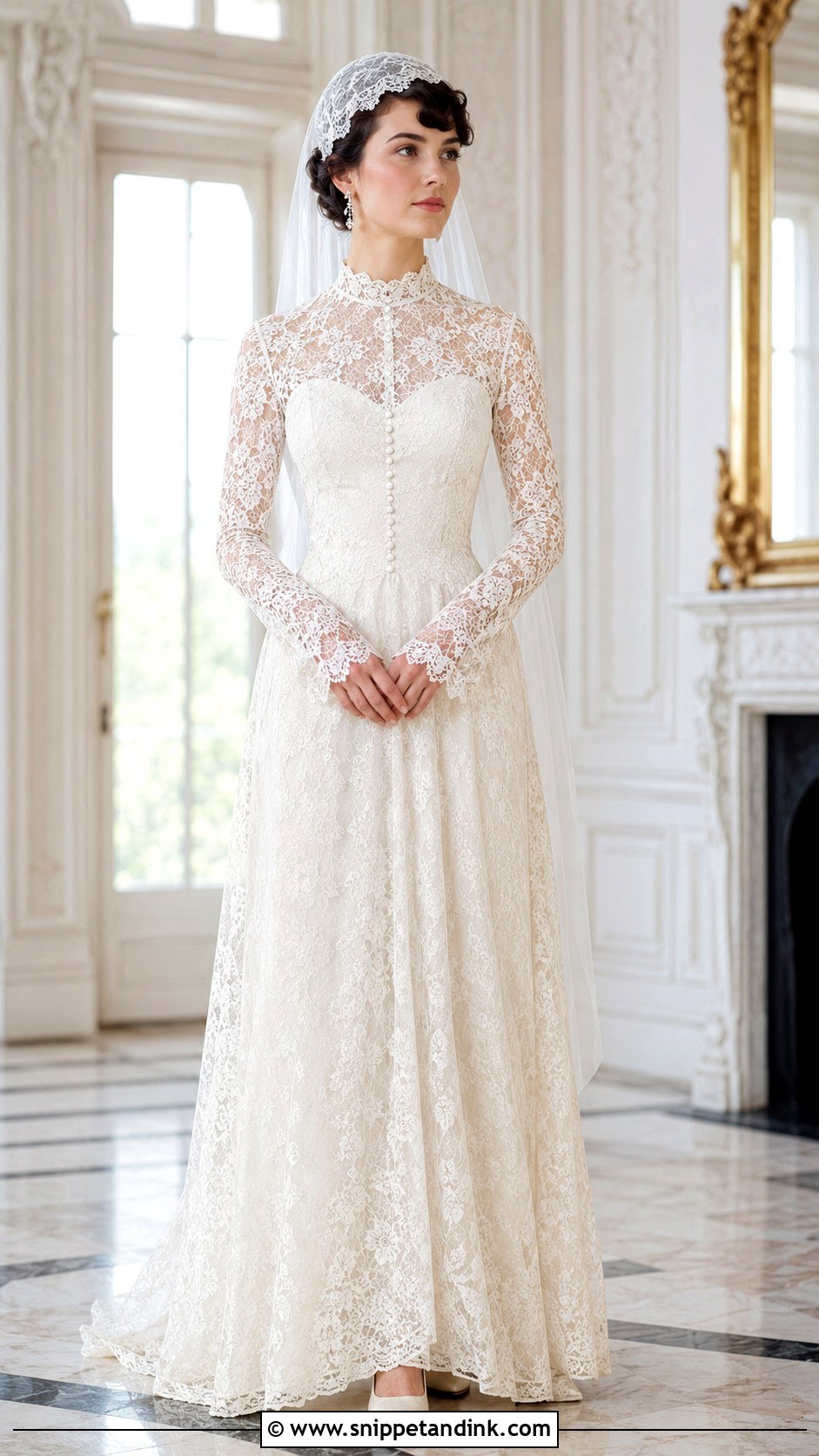
Old lace has a softness new lace rarely matches. Long lace sleeves, a defined waist, covered buttons and a high illusion neck give it character without tipping into costume. Low ivory pumps, heirloom-style earrings and a Juliet cap or fingertip veil suit it, with a loose chignon. If the gown is genuinely vintage, have a specialist look at the seams, lining and lace before anyone cuts into it. Older fabric can split along a seam during alterations. A new gown made with vintage-style lace gives you the same look with far stronger support.
10. Pearl Wedding Dress
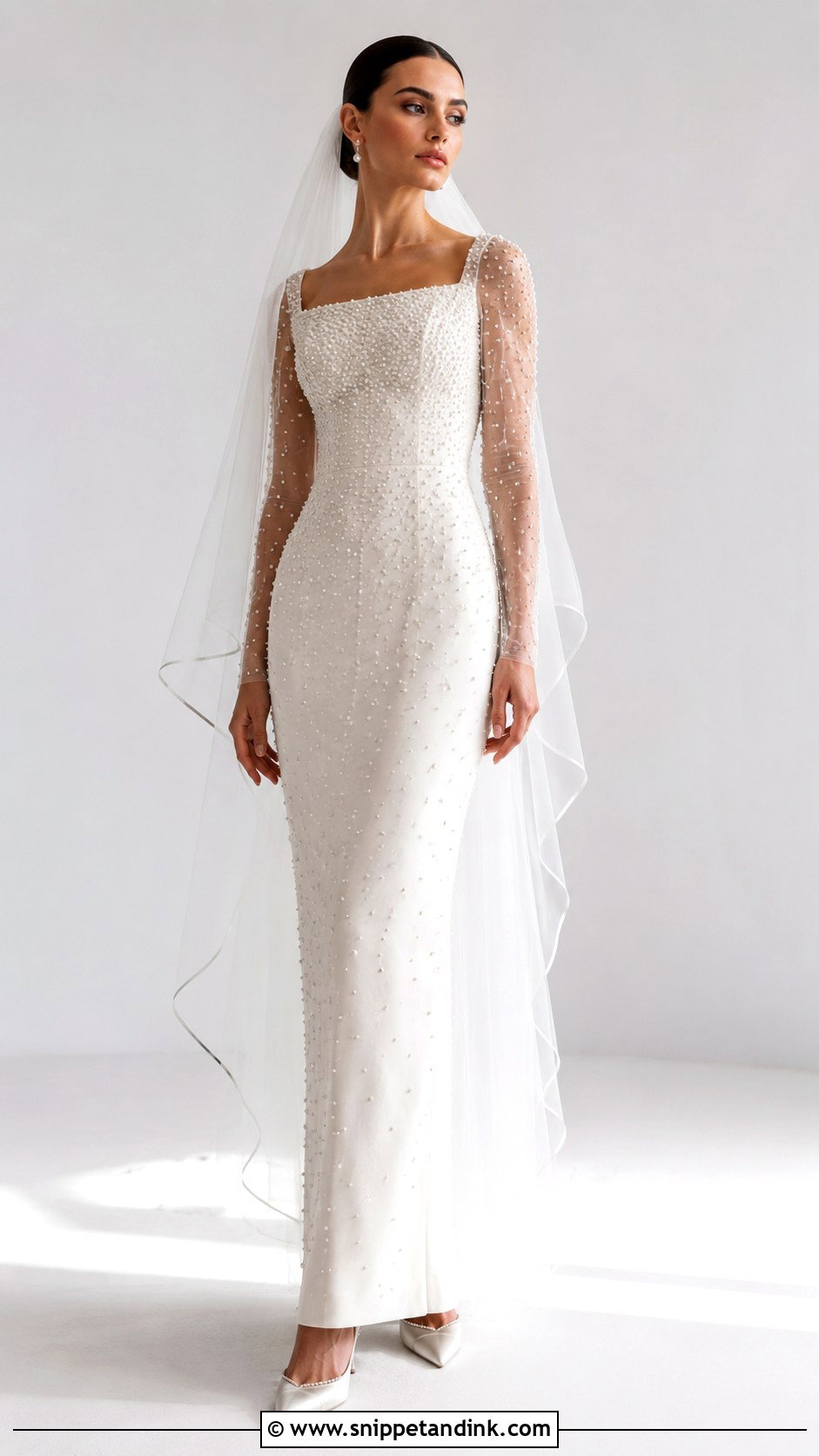
Pearls give glow rather than glitter. A column, soft A-line or modern mini with pearls in mixed sizes can concentrate them on the bodice to draw the eye up, or scatter them over sheer sleeves for a lighter effect. Pearl earrings, satin heels and a clean-edged veil finish it, and I’d leave out the pearl necklace unless the neckline is very plain. Run your hand over the work before buying: each pearl should be stitched individually, not on a long thread that unravels if one catches on the veil. A smooth lining matters too, since beaded fabric scratches over a long day.
11. Black Wedding Dress
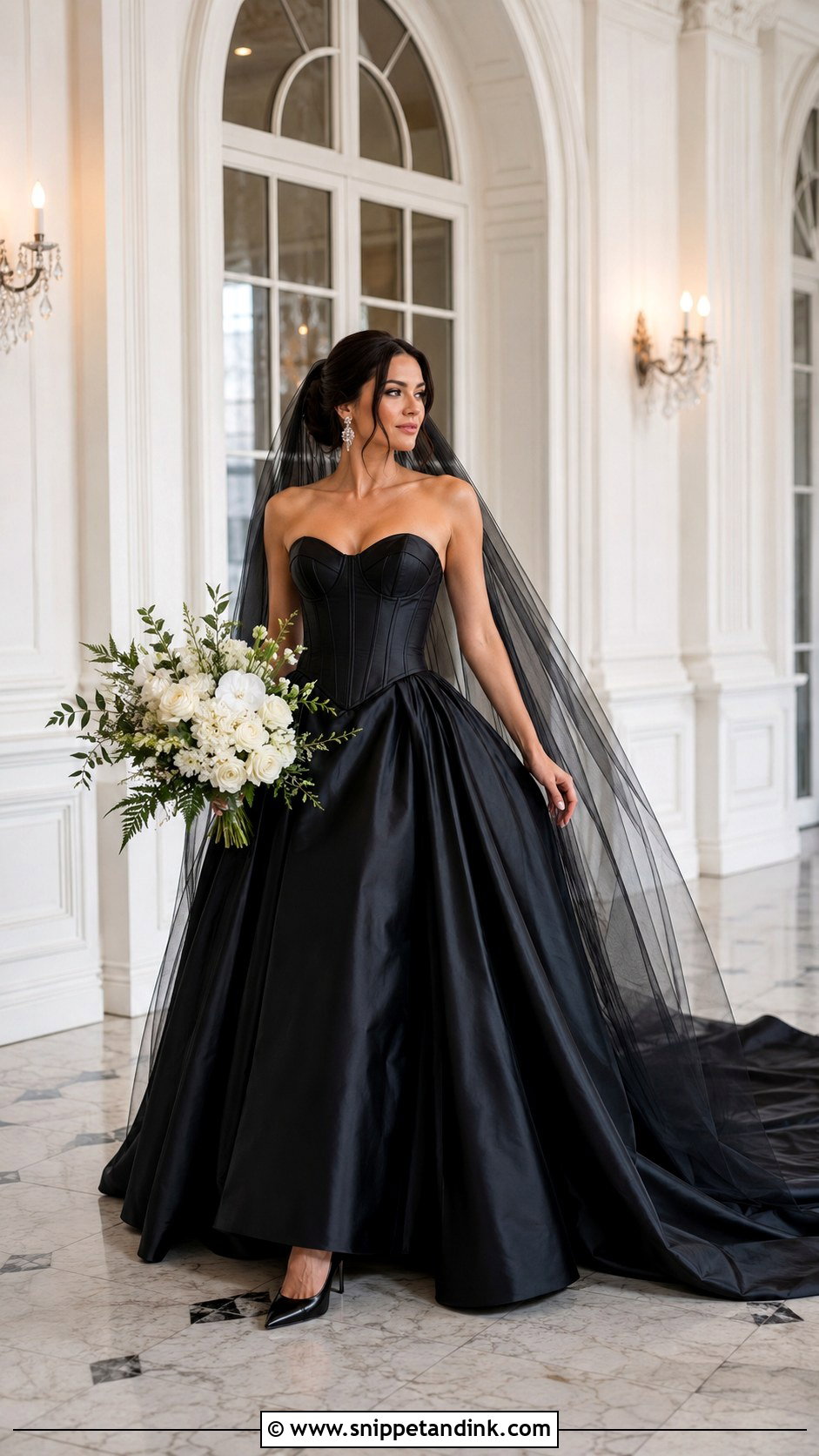
Black can be every bit as romantic as white. A black satin ball gown with a corseted bodice is formal; layered tulle is softer. Black lace over a nude or matching lining shows its pattern clearly on camera. Pointed black pumps, crystal earrings and either a sheer black veil or an ivory one for contrast work well, with white flowers and greenery to lift the bouquet. Black swallows detail, so I look for texture, sheen or defined seams, and I’m strict about tailoring. A sloppy waist or neckline disappears into one dark shape in photos.
12. Blush Tulle Wedding Dress
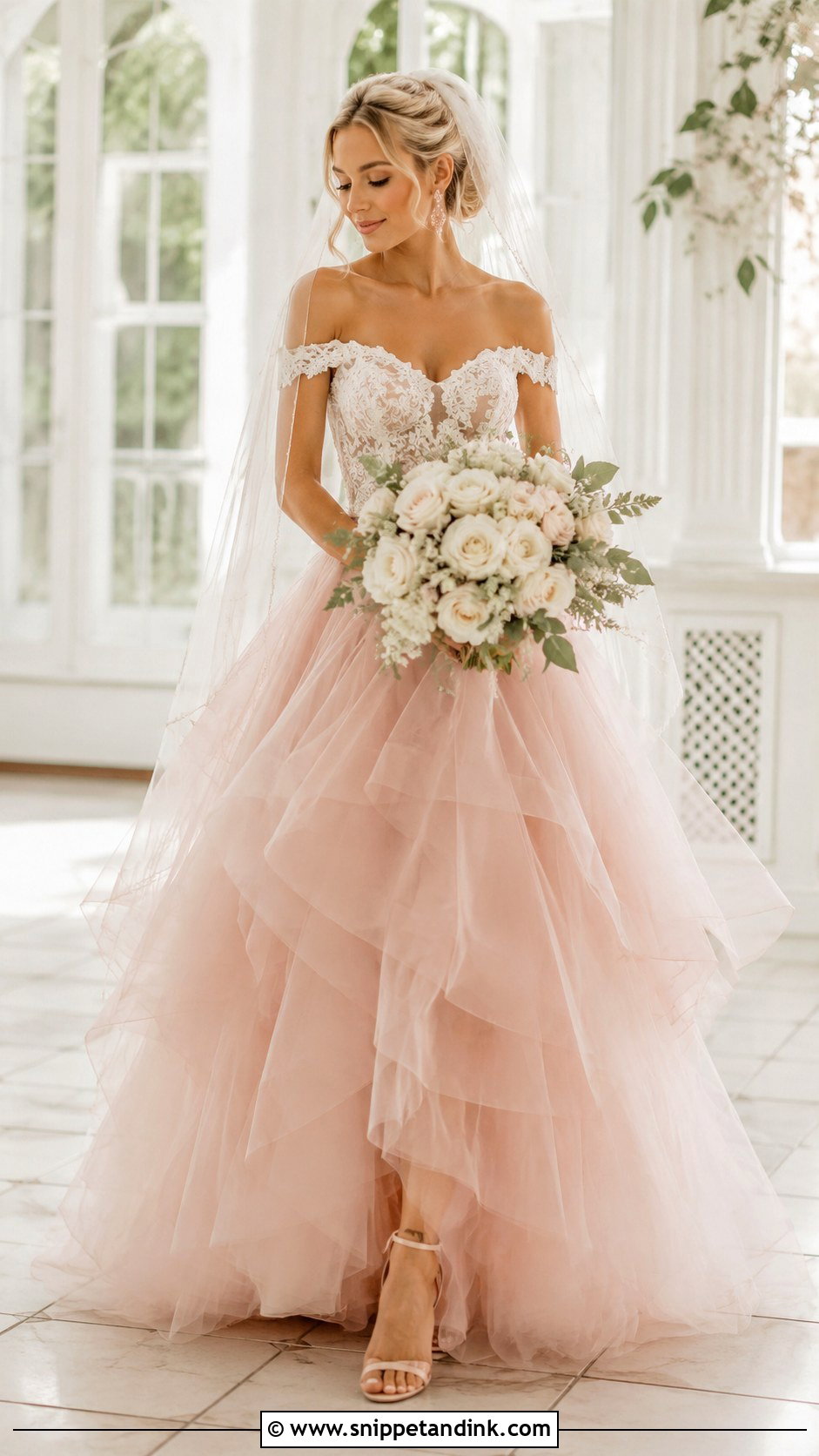
Blush is gentle and still unmistakably bridal. Several airy layers on an A-line or ball gown give depth. An ivory lace bodice over blush lining reads as a subtle tint; an all-rosy gown is a bigger statement. Champagne heels, rose-gold earrings and a sheer ivory veil keep things light, with cream and muted greenery in the bouquet. My one non-negotiable: see the dress near a window and under warm indoor light. Blush can look peach in one and almost white in the other, and on some complexions it washes you out.
13. High-Low Wedding Dress
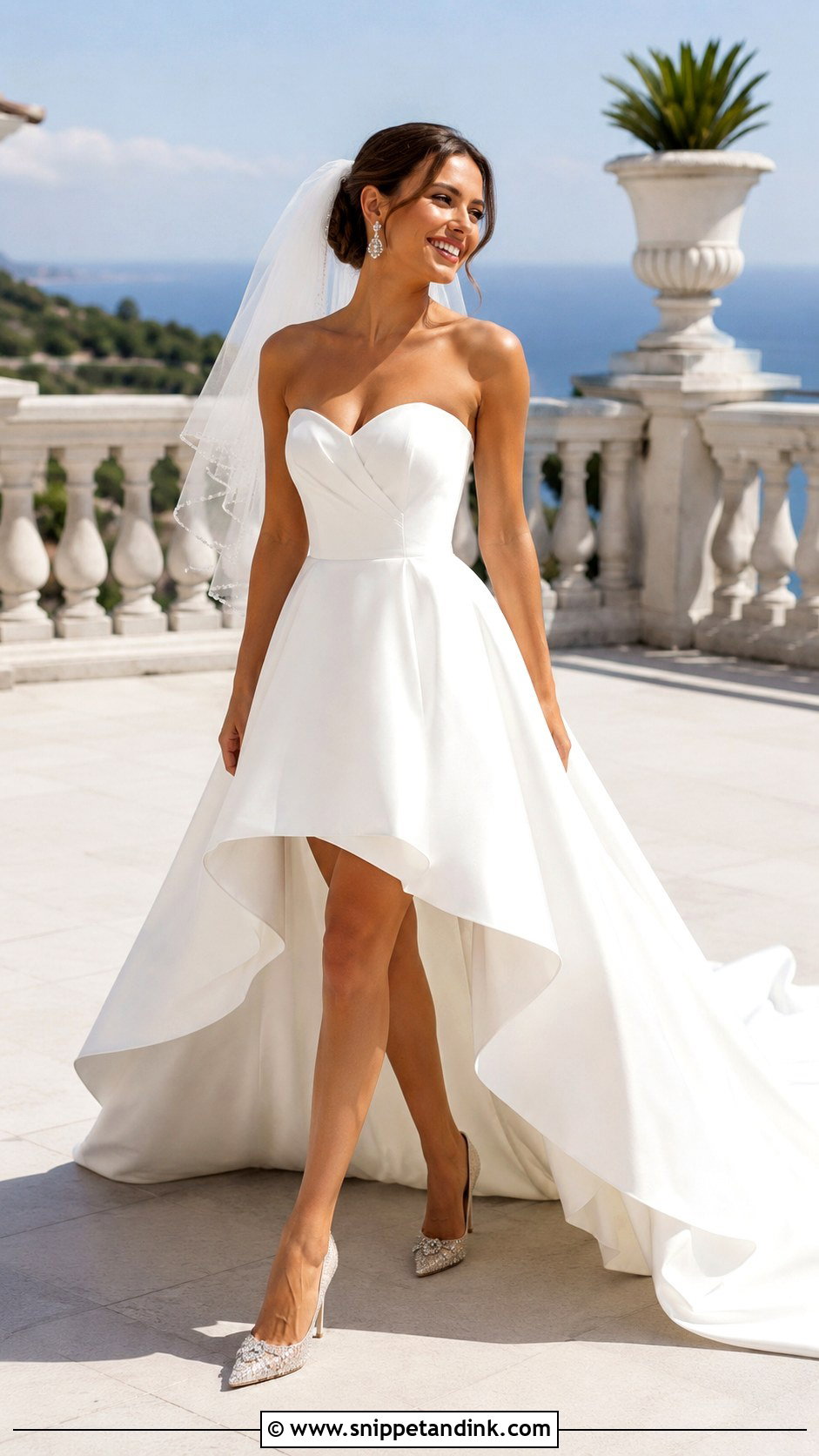
With a short front and a long back, high-low dresses make your shoes part of the design. Let the front fall at the knee or ankle and the back sweep into a full skirt or train. Embellished pumps, colorful heels or bridal boots all work, and a clean strapless, square or off-shoulder bodice keeps it calm up top. A short veil avoids too many competing lengths. The front hem stays out of the grass, which is practical outdoors, but the train still needs a bustle if you plan to dance.
14. Bridal Bow Wedding Dress
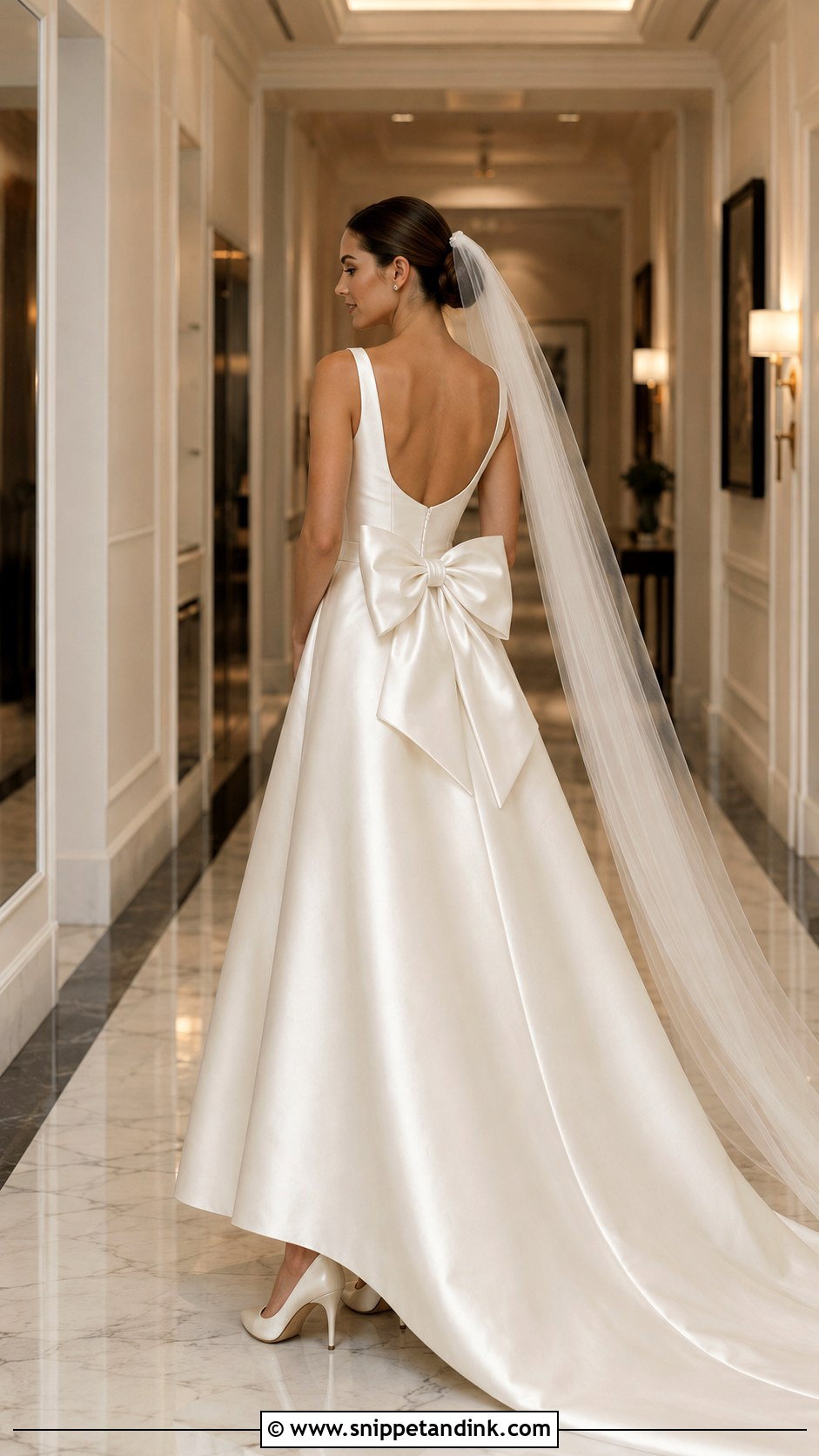
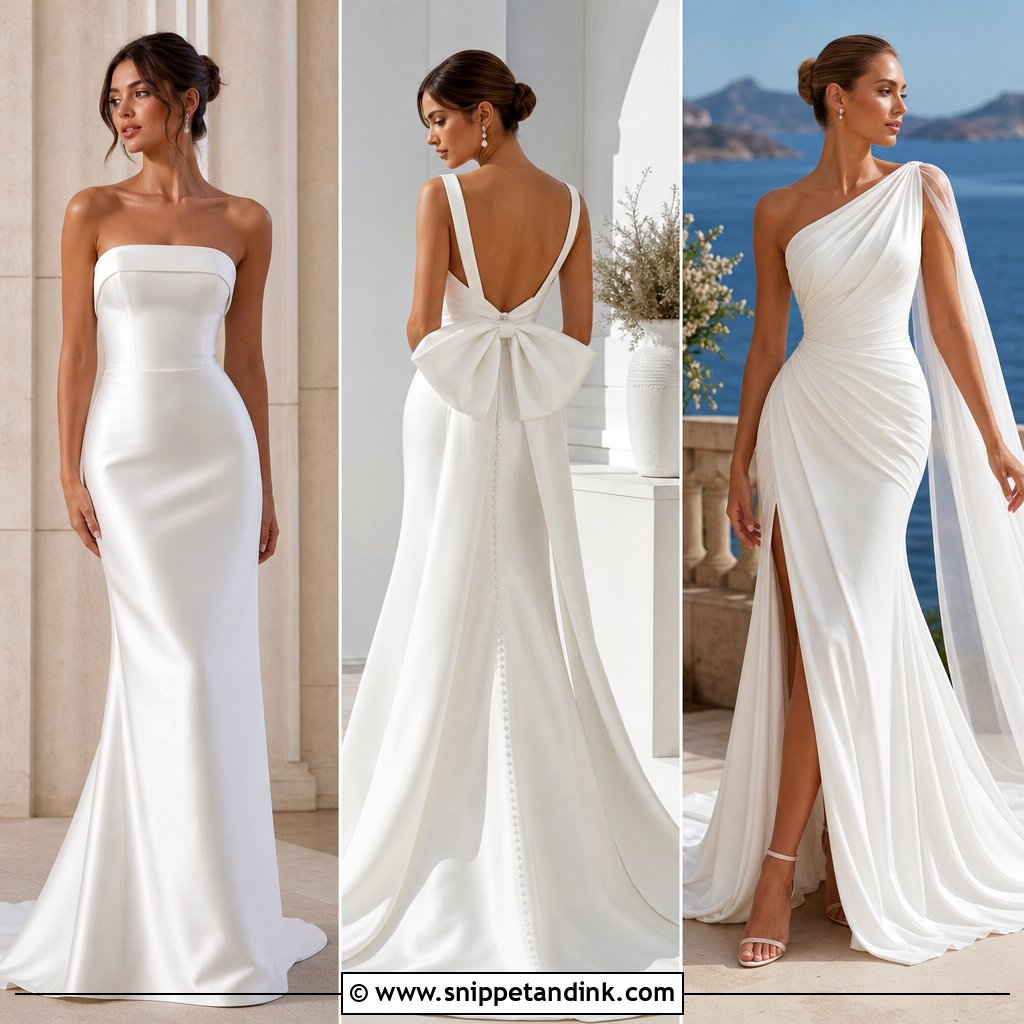
One big bow turns a plain gown into the dress everyone remembers. Place it at the lower back, shoulder, neckline or waist, depending on what you want to draw the eye to. Crisp Mikado or structured satin holds its loops all day; organza is softer and slightly see-through. Pair it with a clean column or A-line, classic pumps, small studs and a sleek bun, and pick a veil that ends above the bow or well beyond it. A back bow gets crushed against every chair, so I often have it made detachable for dinner.



15. Puff Sleeve Wedding Dress
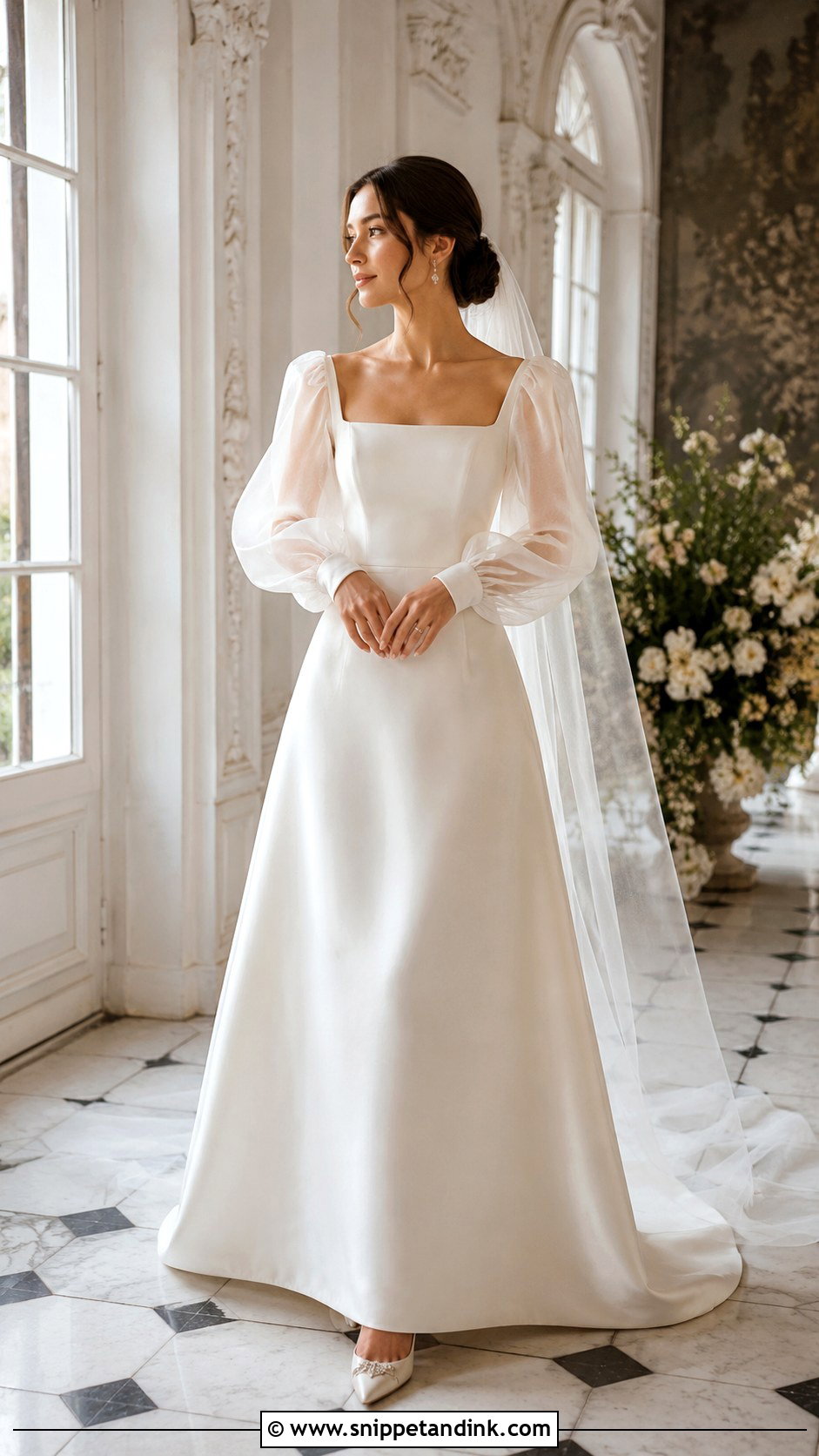
Puff sleeves frame the shoulders and make a waist look smaller. Sheer organza puffs on a fitted square-neck bodice with a clean A-line skirt feel modern. Small puffs are gentle; oversized ones are theatrical, and I’d only choose them if you love the look. Pointed shoes, delicate drops and a chapel veil set under a low bun finish it. Detachable sleeves let you take them off for dancing. At the fitting, lift your arms as if to hug someone: tight cuffs or elastic can drag the whole bodice up.
16. Minimalist Crepe Wedding Dress
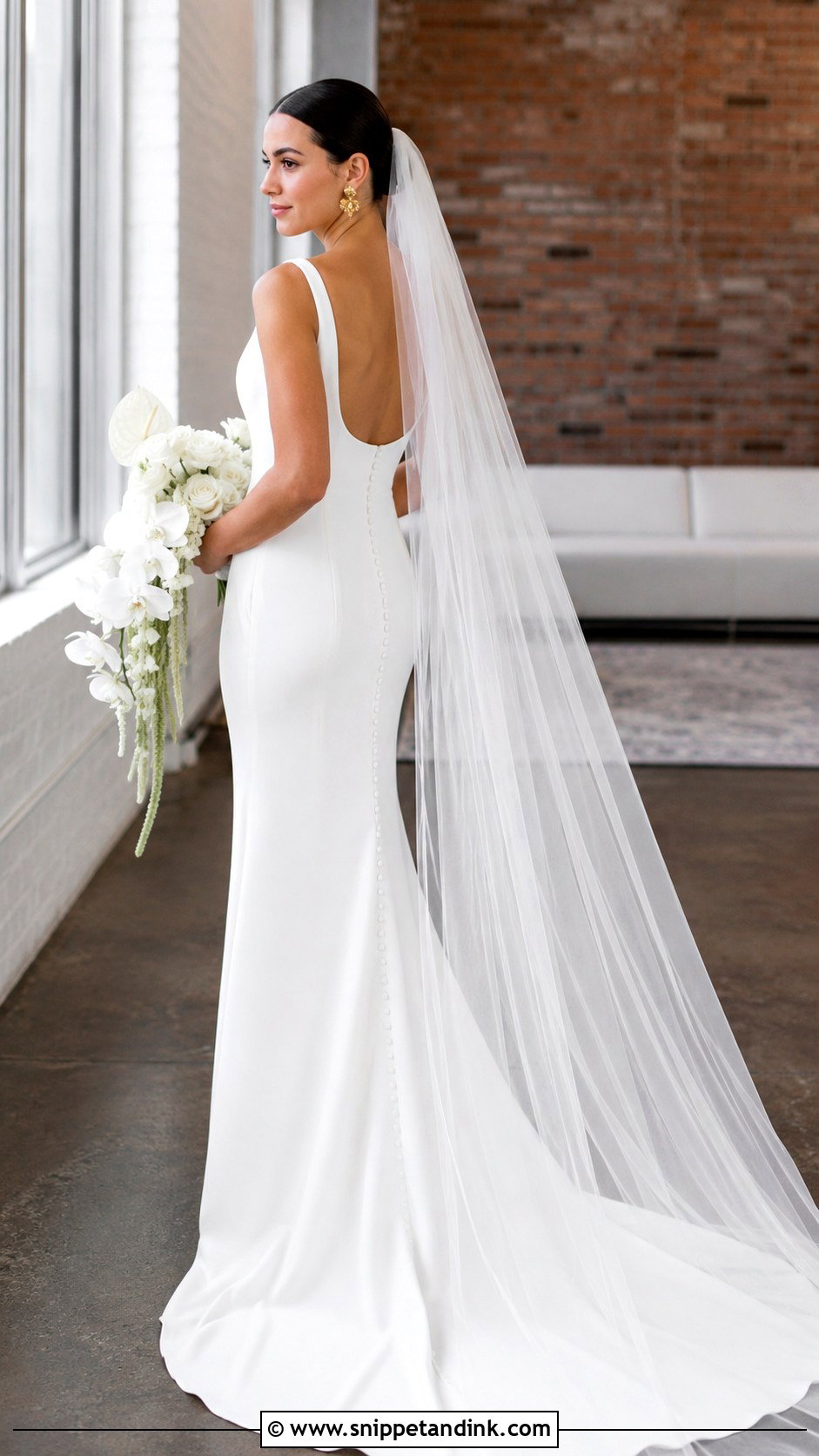
Clean lines are just as distinctive as embellishment, but they hide nothing. A minimalist crepe dress depends on excellent fit, heavy fabric and one chosen feature, maybe a square neck, low back or a row of covered buttons. A column or fit-and-flare that follows the body without gripping it works best. Sculptural earrings, pointed pumps, a sleek cathedral veil and a structured bouquet complete it. Crepe shows every seam and every line of underwear, so the lining and shapewear need as much attention as the dress. Comfort still wins over smoothing, though.
17. Celestial Beaded Wedding Dress
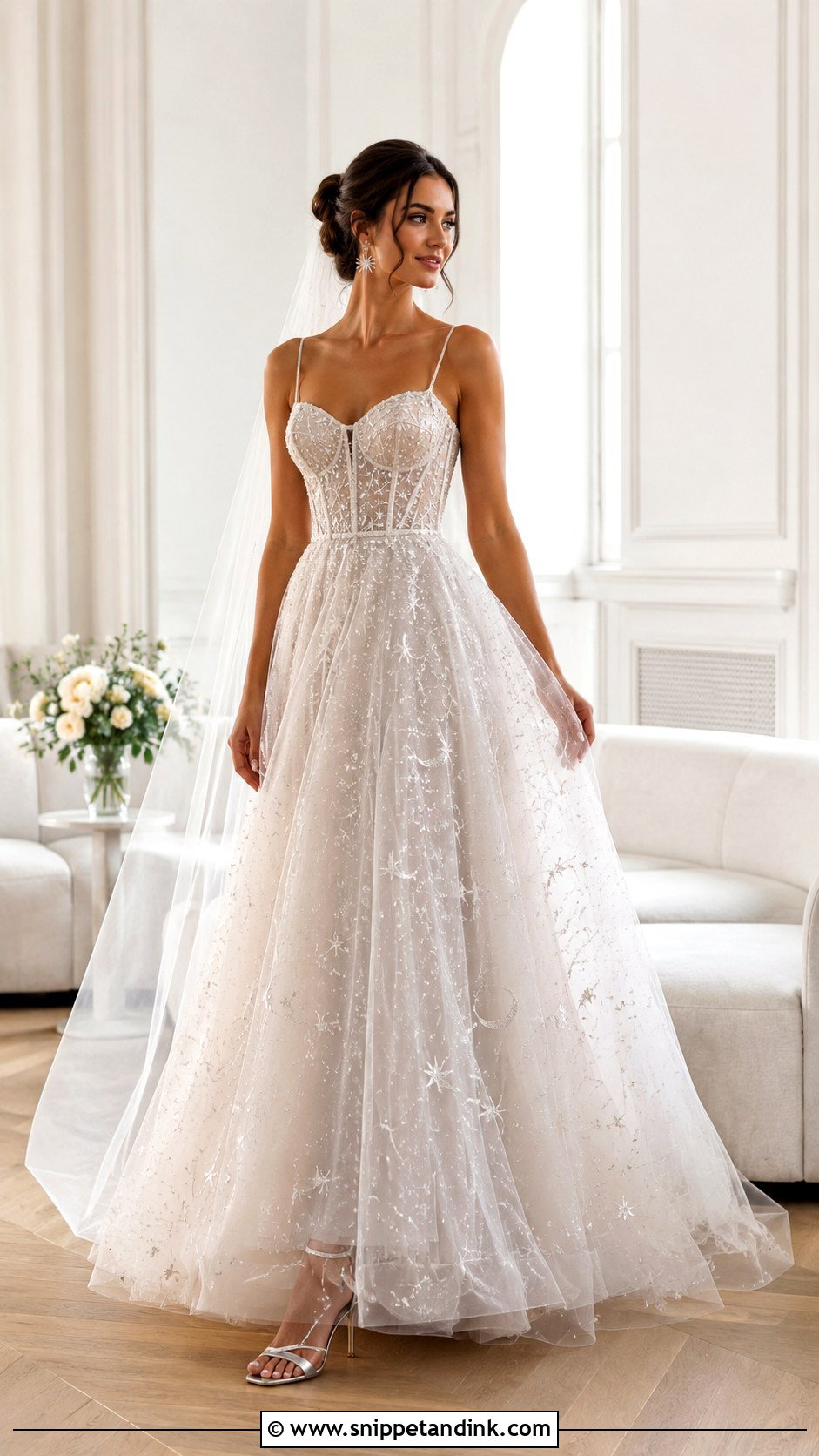
Stars, moons and constellation-inspired beadwork make an evening sky out of tulle. Silver, pearl and crystal beads over a supportive fitted bodice and flowing skirt, with a sheer overlay, look suspended in midair. Metallic sandals, star-shaped earrings and a plain veil let the beading stay visible; a navy ribbon nods to the night palette. Heavily beaded gowns can weigh a surprising amount, so I check the shoulder support and inner structure carefully. Walk the full length of a room in it and listen for beads scraping or the skirt catching on itself.
18. Fringe Wedding Dress
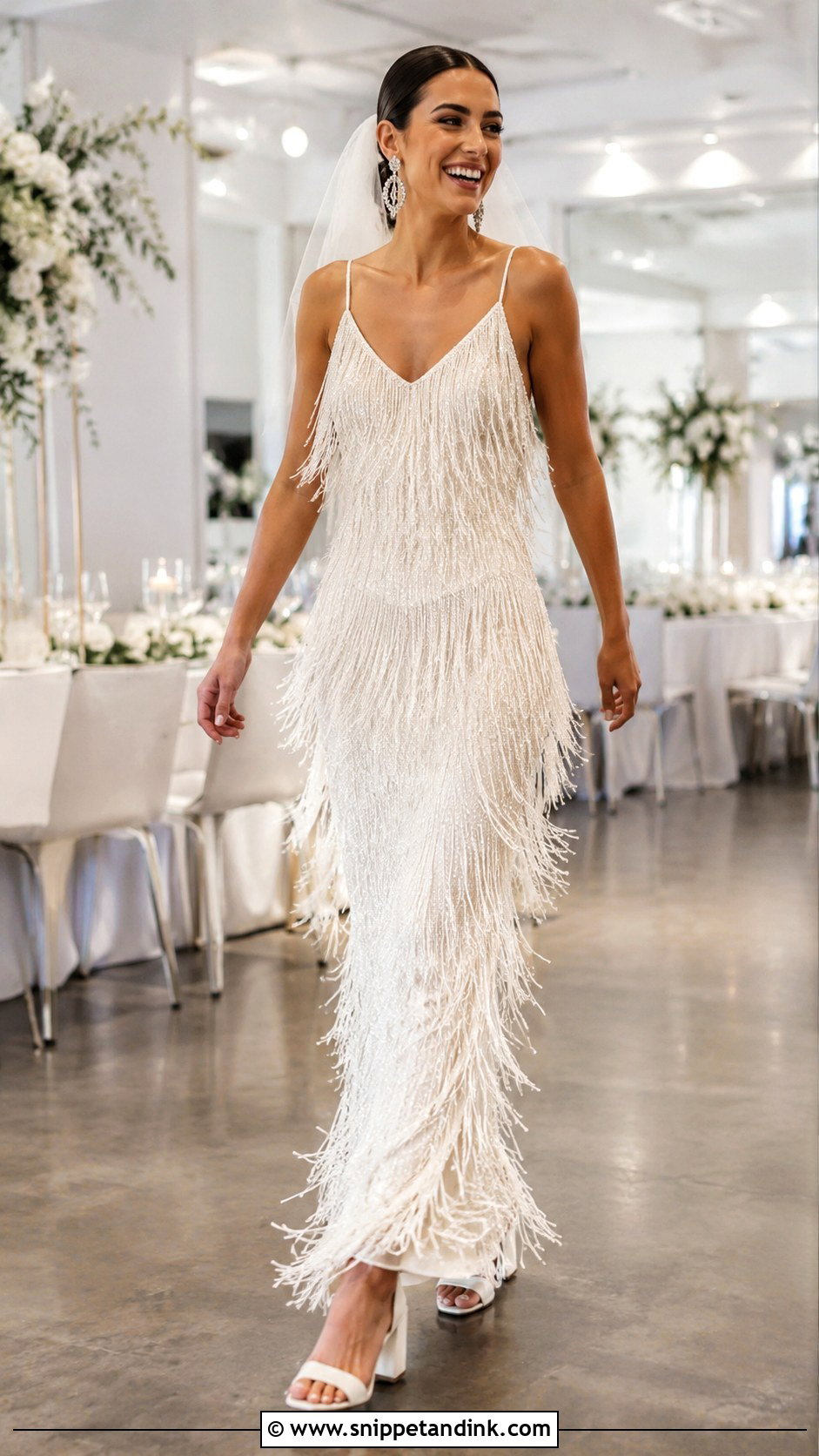
A fringe wedding dress is made for a bride who plans to spend the night dancing. Layered fringe over a smooth, supportive lining on a midi or floor-length cut moves with every step. Beaded fringe shines; soft fabric strands feel more bohemian. Secure block heels, bold earrings and a small headpiece or short veil finish it. Bracelets and textured clutches tangle in fringe, so leave them out. If you love the idea but want a classic ceremony, change into it for the reception.
19. Floral Print Wedding Dress
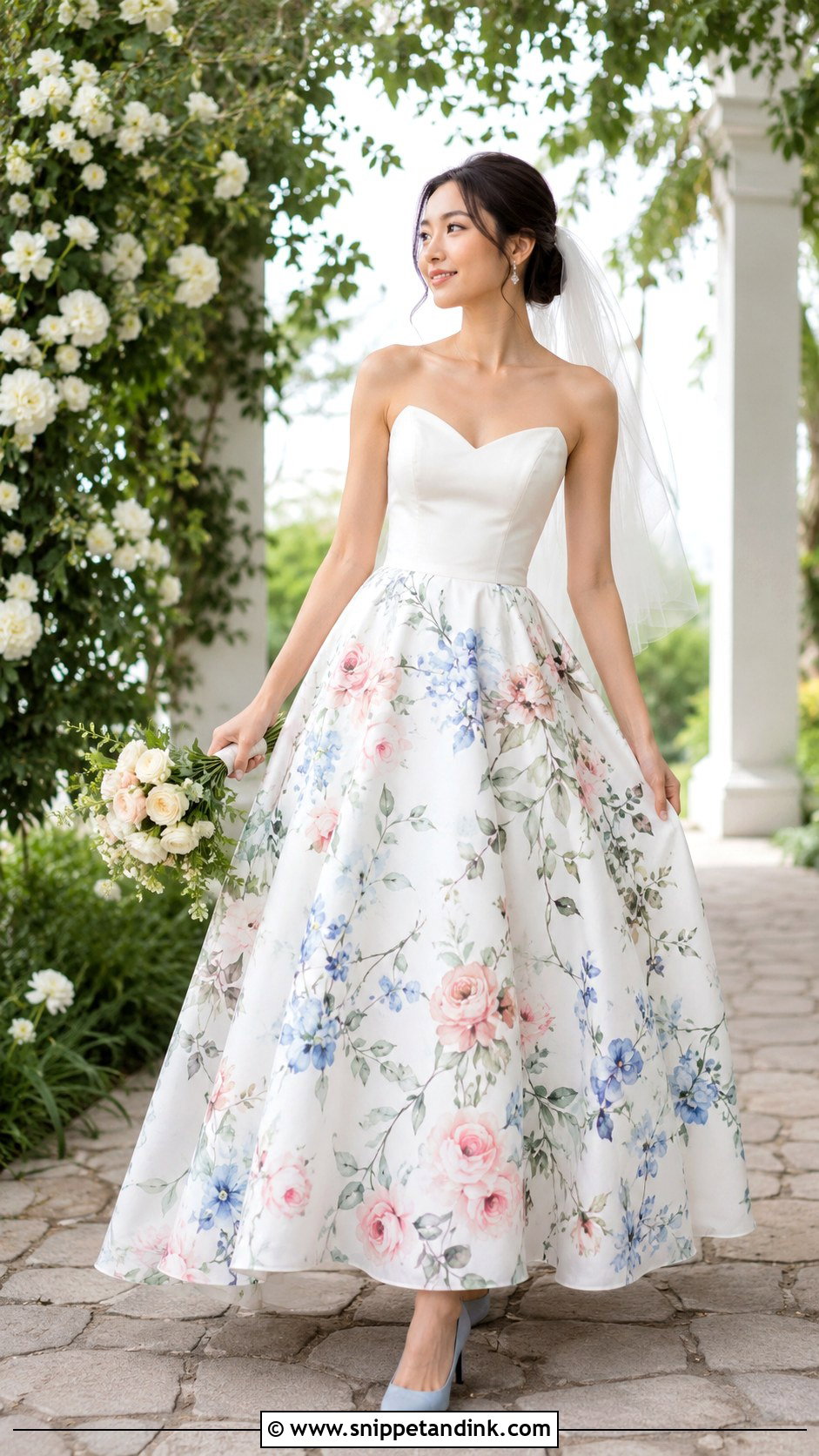
A floral print wedding dress brings color without losing a romantic shape. Ivory grounds with watercolor flowers, small sprigs or big garden blooms all work on a flowing A-line with a fitted bodice. Pull one color from the print for shoes, earrings or a hair piece, not all of them. A plain veil and neutral bouquet keep the fabric in charge. Always ask for a large fabric sample before ordering. Print scale and placement look very different across a full gown, and a big bloom landing awkwardly on a bodice seam is hard to fix once it’s cut.

20. Asymmetrical Wedding Dress
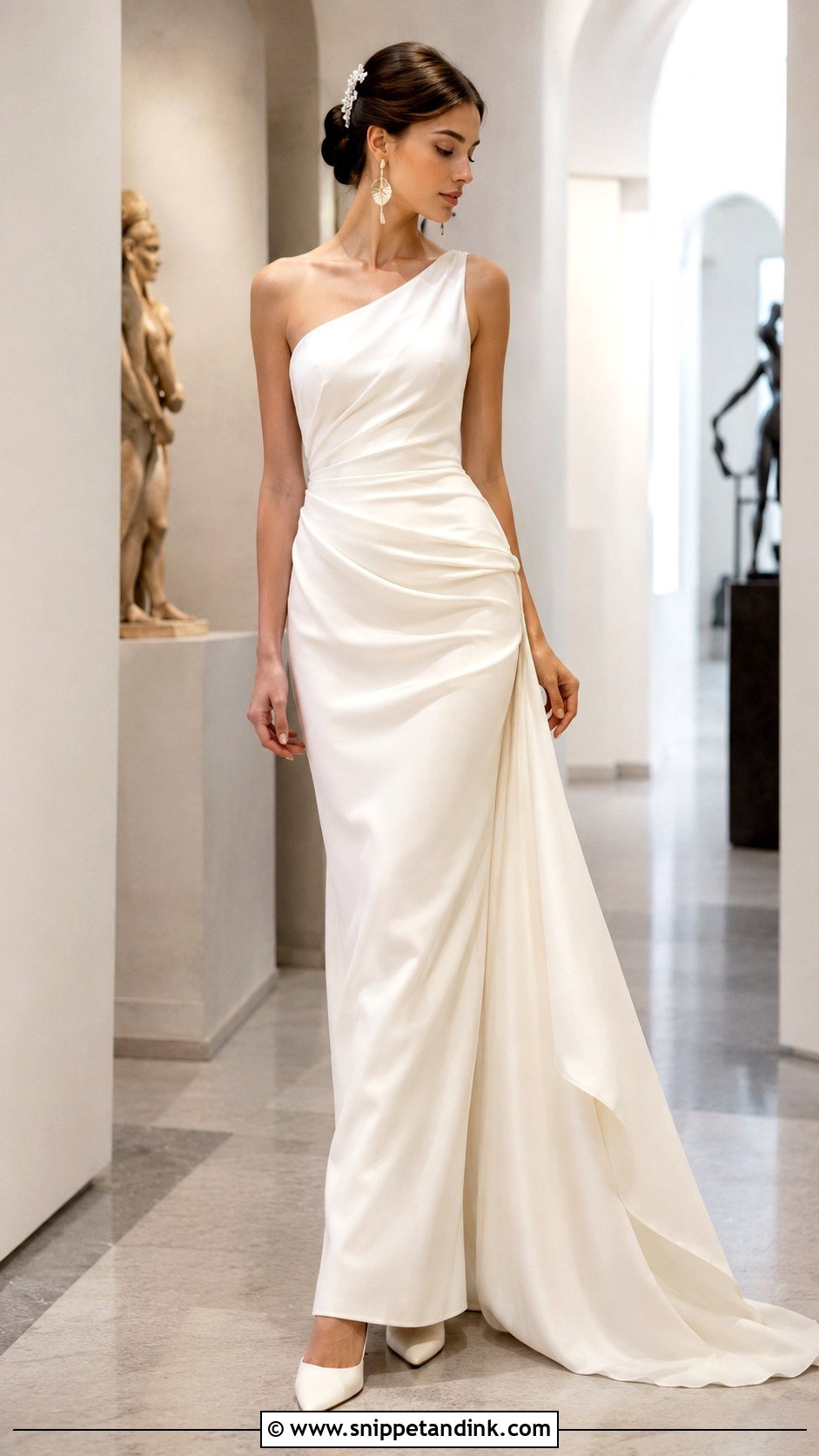
Uneven lines create movement, but only if there’s one main idea: a one-shoulder neck, diagonal drape, side train or staggered skirt panels. Choose one and let the rest stay quiet. Streamlined heels, a single statement earring and a sleek updo that shows the neckline finish it. A shoulder-length veil can interrupt the line, so I often go for a low-set veil or just a comb. At alterations, look at it from the front, back and both sides. The train should follow you when you walk, not wrap around your legs.
Is It Well Made? Checking an Unusual Gown From the Inside
A creative dress gets judged on its outside, but I always turn it inside out. The inside tells you how it will behave after eight hours of wear.
- Seams: finished edges and generous seam allowances mean the dress can be let out if needed. Raw, narrow seams limit what a tailor can do.
- Boning: it should sit in its own channels and not poke through at the top. Bend the bodice gently; it should spring back.
- Embellishment: knotted individually, not chained on one thread. Tug a bead lightly. It shouldn’t move.
- Lining: soft against the skin, cut slightly smaller than the outer layer so it doesn’t peek out at the hem.
None of this needs expert knowledge. If the inside looks rushed, the outside probably won’t hold up through a long reception either, however good it looks in the sample photos.
Sample dresses deserve a little patience, though. They have been tried on by dozens of brides, so loose threads and a tired hem are normal on the floor model. What you are checking is the construction method, which will be the same on the new dress that gets made for you.
Wear It Moving Before You Say Yes
The most memorable dress is rarely the most elaborate one. It’s the one that suits your personality and your body, fits the venue and still feels comfortable at midnight. Embroidery, sculpted satin, detachable layers, odd hemlines and unusual embellishment all give you ways to make a familiar shape your own. Save your favorites, but stay open in appointments, because fabric looks different on the body than on a screen. Bring the shoes and underwear you expect to wear, move around in every gown and have someone photograph you from the side and back.
You'll Like These Ideas:



Leave a Reply